What are you looking for?
About Us Contact Us Careers Get a Free Quote (800) 486-0943
Pick a service
✅ Got Your Own System?
🎬 Home TheatreQuote 🎶 AV SoundQuote 🔑 Access ControlQuote
Now pick your area
Pick your area
Long Island
Hudson Valley
Services available
Pricing & Tools
Pick a service for pricing
🚪 Intercom Pricing 🔔 Buzzer Repair Pricing
Calculators
📹 Camera System Calculator 🚨 Alarm Calculator ⚡ Cabling Quote Builder ✅ Got Your Own System?
Select your area
Upper East Side Smart Locks · Lenox Hill, Carnegie Hill & Yorkville · NYS Licensed Low-Voltage Contractor · (929) 560-0737

Smart Lock
Installation in
Upper East Side

Pre-War Co-op Doors on Fifth, Park & Madison · Townhouses in the Historic Districts · Yorkville Walk-Ups · Practices & Galleries East of the Park

Between 59th and 96th Street, east of Central Park, three very different kinds of front door share the same few hundred blocks. A shareholder on Park Avenue opens a heavy pre-war door fitted with a high-security cylinder the board chose decades ago. A family in a Lenox Hill townhouse has a street door the Landmarks Preservation Commission cares about, a service door under the stoop and a housekeeper, a nanny and a dog walker who all need to come and go. A renter in a Yorkville walk-up has a street door, a vestibule door and then their own. We plan a keyless lock for each of those doors as it actually is — what the board allows, what Landmarks treats as ordinary repair, who holds which credential — and then install it so the door still closes, latches and opens from inside the way it should.

Reviewed and updated October 17, 2026 · Written by Anwar Timothy, NYS licence #12000287431

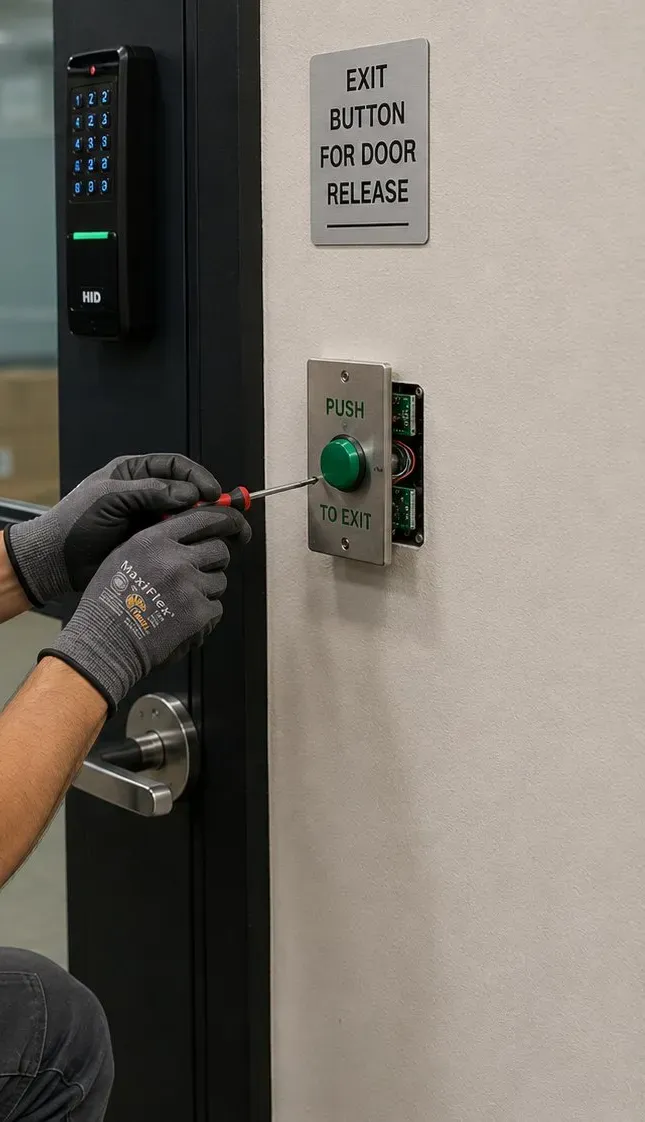
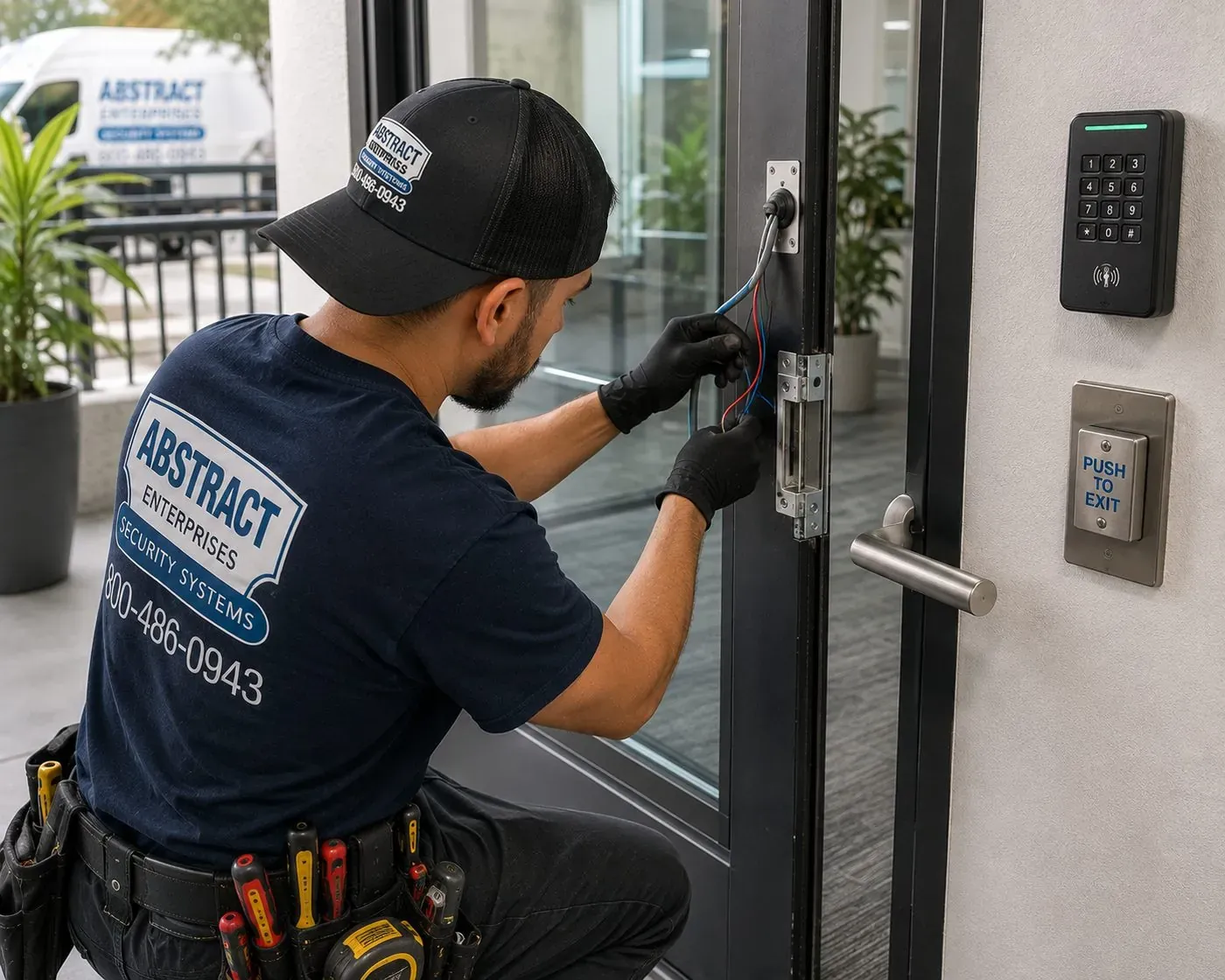
Technician wiring an electric strike in a glass entry door beside a wall keypad and push-to-exit button, smart lock installation on the Upper East Side, Manhattan
An installer kneels at a glass entry door feeding wires into an electric strike in the frame; a keypad reader and a stainless push-to-exit button are mounted on the wall beside the lever handle.
Free Upper East Side Smart Lock Quote
Tell us the street, the kind of building and which door — a licensed installer answers the same business day

✅
Request Sent!
An installer who works the Upper East Side will call you back the same business day.
25+
Years Experience
✓
Same-Day Estimates
100%
Licensed & Insured
4.7★
201 Google Reviews

East of the park and want the key gone from your keyring? Phone (929) 560-0737 or use the one-minute form. Give us the cross-streets, say whether it is a co-op, a townhouse, a walk-up or a newer tower, and send a photo of the inside of the door. Before anyone books a visit we tell you which kinds of lock suit that door and who in the building, or at Landmarks, is likely to have an opinion.

  • A written flat price after a free look at the door — no extras on the day
  • Building, practice and gallery doors use our published strike-and-keypad prices, scaled by the borough's 1.25 rate
  • NYS licence #12000287431 · insured · paperwork ready for the board, the managing agent or the townhouse owner's architect
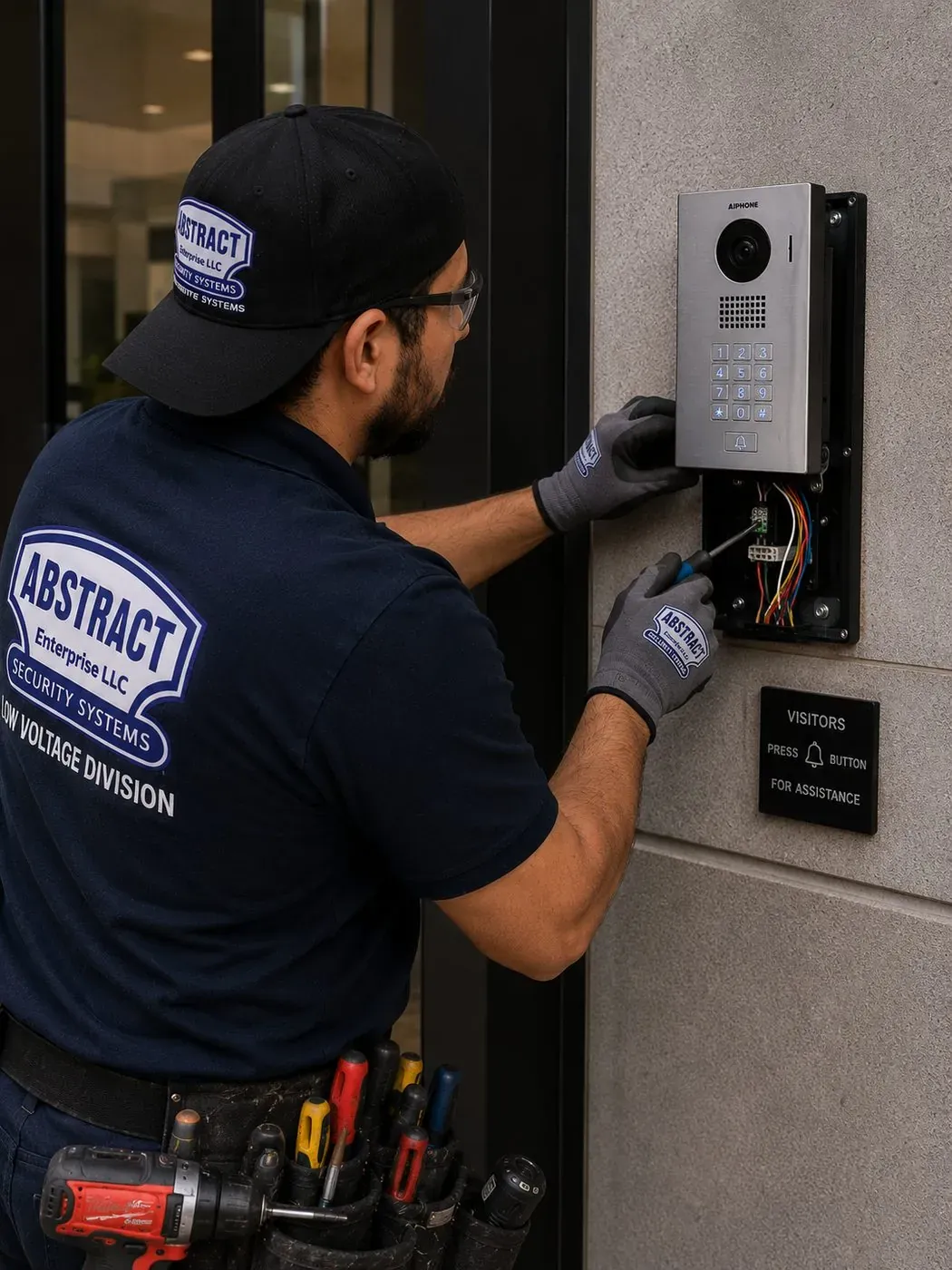
Installer wiring the back box of a stainless video intercom panel with keypad at a stone building entrance, Upper East Side Manhattan smart lock work
Connecting the terminal block inside a stainless video intercom with a numeric keypad, mounted on a stone wall next to a “visitors press button” plaque.
The Neighborhood

Why Upper East Side Homes Need Smart Lock Installation Planned Door by Door

The Upper East Side is not one housing market with one kind of door. Wikipedia's account of the neighbourhood draws it from 59th Street up to 96th Street and from Fifth Avenue and Central Park across to the East River, taking in Lenox Hill, Carnegie Hill and Yorkville, all inside Manhattan Community District 8 and the 19th Precinct. Walk east along almost any street in the 70s and the doors change every few hundred feet: limestone co-op entrances with uniformed staff on Fifth and Park, brownstone and brick townhouses on the side streets between Madison and Lexington, five- and six-storey walk-ups toward Second and First, and post-war and new towers out on York and East End. Each of those doors is governed by somebody different — a co-op board and its house rules, the Landmarks Preservation Commission, a landlord, a condo's managing agent — and each has a different set of people who need to get through it.

It is also a large and an older neighbourhood. NYU's Furman Center, in its May 2026 profile of the Upper East Side, estimates 224,027 residents in 2024, the fourth-largest population of the city's 59 community districts. Its figures show 23.9 percent of residents aged 65 or older and about half of all households, 50.5 percent, made up of one person living alone. The homeownership rate, 37.9 percent in 2024, is higher than the citywide 32.7 percent, which still leaves most households renting. Read together, those numbers sketch the requests a lock plan here has to handle: someone living alone who wants a relative in another city to be able to let a plumber in; a family with young children and household staff who each need a different door schedule; a renter who wants something smarter on the inside of a door the landlord owns.

Much of the area's building stock is protected. Wikipedia's summary of the Landmarks Preservation Commission's designations lists the Upper East Side Historic District, designated in 1981 and running from 59th to 78th Street along Fifth Avenue and as far east as Third Avenue in places, expanded in 2010 with 74 more buildings; the Metropolitan Museum Historic District on Fifth Avenue between 79th and 86th; the Park Avenue Historic District, designated in 2014 with 64 properties between 79th and 91st; the Carnegie Hill Historic District, about 400 buildings north of 86th; and the small Treadwell Farm and Henderson Place districts. The Commission's own rules list repairing or replacing door hardware — hinges, knobs and handles — among work that needs no approval, but they carve out “ornate historic exterior hardware on special doors”, and anything that changes the look of the door itself falls under a permit. A smart lock on a landmarked townhouse is therefore a design question before it is a hardware question.

Newer doors are arriving too. The first phase of the Second Avenue Subway opened on January 1, 2017 with new stations at 72nd, 86th and 96th Streets, and the Furman Center counts 4,025 homes added in buildings of four or more units on the Upper East Side between 2010 and 2025, with permits for another 338 issued in 2025 alone. Those buildings arrive with steel unit doors, bored deadbolts and, often, an entry app chosen by the developer — a very different starting point from a 1910 co-op door three blocks west.

The neighbourhood's own crime stories point at the door, not the lobby. In September 2019 Patch reported Manhattan prosecutors' case against an 82-year-old man charged with eight counts of burglary after he slipped past doormen at buildings on East 79th and East 68th Streets and stole from apartments while residents were away on vacation; he was finally caught when a doorman on Third Avenue turned him away. That December, the 19th Precinct warned of a burglar climbing to fire escapes in the East 80s and 90s between Lexington and First Avenues and entering through unlocked windows during working hours. In March 2023 officers arrested a man found inside the vestibule of a four-storey Yorkville walk-up on East 82nd Street near East End Avenue, trying to kick in the inner door. A uniformed doorman, a vestibule and a locked street door all help; none of them replaces a properly hung, properly locked apartment door, and only one of those three stories was about a door at all.

Residents talk about the same things online. On the r/uppereastside forum, recent threads ask for a locksmith who can re-key Mul-T-Lock cylinders that came with a key-control card, whether anyone on the UES will copy a “do not duplicate” key, and what to do about a package thief working East 75th Street. Those questions tell us what people here already have on their doors — high-security, restricted-key cylinders in a lot of co-ops — and what they worry about in buildings without staff. A good smart lock plan keeps the first and helps with the second.

Upper East Side figures behind a smart lock plan

  • 224,027 residents (2024): the Furman Center's population estimate for the Upper East Side community district, fourth-largest of the city's 59.
  • 23.9 percent aged 65 and over: the share of residents in that age group in the Furman Center's 2024 figures — locks here often have to work for people who would rather not use an app.
  • 50.5 percent single-person households: half the neighbourhood lives alone, which makes a trusted second person on the lock's account more than a nicety.
  • 37.9 percent homeownership: above the city's 32.7 percent but still a minority, so plenty of keyless projects start with a renter's interior-only lock.
  • About 400 buildings in the Carnegie Hill Historic District alone, and 74 buildings added to the Upper East Side Historic District in 2010 — a large share of street doors here sit under Landmarks rules.
  • 8.8 serious crimes per 1,000 residents (2025) on the Furman Center's measure, against 12.3 citywide — a safer-than-average neighbourhood whose burglary stories still turn on unlocked windows and unattended apartments.

So the job on the Upper East Side is rarely “put a smart lock on the door.” It is: keep the board's key system and the hallway look intact on a co-op door; keep the Landmarks-protected face of a townhouse door untouched while the inside gets clever; give a household's staff exactly the doors and hours they need; and make a walk-up's street door close and lock behind the last person through it. The sections below take each of those in turn.

Keyless projects here often grow into the lobby. Co-op boards that start by approving one shareholder's unit lock frequently ask about the front entrance next; our Manhattan access control installers handle fob readers and controllers for building doors, and our intercom installation crew in Manhattan replaces worn lobby panels so the release and the unit lock fit one plan.

Installer fastening a card and fob reader to a door frame beside a glass entrance during smart lock installation on the Upper East Side, Manhattan
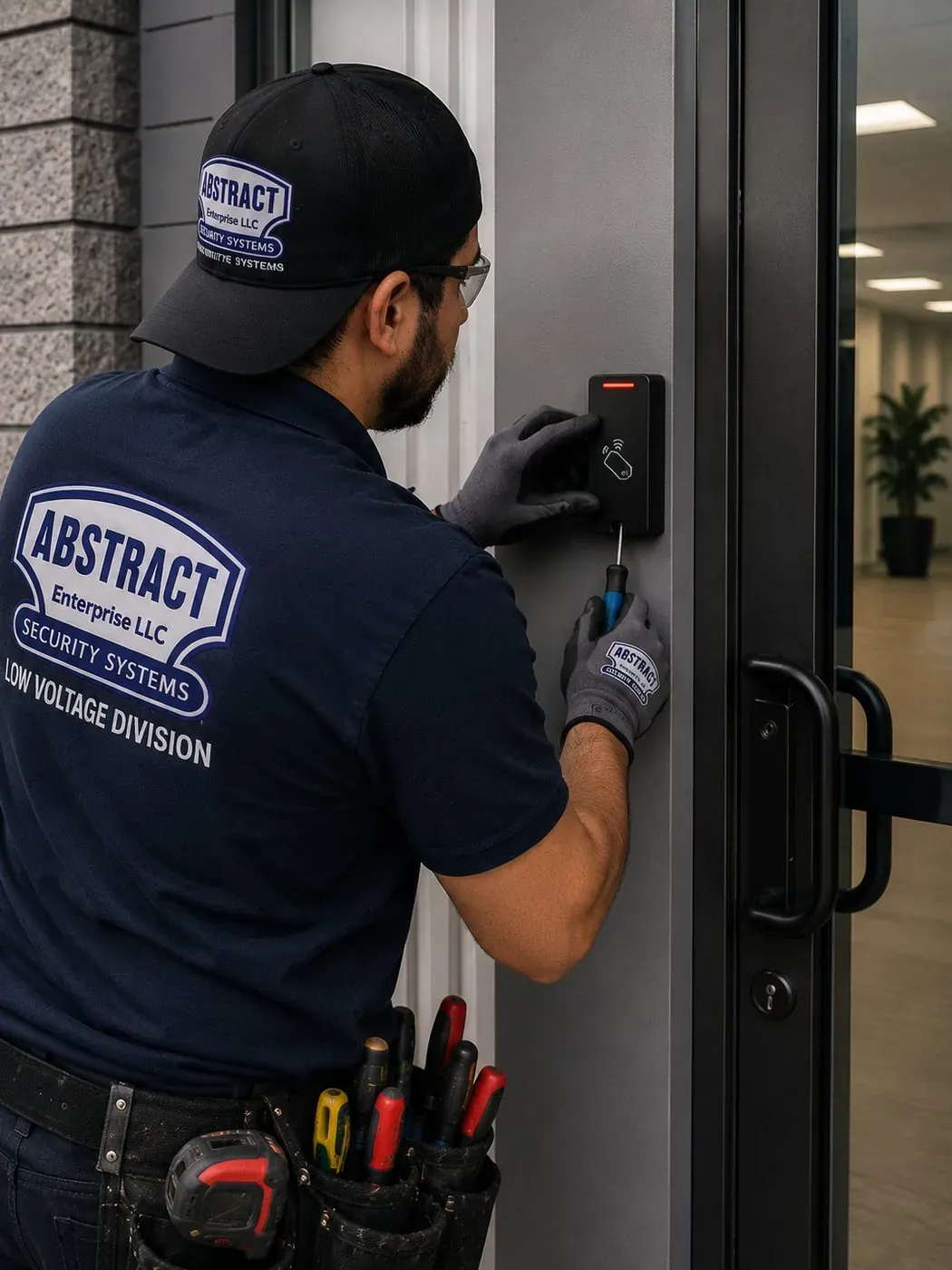
A slim proximity reader being screwed to the grey frame of a glass entrance door; the installer's tool belt and the door's pull handle are in view.
Repair Capture

Smart Lock Misfiring Between 59th and 96th Street?

Most of the calls we get from the Upper East Side are not new installs. A keypad that lights up but will not throw the bolt on a heavy pre-war door, a retrofit that drops off the app every time the router in a long railroad layout restarts, a townhouse service door whose code works for the housekeeper but not the dog walker, a walk-up's street strike that clicks and stays shut — those are repairs, and we book them into the next open 2-hour window your building allows. Once a technician is at the door, most power, pairing and alignment faults are fixed in one to two hours. If the fault is the building's front-door strike rather than your own lock, a failed electric strike repair is $369–$606 at the Manhattan rate. Ring (929) 560-0737 and say it is a lock fault, or see our Manhattan door buzzer repair service when the lobby is what has stopped releasing.

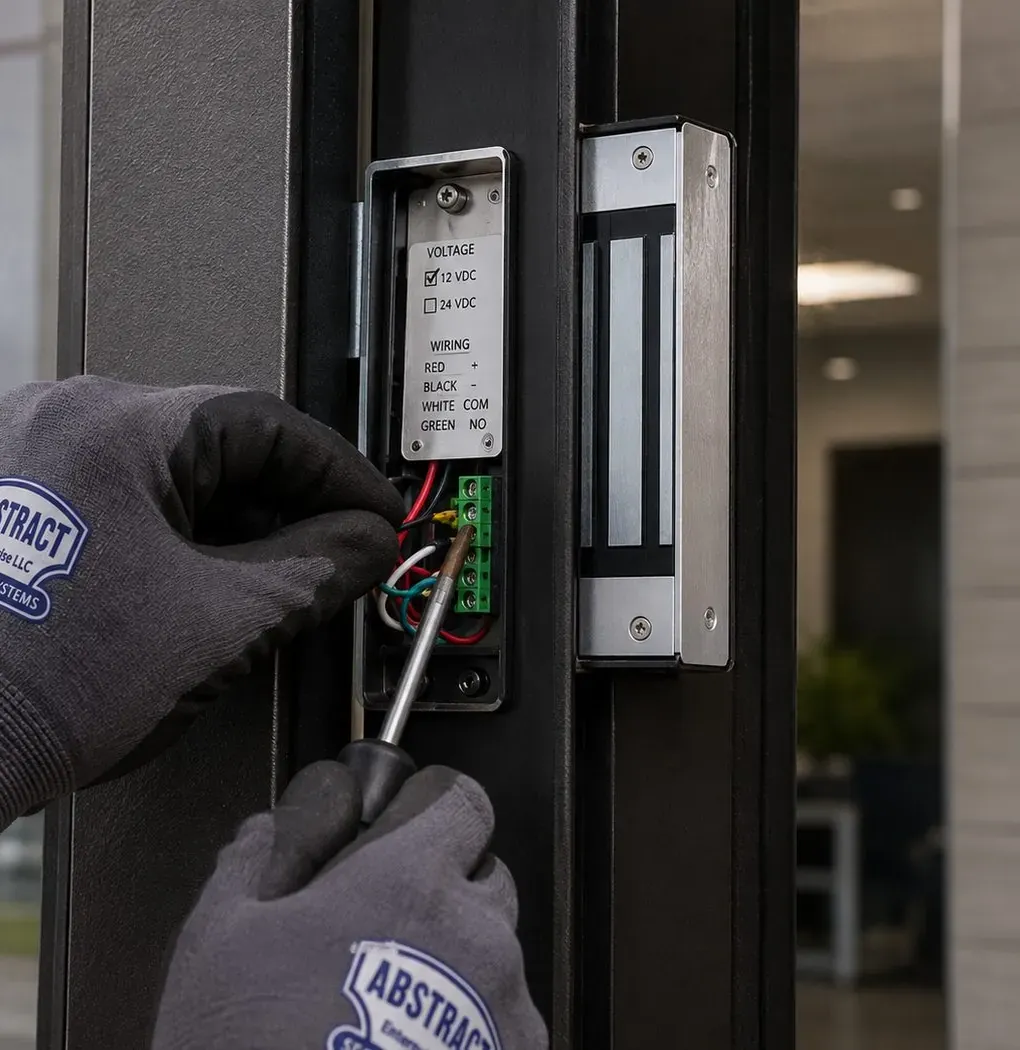
Gloved hands tightening a terminal in a door lock wiring box labelled for 12 or 24 volts beside a magnetic lock, Upper East Side Manhattan smart lock repair
Close-up of a screwdriver at a green terminal block inside a lock housing whose label lists 12 VDC and 24 VDC and the red, black, white and green wire functions; a magnetic lock body is mounted beside it.
What We Install

Smart Lock Installation Services on the Upper East Side

These are the jobs we actually do east of the park, from the Treadwell Farm blocks in the low 60s up to the edge of Carnegie Hill. Every one ends the same way: the door swings shut and latches without a push, it opens from inside in one easy motion, and every code, card and phone has been tried at the door with the person who will use it.

Co-op Doors That Keep the Board's Key

Interior retrofits and smart deadbolts chosen so the restricted-key cylinder the building standardised on stays in the door, the hallway face still matches its neighbours, and the super's emergency arrangement is untouched.

Townhouse Street and Service Doors

A plan for the parlour-floor door, the entrance under the stoop and any garden or roof door, with the smart parts placed so the protected face of a landmarked door does not change and Landmarks is consulted where it must be.

Household Staff Access

Separate codes or phone keys for a housekeeper, nanny, driver, dog walker or chef, each limited to the doors and hours that person works, with an entry log the family can check and a single tap to remove anyone who leaves.

Walk-Up Street and Vestibule Doors

For owners of small Yorkville and Lenox Hill walk-ups: closers adjusted so the street door actually shuts, strikes and keypads or fob readers fitted, and tenants' unit doors left to the tenants.

Renter-Friendly Interior Locks

Locks that mount on the inside of an existing single-cylinder deadbolt, keep the landlord's key working, and come off cleanly at the end of the lease — for the majority of UES households who rent.

Second Doors in Pre-War Apartments

The kitchen or service door that opens onto the back stair in many classic layouts, locked properly without ever being made into a door that cannot be opened from inside in a hurry.

Practice and Gallery Doors

Keypads, card readers and electric strikes for medical and professional suites on the ground floors of residential buildings and for galleries and boutiques along Madison Avenue, with records of who opened which door.

Account Set-Up for Families Who Travel

The lock's admin account in the right name, a second administrator who lives nearby, alerts that reach you on another continent and a written fallback for the day a battery runs flat.

Service, Re-Pairing and Removal

Faults on locks we fitted or someone else did, re-pairing after a new router or phone, re-aligning strikes on doors that have moved, and taking a smart lock off with the original hardware put back.

Gloved hands wiring a green push-to-exit button below a keypad reader on a door frame, smart lock installation Upper East Side Manhattan
A green push button in a stainless plate is wired into the wall below a black keypad reader, next to a sign reading “Exit button for door release” and a lever handle.
Building Specialists

Smart Lock Installation for the Upper East Side's Architecture

The lock follows the building. Before we talk brands we sort the door into one of these types, because each one decides where the electronics can go, which key has to survive, and who has to say yes.

Classic Co-ops on Fifth, Madison and Park

Large pre-war apartments behind staffed lobbies, with heavy doors, mortise or high-security cylinders and a board that keeps a hallway standard. The smart part usually lives inside the apartment, on or beside the existing deadbolt, so the corridor sees nothing new and the board's key still works.

Side-Street Townhouses in Lenox Hill and Carnegie Hill

Single-family houses and houses split into a few apartments, many inside the historic districts. Several entrances per house, original doors that may count as protected features, and household staff who come and go all day. The face of the street door is treated as untouchable until we know otherwise.

Queen Anne Rows Like Henderson Place

Small groups of attached brick houses designed as a set — Henderson Place's 24 rowhouses by Lamb and Rich are the best known — where matching doors are part of the point. Hardware choices are made so one house does not stand out from the row.

Yorkville and Lenox Hill Walk-Ups

Four- to six-storey buildings with a street door, a vestibule and a stair, often with a shop on the ground floor. The owner controls the building doors and the tenant normally controls a lock on the unit; we work on whichever side you are on.

Post-War and Newer Towers East of Lexington

Doorman rentals and condos along Second, Third, York and East End Avenues, including newer buildings near the Second Avenue Subway stations at 72nd, 86th and 96th. Usually solid-core or steel unit doors with bored deadbolts, concrete corridors that swallow radio signals, and sometimes a building-wide entry app.

Ground-Floor Professional Units

Doctors', dentists' and other practices with their own street entrance in the base of a residential building, common on Park and the side streets. A commercial door inside a co-op or condo, answerable to both the practice's needs and the building's rules.

How we approach each type of door

Co-op unit doors. We start from the cylinder. Many co-ops have standardised on a patented, restricted-key system so keys cannot be copied at a hardware store, and the shareholder holds a card or certificate that controls duplication. The cleanest smart conversion keeps that cylinder exactly where it is: an interior unit that turns the existing thumb-turn, or a smart deadbolt body that accepts the building's cylinder where the manufacturer allows it. Consumer Reports makes the point that a retrofit smart lock's resistance to kicking, picking and drilling “is entirely dependent on the deadbolt it's paired with”, so on these doors a retrofit inherits the building's high-security hardware rather than replacing it with something weaker. We check the throw of the existing bolt, the clearance between the thumb-turn and the door's panel mouldings, and whether a mortise lock body below needs a different approach altogether.

Townhouse street doors. On a landmarked house the first decision is what not to touch. The exterior escutcheon, knob or lever, letter slot and knocker stay as they are, and the electronics go on the interior face, inside the vestibule, or on a secondary door that is not part of the protected facade. Where a keypad outside is genuinely wanted, we put the options and photographs together for the owner or their architect to take to the Commission rather than drilling first and asking later. Doors in these houses are often thick, hand-made and slightly out of square after a century of seasons, so we measure thickness, backset and bolt alignment at the door rather than trusting a spec sheet.

Townhouse secondary doors. The door under the stoop, the garden door and any roof bulkhead are where most keyless convenience actually goes. These doors are less visible, often plainer, and they are the ones household staff use every day. Keypads, card readers and app control on these doors give a family the benefits of a smart lock without asking anything of the street facade.

Walk-up building doors. On a five-unit building the street door does most of the security work, and it only works if it closes. We adjust or replace the closer so the door shuts and latches on its own from any opening angle, fit an electric strike or electrified lock with a keypad or fob reader, and leave mechanical exit from inside untouched. Unit doors stay with the tenants; where an owner wants to offer smart unit locks, they are offered, not required, and a working physical key still comes with every apartment.

Tower unit doors. These are the most straightforward doors on the Upper East Side to fit, and the most awkward to connect. Bored steel or solid-core doors take a smart deadbolt in the existing holes; the work is in placing a bridge or a Thread border router where the signal reaches through concrete, and in deciding whether the lock should be enrolled in any platform the building runs.

DoorWhere the smart part goesWhat must surviveWho usually has a say
Pre-war co-op unit door, restricted-key cylinderInside face, on the existing deadboltThe building's cylinder and key control, the hallway lookBoard / managing agent
Landmarked townhouse street doorInside face or vestibuleEvery exterior feature of the door and surroundOwner, architect, LPC where exterior changes
Townhouse service or garden doorKeypad or reader on the door or frameOne-motion exit from insideOwner
Walk-up street and vestibule doorsStrike or electrified lock, keypad or fob readerSelf-closing, self-latching, free exitBuilding owner
Tower rental or condo unitSmart deadbolt in existing holesThe fire rating and closer on the doorLandlord or managing agent
Ground-floor practice entranceStrike or electrified lever with readerBuilding facade rules, patients' free exitPractice, co-op or condo board

Townhouse owners often pair the lock work with a view of the stoop. Our doorbell camera installation in Manhattan can add a discreet camera at the service entrance where the street facade has to stay as it is.

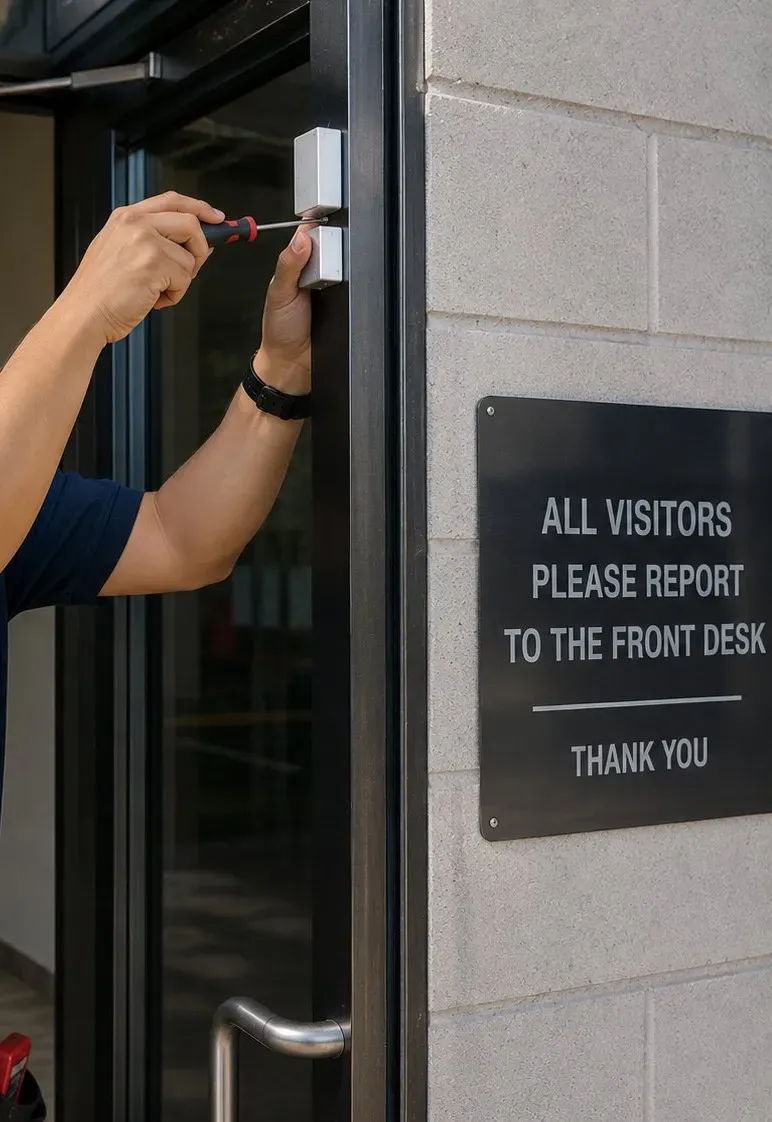
Hands fitting a door position contact to the top of a glass door frame beside a front-desk sign, Upper East Side Manhattan smart lock installation
A small white door-position contact being screwed to the top of a dark glass-door frame; a wall sign beside it asks all visitors to report to the front desk.
Commercial Smart Locks

Business Smart Lock Installation on the Upper East Side

Commerce on the Upper East Side is threaded through residential buildings. Very little of it sits in office towers; most of it is a ground-floor shop, practice or gallery with apartments overhead. That shapes every commercial lock we fit here.

Madison Avenue, 57th to 86th

The Madison Avenue Business Improvement District looks after the corridor from East 57th to East 86th Street, and its gallery walk has listed 42 participating galleries on the avenue and its side streets. Boutique and gallery doors here want staff codes, an opening log and hardware that disappears into the frame.

The York Avenue Medical Corridor

Memorial Sloan Kettering's main hospital is at 1275 York Avenue between 67th and 68th Streets, with Weill Cornell, NewYork-Presbyterian and the Hospital for Special Surgery — founded in 1863 — close by, and Lenox Hill Hospital to the west. Around them sit offices, labs and residences where badge and door control matter.

Practices on Park and the Side Streets

Medical, dental and therapy practices in the base of co-op and condo buildings, with a private street entrance, a waiting room and a records or medication room that needs its own lock.

Lexington, Third and Second Avenues

Restaurants, cafes, dry cleaners, pharmacies and salons in walk-up storefronts, where the back door to the yard or the cellar stair matters as much as the front.

East 86th Street

A long shopping street with a subway station at each end of the walk — the Lexington Avenue line at 86th and the Second Avenue line's 86th Street stop — and chain and independent stores whose staff open early and close late.

Offices in Older Houses

Foundations, small firms and institutions working out of side-street houses, where a modern access system has to live behind an old front door and inside a building the Commission may protect.

Codes and rules that bear on commercial doors here

  • Magnetic locks on egress doors. The NYC Building Code's section on electromagnetically locked egress doors (1010.1.9.9) allows them on doors to tenant spaces in several occupancy groups only with door-mounted release hardware that cuts power with one hand, unlocks when power is lost and is released by any panic hardware too. On a gallery's glass door that usually means a lever or bar with a built-in switch, not just a button on the wall.
  • Rated doors and frames. NFPA 80 limits job-site preparation of fire-rated assemblies to round holes; other cut-outs count as field modifications needing the listing laboratory's approval. A practice's corridor door in a residential building is often rated, so we match the strike or electrified lever to the label instead of cutting the frame.
  • Landmarks. A storefront inside a historic district is part of the designated property. The Commission's rules let hardware such as knobs and handles be repaired or replaced without approval, but readers, keypads and new holes on a protected facade are a different matter, so we look for an inside-the-glass or vestibule location first.
  • Accessibility. Operable hardware on a public entrance should not require tight grasping, pinching or twisting of the wrist, and is mounted between 34 and 48 inches above the floor under the 2010 ADA Standards; we place readers and push buttons with that in mind.
  • Apartments upstairs. Where the shop and the apartments share a street door, the residential side keeps its rights. The city's Housing Maintenance Code still requires each apartment entrance to have its own key lock, and tenants can add their own lock under the Multiple Dwelling Law; a shop's keypad never becomes the only way upstairs.

If a ground-floor tenant is also thinking about cameras or an alarm, our commercial security systems team for Manhattan plans the lock, the reader and the camera at the same walkthrough.

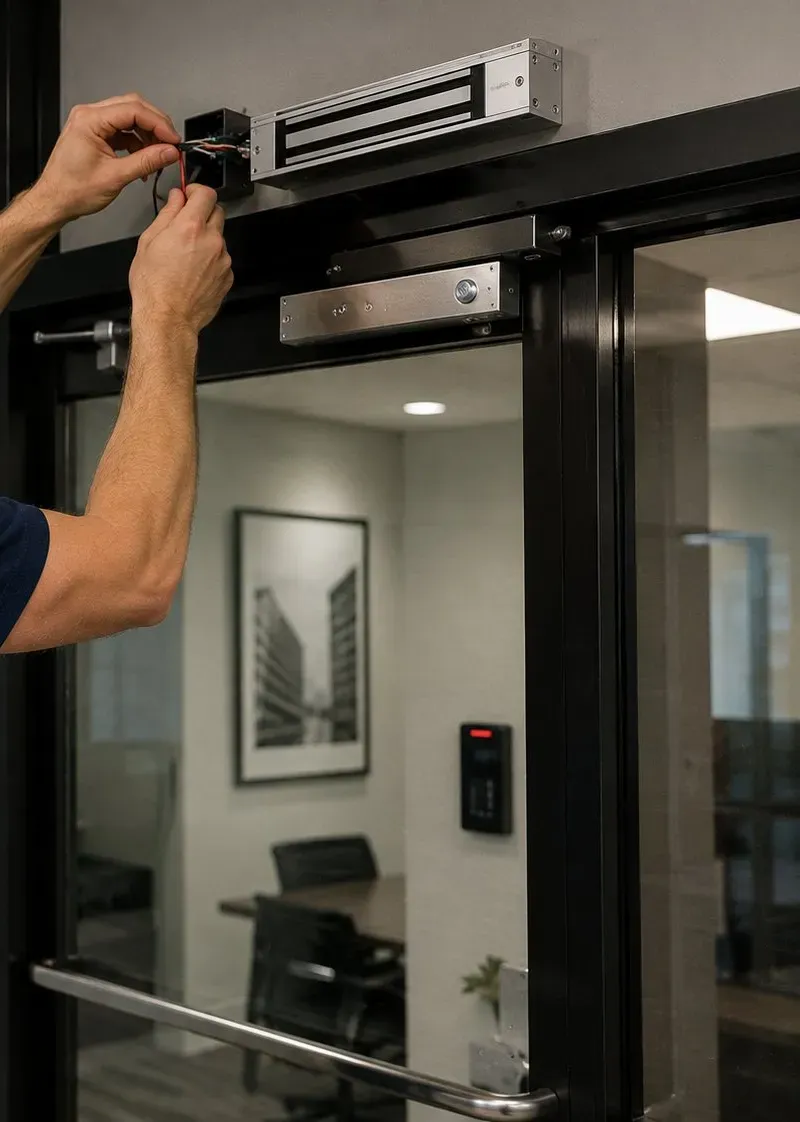
Hands fitting a magnetic lock and armature plate at the head of a glass office door with a wall reader inside, Upper East Side Manhattan smart lock installation
A magnetic lock is being secured to the top of a glass office door frame, with its armature plate on the door below it; a small reader is visible on the wall inside the office.
Your Questions Answered

Smart Lock Installation on the Upper East Side: Questions Answered

These are the questions that come from this neighbourhood's own doors: landmarked townhouses, pre-war co-ops with restricted keys, households that travel, walk-ups without staff, and practices and galleries on the ground floor. Borough-wide topics — renters' rights, co-op key rules, building entry platforms, office towers — are on our Manhattan smart lock installation page and the five-borough guide it links to. Cost, coverage and booking questions are in the FAQ near the bottom. Nothing here is legal advice.

Townhouses in the historic districts

Can the ornate brass knob and escutcheon on our townhouse door stay exactly as they are once the lock goes smart?

Yes, and on most landmarked houses that is the plan we would propose first. The Landmarks Preservation Commission's rules treat repairing or replacing ordinary door hardware — hinges, knobs, handles — as work that needs no approval, but they expressly exclude “ornate historic exterior hardware on special doors”. If your outside hardware is the decorative original, the safest course is to leave every piece of it in place and do all the smart work on the inside face of the door, where nobody on the sidewalk can see it.

In practice that means one of three things. If the door already has a separate single-cylinder deadbolt, an interior retrofit can turn its thumb-turn and leave the key cylinder outside untouched. If the only lock is an old mortise lockset, a mortise-format smart lock or kit can sometimes replace the inside works while keeping the outside trim. If neither suits, the smart lock can go on the vestibule door or the door under the stoop instead, and the street door stays a beautifully kept mechanical lock. We photograph the exterior before and after so the record shows nothing changed.

We employ a housekeeper, a nanny and a driver — should each of them have the townhouse's main door, or only the service entrance?

That is a household decision, but the lock can enforce whatever you decide, and most families end up separating the doors. A common arrangement is that staff who arrive daily use the entrance under the stoop or the garden door with a personal code or phone key, limited to their working days and hours, while the parlour-floor street door is kept for the family and guests. The driver, who mostly needs to drop bags and children, may only need a code during school runs.

Giving each person their own credential, rather than a shared “staff code”, is what makes the system useful. The entry log then says who opened which door and when, you can change one person's hours without touching anyone else's, and when someone leaves your employment their access ends with one tap instead of a locksmith visit. We set it up with you, name every credential by person, and leave a single sheet showing who can open what — worth keeping with the household's other employment papers.

Pre-war co-ops on Fifth, Madison and Park

We had to show a key card to get copies of our high-security key — does going smart weaken that duplication control?

Only if the smart lock throws the old cylinder away. Restricted-key systems such as the Mul-T-Lock and similar cylinders that residents on r/uppereastside ask about are valuable precisely because copies can only be cut against a registered card. A keypad deadbolt that replaces your cylinder with the manufacturer's own standard keyway quietly swaps that controlled key for one that any key shop can copy. Many boards also want the building's key system to stay on every unit door.

The way round it is to keep the cylinder. An interior retrofit mounts over the inside of your existing single-cylinder deadbolt and turns it, so the restricted key, its card and the outside of the door all stay exactly as they were. Some smart deadbolts can also take a compatible high-security cylinder in place of the standard one; whether yours can is a question for the lock maker and the cylinder supplier, and we confirm it before you buy. Either way, the backup key for the door remains the controlled one, and the codes and phone keys are added on top of it rather than instead of it.

Is a lock that clamps onto the inside of our deadbolt as strong as the deadbolt itself?

It is exactly as strong as the deadbolt, no more and no less. Consumer Reports puts it plainly in its lock-buying guide: a retrofit smart lock's resistance to kicking, picking and drilling “is entirely dependent on the deadbolt it's paired with”. The retrofit is a motor and a radio sitting on your thumb-turn; the bolt, the cylinder, the strike and the frame are what stop a door being forced.

On a good pre-war co-op door with a high-security cylinder and a full-length bolt, that is excellent news — you keep a strong lock and add convenience. On a tired door it means the smart part will not fix what is already weak. So we check that the bolt extends fully into the frame, that the strike is fixed into solid material with long screws, and that the door is not sagging so far that the bolt only just catches. If any of those are wrong, they get corrected first, because a motorised bolt grinding against a misaligned strike also flattens batteries in weeks instead of months.

Our pre-war apartment has a second door from the kitchen to the service hall — should it be smart as well?

Often it should, and it is frequently the more useful of the two. In many classic layouts the kitchen door opens onto a back stair or service elevator, and it is the door that deliveries, porters and household help used to use. If the front door becomes keyless and the kitchen door keeps an old key that has been copied for years, the weak point has simply moved to the back of the apartment.

Two rules govern what we fit there. First, the door must stay openable from inside in one easy motion without a key; the city's fire-safety guidance says apartment doors should open from inside without a key and bars double-cylinder locks, and a service door that leads to a stair is very likely to be someone's way out in an emergency. Second, it is the building's door frame and often a rated assembly, so the board or managing agent will want to know what is going on it. Within those rules, a keypad or retrofit on the service door with its own log and auto-lock is a sensible pairing with the front door, set to match the hours staff actually use it.

Decades of paint have built up on our pre-war door's edge — does that matter for a motorised bolt?

It matters more than most people expect. Layers of paint on the door edge, the strike and the frame stop narrow gaps closing, drag on the bolt as it travels and can pack the strike pocket so the bolt cannot extend all the way. A person turning a key feels that and pushes the door; a small motor simply strains, reports a jam or stops short, and drains its batteries doing it.

So on older co-op and townhouse doors the preparation is part of the job. We open the strike pocket to full depth, ease paint off the bolt path and the latch edge, check the hinges are tight and the door hangs evenly, and adjust the strike so the door latches without being leaned on. Where the building's painter is due, we ask that the hardware edges be masked next time. It is unglamorous work, and it is the reason a smart lock on a hundred-year-old door can run as smoothly as one on a new condo door.

Households that are often away

When we tell the front desk we're going away, should the cleaner's and walker's codes be paused too?

If nobody should be coming in while you are gone, yes. Most buildings have a routine for residents who are away — holding packages, watching for leaks — and the lock can follow the same routine. The case Manhattan prosecutors brought in 2019 against a man who walked past doormen on East 79th and East 68th Streets and stole from apartments while their residents were on vacation is a reminder that an empty apartment is what such a burglar looks for.

With a smart lock, “away” can be a setting rather than a hope. Before you leave, regular service codes are suspended for the dates you are gone, and only the people you choose — the person watering the plants on Thursdays, say — keep access, on their own schedule. Every opening sends you a notification wherever you are, and if a code is tried repeatedly the lock tells you that too. When you are back, the normal schedules resume without anyone needing to be re-enrolled. We set up the away pattern with you once, so it is a two-minute job each trip.

If I'm suddenly admitted to one of the York Avenue hospitals, how does a friend get in to feed the cat?

This is one of the most practical reasons people living alone on the Upper East Side choose a smart lock, and it works as long as two things are set up in advance. First, a second administrator: someone you trust, ideally nearby, who can issue a code or a phone key from their own phone if you cannot. Second, the lock has to be reachable remotely, through its own Wi-Fi, a bridge or a Thread border router that stays powered.

Then the sequence is simple. From a hospital bed, you or your second administrator create a code for your friend that works only for the days you are away; your friend lets themselves in; you see each visit in the app; the code expires on its own. There is no envelope of keys at the desk and no need for the building to open your door. If you would rather the desk did it, a sealed emergency code can also be lodged with the building under its rules. We write the plan on the handover sheet, including who the second administrator is.

Yorkville walk-ups and newer towers

As the owner of a small Yorkville walk-up, should the money go on the street door or on each apartment door?

For an owner, the street and vestibule doors come first. They are yours to control, they protect every tenant and the stair, and they are where trouble starts: in March 2023 police arrested a man inside the vestibule of a four-storey walk-up on East 82nd Street near East End Avenue who was trying to kick in the inner door. A street door that closes and latches by itself every time, with a good strike, a keypad or fob reader and a working intercom release, does more for the building than any single apartment lock.

Apartment doors are a different matter. City rules require the owner to provide a key lock on each unit entrance and let tenants add their own lock as well, and the Tenant Data Privacy Act stops owners from making a smart system the only way into a tenant's home. So smart unit locks are something to offer, not impose, and a physical key always comes with them. Our usual advice is to fix the building doors properly, then let tenants who want keyless entry add an interior lock on their own side.

People keep slipping into our walk-up behind residents — can the street door be made to close and lock faster?

Usually yes, and it is mostly mechanical. Tailgating depends on how long the door hangs open after a resident goes through. A closer that is set too slow, has lost its fluid or fights a sagging door lets the door drift for several seconds and often leaves it resting just short of latched. A correctly adjusted closer brings the door back firmly through its final few inches so the latch snaps home every time.

Then the lock helps. With an electric strike or electrified lock, the door relocks the moment it closes, and a door position contact can tell the owner if it has been propped or left ajar. Some keypads and readers can also log each entry, which makes a pattern of tailgating easier to see. What a lock cannot do is stop a resident holding the door for a stranger, so we suggest a short note to tenants once the new door is in. For package theft specifically, a vestibule that locks behind the courier — or a delivery code that only works on the outer door — is worth discussing at the walkthrough.

Burglars in the East 80s and 90s came in through fire-escape windows — does a smart front door do anything about that?

Not directly, and we would rather say so. In late 2019 the 19th Precinct described a burglar who reached fire escapes from the street or the roof between Lexington and First Avenues and tried windows until one was unlocked, during working hours. A smart lock on the apartment door would have been irrelevant to how he got in, although an entry log and an “unlocked” alert can at least show whether the door was used on the way out.

The fire-escape window needs its own answer. City fire-safety guidance prohibits key-locked gates on fire-escape windows, because those windows are a way out, so any gate there has to open from inside without one. A window sensor on a simple alarm, or a camera inside the apartment pointing at the window, adds warning without blocking the exit. When we visit for the door, we are happy to look at the fire-escape window too and tell you which of those our alarm installation team in Manhattan can add.

Practices and galleries on the ground floor

Our practice occupies the ground floor of a Park Avenue co-op — whose rules govern a keypad on the practice's own street entrance?

Several sets at once, which is why we plan these doors with the practice and the building together. The co-op's house rules and its alteration process apply because the door is part of the building; if the building sits within the Park Avenue Historic District or another district, any visible change to the entrance is a Landmarks matter too; and once a powered lock is on a door that patients use to leave, the city's building code on egress applies. A practice's lease may also say who may alter the entrance.

The design that usually satisfies everyone keeps the facade as it is and moves the technology inside: a reader or keypad just inside the street door or in the vestibule, an electric strike in the frame that matches the frame's label, a release button at reception and free exit through the door in one motion. Staff each get their own credential, after-hours openings are logged, and the medication or records room can have its own lock on a separate schedule. We put the drawings and specifications together for the board's alteration review so the practice is not left to explain hardware it did not choose.

Our Madison Avenue gallery keeps borrowed works in a back room — can that door keep its own record of every opening?

Yes. The front door of a gallery and the room where works on loan or on consignment are kept do different jobs, and they should be on separate credentials. The front door opens for staff in the morning and closes behind the last visitor; the back-room door is opened by far fewer people, and every opening is worth knowing about. A keypad or card lock on that door, with its own user list and audit trail, gives the director a record of who went in and when.

We set the back-room door to relock automatically, alert the director if it is held open, and keep its credentials separate from the general staff code, so a part-time gallery assistant can open the shop without having access to the store. Where a lender or the gallery's insurer asks how access to stored works is controlled, the log and the user list answer the question. If the room has a solid or rated door, the lock is chosen to match it rather than the other way round.
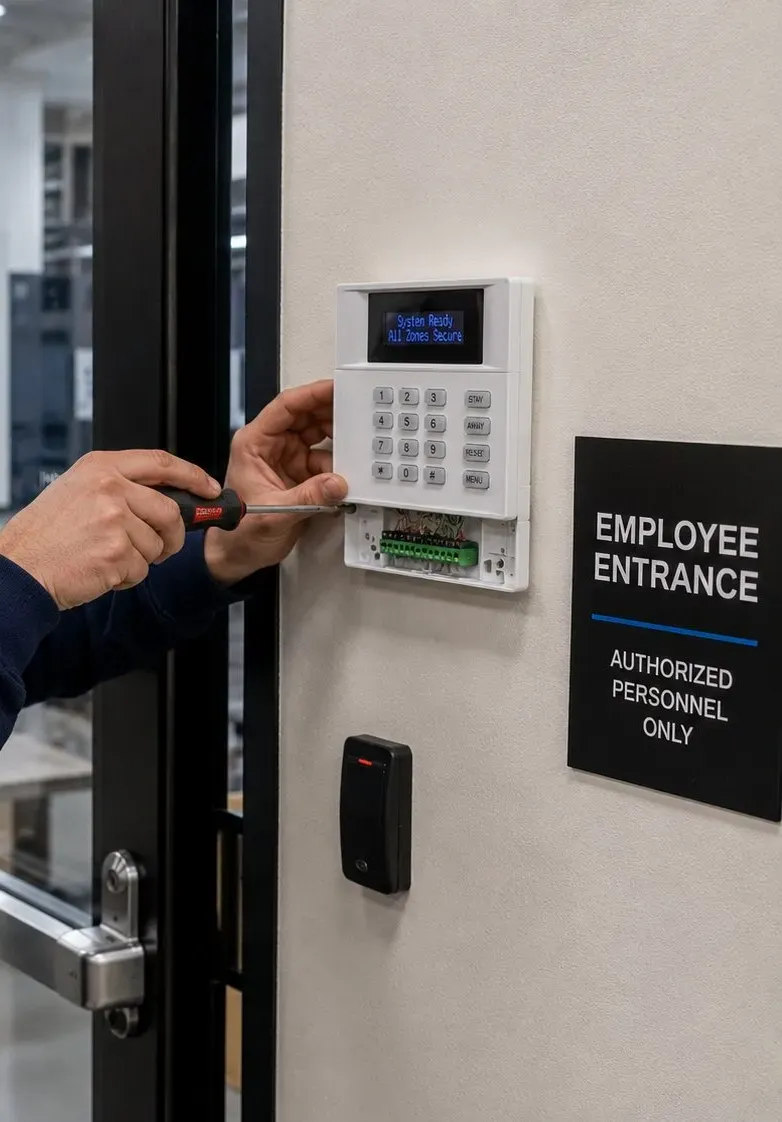
Hands fastening a keypad to the wall beside a glass door with a panic bar, above a slim card reader, for staff-door access on the Upper East Side, Manhattan
A white keypad with a small display is being screwed to the wall next to a glass door fitted with a panic bar; a slim card reader is mounted below it and an “Employee entrance – authorized personnel only” sign hangs to the right.
Equipment

Types of Smart Locks We Install

On the Upper East Side the right category is usually obvious once we have seen the door, the key and the facade. You can buy your own lock or let us specify one; these are the families we fit between Fifth Avenue and the river.

Interior Retrofit Units

A motor housing that fits over the inside of an existing single-cylinder deadbolt. August describes its retrofit as “leaving the outside untouched”, which is exactly what a co-op with a restricted key or a landmarked townhouse needs. Not for double-cylinder deadbolts, which should not be on an apartment door anyway.

Smart Deadbolts With a Key Override

Keypad or fingerprint outside, thumb-turn inside, fitted in standard bored holes. Ideal for tower units and townhouse service doors, where nobody outside the household minds what the hardware looks like.

Mortise-Format Smart Locks and Kits

For the heavy pre-war doors whose lock body sits in a deep pocket in the door edge. Converted with hardware made for mortise locks rather than by forcing a bored deadbolt into a door that was never drilled for one.

Thread and Matter Locks

Low-power mesh radios that reach the internet through a border router, such as a compatible smart speaker or hub, inside the apartment. A good choice in towers and long pre-war apartments where Wi-Fi at the front door is poor.

Locks With Phone and Watch Keys

Models that open with a tap of an iPhone or Apple Watch — Schlage lists Apple Home Key support on its Encode Plus — alongside codes, so people who never want to type a number do not have to.

Electric Strikes and Electrified Levers

For walk-up street doors, practice entrances and gallery doors: the frame or the lever releases for a valid code or card, while mechanical exit from inside stays a single push. Fire-rated versions for labelled frames.

Magnetic Locks With Door-Mounted Release

For all-glass boutique and gallery doors where nothing can be cut into the frame, installed only with the release hardware the city's code requires and a reader inside the glass where possible.

Keypads, Readers and Request-to-Exit Devices

Single-door keypads and fob or card readers, with exit buttons and motion sensors so that a powered door never traps anybody on the inside.

Matching the lock to the Upper East Side door

DoorFirst choiceMain reason
Park Avenue co-op, restricted-key deadboltInterior retrofitKeeps the board's cylinder and key control
Fifth Avenue co-op, mortise lockset onlyMortise-format smart lock or kitFits the door's existing pocket and trim
Carnegie Hill townhouse street doorInterior retrofit or no change; smart lock on the service doorProtected exterior stays untouched
Townhouse door under the stoopKeypad smart deadbolt or reader with strikeDaily staff and delivery traffic
Yorkville walk-up street doorElectric strike with keypad or fob readerBuilding-wide control, self-latching door
East End Avenue tower unitThread smart deadboltConcrete corridor, reliable mesh link
Madison Avenue gallery, glass doorMagnetic lock with door-mounted release, reader insideNo frame cutting, code-compliant exit
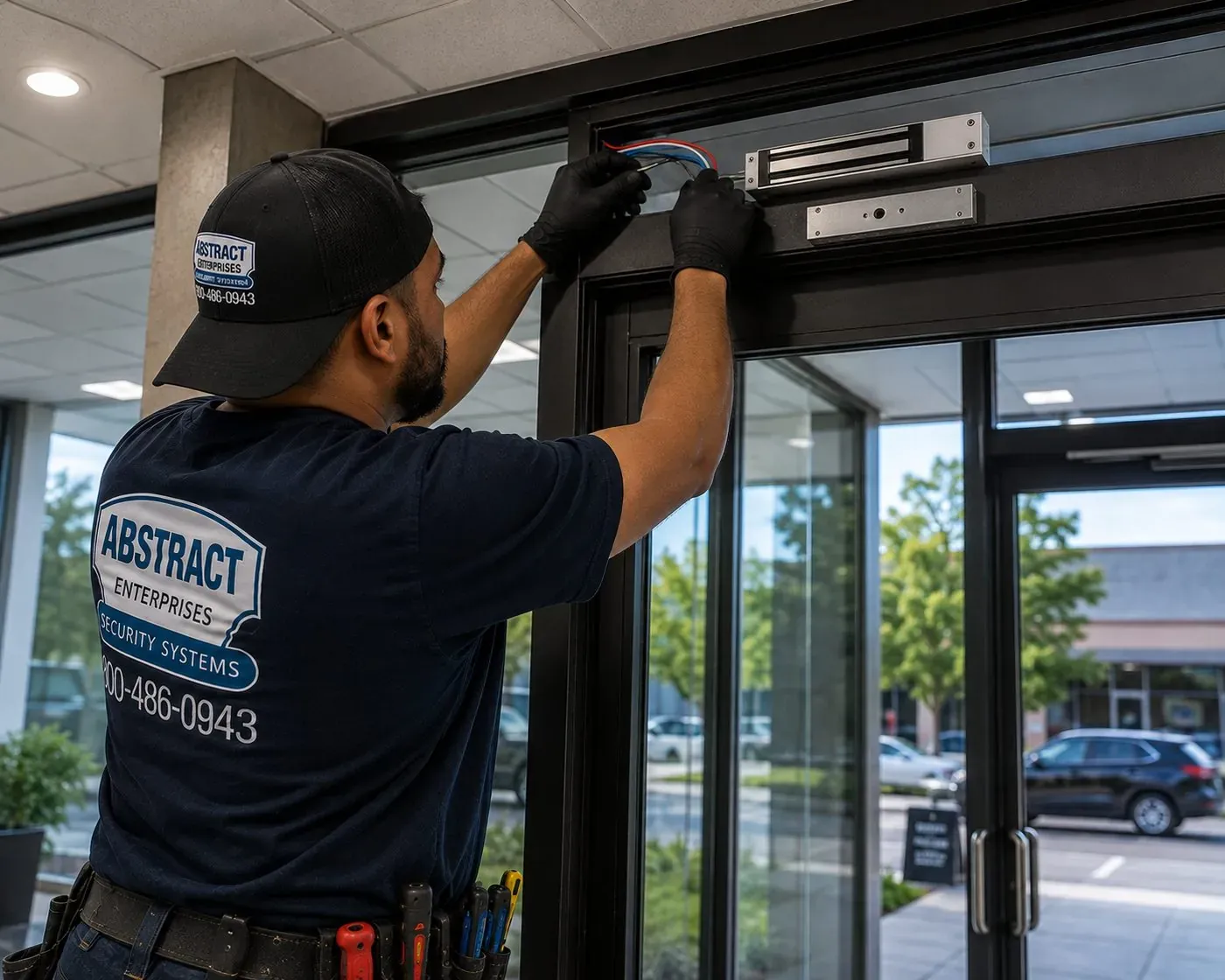
Installer connecting wires to a magnetic lock on the header of a glass storefront entrance, smart lock installation Upper East Side Manhattan
Reaching up to the header of an aluminium-framed glass entrance, an installer connects the cable to a magnetic lock whose armature plate is fixed to the door below.
AI Overview Reality Check

What AI Gets Wrong About Smart Lock Installation on the Upper East Side

A note on method: the tools used to research this page could not display Google's AI Overview, so none of the claims below is quoted from it. Each heading paraphrases a statement published by a national cost guide, a lock maker or a consumer publication — the sort of line answer engines repeat — and the source is named underneath, followed by what changes on an Upper East Side door.

“Expect to pay $250 to $400 for a smart lock installation”

Fixr's national cost guide, last updated in January 2025, gives a range of $250 to $400 with an average around $300, and handyman labour at $50 to $100 an hour. Angi, HomeAdvisor and similar sites publish ranges in the same territory. Those figures are honest averages for a standard bored deadbolt on a suburban house.

A townhouse on East 70th Street is rarely one door, and a co-op on Park Avenue is rarely one visit. A typical townhouse plan touches the street door, the door under the stoop and the garden door; a co-op job adds the board's paperwork and a slot inside the building's working hours. Walk-up street doors and practice entrances are electric-strike jobs, which AESS publishes at $1,875 to $3,125 at the Manhattan rate.

None of that makes the national figure wrong. It makes it the price of a different job. If a quote for an Upper East Side door starts from it, ask what happens to the paperwork, the second door and the old paint on the frame.

“A retrofit leaves the outside of your door untouched”

That is August's description of its interior-mounted locks, and it is accurate — which is why we recommend retrofits so often on landmarked townhouses and on co-op doors with restricted keys. Nothing changes on the corridor or street face, and your existing key carries on working.

What the line leaves out is that a retrofit is only as strong as what it is fitted to. Consumer Reports notes that a retrofit's resistance to kicking, picking and drilling depends entirely on the deadbolt beneath it. August also says its retrofits suit single-cylinder deadbolts only, and some need clearance around the thumb-turn that a panelled pre-war door may not offer.

So “untouched” outside does not mean “nothing to check” inside. We look at the bolt, the strike, the panel mouldings and the swing before recommending one.

“A bridge a few steps from the lock is all remote access needs”

August's support pages ask for its Connect bridge to sit within 10 to 15 feet of the lock and to see a strong Wi-Fi signal where it is plugged in. In an open-plan condo that is a matter of finding a socket in the hall.

Classic Upper East Side apartments are long, with thick plaster walls, a front door at the far end of a gallery and the router often in a back bedroom; a townhouse's service door may be a floor below the nearest outlet. The bridge's location becomes a small design exercise, and sometimes a reason to choose a Thread lock with a border router instead.

We test remote unlocking over mobile data, away from the apartment's Wi-Fi, before we pack up. If it works from the street, it will work from another country.

“Matter makes every smart lock work with every ecosystem”

Matter is a real step forward. Lock makers describe Thread as a low-power, self-healing mesh and say a Matter lock can be shared with up to five ecosystems at once. That is useful in a household where one person uses an iPhone and another uses Google.

The fine print matters. Yale's set-up guide says a Thread border router has to be in place first and that the router should match the app you are using — a Nest Hub for Google Home, a HomePod mini or Apple TV for Apple Home. Not every feature in a maker's own app is available through every ecosystem, either.

For a family with staff, we normally keep the maker's app as the place where codes and schedules live and add Matter for voice and automation on top, rather than relying on a single ecosystem to do everything.

“Batteries last up to six months”

Schlage quotes up to six months of battery life with typical use for its Encode Wi-Fi deadbolts. Other makers quote similar or longer figures, and they are fair for a family front door used a handful of times a day.

A townhouse service door used by a housekeeper, a nanny, a dog walker and several deliveries is not typical use, and neither is a pre-war door whose bolt drags on old paint. Both use the motor more, and both run batteries down faster than the box suggests.

We set low-battery alerts to reach two people, fix the alignment so the motor is not straining, and agree a date-based battery change for busy doors rather than waiting for the warning.

“Installing a smart lock is an easy DIY job”

Product reviewers often say a retrofit needs a screwdriver and half an hour, and on a modern door in a house that can be true. The hardware is designed to be fitted by its owner.

On the Upper East Side the half hour is the easy part. A co-op wants to know who is working on the unit door and whether they are insured. A landmarked townhouse owner needs to know whether a planned change counts as ordinary repair or needs the Commission. A walk-up owner has egress and self-closing duties on the street door. None of those appear in the box.

Many residents do fit their own retrofit, and we are glad to set up or tidy one afterwards at our programming rate. The judgement calls are where a licensed installer earns the fee.

“Connect your smart lock to your alarm system for full protection”

National brands such as ADT, Ring and SimpliSafe all market lock integration. Ring, for example, says compatible Z-Wave locks can arm and disarm Ring Alarm, but its support page also says a subscription is required and that only codes created in the Ring app work with the feature.

That can suit a single-family house well. For a co-op apartment or townhouse with staff, it can mean the lock's codes have to be managed in the alarm company's app and depend on its plan, and that the people who install it will not deal with your board, your Landmarks question or your building's key system.

If you want lock and alarm linked, we choose hardware that keeps codes under your control first, then connect it. A local, licensed crew that knows the neighbourhood's buildings is the part a national brand cannot ship.

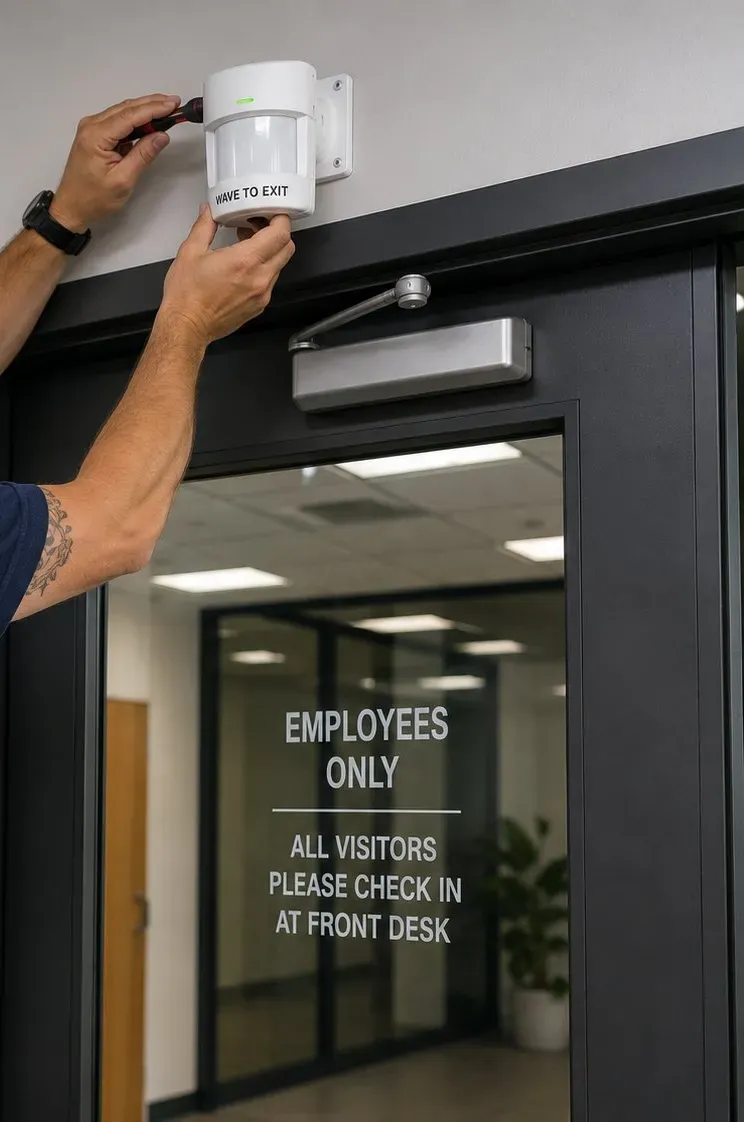
Hands mounting a motion request-to-exit sensor above a door beside its closer arm, smart lock installation Upper East Side Manhattan
A white motion sensor is fixed to the wall above a dark door frame next to the door closer, with a glass door marked “Employees only” visible below.

Keep the Key Your Board Chose — Add Everything Else

Snap the inside face of your door and the key you carry. Our reply names the locks that keep that key, the approvals your board or the Commission may expect, and a price.

Get In Touch

Request a Free Quote

Co-op on Park, townhouse in Carnegie Hill, walk-up in Yorkville or a practice on the ground floor — describe the door and you will have a written answer the same business day. Prefer to talk? Call (929) 560-0737.

✅

Thanks — Request Received

Expect a call from the team that handles doors east of the park before the end of the business day. If the door is a problem right now, ring (929) 560-0737.

How It Works

Our Installation Process

Six steps, whether the door is a retrofit on a Fifth Avenue co-op or a strike and keypad on a Yorkville street door.

1. Door photos and a first answer

You send photos of the inside and outside of the door, the edge and the key you use today, and tell us who comes and goes. We reply with the lock types that suit it and whether the board, the managing agent or Landmarks is likely to be involved.

2. Free walkthrough and flat price

At the door we measure thickness and backset, check the cylinder, the bolt throw, the hinges and the paint on the edge, test signal strength and look at any second door. You get a written flat price; strike and keypad doors use published AESS figures at the Manhattan rate.

3. Approvals and scheduling

We prepare the description, specification and insurance certificate for the board or managing agent, or the photographs and product details an architect needs for a Landmarks filing, and book a 2-hour arrival window inside the building's working hours.

4. Door preparation

The door and its exterior hardware are photographed, the strike pocket cleared, paint eased off the bolt path and the hinges and closer adjusted until the door latches on its own without being pushed.

5. Fit, connect and test

The lock goes on using only the preparation the door, its label and its owners allow; the bridge or border router is placed and remote control tested over mobile data; one-motion exit from inside and any release button are tested.

6. Credentials, away mode and handover

Personal codes or phone keys are set for each family member and employee with their hours, a second administrator is added, the away pattern is saved, and you keep a one-page sheet of who can open which door.

Coverage Area

Smart Lock Installation Near the Upper East Side's Landmarks

Six places that sum up the doors we work on east of the park — from a Federal-style house older than most of Manhattan's street grid to a row of Queen Anne houses designed to match.

Gracie Mansion, Carl Schurz Park

Built in 1799 at East End Avenue and 88th Street in Yorkville and the mayor's residence since 1942. The towers and walk-ups around Carl Schurz Park are some of the most varied door stock on the Upper East Side, from pre-war co-ops to newer condos.

Henderson Place Historic District

Twenty-four attached brick rowhouses by Lamb and Rich in the Queen Anne style at East End Avenue and 86th Street, designated a city landmark district in 1969. A clear example of why one house's hardware should not break the pattern of the row.

Museum Mile, Fifth Avenue

The stretch of Fifth Avenue from 82nd to 110th Street, beginning at the Metropolitan Museum of Art and passing the Guggenheim at 88th. The co-ops facing the park along it are classic restricted-key, staffed-lobby buildings.

Upper East Side Historic District

Designated in 1981 and running from 59th to 78th Street along Fifth Avenue and as far east as Third in places, with 74 buildings added in 2010. Mansions, townhouses and later apartment houses whose street doors start every lock conversation with Landmarks.

Treadwell Farm Historic District

Low-rise houses on East 61st and 62nd Streets between Second and Third Avenues, designated in 1967 on the former farm of Adam Treadwell. Small, protected facades where a smart lock belongs on the inside face.

Park Avenue Historic District

Sixty-four properties on Park Avenue between 79th and 91st Streets, designated in 2014. Grand co-op apartment houses above, doctors' and professional entrances at street level, and both kinds of door under the same district rules.

We also work across the rest of the Upper East Side — Lenox Hill, Carnegie Hill, Yorkville and the East End Avenue blocks — and next door in East Harlem, Midtown East, Roosevelt Island and across the park on the Upper West Side. The AESS Manhattan smart lock page covers the whole borough.

Gloved hands working on three door controller boards in an open access control enclosure with card readers below, Upper East Side Manhattan smart lock installation
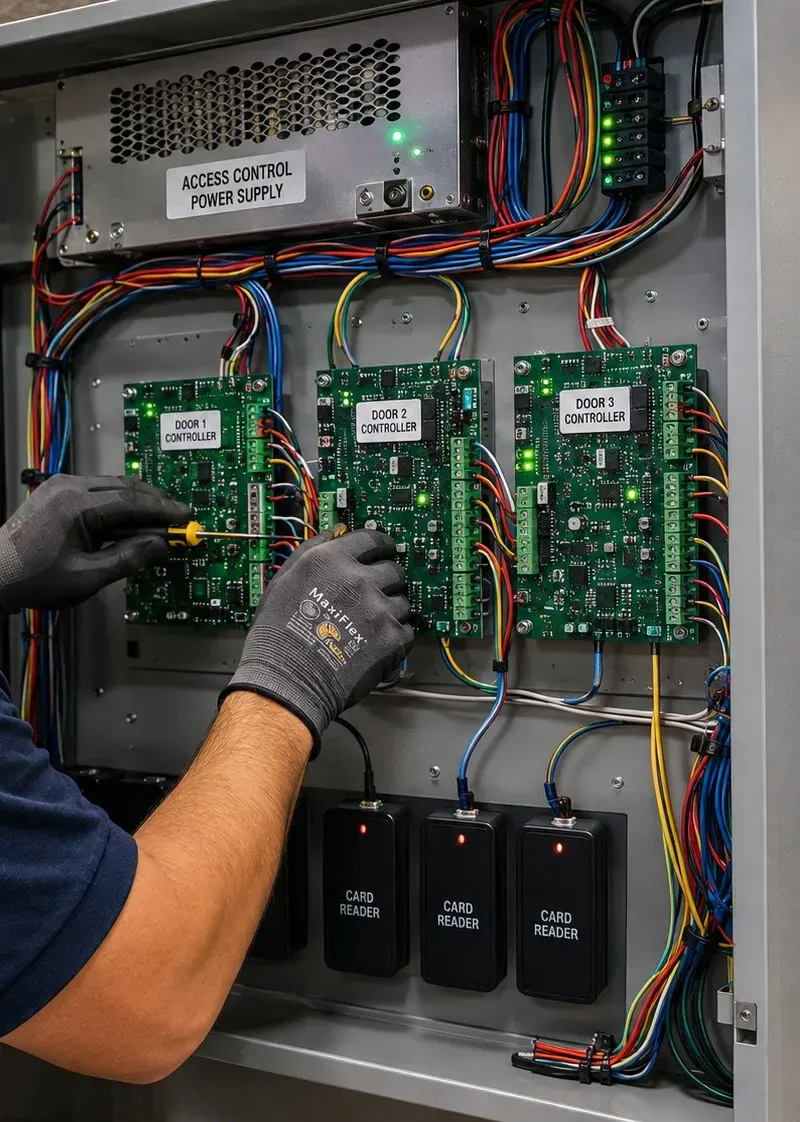
An open metal enclosure holding three labelled door-controller boards and a power supply, with multicoloured wiring and a row of card readers mounted underneath.
Pricing

Smart Lock Installation Cost on the Upper East Side

Upper East Side jobs are priced exactly as the rest of Manhattan is. Where AESS already publishes a figure — keypad or fob doors with electric strikes, new strikes, strike repairs, programming visits — we apply the borough's 1.25 area rate to our Brooklyn base and show both. A smart lock on an individual apartment or townhouse door has no published figure, because a retrofit on a modern door and a mortise conversion on a 1900s door are different jobs; those are quoted flat, in writing, after a free walkthrough, and the quote is the price.

WorkUpper East Side priceWhat it covers
Smart lock on a co-op, rental, condo or townhouse door — retrofit, smart deadbolt, mortise-format lock or service-door keypadQuoted flat at free walkthroughDepends on the door, the cylinder you keep, any second door and the paperwork; no published AESS figure for this line
Keypad or fob reader with electric strike on one door$1,875–$3,125 installedWalk-up street doors, practice entrances, gallery and shop doors — published $1,500–$2,500 base × 1.25
New electric strike in an existing frame$313–$563Replacing the keeper during a keyless upgrade — $250–$450 base × 1.25
Repair of a failed electric strike$369–$606A street or vestibule door that buzzes but stays shut — $295–$485 base × 1.25
Programming visit for a lock that is already fitted$265 first hour, then 30-minute blocksAccounts, codes, staff schedules, away mode, bridge or border router set-up
Service and callback rate$195/hr, 3-hour minimum ($585)Only for a call-out after we have handed the job over; the first installation never carries it

What changes an Upper East Side quote

  • The cylinder you keep. Retaining a restricted-key cylinder in an interior retrofit is quick; fitting it into a smart deadbolt body takes longer and depends on the maker's compatibility.
  • How many doors. A townhouse with a street door, a door under the stoop and a garden door is three locks and one plan; doing them in one visit is more efficient than three separate jobs.
  • The door's condition. Paint build-up, a sagging leaf, worn hinges or a loose strike take time to correct before a motorised lock goes on.
  • Approvals. Preparing a board's alteration description is part of the job; supporting an architect's Landmarks filing adds photographs and product details.
  • Credentials. A couple's codes take minutes; a household with five employees on different schedules, an away pattern and a second administrator takes longer and is worth getting right.

National guides and national brands

For comparison, Fixr's national cost guide (January 2025) puts a smart lock installation at $250–$400, averaging about $300, with handyman labour at $50–$100 an hour. That is third-party data for an ordinary house door, not an AESS price. If you are weighing ADT, Ring or SimpliSafe against a local installer, ask whose app holds your lock codes, whether a monitoring plan is needed for the lock to work with the alarm, and whether their technician will deal with your board, your building's key system and, on a townhouse, the Landmarks question.

You sign a written service agreement before any work starts; its payment and warranty terms are quoted word for word in the licence block at the foot of this page.

Shop Our Systems

Smart Lock Installation Packages & Pricing

Nearly every request we get from this neighbourhood fits one of the three cards below. The two priced cards are building-door work from our published list, scaled for Manhattan; the household card has no fixed figure, since one co-op door and a townhouse with three entrances are not comparable jobs.

Starter — One Apartment or Townhouse Door

Quoted flat at walkthrough

A retrofit, smart deadbolt or mortise-format lock chosen to keep your existing key; door prepared so it latches freely; one-motion exit checked; codes or phone keys for the household and up to a few regular visitors; second administrator; remote access tested; written handover sheet.

Standard — New Strike on a Building Door

$313–$563

For a walk-up, vestibule or practice entrance being converted: the keeper in the frame is swapped for a powered strike, at the Manhattan rate. If the strike you have simply stopped releasing, that is billed on the repair line instead, $369–$606.

Premium — Keyless Street, Practice or Gallery Door

$1,875–$3,125

One building door made keyless with a keypad or fob reader and an electric strike, at the Manhattan rate. Includes a code or fob per tenant or employee, an exit device on the inside, a closer tuned until the door latches by itself, and a short lesson for the owner on adding and deleting users.

Bring Your Own Lock — Labour Only

Bought a lock already? We fit it, quoted flat at the walkthrough as labour only. Before opening the box we confirm it suits the door — bored or mortise, thickness, backset — that it can keep the building's cylinder if the board requires that, and that on a landmarked door it will not change the exterior. A lock you supply carries its maker's warranty rather than ours. If it is the wrong lock for the door, we say so before anything is drilled, and suggest one that fits.

One Plan for Every Door in the House

Townhouse with three entrances, co-op with a service door, or a walk-up street door that never quite shuts — tell us which, and we will send back a plan and a price.

Household Access

A Townhouse Access Map, Door by Door

Townhouse households on the Upper East Side usually have more doors and more people than a lock app's set-up wizard expects. This is the starting map we work from at the walkthrough; every house changes it.

DoorWho uses itCredentialSettings worth having
Parlour-floor street doorFamily and invited guestsPhone key, fingerprint or personal code; existing key keptSmart parts inside only; alert if left unlocked at night
Entrance under the stoopHousekeeper, nanny, deliveriesPersonal codes with working hoursAuto-lock after closing; log reviewed weekly
Garden or yard doorFamily, gardener, dog walkerCodes limited to set daysRelock after a short delay; never key-only from inside
Roof or terrace doorFamily, roofer or HVAC contractorContractor code for job dates onlyFree exit from inside always; alert on every opening
Interior office, wine room or safe roomNamed family membersCode or phone keySeparate user list from the house doors
Any door, while the family is awayHouse-sitter or plant-waterer onlyTemporary code for the tripStaff codes paused; every entry pushed to your phone

A walk-up owner's checklist for the street door

  • Does the door close and latch by itself from fully open, half open and a few inches open? If not, the closer comes first.
  • Is the strike sound and fixed into solid frame material, with the latch fully engaging?
  • Does the intercom release still work once a keypad or reader is added, so tenants can let visitors in from upstairs?
  • Is exit from inside one easy motion, with no key, code or special knowledge needed to leave?
  • Who holds administrator rights — the owner, a managing agent, or both — and how are former tenants removed on move-out day?
  • Does every tenant still have a physical key to the building and to their own apartment?
  • Where do packages go once the vestibule locks behind the courier, and does a delivery code only open the outer door?

For larger building-wide fob systems with several doors, the work moves to our access control installation service for Manhattan buildings.

Glossary

Upper East Side Door Terms, Explained

  • Parlour floor: the raised main floor of a townhouse, reached by the stoop; its street door is usually the most decorative and the most likely to be a protected feature.
  • Under-stoop entrance: the door at street level beneath the stoop, historically the service entrance, and today the door most households use every day.
  • Areaway: the sunken space in front of a townhouse's under-stoop entrance, usually behind a low iron gate.
  • Vestibule: the small lobby between a walk-up's street door and its inner door, where the mailboxes and intercom panel tend to sit.
  • Special door: in the Landmarks rules, a door distinguished by fine craftsmanship, distinctive materials such as bronze or carved wood, unique form or age; its ornate exterior hardware is not covered by the no-approval repair provision.
  • Permit for Minor Work: the Landmarks Preservation Commission's staff-level permit for exterior work that does not need a Buildings Department permit and is restorative or appropriate — door replacement in an existing opening is one of its examples.
  • Restricted or high-security keyway: a patented cylinder whose keys can only be cut by authorised dealers against a registered card, common on co-op unit doors.
  • Retrofit lock: a smart lock that mounts over the inside of an existing deadbolt and turns it, leaving the outside and the key unchanged.
  • Mortise lock: a boxed mechanism that sits inside a slot chiselled into the edge of a thick door, with one faceplate holding both latch and bolt — what most heavy pre-war and townhouse doors on these blocks were built with.
  • Backset: how far in from the edge of the door the lock's main hole is centred; makers of smart deadbolts usually support the two common sizes, 2-3/8 and 2-3/4 inches, and old doors sometimes match neither.
  • Service door: in a pre-war apartment, the second door from the kitchen to the back stair or service elevator.
  • Thread border router: a hub or smart speaker inside the home that links a Thread lock to the internet.
  • Request-to-exit: a button or sensor that tells a powered lock someone is leaving, so the door releases for them.
Complete Services

Every Smart Lock Installation Service on the Upper East Side

A new lock is often one item on a longer list — a townhouse renovation, a co-op purchase, a practice moving in downstairs. These are the related services our Manhattan crews can fold into the same visit.

Access Control Installation in Manhattan

Fob and card systems for co-op lobbies, walk-up street doors and multi-door practices.

Abstract Enterprises Intercoms for Manhattan Buildings

Video and audio entry panels for townhouses split into apartments and for small walk-ups.

Intercom Repair

Silent handsets, dead panels and releases that no longer open the street door.

Door Buzzer Installation in Manhattan

New buzzer and strike systems where a full intercom is more than a small building needs.

AESS Buzzer Repair, Manhattan

Strikes that hum and hold, worn push-buttons and broken riser wiring in older buildings.

Doorbell Cameras

A discreet view of the under-stoop entrance or the vestibule before you unlock remotely.

Home Automation in Manhattan

One app for the door, the lamps, the blinds and the heating while the family is abroad.

Commercial Security

Access, cameras and alarms planned together for ground-floor practices and galleries.

Cameras for Apartment Buildings

Vestibule, mailroom and stair coverage for co-op boards and walk-up owners.

Low-Voltage Wiring, Manhattan

Cable, power and network runs behind strikes, readers and lock bridges.

Alarm Installation

Door and window sensors, including the fire-escape window a lock cannot protect.

Request a Quote

One request covering the lock and anything else on this list.

Field Notes

Field Notes From Upper East Side Doorways

How our installers work an old Upper East Side door — general practice, not an account of one job

On a townhouse we look at the outside before we touch the inside. We photograph the street face of the door, the escutcheon, the knocker and the letter slot from the sidewalk, because the most important promise on a landmarked house is that none of it will look different when we leave.

Then we open the door and watch it close. A century-old door that has to be lifted or leaned on to latch will defeat any motor, so hinges get tightened, the strike gets moved and the paint comes off the bolt path before a lock leaves its box.

On a co-op door the first thing we ask for is the key. If it is a restricted, card-controlled key, the plan is built around keeping that cylinder, not replacing it.

Finally we sit down with whoever will run the lock — often not the owner, but the house manager or a grown child — and set up each person's code together, so the plan is theirs before we go.

FAQ

Upper East Side Smart Lock Installation FAQ

Does an Upper East Side job cost more than the Manhattan rate because of the building?
+

No. The Upper East Side is priced exactly like the rest of Manhattan: published AESS figures with the borough's 1.25 area rate, so a keypad or fob door with an electric strike is $1,875 to $3,125 installed. Locks on apartment and townhouse doors are quoted flat after a free walkthrough, whatever the building.

Do you also work in East Harlem, Midtown East and on Roosevelt Island, just beyond the Upper East Side?
+

Yes. The same crews cover all of Manhattan, including East Harlem north of 96th Street, Midtown East below 59th Street, Roosevelt Island and the Upper West Side across the park, at the same Manhattan prices.

Which licence number should we give the co-op board for its contractor file?
+

Abstract Enterprises Security Systems works under New York State low-voltage licence #12000287431. We send it with our certificate of insurance and a short description of the lock and the door work, addressed however the board or managing agent asks.

Will you service a smart lock that another company installed in our apartment?
+

Yes. We diagnose and repair locks fitted by others, including retrofits residents put in themselves. If the lock only needs re-pairing or new codes, that is a programming visit at $265 for the first hour; if hardware has to be corrected or replaced, we quote it before doing the work.

Our elevator opens onto a landing we share with just one neighbour — does our apartment door still need a proper lock?
+

Yes. A semi-private landing is still common space: building staff, the neighbour's household and their visitors can all reach it. Your apartment door should lock like any other unit door, and a smart lock there adds an entry log and auto-lock without changing the building's elevator controls.

Can the lock's app account be set up in the name of our estate manager or family office?
+

It can, but we recommend the owner holds the primary administrator account and the estate manager or family office is added as a second administrator. That way access survives a change of staff or advisers, and you can always remove anyone without losing control of your own door.

Do you install locks that open with a tap of an iPhone or Apple Watch?
+

Yes. Some smart deadbolts support Apple Home Key, which unlocks the door with a tap of an iPhone or Apple Watch; Schlage lists it on its Encode Plus, for example. It works alongside codes and keys, so people without an iPhone still get in, and it needs an Apple home hub set up in the home.

What happens to our codes if the lock's maker shuts down its cloud service?
+

Codes stored in the lock itself and Bluetooth unlocking from a phone at the door generally keep working without the maker's servers, while remote access, alerts and app-based changes may stop. We favour locks that keep codes on the device and support Matter, which allows local control through more than one home platform.

Our building supplies Wi-Fi to every apartment — can the lock use it, or do we need our own?
+

Sometimes. Building-wide Wi-Fi often isolates devices or asks for a sign-in page that locks and bridges cannot complete, and some locks only join 2.4 GHz networks. We test it at the door; if it will not hold the lock reliably, a Thread lock with a border router or a small router of your own is the dependable option.

All Areas Served

Smart Lock Installation Across Manhattan, New York City and Beyond

This page covers the Upper East Side. Borough-wide detail on doorman buildings, entry platforms, office suites and landmark storefronts is on our smart lock installation Manhattan page, and renters' rights and co-op key rules for all five boroughs are on the New York City smart lock hub. Neighbourhood pages like this one are being added across the city.

Not here for a lock? Start from the Abstract Enterprises Security Systems home page for cameras, intercoms and alarms, or read about us for the team and licence behind every visit.

Locked Out of a Co-op, Townhouse or Walk-Up East of the Park?

If the housekeeper's code was refused at the under-stoop door this morning, or your retrofit has gone offline and the keypad stays dark, phone (929) 560-0737. The first free 2-hour arrival slot inside your building's rules is yours, and the usual culprits — flat batteries, a lost pairing, a bolt rubbing its strike — are normally put right within an hour or two of arrival.

Smart Lock Installation on the Upper East Side — Licensed, Insured, Careful With Old Doors

Abstract Enterprises Security Systems · 460 E Fordham Rd, Bronx, NY 10458 · Upper East Side and Manhattan line (929) 560-0737 · WhatsApp (718) 679-0359 via wa.me

NYS Low-Voltage Licence #12000287431 · 100% Licensed & Insured · Same-Day Estimates · Rated 4.7★ from 201 Google Reviews

Locks you supply carry their manufacturer's warranty. Full terms — including 50% deposit, one-year parts-only warranty on AESS-supplied products, and the late-fee schedule — are set out in the service agreement. See our warranty page.

This page describes common practice and published rules; it is not legal advice, and a board, an architect or the Commission has the last word on any particular door. Last reviewed October 17, 2026. Changelog: Upper East Side smart lock page published for the first time.