What are you looking for?
About Us Contact Us Careers Get a Free Quote (800) 486-0943
Pick a service
✅ Got Your Own System?
🎬 Home TheatreQuote 🎶 AV SoundQuote 🔑 Access ControlQuote
Now pick your area
Pick your area
Long Island
Hudson Valley
Services available
Pricing & Tools
Pick a service for pricing
🚪 Intercom Pricing 🔔 Buzzer Repair Pricing
Calculators
📹 Camera System Calculator 🚨 Alarm Calculator ⚡ Cabling Quote Builder ✅ Got Your Own System?
Select your area
Licensed Low-Voltage Contractor · Flushing, Queens · Condo Towers, Storefronts, Offices & Detached Houses

Smart Lock
Installation in
Flushing

Tower Unit Doors · Main Street Storefronts · Upstairs Offices · Imported Push-Pull Locks · Broadway–Flushing Houses

Flushing doors come in more varieties per block than almost anywhere in the city. A glass condo tower over a shopping mall, a narrow storefront with a frameless glass door, a second-floor tutoring centre up a shared stair, a tax office above a bakery, and a 1920s Colonial on a covenant-protected street can all sit within walking distance of the Main Street station. We fit smart locks and keypad entries that suit the door actually in front of us, that let everyone out with one plain motion, and that keep working when the building’s Wi-Fi is crowded and the hands on the reader are wet.

Reviewed and updated October 17, 2026 · Written by Anwar Timothy, NYS licence #12000287431

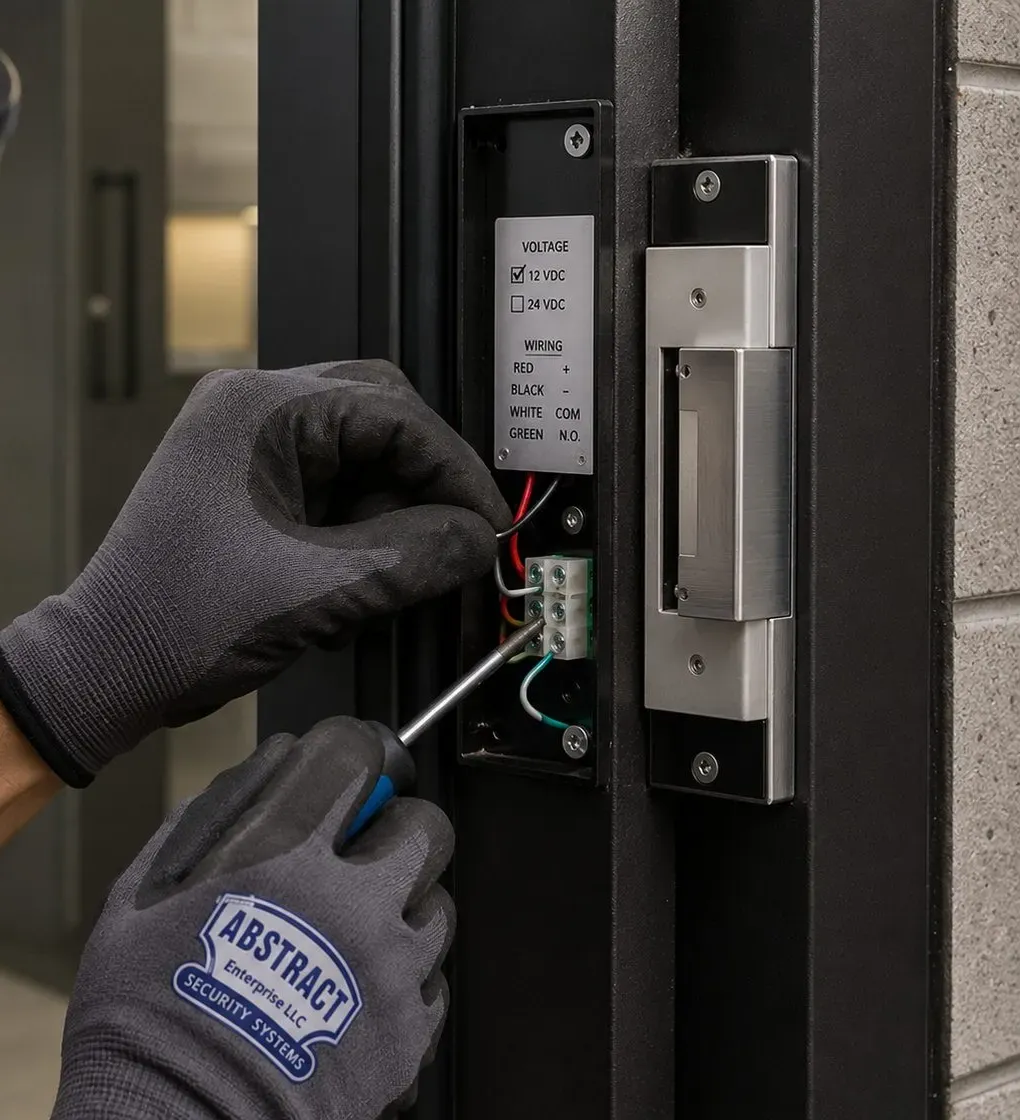
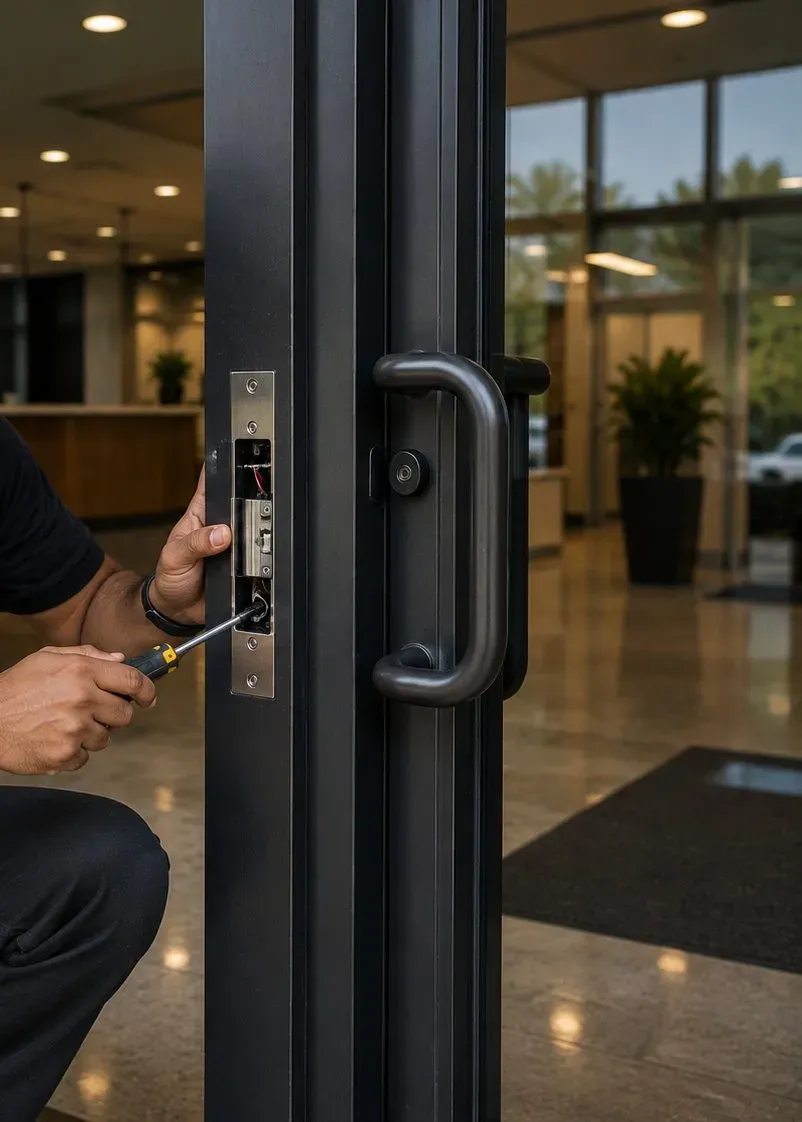
Smart lock installation Flushing Queens: technician fitting an electric strike in the aluminium frame of a glass entrance door
A gloved hand sets a screwdriver to an electric strike in the black aluminium frame of a glass door, with a lobby visible through the glass.
Free Flushing Smart Lock Quote
Tell us the door, what it is made of and who opens it — we call back the same business day

✅
Request Sent!
A licensed installer will call you back the same business day.
25+
Years Experience
✓
Same-Day Estimates
100%
Licensed & Insured
4.7★
201 Google Reviews

Converting a Flushing shop, office or home to keyless entry — or locked out by one that stopped answering? Call our Queens line, (347) 434-6392, or send the 60-second form. A licensed installer reads every request and will tell you, before anyone drives over, whether the lock you have in mind physically fits your door and what the door needs first.

  • We measure the door edge, the glass and the frame before recommending anything, and put a flat figure in writing
  • Staff, family and visitor credentials planned person by person, with an exit that never needs a code
  • NYS licence #12000287431 · fully insured · 2-hour arrival windows, 8 AM to 8 PM
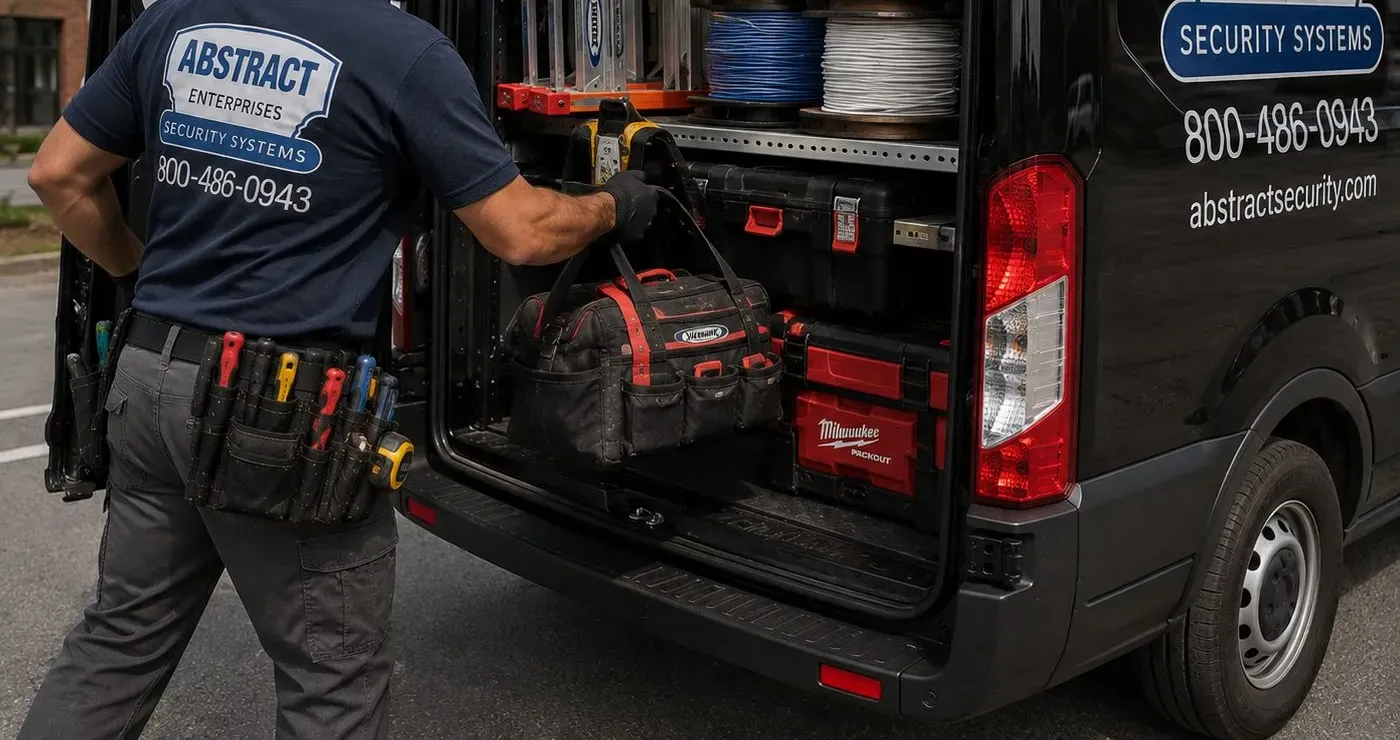
AESS service van open at the rear with cable reels and tool cases, smart lock installation crew for Flushing Queens
A technician lifts a tool bag from the open rear doors of a black AESS service van stocked with cable reels and tool cases.
The Neighborhood

Why Flushing Properties Need Smart Lock Installation Matched to the Door

Flushing is really several neighbourhoods stacked on top of one another, and each layer has its own kind of door. Around the Main Street and Roosevelt Avenue intersection the blocks are commercial from the sidewalk up: storefronts at grade, offices, clinics, tutoring centres and travel agencies on the floors above, and residential doors squeezed between shop entrances. A few minutes west, along College Point Boulevard and Prince Street, glass towers rise over shopping centres. North and east of downtown the scale drops to detached and semi-detached houses on tree-lined streets, including the Broadway–Flushing area, where a deed covenant has kept the houses detached for more than a century. A smart lock that is right for one of those doors is often physically wrong for the next.

The people behind the doors matter as much as the hardware. The NYU Furman Center’s 2026 profile of Flushing/Whitestone (Queens Community District 7) counts about 252,000 residents in 2024 and puts the homeownership rate at 52.5 percent, far above the citywide 32.7 percent. The Department of City Planning’s 2026 report on immigrant New Yorkers calls Flushing–Murray Hill the city’s largest immigrant neighbourhood, with 95,700 foreign-born residents making up two-thirds of its population. In practice that means owners making their own decisions about their own doors, family businesses run by relatives on different shifts, and lock hardware that may have been bought abroad or online before anyone measured the door it is meant for.

Condominiums have quietly become the property type that changes hands most often. The Furman Center’s sales table shows 764 condominium sales in Flushing/Whitestone in 2025 against 488 one-family sales, and 5,142 new units built in buildings of four or more units between 2010 and 2025. Every one of those sales is a new owner standing at a unit door that someone else programmed. In the towers the questions are rarely about drilling; they are about radio signal through concrete, crowded 2.4 GHz Wi-Fi on every floor, and which credentials belong to the building and which belong to the owner.

Then there is security, which in Flushing is mostly a business story. QNS reported in August 2025 that a single burglar hit a half-dozen businesses in and around Flushing between May and August, and that in four of the six cases — a restaurant on Linden Place, a home-furnishing shop on College Point Boulevard, a furniture store on Northern Boulevard and the Flushing Tower Condominium — he simply walked in through an unlocked door. In December 2025 a crew broke through the front doors of a medical business and pharmacies on Kissena and Parsons Boulevards before dawn. Those two patterns point in different directions: one is solved by doors that lock themselves, the other by accepting that a lock cannot help when the door around it gives way. We plan for both.

There is good news in the numbers too. Through October 4, 2026, the 109th Precinct — which covers downtown Flushing, East Flushing and Queensboro Hill as well as College Point, Whitestone and Bay Terrace — had recorded 181 burglaries for the year, against 354 at the same point in 2025, a 48.9 percent drop according to the CompStat figures QNS cited. Fewer break-ins do not make an unlocked side door safe, but they do mean most of our Flushing calls are about convenience, staff turnover and keys that have been copied too many times, rather than about a door that has just been forced.

Flushing figures that shape a smart lock job

  • 52.5 percent: the 2024 homeownership rate in Flushing/Whitestone, per the NYU Furman Center, against 32.7 percent citywide — most of the people who call us own the door they want changed.
  • 764 vs. 488: condominium sales versus one-family sales in Flushing/Whitestone in 2025 (Furman Center) — a steady stream of new owners inheriting someone else’s codes and app accounts.
  • 23.1 percent: share of Flushing/Whitestone residents aged 65 and over in 2024, up from 15.8 percent in 2000 (Furman Center) — the users who most need large buttons, a fob or a key that still works.
  • 95,700: foreign-born residents of Flushing–Murray Hill, two-thirds of its population, according to the Department of City Planning’s 2026 immigrant report — and a lot of lock hardware bought abroad.
  • About 1,500: ground-floor businesses along roughly 30 block faces in the Downtown Flushing Transit Hub BID, as the city’s BID directory describes it — narrow storefronts, shared stairs and upstairs suites.
  • 181 vs. 354: burglaries reported in the 109th Precinct through October 4 in 2026 and 2025, a 48.9 percent decline in the CompStat figures QNS published on October 12, 2026.

Flushing owners who rework a door usually want to see who is standing at it, too. Our doorbell camera installers for Queens homes often fit a camera on the same visit so a remote unlock is never a blind one, and the AESS commercial camera team in Queens covers storefront glass and back doors that a lock can’t watch.

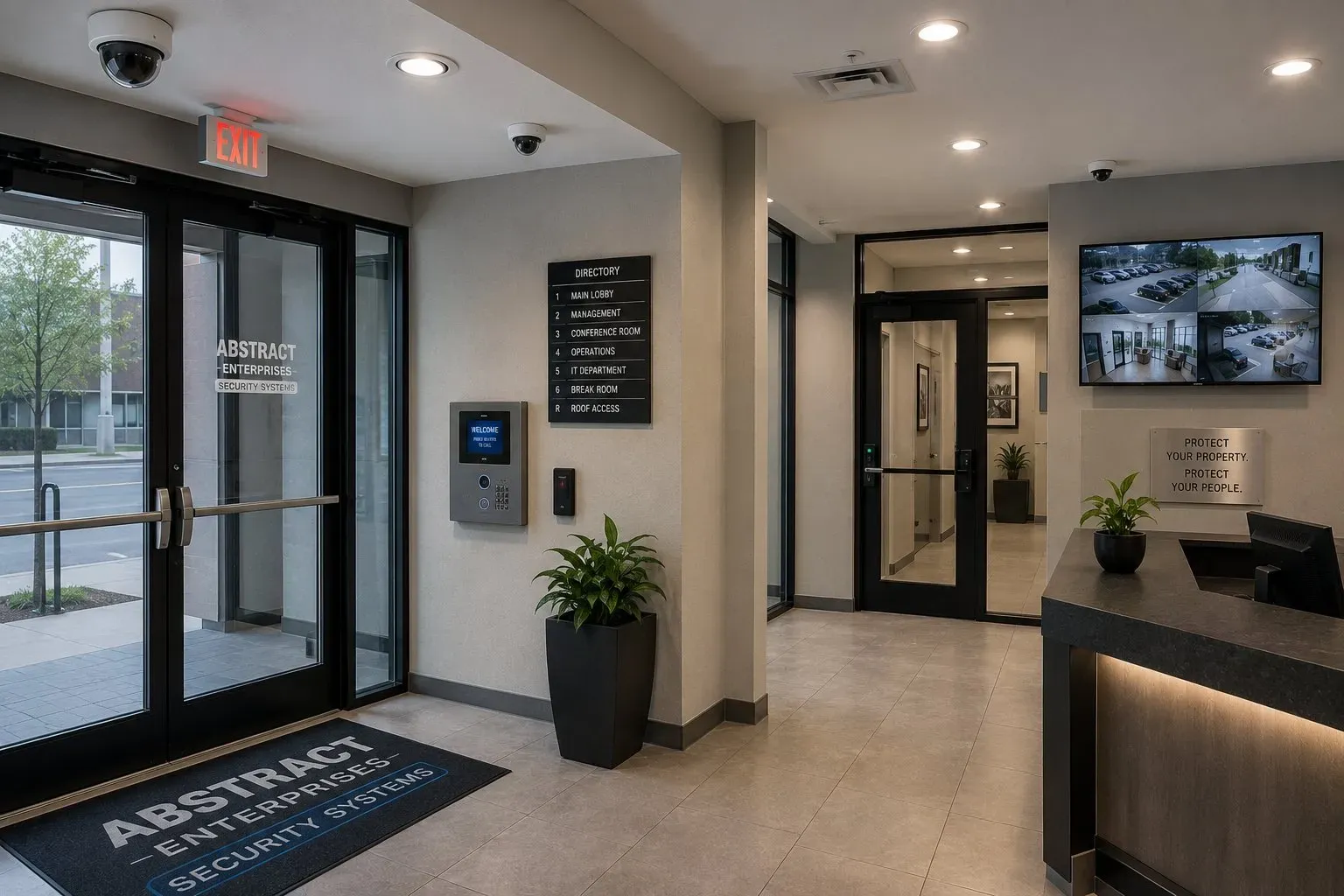
Finished lobby with glass entrance doors, wall-mounted card reader and ceiling cameras, keyless entry for Flushing Queens buildings
A finished lobby: glass double doors with push bars, a card reader on the wall beside them, dome cameras in the ceiling and a reception desk.
Repair Capture

Keypad Unresponsive on a Flushing Door?

A touchscreen that stays dark after the batteries were changed, a lock that shows “offline” every evening when the whole tower gets home and switches on its Wi-Fi, a push-pull lock whose voice prompts nobody in the shop can understand, a fingerprint reader that stopped recognising anyone, or a staff door that a former manager can still open — those are service calls, and we book them that way. Most pairing, power and alignment faults are fixed in one to two hours once a technician is at the door. If the problem is a building entrance instead, repairing a failed electric strike runs $310–$509 at our Queens rate. Ring (347) 434-6392 and say it’s a smart lock problem, or see our Queens door buzzer repair service for buzzers and strikes on lobby doors.

What We Install

Smart Lock Installation Services in Flushing

The work Flushing owners, tenants and managers ask us for most. Whatever the door, the finish line is the same: it shuts and latches on its own, it opens from inside with one motion and no code, a mechanical key or override still works, and every person who needs a credential has tried theirs while we watched.

Condo and Co-op Unit Doors

Retrofit units, keypad deadbolts and lever locks for apartment doors in the towers around downtown and the waterfront, planned around the building’s own fob system and its rules for the corridor side of the door.

Storefront Keypads and Strikes

Keypads or fob readers with electric strikes on aluminium storefront doors along Main Street, Roosevelt Avenue, 39th Avenue and Prince Street, with a push-to-exit button inside so exit never depends on the system.

Frameless Glass Door Entry

Patch locks, bottom-rail locks and header magnetic locks designed for tempered-glass doors that can’t be drilled — the all-glass fronts common on salons, clinics and showrooms.

Upstairs Office and Suite Doors

Code or fob entry for second- and third-floor offices reached by a shared stair: accountants, travel agencies, law offices, medical practices and tutoring centres, each with per-person credentials and a log.

Push-Pull and Imported Lock Fitting

Assessing and installing Korean- and Chinese-style push-pull digital locks bought abroad or online — measuring the door edge and thickness first, and telling you honestly when the door can’t take one.

Staff Door Credential Plans

Individual codes, fobs or fingerprints for every employee and relative who opens up, schedules for shifts, and a five-minute routine for removing someone the day they leave.

Detached House Door Sets

Front, side and rear doors on the houses of Broadway–Flushing, Auburndale and Queensboro Hill, matched to the existing hardware and arranged so each door carries the code of the people who use it.

Connectivity in Concrete Buildings

Bridges, Thread border routers and access points placed so a unit lock in a tower or a stock-room lock in a basement can actually be reached from a phone across town.

Repair, Re-Pairing and Takeovers

Fingerprint readers that stopped reading, locks orphaned by a lost admin phone, codes inherited from a previous owner or manager, and strikes that drifted out of line as a door sagged.

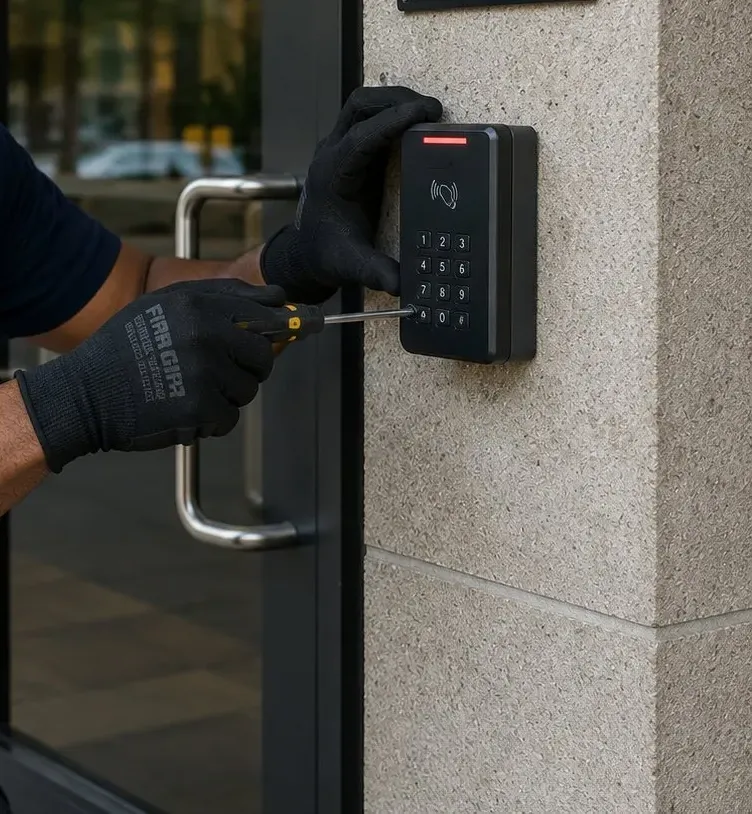
Keypad and card reader being mounted on a stone wall beside a glass office door, smart lock installation Flushing Queens
A gloved hand drives a screw into a black keypad reader on a stone-clad wall next to a glass door with a steel pull handle.
Building Specialists

Smart Lock Installation for Flushing’s Architecture

Flushing’s doors date from four very different centuries of building, and the newest ones are often the trickiest. These are the building types we work in most, with what each means for a keyless installation.

Glass Condo Towers Over Retail

Sky View Parc, described by its listing pages as a 448-unit condominium designed by Perkins Eastman on top of a busy mall, and the Tangram complex on Prince Street, a 1.2-million-square-foot mixed-use development whose two residential towers opened in 2019 and 2022, set the pattern: steel or solid-core unit doors in steel frames, building-wide fob systems and floors full of competing Wi-Fi.

The Waterfront Redevelopment

The Special Flushing Waterfront District, approved by the City Council, makes way for what 6sqft described as a 13-tower mixed-use project; the developers’ own site lists 1,725 proposed homes and a hotel of 879 keys. New doors, new management companies and new owners will be setting up locks there for years.

Mixed-Use Buildings on Main Street

Two- to six-storey buildings with shops at grade, a separate street door to a shared stair, and offices or apartments above. The street door, the office doors and any apartments are three different lock problems with three different sets of rules.

Upper-Floor Professional Suites

Clinics, accounting and tax offices, travel agencies and tutoring centres on the floors above downtown storefronts, usually behind hollow-metal or solid-core doors in older frames, often with a shared corridor and a landlord who keeps a master key.

Detached Houses in Broadway–Flushing

A State and National Register historic district listed in 2006, whose register application describes hundreds of detached Dutch Colonial, Colonial and Tudor Revival houses built between 1919 and 1925, and where the homeowners’ association still works to uphold the 1906 Rickert–Finlay covenant that kept the houses detached and set back from the street.

Semi-Detached and Attached Houses

The side streets of Murray Hill, Queensboro Hill and East Flushing mix older frame houses with brick two-families, many with a front door, a side door and a separate entrance below the stoop. Frames that have moved and storm doors that crowd the lock are the usual issues.

Pre-War and Post-War Apartment Buildings

Elevator and walk-up buildings from the 1920s through the 1960s with steel apartment doors, mortise locks and lobby intercoms, where HPD’s rules for apartment doors and the building’s duplicate-key policy apply before any lock catalogue does.

Door details we measure on every Flushing job

The width of flat door beside the edge. Glass lights, raised panels and decorative mouldings decide which locks fit long before the brand does. Ordinary American keypad deadbolts mount through a round bore with a 2-3/8 or 2-3/4 inch backset; Korean-style mortise push-pull locks need much more. One North American distributor of Samsung locks lists an “absolute minimum of 4.5 inches of flat space from the edge of the door to any glass moulding, paneling, decorative beveling or moulding” for its mortise models. We measure that distance before anyone orders anything.

Door thickness and core. The same distributor lists its mortise locks for doors 1-9/16 to 3-1/8 inches thick, with a longer spindle for doors over 2-3/8 inches. Schlage lists its Encode Plus for doors 1-3/8 to 1-3/4 inches thick. A hollow-metal office door, a solid-core condo door and a thick original front door in Broadway–Flushing all sit in different parts of those ranges, and a hollow-metal door needs reinforcement where a lock body is mounted.

Glass that can’t be drilled. Tempered glass storefront doors without a frame cannot be bored for a lock. They take hardware made for the glass system — a patch lock in the bottom corner fitting, a bottom-rail lock into the floor, or a magnetic lock at the header. Each has different consequences for the floor, the fire alarm and the way people leave, which we work out door by door.

Frames, closers and latching. A smart lock that auto-locks is only as good as the door’s willingness to close. On shop doors we check the closer’s speed and latch stroke; on house doors we check that the strike sits where the bolt lands without being pushed. A motorised bolt that touches the strike edge strains the motor, drains the batteries and reports a jam.

Flushing landlords who convert unit doors usually look at the lobby next. The Queens intercom installation team handles street doors and video door stations for mixed-use buildings, and our door buzzer installers in Queens fit new buzzers and strikes where an old system has failed.

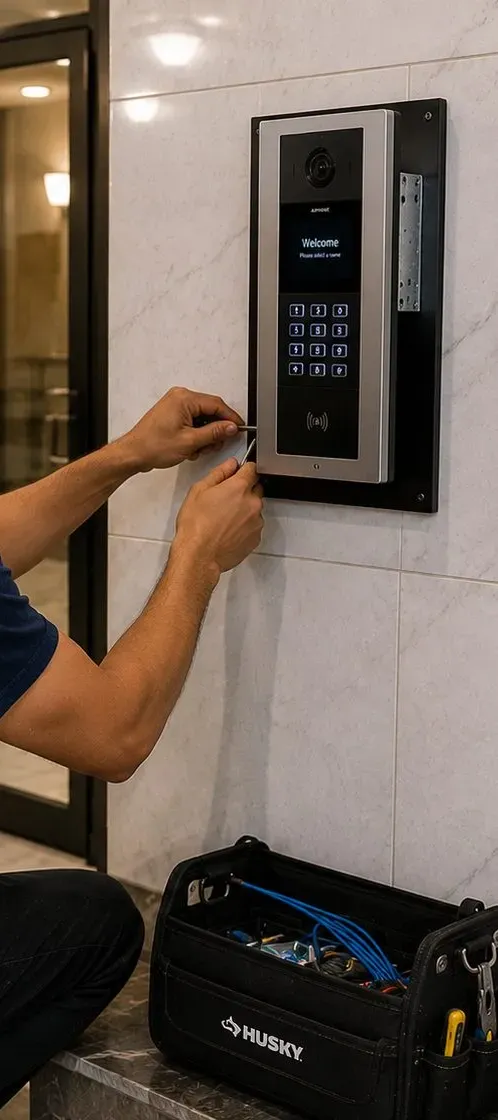
Two hands securing a black entry panel with keypad and screen to a marble lobby wall, smart lock and entry work in Flushing Queens
Two hands work at the base of a black-framed entry panel with a keypad and a display, mounted on a marble wall, with a tool bag on the floor below.
Commercial Smart Locks

Business Smart Lock Installation in Flushing

Downtown Flushing is one of the densest small-business districts in the city, and most of its doors are opened by several people on different schedules. A family restaurant where a cousin opens on Mondays, a pharmacy where the pharmacist arrives before the cashier, a tutoring centre with part-time teachers, a tax office that doubles its staff from February to April. The lock question in these businesses is about who can open which door, when, and how quickly you can take that right away.

Main Street and Roosevelt Avenue

The heart of the Downtown Flushing Transit Hub BID, which the city’s directory describes as some 30 block faces and about 1,500 ground-floor businesses around the 7 train terminal. Narrow frontages, shared street doors to upper floors, and storefronts that open from early morning until late at night.

Kissena and Parsons Boulevards

Pharmacies, medical offices and clinics. QNS reported in January 2026 that a burglary crew broke the front door of a medical business at 42-62 Kissena Blvd. and broke into the pharmacy next door on December 20, 2025, then broke the front door of a pharmacy at 45-12 Parsons Blvd. on December 30 — the doors gave way, not the locks.

Northern Boulevard and Linden Place

Furniture and home stores, restaurants and service businesses stretching toward Murray Hill. In the 2025 spree QNS described, the burglar found unlocked doors at a Linden Place restaurant and a Northern Boulevard furniture store — the case for doors that relock themselves.

Murray Hill by the LIRR Station

A Korean commercial corridor near the Murray Hill station of about 70 small businesses, roughly 60 percent of them restaurants within five or six blocks, according to the merchants’ association as quoted by QNS. Kitchen doors, rear deliveries and family shifts.

Prince Street and College Point Boulevard

Shopping centres, hotel and office space at the foot of the condo towers, plus big-box and home-furnishing stores along College Point Boulevard. Stock rooms, management offices and back-of-house corridors are where keyless locks earn their keep.

Sanford Avenue and the Side Streets

Smaller storefronts and offices on the side streets east of Main Street, where rear doors face yards and alleys. The 2025 spree began with a forced rear door at a Sanford Avenue business — rear doors need the same attention as the front.

Compliance callouts for Flushing business doors

  • One motion out. Door-hardware commentary on the model building codes is consistent that electrified locks must stay readily openable from the egress side, generally with one releasing motion and no key, code or special knowledge. Every shop, office and classroom door we fit opens from inside with a lever, a push bar or a push-to-exit button.
  • Fingerprints and customers. New York City’s Local Law 3 of 2021 requires covered commercial establishments — retail stores, food and drink establishments and places of entertainment — that collect customers’ biometric identifier information to post a sign at customer entrances, and bars selling or trading that information. A staff-only fingerprint door is a different situation from one customers use; ask your counsel which applies.
  • Interlocked vestibules. A two-door buzz-in vestibule is a special locking arrangement. Fire codes require a way out of every occupied space, and if the interlock is part of the exit path the hardware needs approved overrides. That design belongs to your architect and the city’s approvals, not to a lock catalogue.
  • Hands and heights. Door-hardware commentary on the 2010 ADA Standards sets two tests we apply to every public door: a person must be able to work the hardware without tight grasping, pinching or twisting the wrist, and it should sit 34 to 48 inches off the floor. Levers and keypads inside that band suit a wheelchair user and an elderly shopper equally.
  • Homes on the floors above. In a mixed-use building the apartment doors answer to the Housing Maintenance Code, and any smart access an owner offers tenants falls under the Tenant Data Privacy Act. We keep the shop’s codes and fobs entirely separate from them.

When a business needs more than a few keypads — several doors, an elevator, a camera timeline, reports for an office manager — the job becomes access control, and our Queens access control installation service picks it up. For storefront glass and alarms on the doors a lock can’t protect, see the alarm installation team for Queens businesses and homes.

Close-up of an electric strike terminal block being wired for a keypad entry door, Flushing Queens smart lock work
Gloved hands tighten a conductor into the terminal block of an electric strike, beside a label plate listing the voltage settings.
Your Questions Answered

Smart Lock Installation in Flushing: Questions Answered

These are the questions Flushing owners, tenants and shopkeepers bring to us before a lock goes on, grouped by the kind of door: tower apartments, hardware bought abroad or online, houses, and the shops, offices and classrooms of downtown. Prices, scheduling and coverage are in the FAQ further down. Nothing on this page is legal or compliance advice; where a law or agency is involved, we say which one so you can check with it directly.

Apartments in the new towers

Our condo is on a high floor downtown and my phone shows dozens of neighbours’ Wi-Fi networks — will a Wi-Fi smart lock keep dropping off?

It can, and crowded radio is the most common reason a lock in one of Flushing’s newer buildings shows “offline” in the evening and comes back by morning. Most Wi-Fi locks and lock bridges talk only on the 2.4 GHz band — Schlage’s product page for the Encode says plainly that it “requires 2.4GHz WiFi network” — and that is the same band every neighbour’s router, many older laptops and a long list of smart plugs and cameras use. In a tower with dozens of units per floor, the lock is competing with all of them, from inside a steel door at the far end of an entry hall, usually behind a concrete wall from your router.

There are four practical fixes, and we test them in this order. First, move the radio closer: a mesh node or access point near the entry, or a plug-in lock bridge in the hall closet — August’s support guidance, for example, puts its Connect bridge within 10 to 15 feet of the lock. Second, consider a lock that uses Thread through a border router you already own; Bold’s Matter guide describes Thread as a low-power, self-healing mesh, and both Bold and Yale say a Thread lock needs a border router, such as a recent smart speaker or hub. Third, keep the lock on Bluetooth only if you never need remote access. Fourth, if the building’s management runs a wireless network in the corridors, don’t join a lock to it unless management agrees in writing.

Whatever we choose, the test is the same: a phone on mobile data, standing in the lobby, locking and unlocking the door and receiving the alert, at the time of day when the building is busiest. A lock that passes that test at 7 p.m. will pass it at 2 p.m.

Locks bought abroad or online

A relative brought back a push-pull fingerprint lock from Korea — will it fit an ordinary American front door?

Sometimes, but not on the strength of the box. Push-pull digital locks of the kind sold in Korea and China are usually mortise locks: a rectangular lock body is let into a pocket cut in the edge of the door, and large escutcheons cover both faces. A typical American keypad deadbolt is the opposite — a cylindrical latch through a round bore, with a 2-3/8 or 2-3/4 inch backset, as Allegion’s door-preparation guidance for its Schlage locks spells out. The two systems use different holes in different places.

For its Samsung mortise models, one North American distributor asks for an absolute minimum of 4.5 inches of flat space from the edge of the door to any glass, panel or moulding, a door between 1-9/16 and 3-1/8 inches thick, and at least 70 mm of clearance where a storm door closes over the main door. Panelled wood doors, doors with a glass light near the latch side and narrow storm-door gaps fail those numbers more often than not. A door that already has two round holes for an American knob and deadbolt also has to be checked to make sure the new escutcheons will cover them.

If the door passes, we cut the mortise pocket, fit the body and the trim, and test the inside handle: a push-pull lock still has to open from the inside with one plain motion, without a code. We also check what you can and can’t get help with — the manual, voice prompts and support line may be in another language, and warranty claims may have to go back to the country of purchase. If the door fails, we will say so before cutting anything, and show you a North American lock that gives the same features on the door you have.

A no-name smart lock from an online marketplace costs a fraction of a Schlage — what are we actually giving up?

Mostly things you can’t see in the listing. Established makers publish which standard their lock was tested to; Schlage, for example, lists the Encode Plus as ANSI/BHMA A156.40 Grade AAA, the residential deadbolt standard’s top grade. Many marketplace listings name no standard and no grade at all, which doesn’t prove the lock is weak but leaves you with no way to know how its bolt, cylinder and housing were tested.

The second thing is the software behind it. A smart lock is half hardware and half service: an app, a cloud account, firmware updates and someone to answer when it misbehaves. Before buying, look for a company you can name, an app with recent updates, a privacy policy that says where account data is kept, and a published way to report security problems. If you can’t find those, assume the remote features may stop working one day and choose a lock that is still a good lock without them.

Third, the mechanical basics. Check that it has a real key override or a mechanical bypass, an inside thumb-turn that works without power, a backset that matches your door, and a battery cover that a grown-up can open without tools. We are happy to install a lock you supply; we will just tell you during the walkthrough if it falls short on any of those points, before it goes on your door.

Houses north and east of downtown

After October’s armed home invasion near the Horace Harding Expressway, should we stop unlocking our door from the app for people we can’t see?

It’s a sensible rule to adopt, though it helps to be clear about what happened. QNS reported that on October 11, 2026, four masked men forced their way into a home on the Horace Harding Expressway near 150th Street at about 2:30 a.m. That was a forced entry by armed men — not a remote unlock, a guessed code or a hacked app — and no lock setting would have made the difference that night.

Where a smart lock can make you less safe is in everyday habits. Unlocking from the app because someone at the door says they are a courier, a relative’s friend or a repairman you weren’t expecting is the digital version of opening the door to a stranger. A video doorbell or door camera beside the lock means you see the face before you press the button, and temporary codes with an end time are better than remote unlocking for deliveries and trades you have scheduled. At night, there is rarely a reason to unlock remotely at all.

The physical side still matters most. On houses we fit the strike with long screws that reach the framing, check that the bolt throws its full length, and talk about an alarm with door contacts and a panic button. A smart lock does its best work by making sure the side and rear doors are actually locked every night — and by telling you, on the phone by your bed, when one isn’t.

Shops, offices and classrooms downtown

Our tutoring centre fills with children after school — can the entrance keep strangers out without trapping the kids inside?

Yes, as long as the locking only ever applies to people coming in. Tutoring and test-prep centres are a fixture of downtown Flushing — a 2017 New York Times article on test-prep centres opens on Main Street — and many sit on upper floors behind a shared street door. The usual arrangement is a keypad or fob reader on the outside for staff and an intercom with a camera so the front desk can buzz in parents and visitors. On the inside, the door opens with a lever or a push bar, every time, without a code.

What most centres actually want is to know when a child leaves, and that is a job for an alert, not a lock. A door contact or an exit chime that sounds at the front desk whenever the door opens lets staff look up and see who is going, without ever making the door hard to open. Commentary on the model codes is clear that electrified locks must remain readily openable from the egress side, and delayed-egress or locked-exit arrangements are special locking systems that need approvals — not something to improvise for a classroom.

We also set credentials up so they can be taken away quickly. Part-time teachers get their own codes or fobs, which come off the system the day they finish; parents are buzzed in rather than given codes that spread; and the owner gets the log of who opened the door and when, which helps if there is ever a question about a pickup.

We prepare tax returns in an office above Main Street — does a keypad with an audit log help with the IRS’s data-security expectations?

It can be part of the answer, but the IRS doesn’t name door hardware. Publication 4557, Safeguarding Taxpayer Data, says that under the FTC Safeguards Rule, tax return preparers “must create and enact security plans to protect client data,” and among its basic steps it tells preparers to “limit access to taxpayer data to individuals who need to know” and to “implement a clean desk policy.” It points to Publication 5708 for building a written information security plan.

A keypad or fob lock with individual credentials gives you something concrete to put in that plan’s physical-security section: a list of who can open the office and the file room, a log of when they did, and a way to remove a seasonal preparer’s access the day the season ends. A shared four-digit code that every employee since 2019 knows gives you none of that. Where client files are kept on paper, a separate lock on the file room or cabinet room, with a shorter list of users, is worth more than a better lock on the front door.

We install the hardware and set up the user list and schedules; your accountant, your IT provider or your compliance adviser should decide what the written plan says. If you also want cameras or alarm contacts in the office, they can go in on the same visit.

Our jewellery shop wants a buzz-in vestibule where the inner door won’t open until the outer one closes — is that allowed?

Interlocked doors — often called a mantrap or sally-port — are used in jewellery stores, pharmacies and cash businesses, and they can be done legally, but they are not a lock purchase. A Locksmith Ledger article on mantraps puts the core rule plainly: “you can’t trap someone in a mantrap.” Fire codes require an emergency exit path out of every occupied room, and if there is no other exit from the secured area, the interlock hardware has to include approved free-exiting devices that override it.

The same article notes that where a mantrap sits on the means of egress, it may have to meet the rules for special locking arrangements such as delayed egress. In New York City that is a question for your architect or expediter and the Department of Buildings and FDNY, before any hardware is ordered. Electromagnetic locks are the usual way interlocks are built, which brings fire-alarm release and power-failure behaviour into the design as well.

Many small shops on Main Street end up choosing something simpler: a single entrance door kept locked during business hours, a camera at the door, and a release button behind the counter so staff buzz in customers they can see. We can fit either, but we only wire an interlock to a design that has been approved for your space.

Our storefront is a frameless glass door with a lock in the bottom corner fitting — can it go keyless?

Yes, but not with a deadbolt from a hardware store. Tempered glass can’t be drilled after it is made, so frameless glass doors take hardware designed for the glass system. One security integrator sums up the usual options well: a magnetic lock at the header, or a patch lock or bottom-rail lock made for that glass system. Some manufacturers now make an electronic lock built into a patch fitting; Codelocks, for example, describes its CL4500 GD as a medium-duty electronic lock with a patch lock for toughened glass doors, a backlit keypad and a key override.

Each route has a catch. A bottom-rail or patch lock throws into the floor, so the floor strike has to be cut into tile, terrazzo or stone, and the door has to swing true enough to meet it every time. A header magnetic lock needs power, a way to release from inside — usually a motion sensor plus a push button — and, where the fire code calls for it, release when the alarm sounds. Pairs of glass doors with a centre post or none at all add their own problems.

At the walkthrough we identify the glass fitting manufacturer, look at the floor and the header, and check how the door is used: whether the shop is staffed whenever it is unlocked, and whether the glass door is the only way out. Then we price the option that suits it, rather than forcing the same answer on every door.

If our staff door uses fingerprints, does the city’s biometric law mean we need a sign?

Possibly, depending on who uses the reader. New York City’s Local Law 3 of 2021, in effect since July 9, 2021, applies to “commercial establishments” — retail stores, food and drink establishments and places of entertainment — that collect, retain, convert, store or share customers’ biometric identifier information, and fingerprints are named in the definition. Those businesses must post a clear sign near all customer entrances, in the form the Department of Consumer and Worker Protection prescribes, and may not sell or otherwise profit from the data.

A fingerprint reader on a back door used only by employees is not collecting customers’ data, which is what the sign requirement is about. A fingerprint reader that members, students or regular customers use is a different matter. If you aren’t sure which side your door falls on, ask your lawyer before you enrol anyone; the DCWP publishes a template sign that covered businesses can use.

Whatever the legal answer, good practice is the same: tell staff what is enrolled and why, offer a code or fob to anyone who would rather not use a fingerprint, prefer locks that keep fingerprint templates on the device rather than in the cloud, and delete a person’s prints when they leave. We set the lock up that way by default.

Most of the Flushing businesses hit in last summer’s burglary spree had a door left unlocked — what actually closes that gap during business hours?

QNS reported in August 2025 that one man was suspected of burglarising a half-dozen businesses in and around Flushing from May to August. One rear door was forced on Sanford Avenue and a medical office’s locks were manipulated, but four of the six — a restaurant on Linden Place, a home-furnishing shop on College Point Boulevard, a furniture store on Northern Boulevard and the Flushing Tower Condominium — were entered through unlocked doors.

During opening hours the front door is meant to be open; the gap is the other doors. The fixes are unglamorous: a lock on the side, rear and office doors that relocks itself a few seconds after the door closes; a closer adjusted so the door actually latches instead of resting against the frame; a door-position sensor that tells the owner’s phone when a door has been propped for more than a few minutes; and a keypad on the outside of the delivery door, so staff stop propping it in the first place.

For the front door, a scheduled unlock that follows posted hours, and relocks itself if nobody opens up on a holiday, is better than relying on whoever closes to remember. And because a lock only protects a door that is shut, we look at the cash drawer, the office and the stock room as separate doors with their own, shorter lists of who can open them.

Our restaurant’s kitchen staff have wet, floury hands all shift — will a fingerprint reader on the staff door work?

Not reliably as the only way in. eufy’s support page for its smart locks says the fingerprint sensor “may not be working properly if your hand is wet, moisty, or dirty”, and other makers say much the same; anyone who has tried to unlock a phone with damp fingers knows the problem. A kitchen door used by cooks mid-shift, with gloves on and off and hands that have just been in a sink, is about the hardest place to put one.

The answer is to make fingerprints a convenience rather than the plan. Give every staff member a keypad code or a fob as their main credential, enrol two or three fingers for those who want to use the reader, and mount it at the entrance staff use when they arrive with clean hands, not at the door between the kitchen and the yard. Choose a reader that is rated for the location and can be wiped down.

Kitchens also wear hardware out faster: grease on the keypad, heat near the line, carts that hit the door. For the back-of-house door we usually prefer a sturdy keypad with physical buttons and an electric strike in the frame, which leaves the door’s own heavy-duty lever or exit device doing the work it was built for.

Burglars broke through the front doors of pharmacies on Kissena and Parsons — does a smart lock help when the door itself gives way?

Not on that door, and it is worth being honest about it. QNS reported that on December 20, 2025, a crew forced the front door of a medical business at 42-62 Kissena Blvd. at 6 a.m. and took cash and prescription medications, then broke into the pharmacy next door, and that a pharmacy at 45-12 Parsons Blvd. was entered by breaking the front door on December 30. When a door is broken through — and many storefront doors are mostly glass — the best lock in the world is only holding the part of the door the burglar didn’t need.

What helps is layering behind the glass. An intrusion alarm with door contacts, glass-break and motion detection tells you and the monitoring centre within seconds; cameras inside and out give the police something to work with; and a security gate or grille, where the building and city rules allow one, protects the glass itself after hours. None of those is a lock, and we say so.

A smart lock earns its place on the doors inside: the pharmacy’s stock room, the office with the safe, the back room with the medications. Those doors are usually solid, and a reader or keypad with a log there — opened only by the pharmacist and the owner — narrows what an intruder can reach and tells you exactly who has been in the room.
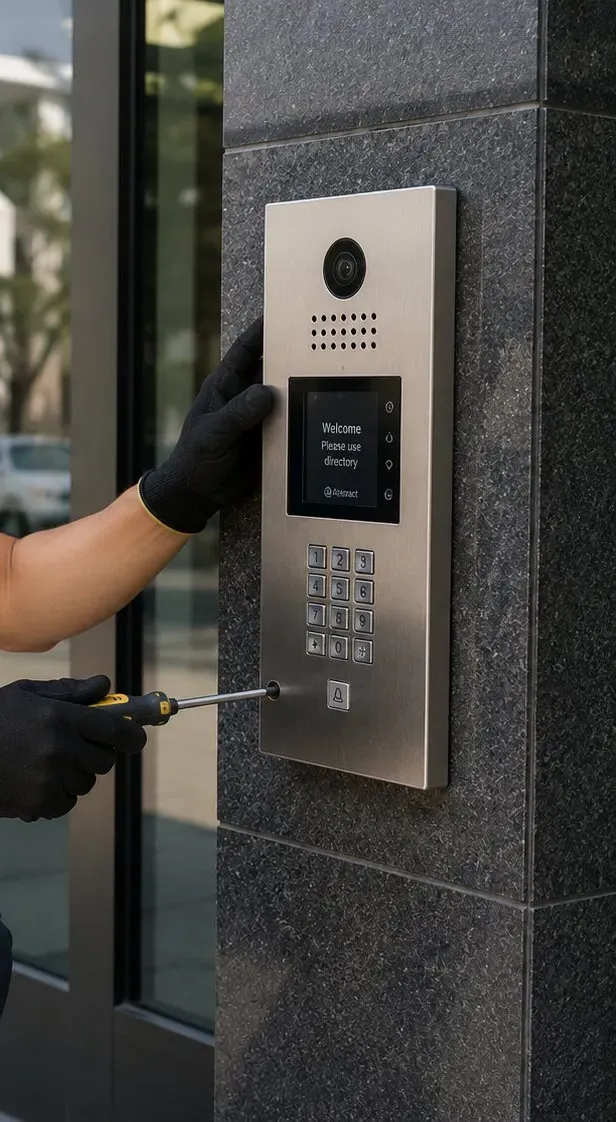
Stainless video intercom with keypad on a granite pillar at a glass building entrance, Flushing Queens door entry
A stainless-steel video intercom panel with a camera, a screen and a numeric keypad is fixed to a dark granite pillar beside glass doors.
Equipment

Types of Smart Locks We Install

In Flushing the door usually narrows the choice before the features do. Bring your own lock and we will fit it if the door allows, or let us recommend one once we have measured. These are the categories we install most across downtown, the towers and the houses around them.

Keypad Deadbolts

The standard American bored deadbolt with a keypad or touchscreen outside and a thumb-turn inside. Right for most house doors and many condo doors, and the simplest to service, re-key and replace.

Mortise Push-Pull Digital Locks

Korean- and Chinese-style locks with a fingerprint reader, keypad and push-pull handle on a mortise body. They need the flat door width and thickness their makers specify; when a door qualifies, they are comfortable for daily use.

Interior Retrofit Units

A motorised unit that replaces only the thumb-turn side of a single-cylinder deadbolt; corridor face and keys stay exactly as the building issued them — the natural choice for rented tower apartments and co-op doors.

Lever Locks for Offices

Keypad or fob lever sets for suite doors, back offices and file rooms, with a key override and a passage setting for opening hours. Easier on staff carrying boxes than a knob or thumb-turn.

Keypads and Readers With Electric Strikes

A keypad or fob reader on the wall or frame, a strike that releases the existing latch, and a push-to-exit button inside. The standard approach for storefront aluminium doors and shared street doors.

Glass Door Hardware

Patch-fitting electronic locks, bottom-rail locks and header magnetic locks for frameless tempered-glass doors, chosen after we identify the glass system and look at the floor and header.

Thread, Wi-Fi and Bridge Connectivity

Border routers, lock bridges and access points placed so a lock behind concrete and steel stays reachable, plus Bluetooth-only setups for doors that never need remote access.

Door Contacts and Exit Chimes

Small sensors that turn a door into an alert: a propped-door warning for a stock room, a chime at the front desk when the classroom door opens, a notification when the office is first opened in the morning.

A national brand’s plan versus a Flushing installer. National alarm and smart-home companies sell locks bundled with monitoring plans, and big-box stores and online marketplaces sell them in boxes. None of them will stand in front of your door with a tape measure and tell you that the push-pull lock in your hallway needs 4.5 inches of flat door and yours has three, that your storefront glass can’t be drilled, or that your tower’s Wi-Fi is too crowded for the lock you picked. That conversation, before anything is bought or cut, is most of what we do.

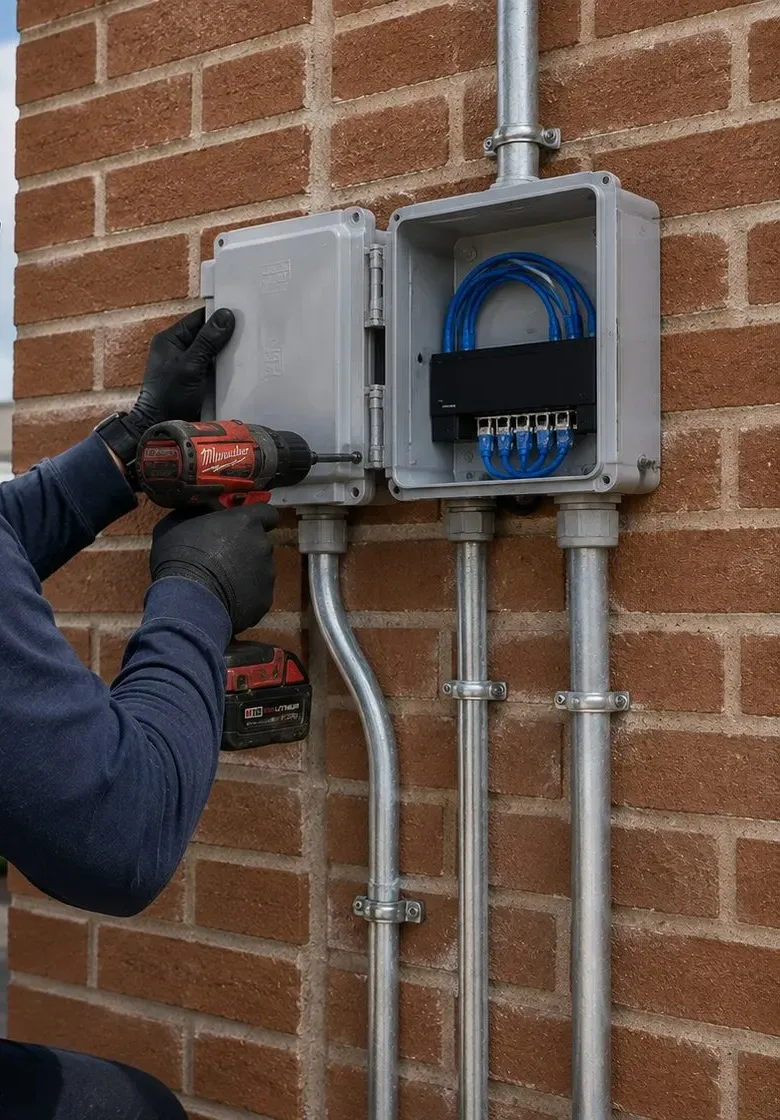
Grey weatherproof enclosure with terminated blue cables on a brick wall, exterior wiring for keypad doors in Flushing Queens
An open grey weatherproof box on a brick wall holds terminated blue cables, with metal conduit running down the wall and a drill in a gloved hand.
Lock Comparison

Push-Pull Mortise Lock or American Keypad Deadbolt?

The question we are asked most often in Flushing that we are asked almost nowhere else. Both are good locks on the right door. This is how they differ in the ways that matter at installation.

Mortise push-pull lockAmerican keypad deadbolt
How it mountsA rectangular lock body set into a pocket cut in the door edge, with large plates covering both facesA cylindrical bolt through a round cross bore, with a smaller exterior keypad and interior unit
Door it needsEnough flat door beside the edge — one Samsung distributor asks for at least 4.5 inches — and a door within the maker’s thickness rangeA standard 2-3/8 or 2-3/4 inch backset and a door within the listed range; Schlage lists 1-3/8 to 1-3/4 inches for the Encode Plus
Existing holesOld knob and deadbolt holes must sit under the new plates or be filledUsually reuses the existing deadbolt bore
Everyday usePush or pull the handle to open after a code or fingerprint; the latch and bolt are in one bodyUnlock the deadbolt, then use the separate knob or lever to open
Inside exitMust still open with one plain motion of the inside handle, without a codeThumb-turn inside; works without power
Support and partsManuals, voice prompts and warranty may be tied to the country of purchaseParts, manuals and support widely available in English
Best fit in FlushingFlat-faced solid or metal doors with room beside the edge, often in condos and newer housesMost house doors, panelled doors and doors with glass close to the lock

If you already own one and the door doesn’t qualify, we will not cut it to make it fit. We will tell you what the door would need, or suggest a lock that gives you the fingerprint and keypad features on the door you have.

AI Overview Reality Check

What AI Gets Wrong About Smart Lock Installation in Flushing

Google’s AI Overview could not be opened from the environment this page was researched in, so nothing below quotes it. Instead, each heading is a claim that turns up again and again in lock marketing and listicles — the raw material answer engines summarise — followed by what Flushing news reports, maker specifications and real doors say.

“A smart lock stops break-ins”

A good lock that is actually locked protects the door it is on, and that is all. Two Flushing burglary stories from the past year show the limits from both sides.

In the 2025 spree QNS described, four of the six places entered had doors that were simply unlocked — a lock that relocks itself would have mattered there. In the December 2025 pharmacy burglaries on Kissena and Parsons Boulevards, the crew broke through the front doors, and no lock setting changes that.

So we sell smart locks for what they are good at — making sure doors are locked, showing who opened them, and ending the copied-key problem — and recommend alarms, cameras and sturdier doors for the rest.

“Fingerprint readers work for everyone”

Fingerprint unlocking is fast and hard to share, which is why owners like it. It is also the credential most affected by real working conditions.

Manufacturers’ own support pages, eufy’s among them, say the sensor may not work properly when a hand is wet or dirty. Kitchen staff, cleaners, mechanics and anyone who has just come in from the rain are exactly the people trying to open a door with damp hands.

We enrol several fingers per person and always pair fingerprints with a second credential — a code, a fob or a key — so a bad day at the reader is never a lockout.

“Any smart lock fits any door”

Product photos show locks on plain, flat, freshly painted doors. Flushing’s doors include panelled wood with glass lights, hollow-metal office doors, tower doors in steel frames and all-glass storefronts.

The published requirements say otherwise: Schlage lists the Encode Plus for doors 1-3/8 to 1-3/4 inches thick; a Samsung distributor asks for 4.5 inches of flat space beside the edge for its mortise locks; frameless glass doors can’t be drilled at all.

Measuring takes ten minutes. Returning a lock that was opened, or patching a door that was cut for the wrong one, takes much longer — so we measure first.

“Cheap and premium smart locks are the same inside”

Many budget listings show the same features as premium locks: fingerprints, codes, an app. What they rarely show is how the hardware was tested.

Established makers publish their certification; Schlage lists the Encode Plus as ANSI/BHMA A156.40 Grade AAA. A listing with no standard, no grade and no named company gives you nothing to compare.

A budget lock can be a reasonable choice for an interior door. On a street door or a door to a stock room, we suggest paying for a lock whose testing, maker and app you can actually identify.

“Wi-Fi smart locks just work in an apartment”

Set-up guides assume a router a few rooms away. In a downtown tower the router may be behind a concrete wall, the lock is inside a steel door, and the 2.4 GHz band the lock needs is shared with every unit on the floor.

Schlage states that its Encode requires a 2.4 GHz network, and August places its Connect bridge within 10 to 15 feet of the lock — both signs of how short these links are.

We test from the lobby on mobile data, at the building’s busiest hour, and add a node, a bridge or a Thread border router where the test fails.

“A fingerprint lock is just a convenience feature”

For a household, the privacy question is mostly about where the fingerprint templates are kept and who can see the log. For a business, New York City law can be involved.

Local Law 3 of 2021 requires covered commercial establishments that collect customers’ biometric identifier information, including fingerprints, to post a sign at customer entrances, and bars them from selling or profiting from that data.

We set locks up to keep templates on the device where the model allows, give everyone a non-biometric alternative, and point business owners to the city’s guidance before anyone is enrolled.

“Smart lock installation costs $250 to $400”

That range is real: Fixr’s January 2025 guide gives $250 to $400 nationally for installing a smart lock on an ordinary house door, with an average of $300. It describes a homeowner’s deadbolt swap, not a Flushing storefront.

A keypad or fob reader with an electric strike on a commercial door is a different job — wiring, a strike in an aluminium frame, an exit button — and at our published Queens rate it runs $1,575 to $2,625 installed. A push-pull lock that needs a mortise cut, or glass-door hardware, is quoted after we see the door.

Use national averages to sanity-check a simple house-door job, and use a written quote from someone who has measured your door for everything else.

Know What Fits Before You Buy

Send a photo of the door from both sides with a tape measure across the flat area beside the edge. We will tell you which locks fit, which don’t, and what the installation costs.

Get In Touch

Request a Free Quote

List the doors, what they are made of and the people who open them — staff, family, part-time teachers, tenants. A written reply comes back the same business day. Prefer to talk? Our Queens number is (347) 434-6392.

✅

We Got Your Request!

Received. Expect a call from a licensed installer today; if the door can’t wait, dial (347) 434-6392 now.

How It Works

Our Installation Process

Six steps, whether it is a retrofit on one tower apartment or every door of a downtown shop and the office above it.

1. Doors and people

On the phone we list every door, what it is made of, and everyone who needs to open it, with their preferred method — code, fob, fingerprint, phone or key. That list shapes the rest.

2. Measure and photograph

At the free walkthrough we measure door thickness, backset and the flat width beside the edge, identify glass fittings and frames, check closers and latching, and test signal where the lock will sit.

3. Written plan and flat price

You receive a door-by-door plan naming the hardware and the reasons, and a flat figure. Storefront and entrance work is priced from our published Queens rates.

4. Prepare the opening

Strikes reinforced with long screws, closers adjusted to latch, mortise pockets cut cleanly where a push-pull lock fits, and floor strikes set for glass-door hardware.

5. Fit, connect and test the exit

Hardware goes on, the lock joins its app, any bridge or border router is placed, and then we cut the power and walk out through each door by hand — proof that no setting can hold anyone inside.

6. Enrol and hand over

Each person enrols and tries their credential while we watch, schedules are set, two administrators are named, and you keep the keys, the overrides and a written list of who has what.

Coverage Area

Smart Lock Installation Near Flushing’s Landmarks

Flushing has some of the oldest buildings in New York City within a few blocks of some of its newest towers. Six places that explain the range of doors we see:

Flushing Town Hall

Built in 1862 and described by Community Board 7 as a fine example of early Romanesque Revival, it was the focus of village life for nearly fifty years and is now a cultural centre run by the Flushing Council on Culture and the Arts. Its auditorium and galleries are a reminder that downtown has always mixed public buildings with commerce.

Bowne House

The oldest surviving house in Queens County, dating from 1661 or earlier according to Community Board 7, and the site of the Quaker meeting that led to John Bowne’s arrest by Peter Stuyvesant. A colonial frame house, it is the starting point for understanding how old some of Flushing’s doors really are.

Friends Meeting House

Construction began in 1694, and members of the meeting served as Underground Railroad conductors before the Civil War, according to Community Board 7. Flushing’s Quaker meeting has opened the building to visitors during open-house weekends, according to the meeting’s own website.

Kingsland Homestead

Built in 1785 for Charles Doughty as an example of the Long Island half-house form, moved to its present site in 1968 when demolition threatened, and now the headquarters of the Queens Historical Society. A reminder that Flushing’s older frame houses sit close to downtown.

Lewis H. Latimer House

A Queen Anne-style wood-frame suburban house built between 1887 and 1889, home of the inventor who patented an improved carbon filament for the incandescent bulb, per Community Board 7. Wood-frame houses of that age bring soft frames and thin doors that a heavy smart lock must be fitted to with care.

Flushing–Main Street Station

The 7 train’s terminal under Main Street and Roosevelt Avenue, which Wikipedia records as the second-busiest subway station outside Manhattan in 2024 and the tenth-busiest in the system. The storefronts and offices around it are where most of our Flushing commercial work happens.

We also serve the neighbourhoods around Flushing — Murray Hill, Queensboro Hill, Auburndale, East Flushing, College Point, Whitestone, Bayside and Fresh Meadows — and the rest of the borough through our Queens smart lock installation page.

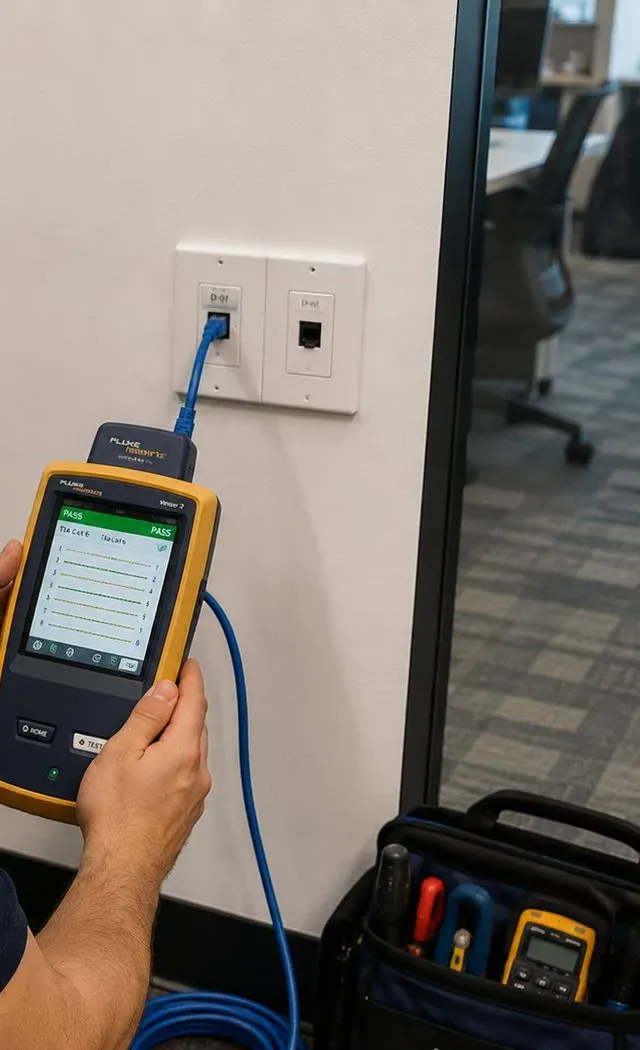
Handheld cable certifier plugged into an office wall data jack, network testing for smart lock bridges in Flushing Queens
A handheld cable certifier is connected by a blue patch cable to a wall data jack, with a tool bag open on the floor.
Pricing

Smart Lock Installation Cost in Flushing

We publish what we have actually priced, and say plainly when a job is quoted after we see the door. Flushing falls under our Queens rates, which are our published Brooklyn base multiplied by 1.05 and rounded half-up. Lock hardware for house and apartment doors varies too much by model and door to publish one number; those jobs are quoted flat after the free walkthrough.

ItemFlushing (Queens rate)Scope and source
Residential or condo unit lock — bored deadbolt, interior retrofit, lever set or mortise push-pullFlat quote after the free walkthroughAESS publishes no single figure; the lock model, door construction and any mortise or reinforcement work set the price
Single-door keypad or fob reader with electric strike$1,575–$2,625 installedCovers a storefront, suite, classroom or shared street door — our $1,500–$2,500 base times the 1.05 Queens factor
New electric strike on an entrance door$263–$473Supplied and fitted with entrance work — base $250–$450 times 1.05, halves rounded up
Failed electric strike repair$310–$509For a strike that hums but never lets the door go — base $295–$485 times 1.05, halves rounded up
Programming visit with no new hardware — codes, schedules, app transfer, bridge placement$195 first hour, then 30-minute blocksPublished Queens rate for setup-only work
Service and callback rate$195/hr, 3-hour minimum ($585)Charged for return visits; the first install never carries it

What moves a Flushing quote

  • Door construction: a solid wood house door, a hollow-metal office door and a tempered-glass storefront call for different hardware and different amounts of preparation.
  • Mortise work: a push-pull lock that needs a pocket cut in the door edge takes longer than a bored deadbolt, and a door with old holes may need a filler or a larger escutcheon.
  • Glass and floors: bottom-rail and patch locks need floor strikes cut into tile, terrazzo or stone; header magnetic locks need power and an inside release.
  • Wiring path: a strike on a storefront door needs a cable route from the frame to a power supply, which is quick in a dropped ceiling and slower in a plaster wall.
  • Signal: a tower unit or basement stock room may need a bridge, a node or a Thread border router before remote features work.
  • People: enrolling a couple takes minutes; enrolling a kitchen crew, part-time teachers or a family with three generations takes longer and is worth doing properly.

National cost guides for comparison. Fixr’s January 2025 guide puts a smart lock installed on an ordinary house door at $250 to $400 nationally, averaging $300, and LawnStarter’s 2025 guide gives a national average of $330. Those figures describe a single residential deadbolt, not wiring a strike into a storefront frame, and we label them as national third-party data rather than our prices.

Shop Our Systems

Smart Lock Installation Packages & Pricing

Three ways Flushing customers usually buy keyless entry. One carries a published Queens price; the other two are priced after we have measured the doors, because the hardware varies too much to publish a single figure honestly.

Unit Door

Quoted at walkthrough

One condo, co-op or apartment door: a keypad deadbolt, interior retrofit or push-pull lock fitted to a measured door, connectivity tested from the lobby, two administrators set up, and every resident enrolled.

Shop or Office Entrance

$1,575–$2,625

A keypad or fob reader with an electric strike on one storefront, suite or shared street door, push-to-exit inside, individual staff credentials, schedules for opening hours and a walkthrough of the log.

Whole-Business or Whole-House Plan

Quoted at walkthrough

Every door that matters — front, rear, office, stock room or the side and back doors of a house — with a credential plan per person, door contacts where wanted, and one visit for the lot.

Labour-only installation

Bring your own lock. Bought a lock already, here or abroad? We will fit it as a labour-only job if the door can take it, after checking its backset or mortise dimensions, the inside release and the key override. If it can’t go on your door safely, we will tell you before anything is cut, and you can return it while it is still unopened.

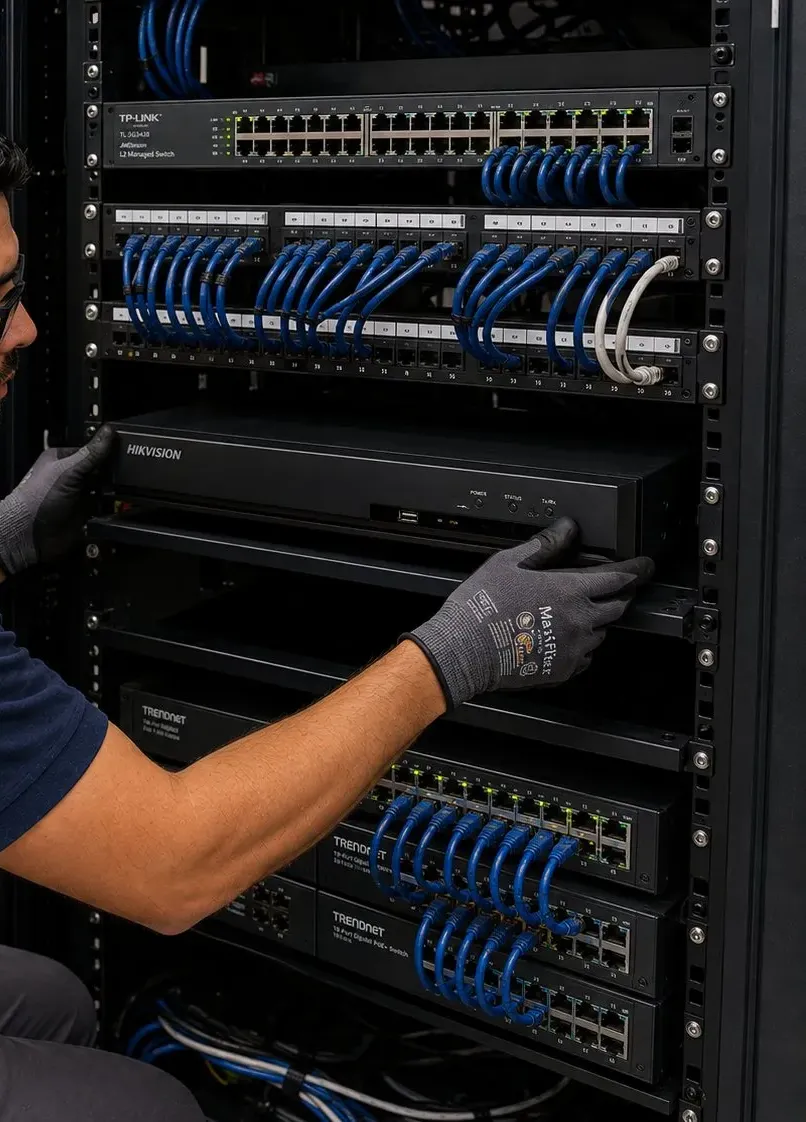
Gloved hand adjusting a switch in a network rack with blue patch cables, connectivity work for smart locks in Flushing Queens
A gloved hand adjusts equipment in a black network rack with patch panels and rows of blue patch cables.

Opening a New Shop or Office in Flushing?

Book the walkthrough before the fit-out finishes, while frames and ceilings are still open. Wiring a strike then costs less than after the shop opens.

Across Flushing

How Smart Lock Jobs Differ Across Flushing

The same keypad deadbolt can be a twenty-minute swap on one Flushing block and a half-day job on the next. The difference is the building.

Downtown: Main Street, Roosevelt Avenue and 39th Avenue

Dense commercial blocks around the 7 train terminal, with storefronts at grade and offices, clinics and classrooms above. Most of our work here is on aluminium storefront doors, shared street doors to upper floors and suite doors along narrow corridors. Electric strikes, exit buttons and staff credential plans dominate, and parking for a service van is planned in advance.

The waterfront and College Point Boulevard

Condo towers over shopping centres, newer office and hotel space, and the redevelopment planned for the Flushing waterfront. Unit doors in steel frames, building fob systems and crowded Wi-Fi make this a retrofit-and-connectivity area more than a drilling one. Corridor-side changes go through management first.

Murray Hill and the Northern Boulevard corridor

The Korean commercial district near the Murray Hill LIRR station, mostly restaurants, with detached and attached houses on the streets behind. Kitchen and delivery doors, family members opening on different days, and push-pull locks bought abroad all come up here.

Broadway–Flushing and Auburndale

Detached houses from the 1920s on large lots, many in the State and National Register historic district, with original front doors, side entrances and garages. Thick wood doors, existing hardware the owners want to match, and side doors far from the router are the usual questions.

Queensboro Hill and the Kissena corridor

Apartment buildings, attached houses and the pharmacies, medical offices and shops along Kissena Boulevard. Stock-room and office doors behind a storefront are where we most often fit readers with logs.

East Flushing and the Bowne Street area

Older apartment buildings, two-family houses and community buildings. Apartment doors in older buildings are governed by HPD’s rules and the building’s key policy; houses get front-and-side door plans; community rooms get scheduled codes.

Storefront Checklist

A Door Checklist for Flushing Shop Owners

Before a keypad goes on a Flushing storefront, go through these with us. Most problems we fix later started as one of these questions nobody asked.

  • Which doors does the public use, and which only staff? Public doors stay simple to leave through; staff doors get the credentials and the logs.
  • Who opens up, and on which days? A list of names and days turns into schedules, so the Monday cousin’s code doesn’t work on Saturday night.
  • What happens when someone leaves? Decide now who removes a departing employee’s code, fob or fingerprint, and make sure that person has the app.
  • Does every door actually latch? A door that rests against the frame defeats any lock. Closers and strikes get adjusted first.
  • Where is the cash, the stock or the medication? That room deserves its own lock and a shorter list of users than the front door.
  • Is anything glass? If the door or the panel beside it is glass, add an alarm contact and glass-break detection rather than relying on the lock.
  • Do customers ever use a fingerprint reader? If so, read up on the city’s biometric sign rule before enrolling anyone.
Staff Turnover

Taking Access Away the Day Someone Leaves

Turnover is the real reason most Flushing businesses go keyless. Copying a brass key costs a few dollars and takes minutes; collecting every copy when an employee leaves is impossible. A smart lock turns that into a deletion in the app — but only if someone actually does it.

We set businesses up so that removing a person is a single routine. Each person has one credential, named after them, never shared; codes for part-timers and seasonal staff are given end dates when they are created; at least two managers can remove users from their own phones; and the activity log is checked once a week for codes that shouldn’t be in use any more.

When someone leaves on bad terms, change the shared things too: any group code used for deliveries, the alarm code, and the mechanical override key if they ever held it. Then look at the log for the last two weeks of their employment. It takes ten minutes and usually settles any question about what happened after hours.

Connectivity

Getting a Signal to a Tower Unit Door

In Flushing’s newer buildings, the hardest part of a smart lock is often the radio, not the door. Unit doors are steel or solid core, set in steel frames, at the end of an entry hall; routers usually sit by the windows, and every neighbour’s network shares the same channels. A lock that works perfectly on day one can start dropping off when the floor fills up.

We choose from four setups. Bluetooth only keeps the lock working for anyone standing at it, with no remote features and nothing to fail. A bridge near the door relays the lock to your Wi-Fi from a hall closet or an outlet within a few feet. Thread through a border router uses a low-power mesh that many current smart speakers and hubs provide. Built-in Wi-Fi is simplest where the entry has a strong signal, often with a mesh node added near the door.

However it is connected, we finish the same way: from the lobby or the street, on mobile data, we lock and unlock the door and wait for the alert, then do it again in the evening. If the building runs its own fob or app system for the lobby and corridors, we keep your unit lock separate from it unless management asks otherwise.

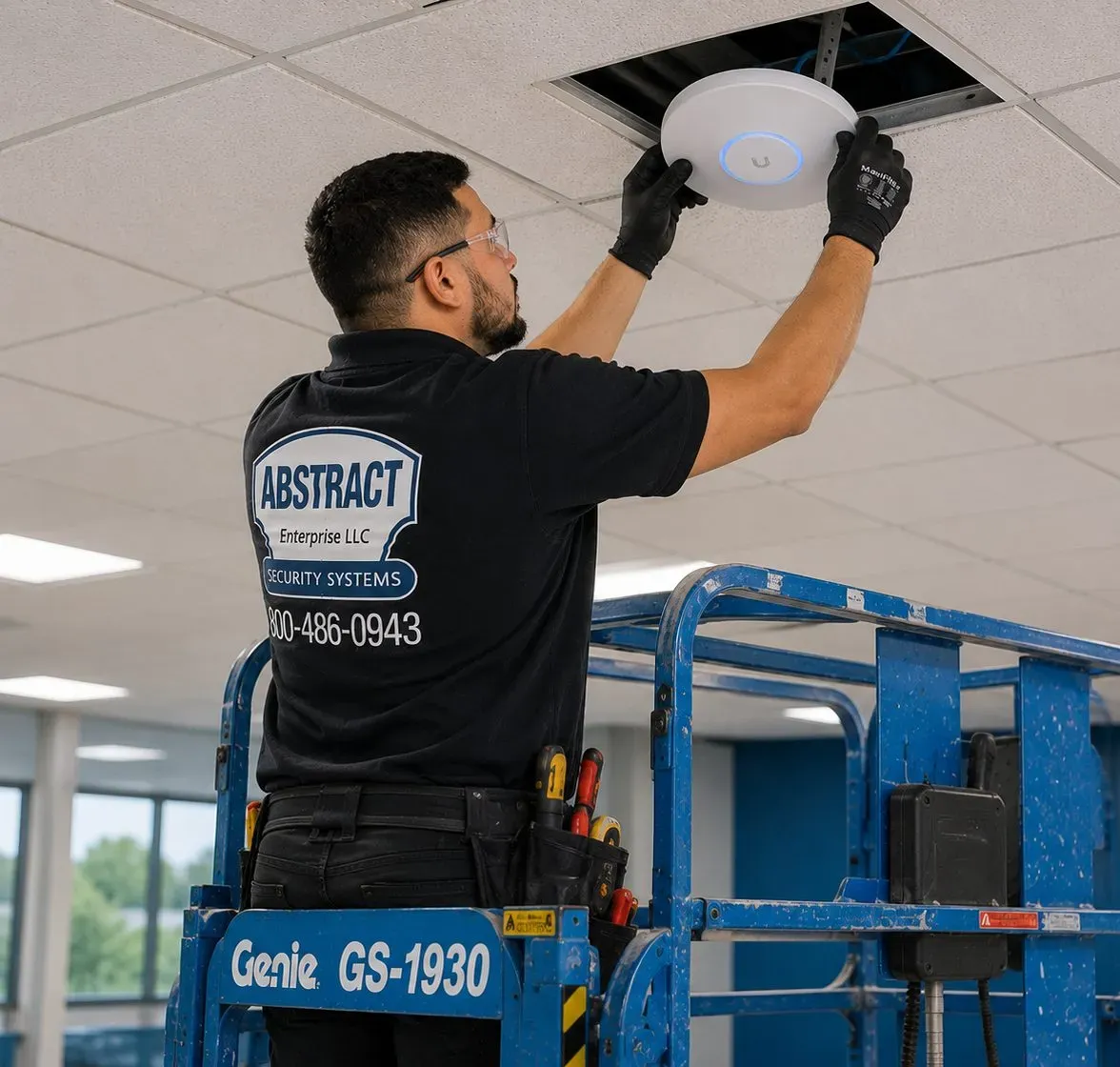
Technician on a scissor lift fitting a ceiling wireless access point, Wi-Fi coverage for smart locks in Flushing Queens
A technician on a blue scissor lift fits a white wireless access point into an open ceiling tile.
Changing Hands

Handing Over a Smart Lock When a Flushing Condo or Shop Changes Hands

With condominiums now the most frequently sold property type in the neighbourhood, and storefront leases turning over on every block, a lock’s digital history changes hands far more often than its hardware. Whether you are buying, selling, moving in or taking over a lease, these are the things to get, or to give, on the day the keys change hands.

  • The administrator account. The seller or departing tenant should remove the lock from their app, or transfer ownership in the app, before closing or move-out. A lock still registered to someone else’s account can usually be reset, but only with physical access and sometimes the original setup code printed inside the battery cover or in the manual.
  • The paper that came in the box. Manuals, setup cards, spare keys for the override cylinder and any master or programming code. Imported push-pull locks in particular often need the original card to reset.
  • A list of what is enrolled. How many codes, fobs and fingerprints exist, and whose they are. If nobody knows, assume all of them should go.
  • Building credentials. In a tower, the building’s fobs for the lobby, elevator and garage belong to the building’s system and are handled by management, separately from the unit lock.
  • A reset and re-enrolment. On the first visit we factory-reset the lock where needed, update its firmware, set up two new administrators, enrol everyone fresh and change or re-key the mechanical override. Done in one appointment, it closes the door on every previous code at once.
Data and Privacy

Fingerprints, Codes and the Data a Smart Lock Keeps

Every smart lock keeps a record, and some keep biometric data. Before we enrol anyone, we explain what the lock you have chosen stores and where.

Codes and fobs are simple: the lock or its app holds a list of credentials and a log of when each was used. Fingerprints are stored as templates; on many locks they stay on the device itself, while some systems sync them to an account. We prefer device storage where the model allows, and we show the administrator how to delete a person’s prints when that person no longer needs access.

Complete Services

Every Smart Lock Installation Service in Flushing

A lock is often the first job, not the last. When a Flushing door gets a keypad, the owner usually asks about the camera, the intercom or the network next — these are the Queens services we book alongside it.

Access Control

Multi-door card and fob systems for offices, clinics and buildings in Queens.

Intercoms

Video and audio door stations for street doors and lobbies across Queens.

Door Buzzers

New buzzers and electric strikes for small buildings and shared stairs.

Intercom Repair

Fault-finding on existing intercoms and handsets in Queens buildings.

Doorbell Cameras

A face on your phone before any remote unlock is pressed.

Alarms

Door contacts, glass-break and motion detection for shops and homes.

Security Cameras

Indoor and outdoor cameras for Queens homes and businesses.

Home Automation

Hubs, scenes and smart-home systems that a lock can join.

Networking

Access points and wiring that give a lock a reliable connection.

Field Notes

Field Notes on Flushing Doors

Four habits our installers keep at every Flushing door; they describe our method, not a particular job

We start with the tape measure, not the lock. Thickness, backset, the flat width between the edge and the nearest glass or panel, and the gap to any storm door get written down before anyone opens a box. In this neighbourhood, where so many locks arrive already bought, that step decides more jobs than any other.

Then the latch. We pull the door shut the way the busiest user does — a cook with a tray, a parent with a stroller, a teacher with an armful of folders — and watch whether it latches without help. If it doesn’t, the closer or the strike gets fixed before any electronics go on.

Then the way out. We stand inside, switch off the lights, and open the door with one hand. On a storefront, we check the push-to-exit button and the power-off behaviour too.

Last, the radio and the people. We test the connection from where the owner will use it, then enrol each person and watch them use their credential twice. A lock nobody can operate on day one never gets used properly.

FAQ

Flushing Smart Lock Installation FAQ

What will a keypad-and-strike entry cost for a Flushing storefront or office?
+

Flushing is billed at our Queens rate, so one door with a keypad or fob reader and an electric strike comes to $1,575–$2,625 installed. A strike by itself is $263–$473; fixing a strike that has failed is $310–$509. For house, condo and apartment locks we give a flat figure once we have measured the door at the free walkthrough.

Do we need to arrange parking or loading space for your van downtown?
+

It helps. Tell us the address and the cross street when you book, and whether the building has a loading area or a rear entrance. On the busiest blocks around Main Street we plan the arrival time and carry the tools in, so a little notice keeps the appointment on schedule.

Can young children use the fingerprint reader, or should they have a code?
+

Many children can. Because a child’s hands keep growing, we enrol two or three fingers, re-enrol them if the reader starts refusing, and give each child a backup code or fob. A child who can’t open the door on a cold afternoon is a bigger problem than a slower method.

Will you adjust or replace the door closer so the shop door actually latches?
+

Yes. A closer that slams, drifts or stops short is the most common reason an auto-locking shop door is left unlocked. We adjust closers as part of the installation and, if one is worn out, quote a replacement before we fit the lock.

Do you cover Murray Hill, Queensboro Hill, Auburndale and College Point as well as downtown Flushing?
+

Yes. The same Queens crews cover all of Flushing and its neighbours, including Murray Hill, Queensboro Hill, Auburndale, East Flushing, College Point, Whitestone and Fresh Meadows, at the same Queens rates.

The fingerprint reader on our existing lock stopped recognising anyone — can it be repaired?
+

Often. We clean and test the sensor, update the firmware where the maker allows, check the batteries and re-enrol prints. If the reader itself has failed, we price a replacement lock or reader and fit it on the same door where the dimensions allow.

Is a smart lock with a built-in camera worth it at a shop entrance?
+

Sometimes. A camera in the lock shows who used the door, but it sees only a narrow view at hand height and depends on the lock’s batteries. For a shop entrance we usually suggest a separate camera covering the door and the counter, with the lock keeping the access log.

Can the staff door’s fingerprint reader double as our time clock?
+

We don’t recommend it. A lock’s log records that a credential opened a door, not who was working, and it isn’t designed for payroll records or overtime disputes. Keep a proper timekeeping system for hours and use the lock log for security.

All Areas Served

Smart Lock Installation Across New York

This is our Flushing page. It sits under our Queens smart lock installation page, which covers houses, basements and garden co-ops across the borough, and under the AESS smart lock hub for New York City. Neighbourhood pages for the Upper East Side and Brooklyn Heights cover two very different sets of doors.

Other trades we cover are listed from the Abstract Enterprises Security Systems home page, and meet the team on our about page.

Shut Out of a Flushing Shop or Home Right Now?

Reader ignoring every finger, touchscreen black, app spinning on “connecting”? Phone (347) 434-6392 and tell us which door. A technician is booked into the next free 2-hour window, and a lock that has simply lost power, pairing or alignment is usually working again within one to two hours of arrival. Until then, the override key is your way in: it is the only credential on the door that needs no electricity.

Smart Lock Installation Flushing — Licensed, Insured, Measured First

Abstract Enterprises Security Systems · 460 E Fordham Rd, Bronx, NY 10458 · Flushing and all of Queens: (347) 434-6392 · WhatsApp (718) 679-0359 (wa.me)

NYS Low-Voltage Licence #12000287431 · 100% Licensed & Insured · Same-Day Estimates · Rated 4.7★ from 201 Google Reviews

Locks you supply carry their manufacturer’s warranty. Full terms — including 50% deposit, one-year parts-only warranty on AESS-supplied products, and the late-fee schedule — are set out in the service agreement. See our warranty page.

Written as practical guidance on Flushing doors, buildings and the city rules around them — not as legal or compliance advice. Page reviewed and updated October 17, 2026. Changelog: first publication of the Flushing smart lock installation page.