What are you looking for?
About Us Contact Us Careers Get a Free Quote (800) 486-0943
Pick a service
✅ Got Your Own System?
🎬 Home TheatreQuote 🎶 AV SoundQuote 🔑 Access ControlQuote
Now pick your area
Pick your area
Long Island
Hudson Valley
Services available
Pricing & Tools
Pick a service for pricing
🚪 Intercom Pricing 🔔 Buzzer Repair Pricing
Calculators
📹 Camera System Calculator 🚨 Alarm Calculator ⚡ Cabling Quote Builder ✅ Got Your Own System?
Select your area
Home › Smart Lock Installation NYC › Smart Lock Installation Brooklyn › Brooklyn Heights
Licensed Low-Voltage Contractor · Brooklyn Crews from Troy Avenue · Landmarked Rowhouses, Carriage Houses, Small Co-ops & Montague Street Shops

Smart Lock
Installation in
Brooklyn Heights

Historic Front Doors · Mews Carriage Houses · Rowhouse Co-op Street Doors · Readers Placed to LPC Rules · Shop & Office Doors

Brooklyn Heights was the city's first historic district, and its front doors show it: Federal wood houses on Middagh Street, Greek Revival and Italianate rowhouses on Willow, Pierrepont and Remsen, carriage houses on Grace Court Alley and Hunts Lane, and pre-war apartment buildings that were once some of New York's grandest hotels. We plan keyless entry for those doors as they are: what can change without a landmarks permit, where a reader and its cable may go, who in a seven-unit brownstone co-op holds the master code, and how a shop on Montague Street locks up at night. Then we fit it, test it from the sidewalk and leave a written register of every credential.

Reviewed and updated October 17, 2026 · Written by Anwar Timothy, NYS licence #12000287431

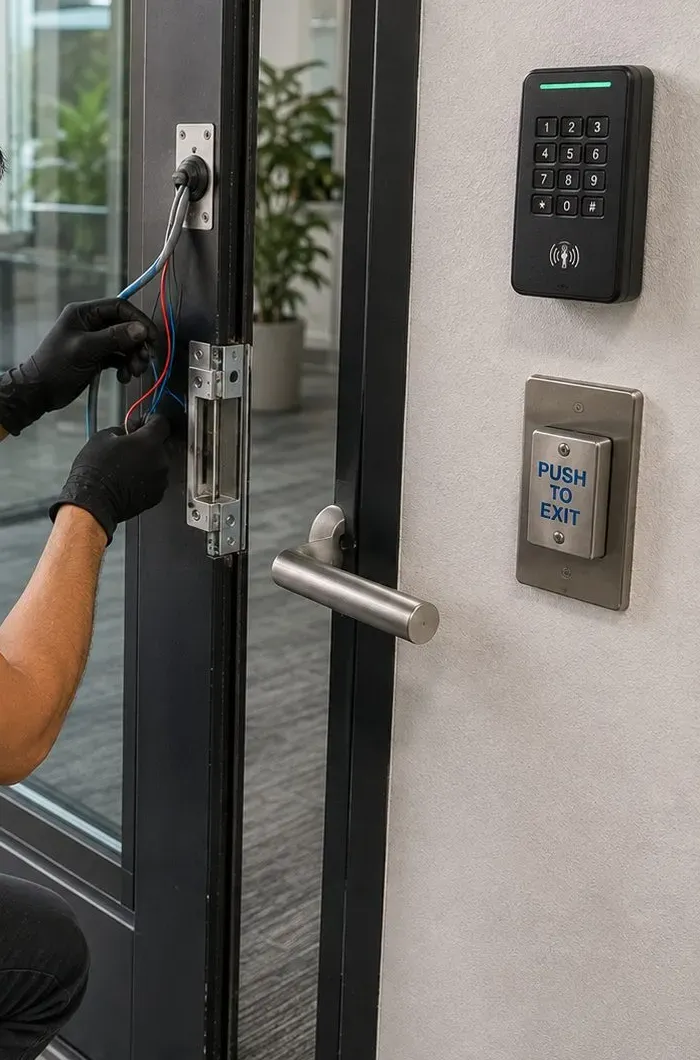
Gloved hands wiring an electric strike in a glass door frame beside a wall keypad and push-to-exit button, smart lock installation Brooklyn Heights
Gloved hands feed red and blue conductors into an electric strike set in a dark metal door frame; a wall keypad and a stainless push-to-exit plate sit on the wall to the right.
Free Brooklyn Heights Smart Lock Quote
Tell us the door, the building type and who shares it — a licensed installer replies the same business day

✅
Request Sent!
We will call you back the same business day.
25+
Years Experience
✓
Same-Day Estimates
100%
Licensed & Insured
4.7★
201 Google Reviews

Weighing keyless entry for a Heights house, a co-op street door or a shop? Call our Brooklyn line, (347) 934-8335, or send the 60-second form with a photo of the door's edge. A licensed installer reads it and tells you whether the door can take a smart lock as it stands, and whether anything on the facade needs a landmarks check, before a visit is booked.

  • Original doors measured for thickness, backset and mortise pocket before any model is recommended
  • Reader, keypad and cable positions planned to the Landmarks Preservation Commission's published criteria
  • NYS licence #12000287431 · fully insured · Brooklyn crews dispatched from 1282 Troy Avenue
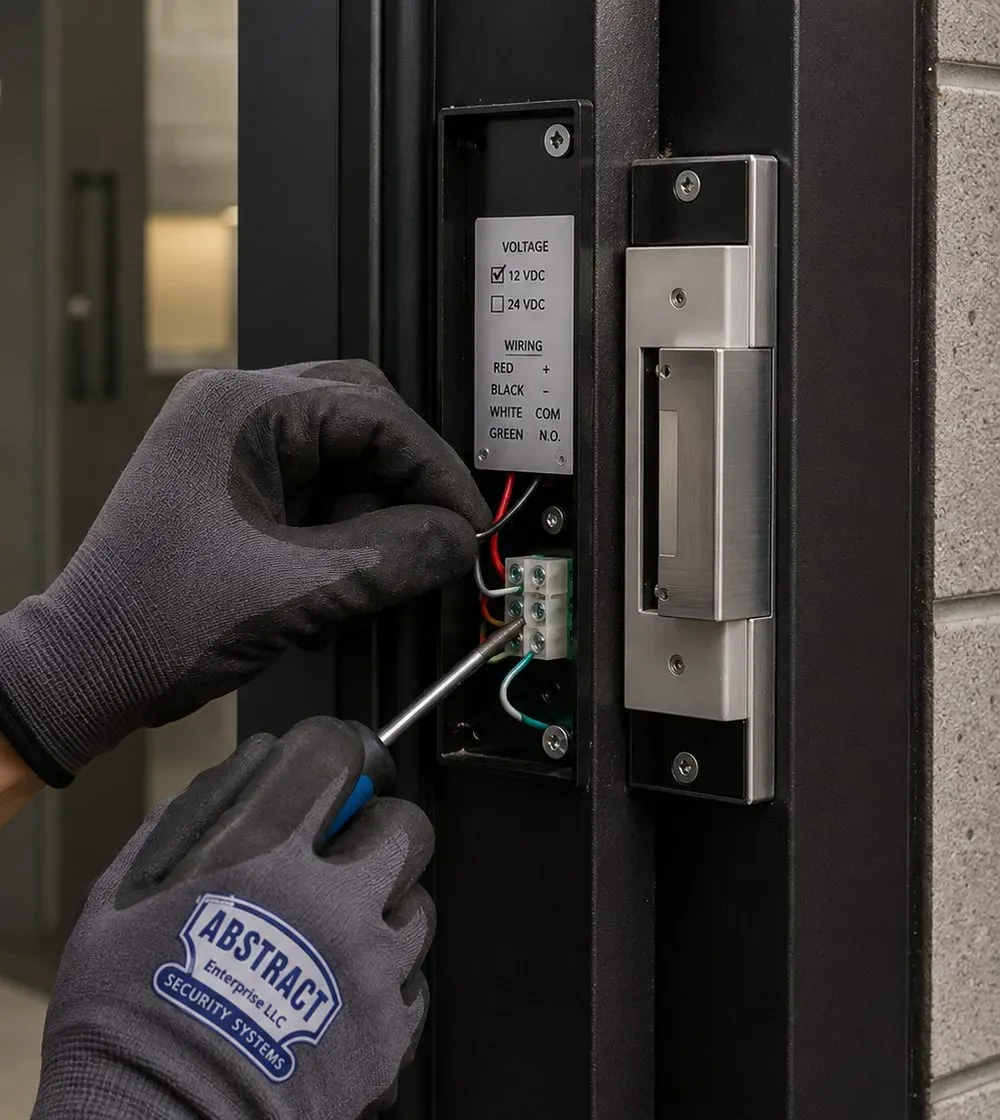
Close-up of gloved hands landing wires on the terminal block of an electric strike, Brooklyn Heights smart lock wiring
Close-up: a screwdriver tightens a conductor on the terminal block of an electric strike, with the voltage and wiring label visible beside it.
The Neighborhood

Why Brooklyn Heights Properties Need Smart Lock Installation Planned Door by Door

Most smart-lock advice is written for a single-family house with a new door. Very little of Brooklyn Heights looks like that. The Brooklyn Heights Association describes the neighbourhood as overwhelmingly low-rise brick and brownstone row houses with a smattering of apartment buildings, bounded by Old Fulton Street, Atlantic Avenue, Cadman Plaza and Court Street, and the Promenade above the East River. The houses on those blocks went up from the 1820s onwards. The doors on them were built by hand, by joiners who never imagined a battery pack, and many of them are still the original leaves, refinished a dozen times and carrying a mortise pocket, a centre knob or a brass escutcheon that an owner wants to keep.

The second thing that makes the neighbourhood different is who owns those doors. The Association's own profile counts 22,593 housing units in the Heights, 57 percent of them renter-occupied and 40 percent owner-occupied. Behind those figures sits a patchwork that a lock installer meets every week: whole houses still in single-family use, houses split into a handful of rental flats with the owner on the parlour floor, rowhouses converted into small co-ops or condominiums of five to eight apartments, and large pre-war elevator buildings with a board, a managing agent and a super. A listing reported by 6sqft, for example, describes 114 Remsen Street as a four-storey Italianate brownstone operating as a seven-unit co-op. A smart lock on the street door of a building like that is a decision for a board, not a household.

Third is the landmark itself. On November 23, 1965 the Landmarks Preservation Commission designated Brooklyn Heights as New York City's first historic district. Almost everything that touches the outside of a building inside the boundary is governed by the Commission's rules. The good news for owners is that the Commission's own permit guidebook lists repairing or replacing hardware such as hinges, knobs, locks and handles among the work that may not need a permit at all. The care is needed elsewhere: in a reader or keypad fixed to the masonry beside the door, in the cable that feeds it, in a replacement door, and in anything on the stoop or the areaway fence. We plan those parts first, so the lock itself is the easy bit.

Finally there is the street. Montague Street is the neighbourhood's one main shopping street, its business improvement district serving more than 100 businesses between Court Street and Hicks Street; Henry Street and Atlantic Avenue carry restaurants, shops and offices; the blocks around Borough Hall and Court Street are full of law offices and professional suites. Those businesses need staff codes, early deliveries and a record of who opened up, on doors that often sit in landmarked buildings with apartments above. Brooklyn Heights is also famously busy with film and television crews, which brings its own visitors to the door. We build the code plan for whoever actually needs to get in, and nobody else.

Brooklyn Heights facts that shape a smart lock job

  • November 23, 1965: the date the Landmarks Preservation Commission designated the Brooklyn Heights Historic District, the first in New York City (LPC; Brooklyn Heights Association).
  • 22,593 housing units: the Brooklyn Heights Association's neighbourhood profile, with 57% renter-occupied, 40% owner-occupied and 3% vacant.
  • 0.5 cars: the average available to households in houses or condos in the Heights, against 1.8 citywide, in the same BHA profile — most visitors to a Heights door, including installers, arrive on foot from somewhere else.
  • More than 100 businesses: served by the Montague Street BID, which covers the north side of Montague Street between Court and Hicks Streets and the south side from 200 to 78 Montague Street.
  • 2,632 rooms: the peak size of the Hotel St. George on the Clark–Hicks–Pineapple–Henry block, once the city's largest hotel; part of it became the St. George Tower and Grill co-op in 1984.
  • One intercom panel per door opening: the most the LPC permit guidebook lets staff approve for an entrance in a historic district, together with up to two light fixtures, all within or beside the door opening.

Most Heights owners pair this with entry video. A small camera or video doorbell at the door shows who used each code; on landmarked facades we size and place it to the Commission's limits. See our Brooklyn Heights security camera installation page.

Keypad Silent on a Heights Stoop or Shop Door?

Dead keypad on the parlour door, a co-op street door that stopped accepting fobs, an app that says the lock is offline while you stand on Pierrepont Street — call our Brooklyn line, (347) 934-8335. We book the next open two-hour window across Brooklyn, and most battery, pairing, bolt-alignment and strike faults are put right in one to two hours once we are at the door. If the building door is a wired strike that buzzes but will not release, say so on the call so the van carries the right parts.

What We Install

Smart Lock Installation Services in Brooklyn Heights

Nine kinds of work make up almost every smart-lock job we see between the Promenade and Court Street.

Landmark Rowhouse Front Doors

Keypad, fingerprint or interior-retrofit deadbolts fitted to original and replacement doors on Federal, Greek Revival, Italianate and Anglo-Italianate houses, using the existing lock preparation wherever it will take the new hardware.

Rowhouse Co-op and Condo Street Doors

A keypad or fob reader driving an electric strike on the shared front door of a brownstone that has become five, six or seven apartments, with one credential per resident and an admin structure the board actually agrees on.

Carriage House Entries

Smart locks for the pedestrian door of a converted stable on a mews, and a plan for the tall wooden carriage doors that usually stay mechanically bolted from inside.

Pre-War Apartment Doors

Unit-door smart locks in the larger elevator buildings, chosen to sit alongside the building's own key system and house rules, with the duplicate-key and egress rules respected.

Common-Room Keyless Entry

Keypads or readers on the laundry, bike room, storage cages and roof door of small co-ops, replacing the one brass key that every resident has had copied over the years.

Readers Beside the Doorway

Wall-mounted readers and keypads placed and cabled to the Landmarks Preservation Commission's published criteria: within or beside the door opening, small, neutral in finish and fixed into mortar joints rather than carved stone.

Montague, Henry and Atlantic Shop Doors

Keypad deadbolts, narrow-stile locks and reader-and-strike sets for storefronts, restaurant back doors and upper-floor offices, with staff codes and opening logs.

Production and Visitor Access

Time-boxed codes for film location crews, contractors, house sitters and dog walkers, set to expire on their own and logged so you can see who used them.

Repairs and Code Audits

Locks that lost their bridge, motors fighting a sagging leaf, strikes that buzz without releasing, and a clean-up of every old code, fob and app user still on the system.

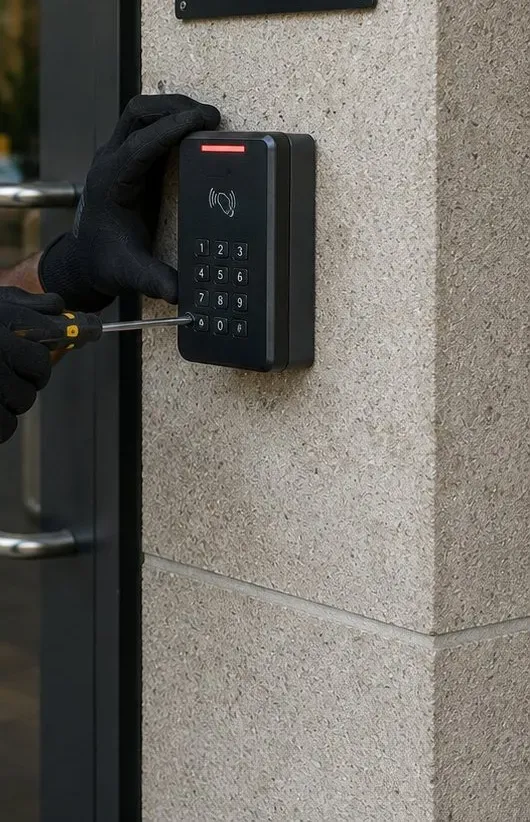
Gloved hand fastening a keypad card reader to a stone-faced door jamb, keyless entry Brooklyn Heights
A combined keypad and card reader is screwed to a textured stone pier beside a dark metal-framed door.
Building Specialists

Smart Lock Installation for Brooklyn Heights' Architecture

The historic district takes in Federal, Greek Revival, Gothic Revival, Italianate and Anglo-Italianate houses, carriage houses, churches and large pre-war buildings. Each brings a different door, and a different answer.

Federal Wood-Frame Houses

The oldest houses in the Heights are small wood-frame Federal buildings; 24 Middagh Street, built around 1824, is generally described as the oldest. Doors here are often narrower and lighter than later rowhouse doors, frames have been patched more than once, and there is rarely a spare inch for a bulky interior unit. We measure stiles and backset first and favour compact hardware.

Greek Revival Rowhouses

Brick houses with stone trim, a modest stoop and a deep doorway. The HDC singles out the Greek Revival style as particularly notable in the district. Doorways frequently have sidelights and a transom, which pushes any reader off the glass and onto the masonry, and makes the cable route the main design question.

Italianate and Anglo-Italianate Brownstones

Taller stoops, heavy double doors and a vestibule, or a low English-basement entrance in the Anglo-Italianate rows. These are the doors that most often carry an original mortise lock and a centre knob, and where the choice between the outer pair and the inner door matters.

Gothic Revival Houses

Pointed-arch doorways and heavier detailing, often with original panelled doors that owners will not drill. Interior-side retrofit locks that leave the outside untouched are frequently the right answer here.

Carriage Houses on the Mews

Two- and three-storey former stables on Grace Court Alley, Hunts Lane, Love Lane and College Place, with tall wooden stable doors and, as City Lore notes of Grace Court Alley, hay cranes still in place. Most are homes now, and the everyday door is a smaller pedestrian door rather than the carriage doors.

Rowhouse Co-ops and Condos

Single houses divided into five to eight apartments and run by their own small board. One shared street door, a vestibule, unit doors on every landing and nobody on staff to manage keys.

Converted Hotels and Pre-War Elevator Buildings

The Hotel St. George complex, the Bossert on Montague Street and other large pre-war buildings: long corridors, heavy unit doors, a super, house rules for contractors and, often, a building-wide key or fob system that a unit lock must not undermine.

New Conversions and Towers

Residential conversion of the Hotel Bossert and new construction around Borough Hall bring sponsor-installed hardware and building apps. Unit-door decisions there run through the sponsor or the board, and we coordinate with both.

Door details we check on every Heights house

  • Original mortise pockets. Many older doors carry a mortise lock in a deep pocket in the edge. A mortise-format smart lock can sometimes use it; often the better answer is to keep the mortise lock for its latch and add a compact deadbolt or an interior retrofit above it.
  • Centre knobs. A decorative knob in the middle of a leaf usually turns nothing. It stays, and the smart hardware goes at the lock edge where the keeper and frame can take the bolt.
  • Thickness and backset. Nineteenth-century doors range widely in thickness and in how far the old bore sits from the edge. We measure both before recommending a model, because a lock that is listed for the wrong range simply will not seat.
  • Glass in and around the door. Sidelights, transoms and glazed inner doors change where a thumb-turn is safe and where a reader can sit. Any drilling near original glass is done from the protected side with the panel taped and supported.
  • Paint build-up. Doors refinished many times often bind at the strike. We ease and re-align before the motorised bolt goes in, so the motor is not fighting the paint every time it throws.
  • Masonry and mortar. Where a reader or bridge has to go on brick or brownstone, fixings go into mortar joints, never into carved stone, and conduit runs are kept short and painted to match.

Many Heights owners pair this with a burglar alarm. The same door contact that tells the app a door is open can arm and disarm an alarm when the last person locks up — see alarm installation in Brooklyn Heights.

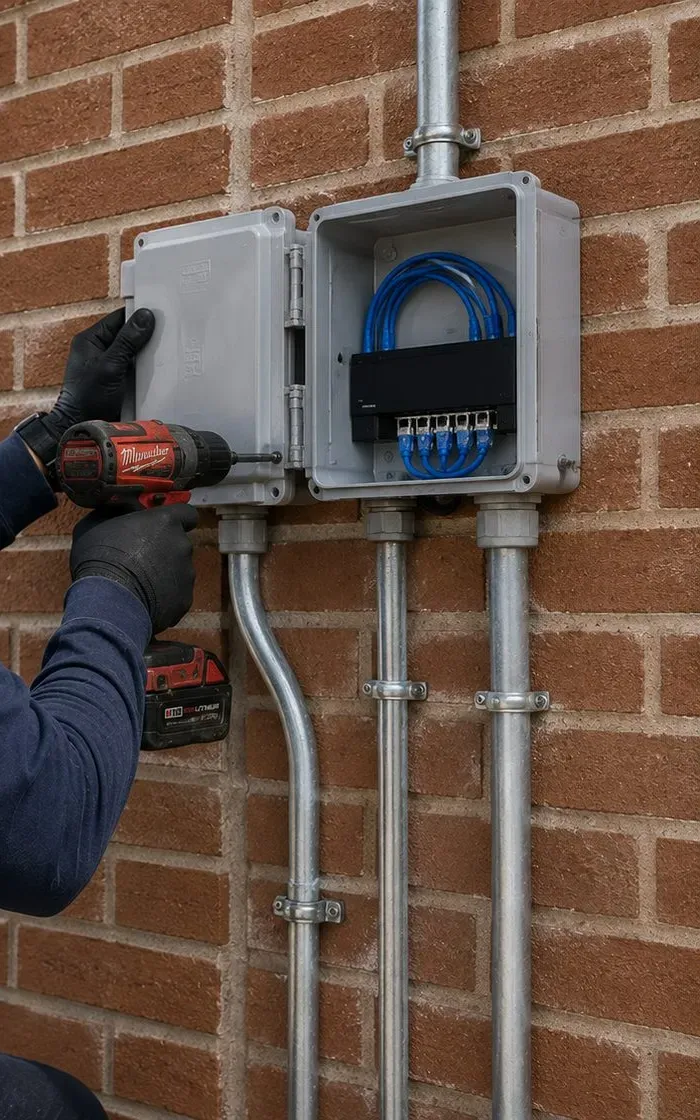
Junction enclosure and metal conduit being fixed to an exterior brick wall, low-voltage work for smart locks in Brooklyn Heights
A grey weatherproof enclosure with blue cables inside is fixed to a red brick wall, with three metal conduits running down from it.
Commercial Smart Locks

Business Smart Lock Installation in Brooklyn Heights

Business doors in the Heights tend to sit in landmarked buildings with homes above, on streets that are busy all day and quiet at night. These are the corridors we work on most.

Montague Street

The Heights' main shopping street and the core of the Montague Street BID, founded in 1998, which serves more than 100 businesses and works with the 84th Precinct's neighbourhood coordination officers. Shops, cafés and banks sit at street level with apartments and offices above, so the street door and the shop door are often side by side in one landmarked facade.

Henry Street

Restaurants and small shops tucked between residential blocks. Kitchen back doors, early deliveries and staff who change by season are the usual brief, along with a lock that a closing manager can confirm from home.

Atlantic Avenue

The neighbourhood's southern edge and a BID corridor of its own on the city's directory. Antique dealers, galleries and specialist shops here care about strength ratings and opening logs as much as convenience.

Court Street and Borough Hall

Law firms, accountants, therapists and other professional suites in the office buildings and converted houses around Borough Hall and the Court-Livingston-Schermerhorn BID. Typical requests are keypads on suite doors, a code for the cleaner, and a door that can be released for an appointment.

Clark Street

Home to the Clark Street subway station, whose only entrance is through the ground floor of the old Hotel St. George, and to the shops along that block. Residential and retail doors here see heavy foot traffic all day.

Churches, Schools and Institutions

Houses of worship such as Plymouth Church on Orange Street, a National Historic Landmark since 1961, along with schools and cultural buildings. Side doors used by staff, volunteers and community groups are good candidates for scheduled keypad codes.

Compliance callouts for Heights doors

  • Landmarks. Inside the historic district, work on the exterior needs an LPC permit unless it falls into the exceptions the Commission publishes. Replacing locks and handles is listed among work that may not need one; readers, intercom panels, cameras and their conduit follow the health, safety and utility equipment rules in LPC Rules section 2-20. When in doubt, the Commission's own advice is to contact LPC at 212-669-7817 before work starts.
  • One motion out. Apartment and business exit doors must open from the inside without a key, code or tool. HPD states it is illegal to install double-cylinder locks on apartment doors. Every lock we fit is tested by hand from the inside before we leave.
  • Multiple dwellings. A building with three or more households is a multiple dwelling under New York's Multiple Dwelling Law. Tenants may add their own lock and must give the owner a duplicate key on request (MDL §51-c); the owner must provide the entrance lock and keys required by the Housing Maintenance Code.
  • Tenant data. Owners who introduce app, fob or biometric entry in a multiple dwelling are bound by the city's Tenant Data Privacy Act (Local Law 63 of 2021): no requiring a smart access system to enter the tenant's own unit, consent before collecting data, limits on what is kept and for how long.
  • Self-closing doors. Doors to interior corridors and stairs in apartment buildings must be self-closing under Local Law 111 of 2018. A smart lock must never be propped, wedged or programmed in a way that defeats the closer.

This page explains how the rules affect a lock installation; it is not legal advice. Where a question turns on your lease, your proprietary lease or a permit, we say so and point you to the right office.

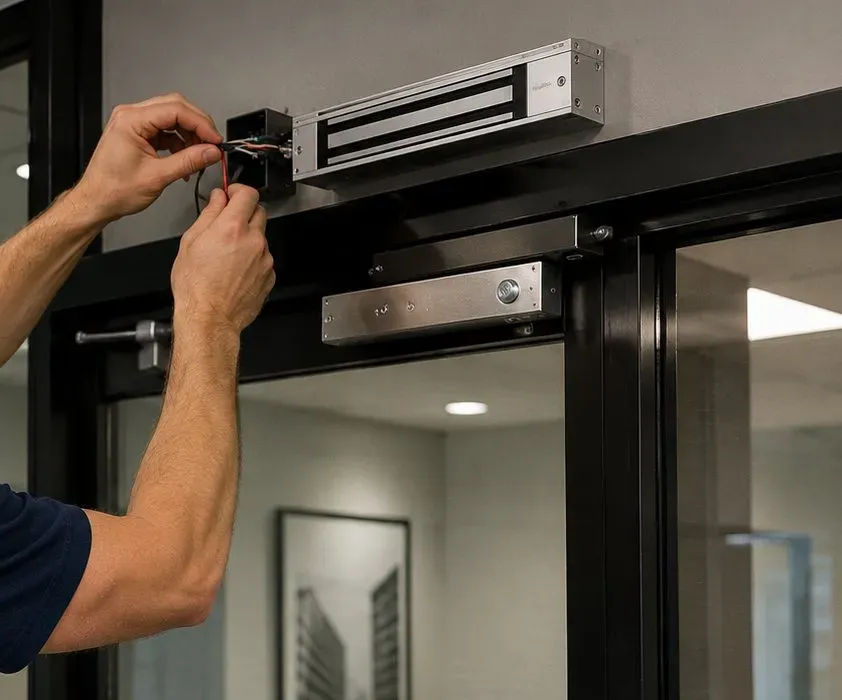
Hands wiring a magnetic lock on the header of a glass office door, commercial smart lock installation Brooklyn Heights
Two hands splice wires into a small junction box beside a magnetic lock mounted on the header of a glass office door.
Your Questions Answered

Smart Lock Installation in Brooklyn Heights: Questions Answered

Questions we are asked in the Heights that a general smart-lock guide does not answer, grouped by the kind of building they come from.

Carriage houses and the doors on the mews

Our carriage house on the mews still has its tall wooden stable doors — where does a smart lock actually go?

Almost never on the stable doors themselves. On most converted carriage houses on Grace Court Alley, Hunts Lane or Love Lane the big leaves are kept for their looks and are bolted from the inside with cane bolts or a bar, while daily life goes through a smaller pedestrian door set into the facade or cut into one of the leaves as a wicket. That smaller door is where a keypad or fingerprint deadbolt belongs. It is closer to a normal door in size and weight, it swings on its own hinges, and a lock fitted to it does not have to hold a nine-foot leaf shut against the wind.

If the pedestrian door is a wicket cut into a carriage leaf, we look closely at the stile around it. The wood is often narrow and has been altered at least once, so we size the lock to the timber that is actually there and add a reinforced keeper on the frame side. Where the household also parks inside, the carriage doors can be monitored with a door contact and left mechanically bolted, which keeps them out of the keyless system entirely and avoids a motorised bolt trying to pull a sagging leaf into line.

Because these houses are inside the historic district and face the street directly, anything mounted on the facade — a reader, a camera, a doorbell — follows the Commission's equipment rules. A lock on the door itself is the simplest route, and that is usually where we start.

We want a reader beside the doorway rather than on the door — how does its cable get there without marking the brownstone?

A wall reader needs power and a data cable, and on a landmarked facade the cable is the part to plan. The LPC guidebook allows staff to approve equipment on a primary facade only where there is no other reasonable location, and asks that it sit in a discreet spot: within or beside the door opening, beneath a band course, under the stoop or behind the areaway wall. Where conduit has to show, staff may approve roughly ten inches of it, painted to match and fixed into mortar joints rather than decorative surfaces.

In practice we try to keep the cable inside. On a rowhouse the route is usually from the cellar or the vestibule ceiling, through the door frame or the reveal, and out at the reader's back box, so nothing runs across the face of the brownstone at all. Where the masonry is too thick to core, the reader can often move into the vestibule or onto the frame inside the door opening, which is easier to approve and better sheltered.

We photograph the facade, the reveal and the proposed position before quoting, mark up the route, and give you the manufacturer cut sheet for the reader. Those are the same materials the Commission asks for in a permit application, so if one is needed you or your architect have most of the package already.

The mail carrier, the post and the street door

The mail carrier opens our building's street door with a postal key in the old intercom — what happens to that when the door goes keyless?

Many small apartment buildings give the letter carrier access through a postal lock in the intercom panel or a separate key keeper beside the door. The Postal Service calls the key that opens these an arrow key and uses it for apartment panels, collection boxes and parcel lockers; the USPS Office of Inspector General has reported that the number of arrow keys in circulation is unknown and that lost keys were not adequately tracked. That is a reason to keep the postal lock separate from your new system, not to fold it in.

When we replace an intercom or add a reader, we do not remove or rewire the postal lock on our own. The building, not AESS, arranges any change to it with the local post office, and the carrier's access has to keep working through the change. The usual solution is to keep a postal key keeper or a lock cylinder in the new panel that releases the door the same way the old one did, while residents switch to codes or fobs.

On a landmarked building the Commission's rules also cover mailboxes and mail key lockboxes: within or beside the door opening, on a gate or door under the stoop, on a plain stoop wall, or on a post in the areaway. We position the new reader so the postal lock box can stay where it is or move to one of those permitted spots.

Brownstones that have become small co-ops

Our brownstone is a self-managed co-op of six or seven apartments — who decides on a keypad for the shared street door, and who holds the master admin?

The street door belongs to the corporation, so the decision is the board's, normally by the voting rule in your by-laws, and it should be recorded in the minutes. We are happy to come to a board meeting or send a written proposal with the hardware, the cost and how codes will work. What we will not do is fit a shared-door keypad at the request of a single shareholder, however keen.

Admin rights are the part small co-ops most often get wrong. One owner sets the system up on their own phone, sells two years later, and the building is locked out of its own door. We set up the account in the corporation's name with a shared email the board controls, give two officers admin rights, and give every other resident a user credential only. The written register we leave lists who holds what, so the next treasurer inherits it with the books.

Each household should still hold a working key for the street door, and every apartment keeps its own lock. If your proprietary lease requires the corporation to hold a duplicate key to each unit, as many do, that does not change because one shareholder fits a smart lock on their own door; the board simply receives a key or an agreed emergency arrangement for it.

The laundry, bike room and storage cages in our co-op all run on one old key everyone has copied — can those doors go keyless too?

Yes, and in a small building this is often the most useful work of the lot. A shared brass key that has been copied for twenty years has no record of who holds it. A keypad deadbolt or a small reader on the cellar door, the bike room and the roof door gives each resident a code that can be removed when they move out, and a log the board can look at after something goes missing.

The doors themselves need checking first. Cellar doors in older rowhouses are often thin, warped or fitted with a hasp; the lock is only as good as the door and frame it is on, and we will tell you if one should be replaced before it is made keyless. If a door is on a route someone might use to leave the building, such as a cellar door leading to the yard, it must still open from the inside without a key or code.

For the roof, we follow the building's existing arrangement for fire department access and do not fit anything that would stop a door that must open from the inside doing so. The cheapest sensible setup is usually one battery keypad deadbolt per door, all on the same app as the street door so the board has one place to remove a departing resident.

Old fabric: glass, plaster and brick

Our inner vestibule door still has its original etched glass — how do you fit a lock without putting the glass at risk?

Carefully, and usually without drilling near it at all. Most original glazed inner doors have a solid lock rail below the glass, and an interior-side retrofit lock or a compact deadbolt can sit in that rail using the existing bore. Where new boring is unavoidable, we tape and support the panel, drill from the side the glass is bedded on, and use a sharp hole saw at low speed so the door is not jarred.

We also think about what happens after installation. A motorised bolt that slams into a tight keeper sends a small shock through the door every time it throws. Easing the strike and setting the lock to a gentle throw protects the glass for years. If the glass is cracked or loose in its putty before we start, we will point it out and photograph it so everyone knows its condition.

If a thumb-turn sits within reach of the glass, a broken pane would let someone reach through and turn it. On an inner vestibule door behind a locked outer pair that risk is small; where the glazed door is the first line of defence, a keypad lock with the thumb-turn disabled when you are away, or a different door for the smart lock, is the safer plan.

Our walls are original plaster on brick — can a wired reader or door sensor be fished to the doorway without opening the walls?

Often, yes, but not always, and we say which before we price it. In many rowhouses the plaster is applied directly to the brick party wall with no cavity to fish through, so the route has to use the spaces that do exist: the cellar ceiling, the void behind the vestibule's wooden trim, the door frame and its reveal, and the run of an old bell or intercom wire if one is still in place.

Where a run has to cross a plastered wall, we prefer a small surface raceway painted to match, inside, over cutting a chase in old plaster that may crack well beyond the cut. For a lock on the door itself the question rarely arises: battery smart deadbolts need no wiring, and a door contact for monitoring can be wireless.

A wired strike and reader on a street door is the case where cable is unavoidable. Here we look first for an existing intercom pair or bell wire that can be reused or used as a draw wire. If a route cannot be found without damage, we will recommend a battery keypad lock on the door instead of a wired reader beside it.

Visitors, crews and checking your own security

A production company wants our house for a few days of filming — how should their access work?

Brooklyn Heights has been a favourite with productions for years; in 2012 the then Council Member Stephen Levin asked the city to put the whole neighbourhood on its filming hot-spot list, and in April 2025 the Brooklyn Eagle photographed a Law & Order shoot on the Promenade. If your house is the location, the location manager will want keys for prep, shoot and wrap days. Codes are a far better answer than keys.

We set a separate code for the location team that works only on the agreed dates and hours, on the doors they are allowed to use, and expires on its own when they wrap. The app log then shows exactly when the house was opened and by which code. Private rooms can be closed off with their own lock or a door kept on a different code, and a camera at the door gives you a view of arrivals while you are away.

Two practical points: keep your own household codes unchanged and private so you never need to share them, and ask for a walk-through with the location manager before and after the shoot. If the crew needs the street door of a co-op building, that is a board decision, and the board should issue its own time-limited code rather than a resident's.

Should we book the NYPD's free security survey before or after the smart lock goes in?

Before, if you can. The NYPD offers free security surveys through each precinct's crime prevention officer — the 84th Precinct covers Brooklyn Heights — and the officer evaluates locks, doors, lighting, windows and alarm systems and suggests corrective steps. Having that report in hand means the lock plan can answer it: a reinforced keeper where the frame is weak, a different door made keyless, better lighting at the stoop.

Book through the precinct or through 311. The survey is advice, not a specification. We read the report with you at the walkthrough and price the items that are within our work, such as locks, strikes, readers, door contacts and cameras, separately from anything a carpenter or mason should do.

If the lock is already in, the survey is still worth having. Officers often spot the things that defeat a good lock: a garden door with a weak frame, a cellar window without a grille, a side gate left on the latch.

Shops and offices on the Heights' main streets

Our Montague Street shop carries valuable stock — how does a smart deadbolt's strength rating compare with the lock it replaces?

Look for certification to the BHMA standards rather than marketing words. The current residential standard, ANSI/BHMA A156.40, specifies durability, operation and security tests for residential deadbolts, including seventeen security tests, one of which loads the door against the bolt with 1,350 pounds of force. Many lock makers still describe products by the older grade 1, 2 and 3 scale, with grade 1 the commercial-duty end.

Compare like with like. If your current lock is a heavy commercial mortise lock or a high-security cylinder, many residential smart deadbolts will be a step down in physical strength even though they add codes and logs. In that case a commercial smart lock in mortise or narrow-stile format, or a reader and electric strike working with the existing high-security cylinder as key override, keeps the strength and adds the convenience.

The rest of the opening matters as much as the lock: the frame, the strike plate and its screws, the gap at the edge, the glass, and the roll-down gate if you have one. We check all of them at the walkthrough and price any strike reinforcement separately so you can see what it adds.
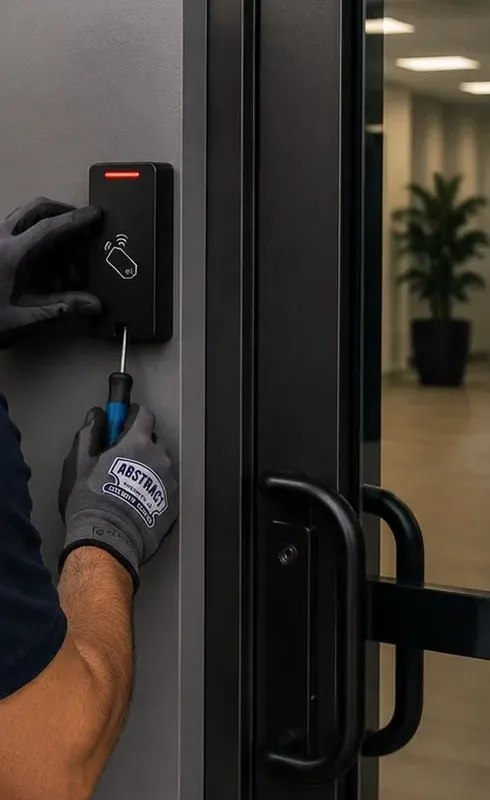
Gloved hand holding a fob reader against a grey door frame while a screwdriver sets it, Brooklyn Heights access reader
A slim fob reader with a red status light is held to a grey frame beside a glass door with pull handles while it is screwed in place.
Equipment

Types of Smart Locks We Install

Interior Retrofit Smart Locks

Mount on the inside over an existing single-cylinder deadbolt and leave the outside, the key and the historic face of the door untouched. The first thing we consider on a landmarked front door.

Compact Keypad Deadbolts

For Federal-era and carriage-house pedestrian doors where stiles are narrow and interior space is tight. Chosen by measured backset and thickness, not by catalogue photo.

Mortise-Format Smart Locks

For heavy rowhouse doors with a mortise pocket in the edge, and for shop doors that need commercial-duty hardware with lever trim and a keypad or reader face.

Fingerprint Deadbolts

Useful for rowhouse co-ops and shared houses: a fingerprint cannot be passed on to a friend, and removing a resident is one tap in the app.

Readers and Electric Strikes

For co-op street doors and shop doors: a keypad or fob reader driving an electric strike, with the mechanical lock kept as key override. The usual answer where a building already has a buzzer.

Narrow-Stile Storefront Locks

For aluminium shop doors on Montague Street and Atlantic Avenue where a residential deadbolt will not fit the stile.

Door Contacts and Exit Devices

Contacts that report a door left open, and request-to-exit sensors or buttons so a wired door always releases from the inside.

Bridges and Thread Border Routers

The radio link between a lock on the parlour floor and a router upstairs at the back. Placed and tested through brick party walls, and left where a resident cannot unplug it by accident.

Doorbell and Entry Cameras

Small cameras and video doorbells that show who used a code. On landmarked facades they follow the Commission's limits on number, size and finish.

National brands or a local installer?

Ring, SimpliSafe and ADT all sell or support smart locks, usually as part of a camera or monitoring package, and they are good products for a modern door in a single-family house. The difference in the Heights is the work around the lock. This is how the two approaches compare on the points that matter here.

National app-first brands (Ring, SimpliSafe, ADT)AESS in Brooklyn Heights
Who fits itYou, or a third-party installer booked through the appA NYS-licensed low-voltage installer (#12000287431) who plans the doors, fits the hardware and tests it
Landmark facadeNot addressedReader and cable positions planned to LPC published criteria; cut sheets and photos supplied
Old doorsProduct sized for modern doorsThickness, backset, mortise pocket and frame measured first
Shared buildingsOne household per accountBoard-owned admin account, written credential register, per-resident codes
Monthly feesOften tied to a monitoring planNo monthly fee from AESS for the lock; monitoring only if you want it
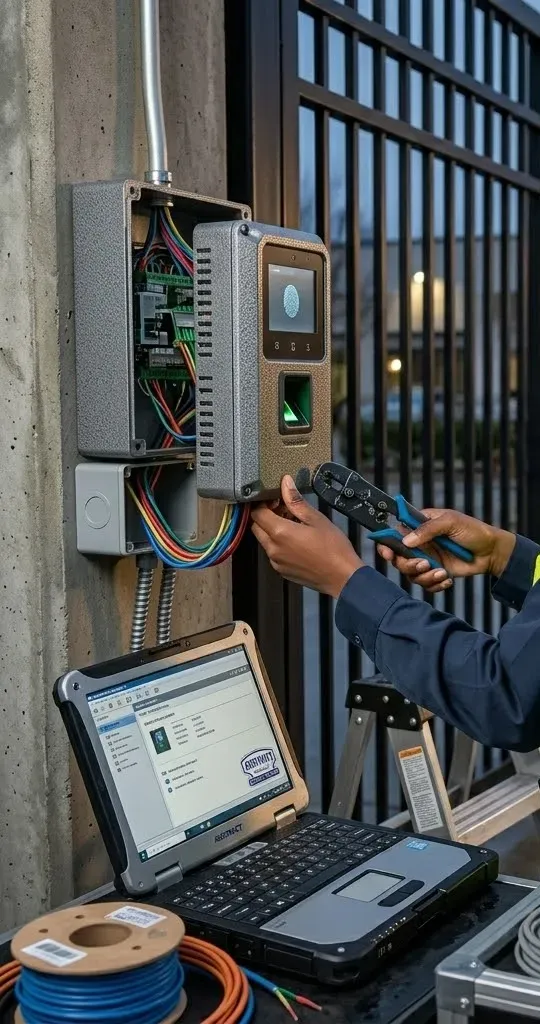
Fingerprint reader and open control box beside a metal gate being wired with a laptop on the ground, Brooklyn Heights gate entry
A fingerprint reader and an open grey control box sit on a concrete post beside a vertical-bar gate; a technician's hands crimp a cable while a laptop rests below.
AI Overview Reality Check

What AI Gets Wrong About Smart Lock Installation in Brooklyn Heights

We could not open live AI Overview, People-Also-Ask or forum results from our build environment, so the claims below are taken from published cost guides and manufacturer pages that AI answers commonly summarise. Each is followed by what we find on Brooklyn Heights doors.

“Smart lock installation runs about $250 to $400”

That range is a real national figure: Fixr's cost guide, updated in January 2025, puts smart lock installation at $250 to $400 with an average of $300, for a Wi-Fi lock with one accessory on a standard door. It describes a modern pre-bored door, one household and no wiring.

A Heights job can be that simple, and when it is we quote it flat at the walkthrough. But the national figure does not cover reconditioning a painted-shut keeper on an 1850s door, building around an original mortise pocket, or a reader and electric strike for a co-op street door. Those have their own published AESS prices, set out in the pricing section below.

The useful takeaway is to separate the lock from the door. If the door is sound and standard, expect something close to the national range. If the door is original, the building is shared or the facade is involved, the plan matters more than the price of the hardware.

“It's a 30-minute DIY job with a screwdriver”

Product testers say so, and on a new door it can be true. Bob Vila's testers describe fitting smart locks with little more than a Phillips screwdriver in about half an hour.

On a two-hundred-year-old door the half-hour goes on measuring. Backsets vary, doors are thicker or thinner than the lock is listed for, and the frame may have been patched with three generations of wood. A lock that is slightly out of line will drain batteries and jam, and a wrong bore in an original door is permanent.

DIY is fine for an interior-side retrofit on a sound modern deadbolt. For an original door, a shared street door or anything wired, have it measured first.

“A retrofit lock leaves the outside untouched, so landmark rules never come into it”

The first half is right. August describes its retrofit lock as mounting inside on the existing deadbolt and leaving the outside untouched, with your keys unchanged. It only works with single-cylinder deadbolts, and some doors need clearance for it.

The second half is too broad. A retrofit lock on the door is rarely a landmarks issue, and the Commission lists replacing locks and handles among work that may not need a permit. A keypad, reader, camera or doorbell fixed to the facade beside the door is different: it is equipment on the building and follows section 2-20 of the LPC Rules.

So the honest answer is that the lock is usually free of landmark paperwork and the things around it may not be. Plan both together.

“Any smart lock fits any front door”

Smart locks are designed around a modern bored deadbolt. Owners of older doors have asked for years whether anything fits their mortise locks; a SmartThings community thread started in 2014 by an owner of metal brownstone doors ran for nearly a decade without a simple drop-in answer.

Heights doors include mortise pockets, centre knobs, narrow Federal stiles, glazed vestibule doors and wicket doors in carriage leaves. Each has a workable smart option, but not the same one, and some need a carpenter before they need a locksmith.

Tell us the make of the existing lock and send photos of the edge of the door. That one picture rules out half the products on the shelf.

“Keep the Wi-Fi bridge within 10 to 15 feet and you're set”

August's own support guidance is to place its Connect bridge within 10 to 15 feet of the lock and check for full Wi-Fi bars at that spot. The distance is right; the walls are the problem.

In a rowhouse the router is often on the top floor at the back and the lock is on the parlour floor at the front, with brick party walls, plaster and floors in between. A bridge 12 feet from the lock can still be on the wrong side of a wall that stops the signal dead.

We test the signal at the door with the bridge in its proposed spot before we leave, and add a mesh node or move the router if needed. A lock that only works when you are standing next to it is not finished.

“Matter means any lock works with any app”

Matter makes it easier for a lock to work with more than one ecosystem, but it does not remove the hardware underneath. Yale's guidance for its Matter-over-Thread lock is that a Thread border router has to be set up first, and that it must be the same brand as the app you are using.

Bold's knowledge base explains Thread as a low-power self-healing mesh needing a border router such as a Nest Hub (2nd gen) or HomePod mini, with a lock able to join up to five ecosystems.

In a co-op with several households on different phones and speakers, choose one ecosystem for the shared door and let individual apartments do what they like on their own doors.

“A smart lock only makes sense for a single-family house”

Most product pages assume one household. In Brooklyn Heights, more than half of homes are rented and many owner-occupied homes are apartments in small co-ops and condos, so the commonest buyer is a board or a landlord as often as a family.

Shared buildings are where keyless entry does the most good: a departed resident is removed in seconds, a contractor's code expires on its own, and nobody needs to re-key a street door after a lost key. They are also where the rules bite, from the Multiple Dwelling Law's duplicate-key provision to the Tenant Data Privacy Act's limits on app-only entry.

Plan shared doors as building systems, with an owner of the account, a written register and a key backup for every resident.

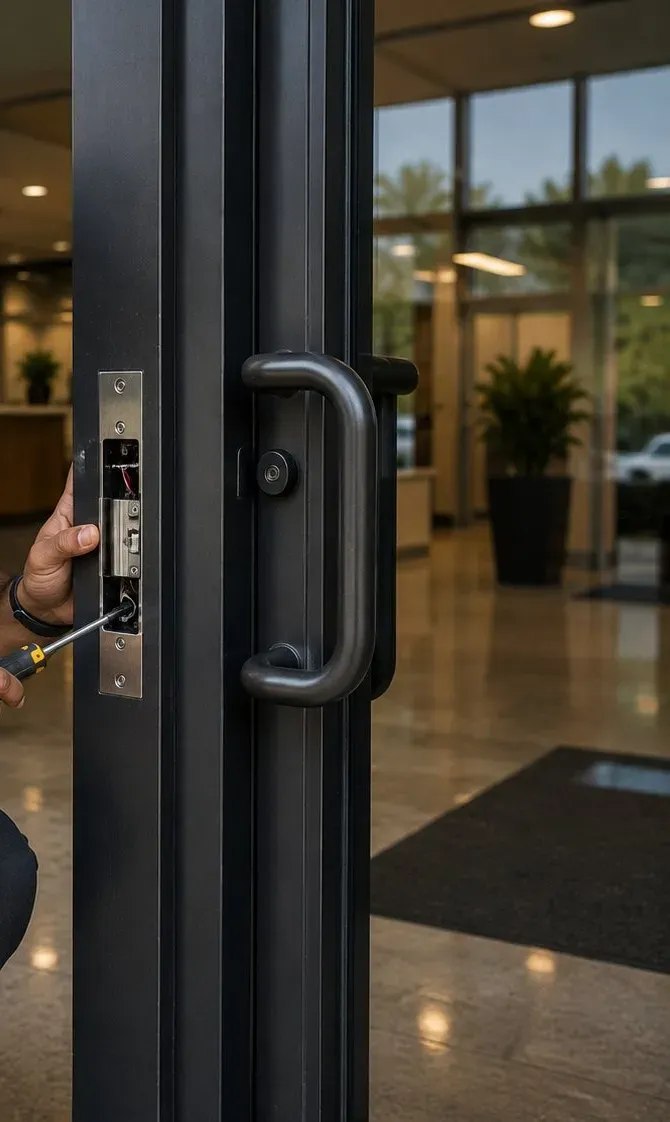
Hand fitting an electric strike into the frame of a dark aluminium entrance door, Brooklyn Heights commercial entrance
A hand with a screwdriver works on an electric strike set into the edge of a dark aluminium frame next to a large pull handle and a glass lobby beyond.

Measure the Door Before You Buy the Lock

Send a photo of the edge of your door and the entrance around it; we reply with the lock format that fits and whether the facade needs a landmarks check.

Get In Touch

Request a Free Quote

Tell us the street, the kind of building and which entrance you mean; attach a photo of the door edge if you can. Our planner replies in writing, usually the same day. Rather speak to someone? Dial (347) 934-8335.

✅

We Got Your Request!

Your door details are with our Brooklyn Heights planner, who will phone you later today with a first view. Door jammed or lock offline right now? Ring (347) 934-8335.

How It Works

Our Installation Process

Seven steps, whether the job is one retrofit lock on a Willow Street door or a reader on the street door of a seven-unit co-op.

1. Photos and a short brief

Send photos of each door, inside and out, the edge of the door where the lock sits, and the facade around the entrance. Tell us whether the building is a single house, a rowhouse co-op or a larger building, and who needs to get in.

2. Rules check

We confirm which parts of the plan touch the facade, and whether the board, the managing agent or the Commission needs to see anything. You get the cut sheets and marked-up photos you need.

3. Free walkthrough

At the house we measure thickness and backset, open the mortise pocket if there is one, check the frame, glass and keeper, test the signal at each door and look for an existing cable route.

4. Flat written price

One price per door, with any frame repair, strike reinforcement or cable run listed separately so you can phase the work. The written figure is the figure you pay.

5. Prepare the door

Ease binding edges, re-align or reinforce the keeper, and protect glass, paint and floors before any hardware goes on.

6. Install and test

Hardware is fitted, every door is opened by hand from the inside, and the bridge or border router is placed until a phone on mobile data down the block can lock and unlock.

7. Credentials and handover

Each resident is enrolled and tested, admin rights go to two people, temporary codes are set up, and you receive a written register of every credential.

Coverage Area

Smart Lock Installation Near Brooklyn Heights' Landmarks

We work on every block of the Heights, from Old Fulton Street to Atlantic Avenue. These six places give a sense of the range of doors.

Brooklyn Heights Promenade

Built on top of the Brooklyn-Queens Expressway after residents objected in the 1940s to routing the highway through the heart of the neighbourhood, as the BHA recounts. It is the neighbourhood's front porch, and the first place many visitors arrive.

Hotel St. George, Clark Street

Built in stages from 1885 and once the city's largest hotel with 2,632 rooms. The Tower and Grill buildings became a co-op in 1984; other buildings now house students, and the Clark Street station's only entrance is through its ground floor.

24 Middagh Street

A wood-frame Federal house built around 1824 and generally described as the oldest house in the Heights. The small wood houses of Middagh and Willow Streets are where compact hardware matters most.

Grace Court Alley

A former stable alley for the mansions of Remsen and Joralemon Streets. Its carriage houses became garages and chauffeurs' quarters, then apartments, and still have tall wooden stable doors and hay cranes.

Plymouth Church, Orange Street

Founded in 1847 with Henry Ward Beecher as first pastor, tied to the Underground Railroad, and a National Historic Landmark since 1961. Its red brick sanctuary seats 2,800.

Hotel Bossert, Montague Street

A 14-storey Renaissance Revival landmark at 98 Montague Street, opened in 1909, sold for $100 million in 2025 and now going through a residential conversion reviewed by the LPC in 2026.

We also serve the neighbouring areas: DUMBO and Vinegar Hill to the north, Downtown Brooklyn and Boerum Hill to the east, and Cobble Hill across Atlantic Avenue to the south. The borough-wide picture is on our Brooklyn smart lock installation page.

Pricing

Smart Lock Installation Cost in Brooklyn Heights

Brooklyn Heights is priced at our Brooklyn base rate, with no neighbourhood premium. Building-door work uses the figures already published on our access-control and door-buzzer pages; a smart lock on a house or unit door is quoted flat once we have seen it, because the door decides the work.

ItemPriceNotes
Single-door keypad or fob reader with electric strike, installed$1,500 – $2,500AESS published Brooklyn base; Brooklyn Heights is priced at the Brooklyn rate
New electric strike on an existing building door$250 – $450AESS published figure
Repair of a failed electric strike (buzzes but won't release)$295 – $485AESS published figure
Smart lock on a house, unit or carriage-house doorQuoted flat at the free walkthroughDepends on the door, not the zip code
Service call after installation$195/hr, 3-hour minimum ($585)Not charged on the initial installation
National third-party reference (Fixr, Jan 2025)$250 – $400, average $300Not an AESS price; standard door, one accessory

What moves a Heights quote up or down

  • The door, not the lock. An original door that needs its keeper eased or rebuilt, or a mortise pocket that has to be adapted, takes longer than a modern pre-bored door.
  • Cable. A battery lock needs none. A reader and strike on a street door need a route, and a route through plaster and brick takes more time than one through a cellar ceiling.
  • The facade. Anything mounted outside is sized and placed to landmarks criteria; if a permit is needed, allow time for it before the install date.
  • Batching. A co-op that has its street door, cellar and laundry fitted on one day pays for one set-up and one trip rather than three.
  • Hardware supplied. We can supply the lock, or fit yours as labour only.
Shop Our Systems

Smart Lock Installation Packages & Pricing

Starter — Original Front Door

Quoted flat at walkthrough

An interior retrofit or compact keypad deadbolt on one house or unit door, sized to the existing preparation, with keeper easing, signal test, two admin users and a written code list. The right first step for a single-family rowhouse or a carriage-house pedestrian door.

Standard — New Entry Strike

$250–$450

For a co-op or small building whose street door already has a buzzer and a reader or keypad but needs a new electric strike to release reliably. Includes strike fitting, alignment and test with the existing system; a failed-strike repair is $295–$485.

Premium — Keyless Street Door

$1,500–$2,500

A single-door keypad or fob reader with electric strike on a rowhouse co-op or small building street door, installed, with the board-owned admin account, per-resident credentials, request-to-exit where needed and a written register.

Bring Your Own Lock — Labour Only

Bought your own lock already? We fit it as labour only, quoted flat at the walkthrough. Before we start we confirm it suits your door's thickness and backset, that it can work with your existing deadbolt or mortise pocket, and that your router or border router can reach it. If it cannot, we say so before anything is drilled, and you can return it unopened.

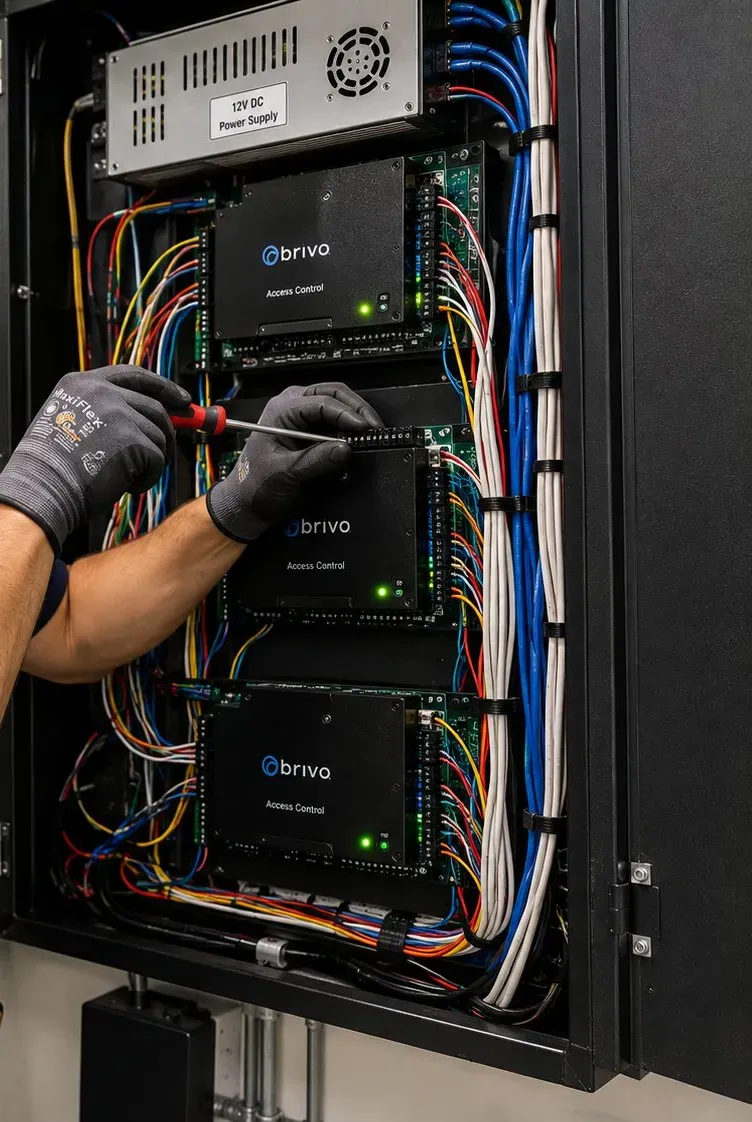
Gloved hands working on three door controller boards under a 12V power supply in a wall cabinet, Brooklyn Heights access control
An open wall cabinet holds a 12V DC power supply and three stacked controller boards with neatly dressed colour-coded wiring; gloved hands adjust a terminal.

One Plan for Every Door in the Building

Street door, cellar, laundry and roof on one app, with the board holding the keys to the account. Ask for a co-op walkthrough.

Rowhouse Co-ops

A Keyless Plan for a Rowhouse That Became a Small Co-op

A brownstone with six or seven apartments has the doors of a building and the staff of a house: there is no super, no doorman and no managing agent on site, and the board is a group of neighbours with jobs. The plan has to run itself. We start by listing every opening that people share: the street door, the vestibule door if there is one, the cellar door, the yard door, the roof hatch or door, and any storage, laundry or bike room. Then we list who needs each one, from residents and their children to the cleaner, the boiler contractor, the mail carrier and the occasional guest.

For the street door the usual answer is a reader or keypad with an electric strike, keeping the existing mechanical lock as the key override so every household still has a key. Each resident gets their own credential. The account belongs to the corporation, sits on an email address the board controls, and has two officers as administrators. Contractors get codes that work only on the days and hours they are booked. The building keeps its buzzer for visitors, and the strike is wired so both the buzzer and the reader release it.

Inside, the cellar and common rooms get battery keypad deadbolts on the same app, so a departing resident is removed from every door in one step. Unit doors are left to each household, subject to the proprietary lease and the duplicate-key arrangement the building already has. We finish with a one-page register for the minute book: every door, every lock, every credential and who holds admin, so the next board inherits a system rather than a mystery.

If your building already has an intercom that needs work, our Brooklyn Heights intercom installation and door buzzer repair teams can handle it at the same visit.

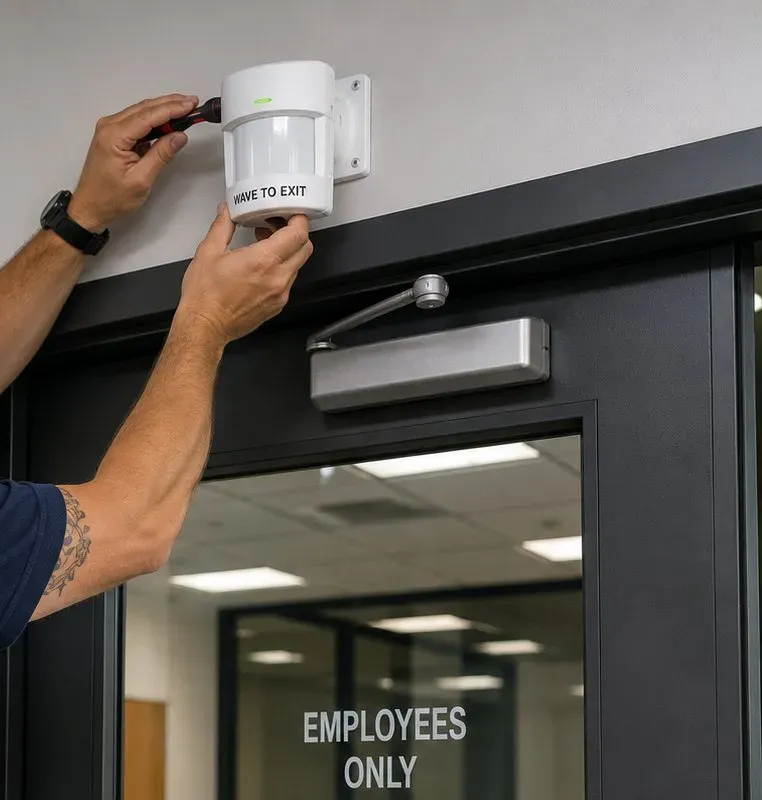
Hands fitting a wave-to-exit sensor above a door with a closer on the header, Brooklyn Heights egress hardware
A white wave-to-exit sensor labelled for exit is pressed onto the wall above a dark door frame; a door closer arm is visible on the header below.
Carriage Houses

Carriage Houses, Mews and the Smallest Heights Doors

The carriage houses of the Heights are some of its most photographed buildings and some of its most awkward doors. Brownstoner's survey of them takes in Hunts Lane, Columbia Heights, Love Lane, College Place, Grace Court Alley and Hicks Street, and a reader's comment adds Middagh, Pineapple and Willow Streets and a group on Henry Street south of Joralemon. Some were rebuilt almost from scratch; others still have their stalls. What they share is a facade dominated by big wooden doors that were made for horses, not people.

We treat the carriage doors and the people door separately. The carriage leaves usually stay as they are: mechanically bolted inside, perhaps with a contact so the app tells you if one is opened. The pedestrian door, whether a separate door in the facade or a wicket in a leaf, gets the smart lock, chosen for a narrow stile and a door that is lighter than a rowhouse leaf. Where there is a garage behind the doors, we talk about the opener and whether it should be in the same app, but we do not wire a motorised bolt to a leaf that weighs more than the person using it.

Federal wood houses on Middagh and Willow Streets raise the same issue in a different form: small doors, old frames, patched wood and very little room on the inside face. Compact hardware, a reinforced keeper and an honest conversation about whether the frame needs a carpenter first are worth more there than any feature list.

Pre-War Buildings

Pre-War Apartment Buildings and the Old Hotels

The tall buildings of the Heights tell the story of its middle years. When the Brooklyn Bridge opened in 1883 and wealthier families moved on, the BHA recounts, mansions were torn down and replaced with apartment buildings, and after the 1929 crash many houses were divided into rooming houses. Hotels rose too: the St. George on Clark Street grew in stages from 1885 to become the city's largest, and the Bossert opened on Montague Street in 1909. Today those buildings are co-ops, rentals, student residences and, in the Bossert's case, a residential conversion under way.

For a smart lock on an apartment door in one of these buildings, the building comes first. Most have a board or an owner with house rules for contractors, a managing agent who will want a certificate of insurance, a super who controls the master key system, and a street-door system the unit lock must not undercut. Unit doors are frequently heavy, fire-rated and fitted with a closer, which rules out some lightweight smart locks and makes mortise-format or interior-retrofit hardware the usual answer.

We ask for the alteration rules before quoting, keep the building's cylinder or an agreed key override in the new lock where the proprietary lease or the lease requires it, and never leave a door that cannot be opened from the inside with one motion. Where the building is moving its street door to fobs or an app at the same time, we make sure the unit-door plan and the building plan do not ask residents to carry three different credentials.

Landmark Rules

Working Inside the Landmark Rules, Step by Step

Owners in the Heights know that the Landmarks Preservation Commission matters, but the detail is easy to lose. The Commission's guidebook says that with few exceptions, owners need an LPC permit before doing work that affects the exterior of a landmark property, including work inside the boundaries of a historic district and work in front, side and rear yards. It also lists what may not need a permit, including repairing or replacing hardware such as hinges, knobs, locks and handles, and ordinary maintenance and repair of existing health, safety and utility equipment.

For a smart-lock project that gives a simple order of work. First, keep as much as possible on the door: a lock on the door is hardware. Second, if something must be mounted beside the door, use the published criteria: within or adjacent to the door opening, as small as possible, neutral and discreet, one intercom panel per door opening, fixings and conduit into plain masonry and mortar joints rather than decorative stone or cast iron. Third, if the plan involves a new door, the Commission looks for a design that matches the historic door's materials, operation and details, and the original fabric around the doorway is to be kept.

We do not file permits on owners' behalf, and we do not tell anyone a permit is unnecessary when the Commission is the one who decides. What we do is shape the job so it sits within the published rules wherever it can, and hand you the cut sheets, photos and drawings that an application calls for. If you are unsure, the guidebook's own advice is to call the Commission at 212-669-7817 or write to info@lpc.nyc.gov before work starts.

Connectivity

Getting a Signal Through Brick, Plaster and Four Floors

A rowhouse is a tall, narrow box with brick party walls on both sides and solid floors between levels. Radio signals that cross an open-plan suburban house easily can struggle here, especially when the router sits on the top floor at the back and the lock is on the front door two floors down. In a house divided into apartments it is worse: each household has its own router, none of them is near the shared front door, and the hallway belongs to nobody.

For a single-family house we usually place the lock's bridge or Thread border router on the same floor as the door, within sight of it, and back-haul it to the router with a mesh node or a short network cable. For a co-op street door we prefer a small network point owned by the building, not borrowed from a resident's Wi-Fi, so that a tenant moving out does not take the front door offline with their router. Where the street door has a wired reader, it can talk to its controller over cable and needs no Wi-Fi at all.

Whatever the method, we test from the sidewalk with a phone on mobile data before we leave: lock, unlock, add a code, read the log.

Shop Doors

A Door Plan for a Montague Street Shop

Shops on Montague Street and Atlantic Avenue share a pattern: a storefront at street level in a building with homes or offices above, an aluminium or wood shop door with glass, often a roll-down gate, and a back door or cellar route for deliveries. Staff change often, opening and closing times shift with the season, and the owner is not always the first to arrive.

The front door usually keeps its strongest mechanical lock and gains a keypad or reader-and-strike for staff, so that the code opens it in the morning and the key still works if the electronics fail. Staff each get their own code with the hours they work, and the log shows who opened up and when. A door contact tells the owner if the door is left open after closing. The back door gets a commercial keypad lock set to relock automatically, and any exit route stays free to open from the inside at all times.

Where the shop shares a facade with the residential entrance next door, we keep the two systems apart: the shop's codes never open the residents' door, and anything new on the facade is placed to the Commission's criteria. For multi-door businesses, such as a restaurant with a front door, a back door and a cellar, a small access-control system may serve better than three standalone locks; our Brooklyn Heights access control team can quote both so you can compare.

Before the Visit

Before You Buy a Lock: Five Photos That Save a Visit

Most of the questions that decide a smart lock on an older Heights door can be answered from a phone camera before anyone travels. Send these five pictures with the quote form and we can usually tell you which lock formats will fit, which will not, and whether anything outside the door needs thought.

One: the edge of the door, with the door open. This shows the faceplate of the existing lock, whether it is a mortise lock in a pocket or a bored deadbolt, and the screws that hold it. A tape measure held across the edge gives us the thickness. Two: the inside face of the door around the lock, with a tape measure from the edge to the centre of the existing keyhole or thumb-turn. That distance, the backset, rules many products in or out.

Three: the frame and keeper on the jamb, close enough to see whether the bolt lines up with the hole and whether the wood around it is sound. Four: the whole entrance from the sidewalk, including the stoop, the door surround, any transom or sidelights, the existing intercom, mailbox or camera, and the areaway fence. That is the picture we read against the landmark rules. Five: where the router lives, and roughly how far it is from the door, floor by floor.

If the building is a co-op or has more than one household, add a line about who uses the door and who will run the account. With those in hand the walkthrough confirms rather than discovers.

Key Backup

Keys Still Matter After the Door Goes Keyless

A smart lock replaces the habit of reaching for a key, not the key itself. Every good smart deadbolt we fit keeps a mechanical override, and every household that uses the door should hold a working key for it. Batteries go flat, phones get lost, and a firmware update can leave a lock waiting for a reboot. A key in a drawer at home and another with a trusted neighbour solves all three.

In shared buildings the key has a legal side as well. Tenants in multiple dwellings are entitled to the entrance-door key the Housing Maintenance Code requires the owner to provide, and owners may not make a smart access system the only way into a tenant's home. Co-op proprietary leases commonly require a duplicate key to each apartment for emergencies. A keyless plan in the Heights therefore always includes a key plan: who holds which key, where the spare for the street door lives, and who is called if a key is lost.

We record the keyway and the number of keys cut for each lock on the handover register, alongside the codes and app users, so that when the board, the owner or the next tenant asks who can open the door, there is one complete answer.

Glossary

A Short Glossary of Heights Door Hardware

Mortise lock. A lock body set into a deep rectangular pocket cut in the edge of the door, usually with a latch and a deadbolt in one case. Common on older rowhouse and apartment doors. Some smart locks are made in mortise format; others work alongside an existing mortise lock.

Bored deadbolt. The modern type: a round hole through the face of the door and a smaller one into the edge. Most consumer smart locks are designed for this preparation, measured by its backset and the door's thickness.

Backset. The distance from the edge of the door to the centre of the bore. Older doors do not always follow modern standard sizes, which is why we measure it before recommending a lock.

Keeper and strike. The plate and pocket on the frame that receive the bolt. A misaligned or weak keeper is the most common reason a smart lock jams, drains its batteries or can be forced.

Electric strike. A keeper with a release mechanism, wired to a reader, keypad or buzzer. When it is energised (or de-energised, depending on type) the door can be pushed open while the lock itself stays locked. The usual hardware on a shared street door.

Retrofit lock. Motorised hardware that swaps out nothing but the interior turn-piece of a single-cylinder deadbolt; the cylinder, the key and the street face of the door stay exactly as they were. On an original front door it is the least invasive choice we can offer.

Thread border router. The translator between a battery lock's low-power mesh radio and your ordinary home network; in many homes it is built into a speaker or hub you already own.

Request-to-exit. The inside half of a wired entrance: a push plate or a sensor that sees someone approaching from within and lets the strike go, so leaving the building never waits on a credential.

Hiring Checklist

Questions Worth Asking Any Installer Before They Touch a Heights Door

Whoever you hire, a few questions separate a careful installer from a quick one. We are happy to be asked all of them, and we suggest you ask them of anyone else you are considering.

Will you measure the door before choosing the lock? The answer should be yes, including thickness, backset, the existing preparation and the condition of the frame. What happens to the original hardware? It should be removed carefully and handed back, not thrown away. Is anything going on the facade, and if so, where and how is it fixed? On a landmarked building that is the question that matters most.

Who will own the account? For a house, you. For a co-op, the corporation, with at least two administrators. How is the way out tested? Every door should be opened from the inside by hand, without a key, code or tool, before the installer leaves. What do I get in writing? A price before the work, and afterwards a register of every lock, credential, key and bridge location.

Are you licensed and insured? AESS holds NYS low-voltage licence #12000287431 and carries insurance; a managing agent or board can ask us for a certificate before the visit. And finally, what happens if it stops working? Ours is a call to the Brooklyn line, a booked two-hour window, and the service rate published on this page.

Complete Services

Every Smart Lock Installation Service in Brooklyn Heights

A smart lock is usually part of a wider change at the entrance. These Heights and Brooklyn services often join it on the same visit.

Access Control Installation Brooklyn Heights

Readers, controllers and multi-door systems for co-ops, offices and institutions in the Heights.

AESS Intercom Installation in Brooklyn Heights

New entry panels for rowhouse co-ops and apartment buildings, placed to landmark rules.

Door Buzzer Repair Brooklyn Heights

When the street door buzzes but will not release, or a button upstairs stops working.

Security Cameras for Brooklyn Heights

Entry and areaway cameras sized for a historic facade.

Abstract Enterprises Alarm Installation Brooklyn Heights

Sensors on each entrance tied into a panel, so the house sets itself once the final resident leaves.

Structured Cabling in Brooklyn Heights

Cable routes through old brick and plaster for readers, cameras and Wi-Fi.

Doorbell Camera Installation Brooklyn

A video doorbell at the entrance so every code and delivery is on record.

Brooklyn Access Control

The borough-wide page for keypads, fobs and electric strikes.

Get a Quote

Ask for the lock and any of these services on one form.

Field Notes

Field Notes From Heights Doorsteps

What our technicians do first on a Heights doorstep, as a working habit rather than the story of any one job:

We look up before we look at the lock. Is there a transom, sidelights, a band course, an areaway fence, an existing intercom panel or camera? That tells us where anything new could go if the plan needs more than a lock on the door, and what the Commission is likely to accept.

Then we open the door and read its edge. Is there a mortise pocket and which make of lock is in it? How thick is the leaf and how far is the old bore from the edge? Does the keeper line up, or has a century of paint closed the gap? We close the door slowly and watch where it meets the frame.

Inside, we stand by the door with a phone and check the signal, and then ask who uses this door, how many households share it and who should be in charge of the account. Only after that do we talk about brands.

FAQ

Brooklyn Heights Smart Lock Installation FAQ

What does a keypad with an electric strike cost on the street door of a Heights rowhouse co-op?
+

Brooklyn Heights is priced at our Brooklyn base rate, so the published figures apply as written: a single-door keypad or fob reader with an electric strike is $1,500 to $2,500 installed, a new electric strike on a building door is $250 to $450, and a failed strike repair is $295 to $485. A smart lock on a house, unit or carriage-house door is quoted flat after the free walkthrough.

Do your installers also cover DUMBO, Cobble Hill and Downtown Brooklyn?
+

Yes. The same Brooklyn crews work across DUMBO and Vinegar Hill to the north, Downtown Brooklyn and Boerum Hill to the east, and Cobble Hill across Atlantic Avenue to the south, with the same pricing and the same Brooklyn number, (347) 934-8335.

If the power goes off, should the electric strike on our co-op's street door stay locked or let the door open?
+

For most residential street doors the answer is a fail-secure strike: when power is lost it stays locked from outside, residents still get in with the mechanical key, and the inside lever or knob still opens the door for anyone leaving. A fail-safe strike releases when power drops, which suits some doors on fire-alarm or egress routes but leaves a street door open in an outage. We check what the building and its existing system require before choosing, and mark the type on the handover register.

Our building has a sidewalk shed or scaffold over the entrance for facade work — can the street-door reader still go in?
+

Usually, yes, as long as the door itself is in use and the contractor's shed does not block the reader position. Buildings taller than six stories must have their facades inspected every five years under the city's Facade Inspection Safety Program, so sheds are common on larger pre-war buildings. We coordinate with the managing agent and the facade contractor so our work and theirs do not clash.

Can you send cut sheets and marked-up photos for an LPC application or a board approval?
+

Yes. For any reader, keypad, camera or panel that will be mounted on the facade, we provide the manufacturer cut sheet, photos of the entrance with the proposed position marked, and a short description of the cable route. These match the materials the Landmarks Preservation Commission lists for equipment applications, and they are what most boards ask for too.

Can the old intercom wire to our street door be reused for a new reader or strike?
+

Sometimes. Older buzzer and intercom wiring is often light-gauge and may have been spliced many times, so we test it for continuity and voltage drop before relying on it. If it is sound it can carry a strike or reader; if not, it can often serve as a draw wire to pull a new cable along the same route without opening walls.

Does it matter which way our front door swings or which side the hinges are on?
+

It matters for the lock choice and the setup, not for whether a smart lock is possible. Most smart deadbolts are reversible and are set up for left- or right-hand doors during installation. Doors that swing outward, or pairs where the active leaf is on the unusual side, are checked at the walkthrough so the right hardware is ordered.

Hands fixing a door position contact to the top of a metal door frame, Brooklyn Heights door monitoring
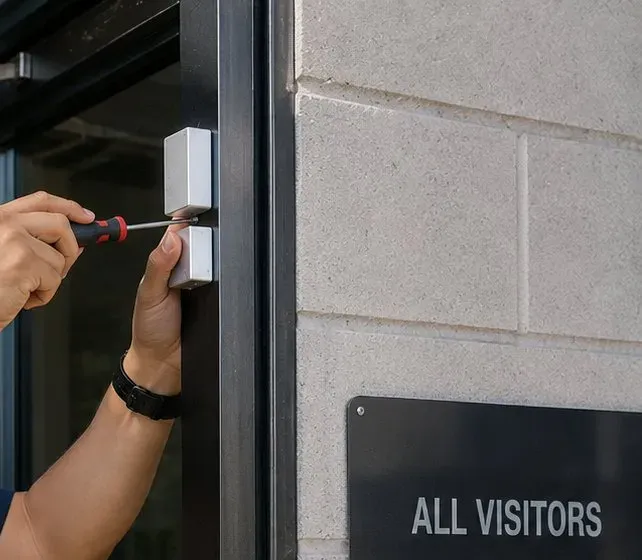
A screwdriver secures a two-part white door position contact at the top corner of a dark metal frame beside a block wall.
All Areas Served

Smart Lock Installation Across Brooklyn and New York

This is the Brooklyn Heights page. It sits under our Brooklyn smart lock installation page, which covers brownstones, frame houses and two- to four-family homes across the borough, and the New York City smart lock hub with the renter and co-op rules that apply citywide.

Looking for something other than locks? Our AESS home page lists every service, and the story of Abstract Enterprises Security Systems explains who we are.

Shut Out on Remsen, Hicks or Joralemon Street Tonight?

A keypad that went dark, a fob that no longer opens the co-op door, a lock showing offline in the app — ring (347) 934-8335. We book the next open two-hour window, and most power, pairing and alignment faults are fixed in one to two hours once we are at the door. Every resident should keep a working key for their own door in the meantime.

Smart Lock Installation Brooklyn Heights — Licensed, Insured, Local

Abstract Enterprises Security Systems · 1282 Troy Ave, Brooklyn, NY 11203 · (347) 934-8335 · WhatsApp (718) 679-0359 via wa.me

NYS Low-Voltage Licence #12000287431 · 100% Licensed & Insured · Same-Day Estimates · Rated 4.7★ from 201 Google Reviews

Full terms — including 50% deposit, one-year parts-only warranty on AESS-supplied products, and the late-fee schedule — are set out in the service agreement. See our warranty page.

This page explains how Brooklyn Heights buildings and New York rules affect smart lock installation; it is not legal advice. Page reviewed and updated October 17, 2026. Changelog: Brooklyn Heights page launched as a neighbourhood page under Brooklyn smart lock installation, covering landmarked front doors, carriage houses, small rowhouse co-ops, postal access, readers placed to LPC criteria and Montague Street businesses.