What are you looking for?
About Us Contact Us Careers Get a Free Quote (800) 486-0943
Pick a service
✅ Got Your Own System?
🎬 Home TheatreQuote 🎶 AV SoundQuote 🔑 Access ControlQuote
Now pick your area
Pick your area
Long Island
Hudson Valley
Services available
Pricing & Tools
Pick a service for pricing
🚪 Intercom Pricing 🔔 Buzzer Repair Pricing
Calculators
📹 Camera System Calculator 🚨 Alarm Calculator ⚡ Cabling Quote Builder ✅ Got Your Own System?
Select your area
Licensed Low-Voltage Contractor · Rowhouses, Co-op Complexes, Lofts & West Chelsea Galleries · Manhattan Line (929) 560-0737

Smart Lock
Installation in
Chelsea, Manhattan

Landmarked Rowhouse Doors · 1930s and 1960s Co-op Complexes · Walk-Ups on the Avenues · Keyed-Elevator Lofts · Gallery Glass Near the High Line

Chelsea packs four very different front doors into a few dozen blocks. On the side streets between Eighth and Tenth Avenues there are Greek Revival and Italianate rowhouses from the 1830s to the 1850s, protected by the Chelsea Historic District since 1970. Along the avenues stand tenement walk-ups with a buzzer at the street. Between West 23rd and 29th Streets sit two very large housing complexes, London Terrace and Penn South. And west of Tenth Avenue, brick warehouses and industrial buildings beside the High Line now hold galleries, studios and lofts — including the kind of loft whose elevator opens straight into the home. We install smart locks that suit the door you actually have — a period door the Landmarks Preservation Commission cares about, a unit door in a co-op of thousands, a steel loft door off a freight landing, or a frameless glass gallery door that has to cope with an opening-night crowd.

Reviewed and updated October 17, 2026 · Anwar Timothy, licensed low-voltage contractor (NYS licence #12000287431) · Part of our Manhattan smart lock installation service

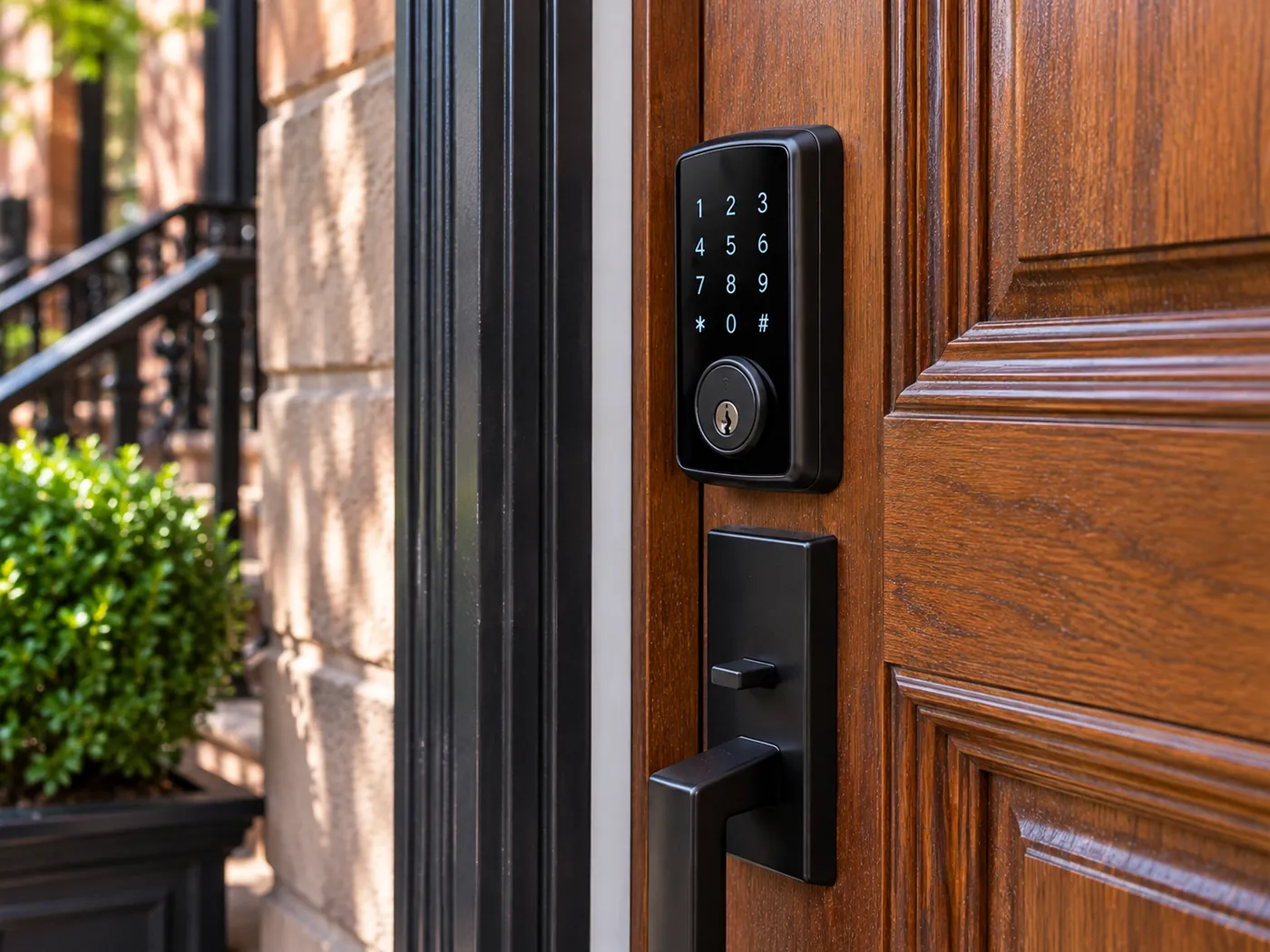
Black keypad smart deadbolt and lever handle on a panelled wood front door beside a brownstone stoop, smart lock installation in Chelsea, Manhattan
A finished keypad deadbolt with a key override and a black lever on a panelled wood door, with stone steps and iron railings behind.
Get a Free Chelsea Smart Lock Quote
Tell us the building, the door and who needs to get in — a licensed installer replies the same business day

✅
Request Sent!
A Manhattan installer will call you back about your Chelsea door the same business day.
25+
Years Experience
✓
Same-Day Estimates
100%
Licensed & Insured
4.7★
201 Google Reviews

Got a Chelsea door in mind — or a keypad that has stopped answering? Ring the Manhattan line, (929) 560-0737, or send the 60-second form. Tell us whether the door is on a landmarked rowhouse, in a co-op complex, at the top of a walk-up, on a loft landing or at the front of a gallery, and we will tell you before anyone visits which kinds of lock can work there and what has to be checked first.

  • We look at the door, its frame and whoever governs it before quoting, then hold to the written figure
  • Keyless gallery, studio and building entrances use the same published AESS numbers as the rest of Manhattan
  • NYS licence #12000287431 · fully insured · photos and product sheets supplied for a landmark or managing-agent file
The Neighborhood

Why Chelsea Homes, Lofts and Galleries Need Smart Lock Installation Planned Door by Door

In Chelsea the kind of front door can change from one block to the next. The neighbourhood runs roughly from 14th Street up to the high 20s or 34th Street, depending on who is drawing the line, and from Sixth Avenue west to the Hudson. Its Wikipedia entry describes it as primarily residential, with a mix of tenements, apartment blocks, two city housing projects, townhouses and renovated rowhouses — and, west of Tenth Avenue, one of the centres of the city's art world. A smart lock that is right for one of those doors is often wrong for the next one along the street, which is why we start every Chelsea job by naming the building type before we talk about brands.

The oldest doors are on the side streets. A historical marker on West 23rd Street records that Chelsea was developed from the 1830s to the 1850s, largely on land owned by Clement Clarke Moore, and that the result is “an unusually uniform and elegant residential neighborhood in Greek Revival and Italianate styles.” The Landmarks Preservation Commission designated the Chelsea Historic District in 1970 and extended it in 1981. On Cushman Row, 406–418 West 20th Street, Village Preservation describes houses set ten feet back behind iron fences, stoops with candelabrum newels and “deep brownstone temple-like entryway enframements.” Those entrances are beautiful and deep, and they are regulated: the LPC's own rules say historic doors may be replaced only if they are deteriorated beyond reasonable repair. A smart lock on one of these doors has to be fitted to the door that is there, not to a new one.

The biggest buildings are mid-century and earlier. London Terrace, which opened in May 1930 on the block between Ninth and Tenth Avenues and West 23rd and 24th Streets, has about 1,700 apartments in 14 joined buildings of 17 to 19 stories — run on the inside as two separate organisations, London Terrace Towers, a co-op, and London Terrace Gardens, a rental. A few blocks north and east, Penn South, officially Mutual Redevelopment Houses, is a limited-equity co-op of 2,820 apartments and close to 5,000 residents between Eighth and Ninth Avenues from 23rd to 29th Streets, supervised by the city's Department of Housing Preservation and Development. Nearby, NYCHA's Fulton and Elliott-Chelsea Houses are in the middle of a demolish-and-rebuild plan in which, according to the city, all 2,056 existing public housing apartments will be replaced. Each of these complexes has its own rules for what a resident may do to a unit door, and in the NYCHA buildings the answer belongs to the Housing Authority and its development partners, not to a contractor.

West of Tenth Avenue the doors are industrial. In 2008 the LPC designated the West Chelsea Historic District, a seven-block band between West 25th and 28th Streets from Tenth Avenue to the West Side Highway, to protect brick industrial buildings dating back to 1885, including the New York Terminal Warehouse Company's Central Stores — 25 interconnected brick buildings filling the block between West 27th and 28th Streets. Around them, former industrial buildings hold the galleries that made the area famous: MTA Away puts the number of contemporary art galleries in West Chelsea at more than 300, open for most of the year Tuesday to Saturday from 10 a.m. to 6 p.m., with exhibition openings on Thursday or Friday evenings at 6. Converted industrial buildings are also where lofts of the type Brick Underground describes are found, with a key-locked elevator that may open directly into the apartment. Those are doors with glass, steel, freight landings and crowds — not the doors a consumer smart lock box was designed for.

Two more facts shape the work. Most Chelsea households rent: the NYU Furman Center puts the 2024 homeownership rate for Clinton/Chelsea, the community district that also takes in Hell's Kitchen, at 19.2 percent, well below the citywide 32.7 percent. And the western blocks sit close to the river. When Hurricane Sandy struck in October 2012, Artlyst reported three to five feet of flooding inside Chelsea galleries, and one gallery posting that “Chelsea is flooded up to tenth avenue.” A lock controller, power supply or battery pack in a ground-floor space west of Tenth Avenue belongs high on the wall, not under the reception desk.

Chelsea facts that decide how a smart lock is fitted

  • 1970 and 1981: designation and extension of the Chelsea Historic District by the Landmarks Preservation Commission, covering much of the Greek Revival and Italianate rowhouse stock on the side streets.
  • 2008: designation of the seven-block West Chelsea Historic District of brick warehouses and factories between West 25th and 28th Streets.
  • About 1,700 apartments in 14 buildings: London Terrace, opened 1930, part co-op and part rental under one roofline.
  • 2,820 apartments, close to 5,000 residents: Penn South, a limited-equity co-op supervised by HPD, in 15 buildings with two elevators each.
  • 2,056 apartments: the NYCHA homes at Fulton and Elliott-Chelsea that the city says will all be replaced in the redevelopment.
  • 19.2 percent: 2024 homeownership rate for Clinton/Chelsea, from the NYU Furman Center — renters outnumber owners about four to one.
  • More than 300: contemporary art galleries in West Chelsea, per MTA Away; Wikipedia's figure is over 200. Either way, a great many glass gallery entrances in a small area.
  • Three to five feet: flooding inside Chelsea galleries after Sandy, as reported by Artlyst on November 2, 2012.

Put together, that is a neighbourhood where the same request — “we want a keypad on the front door” — can mean a careful retrofit on a landmarked door, a conversation with a co-op's management office, a steel loft door off an elevator landing, or an electrified strike and reader on a gallery's glass entrance that must release cleanly for a Thursday crowd. We plan each one on its own terms.

Many Chelsea owners who ask about a smart lock are also rethinking how visitors reach the door. Our intercom installation team in Manhattan handles street-door panels and remote release for walk-ups and lofts, and our AESS access control installers in Manhattan look after readers and controllers for galleries, studios and shared building entrances.

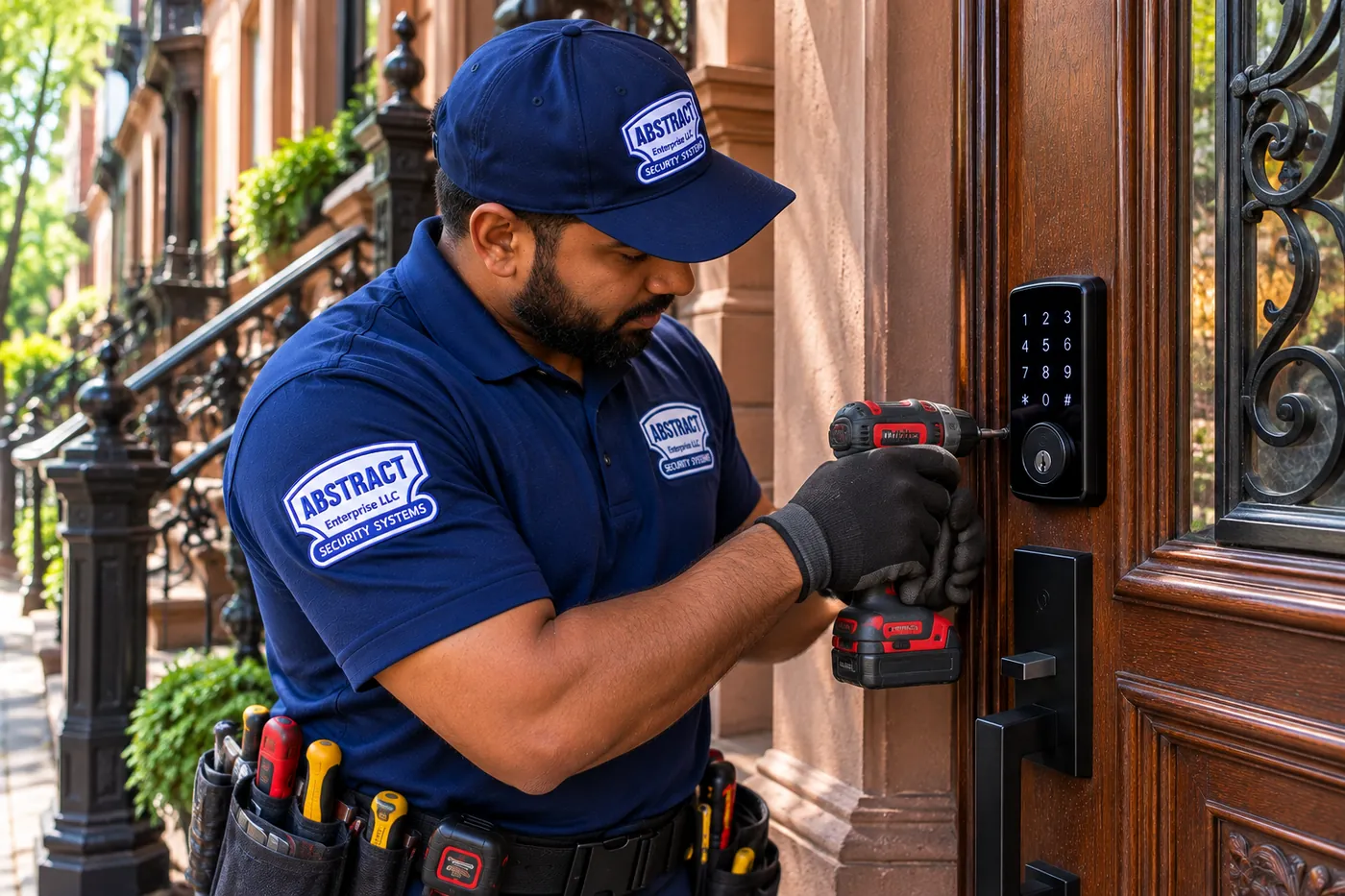
AESS technician drilling to mount a keypad smart lock on a wood entrance door at the top of a brownstone stoop in Chelsea, Manhattan
Fixing a keypad deadbolt to a wood entrance door, with ornamental ironwork beside it and a row of stoops behind.
Repair Capture

Chelsea Smart Lock Stuck, Silent or Off the App?

A keypad on a rowhouse stoop that went dark after a cold snap, a loft lock that lost its bridge when the router was replaced, a deadbolt that now drags because a hundred-and-eighty-year-old door has moved again, a gallery strike that hums but will not let the latch go an hour before an opening, or a code the cleaner swears stopped working — those are service calls, not new installations. We book them into the next open 2-hour window, and most power, pairing and alignment faults are fixed in one to two hours once a technician is at the door. A failed electric strike on a building or gallery door is $369–$606 to repair at the Manhattan rate. Call the Manhattan line, (929) 560-0737, and say it is a lock fault in Chelsea; if the trouble is the walk-up's street-door release rather than your own lock, our door buzzer repair service in Manhattan takes it from there.

What We Install

Smart Lock Installation Services in Chelsea

From the side streets off Eighth Avenue to the gallery blocks by the river, our Chelsea work sorts into the nine kinds below. Whichever kind it is, we do not leave until four things are true: the door shuts and latches without a push, anyone inside can get out without a key or a code, no original wood or ironwork has been sacrificed, and the person who will manage the lock has watched every code, card and phone work at that door.

Rowhouse Street Doors in the Historic District

Smart locks for single-family and owner-occupied rowhouses on the landmarked side streets, chosen to reuse the bores the door already has, keep the street face as quiet as possible, and leave the period door intact. Photos, specification sheets and mounting details are supplied for the owner's LPC file where one is needed.

Unit Doors in London Terrace–Scale Complexes

Keypad, fingerprint or app locks on apartment doors in large pre-war and mid-century co-ops and rentals, fitted only after the management office has said yes, with the building's emergency key arrangement kept working and nothing changed on the corridor side that the house rules protect.

Walk-Up Apartment Doors on the Avenues

Locks for tenement and walk-up units along Eighth, Ninth and Tenth Avenues, where a door may have been re-drilled by successive tenants, the frame may no longer be square, and a neighbour's Wi-Fi can be stronger at your door than your own. Renters keep their rights and their landlord gets the duplicate key the law requires.

Loft Doors and Keyed-Elevator Landings

Heavy steel or solid-core loft doors off a freight or keyed elevator, and the second door between a private landing and the apartment. We fit the lock to the door; the elevator's own key switch stays with the licensed elevator contractor who services the car.

Gallery and Showroom Glass Doors

Electric strikes, electrified locks, glass-door bolts and readers for galleries and showrooms on the West 20s blocks, set up for opening hours, Thursday-evening crowds, art deliveries and staff who come and go between shows.

Studios and Offices in Converted Warehouses

Suite and studio doors in former warehouses and factories — often steel doors in steel frames on long corridors — with codes or phone credentials for each tenant's staff that sit alongside, not inside, the landlord's lobby system.

Flood-Aware Ground-Floor Installs

On the low blocks west of Tenth Avenue, controllers, power supplies and battery backups mounted high and labelled, with a written note of what to switch off and what to check after water comes in.

Rowhouse Conversions and Reconversions

Rowhouses that were split into apartments, or are being put back together as one home: street-door, vestibule and former unit-door locks rationalised so the house has one sensible set of credentials instead of five old keys.

Service, Repair and Hand-Back

Re-pairing after a router or platform change, motor and battery faults, strikes that drifted as an old door moved, and clean removal with the original hardware put back when a lease ends or a gallery moves on.

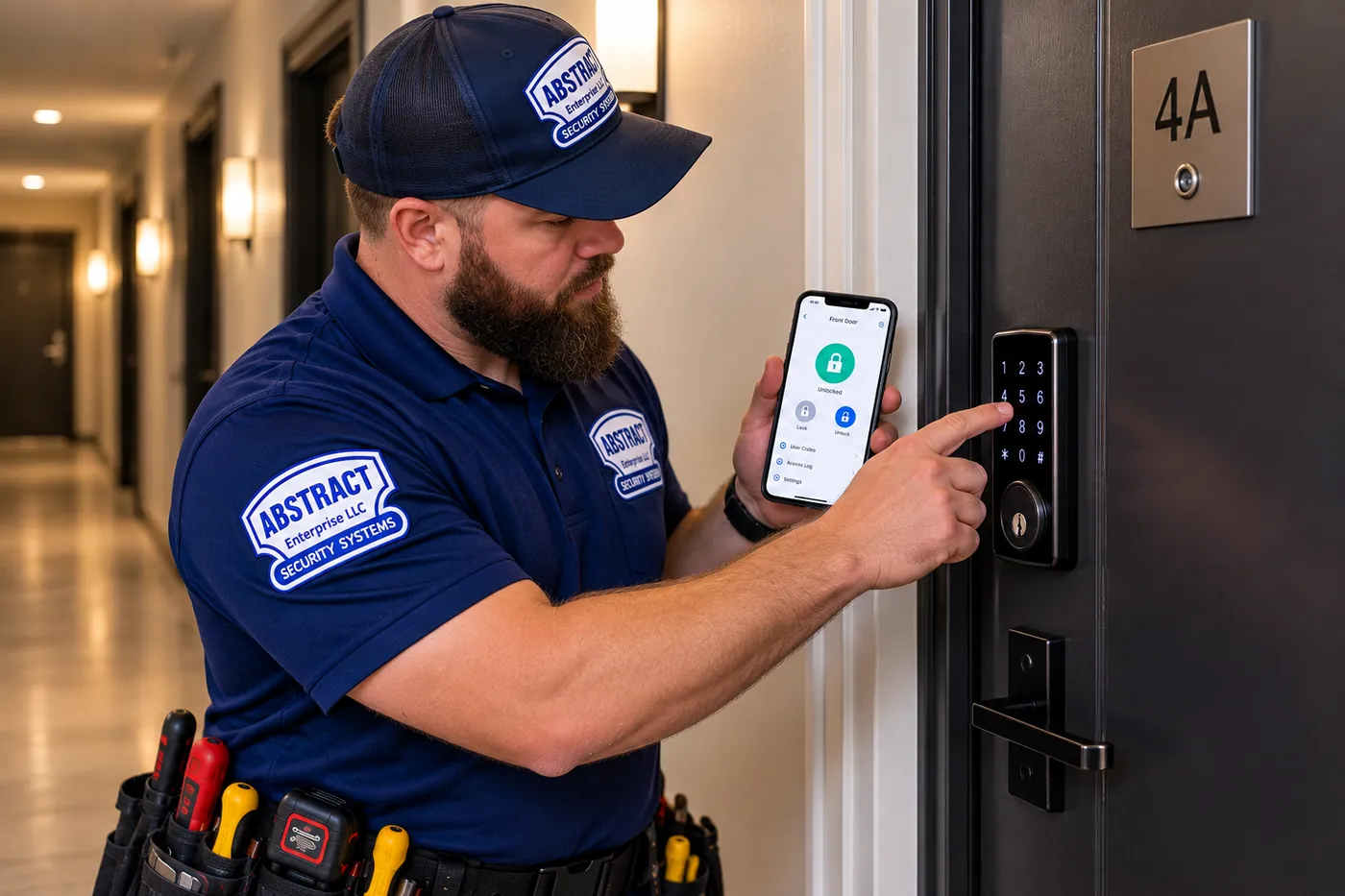
AESS technician testing a keypad smart deadbolt on an apartment unit door with the phone app in a Chelsea, Manhattan hallway
Testing a keypad deadbolt from the keypad and the app on an apartment door in a long hallway.
Building Specialists

Smart Lock Installation for Chelsea's Architecture

Chelsea's buildings fall into six families, and each family decides the lock before the catalogue does. These are the ones we plan for, oldest first.

Greek Revival and Italianate Rowhouses, 1830s–1850s

The landmarked side streets around the General Theological Seminary block and Cushman Row: wood doors in deep brownstone enframements at the top of a stoop, often a second entrance under the stoop, and LPC rules that protect the historic door itself. Bores are reused wherever possible and the street face is kept plain.

Tenement Walk-Ups on the Avenues

Walk-up buildings on Eighth, Ninth and Tenth Avenues with a buzzer at the street, a narrow stair and apartment doors that have carried a succession of deadbolts. The work is in the door and the frame: filling old holes, squaring the strike, and choosing a lock that tolerates a door that is no longer flat.

Pre-War Complexes Like London Terrace, 1930

Hundreds of near-identical unit doors on long corridors, a staffed lobby, and — at London Terrace — a co-op and a rental sharing one block. The building decides the hardware standard; we work inside it.

Mid-Century Towers Like Penn South, 1962

Towers of 21 residential floors with two elevators each and a co-op management office that handles maintenance for thousands of apartments. Unit locks need its consent, and the inside of the door is where the electronics live.

Warehouses, Garages and Factories, 1885 Onward

West Chelsea's brick and early reinforced-concrete industrial buildings, now galleries, studios, offices and lofts. Expect steel doors, steel frames and freight elevators, and very little that is standard.

New Condos Along the High Line

Recent towers on the blocks beside the elevated park, which opened in phases from 2009: buildings that may come with a developer-chosen entry platform and a unit lock already fitted. The choice is whether to work with what the building installed or replace it with a lock you control.

How the method changes by building family

Landmarked rowhouses. We start with a door survey rather than a lock. The door is photographed both sides, the existing bores and backset measured, the thickness and condition of the stiles checked, and any cracks or old repairs noted. Because the LPC's rules allow a historic door to be replaced only when it is deteriorated beyond reasonable repair, the safest smart lock is the one that needs the least new wood removed — often an interior retrofit over an existing deadbolt, or a smart deadbolt that drops into the existing bore. Where a keypad would show on the street face, the owner decides with us, and with an architect if there is one, whether that is acceptable or whether an inside-only unit is the better answer.

Walk-ups. These doors have usually been drilled more than once. We plug and dress old holes so the new lock sits on sound wood or steel, adjust or replace the strike so the bolt throws without the motor straining, and test the radio at the door — in a narrow brick building the strongest signal at your door may be a neighbour's. Renters keep the right, under the state's Multiple Dwelling Law, to add their own lock as long as the landlord receives a duplicate key on request.

Large co-op and rental complexes. The management office comes first. We send the specification of the lock and a short description of the door work, confirm the building's rule on emergency entry, and match the corridor-side finish to the building's standard or leave the corridor side untouched. In a complex where one side is a co-op and the other a rental, we confirm which side of the line the apartment is on before anything else.

Warehouse lofts and studios. Every door is treated as a possible fire-rated assembly until we have found and read its label. Electric strikes in labelled frames are fail-secure and listed; readers and power supplies use existing pathways; the elevator's key switch is not ours to touch. Where the loft's elevator opens straight into the apartment, we look first at the second door, if there is one, and at the building's video intercom.

Galleries and showrooms. Gallery entrances are commonly glass, in an aluminium frame or with no frame at all, and the ground floors west of Tenth Avenue are the ones that flooded in 2012. We pick hardware that suits the glass — a strike in an aluminium frame, an electrified lock in a stile, or a glass-door bolt or bracketed magnetic lock where there is no frame at all — and we mount the controller and battery backup where water will not reach them. Most Chelsea galleries that add keyless entry also want the door on camera — our commercial security systems for Manhattan businesses cover both.

High Line condos. We ask the managing agent for the building's integration list before anyone buys a lock, and then either enrol a supported model in the building platform or keep a separate lock that the owner controls, with the desk's emergency access still working.

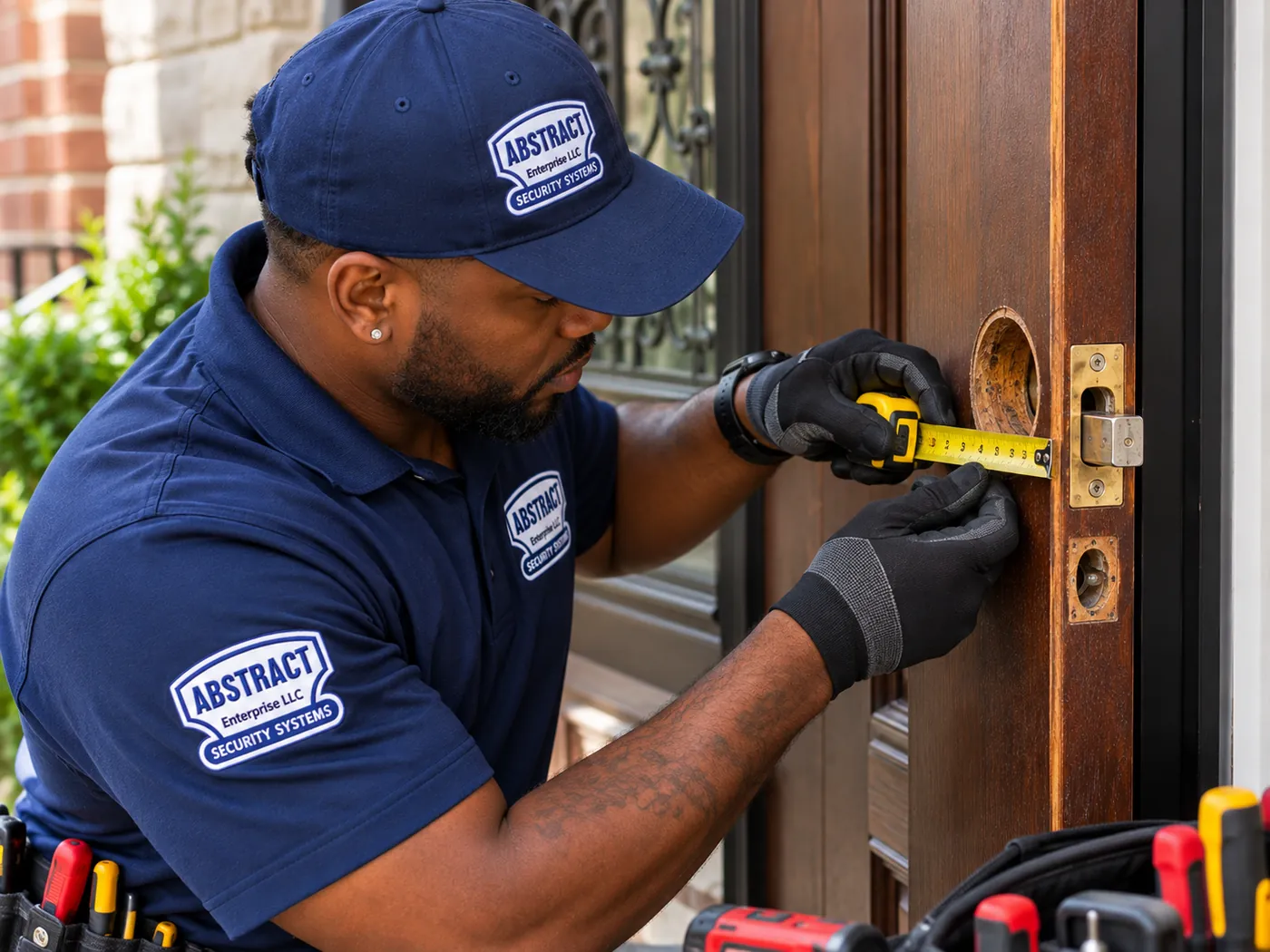
AESS technician measuring an existing deadbolt bore with a tape measure on a wood door before smart lock installation in Chelsea, Manhattan
Measuring the existing bore and backset first: on an older door, reusing a hole is better than drilling a new one.
Commercial Smart Locks

Business Smart Lock Installation in Chelsea

Chelsea's business doors cluster in a few places, and each cluster has its own door and its own rhythm. We work in all of them; these are the patterns we plan around.

The West 20s Gallery Blocks

The streets from about West 18th to West 28th between Tenth and Eleventh Avenues, where MTA Away counts more than 300 contemporary galleries. Glass street fronts, back-of-house storage and viewing rooms, art deliveries, and a week that runs Tuesday to Saturday with openings on Thursday or Friday evenings.

Chelsea Market and Ninth Avenue

The former factory building between Ninth and Tenth Avenues that is now a food hall, shopping arcade, office building and television production facility. The New York Times reported Google's $2.4 billion purchase of it in 2018. Stall shutters, back-of-house doors and office floors, each with a different owner of the key.

Starrett–Lehigh and West 26th–27th Streets

The 1931 freight terminal that linked rail, trucks, manufacturing and storage in one structure, with entrances on 26th and 27th Streets, now a campus of fashion, design and architecture tenants. Suite doors off long corridors, inside a landlord-run lobby.

The Terminal Warehouse Block

The Central Stores of the New York Terminal Warehouse Company, 25 interconnected brick buildings between West 27th and 28th Streets inside the West Chelsea Historic District, converted from storage into work and retail space. Industrial openings, new tenant doors and landmark oversight of the exterior.

Shops Under the Walk-Ups on Eighth and Ninth

Ground-floor restaurants, bars, salons and shops below tenement apartments along the avenues. A storefront door, a back door to a yard or alley, and often a stair door the shop must not control, because it belongs to the tenants upstairs.

Studios and Small Offices on the Side Streets

Design studios and small firms on upper floors of converted loft and rowhouse buildings across the neighbourhood. They want phone entry and a log for a handful of people, not a full access-control build.

Compliance callouts for Chelsea business doors

  • Locking the main door during business hours: model building codes — the International Building Code and the 2020 Building Code of New York State — allow the main door of business and mercantile spaces to have a key-operated lock on the egress side only under conditions that include a durable sign reading “THIS DOOR TO REMAIN UNLOCKED WHEN THIS SPACE IS OCCUPIED.” New York City has its own Building Code; we set galleries up so the door never relies on a key from the inside.
  • Electric strikes on rated doors: door-hardware specialists at iDigHardware and Allegion explain that electric strikes on fire doors must be fail-secure, so the door stays positively latched in a fire, and that NFPA 80 listings require it. Job-site preparation of rated doors and frames is limited to what the listings allow.
  • Magnetic locks: electromagnetic locks are only available fail-safe, and NYC Building Code section 1010.1.9.9 permits them on egress doors and tenant-space doors only with door-mounted release hardware that cuts power directly with one hand and unlocks on power loss.
  • Landmarks: in the Chelsea, Chelsea Extension and West Chelsea historic districts, exterior changes need the LPC's permission; the Commission says 95 percent of its approvals are issued at staff level without a public hearing. What is visible from the street is what draws attention.
  • Elevators: under the city's Administrative Code it is unlawful to perform elevator work unless it is performed by or under the direction of a licensed elevator agency director. Elevator key switches and car controls are outside a lock installer's scope.
  • Low-voltage wiring: NYC Administrative Code § 28-105.4.7 exempts from electrical permits the under-50-volt circuits used for signalling, communication, alarm and data, provided the installer is a licensed master or special electrician or a qualified person under the city electrical code. The 120-volt feed to a power supply is separate electrician's work.
  • Reach and operation: on a public entrance we mount keypads, readers and exit hardware at heights a seated visitor can reach, and choose parts that work with a closed fist rather than a pinch or a twist.

We cite these rules so that an owner, a landlord or an architect can look them up; treat them as pointers, not as legal advice. A gallery that goes keyless usually wants a camera on the same door — see our commercial security camera installation in Manhattan.

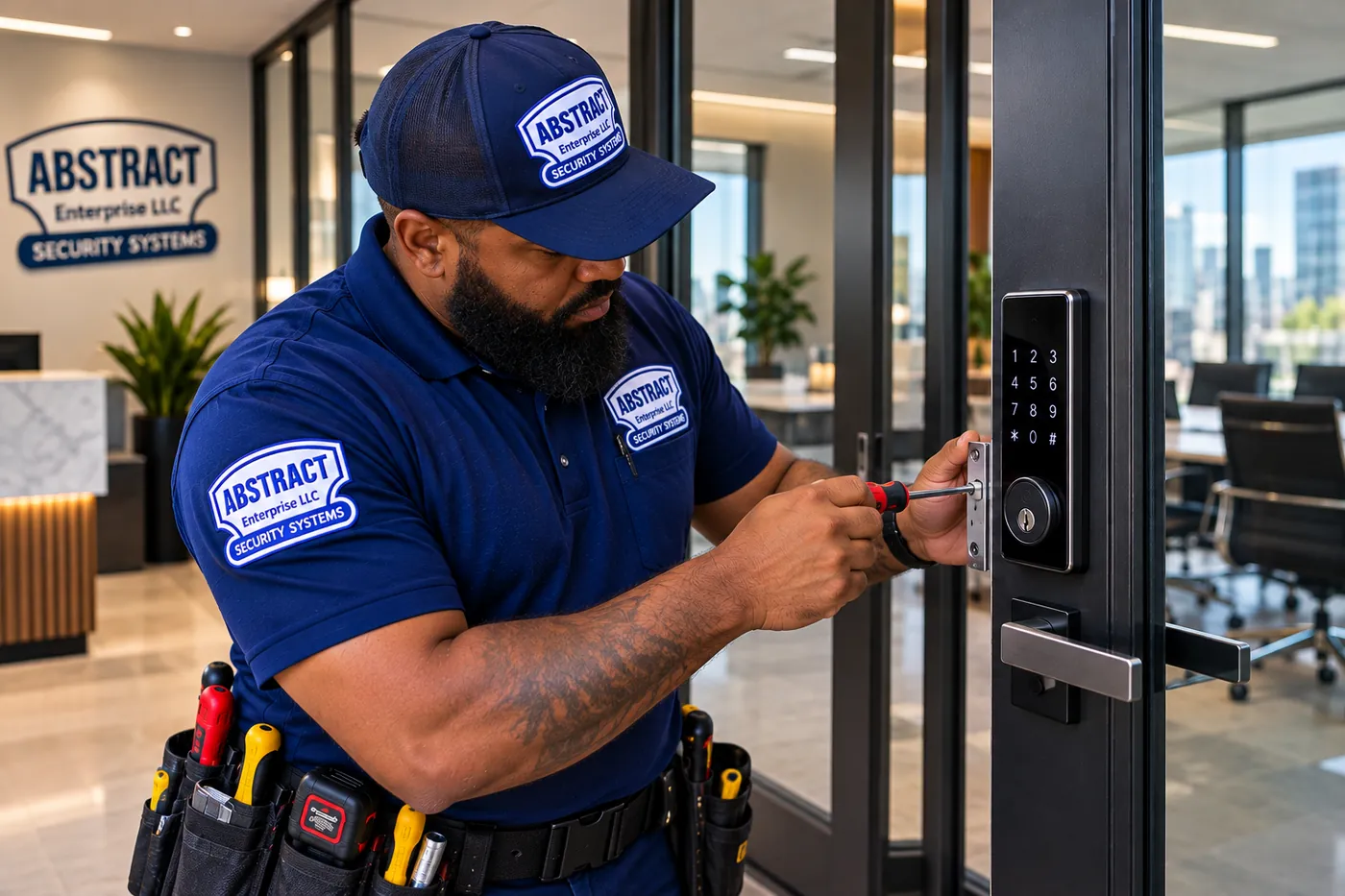
AESS technician fastening the strike plate for a keypad smart lock on a black-framed glass door in Chelsea, Manhattan
Fastening a strike plate on a narrow black frame beside full-height glass, with an open-plan office behind.
Your Questions Answered

Smart Lock Installation in Chelsea: Questions Answered

These are the questions that come from Chelsea's own doors, grouped by building: landmarked rowhouses, lofts with freight landings and keyed elevators, the big complexes and the city's housing, gallery entrances on the West 20s, and buildings under repair. Renter and co-op rules for the whole city are on our New York City smart lock page, and doorman-building, tower-suite and short-stay questions are on the Manhattan borough page. Cost, scheduling and coverage are in the FAQ further down. None of this is legal advice.

Landmarked rowhouse doors

If drilling for a smart lock splits our original 1840s front door, can we simply order a new one?

Not simply, and that is why the drilling plan matters more on a landmarked Chelsea door than anywhere else. The Landmarks Preservation Commission's rules for windows and doors say that new doors may be approved if they match the original or historic ones in details, materials, operation, configuration and finish, and that historic doors may be replaced only if they are deteriorated beyond reasonable repair, as described in a condition assessment. A door you damaged last Tuesday is not “deteriorated beyond reasonable repair”; it is a repair job, and probably a specialist joiner's one.

So we design the installation around the door's weakest point. Old stiles may have been bored for three or four different locks over a century and a half, and the wood between those bores can be thin. We measure the existing bores and backset, look for old patches and shrinkage cracks, and choose a lock that reuses what is there: an interior retrofit that mounts over an existing single-cylinder deadbolt and leaves the outside untouched, or a smart deadbolt that fits the existing bore without enlarging it. If the only lock you like needs new holes in a fragile stile, we say so, and we show you the alternative.

If a door is already failing — split rails, loose joints, a stile that will not hold a screw — we stop and photograph it before anyone installs anything, so the condition is on record and the owner can decide with a restorer or architect what happens next.

Who files with the Landmarks Preservation Commission for a keypad — the owner, the architect or the installer?

The application belongs to the property owner, or to someone the owner authorises, such as an architect or expediter; a lock installer is not the applicant. LPC lists three kinds of permit — the Permit for Minor Work, the Certificate of No Effect and the Certificate of Appropriateness — and says that 95 percent of its approvals are issued by staff without a public hearing. Whether a particular keypad needs a permit at all depends on what changes on the exterior; the NoHo business improvement district's guidance, for example, notes that repairing or replacing hardware such as knobs, hinges and handles does not need LPC approval, while most other work on doors does.

What we do is make the owner's file easy. Before a landmark-district job we supply photographs of the door and entrance as it is, the manufacturer's specification sheet and finish options for the proposed lock, a marked-up photo showing exactly where anything would be visible, and a description of every hole: whether it reuses an existing bore or is new, and its size. That is the material staff ask to see.

Many owners avoid the question entirely by choosing an inside-only retrofit, which leaves the street face and the key exactly as they were. Others decide that a small keypad is worth an application. Either way, nothing is drilled on a landmarked facade until the owner has told us, in writing, which path they are on.

Our rowhouse used to be four apartments and is one home again — what should happen to the old apartment doors and their locks?

Reconverted rowhouses often keep the doors from their apartment years: a deadbolt on every landing, a peephole at each floor, keys that nobody can match to a door any more. The first job is to decide which of those doors still needs to lock. Usually it is the street door, perhaps the garden-level door under the stoop, and one or two interior doors — a home office, a room for a nanny or a lodger — and nothing else.

The rest can have their deadbolts removed and the holes filled, or the deadbolt kept but re-set to work as a simple privacy latch, so nobody is ever locked into or out of a room in their own house by a forgotten key. Where the house is sometimes let in parts, we can put smart locks on the doors that matter and plain passage hardware on the others, with all the codes in one app.

We also check that every door on the way out of the house opens from inside without a key. An old apartment door with a double-cylinder deadbolt, left over from the building's multi-family years, is the sort of thing that is easy to forget and dangerous in a fire.

Lofts, freight landings and keyed elevators

Our loft's elevator opens straight into the apartment on a key — where does a smart lock go?

Brick Underground's guide to these apartments explains that a key-locked elevator will not move without a key in the car's lock or a resident ringing the visitor up, and that the elevator's front door is locked and opens only by key or when someone provides access. In that arrangement the elevator itself is the front door, and the lock that governs it is the building's, not yours. The same guide notes that some lofts also have a separate entrance door between the elevator and the apartment, and that some buildings add steel gates outside the elevator.

If your loft has that second door, it is the natural place for a smart lock: it is yours, it is a normal door, and it gives you a log and personal codes for the people who reach the landing. If there is no second door, a smart lock usually goes on the stair or fire-exit door that also reaches the apartment — always with free exit from inside — and the building's video intercom handles visitors arriving by elevator.

What we do not do is fix anything to the elevator's doors, gate or car. That equipment is inspected and maintained by a licensed elevator company, and the building will want it left alone.

Can the key switch inside our loft elevator be swapped for a keypad or a phone?

It can be, in many buildings, but not by a lock installer. Brick Underground notes that in newer construction the elevator may be controlled by magnetic cards, keypads, codes or fingerprint readers instead of a physical key, so the technology exists. The obstacle is the law: the city's Administrative Code makes it unlawful to perform elevator work unless it is done by or under the direction of a licensed elevator agency director, and New York State requires anyone working on an elevator to hold an elevator mechanic licence.

The right route is through the building. The board or managing agent asks the elevator company that services the car what credential readers its controller can accept. If the building wants the reader to share credentials with apartment doors and the lobby, we can supply and configure the access platform and the reader on the landing side, while the elevator company makes the connection inside the car and controller.

Until then, the practical step is to treat elevator keys like apartment keys: know how many exist, collect them when people leave, and use the building's video intercom to let visitors up instead of handing out keys.

Big complexes and the city's housing

Half our block is a co-op and half is a rental under one roofline — whose rules decide what goes on my door?

The organisation you hold your apartment from decides, not the building you can see. London Terrace is the clearest example: the 14 joined buildings look like one complex from the street, but Wikipedia records that they are run on the inside as two organisations — London Terrace Towers, a co-op managed by Douglas Elliman, and London Terrace Gardens, a rental managed by Rose Associates — with many internal connections closed off.

If you own shares, your proprietary lease and the co-op's house rules govern the door, and the board's managing agent is the one to ask. If you rent, your lease and the state's Multiple Dwelling Law govern it, and the landlord's management company is the one to tell. The neighbour across the courtyard may be living under completely different rules on an identical door.

So the first line of any request we write in a split complex names which side of the line the apartment is on, which management company runs it, and which document — proprietary lease or lease — we are working from.

My old apartment key turned out to open a neighbour's door — will a smart deadbolt fix that?

It fixes your door, and it is a good reason to tell the landlord at once. Older walk-up and mid-century buildings sometimes have unit cylinders keyed alike, or master-keyed in ways that have drifted over the decades; New Yorkers on the r/AskNYC forum have described buildings where one key opens several units. Until the landlord re-keys, your existing lock should not be treated as private.

Adding a smart deadbolt gives your door a lock with its own keyway and its own codes. In a building of three or more apartments, the state's Multiple Dwelling Law lets a tenant install an additional lock of up to three inches in circumference, provided a duplicate key is given to the owner on request. We fit the new deadbolt, leave the landlord's lock in place, and give you the duplicate key to hand over.

The landlord's own cylinder still needs fixing for the neighbours' sake. We put what you found into a short written note you can send to management, so the building re-keys the affected units.

Our household is moving into one of the new Fulton or Elliott-Chelsea towers — is it worth fitting a smart lock before the move?

No; wait until you are in the new apartment and know its rules. The city's PACT page for the project says all 2,056 existing NYCHA apartments at Fulton and Elliott-Chelsea will be replaced with new, permanently affordable homes, and The City Reporter reported in September 2026 that NYCHA, working with Related Companies and Essence Development, plans to take down 18 buildings in three developments and replace them with six towers. The new buildings will come with their own doors, hardware and entry systems, chosen by the developers and the managing agent.

Whatever you add to a public housing door now belongs to a door that is due to come down, and NYCHA, not a contractor, decides what may be fitted to its doors. In the new towers the managing agent will set its own rules for unit doors, and those are the rules we would follow.

When you have moved and have the building's rules in hand, call us with them. If an additional lock is allowed, we will fit one that suits the new door and keep a copy of the paperwork on file.

Gallery doors on the West 20s

Hundreds of people come through on an opening night — should the gallery door be locked, unlocked or on a schedule?

Unlocked for entry while the gallery is open, always free to leave, and on a schedule the rest of the time. MTA Away's guide to the district notes that openings are generally on Thursday or Friday evenings from 6 p.m.; at that hour the door is a public entrance, and staff cannot be expected to buzz in a crowd. We set the lock or strike to a “passage” mode for the opening, triggered by the schedule or by a staff member's phone, and back to locked when the last visitor leaves.

Exit never depends on the schedule. Electric strikes leave the lever or push bar working at all times, so people inside can leave whether the strike is locked or not, and a magnetic lock must release from door-mounted hardware and on power loss under the city code. The model codes go further for main doors locked with a key from inside, requiring a sign that the door must stay unlocked while the space is occupied; we avoid that arrangement altogether.

For ordinary days the schedule mirrors the gallery's hours — for most galleries Tuesday to Saturday, with Saturdays off in summer — and the front desk can lock the door instantly from a phone if something in the room needs attention.

Our gallery door is frameless glass with nothing to cut a strike into — what can lock it electronically?

Several things, none of which require replacing the glass. Electric bolt locks for glass doors are made to sit in a top rail, in a floor box, or in a surface patch that clamps to the glass, and magnetic locks can be mounted with a U-shaped bracket that wraps the top edge of an outward-swinging glass door, as access-control makers such as Ubiquiti show in their installation guides. The right choice depends on whether the door swings in or out, whether it has patch fittings at the top and bottom already, and where cable can run without showing.

Each option has trade-offs. A magnetic lock is fail-safe by nature and needs door-mounted release hardware under the city's code; an electric bolt can be fail-secure but needs careful alignment on a heavy pivoting door; a surface patch is visible, so it has to look right on a storefront that may be in a historic district.

We assess the door, the pivot and the floor, show you the options with photographs of comparable hardware, and price the one that suits the gallery — reader inside the glass where the glass allows it, so nothing new needs to be fixed to the facade.

Should the electric strike on our gallery entrance be fail-safe or fail-secure?

For nearly every gallery front door, fail-secure. As the door-hardware writers at iDigHardware put it, fail-safe products are unlocked on the access side when power is removed, and fail-secure products stay locked. A fail-safe strike would leave the gallery open to the street every time the power drops; a fail-secure one keeps the door latched and still lets everyone inside leave, because the lever or push bar works independently of the strike.

There are also places where the choice is made for you. Electric strikes on fire-rated doors must be fail-secure so the door stays positively latched in a fire, and magnetic locks are only made fail-safe. If your door is rated, or uses a magnet, the decision is already in the hardware.

Staff still need a way in during an outage, so we keep a key override on the lockset and put the controller on a battery backup that carries the strike through a short cut. You decide, with us, how long that backup should last.

Where should the lock controller and battery backup go in a ground-floor space that took water in 2012?

High on the wall, on the dry side of the room, and never on the floor or inside a low cabinet. Artlyst reported three to five feet of water inside Chelsea galleries after Sandy, with water reaching five feet inside one of them. A controller, power supply or battery under the reception desk at that height would have been underwater, and an access controller that has been submerged is a replacement, not a repair.

We mount the controller and its battery at or above head height in a labelled enclosure, run the cable down to the door from above, and keep any connection that has to be low — a door contact, a request-to-exit button — simple, sealed and cheap to replace. The lock on the door itself is chosen to fail in a predictable way: locked, with a key override.

We also leave a one-page sheet in the enclosure: what to switch off when a storm warning goes out, what to check before power is restored, and the number to call. A gallery that already had water once tends to want that written down.

While the building is being worked on

Scaffolding is going up on our building for facade work — which doors need attention while it is there?

Any door or window that a person on the scaffold can reach, which is usually more than people expect. The city's Facade Inspection and Safety Program requires owners of buildings taller than six stories to have exterior walls inspected every five years, so sidewalk sheds and pipe scaffolds come and go across Chelsea. In December 2021, Patch reported that a burglar scaled scaffolding outside an artists' studio on West 39th Street in Midtown and got in through an unlocked second-storey window.

Before the scaffold goes up, list every opening on the scaffolded faces: terrace and balcony doors, roof bulkhead doors, back doors onto setbacks, and windows. Doors in that list are worth a lock that can tell you when it opens and that locks itself after a set time; windows need their own latches or locks and are outside a door lock's reach.

When the work ends and the scaffold comes down, we can switch the extra alerts off again. If the building's own doors are part of the problem, the board or landlord should hear about it in writing.
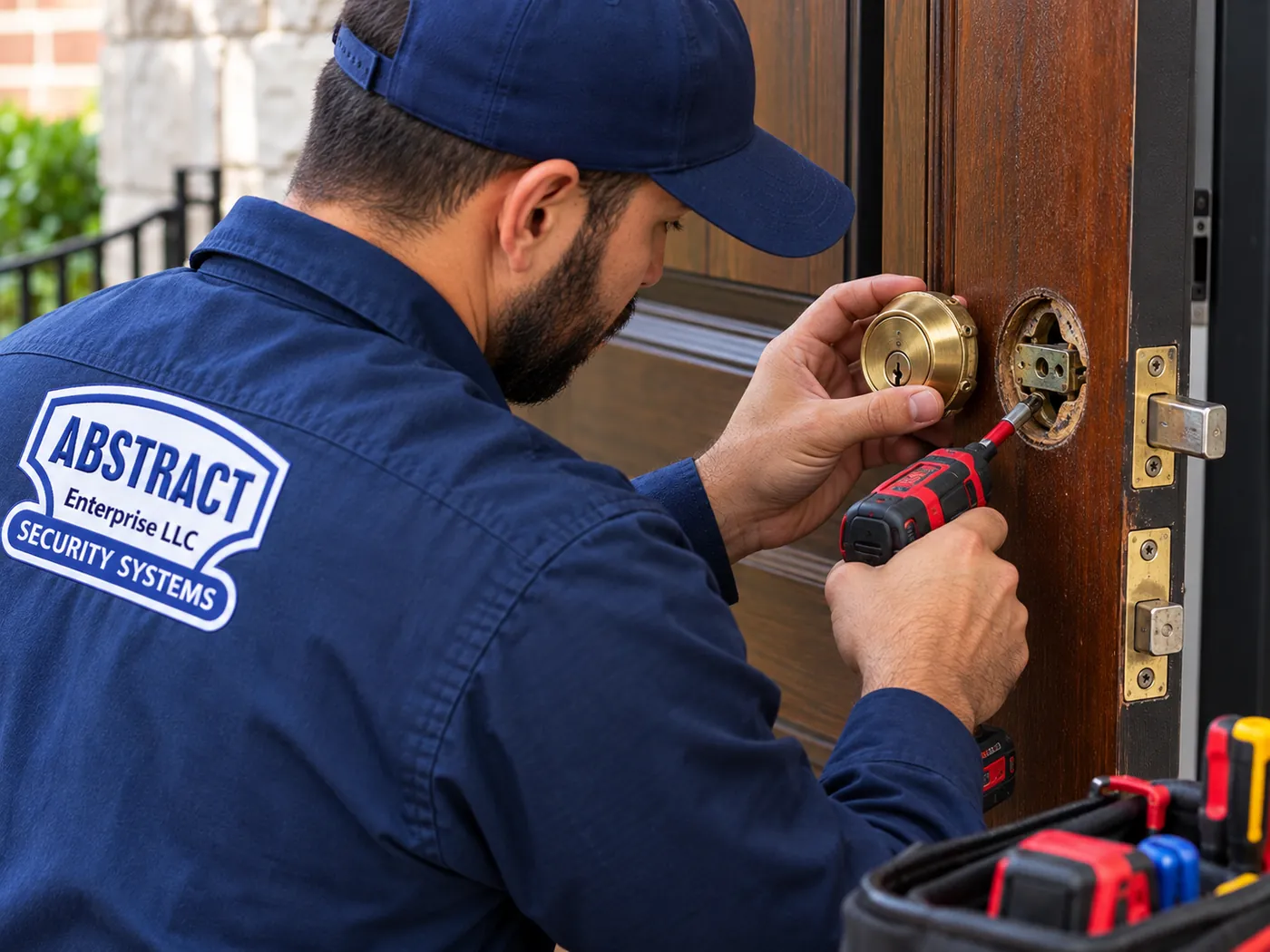
AESS technician removing an old brass deadbolt with a drill driver from a wood door during smart lock installation in Chelsea, Manhattan
An old brass deadbolt coming out of a wood door, leaving the existing bore ready for the new lock.
Equipment

Types of Smart Locks We Install

In Chelsea we choose by door first, building second and brand last. Bring a lock you already own, or let us recommend one at the survey; these are the categories we fit in rowhouses, walk-ups, complexes, lofts and galleries across the neighbourhood.

Inside-Only Retrofit Units

Mount over the inside of an existing single-cylinder deadbolt, so the street face, the keyhole and the key stay exactly as they were. The first thing we consider on a landmarked door or a rented apartment.

Bore-Matched Smart Deadbolts

Keypad, fingerprint or app deadbolts selected to fit a door's existing bore and backset, so no wood or steel has to be removed. Ideal on doors that have already been drilled too many times.

Mortise-Format Smart Locks

Where a solid old door carries a box lock let into its edge, the smart version has to be built for that box — we do not cut a mortised door to take a lock designed for a round bore.

Steel-Door Smart Deadbolts

Smart deadbolts specified for the thickness and construction of steel loft and studio doors, with through-bolted mounting and a reinforced strike in the steel frame.

Fail-Secure Electric Strikes

For gallery, studio and building doors with existing locksets: the strike in the frame releases on a valid credential while the lever inside always lets people out. Fire-rated versions for labelled frames.

Glass-Door Bolts and Bracketed Magnets

For frameless and thin-framed glass entrances: electric bolts in rails, floor boxes or glass patches, or magnetic locks on brackets, installed with the release hardware the code requires.

Readers, Keypads and Request-to-Exit

Card, fob, phone and PIN readers on cloud or local controllers, including readers that work through a single pane of glass, paired with exit devices so nobody is trapped.

Bridges, Border Routers and Power

The quiet parts that make remote control reliable: Wi-Fi bridges near the door, Thread border routers inside, and power supplies with battery backup mounted above flood height.

Which category fits which Chelsea door

DoorUsual first choiceWhy
Landmarked rowhouse street door, wood, historicInside-only retrofit, or a deadbolt that fits the existing boreLeast new wood removed; street face unchanged or nearly so
Walk-up apartment door, re-drilled several timesBore-matched smart deadbolt with the old holes filledSound mounting on a door that has seen many locks
Unit door in a large co-op or rental complexWhatever the management office approves, usually a deadbolt or retrofitThe building sets the hardware standard
Steel loft door off a freight or keyed-elevator landingSteel-door smart deadbolt or mortise-format lockHeavy door, steel frame; elevator controls stay with the elevator contractor
Gallery entrance, glass in an aluminium frameFail-secure electric strike or electrified lock with a readerLocked in a power cut, free exit always
Gallery entrance, frameless glassGlass-door electric bolt or bracketed magnetic lockNo frame for a strike; release hardware per the code
Studio door in a rated corridorListed fail-secure strike or electrified leverStays within the door's listing
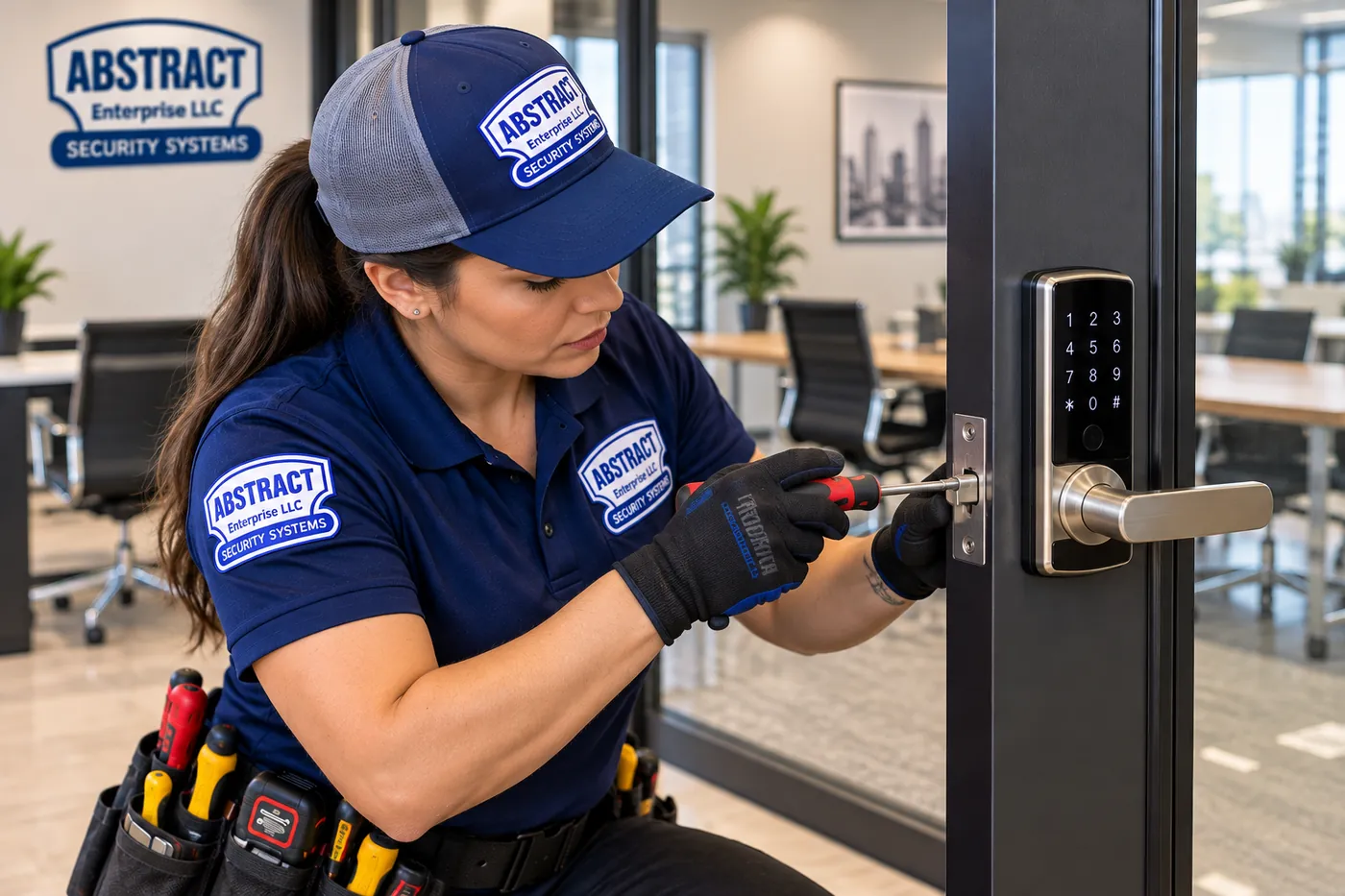
AESS technician fitting the latch of a keypad lever smart lock on a framed glass office door in Chelsea, Manhattan
A keypad lever lock going onto a framed glass door, with the latch plate being screwed into the door edge.
AI Overview Reality Check

What AI Gets Wrong About Smart Lock Installation in Chelsea

A note on method: Google's AI Overview could not be retrieved while this page was researched, so none of the seven headings below is a quotation from it. Each one paraphrases a general claim found in cost guides, product listings and how-to articles — the material answer engines tend to summarise. Under each is what changes once the door is a landmarked rowhouse door, a loft landing or a gallery entrance in Chelsea.

“Any smart deadbolt drops into any front door in a few minutes”

Retail smart deadbolts are designed around the standard modern door: a bore of a common size at a common backset, in a door of a common thickness. On a new door in a new building, the box's claim is fair.

A Chelsea rowhouse door may be a century and a half old, bored three times already, and protected by rules that allow replacement only when the door is beyond reasonable repair. A walk-up door may be steel-skinned with a frame that is no longer square. A loft door may be twice the weight of a house door. The minutes the box promises are the minutes after somebody has worked out what the door can take.

Measure first, then buy. If you have already bought, we will check the lock against the door before anything is drilled.

“Historic-district rules only matter if you are renovating”

It is easy to assume that landmark rules are for facades, windows and additions, and that a lock is too small to notice. For ordinary hardware repair that is broadly right: the NoHo BID's guidance notes that repairing or replacing hardware such as knobs, hinges and handles does not need LPC approval.

But the Chelsea, Chelsea Extension and West Chelsea historic districts protect the exterior of every building in them, and something new and visible on a historic door is exactly what the rules exist to review. Damage to the door itself is worse: replacing a historic door requires showing it was beyond repair.

An inside-only lock keeps the question small. A visible keypad may be approvable at staff level; it should be asked about first, not after.

“Smart locks are a home product”

Smart lock marketing shows suburban front doors and family phones, and most reviews test locks on houses. The impression is that businesses need a separate, much larger “access control system.”

In Chelsea, a large share of the doors that need keyless entry are galleries, studios and small offices with a handful of staff. Some of them suit a commercial-grade smart lock with an app and a log; others need an electric strike and a reader on a glass door. The line between “smart lock” and “access control” is the door and the number of people, not the brand.

We price both from the same published figures and recommend the smallest system that does the job.

“When the power goes out, an electric lock lets everyone in”

This one is half true, which is why it spreads. Magnetic locks really are fail-safe only — with no power there is no magnetic bond — and some electrified locks are ordered fail-safe on purpose.

Electric strikes and most electrified locksets can be fail-secure: locked on the outside when the power is gone, while the lever inside still lets people out. iDigHardware notes that fail-secure products are more common than fail-safe for exactly this reason, and that strikes on fire doors must be fail-secure.

A gallery that loses power during a storm should stay locked to the street and open to the people inside. That is a hardware choice made on the day of installation.

“Glass doors cannot take keyless entry without being replaced”

Frameless glass looks as if it has nowhere to put a lock, and some advice suggests replacing the entrance with a framed door. For a storefront in a historic district that would be a much bigger job than anyone wants.

Electric bolt locks for glass are made to hide in a top rail or a floor box or to clamp to the glass in a patch, and magnetic locks are made with brackets that wrap the top of a glass door. Readers can often sit behind the glass and read through it.

The glass stays; the question is which hardware suits its swing, its fittings and the street.

“A keyed elevator is all the security a loft needs”

Brick Underground quotes an agent who grew up in a loft with a keyed elevator saying that a key-locked apartment is as safe as, or even safer than, having a doorman. In a well-run small building with careful key control, that can be true.

The same article notes that an apartment's overall security depends on the building's entire system — entrance, intercom, elevator controls, locks and cameras. Keys are lent to cleaners, contractors and guests; some buildings rely on residents turning the key back to the locked position.

A second door with a smart lock between the landing and the apartment, where there is one, closes the gap without touching the elevator.

“Indoor electronics are safe anywhere inside the building”

Installation guides tell you to keep controllers and power supplies indoors, out of the weather, and leave it there. Indoors is the usual answer, and under a desk or in a low cupboard is the usual place.

West of Tenth Avenue, indoors is not enough. After Sandy, Artlyst reported three to five feet of water inside Chelsea galleries, with one gallery posting that the neighbourhood was flooded up to Tenth Avenue.

On those blocks the controller, power supply and battery go high on the wall, and the door hardware is chosen to fail locked and be easy to replace.

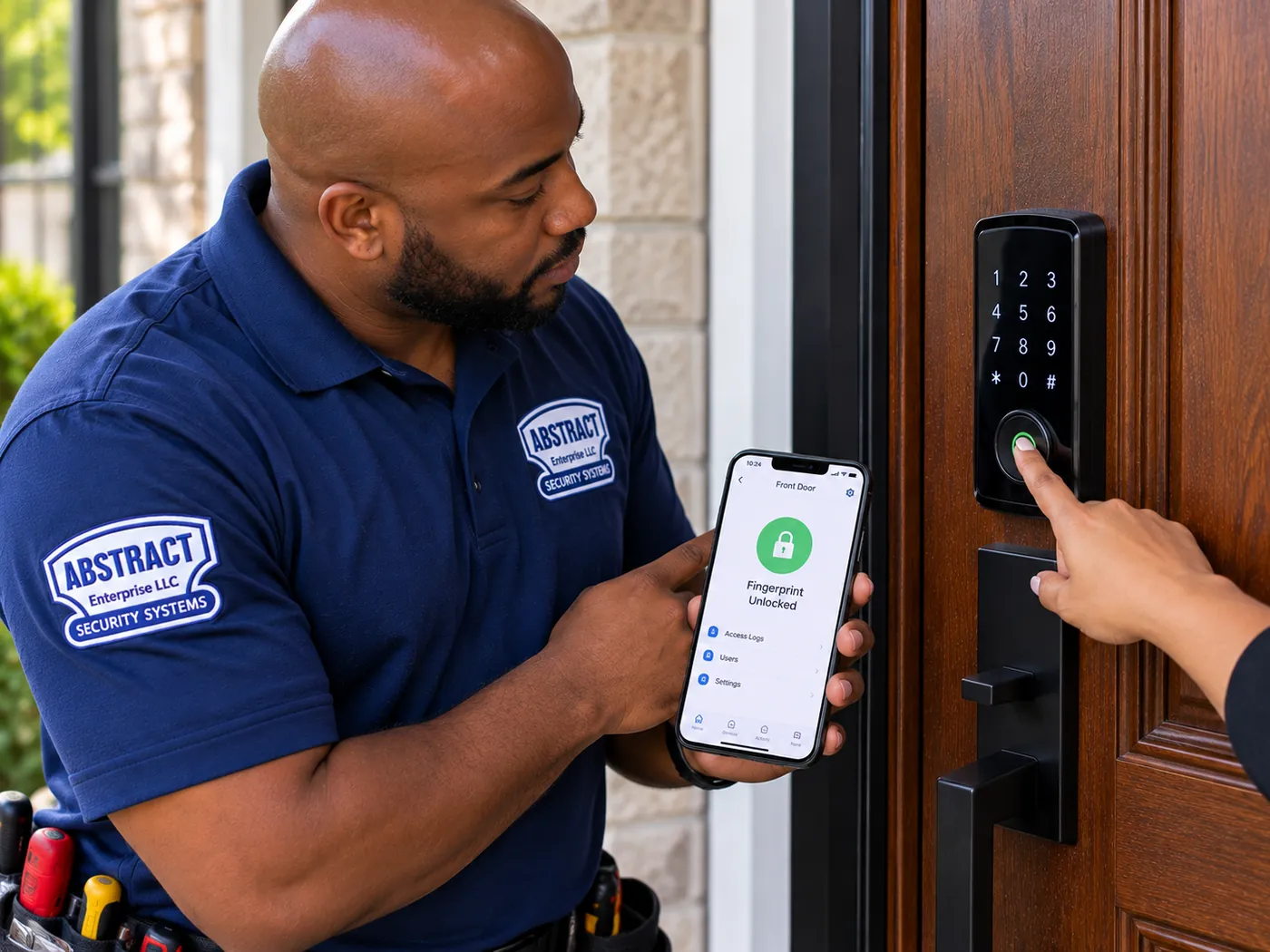
AESS technician showing a fingerprint unlock on a keypad smart lock while the app confirms access, Chelsea, Manhattan
A fingerprint unlock demonstrated at the door while the phone app shows the event.

A Smart Lock Chosen for the Door, Not the Box

Send two photos of the door, inside and out, and tell us what kind of building it is in. We will tell you which lock fits, what needs checking with management or the landmark rules, and the price.

Get In Touch

Request a Free Quote

Give us the street, the building type and a line about the door; a licensed installer writes back with options and next steps the same business day. Rather talk it through? Call the Manhattan line on (929) 560-0737.

✅

We Got Your Request!

Thanks — we have the details of your Chelsea door and a technician will phone before the end of the business day. For anything urgent, ring (929) 560-0737.

How It Works

Our Installation Process

The same seven stages run from a quiet inside-only retrofit on West 22nd Street to a powered strike, reader and schedule on a glass gallery front near Eleventh Avenue.

1. Name the door and the building

You send photos of both faces of the door and its edge, and tell us the street and the building type. We check whether the address sits in the Chelsea, Chelsea Extension or West Chelsea historic district and tell you which kinds of lock can work.

2. Door survey at a free walkthrough

At the door we record the bores, backset, thickness, condition and hang, look for a fire label, test the signal inside the entrance, and photograph what can be seen from the street.

3. The approvals file

We prepare what the decision-maker needs: a specification and scope for a co-op or management office, product sheets and marked-up photos for an owner’s landmark file, or a short note for a commercial landlord.

4. Written flat price

You get a written flat price. Gallery, studio and building doors use published AESS figures at the Manhattan rate; rowhouse and apartment doors are priced from the survey.

5. Booking around the building and the calendar

Residential visits get a 2-hour arrival window that fits the building’s work hours; galleries are booked for a closed day or before opening. The super, the front desk or the gallery manager hears from us beforehand, so nobody is surprised at the door.

6. Fit, power and test

The lock is fitted using existing bores wherever possible, the strike squared, any controller and battery mounted above flood height, and free exit, fail mode and remote control tested at the door.

7. Credentials and handover

Each person gets a named code or phone credential, events get their own schedule, two administrators are set up on separate phones, and the owner keeps the survey photos, the summary and a single sheet listing every credential holder.

Coverage Area

Smart Lock Installation Near Chelsea's Landmarks

Six places that between them show the range of doors in Chelsea — from the finest Greek Revival row in the city to a seven-block warehouse district and a park built on a freight viaduct.

Cushman Row, West 20th Street

Nos. 406–418 West 20th Street, between Ninth and Tenth Avenues, built by Don Alonzo Cushman in 1839–40 and often called, with Washington Square North, the finest row of Greek Revival houses in the city. Deep front yards, iron fences, stoops and temple-like brownstone entrances: the model of a landmarked Chelsea door.

The General Theological Seminary Block

The full block from Ninth to Tenth Avenues between West 20th and 21st Streets, on land given by Clement Clarke Moore and built between 1825 and 1902, with a Ninth Avenue facade of 1960. Part of the former seminary is now apartments — residential doors inside one of the district's anchor buildings.

London Terrace, West 23rd–24th Streets

About 1,700 apartments in 14 contiguous buildings of 17 to 19 stories, first occupied in May 1930, with an Olympic-sized pool. One roofline, two organisations: the Towers co-op and the Gardens rental.

Penn South, Eighth to Ninth Avenues

Mutual Redevelopment Houses, a limited-equity co-op of 2,820 apartments and close to 5,000 residents from 23rd to 29th Streets, with its own co-generation plant for power, heat and cooling. Thousands of near-identical unit doors under one management office.

West Chelsea Historic District

Seven blocks between West 25th and 28th Streets from Tenth Avenue to the West Side Highway, designated in 2008, including the Terminal Warehouse Company's Central Stores — 25 interconnected brick buildings on one block. Industrial doors, new tenants and landmark rules together.

The High Line

A 1.45-mile elevated park on a former New York Central Railroad spur from Gansevoort Street to 34th Street; its first section, from Gansevoort to 20th Street, opened on June 8, 2009. The galleries, lofts and new condos either side of it are where most of Chelsea's glass and steel doors are.

We also serve the neighbourhoods around Chelsea — the Meatpacking District, the West Village and Greenwich Village to the south, Flatiron and NoMad to the east, the Garment District, and Hell's Kitchen and Hudson Yards to the north — plus the rest of Manhattan, New York City, Long Island and the Hudson Valley.

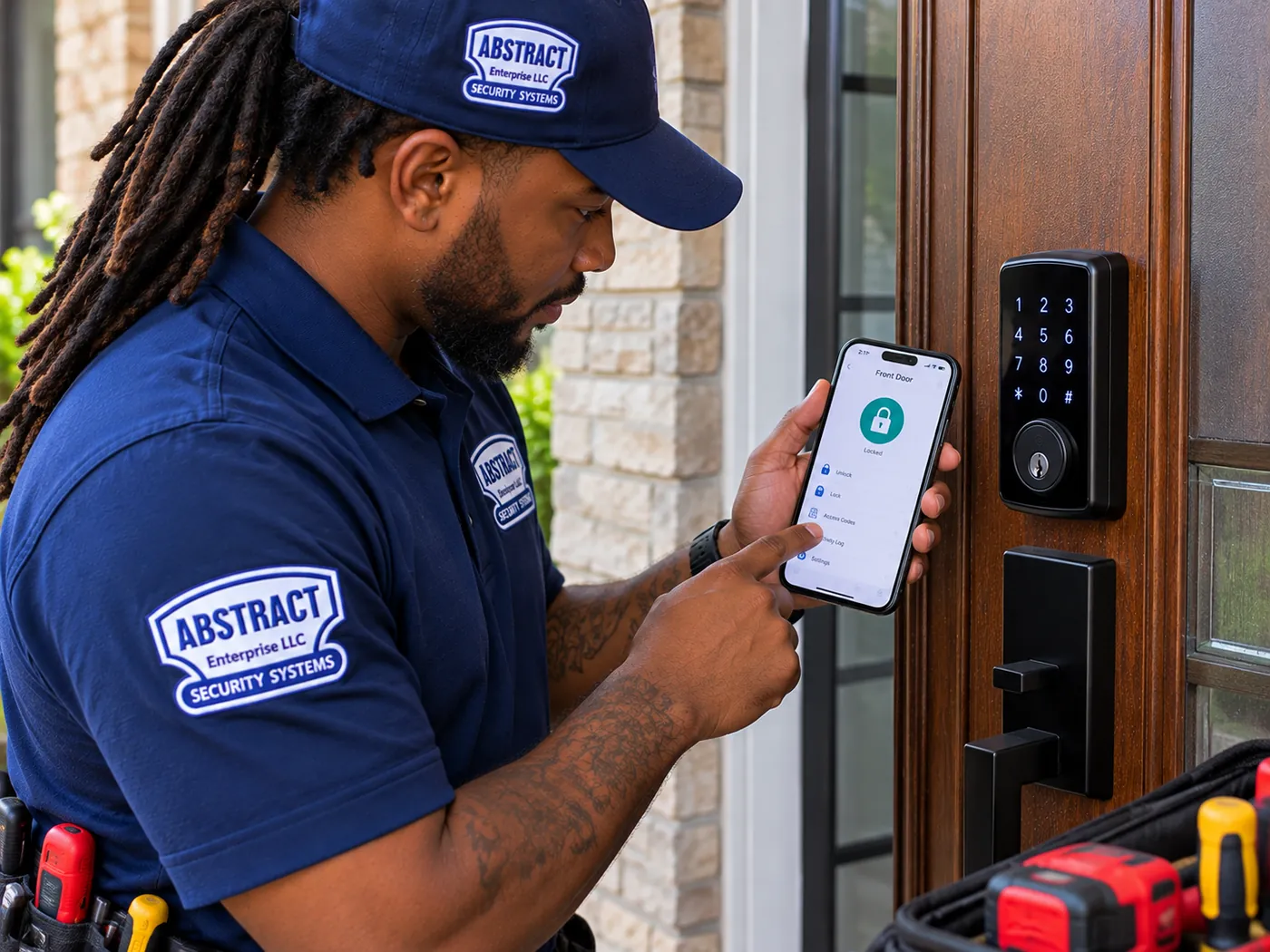
AESS technician checking the locked status of a keypad smart deadbolt in the mobile app at a front door in Chelsea, Manhattan
Confirming the lock reports locked in the app before the visit ends.
Pricing

Smart Lock Installation Cost in Chelsea

Chelsea is priced exactly like the rest of Manhattan: our published figures at the Manhattan area rate, with a plain statement wherever a job is quoted at the walkthrough instead. Keyless gallery, studio and building doors use the same single-door, strike and repair figures as our Manhattan page. A smart lock on a rowhouse or apartment door has no published AESS figure, because the door and the building decide the work — a retrofit on an intact landmark door and a deadbolt on a twice-drilled walk-up door are different jobs. Those are quoted flat, in writing, after a free walkthrough, and the quote is what you pay.

ItemChelsea priceScope and source
Rowhouse or apartment-door smart lock: inside-only retrofit, bore-matched deadbolt, mortise-format or steel-door lockQuoted flat at free walkthroughPriced after the door survey, once we know its condition, bores, any label and what the building or the landmark rules allow — there is no published AESS figure for this line
Single-door keypad or fob reader with electric strike$1,875–$3,125 installedGallery, studio, vestibule or building door; the Manhattan figure from our borough page
New electric strike on a gallery, studio or building door$313–$563Replacement keeper in the frame during a keyless upgrade, at the Manhattan rate
Failed electric strike repair$369–$606A release that hums and stays shut, at the Manhattan rate
Set-up only, for a lock someone else fitted — we create the account, pair the bridge and load codes and schedulesFirst hour $265, then 30-minute blocksOur published Manhattan setup-only rate
Service and callback rate$195/hr, 3-hour minimum ($585)Billed only for return visits once the job is signed off — never on the first installation

What moves a Chelsea door quote

  • The door's history: how many times it has been bored, whether old holes need filling, whether a period door needs extra care, and whether it is wood, steel-skinned, solid steel or glass.
  • The rules around it: a management office's consent, a landlord's alteration clause in a commercial lease, or the documentation an owner wants for an LPC file.
  • Power and position: battery-only smart locks are the simplest; strikes, readers and glass-door bolts need a power supply, cable routes and, west of Tenth Avenue, a mounting height above past flood levels.
  • Connectivity: how the lock reaches the internet from a deep masonry entrance, a steel landing or a gallery full of glass.
  • Credentials and schedules: a household's codes are quick; a gallery's staff, art handlers, opening-night passage mode and summer hours take longer and are worth getting right.

National cost guides and national brands, for comparison

Fixr's national cost guide, updated in January 2025, puts smart lock installation at $250–$400 with an average of about $300, and handyman labour at $50–$100 an hour. That is national third-party data for an ordinary door on a house, not an AESS price, and it does not include a landmark-district door survey, a management approval, a steel loft door or a powered strike on a glass entrance. National alarm brands such as ADT, Ring and SimpliSafe also sell smart-lock add-ons; before choosing one, check whether the codes depend on their app and monitoring plan and whether their installers will deal with a historic door, a freight landing or a gallery's glass. That is where a local, licensed Manhattan crew earns its fee.

Deposit, warranty and late-fee terms are not buried in the quote: they sit in the service agreement signed before any work, and the key sentence is repeated in the licence block at the bottom of this page.

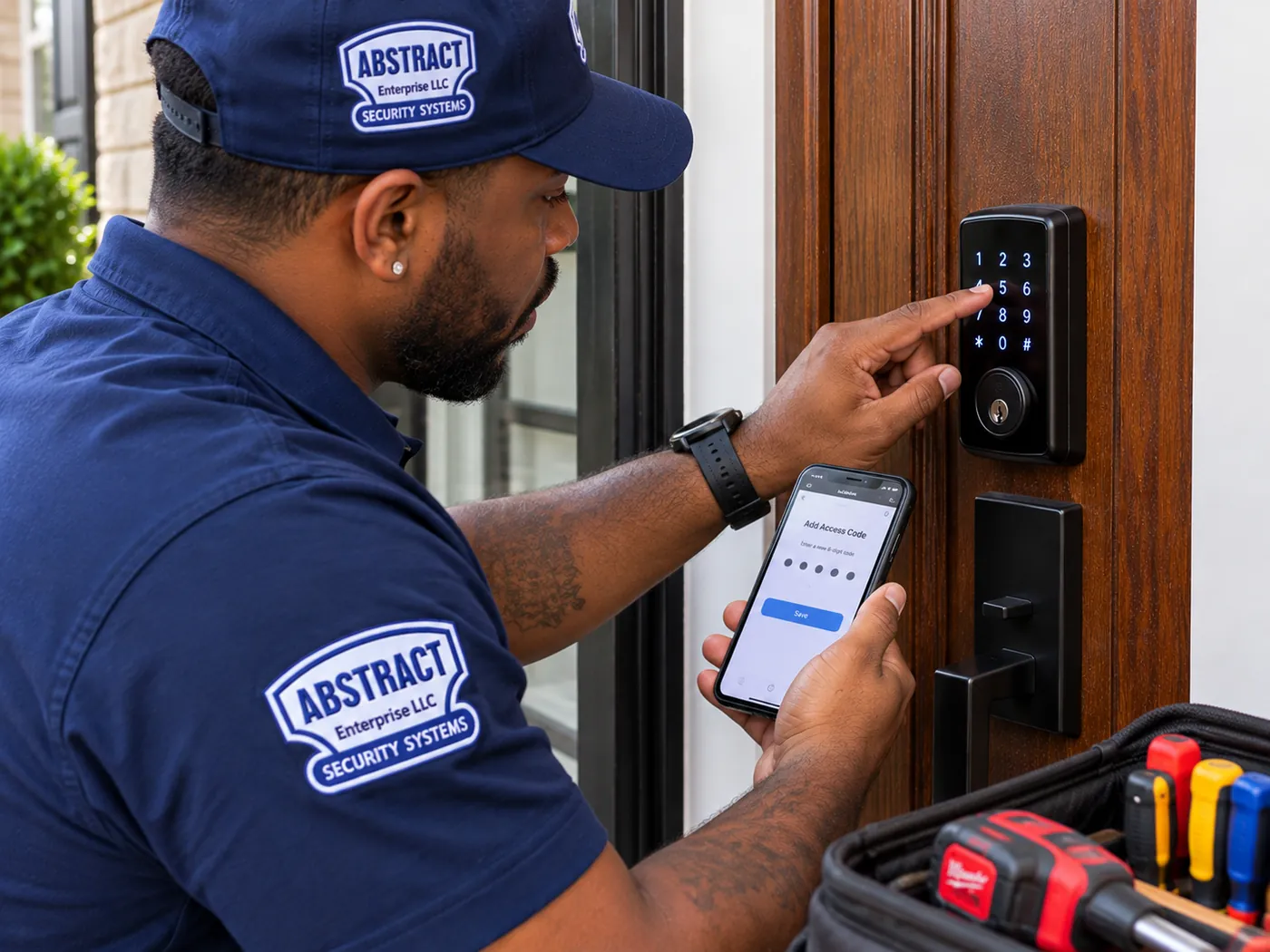
AESS technician adding a new access code in the smart lock app at a wood front door in Chelsea, Manhattan
Adding a personal access code in the app, then testing it on the keypad.
Shop Our Systems

Smart Lock Installation Packages & Pricing

Three starting points cover nearly every Chelsea request we receive. Two of them carry the published Manhattan figures; the residential one has no fixed number, because the survey of an 1840s rowhouse door and of a 1960s co-op door can come back with very different findings.

Starter — Rowhouse or Apartment Door

Quoted flat at walkthrough

Door survey with photos and measurements; a lock chosen to reuse existing bores where possible; old holes filled and the strike squared; free exit from inside checked; personal codes for the household, cleaner and guests; remote access tested; product sheets and photos for a landmark or management file on request.

Standard — New Strike on a Gallery or Building Door

$313–$563

The keeper in the frame is swapped for an electric strike as part of going keyless — fail-secure by default, and a listed model wherever the frame carries a fire label. A strike that is already there and has stopped working is a repair instead, at $369–$606.

Premium — Keyless Gallery, Studio or Building Door

$1,875–$3,125

A complete single entrance — keypad or fob reader plus electric strike — at the Manhattan figure. Included: a credential for each staff member, an exit device on the inside, opening-hour and event schedules, a battery backup fixed well above the floor, and a lesson for whoever will add and delete users.

Bring Your Own Lock — Labour Only

If the lock is already sitting in its box, we fit it for a flat labour-only price agreed at the walkthrough. First, though, we hold it up against the door — bore size, backset, thickness, whether the door is wood, steel or glass — and against the building: whether it needs a management office's consent, whether it will show on a landmarked facade, and whether it leaves free exit from inside. A customer-supplied lock carries its manufacturer's warranty rather than ours. If it is the wrong lock for the door, we tell you before anything is drilled; a programming-only visit for a lock that is already fitted is $265 for the first hour, then 30-minute blocks.

Keep the Door, Lose the Keys

Whether the door is landmarked wood, loft steel or gallery glass, the first step is the same: tell us about it. We will tell you what fits, what has to be checked and what it costs.

Landmark Doors

The Door Survey We Do Before Drilling a Historic Chelsea Door

On a door that the rules say may only be replaced when it is beyond repair, the survey is the most important part of the job. This is what we record, with photographs, before a single hole is drilled, and what we hand the owner afterwards.

What we recordWhy it matters
Both faces of the door and the entrance surround, in daylightA record of the door as it was, for the owner's file and for any LPC application
Every existing bore, its diameter and backset, and any old filled holesTells us whether a lock can reuse what is there instead of removing more wood
Door thickness at the lock stile, and the condition of the stileThin or cracked stiles rule out some locks and call for an inside-only retrofit
How the door hangs: gaps, binding, whether it latches without a pushA door that has to be shoved shut makes a motorised lock work too hard and drains batteries
The existing hardware and its finish, inside and outWhat stays, what is removed and kept, and what any new street-side part should look like
What is visible from the street, including from the foot of the stoopVisibility is what landmark review looks at first
Signal strength at the door, inside the entrance surroundDeep masonry entrances can block radio; decides between Wi-Fi, a bridge or Thread
Any second entrance, such as a door under the stoopWhether it needs the same credentials, a different lock, or simply a reliable deadbolt

The owner gets the photographs and a one-page summary, whether or not we end up installing anything. If the survey shows that the lock the owner wanted is a poor fit for the door, the summary says so and names the alternative.

Gallery Calendar

Planning a Gallery Door Around the Exhibition Calendar

A gallery door has a working week unlike any other in the neighbourhood. MTA Away's guide describes the usual pattern: open Tuesday to Saturday from 10 a.m. to 6 p.m. for most of the year, Saturdays closed in summer, and openings on Thursday or Friday evenings at 6. This is how we line the lock up with that calendar.

MomentDoor settingWho has access
Installation dayBooked for a day the gallery is closed, usually a Monday, or before openingGallery manager on site to test every credential
Ordinary open hoursScheduled unlock for entry, or locked with a buzz-in from the desk if the gallery prefersPublic in, everyone out freely
Opening nightPassage mode for the evening, ended by schedule or by a staff phonePublic in, everyone out freely; staff can relock instantly
After hours and MondaysLocked; every entry logged by personDirector, registrar, staff with personal codes or phones
Art deliveries and pick-upsOne-time or time-window credential for the shipper; door-held-open alert onShipper's crew for the booked window only
Installing a new showCodes for the install crew and artist's team that expire at the openingNamed crew, for named days
Summer SaturdaysSchedule changed once for the season instead of every weekAs after hours

We set these schedules with the person who runs the gallery's calendar, test them at the door, and write them down on a single page so that whoever closes up on a Saturday in July knows what the door will do.

Flood-Aware Installs

Above the Waterline: Lock Electronics on West Chelsea's Low Blocks

Sandy put three to five feet of water into Chelsea galleries in 2012, according to Artlyst's report at the time. Nobody can promise a door will stay dry, but where the lock's electronics live decides whether a flood costs a new door contact or a whole new system. These are the rules we follow on the ground floors west of Tenth Avenue.

  • Controllers and power supplies high. At or above head height on an interior wall, in a labelled enclosure, never on the floor, under a desk or inside a low cabinet.
  • Batteries with them. The backup battery sits in the same high enclosure, not on the floor beside it.
  • Cable from above. Runs come down to the door from the ceiling, so the only low parts are the ones that must be at the door.
  • Cheap, sealed parts at the bottom. Door contacts and exit buttons are simple, sealed and inexpensive to replace if water reaches them.
  • Locks that fail locked. Fail-secure strikes and a key override, so a power cut during a storm leaves the door latched and the gallery closed to the street.
  • A storm sheet in the enclosure. What to switch off when a warning is issued, what to check before power returns, and the number to call.
  • Admin access off site. At least two administrators on two phones, so the door can be managed from wherever the staff are if the building is closed.

The same thinking applies to a loft's bridge or a rowhouse's border router on a lower ground floor: keep it off the floor, on a permanent outlet, and somewhere a person can reach without wading.

Glossary

Chelsea Door and Building Terms You Will Hear on a Lock Job

  • Historic district: an area designated by the Landmarks Preservation Commission; in Chelsea, the Chelsea Historic District (1970), its extension (1981) and the West Chelsea Historic District (2008). Exterior work generally needs LPC permission.
  • Permit for Minor Work, Certificate of No Effect, Certificate of Appropriateness: the three kinds of LPC permit. The first two are issued by staff; the third goes to the full Commission.
  • Condition assessment: the written evaluation the LPC's rules call for before a historic door may be replaced as deteriorated beyond reasonable repair.
  • Entrance enframement: the stone or brownstone surround of a rowhouse doorway — on Cushman Row, a deep, temple-like frame that puts the door well back from the stoop.
  • Stile and bore: the vertical edge member of a door that holds the lock, and the round hole drilled through it for a deadbolt or knob.
  • Proprietary lease: the document that governs a co-op shareholder's apartment, including what may be changed on its door.
  • Limited-equity co-op: a co-op, like Penn South, where shares are resold without profit to keep apartments affordable, under city supervision.
  • Keyed or key-locked elevator: an elevator that will not move to a floor, or open into an apartment, without a key or a resident's release.
  • Freight landing: the lobby or corridor outside a freight elevator in a converted industrial building, often the only way into a loft or studio.
  • Fail-safe and fail-secure: whether electrified hardware is unlocked (fail-safe) or locked (fail-secure) on the outside when power is removed.
  • Passage mode: a lock or strike setting that leaves the door free to open from outside for a set period, such as a gallery opening.
  • Request-to-exit (REX): the push button, motion sensor or switch built into a lever or bar that signals a powered lock to release for a person walking out.
  • FISP: the city's Facade Inspection and Safety Program, which brings scaffolds and sidewalk sheds to taller buildings every five years.
Complete Services

Every Smart Lock Installation Service in Chelsea

The lock is often one line on a longer list. When Chelsea clients restore a rowhouse, move into a loft, fit out a gallery or replace a walk-up's street panel, these related services tend to join the same booking.

Access Control Installation Manhattan

Readers, controllers and cloud credentials for galleries, studios and shared building entrances.

AESS Intercom Installation in Manhattan

Street-door video and audio panels with remote release for walk-ups, rowhouse conversions and loft buildings.

Intercom Repair

Dead apartment stations, failed panels and releases that no longer open the street door.

Door Buzzer Installation Manhattan

New buzzer and strike systems for small walk-ups and converted rowhouses.

Door Buzzer Repair

Street-door releases that hum but stay shut, apartment buttons that do nothing, and tired riser wiring in older walk-ups.

Doorbell Camera Installation Manhattan

A face at the top of the stoop on your phone before you unlock remotely — if the house rules and the landmark rules permit one.

Home Automation

Locks, lighting and climate on one app for rowhouses and lofts.

Commercial Security Systems Manhattan

Combined access, camera and alarm systems for galleries, showrooms and studios.

Commercial Camera Installation

Entrance, storage-room and loading-door coverage for businesses on the West 20s.

Apartment Building Cameras

Lobby, stair and package-area coverage for walk-ups and co-op buildings.

Low-Voltage Installation Manhattan

Cable, low-voltage power and the routes they take to each reader, strike and bridge.

Alarm Installation

Door contacts and alarms that arm when the gallery or the house locks up.

Field Notes

Field Notes: Reading a Chelsea Door Before Choosing a Lock

The habits our technicians bring to Chelsea doors in general; this describes method, not a particular client's door

We look at the door before we look at the lock. On a rowhouse, that means standing at the bottom of the stoop first, because that is where anyone judging the facade will stand. Then up close: the stile, the old bores, the filler from locks long gone, the way the door meets the frame. Old doors move with the seasons, and a deadbolt that throws easily in October can bind in a humid August.

On a loft landing, the question is what the landing is. If the elevator is the front door, we talk about the second door, the stair door and the intercom, and we leave the elevator to the elevator company. Steel doors get a magnet test for the frame and a look at the hinge edge for a label before any hardware is chosen.

At a gallery, we ask for the calendar before the floor plan: when it is closed, when the next opening is, when the art moves. Then we look at the glass — framed or frameless, which way it swings, whether there are patch fittings — and at where the electronics can live above the floor.

Everywhere, we test the radio at the door with a phone before choosing how the lock connects, and we leave a one-page sheet that says who holds which credential. The lock is the easy part; the door and the people are what take the thought.

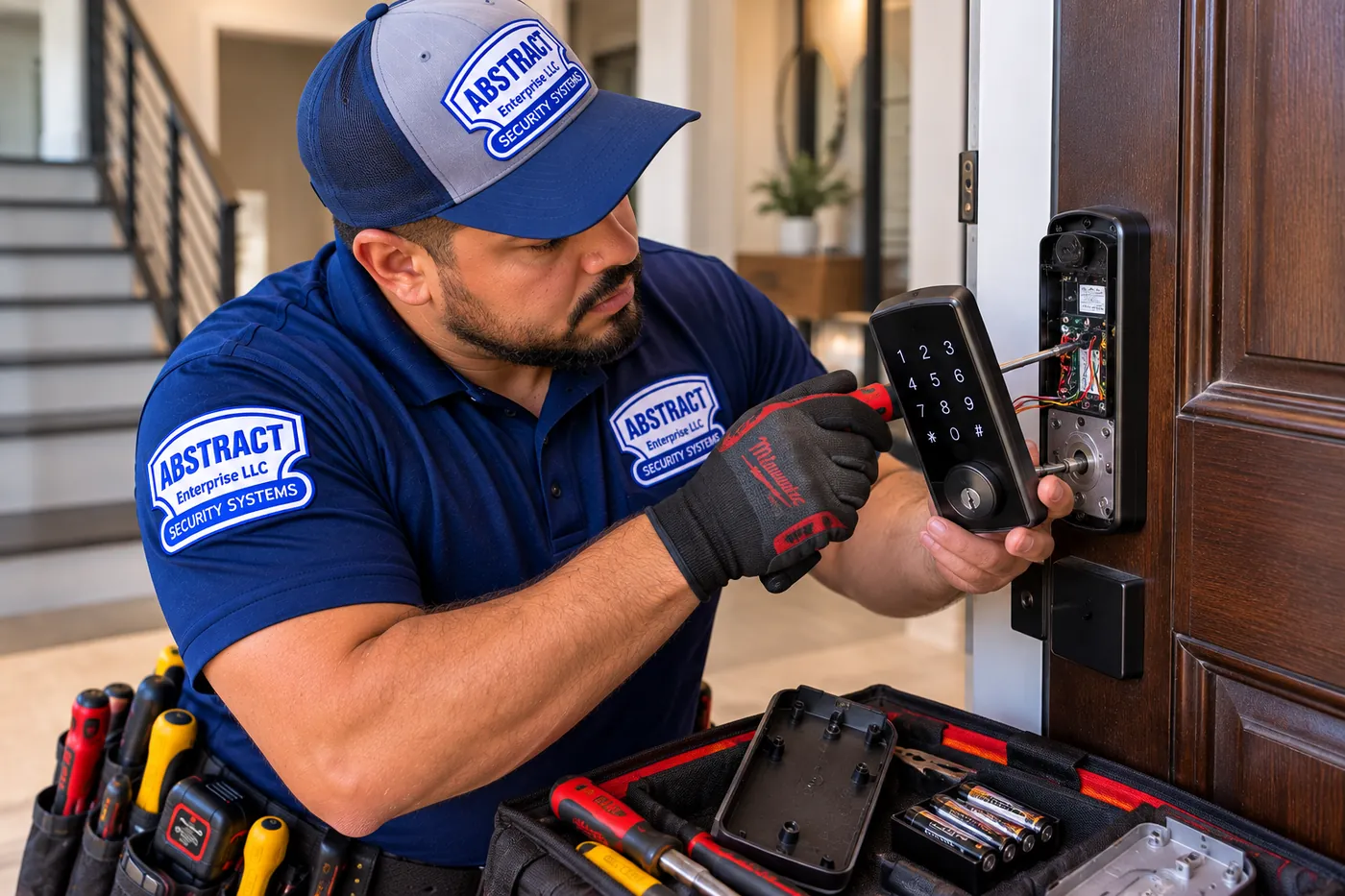
AESS technician servicing the wiring inside a keypad smart lock with batteries and tools laid out in Chelsea, Manhattan
On a service visit: the keypad is off and the wiring inside is being checked, with fresh batteries ready.
FAQ

Chelsea Smart Lock Installation FAQ

What does a keyless gallery or studio door with an electric strike cost in Chelsea?
+

A gallery or studio entrance with a keypad or fob reader and an electric strike is $1,875 to $3,125 installed, the same published figure we use across Manhattan. Swapping in a strike alone runs $313 to $563, and fixing a strike that has failed runs $369 to $606. Rowhouse and apartment doors have no set figure; they are priced flat once the free door survey is done.

Do you cover all of Chelsea, from 14th Street to the edge of Hudson Yards and from Sixth Avenue to the river?
+

Yes. We work the whole neighbourhood: the historic-district side streets, the avenues, London Terrace and Penn South, the West Chelsea gallery blocks and the condos beside the High Line, as well as the Meatpacking District, Flatiron, NoMad and Hell’s Kitchen next door. Prices are the same as elsewhere in Manhattan.

Can the installation happen on a Monday, when most Chelsea galleries are closed?
+

Yes. Galleries usually open Tuesday to Saturday, so Monday is often the best day to fit a gallery door, and we can also start early on an open day and finish before the doors open. We confirm the date with the gallery manager and with the building.

How long does the door survey on a landmarked rowhouse take?
+

Usually under an hour at the door. We photograph both faces and the entrance from the street, measure the bores, thickness and backset, check how the door hangs and test the signal; you receive the photographs and a one-page summary afterwards, whether or not you go ahead.

Can the gallery be alerted if the loading door is left propped open after a delivery?
+

Yes, if the door has a door-position contact. The controller or lock can send an alert when the door stays open longer than a set time and record who opened it last. We fit the contact where deliveries will not knock it off and set the delay with you.

Can one visit cover both our Chelsea apartment and our studio a few blocks away?
+

Often, yes. If both doors are ready and both buildings allow it, we book them back to back on the same day. Each door is still priced on its own, and the two sets of credentials can sit in one app or in separate accounts, as you prefer.

Can the wiring left from an old buzzer or strike on our loft door be reused for the new lock?
+

Sometimes. We test the old cable and trace where it runs; if it is sound and suits the voltage and current of the new hardware, we reuse it, and if not, we replace it along the same route where possible. You know which before the price is final.

Can you work in the gallery while a show is on the walls without putting the art at risk?
+

Yes, with the gallery’s agreement on the details. We work from the door side, keep ladders and cable runs away from the works, use dust extraction at the drill and cover the floor, and the gallery decides whether anything near the entrance should be moved or covered first.

All Areas Served

Smart Lock Installation in Other Neighbourhoods, Boroughs and Counties

This is the Chelsea page. It sits under our Manhattan smart lock installation page, which covers doorman buildings, tower suites and short-stay rules across the borough, and the five-borough guide to renters' and co-op rules is on the AESS smart lock installation NYC hub.

For anything beyond locks, the Abstract Enterprises Security Systems home page lists every service and area, and who we are and the licence behind this work explains the company.

Sources

Where the Chelsea Facts on This Page Come From

These are the documents behind the Chelsea dates, counts, rules and quotations used above, each opened and read for this page. None of them, and nothing on this page, describes a particular AESS client or installation.

Chelsea Lock Fault? We Book the Next Open Window

Blank keypad on a stoop, a loft lock the app can no longer see, a gallery strike that will not release, or a walk-up door that suddenly needs a shove — ring the Manhattan line on (929) 560-0737. We book the next open 2-hour window, and most power, pairing and alignment faults are fixed in one to two hours once we are at the door.

Smart Lock Installation Chelsea, Manhattan — Licensed, Insured, Landmark-Aware

Abstract Enterprises Security Systems · 460 E Fordham Rd, Bronx, NY 10458 · Manhattan line (929) 560-0737 · WhatsApp (718) 679-0359 via wa.me

NYS Low-Voltage Licence #12000287431 · 100% Licensed & Insured · Same-Day Estimates · Rated 4.7★ from 201 Google Reviews

Locks you supply carry their manufacturer's warranty. Full terms — including 50% deposit, one-year parts-only warranty on AESS-supplied products, and the late-fee schedule — are set out in the service agreement. See our warranty page.

This page explains how Chelsea's rowhouses, complexes, lofts and galleries, the LPC's rules and the city's codes affect a lock installation; it is general information, not legal advice. Content checked October 17, 2026. Changelog: first version of the Chelsea neighbourhood page.