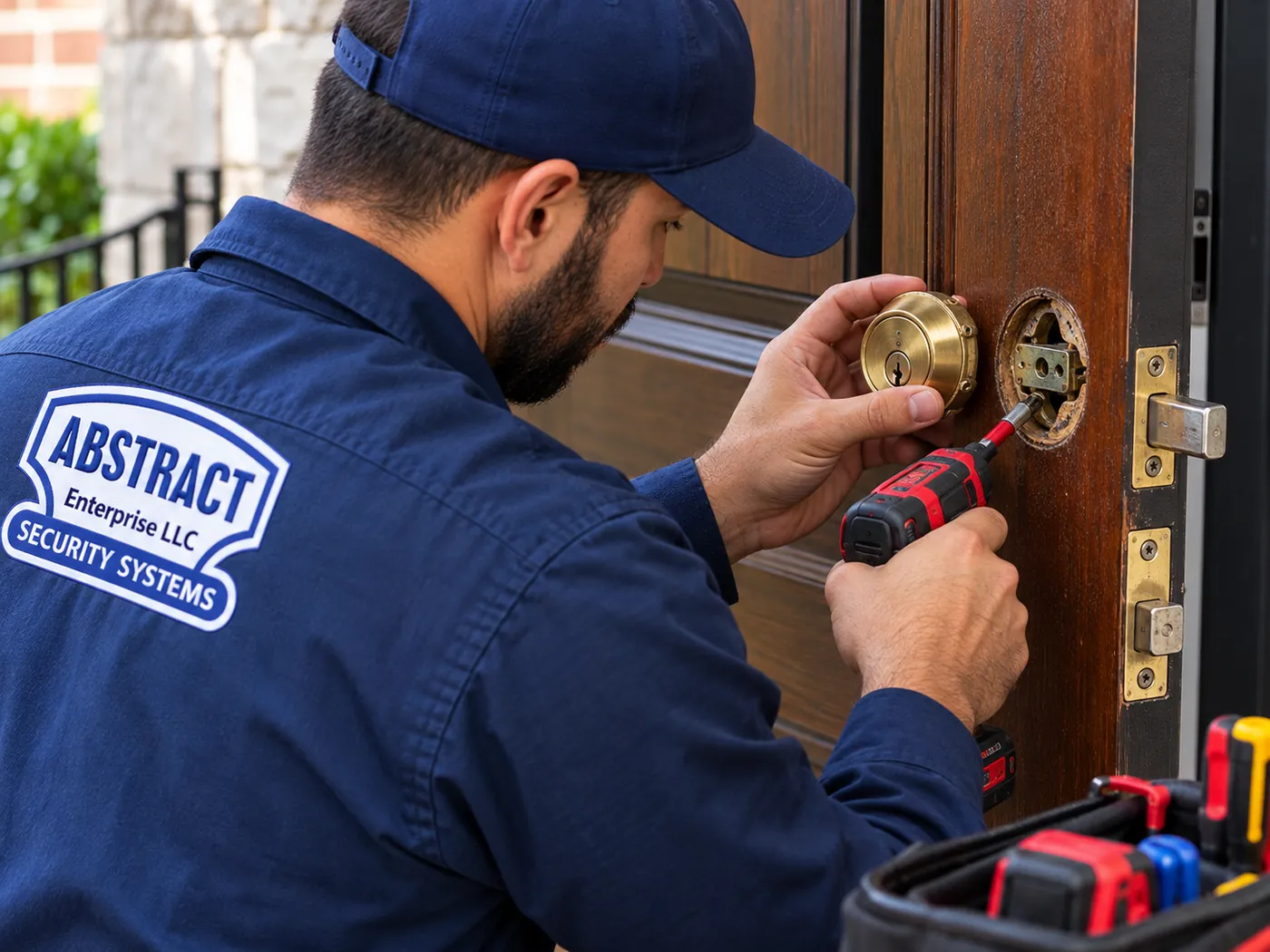
Bungalow Front Doors · Side Doors on Two-Foot Passages · Storm Doors on the Sound · Two-Family Entries · East Tremont Avenue Shops
Throgs Neck is a peninsula, and its doors live like it. Some sit a few steps from Long Island Sound behind an aluminium storm door that the wind catches every afternoon. Some are on bungalows that began as summer cottages on land the homeowner still does not own. Many are the side and basement doors of attached two-families, reached down a passage barely wider than your shoulders. We fit smart locks to all of them — choosing the lock for the salt, the signal and the ground rules of the house first, and only then for the app.
Throgs Neck visits booked from our Bronx office at 460 E Fordham Rd · Written by Anwar Timothy (NYS license #12000287431) · Reviewed and updated October 17, 2026

Not sure which of your doors should go keyless? Ring (646) 490-0629 or send the short form with one photo of the door from outside and one of its edge. Within the same business day you hear which door we would start with, whether anything about the house — a land lease, a flood zone, a shared side passage — changes the choice, and what the visit will cover.

Throgs Neck — spelled with one G on the bridge and two by many people who grew up here — is a narrow spit of land in the south-east Bronx. Westchester Creek runs down its west side, the East River and Long Island Sound wrap its south and east, and Baisley Avenue and the Bruckner Expressway close it off to the north. That geography explains most of what we find at the front door. Almost everything here is a house rather than an apartment, a lot of those houses face open water, and a surprising number of them stand on ground the owner leases rather than owns.
The housing grew in layers. Through the nineteenth century the peninsula was farms and then waterfront estates. In the 1920s those estates were cut up into row homes and densely packed bungalow lots, and summer colonies took shape along the shore. Silver Beach Garden began as a colony of bungalows whose owners held their houses but rented the land underneath. A church youth campsite to the north grew into Edgewater Park. Over the following decades the cottages were winterized, given basements and sewer connections, and lived in year-round. Meanwhile the inland streets filled with attached and semi-detached one- and two-family houses, many of them now home to an owner on one floor and a tenant or relative on another.
The result is a neighborhood where the question “whose door is this?” has an unusual answer. On the street grid in Schuylerville or the blocks off East Tremont Avenue, the homeowner owns house and lot outright and decides what goes on the door. In Silver Beach, the proprietary lease each household signs with the Silver Beach Gardens corporation has, at least since the corporation took title in the 1970s, said a bungalow cannot be changed, modified or altered without the corporation’s permission. Edgewater Park, a cooperative since 1988, enforces its own building guidelines across 675 houses on a single city zoning lot. None of those rules, as far as we have been able to find, mentions door locks by name — but they are the reason we ask which part of the peninsula you are in before we recommend anything.
Then there is the water. The Department of City Planning counts roughly 278 of Edgewater Park’s homes, just over 40 percent, inside the 1% annual chance floodplain, some of them in the V Zone where storm surge can arrive with waves of three feet or more. A lock mounted at knee height on a ground-floor door in that zone is a different purchase from the same lock on a Silver Beach cottage that the State Tax Commission described as sitting on a promontory about a hundred feet above the river. Salt spray, wind-driven rain and a storm door that slams every time the breeze shifts are everyday conditions, not edge cases.
Finally there is space, or the lack of it. On Edgewater Park’s typical 30-by-50-foot lots, city planners measured side yards of two to five feet, with eaves in places touching the house next door. Side doors open into those slots. Wi-Fi from one house reaches into the next one’s kitchen. A keypad that would be invisible on a suburban lot is in plain view of the neighbor’s window. That is why a Throgs Neck smart lock plan starts with a walk around the house.
If you are also weighing a camera for the same door, our Throggs Neck security camera installation page covers placement on tight lots and waterfront walls.

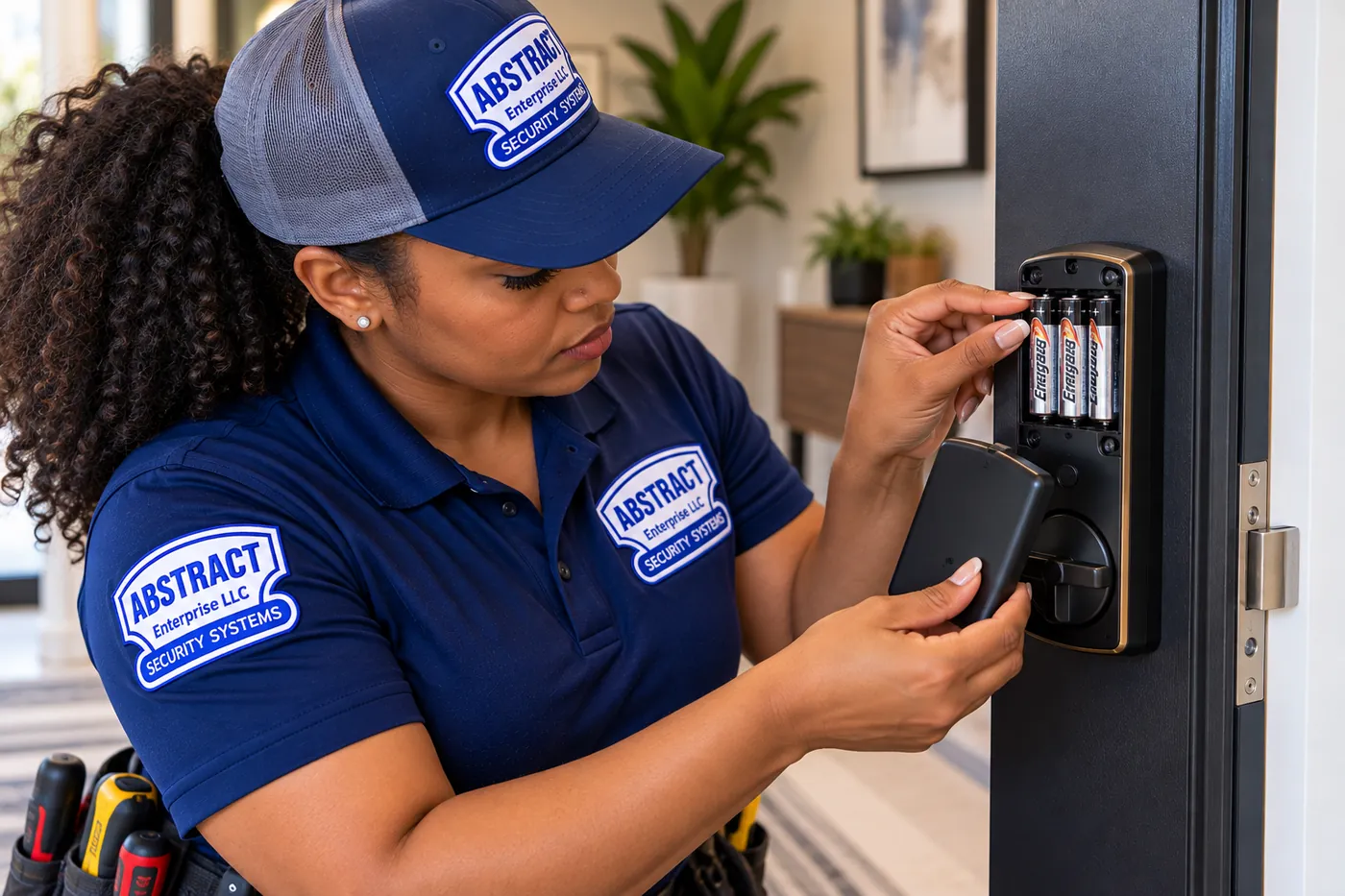
Keypad blank after a nor’easter? Bolt grinding but not throwing? App showing the lock offline since the router was swapped? Call (646) 490-0629. We book the next open 2-hour window from the Fordham Road office, and most battery, pairing, corrosion and strike-alignment faults are sorted within one to two hours of arriving at the door. Use the mechanical key first if your lock has one; if it doesn’t turn, don’t force it — a seized cylinder snapped off in the door turns a repair into a replacement.
Nine kinds of work make up nearly every Throgs Neck smart lock visit. Most houses need two or three of them at once — a front door, a side door and a code plan for the people who use each.
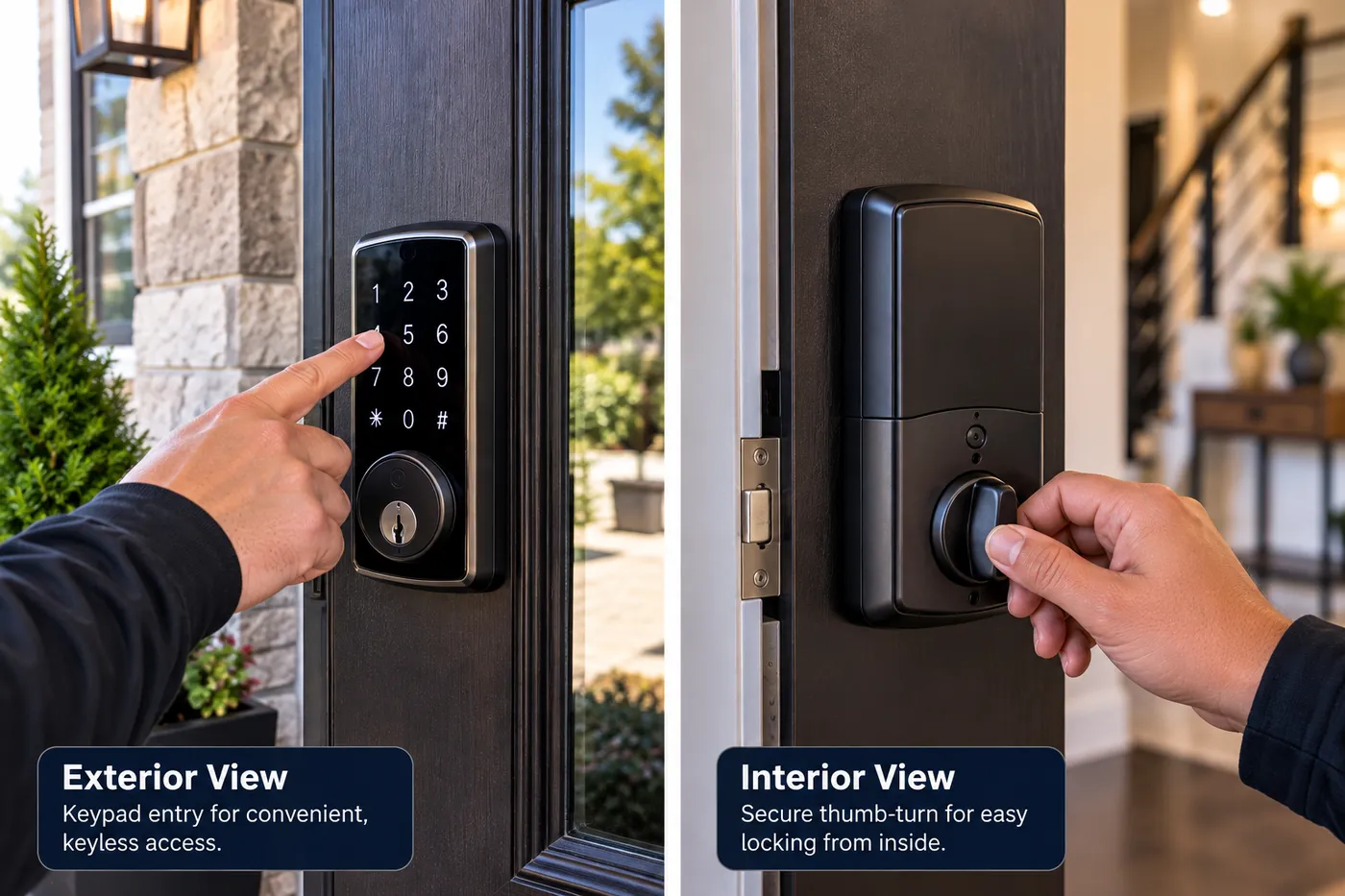
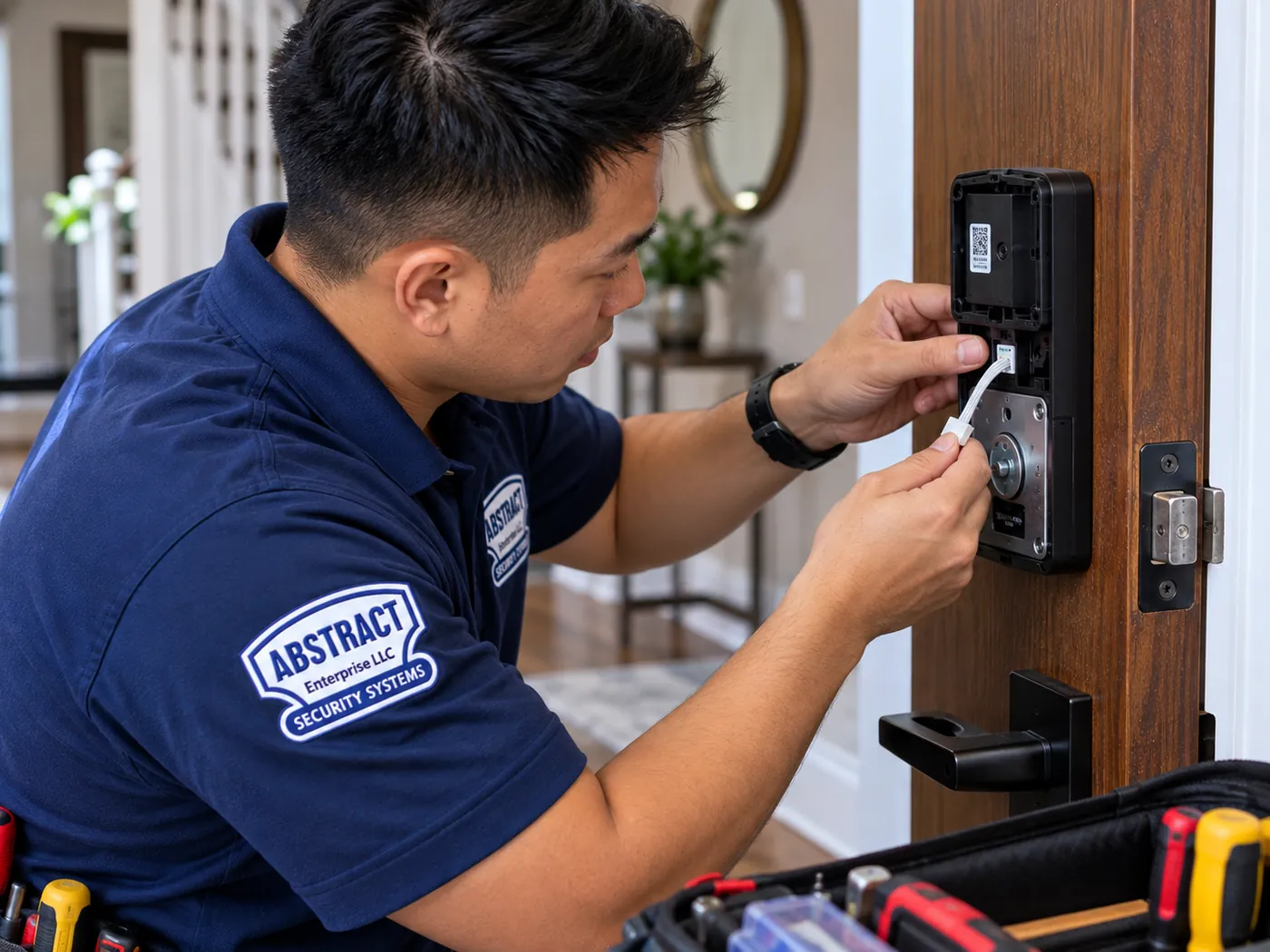
Single-cylinder smart deadbolts for the original or replacement front door of an Edgewater Park, Silver Beach or Locust Point house, keyed backup kept, inside thumb-turn left as the one-motion exit.
The doors people actually use: the side door off a narrow passage, the kitchen door to the yard, the basement door under the stoop. Often a better candidate for keyless entry than the front.
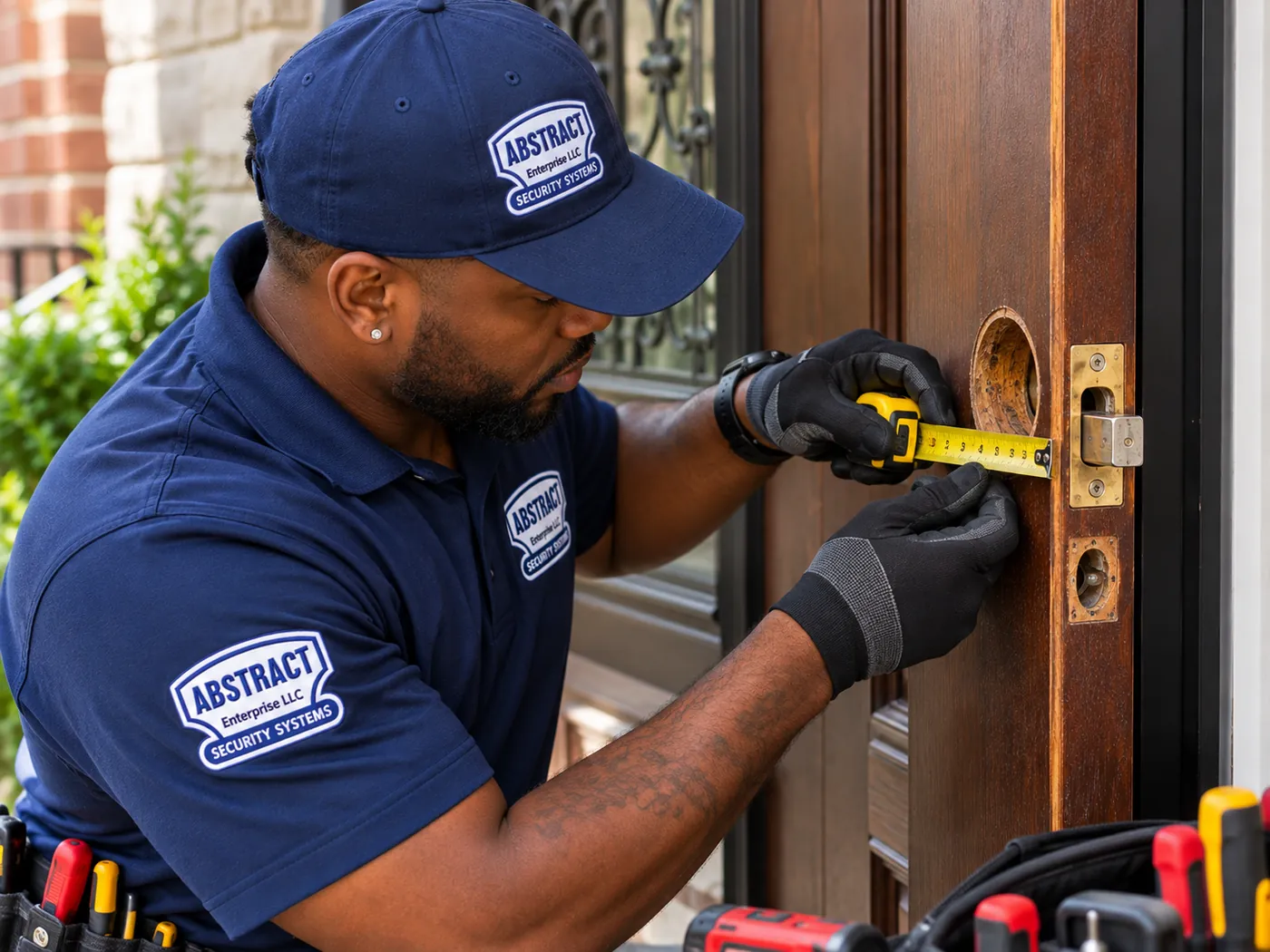
Measuring the gap between the storm door and the entry door before choosing a lock, so the outside housing clears the glass and the storm door’s closer is set to stop slamming into it.
Lock choice, mounting height and maintenance for doors inside the Edgewater Park floodplain or facing the Sound, plus replacement after salt water has reached the electronics.
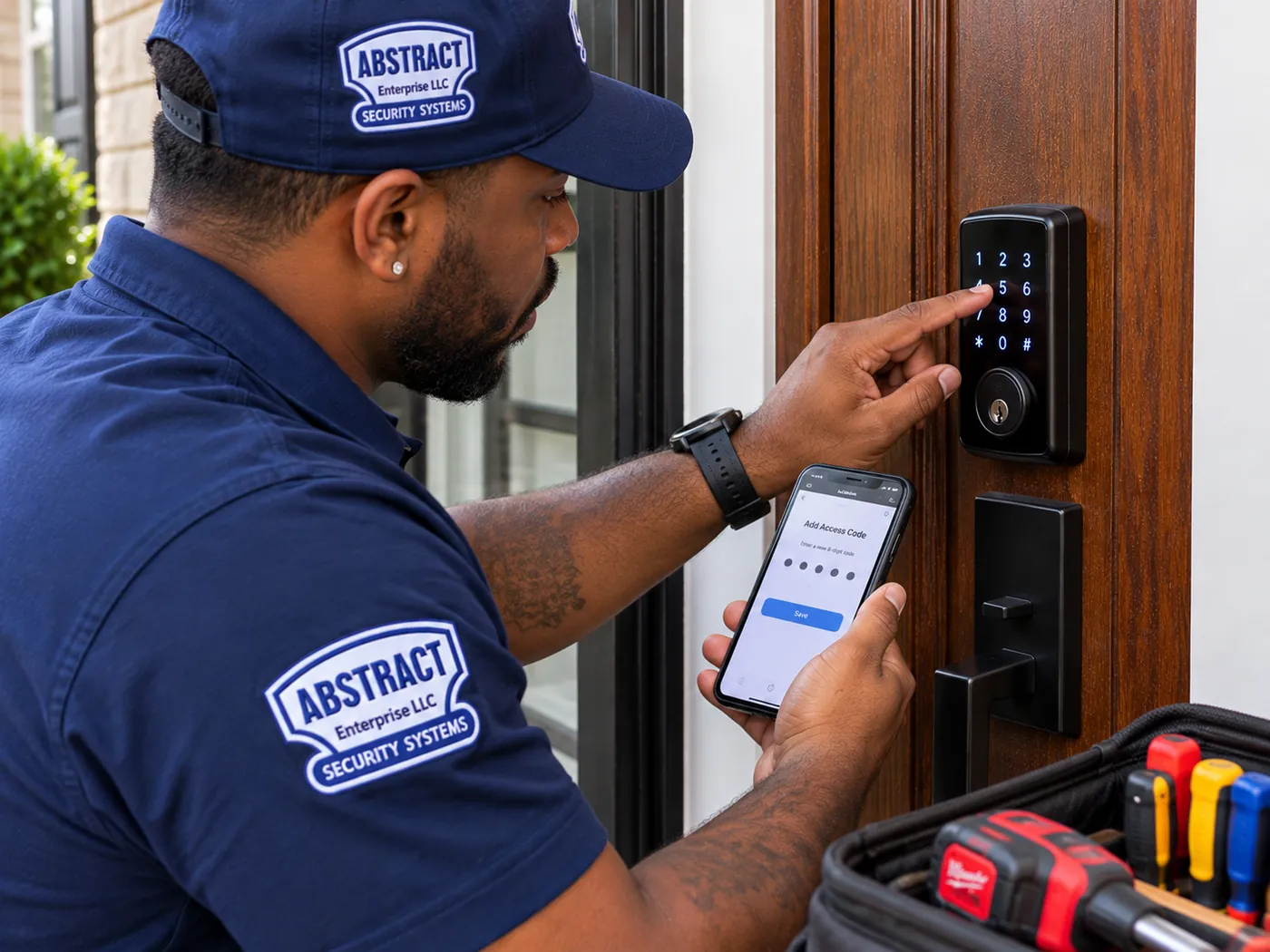
Separate codes for each household in a two- or three-family house, a shared code only where a door is genuinely shared, and admin rights kept with the owner.
Choosing Bluetooth, Wi-Fi, Z-Wave or Thread for a house whose router sits at the far end of a narrow footprint, surrounded by a dozen neighbors’ networks.
Keypads and electric strikes on the rear and cellar doors of corridor shops, with staff codes that can be cut off the day someone leaves.
Pairing the lock with a video doorbell so you see who is on the step before you unlock from the ferry or the office.
Dead keypads, corroded contacts, motors straining against a dropped door, and locks someone else installed that no one in the house can administer any more.

Seven kinds of building cover almost the whole peninsula. Each one has its own typical door, its own typical problem and, sometimes, its own rulebook.
Single-family houses on lots of roughly 30 by 50 feet, many with basements, packed so closely that eaves sometimes meet. Front doors are usually wood or steel replacements of the original cottage door; side doors open onto passages of two to five feet. The cooperative enforces its own guidelines on changes to the houses, so we bring a written description of the work for owners who want to show the office.
Edgewater Park access control →Former summer bungalows, some first built on stilts, long since filled in, connected to sewers and lived in all year. They sit high on the promontory above the East River, reached by a private system of roads. Owners hold their houses under proprietary leases with Silver Beach Gardens that require the corporation’s permission for alterations.
Silver Beach access control →Single-family homes on what was once an island, south of Harding Avenue and beside the Throgs Neck Bridge approach, with the yacht club on the outermost block. Owner-controlled doors, exposure to Eastchester Bay, and a lot of fill underneath that can let frames move over the years.
Locust Point access control →The inland streets of Schuylerville and central Throgs Neck: brick or sided houses sharing a party wall, a front door up a few steps, a side or rear door at grade, and often a separate basement entry. Party walls make drilling noise travel, so we keep the loud part short.
Schuylerville access control →Owner on one floor, tenant or relative on another, and one or two doors everyone shares. Under the state’s Multiple Dwelling Law a building for three or more families is a multiple dwelling, which brings city rules on entrance doors and tenant locks into play; a two-family house is a private dwelling with fewer of them.
Throggs Neck access control →The peninsula also has condominium buildings on the water, where the lobby and common doors belong to the association and the unit door is the owner’s. A unit lock usually has to suit a self-closing corridor door; who gets through the common doors is the board’s system to run, not something a unit smart lock should try to replace.
Throggs Neck intercom installation →The public-housing development built in 1953, one of New York City’s first low-income projects and later expanded twice. NYCHA’s own lock rules apply on every apartment door there; our Bronx smart lock page explains them in full.
Throggs Neck door buzzer repair →
Most smart lock pages assume you own the door outright. On this peninsula that is true for a lot of houses and false for a lot of others, and the difference has nothing to do with whether you have a mortgage. It depends on whether the ground under the house belongs to you, to a cooperative you hold shares in, or to a corporation you lease a site from. Before we quote, we work out which of these you are in, because it tells us whether someone else needs to hear about the work, whether a key has to go anywhere afterwards, and how reversible the job should be.
| Where the house is | What you own | Who to tell before drilling | How we plan the job |
|---|---|---|---|
| A house on the street grid (central Throgs Neck, Schuylerville, most of Locust Point) | House and lot | Nobody, unless a tenant or a co-owner shares the door | Choose freely; we still keep a mechanical key backup and a thumb-turn exit |
| Edgewater Park | Your house and shares in the cooperative that holds the land | The cooperative office if you are unsure whether its guidelines cover door hardware | We hand you a one-page description of the work — same holes, no change to the facade — to show the office if you want to |
| Silver Beach | Your bungalow, under a proprietary lease for its site | Silver Beach Gardens, whose leases have required permission for changes or alterations to a bungalow | Ask first; favour a lock that reuses the existing bore so the change is minor and reversible |
| A two- or three-family house you own | The building; tenants have rights in their units | Your tenant, if the door is theirs or shared | Separate codes per household, a key to the tenant for any lock on their entrance |
| A condominium unit on the waterfront | Your unit; the association owns common doors | Management, for anything on the corridor side of the door | Unit-door lock only; common doors stay on the building’s system |
| Throggs Neck Houses (NYCHA) | A tenancy | NYCHA property management, in writing | Second lock only, never the bottom lock — see our Bronx page |
Two cautions about that table. First, we have not found a published Edgewater Park or Silver Beach rule that names door locks; what we know is that both communities control alterations to houses, and that Edgewater Park’s cooperative was described by the city as strictly enforcing its own building guidelines. Whether a smart deadbolt dropped into an existing bore counts as an “alteration” is a question for your office, not for us. Second, nothing here is legal advice on your lease or your shares. What we can do is make the question easy to ask: a short written scope, a photo of the door as it is, and a note that the lock comes off and the old one goes back in an hour if anyone ever needs it to.
The practical consequence is that Throgs Neck jobs split into two speeds. On owned lots we can usually quote and install in one visit. In the cooperatives we often quote first, you check with the office, and we come back. Waiting a few days for an answer is far better than drilling a door and then being asked to undo it.

Throgs Neck’s business life is concentrated on one avenue and scattered along the shore. The doors involved are mostly small: a shop’s rear door, a cellar hatch, a clubhouse, the side entrance of a practice run from a two-family house. Here is where we see them.
The neighborhood’s main street and the spine of the Throggs Neck BID, created in January 2019 to cover 27 block faces and 281 ground-floor retail businesses, with its office at 3800 East Tremont Avenue. Delis, restaurants and service businesses, many with a front door behind a gate and a back or cellar door nobody watches at night. Staff keypads with per-person codes fit the rear doors well.
Throggs Neck business access control →The stretch around the Throggs Neck post office at 3630 East Tremont Avenue and the FDNY’s Engine 72 at 3929 East Tremont mixes storefronts with offices upstairs. The doors that matter are the ones staff open early and lock late, and the rear doors that open onto yards shared with the storefronts next door.
Throggs Neck alarm installation →Wikipedia lists several beach clubs on the peninsula, and the Locust Point Yacht Club occupies the outermost block of Locust Point. Clubhouses, storage rooms and seasonal staff make code scheduling more useful than keys, and salt exposure makes lock finish and maintenance part of the plan.
Locust Point camera installation →Accountants, therapists, tutors and contractors who work from the ground floor of a two-family house need a client door that opens for appointments without opening the household. A separate smart lock with time-limited codes on that door keeps the two worlds apart.
Throggs Neck intercom installation →
Questions that come from the way Throgs Neck is built and lived in, each answered in full.
It can, if the lock relies on Wi-Fi and has to shout across the house to reach the router. Many Wi-Fi smart locks only use the 2.4 GHz band — Schlage, for example, lists a 2.4 GHz network as a requirement for its Encode deadbolts — and 2.4 GHz has only three channels that don’t overlap. On Edgewater Park lots measured at about 30 by 50 feet, with side yards of two to five feet, your lock may be closer to three neighbors’ routers than to your own. Add a door that faces outward and a router at the back of a long, narrow house, and you get a lock that shows “offline” for an hour and then reappears.
The fix is usually not a stronger router. It is moving the radio work indoors and close to the door. August, for instance, tells owners to keep its Connect Wi-Fi bridge within 10 to 15 feet of the lock. A Z-Wave or Thread lock talking to a hub or border router in the front room avoids the 2.4 GHz scrum altogether for the short hop, and only the hub needs a good path to the router — which can be a cable. Bluetooth-only locks never drop off Wi-Fi because they never join it; you simply lose remote access.
At the walkthrough we stand at the door with a phone, see how many networks are visible and how strong yours is, then choose. Before we leave we lock and unlock from mobile data on the lane, not from the living room, so you know remote access works from where you will actually use it.
Sometimes it is the best door in the house for one, and sometimes it is the worst. In its favour: it is the door you use with shopping bags, it is out of sight from the street, and a keypad there means the front door can stay deadbolted for weeks. Against it: in a passage that narrow you may be standing with your back against the neighbor’s wall, the keypad may be at the height of their kitchen window, and there may be no light at night. A keypad you can’t see to use, or one the neighbor can watch you use, is not an improvement on a key.
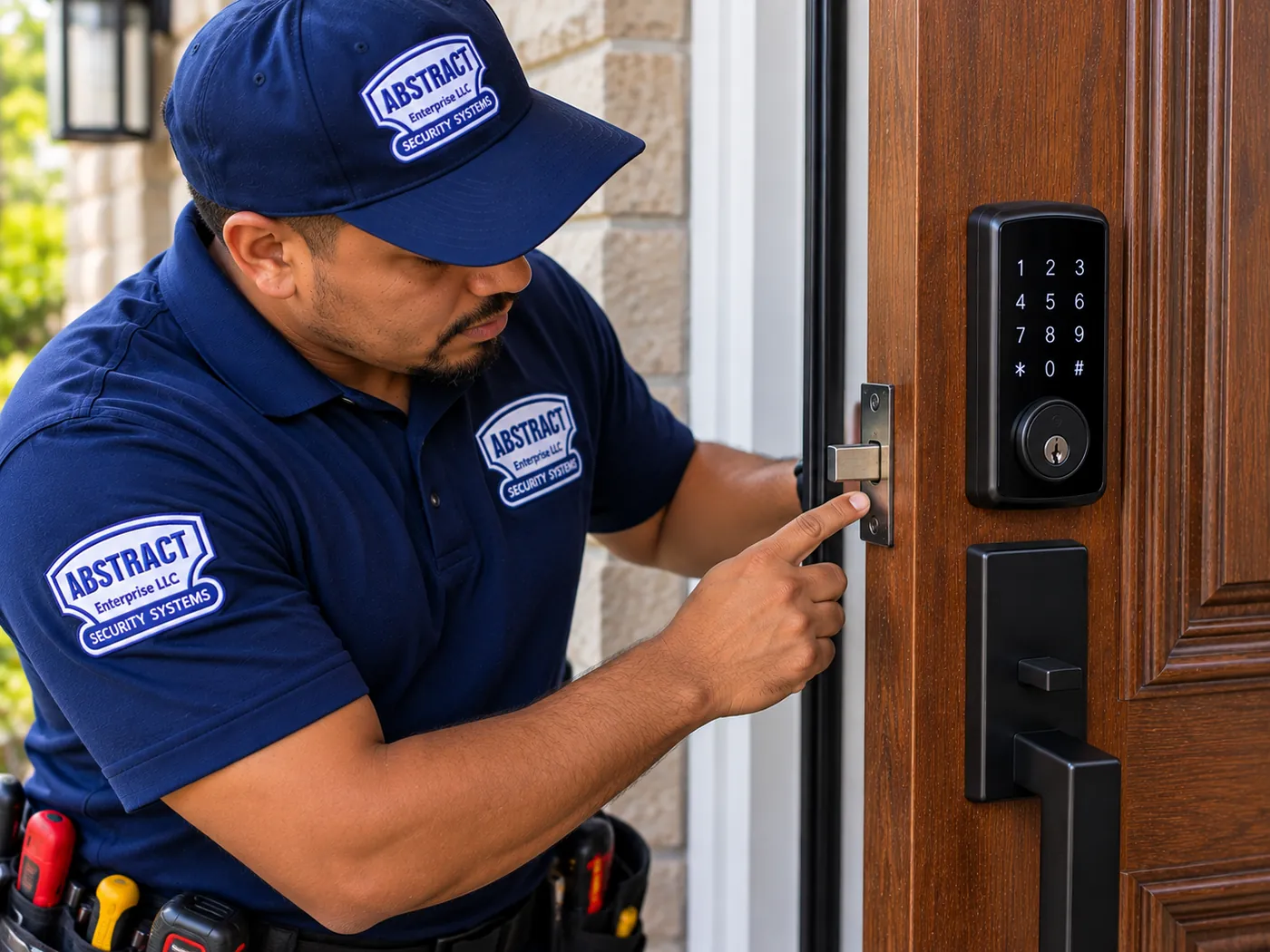
We check four things. Can you stand square to the door and see the keypad with the door closed? Does the door swing into the passage, and if so does the outside housing clear the neighbor’s wall at full swing? Is there power nearby for a small light, or does a backlit keypad do the job? And is this door also somebody’s way out — a basement tenant’s or a second exit from the kitchen — in which case the inside must stay a plain thumb-turn that opens in one motion.
If the answers are poor, a lock you open from your phone or with a fingerprint, with no visible keypad, usually suits that door better. Working space is rarely the problem for us: a right-angle drill and a short bit bore a deadbolt hole in a passage you could barely turn round in.
We have not seen evidence that it does, and a keypad tells a passer-by very little that a brass deadbolt doesn’t: there is a lock on this door. The more real risk in Throgs Neck’s close-packed lanes is the code, not the keypad. If the neighbor’s window or the path along the promenade gives a clear view of your hand, a code can be learned simply by watching, and smudges on the four most-used buttons give the rest away on a glossy keypad.
So we position and set up against watching rather than against attention. Many current locks let you type extra digits before or after the real code, so an onlooker sees a different sequence each time. Touchscreen keypads that light up all digits make smudge patterns less telling. We can angle a surface-mounted keypad, or put it on the side door rather than the front. And every person gets their own code, so if one leaks you change one code, not the whole household’s.
If a visible keypad still bothers you, there are smart locks with no keypad at all: they look like an ordinary deadbolt outside and open from your phone, a fob or a key. Pair one with a doorbell camera and the door looks no different from any other on the lane.
Plan on replacing the electronics. The Electrical Safety Foundation’s guidance on water-damaged equipment lists batteries among the items that must be replaced, and NEMA’s guide to evaluating water-damaged electrical equipment notes that saltwater residue is particularly damaging because it is both corrosive and conductive; for electronic products such as signaling and protection systems it says to replace the components or return them to the manufacturer. A smart lock is a small circuit board, a motor and a battery pack in a housing that is weather-resistant, not submersible. A lock that seems to work a week after a surge can fail months later as corrosion creeps along the board.
What to do straight away: take the batteries out so nothing is powered while wet, open the door with the mechanical key if it turns freely, and photograph the lock and the waterline for your insurer before anything is removed. Don’t try to dry the board with heat. Don’t keep using a cylinder that feels gritty — sand and salt grind it.
When we come out, the door often matters as much as the lock. A wood or composite door that sat in water can swell, and a frame on fill can shift; we re-check the latch and bolt alignment before fitting a new lock, so the new motor isn’t straining from its first day. Where the door sits low in Edgewater Park’s floodplain, we also talk about whether the replacement should be a simpler, cheaper keyed-and-keypad model rather than the top-of-the-range unit that drowned.
Usually, but only if we measure the tracks before choosing the lock. Flood shields are a dry floodproofing measure — the Department of Energy’s building guidance lists installing shields to cover openings such as doors and windows as one strategy — and on existing homes in places like Edgewater Park owners add them as extra protection. (FEMA does not accept dry floodproofing as compliance for new or substantially improved homes in the floodplain; elevation is the route there.) The shield panel slides into channels fixed to the masonry or jambs either side of the door, and its brackets and the panel itself can foul anything that projects from the outside face of the door.
The parts that project are the exterior keypad housing and, if you change it, the handle or lever. We measure the depth from the door face to the inside of the shield channel, and the height of the shield’s top edge. The keypad and its electronics ideally sit above the shield top, so on the day a surge is forecast the panel goes in without the lock in the way and the circuit board is not the lowest thing on the door. A slim keypad deadbolt and a low-profile pull handle normally fit; a bulky lever-set with an integrated keypad sometimes doesn’t.
Remember that with the shield in place nobody is using that door. Keep the side or upstairs door’s code working for storm days, and keep the mechanical key somewhere other than the car.
It can, in two ways. If the gap between the storm door and the entry door is tight, a storm door that blows shut hits the outside keypad housing; a few months of that cracks housings and loosens the screws that hold the two halves of the lock together through the door. And every slam shakes the entry door in its frame. Smart deadbolts are less forgiving of a bolt that no longer lines up with its strike than a manual one, because a person turning a key feels the bind and lifts the door, while a motor just stalls and reports a jam.
So on a Throgs Neck job with a storm door we fix the storm door too. That means adjusting or replacing its pneumatic closer so it shuts firmly but slowly, adding a wind chain or stop so a gust can’t throw it past its hinges, and checking that it clears the new lock with room to spare. On the entry door we tighten the hinges, set the strike so the bolt slides in without touching, and fit the long screws that reach the framing.
If the storm door has its own lock and you leave it locked, a keypad behind it is useless from outside. In that case we talk about which door the household actually opens day to day, and set the system up around that one.
Not reliably. Fingerprint sensors read the ridges of a clean, reasonably dry finger; Kwikset’s own support advice is to remove excess lotion, sweat or debris before scanning, and to try again if fingers are very dry. A wet, salty, sandy fingertip fails more often, and sand is abrasive on the sensor glass. Summer in Edgewater Park, Silver Beach or by the yacht club means a lot of exactly that.
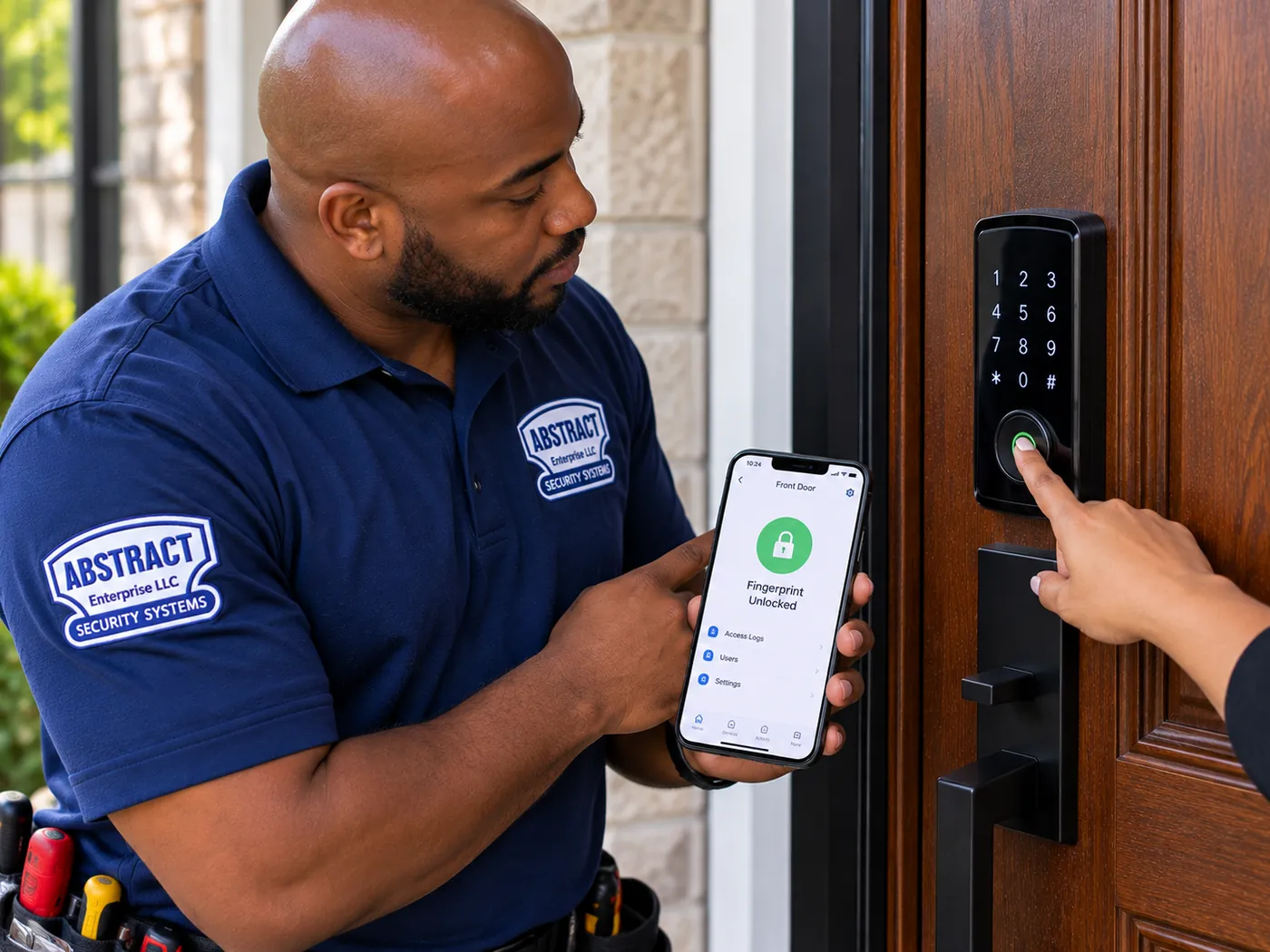
Fingerprint locks still work well for families here if they are set up for it. We enroll two or three fingers per child, including one they are less likely to have been digging with, and we teach a quick wipe on a towel or shirt before the press. More importantly, every fingerprint lock we fit also has a keypad or a key, so a child whose finger isn’t reading has a code to fall back on. For younger children, a small fob on a lanyard or bag strap avoids both wet fingers and forgotten codes.
Keep the sensor clean. A soft cloth and plain water every week or two in summer, more often on a door that faces the water, stops a film of salt and sunscreen from building up. Don’t use solvents or abrasive cleaners on it.
There are two routes, and the right one depends on whether you need anything stored in her account. If you only need the lock to work for the family, a factory reset is the clean answer: it wipes every code, fingerprint and phone invitation and returns the lock to its out-of-the-box state, ready to be set up under a new owner’s account. Schlage’s support pages, for example, say a factory default reset removes all codes and virtual keys programmed to the lock. Resets are done from the inside of the door, typically with a button or a battery-out sequence in the interior unit, which is part of the point — nobody can do it from outside.
If you need her entry history, or the lock is tied into a wider account with cameras or a doorbell, contact the manufacturer’s support first and ask what they need from the family. Do that before resetting, because a reset can’t be undone.
When we do this for a family, we reset the lock, set up a new admin account in the name of the person now responsible for the house, give a second family member admin rights so this never happens again, re-enroll everyone who still needs access, and change any code she had shared with neighbors, aides or contractors over the years. In Edgewater Park or Silver Beach, where the house may be passing through the cooperative or corporation’s transfer process, we can also leave the lock with keys only, so the next owner starts fresh.
Only what you choose to post. Ring says that only content a Neighbors user chooses to share is publicly accessible in the Neighbors app. Linking a smart lock to your doorbell account does not publish your lock’s unlock history, codes or schedule to the neighborhood feed. When a Throgs Neck family shared doorbell video of teenagers kicking in their front door in November 2025, neighbors reportedly recognised the same group from other homes — that kind of sharing is a deliberate post, not something the lock does on its own.
The privacy questions worth asking are closer to home. Who is a shared user on the account? Ring’s shared-user feature gives family, roommates and others device access without your login, and on many systems a shared user can see activity too. A relative you added years ago may still be watching the door. Before posting a clip yourself, watch it through once: a video that shows someone keying in the door code is giving that code to everyone who watches.
At handover we go through the account with you — shared users, notification settings, whether the lock and doorbell are linked at all — and remove anyone who shouldn’t be there.
Mostly about keys, and that is a perfectly good reason. The 45th Precinct reported 108 burglaries in 2022, across an area that also takes in Co-op City and City Island, and crime in all categories there has fallen by about two-thirds since 1990. For many owners the trigger isn’t a break-in at all. It is being tired of cutting keys for a tenant, a dog walker, a cousin who checks on Dad and a contractor who never gave the last one back, and of not knowing how many copies of the front-door key exist.
A smart lock solves that problem completely: codes per person, removed in seconds, with a record of when each was used. What it does not do on its own is make the door stronger. The incident reported by News 12 in November 2025, in which teenagers kicked in a Throgs Neck front door, was a reminder that a door fails at the frame, not at the keypad. A smart deadbolt is only as strong as the strike plate and the screws holding it.
So every door we fit gets the security basics whether you asked or not: a strike plate fixed with long screws into the framing, a bolt that fully extends, hinges checked, and a frame we will tell you honestly about if it is soft or split. That combination, a sound frame plus controlled codes, covers both reasons people buy these locks.
Treat it as a front door that nobody is watching. In May 2020 the Bronx Times reported that two burglars got into a Throggs Neck corner deli at about 3:50 in the morning by forcing open a basement door, and left with roughly $7,200 from two safes. Cellar and basement doors are often the weakest openings on a shop: older, out of sight, secured by a padlock or a single cheap deadbolt, and rarely checked at closing.
For a cellar door that staff use for deliveries and stock, a heavy-duty keypad deadbolt or a keypad with an electric strike gives each employee a code, logs who opened it, and can be set so it is never left unlocked overnight. The lock is only part of it: a steel door, a reinforced frame and strike, and a door contact tied to your alarm do as much as the keypad. If the cellar is a workspace where staff are sometimes alone, the inside must open in one motion without a key or code, whatever is on the outside.
If the cellar is reached through sidewalk doors rather than an ordinary door, a smart lock is usually the wrong tool; those hatches are better served by heavy hasps, a contact sensor and a camera. We will tell you which you have before quoting.
Yes, and the push bar should stay exactly where it is. A panic bar or exit device is the hardware that lets everyone inside leave with a single push, which is the behaviour the Building Code expects of an egress door; nothing we add should change that. What changes is the outside. Most exit devices are sold with a choice of outside trims — a blank plate, a pull, a key cylinder, or a lever that can be locked and unlocked electrically. Fitting keyless entry means adding the right outside trim, or an electric strike in the frame, so the door opens from the alley for a valid code while the bar on the inside works as before.
The details depend on the bar. A rim device that latches into a strike on the frame can usually take an electric strike made for that device, wired to a keypad on the wall. A bar with rods running to the top and bottom of the door usually needs an electrified trim or a kit from the bar’s own maker, because a strike only controls one latch point. Either way we read the make and model off the device before ordering anything, because trims and strikes are not interchangeable between brands.
On East Tremont Avenue these back doors open onto yards and service alleys that nobody sees at night, so we pair the keypad with a door contact that tells your alarm, or your phone, whenever the door is left open after closing. Staff each get a code; the bar never needs one.
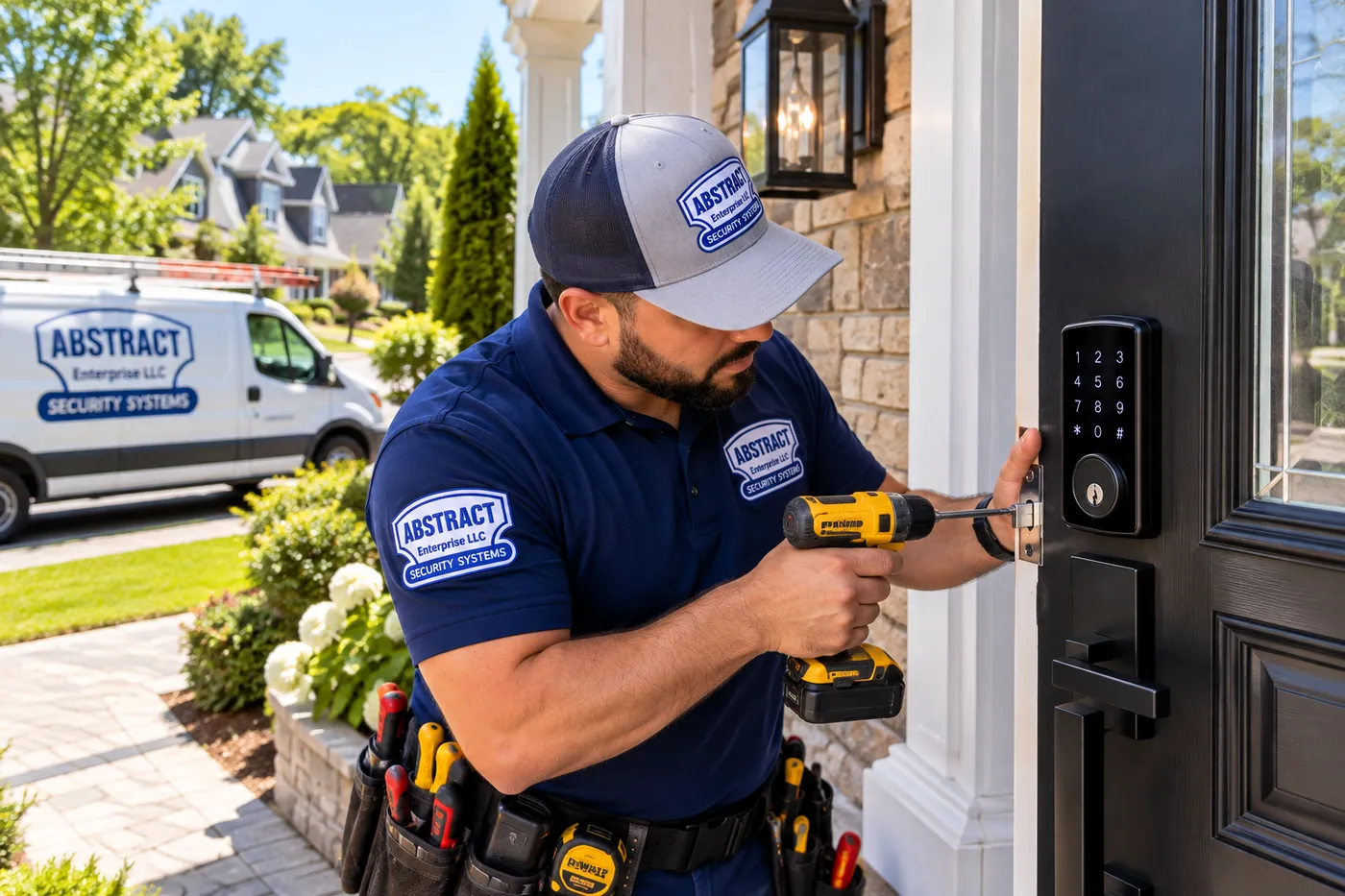
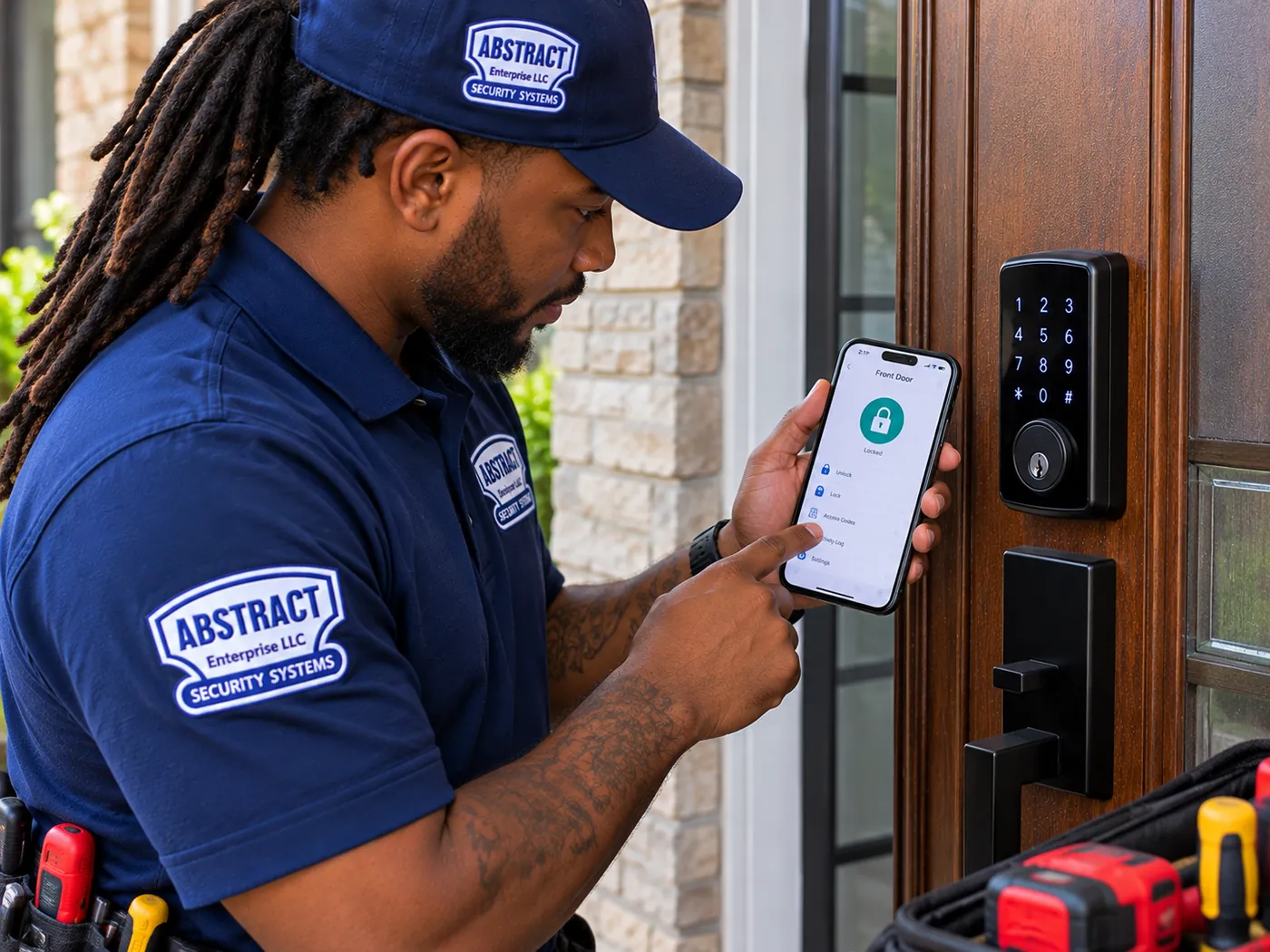
The right lock for a Throgs Neck door is chosen by exposure, signal and who uses it. These are the categories we fit, with the place each one tends to earn its keep on the peninsula.
We couldn’t capture Google’s AI Overview from our build environment, so instead of inventing what it says, here are the claims that national cost guides, retailers and lead sites such as Angi, HomeAdvisor and Fixr repeat most often — and what they leave out for a house on this peninsula.
On a modern door with a standard bore, a square frame and a strike that already lines up, swapping a deadbolt for a smart one can be quick. That is the case the box describes. National guides price it that way too: LawnStarter’s national figures put labor at $50 to $110.
Throgs Neck doors are rarely that door. Cottage doors that started life on a summer bungalow can be thinner or softer than modern entry doors. Frames on fill and old stilt foundations drift. Many doors carry the holes of two or three earlier locks, and a storm door sits a few inches in front of the whole assembly.
The time goes into making the door right for the lock: reinforcing a soft edge, re-setting a strike, adjusting a storm-door closer, deciding where a bridge lives. That is why we price house doors flat after seeing them, rather than quoting a national labor figure that assumes none of it.
They are weather-resistant, which is not the same thing. Yale, for example, gives its Smart Keypad an IP55 rating, which means protected against dust and against jets of water — a good rating for rain, not a promise about standing water.
Edgewater Park has roughly 278 homes in the 1% annual chance floodplain, some in the V Zone where surge comes with waves. A lock on a low front door there may see salt water at the height of its circuit board, and no residential smart lock we install is built for that.
Weather resistance also fades with salt. Gaskets dry out, the finish pits, and contacts corrode. On waterfront doors we look at finish, gasket fit and mounting height, and we tell owners plainly to plan on replacing the electronics after a surge.
The router is the easy half. The hard half is the lock-to-bridge hop, which is usually Bluetooth and short. August’s own instruction is to keep its Connect bridge within 10 to 15 feet of the lock.
In a narrow Throgs Neck house the router often sits in a back room, and the bridge gets plugged in next to it because that is where the outlet is. The lock then works when you test it on day one and drops offline in humid weather or when the neighbors’ networks get busy in the evening.
We place the bridge or border router inside, near the door, then check the bridge’s own path back to the router, and we test from mobile data outside. If no outlet is close, we say so and suggest a lock whose radio suits the house.
For an adult coming home from work with dry hands, it often is. For a family that spends summer between the house and the beach, fingerprint readers misread wet, sandy fingers, and manufacturers’ own support pages tell users to clean and dry their fingers first.
Older relatives can have fainter ridges, and a reader that fails three times in a row teaches people to stop trusting the lock and leave the door on the latch.
We set fingerprint locks up as one credential among several: fingerprints for those whose prints read well, a code for everyone, a fob for small children, and a key kept somewhere sensible.
Auto-lock is excellent on a front door that is always pulled shut behind you. It is less helpful on a door that doesn’t close reliably — for example one behind a storm door that the wind keeps nudging, or a side door that sticks in humid weather.
A deadbolt that throws while the door is not fully closed hits the frame, jams, and in many locks then reports a fault and stops trying. You come home to a door that looks locked and isn’t.
Before turning auto-lock on, we make sure the door closes and latches by itself every time, then set a delay long enough for real life: a minute for a door you carry beach chairs through, less for the front door. Locks that can sense whether the door is closed are worth the extra cost on a door that the wind plays with.
On most of the peninsula, yes. In Silver Beach, where owners hold their bungalows under proprietary leases that have required the corporation’s permission for changes, and in Edgewater Park, where the cooperative enforces its own building guidelines, owning the house is not the whole story.
Nobody we know of has written a rule about smart locks in either community. But generic advice that never mentions the cooperative leaves owners to find out the hard way that someone else had a say.
We ask where the house is before we suggest anything, offer a lock that reuses the existing bore where that helps, and give you a written scope to show the office if you choose to.
A smart lock controls who has a way in. It does nothing on its own about a door being forced. In November 2025 News 12 reported that teenagers kicked in the front door of a Throgs Neck home; the weak point in a kick is the frame and the strike, whatever is on the door.
Some retail listings imply that an app, an alert or a camera link is the security. Alerts are useful, but by the time one arrives the door is already open.
Every lock we fit gets a strike secured with long screws into the framing and a fully extending bolt, and we will point out a split or soft frame rather than hang an expensive lock on it.

Tell us which part of the peninsula you are in and which door you use most. We will tell you which lock fits it, whether anyone else needs to hear about the work, and what it costs.
Whether the house is on a co-op lane, up on the Silver Beach bluff or on an ordinary city block, the form below gets a reply in writing the same business day. Mention which door you mean, what hardware is on it today and whether it faces the water. Would rather speak to someone? Ring (646) 490-0629.
Thanks — your Throgs Neck request is with us, and you will hear back by phone within one business day. If you are standing outside a door that won’t open, don’t wait for us: ring (646) 490-0629.
Seven steps, the same whether the door is a Silver Beach cottage on the bluff, an Edgewater Park house a row back from the promenade, or a shop door on East Tremont Avenue.
Six landmarks that frame the peninsula, and what the houses near each one tend to need at the door.
The fort at the tip of the peninsula was begun in 1833 and dedicated in 1856, became the campus of the State University of New York Maritime College in 1938, and has been on the National Register of Historic Places since 1976; part of it houses the Maritime Industry Museum. The college, founded in 1874, was one of the 29 original schools brought into the State University of New York in 1948. The houses closest to it are the most exposed to wind off the Sound.
Othmar Ammann’s six-lane suspension bridge opened on January 11, 1961, with an 1,800-foot center span carrying traffic to Bay Terrace in Queens. Its approach and toll plaza were built partly on the fill that joined Locust Point to the mainland.
A 413.8-acre park whose western part opened in 1940, just after the Bronx–Whitestone Bridge was finished, and which that bridge now splits, with fields on the west side, a golf course on former landfill that opened in 2015, and an NYC Ferry stop added on December 28, 2021. For anyone who commutes from Throgs Neck Landing, remote unlock means letting a visitor in from the boat.
A private cooperative of 675 single-family homes on about 55 acres, built out to a small concrete promenade on Long Island Sound, with its own volunteer fire department — one of nine in New York City. The front row faces open water; the rest sit on narrow lanes of tightly packed houses.
The bungalow community on the promontory over the East River takes its name from the color of its beach at low tide; most of its streets are named for flowers and trees from the old Hammond estate, and the Hammond mansion later became the offices of the Silver Beach Garden Corporation. High ground, private roads, proprietary leases.
Once an island, now joined to the Bronx by fill, Locust Point runs south from Harding Avenue beside the Throgs Neck Bridge into Eastchester Bay. Single-family houses line its few streets, and the Locust Point Yacht Club holds the outermost block. The Bx8 bus reaches Locust Point by way of Williamsbridge Road.
From the same visits we also install smart locks in Schuylerville, Pelham Bay, Country Club, Westchester Square, Castle Hill, Clason Point, Parkchester, Co-op City and City Island, across the rest of the Bronx from our Bronx smart lock installation office, and over the bridges in Queens.

Throgs Neck is priced as part of the Bronx, and the Bronx carries no area surcharge over the Brooklyn base. The peninsula sits at the far south-east corner of the borough, but there is no travel charge for that. The figures below are every published AESS price that applies to keyless doors, with where each one comes from. A house-door smart lock has no published figure, because the door decides the work: a lock dropped into a sound modern door is a different job from a thin cottage door that needs a reinforcement plate, a re-set strike and a storm-door closer. Those are priced flat in writing after a free walkthrough, and the written price is the bill.
| Item | Throgs Neck price | What it covers and where the figure comes from |
|---|---|---|
| House front, side or basement door: smart deadbolt, retrofit or lever-set | Quoted flat at free walkthrough | No published line yet; depends on the door, the frame, any storm door and the radio plan, so we price it standing at the door |
| Single-door keypad or fob reader with electric strike | $1,500–$2,500 installed | Taken from the Bronx access-control page, where it is the published per-door figure; on the peninsula it fits a shop’s back or cellar door or the street door of a small building |
| New electric strike on an entrance door | $250–$450 | The figure on our Bronx door-buzzer pages for a replacement strike fitted during an entry upgrade |
| Failed electric strike repair | $295–$485 | The Bronx door-buzzer repair figure for an entrance that hums when released but stays shut |
| Setup-only visit (app, bridge, codes; no hardware change) | $225 first hour, then 30-minute blocks | The Bronx rate for visits that only touch apps, bridges and codes — for example re-pairing after a router change |
| Service and callback rate | $195/hr, 3-hour minimum ($585) | Later service calls only; never charged on the original installation visit |
Two national guides are often quoted. Fixr, in January 2025, gave a typical range of $250 to $400 and an average close to $300. LawnStarter’s average is about $330, with most jobs landing between $200 and $460 and $50 to $110 of that being labor. Those are national third-party averages for an ordinary door, not AESS prices, and they do not include storm-door work, frame repair or a radio plan.
Full terms — including 50% deposit, one-year parts-only warranty on AESS-supplied products, and the late-fee schedule — are set out in the service agreement. Locks you buy yourself carry their manufacturer’s warranty.

On the peninsula, keyless work tends to fall into one of the packages below. Shop and entrance doors use figures we have already published for the Bronx. A house door gets its price once we have seen it, since a cottage door on a co-op lane and a modern door on a city block can need very different preparation.
Three photos are enough to start: the door from the lane or street, the edge where the bolt comes out, and the storm door if there is one. Back comes a short note on which lock suits it and what we will look at on the visit.
A Throgs Neck house usually has more doors than its size suggests, because cottages grew porches, two-families grew separate entrances, and basements gained their own way in. Before recommending a single lock we walk all of them, because the door that most needs a smart lock is often not the one with the house number on it.
Many bungalows had their open porches enclosed long ago, so the original front door now sits inside a glazed or sided porch, and the porch door is what faces the lane. That leaves two doors in a row with two different jobs. The outer porch door keeps weather and parcels in; the inner door is the real security line, because the porch walls are usually lightweight. We generally put the smart lock on the inner door, keep a simple keyed lock on the porch door, and make sure both can be opened from inside in one motion. Where the porch door is the only one that latches reliably, we fix the inner door first.
Edgewater Park’s cooperative changed its bylaws after the city’s Resilient Neighborhoods work so that covered porches and stair turns could be built when homes are elevated. If your house is likely to be lifted one day, the front door you have now may not be the front door you have in five years; a lock that reuses the existing bore moves to the new door cleanly.
With side yards measured by city planners at two to five feet in Edgewater Park, and not much more on many attached-house blocks inland, side doors open into slots where you can touch both walls. They are often the household’s everyday door and the one most likely to be left on the latch. A keypad there has to be visible to you and not to the neighbor’s window; the bolt has to throw against a frame that may never have been reinforced; and the inside must open with one simple motion because this is frequently the second exit from the kitchen.
The state’s 1983 description of Silver Beach noted that its former summer bungalows had long since gained basements, and the city’s Edgewater Park report found a considerable number of homes there have them too. Basement doors under a stoop or down a few outside steps are usually solid but neglected, and in the floodplain they are the first opening to take water. We advise a keyed lock rather than an electronic one on a basement door below the expected flood level, and a smart lock only where the door sits high enough and someone actually uses it. If anyone sleeps or works down there, the inside always opens without a key.
Rear doors in Throgs Neck open onto small yards, bulkheads or the back of the next lane. They get less weather than the front and less foot traffic than the side, which makes them a good place for a lock with auto-lock and an open-door sensor: the door you walk out of to hang washing should lock itself when you come back in.
Where the upstairs flat has its own street door, it gets its own lock and its own codes, administered by the owner with the tenant holding a key. Where both households share one front door and split at a hall inside, the shared door gets codes for each household and the unit doors stay under each household’s control. City law requires the owner of a rented unit to provide a key lock on the unit’s entrance door and at least one key; a code-only lock on a tenant’s door does not meet that on its own.
The Department of City Planning’s Resilient Neighborhoods study describes Edgewater Park as exposed to coastal storm surge, wave action and high flood elevations, with most homes built before floodplain rules existed and many still below today’s design flood elevation. City Limits reported in 2019 that only one Edgewater Park property had obtained permits to elevate since Hurricane Sandy. In practical terms that means most of the 278 floodplain homes still have their front doors where they always were, close to grade, a short walk from the Sound. Here is how that shapes a lock.
| Door | Typical exposure | Lock we usually suggest | Radio | Watch for |
|---|---|---|---|---|
| Promenade-facing front door, Edgewater Park | Salt spray, wind, surge in the V or Coastal A Zone | Keypad deadbolt with key, electronics mounted high | Bridge or hub indoors near the door | Flood-shield channels; plan for new electronics after any surge |
| Inner lane front door, Edgewater Park | Rain, close neighbors, A Zone or outside the floodplain | Keypad or fingerprint deadbolt | Thread or Z-Wave to dodge crowded Wi-Fi | Keypad visible from the next house’s window |
| Silver Beach cottage door on the bluff | Wind and spray, little surge risk | Retrofit or deadbolt reusing the existing bore | Wi-Fi bridge or hub | Corporation’s permission for alterations |
| Side door in a two- to five-foot passage | Sheltered but dark | Phone or fingerprint lock, or backlit keypad | Bluetooth plus bridge | Door swing against the neighbor’s wall; one-motion exit |
| Basement door below the old waterline | First to flood | Keyed lock, not electronic | None | Inside must open without a key if anyone sleeps or works below |
| Upstairs flat’s street door, two-family | Street weather | Keypad deadbolt with key for the tenant | Wi-Fi or hub, owner as admin | Tenant’s legal right to a key lock and a key |
| Shop rear or cellar door, East Tremont Avenue | Out of sight, forced-entry target | Keypad with electric strike, door contact to alarm | Wired or hub-based | Egress without a key; responder codes |
Silver Beach is the opposite case: the state described it in 1983 as sitting on a promontory about a hundred feet above the river. Houses there worry far less about surge and more about wind and salt spray, which put the emphasis on finish, gaskets and storm-door behaviour instead.
The Furman Center’s figures for the Throgs Neck/Co-op City district show a little under half of households owning their home and about one resident in five aged 65 or older. On the peninsula that often means an owner on one floor, a tenant or grown child on another, and a parent who needs a carer to get in.
For the building’s shared street door in a three-family house, which under the Multiple Dwelling Law is a multiple dwelling, a keypad with electric strike or an intercom upgrade may suit better than a residential smart lock; our Throggs Neck intercom installation page covers that side.
Peninsula owners who start with a lock often finish with a camera on the same door or a contact on the alarm. Each of these Throgs Neck and Bronx services can be folded into one appointment.
Fob and keypad entry for shop doors, small buildings and clubhouses on the peninsula.
Cameras on the doors your lock protects, placed for tight lots and waterfront walls.
Door contacts and alarm panels that know when the smart-locked door opens.
Talk-and-release entry for two- and three-family houses and small walk-ups.
Releases and buzzers that have stopped working on shared street doors.
See who is on the step, then unlock from the same app.
Camera placement for cooperative lanes and the promenade-facing row.
Cable runs for hubs, bridges and strikes under one NYS low-voltage license.
A single request covering the lock and anything else on this list.
How our installers size up a Throgs Neck door — our general working method, not an account of any one job
We start with the ground, not the door. Which side of the Cross Bronx Expressway are we on, is this a co-op lane or a city street, how far is the water? That tells us whether to ask about permission, how hard the weather will be on the hardware, and whether to talk about flood height at all.
Then the storm door. We open it and let it go. If it slams, the closer gets fixed before anything else, because a new lock behind a slamming storm door is a cracked keypad in a season.
Then the swing test on the entry door: open it, let it go, watch it latch. On houses that have settled on old fill, the strike is often a few millimetres off; a person with a key compensates without noticing, but a motor doesn’t.
Then the phone. We stand at the door and count the Wi-Fi networks we can see. In a bungalow lane that number can be high, and it decides between a Wi-Fi lock, a hub-based lock and a lock that never touches Wi-Fi.
Last, the people: who uses which door, who needs a key by law, who needs a code by Tuesday, and who has to stop having one.
No. There is no peninsula or travel supplement: Throgs Neck jobs use the Bronx figures, which match the Brooklyn base. For a shop or entrance door that means $1,500 to $2,500 installed for a keypad or fob reader with electric strike, or $250 to $450 for a new strike alone. House doors get a flat written price once we have seen them.
Yes, on any lock with Wi-Fi, a bridge or a hub. Delete or edit the code in the app and the lock stops accepting it within moments. Bluetooth-only locks need a phone near the door to make the change, so if you travel or work far from the peninsula, choose a lock with remote access or ask us to add a bridge.
Yes. If a storm watch or warning covers the peninsula on your appointment day we will call to move the visit to the next open window. If the storm damages your door, call us and we will come out to secure it once it is safe to travel.
Only briefly. The drilling is through your door, not the shared wall, and boring a deadbolt hole or a strike pocket takes minutes. Most of the visit is quiet work: fitting, adjusting and programming. If your neighbors have a baby or a night-shift worker, tell us and we will plan the loud few minutes around them.
It can. A large pet flap near the lock can let someone reach through and turn the inside thumb-turn, which no smart lock prevents. We check the distance from the flap to the lock; if it is within arm reach we suggest moving the flap, fitting a smaller one lower down, or using a lock whose interior turn has a guard.
Most keyed smart deadbolts come with two keys. We hand them over labelled, suggest one stays inside the house and one with a trusted person off the peninsula, and recommend against keeping one in the car. In a two-family house the tenant also gets a key to any lock on their own entrance.
Yes. We diagnose and repair locks we did not fit, including ones nobody in the house can administer any more. Often the fault is the door rather than the lock, such as a strike that has drifted, so we check alignment, batteries, cables and the account before replacing anything.
Yes. For a lock we supply we can complete the maker’s online registration with you at handover, or show you where to do it, so the manufacturer has the purchase date on file. Our own parts terms for AESS-supplied products are set out in the service agreement.
This is our Throgs Neck page. It sits under the Bronx smart lock installation page, which covers NYCHA, Parkchester, Co-op City and the borough’s apartment buildings in depth.
Smart lock installation in Todt Hill, Staten Island · Chelsea smart lock installation · Morris Park, Bronx
Bronx · Manhattan smart locks · Brooklyn · Queens · Staten Island
AESS smart lock installation across New York City · Long Island · Hudson Valley
Nassau County · Suffolk · Westchester · Rockland · Orange · Putnam · Dutchess · Ulster
Looking for something other than locks? Start from the Abstract Enterprises Security Systems home page or browse the full service list. Parts cover is explained on the warranty page, and who we are has the background on the company.
Every local figure and rule above comes from a source we read while writing this page. Where we could not find something — a published Edgewater Park or Silver Beach rule on door locks, for instance — the page says so rather than guessing.
Dark keypad, a bolt stuck half-way out, an app that no longer finds the lock, or a cylinder seized by salt: phone (646) 490-0629 and you get the earliest free 2-hour arrival window. Once a technician is at the door, flat batteries, lost pairing and a drifted strike are usually put right inside an hour or two. Try the mechanical key gently, try a family member’s phone or code, and check whether another door has a working code before anyone reaches for a drill.
Abstract Enterprises Security Systems · 460 E Fordham Rd, Bronx, NY 10458 · (646) 490-0629 · WhatsApp (718) 679-0359 via wa.me
Rated 4.7★ from 201 Google Reviews · Same-Day Estimates · 100% Licensed & Insured under NYS Low-Voltage License #12000287431
Full terms — including 50% deposit, one-year parts-only warranty on AESS-supplied products, and the late-fee schedule — are set out in the service agreement. See our warranty page.
This page describes cooperative arrangements, leases and city and state rules in plain terms to help you prepare for a conversation with your office or landlord; it is not legal advice, and a lawyer is the right person to read your own proprietary lease, share certificate or tenancy. Reviewed and updated October 17, 2026. Changelog: Throgs Neck smart lock page first published.