Side gate that will not latch, a garage door stuck open or a shop’s back door reader dead tonight in Throggs Neck? Bronx line, same day: (646) 490-0629
Detached Houses · Garages & Side Gates · Waterfront Condos · East Tremont Avenue Shops · Ferry Point Blocks
Access Control Installation in Throggs Neck, Bronx
Plan for the Peninsula You Will Live In · Garage and Gate Count as Doors · Free Exit Always
Throggs Neck is the last stretch of the Bronx before the water: a peninsula between Westchester Creek, the East River and Long Island Sound, reached by car far more often than by train, with the approaches to two bridges running through it. For most of a century it has been a place of houses, garages and small shops that residents describe as quiet. That is about to be tested. In December 2025 New York State licensed a casino-hotel for the golf course at Ferry Point Park, at the foot of the neighborhood, with a 500-room hotel, a 2,000-seat hall and garages for thousands of cars, and the project is expected to take years to build. We do not predict what the casino will do to the streets around it, and nobody honestly can. What we can do is help a household, a condo board or an East Tremont Avenue shop decide which of its doors, gates and garage doors matter, put each one on a credential that can be changed in a minute, and keep every door opening from inside without a key, before, during and after the build.
Reviewed and updated October 18, 2026: the New York State Gaming Commission’s December 15, 2025 license for the Ferry Point casino as reported by the Bronx Times and News 12, Community Board 10’s February 25, 2025 hearing minutes, 6sqft’s reports on the City Council votes and the February 2026 land sale, NYC DOT’s September 2026 Throggs Neck bicycle network presentation, City Planning’s 2004 Throgs Neck and 2006 Brush Avenue rezonings, the 2018 City Planning Commission report on the Throggs Neck BID, and the Building Code, Multiple Dwelling Law and Tenant Data Privacy Law sections on locked entry doors · Abstract Enterprises Security Systems, NYS license #12000287431 · Throggs Neck visits dispatched from our office on East Fordham Road
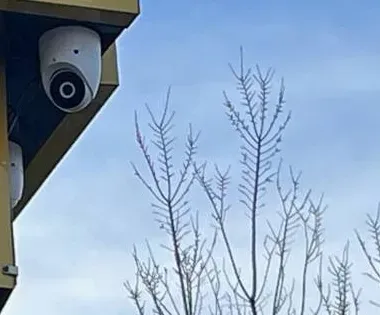
Taken by Abstract Enterprises Security Systems on another job, not in Throggs Neck: a dome camera tucked under a roof edge in winter. On the peninsula, outdoor hardware at gates and garages is chosen for wind and salt air as well as cold.
Throggs Neck Door Request
House, two-family, condo, townhouse row or East Tremont store — a written plan the same business day
✅
Request Sent!
A technician will call back about your Throggs Neck property the same business day. For a gate or door that has failed now, ring (646) 490-0629.
25+
Years Experience
✓
Same-Day Estimates
100%
Licensed & Insured
4.7★
390+ Google Reviews
Walk your lot the way a stranger would, then send us what you saw. Start at the curb and photograph the front door, then the side yard gate or the passage beside the house, the driveway and the garage door, the back door to the yard and any basement or cellar entrance. If you run a store on East Tremont Avenue, do the same from the sidewalk to the back door and the cellar. If you sit on a condo board, start at the garage ramp and finish at the package room. Text the photos to (646) 490-0629 with your cross streets and who decides: you, your family, a board or a landlord. On the peninsula the garage and the side gate are as much a way in as the front door, so we count them as doors. You get back a written plan, door by door, at our Bronx price list the same business day.
Sending photos is free, and what comes back names every opening, who should be able to use it and the price
The person who signs is the owner, the board or the landlord, but anyone living or working there can ring us first with a question
We carry insurance for working around families who stay home and shops that stay open, so nobody has to move out for the day
The Neighborhood
Why Throggs Neck Properties Need Access Control
Start with the map. Wikipedia describes Throggs Neck as a narrow spit of land in the southeastern Bronx marking the passage between the East River and Long Island Sound, and sets the neighborhood’s limits at Westchester Creek on the west, Baisley Avenue and the Bruckner Expressway on the north, and water on the other sides. It gives the area as about 1.9 square miles, puts it in Community District 10 and ZIP code 10465, and notes that the 45th Precinct, whose station house is at 2877 Barkley Avenue, patrols it. The spelling has never settled. The same article records that the traditional name has two Gs, that the bridge and the expressway carry one, and that a story credits Robert Moses with dropping the second G to save room on signs. We use both, the way residents do.
The peninsula was a long time becoming a neighborhood. Wikipedia’s history runs from a 1642 settlement under the Dutch, through a 1776 skirmish at the Westchester Creek bridge near today’s East Tremont Avenue, to the building of Fort Schuyler at the tip between 1833 and 1856, which brought laborers and craftsmen, many from Ireland, to live nearby. In the late nineteenth century it was a summer resort with beer gardens reached by steamboat. Large estates held most of the land until the 1920s, when, citing a 1922 New York Times notice of an auction of 1,600 waterfront bungalow lots from the Morris estates, the article says they were cut into row homes and densely built bungalow lots. Summer colonies such as Silver Beach and Edgewater Park grew up the same way and were later adapted for year-round living.
What changed the peninsula most was the road. The article notes that a 1929–1939 plan to bring a subway branch to Throggs Neck never happened, and that the building of the Throgs Neck Bridge and its parkways, finished by 1961, ended the area’s isolation without ending its dependence on cars. The approach to the Bronx–Whitestone Bridge runs through it too, and the Bruckner Interchange sits at its northern edge. When the city opened a ferry landing at Ferry Point Park in December 2021, the city’s announcement quoted the Community Board 10 district manager calling the district “a transit desert.” For doors, that history matters in a plain way: most households here own a car, many own a driveway and a garage, and those are entrances to the house that a front-door lock does nothing about.
The housing that resulted is mostly small. A 1984 New York Times profile, as Wikipedia quotes it, said the area “seems like a well-kept suburb”; the same article lists middle-class homes, waterfront condominiums and beach clubs alongside the Throggs Neck Houses, a public housing development built in 1953 and expanded twice. Twenty years later the neighbors went to the city about what was being built. City Planning’s summary of the Throgs Neck rezoning, adopted by the City Council on September 28, 2004, says residents had complained of new multifamily townhouses that were “bulkier and taller” than the homes around them, of waterfront buildings that blocked views of the water, and of too little parking; planners surveyed 242 blocks lot by lot and moved most of them to districts that do not allow attached townhouses. Two years later the Brush Avenue rezoning did the same for three blocks between Wenner Place and Jay Place, beside Ferry Point Park, limiting them to detached one- and two-family homes with room for two or three cars each.
So the typical Throggs Neck job is not a lobby with a hundred fobs. It is a house with a front door, a side gate, a driveway and a garage, perhaps with a tenant upstairs; a row of townhouses from before 2004 whose owners share a walk or a gate; a condominium building near the water with a garage under it; or a shop on East Tremont Avenue with a back door to an alley. Each has more ways in than its owner usually counts, and each opening is a separate decision about who should be able to use it and when.
The news from the peninsula is mostly about those secondary doors and about cars. In June 2025 News 12 reported that several cars in Throgs Neck had been broken into and their airbags stolen, that residents said all of them were Hondas, and that at least one car had been taken. In December 2022 the station showed a package thief on a homeowner’s camera taking parcels from a Throgs Neck house in daylight while the family was out. Neither story is about a door that failed; both are about what sits outside the door. That is a useful reminder of the limits of this work, and we come back to it below.
And then there is Ferry Point. In December 2025, the Bronx Times reported, the state awarded Bally’s a 15-year license for a casino with 3,500 slot machines, 210 table games and 40 poker tables, a 500-room hotel, two parking garages, a 2,000-seat event center, a nightclub, a spa and shops on the golf course at Ferry Point Park. The same report says residents near the site had raised concerns about crime and traffic, and that Community Board 10, which covers Throggs Neck, voted against the plan at a chaotic March meeting. News 12 reported that the company aimed to finish ahead of mid-2030. Whatever one thinks of it, the casino is the largest change to the peninsula since the bridges, and it will arrive in stages: years of construction first, then a destination that draws visitors at all hours. A sensible door plan is built for both stages, and it starts with what is already there.
Throggs Neck at a glance, from the sources we read
Place: a peninsula of about 1.9 square miles between Westchester Creek, the East River and Long Island Sound; ZIP 10465; Community District 10; 21,009 residents in 2011 by Wikipedia’s infobox, while its census table counts 44,167 people in 2010 for Schuylerville, Throgs Neck and Edgewater Park together (Wikipedia)
Police: 45th Precinct station house on Barkley Avenue (number 2877); its whole patrol area, larger than Throggs Neck, logged 323 car thefts and 108 burglaries in 2022, and total crime there is two-thirds below 1990 (Wikipedia, from NYPD CompStat)
Fire: Engine 89 and Ladder 50 at 2924 Bruckner Boulevard; Engine 72 and Satellite 2 at 3929 East Tremont Avenue (Wikipedia)
Zoning: 242 blocks surveyed and most moved away from attached townhouses on September 28, 2004; three blocks by Ferry Point Park limited to detached one- and two-family homes on February 15, 2006 (City Planning)
Main street: the Throggs Neck BID runs along East Tremont Avenue from Bruckner Boulevard to Miles Avenue, 180 properties, approved by the City Planning Commission on August 22, 2018 (CPC report N 180398 BDX)
Transit: buses Bx5, Bx8, Bx40/Bx42, Q44 SBS, Q50 and the BxM9 express (Wikipedia); the NYC Ferry landing at Ferry Point Park since December 2021, 60 minutes to Wall Street (NYC EDC)
Coming: a casino-hotel on about 16 acres of Ferry Point Park, licensed December 15, 2025, with completion targeted ahead of mid-2030 (Bronx Times, News 12)
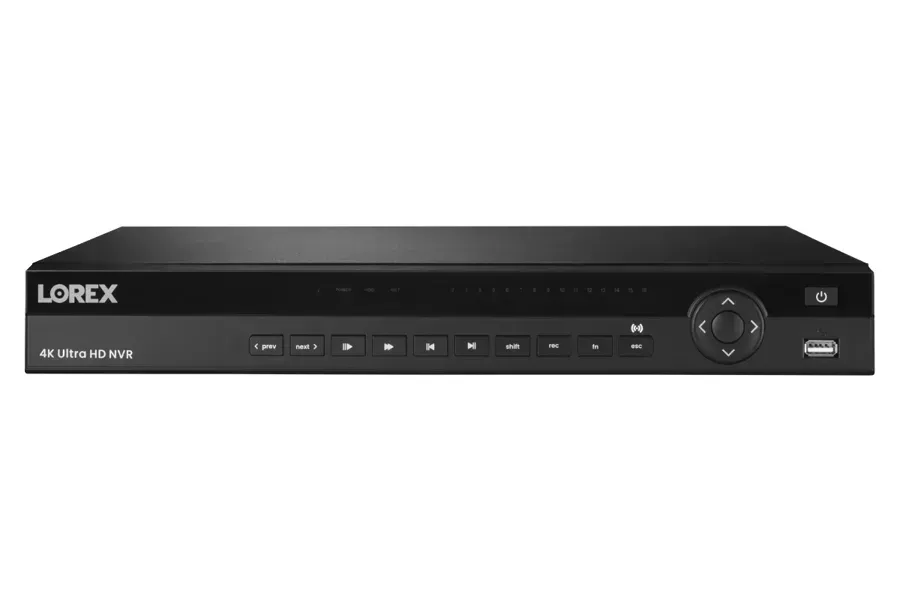
Manufacturer product photo, used as a reference: a network video recorder. It is the box that keeps a dated clip of what happened at a door, the kind of footage that showed a package thief at a Throggs Neck house in 2022.
Repairs
Gate Code Out in the Open or a Garage Door Left Up in Throggs Neck? We Fix That First
Most of the calls we get from houses like these are not about new systems. They are about a side gate whose latch no longer meets the keeper after a winter of frost, a keypad whose code was given to a contractor three summers ago and never changed, a garage door opener that nobody can program because the remote and the manual went with the last owner, or a battery lock that has been chirping for a week. In a shop, it is a back door reader that stopped talking to its controller or a lock that buzzes but does not release. We fix the door first, then the electronics, and we change the codes before we leave.
We work on hardware other people put in, including locks and openers from companies that no longer answer the phone. When a part cannot be had, we say so on the visit and price the replacement for that one opening rather than the whole house. A repair visit is billed at $195 an hour with a three-hour minimum ($585), and the written report lists every door we touched.
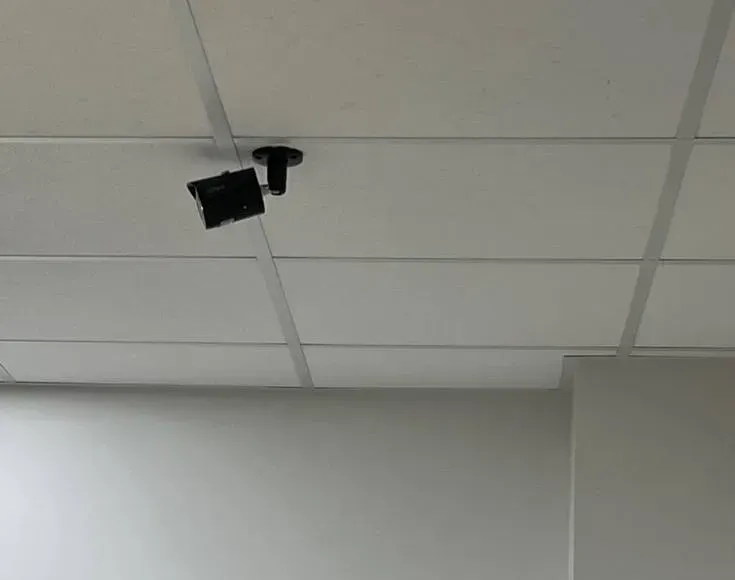
Taken by Abstract Enterprises Security Systems on another job, not in Throggs Neck: a camera on a short ceiling bracket. Repair visits cover hardware others installed, and every device we touch goes on the written report.
What We Install
Access Control Services in Throggs Neck
Few properties on the peninsula need only one of these. The quote treats them as a single plan, priced per opening, so the first two can go in now and the others later on the same system.
🏠
Front and back doors of a house
Keypad or fob deadbolts, or a wired strike with a reader where the frame allows it, with a separate code for each person and a record of which code opened the door and when.
🚪
Side-yard and walk gates
Electric gate locks and keypads on the passage beside the house or the walk gate at the curb, hung so the gate always opens from the yard side without a key.
🚗
Garage doors treated as doors
Opener controls that answer to codes and phones instead of visor clickers, position sensors that report a door left up, and the door from the garage into the house on the same plan.
🚧
Driveway gates
Swing or slide gate operators with the entrapment protection the UL 325 standard calls for, a keypad within reach of a car window, and a manual release the family knows how to use.
🏢
Condo lobbies and garages
Readers on the lobby door, the garage ramp and the package room of waterfront condo buildings, on one controller the association owns, with tags for cars and fobs for people.
🏘
Townhouse rows
Shared walk gates and garage courts for the attached rows built before 2004, with each owner keeping a private code for their own door and a shared one for the common gate.
🏪
East Tremont Avenue stores and offices
Front, back, stockroom and cellar doors, staff codes on the store’s schedule, and second-floor offices with their own street door kept apart from the apartments above.
👷
Codes for the construction years
Dated codes for roofers, plumbers and renovation crews that stop working on the last day of the job, and a log that shows when each crew came and went.
📋
Takeover and repair
When the last owner or installer left you an opener, keypad or controller nobody can program, we get back into it, put the account in your name and label what each part does.
Building Specialists
Access Control for Throggs Neck’s Architecture
Six kinds of property make up most of the peninsula outside its parks and campuses. We describe them from the sources cited on this page and from what a door survey looks for; the method under each is ours.
Houses on the old bungalow lots
Where the estates were cut into small lots in the 1920s, many original summer cottages have been enlarged or replaced. Lots are narrow, side yards are a few feet wide, and the side passage is often the only route to the back of the house. Doors are usually light wood frames that want a deadbolt-style keypad rather than a strike.
Detached one- and two-family houses
The bulk of the 242 blocks City Planning surveyed in 2004. A front door, a side door off the driveway, a garage at the back or under the house, a yard gate, and often a separate entrance for an upstairs or basement apartment. Each household needs its own way in.
Attached townhouse rows built before 2004
The “bulkier and taller” multifamily townhouses that prompted the rezoning still stand. Several owners share a front walk, a gate or a row of garages, while each has a private door, so the plan has a shared layer and a private one.
Waterfront condominium buildings
Condominium buildings near the bridges and the shore, such as those on Pennyfield Avenue that appear in current sale listings, with a lobby, a garage, a package area and a volunteer board. Wind, salt air and garage traffic shape the hardware.
Mixed-use buildings on East Tremont Avenue
The BID’s 2018 district plan describes ground-floor stores with offices or community rooms on the second floor in some buildings and apartments above in others. A store, an office and a family can share one front wall and need three separate entry rules.
Public and institutional buildings
The Throggs Neck Houses, SUNY Maritime College at Fort Schuyler, the parish schools and the high schools have their own operators and security staff. They appear on this page as landmarks; Abstract Enterprises Security Systems does not install there unless asked by the institution itself.
How the peninsula changes the method
Count every opening, not just the front door. A typical house here has four to six: front, side, back, garage, garage-to-house and a gate. We list them all before choosing hardware.
Separate households, not just people. Owner and tenant, or two branches of one family, each get their own door or their own codes, with nothing logged about the other.
Plan for the car. The garage door and the driveway gate are opened from a moving vehicle, often in the dark, so the credential has to work from the driver’s seat without turning the car into a key that a thief can drive off with.
Keep the water and wind in mind. Near the shore, keypads, gate locks and fasteners are chosen for salt air, and gates are checked for wind load before a lock is fitted.
Leave room to tighten later. Wiring and controllers are sized for the doors you might add once the casino work starts, so changing a rule later costs a phone call, not a visit.
What to gather before the survey
Every key and remote you can find, including garage clickers, gate keys and the code someone wrote inside a cabinet door.
Who lives and works there: family members, tenants, a regular cleaner or aide, a dog walker, a snow-removal service.
The garage opener’s make and age, photographed on its label, and whether it has battery backup.
For a condo, the declaration and bylaws section on common elements, and the name of whoever holds the current system’s login.
For a store, the lease clause on alterations and the landlord’s contact, because the doors usually belong to the building.
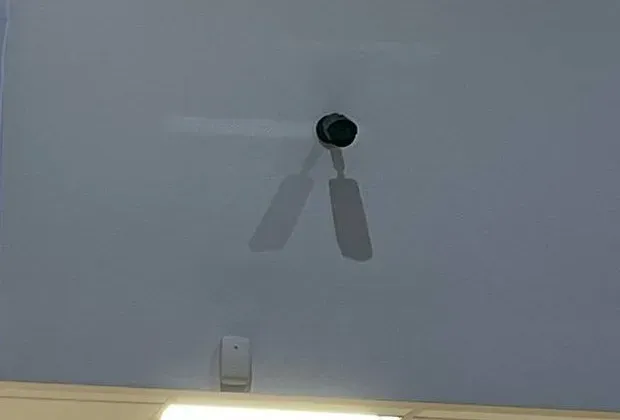
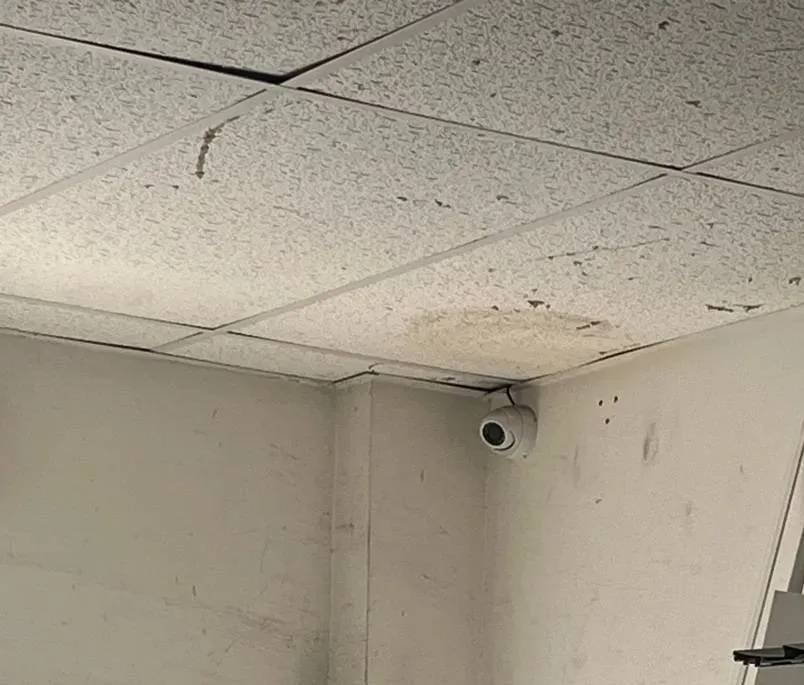
Taken by Abstract Enterprises Security Systems on another job, not in Throggs Neck: a camera set high on a plain wall with a small sensor below. Devices go on plain surfaces where they can be serviced, whatever the building type.
The Casino Years
Before, During and After Ferry Point: Planning Doors for a Changing Peninsula
The casino has a public record, and it is worth reading before deciding anything about your own doors. On February 25, 2025, Community Board 10 held a public hearing on the land-use actions the project needed. According to the board’s minutes, 46 people spoke: 36 against, seven in favor, three asking for more information and one neutral. Speakers raised additional traffic through the Ferry Point Park community, air quality, increased crime and concern for children at a nearby school, the loss of parkland and possible future encroachment on Harding Avenue, disturbance of methane gases, and a lack of transparency about the promised benefits. The minutes describe the project as a 3.1-million-square-foot development with a gaming floor, hotel, event space and parking.
The approvals then went back and forth. 6sqft reported that in June 2025 the City Council voted 32 to 12 for the home rule resolution that let the state take roughly 16 acres out of parkland. In July, the same outlet reported, the Council voted 29 to 9, with four abstentions, to deny the rezoning, on a motion by the local Council Member, and the mayor vetoed that denial. In December the Gaming Commission awarded the license; News 12 reported that approval was conditional on an independent monitor for up to five years and that the company expected more than 12,000 union construction jobs. In March 2026, 6sqft reported that Bally’s had bought the 16-acre parcel from the city for $156.6 million and committed $4 billion to a three-million-square-foot complex.
None of that tells a homeowner on Lafayette Avenue or a shopkeeper on East Tremont what will happen on their block. The record shows fears and promises, not findings. The benefits package the Bronx Times describes includes NYPD substations, transit and infrastructure upgrades and funding for schools and organizations, many of them taking effect only after completion. The Gaming Facility Location Board itself, the paper reported, said the project’s scale made it hard to predict whether those promises would be delivered. We will not tell anyone that a casino brings burglaries, or that it does not. What we will say is that a plan for your doors should not depend on which way that argument goes.
Instead we plan in three stages. Before construction, the job is to know your own openings: replace shared and copied keys with individual codes, fix the gate and garage door that never quite close, and put the doors that matter on a system you can change from your phone. During construction, years of trucks, trade crews and new faces will pass through the western end of the peninsula. That is the time for dated codes for any work on your own house, alerts for a garage or gate left open, and a camera that shows who is at the side gate before anyone walks out to it. After opening, a destination that runs late will change when people are on the streets near Ferry Point and the ferry landing. Doors that face those streets may want a stricter schedule at night; doors that do not may need nothing more at all.
The point of staging is that each step is small and reversible. A keypad deadbolt and a garage controller bought now keep working if the casino is delayed, scaled back or never felt on your street. A controller sized for six doors costs little more than one sized for two, and it means that tightening a rule in 2030 is a setting rather than a purchase. And if the worst fears of the hearing do not come true, nothing has been wasted: you will still have doors that lock behind you, codes you can take back, and a record of who came in.
Now: list every opening; replace copied keys and shared codes; repair latches, closers and garage door safety eyes; choose one system for the whole property.
Construction: dated codes for your own contractors; open-door alerts on the garage and side gate; a video call station at the gate or side door; check that free exit works on every gate after any fence work nearby.
Opening and after: review the night schedule on doors facing busier streets; keep the paper record of codes and the manual release current; change nothing that is already working.
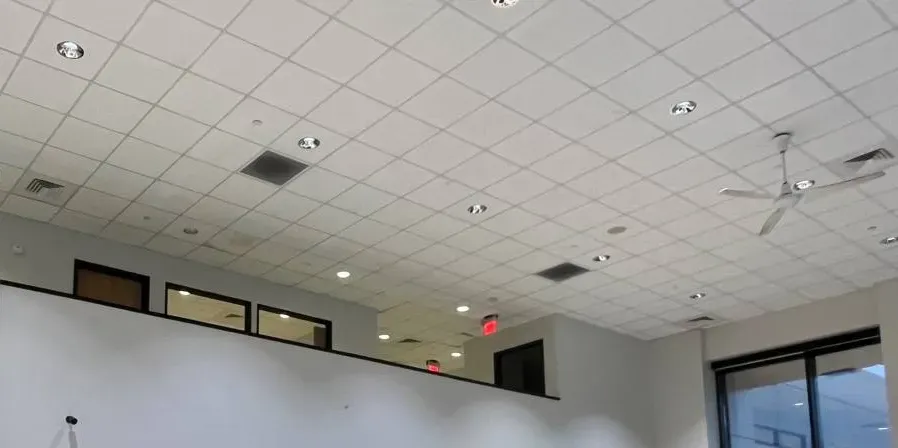
Taken by Abstract Enterprises Security Systems on another job, not in Throggs Neck: a large open hall with exit signs. Places that draw crowds are planned around their exits first, a principle that applies to every door on this page.
Next to the Park
The Blocks Beside Ferry Point Park
The houses nearest the casino site are a small, specific place. City Planning’s Brush Avenue rezoning covered three full blocks bounded by Wenner Place on the north, Jay Place on the south, the Hutchinson River Parkway on the east and Brush Avenue on the west, between Ferry Point Park and the parkway. The city’s reason, in its own words, was that “there is a mismatch between the built character of the area and the building type permitted by the existing zoning”: the blocks were detached houses, and attached and multifamily buildings had been going up on underused lots. Since February 2006 they have been limited to detached one- and two-family houses, with minimum lot widths of 30 and 33 feet and parking for two cars at a one-family house and three at a two-family.
Those figures describe the door problem exactly. A detached house on a 30-foot lot has a side yard on at least one side, a driveway, a garage or a parking pad, and more cars than the street can hold. Its owner already deals with drivers looking for parking on the way to the park and the golf course; the hearing record shows neighbors expect more of that, not less. The useful questions are about what sits between the sidewalk and the back of the house: whether the side passage has a gate and whether it latches, whether the garage door can be seen from the street and whether anyone knows when it is left up, whether the back door is a better way in than the front because nobody watches it.
NYC DOT’s September 2026 presentation to Community Board 10 adds one more change to plan around. Its proposed Throggs Neck bicycle network, about two miles long, runs on Brush Avenue, Lafayette Avenue, the Cross Bronx Expressway service road, Randall, Buttrick, Schley and Balcom Avenues, with new park connections at Schley and Balcom and at Harding Avenue and a ramp from Brush Avenue to the Hutchinson River Greenway. DOT proposes repurposing about 70 parking spaces and building the first phase in the fall of 2026, the second in the spring of 2027. It counted 700 northbound and 432 southbound vehicles on Brush Avenue in the peak hour. A driveway gate or garage door that opens across a new bike lane needs a slower, more visible opening, and a keypad post that a driver can reach without stopping in the lane.
For houses like these we usually recommend four things and stop: a code lock on the side or back door the family actually uses, a latching gate on the side passage with a lock that opens freely from the yard, a garage door controller that reports its position and closes itself after dark, and one video station where a visitor is seen and heard before anyone opens anything. A driveway gate is worth it only where the driveway is long enough to hold a car clear of the sidewalk while the gate opens, and where the family will actually close it.
What stays with the city, and what is yours
Yours: every door, gate and garage door on your lot; the codes and who holds them; the camera at your own entrance and what it is aimed at.
Your association’s, where there is one: gates and lanes in the private communities on the peninsula, such as Silver Beach and Edgewater Park, which have their own rules and their own pages on this site.
The city’s: public streets, sidewalks, curb cuts, traffic, parking enforcement, the parks and the bike lanes. No private gate goes across a public street, and no camera of ours is aimed at a neighbor’s windows or yard.
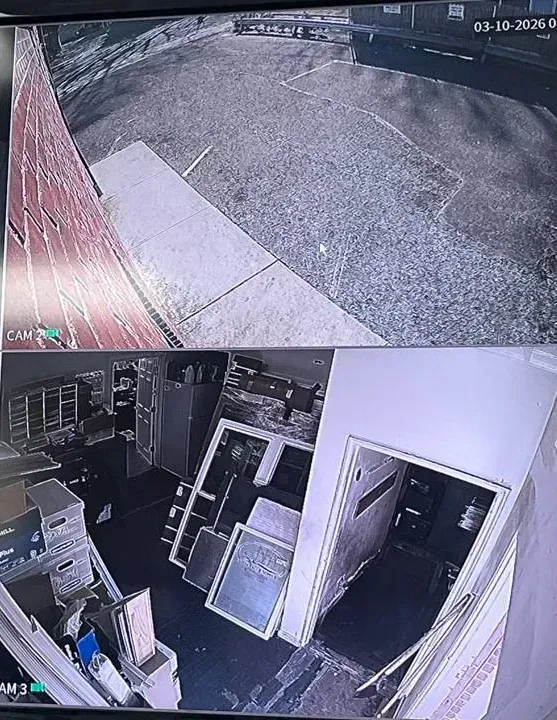
Taken by Abstract Enterprises Security Systems on another job, not in Throggs Neck: a recorder showing a paved lot and a back room. A dated view of a driveway or lot is what helps when something happens at the edge of a property.
Cars and Garages
A Peninsula of Driveways: Garage Doors, Remotes and the Bridges
On a peninsula where most people drive, the garage is the door used most, and the one least thought about as a door. A typical opener is controlled by a clicker on the car’s sun visor, a wall button inside, and sometimes an old keypad on the jamb whose code has never been changed. Inside the garage is usually a door into the house with a lock nobody uses. That combination means the visor remote is, in effect, a house key that lives in the car, often next to a registration card with the home address on it.
The June 2025 break-ins News 12 covered were about airbags, not house keys. Still, a car opened on the street or in a driveway gives whoever opened it everything in the glovebox and on the visor. A resident’s post we found in a Queens community on Reddit, which we saw only as a search excerpt, describes thieves taking cars over the Whitestone and Throgs Neck bridges; we cite it as one person’s account, not a finding. The fix for the house is simple and cheap compared with the risk: take the house out of the car.
That means moving the garage door to a controller that answers to the owner’s phone or a code entered at a keypad, rather than a clicker that anyone holding it can use; giving the door from the garage into the house its own lock and its own code; fitting a position sensor that tells you when the garage door is up; and, where the family likes the convenience of a remote, choosing one that can be disabled from the app the moment a car is broken into. None of this needs new wiring through the house. Most of it fits on the opener and the door frame in an afternoon.
The same thinking applies to a condo garage. A building whose garage ramp opens onto a service road near the bridges usually runs on remotes or windshield tags. Remotes are copied and handed on; tags stay on the car they were issued to. We prefer tags or plate-matched readers for vehicles and fobs or phones for people, so that a stolen car opens nothing and a car sold to a stranger can be removed from the list in a minute. Every vehicle gate and garage door we install has the photo eyes or edges that keep it from closing on a person or a car, and a manual release that someone in the building knows how to use.
Commercial Access Control
Business Access Control on East Tremont Avenue
Throggs Neck’s main street is East Tremont Avenue, and since 2018 its central stretch has had a business improvement district. The City Planning Commission’s report approving the Throggs Neck BID sets its boundaries on both sides of East Tremont Avenue from Bruckner Boulevard to Miles Avenue and counts 180 properties: 141 wholly or partly commercial, about 35 residential, and four owned by government or nonprofits. It describes ground-floor commercial uses with offices or community facilities on some second floors, mixed-use buildings with apartments above, residential zoning with commercial overlays, and a commercial vacancy rate under ten percent. Its first-year budget of $340,000 went to sanitation and maintenance, marketing and events, and administration; the plan lists no security services. The doors on the avenue are the owners’ and tenants’ to manage.
Stores with apartments above
The shop has its front and back doors; the apartments have a street door, usually beside the shop. They should never share a credential. If the store’s staff need the building’s cellar or refuse area, that gets its own door rule, not a key to the residents’ hall.
Second-floor offices
The BID plan notes offices and community facilities on some second floors, usually reached up a flight of stairs from their own street door. A reader or code lock on the street door, a release button at the reception desk, and a schedule that locks the door when the last person leaves.
Back doors to the alley or lot
Deliveries come and garbage goes out the back, often early in the morning before anyone is in the front. A back door on a code that works only during delivery hours, with a contact that reports it left open, closes the gap nobody watches.
Stockrooms and cellars
The room with the stock, the cash or the controlled medicines gets its own lock and its own short list of codes, separate from the back door that every employee uses.
Restaurants and late openers
Kitchen doors propped for air, staff who close at different hours, and a front door that locks at a set time whether or not anyone remembers. Free exit stays in place for every occupant until the last person leaves.
Toward the Bruckner end
At the Bruckner Boulevard end the avenue meets the expressway. Where a property there has a lot, a service bay or a storage yard, its gate wants a vehicle-rated operator and a log of which code opened it.
The BID also matters to the casino story. The Community Board 10 minutes record that a bus was provided after a request from the Throggs Neck BID, running along East Tremont Avenue and not into the Ferry Point Park community. If the avenue does gain evening trade from casino visitors and workers, the change for most stores will be longer hours and more staff, which is a scheduling problem as much as a security one: more people with codes, more closing routines, more chances for a back door to be left on the latch.
The rules a Throggs Neck entry system has to meet
Free exit, always. Every electrically locked door must open from inside with one motion and no key, code or special knowledge. Where a door is unlocked by a motion sensor or a release button, the NYC Building Code’s sections on electrically locked egress doors (§§1010.1.9.8–1010.1.9.9) set how it must behave, including release on loss of power and on fire alarm where required.
Apartment buildings keep a self-locking street door. The Multiple Dwelling Law, §50-a, requires self-closing, self-locking entrance doors and an intercom or buzzer system in many multiple dwellings; a new reader or keypad has to keep that working.
Tenant data has rules. In buildings with three or more apartments, the city’s Tenant Data Privacy Law (Local Law 63 of 2021) governs keyless entry: a written policy, consent, collecting only what is needed, and deleting authentication data within 90 days unless it is anonymized. It does not reach an owner-occupied one- or two-family house, but we follow its spirit there anyway.
Gate operators need entrapment protection. Motorized vehicle gates and garage doors we install meet the UL 325 standard, with monitored photo eyes or edges in both directions of travel on swing and slide gates.
Housing Maintenance Code duties stay with the owner. Locks on entrance doors to rental apartments and building entrances remain the owner’s duty under the Housing Maintenance Code; a new system does not move that duty to anyone else.
Licensing. Anyone installing these systems in New York needs a state license under General Business Law §69-m; Abstract Enterprises Security Systems holds #12000287431.
Taken by Abstract Enterprises Security Systems on another job, not in Throggs Neck: a stockroom corner watched from above. On East Tremont Avenue the stockroom usually gets its own lock and a shorter list of codes than the back door.
Your Questions Answered
Access Control in Throggs Neck: Questions Answered
These are the questions Throggs Neck homeowners, condo boards and shopkeepers bring us now that the casino is licensed and the bike lanes are coming. Each is answered here, once, in full.
The Casino at the Foot of the Peninsula
The Ferry Point casino-hotel is not expected to be finished until around 2030. Should a Throggs Neck building upgrade its doors now or wait to see what the casino brings?
Do the inexpensive, reversible part now and leave the rest open. Replacing copied keys with individual codes, fixing gates and garage doors that do not close properly, and choosing one system that can grow are worth doing whatever the casino turns out to mean, because they deal with risks you already have. They also make the later decisions cheaper: a property with its doors already listed and on one controller can add a schedule or a camera in an afternoon.
What is worth waiting for is anything that depends on how the streets actually change, such as a driveway gate bought because of parking you expect but have not seen, or night schedules on doors that face streets nobody yet knows will be busy. The license was granted on conditions and the project has already survived a Council denial and a veto, so its timing is not something to build a door budget around.
Bally’s community benefits package lists NYPD substations. Does a promise like that change what a co-op or condo board near the site should plan for its own entrances?
No. Whatever police presence comes, it will patrol streets, not your lobby, garage or package room, and the Bronx Times reports that many of the promised benefits take effect only after completion. A board’s duty to keep its entrances self-closing and locking, and to know who holds a credential, is the same with or without a substation.
Where a promise like that does help is in the conversation with the precinct. Once there is a building system with a log and a video station, a board can answer an officer’s question about who entered at what time without guesswork. That is worth having on any timeline.
Our condominium garage exits onto a road that casino traffic may use. Should the garage door run on a timer at busy hours or open only for a resident’s tag?
Only for a tag, with the timer used for closing rather than opening. A garage door held open on a schedule lets anyone walk or drive in behind a resident during the busiest part of the day, which is exactly when the ramp is hardest to watch. A tag or plate-matched reader opens the door for each resident’s car, and a close timer and a contact sensor make sure it does not stay up.
If queuing on the ramp becomes a problem, the answer is a faster door and a reader placed far enough up the ramp that a car stops clear of the street, not an open door. A pedestrian door beside the garage door should have its own reader, so nobody needs to walk under a moving door.
Speakers at the community board hearing worried about more traffic and crime near Ferry Point Park. What can a homeowner on those blocks control on their own lot, and what stays the city’s job?
You control every opening on your property: the front, side and back doors, the passage gate, the driveway and the garage, and who holds a code to each. You can decide which of them are locked all the time, which report when they are left open, and where a visitor is seen before anyone answers. You can also keep a camera on your own entrance, aimed so it does not record a neighbor’s windows or yard.
The street, the sidewalk, the curb, the traffic and the parking are the city’s, and so is the park. A private gate cannot close a public street or sidewalk, and a gate on your lot should swing inward so it never blocks the walk. Concerns about traffic and enforcement belong with Community Board 10, the 45th Precinct’s community council and 311.
Cars, Garages and the Water’s Edge
Our garage remote is clipped to the car’s sun visor, and the registration in the glovebox carries our address. If the car is broken into in the driveway, what should change?
Assume the remote is gone, even if it is still on the visor, because it may have been copied or the thief may come back. Disable it in the opener or reset the opener’s remote memory that day, then change the code on any keypad by the garage. If the door from the garage into the house has no lock, or a lock nobody uses, that door is now the weakest one in the house.
The lasting fix is to stop keeping a house key in the car. Move the garage to a controller that opens from a phone or a code, give the house door in the garage its own lock and code, and add a sensor so you know when the garage door is up. If the family wants a remote, choose one that can be cancelled from the app on its own.
We keep a boat and its trailer in the side yard behind a chain-link gate that we open only a few times a year. What lock and sensor make sense for a gate used that rarely?
A heavy padlock or a keyed gate lock usually serves a gate opened a few times a season better than anything electric, because a keypad that sits idle for months is the one whose battery is flat the day you need it. What the gate does need is a way to know it has been opened: a wireless contact on the latch that sends an alert to your phone, powered by a battery that lasts years.
If the yard is also the route to the back door, treat that as a separate opening with its own lock, and keep the trailer gate on the outside of your plan. Check the chain-link post and hinges each spring; a gate that sags after winter is easier to lift off than to break.
The dead end of our street runs down to the water, and neighbors want to put a gate across the end of the block. Is that allowed?
Not on a public street. A mapped city street, its sidewalk and its end belong to the city, and a private gate across them would block public access and emergency vehicles. Some communities on the peninsula grew from private bungalow colonies and manage their own lanes under their own rules; check whether your street is mapped before anyone spends money.
What neighbors can do is coordinate their own lots: latching gates on each side passage, garage doors that close themselves at night, and video stations at front doors. If the worry is people using the street end at night, that is a matter for 311 and the precinct rather than a gate.
East Tremont Avenue After Dark
If evening trade on East Tremont Avenue grows once the casino opens, how should a shop that adds a late shift change its staff codes and its closing routine?
Give each person on the late shift their own code, valid only during their hours, so the log shows who closed. Set the front door to lock itself at closing time and the back door to report if it is still open fifteen minutes later. Then write the closing routine down: who checks the back door, who arms the alarm, who leaves last, and what they do if the lock will not engage.
A second shift also means more people who once had a code and no longer work there. Make removing a departing employee’s code part of their last day, not something done when someone remembers. The system should make that a single step.
The BID’s maintenance crew and our landlord’s porter both need the area behind our row of stores before we open. How do we let them in without handing out store keys?
Separate the shared area from the stores. If there is a gate or door into the rear yard or alley, put that opening on its own code that works only in the early-morning hours the crews need, and keep each store’s back door on its own code. The crews then have one credential that opens the shared space and nothing else.
Because the gate usually belongs to the landlord, the landlord should hold the administrator account and the tenants should be told who has a code. We put that in writing at handover so it does not depend on one porter’s memory.
Condos and Houses Near the Bridges
Our waterfront condominium is run by volunteer board members who change every year or two. How should the access system’s passwords and records pass from one board to the next?
The system should belong to the association, not to a board member. Put the administrator account in the association’s name on an email address the association controls, keep at least two administrators at all times, and record each change of administrator in the board minutes. When a member leaves the board, their personal login is removed the same week.
At every changeover, hand over a short written record: the controller’s location, the account details kept in the association’s safe or password manager, the list of credential groups, the installer’s contact and the date of the last battery test. We provide that record at installation and update it on any service visit.
Our front door faces the Cross Bronx Expressway service road and the traffic noise never stops. Will we hear a visitor at the door or the gate over it?
Probably not with a simple chime, which is why we would not rely on sound. A video station at the door or gate can ring every phone in the house and an indoor screen at the same time, so a visitor is seen wherever you are, and the station’s own speaker and microphone are chosen for a noisy street, with noise cancellation set on the outdoor side.
The same noise hides the sound of a door or gate being forced. A contact on the door that sends an alert is more reliable on a loud street than listening for it, and a light at the door that comes on with the station helps the camera at night.
Manufacturer product photo, used as a reference: a pan-tilt-zoom dome on a wall bracket. On a condo garage ramp a camera like this watches the door while the tag reader decides who it opens for.
Equipment
Types of Access Control We Install in Throggs Neck
The hardware below is what a Throggs Neck survey usually ends up recommending, matched to the opening it suits, with the catch to know about each.
Equipment
Best Throggs Neck use
What to know
Keypad or fob deadbolt
Front, side and back doors of a house; an upstairs tenant’s door
Fits a standard bored door without new wiring; individual codes and a log; batteries checked twice a year
Wired reader with electric strike
Condo lobby doors, store back doors, office street doors
Needs a cable to a controller and a battery-backed supply; strongest choice for doors used many times a day
Electric gate lock and keypad
Side-yard passages, walk gates, shared gates of a townhouse row
Opens from the yard side without a key; posts and hinges checked for sag before fitting
Garage door controller and position sensor
Detached garages, garages under houses, condo garage doors
Phone and code control, alerts when the door is up, automatic close at a set time; keeps the opener’s safety eyes working
Driveway gate operator
Long driveways that can hold a car clear of the sidewalk
Swing or slide operator with UL 325 entrapment protection and a manual release
Video call station
Front doors on noisy roads, side gates, store back doors
Rings every phone in the household; noise cancellation outdoors; a light for the camera at night
Vehicle tags or plate-matched readers
Condo garage ramps and shared garage courts
The tag stays with the car it was issued to; removed in a minute when a car is sold or stolen
Door and gate contacts
Garage-to-house doors, rarely used gates, stockrooms, cellar doors
Battery wireless contacts on doors that do not need a lock; alerts when opened or left open
Networked door controller
Condos, townhouse rows and stores with four or more openings
Owned by you, in your name; keeps working when the internet is down; remote management an addition, not a dependency
Request-to-exit devices
Inside every wired electrically locked door
Let people out freely and keep the door from reporting a forced entry when someone leaves
Encrypted fobs and phone credentials
Residents, staff, family members and dated contractor access
Harder to copy than the old proximity cards; a lost fob is cancelled without changing anyone else’s
Brand and platform: what to ask first
We install locks, openers, readers and stations from several makers and choose by the opening, not the catalog. The questions that matter more than the logo: can every door, gate and garage on the property live in one app; can each person have their own credential; does the system keep working when the internet is down; can you export the list of users and codes; and will the company still support the product in ten years. A house that ends up with three apps for three doors has three times the passwords to manage and no single record of who came in.
Power, batteries and what each opening does in an outage
Every opening gets a written answer to the same question: what happens when the power fails? A battery deadbolt keeps working and keeps its codes. A wired strike on a store back door stays locked from outside and opens from inside with the lever. A garage door opener without battery backup stops, and its manual release becomes the only way to move the door, so someone in the family needs to know where the cord is and how to lock the door by hand afterward. A gate operator should have a battery or a manual release the owner can reach. On the peninsula, where coastal storms can take the power out, we test these answers at handover rather than describe them.
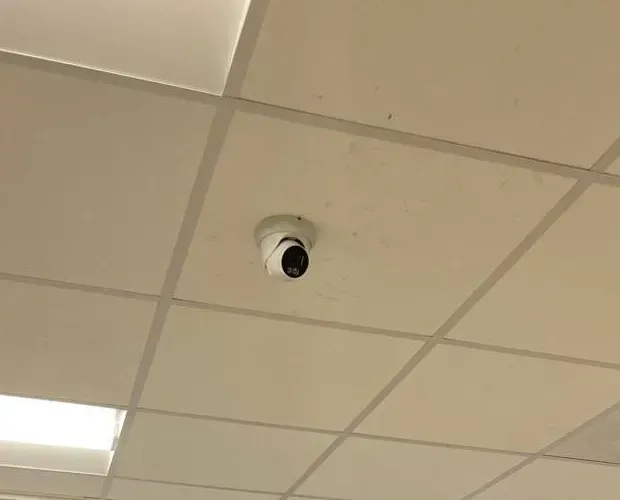
Taken by Abstract Enterprises Security Systems on another job, not in Throggs Neck: a turret camera in a ceiling tile. We choose each device by the opening it serves, not by the catalog.
AI Overview Reality Check
What AI Gets Wrong About Access Control in Throggs Neck
We could not load Google’s AI Overview, its related-question boxes or the suggestion lists on Bing and DuckDuckGo while researching this page, so we are not quoting any of them. The seven claims below are the ones we hear most often from callers who looked something up first, set against what we see on the peninsula.
“A casino will bring burglaries to the houses around it.”
That was among the fears raised at the February 2025 community board hearing, and it may turn out true or false on any given block. The public record we read contains concerns and promises, not measurements, and the casino will not open for years.
We would rather not sell anyone a door on the strength of a forecast. The doors that need attention on a Throggs Neck house today, the side gate, the garage and the back door, need it because of how the house is built and used, not because of what may happen at Ferry Point.
If the streets near the park do change, a property whose openings are already on one system can tighten a schedule in a minute. That is the honest version of preparing.
“A video doorbell is all a house needs.”
A doorbell camera shows who is at the front door, and the December 2022 News 12 story shows that it can catch a package thief in the act. It does not lock anything, and it watches one door of a house that may have five.
On a lot with a side passage, a driveway and a garage, most of the ways in are out of the doorbell’s view. A camera does its best work alongside locks and contacts on those other openings, so that something is both stopped and seen.
We often fit a video station at the side gate as well as the front door, because the gate is where trades and deliveries actually go.
“Modern garage openers use rolling codes, so they are secure.”
Rolling codes stop someone from recording the signal and replaying it. They do nothing about the remote itself, which opens the door for whoever holds it.
On a peninsula where cars are parked in driveways and on the street overnight, the remote on the visor is the weak point, not the radio signal. A controller that answers to a phone or a code, and a remote that can be cancelled on its own, closes that gap.
The door from the garage into the house is the second gap; it should lock like any exterior door.
“Expect to pay a national per-door average.”
Cost-guide sites such as Angi, HomeAdvisor and Fixr publish national ranges per door, usually written with an office in mind. They are a starting point, not a quote for a house with a gate, a garage and a tenant.
On a Throggs Neck property most of the cost is in the openings that are not ordinary doors: a gate that needs its hinges reset before it can take a lock, a garage opener that needs a new controller, a driveway gate that needs an operator and safety devices. A per-door figure misses all of that.
The useful number is a written price for your openings at the Bronx rate in the table further down this page.
“Gating a street keeps a neighborhood safe.”
Some communities on the peninsula began as private bungalow colonies and still manage their own lanes and entrances through their own organizations. A public street cannot be gated, and a neighborhood is not made safer by a gate that blocks fire trucks.
What actually reduces risk on a public block is each lot taking care of its own openings, and neighbors agreeing on simple habits: gates that latch, garage doors that close, lights that come on.
If your community is one of the private ones, its own page on this site covers the association’s gate.
“Waterfront homes need marine-grade everything.”
Salt air does shorten the life of cheap finishes and fasteners, and on the water side of a house we choose stainless or coated hardware and sealed keypads. But most Throggs Neck front doors face a street, not the Sound, and do not need anything special.
What matters more than the label is maintenance: a keypad wiped down and checked twice a year, hinges oiled, batteries replaced before they fail. A marine-rated lock that nobody looks after will still seize.
We write the maintenance schedule into the handover record for every opening near the water.
“A national alarm brand handles access control the same way anywhere.”
National alarm companies such as ADT, and do-it-yourself brands such as Ring and SimpliSafe, sell good products and monitoring. Their access offerings are usually built around a front-door smart lock tied to their own app and plan.
A Throggs Neck property usually needs more than that: a gate, a garage, a tenant’s door, a shop’s back door. A local installer can put all of those on one system the owner controls, keep any existing alarm, and come back the same day when a gate stops latching.
If you already have a monitored alarm, we work alongside it rather than replacing it.
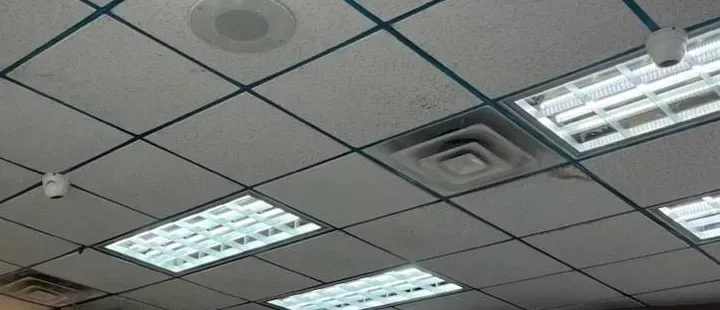
Taken by Abstract Enterprises Security Systems on another job, not in Throggs Neck: small domes across an office ceiling. Cameras show what happened; locks and contacts on every opening decide what can happen.
Send the Gate, the Garage and Every Door
Photograph the front door, the side passage, the driveway and garage, and the back door, or for a store the front, the back and the cellar. Text them to (646) 490-0629 with your cross streets, and we will send back a door-by-door plan and price the same business day.
Tell us about the property in a line or two: a detached two-family near Ferry Point Park with a side gate and a garage, a townhouse in a row that shares a front walk, a condo building by the bridge with a garage ramp, or a store on East Tremont Avenue with a back door to the lot. List the openings you use and who signs off on the work. We reply in writing the same business day using our published Bronx prices. Prefer to talk? Ring (646) 490-0629.
✅
We Got Your Request!
Your Throggs Neck details reached us. Expect a call from a technician today, during business hours. If an opening has already failed and will not lock or will not open, call (646) 490-0629 instead of waiting.
How It Works
Our Installation Process
1. Opening list
We walk from the curb to the back of the lot, or from the sidewalk to a store's cellar, and number every door, gate and garage door, including the ones nobody uses.
2. Users and households
We write down who uses each opening: family, tenant, staff, cleaner, trades, couriers, and whether any of them must never see another household's comings and goings.
3. Doors, gates and garage first
A door that drags, a gate that sags or a garage door whose eyes are misaligned gets put right before we fit a single lock to it.
4. Hardware per opening
We choose battery or wired hardware for each opening, sealed and stainless parts on the side facing the water, and one app for everything.
5. Controller, power and cable
Where wired hardware is used, the controller and battery-backed supply go in a dry, reachable spot, sized for the openings you may add later.
6. Installation and exit tests
Hardware is mounted; then every door and gate is opened from inside and the garage door is made to stop on an obstruction, all before a single opening is set to locked.
7. Codes, schedules and alerts
Each person gets their own credential, trades get dated codes, the garage gets its close timer, and the alerts you asked for are tested on your phone.
8. Handover
You get the written opening record, the administrator account in your name, a run-through of manual releases and our number for service.
What you receive at handover
A record a new family member, a new board or a new store manager can pick up cold: every opening and its lock, who holds which credential and why, where the controller and power supplies are, what each opening does in an outage and on a fire alarm, how the garage and gate manual releases work, the administrator accounts in your name, how long entry records are kept, and when the batteries were last changed. We keep a copy, and update it on every service visit.
Coverage Area
Access Control Near Throggs Neck’s Landmarks
People who ring about the peninsula usually place their house by one of these. We name them for orientation only; none of them is a site we work on.
Ferry Point Park and the golf course
The park Wikipedia describes as split by the Bronx–Whitestone Bridge into a 110-acre west side of soccer and cricket fields and a 420-acre east side with a promenade and golf course. About 16 acres of the golf links are the licensed casino site, which 6sqft gives as 450 Hutchinson Parkway.
Throgs Neck ferry landing
The NYC Ferry landing in Ferry Point Park that opened in December 2021 as the start of the Soundview route, with a free parking lot and a small electric shuttle to the dock, according to the city’s announcement.
SUNY Maritime College at Fort Schuyler
The state maritime college at the tip of the peninsula, founded in 1874, with about 1,550 students on a 55-acre campus, according to Wikipedia. The fort itself was built between 1833 and 1856.
Throgs Neck Bridge approach
The bridge to Bay Terrace in Queens, finished with its parkways by 1961, which Wikipedia credits with ending the peninsula’s comparative isolation. The Throgs Neck Lighthouse formerly stood at the southern tip.
East Tremont Avenue BID
The business improvement district on both sides of East Tremont Avenue from Bruckner Boulevard to Miles Avenue, with 180 properties in the 2018 plan. The Throggs Neck post office is at 3630 East Tremont Avenue.
Throg’s Neck Library
Wikipedia dates the branch on the Cross Bronx Expressway Extension (number 3025) to 1954 and its present single-story building to 1974.
Manufacturer product photo, used as a reference: a small black vandal-resistant dome. Over a store's back door or a side gate it records who used the code, which the lock's own log cannot show.
Pricing
Access Control Cost in Throggs Neck
The peninsula pays the Bronx rate, a multiplier of 1.00 on our Brooklyn list, and the casino news has not moved it. A figure below covers the parts, the work, the setup, the first credentials and a run-through for whoever will manage the system, assuming the opening can be reached normally. The invoice adds the city’s 8.875 percent sales tax.
System or item
Throggs Neck price
Typical Throggs Neck use
Single door: keypad or fob reader with electric strike
$1,500 – $2,500
A condo lobby door, a store’s street door, or a two-family’s tenant entrance
Keypad on a staff, service or back door
$1,500 – $2,000
An East Tremont store’s back door to the lot, or the door from a garage into the house
Video intercom panel with integrated fob access, replacing a buzzer
$1,500 – $3,000
A station where traffic noise drowns a doorbell, at a gate or a street door
Multi-door system
$4,000 – $15,000
Front, side and garage openings of one house together, or a row’s common gate plus each owner’s door
Card readers on several office doors in a shared building
$4,000 – $12,000
Second-floor offices above East Tremont Avenue stores
Full building
$15,000 – $40,000+
A waterfront condo’s lobby, garage ramp, package area, amenity rooms and service doors
Buzzer repair (for comparison)
$200 – $500
Restores a worn bell or buzzer; nothing about who comes in changes
Service and repair visit
$195/hr, 3-hr minimum ($585)
Any brand or installer, including openers and keypads left by a previous owner
Four kinds of work vary too much from lot to lot to carry a published figure: a driveway gate operator and its safety devices, a new or rehung gate from a fence contractor, repairs to a garage door, and rebuilding a door so it can hold a lock. Those appear as separate lines once we have seen them. On payment, our standard agreement asks for the full amount up front on jobs below $500 and a 50 percent deposit on larger ones. Full terms — including 50% deposit, the 30-day warranty and optional paid extended warranty, and the late-fee schedule — are set out in the service agreement.
What moves a Throggs Neck quote up or down
How many openings are on the plan. A house with a front door and a garage costs far less than one that adds a side gate, a back door and a tenant’s entrance, but all of them share one controller and one app.
Whether the gate and garage are sound. A gate that sags or a garage door that binds is repaired before any lock goes on, and that repair is priced on its own line.
Wired or battery hardware. Battery locks on wood doors need no cable; wired strikes and readers on metal frames need a cable path and a supply.
Distance to the water. Openings facing the shore get sealed keypads and stainless or coated fasteners.
Five questions to ask any installer
Who owns the administrator account? You, in your own name and email.
When the electricity goes, which openings stay locked and which stop? Expect an answer for the garage and the gate too, not just the front door.
Can every door, gate and garage live in one app? Three apps mean three records and three sets of passwords.
How is a lost phone, fob or remote cancelled? It should take one step and leave everyone else’s credentials alone.
What do you leave in writing? Expect a handover record, not a business card.
Get a Written Throggs Neck Price for Your Property
Pictures of the gate, the garage and the doors to (646) 490-0629 are enough for a priced plan in writing.
Priced $1,500 to $2,500 for a single door: the door and frame checked first, then a reader or keypad, a strike or lock, a battery-backed supply where wired, programming for each user and a test that it opens freely from inside. Suits a tenant’s entrance, a condo’s package room or a store’s back door.
House and Lot — from $4,000
A multi-door system at $4,000 to $15,000: front and side doors, the side-yard gate, the garage door controller and sensor, and the garage-to-house door, all on one controller and one app, with individual codes for family, tenant and trades.
Condo by the Water — from $15,000
From $15,000 to $40,000 or more for the whole building: tags for the garage ramp, fobs for the lobby, a courier code for the package area, and the amenity and service doors, all on a controller the association owns, with sealed parts facing the water and the board’s record at the end.
Already bought the hardware? Labor-only installation
Some owners buy their own smart locks, garage controllers or gate kits. We install owner-supplied equipment on a labor-only basis, priced once we have the model numbers and have seen the openings. Before ordering, check three things with us: that the lock fits your door’s thickness and backset, that the garage controller is compatible with your opener, and that everything can live in one app.
This is a note on method rather than a story about one house. The first thing we write on a Throggs Neck survey is not a product name; it is a list of openings, numbered, starting at the curb. On a detached two-family it typically reads: walk gate, front door, upstairs tenant’s door, side passage gate, side door, back door, garage door, garage-to-house door, basement door. Nine openings, of which the owner usually thinks of two.
Next to each we write who uses it, how often, whether it needs a lock or only a contact, and what it must do in an outage. Most lines end up simple. The walk gate gets a latch and nothing electric. The basement door gets a contact. The front, side and garage doors get codes. The garage door gets a controller and a sensor. The tenant’s door gets its own lock and codes the owner can see exist but not use.
The list is what we price, what we install and what we hand back. When the casino years change something on the street, the list is also what the owner reads to decide which line to tighten, without anyone needing to visit.
FAQ
Throggs Neck Access Control FAQ
At Bronx rates, what would a detached Throggs Neck house with a front-door keypad, a side-yard gate lock and a garage door controller cost?
+
Those three openings on one controller and one app fall in the multi-door range on this page, $4,000 to $15,000 at the Bronx rate of 1.00, and a house with only those three usually sits toward the lower end. Adding the garage-to-house door and a tenant's entrance raises it. Gate repairs, a new gate and garage door repairs are priced on their own lines after the survey, and sales tax of 8.875 percent is added.
Will the casino construction make access control work in Throggs Neck harder to book or more expensive?
+
Not on price from us: Throggs Neck is billed from the same Bronx list as every other Bronx neighborhood, and the figures on this page are the ones we quote. What may change is travel time if construction traffic builds on the Hutchinson River Parkway and the roads near Ferry Point, so on the west side of the peninsula we give arrival windows rather than exact times. Booking itself has not changed.
Do you install at SUNY Maritime, the Throggs Neck Houses or the casino site?
+
No. SUNY Maritime College, NYCHA's Throggs Neck Houses and the Ferry Point project have their own operators, security staff and contractors, and they appear on this page only as landmarks. We work for owners, boards, landlords and businesses on private property around them, and would take on institutional work only if the institution itself asked.
Our attached townhouse is one of a row built before the 2004 rezoning, and four owners share a front gate and a row of garages. Can each owner keep private codes while the shared gate runs on one system?
+
Yes. The shared gate and any shared garage court go on one controller that the owners hold jointly, with an agreed list of who may open them, while each owner's front door and garage stay on their own lock and codes, invisible to the neighbors. Put the shared part in a short written agreement among the owners: who is administrator, how costs are split and what happens when a house is sold.
We plan to sell our house next spring. Is it worth installing access control first, or should we leave it to the buyer?
+
Fix what a buyer's inspector will notice, such as a gate that will not latch or a garage door that does not reverse, and keep the electronics simple. A battery keypad lock and a garage controller are inexpensive, and a buyer can reset them to their own codes in minutes; a larger wired system is better chosen by the people who will live with it. Whatever you install, hand over the administrator account and the manuals at closing.
If drivers headed for the park or the casino block our driveway, can the gate or door camera record it in a way that helps a 311 complaint?
+
It can give you a dated clip showing the car and the time, which is useful when you report a blocked driveway to 311. Aim the camera at your own driveway apron rather than across the street, and keep clips only as long as you need them. The camera does not make anyone arrive faster; enforcement stays with the city.
I see clients by appointment in a home office with its own side entrance. Can that entrance open only during booked hours while the family entrance stays private?
+
Yes. The office entrance gets its own lock on a schedule that matches your hours, with a video station so you can see and admit each client, and the door between the office and the rest of the house gets its own lock that clients never have a code for. Outside office hours the office entrance behaves like any other locked door of the house.
Can our garage door close by itself if it is left open after dark?
+
Yes. A controller with a position sensor can close the door at a set time or a set number of minutes after it opens, and send a notice to your phone when it does. The opener's photo eyes and auto-reverse stay in charge, so the door stops and reopens if anything is in its path, and the automatic close can be switched off for a night when you are working in the garage.
All Areas Served
Access Control Installation Across New York City, Long Island and the Hudson Valley
The same team works across the city and its suburbs, and prices outside the Bronx follow each region’s own multiplier. For borough-wide detail start from the Bronx access control installation page; for every borough, Long Island and the Hudson Valley, start from the NYC hub.
Each local statement on this page comes from one of the documents listed here, all of them opened in October 2026 during the writing. Prices are ours alone, from the Abstract Enterprises Security Systems list at the Bronx rate. Where the sources disagree, the page says so: Wikipedia gives 21,009 residents in one table and 44,167 for a wider area in another; it puts Ferry Point Park at 110 plus 420 acres while the Bronx Times speaks of the park’s 400 acres; the casino garages hold 4,600 cars in one report and 4,660 in another; and DOT’s 2026 timeline dates ferry service to 2020, where the city’s own announcement says December 2021.
Some sources our blueprint calls for were out of reach while this page was written: People Also Ask, related searches and the AI Overview on Google, Answer the Public, the suggestion lists on Bing and DuckDuckGo, and Yelp. Reddit gave us only search excerpts: a few lines describing Throggs Neck as more houses than apartments, a thread about the casino approval, and a Queens resident’s post about stolen cars driven over the bridges, which we cite only as one person’s account. The 1922 and 1984 New York Times articles are quoted through Wikipedia, not read directly. The precinct crime figures cover the whole 45th Precinct, not Throggs Neck alone. The cost-guide sites named in the AI section are cited only as examples of generic figures.
Garage Stuck Open or a Gate That Won’t Latch? Call the Throggs Neck Line
Two problems go to the front of the queue: an opening that will not lock, such as a garage door that will not close or a side gate that swings free, and any door or gate that will not open from inside. Ring (646) 490-0629, say which opening and what it is doing, and you get an arrival window on the call. Anything that could keep someone from getting out is made safe before anything else is looked at.
Throggs Neck Access Control From a Licensed, Insured Team
Ring or text (646) 490-0629 for anything on the peninsula, or send pictures of the gate, garage and doors over WhatsApp. Technicians leave from the Abstract Enterprises Security Systems Bronx office at 460 E Fordham Rd, Bronx, NY 10458, on the other side of the borough from the peninsula and its bridges.
Customers have given us 4.7★ across 390+ Google reviews. Every installation is done under New York State license #12000287431, and a certificate of insurance naming your board, landlord or agent can be issued before the first visit if you ask when booking.
Full terms — including 50% deposit, the 30-day warranty and optional paid extended warranty, and the late-fee schedule — are set out in the service agreement. See our warranty page.
What changed on October 18, 2026: this page was rewritten from scratch with new research. It now centers on what is particular to Throggs Neck: a car-dependent peninsula of houses, garages and gates, the townhouse rows and waterfront condos the 2004 rezoning responded to, the East Tremont Avenue BID, and a staged plan for doors before, during and after the licensed casino-hotel at Ferry Point Park. Pricing is unchanged at the Bronx multiplier of 1.00, and the service rate remains $195 an hour with a three-hour minimum.