Prewar Elevator Lobbies · Step-Free Side Doors · Door Openers Tied to Readers · Sedgwick Avenue, Kingsbridge Terrace and Heath Avenue
Access Control Installation in Kingsbridge Heights, Bronx
Doors That Open Without a Grip · Vestibules in the Right Order · Paperwork a Landlord or the VA Can Use · No Monthly Fees
Kingsbridge Heights is a neighborhood built on a hill. The city’s own engineers measured the rise on the West 229th Street step street at 65 feet from Heath Avenue at the bottom to Kingsbridge Terrace at the top, and most of the apartment houses that line Sedgwick Avenue, Kingsbridge Terrace and Heath Avenue were put up between about 1910 and 1935, with a few steps between the sidewalk and the lobby and a heavy pair of doors at the top of them. On West Kingsbridge Road, at the neighborhood’s southern edge, the James J. Peters VA Medical Center runs one of the region’s spinal cord injury programs, and its home-care nurses visit veterans where they live. That combination is the subject of this page: entrances that must keep strangers out and still open for a resident who cannot pull a heavy door, hold a key and steer a chair at the same time. We plan readers, openers, call stations and the paperwork that goes with them so the door works for the person who has the most trouble with it.
Reviewed and updated October 21, 2026: Wikipedia’s Kingsbridge Heights, James J. Peters VA Medical Center and Kingsbridge Heights Community Center articles, CityNeighborhoods.NYC, the VA’s spinal cord injury program and HISA pages, NYC DDC on the West 229th Street step street, the NYC Commission on Human Rights, the 2010 ADA Standards and the Bronx Times · Anwar Timothy, NYS license #12000287431 · Kingsbridge Heights visits dispatched from our office on East Fordham Road
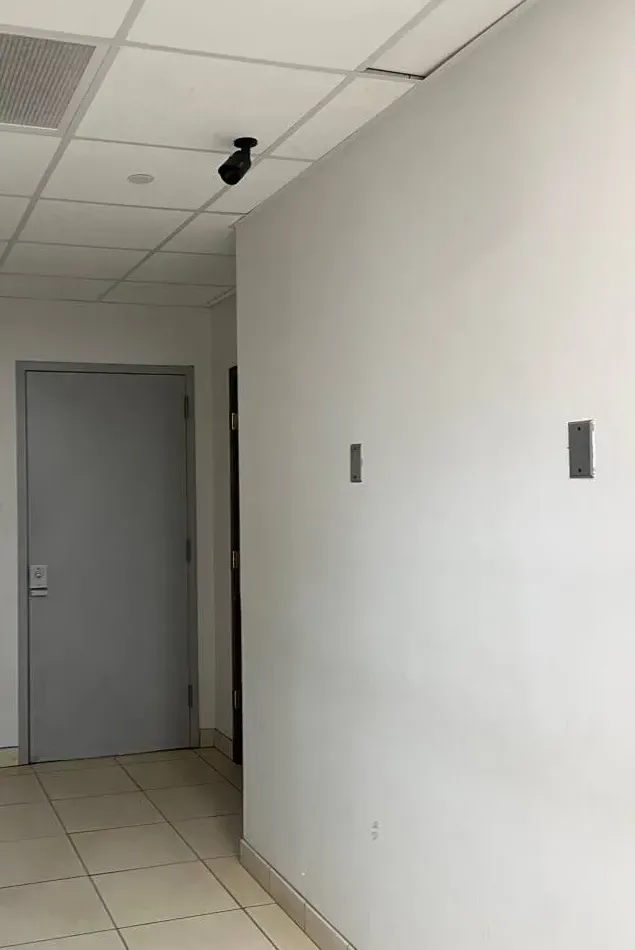
Photo from the AESS job library, not taken in Kingsbridge Heights: a back corridor ending at a steel door. On the hill, a lower-level door like this is often the only step-free way into a building.
Kingsbridge Heights Door Request
Apartment building, co-op, house, store or program site — same-business-day callback
✅
Request Sent!
We will call about your Kingsbridge Heights door before the end of the business day.
25+
Years Experience
✓
Same-Day Estimates
100%
Licensed & Insured
4.7★
201 Google Reviews
Before you call, try the door the way the person who struggles with it does. Sit in a chair, or hold a bag in each hand, and go from the sidewalk to the elevator. Count the doors on the way, note which way each one swings, and note where you would have to let go of something to open it. Then text us a photo of each door from both sides, the cross streets, and one line about who needs help with it: a resident in a power chair, a parent with a walker, a veteran coming home from the VA’s spinal cord unit. Send it to (646) 490-0629. You get a written door-by-door answer on the same business day, priced from our published Bronx list, with the parts that need a landlord’s or a board’s permission marked as such.
The photo review costs nothing; what comes back names each door, how it opens now, what we would change, and who has to agree
Tenants, owners, co-op boards, managing agents and family members all hire us; a tenant who wants a written description of the options to attach to an accommodation request is welcome to ask for one
Every visit is made by a crew working under New York State license #12000287431, insured for occupied apartment buildings, offices and houses
The Neighborhood
Why Kingsbridge Heights Properties Need Access Control
Where Kingsbridge Heights begins and ends depends on the source. Wikipedia draws it between Van Cortlandt Park on the north, Jerome Avenue on the east, Kingsbridge Road on the south and the Major Deegan Expressway on the west, names Sedgwick Avenue as its main street, puts it in Bronx Community District 8 with ZIP codes 10463 and 10468, and says the 50th Precinct on Kingsbridge Avenue patrols it. CityNeighborhoods.NYC draws a wider shape that reaches Broadway on the west and the Grand Concourse on the east. The two agree on the core: the high ground around Sedgwick Avenue, Kingsbridge Terrace, Heath Avenue and University Avenue, sloping down toward Broadway and the Harlem River side, with the Jerome Park Reservoir to the northeast. This page uses street names rather than lines, because a caller tells us a cross street, not a district number.
The ground is what visitors notice first. CityNeighborhoods describes a neighborhood that rises sharply from Broadway to residential plateaus above Sedgwick and University Avenues. The city’s Department of Design and Construction, announcing the rebuilt West 229th Street step street in May 2019, measured that stair at about 230 feet long, in ten flights with nine landings, covering a 65-foot difference in height between Heath Avenue and Kingsbridge Terrace; the rebuild cost $10.7 million and added bicycle channels on both sides. The Council member quoted in that release called step streets a common feature of the West Bronx landscape and said the old stair’s decay had pushed residents onto longer routes. Forgotten New York describes West 193rd Street, just south of West Kingsbridge Road, as so steep between Bailey and Heath Avenues that its brick buildings are stepped. A hill like that shapes doors: lobbies sit a few steps above the sidewalk, rear doors open a floor lower, and the step-free way in, where there is one, is often not the front.
The buildings on the hill are mostly from one era. CityNeighborhoods lists 1920s and 1930s apartment houses along Kingsbridge Terrace and Heath Avenue, six-story brick apartment houses, Tudor Revival rowhouses and Art Deco residences built mostly between 1910 and 1935, alongside tree-shaded rowhouses, detached homes and walk-ups. Listings bear that out building by building: StreetEasy describes 3115 Sedgwick Avenue as a six-story elevator building of 57 apartments from 1927. Wikipedia adds that tenement buildings are concentrated in the central and southern sections, that the vast majority of households rent, and that higher-end rentals and co-ops went up in the northern section known as Van Cortlandt Village. It also lists one NYCHA development, the Fort Independence Street–Heath Avenue Houses, as a single 21-story building. An elevator building from the 1920s typically arrives at the 2020s with its original lobby doors, a closer that has been tightened over the years to make the doors latch, and a buzzer panel that was never meant to be operated from a wheelchair.
Schematic of a common hillside arrangement; every building is checked on site.
Schematic table prepared by AESS from the sources and practice described on this page.
The neighbor on the southern edge is the reason this page leans the way it does. The James J. Peters VA Medical Center at 130 West Kingsbridge Road opened on April 15, 1922 as U.S. Veterans’ Hospital No. 81; its current main building dates from 1981, and it has 311 hospital beds and 120 nursing home beds. It was renamed in 2002 for James J. Peters, an Army veteran and patient who founded organizations serving people with spinal cord injuries, including what is now the United Spinal Association; its research building houses the Spinal Cord Damage Research Center. Wikipedia places the campus in West Fordham, just across Kingsbridge Road from the neighborhood as Wikipedia draws it, and lists it under Kingsbridge Heights as well, so we describe it as being on the neighborhood’s southern edge.
According to the VA’s own program page, the medical center’s spinal cord injuries and disorders service has a 48-bed inpatient unit, acute rehabilitation accredited by CARF since 2003, wheelchair and caregiver training, and transition-to-home services. Its SCI/D Home Care program sends nurses to veterans’ homes and completes home evaluations, in the page’s words, “to address issues with safety and accessibility.” The same page describes the center’s ALS and MS programs. In May 2019 two Fisher Houses opened on the campus, giving 32 free suites to the families and caregivers of hospitalized veterans, according to the Bronx Times. We do not know how many of those veterans live in Kingsbridge Heights, and we make no claim about it. What we can say is that a door that works for someone leaving a spinal cord unit is a door that works for nearly everyone else on the hill: older tenants, parents with strollers, delivery workers, the nurse with a bag of supplies.
Schematic table prepared by AESS from the sources and practice described on this page.
There is also a legal thread, and it has been tested in the Bronx. The New York City Commission on Human Rights enforces the city’s Human Rights Law, which requires housing providers to make reasonable accommodations for tenants with disabilities. In July 2026 the Commission announced a settlement in which a landlord had installed a lift that could only be run with a key, which it would not give the tenant; the landlord agreed to $15,000 in damages, a $30,000 civil penalty, fourteen months of free rent and an accessible apartment (CCHR release, July 22, 2026). In its 2025 settlement highlights the Commission lists a co-op board that agreed to install five sets of automatic doors, including at the main entrance, and pay $30,000 in emotional distress damages. In a Bronx matter at Riverbay (Co-op City), the Commission found a side-door opener insufficient, and a 2011 Bronx Supreme Court decision upheld its order to modify the front door. None of this is legal advice, and each case turned on its facts. It is why we write our door plans so a landlord, a board or a lawyer can read them.
The rest of the neighborhood adds its own doors. The Kingsbridge Heights Community Center, a settlement house founded in 1974, has its main office in the former 50th Precinct station house at 3101 Kingsbridge Terrace, a 1902 Beaux-Arts building designated a city landmark in 1986; its programs, by Wikipedia’s account, include Head Start, a teen center and a program for children and adults with developmental disabilities. Kingsbridge Road and University Avenue carry the shops, with bodegas, bakeries, pharmacies and small restaurants, per CityNeighborhoods. And the Kingsbridge Armory, on Kingsbridge Road at the neighborhood’s southeast corner, is in line for redevelopment: the City Council approved the plan in October 2025, with work on the drill hall expected to begin in 2026 and finish by 2030, according to New York YIMBY. We treat those dates as plans, not facts on the ground.
Schematic table prepared by AESS from the sources and practice described on this page.
Kingsbridge Heights at a glance, from the sources we read
Boundaries: Van Cortlandt Park, Jerome Avenue, Kingsbridge Road and the Major Deegan Expressway (Wikipedia); Broadway to the Grand Concourse in a wider version (CityNeighborhoods)
Main street: Sedgwick Avenue (Wikipedia); Kingsbridge Road and University Avenue as shopping streets (CityNeighborhoods)
2010 census population 32,496, on 300.86 acres; the vast majority of households rent (Wikipedia)
Housing: six-story brick apartment houses, Tudor Revival rowhouses and Art Deco residences built mostly 1910–1935 (CityNeighborhoods); one NYCHA building of 21 stories (Wikipedia)
West 229th Street step street: about 230 feet, ten flights, 65-foot rise, rebuilt for $10.7 million and reopened May 2019 (NYC DDC)
James J. Peters VA Medical Center, 130 West Kingsbridge Road: opened 1922, 311 hospital beds, 48-bed spinal cord injury unit, SCI/D home care with home safety and accessibility evaluations (Wikipedia, VA)
Transit: Kingsbridge Road station on the 4; buses Bx1, Bx2, Bx3, Bx9, Bx10, Bx22, Bx32 and BxM3 (Wikipedia)
Dates from the sources listed at the foot of this page.
Put those threads together and Kingsbridge Heights asks something specific of an entrance. The door sits on a slope, at the top of steps or at the bottom of a building that had its step-free entrance added later, if at all. It is usually a heavy, old door in a rented building, so the person who needs it changed is rarely the person who owns it. And a good number of the people who use it, residents, visitors, home-care staff, have trouble with doors. Every section below follows from that: who can open the door, how, with which hand, and who has to agree before anything changes.
Photo from the AESS job library, not taken in Kingsbridge Heights: an exit sign under a drop ceiling. Every door we add an opener or lock to must still open from inside by hand.
Repairs
Opener Stuck or a Lobby Door Too Heavy to Open in Kingsbridge Heights? Call the Same Day
Most of our same-day calls about accessible doors are about something that used to work. The opener on the lobby door hums but the door does not move. The push plate outside works, the one inside does not. The door opens for a fob but the electric strike releases a second too early, so the operator pushes against a locked latch and trips its safety. A closer that leaked over the winter now slams the door on a wheelchair’s footrest. Call (646) 490-0629, tell us which door and whether someone is waiting to get in or out, and you get an arrival window on the call.
While you wait, never prop an exit open with a wedge across the floor, and never switch an opener off and leave the door locked with a resident who depends on it still outside. If the opener has failed, set it to its manual or off position so the door swings freely by hand, and post a note with our number. We would rather arrive to a door being held by a neighbor than to someone stranded on the steps.
What We Install
Access Control Services in Kingsbridge Heights
A Kingsbridge Heights job is usually several of these together. We price each door on its own, so a building can fix the door that matters most first and add the rest later.
♿
Openers tied to the lock
A low-energy operator on the lobby or vestibule door, wired so the electric strike or lock releases first and the door swings only after it is free, by push plate, fob or phone.
📱
Hands-free credentials
Readers that see a phone in a pocket or a tag on a wheelchair frame, for residents who cannot hold a card to a reader, alongside ordinary fobs for everyone else.
🚪
Vestibule pairs that open in order
Outer and inner doors sequenced so the second one is unlocked and opening by the time a chair reaches it, with a short delay so both are never open longer than needed.
📞
Call stations a seated visitor can use
Video entry panels at a height and with buttons a person in a chair can reach, ringing a resident’s phone so they can release the door from upstairs.
🏥
Doors for home-care visits
Scheduled codes or phone credentials for the VA home-care nurse, an agency aide or a family member, ending on the day the visits do.
📋
Accommodation and grant paperwork
Door-by-door descriptions, itemized estimates, product data and photographs in a form a landlord, a co-op board or the VA’s prosthetics office can act on.
🔌
Battery backup and fault alerts
Lock power with battery backup, operators set to swing by hand when power fails, and alerts to the super when a door is held, forced or not closing.
🏢
Community rooms and offices
Readers on program rooms and offices in community facilities, with free egress kept on every exit and schedules that follow the program day.
🏠
Houses and rowhouses on the slope
Keypads, openers and video doorbells for the Tudor rowhouses and detached houses on the side streets, often at a side door with fewer steps.
Schematic table prepared by AESS from the sources and practice described on this page.
Summary panel prepared by AESS from this page’s text; schematic.
Photo from the AESS job library, not taken in Kingsbridge Heights: devices high on a lobby wall. Push plates and readers, unlike cameras, go where a seated person can reach them.
Building Specialists
Access Control for Kingsbridge Heights’s Architecture
CityNeighborhoods’ list, six-story brick apartment houses, Tudor Revival rowhouses, Art Deco residences, walk-ups and detached homes, is a fair map of what we meet. The slope adds a twist to every type.
1920s and 1930s elevator apartment houses
The type at the center of this page, on Sedgwick Avenue, Kingsbridge Terrace and Heath Avenue. A short run of steps to a raised lobby, a pair of heavy wood or steel-and-glass doors, often a vestibule with a second pair, an elevator a few yards further in. The step-free route, where one exists, may be a side or rear door at the lower grade. We start by finding out which door a wheelchair user can actually reach.
Walk-ups and older tenements
Concentrated, according to Wikipedia, in the central and southern parts of the neighborhood. No elevator, so the street door matters for deliveries, visitors and anyone who cannot come down to let a guest in. A call station that releases the door from the apartment is often the most useful single change.
Post-war co-ops
Seven-story and larger co-ops from around 1960, mostly toward Van Cortlandt Village. They have boards, managing agents and budgets, and they are the buildings most likely to face a formal accommodation request for the main entrance. We give boards an options report before they vote.
Tudor Revival rowhouses and detached houses
Owner-occupied houses on the side streets and terraces, with a stoop, a side door and sometimes a garage under the house where the slope allows it. A veteran coming home to one of these usually needs one entrance made fully usable, not the whole house.
Community facilities
Buildings such as the landmarked former station house the Kingsbridge Heights Community Center occupies on Kingsbridge Terrace, plus schools and program sites. Many people, many schedules, participants who may need help, and exits that must always open from inside.
The NYCHA tower
Wikipedia lists the Fort Independence Street–Heath Avenue Houses as a single 21-story building. NYCHA buys and installs its own entry systems; residents ask NYCHA for changes to common doors. We do not alter NYCHA building doors.
Schematic table prepared by AESS from the sources and practice described on this page.
Summary panel prepared by AESS from this page’s text; schematic.
Why the steps change the plan
An accessible door is not only the door. It is the route to it, the space in front of it, and the space beyond it. The 2010 ADA Standards, which the federal Access Board publishes, set a 32-inch minimum clear opening for automatic doors with power on and power off, put door hardware between 34 and 48 inches above the floor, and limit the force to open an interior hinged door to five pounds; they set no such number for exterior doors and leave fire doors to the local authority (ADA Standards §404). A lobby at the top of four steps does not become accessible because its door gets an opener. That is why the first thing we ask in Kingsbridge Heights is not “which door” but “which door can a wheelchair reach.”
On the hill the answer is often surprising. A building whose front faces the uphill street may have a level door into the basement corridor from the street below, a few yards from the elevator. A building on a corner may have a side door at grade where the sidewalk has climbed to meet it. Those doors were usually built for coal, garbage or the super, and they are locked with a key and a padlock hasp. Turning one of them into a proper entrance, lit, on the reader system, with a call station and an opener, can do more for a resident than any work at the front steps. Ramps and lifts are a contractor’s and an architect’s job; making the door at the end of them open is ours.
Old doors, new operators
Original lobby doors in buildings of this age are heavy: solid wood, or steel and wired glass, on butt hinges or a floor pivot, closed by a closer that has been adjusted, replaced and adjusted again. Before an operator goes on, the door has to swing freely by hand with the closer disconnected. If it binds, sags or rubs, an operator will strain against it and fail early. We check hinges and pivots, the threshold, the gap at the lock edge and the frame’s anchorage, and we put those repairs on the quote as separate lines rather than hiding them.
Low-energy operators, the kind used on most residential lobby doors, open the door slowly and with limited force, so they do not need the guard rails and floor sensors that full-power supermarket doors need. The ADA Standards point low-energy and power-assisted doors to the BHMA A156.19 standard and full-power doors to A156.10. Which applies, and whether the building’s certificate or a fire rating limits the choice, is confirmed before we order anything.
Schematic table prepared by AESS from the sources and practice described on this page.
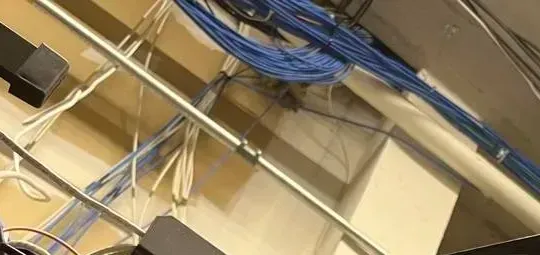
Photo from the AESS job library, not taken in Kingsbridge Heights: a storeroom corner. Side and basement rooms on the hill often hold the door that could become a step-free entrance.Photo from the AESS job library, not taken in Kingsbridge Heights: cable above a ceiling. In a 1920s lobby the hardest part of an opener job is often getting power and cable to the head of the door.
Commercial Access Control
Business Access Control in Kingsbridge Heights
Kingsbridge Road and University Avenue are where the neighborhood shops. CityNeighborhoods describes University Avenue as a run of restaurants, bodegas, halal shops, bakeries, hardware stores and pharmacies, and Kingsbridge Road as the commercial stretch that ties the neighborhood to the Fordham shopping district. Jerome Avenue, under the elevated 4, has its own corner stores. These are small businesses in the ground floors of apartment buildings, and their doors face the same slope as the lobbies next to them.
Many of the businesses near West Kingsbridge Road serve the medical center’s patients and visitors as much as residents: pharmacies, medical-supply stores, small practices, takeout. A pharmacy whose customers include wheelchair users and people on crutches has the same entrance problem as a lobby, plus a back room that must stay locked. A practice upstairs from a store shares a street door with the apartments above. We plan those doors as a pair: an accessible public entrance that opens easily during hours, and staff-only doors that stay controlled.
Community facilities are the third kind of commercial client here. A settlement house, a day program, a tutoring center or a house of worship runs many schedules in one building, with participants who may need help through doors and staff who need to know who is inside. The Kingsbridge Heights Community Center’s programs, as Wikipedia lists them, run from Early Head Start to a program for children and adults with developmental disabilities; we mention them as an example of the kind of building, not as a client.
Pharmacies and medical-supply stores
An automatic or power-assisted customer entrance, a reader on the stock or controlled-substance room, and a delivery door with a scheduled code. The public door opens easily; nothing behind the counter does.
Practices above the stores
A street door shared with apartments, with a call station that rings the front desk during office hours and residents’ phones at other times, and an operator the desk can trigger for a patient in a chair.
Restaurants and bakeries on University Avenue
An early-morning staff door on a code, a rear door that alarms when propped, and a front door left mechanical so customers are never locked in or out by electronics.
Program rooms and day centers
Readers on offices and supply rooms, room schedules that follow the program day, free egress on every exit, and door-held alerts on doors that open onto the street.
Rules every door we touch still has to meet
Exits stay exits. Whatever we add, every door on an exit route still opens from inside in one motion, with or without power. On magnetic locks the NYC Building Code’s sensor-release and door-hardware-release rules apply; we prefer electric strikes and electrified panic trim, which keep the latch mechanical.
Operators follow their standard. Low-energy and power-assisted swing operators follow BHMA A156.19 and full-power doors A156.10, the standards the ADA Standards reference. We set opening and closing times and forces to the standard and leave a copy of the settings with the building.
Fire doors stay fire doors. On a labeled fire door, only hardware listed for that door goes on it, and the door must still close and latch by itself. An operator on a fire door releases when the fire alarm sounds.
Accessibility rules are the architect’s call. Whether a particular entrance must meet the ADA, the NYC Building Code’s accessibility chapter or both depends on the building and the work. We are not code consultants; we follow the architect or expediter where there is one and describe our hardware honestly where there is not.
Tenant data stays limited. In a multiple dwelling with keyless entry, the city’s Tenant Data Privacy Act (Local Law 63 of 2021) governs what the owner may collect and keep. Accessibility settings tied to one resident’s credential are kept to what the door needs.
Schematic table prepared by AESS from the sources and practice described on this page.
Summary panel prepared by AESS from this page’s text; schematic.
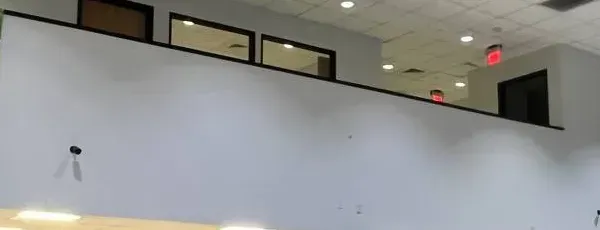
Photo from the AESS job library, not taken in Kingsbridge Heights: a large hall with a mezzanine. Program spaces like this keep every exit free and use alerts, not locks, on exit doors.
Your Questions Answered
Access Control in Kingsbridge Heights: Questions Answered
These are the questions residents, families, owners and boards on the hill put to us about doors and disability, grouped by what they are really about. Each is answered where it is asked.
Summary panel prepared by AESS from this page’s text; schematic.
Opening the door when your hands or strength can’t
Since coming home from the spinal cord unit on West Kingsbridge Road, I can’t grip a key or hold a fob steady against a reader. What can open my building’s front door for me?
Three things, usually together. First, a credential you do not have to hold: a reader that recognizes a phone in your pocket or bag when you come within a short distance, or a tag mounted on your wheelchair frame that a long-range reader picks up as you approach. Second, an operator on the door that swings it open once the lock has released, so you never have to pull. Third, a large push plate on a post or wall where you can reach it with a forearm, elbow or the side of a hand, as a backup if the phone is dead.
How the pieces talk to each other matters more than the brands. The reader releases the strike or lock; the operator waits until the latch is free, then opens the door slowly and holds it long enough for you to clear it, then closes it gently. If you stop in the doorway, its safety function stops or reverses the door. We set the hold-open time with you at the door, with your chair, not from a table.
Your SCI home-care team may already have looked at your home for safety and accessibility; the VA describes those evaluations on its program page. If they wrote anything down about the entrance, send it to us with the door photos. It saves a visit and keeps our plan consistent with theirs.
Our lobby has an outer pair of doors, a vestibule and an inner pair. How do both doors open in the right order for someone in a wheelchair?
By sequencing them on one controller. The fob, phone or push plate at the street releases the outer door and starts its operator; as the chair enters the vestibule, the inner door is already unlocked and its operator starts after a short delay, timed to how long it takes a chair to cross that particular vestibule. Coming out works the same way in reverse, from a push plate inside the lobby.
The delay is the part people get wrong. Too short and both doors stand open together, letting cold air and anyone on the sidewalk straight into the lobby. Too long and the resident sits between two closed doors. We time it with the resident who will use it most, and we set a separate, shorter timing for the ordinary fob users so the inner door does not swing open for everyone.
Many prewar vestibules are tight: the inner door swings toward the outer one, and a chair cannot fit between them with both open. In that case we may recommend reversing the swing or using only one leaf of a pair on the operator. That is carpentry and hardware work, priced separately and agreed with the owner first.
Our lobby door faces downhill and catches the wind. It slams some days and won’t latch on others. Will an opener tame it or make it worse?
A properly set operator usually tames it, but only after the cause is dealt with. On a slope, a lobby door can take wind straight up the street, and in winter the difference between heated lobby air and cold outside air pushes on the door as well. A closer tightened to fight that wind is exactly what makes the door too heavy for a resident to open, and it still slams when the gust drops.
An operator controls the door through its whole swing, opening and closing at set speeds, and most models have adjustable closing force and a latch-check stage that gives the door a final push to latch. We fit it, then adjust the closer function and the strike so the door latches on a calm day and a windy one. If the door is warped or the frame is loose, that is fixed first; an operator will not straighten a door.
The one thing we will not do is make the door latch by turning the operator’s closing force up until it is dangerous. If the wind at a particular entrance is too strong for a swinging door to close safely, we say so, and the owner can consider a vestibule, a wind screen or a different door.
What is the difference between a low-energy opener, a power-assisted door and a full automatic door, and which belongs on an apartment lobby?
A low-energy operator opens a swinging door slowly and with limited force when someone presses a plate, presents a credential or, if set that way, gives the door a small push. Because it moves gently, it does not need the guard rails and floor sensors a full automatic door needs. It is what most apartment lobbies and office entrances use.
A power-assisted door is different: it does not open by itself, it reduces the effort needed to push or pull it. It suits a door most people open by hand where a few need help, but it does not help a resident who cannot push at all. A full-power automatic door, the kind at a supermarket, opens quickly for anyone who approaches and needs safety sensors and guide rails; it is rarely the right choice for a residential lobby that must stay locked.
The ADA Standards send low-energy and power-assisted doors to BHMA A156.19 and full-power doors to A156.10. For most Kingsbridge Heights lobbies we recommend a low-energy operator tied to the lock and a credential, so the door opens fully for those who need it and stays locked for everyone else.
AESS practice, shown as a schematic; timings and order are set door by door.
Schematic table prepared by AESS from the sources and practice described on this page.
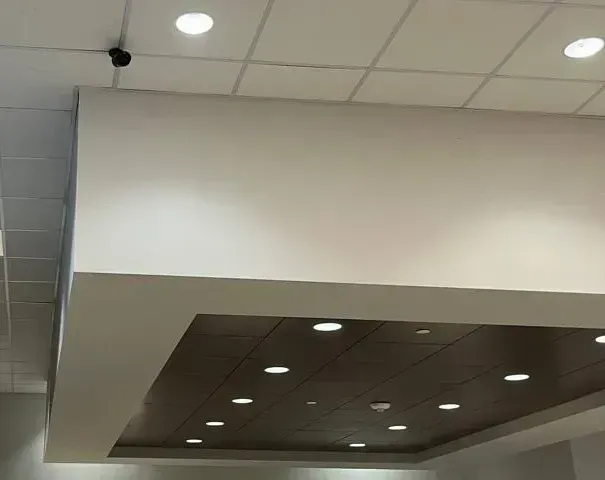
Photo from the AESS job library, not taken in Kingsbridge Heights: a lobby ceiling. Operators mount at the head of the door, so the ceiling and soffit decide how power reaches them.
Asking for it: tenants, landlords, boards and who pays
I rent in a Sedgwick Avenue elevator building. How do I ask the landlord for an automatic opener on the lobby door, and who pays for it?
In writing, describing what you need and why, and asking for it as a reasonable accommodation for a disability. The New York City Commission on Human Rights, which enforces the city’s Human Rights Law, says a housing provider must reasonably accommodate a tenant’s disability unless it can show undue hardship. Who pays, and what counts as reasonable for a particular building, depends on the facts and the law, and that is a question for the Commission, a tenant lawyer or a legal services group, not for us.
What we can give you is the practical half: a short written description of the door, what would make it usable for you, the options from simplest to most complete, and our published prices for the parts we have prices for. A landlord who receives a vague request often says no or does nothing; a landlord who receives a specific, priced proposal has something to approve. We send the same description to the landlord directly if you ask.
If the landlord agrees, we work for whoever signs and pays, and the landlord’s written consent comes before any drilling. If the landlord refuses, the Commission takes complaints by phone at 212-416-0197 or online; the number is in its July 2026 release.
The landlord offered a lift that only runs on a key, or a buzzer at the back door, instead of fixing the front entrance. Is that a usable answer?
It depends on whether you can actually use it, and that is exactly what went wrong in a case the Commission announced on July 22, 2026. A building installed a lift that could only be operated with a key, which the landlord refused to give the tenant, and only for limited hours; the tenant, who had a mobility impairment, fractured her hip trying to get into her home. The landlord agreed to $15,000 in damages, a $30,000 civil penalty, fourteen months of free rent and an accessible apartment.
Front door versus side door is less settled. In the Riverbay case in the Bronx, the Commission found that a side-door opener was not enough and a 2011 court decision upheld its order on the front doors; in a separate Queens case, an appeals court reversed a penalty because the record did not contradict the owner’s evidence that an accessible entrance was not structurally feasible. Feasibility and cost are argued case by case.
From the door side, our test is simple. A route you can use alone, at any hour, with the same credential as everyone else, through a lit door with a call station, is a real entrance. A route that needs someone else’s key, a phone call to the super or daylight is not. We write that down plainly when we describe a building’s options.
A shareholder has asked our co-op board for an automatic main entrance. What should the board ask an installer for before it votes?
An options report, not just a price. It should say which entrances exist, which ones a wheelchair can reach without steps, what each would need to open automatically for residents while staying locked to the street, which parts are door repair, which are electrical, which are access control, and which need an architect or a filing. It should also say what happens to each door when the power fails and when the fire alarm sounds.
Boards that have been through a complaint tend to wish they had asked early. In its 2025 settlement highlights the Commission describes a co-op board that refused a wheelchair user’s request for automatic doors, then agreed to install five sets, including at the main entrance, and to pay $30,000 in emotional distress damages. We cannot tell a board what the law requires of it; its counsel does that. We can make sure the facts about the doors are on the table at the first meeting.
We also suggest the board ask the shareholder, and the shareholder’s therapist or VA team if they are willing, what exactly makes the door hard today. The right answer for someone in a power chair is not always the right answer for someone with a walker, and the cheapest effective fix is usually found by asking.
Schematic table prepared by AESS from the sources and practice described on this page.
Summary panel prepared by AESS from this page’s text; schematic.
Paying for it as a veteran
Can a VA home-improvement grant pay for an opener or a reader on my door?
Possibly part of it, and only the VA can decide. The VA’s Home Improvements and Structural Alterations (HISA) benefit pays for medically necessary changes to a veteran’s primary residence, prescribed or approved by a VA physician. Its published list of covered work includes entrance to or exit from the home, and its list of exclusions names home security systems, along with portable ramps, porch lifts and stair glides. An operator that makes an entrance usable sits on one side of that line; a card reader for security may sit on the other. The prosthetics office decides.
The VA page gives lifetime amounts of $6,800 for a service-connected disability, or for a non-service-connected one where the veteran has a service-connected rating of at least 50 percent, and $2,000 otherwise. Renters can use it with a signed and notarized statement from the owner authorizing the work.
The application asks for a written, itemized estimate of labor, materials, permits and inspections, and a color photograph of the area before the work. Those are things we produce routinely. We itemize the opener, the push plates, the door repairs and any security parts on separate lines, so the VA can see exactly what it is being asked to fund and what it is not.
I’m due to be discharged home in a few weeks. How do we get the door ready in time?
Start now, and split the work into what can happen this week and what needs permission. This week: we look at the photos, visit with a family member, measure the door and the route, and write the plan. If the building already has a reader system, a phone credential or a long-range tag for you can often be added in days with the owner’s say-so, and the existing intercom can be set to ring a phone you can answer.
What takes longer is anything involving the landlord’s consent, a board vote, a new electrical circuit for an operator, door repairs, or a grant approval. We give the family a dated list of those steps with who has to act on each, so nothing waits on a missed phone call. Operators are generally stock items, but specific finishes and mounting kits can take longer to arrive; we say which on the quote.
If the permanent work cannot be finished by discharge day, ask us about a temporary arrangement, such as a scheduled unlock at set hours while a family member is present, or an extra credential for the person who will help you in and out. It is not a substitute for the real door, and we write down when it will end.
Schematic table prepared by AESS from the sources and practice described on this page.
Hills, side doors and winter
Our building’s front steps face a steep street, and the only step-free door is on the lower side street. How do we make that door work as well as the front?
Treat it as an entrance, not a service door. That means the same credential system as the front, so a resident’s phone or tag opens it; a call station so visitors can ring a resident from there; an operator and push plates so it opens without pulling; lighting on the approach and over the door; and a route from that door to the elevator that is not blocked by garbage, bikes or stored furniture.
It also means the door has to be as secure as the front. Side and basement doors on the hill were often built for the super and the coal delivery, and they are frequently propped. We add a door contact with a held-open alert to the super’s phone, and we move any deliveries that now use that door to a schedule so it is not left open for an hour every morning.
Whether a side entrance is an acceptable substitute for the front, legally, is not something we decide. The Riverbay case is a reminder that it may not be. Our job is to make whichever entrance the building chooses work fully, and to describe honestly what each option does and does not do.
The plow leaves a ridge of snow across our entrance every winter. Will an automatic opener jam or burn out?
It should not burn out, because a properly installed operator senses an obstruction and stops; but a door that cannot open is a problem in itself for someone who depends on it. Snow and ice against the bottom of an out-swinging door, or a doormat that has crept under an in-swinging one, are the most common reasons an operator “fails” in January.
Three things help. We check the swing clearance and the threshold before installing, and set the operator to stop rather than strain if it meets resistance. We ask the building to clear a door-width strip in front of the entrance as part of the snow routine, and to keep the mat outside the swing. And we set the system to send the super an alert when a door fails to open or fails to close, so a stuck door is known about within minutes rather than when someone calls.
On a steep block the approach is the harder part. Ice on the last few feet of sidewalk is the building’s and the city’s problem, not ours, but we place push plates and readers where they can be reached from level ground near the door, not from the slope.
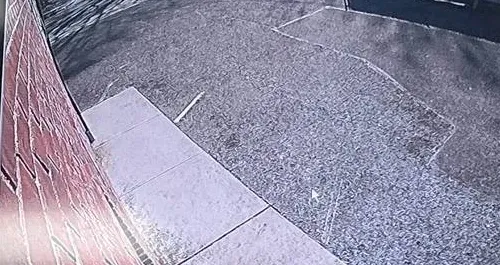
Photo from the AESS job library, not taken in Kingsbridge Heights: an outside corner in winter. Snow and ice at the threshold are the most common reasons an entrance opener stops in January.AESS camera image, not taken in Kingsbridge Heights: a walkway along a brick wall. The approach to a door matters as much as the door when the ground slopes.
Power, fire and the doors beyond the lobby
When an opener loses power, how hard is the door to push, and what keeps a resident from being stranded outside?
When power fails, a low-energy operator becomes, in effect, a door closer: the door can still be pushed or pulled open by hand, against the operator’s spring. How hard that is depends on the setting, and on an exterior door it can be more than a resident in a chair can manage. So we plan the power failure as carefully as the normal day.
The lock side comes first. We decide with the owner whether the street door stays locked or unlocks when power is lost; most residential owners keep it locked for security, which means a resident outside must be able to get in another way. Battery backup on the lock power supply and, where the model allows, on the operator, carries the door through ordinary outages. Beyond that, the intercom can ring a neighbor or the super, and the resident can carry a mechanical key if they can use one.
From inside, the answer is always the same: the door opens by hand, in one motion, with no power. That is an exit rule, and we test it before we leave, with the operator switched off.
Can an opener go on my apartment’s own entrance door, which has to close by itself for fire safety?
Often yes, with the right equipment and the owner’s consent. Apartment entrance doors in multiple dwellings are generally required to be self-closing, and many are labeled fire doors. An operator on such a door must be listed for use on fire doors, must let the door close and latch by itself, and is normally wired to release when the building’s fire alarm sounds so the door shuts. Drilling a labeled door or frame for hardware that is not listed for it can void the label, so we check the label first.
Inside the apartment the operator can be triggered by a wall switch, a wireless button on the wheelchair, or a phone. From the corridor side, the resident’s own credential or a keypad opens it; a home-care nurse can have a scheduled credential for visit days. The door still locks with a key for anyone who prefers one.
Because the door belongs to the owner, the owner’s written consent comes first, and the apartment’s door must still close fully after every use. We test that with the resident, and with smoke from a puff tester if the building wants it, before we leave.
Our community program serves adults who sometimes walk out without staff. How can the exits stay legal while staff know when a door opens?
By alerting rather than locking. Exit doors have to open from inside in one motion, and the NYC Building Code does not allow delayed-egress locks in several occupancy groups, including assembly and educational ones; whether it is allowed at all in your space depends on the building’s classification, which the architect or the certificate decides. So the default answer is not a lock.
What works within the rules is information. A door contact and a local sounder on each exit, so staff hear the door open; an alert to staff phones naming the door; a camera that shows who went through; and readers on the doors participants should not use at all, such as offices and supply rooms, which can be locked because they are not exits. Program rooms can be zoned so a participant walking toward an exit passes staff first.
We write this up door by door for the program director and, where there is one, the architect, and we leave the decision about any special locking arrangement to the people who are licensed to make it.
Can the system warn the super that an opener is failing before someone gets stuck outside?
Yes, within limits. Most access controllers report when a door is held open too long, forced, or fails to close after it was released. Some operators also report their own faults to the controller. Together those signals catch most of the failures that strand people: a door stuck open, a door that will not close because something is in the way, a lock that releases but a door that never moves.
We route those alerts to two people, usually the super and the managing agent, not just to an app nobody opens. We also set a weekly summary showing which doors opened and closed normally, so a pattern, a door that takes longer to close every week, shows up before it becomes a call.
What no system does is replace a person checking. We give the super a two-minute weekly check: press each plate, present a fob, watch the door open, hold, close and latch, and look at the floor under the swing. Most failures announce themselves weeks ahead to anyone who looks.
Equipment
Types of Access Control We Install
The hardware is standard. What makes it suit a Kingsbridge Heights lobby is how it is chosen and set for the person who has the hardest time with the door.
Low-energy swing operators
Surface-mounted above heavy wood or steel lobby doors, opening slowly by plate, credential or phone; the core of most accessible-entrance jobs here.
Long-range and phone readers
Readers that recognize a phone in a pocket or a tag on a wheelchair frame, for residents who cannot hold a card up to a reader.
Push plates and wireless buttons
Large plates on posts or walls, reachable with a forearm; wireless buttons that can ride on a wheelchair or sit by an apartment door.
Electric strikes and electrified trim
Release the latch before the operator moves, so the operator never pushes against a locked door; the inside lever or bar always opens by hand.
Video call stations
Entry panels mounted for a seated visitor, ringing residents’ phones so a resident upstairs can release and open the door.
Door contacts and fault reporting
Held-open, forced and failed-to-close alerts to the super and managing agent, so a stuck door is known within minutes.
Battery-backed lock power
Carries locks, readers and, where the model allows, operators through ordinary outages; sized to the doors on the system.
Keypads with large keys
For houses and side doors where a resident prefers a code, with keys large and lit enough to use with limited dexterity.
Ring, ADT or SimpliSafe instead of a local installer
National brands sell good pieces; the work in Kingsbridge Heights is fitting them together on an old door on a hill. A video doorbell from Ring, a keypad lock from a hardware store or an ADT or SimpliSafe security plan will tell you who is at the door, and some will unlock it. None of them swings a heavy lobby door open for someone who cannot pull it, sequences a vestibule, or writes the itemized estimate a VA prosthetics office asks for. We install owner-supplied products where they suit the door, and we say plainly when they do not.
Summary panel prepared by AESS from this page’s text; schematic.
AESS recorder image, not taken in Kingsbridge Heights: a back door standing open at night. A held-open alert to the super catches doors like this within minutes.
AI Overview Reality Check
What AI Gets Wrong About Access Control in Kingsbridge Heights
We could not open Google’s AI Overview for these searches while writing this page, so we do not quote it. These are claims we hear from residents, families and owners who looked things up first, in chat answers, on national cost sites such as Angi, HomeAdvisor and Fixr, and on product pages, with the correction that applies on the hill.
“Any automatic door opener makes an entrance accessible”
An opener moves a door. It does nothing about the four steps below it, the vestibule too short for a chair, the threshold the front wheels catch on, or the reader mounted where a seated person cannot reach it. In a neighborhood where lobbies sit above the sidewalk, the opener is often the last piece of the job, not the first.
The ADA Standards treat a door as part of a route: clear width with the power on and off, space in front of the door, hardware height, and the route to it. An opener on a door at the top of steps is a convenience for people who can climb them.
So we start every accessible-entrance plan by finding the door a wheelchair can reach, and only then talk about how it opens.
“An opener is a simple plug-in add-on”
Some battery or plug-in openers exist for light interior doors. A 1920s lobby door is heavy, often exposed to wind, and locked by an electric strike or a lock that must release before the door moves. Getting that order right is wiring, not plugging in.
An operator also needs a power source near the head of the door, which in an old lobby often means a new circuit from a licensed electrician, and the door itself must swing freely before an operator is fitted.
Product pages rarely mention the door repair, the electrical work or the lock interface. We put each on its own line so the owner sees them before signing.
“A fob reader at the standard height works for everyone”
A reader placed for a standing adult can be hard to reach from a chair, especially on an entrance where the sidewalk slopes past it. And a resident with limited hand function may not be able to hold a fob still at any height.
That is why we pair readers with credentials that do not need to be held up, a phone in a pocket or a tag on a chair, and with large push plates as a backup.
Height still matters; we mount within the reach range the ADA Standards set. But reach is only half the problem when the hand cannot grip.
“The landlord has to install whatever the tenant asks for”
The city’s Human Rights Law requires reasonable accommodation unless the housing provider shows undue hardship, and the Commission has ordered and settled for automatic doors. But courts have also reversed a penalty where an owner showed that an accessible entrance was not structurally feasible.
What is reasonable depends on the building and the facts, and that is decided by the Commission or a court, not by an installer or a chat answer.
Our part is to describe the options accurately, with real prices, so that the conversation between tenant and owner is about facts.
“VA grants cover home security”
The VA’s HISA page lists entrance and exit work among covered improvements and lists home security systems among exclusions. The two are not the same thing, and the VA’s prosthetics office decides which side a given item falls on.
The HISA benefit is a lifetime amount, $6,800 or $2,000 depending on the veteran’s status, so it is worth spending on the item that makes the biggest difference.
We itemize so the VA can see what is accessibility and what is security, and so the veteran is not surprised by an item the VA will not fund.
“An automatic door is less secure”
An automatic door that stands open for anyone would be. An operator tied to a lock and a credential opens only for someone who is allowed in, and closes and latches behind them.
The risk is in the settings: a hold-open time long enough for a chair is also long enough for someone to follow. We set a longer time only for the credentials that need it and keep the ordinary time short.
Door-held and forced-door alerts, and a camera over the entrance where the owner wants one, cover the rest.
“Any installer can do it in an afternoon”
A single interior door on a light frame, perhaps. A vestibule pair on a 1920s lobby, with a strike on each door, two operators, a reader, a call station and battery backup, takes planning, a door check, sometimes a new circuit, and a day or more of work with the lobby kept usable.
National cost sites quote openers as single items. The total for a real entrance depends on the door, the wiring path and the repairs, which is why we quote after seeing the door.
The afternoon that matters is the one after installation, when we adjust the timing with the resident who will use the door most.
Summary panel prepared by AESS from this page’s text; schematic.
Get a Door-by-Door Plan Before You Ask the Landlord
Text photos of each door on the route from the sidewalk to the elevator to (646) 490-0629, with one line about who needs help with them. You get a written, priced description you can send to the owner, the board or the VA.
A line or two is enough: a tenant on Sedgwick Avenue who can’t pull the lobby door from a chair, a co-op board near the reservoir weighing an accommodation request, a family preparing a Kingsbridge Terrace rowhouse for a veteran’s homecoming, a pharmacy on Kingsbridge Road with a heavy front door. Tell us whether you own or rent. We answer in writing the same business day, at our published Bronx prices. To talk instead, ring (646) 490-0629.
✅
Request Received
Thank you. Someone who knows the hill will read it and call you back today. If a resident is stuck outside a door that will not open, call (646) 490-0629 now.
How It Works
Our Installation Process
1. Photos and the route
We review door photos and ask who needs help with which door, then trace the route from sidewalk to elevator on paper.
2. Visit with the resident
We walk or roll the route with the resident or family, measure each door, the vestibule depth and the reach to each control.
3. Door check
Each door is swung by hand with the closer disconnected; binding hinges, sagging leaves and bad thresholds are noted and priced.
4. Written options
Simplest to most complete, door by door, with what each does in a power failure and a fire alarm, and who must consent.
5. Consents and funding
Landlord or board approval, any VA paperwork with an itemized estimate and photos, and an electrician for any new circuit.
6. Installation
Door repairs first, then strikes, operators, readers, plates, call station and battery backup, keeping the lobby usable.
7. Timing with the resident
We set hold-open, delay and closing times with the resident at the door, then shorter times for everyone else.
8. Handover and check
Every exit opened by hand with power off, every credential tried, the super shown the weekly check, settings left in writing.
Summary panel prepared by AESS from this page’s text; schematic.
Schematic table prepared by AESS from the sources and practice described on this page.
Schematic table prepared by AESS from the sources and practice described on this page.
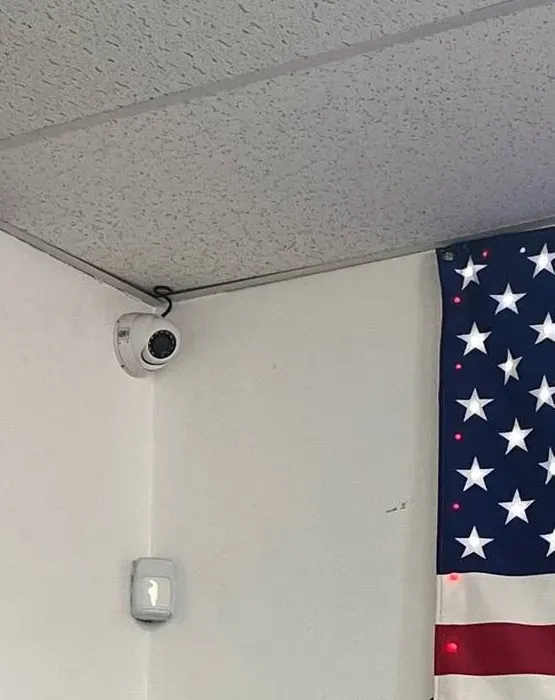
Photo from the AESS job library, not taken in Kingsbridge Heights: an office corner with a flag. We name the VA medical center on this page as a neighbor, not as a client.
What the owner receives when we finish
A short record, on paper and as a file: each door with its lock, operator, settings, credential groups and power-failure behavior; who holds administrator rights; the cable route and power supply for each door with photographs; the test sheet; and the itemized final invoice in the same format as the estimate, for anyone who needs to show what was installed.
Coverage Area
Access Control Near Kingsbridge Heights’s Landmarks
Callers use these places to tell us where they are. They are reference points, not clients.
James J. Peters VA Medical Center
130 West Kingsbridge Road, on the neighborhood’s southern edge. Opened in 1922, rebuilt with a 1981 main building, 311 hospital beds; home of a 48-bed spinal cord injury unit and the Spinal Cord Damage Research Center.
West 229th Street step street
Ten flights and nine landings, about 230 feet long, climbing 65 feet from Heath Avenue to Kingsbridge Terrace; rebuilt by DDC for DOT and reopened in May 2019 with bicycle channels on both sides.
Former 50th Precinct station house
3101 Kingsbridge Terrace at Summit Place, a 1902 Beaux-Arts building designated a city landmark in 1986, home of the Kingsbridge Heights Community Center since the 1970s.
Jerome Park Reservoir
Built in 1906 for the Croton Aqueduct system, about 2.2 miles around, on the neighborhood’s northeast side (Wikipedia).
Kingsbridge Armory
On Kingsbridge Road at the southeast corner; redevelopment approved by the City Council in October 2025, with drill-hall work planned from 2026 to 2030.
Castle of Kingsbridge
2744 Kingsbridge Terrace, built in 1914 by Samuel B. Reed, according to Wikipedia; a private house, named here only as a reference point.
Summary panel prepared by AESS from this page’s text; schematic.
Schematic table prepared by AESS from the sources and practice described on this page.
Schematic table prepared by AESS from the sources and practice described on this page.
Kingsbridge Heights is priced at our Bronx multiplier of 1.00, the same list as Brooklyn. Each figure covers equipment, labor, programming, credentials and an hour showing the people who will run it how it works. New York City sales tax of 8.875 percent is added on the invoice.
System or item
Kingsbridge Heights price
Typical Kingsbridge Heights use
Single door: keypad or fob reader with electric strike
$1,500 – $2,500
The lobby door’s lock and reader that an operator is then tied to, or an apartment door for a resident who cannot use a key
Keypad on a staff, service or back door
$1,500 – $2,000
A side or lower-level door turned into a usable entrance, or a pharmacy’s stock room
Video intercom panel with integrated fob access, replacing a buzzer
$1,500 – $3,000
A call station a seated visitor can use, ringing residents’ phones
Multi-door system
$4,000 – $15,000
A vestibule pair, a side entrance and the elevator lobby on one controller
Card readers on several office doors in a shared building
$4,000 – $12,000
A practice or program site with offices and supply rooms
Full building
$15,000 – $40,000+
Every entrance of a six-story elevator building or a co-op
Buzzer repair (for comparison)
$200 – $500
Keeps an old buzzer working but adds no credentials, operator or log
Service and repair visit
$195/hr, 3-hr minimum ($585)
Any brand or installer, including an opener that has stopped working
Some work depends too much on the door to publish a figure: the door operator itself, door and frame repairs, reversing a door’s swing, a new electrical circuit by a licensed electrician, and any ramp or lift work by others. Each is priced after the walk-through and shown as its own line, so it can be funded or approved separately. Jobs under $500 are paid in full up front; jobs over $500 take a 50 percent deposit. Full terms — including 50% deposit, the 30-day warranty and optional paid extended warranty, and the late-fee schedule — are set out in the service agreement.
What moves a Kingsbridge Heights quote up or down
Whether the door can be used as it is. A door that swings freely needs no repair line; a sagging, binding or warped one does.
Power at the head of the door. An outlet or junction box nearby keeps it simple; a new circuit adds an electrician’s line.
One door or a vestibule pair. Two doors in sequence need two locks, two operators and more setup time than one.
Who needs special settings. A single resident’s long hold-open time is quick to set; many residents with different needs take longer to tune.
Schematic table prepared by AESS from the sources and practice described on this page.
Summary panel prepared by AESS from this page’s text; schematic.
Ask for an Itemized Estimate You Can Send On
Landlord, board or VA prosthetics office: tell us who will read it, and we lay out the estimate the way they need it. Call or text (646) 490-0629.
A single-door line at $1,500 to $2,500: a reader and electric strike on the door an operator will open, hands-free credentials for the resident who needs them, ordinary fobs for others, and the door check. The operator and any door repair are separate lines after the walk-through.
Accessible Entrance — from $4,000
A multi-door system at $4,000 to $15,000: a vestibule pair or a front-and-side pair on one controller, sequenced timing, a call station a seated visitor can use, battery-backed lock power and fault alerts to the super.
Whole Building — from $15,000
A full-building system at $15,000 to $40,000 and up: every entrance, the elevator lobby and service doors, credential groups for residents, staff and home-care visitors, and the written record a board or lender can keep.
Summary panel prepared by AESS from this page’s text; schematic.
Already bought hardware? Labor-only installation
Families sometimes buy an opener or a smart lock online before calling anyone. We install owner-supplied equipment on a labor-only basis, priced once we see the model numbers and the door. Check two things with us first: that the product is rated for the weight and use of the door, since a light-door opener on a heavy lobby door fails quickly, and that it can be wired to release the lock before it moves the door.
Complete Services
Every Access Control Service in Kingsbridge Heights
An accessible entrance is rarely only a door. These are the related services we provide in Kingsbridge Heights.
This is a note about how we start, not a story about a particular building or resident. When a family calls about a door for someone in a wheelchair, we ask whether the person will be there for the visit, and we ask them to come down to the street with us.
Then we go to the elevator the way they go. We do not measure first. We watch where they stop, where they reach, which hand they use, and what they do when the door begins to close. The tape measure comes out afterward, to put numbers on what we saw.
Almost every time, the hard part turns out to be somewhere the family did not mention on the phone: the threshold, the inner door, the mailbox wall that narrows the vestibule, or the push plate on the wrong side. That walk is the most useful half hour of the job, and it is why our quotes for accessible doors come after a visit, not from photos alone.
FAQ
Kingsbridge Heights Access Control FAQ
At Bronx rates, how is a lobby opener tied to a reader priced?
+
The reader and electric strike that the opener works with fall in our single-door line of $1,500 to $2,500. The operator itself, any door repair and any new electrical circuit are priced after we see the door and shown as their own lines, plus sales tax where it applies. That way a landlord, a board or the VA can approve or fund each part separately.
Do you need to cut the floor or the sidewalk to install an opener?
+
Usually not. Most low-energy operators mount on the frame above the door, and push plates mount on the wall or on a short post bolted to the surface. Cable runs inside the wall, in surface raceway, or above the ceiling. Posts set into concrete are the exception, and we say so on the quote if a door needs one.
Can the same credential open the building door and my own apartment door?
+
Yes, if both doors are on the same system or on systems that accept the same credential. Many residents use one phone credential or one tag for the street door, the vestibule and their apartment door. The owner decides whether apartment doors join the building system; a resident can also have a separate keypad or credential on their own door.
Who looks after the opener once it is in, and how often does it need attention?
+
The owner, normally through us or the building’s door contractor. We recommend a check of each operator and its settings at least once a year, plus the super’s two-minute weekly check. Our service visits are $195 an hour with a three-hour minimum, and we work on openers and readers we did not install.
Can a temporary arrangement go in while we wait for the landlord or the VA?
+
Sometimes. On a building that already has a reader system, a phone credential or tag can often be added quickly with the owner’s permission. A scheduled unlock while a helper is present is another stopgap. We write down when any temporary measure will end, so it does not quietly become permanent.
Do you put the estimate in a form the VA prosthetics office or a landlord can use?
+
Yes. Each item is on its own line with labor and materials separated, product data sheets are attached, and we include color photographs of the door as it is now, which the VA’s HISA application asks for. Landlords get the same document with a description of the mounting and the move-out plan.
What happens to an opener the tenant paid for when the tenant moves out?
+
That is agreed in writing before installation. Some owners keep the equipment and the next tenant benefits; others ask for removal and repair of the holes. We quote removal as its own line at the start, so nobody is surprised later.
Will an opener make the lobby noisy for the apartments nearby?
+
Low-energy operators are quiet, with a soft motor sound during opening and closing. The louder sound in most lobbies is an electric strike releasing or a door slamming, and a well-set operator usually reduces the slam. We mount the operator with care on a frame shared with a ground-floor apartment wall.
Can a resident switch the automatic opening off when they do not need it?
+
Yes. Operators can be set so the door opens automatically only for certain credentials or when a plate is pressed, and opens by hand for everyone else. A resident who needs it only on bad days simply uses the plate on those days.
Do you install around the Kingsbridge Road shopping streets as well as on the residential blocks?
+
Yes. We work in storefronts, pharmacies, practices and program sites on Kingsbridge Road, University Avenue and Jerome Avenue, as well as in apartment buildings and houses on the residential blocks of the hill, at the same Bronx prices.
Summary panel prepared by AESS from this page’s text; schematic.
All Areas Served
Access Control Installation Across New York City, Long Island and the Hudson Valley
Kingsbridge Heights is a short drive west along Fordham Road and up Kingsbridge Road from our office. For the borough as a whole, read the Bronx access control installation page; for every borough, Long Island and the Hudson Valley, each with its own price multiplier, begin at the New York City hub.
We opened each source below in October 2026 while writing this page, and every local statement above traces to one of them. Prices are ours, from the AESS list at the Bronx rate. Where sources disagree, about the neighborhood’s boundaries or whether the VA campus sits inside them, the page says so instead of choosing quietly.
Schematic table prepared by AESS from the sources and practice described on this page.
Several sources our blueprint asks for could not be reached while this page was written: Google’s People Also Ask, related searches and AI Overview, Answer the Public, Bing and DuckDuckGo suggestions, and Yelp reviews. A search for Reddit threads about Kingsbridge Heights doors and lobbies returned nothing usable. Nothing on this page depends on them.
Resident Stuck Outside, or an Opener That Will Not Close? Call the Kingsbridge Heights Line
Two kinds of failure go to the front of our list: a resident who depends on an opener and cannot get in or out, and a street door that will not close and lock. Call (646) 490-0629, say which door and whether someone is waiting, and you get an arrival window on the call.
Kingsbridge Heights Access Control From a Licensed, Insured Team
Tenants, families, supers, owners and boards in Kingsbridge Heights reach us on (646) 490-0629 by call or text, and WhatsApp is handy for sending door photos from the sidewalk. Crews leave from the Abstract Enterprises Security Systems office at 460 E Fordham Rd, Bronx, NY 10458.
Our Google rating is 4.7★ across 201 reviews. AESS works under New York State license #12000287431; if your landlord or board needs to be named on our certificate of insurance, tell us when you book the walk-through.
Full terms — including 50% deposit, the 30-day warranty and optional paid extended warranty, and the late-fee schedule — are set out in the service agreement. Our warranty page has the details.
What changed on October 21, 2026: this page was written from scratch on new research. It now centers on what sets Kingsbridge Heights apart for door work: hillside prewar elevator buildings with raised lobbies and lower step-free doors, and a neighbor on West Kingsbridge Road whose spinal cord injury program sends veterans home to doors like these. Prices are unchanged at the Bronx multiplier of 1.00, and the service rate remains $195 an hour with a three-hour minimum.