What are you looking for?
About Us Contact Us Careers Get a Free Quote (800) 486-0943
Pick a service
✅ Got Your Own System?
🎬 Home TheatreQuote 🎶 AV SoundQuote 🔑 Access ControlQuote
Now pick your area
Pick your area
Long Island
Hudson Valley
Services available
Pricing & Tools
Pick a service for pricing
🚪 Intercom Pricing 🔔 Buzzer Repair Pricing
Calculators
📹 Camera System Calculator 🚨 Alarm Calculator ⚡ Cabling Quote Builder ✅ Got Your Own System?
Select your area
Gate pier station dark, a mortise lock that will not release, or a staff door that will not relock tonight? Fieldston line, same day: (646) 490-0629
Home › Access Control NYC › Bronx › Fieldston
Tudor, Colonial and Mediterranean Revival Houses · Private Association Streets · Fieldston Historic District · Driveway Gates and Stone Piers · Staff and Service Entrances

Access Control
Installation in
Fieldston, Bronx

Hardware That Hides Inside Period Doors · Gate Controls Planned Around the Master Plan · Codes for Family, Staff and Trades · No Monthly Fees

Fieldston is the rare New York neighborhood where three different parties have a say in your front yard. The street, and often the strip of lawn and sidewalk beside it, belongs to the Fieldston Property Owners Association. What can be seen from that street answers to the Landmarks Preservation Commission and the district's master plan. The rock outcrops and big trees fall under the city's Special Natural Area rules. An entry system for a house here has to respect all three before it does anything clever. We design access control for Fieldston's revival-era houses from the door inward: electrified locks concealed in the door you already have, gate controls that sit on your own side of the Association line, video at the pier rather than on the façade, and codes for everyone who keeps a large house running, with nothing billed monthly.

Reviewed and updated October 18, 2026: the Landmarks Preservation Commission's Fieldston Historic District master plan (Title 63 §12-07), Bronx Community Board 8 committee minutes on the Association's private streets, Riverdale Press reporting on street closures and the patrol, the NYPD 50th Precinct page, the Department of City Planning's Special Natural Area District material, DASMA's UL 325 gate-safety data sheet and the city's tenant data rules · Anwar Timothy, NYS license #12000287431 · Fieldston visits dispatched from our office on East Fordham Road

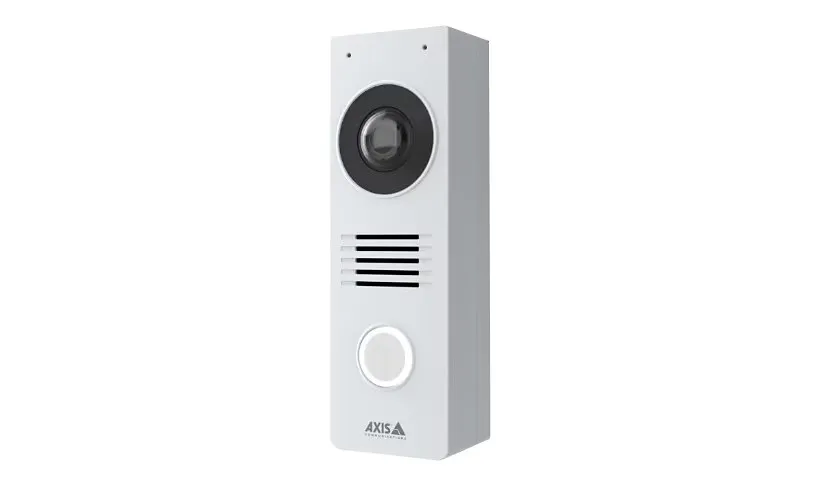
Access control installation Fieldston, Bronx reference photo: a slim white door station standing upright, with a round camera lens near the top, a block of horizontal speaker slots below it, a single round call button ringed in grey and a small maker's logo at the base, shown on a plain white background
Manufacturer product photo, used as a reference: a narrow door station with a camera, a speaker and one call button. On a Fieldston house a plate this size can sit on the face of an existing stone or brick pier at the driveway, so callers are seen and heard at the edge of the property instead of on the front of a landmarked house.
Fieldston House Entry Request
Front door, gate pier, staff entrance or inner rooms — we call back the same business day

✅
Request Sent!
A technician will call you back about the Fieldston house the same business day.
25+
Years Experience
✓
Same-Day Estimates
100%
Licensed & Insured
4.7★
201 Google Reviews
Access Control Installation in Fieldston - Abstract Enterprises Security Systems video

Three photographs tell us most of what we need. Stand at the edge of the street, where the Association's pavement meets your lawn, and photograph the house the way a passer-by sees it: the front door, the driveway mouth and any piers or posts beside it. Then take one picture of the front door from the inside, showing the lock, the hinges and any glass beside it. Finally, photograph the door your household actually uses most, which in many Fieldston houses is not the front one but a side or kitchen door near the garage. Send the three to (646) 490-0629 with a line about who comes and goes. From that we can tell you whether the front door can take a concealed lock, whether the gate idea fits the master plan's limits, which parts of the job need a Landmarks application, and roughly what it will cost.

  • Photo review is free, and a written estimate follows the same business day
  • We flag anything that needs a Landmarks Preservation Commission permit, an Association letter or a City Planning review before a single hole is drilled
  • Our New York State installer's license, #12000287431, and a certificate of insurance can be in your hands before anyone sets foot in the house
The Neighborhood

Why Fieldston Properties Need Access Control

Wikipedia describes Fieldston as a privately owned, affluent neighborhood inside the Riverdale section of the northwest Bronx, bounded by Manhattan College Parkway to the south, the Henry Hudson Parkway to the west, West 250th Street to the north and Broadway to the east, and lying in Bronx Community District 8 under ZIP code 10471. The private part is literal. The streets and common areas are owned by the Fieldston Property Owners' Association, Inc., which plows them, repairs the sewers beneath them, looks after roughly a thousand trees and runs a security patrol, all paid for by annual dues. Once a year the streets are closed to non-residents so that their private status is preserved, and parking is limited to residents and their guests.

The history explains the layout. Major Joseph Delafield bought the land in 1829 and named the estate after his family's seat in Ireland; the acreage differs between sources, so we leave it out. The family laid out building lots in 1909, the year after the Broadway subway line reached Van Cortlandt Park, and civil engineer Albert E. Wheeler drew streets that follow the contours of the ground and keep as much woodland as possible instead of imposing a grid. The first house was finished in 1911. By 1923, with about eighty houses built, owners formed the Property Owners' Association, and in 1938 the City Planning Commission approved a special zoning district that barred multiple-family buildings. Buyers worked from a list of approved architects, and revival styles were encouraged: Dwight James Baum designed 62 Fieldston houses and Julius Gregory 42, according to the same article.

On January 10, 2006 the Landmarks Preservation Commission designated most of the neighborhood as the Fieldston Historic District, which takes in 252 houses and related structures. CityLand's report of the vote records that many owners opposed it and that Commissioner Joan Gerner noted how few city historic districts are made up of single-family houses. In 2014 the Commission adopted a district master plan as a formal rule. It lets Commission staff approve a long list of routine work, including fences, gates, gate posts, driveways, doors and lighting, as long as the work meets the plan's written standards. That document, more than anything else, shapes what an access control job looks like here.

Security has been part of the neighborhood's own arrangements for a long time. A New York Times headline from June 16, 1963 reads "Fieldston Hires Private Police To Fight Rash of Bronx Crime"; the archive page was blocked when we tried to read it, so we rely on the headline and the search excerpt alone. Half a century later, the minutes of Community Board 8's traffic committee for October 15, 2013 record that Excel Security patrols Fieldston's private streets for the Association and posts agents at the entrances, to admit emergency vehicles, whenever barricades are up. The same minutes note that three schools sit inside Fieldston and that about seventy school buses travel to and from Horace Mann School alone.

A patrol watches streets. It does not watch your back door. In a letter to residents reported by the Riverdale Press in a story about a week-long closure starting on a Monday, January 6 (the article carries no year; the weekday and the Board's 2013 minutes point to 2014), the Association's president warned of a series of thefts from unlocked cars and an attempted break-in at a Delafield Avenue home, where the owner was present, called the police and the suspect escaped; he urged residents to stay vigilant and secure their homes. In August 2018 CBS New York reported a run of break-ins to cars along Fieldston Road and Liebig and Tyndall Avenues in Riverdale; one resident's van was entered while it sat in her driveway behind a closed gate, and she told the station, "It felt like an intrusion because they had to come through our gate to enter this property." A gate that merely closes is a signal, not a barrier.

The houses themselves create the rest of the need. Brick Underground's 2023 profile describes single-family houses, many fifty to a hundred years old, in revival styles from Tudor to Mediterranean, with some mid-century modern houses built after the rules relaxed, on lots its sources put at three-quarters of an acre to an acre (listings in the same piece show smaller lots too). Big houses on big lots have long walks from the street to the door, several entrances, and a household that is larger than the family: housekeepers, nannies, gardeners, dog walkers, decorators and, because these houses "usually need renovation" when they change hands, contractors for months at a time. Keys handed to all of those people over the decades are the real weak point, and access control is how an owner takes them back.

Fieldston at a glance, from the sources we read

  • Ownership of the streets: streets and common areas owned by the Fieldston Property Owners' Association; the master plan adds that "in many cases, areas of yards abutting the streets, including sidewalks" belong to the Association as well.
  • Landmark status: Fieldston Historic District designated January 10, 2006, with 252 houses and related structures (Wikipedia); master plan rule adopted by the Commission on February 11, 2014.
  • Zoning: a 1938 special district barred multiple-family buildings (Wikipedia); the Special Natural Area District applies to land and landscape changes (master plan, Department of City Planning).
  • Policing: the NYPD's 50th Precinct, 3450 Kingsbridge Avenue, serves Riverdale, Fieldston, Kingsbridge, Marble Hill and Spuyten Duyvil; the Association's contracted patrol works the private streets.
  • Traffic: the Association's president told the Riverdale Press that about 4,300 vehicles a day pass through Fieldston on weekdays; CB8 voted 12-0-0 in 2013 for "No trucks except local deliveries" signs at all nine entrances.
  • Population: 3,292 residents on 0.426 square miles in 2011 (Wikipedia).
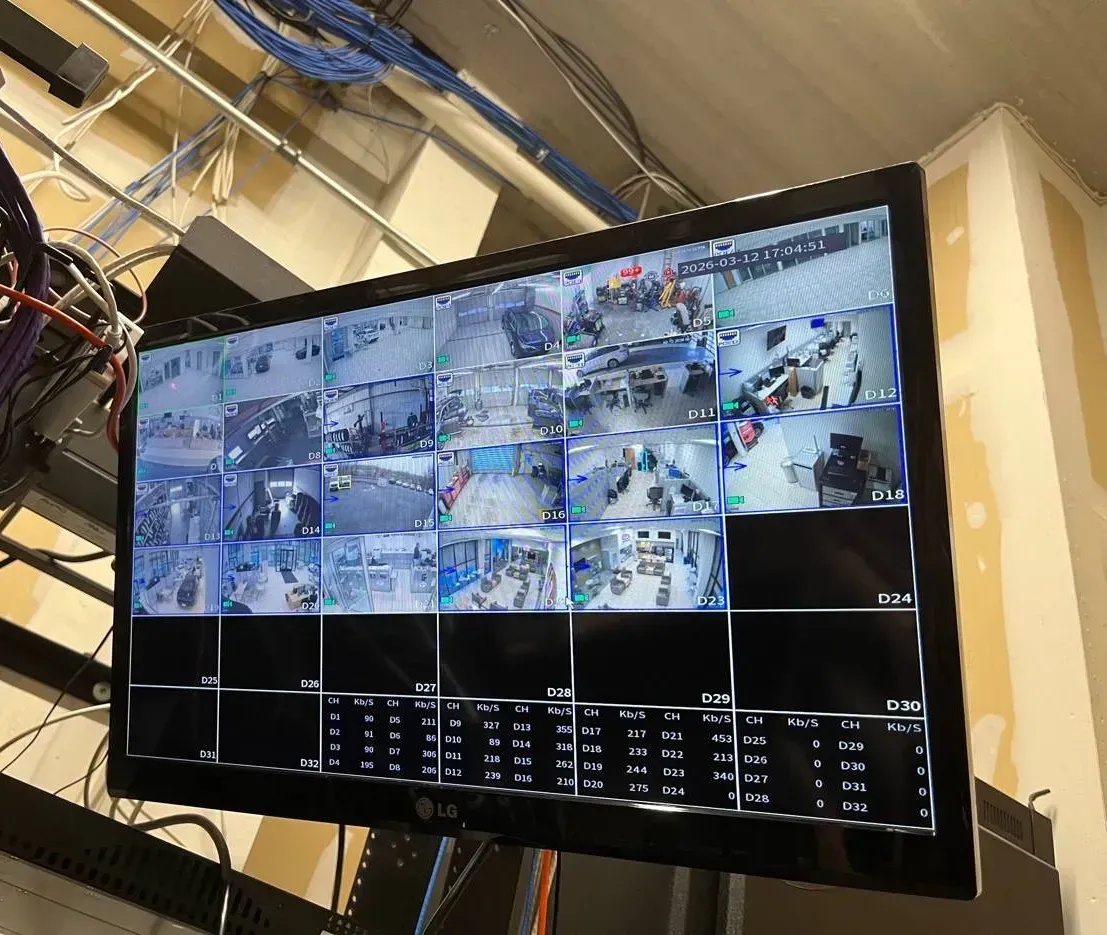
Fieldston, Bronx access control planning reference: a wall-mounted monitor on an arm showing a grid of small camera tiles above a table of channel numbers, with bundles of blue and white cable running along the ceiling above it and the edge of an equipment rack with coloured cables at the left
Photo from the AESS job library, not taken in Fieldston: a monitor showing many camera tiles, with the cable bundles that feed them running overhead. A large Fieldston house is planned the same way, as one system with every door, gate and camera wired back to a single, labeled point in the basement.
Repairs

Same-Day Repair When a Fieldston Gate, Lock or Door Station Fails

Large houses fail in large-house ways. The call we get is rarely "the keypad is dead" on a single door. It is a video station on a stone pier sixty feet from the house that has lost its picture after a storm, an electrified mortise lock in a heavy oak door that hums but will not retract, a driveway gate that opens for the family's cars and then refuses to close, or a kitchen door used by staff that no longer relocks behind them. Ring (646) 490-0629, tell us which opening has failed and what it is doing, and we give you an arrival window on the call.

On older houses the causes are usually physical before they are electronic: a door that has dropped on its hinges as the frame settles, a long cable run from the street damaged by a landscaper's spade or a tree root, water getting into a pier-mounted box through an unsealed top, or a power supply in the basement that someone switched off at the panel. We work on systems other installers fitted, including gate operators, intercom stations and keypad deadbolts. If the work touches anything visible from the street, we repair like-for-like so that no new Landmarks approval is triggered by the repair itself.

What We Install

Access Control Services in Fieldston

A Fieldston plan is usually a handful of the services below, chosen so that very little of the work is visible from the Association's street. We quote them as one design: one app, one set of credentials, one battery-backed power supply in the basement, and one person in the household who holds the administrator account.

🚪

Concealed locks in period front doors

Electrified mortise locks, concealed electric strikes and power-transfer hinges fitted inside heavy plank, paneled or glazed doors, so the outside of a Tudor or Georgian Revival entrance looks exactly as it did and the family still uses the original handle set.

📹

Video stations at the gate pier

A slim door station or call box on an existing stone or brick pier at the driveway, ringing indoor screens and phones, so callers are seen and spoken to sixty or a hundred feet before they reach the house. Placement is planned around the master plan and the Association line.

🚧

Driveway and walk gates

Keypads, readers and phone release for walk gates and motorized driveway gates, sized to gates the master plan allows, with the monitored safety sensors UL 325 calls for and a separate walk gate wherever people and cars would otherwise share one leaf.

🧺

Staff and service entrances

A reader or keypad on the kitchen, mudroom or garage-level door that housekeepers, nannies, caterers and deliveries use, with schedules per person, so the formal front door can stay on family credentials only.

🍷

Inner doors with tighter rules

Locks with their own credential list on a study, a home office with client files, a wine room, a gun safe room or a room holding collections, logged separately from the house doors and closed to household staff by default.

✈️

Away settings and house-sitters

An "away" schedule that suspends every credential except the house-sitter's and the owners', with alerts for any door that opens, for families who leave a large house empty for weeks at a time.

🔌

Long cable runs over rock and roots

Data and low-voltage power from the house to piers, gates and outbuildings along routes that avoid protected rock outcrops and tree roots: existing conduit, driveway edges, walls, or a point-to-point wireless link where digging is not wise.

Owners who want the driveway and gate recorded as well usually pair an entry plan with security camera installation in Fieldston, so the camera at the pier and the station beside it share one cable and one approval drawing.

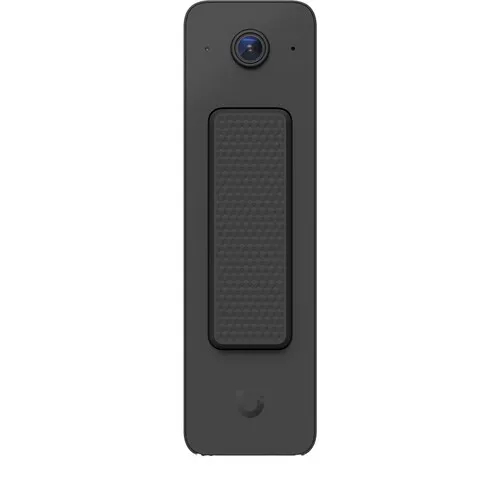
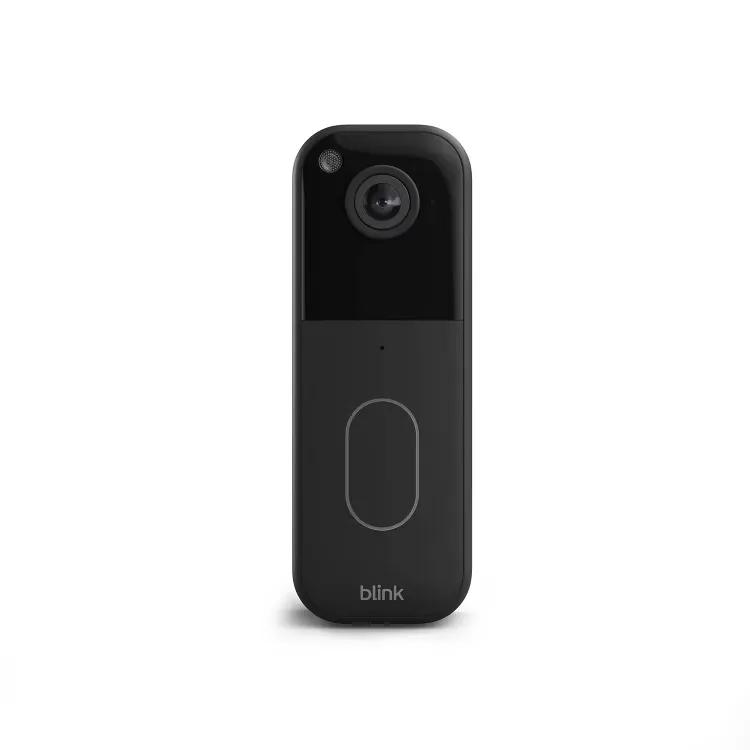
Fieldston, Bronx video entry reference: a tall, narrow black video doorbell with a small round camera lens at the top, a long textured rectangular panel filling the middle of the face and a small dot near the bottom, standing upright against white
Manufacturer product photo, used as a reference: a tall, narrow black doorbell with a camera at the top. Slim, dark devices like this are easier to place quietly on a door frame or a pier than broad panels, which matters on a street front the master plan asks owners to keep unobtrusive.
Building Specialists

Access Control for Fieldston's Revival-Era Houses

Fieldston was built from an approved list of architects working in historical styles, and each style brings its own kind of door. The descriptions below come from Wikipedia's account of the district, CityLand's report of the designation, Brick Underground's profile and Forgotten New York's 2017 walk along Waldo Avenue. The houses named are examples of style, not clients.

Tudor and Medieval Revival

The style Wikipedia calls popular in the 1920s, with half-timbering, stucco, stone and steep roofs; Forgotten New York points to 4405 Waldo Avenue, a 1928 Medieval Revival house by Dwight James Baum for the engineer Albert Wheeler. Front doors are often thick plank or board-and-batten doors with strap hinges, round or pointed heads, and small leaded lights. They take mortise hardware well and hide a concealed lock easily, but their uneven faces make surface-mounted readers look wrong.

Colonial, Georgian and Dutch Colonial Revival

Paneled doors under fanlights, often with glazed sidelights and a brass knocker. The glass beside the door is the issue: a lock that a hand through a broken sidelight can open is no lock at all, so the inside release and the reader position have to be planned together.

Mediterranean Revival

Stucco walls, tile roofs and wrought iron; Forgotten New York describes 4621 Waldo Avenue, a 1928 Baum design set back behind a stone fence that takes in schist. Iron gates and grilles are part of the look, and an electric lock on an iron gate has to be chosen to suit its frame rather than bolted on.

Early Craftsman houses

Some of the first houses, such as 4418 Waldo Avenue of 1911–12 by Nathaniel Vickers, with a solid stone base and tall fieldstone chimneys. Doors are simpler and wider, often with a glazed upper panel, and porch roofs give a reader some shelter from rain.

Mid-century modern houses

Built after the Association relaxed its design rules in the 1950s and 1960s (CityLand and Brick Underground date it slightly differently). Glass walls, flush doors and aluminum frames suit narrow-stile electric hardware and readers that disappear into a mullion.

New estate houses

Brick Underground describes Villanova Heights, fifteen mansions of 7,500 to 15,000 square feet that opened in 2022 on private streets with a clubhouse. New construction is the easiest case: conduit, door contacts and power can go in before the walls close, and the architect can draw the reader positions from the start.

How the method changes from one Fieldston house to the next

Heavy wood doors. An electrified mortise lock replaces the lock body inside the door edge and is powered through a concealed power-transfer hinge or a door loop on the hinge side. The trim on both faces can stay original, or be matched by the lock maker's own handle sets. Because these doors are often two inches or more thick and very heavy, we check the hinges and the frame before anything else; a sagging door wears out an electric lock quickly.

Glazed and sidelit doors. We keep the inside release out of reach of a broken pane, using a lever or push release mounted away from the glass, and we position any outside reader on the frame or the adjacent wall rather than on the glass itself. Where the code permits and the household agrees, a reader can sit inside the vestibule and read a card through a wooden panel or wall, which means nothing at all appears outside.

Stone, stucco and half-timber walls. Any fixing that must be outside goes into a mortar joint or a plain, replaceable surface, never into carved stone, decorative timber or tile, and cable enters through the smallest practical hole, sealed and painted. Stucco over old lath is fragile; we drill it slowly and patch it to match.

Large floor plans. A controller near the electrical service in the basement, with home runs to each door, works better than battery locks scattered across a 6,000-square-foot house whose Wi-Fi fades at the far wing. Where a wired run to a distant door is impractical, a hub-based lock with a dedicated repeater is the compromise.

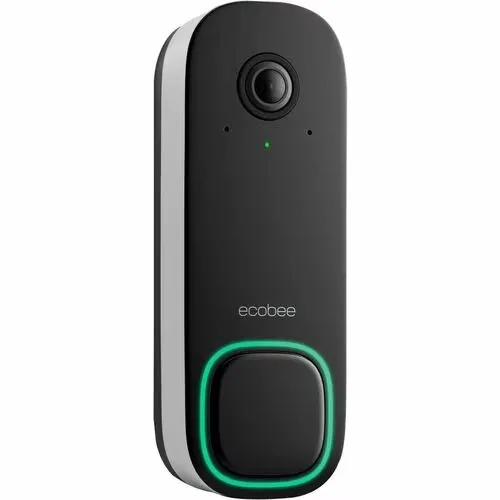
Fieldston, Bronx doorway reference: a black rounded video doorbell with a camera lens and two small sensor dots at the top, a printed maker's name in the middle and a large button at the bottom circled by a glowing green ring, shown straight on against white
Manufacturer product photo, used as a reference: a rounded black doorbell with a lit ring around its button. On Tudor and Colonial Revival entrances we place a device like this on the frame or the wall beside the door, fixed into plain material, never into carved stone or decorative timber.
The Fieldston Difference

Three Parties in the Front Yard: the Association, Landmarks and City Planning

In most of the Bronx, an owner who wants a keypad at the end of the driveway has one question to answer: will it work? In Fieldston there are three more, and getting them wrong costs more than the hardware. This section sets out what the published documents say. It is a summary, not legal advice, and the agencies' own staff have the final word.

The Association owns more than the road

The district master plan states it plainly: "The streets and, in many cases, areas of yards abutting the streets, including sidewalks, are owned and controlled by the FPOA." Any application to Landmarks for new construction, additions or site work must include either a letter from the Association saying the work does not encroach on its property or a surveyor's site plan showing the same, and if the work does encroach, a letter saying the Association does not object. The plan also says it does not change the Association's control over the use of and access to its own land. For an access control job, that means the obvious spot for a keypad post, at the edge of the pavement where a driver can reach it, may not be yours to build on, and a trench for the cable may cross someone else's land before it reaches your lawn.

The master plan sets the shape of gates, fences and lights

The master plan lets Commission staff issue an authorization to proceed for changes to fences, walls, driveways, gates and gate posts, and for lighting and doors, when the work meets its standards. Fences in front yards and on the front part of side yards may be no higher than 42 inches and must be simple and transparent, with metal fences much more open than wood; fences behind the line of the façade may go to six feet. Fences visible from a street must be painted metal matching historic fences, or wood with the finished side facing out, and chain link is allowed only at the rear where it is barely seen. Changes to gates and gate posts must match existing or historic conditions. Freestanding stone walls are not permitted except low walls around planting beds, and a new driveway serving a new garage may be no wider than thirteen feet. New light fixtures must be in proportion to the building and placed so that they do not draw undue attention.

What the plan does not do is mention intercoms, card readers, keypads or cameras by name. Where the master plan is silent, the Commission's general rules and permit types apply, and the plan says that where both cover the same work the master plan governs. The Commission's permit guidebook chapter on health and safety work describes staff-level permits for intercoms and doorbells placed within or beside a door opening, asks that they be fixed through mortar joints or plain material rather than decorative surfaces, and asks that conduit be concealed. We read both documents for every job, draw the device positions on photographs, and leave the final call to Commission staff at 212-669-7817.

City Planning looks at the rock and the trees

Fieldston also lies in the Special Natural Area District. The master plan requires anyone proposing new construction or changes to landscape or hardscape features to present the work to the Department of City Planning before Landmarks staff can approve it, and lists rock outcroppings, stone walls and steps, bluestone and concrete sidewalks, bluestone curbs and mature front- and side-yard trees among the district's significant landscape features. A 2019 City Planning handout called rock outcroppings "a defining feature of Fieldston and Riverdale" and said that under the rules then in force nearly any project affecting the land needed relief from the department; its proposed overhaul did not go ahead, as City Limits reported under the headline "How environmental concerns, property activism and density fears halted a bid to change NYC zoning rules." The practical lesson is simple: a cable trench through a front lawn, a new concrete footing for a keypad post or a change to a stone wall is not a weekend decision here.

How we design around all three

We start inside and work out. Everything that can live inside the door, the vestibule or the house does: the lock, the power supply, the controller, the door contact and, where possible, the reader. Outside, we prefer existing piers, posts, walls and conduits to new ones, and existing paved edges to fresh trenches. When something must be new and visible, we mark it on a photograph with dimensions and finishes, check it against the master plan and the general rules, and tell you before you commit whether it needs a Landmarks application, an Association letter or a City Planning presentation. Most Fieldston owners end up with a system that needs none of the three, simply because the visible parts were designed out.

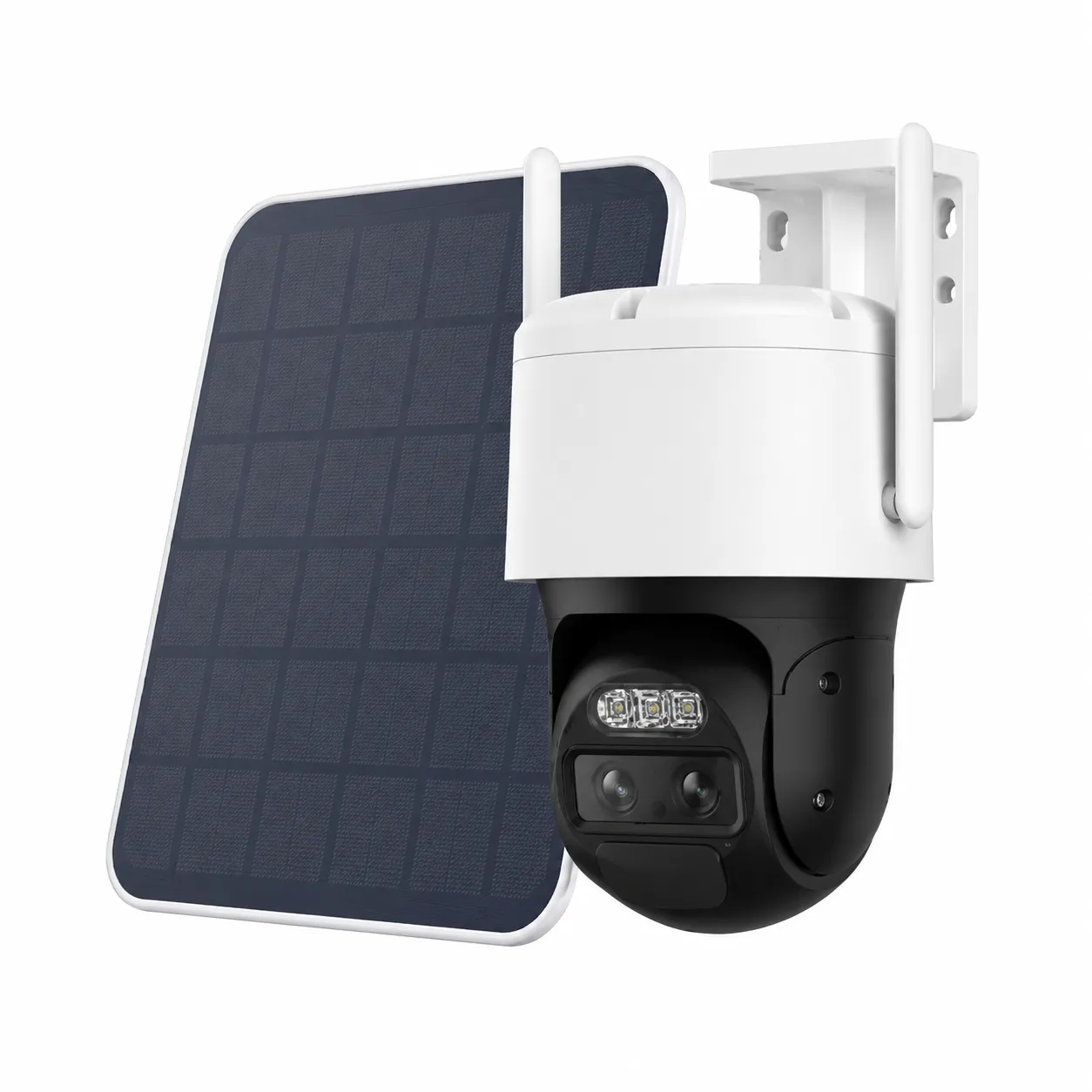
Fieldston, Bronx driveway reference: a white outdoor pan-tilt camera with two short antennas on top and a black lower housing holding two lenses, mounted on a bracket in front of an angled dark solar panel, shown against a white background
Manufacturer product photo, used as a reference: a solar-powered pan-tilt camera with its panel. Where a cable trench to a far gate or outbuilding would disturb protected rock or tree roots, self-powered equipment is one of the options we weigh before anyone digs.
Commercial Access Control

Business and Home-Office Access Control In and Around Fieldston

Fieldston itself has no shopping street. Brick Underground calls it exclusively residential, with bars and restaurants just outside its borders and groceries bought in North Riverdale and Riverdale. The business work we do here is of two kinds: offices, studios and consulting rooms inside houses, and the shops, practices and buildings along the neighborhood's edges.

  • Home offices and consulting rooms. Professionals who see clients at home need a client entrance that opens to the office and nowhere else, a log of who came in, and records rooms that lock to the household. We fit a separate reader and a door contact on the office door and keep the client entrance on its own schedule.
  • Studios and collections. Artists' studios, archives and rooms holding valuable collections are treated as inner doors with their own credential list, alerts and, where wanted, a camera covering the door rather than the room.
  • Broadway on the east edge. Shops and offices along Broadway, facing Van Cortlandt Park, need staff doors with schedules, back doors that report when they are opened, and owners' codes that stay with the owner when staff change.
  • Riverdale and North Riverdale shopping streets. The small shops and practices where Fieldston residents do their errands have the same back-door and staff-turnover problems as any Bronx retail corridor; our Riverdale access control page covers that work in more detail.
  • Schools, the university and houses of worship. Horace Mann School, Ethical Culture Fieldston School, Riverdale Country School just to the north and Manhattan University on the southern edge are neighbors and landmarks for directions. They are not our clients, and we do not describe their systems.

Compliance points for offices and shops

  • Free egress. New York City Building Code §1010.1.9.8 and §1010.1.9.9 require that electrically locked egress doors release on power loss and from a manual device on the egress side, and that magnetic locks release from door hardware with a built-in switch; locking hardware is listed to UL 294. We follow them on any door that serves as an exit.
  • Accessible hardware. Readers and release buttons go where a person using a wheelchair can reach them, and door opening times are set long enough for visitors who move slowly.
  • Records. A practice that stores client or patient files may want access logs kept for a fixed period and exported on request; we set that up at handover rather than leaving the defaults.
The Rules

The Rules Behind a Fieldston Entry System

Beyond Landmarks, the Association and City Planning, a handful of state and city rules decide how an entry system has to behave. Most Fieldston houses are one-family houses, and the 1938 zoning district was written to keep it that way, so several rules that dominate apartment-building work apply here only at the edges.

  • Multiple Dwelling Law §4. A building occupied by three or more families living independently is a multiple dwelling. A one-family house with a nanny's room, or a house with one rented apartment over the garage, is not; a house divided into three units is. Brick Underground mentions a listing on Post Road with three units, so it does happen.
  • The city's Tenant Data Privacy Law (Local Law 63 of 2021). Applies to multiple dwellings that use fobs, cards, apps or biometrics. It requires a written policy, express consent, minimal data, destruction of authentication data within 90 days unless anonymized, and no requirement to use smart access to enter one's own apartment. In a one-family house it does not apply, but we follow its spirit for household staff anyway: collect little, keep it briefly, share it with nobody.
  • Gate safety. A motorized vehicle gate needs entrapment protection to UL 325; as DASMA's technical data sheet explains, slide and swing operators need two separate means of protection in each direction of travel, external sensors monitored on every cycle, guarding on sliding gates and a separate pedestrian opening where people are present.
  • Egress from the house. Whatever the front door does outside, it must open from inside with one obvious motion and no key, code or knowledge. We do not install double-cylinder arrangements or maglocks on house doors.
  • Licensing. Security system installation in New York State requires a license under General Business Law §69-m; ours is #12000287431. Line-voltage power to a controller or gate operator is an electrician's work.
Your Questions Answered

Access Control in Fieldston: Questions Answered

These are the questions Fieldston owners put to us, grouped by what they are really about: the street face of the house, the Association and its patrol, the doors themselves, and the people who come and go. Where an answer depends on the master plan or the law, it is a summary of the published text, not legal advice.

The Street Face of the House

We would like a gate across our driveway. What does the Fieldston master plan allow for gates, posts and front fences?

Less than most owners expect, and it is worth knowing before anyone orders a gate. Under the master plan, changes to gates and gate posts must match existing or historic conditions, fences in the front yard and the front part of the side yard may be no more than 42 inches high and must be simple and transparent, and freestanding stone walls are not allowed except as low edging around planting beds. Staff can approve work that meets those standards; anything else goes to the full Commission at a public hearing.

In practice that rules out the tall, solid automatic gate many people picture. What tends to fit is a low, open metal gate between existing piers, or no vehicle gate at all and a controlled walk gate plus a video station on the pier. We photograph the driveway mouth, sketch the gate at its real height, check whether the piers sit on your land or the Association's, and tell you which version has a realistic path to approval before you spend money on fabrication.

Can the reader and the electric lock stay inside the door, so nothing new shows on the front of the house?

Very often, yes, and it is the approach we recommend first. The lock itself can be an electrified mortise lock inside the door edge, powered through a concealed hinge, with the original or matching trim on both faces. The reader does not have to be on the outside either: many card and phone readers will read through a wooden panel, a door frame or a thin wall, so the family holds a card or phone to an unmarked spot by the door and the lock releases.

Visitors still need a way to announce themselves, and that is usually solved at the gate pier or with the house's existing bell rather than with a new device on the façade. The trade-off is that a concealed reader needs a little explaining to new household members, and it works with cards, fobs and phones but not with a keypad. For people who prefer codes, a small keypad on the side or kitchen door, out of the street view, is the usual compromise.

Do the Natural Area rules and the master plan limit digging a cable trench across our front lawn?

They can, and the rock is usually the reason. The master plan treats rock outcroppings, stone walls and steps, bluestone sidewalks and curbs and mature front- and side-yard trees as significant landscape features, and it requires changes to landscape or hardscape to be presented to the Department of City Planning before Landmarks staff can approve them. A narrow trench across a lawn may be ordinary landscaping in practice, but a trench that cuts a stone wall, runs under a protected tree or needs to break rock is a different matter.

So we look for routes that need no digging at all: an empty conduit that once fed an old lamp post, the edge of an existing paved driveway, along a wall top or a fence line, or a small point-to-point wireless link between the pier and the house. Where a trench is unavoidable, we keep it short, away from tree roots, and agree the route with you before we ask anyone for approval.

The Association, the Patrol and the Private Streets

How do we find out whether the spot for a gate keypad post is our land or the Association's?

With a survey, not by eye. The master plan warns that in many cases the yard area along the street, including the sidewalk, belongs to the Association, so the line is often several feet inside what looks like your lawn. Your deed and title survey usually show it; if not, a licensed surveyor can stake it. The Association can tell you what it considers its land, and for any work that Landmarks reviews you need its letter or a surveyor's plan in any case.

Once the line is known, we design to it. A keypad post for drivers often moves a few feet up the driveway, which also keeps cars from stopping in the street to reach it. A video station can go on the face of an existing pier that is plainly yours. And if the only good spot is on Association land, we stop and you ask the Association first; we do not install there on assumption.

Fieldston already pays for a private patrol. What does a house still need at its own doors?

Everything a patrol cannot do from the street. According to Community Board 8's 2013 minutes, the contracted security company patrols the private streets and staffs the entrances when barricades are up. That deters and observes; it does not know who should be inside your house, cannot see a side door at the back of a deep lot, and cannot tell a returning housekeeper from someone who has her old key. The Riverdale Press report of an attempted break-in at a Delafield Avenue home while the owner was there is a reminder that patrolled streets and unprotected doors coexist.

At the doors, a house needs locks that relock themselves, credentials that can be withdrawn the day someone leaves, a record of which credential opened which door, and alerts for doors that should never open at night. Those are the pieces we install. They complement the patrol rather than duplicate it, and the patrol remains the people to call about anything they see in the street.

When the Association restricts commercial traffic, how do deliveries and trades still reach a house with a gate?

The published accounts suggest they still get in if they are going to a Fieldston house. The Riverdale Press reported that during one restriction the guards would stop buses, commercial vehicles and private cars from cutting through, with exceptions for commercial vehicles headed to Fieldston homes and buses picking up neighborhood children. Board minutes also mention "No trucks except local deliveries" signs at the nine entrances. So the street is rarely the obstacle; your own gate is.

We set up the gate for that day the same way as any other: a time-limited code or a one-time phone link for the contractor or the florist, a video call from the pier to your phone if you prefer to see them first, and a log of when the gate opened. If you are expecting a large truck, tell the driver the house number and street rather than a code, so that the entrance staff can direct him, and keep the gate code for the last few yards.

A thief on a nearby street walked through a closed driveway gate to reach a van. What turns a gate from a hint into a barrier?

A lock, a frame that resists being lifted or pushed, and nothing that a hand can reach over. In the 2018 CBS report, a resident's van was entered while it stood in her driveway behind a closed gate. Many residential gates close on a gravity latch or a thumb latch that anyone can lift from either side, which keeps a dog in and nobody out.

For a walk gate, we fit an electric lock or strike that holds the gate shut until a code, fob or phone releases it, a closer so it never stands open, and a latch guard where a hand could reach through the bars. For a driveway gate, the operator itself holds the leaf, and the safety sensors keep it from closing on a car. Within the master plan's low, open gates, a determined person can still climb; the purpose is to remove the easy, unlocked entry and to make any entry deliberate and recorded.

Old Doors, Glass and Big Floor Plans

Our 1920s front door is solid oak with its original mortise lock. Can it be electrified without replacing or re-boring the door?

Usually. Most mortise pockets of that era are close to modern dimensions, and an electrified mortise lock body can slide into the same pocket, sometimes after the pocket is squared up or the faceplate recess adjusted. The wires leave the lock through a small channel drilled inside the door toward the hinge edge and cross into the frame through a concealed power-transfer hinge, so nothing shows on either face.

Before quoting we take the lock out and measure the backset, the case depth, the faceplate and the spindle and cylinder positions. If the original hardware has to stay for the look, we can often keep the original knobs or levers on a new body. If the pocket is unusual, there are retrofit electric strikes that fit inside the frame instead, leaving the door alone entirely. What we will not do is cut a period door for a lock that does not suit it.

Our front door has leaded-glass sidelights. Could someone break the glass and reach the inside handle, and does a keypad lock change that?

A keypad lock alone does not change it, because the inside of a keypad deadbolt still has a thumbturn. If a sidelight is within an arm's reach of that thumbturn, a broken pane defeats it. The answer is not a double-keyed lock, which can trap people inside in a fire; it is moving the inside release out of reach and making the glass harder to get through.

With an electrified mortise lock, the inside release can be the lever on the door while the thumbturn is removed or placed high, and the lock can be kept locked from outside at all times. We can add security film to the inside of the leaded panels, a glass-break detector and a door contact, so that an attempt raises an alert immediately. All of it is inside, so none of it needs Landmarks approval.

The terrace has a pair of French doors. Can they be locked and monitored electronically?

Yes, though they are the hardest doors in most houses. A pair of French doors has an inactive leaf held by flush bolts at the top and bottom and an active leaf that locks to it, so both the bolts and the lock matter. We fit a contact on each leaf, keep the flush bolts thrown when the doors are not in use, and, if the family wants to use them as an entrance, fit an electrified multipoint or mortise lock on the active leaf.

For most families the terrace doors are not an entrance at all, and the better plan is contact-only: the doors lock by hand, the system reports if either leaf opens while the house is set to night or away, and nobody carries a credential for them. That is cheaper and avoids drilling the narrow stiles of old glazed doors.

The house is big enough that our Wi-Fi does not reach the far wing or the gate. Should the door system run on its own network?

Yes. Locks and readers that depend on the household Wi-Fi fail when the router is replaced, when a password changes or when a teenager's gaming traffic swamps it, and in a large stone or stucco house the signal is weak in the far rooms anyway. We run the access system on its own wired network back to a controller in the basement, with a small switch and its own battery backup, and connect that to the internet only so the app can reach it from outside.

Doors and gates therefore keep working locally, by card, code or phone held close, whether or not the house internet is up. Where cable cannot reach, a dedicated outdoor wireless link to the gate or a hub-based lock with its own repeater fills the gap, again separate from the family's Wi-Fi.

The Household: Staff, Absences and Inner Rooms

Our housekeeper and deliveries come in by the kitchen door. Should that door work differently from the front door?

It should, and in many Fieldston houses it is the real working entrance. The front door is often kept for family and guests on concealed credentials, while the kitchen, mudroom or garage-level door carries the daily traffic: staff arriving in the morning, groceries, caterers, the dog walker. Giving that door its own reader or keypad, its own schedule for each person and its own alerts lets the front stay quiet.

We set staff credentials to work only at the service door and only during their hours, with the front door refusing them; family credentials open both. Deliveries can get a code that opens only a vestibule or a package cupboard inside the service door rather than the house. And because each person has their own credential, the log shows who came in, without anyone carrying a key that could be copied.

We leave the house empty for weeks in winter. How can the doors accept only the house-sitter until we return?

With an away schedule. Before you leave, one setting in the app suspends every credential except the ones you choose, usually the owners' and the house-sitter's, and switches door contacts to alert on any opening. Staff codes simply stop working until you restore them; nothing is deleted, so there is no re-enrolment when you come back.

We add a daily summary to your phone so you can see when the house-sitter visited, an alert if a door stays open, and a low-battery warning for any wireless device. Many owners also ask the house-sitter to walk the house once a week and confirm each door latches, which catches the mechanical problems that electronics cannot see.

Can a study, wine room or collection room be locked on the same system but kept off-limits to household staff?

Yes. Inner doors are added to the same controller with their own access group, so a housekeeper's credential opens the service door but is refused at the study, while the owners' credentials open everything. Each opening of an inner door is logged separately, and the door can send an alert whenever it is opened outside set hours.

For inner rooms we usually use a slim reader beside the door and an electric strike or electrified lever, or a high-quality keypad lever where running cable through finished rooms would mean damage. A room holding firearms or valuables may need a safe or a rated door rather than access control alone; the system records and restricts, but it is not a vault.

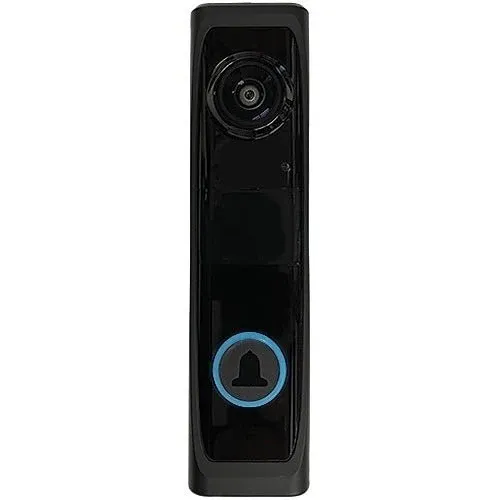
Fieldston, Bronx video call reference: a tall slim glossy black video doorbell with a camera lens and small sensor at the top and a round bell button ringed with blue light near the bottom, standing upright on white
Manufacturer product photo, used as a reference: a slim glossy doorbell with a blue-ringed button. A unit like this at a kitchen or service door lets staff and deliveries ring the household on the door they actually use, while the formal front door stays on family credentials.
Equipment

Types of Access Control We Install in Fieldston

The equipment list for a Fieldston house leans toward hardware that hides: things that go inside doors, inside walls and on existing piers. This is what we fit and where it earns its place.

EquipmentWhere it fits in FieldstonWhat to know
Electrified mortise lockHeavy plank or paneled front doors that must look unchangedFits the existing pocket in most period doors; powered through a concealed transfer hinge; keeps mechanical key override
Concealed or retrofit electric strikeDoors whose lock must stay original, or iron gates with a frame that can hide itGoes in the frame, not the door; needs a sound frame and a correct gap at the latch
Through-panel card or phone readerFront doors where nothing new may show outsideReads through wood or a thin wall; cards, fobs and phones only, no keypad
Slim video door stationFace of a stone or brick gate pier, or a walk gate postRings indoor screens and phones; sealed top and drip loop on the cable; finishes chosen to sit quietly on stone
Keypad or reader on the service doorKitchen, mudroom or garage-level entrance used by staffPer-person codes with schedules; out of the street view, so usually no Landmarks question
Gate operator with monitored sensorsLow, open driveway gates that meet the master planUL 325 entrapment protection, photo eyes and edges, separate walk gate; line-voltage power by an electrician
Door contacts and glass-break detectorsFrench doors, sidelit entrances, terrace and basement doorsReport every opening; feed night and away alerts without anyone carrying a credential
Controller, network switch and battery backupBasement, near the electrical serviceRuns every door locally on its own network; keeps locks and gate working through short outages
Point-to-point wireless linkGate piers or outbuildings where trenching would disturb rock or rootsNeeds a clear line of sight; tested before we rely on it

We use credentials that cannot be duplicated at a key kiosk or with a cheap cloner: encrypted cards and fobs, phone credentials, and personal codes. Old 125 kHz proximity fobs are not installed on new Fieldston systems.

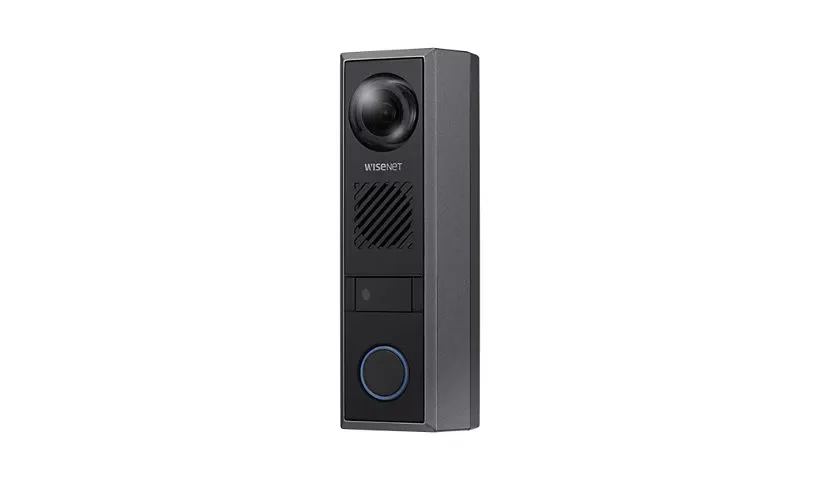
Fieldston, Bronx equipment reference: a slim dark grey rectangular video doorbell with a camera lens and small speaker holes at the top, a narrow middle panel and a small round button with a blue ring near the bottom, shown upright on a white background
Manufacturer product photo, used as a reference: a narrow wired video doorbell. Wired units avoid battery changes on a door or pier that may be a long walk from the house, and they report to the same app as the locks.
AI Overview Reality Check

What AI Gets Wrong About Access Control in Fieldston

Google's AI Overview, its question boxes and the other automated answer panels were not visible to us while we wrote this page, so we quote none of them. The claims below are ones that appear again and again in generic answers, cost guides and product pages about home access control. We check each against Fieldston's private streets, landmark rules and houses.

"A private, patrolled neighborhood doesn't need door access control"

Generic advice tends to treat a private community as a gated community, with a guard at a single entrance deciding who comes in. Fieldston is not built that way. Its streets are private but open; the Association closes them to outsiders only occasionally, and Community Board minutes describe barricades that come down by 7 p.m. and an entrance network of nine entry points.

The patrol is real and useful, but it watches the roads. It cannot judge who belongs inside a particular house, and it cannot see a side door at the end of a deep, wooded lot.

The Riverdale Press account of an attempted break-in on Delafield Avenue and the CBS report of a van entered behind a closed driveway gate both happened in a patrolled area. Door-level control and a record of who entered are what fill the gap the patrol leaves.

"You can't put modern access control on a landmarked house"

This is the opposite mistake, and it costs owners years of living with copied keys. Landmark designation regulates what is visible and what alters historic fabric, not what is inside a door or a basement.

The Fieldston master plan gives staff authority over doors, lighting, fences and gates, and the Commission's general guidance describes staff-level permits for intercoms placed sensibly beside a door.

An electrified lock inside the original door, a reader that reads through a wooden panel and a controller in the basement change nothing anyone can see from the street. The visible part, if there is one, is usually a single slim station on an existing pier, and that is what an application, if needed, is about.

"Any smart lock fits any front door in an afternoon"

Retail smart locks are designed for the standard bored hole of a modern door: a 2-1/8-inch hole through the face and a 2-3/8 or 2-3/4-inch backset. Many Fieldston doors are older and thicker, with mortise locks, and some have no bored hole at all.

Forcing a retail lock onto a mortise door means drilling a new hole through a period door, which damages historic fabric and can raise a Landmarks question that the owner never needed to have.

The right product for those doors is an electrified mortise lock or a frame-mounted strike, chosen after the old lock is out and measured. Ten minutes with a tape measure avoids a ruined door.

"Home access control costs a few hundred dollars"

Cost pages from Angi, HomeAdvisor and Fixr price the installation of a smart lock or a security door. Those figures describe a single device on a standard door, and for that job they are reasonable.

They do not cover an electrified mortise lock in an oak door, a concealed hinge, a controller with battery backup, a video station on a pier eighty feet away, or the cable or wireless link between them.

Our published prices at the Bronx rate start at $1,500 to $2,500 for one controlled door, with multi-door systems from $4,000 to $15,000. A Fieldston plan usually lands in the multi-door range because of distance and doors rather than because of the brand of reader. Every quote is itemized by opening so you can see where the money goes.

"Wireless gear removes the need to run cable on a large property"

Wireless locks and doorbells are sold as cable-free, and on a small house they often are. On a deep Fieldston lot with stone walls, mature trees and a pier near the street, signal is the problem, and a battery device at the far end of a weak link is one that cannot be updated or disabled reliably.

The honest answer is a mix. Cable where an existing route allows it, a dedicated point-to-point link where trenching would disturb rock or roots, and local operation at every door so that a network outage never locks anyone out.

We test any wireless link at the site before we depend on it, and we choose devices that keep working by card or code on their own.

"A video doorbell on the front door is all the visitor screening a house needs"

On a city lot, the front door is where visitors arrive, so a doorbell camera there is the right first step. On a house set far back from a private street, by the time a caller reaches the door they have already crossed the lawn, passed the garage and stood out of view of the street.

Screening works better at the point where the property begins: a station at the gate pier or the head of the driveway, which lets the household see, speak to and decide about a caller before they are anywhere near the house.

That arrangement also keeps the device off the façade, which is the easier route under the master plan, and it means a delivery can be handled at the gate while the front door stays locked.

"Once it's installed, access control looks after itself"

Nothing outdoors in the northwest Bronx looks after itself. Freeze and thaw move piers and frames, salt and leaves get into gate tracks, and roots and landscapers find buried cables.

Inside, the bigger risk is human: credentials for people who no longer work for the family, an administrator account in the name of someone who has moved on, a house-sitter's code that was never suspended.

We hand over a short monthly check and a twice-yearly credential review: list every person with access, delete anyone who should not be there, confirm each door relocks, test the gate's reversing sensors and look at the battery indicators. It takes a quarter of an hour and prevents most of the problems we are called out for.
Walk Us Through the House Before Anyone Drills

A short call with your three photographs usually tells us which doors can take concealed hardware, whether the gate idea fits the master plan, and what the whole plan is likely to cost.

Get In Touch

Request a Free Quote

Tell us about the house — a Tudor on Waldo Avenue, a Colonial off Fieldston Road, a newer house on a private lane — which doors and gates you want controlled, whether it is inside the historic district, and who needs to get in. We reply in writing the same business day using our published Bronx prices. Prefer to talk? Ring (646) 490-0629.

✅

We Got Your Request!

Received. A technician is reading your Fieldston details and will phone you today. If it cannot wait, the Fieldston line is (646) 490-0629.

How It Works

Our Installation Process

A concealed lock on one front door and a full plan with a gate pier, a service door and inner rooms go through the same seven steps. In Fieldston the second step, sorting out who has a say, matters as much as the wiring.

1. Three photographs and a household list

The street view of the house, the inside of the front door and the door the household uses most, plus a list of everyone who needs access and when. From that we sketch a plan and a cost range before visiting.

2. Who has a say

We check whether the house is inside the historic district, where the Association's land ends on your survey, and whether any visible or landscape work would need a Landmarks application, an Association letter or a City Planning presentation, and we tell you before you commit.

3. Survey with the lock out

On site we remove and measure the front-door lock, check hinges and frames, find old conduit leaving the house, measure the distance to the pier or gate, and pick a dry place in the basement for the controller.

4. Written plan, drawings and price

A plan naming each opening and what it gets, photographs marked up with any visible device and its finish, and a fixed price from our published Bronx figures, with gate and trenching work priced separately.

5. Doors first, then cable

Doors rehung and frames corrected, concealed hinges and electrified locks fitted, cable pulled along agreed routes or through old conduit, each run labeled at both ends and tested before anything is connected.

6. Controller, credentials and schedules

Controller, network switch and battery backup installed; every person given their own card, phone key or code; staff schedules, inner-room groups and the away setting built with you; free exit checked at every door.

7. Handover

The administrator account in your name or your household manager's, recovery details written down, a demonstration of the away setting and the gate's manual release, the monthly check card left by the controller, and a follow-up visit booked a month later.

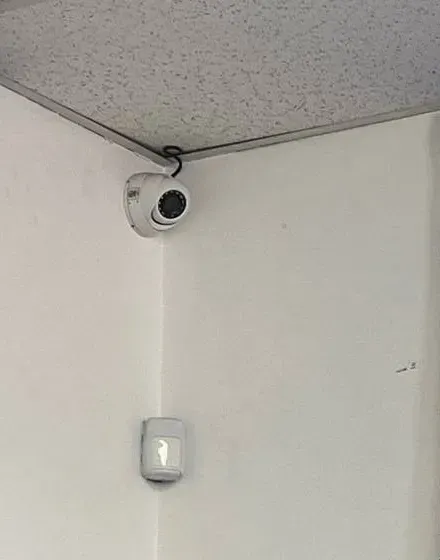
Fieldston, Bronx installation process reference: a small white dome camera with a black lens fixed high in the corner where two white walls meet a textured ceiling, its cable looped beside it, with a small white motion sensor mounted lower on the same corner
Photo from the AESS job library, not taken in Fieldston: a dome camera and a motion sensor neatly placed in a room corner. Inside a house we keep devices this tidy and this few, with cable hidden where the building allows it.

After handover: a monthly check and a twice-yearly review

Once a month, let each controlled door close by itself and confirm it latches; open the gate and block its photo eye to confirm it reverses; glance at battery indicators. Twice a year, open the user list with whoever runs the household and delete every credential that no longer belongs to someone who should have it, including former staff, finished contractors and old house-sitters.

Coverage Area

Access Control Near Fieldston's Landmarks

These are the places Fieldston callers give us as reference points. They are landmarks for directions, not clients, and nothing on this page describes their own security.

Indian Pond

The 1.3-acre pond that Brick Underground places at the center of the community, in the middle of the curving streets Albert Wheeler laid out to follow the land rather than a grid.

Horace Mann School

A private kindergarten-through-twelfth-grade school at 231 West 246th Street, which Wikipedia places inside Fieldston; Community Board 8's 2013 minutes count three schools in the neighborhood and about seventy school buses traveling to and from this one.

Ethical Culture Fieldston School

The Fieldston campus at 3901 Fieldston Road holds the school's lower, middle and upper divisions. The school was founded by Felix Adler in 1878 as a free kindergarten, according to Wikipedia.

Manhattan University

The Lasallian Catholic university at 4513 Manhattan College Parkway, on the neighborhood's southern edge. Founded in Manhattan in 1853 and in the Bronx since 1923, it changed its name from Manhattan College in August 2024 after the state Board of Regents approved the change.

Van Cortlandt Park

Across Broadway to the east: 1,146 acres and the third-largest park in the city, with the Van Cortlandt House of 1748, the oldest known surviving house in the Bronx, and a golf course that opened on July 6, 1895.

50th Precinct

The NYPD station house at 3450 Kingsbridge Avenue, which serves Riverdale, Fieldston, Kingsbridge, Marble Hill and Spuyten Duyvil. Its community council meeting places vary month to month, according to the precinct page.

We also install access control across the northwest Bronx around Fieldston: Riverdale, which surrounds it to the west and north, Spuyten Duyvil to the south, Kingsbridge and Van Cortlandt Village across the park edge, and Kingsbridge Heights and Jerome Park beyond. North of the city line, Yonkers is covered by our Westchester County page, and the whole borough by access control installation in the Bronx.

Pricing

Access Control Cost in Fieldston

Fieldston is billed at our Bronx rate, which is 1.00 times the Brooklyn base: no neighborhood surcharge. Each figure below is an installed price covering hardware, labor, programming, the first set of credentials and a walk-through for the household. City sales tax of 8.875 percent is added, and the final price is fixed in writing once we have seen every opening and taken the front-door lock apart.

System or itemFieldston priceHow it is used on a Fieldston house
Single door: keypad or fob reader with electric strike$1,500 – $2,500The kitchen or service door that staff use daily, or a walk gate between existing piers
Keypad on a staff, garage or back door$1,500 – $2,000Garage-level door under a house built on a slope, or a potting-shed or pool-house door
Multi-door system$4,000 – $15,000Concealed front-door lock, service door, gate pier station and inner rooms on one controller
Card readers on several office doors in a shared building$4,000 – $12,000A house with a home practice or studio wing and its own client entrance
Full building$15,000 – $40,000+Larger buildings on the neighborhood's edges with several entrances and parking
Video intercom panel with integrated fob access, replacing a buzzer$1,500 – $3,000A station on the gate pier or beside the door replacing an old bell or buzzer
Buzzer repair (for comparison)$200 – $500Keeps an old bell or buzzer running, with no credentials, log or remote release
Service and repair visit$195/hr, 3-hr minimum ($585)Any brand or installer, including gate operators, door stations and keypad locks fitted by others

We give no fixed figure for gate operators, wireless links or trenching: the weight of the gate, the length of the run and what lies under the lawn decide those, so they are priced once the survey is done. Landmarks, Association and City Planning paperwork is not a line item, but drawings for an application are part of the survey. Payment follows our standard agreement: jobs under $500 are paid in full up front, and jobs over $500 take a 50 percent deposit. Full terms — including 50% deposit, the 30-day warranty and optional paid extended warranty, and the late-fee schedule — are set out in the service agreement.

What moves a Fieldston quote up or down

  • The front door. A standard bored door takes an off-the-shelf lock; a period mortise door takes an electrified mortise lock and a concealed hinge, which costs more and looks better.
  • Distance to the pier. A station on a pier forty feet from the house on an existing conduit is quick. One a hundred feet away across rock and roots needs a wireless link or a careful route.
  • How much shows. Designing visible parts out saves an application. Where something must be visible, the survey includes drawings, and the schedule allows for review.
  • The household. Ten people with schedules, inner rooms and an away mode take more programming than a family of four with one door.

National brands or a local installer

ADT, Ring and SimpliSafe sell good products and good monitoring, and a Ring doorbell or a SimpliSafe keypad is a reasonable start for many houses. What a packaged kit does not include is someone who will take your front-door lock apart, read the Fieldston master plan, find the Association line on your survey and route a cable around a protected outcrop. On a house where the door is a century old and the yard is regulated, that local work is most of the job. Many of our clients keep their existing doorbell or alarm and add the door and gate control around it.

Questions to put to any installer before you sign

  • Will you remove and measure our existing front-door lock before you choose the new one? If the answer is no, expect a new hole in an old door.
  • What will be visible from the street, and does it need a Landmarks permit? A good installer can answer before quoting, with a drawing.
  • Is any of the work on the Association's land? If the installer has not asked about your survey, they have not considered it.
  • Who will own the administrator account and the recovery details? It should be you, or your household manager, in writing.
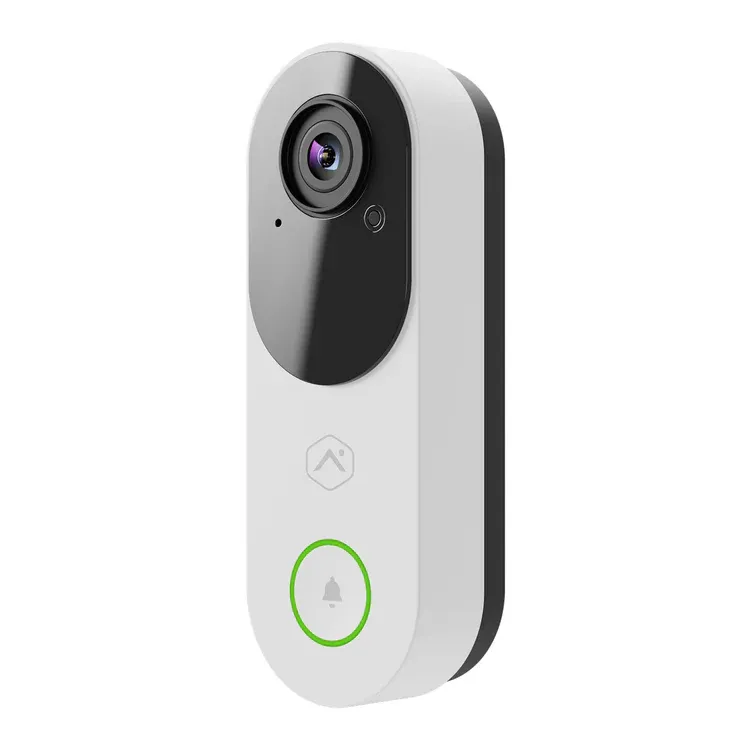
Fieldston, Bronx pricing reference: a white video doorbell with a black upper face holding a camera lens and a small sensor, a small logo in the middle and a round bell button circled in green light at the bottom, shown at a slight angle on white
Manufacturer product photo, used as a reference: a white-bodied doorbell with a lit button. In an itemized Fieldston quote a device like this is one line, priced beside the lock and the controller it works with, not a separate gadget with its own app.

Get a Written Fieldston Price, Door by Door

Send the three photographs and a list of who needs access. We come back with a plan for every opening, a note of anything that needs approval, and a fixed written price, usually the same business day.

Shop Our Systems

Access Control Packages & Pricing

Service Door — from $1,500

One controlled door or walk gate at $1,500 to $2,500: keypad or reader, electric strike or suitable lock, battery-backed power supply, door adjustment and programming, with separate schedules for each member of staff. The usual first step for a household that wants to stop handing out keys.

Whole House — from $4,000

A multi-door system at $4,000 to $15,000: a concealed lock in the front door, the service door, a video station on the gate pier, contacts on terrace and basement doors, inner rooms if wanted, and away mode, all on one controller on its own network. Gate operators priced after the survey.

Full Building — from $15,000

A complete system at $15,000 to $40,000 and up for larger buildings on Fieldston's edges with several entrances, parking and many users, including the paperwork the city's tenant data rules require where they apply.

Already bought a lock or a kit? Labor-only installation

We install owner-supplied locks, readers, door stations and gate kits on a labor-only basis, priced after we see the model numbers and the opening. Before you order for a Fieldston house, check three things: that the lock suits your door's construction (mortise or bored, and its thickness), that it works by card, code or key when the internet is down, and that its finish and size will not look out of place on a period entrance. Send us the product page and a photograph of the door and we will tell you whether it fits.

Complete Services

Every Access Control Service in Fieldston

Intercoms and buzzers

Gate-pier stations and indoor screens, new or repaired. See intercom installation in Fieldston and door buzzer repair in Fieldston.

Cameras

Driveway, gate and door cameras recorded in the house. See security cameras in Fieldston and home security cameras in the Bronx.

Alarms and fire alarms

Intrusion alarms that share the door contacts, and fire alarm work. See alarm installation in Fieldston and fire alarm installation in Fieldston.

Cabling

The network and low-voltage cable under every system, including long runs to piers and outbuildings. See structured cabling in Fieldston and low-voltage installation in the Bronx.

Locks and doorbells

Keypad deadbolts, smart locks and video doorbells for secondary doors. See smart lock installation in the Bronx and doorbell camera installation in the Bronx.

Field Notes

Field Notes: Take the Lock Out Before You Quote

This is a note on how we work, not a story about a particular house. On an older house the first useful thing we do at a survey is not to look at readers or apps. It is to unscrew the faceplate on the front door, slide the old lock out of its pocket and put it on a cloth on the hall floor. The lock tells us more than the door does: the backset, the case depth, the position of the cylinder and the spindle, whether the pocket has been cut and recut over the decades, and whether the hinge side has room for a concealed transfer hinge.

With those numbers we can usually name a lock body that slides into the same pocket and works the original handles, and we can say before quoting whether anything will be visible afterward. Without them, an installer is guessing, and the usual outcome of a wrong guess is a new hole bored through the face of a door that has been fine for a century.

The second thing we do is open the basement and look for the oldest conduit leaving the house toward the street. Lamp posts, old bell wires and abandoned sprinkler lines have often left a pipe that can carry a modern cable to a pier without a shovel touching the lawn.

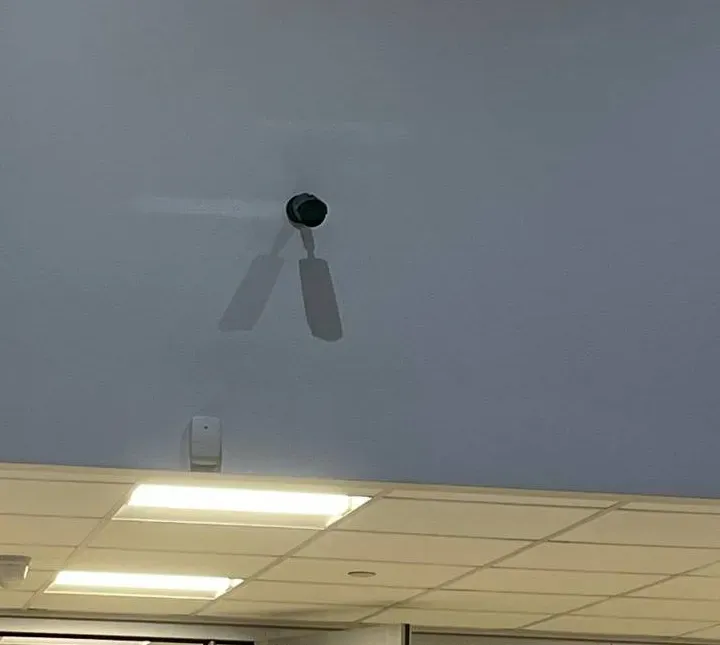
Fieldston, Bronx field notes reference: a small black camera on a short mount high on a pale blue wall, casting a long shadow, with a small white sensor fixed lower on the same wall just above a drop ceiling with lit panels
Photo from the AESS job library, not taken in Fieldston: a small camera and a white sensor high on a plain wall. The quietest installations are the ones planned before anything is fixed, after the old hardware has been taken apart and measured.
FAQ

Fieldston Access Control FAQ

Who prepares the Landmarks application if part of the system will be visible, AESS or the owner?
+

The owner is the applicant, because the permit attaches to the property, but we prepare what the application needs from our side: photographs of the existing condition, a drawing of each visible device with its size, finish and fixing method, and a note of how cable reaches it. Owners often file through an architect or expeditor they already use; we work with them. Where the design keeps every visible part off the façade and within ordinary maintenance, there may be nothing to file, and Commission staff at 212-669-7817 can confirm that before work starts.

Should the door controller and the gate be wired to our standby generator?
+

The controller should have its own battery backup in any case, so that the locks keep working through the seconds or minutes it takes a generator to start. Putting the controller's power supply on a generator-backed circuit is sensible in a house that already has one, and an electrician can add that circuit. A gate operator draws far more power; whether it belongs on the generator depends on the generator's size and whether you need to drive out during an outage. Every operator also has a manual release, and we show the household how to use it.

Can the system run without a cloud account, with entry records kept only in the house?
+

Yes. Several controllers we install store credentials and the entry log on the controller itself and work fully from the house network, with remote access through a secure connection you control or not at all. You give up the convenience of opening the gate from a phone abroad unless remote access is set up, but no company outside the house holds your family's comings and goings. We explain the trade-off at the survey and set retention so the log keeps only as many months as you choose.

A cable from the gate pier to the house runs a long way outdoors. Do you protect it against lightning and power surges?
+

We do. Long outdoor runs pick up surges from nearby lightning strikes, so we fit surge protection at the house end of every cable that comes in from a pier or outbuilding, bond it to the building's ground, and use cable rated for outdoor and direct burial use where it runs underground. For the longest or most exposed runs, a fiber or wireless link removes the electrical path altogether. The pier station itself is chosen with a sealed housing and mounted with a drip loop so water cannot follow the cable inside.

Our house has three floors. Can a caller at the gate ring a screen on every floor?
+

Yes. A video door station can ring several indoor screens at once, typically one in the kitchen, one by the main stairs and one in the owners' bedroom or study, as well as the phones of anyone who has the app. Any screen can answer, speak to the caller and release the gate or the door. Indoor screens need a cable or a strong network connection, so on a large house we plan their positions at the same time as the door wiring and run them back to the same switch in the basement.

Should we give the neighborhood patrol a code to our gate?
+

That is a household decision, and many owners prefer not to. A patrol does not need to come through your gate to watch the street, and every extra code is one more to manage. If you want the patrol able to check the grounds while you are away, give it a credential of its own, limited to the walk gate and the dates you are gone, so it appears separately in the log and expires on its own. Emergency services do not need a code; the gate operator's manual release and the fire department's usual methods cover them.

Can the gate keypad be lit at night without breaking the master plan's lighting rule?
+

A keypad's own backlight is small and only lights when the keypad is touched, so it does not behave like a light fixture. The master plan's lighting standard is about fixtures, which must be in proportion to the building and not draw undue attention. If you also want light at the gate for visitors, we prefer a low, shielded fixture that switches on only when the keypad or the station is used, rather than a floodlight that burns all night. Any new fixture visible from the street is something to check with Landmarks staff first.

Our house still has some very old electrical wiring. Is that a problem for powering a door controller?
+

The access system itself runs on low voltage from its own power supply, so the old wiring does not touch the locks or readers. The power supply does need a reliable 120-volt circuit, ideally a dedicated one, and that is where old houses can surprise you. If the survey finds cloth-insulated or ungrounded circuits near where the controller should go, we ask a licensed electrician to run a new circuit before we connect anything. It is a small job compared with the rest, and it protects both the system and the house.

Our circular drive has two openings onto the street. Do both need gates, and can one keypad serve both?
+

Two openings do not always need two gates. Often one opening can be closed with a fixed section or planting, within the master plan's limits on fences and walls, leaving a single controlled entrance; that halves the cost and the maintenance. If both must stay open for traffic, each needs its own gate and safety sensors, but both can run from one controller and share the same codes, and a single video station near the house can serve visitors at either. A keypad post can only stand where a driver can reach it, so a shared one rarely works.

Where will your vehicle park, given that parking on Fieldston's private streets is limited to residents and guests?
+

We treat our van as your guest: it parks in your driveway or wherever you tell us, not at random on the Association's street, and it stays off lawns and planted areas. If the driveway is needed for your own cars, tell us on the booking call and we will plan around it, including arriving outside school bus times on streets near the schools. If your street has its own parking signs or guest arrangements, let us know and we will follow them.

Fieldston, Bronx FAQ reference: a compact black rounded video doorbell with a camera lens at the top, an oval outline marking the button in the lower half and a small printed maker's name at the bottom, shown straight on against white
Manufacturer product photo, used as a reference: a compact battery doorbell. Battery devices suit a secondary door or a pool-house gate where no cable exists; on the main entrance of a large house we prefer wired equipment that keeps working without anyone remembering to charge it.
All Areas Served

Access Control Installation Across New York City, Long Island and the Hudson Valley

This Fieldston page sits under our Bronx access control installation page, which in turn sits under the NYC access control installation hub. The borough and county pages carry the wider picture and their own area prices; the neighborhood pages each deal with one kind of housing.

Northwest Bronx neighborhood pages near Fieldston: Riverdale, Spuyten Duyvil, Kingsbridge, Van Cortlandt Village, Kingsbridge Heights, Jerome Park, Bedford Park, Norwood and Woodlawn Heights. Related Fieldston pages: intercoms, cameras and cabling. Before anyone works on a landmarked door, check who they are: our about page sets out the license and insurance behind Abstract Enterprises Security Systems.

Sources

Where the Fieldston Facts Come From

Every street, date, rule and figure about Fieldston on this page traces to one of the items below, opened and read in October 2026 unless noted. Prices are the exception: they are AESS's own published figures at the Bronx rate.

Some sources we normally check could not be reached: Google's question boxes, related searches and AI Overview, Answer the Public, Bing and DuckDuckGo suggestions, Yelp reviews, the full text of Reddit threads about Fieldston (only search excerpts were visible), the 1963 New York Times article (blocked; headline only) and an older Riverdale Press article on a burglary pattern from Riverdale to Yonkers (would not load). Nothing on this page depends on them.

Front Door Will Not Lock or the Gate Will Not Close Tonight: Call the Fieldston Line

A house left unlocked overnight, or a family shut out of its own front door, is a same-day job. Ring (646) 490-0629, say which opening has failed and what it is doing, and we give you an arrival window on the call. A gate that will not close is secured by hand first; a period lock that will not release is opened without damaging the door.

Fieldston Access Control From a Licensed, Insured Team

Technicians reach Fieldston from the Abstract Enterprises Security Systems Bronx office at 460 E Fordham Rd, Bronx, NY 10458, across Fordham Road and up the Major Deegan or Broadway. The Fieldston line, (646) 490-0629, takes calls and texts; your three photographs can also come in over WhatsApp.

Rated 4.7★ across 201 Google reviews. Licensed by New York State, #12000287431, and insured; a certificate of insurance for you, your household manager or the Association is available on request before the survey.

Full terms — including 50% deposit, the 30-day warranty and optional paid extended warranty, and the late-fee schedule — are set out in the service agreement. See our warranty page.

Revision log, October 18, 2026: page rebuilt from scratch around Fieldston's private streets, the Fieldston Historic District master plan and the Special Natural Area rules — concealed hardware in revival-era doors, gate controls on the owner's side of the Association line, staff and inner-room credentials — with new local research and prices at the Bronx rate of 1.00 times the Brooklyn base; service rate unchanged at $195 an hour, 3-hour minimum.