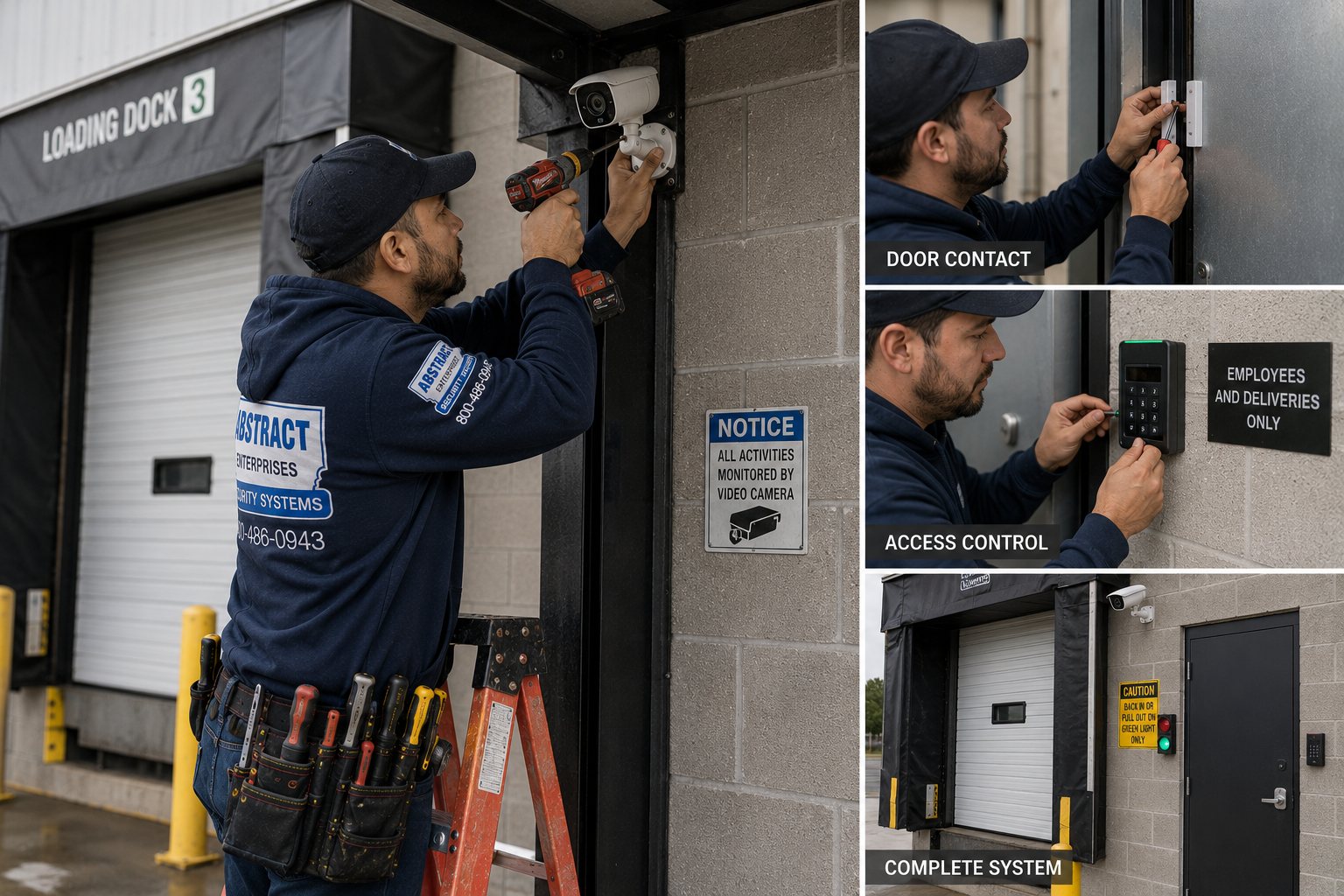
Cameras, access control, intrusion alarms and video intercoms engineered as one platform for Bronx storefronts, food and freight facilities, offices and lots — designed, installed, integrated, serviced and repaired from our own office at 460 E Fordham Rd, by a NYS-licensed low-voltage security contractor, priced from a free on-site survey.
The Bronx is our second home address. Our office sits at 460 E Fordham Rd, on the borough’s busiest retail spine, and the commercial map around it is the daily work: the corridor retail of Fordham Road, The Hub at 149th and Third, Westchester Avenue and White Plains Road under the el; the food-and-freight economy anchored by Hunts Point’s distribution markets and the Port Morris and Zerega industrial belts; the Jerome Avenue auto-repair corridor; Arthur Avenue’s restaurant blocks; and the office, clinic and community stock from the Grand Concourse to Co-op City. Every one of those buildings needs the same four subsystems — video, door access, intrusion detection and entry intercoms — built as one platform instead of four contracts, under one NYS license, one warranty and one published service rate.
Half the Bronx buildings we survey already own equipment: cameras from a vendor who stopped answering, an alarm account inherited with the lease, fobs nobody can reprogram. Takeover, integration and staged upgrade are the daily work — we adopt orphaned systems, keep cable that passes testing, and put a written rate behind service instead of a monitoring contract you cannot exit. And with an office in the borough, the follow-up visit is a short drive, not a dispatch queue.
60-second qualifier — three questions and we can scope it on the phone.
WHY THE BRONX
Bronx commerce runs on three engines, and each carries its own exposure. The corridors — Fordham Road, The Hub, Westchester Avenue and White Plains Road under the el, Tremont, Southern Boulevard — put storefront glass and roll-down gates on some of the highest-foot-traffic retail blocks in the city. The food-and-freight engine — Hunts Point’s distribution markets, Port Morris, Zerega and the Bathgate industrial blocks — moves refrigerated cargo and inventory through facilities that never fully close. And the service belt — the Jerome Avenue auto corridor, contractor yards, tow lots — keeps vehicles, parts and tools outdoors where fencing alone has never been enough.
The loss patterns follow the engines: after-hours break-ins through corridor gates, cargo and pallet theft around the markets, vehicle and parts theft off the auto belt, robbery exposure at cash-heavy counters, package theft in every mixed-use lobby, and the quiet losses — propped dock doors, alarm codes shared across shifts, keys copied through staff generations. Each maps to a subsystem done properly: gate contacts with video-verified monitoring, LPR at yard entrances, dock cameras tied to door events, duress buttons where cash changes hands, partitioned alarm zones for facilities that run all night.
Then the compliance layer. New York State licenses security and fire alarm installation businesses under General Business Law Article 6-D. Inside the city, electrical scope runs through DOB-licensed electricians and permits where the work requires them, and fire-alarm tie-ins bring FDNY requirements. The Bronx adds its own textures: market and food-facility leases with strict COI and vendor-compliance language, mixed-use certificates of occupancy on the corridors, and el-adjacent buildings where mounting, lighting and vibration are engineering questions. We design inside all of it — from an office that sits on Fordham Road.
WHAT WE INSTALL
Each subsystem stands alone; every one works better on a shared platform — integrated commercial security systems in the plain sense: one backbone, one dashboard, one accountable installer.
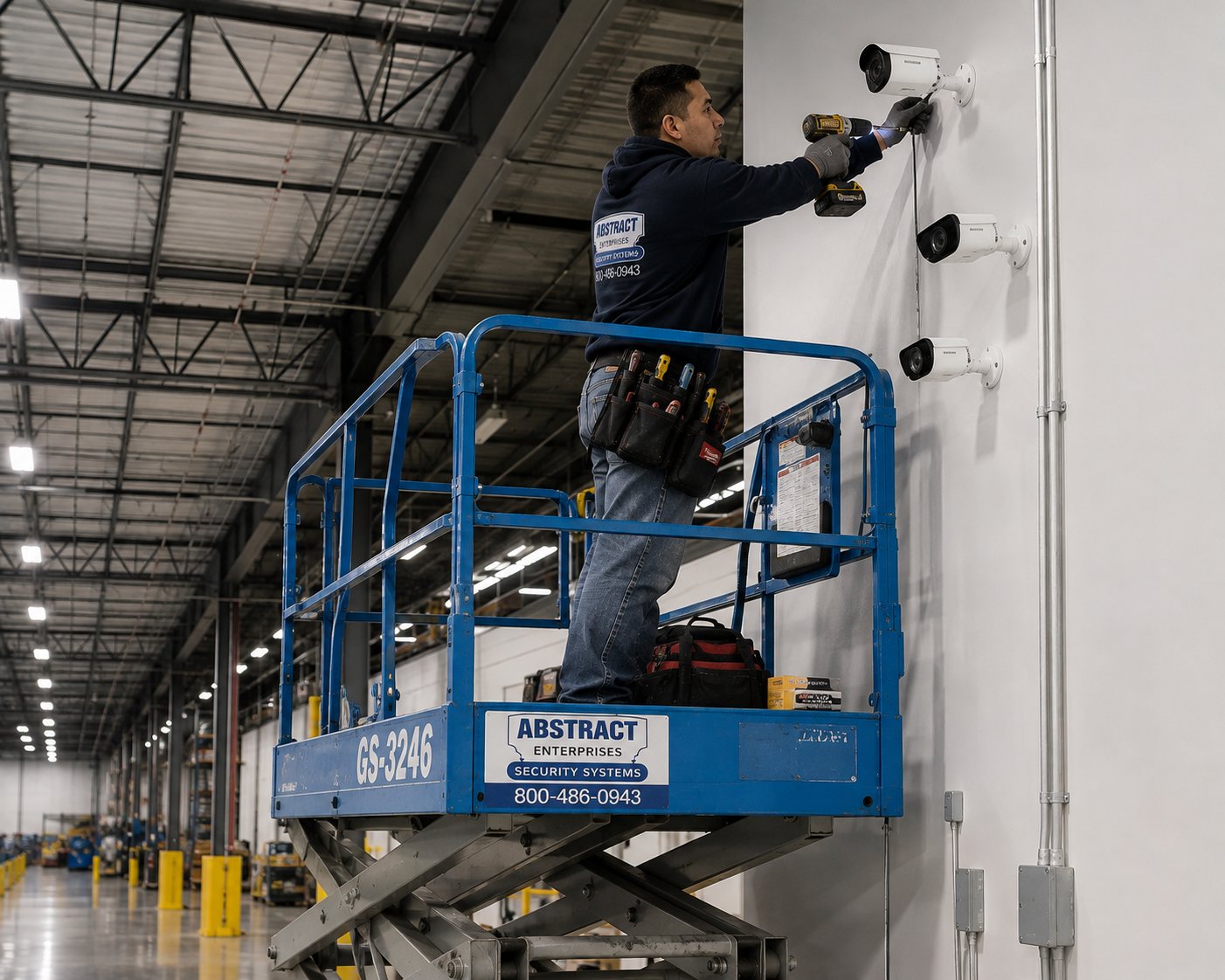
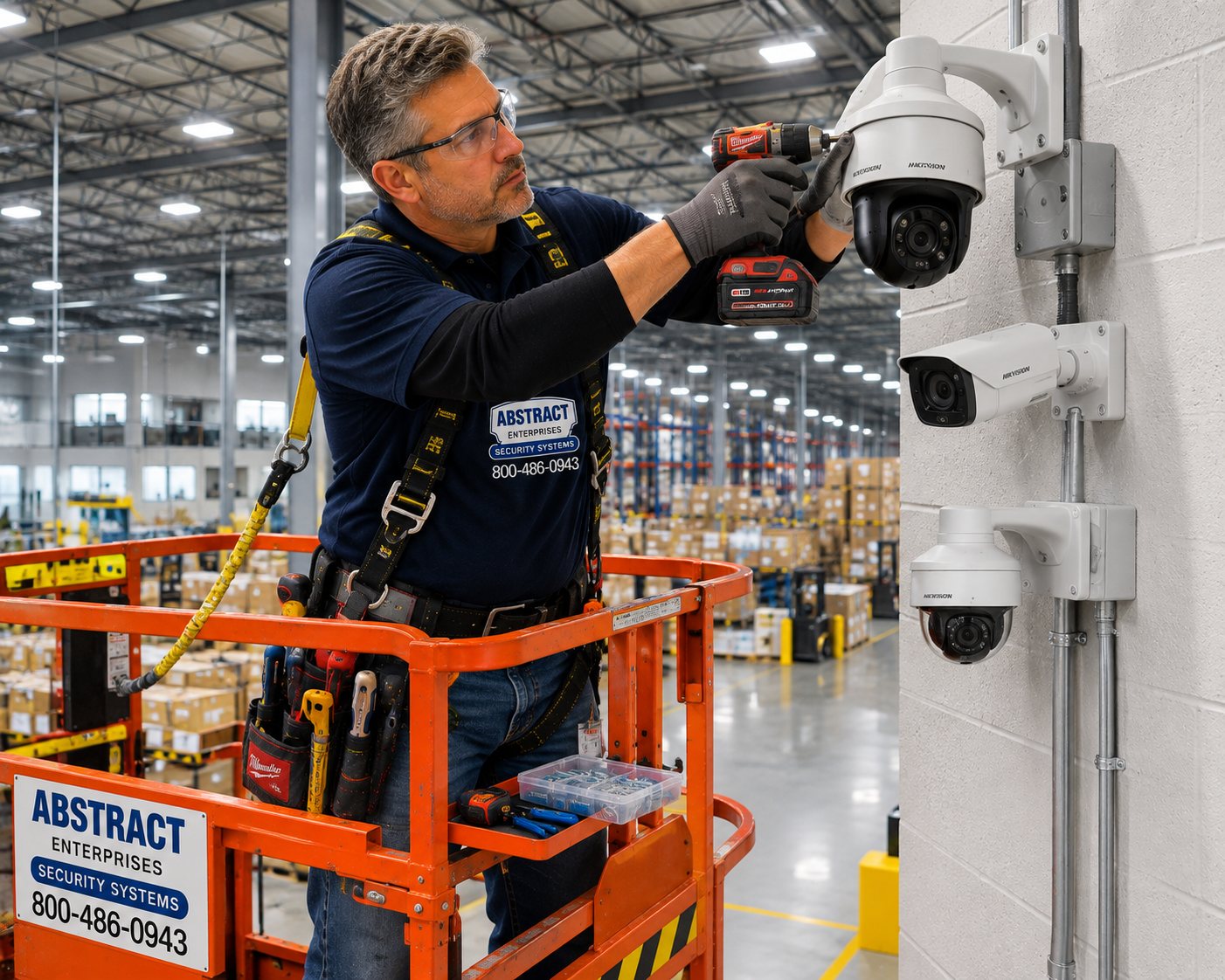
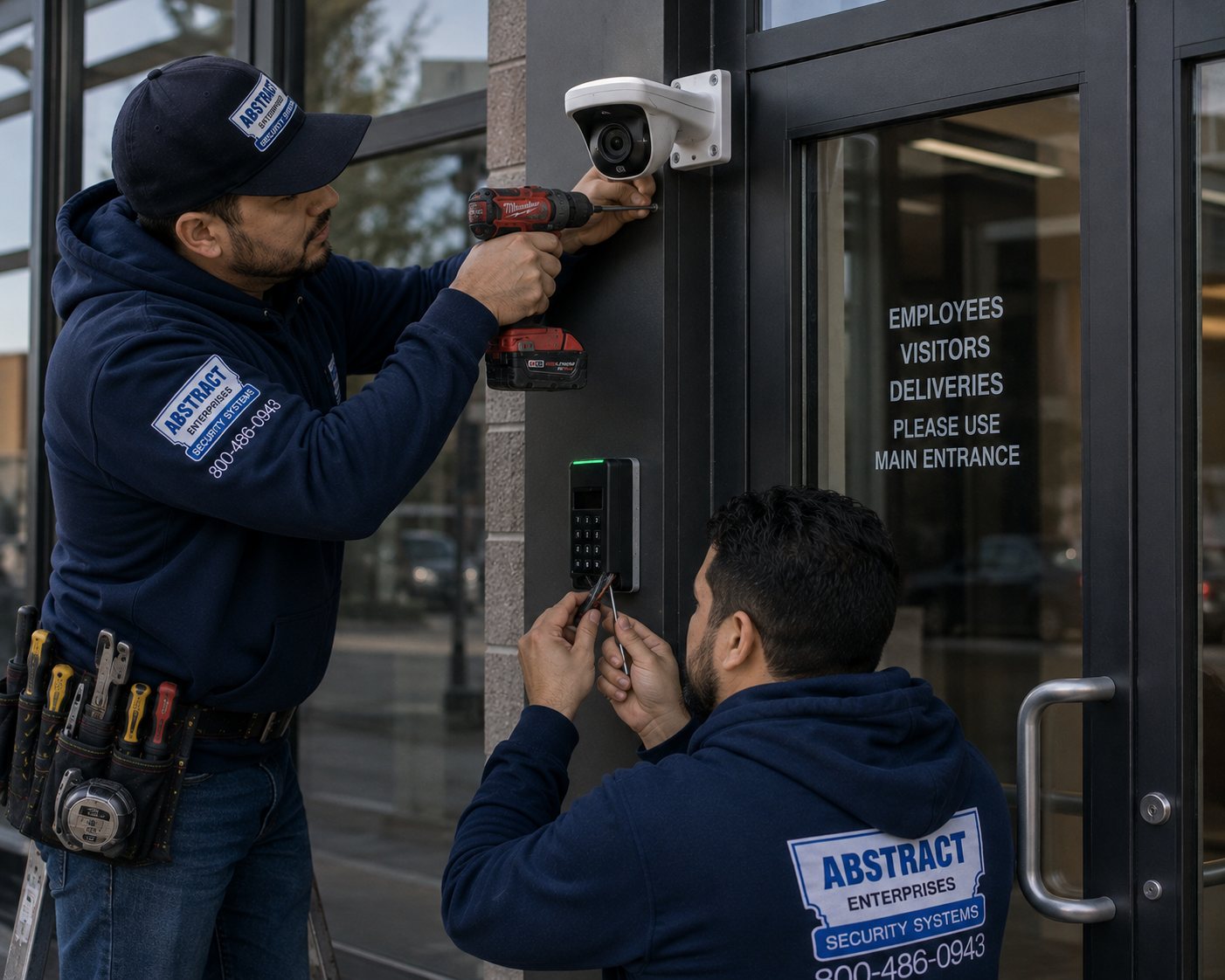
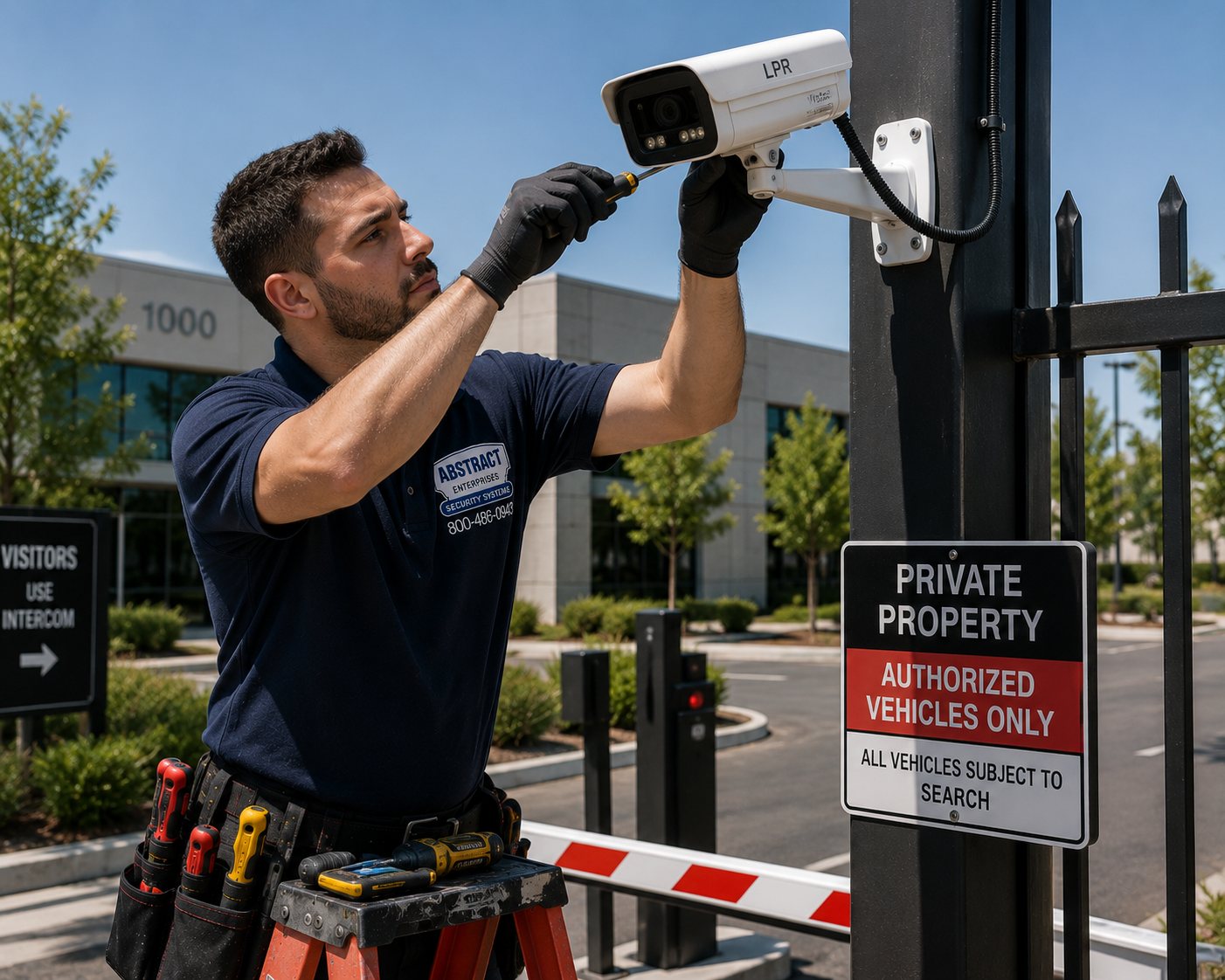
Commercial security cameras for Bronx businesses — 4K fixed, PTZ, multisensor panoramic and license-plate recognition on lots, docks and drive lanes — recording to on-premises NVRs, cloud or hybrid, with person, vehicle and loitering analytics that alert instead of archive. Camera events tie to door events so every entry carries its clip.
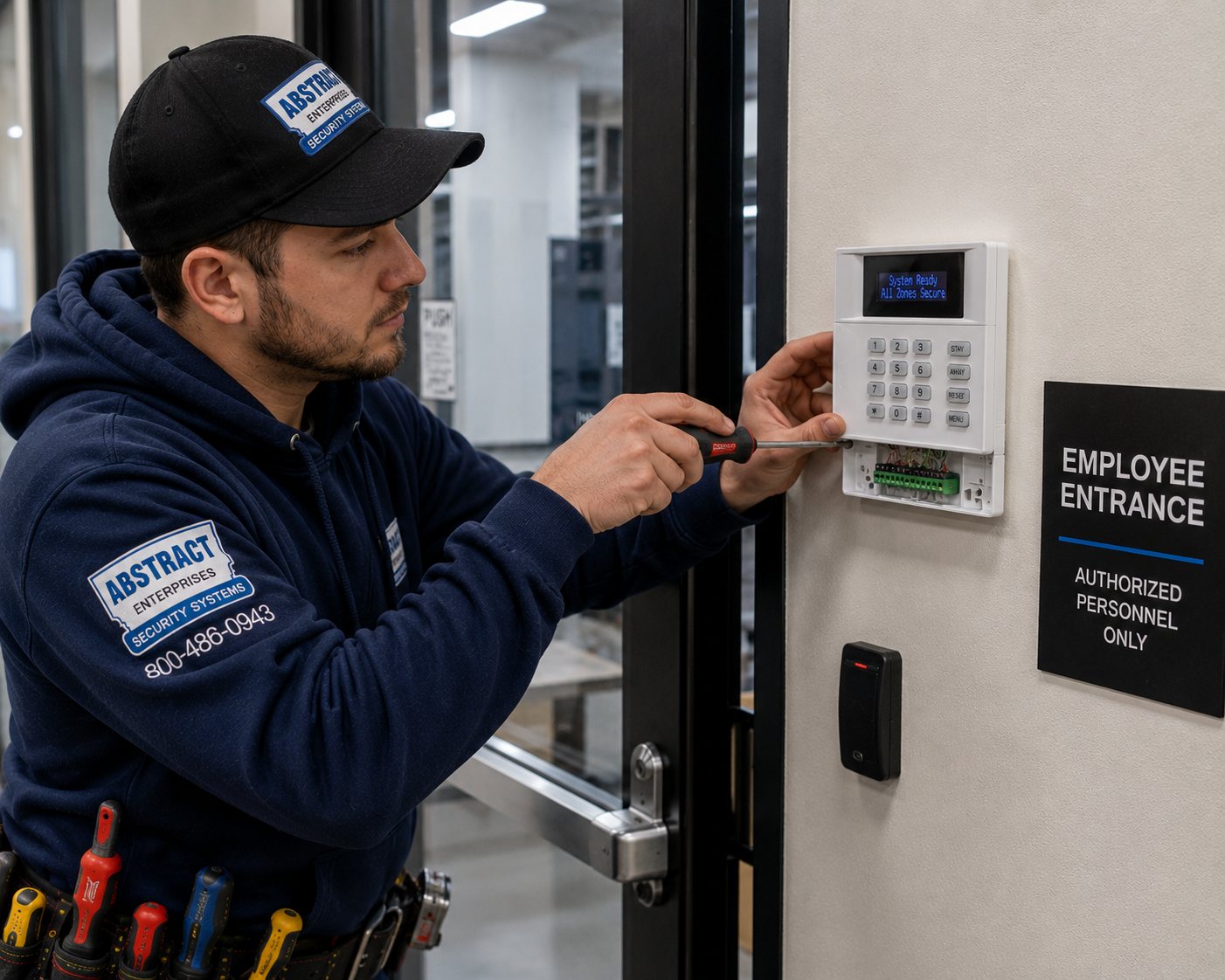
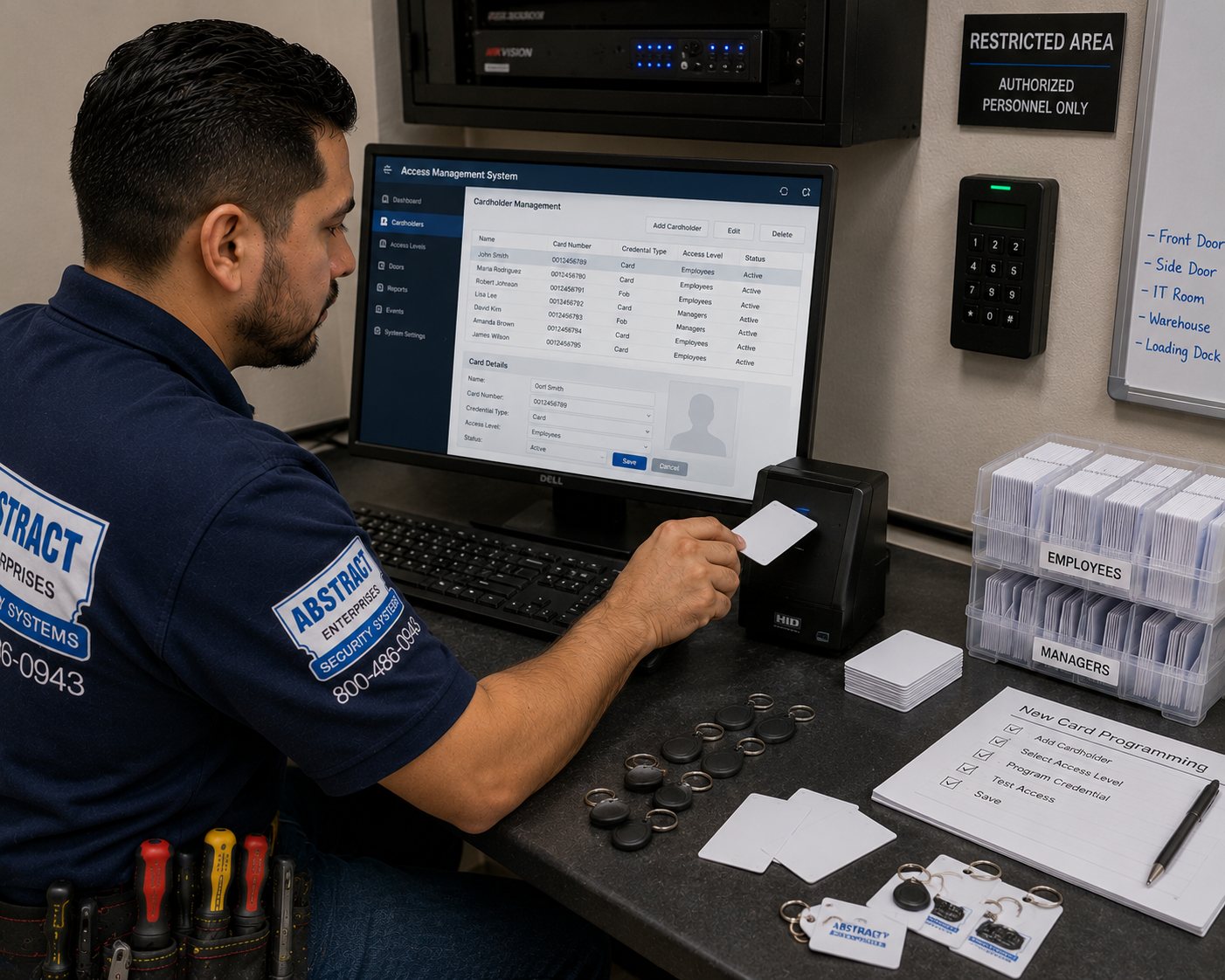
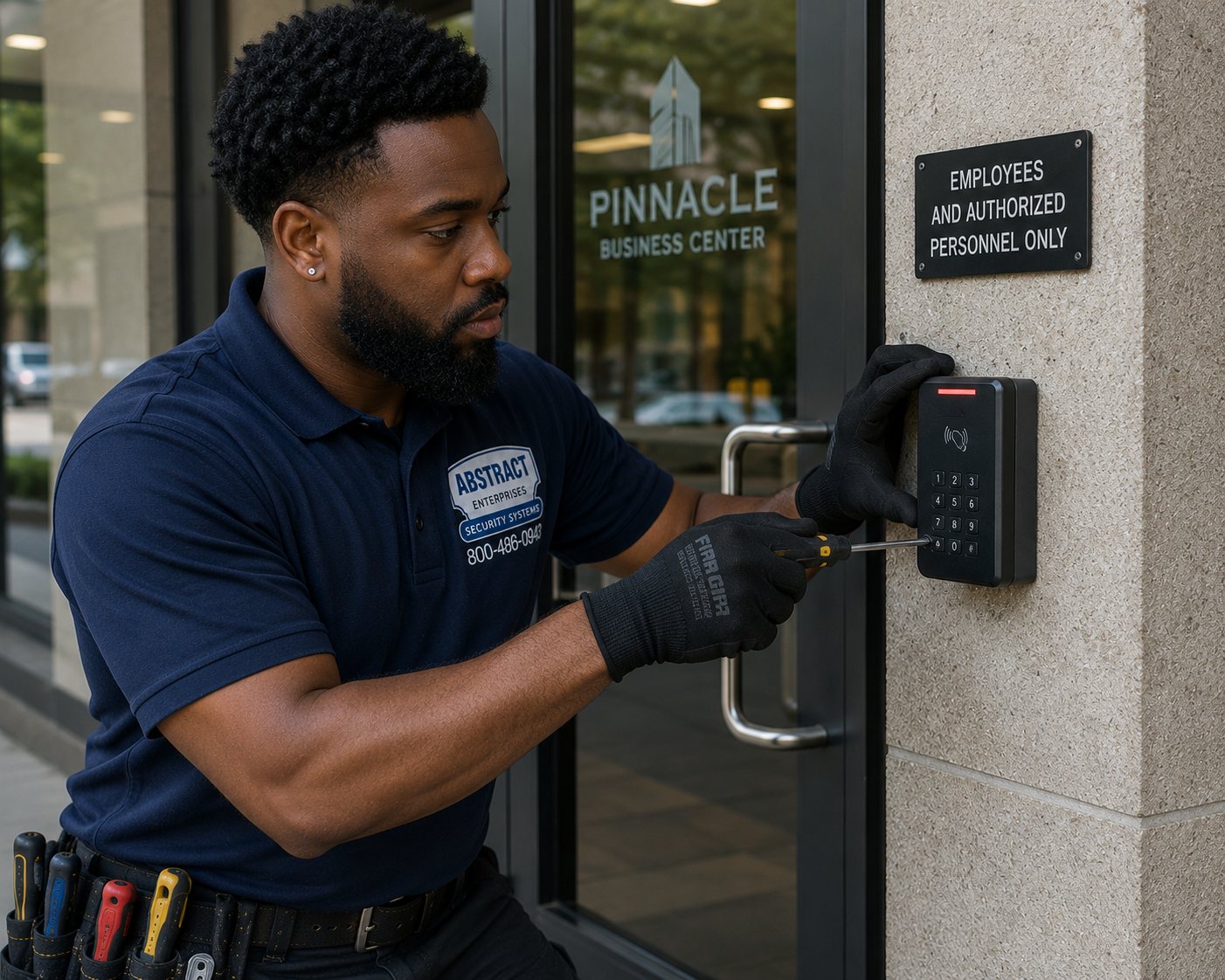
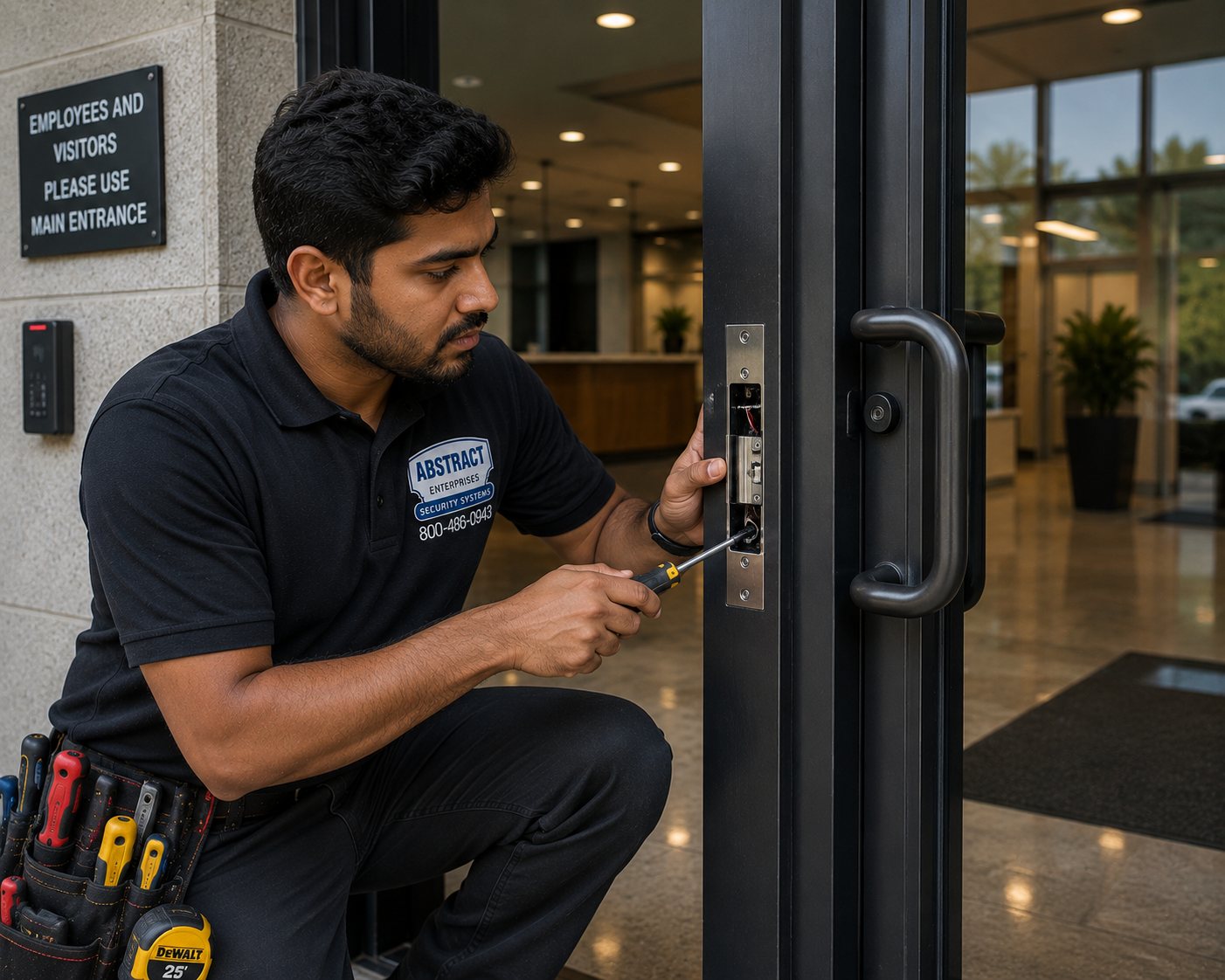
Card, fob, PIN, mobile and biometric credentials; electric strikes and maglocks specified to each opening and its egress role; gate, yard and roll-down readers; scheduled unlock for business hours; audit trails; one-click revocation the day someone leaves. Commercial access control that ends the copied-key economy.
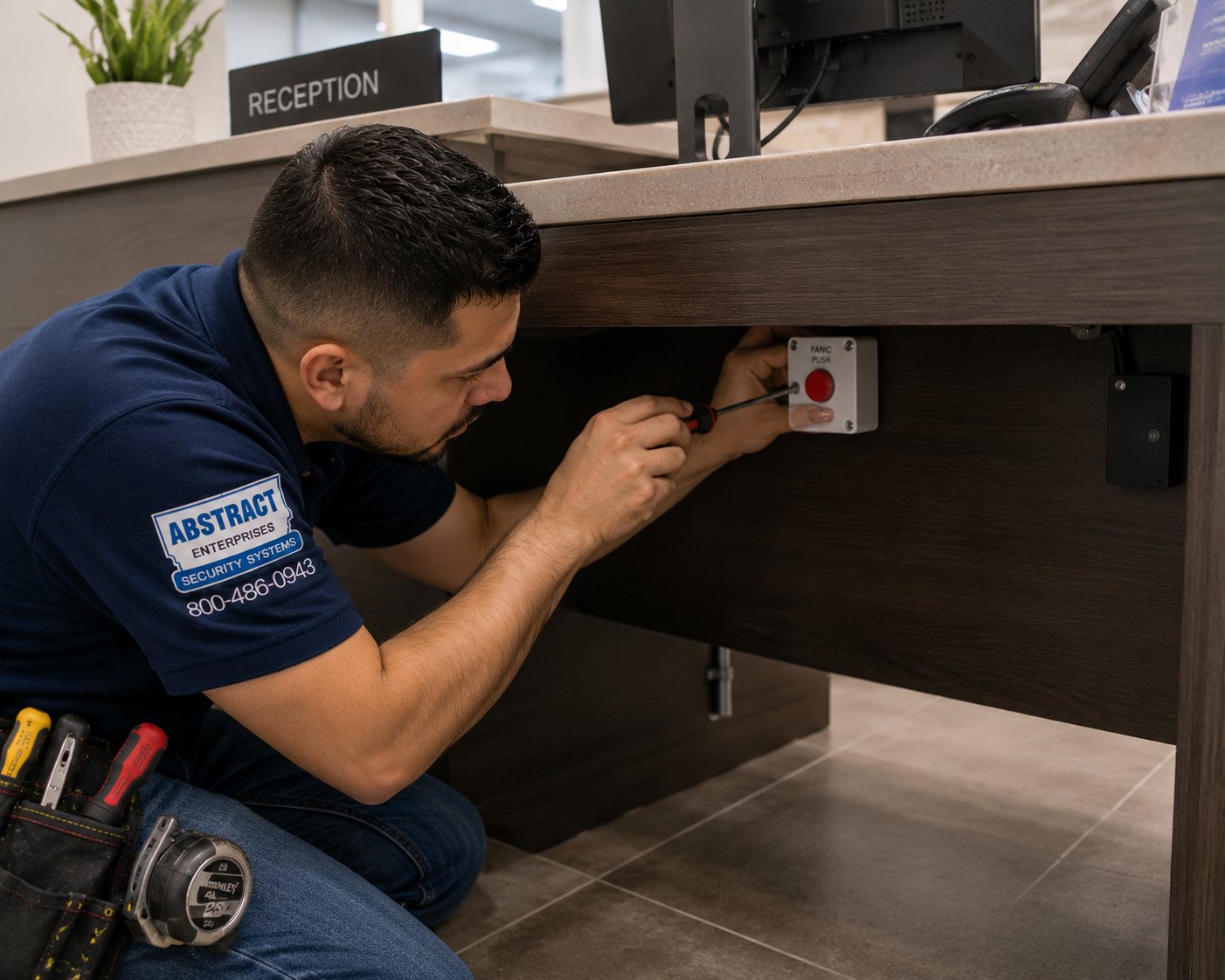
Commercial alarm systems built on door and window contacts, glass-break, dual-tech motion, and panic and duress buttons where cash changes hands — partitioned for facilities that never fully close, reporting over dual-path cellular and IP to 24/7 central-station monitoring with open and close reports your insurer recognizes.
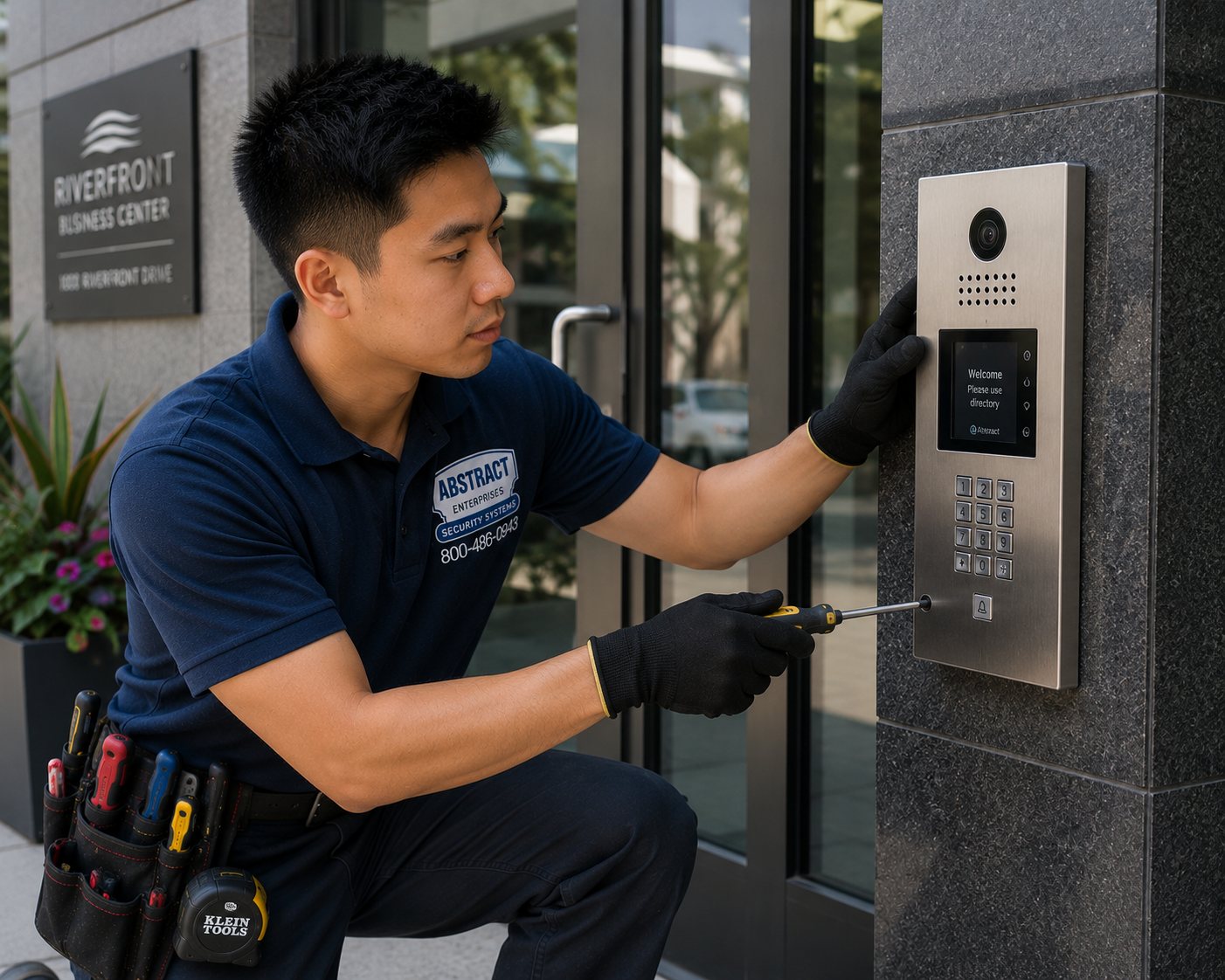
Commercial intercom systems for lobbies, storefront-plus-apartment buildings, delivery doors and gates — visitor video, directory calling, counter release and logged entries on the same backbone as the doors. Deeper entry scope lives with our Bronx intercom installation team.
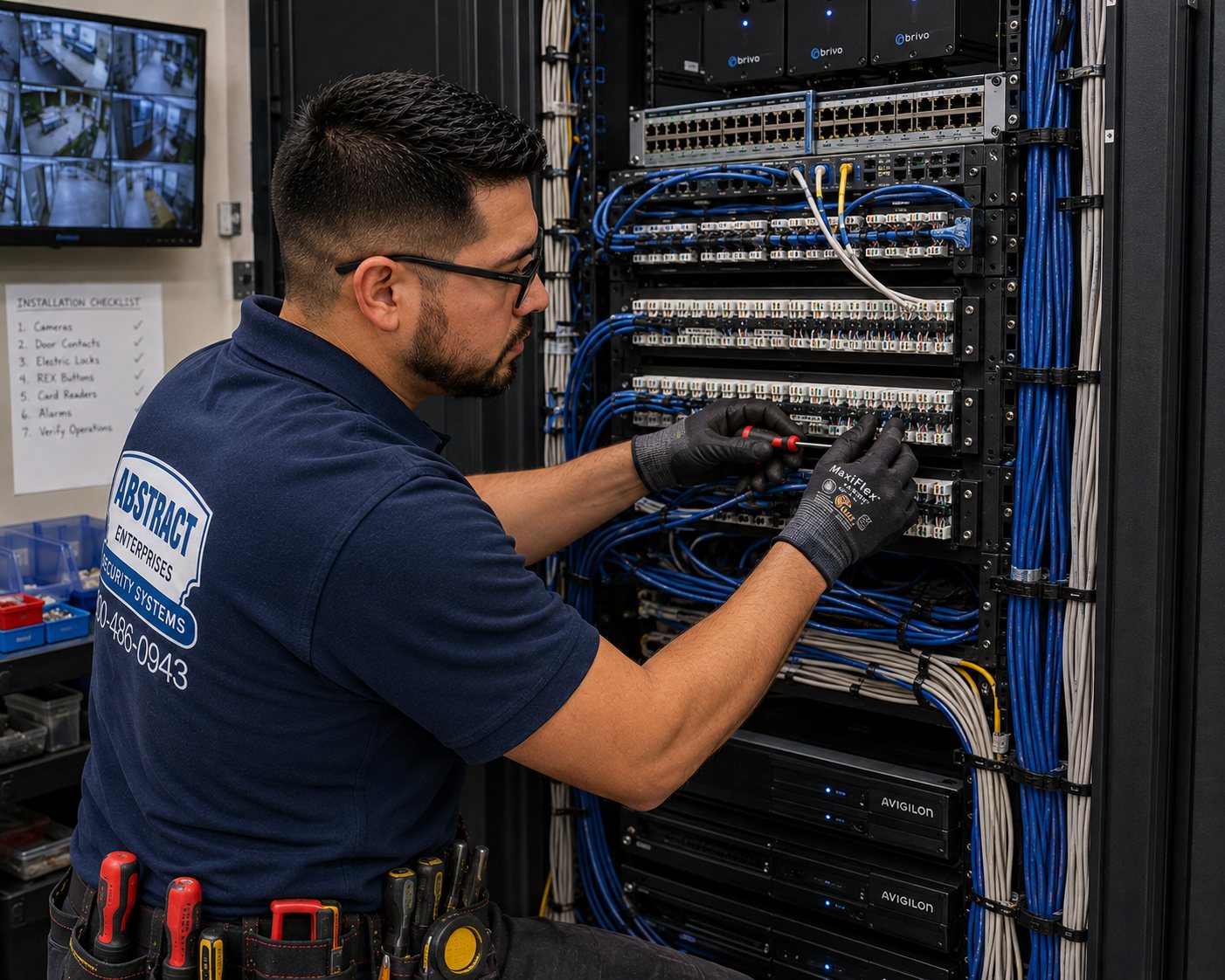
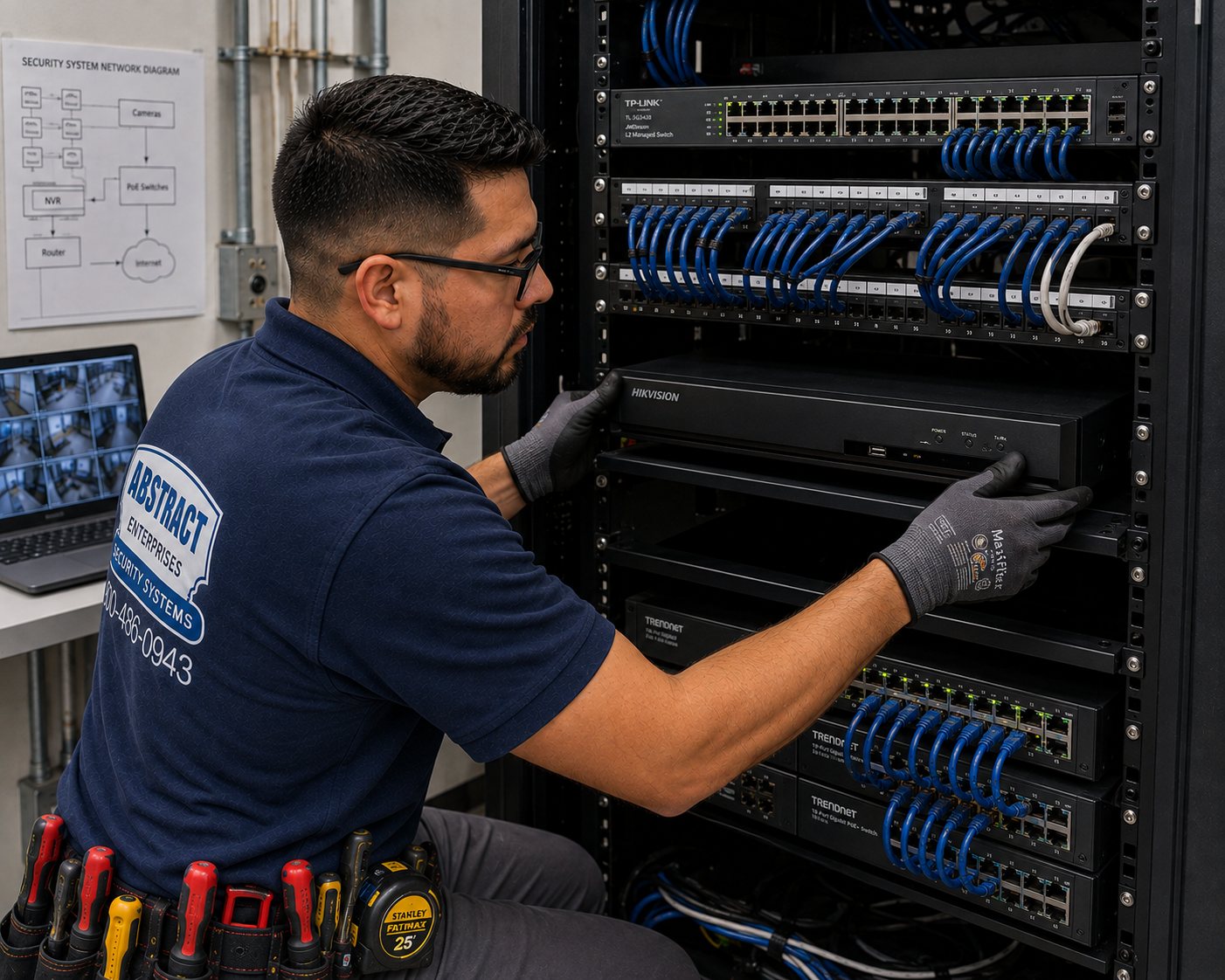
Cat6/Cat6A backbone, PoE switching, UPS power, VLAN separation and health monitoring that flags a dead camera before an incident does — built with our Bronx structured cabling and low-voltage installation crews.
Analog-to-IP conversions, looping-DVR replacements, and adoption of systems whose installer vanished. The survey tells you what survives — see DVR and NVR upgrades in the Bronx before assuming rip-and-replace.
FEATURE SET
Configuration, not upsell — what a properly built borough platform does on day one.
BUILDING TYPES
What prices a Bronx system is rarely the device count — it is the building, the lot and the corridor around it.
Corridor storefronts on Fordham, at The Hub, and under the el on Westchester Avenue and White Plains Road pair frontage glass-break and gate contacts with identification cameras engineered around track shadow, glare bands and structure-borne vibration. Food and freight facilities in Hunts Point, Port Morris and Zerega are dock-coverage, yard-lighting and LPR problems before they are megapixel problems — with partitioned alarms for operations that never fully close. Auto-belt shops and lots along Jerome Avenue and the tow yards beyond hold open-air vehicles and parts that a lot-wide camera grid and gate LPR defend better than fencing ever did. Office, clinic and community stock from the Grand Concourse to Co-op City runs on suite-level access, lobby intercoms and after-hours schedules. Restaurants from Arthur Avenue to City Island pair counter and floor coverage with rear doors, cellar hatches and delivery windows. We design to the building first and pick hardware second.
EQUIPMENT
We are brand-agnostic: the building and the budget pick the hardware, and we extend or take over what you already own when it earns its keep. Video runs from Hikvision, Dahua, Lorex and TVT through Axis, Hanwha Vision and Avigilon-class systems, with cold-environment and washdown-rated form factors specified where food facilities need them, and NDAA-compliant lines for any business touching federal work. Access control spans Brivo, Avigilon Alta and Kisi-class cloud platforms to HID readers and ProdataKey-class controllers; entry work draws on Aiphone, ButterflyMX, 2N, Akuvox, Comelit and DoorBird.
The pattern worth naming in the Bronx: market landlords, food-facility operators and carriers all write requirements — named brands, retention minimums, monitored-certificate language, COI limits, vendor-compliance paperwork — and the distribution-market leases are among the strictest on our desk. We install to the written spec and document it, so your COI and your underwriter describe the same system.
TERMINOLOGY
The vocabulary that decides what a Bronx quote actually contains.
PoE / PoE+. Data and power on one network cable per camera, reader or intercom — one battery-backup point in the closet instead of a wall-wart behind every device.
NVR vs DVR vs VMS. The recorder generations: DVR for analog coax, NVR for IP, VMS as the software layer above recorders and sites. A 2026 Bronx quote built around a DVR deserves a follow-up question.
ONVIF. The interoperability standard keeping cameras and recorders brand-independent — the difference between owning a system and renting a vendor.
OSDP. The encrypted reader-to-panel protocol replacing legacy Wiegand wiring, which can be skimmed at the door with a pocket device. Ask for it on every new opening.
Fail-safe vs fail-secure. What each locked door does when power drops — release or hold. Egress and fire code decide per opening; preference does not.
Electric strike vs maglock. Two ways to electrify a door: the strike cooperates with the latch; the maglock holds by force, suits storefront glass, and carries strict egress rules.
REX. Request-to-exit — the sensor or bar letting people leave freely while the street side stays locked. Skipped, the door either alarms all day or traps someone.
Door position switch. The contact reporting whether a door is actually shut — the cure for the dock door propped since the morning delivery.
Mobile credential. The phone as key: revoked in seconds, rarely lent out — which across shift-based market and retail staff is exactly the point.
Dual-path communicator. Alarm reporting over cellular and internet together, so one cut line or ISP outage never silences monitoring.
Video verification. A clip rides with the alarm signal so the central station dispatches on evidence — the single best false-alarm reducer a business can buy.
Retention. Days of footage held before overwrite. Claims timelines and insurers set the number; the drives just have to obey it.
Edge analytics. Person, vehicle, line-cross and loiter detection on the camera itself, alerting live instead of after a scrub session.
Partitioned arming. One alarm panel split into independent areas — the 24/7 dock stays live while the office side arms at close. The default design for facilities that never fully sleep.
ACROSS THE BRONX
South, the work runs through The Hub’s dense retail at 149th and Third, the Port Morris industrial waterfront, Hunts Point’s market and distribution floors, and the Bruckner corridor. The center spans the Grand Concourse’s office and clinic stock, Yankee Stadium’s 161st Street belt, the Jerome Avenue auto corridor under the 4, Tremont and Mount Hope retail, and Fordham Road — the borough’s retail spine and our own front door. East, it is Westchester Avenue and White Plains Road under the el, the Zerega and Castle Hill industrial blocks, Parkchester, Bay Plaza and Co-op City’s commercial base, and City Island’s seasonal restaurant row. North and west, Arthur Avenue’s restaurant blocks in Belmont, Bedford Park and Norwood retail, and Riverdale’s Johnson Avenue strip. One borough, every commercial security problem in the catalog — and our office in the middle of it.
Every Bronx neighborhood books through this page today, dispatched from 460 E Fordham Rd with COIs issued before mobilization.
INDUSTRIES
From commercial security systems for small businesses to portfolio work, design starts with each industry’s actual loss pattern — then picks the subsystems that answer it.
Office security systems built on suite-door credentials, visitor management, server-room coverage and audit trails HR can use.
Retail security systems tuned for frontage glass-break, register panic buttons, public-view monitors and corridor theft deterrence.
Warehouse security systems for the market and industrial belts: dock and yard cameras with LPR, cage-level access, perimeter intrusion and partitioned 24/7 alarms.
Controlled vestibules, lockdown capability, dismissal-time video intercoms and sight-line-careful camera plans.
Waiting-room and dispensary coverage, badge access to records and med storage, duress at the front desk — from Concourse clinics to hospital-adjacent suites.
Lot-wide camera grids on the Jerome Avenue belt, license plate recognition (LPR) at entrances, gate credentials and overnight intrusion coverage.
Lobby entry systems, per-tenant credentials, package-area cameras and common-area coverage owners run remotely.
Open doors with protected offices and classrooms, discreet cameras, duress where staff actually sit.
Front and back-of-house separation, loading and service-entrance coverage, and integration with whatever the flag requires.
Production-floor coverage, tool-crib access control and after-hours intrusion where inventory is payroll — brewery to bakery to fabrication.
Gate credentials, unit-corridor cameras and unstaffed-hours alerting across large sites.
Standardized builds replicated address by address, managed centrally, opened remotely when a manager no-shows.
Construction sites, parking facilities, schools and apartment buildings carry their own Bronx pages — see apartment building camera systems in the Bronx for residential common-area work.
HOW IT WORKS
YOUR QUESTIONS ANSWERED
Working borough numbers: a storefront package of cameras plus a monitored alarm lands in the low four figures; a small office or clinic with cameras and a door or two on credentials runs mid four figures to low five; an integrated mid-size build — sixteen to twenty-four cameras, four to six controlled doors, monitored intrusion — commonly falls in the $15,000–$45,000 class; market, dock and portfolio work starts around $50,000 and climbs with yard cabling and LPR. The spread between two quotes for the same address is rarely the cameras — it is doors, gates, docks and what got quietly excluded. A fair quote itemizes all of it.
Run the math over years, not months. Per-camera and per-door licensing compounds forever, and a twenty-four-camera cloud stack can quietly cost more than the cameras did. Cloud earns its fee for multi-location operators — a brand with storefronts on three corridors — and teams with no IT staff. A single-location business usually comes out ahead owning an on-premises recorder with off-site backup. We price both ways at a three-to-five-year horizon in every proposal; hybrid wins most often.
Most standard commercial doors land between roughly $1,500 and $3,000 installed — reader, electrified hardware, contact, request-to-exit and programming. Easy openings with existing pathway can come in near $500–$1,000; storefront glass leaves, fire-rated doors and cold-environment dock openings reach $6,000–$8,000; new cable runs add $250–$600 per door, and gates, roll-downs and yard readers carry their own hardware lines. A per-door price quoted before anyone has seen your doors is a guess wearing a suit.
Two layers, both checkable in minutes. Statewide, security and fire alarm installation is licensed under General Business Law Article 6-D — verify any company with the Department of State; our number is 12000287431. Inside the city, electrical scope runs through DOB-licensed electricians and permits where the work requires them, and fire-alarm tie-ins bring FDNY requirements. Ask for the license numbers and the COI written to your landlord’s limits before you compare a single price — and ask where the company’s office is. Ours is at 460 E Fordham Rd.
Read the contract term before the brochure. The recurring complaint about the national chains is multi-year monitoring agreements with automatic renewal, equipment you never quite own, and a truck dispatched from a regional branch on the branch’s schedule. A local licensed integrator gives you hardware you own outright, month-to-month monitoring, and — in our case — an office physically in the borough. For most single-location businesses: local install, optional monitoring, no agreement that needs a lawyer to exit.
No. Deposit-and-balance is the professional structure — ours is fifty percent down, balance at completion — and full payment before installation removes every ounce of your leverage on the punch list. It is also the common thread in the installed-and-vanished stories behind half our takeover calls. A discount for full prepayment is not a deal; it is a tell. A written scope, a deposit structure and a named warranty are the floor of a professional proposal.
On property you own, yes — Article 6-D licenses businesses installing for others, and owners on their own premises sit outside it. In practice the lane narrows fast: most Bronx storefronts and market spaces are leased, which puts the landlord’s alteration language in play; monitored certificates need a carrier-recognized installation; electrified hardware on egress and fire-rated doors is code territory; and anything near a building fire alarm is off the table. A camera over your own counter, in your own building, is a fine Saturday project. A leased space is where DIY gets expensive quietly.
When it earns its keep, yes — and an hour on site answers it. Existing coax frequently carries IP video over converters, sound Cat5e regularly survives for cameras, and pathway — the expensive part across a market floor or a corridor building — is reusable even when its cable is not. Access control is the usual exception: door hardware wants dedicated home runs, and legacy reader wiring is often the skimmable old protocol worth retiring. The proposal says keep, convert or replace, line by line, because billing you to rip out working cable is billing you twice.
Wired PoE is the commercial default — one cable per device, centralized backup, no battery fleet, no gambling on radio through block construction or across a steel dock. Wireless earns specific Bronx spots: a gate camera across a yard where trenching is absurd, a detached building on the lot, a short-term lease. The honest answer for almost every property is a wired backbone with wireless as a rare, documented exception, decided position by position at the survey.
Thirty days is the working floor. Slip-and-fall claims, insurance investigations and police follow-ups reach back weeks, and discovering the recorder overwrote the incident is the most expensive storage lesson there is. Cash-heavy, regulated and higher-liability operations — food distribution, nightlife, medical — commonly hold sixty to ninety, and market tenants sometimes carry contract-driven minimums written by their own customers. Retention is drive math against resolution and camera count, so we spec the number in writing and size the recorder to deliver it.
With partitions, not a single arm-at-close switch. A facility that runs around the clock — a market floor, a 24-hour store, a fleet yard — splits the panel into areas: the live dock stays disarmed on its own schedule while offices, cages and storage arm independently; interior zones use analytics and verified video instead of blunt motion; and duress stays live everywhere, always. The arm-at-close model most installers default to was designed for a shop that locks at seven. We design for buildings that never fully sleep, because in this borough plenty do not.
The lease decides, and the usual split runs: the landlord covers the shell, the lobby and shared areas; the tenant secures its demised space — its own alarm, interior cameras, its own door credentials. The contested zones are shared corridors, loading areas and any door serving more than one tenant. Bring the lease to the survey; we design to your side of the line, issue the COI the landlord demands, and put restore-on-exit terms in writing so the system never becomes a move-out dispute.
Only if your system is built to allow it. Cameras recording to your own NVR on your own network are yours, and access is whoever holds the credentials — which after our handover is you. Where it blurs is shared infrastructure: anything riding a landlord-controlled network, recorder or intercom head-end is governed by the lease, not by assumption. If footage privacy matters — and for HR, cash handling and customer-facing businesses it should — keep your interior system on your own recorder and your own VLAN, and put any sharing terms in writing.
Yes, and half-finished jobs are a standing category for us. We audit what was actually installed against what was invoiced, test every pulled cable, identify what is salvageable, and give you a written completion scope — including what the first company skipped that you were charged for. Sometimes the finish is a week of work; sometimes the honest answer is that the platform they started is orphaned and the completion path is a migration. Either way you get the answer in writing before spending another dollar. Bring whatever paperwork survives; we have finished from none.
On-site time from real jobs: one to two days for a storefront package; two to four for a suite or clinic with controlled doors; one to two weeks for an integrated mid-size build; two to six weeks, phased, for warehouse, yard and multi-building work — with 24-hour food and logistics operations sequenced so no dock or door goes unwatched mid-project. The calendar before the crew is the Bronx variable: landlord approvals and COIs at managed industrial parks, and yard trenching that adds days. We start the paperwork at the survey so the date quoted is the date kept.
Read the lease; industrial deals here push most of it to the tenant. Single-tenant and triple-net structures typically make everything inside the fence your responsibility — cameras, gates, alarm — while the owner keeps approval rights through the alterations clause and expects a COI before work. Two items to paper now: your system documented as removable trade fixtures so surrender language cannot capture it, and gate or shared-yard responsibilities spelled out where multiple tenants share a lot — the ambiguity that produces the unwatched gate everyone assumed someone else covered.
One click, effective immediately, logged — that is the entire case for credentialed gates over shared codes and copied keys. The same afternoon: rotate any gate or alarm codes he knew, pull remote camera logins, and review the recent gate log and footage with fresh eyes, because plate records plus badge events reconstruct exactly who came and went. If the yard still runs a shared keypad code, replace the practice: per-person credentials or plate-based entry, so the next departure is administrative instead of a security event. The rekeying bill only exists on systems built around keys.
Two ways, both quiet. First, the recording gap: docks live on the building’s internet, and when it drops — ISP cut, router swap, storm — a cloud-only system saves nothing for the duration, discovered only when overnight footage is needed and is not there. Second, bandwidth: a dock’s worth of cameras uploading continuously saturates typical business connections, so platforms throttle resolution until plates and faces smear at exactly the distance dock coverage requires. The fix is architectural: local recording as the source of truth — NVR or edge storage — with cloud as the viewing layer, sized to bandwidth we measure at the survey rather than assume.
A properly built system barely notices: cameras write to an on-site recorder on UPS power, door controllers enforce cached credentials, and the alarm panel reports over cellular the whole time — the internet outage costs you remote viewing, not evidence. The honest limit is power, not connectivity: standard UPS capacity carries the security closet for hours, so operations that must ride out multi-day events spec larger backup or a generator circuit for the recorder and panel — a modest line item on any 24-hour facility’s build. The two architectures that cannot answer this question at all: cloud-only recording and internet-only alarm reporting.
PEOPLE ALSO ASK
The search cluster around Bronx commercial security sorts into three buckets — each answered on this page.
what is included · what it costs here · how the systems work · which fits a small business · can everything integrate · does it need internet · who installs it
for storefronts · for food and freight · for auto shops · with cameras · with door access · without monitoring contracts · in a leased space
Straight answers to the questions Bing surfaces for this market — each expanded elsewhere on this page.
Most single-location Bronx businesses land between $5,000 and $20,000 installed for cameras, monitored intrusion and a credentialed door or two; storefront packages start near $3,000, while distribution, food-industry and yard properties run $18,000–$75,000+ on dock, gate, LPR and environment-rated scope. The loading side prices Bronx jobs more than the sales floor — the free walkthrough produces the number that holds.
Inside your own space, camera and low-voltage work frequently proceeds without a standalone permit; the triggers are electrified egress hardware, fire-system adjacency, structural or exterior mounts, and landlord alteration consent at leased and managed industrial properties. Scope and address decide, so our proposal names the approvals that apply and the paperwork starts at the survey rather than after the crew is booked.
Regularly — monitored intrusion with certificates carriers recognize is the most consistently credited item, and on industrial properties, documented camera coverage of docks, yards and cash points can earn more. Broker first: get the crediting spec in writing, then install to it. For 24-hour food and logistics operations, the open/close and supervision reporting is often what the underwriter actually wants to see.
Generally yes as business equipment, with installed systems commonly qualifying for accelerated treatment such as Section 179 in the purchase year — a material line on warehouse-scale projects. Confirm with your accountant for your entity, and carry after-tax cost into the bid comparison, where it belongs next to the sticker numbers.
Purpose-rated ones: heated housings specified for the actual room temperature, lenses and seals that survive the thermal shock at dock doors where frost meets summer, and washdown-rated equipment where the hose reaches. Standard cameras fog, frost and fail in exactly these positions — the food corridor’s most repeated equipment lesson. We spec the environment first and resolution second, because here the environment is what kills systems.
Only with local recording in the design: an on-site NVR on backup power keeps writing, doors enforce cached credentials and the alarm reports over cellular — the outage costs remote viewing, not evidence. Cloud-only systems save nothing for the duration, a failure that lands hardest on overnight dock operations. Every proposal should answer where video lives offline in one sentence.
Industrial single-site and small-portfolio operators usually do better local: owned equipment, month-to-month monitoring, a published service rate and crews that know dock-and-yard work. National contracts fit large multi-state footprints wanting one vendor. Bronx-specific advice from the takeover pile: whoever you pick, read term, auto-renewal window and hardware ownership first — that is where the expensive surprises live.
Central-station monitoring at commercial grade runs roughly $40–$120 monthly by zones, cellular path and reporting; live remote video monitoring for yards, docks and lots is its own $800–$2,500 tier that industrial properties actually use. Prefer month-to-month on owned equipment, and keep the station’s escalation list current across shift-manager turnover — the cheapest fix in this entire industry.
The installing business needs the state security and fire alarm license under General Business Law Article 6-D — one-minute verification on the Department of State’s search; our number is 12000287431. Add the practical gate: a COI to your landlord’s limits before mobilization and drawings from a comparable industrial job. Unlicensed work surfaces at exactly the wrong time — in front of an adjuster or a fire marshal.
A design with no closing time: access control with full audit trails because there is no armed-empty state, cameras sized for round-the-clock retention, environment-rated equipment in cold and washdown areas, duress at cash points, LPR at the yard gate timed for overnight truck flow, and health monitoring that flags failures immediately. The overnight hours are the busiest and the least watched — the system exists for exactly that inversion.
The search phrases people pair with this topic — every one of them lands on work we do here.
Cameras offline, a reader dead at opening, an alarm faulting through the night, a recorder that quietly stopped, a gate stuck open. Same-day commercial response across the borough — the office is on Fordham Road — and most single-fault calls are diagnosed and fixed in one to two hours on site. Service and troubleshooting is billed at $195/hr with a three-hour minimum.
AI OVERVIEW REALITY CHECK
Ask ChatGPT, Gemini, Copilot, Perplexity, Claude or Grok about commercial security systems in the Bronx and you get a competent national answer wearing somebody else’s skyline. We keep the cross-platform specimens side by side. Here is where they hold, where they break in this borough, and how to use them without getting burned.
The convergent summary is fair: a commercial system combines cameras, access control, intrusion alarms, intercoms and the cabling underneath, and every platform tells readers to hire a licensed, insured local installer and get a site survey before trusting a number. Correct, and we will not pretend otherwise.
The component brackets are directionally sane too: camera systems clustering $2,000–$25,000+, access control $1,500–$6,000+ per door, intercoms $1,500–$12,000, intrusion $800–$5,000, small-to-mid integrated builds $5,000–$25,000+ and larger market or multi-tenant systems $15,000–$40,000 and up.
Those ranges bracket real Bronx invoices more often than not. If all you took from an AI answer were the vocabulary and the instruction to verify licensure, you would arrive at the survey ahead of most buyers.
The tables underneath — Angi, HomeAdvisor and Fixr publish the ones the AI leans on — are national medians, and Bronx properties are not median: docks and yards that need trenching and conduit, cold rooms that need rated housings, el-adjacent facades where glare, shadow bands and vibration shape every camera position, corridor buildings a block deep with one closet. Each moves real numbers off the table — and occasionally down, when a newer industrial floor inherits clean pathway.
The miss compounds on specifics. A national per-door figure assumes a hollow-core door with pathway; a refrigerated dock opening in Hunts Point, or a roll-down under the el on Westchester Avenue, is a different animal. Two sixteen-camera quotes can land thousands apart, legitimately, on trenching and mounting conditions alone.
The point is narrower than “the Bronx costs more”: only a walkthrough of your property prices your property.
The AI answer usually closes by suggesting several quotes, and the top links for getting them are marketplaces. Understand the mechanics: submit your details on Angi or HomeAdvisor and you have not requested a quote — you have become the product, sold to whichever contractors paid for the lead.
What follows is a phone blitz ranked by ad spend, not licensure or fit. The marketplace has never stood on your dock or read your lease; its role ends at the sale of your number. Some fine contractors buy leads there. So do outfits that will never come back for warranty work.
The alternative costs nothing: call two or three licensed integrators directly, verify each with the Department of State in a minute, and let them walk the property. Same competitive pressure, without becoming inventory.
AI cost answers quote hardware and install, then wave vaguely at monitoring. What they omit is platform licensing: cloud video per camera, cloud access per door, analytics per device, every month, indefinitely. The sticker is not the price.
Run any cloud-first proposal at a three-to-five-year total next to an owned system with optional monitoring. Single-location Bronx businesses usually win with ownership; the multi-storefront brand with no IT staff is where cloud genuinely earns its fee. Both answers are legitimate — only one is in the brochure.
Bundling is the quieter lever: cameras, access and intercom installed as one project share the survey, the trenching, the lift and the mobilization — on dock-and-yard properties, that is real money.
The specimens gesture at licensing and hedge. The precise version: New York General Business Law Article 6-D licenses the business of installing and servicing security and fire alarm systems statewide — owners on their own property exempt — and Abstract Enterprises holds License #12000287431, verifiable with the Department of State.
Inside the city, low-voltage camera and access wiring frequently proceeds without a DOB permit, but the answer changes when scope opens walls or ceilings, penetrates rated assemblies, touches line voltage, or connects to a fire alarm — where DOB-licensed electrical work, permits and FDNY requirements enter. The Bronx adds its own paperwork textures: market and food-facility leases with vendor-compliance and strict COI language, and mixed-use certificates of occupancy on the corridors that decide what a ground-floor tenant may touch.
A proper Bronx quote states which of these applies to your scope in writing — ours does, and we would rather you confirm with DOB or your landlord than take any webpage’s word, including this one.
Every AI answer prices security by the device. The Bronx prices it by the property: a yard run that needs trench and conduit, a refrigerated dock door with rated hardware, a gate that needs its own contact, camera and LPR, an el-facing facade where every position fights glare and vibration — each moves cost more than the device at the end of the wire.
Device-count math also hides scope games. Two “sixteen-camera” quotes can differ by ten thousand dollars because one includes trenching, firestopping, a PoE switch, UPS and commissioning — and the other includes cameras. The cheaper number is frequently the more expensive system.
Use the averages as a sanity band. A Bronx quote far outside the brackets in either direction should explain itself in the itemization — and if there is no itemization, that is your answer.
Working installed brackets by building form from Bronx jobs: avenue and hub storefronts $3,000–$10,000 for cameras plus monitored intrusion, $1,500–$3,000 per credentialed door on top; restaurants and food businesses $4,000–$13,000 with cash coverage and duress; offices and clinics $6,000–$22,000 on door count and records scope; warehouses, distribution and food-industry space $18,000–$75,000+ once docks, yards, LPR and cold-environment housings enter; multi-tenant and mixed-use buildings $12,000–$48,000, priced on doors and risers; auto businesses and lots $10,000–$55,000 driven by outdoor coverage and gates.
The borough’s industrial weight moves its math: dock and yard scope, not camera count, is what separates a $20,000 project from a $60,000 one. The brackets are a sanity band for comparing bids; the binding number comes from the free walkthrough, where the loading side of the building finally gets counted.
Food-industry space punishes ordinary equipment. Cold storage and freezer rooms fog and frost standard lenses, condensation cycles kill housings rated for weather but not for thermal shock at the dock door, washdown areas demand sealed ratings, and 24-hour operations mean there is no quiet window when a dead camera does not matter. The market’s overnight rhythm inverts the usual threat clock — the busiest hours are the ones most systems were never designed to watch.
Design answers, not upgrades: heated and properly rated housings in cold rooms, thermal-transition placement at dock doors, washdown-rated equipment where the hose reaches, LPR at yard gates timed for overnight truck flow, and recording sized for round-the-clock retention rather than business-hours math. We spec the environment first and the megapixels second, because in this corridor the environment is what breaks systems.
Half our Bronx takeover calls include the same discovery: the monitoring agreement signed years ago auto-renewed for another multi-year term inside a notice window nobody tracked, the panel turns out to be leased or firmware-locked to one central station, and the early-termination formula prices the exit near the cost of a new system. The system’s problem was service; the contract converts it into a negotiation.
Prevention is four clauses at signing: term, the renewal window (calendar it that day), hardware ownership in writing, and the mid-contract service rate. Cure, if you are already inside one: time the window, inventory what equipment is actually yours — sensors and wiring usually are — and plan the cutover so monitoring never lapses. Month-to-month on owned equipment is not exotic; it is the model we run, and asking for it is the fastest way to learn what any agreement is really selling.
Treat the chatbot as a vocabulary lesson and an agenda-builder, not a bid. It is genuinely good at teaching what OSDP, partitions, retention, fail-secure and dual-path mean before a salesperson deploys them at you.
Then bring the agenda to a licensed local integrator: retention in days, in writing. Each door and gate’s outage behavior. How the panel partitions if your operation never closes. Who owns the hardware and the admin credentials. And the service rate after install — ours is $195 an hour with a three-hour minimum, printed here rather than discovered on the first invoice.
The step no chatbot can do is the walkthrough. Every number on this page is a bracket until a licensed installer has stood on your property — the survey is free, and the office doing it is already in the borough.
DIY VS PRO
Should you install your own system? For a narrow slice of scopes, yes — and state law agrees, since owners working on their own property sit outside Article 6-D’s licensing requirement.
A camera or two over your own counter, in a building you own, touching nothing rated and nobody’s lease. If the protected loss is small, no insurer is writing requirements and no landlord holds alteration language over the work, DIY is a defensible call — and we will say so at the survey rather than upsell you out of it.
Most of the borough’s real cases. Leased storefronts and market spaces with vendor-compliance paperwork and strict COIs. Monitored certificates a commercial carrier accepts. Electrified hardware on egress, fire-rated and refrigerated dock doors. DOB-permit territory and anything near a building fire alarm. Partitioned alarms for 24/7 operations. Retention sized to claims, audit trails that hold up, and one accountable party.
The verdict tracks the property: owner-occupied and low-stakes, do it yourself with our blessing; leased, insured, regulated or dock-heavy, hire licensed — because the expensive part of a commercial system is being wrong about the one door that mattered.
WORTH KNOWING
The gate that has not fully latched since winter. The rear door onto the alley nobody films. The camera aimed into the sodium glow under the el. The alarm sticker from a company that folded years ago. Crews read corridors the way installers do, just for the opposite reason — and a strip of near-identical storefronts means one weakness found is a whole block’s. The survey reads your frontage first, and closes what it finds.
Fobs nobody can add because the vendor stopped answering. A door that grants before the badge finishes tapping. Wiegand-era readers skimmable with a pocket device. An audit log that stops in 2021. Access control ages silently — the doors keep opening, which feels like working — until the day you need to revoke one ex-employee everywhere and discover you cannot.
The most common Bronx survey finding: cameras clustered over the counter, none on the dock where the pallets walk, the sales floor filmed in triplicate while the yard gate goes unwatched. Coverage is a map problem — entries, exits, points of value, approach lines, drive lanes — and eight placed cameras beat sixteen scattered ones every time, at lower cost, with footage someone can actually find.
Elevated track turns a streetscape into bands of glare and hard shadow that ruin naive camera placement — the frontage shot that looked fine at the demo goes unreadable at 6 p.m., and structure-borne vibration slowly walks a cheap mount off its aim. The fixes are engineering, not megapixels: WDR-capable cameras positioned across the light bands, vibration-isolated mounts, and eye-level identification angles that do not depend on what the track shades. It is the most Bronx-specific camera problem there is.
Pull the internet and the power for an hour: built right, cameras record locally on battery-backed equipment, door controllers enforce cached credentials, the alarm rides cellular, and the only casualties are remote viewing and cloud sync, which catch up on reconnect. Built wrong — cloud-only cameras, internet-only reporting — a routine outage is a blackout. Ask the question before you sign, not during the first storm.
The forgotten DVR on factory credentials with a port punched open to the internet is how most real-world camera breaches happen — not Hollywood hacking, just housekeeping nobody did after the installer left. Hardening is unglamorous and decisive: default passwords purged, firmware maintained, security gear on its own VLAN, UPnP off, remote access through the platform instead of an open router. We build it in on day one, because bolting it on later is how it never happens.
REVIEWS
Abstract Enterprises holds a 4.7-star average across 201 Google reviews between our Bronx (460 E Fordham Rd) and Brooklyn (1282 Troy Ave) profiles — the Fordham Road profile is this borough’s own. Look either up on Google Maps and read them unfiltered. Day-to-day install work runs on Instagram and YouTube; we would rather show the work than paraphrase the reviews.
PRICING
What does a commercial security system cost in the Bronx? Working brackets for commercial security system installation from real borough projects: storefront camera-plus-alarm packages start in the low four figures; small offices and clinics run mid four figures to low five; integrated mid-size systems with sixteen to twenty-four cameras, four to six access doors and monitoring commonly land between $15,000 and $45,000; market, dock and portfolio work starts around $50,000 and climbs with yard cabling and LPR.
By component: commercial camera systems typically run $2,500–$18,000 all-in depending on count, trenching and mounting conditions — per-camera math on its own misleads, because on dock-and-yard properties pathway is the cost, and el-adjacent facades add engineering. Access control lands around $1,500–$3,000 per standard door installed, with a $500–$1,000 floor on easy openings and $6,000–$8,000 ceilings on glass, fire-rated and refrigerated dock openings; new runs add $250–$600 per door, and gates, roll-downs and yard readers price separately. Commercial video intercom and entry systems run roughly $1,500–$12,000 installed by panel class and tenant count. Intrusion alarm systems land around $800–$5,000 installed before monitoring, with partitioned 24/7 configurations quoted to the operation.
Monthly fees exist only where you choose them: commercial alarm monitoring through a central station runs about $40–$120 a month, live remote video monitoring for yards and docks is its own $800–$2,500 monthly tier, and unmonitored camera and access systems carry no mandatory monthly cost unless you pick cloud licensing. You own every piece of hardware we install. Post-install service is $195/hr with a three-hour minimum ($585), in writing. The Bronx carries a posted labor multiplier over our Brooklyn base — the exact figure for your address and property conditions comes from the survey, never from a table. Every commercial security system quote we issue is itemized down to the exclusions list, which is the fastest way to compare us against other commercial security installers line by line.
PACKAGES
Three shapes cover most first conversations; the walkthrough turns a shape into a number.
Four to eight cameras across counter, floor, entry and frontage; monitored intrusion with glass-break and a gate contact; a duress button where cash changes hands; the rear door on a contact. Built for Fordham Road, The Hub, and the el corridors on Westchester Avenue and White Plains Road.
Entry, reception and records-room coverage; one to four doors on credentials with audit trails; a video intercom at the suite door; duress at the desk. Built for Grand Concourse floors, medical and dental suites, nonprofits and practices that lock records to a badge.
Dock and aisle cameras, LPR at the gate, perimeter and man-door credentials, partitioned 24/7 intrusion and health alerts — one platform, one service agreement. Built for Hunts Point, Port Morris and Zerega floors, the Jerome Avenue auto belt, and operators done juggling vendors.
LOCAL PROBLEMS
The corridor after close. Fordham, The Hub and the el avenues empty at night, and a crew that defeats one gate pattern is standing beside a block of them. Gate contacts, frontage glass-break and video-verified monitoring convert a 3 a.m. attempt into a dispatched response instead of a morning discovery.
Pallets and product off the market floors. Food and freight moving through Hunts Point, Port Morris and Zerega draws losses at the dock, in the aisles and between shifts. LPR at the gate, dock cameras tied to door contacts, credentialed man-doors and partitioned overnight zones put a plate, a timestamp and a face on every touch.
The auto belt overnight. Shops and lots along Jerome Avenue and the tow yards beyond hold vehicles and parts worth stealing by the vanload. A lot-wide camera grid, gate LPR and monitored perimeter intrusion defend them better than fencing ever did.
The cash-heavy counter. Corridor businesses that run on cash carry robbery exposure their insurance paperwork rarely reflects. Duress buttons where staff stand, eye-level identification cameras at the entry and video-verified alarm response are the working answer.
Keys that outlived the staff list. Shift-based market and retail turnover means copied keys and shared alarm codes everywhere. Credentials revoke in one click and leave a trail — pair with our Bronx access control installation team and retire the locksmith line item.
The recorder nobody has opened since installation. Half the “we have cameras” properties we survey are looping a few days of unwatchable video on a dying drive. Staged analog-to-IP upgrades reuse sound cable — see DVR and NVR upgrades in the Bronx before assuming rip-and-replace.
FIELD NOTES
Working the borough your office sits in changes the rhythm of the job. A Tremont storefront calls about one dead camera and the walkthrough finds the real story: a rear door propped for deliveries, an alarm code three ex-employees still carry, and a recorder holding four days of footage against an insurer that asks for thirty. Down at the markets it inverts — beautiful cameras down the aisles while the dock, where the pallets actually walk, runs on one failing bullet from 2016, and the alarm is a single arm-at-close zone on a floor that never closes. The fix order matters more than the brand: contact the propped door, partition the panel, credential the people, size the retention, then talk cameras. Owners expect a pitch and get a punch list, and the punch list is usually cheaper. The Fordham Road part is simple: our own storefront is on this spine, which keeps the follow-up honest — you know where to find us. — Anwar Timothy, NYS Lic. #12000287431
Reader down, recorder dark, alarm faulting, gate stuck — call before noon and we are usually on site the same business day, from Riverdale to Hunts Point. $195/hr, three-hour minimum, and the diagnosis is honest even when the fix is small.
COVERAGE
This page anchors integrated commercial security work across the borough — Mott Haven, Port Morris and The Hub through Hunts Point and Longwood, Melrose and Morrisania, the Grand Concourse and 161st Street belt, Highbridge and Mount Eden, Tremont and Mount Hope, Fordham and Belmont with Arthur Avenue’s restaurant blocks, Bedford Park and Norwood, the Jerome Avenue auto corridor, Westchester Square, Parkchester, Castle Hill and Zerega, Soundview, Throgs Neck, Pelham Bay, Co-op City and Bay Plaza, City Island, and Riverdale — dispatched from our own office at 460 E Fordham Rd, one commercial security systems company behind business security systems from a single storefront to a market-floor portfolio. The citywide silo is anchored by our Commercial Security Systems NYC hub, with Manhattan, Brooklyn, Queens, Long Island and Hudson Valley pages live; Staten Island joins as it is built, and every Bronx neighborhood books directly through this page today.
HOW WE COMPARE
Every Bronx buyer is choosing among the same five models. The honest grid — how each publicly works, no trash talk.
| Abstract Enterprises (local integrator) | ADT Commercial / Everon | Verkada-class cloud vendors | National integrators (Security 101 / Securitas Technology class) | Angi / HomeAdvisor / Fixr | |
|---|---|---|---|---|---|
| Who shows up | Our own NYS-licensed crews | Branch technicians or authorized dealers | Certified partner installers — the vendor sells hardware and software | Branch or subcontracted crews | Whichever contractors bought your lead |
| Article 6-D licensure | Held — #12000287431, verifiable with the Department of State | Verify the exact entity on your contract | The installing partner’s responsibility — verify the partner | Varies by branch — verify | Not an installer; nothing to verify |
| Contract length | No term contracts; monitoring runs month to month | Multi-year monitoring agreements with auto-renewal are the standard model | Multi-year per-device software licenses | Negotiated service agreements, commonly multi-year | N/A — the product being sold is your contact information |
| Hardware ownership | You own everything we install | Equipment frequently leased or bundled into the agreement | Hardware stops functioning without an active license | Typically owned | N/A |
| Platform | Open — ONVIF and OSDP, brands mixed freely | Largely proprietary panel ecosystem | Closed single-vendor ecosystem | Varies by project | N/A |
| Service rate | Published: $195/hr, three-hour minimum | Per agreement and truck-roll pricing | Support in the subscription; partner labor separate | Per agreement | N/A |
| Takeover of existing systems | Core service — orphaned systems adopted weekly | Commonly replaced with own equipment | Requires migrating to their hardware | Case by case | N/A |
| NYC footprint | Brooklyn and Bronx offices, same-day five-borough service | National footprint, branch coverage | Remote-first, partner-dependent | Regional branches | None — a directory, not a company |
The national commercial brands bring footprint, financing and a name your landlord recognizes — real advantages on a hundred-site portfolio. The trade is the model: multi-year monitoring terms with auto-renewal, equipment often tied to the agreement, truck-roll pricing per visit, and a tech dispatched from wherever the regional branch sits. The recurring complaint is not failure — it is discovering what leaving costs. Read the term and renewal clause before anything else in the packet.
Ring, SimpliSafe and their peers are honestly good at what they are for: a porch, an owner-occupied shop, a low-stakes back room. They end exactly where a business begins — monitored certificates a commercial carrier accepts, code-correct hardware on egress and dock doors, PoE reliability through block construction and across a yard, partitioned arming for operations that never close, retention sized to claims, audit trails, and a landlord who requires a COI before anyone touches a wall. Plenty of our commercial clients started on a doorbell camera; the survey is where the growing-out-of-it conversation happens.
The cloud-native vendors ship genuinely slick dashboards and shine for multi-site operators with no IT staff — a brand with storefronts on three corridors should look hard at them, and we will say so when it fits. The math to run first: per-device licensing every month against a three-to-five-year horizon, on hardware that stops working when the license does. A single-location Bronx business usually wins by owning an open-platform system with optional cloud access — the demo never mentions it.
FAQ
Four subsystems on one platform: video surveillance (cameras, recorder or cloud, analytics, LPR where lots and gates call for it), access control (readers, credentials, electrified door and gate hardware), intrusion detection (contacts, motion, glass-break, a monitored panel partitioned to the operation) and entry intercoms — plus the cabling, PoE switching and backup power underneath. Not every business needs all four on day one; every business benefits from designing as if it might.
Working brackets: storefront camera-plus-alarm packages from the low four figures; small offices and clinics mid four figures to low five; integrated mid-size systems commonly $15,000–$45,000; market, dock and portfolio work from about $50,000. Doors, gates, docks and trenching drive the spread more than camera count, and the exact number for your address comes from a free on-site survey run out of our Fordham Road office.
Duty cycle, code and consequences. Commercial systems run continuous-duty cameras and panels, door hardware governed by egress and fire code, monitoring with open/close reporting your insurer recognizes, audit trails for turnover, and room to scale across doors, gates, docks and buildings. A consumer kit is built for a porch; a business is a liability environment.
Yes — that integration is the point. On one platform a forced dock door pulls its camera clip automatically, the office partition arms off the last badge-out while the dock stays live, a counter release is logged like any other entry, and one dashboard replaces four apps. We design the integration in at the survey rather than bolting it on later.
Frequently no, sometimes emphatically yes. Pure low-voltage camera and access wiring inside your own space usually proceeds without a DOB permit; the answer changes when scope opens walls or ceilings, penetrates rated assemblies, touches line voltage or connects to a building fire alarm — where licensed electrical work, permits and FDNY requirements enter. Trenching a yard and mounting on a leased market building add their own landlord approvals. We state which applies to your specific scope in writing during the survey.
Only the ones you choose. Central-station alarm monitoring runs roughly $40–$120 a month at commercial grade; live remote video monitoring for yards and docks is a separate $800–$2,500 monthly tier; cloud platforms carry per-device licensing. An owned camera and access system with no monitoring has no mandatory monthly cost — you own the hardware we install outright.
Coverage decides, not a number: every entry and exit, the counter or points of value, the rear door, the gate, the dock, the approach at identification height. Storefronts usually land at four to eight; offices at eight to sixteen; markets, docks and lots are governed by aisles, gates and yards rather than square footage. The survey draws the map before anyone counts.
Thirty days is the commercial floor — claims, carrier investigations and police follow-ups reach back weeks. Sixty to ninety suits cash-heavy, regulated and higher-liability operations, and market tenants sometimes carry contract-driven minimums written by their own customers. Retention is storage math against resolution and camera count, so we spec the number in the proposal and size the recorder to actually deliver it.
Plan around $1,500–$3,000 installed for a standard commercial door — reader, electrified hardware, contact, request-to-exit and programming. Easy openings can come in near $500–$1,000; storefront glass, fire-rated and refrigerated dock openings reach $6,000–$8,000; new cable runs add $250–$600 per door, and gates, roll-downs and yard readers price separately. Per-door quotes issued without a walkthrough are guesses.
Reputable commercial cloud platforms — encrypted in transit and at rest, centrally patched, multi-factor admin enforced — are typically safer than the forgotten on-premises recorder running factory credentials on an open port, which is how most real camera breaches happen. The risks worth pricing are lock-in and subscription stacking, not encryption. Either architecture done properly is sound; either one neglected is a liability.
Not one designed for it. Cameras keep recording on a battery-backed recorder and PoE switch, door controllers enforce cached credentials, and a dual-path communicator fails the alarm to cellular so monitoring never goes silent — with partitions holding their own schedules throughout. Remote viewing and cloud sync pause and recover on reconnect. Each door and gate’s fail-safe or fail-secure behavior in an outage is a deliberate, code-driven choice made per opening.
Statewide: the Article 6-D security and fire alarm license — verify any company with the Department of State; Abstract Enterprises holds #12000287431. In the city: DOB-licensed electrical work and permits where scope requires them, FDNY compliance on fire-alarm tie-ins, and — practically — a COI written to your landlord’s limits, plus a real local address. Ours is 460 E Fordham Rd, and you are welcome to walk in.
COMPLETE SERVICES
Every subsystem on this page has its own Bronx team and page — and everything below installs to the same platform.
GET IN TOUCH
A licensed technician walks your property — doors, gates, dock, lot, frontage, closets, existing equipment — and you get a written, itemized proposal: camera schedule, door-by-door hardware, alarm partitions, platform licensing model, retention math and an exclusions list. The number holds because the whole property was actually seen. Surveys book across every Bronx neighborhood, usually same-week, from our office at 460 E Fordham Rd.
We install commercial security systems from Riverdale to Hunts Point — with our own front door on Fordham Road.
Reviewed and updated August 15, 2026.
WARRANTY
You own the system outright with no monthly fees, and products supplied by us carry a three-year warranty. Post-install service visits and callbacks are billed at $195/hour with a three-hour minimum ($585). Optional central-station monitoring runs month to month — we do not lock Bronx clients into multi-year monitoring contracts, and we take over service on systems other companies installed. Warranty visits in this borough are served from our own Fordham Road office.
Licensing and permitting statements on this page summarize how commercial security work is treated in New York State and New York City and are not legal advice. Requirements for your specific building and scope should be confirmed with the Department of Buildings, your landlord or board, and, for fire alarm systems, the FDNY and the authority having jurisdiction.
ALL AREAS SERVED
Every market we cover for integrated commercial security work. Areas without their own page yet are still served directly.
Reviewed and updated August 15, 2026 by Anwar Timothy of Abstract Enterprises Security Systems, NYS Low-Voltage Electrical Contractor License #12000287431.
Changelog — Aug 2026: page published as the Bronx borough page of the commercial security systems silo, anchored to our 460 E Fordham Rd office. · Aug 2026: licensing guidance written against GBL Article 6-D plus NYC DOB and FDNY requirements, with market-lease COI and 24/7-partition considerations. · Aug 2026: pricing brackets aligned to the August 2026 cross-platform AI specimen set.