What are you looking for?
About Us Contact Us Careers Get a Free Quote (800) 486-0943
Pick a service
✅ Got Your Own System?
🎬 Home TheatreQuote 🎶 AV SoundQuote 🔑 Access ControlQuote
Now pick your area
Pick your area
Long Island
Hudson Valley
Services available
Pricing & Tools
Pick a service for pricing
🚪 Intercom Pricing 🔔 Buzzer Repair Pricing
Calculators
📹 Camera System Calculator 🚨 Alarm Calculator ⚡ Cabling Quote Builder ✅ Got Your Own System?
Select your area
Dutchess County Commercial Security Integrator

Commercial
Security Systems
in Dutchess County

Cameras, access control, monitored intrusion alarms and video intercoms engineered as one platform for Dutchess County’s Route 9 retail spine, Poughkeepsie and Beacon downtowns, medical and campus corridors and the Fishkill logistics belt — designed, installed, integrated, serviced and repaired by a NYS-licensed low-voltage security contractor, priced from a free on-site survey.

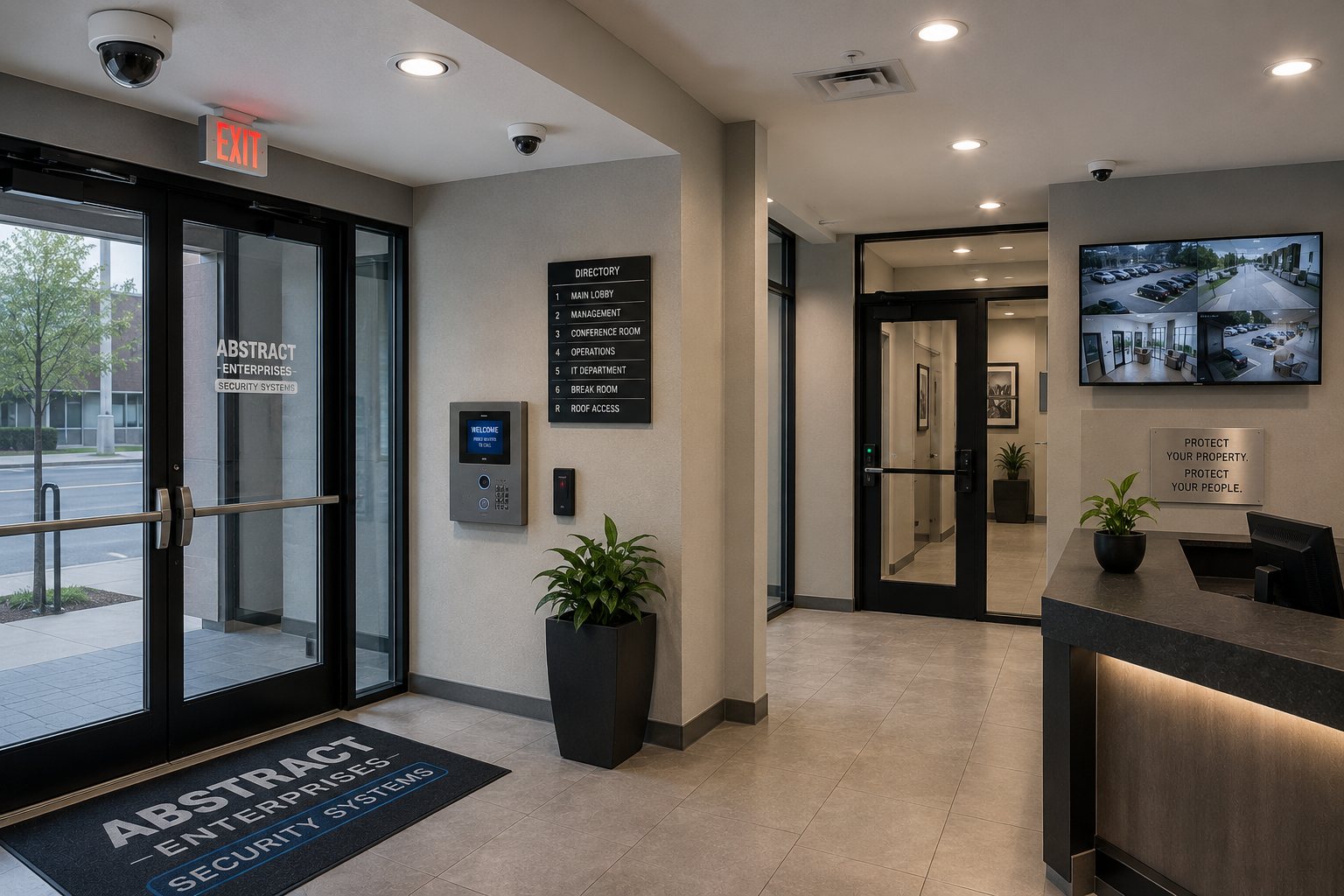
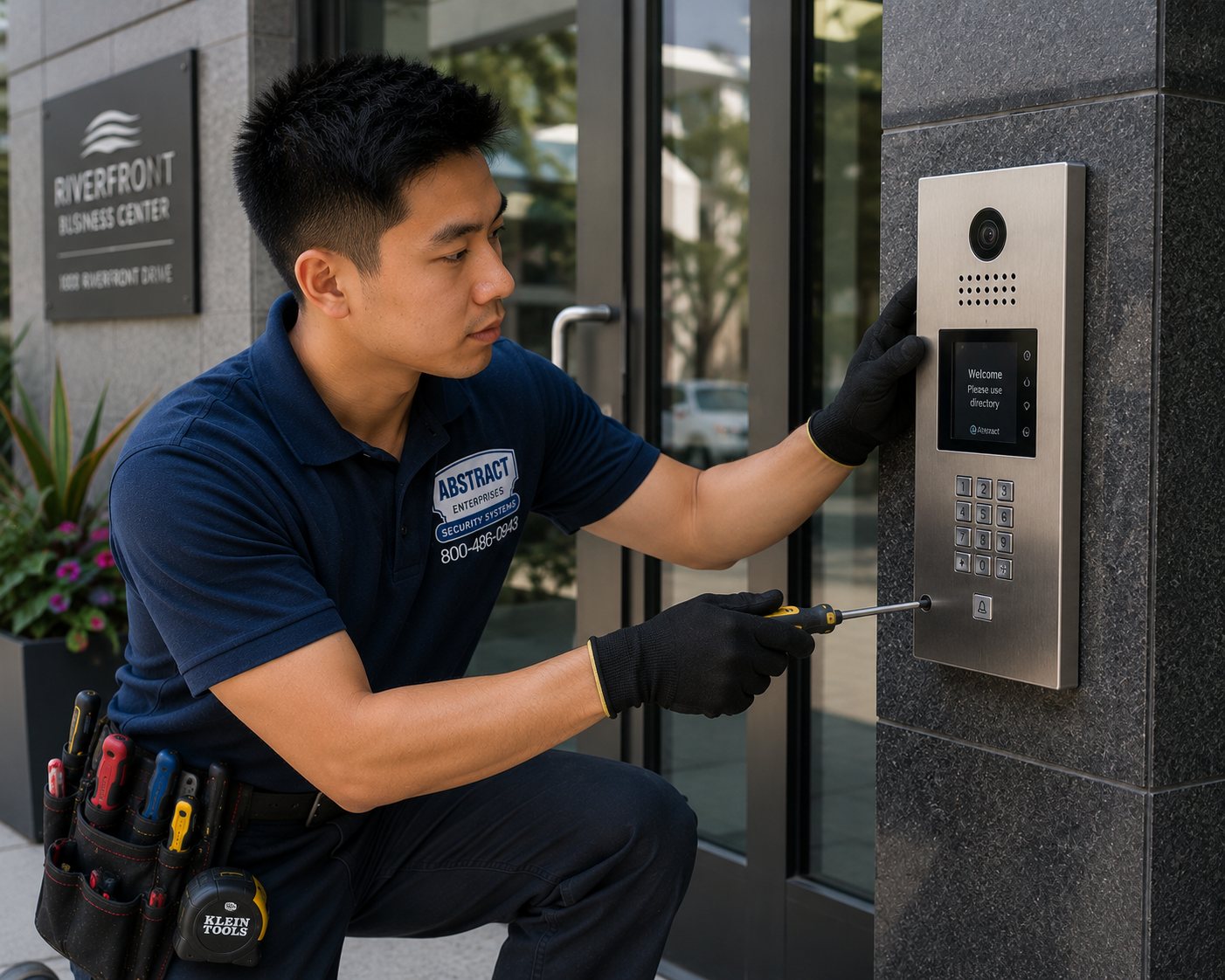
Commercial security systems Dutchess County installer commissioning a video intercom directory panel at an office building entrance
Visitor video, directory calling and remote release on one entry station — the front door of a Route 9 office building, answered from anywhere.
4.7 · 201 reviewsLicensed & insuredNYS Lic. #120002874313-year warranty$0 monthly feesFree on-site survey

Dutchess runs the biggest, most varied commercial economy in the Hudson Valley — and every piece of it prices security differently. Poughkeepsie stacks the institutional layer: hospital campuses on the MidHudson and Vassar Brothers orbits, the Vassar, Marist and community-college belts, county offices, and a Main Street corridor working through a long revitalization. Route 9 runs the retail spine — the Galleria, South Hills and the big-box mile through Wappinger and Fishkill. The IBM legacy still anchors the tech economy: the Poughkeepsie campus on one end, the East Fishkill fab and its supplier park on the other, with iPark 84 filling in between. Beacon turned a factory Main Street into a gallery-and-restaurant economy that swells every weekend Dia is open. And the edges round it out — Hyde Park’s culinary and museum corridor, Rhinebeck and Red Hook’s village retail and fairground seasonality, Millbrook’s horse country, Pawling and the Harlem Line south, Amenia and Dover east. Every one of those businesses needs the same four subsystems — video, door access, intrusion detection and entry intercoms — built as one platform instead of four contracts, under one NYS license, one warranty and one published service rate.

Half the Dutchess buildings we survey already own equipment: cameras from a vendor who stopped returning calls, an access system nobody has administered since a property changed hands, an alarm account inherited with the lease. Takeover, integration and staged upgrade are the daily work — we adopt orphaned systems, keep cable that passes testing, and put a written rate behind service instead of a monitoring contract you cannot exit.

Start here: talk to an installer about your building. Call (845) 640-3835  ·  Request a survey

60-second qualifier — three questions and we can scope it on the phone.

Request a Free Dutchess Commercial Security Survey

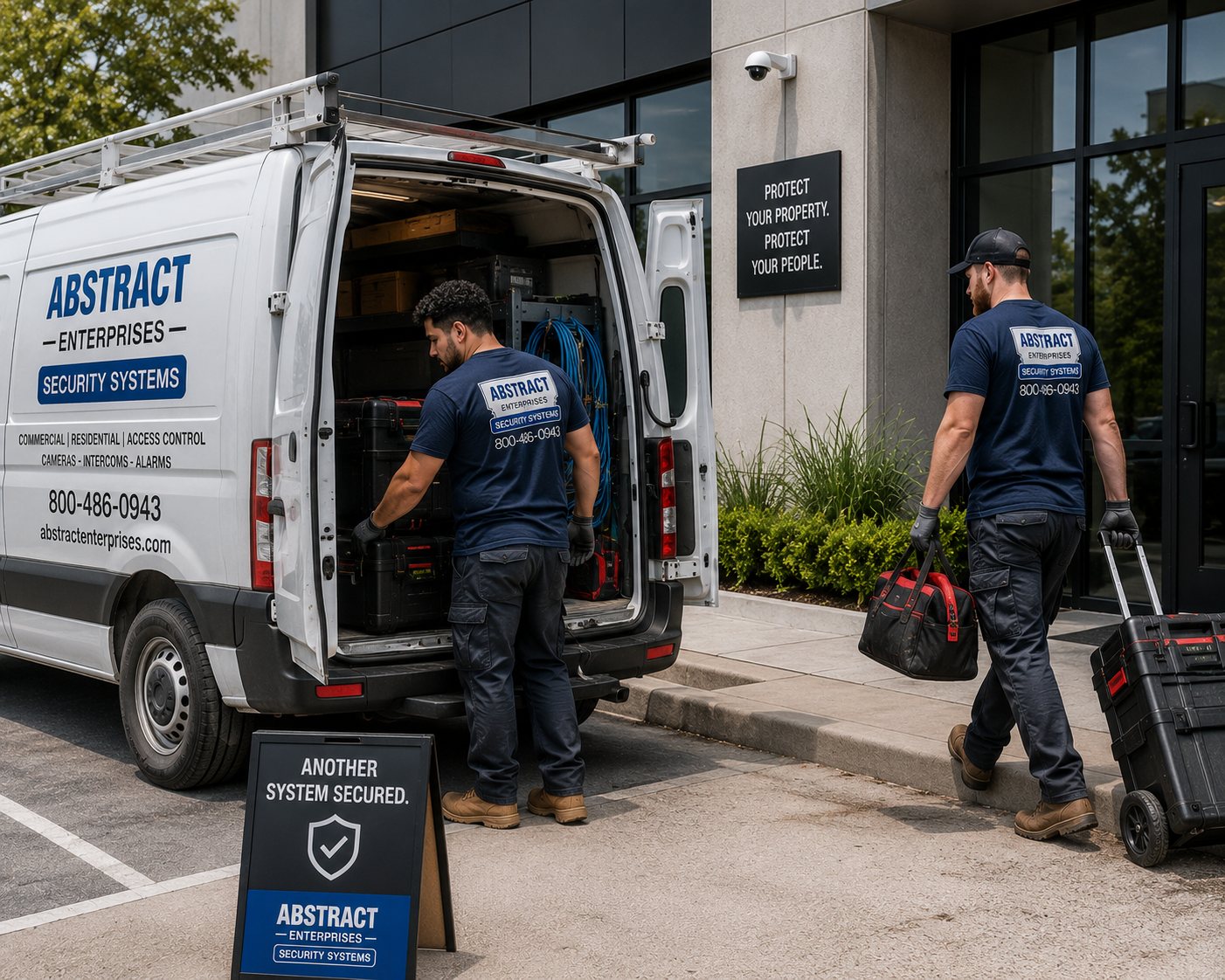
Commercial security systems Dutchess County installation crew arriving with a branded van at a business property
Same crews, one platform — from Beacon to Rhinebeck.

WHY DUTCHESS

Why Commercial Security in Dutchess County Is Its Own Job

Dutchess risk maps to Dutchess variety. The Route 9 retail spine absorbs the same organized retail-theft pressure hitting Galleria-class corridors everywhere in the region — boosters working anchor stores and strip units alike. Poughkeepsie’s Main and arterial corridors carry the county’s documented property-crime load, which its storefronts and offices price into every design. Beacon inverts the problem: weekend crowds thick enough to hide shoplifting on a Main Street that empties on Mondays. The Fishkill belt runs dock and yard exposure at logistics scale; the medical corridors carry records, med-storage and duress requirements; the campus-adjacent blocks run late-night cash businesses; and the trailhead lots feeding the Walkway and the rail trails have become a car-break-in pattern every adjacent business ends up filming.

The quiet losses round it out: rear doors propped on delivery lanes, alarm codes shared through years of turnover, keys copied across property managers, recorders looping four days against insurers that ask for thirty. Each maps to a subsystem done properly — glass-break with video verification on the frontage, credentials instead of keys at the suite door, duress where cash and controlled inventory sit, LPR where lots meet the road.

Then the compliance layer. New York State licenses the business of installing security and fire alarm systems under General Business Law Article 6-D. Below that, Dutchess runs on municipal rules: the cities of Poughkeepsie and Beacon operate their own building departments, the towns and villages from Fishkill to Rhinebeck each run their own, and alarm-registration practice varies by jurisdiction. Which combination governs your project depends on your exact address; we identify it at the survey, state it in the proposal, and would rather you confirm with your own city or town than take any webpage’s word.

Request a Survey   Call (845) 640-3835

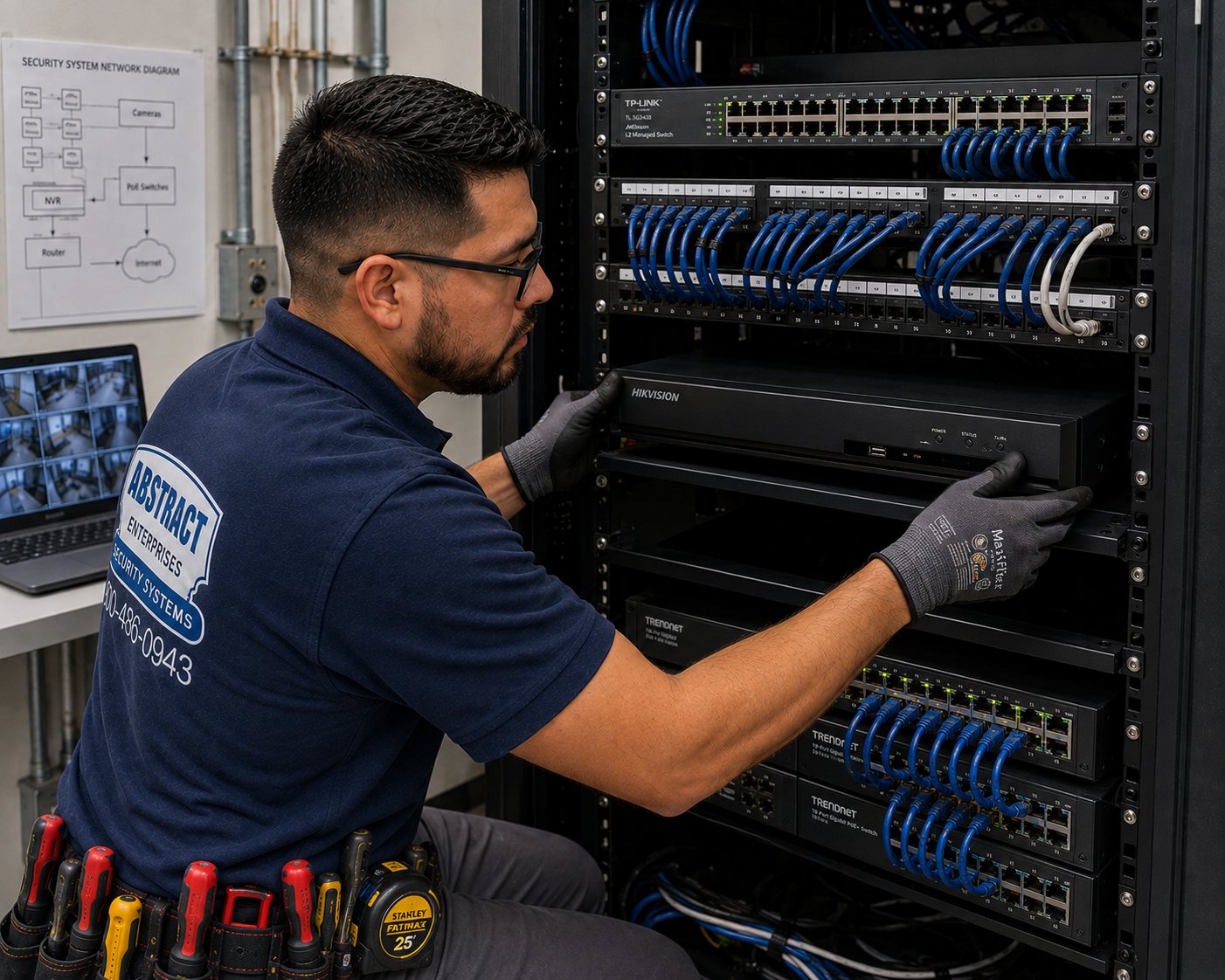
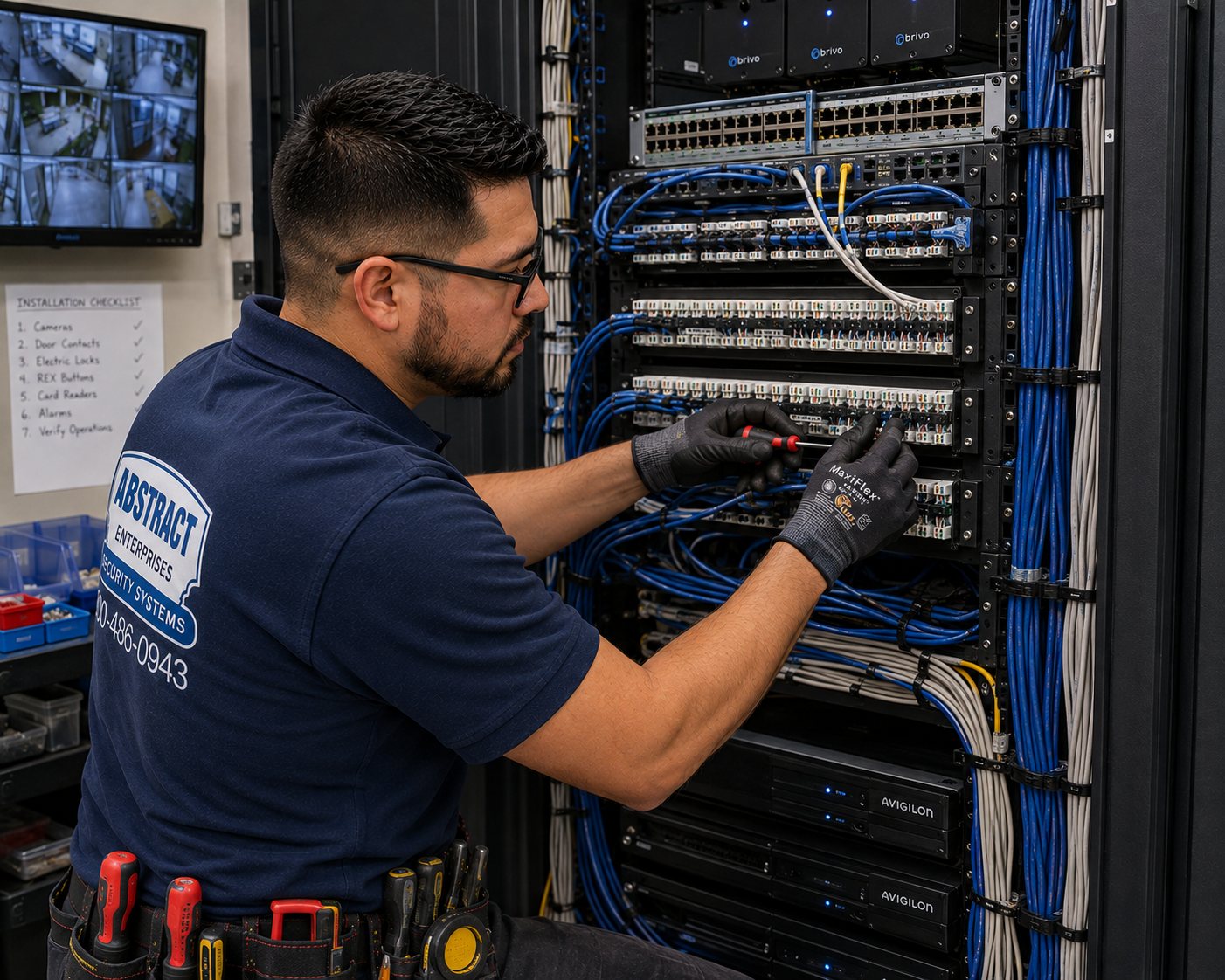
Commercial security systems Dutchess County technician commissioning an integration rack with access panels, PoE switching and recorders
Panels, PoE, patching and recorders verified line by line at commissioning.

WHAT WE INSTALL

Commercial Security Systems We Install Across Dutchess

Each subsystem stands alone; every one works better on a shared platform — integrated commercial security systems in the plain sense: one backbone, one dashboard, one accountable installer.

Business Video Surveillance

Commercial security cameras for Dutchess businesses — 4K fixed, PTZ, multisensor panoramic and license-plate recognition at lots, gates and loading lanes — recording to on-premises NVRs, cloud or hybrid, with person, vehicle and loitering analytics that alert instead of archive. Camera events tie to door events so every entry carries its clip.

Door & Gate Access Control

Card, fob, PIN, mobile and biometric credentials; electric strikes and maglocks specified to each opening and its egress role; gate and dock-door readers; scheduled unlock for business hours; audit trails; one-click revocation the day someone leaves. Institutional-grade access control without the institutional contract.

Monitored Intrusion Alarms

Commercial alarm systems built on door and window contacts, glass-break, dual-tech motion, and panic and duress buttons where cash and inventory sit — reporting over dual-path cellular and IP to 24/7 central-station monitoring with open and close reports your insurer recognizes, and registration handled where your municipality requires it.

Entry & Intercom Systems

Commercial intercom systems for lobbies, medical suites, delivery doors and gates — visitor video, directory calling, counter release and logged entries on the same backbone as the doors. Deeper entry scope lives with our Dutchess intercom installation team.

Integration & Networking

Cat6/Cat6A backbone, PoE switching, UPS power, VLAN separation and health monitoring that flags a dead camera before an incident does — built with our Dutchess structured cabling and low-voltage installation crews.

Upgrades & Takeovers

Analog-to-IP conversions, looping-DVR replacements, and adoption of systems whose installer or management company vanished. The survey tells you what survives — see DVR and NVR upgrades in Dutchess before assuming rip-and-replace.

Request a Survey   Call (845) 640-3835

Commercial security systems Dutchess County installer racking an NVR above PoE switches feeding cameras and doors
One cabinet carries the recorder, the managed switching and power for every device.

FEATURE SET

The Feature Set a Dutchess Platform Should Ship With

Configuration, not upsell — what a properly built county platform does on day one.

  • One dashboard across one storefront or a portfolio from Beacon to Red Hook
  • Role-based admin so the counter, the manager and the owner each see their own view
  • Entry reports and audit trails exportable for HR, landlords and insurers
  • Business-hours schedules, event-weekend calendars and auto-arming off the last badge-out
  • One-touch lockdown for schools, medical suites and offices
  • Every alarm and door event carries its video clip automatically
  • Health monitoring with offline alerts — a dead camera announces itself the day it dies
  • Hardening by default: factory credentials purged, firmware maintained, security devices on their own VLAN
  • Battery and dual-path cellular backup that rides out outages and panel work
  • Scales from one Main Street storefront to a distribution floor without changing platforms
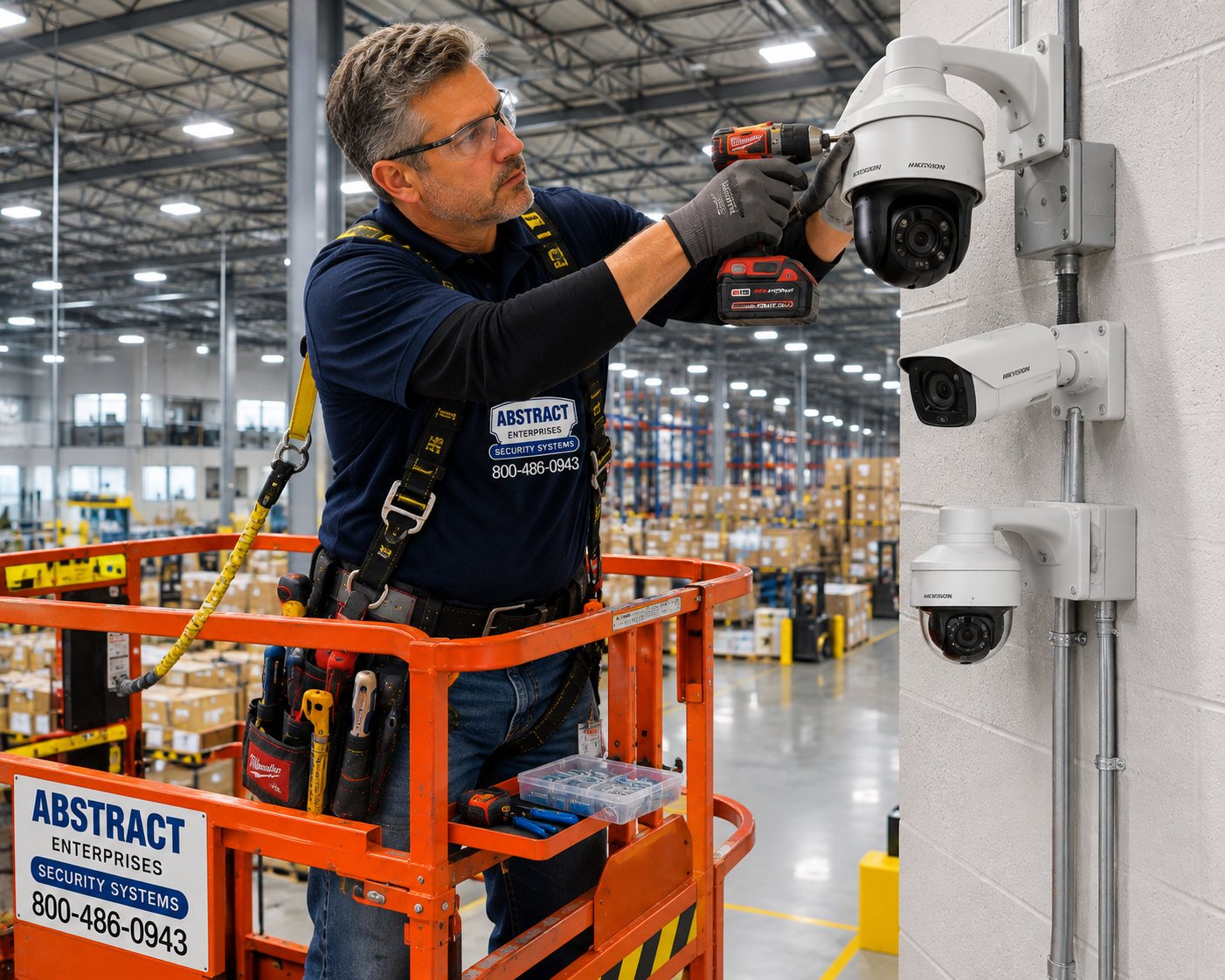
Commercial security systems Dutchess County technician installing PTZ, bullet and dome cameras on a distribution building wall
Three camera forms on one Fishkill-belt wall — one platform behind all of them.

BUILDING TYPES

Security Built for Dutchess Commercial Buildings

What prices a Dutchess system is rarely the device count — it is the building, the corridor and the calendar.

Route 9 retail units from the Galleria orbit through South Hills and the Wappinger big-box mile pair frontage glass-break with lot cameras at identification height and rear-door contacts on the delivery side. Poughkeepsie offices and storefronts on the Main corridor, the arterials and the waterfront balance documented street-level pressure with coverage that keeps a working frontage workable. Beacon Main Street businesses need weekend-crowd coverage that stays invisible against a gallery district’s aesthetics — discreet is a specification here. Medical and professional suites across the hospital corridors and campus-adjacent belts run suite credentials, records-room and med-storage coverage, and duress at reception. Fishkill-belt warehouses and fab-supplier buildings off I-84 and Route 9 are dock, yard and LPR problems at logistics scale, often with customer security requirements written into the contract. Village retail in Rhinebeck, Red Hook and Millbrook pairs historic-frontage discretion with fairground- and event-weekend surge coverage. We design to the building first and pick hardware second.

EQUIPMENT

Commercial Security Equipment and Brands for Dutchess

We are brand-agnostic: the building and the budget pick the hardware, and we extend or take over what you already own when it earns its keep. Video runs from Hikvision, Dahua, Lorex and TVT through Axis, Hanwha Vision and Avigilon-class systems, with NDAA-compliant lines for contract-governed work — a live requirement across the county’s fab-supplier and institutional tenancy. Access control spans Brivo, Avigilon Alta and Kisi-class cloud platforms to HID readers and ProdataKey-class controllers; entry work draws on Aiphone, ButterflyMX, 2N, Akuvox, Comelit and DoorBird.

The pattern worth naming in Dutchess: requirements flowing downhill. Institutional landlords, healthcare tenants and fab-belt customers push written specs into ordinary leases and vendor agreements — brand lists, retention minimums, monitored-certificate language, COI limits, sometimes NDAA clauses — and the two cities plus a dozen towns add their own paperwork underneath. We install to the written spec, handle the local filings, and document it, so your COI, your registration and your underwriter all describe the same system.

Request a Survey   Call (845) 640-3835

TERMINOLOGY

Dutchess Commercial Security Terms, Translated

The vocabulary that decides what a Dutchess quote actually contains.

PoE / PoE+. Data and power on one network cable per camera, reader or intercom — one battery-backup point in the closet instead of a wall-wart behind every device.

NVR vs DVR vs VMS. The recorder generations: DVR for analog coax, NVR for IP, VMS as the software layer above recorders and sites. A 2026 Dutchess quote built around a DVR deserves a follow-up question.

ONVIF. The interoperability standard keeping cameras and recorders brand-independent — the difference between owning a system and renting a vendor.

OSDP. The encrypted reader-to-panel protocol replacing legacy Wiegand wiring, which can be skimmed at the door with a pocket device. Ask for it on every new opening.

Fail-safe vs fail-secure. What each locked door does when power drops — release or hold. Egress and fire code decide per opening; preference does not.

Electric strike vs maglock. Two ways to electrify a door: the strike cooperates with the latch; the maglock holds by force, suits storefront glass, and carries strict egress rules.

REX. Request-to-exit — the sensor or bar letting people leave freely while the street side stays locked. Skipped, the door either alarms all day or traps someone.

Door position switch. The contact reporting whether a door is actually shut — the cure for the rear door propped since the morning delivery.

Mobile credential. The phone as key: revoked in seconds, rarely lent out — which across retail and campus-town turnover is exactly the point.

Dual-path communicator. Alarm reporting over cellular and internet together, so one cut line or ISP outage never silences monitoring.

Video verification. A clip rides with the alarm signal so the central station escalates on evidence — the single best false-alarm reducer a business can buy.

Retention. Days of footage held before overwrite. Claims timelines and insurers set the number; the drives just have to obey it.

Edge analytics. Person, vehicle, line-cross and loiter detection on the camera itself, alerting live instead of after a scrub session.

AHJ. The authority having jurisdiction — the building department, fire marshal or inspector whose sign-off your scope answers to. In a two-city, dozen-town county, identifying the right AHJ is step one of every permit conversation; we name yours at the survey, and their office gets the final word.

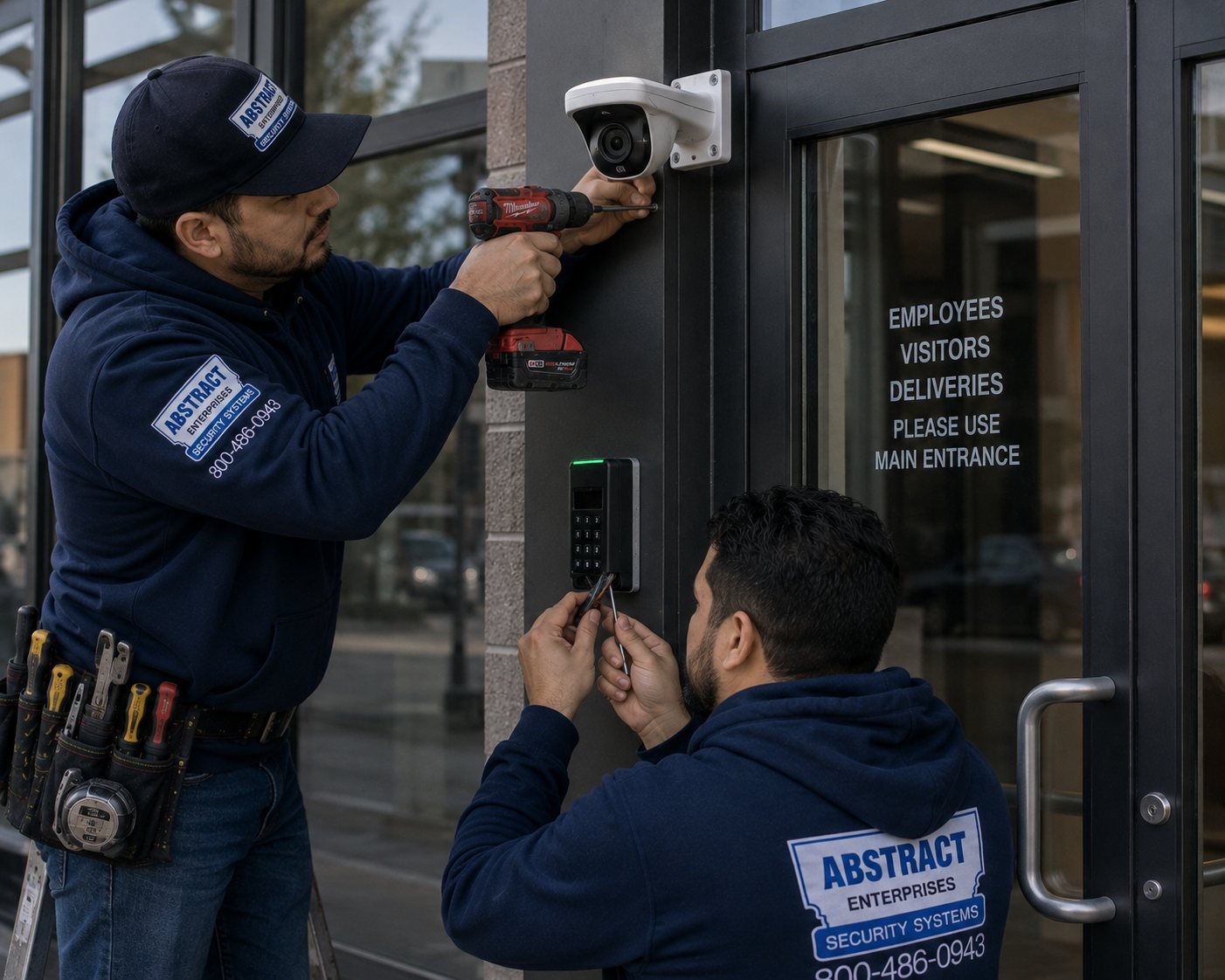
Commercial security systems Dutchess County crew installing an entrance camera and video keypad intercom at a Main Street storefront
Camera above, entry device at hand height — one visit on a Main Street frontage.

ACROSS DUTCHESS

Commercial Security Work from Beacon to Rhinebeck

Along the county’s spine, the work runs Poughkeepsie’s Main corridor, waterfront and hospital campuses, the Arlington and campus-adjacent blocks, and the Route 9 retail mile through the Galleria, South Hills and the Wappinger big-box strip. The south covers Beacon’s Main Street gallery economy, Fishkill’s village and I-84 interchange, and the logistics and fab-supplier belt through East Fishkill, Hopewell Junction and iPark 84. The north runs Hyde Park’s culinary and museum corridor, Staatsburg, Rhinebeck’s village retail and fairgrounds, Red Hook and Tivoli’s campus edge. The east covers Millbrook’s horse-country main street, Amenia and Wassaic at the rail terminus, Dover, Pawling’s village and Metro-North corner, and Beekman and LaGrange between. Two cities, a dozen towns, and every commercial form in the catalog.

Every Dutchess city, town and village books through this page today, dispatched under one license with COIs issued before mobilization.

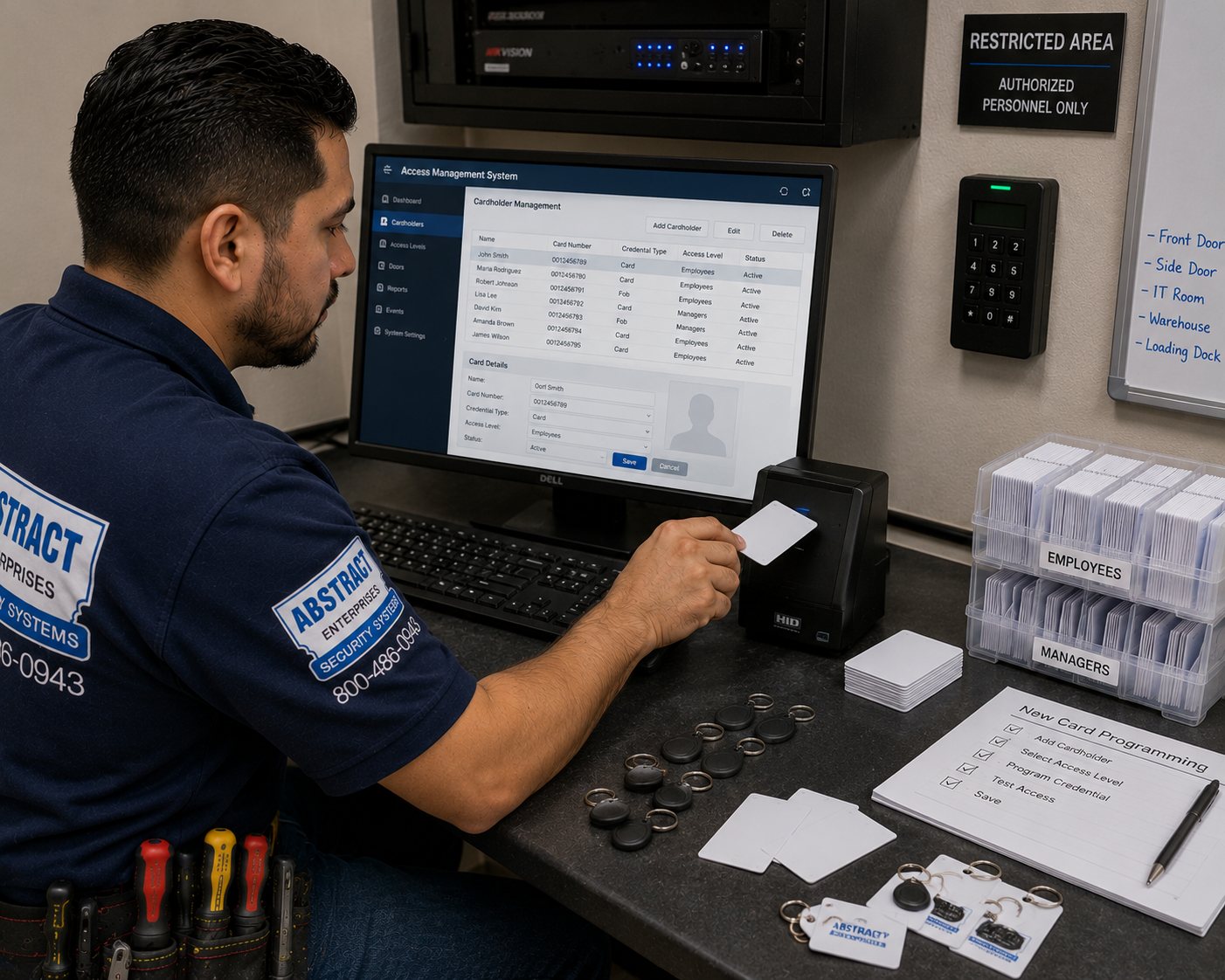
Commercial security systems Dutchess County technician programming employee cards and fobs at an access workstation
Cards and fobs issued by name and level — revoked the same afternoon someone leaves.

INDUSTRIES

Who We Secure Across Dutchess County

From commercial security systems for small businesses to portfolio work, design starts with each industry’s actual loss pattern — then picks the subsystems that answer it.

Route 9 Retail & Restaurants

Retail security systems tuned for frontage glass-break, rear-door contacts, register duress and lot coverage from the Galleria orbit to the village main streets.

Warehouses, 3PL & Fab Suppliers

Warehouse security systems for the Fishkill belt: dock and yard cameras with LPR, cage-level access, perimeter intrusion and the documented coverage contract customers require.

Medical & Dental

Waiting-room and dispensary coverage, badge access to records and med storage, duress at the front desk — across the hospital corridors and practice belts.

Galleries, Studios & Beacon Retail

Weekend-crowd coverage discreet enough for a gallery wall, high-value inventory zones, and monitored glass-break for the Monday-quiet frontage.

Schools, Campuses & Daycares

Controlled vestibules, lockdown capability, dismissal-time video intercoms and sight-line-careful camera plans from daycare doors to campus-adjacent buildings.

Hotels, Inns & Hospitality

Front and back-of-house separation, event-weekend cash coverage, guest-area discretion and integration with whatever the flag or the wedding calendar requires.

Auto Dealerships & Fleet Lots

Lot-wide camera grids on the Route 9 dealer rows, license plate recognition (LPR) at entrances, key-cabinet coverage and overnight intrusion.

Multi-Tenant & Mixed-Use

Lobby entry systems, per-tenant credentials, package-area cameras and common-area coverage owners run remotely.

Breweries, Wineries & Farm Retail

Tasting-room and register coverage, production and cold-storage zones, event-day surge design and off-hours perimeter detection.

Houses of Worship

Open doors with protected offices and classrooms, discreet cameras, duress where staff actually sit.

Self-Storage

Gate credentials, unit-corridor cameras and unstaffed-hours alerting across large sites.

Property Portfolios & Franchises

Standardized builds replicated address by address, managed centrally, opened remotely when a manager no-shows.

Construction sites, parking facilities and school campuses carry their own Dutchess pages — see school camera systems in Dutchess for campus-specific work.

Commercial security systems Dutchess County finished lobby with video intercom, card reader, dome cameras and a live camera monitor
The handover state: intercom, reader, domes and a monitor proving the recorder earns its rack space.

HOW IT WORKS

How a Dutchess Commercial Security Project Runs

  1. Free on-site survey. Doors, sight lines, lot and dock exposure, existing equipment and closet conditions are walked and documented — along with the licensing and alarm-registration picture for your exact city, town or village — before a number exists.
  2. Design and written proposal. Camera schedule, door-by-door hardware, alarm zones, platform and licensing model in writing, retention math, and an exclusions list — the part cheap quotes omit.
  3. Licensed installation. Our own NYS-licensed crews, scheduled around your operating hours, with COIs issued to landlords and management before mobilization and municipal paperwork handled where it applies.
  4. Commissioning, training and handover. Every camera aimed and recording, every credential tested at every door, monitoring cut over, admins trained — and the admin passwords handed to you, because you own the system.
  5. Service, monitoring and health checks. Optional month-to-month central-station monitoring, device health alerts, and a published service rate of $195/hr with a three-hour minimum.

Request a Survey   Call (845) 640-3835

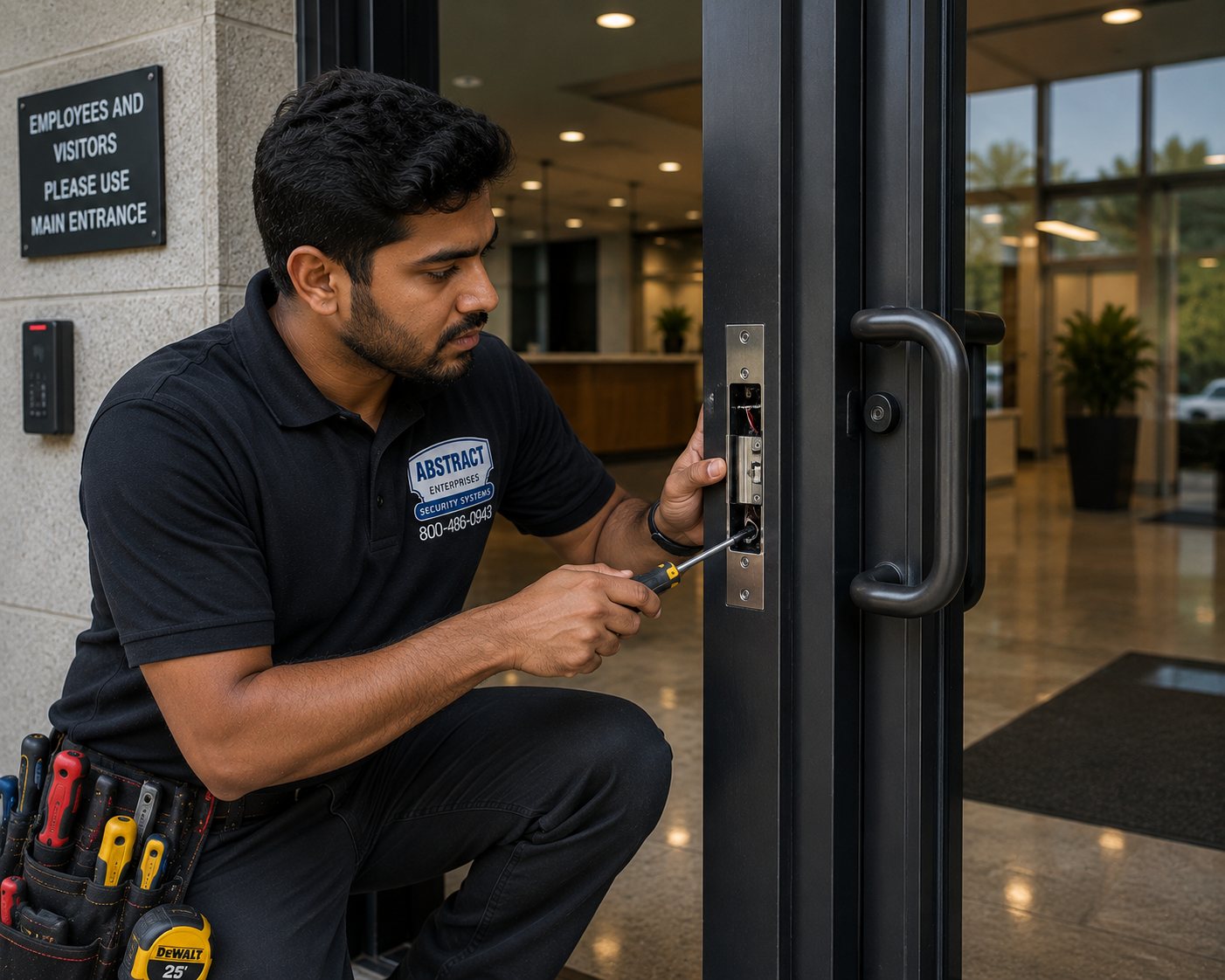
Commercial security systems Dutchess County technician installing an electric strike in an office suite door frame
Electrified hardware set into the frame — the latch stays, the audit trail begins.

YOUR QUESTIONS ANSWERED

Real Questions from Dutchess County Business Owners

What kind of budget does a Dutchess business need for a security system?

County working numbers: a Main Street or Route 9 storefront package of cameras plus a monitored alarm lands in the low four figures; an office or medical suite with cameras and a few doors on credentials runs mid four figures to low five; an integrated mid-size build — fourteen to twenty-two cameras, four to six controlled doors, monitored intrusion — commonly falls in the $14,000–$40,000 class; warehouse, fab-supplier and portfolio work starts around $40,000 and climbs with docks, yards and door counts. The spread between two quotes is rarely the cameras — it is doors, docks and what got quietly excluded. A fair quote itemizes all of it.

What license checks matter before hiring a security installer in Dutchess?

Layer by layer, all checkable. Statewide, security and fire alarm installation is licensed under General Business Law Article 6-D — verify any company with the Department of State; our number is 12000287431. Then the local layer: the cities of Poughkeepsie and Beacon and each town run their own building departments, so ask which offices the installer answers to at your address and confirm with that department directly. Finish by requiring a COI naming your business and landlord before anyone touches a wall.

Do Poughkeepsie or Beacon require alarm registration for businesses?

Alarm-registration and false-alarm-fee practice in Dutchess varies by jurisdiction — the two cities and several towns handle monitored systems through their own ordinances and police agencies, and the rules change at municipal lines. An unregistered or false-alarm-prone system can mean fines or reduced response at exactly the wrong moment. Because the requirement is address-specific, we identify it for your property at the survey, handle the paperwork where it applies, and tell you plainly to confirm the current rule with your own clerk or police department — including against this page.

Should any installer get 100% of the money before finishing?

No. Deposit-and-balance is the professional structure — ours is fifty percent down, balance at completion — and paying everything up front removes your leverage on the punch list entirely. It is also the common thread in the installed-and-vanished stories behind our takeover calls. A written scope, a deposit structure and a named warranty are the floor of a professional proposal; anything less is a story you are being asked to trust.

Can I mount my own cameras at my Dutchess business without a license?

On property you own, generally yes — Article 6-D licenses businesses installing for others, and owners on their own premises sit outside it. The lane narrows fast: city and town building rules can reach parts of the work, leases on Route 9 and in managed buildings put alteration language and COIs in play, monitored certificates need a carrier-recognized installation, electrified hardware on egress and fire-rated doors is code territory, and anything near a building fire alarm is off the table. A camera over your own counter in a building you own is a fine weekend project; a leased unit near the Galleria is where DIY gets expensive quietly.

A prior tenant's camera and alarm wiring is still in the walls — reusable?

Often, and an hour on site answers it. Existing coax frequently carries IP video over converters, sound Cat5e regularly survives for cameras, and pathway — the expensive part through finished ceilings — is reusable even when its cable is not. Access control is the usual exception: door hardware wants dedicated home runs, and legacy reader wiring is often the skimmable old protocol worth retiring. The proposal says keep, convert or replace, line by line, because billing you to rip out working cable is billing you twice.

Hardwired or wireless for a Dutchess commercial building?

Wired PoE is the commercial default — one cable per device, centralized backup, no battery fleet, no gambling on radio through masonry mill buildings or across a distribution yard. Wireless earns specific spots: a lot pylon where the trench is absurd, a detached building, a short-term lease. The honest answer for almost every property is a wired backbone with wireless as a rare, documented exception, decided position by position at the survey.

What video retention do carriers expect from a Dutchess business?

Thirty days is the working floor — slip-and-fall claims from lots and corridors, carrier investigations and police follow-ups all reach back weeks, and discovering the recorder overwrote the incident is the most expensive storage lesson there is. Cash-heavy, regulated, medical and higher-liability operations commonly hold sixty to ninety, and some institutional leases and fab-belt contracts write their own minimums. Retention is drive math against resolution and camera count, so we spec the number in writing and size the recorder to deliver it.

If Central Hudson goes down for a day, what does the system do?

A properly built one keeps working in the ways that matter: cameras record locally on a UPS-backed recorder and PoE switch, door controllers enforce cached credentials with their specified fail-safe or fail-secure behavior, and the alarm rides its cellular path throughout — monitoring never goes silent. Remote viewing and cloud sync pause and catch up on reconnect. If nobody can tell you what each of your doors and the recorder do at hour six of an outage, that is the finding.

Where exactly does a business system leave a home kit behind in Dutchess?

Consequences and paperwork. A home system protects property; a commercial system also has to satisfy an insurance carrier, a municipal alarm ordinance, egress and fire code at every controlled door, a landlord’s COI language and, at claim time, a lawyer asking for footage from a specific Tuesday. That means continuous-duty hardware, monitored certificates carriers recognize, audit trails through staff turnover, and retention sized to claims — requirements a doorbell kit was never built to meet. The county is full of businesses running house-grade gear; the survey is where that conversation gets honest.

Our property manager wants insurance certificates before any drilling — standard?

Completely, and in Dutchess’s managed retail and office stock it is table stakes: a certificate of insurance naming the landlord and often the management company as additional insured, at their stated limits, before mobilization — sometimes with drawings on top. Any commercial installer should produce the COI within a day without drama; hesitation usually means thin coverage. We issue COIs before mobilization as a matter of routine and can walk your lease’s alteration clause at the survey so the design sits cleanly inside it.

The company on our alarm sticker doesn't exist anymore — what now?

Takeover is standard work for us, not a favor — and the vanished-installer version is half the pile: accounts rolled up in acquisitions, support moved to a national queue, locally installed systems orphaned with a monthly bill. The path out: we audit what exists, recover or factory-rebuild locked recorders and panels, replace only what is actually dead, migrate monitoring month-to-month, and put the system under our health monitoring and published rate. Check your old agreement for term and auto-renewal language before canceling anything — then bring whatever paperwork survives. We have rebuilt from none.

Who genuinely benefits from one integrated platform in Dutchess?

Owners and managers who got burned by pieces — cameras from one vendor, an alarm from another, an access system from a property manager who changed, and three phone numbers when something fails. On one platform the forced dock door pulls its clip, the alarm arms off the last badge-out, the lot lane logs plates onto the same timeline, and one service agreement covers it all. On a multi-subsystem property, integration is usually cheaper than the pieces, because the survey, cabling and mobilization get paid for once.

How many working days does a Dutchess install actually take?

On-site time from county jobs: one to two days for a storefront package; two to four for a suite with controlled doors; one to two weeks for a floor-scale integrated build; two to four weeks, phased, for warehouse and portfolio work. The calendar before the crew is the variable — landlord approvals, COIs, occasionally after-hours-only rules in managed buildings — so we open the paperwork at the survey and sequence around your operating hours rather than through them.

If the lease never mentions security, is it the landlord's job or mine?

Silence usually means yours, inside your own space: base-building systems stay the landlord’s, everything within the demised premises defaults to the tenant, and the alterations clause still governs how your system goes in. Two things to paper now rather than at surrender: written consent for the install with the COI, and trade-fixture language confirming your equipment leaves with you — many leases otherwise convert improvements to landlord property at move-out. We read the alterations and surrender clauses at the survey when owners bring the lease, which is the cheap moment to settle both.

An employee with a badge and codes just quit angry — what's the checklist?

In order, today: revoke their credentials everywhere — fobs, mobile, PINs die in one click on a managed system, logged; change any alarm codes they knew, and retire shared codes for per-person codes so the next exit is administrative; pull their remote camera and monitoring logins; then read the recent audit trail with fresh eyes. If parts of the building still run physical keys, every lock they could open gets rekeyed or stays a known hole — the recurring cost that is the entire business case for credentials in high-turnover retail and hospitality.

Everything we have records to an app — what's the actual downside?

The gap. When the building’s internet drops — ISP fault, switch swap, a router change you never hear about — a cloud-only system records nothing for the duration, discovered weeks later when footage from that window is needed. Add per-camera licensing forever and throttled upload resolution, and the sticker was not the price. The fix is architecture: local recording — an NVR or camera-edge storage — as the source of truth, cloud as the access layer. One question filters any proposal: where does video live when the internet is down?

Which monitoring-contract terms should a Dutchess owner strike out?

Four clauses decide everything: a multi-year term when month-to-month exists industry-wide; auto-renewal for another full term unless cancelled in a narrow window — calendar it the day you sign or refuse it; hardware that stays the company’s property or runs locked firmware, which is how exit fees become ransom; and unstated mid-contract service rates. None of those protect you; all of them protect the seller’s revenue. Our structure is the counterexample — owned equipment, month-to-month monitoring, a published $195/hr rate — and asking any bidder for the same is the fastest read on their model.

Does any of this shift for a farm stand, studio or home-based Dutchess business?

The subsystems are the same; the paperwork lightens. An owner-occupied property sidesteps landlord consent, and residential-scale scope can sidestep some commercial requirements — but the moment monitoring, employees, customers on site or an insurance rider enters, the commercial logic returns: registration where your municipality requires it, retention sized to claims, credentials over shared keys. The county’s farm retail, studios and home-based trades usually land on a hybrid design, and the survey is where the line gets drawn honestly.

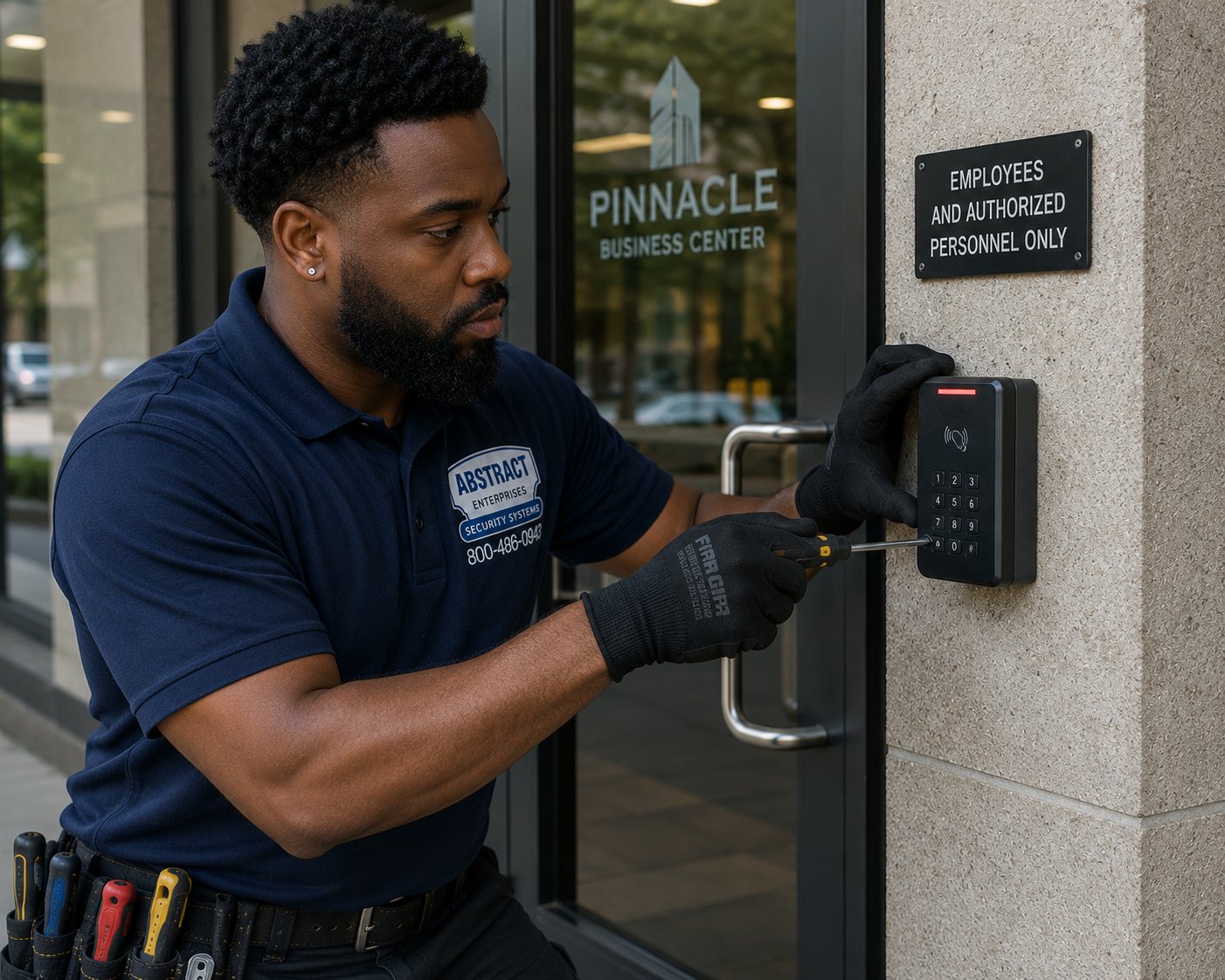
Commercial security systems Dutchess County technician mounting a keypad card reader at a medical office entrance
A credential at the suite door — the standard from the hospital corridors to the campus offices.

PEOPLE ALSO ASK

People Also Ask About Commercial Security in Dutchess

The search cluster around Dutchess commercial security sorts into three buckets — each answered on this page.

Asked on Bing: Commercial Security in Dutchess

Straight answers to the questions Bing surfaces for this market — each expanded elsewhere on this page.

What does a commercial security system average in Dutchess County?

Most single-location Dutchess businesses land between $5,000 and $22,000 installed for cameras, monitored intrusion and a credentialed door or two; storefront packages start near $3,000, while warehouse, fab-supplier and portfolio work runs $20,000–$70,000+ on dock, yard and door scope. Docks and municipal paperwork move county numbers as much as hardware — the free walkthrough produces the figure that holds.

Are permits required for business security cameras in Dutchess County?

Camera-only work inside your own space frequently proceeds without a standalone permit, but Dutchess decides by address: Poughkeepsie and Beacon run city building departments, each town and village runs its own, alarm registration applies where monitoring is involved in several jurisdictions, and electrified egress hardware carries its own code. We name what applies to your address in the proposal — and tell you to confirm with your own municipality anyway.

Can a security system reduce business insurance premiums in Dutchess?

Commonly — monitored intrusion with certificates carriers recognize is the most consistently credited item, and documented lot and dock coverage matters on the liability exposure Route 9 and warehouse properties carry. Broker first: crediting requirements in writing, installation built to them second, so certificate and policy describe the same system.

Is a commercial security system tax deductible for a Dutchess business?

Generally yes as business equipment, and installed systems commonly qualify for accelerated treatment such as Section 179 in the purchase year — material at warehouse project sizes. Confirm specifics with your accountant, then compare bids on after-tax cost, which is the honest number and frequently reorders which quote is actually expensive.

What do cloud cameras do when a Dutchess building loses internet?

A cloud-only system records nothing for the duration — and in managed buildings the tenant controls almost none of the failure points: ISP cuts, switch swaps, router changes. The architecture that fixes it: local recording as the source of truth, cloud as the access layer. Any proposal should answer where video lives offline in one sentence; “nowhere” is a finding.

Local integrator or national alarm company for a Dutchess business?

For one to a few locations, a licensed local integrator usually wins where it hurts later: owned equipment, month-to-month monitoring, a published service rate and crews already working the county. National contracts fit large multi-market portfolios wanting one vendor — a real fit for some fab-belt and franchise tenants. Either way, read term, auto-renewal window and hardware ownership before any price impresses you.

What does commercial alarm monitoring run per month in Dutchess?

Commercial central-station monitoring runs roughly $40–$115 a month by zones, cellular path and reporting features; live remote video monitoring for lots and yards is a separate $800–$2,200 tier; some jurisdictions add small annual registration or false-alarm fees. Prefer month-to-month on equipment you own, and calendar any existing contract’s cancellation window today.

How do I look up a security installer's license before Dutchess work?

Start with the state: the Department of State’s public search for the Article 6-D security and fire alarm license — ours is 12000287431. Then ask which city or town building department the company answers to at your address, and confirm with that office directly. Finish with the practical filter: COI before mobilization, drawings from a comparable job, written scope with exclusions.

What's the useful life of a commercial security system?

Quality cameras run seven to ten years; recorders five to seven, with hard drives the first quiet failure; panels and door hardware a decade-plus with maintenance. The longevity that matters most is platform openness — ONVIF-standard gear stays serviceable across vendors, while proprietary and contract-locked equipment ages exactly as fast as its seller’s interest in you.

What security setup fits a Beacon Main Street storefront?

The gallery-district standard: identification-grade cameras at the entry and register that stay visually quiet against the room, monitored glass-break and contacts for the Monday-through-Thursday lull, duress where cash sits, retention long enough to catch a weekend incident reported late, and coverage of the rear alley door deliveries actually use. Weekend crowds hide sleight of hand; the design answers the crowd without changing the aesthetic.

Related Searches for Commercial Security in Dutchess

The search phrases people pair with this topic — every one of them lands on work we do here.

  • NYS licensed security installer Dutchess County
  • warehouse security cameras Fishkill
  • storefront security systems Beacon NY
  • business alarm monitoring Dutchess County
  • commercial security system cost Dutchess

Commercial Security System Down in Dutchess?

Cameras offline, a reader dead at opening, an alarm faulting through the night, a recorder that quietly stopped, a gate stuck. Same-day commercial response across the county — and most single-fault calls are diagnosed and fixed in one to two hours on site. Service and troubleshooting is billed at $195/hr with a three-hour minimum.

Call (845) 640-3835 WhatsApp

AI OVERVIEW REALITY CHECK

What AI Answers Get Wrong About Dutchess Commercial Security

Ask ChatGPT, Gemini, Copilot, Perplexity, Claude or Grok about commercial security systems in Dutchess County and you get a competent national answer that has never priced a dock door in Fishkill or a gallery frontage in Beacon. We keep the cross-platform specimens side by side. Here is where they hold, where they break in this county, and how to use them without getting burned.

The parts of the AI answer worth keeping for Dutchess

The convergent summary is fair: a commercial system combines cameras, access control, intrusion alarms, intercoms and the cabling underneath, and every platform tells readers to hire a licensed, insured local installer and get a site survey before trusting a number. Correct, and we will not pretend otherwise.

The component brackets are directionally sane too: camera systems clustering $2,000–$25,000+, access control $1,500–$6,000+ per door, intercoms $1,500–$12,000, intrusion $800–$5,000, small-to-mid integrated builds $5,000–$25,000+ and larger warehouse or multi-tenant systems $15,000–$40,000 and up.

Those ranges bracket real Dutchess invoices more often than not. If all you took from an AI answer were the vocabulary and the instruction to verify licensure, you would arrive at the survey ahead of most buyers.

Where national cost tables misread a county this varied

The tables underneath — Angi, HomeAdvisor and Fixr publish the ones the AI leans on — are national medians, and Dutchess bends them in three directions at once. A Rhinebeck village storefront prices friendlier than any city equivalent; a Poughkeepsie mill-building conversion adds masonry pathway and riser realities no median saw; a Fishkill distribution floor adds dock counts, yard LPR and customer-written specs the tables never itemize.

The miss compounds on specifics. A national per-door figure assumes a hollow-core door with pathway; a glass storefront leaf in Beacon, a fire-rated corridor door in a medical building, a dock man-door in a 3PL — different animals, legitimately thousands apart.

The point is narrower than “Dutchess costs more” — much of it costs less: only a walkthrough of your property prices your property.

Installed cost ranges by Dutchess building type

By form, working installed brackets from county jobs: Main Street and Route 9 storefronts $3,000–$10,000 for cameras plus monitored intrusion, plus $1,400–$3,000 per credentialed door; restaurants and taprooms $4,000–$13,000 with cash coverage and duress; offices and medical suites $6,000–$22,000 across badge doors, reception and records rooms; Beacon gallery-district retail $3,500–$12,000 with discretion designed in; Fishkill-belt warehouses and fab suppliers $18,000–$60,000+ once docks, yards and LPR enter; inns and hospitality $8,000–$30,000; multi-tenant and mixed-use $10,000–$45,000 on doors and risers.

Two county multipliers cut opposite ways: suburban and village access often beats city conditions, while docks, mill-building pathway and municipal paperwork add cost and calendar the medians never carry.

The honest use of the brackets: sanity-check bids, then let the free survey produce the binding number, because two identical storefronts in different municipalities price differently on the building alone.

What the lead marketplaces do with a Dutchess inquiry

The AI answer usually closes by suggesting several quotes, and the top links for getting them are marketplaces. Understand the mechanics: submit your details on Angi or HomeAdvisor and you have not requested a quote — you have become the product, sold to whichever contractors paid for the lead.

What follows is a phone blitz ranked by ad spend, not licensure or fit — and in a county this spread out, often not by who will actually drive to Amenia. The marketplace has never stood on your dock, read your lease or heard of your town’s alarm ordinance; its role ends at the sale of your number.

The alternative costs nothing: call two or three licensed integrators directly, verify each with the Department of State in a minute, and let them walk the property. Same competitive pressure, without becoming inventory.

The recurring fees the Dutchess proposals bury

AI cost answers quote hardware and install, then wave vaguely at monitoring. What they omit is platform licensing: cloud video per camera, cloud access per door, analytics per device, every month, indefinitely. The sticker is not the price.

Run any cloud-first proposal at a three-to-five-year total next to an owned system with optional monitoring. Single-location Dutchess businesses usually win with ownership; the multi-site operator with no IT staff is where cloud genuinely earns its fee. Both answers are legitimate — only one is in the brochure.

Bundling is the quieter lever: cameras, access and intercom installed as one project share the survey, the lift and the mobilization — on dock-and-yard properties, that is real money.

Dutchess licensing and permits, city by city and town by town

The specimens gesture at licensing and hedge, because the truthful county answer is layered. The statewide floor is clean: General Business Law Article 6-D licenses the business of installing and servicing security and fire alarm systems — owners on their own property exempt — and Abstract Enterprises holds License #12000287431, verifiable with the Department of State.

Below that, Dutchess runs on municipal authority: the cities of Poughkeepsie and Beacon operate their own building departments, the towns and villages from Fishkill and Wappinger to Rhinebeck, Red Hook and Pawling each run their own, alarm-registration practice varies by jurisdiction, and fire alarm work answers to the local fire authority having jurisdiction.

A proper Dutchess quote states which of these applies to your scope in writing — ours does, and we would rather you confirm with your own city or town than take any webpage’s word, including this one.

Why per-device pricing collapses from Beacon to the fab belt

Every AI answer prices security by the device. Dutchess prices it by the property: a dock apron that needs LPR and conduit, a mill conversion that needs pathway through eighteen-inch masonry, a gallery frontage that needs coverage without visual noise, a fairground-adjacent business that needs surge capacity ten weekends a year — each moves cost more than the device at the end of the wire.

Device-count math also hides scope games. Two “sixteen-camera” quotes can differ by ten thousand dollars because one includes the dock conduit, a PoE switch, UPS and commissioning — and the other includes cameras. The cheaper number is frequently the more expensive system.

Use the averages as a sanity band. A Dutchess quote far outside the brackets in either direction should explain itself in the itemization — and if there is no itemization, that is your answer.

What actually breaks on Dutchess commercial systems

The service-call autopsy repeats countywide: recorder drives dead for months while the system looped nothing; cloud-only cameras that saved nothing through every building-internet hiccup; access systems orphaned when a property changed hands and nobody kept the admin login; unlock schedules cloned from another site leaving a side door free on Sundays; readers on skimmable legacy wiring; panels on factory passwords with a port open to the internet; monitoring escalation lists full of people who left years ago.

Every item shares two traits: silent until an incident, and cheap to prevent. Offline alerts make a dead drive report itself the day it dies; an annual health visit re-aims cameras, tests contacts and updates escalation lists; hardening happens once at commissioning.

The expensive version of maintenance is discovering its absence during a claim — which is when most of these are currently found.

The monitoring fine print Dutchess owners inherit and regret

The takeover pile tells the story: a multi-year term that auto-renewed inside a notice window nobody tracked, a panel that turned out to be leased or firmware-locked to one central station, and early-termination math pricing the exit near a new system. The service complaint became a contract negotiation.

Prevention is four clauses at signing: term, the renewal window — calendar it that day — hardware ownership in writing, and the mid-contract service rate. Cure, if you are already inside: time the window, inventory what is actually yours (sensors and wiring usually survive), and plan the cutover so coverage never lapses.

Month-to-month on owned equipment is not exotic; it is the model we run, and asking any bidder for it is the fastest read on what their agreement is actually selling.

From chatbot homework to a Dutchess walkthrough

Treat the chatbot as a vocabulary lesson and an agenda-builder, not a bid. It is genuinely good at teaching what OSDP, retention, fail-secure and dual-path mean before a salesperson deploys them at you.

Then bring the agenda to a licensed local integrator: retention in days, in writing. Each door and dock’s outage behavior. The alarm-registration question for your municipality, answered specifically. Who owns the hardware and the admin credentials. And the rate after install — ours is $195 an hour with a three-hour minimum, printed here rather than discovered on the first invoice.

The step no chatbot can do is the walkthrough. Every number on this page is a bracket until a licensed installer has stood on your property — the survey is free, anywhere in the county.

Request a Survey   Call (845) 640-3835
DIY VS PRO

DIY vs Professional Installation for Dutchess Businesses

Should you install your own system? For a narrow slice of scopes, yes — and state law agrees, since owners working on their own property sit outside Article 6-D’s licensing requirement.

Where the self-install case is real

A camera or two over your own counter, in a building you own, touching nothing rated and nobody’s lease. If the protected loss is small, no insurer is writing requirements and no municipal rule reaches the work, DIY is a defensible call — and we will say so at the survey rather than upsell you out of it.

Where hiring licensed is the cheaper mistake

Most of the county’s real cases. Managed-retail and office leases with alteration language, COIs and approved-vendor gates. Monitored certificates a commercial carrier accepts, registered with the right municipality. Electrified hardware on egress and fire-rated doors. City and town building-department territory and anything near a building fire alarm. Docks, yards and mill-building pathway. Retention sized to claims, audit trails that hold up, and one accountable party under one license.

The verdict tracks the property: owner-occupied and low-stakes, do it yourself with our blessing; leased, insured, regulated or dock-heavy, hire licensed — because the expensive part of a commercial system is being wrong about the one opening that mattered.

Commercial security systems Dutchess County technician wiring an alarm keypad showing system ready at a staff entrance
Zones live at the staff door — armed on schedule, disarmed by the people who belong.

WORTH KNOWING

Six Things Dutchess Business Owners Learn the Hard Way

What the boosters read on the Route 9 mile

The anchor-store exits with sight lines nobody watches. The strip unit with frontage glass and no laminated-glass-aware detection. The camera aimed into parking-lot glare. The alarm sticker faded to a brand that no longer exists. Organized retail crews read Galleria-class corridors the way installers do, just for the opposite reason — and the pressure hitting exactly this corridor class regionally is the argument for glass-break, identification-grade entry cameras, duress and monitored response tuned in seconds.

The access system that changed hands with the building

Fobs nobody can add because the admin account lived with the previous owner’s manager. Doors that grant before the badge finishes tapping. An audit log that stops the month the property sold. Access systems age silently through Dutchess’s steady churn of building sales — the doors keep opening, which feels like working — until the day you need to revoke one ex-employee everywhere and discover the admin login left with someone’s inbox years ago.

Aim beats count, from the mill floor to the mall pad

The most common county survey finding: cameras clustered where installation was easy — the front counter filmed in triplicate — while the loading corridor, the lot lane and the records-room door go unwatched. Coverage is a map problem: entries, exits, points of value, approach lines, the lot. Eight aimed cameras beat sixteen scattered ones at lower cost, with footage someone can actually find.

The trailhead lot problem moves next door

The car-break-in pattern working the Walkway and rail-trail lots does not respect property lines — adjacent businesses inherit the smashed glass, the insurance letters and the police canvass asking for footage. Lot cameras at identification height, LPR at the lanes and retention long enough to answer a report filed three weeks late turn the neighboring business from a bystander into the property with the evidence — and the deterrent reputation that follows.

Event weekends are a load rating, not a surprise

Fairground weekends in Rhinebeck, Dia Saturdays in Beacon, graduation and move-in weeks near the campuses: Dutchess commerce surges on a calendar. Systems should be specified for the surge — camera positions that still identify faces through a packed room, duress where the cash concentrates, retention that survives the busiest month, and arming schedules that flex without a service call. Design for the tenth-busiest day of the year and the other 355 are covered.

The recorder nobody hardened is the way in

The DVR on factory credentials with a port punched open to the internet is how most real-world camera breaches happen — not Hollywood hacking, just housekeeping nobody did after the installer left. Hardening is unglamorous and decisive: default passwords purged, firmware maintained, security gear on its own VLAN, UPnP off, remote access through the platform instead of an open router. We build it in on day one, because bolting it on later is how it never happens.

REVIEWS

What Dutchess Owners Can Verify

Abstract Enterprises holds a 4.7-star average across 201 Google reviews between our Brooklyn (1282 Troy Ave) and Bronx (460 E Fordham Rd) profiles — the Bronx shop is the one dispatching Dutchess’s work, straight up the Taconic and Route 9. Look either up on Google Maps and read them unfiltered. Day-to-day install work runs on Instagram and YouTube; we would rather show the work than paraphrase the reviews.

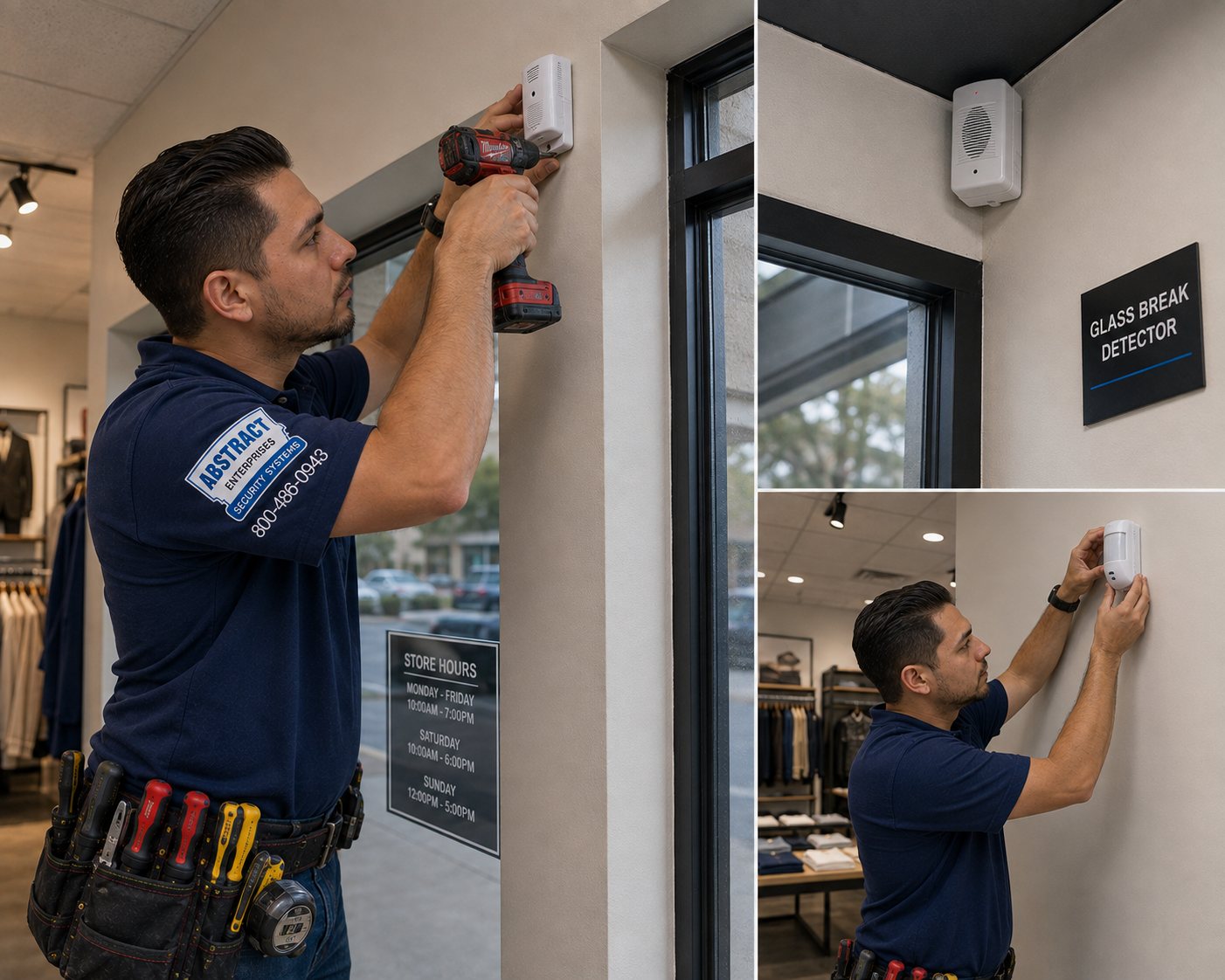
Commercial security systems Dutchess County installer mounting glass-break detectors and a siren in a retail storefront
The detector that hears a Main Street window take a hit before anyone is inside.

PRICING

Dutchess Commercial Security System Pricing

What does a commercial security system cost in Dutchess County? Working brackets for commercial security system installation from real county projects: storefront camera-plus-alarm packages start in the low four figures; offices and medical suites run mid four figures to low five; integrated mid-size systems with fourteen to twenty-two cameras, four to six access doors and monitoring commonly land between $14,000 and $40,000; warehouse, fab-supplier and portfolio work starts around $40,000 and climbs with docks, yards and door counts.

By component: commercial camera systems typically run $2,500–$16,000 all-in depending on count, pathway and mounting conditions — per-camera math on its own misleads, because on dock-and-yard properties pathway is the cost. Access control lands around $1,400–$3,000 per standard door installed, with a $500–$1,000 floor on easy openings and $6,000–$8,000 ceilings on glass, fire-rated and enterprise doors; new runs add $250–$600 per door, and gates and dock doors price separately. Commercial video intercom and entry systems run roughly $1,500–$11,000 installed by panel class and tenant count. Intrusion alarm systems land around $800–$5,000 installed before monitoring, with registration paperwork handled where your municipality requires it.

Monthly fees exist only where you choose them: commercial alarm monitoring through a central station runs about $40–$115 a month, live remote video monitoring for lots and yards is its own $800–$2,200 monthly tier, and unmonitored camera and access systems carry no mandatory monthly cost unless you pick cloud licensing. You own every piece of hardware we install. Post-install service is $195/hr with a three-hour minimum ($585), in writing. Dutchess carries a posted labor multiplier over our Brooklyn base — the exact figure for your address and property conditions comes from the survey, never from a table. Every commercial security system quote we issue is itemized down to the exclusions list, which is the fastest way to compare us against other commercial security installers line by line.

Request a Survey   Call (845) 640-3835
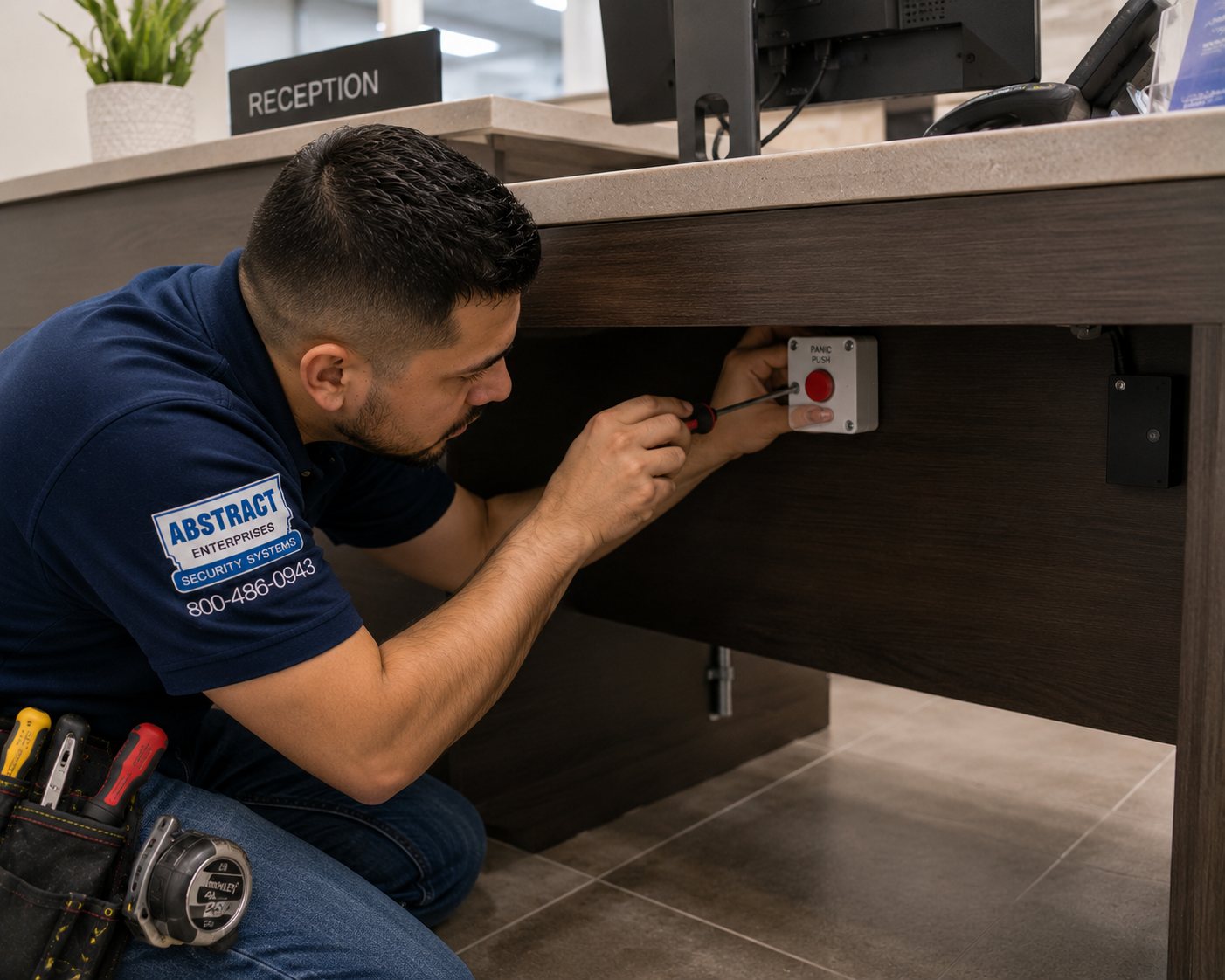
Commercial security systems Dutchess County technician installing a panic button under a reception desk
Duress at the desk, wired to monitoring — unseen until the day it matters.

PACKAGES

Commercial Security Packages for Dutchess

Three shapes cover most first conversations; the walkthrough turns a shape into a number.

Route 9 & Main Street Storefront

Four to eight cameras across counter, floor, entry, frontage and lot; monitored intrusion with glass-break and rear-door contacts; a duress button where cash sits. Built for the Route 9 corridor, the Poughkeepsie and Beacon downtowns and the village main streets.

Campus, Clinic & Office Floor

Badge credentials at suite, records and server-room doors with audit trails; reception video intercom and visitor management; identification-grade entry cameras; duress at the desk. Built for the hospital corridors, campus-adjacent offices and professional floors.

Fab-Belt Warehouse & Logistics Full-Stack

Dock, aisle, yard and lot cameras, LPR at the lanes and gates, perimeter and man-door credentials, monitored intrusion and health alerts — one platform, one service agreement, documented to the customer spec. Built for the Fishkill belt and iPark 84.

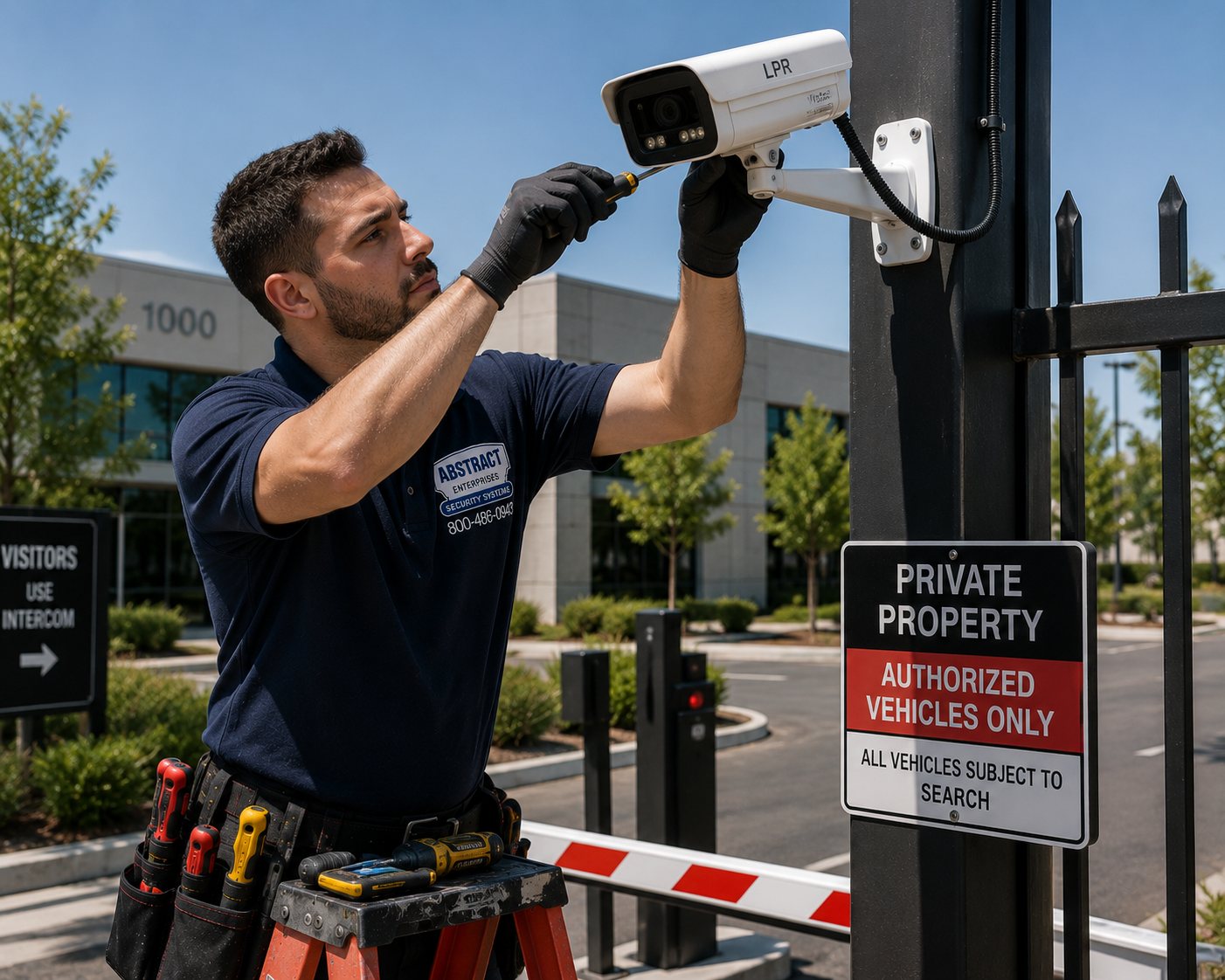
Commercial security systems Dutchess County LPR camera at a commercial lot entrance with authorized-vehicles signage
LPR at the lot lanes — every plate logged, from Route 9 retail to the warehouse gates.

LOCAL PROBLEMS

Commercial Security Problems Specific to Dutchess

The corridor under booster pressure. The Galleria orbit and the Route 9 strips sit in the organized retail-theft pattern working exactly this corridor class across the region. Laminated-glass-aware glass-break, identification-grade entry cameras, duress at the counter and monitored response tuned for seconds, not minutes.

The building that sold with its badge system. Property turnover strands access systems constantly — nobody holds the admin login, terminated credentials linger, audit logs stopped at the closing. We recover, rebuild and hand the administration back to you — pair with our Dutchess access control installation team and end the orphaned-system cycle.

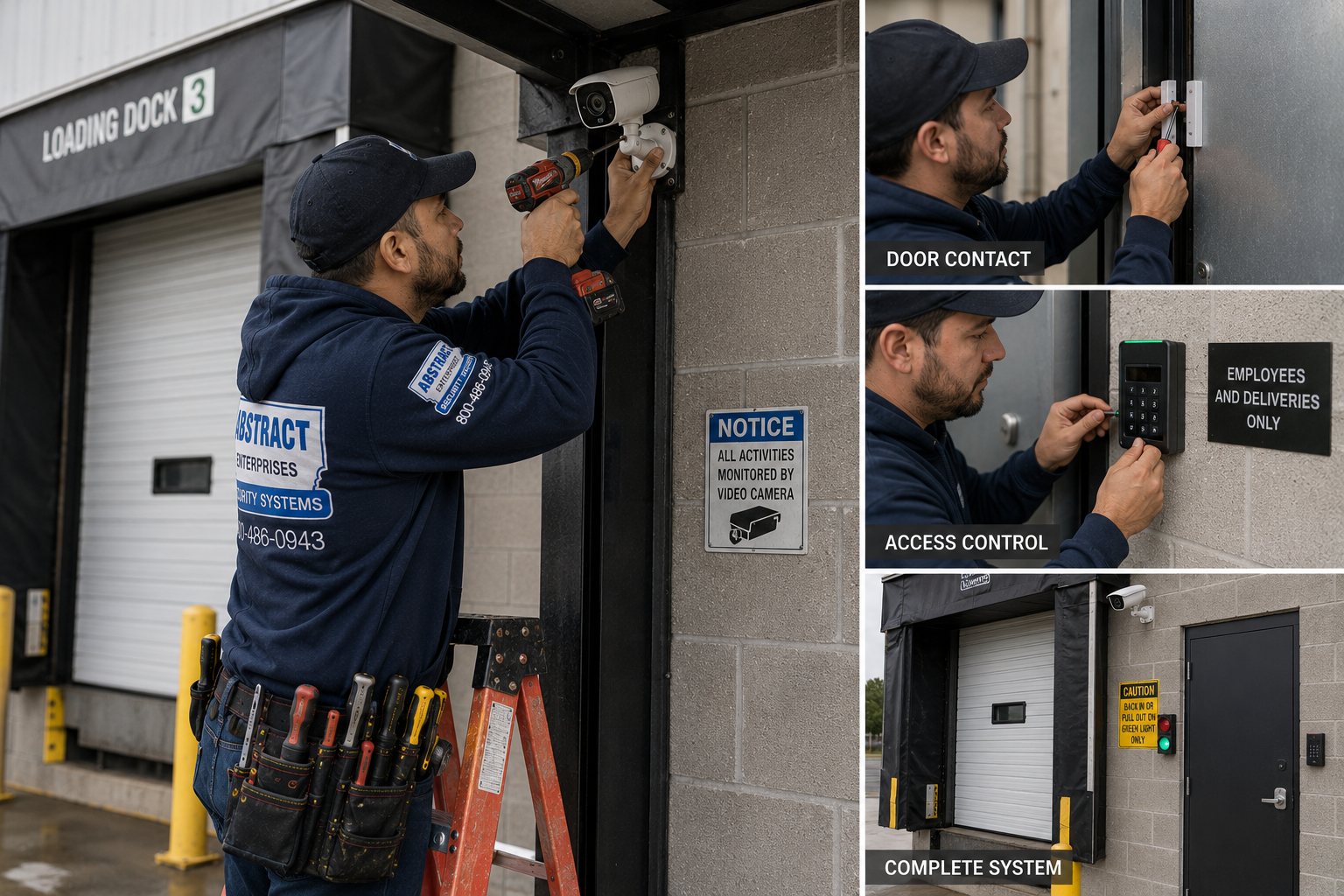
The dock that ships at 4 a.m. The Fishkill belt runs freight at hours no manager watches, often under customer-written security specs. Dock cameras tied to door events, yard LPR, perimeter detection and the documentation that satisfies the contract.

The Monday-empty gallery street. Beacon’s weekend economy leaves Main Street frontage quiet four days a week. Monitored glass-break, discreet identification cameras and retention long enough to catch an incident reported after the next weekend rush.

The trailhead spillover. Car break-ins working the Walkway and rail-trail lots pull adjacent businesses into police canvasses and insurance letters. Lot cameras at identification height and LPR at the lanes make yours the property with the evidence.

The recorder nobody has opened since installation. Half the “we have cameras” properties we survey are looping a few days of unwatchable video on a dying drive — installed by someone who no longer answers. Staged analog-to-IP upgrades reuse sound cable — see DVR and NVR upgrades in Dutchess before assuming rip-and-replace.

FIELD NOTES

Field Notes from Dutchess Jobs

Dutchess is the county where the same week can hold a dock survey in Fishkill, a gallery frontage in Beacon and a records-room badge job off the hospital corridor — and the paperwork changes municipality by municipality between them. A Route 9 retailer calls about one dead camera and the walkthrough finds the corridor pattern: a recorder looping five days against a carrier asking for thirty, frontage glass with no detection while the boosters work the strip, an alarm never registered with the town that fines for false trips. In a mill-building office it inverts — clean cameras, but the access admin left with the last owner and the audit log ends at the closing date. On the fab belt the ask is always the customer spec in writing. The fix order rarely changes: contact the openings, credential the people, recover the admin, register the alarm where the municipality requires it, size the retention, then talk cameras. Owners expect a pitch and get a punch list, and the punch list is usually cheaper. — Anwar Timothy, NYS Lic. #12000287431

Same-Day Commercial Security Repair Across Dutchess

Reader down, recorder dark, alarm faulting, dock camera dead — call before noon and we are usually on site the same business day, from Beacon to Rhinebeck. $195/hr, three-hour minimum, and the diagnosis is honest even when the fix is small.

Call (845) 640-3835 WhatsApp

COVERAGE

Dutchess Commercial Security Coverage

This page anchors integrated commercial security work across the county — Poughkeepsie’s Main corridor, waterfront, hospital campuses and Arlington; the Route 9 spine through the Galleria, South Hills and Wappinger; Beacon, Fishkill and the I-84 logistics belt through East Fishkill, Hopewell Junction and iPark 84; Hyde Park, Staatsburg, Rhinebeck, Red Hook and Tivoli; Millbrook, Amenia, Wassaic, Dover, Pawling, Beekman and LaGrange — one commercial security systems company behind business security systems from a single storefront to a distribution floor, with COIs issued before mobilization and municipal paperwork handled where it applies. Dutchess extends the Hudson Valley wing of this silo, anchored by our Commercial Security Systems Hudson Valley hub, alongside Putnam to the south, Orange across the river and Westchester down the Taconic — and every Dutchess city, town and village books directly through this page today.

HOW WE COMPARE

How We Compare for Dutchess Businesses

Every Dutchess buyer is choosing among the same five models. The honest grid — how each publicly works, no trash talk.

Abstract Enterprises (local integrator)ADT Commercial / EveronVerkada-class cloud vendorsNational integrators (Security 101 / Securitas Technology class)Angi / HomeAdvisor / Fixr
Who shows upOur own NYS-licensed crewsBranch technicians or authorized dealersCertified partner installers — the vendor sells hardware and softwareBranch or subcontracted crewsWhichever contractors bought your lead
Article 6-D licensureHeld — #12000287431, verifiable with the Department of StateVerify the exact entity on your contractThe installing partner’s responsibility — verify the partnerVaries by branch — verifyNot an installer; nothing to verify
Contract lengthNo term contracts; monitoring runs month to monthMulti-year monitoring agreements with auto-renewal are the standard modelMulti-year per-device software licensesNegotiated service agreements, commonly multi-yearN/A — the product being sold is your contact information
Hardware ownershipYou own everything we installEquipment frequently leased or bundled into the agreementHardware stops functioning without an active licenseTypically ownedN/A
PlatformOpen — ONVIF and OSDP, brands mixed freelyLargely proprietary panel ecosystemClosed single-vendor ecosystemVaries by projectN/A
Service ratePublished: $195/hr, three-hour minimumPer agreement and truck-roll pricingSupport in the subscription; partner labor separatePer agreementN/A
Takeover of existing systemsCore service — orphaned systems adopted weeklyCommonly replaced with own equipmentRequires migrating to their hardwareCase by caseN/A
NYC footprintBrooklyn and Bronx offices, same-day five-borough serviceNational footprint, branch coverageRemote-first, partner-dependentRegional branchesNone — a directory, not a company

ADT Commercial and the nationals vs a Dutchess integrator

The national commercial brands bring footprint, financing and a name a franchise or fab-belt customer recognizes — real advantages on a hundred-site portfolio, and some Dutchess tenants are exactly that. The trade is the model: multi-year monitoring terms with auto-renewal, equipment often tied to the agreement, truck-roll pricing per visit, and a tech routed from whichever regional branch drew the ticket. The recurring complaint is not failure — it is discovering what leaving costs. Read the term and renewal clause before anything else in the packet.

Consumer camera kits vs commercial-grade in Dutchess

Ring, SimpliSafe and their peers are honestly good at what they are for: a porch, an owner-occupied shop, a low-stakes back room. They end exactly where a business begins — monitored certificates a commercial carrier accepts, alarm registration where your municipality requires it, code-correct hardware on egress doors, PoE reliability through a mill building, retention sized to claims, audit trails, and a landlord who requires a COI before anyone touches a wall. Plenty of our commercial clients started on a doorbell camera; the survey is where the growing-out-of-it conversation happens.

Cloud-licensed platforms vs owning your Dutchess system

The cloud-native vendors ship genuinely slick dashboards and shine for multi-site operators with no IT staff — a franchise with units across three municipalities should look hard at them, and we will say so when it fits. The math to run first: per-device licensing every month against a three-to-five-year horizon, on hardware that stops working when the license does. A single-location Dutchess business usually wins by owning an open-platform system with optional cloud access — the demo never mentions it.

FAQ

Dutchess Commercial Security Systems FAQ

What does a complete commercial security system include in Dutchess County?

Four subsystems on one platform: video surveillance (cameras, recorder or cloud, analytics, LPR where lots and docks call for it), access control (readers, credentials, electrified door and gate hardware), intrusion detection (contacts, motion, glass-break, a monitored panel registered where your municipality requires it) and entry intercoms — plus the cabling, PoE switching and backup power underneath. Not every business needs all four on day one; every business benefits from designing as if it might.

What should Dutchess businesses expect commercial security systems to cost?

Working brackets: storefront camera-plus-alarm packages from the low four figures; offices and medical suites mid four figures to low five; integrated mid-size systems commonly $14,000–$40,000; warehouse, fab-supplier and portfolio work from about $40,000, climbing with docks and door counts. Doors, docks, mill-building pathway and municipal paperwork drive the spread more than camera count, and the exact number for your address comes from a free on-site survey.

How does commercial-grade equipment differ from a consumer kit in Dutchess?

Duty cycle, code and consequences. Commercial systems run continuous-duty cameras and panels, door hardware governed by egress and fire code, monitoring with open/close reporting your insurer recognizes, registration where the municipality requires it, audit trails for turnover, and room to scale across doors, docks and buildings. A consumer kit is built for a porch; a business is a liability environment.

Can cameras, badges, alarms and intercoms operate as one system in Dutchess?

Yes — that integration is the point. On one platform a forced dock door pulls its camera clip automatically, the alarm arms off the last badge-out, the lot lane logs plates onto the same timeline, and one dashboard replaces four apps — whether the addresses share a corridor or the county. We design the integration in at the survey rather than bolting it on later.

Which approvals and permits apply to security work in Dutchess County?

Layered, and address-specific. The state licenses the installing business under General Business Law Article 6-D; the cities of Poughkeepsie and Beacon and every town and village run their own building departments, with permits where scope triggers them; several jurisdictions require alarm registration with false-alarm fees; and fire alarm work answers to the local fire authority. We state which of these applies to your specific scope in writing at the survey — and encourage you to confirm with your own municipality directly.

What monthly costs come with a Dutchess commercial security system?

Only the ones you choose. Central-station alarm monitoring runs roughly $40–$115 a month at commercial grade; live remote video monitoring for lots and yards is a separate $800–$2,200 monthly tier; cloud platforms carry per-device licensing; and some jurisdictions attach small annual alarm-registration fees. An owned camera and access system with no monitoring has no mandatory monthly cost — you own the hardware we install outright.

How many cameras should a Dutchess commercial property plan on?

Coverage decides, not a number: every entry and exit, the counter or points of value, the rear door, the dock and lot lanes at identification height. Storefronts usually land at four to eight; suites and practices at eight to sixteen; warehouses and campuses are governed by doors, docks and lanes rather than square footage. The survey draws the map before anyone counts.

What retention period should a Dutchess business run?

Thirty days is the commercial floor — claims, carrier investigations and police follow-ups reach back weeks, and lot-adjacent properties live on slip-and-fall and break-in timelines. Sixty to ninety suits cash-heavy, regulated, medical and higher-liability operations, and some institutional leases and logistics contracts write their own minimums. Retention is storage math against resolution and camera count, so we spec the number in the proposal and size the recorder to actually deliver it.

What does access control cost per door in Dutchess County?

Plan around $1,400–$3,000 installed for a standard commercial door — reader, electrified hardware, contact, request-to-exit and programming. Easy openings can come in near $500–$1,000; storefront glass, fire-rated and enterprise doors reach $6,000–$8,000; new cable runs add $250–$600 per door, and gates and dock doors price separately. Per-door quotes issued without a walkthrough are guesses.

Is cloud video storage secure enough for a Dutchess company?

Reputable commercial cloud platforms — encrypted in transit and at rest, centrally patched, multi-factor admin enforced — are typically safer than the forgotten on-premises recorder running factory credentials on an open port, which is how most real camera breaches happen. The risks worth pricing are lock-in and subscription stacking, not encryption. Either architecture done properly is sound; either one neglected is a liability.

Will an internet or power failure blind a Dutchess security system?

Not one designed for it. Cameras keep recording on a battery-backed recorder and PoE switch, door controllers enforce cached credentials, and a dual-path communicator fails the alarm to cellular so monitoring never goes silent. Remote viewing and cloud sync pause and recover on reconnect. Each door’s fail-safe or fail-secure behavior in an outage is a deliberate, code-driven choice made per opening — ask for it in writing.

What paperwork should a Dutchess security installer produce before hire?

The state Article 6-D license, verifiable with the Department of State — Abstract Enterprises holds #12000287431. Standing with your city or town building department where the scope requires it. A COI written to your landlord’s and management company’s limits before mobilization. Then the practical layer: a written scope with exclusions, a named warranty and a published service rate. Ask for all of it before you compare prices.

Request a Survey   Call (845) 640-3835
COMPLETE SERVICES

Complete Commercial Security Services Across Dutchess

Every subsystem on this page has its own Dutchess team and page — and everything below installs to the same platform.

GET IN TOUCH

Request Your Free Dutchess Commercial Security Survey

A licensed technician walks your property — doors, docks, lot, closets, existing equipment — and you get a written, itemized proposal: camera schedule, door-by-door hardware, platform licensing model, retention math, the municipal licensing and registration picture for your exact address, and an exclusions list. The number holds because the whole property was actually seen. Surveys book across every Dutchess city, town and village.

We install commercial security systems from Beacon to Rhinebeck — and we come back when you call.

Reviewed and updated August 15, 2026.

Tell Us About Your Dutchess Property

WARRANTY

Warranty and Service Terms in Dutchess

You own the system outright with no monthly fees, and products supplied by us carry a three-year warranty. Post-install service visits and callbacks are billed at $195/hour with a three-hour minimum ($585) — the same published rate in Dutchess as in every market we serve. Optional central-station monitoring runs month to month — we do not lock Dutchess clients into multi-year monitoring contracts, and we take over service on systems other companies installed and abandoned.

Licensing, registration and permitting statements on this page summarize how commercial security work is commonly treated in New York State and Dutchess County municipalities and are not legal advice. Requirements vary by city, town and village and change over time — confirm current rules for your specific address with your municipal building department, your local police agency for alarm registration, and, for fire alarm systems, the local fire authority having jurisdiction.

ALL AREAS SERVED

One Platform, Sixteen Commercial Security Markets

Every market we cover for integrated commercial security work. Areas without their own page yet are still served directly.

Reviewed and updated August 15, 2026 by Anwar Timothy of Abstract Enterprises Security Systems, NYS Low-Voltage Electrical Contractor License #12000287431.
Changelog — Aug 2026: page published as the fifth county page of the silo’s Hudson Valley wing, under the Hudson Valley hub. · Aug 2026: licensing guidance written against GBL Article 6-D plus the Poughkeepsie and Beacon city departments and town-level building authorities, including alarm-registration considerations. · Aug 2026: pricing brackets aligned to the August 2026 cross-platform AI specimen set.