What are you looking for?
About Us Contact Us Careers Get a Free Quote (800) 486-0943
Pick a service
✅ Got Your Own System?
🎬 Home TheatreQuote đŸŽ¶ AV SoundQuote 🔑 Access ControlQuote
Now pick your area
Pick your area
Long Island
Hudson Valley
Services available
Pricing & Tools
Pick a service for pricing
đŸšȘ Intercom Pricing 🔔 Buzzer Repair Pricing
Calculators
đŸ“č Camera System Calculator 🚹 Alarm Calculator ⚡ Cabling Quote Builder ✅ Got Your Own System?
Select your area
Porch door won’t latch, or the keypad on a Calder row house went dark overnight? Windsor Terrace line, same day: (347) 934-8335
Home â€ș Access Control Installation Brooklyn â€ș Windsor Terrace
Calder Row Houses · Enclosed Front Porches · Two-Family Stoops · Prospect Avenue and Prospect Park West Shops

Access Control
Installation in
Windsor Terrace

Two Front Doors, One Plan · Packages Kept in the Porch · Keys Counted When the House Changes Hands · Brooklyn Base Pricing

Walk down Windsor Place or Fuller Place and you see the same thing repeated house after house: a two-story brick row built by one developer, William M. Calder, in the years before the First World War, with a front porch at the top of a few steps. On many of those houses the porch was glassed in generations ago and became a room, so the front door you knock on today is a light porch door, and the real front door of the house sits a few feet behind it. That small change decides most of what we do here. A Windsor Terrace door plan has to say which of the two front doors locks, where packages wait, who in a two-family house opens what, and what to change on the day a long-held house is sold to new owners.

Reviewed and updated October 21, 2026, against Wikipedia’s Windsor Terrace article, the Landmarks Preservation Commission’s 2013 designation report for the Prospect Avenue firehouse, Brownstoner’s house histories of Calder rows on Windsor Place and Sherman Street, Forgotten New York, the City Council’s 2025 Arrow Linen rezoning release, the New York State Multiple Dwelling Law, HPD’s Tenant Data Privacy Law page and local reporting from Brooklyn Paper and Patch · Anwar Timothy, NYS license #12000287431 · technicians leave from our Troy Avenue office in Brooklyn

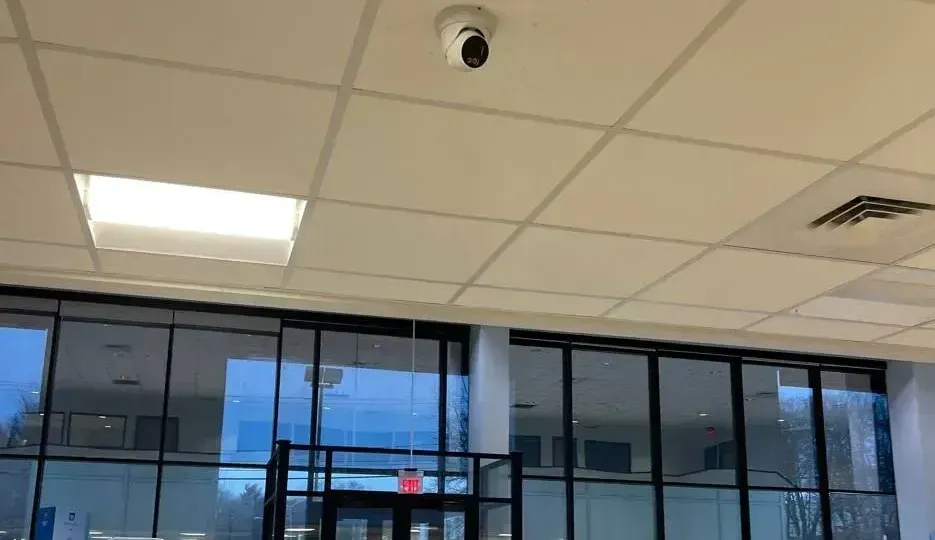
Windsor Terrace, Brooklyn access control reference: a white dome camera in a drop ceiling above a wall of dark-framed glass with a pair of glass entry doors and a lit exit sign
Photo from the AESS job library, not taken in Windsor Terrace: a glass entry wall seen from inside, with the doors at the center. An enclosed Calder porch is a small version of the same idea: a glazed front, and the door that really matters behind it.
Windsor Terrace Door Request
Row house, two-family, apartment building or shop — tell us which doors and who uses them

✅
Request Sent!
A technician will call you back about the Windsor Terrace house before the end of the business day.
25+
Years Experience
✓
Same-Day Estimates
100%
Licensed & Insured
4.7★
201 Google Reviews

Three facts let us price most Windsor Terrace houses over the phone. Is the front porch open or enclosed, and if it is enclosed, is the original front door still in place behind it? How many households live in the house, and do they share the stoop and the hall? And is anything about to change: a purchase, a renovation, a tenant moving in or out? Text the answers with two photos, one of the porch from the sidewalk and one of the door inside it, to (347) 934-8335. In most cases we can tell you in the same exchange which door we would control, what we would fit, and where the job falls on the Brooklyn price list.

  • Looking at photos and answering questions by text costs nothing; billable time starts only at the house
  • New York State low-voltage license #12000287431, with insurance certificates sent before the first visit when a co-op, a lender or a renovation contractor asks for one
The Neighborhood

Why Windsor Terrace Properties Need Access Control

Windsor Terrace is small and oddly shaped. Wikipedia describes it as a curved, somewhat comma-like strip of about half a square mile, held between Prospect Park on the east and Green-Wood Cemetery on the southwest, with Park Slope across Prospect Park West, Kensington below Caton Avenue and Borough Park beyond McDonald Avenue. The Prospect Expressway runs through the middle of it in a trench, and the two halves are stitched back together by bridges. The Landmarks Preservation Commission, in the report it wrote when it designated the neighborhood’s firehouse in 2013, calls it “a small residential enclave” set between the park and the cemetery, on the southeastern slope of the terminal moraine that runs from northern Queens to Bay Ridge.

It began as a speculation that failed. According to the same Landmarks report, a developer bought the old Vanderbilt farm here in 1849 and named the site Windsor Terrace; Edward Belknap bought it in 1851, opened Seeley Street, Vanderbilt Street, Adams Street (now Reeve Place) and Short Street (now Prospect Avenue), and divided the land into 49 building lots he called “Pleasant Cottage” sites. Belknap and his partners lost their interest in 1856. By 1860 there were only about a dozen houses and 30 people. After the Civil War, Irish immigrants, mostly from County Longford and County Cavan, settled here; Holy Name Church went up on Ninth Avenue, now Prospect Park West, in 1878, and by 1890 there were about 150 houses, most of them small frame buildings.

The houses most callers live in came next. The Landmarks report says trolley lines on Ninth Avenue and 15th Street brought row houses in the early 1900s, “many erected by developer William M. Calder who built and sold 700 houses in Windsor Terrace between 1902 and 1919.” Brownstoner, quoting a 1919 Brooklyn Daily Eagle profile, says he built so many that the area was known as Calderville. Calder was a prolific builder and later a United States senator, and his houses were sold by advertisement: a 1909 ad called his Sherman Street two-families “honestly constructed,” and 1915 ads for his row on Windsor Place promised parquet floors, hardwood trim, built-in iceboxes, basement laundry, ornamental parapets and open front porches.

Those porches are where the door story starts. Brownstoner’s 2026 histories of two houses in that Windsor Place row, designed by the architects Eisenla and Carlson from plans filed in 1914, note that tax photos from around 1940 already show many of the porches enclosed. On those houses the porch became a sunroom, a mudroom or a small extra room, and the street door moved forward to the front of the porch. Other rows kept theirs: Brownstoner points to a row of Doric-columned porches on Fuller Place that has stayed largely unchanged since the 1910s. So a Windsor Terrace front entrance is one of two quite different things, an open porch with the original door at the back of it, or an enclosed porch with a lightweight outer door and the original door inside. The right lock, reader and station depend entirely on which one you have.

The second thing is how many households live behind that entrance. Calder sold two-families as well as one-family houses. Brownstoner’s 2020 history of a bow-fronted limestone house on Sherman Street, one of a row built around 1908, describes it still laid out as a two-family: an owner’s duplex on the garden and parlor floors and a two-bedroom floor-through apartment above. Wikipedia adds that many more single- and two-family houses went up in the 1920s, and that the 1933 arrival of the subway brought apartment buildings. Under New York’s Multiple Dwelling Law, a house occupied by not more than two families is a private dwelling; three or more families living independently make it a multiple dwelling. That line, between two households and three, decides which city rules apply to an electronic front door, and we plan around it.

The third is that a great many of these houses are changing hands. Time Out reported in January 2026 that Windsor Terrace placed third on StreetEasy’s list of the most in-demand New York City neighborhoods, with searches up almost 45 percent. Brownstoner listed one Calder row house on Windsor Place at $2.6 million in February 2026 and another on Sherman Street at $2.65 million in 2020. When a house that one family held for decades is sold, nobody can say how many keys are out there: with relatives, neighbors, a long-gone tenant, a contractor from the 1990s. New owners usually renovate as well, which means months of trades going in and out. Both moments, the closing and the renovation, are when a door system costs least to fit and does the most good.

None of this is a story about crime, and we do not sell it as one. We have no neighborhood crime figures newer than a 2020 news report, and we do not forecast crime. But the local record does show why a plan beats a gadget. In August 2020 Brooklyn Paper reported that one house on Kermit Place was burglarized twice in a month; the first time the intruder took jewelry and cash, and the second time, police believe the same man took the house’s battery-powered security camera. A camera that can be lifted off its mount is not much of a record. In 2017 Patch relayed a 72nd Precinct warning after a man was arrested near Windsor Place and Fuller Place for trying car door handles until one opened. What doors and cars have in common is that the unlocked one is the one that gets tried. A good door system makes locking automatic and keeps its record somewhere a thief cannot carry away.

Windsor Terrace facts we checked before writing this page

  • Boundaries and size. Prospect Park (east and northeast), Prospect Park West and Park Slope (north), Green-Wood Cemetery (southwest), McDonald Avenue and Borough Park (west), Caton Avenue and Kensington (south); about 0.503 square miles (Wikipedia).
  • Early history. Development site bought 1849; Belknap’s four streets and 49 lots 1851; foreclosure by 1856; about a dozen houses and 30 people by 1860; Holy Name Church 1878; about 150 houses by 1890 (LPC designation report, 2013).
  • Calderville. William M. Calder built and sold 700 houses here between 1902 and 1919 (LPC); Brownstoner cites a 1919 Eagle profile crediting him with more than 700.
  • The porches. Windsor Place row by Eisenla and Carlson, plans filed 1914; 1915 ads showed open porches; tax photos around 1940 show many enclosed (Brownstoner, 2026).
  • Subway and expressway. IND stations at 15th Street–Prospect Park and Fort Hamilton Parkway opened October 7, 1933; the Prospect Expressway was built 1953–1960 and demolished many houses, churches and commercial buildings (Wikipedia; LPC).
  • Services and board. NYPD 72nd Precinct; FDNY Engine 240 and Battalion 48 at 1307 Prospect Avenue; Brooklyn Community Board 7; ZIP codes 11215 and 11218 (Wikipedia).
Timeline: 1838: Green-Wood Cemetery founded on the moraine; 1849: Old Vanderbilt farm bought; site named Windsor Terrace; 1851: Belknap opens four streets, 49 lots; 1856: Belknap loses the land; 1860: About a dozen houses, 30 people; 1878: Holy Name Church on Ninth Avenue; 1890: About 150 houses, mostly small frame; 1896: Engine 40 firehouse in service on Prospect Ave; 1902: Calder begins building; 700 houses by 1919; 1908: Limestone two-family row on Sherman Street; 1914: Plans filed for the Windsor Place porch row; 1922: Bartel-Pritchard Square dedicated; 1933: F/G stations open, Oct 7; 1940: Tax photos: many porches already enclosed; 1953: Prospect Expressway construction begins; 1983: 17 two-families on the Pilgrim Laundry site; 2013: Firehouse designated a city landmark; 2017: Car break-in arrest near Windsor and Fuller Places; 2020: Kermit Place burglaries; battery camera taken; 2025: Arrow Linen rezoning approved, Feb 27; 2026: StreetEasy demand list: third; 1259 Prospect Ave permit Windsor Terrace, 1838–2026: the sources behind this page 1838 Green-Wood Cemetery founded on the moraine 1849 Old Vanderbilt farm bought; site named Windsor Terrace 1851 Belknap opens four streets, 49 lots 1856 Belknap loses the land 1860 About a dozen houses, 30 people 1878 Holy Name Church on Ninth Avenue 1890 About 150 houses, mostly small frame 1896 Engine 40 firehouse in service on Prospect Ave 1902 Calder begins building; 700 houses by 1919 1908 Limestone two-family row on Sherman Street 1914 Plans filed for the Windsor Place porch row 1922 Bartel-Pritchard Square dedicated 1933 F/G stations open, Oct 7 1940 Tax photos: many porches already enclosed 1953 Prospect Expressway construction begins 1983 17 two-families on the Pilgrim Laundry site 2013 Firehouse designated a city landmark 2017 Car break-in arrest near Windsor and Fuller Places 2020 Kermit Place burglaries; battery camera taken 2025 Arrow Linen rezoning approved, Feb 27 2026 StreetEasy demand list: third; 1259 Prospect Ave permit Black: the neighborhood being built · Red: porches, protection and recent change
Timeline drawn by AESS from the sources listed at the foot of this page; dates as given by the Landmarks Preservation Commission report, Wikipedia, Brownstoner, Brooklyn Paper, Patch, Time Out and the City Council.
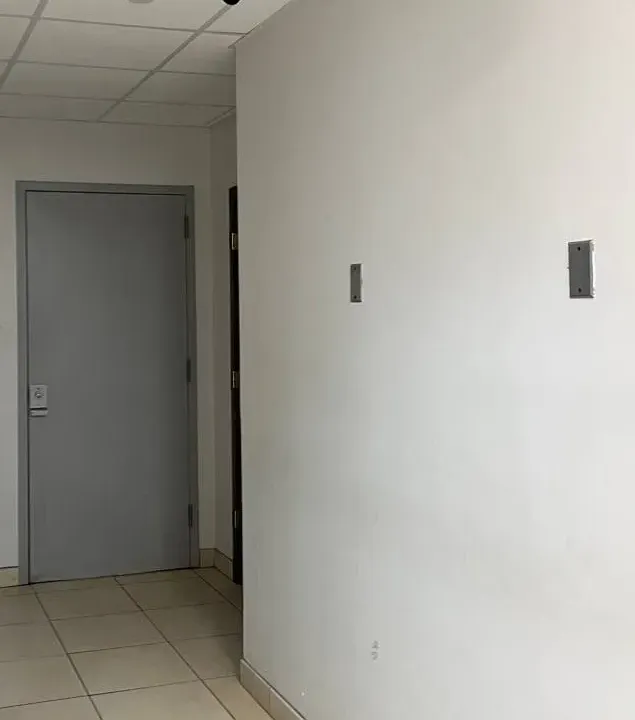
Windsor Terrace, Brooklyn inner-door reference: a grey steel door with a lever handle at the end of a short tiled hallway, beside a white wall with two blank cover plates
Photo from the AESS job library, not taken in Windsor Terrace: a plain inner door with a lever, at the end of a short hall. Levers that always open from inside are what we fit on any door that is also a way out.

Porch Door Sticking or the Keypad Silent on a Row House: Same-Day Repair

Some calls skip the quote: the porch keypad that stopped answering after a cold night, the inner door strike that buzzes but will not release, the tenant locked out of the stoop door at eleven at night. Ring (347) 934-8335. The van carries keypad deadbolts, strikes, readers, closers and power supplies, the earliest technician comes in a two-hour arrival window, and a single failed part is usually working again within an hour or two. If a part has to be ordered, we leave the door locked from outside and free from inside, and tell you what was ordered and when it arrives.

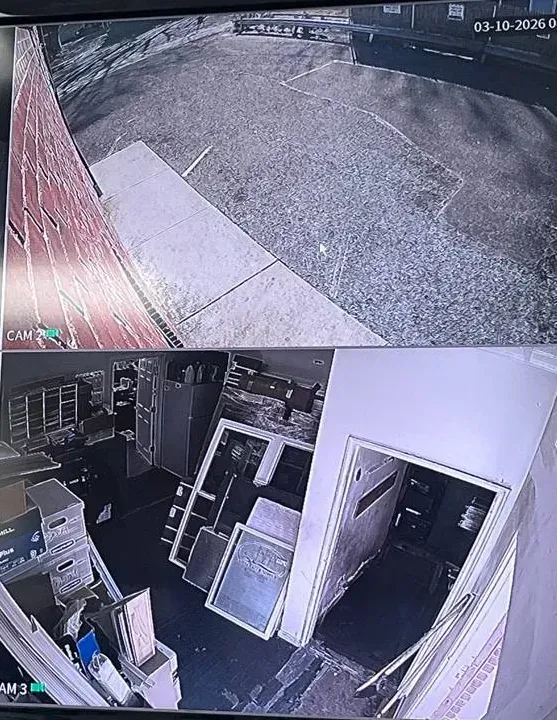
Windsor Terrace, Brooklyn recorder reference: a screen split in two, a wide view of a red brick wall, concrete walk and gravel above, and a cluttered back room with an open door below
Recorded camera view from the AESS job library, not taken in Windsor Terrace: one camera on a brick wall and walk, one on a back room and its door. Keeping the recorder away from the front door is what preserves a record like this.
What We Install

Access Control Services in Windsor Terrace

Most Windsor Terrace houses start with one door and grow. The services below are listed roughly in the order owners ask for them, and every one of them can join the same app, the same code list and the same log as the first.

đŸšȘ

Porch-door entry

A keypad deadbolt, reader or slim video station on the outer door of an enclosed porch, chosen for a light frame and for a door that sits in sun, cold and rain without a roof overhang to protect it.

🔐

The original door inside the porch

An electric strike or motorized deadbolt on the house’s real front door, so the porch can be open to couriers or clients while the house itself stays locked.

🏠

Entry for two households

Separate credentials, bells and schedules for the owner’s duplex and the apartment upstairs in a Calder two-family, set up so each household manages its own people.

đŸȘœ

Cellar and areaway doors

The door at the bottom of the outside steps or under the porch, often the one nobody checks, fitted with a lock that reports when it is left open.

🌿

Rear and yard doors

Kitchen and deck doors to the back yard, which on an attached row can only be reached through the house, so they matter most when trades or a gardener need the yard.

📞

Calls to every floor

A door station that rings an indoor screen on the parlor floor, the top floor and your phone, so a visitor at the porch is heard in a narrow house three stories tall.

đŸȘ

Shop and office doors

Staff and delivery doors for businesses on Prospect Park West, Prospect Avenue and Fort Hamilton Parkway, with storefronts left on their own key and timed lock.

🏱

Apartment building lobbies

Fob readers and video panels for the pre-war and post-war walk-ups and elevator buildings near the F and G stations, planned under the city’s tenant data rules.

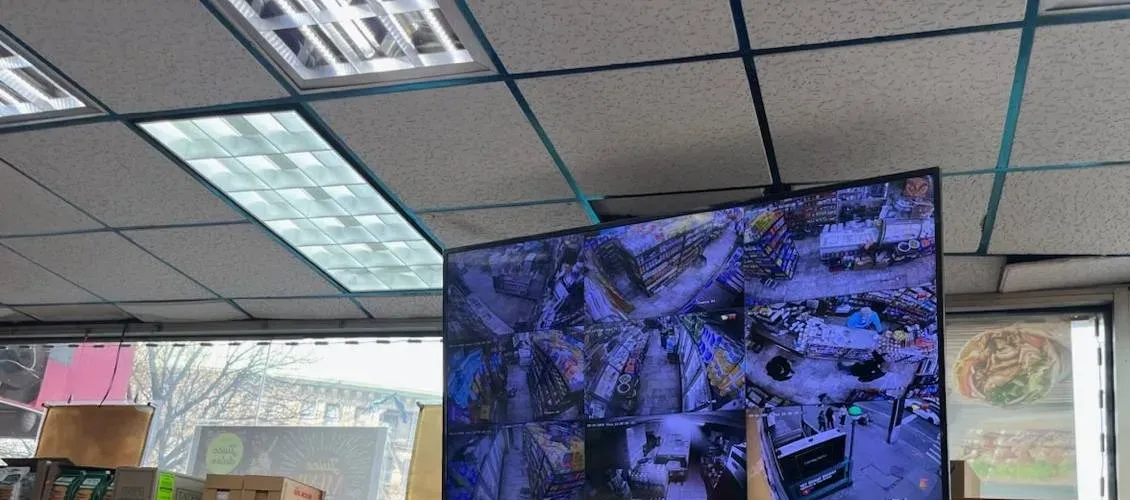
Windsor Terrace, Brooklyn shop reference: a drop ceiling in a small store with a hanging monitor showing camera views of the aisles, beside the front window and a bare tree outside
Photo from the AESS job library, not taken in Windsor Terrace: a monitor hung from the ceiling of a small corner store. Shops along Prospect Avenue and Prospect Park West usually pair a view like this with a controlled staff door at the back.
Building Specialists

Access Control for Windsor Terrace’s Architecture

Because so much of Windsor Terrace was put up by one builder in a few years, the same house repeats along whole blocks. That helps: once we have seen the cellar, the porch and the party walls of one house in a row, we know roughly what the neighbors look like. The types below cover nearly everything we are asked about between Prospect Park West and Caton Avenue.

Calder brick rows with enclosed porches

Two-story brick row houses from the 1910s, like the Windsor Place row by Eisenla and Carlson, whose open porches were closed in by around 1940. Two front doors: the porch door at the steps and the original door inside.

Rows that kept their open porches

Rows such as the Doric-columned porches on Fuller Place, where the original front door still faces the street from the back of the porch, under a roof but open to the weather.

Limestone bow-front two-families

Three-story bow-fronted houses like Calder’s Sherman Street row of about 1908, built as two-families: an owner’s duplex below and a floor-through apartment above, sharing a stoop and an entry hall.

Early frame houses and cottages

Small clapboard houses with attics from the neighborhood’s first decades, and the row of Victorian “jewel box” houses and cottages Forgotten New York describes on East 5th Street. Wood frames, wood doors, often altered many times.

1920s houses and apartment buildings

Single- and two-family houses and two large apartment buildings on Prospect Avenue that the Landmarks report attributes to Seeley Investors, plus the apartment buildings that followed the 1933 subway.

Newer and coming buildings

The 17 two-family houses built in 1983 on the old Pilgrim Laundry site, recent infill along Prospect Avenue, and the two ten-story buildings approved for 441 and 467 Prospect Avenue in 2025.

How the hardware changes from one Windsor Terrace building to the next

Read each row as our first guess, which the visit confirms or overturns. A century of owners means doors rehung, porches rebuilt in aluminum or vinyl, and cellars finished, and every one of those changes the answer.

BuildingDoor we usually control firstLock we usually useWhere the controller goes
Calder row, enclosed porchThe original front door inside the porch, with the porch door on a keypad or left on its keyElectric strike in the original wood frame, or a motorized deadboltCellar ceiling under the front room, beside the electrical panel
Calder row, open porchThe original front door at the back of the porchKeypad deadbolt or reader with a strike; station on the porch wall beside the doorCellar, with cable rising inside the front wall
Limestone two-familyThe street door to the shared hall, then each household’s own doorStrike on the street door; keypad deadbolts on the apartment doorsCellar or the owner’s side of the basement, in a locked box
Frame house or cottageFront door, then the side or rear doorKeypad deadbolt; strike only if the frame is soundBasement or a closet near the door
Apartment buildingInner vestibule door, then the service doorStrike or electrified lock with a closer; fob reader and video panelLocked enclosure in the boiler room or cellar corridor
Shop on Prospect Park West or Prospect AvenueSteel rear or side doorKeypad or reader with a strike or electrified leverBack office or stock room
Six sketches: Calder row, enclosed porch: Original door inside the porch; Calder row, open porch: Door at back of the porch; Limestone two-family: Street door to shared hall; Frame house or cottage: Front, then side door; Apartment building: Inner vestibule door; Prospect Ave shop: Steel rear staff door Six Windsor Terrace building types and the door usually controlled first Calder row, enclosed porch Original door inside the porch Calder row, open porch Door at back of the porch Limestone two-family Street door to shared hall Frame house or cottage Front, then side door Apartment building Inner vestibule door Prospect Ave shop Steel rear staff door Red outline: the door we usually control first · schematic, not to scale
Schematic by AESS: the six building types this page covers, with the door we usually put on the system first marked in red.

What the materials mean for the install

Brick party walls. An attached row house has solid brick walls shared with the neighbors on both sides. We never run cable inside a party wall or drill through one. Cable for a rear door travels along the cellar ceiling, front to back, and comes up inside the wall or trim next to the door it serves.

Porch enclosures. An enclosed porch is a newer, lighter structure bolted onto an old house. Its walls are often thin framing with a lot of glass, and its door may be an aluminum storm-and-entry door rather than a solid wood one. A strike needs solid wood or steel behind it; when the porch frame cannot give us that, we lock the original door instead and treat the porch as a lobby.

Limestone fronts. On the bow-front houses the stone around the entrance is the part people admire, and it is also the part that cracks if drilled carelessly. We mount stations on the wood door frame or inside the vestibule wherever we can, and if stone must be drilled we use the mortar joints, never the face of a carved block.

Cellars. The 1915 ads promised basement laundry, and most Calder cellars are still the room where the washer, the boiler and the electrical panel live. It is the natural place for the controller and its battery, provided we mount them high, away from the floor drain and the dryer vent.

Section: enclosed porch with porch door at the steps; original front door behind it fitted with a strike; cellar below holding the panel, laundry and the controller; door cable runs along the cellar joists from the front wall to the rear door and up through the old door frame to a short raceway in the porch; no cable in the brick party walls. Section through a Calder row house with an enclosed porch Street grade Cellar: panel, laundry, controller high on the wall Parlor floor Bedrooms above Enclosed porch Porch door Original door + strike Door cable along cellar joists, front to back Rear door short raceway Brick party walls both sides: no cable inside them Schematic, not to scale
Schematic by AESS of the usual cable route in a Calder row: up from the cellar at the front wall, out through the original door frame, and along the cellar joists to the back.
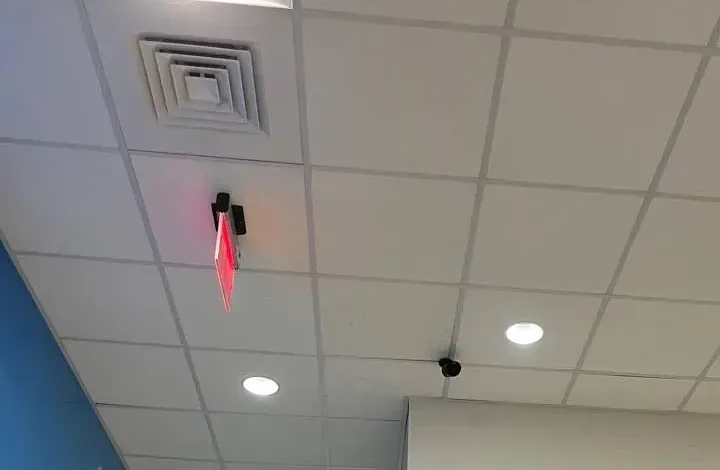
Windsor Terrace, Brooklyn egress reference: a lit red exit sign hanging from a white drop ceiling near an air vent, with a small black camera and two recessed lights beyond it
Photo from the AESS job library, not taken in Windsor Terrace: an exit sign and a small camera in an office ceiling. The Building Code’s egress rules decide which locks may go on a shop’s exit door; the sign marks the door that must always open.

Two Front Doors: What the Enclosed Porch Changes

Nearly every quote we write for an enclosed-porch row house turns on one decision: which of the two front doors becomes the controlled door. The porch door is the one visitors reach first, and the one most owners picture a keypad on. The original door is the one that actually separates the street from the house. Choosing well means looking at how the porch is used today, how it is built, and who needs to get into it without getting into the house.

Option one: lock the porch door, leave the inner door on its key

This works when the porch is part of the house: heated, furnished, used every day as a sitting room or an office, with nothing in it you would hand to a stranger. A keypad deadbolt on the porch door then behaves like a front-door keypad anywhere else. It suits porches with a solid door in a solid frame. It does not suit porches with a thin aluminum door, single-pane glass beside the lock, or no heat at all, because the door is only as strong as the glass next to it and battery locks in an unheated porch lose capacity fast in a January cold snap.

Option two: lock the original door, treat the porch as a lobby

This is our most common recommendation. The original door is usually a heavy wood door in a frame built with the house, the right place for an electric strike or a motorized deadbolt. The porch door stays on a simple lock, a keypad that is open during the day, or a closer and latch. Packages, coats, strollers and visitors wait in the porch; the house stays locked. The station goes at the porch door so callers can ring before they come in, and the indoor screen lets you see who is in the porch before you open the inner door.

Option three: both doors on one system

For two-family houses, home offices and houses with frequent deliveries, both doors go on the same controller. The porch door opens on a schedule or to a courier code; the inner door opens only to household credentials. The log then shows which door opened, so a box left in the porch at two in the afternoon and an inner door opened at two-fifteen are two separate entries rather than a single “front door” line.

Glass, weather and the open porch

An open porch protects the door from rain but not from wind-driven snow, and Windsor Terrace sits on a slope where weather comes straight off the park. Readers and stations on an open porch need to be rated for outdoor use, mounted under the porch roof, and wired so that water running down the cable cannot reach the connector. On an enclosed porch the opposite problem appears: in summer a south-facing glass porch can get much hotter than the street, and the inside of the porch door bakes. We pick hardware rated for the temperature range the porch actually reaches, not the range of a hallway.

Getting cable into a porch that was added later

The porch enclosure was built decades after the house, often on top of a brick or concrete porch slab with no basement underneath. There is rarely a hollow wall from the cellar up into the porch. Our usual route is up through the cellar to the inside of the original front wall, then out through the old door frame into the porch, where a short, painted raceway on the inside of the porch frame carries the cable to the porch door. On porches where even that is impractical, the porch door gets a battery lock that talks to a hub inside the house, and only the inner door is wired.

Left, open porch: original door faces the street; station on the porch wall; outdoor-rated reader under the roof; cable inside the front wall. Right, enclosed porch: two front doors; porch acts as a lobby; strike in the solid original frame; station at the porch door with a screen inside. Open porch or enclosed porch: what changes at the front of the house Open porch (as built, 1910s) ‱ Original door faces the street ‱ Station on the porch wall beside it ‱ Reader rated for outdoor use, under the roof ‱ Cable rises inside the front wall Enclosed porch (many by about 1940) ‱ Two front doors: porch door and original door ‱ Porch becomes a lobby for boxes and visitors ‱ Strike in the solid original frame ‱ Station at the porch door, screen inside
Schematic by AESS. Brownstoner reports open porches in the 1915 ads for Calder’s Windsor Place row and many enclosed by around 1940; Fuller Place kept a row of open porches.
Which front door gets the lock?. 1. Porch door only: Keypad deadbolt or reader: Old key, rarely used: Porch is heated, furnished, used daily; solid door and frame ; 2. Original door only: Plain lock, day keypad or closer and latch: Strike or motorized deadbolt: Most Calder rows; porch used for deliveries and coats ; 3. Both doors: Schedule or courier code: Household credentials only: Two-families, home offices, many deliveries ; Avoid: Strike in a thin frame next to glass: —: Porch frame flexes or glass sits beside the lock Which front door gets the lock? Option Porch door Original door Best when 1. Porch door only Keypad deadbolt or reader Old key, rarely used Porch is heated, furnished, used daily; solid door and frame 2. Original door only Plain lock, day keypad or closer and latch Strike or motorized deadbolt Most Calder rows; porch used for deliveries and coats 3. Both doors Schedule or courier code Household credentials only Two-families, home offices, many deliveries Avoid Strike in a thin frame next to glass — Porch frame flexes or glass sits beside the lock Schematic by AESS · general practice, not a survey of any particular house
Schematic by AESS of the choice behind most Windsor Terrace quotes. We choose after seeing the porch frame and the original door.
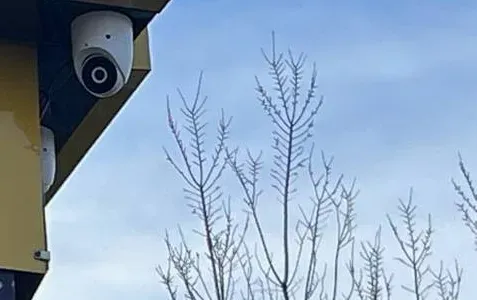
Windsor Terrace, Brooklyn exterior reference: a white dome camera under the corner of a yellow fascia board, with bare winter tree branches against a pale blue sky
Photo from the AESS job library, not taken in Windsor Terrace: a dome camera mounted under a roof edge in winter. On an open porch, readers and stations go under the porch roof in the same way, out of the weather.

Two Households Behind One Stoop: Where the City’s Rules Begin

Calder built two-families on purpose, and many are still lived in that way: an owner below, a tenant or a relative above, one stoop and one street door between them. A door system in a house like that has two jobs. It has to let each household come and go and invite its own visitors without asking the other. And it has to be honest about what it records, because an entry log in a shared house is a record of the neighbors’ lives as well as your own.

The law draws a line here that owners rarely know about. Section 4 of New York’s Multiple Dwelling Law defines a private dwelling as a building occupied by not more than two families, and a multiple dwelling as one occupied by three or more families living independently of each other. The city’s Tenant Data Privacy Law, Local Law 63 of 2021, applies to “smart access” systems, meaning fobs, cards, phone apps or biometrics, in class A multiple dwellings. HPD’s summary of that law says owners must give tenants a written data retention and privacy policy, get express consent before collecting reference data, collect only a limited set of information for security purposes, destroy authentication data within 90 days unless it is kept anonymized, never use the data to harass or evict, and never require a smart access system to get into a tenant’s own apartment.

A two-family house sits below that threshold, so the city law does not, on its face, reach it. We set up two-family systems as if it did anyway, for a practical reason: houses change. A cellar apartment gets added, a house is converted, a two-family is sold to someone who rents both floors and lives elsewhere. When a third household arrives the building crosses into the multiple dwelling rules, and a system that already keeps logs short, collects nothing it does not need and leaves the apartment door on a key needs no rebuilding. We are not lawyers, and an owner considering a third unit should ask one; what we can do is make sure the hardware is not the obstacle.

What we set up in a Calder two-family

  • Two administrators, not one. Each household gets its own account on the system and adds or removes its own cleaners, sitters and guests. Neither sees the other’s list.
  • Logs kept short. The street door keeps entries for a limited period, set with the owner at installation, long enough to look into a problem and short enough not to become a diary.
  • Apartment doors on a key as well. The upstairs apartment door can have a keypad, but it also keeps a working mechanical key, because the tenant must never depend on an app to get home.
  • Separate bells. The porch or stoop station has one button per household, each ringing only its own floor and its own phones.
  • A written page for the tenant. We leave a one-page note describing what the street door records, who can see it and how long it is kept, which the owner can attach to the lease.
Two households or three: where the line falls. 1: Private dwelling (MDL §4): Not covered on its face: One administrator; short logs; mechanical key kept ; 2: Private dwelling (not more than two families): Not covered on its face: Two administrators; separate bells; tenant note on what is recorded ; 3 or more: Multiple dwelling (three or more families): Tenant Data Privacy Law applies to smart access in class A multiple dwellings: Written policy, consent, limited data, 90-day destruction, no app required to enter a unit Two households or three: where the line falls Households Legal category City smart-access law What AESS sets up anyway 1 Private dwelling (MDL §4) Not covered on its face One administrator; short logs; mechanical key kept 2 Private dwelling (not more than two families) Not covered on its face Two administrators; separate bells; tenant note on what is recorded 3 or more Multiple dwelling (three or more families) Tenant Data Privacy Law applies to smart access in class A multiple dwellings Written policy, consent, limited data, 90-day destruction, no app required to enter a unit Schematic by AESS · general practice, not a survey of any particular house
Summary by AESS of New York’s Multiple Dwelling Law section 4 and HPD’s description of Local Law 63 of 2021. Not legal advice; an owner adding a unit should consult a lawyer.
One stoop, two households: who opens what. Porch or stoop door: Own codes, fobs and guests: Own codes, fobs and guests: Each household adds and removes its own people ; Original door / street door to the hall: Opens with household credentials: Opens with household credentials: Log kept for a short, agreed period ; Owner duplex door: Owner only: No access: Separate account; not visible to the tenant ; Upstairs apartment door: No electronic access: Tenant only, mechanical key always works: No app required to reach the apartment ; Cellar and yard doors: By agreement in the lease: By agreement in the lease: Contacts report when left open ; Door station buttons: Rings owner floor and phones: Rings upstairs floor and phones: One button per household One stoop, two households: who opens what Door Owner household Upstairs household Shared rules Porch or stoop door Own codes, fobs and guests Own codes, fobs and guests Each household adds and removes its own people Original door / street door to the hall Opens with household credentials Opens with household credentials Log kept for a short, agreed period Owner duplex door Owner only No access Separate account; not visible to the tenant Upstairs apartment door No electronic access Tenant only, mechanical key always works No app required to reach the apartment Cellar and yard doors By agreement in the lease By agreement in the lease Contacts report when left open Door station buttons Rings owner floor and phones Rings upstairs floor and phones One button per household Schematic by AESS · general practice, not a survey of any particular house
Schematic by AESS of how we split a Calder two-family between two households; the cellar and yard arrangements follow the lease, not the hardware.

When a Calder House Changes Hands

The busiest moment for door work in Windsor Terrace is the first month after a closing. The sellers may have lived in the house for forty years; the keys they hand over are the ones they could find. A locksmith can change the cylinders in an afternoon, and that is often the right first step. But if a renovation is coming, as it usually is, the better plan is to put the doors on a system before the trades arrive, give each trade its own code with an end date, and finish the permanent hardware when the walls are closed.

The second reason to plan at the closing is the cellar. Most renovations of these houses open the cellar ceiling to replace old wiring and plumbing. For a few weeks the joists are exposed from the front wall to the back, and cable for a porch station, an inner-door strike and a rear-door reader can be laid in an hour that would cost a day once the ceiling is closed. We ask buyers to call us when the electrician is booked, not when the painter is.

What to do in the first month

  • Day of closing: change or rekey every exterior cylinder, including the cellar door, the porch door and any yard gate. Ask the sellers for alarm codes, garage remotes and the logins for any smart lock or doorbell camera, and remove their accounts.
  • First week: walk the house with us. We list every door, every old bell wire and intercom handset, and every device that runs on a battery or depends on someone else’s app.
  • Before the trades start: put the doors the crews will use on temporary keypad locks with one code per trade and an end date, so nobody needs a copy of the new key.
  • While the cellar ceiling is open: pull cable to the porch door, the original front door, the rear door and the place the indoor screens will go.
  • When the walls close: fit the permanent strike, station and readers, cancel the trade codes and hand the administrator account to you.

Old equipment deserves a second look before it goes in the skip. A working bell wire from the porch to the kitchen is a ready-made path for a new doorbell circuit. A wired chime transformer in the cellar can tell us where the old bell circuit was powered. Battery doorbell cameras are another matter: they are easy to install and easy to remove, which is the problem the Kermit Place burglary illustrates. We usually replace them with a wired station whose recordings are kept off the device.

The first month after the closing: 1. Day of closing: Rekey every exterior cylinder: porch, original door, cellar, yard. Remove sellers’ app accounts and alarm codes. ; 2. First week: Walk the house with AESS: list doors, old bell wires, intercom handsets and battery devices. ; 3. Before the trades: Temporary keypad locks on the doors crews use, one code per trade, each with an end date. ; 4. Cellar ceiling open: Pull cable to porch door, original door, rear door and indoor screen positions. ; 5. Walls closed: Fit the permanent strike, station and readers; cancel trade codes. ; 6. Handover: Administrator accounts to each household with a one-page guide and the credential list. The first month after the closing 1 Day of closing Rekey every exterior cylinder: porch, original door, cellar, yard. Remove sellers’ app accounts and alarm codes. 2 First week Walk the house with AESS: list doors, old bell wires, intercom handsets and battery devices. 3 Before the trades Temporary keypad locks on the doors crews use, one code per trade, each with an end date. 4 Cellar ceiling open Pull cable to porch door, original door, rear door and indoor screen positions. 5 Walls closed Fit the permanent strike, station and readers; cancel trade codes. 6 Handover Administrator accounts to each household with a one-page guide and the credential list. Diagram by AESS · working practice
Diagram by AESS of our recommended order after a purchase; timings depend on the renovation schedule.
Windsor Terrace, Brooklyn interior reference: a small black camera on a white drop ceiling at the corner of a deep white soffit, with recessed lights in a dark ceiling panel below
Photo from the AESS job library, not taken in Windsor Terrace: a camera tucked at the edge of a soffit. During a renovation, boxes and cable for door hardware are placed like this, at a corner, before the ceiling is closed.
Commercial Access Control

Business Access Control in Windsor Terrace

Windsor Terrace has no big commercial district. Wikipedia lists three corridors, Prospect Park West, Prospect Avenue and Fort Hamilton Parkway, and most of what fronts them is a shop on the ground floor of a small mixed-use building. The work there is usually one or two doors: the staff or delivery door at the back and, upstairs, the door to the apartments.

Prospect Park West

The old Ninth Avenue, along the park, with cafĂ©s, restaurants and bars around 16th Street and Bartel-Pritchard Square. Farrell’s Bar & Grill at 16th Street has been run by three owners since 1933, according to Wikipedia. Mixed-use buildings here need a shop door and an apartment door that never share codes.

Prospect Avenue

Once Short Street, renamed in 1868. Commenters on Forgotten New York remember it as a shopping street, and the Landmarks report mentions 1920s apartment buildings by Seeley Investors here. The street is changing: a permit was filed in April 2026 for a three-story, six-unit building with ground-floor commercial space at 1259 Prospect Avenue.

Fort Hamilton Parkway

The southern corridor near the Fort Hamilton Parkway F and G station and Greenwood Playground, with apartment buildings and small businesses where a lobby door and a service door are the usual pair.

11th Avenue and Terrace Place

The Landmarks report says Seeley Investors put up commercial buildings on 11th Avenue in the 1920s; Forgotten New York notes 11th Avenue is bridged across the expressway near Terrace Place and that a diner stands at 19th Street and Terrace Place.

The Arrow Linen site

The City Council approved rezoning 441 and 467 Prospect Avenue on February 27, 2025, for two ten-story buildings with 250 apartments, 100 of them permanently affordable. Council Member Hanif’s release lists a childcare center and subsidized community space for Sakhi for South Asian Survivors among the commitments. The developer still needed financing at the time; nothing is built yet.

Schools and institutions

PS 154, PS 130 and MS 839 on Caton Avenue (Wikipedia), and the former Bishop Ford High School building on 19th Street, which Forgotten New York says now houses MS 442 and PS 281. Public schools buy through the city; we list them as landmarks, not customers.

Rules that apply to Windsor Terrace business doors

The New York City Building Code requires egress doors to open from the inside without a key or special knowledge. Two sections matter most for small shops. Section 1010.1.9.8 governs doors released by a motion sensor, with a manual push button marked PUSH TO EXIT between 40 and 48 inches high and within five feet of the door, a relock delay of at least 30 seconds and release on loss of power or fire alarm. Section 1010.1.9.9 governs electromagnetic locks, which need hardware on the door that releases them with one hand and must unlock when power is lost. We favor electric strikes and electrified levers on shop doors because the inside lever always works mechanically, whatever happens to the power.

A shop door is also often the only way out of the shop. That door stays on its key and timed lock; we control the rear staff or delivery door, which carries the daily traffic of employees and suppliers. The Americans with Disabilities Act asks for hardware that can be worked without tight grasping or twisting, which is another reason we fit levers rather than knobs. When a shop’s door ties into an alarm or a building fire system, that interface is designed with the alarm contractor, not improvised.

Shop doors on a mixed-use building. Storefront glass door: Left on its key and timed lock: Often the main exit; must open from inside without a key ; Rear staff or delivery door: Reader or keypad with electric strike or electrified lever: Daily staff and supplier traffic; inside lever always works ; Door released by motion sensor: PUSH TO EXIT button 40–48 in. high within 5 ft; 30 s relock; release on power loss or alarm: NYC Building Code 1010.1.9.8 ; Electromagnetic lock: Only with one-hand release hardware; unlocks on power loss: NYC Building Code 1010.1.9.9 ; Upstairs apartment door: Separate system or separate codes from the shop: Shop staff and residents never share credentials Shop doors on a mixed-use building Door What we fit Why Storefront glass door Left on its key and timed lock Often the main exit; must open from inside without a key Rear staff or delivery door Reader or keypad with electric strike or electrified lever Daily staff and supplier traffic; inside lever always works Door released by motion sensor PUSH TO EXIT button 40–48 in. high within 5 ft; 30 s relock; release on power loss or alarm NYC Building Code 1010.1.9.8 Electromagnetic lock Only with one-hand release hardware; unlocks on power loss NYC Building Code 1010.1.9.9 Upstairs apartment door Separate system or separate codes from the shop Shop staff and residents never share credentials Schematic by AESS · general practice, not a survey of any particular house
Summary by AESS of the Building Code sections cited on this page and our practice for shops on Prospect Park West and Prospect Avenue.
Windsor Terrace, Brooklyn cabling reference: bundles of blue and white network cable running across an open ceiling above a steel bar, with the top edge of a monitor below
Photo from the AESS job library, not taken in Windsor Terrace: cable bundles crossing an open ceiling. In a Calder row the cellar ceiling plays this role, carrying door cable from the front wall to the back without touching a finished room.
Your Questions Answered

Access Control in Windsor Terrace: Questions Answered

These are the questions Windsor Terrace owners actually put to us, grouped by the part of the house they concern. Each is answered here in full; the FAQ further down covers different ground.

The enclosed porch

Decades ago someone glassed in our porch, so the house’s original door now sits inside it. Does the electronic lock belong on the outer porch door or on that original door?

In most Calder rows we put it on the original door. That door is solid wood in a frame built with the house, so an electric strike or motorized deadbolt has something strong to hold, and it is the door that actually separates the street from your rooms. The porch door then becomes the lobby door: on a plain lock, a daytime keypad or a latch and closer. We move the lock to the porch door only when the porch is heated, used daily as a room and has a solid door in a solid frame. If you want the convenience at both, both can go on one controller.

Couriers leave boxes inside our closed-in porch whenever the outer door is unlocked. Can the porch accept a delivery without anyone opening the house?

Yes, and this is one of the best uses of an enclosed porch. The porch door gets a keypad or reader with a courier code that works during delivery hours, or a station that lets you open it remotely when a driver rings. The original door stays locked to everything except household credentials. Each porch opening is logged, and an indoor screen or your phone shows the porch, so you can see a box arrive without walking down. Many carriers’ own in-home delivery programs are built for a whole house; this keeps them to the porch.

The porch walls are mostly glass in thin wood framing. Is that frame strong enough to hold an electric strike?

Often it is not, and we would rather say so than fit one. A strike works by holding the latch against a pull, and that force goes into the jamb. In a light porch frame the jamb can flex, and the glass beside the lock means the door is only as secure as the pane next to it. Where the frame is weak we either reinforce the latch side with a steel jamb plate during the install, fit a keypad deadbolt whose bolt goes into a reinforced strike box, or leave the porch door simple and control the original door behind it.

We work from the enclosed porch and clients visit it. Can the porch door stand unlocked during office hours while the house door stays shut?

That is exactly what a two-door setup is for. The porch door goes on a schedule, unlocked during the hours you see clients and locked automatically after, while the original door stays on household credentials only. A small station at the porch door lets late arrivals ring you. If the porch office has files or equipment you do not want visible from the street, we would also put a door contact on the porch door so you get an alert if it is left open after hours.

Our porch is unheated: freezing in January, an oven in July. Which locks and readers survive conditions like that?

Look at the rated operating temperature, not the marketing. Many indoor smart locks are rated for hallway conditions, and their batteries lose capacity in hard cold, which is why porch keypads tend to fail on the first frosty morning. For an unheated porch we use readers and stations rated for outdoor use, wired power instead of batteries where the cable can reach, and lithium cells where it cannot. On a south-facing glass porch we keep electronics out of direct sun and off the glass.

Party walls, cellars and back yards

Our row house shares brick walls with the houses on both sides. How does cable reach the kitchen door at the back without opening our finished rooms?

Through the cellar. In a Calder row the cellar runs the full depth of the house, and its ceiling joists span from party wall to party wall, so a cable can travel from the front of the cellar to the back along the joists without touching a finished room. At the back it comes up beside the kitchen door inside the door trim or a short wall cavity. We never run cable inside a shared party wall or drill through it, both because it is your neighbor’s wall too and because a brick party wall is often a fire separation.

Our cellar door is at the bottom of outside steps behind a low iron gate. Which should be controlled, the gate or the door?

The door. A low gate keeps out leaves and stray deliveries, not people, and a gate at the bottom of an areaway is hard to wire and takes a beating from weather. The cellar door is the real barrier, and it is usually the least watched door on the house. We fit a lock and a door contact on it so it reports when it is left unlocked or open; if you also want the gate to latch on its own, a self-closing hinge and a simple latch do that without electronics.

On an attached row the only way into our back yard is through the house. How can a gardener or contractor work out back without the run of the rooms?

Give them a route, not a house key. The cellar usually has a door to the yard or a rear areaway; put that door on a keypad and give the gardener a code that works on their day, between their hours, and only there. Inside, the door from the cellar to the parlor floor stays locked. If the route has to go through the house, a temporary code on the front door plus a lock on any rooms you want closed does the same job, and the log shows when they arrived and left.

Our kitchen opens to a rear deck several steps above the yard. Where does a reader go on a door that high up?

Beside the door on the deck, at a normal reach height from the deck surface, under an overhang if there is one. The deck makes the door easy to reach for you and for anyone who climbs the steps, so it deserves the same hardware as the front. The cable comes up inside the rear wall from the cellar rather than along the deck, which would expose it to weather and to anyone with snips. If the deck is to be rebuilt soon, we leave a sleeve in place for the cable.

The only sensible spot for the controller is the cellar laundry corner, beside the washer and dryer. Is that too damp for the equipment?

It is fine if mounted correctly, and it is where most Calder houses put their electrical panel anyway. We fix the controller and its battery high on the wall, away from the dryer vent and the floor drain, in a closed enclosure with the cable entering from below so water cannot run into it. If the cellar has ever flooded, we raise everything well above the high-water mark and tell you which parts would need replacing if it happened again.

Buying, renovating and the record

We close next month on a house the sellers owned for forty years. Who might still have keys, and what should change first?

Assume relatives, neighbors, former tenants, a cleaner and past contractors could all have copies, and that nobody kept a list. Rekey or replace every exterior cylinder on the day you get the keys, including the porch, cellar and yard doors. Then ask the sellers for any alarm codes and app logins and remove their accounts. That covers the gap. If a renovation is planned, the electronic system goes in when the cellar ceiling is open, so the rekey is a stopgap and the codes become the long-term answer.

The sellers left an old wired bell, two intercom handsets and a battery doorbell camera. What is worth keeping?

Usually the wires, rarely the devices. A working bell circuit gives us a route from the porch to the kitchen and a powered transformer we can reuse for a new wired doorbell or a small station. Old intercom handsets can sometimes be kept on a new door station through an adapter, but if they are from the middle of the last century, spare parts will be the problem. The battery camera is easy to remove, which is its weakness; we take its account off the sellers’ phones and replace it with a wired camera or station that records off the device.

We are gutting the parlor floor this winter but will not add a door system until next year. What should our contractor leave in the walls?

Ask for a few cables and boxes, not equipment. One Cat6 cable and one multi-conductor lock cable from the cellar to the latch side of the original front door; one Cat6 to the porch door or the spot beside it; one Cat6 to each place you might want an indoor screen; and a Cat6 to the rear door. Each should end in a labeled box with a few feet of slack, with the other end coiled and labeled in the cellar. We are glad to mark the positions on your plans before the walls close.

Couldn’t a burglar simply unscrew a battery doorbell camera from the porch and walk off with it?

Yes, and in 2020 Brooklyn Paper reported exactly that happening during a burglary on Kermit Place. A battery camera held by two screws, with its recordings on the device or tied to one phone, can disappear along with its evidence. A wired door station is fixed with tamper screws, takes its power from the cellar, and sends its video and its door events to a recorder or a cloud account elsewhere, so removing it ends the recording but not the record. That is why we put the recorder somewhere other than beside the front door.

Is any of Windsor Terrace landmarked, so that a station on our porch would need Landmarks approval?

Very little, as far as we could find. The Prospect Avenue firehouse of Engine 240 is an individual landmark, designated in 2013, and Patch reported that part of the large Park Slope historic district extension reaches into blocks some locals consider Windsor Terrace. We found no Windsor Terrace historic district. That generally gives owners more freedom than in Park Slope or Prospect Park South, but check your own address on the Landmarks Preservation Commission’s map before work starts; if it falls inside a district, we prepare the drawings for the staff-level permit with you.
Matching the hardware to the porch. Open porch, under the roof: Wind-driven rain and snow, winter cold: Outdoor-rated reader or station, weather seal at the cable: Wired from the cellar ; Enclosed, unheated, north side: Close to outdoor cold in winter: Outdoor-rated keypad; avoid indoor-only smart locks: Wired, or lithium cells checked before winter ; Enclosed, unheated, south side: Sun through glass; hot in summer: Electronics out of direct sun and off the glass: Wired where the cable can reach ; Enclosed and heated: Room conditions: Any quality keypad deadbolt; strike only in a solid frame: Battery acceptable ; Original door inside the porch: Sheltered by the porch: Electric strike or motorized deadbolt: Wired from the cellar controller Matching the hardware to the porch Porch Typical conditions Lock and reader Power Open porch, under the roof Wind-driven rain and snow, winter cold Outdoor-rated reader or station, weather seal at the cable Wired from the cellar Enclosed, unheated, north side Close to outdoor cold in winter Outdoor-rated keypad; avoid indoor-only smart locks Wired, or lithium cells checked before winter Enclosed, unheated, south side Sun through glass; hot in summer Electronics out of direct sun and off the glass Wired where the cable can reach Enclosed and heated Room conditions Any quality keypad deadbolt; strike only in a solid frame Battery acceptable Original door inside the porch Sheltered by the porch Electric strike or motorized deadbolt Wired from the cellar controller Schematic by AESS · general practice, not a survey of any particular house
Guide by AESS for choosing porch hardware; always check the rated operating temperature on the product sheet.
Cellar plan: electrical panel and controller with battery at the front wall, mounted high; washer, dryer and boiler mid-cellar; floor drain near the rear; door cable runs along the joists from the controller to the rear door and up to the porch at the front; nothing drilled into the party walls. Plan of a Calder row cellar: where the door cable goes Joists span party wall to party wall (left to right on this plan) Front Rear Panel Controller + battery, high Washer / dryer Boiler Cable along joists to the rear door up to porch floor drain Party walls along the long sides: nothing drilled into them · schematic, not to scale
Schematic by AESS of a typical Calder cellar layout: controller high and away from the drain, cable along the joists.
Reaching the back yard of an attached row: 1. Through the cellar: Keypad on the cellar or areaway door; code valid on the gardener’s day and hours only. ; 2. Inner cellar door locked: The stair from the cellar to the parlor floor stays locked so the route ends at the yard. ; 3. Through the house if needed: Temporary front-door code plus locks on rooms you want closed. ; 4. Rear deck door: Reader at reach height from the deck, cable up inside the rear wall, never along the deck. ; 5. Contacts where no lock: Door contacts on the yard and cellar doors report when they are left open. ; 6. Log and expiry: Every code ends on its own date; the log shows arrivals and departures. Reaching the back yard of an attached row 1 Through the cellar Keypad on the cellar or areaway door; code valid on the gardener’s day and hours only. 2 Inner cellar door locked The stair from the cellar to the parlor floor stays locked so the route ends at the yard. 3 Through the house if needed Temporary front-door code plus locks on rooms you want closed. 4 Rear deck door Reader at reach height from the deck, cable up inside the rear wall, never along the deck. 5 Contacts where no lock Door contacts on the yard and cellar doors report when they are left open. 6 Log and expiry Every code ends on its own date; the log shows arrivals and departures. Diagram by AESS · working practice
Diagram by AESS of the routes we set up on attached rows, where the yard can only be reached through the building.
Windsor Terrace, Brooklyn monitoring reference: a wall-mounted monitor showing a grid of camera tiles with a date stamp, below cable runs and a partly finished wall
Photo from the AESS job library, not taken in Windsor Terrace: a monitor showing many camera tiles in a building under fit-out. A building’s door events and video belong on a screen like this, not only on the device at the door.
Equipment

Types of Access Control We Install in Windsor Terrace

Keypad and app deadbolts

Battery deadbolts for porch doors, cellar doors and apartment doors, with codes that start and end by schedule and a mechanical key that always works. The everyday choice for a one- or two-family house.

Electric strikes

Fitted into the jamb of the original front door or a shop’s rear door, so the inside lever always opens the door mechanically while the outside is controlled by code, fob or phone.

Video door stations

Slim stations with a camera, call buttons for each household and a reader, mounted at the porch door and ringing indoor screens and phones on every floor.

Fob and card readers

For apartment building lobbies, shared halls in two-families and shop staff doors, with credentials that can be cancelled one at a time when someone moves out or leaves a job.

Door contacts and alerts

Small sensors that report when the cellar door, the yard door or the porch door is left open, the cheapest way to cover a door you do not need to unlock remotely.

Controllers and recorders

The controller and its battery in the cellar, and a recorder or cloud account for the station’s video and the door events, kept away from the front door so a thief cannot carry the record away.

National alarm brands versus a local installer

ADT, Ring and SimpliSafe sell door hardware that is designed to work on almost any door, which in practice means a standard modern door in a standard frame. A Calder row with an enclosed porch is neither. A self-installed battery doorbell on a glass porch door does not tell you what happens at the original door behind it, and a national installer’s visit usually covers the products in the box, not a cable route through a cellar under a party-walled house. Their monitoring plans carry monthly fees; our systems have none unless you choose a monitored alarm. What we offer instead is a plan for the specific doors of the house, wired where wiring matters, under one license and one warranty. If you already own Ring or similar devices, we can often keep them on the doors where they work well and fit proper hardware where they do not.

ADT, Ring, SimpliSafe and a local installer. Which front door?: Assumes one front door: Chooses between porch and original door after a visit ; Cable route: Battery devices, no cable: Cellar route to front and rear doors where it matters ; Record: Often stored on the device or one phone: Recorder or cloud account away from the door ; Monthly fee: Monitoring plans usually monthly: None unless you choose a monitored alarm ; Two households: One account per device: Separate administrators and bells ADT, Ring, SimpliSafe and a local installer Question Self-install or national brand AESS Which front door? Assumes one front door Chooses between porch and original door after a visit Cable route Battery devices, no cable Cellar route to front and rear doors where it matters Record Often stored on the device or one phone Recorder or cloud account away from the door Monthly fee Monitoring plans usually monthly None unless you choose a monitored alarm Two households One account per device Separate administrators and bells Schematic by AESS · general practice, not a survey of any particular house
Comparison by AESS; national brands named as categories (ADT, Ring, SimpliSafe), not reviewed individually.
Windsor Terrace, Brooklyn wiring reference: purple, white and red patch cords hanging in loops beside the dark edge of a monitor, under a pale ceiling
Photo from the AESS job library, not taken in Windsor Terrace: loose patch cords beside a screen during an install. We label every cable at both ends, so a later visit to a cellar controller does not start with guesswork.
AI Overview Reality Check

What AI Gets Wrong About Access Control in Windsor Terrace

Google’s AI Overview could not be loaded for Windsor Terrace searches in our build environment, so nothing below is a quotation from it. These are the generalizations that recur in quick online answers, consumer how-to articles and national price guides such as Angi, HomeAdvisor and Fixr, each set against what a house in this neighborhood actually needs.

“Put the smart lock on your front door.”

Nearly every quick guide assumes a house has one front door. On an enclosed-porch row house it has two, and the advice does not say which.

Put a smart lock on a thin porch door and the house behind it is still on its old key; put it on the inner door and the porch is open to anyone who tries the handle.

The answer depends on how the porch is built and used, which is why our quotes start with a photo of the porch and a photo of the door inside it.

“A video doorbell is access control.”

Doorbell cameras are often presented as the whole solution. They tell you someone is at the door; they do not decide who gets in or record which door opened.

A battery doorbell can also be taken with its recordings, as the Kermit Place burglary showed in 2020.

Access control means locks that respond to credentials, a log of each door, and a record stored away from the door itself. A camera is a useful part of that, not a substitute for it.

“Wireless is best for older homes.”

Wireless locks avoid cutting plaster, and in a finished room that is a real advantage. Consumer guides push them hard for that reason.

But a Calder row has brick party walls on both sides and a cellar running its full depth, and that cellar makes wiring easier than in many newer houses. Meanwhile a battery lock in an unheated porch loses capacity in the cold.

We wire the doors that matter through the cellar and use wireless only where the cable genuinely cannot go, such as some porch doors on slabs.

“Change your locks when you move in.”

This is sound advice as far as it goes, and we repeat it. It is also incomplete for a house that is about to be renovated.

New keys handed to a dozen trades are as hard to track as the old ones. A rekey on day one plus temporary codes for each trade, cancelled when the work ends, keeps the new keys in the family.

And the closing is also the moment to remove the sellers’ app accounts, alarm codes and garage remotes, which a locksmith does not touch.

“Access control costs a few hundred dollars a door.”

National guides often quote the price of a battery smart lock and call it a door. That is the price of a part.

A controlled door with a strike, a reader, cable from the cellar and programmed fobs is on our Brooklyn list at $1,500 to $2,500, and a keypad on a service door at $1,500 to $2,000.

Windsor Terrace pays the Brooklyn base list, with no surcharge for the neighborhood or the age of the house.

“Landlords can monitor who enters their building.”

Generic answers treat any rental the same. In New York City, a system in a building with three or more apartments is covered by the Tenant Data Privacy Law, with consent, retention and use limits.

A two-family house sits below that line under the Multiple Dwelling Law, but the courtesy, and the practical sense, are the same: keep logs short and give each household its own account.

An owner who plans a third unit should take legal advice; we make sure the hardware does not stand in the way.

“Neighborhood crime rates tell you what to install.”

Some answers lead with crime statistics. The latest Windsor Terrace figure we found is a 2020 news report of burglaries in the 72nd Precinct, which covers far more than this neighborhood.

Statistics do not tell you which of your doors is left unlocked. The 2017 car break-ins near Windsor Place were about door handles that opened, not about the block.

We plan from the doors and the people who use them, and we leave forecasting to the precinct.

Porch Photo, Door Photo, Done: Start Your Windsor Terrace Quote

Send one photo of the porch from the sidewalk and one of the door inside it, tell us how many households live in the house, and expect a call back the same working day naming the likely hardware and where the job sits on the Brooklyn list.

Get In Touch

Request a Free Quote

An enclosed porch on Windsor Place, a two-family on Sherman Street, a shop door on Prospect Avenue: describe it in a few lines and a written price from the Brooklyn list comes back within one business day. Prefer the phone? (347) 934-8335.

✅

We Got Your Request!

Received. A technician will phone you today about the house. Locked out, or a door that will not lock at all? Skip the wait and call (347) 934-8335.

How It Works

Our Installation Process

The same seven steps cover a single porch door and a two-family house with a shared hall. What is particular to Windsor Terrace is the second step, where the porch, the original door and the cellar are looked at together.

1. Two photos and a few answers

You send a photo of the porch from the sidewalk and one of the door inside it, the number of households, and any closing or renovation dates.

2. Porch, door and cellar visit

A technician checks the porch frame and door, the original door and its jamb, the cellar ceiling for a cable route front to back, and every other outside door.

3. Written plan and Brooklyn price

A door-by-door plan saying which front door is controlled and why, what each household gets, and a fixed price from the Brooklyn list, usually the same day.

4. Doors made to close

Before any electronics, each door is adjusted to close and latch on its own: hinges, closer, strike position and any soft wood in an old jamb.

5. Cable through the cellar

Controller and battery high on a cellar wall, cable along the joists and up inside the front and rear walls, never through a party wall.

6. Program and test

Household accounts, schedules and courier or trade codes set up; every lock tested with the power off to prove the inside lever always opens the door.

7. Hand over and follow up

Administrator accounts handed to each household with a one-page guide, and a return visit after the first weeks to adjust closers and schedules.

Once a season: a five-minute porch check

When the weather turns, open the porch door and let it close by itself: does it latch? Try the original door the same way. Look at the porch keypad’s battery level in the app before the first cold night, not after. Read the last month of the log and remove anyone who no longer needs a code, such as last summer’s contractor or a tenant who moved out. If anything sticks, a call before the frost is cheaper than one after.

Coverage Area

Access Control Near Windsor Terrace’s Landmarks

Callers give directions by these places, so we list them: “two blocks from Bartel-Pritchard,” “near the firehouse on Prospect Avenue,” “by the expressway bridge.” None of them is a customer of ours, and the parks, stations and firehouse belong to their own agencies.

Bartel-Pritchard Square

The traffic circle at the park’s southwest entrance, named for Emil Bartel and William Pritchard, who died in the First World War, and dedicated in 1922 (Wikipedia).

Engine 240 firehouse

1307–1309 Prospect Avenue, built in 1895 to designs by Peter J. Lauritzen in the Romanesque Revival style, put in service January 20, 1896, and designated a city landmark on February 12, 2013. Home to Battalion 48 since 1978.

Holy Name of Jesus

The parish church on Prospect Park West, erected in 1878 according to the Landmarks report, with its school opened in 1885; in the late 1950s the parish fought the expressway’s route (Wikipedia).

15th Street–Prospect Park station

The F and G stop at the neighborhood’s northern edge, one of two IND Culver Line stations here that opened on October 7, 1933 (Wikipedia).

The expressway bridges

Seeley Street crosses both the expressway and Prospect Avenue; Greenwood Avenue has a pedestrian and bicycle bridge beside a First World War memorial by Charles Keck (Forgotten New York).

Green-Wood Cemetery’s edge

Established in 1838 on the moraine southwest of the old farms, according to the Landmarks report; its presence helped draw the first suburban buyers here.

We also serve the neighborhoods around the park and the cemetery: Park Slope, South Slope, Greenwood Heights, Kensington and Prospect Park South. Each of those pages is written for its own streets.

Schematic map: Windsor Terrace as a curved strip between Prospect Park to the east and Green-Wood Cemetery to the southwest, with Prospect Park West on the north, Caton Avenue on the south, the Prospect Expressway trench through the middle, Bartel-Pritchard Square, the Engine 240 firehouse on Prospect Avenue and the two F and G stations. Windsor Terrace between the park and the cemetery (schematic) Prospect Park Green-Wood Cemetery Windsor Terrace Prospect Expressway (trench) Prospect Park West Caton Avenue Bartel-Pritchard Sq. Engine 240, Prospect Ave 15 St–Prospect Park (F, G) Fort Hamilton Pkwy (F, G)
Schematic drawn by AESS from Wikipedia’s description of the boundaries; not to scale and not a survey.
Pricing

Access Control Cost in Windsor Terrace

Windsor Terrace pays the Brooklyn base list, the same as the rest of the borough: no surcharge for an old house, an enclosed porch or a two-family. At the bottom of its range a controlled door includes the reader, the strike, the cable and ten programmed fobs. Sales tax of 8.875% is added. Jobs under $500 are paid in advance; larger jobs start with a 50% deposit once the visit has fixed the figure in writing.

ItemBrooklyn priceTypical Windsor Terrace use
Single door: reader or keypad, electric strike, wiring, 10 fobs$1,500 – $2,500The original front door inside an enclosed porch
Keypad on a personnel or service door$1,500 – $2,000A cellar door, a rear deck door, or a shop’s back door
Video intercom panel with fob access, replacing a buzzer$1,500 – $3,000A station at the porch door with a button for each household
Card readers on several office doors in a shared building$4,000 – $12,000Offices above shops on Prospect Park West or Prospect Avenue
Multi-door building system with cloud management$4,000 – $15,000Porch, inner, cellar and rear doors of a two-family on one system
Full building: lobby, service entrance, elevator restriction, parking$15,000 – $40,000+Apartment buildings near the F and G stations
Service visit outside warranty$195/hr, 3-hr minimum ($585)Schedule changes, other installers’ systems, adjustments
Repair service call$250Diagnosis and repair; credited toward a larger job
Cat6 cable drop for a reader, controller or door stationfrom $175 per drop (Cat6A from $250)The run from the cellar up to the porch or the rear door

What moves a Windsor Terrace price up or down

  • Which front door. Controlling the original door with a strike is usually simpler than reinforcing a light porch frame; controlling both costs more than either.
  • The cellar ceiling. An open or drop ceiling in the cellar makes the front-to-back cable run quick. A finished plaster cellar ceiling adds labor, and a renovation that has it open saves it.
  • Households. A second household adds a call button, accounts and sometimes an apartment-door keypad; it rarely adds a second controller.
  • Timing. Doors added during a renovation, while walls are open, cost less than the same doors added after.
Price ranges: Single controlled door: $1,500 to $2,500; Keypad on a service door: $1,500 to $2,000; Video intercom with fob: $1,500 to $3,000; Office readers, shared bldg: $4,000 to $12,000; Multi-door system: $4,000 to $15,000; Full building: $15,000 to $40,000 Brooklyn list prices that apply in Windsor Terrace (USD, before tax) Single controlled door $1,500–$2,500 Keypad on a service door $1,500–$2,000 Video intercom with fob $1,500–$3,000 Office readers, shared bldg $4,000–$12,000 Multi-door system $4,000–$15,000 Full building $15,000–$40,000+ Service $195/hr, 3-hr minimum ($585) · repair call $250 · Cat6 drop from $175 · 8.875% sales tax added
Chart by AESS of the published Brooklyn base prices; Windsor Terrace carries no surcharge.
Windsor Terrace, Brooklyn hallway reference: a small black camera on a short mount high on a bare white wall, casting a soft shadow
Photo from the AESS job library, not taken in Windsor Terrace: a compact camera on a plain wall. In a two-family house a camera in the shared hall is something both households should agree on before it goes up.

Get a Written Brooklyn Price for Your Windsor Terrace House

Tell us whether the porch is open or enclosed and how many households share the entrance, send a photo of each front door, and the price comes back in writing, usually before close of business.

Shop Our Systems

Access Control Packages & Pricing

Inner Door — $1,500 to $2,500

The original front door behind the porch with a reader or keypad, an electric strike in the wood frame, cable from the cellar and ten fobs or phone keys. The porch becomes a lobby for deliveries and visitors.

Porch Station With Video Calling — $1,500 to $3,000

A combined camera, call and reader station at the porch door with a button for each household, ringing indoor screens on each floor and everyone’s phones.

Whole House — $4,000 to $15,000

Porch door, original door, cellar door and rear door on one cloud-managed system, with separate accounts for two households, trade codes for renovations and door contacts where no lock is needed. Apartment building lobbies run from $15,000 to $40,000+.

Supplying your own hardware? Labor-only installation

If you already bought a smart lock or video doorbell, or your architect has chosen period-style hardware, we can fit it at our labor rate. First we check that it can drive the lock this door needs, that its software is still supported and that spare parts are still sold. The 30-day warranty and optional paid extended plans cover parts AESS supplies; customer-supplied equipment carries its maker’s warranty, and our workmanship is covered either way under the service agreement.

Complete Services

Every Access Control Service in Windsor Terrace

Intercoms and door stations

Porch stations with a button for each household, and lobby panels for apartment buildings, through intercom installation in Windsor Terrace.

Cameras at controlled doors

A wired camera covering the porch, one on the rear deck and one at the cellar steps, via security camera installation in Windsor Terrace.

Buzzer repair

An old bell or buzzer kept going a few more years with door buzzer repair in Windsor Terrace, often the right call before a renovation.

Alarms and fire alarms

An alarm that arms when the last household code is used comes with Windsor Terrace alarm installation; doors tied to a building fire panel go through Windsor Terrace fire alarm installation.

Cabling

Cellar-to-porch runs, a small network cabinet and Wi-Fi points through structured cabling in Windsor Terrace, pulled while the cellar ceiling is open.

Brooklyn and citywide

Elsewhere in the borough, start with access control installation for Brooklyn; a building happy with its handsets may only need Brooklyn intercom repair or a Brooklyn door buzzer installation.

The usual combination on a Calder row is a station at the porch door, a strike on the original door, a contact on the cellar door and a wired camera on the porch. Booked together, all of the cable goes in on a single day in the cellar.

Field Notes

Field Notes: Read the Row Before the House

This describes how we approach builder-repeated rows in general, not a particular customer. Before we knock, we walk the block. On a row put up by one builder in one season, the houses started identical, so the differences between them tell a story: which porches were enclosed and which were not, which ones were enclosed with wood and which with aluminum, which houses have a cellar door under the porch and which have had it bricked up. Ten minutes on the sidewalk shows us what the house we are about to enter probably looked like on the day it was sold, and what has been changed since.

Then we go to the cellar. In a row like this the cellar is the most honest room in the house: you can see where the porch slab meets the front wall, whether the joists are open from front to back, where old bell wires come down from the porch, and how far the electrical panel is from the front door. Only after that do we look at the porch door and the original door and talk about which one to control. Owners sometimes expect us to start with the keypad. We start with the joists, because they decide how much the keypad will cost.

How we survey a Calder row house: 1. Walk the block: Compare the row: which porches are enclosed, in what material, which cellar doors remain. ; 2. Go to the cellar: Joists open front to back? Where do old bell wires come down? How far is the panel from the front door? ; 3. Porch frame: Is the jamb solid enough for a strike, or is there glass beside the lock? ; 4. Original door: Sound frame, working latch, room for a strike on the latch side. ; 5. Rear and cellar doors: Does each close and latch by itself? Who uses it? ; 6. Then the hardware: Only now choose which front door is controlled and what goes on it. How we survey a Calder row house 1 Walk the block Compare the row: which porches are enclosed, in what material, which cellar doors remain. 2 Go to the cellar Joists open front to back? Where do old bell wires come down? How far is the panel from the front door? 3 Porch frame Is the jamb solid enough for a strike, or is there glass beside the lock? 4 Original door Sound frame, working latch, room for a strike on the latch side. 5 Rear and cellar doors Does each close and latch by itself? Who uses it? 6 Then the hardware Only now choose which front door is controlled and what goes on it. Diagram by AESS · working practice
Diagram by AESS of our survey routine on builder-repeated rows; not a record of a particular house.
FAQ

Windsor Terrace Access Control FAQ

At Brooklyn rates, what does it cost to put a strike on the original door and a keypad on the porch door of a Windsor Terrace row house?
+

On our Brooklyn list a single controlled door with a reader or keypad, an electric strike, wiring and ten fobs runs $1,500 to $2,500, and a keypad on a second, simpler door runs $1,500 to $2,000. Putting both front doors on one cloud-managed system falls in the multi-door range of $4,000 to $15,000, and a typical two-door row house sits near the bottom of it. Sales tax of 8.875% is added, and the written figure is fixed after the visit.

Is there a travel charge for a visit to Windsor Terrace from your Troy Avenue office?
+

No. Windsor Terrace is billed at the Brooklyn base list like every other part of the borough, with no travel line on the invoice. Looking at photos and answering questions by text is free; billable time begins only at the house. If street parking near your block means the van has to stand a few blocks away, that is our problem to solve, not a charge to you.

How many hours does a porch-and-inner-door job on a Calder row house usually take, and does someone need to be home the whole time?
+

A strike on the original door, a station at the porch door and the cable through an open cellar ceiling is usually one working day; a finished cellar ceiling or a weak porch frame that needs reinforcing can push it into a second morning. Someone needs to let us in, show us the cellar and be there at the end for the handover, about half an hour, when we set up the household accounts. In between, an adult who can answer a question by phone is enough.

Our parents visit often but don’t use smartphones. How will they get in once the front door goes electronic?
+

Give them a keypad code of their own, which needs no phone at all, or a fob on their key ring. Their code can work at any hour or only on the days they usually come, and it can open the porch door, the original door or both. If they prefer a key, the original lock keeps a working mechanical key, so a spare in their pocket still opens the door. Nothing about the system forces anyone to use an app.

Our apartment building near Fort Hamilton Parkway still has decades-old intercom handsets in every unit. Can fob readers go on the lobby door without replacing all of them?
+

Often, yes. A reader and electric strike on the lobby door can be wired into the existing door-release circuit, so the handsets keep buzzing visitors in while residents switch to fobs. Whether the old handsets can stay depends on their condition and on spare parts; we test a few apartments before quoting. Because a building with three or more apartments is a multiple dwelling, the fob system comes with the written privacy policy and consent forms the city’s Tenant Data Privacy Law expects.

Do you ever need to go into the house next door to run cable on an attached row?
+

No. Everything we install is reached from inside your own house, mainly through your cellar, and nothing is drilled into or run through the party wall you share with your neighbor. The only time a neighbor is involved is if a station or camera would look onto their porch or yard, and then we aim it, mask it or move it so it covers only your entrance.

On our row the porches sit a few feet apart. Will a door station camera at our porch door look straight into the neighbors’ porch?
+

It does not have to. Door station cameras have a fixed field of view, and we choose the mounting side and angle so the picture shows your steps and your porch door, not the porch next door. Many stations and recorders also allow part of the image to be blacked out permanently. We show you the live picture on the indoor screen before we leave, and if a corner of the neighbors’ porch is in it, we fix that on the spot.

Can a small shop on Prospect Park West get an alert on the owner’s phone when the back door opens after closing time?
+

Yes. A door contact and a reader on the rear staff door report every opening to the owner’s app, and a schedule can turn ordinary openings during business hours into silent log entries and openings after closing into a push notification. If the shop also has an alarm, the same door can arm it when the last employee leaves. The storefront stays on its own key and timed lock, since it is also the shop’s main exit.

What paperwork do we receive at the end of the job for our records and our home insurer?
+

You get a written list of every door on the system with the hardware fitted to it, the location of the controller and its battery, the cable labels, the administrator accounts and who holds them, and the invoice showing what AESS supplied. Many insurers ask what protects the doors; this sheet answers that question. We keep a copy of the job record too, so a later visit starts from what was actually installed.

Will you come out for something small, like a single door contact on the cellar door?
+

Yes. Small jobs are welcome, and a cellar or yard door that reports when it is left open is one of the most useful small additions to a Windsor Terrace house. Jobs under $500 are paid in advance at the Brooklyn rates, and if you later add a keypad or a station, the contact joins the same system rather than being thrown away.

All Areas Served

Access Control Installation Across Brooklyn, New York City, Long Island and the Hudson Valley

This page sits under our Brooklyn access control installation hub, the borough-wide overview, which in turn sits under the New York City hub. Every neighborhood page listed here was written from separate research into its own streets and buildings. Two were rebuilt alongside this one: access control in Williamsburg and access control in Kingsbridge Heights.

Beyond door control, Abstract Enterprises Security Systems also handles commercial cameras for Brooklyn businesses, intercom repair across the borough and new door buzzer systems. Before anyone works on your doors, ask to see a license and an insurance certificate; ours are on the about page.

Sources

Where the Windsor Terrace Facts Come From

All the history, dates, figures, rules and news on this page were checked against the sources below in October 2026. What is not sourced is ours: the prices, which come from the AESS Brooklyn list, and every description of how we survey a house, choose a door or fit hardware, which is our working practice and not a claim about any particular house.

Where sources disagree, we say so. Wikipedia names the 1849 buyer William Bell, the Landmarks report names him Robert Bell, and CityNeighborhoods credits the name to a different developer. Wikipedia dates Holy Name of Jesus Church to 1874 while the Landmarks report says it was erected in 1878 (and dates a Protestant chapel to 1874). Forgotten New York gives the expressway’s construction as both 1953–60 and 1953–62. We used the Landmarks report where the three differ.

Not everything could be checked. Our build environment had no access to Answer the Public, to Google’s AI Overview, People Also Ask or related searches, to Bing or DuckDuckGo suggestions, or to Yelp reviews. We found no Reddit threads on Windsor Terrace doors, porches or packages. Brooklyn Eagle and StreetEasy pages would not open, and Community Board 7’s Windsor Terrace page returned an error. We found no source on how many porches in the neighborhood are enclosed, so this page says “many,” as Brownstoner does. Nothing on this page depends on the sources we could not reach.

Locked Out on the Porch or a Strike That Won’t Release? Call the Windsor Terrace Line

A dead porch keypad or an inner-door strike that hums but will not let go rarely takes a whole day. Ring (347) 934-8335, take the earliest two-hour arrival window, and expect a single failed part to be replaced within an hour or two of the technician walking in.

Windsor Terrace Door Systems From a Licensed, Insured Brooklyn Team

The Windsor Terrace line is (347) 934-8335 for calls and texts; porch and door photos are easiest by WhatsApp. The company behind the work, and behind every quote, schedule and invoice, is Abstract Enterprises Security Systems, based at 1282 Troy Ave, Brooklyn, NY 11203.

Customers have rated us 4.7★ across 201 Google reviews. Work is done under New York State low-voltage license #12000287431; if a lender, a co-op board or your renovation contractor needs a certificate of insurance naming them, it is sent before the first visit, and the written price normally follows the visit the same day.

Full terms — including 50% deposit, the 30-day warranty and optional paid extended warranty, and the late-fee schedule — are set out in the service agreement. See our warranty page.

Revision log, October 21, 2026: this page was rebuilt from scratch around how front doors work in Windsor Terrace — William M. Calder’s row houses, many with front porches enclosed by around 1940 so that each house has two front doors; Calder’s two-families with an owner’s duplex below a floor-through apartment, and the line the Multiple Dwelling Law draws at three households; the keys and codes to change when a long-held house is sold and renovated; and the shops and new buildings along Prospect Park West and Prospect Avenue. Prices are the published Brooklyn base figures.