Key Fob · Card Reader · Keypad · Biometric · Lobby Security · Cloud · All Neighborhoods
Abstract Enterprises Security Systems installs and upgrades access control across Washingtonville — the historic railroad-era sub-district of the northeast Bronx, ZIP 10470, centered on the East 241st Street Metro-North station that originally bore the village’s own name. From encrypted front-door fobs and driveway gate operators at the detached Victorian and colonial single-family homes lining the streets between East 238th and East 243rd, to credentialed entry at the brick walk-ups and small apartment buildings flanking White Plains Road, to small-commercial card readers at the storefronts catering to Metro-North commuters and 2/5 subway riders crossing the Mount Vernon line. Our Bronx office is at 460 E Fordham Rd, Bronx, NY 10458. NYS Licensed (#12000287431), fully insured, no long-term contracts.
We’ll call you back within the hour
We’ll call you back within the hour.
Washingtonville is a transit-gateway access control market. Two transit hubs sit five blocks apart in this narrow strip: the Metro-North Wakefield station on East 241st Street (originally named Washingtonville when the New York and Harlem Railroad tracks went down here in the 1840s, and the northern electrification terminus of the Harlem Line from 1907 to 1909) and the Wakefield-241st Street 2/5 subway terminus on White Plains Road. Both pull continuous foot traffic from Mount Vernon, Yonkers, and the rest of the northern Bronx, with peak commuter cycles morning and evening, plus the sustained midday flow of shoppers using the White Plains Road Caribbean food and retail corridor. Houses on the side streets between the two stations — East 238th, East 239th, East 240th, East 242nd, and East 243rd Streets, plus Carpenter Avenue, Bullard Avenue, and Tilden Street — sit directly within the foot-traffic radius. Our office at 460 E Fordham Rd dispatches licensed technicians throughout Washingtonville. Driveway gate operators and garage door automation for the detached pre-WWII Victorians and bungalows. Front-door smart locks with delivery codes for the two-family colonial brick rowhouses where commuters return home from Manhattan with packages already stacked on the porch. Lobby fob systems for the small brick walk-ups within a block of the East 241st Street stations. Card readers for the small commercial storefronts catering to Metro-North commuters and the Caribbean restaurants and bakeries on White Plains Road. Cloud-managed credentials for the small landlords running 3–6 building portfolios across the Washingtonville strip. Every installation is designed for Washingtonville’s specific environment — pre-1939 wiring on most of the building stock, weather-resistant outdoor hardware for porch and driveway installations facing the literal Westchester County border, and battery backup sized for the storm-related Con Edison interruptions that hit harder this far north on the grid.

Washingtonville is one of those rare Bronx sub-districts whose name predates the City of New York’s annexation of this part of the borough. Originally an independent village along the New York and Harlem Railroad — whose tracks were laid through this stretch in the mid-1840s — Washingtonville centered on its own rail station at what is today East 241st Street. The station kept the name “Washingtonville” from the 1840s until somewhere between 1894 and 1905, when the New York Central renamed it Wakefield. The 1889 incorporation of Wakefield as a village absorbed Washingtonville administratively, and the 1895 annexation by New York City — followed by border extensions north to East 238th Street and later East 243rd Street — folded both Washingtonville and the sister hamlet of Jacksonville into the borough. Today Washingtonville is the narrow northern strip of Wakefield that runs from approximately East 238th Street up to the literal Westchester County line at East 243rd Street — ZIP 10470 (the specific ZIP carved out for the area around East 241st Street and White Plains Road), patrolled by the NYPD’s 47th Precinct. Two transit gateways anchor it: the Metro-North Wakefield station (originally named Washingtonville) sitting on East 241st Street, four cars long across two island platforms, with a 25-minute Harlem Line ride to Grand Central; and the Wakefield-241st Street terminus of the 2 and 5 trains five blocks east on White Plains Road, the literal end of NYC’s elevated subway grid. Housing is the same character as the rest of historic Wakefield: detached pre-WWII Victorians, bungalows, colonial brick semi-detached homes, two- and three-family rowhouses, brick walk-up co-ops, and the occasional small apartment building. The neighborhood is heavily Caribbean and West Indian — Jamaican, Guyanese, Trinidadian — with a substantial owner-occupant base. The buyer for access control here is most often a homeowner of a Washingtonville-strip Victorian or two-family rowhouse, a small landlord with a 4–7 unit pre-war walk-up close to the train station, or a small commercial owner with a storefront within a block of either transit gateway. A $2,500 driveway gate operator paired with a smart-lock front door is the highest-ROI single-family security upgrade a Washingtonville homeowner can make.
Washingtonville’s railroad-era origins, transit-gateway geography, and pre-WWII residential stock create access control needs that look different from anywhere else in the Bronx — closer to a Mount Vernon or Yonkers transit-village market than to a typical Bronx walk-up.
Problem: The detached Victorian and bungalow single-family homes along Carpenter Avenue, Bullard Avenue, and the side streets between East 238th and East 243rd have driveways open to the street, detached or attached garages with no credential control, and front porches that sit visible to the daily flow of Metro-North Wakefield-station commuters and Wakefield-241st-Street 2/5 subway riders. The five-block strip between the two transit gateways pulls continuous through-traffic from Mount Vernon, Yonkers, and the rest of the northern Bronx, with peak commuter cycles morning and evening. Strangers walking up to a side gate is unusual enough to be noticed but common enough that the foot-traffic risk is real.
Solution: Driveway gate operators with vehicle-credential readers (LiftMaster, FAAC, DoorKing). Garage door credential systems integrated with the home alarm. Front-door keypad or fob with audit logging. Side-gate and rear-yard access readers tied to the same credential set. Every entry logged with timestamp for 47th Precinct or insurance documentation if needed.
Problem: Washingtonville’s building stock is overwhelmingly pre-WWII. The colonial brick semi-detached and detached homes, the small two- and three-family rowhouses on the side streets, and the small brick walk-ups along the strip between East 238th and East 243rd were largely built in the 1900-1939 development boom that followed the railroad village’s 1895 annexation by New York City and the 1907 electrification of the Harlem Line. That means a century of brass-key cycles. Every tenant got a brass key. Every key was duplicated at hardware stores along White Plains Road for $3. Almost none were returned. With Washingtonville’s mix of long-term Caribbean-immigrant homeowner families and steady tenant rotation in the small two- and three-family rentals, the brass-key chain of custody is genuinely untrackable.
Solution: Encrypted keypad or fob system replaces the cylinder lock. Every Washingtonville household, tenant, contractor, or family member receives a unique credential. When access needs to end — tenant move-out, family member relocation, contractor job completion — the credential is deactivated from a phone in seconds. No locksmith trip, no lock change, no $150 callout. The system pays for itself the first time you don’t need to call a locksmith.
Problem: Washingtonville’s entire northern boundary is the literal NYC-Mount Vernon line at East 243rd Street. Properties on the northernmost blocks — the homes and small apartment buildings backing onto or facing the county line — absorb continuous through-traffic from Mount Vernon and Yonkers commuters cutting south to the Metro-North Wakefield station and the 2/5 subway terminus. Pedestrian, bus, and vehicle through-flow runs every day, every hour, with peak cycles morning and evening. The county-line geometry creates a foot-traffic profile most Bronx neighborhoods never see.
Solution: Credential-controlled entry on every access point — front, side, rear, basement, garage, and any porch enclosures. Your Washingtonville property becomes a secured perimeter regardless of cross-county dynamics. Vandal-resistant tamper-proof reader housings rated for high-abuse environments. Camera integration at every access point creates a visual record for 47th Precinct documentation. Sound-rated readers and exterior keypads that perform reliably despite the elevated 2/5 platform noise five blocks east.
Problem: The White Plains Road storefronts running through the Washingtonville strip serve a dual customer flow: the Metro-North commuters arriving and departing at the East 241st Street station, and the elevated 2/5 train riders coming up from the rest of the Bronx. Caribbean restaurants, bakeries, beauty supply, barbershops, mobile carriers, family delis, and small specialty retail line both sides of the avenue under the El. Most run on combination padlocks for rear access doors and a single shared key for stockrooms. Caribbean food distributors and Metro-North commuter-traffic deliveries cycle through continuously throughout the day. Terminated employees retain codes or keys for weeks. Bay doors sit open during deliveries with zero entry control.
Solution: Credential-based gate, bay-door, and stockroom access with instant revocation on termination. Per-employee credentials valid only during assigned shift hours. Loading bay readers with door-held-open timers. Anti-passback on bay entries. Cloud dashboard for Washingtonville commercial owners running multiple White Plains Road sites to manage credentials from one phone.
Problem: Washingtonville homeowners are heavy Metro-North and 2/5 commuters — most weekday packages land on porches between 9 AM and 6 PM when the household is in Manhattan. The continuous foot traffic between the East 241st Street Metro-North station, the 2/5 subway terminus five blocks east, and the surrounding side streets makes porch theft a real and recurring problem for the detached Victorians and two-family rowhouses lining Carpenter Avenue, Bullard Avenue, Tilden Street, and the East 238th-243rd Street corridor. The 47th Precinct posts regular advisories. Side-gate, basement, and rear-yard access points often left unlocked compound the issue.
Solution: Smart lock with time-limited delivery codes for the front door so carriers can place packages inside the foyer during your delivery window, with the door auto-locking behind them. Camera integration above the front door logs every event with video. Side-gate and rear-yard access readers prevent porch-pirates from circling around the back. Push notifications on every entry. Combined with garage door credentials, the entire home perimeter becomes a logged, secured environment.
Problem: The small commercial mix on East 241st Street, the White Plains Road corridor under the elevated 2/5 line, and the side streets feeding the Metro-North station houses neighborhood medical practices, dental offices, optometry, accountants, immigration law offices serving the Caribbean community, and behavioral health practices. Many run on standard cylinder-lock office suite doors with no credential management, no audit logging, and no way to track who entered records rooms or after-hours. Medical and dental practices face HIPAA Physical Safeguard exposure. Immigration law offices serving Washingtonville’s Caribbean and West Indian families face attorney-client confidentiality risks every day.
Solution: Card reader or keypad on every suite, exam room, and records room. Cloud audit logs document every access. HIPAA-compliant entry with documented records for Washingtonville medical practices. Time-scheduled credentials for cleaning crews and after-hours staff. Cost: $1,500 to $3,000 per suite.
Problem: The two- and three-family colonial brick homes typical of Washingtonville’s housing mix run on a single front-door key shared between two or three unrelated households. Tenants from the upstairs unit have keys to the downstairs hallway. Cleaners and contractors hired by one unit have access to the shared entry. Mail-room deliveries land in a shared vestibule. The setup works on neighborly trust until trust breaks down or units turn over — particularly with Washingtonville’s small-investor multi-family stock where owner-operators rent both upstairs and downstairs units to unrelated tenants. The brick walk-up co-ops with their shared lobbies, basement laundry rooms, and rooftop access face similar gaps.
Solution: Credential-based front-door entry with separate codes per household. Per-tenant and per-contractor credentials, with audit logging. Mail-room reader for delivery-window-only access. Each household manages their own visitor codes, the landlord manages the shared common-area credentials, and everyone has audit visibility. Compatible with the Washingtonville two-family and three-family stock and the brick walk-up co-ops.
Problem: Most of Washingtonville’s housing stock dates from the 1890-1939 development boom that followed the 1895 NYC annexation and the 1907 Harlem Line electrification of the original Washingtonville rail station. The colonial brick semi-detached homes, the detached Victorians on Carpenter Avenue and Bullard Avenue, and the small brick walk-ups along the East 241st Street corridor run on electrical infrastructure that’s 90–130 years old. Washingtonville’s position at the literal northern edge of NYC means Con Edison feeds run further from the major Bronx substations, and storm-related interruptions during nor’easters and summer thunderstorms hit harder here. Access control systems without battery backup fail during these events: residents locked out, secure doors left unsecured, garage doors stuck closed mid-cycle.
Solution: Every Washingtonville installation includes battery backup sized to 6 to 8 hours of standalone operation. Egress doors configured fail-safe per FDNY (lock releases during power loss). Secure-area doors configured fail-secure. We assess the building’s pre-1939 electrical capacity during the free on-site evaluation and specify dedicated circuits where the existing panel is at capacity — common in Washingtonville homes that haven’t had a service upgrade in 50+ years.

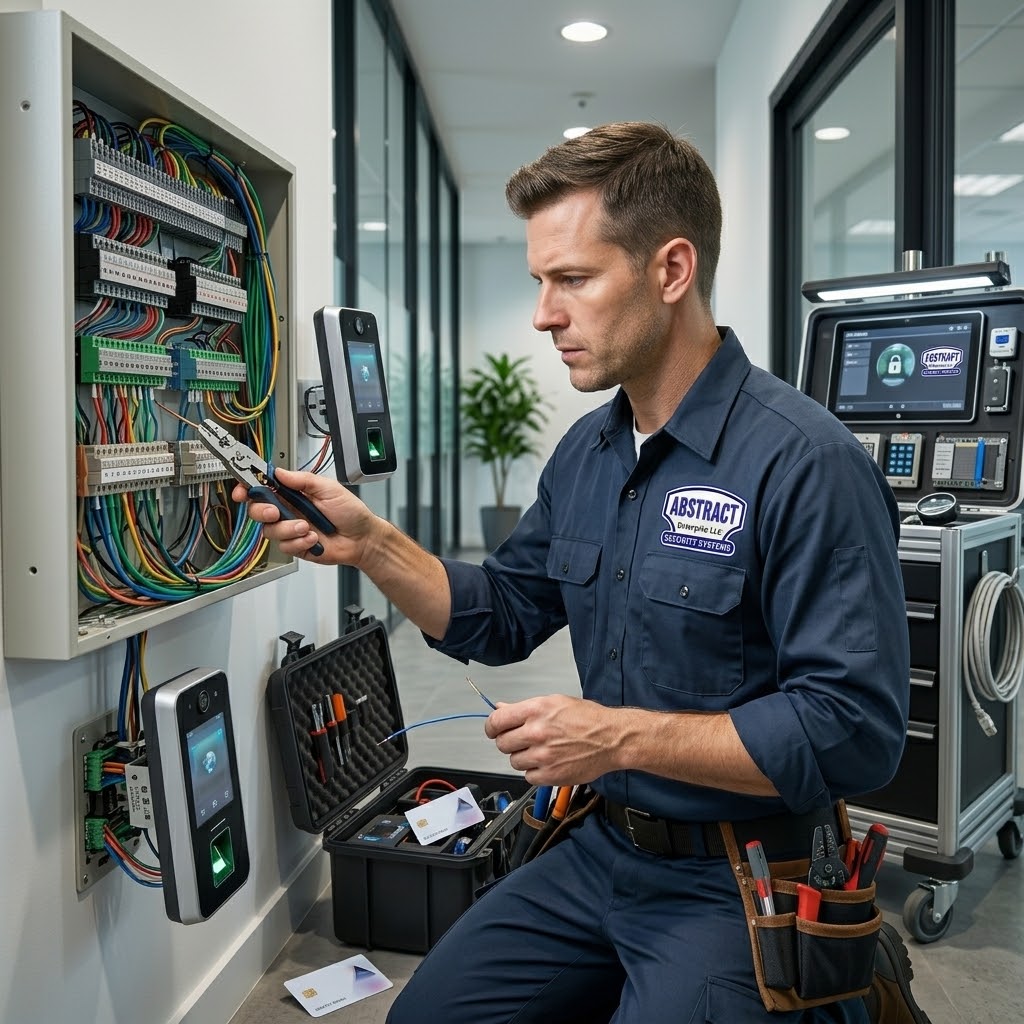
Encrypted 13.56MHz key fob systems for Washingtonville apartment buildings. DESFire EV3 and HID iCLASS Seos credentials with AES-128 encryption that cannot be cloned. The single most important upgrade for Washingtonville buildings where uncontrolled key duplication has compromised lobby security for years. Vandal-resistant reader housings rated for high-traffic Bronx lobby environments.
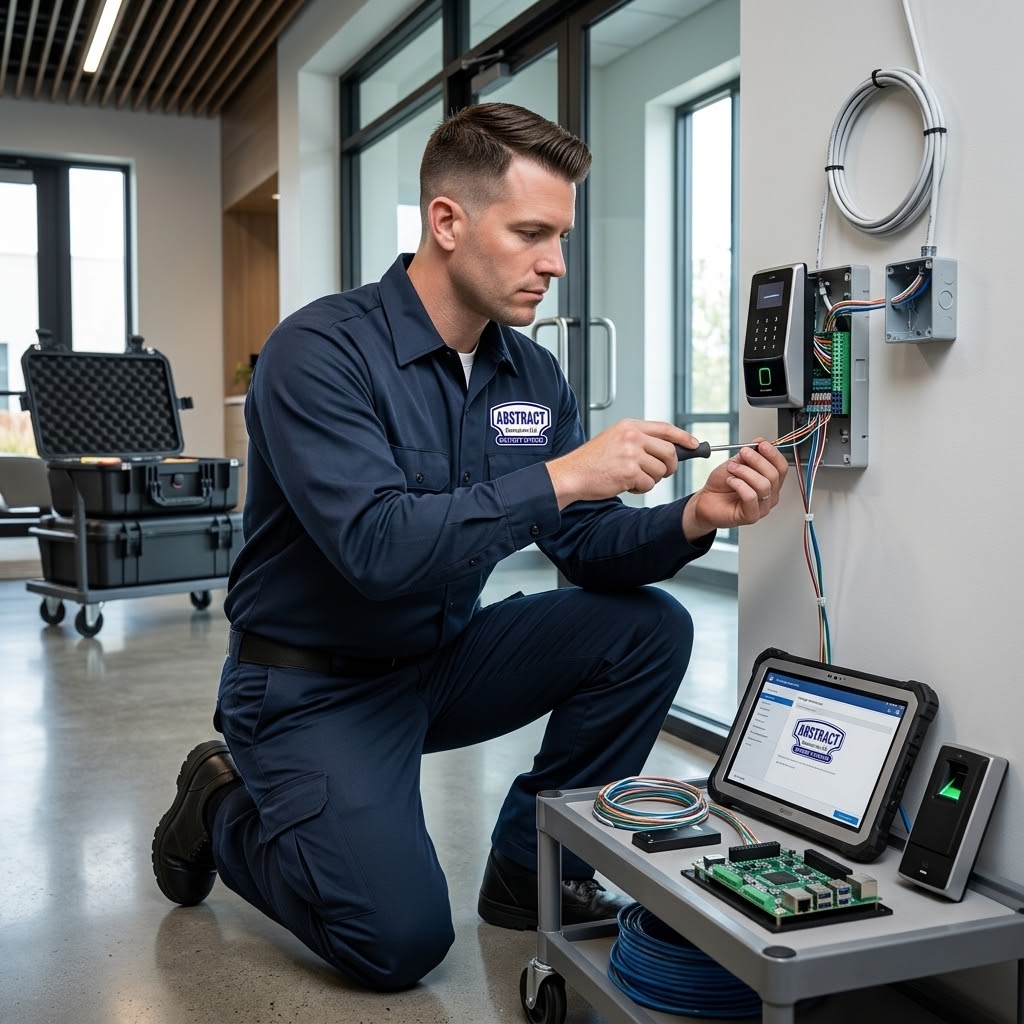
Smart card reader installation for Washingtonville offices, co-ops, and commercial lobbies. HID multiCLASS and proximity card reader models supporting both legacy Wiegand and modern OSDP encrypted communication with tamper-proof backboxes. Designed for the Bronx’s high-traffic building environments where reader abuse and vandalism are real concerns.
Keypad entry system Bronx warehouses, restaurant kitchens, medical record storage, and office stockrooms use for credential-free security. Heavy-duty stainless steel keypads rated for outdoor and high-abuse environments. Time-based PIN schedules for Hunts Point shift workers and cleaning crews.
Smartphone-based entry for Washingtonville residents and property managers. ButterflyMX platforms popular in Washingtonville buildings replacing aging buzzer systems. Residents unlock with their phone, visitors ring through video intercom, and property managers manage credentials remotely.
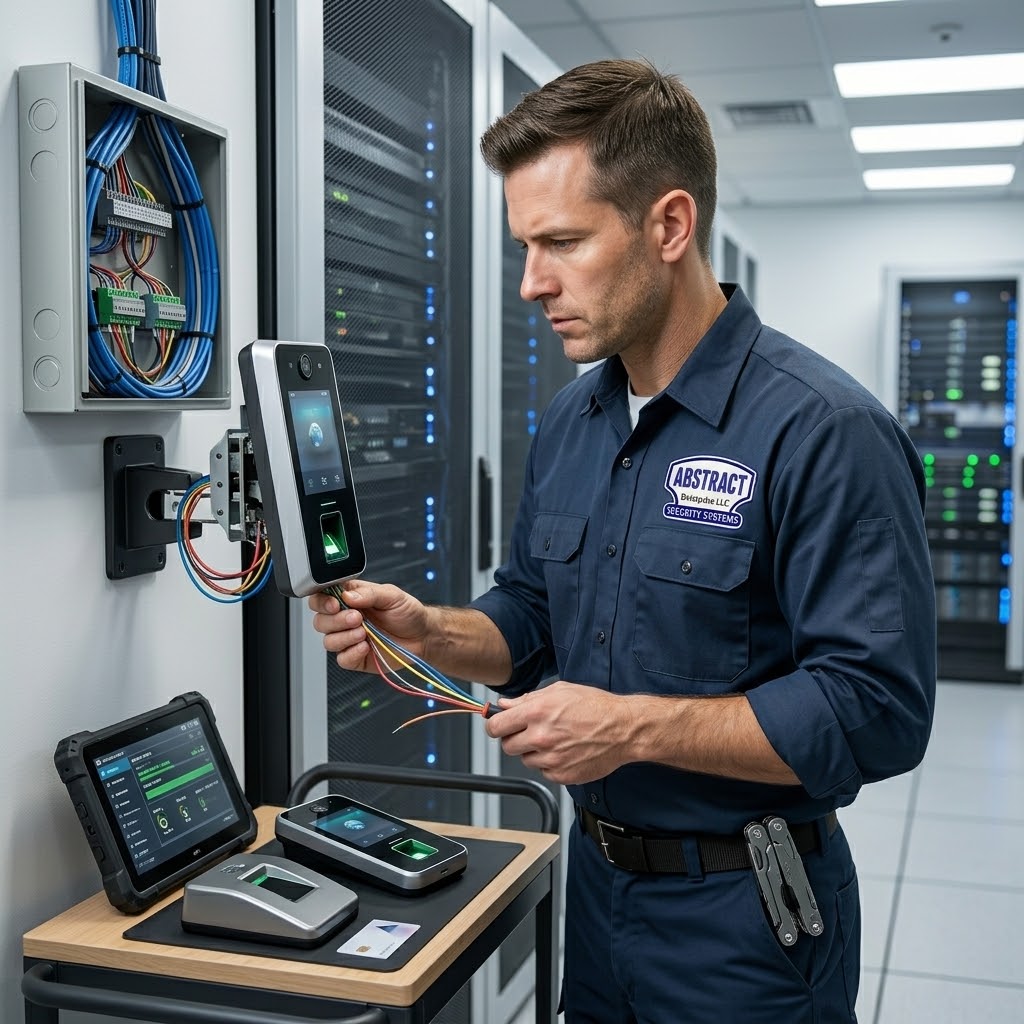
Biometric access control Bronx medical facilities, hospitals, and pharmaceutical operations require. Fingerprint and facial recognition for Lincoln Medical Center-area practices, Montefiore-adjacent medical offices, and Fordham Road healthcare corridor facilities requiring HIPAA compliance.
Floor restriction for Washingtonville high-rise apartment buildings and Co-op City towers. Each credential reaches only authorized floors. Essential for Co-op City’s 35 high-rises, Parkchester’s towers, and new construction along the Harlem River waterfront where different resident tiers need segmented floor access.
Credential-based gate, dock, and door access for Hunts Point, Port Morris, and Bruckner corridor industrial properties. Loading dock readers with anti-passback. Per-employee shift credentials. Fenced yard gate controllers. Cloud management for immediate termination revocation.
Browser-managed access control for Washingtonville property managers overseeing multiple buildings. Issue credentials, pull audit logs, and unlock doors from any device. Manage buildings in Fordham, Tremont, Soundview, and Pelham Bay from a single dashboard. Brivo, Openpath, and ButterflyMX platforms.

Residential-grade and commercial-grade access control built for Washingtonville’s mix of pre-WWII detached Victorians, colonial brick semi-detached and two-family homes, brick walk-up co-ops, and the East 241st Street and White Plains Road transit-gateway commercial. LiftMaster and DoorKing for driveway gate operators — the standard for Washingtonville homes along Carpenter Avenue and Bullard Avenue. FAAC for high-cycle vehicle gate operators. HID Global for credential readers compatible with both gate operators and pedestrian door access. SALTO for wireless locks at older Washingtonville homes (railroad-era pre-WWII walls) where running hardwire through finished plaster is impractical. ButterflyMX for smartphone entry at small Washingtonville apartment buildings near the East 241st Street stations. Brivo for multi-building investment-property portfolios run by Washingtonville small landlords with 3–6 buildings. Akuvox for video intercom. Openpath for touchless mobile credentials. Honeywell for the East 241st Street and White Plains Road commercial corridor. We also service Paxton, Kantech, Linear, Keri Systems, and GeoVision.
Camera above every access-controlled door creates a visual record of every entry in your Bronx building. Access-triggered snapshots for lobby doors, service entrances, and loading docks. Critical for Washingtonville landlords who need video documentation of unauthorized entry attempts for NYPD reports and insurance claims.
Video intercom from Akuvox, Aiphone, and ButterflyMX lets Bronx residents verify visitors before granting access. Replaces aging analog buzzer systems that allow anyone to be buzzed in without visual verification. Critical upgrade for Washingtonville buildings where knowing who is at the door is a safety necessity, not a convenience.
Access control alarm integration triggers alerts when Bronx building doors are forced, held open, or accessed outside scheduled hours. After-hours lobby door forced-open alerts go directly to building management and optionally to a central monitoring station. Integration with Honeywell and DSC alarm panels for unified intrusion and access management.
Our Bronx office at 460 E Fordham Rd dispatches licensed technicians throughout Washingtonville — from the Bronx River Parkway on the west to the Bussing Avenue eastern edge, and from the East 238th Street southern transition all the way up to the literal NYC-Mount Vernon line at East 243rd Street. Call (347) 934-8335 for service anywhere in the strip.
The East 241st Street commuter rail station that gave Washingtonville its name — built by the New York and Harlem Railroad in the 1840s, kept the name “Washingtonville” until somewhere between 1894 and 1905, and is the northernmost Harlem Line stop within NYC. The blocks immediately north and south of the station entrance see continuous Metro-North commuter foot traffic. Vestibule access control with delivery codes, lobby fob systems with door-held-open alarms, and camera integration above every entry.
The IRT White Plains Road Line elevated terminus five blocks east of the Metro-North station. The literal end of NYC’s subway grid. Properties within walking radius see continuous foot traffic and through-flow morning and evening. Vestibule access control, lobby fob systems with door-held-open alarms, and camera integration above every entry. Sound-rated keypads to handle elevated platform noise.
The east-west spine running between the two transit gateways — Metro-North on the west, 2/5 subway on the east. Five blocks of mixed commercial and residential, including the Wakefield Station post office at 4165 White Plains Road. Card readers for retail back-of-house and office suites, vestibule readers for mixed-use buildings, and credential-controlled rear loading bays.
The literal NYC-Mount Vernon county line forms Washingtonville’s northern boundary at East 243rd Street. Properties on the border streets see continuous through-traffic from Mount Vernon and Yonkers commuters cutting south to the transit gateways. Vehicle-credential gates, driveway operators with anti-tailgate sensors, and camera integration above every vehicle access point.
The classic Washingtonville residential side street running through the heart of the strip, lined with detached pre-WWII Victorians, bungalows, and colonial brick semi-detached homes — the housing mix that anchors the area’s middle-class homeowner base. Driveway gate operators, garage credentials, smart-lock front doors, and side-gate readers as the standard suburban-style install package.
The intermediate residential side streets stepping through the strip between East 238th and East 243rd. Mix of detached and semi-detached two-family colonial brick homes plus small rowhouses. Front-door fob systems for the two-family homes, driveway gates for the detached homes, and audit logging for the small landlords managing 3–6 unit investment buildings.
The Washingtonville section of the White Plains Road commercial corridor under the elevated IRT line, anchored by the 241st Street terminus. Caribbean restaurants and bakeries, beauty supply, mobile carriers, family delis, immigration law offices, and small medical practices. Card readers on storefront after-hours entry, vestibule readers for mixed-use buildings, and credential-controlled rear loading bays.
The southern boundary of the historical Washingtonville sub-district, where the strip transitions into the rest of Wakefield proper. Mix of pre-WWII walk-up co-ops, small apartment buildings, and rowhouses. Lobby fob systems with vandal-resistant readers, vestibule access control with delivery codes, and audit logging for property managers.
The Bronx River Parkway forms the western boundary, with parkway-adjacent properties facing the river edge and the parkway service road. Properties on the western blocks have rear yards backing onto the parkway corridor. Outdoor weather-resistant credential readers, basement-level access control, and camera integration above every parkway-side entry.
The eastern boundary running along Bussing Avenue. Mix of single-family homes, two-family homes, and small apartment buildings on the edge blocks. Vandal-resistant tamper-proof reader housings, camera integration at every access point, and credential-controlled basement and rear-yard entries.
The small brick walk-up co-op buildings scattered across Washingtonville — mostly 4–7 units, dating from the 1900-1939 building boom that followed the 1895 annexation and 1907 Harlem Line electrification. Board-approved fob lobby systems with vandal-resistant readers and door-held-open alarms, plus shareholder-credential management and audit logging accessible to the small co-op boards.
Jacksonville was the small hamlet annexed alongside Washingtonville when Wakefield was extended north to East 238th Street in 1895. Today the Jacksonville-Washingtonville transition sits at the southern edge of the strip. Properties on the transition blocks see continuous through-traffic between the two historical sub-districts — vandal-resistant readers, weather-resistant outdoor hardware, and camera integration above every entry.
Yes. An auto-closing door mechanism plus a credential-controlled electric strike ensures the door latches shut after every entry. A door-held-open alarm alerts you when someone props the door. Repeated offenders are identified through the audit log. In South Bronx buildings where propped doors are a daily reality, this combination of hardware plus monitoring has eliminated the problem. Cost: $1,500 to $3,000 for the access control system plus $200 to $500 for the auto-closer hardware.
Single-door lobby fob reader: $1,500 to $2,500. Multi-door system (lobby + service entrance + basement): $4,000 to $10,000. Full building with elevator restriction: $15,000 to $40,000+. Bronx pricing is Brooklyn base — no surcharge. Our office is right here at 460 E Fordham Rd. Free on-site estimates anywhere in the Bronx.
Yes. You can’t control NYCHA’s security, but you can secure your own building. Credential-controlled entry on every access point — lobby, service entrance, basement, rear exits — creates a secured perimeter. Vandal-resistant readers, tamper-proof housings, and camera integration at every door. Your building becomes a controlled environment regardless of adjacent conditions. This is the standard setup we install for private landlords near NYCHA developments in Castle Hill, Soundview, Mott Haven, and Melrose.
Yes. Every Bronx installation in high-traffic or high-crime areas uses tamper-proof reader housings, anti-pry mounting plates, and potted electronics that resist water and impact damage. Readers are recessed into walls or mounted with security screws that require proprietary tools to remove. We specify this hardware as standard for Mott Haven, Melrose, Hunts Point, Tremont, University Heights, and any building where reader vandalism is a realistic concern.
Yes. Gate readers with RFID credentials for fenced yards. Loading dock readers with door-held-open timers. Personnel door keypads or fob readers. Time-scheduled shift credentials that automatically expire. Cloud management for instant credential revocation when an employee is terminated. Anti-passback logic on gates to prevent tailgating. Cost: $2,000 to $15,000 depending on number of access points.
Replace it with a video intercom panel that also serves as a key fob reader. ButterflyMX and Akuvox panels handle daily tenant fob entry and visitor video intercom in a single unit. Cost: $1,500 to $3,000 for a building-wide system. Residents buzz visitors in from their phone with live video. No more blindly pressing the buzzer for anyone who rings.
Yes. Cloud platforms like Brivo provide a single dashboard for unlimited buildings. Issue credentials for a Fordham building, revoke access at a Soundview building, and pull audit logs at a Mott Haven building — all from your phone or desktop. This is the standard setup for Washingtonville property management companies.
Yes. We install elevator cab readers with relay outputs that interface with existing elevator controllers. Each resident’s credential is programmed with their floor plus lobby and common areas. Visitors get time-limited credentials restricted to the host’s floor. For complexes with thousands of units, cloud management handles credential issuance and revocation at scale.
Upgrade from 125kHz to encrypted 13.56MHz credentials. We install multi-technology readers, issue new encrypted fobs to every tenant, and deactivate the old system. Consumer cloning devices cannot read the new credentials. Most Bronx buildings complete migration in one weekend.
Open the dashboard, deactivate the credential, done. No locksmith, no lock change. In high-turnover Bronx buildings with 10+ turnovers per year, this eliminates thousands of dollars in annual locksmith costs and the security risk of uncollected keys.
For single-door installations, yes. Our office at 460 E Fordham Rd means dispatch to any Bronx address is typically under 20 minutes. Call (347) 934-8335.
Yes. Insurance carriers often charge higher premiums for buildings in Washingtonville precincts with elevated crime. Credential-based access control with documented audit logs can offset some of that premium — many carriers offer 5% to 15% discounts for electronic access control. The audit trail also strengthens your position in liability claims by documenting exactly who was in the building during any incident.
In the Bronx, especially. A $1,500 lobby fob system on a 10-unit building eliminates key duplication, creates an audit trail, gives you remote door control, and removes locksmith fees. In the borough with the highest crime rate in NYC, the deterrence value alone justifies the investment. Buildings with access control report fewer unauthorized entries, fewer tenant complaints about security, and improved tenant retention — tenants who feel safe stay longer.
All of the Bronx — Mott Haven, Melrose, Hunts Point, Longwood, Port Morris, Highbridge, Concourse, Mount Eden, Morrisania, Tremont, East Tremont, Belmont, Fordham, University Heights, Morris Heights, Kingsbridge, Norwood, Bedford Park, Van Cortlandt Village, Riverdale, Fieldston, Spuyten Duyvil, Woodlawn, Wakefield, Williamsbridge, Baychester, Eastchester, Co-op City, Pelham Bay, Country Club, Throggs Neck, Castle Hill, Soundview, Clason Point, Parkchester, Van Nest, Allerton, Morris Park, Westchester Square, Bronxdale, and City Island.

Washingtonville is a transit-gateway access control market layered on top of a pre-WWII residential building stock. Two transit hubs sit five blocks apart in this narrow strip: the Metro-North Wakefield station on East 241st Street — originally named “Washingtonville” from the 1840s railroad-village era and the northern terminus of Harlem Line electrification from 1907 to 1909 — and the Wakefield-241st Street 2/5 subway terminus on White Plains Road, the literal end of NYC’s subway grid. The pain points here are not propped lobby doors on 50-unit walk-ups but rather: open driveways and unsecured garages on the detached Victorians and bungalows along Carpenter Avenue and Bullard Avenue, two-family rowhouses with shared front doors and unmanaged tenant access, porches sitting unwatched while homeowners commute to Manhattan on Metro-North, and small commercial back-of-house along East 241st Street and White Plains Road that absorbs continuous Caribbean food distributor and Metro-North commuter-traffic delivery cycles. A $2,500 driveway gate operator paired with smart-lock front door is the most cost-effective single-family security upgrade a Washingtonville homeowner can make.
For Washingtonville detached single-family Victorians and bungalows along Carpenter Avenue, Bullard Avenue, and the East 238th-243rd Street side streets: LiftMaster or DoorKing driveway gate operators paired with HID credential readers, garage door automation, smart-lock front doors with time-limited Metro-North-commuter-window delivery codes, and side-gate readers tied to a single home credential set. For two- and three-family colonial brick homes: per-household front-door credentials with shared common-area readers and audit logging accessible to the owner-operator. For pre-WWII brick walk-up co-ops: board-approved fob lobby systems with vandal-resistant readers and door-held-open alarms. For East 241st Street and White Plains Road retail back-of-house: card readers on stockroom and rear access doors with audit logs for the constant Caribbean food distributor and Metro-North commuter-traffic delivery cycle. For East 241st Street medical and immigration law offices: card readers with cloud audit logs that meet HIPAA Physical Safeguard requirements and document attorney-client confidentiality. For multi-property Washingtonville investment-portfolio landlords: Brivo cloud platforms manage 3–6 building portfolios with one dashboard.
Washingtonville’s commercial stock concentrates along the East 241st Street commuter strip and the White Plains Road spine under the elevated 2/5 line, with a continuous mix of Metro-North commuter-traffic services (delis, coffee shops, dry cleaners, mobile carriers) and the Caribbean food and retail spine (restaurants, bakeries, beauty supply, barbershops). The Bronx River Parkway corridor adds further perimeter-security needs for the western-edge properties. These properties need access control that matches the operational rhythm: credential-based gate, bay-door, and stockroom entry that logs every transaction, shift-scheduled credentials that expire when worker shifts end, anti-passback on rear bays to prevent tailgating during deliveries, weatherproof outdoor readers for parkway-edge installations, and cloud dashboards that let owners revoke credentials from any device the moment an employee is terminated. Most Washingtonville commercial sites can be fully credentialed for $4,000 to $10,000 depending on door count.
Legacy 125kHz fobs installed in Washingtonville apartment buildings between 2005 and 2018 are cloned daily using $30 Amazon devices. In a borough where unauthorized building entry has real safety consequences, cloned credentials are not just a property management headache — they are a safety threat. Encrypted 13.56MHz credentials (DESFire EV3 or HID iCLASS Seos) cannot be read by consumer devices. We migrate Bronx buildings with zero tenant disruption, typically completing the upgrade in a single weekend.
Consumer smart locks fail under the daily abuse of a Washingtonville porch entry that gets cycled through a Caribbean multi-generational family, contractors, cleaners, and the constant flow of deliveries that arrive while homeowners are commuting to Manhattan on Metro-North. Professional access control uses commercial-grade hardware rated for 500,000+ cycles, weather-resistant outdoor housings, tamper-proof mounting, encrypted credentials, and enterprise software. The installation requires licensed low-voltage wiring, gate operator integration for driveway access, garage door interface for residential applications, and FDNY-compliant egress configuration on the multi-family installs. In Washingtonville’s pre-WWII building stock (almost the entire neighborhood, dating from the 1890-1939 development boom), hardware choices need to respect the historic Victorian and colonial brick character of the streetscape and accommodate the 90–130-year-old electrical infrastructure. Abstract Enterprises holds NYS License #12000287431. Our Bronx office at 460 E Fordham Rd dispatches technicians to every Washingtonville block.
A Carpenter Avenue homeowner two blocks from the Metro-North Wakefield station with an open driveway and a side gate that anyone could swing open installed a LiftMaster vehicle gate operator with credential reader and a pedestrian gate reader. Strangers walking up to the side door dropped from a few times a week to zero within the first week. The family said it was the first time they didn’t worry about the morning Metro-North foot traffic cycling past their property.
A Washingtonville small-investor landlord running 4 two- and three-family colonial brick homes along Bullard Avenue and Tilden Street spent $400+ per building per year on locksmith visits for tenant turnovers and family-key drift. Four front-door credential systems with per-household codes paid for themselves in under 18 months. Zero locksmith calls since installation.
A White Plains Road Caribbean bakery near the 241st Street subway terminus terminated three workers for stock skimming. All three rear-stockroom and bay-door credentials were deactivated from the owner’s phone before the employees reached the elevated 2/5 platform. With the old combination lock, they would have retained access indefinitely.
A 6-unit pre-war brick walk-up co-op two blocks from the Metro-North Wakefield station replaced its decades-old brass-key system with ButterflyMX mobile credentials. Cooperators unlock the lobby with their phone. Visitors ring through video intercom. The board manages every cooperator profile from a single dashboard. No more lost keys, no more locksmith visits, no more wondering who still has access from a 1985 unit transfer.
“I own a detached Victorian on Carpenter Avenue I’ve been in for 30 years. The brass front-door key has been copied across three generations of family, contractors, cleaners, and dog-walkers. My wife and I had no idea who still had a working copy. The credential system cost $2,800 with the front door, side gate, and garage all integrated, and I haven’t had a single unauthorized entry since installation. Best money I’ve ever spent on the house.”
“We had a combination lock on the rear stockroom door that delivery drivers from the Caribbean food distributors, two cleaning crews, and a dozen retail employees all knew. When someone left, we had to change the code and redistribute it to everyone. Now each person has their own credential at our East 241st Street location. Terminated? Deactivated instantly. Stockroom readers log every entry. Insurance was thrilled.”
“Our HIPAA audit flagged the records room for having a standard deadbolt. We run a family practice on East 241st Street one block from the Metro-North station serving Washingtonville’s Caribbean and West Indian families — we installed a card reader with cloud audit logs. The next audit passed with zero physical security findings. Installation took less than a day and didn’t disrupt a single patient appointment.”
A door-held-open alarm triggers a notification when the lobby door remains open for more than a set time — typically 30 to 60 seconds. In Bronx buildings where propped-open doors are a chronic problem, this is essential. The alarm can sound locally, push a notification to the super’s phone, or both. Combined with an auto-closing door mechanism, it eliminates the propped-door problem that compromises lobby security.
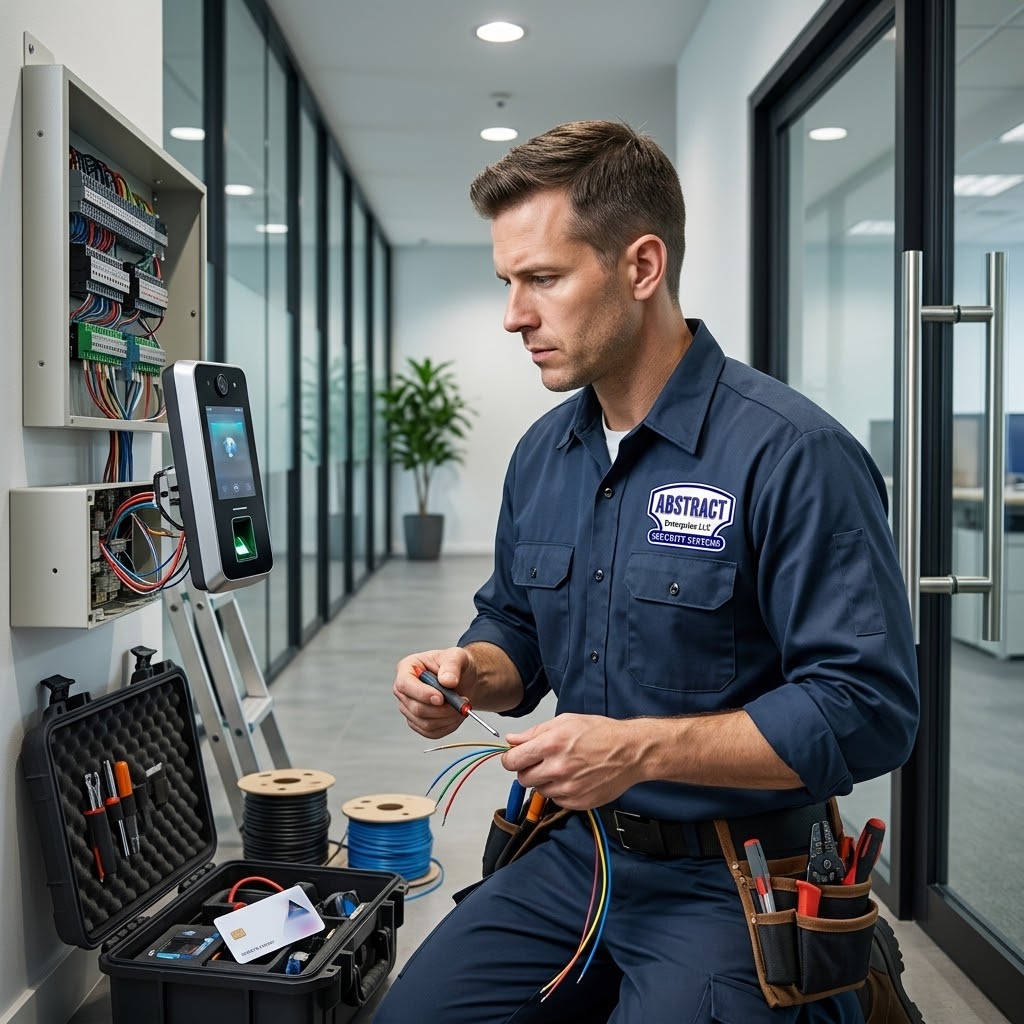
We route new low-voltage cable through basements, existing conduit, and riser closets. Pre-war Bronx buildings have challenging infrastructure, but our technicians have wired hundreds of them. Where hardwiring is impractical, SALTO wireless locks communicate via mesh network without door-to-panel cabling.
Yes. We train supers during installation. Cloud apps provide a simple interface for credential issuance and deactivation. Role-based permissions let the super handle daily operations while the owner or managing agent retains full admin control.
Yes. Time-limited delivery credentials valid only during scheduled windows. The door locks behind them automatically. Residents receive push notifications on delivery entries. Eliminates propped-open doors during bulk deliveries.
Every installation includes battery backup providing 6 to 8 hours of operation. Egress doors release per FDNY. Secure-area doors remain locked. We assess electrical capacity and spec dedicated circuits where building panels are at capacity.
Yes. Access-triggered camera snapshots capture every entry event. Video linked to credential ID and timestamp. Critical for Washingtonville landlords providing documentation to NYPD and insurance companies after security incidents.
Hardware: manufacturer warranty 2 to 5 years. Installation labor: 1-year parts warranty. Service callbacks outside warranty: $195/hr, 3-hour minimum. Annual service agreements available.
Yes. Start with the lobby, add service entrance, basement, elevator restriction, and individual doors over time. Panel capacity and cable pathways sized for future growth.
Yes. Our office at 460 E Fordham Rd means dispatch under 20 minutes to any Bronx address. Call (347) 934-8335.
Yes. NYS Low-Voltage Contractor License #12000287431. Fully insured. Bronx office: 460 E Fordham Rd, Bronx, NY 10458.
Yes. We repair, reprogram, and upgrade access control from all manufacturers — even systems installed by other companies that went out of business or stopped servicing the Bronx.
Every Bronx neighborhood from Mott Haven to City Island, Riverdale to Co-op City, Hunts Point to Woodlawn. Our office at 460 E Fordham Rd is centrally located for dispatch across the entire borough.
Office: 460 E Fordham Rd, Bronx, NY 10458. Call (347) 934-8335.
Washingtonville · East 241st Street · East 243rd Street · East 238th Street · East 242nd Street · East 240th Street · East 239th Street · Carpenter Avenue · Bullard Avenue · Tilden Street · White Plains Road · Bussing Avenue · Bronx River Parkway corridor · Metro-North Wakefield Station (originally Washingtonville) · Wakefield-241st Street 2/5 subway terminus · Wakefield Station post office (4165 White Plains Rd) · Mount Vernon county line · Sister hamlet Jacksonville border · New York and Harlem Railroad heritage · 1907 Harlem Line electrification terminus · Pre-WWII Victorian and bungalow stock · Brick walk-up co-ops · ZIP 10470 · ZIP 10466 · 47th Precinct service area · Bronx Community District 12
$1,500 – $2,500
Keypad or fob reader with electric strike. Apartment lobbies, office doors, warehouse entries.
$4,000 – $15,000
Lobby + service + basement, or gate + dock + personnel doors with cloud management.
$15,000 – $40,000+
Full building with elevator restriction, parking, and credential management for Washingtonville apartment complexes.
Bronx pricing = Brooklyn base · No surcharge · Tax (8.875%) applies · Jobs under $500 = full upfront · Over $500 = 50% deposit · Callbacks: $195/hr, 3-hr min
4K IP camera installation for Washingtonville properties
Video intercom for Washingtonville buildings
Buzzer repair for Washingtonville apartments
Burglar and intrusion alarms for the Bronx
Fire alarm installation for Washingtonville buildings
Cat6, fiber, and network wiring for the Bronx
TV mounting for Washingtonville homes and businesses
Our full range of access control services includes electronic door lock replacement, key fob door entry systems, building access control upgrade, gate access control, residential access control, restricted entry, perimeter security, remote unlock, visitor management, tenant access, security keypad, proximity reader. We also provide door release mechanisms, door position sensor monitoring, ADA-compliant request to exit buttons, access log documentation, electric strike installation, magnetic lock hardware, anti-tailgating, NYC Building Code compliance, fire alarm integration, parking garage gate access, key fob programming, access control upgrade, same day installation — every project handled by NYS-licensed technicians from assessment through final programming.
Free on-site assessment, custom system design, and a detailed quote. Our Bronx office is at 460 E Fordham Rd — we’re your local access control installer.
Abstract Enterprises Security Systems
📍 460 E Fordham Rd, Bronx, NY 10458
NYS License #12000287431 · Licensed & Insured
Looking for access control installation near me in Washingtonville? We are a licensed access control installer and insured access control installation company providing same day access control installation near me across Washingtonville, Bronx. Whether you need commercial access control installation, residential access control installation, office access control installation, building access control installation, or door access control installation — we handle every access control system setup. Access control installation same day available. Affordable access control installation. Professional access control installation.
Key fob entry system installation, key card access control installation, card access system installation, badge access system installation, and fob reader installation. We install standalone and networked access control system installation for single doors to entire buildings. Office key card system installation is our most popular commercial service in Washingtonville.
Biometric access control installation including fingerprint access control installation and facial recognition access control installation. Keypad door entry installation and pin code door access system installation for properties that want code-based entry without cards or fobs.
Mobile access control system installation — unlock doors from your smartphone. Cloud based access control installation with remote management. Wireless access control installation for retrofit projects and wired access control installation for new construction. Smart access control system installation. Access control installation with monitoring.
Every access control system installation needs the right door hardware. Electric strike installation, mag lock installation (electromagnetic lock installation), door release system installation, exit button installation, request to exit device installation, door sensor installation. Access control panel installation, access control reader installation, card reader installation. Door entry system installation. Commercial door access system installation.
Intercom access control integration — connect access control to your building intercom. Video intercom access control installation for visual verification. Buzzer access control system installation — upgrade existing door buzzer to a full access control system. Standalone access control system installation or access control system integration with security cameras and alarm.
Access control system upgrade, access control system replacement, access control troubleshooting service, access control system repair, access control maintenance service. Access control system programming, access control system configuration. Common issues: access control system not working fix, door not unlocking access control fix, access control reader not working, access control keypad not responding, access control system beeping issue, access control system offline fix.
Can I install access control system myself? Basic keypads can be DIY, but proper multi-door systems require professional installation. Do I need professional access control installation? Yes — improper wiring leaves doors unsecured. How does access control installation work? Site assessment, system selection, wiring, hardware install, credential programming, testing. What is the best access control system? Depends on your needs — we install all major brands. How much does access control installation cost? Single-door systems start around $600–$800 installed.
Hire access control installer — book access control installation service. Best access control installation service in Washingtonville, Bronx. Access control system installer near me — call (347) 934-8335. Access control system for business, access control system for office, access control system for apartment, access control system for building — every property type covered.