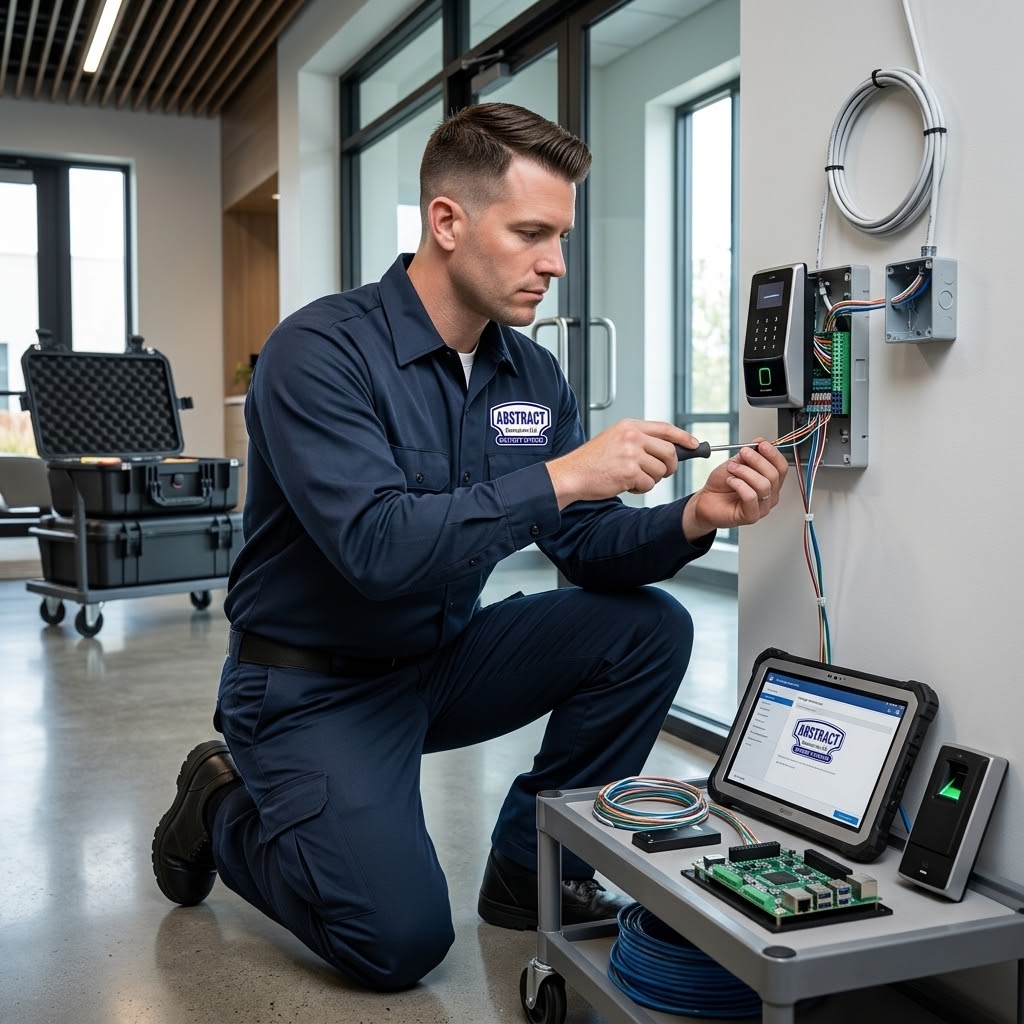
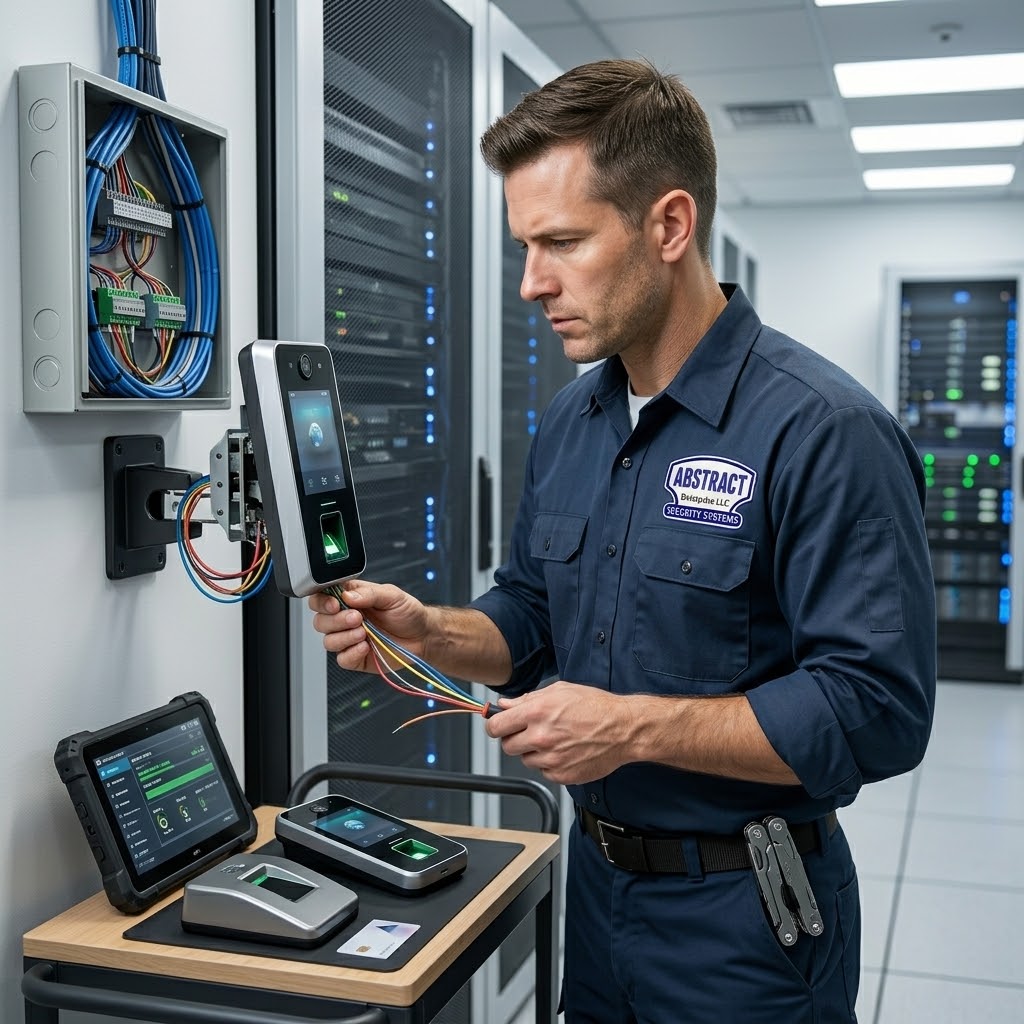
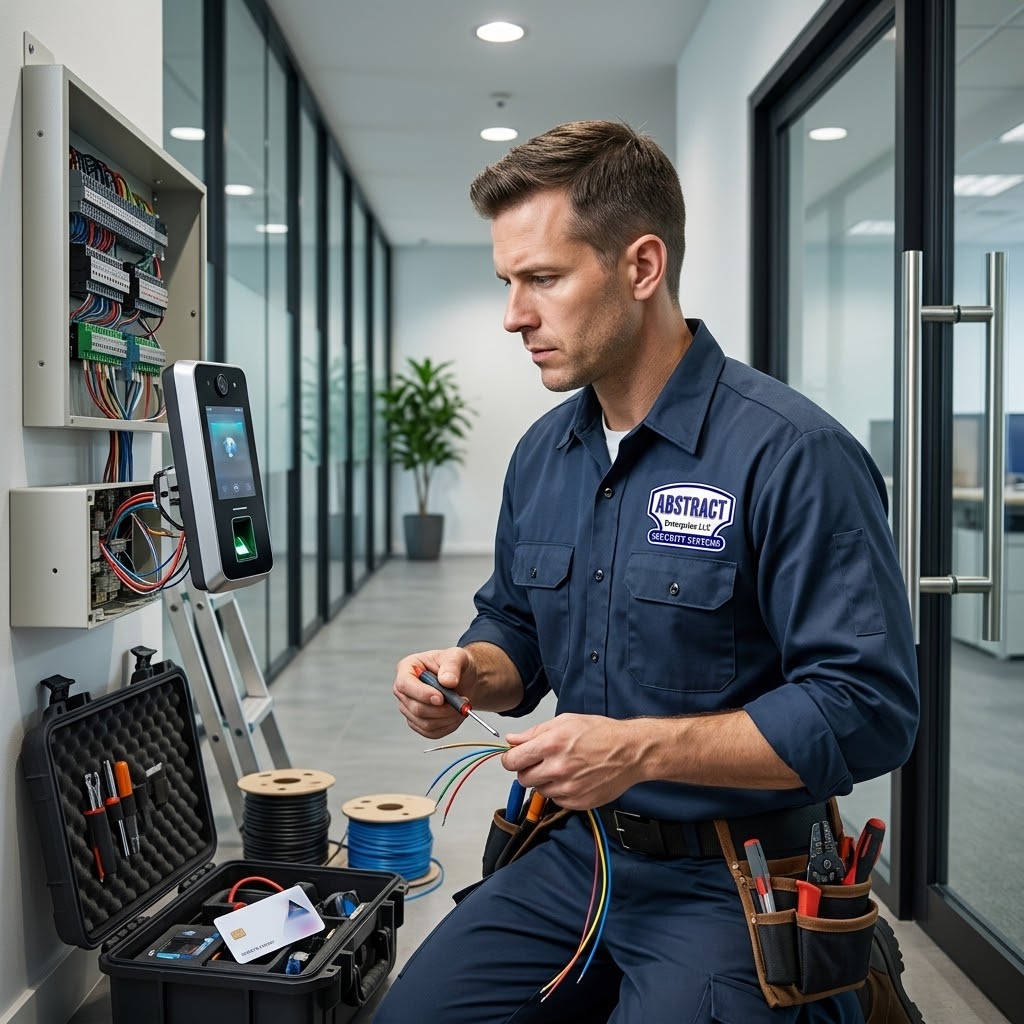
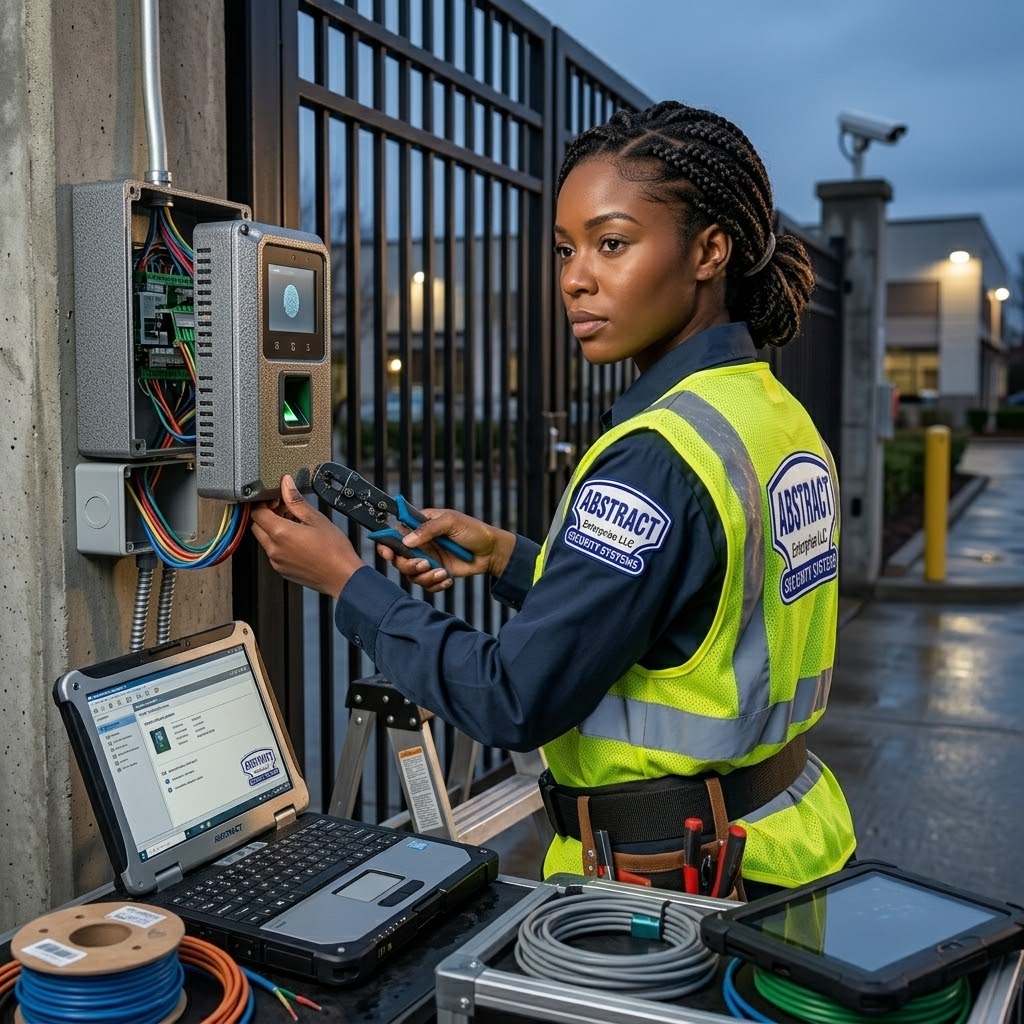
Key Fob · Card Reader · Keypad · Biometric · Lobby Security · Cloud · All Neighborhoods
Abstract Enterprises Security Systems installs and upgrades access control across Woodstock — the South Bronx neighborhood at ZIPs 10455 and 10459, sitting between Third Avenue to the west and the Bruckner Expressway to the east, anchored by the 2/5 elevated stations at Prospect Avenue and Jackson Avenue. From credentialed lobby entry at the dense pre-war and mid-century apartment buildings along Prospect Avenue, Trinity Avenue, Union Avenue, and Fox Street, to vandal-resistant card readers along the Westchester Avenue commercial corridor under the elevated 2/5, to access control for the LEED-certified new construction that has reshaped the neighborhood since the 1980s Charlotte Street redevelopment. Our Bronx office is at 460 E Fordham Rd, Bronx, NY 10458. NYS Licensed (#12000287431), fully insured, no long-term contracts.
We’ll call you back within the hour
We’ll call you back within the hour.
Woodstock is unlike any other access control market in the borough because it sits at the intersection of three distinct building eras: the pre-WWII tenement and walk-up stock that survived the 1970s, the 1980s Charlotte Street ranch-and-townhouse redevelopment built on the rubble of the worst fires, and the post-2010 LEED-certified mid-rise condo construction that has been filling in vacant lots across the South Bronx. Add the active commercial spines — Westchester Avenue under the 2/5 elevated, Prospect Avenue running north-south through the neighborhood’s residential heart, and Third Avenue feeding into The Hub retail district at Third Avenue and East 149th Street — and the access control conversation here has to address all three building stocks at once. Our office at 460 E Fordham Rd dispatches licensed technicians throughout Woodstock. Lobby fob systems for the pre-war walk-ups and tenements along Trinity Avenue, Union Avenue, Fox Street, and Beck Street. Modern access control retrofits for the 1980s Charlotte Street ranch homes and townhouses. Built-in credential systems for the LEED-certified post-2010 condo buildings that line Prospect Avenue and the Westchester Avenue corridor. Card readers for the small commercial along Westchester Avenue, Prospect Avenue, and the Third Avenue / East 149th Street Hub-corridor edge. Cloud-managed credentials for the Woodstock multi-property landlords running 5–15 building South Bronx portfolios. Every installation is designed for Woodstock’s specific environment — pre-war wiring on the surviving tenements, modern wiring on the 1980s and post-2010 stock, vandal-resistant hardware rated for the active 2/5 corridor, and battery backup for the Con Edison interruptions that hit the South Bronx during summer load and storm events.

Woodstock sits in the heart of the South Bronx, between Third Avenue to the west and the Bruckner Expressway to the east, surrounded by Mott Haven, Melrose, Hunts Point, Longwood, and Morrisania. The neighborhood’s ZIPs include 10455 and 10459, with parts also in 10456, and the area falls under the historic patrol zones of the 40th and 41st Precincts of the NYPD — the latter the famed station house immortalized in 1970s-era reporting on the South Bronx and ultimately revitalized through decades of community-driven redevelopment. Woodstock’s history runs deep: the area was originally part of the Manor of Morrisania, the colonial estate of Lewis Morris (a signer of the Declaration of Independence). Through the 20th century the neighborhood absorbed waves of European immigrant families, then Puerto Rican, Dominican, and African American working-class residents who shaped the South Bronx’s cultural identity — including its standing as the birthplace of hip-hop, with graffiti pioneers like Tats Cru and the Fashion Moda Gallery on Third Avenue helping to launch Keith Haring, Jenny Holzer, and the Rock Steady Crew. The 1977 fires that gave the South Bronx its “Bronx is burning” reputation — punctuated by President Carter’s famous October 1977 walk down a then-devastated Charlotte Street — were followed by sustained reinvestment. The Charlotte Street ranch-house redevelopment of the 1980s, the LEED-certified new construction of the 2000s and 2010s, and the post-2000s small-condo boom have given Woodstock a rebuilt residential fabric. The 2/5 trains run elevated above Westchester Avenue with stations at Prospect Avenue and Jackson Avenue; the 6 train passes the southeastern edge. Demographically Woodstock now houses approximately 26,722 residents (37.6% African American, 35% Latino, 9.2% Caucasian), with a median age of 33 and roughly 91.2% renter-occupied housing — among the highest renter shares in the borough. Building stock spans pre-WWII tenements, mid-century 1950s-60s replacements (median construction year 1963), the 1980s Charlotte Street ranch and townhouse rebuild, and the LEED-certified post-2010 mid-rise condos that fill in former rubble blocks. A $1,500 fob reader on a small Woodstock apartment building is the highest-ROI security investment a landlord here can make.
Woodstock’s mix of pre-WWII tenement survivors, 1980s Charlotte Street redevelopment, post-2010 LEED-certified new construction, and the active 2/5 elevated commercial spine creates access control challenges that combine three distinct building eras with the specific cultural and economic dynamics of the South Bronx.
Problem: The pre-WWII walk-ups and tenement survivors that came through the 1970s along Trinity Avenue, Union Avenue, Fox Street, and Beck Street — plus the post-2010 LEED-certified mid-rise condo buildings filling in former rubble blocks — have lobby doors that get propped open for hours at a time. Tenants prop them for delivery drivers, neighbors carrying groceries from the Western Beef Supermarket and the Casa Amadeo block on Prospect Avenue, and the constant flow of 2/5 commuters cutting through residential blocks between the elevated stations and home. Woodstock’s 91.2% renter-occupancy and the constant tenant rotation typical of South Bronx affordable rental stock mean continuous foot traffic past every lobby door — and propped doors are essentially open doors.
Solution: Credential-controlled lobby entry with heavy-duty electric strikes and vandal-resistant readers sized for high-traffic Woodstock walk-up and condo lobbies. Auto-closing door hardware that latches after every entry. Door-held-open alarms that text the manager when a Woodstock lobby door has been propped longer than 30 seconds. Every entry is logged with timestamp and credential ID, available for the 40th or 41st Precinct or insurance claims.
Problem: Woodstock’s housing stock is 91.2% renter-occupied — among the highest renter shares in the borough. Pre-WWII tenement survivors along Fox Street and Beck Street have cycled through tenants since the 1920s. The 1980s Charlotte Street townhouses have cycled through Section 8 and market-rate renters across four decades. The post-2010 LEED-certified condo buildings have rental units mixed in with owner-occupied. Every tenant got a brass key. Every key was duplicated at hardware stores along Prospect Avenue and Westchester Avenue for $3. Almost none were returned. Add the South Bronx’s historic affordability that produced sublet patterns, family doubling-up, and seasonal returns from Puerto Rico and the Dominican Republic, and the brass-key chain of custody is genuinely untrackable — every Woodstock landlord is operating with an unknown number of active keys for every building they own.
Solution: Encrypted key fob reader replaces the cylinder lock. Every Woodstock tenant receives a programmed credential with a unique ID. Move-out: the credential is deactivated from a phone in seconds, even if the fob is kept. No locksmith trip, no lock change, no $150 callout. At Woodstock’s 91.2% renter-turnover rates the system pays for itself in 8–14 months across a portfolio of buildings.
Problem: The 2 and 5 trains run elevated above Westchester Avenue through the southern part of Woodstock with stations at Prospect Avenue and Jackson Avenue, plus the 6 train passing the southeastern edge of the neighborhood. The blocks closest to these elevated stations — particularly along Westchester Avenue and the streets feeding the Prospect Avenue station entrance — absorb continuous through-traffic from commuters, the foot flow generated by the Westchester Avenue commercial spine, and the surrounding South Bronx through-traffic between The Hub at Third Avenue and East 149th Street and the residential blocks. Buildings on these blocks face elevated security pressure compared to the interior of the neighborhood.
Solution: Credential-controlled entry on every access point — lobby, service entrance, basement, rear exits, and any commercial-edge passageways. Your Woodstock building becomes a secured perimeter regardless of 2/5 corridor dynamics. Vandal-resistant tamper-proof reader housings rated for high-abuse environments. Camera integration at every access point creates a visual record for 40th or 41st Precinct documentation. Sound-rated readers and exterior keypads that perform reliably despite elevated 2/5 platform noise.
Problem: The Westchester Avenue commercial corridor under the 2/5 elevated and the Prospect Avenue retail spine running north-south through Woodstock hold dozens of small storefronts: bodegas, Latin American grocers, Western Beef Supermarket, Pet Resources, Longwood Fish Market, Johnson Bar-B-Q, Seis Vecinos, Salvadorean, Parrilla Latina Sports Bar, Casa Amadeo (the oldest Latin American music store in NYC, founded 1927), beauty supply, mobile carriers, family delis, and pizzerias. Most run on combination padlocks for rear access doors and a single shared key for stockrooms. Caribbean and Latin American food distributors cycle through continuously throughout the day. Terminated employees retain codes or keys for weeks. Bay doors sit open during deliveries with zero entry control.
Solution: Credential-based gate, bay-door, and stockroom access with instant revocation on termination. Per-employee credentials valid only during assigned shift hours. Loading bay readers with door-held-open timers. Anti-passback on bay entries. Cloud dashboard for Woodstock commercial owners running multiple Westchester Avenue or Prospect Avenue sites to manage credentials from one phone.
Problem: Almost no Woodstock building has a doorman. The pre-war walk-ups, the 1980s Charlotte Street townhouses, the LEED-certified post-2010 mid-rise condos, and the small commercial mixed-use buildings along Westchester Avenue and Prospect Avenue all share a common pattern: a buzzer panel and a glass vestibule. With 91.2% renter-occupancy generating constant household turnover and Amazon, FedEx, USPS, and DoorDash drivers cycling through the South Bronx continuously, packages set down in vestibules during workday hours are gone in minutes. Add the elevated 2/5 foot traffic between the Prospect Avenue and Jackson Avenue stations and the Hub-bound shopper flow heading toward Third Avenue and East 149th Street, and porch and vestibule theft is a recurring concern.
Solution: Credential-controlled vestibule entry with time-limited delivery codes. Carriers get temporary PINs valid only during your delivery window. Door auto-locks behind them. Woodstock residents get push notifications on each delivery entry. Combined with a camera above the vestibule door, every delivery event is logged and recorded for the 40th or 41st Precinct or for insurance.
Problem: The Westchester Avenue commercial corridor under the 2/5 elevated and the Prospect Avenue retail spine, plus the connecting blocks running west toward NYC Health + Hospitals/Lincoln (located approximately one mile west on East 149th Street), house neighborhood medical practices, dental offices, optometry, behavioral health practices, social services agencies, and bilingual immigration law offices serving Woodstock’s predominantly Latino and African American residents. Many run on standard cylinder-lock office suite doors with no credential management, no audit logging, and no way to track who entered records rooms or after-hours. Medical and dental practices face HIPAA Physical Safeguard exposure. Bilingual immigration law offices face attorney-client confidentiality risks every day.
Solution: Card reader or keypad on every suite, exam room, and records room. Cloud audit logs document every access. HIPAA-compliant entry with documented records for Woodstock medical practices in the Lincoln Hospital corridor. Time-scheduled credentials for cleaning crews and after-hours staff. Cost: $1,500 to $3,000 per suite.
Problem: The post-2010 LEED-certified mid-rise condo buildings along Prospect Avenue and the Westchester Avenue corridor, plus the older mid-century elevator buildings that survived from the 1950s-1960s construction era (median construction year 1963), mostly run lobby-only access. Once anyone is inside, every floor is reachable across hundreds of units. Add the basement laundry rooms, mailrooms, mail-package rooms, and amenity spaces (gym, lounge, roof deck) common to the post-2010 condo design, and the security gap is significant for a neighborhood with 91.2% renter occupancy and constant tenant turnover. The 1980s Charlotte Street redevelopment ranch homes and townhouses don’t have elevators but do have shared front-door perimeters that need credential-based entry.
Solution: Elevator floor restriction with per-credential floor profiles for the post-2010 LEED-certified condos and 1960s mid-rise stock. Each Woodstock resident reaches only their floor plus lobby and common areas. Visitor credentials time-limited and floor-restricted. Amenity-space readers (laundry, package, mail, gym, roof deck) tied to the same credential set. Compatible with the elevator brands typical of the post-2010 LEED-certified construction. Cloud management lets property managers and condo boards issue, modify, and revoke floor access from a central dashboard.
Problem: Woodstock’s housing stock spans three distinct construction eras with very different electrical infrastructures: the pre-WWII tenement survivors (1900s-1930s, with electrical infrastructure now 90–125 years old); the median-construction-year-1963 mid-century buildings (1950s-1960s replacements built after the postwar redevelopment, with infrastructure now 60–75 years old); and the 1980s Charlotte Street ranch-house and townhouse redevelopment plus the post-2010 LEED-certified mid-rise condos (modern infrastructure). The pre-WWII and mid-century buildings face the highest risk of localized failures, panel overloads, and Con Edison service interruptions during summer load events. Storm-related interruptions during nor’easters hit the South Bronx hard. Access control systems without battery backup fail during these events: residents locked out, secure doors left unsecured, condo amenity spaces compromised.
Solution: Every Woodstock installation includes battery backup sized to 6 to 8 hours of standalone operation. Egress doors configured fail-safe per FDNY (lock releases during power loss). Secure-area doors configured fail-secure. We assess the building’s era-specific electrical capacity during the free on-site evaluation and specify dedicated circuits where the existing panel is at capacity — common in the pre-WWII and mid-century buildings that haven’t had a service upgrade in 50+ years.

Encrypted 13.56MHz key fob systems for Woodstock apartment buildings. DESFire EV3 and HID iCLASS Seos credentials with AES-128 encryption that cannot be cloned. The single most important upgrade for Woodstock buildings where uncontrolled key duplication has compromised lobby security for years. Vandal-resistant reader housings rated for high-traffic Bronx lobby environments.
Smart card reader installation for Woodstock offices, co-ops, and commercial lobbies. HID multiCLASS and proximity card reader models supporting both legacy Wiegand and modern OSDP encrypted communication with tamper-proof backboxes. Designed for the Bronx’s high-traffic building environments where reader abuse and vandalism are real concerns.
Keypad entry system Bronx warehouses, restaurant kitchens, medical record storage, and office stockrooms use for credential-free security. Heavy-duty stainless steel keypads rated for outdoor and high-abuse environments. Time-based PIN schedules for Hunts Point shift workers and cleaning crews.
Smartphone-based entry for Woodstock residents and property managers. ButterflyMX platforms popular in Woodstock buildings replacing aging buzzer systems. Residents unlock with their phone, visitors ring through video intercom, and property managers manage credentials remotely.
Biometric access control Bronx medical facilities, hospitals, and pharmaceutical operations require. Fingerprint and facial recognition for Lincoln Medical Center-area practices, Montefiore-adjacent medical offices, and Fordham Road healthcare corridor facilities requiring HIPAA compliance.
Floor restriction for Woodstock high-rise apartment buildings and Co-op City towers. Each credential reaches only authorized floors. Essential for Co-op City’s 35 high-rises, Parkchester’s towers, and new construction along the Harlem River waterfront where different resident tiers need segmented floor access.
Credential-based gate, dock, and door access for Hunts Point, Port Morris, and Bruckner corridor industrial properties. Loading dock readers with anti-passback. Per-employee shift credentials. Fenced yard gate controllers. Cloud management for immediate termination revocation.
Browser-managed access control for Woodstock property managers overseeing multiple buildings. Issue credentials, pull audit logs, and unlock doors from any device. Manage buildings in Fordham, Tremont, Soundview, and Pelham Bay from a single dashboard. Brivo, Openpath, and ButterflyMX platforms.

Commercial-grade access control built for Woodstock’s three-era building stock — pre-WWII tenement survivors, 1980s Charlotte Street redevelopment, and post-2010 LEED-certified mid-rise condos — plus the active 2/5 elevated commercial spine. HID Global for enterprise readers compatible with both the busy commercial corridor and the residential walk-up and condo stock, with tamper-proof housings rated for high-traffic 2/5 elevated conditions. Brivo for cloud-managed multi-building portfolios — ideal for the Woodstock multi-property landlords running 5–15 building South Bronx portfolios. ButterflyMX for smartphone-based lobby entry at the post-2010 LEED-certified condos and the larger pre-war elevator buildings replacing aging buzzer panels. Akuvox for video intercom. Openpath for touchless mobile credentials at the modern LEED condos. Honeywell for the Westchester Avenue and Prospect Avenue commercial. SALTO for wireless locks at the surviving pre-WWII tenements where hardwiring through 100-year-old walls is impractical. LiftMaster and DoorKing for the 1980s Charlotte Street ranch-house and townhouse driveway gate operators where applicable. We also service Paxton, Kantech, Linear, Keri Systems, and GeoVision.
Camera above every access-controlled door creates a visual record of every entry in your Bronx building. Access-triggered snapshots for lobby doors, service entrances, and loading docks. Critical for Woodstock landlords who need video documentation of unauthorized entry attempts for NYPD reports and insurance claims.
Video intercom from Akuvox, Aiphone, and ButterflyMX lets Bronx residents verify visitors before granting access. Replaces aging analog buzzer systems that allow anyone to be buzzed in without visual verification. Critical upgrade for Woodstock buildings where knowing who is at the door is a safety necessity, not a convenience.
Access control alarm integration triggers alerts when Bronx building doors are forced, held open, or accessed outside scheduled hours. After-hours lobby door forced-open alerts go directly to building management and optionally to a central monitoring station. Integration with Honeywell and DSC alarm panels for unified intrusion and access management.
Our Bronx office at 460 E Fordham Rd dispatches licensed technicians throughout Woodstock — from Third Avenue on the west to the Bruckner Expressway on the east, with the 2/5 elevated corridor running through the southern half along Westchester Avenue. Call (347) 934-8335 for service anywhere in the neighborhood.
The southern boundary running along the IRT White Plains Road Line elevated subway, with stations at Prospect Avenue and Jackson Avenue. Mixed retail, small commercial, and residential. Card readers for retail back-of-house and stockrooms, vestibule access control on the residential buildings facing the El, sound-rated readers and exterior keypads to handle elevated 2/5 platform noise, and audit logging for the small landlords managing storefronts under the elevated structure.
The neighborhood’s primary north-south commercial thoroughfare, anchored by the 2/5 Prospect Avenue elevated station and lined with Latin American grocers, beauty salons, barbershops, mobile carriers, family delis, and the legendary Casa Amadeo (founded 1927, the oldest Latin American music store in NYC). Card readers on storefront after-hours entry, vestibule readers for mixed-use buildings, and credential-controlled rear loading bays.
The western 2/5 station of the Woodstock corridor, sitting at the boundary with Mott Haven. Properties within walking radius see continuous foot traffic between the elevated platform and the residential blocks. Vestibule access control with delivery codes, lobby fob systems with door-held-open alarms, and camera integration above every entry.
The post-1980s ranch-house and townhouse redevelopment along Charlotte Street — the famous “Bronx is burning” site of President Carter’s October 1977 visit, rebuilt in the 1980s as a symbol of South Bronx recovery. Detached and semi-detached single-family ranch homes and townhouses with private front yards and parking, selling for $600K-$700K. Driveway gate operators (LiftMaster, DoorKing), garage door automation, smart-lock front doors, and side-gate readers as the standard install package.
The dense pre-war tenement-survivor and walk-up residential side streets that came through the 1970s. 4–7 unit walk-ups, single brass-key lobby doors, and decades of accumulated tenant turnover. Lobby fob systems with vandal-resistant readers, vestibule access control with delivery codes, and audit logging for the small landlords running 5–15 building South Bronx portfolios.
The narrow residential side streets running between Westchester Avenue and the heart of the neighborhood, lined with surviving pre-WWII tenements and small walk-ups. Front-door fob systems for the smallest buildings, lobby fob systems for the 4–7 unit walk-ups, vestibule access control with delivery codes, and audit logging for property managers.
The post-2010 LEED-certified mid-rise condo buildings that have filled in former rubble blocks along Prospect Avenue, Trinity Avenue, and the Westchester Avenue corridor, with condos selling for $325K-$360K. Modern access control built in from day one, plus we handle additions: package room readers, common amenity space credentials (gym, lounge, roof deck), parking garage gate access, and visitor management.
The western boundary running along Third Avenue, feeding into The Hub at Third Avenue and East 149th Street — the major South Bronx retail district anchored by Foot Locker, Lids, GameStop, Modell’s Sporting Goods, ALDI, and Marshalls. Properties on the Hub-corridor edge see continuous shopper foot traffic. Card readers for retail back-of-house, vandal-resistant credential systems for storefronts, and audit logging for the small commercial.
The eastern boundary running along the Bruckner Expressway service road, with continuous through-traffic from the highway. Buildings on these blocks face highway-spillover security pressure, with sound-rated readers and exterior keypads that perform reliably despite expressway noise. Vandal-resistant tamper-proof reader housings, camera integration at every access point, and credential-controlled basement and rear-yard entries.
The Saints Anselm and Roch Roman Catholic Church — a community landmark over a century old, offering English and Spanish masses — anchors the surrounding civic-corridor blocks. The blocks around the parish see continuous mass-day, school-day, and program-night foot traffic. Vestibule readers for the residential buildings facing the parish, credential-controlled lobby entry, and camera integration above every entry.
The corridor running west toward NYC Health + Hospitals/Lincoln on East 149th Street, approximately a mile from Woodstock. Medical practices, dental offices, optometry, and bilingual immigration law offices line the connecting blocks. HIPAA-compliant card readers on records rooms, examination rooms, and after-hours office entry. Time-scheduled credentials for cleaning and overnight staff.
The 1914-built Carnegie Library NYPL branch (an NYC landmark) and the proximity to St. Mary’s Park (the largest park in the South Bronx, just south of Woodstock) anchor the southwestern part of the neighborhood. The library hosts arts events; the park has an indoor pool, handball, basketball, and the annual SummerStage concert. Properties facing these civic anchors see continuous through-traffic. Vestibule readers for residential buildings, credential-controlled lobby entry, and camera integration above every park-side or library-side entry.
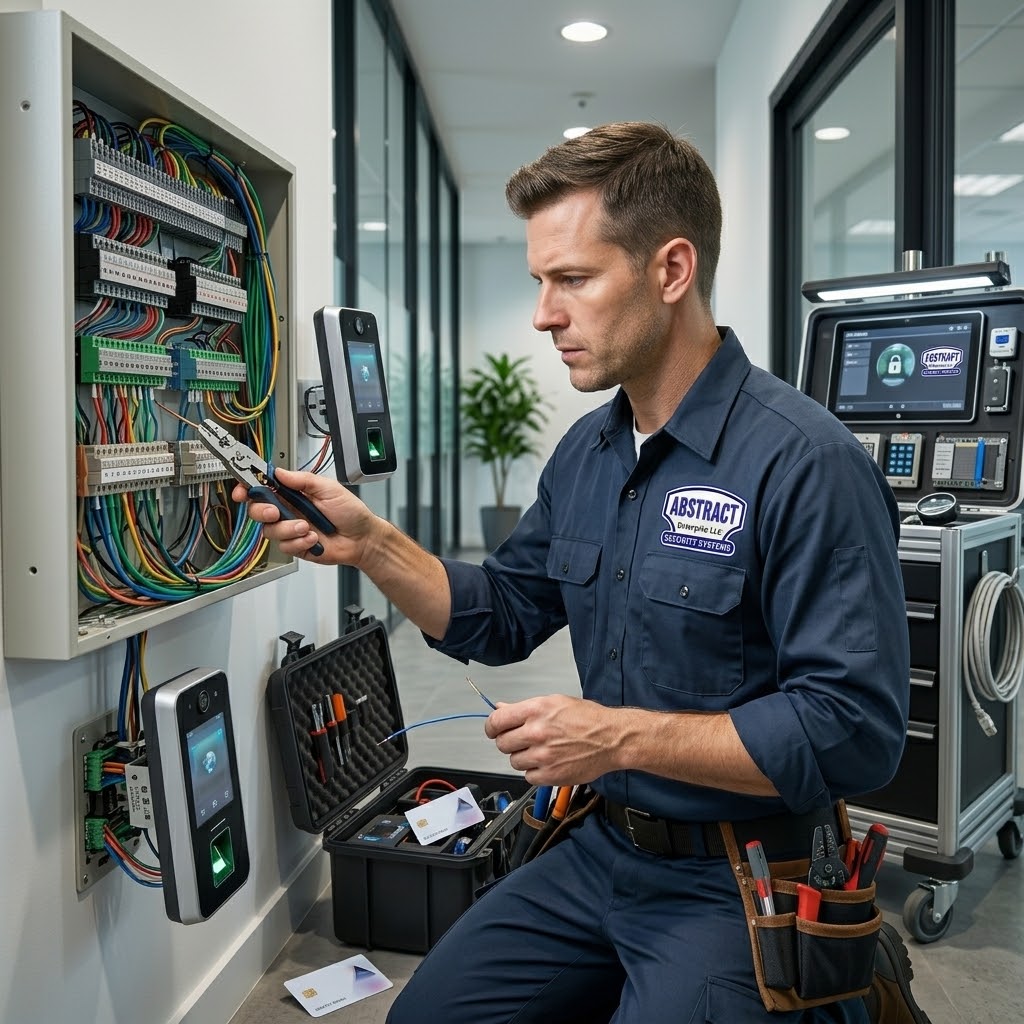
Yes. An auto-closing door mechanism plus a credential-controlled electric strike ensures the door latches shut after every entry. A door-held-open alarm alerts you when someone props the door. Repeated offenders are identified through the audit log. In South Bronx buildings where propped doors are a daily reality, this combination of hardware plus monitoring has eliminated the problem. Cost: $1,500 to $3,000 for the access control system plus $200 to $500 for the auto-closer hardware.
Single-door lobby fob reader: $1,500 to $2,500. Multi-door system (lobby + service entrance + basement): $4,000 to $10,000. Full building with elevator restriction: $15,000 to $40,000+. Bronx pricing is Brooklyn base — no surcharge. Our office is right here at 460 E Fordham Rd. Free on-site estimates anywhere in the Bronx.
Yes. You can’t control NYCHA’s security, but you can secure your own building. Credential-controlled entry on every access point — lobby, service entrance, basement, rear exits — creates a secured perimeter. Vandal-resistant readers, tamper-proof housings, and camera integration at every door. Your building becomes a controlled environment regardless of adjacent conditions. This is the standard setup we install for private landlords near NYCHA developments in Castle Hill, Soundview, Mott Haven, and Melrose.
Yes. Every Bronx installation in high-traffic or high-crime areas uses tamper-proof reader housings, anti-pry mounting plates, and potted electronics that resist water and impact damage. Readers are recessed into walls or mounted with security screws that require proprietary tools to remove. We specify this hardware as standard for Mott Haven, Melrose, Hunts Point, Tremont, University Heights, and any building where reader vandalism is a realistic concern.
Yes. Gate readers with RFID credentials for fenced yards. Loading dock readers with door-held-open timers. Personnel door keypads or fob readers. Time-scheduled shift credentials that automatically expire. Cloud management for instant credential revocation when an employee is terminated. Anti-passback logic on gates to prevent tailgating. Cost: $2,000 to $15,000 depending on number of access points.
Replace it with a video intercom panel that also serves as a key fob reader. ButterflyMX and Akuvox panels handle daily tenant fob entry and visitor video intercom in a single unit. Cost: $1,500 to $3,000 for a building-wide system. Residents buzz visitors in from their phone with live video. No more blindly pressing the buzzer for anyone who rings.
Yes. Cloud platforms like Brivo provide a single dashboard for unlimited buildings. Issue credentials for a Fordham building, revoke access at a Soundview building, and pull audit logs at a Mott Haven building — all from your phone or desktop. This is the standard setup for Woodstock property management companies.
Yes. We install elevator cab readers with relay outputs that interface with existing elevator controllers. Each resident’s credential is programmed with their floor plus lobby and common areas. Visitors get time-limited credentials restricted to the host’s floor. For complexes with thousands of units, cloud management handles credential issuance and revocation at scale.
Upgrade from 125kHz to encrypted 13.56MHz credentials. We install multi-technology readers, issue new encrypted fobs to every tenant, and deactivate the old system. Consumer cloning devices cannot read the new credentials. Most Bronx buildings complete migration in one weekend.
Open the dashboard, deactivate the credential, done. No locksmith, no lock change. In high-turnover Bronx buildings with 10+ turnovers per year, this eliminates thousands of dollars in annual locksmith costs and the security risk of uncollected keys.
For single-door installations, yes. Our office at 460 E Fordham Rd means dispatch to any Bronx address is typically under 20 minutes. Call (347) 934-8335.
Yes. Insurance carriers often charge higher premiums for buildings in Woodstock precincts with elevated crime. Credential-based access control with documented audit logs can offset some of that premium — many carriers offer 5% to 15% discounts for electronic access control. The audit trail also strengthens your position in liability claims by documenting exactly who was in the building during any incident.
In the Bronx, especially. A $1,500 lobby fob system on a 10-unit building eliminates key duplication, creates an audit trail, gives you remote door control, and removes locksmith fees. In the borough with the highest crime rate in NYC, the deterrence value alone justifies the investment. Buildings with access control report fewer unauthorized entries, fewer tenant complaints about security, and improved tenant retention — tenants who feel safe stay longer.
All of the Bronx — Mott Haven, Melrose, Hunts Point, Longwood, Port Morris, Highbridge, Concourse, Mount Eden, Morrisania, Tremont, East Tremont, Belmont, Fordham, University Heights, Morris Heights, Kingsbridge, Norwood, Bedford Park, Van Cortlandt Village, Riverdale, Fieldston, Spuyten Duyvil, Woodlawn, Wakefield, Williamsbridge, Baychester, Eastchester, Co-op City, Pelham Bay, Country Club, Throggs Neck, Castle Hill, Soundview, Clason Point, Parkchester, Van Nest, Allerton, Morris Park, Westchester Square, Bronxdale, and City Island.

Woodstock is unusual among Bronx neighborhoods because every block tells the story of three distinct construction eras layered on top of one another. The pre-WWII tenements that came through the 1970s sit shoulder-to-shoulder with the 1980s Charlotte Street redevelopment ranch homes and townhouses (built on the rubble of the worst 1977 fires after President Carter’s famous October walk through the devastation), and both sit alongside the post-2010 LEED-certified mid-rise condo buildings that have filled in vacant lots over the past 15 years. Add the 91.2% renter-occupancy that produces constant tenant turnover, the active 2/5 elevated commercial spine along Westchester Avenue with stations at Prospect Avenue and Jackson Avenue, the Casa Amadeo Latin music heritage block, and the Saints Anselm and Roch Catholic-anchor community structure, and you get an access control market that requires three different conversations on the same block: pre-war tenement walk-up systems, modernized 1980s townhouse credentials, and built-in LEED condo platforms. A $1,500 fob reader on a small Woodstock walk-up or a $4,000 LEED condo amenity-space credential package is the most cost-effective security upgrade a Woodstock property owner can make.
For Woodstock pre-war tenement walk-ups along Trinity Avenue, Union Avenue, Fox Street, and Beck Street: HID readers with encrypted fobs, vandal-resistant housings, and door-held-open alarms provide lobby security in the dense walk-up environments that survived the 1970s. For 1980s Charlotte Street ranch-house and townhouse redevelopment: LiftMaster or DoorKing driveway gate operators paired with HID credential readers, garage door automation, smart-lock front doors with time-limited delivery codes, and side-gate readers tied to a single home credential set. For post-2010 LEED-certified mid-rise condo buildings: ButterflyMX or Openpath platforms with mobile credentials, plus elevator floor restriction, package room readers, and amenity-space credentials (gym, lounge, roof deck). For multi-building Woodstock landlords running 5–15 building South Bronx portfolios: Brivo cloud platforms manage portfolios with one dashboard. For Westchester Avenue and Prospect Avenue commercial: Honeywell or Brivo platforms for multi-tenant retail with shift scheduling. For NYC Health + Hospitals/Lincoln corridor medical offices: card readers with cloud audit logs that meet HIPAA Physical Safeguard requirements.
Woodstock’s commercial stock concentrates along the Westchester Avenue spine under the 2/5 elevated and the Prospect Avenue retail corridor running north-south through the residential heart. The Latin American food and grocery distributors cycle through the bodegas, Western Beef Supermarket, Longwood Fish Market, Casa Amadeo, and the dozens of family delis and pizzerias continuously throughout the day. The Third Avenue / East 149th Street Hub-corridor edge adds further commercial through-traffic. These properties need access control that matches the operational rhythm: credential-based gate, bay-door, and stockroom entry that logs every transaction, shift-scheduled credentials that expire when worker shifts end, anti-passback on rear bays to prevent tailgating during deliveries, sound-rated readers that perform reliably under the elevated 2/5, and cloud dashboards that let owners revoke credentials from any device the moment an employee is terminated. Most Woodstock commercial sites can be fully credentialed for $4,000 to $10,000 depending on door count.
Legacy 125kHz fobs installed in Woodstock apartment buildings between 2005 and 2018 are cloned daily using $30 Amazon devices. In a borough where unauthorized building entry has real safety consequences, cloned credentials are not just a property management headache — they are a safety threat. Encrypted 13.56MHz credentials (DESFire EV3 or HID iCLASS Seos) cannot be read by consumer devices. We migrate Bronx buildings with zero tenant disruption, typically completing the upgrade in a single weekend.
Consumer smart locks fail under the daily abuse of a Woodstock apartment lobby cycling through high-turnover renter households at 91.2% renter-occupancy and the constant 2/5 elevated commuter foot traffic. Professional access control uses commercial-grade hardware rated for 500,000+ cycles, vandal-resistant housings rated for the active South Bronx commercial corridor, tamper-proof mounting, encrypted credentials, and enterprise software. The installation requires licensed low-voltage wiring, door frame modification for electric strikes, and integration with FDNY egress requirements — especially critical in Woodstock’s pre-WWII tenement survivors where existing wiring runs are limited and panel capacity is often at the edge after 90–125 years of service. For the 1980s Charlotte Street redevelopment ranch homes and the post-2010 LEED-certified mid-rise condo buildings, hardware specifications need to integrate with modern electrical systems and condo-board governance protocols. Abstract Enterprises holds NYS License #12000287431. Our Bronx office at 460 E Fordham Rd dispatches technicians to every Woodstock block.
A pre-war walk-up on Trinity Avenue with a chronically propped-open lobby door installed a fob reader with door-held-open alarm. Unauthorized entries dropped from daily occurrences to near-zero within the first week. Tenants reported feeling safer for the first time in years — particularly during the morning and evening 2/5 rush hours when the residential side street had historically been a shortcut for commuters cutting through to the Prospect Avenue station.
A Woodstock multi-property landlord running 8 pre-war walk-ups along Fox Street, Beck Street, and Union Avenue spent $625+ per building per year on locksmith visits for tenant turnovers across the South Bronx’s 91.2%-rental stock. Eight lobby fob systems paid for themselves in under 14 months. Zero locksmith calls since installation.
A Westchester Avenue bodega and grocery near the 2/5 Prospect Avenue station terminated three workers for stock skimming. All three rear-stockroom and bay-door credentials were deactivated from the owner’s phone before the employees reached the elevated 2/5 platform. With the old combination lock, they would have retained access indefinitely.
A 32-unit LEED-certified post-2010 mid-rise condo building on Prospect Avenue replaced its early-2010s key-and-fob system with ButterflyMX mobile credentials. Owners unlock with their phone. Visitors ring through video intercom from the lobby. The condo board manages every owner profile from a single dashboard along with the gym, package room, and roof deck amenity readers. No more lost keys, no more locksmith visits.
“I own a 12-unit pre-war walk-up on Trinity Avenue, two blocks from the 2/5 Prospect Avenue station. The lobby key had been copied across decades of tenant turnover — family doubling-up, sublets, contractors, cousins. People I’d never seen were walking through the lobby at 3 AM. The fob system cost $2,400 and I haven’t had a single unauthorized entry since installation. Best money I’ve ever spent on the building.”
“We had a combination lock on the rear stockroom door at our Westchester Avenue bodega that delivery drivers, two cleaning crews, and a dozen retail employees all knew. When someone left, we had to change the code and redistribute it to everyone. Now each person has their own credential at our location. Terminated? Deactivated instantly. Stockroom readers log every entry. Insurance was thrilled.”
“Our HIPAA audit flagged the records room for having a standard deadbolt. We run a bilingual practice on East 149th Street near NYC Health + Hospitals/Lincoln serving Woodstock’s Latino and African American families — we installed a card reader with cloud audit logs. The next audit passed with zero physical security findings. Installation took less than a day and didn’t disrupt a single patient appointment.”
A door-held-open alarm triggers a notification when the lobby door remains open for more than a set time — typically 30 to 60 seconds. In Bronx buildings where propped-open doors are a chronic problem, this is essential. The alarm can sound locally, push a notification to the super’s phone, or both. Combined with an auto-closing door mechanism, it eliminates the propped-door problem that compromises lobby security.
We route new low-voltage cable through basements, existing conduit, and riser closets. Pre-war Bronx buildings have challenging infrastructure, but our technicians have wired hundreds of them. Where hardwiring is impractical, SALTO wireless locks communicate via mesh network without door-to-panel cabling.
Yes. We train supers during installation. Cloud apps provide a simple interface for credential issuance and deactivation. Role-based permissions let the super handle daily operations while the owner or managing agent retains full admin control.
Yes. Time-limited delivery credentials valid only during scheduled windows. The door locks behind them automatically. Residents receive push notifications on delivery entries. Eliminates propped-open doors during bulk deliveries.
Every installation includes battery backup providing 6 to 8 hours of operation. Egress doors release per FDNY. Secure-area doors remain locked. We assess electrical capacity and spec dedicated circuits where building panels are at capacity.
Yes. Access-triggered camera snapshots capture every entry event. Video linked to credential ID and timestamp. Critical for Woodstock landlords providing documentation to NYPD and insurance companies after security incidents.
Hardware: manufacturer warranty 2 to 5 years. Installation labor: 1-year parts warranty. Service callbacks outside warranty: $195/hr, 3-hour minimum. Annual service agreements available.
Yes. Start with the lobby, add service entrance, basement, elevator restriction, and individual doors over time. Panel capacity and cable pathways sized for future growth.
Yes. Our office at 460 E Fordham Rd means dispatch under 20 minutes to any Bronx address. Call (347) 934-8335.
Yes. NYS Low-Voltage Contractor License #12000287431. Fully insured. Bronx office: 460 E Fordham Rd, Bronx, NY 10458.
Yes. We repair, reprogram, and upgrade access control from all manufacturers — even systems installed by other companies that went out of business or stopped servicing the Bronx.
Every Bronx neighborhood from Mott Haven to City Island, Riverdale to Co-op City, Hunts Point to Woodlawn. Our office at 460 E Fordham Rd is centrally located for dispatch across the entire borough.
Office: 460 E Fordham Rd, Bronx, NY 10458. Call (347) 934-8335.
Woodstock · Westchester Avenue (under 2/5 El) · Prospect Avenue · Jackson Avenue · Third Avenue · Charlotte Street · Trinity Avenue · Union Avenue · Fox Street · Beck Street · Bruckner Expressway corridor · East 149th Street · East 156th Street · The Hub at Third & 149th · 2/5 Prospect Avenue station · 2/5 Jackson Avenue station · Saints Anselm and Roch Roman Catholic Church · Casa Amadeo (oldest Latin American music store, 1927) · Carnegie Library NYPL branch (1914) · St. Mary’s Park · Fountain of Youth Playground · Western Beef Supermarket · Longwood Fish Market · Johnson Bar-B-Q · Seis Vecinos · Salvadorean · Parrilla Latina Sports Bar · NYC Health + Hospitals/Lincoln corridor · Manor of Morrisania historical · Lewis Morris colonial heritage · Hip-hop birthplace · ZIP 10455 · ZIP 10456 · ZIP 10459 · 40th Precinct · 41st Precinct service area
$1,500 – $2,500
Keypad or fob reader with electric strike. Apartment lobbies, office doors, warehouse entries.
$4,000 – $15,000
Lobby + service + basement, or gate + dock + personnel doors with cloud management.
$15,000 – $40,000+
Full building with elevator restriction, parking, and credential management for Woodstock apartment complexes.
Bronx pricing = Brooklyn base · No surcharge · Tax (8.875%) applies · Jobs under $500 = full upfront · Over $500 = 50% deposit · Callbacks: $195/hr, 3-hr min
4K IP camera installation for Woodstock properties
Video intercom for Woodstock buildings
Buzzer repair for Woodstock apartments
Burglar and intrusion alarms for the Bronx
Fire alarm installation for Woodstock buildings
Cat6, fiber, and network wiring for the Bronx
TV mounting for Woodstock homes and businesses
Our full range of access control services includes electronic door lock replacement, key fob door entry systems, building access control upgrade, gate access control, residential access control, restricted entry, perimeter security, remote unlock, visitor management, tenant access, security keypad, proximity reader. We also provide door release mechanisms, door position sensor monitoring, ADA-compliant request to exit buttons, access log documentation, electric strike installation, magnetic lock hardware, anti-tailgating, NYC Building Code compliance, fire alarm integration, parking garage gate access, key fob programming, access control upgrade, same day installation — every project handled by NYS-licensed technicians from assessment through final programming.
Free on-site assessment, custom system design, and a detailed quote. Our Bronx office is at 460 E Fordham Rd — we’re your local access control installer.
Abstract Enterprises Security Systems
📍 460 E Fordham Rd, Bronx, NY 10458
NYS License #12000287431 · Licensed & Insured
Looking for access control installation near me in Woodstock? We are a licensed access control installer and insured access control installation company providing same day access control installation near me across Woodstock, Bronx. Whether you need commercial access control installation, residential access control installation, office access control installation, building access control installation, or door access control installation — we handle every access control system setup. Access control installation same day available. Affordable access control installation. Professional access control installation.
Key fob entry system installation, key card access control installation, card access system installation, badge access system installation, and fob reader installation. We install standalone and networked access control system installation for single doors to entire buildings. Office key card system installation is our most popular commercial service in Woodstock.
Biometric access control installation including fingerprint access control installation and facial recognition access control installation. Keypad door entry installation and pin code door access system installation for properties that want code-based entry without cards or fobs.
Mobile access control system installation — unlock doors from your smartphone. Cloud based access control installation with remote management. Wireless access control installation for retrofit projects and wired access control installation for new construction. Smart access control system installation. Access control installation with monitoring.
Every access control system installation needs the right door hardware. Electric strike installation, mag lock installation (electromagnetic lock installation), door release system installation, exit button installation, request to exit device installation, door sensor installation. Access control panel installation, access control reader installation, card reader installation. Door entry system installation. Commercial door access system installation.
Intercom access control integration — connect access control to your building intercom. Video intercom access control installation for visual verification. Buzzer access control system installation — upgrade existing door buzzer to a full access control system. Standalone access control system installation or access control system integration with security cameras and alarm.
Access control system upgrade, access control system replacement, access control troubleshooting service, access control system repair, access control maintenance service. Access control system programming, access control system configuration. Common issues: access control system not working fix, door not unlocking access control fix, access control reader not working, access control keypad not responding, access control system beeping issue, access control system offline fix.
Can I install access control system myself? Basic keypads can be DIY, but proper multi-door systems require professional installation. Do I need professional access control installation? Yes — improper wiring leaves doors unsecured. How does access control installation work? Site assessment, system selection, wiring, hardware install, credential programming, testing. What is the best access control system? Depends on your needs — we install all major brands. How much does access control installation cost? Single-door systems start around $600–$800 installed.
Hire access control installer — book access control installation service. Best access control installation service in Woodstock, Bronx. Access control system installer near me — call (347) 934-8335. Access control system for business, access control system for office, access control system for apartment, access control system for building — every property type covered.