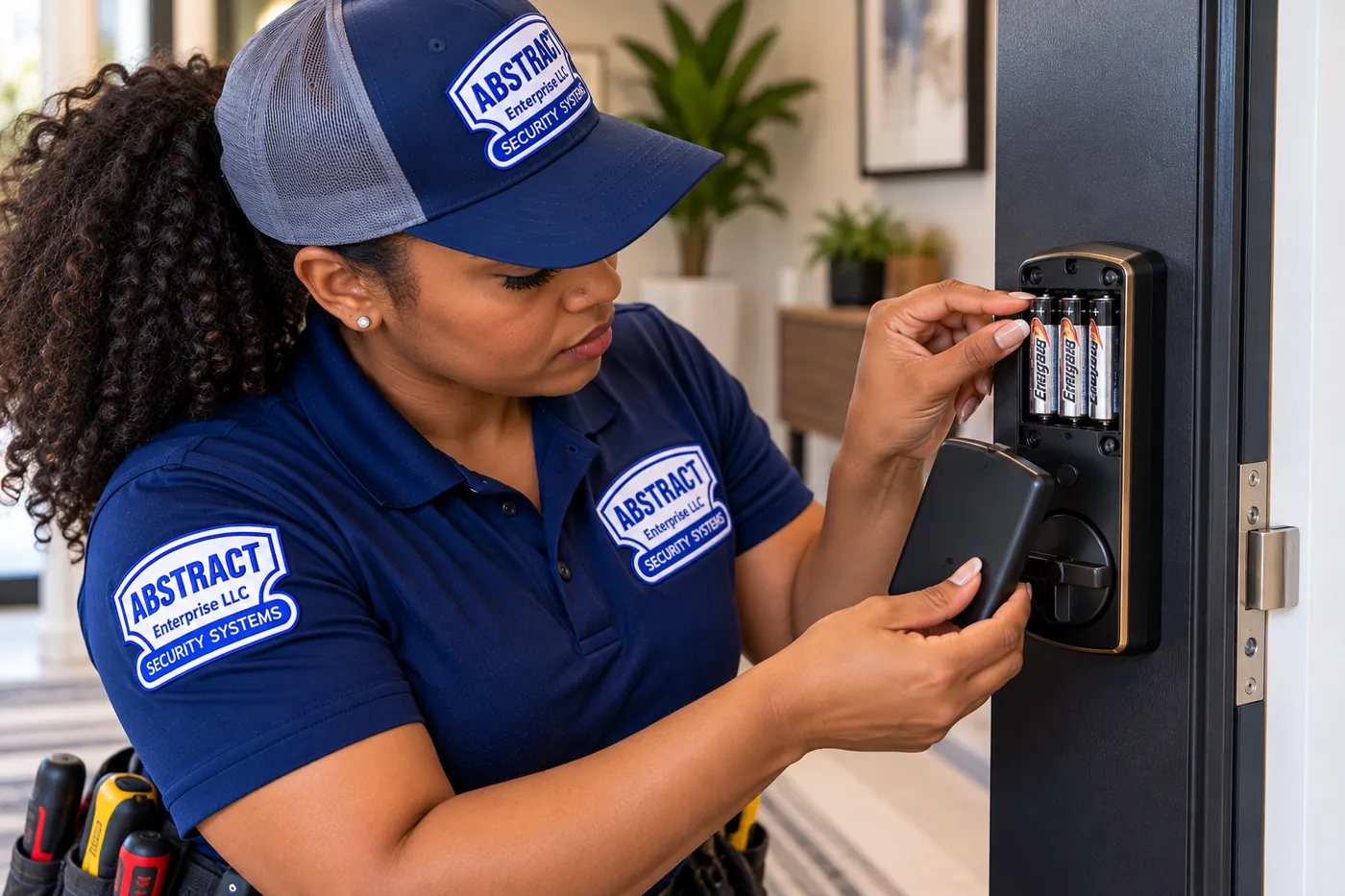
Driveway Gate · Front Entry · Service Door · Pool House · Carriage House · Staff & Family Codes
Todt Hill is the top of New York City — about 410 feet up, on the wooded serpentine ridge that runs down the middle of Staten Island. Houses up here sit on big lots along private, winding roads with no sidewalks and few street lights, many of them behind a gate. That changes what a smart lock job is. It starts at the end of the driveway, not at the front step; it covers a house with six, eight or ten ways in; it has to reach doors a long way from the router; and it has to give a housekeeper, a landscaper, a pool contractor, a patrol company and three generations of family exactly the access each of them should have — and nothing more.
Reviewed and updated October 17, 2026 · Written by Anwar Timothy, NYS licence #12000287431 · Todt Hill is served from our Brooklyn office, line (347) 934-8335

A gate, a long drive and a house with more doors than anyone has counted? Ring (347) 934-8335 or use the 60-second form. A licensed installer reads what you send, rings you back, and tells you which doors and which people the plan should cover before anybody drives up the hill.

Todt Hill is not a place where one smart deadbolt on the front door makes a house “keyless.” The Landmarks Preservation Commission's designation report for a house on Circle Road describes the hill as the highest of the serpentine hills running through Staten Island, with a summit of 409.8 feet — said to be the highest natural point on the eastern seaboard between Maine and Florida. The report also records how the hill was settled: wealthy families assembled large estates here, among them the Cromwells and the architect Ernest Flagg, and those estates were later broken up into building lots. What sits on those lots today is mostly large detached houses, reached by private or semi-private roads, many behind a vehicle gate.
The roads themselves set the tone. Writing about the neighbourhood for Brick Underground, a local broker noted that most streets on Todt Hill have neither sidewalks nor street lights, and described many properties sitting behind “gargantuan cast iron gates.” In practice that means nearly everyone who comes to a Todt Hill house — family, guests, staff, contractors, couriers — arrives by car, at a gate or the top of a driveway, often after dark on an unlit road. The first lock decision on these properties is therefore not the front door. It's how a person gets from the road to the house at all.
Then there is the land. Section 105-941 of the New York City Zoning Resolution places Emerson Hill, Dongan Hills, Todt Hill and Lighthouse Hill in Special Natural Area District-1, describing the “central, serpentine, hilly spine of Staten Island” as “richly endowed with steep slopes, rock outcrops, erratic boulders and ponds” and many trees. Lots are big, steep and wooded. Houses step down the slope, so a garage may sit a full storey below the front door, a walk-out lower level may open onto a terrace, and a carriage house or pool house may be a hundred feet from the router. Trenching a cable across that ground to a gate is not a casual decision, and a radio signal crossing it has trees, rock and grade in the way.
The houses are as varied as the slope. Ernest Flagg's fieldstone mansion, Stone Court, and the small stone cottages he built on its grounds are individual city landmarks along Flagg Place. A Greek Revival house built in Massachusetts in the 1840s was moved here in 1931 and is now a landmark on Circle Road. Around them are pre-war Colonial and Tudor-style houses, mid-century houses on curving private roads, and newer custom houses with tall, heavy entry doors. The doors on those houses are where most of the technical problems sit: solid hardwood slabs thicker than most smart deadbolts are listed for, mortise locksets where one handle works both the latch and the bolt, multipoint locks on French doors, pivot doors with no conventional deadbolt at all.
And the people are many. A large household on the hill may include parents, children, grandparents, a housekeeper, a nanny, a landscaping crew, a pool company, a property manager, a dog walker and a private patrol — each needing a different door at a different time. The question that decides a Todt Hill smart lock plan is less “which lock?” than “who gets through which gate and which door, when, and how do we take it back?” We plan that list first and choose hardware to fit it.
Security pressure is real here too, and we'd rather describe it accurately than dramatise it. CBS New York reported a burglary pattern across Todt Hill, Emerson Hill and Grymes Hill in October 2011. In February 2026 the Borough President's office warned of a pattern in Todt Hill and Dongan Hills in which suspects were said to use crowbars on windows to get into homes and vehicles. None of that is stopped by a keypad on its own. What the locks can do is make sure no door is ever left unlocked by accident, tell you within seconds which door opened and with whose code, and refuse to be the weak point when the rest of the house is protected.

A gate keypad that stopped answering after a storm. A front-door lock that drops off the app every evening when the household's phones and televisions crowd the Wi-Fi. A mortise lock whose motor labours because the heavy door has settled on its hinges. A housekeeper standing at the service door with a code that worked yesterday. These are usually same-day jobs. Call (347) 934-8335 and we book the next open 2-hour window; most battery, pairing, alignment and code faults are fixed within one to two hours of reaching the door. If it turns out to be app, bridge or code work only, with no hardware change, it is billed at the Staten Island setup-only rate of $225 for the first hour.

The gate, every house door and every outbuilding planned together on one walkthrough: which doors go smart, which keep a plain key, one app where it makes sense, and one written list of who holds which code, phone credential or fingerprint.
A weather-rated keypad or reader at the drive or the pedestrian gate, linked to the gate operator or an electric strike, lit so it can be found on a road without street lights, and set so a guest's code can open the gate and the front door if you want it to.
Smart hardware chosen for what the door really is: thick solid-wood slabs, mortise handlesets where one lever works latch and bolt, tall pivot doors and paired doors with an inactive leaf. We measure before anyone orders a lock.
The door staff, deliveries and the family actually use every day, usually beside the garage. Auto-lock, individual codes and a log of each entry, so the formal front door can stay closed most of the week.
Houses on the slope often have a garage or walk-out level a storey below the front door. Those doors get locks matched to their exposure and use, with the inside exit kept to one simple turn.
Keypad locks for outbuildings that guests and service companies need without entering the main house, connected by bridge, Thread or a long-range radio after a signal test across the yard.
Scheduled codes for a housekeeper, nanny, landscaper, pool contractor or patrol company, each on the doors and days agreed, with notifications if a code is used outside its window and a one-tap removal when someone leaves.
Getting every lock online across a big house and its grounds: 2.4 GHz access, bridges near the far doors, Thread border routers and, where the house needs it, a properly placed mesh access point — each tested door by door from mobile data.
Locks inherited from a previous owner or an earlier installer, admin accounts nobody can reach, gate keypads with mystery codes, motors straining against a door that has moved. We reset, re-enrol, realign and hand you back control.
Ernest Flagg's Stone Court on Flagg Place and the rubblestone cottages he built on its grounds, such as Wallcot at 285 Flagg Place (1918–21), are individual landmarks. Deep stone reveals, arched entrances and original doors make these the houses where the outside face of a lock matters most and where an inside-only retrofit is often the right answer.
Built as the old estates were subdivided. Thick panelled wood doors, often with original mortise locksets and brass trim, sidelights or leaded glass beside the door, and a kitchen or service door that the household really uses.
The Gillett-Tyler House at 103 Circle Road was built around 1846 in Enfield, Massachusetts, moved to the hill in 1931 and designated in 2007. Older frame houses like it have doors and frames that have shifted for a century and a half; measuring and strike work come before any lock.
Ranches, split-levels and colonials on curving private roads, often with a two-car garage below the living floor, a mudroom door and sliding or French doors to a deck. Standard bores on many doors, but long distances between them.
Large recent builds with tall entry doors, pivot hinges, multipoint locks on terrace doors, oversized garages and pre-wired doorbells. Hardware here is often European or custom; we confirm what is behind the trim before recommending anything.
On steep lots in the natural area district, houses are built into the grade: the front door at road level, bedrooms below, a walk-out terrace at the back and a garage tucked under. Each level has its own door, its own weather and its own signal problem.
Iron vehicle gates on masonry pillars, sometimes with a separate walk gate. Older installations often have a wired keypad or intercom on a post at the road. We work out what powers the gate and how it is told to open before connecting anything to it.
Pool houses, cabanas, carriage houses, detached garages and guest suites over garages. Used by guests, staff and contractors, often far from the house and its Wi-Fi.

This is the map we fill in on a walkthrough. A property up here rarely has fewer than five ways in, and some have a dozen. Not every one needs a smart lock; a few should never be opened remotely at all. What matters is that each is locked in a way that suits who uses it, how often, and what happens when the power, the internet or a phone fails.
| Entry point | Who usually uses it | What we usually recommend |
|---|---|---|
| Vehicle gate at the road | Everyone who arrives by car: family, guests, staff, deliveries, contractors | Weather-rated, lit keypad or reader tied to the gate operator; codes shared with the house list where wanted; a manual release plan for power cuts |
| Pedestrian or walk gate | Couriers, dog walkers, neighbours on foot | Keypad with an electric strike or a self-contained keypad gate lock; free exit on the inside; separate codes from the vehicle gate if deliveries should not open the drive |
| Formal front door | Guests and occasions; sometimes rarely used day to day | Smart hardware chosen for the door's real construction (bored, mortise, multipoint or pivot); keyed override with a controlled key; finish matched to the house |
| Mudroom or service door | Family, housekeeper, nanny, deliveries — the busiest door | Keypad or fingerprint deadbolt, individual and scheduled codes, auto-lock, alerts for out-of-hours use |
| Garage-to-house door | Anyone who drives in | Auto-locking smart deadbolt on a door that closes and latches by itself; signal tested inside the garage |
| Lower-level or walk-out door | Family on the terrace, sometimes a guest suite | Lock suited to its exposure; thumb-turn exit; often keyed only if nobody uses it daily |
| French or terrace doors | Summer use, parties, the garden | Usually left mechanical with a contact sensor; smart only where the multipoint hardware has a compatible motorised option |
| Pool house or cabana | Guests, pool contractor, cleaners | Keypad lock with seasonal codes; connected by bridge or long-range radio after a signal test |
| Carriage house, detached garage, guest suite | Staff, guests, storage | Its own lock and code list; never opened by the gate code alone |

The hill itself is residential, but the streets at its foot are not. Business doors near Todt Hill have a different job from the estate doors above them: staff codes that change with the roster, free exit for customers, and a log of who opened up.
The road that carries the buses around the base of the ridge. Shops, salons and small offices along it usually have a customer door on the road and a back door to parking; owners want the back door keyless so opening and closing staff don't carry keys.
Covered by the New Dorp business improvement district, which the City Council approved in 2017 for 146 properties and 180 businesses between Hylan Boulevard and Richmond Road. Restaurants and boutiques here want codes that can be cut off the same day a staff member leaves.
Hylan Boulevard crosses Dongan Hills and New Dorp to the east of the hill. Doctors', dentists' and accountants' suites in converted houses and small buildings often need one keyless staff door and one controlled records room without a full access-control system.
Professionals who see clients at home want a separate entrance to a study or office suite whose code opens nothing else in the house, and a visitor log that stays apart from the family's.
Managers who run several large houses for owners who travel need one dashboard across properties, scheduled access for vendors, and a clean record of who entered each house and when.
These are the questions that come up on walkthroughs on the hill and that the generic smart-lock guides skip. They are grouped by the part of the property they really concern: the gate and the drive, the heavy doors, the reach of the network, the people who work at the house, and the break-in pattern residents have been warned about.
It can be either, and the choice is worth making on purpose. If the gate keypad and the house locks come from systems that can share users — or if the gate keypad can be enrolled in the same app as the locks — one personal code can be set to work at both. That is convenient for grandparents and close family who arrive often. Where the gate keypad is a stand-alone unit wired to the gate operator, it keeps its own code list and the house keeps another.
For most households we recommend a middle path. Family and long-term staff get one code that works at the gate and on the specific house doors they use. Couriers, the pool company and one-off contractors get a gate-only code, or a code that works at the gate and on one outbuilding, never on the house. A guest staying the weekend gets a time-limited code on the gate and the guest door that expires when they leave.
Whatever we set up, it goes onto the written access list we leave with you, so years from now you can still see at a glance which codes open the gate, which open the house, and which do both.
Decide first whether they should get past the gate at all. For parcels, many households here prefer a locked parcel box or a delivery shelf at the walk gate, so nobody needs a code; the drive stays shut and the house is never involved. For a guest arriving before you, a time-limited code at the gate plus a code on one house door — usually the guest or service door, not the front door — is the cleanest arrangement.
The route matters on a dark, wooded lot. Most Todt Hill roads have no street lights, so a backlit gate keypad and some path lighting between the gate and the door make a bigger practical difference than any lock feature. If the door is at the top of a flight of stone steps, the keypad goes where someone carrying bags can reach it without leaning over a drop.
Where you want to see who is at the gate before letting them in, a camera or video intercom at the gate lets you open it remotely for a face you recognise. That is a gate and camera job rather than a door lock job, and we plan the two together so the codes and the remote-open permissions match.
That depends on how the gate is locked and powered, which is why we ask before connecting a keypad to it. A swing or slide gate operator usually holds the gate closed mechanically; many have a battery backup that allows a few cycles in an outage, and all should have a manual release for the owner. A walk gate held by an electric strike or magnetic lock is either fail-safe (it releases when power is lost) or fail-secure (it stays locked), and the choice is made when the hardware is chosen.
For a private house gate, fail-secure with a keyed or mechanical override is usually what owners want: the gate stays shut in a storm outage, and the family has a key or a manual release to get in. Anything that is also an escape route — a pool-area gate, a gate people leave a yard through — must still open from the inside with no power, no code and no key.
We write the outage plan into the handover: where the manual release is, who holds the override key, how long the backup battery lasts, and what the keypad does when power returns.
Sometimes, and it depends entirely on what is inside the door. A mortise lock is a single box in the door edge; on many residential mortise handlesets the thumb-turn or key throws the deadbolt and the lever works the latch, and on some the inside lever retracts both at once. Most consumer smart deadbolts are made for bored cylindrical deadbolts and won't drive a mortise body directly.
The options are three. A retrofit motor that fits over the inside thumb-turn can work where the mortise deadbolt has a compatible spindle — August, for example, sold a mortise adapter kit for this. A purpose-built smart or electrified mortise lock can replace the body entirely, which keeps the look of a mortise handleset and puts the electronics inside the door. Or the mortise set stays as it is and the smart lock goes on a different, busier door, which is often the honest recommendation for a formal front door that is rarely used.
We take the inside trim off at the walkthrough to see the case, the backset and the spindle before anyone orders anything, because the right answer changes from one door to the next.
Pivot doors hang on pins top and bottom instead of side hinges, and many use long pull handles with a concealed or flush lock rather than a conventional deadbolt. A standard smart deadbolt usually doesn't fit because the stile is narrow, the lock sits low or in the floor or head, or the door's maker supplies its own lock body.
The best options usually come from the door's maker or from hardware designed for that door family: a motorised version of its own lock, a keypad or fingerprint reader built into the pull handle, or an electrified lock in the frame controlled by a separate keypad or reader. Where none exists, an electric strike or a concealed magnetic lock with a separate exterior reader can work, provided free exit on the inside stays one simple action.
Before quoting we look for the door's manufacturer label or paperwork, because fitting third-party hardware to a premium pivot door can affect the door's own warranty.
Some can. The keyed override is the part of a smart lock most people forget about, yet anyone holding that key can open the door with no code and no log. On a large property where keys have passed through builders, previous owners and staff, a restricted or high-security key on the override is a sensible upgrade.
Some smart deadbolts accept their maker's restricted or interchangeable-core cylinders as an option; others take only their standard cylinder. We check the specific model before you buy, and where a lock can't take a better cylinder we may suggest one that can, or a model with no exterior key at all and a reliable battery-backup method instead.
Either way, the override keys go on the written access list: how many were cut, who holds them and where the spare is kept. A smart lock with five unaccounted-for override keys is not a controlled door.
Many Wi-Fi smart locks and lock bridges connect only on 2.4 GHz — Schlage, for example, states that its Wi-Fi deadbolts require a 2.4 GHz network — while modern mesh systems often combine 2.4 GHz and 5 GHz under one network name and steer each device between them. During setup a phone sitting on 5 GHz may hand the lock a network it can't reach, and the pairing fails or the lock drops off later.
The fixes are routine. Most mesh systems let you create a separate 2.4 GHz-only network, often labelled for smart-home or IoT devices, which also keeps the locks apart from the household's laptops. Some let you pause band steering while devices pair. And on a big house, the more common real problem is distance: a lock at the far end of the house may be at the edge of a 2.4 GHz signal even when the phone shows full bars.
We set the locks up on whichever network suits your system, write down which one they're on, and test each lock from mobile data outside the house so we know remote access works when you're not on the Wi-Fi.
The limit is usually distance rather than count. A Wi-Fi bridge for a Bluetooth lock is designed to sit close to its lock — August asks for its Connect bridge to be within 10 to 15 feet — so a house with locks at both ends and on outbuildings often needs more than one. Built-in Wi-Fi locks each talk to the router directly and simply need signal where they stand.
Thread works differently. It is a low-power, self-healing mesh, and Matter-over-Thread locks join it through a border router such as a recent smart speaker or hub. Yale's guidance is to keep the border router within about 50 feet of the lock, or 25 feet if there are problems. Mains-powered Thread devices around the house can strengthen the mesh, which helps on a long floor plan.
So on a large property we plan the network as a map: which locks are Wi-Fi, which use a bridge, which join Thread, where each bridge or border router lives, and which outbuildings need a long-range radio or an offline keypad lock. That map goes into the handover pack.
Locking by voice is harmless and handy — “lock the front door” from the bedroom is one of the nicest features of a connected house. Unlocking by voice is a different matter, because a speaker can't tell who is talking, and in a large house with staff, guests and children the person giving the command may not be one you would hand a key.
The main assistants recognise this. Eufy's own setup guide notes that Google Assistant makes a four-digit security code mandatory for every voice unlock, and that Alexa may ask for a voice PIN before unlocking. That helps, but a spoken PIN can be overheard. Our default is to leave voice unlock switched off and use voice only for locking and status.
If you do want it, we enable it on as few doors as possible — never the gate or the front door — with a PIN only the adults know, and we check that no speaker sits where it can be heard from outside a window or door.
On most large houses, yes, and the locks make it easy. Each code can be enrolled only on the doors that person should use, so the housekeeper's code opens the mudroom door and the gate but not the front door, the terrace doors or the carriage house. If a code is tried on a door it isn't enrolled on, it simply doesn't work.
This does more than keep the formal entrance formal. It means the busy door is the one with the best lock, the clearest log and the auto-lock, and the front door can be locked and left alone for days. It also makes the history easy to read: one door, a predictable set of people, at predictable times.
We agree the door-by-person plan with you on the walkthrough and write it into the access list, so when someone new joins the household staff, adding them is one decision rather than a reconsideration of the whole house.
Only if you want them to go inside, and only on terms you set. Many households want a patrol to check the grounds and the outside of the doors, not to enter, in which case a gate code — or a gate code that works only during the patrol's hours — is all they need. If the patrol is expected to respond inside on an alarm, they need a code for one specific door, with its use reported to you every time.
Give the company its own named code rather than sharing a family code, so every entry shows as theirs. Ask how they store codes and who in the company can see them, and change the code when your contract ends or the company changes staff on your route.
We set the patrol code with whatever schedule you agree, enable notifications for it, and make sure it can be switched off from your phone in seconds when you are home again.
It can, and for the family it is convenient. Some alarm systems link to compatible Z-Wave locks so that a code entered at the lock also disarms the system; Ring's alarm, for example, does this with compatible locks, but only codes created in the Ring app work for it, and the feature needs a subscription.
The trade-off is control. If every staff code also disarms the alarm, the alarm stops telling you anything when staff come in, and a code that leaks becomes both a key and an alarm code. Our usual recommendation is to link disarming only to the family's codes, and let staff and service codes open the door while the alarm expects its own code or is handled on a schedule.
We check your alarm panel and provider before promising any link, because not every panel speaks to every lock, and some links can only be set up by the alarm company.
A lock alone often won't. A smart deadbolt knows when it was locked or unlocked and by which code, but if someone pries a door open with the bolt still thrown, the lock may report nothing more than “locked”. What catches forced entry is a door-position sensor — built into some locks, or as a separate contact on the frame — that reports the door opening without a matching unlock, ideally tied into an alarm.
The physical side matters as much. The February 2026 warnings describe crowbars used on windows and a back door. A deadbolt is only as strong as the strike and frame it throws into, so we fit reinforced strikes with long screws into the framing, check that the door fits tightly in its frame, and look at the glass beside the lock.
If the walkthrough shows that the weak point on a door is the glass or the frame rather than the lock, we say so plainly and point you to the right fix — sensors, glazing, lighting or cameras — rather than selling a lock as the answer.
Not in a bowl by the door. Hoodline's account of the February 2026 burglaries describes a Range Rover key fob being taken from a house and the car then stolen; the Borough President's office urged residents the same week to take keys out of vehicles and lock them. A fob within reach of the busiest entrance is a gift to anyone who gets a door open for thirty seconds.
Keep fobs well inside the house, away from outside walls and doors, and consider a signal-blocking pouch or box if your cars use keyless entry. Make sure the garage-to-house door locks itself, so a car or garage left open doesn't become an open route into the house.
The smart locks help indirectly: with auto-lock on the service and garage doors and an alert when a door is left open, the window in which someone could walk in and pick up a fob gets much shorter.
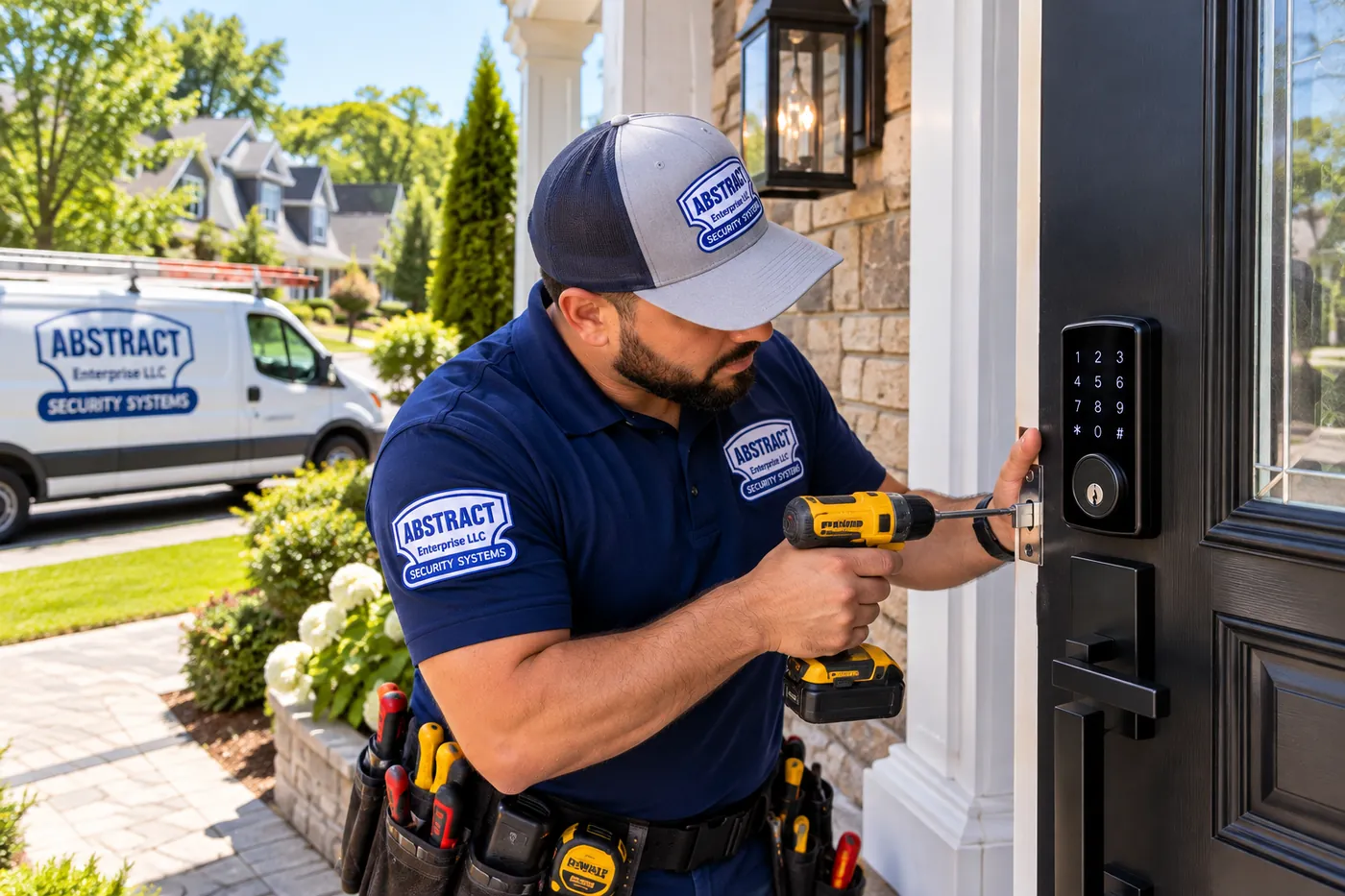
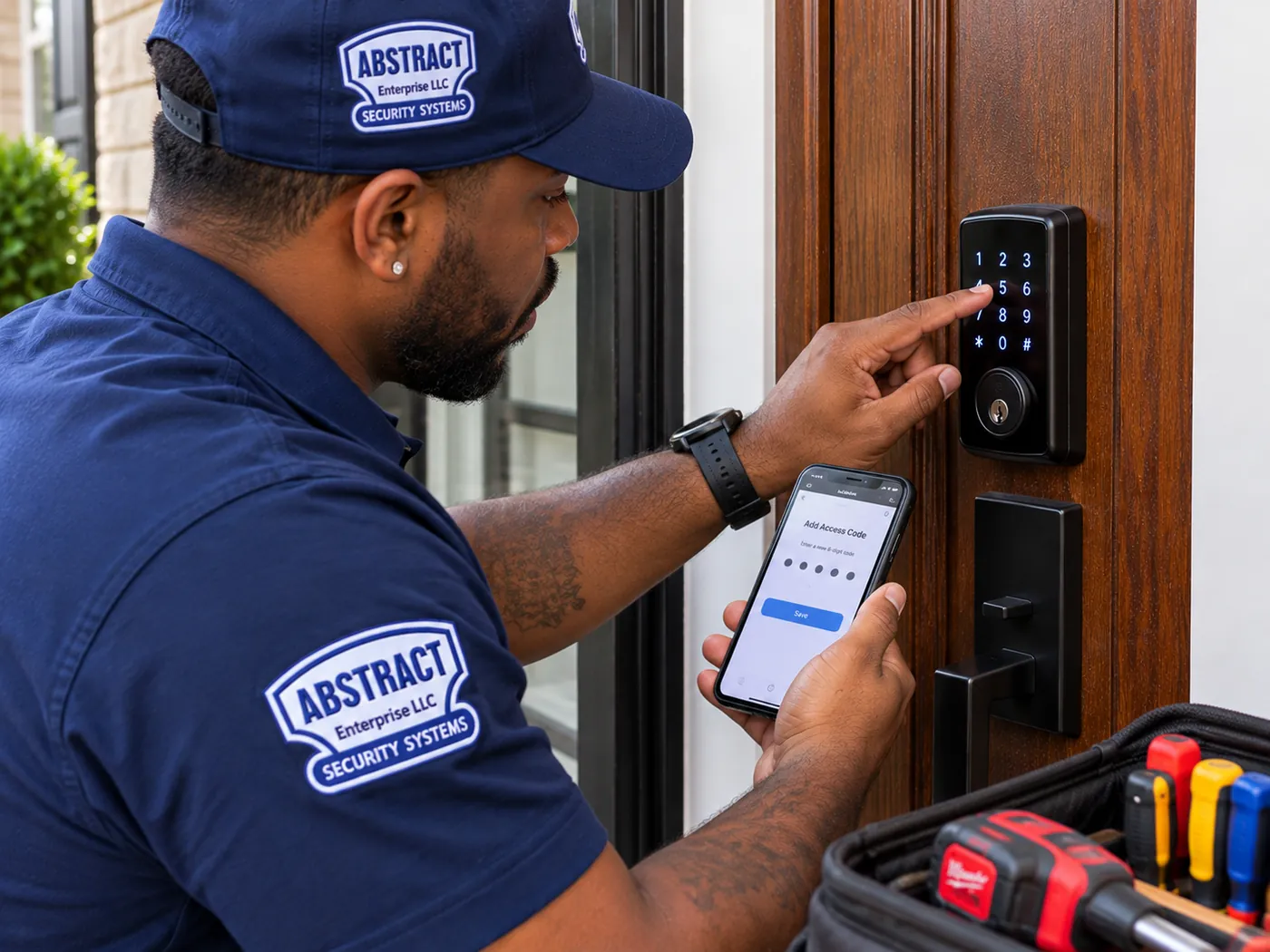
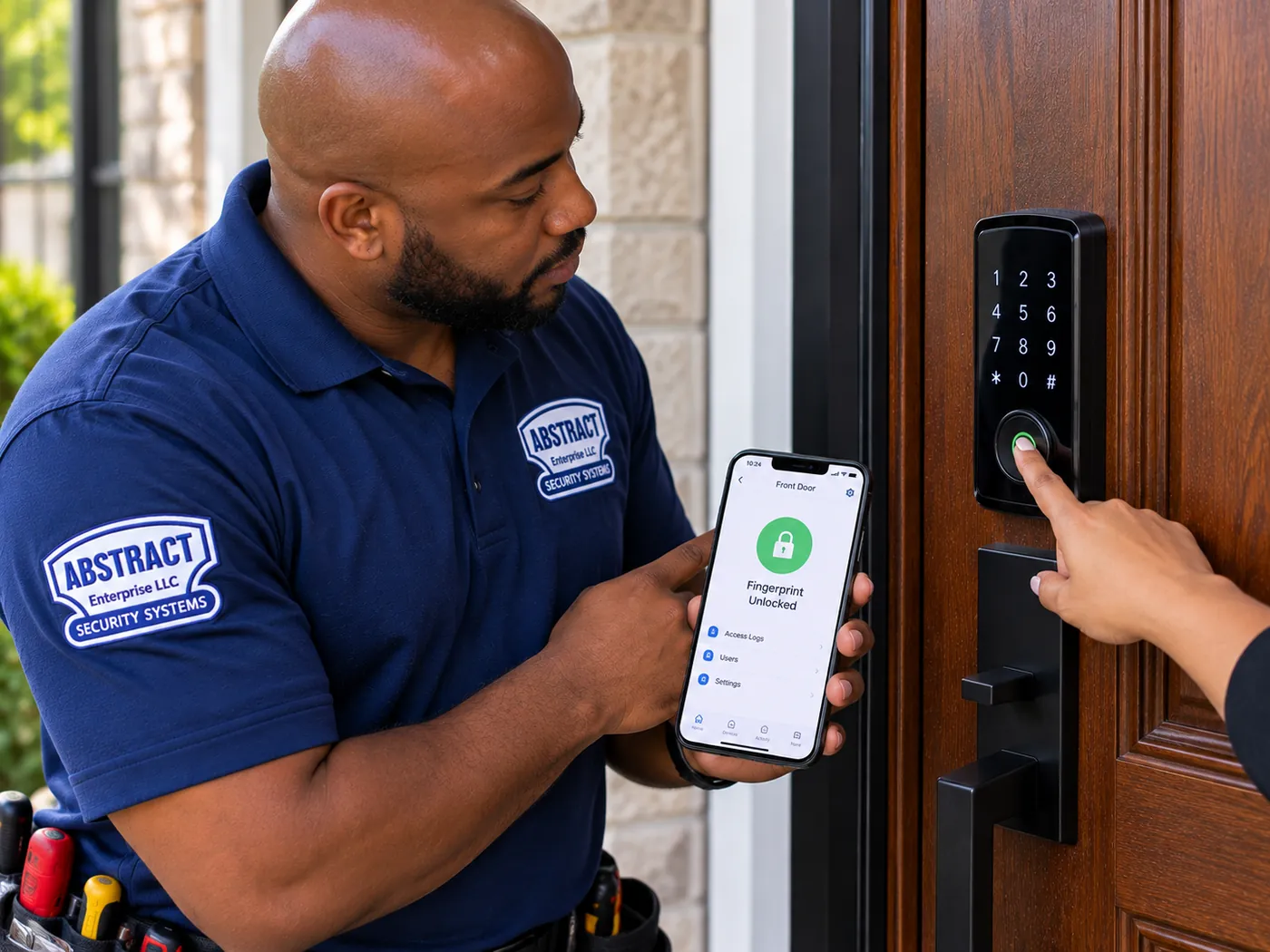
For the busy doors — mudroom, garage entry, guest suite. Personal and scheduled codes, fingerprints for children and adults who would rather not remember numbers, auto-lock and a clear history. Chosen for door thickness first.
Fit over an existing single-cylinder deadbolt on the inside, leaving the outside hardware untouched. The usual first answer for a landmark or period front door whose exterior should stay exactly as it is.
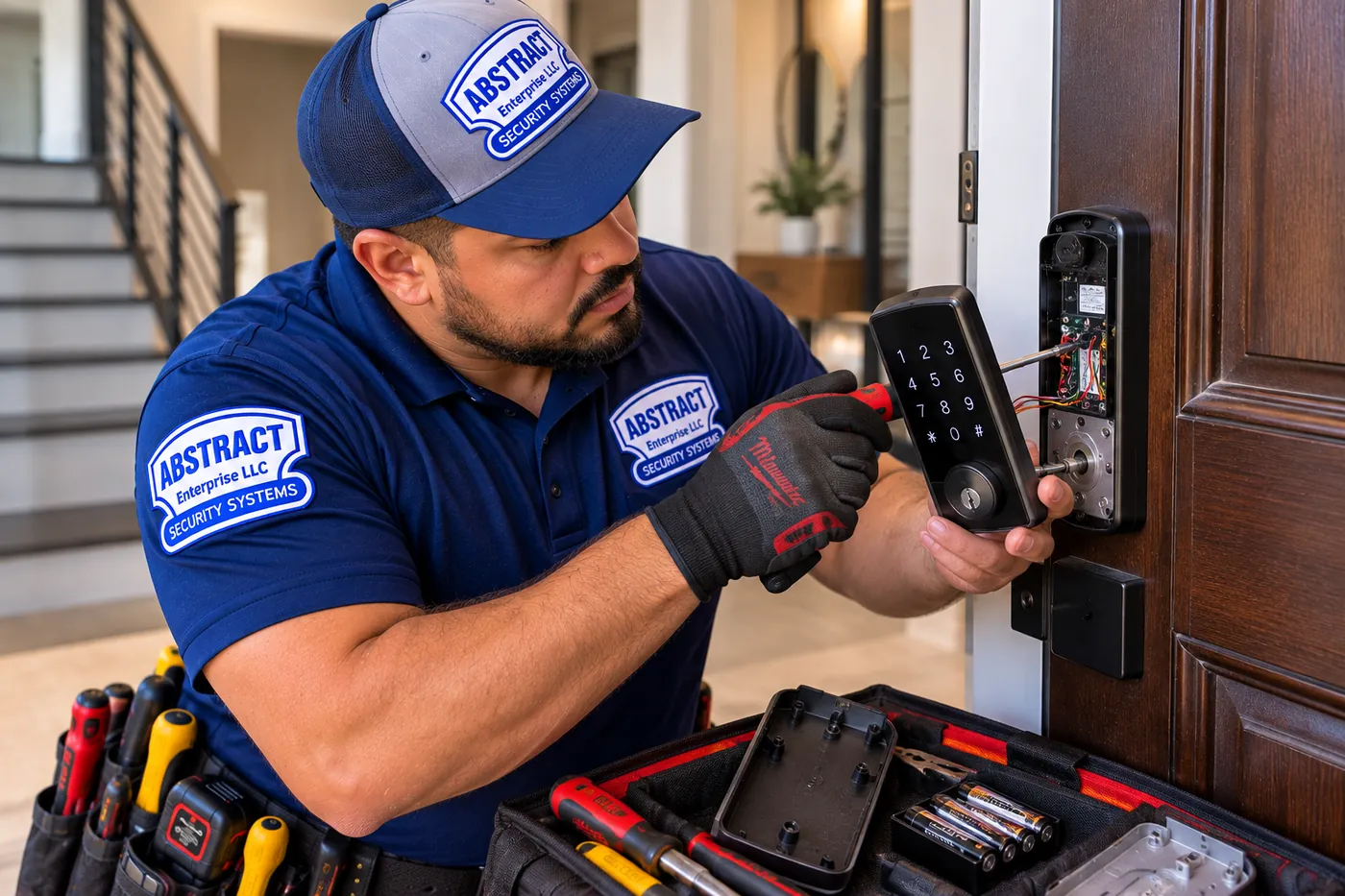
Replace the body of a mortise lockset with one that has the electronics inside the door, keeping the handleset look of an older or custom entry. Selected only after the existing case and backset are measured.
Motorised options supplied for specific multipoint systems and pivot doors, or handle-integrated keypads and readers from the door's maker. Where none exists, a separate reader with an electrified frame lock.
Weather-rated keypads and readers for vehicle and walk gates, wired to the gate operator or to an electric strike or magnetic lock with a power supply, battery backup and free exit on the inside.
Low-power mesh locks that reach the internet via a Thread border router and can appear in Apple, Google or Amazon homes at once. On long floor plans, plugged-in Thread devices relay the signal toward the far doors.
Built-in 2.4 GHz Wi-Fi for doors with good signal, or a small plug-in bridge near a Bluetooth lock. We place and test each one rather than assuming the router reaches.
Keypad locks that keep their codes without internet, or locks on longer-range radios, for pool houses and carriage houses beyond the reach of house Wi-Fi.
Door-position sensors that report a door opened without an unlock, and Z-Wave links to compatible alarm panels where the provider supports them.

We couldn't capture Google's AI Overview text from our build environment, so the claims below are the ones national cost sites and manufacturers publish and AI summaries tend to repeat. Each is set against what we find on properties up on the ridge.
The figure comes from national cost guides. Fixr's page, last updated in January 2025, gives $250 to $400 nationally with an average of $300 for a Wi-Fi lock and one accessory; Homewyse's per-lock estimate is lower still. These are honest averages for one lock on one ordinary door.
A Todt Hill job is almost never that. It is usually a gate keypad, four to eight house doors of different construction, one or two outbuildings, a network plan to reach them, and a list of a dozen people with different rights. The front door alone may be a mortise or pivot door that no $300 average contemplates.
So we price the property, not the lock: one flat quote after a free walkthrough of the gate, the house and the outbuildings. Where AESS publishes figures — keypad or reader with electric strike, strike work, setup-only visits — they are in the pricing table below at the Staten Island rate.
Manufacturers publish the doors their locks fit, and the ranges differ. Schlage lists its Encode Plus for doors 1-3/8 to 1-3/4 inches thick; Yale's Assure Lock 2 sheet runs to 2-1/4 inches. Both expect a bored deadbolt with a standard backset.
Custom and period doors on the hill regularly fall outside the first range, and many aren't bored for a deadbolt at all: they have mortise bodies, multipoint gear or pivot hardware. “Standard” is the exception on a hand-built front door, not the rule.
We measure thickness, backset and lock type at the walkthrough and recommend only locks whose published door range includes your door — or tell you it needs a different kind of hardware altogether.
Setup guides assume a router within sensible range. August asks for its bridge to sit 10 to 15 feet from the lock and to show full Wi-Fi bars where it's placed; Yale suggests a Thread border router within about 50 feet. Those numbers are easy in a compact house.
They're harder in a large house built into a slope, with stone walls, a garage a floor below, and a pool house across a wooded yard. Stone, grade and trees all stand between the router and the far doors, and the lock that keeps dropping offline is almost always the one at the edge of the signal.
We test every door and outbuilding with a phone before choosing how each lock connects, and we place bridges, border routers or mesh points where the test says they're needed rather than where the box suggests.
A smart lock is a good lock that never gets left open by accident and that records who used it. That's genuinely valuable. It isn't armour, and the burglary reports from the hill show why.
The February 2026 warnings for Todt Hill and Dongan Hills describe crowbars used on windows and a back door; a 2022 report described a stone thrown through back-door glass. In both cases the lock wasn't the part of the house that was attacked.
We fit locks with reinforced strikes, recommend door-position sensors so a forced door is reported, and say plainly when a door's real weakness is glass, the frame or the dark — problems for sensors, glazing, lighting and cameras, not for a lock.
Consumer guides often treat the gate as one more lock to add to the app. On a real driveway it's a separate system: a gate operator with its own controls, power, safety devices and manual release, or a walk gate with a strike or magnetic lock and its own power supply.
That means a gate keypad has to be compatible with the operator or strike it controls, must behave predictably in a power cut, and needs to be weather-rated, lit and mounted where a driver can reach it without getting out of the car. If it's also a way out of a yard, it must open from the inside without power or a code.
We price gate work from AESS's published single-door keypad-and-strike figure rather than as a residential lock, and we check the operator's paperwork before connecting anything to it.
Owners of landmark houses are sometimes told the hardware can't be touched. The city's own guidance is more nuanced: owners of a landmark need a Landmarks Preservation Commission permit before doing work, a Permit for Minor Work covers changes to significant protected features such as replacing doors, and simple repairs and maintenance don't need review at all.
For an inside-only retrofit, the door's protected exterior doesn't change; for a new exterior keypad or replacement hardware on a protected facade, the LPC is the authority to ask, and its decision — not ours — is the one that counts.
On a landmark house we start with the least visible option, help you describe the work if you choose to apply, and don't book exterior changes until you've confirmed what the Commission requires.
Smart-lock marketing often shows a homeowner unlocking the door by asking a speaker. The assistants themselves are more cautious: Google requires a security code for every voice unlock, and Alexa may ask for a voice PIN.
In a house with staff, visiting contractors and children, a spoken unlock PIN is a shared secret said out loud. It's also a route around the careful per-person, per-door code plan that makes a large-house system worth having.
We set voice up for locking and status by default, and enable voice unlock only on doors and for people you specifically choose, never on the gate or the main entrance.

Tell us roughly how many ways onto the property there are and who needs each one. We'll walk all of them on one visit and put the whole plan on one written quote.
Estate, period house, custom build or home office — tell us the gate, the doors and the people, and we'll ring back the same business day.
We'll call you back the same business day. If it's urgent, call us now at (347) 934-8335.
Seven steps, whether it is one heavy front door on Flagg Place or a gate, nine doors and a pool house on a private road.
On the phone we list everyone who comes onto the property — family, staff, service companies, patrol, guests — and which entrance each of them really uses.
Free walkthrough starting at the gate: operator and power, every house door, every outbuilding. We note landmark status and any ground work a gate cable would need.
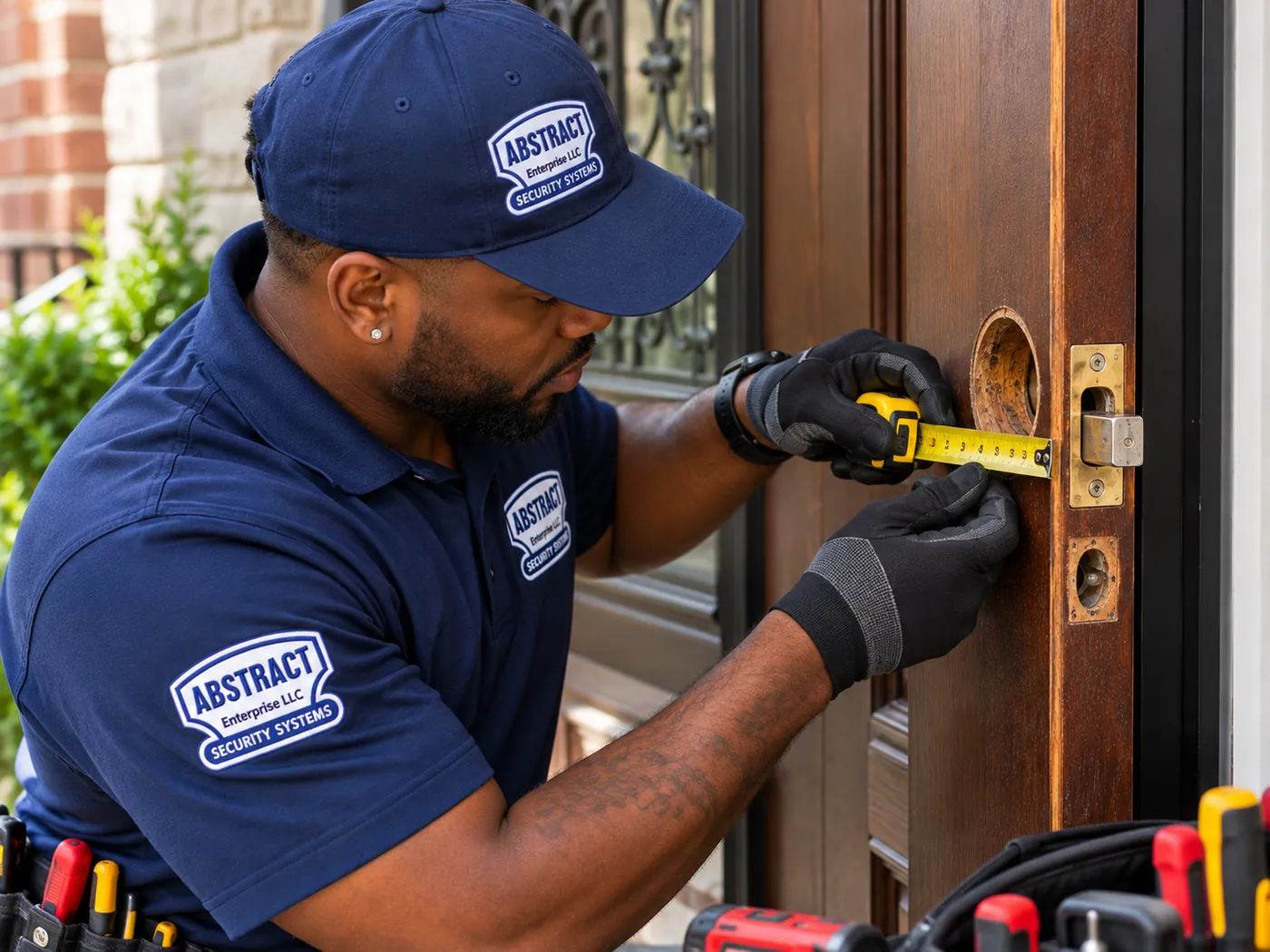
Inside trim comes off where needed so we can see bored, mortise, multipoint or pivot hardware, measure thickness and backset, and check hinges, strikes and glass.
A phone test at every door and outbuilding decides which locks use Wi-Fi, a bridge, Thread or a long-range radio, and where each bridge or border router goes.
A flat quote for the whole property, door by door, with the hardware for each and the network plan. Published AESS figures carry the Staten Island rate.
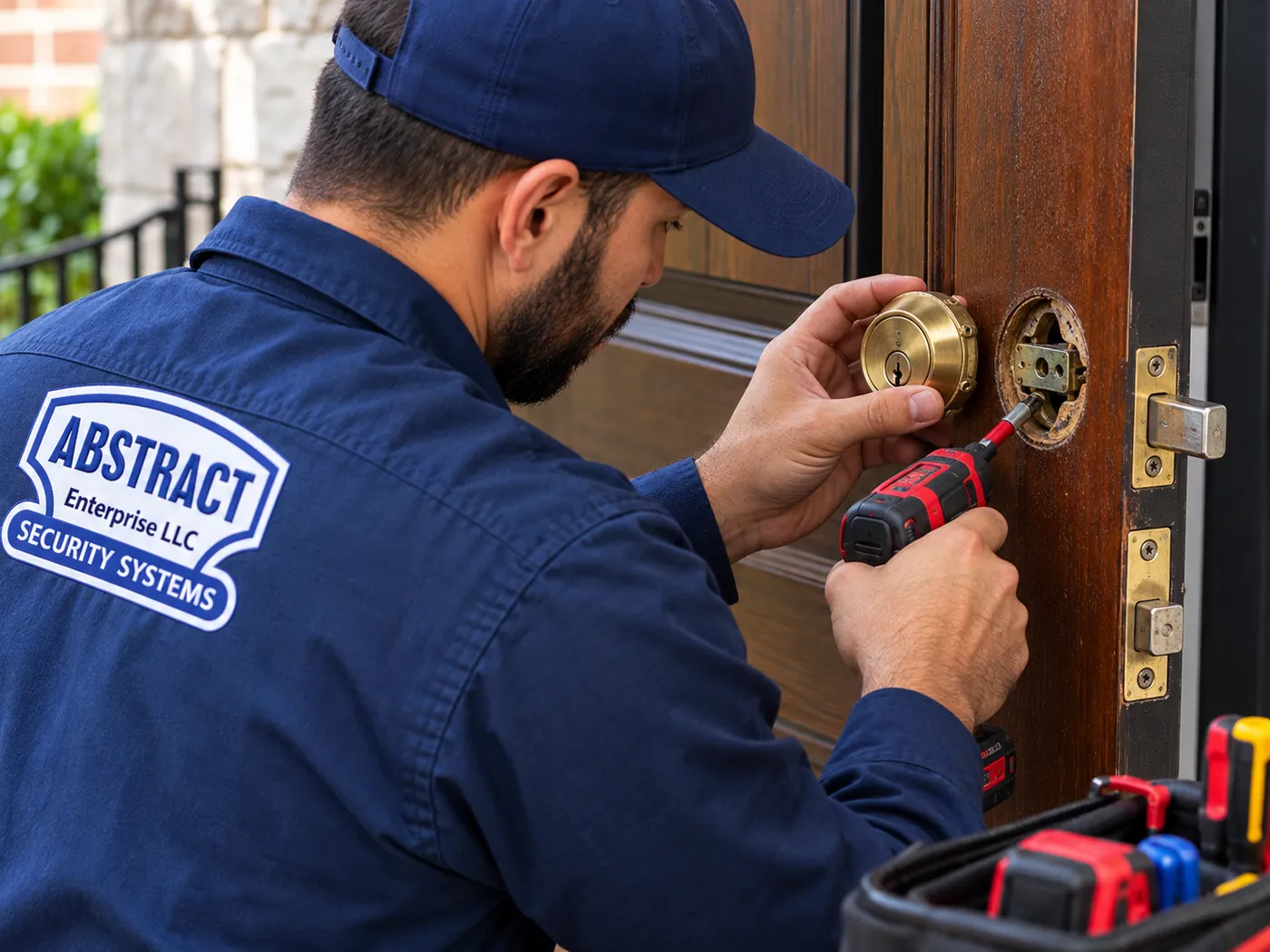
Hinges, strikes and closers set first; then locks, gate keypads and sensors fitted and sealed, bridges placed, and every lock tested remotely from mobile data.
Each person's code or fingerprint enrolled and tried at their own door, two adult administrators set up, and a written pack left with the access list, network map and outage plan.
Ernest Flagg's fieldstone estate at 209 Flagg Place, with its gatehouse and gate, and the small stone houses he built on the grounds such as Wallcot. Individual landmarks; neighbouring streets carry houses built as the estate was subdivided.
A Greek Revival house built around 1846 in Massachusetts, moved to the east side of the hill in 1931 and designated a landmark in 2007. The LPC report on it is the source for the hill's 409.8-foot summit.
Opened in 1740 at 2205 Richmond Road, at the southwestern foot of the ridge near New Dorp; 113 acres, with the Vanderbilt mausoleum by Richard Morris Hunt and grounds by Frederick Law Olmsted. Its name is one theory for the hill's.
A private school chartered in 1884, now on a 14-acre campus at 715 Todt Hill Road. School-run mornings on the hill are when the mudroom door gets the most traffic and is most often left unlocked.
About 2,800 acres of connected parkland across the island's central hills, including High Rock Park, LaTourette Park and Willowbrook Park, with the Greenbelt Nature Center at 700 Rockland Avenue. Wooded lots on its edges mean long distances between doors.
The golf and tennis club that Brick Underground's neighbourhood guide lists among the hill's amenities. Around it, houses on private roads are typical whole-property jobs.
We also serve the rest of the serpentine ridge and its edges — Emerson Hill, Dongan Hills, Lighthouse Hill, Grymes Hill, Manor Heights, Castleton Corners, Westerleigh, Willowbrook, New Dorp, Grant City, Richmondtown and Egbertville — along with every other neighbourhood on Staten Island and, over the bridge, the rest of New York City.

Todt Hill is priced as part of Staten Island, at the borough's 1.10 multiplier on the AESS Brooklyn base — there is no separate neighbourhood surcharge. Residential smart locks have no published AESS figure, because the doors on the hill vary too much; those are quoted flat after the free walkthrough. Every published figure below is shown at the Staten Island rate, exactly as on our Staten Island page.
| Item | Staten Island price | Scope and source |
|---|---|---|
| Smart locks on house doors and outbuildings | Quoted flat at free walkthrough | Includes door work, fitting, connection, code and fingerprint setup for every door on the quote |
| Single-door keypad or fob reader with electric strike | $1,650–$2,750 installed | Walk gate, home-office entrance, shop or shared door; AESS figure $1,500–$2,500 at the Brooklyn base, ×1.10 |
| New electric strike on an entry door | $275–$495 | Strike supplied and fitted as part of an entry upgrade; AESS figure $250–$450 at base, ×1.10 |
| Failed electric strike repair | $325–$534 | Door that buzzes but won't release; AESS figure $295–$485 at base, ×1.10, rounded half-up |
| Setup-only visit (app, bridge, codes; no hardware change) | $225 first hour, then 30-minute blocks | Staten Island setup-only rate |
| Service and callback rate | $195/hr, 3-hour minimum ($585) | After-install service calls; not charged on the initial installation |
For comparison only, Fixr's national data (updated January 2025) puts a single smart lock installation at $250 to $400, average $300. That is a national figure for one lock, not an AESS price.
Full terms — including 50% deposit, one-year parts-only warranty on AESS-supplied products, and the late-fee schedule — are set out in the service agreement.

Quoted flat at walkthrough
One smart lock on the door the household uses most — usually the mudroom or garage-entry door — with door work, auto-lock, personal codes or fingerprints, a signal test and a written access list.
Quoted flat at walkthrough
Every regularly used house door on one plan, including heavy or mortise front doors where hardware exists, staff and family codes by door and schedule, a network map, and two adult administrators.
$1,650–$2,750
A weather-rated keypad or fob reader with an electric strike on a pedestrian gate or a home-office entrance, with a power supply, battery backup and free exit inside. Staten Island pricing.
Already chose the hardware, or the door maker supplied it? We fit it, set up the door, connect it and enrol everyone. Labour is quoted flat at the walkthrough, and if the hardware doesn't suit the door we tell you before anything is cut. App, bridge or code work alone, with no hardware, is the $225 first-hour setup-only rate.
Send a photo of each door from both sides and of its edge, plus one of the gate keypad or operator. We'll tell you which hardware is likely to work before we visit.
Todt Hill has an unusual number of individually designated houses for a neighbourhood of private homes. Ernest Flagg's Stone Court on Flagg Place, with its fieldstone mansion, gatehouse and gate, is one; several of the small stone cottages Flagg built on the estate, such as Wallcot at 285 Flagg Place, are others. The Gillett-Tyler House at 103 Circle Road joined the list in 2007. Further down the ridge, the Vanderbilt mausoleum and parts of the Moravian Cemetery were designated in 2016.
For an owner, designation changes the order of operations on a front door. New York City's business portal summarises the rule: owners of a landmark or of a building in a historic district need a Landmarks Preservation Commission permit before doing any work. Work that changes significant protected features without needing a Department of Buildings permit — replacing windows or doors is the example given — falls under a Permit for Minor Work, which has no fee; interior work that needs a DOB permit gets a Certificate of No Effect; and simple repairs and maintenance, like repainting a door the same colour, need no review.
That gives a clear way to plan. We start with what changes nothing outside: an inside-only retrofit motor on an existing single-cylinder deadbolt, a smart lock on a rear or service door that isn't part of the protected facade, or a keypad at the gate rather than on the historic door. Where an owner wants new exterior hardware on a protected door, that is a question for the Commission, and we don't book it until the owner has its answer.
A gate keypad needs power and, unless it is wireless, a cable back to the gate operator or the house. On a flat suburban lot that is a short trench beside the drive. On Todt Hill it may mean crossing a steep, wooded slope with rock just under the surface, and the land itself is regulated.
Zoning Resolution §105-941 maps Emerson Hill, Dongan Hills, Todt Hill and Lighthouse Hill into Special Natural Area District-1, and the Department of City Planning explains that the district, created in 1975, protects rock outcrops, trees and forests, wetlands and water features, and steep slopes, with City Planning Commission authorisation needed when an applicant seeks to modify a significant natural feature. A cable trench is small work, and we are not the authority on whether a given trench needs anything; but it is exactly the kind of question an owner on the hill should settle before anyone digs near a mature tree or an outcrop.
So we design gate work to disturb as little as possible. Where the gate operator already has power at the pillar, the keypad usually wires to it there with no new trench at all. Where a separate keypad post is needed, we look for an existing conduit, a path already cut for lighting or irrigation, or a wireless keypad that talks to a receiver at the operator. And where a new run is unavoidable, we route it along the drive's edge, clear of tree roots and rock, and tell the owner beforehand so they can check with their architect, landscape designer or the Department of City Planning if the lot is subject to an authorisation.
Hardware is the visible part of a smart lock job on the hill. The part that decides whether it works in year three is the list of people. We build it with you before installation and leave it in writing afterwards, and we suggest keeping it as carefully as you would keep the alarm codes.
| Person or company | Typical access | How we usually set it |
|---|---|---|
| Adults of the household | Everything, any time | Phone credential and personal code; both are administrators; alerts as they prefer |
| Children | Gate and family door | Fingerprint or personal code; arrival notifications to parents if wanted |
| Grandparents and close family | Gate and one or two house doors | Personal code, large backlit keypad, no app needed |
| Housekeeper, nanny, house manager | Gate and service door during working hours | Scheduled personal codes; alert for use outside the schedule |
| Landscaping and pool companies | Gate, pool house or a garage bay; not the house | Company code on outbuildings only, seasonal schedule |
| Patrol company | Gate; one house door only if agreed | Named company code, notifications on every use |
| Contractors during a project | Gate and the work-area door, project dates only | Time-limited code that expires on the scheduled end date |
| Weekend guests | Gate and guest door for their stay | Code that starts and ends with the visit |
Three habits keep the list honest. Every person or company gets their own code, never a shared one, so the history tells you who actually came in. Every code has an end date or a reason to exist, reviewed when the seasons change. And when someone leaves, their code comes off the same day — with the gate, the house and the outbuildings on one plan, that is one change rather than a hunt through three systems.
On a property this size, keyless doors rarely arrive alone. Most Todt Hill households pair smart locks with a camera or intercom at the gate and an alarm that knows when a door is forced; most home offices pair them with a reader on the client entrance. These are the related services we offer across Staten Island.
Readers, keypads and controllers for walk gates, home-office entrances and institutional doors.
A call button and camera at the gate pillar, so a remote open is for a face you know.
Door-position and glass-break sensors that report a forced door the lock can't see.
Cameras covering the drive, the back doors and the dark stretches of a wooded lot.
A doorbell camera at the service door, where couriers and staff actually arrive.
Access points and outdoor links so the far doors, the pool house and the gate all have signal.
Locks, lights, shades and scenes working together, with sensible rules about who controls what.
Power supplies, gate cable and the wiring behind keypads and strikes, under one NYS licence.
For the gate station a previous owner left behind that no longer rings the house.
How our installers approach a large property on the hill — general working practice, not a story about any particular customer or house.
We park at the gate, not at the door. The first thing we want to know is how a person who isn't family gets onto the property: what the gate keypad does, who knows its code, whether anybody remembers who installed it. On older properties the honest answer is often that nobody does, and the gate code has been the same through two owners.
Then we walk the house the way the household lives in it, not the way the architect drew it. The formal front door is often the quietest door on the property. The door by the garage, where children, staff and shopping come in, is the one with the worn threshold, and it is the door that most needs the best lock. We take the inside trim off the front door anyway, because a heavy entry door can hide a mortise case, a multipoint gearbox or a pivot lock, and that discovery changes the whole hardware list.
Last, we stand at the far doors with a phone: the terrace door on the lower level, the pool house across the lawn, the carriage house down the drive. Stone, slope and trees eat signal, and a lock that only works when you're standing beside it isn't a smart lock. Whatever we find, the plan we leave has three parts on paper — the people, the doors and the network — and on every door, getting out still takes one turn of the hand.
Not per se. Todt Hill is priced at the same Staten Island rate as the rest of the borough, with no neighbourhood surcharge. What changes the quote is the doors themselves: a mortise, multipoint, pivot or extra-thick door takes more hardware and time than a standard bored door, and far-away doors may need a bridge or border router. Several similar doors done on one visit are usually cheaper per door than one door done alone.
The walkthrough can usually happen within a few days. The installation date depends on the hardware: standard smart deadbolts are often available quickly, while mortise, multipoint, pivot-door or gate hardware may need to be ordered for your exact doors. We give you a realistic date with the written quote, and we can phase the work so the busiest doors go keyless first.
Just a way through the gate on the day and a note of any road or association rules about contractor vehicles and hours. A temporary gate code that expires at the end of the visit is ideal, and it doubles as a first test of how the gate keypad handles time-limited codes. If someone has to meet us at the gate instead, let us know when we book.
Yes. A keypad lock on the pool house lets guests reach the changing room and bathroom with their own code while the main house stays locked. Because pool houses are often far from the router, we choose a lock that keeps its codes offline or connects by bridge or long-range radio after a signal test, and we can schedule the codes for the swimming season only.
On locks with a fingerprint reader, yes. We enrol two fingers per child where the lock allows, so a cut or a cold hand doesn't lock them out, and we give each child a backup code as well. Small fingers and growing hands can read less reliably, so we test each enrolment at the door with the child before we leave and show you how to re-enrol later.
Most lock apps let you disable or schedule individual codes, and some have a holiday or privacy mode that suspends all codes except the owners'. We set the household up so pausing every non-family code takes a few taps, and leave the patrol or house-sitter code active if you want someone checking the property while you travel.
Not if the work is done carefully. We mask the face of the door around the work area, drill from both sides so the wood doesn't splinter, and protect the finish under the lock's escutcheons. Where old hardware leaves a mark or a hole the new lock doesn't cover, we tell you before we start and can fill and touch up wood, or suggest a finisher for a full refinish.
Yes. We first work out what it still controls, because an old keypad is sometimes wired into the gate operator's open input. Then we either remove it and make the wiring safe, or replace it with a new keypad on the same cable. Either way, any codes it held stop working, which is often the main reason owners ask.
A written handover pack: the access list by person and door, the network map showing how each lock connects, the model and battery type of every lock, the outage plan for the gate, and short instructions for adding, scheduling and removing codes. We set the house manager up with the permissions you choose, never owner-level control unless you want that, and walk them through each task once.
Todt Hill is one of our neighbourhood-level smart lock pages. The Staten Island smart lock installation page covers the rest of the island — two-family houses, basement units and waterfront doors.
Smart lock installation in Throgs Neck, Bronx · Chelsea smart lock installation · West Brighton, Staten Island
AESS smart lock installation across NYC · Manhattan · Brooklyn · Queens · the Bronx · Staten Island
Smart lock installation in the Hudson Valley · Westchester · Rockland · Orange · Putnam · Dutchess · Ulster
Cameras, intercoms, alarms and access control each have their own pages in the full service directory. New to us? Start at the Abstract Enterprises Security Systems home page or read about our company.
Every local figure, rule and report quoted above comes from a source we read while writing this page.
Gate keypad dead after a storm, front-door motor stalled against a settled door, app showing every lock offline after a router change? Call (347) 934-8335. We book the next open 2-hour window, and most power, pairing, alignment and code faults are sorted within one to two hours of arrival. Try the keyed override or the gate's manual release first — it's why we always plan one.
Abstract Enterprises Security Systems · 1282 Troy Ave, Brooklyn, NY 11203 · (347) 934-8335 · WhatsApp (718) 679-0359 via wa.me
NYS Low-Voltage Licence #12000287431 · 100% Licensed & Insured · Same-Day Estimates · Rated 4.7★ from 201 Google Reviews
Hardware an owner buys directly is covered by its maker. How AESS-supplied products are covered is explained on our warranty page.
This page explains how New York City zoning, landmark and building rules can affect smart lock work on Todt Hill properties; it is not legal advice, and the agencies named are the authorities on their own rules. Page reviewed and updated October 17, 2026. Changelog: first publication of the Todt Hill smart lock installation page.