Most intercoms on this island do not hang in a forty-unit lobby. They sit beside the shared front door of a two-family house, on the gate post of a townhouse complex, at the foot of a stair that was raised after Sandy, or on a new rental building by the ferry that calls residents through an app. Before anything is opened, we settle who owns that door and who can sign off on the work — the homeowner, the association, the managing agent — then trace the fault from the transformer to the strike and put the entry back in service with a written price.
Last reviewed October 18, 2026 by Anwar Timothy, owner (NYS low-voltage license #12000287431) · Island jobs are run from our Troy Avenue shop in Brooklyn
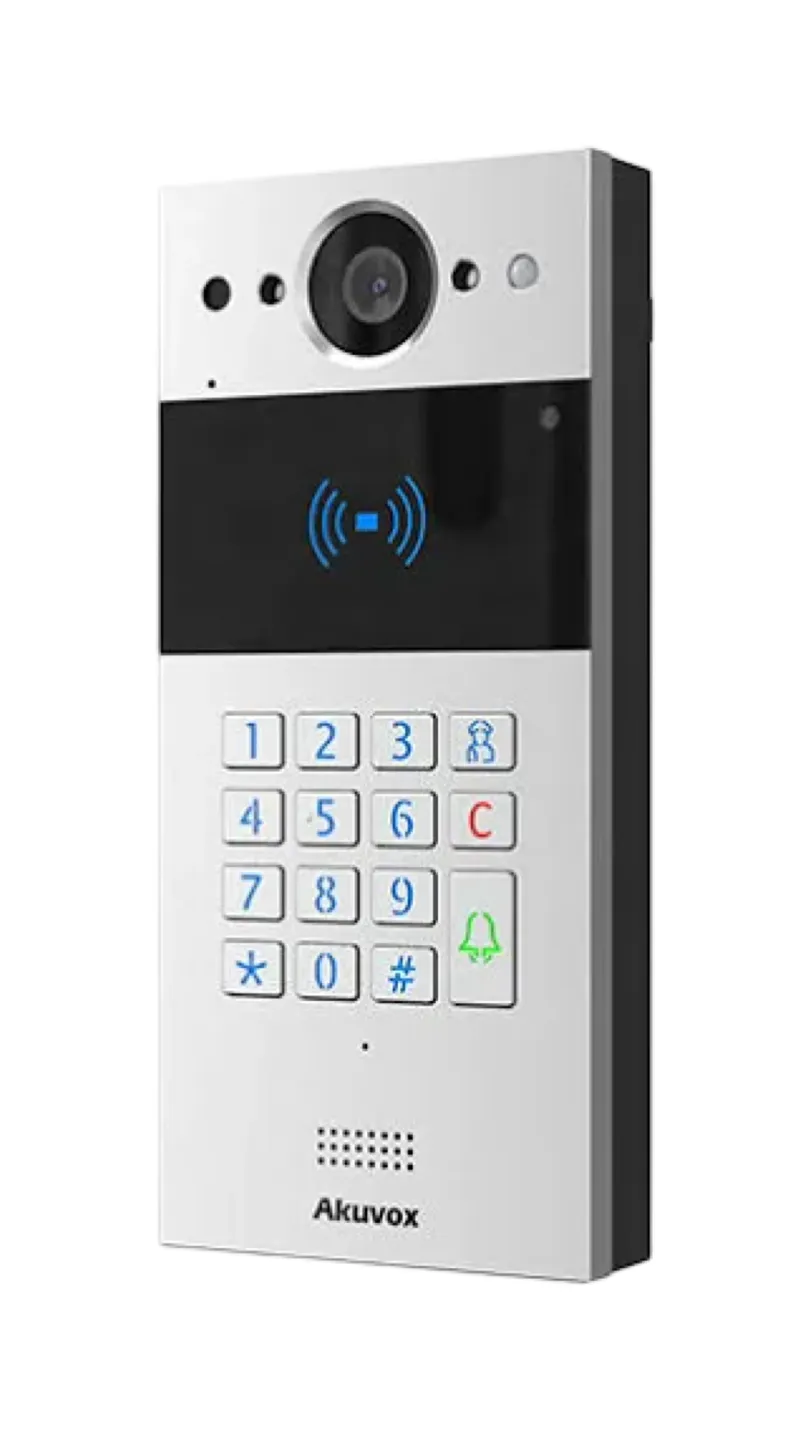
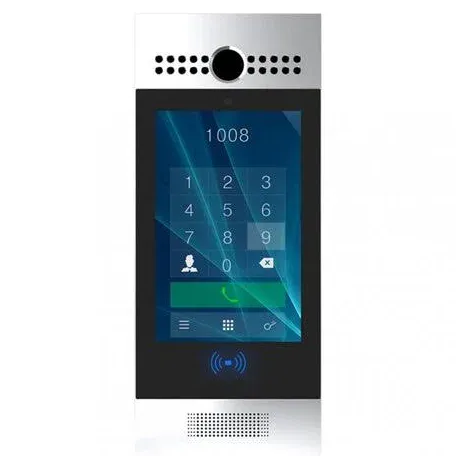
Manufacturer product photo (not an installed unit): a silver Akuvox door station with a camera at the top, a card-reader symbol, a numeric keypad with a green bell call key and a speaker grille. Panels of this kind replace worn button-matrix units in island walk-ups and townhouse vestibules.
Staten Island Intercom Repair
Say what the entry does when a visitor presses the button — a written price comes back the same business day
✅
Request Sent!
A technician will phone you about the Staten Island intercom the same business day.
25+
Years Experience
✓
Same-Day Estimates
100%
Licensed & Insured
4.7★
201 Google Reviews
An island intercom quote starts with two photos and one sentence. Photograph the outdoor panel straight on, then the indoor station or monitor, and tell us what happens when someone presses the button: silence, a ring with no voice, a voice with no door release, or a door that opens for some households and not others. Text it all to (347) 934-8335 and you will hear the likely fault and the price band before a van is booked.
Diagnostic visit on Staten Island: $165–$330, credited to the repair when you approve it that day
Open 8 AM–8 PM daily; you get a two-hour window for the technician to arrive (NYS license #12000287431)
Written price before any part is ordered; no monthly contract required
The borough's housing decides what a broken intercom looks like. The Citizens Housing and Planning Council's 2024 housing-stock study found 83 percent of Staten Island's homes in one- and two-family buildings, a share no other borough comes near. So the typical call here is not a lobby panel with sixty names on it. It is a two-family house in Great Kills where the upstairs bell went quiet, a semi-attached pair in Dongan Hills sharing one transformer in a basement, or a converted Victorian on a New Brighton hill where three households answer the same front door. The wiring is short, but the equipment is often thirty years old and the owner is the one who pays for it.
The other island entrances belong to someone else, and that changes who can call us. Townhouse condominiums in Annadale, Huguenot and Eltingville each run under their own declaration, with an association that usually owns the roads, gates and shared entry hardware. Along the North Shore, new rentals such as Urby on the old Stapleton Homeport, planned as 900 apartments, and Lighthouse Point beside the St. George ferry terminal use app-based video panels run by a management office. And nine NYCHA developments — Berry, Cassidy-Lafayette, Mariners Harbor, New Lane Area, Richmond Terrace, South Beach, Stapleton, Todt Hill and West Brighton — have entry doors that only the Housing Authority repairs. In 2022 the City Comptroller's auditors found the share of unsecured entrances on Staten Island public housing up 34.9 percent since 2018, with every entrance lock at Cassidy-Lafayette's senior buildings broken, and residents telling them doors were propped open because intercoms and release buttons did not work.
Where the state's intercom law does apply, the paperwork follows. Section 50-a of the Multiple Dwelling Law requires a two-way intercom with a door release at the self-locking main entrance of every class A building with eight or more apartments built or converted after January 1, 1968, and makes failing to install and maintain it a misdemeanor. HPD writes the failure as a Class B violation; one Richmond Terrace building in West Brighton still carries an order, issued in October 2014, to "properly repair the broken or defective inoperative intercom with return buzzer system." The island has fewer of these buildings than the other boroughs, which means an owner with a single eight-family on Bay Street or Castleton Avenue often has no super and no contractor on call when the panel dies.
Then the shoreline. After Hurricane Sandy the city's Build It Back program worked with 1,982 Staten Island homeowners, and across the city 838 houses were repaired and lifted above the base flood elevation. On a lifted house in Midland Beach, Ocean Breeze or New Dorp Beach the front door moved up a storey, so the door station that used to be at hand height on the porch now sits by the parking space under the house, and the transformer that powered it may still be in the space built to take water. Salt air along Father Capodanno Boulevard and the Kill Van Kull pits aluminum faceplates and greens the screw terminals behind them. Owners repairing an entry often want to see who is at it as well, and the same visit can add a video doorbell on a Staten Island front door or tie the panel into the building's cameras.
Staten Island facts that shape an intercom repair
Houses, not lobbies: the Citizens Housing and Planning Council counted 83 percent of Staten Island homes in one- and two-family buildings in 2024, which is why most island intercoms answer for one or two households.
Public-housing entrances got worse, not better: the Comptroller's 2022 review of 262 NYCHA developments found 57.9 percent of entrance doors open or with broken locks, up from 23.5 percent in 2018; on Staten Island unsecured entrances rose 34.9 percent.
The intercom requirement is state law: Multiple Dwelling Law §50-a covers class A buildings of eight or more apartments erected or converted after January 1, 1968, and older buildings when a majority of tenants request it in writing.
HPD classes a dead intercom as a Class B (hazardous) condition, worded as an "inoperative intercom with return buzzer system" — one such order on Richmond Terrace has been open since 2014.
Sandy recovery reshaped the shore blocks: Build It Back served 1,982 homeowners on Staten Island and raised 838 homes across the city above base flood elevation, moving doors, stairs and doorbell wiring up with them.
Telephone-entry call boxes face a line change: Verizon has asked the FCC to retire copper phone service in parts of New York starting on or after November 30, 2026, with each customer told its own date.
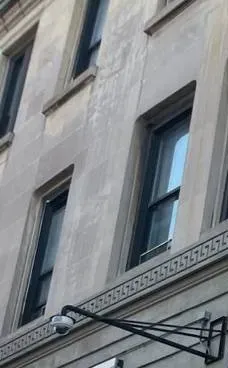
Real AESS photo from a job in Brooklyn, not Staten Island: an older stone apartment facade with tall windows, a carved Greek-key band and a camera on a steel arm. Buildings of this age on the North Shore often still run their original multi-wire intercom up the stair hall.
Need Intercom Repair on Staten Island Today
A tenant locked out in the rain, an elderly parent who cannot get down the stair to open the door, a gate stuck shut on a Sunday: call (347) 934-8335. Once a technician is on site, a typical island repair — a burnt transformer, a seized strike, a station with a broken hook switch — is back in service within one to two hours. If the cure turns out to be a new panel or a new cable run, the door is made usable that day and the bigger job is booked as a second visit. When cameras at the same entrance are failing too, our Staten Island camera repair crew can come on the same trip.
Four checks worth doing before you phone
Does anything light up? A dark panel and dark indoor stations usually point to power: a tripped breaker, an unplugged plug-in transformer in the basement, or a blown fuse on the power supply.
Does the strike hum or click? Stand by the door while someone presses release. A hum with no opening is a jammed or misaligned strike; total silence is wiring, the relay or the power supply.
Is it every station or just one? One silent apartment points to that station or its run; everyone silent points to the panel, the power or the shared cable.
Was anything done to the building lately? Painting, new carpet, a new door, a plumber in the stair hall or a storm with water in the basement explains a large share of the faults we find.
A same-day visit is about getting people through the door safely before it is about the perfect fix. If a part has to be ordered, the technician leaves the entrance in a known, safe state — the strike set to locked with keys confirmed for every household, a temporary code on a keypad, or a gate held open by the manager's decision — and writes down exactly what was done, so nobody is surprised at midnight. What we will not do is jam a door open or bypass a lock without the owner's say-so, because in a building covered by §50-a interfering with the door's operation is itself an offence under the same section.
Write the answers down and read them to us. They usually narrow the fault to one part before anyone arrives, which keeps the first visit short.
What We Install
Intercom Repair Services in Staten Island
These are the repairs island owners, boards and managers ask for most. A single visit often combines two or three of them, because a dead entry rarely has only one weak part.
🏠
Two-Family Door Stations
Upstairs and downstairs bells, the shared outdoor panel and the strike on the common front door, traced as one circuit so a fix on one floor does not break the other.
🚪
Strikes, Releases and Closers
Electric strikes that hum without opening, release buttons that do nothing, and closers that leave the door resting on the latch so the lock never catches.
⚡
Transformers and Power Supplies
Burnt plug-in transformers, failed rectifiers and corroded power-supply terminals — on raised houses, moved up out of the flood-prone ground floor.
🏢
Walk-Up and Elevator-Building Panels
Button-matrix and keypad panels on North Shore buildings of eight or more apartments, repaired and tested apartment by apartment so the §50-a requirement is met.
🚧
Gate Panels and Call Boxes
Entry panels on townhouse-complex gates and parking entrances, including telephone-entry units that dial residents over a phone line or a cellular module.
📱
App-Based Video Intercoms
Cloud panels whose screen works but whose calls never reach residents' phones: network, account, push-notification and door-relay faults traced in order.
🧵
Riser and House Wiring
Cables nicked by painters, stapled by carpet layers or cut during a renovation, found with a tone tracer and repaired or replaced floor by floor.
🌊
Shore-Grade Panel Replacement
Faceplates pitted by salt air near the Kill Van Kull or the East Shore beaches, swapped for stainless or sealed panels with treated terminals.
📋
Directory and Code Updates
Names, apartment numbers, entry codes and fobs updated after turnovers, so the panel matches who actually lives behind the door.
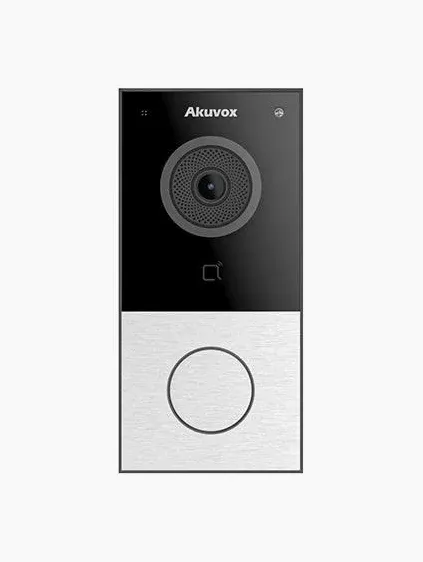
Manufacturer product photo (not an installed unit): a slim Akuvox video door station with a round camera lens above a single round call button. One-button stations suit the side door of an island house; a two-family front door needs one button per floor.
Building Specialists
Intercom Repair for Staten Island's Architecture
Six kinds of property cover nearly every intercom we open on the island. Each one fails in its own way, and each one has a different person who can say yes to the repair.
Up-and-Down Two-Family Houses
Great Kills, Eltingville, Bulls Head, New Springville. One family on each level, a shared front door with two buttons, and the transformer usually on a basement joist beside the electrical panel.
Semi-Attached Pairs
New Dorp, Dongan Hills, Charleston, Rossville. Two houses on a party wall, sometimes wired by the same builder to one supply, so a fault on one side can follow the cable next door.
Raised and Rebuilt Shore Houses
Midland Beach, Ocean Breeze, New Dorp Beach, Oakwood. The door is now at the top of a stair, and anything left at the old porch height sits in the space meant to flood.
Townhouse Condominium Complexes
Annadale, Huguenot, Eltingville. Rows of attached homes under one declaration, with a gate or vestibule panel owned by the association and a board that approves the spend.
North Shore Walk-Ups and Victorians
St. George, Tompkinsville, Stapleton, New Brighton, West Brighton, Port Richmond. Older multi-family buildings and houses divided into apartments, some inside the St. George/New Brighton Historic District.
New Rental Buildings
The Bay Street corridor and the Stapleton waterfront. App-based video panels, fob readers and package rooms run by an on-site or off-site management office.
How the repair changes from one building type to the next
Two-family and semi-attached houses. The wiring is often the original two or three conductors stapled along basement joists, joined at a terminal strip near the transformer. We test the transformer's output under load, not just at rest, because a tired unit can show the right voltage until the strike draws current. When the upstairs and downstairs stations share a common wire, we label both runs before changing anything so the second household is not knocked out by the first household's fix. Owners who rent one floor should know that anything they change on the shared door affects the tenant's access too.
Raised shore houses. The decision is where things go now that the house has moved. The door station belongs beside the door at the top of the stair, at a height a visitor standing on the landing can reach; a second, lower button at the stair foot is a choice, not a necessity. The transformer, any power supply and any recorder move up to the living floor, and cable that must pass through the flood-resistant ground level goes in sealed conduit with the entry hole above the design flood elevation.
Townhouse complexes. Gates and shared vestibules often run on a single controller in a meter room or a pedestal by the gate. We start there, because a dead controller looks the same at every unit. The association's management company holds the codes and the account; we ask for a contact before the visit so the panel can be programmed while we are on site rather than on a second trip.
North Shore walk-ups and Victorians. Older buildings may still have a multi-wire system with one conductor per apartment running up the stair hall. Those cables live under paint, behind baseboards and inside old dumbwaiter shafts, and most dead stations come from renovation damage rather than worn-out electronics. In the historic district, a replacement panel on a street-facing entrance is chosen to fit the existing opening and finish, so the work stays a repair rather than a new installation that changes the facade.
Entrances facing the water. On the East Shore beach blocks and along the Kill Van Kull, salt carried on the wind settles on every outdoor panel. Aluminum faceplates pit and lose their lettering, buttons stick, and behind the plate the screw terminals turn green until a call drops in and out. We open the panel before judging it: if the board and terminals are clean and only the face is worn, a new faceplate and button set is enough. If corrosion has reached the board, the honest repair is a sealed or stainless panel in the same opening, with the cable entry sealed from above so water runs off rather than in, and a hood where the wall gives no shelter.
New rental buildings. Here the hardware is rarely the problem. Most faults sit in the network switch, the internet connection, the cloud account or the door relay settings, and some are as simple as a resident's phone blocking notifications. We work with the management office's admin login, document every change, and leave the panel on the same platform unless the owner asks to switch.
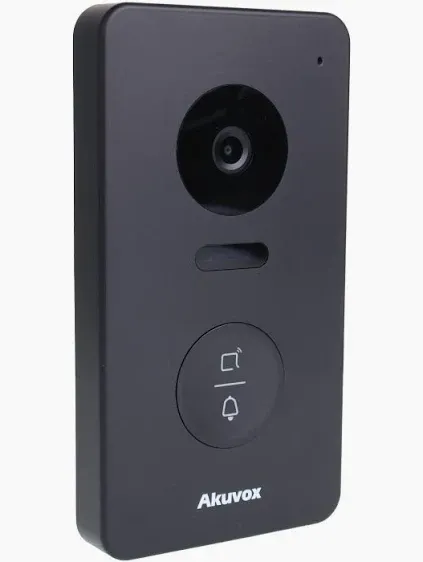
Manufacturer product photo (not an installed unit): a black Akuvox video door station with a camera lens, a narrow window and a call button marked with a bell. A surface-mounted unit like this is the kind that moves up to the elevated door of a lifted shore house.
Commercial Intercom Repair
Business Intercom Repair in Staten Island
Island businesses mostly need a door that lets the right person in without a staff member walking to it every time: a back door for deliveries, a suite entrance for patients, a vestibule after hours. These are the corridors our commercial intercom calls come from.
Bay Street and St. George
Shops and offices with apartments overhead line Bay Street from the ferry, where Empire Outlets covers 350,000 square feet, south through Tompkinsville and Stapleton, a corridor rezoned by the City Council in 2019.
Hylan Boulevard
The longest street in New York City, lined with medical suites, dental offices and professional buildings whose entrances need a buzz-in door for patients and a release at the front desk.
Seaview Avenue
Around the hospital campus at number 475, practices and clinics run their entrances from a reception desk, so a slow or failed release backs patients up on the sidewalk.
Forest Avenue and Victory Boulevard
Storefronts with apartments overhead and a side or rear door for deliveries, where one buzzer serves the shop and the tenants above share another.
Lighthouse Point and the Waterfront
Mixed-use projects by the ferry, including Lighthouse Point with more than 100 apartments, a hotel and retail, where residential and commercial entrances run on separate systems.
Rules that come with a commercial or multi-family entrance
Eight or more apartments means a working intercom is a legal duty. Under Multiple Dwelling Law §50-a the owner must install and maintain voice communication and a door release from each apartment at the main self-locking entrance; mixed-use buildings with apartments upstairs are included.
Tenants can report a broken buzzer through 311. The city's Apartment Maintenance Complaint covers "doorbells, buzzers, or intercoms that are broken or missing," both inside apartments and in public areas.
New 120-volt power is an electrician's job. Our NYS low-voltage license covers the intercom, the strike and the low-voltage wiring; a new outlet or circuit for a transformer is done by a licensed master electrician under a Department of Buildings permit.
Below the flood line, the building code limits what goes where. On houses and buildings in the city's flood zones, Appendix G of the building code asks for equipment at or above the design flood elevation, or built to keep water out.
Historic-district entrances follow the Landmarks rules. In the St. George/New Brighton Historic District, designated in 1994, work that changes a street-facing facade can need Landmarks Preservation Commission review, so a replacement panel is chosen to fit the existing opening and finish.
Exits must still open from inside. Whatever locks the door from the street, the egress side has to release without a key, a code or a call — a strike or a maglock is wired so the inside lever or a request-to-exit device always lets people out.
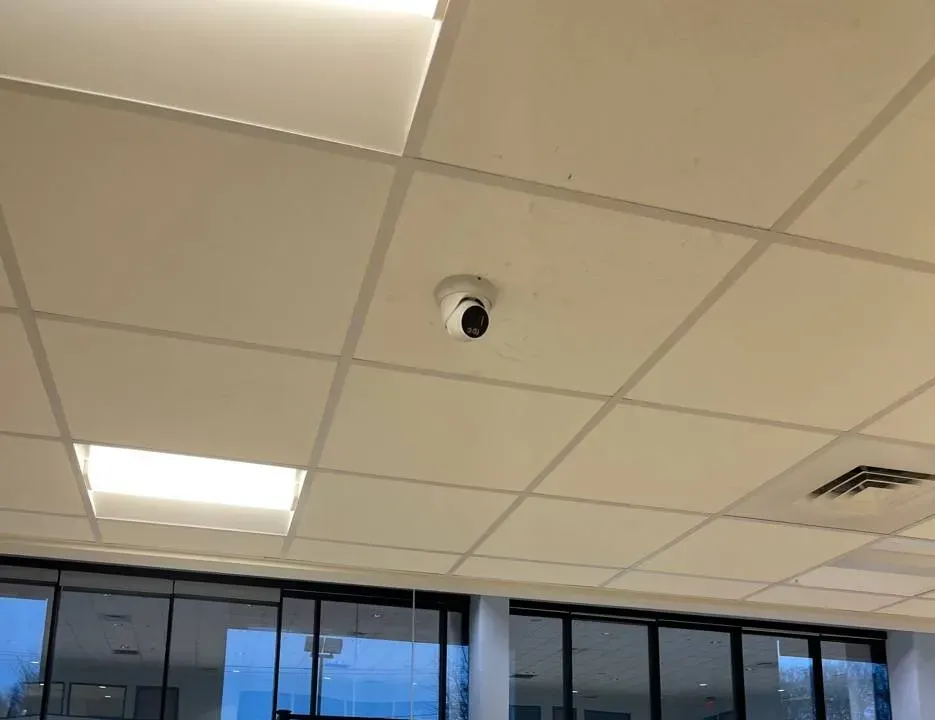
Real AESS photo from another job, not on the island: a white dome camera on a drop ceiling between light panels, above a glass entrance wall. Office and medical-suite entries on Hylan Boulevard and Seaview Avenue often pair a buzz-in door with a camera like this.
Your Questions Answered
Intercom Repair in Staten Island: Questions Answered
These are the questions island homeowners, association boards, tenants and building managers bring us, grouped by what sits behind them: who has the right to order the work, two-family houses, houses lifted after Sandy, older walk-ups, the newer app-based buildings, and the phone line that still runs many gate call boxes.
Who Owns the Door Decides Who Calls Us
One owner in our townhouse complex wants the gate fixed today, but the board has not voted — what can happen in the meantime?
A safe, temporary arrangement can happen right away; the permanent repair waits for whoever is allowed to pay for it. In most island townhouse communities the gate, the vestibule panel and the controller belong to the association under its declaration, so one unit owner cannot sign for a new panel any more than they could repave the road. What an owner or the managing agent can usually approve on the spot is a diagnostic visit and a measure that keeps people moving: a gate held open during the day by the manager's decision, a temporary keypad code for residents, or a strike set to stay locked with keys handed out while a part is ordered. We write up the fault, the price and the options on one page that the manager can circulate to the board by email, which is usually what gets a vote scheduled. Once the board approves, the repair is booked against the association, not the owner who called.
I live in a NYCHA development on the island — can I hire a private company to fix our lobby intercom?
No, and you should not have to pay for it. Entry doors, locks and intercoms at Berry, Cassidy-Lafayette, Mariners Harbor, New Lane Area, Richmond Terrace, South Beach, Stapleton, Todt Hill and West Brighton Houses are NYCHA property, and only the Housing Authority or its contractors can work on them. NYCHA asks residents to report building repairs, including broken lobby doors and locks, to its Customer Contact Center at 718-707-7771 or through the MyNYCHA app or website, which creates a ticket you can track. Keep the ticket number, note the date, and if neighbors are affected ask them to file too, because a pattern of tickets is harder to close without a repair. The Comptroller's 2022 audit, which recommended NYCHA repair or replace broken intercoms, door-release buttons, closers and locks, is a useful reference when you raise it at a resident association meeting. What we can help with is an apartment-side item you own, such as a video doorbell inside your own door that does not touch NYCHA wiring.
Our 1920s eight-family on the North Shore never had an intercom — can the tenants make us install one?
Yes, if enough of them ask in writing. Section 50-a of the Multiple Dwelling Law requires the intercom outright only in class A buildings of eight or more apartments erected or converted after January 1, 1968. For older buildings it works differently: once tenants occupying a majority of the apartments request or consent in writing on the prescribed forms, the owner must provide self-closing, self-locking doors and the intercom, starting within ninety days and finishing within six months of receiving the requests. On a Stapleton or Tompkinsville building where the front door locks with a key and visitors phone from the sidewalk, that is a real possibility. If the building already has a partial system, such as bells without a talk circuit or a release that only works for some apartments, repairing it to a full voice-and-release system is usually cheaper than starting over. We can survey what exists, list what is missing against the section's wording, and price both routes.
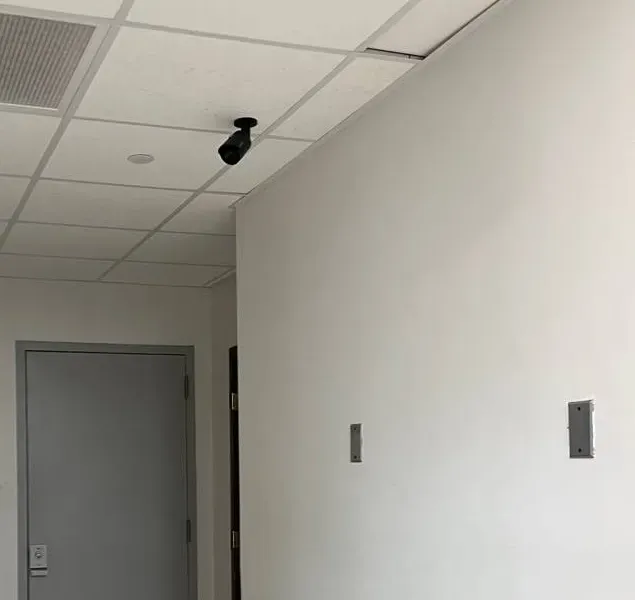
Real AESS photo from another job, not on the island: a black bullet camera on the ceiling facing a grey door fitted with a keypad lock, and two small metal plates on the corridor wall. Rear and service doors in island walk-ups are where a release that hums but never opens usually turns up.
Two-Family Houses and Shared Front Doors
Our two-family has a separate bell for each floor but one front door — why did both stop at the same time?
Because the two bells almost always share more than the door. In a typical island up-and-down house, one transformer in the basement powers both indoor stations, both talk circuits return on a common wire, and one strike in the shared front door opens for both. When everything goes silent together, the likely culprits are that transformer, a tripped breaker or ground-fault outlet feeding it, the common wire at a terminal strip, or a shorted strike pulling the voltage down so far that nothing else works. We check them in that order, with a meter on the transformer while someone presses release, because a failing transformer can read normal until the strike draws current. If the house was wired by a builder who fed a semi-attached neighbor from the same supply, we check the party wall too. The fix is usually a part, not a system.
When the side-door bell is pressed, the wrong floor rings — what crosses the calls?
Usually a previous repair rather than the equipment. Many two-family houses on the island have a front door and a side or basement door, each with a button, and over the years someone has added a station, swapped a panel or rerouted a wire around new drywall. If two conductors were swapped at a terminal, or a new button was jumpered to the nearest wire instead of the correct one, calls land on the wrong floor and the door may release from the wrong station. We map every button and every station with a tone tracer, mark both ends, and correct the landing on the terminal strip. A note we leave taped inside the panel cover shows which wire goes where, so the next person does not have to guess. One thing to settle first: if a tenant lives on one of the floors, the owner should agree to the change, since it alters the tenant's entry.
Can a basement apartment get its own button on the shared front door?
Technically it is a small job; whether it should be done is a question for the owner first. Adding a third button, a third indoor station and a third release to an up-and-down house means a third household shares the front door and its strike, and on Staten Island a two-family that takes on a third unit can change how the city classifies and inspects the building. So before we wire anything, the owner should be sure the apartment itself is legal and approved, and an architect or the Department of Buildings is the place to confirm that. If it is, the work usually means a new outdoor panel with three buttons in the same opening, a station in the basement unit, and a check that the transformer can carry a third station and the strike at once. If the unit uses its own side or basement door, giving it a separate one-button station on that door is often simpler and keeps the households' entries apart.
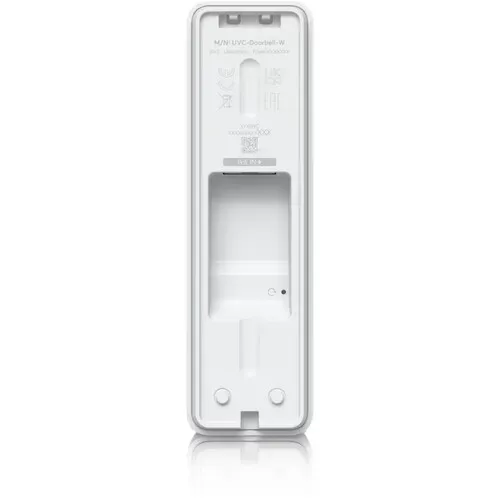
Manufacturer product photo (not an installed unit): the mounting side of a white network video doorbell, with its model label, a recess for the cable and two screw holes. The back of a station is what decides whether it fits the old opening and wiring on an island house.
Houses Lifted After Sandy
Since our house was raised, visitors press a button by the parking space and then climb a flight — should the station move to the top of the stair?
Beside the door that people actually knock on, which is now at the top of the stair. A visitor who presses a button by the parking space and then has to climb a flight to be let in gains little, and the button down there is exposed to the next flood. On most raised houses in Midland Beach, Ocean Breeze and New Dorp Beach the outdoor station belongs on the wall next to the elevated door, at a comfortable height for someone standing on the landing, with the camera of a video station looking slightly down the stair. If the family wants deliveries left at the bottom, a second call button at the stair foot can ring the same indoor station; it should be a sealed, flush unit wired from above, not a box sitting in the flood space. The old cable to the porch height is either abandoned and capped or reused only if it can be brought up the stair in conduit.
After the lift, which parts of the intercom have to move upstairs, and which can stay below?
On the living floor, not in the space underneath. Raised houses in the coastal flood zones are designed so the ground level can take water, and the city's building code asks for utilities and their equipment to sit at or above the design flood elevation, or to be built to keep water out. A plug-in transformer, a power supply, a network switch for a video intercom or a battery backup are all ordinary indoor electronics, so they go upstairs, in a closet or utility space near an outlet. Wires that must pass down through the flood level travel in sealed conduit, and any splice is made above the line, not in a box on a pile. Owners sometimes find that the electrician who rewired the house after the lift moved everything except the doorbell transformer, which is still screwed to a joist downstairs; that single overlooked part explains many dead intercoms after a storm.
Walk-Ups, Elevator Buildings and Package Rooms
Ever since the stair hall was painted and re-carpeted, the top-floor stations are dead — what did the work touch?
Almost certainly the riser cable. In many North Shore walk-ups the intercom wires climb the stair hall along the baseboard, behind the stringer or under the edge of the carpet, and painters and carpet installers rarely know they are there. A staple through a multi-conductor cable can short two apartments together or cut every conductor above the damage, which is why the dead stations are usually all on the floors above where the crew worked. We trace the run with a tone generator from the panel, find the break, and either splice it in an accessible box or replace the damaged section in a protected raceway along the wall. When the cable is too old or too damaged to trust, replacing the riser is priced separately so the owner can decide. Before the next renovation, a sheet in the building file showing where the intercom cable runs saves the next crew from repeating it.
Delivery drivers get buzzed in by whoever answers and parcels vanish from the lobby — can the entry be set up differently?
Yes, and most of it is configuration rather than new equipment. A New York renter on r/AskNYC described the problem exactly: a new internet-connected intercom pinged everyone's phones, and packages were still being stolen weekly. The weak point is that any resident can release the main door for anyone, so drivers press buttons until somebody opens up. Options, roughly from cheapest to most involved, include giving carriers a separate delivery code that works only during set hours and only opens a vestibule or package room rather than the inner door; adding a camera on the vestibule so residents can see who they are letting in; moving parcel drop-off to a lockable room or locker opened by its own code; and turning off the "open for anyone" button on the panel's directory. Which of these fits depends on the building's panel and layout, and in a building covered by §50-a the voice-and-release function for each apartment must stay intact.
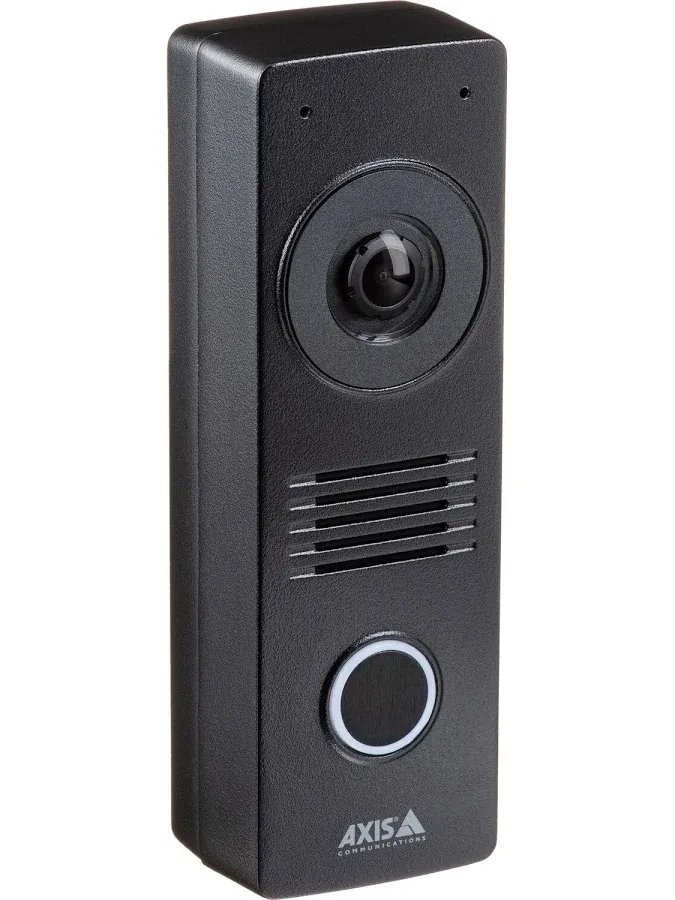
Manufacturer product photo (not an installed unit): a narrow black Axis video door station with a camera lens, a speaker grille and an illuminated call button. Narrow stations fit the slim strip of frame beside many island storefront and vestibule doors.
App-Based Video Intercoms in Newer Buildings
The lobby screen works but nobody's phone rings when a visitor calls — what usually broke?
Usually the path between the panel and the phones, not the panel. A cloud video intercom sends each call over the building's internet connection to the maker's servers and then to residents' apps as a push notification. If the screen lights and the directory scrolls but calls go nowhere, we check, in order, whether the panel is online at all, whether the building's router or switch port has changed, whether the account and resident list on the management portal are current, and whether the app on residents' phones has notifications and background activity allowed. A firmware update that changed a network setting, a new internet provider whose router blocks the panel, or a lapsed subscription explain most cases. Hardware faults, such as a failed network module, are the minority and are confirmed only after the network side is cleared. We need the management office's admin login, or a manager on the phone, to do this properly.
Residents who moved out years ago still show up on the lobby directory — how is it cleaned up?
By pulling the directory off the panel and checking it against the current rent roll, line by line. Stale names are more than untidy: a visitor who picks a former tenant's name may be calling a phone number that now belongs to a stranger, and a resident who is missing from the list never gets called at all. On keypad and scrolling-name panels the directory is stored in the panel or its controller, and changes need the installer code, which is often the real reason nobody has updated it. On app-based panels the list lives in the management portal. We export or photograph the existing list, mark every entry as current, departed or unknown with the manager, update the panel, and leave a printed copy with the date. Where residents prefer not to show full names on a street-facing screen, most panels can display apartment numbers or initials instead.
When the building's internet goes down, should the front door still open for residents?
It should, and whether it does depends on how the system was designed, not on luck. ButterflyMX, one of the larger makers, says that whether a cloud intercom works during an internet outage depends on the system's documented local-fallback design, and it offers Bluetooth fallback so residents can still open the door from their phones on compatible hardware. Other systems keep a local keypad code, a fob reader or a key override working when the connection drops. What should never happen is a building where the only way in is an app that cannot reach the cloud. During a repair we test exactly this: we unplug the internet, try every way a resident might enter, and write down what worked. If nothing did, adding a local fallback such as a keypad or reader on the same strike is usually a small addition.
Storefronts, Offices and Medical Suites
Our Hylan Boulevard dental office buzzes patients in from the front desk — why does the door sometimes stay locked after the release is pressed?
Usually because the release and the door are out of step, not because the button is broken. Three causes cover most offices. The strike may be releasing for a fraction of a second, too short for a patient who is still reaching for the handle, which is a timer setting on the power supply or relay. The door may be pressing hard against the strike because of wind, a weather seal or a sagging hinge, so the strike cannot let the latch go until someone pulls the door slightly closed first. Or the release wiring from the desk shares a power supply that sags when another device switches on. We watch the door from both sides while the desk presses release, set a release time long enough for an unhurried patient, adjust the strike and closer, and check the supply under load. For practices with patients who use wheelchairs or walkers, an automatic opener tied to the release is worth pricing at the same time.
Telephone-Entry Call Boxes and the Copper Switch-Over
Some gate panels and older building entries do not use intercom wiring at all. They are telephone-entry units: a visitor picks a name, the box dials the resident's phone over an ordinary phone line, and the resident presses a digit to open the gate. On the island these turn up on townhouse-complex gates, parking entrances and a few older apartment lobbies. Their weak point in 2026 is the line itself. In September 2026 local officials upstate reported that Verizon has asked the FCC to retire traditional copper phone service in portions of New York, starting on or after November 30, 2026, with each affected customer told its own transition date; the request sits in FCC Docket No. 26-252, and Verizon has said copper stays where it cannot offer a workable replacement.
If an association or owner receives a notice for the line that serves a call box, the practical steps are simple. Find out which phone number the box uses (it is printed on the phone bill, not on the box), check whether the box model accepts a cellular module or a network connection, and price the change before the transition date rather than after the gate stops dialing. Boxes that are too old for either route are replaced with a panel that calls residents through an app or over cellular. We can read the model and firmware during a routine repair visit and tell the board which path its hardware allows.
Equipment
Types of Intercom Systems We Repair
The repair depends on the kind of system behind the faceplate, not the logo on it. These are the families we meet on the island, and what usually wears out in each.
🔔
Bell-and-Buzzer Sets
The simplest two-family arrangement: a button, a bell or chime upstairs, and a release button that fires the strike. Transformers and strikes fail long before the buttons.
☎
Audio Handset Systems
Talk-and-listen stations with a hook switch, common in older walk-ups. Hook switches, handset cords and the amplifier in the entry panel are the usual repairs.
📹
Two-Wire Video Systems
A camera door station and indoor monitors on a pair of wires, typical of houses upgraded in the last twenty years. Power supplies and monitor screens are the weak parts.
🔢
Keypad and Directory Panels
Lobby and gate panels with a scrolling directory or apartment codes. Keypads wear out from use and weather; directories drift out of date after turnovers.
☁
Cloud and App-Based Panels
Network video panels that call residents' phones. Network settings, subscriptions, account lists and door-relay timing cause more trouble than the hardware.
📞
Telephone-Entry Call Boxes
Gate and lobby units that dial residents over a phone line or cellular module, now facing the copper retirement on some lines.
🔒
Strikes, Maglocks and Exit Devices
The hardware that actually holds and frees the door, plus request-to-exit buttons and the closer that lets the latch catch.
🔋
Power Supplies and Battery Backup
Plug-in transformers, regulated supplies and backup batteries that keep the entry working through a short outage.
Ring, ADT and SimpliSafe Compared With a Local Intercom Repair
The national names sell useful products for one-family homes: Ring and others make video doorbells that call a phone, and alarm companies such as ADT and SimpliSafe bundle doorbells and locks with monitoring plans. On a single-family house with one door and good Wi-Fi at the porch, swapping a dead chime for a video doorbell can be the whole job, and we do that too.
What those products do not do is release a shared front door for a second household, answer a gate at the end of a townhouse row, meet the voice-and-release rule in an eight-family walk-up, or tell you which wire a painter cut in the stair hall. Those are repairs to a system other people depend on, and they need someone who will test every station and leave a written record. If you already own a doorbell or intercom you want fitted, we install it labor-only, and we will not sign you up for a monitoring plan you do not need.
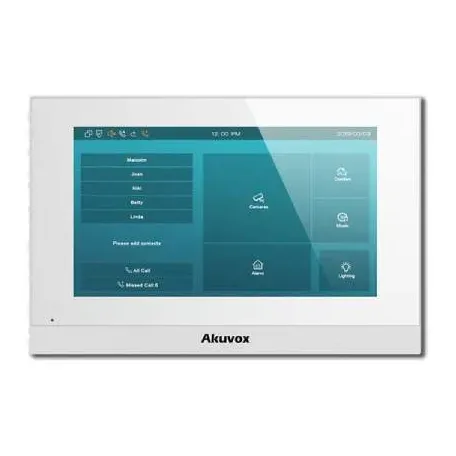
Manufacturer product photo (not an installed unit): a white Akuvox indoor monitor with a teal touchscreen showing contacts and menu icons. Indoor monitors are the part residents touch every day, and the part most often swapped in an island apartment repair.
AI Overview Reality Check
What AI Gets Wrong About Intercom Repair in Staten Island
Google's AI Overview would not load in our research environment, so we went to the material such summaries are built from — cost guides, maker help pages and repair-company advice — and picked seven claims they repeat. None is wrong everywhere; each needs a correction at an island door.
1. “Minor intercom repairs typically run $150 to $400”
A 2026 pricing guide from an access-control maker puts minor repairs such as a faulty handset or loose wiring at $150 to $400, and small-building replacement at $2,200 to $5,000. As a national figure for an easy fault in a building with a cooperative super, that is a reasonable range.
On the island the fault is often not the part in your hand. A silent two-family bell may be a transformer in a basement, a strike in a door, and a common wire shared with the other floor; a lifted house may need the station moved up a storey. Our island diagnostic is $165 to $330, an apartment station $275 to $660, and a transformer or power supply $330 to $880, already including the 1.10 area multiplier.
The useful number before budgeting is not the guide's range but how many parts the fault spans. One photo of the panel and one of the indoor station usually tell us whether it is a part, a power problem or a wiring problem.
2. “Most apartment buzzer repairs fit a flat rate”
Several city repair firms advertise a flat rate, around $150 to $250, for "common, accessible" apartment buzzer and intercom repairs. The qualifier matters: the price covers faults that are easy to reach and quick to fix.
Island faults are frequently neither. A cable stapled under the carpet three floors up, a transformer behind a finished basement ceiling, a gate controller in a locked pedestal whose key sits with the management company, or a call box whose phone line has changed all take longer than the flat rate assumes, and the price climbs once the visit starts.
We price in writing after the diagnosis, with the diagnostic credited to the repair if you go ahead the same day. If the fault turns out to be quick, you pay for a quick fault.
3. “Only buildings built after 1968 need an intercom”
Summaries of the city intercom rule usually say it applies to class A buildings of eight or more apartments built or converted after January 1, 1968, and stop there. One maker's guide adds that older buildings need "closer review."
The closer review is in the same section of the Multiple Dwelling Law. In older class A buildings, the owner must install self-locking doors and an intercom once tenants in a majority of apartments request or consent in writing, with work started within ninety days and finished within six months. Plenty of North Shore walk-ups predate 1968.
And a building that already has an intercom is expected to keep it working; HPD writes a broken one as a Class B violation regardless of the building's age. Pre-1968 does not mean optional once the system exists.
4. “Check the power cable and the Wi-Fi first”
Manufacturer troubleshooting pages tell owners to make sure the panel is plugged in and has a strong Wi-Fi signal. For a one-family video doorbell that is the right first step.
For most island intercoms there is no Wi-Fi involved, and "plugged in" means a transformer on a basement joist or a power supply in a meter room that the caller may never have seen. On lifted houses that transformer may still be in the flood space; in townhouse complexes it may be in a pedestal by the gate.
The first useful check is whether anything lights or hums at the door when release is pressed. That one observation separates power, wiring and strike faults faster than any app reboot.
5. “Discontinued systems can always be repaired with compatible parts”
Repair blogs often imply that any old intercom can be kept alive with compatible parts. Sometimes that is true; sometimes the maker has said otherwise. When Aiphone discontinued its JK Series on September 30, 2019, distributors noted there would be no direct component replacements, pointing owners to newer series instead.
Many island two-family houses and small buildings have systems from that era. A dead monitor in a discontinued series can sometimes be replaced with a used or refurbished unit, but the household then owns a system with no supply line behind it.
We tell you which situation you are in before you spend money: a supported part, a used part with no guarantee of the next one, or a door station and monitors from a current series that reuse the existing wires.
6. “A telephone-entry gate box just needs a phone line”
Installers have long described telephone-entry call boxes as simple: give the box a phone line and it dials residents. For decades that was a copper line powered from the phone company's office.
Verizon's request to retire copper service in parts of New York, beginning on or after November 30, 2026, changes the assumption. A box on a converted line may lose dial tone, behave differently on a digital line, or need a cellular module or replacement.
For a townhouse association, the right time to check is when the notice arrives, not when the gate stops calling. The box's model decides whether a module, a network connection or a new panel is the answer.
7. “Cloud intercoms keep working through an internet outage”
Marketing for app-based intercoms often stresses reliability, and AI answers sometimes repeat that cloud panels "keep working" during outages. The maker's own wording is narrower: it depends on the system's local-fallback design.
In a new island rental where residents enter only through an app, a dropped connection can leave the door working only for fob holders, or for nobody. Storms that knock out service on the North Shore waterfront are exactly when residents need the door.
We test the fallback during every repair on these systems, with the internet unplugged, and add a keypad, fob reader or Bluetooth option where the building has none.
Find Out Whose Door It Is, Then Fix It
Send a photo of the outside panel and one of the inside station, and tell us who manages the building. That is enough to tell you the likely fault, the island price band and who needs to approve the work.
Five details turn into a price: your neighborhood and type of property, what the entry does when a visitor presses the button, how many doors and stations there are, who manages or owns the entrance, and whether the house was lifted or the building recently renovated. Attach photos if you can. Expect a written figure by the end of the business day, or call (347) 934-8335.
✅
Request Received
Got it. A technician is going through the entrance details and photos and will ring you back today. If the door is stuck shut right now, phone (347) 934-8335.
How It Works
Our Installation Process
Every Staten Island intercom repair follows the same seven steps, from a single bell in a Bulls Head two-family to a gate controller in an Annadale townhouse row. The first two decide whether the visit can fix it the same day.
1. Settle who owns the door
Before booking, we confirm whether the entrance belongs to you, an association or a managing agent, who can approve the cost, and who holds the codes, keys to meter rooms and any admin login.
2. Photos and symptoms
Two photos, the outside panel and the inside station, plus what happens when the button is pressed. From those we judge the system type, the likely fault and the price band.
3. Find the power first
On site we locate the transformer or power supply, often on a basement joist, in a gate pedestal or under a raised house, and test it under load while someone presses release.
4. Trace the wiring
Each button and station is followed with a tone tracer from the panel, marked at both ends, and checked for breaks, shorts, crossed conductors and renovation damage.
5. Price it in writing
You receive the fault, the part, the price and any approval needed on one page. The diagnostic is credited when the repair is approved the same day.
6. Repair and reseal
The failed part is replaced or repaired, splices go in accessible boxes, outdoor entries are sealed, and on lifted houses power and stations move above the flood line.
7. Test every station and hand over
Every station rings, talks and releases, the door latches behind the last person out, the fallback is tested where the panel is app-based, and the owner or manager gets a written record.
On the day, three things decide whether the visit finishes in one trip: someone who can let us into the basement, meter room or gate pedestal where the power lives; access to at least one indoor station on each floor or in each unit; and, for app-based or keypad panels, the installer code or admin login, or a manager who can be reached by phone. If any of those is missing, tell us when booking and we will plan the order of the work around it.
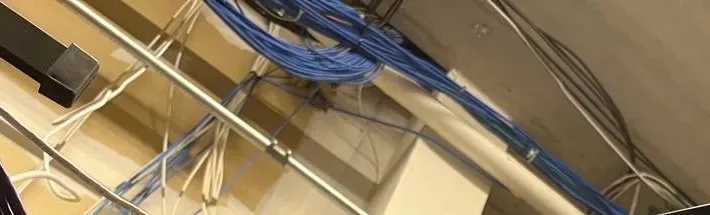
Real AESS photo from a job in Brooklyn, not Staten Island: bundles of blue and white cable running along a ceiling rod and pipe. Exposed runs like these are easy to trace; the island walk-up cables we repair are usually hidden under paint and carpet.
Coverage Area
Intercom Repair Near Staten Island's Landmarks
A ferry terminal, a waterfront rental district, a historic hilltop, a hospital campus, a mall and a seawall line: six places that sum up the range of island entrances we repair.
St. George Ferry Terminal and Lighthouse Point
The North Shore's front door, with Lighthouse Point's 100-plus apartments, hotel and shops beside the terminal and older walk-ups climbing the hill behind.
Stapleton Waterfront
The former Homeport site, where Urby's rental buildings on Navy Pier Court were planned as 900 apartments with app-based entry.
St. George/New Brighton Historic District
Designated in 1994; Victorian houses divided into apartments, where a street-facing entry panel has to suit the facade.
Staten Island University Hospital
475 Seaview Avenue, ringed by doctors' suites whose patients wait at a locked door until the front desk lets them in.
Staten Island Mall, New Springville
Opened in 1973 on Richmond Avenue at Richmond Hill Road, surrounded by two-family streets in New Springville and Bulls Head.
East Shore Seawall Line
The roughly five-mile seawall planned from Fort Wadsworth to Oakwood Beach, behind which sit the raised houses of Midland Beach and Ocean Breeze.
Intercom calls also take us to Travis, Woodrow, Rossville, Charleston, Tottenville, Prince's Bay, Huguenot, Annadale, Eltingville, Great Kills, Bay Terrace, New Dorp, Grant City, Dongan Hills, Todt Hill, Silver Lake, Grymes Hill, Sunnyside, Castleton Corners, Westerleigh, Elm Park, Mariners Harbor, Port Richmond, West Brighton, Rosebank, Clifton and Tompkinsville.
Pricing
Intercom Repair Cost in Staten Island
Island prices are our Brooklyn base intercom-repair figures multiplied by 1.10, the Staten Island area multiplier, rounded to the nearest dollar. They cover labor and the listed part; you see the exact figure in writing before work begins, and the diagnostic is credited to the repair when you approve it the same day.
Repair
Staten Island price
What moves it
Diagnostic visit
$165–$330
Credited toward the repair if approved that day; how many doors, stations and controllers have to be tested
Apartment or floor station replacement
$275–$660
Like-for-like part available or not, audio or video, whether the station shares a common wire with another floor
House video monitor or door station swap
$330–$825
Two-family houses and lifted houses; moving the station to the elevated door, reusing the old wires or not
Transformer or power supply
$330–$880
Plug-in versus regulated supply, moving it out of the flood space, whether an electrician must add an outlet
Door release strike repair
$385–$990
Strike type, door frame condition, closer adjustment so the latch actually catches
Entry or gate panel component repair
$440–$1,320
Speaker, microphone, keypad or one board; access to the gate pedestal or meter room
Riser or house wiring repair
$1,100–$3,300
Length of damaged run, number of floors, whether the cable is spliced or a section replaced in raceway
Entry panel replacement in the existing opening
$1,650–$3,850
Number of apartments, audio or video, historic-district facade, reuse of the existing wiring
Shore-grade sealed panel
$1,540–$4,180
Stainless or sealed housing, treated terminals, for entrances facing the water
Small building full system
$4,950–$13,200
Panel, stations, power and door release together when repair no longer makes sense
Mid-size building IP system
$13,200–$30,800
App-based video, fob or code entry, package-room access; quoted after a walk-through
Maintenance plan
$660–$2,640 a year
Scaled to the number of doors and stations; scheduled checks plus priority calls
Service visit after a completed job
$195 an hour, 3-hour minimum ($585)
Later changes once a job is signed off: moving stations, reprogramming, added devices
Because the 1.10 factor is already inside each figure, the invoice carries no extra line for the bridge or for driving. It pays for the hours lost on the Verrazzano and between stops, since one island day can start at a raised house in Ocean Breeze and end at a walk-up on Richmond Terrace.
What raises an island repair. A transformer or controller that has to be found first because nobody knows where it is. A riser cable damaged on several floors. A lifted house where the station and power move up a storey. A gate pedestal or meter room whose key is held by a management company that cannot meet us. A discontinued system where the only part is a used one, or none.
What keeps it down. Photos sent before the visit. Someone on site who can reach the basement, the meter room and every apartment station. A management contact ready with codes and the admin login. Approving the repair the same day so the diagnostic is credited. Fixing two or three weak parts in one trip rather than one at a time.
What the written record includes. Every island repair ends with a one-page record for the owner, board or manager: which entrance and which stations were tested, what was found at the power supply, the strike and the wiring, which parts were replaced and their model numbers, any codes that were changed and who received them, and anything we saw that is likely to fail next. Boards use it to approve the next step; owners of buildings covered by §50-a keep it with the building file in case a tenant complaint or an HPD inspection ever asks what was done and when.
Manufacturer product photo (not an installed unit): an Akuvox touchscreen entry panel with a camera, an on-screen keypad showing 1008 and a card-reader symbol. Touchscreen directories replace scrolling-name panels in larger island buildings and complexes.
Shop Our Systems
Intercom Repair Packages & Pricing
Three bands cover the bulk of island intercom work. Testing at the door fixes the exact figure inside each one.
House Door Station
$330–$825
For one- and two-family houses. The door station or indoor monitor replaced, the transformer tested under load, the strike checked, every floor's station rung and released from, and the station moved to the elevated door on a lifted house where needed.
Entry Panel Repair
$440–$1,320
For walk-ups, townhouse gates and vestibules. A failed speaker, microphone, keypad or board in the entry panel replaced, the directory and codes brought up to date, and every apartment or unit tested for voice and door release.
Shore-Grade Panel
$1,540–$4,180
For entrances facing the water. A corroded panel replaced in its existing opening with a stainless or sealed unit, terminals treated, cable entry sealed, and the power supply moved above the flood line.
Already bought the part? Labor-only repair
If you have already ordered a replacement station, monitor or video doorbell, we can fit it labor-only within the same island bands. Send the model number first so we can confirm it speaks to the rest of your system, uses the same wiring and suits the door; many intercom parts look alike and are not interchangeable. Equipment you supply is covered by its maker's warranty rather than ours. The bring-your-own-equipment page explains how labor-only work is priced.
Get the Staten Island Intercom Price in Writing
Start with two photos and a five-minute call. Before any appointment you will know the band the repair falls in, which part is likely at fault, and whether an association or manager has to approve it.
Door contacts and sirens tied to the same entrance.
Field Notes
Field Notes: Ask Whose Door It Is Before Opening the Panel
On an island intercom call the first thing I ask is not the brand. It is who owns the door, and who else goes through it. In a two-family house the answer is the owner, but a tenant upstairs depends on the same strike. In a townhouse row the answer is an association that may not have met yet. In a walk-up it is the owner or the managing agent, and the tenants have rights under the law. That answer tells me who has to agree before anything changes.
The second thing is power. I find the transformer or supply before I touch a station, because on this island it is so often somewhere nobody looks: on a basement joist, in a gate pedestal, or on a raised house still screwed to a pile in the space below. I meter it while someone presses release, because a supply that reads right at rest can collapse the moment the strike pulls current.
The third is the wire, followed from the panel to every station with a tone tracer, and marked at both ends. Only then do I open the station that the caller thinks is broken.
Before I leave, every station rings, talks and releases, the door latches behind the last person out, and the owner or manager has a sheet showing what was tested and what was changed. — Anwar Timothy, NYS low-voltage license #12000287431
FAQ
Staten Island Intercom Repair FAQ
What should I write down or photograph before calling, so the first visit can fix it?
+
Four things help most. A straight-on photo of the outside panel, including any brand name or model label on its face. A photo of one indoor station or monitor, with its cover on. A short description of what happens when someone presses the button: nothing, a ring with no voice, a voice with no door release, or a door that opens for some households and not others. And a note of anything that changed recently, such as a storm, painting, a new door, a new internet provider or a lifted house. If you know where the transformer or power supply is, say so; if you do not, that is normal on the island, and we will find it. Those details usually let us bring the right part on the first trip.
Can one visit cover the intercom, the door closer and the lock on the same entrance?
+
Usually, yes, and it often should. An intercom that releases perfectly is no use if the closer leaves the door resting on the latch, or the strike does not line up with the frame, and many calls that start as "the buzzer is broken" end as a closer or strike adjustment. In its 2022 review of public-housing entrances the City Comptroller recommended repairing door closers, release buttons, intercoms, locks and keys together for exactly this reason. We check the whole entrance during the visit: the release, the strike alignment, the closer speed and latch, and whether the door locks behind the last person through. A new lockset or a heavy-duty closer is priced separately on the same written quote.
Is a battery backup worth adding to a building intercom on the island?
+
For buildings and complexes where people depend on the entry, often yes. A short power cut otherwise leaves a fail-secure strike locked and a fail-safe maglock open, and neither is ideal at a front door. A small backup battery on the intercom's power supply keeps the panel, the stations and the release working through a brief outage, which matters for older residents and for gates that must still open for an ambulance. Battery size depends on what it has to run: an audio system with one strike needs very little, while a video panel, a network switch and a maglock need more. Batteries wear out in a few years, so we label the install date. In a lifted house or a shore building, the battery goes upstairs with the rest of the power equipment.
After a key or fob goes missing, can access be changed without replacing the whole system?
+
In most cases, yes. Keypad panels can have a code deleted and a new one issued in minutes; fob and card readers can disable a single credential; app-based systems can remove a former resident or worker from the account. The harder cases are old panels with one shared code that everyone knows, and mechanical keys to a door with no reader at all. For those, the options are re-coding or re-keying everyone at once, or adding a reader so each person gets their own credential that can be switched off alone. When we finish any repair, we can review who holds codes and fobs with the owner or manager, delete anything unknown, and leave a current list.
Will replacing one apartment's station change the sound or picture for everyone else?
+
It can, if the new station is from a different generation or series than the rest. Older systems balance their audio across every station on the line, and a newer station dropped into the middle can sound louder, quieter or tinny compared with its neighbors, or show a different picture on video. Where a like-for-like part is still made, we use it. Where it is not, we either match the closest compatible model and adjust levels at the panel, or tell the owner plainly that the building now has mixed stations and what that means for the next failure. In a two-family house, swapping both indoor stations together is often the better value, since both are usually the same age.
Can you take out an old, dead intercom panel and patch the wall or door frame?
+
Yes. When a building or house has moved to a new system, the old panels and stations are often left on the walls, still wired, sometimes still drawing power. We disconnect them at the source, remove the panel and any abandoned stations, cap or pull the old wire where it is reachable, and close the openings with a blank cover plate or a patch ready for paint. On a street-facing entrance in a historic district, a blank plate sized to the old opening keeps the facade tidy without new holes. If the old transformer is still live in a basement or under a raised house, we take it out of service too, which removes one more piece of equipment from the flood space.
Can the intercom let in a home aide or a dog walker while nobody is home?
+
Often, depending on the system. App-based and keypad panels can usually issue a temporary code or a guest pass that works only during set hours and stops on a set date, and some let the resident open the door remotely from a phone after seeing who is there. Older audio systems cannot do this on their own; the usual answer there is adding a keypad or a small smart lock on the apartment or house door rather than changing the building entry. For a shared building entrance, any new code or remote-open feature has to be approved by the owner or manager, since it affects everyone's security, so we set it up with their agreement.
Who keeps the installer codes and admin login once the repair is finished?
+
The owner, or whoever the owner names, and never only us. Many intercom panels have an installer code or admin account that controls the directory, entry codes and door timing. Too many island buildings discover, after a contractor has gone, that nobody knows the code and the panel cannot be changed without a factory reset. At the end of every repair we change any default code we found, give the new code and admin login to the owner or manager in writing, and note them on the job record. If a management company runs the building, the codes go to the company, and the owner gets a copy on request.
Can intercom work be scheduled around a re-siding job or a stoop rebuild?
+
Yes, and it is cheaper to plan it that way. A siding crew will often unscrew a door station and leave it hanging, or cut around it, and a mason rebuilding a stoop can bury the cable to a gate post. Tell us the contractor's schedule and we will disconnect and protect the station and its wiring before they start, then come back when the wall or the steps are finished to remount it properly, seal the cable entry and re-test the release. If the work is the right moment to move the station, for example to the new elevated door on a lifted house, or to run a fresh cable while the wall is open, we price that at the same time.
All Areas Served
Intercom Repair Across New York City, Long Island and the Hudson Valley
This page sits under the NYC intercom repair hub with the other four boroughs. For entrances off the island, each Long Island and Hudson Valley area below has a page written for its own buildings.
Grouped by subject below is where every rule, number, news report and product claim on this page was read. Our island prices take the Brooklyn intercom-repair base and apply the 1.10 Staten Island multiplier; the hourly service rate is the standard company rate.
Whether visitors are stuck on the stoop, the gate has stopped calling, or half the building has gone quiet since the painters left, (347) 934-8335 gets you the earliest open slot. Most island repairs are finished within one to two hours of the van arriving.
Staten Island Intercom Repair From a Licensed, Insured Crew
Abstract Enterprises Security Systems · 1282 Troy Ave, Brooklyn, NY 11203 · call or text the island number, (347) 934-8335 · or send photos on WhatsApp (718) 679-0359
Rated 4.7★ from 201 Google reviews. Our technicians carry insurance, work under New York State low-voltage license #12000287431, and hand over a written test record for every entrance they touch.
Panels, stations and strikes also keep their makers' warranties. Full terms — including 50% deposit, one-year parts-only warranty on AESS-supplied products, and the late-fee schedule — are set out in the service agreement. See our warranty page.
Page reviewed and updated October 18, 2026. Changelog: Staten Island intercom repair page rebuilt from new research on the island's one- and two-family housing, townhouse associations, North Shore walk-ups and new rentals, NYCHA entrance conditions, Multiple Dwelling Law §50-a and HPD violations, Build It Back elevations and the flood-zone building code, and Verizon's proposed copper retirement, with prices set by the Staten Island area multiplier.