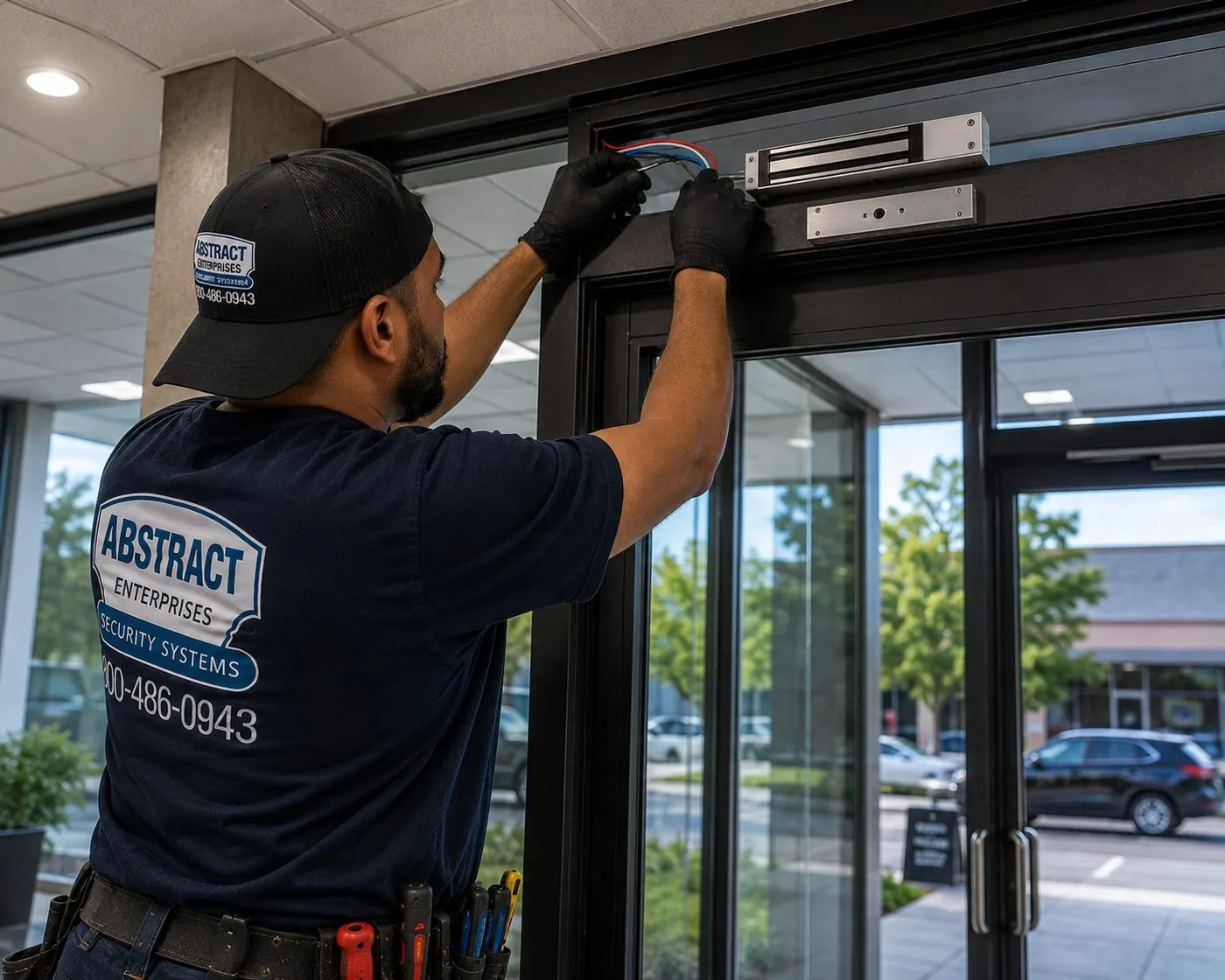
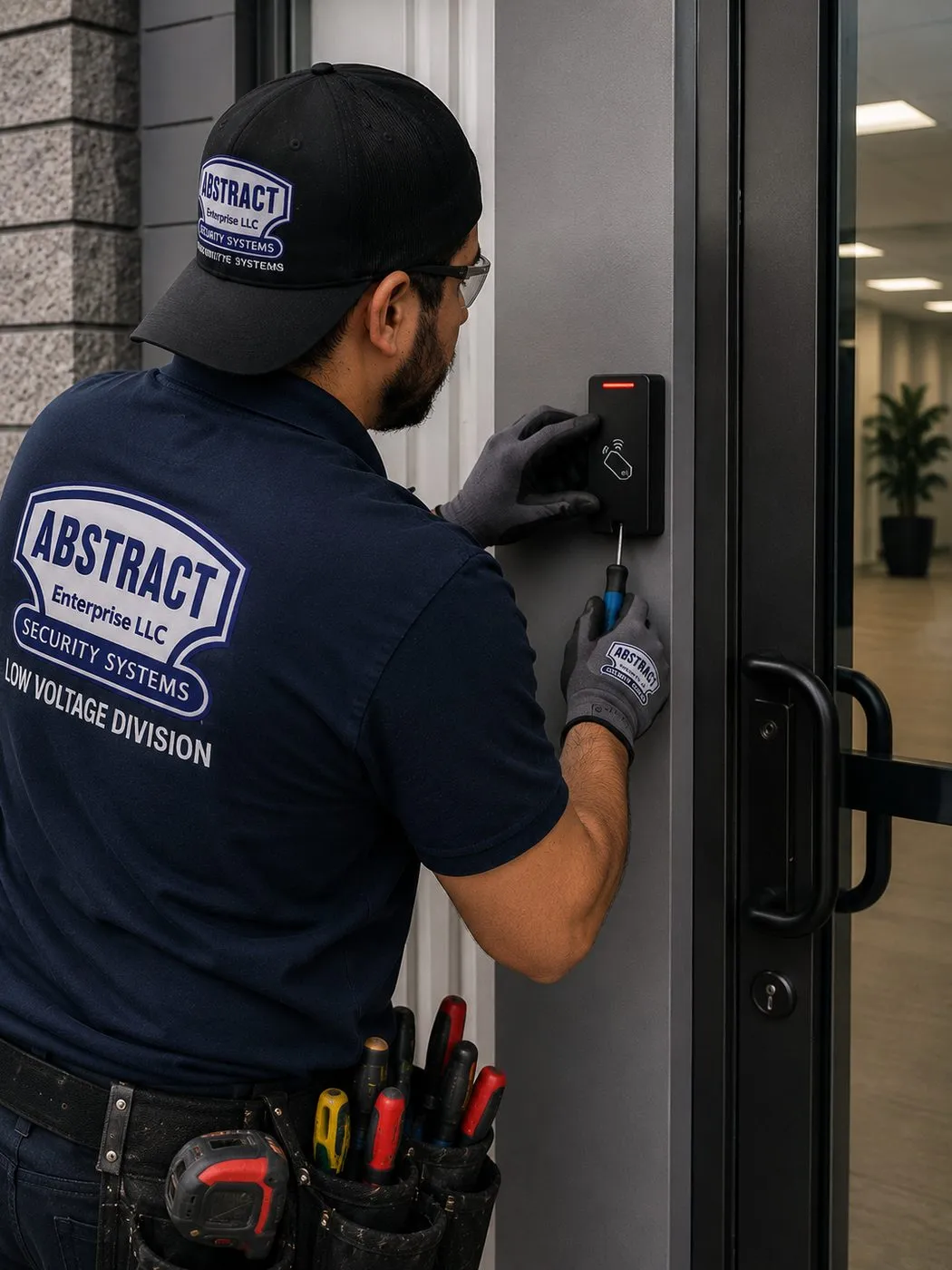
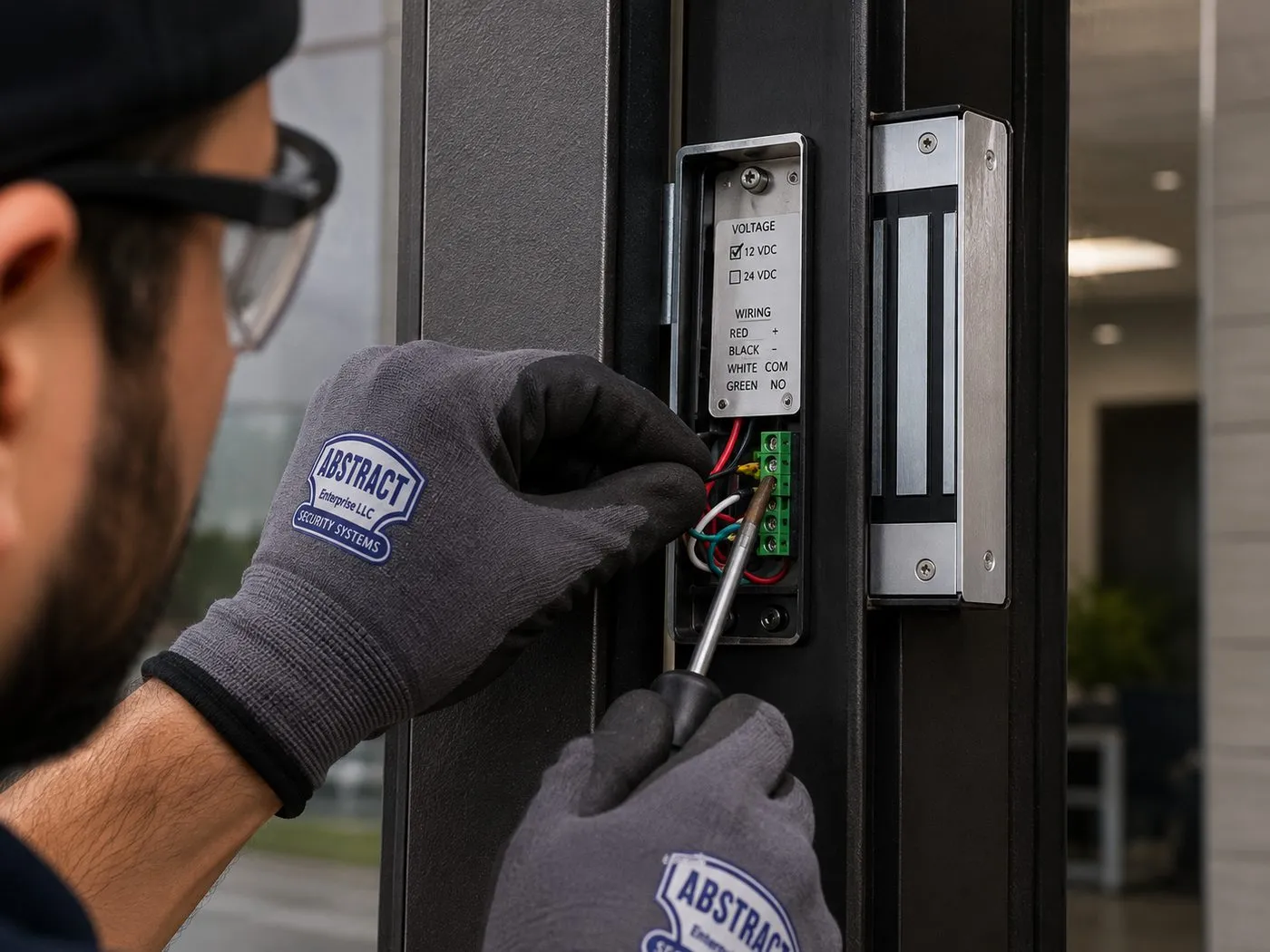
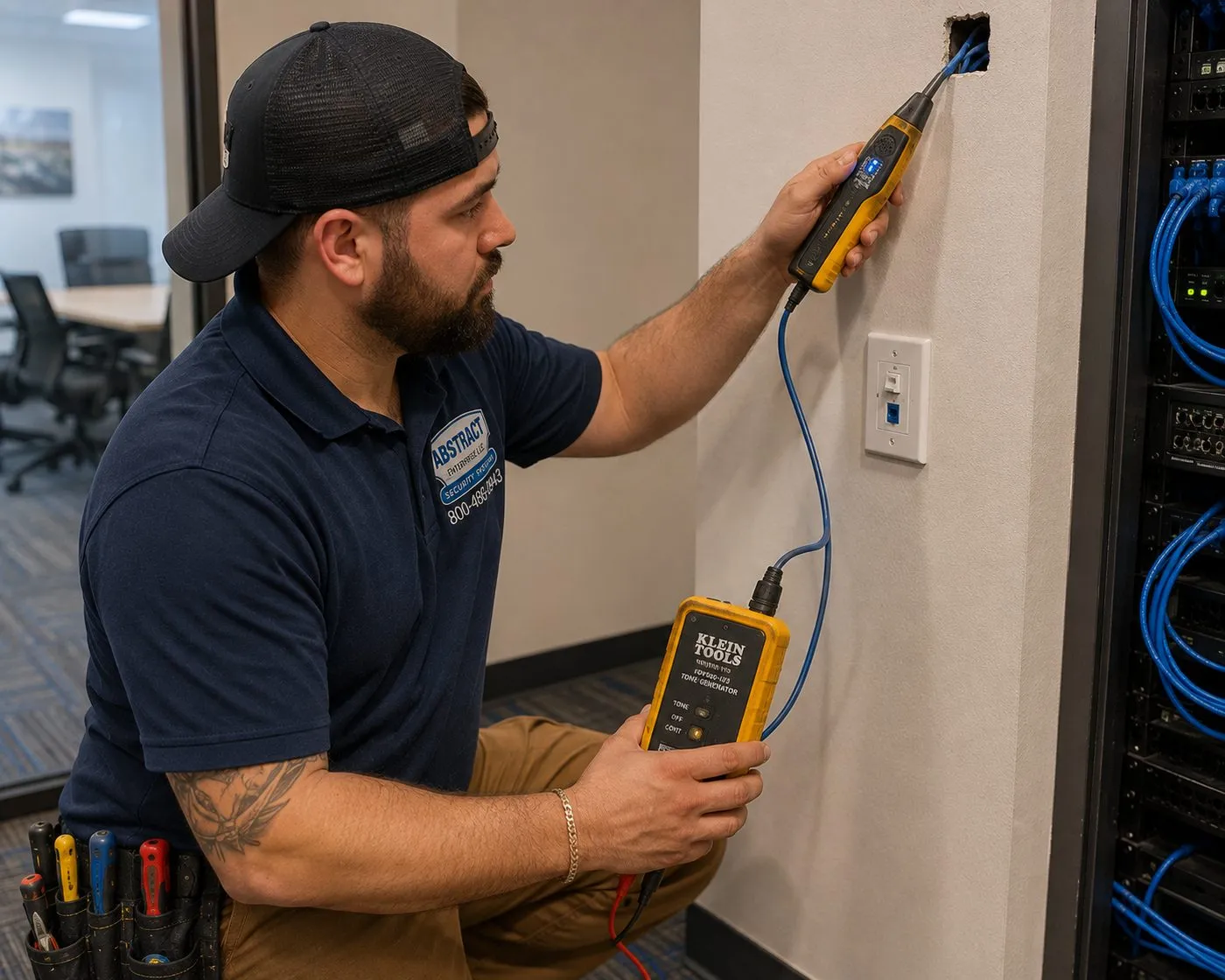
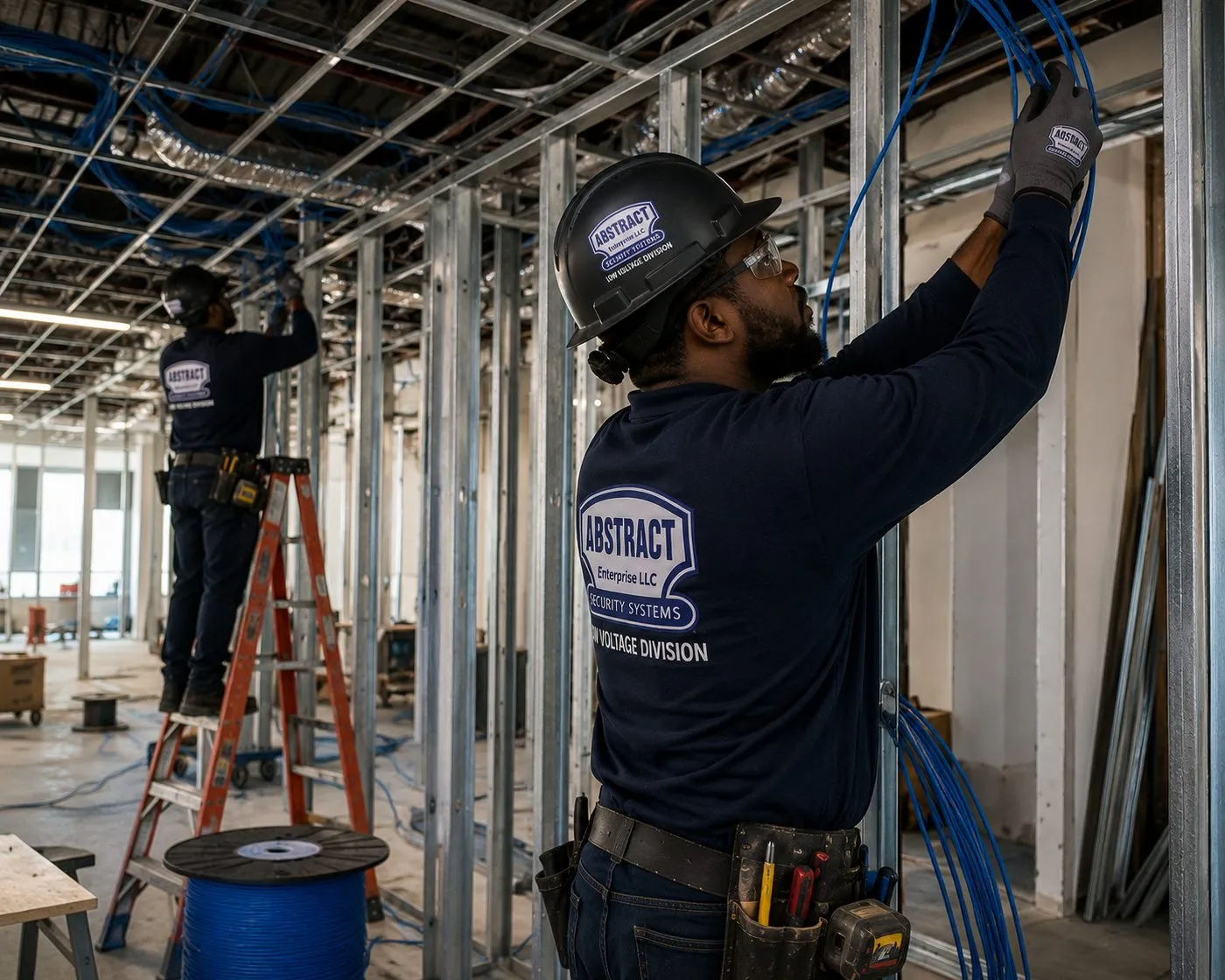
Walk-Up Street Doors · Railroad-Flat Hall Doors · Sided Frame Houses · Doors Beside the Shop · Bar & Restaurant Back Doors · Shared Freight Doors
In Greenpoint the door that decides whether a building is secure is rarely a private one. It is the street door of a three- or six-family walk-up that a dozen people push through every day, the narrow door beside a Manhattan Avenue shop that leads to the flats upstairs, the second hall door of a railroad apartment, or the steel back door of a Franklin Street kitchen. We fit keyless entry to those shared doors so they latch every time, so each person has a credential that can be switched off on its own, and so the owner can see who came in — without anyone being locked inside.
Reviewed and updated October 17, 2026 · Written by Anwar Timothy, NYS licence #12000287431 · Dispatched from our Brooklyn office at 1282 Troy Ave

A street door that will not stay shut, a tenant who lost a key fob, a railroad flat with two doors onto the stairs? Ring the Brooklyn line on (347) 934-8335 or use the 60-second form. A licensed installer reads it, asks how many people use the door, and tells you whether you need a smart lock, an electric strike, a closer adjustment or all three before a visit is booked.
Walk any block between McGuinness Boulevard and the river and count the doorbells. A Greenpoint building with one bell is the exception. The usual pattern is a three-storey frame or brick house with a bell for each floor, or a four-storey flathouse over a storefront with a column of buttons beside a narrow side door. That is the housing the neighbourhood was built for. In the nineteenth century this was an industrial village of shipyards, porcelain works, glassworks and foundries — the ironclad Monitor was built at the Continental Iron Works here, and by the 1880s Greenpoint held eighteen of the twenty glass makers in the city of Brooklyn. The people who worked in those plants lived close by, several households to a building, and the buildings still work that way.
The Landmarks Preservation Commission's report on the Greenpoint Historic District, designated on September 14, 1982, describes exactly this mix. Frame houses on Milton and Noble Streets were put up to house shipyard workers, some of them by shipwrights and ship carpenters. Franklin Street, the village's first commercial street, has buildings from the early 1850s with shops on the ground floor and flats above. Later brick flathouses were designed with two stores at street level and two families on each upper floor. And over and over the report notes that a house still has its "original double wooden doors" — or that they have been replaced, or that the frame house behind them has since been sheathed in asphalt or aluminium siding.
What that means for a lock is simple to say and fiddly to do. The door that matters most in Greenpoint is shared. On a walk-up it is the street door, used by every tenant, every courier and every visitor buzzed up from the intercom. In a railroad apartment it is not one door but two: residents on r/Greenpoint describe the typical layout as "a door into the kitchen and one into the front bedroom," with two flats to a floor and the stair hall between them. Beside a shop it is the slim door to the stairs that the shopkeeper does not use but customers walk past all day. Fitting a battery deadbolt from a product box to any of those without thinking about who else uses the door is how a building ends up with a lock that is either always open or always somebody's problem.
The people behind those doors mostly rent. The NYU Furman Center puts the homeownership rate for Greenpoint and Williamsburg together at 16.6 percent in 2024, about half the citywide figure of 32.7 percent. Many owners who do live here bought a two- to four-family house and live in one unit — the Furman Center counts 101 sales of two-to-four-family buildings in the district in 2025 against 13 one-family sales. So a typical lock conversation involves an owner who is also a landlord, two or three tenant households, and the rules that start to apply once a building holds three or more families. Then there is the waterfront: from 2010 to 2025 the same district added 27,675 new housing units, many in towers such as the 745-unit Eagle + West at Greenpoint Landing, where the building chooses the lobby system and residents choose only what goes on their own door.
Parcels are where most residents first notice the street door. Greenpoint threads on Reddit describe a resident who buzzed in a man claiming to be a delivery driver — "less than 45 seconds later, he walks out with a trash bag full of packages" — and another near McGolrick Park who wrote that the building's front was "a very secure double door" and yet someone "picked the lock" to reach the parcels inside. Businesses see the other side of it: on September 12, 2026, Greenpointers reported, one Franklin Street restaurant had its back door forced with a crowbar, another was entered through a roof hatch, and a third resisted a crowbar attempt. None of those is solved by a gadget alone. Each is solved by a door that closes and latches, a credential per person, a record of use, and the right hardware on the right opening — which is what this page is about.
Most Greenpoint owners who put a keypad on the street door also replace the buzzer panel or add a camera that sees the step. Our Greenpoint intercom installation team handles the panel, and for buildings that need fob readers on several doors the AESS access control service in Greenpoint takes it further.

A walk-up door that drifts back open because the closer has lost its oil, a keypad that stopped reading codes after a wet week, a strike that buzzes upstairs but never releases, a tenant who moved out with a working fob, a shop deadbolt the app says is "unreachable" — those are repairs, and we treat them as repairs. They go into the next open two-hour arrival window, and most power, alignment, closer and pairing faults are put right in one to two hours once a technician is at the door. When the fault is a failed electric strike on a building entrance, our published Brooklyn repair figure is $295–$485. Call (347) 934-8335 and say whether the door will not lock or will not open; if the trouble is in the buzzer system rather than the lock, the Greenpoint door buzzer repair page explains that side of it.

These are the jobs Greenpoint owners, tenants and businesses ask us for, usually two or three together. Each one is finished the same way: the door closes and latches by itself, opens from the inside with one hand and no key, and every code, fob or phone credential is tried in front of you before we leave.
A keypad or fob reader driving an electric strike on the shared street door of a three- to eight-family building, with an individual code per apartment so one household can be removed without re-keying everyone.
Before any electronics: the closer adjusted so the door finishes its swing, the latch and strike lined up so it catches, and the threshold cleared. On many walk-ups that alone ends the "door is always open" complaint.
A smart deadbolt on the door residents actually use and a properly secured second door, or matched locks on both, chosen so neither hall door can be left unlocked by mistake.
Keypad deadbolts for the narrow wood doors of nineteenth-century frame houses, many of them now behind aluminium or vinyl siding, with the keypad or doorbell camera mounted so the siding is sealed afterwards.
The side door on Manhattan Avenue, Nassau Avenue or Franklin Street that leads past the store to the apartments above, set up so tenants and the shop each have their own credentials.
Front and back doors for late-closing businesses: staff codes per person, a schedule that unlocks for service and relocks after closing, and a rear door that resists prying and still opens freely from inside.
Keypads with an audit trail on shared loading or freight doors in converted factories, so several small firms can come and go after hours and each can see its own entries.
A coded door on the cellar room where tenants keep bicycles and strollers, so they stop ending up in the stair hall, with the owner holding the master code.
Smart locks on waterfront tower unit doors within the building's rules, plus repairs anywhere in 11222: dead keypads, motors straining against a dropped door, lost admin access and bridges that fell off the Wi-Fi.

Greenpoint was built fast, by many small builders, for working families, and then rebuilt in glass along the river. These six building types account for almost every door we are asked about in the neighbourhood.
Two- and three-storey wood houses from the 1850s to the 1880s, like those the LPC report describes on Milton and Noble Streets. Narrow front doors, entrances often set to one side under a hood, and in many cases a later skin of asphalt, aluminium or vinyl siding over the original clapboard.
The brick rows of the historic district, mostly built between about 1870 and 1892 according to the commission, many raised on a high basement with a short stoop and paneled double wooden doors. Several are now two- and three-family houses with a shared hall inside the front door.
Four-storey brick buildings on Manhattan Avenue, Franklin Street and the side streets, with stores at grade and apartments above reached through a separate door beside the shop window. The street door, the stair and the apartment doors belong to different people.
Three- to five-storey tenement-era walk-ups with two apartments per floor either side of the stair, each flat running front to back with a door from the hall into the kitchen and another into the front room.
Former mills and plants near Newtown Creek and along Manhattan Avenue's northern end, now divided among workshops, studios and small manufacturers who share entrances, freight doors and corridors.
Post-2005 rezoning high-rises at Greenpoint Landing and along West Street and Commercial Street, with developer-chosen lobby access, uniform unit doors and house rules on what residents may change.
Frame houses. The doors are often thinner and softer than the doors smart locks are photographed on, and decades of repairs have left old bores and filled mortises in them. We measure the door's thickness and the backset of the existing hole first, look for an earlier deadbolt hole that a new lock could reuse, and pick a lock whose interior unit will clear the narrow hall behind the door. Where a house has been sided, the jamb and casing may be boxed in with aluminium, so the strike for the new bolt has to be reinforced through to solid framing rather than screwed into trim. Any keypad, camera or bridge mounted on the outside is fixed through the siding into backing and the holes sealed so water does not get behind it.
Brick rowhouses. Here the question is usually which door gets the electronics. Many owners keep the original wooden pair untouched and fit the smart lock to the inner door or to the apartment doors off the shared hall. When the outer door does need a keyless lock, we work with the hardware preparation already in the door wherever possible, because a pair of nineteenth-century doors does not forgive a second set of holes.
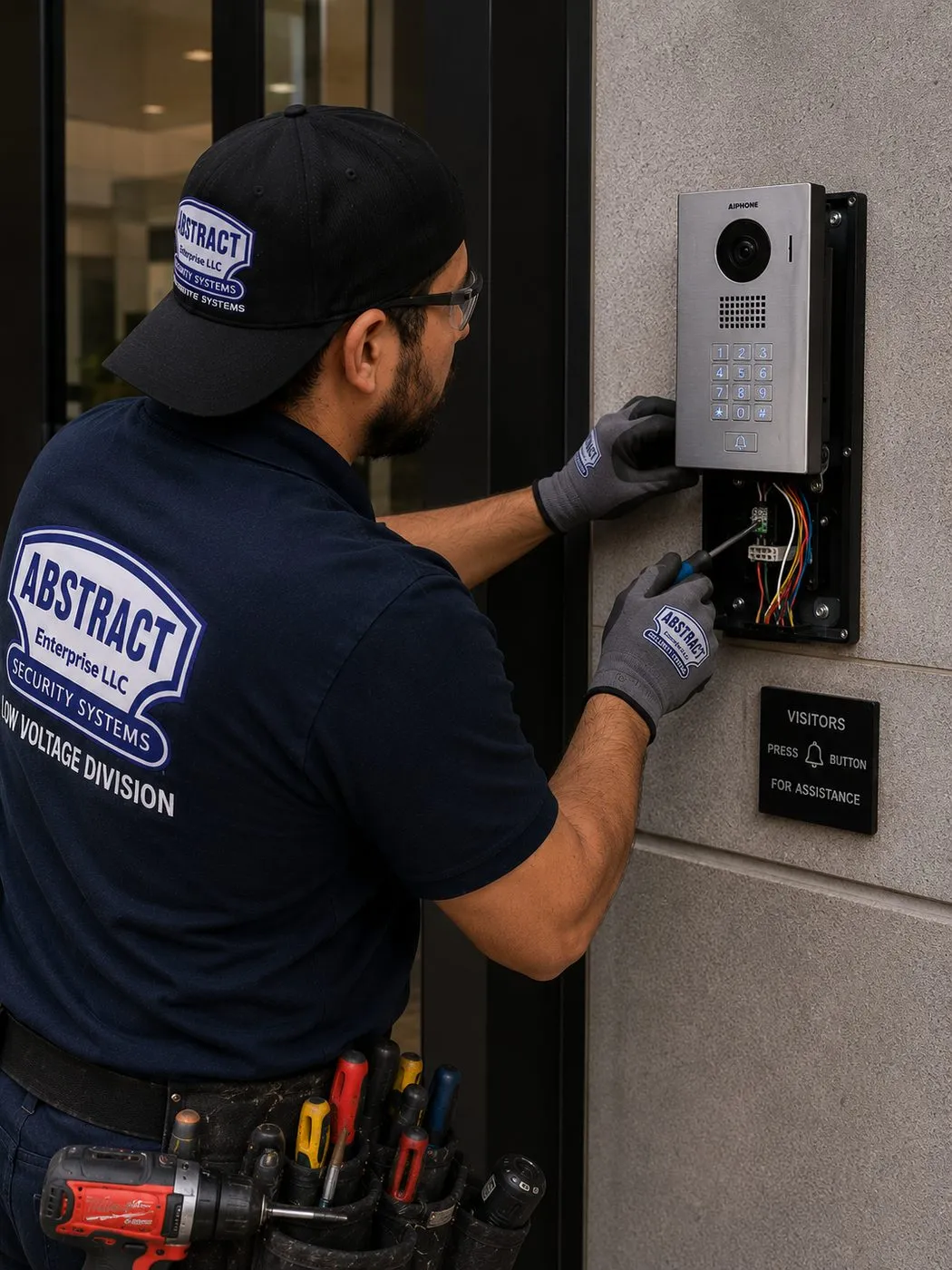
Flathouses and walk-ups. The street door is the job. It is usually a heavy wood or steel door with a closer, sometimes with a buzzer-controlled strike already in the frame and an intercom panel that may be decades old. A battery deadbolt is rarely right for that door: twelve or twenty people a day wear through batteries, and the buzzer cannot release a deadbolt. The usual answer is a keypad or reader beside the door wired to an electric strike in the frame, powered from a supply in the cellar or the vestibule, with the existing intercom still able to buzz visitors in. The apartment doors upstairs are each tenant's own business, within the city's rules on apartment entrance locks.
Maker buildings. Shared entrances get a reader or keypad with an audit trail; individual studio doors get keypad locks that each tenant administers. Steel doors in steel frames need different strikes and fixings from wood ones, and freight doors may be roll-up doors with a separate personnel door — the keyless part almost always belongs on the personnel door.
Towers. We start with the building's alteration rules and the lobby platform the developer chose. A unit lock is chosen to sit alongside that system, not to replace it, and is fitted only after management has agreed the scope.
Pair it with what the door already has. On walk-ups the keypad usually goes in alongside an intercom upgrade, and on frame houses alongside a doorbell camera. Owners comparing systems often read our Greenpoint security camera installation page at the same time.

Greenpoint's businesses sit in old buildings with doors that were never designed for staff turnover, late closing or deliveries before dawn. These are the corridors where we fit keyless entry most, and what each tends to need.
The long commercial spine Wikipedia calls the heart of "Little Poland," lined with bakeries, delis, pharmacies, bars and services in flathouses with apartments upstairs. Storefront doors with staff codes, and a separate setup for the residential side door next to each shop.
Greenpoint's first commercial street, now restaurants, bars, cafés and boutiques in 1850s-to-1890s buildings. Back doors onto yards and alleys are the weak point, as the September 2026 burglaries showed.
Shops and food businesses running east from McCarren Park towards McGolrick Park. Early-opening businesses that need a door to unlock on a schedule and relock without a manager standing there.
Banks, restaurants and offices between the waterfront and McGuinness Boulevard, including part of the historic district. Mixed tenancies with a shared entrance and individual suite doors.
Converted plants such as the Greenpoint Manufacturing and Design Center complex at 1155–1205 Manhattan Avenue, home to 76 small businesses. Shared freight and personnel doors with after-hours access by many tenants.
Shops, gyms and services at the base of the new towers on the river, where the landlord's access platform runs the building and the tenant wants control of its own front and back doors.
Unlike much of brownstone Brooklyn, none of Greenpoint's own avenues appears among the borough's business improvement districts in the city's directory, so there is no district-wide security programme to plug into. Each shop arranges its own doors, which is one reason we are called in by the owner rather than by a BID or a managing agent.
Bars and cafés often ask for a front door that unlocks itself for service and relocks after closing. It can be done, but most should not leave a door electronically unlocked with nobody watching it. The keypads and readers we fit to storefronts can follow a schedule — unlocked from opening to closing, locked otherwise — and many owners use that for the front door during service. We prefer a "first person in" rule: the door stays locked until a staff code is used in the morning, then follows the schedule, so a snow day or a late opening does not leave the bar open to the street. At closing the door relocks at the set time, and anyone still inside can always leave. Scheduled unlocking should never be used on a door where staff are not present; that is what codes are for.
If more than a couple of doors are involved, our access control installers in Greenpoint can put the whole building on one system with readers, and an alarm installation for a Greenpoint business adds door contacts and a hatch sensor that report when someone forces their way in.

These are the questions Greenpoint owners, tenants and shopkeepers put to us, grouped by the door they are about. Questions that apply to every New York apartment — a renter's right to add a lock, co-op approval, the Tenant Data Privacy Act — are answered on our NYC smart lock installation hub, and brownstone stoop and vestibule questions on the Brooklyn smart lock page.
Usually the closer, sometimes the strike, rarely the lock itself. A door closer has two speeds: a sweep speed for most of the swing and a latch speed for the last few inches. When the oil thins or the valves are turned down, the door slows to a crawl and stops short, or bounces off the frame before the latch catches. Wind in a stairwell and a warped door make it worse. We check the closer first, then whether the latch is actually reaching the strike, then the hinges, because a door that has dropped on worn hinges drags at the bottom and never finishes its swing. Putting a keypad on a door that does not latch only gives you an expensive lock on an open door; fixing the closer and the strike is often the larger part of the job, and on some walk-ups it is the whole job.
It removes the part that was picked, but it is not the whole answer. A keypad and electric strike has no keyway on the outside for anyone to work on, so the specific attack a McGolrick Park resident described on r/Greenpoint — the lock picked on what they called "a very secure double door" — is no longer available. What remains are the other weak points of a pair of doors: an inactive leaf whose top and bottom bolts do not engage, a gap at the meeting stiles wide enough for a tool, and a door that is simply left on the latch. On those doors we fit an astragal or latch guard over the gap, make sure the second leaf is bolted, and add a door-position sensor so the owner gets an alert if the door is propped. If the building keeps a keyed cylinder as a backup, we specify a high-security cylinder rather than a standard one.
The weakness there is the buzzer, not the lock: anyone who presses enough bells will eventually reach someone who lets them in without looking. Three changes make that much harder. A video entry panel at the street door lets a tenant see who is standing there before releasing the door. Individual codes or fobs for residents mean nobody needs to be buzzed in to get home, so buzzing a stranger becomes the unusual act rather than the habit. And a separate, time-limited code for a regular courier, or a parcel locker inside the vestibule, means packages are not left loose in the hall where whoever comes in next can take them. The Reddit post that described the "trash bag full of packages" also noted police arrived within two minutes — but by then the parcels had gone, which is why the fix has to sit at the door.
It should, and we plan for it. Multi-unit buildings commonly give the letter carrier entry through a USPS "arrow lock": either a postal lock wired into the intercom panel that releases the door strike, or a small key keeper box beside the door holding a building key that the carrier opens with the postal master key. If your building has one, we keep its wiring on the same strike as the new keypad, or leave the key keeper in place with a key that still fits. Changing the cylinder without telling the post office is the classic way to stop mail delivery for a week, so we note the postal lock at the walkthrough and include it in the test at handover. The postal lock itself belongs to the Postal Service; we do not open or move it without the local post office.
Not necessarily, but both need to be locked properly. One renter on r/NYCapartments described exactly this layout: "two doors from my unit leading to the hallway/stairs," both of them "flimsy hollow core doors." The usual arrangement is to put the smart lock on the door you use every day — normally the kitchen door near the top of the stairs — and give the second door a solid deadbolt with a thumb-turn inside, kept locked. Two smart locks only make sense if both doors are genuinely used, and then they should be the same model on the same app so neither can be left open without the app showing it. What we will not do is fix the second door shut: it may be the way out if there is a fire near the first. If the doors are hollow-core, ask your landlord about solid replacements; a good lock in a hollow door is mostly decoration.
Yes, and it is one of the more useful small jobs in Greenpoint. The city Fire Code says bicycles and baby strollers are not to be stored in building hallway corridors, and in a narrow walk-up stair a bike against the wall is a real obstruction. A keypad lock on the cellar room gives each tenant a code, lets the owner remove a code when someone moves out, and ends the argument about who has the key. The door usually needs a closer so it does not stand open, and the cellar should have a light by the door. One caution: rooms where e-bikes are charged raise separate fire-safety questions about the batteries themselves, which a lock does not address.
It does. Siding is a thin skin over furring and old clapboard, not something to hang hardware on, and every hole through it is a path for water. We locate solid backing behind the siding before mounting anything, use a mounting block where the siding profile is uneven, and seal the penetrations. Cable for a wired keypad or camera goes through the wall in a sleeve and is dripped down outside so rain runs off rather than in. Often the cleaner answer is to keep everything on the door itself: a keypad deadbolt needs no wall mounting at all, and a battery doorbell camera can sit on the door casing. Where the siding has also boxed in the door jamb, the strike for the new bolt is fixed through to the framing so the door does not give at the first kick.
Information and control, mostly. Greenpointers reported that on September 12 one Franklin Street restaurant's rear door was forced with a crowbar, another restaurant was entered through a hatch, and a third door held against a crowbar. Whether a door holds depends on its frame, strike and latch guard — that part is mechanical, and we fix it first. What an electronic lock adds is everything around the break-in: a log of which staff code locked the door at closing and when, an alert to the owner's phone if the back door was left unlocked or is opened outside business hours, and no brass keys still circulating among people who left months ago. Wired to the alarm, the door's own sensor reports a forced opening even if the lock itself is never touched. For a busy kitchen door that staff and suppliers use all day, those are the features owners tell us they actually use, and none of them comes with a standard deadbolt.
Yes. A keypad or reader on the personnel door beside the freight door, with a separate group of codes for each tenant, lets each firm add and remove its own staff while the landlord keeps master access. The entry log then shows which firm's credential opened the door and when, which settles most "who left it open" disputes without accusations. If the building already has a reader system on the main entrance, the freight door can often be added to it rather than given a standalone lock; that conversation goes through the landlord, since the building's system is theirs. The roll-up freight door itself is normally left on its own controls and kept closed outside loading times.
The street door is a common element, so in a condominium it is the board's decision under the building's declaration and bylaws, not any one owner's, even if one owner offers to pay. Small self-managed Greenpoint condos usually handle it with a board vote and a short written policy. On the practical side we recommend that two board members hold administrator access, not one, so the building is not stranded when someone sells or travels; that each unit has its own codes, managed by the board; and that the policy says how long entry logs are kept and who may look at them. We hand over a written register of every credential so the next board inherits a clean list rather than a mystery.
Only through the state's Major Capital Improvement process, and with limits. New York's Homes and Community Renewal fact sheet on MCIs says an increase needs a written order from the agency after an application the tenants can respond to within 60 days; the work must be a new installation, not a repair of old equipment; MCI increases are prohibited in buildings where 35 percent or fewer of the units are rent-regulated; they are capped at 2 percent a year; and they must come out of the rent after 30 years. The agency's useful-life schedule lists an intercom system at 15 years. Whether a particular keypad or entry system qualifies is the agency's call, not ours — we give owners an itemised invoice and tenants a copy of the scope on request, and we are not lawyers.

In Greenpoint the hardware list is shaped by the shared door. A product that is perfect on a single-family front door can be the wrong choice for a street door twenty people use. This is how we match equipment to the doors in the neighbourhood.
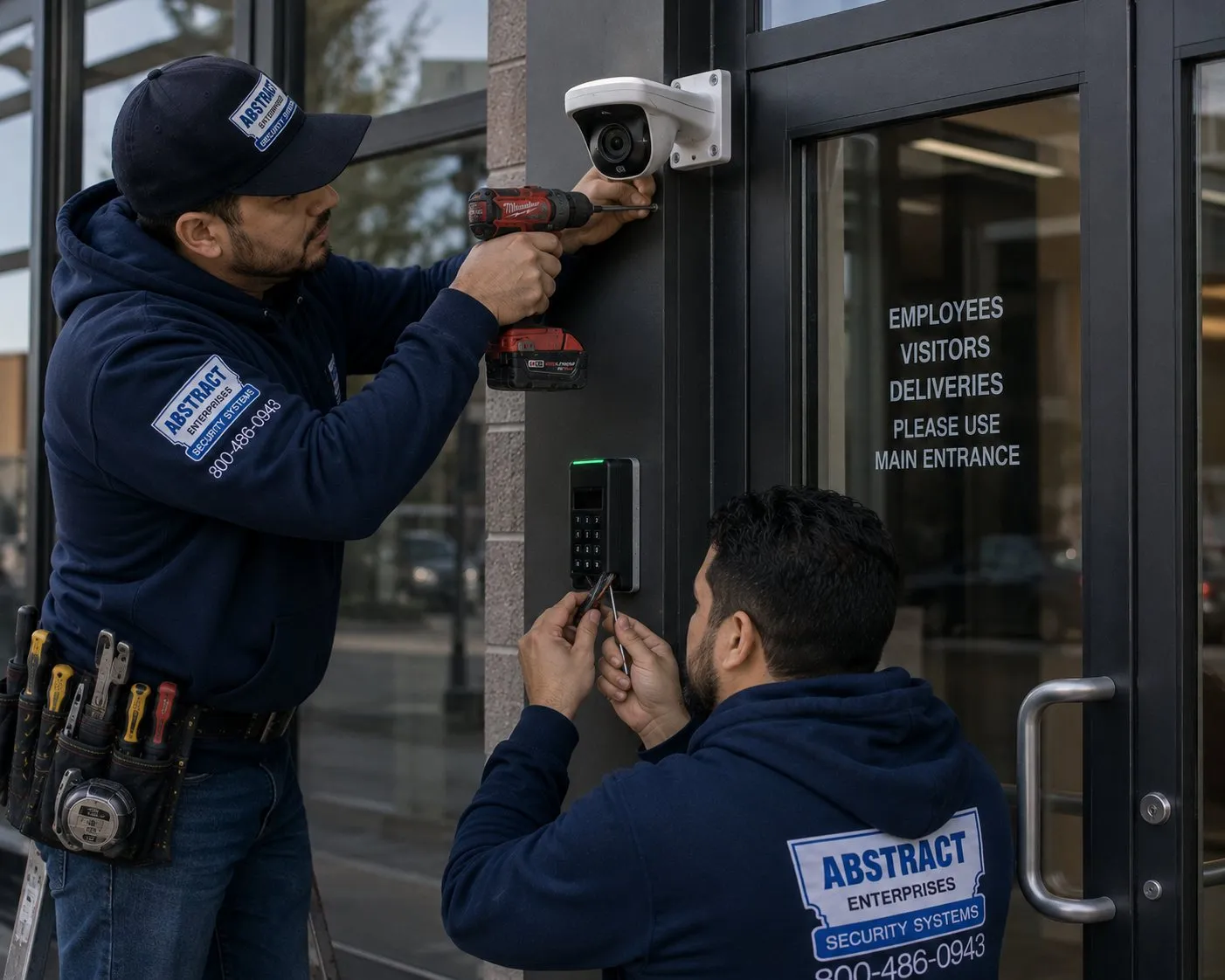
A weatherproof keypad, fob reader or combined unit beside the door, wired to an electric strike in the frame and a power supply indoors. The standard for walk-up street doors and shop entrances, because it handles heavy traffic and works with the existing buzzer.
Battery deadbolts with a keypad outside and a thumb-turn inside, for railroad-flat hall doors, frame-house front doors and studio doors used by one household or one firm.
Smart units that mount over an existing single-cylinder deadbolt on the inside and leave the outside untouched. Useful for renters, for tower unit doors where the hallway face must match, and on landmarked doors.
Street-door panels with a camera, call buttons and a keypad in one housing, so tenants can see who is buzzing before they release the strike. The single most effective change against "delivery" buzz-ins.
A contact that reports when the street door is left open and a properly adjusted closer that makes sure it shuts. Unglamorous, and the reason many keypads in Greenpoint actually work.
Steel plates over the latch gap and strikes fixed into solid framing, for back doors on Franklin Street and Manhattan Avenue that are the first target of a pry bar.
The small devices that let a lock reach the internet. In a brick walk-up with the router on the top floor and the lock at street level, siting them is half the job.
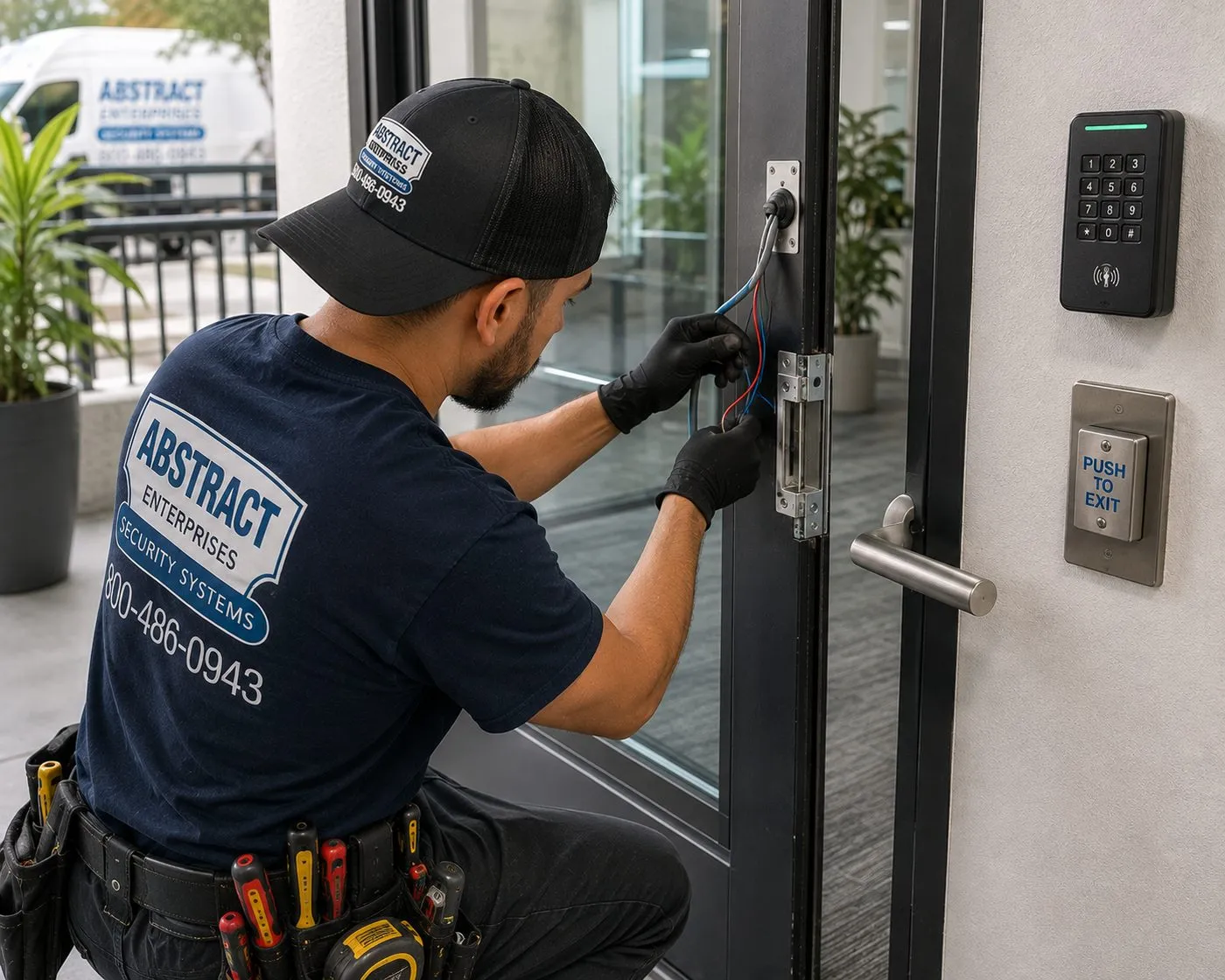
Request-to-exit buttons, levers and push bars on the inside of any door with an electric lock, so leaving never depends on power, a code or a phone.
| Question | Boxed lock from a national alarm or doorbell brand | AESS fitted for a Greenpoint door |
|---|---|---|
| Which door it suits | A single household's own front door | Chosen for the actual door: shared street door, railroad hall door, frame-house door, steel back door |
| Who installs it | Usually the owner, or a technician working to the brand's script | A licensed low-voltage installer who checks closer, latch, strike and exit before fitting anything |
| Buzzer and mail access | Not considered | Existing intercom release and the postal arrow lock kept working on the same strike |
| Credentials | One app account, shared codes | One credential per person, a written register, two administrators |
| Subscription | Often tied to the brand's monitoring or cloud plan | We install the lock; any app plan is your choice, and many locks work without one |
Products from ADT, Ring or SimpliSafe can be the right answer on a private front door, and we will fit one you have bought. What they are not designed for is a door shared by several households or a business, and that is most Greenpoint doors.

Google's AI Overview and similar tools could not be opened from our build environment, so the claims below are the ones published by national cost guides, manufacturers and DIY sites that those summaries draw on. Each is fair for a suburban front door; each needs correcting for a Greenpoint walk-up, frame house or shop.
Fixr, in a guide updated in January 2025, gives a national range of $250 to $400 for installing a smart lock, with $300 as the average. Angi and HomeAdvisor publish national cost guides of their own, which we have not reproduced here. Those numbers describe one battery deadbolt fitted to one modern, already-bored front door by a handyman.
The Greenpoint door that most needs keyless entry is the shared street door, and that is a different job: a keypad or reader, an electric strike cut into the frame, a power supply, a cable run from the cellar or vestibule, the existing buzzer and postal lock kept on the same strike, and often a closer and latch repair first. Our published Brooklyn figure for that work is $1,500 to $2,500 installed.
Where the national figure is roughly right is a railroad-flat hall door or a frame-house front door that takes a standard keypad deadbolt with no surprises. We quote those flat after a free look at the door, and the quote is what you pay.
Manufacturers list door thickness, backset and bore sizes for a reason, and retrofit units such as August's say plainly that they work only on single-cylinder deadbolts. Greenpoint's doors stretch those limits in both directions.
Railroad-flat hall doors are sometimes thin hollow-core slabs; nineteenth-century frame-house doors carry old bores, plugged mortises and soft wood around the latch; flathouse street doors are heavy, closer-driven and often steel; shop back doors are steel in steel frames. A battery deadbolt sold for a standard 1¾-inch residential door is the right product on only some of them.
So we measure first and choose second. Where the door itself is the problem — too thin, too damaged, hollow — we say so before selling you a lock for it, because a good lock in a weak door is the most common failed smart-lock job we see.
Bob Vila's testers describe fitting their test locks with "only a Phillips screwdriver" in about half an hour. On a modern door that is already prepared for a deadbolt, that is accurate.
It stops being accurate when the door is shared, wired or old. A street door with a buzzer strike, a postal lock and an intercom has low-voltage wiring that has to be traced and kept working; a door that does not latch needs its closer and strike sorted first; and in a building with three or more families the entrance doors fall under the city's housing and fire rules for building entrances.
Tenants who fit their own lock on their own apartment door are acting within their rights in a multiple dwelling, provided the landlord gets a duplicate key on request. The shared street door is a different matter: it belongs to the owner, and changing it is the owner's job.
Smart-lock marketing often leads with parcel deliveries, and in New York the problem is real: SafeWise's 2025 report, as covered by the New York Post in June 2026, counted more than 7.8 million stolen packages in the state. News 12 Brooklyn warned Greenpoint residents as long ago as 2015 about a pair caught on camera taking packages from apartment buildings.
But the Greenpoint accounts on Reddit show how the thefts usually happen: a resident buzzes in someone who says "delivery," or a lock on the street door is picked to reach the parcels in the hall. The lock is only one of the failures in each case. The others are a buzzer that lets anyone in and parcels left loose inside.
The combination that works is a video entry panel so tenants see who they are admitting, individual resident codes so buzzing strangers is no longer routine, a courier code or parcel locker so packages are not left in the open hallway, and a door that latches every time. A smart lock is part of that, not all of it.
Owners in the Greenpoint Historic District sometimes assume the Landmarks Preservation Commission will refuse any change at the front door. The commission's own permit guidebook says otherwise for hardware: it lists repairing or replacing hardware such as hinges, knobs, locks and handles as work that may not need a permit.
What the commission does protect is the historic door, its glazing, its surround and the facade. Many houses in the district still have the paneled double wooden doors the 1982 designation report singles out, and replacing those is a permit matter that the guidebook expects to match the original's materials, configuration and details.
So on landmarked Greenpoint fronts we change hardware and keep the door. Keypads and readers go on the inside face, on an inner door, or on a slim reader that reuses existing preparation, and anything that would be fixed to the facade is discussed with the owner first.
August's support pages say its Wi-Fi bridge should sit within 10 to 15 feet of the lock and still have a strong Wi-Fi signal where it is plugged in. In a Greenpoint walk-up those two conditions often point to different places.
The router is in a third-floor apartment at the back; the lock is on the street door four floors down and two masonry walls away; and the stair hall, which is where a bridge would need to go, is common space with no outlet the tenant controls. Brick party walls and steel street doors absorb signal that a wood-frame suburban house lets through.
The fixes are known: a street-door keypad wired back to a controller rather than relying on Wi-Fi, a Thread or Z-Wave lock that meshes through a hub on a lower floor, or a building network extended to the vestibule. We test from a phone on mobile data outside the building before calling it done.
Several smart-access vendors pitch app-only entry to landlords. In New York City, owners of multiple dwellings who use smart access systems are bound by the Tenant Data Privacy Act, which bars them from requiring tenants to use a smart access system to get into their own apartments and limits what data can be collected and kept.
Separately, the city's unlawful eviction law makes it illegal to change an occupant's entrance-door lock without giving them a key, and Greenpoint's homeownership rate of 16.6 percent means most doors here have a tenant behind them. A street-door keypad that tenants welcome is very different from one imposed on them.
When we fit a building entrance system for a Greenpoint owner, physical keys or fobs stay available for anyone who does not want an app, consent and data handling are written down, and nothing about a tenant's own apartment door changes without that tenant.
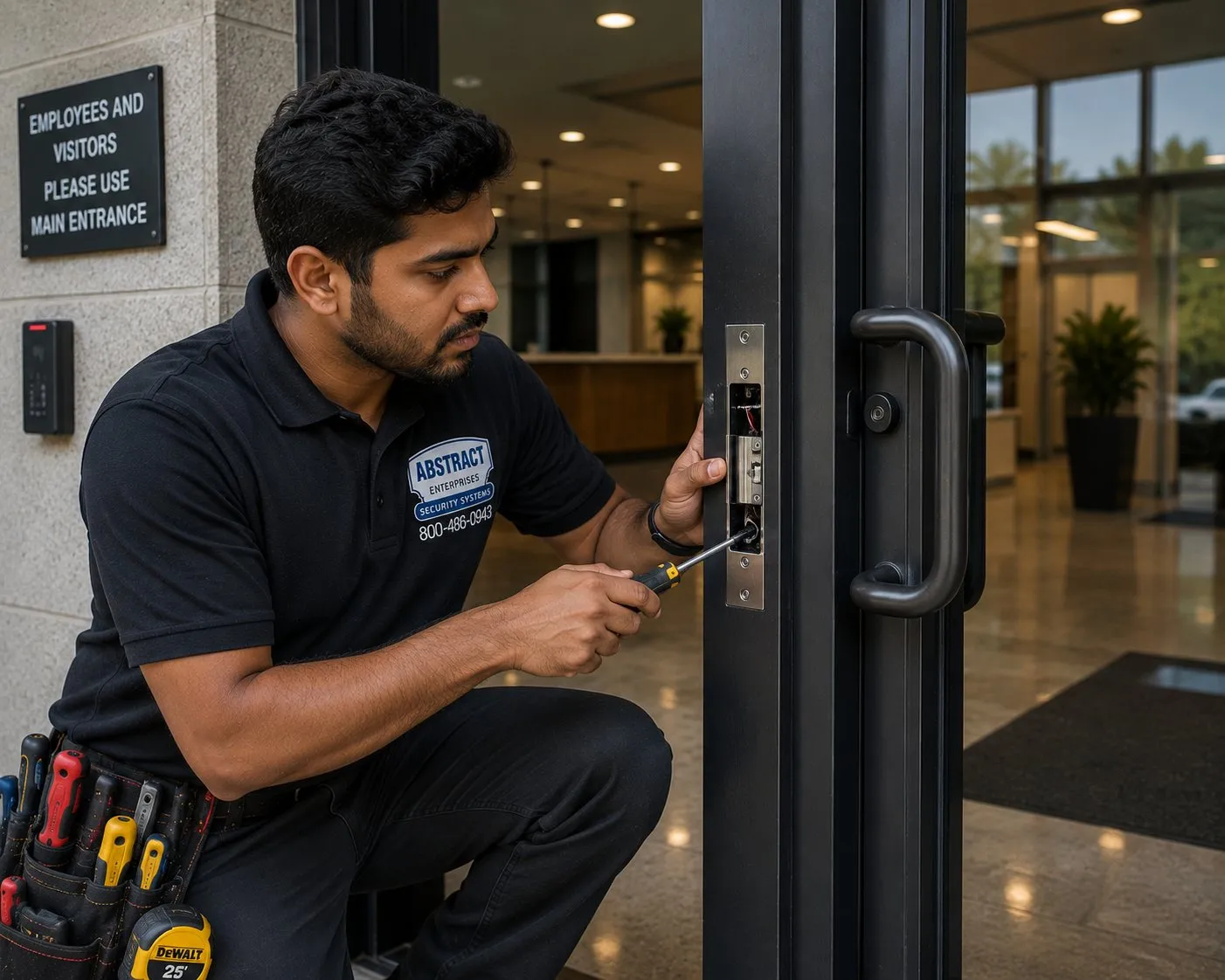
Tell us how many people use the door and send a photo of both sides. We will tell you whether it needs a keypad, a strike, a closer or all three — before anyone books a visit.
Send us the street, the kind of building and the number of people who use the door. An installer replies in writing the same business day, often with a question or two about the closer and the buzzer. Prefer to talk? Call the Brooklyn office on (347) 934-8335.
We'll call you back the same business day. If it's urgent, call the Brooklyn office now at (347) 934-8335.
Seven steps, whether the job is one hall door in a Driggs Avenue railroad flat or the street door, cellar door and intercom of an eight-family walk-up off Manhattan Avenue.
You send photos of the door from both sides, the intercom panel and the strike, and tell us how many apartments, staff or tenants use it. We reply with what the door is likely to need.
At the free walkthrough we watch the door close and latch on its own before anything else, then check the closer, hinges, strike, frame and inside exit.
We open the intercom and strike, trace the buzzer and postal-lock wiring, and measure the power supply, so nothing that works today stops working tomorrow.
You get a written scope: which hardware goes on which door, who gets which credential, where cable and power run, and one flat price.
Closer, hinges and strike are put right first; then the keypad, reader, strike or smart deadbolt goes in, cable is run tidily from the cellar or vestibule, and any siding or facade penetration is sealed.
Every code, fob and phone credential is tried from outside; the buzzer and postal lock are tested; and the door is opened from inside by hand, without power, to prove nobody can be trapped.
Two administrators are set up, every credential is listed in a written register, and the owner is shown how to add and remove people.

Six places that explain the doors we work on in 11222, from a block of shipwrights' houses to a pair of forty-storey towers.
Designated September 14, 1982, taking in rows on Milton, Noble, Kent, Calyer, Oak and Guernsey Streets, Franklin Street and part of Manhattan Avenue. Frame houses built for shipyard workers, brick Italianate and neo-Grec rows, and many surviving double wooden doors.
A block-long brick and terra-cotta building put up in 1885–86 by the oil merchant Charles Pratt to house workers from his Astral Oil Works — an early, purpose-built example of many households sharing entrances on one street.
Designated in 2007, the former pencil works on Greenpoint Avenue and Kent and West Streets: factory buildings dating from the 1880s to the 1920s, the kind of solid industrial fabric where shared entrances and steel doors are the rule.
Acquired by the city in 1889 and open by 1891, about ten acres of plane-tree walks between Nassau and Driggs Avenues. The streets around it are lined with two- and three-family houses and walk-ups — the street-door territory of this page.
The roughly 22-acre waterfront plan for about 5,500 apartments, including the 745-unit Eagle + West towers at 1 Eagle Street, 30 and 40 storeys high. Developer-chosen lobby systems, uniform unit doors and house rules.
The converted industrial complex at 1155–1205 Manhattan Avenue, home to 76 small businesses and about 360 workers. Shared entrances, freight doors and dozens of studio doors under one roof.
We also serve Williamsburg and East Williamsburg to the south, Long Island City across Newtown Creek, and every Brooklyn neighbourhood from Bushwick, Bedford-Stuyvesant, Fort Greene and Downtown Brooklyn to Park Slope, Crown Heights and East Flatbush around our Troy Avenue office. For building-entrance work in the neighbourhood, our Greenpoint buzzer repair and Greenpoint structured cabling pages cover the wiring behind the door.
Greenpoint is priced exactly as the rest of Brooklyn, and Brooklyn is the base every AESS area price is calculated from, at a multiplier of 1.00. The building-door figures below are the ones already published on our Brooklyn access-control and door-buzzer pages, repeated here with what each one covers. A smart lock on a private door — a railroad-flat hall door, a frame-house front door, a studio door — has no published AESS figure, because the door decides the work; we quote it flat in writing after a free walkthrough, and that is the price you pay.
| Item | Greenpoint price | What it covers |
|---|---|---|
| Smart lock on an apartment, hall, house or studio door | Quoted flat at free walkthrough | No published number; the written price follows a look at the door, its thickness and preparation, and who uses it |
| Single-door keypad or fob reader with electric strike | $1,500–$2,500 installed | Walk-up street door, door to the flats beside a shop, storefront, studio or freight personnel door; Brooklyn access-control figure |
| New electric strike on a building door | $250–$450 | Cutting a strike into the jamb of a walk-up street door that never had one, or swapping a worn one when the entry is upgraded; from our Brooklyn door-buzzer pages |
| Failed electric strike repair | $295–$485 | A street door where the buzzer sounds upstairs but the latch never releases; Brooklyn door-buzzer repair figure |
| Programming visit for a lock already on the door | $195 first hour, then 30-minute blocks | Codes, app, bridge and administrator handover only; our published Brooklyn setup-visit rate |
| Service and callback rate | $195/hr, 3-hour minimum ($585) | Return visits after a completed job; never charged on the first installation |
National averages, for context. Fixr's January 2025 guide puts having a smart lock put in at $250–$400 nationally, around $300 on average. That is a third-party average for one modern door, not an AESS price and not a description of a walk-up street door.
Locks you supply keep their manufacturer's warranty. Full terms — including 50% deposit, one-year parts-only warranty on AESS-supplied products, and the late-fee schedule — are set out in the service agreement.
Three packages cover most Greenpoint requests. The two building-door packages carry published Brooklyn prices; the private-door package is quoted after we have seen the door, since a hollow hall door and a solid frame-house door are not the same job.
Quoted flat at walkthrough
A keypad smart deadbolt or retrofit unit on a railroad-flat hall door, frame-house door or studio door. Thickness and bore checked, strike reinforced into the frame, inside exit confirmed, codes enrolled, bridge or hub placed and tested from mobile data outside.
$250–$450
For the walk-up whose buzzer works but whose strike is missing, worn or the wrong type: a new strike in the frame so the intercom — and later a keypad — can release the latch. If the strike you have has simply failed, the repair is listed at $295–$485 instead.
$1,500–$2,500
Single-door keypad or fob reader with electric strike, installed. A credential per apartment or employee, push-to-exit or mechanical exit inside, the existing buzzer and postal lock kept working, and the owner shown how to add and remove people.
Bought a smart lock already? We fit it, labour only, quoted flat at the walkthrough. Before drilling we check it suits the door you have in mind — thickness, backset, single or double cylinder, indoor or weather-exposed — and that it opens from inside without a key. A battery deadbolt bought for the street door of a walk-up is usually better used on an apartment door, and we will tell you so. Customer-supplied locks carry their manufacturer's warranty rather than ours.
Call the Brooklyn office, send the form, or text a photo of the door. We reply the same business day with what the door needs.
Most Greenpoint buildings we work on have the same sequence of doors. This is how we think about each one, and who normally decides what goes on it.
| Door | Who decides | What usually works |
|---|---|---|
| Street door | The owner, or the condo board | Closer and latch put right, then a keypad or reader with an electric strike; buzzer and postal lock kept on the same strike; door-position sensor |
| Inner vestibule door (where there is one) | The owner | Often left on the buzzer alone, or given its own code if parcels are stored between the doors |
| Cellar door and bike room | The owner | Keypad lock with tenant codes and a closer; owner holds the master code |
| Apartment entrance doors | Each tenant, within the city's apartment-lock rules; the owner supplies the required lock | Keypad deadbolt or retrofit unit with a thumb-turn inside; duplicate key to the owner on request |
| Second hall door of a railroad flat | The tenant, with the owner | Solid deadbolt kept locked, or a matching smart lock if both doors are used |
| Roof door or hatch | The owner | Secured against entry from the roof but always openable from inside; a contact on the alarm if the building has one |
| Rear yard door | The owner, or the ground-floor shop under its lease | Latch guard and reinforced strike, inside lever, keypad only if staff or tenants need it daily |
The order matters. We start at the street door because it decides whether any other door is under real pressure; a street door that latches and admits only people with their own credential takes most of the risk off the hall doors above it. Then we work up, and we write down every credential on every door as we go, so the owner ends the day with one list rather than a drawer of keys. If the budget only stretches to one door this year, it should be the street door; the hall doors can follow, and the cable we leave in the vestibule will serve whatever comes next.
Once a building holds three or more families living independently, New York's Multiple Dwelling Law treats it as a multiple dwelling, and the city's housing rules for entrance doors and apartment locks apply. Most Greenpoint walk-ups are well past that line. That does not make keyless entry difficult, but it does mean the code plan needs to be written down and fair.
We are not lawyers, and owners with a specific dispute should take advice. What we bring is a plan that has been thought through before the first hole is drilled, and a register that shows every person who can open every door.

In a Greenpoint walk-up the router that pays for itself is usually in a top-floor apartment, two flights and a masonry wall away from the street door, and it belongs to a tenant, not the building. That is the wrong place to hang a building lock's connection.
For a street door, we prefer a keypad or reader wired back to a controller in the cellar or vestibule. The door then keeps working with no internet at all, and remote access, if the owner wants it, comes from a small building connection that the owner controls — not from whichever tenant happens to have the strongest Wi-Fi this year.
For an apartment door, the lock's own bridge, a Z-Wave or Zigbee hub, or a Thread border router inside the apartment usually does the job, because the distance is short. Thread locks need a border router from the same ecosystem as the app — a Google Nest Hub for Google Home, an Apple HomePod mini for Apple Home — set up before the lock is added.
For a shop, we keep the door's network separate from the guest Wi-Fi that customers log into, and we label the router, the controller and the power supply so the next technician, or the next manager, can find them without lifting ceiling tiles. Either way, the test is the same: a phone on mobile data on the sidewalk outside must be able to lock and unlock the door, and the door must still open by code and from inside if the internet goes down.
The towers that have gone up along the East River since the 2005 rezoning are a different world from the walk-ups a few blocks inland. Greenpoint Landing alone is planned for about 5,500 apartments across ten towers, with construction that began in 2015, and the 745-unit Eagle + West pair is one finished part of it. In buildings like these the developer has already chosen how residents get through the lobby, the amenity floors and the garage, and the unit doors are identical by design.
That leaves residents with a narrower set of choices, and we work inside them. The first step is always the building's own rules: a rental lease may restrict changes to the unit lock, and condominium house rules may require management to approve any work on the corridor face of the door. Where a resident is allowed to add something, an interior retrofit unit that leaves the hallway side untouched is often the answer, because the building's key still works and the corridor still matches.
Where an owner in a condominium has permission to replace the lock, we choose one that fits the door preparation the developer used, coordinate the visit with the management office and the freight elevator, and hand the building a copy of the key or code arrangement it requires for emergencies. If the building runs its own app for the lobby, a second app on the unit door is a convenience, not a conflict, as long as residents know which one opens what.
Ground-floor businesses in the new buildings are a separate case. Their storefront and back-of-house doors are usually theirs to manage under the lease, and we fit them as we would any Greenpoint shop: staff codes, a scheduled front door, a reinforced rear door, and free exit from inside.

The doors nobody photographs are the ones most often left on a hook and eye: the cellar door under the front steps, the rear door to the yard, the door from the back of a shop into the alley. In Greenpoint they matter more than usual, because cellars hold the boiler, the meters, tenants' storage and the bike room, and because the neighbourhood's northern and eastern edges run along Newtown Creek.
Water is part of the picture there. The Newtown Creek Alliance has written that storm drains in the creek's industrial zone lack tide gates, letting creek water creep up behind properties in a surge, and residents on r/Greenpoint recall houses on their street taking water in their basements during Superstorm Sandy. First Street, a flood-risk research group, counts 925 Greenpoint properties at risk of flooding over the next 30 years.
For a lock, that means choosing hardware for the location rather than for the brochure. On cellar and rear doors at or below street level we prefer mechanical deadbolts or wired keypads mounted high on the frame, with the controller and power supply kept above the likely water line, over battery smart locks whose electronics sit near the floor. Every one of these doors still has to open from inside without a key, because a cellar is also somebody's way out.
A keyless street door usually brings other work at the same building. These Greenpoint and Brooklyn services are the ones most often booked alongside it.
Readers and controllers for buildings and businesses with several doors to manage.
Video entry panels so tenants see who is buzzing before they release the door.
Strikes that hum but do not release, dead buttons and panels that no longer ring upstairs.
Cameras on the street door, the hall and the parcel area.
Door contacts and hatch sensors that report a forced door.
The cable runs from the cellar to the vestibule that keypads and cameras depend on.
A camera by the front door of a frame house, fitted at the same visit as the lock.
When an older building intercom needs fixing rather than replacing.
Ask for the lock and any of these on one form.
How our technicians check a walk-up street door before quoting — a working routine, not the story of a particular job
We let the door close by itself three times before touching anything. Does it finish its swing? Does the latch catch on the first try, or only when someone pushes? Does it bounce? Most of what we need to know about a Greenpoint street door comes from those three closes.
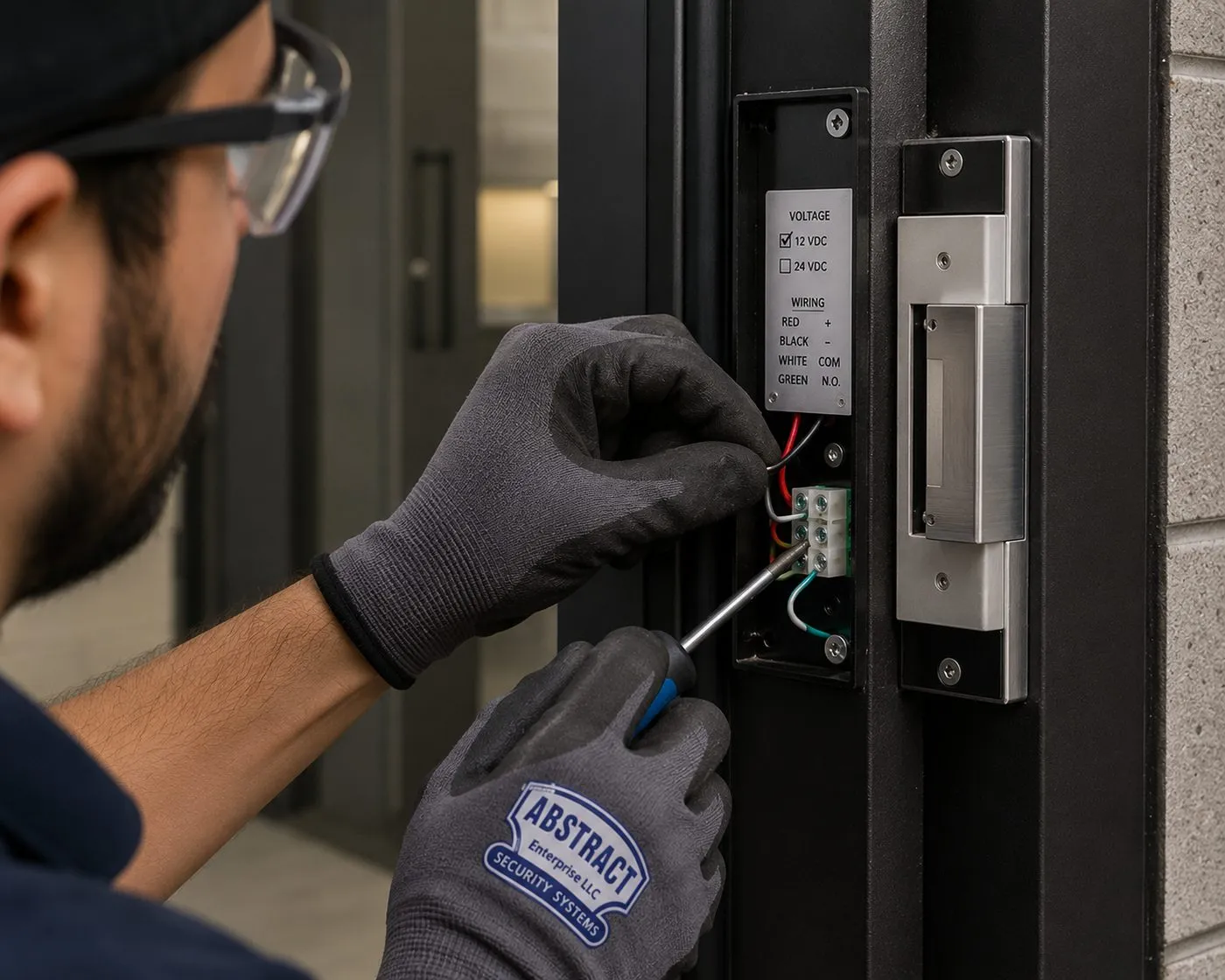
Then we open the intercom panel and the strike. Which wires go to the strike, is there a postal lock on the same circuit, and what voltage is the transformer in the cellar actually putting out? An old buzzer transformer that sagged years ago is behind a lot of "the door only opens sometimes."
We go up the stairs and count the apartments, the bells and the names on them, and ask the owner who should have access and who should not. We look at the cellar door and the roof door on the way. Only after that — after the door latches, the wiring is understood and the list of people is written — do we talk about which keypad or reader to fit.
Yes on both counts. Battery life in a smart lock is rated on a typical household's handful of daily uses, and a Greenpoint street door used by twelve or twenty people will run through batteries many times faster. A busy shared door should have a keypad or reader wired to an electric strike and a power supply, with a battery-backed supply if the owner wants it to keep working in a power cut. Battery smart deadbolts belong on apartment, hall and studio doors.
Rarely. In most walk-ups the cable for the strike and keypad goes down through the floor of the vestibule into the cellar, where the power supply sits, and the old buzzer wiring often shows the route. Where a run has to go up the hall we use a slim surface raceway painted to match rather than cutting plaster, and we say so in the written quote before work starts.
Yes, if the reader supports it. Many current readers accept a phone credential over Bluetooth or NFC as well as a code or fob, and some residential smart deadbolts work with digital home keys in the Apple and Google wallets. We fit readers that accept more than one credential, so a tenant without a compatible phone still has a code or fob.
Yes. A small door-position contact in the frame tells the keypad or controller whether the door is actually shut, and most systems can send the owner a notification if it stays open for more than a set number of minutes. It is one of the cheapest additions to a street-door job and one of the most useful in a walk-up.
Often, yes, and on buildings where the intercom is itself failing it is the sensible order of work. A new video entry panel can include the keypad, so tenants see visitors and residents use codes from one unit. We price the panel separately in the written quote so the owner can decide whether to do both now or the keypad first.
It can, with an automatic door operator added to the door and linked to the keypad or a fob, so a valid credential both releases the strike and swings the door open. The door also needs a level approach and enough clear width, which some older Greenpoint entrances with a step at the threshold do not have; we look at the whole approach at the walkthrough before recommending an operator.
That depends on how the strike is set. On most Greenpoint walk-ups and shops we fit fail-secure strikes, which stay locked from outside when the power goes but still open from inside with the normal lever or knob, so nobody is trapped and the building is not left open. Adding a battery-backed power supply keeps the keypad working through short outages.
No, on a wired street-door system. The codes and fobs live in the controller indoors, not in the keypad on the street, so a smashed or spray-painted keypad is unplugged and replaced and every credential works again as soon as it is connected. On a battery smart lock the codes are held in the inside half of the lock, so replacing a damaged outside keypad usually keeps them too. We fit vandal-resistant metal keypads on street doors that face busy sidewalks.
This is the Greenpoint page. It sits under smart lock installation in Brooklyn, which sits under the AESS New York City smart lock hub, where the citywide renter, co-op and building rules are set out. More neighbourhood pages are being added.
Back to Brooklyn · Washington Heights, Manhattan · New Dorp, Staten Island
NYC smart lock installation · Brooklyn · Manhattan · Queens · the Bronx · Staten Island
Hudson Valley smart lock installation · Westchester · Rockland · Orange · Putnam · Dutchess · Ulster
AESS also installs cameras, intercoms, access control and networks across the five boroughs, Long Island and the Hudson Valley; start from the Abstract Enterprises Security Systems home page or read about the company.
Street-door keypad dark, a strike that will not release, a hall-door lock that reports "jammed," a back door that will not lock at closing — call (347) 934-8335. We book the next open two-hour window, and most power, alignment, closer and pairing faults are fixed in one to two hours once we reach the door.
Every local figure, landmark and incident on this page comes from a published source. Prices come only from the published AESS Brooklyn figures.
Abstract Enterprises Security Systems · 1282 Troy Ave, Brooklyn, NY 11203 · (347) 934-8335 · WhatsApp (718) 679-0359 via wa.me
NYS Low-Voltage Licence #12000287431 · 100% Licensed & Insured · Same-Day Estimates · Rated 4.7★ from 201 Google Reviews
Full terms — including 50% deposit, one-year parts-only warranty on AESS-supplied products, and the late-fee schedule — are set out in the service agreement. See our warranty page.
This page explains how Greenpoint buildings and New York rules affect smart lock installation; it is not legal advice. Page reviewed and updated October 17, 2026. Changelog: Greenpoint page launched as a neighbourhood child of the Brooklyn smart lock page, covering walk-up street doors, railroad-flat hall doors, sided frame houses, doors beside storefronts, restaurant back doors and shared maker-building doors.