What are you looking for?
About Us Contact Us Careers Get a Free Quote (800) 486-0943
Pick a service
✅ Got Your Own System?
🎬 Home TheatreQuote 🎶 AV SoundQuote 🔑 Access ControlQuote
Now pick your area
Pick your area
Long Island
Hudson Valley
Services available
Pricing & Tools
Pick a service for pricing
🚪 Intercom Pricing 🔔 Buzzer Repair Pricing
Calculators
📹 Camera System Calculator 🚨 Alarm Calculator ⚡ Cabling Quote Builder ✅ Got Your Own System?
Select your area
Home › Smart Lock Installation NYC › Manhattan › Washington Heights
Licensed Low-Voltage Contractor · Walk-Ups, Audubon Park Elevator Buildings, Hudson Heights Co-ops & 181st Street Shops · Manhattan Line (929) 560-0737

Smart Lock
Installation in
Washington Heights

Codes the Household Controls · The Owner's Lock Left Working · Pre-War Steel and Painted Wood Doors · Night-Shift Arrivals · Landmark Blocks Around Jumel Terrace

Between 155th Street and Dyckman Street, the people behind an apartment door have often been there for decades, and not all of them are named on the lease. A grandmother, an adult son home from the hospital night shift, a cousin who arrived last spring: each needs a way in. We install smart locks on Washington Heights apartment doors, rowhouse doors and shopfronts so that the household, not a management office, decides who holds a code — while the owner's own lock keeps working, the hallway side stays within the building's rules, and the job is planned around five-flight walk-ups, painted-over pre-war frames and the landmark blocks of Audubon Park and Jumel Terrace.

Reviewed and updated October 17, 2026 · Author: Anwar Timothy, owner · NYS license #12000287431 · Manhattan line for Washington Heights (929) 560-0737

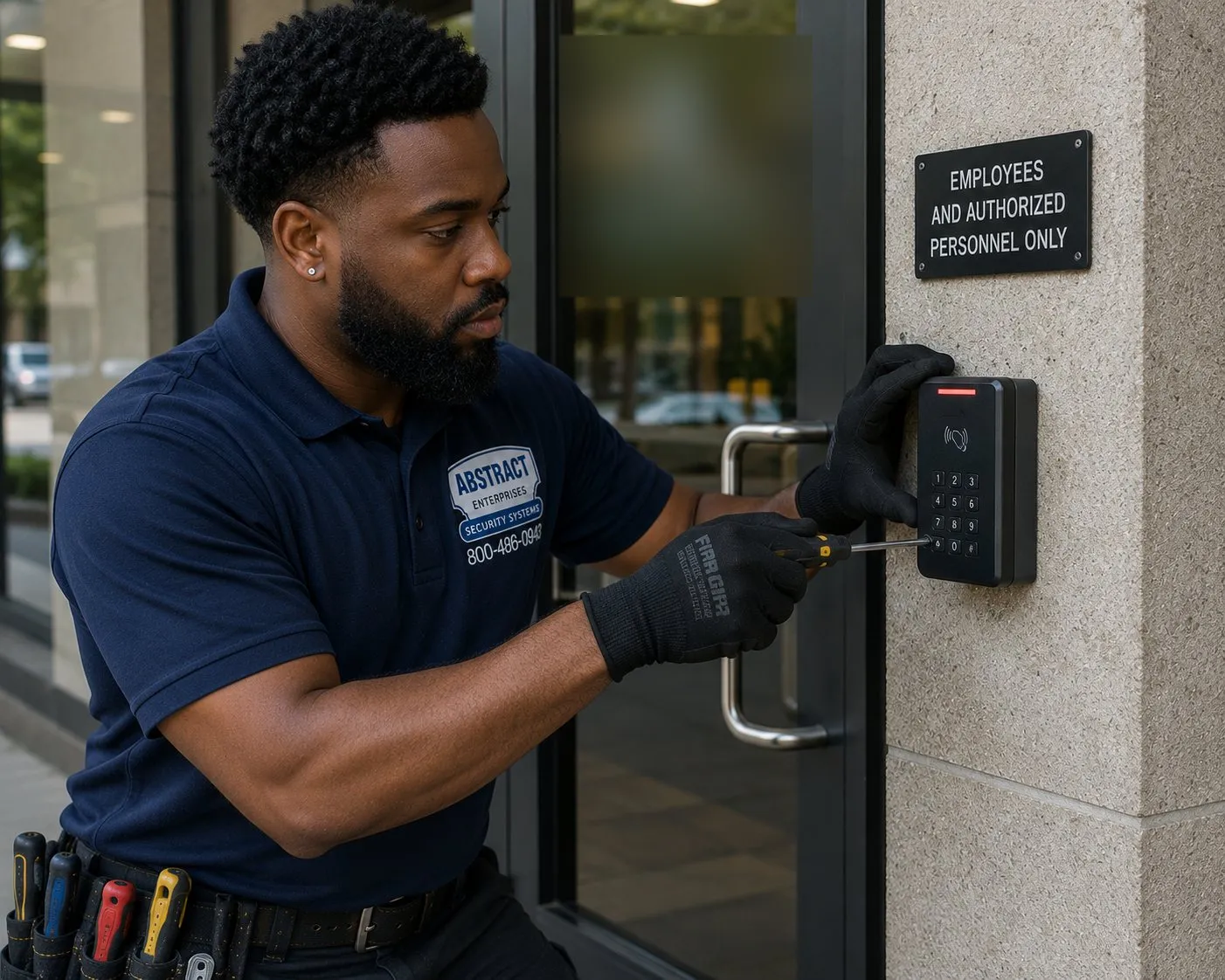
Technician mounting a keypad and proximity reader beside a glass entry door, smart lock installation Washington Heights Manhattan
A keypad and card reader going onto the stone pier beside a glass entry door — the kind of building-door work owners and boards book alongside apartment locks.
Free Washington Heights Smart Lock Quote
Tell us the floor, the door and who in the household needs a way in — a licensed installer answers the same business day

✅
Request Sent!
An installer who works uptown will call you back the same business day.
25+
Years Experience
✓
Same-Day Estimates
100%
Licensed & Insured
4.7★
201 Google Reviews

Want keyless entry on an uptown apartment without stepping on the lease or the landlord's lock? Call the Manhattan line, (929) 560-0737, or send the 60-second form with a photo of both faces of the door. We tell you, before anyone climbs your stairs, which lock fits the door, which existing lock has to stay, and what it costs.

  • The owner's lock stays in service; your smart lock is added alongside it, the way state law describes a tenant's own lock
  • Codes and phone keys set up for every person in the household, including relatives who are not on the lease
  • NYS license #12000287431 · fully insured · Rated 4.7★ from 201 Google Reviews
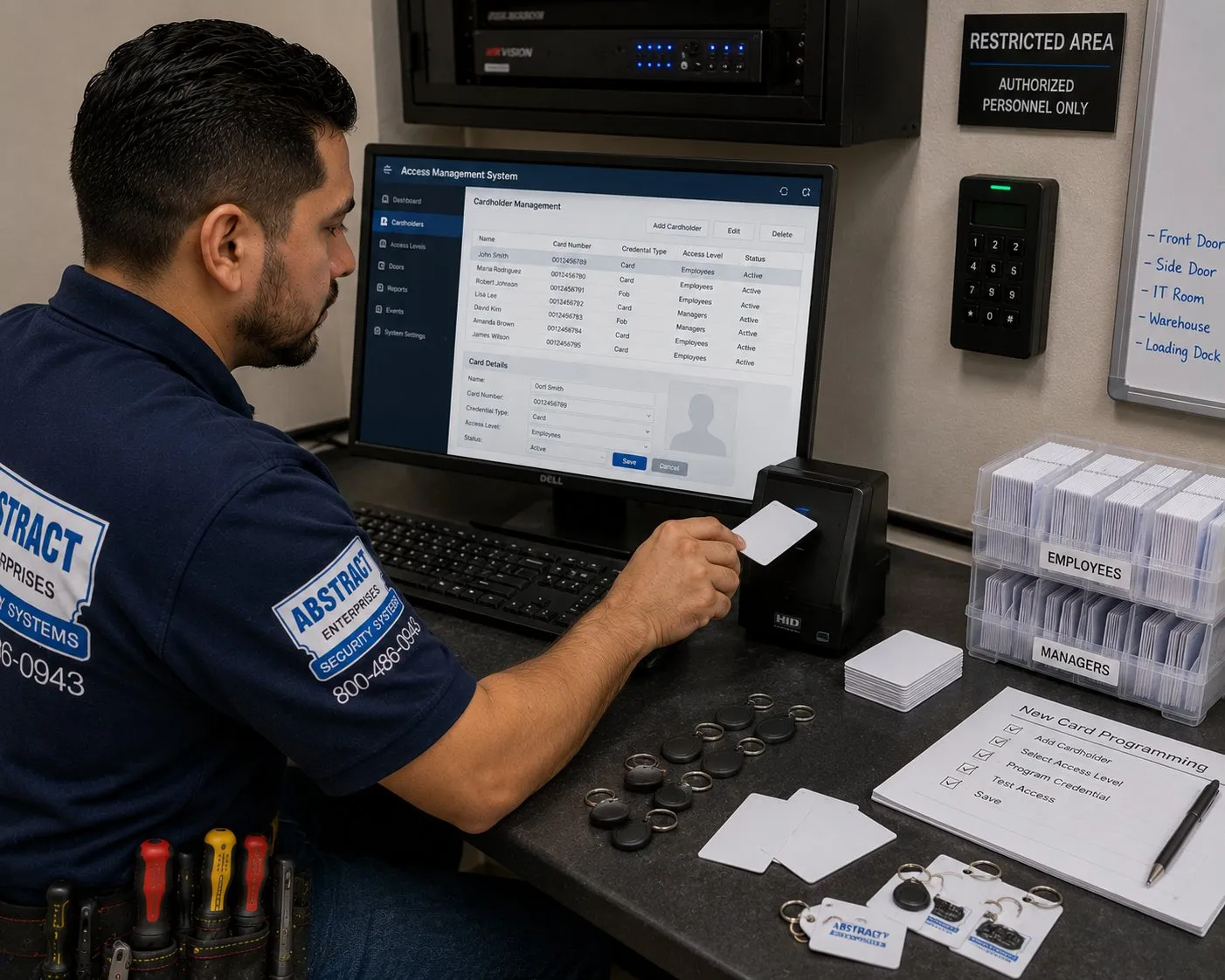
Technician enrolling key cards and fobs at an access management workstation for keyless entry in Washington Heights, Manhattan
Credentials enrolled one person at a time at a workstation, with cards and fobs sorted by group — the same discipline we bring to a household’s codes.
The Neighborhood

Why Washington Heights Properties Need Smart Lock Installation That Respects Who Lives Here

Washington Heights is a neighborhood of long tenancies and full households, and that changes what a smart lock is for. The NYU Furman Center's 2026 profile of Manhattan Community District 12, which covers Washington Heights and Inwood, counts about 182,700 residents and a homeownership rate of 12.3 percent against 32.7 percent citywide. Nearly nine in ten households rent. Almost one resident in five is 65 or older, and more than a third of households are a single person living alone. Wikipedia's history of the neighborhood describes it as set apart among Manhattan neighborhoods for its high residential density despite the lack of modern construction: the housing is overwhelmingly the five- and six-story apartment houses that went up after the IRT subway reached 157th, 168th and 181st Streets between 1904 and 1906, and the larger elevator buildings of the 1920s boom north of 181st Street.

That stock means most of the doors we are asked about belong to someone else. A rent-stabilized tenant in a pre-war walk-up off St. Nicholas Avenue does not own the door, the frame or the lock the landlord fitted. New York's Multiple Dwelling Law gives that tenant a right to install a lock of their own in addition to the owner's, provided a duplicate key is given to the owner on request. So the job is almost never "replace the lock". It is: keep the owner's lock working, add a smart lock the household controls, and do it without changing the parts of the door the landlord is responsible for maintaining.

The question of who controls access is not abstract here. In November 2018, Patch and CBS2 reported on 765 Riverside Drive, a six-story building near West 155th Street, where management introduced an electronic fob for the lobby door but approved fobs only for residents named on a lease and asked for a $50 deposit. A resident who had lived there for 50 years told CBS2 he had to send a copy of his marriage certificate before his wife could be considered for a fob. Then-Council Member Mark Levine said the policy broke city rules on keys and pointed tenants to a complaint with the state housing agency. The lobby is the landlord's business. The apartment door is where a household can decide for itself that a spouse, a parent or a home health aide gets in, and a smart lock is the tool that lets them do it without copying keys.

The buildings themselves add a second layer of work. Doors in pre-war Washington Heights apartment houses have been painted, rehung and re-keyed many times over a century; strikes sit in frames that have shifted; two or three locks of different decades are often stacked on one door. The Furman profile records 238.7 serious housing code violations per 1,000 privately owned rental units in the district in 2025, among the measures it tracks year to year. Up on the ridge, Hudson Heights is a pocket of 1920s to 1940s Art Deco and Tudor co-ops such as Hudson View Gardens and Castle Village, where a board rather than a landlord sets the rules. And south of 162nd Street, the Jumel Terrace Historic District and the apartment houses of Audubon Park bring the Landmarks Preservation Commission into any question about what shows on a facade.

Finally, there is the way people come and go. NewYork-Presbyterian and Columbia University Irving Medical Center sit on the high ground at 168th Street, hospitals run around the clock, and plenty of uptown households include someone whose working day ends long after dark. The Furman profile puts the car-free commute share at 84.4 percent, so most residents walk home from the A train at 168th, 175th, 181st or 190th Street or the 1 train along Broadway, then climb. A lock that wants a phone unlocked at 3 a.m. on a dim fifth-floor landing is the wrong lock. One that opens with a fingerprint or a short code, logs who came in, and still takes a key is the right one.

Washington Heights figures that shape a smart lock job

  • 12.3 percent: homeownership rate in Washington Heights and Inwood in 2024, against 32.7 percent citywide (NYU Furman Center) — most doors belong to a landlord or a co-op.
  • 19.3 percent: share of residents aged 65 or older in 2024, up from 9.9 percent in 2000 (NYU Furman Center) — locks have to work for people who do not want an app.
  • 37.9 percent: share of single-person households in 2024 (NYU Furman Center) — someone outside the apartment usually needs a backup way in.
  • 82,310: housing units in the district in 2024 (NYU Furman Center), in a neighborhood whose density comes from older apartment houses rather than modern towers.
  • 238.7: serious housing code violations per 1,000 privately owned rental units in 2025 (NYU Furman Center) — doors and frames here have usually lived hard lives.
  • $50: the fob deposit residents of 765 Riverside Drive near West 155th Street were asked to pay in 2018, as reported by Patch and CBS2, with fobs limited to people named on a lease.

Put together, those facts describe the work. A Washington Heights smart lock has to sit beside the landlord's lock rather than replace it, hand codes to the real household rather than to the lease, fit a door that has been painted and patched for a century, open quickly for someone coming off a night shift, and stay within co-op rules up on the ridge and landmark rules down by Jumel Terrace. That is what we plan for.

Many uptown buildings that ask us about apartment locks also have a lobby door that needs attention. Our Manhattan access control installers work on fob readers and building entry for owners and boards, and the AESS intercom installation team for Manhattan handles the buzzer and video panel at the street door.

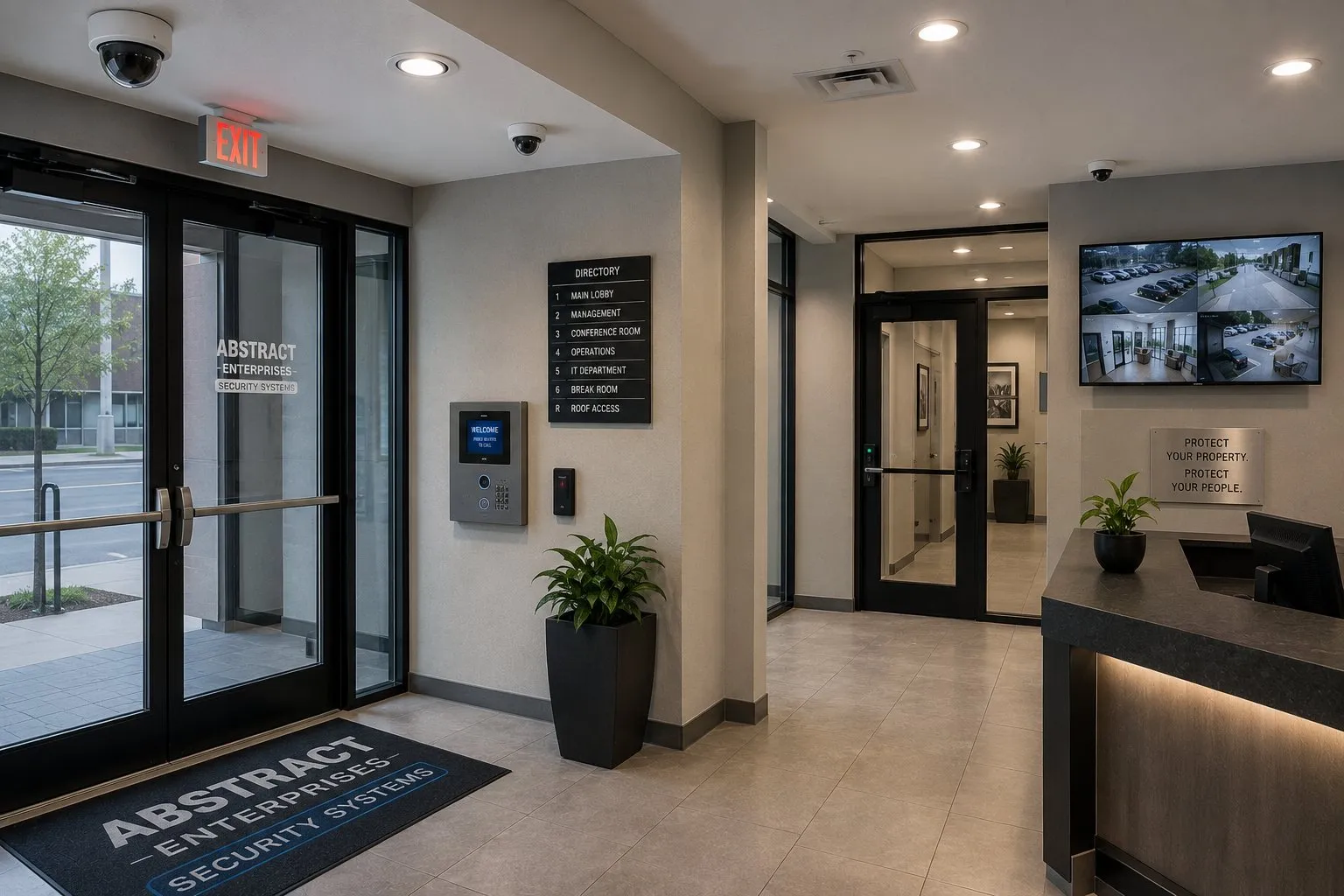
Building lobby with glass entry doors, a video intercom panel and a wall reader beside an inner door, Washington Heights Manhattan smart lock planning
Glass entrance doors, an intercom panel, a small reader beside the inner door and ceiling cameras — the building’s side of the entry chain, which belongs to the owner rather than the tenant.
Repair Capture

Smart Lock Acting Up Above 155th Street?

A keypad that went dark while you were at work, a deadbolt that stalls halfway because the strike has crept out of line, a lock that stopped answering the app after the router was swapped, or a code a relative swears used to work — those are repairs, not new installations. We book them into the next open 2-hour window, and most battery, pairing and alignment faults are cleared in one to two hours once a technician has climbed to the door. If the trouble is your building's street door rather than your own, that belongs to the owner; a failed electric strike repair on a lobby door is $369–$606 at the Manhattan rate when an owner or board books it. Call (929) 560-0737 and say it is a lock fault, or see our door buzzer repair service in Manhattan if the street door has stopped releasing.

What We Install

Smart Lock Installation Services in Washington Heights

Nearly every uptown keyless job we take on is one of these, or a combination. Each ends the same way: the door closes and latches on its own, it opens from inside with one hand and no key, the owner's lock still works, and every code and phone key has been tried at the door with the people who will use it.

Added Smart Lock on a Rental Door

A keypad or fingerprint deadbolt fitted in addition to the landlord's lock, sized to the limits the law sets for a tenant's own lock, with a duplicate key prepared for the owner so the arrangement is in order from day one.

Household Code Plans

Separate codes for each person who lives in or regularly visits the apartment — spouse, parents, adult children, an aide — named in the app so the log shows who came in, and one person chosen to hold the administrator account.

Retrofit Units That Leave the Hallway Alone

Inside-only units that motorise an existing single-cylinder deadbolt, for tenants and co-op shareholders who want nothing on the corridor face to change and the original key to keep working.

Converting One of Two Existing Locks

On doors that already carry a landlord's lock and an older tenant lock, we work out which one can become the smart lock, close up any abandoned holes neatly, and leave the owner's lock untouched.

Co-op Doors in Hudson Heights

Locks for shareholders in the Art Deco and Tudor co-ops along Fort Washington Avenue and Cabrini Boulevard, chosen to fit the board's hardware standard and installed after the managing agent has what it asks for.

Rowhouse Doors on Landmark Blocks

Keypad deadbolts on the doors of owner-occupied rowhouses around Jumel Terrace, West 160th and West 162nd Streets, fitted so the historic door and its visible hardware are respected.

Shop and Office Doors Along 181st Street

Staff codes, schedules and an entry log for storefronts, salons, offices and practices on 181st Street, St. Nicholas Avenue and Broadway — from a stand-alone keypad lock to a keypad or fob reader with an electric strike.

Strike, Frame and Paint Corrections

The unglamorous part: cutting back paint build-up, re-seating a strike, adjusting a closer and shimming a hinge so the bolt throws freely — because a motorised bolt that binds will flatten its batteries in weeks.

Service, Re-Pairing and Removal

Battery and motor faults, re-pairing after a new router or phone, adding and deleting users, and removing a smart lock at move-out with the door made good and the original hardware back in place.

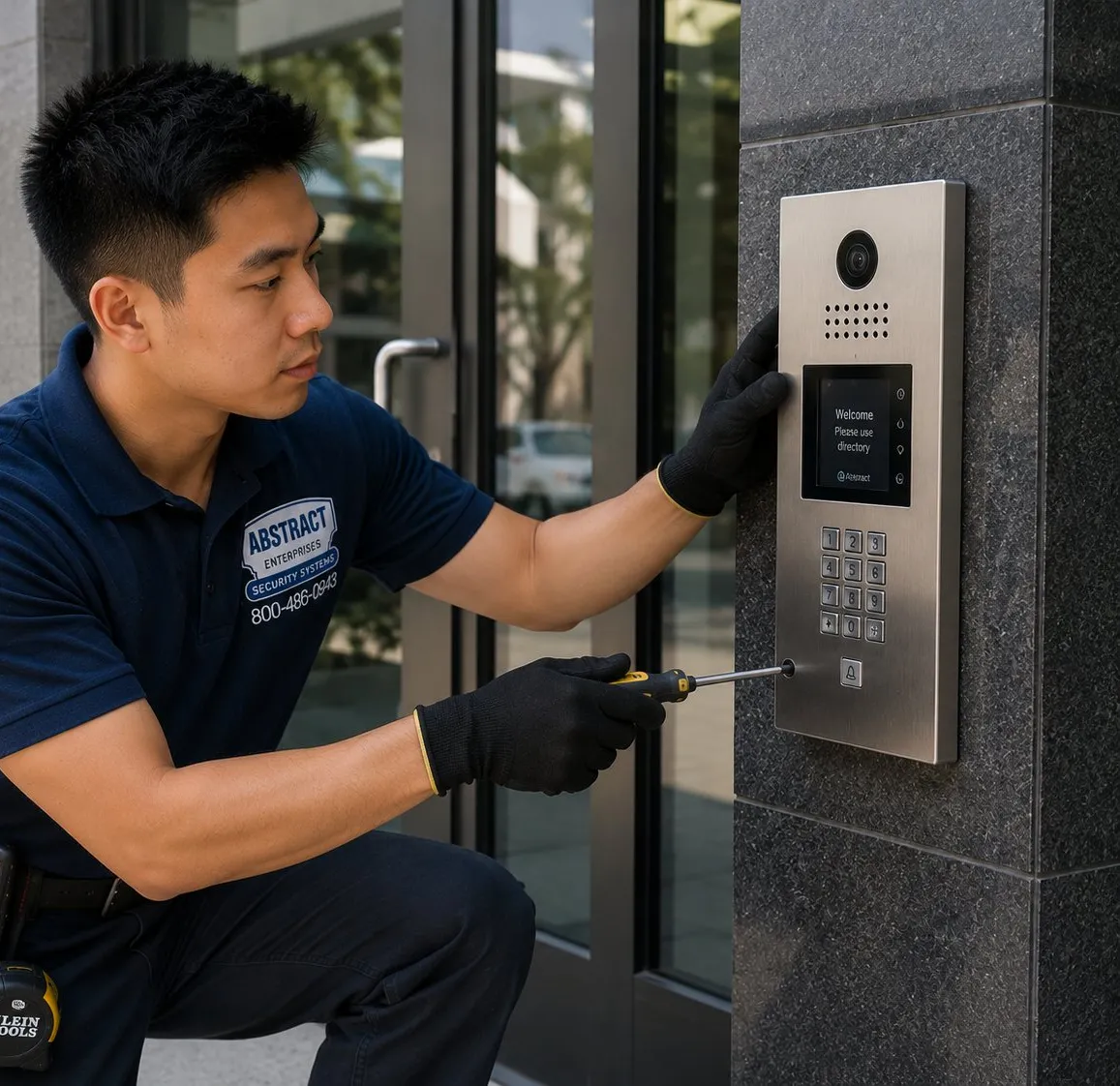
Technician fastening a stainless video intercom panel with keypad to a granite entrance wall, Washington Heights Manhattan
A video intercom with a keypad being fixed to a stone entrance wall. At the street door this is the owner’s equipment; upstairs, the household runs its own lock.
Building Specialists

Smart Lock Installation for Washington Heights' Architecture

Uptown buildings fall into a handful of types, and each one narrows the choice of lock before any catalogue does. These are the ones we meet most between 155th Street and Dyckman Street.

Five- and Six-Story Walk-Ups

The backbone of the neighborhood east of Broadway and along St. Nicholas and Audubon Avenues: narrow stairs, apartment doors on small landings, steel-clad or painted wood doors, and a landlord's lock that must stay. Battery access and a reliable code matter more than features here.

Pre-War Elevator Apartment Houses

The larger buildings of the 1910s and 1920s, including the 5- to 13-story apartment houses of Audubon Park between 155th and 158th Streets along Riverside Drive: long corridors, heavy unit doors and building-wide key systems managed by the super.

Hudson Heights Co-ops

Art Deco and Tudor Revival co-ops on the ridge between Fort Washington Avenue and the Henry Hudson Parkway, including Hudson View Gardens (opened 1924) and Castle Village (finished 1939, a co-op since 1985). A board's house rules decide what goes on a unit door.

Rowhouses of the Jumel Terrace District

Fifty rowhouses built between 1890 and 1902 on Jumel Terrace and West 160th and 162nd Streets, plus the twenty wood-frame houses of Sylvan Terrace from 1882–83. Owner-occupied doors with landmark status and old, sometimes delicate wood.

Newer and Subsidized Buildings

Income-restricted and market-rate buildings completed since 2010, Mitchell-Lama developments and other subsidized properties — the Furman Center counts 235 subsidized properties in the district. Doors are usually modern, but management agreements and program rules decide what tenants may add.

Shopfronts Under Apartments

Ground-floor stores on 181st Street, St. Nicholas Avenue, Broadway and Amsterdam Avenue, typically glass in aluminium frames behind a roll-down gate, with a separate residential entrance next door owned by the same landlord.

How the method changes by building

Walk-ups. We expect paint on every edge and a strike that has been moved at least once. Before choosing a lock we take the door off its latch, see whether it closes on its own weight, and measure what the existing bores will accept. The smart lock goes where it can share an existing hole or the cleanest new one, never through the landlord's cylinder. A small kit of spare batteries goes on the inside of the door's closet shelf for the household, because no one wants to make an extra trip down five flights for AA cells.

Pre-war elevator buildings. These usually have a building-wide key arrangement held by the super, and long masonry corridors that swallow radio signal. We test Bluetooth and Wi-Fi at the door before recommending anything, keep the owner's key path intact, and fit the lock so nothing on the corridor face looks out of place among dozens of identical doors.

Hudson Heights co-ops. The shareholder owns shares and a proprietary lease, not the door, so the managing agent comes first. We prepare a short scope note with the lock's specification and how the building keeps emergency access, then wait for the answer. Many boards care most about the corridor face; inside-only retrofits are often the easiest yes.

Jumel Terrace rowhouses. The Landmarks Preservation Commission's rules treat repairing or replacing door hardware such as hinges, knobs and handles as ordinary repair — but they carve out ornate historic exterior hardware on special doors. So we photograph what is there, keep anything ornate in place, put the electronics on the inside face, and choose a keypad whose finish disappears against an old door rather than shouting from the stoop.

Newer buildings and shopfronts. Newer apartment doors take smart locks easily, but the management agreement decides. On storefronts, a residential deadbolt rarely fits a narrow aluminium stile, so the choice is between a commercial keypad lock built for that door and a reader with an electric strike in the frame. Most shop owners who add staff codes also want cameras that show the door — our commercial security systems for Manhattan businesses cover both.

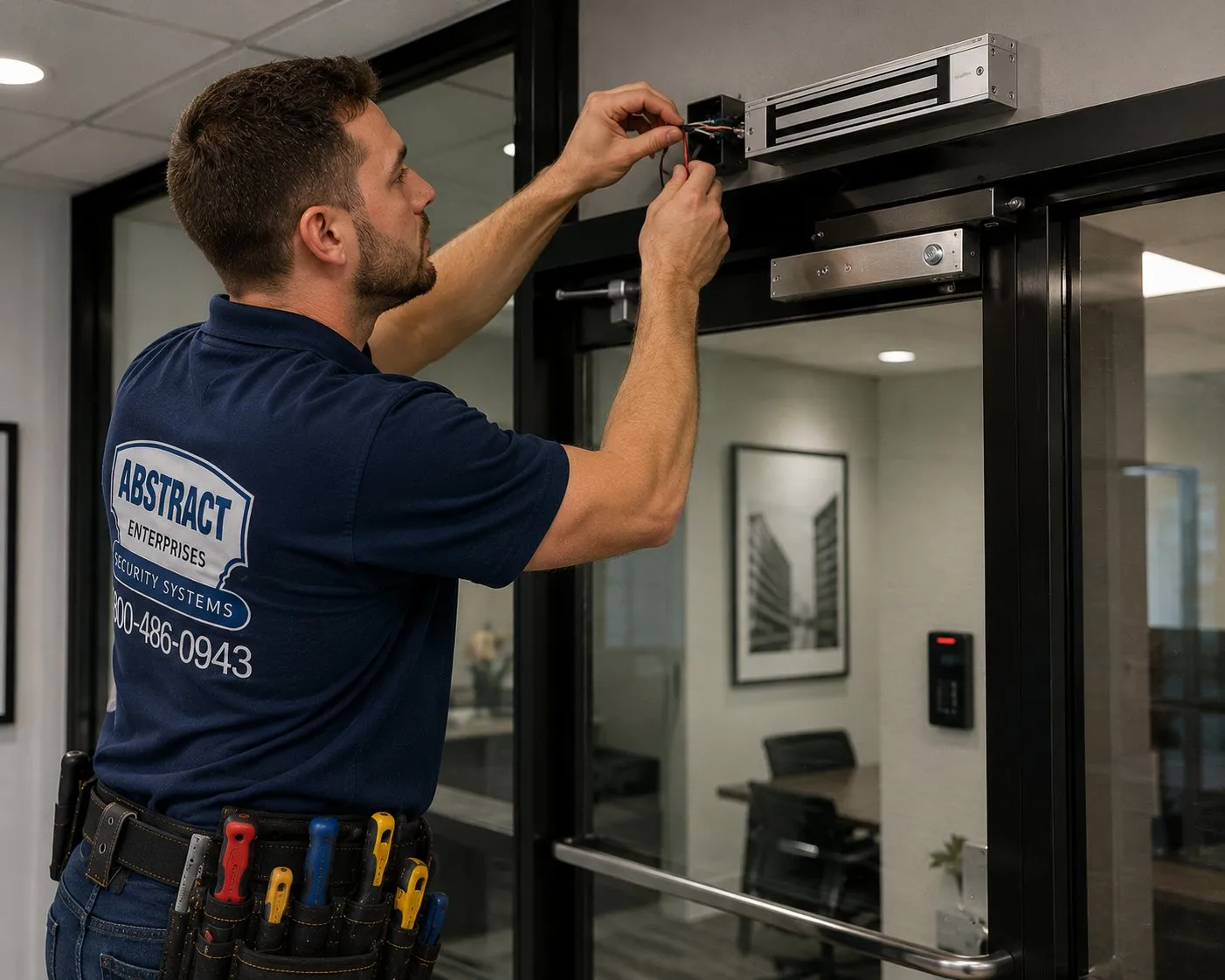
Technician wiring an electromagnetic lock on the header of a glass office door, business smart lock installation Washington Heights Manhattan
Wiring a magnetic lock at the head of a glass office door, with a reader on the wall beside it. On egress doors the city code requires one-hand release hardware and release on power loss.
Commercial Smart Locks

Business Smart Lock Installation in Washington Heights

Uptown business doors sit on a few busy corridors, each with its own rhythm. We work along all of them; these are the patterns we plan for.

181st Street

The heart of the Washington Heights Business Improvement District, which supports about 250 commercial storefronts across a 29-block district along 181st Street. Early openings, roll-down gates and staff who change often: shop locks here need codes that can be added and deleted in a minute.

St. Nicholas Avenue, 181st to 185th

A dense stretch of salons, restaurants and small offices that the BID also covers. Many doors share a building with apartments above, so the shop's code must never reach the residential entrance next to it.

Broadway at the Bridge

The blocks around the George Washington Bridge Bus Station, which reopened after renovation on May 16, 2017, and the United Palace, built in 1930 as the Loew's 175th Street Theater. Heavy foot traffic and long opening hours.

The 168th Street Medical Campus

NewYork-Presbyterian and Columbia University Irving Medical Center anchor the area, which became Columbia's medical center in 1928. Around it sit private practices, labs and offices in older buildings that need records-room and staff-door control.

Amsterdam Avenue by Yeshiva University

The Wilf Campus between 184th and 186th Streets east of Broadway, founded in 1928, with the shops, offices and institutional buildings around it on Amsterdam Avenue.

Fort Washington Avenue in Hudson Heights

Ground-floor shops and offices along the ridge near the 181st and 190th Street stations, in a part of the neighborhood where many of the buildings above are co-ops with their own house rules.

Compliance callouts for uptown business doors

  • Magnetic locks on egress doors: the NYC Building Code, section 1010.1.9.9, allows electromagnetic locks on egress doors and doors to tenant spaces in business, mercantile and certain other occupancies only with door-mounted hardware that has a built-in switch, can be worked with one hand and an obvious motion, cuts power to the lock directly, and releases when power fails.
  • Fire-labelled doors: the label on a rated door or frame limits what may be cut on site. NFPA 80 allows round holes for listed hardware; a rectangular strike pocket or other cutout counts as a field modification that the listing lab must approve (Lori Greene's iDigHardware columns walk through this). If a back door or stair door carries a label, we work inside those limits.
  • Permits for wiring: a reader, strike and controller run on under 50 volts. Section 28-105.4.7 of the city's Administrative Code says such signalling, alarm, communication and data wiring needs no electrical permit when installed by a licensed master or special electrician or by a qualified person as the city electrical code defines one. The 120-volt feed to a power supply is separate electrician's work.
  • Landmark facades: in the Jumel Terrace and Audubon Park historic districts, anything new on the exterior is an LPC question; repairing or replacing ordinary door hardware is treated by the Commission's rules as ordinary repair, except ornate historic hardware on special doors.
  • Accessible operation: a keypad mounted too high or an exit lever that needs a firm twist fails customers using wheelchairs or living with arthritis, so we set heights and choose hardware that opens without a tight grip or wrist turn.

We quote these provisions so owners can look them up, not as legal advice. Shops that add staff codes usually want to see the door as well — see our commercial security camera installation in Manhattan.

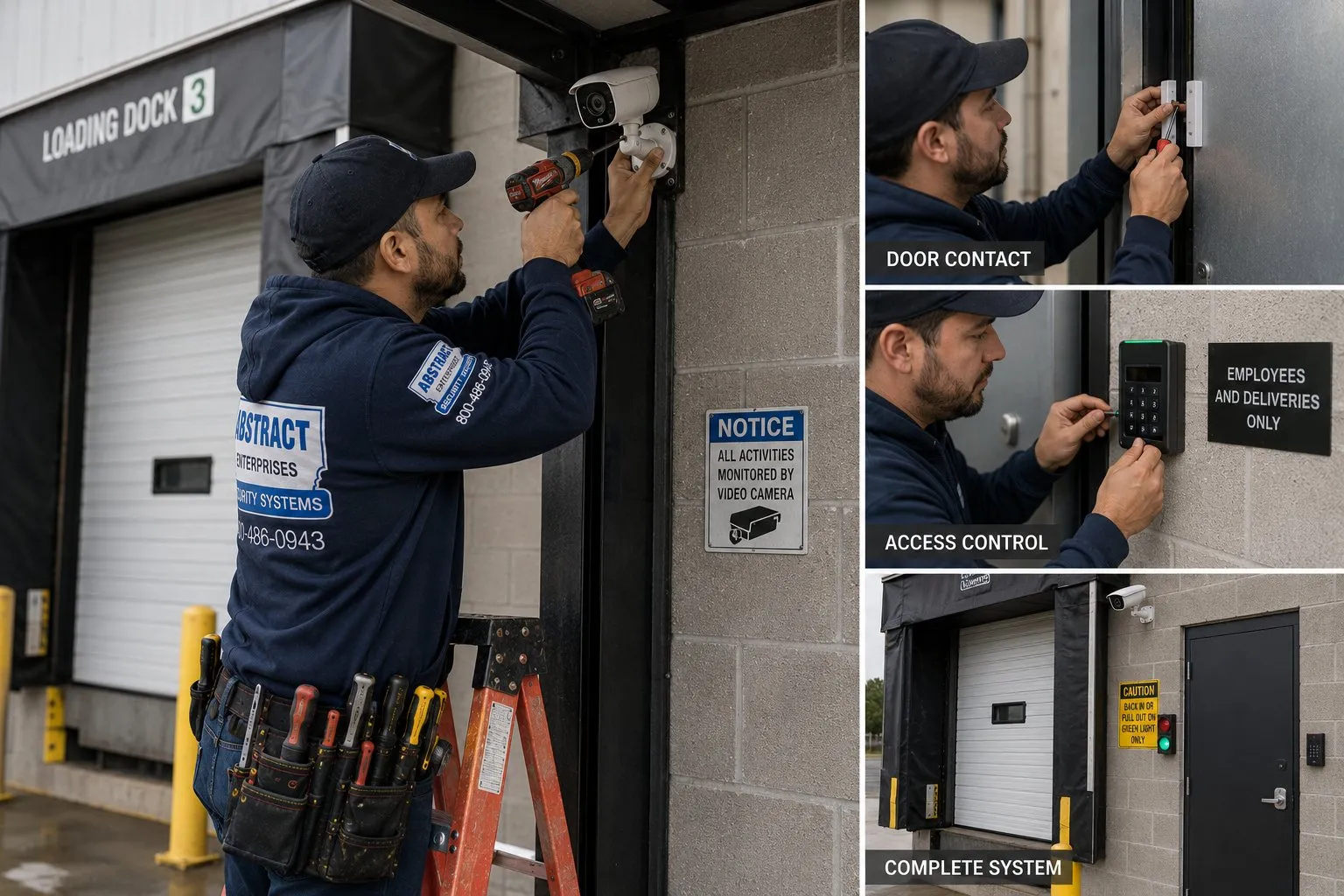
Three-panel view of a door contact, an access keypad on a steel service door and a finished loading-dock entrance, Washington Heights Manhattan business doors
A door contact going onto a frame, a keypad beside a steel service door and the finished entrance — back doors get the same staff codes and entry log as a storefront.
Your Questions Answered

Smart Lock Installation in Washington Heights: Questions Answered

These are the questions uptown households, co-op shareholders and shop owners actually put to us, grouped by what is really being asked. Where a law or a published rule decides the answer, we name it so you can read it yourself; nothing here is legal advice.

Codes for everyone who really lives here

A relative lives with us but isn't on the lease — can she have her own code on a lock we put in?

Yes. A smart lock that you add to your apartment door is yours to program, and the people who get codes are whoever the household chooses: a mother who moved in after a hospital stay, an adult son, a cousin staying for the year. The lease decides who the landlord deals with; it does not decide who you may let through your own door. We set each person up with their own code rather than one shared number, so the activity log shows that she came in at 4:10 and her grandson at 6:45, and so you can change one person's code without disturbing anyone else. For a relative who will never use a phone, the code is the whole system; we tape nothing to the door and give her a printed card to keep in her purse. What the household must still do is honor the owner's rights: the landlord's lock stays in place and the owner can ask for a duplicate key to the lock you added.

Our building gives lobby fobs only to people named on the lease — does a unit smart lock have to follow that rule?

No; those are two different doors. The street or lobby door belongs to the building, and the owner runs whatever system it chose there, within city and state rules. When residents of 765 Riverside Drive were told in 2018 that only leaseholders would get lobby fobs and that each fob needed a $50 deposit, then-Council Member Mark Levine told CBS2 the policy violated city rules on keys and suggested a complaint to the New York State Division of Housing and Community Renewal if management would not fix it. That is a building dispute, and we stay out of it. Your apartment door is different: a lock you add there answers to you. So a household member without a fob can still have a personal code upstairs, even if, for now, someone has to buzz them in downstairs. If the lobby problem is the bigger one, the building's owner or board can talk to us about the lobby system separately.

If the leaseholder moves out or passes away, how does the rest of the household keep control of the lock?

Plan for it on day one. Smart lock apps have one owner or administrator account and any number of users; if the only administrator is the person whose name is on the lease and their phone is gone, the household is left with working codes and no way to change them. We set up a second administrator — usually the adult who handles family paperwork — on a separate phone and email, and we record on the handover sheet which account owns the lock. Codes keep working when an account changes hands, so nobody is locked out while the family sorts things out. What the lock cannot settle is the tenancy itself: whether a family member can stay on in a rent-stabilized apartment is a question for the state housing agency or a tenant lawyer, not for an installer. The lock should never become the reason someone loses their home, so we will not program a lock to shut out a person who lives there.

The owner's lock and the owner's duties

Our door already has two locks of different ages — which one should the smart lock replace?

Usually neither of the landlord's. New York's Multiple Dwelling Law section 51-c lets a tenant install and maintain a lock in addition to the lock the owner supplied, of no more than three inches in circumference, provided the tenant gives the owner a duplicate key on request. So the first job at a door with two locks is to work out which is the owner's and which a previous tenant added. If the second lock is an old tenant lock that nobody has a key for, it is the natural place for the smart deadbolt: we remove it, check that the bore and backset suit the new lock, and fit it there, which means no new hole. If both locks belong to the owner, we leave them alone and look for the cleanest spot for a third, or suggest an inside-only retrofit on a lock you already control. Either way the owner's cylinder and key keep working exactly as before.

The landlord's lock on our apartment door is broken — should we just swap in a smart lock ourselves?

Report it first. The city's Housing Maintenance Code makes the owner responsible for a working lock and key on each apartment entrance door, and the LawHelpNY guide to HPD violations lists a defective entrance-door lock or knob as a class B hazardous condition. You file it through 311 as an apartment maintenance complaint and HPD inspects. If you simply take the broken lock out and fit your own in its place, you may end up paying for the owner's repair and muddying the record of a condition the landlord was required to fix. The better pattern is to let the owner repair or replace their lock, then add your smart lock alongside it. If you are locked out tonight because of the broken lock, that is an emergency: call the building's emergency contact first, and if no one answers, 311. We can come the same or next day for the smart lock once the door is secure.

Can the landlord bill us, or raise the rent, because we added a lock of our own?

The same section of the Multiple Dwelling Law that lets a tenant add a lock also says that a lease clause requiring the tenant to pay for exercising that right is void. In plain terms, the owner is entitled to a duplicate key to your additional lock on request, but not to a fee for your having it. A lock you buy and have fitted is not an improvement the owner made, so it is not the kind of work that can be passed on in the rent. What you do owe the owner is a door left in good order: if you take the smart lock with you at the end of the tenancy, the hole should be filled with a cylinder or cover plate and the door left looking as it did. We note on our invoice that the lock was supplied and installed for the tenant, which helps if anyone asks later. If a charge does appear, the state housing agency and tenant organisations are the people to talk to.

The street door downstairs no longer latches — is that ours to fix or the owner's?

It is the owner's, and it is urgent. LawHelpNY's HPD checklist lists "no lock on entrance door to building" as a class C immediately hazardous condition, which the guide says the landlord has 24 hours to correct once a violation is issued. Tenants should report it through 311 as a public area maintenance complaint, which covers doors and locks that are broken, missing or not self-closing. A smart lock on your apartment is not a substitute for a working street door, and a tenant should not pay to repair the building entrance. If the owner or the board decides to upgrade the street door rather than just fix it, our Manhattan access control and door buzzer teams work on lobby keypads, fob readers and strikes; a single-door keypad or fob reader with an electric strike is $1,875–$3,125 installed at the Manhattan rate, priced for the building, not the tenant.

Old doors and changed buildings

Decades of paint have built up on our door and frame — does that matter for a new lock?

It matters more than the choice of brand. Thick paint narrows the gap between door and frame, fills the strike pocket and sometimes glues the hinges so the door sags. A motorised deadbolt then has to push its bolt past paint and into a strike that is no longer where the bolt lands, and it either jams halfway or strains until the batteries die. Before fitting anything we cut back paint along the latch edge and the strike, open the strike pocket to full depth, and check that the door closes and latches on its own weight. If the frame has been painted over the old strike, we re-seat it rather than enlarge the hole. In buildings old enough to have lead paint under the newer layers, we keep the scraping to the minimum the lock needs, contain the dust and clean up with a HEPA vacuum. If the door itself is warped, we say so before quoting, because no lock fixes a door that does not close.

I rent a stabilized apartment in a building that went co-op — whose rules apply to my door, the board's or the law's?

Both, in different ways. Many uptown buildings, especially in Hudson Heights, converted from rentals to co-ops from the 1980s onward, and tenants who stayed on kept their rent-stabilized leases; the NYU Furman Center estimates about 16,000 such units citywide. As a tenant, your landlord is the owner of your unit's shares — often the original sponsor or an investor — and the tenant protections that apply to your apartment come with you, including the right in the Multiple Dwelling Law to add a lock of your own. The co-op's house rules govern the building and its shareholders, and the managing agent will still expect any contractor on site to carry insurance and work within building hours. In practice we ask the managing agent's office what it needs to see, keep the corridor face of the door unchanged where we can, and give the unit owner a duplicate key. We will tell you if a request goes beyond what the rules allow.

Coming and going on a working day

I come home from a night shift at 3 a.m. — what is the quickest way in that doesn't depend on fishing for keys or a phone?

A fingerprint reader or a short personal code, with the phone as a backup rather than the main key. After twelve hours on a ward, nobody wants to unlock a phone, wait for Bluetooth and tap a screen on a dim landing. A fingerprint deadbolt opens with a touch; a keypad opens with four to eight digits you can enter by feel if the keypad is backlit. We enroll two fingers per person, in case one is cut or bandaged, and test them with dry and with washed hands. Auto-unlock features that open the door as your phone approaches exist, but in a walk-up where the phone may lose signal in the stairwell they are less dependable, so we do not rely on them. We also set the lock to relock itself a short time after the door closes, so a tired person who forgets to turn the bolt is still locked in safely. The mechanical key remains in your pocket for the day everything else fails.

I already carry keys for the street door, the inner door and the mailbox — is a keypad on the apartment worth it?

It depends on who else needs to get in. If you are the only person using the apartment, a smart lock removes one key from a ring that still has three; the convenience is real but small. Where it earns its place is with everyone else: the aide who comes four days a week, the nephew who picks up the mail when you travel, the cleaner, the relative who arrives from the airport. Each of them needs a key to the apartment today, and copies of keys travel. With a keypad on your door, the only key that has to be copied is the street-door key the building already controls, and the apartment code can be time-limited, changed and logged. If the building later adds a code or fob at the street door, the whole trip from sidewalk to sofa can be keyless; until then, the smart lock still takes the most sensitive key off the ring.

People, trust and technology

Someone who used to stay with us still has a key — can we change the lock to keep them out?

It depends on whether they lived there. If the person only visited, changing codes or re-keying your own lock is your decision and we can do it the same day. If the person lived in the apartment for 30 consecutive days or more, New York City's unlawful eviction law, Administrative Code section 26-521, makes it unlawful to remove them by changing the lock without supplying a key, and section 26-523 attaches penalties of $1,000 to $10,000 per violation. That applies to households as well as landlords. In that situation, talk to Housing Court, a legal aid organisation or, where there is a safety risk, the police and a court order first. Where a court has excluded someone, we can change every code and the mechanical cylinder in one visit and leave you a record of what was changed. We will not change a lock to exclude someone who lives there without that footing.

What happens to our lock if the company behind its app stops supporting it?

The lock should still work as a lock, and choosing for that is part of our job. Companies change: Latch, the app-based lock found in many New York buildings, rebranded as DOOR in August 2025 and said existing Latch hardware would continue to be supported. Not every brand handles a change so smoothly. So we favour locks whose keypad codes and fingerprints are stored in the lock itself and keep working with no internet, which keep a mechanical key cylinder, and which support open standards such as Matter or Z-Wave so another app or hub could take over. We also write down the master or programming code on your handover sheet, because with most keypad locks that code lets you add and delete users at the door even if the app is gone. The features that depend on the company's servers, such as remote unlocking and phone alerts, are the ones you could lose; the door would still open for the people who live there.
Equipment

Types of Smart Locks We Install

Six families of lock cover almost every uptown door. The right one depends on whether the door is yours, how many people need to get in, and how much of the door the rules let us touch.

Keypad Deadbolts

The workhorse for rental doors and walk-ups: a backlit keypad outside, a thumb-turn inside, codes stored in the lock and a key cylinder for emergencies. Easiest for relatives who will never install an app.

Fingerprint Deadbolts

A touch to open, with a keypad and key behind it. Well suited to shift workers and to anyone with arthritis who finds keys hard to turn, as long as the reader is kept clean.

Inside-Only Retrofits

A motor unit that fits over the inside of an existing single-cylinder deadbolt and leaves the outside and its key unchanged — August's retrofit, for example, is described by the maker as leaving the outside untouched. The first choice where the corridor face must not change.

Wi-Fi Bridges and Thread Border Routers

For remote unlocking and alerts. August says its Wi-Fi bridge should sit within 10 to 15 feet of the lock, which in a pre-war apartment usually means the closet nearest the door. Matter-over-Thread locks need a border router such as a recent smart speaker or hub.

Commercial Keypad and Lever Locks

Heavier locks for shop back doors, offices and practices, including models made for narrow aluminium storefront stiles and levers that meet commercial grade ratings. Staff codes and schedules without wiring.

Readers With Electric Strikes

For storefronts and building doors where an owner wants a keypad or fob reader on the wall, a strike in the frame, a request-to-exit inside and a log of every entry. This is low-voltage access control work rather than a consumer lock.

Features that matter more uptown than in the brochures

  • Codes stored in the lock: the door keeps opening for the household when the internet, the router or the app company does not.
  • A real key cylinder: the owner's duplicate key, and your own fallback when batteries die.
  • Enough user slots: large households and regular helpers can need a dozen or more codes; check the lock's limit before buying.
  • Language settings: some keypad locks speak their prompts in more than one language — Yale's Assure Lock manuals, for example, describe a setting for English, Spanish or French voice prompts.
  • Auto-relock with a door sensor: the bolt throws only when the door is actually shut, which matters on doors that do not always close on their own.

National alarm brands or a local installer?

QuestionNational alarm brands (ADT, Ring, SimpliSafe)AESS, local and licensed
Who decides which lock goes on the door?Usually a short list of locks that work with the brand's own system and appChosen after we see the door, the owner's lock, the frame and the rules of the building
Do lock codes depend on a plan?Ring's own support page says its Z-Wave lock feature needs a subscription and only works with codes made in the Ring appCodes live in the lock; no monthly fee is needed for the door to work
Who handles the paint, the strike and the frame?Generally outside the scope of a sensor-and-panel installationPart of every job, because a binding bolt ruins a smart lock
Who talks to the managing agent or the board?The customerWe prepare the scope note and insurance paperwork they ask for
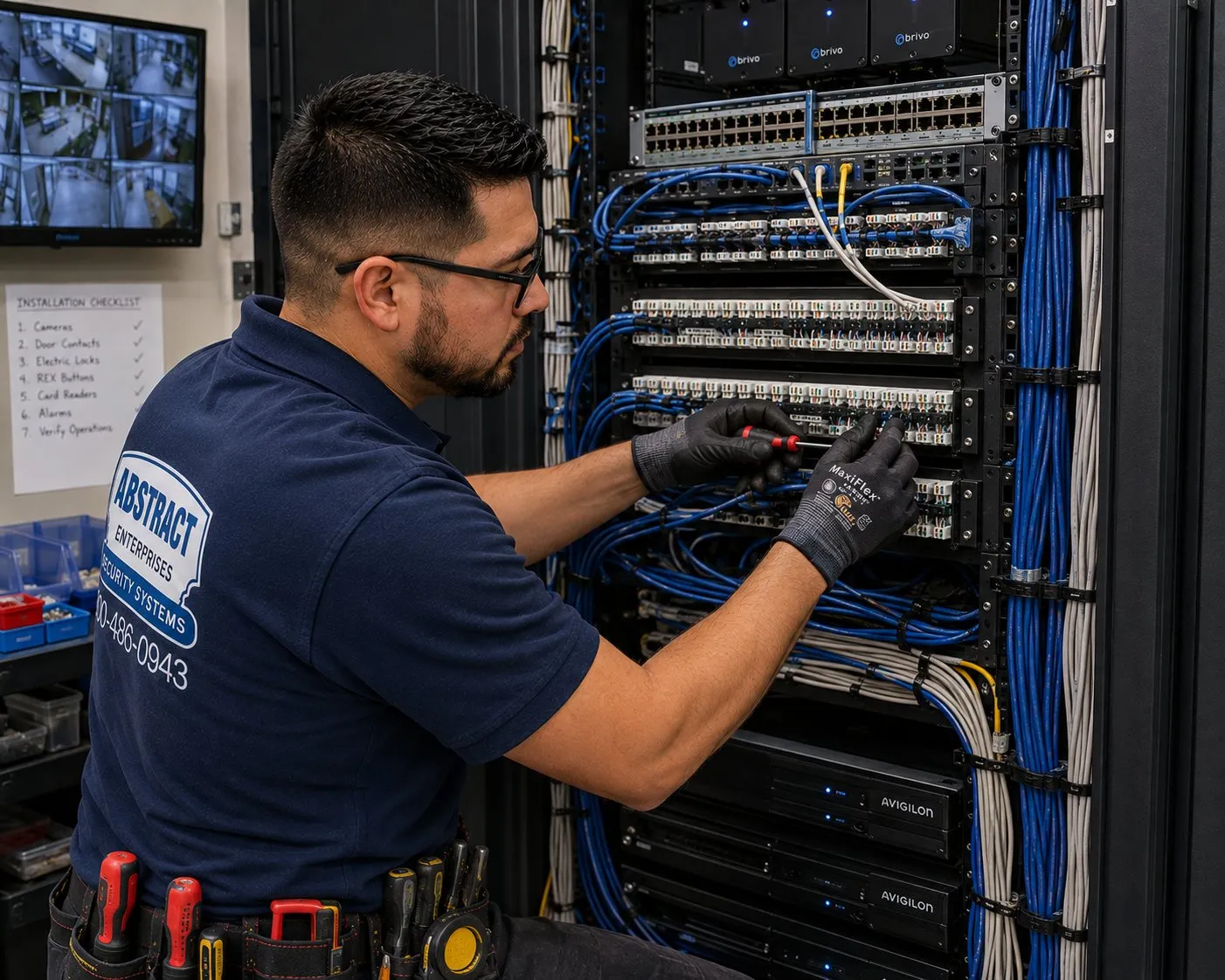
Technician terminating cables in a network rack beside a checklist for electric locks and card readers, Washington Heights Manhattan
Behind a networked reader or lock bridge sits a rack like this one; the checklist on the wall runs through cameras, door contacts, electric locks, exit buttons and card readers.
AI Overview Reality Check

What AI Gets Wrong About Smart Lock Installation in Washington Heights

We could not read Google's AI Overview from our build environment, so the claims below are ones published by national cost sites, home magazines and manufacturers — the material AI summaries draw on. Each is fine for a suburban house. Each needs correcting for an apartment door between 155th Street and Dyckman Street.

"Smart lock installation costs $250 to $400"

Those numbers come from Fixr's national guide (January 2025 update): $300 on average, covering a Wi-Fi lock plus one accessory, with a handyman billing $50 to $100 an hour. The picture behind them is a house door used by one family and drilled to standard sizes.

An uptown apartment door is rarely that door. Before a lock goes on, the paint along the edge may need cutting back, the strike may need re-seating, and the owner's lock has to be identified and left alone. Add the walk up the stairs with tools and the time spent setting codes for five or six people, and the job looks nothing like the national average.

That is why we do not publish a flat figure for an apartment-door smart lock. We quote it in writing after a free walkthrough, and the written figure is the price. Building and storefront doors, which are more predictable, carry published AESS prices at the Manhattan rate.

"Any renter can swap the old lock for a smart lock"

Plenty of articles tell renters to replace the deadbolt and put the old one back at move-out. In a New York multiple dwelling, the owner must provide the lock on each apartment entrance door, and the tenant's right in the Multiple Dwelling Law is to add a lock of their own in addition to the owner's.

Swapping the owner's lock out removes the owner's means of emergency access and can turn a simple upgrade into a dispute. The law also limits a tenant's own lock to three inches in circumference and expects a duplicate key on request, details most national guides never mention.

Our default for renters is therefore to add, not swap: a second smart deadbolt, or an inside-only retrofit on a lock that is already yours, with the owner's lock untouched.

"A smart lock means everyone needs the app"

Manufacturers lead with their apps, and AI answers repeat it. In a neighborhood where almost one resident in five is over 65, an app-first lock is a lock half the family will not use.

Keypad and fingerprint locks keep their codes in the lock, so a parent or an aide only needs a number or a finger. The app becomes a tool for the one or two people who manage the codes and read the log.

City law points the same way for landlords. New York City's Tenant Data Privacy Act says owners of multiple dwellings may not require tenants to use a smart access system to get into their own apartments. We apply that spirit to households too: nobody should need a smartphone to come home.

"A smart lock secures your home"

A lock secures one door. In an apartment house it is the last of several: the street door, often an inner vestibule door, the stairs or elevator, then your own. If the street door does not latch, strangers are already inside the building before your smart lock is involved.

That is why a defective lock on a building's entrance door is a class C immediately hazardous condition on the HPD checklist published by LawHelpNY, with a 24-hour correction period once the violation is issued. The fix belongs to the owner, through 311 and HPD.

What a smart lock adds is control and a record at your own door: who has a code, when it was used, and whether the bolt is thrown. Treat it as part of the building's security, not a replacement for it.

"Wi-Fi smart locks connect from anywhere in the home"

Product pages show a lock and a router in the same open-plan room. August's own support guidance says its Wi-Fi bridge should be within 10 to 15 feet of the lock, and that the distance to the router depends on what is in between.

In a pre-war apartment, what is in between is brick, plaster on lath and sometimes a steel-clad door, and the router may be in a room at the far end of the apartment. The hallway outside may pick up a dozen neighbours' networks and very little of yours.

We test the signal at the door with a phone before choosing a bridge, a Thread border router or a Bluetooth-only lock, and we place the bridge where it is reliable, not where it looks tidy.

"Half an hour and a Phillips screwdriver is all it takes"

Bob Vila's testers reported needing only a Phillips screwdriver and about half an hour, and on a modern door with standard bores that can be true.

On an uptown door, the screwdriver comes out after the real work: finding which lock belongs to the owner, cutting through a century of paint, moving a strike that no longer meets the bolt, packing out a door that is thicker or thinner than the lock's listed range, and making sure a steel-clad fire door is not modified in ways its label does not allow.

If you prefer to install the lock yourself, the walkthrough is still useful: we will tell you whether the door is ready for it, and a programming-only visit for a lock that is already fitted is available at a published rate.

"You can't put modern locks on a landmark building"

It is easy to assume that landmark status rules out keypads on the rowhouses of the Jumel Terrace district altogether. The Landmarks Preservation Commission's rules are more specific than that.

Section 2-14 of the LPC rules lists repairing or replacing window or door hardware, such as hinges, knobs and handles, as ordinary repair that does not need a permit — but it excludes ornate historic exterior hardware on special doors. Replacing a door itself, or altering a facade, is a different matter that does need the Commission.

So the practical rule is to keep any ornate historic hardware in place, put the electronics on the inside face, and choose a keypad that is modest on the outside. Where something new would change the facade, the job pauses for the LPC question before any drilling.

One Door, Every Person in the Household

Send a photo of both sides of the door and tell us who needs to come and go. We will tell you which lock fits, which existing lock stays, and the price.

Get In Touch

Request a Free Quote

Walk-up, elevator building, Hudson Heights co-op, Jumel Terrace rowhouse or a shop on 181st Street — describe the door and the household and a written answer comes back the same business day. Prefer to talk? Call the Manhattan line on (929) 560-0737.

✅

Thanks — Your Door Is on Our List

Expect a call from our uptown team before the end of the business day. Locked out or stuck right now? Ring (929) 560-0737.

How It Works

Our Installation Process

Seven steps, whether the door is on a fifth-floor landing off Audubon Avenue, inside a co-op on Cabrini Boulevard or at the front of a shop on 181st Street.

1. Photos and the household list

You send photos of both faces and the edge of the door and tell us who needs to get in. We say whether to add a lock, convert an old tenant lock or fit an inside-only retrofit, and whether a co-op, landlord or landmark question has to be settled first.

2. Free walkthrough and written price

At the door we identify the owner’s lock, check paint, strike, hinges and any fire label, test the signal, and give you a written flat price. Building and shop doors use published AESS figures at the Manhattan rate.

3. Paperwork where it is needed

For co-ops we send the scope note and insurance certificate the managing agent asks for. For landmark rowhouses we confirm which visible hardware stays, and pause for the Landmarks question if anything new would change the facade.

4. Booking the visit

We book a 2-hour arrival window on a weekday within the building’s hours, bring everything the door needs in one trip, and call the super ahead if you would like us to.

5. Door correction and fit

Paint is cut back, the strike re-seated and the door adjusted until it latches on its own. The smart lock goes into an existing or clean new bore, and the owner’s lock is left exactly as it was.

6. Codes, administrators and testing

Personal codes or fingerprints are set for each person, a second administrator is added and helpers get scheduled codes. Everything is tested from the landing with the door shut, and remote access over mobile data.

7. Handover sheet and owner’s key

You keep a printed sheet of who holds which code, the programming code and where the spare batteries are, and a duplicate key is set aside for the owner in case it is requested.

Coverage Area

Smart Lock Installation Near Washington Heights' Landmarks

Six places that mark out the doors we work on uptown — from Manhattan's oldest surviving house to a row of wooden cottages, a ridge of Art Deco co-ops and the bridge that brought the city its water.

Morris-Jumel Mansion

Built in 1765 for the British officer Roger Morris, it is the oldest surviving house in Manhattan, standing at West 160th Street and Edgecombe Avenue. It sits within the Jumel Terrace Historic District, where every door on the surrounding blocks is a landmark door.

Sylvan Terrace and the Jumel Terrace District

Twenty wooden houses built in 1882–83 on the old carriage drive of the Morris estate, restored in 1979–81, plus fifty rowhouses of 1890–1902 on Jumel Terrace and West 160th and 162nd Streets. Designated a city historic district in 1970.

Audubon Park and Riverside Drive

The curve of Riverside Drive between 155th and 158th Streets, lined with 5- to 13-story apartment houses; the city's district covers 19 apartment buildings and a pair of duplex houses, and much of the area joined the National Register in August 2024. The 2018 lobby-fob dispute at 765 Riverside Drive happened here.

Hudson View Gardens and Castle Village

Two large co-op complexes on the Hudson Heights ridge. Hudson View Gardens opened in 1924 as a Tudor-style cooperative and joined the National Register in 2016; Castle Village's five buildings were finished in 1939 and became a co-op in 1985.

Bennett Park and Fort Tryon Park

Bennett Park holds the highest natural point in Manhattan, 265 feet above sea level, where the walls of Fort Washington are marked in stone. To the north, the 67-acre Fort Tryon Park, given to the city in 1931, holds The Met Cloisters.

The High Bridge and Highbridge Park

Opened in 1848 as part of the Old Croton Aqueduct, the High Bridge is New York City's oldest standing bridge, rising about 140 feet over the Harlem River from Highbridge Park on the neighborhood's eastern edge.

We also serve Inwood, Marble Hill, Fort George, Hudson Heights, Audubon Park, Sugar Hill, Hamilton Heights, Harlem, Morningside Heights and the rest of Manhattan from the Manhattan smart lock installation page, plus the other four boroughs, Long Island and the Hudson Valley.

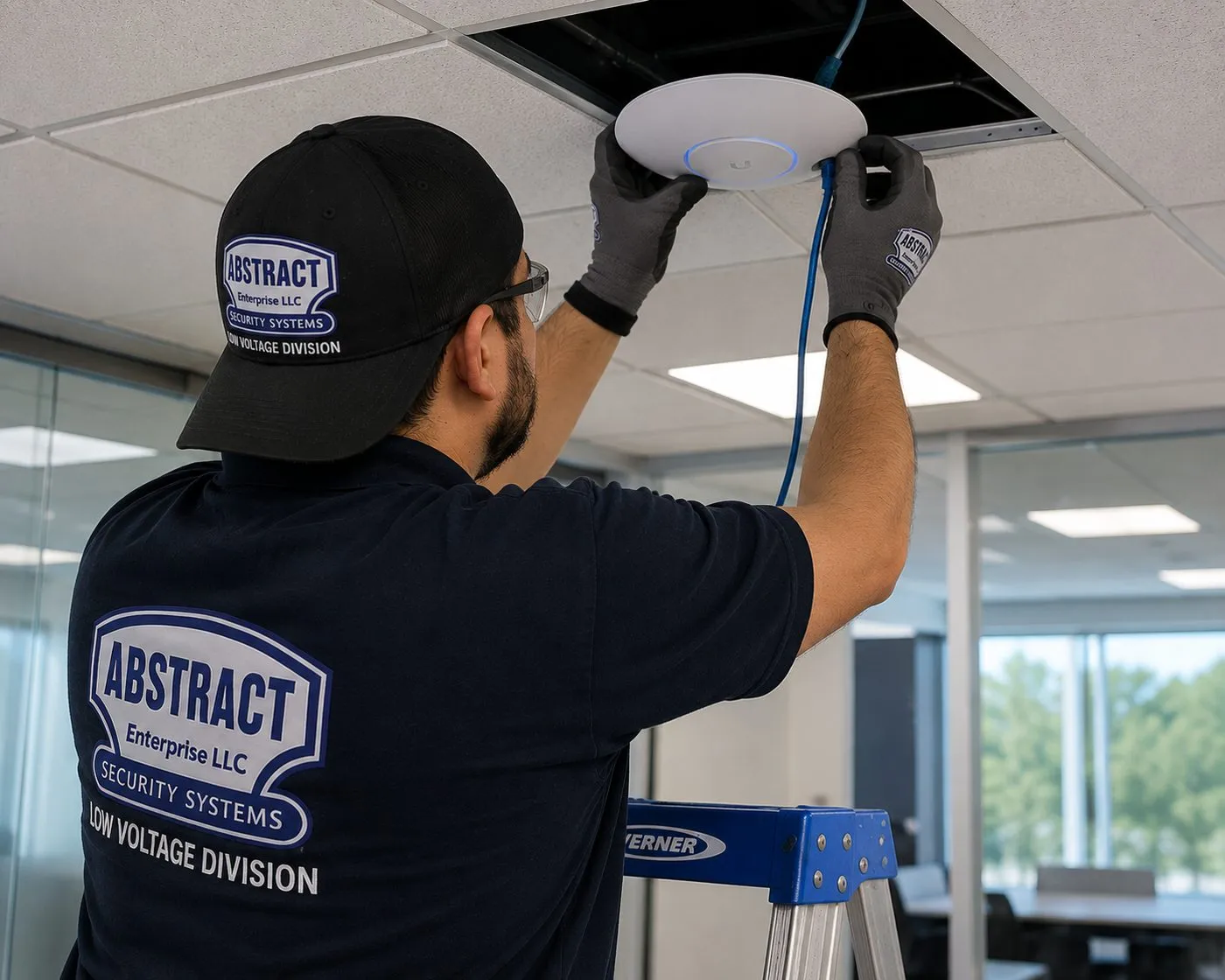
Technician mounting a ceiling Wi-Fi access point to strengthen signal for a smart lock bridge, Washington Heights Manhattan
Mounting a ceiling access point. In a masonry building, a solid signal near the door decides whether remote unlocking works.
Pricing

Smart Lock Installation Cost in Washington Heights

Washington Heights is priced at the Manhattan area rate, and we say plainly which jobs have a published figure and which are quoted at the door. Keyless building, suite and storefront doors carry published AESS prices at a Brooklyn base; every Manhattan neighborhood, from Inwood to the Battery, carries the same 1.25 multiplier, so a job on Fort Washington Avenue costs what it would on Fifth Avenue. A smart lock on an individual apartment door has no published AESS figure, because the door, the owner's lock and the paint decide the work. Those jobs are quoted flat, in writing, after a free walkthrough, and the quote is what you pay.

ItemWashington Heights priceScope and source
Apartment-door smart lock: added deadbolt beside the owner's lock, inside-only retrofit, conversion of an old tenant lock, or a rowhouse front doorQuoted flat at free walkthroughPriced once we have seen the door, the locks already on it, the paint and frame, and any co-op or landmark rules — there is no published AESS figure for this line
Single-door keypad or fob reader with electric strike$1,875–$3,125 installedBuilding street door, vestibule, office or storefront; published $1,500–$2,500 base × 1.25
New electric strike on a lobby or suite door$313–$563Replacement keeper in the frame during a keyless upgrade — our $250–$450 door-buzzer figure × 1.25
Failed electric strike repair$369–$606Street or lobby door that buzzes but stays shut — our $295–$485 repair figure × 1.25
Programming visit for a lock already on the door — app account, bridge, household codesFirst hour $265, then 30-minute blocksOur published Manhattan setup-only rate
Service and callback rate$195/hr, 3-hour minimum ($585)Billed only for return visits once the job is signed off — never on the first installation

What moves an uptown apartment-door quote

  • The locks already there: converting an old tenant lock in an existing bore is quicker than finding a clean spot for a third lock on a crowded door.
  • Paint and frame: a door that closes cleanly is quick; one that needs paint cut back, a strike re-seated and hinges shimmed takes longer, and we tell you before we start.
  • Door construction: painted wood, steel-clad and hollow-metal doors are handled differently, and rated doors are kept to the preparations their labels allow.
  • Connectivity: a Bluetooth-only keypad needs no bridge; remote access needs a bridge or border router and a signal test at the door.
  • The household: two codes are quick; eight people, an aide's schedule and a printed card for a parent take longer and are worth doing properly.

National figures, for comparison

Fixr's national cost guide, updated January 2025, puts smart lock installation at $250–$400, with a $300 average and handyman labour at $50–$100 an hour. That is third-party national data for an ordinary house door, not an AESS price. If you are comparing an alarm company's package, ask whether its lock codes depend on the company's app and monthly plan, whether its installer will deal with the owner's lock, and whether anyone will fix the strike before the lock goes on. On a pre-war uptown door, those are the parts that decide whether the lock still works in a year.

Before any drilling you receive and sign our service agreement; the deposit, warranty and late-fee terms it contains are summarised in the licensed-and-insured block at the bottom of this page.

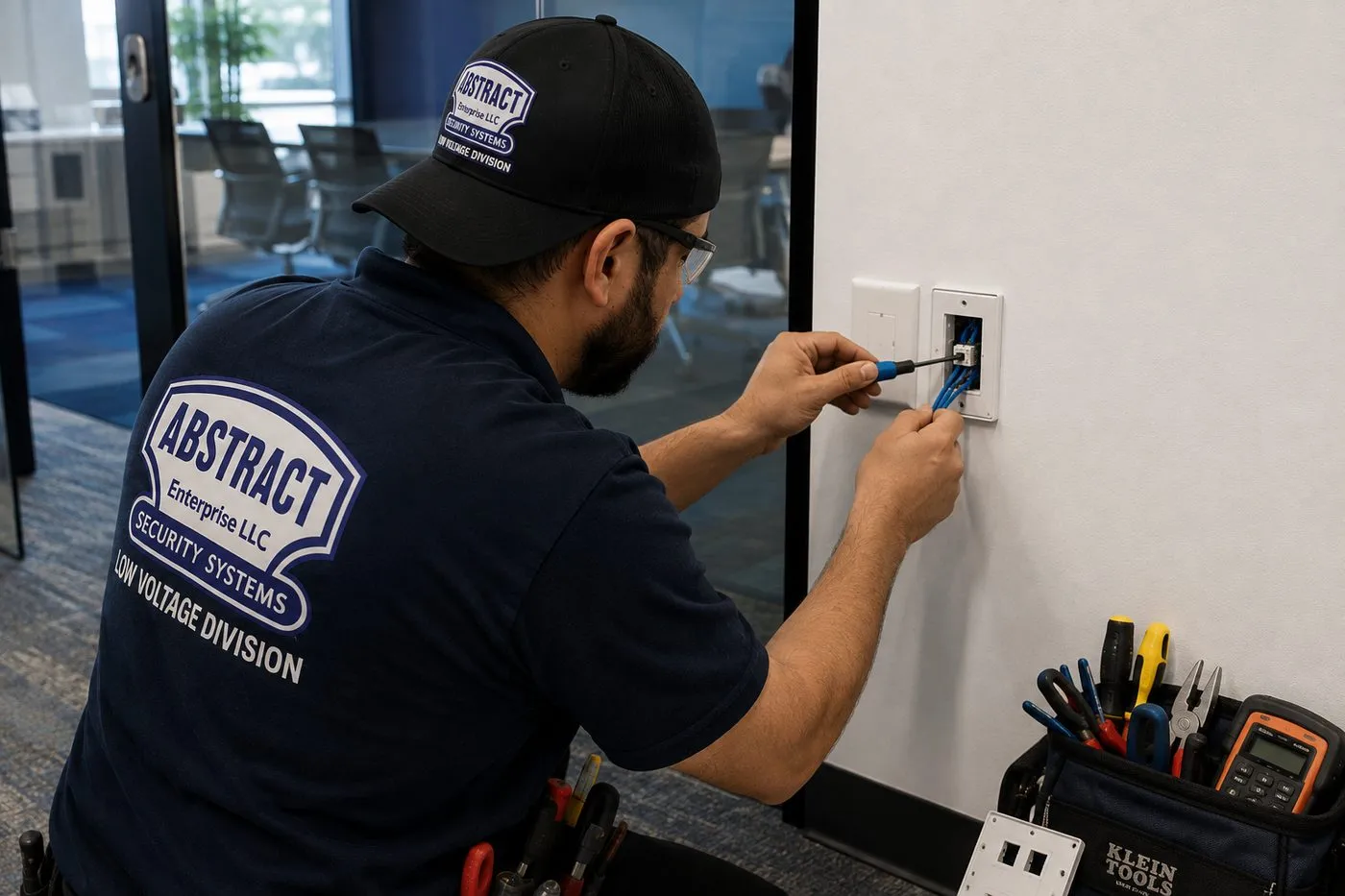
Technician terminating a data jack in a wall plate for a reader controller or lock bridge, Washington Heights Manhattan
Terminating a data jack in a wall plate. On shop and office jobs, a reader’s controller often needs a wired network port.
Shop Our Systems

Smart Lock Installation Packages & Pricing

Three packages cover nearly every request we get above 155th Street. Two carry published prices, scaled by the Manhattan multiplier; the household package is priced only after we have seen the door, since a much-painted 1920s walk-up door and a new steel door are not the same amount of work.

Starter — Household Door

Quoted flat at walkthrough

A smart deadbolt added beside the owner's lock, a conversion of an old tenant lock, or an inside-only retrofit; paint and strike corrected so the bolt runs free; one-motion exit checked; personal codes or fingerprints for every member of the household; a second administrator set up; duplicate key prepared for the owner; printed handover sheet.

Standard — New Strike on a Building Door

$313–$563

For owners and boards: a new electric strike fitted into the frame of a street, vestibule or suite door during an entry upgrade, at the Manhattan rate. If a strike has simply failed, the repair line applies instead: $369–$606.

Premium — Keyless Street, Shop or Office Door

$1,875–$3,125

For a building's street door, a shop or an office: one keypad or fob reader on the wall and an electric strike in the frame, at the Manhattan rate. Every user gets a credential, an exit button or sensor goes inside, the way out is checked against the code, and whoever manages the door learns to add and delete people in the software.

Bring Your Own Lock — Labour Only

Already have a lock in its box? We can fit it for a flat labour-only price set at the walkthrough. Before opening the box we check that it suits the door — thickness, backset, bored or mortise — that it can sit beside the owner's lock within the size the law allows for a tenant's lock, and that it stores codes in the lock for relatives without phones. A customer-supplied lock carries its manufacturer's warranty rather than ours. If it is the wrong lock for the door, we say so before anything is drilled. A programming-only visit for a lock that is already on the door is $265 for the first hour, then 30-minute blocks.

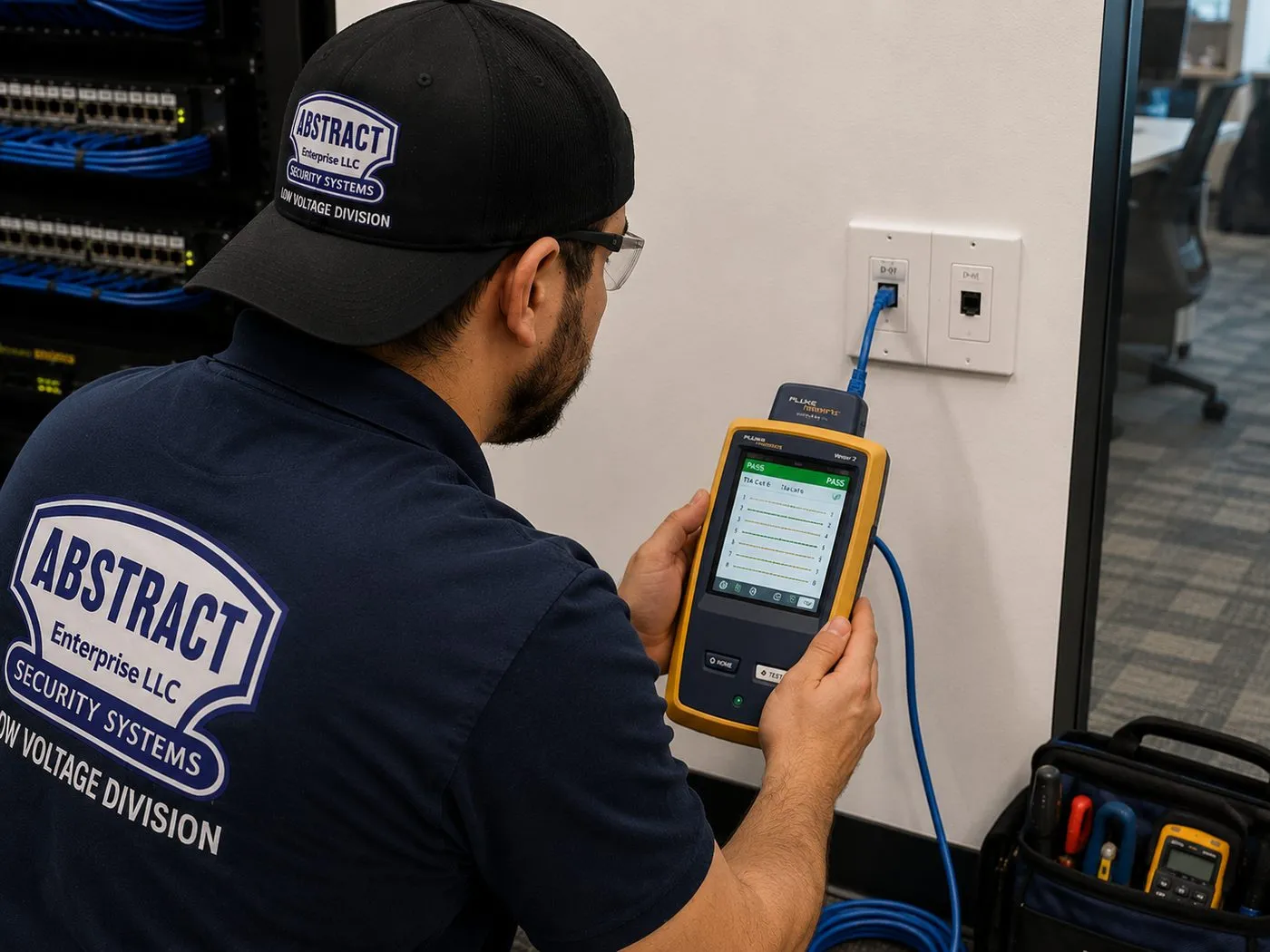
Technician checking a wall data jack with a handheld cable tester showing a pass result, Washington Heights Manhattan low-voltage work
A handheld tester confirms the cable run to a wall jack passes before any controller is plugged in.

Ready to Stop Copying Keys for the Family?

Tell us the floor, the locks on the door and who needs to get in. We will tell you what fits, what has to stay and what it costs before anyone climbs the stairs.

Household Planning

A Code Plan for a Long-Tenure Uptown Apartment

The lock takes an hour to fit. The plan for who holds which code is what makes it worth having, and in a household that has been in the same apartment for twenty or forty years, the plan has more people in it than the lease does. This is how we lay it out with you at the door.

1. The people who live here

Every resident gets a personal code or fingerprint, named in the app with their first name. Shared codes are where control slips away: once "the family code" has been told to a friend, a delivery driver and a former tenant, nobody can say who knows it. Personal codes mean any one can be changed without disturbing the rest, and the log tells you who actually came in.

2. The two administrators

One person runs the app; a second person, on a different phone and email, can take over. In many uptown households that is a parent and an adult child, or two siblings. We write both names on the handover sheet, and we note the lock's programming code so that codes can be managed at the keypad if a phone is lost.

3. Regular helpers

A home health aide, a babysitter, a cleaner, a neighbour who feeds the cat. Each gets a code that works only on the days and hours they are expected, where the lock supports schedules, and that is deleted the day the arrangement ends. If an agency changes the aide, the old code goes and a new one is made in a minute, without a locksmith.

4. Visitors and one-off arrivals

Relatives arriving for a holiday, a contractor sent by the landlord with your agreement, a friend collecting a parcel. One-time or short-dated codes cover these. They expire on their own, so nobody has to remember to delete them.

5. The owner's key

The landlord's lock keeps its key, and the owner can have a duplicate key to the lock you added, as the Multiple Dwelling Law provides. We cut or set aside that key on the day, so the arrangement is ready if the owner asks. That is what keeps an added lock on the right side of the lease.

6. The day something fails

Batteries are the usual failure, and the lock warns well before they die. We tell you where the spare set lives, which side the emergency power terminals or key cylinder are on, and who to call. A household that knows its fallback never has to wait on the landing for a locksmith.

7. When the household changes

Households uptown change shape over the years: a son marries and moves to the Bronx, a niece starts college in another state, an aide retires, a grandchild moves in. Each change is a two-minute job in the app — delete one code, add another — and we suggest a short review twice a year, perhaps when the clocks change, to remove anyone who no longer needs a way in. Nothing about the owner's lock or key changes when your own list of codes does.

Visit Logistics

Walk-Ups, Hills and Deep Stations: Planning an Uptown Visit

Washington Heights is built on a ridge. Hudson Heights sits on a plateau above the Hudson; Fort Washington Avenue and Overlook Terrace are joined at 187th Street by public stairs; the A train stations at 181st and 190th Streets are deep enough that riders reach the street by elevator. Our crews come up from the Bronx office on Fordham Road, and the geography shapes how we plan a visit.

We carry what the job needs in one trip. Before the visit we ask for photos of both faces of the door, its edge and the locks already on it, so the technician arrives with the right lock, strike, shims and drill bits rather than discovering on the fifth floor that something is missing. If you are buying the lock yourself, we ask for the model so we can check its fit in advance.

We book a 2-hour arrival window. In walk-ups the time on the stairs is part of the day, and in elevator buildings a shared or slow elevator can add minutes; the window allows for both without leaving you waiting. If your building has a super who likes to know when contractors are coming, tell us and we will call ahead.

We work quietly and clean up. Drilling a bore takes a few minutes; most of the visit is fitting, adjusting and programming. Dust and paint scrapings are contained and vacuumed.

We respect the building's hours. City rules allow residential construction work on weekdays between 7 AM and 6 PM, and many co-ops on the ridge set narrower contractor hours in their house rules. A lock job is small, but we keep to the building's schedule all the same.

We test from the landing, not the living room. Codes, fingerprints and the key are tried from the corridor side with the door closed, and remote access is tested over mobile data rather than your home Wi-Fi, so we know it works from the train platform, not just from the couch.

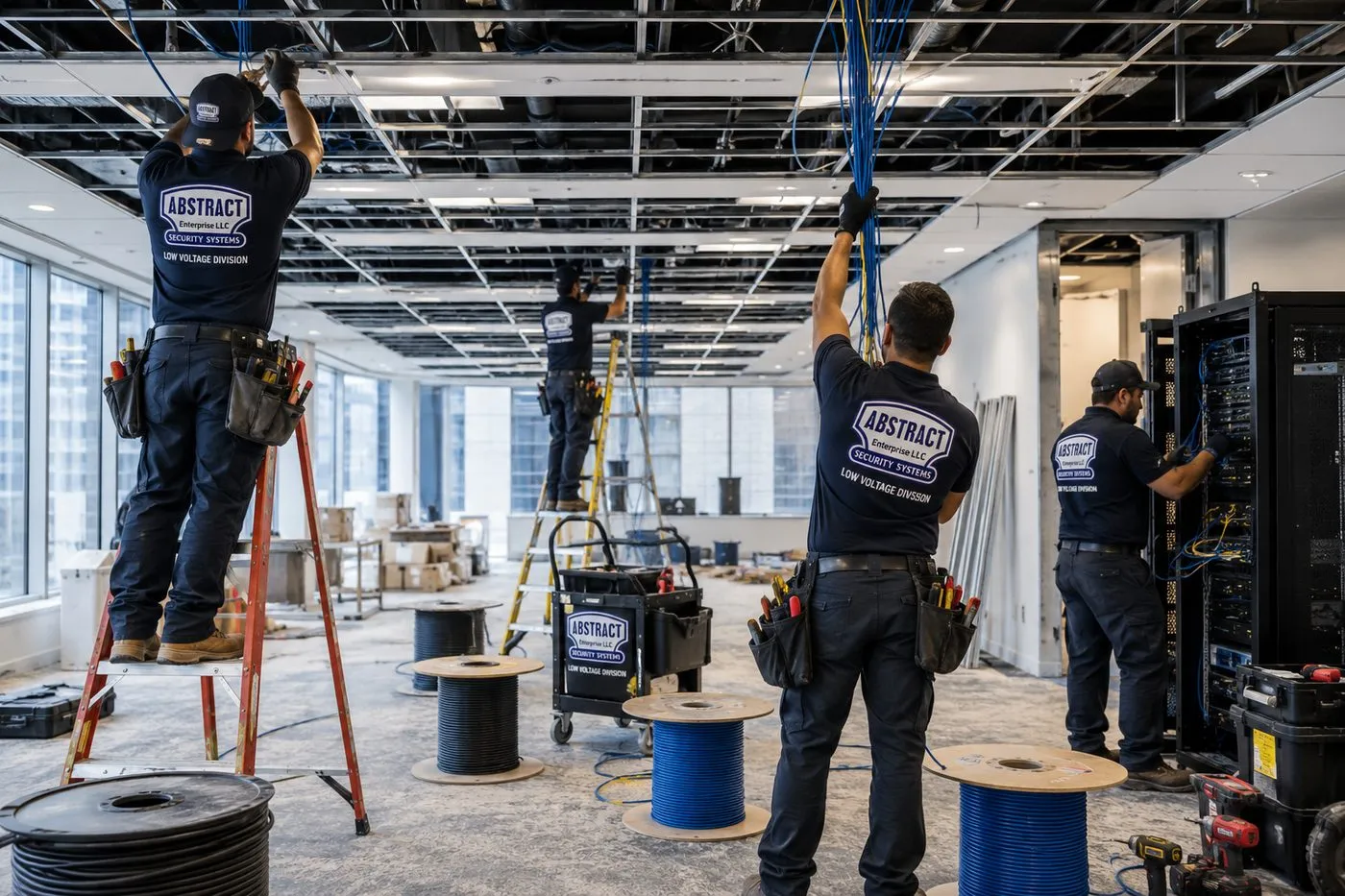
Crew pulling cable through an open office ceiling with cable reels on the floor and a rack at the back, Washington Heights Manhattan
A crew pulling cable on an open floor, with reels on the ground and a rack at the back. Bigger keyless projects start with pathways like these; an apartment lock needs none of it.
Terms

Uptown Building Terms You Will Hear on a Lock Job

  • Multiple dwelling: in New York law, a building lived in by three or more families living independently. Most apartment houses uptown are multiple dwellings, which is why the Multiple Dwelling Law and the city Housing Maintenance Code apply.
  • Section 51-c: the part of the Multiple Dwelling Law that lets a tenant add a lock of up to three inches in circumference to the apartment door, with a duplicate key for the owner on request.
  • Class A, B and C violations: HPD's categories for housing conditions, from non-hazardous to immediately hazardous. A missing peephole is class A; a defective apartment-door lock is class B; no lock on the building's entrance door is class C.
  • Rent-stabilized: generally an apartment in a building of six or more units built before 1974, with regulated rent increases and a right to renew, as the city's Tenant Support Unit explains.
  • Proprietary lease: the agreement between a co-op and its shareholder that, with the house rules, sets what may be changed in an apartment.
  • Retrofit lock: a smart unit that fits over the inside of an existing deadbolt, leaving the outside and its key as they were.
  • Strike: the plate and pocket in the frame that receive the bolt. On old doors it is the part most often out of line.
  • Kalamein door: a fire-rated door with a metal skin, common in pre-war apartment houses; holes in it are limited to what its label allows.
  • Special door: in the Landmarks Preservation Commission's rules, a historic door whose ornate hardware is not covered by the ordinary-repair exemption.
Complete Services

Every Smart Lock Installation Service in Washington Heights

An uptown lock job often brings a neighbour, a board or a shop owner to ask about the rest of the building. These are the related services we provide across Manhattan.

Access Control Installation Manhattan

Fob and keypad readers for street doors, lobbies, offices and storefronts.

Abstract Enterprises Intercom Installation

Audio and video entry panels with apartment stations and remote release.

Intercom Repair

Dead apartment handsets, failed panels and releases that no longer open.

Door Buzzer Installation Manhattan

New buzzer and strike systems for walk-ups and rowhouse conversions.

AESS Door Buzzer Repair

Street doors that buzz without opening and push-buttons that stopped working.

Doorbell Camera Installation Manhattan

See who is at the door before you let them in, where the building allows it.

Home Automation

Locks, lights and thermostats on one app for households spread across generations.

Commercial Security Systems Manhattan

Access, cameras and alarms together for shops and offices along 181st Street.

Apartment Building Cameras

Lobby, hallway and mailroom coverage for owners and co-op boards.

Low-Voltage Installation Manhattan

Data, power and pathways behind networked readers and lock bridges.

Alarm Installation

Door sensors and alarms that arm when the smart lock locks.

Get a Quote

One request covering the lock and anything else on this list.

Field Notes

Field Notes From Uptown Landings

How our installers approach a smart lock on an older uptown apartment door — working practice, not an account of one particular job

The first thing we look at is not the lock but the door's history. On an older apartment door there are often more holes than locks: the outline of a removed rim lock, a filled bore from a deadbolt two tenants ago, a strike that has been moved up a quarter-inch. That history tells us where the next lock can go without weakening the door, and which existing lock belongs to the owner.

Then we close the door and let go. If it does not latch on its own, nothing else matters until it does. In buildings this age the cause is usually paint — on the hinge side, on the latch edge, in the strike pocket — and occasionally a hinge screw that has lost its grip in the frame. Ten minutes with a scraper and a longer screw saves a motorised bolt from a life of straining against the strike.

Before programming, we sit down with whoever runs the household and write the code plan on paper. It is the part of the visit families remember: who gets which code, who is the second administrator, where the spare batteries live, and which key goes to the landlord if asked.

Last, every code, finger and key is tried from the landing with the door shut, and the app over mobile data.

FAQ

Washington Heights Smart Lock Installation FAQ

Do we have to register a lock we add to our apartment door with the landlord or the city?
+

There is nothing to file with the city for a lock on your own apartment door. What the Multiple Dwelling Law expects is practical: the owner may ask for a duplicate key to the lock you added, and you should hand one over when asked. Co-op shareholders should also tell the managing agent, because house rules often require notice of work on a unit door.

Our building is about to get a new lobby entry system — should we wait before fitting a lock on our apartment?
+

Usually not. The lobby system and your apartment lock are separate, and a stand-alone smart lock on your door keeps working whatever the building installs downstairs. The exception is an owner who plans to offer apartment locks that enroll in the same platform; ask management first, and if that is the plan we can wait and choose a compatible model.

Can we send a one-time code to a relative arriving at the George Washington Bridge Bus Station before we get home?
+

Yes, if the lock reaches the internet through its own Wi-Fi or a bridge. You create a single-use or short-dated code in the app from wherever you are and text it to them; it stops working after one use or at the time you set. A Bluetooth-only lock cannot be reached remotely, so if this matters we plan for a bridge at the walkthrough.

Can you fit a door viewer or digital peephole at the same visit?
+

We can add a digital door viewer beside the smart lock where the door allows it. If your apartment door has no peephole at all, that is the owner’s job: the HPD checklist published by LawHelpNY lists a missing peephole in an entrance door as a class A violation, which you can report through 311.

The building handyman offered to put our smart lock in — what should we check first?
+

Ask whether the owner’s lock will stay untouched, whether the bolt will run freely into the strike once paint and alignment are corrected, whether a rated door’s label allows the holes planned, and who will set up the codes and a second administrator. If those answers are clear, a simple job may be fine; if not, our walkthrough or a programming-only visit can fill the gap.

How far ahead should we book a Washington Heights installation?
+

Ask for the next walkthrough slot as soon as you know the door you want done; the installation follows once the lock is in hand and any co-op approval has arrived, which for co-op doors takes as long as the managing agent needs. Repairs go into the next open 2-hour window, often the same or next day.

Is there anything you won’t install on a rental apartment door?
+

Yes. We will not fit a double-cylinder deadbolt that needs a key to get out, because HPD says apartment doors should open from inside without a key. We will not remove or disable the owner’s lock, aim a camera down the shared hallway without the owner’s agreement, or program a lock to keep out someone who lives in the apartment.

How do we know the person at the building door is really your installer?
+

We confirm the technician’s first name and the 2-hour arrival window with you before the visit. If the person at the door does not match what we told you, do not let them in; call the Manhattan line, (929) 560-0737, and we will tell you who is on the way.

All Areas Served

Smart Lock Installation Beyond Washington Heights

This is our Washington Heights page, one neighborhood guide under the Manhattan smart lock installation borough page. Renters' rights, co-op key rules and lobby systems across the five boroughs are covered on the smart lock installation NYC hub, and the suburban regions have hubs of their own.

Neighborhood Smart Lock Pages

Written alongside this one: smart lock installation in New Dorp, Staten Island · Greenpoint, Brooklyn smart locks

The Five Boroughs

Manhattan · Brooklyn · Queens · the Bronx · Staten Island

Long Island and the Hudson Valley

Long Island (Nassau, Suffolk) and the Hudson Valley (Westchester, Rockland, Orange, Putnam, Dutchess, Ulster).

For everything else we install, start from the Abstract Enterprises Security Systems home page, or read about the company and its license.

Locked Out on a Washington Heights Landing Tonight?

A keypad gone dark, a bolt stuck halfway or a lock the app no longer sees — call the Manhattan line on (929) 560-0737. If the owner's lock still opens with its key, use it and book us for the next open 2-hour window; most battery, pairing and alignment faults are fixed in one to two hours once we are at the door.

Smart Lock Installation Washington Heights, Manhattan — Licensed, Insured, Household-First

Abstract Enterprises Security Systems · 460 E Fordham Rd, Bronx, NY 10458 · Manhattan line (929) 560-0737 · WhatsApp (718) 679-0359 via wa.me

NYS Low-Voltage License #12000287431 · 100% Licensed & Insured · Same-Day Estimates · Rated 4.7★ from 201 Google Reviews

Locks you supply carry their manufacturer's warranty. Full terms — including 50% deposit, one-year parts-only warranty on AESS-supplied products, and the late-fee schedule — are set out in the service agreement. See our warranty page.

This page explains, without giving legal advice, where state housing law, city codes and building custom touch an uptown smart lock job. Last reviewed October 17, 2026. Changelog: Washington Heights neighborhood page published for the first time.