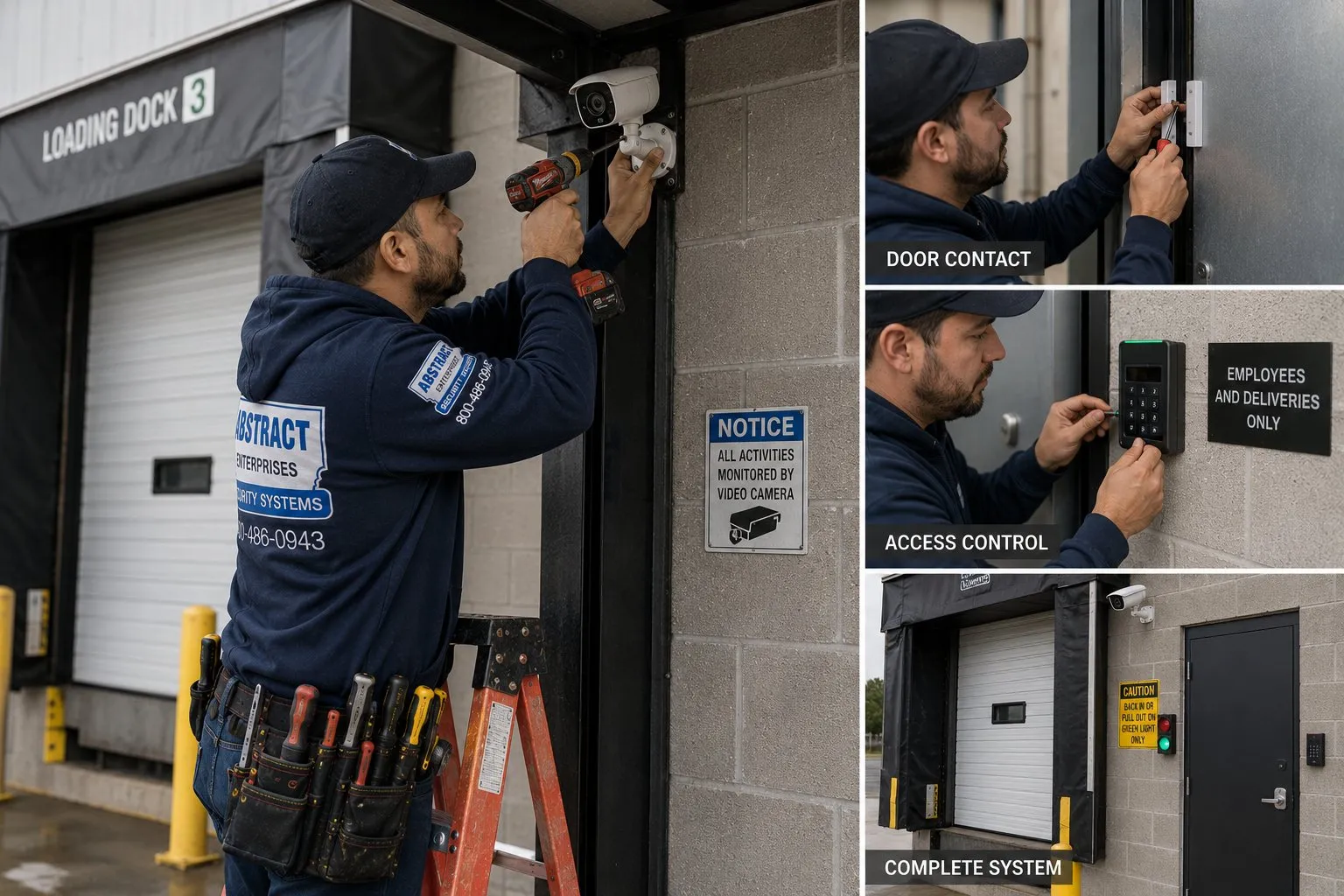
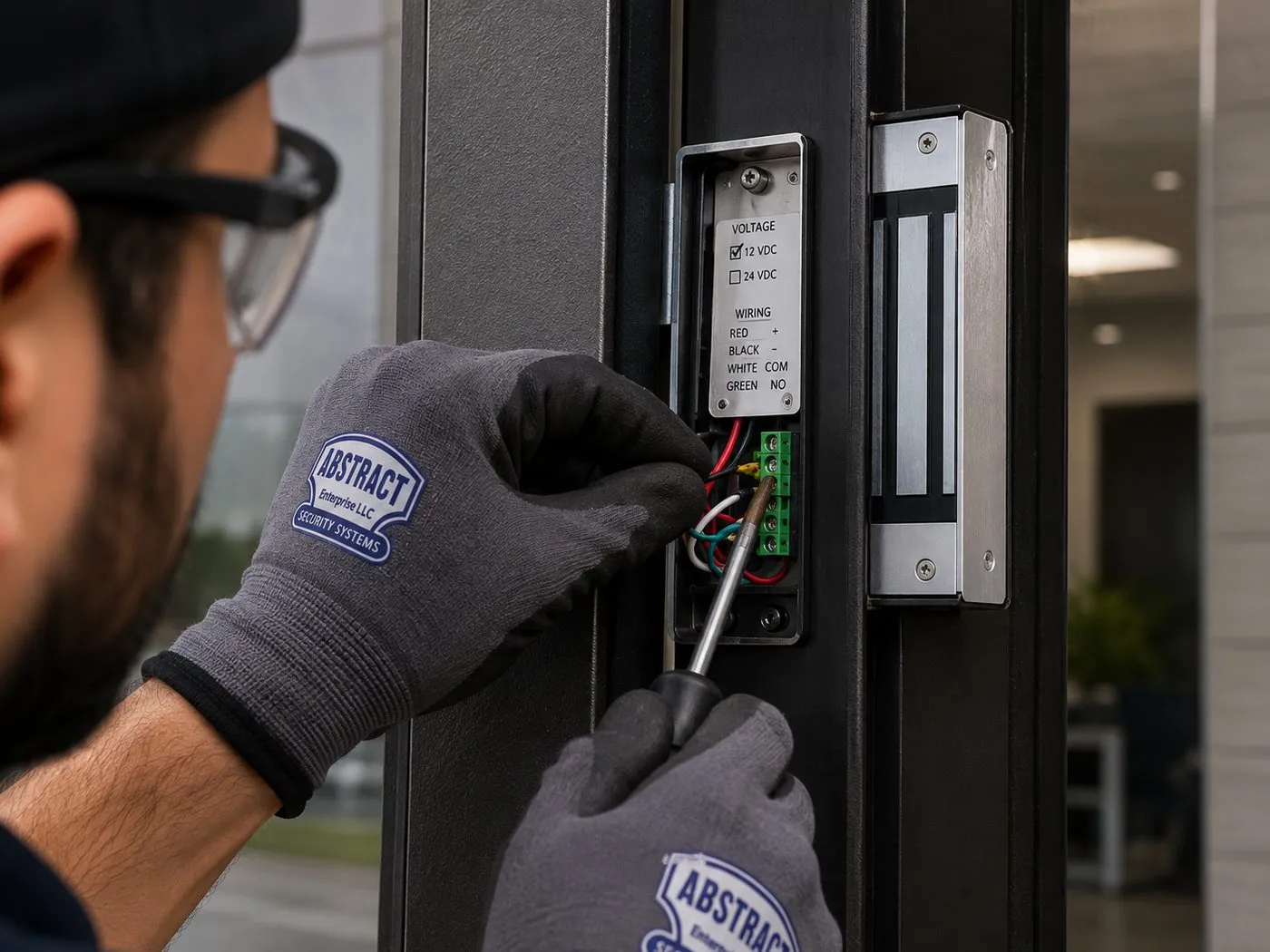
Shop Doors on the Lane · Flats Above the Stores · Frame and Brick Houses · Raised Homes Below Hylan
New Dorp is really three places sharing one name. Along New Dorp Lane, between Richmond Road and Hylan Boulevard, family-run shops sit under apartments and back onto parking. Inland, the side streets fill with detached and semi-attached houses within a walk of the railway station. Below Hylan, New Dorp Beach mixes surviving bungalows with houses lifted or rebuilt after Sandy. A keyless door that suits one of those places can be the wrong answer two blocks away, so we start by asking which New Dorp your door is in — then fit the lock, the strike and the codes to that door, with a one-turn exit inside every time.
Reviewed and updated October 17, 2026 · Written by Anwar Timothy, NYS licence #12000287431 · Part of our Staten Island smart lock installation coverage

A shop door that has to open itself at eight, a side door someone tried with a pry bar, or a raised house with a door nobody can find the key for? Call (347) 934-8335 or use the 60-second form. A licensed installer reads it, and calls back with what the door is likely to need before anyone gets in the van.

Ask someone on the South Shore where New Dorp is and you may get three different answers, and all three are right. One person means the Lane — New Dorp Lane, the old shopping street that runs from Richmond Road down past the Staten Island Railway station to Hylan Boulevard and beyond. Another means the residential streets on either side of it, bounded on the maps by Richmond and Amboy Roads, Tysens Lane, Mill Road and Bancroft Avenue. A third means New Dorp Beach, the low ground between Mill Road and Lower New York Bay that the maps sometimes list on its own but most residents count as part of the neighbourhood. Those three places have very different doors, and that is the starting point for every lock we fit here.
The Lane is a working main street. When the City Council approved the New Dorp Business Improvement District in April 2017, by a vote of 50 to 0, the district covered 146 properties and 180 businesses on New Dorp Lane and the commercial streets next to it between Hylan Boulevard and Richmond Road, most of them small and family-owned. Many of those buildings are mixed-use: a store at street level and one or two apartments above, reached by a separate street door or by a hallway that runs past the shop. Behind the storefronts there is parking, including the city's municipal field at 98 New Dorp Lane by the railway station. That combination — a glass shop front, a steel rear door onto a car park, and a residential door a few feet away — means a single building can need three different kinds of lock, three sets of people with codes, and a clear line between what the shop staff can open and what the tenants upstairs can.
The blocks inland are where most New Dorp households live. The 2020 Census counted 29,083 people in the neighbourhood tabulation area, up from 27,623 in 2010, in a mix of detached frame houses, semi-attached homes and two-families, along with rental complexes such as Tysens Park Apartments, which lists studio to two-bedroom units off Mill Road and Ebbitts Street. These are the doors that face the everyday risks. In February 2026 police in the 122nd Precinct reported three men using a crowbar to try to break into a home near Benedict Road and Circle Road, and earlier, in March 2025, the Staten Island Advance reported CompStat figures showing burglaries in the precinct up 150 percent on the year, 25 against 10, early in that year. A smart lock does nothing for a door that can be levered open at the strike, so on these blocks the frame, the strike screws and the gap at the door edge get as much attention as the keypad.
Below Hylan the problem changes again. The Department of City Planning's Resilient Neighborhoods study of the East Shore records that thousands of homes in Oakwood Beach, New Dorp Beach, Midland Beach and South Beach were severely damaged or destroyed by Hurricane Sandy, and the same report carries a photograph of a privately funded home elevation in New Dorp Beach. Under the city's flood rules, living space in a rebuilt home goes up to the design flood elevation and anything enclosed beneath it is wet-floodproofed and limited to parking, storage and building access. The planners also noted the very narrow, tall houses locals call “candlestick homes” that the rules produced on small lots. So the door you use every day may be a storey up a flight of outdoor steps, while the door at ground level opens into a space designed to flood. Lock choices, battery access and where the electronics live all follow from that.
What ties the three together is that the person paying for the lock usually knows exactly which door is the problem. A shop owner knows staff wedge the back door. A family knows which door the kids actually use. A beach-block owner knows which door was underwater in 2012. We take that knowledge as the brief, then check the door itself before talking about brands.
Most New Dorp owners who add a smart lock also end up asking about the doorbell camera beside it, and shop owners on the Lane usually pair keyless doors with access control on Staten Island once they have more than one door to manage. We plan for that on the first visit so nothing has to be redone later.

Saturday, ten minutes before opening, and the shop keypad will not wake up. A raised house whose front door has moved just enough that the bolt grinds. A side-door lock that vanished from the app the day a new router arrived. Call (347) 934-8335; we book the next open 2-hour window, and most battery, pairing and alignment faults are fixed in one to two hours once we are standing at the door. If it turns out to be app or code setup with no hardware change, it is billed at the Staten Island setup-only rate of $225 for the first hour.

A storefront on New Dorp Lane rarely has one door. There is the customer entrance, usually glass in an aluminium frame; a rear or side door, usually steel, that opens toward parking or a service yard; and, in the mixed-use buildings, a separate door for the apartments upstairs. The owner of the business, the owner of the building and the people living above may be three different parties with three different interests. Our job is to draw the line between them before we fit anything. Staff codes open the shop doors and only the shop doors. The tenants' street door is the landlord's and the tenants' business, and the shop never gets a code to it unless everyone agrees in writing. Where a hallway is shared, we look at whether it needs a lock at all, and if it does, whose schedule it follows.
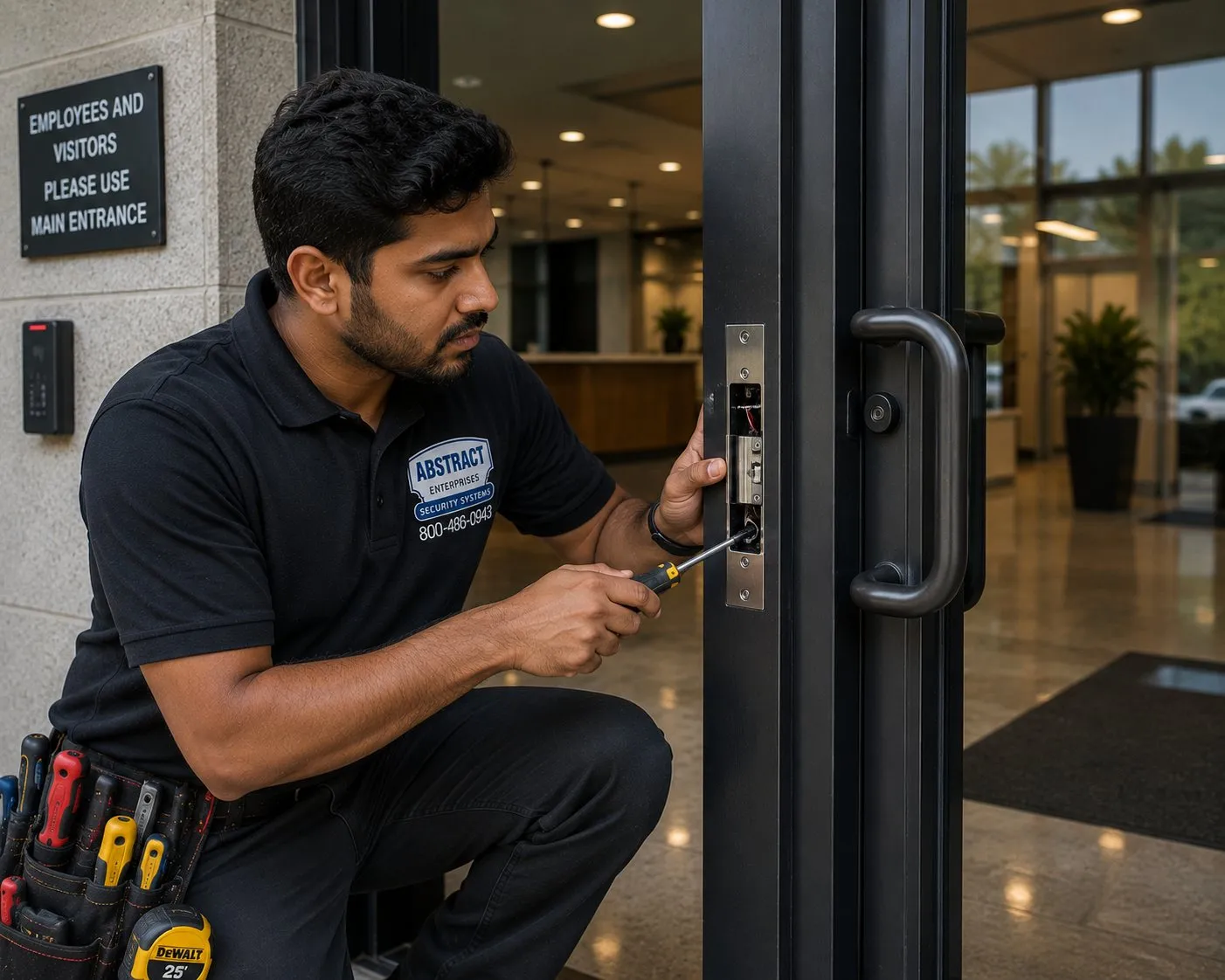
Glass shopfronts also change the choice of hardware. A residential smart deadbolt is made for a wood or steel door with a standard bore; most narrow-stile aluminium shop doors take a mortise lock in a thin frame instead, so a keyless upgrade usually means an electric strike in the frame, a keypad or reader on the wall, and a power supply, rather than a battery lock on the door. That is the work behind our published single-door figure, and it is why we look at the frame before quoting.
Between the Lane and Tysens Lane, and north toward Richmond Road and the Moravian Cemetery, the housing is mostly detached and semi-attached. These families usually come in with one of two worries: someone keeps forgetting to lock up, or someone tried to force a door. The first is a code and auto-lock question. The second is a hardware question that a smart lock alone cannot answer. A deadbolt throws into a strike plate held to a jamb, and if those screws are short and the jamb is soft, a pry bar wins whatever lock is on the door. We fit long screws into the framing, a reinforced strike where the jamb allows, and check the gap between door and frame before we talk about features.
The older streets toward Richmond Road and the gates of the Moravian Cemetery deserve a word of their own. Houses there are often older than their neighbours closer to Hylan, and their front doors may be original: heavier, thicker, sometimes with glass in the upper panel and a rim or mortise lock that has been replaced more than once. We would rather keep a good old door than swap it for a hollow modern one, so on these houses we spend the time to fill old bores, true the latch side and pick a lock whose thickness range fits the door rather than forcing the door to fit the lock.
In New Dorp Beach, a house rebuilt to the current flood rules has its living floor at or above the design flood elevation. The front door is at the top of an outdoor stair; the ground-level door opens into a wet-floodproofed enclosure that may hold the car, the bins and the stair up. Electronics do not belong low down in that space, and neither do lock batteries you need in an emergency. We put the smart lock on the door at living level, choose a keyed or mechanical lock for the lower door unless there is a reason to make it smart, and keep any bridge or hub upstairs with the router. Older bungalows that survived are a different case again: small, close to the ground, often with thin original doors that need checking before anything is bored.

Electric strike in the aluminium frame, keypad or fob reader on the wall, a power supply with battery backup and a free-exit device inside, for the glass customer door of a shop or office on the Lane or Hylan Boulevard.
Steel back doors onto parking and service yards: a keypad that relocks the moment the door shuts, a closer that actually closes it, and an alert if it is left standing open, so staff stop wedging it with a box.
A separate lock and separate codes for the residential door in a mixed-use building, kept completely apart from the shop's system, with the landlord holding admin rights and each tenant holding their own code.
Smart deadbolts on the doors families actually use, fitted after the door latches cleanly, with codes for each person, auto-lock timed to the household, and a keyed override kept for the day the batteries are flat.
Long screws into the framing, reinforced strike plates, door-edge guards and hinge screws, fitted with or without a new lock — the work that decides whether a door survives a pry bar.
The door at the top of the outdoor stair on an elevated house: a weather-suited model, a keypad you can read at the top of the steps, and electronics kept at living level, well above the enclosure below.
Doors that unlock for business hours and relock at closing, staff codes that only work on shift days, and a manager code that works any time — set up in the app and written down for you.
Notifications for repeated wrong codes, a bolt that did not throw, or a door opened without a valid unlock, sent to the phones that need them and not to everyone.
Locks orphaned by a lost phone or a router change, keypads silenced by water or grit, bolts that bind after a door moved, and full resets when a shop or house changes hands.

A store below and one or two apartments above. Expect a glass shopfront, a steel rear door and a narrow residential street door, sometimes all on the same frontage. Each gets its own hardware and its own people; nothing is shared unless the building's owner decides it should be.
The shopping centres along Hylan Boulevard, such as Hylan Plaza, which opened in 1966, and newer one-storey retail with parking in front. Tenants control their own rear doors; the landlord's lease often decides what can be cut into the storefront.
Older houses on the side streets toward Richmond Road and Amboy Road, many with a front porch door that guests use and a side or rear door that the family uses. Original doors are often solid and worth keeping; we work with them rather than replace them.
Garage at grade, stairs up to the main floor, sometimes a second unit. Shared walls mean shared frames on some doors, so we check what the jamb is fixed to before choosing screws and strikes.
Low-rise rental complexes such as Tysens Park Apartments, where each unit door belongs to the landlord's key system. Changes go through management; we work for owners and managers on these, and talk tenants through what they can ask for.
Small houses near the shore, some dating from the era of the Cedar Grove Beach Club bungalows built between the 1920s and 1940s. Doors can be thin, frames light and screens or storm doors in the way; we measure before promising a deadbolt.
Houses raised on columns or rebuilt tall and narrow after Sandy, with the living floor at the design flood elevation. The everyday door is up an exterior stair; the ground-level door opens to a wet-floodproofed enclosure for parking, storage and access.
Schools, the branch library, houses of worship and community spaces along the Lane follow their own agencies' or owners' hardware standards. We only work on these through the owner or facilities team, never on a request from an individual user.

The heart of the BID: restaurants, salons, bakeries, pharmacies, offices and services in buildings with apartments above. Owners mostly ask for staff codes on the rear door and a front door that follows opening hours.
Around the New Dorp station and the municipal field at 98 New Dorp Lane, foot traffic peaks at commuter times. Shops here open early and close late, so schedules and alerts for a door left open matter more than anywhere else on the street.
Hylan Plaza, opened in 1966 and the largest of the centres built along the boulevard in the 1960s, and the strips around it. Rear service doors onto loading areas are the ones tenants control and the ones we see most.
One of the corridors the Staten Island Economic Development Corporation works on, running past the Moravian Cemetery gates. Professional offices and small shops in converted buildings, often with a client door and a staff door.
South of Hylan, New Dorp Lane continues toward Miller Field and the beach blocks, with a looser mix of businesses and houses. Some of these properties sit in the flood zone, which changes what can go on a ground-level door.
Upstairs offices on the Lane and along Hylan, where an interior suite door needs a code for staff and a way to buzz visitors in, without the cost of a full access-control system.

Sorted by where in the neighbourhood the asker lives or works — the Lane, the side streets, the beach blocks, the rentals — here is what comes up on New Dorp calls, answered the way we would answer it on the doorstep.
People prop a door because getting back in is a nuisance: the key is on someone else's ring, or the door locks behind them every time they carry out the rubbish. So the fix is to make the shut door the easy option. A keypad or fob reader on the outside means nobody needs a key; a closer adjusted to swing slowly enough to walk a hand truck through, yet always latch at the end, means the door looks after itself; and a hook or shelf beside the reader means nobody puts a crate down in the doorway. We also look at why people are going out — deliveries, bins, smoke breaks — and put the reader where it is reachable with full hands. A wedge usually disappears within a week once the door is easier to use shut than open.
Not much for the door itself, and it is worth being honest about that. Burglaries on Staten Island shopfronts often start with broken glass, as the Advance reported when the glass front doors of a Richmond Road restaurant in neighbouring Dongan Hills were smashed in March 2025. Once the glass is gone, a lock in the frame is bypassed. What a keyless system still gives you is the record and the alert: the strike reports that the door opened without a valid credential, the app notifies you at once, and the log shows the last legitimate lock-up. The real protection for a glass entrance is in the layers around it — a security film or laminated glass, a gate where the lease allows one, cameras and an alarm with glass-break detection. We fit the lock so it works with those, not in place of them.
Yes, with the right hardware. An electric strike or electrified lock on a schedule can release at your opening time so customers can push in, and relock at closing, with holiday exceptions entered in advance. The setting most owners want is “first-person-in”: the door only goes into its open-hours mode after a staff member has actually arrived and entered their code, so it does not sit unlocked on a morning when nobody turns up. We always leave a manual override so a manager can lock the door instantly during the day, and we confirm that the door still opens from inside with one movement whatever the schedule says.
That depends on your lease, not on the lock. Most commercial leases on the Lane give the landlord a right of entry for repairs and emergencies, and many require you to provide a key or a means of access. Going keyless does not cancel that. In practice there are two easy ways to honour it: keep a keyed override cylinder on the lock and give the landlord that key, or give the landlord their own code or credential, which shows up separately in the log. Read the clause, or ask your attorney if it is unclear; we will set the hardware up whichever way the lease requires, and we will not remove a landlord's access without the owner's written say-so.
Yes, and it is one of the more useful things a small business can do with keyless locks. We fit a keypad lever or smart lock on the interior door to the office or stockroom, then set up access groups: everyone on staff for the rear door, managers only for the office, owners for everything. Most systems let you limit the manager group to opening hours as well. Because each person has their own code, the log tells you who opened the office and when, which settles questions faster than a shared key ever did. Interior doors are also the cheapest to convert, because there is no weather to plan for and the door is usually standard.
Mostly the frame. In the February 2026 report from the 122nd Precinct, three men tried to break into a house near Benedict Road and Circle Road with a crowbar; that kind of attack goes after the gap between door and jamb, trying to spread the frame until the bolt slips out of the strike. The lock's job is to throw a full-length bolt; the frame's job is to hold it. So we check the bolt throws its full length into the strike, replace short strike screws with long ones that reach the house framing, fit a reinforced strike plate where the jamb allows, and look at a door-edge guard on doors that open outward or have a wide gap. Those parts cost far less than the lock and make more difference.
Many current smart locks can. Typical features include a keypad lockout after a set number of wrong codes, a tamper or “forced entry” alert when the lock senses the bolt moved without a valid unlock, and a jam alert when the bolt could not throw. Not every model has every feature, and some only send alerts when the lock is connected through Wi-Fi or a bridge, not over Bluetooth alone. At the walkthrough we ask what you want to be told about and who should get the message, then recommend a lock that does those things on your door. Too many notifications are as bad as none, so we keep the list short.
It can, but we usually suggest it as a backup rather than the main plan. Location-based features rely on the phone's GPS, its battery-saving settings and the app running in the background; when any of those changes, the lock may not get the message. For someone who walks from the inland blocks to the New Dorp station each morning, auto-lock on a timer — the bolt throws a set time after the door closes — is simpler and more reliable, because it happens at the door whatever the phone is doing. Location features are better used for a reminder: a notification if you are a few blocks away and the door is still unlocked. We set up both and let you decide which you trust after a week.
Locking by voice is convenient and safe; unlocking by voice needs care. Most major assistants that work with smart locks ask for a spoken PIN before they will unlock, and you can switch voice unlocking off entirely and keep only “lock the front door”. The risk is simple: anyone who can be heard by the speaker, including someone shouting through a window or a door, might try. In a house where a smart speaker sits near the front of the house, we generally leave voice unlocking off and use the app or keypad instead. If someone in the family relies on voice control for accessibility reasons, we set a PIN that is not used anywhere else and review it with you.
They protect against different things. A keypad code can be watched, guessed or shared; a fingerprint cannot be shared casually, which is why families with older children often like it. But fingerprint readers vary in quality, struggle with wet, cold or very dry fingers, and still need a fallback, which is usually a code or key anyway. Neither one stops someone prying the door, which is the attack actually reported on New Dorp streets. Our advice is to pick whichever your household will use correctly every day, enrol each person separately so you can remove them later, and spend the rest of the budget on the strike and frame.
It is a good shortcut for comparing locks you cannot test yourself. The Builders Hardware Manufacturers Association's residential standard for deadbolts, ANSI/BHMA A156.40, rates locks for security, durability and finish separately, with letter grades, and the finish test includes a salt-spray test. A smart deadbolt carrying that certification has been tested by an independent body rather than only by its maker. It does not make a door strong on its own, but it tells you the lock body, bolt and finish have been checked. On a New Dorp door that faces weather or gets heavy daily use, we prefer certified models and will tell you which of your shortlisted locks carry it.
It can, slowly. Fine sand works into keyways, the gap around a deadbolt, and the edges of keypad buttons, and a motor that has to push a gritty bolt draws more battery and eventually stalls. Touchscreen keypads and sealed buttons cope better than mechanical buttons; a keyway with a shutter or a cover helps; and a dry lubricant made for locks is better than oil, which holds grit. On doors close to the beach we show you how to clear the strike pocket and keyway and suggest a quick check each spring and after a storm. If the door has no overhang, a small canopy above it does as much good as any choice of lock.
Usually yes, and it is often overlooked. On an elevated house the enclosure below is for parking, storage and building access, and its outside doors — garage door, side door, flood vents — are not built to the standard of the front door. If someone gets into that space, the door or hatch at the top of the inside stair is the last barrier before the living floor. We treat that door like an exterior door: solid, properly latched, with a deadbolt or smart lock on the living side and a thumb-turn or lever so it opens from the house with one movement. Because the lock sits at living level, its electronics stay well above the flood elevation.
You can ask, and some managers say yes, especially at turnover. The lock on your unit door is part of the owner's key system and the building's obligations, so management decides what model is fitted, keeps a means of entry for emergencies, and normally pays if it is their initiative. If you want it more than they do, a common arrangement is that you pay, the owner approves the model, and it stays with the apartment when you leave. Get the agreement in writing before anything is bored. City rules also protect tenants from being forced onto app-only entry in multiple dwellings, so a keyed option should remain available to you either way.
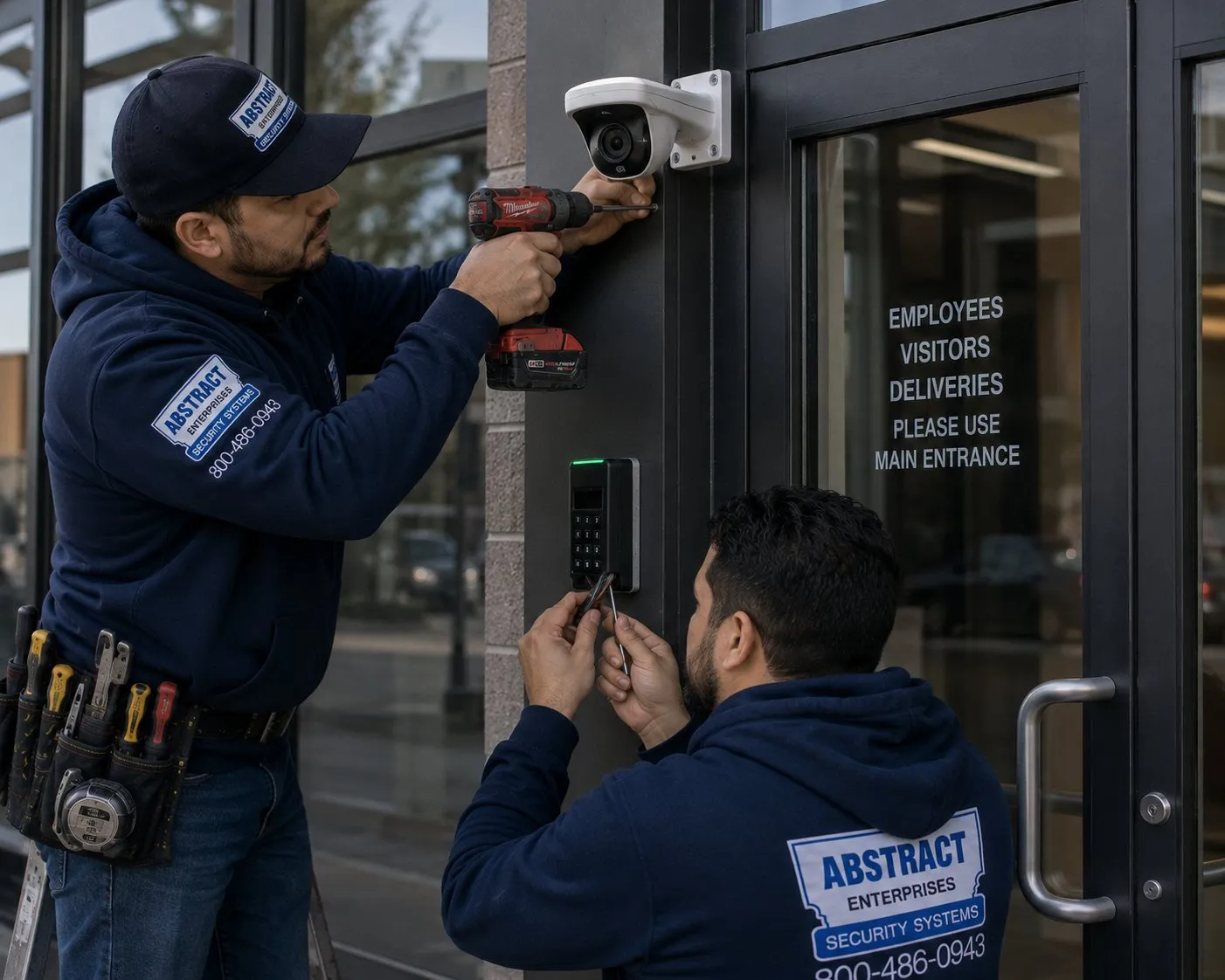
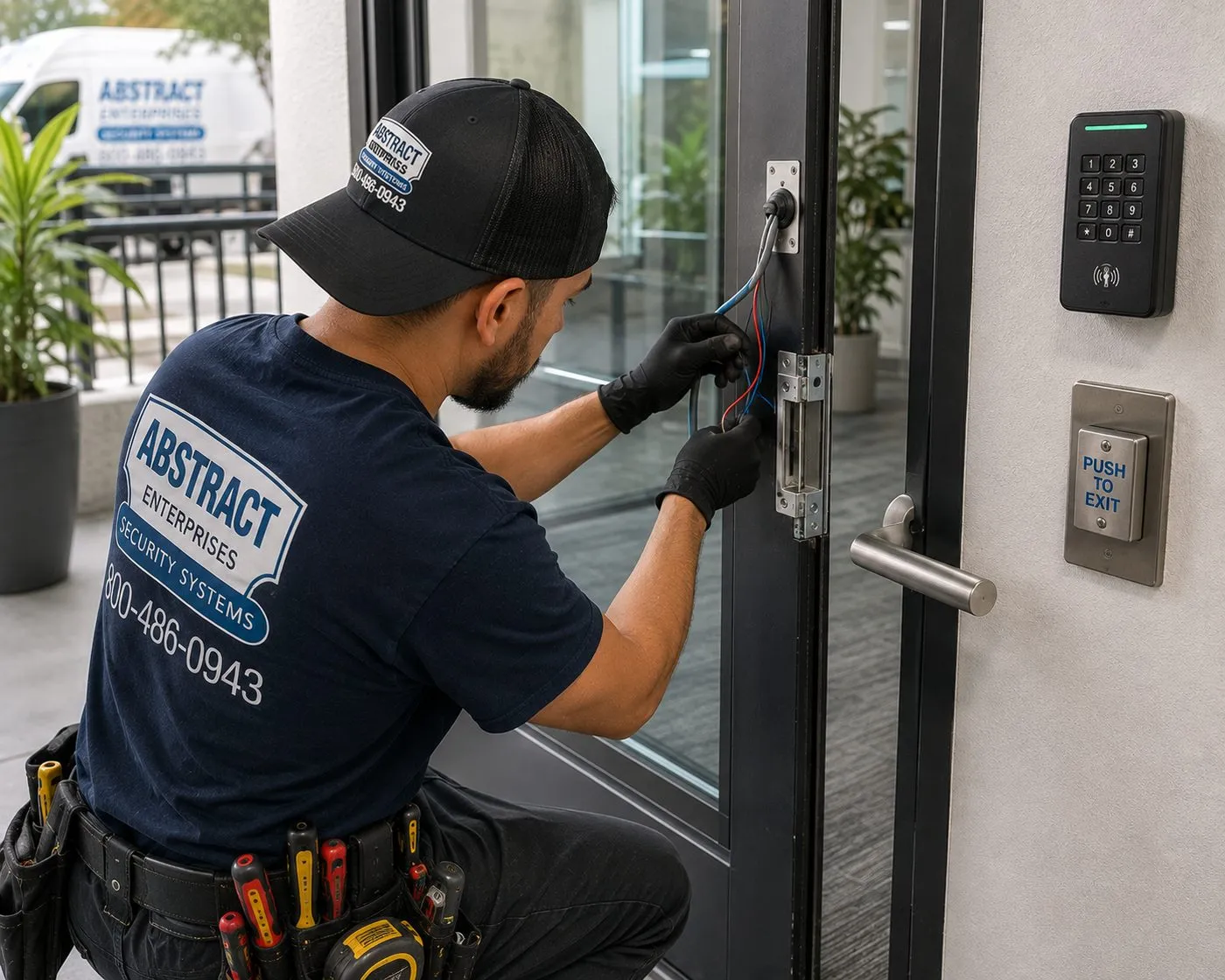
The usual answer for a glass shopfront on the Lane: the strike replaces part of the frame, the reader goes on the wall, and the door's existing lock stays as a backup. Needs power and a free-exit device inside.
A lever handle with a keypad built in, for steel rear doors, stockrooms and office doors where a deadbolt is awkward. Battery powered, with an override key.
For house front and side doors inland and for the living-level door on a raised house. Keypad, touchscreen or fingerprint outside; thumb-turn inside; auto-lock and individual codes.
Mount inside over an existing single-cylinder deadbolt and leave the outside unchanged — useful where the outside hardware must stay as it is, or where an owner wants the smallest possible change.
For some glass and aluminium doors that cannot take a strike. Always paired with release devices on the inside and planned around what happens when power fails.
A magnet and switch on the frame reporting open or closed, which is what makes a propped-door alert on a Lane rear door trustworthy.
For locks that do not connect on their own. On raised houses, kept upstairs with the router; in shops, near the door but out of reach.
Not smart, but the parts that resist a pry bar. Fitted with almost every exterior lock we install on the inland blocks.
For strikes, maglocks and readers on shop doors, sized so the door keeps working through a short outage and fails the way you chose in a long one.
| Route | What you get | Where it falls short in New Dorp |
|---|---|---|
| Buy a lock online and fit it yourself | Lowest outlay; fine on a standard, well-aligned wood door | No help with soft jambs, short strike screws, glass shopfronts or doors in a flood enclosure; nobody checks the inside exit |
| Add a lock to a national alarm package (the ADT, Ring or SimpliSafe type of plan) | The lock appears in the alarm or camera app; convenient if you already use that system | Brand choice follows the alarm company, not your door; installation scope varies, and shop strikes are usually outside it |
| AESS walkthrough and installation | Door, frame and strike checked first; the lock chosen for the door; codes and schedules set; written list of who has access | Costs more than doing it yourself; worth it where the door, the frame or the people involved are not simple |

Search summaries borrow their lines from national price guides, retailer listings and product reviews; the exact AI Overview wording was not retrievable when this page was researched, so we quote those underlying sources instead. All seven statements hold up somewhere in America. Below is how each one fares against a real door on the Lane, a side street or the beach blocks.
That range comes from Fixr's national cost guide, updated in January 2025, which puts a single smart lock installation at $250 to $400 with an average of $300. It describes one Wi-Fi lock and one accessory on a typical door, priced on a national average. It is a useful number if your door is a standard, already-bored wood door that latches perfectly.
Very few of the jobs we see on the Lane fit that description. A glass shopfront usually needs an electric strike, a reader, a power supply and a free-exit device rather than a battery deadbolt, and that is a different job priced from our published single-door figure of $1,650 to $2,750 on Staten Island. A steel rear door with an old panic bar and a weak closer needs the closer sorted before any keypad goes on.
Inland, the national figure leaves out the strike and frame work that matters most after a pry-bar attempt. So we quote residential locks flat after the walkthrough, with the door work listed separately, and we label any national figure as exactly that — national and not ours.
Product reviewers regularly report fitting a retail smart deadbolt with a Phillips screwdriver in about half an hour. On a door that is already bored to the lock's specification, with a bolt that lines up with its strike, that is fair.
On the doors in this neighbourhood the screwdriver part is quick; the thirty minutes before it is where the work is. A mixed-use building's residential door may have been re-bored for three different locks over the decades. A semi-attached house's jamb may be fixed to trim rather than framing. A raised house's front door may have racked slightly as the structure settled, so the bolt drags.
None of that shows up until you open the box and the bolt does not throw. When it does not, people often force it, which strips the motor or leaves a lock that works in summer and jams in winter. Checking first is cheaper than doing it twice.
Retail guides often suggest putting a consumer smart lock on a shop door to manage staff access. On a single interior door, or a solid rear door that takes a standard deadbolt, a keypad lever or smart deadbolt can be exactly right.
The front of most Lane storefronts is different: narrow aluminium stiles, a mortise lock, glass that leaves the door open to a single blow. A consumer deadbolt usually will not fit that frame, and even if an adapter makes it fit, the glass remains the weak point.
For the front door we normally recommend a strike and reader with a schedule, and for the rear door a keypad lever with a door-position sensor. Once a business has more than two doors or more than a handful of staff, the step up to proper access control is worth discussing, and we will say so rather than stretch a consumer lock beyond what it was made for.
Auto-lock is the feature most buyers want, and it does remove the “did I lock it?” worry. Advice articles tend to stop there.
Auto-lock only works if the door is actually shut when the bolt throws. A rear shop door that is propped, a house door that does not quite latch in humid weather, or a door with a worn strike will have the bolt extend into empty air. Some locks report that as a jam; some report nothing at all and simply show “locked”.
That is why we fit a door-position sensor where the lock supports one, adjust the closer and strike so the door latches every time, and test auto-lock with the door slightly ajar before we leave. You should still glance at the door. The lock reduces the thinking, it does not replace it.
This one is usually wrong for houses and sometimes right for shops. Residential smart deadbolts run on batteries and keep working through a power cut; what stops is remote access, because the router and any bridge lose power. The keypad, fingerprint reader and the key still work at the door.
Shop hardware is different. An electric strike or maglock is mains powered through a supply, and when power fails it does what it was set to do: a fail-secure strike stays locked to the outside, a fail-safe maglock releases. Both still let people out from inside if they were fitted properly.
On the East Shore, where outages after big storms are part of local memory, we size battery backup on shop supplies to cover a short outage and talk through what the door should do in a long one. On houses, we make sure the keyed override is real and that you know where the key is.
General smart-lock advice never mentions flood rules, because most homes are nowhere near a floodplain. New Dorp Beach is. City Planning's East Shore study and the city's flood-resistant construction rules mean that a rebuilt house has its living floor at the design flood elevation and only parking, storage and building access below it.
That changes where we put things. A smart lock with a battery pack and a circuit board on a ground-level door will one day be underwater; a bridge plugged into an outlet in the enclosure will go with it. Doors and fasteners below the flood elevation should be chosen to survive being wet.
So on the beach blocks we put connected locks at living level, keep electronics upstairs, and use plain mechanical or keyed hardware below unless there is a strong reason not to. For shops in the flood zone, keypads and readers are positioned so removable flood barriers can still be installed at the door.
Product pages naturally focus on the lock: encryption, apps, alerts. The burglary reports from this precinct describe something more basic — a crowbar against a house door near Benedict Road, broken glass at a shop entrance on Richmond Road a few neighbourhoods north.
Against a pry bar, the strike plate, the screws and the frame decide the outcome. Against broken glass, the lock in the frame is bypassed and the alarm, cameras and glass treatment carry the load. Against a lost or copied key, a smart lock is genuinely better, because a code can be deleted in seconds.
We sell and fit smart locks because they solve real problems with keys, schedules and records. We just will not pretend they solve the problems they do not, and every New Dorp quote we write lists the door and frame work alongside the lock.

Tell us which doors are giving you trouble and who needs to get through them. We look at the doors, the frames and the people on one visit and put the price in writing.
A storefront on the Lane, a house on the side streets or a raised home near the beach — describe the doors and we call back the same business day.
We'll call you back the same business day. If it's urgent, call us now at (347) 934-8335.
Six steps, whether it is one rear door behind a shop on the Lane or the front and stair doors of a raised house near the beach.
On the phone we ask about the building β shop, flat above a store, inland house or raised home below Hylan β and who needs to get through each door.
We check the frame, strike screws, bolt alignment and closer on every door, measure thickness and backset, note glass and exposure, and test the signal at each door.
For storefronts and rentals we confirm the landlordβs or managerβs approval in writing. You get one flat quote listing the lock and the door work for each door.
Closers adjusted, long screws driven into framing, strikes reinforced, old bores filled and racked doors corrected, so each door latches before any lock is fitted.
Locks fitted, strikes and readers wired to a backed-up supply on shop doors, electronics kept at living level on raised houses, and inside exit checked for one movement.
Each personβs code or fob enrolled and tested, schedules and alerts set, admin rights on two phones, and a written list of who can open which door.
The Staten Island Railway stop at New Dorp Lane and New Dorp Plaza, with the city's municipal parking field at 98 New Dorp Lane. The stretch of shops around it is where we fit most rear-door keypads and opening-hours schedules.
Opened on February 10, 1938, its Art Moderne interior was designated a city landmark in 1988 as one of the last pre-war movie theatre interiors on Staten Island; a church has occupied the building since 2012. A reminder that some Lane buildings have rules beyond the lease.
At 2205 Richmond Road, founded in 1740 and covering 113 acres, the largest cemetery on the island, beside the private Vanderbilt family cemetery with its Richard Morris Hunt mausoleum. The older detached houses on the streets toward it are some of New Dorp's most original doors.
Vanderbilt farmland sold to the federal government in 1919, an Army air coast defence station from 1921, and part of Gateway National Recreation Area since 1972. Its entrance on New Dorp Lane marks where the Lane runs on toward the beach blocks.
The New York Public Library branch at 309 New Dorp Lane, closed from January 2025 for an HVAC replacement led by the city's Department of Design and Construction and reopening in October 2026, according to the Staten Island Advance.
The shore below Mill Road, where the Cedar Grove Beach Club's bungalows stood for a century before the city took the site in 2010, and where City Planning's East Shore study photographed privately funded home elevations after Sandy.
We also install smart locks in the neighbourhoods that border New Dorp — Oakwood, Todt Hill, Dongan Hills, Grant City and Midland Beach — and across the rest of Staten Island from our Staten Island smart lock page.
Nothing about a New Dorp address changes the rate card: the neighbourhood sits on the island-wide list, which AESS sets by multiplying its Brooklyn figures by 1.10. House and apartment locks carry no published number, since the hours go into strikes, jambs and closers that differ on every door, so those are written up as one flat figure once we have seen them. Where a published figure does exist, the table shows it already adjusted.
| Item | Staten Island price | What it covers |
|---|---|---|
| Smart locks on house or apartment doors | Quoted flat at free walkthrough | Door adjustment, strike and frame work, fitting, connection and code setup for each door on the quote |
| Single-door keypad or fob reader with electric strike | $1,650–$2,750 installed | Lane storefront, service door or upstairs suite; based on the $1,500–$2,500 AESS access-control figure (Brooklyn base) ×1.10 |
| New electric strike on an entry door | $275–$495 | Strike supplied and fitted as part of an entry upgrade; AESS figure $250–$450 at base, ×1.10 |
| Failed electric strike repair | $325–$534 | A strike that buzzes but will not release; AESS figure $295–$485 at base, ×1.10, rounded half-up |
| Setup-only visit (app, bridge, codes, schedules; no hardware) | $225 first hour, then 30-minute blocks | Staten Island setup-only rate |
| Service and callback rate | $195/hr, 3-hour minimum ($585) | After-install service calls; not charged on the initial installation |
For comparison only, Fixr's national cost guide (updated January 2025) puts a single smart lock installation at $250 to $400, with an average of $300. That is a national average for one lock, not an AESS price.
Full terms β including 50% deposit, one-year parts-only warranty on AESS-supplied products, and the late-fee schedule β are set out in the service agreement.
Quoted flat at walkthrough
One smart deadbolt or keypad lever on the door that matters most, with the strike and frame reinforced, auto-lock set, a code for each person and a keyed override. The usual first step for an inland house.
Quoted flat at walkthrough
Every door the household uses, on one app: front, side and, on a raised house, the inside stair door from the enclosure. Electronics kept at living level, alerts set, and a written access list.
$1,650–$2,750
Storefront, service door or upstairs suite made keyless: strike cut into the frame, reader on the wall, backed-up power, an inside exit device, then staff groups and opening hours programmed. Island-wide pricing, nothing extra for the Lane.
Bought a lock online or inherited one in a box? Bring it to the walkthrough. We confirm its backset and thickness range match the door, and only then drill; the strike gets the same long-screw treatment as any lock we supply. Labour is a flat figure agreed on the visit. Pure programming — codes, schedules, a bridge — with no hardware is the $225 first-hour setup-only rate.
Send a photo of the door from outside, from inside and of its edge. For a shop, add one of the frame where the lock sits. We'll tell you what is likely to fit before anyone visits.
The buildings along New Dorp Lane were mostly put up for the way main streets worked a lifetime ago: the shopkeeper's family often lived upstairs, everybody knew everybody, and a single key ring opened every door. Today the store and the apartments are frequently separate tenancies, sometimes with an owner who lives elsewhere. That gap is where most of our Lane conversations start.
Before we talk about hardware we walk the building with the owner and write down each door: the shopfront, the shop's rear door, any side or basement door, the residential street door, any shared hallway door, each apartment's own door. Next to each we write who controls it under the lease and who needs to get through it. In a surprising number of buildings, that list exposes a door that two parties both think the other one is responsible for — usually a basement or hallway door that the shop uses for storage and the tenants use for the meters.
Our default is two systems that do not talk to each other: one for the business, administered by the business; one for the residential doors, administered by the building owner. A staff member who leaves loses the shop codes and never had anything else. A tenant who moves out loses the street-door code and never had a way into the shop. If the owner wants a single app for convenience, we can do that with separate access groups, but we explain what it means if that one account is ever compromised.
A shop that closes at eight leaves the building to the tenants until morning. If the rear door relies on a closer and an auto-relock, test that it closes and locks on a cold night as well as a warm afternoon. If there is a shared door between the shop and the hallway, it must stay locked from the shop side overnight and open from the hallway side for escape. Alerts for a door left open should go to someone who will actually act on them at eleven at night — often the owner, not the shift manager.
Bakeries, cafΓ©s and delis on the Lane take deliveries before opening. A time-limited code for a supplier, valid only between, say, five and seven in the morning, lets a driver drop stock in a back room without anyone handing over a key, and the log shows when they came and went. If the delivery room has a door through to the rest of the shop, that inner door stays locked to the supplier's code.
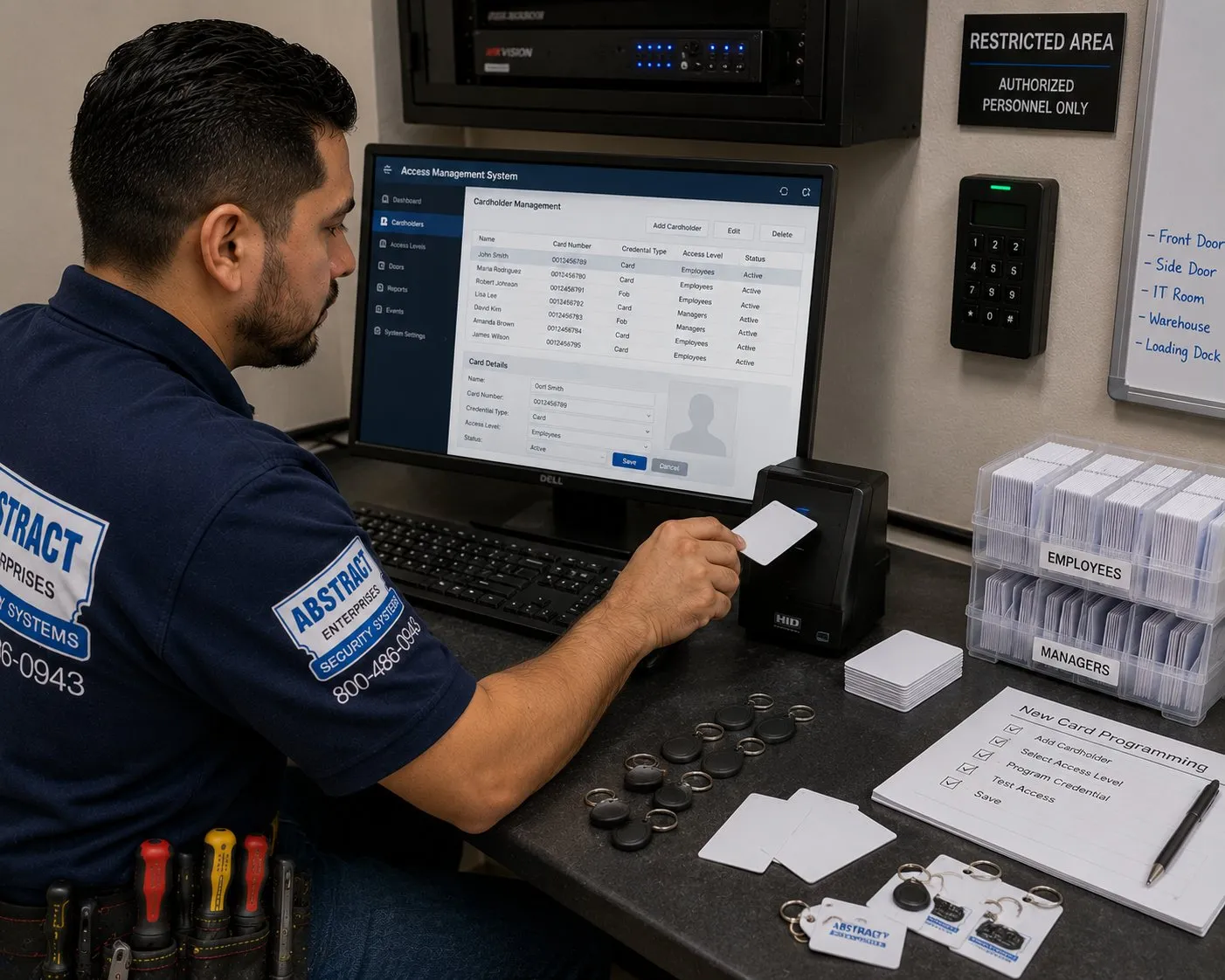
Shops with steady staff usually do well with codes: nothing to lose, nothing to carry. Shops with high turnover or part-timers often prefer fobs or cards, because a returned fob is a visible handover and a lost one is deleted in seconds. Phone credentials suit managers and owners who already live in the app. Many systems let you mix all three on the same door. Whatever you choose, give each person their own credential; a single shared shop code is the keyless version of a key under the mat, and it makes the log useless.
Shops on a busy street change owners. A keyless system makes the handover cleaner than a box of keys, but only if someone does it. At sale we reset the shop locks to factory settings, transfer the admin account or create a new one for the buyer, delete every staff code, and leave the residential system untouched. We give both parties a short written record of what was changed.
New Dorp Beach has always been a little different from the rest of the neighbourhood. Its streets drop toward the bay, its oldest houses began as summer cottages, and the Cedar Grove Beach Club, founded in 1911 according to a City Limits history, kept a colony of bungalows on the shore until the city took the site in 2010. A nor'easter in December 1992 had already left 28 of those bungalows in ruins, a date residents still mark on r/statenisland. Then Sandy reshaped the whole East Shore.
City Planning's East Shore report explains the framework. The 1% annual chance floodplain is split into V, Coastal A and A zones. To comply fully with Appendix G of the Building Code, a residential building elevates all living space to the design flood elevation, and any enclosed space below it is wet-floodproofed. NYC Buildings Bulletin 2022-001 limits that wet-floodproofed space to parking, storage and building access. The report notes that houses rebuilt to these rules on narrow lots often became very narrow and tall — the “candlestick homes” mentioned by residents — and recommended changes so new homes better match the existing small bungalows and cottages.
Not every house below Hylan was raised. Some older cottages remain close to the ground, with light frames, thin doors and screen doors in front. Before fitting anything we measure the door thickness and the space between the entry door and any screen door, and check whether the frame can hold a reinforced strike. Sometimes the honest answer is a new door first; more often a careful retrofit works, and we will say which.
If you are told to leave, take the keyed override key with you, make sure the lock has fresh batteries so remote access works once power returns, and note which codes are active in case you need to let a contractor or an adjuster in later. When you come back, check that the bolt throws freely before relying on auto-lock; doors and frames that took water can swell or shift. We are happy to come and check locks after a flood, at the standard service rate.
A walkthrough goes faster, and the written price is more accurate, when a few things are ready. None of this is required — we will work it out on site if we have to — but owners who gather it beforehand usually get a quote they can act on the same day.
For a shop, that is the lease clause on alterations and landlord access. For a flat above a store, it is your own lease or a word with the building owner. For a rental complex, it is the management office's rule on unit locks. For a house, it is simply knowing whether anyone else — a tenant, a relative, a previous owner's contractor — still holds a key. Ten minutes with these documents saves a second visit.
Write down everyone who needs to open each door and roughly when: staff by shift, a cleaner on Thursdays, a supplier before opening, the family, a neighbour who checks on the house. That list becomes the code plan. On the Lane it usually splits into owners, managers and staff; at home it splits into family, regular visitors and occasional ones.
One photo from outside, one from inside and one of the door edge with the bolt out, plus a photo of the frame where the strike sits. For a shopfront, include the top and bottom of the frame and any existing panic bar or closer. From those we can usually tell what will fit before we arrive, and bring the right parts.
Stand at each door with your phone and look at the Wi-Fi bars. On a raised house, check the front door at the top of the stair and the door at the bottom of the inside stair. In a shop, check the rear door, which is often behind a stockroom wall. A weak signal is not a problem if we know about it; it is a problem if we find out after the lock is on.
If someone has tried a door, if a key went missing, if a door sticks every summer or took water in a storm, tell us. Those stories decide where the money should go: a reinforced strike, a better closer, a lock that suits a wet door, or a simple rekey of the doors you are not converting. The lock is the visible part of the job; the history of the door decides the rest of it.
Smart locks are one part of how a door is secured. These are the related Abstract Enterprises services New Dorp customers most often add.
For Lane businesses with several doors or many staff: fob and card readers, controllers and software that outgrow a consumer lock.
Cameras covering shop entrances, rear doors and parking, the layer that matters most when glass is the weak point.
Door contacts, glass-break detection and keypads for shops and houses, working alongside the locks.
Answer the bell from your phone and check the visitor on video first; unlocking blind is how codes and doors get abused.
Cameras on side doors, driveways and yards on the inland blocks.
For the residential street door of a mixed-use building, so tenants can let visitors in.
Old buzzer and strike systems on apartment entrances that release slowly or not at all.
Locks that work with lights, thermostats and scenes, set up so the door is never the weak link.
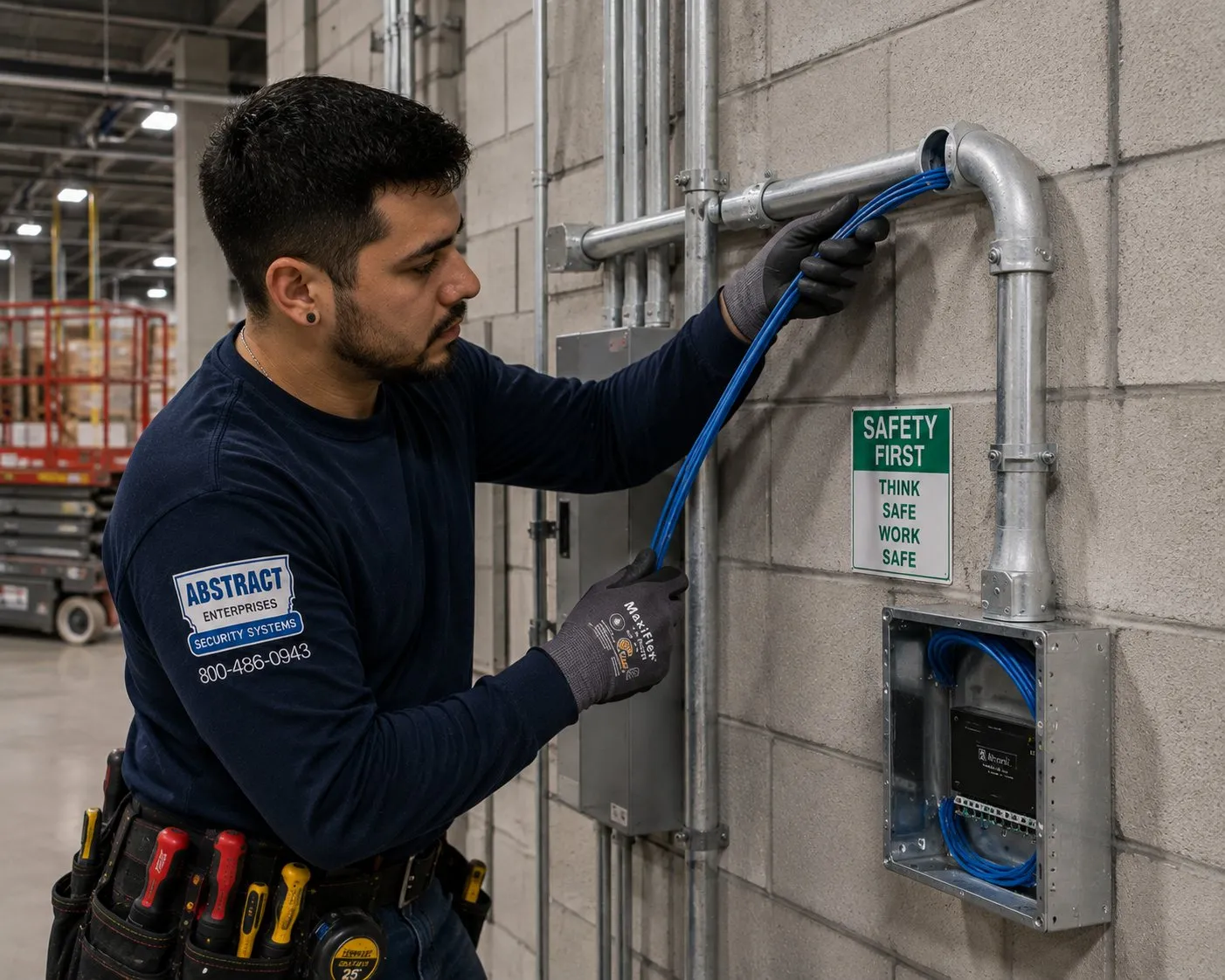
Wi-Fi that reaches the door, and wired runs to shop readers and controllers.
General working practice from our installers — not a story about any particular customer or address.
On a storefront we start at the frame, not the lock. We look at the stile width, the existing mortise cylinder and the threshold, and we ask the owner whose name is on the frame. Then we go out the back and watch the rear door close on its own a few times. If it hangs open an inch, that is the first thing to fix, because no keypad will make up for a door that does not shut.
On a house inland we take the strike plate off. Short screws into soft trim tell us more about the door's real strength than any spec sheet, and long screws into the framing cost almost nothing. We push on the door edge with the bolt thrown to see how much it gives. That ten-second check is the one a pry bar makes.
On a raised house below Hylan we stand in the enclosure and look up: where the high-water line would be, where the outlets are, where the router is upstairs. Then we decide which doors get electronics and which get plain, tough hardware. Every door, whichever New Dorp it is in, must open from inside with one turn or push, and we check that ourselves before we pack up.
No. New Dorp uses the Staten Island price list, which is 1.10 times the AESS Brooklyn base, with no extra charge for the neighbourhood. A single-door keypad or fob reader with an electric strike is $1,650 to $2,750 here, the same as anywhere else on the island, and house locks are quoted flat after the free walkthrough.
Yes. Those neighbourhoods border New Dorp and are covered by the same Staten Island team, price list and phone line. Todt Hill and the rest of the island are covered too; just tell us the street when you call or fill in the form.
Most smart deadbolts adjust for the two common backsets, 2-3/8 and 2-3/4 inches, measured from the door edge to the centre of the bore. Older doors sometimes have a deeper or odd backset, or two bores close together. We measure at the walkthrough and either choose a lock that fits, fill and re-bore the door, or tell you if the door needs replacing.
They do from time to time, and most install them through the app with a tap or automatically. We turn on automatic updates where the lock offers them and show you where to check. You do not need us to come back for routine updates; if an update ever leaves a lock misbehaving, that is a service call.
That is why we set up admin access on two phones at installation. If it does happen, the account can usually be recovered by logging in from a new phone with the same account details. If the account itself is lost, the lock can be reset to factory settings with physical access to the inside of the door, and then re-enrolled; we can do that at the setup-only rate.
Often, yes. Many locks link with smart lighting through a home app or an automation platform, so a valid unlock after dark can turn on a light. It needs compatible bulbs, switches or a hub, and we check that at the walkthrough. On raised houses it is especially useful for the light at the top of the outdoor stair.
Yes, unless you want to keep them. Some owners keep an original lock for a period door or as a spare; otherwise we take the old hardware with us. If an old cylinder is keyed alike with other doors you are keeping, we will point that out before it leaves.
Some brands offer a web dashboard as well as the app, which shop owners find easier for reviewing staff entries. Others are phone-only. If you want to review logs at a desk, tell us at the walkthrough and we will recommend a lock or system that supports it.
Back up to smart lock installation on Staten Island for houses, two-families and shops across the island. You are on the New Dorp page.
The citywide Abstract Enterprises smart lock installation in NYC page covers tenant rules, boards and multi-unit entrances.
Smart lock installation in Greenpoint · Washington Heights smart locks · West Brighton, Staten Island
Smart lock installation on Long Island — Nassau County and Suffolk County.
Hudson Valley smart locks — Westchester, Rockland, Orange, Putnam, Dutchess and Ulster.
Return to the Abstract Enterprises Security Systems home page, or read about us.
Customers waiting outside a shop whose schedule never released, a family on the top step of a raised house with a silent keypad, a tenant whose code stopped working after a battery swap — ring (347) 934-8335 and say which. The earliest free two-hour arrival slot is yours, and flat batteries, lost pairings and bolts dragging on a moved strike rarely take more than an hour or two to put right. Reach for the mechanical override key while you wait; it is on every lock we fit for exactly this moment.
Abstract Enterprises Security Systems · 1282 Troy Ave, Brooklyn, NY 11203 · (347) 934-8335 · WhatsApp (718) 679-0359 via wa.me
NYS Low-Voltage Licence #12000287431 · 100% Licensed & Insured · Same-Day Estimates · Rated 4.7★ from 201 Google Reviews
Locks you supply carry their manufacturer's warranty; see our warranty page for how AESS-supplied products are covered.
Nothing here is legal advice: the page summarises how city building, flood-zone and housing rules bear on door hardware in New Dorp. Reviewed and updated October 17, 2026. Changelog: New Dorp smart lock installation page first published.