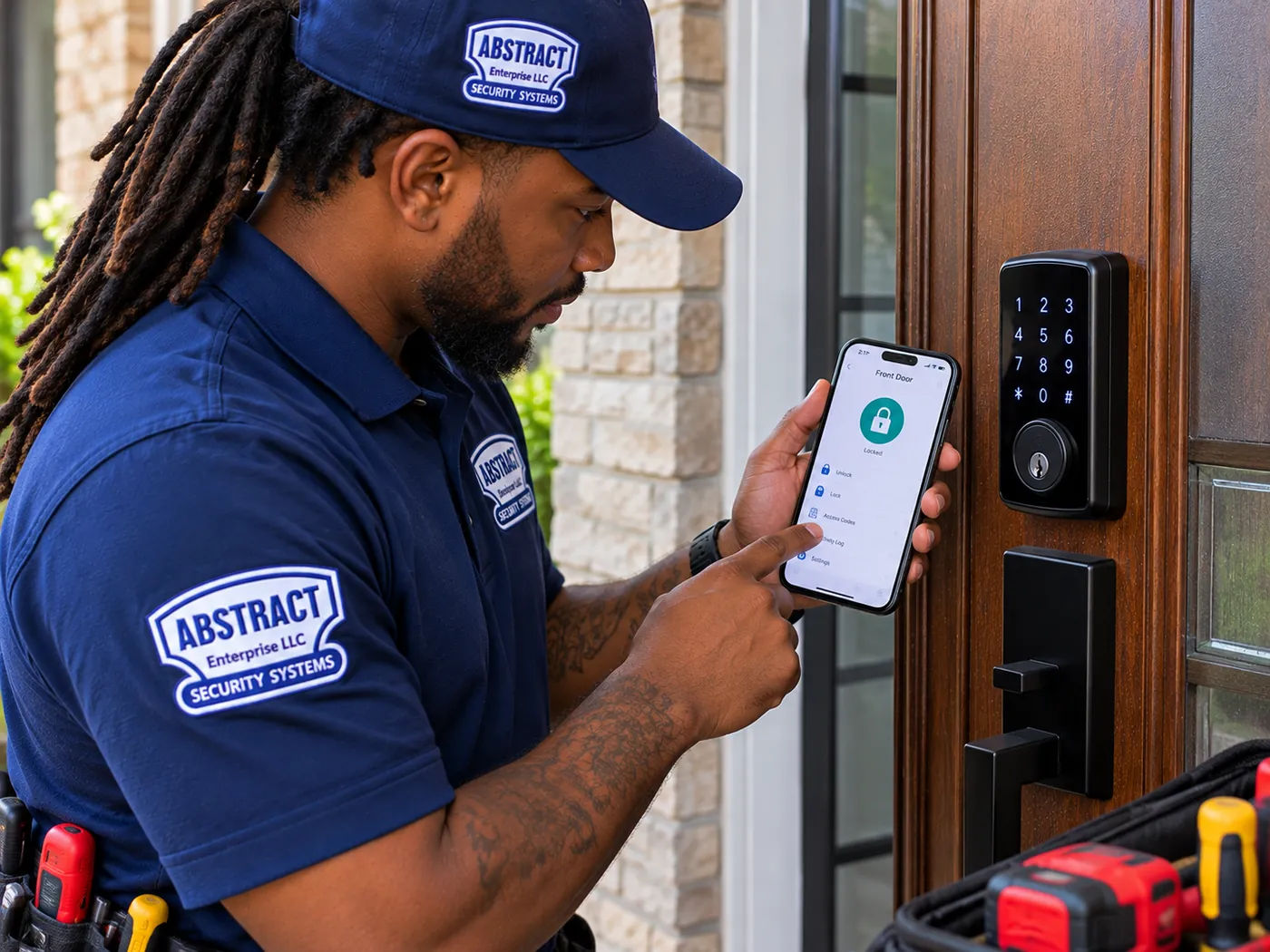
Co-op Unit Doors · Board-Ready Paperwork · Lobby, Mailroom & Garden Doors · 1920s Wood Doors · 82nd Street & Roosevelt Avenue Storefronts
Jackson Heights is where the American garden co-op began, and that history still decides how a smart lock goes on a door here. Your apartment door belongs partly to the cooperative, the super is owed a way in, the house rules say when contractors may work, the lobby and garden doors are the board’s call, and anything on a street facade inside the historic district answers to the Landmarks Preservation Commission. We fit keyless locks that clear all of that — on hundred-year-old doors that still have to swing shut and latch by themselves.
Reviewed and updated October 17, 2026 · Written by Anwar Timothy, NYS licence #12000287431

Shareholder with a board meeting coming up, or a board with a lobby door to fix? Call the Queens line, (347) 434-6392, or use the 60-second form. A licensed installer reads every request and will tell you, before anyone visits, what your managing agent is likely to ask for and whether your door can take the lock you have in mind.

Almost every keyless job north of Roosevelt Avenue begins with the same discovery: the door is not entirely yours. The Queensboro Corporation built Jackson Heights as a planned community between 70th and 92nd Streets, from Roosevelt Avenue up to Northern Boulevard, and in 1919 it offered Linden Court as the first building under its “Cooperative Ownership Plan” — one of the first cooperative housing schemes in the country, according to the history the Jackson Heights Beautification Group adapted from Daniel Karatzas’s book. A century later the cooperative model is still everywhere here. The JHBG history counts at least 60 Jackson Heights buildings converted to co-ops or condominiums during the 1980s alone, adding more than 5,000 tenant-owned apartments to a base of at least 5,000 co-op units that already existed. If you live in one of them, you hold shares and a proprietary lease, not a deed to your front door.
That changes the smart lock conversation in practical ways. The board and its managing agent decide what may be attached to a unit door, the proprietary lease usually entitles the corporation to a way in for emergencies and repairs, and the house rules set the hours when a contractor may work. One Jackson Heights co-op whose house rules are published online — the Allendale Apartments at 34-24 82nd Street — is a fair example of the genre: no construction or noisy installation except on weekdays between 8:30 AM and 5 PM, every contractor “screened and approved by Management”, apartment alarm systems installed only with written approval, and a statement that all apartment entrance doors are self-closing under Fire Department rules. A lock that ignores any of those lines can end up removed at the shareholder’s expense. We plan around them before the box is opened.
The doors themselves are old. Laurel Court, the first apartment building in Jackson Heights, went up in 1914; the block-long garden complexes — Hampton, Elm, Hawthorne, Laburnum and Cambridge Courts, The Chateau, The Towers — followed between 1920 and 1925, and the JHBG history notes that every apartment completed through 1921 was a walk-up. Many unit doors in those buildings are original or early replacements: thick wood or metal-clad slabs, often with decades of paint on their edges, mortise pockets cut for locks that have long since been swapped, and a closer at the top that has to pull the door shut against whatever we add. A motorised deadbolt is unforgiving on a door like that. If the bolt rubs, the door doesn’t latch, the self-closer fails its job and the battery drains. Fitting a smart lock here is half carpentry and half electronics, and the carpentry comes first.
Then there are the doors nobody owns individually. The lobby door where, as the Queens Daily Eagle reported in October 2020, a burglar walked into a 34th Avenue co-op at 3 a.m. and tore open about a dozen packages — the second break-in at that building since July. The mailroom at 83-10 35th Avenue that a lone burglar entered three times in one week in March 2025, according to QNS and the NYPD’s 115th Precinct. The fire door to the interior garden that house rules say must stay shut. Those are board decisions, and they are where keypads, fob readers and electric strikes do the most good in Jackson Heights. A smart lock on your own apartment door protects your apartment; it does nothing for the lobby someone was buzzed into.
Finally, the people. The Department of City Planning’s 2026 edition of The Newest New Yorkers counts more than 50,000 immigrants in Jackson Heights, nearly 60 percent of the population, with Colombians, Ecuadorians and Mexicans together making up about 43 percent of the foreign-born and a strong Bangladeshi commercial presence around Diversity Plaza. Households are large and often crowded, keys get copied for cousins and in-laws, and the shareholder on the stock certificate may not be the person who uses the door most. A code per person, a log that shows who came in, and a key the co-op can still use are what make keyless entry fit a Jackson Heights household.
Many Jackson Heights boards that fix the mailroom door end up looking at the whole entrance. Our access control installation team in Queens handles fob readers and controllers for lobbies and service doors, and the AESS intercom installers in Queens replace the buzzer panels that let strangers in.

A unit-door keypad that went dark in a cold stairhall, a bolt that stopped catching after the building’s closer was adjusted, a lobby keypad residents can no longer get past, an app that lost the lock when a shareholder changed phones, a storefront keypad on 37th Avenue that a closing employee can’t clear — we treat those as service calls and book the next open 2-hour window. Once a technician is at the door, most battery, pairing and strike-alignment faults are fixed in one to two hours. If the fault is in the building’s entrance strike, a failed electric strike repair is $310–$509 at our Queens rate. Call (347) 434-6392 and say it’s a smart lock problem in Jackson Heights; for entrance buzzers and strikes, see our door buzzer repair service in Queens. Tell the super too — in most co-ops the building has to know when its door hardware is being worked on.

Jackson Heights jobs split cleanly into two kinds: doors a resident controls and doors a board controls. We do both, and we keep the paperwork for each separate, because the person who approves the work is different. Every job ends the same way: the door closes and latches on its own, it opens from inside with one plain motion, a mechanical key still works, and whoever needs a credential has tried it in front of us.
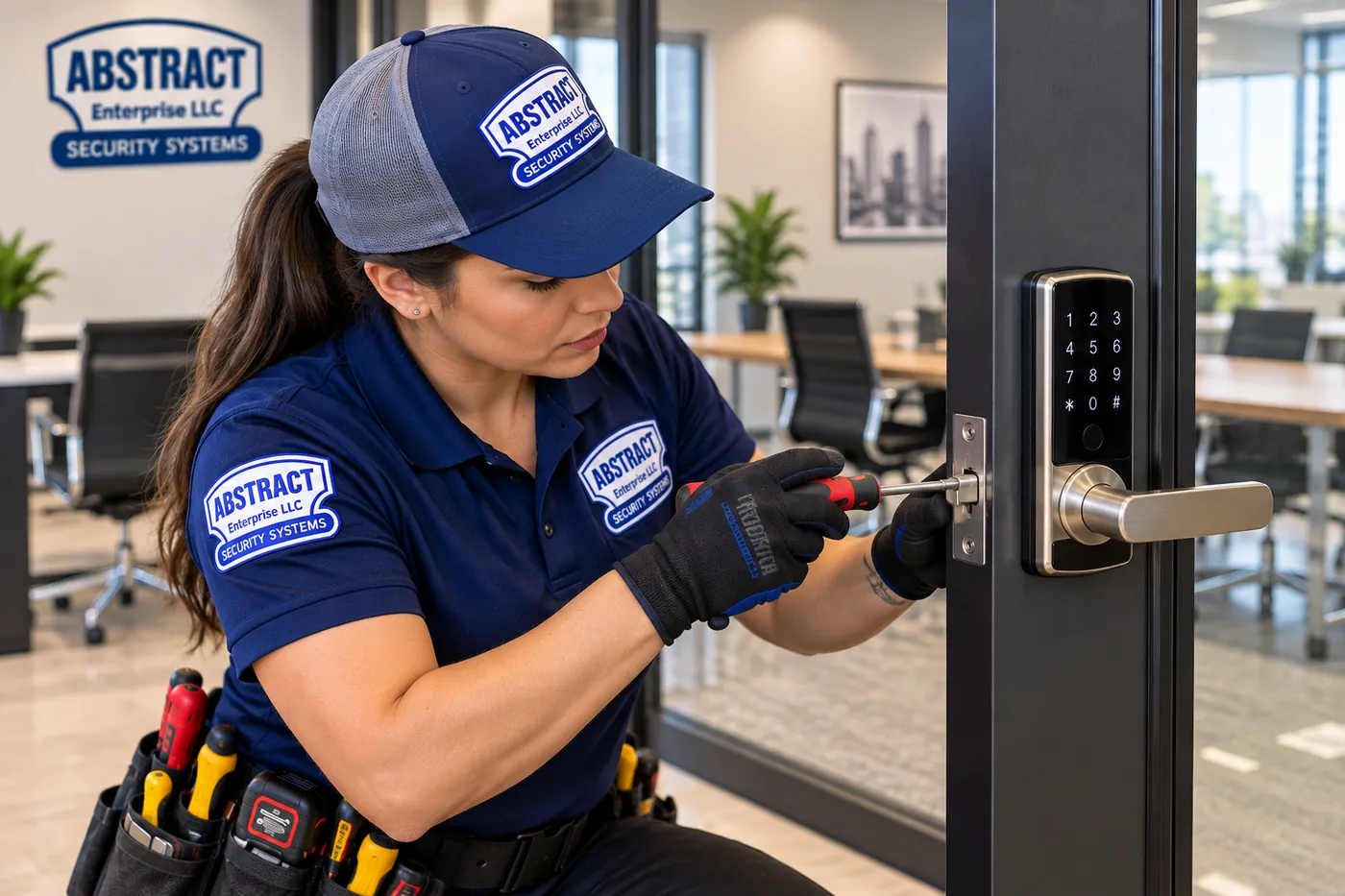
Keypad, fingerprint or retrofit deadbolts on shareholders’ apartment doors, chosen so the hallway face satisfies the board and the corporation keeps the emergency access its lease gives it.
A one-page scope, the manufacturer’s spec sheet, photos of the door, our certificate of insurance naming the corporation and managing agent, and a note on how the super’s access is preserved.
Paint stripped back from the door edge and stop, old mortise pockets filled or reused, strikes moved and reinforced, and closers adjusted so a motorised bolt throws without dragging.
Keypads or fob readers with electric strikes on building entrances, with a push-to-exit or mechanical inside release, for boards replacing keys that have been copied for decades.
Fob or code access limited to residents and staff, with a log the managing agent can read when something goes missing — the door most often hit in Jackson Heights building burglaries.
Scheduled codes that follow the house rules: the interior garden from 9 AM to sundown, laundry during posted hours, a service entrance for couriers and trades only when staff expect them.
Front and rear doors on the 1920s brick English Garden Homes and other attached houses, including the back door to the yard and the side door of a rear garage.
Keypad deadbolts, keypad levers and readers with strikes for storefronts and second-floor offices on 82nd Street, 37th Avenue, 74th Street and Roosevelt Avenue.
Dead keypads, bolts that no longer reach the strike after a closer change, lost admin accounts, and user lists still full of former sublessees, contractors and relatives.

Jackson Heights was built in recognisable waves, and each wave left its own kind of door. The building you live in tells us, before we arrive, roughly how thick the door is, what the board will care about and where the trouble is likely to be.
The Greystones of 1917, then Hampton, Elm, Hawthorne, Laburnum and Cambridge Courts: George H. Wells’s attached four- and five-storey buildings lining the side streets around an interior garden that runs the length of the block. Street entrances in front, the shared garden behind, and early-era unit doors.
Linden Court, The Chateau with its slate mansard roofs and carved limestone entrances (1923), The Towers at 80th Street and 34th Avenue (1924, 96 apartments) and Spanish Gardens: detached buildings around a landscaped garden. Entrance surrounds are part of the protected streetscape; anything new on them is kept small and reversible.
Smaller buildings such as Hayes, Ivy and Cedar Courts and the 1914–1916 Laurel, Oban, Penrhyn, Plymouth and Willow Courts near 80th to 83rd Streets. Walk-up stairs, short landings and doors that have been re-locked several times over a hundred years.
Rental buildings from the 1930s — Fillmore Hall, with 132 units the largest Queensboro apartment house, Georgian Hall, Oak Hall, Buckingham Hall and the Mount Vernon among them. More apartments per entrance than the early walk-ups, so lobby and mailroom access matter as much as the unit lock.
The building boom the JHBG describes after 1947, when thirty-eight new apartment buildings were completed in 1950 alone, many along 34th and 35th Avenues. Typically steel doors in steel frames with standard bores, and mailrooms off the lobby.
The attached brick houses Queensboro began on 87th Street in 1924 and spread across more than fifteen streets in four years, with front and rear gardens and garages at the back. Owner-controlled doors, a front door facing the street and a rear door toward the garden and garage.
Shops at street level with apartments or offices above, along 37th Avenue, 82nd Street, 74th Street and Roosevelt Avenue. A residential street door beside a shop door, and two sets of people who should never share a code.
Apartments sublet by shareholders with board consent, and units still held by the sponsor or a holdover tenant after a conversion. The person living there, the shareholder and the board may all have a say over the same door.
Paint, swelling and the self-closer. On a unit door that has been painted every time an apartment changed hands, the edge, the stop and the strike can each carry a sixteenth of an inch or more of build-up. The door still closes for a hand-turned latch, but a motorised bolt touching paint on its way into the strike will strain, report a jam and run the batteries down. Because these doors are self-closing — the house rules we quoted say so, and HPD explains that apartment and hallway doors must swing closed and latch by themselves — the door has to latch from the closer’s pull alone, not from someone pushing it. We take the paint back to clean wood or metal at the contact points, reset the strike, and adjust the closer’s latch speed so the door finishes its swing firmly. Then we let it close twenty times on its own before the smart lock goes in.
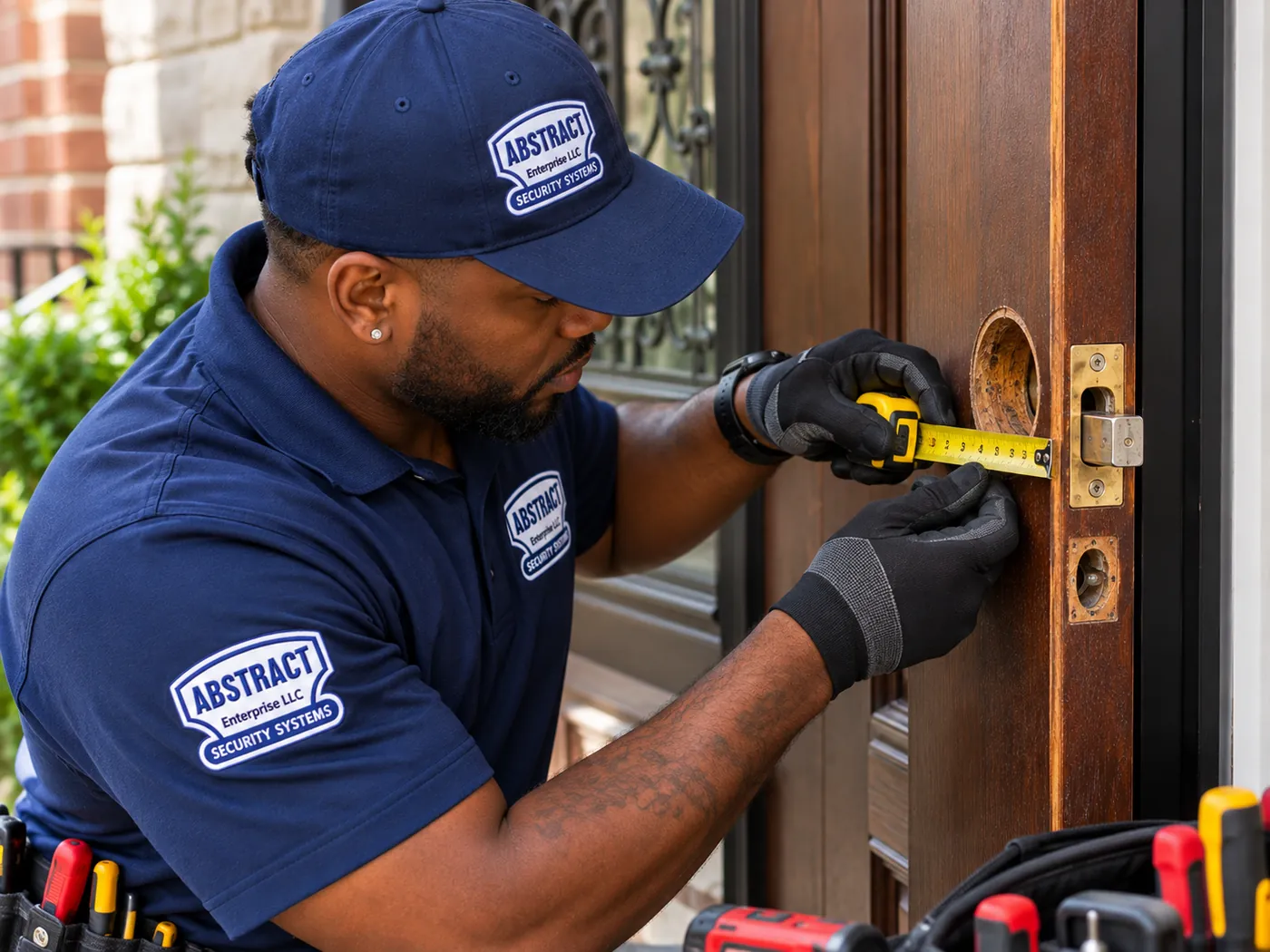
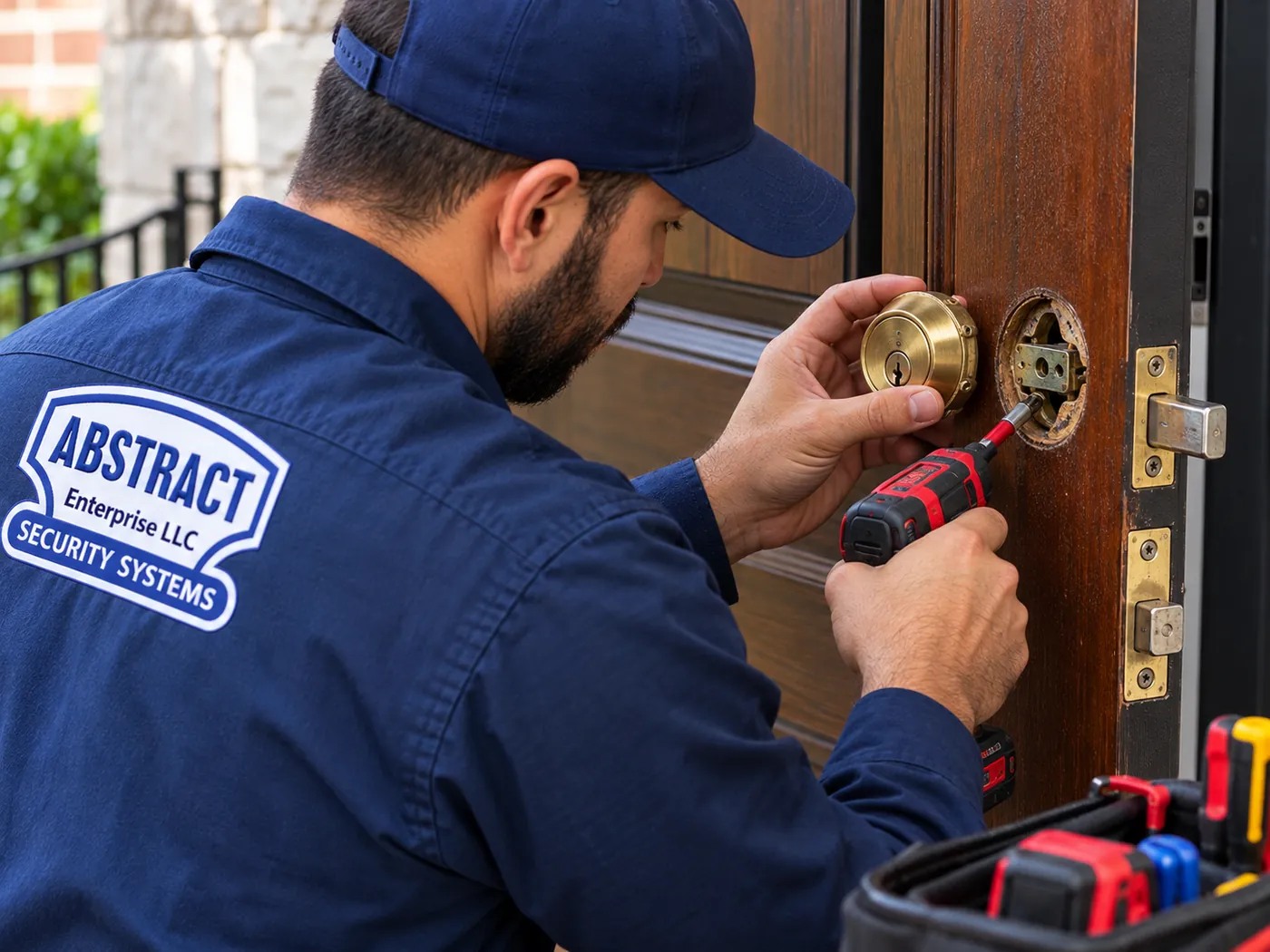
Old holes and mortise pockets. A century-old unit door may carry the outline of three earlier locks: a mortise pocket for the original box lock, a bore for a later deadbolt and screw holes from a surface-mounted lock someone added in the 1970s. Most residential smart deadbolts want a standard round bore and backset. Where the existing bore is in the right place, we reuse it; where it isn’t, we fill and re-bore only after the board has seen what the hallway side will look like. If the door is the original mortise type and the board wants the hallway face unchanged, an interior-only retrofit unit that turns the existing deadbolt’s thumb-turn is often the cleaner answer.
The key the corporation keeps. Cooperative proprietary leases commonly require a shareholder to give the corporation a key to any lock they install, and New York courts have enforced that: the silo research for this page logs the Manhattan case 111 Tenants Corp. v. Stromberg, reported by The Cooperator, in which a shareholder was ordered to hand over a duplicate key. So nearly every smart lock we fit in a Jackson Heights co-op keeps a mechanical cylinder, and the shareholder gives the managing agent or super a key exactly as the lease asks. A code instead of a key is something only the board can agree to.
One motion out. Every lock we fit on an apartment door opens from inside with a thumb-turn or lever — no key, no code, no phone. HPD’s fire-safety guidance says double-cylinder locks are illegal on apartment doors, and in buildings where the stair is the only way out, there is no room for a second step at the door.
Most shareholders who rework their own door also ask what can be done about the front door. The AESS door buzzer installers in Queens replace tired buzzer-and-strike systems, and our doorbell camera installation in Queens suits garden homes where the person at the door should be seen before the door is opened.

Edward MacDougall planned the neighbourhood’s main commercial district along 82nd Street and 37th Avenue, and that is still where most of our Jackson Heights shop calls come from. The rest arrive from the South Asian blocks of 74th Street, from the long run of storefronts under the elevated 7 on Roosevelt Avenue, and from the offices above all of them. The common thread is a small business with several people opening and closing on different days, an upstairs neighbour who shares the building, and a landlord or a landmark district with views on what goes on the facade.
The 82nd Street Partnership business improvement district, run from 37-06 82nd Street, covers the shopping street Queensboro laid out a century ago. Part of it falls inside the historic district, so storefront changes may involve the Landmarks Preservation Commission; DNAinfo reported in 2012 on the Partnership using city grant money to help businesses there get up to code.
The neighbourhood’s other original shopping street, where Queensboro opened its own three-storey headquarters at the corner of 82nd Street in May 1929. Shops and restaurants at street level, with offices or apartments on the floors above in many buildings.
The pedestrian plaza on 37th Road between 73rd and 74th Streets, beside the Roosevelt Avenue–74th Street transit hub, where the Department of City Planning notes many Bangladeshi-owned businesses. Dense retail where a shop’s street door, its back door and the apartments’ stair door often sit within a few feet of each other.
Storefronts under the elevated line that, as the JHBG history recounts, reached Jackson Heights in 1917 and changed the neighbourhood’s fortunes. Narrow shops, deep back rooms and upper floors reached by shared stairs. The city reported burglaries along the corridor down 48 percent from January to mid-June 2025 under Operation Restore Roosevelt.
The northern edge of the historic district and of Queensboro’s original tract, with the 115th Precinct station house at 92-15 Northern Boulevard. A wide arterial with larger commercial frontages than the side streets to the south.
When a business outgrows one keypad — several doors, staff schedules, a camera timeline next to each door event — the work becomes access control. Our Queens access control installers take it from there, and commercial security cameras for Queens businesses put a picture beside every opening.

These are the questions Jackson Heights boards, shareholders and shop owners bring us, grouped by who controls the door: the shared doors a co-op board decides on, the apartment doors inside a cooperative, and the shops on the commercial streets. Prices, scheduling and coverage are in the FAQ further down. Nothing here is legal advice; when a law, a lease or a house rule is mentioned we name it so you can read it yourself or put it to your managing agent or lawyer.
Yes, and in a lot of Jackson Heights buildings it is the single most useful keyless upgrade a board can make. The QNS report from April 2025 describes a lone burglar forcing his way into the mailroom at 83-10 35th Avenue just after midnight on March 8, taking a package with $500 of jewelry, then coming back on March 12 and again on March 14 for documents. The pattern — the same room, the same building, three times — is what happens when a shared interior door is held by a cheap lock and a key that has been copied for years.
A fob reader or keypad with an electric strike on the mailroom door does three things a keyed lock cannot. Residents and staff each carry their own credential, so a lost fob is cancelled in seconds instead of re-keying the room. The managing agent gets a record of which credential opened the door and when, which is what a police report or an insurance claim will want. And the door can be set to stay locked overnight except for staff. Because the mailroom is normally off the lobby rather than on the way out of the building, it is usually fitted fail-secure; we confirm that against the floor plan before ordering the strike.
Two cautions. A forced door beats any lock if the frame is weak, so we look at the jamb and the strike side first and reinforce it where needed. And a credential system on a common door collects data about residents; if any of them are tenants, the Tenant Data Privacy Act limits what a building owner may gather and keep, which is worth reading before the board decides what the log should record.
It can, and it closes a gap that the front door’s buzzer leaves wide open. The Queens Daily Eagle’s 2020 report on Jackson Heights package thefts quoted a resident at 79th Street and 37th Avenue saying many neighbours, particularly seniors, buzz people into the building without seeing who they are, and that thefts began a minute or two after UPS or FedEx drop-offs. House rules in some buildings already send messengers and trades to a service entrance instead — the Allendale Apartments’ rules name one on the south side of that building and limit deliveries to weekday and Saturday-morning hours.
A keypad on the service door lets the board give each regular carrier, the super and approved contractors their own codes, each limited to the days and hours the house rules allow. Outside those hours the codes simply don’t work, so a code that leaks is far less useful to a stranger. If the board prefers, a single courier code can be changed every month and posted to the carriers’ accounts, while residents keep separate credentials that work at all hours.
It only helps if parcels land somewhere secure once the courier is inside. We usually pair the service-door code with a locked package room or the mailroom door above, so the courier’s code opens the way to the drop point and nothing further.
Yes. The block-long interior gardens are the reason Jackson Heights co-ops are called garden apartments, and the rules around them are strict for good reason: in many buildings the garden door is a fire door, it opens into a space shared by several buildings’ worth of neighbours, and if it is left open the garden becomes a back way into the building. The Allendale house rules say exactly that — the fire door to the garden must remain closed at all times, garden hours are 9 AM to sundown, and the building’s front-door key opens it.
A keypad on the garden side of that door, or a keypad lever on the building side, lets residents use the same personal code they use elsewhere, with a schedule that follows the house rule: open from 9 AM, closed to codes after sundown. A seasonal schedule can track the sunset roughly month by month. The door must still open freely from the garden side toward the building, or by a push bar, so nobody is ever trapped outside in an emergency; and it must keep its self-closer and latch, which is the whole point of a fire door.
We check one more thing: whether the garden door is also an exit route for any of the buildings around the court. If it is, its inside release stays mechanical and the electronics only control coming in.
It can. Most access controllers and many connected smart locks support a door-position sensor — a small magnetic contact in the frame — that knows whether the door is actually shut, not just whether the bolt is thrown. Set a “held open” time of a few minutes, and if a contractor wedges the service door with a bucket or a mover props the garden door for an hour, the super’s phone gets a notification and a local chime can sound at the door.
This matters more in Jackson Heights than the technology might suggest. A door that is supposed to self-close and doesn’t is a fire-safety violation; HPD’s self-closing doors page explains that the city inspects 300 class A multiple dwellings a year for exactly this under Local Law 71 of 2022. It is also how a building gets burgled: a propped door is an open invitation that no lock can fix.
We wire the contact into the same controller or hub that runs the door’s code, set the held-open delay with the super, and leave the alerts going to two people so they don’t depend on one phone.
Yes. Some Jackson Heights co-ops restrict the basement laundry to daytime and evening hours — the Allendale rules, for instance, set 7 AM to 9 PM — and enforcement usually depends on the super remembering to lock up. A keypad lever or keypad deadbolt on the laundry door with a schedule does the job automatically: residents’ codes work from 7 AM and stop at 9 PM, while the super’s code works at all hours for repairs and machine service.
The same lock can keep a log, which helps when a machine is damaged or the room is left in a state. If the building’s laundry operator needs access to empty coin boxes or service machines, they get their own code limited to their visiting day. A basement door also needs a mechanical way out from inside at all times, so whoever is in the room when the schedule ends can still leave without a code.
For basement doors we prefer a battery keypad lever over anything that needs mains power, because a basement circuit shut off for work shouldn’t lock or unlock a door by accident.
Usually, but the entrance is the one place where we slow right down. Inside the Jackson Heights Historic District the street entrance is part of what the Landmarks Preservation Commission protects. Its Permit Guidebook explains that replacing historic front doors requires an assessment of their condition, and that where it allows small add-on hardware such as door actuators or push plates, they must be “as small as possible” with no exposed conduit. A strike set neatly into an existing jamb, with its cable concealed, fits that approach far better than a surface-mounted box on carved limestone.
Technically, a wood jamb takes an electric strike well once the old keeper is removed and the pocket squared up; the cable is fished inside the frame and dropped behind the trim. A stone or cast surround is different: we keep the strike in the door frame, not the stone, and route the cable through the door frame and the vestibule rather than drilling masonry. The keypad or reader goes on a plain return or inside the vestibule glass rather than on the decorative face.
Before ordering anything we photograph the entrance, mark where each part would sit, and give the board a drawing it can send to LPC if a permit is needed. Whether a permit is required for a given building is LPC’s call; ask the commission’s staff early, because the paperwork is quicker than the work.
A short written policy saves the board from deciding the same questions one shareholder at a time. In the jobs we see, the policies that work cover six things: whether smart locks are permitted on unit doors and what the hallway face may look like (finish, size, whether the existing cylinder must stay); how the corporation keeps emergency access, which in most proprietary leases means a mechanical key handed to the managing agent; that any lock opens from inside with a single motion and never needs a key or code to leave; that the self-closing function of the door is not impaired; who may install (licensed and insured, with a certificate naming the corporation and agent); and that the shareholder restores standard hardware or leaves the smart lock in place on sale, as the board prefers.
Some boards add a line about data: a shareholder’s own lock is the shareholder’s business, but if the building ever links common-door access to unit doors, the Tenant Data Privacy Act applies to any tenants in the building. Others add the contractor hours from the house rules, so nobody books a Saturday install by mistake.
We are glad to send the board our standard scope letter and a sample hallway photo of each lock type we fit, so the policy can name finishes and sizes instead of brands. The wording itself should come from the board and its counsel.
Treat it as two credentials and one key you still control. Before the subtenant arrives, delete every code except yours, change your own administrator password, and create a new user for the subtenant with their own code or fingerprint and an end date set to the last day of the sublet. The lock’s app should stay in your account; the subtenant needs a code, not administrator rights. If the subtenant wants to use their phone, most apps let you share a guest or user invitation that you can revoke.
Keep the mechanical side tidy too. The corporation’s duplicate key stays with the managing agent as the lease requires. Give the subtenant one key for emergencies and write it into the sublease, and if the sublet ends badly, a single cylinder swap is cheap compared with re-keying a whole apartment.
One practical point many shareholders miss: if the lock is connected, its log will show the subtenant’s comings and goings. Tell them in writing that the lock records openings and decide in advance what you will and won’t look at. Board sublet approvals in Jackson Heights co-ops vary, and some buildings discourage subletting altogether, so the board’s written terms come first.
This is a real Jackson Heights problem, not a hypothetical. THE CITY reported in March 2022 that after an April 2021 electrical fire at a six-storey, 133-unit building at 34th Avenue and 89th Street displaced more than 140 households, the tenant association counted at least 50 apartments burglarized while families were kept out and security guards and contractors had access. Damaged doors, emptied buildings and many people with keys are exactly the conditions in which belongings disappear.
If a building is emptied by fire, flood or a long renovation, a battery-powered smart lock with a log on each apartment door changes the picture: every opening is recorded by code, nobody needs a resident’s key, and contractors who must enter get a code for specific days that can be read back later. Where the original doors are damaged, a temporary solid door with a keypad deadbolt is quicker than waiting for a replacement and gives the resident, not the contractor, control. A door contact that alerts the resident’s phone when the door opens adds a second record.
All of this needs the owner’s or board’s agreement and must respect any access the building legitimately needs for repairs. But residents are entitled to ask for it, and a written log is the kind of evidence THE CITY’s tenants said they struggled to get recorded at the precinct.
We have not found any manufacturer data or study that measures what an elevated line does to door hardware, so we won’t quote one. What we can describe is what we check on doors near the structure: screws that work loose over months, strikes that drift a fraction out of line, and closers that start to slam or fail to latch. All of those happen to busy shop doors anywhere; repeated shaking from passing trains can only add to them.
So on Roosevelt Avenue we install as if the door will be shaken: thread-locking compound on the keypad and strike screws, through-bolts rather than wood screws where the frame allows, cable runs clipped so they can’t chafe, and a strike set with enough tolerance that a slight shift doesn’t jam the bolt. A keypad mounted on the door itself gets an inspection at every battery change, and an electric strike is checked for alignment if the door starts to bounce.
The bigger Roosevelt Avenue issue is still people, not trains. Individual codes for each employee, a log the owner can check, and a back door that never opens from outside without a credential do more for a shop here than any bracket.
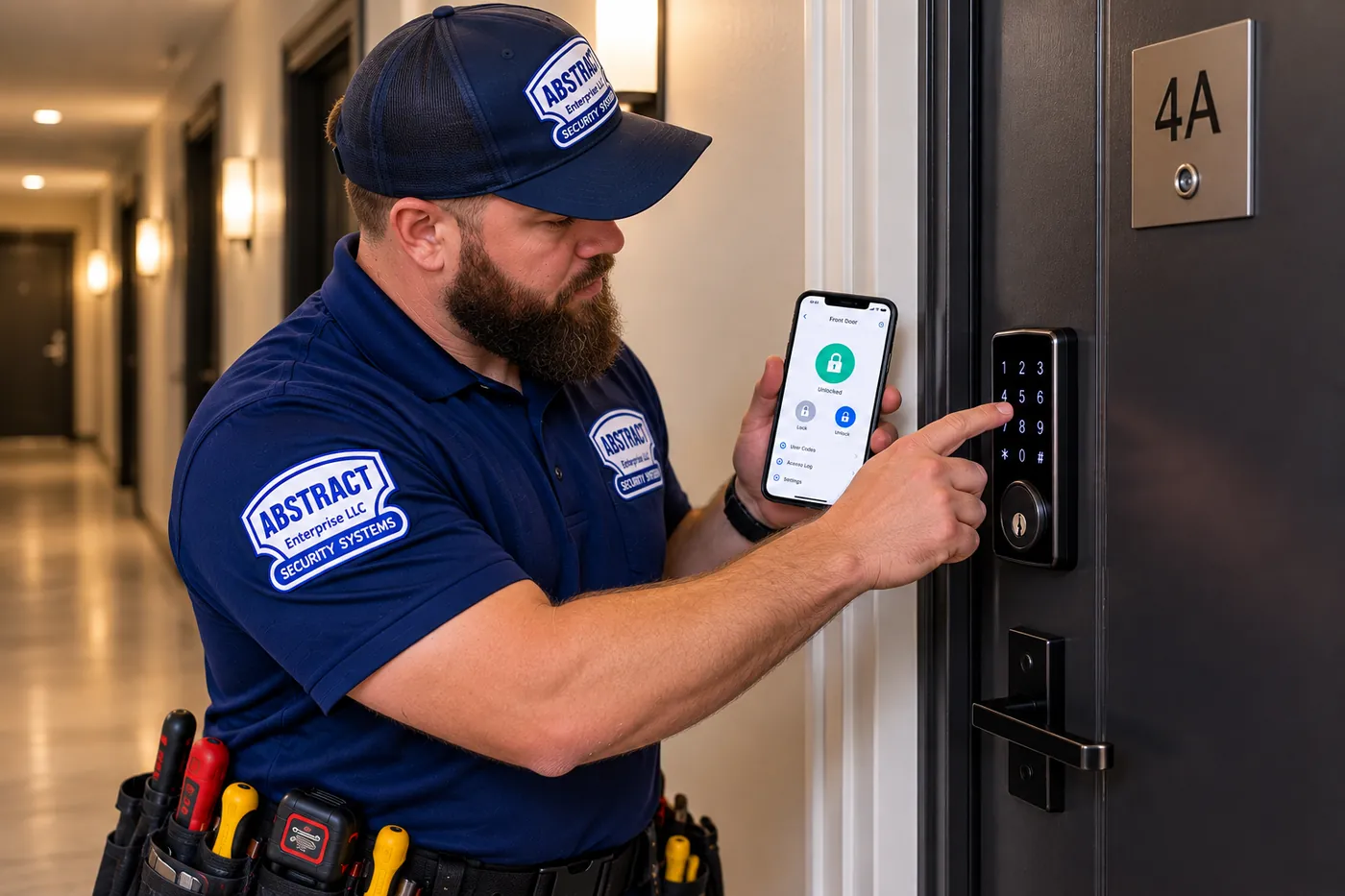
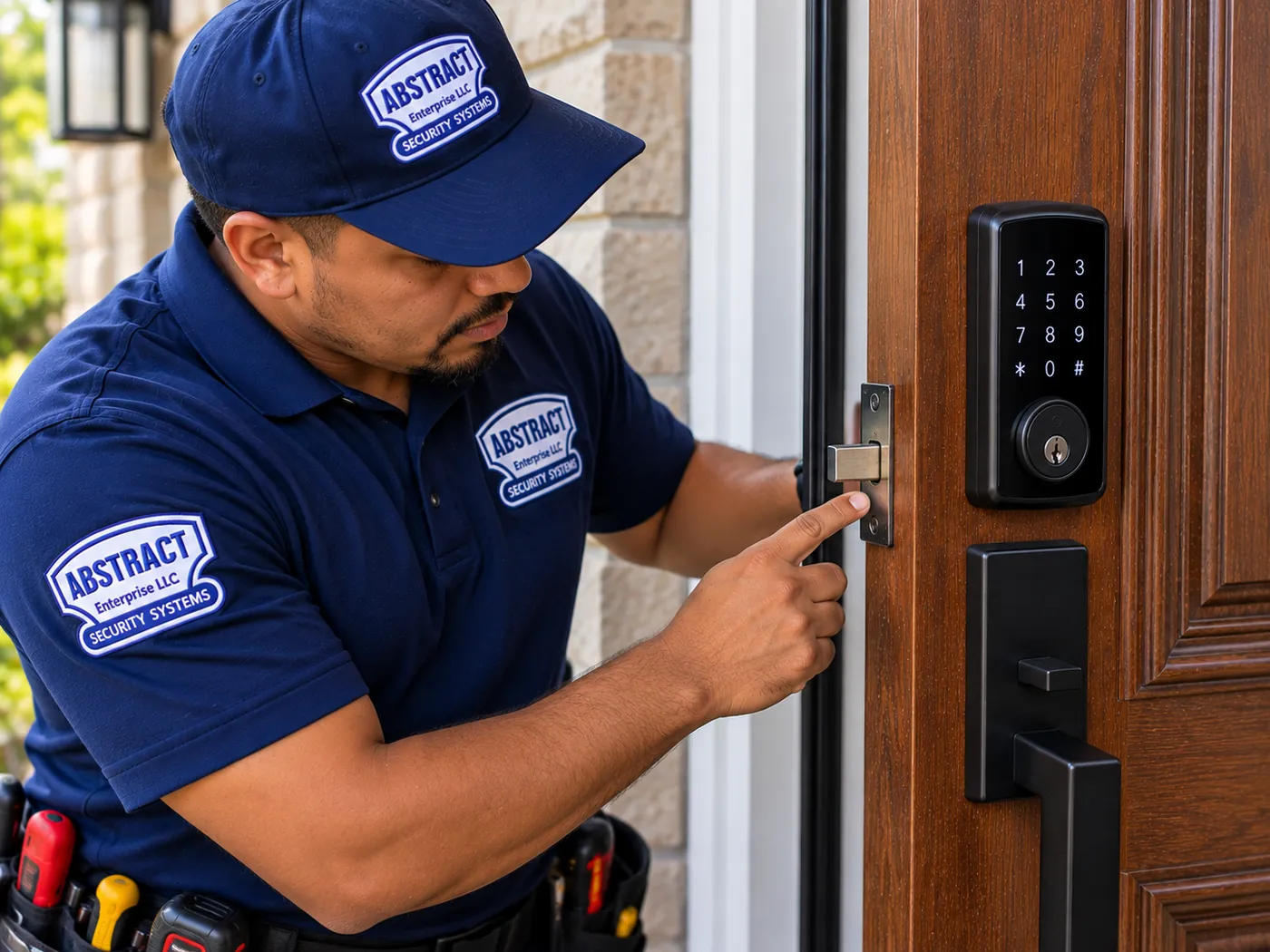
In a co-op the installation is the easy part; the approval is what takes time. We assemble the paperwork first so the shareholder can hand the managing agent a complete request in one go. This is the packet we prepare for a unit-door smart lock in a Jackson Heights building.
| Item | What it shows the board | Why it matters here |
|---|---|---|
| One-page scope of work | Which door, which lock, what is removed, what is drilled, and what the hallway side will look like afterwards | Boards want to know if the corridor appearance changes; many co-ops value uniform hallways |
| Manufacturer spec sheet | Dimensions, finish, door-thickness range and power source of the lock | Shows the lock suits a self-closing door and needs no wiring into building power |
| Photos of the door, both faces | The existing hardware, any old holes or mortise pockets, and the closer | Lets the agent see the door’s condition before and after |
| Certificate of insurance | Our liability and workers’ compensation cover, naming the corporation and managing agent as the building requires | House rules such as the Allendale Apartments’ require contractors to be screened and approved by management |
| Licence details | NYS low-voltage licence #12000287431 | The board can check who is working on its doors |
| Emergency-access note | That a mechanical cylinder stays and a key goes to the managing agent, or what the board would need to accept instead | Proprietary leases commonly reserve the corporation’s right of access |
| Proposed dates and hours | A slot inside the building’s permitted contractor hours | Some Jackson Heights house rules limit contractor work to weekday daytime hours |
For a lobby, mailroom, garden or service door the board itself is our client, and the packet adds a door plan, the fail-safe or fail-secure decision for each door, the cable route, and — inside the historic district — photos and a marked-up drawing the board can use if an LPC permit is needed.
We leave the managing agent a short completion note with photos of both faces of the door, confirmation that the door self-closes and latches, and a record that the corporation’s key has been handed over. Shareholders keep a one-page sheet listing each user, how they open the door and how to change a code.
In Jackson Heights the right lock is decided by who owns the door and how old it is. These are the categories we fit in the neighbourhood’s co-ops, garden homes and shops. You can buy your own and have us install it, or let us recommend one once we have seen the door and the building’s rules.
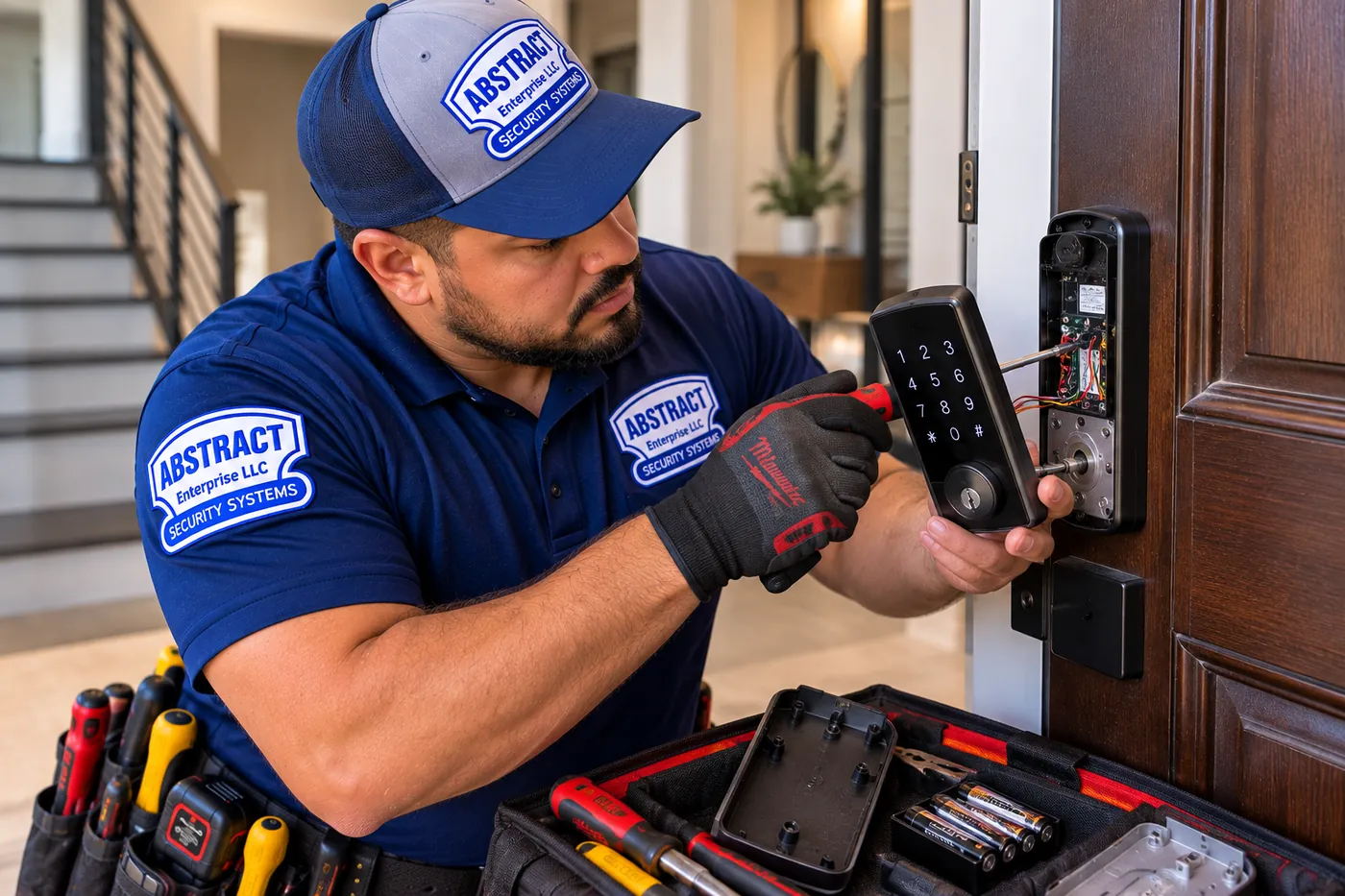
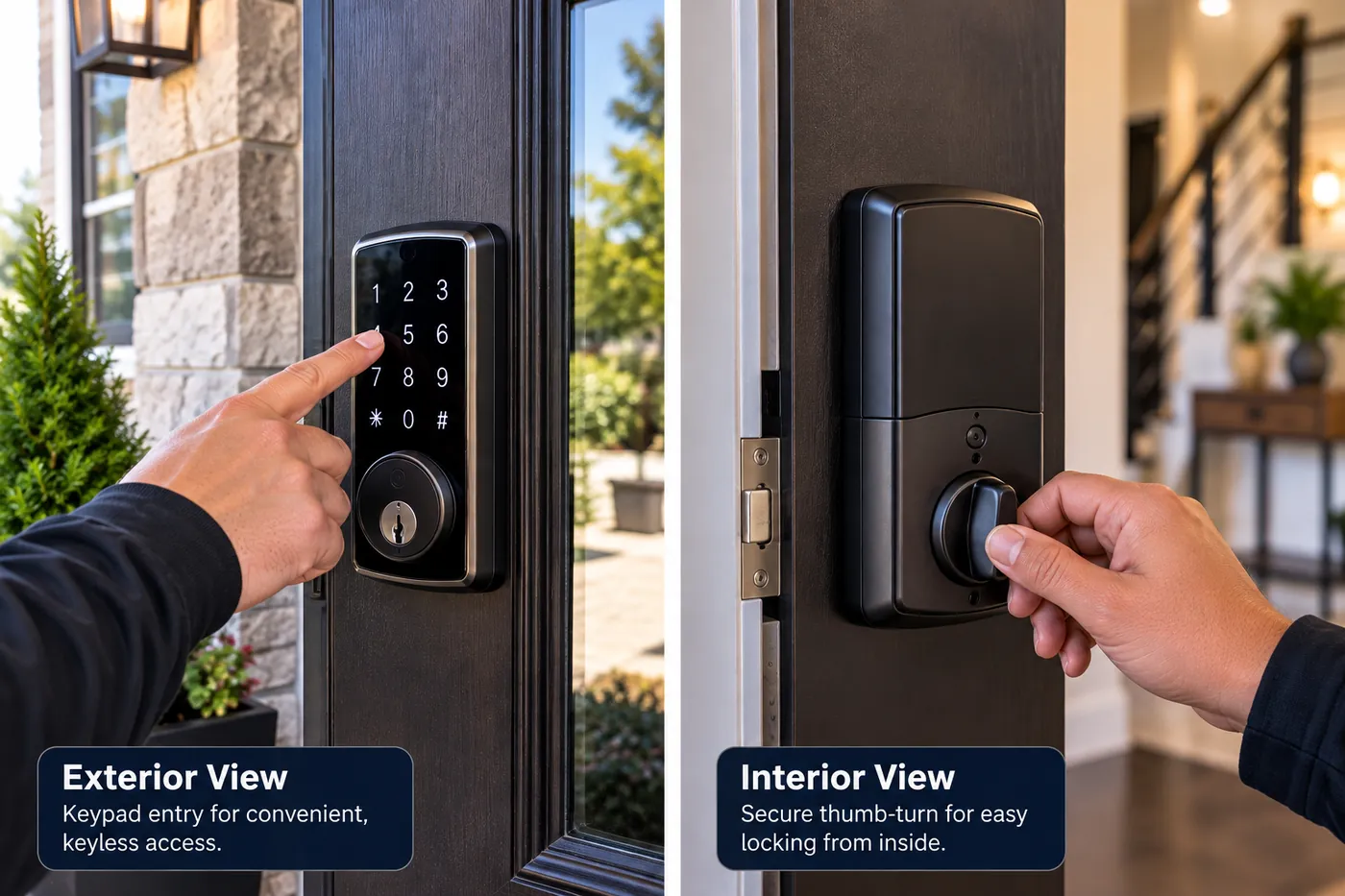
The everyday choice for a co-op unit door: a keypad outside, a thumb-turn inside, and a mechanical cylinder so the corporation’s duplicate key still works. Fitted to an existing bore where possible.
Mounted over the existing deadbolt’s thumb-turn on the inside of the door, leaving the hallway face and the key exactly as they were. The least contentious option in a building that wants uniform corridors.
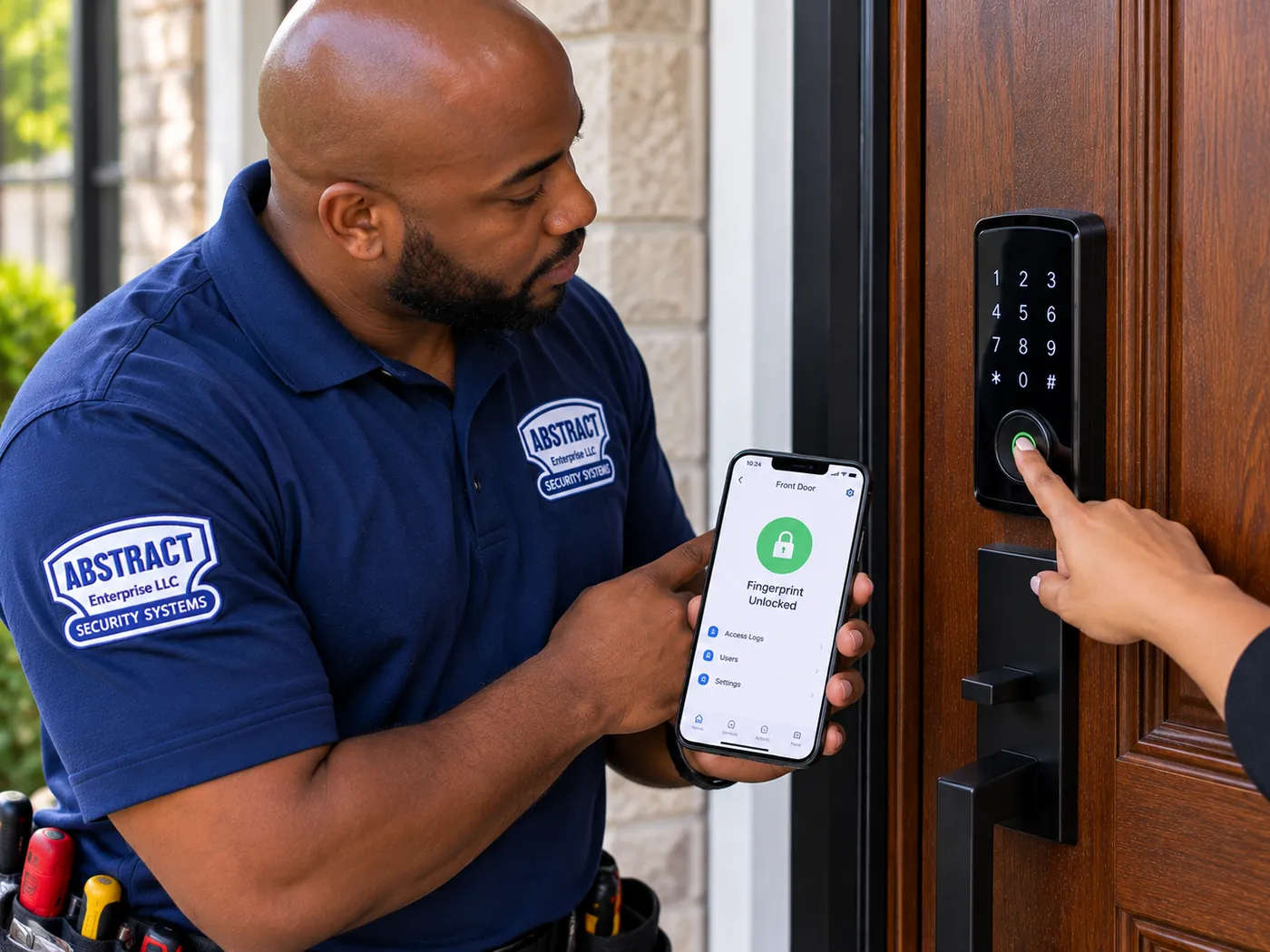
For large households where codes get shared too freely; each person enrols two fingers, and nobody’s cousin learns the number. A key cylinder stays for the managing agent.
A keypad and lever in one, suited to interior common doors such as laundry rooms and upstairs offices, and to garden doors where a lever is easier than a knob for people carrying things.
For lobby, mailroom and service entrances: credentials per resident and per carrier, schedules from the house rules, and a log for the managing agent.
Small magnetic switches that report whether a common door is really shut, so a propped garden or service door alerts the super instead of staying open all afternoon.
No batteries and no app — useful on a basement storage or bike-room door where nobody wants to manage electronics, and on a garden home’s rear gate.
Narrow-stile and heavy-duty keypad hardware for shop doors on 82nd Street, 37th Avenue and Roosevelt Avenue, with metal housings that tolerate a busy sidewalk.
Big alarm companies such as ADT sell a lock as part of a monitored package, and Ring and SimpliSafe sell locks and keypads designed to plug into their own systems. Any of them can be a good product. None of them will read your proprietary lease, call your managing agent, strip a hundred years of paint off a door edge or adjust the closer so the door still latches. That work is what a local, licensed installer is for, and in Jackson Heights it is most of the job.

A note on method: the build environment for this page could not open Google’s AI Overview, so the headings below are not quotations from it. They are claims that turn up again and again in smart lock marketing, cost-guide sites like Angi, HomeAdvisor and Fixr, and how-to articles — the material answer engines summarise. Each is followed by what we find on Jackson Heights doors.
The claim is aimed at renters with a lease in a big rental tower. In Jackson Heights the most common home is a share in a cooperative, and the shareholder’s right to change a door is set by the proprietary lease, the house rules and the board, not by the product’s box.
House rules like those published for the Allendale Apartments on 82nd Street require written approval for installations, management screening of contractors and work only in weekday hours. A lock fitted without approval can be ordered removed, and the cost of putting the door back falls on the shareholder.
Ask the managing agent first, send them the scope and spec sheet, and book the work inside the permitted hours. It usually takes a few weeks and saves a fight.
On a new, square door with a standard bore, that is roughly right. Jackson Heights unit doors are often a century old, painted many times over, cut for earlier locks and fitted with a closer that must still pull the door shut.
Most of our time goes on the door, not the lock: clearing paint from the edge and stop, squaring the strike, filling stray holes, and adjusting the closer so the door latches on its own pull. Skip those steps and the motorised bolt jams, the battery drains and the door may not self-close as the fire rules require.
A realistic estimate is one visit of an hour or two for a sound door and longer for one that needs work. We tell you which before you book.
This overcorrects. The Landmarks Preservation Commission regulates the exterior of buildings in historic districts — facades, entrances, storefronts, windows. Its Permit Guidebook puts doors and entrance infill under its rules and asks for photos and drawings when they change.
An apartment door off an interior stair hall is normally a matter for the co-op board, not the commission. The building’s street entrance, a storefront on 82nd Street or a keypad on a limestone surround is where LPC’s rules come into play.
When in doubt, the commission’s staff will tell you whether a permit is needed. We plan entrance hardware to be small, concealed and reversible, which is the direction the guidebook points.
Package theft in Jackson Heights buildings happens in the lobby and the mailroom, not at apartment doors. The Queens Daily Eagle’s 2020 story described a burglar entering a 34th Avenue co-op at 3 a.m. and tearing open a dozen parcels by the mailboxes; QNS described a mailroom on 35th Avenue entered three times in one week in 2025.
A smart lock on your own door does nothing about either. What helps is control of the shared doors: a code or fob on the mailroom or package room, a service-entrance code for carriers that works only in delivery hours, and fewer strangers buzzed in from upstairs.
Those are board decisions. Shareholders can ask for them; we can price them.
General smart-home advice tends to treat the owner as sole master of the door. Co-op shareholders are usually bound to give the corporation access for emergencies and repairs, and the silo research behind this page records the Manhattan case 111 Tenants Corp. v. Stromberg, reported by The Cooperator, in which a shareholder was ordered to surrender a duplicate key.
Renters are in a similar position under state law: Multiple Dwelling Law section 51-c lets a tenant add a lock of their own but requires a duplicate key on the landlord’s request.
So in Jackson Heights we keep a mechanical cylinder in almost every unit-door smart lock and hand a key over the way the lease or the law asks. Whether a code can substitute for that key is for the board, in writing.
Product pages tend to assume a router somewhere near the door. In a prewar walk-up the router is often at the back of the apartment, the lock is on a door set into a masonry stair hall, and every neighbour’s network is competing for the same channels.
We test the signal at the door, not at the router, before choosing between a Wi-Fi lock, a Bluetooth lock with a plug-in bridge near the entrance, or a lock that works purely locally. A lock that only needs to open for the people standing at it doesn’t need Wi-Fi at all.
The final test is remote: phone on mobile data, outside the building, lock and unlock, and confirm the alert arrives. If it doesn’t, we change the connection, not the promise.
For a lock you own on your own door, the data is between you and the manufacturer. Building systems are different. When a building owner puts smart access on common doors that tenants use, the city’s Tenant Data Privacy Act, Local Law 63 of 2021, limits what can be collected, requires consent before collecting certain data, and bars requiring smart access to enter a tenant’s own unit.
Jackson Heights co-ops often include sublet apartments and holdover tenants alongside shareholders, so a board installing fob readers on the lobby or mailroom should read that law before deciding what the log records and how long it is kept.
We set up building systems to record only what the board needs, give the managing agent the export controls, and leave privacy decisions where they belong — with the board and its counsel.

Send a photo of both sides of your door and the name of your managing agent. We will send back the scope, spec sheet and insurance certificate the board will ask for, with a flat price.
Tell us the door, the building and who has to approve the work, and you will hear back in writing the same business day. Prefer to talk it through? Our Queens number is (347) 434-6392.
Thank you — a licensed installer will call before the end of the business day. If you are locked out right now, ring (347) 434-6392.
Seven steps, whether it is one shareholder’s door on a fourth-floor landing off 35th Avenue or the lobby, mailroom and garden doors of a block-long co-op.
Before anyone visits we ask for the house rules, any alteration or installation rules, and who the managing agent is, so we know the approval route, the permitted hours and how the corporation's key must be handled.
At the free walkthrough we look at both faces of the door, the paint on its edge, old bores and mortise pockets, the strike and the self-closer, and how the neighbours' doors look from the corridor.
You get a written scope, the lock's spec sheet, photos, our certificate of insurance and a flat figure. Building doors are priced from our published Queens rates.
Once the managing agent approves, we book a 2-hour window inside the building's contractor hours and tell the super when we are coming.
Paint is cleared at the contact points, the strike is moved or reinforced, stray holes are filled and the closer is adjusted so the door latches on its own pull.
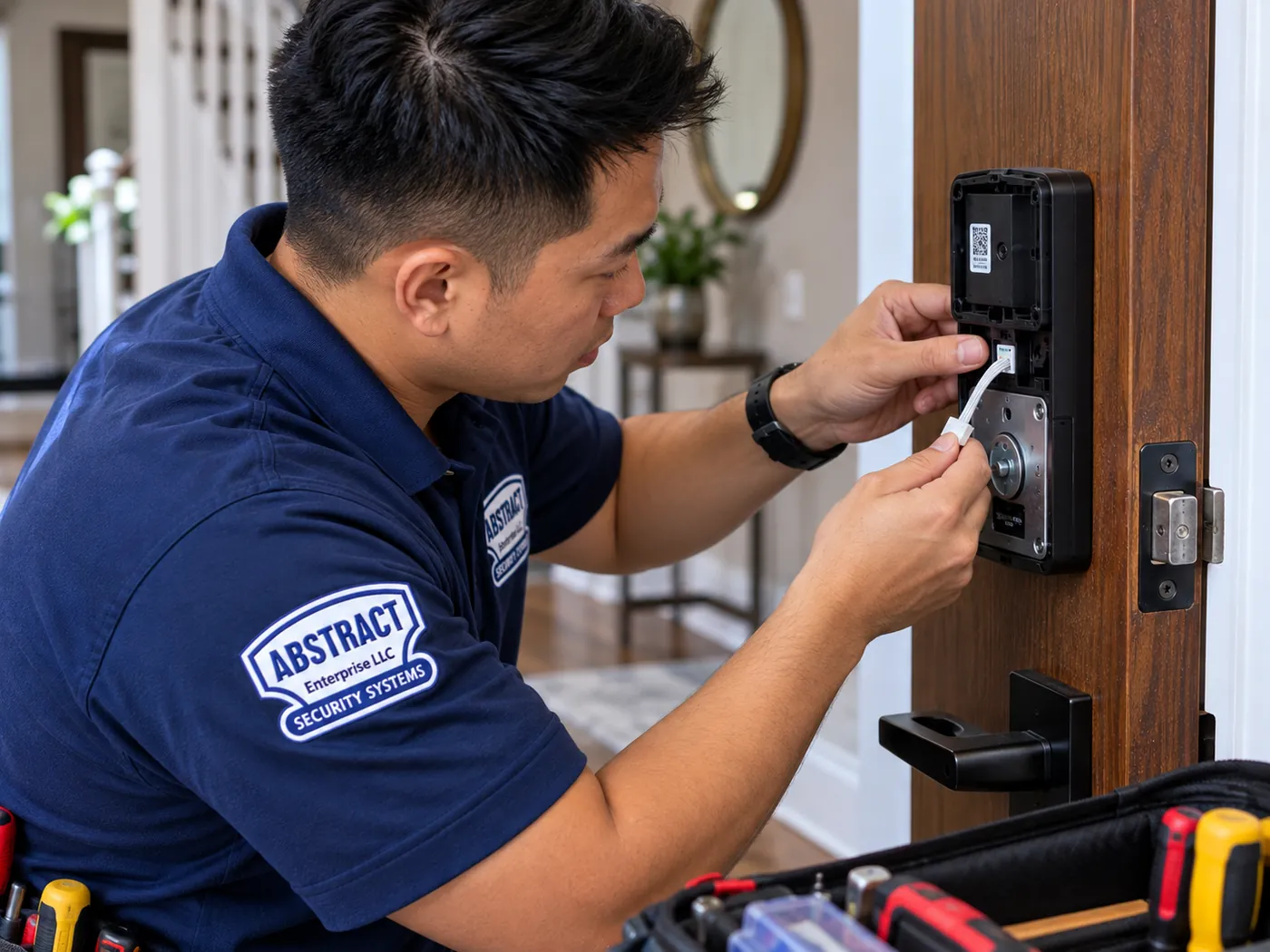
The lock is fitted and paired, a bridge is placed if remote access is wanted, and we test the inside release by hand and let the door self-close and latch repeatedly.
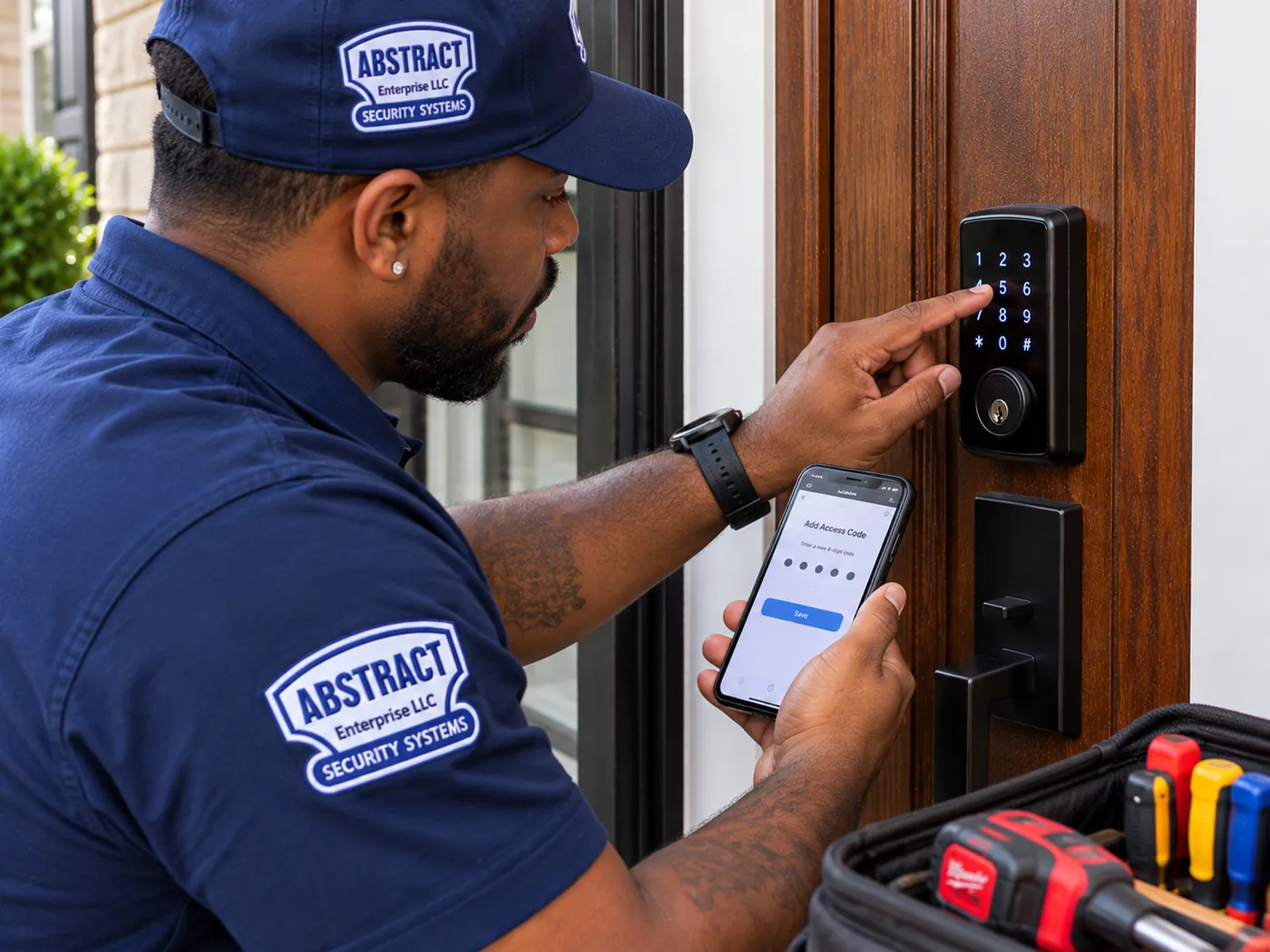
Each household member enrols and tries their method, schedules are set for anyone with limited access, the corporation's key goes to the managing agent, and we leave a completion note and a one-page user sheet.
Six places that explain why Jackson Heights doors come with so many rules attached: the first co-ops, the planned gardens, the public buildings and the streets that became shared space.
Between Roosevelt and 37th Avenues; announced in May 1919 as the Queensboro Corporation’s first building under its Cooperative Ownership Plan, with detached buildings, interior sunrooms, a block-long garden and garages. The starting point of the neighbourhood’s co-op tradition.
Andrew J. Thomas’s 1924 complex of 96 apartments, where Edward MacDougall moved his own family into a top-floor duplex. It became a rental during the Depression when the cooperative failed, as the JHBG history records — a reminder that ownership of Jackson Heights doors has changed hands more than once.
Built in 1936–37 and opened in 1937, as the JHBG history notes, with a 1940 mural inside by Peppino Mangravite, Development of Jackson Heights, depicting the neighbourhood’s growth. One of the few public buildings in a neighbourhood of private co-ops.
On 34th Avenue between 77th and 78th Streets, the park residents lobbied for after the war, per the JHBG. Beside it run the 78th Street play street and the 34th Avenue open street.
The pedestrian plaza on 37th Road between 73rd and 74th Streets, beside the Roosevelt Avenue–74th Street transit hub, and the centre of the South Asian shopping blocks along 74th Street.
The 26 blocks of 34th Avenue from 69th Street to Junction Boulevard that the Department of Transportation is turning into the city’s first permanent open street, begun in 2020. Building entrances on a car-free avenue see more foot traffic and more deliveries on foot.
We also serve East Elmhurst, North Corona, Corona, Elmhurst, Woodside and the blocks west of 76th Street toward 69th Street, and the rest of Queens from the Queens smart lock installation page.
We publish only figures we have actually priced, and we say so when a job is quoted after we see it. Building-door work — keypads, fob readers and electric strikes on lobbies, mailrooms and service doors — is priced from our published Brooklyn base with the standard Queens multiplier of 1.05, so the lines below are Queens rates and apply in Jackson Heights unchanged. A smart lock on an individual apartment or house door has no published AESS price yet, because the door decides the work: a sound steel door with a standard bore is quick, while a 1920s door with paint build-up, an old mortise pocket and a closer to reset takes longer. Those jobs are quoted flat, in writing, after a free walkthrough, and the figure you are given is the figure on the invoice.
| Item | Jackson Heights price (Queens rate) | Scope and source |
|---|---|---|
| Smart lock on a co-op, condo, rental or garden home door | Quoted flat at free walkthrough | No published AESS figure; set after we see the door, the building’s rules and the people who will use it |
| Single-door keypad or fob reader with electric strike | $1,575–$2,625 installed | Lobby, mailroom, service door, garden door, shop front or upstairs office; published $1,500–$2,500 Brooklyn base × 1.05 |
| New electric strike on an entrance door | $263–$473 | Fitted during entrance work; $250–$450 published figure × 1.05, rounded half-up |
| Failed electric strike repair | $310–$509 | Building door that buzzes but won’t release; published $295–$485 × 1.05, rounded half-up |
| Setup-only visit (codes, schedules, app, bridge; no hardware change) | $195 first hour, then 30-minute blocks | Our published Queens setup-only rate — useful after a sublet ends or a phone is replaced |
| Service and callback rate | $195/hr, 3-hour minimum ($585) | After-install service calls; not charged on the initial installation |
National cost guides for comparison. Cost-guide sites publish national averages for one smart lock on an ordinary house door; Fixr’s January 2025 figure, for example, is $250–$400. That is national third-party data, not an AESS price, and it assumes a square modern door with no board, no closer and no landmark entrance.
The three ways Jackson Heights customers usually buy keyless entry. The two building-door packages carry published Queens prices; the shareholder package is priced after we have seen the door, because a century of previous locks makes every door a little different.
Quoted flat at walkthrough
The board packet prepared first, then a keypad, fingerprint or interior retrofit lock on your unit door inside the building’s permitted hours. Paint and strike work so the door self-closes and latches, a mechanical cylinder kept for the corporation’s key, each household member enrolled, and a completion note for the managing agent.
$263–$473
For a co-op entrance or service door where the release is the weak point: the strike supplied and fitted at the Queens rate during entrance work. A strike that has simply failed is repaired instead, at $310–$509.
$1,575–$2,625
A keypad or fob reader, an electric strike in the frame and a mechanical or push-to-exit release inside, installed on one door at the Queens rate. Credentials and schedules set to the house rules, a door-position contact if the board wants held-open alerts, and the super shown how to add and remove users.
Already bought a smart lock? We fit it, quoted flat as labour only after the walkthrough. Before the box is opened we confirm it suits the door — thickness, bore, backset and the pull of the closer — and the building: a key cylinder if the lease requires the corporation to hold a key, and a hallway face the board will accept. We won’t fit a model that needs a key or code to get out. A lock you supply carries its manufacturer’s warranty rather than ours. If it won’t suit the door, we tell you before anything is drilled, so it can go back.
Shareholder door or building door, we will send a flat figure and the paperwork your managing agent needs. Call, or send the form with a photo of each side of the door.
Jackson Heights is only a mile or so across, but the door you open on 80th Street near Northern Boulevard has very little in common with one above a shop on Roosevelt Avenue. These are the patterns we see from block to block.
The landmarked district the LPC designated in 1993. Garden co-ops around interior gardens, the Thomas complexes with their limestone entrances, and the English Garden Homes on the eastern streets. Unit-door jobs here are mostly about the board and the age of the door; building-door jobs carry the extra step of checking whether the entrance work needs a Landmarks permit.
Post-war apartment houses and earlier co-ops lining the open street. Lobbies face a car-free avenue busy with walkers, cyclists and couriers on foot, which makes the service entrance and the package room the doors boards ask about most. This is also the corridor where both the 2020 lobby package theft and the 2021 fire we described above took place.
The busiest mix of co-ops, rentals and mixed-use buildings, including the 35th Avenue building whose mailroom was entered three times in March 2025. Mailroom and lobby credentials, sublet handovers and repairs to tired entrance strikes are the common requests.
Storefronts with apartments and offices above, partly inside the historic district and served by the 82nd Street Partnership. Shop keypads, separate residential street doors and facade-sensitive placement of anything new.
Dense retail around the transit hub, family businesses open long hours, and upper floors reached by shared stairs. Per-employee codes, back-door control and keeping shop credentials off residents’ doors.
Narrow storefronts below the elevated line and apartments above. Hardware fixed for constant use and some shaking, metal keypad housings and a clear exit from every back room.
Outside the landmarked core, with more post-war apartment buildings and rentals and the Woodside border. Fewer co-op approvals, more renters asking what they may add to an apartment door under state law.
Jackson Heights boards and shareholders rarely stop at one door. These are the Queens services that most often end up on the same work order.
The borough page: house doors, basement doors and family credentials across Queens.
Fob readers and controllers for lobbies, mailrooms and multi-door buildings.
Audio and video entry panels so residents see who they are buzzing in.
Dead apartment stations, failed releases and wiring faults on old systems.
New buzzer-and-strike systems for walk-ups and small co-ops.
Strikes that hum but won’t release, and buzzers that stopped answering.
Lobby, mailroom and package-shelf cameras that put a face to every entry.
Door contacts and monitoring for shops, offices and garden homes.
A reliable connection to lock bridges and controllers in thick-walled buildings.
One form for any mix of the services above.
How our installers approach a prewar co-op unit door — the routine we follow on every one, not the story of a single visit
We start in the hallway, not at the door. Is the corridor uniform? Are the neighbours’ doors fitted with the same hardware? If every door on the landing carries the same brass cylinder, the board will notice a matte-black keypad, and we would rather suggest an interior retrofit than leave the shareholder with a removal notice.
Then we let the door close by itself, several times, and listen. A door that clicks shut on its closer is ready for a smart lock. One that stops a finger’s width short, or needs a push, is telling us the strike, the paint or the closer needs attention first.
Next we look at the edge of the door under a light. Layers of paint, a filled-in mortise pocket, a second bore that never matched the strike — each of those changes how we fit the lock.
Last, we ask who holds keys today and who will hold them tomorrow: the household, the super, the managing agent, a subtenant. The code plan comes out of that conversation, and the corporation’s key goes back to the agent before we leave.
Jackson Heights jobs are billed at the Queens rate, our published Brooklyn base times 1.05. On one common door, a keypad or fob reader with an electric strike runs $1,575 to $2,625 installed; fitting a new strike alone is $263 to $473, and repairing a strike that has failed is $310 to $509. A smart lock on a shareholder's own door is quoted flat after the free walkthrough.
Yes. The same Queens crews cover East Elmhurst, North Corona, Corona, Elmhurst and Woodside as well as every part of Jackson Heights, from 69th Street to Junction Boulevard. Appointments are booked in 2-hour arrival windows between 8 AM and 8 PM, seven days a week, subject to your building's own contractor hours.
As early as you can, and ideally before the board's next scheduled meeting. Many co-op boards review alteration requests only when they meet, so a request that arrives the day after a meeting can wait weeks. We send the scope, spec sheet and insurance certificate within a day or two of the walkthrough and pencil in an installation date that you confirm once approval arrives.
Often, yes, for practical reasons rather than gadgets: no more locking yourself out on the landing, a way to let a relative or repair person in without handing over a key, and a record of who came in. If you only want convenience, an interior retrofit that keeps your existing key and hallway hardware is the least expensive and least contentious choice in a co-op building.
It can. Paint on the door edge, the stop and the strike makes a motorised bolt rub, which drains batteries and causes jam warnings. We take the paint back at the contact points, reset the strike so the bolt throws cleanly, and check that the self-closer still pulls the door shut and latched before the lock goes on.
On many models, yes. Most keypad locks let you shorten how long the backlight stays on or wake it only on touch, and some let you lower its brightness in the app. We set it so the keys are readable when you need them and dark the rest of the time, which neighbours facing the garden tend to appreciate.
Yes. Post-war buildings usually have steel doors in steel frames with standard bores, which makes the lock itself simpler; the questions there are more often about the lobby, the mailroom and whether the building's management allows changes to unit doors. We plan the same way: paperwork first, then the door.
Less than most renovation work. Fitting a smart deadbolt to an existing bore is mostly hand tools and a cordless driver; boring a new hole or chiselling a strike pocket takes a few minutes of louder work. We keep that inside the building's permitted hours and clean the landing before we leave.
This Jackson Heights page sits under our Queens smart lock installation page, which covers houses, basements and family credentials across the borough, and that page sits under the New York City smart lock hub on renters’ rights and co-op boards in all five boroughs. Every other area page in the silo is linked below, along with the neighbourhood pages built alongside this one.
Smart lock installation in NYC · Manhattan smart locks · Brooklyn smart lock installation · Queens smart lock installers · the Bronx · Staten Island
Alongside this Jackson Heights page: smart lock installation in Bedford-Stuyvesant, Brooklyn and smart locks in Kingsbridge, the Bronx. Earlier neighbourhood pages: Upper East Side, Manhattan · Brooklyn Heights, Brooklyn · Flushing, Queens. · Bayside, Queens
Long Island smart lock installation — with pages for Nassau County and Suffolk County.
Hudson Valley smart lock installation — Westchester, Rockland, Orange, Putnam, Dutchess and Ulster counties.
Everything else we install, from cameras to cabling, is on the Abstract Enterprises Security Systems home page, and the team behind it is on our about page.
If a unit-door keypad has gone blank, the app has lost the lock, or the lobby or mailroom keypad has stopped accepting codes, call our Queens line at (347) 434-6392. We book the next open 2-hour window, and most battery, pairing and alignment faults are fixed in one to two hours once a technician is at the door. Use the mechanical key in the meantime, and let the super know — the corporation’s duplicate key is there for exactly this.

Jackson Heights customers call (347) 434-6392 or message WhatsApp (718) 679-0359 through wa.me. Abstract Enterprises Security Systems, 460 E Fordham Rd, Bronx, NY 10458.
NYS Low-Voltage Licence #12000287431 · 100% Licensed & Insured · Same-Day Estimates · Rated 4.7★ from 201 Google Reviews
Locks you supply carry their manufacturer’s warranty. Full terms — including 50% deposit, one-year parts-only warranty on AESS-supplied products, and the late-fee schedule — are set out in the service agreement. See our warranty page.
This page explains how co-op rules, the historic district and Jackson Heights building types affect smart lock installation; it is not legal advice. Page reviewed and updated October 17, 2026. Changelog: first publication of the Jackson Heights smart lock installation page.