Your Own Lock Beside the Building’s Fob · Bottom Lock Left Alone · Landmark-Friendly Rowhouse Doors · Port Morris Loft & Shop Doors
In Mott Haven fewer than one household in sixteen owns its home, and many front doors here are brand new, newly rebuilt or sit behind somebody else’s entry system — a waterfront tower’s access control, a NYCHA lobby fob, a renovated PACT building’s reader. The smart lock on your own apartment door is the one layer your household chooses. We fit it so it works on its own terms: no dependence on the building’s app, the owner’s or housing authority’s lock left exactly where it is, and a mechanical key that still turns when the batteries, the Wi-Fi or the lobby system do not.
Reviewed and updated October 17, 2026 · Written by Anwar Timothy, NYS licence #12000287431

Just signed a lease in one of the new towers, waiting on a PACT renovation, or tired of a lobby fob being the only thing between the street and your hallway? Call the Bronx line, (646) 490-0629, or send the 60-second form. A licensed installer reads every request and tells you — before anyone travels — which part of the door is yours to change, which part belongs to the building, and what that leaves you to work with.

Mott Haven sits in the southwest corner of the Bronx, roughly between East 149th Street, the Bruckner Expressway and the Harlem River, with Port Morris running east and south of it to the water. It is one of the most rented places in New York. The NYU Furman Center puts homeownership in Mott Haven/Melrose at 6.1 percent in 2024, against 32.7 percent citywide, and counts 12,946 public housing apartments in the district — almost a quarter of all rental units. Add the tax-credit buildings, the 421-a units and the voucher holders in private buildings and you arrive at a simple fact about doors here: the person who lives behind one is very rarely the person who chose its hardware.
The second fact is how much of that hardware is new. Between 2010 and 2025 the district added 11,870 apartments in buildings of four or more units, and the Department of Buildings issued new-building permits for another 509 in 2025 alone. Along the Harlem River, Brookfield’s Bankside complex is planned as seven towers with more than 1,350 apartments; Maven at 2413 Third Avenue adds 200 more, and mid-rise rentals keep filling the Bruckner Boulevard corridor. On the public-housing side, the Betances buildings came out of a two-year tenant-in-place renovation with new lobbies and key-fob entry, and NYCHA lists Mill Brook among the Bronx developments that received large-scale security improvements. A great many Mott Haven households therefore walk through a credential they did not pick — a fob, a phone app, a concierge desk — before they reach the one door that is theirs.
That changes what a smart lock should be asked to do. It should not lean on the building’s system, because that system belongs to the owner, can change with a new managing agent or a PACT conversion, and logs every resident under rules set by the city’s Tenant Data Privacy Act rather than by you. It should not touch the owner’s lock: New York’s Multiple Dwelling Law lets a tenant add a lock of their own, separate from the owner’s, while NYCHA’s handbook says the bottom lock stays and any added lock is the resident’s to install and maintain. And it should keep working on the mornings when the lobby system, the elevator or the building’s power does not — residents of the Mitchel Houses told News 12 this October that elevators there still break down every day, a year after the boiler-room explosion that collapsed part of one tower.
The apartment door also matters more than it looks on a lobby camera. In November 2025 police said three men followed a 63-year-old man into his apartment in a NYCHA building on East 143rd Street at about six in the morning, tied him up and robbed him. No lock stops someone already pushing through behind you, but a door that relocks itself the moment it closes, a bolt that can be thrown from inside in one motion and a code nobody watched you type all narrow the gap. The 40th Precinct’s own figures put burglaries at 287 for 2026 through mid-October, down from 342 at the same point last year — falling, but still a precinct where the inside door earns its keep.
Then there are the doors nobody else controls. Alexander Avenue’s brownstones, the Queen Anne rows of the Bertine Block and the 1883 houses of East 139th and 140th Streets sit inside three historic districts, where the Landmarks Preservation Commission cares what happens at the door opening. Port Morris has lofts carved out of piano factories, live-work units off freight corridors and workshops with roll-up doors. Those owners have the opposite problem from the tower tenant: every decision is theirs, and so is every mistake. This page is organised around that split — whose door it is, what the building already runs, and what is left for your own lock to do.

A keypad that stays dark, a bolt that stops half-thrown against a warped strike, an app that lost the lock after someone changed the router, a loft door whose controller board went quiet — ring (646) 490-0629 and we take the first open two-hour window. Most of these are fixed within an hour or two of arrival: batteries, re-pairing, re-seating a ribbon cable, re-cutting a strike pocket so the bolt has somewhere to go. If the fault is the building’s street-door strike rather than your own lock, that is the owner’s repair; we do it on the owner’s instruction at the published Bronx strike-repair figure of $295–$485. If it is a NYCHA bottom lock, call NYCHA first — the handbook routes those through a work order.

Every service below starts from the same three questions — whose door is it, what entry system does the building already run, and what does the household need the lock to do that the building cannot. The answers decide the hardware far more than the brand on the box.
A keypad or fingerprint deadbolt added above the developer’s lever on a new Harlem River or Third Avenue apartment door, enrolled on its own app so it never depends on the building’s access platform or concierge desk.
A resident-owned second lock fitted with management’s written consent, clear of the bottom lock NYCHA keeps, on a steel door that must still close and latch by itself every time.
Locks for apartments in PACT-converted and newly rebuilt buildings, planned around the new door, the new frame and whatever house rules the private management company has issued since the conversion.
Inside-mounted retrofits and slim keypad deadbolts for the brownstones and brick rows of the three historic districts, placed so the original door, transom and surround stay as the Landmarks rules expect.
Steel-framed unit doors off freight corridors in converted Port Morris factories, with heavy-duty deadbolts or a reader and electric strike where the corridor carries trucks, carts and workshop traffic all day.
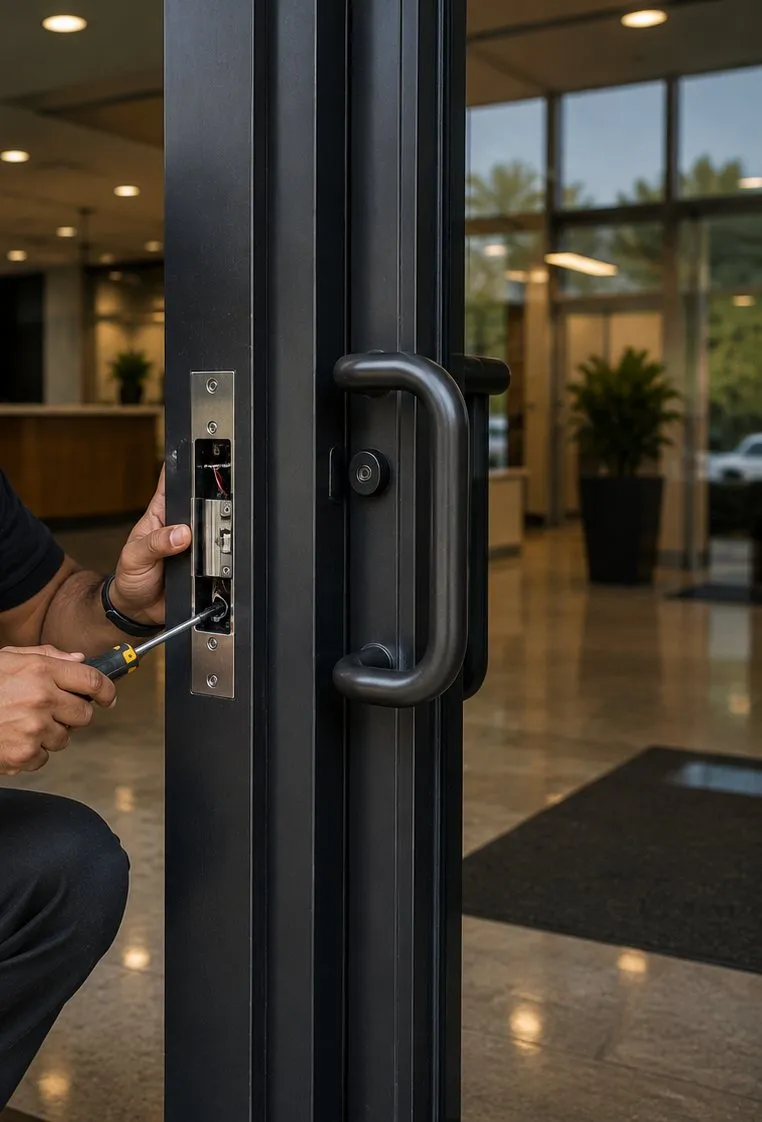
Keypads or fob readers with an electric strike on glass and steel business doors along Third Avenue, Willis Avenue and Bruckner Boulevard, with a free inside release and staff codes that can be cancelled in seconds.
Two administrators on two phones, codes for the people who really use the door and a keypad-only option for relatives who do not carry a smartphone, all separate from the building’s resident app.
A fresh key cylinder in the smart deadbolt on day one, so keys handed out to painters, previous occupants or the leasing office before you arrived stop working the afternoon you get the apartment.
Dead keypads, jammed bolts, lost admin accounts and locks fitted by someone else, diagnosed and repaired, with the building’s own lock and closer checked while we are at the door.

Within a ten-minute walk of the 138th Street station you can pass a 22-storey public-housing tower, an 1860s brick row, a pre-war walk-up run by its own residents and a glass rental tower with a concierge. Each gives a smart lock a different door, a different landlord and a different set of rules to work inside.
Mitchel, Mill Brook, Moore and Mott Haven Houses are towers of 16 to 22 storeys, and Patterson’s fifteen buildings rise to 13. Apartment doors close on self-closers that NYCHA inspects. The bottom lock is NYCHA’s and stays. A second lock is allowed but needs written consent for the work, and NYCHA reserves the right to break it in an emergency, so we place it where a drill-out does the least harm.
The Betances buildings, scattered across the South Bronx and now managed privately after a two-year renovation, show the pattern: new lobbies, key-fob entry, new house rules. The conversion changes who answers your request; it does not make the door yours. We ask the management company in writing before boring anything.
Older brick apartment buildings line many side streets. Diego Beekman’s 38 pre-war buildings across six blocks are run by a residents’ mutual housing association. In privately owned buildings like these a tenant may add a lock beside the owner’s, and old doors often need their strikes rebuilt first.
Bankside on the Harlem River, Maven at 2413 Third Avenue, The Motto at 2455 and The Arches on East 135th Street. Fire-rated metal apartment doors, lever sets chosen by the developer, an access-controlled lobby and often a concierge. Our lock goes on as an addition, never as a replacement for the developer’s hardware.
Of the 11,870 apartments built here in larger buildings between 2010 and 2025, 7,533 were income-restricted, many let through the city’s housing lottery. Their doors and lobbies are often the same as the market-rate units’, and their leases may carry a programme rider worth reading before any work.
The Mott Haven Historic District along Alexander Avenue holds some of the Bronx’s earliest rows, built 1863–65; Mott Haven East has 1883 houses on East 139th and 140th; the Bertine Block has Queen Anne rows of 1891–95. Wood doors, transoms, stoops and owners who care how the opening looks.
The former Estey Piano Company factory at Lincoln Avenue and Bruckner Boulevard, whose original portion dates from 1886, led the loft conversions that followed the 1997 mixed-use rezoning. Unit doors open off wide corridors built for freight, often with steel frames and heavy closers.
Three- to five-storey buildings with shops below and flats above, plus new mid-rises at 40, 91 and 138 Bruckner. The street door is usually shared between a business and residents, and the flats’ doors open straight off a narrow stair hall.

Mott Haven’s businesses run from the busiest shopping strip in the borough to warehouses that only see trucks. Their doors range from aluminium shopfronts to steel loading doors, and the right electronic lock is different for each.
The HUB / Third Avenue BID calls the blocks around 149th Street and Third Avenue the Bronx’s oldest shopping district. Narrow-stile glass shop doors, roll-down gates and staff who rotate through the week; a reader and strike on the inside door with a gate that stays mechanical is the usual answer.
The area where Alexander Avenue meets Bruckner Boulevard has become the neighbourhood’s main commercial corridor, with a growing number of restaurants. Back doors to service alleys, cellar stairs and late closing make a keypad with cancellable staff codes more useful than another key ring.
Corner stores, pharmacies, salons and offices under apartments. The shop’s own door is the owner’s business; a shared street door with the flats above is the landlord’s, and must keep working for the residents.
Union Crossing at 825 East 141st Street turned a former factory into offices, retail and studios; smaller loft buildings off Lincoln Avenue hold workshops and creative tenants. Suite doors need schedules, audit logs and a way for the landlord’s fire safety staff to get in.
East of the residential streets, the Port Morris Industrial Business Zone holds warehousing, distribution and light industry, with new last-mile buildings such as 307 Bruckner Boulevard. Man doors beside roll-up doors are where a keypad or reader belongs.
Social-service offices, community groups and practices in converted rowhouses and storefronts need a reception door that releases from the desk, a records room that logs every opening and codes that end the day a volunteer or staff member leaves.

These are the questions that come out of Mott Haven’s particular mix of buildings — new towers with lottery leases, NYCHA and PACT homes, voucher-assisted rentals and Port Morris workspaces. Questions every New York renter asks, such as the general right to add a lock or what the city says about double-cylinder deadbolts, are answered on our New York City smart lock page and the Bronx smart lock installation page; here we deal with what is different on these blocks.
The door is the same, and in most cases so is the starting point in law. New York’s Multiple Dwelling Law gives every tenant of a multiple dwelling the right to install a lock of their own in the entrance door, separate from the owner’s, provided the landlord gets a duplicate key on request, and it voids any lease clause that charges extra for that right. The exception is buildings under the control of a municipal housing authority. A privately owned tower with income-restricted apartments is not one of those, so a lottery tenant and a market-rate neighbour start from the same place.
Where they can differ is the paperwork that sits on top. Affordable leases often carry the programme’s own rider, and a building’s resident handbook may say how alterations are requested. Neither can remove the statutory right to an added lock, but both can sensibly govern how the work is done: notice, hours, who keeps the duplicate key. We read whatever you have been given before quoting and write the scope in a way the management office can say yes to.
What neither tenant may do is replace or disable the developer’s lock, cut into the frame without consent, or fit anything that needs a key to get out. So the practical plan is identical on both sides of the hallway: keep the developer’s lever, add a deadbolt with its own credentials above it, hand the office a key if asked, and photograph both faces of the door on the day.
A lever that locks on closing is convenient, which is why developers fit them, but on its own it is a latch, not a deadbolt. The city’s Housing Maintenance Code expects the owner of a class A multiple dwelling to provide a heavy-duty latch set and a heavy-duty deadbolt on each apartment entrance door, operated by key outside and a thumb-turn inside, plus a chain guard. A spring latch can be slipped or forced more easily than a bolt that projects an inch into a strike. If your door has no deadbolt at all, that is first a conversation with the owner, because it is the owner’s obligation to supply one.
If the owner fits a deadbolt, or the door is already prepared for one, a smart deadbolt can usually go in that preparation, or a retrofit unit can sit on the inside of the owner’s deadbolt so the keyed face in the corridor is unchanged. If you are adding your own lock under the Multiple Dwelling Law, it goes in addition to whatever the owner provides, typically a few inches above the lever, with a new bore and a reinforced strike.
Either way the auto-lock setting on the smart deadbolt is what makes it worth having on a self-closing tower door: the door shuts behind you on its closer, and a few seconds later the bolt throws on its own. We set that delay at the visit, long enough to carry shopping through and short enough that the door is never left on its latch alone.
It is mostly habits, and it is worth being honest about that. The home invasion on East 143rd Street in November 2025, in which three men followed a 63-year-old resident into his apartment at around six in the morning, is the kind of crime no lock prevents once the door is already open. What a well-chosen smart lock can do is shorten the moment you stand at the door with your back to the corridor and make sure the door is bolted as soon as it closes behind you.
Practically, that means a credential that opens on the first try — a fingerprint or a phone tap rather than fumbling two keys — and auto-lock so the bolt throws without anyone remembering to turn it. Notifications can tell a family member each time the door is unlocked, so an unexpected opening at an odd hour gets noticed. And if you ever suspect someone watched you type your code, change it from the app the same day.
The habits are the part that matter most: look down the corridor before you open, do not hold the lobby door for people you do not know, and step in and close the door before you take your hands off it. If the building’s street door is not relocking, report it, because under the Multiple Dwelling Law and the Housing Maintenance Code that door is the owner’s to keep working.
Not automatically, and not automatically gone either. NYCHA’s own description of PACT is that after conversion it continues to own the land and buildings, administers the Section 8 subsidy and monitors conditions, while a private partner renovates and manages the development and enforces house rules. Residents sign a new PACT Section 8 lease, which NYCHA describes as similar to the public housing lease. The bottom-lock rule comes from NYCHA’s public housing handbook; after conversion, the PACT lease and the partner’s house rules are what you need to read.
There is a genuine legal grey area here that we will not paper over. The Multiple Dwelling Law’s right to add your own lock excludes buildings under the supervision and control of a municipal housing authority, and NYCHA still owns PACT buildings. Whether that exclusion still applies after conversion is a question for the management office and, if it matters to you, your tenant association or a tenant lawyer — not for an installer. What we can do is ask the manager in writing, with a one-page scope, and go ahead only on a written yes.
Ask, too, what the renovation scope includes. NYCHA says PACT partners renovate every apartment and carry out security upgrades; if a new apartment door or new lock is coming to yours, waiting until it is hung is usually wiser than boring the old one.
Not if it is fitted properly, and it can help. HUD’s NSPIRE inspection standards redefine the older Housing Quality Standards used for voucher units. NSPIRE treats an entry door that cannot be secured by at least one installed lock as a deficiency, and its egress standard says a deadbolt that needs a key from the inside is not acceptable on a door that serves as a way out.
So two things matter. The lock must open from inside with a thumb-turn or lever, no key and no code — every smart deadbolt we fit does. And the owner’s lock must still work, because the inspection looks at the unit as a whole and NSPIRE expects property management to put right a door that cannot be secured.
Tell your landlord about the added lock and give them a duplicate key if they ask, as the Multiple Dwelling Law requires, so nobody arrives for an inspection to find a door they cannot open. If the inspector needs entry when you are out, a temporary code that expires the same evening is easier than leaving a key with a neighbour.
Something built for abuse rather than for a hallway carpet. Converted factory corridors in Port Morris see pallet jacks, carts and doors swinging into each other, and a residential keypad deadbolt with a plastic interior housing is not designed for that. Commercial-grade keypad deadbolts and mortise-style electronic locks with a steel chassis, or a reader on the frame driving an electric strike, stand up far better.
The frame decides a lot. Steel frames in older industrial buildings are often out of square after decades of building movement; a strike that does not line up will make any electronic lock jam. We check the reveal, shim or re-cut the strike, and adjust the closer so the door latches every time before the lock goes on.
Because these buildings mix homes and businesses under the 1997 and 2005 mixed-use rezonings, the corridor itself usually belongs to the landlord, and so does the fire-safety plan for it. Anything mounted on the corridor face or the frame should be cleared with the building first, and the unit door must still open from inside in one motion.
Usually somewhere else. Coiling roll-up doors are locked with slide bolts, padlocks or the operator’s own brake, and the electronic options are built into the door operator rather than added as a lock. Turning a roll-up into a daily keyless entrance means motor, safety edges, photo-eyes and the manufacturer’s control board — a door-operator job, not a smart lock job.
The cleaner plan is to keep the roll-up locked from inside and put the smart lock or reader on the pedestrian door beside it, or on an interior door if the roll-up is the only opening. Staff and visitors then use one controlled entrance with a log, and the roll-up opens only for deliveries.
If there is no pedestrian door, a man door cut into the wall or the roll-up itself is a building alteration that needs the landlord and, depending on the work, a DOB filing. We will tell you that up front rather than sell a lock that cannot do the job.
NYPD CompStat for the week ending October 11, 2026 shows 287 burglaries in the 40th Precinct so far this year, against 342 at the same point in 2025, a drop of 16.1 percent. The precinct’s full-year 2025 total was 442, a long way below the 1,374 recorded in 1990. Crimes in public housing, which CompStat counts separately, stand at 360 for the year against 406 last year.
Falling numbers do not change the logic of an apartment door. A burglary needs a door that is unlocked, a lock that can be slipped or a frame that gives. A deadbolt that throws itself every time, a strike set into solid framing with long screws and a door that closes properly on its closer address all three.
Senate Bill S955, sponsored by Senator Brian Kavanagh, would require building smart-access systems in New York to offer a fob, card, digital key or passcode rather than an app alone, give residents keys at no cost, and keep backup power on entry doors. It passed the Senate in May 2025, died in the Assembly, and was advanced again in the Senate in May 2026; as of this page’s review it remains in committee.
Until something like it passes, the city’s Tenant Data Privacy Act is the rule that applies to building systems: owners using smart access in multiple dwellings must give tenants a data retention and privacy policy, get express consent and collect only the minimum data. That law governs the building’s system. Your own lock on your own door is yours, and its records stay in your account.
In the Mott Haven, Mott Haven East and Bertine Block districts, the Landmarks Preservation Commission expects historic doors, transoms and surrounds to be kept. Its guidebook says ordinary maintenance, repair and retrofitting of safety equipment needs no permit, and that staff can approve doorbells and intercom panels within or beside the door opening, one intercom panel per opening, if they are neutral and discreet.
That makes an inside-mounted retrofit, which leaves the street face of the door untouched, the simplest choice on a landmarked rowhouse. Where a keypad is wanted outside, we size it like an intercom panel and place it in the opening rather than on the facade, and we recommend checking with LPC before the work rather than after.
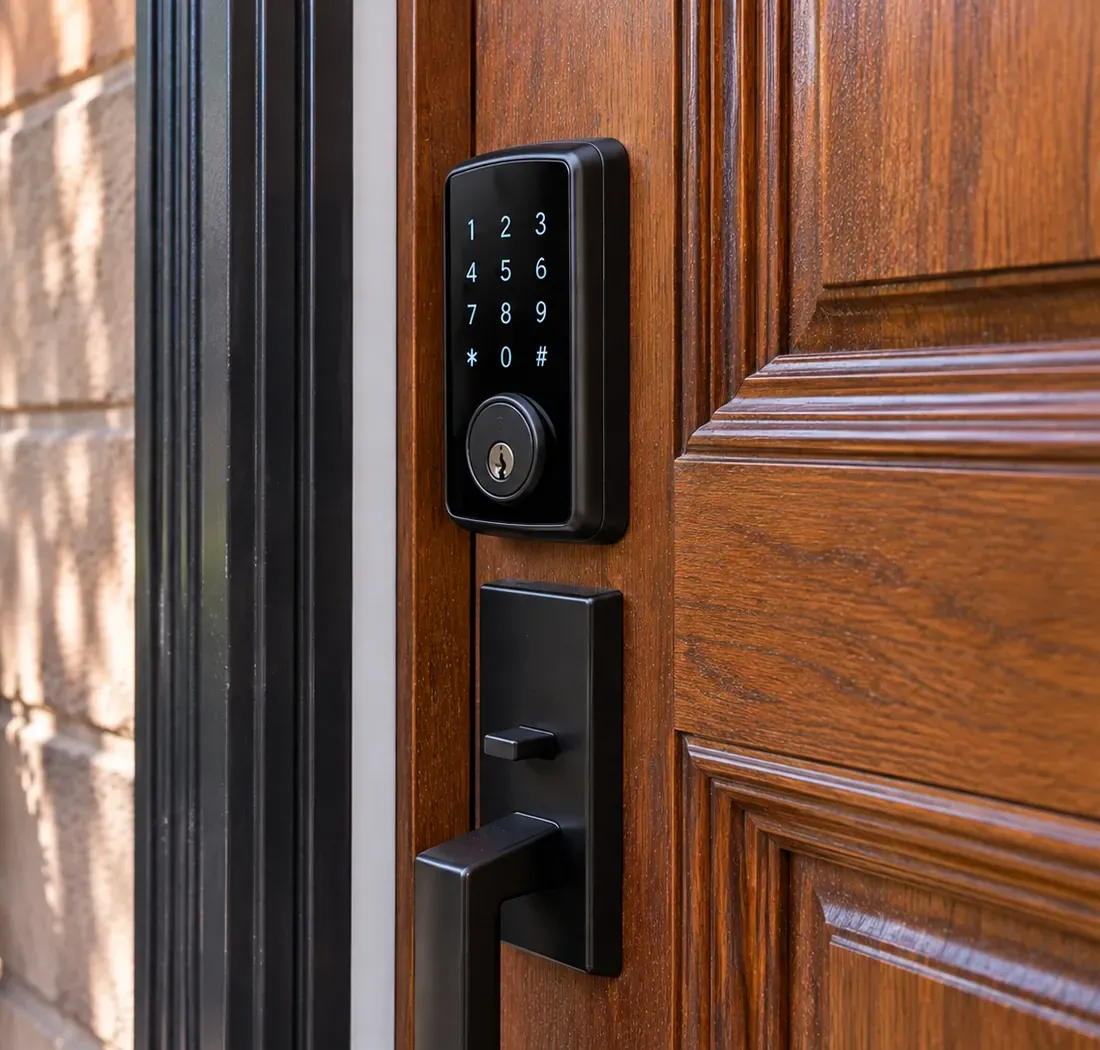
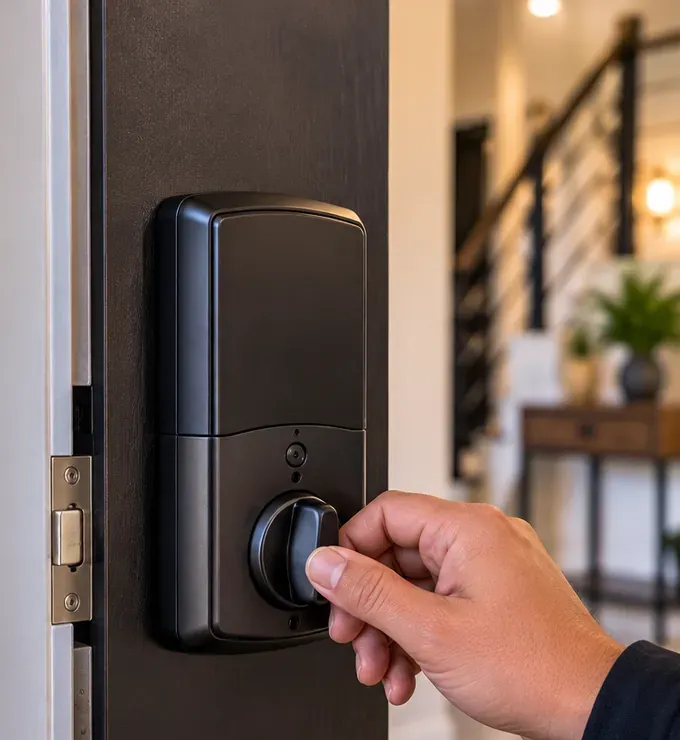
Most Mott Haven households pass through two layers of access every night: the building’s, then their own. They behave differently, belong to different people and fail in different ways. This is the comparison we walk through at every visit in a building that already has a fob, app or concierge.
| Question | The building’s system (lobby fob, app, layered access control) | Your own smart lock |
|---|---|---|
| Who owns it | The owner, NYCHA or the PACT manager | You, unless you rent it from someone |
| Who issues credentials | The management office, usually to people on the lease | The household’s two administrators |
| Who can cancel them | Management, often remotely; NYCHA describes layered access control as able to change permissions without collecting fobs or changing locks | Only your administrators |
| What it records | Time and method of entry, under the Tenant Data Privacy Act’s limits | Whatever you switch on in your own app, kept in your account |
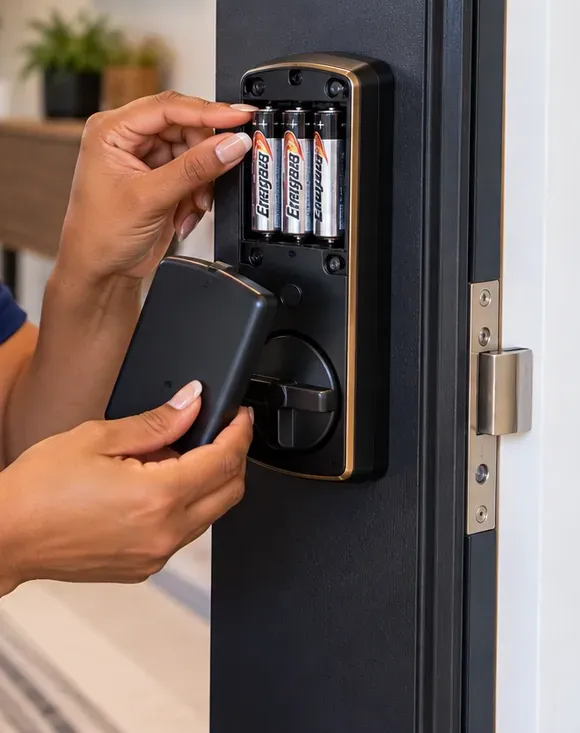
| What happens in a power cut | Depends on the building’s backup power and its fallback key or code | Runs on its own batteries; the mechanical key always works |
| What happens when management changes | The new manager may replace the system and re-issue every credential | Nothing — your codes and account carry on |
| Who repairs it | The owner; report failures to management and, if ignored, to 311 or HPD | You, or us; repairs never touch the building’s hardware |
The point of the table is not that one is better. The building’s system keeps strangers out of the lobby and corridors; your lock decides who gets past your own door. We keep them separate on purpose, so a change in one never locks you out of the other, and so you never have to give the management office more access to your home than the law already gives it.
The same smart deadbolt can be a simple job on one Mott Haven block and a month of paperwork on the next. This table sums up the pattern we follow in each kind of building before a single hole is drilled.
| Building | Lock that stays | What we add | Who agrees first | What to watch |
|---|---|---|---|---|
| NYCHA tower or low-rise | NYCHA’s bottom lock | A resident-owned second lock clear of the bottom lock | The property management office, in writing | Self-closer must still latch; NYCHA may break an added lock in an emergency |
| PACT-managed development | Whatever the PACT lease and house rules say is the manager’s | A second lock if the manager allows it | The PACT partner’s management office, in writing | Ask whether a new door is due in the renovation scope |
| New market-rate tower | The developer’s lever and any owner deadbolt | A smart deadbolt above the lever, on its own app | Management, by notice under the lease; duplicate key on request | Fire-rated door and frame; signal through concrete |
| Income-restricted or lottery building | The owner’s hardware | The same addition as a market-rate unit | Management, following any programme rider | Keep copies of consent for recertification files |
| Pre-war rental or mutual housing | The owner’s key lock and deadbolt | A tenant’s own lock beside them | Landlord or board notice; duplicate key on request | Old strikes, paint build-up, doors out of square |
| Owner’s rowhouse in a historic district | Original door, transom and surround | An interior retrofit or a discreet keypad deadbolt | You; LPC for anything new on the facade | Keep exterior devices within the door opening |
| Port Morris loft or live-work unit | The landlord’s corridor hardware and fire plan | A commercial-grade lock or reader and strike on the unit door | The building owner | Out-of-square steel frames, heavy closers, corridor traffic |
| Shop, studio or workshop | Gate and landlord’s shared doors | A keypad or reader with an electric strike and exit device | The landlord for the frame and wiring | Free egress, fail-safe or fail-secure choice, staff turnover |
Two rules run through every row. First, nothing we fit ever needs a key, a code or special knowledge to get out: a thumb-turn or lever inside, always. Second, the owner’s or housing authority’s lock is left in working order, because their legal duties to provide and repair it do not stop just because you have added your own.
The Furman Center counts 39.2 percent of Mott Haven/Melrose households as one person living alone, and 14.4 percent of residents as aged 65 or over, up from 7.5 percent in 2000. Those two numbers change how we set up a lock more than any feature list does.
Living alone. The single biggest risk with a smart lock is a household with one administrator and one phone. If that phone is lost on the train, or the person is taken ill, nobody can change a code or let help in. We set a second administrator — a relative, a close friend, a neighbour you trust — and make sure the mechanical key is somewhere outside the apartment, not in a kitchen drawer behind the locked door.
Older residents. Large, backlit keypad buttons, a lever rather than a small knob, and no dependence on an app are the usual choices. Codes can be set so a home attendant’s works on the days they come, and a family member can see from their own phone that the door was locked at night. Where a resident is on a high floor of a building with unreliable elevators, a lock that keeps working on batteries alone matters more than remote access.
Big and changing households. Where several generations or visiting relatives share one apartment, each person gets their own code so the history shows who used the door, and codes for anyone staying a short while are given an end date the day they are created rather than forgotten later.
Children. A child’s own code, rather than a key on a string, means a lost key does not force a cylinder change, and a parent can see when the door opened after school. We show children how the inside thumb-turn works so they can always get out, whatever the lock is doing.
The list is short on purpose. In Mott Haven the door type and the building’s rules narrow the choice quickly, so we carry the categories that suit metal tower doors, steel public-housing doors, old wood rowhouse doors and commercial frames, and we tell you which one fits before you buy anything.
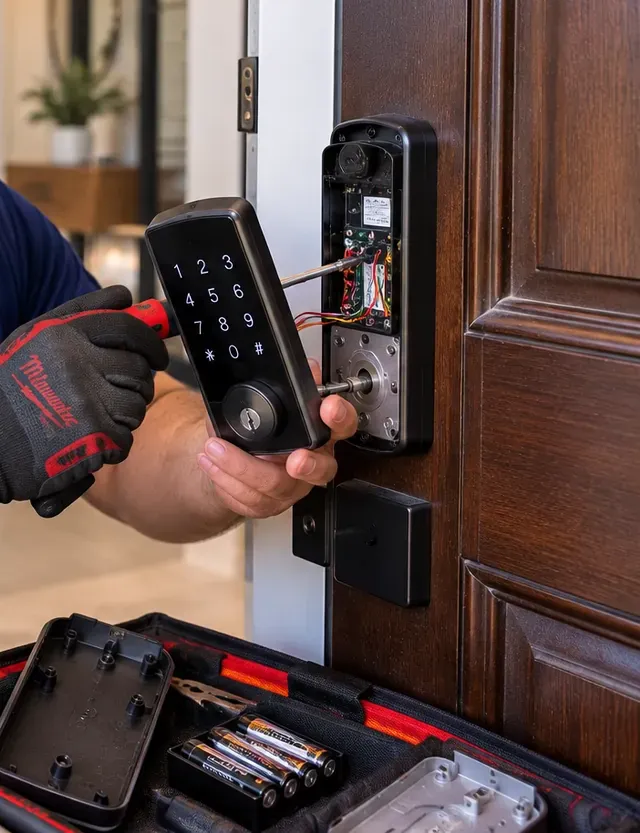
The workhorse for an added lock on a rental door. Codes for each person, a thumb-turn inside, and a standard cylinder we can re-key on install day so no stray key from before you moved in still turns.
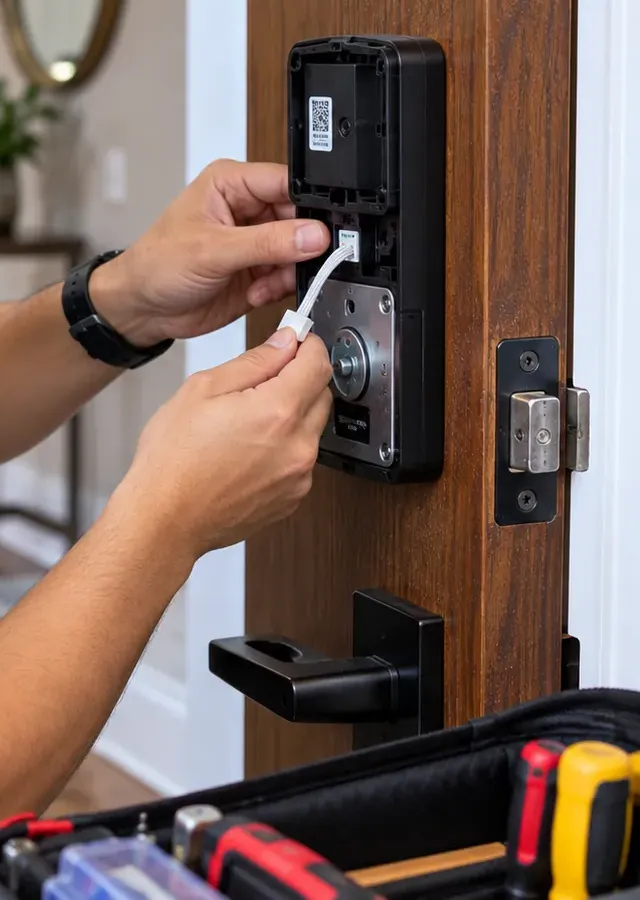
Mount on the inside of an existing deadbolt and turn it by motor, leaving the corridor face unchanged. Useful on a landmarked rowhouse door or where the owner wants the original keyed face kept; they work only with single-cylinder deadbolts.
Open on the first touch, which shortens the moment you stand at the door with your back to the hallway. Every one we fit keeps a code and a key as backups.
Programmed at the lock itself, with no account, email or phone needed. A good fit for older relatives, for households who prefer not to have an app, and for doors where nobody wants another cloud login.
Steel chassis, heavier latch and bolt, built for loft corridors, shop back doors and workshop man doors that take knocks all day.
Locks that share across smart-home systems. A Thread lock needs a border router in the apartment, such as a compatible hub or speaker, so we check what you already own before recommending one.
Mounted beside the door, the reader signals over low-voltage cable to a strike set into the frame; inside, an exit button or an always-free lever means nobody is ever held in. This is how we handle shop doors, office suites and the street door residents share.
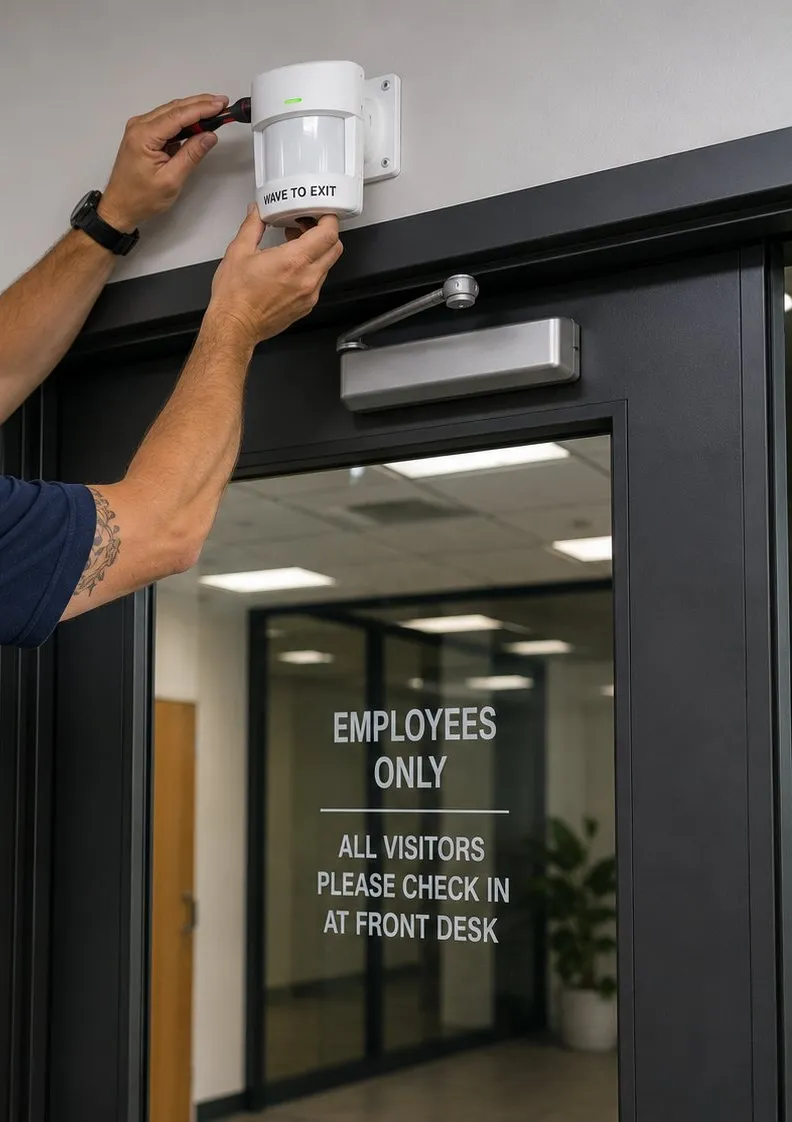
Wi-Fi bridges placed within the manufacturer’s range of the lock, contacts that report a door left open, and request-to-exit buttons so an electrified door always lets people out.
ADT, Ring and SimpliSafe sell good equipment and monitoring plans, and if one of them already runs your alarm, a lock that joins that system can make sense. What they sell, though, is a product that assumes you own the door. In a tower with an access-controlled lobby, a NYCHA apartment with a bottom lock you may not replace, or a PACT building under new house rules, the work that decides whether a lock is legal and lasting happens before the box is opened: reading the lease or handbook, getting consent, measuring a fire-rated door, rebuilding a strike, checking the closer.
That is the part a local licensed installer adds. We are not tied to one brand, so if the right answer for your door is a keypad-only lock with no subscription, or a retrofit that never touches the corridor face, that is what we recommend. If you have already bought a lock from a national brand, we fit it as labour only, provided it suits the door and the building.

Search assistants and cost guides answer smart lock questions as if every reader owns a detached house. We could not capture a live AI Overview for Mott Haven searches from our build environment, so each heading below is a claim we regularly see repeated in published cost guides, retailer pages and generic advice, followed by what actually happens on these blocks.
That advice assumes the deadbolt is yours. In most Mott Haven apartments it is not. NYCHA’s handbook says plainly that residents may not replace the bottom lock but may buy an additional one. In a private rental the owner must provide the apartment’s key lock and deadbolt under the Housing Maintenance Code, and a tenant’s statutory right under the Multiple Dwelling Law is to add a lock, not to remove the owner’s.
Swapping the owner’s lock can leave you in breach of the lease and the owner unable to meet their own legal duties. It also means the owner’s key no longer opens your door in an emergency, which is exactly what the duplicate-key rules are designed to avoid.
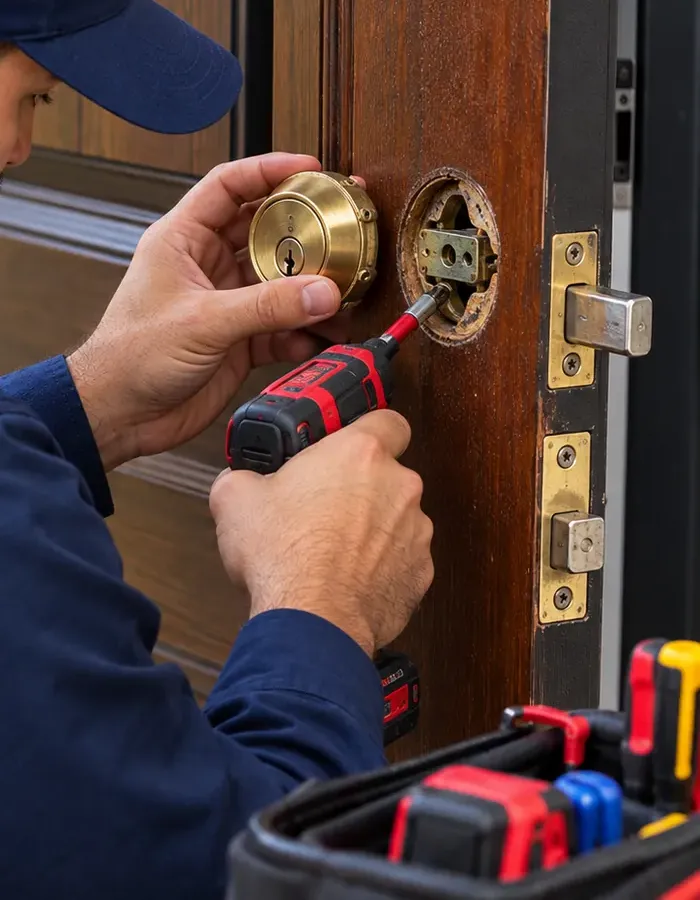
The version that works here is additive: the owner’s lock stays, your smart deadbolt goes above it, and a duplicate key goes to the landlord if they ask. Owners of rowhouses and lofts can swap freely, and even then we keep the old lock in case the door ever needs to be put back.
New towers market themselves as access-controlled, and the phrase is accurate as far as it goes: Third at Bankside describes an “access-controlled community” and a 24/7 concierge who handles visitor coordination and packages. That controls lobbies, elevators and amenity doors. It does not, by itself, tell you anything about the lock on your apartment door.
The same is true in public housing. NYCHA’s layered access control is a building-entry system that lets staff change fob permissions remotely; the apartment door behind it still has a mechanical bottom lock. In a PACT building the fob system belongs to the private manager running the development for NYCHA.
Ask the leasing or management office one simple question: what opens my apartment door, and who else can open it? The answer usually shows that your own lock is the only part you control.
Mostly true, with one exception that matters enormously in Mott Haven. The Multiple Dwelling Law right to add a lock does not apply to buildings under the supervision and control of a municipal housing authority. With seventeen NYCHA developments in the neighbourhood, a large share of local households live where that statute does not reach.
NYCHA residents can still add a lock, because NYCHA’s own rules allow a second one; the difference is that the permission comes from NYCHA and its alteration rules, including prior written consent from the property management office, rather than from the statute.
PACT conversions add a further layer, because the buildings stay NYCHA-owned while a private partner manages them under a new lease. That is why we ask for consent in writing in every NYCHA and PACT building, however small the job looks.
It helps against particular failures: a door left on its latch, keys in the wrong hands, a code that needs cancelling quickly. It does nothing about a person who follows you in, a lobby door that has been propped, or a frame that splits under a kick. The November 2025 home invasion on East 143rd Street began with three men following a resident into his apartment.
The 40th Precinct’s burglary count is falling — 287 so far in 2026 against 342 at the same point in 2025 — and residents of the Mitchel Houses told News 12 this fall that people who do not live there are still getting into the buildings. Both facts point at the same priorities: a door that relocks, a strike that holds and a lobby door the owner keeps working.
So we fit the lock and then spend time on what surrounds it: long strike screws into solid framing, a closer that latches the door every time, auto-lock timed so the bolt is never forgotten, and a clear conversation about the habits no hardware replaces.
Remote unlocking is useful when it is reliable, and in a concrete tower or a steel public-housing door it often is not. Manufacturer guidance for one widely sold Wi-Fi bridge is to keep it within 10 to 15 feet of the lock with a strong signal at that spot. Behind a metal door in a corridor of masonry, many apartments cannot meet that without moving the router.
Remote access is also the feature most people use least. For most households, a keypad or fingerprint deadbolt that works perfectly offline, with alerts when the router is in range, gives more dependable everyday service than a lock that sulks whenever the Wi-Fi drops.
We test signal at the door before recommending anything. If it is weak, we recommend a lock that does not need it rather than promising a feature that will not hold.
On a house in a Mott Haven historic district the outside of the door is not just a matter of taste. The Landmarks Preservation Commission expects original doors, transoms and surrounds to be retained, and its guidebook allows staff approval for an intercom panel or doorbell only when it sits within or beside the door opening and looks neutral and discreet.
A large glossy keypad screwed into brownstone beside a 19th-century door is exactly what those rules are written to prevent. An interior retrofit, or a slim keypad deadbolt sized and finished to suit the door, avoids the problem altogether.
The Mott Haven Historic District was the first in the Bronx, designated in 1969, and its rows include some of the earliest in the borough. They are worth the extra care.
LawnStarter’s national guide does put the average at $330, with most jobs between $200 and $460 and labour of $50 to $110, and Fixr’s national figure is $250 to $400. Those numbers describe swapping a deadbolt on a house door with a strong Wi-Fi signal.
They do not describe getting consent from NYCHA or a PACT manager, boring a metal fire-rated door, rebuilding a strike in an out-of-square loft frame, or putting a reader and electric strike on a shop door. Our published Bronx figures for that last job are $1,500 to $2,500 installed for a single door.
An apartment-door smart lock is priced flat after a free walkthrough, because the door and the building, not the lock, make most of the difference. You get that figure in writing before any work begins.
Book a free walkthrough for the week you move in. We confirm what the lease and building allow, fit a lock that is yours alone, and leave the building’s hardware untouched.
Tell us about the building and the door. A licensed installer calls back the same business day with what can and cannot go on it, and books a free walkthrough if one is needed.
If you can, have these ready when we call back. They let us answer most Mott Haven questions before anyone travels:
Thank you — a licensed installer will call you back the same business day.
Before anyone visits, we ask for the lease, programme rider, NYCHA handbook page or PACT house rules, and find out who owns the lock already on the door and whether written consent is needed.
At the free walkthrough we let the door close from fully open, check the latch and strike, measure the bores and door thickness, look at the fire label, test signal at the lock, and note the fob, app or concierge the building already runs.
You receive a one-page scope and a flat price. Where the building must agree, the scope goes to the office first, stating that the owner's lock and closer stay as they are; nothing is drilled until consent arrives in writing.
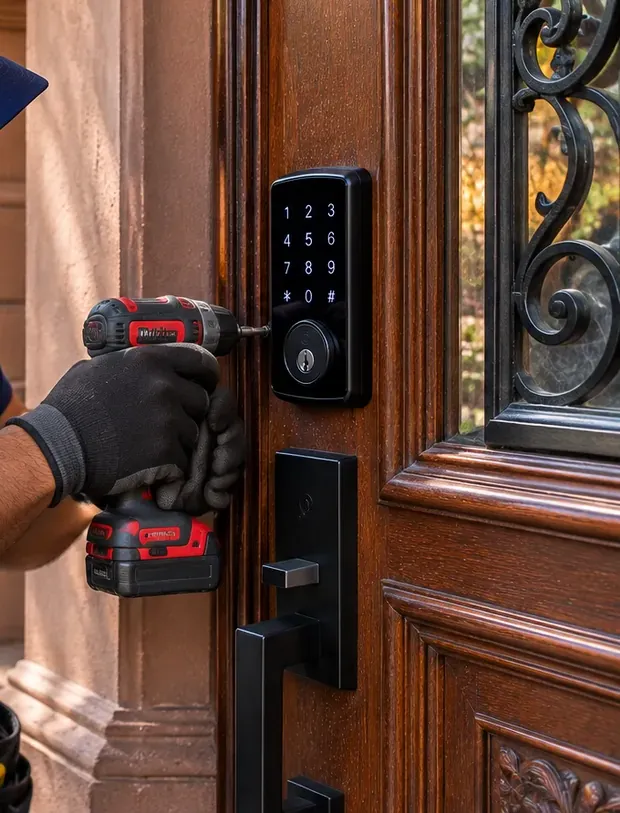
The smart deadbolt or retrofit goes on with a reinforced strike and long screws into solid framing, a fresh key cylinder where keys have been out of the household's hands, and the building's own lock left untouched.
We open the door from inside in one motion, let it close on its own repeatedly, confirm the bolt throws cleanly, and set the auto-lock delay to suit the closer.
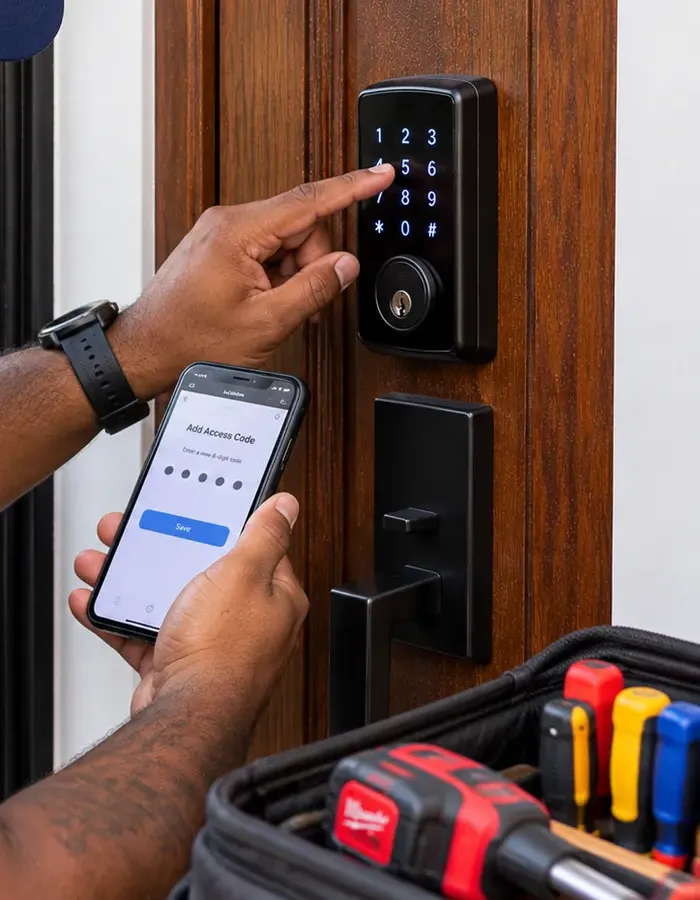
Each person enrols their own code, fingerprint or phone in front of us, two administrators are set on two phones, and keypad-only users practise their codes before we leave.
We leave a written list of every way into the apartment, the building's and yours, photographs of both faces of the door, and the duplicate key for the landlord if the landlord has asked for one.
From the Harlem River waterfront to the industrial streets past Willow Avenue, these are the places our Bronx technicians use to find their way around Mott Haven and Port Morris.
The Bronx’s first historic district, designated in 1969 and centred on Alexander Avenue between 137th and 141st Streets, where the late-19th-century brownstones of “Doctors’ Row” stand between churches and civic buildings.
East 136th Street between Willis Avenue and Brown Place: thirty-one residential buildings, including Edward D. Bertine’s Queen Anne rows of 1891–95 and three brick houses from the late 1870s.
East 139th and 140th Streets between Brook and Willis Avenues, with rows of 1883 brownstones by William O’Gorman and William Hornum mixing Flemish and neo-Grec details.
At Lincoln Avenue and Bruckner Boulevard, the oldest known former piano factory standing in the Bronx, its clock tower visible from the waterfront and the Harlem River bridges, now home to loft apartments.
Brookfield’s complex of high-rise rental towers on the Harlem River, planned at seven towers and more than 1,350 apartments, beside the Bronx end of the Third Avenue Bridge.
The northern edge of the neighbourhood, where the HUB / Third Avenue BID runs what it calls the Bronx’s oldest shopping district, and where the 40th Precinct station house stands further east on East 149th Street.
We also serve Melrose, the rest of Port Morris down to the Bronx Kill, St. Mary’s Park and the blocks around it, Longwood, Concourse Village and every other Bronx neighbourhood, from the same Bronx crews that cover smart lock installation across the Bronx.

The Bronx sits at the same 1.00 base as Brooklyn in our pricing, so Mott Haven and Port Morris jobs use the published Bronx figures unchanged. Apartment-door smart locks are quoted flat after a free walkthrough, because the building’s rules and the door itself vary too much for a fixed list price to be honest.
| Job | Price | Where the figure comes from |
|---|---|---|
| Smart lock on your own apartment, rowhouse or loft door | Quoted flat at the free walkthrough | Depends on door material, existing bores, strike condition, consent paperwork and the lock you choose |
| Single-door keypad or fob reader with electric strike | $1,500–$2,500 installed | Our published Bronx single-door figure, for a shop, suite, loft entrance or shared street door |
| New electric strike on a lobby or street door | $250–$450 | Our published Bronx door-buzzer figure for a replacement strike in an entry upgrade |
| Failed electric strike repair | $295–$485 | Our published Bronx figure for an entrance that hums when buzzed but stays shut |
| Setup-only visit (codes, app, bridge, no hardware) | $225 first hour, then 30-minute blocks | Bronx rate for visits that only touch apps, bridges and codes |
| Service and callback rate | $195/hr, 3-hour minimum ($585) | Not charged on the initial installation |
For context, LawnStarter’s national guide puts the average smart lock installation at $330, with most jobs between $200 and $460. Those national averages are for a basic swap on a house door; NYCHA’s own lockout charges, by comparison, are $47.25 for a new NYCHA lock and keys after a daytime drill-out and a further $50 after hours, according to its resident handbook.
$225 first hour, then 30-minute blocks. For a lock already on the door: new administrators, codes for each person, old codes and phones removed, the bridge moved to where it can actually reach the lock, and a printed sheet of who can open the door.
Quoted flat at the walkthrough. A smart deadbolt added to your apartment, rowhouse or loft door beside the building’s lock, a fresh key cylinder, strike reinforcement, auto-lock set to suit the closer, and the consent paperwork prepared for the office.
$1,500–$2,500 installed. A keypad or fob reader with an electric strike on a single business, suite or shared street door, with a push-to-exit or free lever inside and staff codes you can cancel from your phone.
Already bought a lock? We fit it as labour only, quoted at the walkthrough, provided it suits the door and the building: single-cylinder only, opens from inside without a key, and does not require removing a lock the owner or NYCHA keeps. A lock you supply carries its manufacturer’s warranty; a lock we supply is covered by the parts terms in our service agreement.
Photograph both faces of the door, tell us who runs the building, and we reply with the lock that fits, the consent you will need and a rough figure.
The newest buildings in the neighbourhood: Bankside’s towers, The Motto, Maven and their neighbours. Apartment doors are metal, fire-rated and fitted with the developer’s lever; lobbies are access-controlled. Jobs here are about adding a deadbolt cleanly to a door you do not own, getting the management office comfortable with the scope, and placing a bridge somewhere it can reach the lock through concrete.
Patterson, Mitchel, Mill Brook, Moore, Mott Haven Houses and the Betances buildings. The bottom lock stays; any second lock needs written consent; doors must close and latch on their own; and, as Mitchel Houses residents told News 12, elevators cannot always be relied on. Lock choice leans toward keypad-first models that work without Wi-Fi.
Rowhouses inside landmark districts. Where the owner lives in the house, the freedom to choose is theirs, and so is the duty to protect the door. Interior retrofits, slim keypads in the opening and careful strike work in old wood frames are the norm.
Older apartment buildings on the side streets, including the 38 resident-run Diego Beekman buildings. Doors are older and often painted many times over; a tenant adds a lock beside the owner’s, and a strike that has been moved before usually needs rebuilding.
The Estey factory lofts, newer mid-rises at 40, 91 and 138 Bruckner, and restaurants around Alexander Avenue. Apartment doors off wide corridors, commercial back doors onto service areas, and shared street doors where shop and homes meet.
The Hub’s shopfronts, offices above shops, clinics and nonprofits. Glass doors, roll-down gates and reception doors that need releasing from a desk. Readers and electric strikes on single doors are the usual job here, priced at the published Bronx single-door figure.
Warehousing, distribution, workshops and studios east toward the East River and Oak Point. Man doors beside roll-up doors, offices inside warehouses and doors that take knocks; commercial-grade electronic locks or reader-and-strike sets on the pedestrian door.

Thousands of households have moved into new or renovated Mott Haven apartments in the past decade, and the first week is when door decisions are easiest. This is the list we leave with them.
| Step | What to do | Why it matters |
|---|---|---|
| 1. Find out what you were given | Count the keys, fobs and app invitations, and ask the office who else holds a key to the apartment | So you know every way in before you add your own |
| 2. Read the lock and alteration clauses | Lease, programme rider, house rules or NYCHA handbook | The statute gives most tenants the right to add a lock; the paperwork sets the process |
| 3. Ask for consent in writing where required | One-page scope: what goes on, where, and that the owner’s lock stays | NYCHA requires prior written consent for alterations; many private managers ask for the same |
| 4. Check the closer and latch | Let the door swing shut from fully open three times | Apartment doors in buildings of three or more units must self-close; a lock will not fix a door that does not latch |
| 5. Choose a lock that works offline | Keypad or fingerprint first, Wi-Fi as an extra | Concrete and steel weaken signals; outages happen |
| 6. Set two administrators | Two phones, two people, or one person plus a trusted relative | Nearly four in ten Mott Haven/Melrose households are one person; a second admin prevents a lockout when a phone dies |
| 7. File a duplicate key if asked | Give the landlord a key to your added lock on request | Required by the Multiple Dwelling Law where it applies; NYCHA reserves the right to break an added lock in an emergency, so ask how it wants keys handled |
| 8. Keep the paperwork | Consent letter, our scope, photographs of both faces of the door | Makes move-out, inspections and any dispute simple |
A smart lock is often one part of a bigger door. These are the related services Abstract Enterprises Security Systems provides in Mott Haven, Port Morris and across the Bronx.
Fob and keypad access control for Mott Haven buildings, from a single shop door to a full lobby.
Port Morris access control for lofts, studios and industrial doors.
Intercom installation in Mott Haven and in Port Morris for street doors and vestibules.
Buzzer and strike repair in Mott Haven and Port Morris when the street door stops releasing.
Camera installation in Mott Haven and Port Morris for entrances, corridors and shopfronts.
Doorbell camera installation in the Bronx for rowhouse doors that pair with a smart lock.
Alarm installation in Mott Haven and Port Morris, with door contacts that report a door left open.
Fire alarm installation in Mott Haven for buildings where electrified doors must release on alarm.
Bronx low-voltage installation for the power and wiring behind readers and strikes.
How we approach a door in a building that already has its own entry system — written as a method, because each building’s rules are different
The first thing we ask for is not a measurement but a document: the lease, the programme rider, the handbook, the PACT house rules, whatever the household was given. Ten minutes with it tells us whether the work needs consent, who gives it and whether there is a preferred process. It also tells us whether the door is due to be replaced, which saves everyone a wasted visit.
Next we look at what the building already runs and write it down: fob, app, concierge, intercom, the lock already on the door and who holds keys to it. That list goes in the scope so the office can see we are adding, not replacing.
Only then do we deal with the door: let it close from fully open, check that it latches, feel for binding at the strike, measure the existing bores and the thickness, and test signal where the lock will sit. On a door somebody else built, those checks are what stop a good lock from becoming a bad installation.
Finally the household enrols in front of us, two administrators are set, the key cylinder is changed if anyone outside the household had keys, and we leave a written sheet listing every way into the apartment — the building’s and yours.
Mott Haven and Port Morris use the published Bronx figures, which match the Brooklyn base: $1,500 to $2,500 installed for a single-door keypad or fob reader with an electric strike, $250 to $450 for a new lobby electric strike, and $295 to $485 to repair a strike that has failed. A smart lock added to your own apartment, rowhouse or loft door is quoted flat after a free walkthrough, and a visit that only sets up codes and apps is $225 for the first hour, then 30-minute blocks.
Yes. The same Bronx crews cover all of Mott Haven and Port Morris, from the towers on the Harlem River to the warehouses out toward Oak Point, along with Melrose, the Hub around 149th Street and Third Avenue, Longwood and the rest of the borough. Arrival windows are two hours long, between 8 in the morning and 8 at night, seven days a week.
In a privately owned building, usually yes. The Multiple Dwelling Law lets a tenant add a lock of their own to the apartment entrance door, separate from the owner's, as long as the landlord receives a duplicate key on request. The building's fob lock stays and keeps working; your added deadbolt runs on its own codes and app, so management can neither see nor cancel it. That statutory right does not reach buildings under the control of a housing authority, so NYCHA homes follow NYCHA's consent rules instead.
Yes. We make the invoice out to whoever books the job, so an organisation or a family member can arrange and pay for a lock on a resident's door. The resident still needs to be home to let us in, approve where the lock goes and enrol their own codes, and any consent the building requires has to be in place before we drill.
Yes. Buildings such as the 38 pre-war Diego Beekman buildings, run by a residents' mutual housing association, and the HDFC co-ops around the neighbourhood set their own house rules. We follow the same pattern as in any managed building: read the rules, send a short scope to the board or the office, and fit the resident's lock beside the building's own hardware once they have agreed.
Our Bronx smart lock installation page sits one step above this one and covers how NYCHA, Parkchester, Co-op City and private landlords each control the door; the citywide rules on tenants’ locks and building entrances live on the New York City smart lock hub. Use the lists below for every other county, borough and neighbourhood we have written up.
NYC smart lock installation · Manhattan smart locks · Brooklyn smart lock installers · Queens · Bronx smart lock installation · Staten Island
Astoria, Queens · Bay Ridge, Brooklyn · Bayside, Queens · Bedford-Stuyvesant, Brooklyn · Brooklyn Heights, Brooklyn · Chelsea, Manhattan · Flushing, Queens · Forest Hills, Queens · Great Kills, Staten Island · Greenpoint, Brooklyn · Harlem, Manhattan · Jackson Heights, Queens · Kingsbridge, Bronx · Long Island City, Queens · Morris Park, Bronx · New Dorp, Staten Island · Park Slope, Brooklyn · Pelham Bay, Bronx · Riverdale, Bronx · St. George, Staten Island · Throgs Neck, Bronx · Todt Hill, Staten Island · Tottenville, Staten Island · Tribeca, Manhattan · Upper East Side, Manhattan · Upper West Side, Manhattan · Washington Heights, Manhattan · West Brighton, Staten Island · Williamsburg, Brooklyn
Long Island smart lock installation — with pages for Nassau County and Suffolk County.
Hudson Valley smart lock installation — Westchester, Rockland, Orange, Putnam, Dutchess and Ulster counties.
Everything else we install, from cameras to cabling, is on the Abstract Enterprises Security Systems home page, and the team behind it is on our about page.
Keypad blank, bolt stuck halfway, the only administrator’s phone in a drawer in another borough — call (646) 490-0629 and we send the next free two-hour window. Most smart lock faults are cleared within an hour or two once we are at the door. Until then, the mechanical key in the smart deadbolt is your way in, which is why we always suggest a trusted neighbour or relative holds one. If it is the NYCHA bottom lock that has failed, NYCHA’s handbook routes lockouts through a work order; the lock you added is ours to fix.
Mott Haven and Port Morris customers call (646) 490-0629 or message WhatsApp (718) 679-0359 through wa.me. Abstract Enterprises Security Systems, 460 E Fordham Rd, Bronx, NY 10458.
NYS Low-Voltage Licence #12000287431 · 100% Licensed & Insured · Same-Day Estimates · Rated 4.7★ from 201 Google Reviews
Locks you supply carry their manufacturer’s warranty. Full terms — including 50% deposit, one-year parts-only warranty on AESS-supplied products, and the late-fee schedule — are set out in the service agreement. See our warranty page.
This page explains how public housing rules, private leases, landmark districts and Mott Haven’s new and converted buildings affect smart lock installation; it is not legal advice. Page reviewed and updated October 17, 2026. Changelog: first publication of the Mott Haven smart lock installation page.