Lath, Brick & Poured-Concrete Mounts · Odd-Shaped Rooms · Landlord, Board & University Sign-Off · eARC Setup
The Village was already built up before Manhattan's 1811 street grid was drawn, and you can feel it indoors. Streets meet at sharp angles, so rooms do too. Houses from the 1820s are often timber frames standing behind a brick front. Tenements on Sullivan and Thompson Streets have solid brick party walls. And south of Washington Square, NYU's poured-concrete towers house faculty and graduate students under a lease with its own rulebook. We work out which of those you live in and what the wall really is. We also check whose written consent the job needs and where the bass will go, then hang the bar level, wire it properly and leave the room quieter for the neighbours than they feared.
Reviewed and updated October 17, 2026 · Author: Anwar Timothy, owner · NYS license #12000287431 · Manhattan line (929) 560-0737
Want sound sorted before a dinner, a recital or the first night of a new lease? Ring (929) 560-0737 or use the form. Before anyone climbs your stoop you get a written Manhattan price with every line shown, parking included.
Most soundbar guides assume a rectangular room with a hollow wall and a landlord who doesn't care. The Village rarely gives you any of the three. Village Preservation describes a neighbourhood whose streets "meet at irregular angles and follow unique paths," because it was already partly built when the 1811 Commissioners' Plan laid its grid over the rest of the island. Christopher Street began life as Skinner Road; Amos Street only became West 10th Street in 1857; Christopher Park itself is a leftover triangle between Christopher, Grove and West 4th Streets that the city turned into a park in 1837. Lots cut to fit those old roads produce buildings that are wedge-shaped, shallow, or built around a rear yard, and the rooms inside them inherit the geometry. A soundbar is a directional speaker. In a room with no two walls parallel, where it points and what it bounces off matter more than the brand on the front.
The walls are as varied as the floor plans. The oldest houses here are Federal-style rowhouses, which Village Preservation dates to roughly 1790 to 1830: two and a half storeys, a pitched roof with dormers, a front of Flemish-bond brick. Several of the best-known rows are described in the same source as frame structures with brick fronts. In plain terms, the brick you see from the sidewalk may be the only brick in the house, and the wall your TV goes on may be timber studs and lath. A few streets south, the South Village tells a different story: modest Federal and Greek Revival houses, then tenements, small factories and storefronts, built for a working-class and largely Italian American neighbourhood from the late nineteenth century on. Those tenement walls are brick through and through. Then come the twentieth-century elevator buildings, Westbeth's converted Bell Labs complex on the far west side, and NYU's concrete towers south of the square. Each wall family wants a different drill bit, a different anchor and a different route for the cable.
Third, permission. The Greenwich Village Historic District, designated in 1969, covered more than 2,000 buildings across 65 blocks, and the Landmarks Preservation Commission called it the largest district designated at the time. An extension and then the 2010 Extension II, followed by the South Village Historic District in 2013, pushed protection further south and west. Landmarking mostly governs what you can see from outside, which we explain below. The bigger question for an indoor soundbar is usually your lease or proprietary lease. NYU alone owns and manages about 2,100 apartments around Washington Square, and its Faculty Housing rules say residents need prior written consent to alter an apartment. Co-op boards, rental landlords, a Mitchell-Lama cooperative and the not-for-profit that runs Westbeth all write their own versions. We find out which applies before the visit, not at the door.
Fourth, sound travels in old buildings in ways people do not expect. A timber-framed house carries vibration through its floors and stair; a tenement passes bass through its party walls and old plaster ceilings; a concrete tower sends low notes straight down through the slab. Village households also tend to be close together. NYU's house rules ask faculty residents to keep television volume in mind and limit instrument practice to 9 a.m. to 8 p.m. The same rules cite the city's quiet hours as starting at 10 p.m. A bar set up for the building, not the showroom, is worth more here than an extra speaker.
Finally, the Village has always been a working, performing neighbourhood. The Village Vanguard has occupied its triangular basement at 178 Seventh Avenue South since 1935; Cafe Wha? has been on MacDougal Street since 1959 and the Comedy Cellar at 117 MacDougal since 1982; the Blue Note is on West 3rd Street. Between them sit restaurants, bars, galleries, music schools and university offices, many of them in landmarked buildings with apartments upstairs. When a business here wants the game or a film on a screen with proper sound, it faces the same questions as a household, plus the city's limits on music heard inside the homes above.
So this page is organised by building and by room shape. If you already know what you live in, jump to the architecture cards. If you are not sure what is under the paint, the wall table and the Questions section will get you most of the way, and a phone photo sent to (929) 560-0737 usually settles the rest.
Everywhere else in Manhattan the 1811 grid hands builders tidy rectangular lots, and the rooms come out as rectangles. The Village kept the lanes, farm lines and estate boundaries it had before the grid, and its buildings still follow them. Here is what that means once you are inside, with the TV in one hand and the bar in the other. The buildings named below describe the area; none is presented as a customer.
Where two old streets cross at a slant, the corner building fills a wedge. Christopher Park, the triangle where the Stonewall National Monument now stands, is the open-air version of the same geometry, and the Village Vanguard's basement is famously triangular. In a wedge-shaped flat the long wall is often the one that runs along the narrowing side, and the sofa ends up facing a corner rather than a flat wall. Soundbars are designed to fire straight ahead and to bounce their side channels off walls at predictable angles. Put one on a wall that meets its neighbour at sixty degrees and the virtual surround arrives from somewhere odd. Our default in these rooms is to centre the bar on the seat, not on the wall, and to switch off virtual surround modes that rely on reflections the room cannot give.
Federal rowhouses were built small, and some have since been split into floor-throughs or smaller flats. That leaves living rooms with a window wall at one end, a chimney breast or stair on one side and a party wall on the other. The longest unbroken wall is frequently the party wall, which in an old frame house may be brick or may be studs with brick infill, depending on when and how the row went up. We check, because it changes both the fixing and how much of your film the house next door hears.
Some Village flats look onto a rear yard rather than the street, and a few blocks were rebuilt around a shared garden: the 22 houses of MacDougal–Sullivan Gardens were remodelled around 1920 with their backyards combined. A flat that looks onto a courtyard or a garden shared by several houses is quiet by day and very quiet at night, so any sound that leaves through an open window carries further than the same sound on the street side. When the TV wall faces the garden, we set the bar's night mode and keep the subwoofer modest.
The dormers that Village Preservation highlights on Federal houses mean a top floor with sloping ceilings and only short stretches of full-height wall, often between two dormer windows. A TV and soundbar fit there, but the screen usually has to come down lower than in a standard room so the bar clears the slope, and up-firing height speakers make little sense under a ceiling that tilts toward you. A compact bar on the wall or the console is often the right size.
In the South Village, tenements stand among the older houses on Sullivan, Thompson and MacDougal Streets. Their apartments tend to be narrow, the party walls are brick, and the front room overlooks a street that can stay busy late. Here the issues are a solid wall that will not take a hidden cable, several flights of stairs, and a choice between the street-side room and a quieter rear room. We price the walk-up line honestly and plan a painted channel rather than promising concealment.
The one place in the Village where everything is rectangular is the one built after the street plan was cleared away. Washington Square Village's two buildings were completed in 1959 and 1960, and the three University Village towers went up between 1964 and 1966, poured in concrete on a three-day formwork cycle. Inside those buildings the challenge reverses: square rooms, solid concrete walls, the same layout repeated floor after floor, and a lease held with the university.
Six building patterns, six different jobs. The rest of this page is about telling them apart in the first five minutes, so the visit you book is the visit you get.
Each service below is billed from the published Manhattan menu further down, and each starts with the building rather than the box.
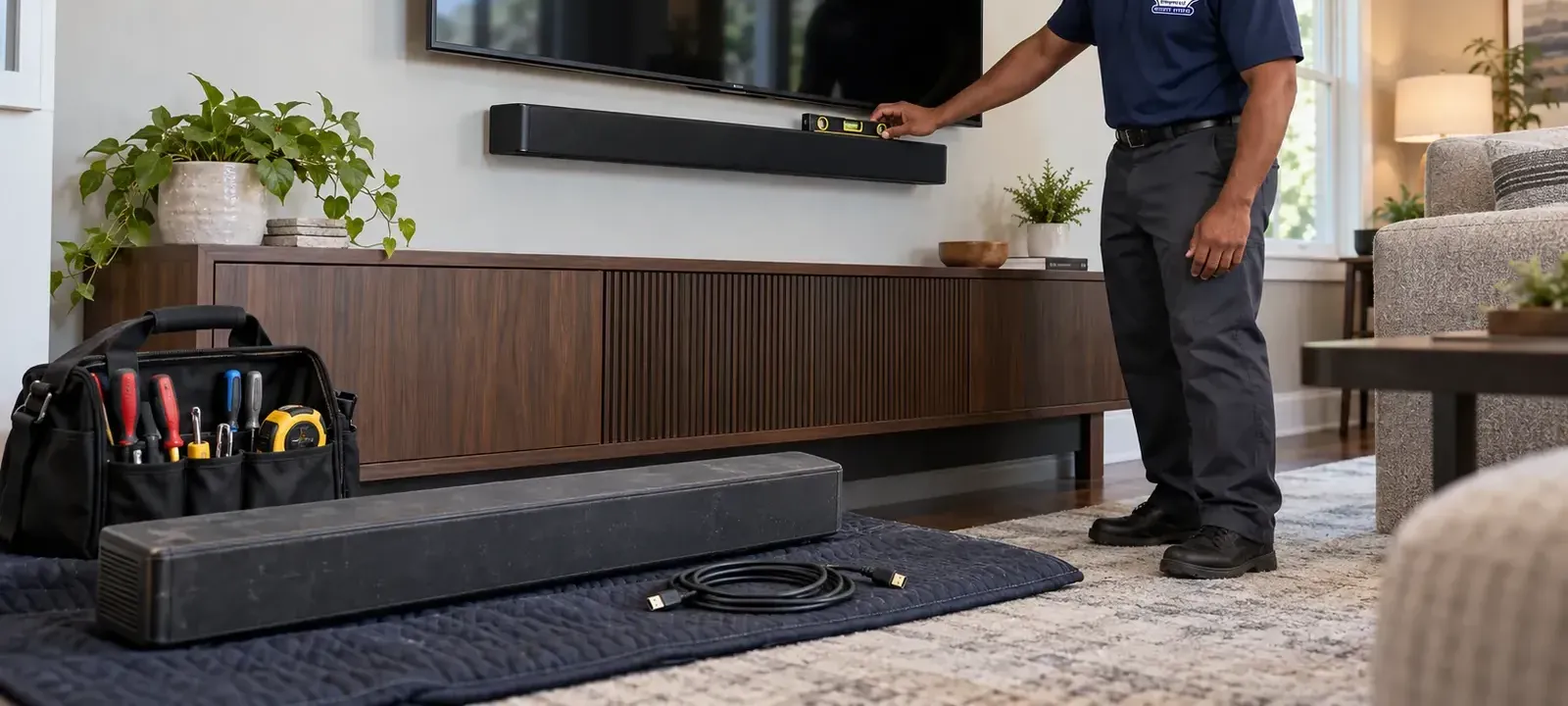
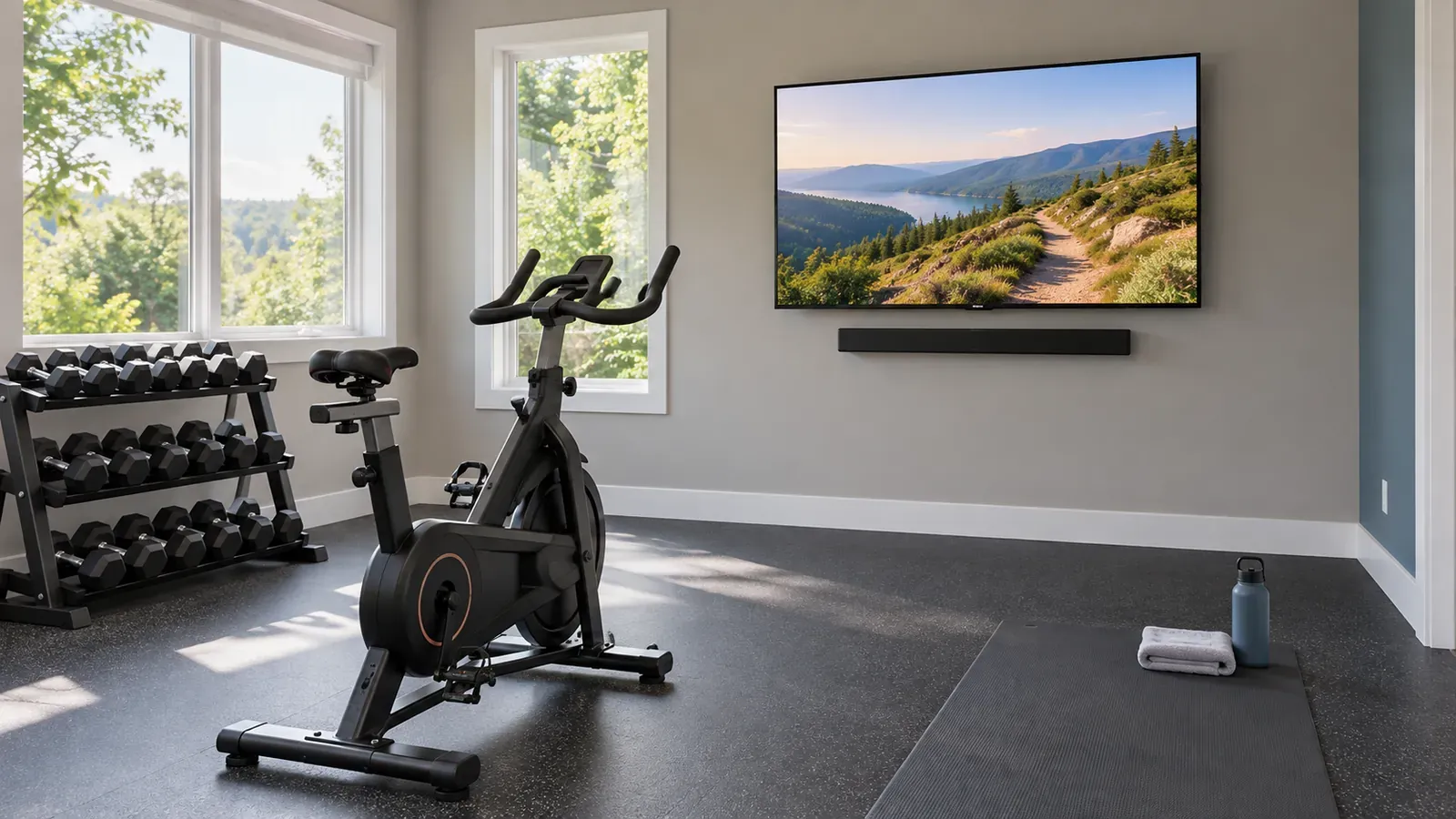
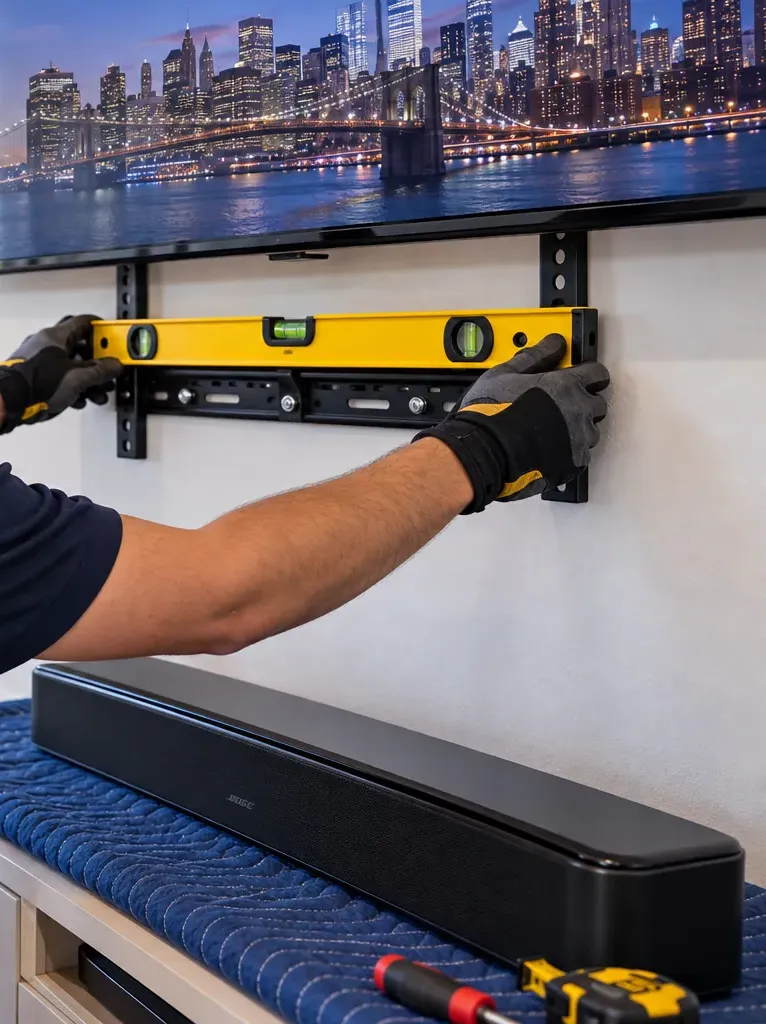
We identify the wall, choose a fixing for lath, brick, block, concrete or steel studs, level the bracket, centre the bar on your seat and listen from where you actually sit.
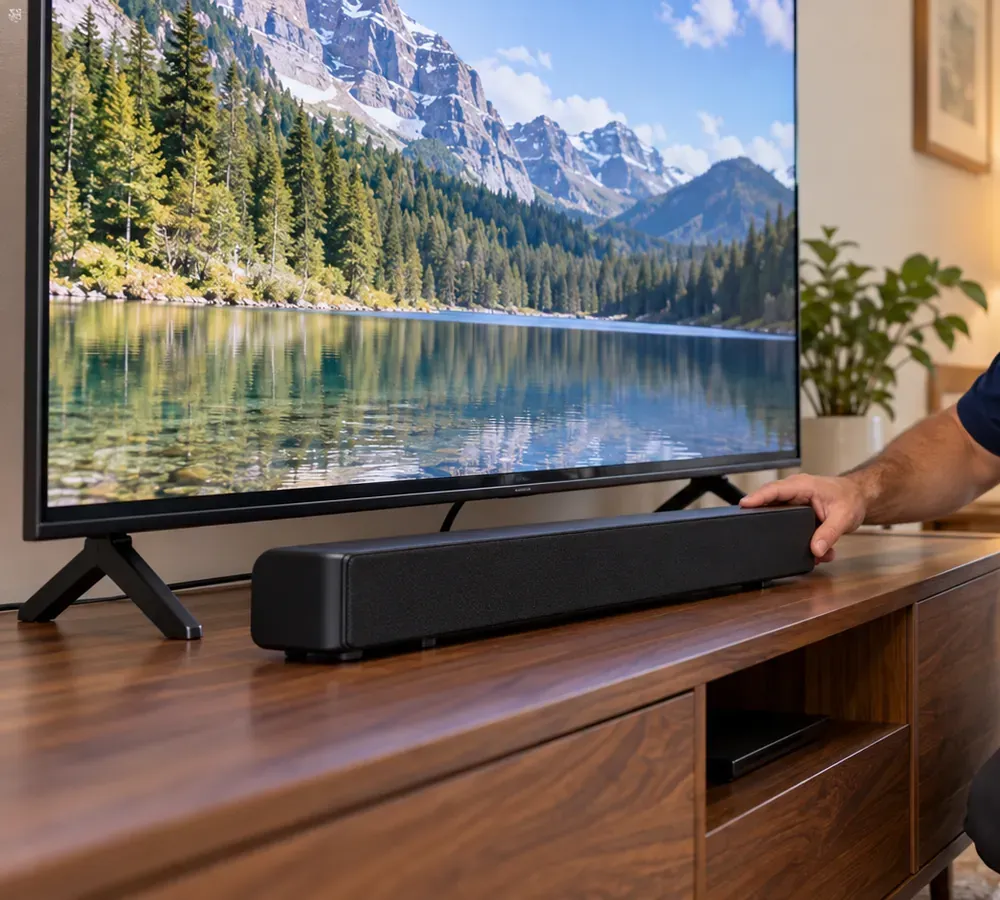
For university leases, short rentals and anyone who would rather not ask permission: the bar set on the media unit clear of the TV's remote sensor, connected, tuned and tidied.
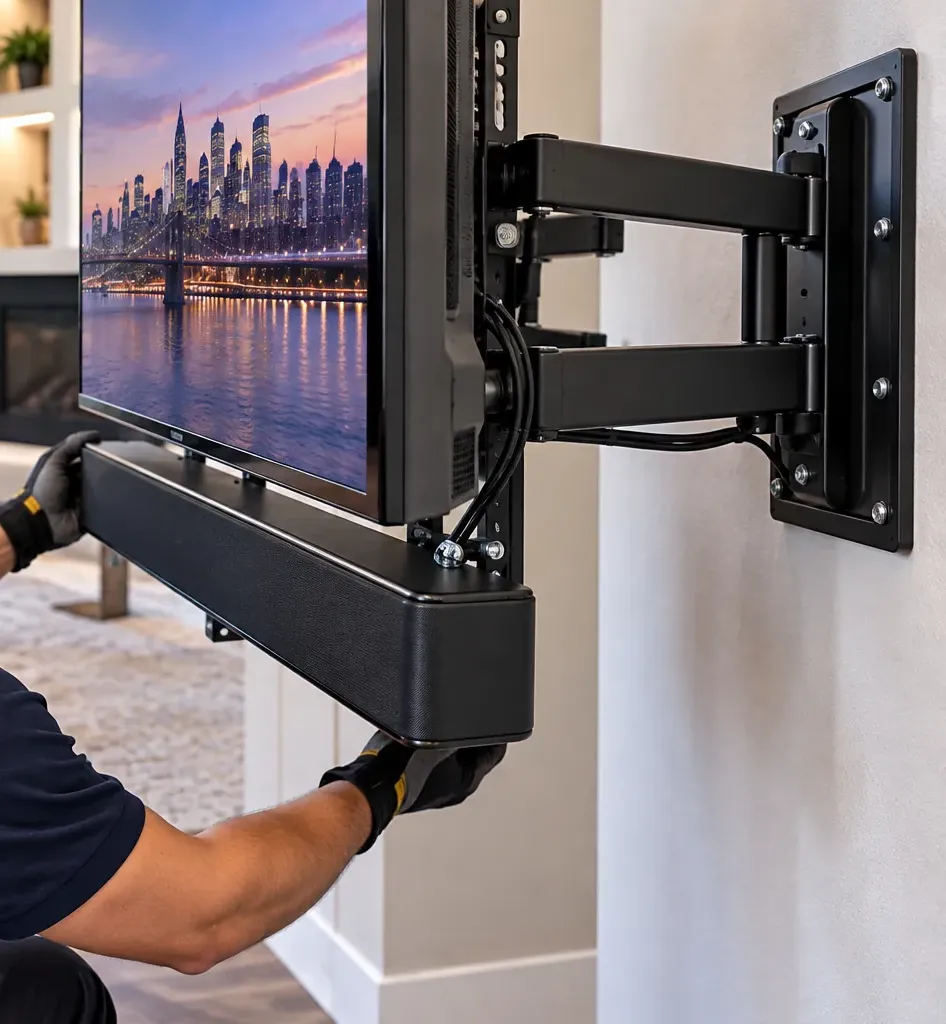
The bar hangs from the television or its arm instead of the wall, adding no holes beyond the screen's own — handy when each new fixing needs written consent.
An in-wall power and cable kit, to code, where a partition is hollow and the owner or board agrees. Timber-framed Federal interiors and newer partitions often allow it; brick and concrete do not.
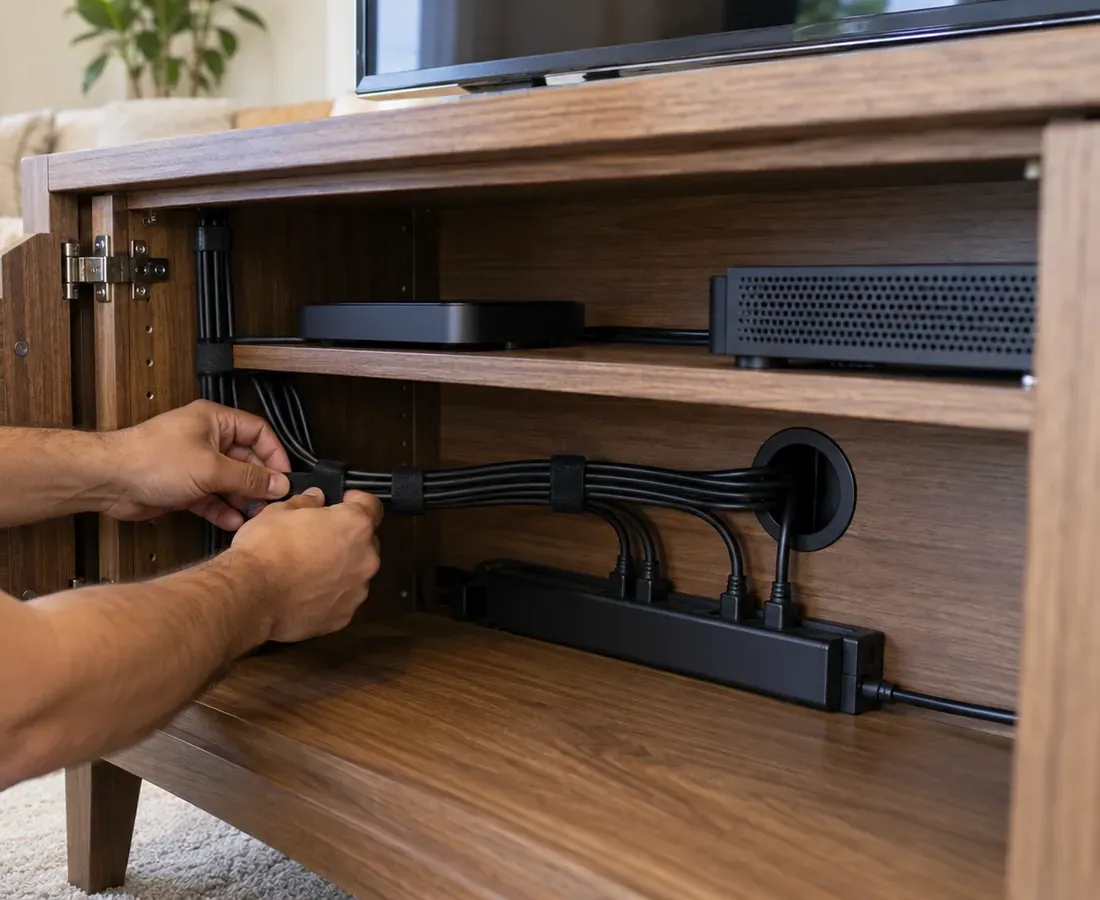
On tenement brick and tower concrete the cable stays on the surface in a slim paintable channel, run to the outlet or console and painted to disappear from the sofa.
The bar plugged into the TV's eARC socket, control linking enabled so one handset does everything, then a spoken-word scene to prove lips and voices agree before we leave.
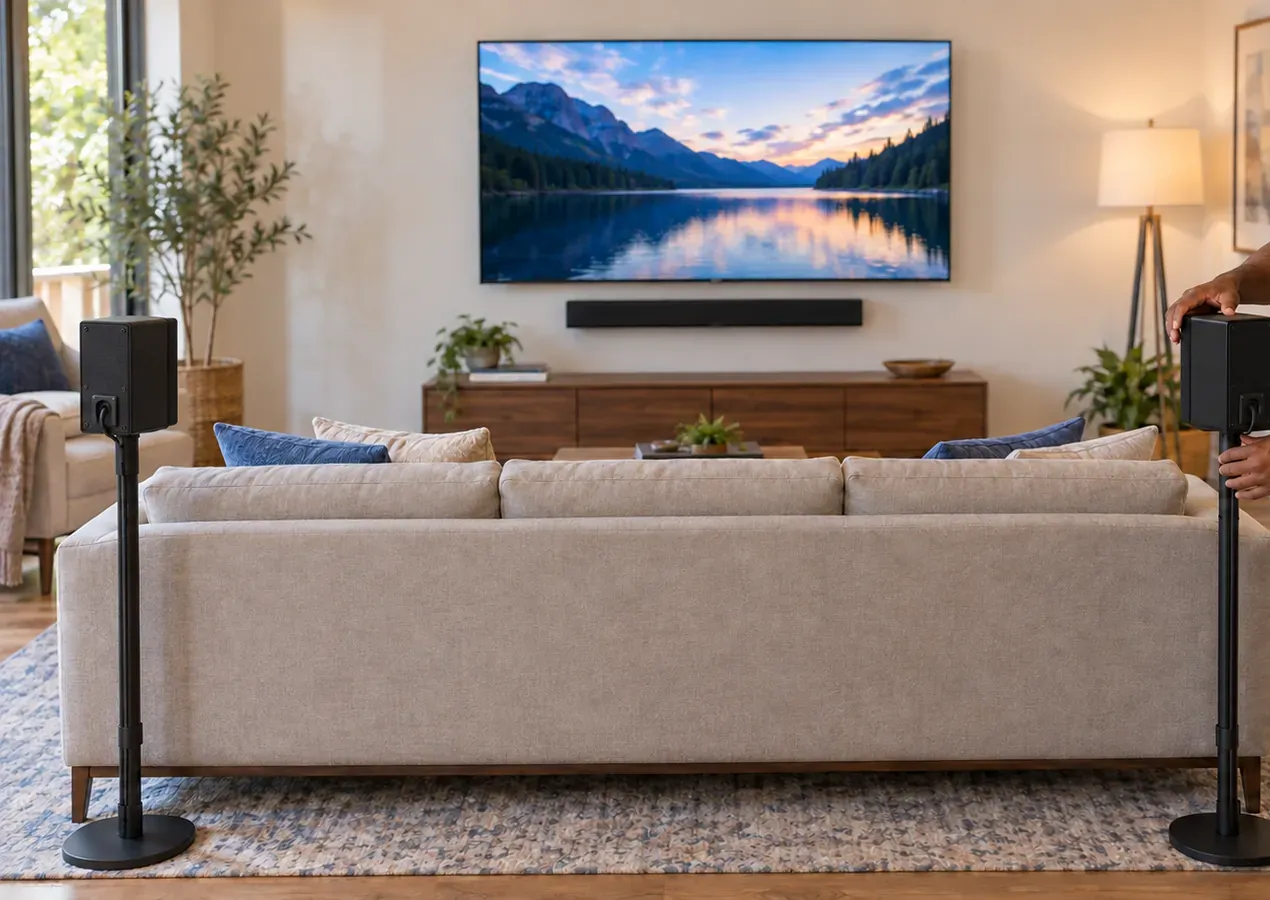
Wireless sub placed and decoupled for a timber floor or a concrete slab, rears on stands or a shelf, and the system balanced for the room instead of the factory demo.
Streaming boxes, game consoles and, where the bar supports it, a digital piano or other line-level source routed so everything plays through one system at a sensible level.
Sound for the screen over the bar, a shop display, a front desk or a faculty lounge, with maximum volume capped and the visit scheduled before doors open or between sets.
Many Village households booking a soundbar also need the TV itself hung, and in brick tenements and concrete towers the Wi-Fi often struggles to reach the TV wall. Both can be handled on the same visit under one parking line; the TV, network and Sonos pages are linked in Complete Services below.
Most soundbar faults we see in the Village — no link between TV and bar after a TV swap, lips and voices out of step, a sub that will not pair, a bracket creeping out of old plaster — take one to two hours to put right on site. Call (929) 560-0737, describe the fault and the building, and book the next free two-hour window. Repair-only visits are charged by time at the Manhattan setup rate with one parking line, and you hear the figure before we travel.
Sort the Village's buildings into families and most of the decisions follow. Each card below gives the usual TV wall, the usual trap and the way we deal with it.
Two and a half storeys, dormers, Flemish-bond brick on the street front — and in many rows, a timber frame behind it. Interior walls are lath and plaster on studs, so the bracket goes into framing we locate first, never into plaster alone.
The rowhouses that followed the Federal era, on many blocks north and west of the square. Plaster on lath partitions, brick party walls, tall parlour ceilings and narrow piers between windows. Original mouldings stay untouched; the screen goes at seated eye height.
Walk-ups of the late nineteenth and early twentieth centuries on Sullivan, Thompson and MacDougal. Brick party walls, plaster finish, small rooms over a lively street, stairs instead of an elevator. Masonry fixings, painted channels and the walk-up line in the price.
Apartment houses with doormen and service entrances, often run by a co-op board. Partitions of plaster over block or tile, a managing agent who wants a certificate, and contractor hours to respect. Anchors chosen for hollow masonry rather than guessed.
Washington Square Village (completed 1959–60) and the three 30-storey University Village towers (1964–66). Poured concrete, repeating layouts, neighbours on all sides and a lease that needs written consent for alterations. Hammer-drill fixings, or no fixings at all.
Former factories and the old Bell Labs complex, turned into live-work units and lofts. Large industrial buildings, mixed finishes, studio space beside living space, and a not-for-profit owner with its own rules. We read each wall rather than assume.
Two-storey former stables on Washington Mews and MacDougal Alley, many now homes or university offices. Small footprints, low upper rooms and private gated streets, so access and the right wall are planned ahead.
| Wall you find | Where it turns up | What holds the bracket | Where the cable goes |
|---|---|---|---|
| Lath and plaster on timber studs | Federal and Greek Revival houses | Lag or wood screws into studs found by scan and probe; plaster pre-drilled so it does not crack outward | Inside the stud bay with an in-wall kit, if the owner agrees |
| Plaster straight on brick | Party walls in rowhouses and tenements | Expansion anchors drilled into solid brick units rather than the old lime joints | Painted surface channel |
| Plaster over clay tile or gypsum block | Prewar elevator buildings | Anchors made for hollow masonry, pilot-drilled without hammer action | Painted channel; in-wall rarely possible |
| Poured concrete | Washington Square Village, University Village, later towers | Concrete anchors from a hammer drill after scanning for conduit | Painted channel, or the bar's cables dropped straight to a console |
| Drywall on steel studs | Renovated flats, offices, new partitions | Toggle or channel anchors rated for steel stud, or a plywood backer | In-wall kit, subject to the board or landlord |
| Exposed brick | Lofts, renovated walk-ups, restaurants | Sleeve anchors in sound brick, positions chosen to avoid cracked units | Painted channel colour-matched to mortar or brick |
One rule runs across every row: we find out what the wall is before we pick up the hammer drill. In an 1820s frame house a hammer drill does nothing useful; in a 1960s concrete tower nothing else works.
Village businesses mostly trade in small rooms under homes. That combination drives every commercial job here: the screen has to be heard by the people in the room and not by the people upstairs after ten. The places named below are examples of each corridor's character, taken from public sources; none is presented as a customer.
Cafe Wha? since 1959, the Comedy Cellar at 117 MacDougal since 1982, and a strip of cafés and late kitchens south of Washington Square. Bar-top and dining-room screens, low ceilings, residents above.
Home of the Village Vanguard's triangular basement since 1935, plus restaurants and bars along the avenue. Odd-angled rooms and sets that must not compete with a TV.
The Blue Note at 131 West 3rd Street, bars and restaurants that fill with students and visitors, and shopfronts in old tenement ground floors. Narrow rooms where one bar has to reach the back.
One of the oldest streets in the Village, running past Christopher Park and the Stonewall National Monument. Bars and shops with long histories and short walls between them.
University offices, department lounges, seminar rooms and student spaces, as well as the converted buildings of Washington Mews, which NYU began leasing and turning into offices and faculty housing around 1950.
Westbeth's studios, performance and rehearsal spaces, and arts organisations, alongside restaurants and offices in former industrial buildings near the river.
These are questions the Village's rooms and residents raise that a generic soundbar guide never reaches. Answers describe how we work; where a lease, a board or a building decides, we say so.
Angled corners, carved-up houses and walls of books change how a bar sounds as much as where it hangs.
Choose the wall that lets the bar face the main seat squarely, even if it is not the longest wall. A soundbar projects its centre channel straight ahead and creates width by bouncing sound off the side walls. In a wedge, one side wall is far away and the other is close and angled, so the bounce arrives unevenly and dialogue drifts toward the near wall. The usual best position is on the wall opposite the widest part of the room, with the sofa set square to it.
If the only practical TV wall is the narrow end, angle the bar toward the seats rather than mounting it flush. An articulating TV arm with the bar attached does this neatly, because screen and bar turn together. Then switch off any virtual surround or "room fill" mode and use the plain stereo or centre-weighted setting, which depends far less on walls the room does not have.
Many bars include a room-calibration routine using a microphone in the bar or a phone. In an irregular room it is worth running, but run it with the sofa in its final place and the windows closed, then listen to a dialogue scene from each seat before accepting the result. We do that on site and change it if the automatic answer sounds worse.
Usually yes, but not into the last few inches next to the window. When a house is divided, a new partition is often built against an existing window or bay, and the framing at that junction is a mix of old window casing, new studs and filler. Fixings close to the casing can split old wood or crack the plaster return, and the window may need to open for the fire escape or for air.
We scan the partition to find the first solid stud clear of the window junction, keep the bracket and bar clear of the sash so the window still opens fully, and keep the TV's edge off the casing. If the partition is a later stud wall, it is often the easiest wall in the flat to fix to and to run a hidden cable in, with the owner's agreement.
Two cautions. If the window is a required second way out, nothing we install will block it. And if the window sits in a landmarked front, nothing we fix touches the window frame itself; the bracket stays on the partition.
It can, more than in a brick or concrete building. Timber floors on joists act a little like a drum: low bass drives the boards and joists, and anything loosely fixed to them — stair treads, a loose floorboard, a glass-fronted cabinet — buzzes along. In a house shared with tenants, the people upstairs or downstairs hear that as a hum rather than as music.
Three things help. Put the subwoofer on a dense isolation pad or platform rather than straight on the boards. Keep it away from the stair and from the party wall. Then set the crossover and level so the sub blends with the bar rather than leading. Many households find the bar's own bass is enough in a small Federal parlour, and leave the sub out altogether.
We test with a bass-heavy scene at your normal volume, walk the house while it plays, and adjust until the stair and the floors stop joining in.
Mostly it helps. Shelves full of books of different depths break up reflections and absorb some of the upper frequencies, so a book-lined room usually sounds calmer and clearer than a bare one. Dialogue stays focused and harsh echoes fade, which suits films and the radio alike.
The side effect is that virtual surround and height effects, which rely on sound bouncing off flat walls and ceilings, get weaker. If you bought a bar for its surround effect, rear speakers will do more in a book-lined room than any processing mode. If dialogue was your complaint, the room is already on your side.
Two practical points: keep the bar's front clear of shelf edges so it is not partly boxed in, and do not put the bar inside a shelf bay unless it is designed to sit in an enclosure. We check both before choosing the height.
This is a neighbourhood of musicians, students and late evenings. The questions follow.
Often it can, if the bar has an analog or optical input, or accepts a Bluetooth source, and the instrument has a line or headphone output. A short cable from the instrument's output to the bar's input, or a small audio interface, does the job. Some bars delay their audio slightly to keep it in step with the picture, so latency matters for playing; we test with you at the keyboard, and if the delay is noticeable we suggest headphones or the instrument's own speakers for practice.
On the rules: once the bar is playing an instrument, treat it as an instrument. NYU's Faculty Housing rules, for example, allow instrument practice for reasonable periods between 9 a.m. and 8 p.m. only, and ask residents to keep TV volume in mind. Other buildings have similar house rules. A bar playing a piano at full level through a timber floor at night will be heard exactly like a piano.
If you practise in the evening, headphones on the instrument and a quiet bar setting are the neighbourly answer; we can set a separate saved level for the instrument input on bars that allow it.
A single labelled remote or a fixed mute button behind the bar. Most soundbars mute instantly from their own remote; if the TV and bar are linked by HDMI-CEC, the TV remote mutes both. We programme one remote for mute and the house level only, label it, and leave it in a fixed place behind the bar so whoever is working knows where it lives.
Where staff should not adjust volume at all, set a maximum level on the bar or the TV if the model supports it, and save the "game" level as the default. Then the only action needed at the start of a set is mute, and at the end, unmute; the level comes back where it was.
In a basement room with odd angles, place the bar so the bar-top seats hear it and the stage does not. We aim it along the bar rather than into the room, and keep the subwoofer off entirely so low end never competes with the band's bass.
We install whatever bar you own. If you are still choosing, this is how we match hardware to the rooms we meet most often between Houston Street and 14th Street.
Compact bars that sit under a 40- to 55-inch screen in a half-storey bedroom or a tenement front room, where a full-width bar would crowd the wall and the seat is only a few feet away.
What most parlours and one-bedrooms end up with: eARC hookup, streaming over Wi-Fi or a cable, speech and night settings, and plenty of volume for the room without adding a sub.
Up-firing drivers need a flat ceiling at a sensible height to bounce from. Tower apartments and many parlours qualify; sloping attic ceilings and beamed carriage-house rooms do not.
On timber floors and concrete slabs alike the sub goes on a dense pad, away from stairs and party walls, at a level set while someone listens in the next room.
Rear speakers on floor stands give real surround in rooms where virtual surround fails — book-lined rooms, wedge-shaped rooms — without drilling a plaster wall behind the sofa.
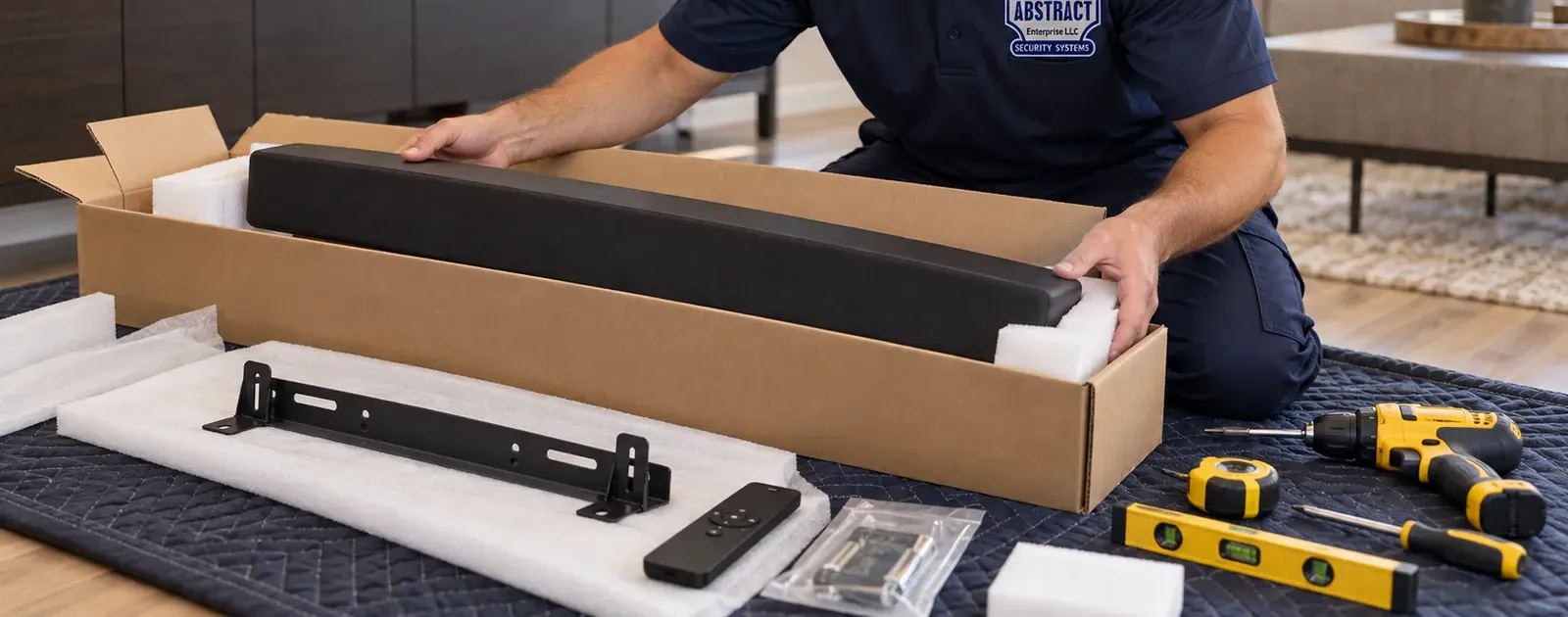
When the boxed bracket is missing or unsuitable, the Sanus one we carry, plus spacers to clear deep mouldings and plates that spread the load over a stud behind old lath.
Brackets that carry the bar on the TV or its arm, for leases that need consent for every hole and rooms where the screen has to swing toward an off-centre seat.
Kits that carry power and HDMI inside a hollow stud bay, to code, and low-profile channels you can paint for walls of brick, block or concrete.
Optical or analog runs for instruments and turntables where the bar accepts them, Ethernet where the Wi-Fi is weak, and one universal remote for the TV, bar and streaming box.
| Approach | New holes | Suits | Check first |
|---|---|---|---|
| Bar on its own wall bracket | Two to four, beneath the screen | Owners, shareholders with approval, rentals where the landlord agrees | The anchor must match lath, brick, block, concrete or steel stud |
| Bar fixed to the TV or its arm | None beyond the TV mount's own | University and other leases needing consent per alteration; angled rooms | TV plus bar must stay under the arm's weight limit, and the bar swings whenever the screen does |
| Bar on the console | None | Short leases, furnished flats, TVs on feet | Keep the TV's remote sensor clear; the console height sets the sound height |
| Link | Use it for | Before the visit |
|---|---|---|
| HDMI eARC | Current TVs and bars; full-resolution audio and one-remote control | Find the TV port labelled eARC; on some sets it sits on a separate connection box |
| HDMI ARC | Older TVs; Atmos only as Dolby Digital Plus | HDMI-CEC switched on in both menus |
| Optical | Compact bars, older TVs, some instruments and players | The bar's volume may need a programmed remote |
| Ethernet | Streaming bars in brick or concrete buildings where Wi-Fi fades | Check whether a data jack sits near the screen, or whether a cable could reach from the router |
| Wi-Fi only | Bars without a network port | Router position, and whether the building or university supplies the network |
Flat-rate apps and big-box services compared with a Village installer. National installation services and gig platforms advertise neat fixed prices, and in a suburban house with drywall on wood studs they often deliver. The difference shows in Village buildings. A technician dispatched by an app may not carry the certificate a board or a university housing office asks for, or may not know that an 1820s partition takes a different fixing from the brick wall next to it. They may also turn up with a hammer drill and no plan for the building's quiet hours. We price those realities in writing before the visit, so the number you agree to is the number you pay.
Our build environment cannot display Google's AI Overview, so what follows are claims that recur in cost guides and AI-generated answers, quoted or summarised with their source where one exists, each set against what Village buildings actually present.
Ask a cost guide and you will hear that a soundbar bracket is a minor extra: Angi's TV cost article puts the add-on at about $30 to $100, while Thumbtack quotes roughly $121 to $234 nationally for having a TV wall-mounted. Those averages come mostly from houses with wood-stud drywall and somewhere to park.
A Village visit includes a wall that may be lath, brick or concrete, often a walk-up, and always Manhattan parking. Our published Manhattan line to hang the bar is $129; plaster adds $45, brick $65 and concrete $75; a third-floor-or-higher walk-up adds $40; and every Manhattan visit carries one flat $150 parking charge. A bar on brick in a tenement with our bracket, a painted channel and the walk-up line comes to $527.99.
The guides are not lying; they are describing a different building. Compare prices on your wall, on your floor, with parking in.
This gets said about the Village because so much of it is landmarked, from the 1969 Greenwich Village Historic District to the South Village districts of 2013 and 2016 and individual landmarks such as University Village and Westbeth. The Commission's own permit guidance, however, lists interior work among its permit types mainly when the work affects the building's exterior or a designated interior landmark.
A soundbar bracket on an inside wall that changes nothing visible from the street is normally a matter for you and your landlord, board or university, not the Commission. A speaker on a terrace, a cable through a facade or a fixing in a street-facing window frame is different and gets checked first.
NYC Business guidance adds a middle case: work that needs a Department of Buildings permit but does not change protected features calls for an LPC Certificate of No Effect. A plug-in soundbar on an existing outlet is not in that category; new electrical work might be.
AI answers tend to assume a brick-fronted house is brick all the way through. Village Preservation's descriptions of several Federal rows say otherwise: "frame structures with brick fronts in Flemish bond." The handsome brick is the street wall; the walls inside may be timber studs with lath and plaster.
That matters because a masonry anchor driven into lath goes nowhere useful, and a hammer drill set for brick will shatter old plaster. The correct fixing in a frame partition is a screw into a stud, found by scanning and a small probe hole, with the plaster pre-drilled so it does not blow out.
Where the wall really is brick — a tenement party wall, a carriage-house shell — the anchor goes into sound brick, not the soft old mortar. We find out which before the drill is chosen.
Cost guides treat concealed wiring as a routine upgrade; Angi prices it at roughly $75 to $300. That assumes a hollow drywall partition with nothing inside it.
In the Village the TV wall is often brick or concrete, which cannot take an in-wall run at all, or original lath and plaster that owners may not want opened. University leases and many proprietary leases need written consent before an alteration, and an in-wall kit is an alteration.
So we offer the in-wall kit where the wall is hollow and the owner or board says yes, and a slim painted channel everywhere else. Painted to the wall, a channel is hard to spot from the sofa and leaves only two small holes when you move.
Not quite. NYU's Faculty Housing rules require prior written consent to alter an apartment, and the university reserves the right to have alterations removed at the tenant's expense before the lease ends. Its housing FAQ says renovation requests go to the Faculty Housing Office and are reviewed one by one.
That is a consent process, not a ban. Still, for a household that expects to move within the university's stock, the simpler path is often no holes at all: a bar on the console or carried on the TV's stand or mount, connected and tuned properly.
If you do want a wall mount, ask the housing office first and send us the reply. We will send whatever certificate or description they need, and we will not drill without the consent in hand.
Product reviews and AI answers almost always recommend a sub. In a detached house with a basement, fair enough. In a Federal house shared with tenants, a tenement with plaster ceilings or a concrete tower with neighbours on every side, a sub at factory settings is the fastest way to meet the people next door.
Low frequencies travel through timber floors, brick party walls and concrete slabs far better than voices do. The city's rules for bars and restaurants measure what reaches neighbouring homes, and residential house rules such as NYU's ask for television volume to be kept in mind.
We will install a sub if you want one, on an isolation pad, away from the stair and party walls, set to blend. In many small Village rooms the bar alone sounds better to everyone.
Virtual surround and height modes work by reflecting sound off flat side walls and ceilings at angles the bar's designers expected. In a rectangular room with plain plaster, they can be impressive.
Village rooms often break those assumptions: walls that meet at sharp angles, sloping dormer ceilings, timber-beamed carriage-house rooms, and libraries lined with books that soak up reflections. In those rooms the processing can smear dialogue or pull it toward the nearer wall.
We try both settings with you on site, using a dialogue scene and a music track, and leave the one that sounds right in your room, not the one on the box.
Send the building, a photo of the wall and the bar model. You get back the fixing we would use, whose sign-off the job needs and the full Manhattan price, parking in, before you book anything.
Three details get you a real number: the kind of building, what the wall is (or a photo of it) and the bar's model. An installer, not a call centre, reads each request and answers with an itemized Manhattan price, parking counted, and who in your building must agree. Prefer the phone? Call (929) 560-0737.
Got it. One of our installers will read it and come back to you the same business day with a price and a note on who needs to approve the work. In a hurry? Call (929) 560-0737.
Every Village job follows the same seven stages, whether it is a short bar in a dormer bedroom or a full surround system in a tower flat. Three of them are finished before we ring the bell, since in this neighbourhood the house and the lease shape the plan.
Send the street and cross street, a photo of the TV wall showing the outlet, the bar and TV models, the floor and whether there are stairs. Tell us whether you own the house or rent from a landlord, a board, the university or another owner.
Back comes a line-by-line Manhattan quote showing parking, the wall line and any stair charge, together with what your lease or building will expect from us, from a certificate to a short scope note, or nothing at all.
We send the insurance certificate in the exact names requested, free, and confirm quiet hours and the entrance. Where a lease needs written consent for alterations, the consent comes first and the drill second.
Arrival falls inside the two-hour window you picked and the hours your building permits; before unpacking, the technician covers the floor beneath the TV wall.
A knock test, a scan and, in old houses, a small probe hole tell lath from brick from block from concrete and find studs, pipes and conduit. You approve height and centre on tape, judged from the main seat.
Fixings chosen for that wall take the bracket; the bar is hung and trued; its cable disappears into a wall kit, a painted channel or the console; HDMI lands in eARC or ARC and CEC is enabled.
Surround mode, sub level and night mode are chosen for this room's geometry and the people beyond its walls; then a network test, a lip-sync check on spoken dialogue, a clean-up and a walk-through of remote and app.
How our technicians work through a Greenwich Village job — our standing method, not an account of any single visit
The first thing checked is the paperwork, because two doors on the same Village block can lead to a privately owned house, a co-op with a managing agent, a rental, and university housing. The technician confirms whose consent covers the job and that it is in writing where the lease requires it, before carrying the bar up the stoop.
Inside, the second thing is the shape of the room. In a wedge or an L the technician stands at the main seat, not at the wall, and marks the bar's centre from there. The third is the wall itself. Tap it, scan it, and in an old house drill a small probe hole without hammer action: if the bit meets wood behind lath, the bracket goes on studs; if it meets brick, the anchor goes in the brick and not the mortar. Only then does the bracket go up.
The last check before leaving is the bass, played at your normal level while someone stands on the stair or in the next room. If the stair hums or the floor buzzes, the sub moves or comes down until it stops.
We work across the Village, from Houston Street to 14th Street and from the river to the blocks east of the square. People describe where they live by these landmarks, and each says something about the buildings nearby.
The arch, the fountain and the square at the centre of the neighbourhood, with Washington Mews and MacDougal Alley just to the north and NYU's buildings around it.
The Ruskinian Gothic former courthouse by Frederick Clarke Withers and Calvert Vaux, built 1874–77 and protected in 1969 as part of the Greenwich Village Historic District.
The triangle the city made a park in 1837, now the Stonewall National Monument, designated in 2016, on one of the Village's oldest streets.
The three 30-storey concrete towers between Bleecker, Houston, Mercer and LaGuardia Place, built 1964–66 around the Bust of Sylvette, and a city landmark since 2008.
The former Bell Laboratories buildings on the far west side, converted into 383 artists' live-work spaces that opened in 1970; the Village Halloween Parade began in its courtyard.
Twenty-two houses remodelled around 1920 around shared rear gardens, designated a historic district in 1967, in the South Village's cafe and theatre streets.
We install soundbars in the neighbourhoods around the Village too: the West Village and Hudson Square to the west, SoHo below Houston, NoHo and the East Village to the east, and Chelsea and the Meatpacking blocks to the north. Each is priced from the same Manhattan menu and served from the same line, (929) 560-0737. One note for late October: on the night of the Village Halloween Parade, Sixth Avenue is closed from Spring Street to 16th Street from about 7 p.m. to 11 p.m., so evening windows nearby are planned around it.
Village jobs use the published Manhattan menu with nothing added. Add up the lines your job needs, add one parking charge, and that is the total. Should the wall prove to be something the photo hid — brick behind what looked like drywall, for instance — you get the revised figure before anything extra is done.
| Soundbar line | Manhattan price | What you get |
|---|---|---|
| Soundbar wall-mounted under the TV | $129 | Wall identified, fixings chosen for it, bar centred and levelled under the screen, sound checked from the main seat |
| Soundbar placed on a console or stand | $79 | Positioned so the TV still hears its remote, then wired, set up and neatened |
| Sanus soundbar bracket | $84.99 | Our stocked bracket, for bars delivered without one or whose own bracket is wrong for lath, brick or concrete |
| In-wall concealment | $169 | Only where the wall is hollow: power and HDMI routed behind the plaster or board in a kit that meets code, drawing from the outlet you already have |
| Paintable cord cover | $59 | A slim channel fixed to the wall surface and run to the outlet or cabinet, used wherever masonry rules out concealment |
| Longer cable run, up to 25 ft | $99 | Reaching a cable box, router or cabinet across the room |
| Sonos setup | $125 | Sonos bar, sub, surrounds, app and grouping |
| A/V receiver | $129 | Receiver connected and configured |
| Universal remote | $99 | Programmed for the TV, bar and sources |
| Streaming device setup | $49 | Apple TV, Roku, Fire TV or similar |
| Full home theater | $350 | Multi-component system setup |
| Manhattan parking | $150 | Charged once for each Manhattan visit, no matter how many items the job includes |
| Condition | Price |
|---|---|
| Drywall on wood studs | $0 |
| Drywall on metal studs | +$30 |
| Plaster | +$45 |
| Brick or stone | +$65 |
| Concrete or cinder block | +$75 |
| Tile or marble | +$95 |
| Plywood backer board | $85 |
| High mount, above about 8 ft | $75 |
| No elevator, apartment on the 3rd floor or above | $40 |
| Remove an old bracket | $45 |
| Box removal | $25 |
| Insurance certificate for a board, agent or housing office | Free |
| Typical Village job | Lines | Total with parking |
|---|---|---|
| Bar on the console, university lease or short rental | $79 + $150 | $229 |
| Console bar plus one universal remote for TV, bar and streaming | $79 + $99 + $150 | $328 |
| Federal-house plaster partition, our bracket, in-wall kit, top-floor walk-up | $129 + $84.99 + $45 + $169 + $40 + $150 | $617.99 |
| Tenement brick party wall, our bracket, painted channel, walk-up | $129 + $84.99 + $65 + $59 + $40 + $150 | $527.99 |
| Concrete tower wall, our bracket, painted channel | $129 + $84.99 + $75 + $59 + $150 | $497.99 |
| Tall parlour, plaster, our bracket, high mount | $129 + $84.99 + $45 + $75 + $150 | $483.99 |
| Old bracket removed, new bar on plaster with our bracket | $45 + $129 + $84.99 + $45 + $150 | $453.99 |
| Club or restaurant exposed brick, our bracket, high mount | $129 + $84.99 + $65 + $75 + $150 | $503.99 |
Not every call needs a bracket. Diagnosis and setup jobs — the bar ignoring a replacement TV, speech running ahead of the picture, moving a bar onto Ethernet, wiring in a keyboard, pairing a new sub — are charged by time — $265 for the first Manhattan hour, then half-hour blocks — plus the $150 parking line. If the screen is being hung on the same trip, the Manhattan TV base applies ($244.99 for a 32- to 55-inch set on wood-stud drywall), the soundbar lines sit on top, and there is still only one parking charge; television, bar on our bracket and parking on drywall total $608.98. Leaving the TV on its own stand is $162.99.
Nothing here is special Village pricing: every number comes straight from the Manhattan menu. The only access costs are the parking line and the walk-up line, and paperwork for a board, an agent or a university office costs nothing.
Send three things — the street, the bar's model, a picture of the wall — and the figure that comes back already counts the parking.
Most Village requests fall into one of the three bundles below. Each card shows its arithmetic, parking included, so every figure can be traced back to the menu.
$79 to set the bar on the console + $150 Manhattan parking = $229. Hooked up over eARC or ARC with CEC enabled, network tested and bass levelled for the house. The right fit for university leases, furnished flats and anyone likely to move.
$129 to hang the bar + $84.99 for our Sanus bracket + $65 for brick + $59 for a painted channel + $40 walk-up + $150 parking = $527.99. The everyday South Village job, with the cable on the surface because brick will not hide it.
$129 + $84.99 bracket + $45 plaster + $169 in-wall power and cable kit to code + $40 walk-up + $150 parking = $617.99. For a lath-and-plaster partition in a timber-framed house, where the owner wants nothing showing.
Already own a suitable bracket — the one in the bar's box, or a sturdier one you chose? Then you pay labour only: $129 to mount, the wall line that applies, and $150 parking, which works out at $279 on wood-stud drywall and $324 on plaster. The bracket must be rated for the bar, and any warranty on it is the maker's. If it is wrong for your wall we tell you before drilling and offer the Sanus bracket in its place.
A soundbar job that stalls at the door wastes a morning for everyone. Find your situation in the table and gather what it asks for before booking.
| If you live in | Who decides | What to have ready | What we provide |
|---|---|---|---|
| A house you own, in a historic district | You; LPC only for work touching the exterior | Nothing for indoor work; a check before anything reaches the facade, a window frame or a terrace | Nothing unless you ask |
| A co-op apartment | Board and managing agent | The alteration agreement or contractor rules, permitted hours, entrance and elevator | Certificate in the corporation's and agent's exact names; short scope if requested |
| A rental in a rowhouse or tenement | Landlord or managing agent | What your lease says about holes and alterations, plus a phone number for the super | Certificate if requested; a written note of what holes will be made |
| NYU faculty housing | NYU Faculty Housing Office | Written consent before any alteration; nothing needed for a console setup | Whatever the office requests: certificate, bracket specification, description |
| A Mitchell-Lama co-op such as 505 LaGuardia Place | The co-op board and its management | The co-op's house rules on alterations and contractors | Certificate and scope in the form asked for |
| Westbeth | The building's management for the not-for-profit owner | The building's rules for work inside units and live-work spaces | Certificate and arrival details as requested |
Two details trip people up most. The first is the certificate: owners often list two or three names that must appear in a set form, and a near-miss is refused. Forward the exact wording and we copy it. The second is time: quiet hours and contractor windows vary, and university rules quote the city's quiet hours as starting at 10 p.m. We book so the few minutes of drilling fall well inside the permitted window and the quieter setup follows.
If your building has no written rules, two questions to the super usually cover it: which door contractors use, and whether a name has to be left at the front.
Village rooms are often small by any standard: a tenement front room, a dormer bedroom, a carriage-house den, a studio carved from a parlour floor. Small rooms are not a reason to skip a soundbar. They are a reason to choose and set one differently.
A bar roughly the width of the screen or a little narrower looks right and is usually enough. In a room where the seat is only a few feet from the TV, a compact bar with a good speech mode outperforms a flagship whose drivers need distance to blend. We measure from the seat to the wall before recommending anything.
Soft furnishings, rugs and full bookshelves calm a small room's echo. Bare plaster, a wood floor and two windows do the opposite. Before reaching for a bigger bar, try a rug in front of the TV and curtains at the window; the same bar often sounds noticeably better.
In a small room a subwoofer is rarely needed and easily overpowering. Bars with built-in woofers, set with a modest bass level, usually fill a Village front room. Where a sub is used, it sits on a pad, low, and away from shared walls and stairs.
Many Village residents rent, and some move between apartments in the same building or within the university's stock. A setup that relies on a console or a TV-mounted bracket moves with you in an hour. A wall-mounted bar can follow too: removing an old bracket is $45 on the Manhattan menu, and the new installation is priced like any other, with one parking line per visit.
Most bars offer a night mode that compresses loud passages and a speech mode that lifts voices. Set both up on the day so they are one button away. In houses shared with tenants, in tenements and in university buildings with stated quiet hours, those two settings do more for good relations than any amount of insulation.
The quickest soundbar visit is one that is booked at a time the building, the lease and the street all allow. Here is what we check before offering you a window.
NYC311 states that residential construction is allowed between 7 AM and 6 PM on weekdays, and many co-ops and landlords set narrower contractor hours of their own. A soundbar job is only a few minutes of drilling, so we put those minutes early in whatever window applies and do the quiet work — connecting, tuning, explaining the remote — afterwards.
NYU's Faculty Housing rules quote the city's quiet hours as running from 10 p.m. to 7 a.m. on weekdays and to 9 a.m. at weekends. Evening appointments are fine for setup, repairs and tuning; a bass test at full level is something we keep well before ten in any building.
Some buildings want deliveries and contractors booked through the office. NYU's faculty buildings, for instance, ask residents to schedule an appointment to move furniture, fixtures and equipment and to contact the Client Services Center to schedule the elevator for new furniture. If your building works like that, book the slot for the start of our window and tell us the entrance to use.
On the night of the Village Halloween Parade, Sixth Avenue is closed from Spring Street to 16th Street while the parade runs from about 7 p.m. to 11 p.m. Other closures come and go through the year. When a street closure affects your block, we move the visit earlier in the day rather than arrive late.
Someone who can let the technician in, confirm the position on the wall and try the remote at the end. If that is a neighbour, a super or a partner, tell us who, and we will introduce ourselves by name when we arrive.
Because so much of the Village sits inside historic districts, people often assume the Landmarks Preservation Commission must bless anything they put on a wall. The Commission's published permit types tell a narrower story, and it is worth knowing exactly where the line sits before you plan a TV room, a terrace screen or a shop display.
The Commission lists interior work among its permit types when that work affects the exterior of the building — its example is HVAC louvres and vents — or when it affects spaces designated as interior landmarks. A bracket on a parlour partition, a bar on a console, a painted channel down to an outlet: none of these changes what anyone sees from the street, so in an ordinary house or apartment they are a matter between you and whoever owns or manages the building.
NYC Business guidance explains a middle category. When work needs a Department of Buildings permit but does not change a landmark's protected architectural features, the Commission issues a Certificate of No Effect. A soundbar plugged into an existing outlet is not that kind of work. New wiring that needs an electrical permit might be, which is one more reason we work from existing power and leave new outlets to a Licensed Master Electrician.
The picture changes once something reaches outside. An outdoor speaker on a rear terrace visible from a street, a cable drilled through a front wall, a bracket in a historic window surround, a satellite dish or antenna on a roof — each can affect the exterior that the district protects. We flag these before work rather than after, suggest an indoor alternative where one exists, and leave the permit question to you and, if needed, your architect.
Some of the Village's individual landmarks are also homes: University Village's three towers, designated in 2008, and Westbeth, designated in 2011. Living in a landmark does not by itself bring the Commission into your living room. What governs a soundbar inside those buildings is the lease and the owner's own rules — NYU's Faculty Housing consent process in two of the towers, a co-op board at 505 LaGuardia Place, and Westbeth's management for its not-for-profit owner.
For businesses, the rule of thumb is similar. A screen and bar inside the shop, on an inside wall, is your landlord's question. A screen fixed into a historic storefront, sound aimed out through an open front, or anything attached outside, is the Commission's question as well as the noise rules', and it is worth asking before the order goes in.
None of this is legal advice, and districts and individual buildings can carry conditions of their own. It is the working map we use to decide, before a visit, whether a job is simply a soundbar or something that needs a conversation with the Commission first.
The Village has housed working artists for a long time, and Westbeth made it official: when it opened in 1970 in the former Bell Laboratories buildings, it created 383 live-work spaces for artists and their families, with Richard Meier as renovation architect. The building still houses studios, rehearsal and performance spaces alongside apartments. Similar arrangements turn up in lofts and converted industrial floors further west. A TV and soundbar in a space that is also a studio needs a little more thought than one in a living room.
If one end of the room is a studio, put the TV and bar at the other end, facing away from the work area, so playback does not spill into a recording or a rehearsal. A bar aimed down the length of a long room carries much further than one aimed across it.
Studio walls get repainted, rehung and rebuilt for projects. A TV-mounted bar or a console setup leaves those walls free; where a wall bracket makes sense, we log the fixing positions so they can be found and reused later.
Many artists want to play their own material through the system. Most bars take HDMI, optical and sometimes an analog or Bluetooth source; a small audio interface can bridge an instrument or a laptop. We test for delay before you rely on it, because a bar that holds back its audio to match the picture can be awkward for live playing.
Live-work buildings are still homes for the neighbours. The same night-mode and bass settings we use in apartments apply, and a capped maximum level on the bar can save an argument after a late session.
A soundbar visit in the Village often turns up a second job: a screen to hang, Wi-Fi that fades at the TV wall, a door that needs a better lock. The pages below cover those, carried out by the same licensed, insured crew.
Our Manhattan-wide page: every published line, plus guidance for buildings from the northern tip of the island to its southern end.
Wall-mounting the television itself, on whatever the Village wall turns out to be, with space left below for the bar.
Every Manhattan TV price by screen size and wall finish, for visits that hang the television as well as the bar.
Linking a Sonos bar, sub and rears with Sonos speakers elsewhere in the flat.
Receivers and installed speakers for rooms where a single bar is not enough.
Wired links and better Wi-Fi to TV walls behind brick and concrete.
One button or one phrase to dim the lamps, wake the TV and bring up the bar.
Locks for rowhouse front doors, apartment doors and shop entrances.
Arrival windows, return trips, rescheduling and hourly setup time.
Hanging the bar is $129, our Sanus bracket $84.99, the plaster line $45 and the in-wall power and cable kit $169. A third-floor-or-higher walk-up adds $40 and Manhattan parking $150, so the total is $617.99. With a painted channel instead of the in-wall kit, it is $507.99.
Yes — SoHo, NoHo, the East Village and Hudson Square all book through the same Manhattan line, at the same published prices and with the same single $150 parking charge per visit. Building types shift quickly once you cross Houston Street or Broadway, so send the address and we plan for that particular building's walls and house rules.
The technician calls or texts from the stoop when they arrive inside the window, and someone comes down to open the street door. If nobody can, leave a key with a neighbour or the super, or arrange a time to meet at the door. A broken buzzer is worth reporting to whoever manages the building.
Yes. Most bars let you switch the built-in microphone off with a button or in the app, which stops false wake-ups entirely. If you use voice control, lowering the wake-word sensitivity where offered, or moving voice duties to a separate smart speaker away from the street-side window, usually ends it.
Greenwich Village sits under our Manhattan soundbar installation page, which in turn sits under the New York City soundbar hub covering all five boroughs. The full list of our other soundbar pages follows.
Hudson Valley hub · Westchester · Rockland · Orange · Putnam · Dutchess · Ulster
Greenwich Village, Manhattan (this page) · Chelsea, Manhattan · Greenpoint, Brooklyn · Bayside, Queens · Kingsbridge, Bronx · New Dorp, Staten Island · Tribeca, Manhattan · Upper East Side, Manhattan · Upper West Side, Manhattan · Harlem, Manhattan · DUMBO, Brooklyn · Brooklyn Heights, Brooklyn · Park Slope, Brooklyn · Williamsburg, Brooklyn · Bay Ridge, Brooklyn · Jackson Heights, Queens · Flushing, Queens · Astoria, Queens · Forest Hills, Queens · Long Island City, Queens · Riverdale, Bronx · Mott Haven, Bronx · Pelham Bay, Bronx · Throgs Neck, Bronx · St. George, Staten Island · Great Kills, Staten Island · Tottenville, Staten Island · Todt Hill, Staten Island
For everything else we install, see all Abstract Enterprises services or read about Abstract Enterprises Security Systems.
Voices drifting off the lips, a sub that no longer pairs, streaming that drops out, a bracket easing out of old plaster: call (929) 560-0737. Describe the building and what is happening, and the next free two-hour window is yours. Most of these are cured in an hour or two on site, within your building's permitted hours.
Abstract Enterprises Security Systems · 460 E Fordham Rd, Bronx, NY 10458 · Manhattan line (929) 560-0737 · WhatsApp (718) 679-0359 via wa.me
NYS Low-Voltage License #12000287431 · 100% Licensed & Insured · Same-Day Estimates · Rated 4.7★ from 201 Google Reviews
Brackets and parts carry their manufacturer's warranty. Full terms — including 50% deposit, one-year parts-only warranty on AESS-supplied products, and the late-fee schedule — are set out in the service agreement. See our warranty page.
Last reviewed October 17, 2026. What's new: first published October 2026, covering the Village's Federal and Greek Revival houses, South Village tenements, NYU's concrete towers, Westbeth and the mews, who signs off in each, small and oddly shaped rooms, and itemized Manhattan prices.
Sources for local facts on this page include the NYC Landmarks Preservation Commission, NYC Business, NYC311, NYC Events, Village Preservation (Greenwich Village Society for Historic Preservation), NYU Faculty Housing, the NYU Furman Center, Westbeth, the National Park Service, the Village Vanguard and Wikipedia. Buildings and businesses are named to describe the area, not as customers.