What are you looking for?
About Us Contact Us Careers Get a Free Quote (800) 486-0943
Pick a service
✅ Got Your Own System?
🎬 Home TheatreQuote 🎶 AV SoundQuote 🔑 Access ControlQuote
Now pick your area
Pick your area
Long Island
Hudson Valley
Services available
Pricing & Tools
Pick a service for pricing
🚪 Intercom Pricing 🔔 Buzzer Repair Pricing
Calculators
📹 Camera System Calculator 🚨 Alarm Calculator ⚡ Cabling Quote Builder ✅ Got Your Own System?
Select your area
Home › Soundbar Installation NYC › Manhattan › Chelsea
Chelsea Soundbar Installer · 14th to 34th · Rowhouses, Big Co-ops, NYCHA & High Line Condos

Soundbar
Installation in
Chelsea

Plaster, Concrete & Glass-Partition Mounts · Co-op Paperwork · eARC Setup · Gallery & Avenue Screens

Walk West 23rd Street from Seventh Avenue to the Hudson and you pass almost every kind of wall a soundbar can hang on: a Victorian hotel with long-term residents, prewar and postwar co-ops with written work hours, the concrete towers of a 2,820-apartment cooperative, a 1930 block-long apartment complex run by two separate managements, Greek Revival rowhouses a few streets south, and glass condos cantilevered over the High Line. We work out which of those you live in, who has to say yes, what the wall really is, and where the bass will land — then hang the bar level, connect it properly and leave nothing for the neighbours to complain about.

Reviewed and updated October 17, 2026 · Author: Anwar Timothy, owner · NYS license #12000287431 · Manhattan line (929) 560-0737

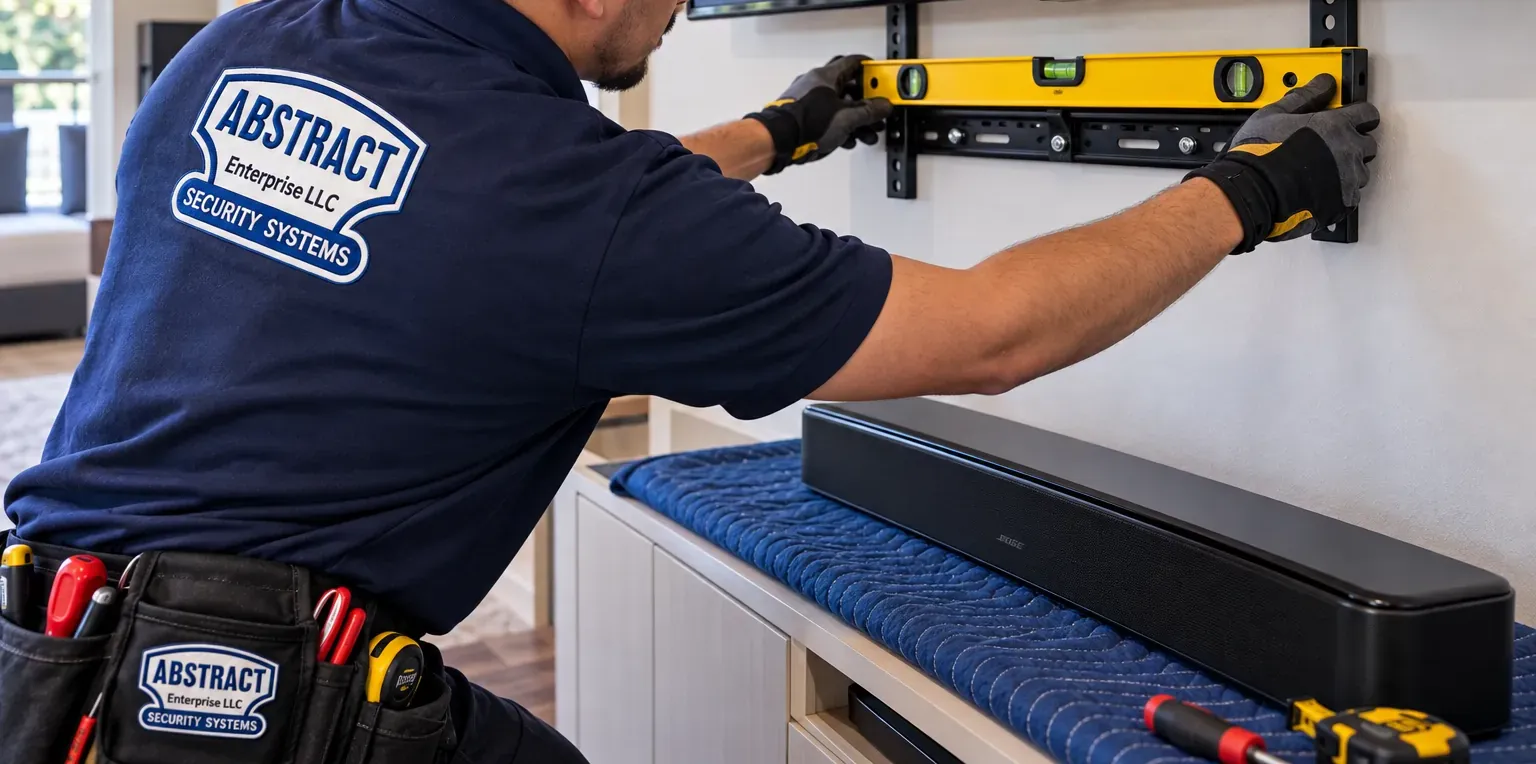
Soundbar installation in Chelsea, Manhattan: gloved technician holding a yellow spirit level against a black TV wall bracket, a soundbar resting on a padded blanket below
The bracket is levelled before anything heavy goes on it; the bar waits on a blanket on the console until the wall fixings are tight.
Chelsea Soundbar Quote
Building, wall and bar — a written Manhattan price the same business day

✅
Request Sent!
We'll call you back the same business day.
25+
Years Experience
✓
Same-Day Estimates
100%
Licensed & Insured
4.7★
201 Google Reviews

Need the bar up before a weekend, a screening or a dinner? Call (929) 560-0737 or send the form — you get a written, itemized Manhattan price, with the flat parking line already in it, before anyone rings the buzzer.

  • Certificates of insurance for the managing agent at no charge, sent before the visit so the lobby is expecting us
  • Visits planned inside your building's contractor hours, including the 9-to-4:30 weekday windows many Chelsea co-ops publish
  • NYS license #12000287431 · two-hour arrival windows, 8 AM to 8 PM, seven days
The Neighborhood

Why Chelsea Properties Need Soundbar Installation

In most neighbourhoods a soundbar visit starts with the wall. In Chelsea it starts one step earlier, with the question of who controls the wall. Chelsea runs roughly from 14th Street to the upper Thirties and from Sixth Avenue to the Hudson, and inside that grid sit some of the most unusual ownership arrangements in Manhattan: a limited-equity cooperative of 2,820 apartments, a 1930 complex where the corner buildings are a co-op and the middle of the block is a rental, two public-housing campuses being rebuilt, a landmarked hotel where a few dozen people still live permanently, rowhouses inside a historic district, and condominiums whose boards publish written alteration rules. A soundbar is a small job, but in each of those places a different person decides whether a hole may be drilled, what hours a contractor may work and what insurance paperwork must arrive first. Getting that right is most of what separates a smooth Chelsea install from a technician sent away at the desk.

The second thing that makes Chelsea distinctive is how many different walls stand within a few hundred feet of each other. The oldest houses date from the 1830s and 1840s, when Clement Clarke Moore's estate was laid out in streets of Greek Revival and later Italianate rowhouses; Cushman Row on West 20th Street, finished in 1840, is often called one of the finest Greek Revival rows in the country, and the Chelsea Historic District protecting these blocks was designated in 1970 and extended in 1981. Those houses mean plaster on wood lath over brick party walls. A few avenues away, the 1930 London Terrace buildings mean heavy masonry of a different era; the Penn South towers mean poured concrete; the newer condos along the High Line mean metal-stud partitions, glass curtain walls and, in some buildings, structural steel visible inside the apartment. Each of those takes a different fixing, a different drill and a different plan for the cable.

The third is sound itself. Chelsea is dense and stacked. Penn South alone houses close to 5,000 people on six blocks between Eighth and Ninth Avenues, and London Terrace puts roughly 1,700 apartments on a single block. In buildings like these the TV wall is often a partition shared with the next apartment, and the floor is a concrete slab that carries low frequencies to the people below with surprising efficiency. The subwoofer that sounds modest in a showroom becomes the neighbour's problem at eleven at night. Choosing the wall, setting the crossover and placing the sub with that in mind is part of the job, not an optional extra, and it matters even more in public housing, where the resident handbook asks that sound from devices not be heard outside the apartment.

Fourth, Chelsea is changing under people's feet. The Special West Chelsea District, approved by the City Council in June 2005 alongside the plan to turn the High Line into a park, opened the blocks around the old rail viaduct to residential towers; the first section of the park opened in 2009, and buildings such as HL23 on West 23rd Street, finished in 2008 and cantilevered over the High Line, followed. At the same time NYCHA's Fulton and Elliott-Chelsea Houses are being redeveloped through the PACT program, with all 2,056 existing apartments to be replaced by new buildings, and residents of some buildings offered refurbished apartments on the campuses while construction goes on. People are moving into apartments whose walls they have never seen, and some of them will move again. A soundbar plan that does not assume the bar stays on one wall forever is worth having.

Finally, Chelsea is a working neighbourhood. More than two hundred galleries sit between West 18th and West 28th Streets along Tenth and Eleventh Avenues, most of them open Tuesday to Saturday; Chelsea Market fills a full block in the former Nabisco factory at 75 Ninth Avenue, with the High Line passing through its Tenth Avenue side; Eighth Avenue is lined with restaurants and bars, some of them on the ground floors of the very co-ops whose residents sleep above. When a business here wants a TV with sound, the questions are the same as at home — whose wall, which fixing, how loud — with the city's commercial noise rules added on top.

That is why this page is organised around buildings rather than gadgets. The bar you buy matters, and we will talk about it, but in Chelsea the outcome is decided mostly by the building it goes into. If you already know your building, skip to the card for it below; if you are not sure what is behind your paint, the Questions section and the wall table will get you most of the way, and a photo sent to (929) 560-0737 will do the rest.

Chelsea at a glance, for anyone planning a TV wall

  • 2,820 apartments in Penn South, the limited-equity co-op between Eighth and Ninth Avenues and 23rd and 29th Streets, with close to 5,000 residents (Penn South FAQ).
  • About 1,700 apartments in 14 contiguous buildings of 17 to 19 stories at London Terrace, opened in 1930; the four corner buildings are London Terrace Towers, a co-op, and the middle of the block, London Terrace Gardens, remained rental (Wikipedia; London Terrace Towers; CityRealty).
  • 2,056 NYCHA apartments at Fulton and Elliott-Chelsea Houses, all to be replaced with new permanently affordable homes under the PACT redevelopment (NYC.gov / NYCHA).
  • 19.2% homeownership in the Clinton/Chelsea community district in 2024, against 32.7% citywide — most people here rent, so landlord and board rules shape most installs (NYU Furman Center).
  • 1970 and 1981: designation and extension of the Chelsea Historic District, home to Cushman Row (1839–40) on West 20th Street (Historic Districts Council; Chelsea Community News).
  • June 2005: City Council approval of the West Chelsea/High Line rezoning that produced the glass condominiums now lining the park (Manhattan Community Board 4).
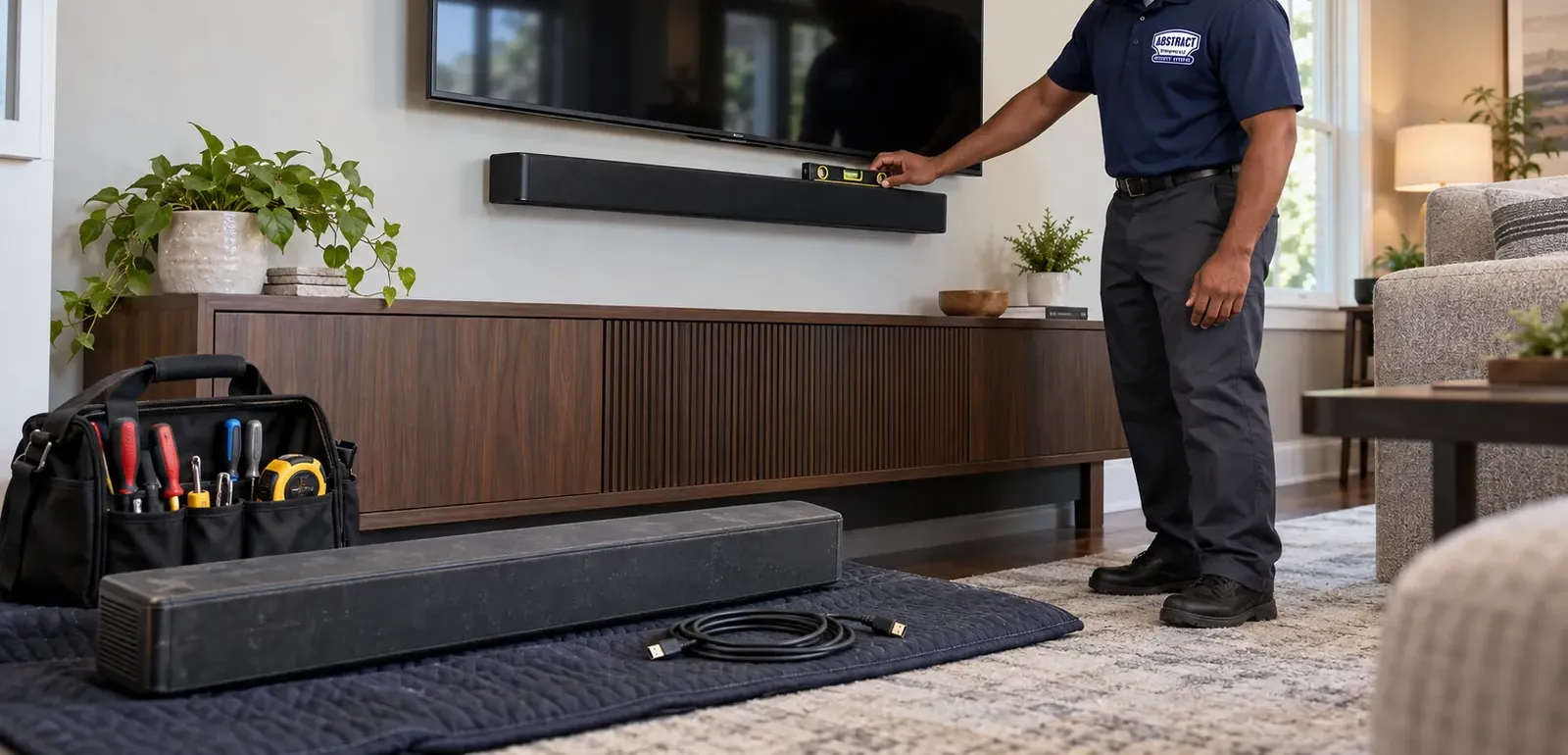
Chelsea, Manhattan soundbar mounting: technician resting a torpedo level on a wall-hung soundbar under a wall-mounted TV, tool bag and spare bar on a rug
A small level on top of the hung bar is the last check before the cables are dressed and the room is tuned.
One Street, Eight Walls

A Walk Down West 23rd Street, Wall by Wall

The easiest way to explain soundbar work in Chelsea is to walk one street. West 23rd Street crosses the neighbourhood from Sixth Avenue to the river, and in about a mile it passes nearly every building type we install in. Here is what each stop means for the bar, the bracket and the paperwork. None of the buildings named below is presented as a customer; they are landmarks we use to describe what is typical of their kind.

1. The Hotel Chelsea, 222 West 23rd Street

Built in 1883–84 and once a housing cooperative, the Hotel Chelsea is a designated New York City landmark that reopened as a hotel in 2022 after a renovation that began in 2011. It still had about forty permanent residents when it reopened. For anyone in a building like this — most of it now a hotel, a minority of it still homes — the first call is to the operator's management, because a hotel's engineering staff usually control what goes on walls, and an installer arriving through a hotel lobby needs to be expected. The walls themselves are nineteenth-century masonry with plaster finishes; we treat them like the rowhouse walls further down the street, with the drill set to stop the moment it reaches brick.

2. A Prewar Co-op at Eighth Avenue

At the corner of Eighth Avenue, 300 West 23rd Street publishes its alteration agreement online, and it is a good illustration of how Chelsea co-ops work. Shareholders need written permission for alterations; minor alterations still need Board approval and a written notice to the managing agent with the type of work and the dates; original certificates of insurance must be presented before any work begins; contractors are expected to carry general liability of $2 million per occurrence and $4 million aggregate; and work may happen only Monday to Friday between 9:00 a.m. and 4:30 p.m., never on weekends or holidays. Other buildings set different numbers, but the shape is common. We plan a soundbar visit to fit inside those hours, send the certificate made out exactly as the building asks, and keep the noisy part — a few minutes of drilling — well after the morning start.

3. Penn South, Eighth to Ninth Avenue, 23rd to 29th Street

Penn South is a limited-equity housing cooperative: 2,820 apartments, close to 5,000 residents, buildings between Eighth and Ninth Avenues from 23rd to 29th Streets. In towers of this period the walls between apartments and around the structure are concrete or masonry, the floors are concrete slabs, and the layouts repeat floor after floor. That has two consequences for a soundbar. The fixing is a masonry or concrete fixing with a hammer drill, priced on our concrete line; and because your living room is usually directly above, below and beside rooms of the same shape, bass from a subwoofer travels into homes laid out exactly like yours. We set the sub low and decoupled, steer away from walls shared with a neighbour's bedroom, and check with the shareholder what the co-op's own rules require before anything is drilled.

4. London Terrace, Ninth to Tenth Avenue, 23rd to 24th Street

London Terrace occupies the whole block from Ninth to Tenth Avenue between 23rd and 24th Streets: about 1,700 apartments in 14 connected buildings of 17 to 19 stories, opened in 1930. Today it is run as two separate operations behind one continuous facade. The four corner buildings form London Terrace Towers, a co-op, while the ten midblock buildings, London Terrace Gardens, remained rentals. For a soundbar that means two residents a few doors apart along the same sidewalk can face different approval routes — a co-op board and managing agent on one side, a rental landlord on the other — and we ask which one you are in before quoting. The walls are 1930 masonry construction; partitions in buildings of that era are commonly plaster over clay tile or gypsum block, which hold a properly chosen anchor well but punish the wrong one.

5. The Seminary Block and the Historic District, a Street or Two South

Step down to West 20th, 21st and 22nd Streets between Ninth and Tenth Avenues and you are in the rowhouse Chelsea of the 1830s to 1850s: the General Theological Seminary's block, Cushman Row, and streets of Greek Revival and Italianate houses inside the historic district. Many are now split into floor-through apartments, some remain single houses. The TV wall is usually plaster on lath, sometimes over a brick party wall shared with the next house; parlour floors have tall windows that leave narrow piers of wall between them. The Landmarks Preservation Commission regulates what happens to the outside of these buildings; a soundbar bracket inside the parlour that changes nothing visible from the street is ordinarily a matter for the owner or landlord, not the Commission. Anything that would pass through or attach to the facade — an outdoor speaker, a cable through the front wall — is a different question, and one we flag before work, not after.

6. Tenth Avenue, the High Line and HL23

At Tenth Avenue the street passes under the High Line, the 1.45-mile park built on the old New York Central freight viaduct. Beside it, at 515 West 23rd Street, HL23 — fourteen stories and eleven residences, completed in 2008 — cantilevers over the park, with large windows braced diagonally. It is an extreme example of what the 2005 rezoning produced along this stretch: apartments where two or three sides are glass, interiors designed to be column-free, and the only solid walls are the partition to the next unit, the core around the elevator, and whatever the developer built for kitchens and closets. In these rooms the question is not which wall is strongest but which wall exists at all, and whether the condo board's alteration rules let us open it for cable.

7. The Gallery Blocks

North and south of 23rd Street between Tenth and Eleventh Avenues are the galleries — more than two hundred of them between West 18th and West 28th Streets — many in former garages, warehouses and industrial buildings, some inside the West Chelsea Historic District. Their walls change with every exhibition, their floors are often polished concrete, and they are typically closed to the public on Sundays and Mondays. For a gallery office, a viewing room or a video work that needs a screen with sound, that calendar shapes everything: we work when the doors are closed and leave the room exactly as the art handlers expect it.

8. Chelsea Piers at the River

West 23rd Street ends at the Hudson, opposite Chelsea Piers, the sports and entertainment complex that opened in 1995 on Piers 59, 60 and 61 and the head house that joins them, on the site of the old ocean-liner terminals. It is the end of the walk and a useful reminder of how mixed the area is: within a few blocks of the river there are residential towers, offices in converted freight buildings, studios and sports venues, each with its own idea of where a TV belongs and how loud it may be.

Eight stops, eight sets of rules. Most of the work on this page is about telling them apart quickly, so that the visit you book is the visit that happens.

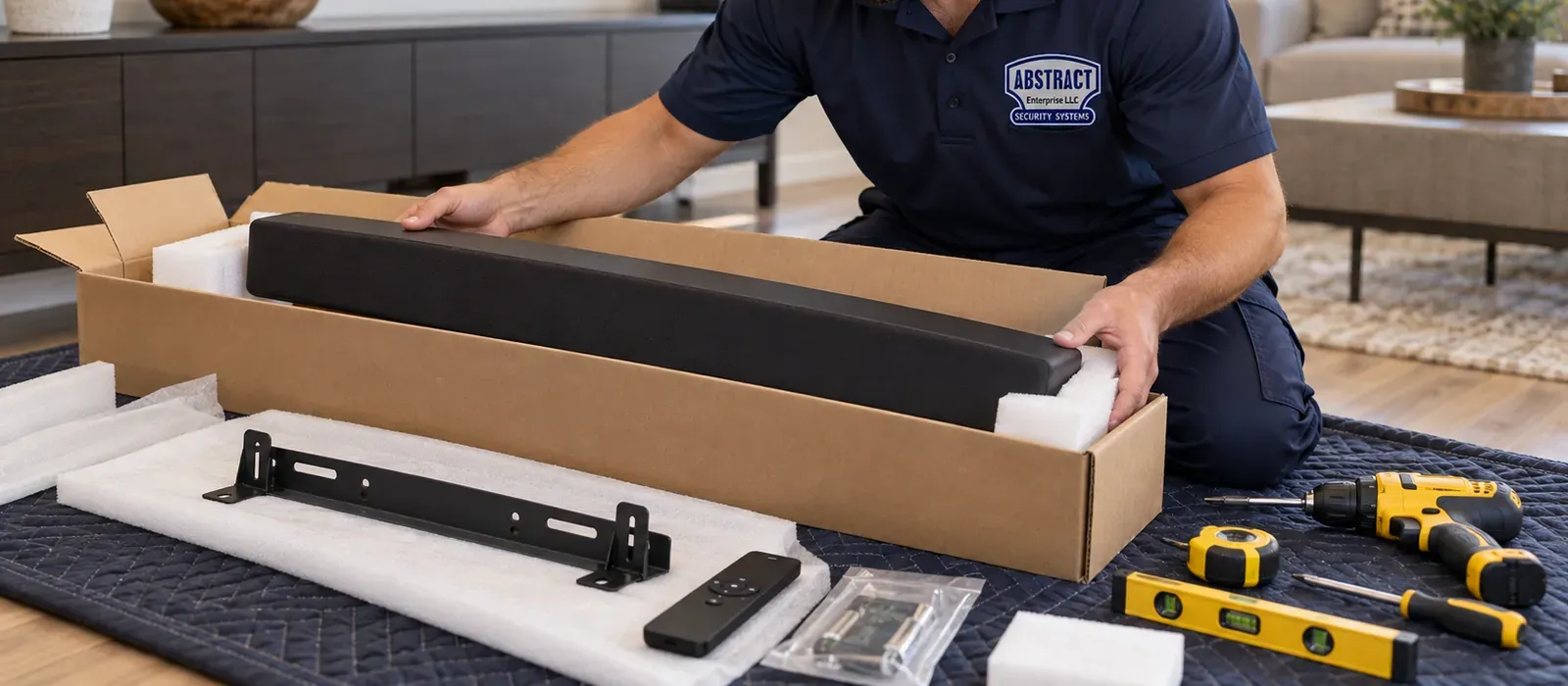
Soundbar unboxed for a Chelsea, Manhattan install: bar lifted from its carton, wall bracket, remote, screws, drill, tape and levels laid on a moving blanket
Everything comes out of the box and is checked against the wall plan before the first hole: bar, bracket, remote and the fixings bag.
What We Install

Soundbar Installation Services in Chelsea

Every service below is priced from the published Manhattan menu further down the page, and every one is planned around the building as well as the bar.

Bar Hung Under a Wall-Mounted TV

The core job: the wall identified, a fixing matched to plaster, concrete, masonry or metal studs, the bracket levelled, the bar hung centred under the screen and tested from the seat you actually use.

No-Drill Console Placement

For rentals, temporary apartments and anywhere the answer to drilling is no: the bar placed on the media unit clear of the TV's infrared window, connected, tuned and tidied. Nothing to patch when you leave.

Bar Fixed to the TV Mount

A bracket that clamps the bar to the TV or its arm, so the only holes are the ones the TV already needed. Useful on a glass-condo partition or a wall the board wants touched as little as possible.

Hidden Cable in Hollow Walls

An in-wall power and cable kit, to code, where the partition is hollow and the owner, board or landlord has agreed to it opening — common in newer condos, rarely possible on masonry.

Painted Channels on Solid Walls

On concrete, brick and block the cable cannot go inside the wall, so it goes into a slim paintable channel down to the outlet or console, painted to the wall so it disappears from the sofa.

eARC, CEC and Lip-Sync Setup

The HDMI connection made to the right port, CEC switched on so one remote runs everything, and a dialogue scene played to check that voices match lips before we leave.

Subwoofer and Rear Speakers

A wireless sub placed and set for a stacked building, rear speakers on stands or a low shelf, and the whole system balanced for the room rather than at full factory bass.

Moving the Bar to a New Apartment

Taken down, packed with its bracket and fixings, and set up again in the new place — useful for anyone moving within Chelsea, including residents relocating during a redevelopment.

Business and Gallery Screens

Bars for restaurant and bar TVs, reception areas, studios and gallery viewing rooms, with volume limits set and the work scheduled around opening hours.

Most Chelsea households that call about a soundbar are also thinking about the TV itself, and many co-op and condo apartments pair the job with better Wi-Fi to the TV wall. Both can happen on one visit, under one parking line; see the TV, network and Sonos links in the Complete Services section.

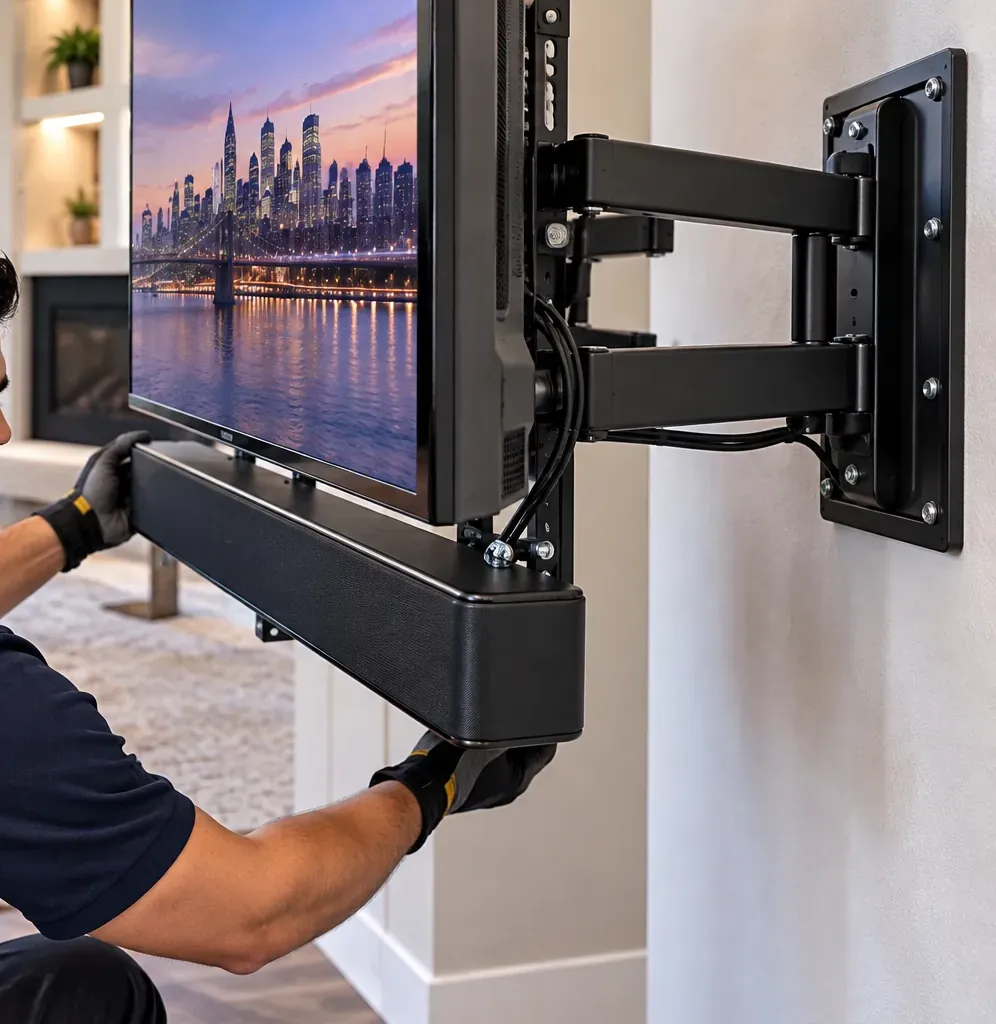
Chelsea, Manhattan soundbar on a full-motion TV arm: gloved hands fixing a soundbar bracket to the bottom of a TV on an articulating wall mount
On an articulating arm the bar rides with the screen, so it stays centred whichever way the TV is turned.

Bar Went Quiet Between Eighth Avenue and the River?

A soundbar that has lost its connection to the TV, drifted out of sync, dropped its subwoofer or started to pull away from the wall can usually be put right in one to two hours on site. Call (929) 560-0737, tell us the building and what the bar is doing, and take the next free two-hour window. Repair-only visits are billed by time at the Manhattan setup rate, with the one parking line; the price is confirmed before we come.

Building Specialists

Soundbar Installation for Chelsea's Architecture

Chelsea's building stock is easier to work with once you sort it into families. Each family below has a typical TV wall, a typical problem and a typical answer.

Greek Revival and Italianate Rowhouses

Plaster on wood lath on the partitions, brick on the party walls, ceilings high enough that the screen is often hung too high. We find the studs or the brick, keep the bar at eye height for the sofa, and treat original mouldings as untouchable.

Avenue Tenements and Walk-Ups

Five- and six-storey buildings on the avenues, many over shops. Narrow front rooms, brick or block walls, radiators under windows and stairs instead of elevators — compact bars, painted channels and the walk-up line in the price.

1930 Masonry Complexes

London Terrace and buildings of its generation: masonry structure, partitions often of clay tile or gypsum block, building staff and a managing agent who expect paperwork. Anchors chosen for the block, not guessed.

Postwar Concrete Co-op Towers

Penn South and similar towers: poured concrete, repeating floor plans, neighbours on every side. Hammer-drill fixings on the concrete line, the sub kept quiet and off shared walls, and the co-op's rules followed to the letter.

NYCHA Towers Under Redevelopment

Fulton and Elliott-Chelsea Houses: masonry and concrete apartments, written consent from property management before any fixture, and residents who may move to a refurbished or new apartment — so no-drill or TV-attached options come first.

Victorian Landmarks and Converted Hotels

The Hotel Chelsea type: heavy old masonry, residents living among hotel rooms, and building management that controls what is fixed to walls. We go through the operator first and plan the visit around its engineering staff.

High Line Condominiums

Post-2005 buildings with glass on several sides, metal-stud partitions, exposed structure in some units and detailed alteration agreements. Backer boards, TV-attached bars and in-wall kits where the board agrees.

Freight-Era and Factory Conversions

Former terminals, warehouses and factories now used for offices, studios and markets: thick concrete, tall ceilings, columns and long rooms where dialogue has to carry. Concrete fixings and careful bar placement for intelligibility.

Gallery Spaces

White walls rebuilt for each exhibition, polished concrete floors and a strict calendar. Removable or reusable fixings, protection for floors and finishes, and visits on closed days.

How we fix the bracket to each Chelsea wall

Wall you have Where you find it in Chelsea How the bracket is fixed Price line
Plaster on wood lath Rowhouse partitions, older walk-ups Screws into studs located through the plaster; toggles only where plaster is sound and the bar is light Plaster +$45
Brick party wall Rowhouses, tenements, the Hotel Chelsea type Sleeve anchors into the brick face, not the mortar joint; cable in a painted channel Brick or stone +$65
Clay tile or gypsum block partition 1930 complexes and prewar elevator buildings Anchors rated for hollow masonry, holes drilled without hammer action to avoid blowing out the block Plaster +$45 or brick +$65, depending on the finish we confirm on site
Poured concrete Postwar co-op towers, NYCHA towers, freight-era conversions Hammer drill and concrete anchors, scanned first for conduit; cable in a painted channel Concrete or cinder block +$75
Drywall on metal studs High Line condos, newer rentals, offices Fixings into the steel studs, or a plywood backer for heavier bars Metal studs +$30; backer $85
Drywall on wood studs Renovated rowhouse floors and lofts Screws straight into the studs $0
Tile, marble or stone cladding Condo feature walls and fireplace surrounds Diamond bit, slow speed, after you've heard the cracking risk Tile or marble +$95

Most Chelsea co-op and condo apartments that add a soundbar also ask about getting the TV onto a wired network connection or a better Wi-Fi signal, and many rowhouse owners pair the job with a smart lock or intercom upgrade at the front door. If either is on your list, mention it when you write, and we will plan the visit so the wall is opened once.

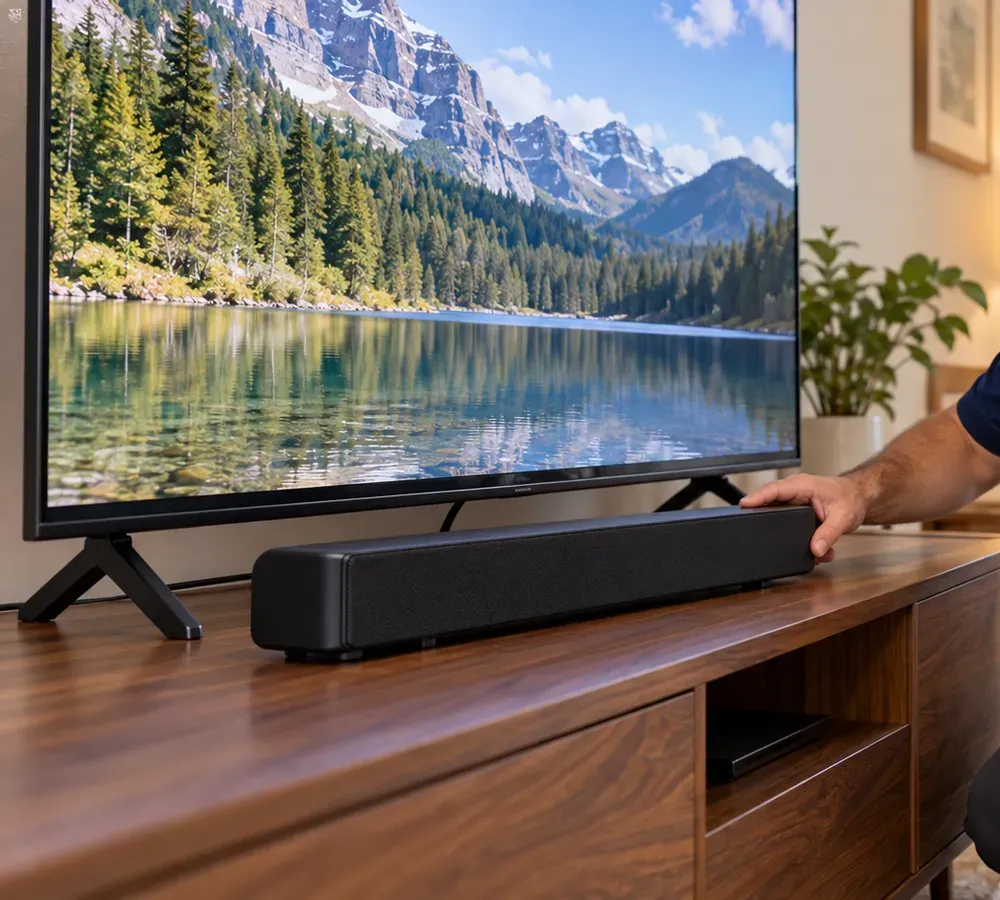
No-drill soundbar setup in Chelsea, Manhattan: soundbar placed on a walnut media console in front of a TV on its feet, a hand squaring the bar
Where nothing may be drilled, the bar sits on the console in front of the TV feet, clear of the remote sensor.
Commercial Soundbar

Business Soundbar Installation in Chelsea

Chelsea's businesses sit in some of the same buildings as its residents, so a business soundbar here is judged twice: by the customers in front of the screen and by the people living upstairs. These are the corridors we know best and what tends to be asked for on each.

Eighth Avenue

Restaurants, bars and cafés from 14th Street up past 23rd, many on the ground floors of co-ops and walk-ups. Penn South alone leases storefronts along its Eighth and Ninth Avenue strips. Screens behind bars and in dining rooms, with the bass kept off the ceiling the apartments sit on.

Ninth Avenue and Chelsea Market

The food hall and offices in the former Nabisco factory at 75 Ninth Avenue anchor a stretch of restaurants and shops. Counter screens, menu displays with sound, and small offices in converted industrial space.

West 23rd Street

Hotels, shops and restaurants from Sixth Avenue to Tenth, including the landmarked Hotel Chelsea. Lobby and lounge screens, fitness rooms, and hospitality spaces where the TV has to be audible to one seating group, not the whole floor.

The Gallery Blocks, Tenth to Eleventh

Galleries, framers, design studios and showrooms between West 18th and West 28th Streets. Viewing-room screens, office conference screens and video works, installed on closed days with every surface protected.

Seventh and Sixth Avenue Offices

Office floors, medical and wellness practices and studios in the old commercial buildings toward the Flatiron edge. Conference-room bars, waiting-room screens with capped volume, metal-stud partitions.

The River Edge

Sports and entertainment venues near Chelsea Piers and offices in former freight buildings toward Eleventh and Twelfth Avenues. Large rooms, concrete everywhere, long seating distances and a lot of background noise.

Rules a Chelsea business soundbar has to respect

  • Commercial music next to homes. The city's noise code limits sound from commercial establishments as heard inside a nearby residence: 42 dB(A), and no more than 7 dB(A) or 6 dB(C) above the ambient level (NYC DEP noise code guide). A bar on a ground floor with apartments above is the classic case; we set a maximum volume, place the sub away from the ceiling and party walls, or leave it out.
  • Construction hours. Residential construction noise is allowed 7 a.m. to 6 p.m. on weekdays under the city's rules (NYC311), and many buildings set tighter windows. Drilling for a bracket is brief, but in a mixed building we book it inside the landlord's hours.
  • Accessibility. In public circulation areas, objects mounted between 27 and 80 inches above the floor should not project more than 4 inches into the path (2010 ADA Standards §307.2). A TV and bar in a corridor or waiting area is planned with that in mind.
  • Low-voltage versus electrical work. The HDMI, speaker and network cabling we run is low-voltage work. New or moved power outlets are electrical work for a Licensed Master Electrician under city rules, and we say so before quoting rather than after.
  • Landmarked fronts. Inside the Chelsea and West Chelsea historic districts, anything fixed to or through a facade — an exterior speaker, a cable through a storefront wall — is the Landmarks Preservation Commission's concern. Indoor installs that leave the exterior untouched are planned with the landlord.

Not legal advice: these are the rules as published by the city and federal agencies named, and your landlord, board or lease may be stricter. Where a rule could apply, we tell you before the visit.

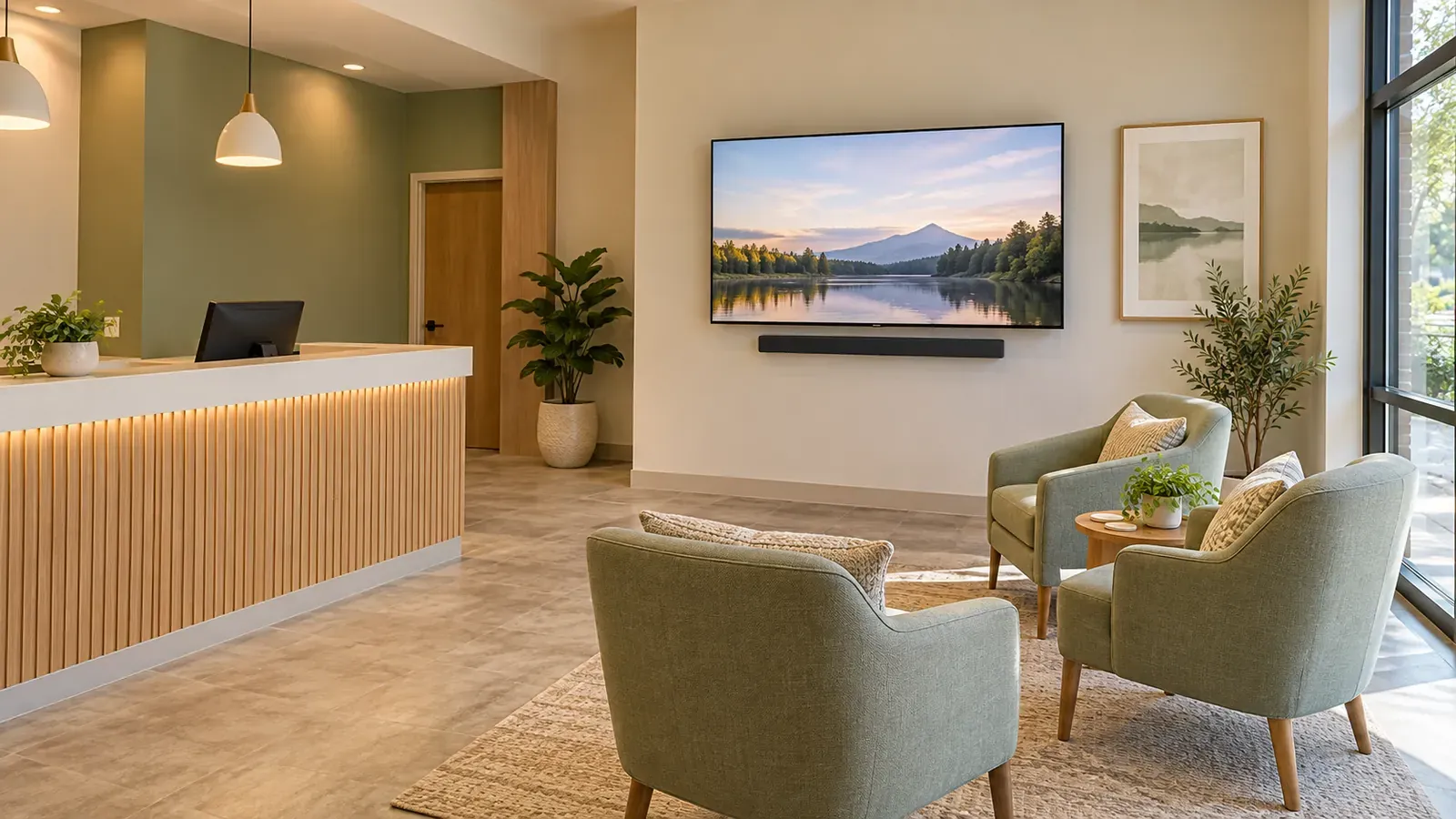
Reception area with a wall-mounted TV and slim soundbar above lounge chairs, a front-of-house layout for Chelsea, Manhattan businesses
A slim bar under a reception screen keeps the sound at the seating, not at the front desk.
Your Questions Answered

Soundbar Installation in Chelsea: Questions Answered

These are the questions Chelsea buildings raise that a generic soundbar guide never does. They are grouped by the kind of building they come from; the answers are our working practice, and where a building's own rules decide, we say so.

Big complexes, many managements

Chelsea's largest residential blocks are run by co-op boards, rental landlords, NYCHA and hotel operators, sometimes side by side. The first job is knowing which one is yours.

At London Terrace the corner buildings are a co-op and the middle of the block is a rental — how do we know whose rules apply to our TV wall?

Go by your lease or proprietary lease, not by the address on the awning. The four corner buildings are London Terrace Towers, a cooperative with its own board and managing agent; the midblock buildings are London Terrace Gardens, which remained a rental and is run as a separate building. A shareholder in the Towers follows the co-op's alteration rules and gets sign-off through its managing agent. A tenant in the Gardens needs the landlord's consent under the lease.

When you book, tell us which you are and, if you can, forward the building's contractor requirements. We make the insurance certificate out to the right entity and the right managing agent, because a certificate naming the wrong company is the most common reason a technician is held at a lobby desk. If you are not sure, a photo of the first page of your lease or the building's notice to residents usually settles it.

The physical work is the same either side of the dividing line: 1930 masonry construction, partitions that need an anchor chosen for hollow block rather than drywall, and neighbours close enough that the subwoofer gets set with care.

Every apartment in our line has the same layout as ours — can we copy the TV position a neighbour already uses?

You can copy the idea, but not blindly copy the holes. Repeating layouts are common in Penn South and other postwar co-op towers, and a neighbour's successful TV wall is useful evidence: it tells you the wall takes a fixing and that the viewing distance works. What it does not tell you is what is inside your section of the wall. Risers, conduit and the occasional pipe are not always in the same place on every floor, and some lines are mirror images of the one above.

There is also a neighbourly reason to think twice. If the wall your neighbour used is a partition you share with the apartment next door, putting a TV and bar on it puts sound straight into their living room or bedroom. In stacked buildings the quietest place for a soundbar is usually a wall that backs onto a hallway, a closet, your own kitchen or the building's exterior, not onto another home.

We scan before marking and drill only where the scan is clear. If the neighbour's position turns out to be the right one for you too, so much the better; if not, we show you why on the wall itself before anything is fixed.

Our building is now mostly hotel rooms with a few permanent residents — who has to agree before a bracket goes up?

Start with the operator's building management. In a building that has become largely a hotel, like the Hotel Chelsea since its 2022 reopening, the hotel's engineering or facilities staff normally control alterations, access and contractor scheduling for the whole building, including the apartments of long-term tenants. Your own landlord relationship may run through the same company or a separate one; either way, the people at the front desk will want to know a contractor is coming.

Ask management for their contractor requirements in writing, then send them to us. We will match the insurance certificate, the arrival time and the route through the building to what they ask for. If they want to see the bracket specification or the exact position first, we provide it before the visit.

Physically, buildings of that age are heavy masonry with plaster finishes. Expect the brick or plaster line on the price and a painted channel rather than hidden cable.

We are being moved to a temporary apartment on the Fulton or Elliott-Chelsea campus while the new buildings go up — how should the soundbar be set up so it moves easily again?

Plan for at least two moves. Under the redevelopment, residents of some buildings, including Fulton 11 and Chelsea Addition, have been offered a refurbished apartment on the campuses while construction goes on, with a right to return to an apartment in the replacement buildings. A setup that depends on holes in a wall you will leave is the wrong choice for a temporary home.

The best fit is a no-drill arrangement: the bar on the console in front of the TV, or clamped to the TV's own stand or mount, with the cables tied and labelled so the whole system can be unplugged and rebuilt in minutes. NYCHA's resident handbook says residents may not alter their apartments or add fixtures or fittings without prior written consent from the property management office, so any wall mount needs that consent first, and a temporary apartment is the place to skip it.

When the move comes, we can take the system down, pack the bar with its bracket and remote, and set it up again in the next apartment. And because the handbook also asks that sound from devices not be heard outside your apartment, we set the bass and night mode for a building full of neighbours at the start, not after the first complaint.

Glass, steel and the High Line

In the post-2005 buildings along the park the problem is rarely a weak wall. It is a shortage of solid wall, structure in unexpected places, and an audience outside the window.

People walking on the High Line can see straight into our living room — where can the TV and soundbar go so the screen isn't on display?

Turn the screen so its face points into the apartment rather than toward the glass. In practice that means the TV goes on a solid wall perpendicular to the windows or on the interior wall opposite them, so walkers see the back of the room rather than the picture. A screen facing the glass also fights reflections all day, so this is usually the better position for watching too.

If the only solid wall faces the windows, the alternatives are a full-motion arm that lets the screen swing away when it is not in use, or a console position deeper in the room. In either case the soundbar travels with the TV: clamped to the arm or set on the console directly beneath the screen, so the sound stays anchored to the picture.

Shades help with privacy and glare, and some apartments here have motorised ones. Sound is a separate question: closed glass keeps most of a soundbar's output inside, but bass travels through the building structure, so the subwoofer still gets set with the neighbours in mind.

Our condo has radiant heating in the floor — does that change where the subwoofer and the console can go?

It changes what may be fixed to the floor, not where things may stand. Free-standing furniture, a console and a subwoofer on a pad can sit on a heated floor; what must never happen is a screw, anchor or cable clip going down into it, because the heating pipes or cables run just under the finish. We do not fix anything to a floor we know or suspect is heated, and we ask before assuming it is not.

Two practical details follow. A subwoofer on a warm floor is fine for the electronics, but it should sit on a decoupling pad anyway, both to keep bass out of the slab below and to let air move under it. And cables to a sub or rear speakers cannot be pinned along the floor edge into the screed, so they go under a rug, behind furniture or along the skirting in an adhesive channel.

If the condo's manifold or thermostat wiring sits in the wall we planned for the TV, the scan usually shows it. In that case the bracket moves sideways a stud or two, or the bar is clamped to the TV mount so the wall takes fewer fixings.

Our motorised shades come down for movie night — can they be part of the same button that turns on the TV and soundbar?

Sometimes, and it depends entirely on the shade system. Many motorised shades run on their own hub and app, and some can be added to a voice assistant routine or a smart-home scene that also turns on the TV. Where that is possible, a routine can lower the shades and switch on the TV, and the TV's HDMI-CEC link then wakes the soundbar automatically.

What we set up on a soundbar visit is the part we control: CEC between TV and bar so one remote runs both, the bar's app on your phone, and, if you want, a universal remote programmed for TV, bar and streaming box. Linking that to the shades means working inside the shade manufacturer's system; we will tell you on the day whether your model exposes what is needed.

Whole-home control systems from dedicated integrators are a different scale of project. If your condo already has one, we connect the soundbar so the integrator can add it, rather than reprogramming their system ourselves.

Old walls, art and the rooms people actually live in

Rowhouse floors and prewar apartments raise the questions about sound, vibration and what else shares the wall.

Our floor-through's TV wall backs onto the common stair that every tenant uses — will the soundbar be heard in the stairwell?

Some of it will, and more than you might expect. A stair hall is a hard, echoing shaft that collects sound from every apartment door and every wall that touches it, and in a converted rowhouse the stair wall is often a lightly built partition rather than solid brick. Bass and voices from a bar on that wall will carry up and down the building at night.

If you can, put the TV on a different wall — the party wall to the next house is often better because it is solid masonry, or the wall toward the back rooms of your own apartment. If the stair wall is the only choice, keep the bar on a bracket that holds it slightly off the wall, leave the subwoofer out or set it very low and away from that wall, and use the bar's night or dialogue mode after ten.

It is also worth checking whether the stair is a fire stair with rules about what may penetrate its walls. We never run cable through a stair wall; cables stay on your side.

We collect art — can a TV and soundbar share a wall with framed works, and will the bass shake them?

They can share a wall, with a little planning. Hanging systems and picture hooks on the same wall as a TV bracket are not a problem in themselves; what matters is weight on the correct structure and enough space that the screen does not dominate the work. We mark the TV and bar positions with tape so you can judge the composition before drilling.

Vibration is a fair worry with a subwoofer. Low frequencies can make frames rattle against the wall, nudge pieces on shelves and, in older plaster, make a loose picture hook creep. The answers are simple: keep the sub off the floor near the art wall, put it on a decoupling pad, set the crossover and level for the room rather than for maximum effect, and use bumpers on frame corners. A soundbar without a separate sub, well set up, is often enough in a living room.

Do not put works on paper or fragile pieces directly above the bar's top surface if the bar has up-firing speakers, and keep heavy objects off the bar itself. If a piece is valuable, tell us before we arrive; we will take it down or work around it with you present, and nothing in the collection is moved by us without your say-so.

Galleries and working spaces

West Chelsea's galleries and studios want sound for screens and meetings, but on their own calendar.

Exhibitions change every few weeks — can a gallery's screen and soundbar move to a different wall for each show without new damage every time?

Yes, if the fixing system is designed for it. Instead of screwing the TV and bar straight into each new wall, we fix a rail or cleat system to a part of the gallery that does not change between shows — a permanent wall, an office partition or a back-of-house wall — or use a heavy floor stand with the bar mounted to it, so the whole unit can be wheeled or lifted into position for each exhibition.

Where the screen must be on a temporary exhibition wall, we use fixings sized for patching: small, consistent holes that the art handlers can fill and paint in the normal turnover between shows. We log where every fixing went so the next install reuses the same positions where possible.

We schedule this work for the days the gallery is closed to the public, usually Sunday or Monday, protect floors and finished walls, and leave cable runs labelled for the next change-over. The setup itself — HDMI from a media player, CEC, a fixed volume level — is saved so the piece plays the same way every day of the show.
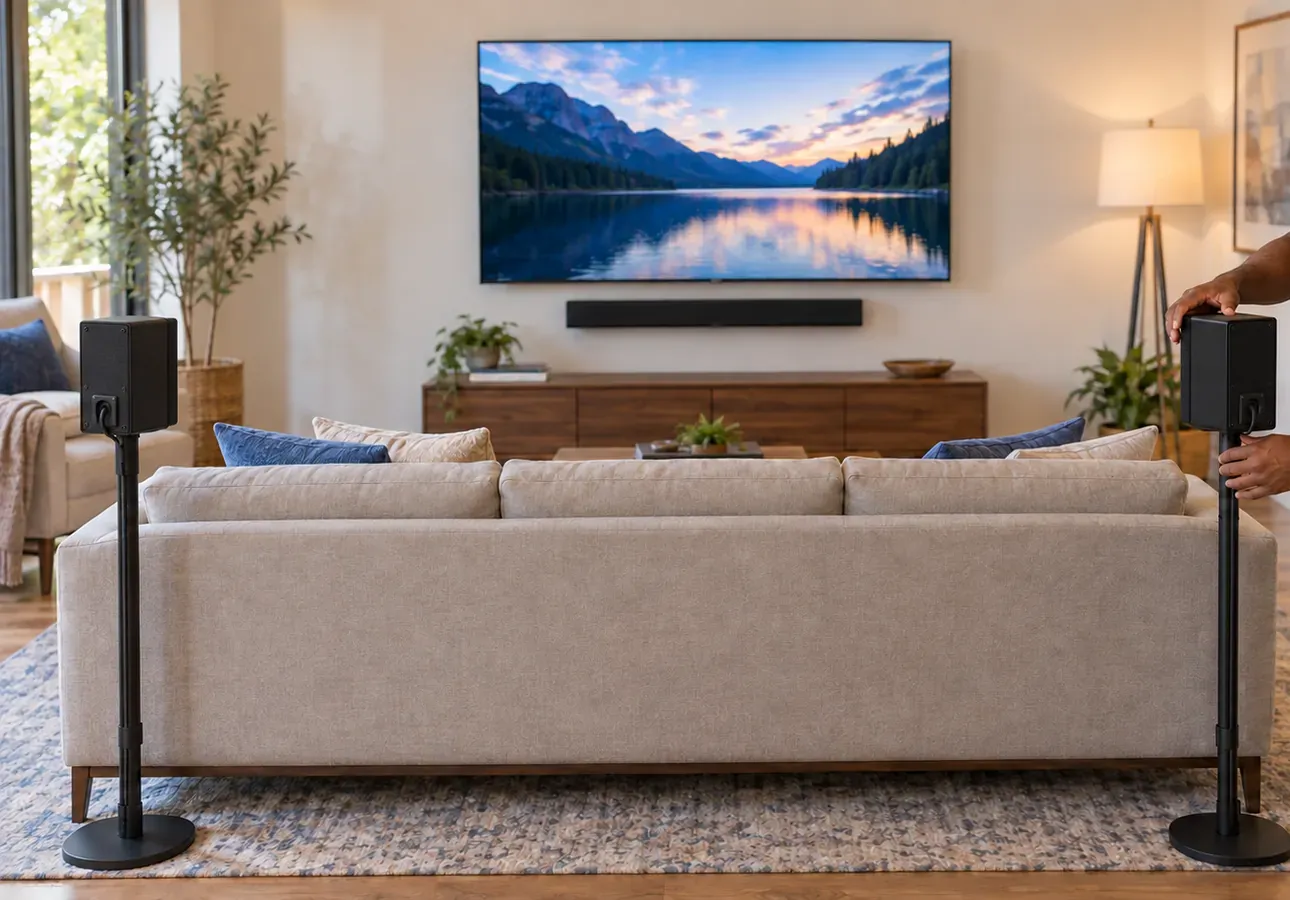
Rear surround speakers on floor stands behind a sofa, wall-mounted TV and soundbar across the room, for a Chelsea, Manhattan living room
Floor stands put the rear speakers at ear height behind the sofa without a single hole in the wall.
Equipment

Types of Soundbars and Mounts We Install

We install the bar you have chosen. If you have not chosen yet, this is how we would match equipment to the apartments we see most in Chelsea.

Compact Bars for Studios and Walk-Ups

Short bars that fit under a 43- to 55-inch screen in a narrow front room or a studio alcove, with speech enhancement that does most of the work a sub would.

Mid-Size Smart Bars for Co-op Living Rooms

The common choice in a one- or two-bedroom: HDMI eARC, Wi-Fi streaming, a night mode, and enough output for the room without a separate sub.

Flagship Atmos Bars for Larger Rooms

Up-firing drivers need a flat, reasonably low ceiling to reflect from, which suits rowhouse parlours and condo living rooms better than lofts with exposed beams.

Wireless Subwoofers, Used Sparingly

In stacked concrete buildings we place the sub on a decoupling pad, away from shared walls and the floor's centre, at a level the neighbours will not notice.

Rear Speakers on Stands

Wireless rears on floor stands behind the sofa give surround sound with no holes, the right answer for renters and temporary apartments.

Wall Brackets and Spacers

Our Sanus soundbar bracket when the boxed one is missing or wrong for the wall, with spacers to clear a TV's bottom edge or a skirting board.

TV-Attached Brackets

Brackets that hang the bar from the TV or its arm, so the bar follows the screen and the wall needs no extra holes.

In-Wall Kits, Channels and Covers

Code-compliant in-wall power and cable kits for hollow partitions; slim paintable channels for concrete, brick and block.

Network Links and Remotes

Ethernet to the bar where Wi-Fi is crowded, small switches for TV walls with several boxes, and universal remotes programmed for TV, bar and streaming.

Three ways to put a Chelsea soundbar under a TV, compared

Approach Holes in your wall Best for Watch out for
Bar on its own wall bracket Two to four, below the TV Owners and co-op shareholders with approval; walls that take a good fixing Needs the right anchor for plaster, block, concrete or metal studs
Bar clamped to the TV or its arm None beyond the TV mount's Glass condos, full-motion arms, boards that want minimal drilling Bar weight must suit the TV mount's rating; bar moves with the screen
Bar on the console None Rentals, NYCHA and temporary apartments, TVs on stands Must not block the TV's IR window; console height decides sound height

Which connection fits your setup

Link Best for Check first
HDMI eARC Newer TVs and bars; lossless audio and one-remote control Use the port marked eARC, which on some TVs is on an external box
HDMI ARC Older TVs; Atmos only inside Dolby Digital Plus HDMI-CEC switched on in both menus
Optical Compact bars and TVs without ARC Volume may need the remote programmed
Ethernet Smart bars in towers full of competing Wi-Fi networks A jack near the TV, or a cable path from the router
Wi-Fi only Bars with no network port Router position, and whether the building supplies the network

National brands and app marketplaces versus a Chelsea installer. Big-box tech services and gig apps sell neat flat-rate soundbar installs, and in a house with drywall and no board they are often fine. The gap shows up in Chelsea's buildings: a technician assigned by an app may not carry the insurance a co-op names, may arrive outside the 9-to-4:30 window, or may meet a clay-tile partition with drywall anchors. We price the building into the quote, make the paperwork part of the job, and send someone who has hung bars on concrete, block, lath and glass-condo partitions.

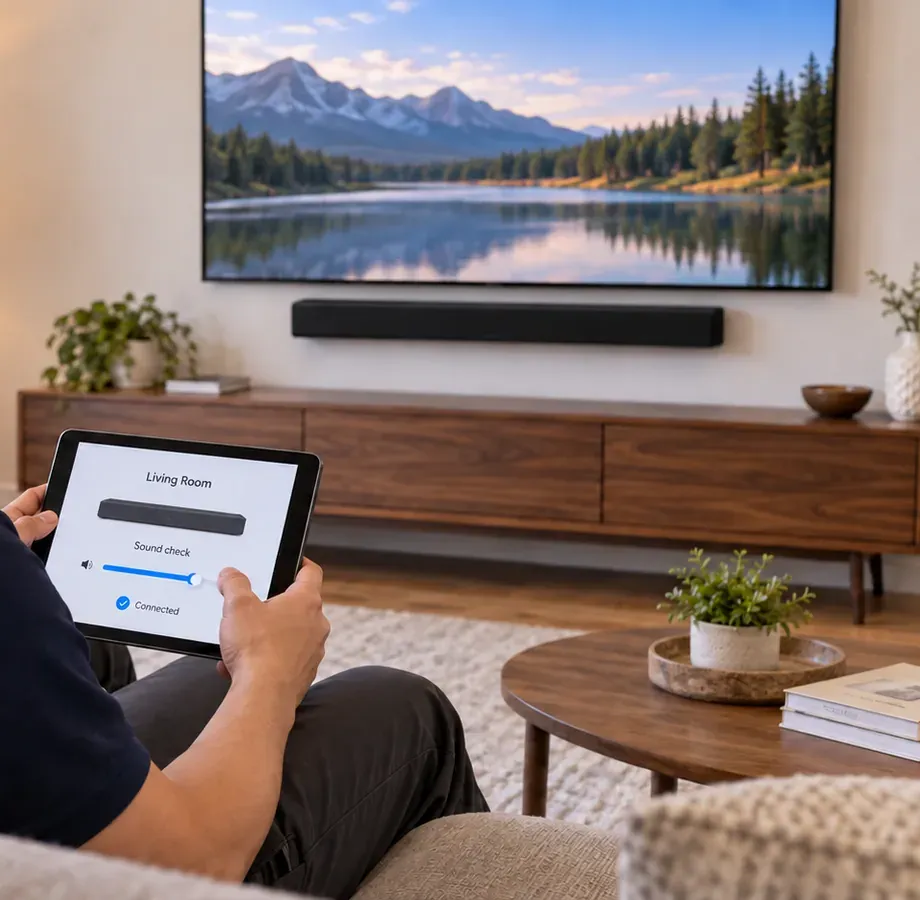
Chelsea, Manhattan soundbar tuning: tablet held at the sofa showing a sound-check screen, TV and slim soundbar on the wall above a wooden console
The sound check is run from where you actually sit, not from beside the TV.
AI Overview Reality Check

What AI Gets Wrong About Soundbar Installation in Chelsea

We could not open Google's AI Overview from our build environment, so the claims below are ones that general online cost guides and AI answers commonly repeat, quoted or paraphrased, with the source named where there is one. Each is followed by what we find in Chelsea's buildings.

“Mounting a soundbar is a $30 to $100 add-on”

Angi's TV cost guide puts a soundbar bracket or mount add-on at roughly $30 to $100, and Thumbtack's national figure for a TV wall-mount install sits around $121 to $234. Those are national averages built mostly on houses with wood-stud drywall and parking at the curb.

Chelsea has neither as a rule. Our published Manhattan line for the bar is $129, the wall line adds $45 for plaster, $65 for brick and $75 for concrete, and every Manhattan visit carries one flat $150 parking charge because a van cannot sit at a hydrant on Ninth Avenue for two hours. A typical Penn South-type concrete wall with our bracket comes to $438.99, all in.

The point is not that national guides are wrong; it is that they describe a different building. Ask for the price on your wall, in your building, with parking in it, and compare that.

“If your building is in a historic district, you need Landmarks approval to mount a TV”

This gets repeated about Chelsea because so much of it is landmarked: the Chelsea Historic District of 1970 and its 1981 extension, the West Chelsea Historic District of 2008, and individual landmarks such as the Hotel Chelsea. The Landmarks Preservation Commission's permits, though, are mainly about work that affects a building's exterior, plus work that already needs other city permits.

A bracket inside a parlour or an apartment that changes nothing visible from outside is ordinarily a matter between you and your landlord, board or managing agent. The exceptions are real: an outdoor speaker, a cable through the facade, or a satellite dish all touch the exterior and need checking first.

So the right question in a landmarked building is usually not “will the Commission approve it?” but “what does my lease or alteration agreement say?” We will ask for that agreement before the visit.

“Use the screws and anchors in the box”

Manufacturers include hardware that suits a wood stud or a solid timber surface. Chelsea's walls are plaster on lath, brick, clay tile, gypsum block, poured concrete and metal studs, sometimes several in one apartment.

Plastic plugs in old plaster pull out as the plaster crumbles; drywall anchors in hollow clay tile can spin; a hammer drill on gypsum block can blow the back of the block out; screws meant for wood strip in a thin steel stud. Each of those failures happens slowly, which is why the bar is found hanging crooked a month later.

We identify the wall first and bring fixings for each type. The price lines for plaster, brick, concrete and metal studs exist precisely because the hardware and time differ.

“You can schedule the install any time you're home”

In a private house, yes. In a Chelsea co-op, the building decides. 300 West 23rd Street's published alteration agreement, for example, limits work to Monday through Friday, 9:00 a.m. to 4:30 p.m., excludes weekends and holidays, and requires original insurance certificates before any work begins.

Buildings without published rules often have the same habits: a service entrance, a freight elevator booked by the hour, a doorman who needs a name. Rental buildings generally follow the city's 7 a.m. to 6 p.m. weekday construction hours for noisy work.

We book against your building's rules, not our calendar. If you can only be home on a Saturday and your building forbids Saturday work, the honest answer is a weekday with someone letting us in, or a no-drill setup that needs no approval at all.

“Glass-walled condos have nowhere to mount a TV”

AI answers often suggest a floor stand or a projector for apartments with lots of glass. Those are valid options, but most High Line condos still have at least one solid partition, a kitchen wall or a core wall around the elevator and shafts.

The real constraints are different: some walls are shared with the next unit, so sound carries; some contain the building's risers; some units have exposed structure that cannot be touched. The board's alteration agreement may also decide whether a partition may be opened for cable.

Our approach is to find the solid wall that does not back onto a neighbour's bedroom, hang the TV and bar there on fixings rated for metal studs or a backer, and if no wall works, clamp the bar to a stand or arm so the sound stays with the screen.

“Public housing tenants can't mount anything”

Not quite. NYCHA's resident handbook says residents may not alter their apartments or add fixtures or fittings without prior written consent from the property management office. That is a permission requirement, not a blanket ban.

In practice, for many NYCHA residents the better answer does not need permission at all: a bar on the console or clamped to the TV stand, connected properly and set for the building, with no holes. For residents at Fulton and Elliott-Chelsea, where moves between buildings are part of the redevelopment plan, that is usually the wiser choice anyway.

If you do want a wall mount, get the written consent first and show it to us. We will not drill a NYCHA wall without it.

“Add a subwoofer for real cinema sound”

Cost guides and product reviews almost always recommend a subwoofer. In a detached house that is reasonable. In a building where your floor is someone else's ceiling and your TV wall is someone else's bedroom wall, a subwoofer at factory settings is the quickest way to meet the neighbours.

Low frequencies travel through concrete slabs and masonry far better than voices do. That is why bass is what people in Penn South, London Terrace or any stacked building hear from next door, and why the noise code for businesses measures bass separately.

We will install a sub if you want one, decoupled from the floor, away from shared walls and set to blend rather than boom, and we show you the night mode. For many Chelsea living rooms, a good bar without a sub sounds better to everyone.

Building Rules First, Bracket Second

Send us the building, the wall photo and the bar model. We come back with the approval route, the fixing and the full Manhattan price, parking included, before you book.

Full Service List

Every Soundbar Installation Service We Handle in Chelsea, Manhattan

In Manhattan, soundbar jobs are mostly apartments, co-ops and condos, plus offices, conference rooms, restaurants and retail floors. Soundbar installation, or sound bar installation as some people write it, is more than hanging a bar under the TV.

Soundbar Mounting and Brackets in Chelsea, Manhattan

Our soundbar installation services in Chelsea, Manhattan start with the mount. As a soundbar installer, we handle soundbar mounting, sound bar mounting and soundbar wall mounting with the bracket that came in the box or a better one. Soundbar wall mount installation, soundbar wall bracket installation, soundbar bracket installation and soundbar mounting hardware installation are all part of a standard visit, and soundbar mounting bracket replacement or soundbar mounting hardware replacement fixes a bar that sags or came with the wrong hardware. Manhattan apartments often have concrete or plaster walls with few studs, so the right anchor matters more than anywhere.

Every professional soundbar installation follows the same steps: soundbar unboxing and installation, soundbar equipment inspection, soundbar bracket measurement and soundbar wall measurement, then soundbar mounting preparation. We do soundbar stud mounting and soundbar mounting to wall studs wherever the studs line up, and soundbar wall anchor installation rated for the bar's weight where they don't. Soundbar bracket leveling, soundbar installation with level, soundbar mounting alignment, soundbar mounting height adjustment and soundbar mounting position adjustment keep it centered and straight.

Soundbar and TV Mount Installation

Most bars go with a TV. We do soundbar mounted below TV, soundbar mounted under TV and soundbar mounted above TV layouts, as well as soundbar mounting to television brackets and soundbar attached to TV mount kits that move with the screen. TV and soundbar installation in one visit, TV mounting with soundbar, soundbar TV mount installation and soundbar installation with TV mounting save a second trip.

Already have a TV up? Soundbar installation on existing TV setups is common, including soundbar installation under wall mounted TV, soundbar installation on articulating TV mount, soundbar installation on swivel TV mount, soundbar installation on full motion TV mount, soundbar installation on fixed TV mount and soundbar installation on tilting TV mount. We also handle soundbar installation with smart TV, soundbar installation with OLED TV, soundbar installation with QLED TV, soundbar installation with LED TV and soundbar installation with projector screens.

Every Wall Type, Including Fireplaces

Soundbar installation on drywall, soundbar installation on plaster wall, soundbar installation on brick wall, soundbar installation on concrete wall and soundbar installation on stone wall each need different anchors and drill bits, and we bring them all. Soundbar installation on fireplace wall layouts include soundbar installation above fireplace and soundbar installation below fireplace mounted TV, with the bar kept clear of heat. Manhattan high-rises usually mean concrete walls, while pre-war co-ops mean plaster, and many apartments have a decorative fireplace under the TV spot.

Homes, Apartments and Businesses

Residential soundbar installation covers soundbar installation in living room, soundbar installation in bedroom, soundbar installation in home theater, soundbar installation in apartment and soundbar installation in condominium spaces. We do soundbar installation for luxury homes, soundbar installation for apartments, soundbar installation for home offices, soundbar installation for media rooms and soundbar installation for home cinema alike. Manhattan co-op and condo buildings often require a certificate of insurance and set work hours, which we plan for.

Commercial soundbar installation includes soundbar installation in office, soundbar installation in conference room, soundbar installation in restaurant, soundbar installation in retail store and soundbar installation in commercial space. Soundbar installation for businesses and soundbar installation for conference rooms usually means making sure the bar works with the room's TV, video calls and remotes.

Connections, Setup and Remotes

Soundbar HDMI installation is the best connection for most TVs. Soundbar HDMI ARC setup and soundbar HDMI eARC setup, or an HDMI ARC soundbar connection or HDMI eARC soundbar connection, let the TV remote control the bar through soundbar CEC configuration. Where HDMI isn't an option, soundbar optical cable installation and soundbar optical audio setup give a solid soundbar digital audio connection.

Wireless soundbar installation, wired soundbar installation, soundbar Bluetooth setup and soundbar WiFi setup are matched to the bar and the room. Soundbar TV audio connection and soundbar audio output configuration make sure sound comes out of the bar, not the TV speakers. Soundbar TV remote programming, soundbar universal remote setup, soundbar volume control setup, soundbar synchronization setup and soundbar lip sync adjustment finish the setup.

Subwoofers, Surround and Sound Tuning

Soundbar and subwoofer installation, soundbar surround sound installation, wireless subwoofer setup, wireless surround speaker setup and soundbar rear speaker installation turn a bar into a full system. Soundbar subwoofer pairing and soundbar speaker placement are done in the room, not guessed.

Dolby Atmos soundbar installation and Dolby Atmos soundbar setup, Dolby Digital soundbar setup and DTS soundbar configuration get the right audio format from each source. Soundbar audio calibration, soundbar sound optimization, soundbar dialogue enhancement setup and soundbar bass adjustment make voices clear and keep bass from shaking the neighbors. That's home theater soundbar installation, home entertainment soundbar setup and soundbar home theater integration done properly.

Hidden Wires and Clean Finishes

Soundbar cable concealment, soundbar wire concealment and soundbar hidden wire installation are what make the job look finished. Soundbar in wall cable management uses low-voltage in-wall kits where the wall allows, and soundbar cable cover installation, soundbar raceway installation and soundbar wire molding installation work where it doesn't. Soundbar cable routing, soundbar cable organization, soundbar cord hiding, soundbar power connection installation and soundbar power cable management keep the cords out of sight. In Manhattan apartments where cutting walls isn't allowed, slim raceway painted to match is the usual answer.

The result is soundbar installation with concealed cables, soundbar installation without visible wires, soundbar installation with hidden connections and soundbar installation with clean finish. If a new outlet is needed behind the TV, we handle soundbar power outlet installation coordination with your licensed electrician, since we don't do electrical work ourselves.

Media Consoles, Devices and Brands

Not every bar goes on the wall. Soundbar installation with media console, soundbar installation inside entertainment center, soundbar installation above media cabinet, soundbar installation with TV cabinet, soundbar installation below floating TV and soundbar installation with floating entertainment center are all common. Soundbar connection inside media cabinet and soundbar cable management inside console keep everything tidy.

We connect everything around it: soundbar installation with cable box, soundbar installation with streaming device, soundbar installation with Apple TV, soundbar installation with Roku, soundbar installation with Fire TV and soundbar installation with gaming console.

We install every major brand: Samsung soundbar installation, LG soundbar installation, Sony soundbar installation, Bose soundbar installation, Sonos soundbar installation, JBL soundbar installation, Vizio soundbar installation, Polk soundbar installation, Yamaha soundbar installation, Sennheiser soundbar installation and Klipsch soundbar installation. That includes Samsung Q Symphony soundbar setup, LG WOW Orchestra soundbar setup, Sonos Arc installation, Sonos Beam installation, Bose Smart Soundbar installation and Sony Bravia Theatre soundbar installation.

Troubleshooting, Moves and Upgrades

Soundbar not working repair starts with soundbar connection troubleshooting. Soundbar no sound troubleshooting, soundbar HDMI ARC troubleshooting, soundbar eARC troubleshooting, soundbar optical connection troubleshooting, soundbar Bluetooth troubleshooting, soundbar wireless connection repair, soundbar audio delay troubleshooting and soundbar TV compatibility troubleshooting find whether it's the cable, the settings or the TV.

Soundbar relocation service, soundbar remounting service and soundbar removal and reinstallation handle moves and new TVs. Soundbar installation upgrade and soundbar replacement installation swap an old bar for a new one, and soundbar installation troubleshooting fixes a job someone else started.

Tested Before We Leave

Every job ends with soundbar installation and testing: soundbar audio testing, soundbar final system testing and a soundbar installation quality check with you in the room.

Beyond the bar, we handle TV sound system installation, TV audio system installation, home audio installation, home theater audio installation, audio video installation and AV installation services as a low voltage audio installation contractor. If you've been searching for soundbar installation near me in Chelsea, Manhattan, we're a soundbar installation company and soundbar installation contractor offering professional TV audio setup and soundbar mounting service across the whole area. Customers find us searching for soundbar installation NYC, soundbar installation Manhattan, soundbar installation Brooklyn, soundbar installation Queens, soundbar installation Bronx, soundbar installation Staten Island, soundbar installation Long Island, soundbar installation Nassau County, soundbar installation Suffolk County, soundbar installation Westchester County, soundbar installation Rockland County and soundbar installation Hudson Valley.

Get In Touch

Request a Free Quote

Tell us the building, the wall and the bar. A person who does the installs reads every request and replies with an itemized Manhattan price, parking included, and the approval route for your building. Prefer to talk? Call (929) 560-0737.

✅

Request Received

Thanks — it is with us. An installer reads it and replies the same business day with the price and the building route. In a hurry? Call (929) 560-0737.

How It Works

Our Installation Process

Seven steps for every Chelsea soundbar, from a compact bar in a walk-up to a full system in a High Line condo. The first three happen before we arrive, because in Chelsea the building usually decides the plan.

1. Tell us the building

Send the address or cross streets, a photo of the TV wall with the outlet in view, the bar and TV models, the floor and whether there is an elevator. Say whether a co-op, condo, landlord, hotel operator or NYCHA office manages the building.

2. Get the price and the approval route

You receive an itemized Manhattan price with parking included and any wall or walk-up line shown, plus what your building will need from us: an insurance certificate, a scope note or nothing at all.

3. Clear the paperwork

We send the certificate made out to the names your managing agent specifies, at no charge, and confirm the building's contractor hours and entrance. For NYCHA wall mounts, written consent from property management comes first.

4. Arrive inside the window

The technician arrives in the agreed two-hour window, inside the building's hours, signs in at the desk and protects the floor beneath the TV wall before opening anything.

5. Read the wall and mark it

A knock test and scanner identify plaster, brick, clay tile, concrete or studs and find conduit and pipes. You approve the height and centre on tape, with the neighbour side of the wall in mind.

6. Fix, hang and connect

The bracket goes up on fixings that suit the wall, the bar is hung and levelled, cables go into an in-wall kit, a painted channel or the console, and HDMI goes into eARC or ARC with CEC on.

7. Tune for the building and hand over

We set the subwoofer and night mode for whoever is next door and below, confirm the network link, check lip-sync with a dialogue scene, clean up and walk you through the remote and app.

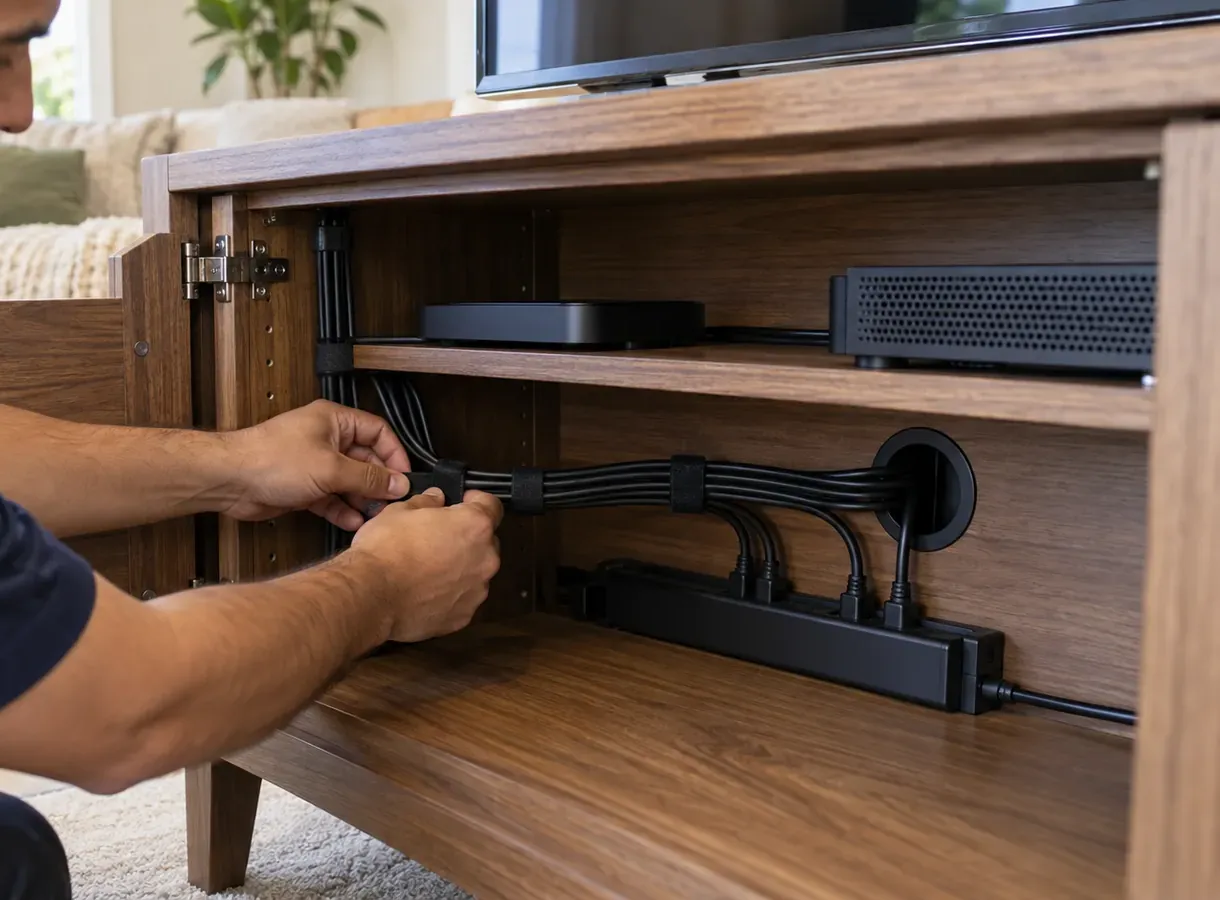
Media cabinet wiring for a Chelsea, Manhattan soundbar: hands strapping power and HDMI cables to a surge strip inside an open wooden cabinet beside two boxes
Inside the cabinet the HDMI, power and network leads are strapped and labelled so the next person can follow them.
Field Notes

Field Notes From Chelsea Buildings

The order our technicians work in when the job is in Chelsea — standing practice, not an account of one particular visit

The first question at the door is not about the bar. It is who runs the building, because in Chelsea that changes from one entrance to the next on the same block. A co-op lobby will want the certificate and the apartment number; a rental building's super may want to see the work order; a hotel desk wants a name from management. The technician confirms that before carrying anything upstairs.

Inside, the second question is who lives on the other side of each wall. In a concrete tower with repeating plans, the wall that looks ideal for the TV is often the one shared with the next apartment's bedroom. The technician asks, checks the floor plan if you have one, and suggests the wall that faces a hallway, a closet or your own kitchen instead.

Then the wall itself: a knock, a scan, and in older buildings a small pilot hole without hammer action, so that clay tile or gypsum block is identified before a hammer drill can break it. Only then does the bracket go up. The last thing checked before leaving is the bass, played at the volume you actually use, with a question about who sleeps below.

Coverage Area

Soundbar Installation Near Chelsea's Landmarks

We work throughout Chelsea, from the 14th Street edge to the blocks below Hudson Yards. These landmarks are how most people describe where they live, and each says something about the buildings around it.

Hotel Chelsea

The 1883–84 Victorian landmark at 222 West 23rd Street, a former cooperative that reopened as a hotel in 2022 with some permanent residents still in residence. Heavy masonry, plaster finishes, management-led access.

London Terrace

The 1930 complex filling the block from Ninth to Tenth Avenue between 23rd and 24th Streets: about 1,700 apartments in 14 connected buildings, co-op Towers at the corners and rental Gardens in between.

Penn South

The limited-equity co-op of 2,820 apartments between Eighth and Ninth Avenues from 23rd to 29th Streets, with close to 5,000 residents and its own commercial strips on both avenues.

The High Line

The 1.45-mile park on the former freight viaduct, first opened in 2009, with the glass condominiums of the 2005 West Chelsea rezoning on either side, among them HL23 at 515 West 23rd Street.

Chelsea Market

The full-block food hall, shops and offices in the former Nabisco factory at 75 Ninth Avenue, where the High Line passes through the Tenth Avenue side of the building.

Chelsea Piers

The sports and entertainment complex on Piers 59, 60 and 61 along the Hudson between 17th and 23rd Streets, opened in 1995 on the site of the old ocean-liner terminals.

We also install soundbars in the neighbourhoods around Chelsea: the Meatpacking District and the West Village to the south, the Flatiron and the Ladies' Mile blocks to the east, Hell's Kitchen and Hudson Yards to the north. Each is priced from the same Manhattan menu and served from the same line, (929) 560-0737.

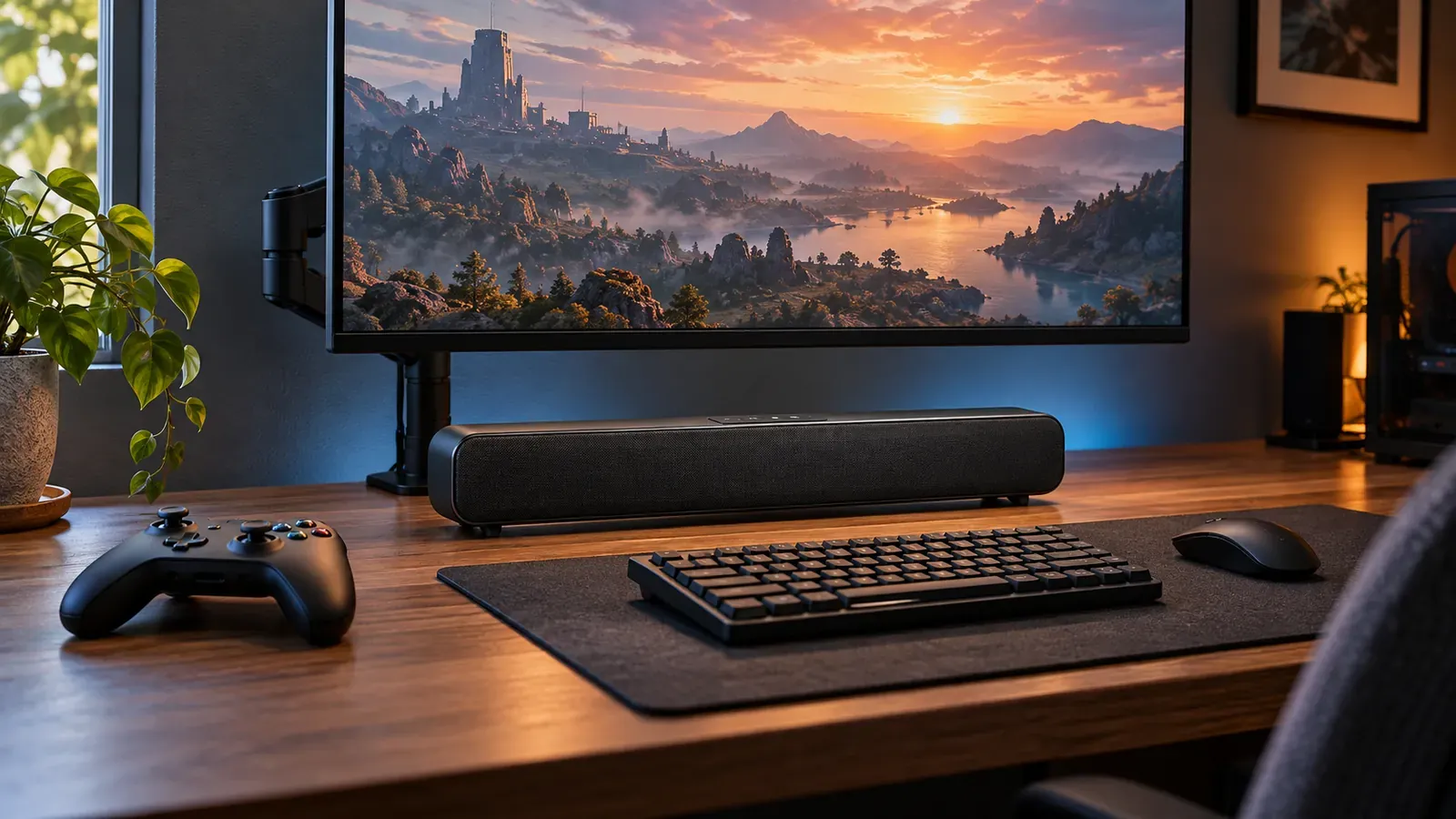
Compact soundbar under a desktop monitor with keyboard, mouse and game controller, the kind of small-room setup we fit in Chelsea, Manhattan
A compact bar under a monitor suits a studio desk or a bedroom alcove where a full-size bar would overwhelm the space.
Pricing

Soundbar Installation Cost in Chelsea

Chelsea is priced from our published Manhattan menu, line by line. Choose the lines that match your job, add the one flat parking charge, and that is the bill. If the wall turns out to be something other than what the photo suggested, you get the new number before any extra work starts.

Soundbar line Manhattan price What it covers
Soundbar wall-mounted under the TV $129 We work out what the wall is, choose fixings for it, centre and level the bar under the screen, then listen from your sofa
Soundbar placed on a console or stand $79 Placed clear of the TV's IR window; connected, tuned and tidied
Sanus soundbar bracket $84.99 A Sanus bracket we supply when the bar came without one, or when its own bracket does not suit your wall
In-wall concealment $169 Hollow walls only: in-wall power and cable kit to code, fed from an existing outlet
Paintable cord cover $59 Surface channel to the outlet or console; the answer on concrete, brick and block
Longer cable run, up to 25 ft $99 Reaching a cable box, router or media cabinet elsewhere in the room
Sonos setup $125 Sonos bar, sub, surrounds, app and grouping
A/V receiver $129 Receiver connected and configured
Universal remote $99 Programmed for the TV, bar and sources
Streaming device setup $49 Apple TV, Roku, Fire TV or similar
Full home theater $350 Multi-component system setup
Manhattan parking $150 One flat charge per Manhattan visit, however many lines are on it

Wall, access and building lines

Condition Price
Drywall on wood studs $0
Drywall on metal studs +$30
Plaster +$45
Brick or stone +$65
Concrete or cinder block +$75
Tile or marble +$95
Plywood backer board $85
High mount, above about 8 ft $75
No elevator, apartment on the 3rd floor or above $40
Remove an old bracket $45
Box removal $25
Insurance certificate for the managing agent Free

Worked Chelsea examples

Typical Chelsea job Lines Total with parking
Bar on the console, temporary or rental apartment $79 + $150 $229
Bar on a concrete co-op tower wall, our bracket $129 + $84.99 + $75 + $150 $438.99
Bar on a concrete wall, your bracket, painted channel $129 + $75 + $59 + $150 $413
Rowhouse brick party wall, top-floor walk-up, your bracket, channel $129 + $65 + $40 + $59 + $150 $443
Plaster on a stud partition, our bracket, in-wall kit $129 + $84.99 + $45 + $169 + $150 $577.99
Glass-condo metal-stud partition, our bracket, in-wall kit $129 + $84.99 + $30 + $169 + $150 $562.99
Gallery or office metal-stud wall, our bracket, high mount $129 + $84.99 + $30 + $75 + $150 $468.99

Setup-only visits and TV mounting in Chelsea

Visits with no mounting at all — a new TV that will not talk to the bar, sound out of step with lips, a bar that needs moving to Ethernet, a replacement sub to pair — are billed by time: $265 for the first hour in Manhattan, then 30-minute blocks, plus the $150 parking line. If the TV is mounted on the same visit, the Manhattan TV base of $244.99 for a 32- to 55-inch screen on wood-stud drywall applies, the soundbar lines go on top, and the visit still carries one parking charge: a TV, our bracketed bar and parking on drywall comes to $608.98. A TV kept on its stand is $162.99.

Inside the price, and outside it

  • Included: the wall survey and scan, the fixing and bracket work, levelling, HDMI and CEC, a network test from the TV wall, cable ties behind the screen, bass and night-mode settings, and vacuuming the drilling dust before we go.
  • Not included: new or moved outlets, which are a Licensed Master Electrician's work under city rules; patching and painting; moving heavy furniture; anything fixed to a building's structure or facade.
  • Return trips: a $150 return-trip fee applies when the lobby will not let the technician up, the managing agent has not signed off, or the bar or bracket is still in transit. Rescheduling with 24 hours' notice is free.
  • Fragile finishes: stone cladding, tile and century-old plaster can crack under a drill no matter how carefully it is used. We point that out on the wall before drilling and you decide whether to go ahead.

These are the same published lines as our Manhattan page; Chelsea has no surcharge of its own. The per-visit parking line and the walk-up line are the only access charges, and the insurance certificate a co-op or condo asks for costs nothing.

Get the Chelsea Total in Writing

A wall photo, the bar model and the building are enough. Parking is already in the number we send.

Shop Our Systems

Soundbar Installation Packages & Pricing

Three combinations cover most of what Chelsea apartments ask for. The sums are printed on each card, parking included, so they can be checked line by line against the menu.

Starter — Console Bar, No Holes · $229

Soundbar placed on the console ($79) + Manhattan parking ($150) = $229. Connected to eARC or ARC, CEC on, network checked, bass set for the building. The right package for rentals, NYCHA apartments and anyone expecting to move.

Standard — Concrete Co-op Wall · $438.99

$129 to hang the bar + $84.99 for our Sanus bracket + $75 for concrete + $150 parking = $438.99. The usual job in a postwar co-op tower; the cable goes into a painted channel for $59 more if the outlet isn't directly below.

Premium — Condo Partition, Hidden Cable · $562.99

$129 + $84.99 bracket + $30 for metal studs + $169 in-wall power and cable kit to code + $150 parking = $562.99. For a hollow partition in a newer condo, where the board has agreed to the wall being opened.

Bring Your Own Equipment — Labor Only

If your bar came with a bracket, or you bought a better one, we can use it and charge labour only: $129 for the mount, any wall line that applies, and the $150 parking charge. That is $279 on wood-stud drywall and $354 on a Penn South-type concrete wall. The bracket must carry the bar's weight, and its warranty is the manufacturer's. If we judge it unsuitable for your wall, we say so before drilling and offer our Sanus bracket instead.

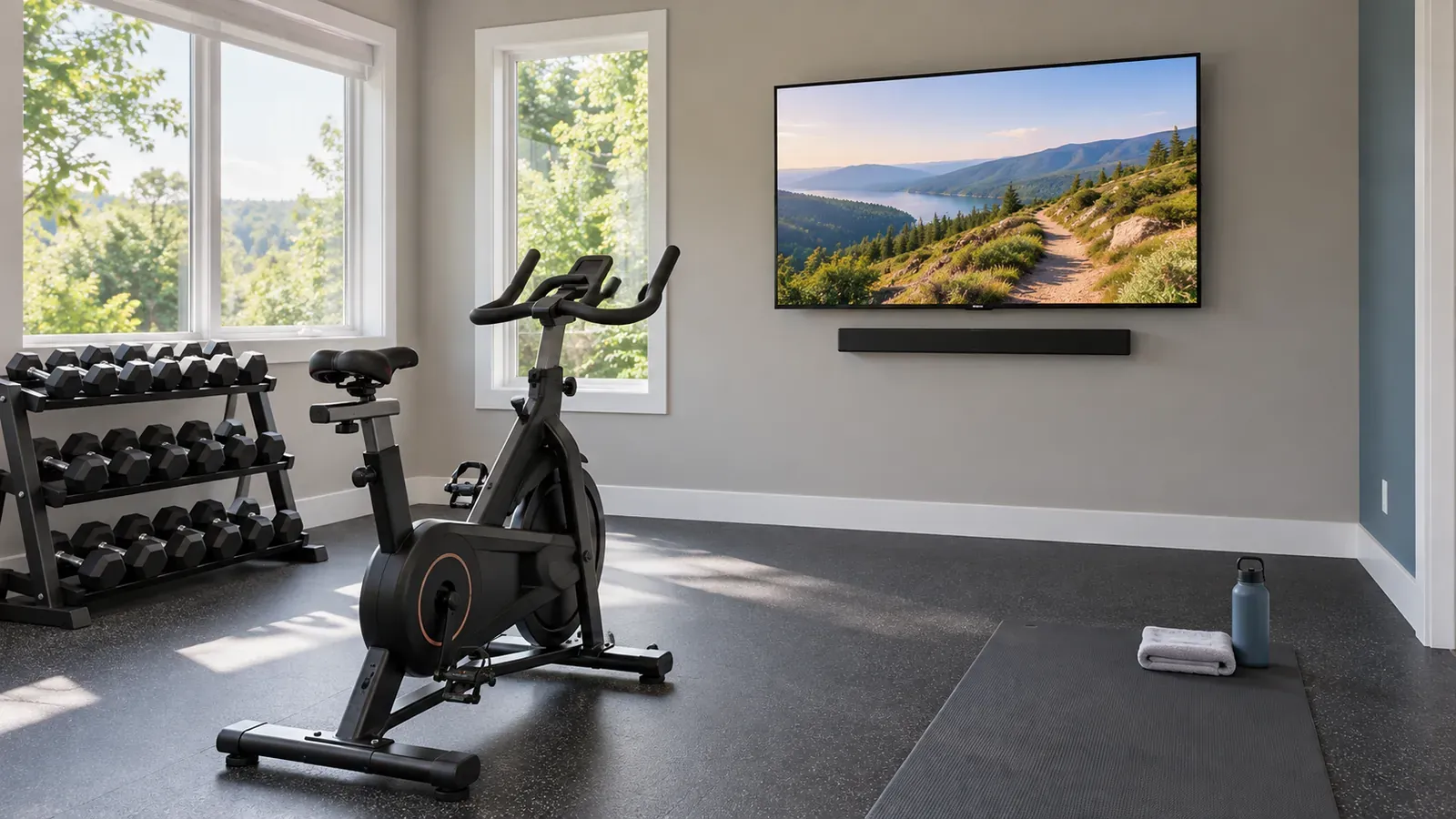
Wall-mounted TV with a soundbar below in an exercise room with a bike and dumbbell rack, a layout used for building gyms in Chelsea, Manhattan
In a gym or amenity room the bar goes on the wall, out of reach of equipment, with the volume capped.
Before You Book

The Chelsea Paperwork Checklist

A soundbar visit that stops at the lobby desk costs everyone a morning. Five minutes with this checklist usually prevents it. Find your building type and gather what it asks for before you book.

If you live in Who approves What to have ready What we send
A co-op such as Penn South, London Terrace Towers or a prewar building on the avenues Board and managing agent The alteration agreement or contractor rules, permitted hours, the entrance and elevator to use Insurance certificate naming the corporation and managing agent exactly as specified; a one-paragraph scope if asked
A condominium along the High Line Condo board and managing agent The alteration agreement, whether partitions may be opened, any rules on shared walls Certificate, bracket specification sheet, scope note
A rental such as London Terrace Gardens, or an avenue walk-up Landlord or managing agent The lease clause on alterations or wall fixings; the super's contact Certificate if requested; written description of the holes
A NYCHA apartment at Fulton or Elliott-Chelsea Property management office Written consent before any wall mount; no consent needed for a console setup Nothing for a console setup; for a wall mount, whatever the office requests
A building that is mostly a hotel The hotel operator's management Their contractor requirements and arrival instructions Certificate and arrival details to the operator
A rowhouse you own You, and LPC only for exterior work Nothing for indoor work; a check before anything touches the facade Nothing unless you ask

Two details catch people out more than any others. First, the certificate: buildings often list two or three names that must appear as certificate holders or additional insureds, in a particular form, and a certificate that is close but not exact will be refused. Send us the building's wording and we copy it. Second, the hours: many co-ops allow contractors only on weekdays and only within a set window, and some stop noisy work earlier than the window ends. We book the visit so the drilling sits early in the permitted time.

If your building has no written rules, ask the super or doorman two questions before the day: which entrance contractors use, and whether a name needs to be on a list. That is usually enough.

Moving in Chelsea

New Apartment, Same Soundbar: Moving Within Chelsea

Chelsea residents move more than most, and in some buildings the move is not optional. Residents of Fulton 11 and Chelsea Addition have been offered refurbished apartments on the Fulton and Elliott-Chelsea campuses while new buildings are constructed, with the right to a new apartment in the replacement buildings; shareholders in the big co-ops trade up within the complex; renters follow leases from one avenue to the next. A soundbar set up with the next move in mind saves money and walls.

Taking it down well

We remove the bar and its bracket, keep the fixings together in a labelled bag with the bracket, photograph the cable connections, and pack the bar in its original box if you still have it. If you are leaving a rental, we can take out the anchors so the holes are ready for patching; patching and painting themselves are not part of our work.

Setting it up again

In the new apartment the wall is read fresh, because a bracket that held well in plaster may need different fixings in concrete or block. If the move is temporary, we steer toward a console or TV-attached setup so the next move is a matter of unplugging. Wi-Fi settings are moved to the new network, and the subwoofer is set again for new neighbours.

What it costs

Removal of an old bracket is $45 on the Manhattan menu, and setting the bar up again is priced like any new install: $79 on a console or $129 wall-mounted plus the wall line, with $150 parking for each Manhattan visit. If both apartments are visited on the same day, ask about doing it as one booking; the price is quoted in writing before the move.

Complete Services

Every Soundbar Installation Service in Chelsea

Chelsea jobs rarely stop at the bar. When the TV, the network or the front door needs work too, these pages cover it, and the same licensed and insured crew does the work.

Soundbar Installation Manhattan

The borough page this neighbourhood page sits under, with the full Manhattan menu and building guide from Inwood to the Battery.

Abstract Enterprises TV Installation, Manhattan

Hanging the screen on plaster, block, concrete or metal studs at a height that leaves room for the bar.

TV Mounting Prices in Manhattan

The Manhattan TV menu by screen size and wall type, for jobs where the TV goes up on the same visit.

Sonos Installation, Manhattan

Sonos bars, subs and surrounds grouped with speakers in other rooms of the apartment.

AV and Sound Installation

Receivers and in-ceiling speakers where a soundbar is not enough for the room.

Home Network Installation

Wired connections and better Wi-Fi to the TV wall in towers crowded with competing networks.

Home Automation in Manhattan

Scenes and remotes that bring the TV, the bar and the lights under one control.

Smart Locks in Chelsea

Locks for Chelsea's rowhouse doors, apartment doors and gallery entrances.

Fiber Optic Installation in Chelsea

Fiber for galleries, studios and offices in West Chelsea's former freight and industrial buildings.

Service Policies

Arrival windows, return trips, rescheduling and hourly setup.

FAQ

Chelsea Soundbar Installation FAQ

What would a soundbar on the concrete wall of a Chelsea co-op tower come to with your bracket and parking?
+

The wall mount is $129, our Sanus soundbar bracket $84.99 and the concrete line $75, which is $288.99. The flat $150 Manhattan parking charge brings it to $438.99. If the outlet is not directly below the bar, a paintable channel adds $59. With your own rated bracket the total is $354 before any channel.

Do you also install in the Meatpacking District, Hudson Yards and the Flatiron next door?
+

Yes. The blocks around Chelsea are served from the same Manhattan line at the same published prices, including the one $150 parking charge per visit. The buildings change as you cross 14th Street or 34th Street, so tell us the address and we plan for that building's walls and rules.

Our TV wall is covered in fabric acoustic panels. Can a soundbar bracket go through them?
+

Not through the panel itself. Fabric panels are soft and would let the bracket sag. We find the wall behind, remove or cut out the panel where the bracket lands if you agree, fix to the structure with spacers that pass through the gap, and refit the panel around the bracket. A TV-attached bar avoids the panels entirely.

A wall bed folds down from the wall facing our TV. Does that change where the soundbar goes?
+

It can. Check that the bed clears the console and any rear speakers when it comes down, and that the bar is not aimed at the mattress, which soaks up sound. In a studio we often keep the bar on the TV wall and place the subwoofer, if any, where the bed cannot hit it. We test the bed open and closed before fixing anything.

Can a soundbar be mounted on a glass block wall?
+

We do not drill glass block. It cracks easily and the mortar joints are too narrow to hold a bracket safely. If the TV sits in front of glass block, the bar goes on the TV itself with a TV-attached bracket, on a console beneath it, or the TV and bar move to a solid wall nearby.

All Areas Served

Soundbar Installation Across New York City and Beyond

Soundbar Down on a Game Night or Before an Opening?

If the bar has dropped its sync, its subwoofer, its Wi-Fi or its grip on the wall, call (929) 560-0737. Tell us the building and the symptom; the next free two-hour window is yours, and most faults like these are fixed in one to two hours on site, inside your building's contractor hours.

Soundbar Installation Chelsea — Licensed, Insured, Building-Aware

Abstract Enterprises Security Systems · 460 E Fordham Rd, Bronx, NY 10458 · Manhattan line (929) 560-0737 · WhatsApp (718) 679-0359 via wa.me

NYS Low-Voltage License #12000287431 · 100% Licensed & Insured · Same-Day Estimates · Rated 4.7★ from 201 Google Reviews

Brackets and parts carry their manufacturer's warranty. Full terms — including 50% deposit, one-year parts-only warranty on AESS-supplied products, and the late-fee schedule — are set out in the service agreement. See our warranty page.

Last reviewed October 17, 2026. What's new: first published October 2026, covering Chelsea's co-ops, rentals, NYCHA campuses, rowhouses and High Line condos, building paperwork, moves and itemized Manhattan prices.

Sources for local facts on this page include Penn South, London Terrace Towers, NYC.gov (NYCHA, DEP, NYC311), the NYU Furman Center, Manhattan Community Board 4, the Historic Districts Council, Chelsea Community News, the High Line, Hudson River Park, StreetEasy, CityRealty and the 300 West 23rd Street alteration agreement. Buildings are named to describe the area, not as customers.