Licensed Low-Voltage Contractor · Bronx Office on East Fordham Road · Renters, Co-ops, Condos & Two-Family Homes
Soundbar Installation in the Bronx
Concourse Plaster · Co-op City & Parkchester Masonry · NYCHA-Aware Setup · Radiator-Safe Placement · eARC & One-Remote Control
Most soundbars in the Bronx go into apartments the occupant doesn't own outright — a rent-stabilized lease off the Grand Concourse, a NYCHA unit in Mott Haven or Edenwald, a Riverbay co-op tower in Co-op City, a Parkchester condo rented from its owner. So the first question on a Bronx soundbar job isn't which anchor, it's who has to agree to the holes. We sort that out with you before the visit, then mount the bar on fixings that suit the wall we actually find, keep it clear of the steam radiator, wire it to the right HDMI port so the TV remote runs it, and set the bass for people living on the other side of the floor.
Reviewed and updated October 17, 2026 · Written by Anwar Timothy, NYS licence #12000287431 · Bronx line (646) 490-0629
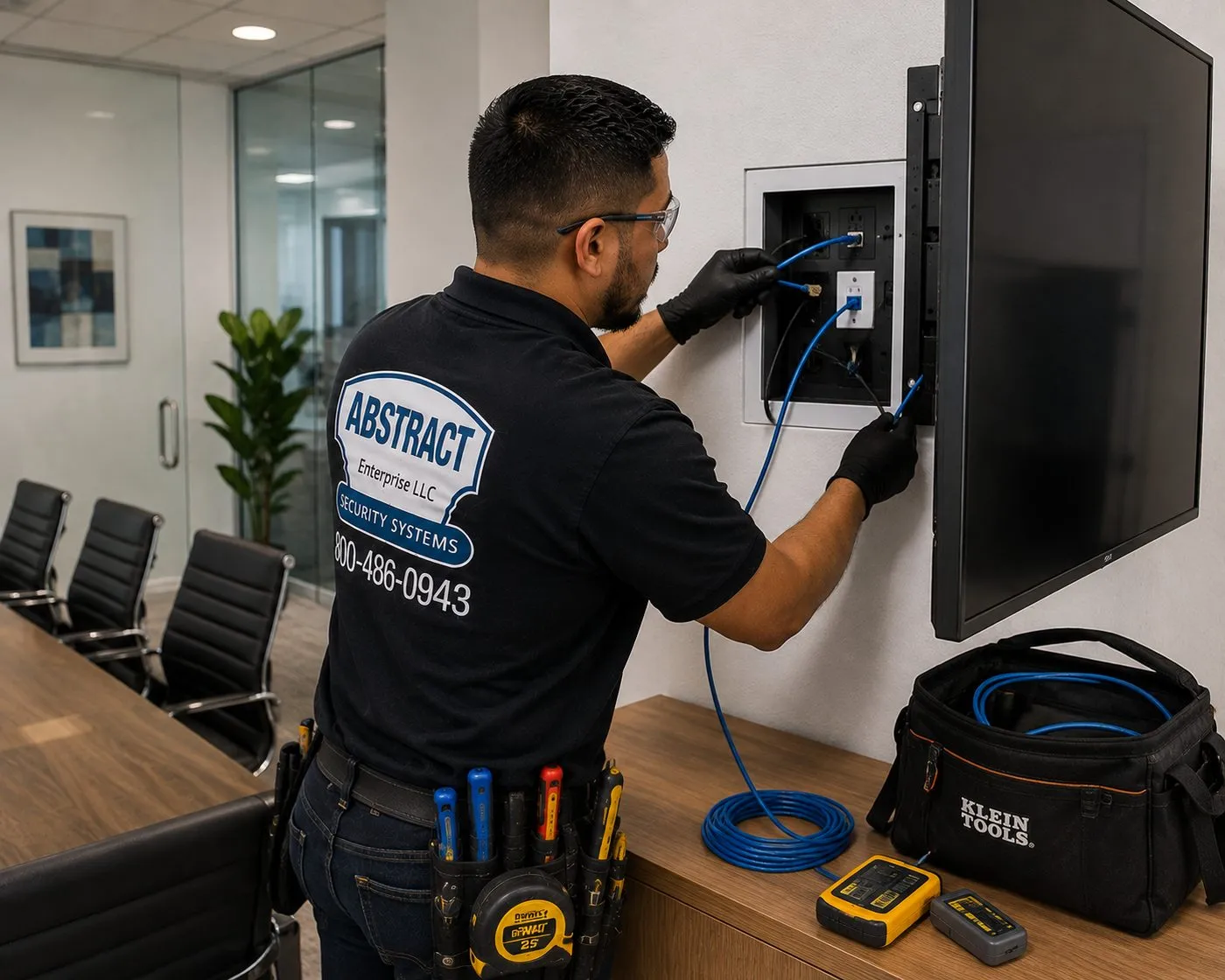
A gloved technician seats blue patch cables in a recessed box set into the wall next to a mounted screen; a coil of cable, two testers and a tool bag sit on the console underneath. This is the connection point a tidy soundbar job is planned around.
Bronx Soundbar Quote
Tell us the bar, the building and who owns it — we reply the same business day
✅
Request Sent!
A Bronx installer will call you back the same business day.
25+
Years Experience
✓
Same-Day Estimates
100%
Licensed & Insured
4.7★
201 Google Reviews
Bar in the box and a blank wall waiting? Ring the Bronx line, (646) 490-0629, or fill in the 60-second form. Every request is read by a licensed installer, and the reply is a written price taken line by line from the menu further down this page.
We help you work out who has to approve the drilling — landlord, NYCHA, Riverbay or the condo owner — before anyone books a window
Insurance certificates for boards, agents and condo offices at no charge
The Bronx is a borough of renters, and that single fact shapes almost every soundbar job here. NYU's Furman Center puts the Bronx homeownership rate at 19.7 percent for 2024 — roughly four households in five rent the place they live in. Add the public-housing towers, the Mitchell-Lama cooperative at Co-op City, the condominium-converted blocks of Parkchester and the pre-war elevator buildings that line the Grand Concourse, and you get a borough where the person holding the drill is almost never the person who owns the wall. Before a single hole goes in, somebody else usually gets a say: a landlord, a managing agent, the Housing Authority, the Riverbay board, or the condo owner a tenant rents from.
That's why so many Bronx soundbars end up balanced on a dresser with the HDMI cable looping across the floor, or screwed into the wall with the plastic plugs from the box and slowly pulling out of the plaster. Neither outcome is about the soundbar. Today's bars from Samsung, LG, Sony, Sonos, Bose, Vizio and TCL all do a decent job once they sit close under the screen, plug into the TV's ARC or eARC socket and get set up for the room they're in. What goes wrong is the planning around the bar: drilling without permission and paying for it when the lease ends, picking an anchor for drywall when the wall is plaster on clay tile, mounting directly over a steam radiator that will cook the bar every winter, or leaving the subwoofer on a bare floor directly above a neighbour's bedroom.
Our approach in this borough starts with tenure, not tools. If you rent, we ask you to get a short written OK from the landlord or managing agent, and we offer options that need no holes at all: the bar on a stand, or a bracket that hangs it from the TV mount you already have. If you live in NYCHA housing, the Authority's own resident handbook says residents may not alter their apartments or add fixtures or fittings without prior written consent from the property management office, so that consent comes first. If you own shares at Co-op City, Riverbay's published guidance makes vacating shareholders responsible for remedying alterations or damage found at the move-out inspection, which is a good reason to choose fixings and finishes with the eventual exit in mind. Owners of a Riverdale co-op or a house in Throgs Neck have more freedom, and more of them ask for wiring hidden inside the wall.
Then there's the building itself. Most of the borough's large apartment houses were put up in a few distinct waves, and each wave left a different kind of wall behind the TV. Along the Concourse, the historic district's buildings went up mostly between 1916 and 1941, which in practice means plaster finishes, often over brick or hollow clay tile, and generous ceiling heights. Parkchester's red-brick blocks were built by Metropolitan Life between 1938 and the early 1940s. Co-op City's 35 towers, finished in 1973, rise 24 to 33 storeys. The post-war Housing Authority developments, from Patterson Houses in Mott Haven to Edenwald Houses, are mostly brick towers and low-rise blocks with masonry walls. Each of those asks for a different drill bit, a different anchor and a different way of dealing with cable, and we price each one openly rather than lumping them into a single figure.
And then there are the neighbours. When the New York Post broke down 2025's 311 noise data, the area with the heaviest concentration was Bronx Community District 12, covering Wakefield and Edenwald, with Williamsbridge and Highbridge also in the city's top five. Residential noise — music, parties, banging, a television through the wall — accounts for half of every 311 noise complaint in the city, according to an analysis by Vital City. A soundbar is a television's loudest accessory, and the subwoofer that comes with most of them is the part people downstairs actually hear. Getting a Bronx install right means setting the bar up so it sounds full at a volume that stays inside your four walls.
The Bronx numbers that shape a soundbar job
19.7 percent: the Bronx homeownership rate in 2024, per the NYU Furman Center's borough profile — so permission from someone other than the occupant is the normal starting point.
35.8 percent: share of Bronx renter households that were severely rent-burdened in 2024, spending more than half of income on rent (Furman Center). Budgets are tight, which is why every line on our price list is published and fixed.
57.0 percent: share of Bronx residents aged five and over who speak a language other than English at home (U.S. Census Bureau QuickFacts, 2020–2024). TV and soundbar menus often need setting up for more than one reader in the household.
15,372 units in 35 towers: Co-op City, built 1966–1973 on former marshland that was briefly the Freedomland amusement park, with buildings 24 to 33 storeys high (Wikipedia, citing Riverbay and contemporaneous sources).
12,271 apartments in 171 buildings: Parkchester, planned by Metropolitan Life from 1938, later converted to the Parkchester North and South condominiums and modernised with upgraded electrical systems in every unit (Parkchester's own history page).
10 PM and 11 PM: the times after which NYCHA's resident handbook asks for radios, stereos and televisions to be kept low — Sunday to Thursday and Friday to Saturday respectively — with sound not heard outside the apartment door and speakers kept off windowsills.
Read together, those figures sketch the typical Bronx soundbar call: a renter or shareholder in a multi-family building, a wall that someone else controls, a budget that doesn't stretch to surprises, a household where more than one language gets spoken in front of the TV, and neighbours close enough to hear a badly placed subwoofer. That's the job this page is written around.
Most Bronx households who call about a soundbar are also hanging or rehanging the TV above it, so the two are usually booked as one visit. Our TV installation crew in the Bronx works from the same menu, and if you want more than a bar — rear speakers, a receiver or ceiling audio — the Bronx AV and sound installation team covers full systems.
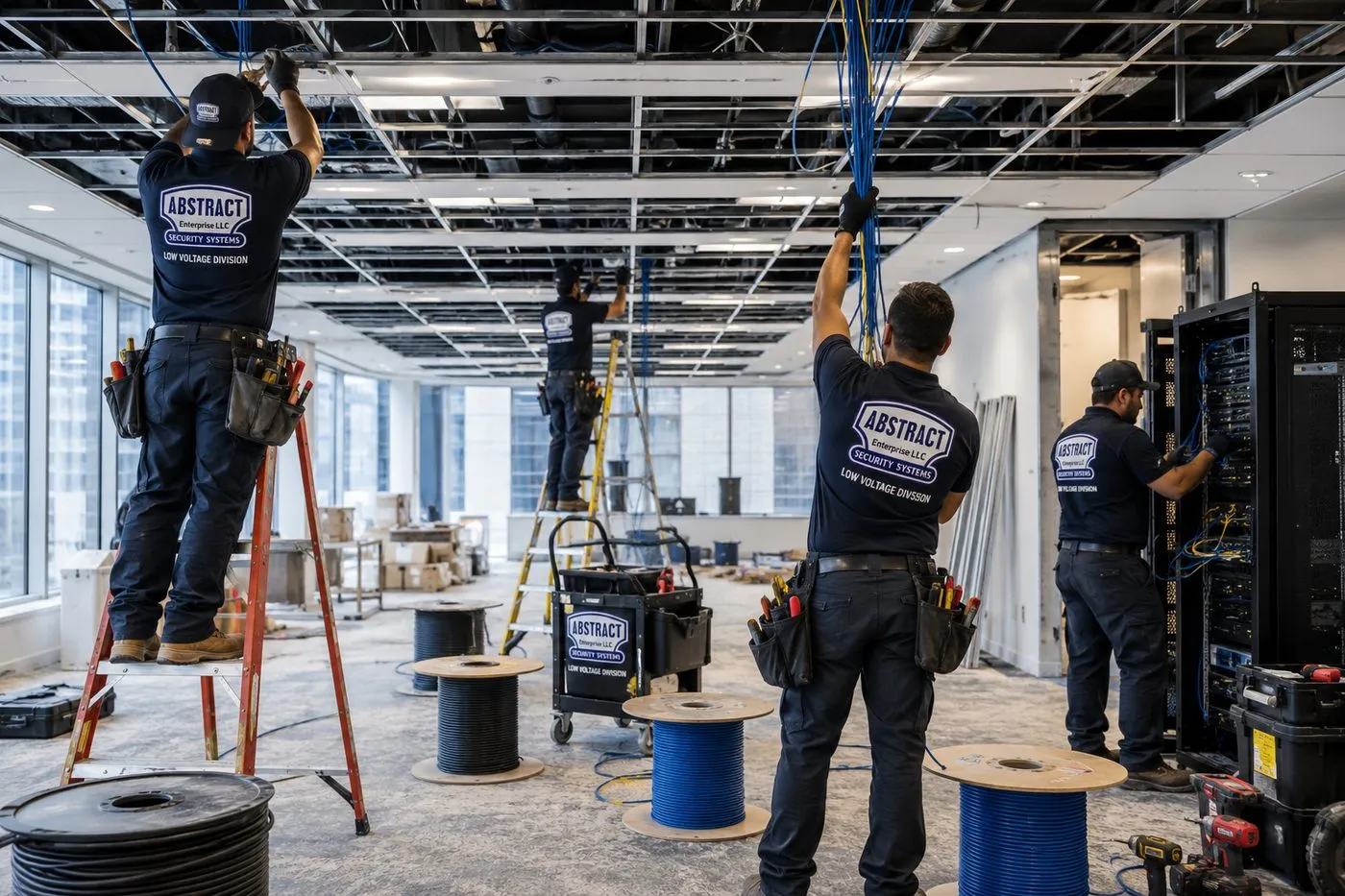
A wide shot of a stripped-out office: reels of blue and black cable stand on the concrete, a tool cart sits mid-floor, and the AESS crew is spread across ladders, the ceiling grid and a black equipment rack on the right.
Repair Capture
Soundbar Acting Up in a Bronx Apartment
Silence after a cable-box swap, the TV remote no longer turning the bar up or down, voices landing a beat after the lips move, a bar that drops its connection every few minutes, or a bracket starting to lean out of crumbling plaster — those are service calls rather than new installs. We book them into the next open 2-hour window where we can, and most connection and settings faults are sorted within one to two hours of a technician arriving. Call the Bronx line at (646) 490-0629 and say it's a soundbar repair; our TV and soundbar service policies explain how setup-only visits are billed.
What We Install
Soundbar Installation Services in the Bronx
Each Bronx soundbar job is built from the services below, alone or combined, and each carries a published price. They're ordered roughly from the fewest holes to the most, because in this borough that's usually the order people need to think in.
No-Holes Stand Setup
The bar placed on the TV stand or dresser, connected and configured, positioned so it doesn't block the TV's remote sensor, with the cables gathered behind the furniture. This is the starting point for NYCHA residents waiting on written consent and for renters whose lease rules out drilling.
Bar Hung From the TV Mount
A TV-attached bracket clamps the soundbar to the existing TV mount or the TV's own mounting points, so the wall gets no additional holes. It's the cleanest choice when the TV is already on the wall and the building is strict about drilling.
Wall Mount Under the Screen
The bar on its own bracket a few inches below the TV, centred on the screen and level, fixed with anchors chosen for the wall we actually meet — toggles in plaster, sleeve anchors in brick, concrete anchors in a tower block.
TV and Bar Hung Together
When the TV goes up at the same visit, height, spacing and the cable route are planned once, which halves the number of compromises. Common for people who've just moved into a Parkchester or Concourse apartment.
Paintable Cord Cover
A slim surface channel from the bar down to the outlet or the stand, painted to match the wall. The standard finish on concrete and block, and the renter's answer to dangling wires, because removal at move-out leaves only small screw holes.
In-Wall Concealment
Power and HDMI run inside the wall with a code-compliant in-wall power and cable kit, where the wall has a cavity and the owner agrees. Mostly Riverdale co-op owners, condo owners and Bronx homeowners.
eARC, CEC and One-Remote Setup
The bar connected to the TV's eARC or ARC port, HDMI-CEC switched on so one remote powers and adjusts everything, lip-sync corrected, and firmware updated over your Wi-Fi. Menus set in the language the household reads, where the TV offers it.
Subwoofer Placement for Apartments
Pairing the wireless sub, finding a spot where bass is even at the couch without driving into the floor, and setting levels for a building with people below. Rear speakers paired and placed where there's an outlet for them.
Moving Day Reinstall
Moving within the borough? We unmount at the old address and rehang at the new one, swapping anchors to suit — Highbridge plaster one week, a high-rise's concrete the next.
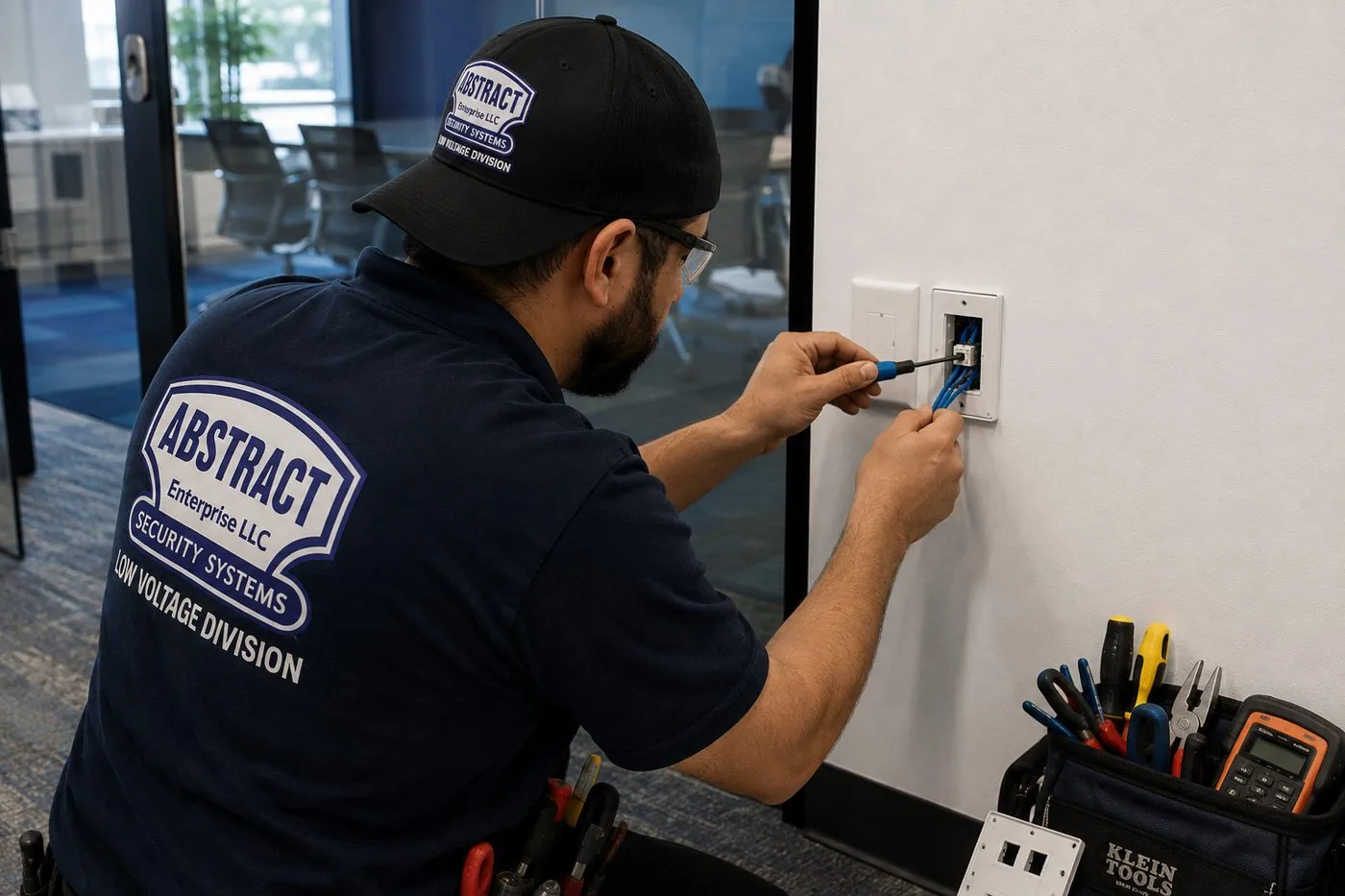
A technician in an AESS cap kneels at a white wall plate, screwdriver in hand, seating the ends of three blue cables; a tool pouch with a meter and spare plates sits on the carpet beside him.
Building Specialists
Soundbar Installation for the Bronx's Architecture
Bronx housing came in waves, and each wave left its own kind of wall behind the television. These are the building types our installers meet most often across the borough, with what each one tends to ask of a soundbar job and who usually has to sign off.
Concourse Pre-War Elevator Buildings
Apartment houses and larger courtyard buildings along the Grand Concourse and the streets either side, many in the Art Deco and Art Moderne styles the historic district is known for. Expect plaster finishes, high ceilings, steam radiators under the windows, and a landlord or managing agent who should be asked before drilling.
South and West Bronx Walk-Ups
Older tenement and walk-up buildings in Mott Haven, Melrose, Morrisania, Highbridge and around, where walls have been skimmed, patched and repainted for a century. Uneven surfaces, few outlets, and stairs that mean the technician carries everything in one go.
Parkchester
Metropolitan Life's planned community of 171 red-brick buildings and 12,271 apartments, now two condominiums. Many units are rented from individual owners, so a tenant needs the unit owner's agreement, and work follows the condominium's rules.
Co-op City Towers and Townhouses
Thirty-five towers of 24 to 33 storeys plus townhouse clusters, run by Riverbay Corporation. Tall towers, a cooperative with its own procedures and permits for deliveries, and shareholders who are charged for unremedied alterations when they move out.
NYCHA Developments
Post-war brick towers and low-rise developments from Mott Haven and Melrose to Soundview, Castle Hill and Edenwald. Residents need prior written consent from the property management office for fixtures, and the handbook's quiet-hours rule applies to TV sound.
Riverdale and Spuyten Duyvil Co-ops
Pre-war and post-war elevator co-ops on the hills above the Hudson, many converted from rentals. Boards and managing agents expect a certificate of insurance and notice, and owners here are the most likely in the borough to ask for in-wall wiring.
East Bronx Houses and Two-Families
Detached, semi-attached and two-family houses in Throgs Neck, Country Club, Pelham Bay, Morris Park, Schuylerville and City Island. Usually drywall or plaster on wood framing, a basement below, and an owner who can say yes on the spot — or a tenant on one floor and the owner on the other.
Anchors and methods, wall by wall
Plaster over brick or hollow clay tile. Behind the plaster in many pre-war Bronx apartments there's either solid brick or hollow clay tile, and you can't always tell which from the surface. We drill a small pilot hole first, slowly and without hammer action, and look at the dust that comes out: red and gritty usually means brick, pale and powdery with a sudden drop in resistance means a void in tile. Brick takes a sleeve or screw anchor directly. Hollow tile takes an anchor designed to grip or expand inside the void, and the bracket is positioned so its screws spread across more than one cell where possible.
Plaster on wood or metal lath. Found on interior partitions in older walk-ups and many houses. We locate framing behind the plaster and use it when the bracket lines up. When it doesn't, a toggle sized for the bracket goes through the plaster so the load spreads behind it. A soundbar is light compared with a TV, but it's often knocked while dusting or when someone grabs the TV, so we don't rely on the lath to hold a screw on its own.
Skim-coated, uneven walls. In buildings where walls have been patched and skimmed many times, the surface can bow by a noticeable amount across the width of a long soundbar. We level the bar, not the wall: shims behind one end of the bracket if needed, or a bracket with built-in depth adjustment, so the bar sits straight under the screen even when the plaster isn't flat.
Brick and block walls in older and post-war buildings. These take masonry anchors and a hammer drill. We keep holes in the face of the brick or block rather than in the mortar joints, hold a vacuum at the bit to catch the dust, and finish with a cord cover because solid masonry has no cavity to hide wire in.
Concrete in high-rise towers. Where the TV wall is poured concrete or dense block, we use concrete anchors and a hammer drill, and we scan before drilling. It takes longer and costs more on our wall table for that reason, and in-wall concealment is generally not an option, so a painted surface channel is the finish.
Drywall on wood or metal studs in renovated units and houses. Common in gut-renovated apartments, newer buildings and most East Bronx houses. Wood studs take lag screws; light-gauge steel studs need fasteners made for metal, or toggles in the board between studs. This is also the wall where hidden wiring through the cavity is straightforward, if the owner allows it.
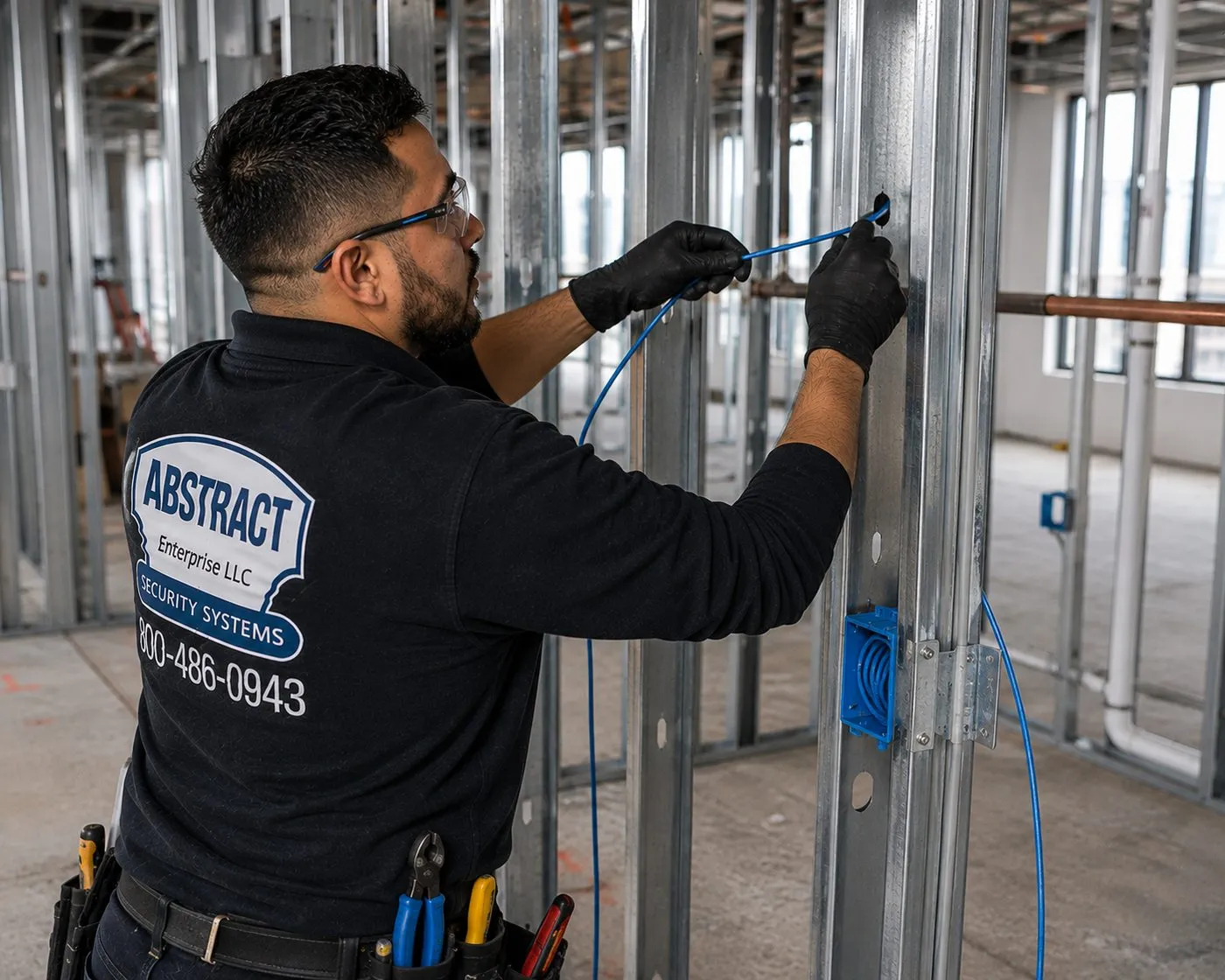
A technician threads a blue cable through the punch-out of a steel stud in an unfinished interior, a blue low-voltage box fixed to the stud below his hands and more framing and windows behind him.
Radiators, risers and pipes. Bronx living rooms often have a steam radiator under the window and a riser pipe running floor to ceiling in a corner, sometimes on the same wall as the TV. We scan before drilling and keep holes away from the line of any pipe, and we try to keep the bar from sitting directly above a radiator. The city's heat season runs from October 1 to May 31, and landlords must keep apartments at 68 degrees or more by day when it's below 55 outside and at least 62 at night, according to HPD. That's a lot of hot, dusty air rising past whatever is mounted above the radiator for eight months of the year.
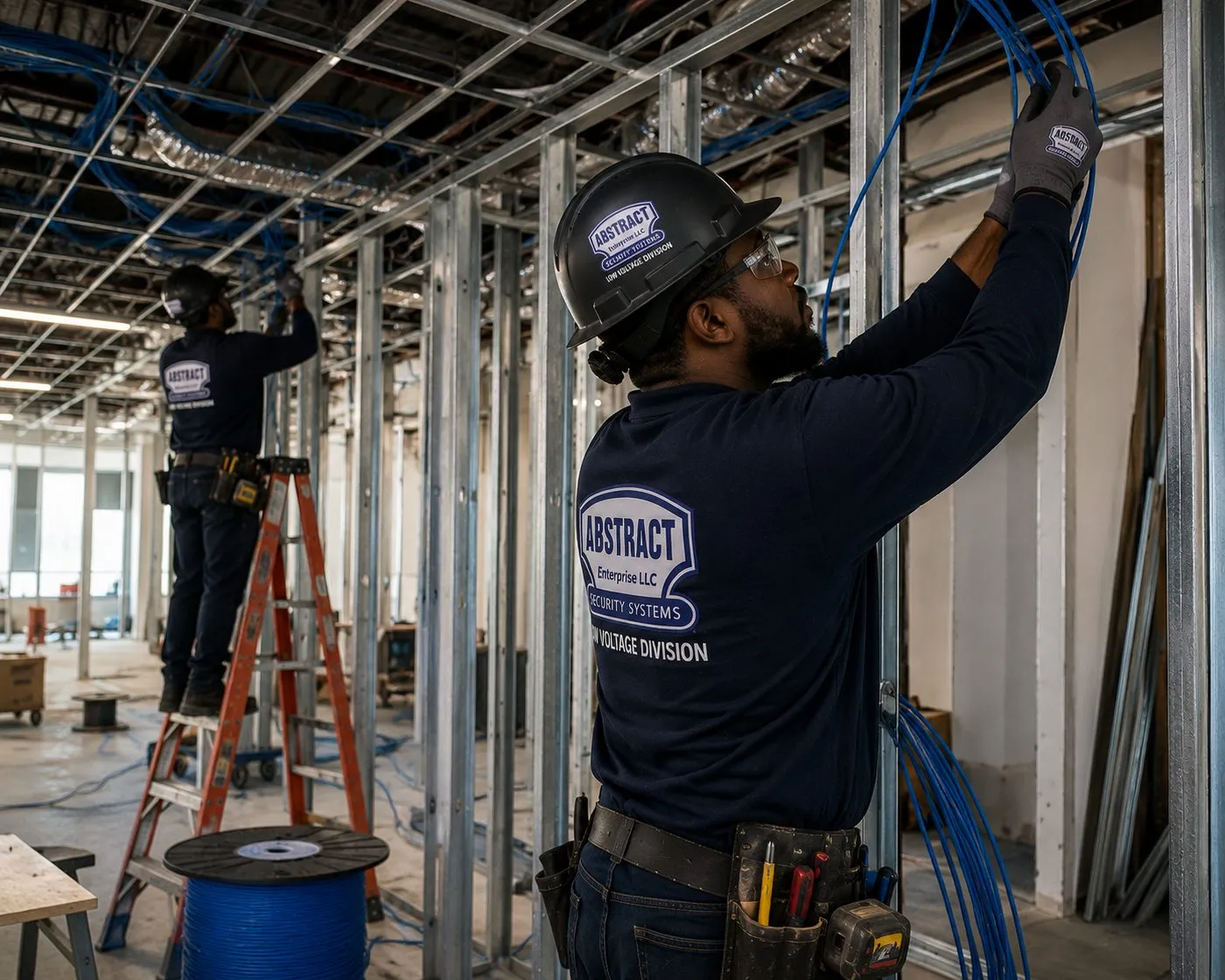
In the foreground a technician in a black hard hat and safety glasses pulls blue cable up through a metal-stud partition; behind him a second technician on an orange stepladder works at the open ceiling, with a reel of blue cable on the floor.
A lot of Bronx owners renovating a unit also want the TV wall wired for internet, so the soundbar, TV and streamer don't rely on Wi-Fi through thick masonry. Our structured cabling installation in the Bronx can be scoped at the same visit, and AESS network cable repair for the Bronx handles existing runs that have stopped working.
Commercial Soundbar Installation
Business Soundbar Installation in the Bronx
Bronx storefronts use soundbars for the same reason apartments do: they make a TV intelligible without the cost of a full sound system. These are the commercial strips we cover most, the kinds of business found along them, and what a soundbar has to do in each.
Fordham Road
The borough's busiest shopping street, which the Fordham Road BID says welcomes about 30 million visitors a year; Norwood News has counted some 175 storefronts between Washington and Jerome Avenues. Phone shops, clothing stores, fast-food counters and barbershops run a screen all day, and a soundbar has to be audible over street noise without spilling onto the sidewalk.
The Hub at 149th Street and Third Avenue
The Third Avenue BID describes the Hub as the Bronx's oldest commercial district, with more than 200,000 daily visitors. Waiting areas in clinics, check-cashing and service businesses, and food counters with a wall TV are the typical soundbar jobs here.
Arthur Avenue and Belmont
The Bronx's Little Italy, with the Arthur Avenue Retail Market that has stood on Belmont's main street since October 1940. Restaurants, cafes and delis add screens for games and want sound that reaches the tables but doesn't compete with conversation.
Around Yankee Stadium
The ballpark that opened in April 2009 at East 161st Street sets the rhythm for bars and restaurants on the surrounding blocks. Game-day audio needs to carry across a crowded room, and the installs need to survive being knocked and adjusted by staff.
City Island Avenue
City Island's main street, lined with shops, galleries and seafood restaurants. Dining rooms with a TV over the bar, waterside patios where an indoor soundbar shouldn't go, and owners who want one remote that staff can't lose.
Medical and Dental Offices Across the Borough
Waiting rooms from the Concourse to Westchester Square with a wall TV running captions and low-level sound. Bars set for clarity at modest volume, mounted clear of where people walk, with every cable concealed for a clean, wipeable finish.
Compliance callouts for Bronx businesses
Music limits under the Noise Code. As summarised by the city's Department of Environmental Protection, a business playing music may not exceed 42 decibels measured inside a nearby residence, and between 10 PM and 7 AM may not exceed 7 decibels over ambient on the street at 15 feet or more, with a separate bass-weighted limit. Many Bronx storefronts have apartments directly above, so we set subwoofers low or leave them out of commercial installs, and show staff where the sensible volume ceiling is.
Protruding objects in circulation paths. The 2010 ADA Standards (§307.2) say objects mounted on walls between 27 and 80 inches above the floor in a circulation path shouldn't protrude more than 4 inches. In waiting rooms and narrow shops we mount soundbars above that band, recess them, or keep them out of the path of travel.
Electrical work stays with electricians. Connecting a soundbar and running its low-voltage cable doesn't need its own Department of Buildings permit, but new or moved outlets are electrical work. If the only outlet is across the shop, the answer is a longer surface channel or an electrician first.
Proof of insurance for the building owner. Shop leases on Fordham Road and around the Hub commonly oblige tenants to have contractors insured, with the owner named. Tell us the names and the certificate reaches them without charge, normally the same day.
Cable rated for the space. Cable that runs through a wall or a ceiling plenum is rated for that space; the short patch lead that came in the soundbar box isn't used for in-wall runs.
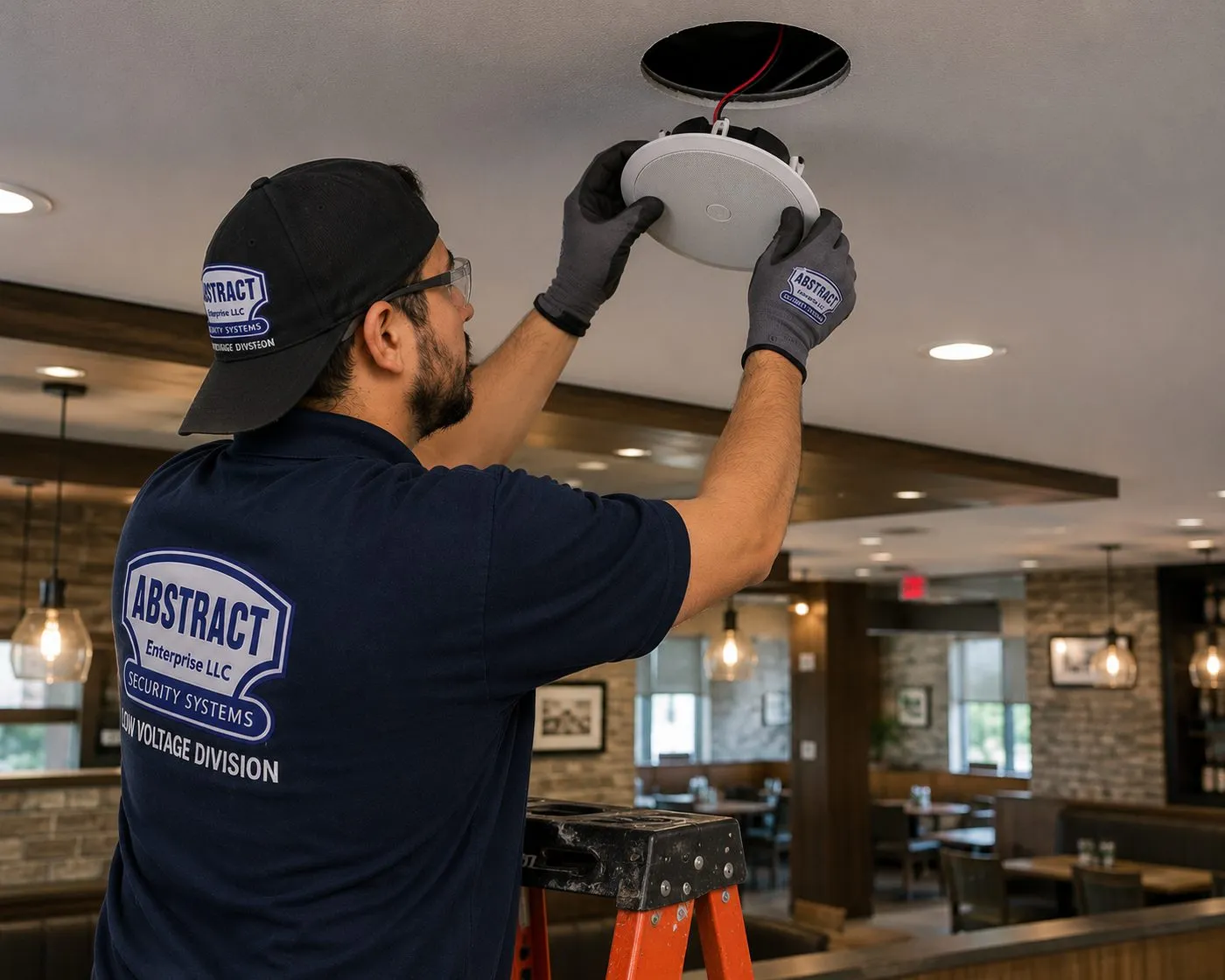
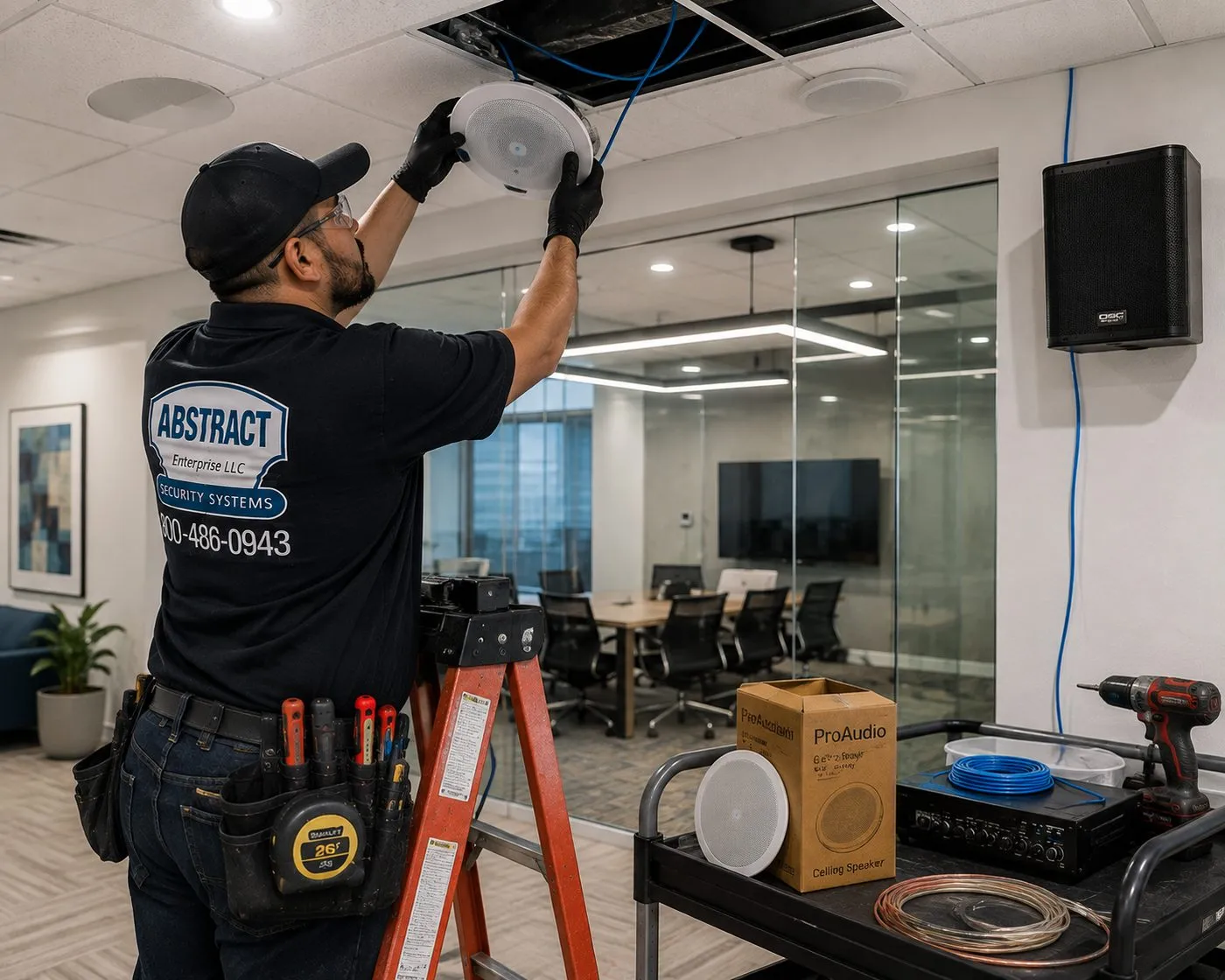
A technician in an AESS cap and branded gloves raises a white round ceiling speaker into a hole in a restaurant ceiling, with booths, pendant lights and a stone-clad wall behind him. When one bar can't cover a whole dining room, this is the next step.On a ladder beside a glass-walled conference room, a technician presses a white ceiling speaker into an open tile; the cart beside him holds an amplifier, a coil of blue cable, copper speaker wire and a boxed ceiling speaker, with a black wall speaker mounted to the right.
A storefront TV job is often the moment an owner finally deals with the flaky camera, the slow register network or the buzzer that sticks.Abstract Enterprises low-voltage installation in the Bronx takes those on in the same visit, under the same state licence.
Your Questions Answered
Soundbar Installation in the Bronx: Questions Answered
These are the questions Bronx callers actually put to us before booking, grouped by what sits behind them: who has to agree to the work, what the old walls and radiators will allow, how to keep sound inside the apartment, how to set a system up for a whole household, and how the technician gets in the door. Prices, haul-away and photos are in the FAQ further down. Nothing here is legal advice — where a lease or house rule is involved, the document itself and the people who issued it have the final word.
Who has to say yes
I live in a NYCHA apartment — what has to happen before a soundbar is screwed to the wall?
Written consent from your development's property management office. NYCHA's resident handbook (December 2024 version) lists, among the conditions of occupancy, that residents are not allowed to alter their apartments or add any fixtures or fittings without prior written consent from the property management office, and that residents are responsible for any damage that occurs. A bracket screwed into the wall is a fitting, so ask first and keep the written answer. We'll happily wait for it and book you once you have it.
While you wait, two options need no holes at all. The bar can sit on the TV stand, connected and set up exactly as it would be on the wall; or, if your TV is already on a wall mount that management approved, a TV-attached bracket can hang the bar from that mount without touching the wall. Both give you the sound improvement on day one. If consent comes through later, moving the bar to its own wall bracket is a short follow-up.
When you ask, it helps to be specific: say it's a soundbar of a stated length and weight, fixed with two or four small anchors under the existing TV, with the cable run in a paintable surface channel rather than inside the wall. Small, removable and described precisely is easier to approve than "mounting some speakers".
I rent a Parkchester condo unit from its owner — whose permission covers the drilling?
Start with the unit owner, because they are your landlord. Since Metropolitan Life sold the complex, Parkchester's apartments have been converted into two condominiums, Parkchester North and Parkchester South, and many units are owned by individuals who rent them out. Your lease is with that owner, so the owner is the person who can agree to holes in the walls of the unit, and who will look at those walls when you leave.
The owner, in turn, is bound by the condominium's own rules, which can cover contractor access, insurance and working hours. A quick message from you to the owner — "may I have a soundbar mounted under the TV with two to four small anchors?" — usually gets a quick yes, and the owner will know whether the condominium wants anything from the contractor. If a certificate of insurance is needed, we issue it free with whatever names the owner or the management office give us.
If the owner would rather not have new holes, the TV-attached bracket or a stand setup are the fallback, and neither leaves a mark. Where the TV wall turns out to be masonry, the finish is a surface channel in any case, which is easy to remove and patch at the end of a lease.
Does a rent-stabilized lease change anything about mounting a soundbar?
Not in the way most people expect. Rent stabilization governs things like rent increases and lease renewals; whether you can drill into a wall is normally covered by the alterations clause in the lease you signed, the same as in an unregulated apartment. Read that clause, and if it asks for the landlord's consent to alterations or fixtures, get it in writing — an email reply from the managing agent is fine.
The practical point for stabilized tenants is time. Many people in stabilized apartments stay for years or decades, which changes the calculation: a properly anchored bracket and a neat painted cord cover is something you'll live with every day for a long time, so it's worth doing well. When you do leave, a soundbar bracket leaves only a few small holes, and we can tell you exactly where they'll be so a painter can deal with them alongside everything else.
If your lease prohibits alterations outright and the landlord won't agree, we'll set the system up without drilling. Nothing about a soundbar requires holes to sound good; it's the position and settings that do most of the work.
Co-op City requires permits for deliveries — does a soundbar install need one?
Check with your Cooperator Services Office before the visit. Riverbay's published FAQ says furniture and appliance deliveries require a delivery permit, requested at least 24 hours ahead from your building's CSO, and that a delivery without a permit can bring a $300 Community Fine. Permits are issued Monday to Friday, 9 a.m. to 8 p.m., with Saturday deliveries allowed between 9 and 8 if the permit is picked up before the office closes on Friday.
A technician arriving with a tool bag to install a soundbar you already have isn't a furniture delivery, and in most cases no permit applies. But if we're bringing a new TV, a large bracket or anything bigger than we can carry by hand, ask the CSO whether they want a permit for it — it's a two-minute question that avoids a fine. The same FAQ notes that elevators are padded for larger moves and deliveries, which is another reason the office likes to know.
Separately, Riverbay holds vacating shareholders responsible for remedying alterations or damage found at the move-out inspection, with the cost deducted from equity. That's not a reason to avoid a bracket; it's a reason to choose a tidy, minimal installation you'd be happy to leave or easily reverse.
Old walls, steam pipes and awkward rooms
What happens if the drill hits hollow clay tile behind the plaster?
We change anchors, not plans. Hollow clay tile was widely used for partitions and backing in older New York buildings, and when a pilot hole suddenly loses resistance and the dust turns pale and powdery, that's usually what's there. A standard plastic plug or a sleeve anchor meant for solid brick won't hold well in a thin tile web, so we switch to an anchor designed to lock inside a hollow, and we try to spread the bracket's screws so they don't all land in the same cell.
Tile can crack if it's hammered, so the drill stays on rotation only and we let the bit do the work. A soundbar is light, which helps; most bars weigh a fraction of what the TV above them does. What matters is that the anchor holds when the bar is nudged, pulled while cleaning, or used as a handle by someone adjusting the TV.
If the wall turns out to be badly damaged behind the paint — old repairs, voids, loose plaster — we'll tell you before going further, and the options are a short plywood backer fixed to sound material, a TV-attached bracket, or the bar on a stand. You decide, with the price for each in front of you.
A steam riser climbs the corner of the TV wall — where can the soundbar's cables run?
Anywhere except along it. The vertical steam pipe that rises through the corner of many Bronx living rooms carries steam between floors during heat season, which HPD defines as October 1 to May 31, and its surface gets hot enough that you wouldn't leave a hand on it. PVC cable jackets and plastic cord covers soften and discolour when they're held against heat for months, and a cable strapped to a riser is also in the way when the building's plumber needs to work on it.
We route power and HDMI on the side of the TV away from the riser, keep a clear gap where a cable has to cross toward an outlet, and never clip anything to the pipe or its escutcheon. If the only outlet sits right beside the riser, the cord cover drops to it from above with a margin rather than hugging the pipe, and we choose a channel position that leaves the pipe's floor and ceiling collars accessible.
Before drilling anywhere near a riser, we scan the wall. Branches and old abandoned pipes sometimes run sideways from it inside the plaster, and the safest hole is the one placed well away from that line.
Our living room's only free stretch of wall is a corner — can the TV and soundbar go there?
Yes, and it's common in Bronx apartments where windows, radiators and doorways use up the long walls. A corner TV mount angles the screen toward the seating, and the soundbar then needs to move with it, so the usual answer is a TV-attached bracket rather than a bar fixed to one wall. That way the bar stays centred under the screen and points where the TV points.
Sound in a corner behaves a little differently. Bars that bounce sound off side walls for width get less help from an angled position, and a subwoofer placed in that same corner tends to boom. We keep the sub out of the corner, often along the wall beside the seating, and use the bar's room-correction or EQ feature where it has one.
Cable routing gets simpler, not harder: the leads follow the TV arm into the corner, then drop down a single painted channel to the outlet. On masonry walls, that one channel is usually the only visible run.
Keeping sound inside the apartment
NYCHA house rules say TV sound shouldn't carry past the door late at night — how is a soundbar set for that?
The handbook asks residents to keep radios, stereos and TVs turned low after 10 p.m. Sunday to Thursday and after 11 p.m. on Friday and Saturday, with sound not heard outside your door and speakers off the windowsills. We set the system so that the easy, everyday volume is also the quiet one. That means turning the subwoofer level down from the factory setting, which on many bars is set for showroom demos; switching on night mode or dynamic range compression so dialogue stays clear when the overall level is low; and showing you the one button or app toggle that does it.
Placement matters as much as settings. A sub in a corner on a bare floor pushes bass into the structure; the same sub out of the corner, on a dense pad, sounds fuller in the room at a lower setting. The bar itself, close under the screen and near ear height, makes speech intelligible at volumes that won't carry into the hallway. Keep any rear speakers off the windowsills, both for the house rule and because glass rattles.
None of this makes a TV silent to neighbours, and nothing will if it's turned up late. It does mean that at sensible levels, what leaves your apartment is mostly the faint high-frequency murmur that walls block well, rather than the low thump they don't.
Setting it up for the whole household
Can the TV menus and captions be switched to Spanish for a parent who doesn't read English?
The TV, almost certainly; the soundbar depends on the model. More than half of Bronx residents aged five and over speak a language other than English at home, according to the Census Bureau, and it's common for the person who watches the most TV not to be the person who bought it. Most current TVs offer Spanish and many other menu languages, and caption language can usually be set separately. We change both during setup, in whichever language the TV supports that the household reads.
Soundbars vary. Some have no on-screen menu at all — everything is done by the remote's buttons and a small display or lights — which is actually simpler for many people. Others are managed through a phone app whose language may follow the phone's own settings. Where there's a display, we set it up as clearly as the model allows and then make sure the day-to-day controls are on the TV remote via HDMI-CEC, so there's nothing new to learn.
Before we leave, we'll walk through the three things anyone needs: power, volume, and the button for clear dialogue or night mode. If it helps, we'll mark them on the remote with a small sticker.
Several people use the TV — how do you stop the settings getting changed every day?
By putting everything that matters on the remote people already use, and leaving the rest alone. In a household where three generations share one TV, settings drift: someone turns the sub up for a game, someone else switches inputs, and by evening the bar is silent and the TV speakers are on. Most of those calls to us aren't faults; they're settings.
During setup we set the TV's audio output to the soundbar permanently, enable HDMI-CEC so the bar turns on and off with the TV, and choose sensible default levels for bass and dialogue. Where a bar lets you save presets or lock settings in its app, we set that up too. Where a household has a cable box, a streamer and a games console, a programmed universal remote reduces the number of ways things can be changed by accident.
We'll also show whoever handles the technology in the house how to get back to "normal" in one step, which is usually a matter of selecting the right input on the TV or pressing one button on the bar's remote.
A relative uses a wheelchair — can the soundbar setup make the TV easier for them to control?
It can, mostly through settings and cable discipline rather than hardware. The aim is that one remote, held in the hand, does everything: power, volume and the voice-clarity mode. With HDMI-CEC enabled, the TV remote turns the bar on and off and controls its level, so nobody needs to reach the bar's own buttons. Where the bar works with a voice assistant the household already uses, we can link it so volume can be changed by voice.
On the floor, every cable is kept off the route between the door, the seating and the TV. Subwoofers and rear speakers go where they won't narrow a turning space, and cord covers run on the wall rather than across the floor. The bar itself stays at TV height; there's nothing on it that needs to be within reach.
If changes to the apartment itself are needed, NYCHA's resident handbook describes a reasonable-accommodation process for residents with disabilities, and private landlords have their own channels. We stick to the AV side and can describe exactly what we'd install if management wants details.
Getting in the door
Can you speak to my super or managing agent before the appointment?
Yes, and in larger Bronx buildings it often helps. Supers and managing agents want to know three things: who is coming and when, what exactly is going on the wall, and whether the contractor is insured. We'll answer those directly by phone or email if you give us the contact and your permission to talk on your behalf, and we'll send any certificate of insurance they ask for, at no charge.
It's also useful to ask the super practical questions in advance: whether the service elevator needs booking, where a technician can leave tools while parking, whether particular walls carry pipes or are off-limits, and whether the intercom works. One call can save half an hour on the day.
What we won't do is give the super instructions about your apartment that you haven't agreed. The bar's position, the cable route and the choice of finish are agreed with you first, and anything we tell the building matches that plan.
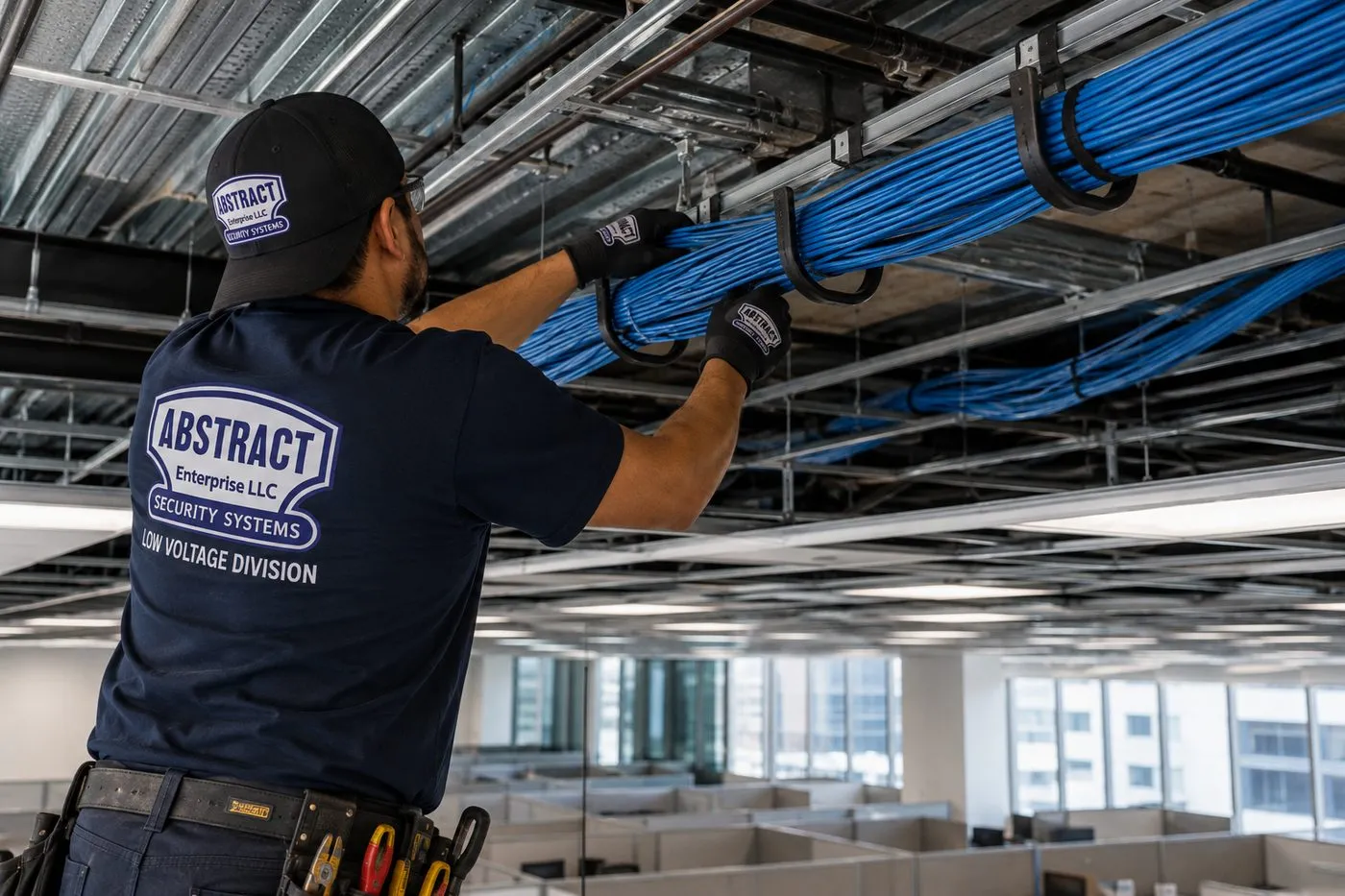
Photographed from below and behind, an installer wearing an AESS low-voltage shirt hangs a dense run of blue cable in a line of black J-hooks under the bare steel ceiling, a floor of cubicles stretching to the windows beneath him.
Equipment
Types of Soundbars and Mounts We Install
We install the soundbar you've already bought, and if you haven't bought one yet, we'll say what suits the room and the building. These are the categories that come up most in Bronx apartments and houses, with the details that change how they're mounted.
Compact Bars for Bedrooms and Studios
Short, light bars for TVs under about 50 inches. The Sonos Ray measures about 56 cm wide and under 2 kg and connects by optical, not HDMI, which suits older TVs. Light bars are the easiest on fragile plaster and on the people next door.
Mid-Size Bars With a Centre Channel
Three-channel and similar bars with a dedicated centre speaker for dialogue, connecting over HDMI ARC or eARC. The Sonos Beam (Gen 2), at about 6.35 lb, is one example; Samsung, LG, Sony, Bose and others make comparable models. The best fit for most 50- to 65-inch TVs in Bronx living rooms.
Flagship Atmos Bars
Long bars with up-firing drivers that bounce height effects off the ceiling. Sonos lists the Arc Ultra at 46.38 inches wide and 13.01 lb. High pre-war ceilings can work well for these if the ceiling is flat; bars this long also need a TV wide enough to sit over them.
Wireless Subwoofers
Separate bass units paired to the bar. In apartments, where and on what the sub sits matters more than how big it is: an isolation pad or platform and a spot out of the corner do more for neighbours than turning it down alone.
Wireless Rear Speakers
Small surrounds paired to the bar for a fuller effect. "Wireless" means no speaker cable from the bar, but each rear still needs power, which in an older apartment with few outlets is often what decides whether they're practical.
Universal Wall Brackets
Needed when the box has no bracket or its bracket is wrong for a bowed or masonry wall. Sanus's SASB1 universal mount clamps the back or underside of most bars up to 20 lb, with depth adjustment that helps on wavy plaster. We supply a Sanus soundbar bracket for $84.99.
TV-Attached Brackets
Brackets that hang the bar from the TV's mount instead of the wall — the no-new-holes option for renters and NYCHA residents. Sanus's WSSATM1, designed with Sonos for the Arc, fits most 50- to 90-inch TVs and works with other brands' mounts.
Surface Channels and In-Wall Kits
Paintable cord covers for masonry and rented walls; code-compliant in-wall power and cable kits where the wall is hollow and the owner agrees. The kit carries power inside the wall to an existing outlet below without new electrical wiring.
Cables, Remotes and Streamers
The small parts that make it work: an HDMI lead rated for eARC, an optical lead for an older set, a universal remote when a household juggles several boxes, and a streaming stick configured on the same remote.
Which socket on your TV the bar should use
Your TV
Best connection
What you get
Typical Bronx case
Recent TV with a port marked eARC
HDMI eARC
Lossless formats including Dolby TrueHD; TV remote controls the bar
New TV bought for a new apartment, Atmos bar
Set with an HDMI socket labelled ARC but not eARC
HDMI ARC
Compressed surround, Atmos inside Dolby Digital Plus; TV remote controls the bar
Most streaming households; mid-size bars
Older TV with no ARC
Optical
Stereo or compressed surround; volume often needs the bar's own remote or a learning setup
Bedroom or kitchen TV; compact bar
Any TV, phone music only
Bluetooth
Compressed stereo with some delay
Phone playlists only; the delay makes it poor for TV
Sizes and weights above are from the manufacturers' published specifications at the time of this update. Models change, so we confirm the bar's ports, weight and bracket before the visit, which also tells us which anchors to bring for your wall.
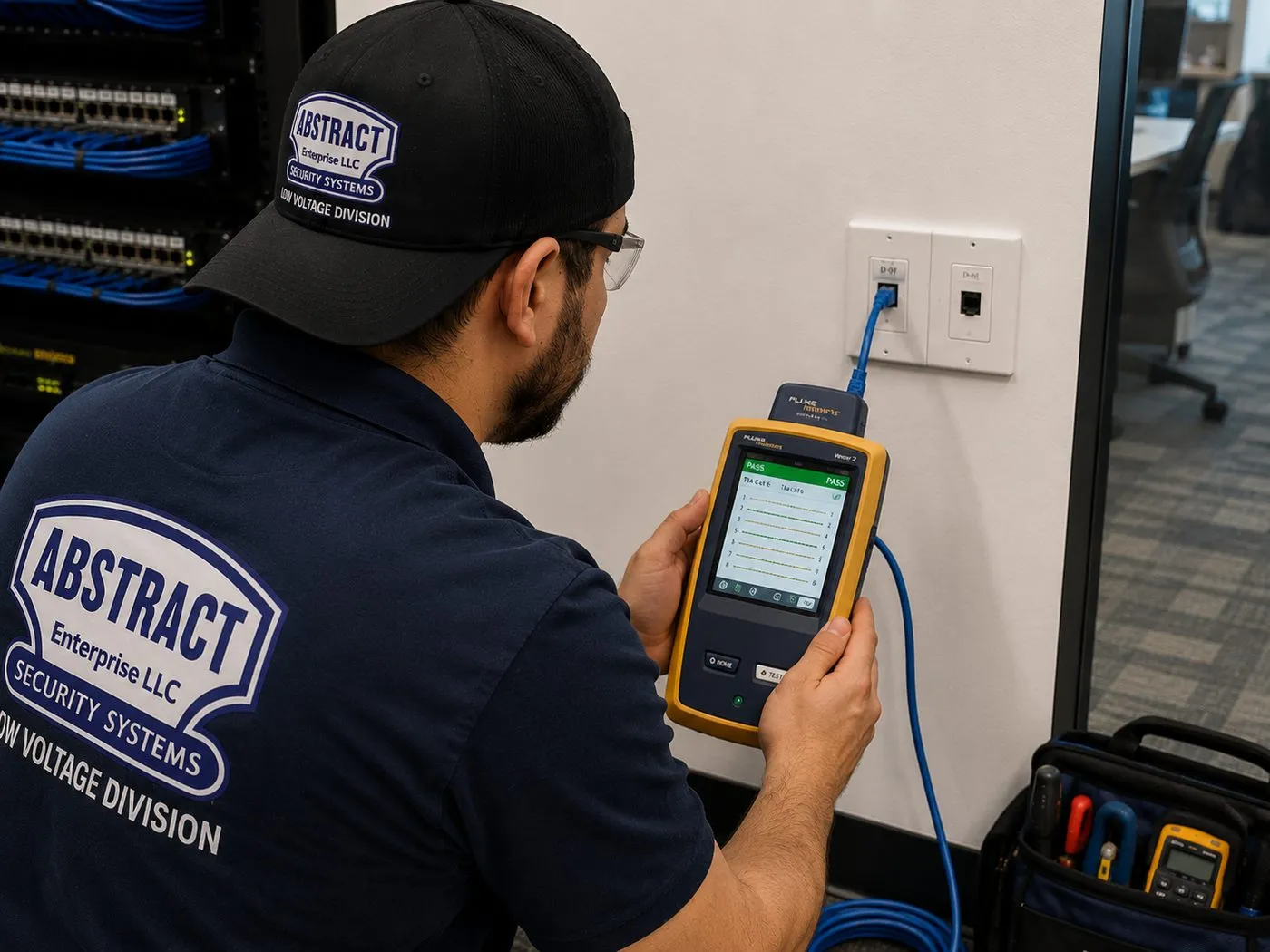
A technician crouches at a double wall plate with a yellow handheld cable tester plugged into one jack, its screen showing a green PASS; a tool bag with screwdrivers and a meter sits on the floor and a network rack is visible at left.
AI Overview Reality Check
What AI Gets Wrong About Soundbar Installation in the Bronx
How this section was built: Google's AI Overview couldn't be viewed from the research tools used for this page, so nothing below is quoted as its words. Each heading is a claim that a real cost guide, installer blog or forum thread publishes, of the kind answer engines repeat. Under each one is what changes when the soundbar is going into a Bronx apartment.
"Bracket holes are easily patched with spackle when you move out"
Installer blogs aimed at New York renters make this point, and physically it's true: a soundbar bracket leaves two to four small holes that a bit of filler hides. But whether those holes are acceptable isn't a physics question in the Bronx. In NYCHA housing, the resident handbook requires prior written consent from property management before residents add fixtures or fittings. At Co-op City, Riverbay charges vacating shareholders for remedying alterations or damage found at the move-out inspection, deducted from equity.
For a market-rate or rent-stabilized tenant, the lease's alterations clause decides, and in Parkchester the person whose consent counts is the condo owner you rent from. "Just patch it later" skips the step that actually protects you, which is asking first and keeping the answer in writing.
Our approach is to sort the permission before the appointment, and where it's slow or unlikely, offer the no-holes routes: the bar on a stand, or hung from an approved TV mount with a TV-attached bracket.
"Concealed wiring costs about $75 to $300"
Angi's TV-mounting cost guide gives a $75–$300 range for concealed wiring, and as a national figure for drywall houses that's a reasonable band. It assumes there's a hollow wall to hide the wire in. In a large share of Bronx apartments, there isn't.
In many of the borough's high-rise towers, post-war Housing Authority buildings and older brick blocks, the TV wall turns out to be solid masonry or concrete. Fishing a cable inside those walls isn't a cheaper or dearer version of the job; it's not the job. The finish there is a painted surface channel, which on our menu is $59. Hidden in-wall wiring with a code-compliant in-wall power and cable kit is $169, and we only quote it where there's a cavity and the owner agrees.
So the right question isn't "what does concealed wiring cost?" but "is my wall hollow, and am I allowed to open it?" We answer both from a photo before you book.
"Nobody needs to approve a soundbar unless electrical or structural work is involved"
That line, from Angi's guide, is accurate about government permits: putting up a soundbar and connecting it doesn't need its own Department of Buildings permit, and anything involving a new or moved outlet is electrical work. It's misleading in the Bronx because the permissions that actually stop jobs here aren't city permits.
They're the Housing Authority's written consent, the condo owner's agreement, the co-op's house rules and certificate-of-insurance requirements, and at Co-op City, the CSO's view on whether something counts as a delivery needing a permit. None of those appear on a national cost guide, and all of them can result in a cancelled visit, a $150 return trip or a fine if skipped.
We ask about tenure on the very first call for that reason, and include the paperwork in the plan.
"Labor runs $50 to $200 an hour"
Angi's guide quotes $50–$200 an hour for installation labour nationally. That's a wide band that tells a Bronx tenant very little, and an hourly rate leaves the total open-ended in exactly the buildings where jobs run long: concrete walls, uneven plaster, walk-ups.
We price installs as fixed lines instead. A bar wall-mounted under the TV is $129 however long the concrete takes; the wall surcharge for concrete or block is a fixed $75 on top; a walk-up above the second floor is $40. Hourly billing only applies to setup-only visits where nothing is mounted — reconnecting a bar to a new TV, fixing eARC — and in the Bronx the first hour is $225, then 30-minute blocks.
Fixed lines mean the number on the quote is the number on the invoice, unless something unselected turns up on site, in which case you're told the price before any extra work.
"Surround sound installation costs $241 to $1,350"
Angi publishes a $241–$1,350 range for surround sound installation, averaging around $794. That figure describes running speaker wire to five or more separate speakers and a receiver, often through walls and ceilings. Answer engines sometimes attach it to soundbar questions, which makes a soundbar look far more expensive than it is.
A soundbar with a wireless sub and wireless rears is a different job. There's no speaker wire to route, only power for each unit and one HDMI connection. In a Bronx one-bedroom, mounting the bar, placing the sub and pairing two rears is our wall-mount line, any bracket or wall surcharge, and the rears' placement — nowhere near a full surround install.
Where a household really does want wired surround or ceiling speakers, that's our AV and sound service, priced separately, and we'll say so if a bar won't do what you're after.
"Have the TV installer put in a new outlet — it's a cheap add-on"
Gig-platform price examples list "installation of additional electrical outlet" at around $65 as a TV-mounting add-on. In New York City, adding or moving an outlet is electrical work for a licensed electrician, and in a rented Bronx apartment it's also an alteration the landlord would have to approve.
Outlet work isn't something we take on. Inside a hollow wall, our alternative is a code-compliant in-wall power and cable kit that feeds the TV and bar from an outlet that's already there, lower on the same wall, with no new electrical circuit. Against brick or concrete, a longer painted channel to the nearest existing outlet does the same job on the surface.
Older Bronx apartments often have fewer outlets than people need, and some are worn. If the outlet behind the TV is loose, cracked or scorched, that's a call to the landlord or an electrician before the soundbar goes in.
"Bass travels easily, so skip the subwoofer"
That advice, repeated in r/AskNYC threads about neighbour-friendly soundbars, is half right. Low bass does pass through floors and walls far more easily than speech, and in buildings with known noise problems it's sensible to be careful with it.
But skipping the sub isn't the only option, and for many households it isn't the best one. A sub on an isolation pad, out of the corner, set low against the bar, gives a fuller sound in the room at a lower overall volume — and lower overall volume is what neighbours actually notice. Turning the sub off for late evenings is usually a single setting.
We set it up both ways, play the same scene, and let you decide. If your downstairs neighbour has already complained once, we'd lean toward a smaller system and say so plainly.
The question to put to any installer, us included, is what happens if the landlord hasn't agreed, the wall is concrete and the only outlet is across the room. A clear, priced answer before the visit is what you're looking for.
A Soundbar Your Landlord and Neighbours Can Live With
Ownership, wall photo, bar model: three facts, and you get back a fixed price, a mounting method and a list of anything the landlord or board will want to see.
Concourse walk-up, Co-op City tower, Parkchester condo or a house in Throgs Neck — tell us the bar, the TV, the wall and who owns the place, and a written price comes back the same business day. Rather talk it through? Call (646) 490-0629.
✅
Request Received
Thanks — your details are with our Fordham Road office and you'll hear back today if it's a business day. Urgent? Ring (646) 490-0629.
How It Works
Our Installation Process
Seven steps, whether it's a compact bar on a stand in a NYCHA bedroom or an Atmos bar and sub under a new TV in a Riverdale co-op. The second step is the one most Bronx jobs hinge on.
1. Send the details
Bar and TV models, a photo of the wall, the neighbourhood and floor, elevator or stairs, and who owns the apartment. A written price comes back built from our published menu.
2. Sort the permission
You get written consent from whoever controls the wall — landlord, NYCHA property management, condo owner or co-op — and we issue any certificate of insurance they ask for, free.
3. Book a 2-hour window
Arrival windows are two hours wide and run from morning to evening every day; open same-day windows are offered first. A booking can be moved free of charge up to 24 hours ahead.
4. Read the wall and the room
A pilot hole tells us what the wall is made of; a scan finds pipes and the riser; a hand over the radiator shows the heat path. Then you and the installer settle the height and the centre mark together.
5. Mount and dress the cables
Bracket fixed with anchors for that wall and levelled against the TV, the bar mounted, and the cables hidden in a painted channel or inside the wall as agreed.
6. Connect and set for the household
HDMI eARC or ARC connected, CEC on so the TV remote runs the bar, lip-sync checked, menus and captions set in the household's language where the TV offers it.
7. Quiet settings and a walkthrough
Sub placed and set low, night and dialogue modes shown, dust cleaned up, and a quick run-through of power, volume and night mode with whoever uses the TV most.
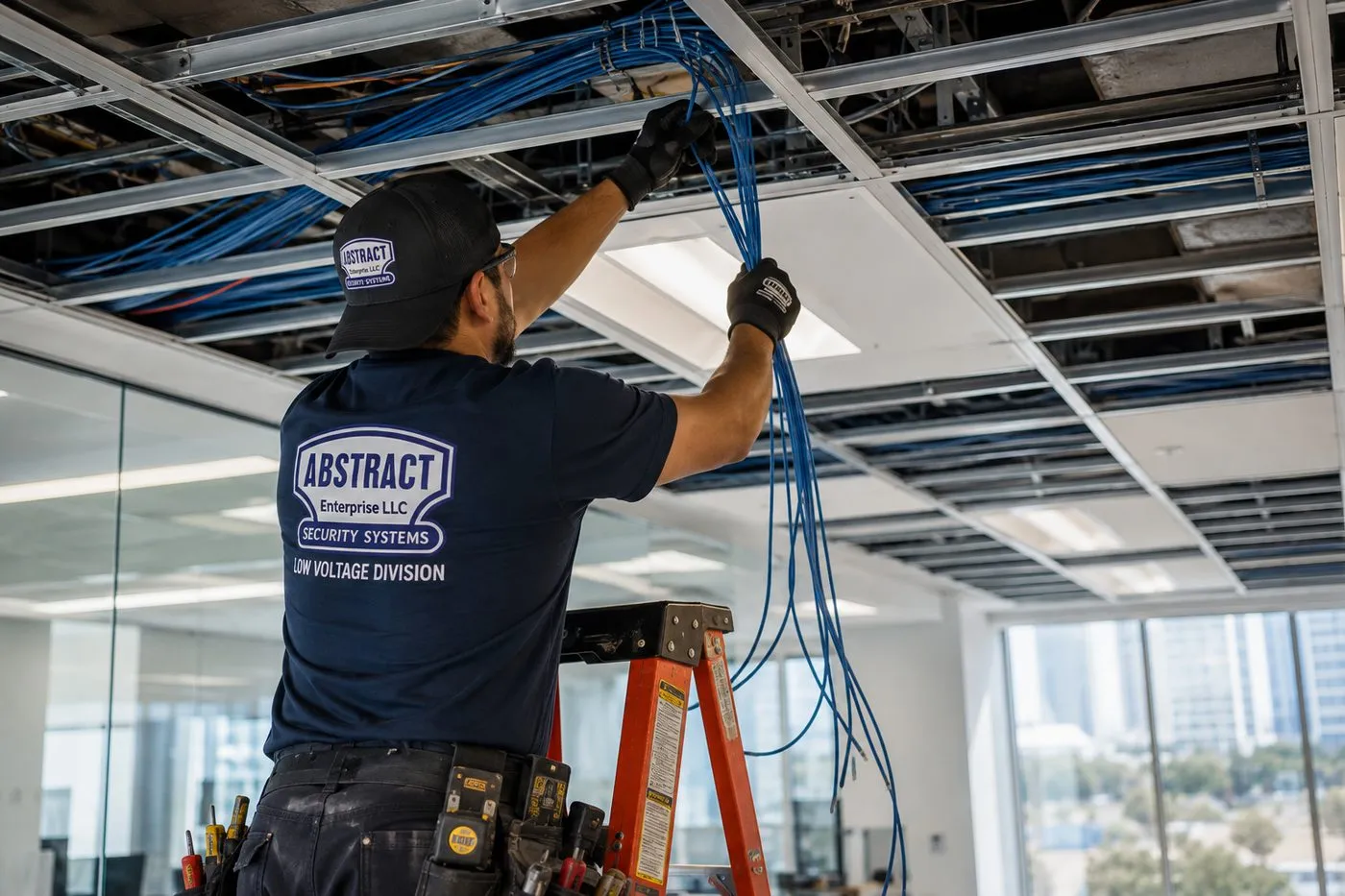
From behind, a technician in an AESS low-voltage shirt stands on an orange stepladder and pulls a loose fan of blue cables down from the open ceiling grid, with a glass partition and city windows in the background.
Coverage Area
Soundbar Installation Near the Bronx's Landmarks
Landmarks are a shorthand for building stock. Tell us you live near one of these and we already have a fair idea of the wall, the stairs and the paperwork before we see a photo.
Grand Concourse Historic District
Designated on October 25, 2011, along Louis Risse's boulevard modelled on the avenues of Paris, with most buildings put up between 1916 and 1941 and a celebrated run of Art Deco and Art Moderne apartment houses. Plaster walls, high ceilings, radiators under the windows, landlords to ask.
Parkchester
Metropolitan Life's planned community near Hugh Grant Circle, laid out on a 129-acre site with only about a quarter of it built on, and planned by Richmond Shreve, whose firm designed the Empire State Building. Red-brick buildings, condo owners and their tenants.
Co-op City
Between the Hutchinson River Parkway and I-95 in the northeast Bronx, the cooperative's towers come in triple-core, chevron and tower designs, run by the Riverbay Corporation and its board. High floors, and Cooperator Services Offices that handle permits for shareholders.
Edenwald Houses
The largest Housing Authority development in the borough, with about 2,000 apartments in 40 buildings of three and fourteen storeys, completed in 1953. NYCHA's consent rules and quiet hours apply, and its community district, Bronx CD 12, is where the city's 311 noise complaints were most concentrated in 2025.
Wave Hill and Riverdale
The public garden and cultural centre on the Hudson in the northwest Bronx sits among Riverdale's estates, houses and elevator co-ops. Owners here are the most likely to want in-wall wiring, and boards expect insurance certificates.
Arthur Avenue Retail Market
A fixture on Belmont's main street since October 1940, at the centre of the Bronx's Little Italy. The blocks around it mix restaurants and food shops with apartment buildings.
We also serve Mott Haven, Port Morris, Melrose, Morrisania, Highbridge, Concourse Village, Fordham, University Heights, Kingsbridge, Norwood, Bedford Park, Belmont, Tremont, Soundview, Castle Hill, Unionport, Westchester Square, Pelham Parkway, Morris Park, Williamsbridge, Wakefield, Eastchester, Baychester, Throgs Neck, Country Club, Pelham Bay, Schuylerville, City Island and every block in between — and, from the same crews, Manhattan, Queens and the rest of the city.
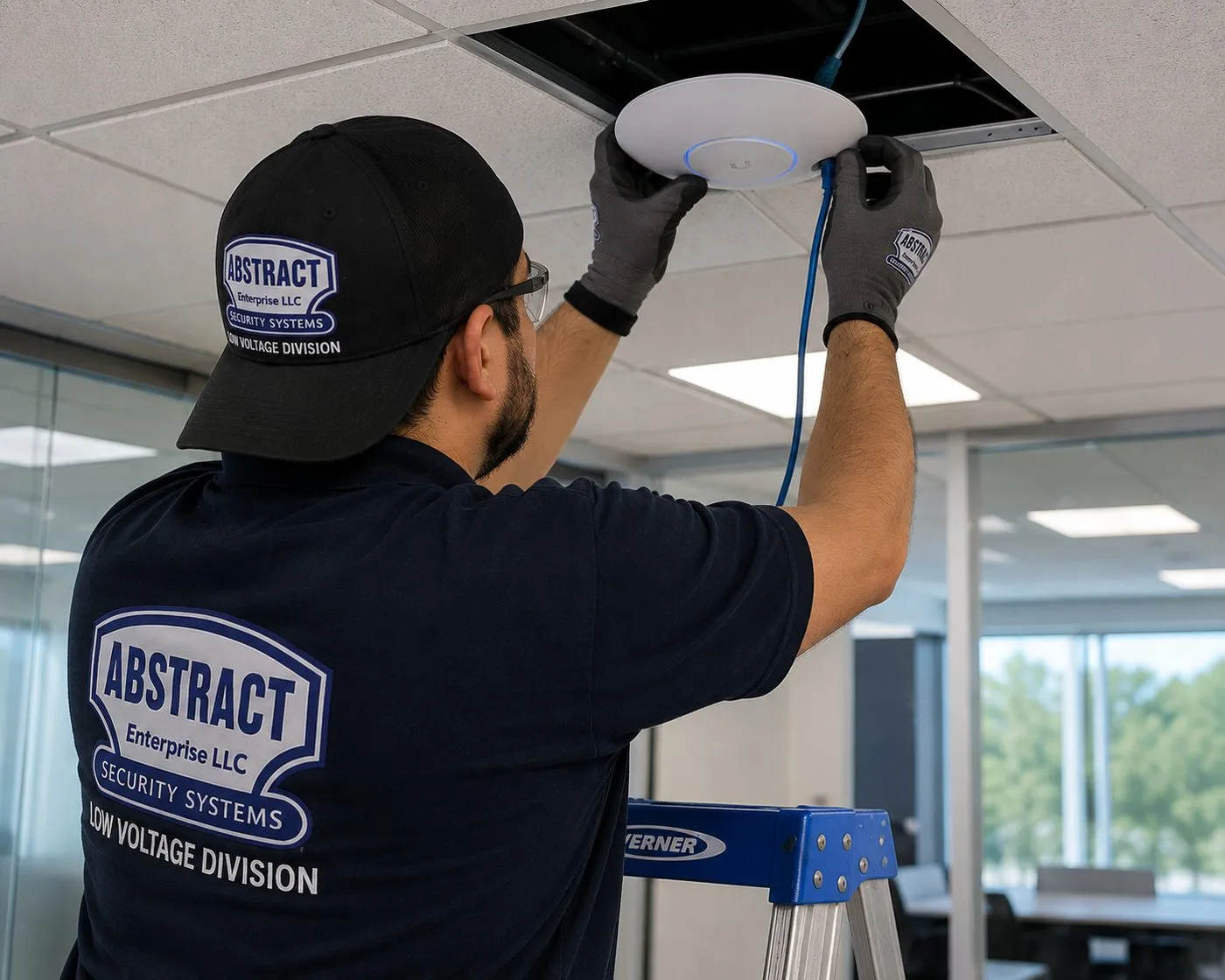
A technician in an AESS cap and grey gloves holds a round white access point against an open ceiling tile, a blue network cable running into its base, with glass-walled offices and windows behind.
Pricing
Soundbar Installation Cost in the Bronx
Bronx soundbar prices are published, fixed and itemised: you add the lines that apply, and that's the bill. Install prices in the Bronx are the same as Brooklyn's, which is our base. Where the Bronx differs is the hourly rate for setup-only visits and the TV-mounting base, both shown below. If something you didn't select turns up on site, you get the price before any extra work starts.
Line item
Bronx price
What it covers
Soundbar placed on a stand or console
$79
Set on your furniture, wired to the TV and dialled in — nothing drilled
Soundbar wall-mounted under the TV
$129
Our installer fixes the bracket for your wall type, hangs and squares the bar, then wires and checks it
Sanus soundbar bracket
$84.99
Our bracket, for bars sold without one or for hanging the bar off the TV mount
Paintable cord cover
$59
Paint-ready channel stuck and screwed to the wall, bar down to power
In-wall concealment
$169
Wiring behind the wall surface using a code-compliant in-wall power and cable kit — needs a hollow wall and the owner's yes
Cable run to a cabinet or other spot
$99
Up to 25 ft
Sonos setup
$125
Sonos system, app and grouping
A/V receiver
$129
Receiver connected and configured
Universal remote
$99
One handset set up to drive every box under the TV
Streaming device setup
$49
Roku, Apple TV, Fire TV or similar
Full home theater
$350
Multi-component system setup
Wall, height and access add-ons
Condition
Price
Where you'll meet it in the Bronx
Drywall on wood studs
$0
Most East Bronx houses and two-families
Metal studs
+$30
Gut-renovated units and newer buildings
Plaster
+$45
Concourse pre-war buildings, older walk-ups, many houses
Brick or stone
+$65
Parkchester, exterior walls of pre-war buildings
Concrete or cinder block
+$75
High-rise towers and many post-war developments
Tile or marble
+$95
Feature walls and some commercial interiors
Plywood backer board
$85
Damaged or hollow plaster that won't take anchors directly
When nothing needs mounting — reconnecting a bar to a replacement TV, sorting eARC or the remote, pairing a sub — Bronx visits are billed hourly: the first hour is $225 flat, then 30-minute blocks. If a TV is mounted at the same visit, the Bronx TV-mounting base for a 32- to 55-inch set on drywall is $209.99, and a TV set up on a stand without mounting is $137.99. Specialty service work outside this menu, such as tracing a fault in existing building wiring, is quoted at our $195-an-hour specialty rate with a three-hour minimum ($585); that rate isn't applied to a standard soundbar install.
What's included, and what isn't
In every price: the bar fixed and squared to the screen, plugged into the right TV port, wires dressed, CEC switched on so one remote works, and the drill dust vacuumed before we go.
Outside our trade: electrical outlets — new or relocated — need a licensed electrician, and hole-filling or touch-up paint needs a decorator. Neither line ever appears on an AESS invoice.
Return trips: a $150 return-trip fee applies if we can't start — the bar or bracket isn't there, there's no access, or the landlord's, Housing Authority's or board's approval is missing. That last one is why we ask about tenure first.
Fragile surfaces: century-old plaster, clay tile, ceramic and stone can fracture however gently they're drilled. You hear that risk from us first and make the call yourself.
National brands versus a local licensed installer. Big-box and app-based services publish flat menus that suit drywall in a house. In the Bronx, the things those menus leave out are the things that decide the job: plaster over hollow tile, concrete towers, walk-up stairs, written consent from NYCHA or a landlord, and a certificate of insurance for a managing agent. A licensed local installer with a wall-by-wall price list can quote the real job and answer for it afterwards.
Shop Our Systems
Soundbar Installation Packages & Pricing
Three combinations cover the bulk of Bronx requests. Each card spells out its addition, and any wall, stair or height line from the tables above is added to the card's total.
Starter — No-Holes Stand Setup
$79
No drilling at all: the bar sits on your furniture ($79), plugged into the TV's eARC or ARC socket with CEC on, wires tucked out of sight. Where NYCHA residents start while consent is pending, and where no-alterations leases end.
Standard — Wall Mount With Bracket
$213.99
$129 for the wall mount plus $84.99 for a Sanus soundbar bracket makes $213.99. The wall decides any surcharge: $45 for plaster, $65 for brick, $75 for a concrete or block tower wall.
Premium — Wall Mount, Bracket and Hidden Wiring
$382.99
$129 wall mount, $84.99 Sanus bracket and $169 for wires hidden behind the wall with a code-compliant in-wall power and cable kit: $382.99 in all. Only offered on hollow walls, with the owner's agreement — mostly Riverdale co-ops, condos and East Bronx houses.
Bring Your Own Equipment — Labour Only
If the bar came with a bracket rated for it, or you've bought one, the labour-only wall-mount price is $129 plus any wall surcharge. Customer-supplied brackets must be rated for the bar and carry their manufacturer's warranty rather than ours. If we find the bracket isn't right for the wall or the bar, we say so before drilling and offer the Sanus bracket instead.
Worked example, priced from the lines above. A wall-mounted bar under an existing TV on a concrete wall in a high-rise, with our bracket and a painted cord cover, comes to $129 + $84.99 + $75 + $59 = $347.99. The same bar on a stand in a NYCHA apartment while consent is pending is $79, and moving it to the wall later is priced as a fresh wall-mount line.
Ready to Price a Bronx Soundbar Job
Tell us the bar, show us the wall and say who the landlord is; the written figure follows the same day.
In a borough where four households in five rent, the person to ask is the most useful thing to know before booking. This is how we map it on the first call. It's a practical guide, not legal advice; your lease, proprietary lease or house rules are what count.
Where you live
Who usually decides
What we usually need
Typical finish
Private rental, market-rate
Landlord or managing agent, per the lease's alterations clause
Your written OK; sometimes a COI
Wall mount with cord cover, or TV-attached bracket
Rent-stabilized apartment
Landlord or managing agent, per the lease
Your written OK; sometimes a COI
Same as above, chosen for a long stay
NYCHA apartment
Development's property management office
Prior written consent for fixtures or fittings
Stand or TV-attached bracket until consent; then wall mount with cord cover
Co-op City (Riverbay)
Shareholder, within Riverbay's rules
Check with your CSO about permits for anything large
Wall mount on anchors for the wall found, cord cover; minimal and reversible
Parkchester condo, renting
The unit owner (your landlord), within condo rules
Owner's OK; COI if the office asks
Wall mount, cord cover on masonry
Parkchester condo, owner-occupied
You, within condo rules
COI if the office asks
Wall mount, cord cover on masonry
Riverdale or Concourse co-op
Shareholder, within house rules and the alteration agreement
Notice to the managing agent and a COI
Wall mount; in-wall where the wall is hollow and rules allow
House or two-family you own
You
Nothing beyond your booking
Any, including in-wall concealment
Upstairs tenant in a two-family
The owner, usually living downstairs
The owner's OK
Wall mount with cord cover; sub kept off the shared floor
Two habits save the most trouble. First, ask in writing and keep the answer — a text or email is enough — with a short description of what's going on the wall. Second, describe the work small and specific: a soundbar of a given length, two to four anchors, a painted channel rather than cutting into the wall. People approve what they can picture.
If you're not sure who to ask, tell us the address type and we'll suggest where to start. We can also speak to a managing agent or super directly if you'd like us to explain the work in installer's terms.
Heat Season
Steam Heat, Radiators and Where the Bar Goes
Many Bronx apartments are heated by steam radiators, and for eight months a year that shapes where a soundbar should sit. HPD's rules require heat from October 1 to May 31: at least 68 degrees inside between 6 a.m. and 10 p.m. when it's below 55 outside, and at least 62 degrees overnight whatever the weather. Radiators under windows push a plume of warm, dusty air up the wall above them whenever they run.
Don't put the bar straight above the radiator. Offset the TV and bar along the wall if the radiator only covers part of it, so the bar sits beside the warm plume rather than in it.
Consider the other wall. A TV opposite the window, rather than under it, gets less glare and no radiator heat. Many Bronx living rooms have that option if the furniture moves.
Give the bar breathing room. Bars have vents and up-firing drivers; recessing them in a tight niche over a heat source traps warm air. We leave space above and behind where the bar's manual asks for it.
Watch the riser. The steam riser in the corner of many rooms is hot to the touch in winter. Cables are routed clear of it, never strapped to it.
Dust is the long-term issue. Warm air carries dust onto grilles and into vents. A bar mounted away from the heat path stays cleaner and runs cooler.
Mind the cord cover too. Plastic surface channels near a hot radiator can soften or discolour over time. We route them away from the radiator's top and sides.
None of this rules out a TV wall with a radiator on it. It changes where on that wall things go, and it's why our installers look for the heat path before marking a single hole.
Buying Guide
Choosing a Bar That Suits a Bronx Room
If the soundbar is still in the shopping cart, five checks will save a return trip to the store. They come from the conditions our installers meet in Bronx apartments rather than from any brand's marketing.
Measure under the screen. Note the TV's width and the gap between its bottom edge and the stand or the radiator. A bar a little narrower than the TV usually looks best; one much wider can collide with window trim in a small pre-war living room.
Check the TV's ports. Look for an HDMI socket marked ARC or eARC on the back of the set. If there's neither, choose a bar with an optical input, and accept that the bar's own remote may handle volume.
Weigh the wall against the bar. A compact or mid-size bar is far kinder to fragile plaster and hollow tile than a long flagship model. On a wall you're unsure of, lighter is safer.
Think about the sub before buying one. In a building with neighbours below, a bar with decent built-in bass, or a set where the sub is optional, gives you the choice later.
Count the outlets. Every wireless sub and rear speaker needs its own power. In an older apartment with one outlet per wall, that can decide whether rears are worth paying for.
Send us the model you're considering along with a photo of the wall and we'll tell you how it would mount, before you spend anything.
Shared Households
One TV, Many Listeners: Setting Up for a Bronx Household
A Bronx living room TV often serves a grandparent's afternoon shows, a teenager's games after school and a parent's late news, sometimes in two or three languages. A soundbar can make all of that easier or harder depending on how it's set up. These are the defaults we aim for in a shared household.
The TV remote does everything daily. With HDMI-CEC enabled, the TV remote turns the bar on and off and controls its volume. The bar's own remote goes in a drawer for the occasional setting change.
Audio output fixed to the bar. We set the TV to send sound to the soundbar by default, so it doesn't fall back to the TV speakers every time someone switches input.
Dialogue first. Where the bar has a voice or dialogue mode, it's on by default. Older listeners and people following a second language benefit most.
Menus and captions in the right language. Set on the TV in whichever supported language the main viewer reads, with captions available in a separate language where the TV allows.
A sensible bass default. Sub set for the evening, not for a showroom. Anyone can turn it up for a film; it shouldn't start loud.
One-step reset. We show whoever handles the technology how to get back to normal in one move when settings drift.
Game consoles handled properly. Where a console plugs into the TV, sound still reaches the bar over eARC or ARC; where the console needs low latency, we check the TV's game mode doesn't break lip-sync for everyone else.
If the household has a cable box, a streamer and a console, a programmed universal remote ($99) often pays for itself in fewer "why is there no sound?" moments. We'll suggest it only if the number of devices justifies it.
Before the technician arrives
A few things make a Bronx appointment quicker. Have the written OK from the landlord, NYCHA or the owner in hand if it was needed. Have the soundbar, its bracket and any sub or rears in the apartment — boxed is fine. Clear the area in front of the TV wall and move anything fragile off the stand. Know where the nearest working outlet is, and whether the TV wall has a radiator or riser on it. Tell the doorman, super or front desk the date and window, and if the buzzer doesn't work, make sure we have a number that reaches you from the street. And if you already know where you'd like the subwoofer, say so; it's your room, and we'll advise rather than decide.
Complete Services
Every Soundbar Installation Service in the Bronx
Related Bronx pages, for when the soundbar is one item on a longer list.
Hanging the television itself, so the bar and screen share one cable route and one agreed height — on Concourse plaster, Parkchester brick or tower concrete.
Not sure which page fits? Describe the job once and we'll price it.
Field Notes
Field Notes: Reading a Bronx Living Room Before Drilling
General working method for Bronx walls and rooms; this describes practice, not a particular customer's apartment
Start with the paperwork, not the wall. Ask who owns the apartment and whether the OK is in writing; in this borough that answer decides whether the day ends with a bar on the wall or on the stand. Then look along the wall from one end, at eye level, with a light behind you. Old Bronx plaster that has been skimmed for decades shows its waves that way, and a long bar will show them too if the bracket isn't shimmed.
Find the heat. Put a hand above the radiator if it's running and follow the warm air up the wall; that column is where the bar shouldn't be. Find the riser, too, and keep every hole and every cable clear of it.
Drill one small pilot hole where the bracket will hide it and read the dust. Red grit is brick, grey grit is concrete or block, white powder with a sudden give is hollow tile or plaster over a void. Choose the anchor after that hole, not before. Finally, look down: bare boards over a neighbour's ceiling and a subwoofer in the corner is the most common recipe for a 311 call. A pad under the sub, a spot out of the corner and a lower level fix most of it.
FAQ
Bronx Soundbar Installation FAQ
If all I need is the soundbar reconnected to a replacement TV, how is that priced in the Bronx?
+
As a setup-only visit, because nothing is being mounted. In the Bronx the first hour is $225 flat, then 30-minute blocks. Reconnecting a bar to a new TV over HDMI eARC or ARC, switching on CEC so the new TV's remote controls it and checking lip-sync usually fits within the first hour.
Is there an extra charge when the bar goes high under a tall pre-war ceiling?
+
Only if the bar itself is mounted above about 8 feet, which adds a $75 high-mount line. Most bars sit below the TV at a comfortable viewing height even in rooms with high ceilings, so the charge rarely applies. We bring ladders suited to the room either way.
Can you haul away the old TV when the soundbar goes under a new one?
+
Yes. Hauling away and recycling an old TV is $79, taking down an old TV from the wall is $85 and removing an old bracket is $45. Taking away the packaging from the new bar and TV is $25. Each is a separate line, so you only pay for what you need.
Can a landlord book soundbar installs for several Bronx apartments at once?
+
Yes. Each apartment is priced from the same published menu according to its own wall and access, and we schedule consecutive 2-hour windows in the same building where possible. One certificate of insurance naming the landlord and managing agent covers the visits.
How do I send photos of the wall before the visit?
+
Attach them when you reply to our quote, or send them on WhatsApp through the link on this page. Useful shots are the whole TV wall from across the room, a close-up of the outlet, any radiator or pipe on that wall, and the soundbar's model label.
Can my landlord or a family member pay for the install instead of me?
+
Yes. Tell us who is paying when you book, and the quote and invoice go to them. The person living in the apartment still needs to be there to agree the bar's position and cable route, because they are the one who will live with it.
The TV wall was painted this week — is it too soon to mount the soundbar?
+
Tell us when you book. Fresh paint can be dented by a bracket and marked by tape, and a stick-on cord cover holds poorly until the paint has cured, so follow the drying and curing times on the paint can. If the date can't move, we can mount the bar and you can choose to have the cord cover fitted later, priced as its own line.
What if the soundbar is wider than the space under the wall-mounted TV?
+
We look at the options with you before drilling. A bar slightly wider than the TV can still look fine centred below it; if a cabinet or window frame is in the way, the TV-attached bracket or a lower stand position may fit better. Sending the bar's model and a wall photo lets us check in advance.
All Areas Served
Soundbar Installation Across New York
You are on the Bronx page; the citywide picture sits on our NYC soundbar installation hub. Manhattan, Brooklyn and Queens each have a borough page of their own, while Staten Island and the suburban counties still route to the quote form until their pages go up.
If the bar went quiet after a new cable box or TV, the remote stopped controlling it, or the bracket is easing out of the plaster, call (646) 490-0629. We book the next open 2-hour window, and most connection and setup faults are fixed within one to two hours of the technician arriving.
Abstract Enterprises Security Systems · 460 E Fordham Rd, Bronx, NY 10458 · (646) 490-0629 · WhatsApp (718) 679-0359 via wa.me
NYS Low-Voltage Licence #12000287431 · 100% Licensed & Insured · Same-Day Estimates · Rated 4.7★ from 201 Google Reviews
Brackets and parts carry their manufacturer's warranty. Full terms — including 50% deposit, one-year parts-only warranty on AESS-supplied products, and the late-fee schedule — are set out in the service agreement. See our warranty page.
Page reviewed and updated October 17, 2026. Changelog: first publication of the Bronx soundbar installation page, written around tenure and permission, Concourse and Co-op City wall types, steam heat and shared households.