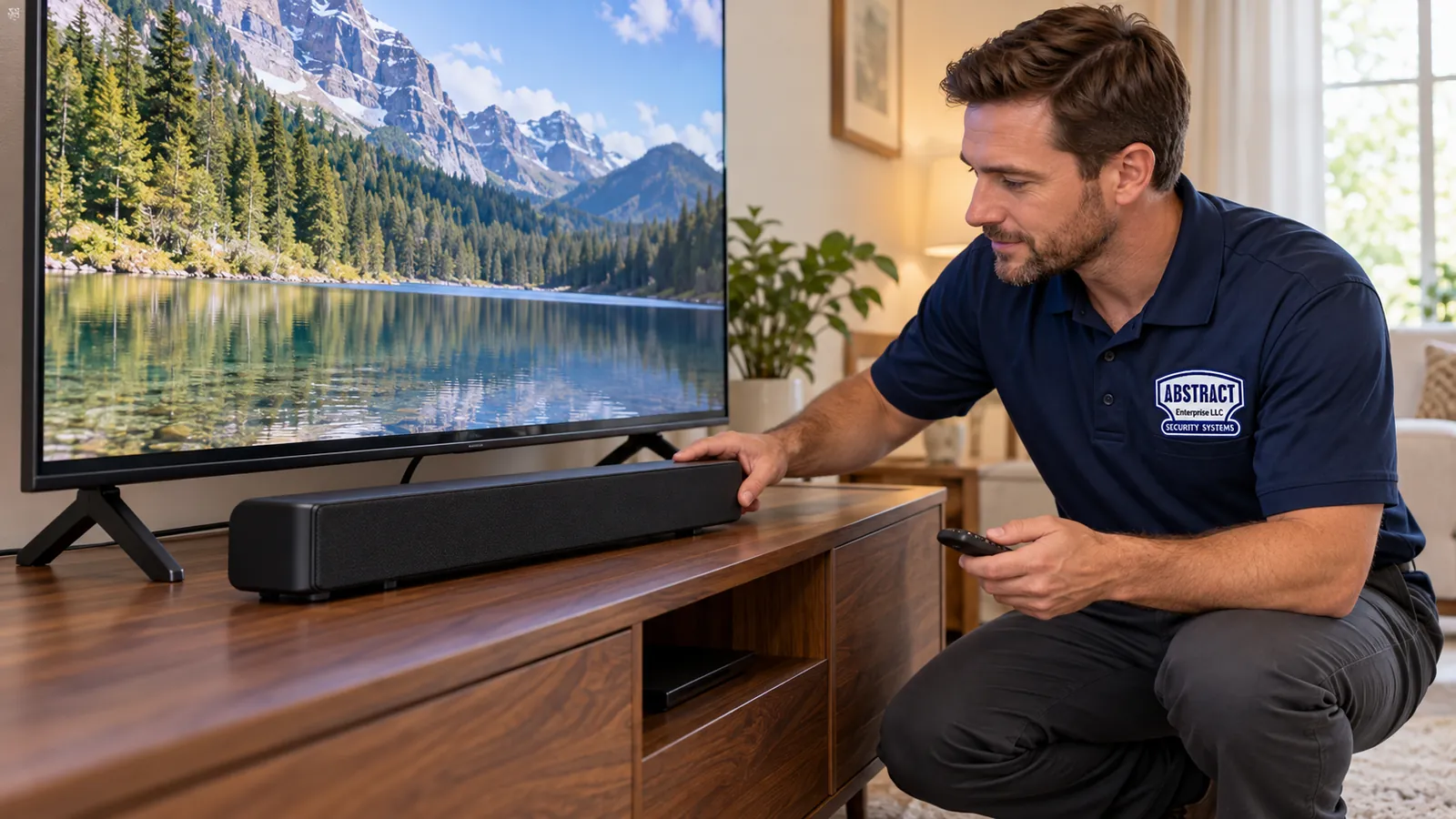
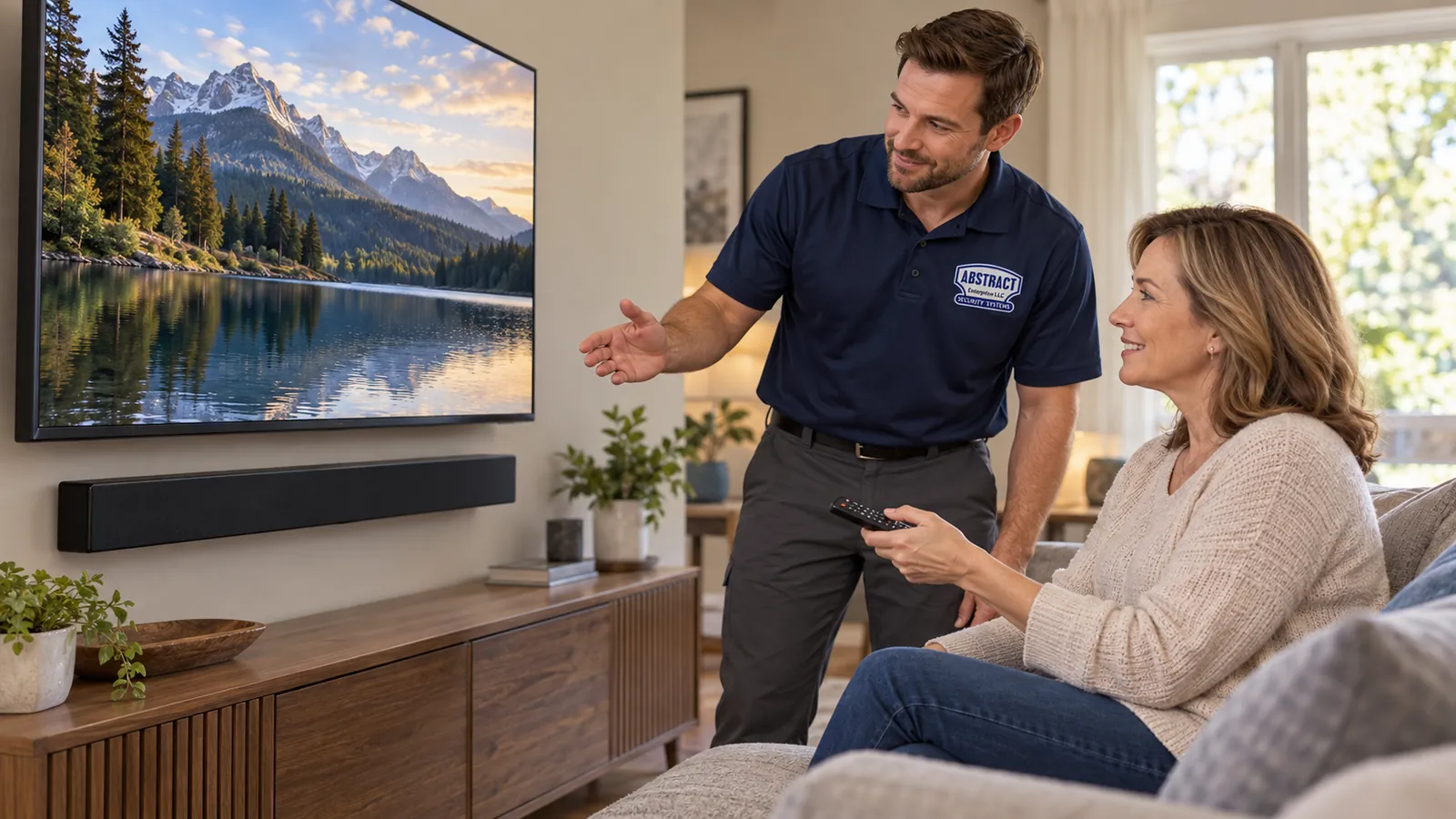
Block-Wall Co-ops · Steel-Stud Rentals · Plaster Tudors · Stone Hearths · Dialogue Set Up for Every Ear
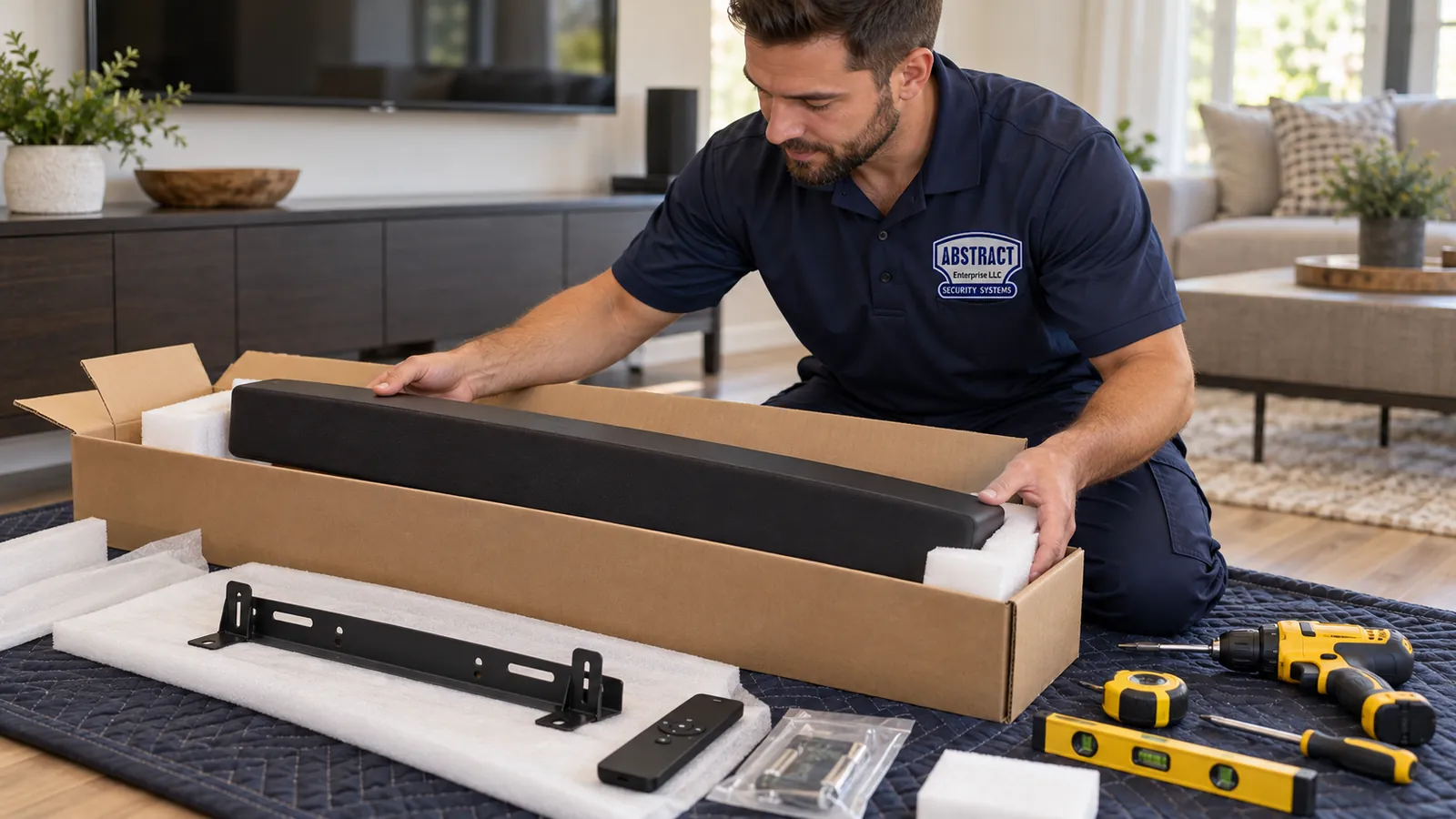
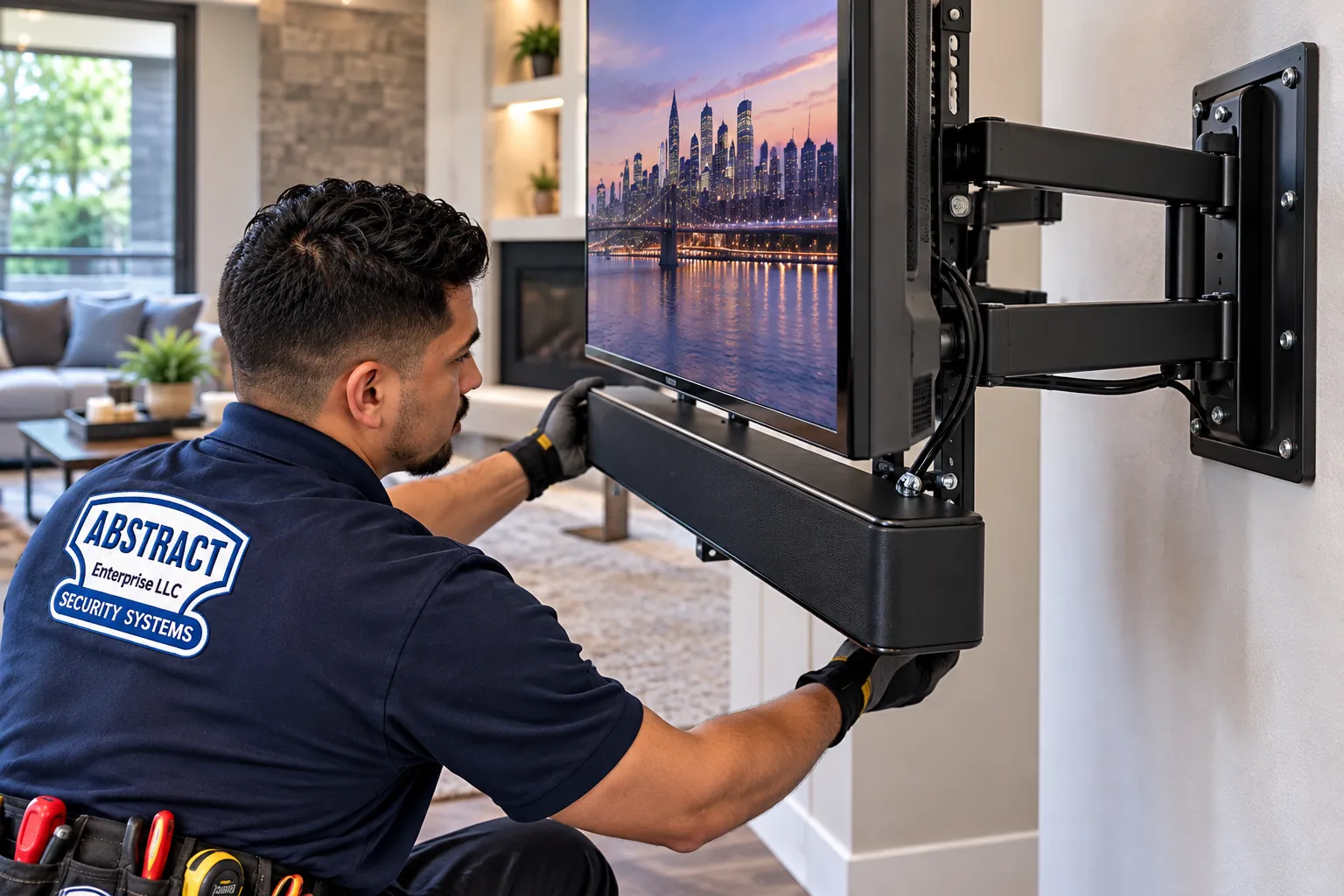
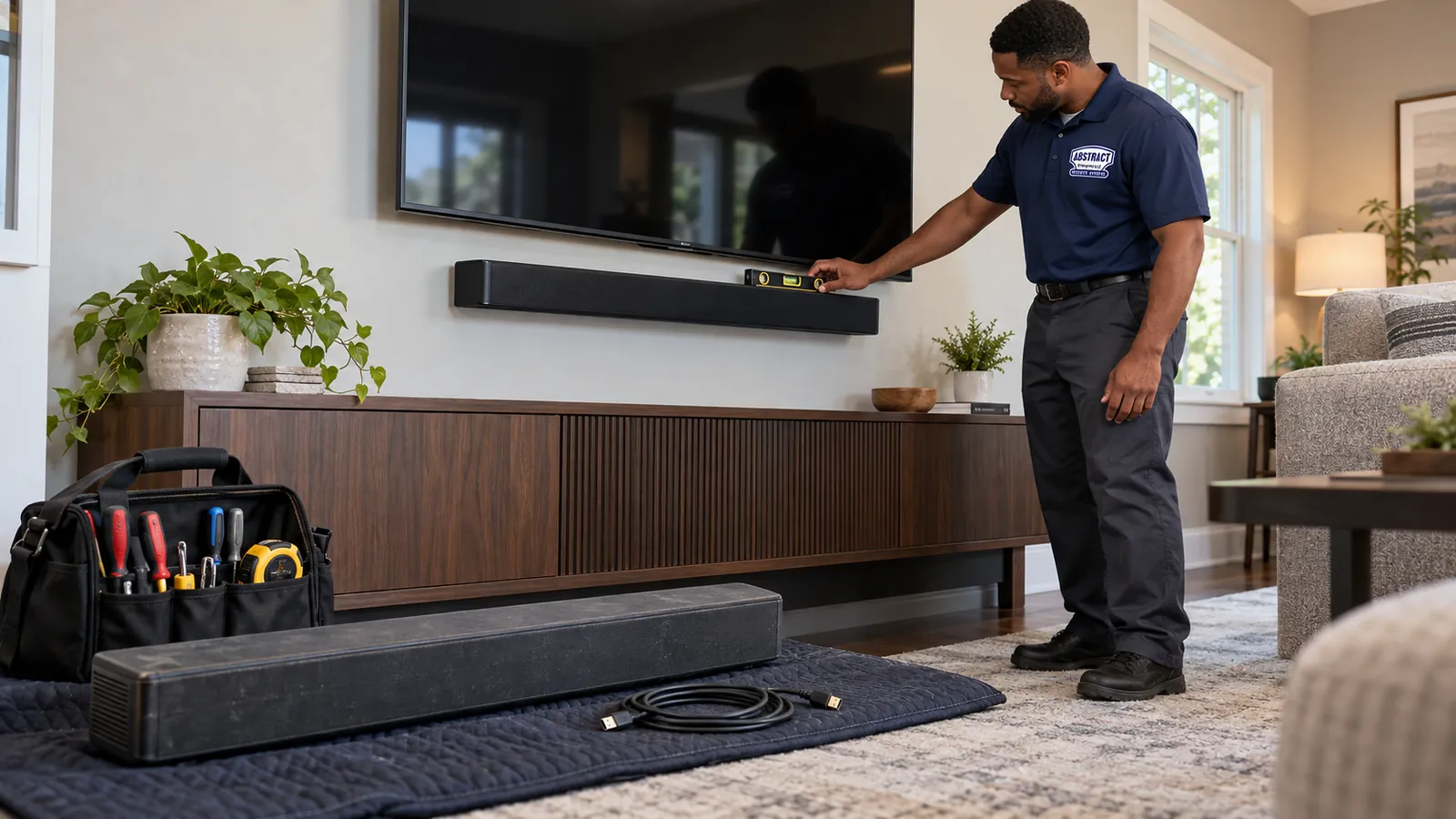
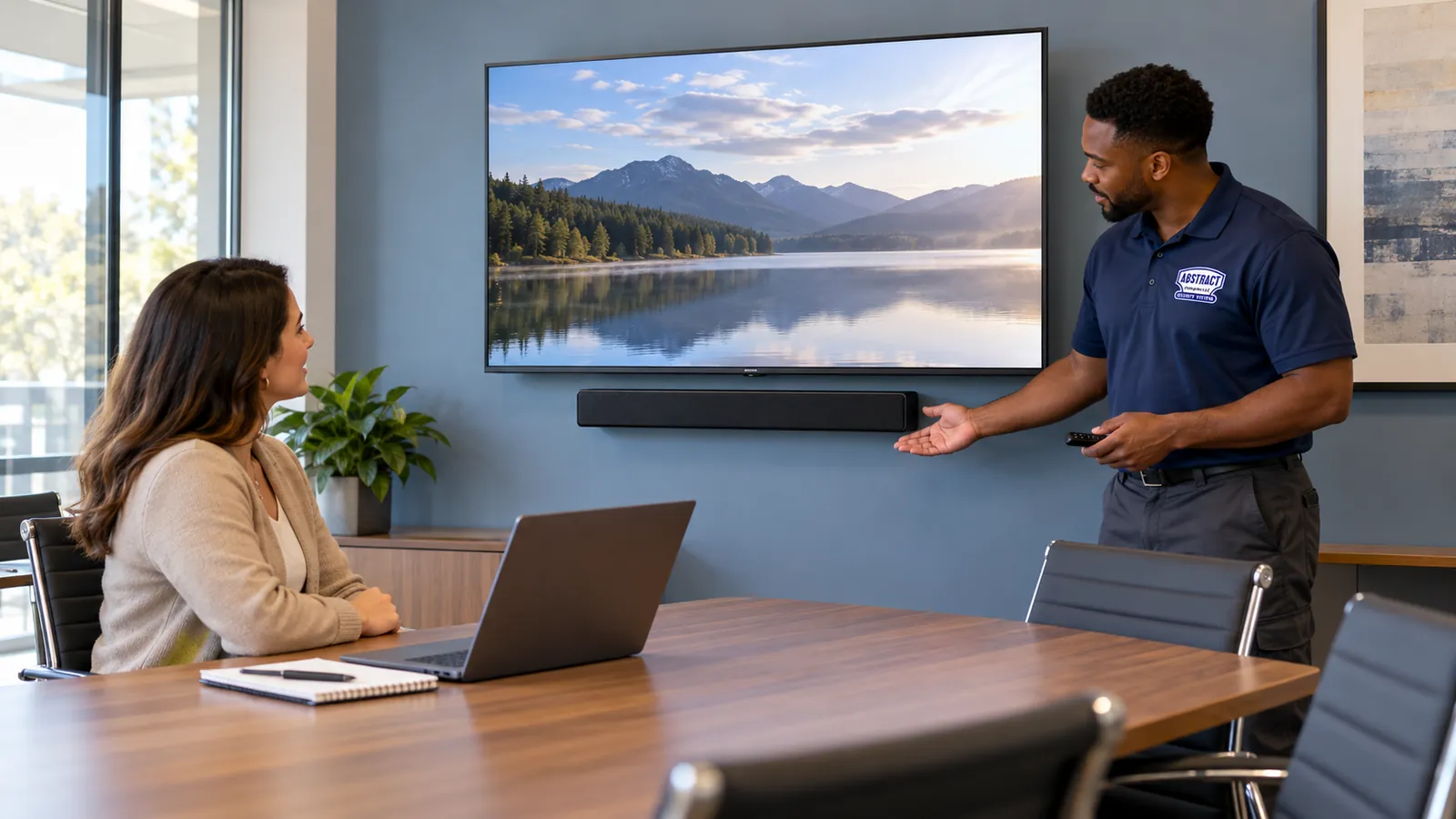
Westchester is four housing markets sharing one county line. In the southern cities a soundbar goes up in a prewar co-op with block partitions and a managing agent who wants paperwork. Downtown in New Rochelle and White Plains it goes onto a steel-stud wall in a tower finished last year. Along the railroad villages it meets 1920s plaster and an oak-panelled den, and up county it sits beneath a TV in a big family room with a fieldstone chimney. We plan each visit around which of those homes you live in, publish every price before you book, and set the sound up for the people actually watching — including anyone who finds TV dialogue hard to follow.
Reviewed and updated October 17, 2026 · Author: Anwar Timothy, owner · NYS license #12000287431 · Westchester line (914) 877-2578

Want the bar working before the game this weekend? The Westchester line is (914) 877-2578, or use the quick form. You get a written, line-by-line price built from the menu further down this page before we hold a window for you.
People outside the county picture Westchester as one long lawn. The people who live here know better, and so does anyone who installs things on its walls. The U.S. Census Bureau's QuickFacts table counts 399,598 housing units in the county as of July 1, 2025, and an owner-occupied rate of 61.8 percent for 2020–2024. That leaves well over a third of households renting — a far larger share than in most suburban counties — and a great many of the owners own an apartment rather than a house. Cooperator News, citing the county planning department, puts the count at close to 42,000 co-ops and 25,000 condominiums, with about 53,000 rental units, spread among Westchester's six cities, 14 towns and 22 villages. Before anybody asks which soundbar to buy, the first question on a Westchester job is what kind of building the TV is in.
That answer splits roughly four ways. In Yonkers, Mount Vernon, New Rochelle and White Plains, a lot of TVs hang in six-story brick elevator buildings from the decades between the World Wars and just after, where the living-room partition is plaster over block or clay tile, the floor is concrete, and the building has a managing agent with a view on contractors. Downtown New Rochelle has gone vertical in a hurry: Governing magazine reported in fall 2025 that more than 4,500 new apartments are already online there since the city's 2015 rezoning, with another 6,500 on the way. Those towers are framed in light-gauge steel, a completely different anchoring job. Then come the railroad suburbs — Bronxville, Scarsdale, Pelham, Larchmont — with their Tudors and colonials from the 1920s and 1930s, and finally the larger houses and country properties of northern Westchester, from Chappaqua out to Pound Ridge and North Salem.
Each of those worlds hands a soundbar installer a different first problem. The co-op asks for a certificate of insurance and often has a house rule about floors. The new tower has steel studs that a wood screw cannot bite and corridor walls that should not be cut. The Tudor has plaster that a stud finder reads as solid everywhere, oak panelling nobody wants scarred, and a fireplace that is rarely centred on the wall the sofa faces. The country house has a family room big enough to swallow a small bar's sound, a chimney built of fieldstone, and very often an older surround system somebody wired into the ceiling twenty years ago. A good install in Westchester is mostly a matter of recognising which of those you are standing in before the drill comes out.
The floor rules deserve their own mention because they reach the subwoofer. Habitat magazine reported in 2004 on Fraken Builders Inc. v. Ciccone, a New Rochelle co-op case on Pelham Road that began with a downstairs neighbour's repeated noise complaints, including calls to the New Rochelle police. The co-op relied on the standard proprietary-lease rule requiring rugs over 80 percent of the floor of the main rooms, and the court sided with the co-op and awarded it possession. A soundbar is not a stereo party, but a sub on bare boards in a Westchester co-op is exactly the kind of thing that starts that chain, so where the sub sits, and on what, is part of our job rather than an afterthought.
Residents who post about this on r/Westchester tend to ask for the whole package rather than a single item. One thread title sums it up: a homeowner "looking for a professional to mount TV's, a sound bar and speakers to walls in home and hide all wires in the wall." Another asks whether a would-be installer is dealing with "cement walls" before quoting a 75-inch mount — a fair question in a county with as much block and concrete as this one. And not every complaint is about apartments: a r/Westchester post about neighbourliness describes a house across the back yard playing music "late into the night on weekends with loud bass so we hear the thumping in our bedroom." Bass carries in the suburbs too, through open windows and across small lots in the older villages.
The people watching matter as much as the walls. QuickFacts puts residents aged 65 and over at 19.7 percent of the county — about one in five — and Heritage Hills in Somers alone holds some 2,600 condominium homes in a 55-plus community. Many of our Westchester soundbar calls are really calls about hearing the news, the ball game or a drama without turning the TV up so far that the rest of the house leaves the room. That changes how we set the bar up: dialogue enhancement on, the bass trimmed back, the bar at the right height for the chair rather than the sofa, and, where someone wears hearing aids, a plan for their TV streamer as well as the bar.
Most Westchester households booking a soundbar are hanging or re-hanging the TV at the same visit, so the two are usually priced together through our TV installation service in Westchester County, with every screen size and wall line set out on the Abstract Enterprises TV mounting price list for Westchester. When a bar is not enough — ceiling speakers through a renovated colonial, a dedicated media room in a basement — our AV and sound installation team in Westchester plans the larger system, and houses tying TVs, lights and speakers into one app often add home automation in Westchester County.

A bar that went quiet after the TV updated overnight, a subwoofer that pairs and unpairs, voices that drift a beat behind the lips, a remote that no longer turns the volume down, or a bracket easing away from old plaster — we book those as service calls. You get the next open two-hour window, and most connection and settings faults are put right within one to two hours of the technician arriving. Ring (914) 877-2578 and say it is a repair; time spent on a setup-only fix is billed at the Westchester hourly rate described in our TV and soundbar service policies.
Nine kinds of soundbar work make up nearly every Westchester booking. Each is priced from the same published list, and each can be combined with a TV mount on the same visit.
The bar on its bracket a few inches below the TV, centred on the screen rather than on the wall, with fixings picked once we know whether we are in block, plaster, steel or wood. The commonest job in the county, from Mount Vernon apartments to Bedford dens.
For renters, for co-op shareholders waiting on a house-rule answer, and for TVs that live on a stand. The bar sits forward of the TV's infrared window, the cables are tied off out of sight, and the sound is tuned for the room.
Hanging the screen and the bar on one visit lets us set the TV's height for the bar's depth and the seating, rather than squeezing a bar into whatever gap a previous installer left. One window, one wall reading, one invoice.
A code-compliant in-wall power and cable kit where the wall is hollow and nobody objects to opening it; a paintable cord cover on block, brick and stone, and on corridor walls in apartment buildings that should not be cut.
Speech enhancement, night mode, bass trimmed for the room, the bar's height matched to the listener's chair, and a plan for hearing-aid TV streamers so that one person's settings do not mean shouting for everyone else.
Ceiling and wall speakers from a 2000s receiver set-up, a rack of equipment nobody knows how to use, a tangle of remotes — we can retire that system in favour of a bar and sub, or keep the parts that still earn their place.
Placing and pairing a wireless sub and rear surrounds, with an eye on what is under the floor in a co-op, which bedrooms sit above the family room in a house, and where the outlets are behind the sofa.
Sonos bars, subs and surrounds set up in the app and grouped with speakers elsewhere in the house; receivers connected; a universal remote programmed so the TV, the bar and the cable box answer to one handset.
Soundbars on bar-room TVs in Port Chester and Tarrytown, in meeting rooms along Westchester Avenue, in waiting rooms and studios on Central Park Avenue, with volume, zones and control arranged for staff.

These are the eight kinds of home and building we meet most often between the Bronx line and the Putnam line, and what each asks of a soundbar installation.
Yonkers, Mount Vernon, New Rochelle and the Bronxville and Hartsdale stretches: six or so storeys, brick outside, plaster over block or clay tile inside, concrete floors and an exterior wall that the house rules may reserve. Masonry anchors, dust control, and a sub kept off the floor.
Two- and three-storey courtyard buildings, some of them co-ops, with smaller rooms and thinner partitions than the elevator buildings. Often a radiator under the one window and the TV on the wall opposite; compact bars and careful sub placement suit them.
Downtown New Rochelle and White Plains, close to Metro-North: steel-stud partitions over concrete slabs, corridor and unit-separation walls that are fire-rated, and management offices that set contractor hours. Toggle anchors rated for steel, backer boards where needed, surface concealment on rated walls.
Scarsdale's Fox Meadow, Bronxville's Lawrence Park, Pelham Manor and Larchmont: plaster on wood lath, picture rails, leaded casements, oak panelling in the den and a masonry chimney that is seldom centred. Framing found by hand, backer boards where studs fall wrong, no tape on old finishes.
Dobbs Ferry, Hastings-on-Hudson, Mamaroneck and Eastchester: wood framing, sometimes original plaster, sometimes drywall over it from a later renovation. Enclosed sunporches and finished attics are common second TV rooms.
Yorktown, Ossining, Cortlandt and the parts of Greenburgh built out after the war: drywall on wood studs and the simplest walls in the county, though the TV is often on the shared wall with a bedroom.
Chappaqua, Armonk, Bedford, Pound Ridge and North Salem: large family rooms, fieldstone or brick chimneys, high or sloped ceilings, and often a whole-house speaker system from an earlier owner. Bigger bars, a properly placed sub, and stone fixings.
Heritage Hills in Somers and similar condominium communities: association rules, shared walls between units, residents who want simple remotes and clear dialogue. Mounts kept modest and set-ups kept easy to use.
| Wall we find | Where you meet it | How the bracket goes up |
|---|---|---|
| Plaster over block or clay tile | Interwar co-ops in the southern cities | Masonry sleeve or screw anchors set into the block, holes drilled with a vacuum at the bit; tile can shatter, so we test with a small pilot first |
| Plaster on wood lath | Tudors and older colonials | Studs located by probing and measurement, screws into framing; a plywood backer where the studs fall outside the bracket's slots |
| Drywall on steel studs | New towers, office fit-outs, some renovated houses | Heavy-duty toggles rated for light-gauge steel across every slot the bracket offers, or a backer spanning two studs |
| Drywall on wood studs | Splits, ranches, newer additions | Screws into framing; the simplest wall and no surcharge |
| Fieldstone or brick | Chimney breasts up county and in older villages | Anchors set in solid stone or brick rather than mortar joints; a cord cover rather than chasing the masonry |
| Wood panelling | Tudor dens and libraries | Fixings through the panel into framing behind it, placed in the field of a panel, not its moulding; holes kept to the bracket's minimum |

Commercial soundbar work in Westchester clusters along a handful of corridors. The businesses named below appear in local guides and are mentioned only to describe each strip; they are not presented as our customers.
Downtown White Plains' bar and restaurant strip; Patch's guide to places to watch the big game near White Plains lists venues on Mamaroneck Avenue, and a craft-beer bar there describes itself as being "in the heart of downtown." Game-day screens over the bar, with sound that should not drown the dining tables.
Restaurants and bars around the Capitol Theatre and the Metro-North station, in older storefronts with brick party walls. Bars on the TVs, anchors in masonry, and remotes kept behind the counter.
A walkable village strip of restaurants and taverns in 19th-century buildings, where owners usually want the wiring hidden and the sound kept to the room the TV is in.
Westchester Avenue from White Plains through Harrison to Rye Brook and Purchase. 914 Inc. describes the corridor's shift from purely corporate offices toward medical uses, with Westmed occupying 3030 Westchester Avenue. Meeting-room TVs that need clear voices on video calls and waiting-room screens that need a fixed, modest volume.
The long retail road from Yonkers north toward Scarsdale, lined with shopping centres and strip units. Gyms, studios, salons and restaurants with block walls and drop ceilings, where a bar on a promotional screen has to be heard over the room without carrying next door.
The new towers' ground floors and amenity levels: leasing offices, fitness rooms, lounges and restaurants on steel-stud walls, where management wants a certificate of insurance and set working hours before anyone drills.


These are the questions Westchester callers put to us that the box, the manual and the national guides do not answer, grouped by the kind of home they come from.
Physically, almost always: in the interwar brick buildings the outside wall is solid masonry behind the plaster, which holds a bar and bracket very well. Whether you may drill it is a question for your proprietary lease, house rules and alteration agreement, not for us. Some buildings treat the exterior walls as the corporation's structure and want to approve any penetration, however small; others only care about work that reaches the outside face. Ask the managing agent before you book and forward their answer with the request.
If the answer is no, there are three practical routes. The bar can sit on the media console in front of the TV, which needs no holes at all. The TV and bar can move to an interior partition and the seating can turn to face it. Or, where the TV is on a floor stand, the bar can clamp to the TV itself with a TV-attached bracket. All three are priced from the same list, and none of them leaves you explaining a hole to the board.
We would rather they did not, and most building managers agree. In multifamily construction the walls between apartments and between an apartment and the public corridor are typically fire-resistance-rated assemblies, and cutting openings for a recessed power and cable box in one of them is not something to do without the building's approval and the right fire-stopping. That is a building matter, not a soundbar one.
On those walls we run the cables in a slim paintable cord cover from the bar down to the outlet, which is $59 on our list and comes off cleanly when you move out. If the TV can go on an interior partition between two rooms of your own apartment instead, and the lease allows it, the $169 in-wall kit becomes an option again. Either way, the steel studs need toggles rated for light-gauge steel, which is the $30 metal-stud line.
Yes, with some care over where the holes go. Panelling is usually fixed to furring or framing, so the bracket's screws pass through the panel into solid wood behind it. We place them in the flat field of a panel rather than in its mouldings or rails, use the minimum number of fixings the bracket and bar weight allow, and pilot every hole so the oak does not split. Nothing is taped to the finish.
If you would rather not mark the panelling at all, the bar can go on a low console or a TV-attached bracket, or the cables can be dressed along the bottom rail rather than chased through it. What we will not do is fasten into panelling alone where there is nothing solid behind it; if the framing does not line up, a small backer goes behind the bracket position or we choose another spot.
With the seats, nearly always. The bar's centre channel is what carries voices, and voices sound most natural when they come from directly in front of the people listening and directly beneath the faces on screen. In many 1920s living rooms the chimney sits to one side of the long wall, so a TV centred on the mantel ends up angled away from half the room.
There are two good layouts. One keeps the TV and bar on the chimney and moves the seating to face it, which often means rethinking the room. The other puts the TV and bar on the open wall beside the fireplace, centred on the sofa, and leaves the mantel for the fire. We will mark both at the visit so you can stand back and decide before anything is drilled.
An indoor soundbar is designed for indoor room conditions, and an unheated three-season porch can get much colder in January and much hotter in July than the rest of the house, with condensation on the glass in between. Check the operating range in your bar's manual; if the porch regularly goes outside it, the bar is better living somewhere else, or coming inside for the winter.
If the porch is heated, or used year round, a bar is fine there, and the glass is the bigger issue: windows on three sides make the sound bright and echoey, so a sub, a soft rug and the bar's room-correction feature help a lot. We mount on the one solid wall, keep the bar clear of window sills where water collects, and keep power runs in a cord cover rather than through old porch framing.
A soundbar can certainly take over: a modern bar with a wireless sub gives clearer dialogue than many old 5.1 systems, with one remote and none of the receiver settings that nobody remembers. The ceiling speakers themselves can stay where they are, unconnected, with their wires coiled and labelled at the old equipment location. That is the tidiest and cheapest choice, and it leaves the door open to using them again later.
If you want them taken out and the holes covered, that is patching and finishing work outside our soundbar price. If you would like to keep using them, some bars and most receivers can drive passive speakers through an amplifier; that becomes a small system design rather than a bar install, and we quote it in writing first. Removing an old wall bracket is $45; anything else that is not on the published list gets a free written quote.
Yes. Each room is priced from its own lines — a bar on the wall in one, a bar on the dresser in the other, say — and both are done in one arrival window as long as the time allows. We do not invent a multi-room discount, but you do save a second visit, and in a co-op you save a second round of building paperwork.
The bedroom is usually the simpler job, and the more important one to get the settings right: night mode on, the sub left out or turned well down, and the bar's auto-volume or dialogue feature on so late films do not swing between whispers and explosions. If the two bars are the same brand they can often be grouped in the maker's app for music around the house.
For listening, yes: anything the TV plays, including a call app on the TV or a laptop connected by HDMI, comes through the bar, and voices are usually far clearer than from the TV's own speakers. For talking, it depends on the set-up. Some bars have built-in microphones for a voice assistant, but those are not a conference microphone, and most call apps on a TV need a camera with its own microphone.
In a home office we usually recommend a small camera with a built-in microphone above or below the screen, the bar for the far end's voices, and the bar's dialogue mode on. That arrangement avoids the echo you get when a laptop's microphone hears the bar. If the home office is in a converted bedroom, keep the sub out of it altogether.
Into the TV, in almost every modern set-up. The cable or fibre box, streaming stick and game console go into the TV's ordinary HDMI inputs, and the soundbar connects to the one port labelled eARC or ARC. The TV then sends the sound from whatever is on screen down to the bar, and HDMI-CEC lets the TV remote handle the bar's volume. Plugging the box into the bar only makes sense when the bar has its own HDMI inputs and you have a particular reason to use them.
Where people run into trouble is the box's own audio settings: a box set to send a format the TV will not pass on can leave the bar silent on some channels. We set the box, the TV and the bar to agree with each other at the visit, and we program a single remote if you would rather not juggle two.
Usually, but it needs planning, because many TVs send sound to only one output at a time. When the bar is connected over HDMI ARC, the TV's optical or headphone output — where most hearing-aid streamers connect — may go silent, or the TV's own speakers switch off. Some TVs have an accessibility option for simultaneous output, and that is the first thing we look for in the settings.
Where the TV will not do both, the usual answers are an optical splitter or an audio adapter between the TV and the streamer, or connecting the streamer to an output on the bar if the bar has one. Hearing-aid streamers also tend to need plain stereo rather than surround formats, so the TV's output setting matters. Bring the streamer's model and we will make sure the person with the hearing aids and the rest of the room can listen at the same time.
Yes, if the rooms are planned as separate zones. Each TV in the bar area gets its own bar, set to a volume that carries to the stools; the dining-room screens get either no bar at all, with captions on, or a bar capped at a low level. Bars from one maker can often be grouped in an app so one game can play in the bar area while the dining room stays on music or silence.
The physical placement does as much as the settings: bars aimed along the counter rather than across the room, no subwoofers in the dining room, and the bar-area bass turned well down. Staff keep the remote or the app, and the cap is set so a busy Saturday does not creep the volume up.
Yes. In condominium communities we check with the family or the management office about any association rules on drilling and work hours, and we bring the certificate of insurance if one is asked for. Many residents prefer the bar on a console rather than the wall, which keeps the job simple and leaves nothing to undo at the end of a lease or a sale.
The set-up itself is where the care goes: the TV's remote programmed to control the bar so there is only one handset, speech enhancement on, bass turned down, and the bar's height matched to the resident's usual chair. If a family member cannot be there, tell us who will be, and we will leave a short written note of the settings with them.
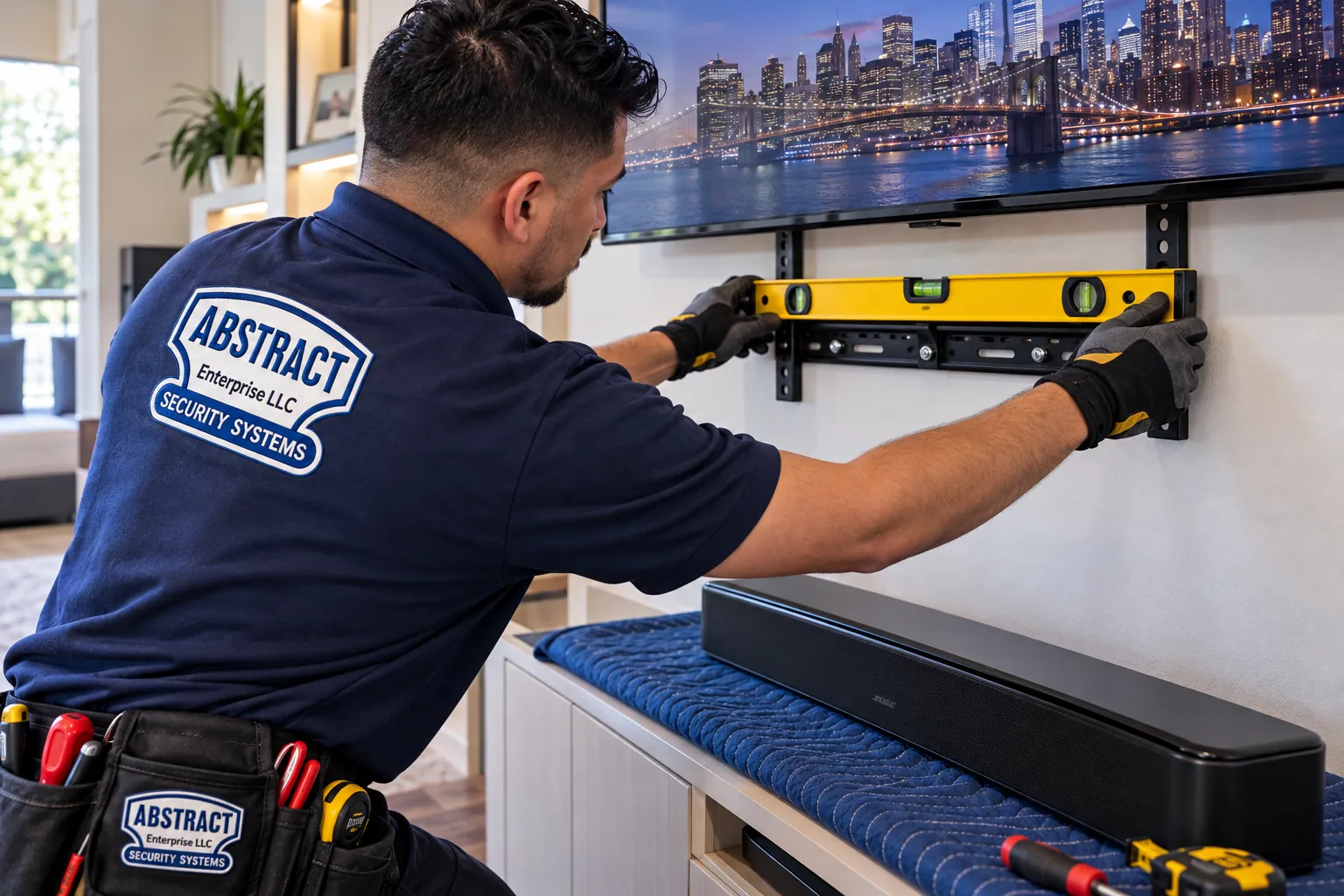
Westchester's municipalities are small and close together, but the homes in them differ sharply. This is what a soundbar visit usually looks like in each part of the county.
The southern cities carry most of the county's elevator co-ops and walk-up rentals, along with two-family houses on the side streets. Expect plaster over block, concrete floors, a managing agent who wants an insurance certificate, and a walk-up charge if there is no elevator and the apartment is on the third floor or above. Yonkers has its own home-improvement licensing at City Hall on South Broadway, separate from the county's.
New Rochelle combines the downtown towers built since 2015 with prewar co-ops on the avenues and big older houses near the Sound. Pelham and Larchmont add Tudors and shingled colonials. Steel studs downtown, plaster in the older houses, and co-op floor rules everywhere in between.
The county seat has new rental towers and older co-ops downtown and a strong commercial core; Hartsdale and Greenburgh have garden apartments and splits; Scarsdale is the classic Tudor village. A single day can run from a steel-stud partition on Main Street to lath and plaster in Fox Meadow.
Hastings-on-Hudson, Dobbs Ferry, Irvington, Tarrytown and Sleepy Hollow: hillside houses of many ages, older apartment buildings near the stations, and village main streets with restaurants in 19th-century buildings. Old plaster, odd room shapes, and river-view living rooms where the TV competes with a window wall.
Mamaroneck, Rye, Harrison and Port Chester: Rye's colonials and shingle houses, Harrison's mix of neighbourhoods and the Platinum Mile offices, Port Chester's dense downtown. Sunporches, family rooms and a good deal of commercial work along North Main Street.
Bronxville's Lawrence Park, added to the National Register of Historic Places in 1980, and its early-20th-century apartment buildings near the station; Eastchester's and Tuckahoe's mix of co-ops, colonials and capes. Plaster, panelled dens and buildings with firm house rules.
Ossining, Croton-on-Hudson, Briarcliff Manor, Cortlandt and Peekskill: older river-town houses near the Hudson and postwar subdivisions inland. Mostly wood-framed walls, some stone, and family rooms where a mid-size bar and sub suit the space.
Chappaqua, Mount Kisco, Armonk, Bedford, Katonah, Pound Ridge, Somers, Yorktown and North Salem: larger houses, fieldstone chimneys, high ceilings, older whole-house audio, and condominium communities such as Heritage Hills. The jobs are bigger rooms rather than tighter rules, and there is no parking or travel charge for the longer drive.

Ask Westchester callers why they want a soundbar and the most common answer is not "more bass" or "cinema sound." It is some version of "we can't make out what they're saying." That is a fair complaint about modern flat TVs, whose small speakers often face down or backwards, and it is the problem a well-set-up bar solves best. But the improvement comes as much from the set-up as from the bar.
Height and aim come first. Voices should come from just below the faces on screen and point at the main listener's ears. In a family room where the main viewer sits in a recliner rather than on the sofa, we aim for that chair. Where a TV has been hung high over a mantel, a bar on the mantel shelf ends up pointing at the ceiling; on its own bracket just under the screen, and tilted if the bracket allows, it does far better.
Then the settings. Nearly every current bar has a speech or dialogue mode that lifts the frequencies voices live in, and many have a night mode or automatic volume that narrows the gap between quiet talk and loud action. We switch those on, then turn the subwoofer level down from the factory setting, because heavy bass masks speech more than most people expect. If the TV has its own sound settings still active, we turn them off so the TV and the bar are not both processing the same signal.
Then the source. Some streaming apps and cable boxes default to audio formats or mixes that put dialogue low in the mix. Where an app offers a stereo or dialogue-boost option, we show you where it is. Captions remain the simplest backstop of all, and we can set them to come on by default on the TV for the person who needs them.
Finally, the listener's own equipment. Someone who wears hearing aids may get on best with the bar for the room and their own TV streamer at the same time. Because many TVs send sound to only one output at once, we check the TV's accessibility options for simultaneous output, and if there is none, we add a splitter or an adapter so both work. The goal is one evening's viewing that suits everyone in the room, without anyone reaching for the volume.
With tens of thousands of co-op and condominium homes in the county, a lot of our Westchester bookings start with a building rather than a wall. The paperwork is lighter than many people fear, but it has an order, and doing it in that order is what stops an install from stalling in the lobby.
1. Read your house rules. Proprietary leases and house rules in Westchester co-ops vary from building to building. Look for anything on alterations, contractor hours, exterior walls and floor coverings. A soundbar bracket is about as small as alterations get, but some buildings still want to hear about it.
2. Ask the managing agent. One email usually settles it: what notice they need, whether an alteration agreement applies, what hours contractors may work, and their sample wording for the certificate of insurance. Forward the reply to us with your booking.
3. We send the certificate. We issue the certificate of insurance free, naming the corporation and its agent as the sample requires, and send it directly to the managing agent if you prefer.
4. We book a window that fits. Our arrival windows run from 8 AM to 8 PM every day, but in a building with set contractor hours we offer only the windows that let us finish inside them.
5. The visit itself. The technician checks in as the building asks, protects the floor, and keeps drilling dust at the bit. If the TV wall turns out to be one the house rules reserve, we stop and offer the console or another wall rather than guessing.
Condominium communities with townhouses, such as the larger 55-plus developments in northern Westchester, follow the same pattern through the association's management office. Rental buildings are simpler again: the landlord's or managing agent's written approval is all we ask to see before we drill.
A soundbar is the right answer for most Westchester TVs, but not all of them, and we would rather say so before you book than after the bar is on the wall.
Rooms already wired for speakers. In northern Westchester houses with working in-ceiling or in-wall speakers from an earlier system, a modern receiver or a streaming amplifier driving those speakers can sound fuller than a bar and leaves the wall under the TV clear. If the speakers test well, we tell you, and the AV team quotes it.
Very large or open-plan spaces. A family room that opens into a kitchen and a double-height hall can defeat even a big bar. Rear speakers help, and sometimes a pair of ceiling speakers over the far end of the room does more than any upgrade at the front.
Shared walls with sleeping neighbours. In some co-ops and attached townhouses, the TV wall backs straight onto a neighbour's bedroom. A compact bar with no sub, or headphones for late viewing, is kinder to everyone than the bar the box promised.
We install the bar you have chosen, from any maker. These are the broad types we meet in Westchester homes and businesses, with manufacturer figures where they help with planning.
Short, light bars for bedrooms, studies and garden-apartment living rooms. The Sonos Ray, listed by WhatHiFi at about 56 cm wide and 1.95 kg, connects by optical rather than HDMI, which suits older TVs and projector sources but not CEC volume control.
Bars around the width of a 50- to 55-inch screen with HDMI eARC and an app. Sonos lists the Beam (Gen 2) at 25.63 inches wide and 6.35 lb. The right size for most co-op living rooms and many family rooms.
Three-channel and larger bars give voices their own driver in the middle, which is what most people who struggle with TV dialogue actually need. A better choice for many households than a larger bar with more bass.
Long bars with up-firing drivers for height effects. Sonos lists the Arc Ultra at 46.38 inches wide and 13.01 lb. They suit 65-inch and larger screens in big family rooms, provided the ceiling above them is suitable.
Placed for the room and for what is beneath it: off bare boards in a co-op, away from the bedroom wall in a split, and somewhere it can fill a large northern family room without being heard three doors away.
"Wireless" rears still need power at each speaker, so their outlets decide where they go. In homes replacing an older surround system, the existing speaker locations are a useful guide.
The maker's own bracket where it suits the wall, or the Sanus soundbar bracket we supply. Sanus lists its universal soundbar mount for most bars up to 20 lb; TV-attached brackets suit TVs on stands and walls the building will not let us drill.
Optical splitters and audio adapters that let a hearing-aid TV streamer run alongside the bar, and universal remotes that put the TV, bar and cable box on one handset.
| Situation | Connection we use | Why |
|---|---|---|
| Modern TV with an eARC or ARC port | HDMI from the TV's eARC/ARC port to the bar, CEC on | One cable, TV remote controls the volume, full formats with eARC |
| Older TV with no ARC | Optical from the TV to the bar | Works with most bars; the bar's own remote or a universal remote handles volume |
| Hearing-aid streamer in the household | HDMI to the bar plus a splitter or adapter for the streamer, or simultaneous output if the TV offers it | Many TVs send sound to only one output at a time |
| Projector in a basement or media room | Audio taken from the source box or receiver, or through an HDMI audio extractor | Projectors often have no eARC/ARC port |
| Bar far from the router | Ethernet where the bar has a port, or a mesh node near the TV | Keeps app control, streaming and Sonos grouping stable |

We could not see Google's AI Overview from our research environment, so below are the claims the national cost guides and generic advice actually publish — the material AI summaries draw on — set against what we find on Westchester jobs.
Thumbtack publishes that national average for TV wall mounting, and it is a reasonable national figure. It says nothing about the soundbar, though, and nothing about the wall.
In Westchester the wall is the variable. The same 55-inch TV costs our published $219.99 on wood-stud drywall, but the plaster line adds $45, steel studs $30, block or concrete $75 and stone $65. A soundbar under it adds $129 to hang and $84.99 if you need our bracket.
So a national average is a fair starting point for a ranch house in Yorktown and a poor one for a co-op in Mount Vernon. The only useful number is the one built from your wall, which is why our list publishes every line separately.
Angi's TV-mounting cost guide lists a soundbar bracket or mount at $30 to $100 as an add-on. That is a fair range for the bracket as a part.
It leaves out the labour of fixing it to a Westchester wall. Hanging a bar is $129 on our list, separate from the $84.99 Sanus bracket, and the wall line applies to the bar's bracket just as it does to the TV's.
If your bar came with a bracket rated for its weight, you pay the labour only. Either way, you see the total before booking.
Angi quotes that range for concealed wiring, and it describes the job well in an ordinary hollow wall in a house.
It does not describe a Westchester co-op's block partition, which cannot be fished, or a corridor wall in a new rental tower, which should not be cut. In those buildings the right answer is a paintable cord cover at $59, not an in-wall kit.
Where in-wall concealment does suit the wall, our code-compliant power and cable kit is a flat $169, feeding from the outlet that is already there.
Angi notes that permits are required only for electrical work or structural changes. For a soundbar on a bracket, a building permit is not the issue.
Licensing is. Westchester law requires home improvement contractors to hold a county licence, Yonkers has its own licence, and electricians are licensed separately again. A new outlet behind the TV is electrical work for a licensed electrician; we do not add or move outlets.
In co-ops and condos, the alteration agreement and house rules matter more than any permit. That paperwork is the shareholder's to clear with the board; our part is the insurance certificate, written to the managing agent's sample.
Generic buying advice leans toward bigger bars and more channels, and in a large northern Westchester family room that is often right.
In a garden apartment or a co-op with a neighbour below, a large bar with a big sub is more likely to start a complaint than improve the film. And for the many households where the real problem is following dialogue, a bar with a proper centre channel matters more than size.
We would rather match the bar to the room and the listener than to the screen size, and we tell you before you buy if the box you are considering is likely to disappoint.
Advice written about hearing-aid streamers and advice written about soundbars rarely meet, so summaries often assume both can simply connect to the TV.
As accessory makers point out, most TVs output sound to only one place at a time, so connecting the bar by HDMI ARC can silence the optical or headphone output the streamer relies on.
With one in five Westchester residents aged 65 or over, this comes up often. The fix is a TV setting, a splitter or an adapter, and it is worth sorting on the day the bar goes up rather than after the first family dinner.
Many can, on a wood-stud wall in a newer house. The mounting is not difficult; reading the wall is.
Westchester walls run from clay tile that shatters under the wrong bit to lath and plaster that a stud finder cannot read, light-gauge steel that will not hold a wood screw, and fieldstone with soft mortar joints. Add co-op house rules, fire-rated corridor walls and a listener with hearing aids, and the afternoon fills up.
Whoever you hire, ask what they will do if the wall is not what they expected, and check their county licence on the Department of Consumer Protection's search.
Tell us the town, the type of home and the bar's model. We send back a Westchester price built line by line from our list, with no parking or travel charge to add.
Tell us about the bar, the TV, the wall and the home. A Westchester installer reads every request and replies with a written price from the menu on this page. Rather talk it through? Call (914) 877-2578.
Got it. A Westchester installer is reading your request now and will reply with a written price before close of business. Need us sooner? Call (914) 877-2578.
A phone photo of the TV wall with the nearest outlet in view, the soundbar and TV models, your town and the kind of home it is — co-op, rental tower, house or office. You get back an itemized Westchester price from the published menu, with any plaster, block, stone or height line already shown.
Co-op, condo and rental buildings get our certificate of insurance at no charge, written to the managing agent's sample wording. For houses there is nothing to file; we only ask whether anyone else is working in the room that day.
Arrival windows run from 8 AM to 8 PM, seven days a week, and in apartment buildings we offer only the ones that fit the building's contractor hours. Moving the date is free with 24 hours' notice.
The technician lays a drop cloth, then identifies what the wall really is — drywall on wood or steel, plaster on lath, block, brick or stone — and scans for pipes, cable and framing before you approve the height and centre line.
Fixings are chosen for the wall we found, the bracket goes up level, and the bar is hung the recommended distance below the screen. Cables go into a cord cover, an in-wall kit where the wall allows it, or out of sight behind the furniture.
HDMI goes to the TV's eARC or ARC port with CEC switched on, the cable box and other sources are routed through the TV, and the subwoofer and any rear speakers are placed for the room and paired.
We play a dialogue scene to check lip-sync and clarity from where you actually sit, confirm the bar holds its network connection, clean up, and show you the speech, night and bass settings before we leave.

Six places that mark out the county's different kinds of home, and the soundbar work typical of the streets around them. We are not claiming work at the landmarks themselves.
Glenview is an 1877 Gilded Age house on Warburton Avenue designed by Charles W. Clinton and listed on the National Register; the museum notes it is currently closed for restoration. The apartment buildings along Warburton Avenue are typical of the plaster-and-block co-op work in southwest Yonkers.
An early suburb developed with an eye to artists and an art colony, added to the National Register of Historic Places in 1980. Its houses and the village's older apartment buildings mean plaster, panelling and careful fixings.
A 5,000-seat Art Deco arena that opened in 1930. Around it, downtown White Plains mixes new rental towers on steel-stud framing with older co-ops and a busy bar and restaurant scene on Mamaroneck Avenue.
Built in 1928 and owned by Westchester County, the 280-acre amusement park on Long Island Sound is described in its National Register nomination as the first totally planned amusement park in the country. Rye's colonials and shingle houses nearby bring sunporches, family rooms and the odd pool house.
Designed by Thomas Lamb, it opened on August 18, 1926 and now runs as a concert venue of about 1,800 seats. North Main Street around it is lined with bars and restaurants in older brick storefronts.
The 81-acre former home of Walter and Lucie Rosen, opened as a centre for music and art in 1945. The surrounding Katonah and Bedford houses are typical of northern Westchester's large rooms, stone chimneys and older whole-house audio.
We also serve Mount Vernon, New Rochelle, Pelham, Larchmont, Mamaroneck, Harrison, Rye Brook, Scarsdale, Eastchester, Tuckahoe, Hartsdale, Ardsley, Elmsford, Valhalla, Hastings-on-Hudson, Dobbs Ferry, Irvington, Tarrytown, Sleepy Hollow, Ossining, Briarcliff Manor, Croton-on-Hudson, Peekskill, Cortlandt, Yorktown, Somers, Mount Kisco, Chappaqua, Armonk, Pound Ridge, Lewisboro and North Salem, all at the same county prices.

Every Westchester price is published, itemized and fixed before you book. Pick the lines that fit the job and add them up; that is the bill. There is no parking or travel line anywhere in the county. If the wall turns out to be something other than what was booked — block where you expected plaster, say — you hear the difference and approve it before any extra work begins.
| Soundbar line | Westchester price | What it covers |
|---|---|---|
| Soundbar wall-mounted under the TV | $129 | Wall identified, fixings matched to it, bar hung level below the screen and checked from the seats |
| Soundbar placed on a console or stand | $79 | Positioned clear of the TV's IR sensor, connected, tuned and tidied |
| Sanus soundbar bracket | $84.99 | Supplied by us when the bar has no bracket or its own suits the wall poorly |
| In-wall concealment | $169 | Code-compliant in-wall power and cable kit, hollow walls only, fed from an existing outlet |
| Paintable cord cover | $59 | Surface channel to the outlet or console; the answer on block, stone and rated corridor walls |
| Cable run up to 25 ft | $99 | For a cable box, receiver or router kept elsewhere in the room |
| Sonos setup | $125 | Bar, sub, surrounds, app and grouping |
| A/V receiver connection | $129 | Receiver wired and configured with the TV and speakers |
| Universal remote | $99 | One handset for the TV, bar and sources |
| Streaming device setup | $49 | Apple TV, Roku, Fire TV or similar, signed in and tested |
| Full home theater | $350 | Multi-component system setup |
| Condition | Price |
|---|---|
| Drywall on wood studs | $0 |
| Drywall on steel studs | +$30 |
| Plaster | +$45 |
| Brick or stone | +$65 |
| Concrete or cinder block | +$75 |
| Tile or marble | +$95 |
| Plywood backer board | $85 |
| High mount, above about 8 ft | $75 |
| No elevator, apartment on the 3rd floor or above | $40 |
| Remove an old bracket | $45 |
| Box removal | $25 |
| Certificate of insurance for a managing agent | Free |
| Parking or travel anywhere in Westchester | None |
| Typical job | Lines | Total |
|---|---|---|
| Bar on the console, rental apartment | $79 | $79 |
| Bar on wood-stud drywall in a Yorktown split, our bracket | $129 + $84.99 | $213.99 |
| Bar on Tudor plaster in Scarsdale, our bracket | $129 + $84.99 + $45 | $258.99 |
| Bar on a block partition in a Yonkers co-op, own bracket, cord cover | $129 + $75 + $59 | $263 |
| Bar on steel studs in a New Rochelle tower, our bracket, cord cover | $129 + $84.99 + $30 + $59 | $302.99 |
| Bar on brick in a third-floor Mount Vernon walk-up, our bracket | $129 + $84.99 + $65 + $40 | $318.99 |
| Bar high on a fieldstone chimney in Bedford, our bracket | $129 + $84.99 + $65 + $75 | $353.99 |
| Bar in a hollow-wall family room with in-wall concealment, our bracket | $129 + $84.99 + $169 | $382.99 |
When nothing is mounted — reconnecting a bar to a new TV, sorting out eARC or lip-sync, pairing a new sub, setting up a hearing-aid streamer alongside the bar — we bill by time: $235 for the first hour in Westchester, then 30-minute blocks. If the TV goes up on the same visit, our Westchester TV mounting base is $219.99 for a 32- to 55-inch screen on wood-stud drywall, with a 56- to 65-inch screen adding $30, and the soundbar lines go on top. A TV set up on its stand is $144.99. So a 65-inch TV on drywall with a bar on our bracket beneath it comes to $249.99 + $129 + $84.99 = $463.98.
Most Westchester quotes settle into one of three shapes. Each card shows its sum so you can check it; the wall lines for plaster, steel, block or stone are added where they apply.
$79
Soundbar placed on the console ($79). Connected to eARC or ARC, CEC on, dialogue and night modes set, cables tied off. The usual choice for renters and for co-op shareholders still waiting on a house-rule answer.
$213.99
$129 to hang the bar + $84.99 for our Sanus bracket = $213.99 on wood-stud drywall. In the county's commonest older walls, add $45 for plaster, $75 for block or $30 for steel studs.
$382.99
$129 to hang the bar + $84.99 bracket + $169 in-wall power and cable kit = $382.99. Hollow walls only, and only where the owner, board or landlord is happy for the wall to be opened.
Most bars come with a wall bracket, and plenty of people moving up from the city already own a good one. Supply it and you pay $129 to hang the bar, plus the wall line if there is one. Your bracket must be rated for the bar's weight and carries its own maker's warranty, not ours. If it turns out wrong for the wall, you hear that before any drilling, with our Sanus bracket as the alternative.
A photo of the wall and the bar's model are enough to start. No parking or travel charge to add, anywhere in the county.
The bar that suits a Hartsdale garden apartment is rarely the bar that suits a Chappaqua family room. This is how we would match them.
| Room | What usually works | Watch out for |
|---|---|---|
| Co-op living room over another apartment | Mid-size bar with a centre channel; sub on an isolating pad on a rug, or no sub | Bass through a concrete floor; house floor-covering rules |
| New-tower one-bedroom | Compact or mid-size bar on steel-stud toggles; cord cover on a corridor wall | Fire-rated walls; contractor hours set by management |
| Tudor living room | Bar centred on the seats, not the chimney; plaster or panelling fixings | Off-centre fireplaces; old finishes and picture rails |
| Sunporch or garden room | Compact bar on the one solid wall, rug and room correction | Temperature swings in unheated porches; glare and echo from glass |
| Northern family room | Larger bar with a sub, rears where outlets allow; Atmos only under a suitable ceiling | Thin sound in a big room; a TV hung too high over the hearth |
| Primary bedroom | Compact bar, night mode on, sub off or low | Sound carrying into children's rooms |
| Home office | Bar for listening, separate camera microphone for calls | Echo when a laptop microphone hears the bar |
| Room shared with a hearing-aid user | Centre-channel bar, speech mode, plus a splitter or adapter for the streamer | TVs that send sound to only one output |

The screen above the bar, hung at a height set for the seats and the bar together.
Every TV size, mount and wall line for the county in one table.
Ceiling speakers, media rooms and multi-room audio when a bar is not the whole answer.
TV, lights and audio on one app or one button.
Multi-screen walls for lobbies, showrooms and bars.
Ethernet to the TV wall so a smart bar stays connected.
Speaker wire, HDMI runs and low-voltage pathways through older houses.
Return trips, rescheduling, setup-only billing and what is included.
How our installers approach a Westchester visit before anything is drilled — standing practice, not the story of one job
The first question is what kind of home this is, and it is answered on the way in. A lobby with a desk and a work-order book means a co-op or a managed building, and the technician confirms that the insurance certificate is on file and asks about the exterior and corridor walls before going upstairs. A front door straight into a house means asking who else is home and whether anyone is working in the same room.
In the room, the next look is at the people rather than the wall. Where does the main viewer sit, and does anyone wear hearing aids? Is the fireplace centred on the seats or off to one side? Is there an old receiver in a cabinet, or speaker grilles in the ceiling? Those answers decide where the bar goes and how it is set up far more than the bar's brand does.
Only then does the wall get its knock test and scan, with a pilot hole first on anything that might be clay tile or old plaster. And before we leave, the person who will use the system most holds the remote and changes the volume, switches speech mode on and off, and hears the difference for themselves.
Hanging the bar under the TV is $129, our Sanus soundbar bracket is $84.99 and the plaster line is $45, so the total is $258.99. There is no parking or travel line on a Westchester visit. Bring your own rated bracket and it drops to $174. If the studs behind the plaster sit in the wrong place for the bracket, a plywood backer adds $85, and you hear that before any drilling starts.
The day after is safer. Delivery windows run late, and if we arrive before the TV does, the visit counts as one we could not start and the $150 return-trip fee applies. If you want everything on one day, book our window for the afternoon of the delivery, and only once the store has confirmed the time. Leave the TV boxed if you like; we unpack it, and box removal is $25.
Often, yes, provided it is the right bracket for the bar you own now and is rated for its weight. What usually changes is the wall: a bracket that was fixed into city concrete with sleeve anchors needs different fixings on a Westchester stud wall or on plaster, and we supply those as part of the mount. Bring every part you kept, including the bar-side screws, because a bracket missing those is the most common reason we fall back to our own $84.99 Sanus bracket.
Usually on the knee wall just below the TV, or on a low console in front of it. Before drilling we check what is behind the knee wall, since it often hides the eaves and insulation; that space can sometimes carry a cable to the other side of the room. Leave up-firing Atmos effects off under the slope: Dolby calls for a flat ceiling, not an angled one.
Paint can feel dry within hours but stays soft for a while longer, and fresh paint can lift when tape, a template or a bracket presses against it. If the wall was painted within the last few days, tell us when you book and we will either push the appointment back or mark the holes without taping to the surface. Touch-ups after the mount are yours or your painter's; patching and painting are outside our price.
Yes. Before we leave, we show whoever will use the system how to turn on speech or dialogue mode, night mode and the subwoofer level, and how the TV remote now controls the bar's volume. If a setting goes astray later, most can be talked through over the phone; if it needs a visit, that is a setup-only call billed at the Westchester rate of $235 for the first hour.
Almost always HDMI-CEC, the feature that lets the TV remote run the bar. A streaming box or game console with CEC on can wake the TV and grab the input whenever it starts up or updates. The usual fix is to keep CEC on at the TV and the soundbar and switch it off on the box that misbehaves. If the problem started after a firmware update, a setup-only visit sorts it at the Westchester hourly rate.
This is our Westchester County page. The six-county overview is on our Hudson Valley soundbar hub, and New York City and Long Island have hubs of their own. Pages for the other counties and boroughs are still being written; until they go live, those links open our quote form.
Soundbar installation across the Hudson Valley — the regional hub. Neighbouring counties: Rockland · Orange · Putnam · Dutchess · Ulster
NYC soundbar installation — the five-borough hub, with a dedicated page for soundbar installation in Manhattan. Other boroughs: Brooklyn · Queens · the Bronx · Staten Island
Soundbar installation on Long Island — Nassau and Suffolk counties.
Cameras, intercoms and networks for the same house or building are listed under all Abstract Enterprises services; who we are and how we work is on our about Abstract Enterprises Security Systems page.
Yonkers or North Salem, co-op or farmhouse: if the bar has lost its sync, its subwoofer, its remote or its grip on the wall, the Westchester line is (914) 877-2578. Tell us the town and the symptom; the next free two-hour window is yours, and most faults of that kind take one to two hours to put right on site.
Abstract Enterprises Security Systems · 460 E Fordham Rd, Bronx, NY 10458 · Westchester line (914) 877-2578 · WhatsApp (718) 679-0359 via wa.me
NYS Low-Voltage License #12000287431 · 100% Licensed & Insured · Same-Day Estimates · Rated 4.7★ from 201 Google Reviews
Brackets and parts carry their manufacturer's warranty. Full terms — including 50% deposit, one-year parts-only warranty on AESS-supplied products, and the late-fee schedule — are set out in the service agreement. See our warranty page.
Page reviewed and updated October 17, 2026. Changelog: page launched October 2026 — Westchester housing types, co-op and tower guidance, hearing-aid and dialogue set-up, and published county prices with no parking line.