Concert Apps Over AirPlay · Atmos Albums on Era 300 · Speakers Kept Off the Piano · Manhattan Price List
Between Lincoln Center and 110th Street, people take listening seriously. The Metropolitan Opera, the New York Philharmonic and Juilliard share one campus at the bottom of the neighbourhood, the Beacon Theatre and Symphony Space sit on Broadway, and the Ansonia drew opera singers and conductors partly for walls up to three feet thick. We install Sonos for that audience: stereo pairs placed by the measurements Sonos publishes, Atmos albums on speakers that can actually play them, opera and concert apps routed through AirPlay when the Sonos app doesn't carry them, and brackets fixed into plaster and hollow clay tile without cracking either.
Page checked October 21, 2026 by Anwar Timothy, licensed low-voltage installer (NYS #12000287431) · Upper West Side jobs dispatched from 460 E Fordham Rd
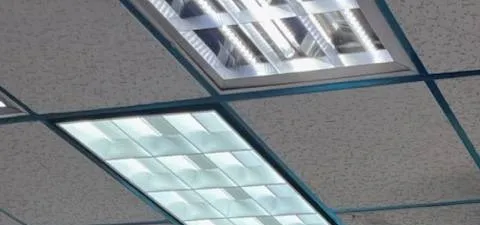
Reference photo from another AESS job, not an Upper West Side apartment: two lay-in light troffers sit in a speckled tile ceiling whose grid is painted teal. A ceiling like this is where a commercial Sonos zone usually starts.
Upper West Side Sonos Quote
Tell us the building, the room and what you listen to — a written figure follows the same business day
✅
Request Sent!
We'll call about your Upper West Side job the same business day.
25+
Years Experience
✓
Same-Day Estimates
100%
Licensed & Insured
4.7★
201 Google Reviews
Two answers let us price most West Side jobs before anyone visits: what the walls are made of, and what you actually listen to. A photo of the wall you want the TV or speakers on, plus a sentence about your listening (Atmos albums, a turntable, opera on the TV, background music for a shop), is usually enough. Call (929) 560-0737 or use the form.
Upper West Side visits use the Manhattan price list: the same published lines as the rest of the borough, plus one flat $150 parking charge per visit
Concert and opera apps, Atmos music, surrounds and AirPlay all set and shown on your own phone before we leave
Licensed low-voltage work under #12000287431; if a new outlet is needed for an Amp or a Port, the quote names it as an electrician's job before booking
The Upper West Side is a place where a lot of people own a lot of music and listen to it carefully. That shows in the institutions. Lincoln Center's 16.3 acres hold the New York Philharmonic, the Metropolitan Opera, New York City Ballet, the Chamber Music Society, Jazz at Lincoln Center and the Juilliard School, eleven resident organisations in all. Further up Broadway, the Beacon Theatre has been presenting shows at 74th Street since Christmas Eve 1929, and Symphony Space occupies the corner of 95th Street. The customers who call us from here tend to ask about stereo imaging, lossless streams and whether the Atmos version of an album is worth having, before they ask about price.
The buildings make that harder than it sounds. The Upper West Side/Central Park West Historic District at the neighbourhood's heart was developed largely between the 1880s and the 1930s, according to the Historic Districts Council: storefronts, rowhouses, French flats, tenements and then the tall apartment houses of West End Avenue, Riverside Drive and Central Park West. Census Reporter puts 97 percent of the district's homes in multi-unit buildings, and 64 percent are rented. So a serious music system almost always goes into a room that shares walls, floors and often a light court with other households, behind plaster that may hide hollow clay tile, under rules written by a co-op board or a landlord.
Then there is the neighbourhood's own ear for noise. West Side Rag reported that Upper West Siders filed 26,369 noise complaints with 311 in 2024, the third-highest total of any district, and pointed out that 14,809 of them were about helicopters. Residents here notice sound. A Sonos plan on the West Side has to give the listener full, detailed sound at the chair and keep it from turning into one of the other 11,560.
That is the job this page is about. We don't sell Sonos products, and we aren't a Sonos dealer; you buy the speakers wherever you prefer. We choose where they go, fix them to walls that aren't drywall, run cable without cutting through fire-rated partitions, set up the network they need, and then make sure every way you play music works: the Sonos app, AirPlay from an iPhone or a Mac, the TV through a soundbar, and a turntable or CD player through a line-in.
Upper West Side facts that shape a Sonos plan
230,436 people in 130,471 homes: Community District 7 in 2024, the city's third-largest neighbourhood by population (NYU Furman Center, updated May 6, 2026).
35.6 percent: the 2024 homeownership rate, so roughly two homes in three are rented and the system has to suit a lease as often as a co-op share (NYU Furman Center; Census Reporter shows 64 percent renter-occupied).
97 percent: share of homes in multi-unit buildings (Census Reporter, Manhattan Community District 7 PUMA).
April 24, 1990: the date the Landmarks Preservation Commission designated the Upper West Side/Central Park West Historic District, one of several districts that now cover much of the area between Central Park and the Hudson.
1 to 3 feet: the thickness of the Ansonia's masonry walls, which made its apartments nearly soundproof and helped attract opera singers and conductors (Wikipedia, The Ansonia).
6,297: new homes added in buildings of four or more units between 2010 and 2025, 1,154 of them income-restricted (NYU Furman Center).
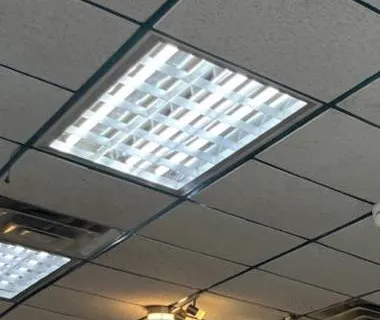
Figures from West Side Rag (Yvonne Vávra, February 8, 2025), citing the city’s 311 logs, which made the district the third-highest in the city for noise complaints. “Everything else” is the difference between the two published numbers; the article does not break it down further, so neither do we.Renter and multi-unit shares from Census Reporter (Manhattan Community District 7 PUMA); homeownership rate from the NYU Furman Center neighborhood profile, 2024.Reference photo from another AESS job: a lay-in light panel, a slotted vent and the edge of a second panel share a few tiles of drop ceiling, with a track light at the corner of the frame. Every one of those is something a ceiling speaker has to be planned around.
Music Stopped Mid-Symphony? Same-Day Sonos Help From Lincoln Square to 110th Street
A rear speaker that went silent after a power cut, AirPlay rooms that vanished from the iPhone, an app update that moved every setting you knew: most West Side service calls are one of these, and the speakers themselves are rarely broken. We find which product dropped off the system, rejoin it, put your rooms, groups and limits back, and show you where the settings now live. Call (929) 560-0737; a setup-only visit on the Manhattan list is $265 for the first hour plus the $150 parking line.
What We Install
Sonos Installation Services on the Upper West Side
Every West Side job is some mix of the work below. The written quote shows which lines apply to your rooms, so you can see what you're paying for before we arrive.
Stereo Pairs for Listening Rooms
Two Fives or two Era 300s placed at the spacing Sonos publishes, aimed at the chair you actually use, and tuned with Trueplay from an iPhone or iPad.
Atmos Music Rooms
Era 300s, an Arc Ultra or a Beam (Gen 2) set up to play the Dolby Atmos mixes from Apple Music and Amazon Music, with Spatial Music left on or off by room.
Concert and Opera Apps
AirPlay from iPhone, iPad and Mac set up and tested on the rooms you choose, and a soundbar fitted so anything on the TV plays through Sonos.
Turntables, CD Players and Old Receivers
A Port into an existing amplifier, or a source plugged into a Five's 3.5 mm line-in or an Era 300's line-in adapter.
Soundbars on Prewar Walls
Arc Ultra, Beam or Ray mounted on plaster, hollow clay tile or brick with anchors chosen for what we find behind the paint.
Ceiling Speakers on an Amp
Where the ceiling, the floor above and the board's rules allow, architectural speakers cut in and powered by a Sonos Amp in a ventilated spot.
Brownstone Floors
Systems for a single floor-through apartment or a whole house, with the network carried between floors on cable rather than hope.
Rental-Friendly Setups
Speakers on stands and shelves, a soundbar on the console and nothing fixed that a landlord would object to at the end of the lease.
Shops, Studios and Restaurants
Background music for avenue storefronts, dance and music studios, and restaurants that fill before the curtain and empty after it.
Listening Rooms
Rooms Built Around Music, and What Sonos Should Do in Them
The West Side has a long habit of building for musicians and artists. The Ansonia at 2109 Broadway, finished in the first years of the twentieth century as a residential hotel, is the famous example: Wikipedia's account says its thick walls and large apartments drew opera singers and conductors, and that Enrico Caruso and Igor Stravinsky were among its tenants. A few blocks south, the Hotel des Artistes at 1 West 67th Street opened in 1917 with apartments of up to six rooms, many under 20-foot lofted ceilings, as part of what is now the West 67th Street Artists' Colony Historic District.
Most of our customers don't live in buildings that famous, but plenty of them live the way those buildings were designed for: a piano in the living room, a wall of recordings, a teenager practising in the back bedroom, a parent who plays opera recordings every evening. A room like that needs a different Sonos plan from a TV den.
Start from the listening chair
A stereo pair works best in front of one seat. Sonos's own Era 300 guide gives the numbers: put the two speakers 2.5 to 3 metres apart, roughly 8 to 10 feet, and sit 2.5 to 3.5 metres from them; sitting closer strengthens the bass, sitting further back improves the stereo image. In a long prewar living room that usually means the speakers go on the short wall facing the chair, not on either side of the window where they happen to fit.
The same guide asks for at least 8 inches of space on each side of an Era 300 and an inch behind it, about 2 feet above it, and no enclosed bookshelf. A Five is less fussy about what's above it, because it has no upward-firing driver, but it's wider and heavier, so the shelf or stand has to suit it.
Keep the instrument and the system apart
Pianos and speakers don't belong on each other. We never stand a speaker on a piano's case or lid, and we keep the Sub, if there is one, well away from it. When the piano owns the bay window, the music system goes on the opposite wall, which is usually where the sofa faces anyway.
If someone in the family practises, the practice room gets a speaker of its own rather than being part of the main living-room room in the app. It can join a group when the household wants music everywhere and stay out when the scales start.
Decide which listening is the priority
Sonos makes three kinds of experience, and a single room rarely needs all of them. Stereo listening wants a matched pair placed in front of the chair. Atmos music wants an Era 300 pair or a soundbar that supports spatial audio, and a ceiling the up-firing drivers can reach. Films want a soundbar under the TV, with or without rears and a Sub. We ask which comes first in each room and say plainly where a compromise is being made.
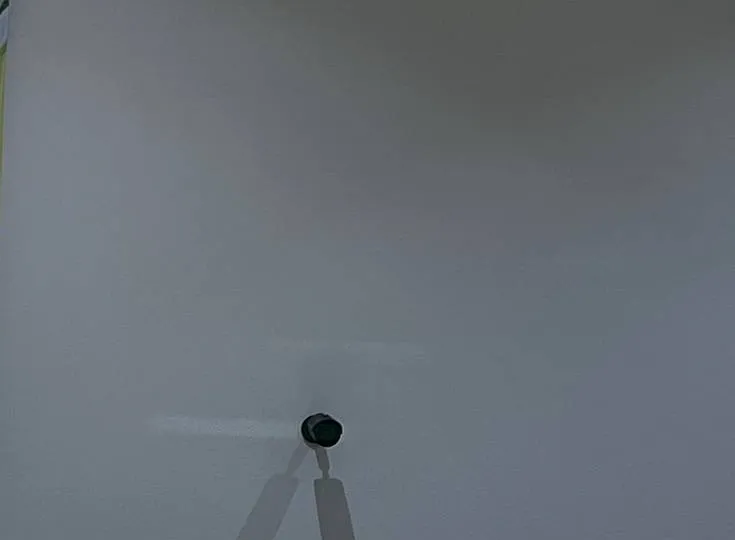
Reference photo from another AESS job: a wide pale grey wall with one small black device on a short bracket near its lower edge, casting a soft shadow. The same short bracket arm is what lets an Era speaker be angled toward a listening chair.
Placement
A Listening Room Laid Out by Sonos’s Own Numbers
Sonos publishes more placement guidance than most people read, and in a prewar living room it is worth following closely. The plan below takes the figures from Sonos's Era 300 guide and applies them to a typical long living room with windows at one end and a piano near them. The same logic applies to a pair of Fives, which lack the upward driver but still want to be in front of the chair rather than beside it.
Most of the work is choosing the wall. The window end is usually taken by the piano, a radiator and the view; the opposite wall, often the one with the doorway from the gallery, is where the pair can stand at the right spacing with nothing in front of them. We measure the seat distance before any bracket goes up, because moving a chair a foot is free and moving a bracket isn't.
Spacing and clearance figures from Sonos’s Era 300 user guide; the room, the piano and the chair are an illustration of how we apply them.Figures quoted from the Sonos Era 300 user guide at sonos.com/en-us/guides/era300.Distances and the bass-versus-imaging trade-off quoted from the Sonos Era 300 user guide.
When the room won't allow it
Some rooms can't give a pair eight feet of wall and ten feet to the chair: a narrow study, a living room with doors in three walls, a bedroom with the bed against the only free wall. Then we choose differently rather than squeeze: a single Five lying flat, which Sonos says separates left and right on its own, or an Era 100 on the dresser. Good sound from one well-placed speaker beats a badly placed pair.
Building Specialists
Sonos Installation for the Upper West Side’s Architecture
The landmark designation reports describe how the West Side was built in waves: rowhouses first, then French flats, then the tall apartment houses that came with the elevator and the 1904 IRT subway, and finally the postwar and recent towers at the south end. Each wave left a different kind of wall behind, and the wall decides most of what a Sonos job involves.
West End Avenue and Riverside Drive Apartment Houses
Tall prewar apartment houses. Along West End Avenue, the West End–Collegiate designation summary names Schwartz & Gross, Gaetan Ajello, Rosario Candela, Emery Roth and George F. Pelham among the architects of the 1910s and 1920s, working under the height and massing rules of the 1901 Tenement House Act. Plaster walls, long internal halls, and co-op boards with written alteration rules.
Central Park West Towers
The apartment towers facing the park, inside the Upper West Side/Central Park West Historic District and its Beaux Arts, Neo-Renaissance and Art Deco mix. Co-op boards whose house rules set when contractors may work and what may be cut.
Side-Street Rowhouses
Three- and four-storey rowhouses from the late 1880s, the first wave of building in the Riverside–West End and West End–Collegiate districts. Some are single houses and some are divided into apartments, which we confirm before quoting.
French Flats and Early Walk-Ups
Small multiple dwellings from the 1890s, built to match the scale of the neighbouring houses before the electric elevator made six- to nine-storey buildings practical. Narrow rooms, deep plans and no elevator.
Former Residential Hotels
Buildings like the Ansonia, a residential hotel converted to condominiums in the 1990s, and the former Level Club and Masonic Hotel, later a single-room-occupancy hotel and now condominiums. Thick masonry, irregular floor plans and light courts.
Lincoln Square and Riverside South Towers
Postwar and recent towers at the south end, including the nineteen buildings put up under the Riverside South plan, approved in 1992, on the former 60th Street rail yard between 59th and 72nd Streets. Typically concrete slabs and newer drywall partitions.
What each building type means for walls, cable and approvals
Building
What we usually find
How it changes the work
Who has a say
Prewar apartment house
Plaster on hollow clay tile or brick; plaster ceilings below concrete or arched floors
Anchors for hollow masonry; plaster line +$45; cable along walls in paintable cover rather than through partitions
Alteration agreement and house rules; contractor hours set by the building
Central Park West tower
Plaster partitions; high ceilings
High-mount line ($75) above about 8 ft; stands and furniture for most speakers
Board approval for anything cut; certificate of insurance (free)
Rowhouse or floor-through
Plaster on wood lath over wood joists; brick party walls
Brick line +$65 for party-wall mounts; cable between floors through closets where the owner allows
Owner of the building, or the co-op of a few shareholders
French flat or walk-up
Plaster, brick, narrow rooms
Walk-up line $40 from the third floor; compact products such as Era 100 or Ray
Landlord consent in rentals
Former residential hotel
Very thick masonry; irregular rooms
Masonry lines as found; wired network often needed where walls stop Wi-Fi
Condo or co-op rules; some interiors fall under LPC review only if a DOB permit is involved
Newer tower
Metal-stud drywall; concrete slabs
Metal-stud line +$30; concrete +$75; in-wall kit $169 where the wall is hollow
Condo board or rental management
The table is a starting point, not a promise. Two apartments on the same West End Avenue floor can have different walls if one was renovated in the 1980s and the other wasn't, and only a look, sometimes a small test hole in a closet, settles it. The quote shows the wall line we expect, and if the wall turns out to be something else, we tell you before drilling, not afterwards on the invoice.
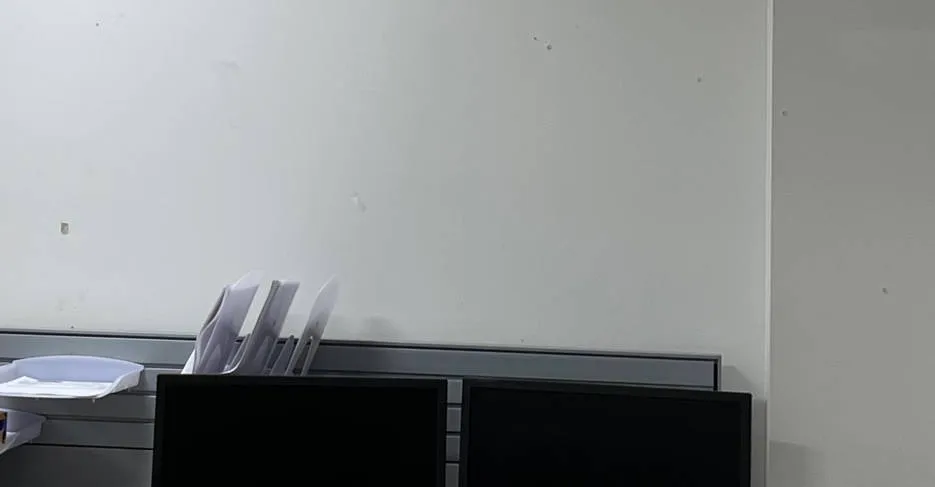
Reference photo from another AESS job: a plain white wall, marked only by a few small holes, rises above the tops of two switched-off monitors and a stack of paper trays. A wall like this is where a mount's position gets measured before anything is drilled.
Building Waves
Four Building Waves and the Historic Districts Laid Over Them
The landmark reports for the West Side read like a construction history. CityLand's account of the Riverside Drive–West End Historic District Extension I, designated on June 26, 2012, describes a first wave of three- and four-storey rowhouses starting in the late 1880s, followed in the early 1900s by larger apartment buildings and French flats once the Broadway subway made the area easier to reach. The West End Preservation Society's summary of the West End–Collegiate extension adds the middle steps: small multiple dwellings in the 1890s, then six- to nine-storey buildings after the electric elevator, then, after 1904, apartment houses shaped by the Tenement House Act of 1901.
The districts came much later, and they overlap the waves rather than following them. The Upper West Side/Central Park West Historic District dates from April 24, 1990; the West End–Collegiate district from 1984, with an extension of about 220 buildings in 2013; and the Riverside–West End district gained its Extension I in 2012 and, in CityLand's report, an Extension II on June 23, 2015.
Dates from the Landmarks Preservation Commission designation summaries reported by CityLand and the West End Preservation Society, the Historic Districts Council, NYC Parks and the Wikipedia articles on the Ansonia, Hotel des Artistes, the Beacon Theatre and Lincoln Center (full list in the sources section).
Why the wave matters more than the district
For a Sonos job, the age of the wall decides more than the district line. A rowhouse from the first wave usually means plaster on wood lath, wood joists and brick party walls. A French flat means small rooms and narrow stairs. An apartment house from the elevator era usually means plaster over masonry partitions and heavy floors. A tower from Riverside South means drywall on metal studs and concrete. The district matters for anything on the outside of the building, which is rarely where a Sonos system goes.
Inside the Walls
Thick Walls, Light Courts and the Partitions You Can’t Cut
Prewar Manhattan buildings were built heavy, and on the West Side some were built very heavy. Wikipedia's article on the Ansonia records masonry walls between one and three feet thick, which made each apartment nearly soundproof and is one of the reasons given for its popularity with opera singers. Few buildings go that far, but the principle holds across the neighbourhood: masonry between apartments stops a lot of what a music system produces, and gives an installer very few easy paths for cable.
Where the sound gets out instead
Solid walls push the problem somewhere else. In most of the buildings we work in, music that bothers someone travels one of three ways: through an open window into a light court or an air shaft, down through the floor from a speaker or Sub that stands on it, or along a structure that connects the rooms, such as a pipe chase. The light court is the West Side's particular version. The Ansonia's plan gave it two courts on each side street and one on Broadway so every room had daylight, and many apartment houses share the idea on a smaller scale.
Narrow shafts are older and worse. A 6sqft history of the city's air shafts (May 11, 2026) quotes the 1901 Tenement Commission calling the air shaft "the most serious evil of the present tenement" and describes slots sometimes only 28 inches wide, full of noise. Sound in a shaft like that reaches the window opposite almost undiminished.
Schematic based on the arrangement Wikipedia describes for the Ansonia: two light courts on each side street and one on Broadway, giving the building an irregular H shape. Distances and window positions vary from building to building.
Hollow clay tile and the rule about fire separation
Under the plaster of many prewar partitions is hollow clay tile: fired clay blocks with voids inside, light for their size and brittle under a hammer drill. New York City's existing-building code has a definition for them, "lightweight unit masonry used for partitions, usually in fire-rated buildings", and adds that alterations "shall maintain existing fire separation requirements of these partitions."
Two practical things follow. Fixings have to suit hollow masonry, drilled without hammer action and spread over several points, or the tile cracks behind the plaster and the bracket works loose. And a partition that separates an apartment from a public hall, or one fire area from another, is not a cable route. We run along it in a paintable cover, through a closet or over a door frame, rather than through it. If a job would need a hole through such a wall, we say so in the quote and leave the decision with the building.
Schematic only. The clay-tile definition and the fire-separation rule come from the city’s existing-building code (§H102.3.10); which wall you have is confirmed at the walkthrough.
Floors carry bass
Prewar floors on the West Side are often as heavy as the walls. The Wikipedia article on the Dakota describes floors of rolled steel beams three to four feet apart spanned by brick or terracotta arches. Heavy floors like that carry less airborne sound than wood joists do, so what a neighbour below is most likely to notice is the bass from a Sub or a large speaker standing on the floor itself.
So the Sub is where we are most careful. It goes on a rug rather than bare wood, away from the wall shared with the next apartment, and its level is set by ear at the volume you actually listen at rather than left at a demonstration setting. In a bedroom or a room over a neighbour's bedroom, we often recommend no Sub at all.
Construction described in the Wikipedia article on The Dakota (rolled steel beams three to four feet apart with brick or terracotta arches), recorded in our silo research; other prewar buildings vary.
What it means for Wi-Fi
Walls that stop sound also slow down radio. In a thick-walled apartment the router in the front hall often can't reach the speakers in the back bedrooms reliably. Sonos's own system requirements rule out routers that broadcast only on 5 GHz and ask for every product on the same network, and its interference guidance asks for at least 18 inches between Sonos products and other electronics. Where the Wi-Fi isn't enough, we wire one product to the router or add a properly configured access point, rather than a plug-in extender.
Reference photo from another AESS job: a white wall turns a corner beneath a ceiling that steps down a few inches. Steps and returns like this usually hide a beam, a duct or a pipe, which is why speaker positions are checked from above as well as below.
Who We Work For
Renters, Shareholders and Brownstone Owners: Three West Side Starting Points
Renters, about two households in three
With a 2024 homeownership rate of 35.6 percent in the NYU Furman Center's figures, most of our West Side customers rent. For them we build systems that leave the walls alone or nearly so: a pair on stands or a sideboard, a soundbar on the console, the Sub on the rug, cables in covers that come off cleanly. When the lease ends, everything leaves with the furniture. If a landlord agrees to a wall-mounted soundbar, we ask for that agreement in writing before we drill.
Co-op shareholders and condo owners
Owners can go further, inside their building's rules. A soundbar on a bracket is usually fine; a ceiling speaker that needs a hole cut in plaster usually goes to the managing agent and sometimes to the board's architect. We supply the speaker layout and product sheets the building asks for, schedule cutting inside its permitted hours, and leave the building's own fees and deposits off our invoice.
Owners of a whole rowhouse
A brownstone or rowhouse owned outright is the one place on the West Side where a whole-house system with ceiling speakers between joists is straightforward. Even then, if upper floors are rented, the owner's system and the tenants' homes stay separate: the owner's speakers on the owner's network, and nothing that plays into a tenant's rooms.
General pattern only; your lease, proprietary lease or house rules decide. LPC scope from the commission’s permit guidance.
Commercial Sonos
Business Sonos Installation on the Upper West Side
Commercial music on the West Side is almost always music under someone's home. The avenues are lined with shops and restaurants in the bases of residential buildings, so the plan for a business starts with the apartments above and next door, not with how loud the room can go.
Broadway
The neighbourhood's main commercial street, with storefronts built into the bases of landmark buildings such as the Ansonia at 73rd–74th and the Beacon Theatre at 74th, and Symphony Space at 95th. Shops here often sit directly beneath apartments.
Columbus Avenue
Covered by the Columbus Avenue Business Improvement District, whose office is at 157 Columbus Avenue. Restaurants, boutiques and services, many in the ground floors of rowhouses and apartment houses.
Amsterdam Avenue
Restaurants, bars and small shops; from West 96th to West 110th Street it falls within the Columbus Amsterdam BID together with that stretch of Columbus.
Lincoln Square
The blocks around Lincoln Center, served by the Lincoln Square BID, where a restaurant serving a pre-performance crowd needs music that suits a full room early in the evening and a quiet one later.
Studios and Schools
Dance, music and fitness studios on upper floors and in storefronts, where background music has to stop the moment a class or a lesson starts.
Offices and Practices
Professional and medical suites in the ground floors of residential buildings, where waiting-room music has to stay in the waiting room.
Compliance notes for business music on the West Side
Commercial music limits: the city's noise-code fact sheet says music from a store, restaurant or bar must not exceed 42 dBA measured inside any home that receives it, and the Administrative Code adds a separate limit of 45 dB in any one-third-octave band from 63 to 500 hertz, which is the bass. We set the system so it can't reach the levels that would break either, and leave the limits written down.
Permits: under §28-105.4.7 of the Administrative Code, wiring designed to run below 50 volts for signalling, communication, alarm and data does not need an electrical permit when a licensed or qualified person does it. Speaker cable on an Amp falls in that low-voltage territory; a new outlet for the Amp does not, and goes to a licensed electrician.
Landmark buildings: the Landmarks Preservation Commission reviews interior work when it needs a Buildings Department permit, when it affects the exterior, or when the interior itself is designated. A speaker fixed to the outside of a storefront in a historic district is the case most likely to need LPC attention.
Music licensing: a business playing music to customers needs the right licence or a service built for businesses; a personal streaming account usually isn't one. We set up whichever service you choose but don't sell licences.
Limits as summarised in the NYC DEP noise-code fact sheet (42 dBA) and Administrative Code §24-231 (45 dB per one-third-octave band, 63–500 Hz). The bands shown are the standard one-third-octave centres in that range.
Before the curtain and after it
A restaurant that serves a pre-theatre crowd near Lincoln Center or the Beacon runs two rooms in one evening: a full, fast early service and a quieter late one. Sonos handles that with saved volume levels and, if you want it, a scheduled change, but the bigger decision is speaker placement. Several small ceiling or wall speakers spread across the room let the music be heard at every table at a modest level; two loud ones near the bar make the front tables shout and send bass into the building. In a grid-ceiling room we can lift tiles and see the route before committing to positions.
Studios and lessons upstairs
Dance, yoga and music studios above the avenue shops have the opposite problem from a restaurant: the music has to be clear and full during a class and completely silent the moment it ends or a lesson starts. We give the teacher one obvious control, usually the Sonos app on the studio's own tablet with a single room and a saved volume, and keep the speakers high on the walls, angled into the room and away from the floor so that the people downstairs hear as little of the beat as possible.
Where the studio shares a wall with an apartment, the speakers go on the other walls, the Sub stays out unless the class genuinely needs it, and the volume limit is set during a real class rather than in an empty room. A studio full of people absorbs a surprising amount of sound, and the limit that sounds right at noon with nobody there is usually too low by evening.
Reference photo from another AESS job: speckled ceiling tiles on a teal grid stop at a boxed soffit running above the top of a glass shopfront. On an avenue storefront that soffit is often the only hidden route along the window.Reference photo from another AESS job: a small white dome device is fixed under the corner of a yellow storefront fascia, with blue sky and a bare tree beyond. Anything fixed outside a shop has to live with weather like this.
Your Questions Answered
Sonos Installation on the Upper West Side: Questions Answered
These are the questions West Side customers ask that the general Manhattan page doesn't cover: how music from concert apps and Atmos albums actually reaches the speakers, what to do about the piano, and what prewar walls and light courts change. Answers draw on Sonos's own support articles and the city's code, cited in the sources section below.
Concert streams, Atmos albums and what the app doesn't list
Our opera and concert streaming subscriptions aren't in the Sonos app — how do we get them onto the speakers?
Use AirPlay from an Apple device. Sonos says it supports AirPlay 2 audio from any device on Apple's own compatibility list, and the AirPlay list on its support site covers almost everything it currently sells, including the Amp, Arc Ultra, Beam (Gen 2), Era 100, Era 300, Five, Move 2, Port and Ray. Open the concert app on the iPhone or iPad, start the performance, tap the AirPlay icon and pick the room. Once one AirPlay-capable Sonos product is playing, Sonos lets you group other Sonos rooms with it, so the broadcast can reach the kitchen too.
If the performance is a video and it's playing on the TV, you don't need AirPlay at all: a Sonos soundbar takes the TV's sound over HDMI, and whatever the TV is showing plays through it. Android phones don't send AirPlay, so an Android-only household uses the TV route, or a streaming box on the TV, for apps that have no Sonos service of their own.
Do Era 300 speakers play the Dolby Atmos versions of albums in our Apple Music library?
Yes, provided the service is added inside the Sonos app rather than sent from the phone. Sonos lists Amazon Music and Apple Music as the services that deliver spatial-audio music to its speakers (TIDAL's Atmos is limited to a preview on Arc and Arc Ultra through compatible TVs), and the Era 300 is on its list of speakers that play it. When an Atmos track is playing, the Sonos app shows a Dolby Atmos badge on the Now Playing screen.
Two settings matter. Spatial Music is on by default and can be switched off per product if you prefer the stereo mix of a recording. And the Era 300 needs headroom: Sonos asks for roughly two feet of clearance overhead, because the up-firing tweeter bounces sound off the ceiling, and warns against tucking it into an enclosed shelf.
Why does an Atmos album drop to ordinary stereo when we add the kitchen speaker to the group?
That is how Sonos handles mixed groups. Its support page says that when spatial music is playing, grouping it with a product that doesn't support spatial audio switches the whole group's playback to stereo, and the spatial mix only comes back with the next spatial track after that product leaves the group.
In practice we set the living room up as its own room for serious listening and keep a separate, saved group for the evenings when the music should follow you down the hall. The Atmos version plays when the room is on its own; the stereo version is what the whole apartment hears when you want everyone in.
With Era 300s set up as the soundbar's rear surrounds, what happens to them when we play music with the TV off?
By default they play quietly. Sonos's surround settings include a Music Playback choice: Ambient, the default, gives "subtle, low volume audio with a limited frequency range", and Full gives full-range audio at the same volume as the soundbar. That setting doesn't apply to TV audio or to Dolby Atmos music, which are handled separately.
Rears never turn into a front stereo pair, though. If the room is mainly for music and only sometimes for films, we often suggest a stereo pair in front and a soundbar, or treat the rears as a TV-only extra and set Music Playback to Full only if you like being surrounded by the band. There's also a Surround Distance setting, which we measure rather than guess, because it changes the level of everything the rears play.
Why don't our rear surround speakers appear when we pick AirPlay speakers on the iPhone?
Because Sonos doesn't offer AirPlay on speakers that are set up as surrounds. Its AirPlay page says so directly. Pick the soundbar's room instead: the soundbar takes the AirPlay stream, and the rears play their part of it according to the surround settings.
If you want an Era speaker to be an AirPlay destination on its own, in a study or a bedroom, it has to be set up as its own room rather than bonded to a soundbar as a surround.
Why does the music stop when a call comes in on the phone we're streaming from?
AirPlay is tied to the device sending it, and Sonos notes that its speakers can't play AirPlay audio while that device is on a phone call. Music started inside the Sonos app, or from a service such as Spotify that hands playback to the speaker itself, doesn't depend on the phone in the same way, so a call doesn't stop it.
For long listening, an opera or a symphony, start the service from the Sonos app if it's available there and keep AirPlay for the apps that aren't.
Can a lecture or concert playing in a browser on our Mac come out of the Sonos speakers?
Yes. On a Mac, Sonos's instructions are to open System Settings, choose Sound, and pick a Sonos product under Output. Sonos adds that AirPlay 1 can also carry a Mac's system audio but may bring a delay or interruptions, so for a video you're watching on the laptop screen, the sound may run slightly behind the picture.
Work laptops are the usual exception: Sonos notes that devices managed by an organisation can have settings that restrict AirPlay, and only that organisation's IT team can change them.
Pianos, studios and the listening chair
Should the Sonos speakers sit near the piano, or across the room from it?
Across from it, or at least not on it. A speaker standing on a piano's lid or case shares its vibration with the instrument and anything loose on it, and the lid of a grand is opened and closed in normal use. We keep speakers on their own furniture, stands or wall brackets and leave the piano alone.
Room position matters too. A grand usually claims the bay or the end of a long living room, which often pushes the listening chair and the speakers to the opposite end. That's fine. Sonos's Era 300 guide puts a stereo pair 2.5 to 3 metres apart, about 8 to 10 feet, with the listening position 2.5 to 3.5 metres away, and most Upper West Side living rooms can give that to the speakers without moving the instrument.
For a music-first living room with no TV, is a pair of Fives the better buy than a pair of Era 300s?
It depends on what you play. The Five is Sonos's stereo hi-fi speaker, sold as "engineered for high fidelity", with three tweeters and three midwoofers in a sealed cabinet, a 3.5 mm line-in for a turntable or CD player, and Ethernet. A pair of Fives suits a household that listens mostly to stereo recordings and wants the biggest, fullest sound Sonos makes from a pair.
The Era 300 is built around spatial audio, with six drivers including one that fires upward, and it's the one to choose if Atmos albums from Apple Music or Amazon Music are what you listen to. It is also smaller, 10.24 inches wide against the Five's 14.33, and lighter at 9.85 pounds against 13.89, which matters on a bracket or a narrow shelf.
Should a single Five stand on its side or lie flat on our shelf?
Flat, if it's the only speaker in the room. Sonos says a Five placed horizontally separates the left and right channels for full stereo sound, while a Five standing vertically switches its processing to mono; the touch controls adapt either way. Standing it up makes sense only when it's half of a stereo pair, or when the shelf is too shallow and mono is acceptable.
Lying flat it needs a shelf at least 14.33 inches wide and 6.06 deep, and it weighs 13.89 pounds, so we check the shelf's supports before we put it there.
Thick walls, light courts and old partitions
Our bedroom window opens onto a light court shared with other apartments — does music carry across it?
It can, mostly when windows are open. A light court is an open shaft with hard masonry on every side and windows from several apartments facing each other across it, so sound that leaves your window has a short, reflective path to theirs. The Ansonia's own design shows how common these courts are on the Upper West Side: two light courts on each side street and one on Broadway, arranged so every unit got as much daylight as possible.
We plan bedroom speakers facing away from the court window, keep any Sub out of rooms that open onto it, and set a volume limit on that room. With the windows shut, a heavy masonry building does most of the remaining work; with them open on a summer night, the settings are what protect the people across the court.
Behind our plaster is hollow clay tile — does that change how a soundbar bracket goes up, and can cable pass through it?
Yes on both counts. Hollow clay tile is fired clay block with voids inside, common in prewar partitions, and it breaks if an anchor meant for solid masonry is forced into it. We drill gently without hammer action, use anchors made for hollow masonry, and keep the bracket's load spread across several fixings. A soundbar is light; a TV on a long arm is a different conversation, and we tell you before drilling if the wall isn't up to it.
Cable is the bigger issue. The city's existing-building code describes structural clay tile and terra cotta partitions as lightweight masonry "usually in fire-rated buildings" and says alterations must maintain their fire separation. So we don't punch through a clay-tile partition between rooms or hallways to save a few feet of cable; we route along it in a paintable cover, through a closet, or around it.
Reference photo from another AESS job: a drop ceiling with two lit panels runs beneath a high grey wall, a small white device on the wall above it and glass doors below. A lowered grid like this lets us lift a tile and trace a cable route before choosing speaker positions.
Equipment
Types of Sonos Systems We Install
You buy the products from whichever retailer you prefer; we fit, connect and tune them. These are the ones West Side rooms ask for most, described from Sonos's own specifications.
Five
Sonos's stereo hi-fi speaker: three tweeters, three midwoofers, a sealed cabinet, 3.5 mm line-in and Ethernet. Lay it flat for stereo from one speaker, or pair two for a listening room. 14.33 in wide, 13.89 lb.
Era 300
Six drivers, one firing upward, built for Dolby Atmos music from Apple Music and Amazon Music. Wants about 2 ft of space above it and 8 in at each side; turn it upside down if it's mounted within 2 ft of the ceiling.
Era 100
The compact stereo speaker for kitchens, studies and bedrooms, and the usual choice for rears behind a smaller soundbar. Works with AirPlay 2.
Arc Ultra
The large soundbar, for a wide TV in a living room. Supports spatial audio and, from compatible TVs and devices, a TIDAL Atmos preview, per Sonos.
Beam (Gen 2)
The mid-sized soundbar that still plays spatial audio, sized for the narrower TV walls between prewar windows.
Ray
The compact soundbar for a bedroom or a study TV, set on a console or under a small screen.
Sub Mini and Sub 4
Bass for a soundbar or a pair. In buildings with neighbours below we place it off the floor's weak spots and set its level by ear, not at maximum.
Amp
Powers passive ceiling, wall or bookshelf speakers, including a pair you already own, and appears in the app like any other room. Needs ventilation.
Port
Connects an existing hi-fi to Sonos in both directions: Sonos streams into the amplifier, and the turntable or CD player feeds out to every room.
Move 2 and Roam 2
Portable speakers for a terrace, a roof deck or the kitchen counter, carried indoors when the evening ends.
Dimensions and weights as listed on sonos.com product pages for Era 300 and Five. Shelf depth and bracket rating are what we check against these numbers.
Which product for which West Side room
Room
Usually
Why
Living room with a piano, music first
Pair of Fives or Era 300s on the wall facing the chair
Stereo in front of the listener, nothing on the instrument
Living room that is also the TV room
Arc Ultra or Beam (Gen 2), optional Sub and rears
Films, concerts on TV and Atmos music from one bar
Study lined with books
One Five lying flat, or two Era 100s on brackets
Shelves are crowded; Era 300 is not meant for enclosed shelving
Bedroom on a light court
Era 100 or Ray, no Sub, volume limit set
Keeps sound out of the court on summer nights
Kitchen at the end of a long hall
Era 100, wired if the Wi-Fi is weak there
Joins any group without depending on the router's reach
Room with an old hi-fi
Port into the amplifier
Keeps the speakers you love; adds streaming and multiroom
Getting Music In
Concert Apps, Atmos Albums and the Routes Into a Sonos System
A household that listens to opera, chamber music and jazz rarely gets all of it from one place. Some of it is on a big streaming service that lives inside the Sonos app. Some is on a subscription app from a performing-arts organisation or a specialist label. Some is on the TV, some on CDs, some on records. Sonos can play all of it, but each arrives by a different route, and each route has limits Sonos describes in its own support articles.
Route
Which Sonos products
What to know
Music services added in the Sonos app
Every Sonos speaker
Plays from the speaker itself; a phone call doesn't interrupt it
AirPlay 2 from iPhone, iPad or Mac
Most current Sonos products, including Era 100, Era 300, Five, Arc Ultra, Beam (Gen 2), Ray, Port and Amp
Not available on speakers set up as surrounds; pauses while the sending device is on a call; organisation-managed devices may be blocked
Grouping with a speaker that lacks spatial audio switches the group to stereo
TV sound over HDMI
Arc Ultra, Beam (Gen 2), Ray and other Sonos soundbars
Concert and opera video plays through whatever the TV is showing
Line-in from a turntable or CD player
Five (3.5 mm), Era 300 (Sonos Line-In Adapter on USB-C), Port
Turntables without a built-in phono stage need one
Routes and limits as described in Sonos’s AirPlay, spatial audio and product support pages.From Sonos support articles: “Stream AirPlay audio to Sonos”, “Listen to music with spatial audio on Sonos speakers” and “Supported WiFi modes and security standards”, plus the Five and Era 300 product pages for line-in. An empty circle means the product isn’t on that list, not that we tested it.
The AirPlay route
For an app that has no Sonos service, AirPlay is the bridge. Sonos supports AirPlay 2 from any Apple device on Apple's list, and once one AirPlay-capable Sonos room is playing, other Sonos rooms can be grouped with it. We set the rooms' names so they make sense in the iPhone's AirPlay menu, check that the router doesn't isolate devices from each other, and show everyone in the household how to use it. Android phones don't send AirPlay; for them, the TV and the soundbar are the route for anything the Sonos app doesn't list.
The Atmos route
Dolby Atmos music is a second version of an album, mixed for speakers above and around you. Sonos plays it from Apple Music and Amazon Music on a short list of products, and shows a Dolby Atmos badge when it's working. The Era 300 is the stand-alone speaker that does it; the soundbars on the list do it in front of a TV. Whether it's worth having depends on the recording, and some listeners prefer the stereo mix of music they know well. Spatial Music can be turned off per product if so.
From Sonos support, “Change surround audio settings”: Music Playback, Music Level, TV Level and Surround Distance.
The cable route
Records and CDs still matter here. A Five has a 3.5 mm line-in on the back; an Era 300 takes a line-in signal through Sonos's Line-In Adapter on its USB-C port; a Port connects a whole existing hi-fi to the Sonos system in both directions. Whatever plays into one room can be grouped to the others. The only regular snag is a turntable without a phono stage, which needs one in between.
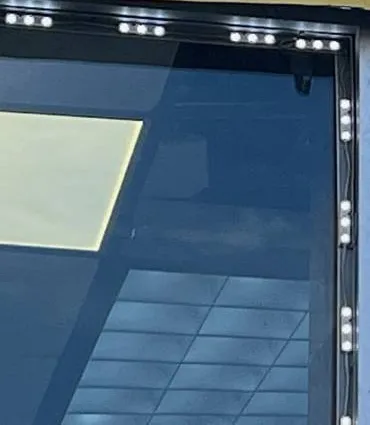
Reference photo from another AESS job: a dark window frame lined with small white LED lights, the shop's ceiling grid and a light panel reflected in the glass. Glass like this reflects sound as readily as it reflects the room.
AI Overview Reality Check
What AI Gets Wrong About Sonos Installation on the Upper West Side
We could not view Google's AI Overview from our build environment, so this section does not quote it. It takes seven assumptions that general advice, cost guides and quick answers commonly make about Sonos, and checks each against Sonos's support articles, the city's code and the buildings we work in.
Claim one: “Sonos will play anything your phone can play”
Answers built from general advice tend to treat Sonos as a Bluetooth speaker with Wi-Fi. It isn't quite. Music services added inside the Sonos app play from the speakers themselves. Everything else needs a route: AirPlay 2 from an Apple device, the TV through a soundbar, or a line-in.
That matters on the West Side because so much listening happens in specialist apps. An opera or concert app with no Sonos service plays on Sonos only through AirPlay from an iPhone, iPad or Mac, or through the TV. An Android-only household doesn't have the AirPlay route.
We check the apps you actually use at the first visit and set up the route each one needs, so nobody discovers on a Saturday night that the concert app has no Sonos button.
Claim two: “Any Sonos speaker plays Dolby Atmos music”
Spatial audio is a feature of particular products, not of the Sonos system as a whole. Sonos lists the Arc, Arc SL, Arc Ultra, Beam (Gen 2), Beam Ultra and Era 300 among the speakers that support it, and Amazon Music and Apple Music as the services that deliver it.
An Era 100, a Five or a Port plays the stereo version. And if a spatial-capable speaker is grouped with one that isn't, Sonos switches the whole group to stereo until the group changes.
So a household that cares about Atmos albums plans one room around them, usually with a pair of Era 300s, and accepts stereo when the music is playing everywhere.
Claim three: “Rear surrounds make the music fuller too”
They can, but only if you ask them to. Sonos's surround settings default to Ambient for music: subtle, low-volume audio with a limited frequency range. Full gives full-range sound at the same level as the soundbar.
Neither setting turns the rears into a front stereo pair, and Sonos notes that the setting doesn't apply to TV audio or to Dolby Atmos music. Rears are also left out of AirPlay entirely.
For a living room that is mostly about music, a pair in front often beats a soundbar with rears, and we say so before you spend the money.
Claim four: “A good anchor will hold in any wall”
Generic mounting advice assumes drywall or brick. Prewar West Side partitions are often plaster over hollow clay tile, which cracks if it is hammer-drilled or loaded with an anchor made for solid masonry.
The city's existing-building code also reminds owners that these partitions are usually part of a fire-rated building and that alterations must keep their fire separation. That rules out treating them as a cable route between rooms or into a hallway.
We identify the wall before choosing fixings, drill without hammer action in tile, spread the load, and route cable along walls rather than through rated partitions.
Claim five: “Speaker wiring needs an electrical permit”
It usually doesn't in New York City. Section 28-105.4.7 of the Administrative Code says no electrical permit is needed for wiring designed to run below 50 volts for signalling, communication, alarm and data circuits, when a licensed electrician, special electrician or qualified person does the work.
Speaker cable between a Sonos Amp and passive speakers falls in that low-voltage world. What doesn't is a new 120-volt outlet for the Amp or a Port; that is an electrician's job, and our quote names it as such.
A co-op's alteration agreement can still require approval for low-voltage work even where the city doesn't require a permit, so we read the building's rules as well as the code.
Claim six: “A big room needs the biggest speaker”
Placement does more than size. Sonos's own Era 300 guidance puts a stereo pair 2.5 to 3 metres apart with the listener 2.5 to 3.5 metres away, and says sitting further back improves the stereo image while sitting closer strengthens the bass.
In a large prewar living room, a correctly placed pair in front of the chair usually sounds better than a bigger speaker pushed into a corner beside the window, and it can run at a lower volume, which suits the neighbours.
The Five is the larger speaker when a room truly needs more output. We'd still place it by the same rules.
Claim seven: “In a historic district, Landmarks has to approve everything”
Much of the Upper West Side sits in historic districts, and it is easy to assume every change needs the Landmarks Preservation Commission. The commission's own guidance is narrower: interior work needs an LPC permit when it needs a Buildings Department permit, when it affects the exterior, or when the interior itself is a designated landmark.
A soundbar on a living-room wall or speakers on stands is not exterior work. A speaker fixed outside a storefront, on a terrace railing visible from the street, or anything that changes a facade is a different matter.
We tell you which category your job is in, and where the building's own rules are stricter than the commission's, the building's rules apply.
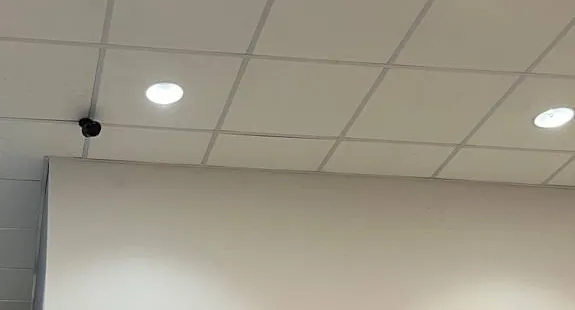
Reference photo from another AESS job: round downlights and a small black device sit in a white grid ceiling above a plain bulkhead. Speakers go where they clear fixtures like these, not simply where the middle of the room happens to be.
Not Sure Which Route Your Music Needs?
Tell us the apps and sources you use and the room they play in. We'll say which ones work inside the Sonos app, which need AirPlay or the TV, and what that means for the products you buy.
An Upper West Side quote usually needs five things: the cross streets, the type of building, the rooms that want music, what you listen to and how, and a photo of the wall or shelf where the speakers or soundbar will go. The written figure follows on the Manhattan price list.
✅
We Got Your Request!
Thank you. A written West Side figure, or a call to ask about the walls, comes back the same business day. For a system that stopped playing and is needed tonight, ring (929) 560-0737.
How It Works
Our Installation Process
The same six steps appear in this page’s HowTo data. Ceiling-speaker rooms in co-ops usually add a separate approval and cutting visit.
1. Hear the room first
We stand where you listen, find the piano, the bookcases, the windows and the light-court openings, and ask what you play most: stereo recordings, Atmos albums, concert apps or TV.
2. Read the walls and the building's rules
We identify plaster, clay tile or newer drywall, note what the alteration agreement or house rules say about work hours and wiring, and check whether the building's own network or yours will carry Sonos.
3. Choose products and positions
Fives, Era 300s, Era 100s, a soundbar or ceiling speakers on an Amp, each placed to Sonos's own clearance and spacing guidance and kept off the instrument.
4. Mount, route and connect
Brackets go into the right anchors for the wall, cable follows the route that keeps fire-rated partitions intact, and a wired link goes in wherever the Wi-Fi can't be trusted.
5. Tune for listening
Trueplay where supported, Spatial Music on or off by room, surround Music Playback chosen with you, and volume limits for rooms that face a light court.
6. Show every route in
Before we leave, each person's phone plays from the Sonos app, from AirPlay and from the TV, and a short written note records rooms, groups and limits.
Reference photo from another AESS job: the underside of a dropped grid soffit, lit by two light panels, sits below a high pale wall. A lowered section like this is often the easiest place to tuck cable in a commercial room.
Coverage Area
Sonos Installation Near the Upper West Side’s Landmarks
We cover the whole neighbourhood, from the Lincoln Square blocks below 72nd Street to the Columbus and Amsterdam stretch between 96th and 110th. These are the places customers usually mention when they tell us where they are.
Lincoln Center
A 16.3-acre campus whose resident organisations include the Metropolitan Opera, the New York Philharmonic, New York City Ballet, Jazz at Lincoln Center and the Juilliard School. Philharmonic Hall opened in 1962; the hall, now David Geffen Hall, reopened in 2022.
The Beacon Theatre
At 2124 Broadway at 74th Street, designed by Walter W. Ahlschlager and opened on December 24, 1929. Its interior has been a New York City landmark since 1979.
The Ansonia
The 17-storey Beaux-Arts former residential hotel at 2109 Broadway, between 73rd and 74th Streets, built between 1899 and the early 1900s and designated a city landmark on March 14, 1972. Its condominium offering plan took effect in 1992.
Hotel des Artistes and West 67th Street
1 West 67th Street, completed in 1917, 17 storeys and 119 units, many with 20-foot lofted ceilings. It belongs to the West 67th Street Artists' Colony Historic District on the National Register.
Symphony Space
The performing arts centre at 2537 Broadway at 95th Street, on a corner first developed in 1915 as Vincent Astor's market. The Thalia, a cinema beneath it, opened in 1931 with a dipped, parabolic floor.
Riverside Park South
Parkland on the former New York Central 60th Street Yard, with the surviving 69th Street Transfer Bridge. The Riverside South plan approved in 1992 produced nineteen buildings and deeded the waterfront park to the city.
Not to scale and not a survey: positions are from the published addresses and boundaries in the sources section (NYC Parks, CityLand, West End Preservation Society, the BID websites and the Wikipedia articles on each landmark). The Lincoln Center marker is approximate; Wikipedia places part of the campus on the stretch of 65th Street between Amsterdam Avenue and Broadway.
Upper West Side jobs are billed on the Manhattan list, the same lines published on our Manhattan Sonos page. The Manhattan rate shows up in two places: a flat $150 parking charge on each visit, and a $265 first hour for setup-only work. Nothing else on this page is a West Side surcharge, and nothing here is invented for the page.
Line
Manhattan price
Where it comes up on the West Side
Sonos setup
$125
Every product joined to one household, rooms named for how you speak about them, services signed in, Trueplay where supported, AirPlay and Atmos checked
Manhattan parking
$150
One flat charge per visit, however many lines are on it
Soundbar wall-mounted under the TV
$129
Arc Ultra, Beam or Ray on whatever the wall turns out to be
Soundbar or speaker placed
$79
The rental and no-holes option
Sanus soundbar bracket
$84.99
When the bar arrived without a suitable bracket
In-wall concealment
$169
Only where the wall is hollow drywall and the building agrees; not in clay tile or brick
Paintable cord cover
$59
The usual answer on plaster, clay tile and brick
Cable run, up to 25 ft
$99
A network cable to the soundbar or a line to a cabinet
A/V receiver connection
$129
An existing amplifier wired to a Port and set to switch on with it
Universal remote
$99
One remote for TV, Sonos and sources
Streaming device setup
$49
Each box or stick on the TV, the route for concert apps on Android households
Full home theater
$350
A multi-component media room
Setup-only visit
$265 first hour
Then 30-minute blocks; rejoining, regrouping, tracing a dropout
Ceiling or wall speakers on an Amp
Quoted after walkthrough
Per room, inside the $800–$2,500 per zone AESS publishes for whole-home audio
Wired link or access point
Quoted after walkthrough
Depends on the route and the distance through thick walls
Wall and building lines
Condition
Price
Where we meet it here
Drywall on wood studs
$0
Renovated rooms in older buildings
Metal studs
+$30
Lincoln Square and Riverside South towers
Plaster
+$45
Most prewar apartment houses and rowhouses
Brick or stone
+$65
Rowhouse party walls, chimney breasts
Concrete or cinder block
+$75
Postwar partitions and slabs
Tile or marble
+$95
Kitchens, baths, some lobbies and shop walls
Plywood backer board
$85
When nothing in the wall can carry a bracket on its own
High mount, above about 8 ft
$75
Tall prewar rooms, studio buildings, shop walls
Walk-up, third floor and above
$40
Brownstone floors and French flats without an elevator
Box removal
$25
If you want the cartons taken away
Certificate of insurance
Free
For the managing agent or the board
Seven West Side totals, added up
Example
Lines
Total
A pair of Fives placed on stands or a sideboard, joined and tuned
Arc Ultra high above a mantel in a tall prewar room, plus a universal remote
$129 wall mount + $84.99 bracket + $45 plaster + $75 high mount + $99 universal remote + $125 setup + $150 parking
$707.99
Setup-only hour: rooms rejoined after a router change
$265 first hour + $150 parking
$415
Built from the same published lines as the examples table above; nothing here is a separate Upper West Side price.
Reading a West Side quote
Part of every line: the speakers or bar levelled and connected, the household built in the Sonos app, your streaming logins, AirPlay names that make sense on an iPhone, Trueplay from the chair where the product supports it, volume caps where you want them, drop cloths down, and the room left as we found it.
Money that goes to the building: if your co-op sends plans to its own architect, holds an alteration deposit or charges a processing fee, you pay the building directly; none of it passes through our invoice.
Work we name but don't do: a 120-volt outlet behind a Port or an Amp is a licensed electrician's job, and patching plaster round a ceiling cut-out is a plasterer's. Both appear on the quote as notes so nothing is forgotten.
Who owns what: the Sonos products are yours, bought from whichever store you like and covered by that store and Sonos. The brackets, cable, covers and in-wall kits we bring are AESS-supplied.
A wasted trip: when the front desk has no work order, or the speakers are still on a delivery truck, the second visit costs $150. Moving the appointment with a day's notice is free.
Shop Our Systems
Sonos Installation Packages & Pricing
Starter — Listening Pair, No Holes
$275
For renters and for anyone who wants to try a layout before committing: the speakers or the bar are positioned by Sonos's spacing figures, added to one household, tuned and capped. It's the $125 setup line and the $150 visit charge, and no fixings at all.
Standard — Soundbar on the Wall
$488.99
The bar goes on the wall under the screen on a Sanus bracket we supply: $129 for the mount, $84.99 for the bracket, $125 for the system and $150 for the visit. The wall line is added for what's behind the paint, $45 on plaster and $65 on brick.
Premium — Hidden Wiring
$657.99
Everything in the wall-mounted package plus our $169 concealment kit, which takes the HDMI and power behind the wall. It needs a hollow drywall wall, so on the West Side it suits renovated rooms and the newer towers; original clay-tile or brick walls get a paintable cover instead.
Bring Your Own Equipment — Labor Only
If you bought a bracket or speaker mount that is rated for your product, we fit it and charge for the work only: the $129 mount line, the line for the wall it goes on, the visit charge, and the $125 setup if the system is new. Its warranty is the maker's. If we think it's wrong for a clay-tile or brick wall, we tell you before the drill comes out.
Ceiling Rooms and Amp Zones
Speakers cut into a ceiling or wall and driven by a Sonos Amp can't be priced from a photo, because the floor above, the building's rules and the route to the Amp all change the work. After a walkthrough each zone is quoted separately, inside the $800–$2,500 range AESS lists for whole-home audio.
Price Your West Side Room in Writing
Send a photo of the wall or shelf, the building type and the products you have in mind. The written figure is built from the lines above, so you can check every one.
Every Sonos Installation Service on the Upper West Side
Other AESS work that West Side customers book alongside Sonos, usually because the crew is already in the apartment with the right ladder and the route already traced. All of it uses the Manhattan list.
Field Notes: What We Check in a Prewar Room Before Choosing a Speaker
The first ten minutes in a West Side apartment are mostly listening and knocking. We clap once in the middle of the room to hear how lively it is; a bare-floored prewar living room rings in a way a carpeted one doesn't, and that changes how far apart the speakers can go before the sound gets vague. We knock along the wall that's been chosen for the TV or the pair: plaster over wood lath sounds different from plaster over clay tile, and both sound different from brick. If there's doubt, a small test hole inside a closet settles it before the main wall is touched.
Then we find the windows that open onto a light court, the radiator under the window where the speaker was going to go, and the piano. Only after that do we talk about products, because by then it's usually obvious whether the room wants a pair, a soundbar or both, and where they can sit.
The last ten minutes are the mirror image. Everyone who will use the system plays something from their own phone: one person from the Sonos app, one by AirPlay from an iPhone, and, if there's a TV, someone with the TV remote. We walk to the doorway of the neighbouring room and, where it applies, to the window on the light court, listen at the volume the household actually uses, and adjust the limits there rather than at the speakers. The written note we leave records the rooms, the groups, the limits and which route each favourite app uses.
Glossary
Terms That Come Up on a West Side Sonos Visit
A short list of the words we use on site and in quotes, so the written figure reads clearly.
AirPlay 2: Apple's way of sending audio from an iPhone, iPad or Mac to a speaker over Wi-Fi. Most current Sonos products accept it; speakers set up as surrounds don't.
Spatial Music: The Sonos setting that lets a supported product play the Dolby Atmos version of a track. On by default, switchable per product.
Music Playback (Ambient or Full): The surround setting that decides how much the rear speakers contribute when music is playing. Ambient is the default.
Surround Distance: How far the rears are from the main seat. Changing it changes the level of everything the rears play, so we measure it.
Trueplay: Sonos's tuning feature, which measures how sound reflects off a room's surfaces. Most products need an iOS device to run it.
Port: A Sonos component with no speaker of its own that connects an existing amplifier to the system, in and out.
Light court: An open space inside a building's footprint that brings daylight to rooms; windows from several apartments often face across it.
Hollow clay tile: Fired clay block with internal voids, used for partitions in many prewar fire-rated buildings; alterations must keep their fire separation.
French flat: The West Side term for the small multiple dwellings of the 1890s that preceded the large elevator apartment houses.
Alteration agreement: What a board has an owner sign before renovating: hours, insurance, deposits and which kinds of change go to its architect. Speaker cut-outs sometimes fall under it; a placed speaker never does.
FAQ
Upper West Side Sonos Installation FAQ
Will a crew come out for just one speaker, or one stereo pair, on the Upper West Side?
+
Yes. One speaker, or one pair, placed where you want it and joined to a single Sonos household with Trueplay and a volume limit is the Starter line: $125 for the setup plus the flat $150 Manhattan parking charge, $275 in all. If nothing is being placed or fixed and you only need a problem traced, the visit is billed as setup-only time instead, $265 for the first hour plus parking, which is $415 for a one-hour visit.
Why does a page about the Upper West Side give an office address on Fordham Road in the Bronx?
+
Because that is the AESS office that handles Manhattan. The company runs two separate locations, one in Brooklyn and one at 460 E Fordham Rd in the Bronx, and Manhattan jobs, including every Upper West Side job, are booked and dispatched through the Bronx office. The Manhattan line on this page, (929) 560-0737, reaches the same team.
If the co-op objects after the speakers are up, can you take them down again?
+
Yes. Anything we fixed can come down, and placed products simply move. A take-down is billed as setup-only time at the Manhattan rate, so $265 for the first hour plus the $150 parking line, with half-hour blocks after that. Our side ends with the bracket removed and any cable lifted out. Filling and painting the holes is plasterer or painter work, and we say so in writing before you book, so nobody is surprised.
Can a Sonos installation be booked as a gift for a parent or friend who lives on the Upper West Side?
+
Yes. Whoever is paying can book and receive the written quote, and the visit is arranged with the person who lives there, who needs to agree to the appointment and let us in. The system is set up on the resident's own Sonos account with the resident's music services, so it belongs to them from the first day. The account login stays with the resident, and nothing about their music or their home network is passed to the person who paid unless the resident asks us to.
NYU Furman Center, Upper West Side neighborhood profile (updated May 6, 2026): population 230,436, housing units 130,471, homeownership 35.6% in 2024; 6,297 units added 2010–2025, 1,154 income-restricted. furmancenter.org/neighborhoods/upper-west-side
Census Reporter, NYC-Manhattan Community District 7–Upper West Side PUMA: 64% renter-occupied, 97% multi-unit. censusreporter.org
West Side Rag, “Living Loud: Embracing the Sound of the Upper West Side,” Yvonne Vávra, February 8, 2025: 26,369 noise complaints in 2024, 14,809 about helicopters, third-highest district.
Historic Districts Council, Upper West Side/Central Park West Historic District: designated April 24, 1990; developed largely 1880s–1930s; storefronts, row houses, tenements and apartment towers. hdc.org
CityLand, “Riverside Drive-West End Historic District Extension I Designated” (July 13, 2012): about 194 buildings between West 79th and 87th Streets, Broadway and Riverside Drive; first wave of three- and four-story rowhouses from the late 1880s.
West End Preservation Society, West End–Collegiate Historic District Extension summary: about 220 buildings west of Broadway between West 70th and 79th Streets; French flats of the 1890s; West End Avenue apartment houses of the 1910s–1920s; the 1901 Tenement House Act; the 1904 IRT subway; the Level Club and Masonic Hotel.
Wikipedia, The Ansonia: 2109 Broadway; 17 stories; Paul Emile Duboy; built 1899–1903; masonry walls 1 to 3 ft thick; light courts giving an H shape; NYC landmark March 14, 1972; condo offering plan 1992.
Wikipedia, Hotel des Artistes: 1 West 67th Street; completed 1917; 17 stories, 119 units; 20-foot lofted ceilings; West 67th Street Artists' Colony Historic District.
Wikipedia, Beacon Theatre: 2124 Broadway; Walter W. Ahlschlager; opened December 24, 1929; NYC landmark December 11, 1979.
Wikipedia, Lincoln Center: 16.3 acres; eleven resident organizations; Philharmonic Hall opened September 23, 1962; David Geffen Hall reopened 2022.
NYC Parks, Riverside Park South history: former 60th Street Yard; 69th Street Transfer Bridge; Riverside South plan approved 1992; nineteen buildings.
6sqft, “A short history of New York City's foul air shafts,” Cait Etherington, May 11, 2026: shafts sometimes 28 inches wide; 1901 Tenement Commission quotation.
NYC Administrative Code §H102.3.10, structural clay tile and terra cotta partitions; §28-105.4.7, low-voltage wiring permit exemption; §24-231, commercial music. NYC DEP noise code fact sheet (42 dBA). NYC LPC, Permits and making alterations.
Columbus Avenue BID (NYC SBS BID directory, 157 Columbus Avenue); Columbus Amsterdam BID (West 96th to West 110th Street); Lincoln Square BID.
Sonos support: Stream AirPlay audio to Sonos; Listen to music with spatial audio on Sonos speakers; Change surround audio settings; Sonos system requirements; Reduce wireless interference. Sonos product pages and guides: Five, Era 300.
Not available to us in the build environment, and not quoted: Google People Also Ask, related searches, Answer the Public, Google AI Overview, Bing and DuckDuckGo panels, Yelp reviews, and the text of Reddit threads (search excerpts only).
Sonos Silent Before the Broadcast Starts? Call the Manhattan Line
Call (929) 560-0737 for the next two-hour arrival slot. Most fixes are a room that dropped off the network, an AirPlay setting, or a surround that needs re-bonding, and they are done within the setup-only hour.
Sonos Installation Upper West Side — Licensed, Insured, Listening
Abstract Enterprises Security Systems · 460 E Fordham Rd, Bronx, NY 10458 · (929) 560-0737 · WhatsApp (718) 679-0359 via wa.me
NYS Low-Voltage Licence #12000287431 · 100% Licensed & Insured · Same-Day Estimates · Rated 4.7★ from 201 Google Reviews
Sonos products carry their manufacturer's warranty. Full terms — including 50% deposit, one-year parts-only warranty on AESS-supplied products, and the late-fee schedule — are set out in the service agreement. See our warranty page.
Page reviewed and updated October 21, 2026. Changelog: Upper West Side page launched as a neighbourhood child of the Manhattan Sonos page, built around listening households in prewar buildings: routes for concert apps (AirPlay), Atmos music on Era 300, surround music settings, Five versus Era 300 pairs, light courts, hollow clay tile partitions and the fire-separation rule, and business music under apartments on Broadway, Columbus and Amsterdam.