What are you looking for?
About Us Contact Us Careers Get a Free Quote (800) 486-0943
Pick a service
✅ Got Your Own System?
🎬 Home TheatreQuote 🎶 AV SoundQuote 🔑 Access ControlQuote
Now pick your area
Pick your area
Long Island
Hudson Valley
Services available
Pricing & Tools
Pick a service for pricing
🚪 Intercom Pricing 🔔 Buzzer Repair Pricing
Calculators
📹 Camera System Calculator 🚨 Alarm Calculator ⚡ Cabling Quote Builder ✅ Got Your Own System?
Select your area
Home › Sonos Installation NYC › Sonos Installation Bronx › Throgs Neck
Bungalow Co-ops, Detached Houses & Waterfront Condos · East Tremont Avenue Bars & Shops · Licensed Low-Voltage

Sonos
Installation in
Throgs Neck

Bass Tuned for Close Neighbours · Yard Speakers Aimed Inward · Volume Limits Set Before 10 p.m. · Bronx Price List

On the Throgs Neck peninsula the houses stand close, the summers are spent outside and the water carries everything. In 2025, 311 logged 1,801 loud-music and party complaints in the 10465 ZIP code, seven in ten of them between May and September and most of them after 8 p.m. We install Sonos here the way the place demands: full, clear sound inside the house and on the patio, and as little as possible arriving at the house next door. That means planning the bass before the volume, aiming outdoor speakers at the people using them, keeping the Sub out of the yard and setting limits and timers with you on the day. Every price comes from the same Bronx list we use across the borough.

Page checked October 21, 2026 by Anwar Timothy, licensed low-voltage installer (NYS #12000287431) · Peninsula jobs dispatched from 460 E Fordham Rd

Throgs Neck, Bronx Sonos installation reference photo: round perforated grille set into a drop-ceiling tile between square light panels and an air diffuser
Looking up at a shop ceiling: a round, perforated grille sits flush in one tile of a dark-gridded drop ceiling, with square fluorescent light panels, an air diffuser and a small white ceiling device around it.
Throgs Neck Sonos Quote
Tell us the house, the rooms and whether the yard is part of the plan — a written figure follows the same business day

✅
Request Sent!
We'll call about your Throgs Neck job the same business day.
25+
Years Experience
✓
Same-Day Estimates
100%
Licensed & Insured
4.7★
201 Google Reviews

Start with two facts we can't see from the office: how far your speakers will be from the nearest neighbour's window, and whether the music is meant to go outside. A phone photo of the yard from the back door and one of the TV wall usually settle both. Call (646) 490-0629 or use the form; it takes about a minute.

  • Throgs Neck is billed on the Bronx list with no neighbourhood surcharge: $125 to bring every Sonos product in the house into one system, tuned and named
  • Yard speakers, Sub level, Night Sound, volume limits and timers agreed with you before we leave, not left at factory defaults
  • We stay on the low-voltage side under licence #12000287431: if a speaker spot needs a new receptacle, the written quote names it as an electrician's job before anyone books
The Neighborhood

Why Throgs Neck Homes Need Sonos Installation

Throgs Neck has been a place people come to make noise for a long time. Wikipedia, drawing on the WPA Guide to New York, describes the late-nineteenth-century peninsula as a fashionable summer resort with large German beer gardens, reached by steamboat from Yorkville up the East River. The resort became a neighbourhood in the 1920s, when the big estates were broken up into row homes and densely built bungalow lots, and the summer colonies of Silver Beach and Edgewater Park were later adapted for year-round living. What survived the change is the habit: long evenings outside, family parties in small yards, beach clubs, and a main street, East Tremont Avenue, lined with bars, restaurants and shops.

The geography makes that habit a shared one. Throgs Neck is a narrow spit of land between the East River and Long Island Sound, bounded on the west by Westchester Creek and cut through by the approaches to two bridges. In Edgewater Park, the Department of City Planning found lots only twenty to thirty feet wide, side yards "often between two and five feet," and places where "the eaves of one roof extend to abut those of an adjacent building." On the street grid the lots are larger, but detached houses still stand within a few strides of one another, and in the attached townhouse rows the neighbour is on the other side of a single wall. A speaker on a back porch here is, for practical purposes, a speaker in several back yards at once.

The city's own records show how often that becomes a problem. We queried NYC Open Data for 311 complaints in ZIP 10465, which covers Throgs Neck and its immediate neighbours, and found 1,801 complaints described as "Loud Music/Party" in 2025, after 2,259 in 2022, 1,775 in 2023 and 1,867 in 2024. Seventy percent of last year's arrived between May and September. Seventy-three percent were opened between 8 p.m. and 2 a.m. And seventy percent of the callers chose "Residential Building/House" as the source, against 62 calls naming a club, bar or restaurant. In other words, the music people complain about on this peninsula is mostly coming from homes, on summer nights.

Local news fills in the texture. In October 2021 News 12 reported Throggs Neck residents meeting police after weeks of complaints about late-night music. In May 2025 the same station filmed parties in Ferry Point Park where "music blared through the speakers"; nearby residents said they heard it "from miles away" and that "their houses shake." In September 2025 neighbours of a bar on East Tremont Avenue told News 12 that "pounding bass" had become almost nightly, and one longtime resident had installed soundproof windows to cope. The word that keeps recurring is not volume but bass, and the effect people describe is not hearing a song but feeling a house shake.

That is the design brief for this page. A good Sonos system in Throgs Neck is not a quiet one; families here want music in the kitchen, the game loud in the den and a playlist on the patio when the cousins come over. It is a system built so that the sound is loud where you are and fades fast at the property line. The tools for that are mostly free: where the speakers sit and which way they face, how many there are, what the Sub is allowed to do, which rooms join the outdoor group, and what the volume limits and timers say. They are just rarely set. We set them, and we explain them, because the people who will notice whether we did are the ones next door.

Throgs Neck facts that shape a Sonos plan

  • 1,801: loud-music and party complaints to 311 in ZIP 10465 during 2025, 1,263 of them naming a house or residential building (NYC Open Data, 311 Service Requests).
  • 20 to 30 feet: the width of a typical Edgewater Park lot, with side yards often two to five feet deep and streets twelve to fifteen feet wide (NYC Department of City Planning, Edgewater Park summary report, 2016).
  • 675 homes on 55 acres: Edgewater Park's cooperative, roughly 3,000 residents, where homes are owned and the land is held by the co-op (DCP).
  • 180 properties, 141 of them commercial: the Throggs Neck Business Improvement District along both sides of East Tremont Avenue from Bruckner Boulevard to Miles Avenue, with most shops on the ground floor and offices or homes above (City Planning Commission report N 180398 BDX).
  • 45 dB: the city's limit for commercial music in any one-third-octave band between 63 and 500 hertz, measured inside a nearby home; bass has a rule of its own (Administrative Code §24-231).
  • 1961: the year the Throgs Neck Bridge opened and, by Wikipedia's account, the peninsula lost its comparative isolation; its Bronx approach curves over Fort Schuyler at the southern tip.
Loud music and party complaints to 311, ZIP 10465, 2025Descriptor “Loud Music/Party”, all complaint types, by month opened. Red = May to September.05010015020025030035073Jan42Feb60Mar154Apr228May215Jun241Jul306Aug271Sep91Oct83Nov37Dec1,801 complaints in the year; 1,261 of them (70%) were opened between May and September. Source: NYC Open Data, 311 Service Requests (erm2-nwe9).Yard and window season: 70% of the year’s complaints
Monthly count of 311 complaints with the descriptor “Loud Music/Party” opened in ZIP 10465 in 2025, queried from NYC Open Data. The ZIP also covers neighbours such as Country Club and Schuylerville, so treat it as the peninsula’s pattern rather than a block-by-block count.

There is a pleasing irony in all this. Two members of the heavy metal band Anthrax, the bassist Frank Bello and the drummer Charlie Benante, grew up in Throggs Neck, according to a 2011 New York Observer piece cited by Wikipedia. The peninsula knows exactly what low frequencies can do. Our job is to give a living room that kind of weight without handing it to the family on the other side of the side yard.

A Sonos job here often grows by one item. If the TV is coming down anyway, the Throggs Neck TV installation team can rehang it the same morning; if the patio speakers keep losing Wi-Fi, a cable from structured cabling for Throggs Neck to an access point by the back door usually ends it. Both are billed from the one Bronx list.

Throgs Neck, Bronx Sonos installation reference photo: suspended ceiling with a small dome camera, a light panel and a vent above the top of a glass window wall
A suspended ceiling of white tiles with a small white dome camera, a light panel and a slotted vent, running out to the top of a wall of tall glass windows.

Sonos Acting Up on the Peninsula? Same-Day Help in Throgs Neck

The usual Throgs Neck call is not a broken speaker. It is a yard speaker that dropped off the system after the router was swapped, a soundbar that stopped following the TV remote, or a household where somebody reset a product and now nothing groups. Ring (646) 490-0629 for the next open two-hour arrival window. Most of these take one to two hours on site and are billed on the Bronx setup-only line: $225 for the first hour, then half-hour blocks.

What We Install

Sonos Installation Services in Throgs Neck

These are the nine jobs we are asked for most on the peninsula. Each one has a neighbour question inside it, and each answer below includes how we handle that question.

🏡

Cottage-Scale Living Rooms

A Ray or Beam with a pair of Era 100s as rears in the small front rooms of Edgewater Park and Silver Beach cottages, placed so the rears face into the room and not toward a side wall a few feet from the neighbour.

🔊

Sub Placement and Bass Settings

Sub 4 or Sub Mini positioned away from shared walls and corners on the neighbour's side, then Sub Level and phase set in the app after Trueplay, so the bass you feel stays in your room.

🌿

Yard and Patio Speakers

Sonos's outdoor speaker pair on an indoor Amp, mounted under the eaves or on fence posts and angled toward the seating, or several small speakers instead of two large ones on narrow lots.

🏠

Ceiling Speakers on an Amp

In-ceiling pairs in kitchens and family rooms on the street grid, wired back to an Amp, with the back wall of each speaker checked so it does not sit against a party wall.

📺

TV Walls and Soundbars

Arc Ultra, Beam or Ray under the TV on a bracket or console, with Night Sound and speech enhancement set for late viewing in houses where bedrooms are close.

⏲

Limits, Timers and Groups

Per-product volume limits, a yard group that never includes the Sub, sleep timers for bedrooms and alarms set with the household, all written into a one-page handover note.

🍺

Bars and Restaurants on East Tremont

TV sound for the game and background music on one system, distributed ceiling speakers, a Sub kept off the floor-ceiling assembly, and zone limits for staff.

🛍

Shops, Offices and Clinics

Even, low-level music across ground-floor shops and second-floor offices in the BID, with a licensed business music service rather than a personal account.

🌐

Network That Holds the Yard

A wired Sonos product or an outdoor-reaching access point so the patio speakers do not drop when the house fills with phones, on a network Sonos supports.

Throgs Neck, Bronx Sonos installation reference photo: black flat-screen TV mounted in a wood-panelled wall niche under a dark ceiling panel with recessed downlights
A switched-off flat-screen TV hangs in a recessed wall niche lined with warm wood panels; above it a dark ceiling panel holds a pattern of small recessed lights, and the tops of two chairs show at the bottom.
The 311 Record

What the Peninsula's Noise Complaints Say About Music at Home

We did not want to build a page about neighbour-friendly sound on anecdote alone, so we went to the city's open data. The 311 Service Requests dataset lists every complaint with its ZIP code, its category, the place the caller says the noise came from and the time it was opened. Filtering ZIP 10465 for 2025 and the descriptor "Loud Music/Party" gives 1,801 records. Three charts tell most of the story.

after 10 p.m.until 7 a.m.: night standardWhen the calls come in: hour of day, ZIP 10465, 2025Same 1,801 loud music and party complaints, by the hour the complaint was opened. Red = 8 p.m. to 1:59 a.m.05010015020025030035023912a11617426332841551661271283915101611712p161921032842656267271778186929310306111,317 complaints (73%) were opened between 8 p.m. and 2 a.m.; 599 in the two hours from 10 p.m. to midnight alone.
Complaints by the hour they were opened. The shaded bands mark 10 p.m. to 7 a.m., when the city’s general noise rule allows only 7 dB(A) above the background level instead of 10 dB(A) during the day (Administrative Code §24-218, as recorded in our Bronx research).

The timing is the first lesson. Barely a dozen complaints a month are opened in the late morning or early afternoon. The count climbs from about 6 p.m., passes 170 an hour-slot by 8 p.m. and peaks at 306 in the 11 p.m. hour, the hour after the city's general noise rule tightens. Under Administrative Code §24-218, as summarised in our Bronx research, sound that is measured in a receiving property is judged against the background level: 10 dB(A) above it during the day, only 7 dB(A) above it from 10 p.m. to 7 a.m. Night is also when the background drops, so the same playlist that disappears into lawnmowers and traffic at four in the afternoon stands out clearly at eleven. A system that is fine at dinner can be the problem at bedtime without anybody touching the volume.

The season is the second. April more than doubles March; August is the busiest month; October falls back to a third of September. That is window weather and yard weather. Closed windows and a closed back door are a household's biggest free sound barrier, and from May to September most of them are open. Any outdoor speaker plan, and any plan for a Sub in a room with windows toward the neighbours, has to be judged on a warm night with the windows up.

Where the music was coming from, ZIP 10465, 2025Loud music and party complaints by the location type the caller chose. Plus the four-year trend.Residential building or house1,263 (70%)Street or sidewalk308 (17%)Store or commercial86 (5%)Park or playground82 (5%)Club, bar or restaurant62 (3%)All loud music and party complaints in the ZIP, by year2022: 2,2592023: 1,7752024: 1,8672025: 1,801Source: NYC Open Data, 311 Service Requests (erm2-nwe9), queried October 2026. Location type is the caller’s choice.
Seven in ten complaints named a house or residential building, not a bar or a park. The yearly count has hovered between about 1,800 and 2,300 since 2022.

The source is the third, and the one that matters most for us. Bars and parks get the headlines, and they deserve them: 62 complaints named a club, bar or restaurant, 82 a park or playground. But 1,263 named a residential building or house. Some of those will be parties that no installer could make polite. Many, from what we see in houses like these, are ordinary evenings where a speaker was set up in five minutes, placed where it fit, and left at whatever level sounded good from the sofa. Those are exactly the cases where a careful installation changes the outcome.

Two cautions. First, ZIP 10465 is bigger than Throgs Neck proper; it also covers Country Club, Schuylerville and Edgewater Park, so the numbers describe the peninsula and its neighbours rather than one community. Second, a complaint records a caller's view, not a measured violation, and the location type is chosen by the caller. We use the figures to understand when and where music becomes a problem, not to point at anybody. If you want to look yourself, the dataset is public, and the query takes a few minutes.

Building Specialists

Sonos Installation for Throgs Neck's Architecture

Wikipedia describes a "diverse housing stock" on the peninsula: middle-class homes, up-market waterfront condominiums, the Throggs Neck Houses, and the bungalow communities that started as summer colonies. City Planning's 2004 rezoning surveyed 242 blocks lot by lot and moved most of them into districts that do not allow attached townhouses, which tells you what was being built and what residents wanted kept. Each of these building types sends sound to the neighbours by a different route, and that route decides the installation.

Edgewater Park Cottages

Light-frame houses that began as 1920s cottages and bungalows and were winterized in the Depression, on lots 20 to 30 feet wide. DCP calls them "older, light-frame and combustible buildings." Walls are thin, side yards are two to five feet, and a speaker on an exterior wall is close to a neighbour's window. We favour freestanding products placed on interior walls and ceiling speakers aimed down into the room.

Silver Beach Bungalows

The other former summer colony, its streets named for flowers and trees from the old Hammond estate, where residents own their houses and lease the land. The houses are close-set and small, so we plan like Edgewater Park: compact soundbars, rears on stands rather than in side walls, and outdoor music kept under the eaves facing in. Exterior work waits for whatever approval the community requires.

Detached Houses on the Grid

Frame and brick houses on the streets between East Tremont Avenue and the water, many with basements, finished attics and real back yards. These are the homes where an Amp in the basement feeding ceiling speakers on two floors makes sense, and where a yard pair can be planned properly. The neighbour issue here is the yard and the open windows of summer.

Attached Townhouse Rows

The rows of attached houses that worried residents enough to prompt the 2004 rezoning. A shared wall carries bass directly to the neighbour, so the Sub never goes in a corner on that wall, in-wall speakers stay out of it, and ceiling speakers are kept a few feet in from it.

Waterfront Condominiums

Up-market condominium buildings along the shore, Pennyfield Avenue among them, with neighbours above, below and beside and a board that writes the rules. We work from the alteration rules, favour wireless rooms, and keep Subs off shared floors on isolation feet. Balconies facing the water get small speakers aimed back toward the unit, if the rules allow them at all.

Apartments and Public Housing

The Throggs Neck Houses, which Wikipedia notes opened in 1953 as one of the city's first low-income projects, and apartments over shops on East Tremont Avenue. Renters get no-drill setups: soundbars on consoles, speakers on stands, Subs on a rug away from walls, and lower volume limits that respect the floor below.

Cable routes in a one-storey peninsula cottage (section, not to scale)Where speaker wire and network cable can travel when there is no full basement or the attic is shallowcrawlspace or slabshallow attic: low headroom, insulationliving roombedroomAmpceiling speakers1 up a closetor wall cavity2 under the floor, where there is access3 outsidein racewayto an eaveRoutes are chosen on site. DCP (2016) notes many Edgewater Park homes have basements, which makes route 2 the easiest.
Three routes we compare in small peninsula houses. The cheapest route on the day is rarely the one that sends the least sound next door, so we look at which wall each speaker backs onto before we choose.

What each building type means for speakers, Subs and cable

BuildingHow sound reaches the neighbourWhat we do about it
Edgewater Park or Silver Beach cottageThrough thin exterior walls and open windows across a 2–5 ft side yardSpeakers on interior walls, rears on stands, Sub off the exterior wall, outdoor speakers under the eaves aimed in, yard group capped
Detached frame houseMainly through open windows and from the yard in summerBasement Amp for ceiling zones, yard planned as several small speakers, timers on the outdoor group
Detached brick houseWindows and doors; masonry walls block more mid and high soundSame as frame, with masonry lines on the price list for brackets and wall penetrations
Attached townhouseDirectly through the shared wall, strongest in bassNo speakers in the shared wall, Sub off that wall and out of its corners, Sub Level trimmed after Trueplay
Waterfront condominiumThrough floors and ceilings to units above and belowSubs on isolation feet, ceiling speakers only with board approval, lower night limits
Apartment or public housingFloors, ceilings and shared wallsNo-drill layout, rug under the Sub, conservative limits, Night Sound for late TV
Ground-floor shop with homes aboveFloor-ceiling assembly to the apartment overheadDistributed ceiling speakers at low level, isolated Sub, zone limits, measurement advice
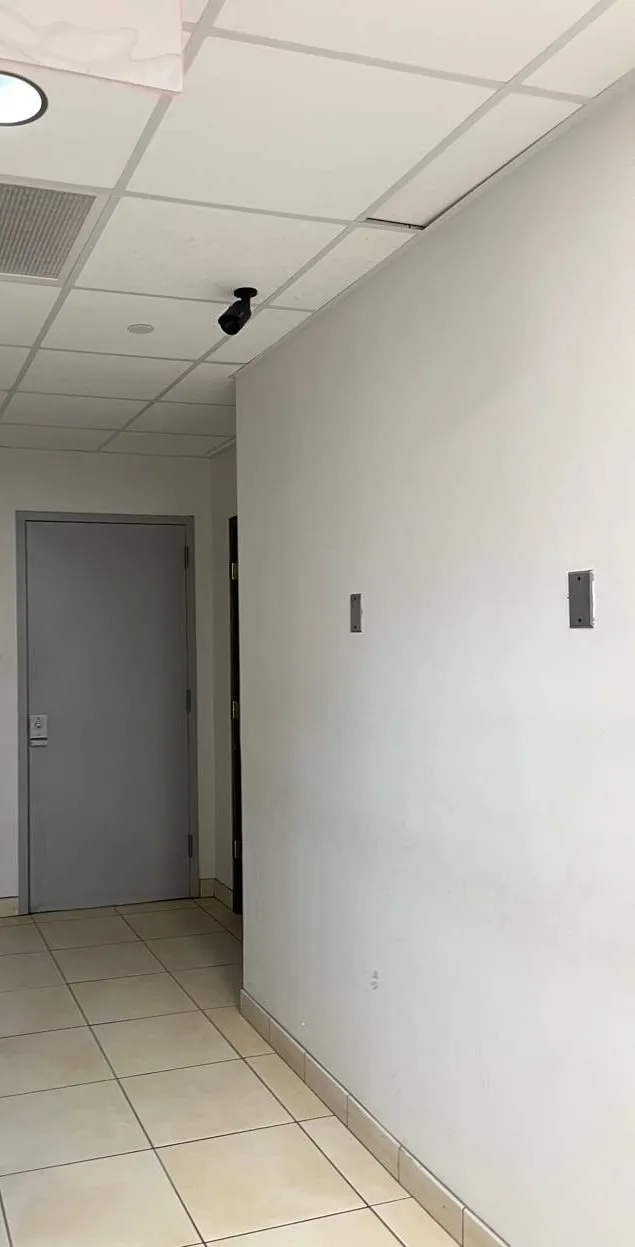
Throgs Neck, Bronx Sonos installation reference photo: white corridor wall with two small blank cover plates, a grey door at the end and a drop ceiling with a small camera
A plain white corridor wall with two small dark blank cover plates at different heights, a grey metal door at the end of a tiled floor, and a drop ceiling with a light, a vent and a small black camera.

On walls and ceilings in older cottages: renovated and original surfaces sit side by side here. Some rooms are drywall on wood studs, some are older plaster, some have been re-sided and re-insulated after storms. Before a ceiling speaker goes in we survey the joist bay for wiring, ducts and pipes, as Sonos's in-ceiling manual instructs, and in a one-storey house with a shallow attic we decide early whether the cable comes from above, from below or from outside in a painted raceway. The section drawing above shows the three routes we compare.

On water: DCP found about 278 of Edgewater Park's 675 homes in the 1% annual chance floodplain. We do not put an Amp, a router or a Sub on a basement floor in a flood-zone house; equipment goes on a shelf or the floor above. That is good practice for the hardware, and it happens to put the Sub further from the foundation that carries its vibration to the house next door.

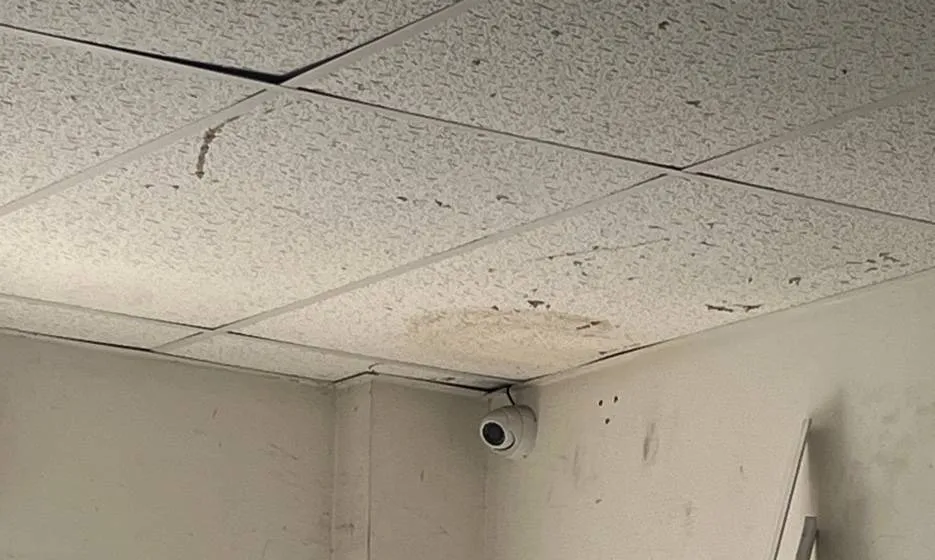
Throgs Neck, Bronx Sonos installation reference photo: ceiling tiles with a brown water stain and cracks above a scuffed corner where a small dome camera is fixed
The corner of a back room: textured ceiling tiles marked by a wide brown water stain and a cracked joint, above scuffed white walls with a small dome camera in the corner.
Bass and Distance

Why Bass Is the Part the Neighbours Hear

Every story in the local news about music on the peninsula mentions the same thing: pounding bass, houses shaking. That is not a coincidence or a matter of taste. Low frequencies get through buildings far more easily than the rest of a song, and once you understand why, most of the right installation decisions follow on their own.

Walls stop treble well and bass badly

Acoustic engineers describe single walls with the "mass law": a wall's ability to block sound rises by roughly 6 dB each time the frequency doubles, and by another 6 dB each time its weight doubles. A worked example published by the firm Commercial Acoustics puts numbers on a single layer of 5/8-inch drywall on studs: about 40 dB of blocking at 1,000 hertz, 34 dB at 500, 28 dB at 250 and only 22 dB at 100. The same article notes that a double wall with an air gap can add a further dip in performance somewhere between 50 and 100 hertz, which is where kick drums, bass guitars and a Sonos Sub do their work.

Why the neighbours hear the bass firstSound blocked by one leaf of 5/8-inch drywall on studs, by frequency (published worked example)0 dB10 dB20 dB30 dB40 dB50 dB50 Hz63 Hz100 Hz125 Hz250 Hz500 Hz1 kHz2 kHz63–500 Hz: the band NYC’s commercial-music rule singles out22 dB28 dB34 dB40 dB(+6 dB per octave, mass law)A kick drum or a Sub lives around 40–100 Hz; a voice around 250 Hz–4 kHz. The same wall stops speech far better than bass.Figures: commercial-acoustics.com, “Wavelength and Frequency: Why Bass Is Hard to Block” (search excerpt). Illustrative wall, not a test of any Throgs Neck house.
The mass-law slope: every halving of frequency costs about 6 dB of blocking. In a light-frame cottage the bass of a Sub reaches next door long before the words of a song do, which is why we set bass and Sub level before we set volume.

Put plainly: a voice on the TV or a guitar line loses most of its energy crossing a light wall, while the bass loses much less. The neighbour does not hear your song; they hear its bottom end, which is exactly what the residents near East Tremont Avenue described to News 12. Windows behave the same way. The resident who fitted soundproof windows will have cut the traffic hiss and the voices from the sidewalk far more than the thump. Low frequencies also pass through the structure itself, from a Sub resting on a floor into the joists and foundation, which is how a house can seem to shake without anything being loud in it.

Five ways music leaves a small peninsula house (section, not to scale)Ranked by how often we find each one is the real path on a site visit; our field experience, not a measured studyyour living roomnext doorbedroom windowside yard 2–5 ftSubsoundbar + TVopen windowback door123451Sub on the floor → joists and foundation2Open window across the side yard3Through a thin exterior wall (bass)4Yard speaker or open back door5Shared attic or touching eavesPaths 1 and 3 carry mostly bass; paths 2 and 4 carry the whole song. Fixes: Sub off walls and on feet, windows shut late, yard speakers aimed in, Sub kept out of party groups.
The five paths we check in a close-set house. In Edgewater Park, where DCP found eaves that touch and side yards of a few feet, paths 2 and 5 are shorter than anywhere else in the borough.

Distance is the cheapest quiet there is

Outdoors, the rule that matters is the inverse square law. HyperPhysics at Georgia State University explains that from a small source, each doubling of distance drops the level by about 6 dB, and ten times the distance drops it by about 20 dB. In a yard, that means the listener sitting three feet from a small speaker hears it 12 dB louder than someone twelve feet away, and 24 dB louder than someone at forty-eight feet. Real yards add reflections from house walls and fences, so the drop is never quite that tidy, but the principle holds.

Distance does the quiet work: about 6 dB less per doublingLevel from a small outdoor speaker, open air, if it measures 85 dB at 3 ft (point-source rule)50 dB60 dB70 dB80 dB90 dB85 dB3 ft79 dB6 ft73 dB12 ft67 dB24 ft61 dB48 ft55 dB96 ftTypical side yard in Edgewater Park: 2–5 ftRule from HyperPhysics (Georgia State University). Real yards add reflections from walls and fences, so treat this as the best case.
Why we prefer several small speakers close to the seating over two big ones turned up: each guest sits near a speaker, so the level at the property line can drop by 6 to 12 dB for the same loudness at the table.

The installation lesson is counter-intuitive for anyone used to a single big Bluetooth box. Two large speakers on the back wall have to be turned up until the far end of the patio hears them, and that level reaches both fences and the houses behind. Four small speakers spread around the seating can each run far quieter, because every guest is close to one. The total level at the table is the same, the level at the property line is lower, and the sound is more even. On lots twenty-five feet wide, that difference decides whether the neighbours hear a pleasant background or a party.

Direction, height and the wall behind

Sonos's own guide to outdoor speakers says you get the best performance from surface-mount outdoor speakers "by directing them toward your desired listening area," and the Sonos community's standard advice is to mount under the eaves. On the peninsula we add two things. First, the house wall behind a speaker reflects sound forward, so a speaker on the back wall of your house facing out into your yard sends less sideways than one on a post in the middle of the lawn facing the house. Second, height matters: a speaker high under the eave aimed down at the seating throws less over the fence than one at head height aimed across it.

Where a Sub sits changes what next door hears (plan of an attached townhouse living room)Relative bass at the shared wall, our rule of thumb for planning, not a measurementshared wallneighbourfront windowsTV + soundbarsofaABCDAcorner on the shared wallloudest next doorBmiddle of the shared wallstill strongCcorner on the outside wallmore bass for you, less next doorDbeside the sofa, off the wallsleast next door; Trueplay evens it outCorners and walls reinforce low frequencies; Sonos lists corner, wall and under-furniture placements for the Sub and lets you set Sub Level and phase in the app.
In the attached townhouse rows that the 2004 rezoning set out to stop more of, the shared wall is the path to the neighbour. Moving a Sub from position A to D, then trimming Sub Level in the Sonos app, usually keeps the bass you feel at the sofa and loses much of what the wall passes on.

The Sub belongs indoors, and out of the party group

Sonos lets you group rooms so music plays everywhere at once, and lets you turn the Sub on or off, set Sub Level with a slider and flip its phase in the app. The trap in a small house is the party group: when the living room with its Sub joins the yard group, the bass in the living room rises to match the volume everyone set for the patio, and with the back door open it pours out of the house. We set yard speakers up as their own room, explain how to group them without dragging the Sub along, and where a household wants low end outside we discuss it honestly, because outdoor bass is the part that travels furthest.

Yards and Patios

Outdoor Sonos for Narrow Peninsula Yards

The yard is where Throgs Neck spends its summer, and where most of our outdoor work is. A typical brief is simple: music at the table, music by the grill, and no visit from the 45th Precinct. A typical yard is not: narrow, fenced on three sides, overlooked by the windows of two or three other houses, sometimes with the Sound or an inlet just beyond the fence.

Two ways to put music in a narrow Throgs Neck yard (plan, not to scale)Lot about 25 ft wide and 60 ft deep, as on many peninsula bungalow lots; neighbours 2–5 ft away on both sidesA. Two large speakers on the back wall, turned upnextdoornextdoorhouseyard / patiotablerear fence → houses behindloud enough at the table = loud at both fencesB. Four small speakers under the eaves, aimed in, lower volumenextdoornextdoorhouseyard / patiotablerear fence → houses behindeach seat near a speaker; fences get less
Layout B is how we usually plan a yard on a narrow peninsula lot: speakers under the eaves or on the fence posts, toed in toward the seating, each one running quieter. The Sub stays indoors and out of the outdoor group.

Choosing the speakers

For permanent outdoor music we use Sonos's outdoor speaker pair, a passive speaker rated IP66 and driven by an Amp through speaker wire, as recorded in our silo research. The Amp lives inside; Sonos lists its operating range as 32 to 104 degrees Fahrenheit. Where the yard needs more than one pair, the Amp can drive additional pairs within Sonos's published limits, and we design the layout so several speakers share the work rather than two working hard. For people who want music only now and then, a Move 2 (IP56) or Roam 2 can join the system and come back indoors; the Move 2's charging base stays inside.

Mounting points on light-frame houses

On a cottage or frame house, the eave and the fascia above the back door are usually the best mounting points: protected from rain, high enough to aim down, and close to the seating. Where the eave is too shallow or the siding is vinyl or aluminum, we mount into framing rather than siding, and seal every penetration. Fence posts work for the far end of a deeper yard, as long as the speaker faces back toward the house, not out toward the next lot. On brick houses on the grid, the masonry lines on the price list apply.

Getting the cable out

The cable leaves the house on a slight downward slope with a drip loop and a sealed hole, or comes down through a porch ceiling from the room above. On narrow lots the run from a front-of-house Amp to the far end of the yard can still be long; Sonos's wire-gauge table moves from 16 gauge to 14 gauge past 80 feet, and we measure rather than guess.

Settings that do the neighbourly work

Sonos lets you limit the maximum volume of each product on a 0–100 scale, and the limit applies to alarms and line-in as well. We set the outdoor pair's limit with you on the day, standing at your table and then at your fence, rather than picking a number in the van. We name the yard as its own room, show you how to group the kitchen with it without bringing the living-room Sub, and if you like, set a sleep timer on the outdoor group for late evenings so the music ends on its own. None of this stops you having a party. It means that on an ordinary Tuesday, the system's default behaviour is the considerate one.

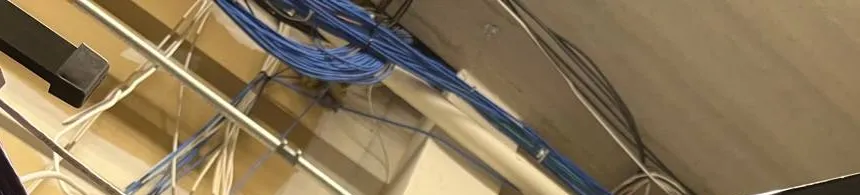
Throgs Neck, Bronx Sonos installation reference photo: bundles of blue and white network cable fanning out beneath a ceiling deck beside a metal conduit
Close-up overhead: thick bundles of blue network cable and looser white cables spread across the underside of a ceiling deck, crossing a metal conduit and a black bracket.
Commercial Sonos

Business Sonos Installation in Throgs Neck

East Tremont Avenue is the commercial spine of the peninsula. The City Planning Commission's report approving the Throggs Neck BID counted 180 properties along both sides of the avenue from Bruckner Boulevard to Miles Avenue, 141 of them partly or wholly commercial, with most commercial space on the ground floor and "a number of buildings with second floor office space." It lists medical offices, insurance and law services, supermarkets, laundromats, apparel shops, florists and entertainment among the businesses, and about 35 residential properties. That mix is the reason commercial music here has to be planned with the apartments upstairs in mind.

Bars and Grills

Rooms that want the game loud and music between innings. One Sonos system can do both: a soundbar or a Port feeding the room for TV sound, ceiling speakers on Amps for music, and zone limits so the late-night crowd cannot push the room past where the owner and the neighbours agreed it should sit.

Restaurants and Cafes

Background music at conversation level, spread across many small ceiling speakers so no table sits under a loud one. The Sub, if any, stays modest and isolated from the floor and the walls shared with the apartment upstairs.

Shops on the Avenue

Apparel, florists and gift shops where music sets a mood rather than fills a room. Two to four speakers, a licensed business music service, and a schedule that starts and stops with opening hours.

Second-Floor Offices and Clinics

Medical and professional offices above the shops, where a quiet waiting room needs soft, even sound that does not reach the treatment rooms or the street. Volume limits are set low and left there.

Beach and Social Clubs

Wikipedia notes several beach clubs on the peninsula. Club halls and decks get weather-rated speakers on Amps, a separate indoor zone for events, and outdoor limits set with the board, because a club's neighbours are its members' neighbours too.

A storefront with apartments above: where the music goes (section, not to scale)Most commercial space in the East Tremont Avenue BID is on the ground floor, with offices or homes over it (CPC report N 180398 BDX)apartment above (the receiving dwelling)§24-231 measurements are taken in herefloor / ceiling assemblyshop or bar floormany small ceiling speakers, each quiet, aimed downSubon the floor, on isolation feet, off the party wall,Sub Level set with a meter upstairs when possibledooropen?Isolation, mounting and measurement are named in §24-231(b) as the kind of permanent fix the city accepts. Measurements for compliance are a job for an acoustical consultant.
Distributed ceiling speakers keep the floor evenly covered at a lower level than two loud boxes behind the counter, and keep the energy away from the floor-ceiling assembly the apartment above shares.

Compliance notes for business music on the peninsula

NYC Administrative Code §24-231: three ways commercial music can failMeasured inside a dwelling that receives the music. Breaking any one is a violation.1Overall levelmore than 42 dB(A)on a sound level meter inside thehome2Bass and low midsmore than 45 dBin any one-third-octave band centred63–500 Hz3Thump over the background+6 dB(C) or moreabove ambient, when ambient is over62 dB(C)What a first violation can lead toThe DEP commissioner may recommend no penalty if, within 30 days, the business admits liability and certifies permanentimprovements (sound insulation, isolators, suspension mounting or mitigation devices) backed by sound measurements.Separately, 311 tells callers that between 10 p.m. and 7 a.m. bar and restaurant music may not exceed 42 dB inside nearby homes.Text of §24-231 from the NYC Administrative Code (nycadmincode.readthedocs.io); 311 article KA-01085. AESS installs and tunes; we do not certify compliance.
Test 2 is the one that catches bars with a big Sub: it looks only at the bass and low-mid bands, so a room can pass on overall loudness and still fail on thump.
  • Three tests, not one. NYC Administrative Code §24-231 forbids commercial music that, measured inside a home that receives it, exceeds 42 dB(A); or exceeds 45 dB in any one-third-octave band centred between 63 and 500 hertz; or raises the C-weighted level 6 dB above an ambient over 62 dB(C). The second test looks only at bass and low mids.
  • After-hours limits. The 311 page for bar, club or restaurant noise says that between 10 p.m. and 7 a.m. music may not exceed 42 decibels inside nearby residences, nor 7 decibels over the surrounding level measured on a public street at least 15 feet away.
  • What the city accepts as a fix. For a first violation, §24-231(b) lets the commissioner recommend no civil penalty when the business certifies permanent improvements such as sound insulation, isolators, suspension mounting or mitigation devices, backed by sound measurements. We install and isolate; measurement for certification is a job for an acoustical consultant.
  • Where the music comes from. A personal streaming account is the wrong source for a shop floor: Spotify, for one, restricts its service to personal, non-commercial listening and names bars, restaurants, stores and salons as places it may not be played publicly. We connect a business music service to the commercial system instead.
  • Low-voltage wiring. Speaker and network cable under 50 volts does not need an electrical permit in New York City when installed by a qualified person, under Administrative Code §28-105.4.7 as recorded in our Bronx research; new outlets or circuits are an electrician's work.
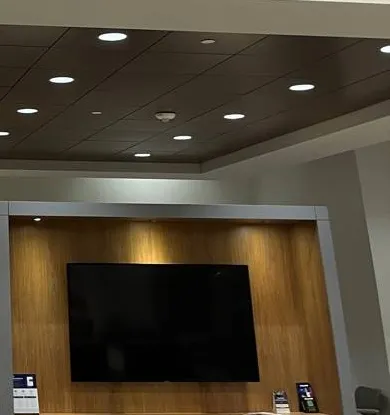
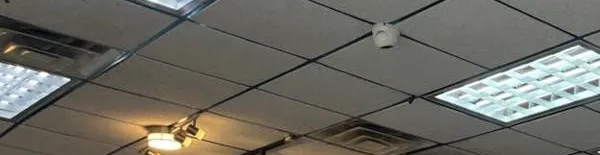
Throgs Neck, Bronx Sonos installation reference photo: dark-gridded drop ceiling with square light panels, a small white dome device and track spotlights
A shop ceiling of dark-gridded tiles with square fluorescent panels, an air vent, a small white dome-shaped device and a short run of track spotlights glowing at the lower left.

A Tuesday room and a Saturday room

Most avenue businesses need two settings, not one. A weekday afternoon wants music a customer barely notices. A Saturday night with the game on and every table full wants more. We set the system up with both as saved groupings and limits, so staff choose between agreed levels rather than dragging a slider to the top. The Saturday setting is checked from the sidewalk and, where a resident upstairs is willing, from their living room.

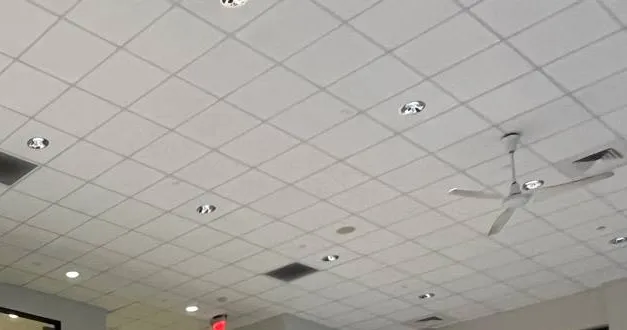
Throgs Neck, Bronx Sonos installation reference photo: high tiled ceiling with recessed lights, vents and a white ceiling fan above a row of upper windows
A tall open room seen from below: a large tiled ceiling dotted with recessed lights and dark vents, a white ceiling fan on the right, and a row of small upper windows along the far wall.
Your Questions Answered

Sonos Installation in Throgs Neck: Questions Answered

These are the questions that come up on the peninsula and not, in the same form, anywhere else we work. Each is answered here in full; the shorter practical questions are in the FAQ further down.

Music that leaves the lot

When the yard is grouped with the living room for a party, does the living-room Sub's bass go outside too?

It can, and on a small lot it often does. A Sub plays as part of the room it is bonded to, so when the living room joins a group with the yard, the Sub plays along at a level tied to the living room's volume. If everyone turns the group up so the patio is loud enough, the Sub rises with it, and through an open back door or window it becomes the loudest thing the neighbours hear. We set the yard up as its own room, and show you how to group the kitchen or another room with it instead of the living room. If the living room has to join, you can switch the Sub off or lower Sub Level for the party in the app's Sub settings and put it back afterwards. We write the steps on the handover note.

Would four small speakers spread around our yard bother the house behind us less than two bigger ones on the back wall?

Usually, yes. Outdoors, sound from a small speaker falls by about 6 dB each time the distance doubles. With two speakers on the back wall, the far end of the yard is a long way from both, so they have to run loud, and that level carries to the fence. With four smaller speakers placed around the seating and aimed inward, each listener sits close to one, each speaker runs quieter, and the level at the property line drops for the same loudness at the table. The trade-off is cable and mounting work for the extra pair, which we quote per zone after measuring. On the narrow lots of Edgewater Park and Silver Beach it is often the only layout that suits the space.

Our cottage's side wall is three feet from the next house. Is a speaker on that side ever a good idea?

Rarely. A speaker on that wall, inside or out, puts its energy into a two-to-five-foot gap that ends at somebody's window, and the gap tends to channel sound rather than let it spread. Indoors, rears or wall speakers on a side wall that close to the neighbour also pass bass through the thin exterior wall. We would rather put rears on stands a little in from the wall, use ceiling speakers aimed down into the room, or move the outdoor speakers to the back eave where they face into your own yard. If a side passage is the only outdoor space, a portable speaker brought out when needed is the considerate answer.

We're on a corner lot with streets on two sides. Which way should the yard speakers face?

Toward the house, from the street side of the yard. On a corner lot the open sides are the street frontages, and a speaker aimed outward from the house wall sends music across the sidewalk and toward the houses opposite, where 311 records a separate street and sidewalk complaint type. Mounting speakers on fence posts or a pergola along the street edges and aiming them back toward the seating and the house uses your own walls as a backstop.

Inside light-frame and attached houses

While a wall is open for speaker wire, will stuffing it with insulation stop the bass reaching next door?

It helps less than people hope. Mineral wool or fibreglass in a stud cavity does reduce mid and high frequencies and damps the resonance of a hollow wall, which acoustic engineers say can otherwise weaken a wall between about 50 and 100 hertz. But bass is mainly stopped by mass and by decoupling, and a light-frame cottage wall has little of either. Insulation is worth adding while the wall is open anyway; it will not turn a thin wall into a party wall. The bigger wins are keeping the Sub away from that wall and setting Sub Level after Trueplay, not before.

Our neighbours say they hear the thump of our Sub but none of the music. Why only the bass?

Because the wall between you filters out almost everything else. Under the mass law, a typical light wall blocks far more at speech and melody frequencies than at the bottom of the bass range, so the guitars and voices fade while the low notes come through nearly intact. On top of that, a Sub sitting on a floor passes vibration into the structure, which travels through joists and foundations. The fix is not just turning down. Move the Sub off the shared or exterior wall, put it on isolation feet if the floor is light, lower Sub Level in the app and listen at your normal volume. Most rooms keep satisfying bass at the sofa with noticeably less arriving next door.

In our attached townhouse, should the Sub sit against the shared wall or the outside wall?

Not against the shared wall, and not in either of its corners. Corners and walls reinforce bass, which is why Sonos lists them among the Sub's placements; on a shared wall, that reinforcement goes straight to the neighbour. A corner on the outside wall gives you the same boost while sending less through the party wall, though it can carry more to the yard. Off the walls, beside the sofa, is usually the most neighbourly spot of all, and Trueplay can even out the room. The plan drawing earlier on this page shows the four positions we compare in a typical attached living room.

Bars and shops on East Tremont Avenue

Our bar shows the game with sound and plays music in between. Can one Sonos system handle both?

Yes. A Sonos soundbar under the main screen, or a Port feeding an existing amplifier, carries the TV audio, and the room's ceiling speakers on Amps carry music. In the app the bar staff can switch the room between the TV and a playlist, or group the ceiling speakers with the TV room during a big game so the sound reaches the far end of the bar. We set separate volume limits on each product, so the game can be loud near the screen without the whole room following. Second screens usually run silent with captions; one soundbar per room keeps the sound from fighting itself.

One Sonos system for the game and the music (plan of a narrow avenue bar, not to scale)Zones, sources and limits we typically set; every room is different and is drawn up at the site visitstreet doorapartments above along this whole frontagebar countermain screen + soundbarZone A: TV sound, limit 60second screen: captions, mutedZone B: five ceiling speakers on two Amps, music between games, limit 45 after 10 p.m.Subisolation feet, away fromparty wall and street doorAmps + router on a shelfin the back officeBig game: group Zone B with Zone A so the commentary reaches the back tables. Weeknight: Zone B alone on the business music service.
Limits shown are examples on Sonos’s 0–100 scale, agreed with the owner and checked from the sidewalk; whether a room meets §24-231 inside the apartments above is a measurement question.

The city's commercial-music rule has a separate limit for bass. How do we set the bar's system to stay under it?

You set the bass on purpose rather than by accident. Section 24-231 treats the one-third-octave bands from 63 to 500 hertz on their own, at 45 dB measured inside a receiving home, so a room can be acceptable in overall loudness and still fail on low end. In practice that means a modest Sub, placed on isolation feet away from the walls and ceiling shared with apartments, Sub Level and bass EQ set lower than the factory default, distributed ceiling speakers rather than a few loud ones, and volume limits on every product. Whether the result complies is a measurement question, inside the neighbour's home; we can arrange the system so it is easy to measure and adjust, and recommend a consultant for the measurement itself.

If our bar receives a commercial-music violation, what does the city want to see before it waives the penalty?

Section 24-231(b) lets the commissioner recommend no civil penalty for a first violation if, within 30 days, the business admits liability and certifies two things: that permanent improvements have been made, such as sound insulation, isolators, suspension mounting or other sound mitigation devices; and that sound measurements taken under the department's rules show full compliance. Extra time of up to 30 more days can be requested for hardship. Our part is the permanent improvements on the audio side: isolation for the Sub and speakers, a rebuilt layout, documented limits. The measurements and the filing are for an acoustical consultant and your attorney.

When someone calls 311

If a neighbour calls 311 about our music, what actually happens next?

For music from a home, 311 routes the complaint to the NYPD. The city's page says officers will respond within eight hours when they are not handling emergencies, and that they can take action only if the noise is still happening when they arrive. Building rules may also apply if you live in a co-op, condominium or rental building. For a business, the caller can also receive a Department of Environmental Protection survey that can lead to an inspection with readings taken inside their home. From our side, the useful response is technical: check what was playing, from which speakers, at what limit, with which doors open, and change the setup so it does not happen again.

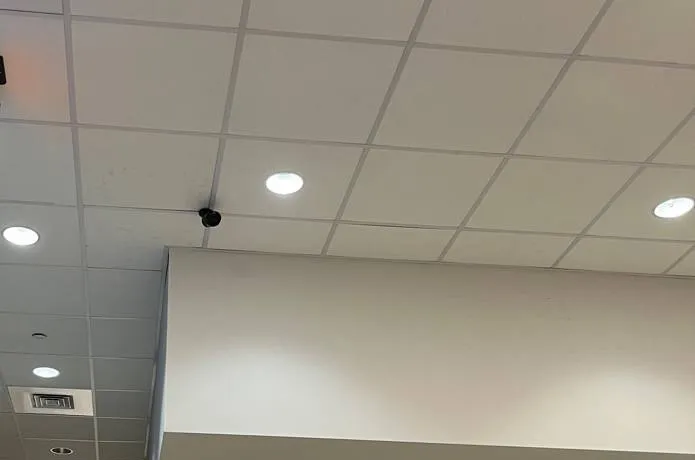
Throgs Neck, Bronx Sonos installation reference photo: white grid ceiling with round recessed downlights and a small black camera above the edge of a dropped soffit
A bright white tiled ceiling with round recessed downlights and a small black camera on the grid, ending at the square edge of a lower soffit, with a corridor ceiling running off to the left.
Equipment

Types of Sonos Systems We Install

You buy Sonos products from whichever retailer you prefer; AESS is not presented here as a Sonos dealer. These are the products we install most on the peninsula, with the neighbour-relevant facts for each.

Arc Ultra

The largest Sonos soundbar, about 46 inches wide, for big screens in detached houses. It adjusts its own EQ when wall-mounted to temper bass resonance from the wall, and supports Night Sound and speech enhancement for late viewing.

Beam (Gen 2)

About 25½ inches wide with HDMI ARC/eARC, the usual choice for cottage living rooms. Paired with a Sub Mini it gives a small room real weight with the bass kept controllable in the app.

Ray

The compact bar, connected by optical, for bedrooms and the smallest front rooms. It can take a Sub Mini, but in a bedroom against a shared wall it is often best on its own, which makes it the easiest product to keep neighbourly.

Era 100 and Era 300

Standalone speakers and rears. The Era 300 mount is stud-only, which in a light-frame cottage means planning where it goes; on stands, both stay off the walls entirely.

Sub 4 and Sub Mini

The bass. Sonos's app offers a Sub on/off toggle, Sub Level and phase; we set all three after Trueplay and keep the Sub off shared walls and corners.

Amp

Powers passive ceiling, wall and outdoor speakers, 125 watts per channel into 8 ohms. Indoors only, 32–104°F; in flood-zone houses we shelve it on the first floor.

Outdoor Speaker Pair

Passive, IP66-rated speakers for eaves, porches and fence posts, driven by an indoor Amp. We aim them at the seating and cap their volume per product.

Move 2 and Roam 2

Portable speakers for occasional outdoor use: Move 2 is IP56 with its charging base kept indoors; Roam 2 is the small one for a blanket on the beach.

Port

Streams Sonos into an existing amplifier or a bar's sound system, with line and digital outputs and a 12V trigger. Keep it ventilated, not in a closed cabinet over a radiator.

Sonos Ace with TV Audio Swap

Headphones that take over the TV sound from a compatible Arc, Beam or Ray at the press of a button, for the late game when the rest of the house, and the house next door, are asleep. Up to two sets can share one session.

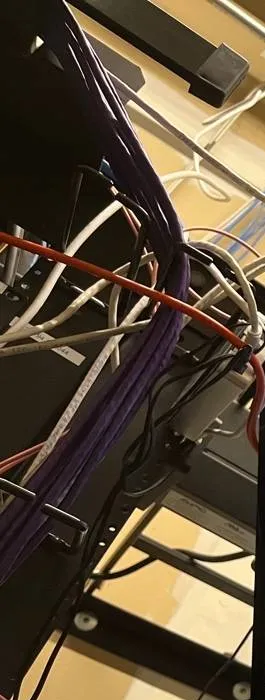
Throgs Neck, Bronx Sonos installation reference photo: purple cable bundle and red and white patch cords dropping down the side of an equipment rack
The side of an equipment rack: a thick purple bundle of cables curves down past red, white and black patch cords and a small power unit, with more cables crossing a pale ceiling above.
AI Overview Reality Check

What AI Gets Wrong About Sonos Installation in Throgs Neck

Google's AI Overview was not viewable from the system we built this page on, so nothing here is presented as its wording. What follows are seven beliefs about music, neighbours and installation that turn up in news reports, product listings and conversations on the peninsula — the sort of statement a chatbot is likely to repeat — each checked against a source named at the bottom of the page.

Claim one: "Soundproof windows will sort out a neighbour noise problem"

A longtime resident near East Tremont Avenue told News 12 in 2025 that he installed soundproof windows to deal with a bar's nightly music. It is an understandable step, and better glazing does reduce traffic, voices and the upper half of a song very effectively.

The difficulty is the bass. Acoustic engineers' mass-law figures show any single barrier blocking far less at 100 hertz than at 1,000, and windows are the lightest part of most walls. The same report described "pounding bass" and homes shaking, which is low-frequency energy arriving through glass, walls and structure together.

For a Sonos owner, the lesson runs the other way. Your windows will not hold your Sub's output in, especially open on a summer evening. The controls that work are where the Sub sits, how high Sub Level is set and whether the Sub joins the party group at all.

Claim two: "Any weatherproof speaker is fine for a yard"

Product listings for outdoor speakers lead with ratings for rain, sun and salt, and those ratings matter on a peninsula. Sonos's outdoor pair is rated IP66. But weather resistance says nothing about where the sound goes.

Sonos's own outdoor-speaker guide says to direct surface-mount speakers "toward your desired listening area." On a lot twenty-five feet wide with neighbours on three sides, direction and height decide whether your music stays in your yard. A weatherproof speaker on a post aimed at the house behind is still a problem.

So the question we ask first is not "will it survive?" but "who is it pointed at?" The answer usually puts the speakers high under your eave, angled down at the table, with a volume limit set from the fence line.

Claim three: "Music is legal until 10 p.m."

The idea of quiet hours from 10 p.m. to 7 a.m. is repeated on noise-law summary sites and in Reddit answers, as our Bronx research recorded. It is half right: the city's general standard does get stricter at 10 p.m.

But the standard does not switch off before then. Under §24-218, sound measured in a receiving property can be unreasonable at 10 dB(A) above the ambient level during the day, and at 7 dB(A) above it at night. A Sub shaking the house next door at 7 p.m. is not protected by the clock, and the 311 data shows hundreds of complaints opened between 6 and 10 p.m. last year.

What changes at night is the background. The street quietens, the same playlist stands out more, and the limit tightens at the same time. That is why we suggest an evening setting, not just a curfew.

Claim four: "Bigger Sub, better system"

Cost guides and forums often treat the Sub as the upgrade that makes a system feel complete, and in a large room in a detached house it can be. Sonos offers the full-size Sub 4 and the smaller Sub Mini for that reason.

In a cottage living room with a thin exterior wall a few feet from the next house, the bigger Sub mostly delivers more energy to the structure. The Sub Mini, placed off the walls and set with a modest Sub Level after Trueplay, often gives the sofa all the weight it needs.

Sometimes the right answer is no Sub at all, and a Ray or Beam on its own.

Claim five: "Set a volume limit and the system is neighbour-safe"

Volume limits are a good feature. Sonos lets you cap each product on a 0–100 scale, and the cap applies to alarms and line-in too. We set them on every job here.

A limit caps overall level, though, not the balance within it. A Sub with its level turned up, or a bass EQ pushed high, can be the loudest thing next door while the volume slider sits well under its cap. The city's commercial rule recognises the same thing by testing the 63–500 hertz bands separately.

So the order matters: place the Sub, run Trueplay, set Sub Level and bass, then set the volume limit by listening at the property line.

Claim six: "A bar can play music as loud as it likes inside its own walls"

Neighbours of an East Tremont Avenue bar told News 12 that when they complained at the door they were told, in effect, that the business could play music whenever it wanted. Plenty of operators believe something similar.

The Administrative Code disagrees. Section 24-231 measures commercial music inside the homes that receive it: 42 dB(A), 45 dB in any one-third-octave band from 63 to 500 hertz, or a 6 dB(C) rise above a loud ambient. Where the music starts does not matter; where it arrives does. 311 adds a 42-decibel after-hours figure inside nearby homes.

For an operator, that is good news in disguise. A distributed, well-isolated system with sensible bass and limits is cheaper than violations, and the code itself lists isolation and mounting among the improvements it accepts.

Claim seven: "One powerful speaker covers the whole yard"

A single large wireless speaker is the default outdoor purchase, and it is marketed on how far its sound carries. That is exactly the problem on a narrow lot.

Sound outdoors falls about 6 dB per doubling of distance, so one speaker loud enough for the far corner is far louder than needed near it and still loud at the fence. Two or four smaller speakers close to the people listening do the same job at lower level.

Our outdoor quotes are written per zone for that reason. The cost is a little more cable; the return is a yard that sounds even and a neighbourhood that barely notices.
Loud Where You Sit, Quiet at the Fence

Send a photo of the yard from the back door, one of the TV wall and a line about how close the nearest windows are. We'll tell you where the speakers and the Sub should go and what the work costs on the Bronx list.

Get In Touch

Request a Free Quote

A Throgs Neck job can usually be priced from five details: the kind of house or business, the rooms and outdoor spaces that want music, the Sonos products you have or plan to buy, where the internet comes in, and how close the neighbours are. The written figure comes back the same business day, or call (646) 490-0629 to talk it through.

✅

We Got Your Request!

Thanks — expect a call or an emailed figure before the end of the business day. For a system that has gone silent tonight, phone (646) 490-0629 instead of waiting.

How It Works

Our Installation Process

The six steps below are the same for a single Ray in a Silver Beach bedroom and for a basement Amp feeding a kitchen, a den and a yard on the grid. Two of them, the first and the last, are about the neighbours, and they are the two that set our work apart on the peninsula.

Our six-step order for a Throgs Neck Sonos job1Map the lot andthe neighbours2Choose speakerspots and aim3Route cable andmount4Tune bass andSub5Set limits,timers andgroups6Walk theproperty lineSteps 1 and 6 are the ones most installers skip, and the ones that matter most on narrow lots with close neighbours.
The same six steps appear in the How It Works section below and in this page’s HowTo schema.

1. Map the lot and the neighbours

We walk the yard and the side passages, note which neighbouring windows and bedrooms face your outdoor space, find the shared and exterior walls, and ask when you usually play music and how late.

2. Choose speaker spots and aim

Speakers go where they face the people using them: rears on stands off thin side walls, ceiling speakers aimed down, outdoor speakers high under the eave and toed in toward the seating.

3. Route cable and mount

Cable runs up a wall cavity, under the floor or outside in painted raceway, entering on a downward slope with a drip loop; equipment in flood-zone houses goes on the first floor or higher.

4. Tune the bass and the Sub

The Sub goes off shared walls and their corners, Trueplay runs in each supported room, and then Sub Level, phase and bass are set by ear at your normal listening level.

5. Set limits, timers and groups

We set per-product volume limits, a yard room that never brings the Sub along, Night Sound for late TV, and any sleep timers, alarms or shop schedules you want, then write them down.

6. Walk the property line

With your music playing at your usual level, we stand with you at the fence, in the side passage and on the sidewalk, adjust the limits there, and leave you a one-page handover note.

Throgs Neck, Bronx Sonos installation reference photo: white suspended ceiling grid with a small black camera on a bracket where the ceiling meets a plain white wall
A white suspended ceiling with an air grille in the corner and a small black camera on a short bracket, meeting a plain white wall and a light panel below.
Coverage Area

Sonos Installation Near Throgs Neck's Landmarks

We work across the whole peninsula, from the Bruckner Expressway and Baisley Avenue down to the water. These are the places customers use to tell us where they are.

East Tremont Avenue

The peninsula's main street and the spine of the Throggs Neck BID, which runs along both sides from Bruckner Boulevard to Miles Avenue. The Throggs Neck post office stands at 3630 East Tremont Avenue and FDNY Engine 72 at 3929.

Throgs Neck Bridge and Fort Schuyler

Othmar Ammann's suspension bridge, opened January 11, 1961, with an 1,800-foot centre span. Its Bronx approach curves over SUNY Maritime College at Fort Schuyler, the fort built between 1833 and 1856 at the tip of the peninsula.

Ferry Point Park and Throgs Neck Landing

Split by the Bronx–Whitestone Bridge into a 110-acre west side of soccer and cricket fields and a 420-acre east side with a promenade and golf course. NYC Ferry's Throgs Neck Landing opened there on December 28, 2021.

Edgewater Park

The 55-acre cooperative of 675 single-family homes that began as a campsite and bungalow colony, with narrow, mostly unmapped lanes twelve to fifteen feet wide and homes close enough that eaves touch (DCP, 2016).

Silver Beach and the Hammond Mansion

The former summer colony named for the colour of the beach at low tide. Abijah Hammond bought the farm here in 1795 and built a large mansion that later housed the offices of the Silver Beach Garden Corporation; most of the streets carry the names of flowers and trees from his estate.

Preston High School

The school that occupies the Havemeyer–Huntington mansion, from the estate once owned by the sugar magnate Frederick C. Havemeyer Jr. and later by the railroad builder Collis P. Huntington.

We also install in Schuylerville, Locust Point, Castle Hill and Pelham Bay, around the Throg's Neck Library on the Cross Bronx Expressway Extension, and next door in Country Club and across Eastchester Bay on City Island.

Pricing

Sonos Installation Cost in Throgs Neck

The peninsula is priced on our Bronx list, and the Bronx sits at the same level as Brooklyn in our area table: no premium for the drive out past the Bruckner, no parking line. Every number in these tables is already published on that list. Anything that depends on what we find in an attic, under a floor or behind a siding panel is written up after a look, and nothing is added on the day without your say-so.

LineBronx priceWhere it comes up on the peninsula
Sonos setup$125All products in one household, rooms named, music services signed in, Trueplay where supported, limits and Sub settings agreed
Soundbar wall-mounted under the TV$129A Beam or Ray in a cottage front room, an Arc Ultra in a detached house den
Soundbar placed on a console$79Renters, condo owners waiting on a board, or anyone who may move the TV
Sanus soundbar bracket$84.99When the bar did not come with a mount you trust on your wall
In-wall concealment$169Listed in-wall power and cable kit behind a wall-mounted TV and bar
Paintable cord cover$59Raceway on a wall that should not be opened, inside or out to an eave speaker
Cable run to a cabinet or other spot$99A short HDMI or network run of 25 ft or less
A/V receiver$129Connecting a receiver or a bar's existing amplifier, including through a Port
Universal remote$99One remote for the TV, the cable box and Sonos volume
Streaming device setup$49Each streaming box or stick, signed in
Full home theater$350A multi-component den or basement theatre
Remove an old bracket$45Clearing an old soundbar or speaker mount first
Take down an old TV$85When the TV wall is being redone
Setup-only visit$225 first hourThen half-hour blocks; a new router, a reset product or a spring check of yard speakers
TV mounted on the same visitFrom $209.99Bronx base for a 32″–55″ set; wall and size lines extra
Ceiling, wall or outdoor speakers on an AmpQuoted at walkthroughPriced zone by zone once the cable length and mounting points are known, inside the $800–$2,500 per zone AESS lists for whole-home audio
Amp or Port placement, outdoor cable, network runsQuoted at walkthroughDepends on attic, crawl or basement access and yard length

Wall and access lines

ConditionPriceWhere we meet it here
Drywall on wood studs$0Renovated cottages and newer interiors
Metal studs+$30Some condo partitions and finished basements
Plaster+$45Original walls in older houses on the grid
Brick or stone+$65Brick houses, chimney breasts, masonry exterior walls
Concrete or cinder block+$75Foundation walls and some condo buildings
Tile or marble+$95Kitchens, bathrooms and some bar back walls
Plywood backer board$85When studs fall in the wrong place for a bar
High mount, above about 8 ft$75Bar screens, club halls and tall eaves
Walk-up, 3rd floor and above, no elevator$40Apartments over shops on East Tremont Avenue
Box removal$25If you want the cartons taken away
Certificate of insuranceFreeFor a condo board, a co-op office, a club or a landlord

Six peninsula totals, added up

These are sums of the lines above, shown the way a written quote is built. They are examples, not offers; the wall you actually have can move a total by its listed amount.

ExampleLinesTotal
Cottage bedroom: Ray left on the dresser, household set up$79 console placement + $125 Sonos setup$204
Cottage front room: Ray on its console plus one remote$79 + $99 universal remote + $125 setup$303
Detached house den: Beam on drywall, our bracket$129 + $84.99 bracket + $0 drywall + $125 setup$338.99
Bar screen: soundbar high on a metal-stud wall$129 + $84.99 + $30 metal studs + $75 high mount + $125 setup$443.99
Brick-walled living room: bar on a bracket, wiring in painted raceway$129 + $84.99 + $65 brick + $59 cord cover + $125 setup$462.99
Arc Ultra under a wall TV with hidden power$129 + $84.99 + $169 in-wall kit + $125 setup$507.99

What the lines include, and what they leave out

  • Included: mounting and connections, a Sonos household with room names you use, your music services, Trueplay where supported, Sub Level and phase, per-product volume limits, any timers you want, a one-page handover note and a clean room.
  • Not ours: new outlets, new circuits, moving receptacles or panel work; those are for a licensed electrician, and we flag them at the quote.
  • Products: the speakers themselves come from whichever store you choose. What we can supply is the mounting and wiring hardware — Sanus bracket, raceway, in-wall kit — at the figures in the table.
  • Second trips: a $150 charge covers a crew sent home without working, for example when the Sonos boxes have not arrived or the condo board has not yet signed. Moving the appointment a day or more ahead is free.
  • Fragile finishes: decades-old plaster, painted shingle and brittle vinyl siding sometimes crack at a drill point. Where we expect that, the written quote warns you, and the hole is not drilled until you agree.

National averages versus a peninsula quote. A cost guide cannot know that your Sub belongs off the shared wall, that your yard wants four small speakers instead of two, or that your eave is deep enough to mount under. Every line we charge is on our Bronx TV mounting price list.

Shop Our Systems

Sonos Installation Packages & Pricing

Three bundles cover most peninsula requests. They are not discounts; each is a sum of ordinary price-list lines, and a wall line is added only when your wall needs it.

Starter — No-Drill Room

$204

A soundbar or speaker placed and connected ($79) and the whole Sonos household brought together, tuned and given sensible limits ($125). Right for renters, condo owners waiting on a board, and the bedroom of a cottage where nothing should touch the shared wall.

Standard — Bar on the Wall

$338.99

A Beam, Ray or Arc Ultra mounted under the TV ($129) on a Sanus bracket ($84.99), with system setup, Night Sound and Sub settings agreed ($125). On plaster add $45; on brick, $65.

Premium — Clean Wall, Hidden Power

$507.99

For a TV wall with no visible cords: soundbar fitting ($129) on a Sanus bracket ($84.99), a code-listed in-wall power and cable kit behind the screen ($169) and system setup ($125). One remote for the TV, cable box and Sonos is a further $99 if wanted.

Bring Your Own Equipment — Labor Only

Already bought the official mount, or a third-party bracket rated for your bar? Then we charge only the work: $129 to fit the soundbar, the wall line for your surface, and $125 if the system needs setting up. The bracket's warranty stays with its maker. If the wall looks too weak for it, we tell you before drilling and offer the Sanus bracket at $84.99.

Yard, Ceiling and Amp Work

Outdoor and architectural speakers are priced zone by zone after a site visit, because the cable route, the number of speakers and the mounting points vary so much between a cottage and a house on the grid. Each zone falls inside the $800–$2,500 whole-home audio range AESS publishes, and the written quote lists every zone separately so you can do the yard this year and the kitchen next.

Want a Written Peninsula Price Today?

Three photos usually do it — the TV wall, the back of the house from the yard, and the yard from the back door — and the written figure tends to arrive before the end of the day.

Settings

A Neighbour-Aware Sonos Day, and a Peninsula Year

The physical installation decides how much sound can leave the house. The settings decide how much does, hour by hour. Sonos gives you the tools; the trick is choosing them once, with the household, so nobody has to remember at eleven at night.

A neighbour-aware day: how we set a Throgs Neck system upSettings that live in the Sonos app, laid over the hours when 311 complaints peak311 loud-music complaints by hour, 2025 (grey)Yard groupplays 10 a.m.–10 p.m., volume cappedLiving room + Subnormal Sub levelNight Sound on, Sub trimmedBedroomsleep timeralarmShop on E. Tremontbusiness music, zone limits12a3a6a9a12p3p6p9p12a10 p.m.Times are examples agreed with each household; every setting shown lives in the Sonos app. The shop row assumes a business music service.
Nothing here is automatic until somebody sets it. We set the yard group’s volume limit, the living-room Night Sound habit and any timers with the household on the day, before the first summer evening rather than after the first knock on the door.

Through the day

The yard runs as its own room with a volume limit you chose standing at your fence. In the living room, Night Sound reduces the intensity of loud sounds while raising quieter ones, so late films and games keep their dialogue without explosions waking the street; Sub Level can be trimmed for the evening and restored for Saturday. Bedrooms get a sleep timer if you like falling asleep to something, and an alarm in the morning, both set in the app. A shop on the avenue gets a schedule that matches its opening hours and a limit staff cannot pass.

Spring: before the first barbecue

The 311 count more than doubles from March to April. That is the time to check yard speaker fixings and cable entries after the winter, confirm the outdoor group still exists after any app or router change, and re-check the volume limit with the windows open. A short setup-only visit covers it.

Summer: windows open, everyone outside

August is the busiest month for complaints on the peninsula. With windows open, a living-room Sub reaches the street more easily, so this is the season to keep it out of party groups. If your evenings run late, an evening limit on the yard group is kinder than a curfew.

Complete Services

Every Sonos Installation Service in Throgs Neck

With the TV wall open and the attic or crawlspace already reached, related low-voltage work costs less to add on the same visit. These are the services peninsula customers most often combine with Sonos, all priced from the Bronx list.

AESS Sonos Installation in the Bronx

The borough page above this one, written for renters, co-ops and condo boards elsewhere in the Bronx.

TV Installation, Throggs Neck

When a new TV and the soundbar go up on the same wall, one visit and one opening in the drywall cover both.

Soundbar Installation in Throgs Neck

Bars from other makers, hung and connected by the same crew.

Throggs Neck Structured Cabling

A Cat6 run that lets the soundbar or Amp skip Wi-Fi altogether, or feeds an access point near the back door.

Security Cameras in Throggs Neck

Yard, driveway and side-passage cameras, cabled along the same routes as the speakers.

Throggs Neck Intercoms

Door entry for houses, rows and condo buildings.

Smart Locks, Throgs Neck

Keypad and app locks that can join the same home network as the Sonos system.

Access Control in Throggs Neck

Gates, garages and shop doors on fobs and codes.

Alarm Installation, Throggs Neck

Intrusion alarms for houses and avenue businesses.

AV and Sound Installation, Bronx

Larger sound systems for club halls, studios and event rooms.

Network Installation in the Bronx

For houses where phones, cameras and speakers all compete on one router, a wired backbone and a second access point.

Home Automation, Bronx

Lighting and schedules that can include the Sonos rooms.

Service Policies

Booking, rescheduling and return visits.

Field Notes

Field Notes: Standing at the Fence Before We Pick Up a Drill

This is the routine we follow at the start of a peninsula job, written as a checklist rather than a story about any one customer.

We go out back before we look at a single speaker. From the back door we note which neighbouring windows face the yard, which are bedrooms, and how far away they are; on the narrow lots that can be a few strides. We look along the side passages, because a gap of two to five feet between houses can carry music further than you would expect. Inside, we find out which walls are shared, which are thin exterior walls and which face the street, and we tap the floor where the Sub is meant to go. Then we ask the household three questions: when do you usually play music outside, how late do you usually watch TV, and has anyone ever complained. Only after that do we choose speaker spots, cable routes and Sub position. At the end of the visit we play the household's own music at their usual level, then walk to the fence, the side passage and the sidewalk with them, and set the limits from there.

FAQ

Throgs Neck Sonos Installation FAQ

What would a Beam on the living-room wall plus a pair of yard speakers come to for a detached Throgs Neck house?
+

The soundbar part is fixed on the Bronx list: $129 to mount it, $84.99 for a Sanus bracket if you need one, and $125 to set up the system, which is $338.99 on drywall over wood studs, plus $45 on plaster or $65 on brick. The yard pair runs on a Sonos Amp and is quoted as one outdoor zone after we measure the cable route and see the eave; AESS publishes $800 to $2,500 per zone for whole-home audio, and the walkthrough decides where your yard falls in that range. You get both parts itemised in one written quote.

Do you leave the volume limits and timers written down so we can show a neighbour what we set?
+

Yes. The handover note lists every room, its volume limit on Sonos's 0 to 100 scale, whether the Sub is allowed to join the yard group, any sleep timers, alarms or schedules, and the Night Sound habit we agreed. It also notes the date we checked the levels from the fence. If a neighbour ever raises a concern, you can show them exactly what the system is set to do, and we can come back on a setup-only visit to adjust it.

Is there a spring check-up for the yard speakers before the first barbecue?
+

We offer one as a setup-only visit, billed at the Bronx rate of $225 for the first hour. We check the fixings and the sealed cable entry after the winter, confirm the yard room still appears in the app after any router or app change, test each speaker, and re-check the outdoor volume limit with the windows open and the family's usual music playing. Most yards are done well inside the hour.

We're buying a house on the peninsula. Can you look at the speaker wiring the sellers are leaving before we close?
+

Yes, with the sellers' permission to visit. We identify what the existing speakers and wire are, whether the wire gauge suits the runs, where the cable goes, whether the speakers sit in shared or thin exterior walls, and whether the gear can work with a Sonos Amp. You get a short written summary of what can be reused and what we would change. It is billed as a setup-only visit, and it is not a home inspection or an electrical inspection.

Can a beach club or community hall have a summer system that is packed away for the winter?
+

Yes. We usually wire the hall for permanent indoor speakers on an Amp and give the deck or lawn either fixed outdoor speakers or portable Sonos speakers that live indoors off-season. The club's limits are agreed with its board and written down, and the outdoor group is set so it cannot include the hall's Sub. In autumn the portable units come in, the outdoor zone is muted, and in spring a short visit brings it back.

Our side passage is too narrow for an extension ladder. How do you reach the eave to mount speakers?
+

We bring the right access for the space rather than forcing a ladder in. In a two-to-five-foot passage that usually means a narrow step ladder or a short ladder with a stand-off for work under a low eave, or mounting the speakers from the yard side of the house where there is room to stand. If the only workable footing is on the neighbour's side, we ask you to arrange their permission first; we never set equipment on another property without it.

All Areas Served

Sonos Installation Across the Bronx and New York

Throgs Neck is one of the Bronx neighbourhood pages beneath our Bronx Sonos page, which itself reports to the New York City Sonos hub. The links below reach every borough, county and neighbourhood page in the series, so you can see how the same products are installed in a Manhattan loft, a Queens co-op or a Hudson Valley farmhouse.

Sonos is one part of what our licensed crews do; cameras, intercoms, alarms and building networks are installed by the same company. The Abstract Enterprises Security Systems home page lists every service, and the about page explains how we are licensed and insured.

Sources

Where the Throgs Neck Facts Come From

The list below shows where each kind of fact on the page was found. Prices are a separate matter: all of them are copied from the published AESS Bronx list. Percentages drawn from the 311 records are calculations we made ourselves from the city's counts.

Yard Speakers Gone Quiet in Throgs Neck? Ring the Bronx Line

Most of the time the speakers are fine and the household has changed around them: a new router after a storm, an app update, a reset product, a group nobody can find. Call (646) 490-0629 for the next two-hour arrival slot; the usual fix is an hour or two on site.

Sonos Installation Throgs Neck — Licensed, Insured, Considerate

Abstract Enterprises Security Systems · 460 E Fordham Rd, Bronx, NY 10458 · (646) 490-0629 · WhatsApp (718) 679-0359 via wa.me

NYS Low-Voltage Licence #12000287431 · 100% Licensed & Insured · Same-Day Estimates · Rated 4.7★ from 201 Google Reviews

Sonos products carry their manufacturer's warranty. Full terms — including 50% deposit, one-year parts-only warranty on AESS-supplied products, and the late-fee schedule — are set out in the service agreement. See our warranty page.

Page reviewed and updated October 21, 2026. Changelog: Throgs Neck page launched as a neighbourhood child of the Bronx Sonos page, built around neighbour-aware sound on a peninsula of close-set houses: 2025 311 loud-music data for ZIP 10465, bass and distance, Sub placement, narrow-yard outdoor layouts, settings by hour and season, and commercial music on East Tremont Avenue under §24-231.