What are you looking for?
About Us Contact Us Careers Get a Free Quote (800) 486-0943
Pick a service
✅ Got Your Own System?
🎬 Home TheatreQuote 🎶 AV SoundQuote 🔑 Access ControlQuote
Now pick your area
Pick your area
Long Island
Hudson Valley
Services available
Pricing & Tools
Pick a service for pricing
🚪 Intercom Pricing 🔔 Buzzer Repair Pricing
Calculators
📹 Camera System Calculator 🚨 Alarm Calculator ⚡ Cabling Quote Builder ✅ Got Your Own System?
Select your area
Home › Sonos Installation NYC › Sonos Installation Brooklyn › Ditmas Park
Freestanding Victorians · Wraparound Porches · Ocean Avenue Co-ops · Cortelyou Road Shops · Licensed Low-Voltage

Sonos
Installation in
Ditmas Park

Cellar-to-Attic Wiring in Wood-Frame Houses · Porch and Lawn Music · Pre-War Apartment Systems · Trueplay & Handover

Ditmas Park is two neighbourhoods sharing the same blocks. One is the famous one: clapboard and shingle houses standing on their own lots, each with a porch, an attic, a cellar and a lawn. The other is where, according to a local broker quoted by Brick Underground, "a large majority of neighborhood residents live" — the six-storey apartment buildings along Ocean Avenue and the side streets. A detached wooden house lets Sonos cable travel almost anywhere and leaks sound out of every open window; a pre-war apartment does the opposite. We plan each one for what it is, and we price both from the Brooklyn list.

Reviewed and updated October 17, 2026 · Written by Anwar Timothy, NYS licence #12000287431 · Booked through our Brooklyn office at 1282 Troy Ave

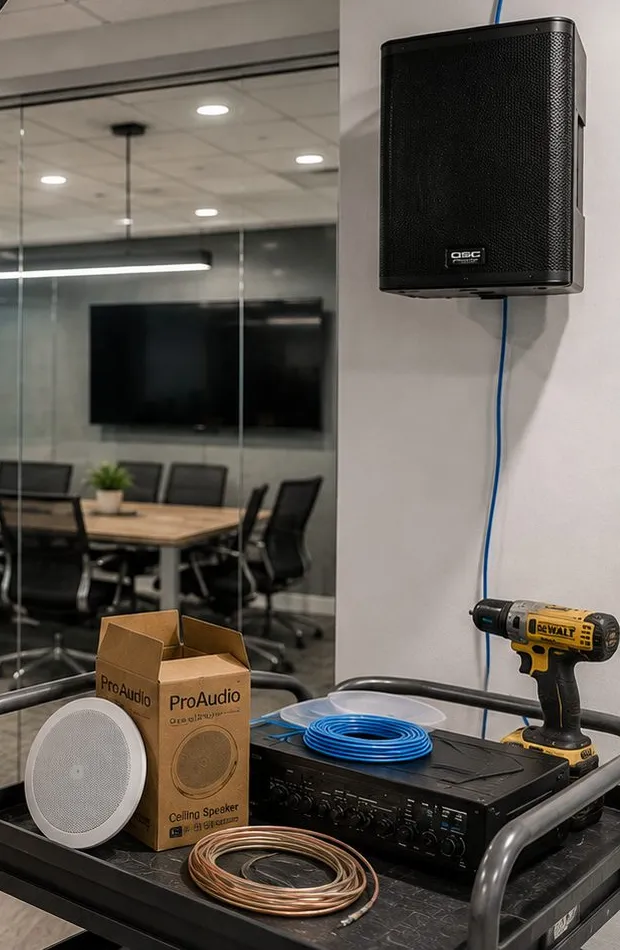
Sonos installation Ditmas Park, Brooklyn: tool cart holding a round ceiling speaker, its box, an amplifier, blue cable and copper speaker wire below a black wall-mounted cabinet speaker
Everything for one ceiling zone laid out before it goes up: a round white speaker and its box, an amplifier, coiled blue network cable and copper speaker wire, and a yellow drill, with a black cabinet speaker fixed high on the wall above the cart.
Ditmas Park Sonos Quote
House or apartment, the rooms, the porch — a written total comes back the same business day

✅
Request Sent!
An installer will be in touch about your Ditmas Park rooms the same business day.
25+
Years Experience
✓
Same-Day Estimates
100%
Licensed & Insured
4.7★
201 Google Reviews

Count your floors from the cellar to the attic, then tell us where the internet comes in. In a Ditmas Park house those two answers decide more of the Sonos plan than the speaker list does; in an apartment building, the answer is the floor you live on and whether the board has rules. Phone the Brooklyn line at (347) 934-8335 or fill in the form — either takes about a minute.

  • Sonos setup from $125 on the Brooklyn price list, whether the house is on Argyle Road or the apartment is on Ocean Avenue
  • Porch and garden zones planned with the house next door in mind, not just your own seating
  • New York State low-voltage licence #12000287431; 2-hour arrival windows from 8 AM to 8 PM, seven days a week
The Neighborhood

Why Ditmas Park Homes Need Sonos Installation

Most of Brooklyn is built in rows. Ditmas Park was built in the opposite way, on purpose. When the realtor Lewis H. Pounds began developing the tract in 1902 — land bounded by Ocean Avenue, the Brighton Beach railroad, Dorchester Road and Newkirk Avenue that members of the Ditmas family had farmed until then — he imposed a set of restrictions meant to "give the development a distinctly suburban effect." The Landmarks Preservation Commission's designation report records that all buildings had to be one-family residences, set back behind wide lawns, on streets planted with maples, lindens and tulip trees. It also gives the plain description that matters most to anyone fitting a sound system: "Most of the houses in Ditmas Park are freestanding, frame, two-story residential structures with attics. The facades are generally of clapboard or shingle or a combination of the two." Almost all of the Colonial Revival houses, the report adds, have columnar porches "that occasionally wrap around the sides of a house."

That is a very different starting point from a brownstone. There is no party wall. There is usually a cellar below and, as the report says, an attic above, and both can normally be reached. The walls and floors are wood, which Sonos's own interference guidance rates as a low obstruction to wireless signals, against high for plaster and concrete. Cable can drop from the attic into a bedroom wall or rise from the cellar into a parlor floor without crossing anyone else's property. In a Ditmas Park house the questions are rarely "can we get a wire there?" They are "which of these many rooms deserve a speaker, and how do we keep the music on our own lot?"

The second question is the one people underestimate. A freestanding house has windows on all four sides, and in summer most of them are open. The house next door may be only a driveway's width away, its bedroom window level with your side porch. Sound that a rowhouse would trap between brick walls simply walks out of a frame house through the glass and the clapboard. The neighbourhood is also, by Brooklyn standards, quiet: an r/Brooklyn thread asking about West Midwood and Ditmas Park drew the summary "Amazing historically landmarked houses. Plenty of trees." Music that would vanish into the noise of a commercial avenue carries a long way across lawns at night. A good Ditmas Park system therefore puts as much thought into where sound should not go as into where it should.

The third thing is that the Victorians are only half the picture. The same Brick Underground article quotes a second broker: "Ditmas Park has blocks of large, beautiful, hundred-plus-year-old Victorian homes mixed with blocks of 6-story pre- and post-war apartment buildings," adding that "a large majority of neighborhood residents live in apartments." Those buildings — many of them along Ocean Avenue, and many of them the kind of large six-storey building that the architects Cohn Brothers put up across Flatbush, most of them, by the historian Suzanne Spellen's account, between 1926 and 1938 — have masonry walls, plaster ceilings over concrete or terracotta, a super, often a co-op board, and neighbours above, below and beside. Everything that is easy in the house is hard in the apartment, and the other way round. This page treats them as two separate jobs because they are.

And then there is how much the area is looked at. The Flatbush Development Corporation runs an annual Victorian Flatbush House Tour that opens homes to paying visitors; Wikipedia notes that the area is "frequently used for movie and TV filming due to its Victorian houses"; and every October a few porches in the area become the kind of over-the-top Halloween display that Gothamist has written up. A Sonos system in Ditmas Park may need to entertain a block party, stay silent through a film shoot and play eerie sound effects on a porch for one night a year — requests we have never heard from a Manhattan high-rise. We build the plan around the life the house actually has.

Ditmas Park facts that shape a Sonos plan

  • July 28, 1981: the date the Landmarks Preservation Commission designated the Ditmas Park Historic District, a 35-acre district bounded by Marlborough Road, Dorchester Road, Ocean Avenue and Newkirk Avenue; it joined the National Register in 1983 (Wikipedia).
  • 1902–1914: the span in which most of the district was built, mostly before the First World War, under one developer's rules — which is why so many houses share the same frame-and-attic construction (Wikipedia; LPC designation report).
  • 127 houses: the count in the Ditmas Park West Historic District, designated by the LPC on November 25, 2025, nearly all built between 1902 and 1910 and nearly half designed by the architect Arlington D. Isham (LPC press release).
  • Clapboard and shingle: the exterior finish the designation report gives for most of the houses — a wall that is thin, light and, for sound, far more transparent than Brooklyn brick.
  • "A large majority": the share of Ditmas Park residents who live in apartments rather than the famous houses, according to a broker quoted by Brick Underground.
  • 1907: the year the Cortelyou Road station's present station house and below-grade platforms were completed, when the Brighton line was lowered into the open cut that still runs through the neighbourhood (Wikipedia).

Put together, those facts describe a place where wiring is usually easier than elsewhere in Brooklyn and keeping sound contained is usually harder. They also describe a place where exterior changes in the historic districts need the Landmarks Preservation Commission — as a 2016 6sqft interview with a preservation architect living in one of the houses put it, "any changes to the exterior of the houses must be approved by the Landmarks Preservation Commission" — which matters the moment a speaker or a cable goes onto a porch.

Ditmas Park households often book the screen and the speakers on one visit, because the parlor wall that takes the TV is the wall that decides the soundbar. Our TV installation in Ditmas Park uses the same Brooklyn price list, and when the attic or cellar is already open for other work, structured cabling in Ditmas Park can leave a network jack on every floor for the Sonos products that should be wired.

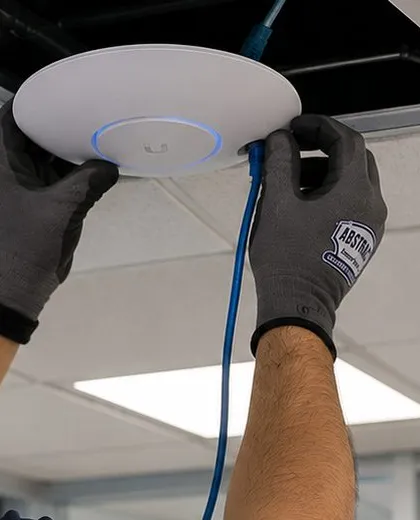
Sonos installation Ditmas Park, Brooklyn: two gloved hands pressing a round white wireless access point with a glowing blue ring into an open ceiling, blue cable hanging below
Two grey-gloved hands hold a round white wireless access point against an opening in a tiled ceiling; its ring glows blue and a blue network cable runs down past the installer's wrist.

Sonos Gone Missing Two Floors Up in a Ditmas Park House

The commonest call from the neighbourhood is a speaker on the third floor or the porch that has dropped out of the app after a new router, a provider's visit or a storm outage. It is almost never a broken speaker. Ring (347) 934-8335 for the next open 2-hour window; most of these are back on the system and regrouped within one to two hours of arrival, billed as a setup-only visit at $195 for the first hour.

What We Install

Sonos Installation Services in Ditmas Park

Nine kinds of work cover almost every booking here. The first five belong to the houses, the last four to the apartments, shops and halls.

🏡

Whole-House Plans

A room-by-room plan for a freestanding house of three or four levels: which rooms get a fixed speaker, which share one through a wide doorway, and which are covered by a portable that moves with you.

⬇️

Attic-and-Cellar Wiring

Speaker wire dropped from the attic into bedroom ceilings and walls, network cable raised from the cellar into the main floor, so wired Sonos products and access points go where the plan needs them.

🪑

Porch Zones

Sonos outdoor speakers on an Amp, or a weather-resistant portable, for front and wraparound porches — aimed at your own seating and away from the windows across the driveway.

🌳

Back-Garden Music

Speakers for the deep rear yards behind the houses, mounted on the house or a solid structure, with cable protected where it leaves the building and volume limits set for evenings.

📺

Parlor Soundbars

Arc Ultra, Beam or Ray under the TV in front parlors, libraries and dens, on fixings chosen for plaster on lath, with the cables run down inside the wall or across from the cellar.

🏢

Apartment Systems

Sonos for the six-storey pre-war and post-war buildings: wireless where the walls are masonry, careful with the Sub where neighbours are below, and paperwork ready for the super or the board.

🛍️

Cortelyou Road Businesses

Background music for cafés, bars, restaurants and shops on Cortelyou Road, Newkirk Plaza and the surrounding avenues, set so the room sounds full and the apartments upstairs don't.

⛪

Halls and Community Rooms

Church halls, meeting rooms and studios where Sonos plays background music before and after an event, and where we tell you honestly when a microphone needs a proper PA instead.

🎚️

Tuning and Handover

Each room measured with Trueplay once its speaker is in place, caps on how loud the porch and the bedrooms can go, room names your family will recognise, and a short lesson in the app at the end.

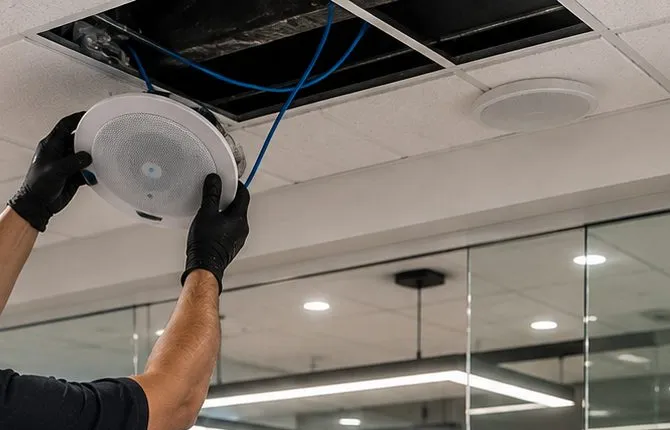
Sonos installation Ditmas Park, Brooklyn: black-gloved hands lifting a round white ceiling speaker with blue cable into an open ceiling tile, a second speaker already fitted nearby
Black-gloved hands raise a round white ceiling speaker, blue cable still trailing from the opening above it; a second speaker sits flush in the ceiling to the right, over glass partitions.
Building Specialists

Sonos Installation for Ditmas Park's Architecture

Six kinds of home account for nearly every Ditmas Park visit. The first four are wooden houses that differ mainly in style and size; the last two are masonry, and they change almost every rule.

Colonial Revival Houses

The type the designation report singles out: symmetrical fronts, columned porches that sometimes wrap a corner, hipped or gabled roofs and tall brick chimneys. Rooms are generous and regular, the attic is usually floored in part, and a centre hall with a staircase links every level — a natural spine for cable.

Queen Anne Houses

Asymmetrical houses with towers, bays, gables and mixed shingle and clapboard. Inside, rooms turn corners and ceilings change height between front and back. The plan follows the odd shapes: speakers placed for the room as it is used, not centred on a ceiling that has a bay window in it.

Shingle-Style and Gambrel Houses

Broad roofs that come down low, shingled walls and a full third storey tucked under the roof slope. The upper rooms have knee walls and sloping ceilings, and the space behind the knee wall is often the easiest cable route in the house.

Bungalows, Tudors and Smaller Houses

Craftsman bungalows, half-timbered Tudors and the occasional Japanese-inspired cottage that Wikipedia lists among the district's styles. Fewer rooms, lower ceilings, often one storey and an attic: the right system is small, and a portable may cover the second bedroom.

Pre-War Elevator Apartments

Six-storey buildings on Ocean Avenue and the side streets, many with ornate lobbies, plaster walls on masonry and solid floors. Wireless products do most of the work, the Sub is treated with care, and the managing agent or the co-op board may want a certificate of insurance before the visit.

Post-War Buildings and Houses Turned Into Flats

Later apartment blocks with concrete floors, and Victorian houses divided into two or three apartments over the decades. In the divided houses, the frame is still wood but the household is no longer one family — each flat gets its own system on its own network.

What each home means for walls, ceilings and cable

HomeStructure we expectWhere cable usually travelsThe point to watch
Colonial Revival houseWood frame, plaster on lath inside, clapboard or shingle outside, attic and full cellarDown from the attic into upper rooms; up from the cellar into the main floor; beside the centre-hall stairOpen windows on every side carry porch and parlor sound to the neighbours
Queen Anne houseWood frame with towers, bays and changing ceiling heightsAttic over the main roof; cellar for the parlor and dining room; harder under towers and turretsIrregular rooms make speaker positions a matter of where people sit
Shingle or gambrel houseWood frame, full third floor under the roof slopeBehind third-floor knee walls, then down inside interior partitionsThird-floor rooms are hot in summer — no Amp in the eaves
Bungalow or small houseWood frame, one storey and atticAttic for almost everythingEasy to over-buy; one good speaker per living space is plenty
Pre-war elevator apartmentMasonry walls, plaster, solid floors, steel or wood windowsSurface routes, painted raceway, inside furniture; ceiling cuts only with building approvalNeighbours on three sides; the Sub and the shared wall
House divided into flatsWood frame, separate households on each floorWithin each flat's own rooms; shared cellar only by agreementOne network per household; nobody's system in someone else's ceiling

Two methods set Ditmas Park houses apart from the rest of our Brooklyn work. The first is that we usually begin in the attic and the cellar rather than in the room. Before anything is promised, someone looks at the attic floor to see where the joists run and whether there are old boards, insulation or wiring in the way, and at the cellar ceiling to see how the main floor is framed and where the internet comes in. In a wood-frame house those two spaces turn most cable runs into a matter of drilling a plate and dropping a line, and they tell us within ten minutes which rooms will be simple and which will not.

The second is that we respect the original interior. The houses date from 1902 to 1914 for the most part, and owners here tend to know which mouldings, stained glass and woodwork are original. A preservation architect living in one told 6sqft that the houses "were obviously built before central A/C and internet, but those services can be retrofitted pretty well within a historic structure." That is our experience too, provided the retrofit comes in from above and below instead of through the face of a finished wall. When a cut is needed in plaster, we locate the framing first, cut slowly with the template, and tell you beforehand that century-old plaster can crack however carefully it is handled.

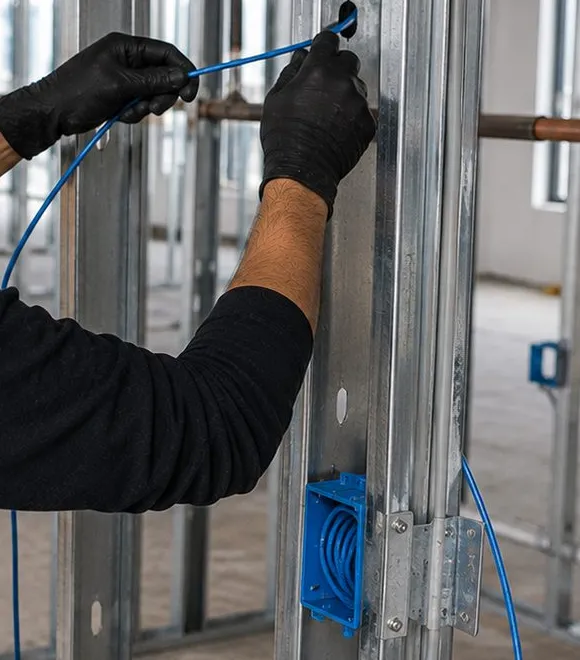
Sonos installation Ditmas Park, Brooklyn: black-gloved hands feeding blue cable through a hole in a steel stud above a blue low-voltage box holding a coil of cable
Black-gloved hands pull blue cable through a punched hole in a steel stud; lower on the same stud, a blue low-voltage box already holds a coil of cable, with a copper pipe crossing the open framing behind.
The Freestanding House

A House With Windows on Four Sides: How Sonos Changes

Almost everything written about Sonos in New York assumes an apartment or a rowhouse: shared walls, one or two exposures, a router fighting through plaster. A Ditmas Park house breaks those assumptions in three ways, and each one changes the plan.

Wood lets Wi-Fi through — and lets it out

Sonos's guidance on wireless interference puts wood and glass in its lowest obstruction category and plaster and concrete in its high one. Inside a frame house that is good news: a router on the main floor of a modest house can often reach the floors above and below. The catch is size. Many of these houses run to a cellar, two full floors and a finished attic, with a porch on the front and a deep yard behind, and the far corners of the third floor and the end of the garden can still be a long way from the router in the front hall. Wood also lets the signal out. Your Wi-Fi reaches the sidewalk and the house next door, and theirs reaches you; in the summer, the yard can be full of neighbouring networks.

So the plan for a larger house usually puts one Sonos product, or an access point, on a cable from the router, and spreads coverage from there. Sonos's system requirements are clear that wireless range extenders and Ethernet over power lines are not supported, and that in a mesh system with a wired setup, the wired Sonos product must connect to the primary mesh router. In a wooden house, running a real cable from the cellar to the second floor is normally a short job, so there is no reason to rely on gadgets the manufacturer does not support.

No party wall, but neighbours on every side

In a rowhouse the people who might hear your music are through one wall and above or below you. In a Ditmas Park house they are across a driveway, behind the back fence and across the street, and the path to them is through your windows rather than your walls. That changes where the bass goes and where the speakers face. A Sub tucked against an inside wall in the middle of the house is far less audible next door than one under a side window. Speakers on a porch that face your own front door send sound back into the porch and the house; the same speakers turned toward the side yard send it straight into the neighbour's bedroom. We check what is on the far side of each window before we decide which way anything points.

The quiet of the streets makes this matter more, not less. New York's noise code forbids using a sound reproduction device "in such a manner as to create unreasonable noise," and a block of detached houses with mature trees and little traffic is exactly where a modest volume carries. Sonos lets you set a volume limit for each product in the app, and we set one for every porch and garden speaker we install, at a level you choose on the day while standing at the property line.

Four levels, four different jobs

The cellar is where the internet arrives and where any Amp for the main floor can live, on a ventilated shelf away from the boiler. The main floor — parlor, library or den, dining room, kitchen — is where the household gathers and where the soundbar and most of the music go. The second floor is bedrooms, and in some houses a sunroom or an enclosed porch over the front porch. The third floor or attic may be a guest room, a study, a playroom or a home studio. Each level gets planned on its own terms, and the network is planned first, because a speaker on the third floor is only as reliable as the connection that reaches it.

Houses built for gaslight

When the Landmarks Preservation Commission designated the neighbouring Ditmas Park West and Beverley Square West districts in 2025, it described the original selling points of these houses as the latest conveniences of their day: gas lighting, hot and cold running water, indoor plumbing and coal-burning furnaces. Electricity, and later outlets in every room, arrived afterwards, often in several rounds over a century. That history shows up on a Sonos visit as outlets in odd places, too few of them on the wall where the TV belongs, and circuits nobody has mapped. Sonos installation is low-voltage work and plugs into the outlets you have; where a soundbar, an Amp or a porch zone needs a new outlet, a licensed electrician fits it first, and we plan the rest of the job around where it will be.

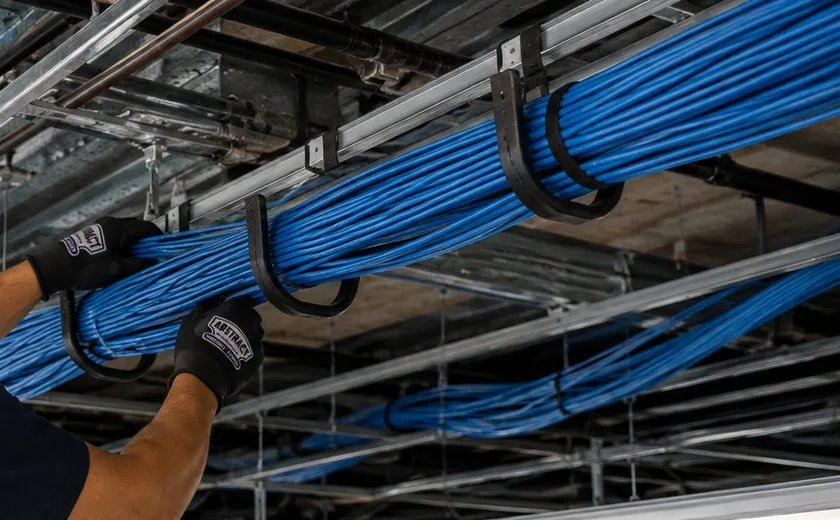
Sonos installation Ditmas Park, Brooklyn: gloved hands settling a thick bundle of blue cable into black J-hooks hung above an open ceiling grid
A thick run of blue cable rests in a line of black J-hooks hung from the structure overhead, while gloved hands seat the bundle in the nearest hook above an open ceiling grid.
Porch & Garden

The Porch Is the Extra Room: Outdoor Sonos in Ditmas Park

Ask a Ditmas Park owner where they want music and the porch comes up before the kitchen. The designation report describes columnar porches on almost all of the Colonial Revival houses; Brick Underground's brokers talk about "driveways, backyards, and wrap-around porches"; and the Brooklyn Paper's account of the Victorian Flatbush house tour mentions "winding staircases, wrap-around porches" as the features visitors come to see. A porch under its own roof is the most-used outdoor room in the neighbourhood from May to October, and it is a very particular place to put a speaker.

Under a roof is not the same as indoors

A covered porch keeps off most of the rain, but it still sees driving rain, humidity, frost and the summer heat that builds under a roof. Sonos's guidance on choosing a location is that speakers which are not waterproof "may be damaged if exposed directly to water or left outside for extended periods." For a permanent porch zone we use Sonos's outdoor speakers, which Sonos rates IP66 and describes as engineered for humidity, water, heat, UV and freezing temperatures, powered by an Amp kept indoors. For a porch used only some evenings, a Move 2 (IP56) or Roam 2 (IP67) carried out and brought back in is a perfectly good answer, as long as the Move 2's charging base stays inside, as Sonos says it should.

Where the brackets go

Porch ceilings here are usually beadboard or plaster on framing, and the columns are often hollow and decorative rather than structural. Outdoor speaker brackets go into solid framing: the porch beam, a ceiling joist located from the attic of the porch roof or from below, or the house wall where it meets the porch ceiling. We avoid fixing to the columns themselves and to anything that is purely trim. The cable leaves the house through a sealed, drip-looped entry and runs inside the porch structure wherever we can reach it.

The street side and the landmark rules

In the Ditmas Park and Ditmas Park West historic districts, the porch is part of the exterior that the Landmarks Preservation Commission protects, and the Commission's guidance is that most exterior changes to the facades of buildings in historic districts require its review. We therefore plan porch speakers to be as invisible from the sidewalk as we can make them — tucked under the porch ceiling near the house wall, cable hidden in the structure, nothing fixed to columns, railings or decorative woodwork — and we tell you plainly when a position is likely to need a conversation with the Commission before anything is drilled. That decision belongs to the owner; we give you what you need to have it.

The back garden

Behind most houses is a yard much deeper than anything in brownstone Brooklyn, with old trees, a garage at the end of the driveway in many cases, and fences shared with the neighbouring gardens on each side and behind. Garden speakers usually go on the back wall of the house, aimed down the lawn, or on a solid structure such as a garage wall or a pergola post set in concrete. Music that stops at the patio is often kinder to the neighbours than a trench to the far fence.

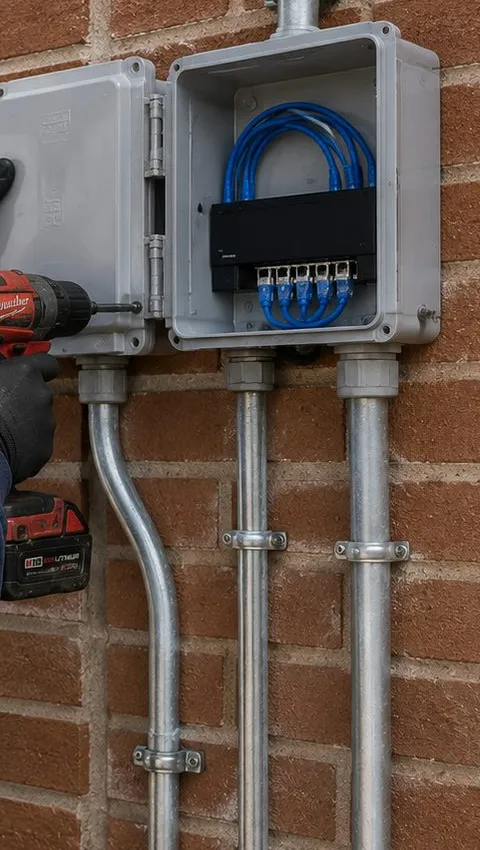
Sonos installation Ditmas Park, Brooklyn: two grey weatherproof boxes on a brick wall, one open to show a network switch and blue patch cables, metal conduit running down below
Two grey weatherproof enclosures on a brick wall; the open one holds a small black network switch with blue patch cables, three metal conduits run down the brick below, and a red cordless drill is at the left edge.
The Apartment Buildings

The Other Half of Ditmas Park: Sonos in the Six-Storey Buildings

The houses get the photographs, but the brokers quoted by Brick Underground are clear that most people here live in apartments, and that co-ops sit among the big houses "to the degree they do" almost nowhere else in the city. For Sonos purposes these apartments are a separate world. Nearly every advantage of the wooden house disappears, and a few new ones appear.

Masonry changes the network

Walls between rooms in a pre-war building are often plaster on masonry or terracotta block, which Sonos's interference table puts in its high-obstruction group, against low for wood. A router in the foyer can struggle to reach a bedroom at the end of a long hall, while the neighbours' networks come through the shared walls from every side. The fix is usually not a bigger router but a better position for it, one Sonos product wired to it where the cable can run along a baseboard, and products placed with Sonos's advice to keep them at least 18 inches from other electronics in mind.

Neighbours on three sides, plus the floor

In the house, sound leaves through the windows; in the apartment, it leaves through the structure. The wall you share with the next unit and the floor over the apartment below are the two places bass travels best, so the Sub stays away from both and its level is set with the downstairs neighbour in mind. In-ceiling speakers are rarely worth it here: the ceiling is usually plaster under a solid floor, the building may not allow the cut, and the apartment above hears more of a ceiling speaker than you might think. Free-standing Era speakers and a well-placed soundbar do almost everything a typical apartment needs.

The building's paperwork

Co-op and rental buildings have their own rules on contractors: working hours, insurance certificates, sometimes an alteration agreement for anything that touches the walls. It is worth asking the managing agent what they need before the visit, not on the morning of it. We supply the certificate free, keep to the building's hours, and protect the hall and the elevator on the way in.

Houses that became apartments

Over the last century some of the big houses were divided into flats, which makes a third kind of home: a wooden frame with two or three households in it. The construction advantages of the house remain — the attic, the cellar, the light walls — but they belong to the owner, and every flat needs its own Sonos system on its own network, with nobody's speakers wired through somebody else's ceiling. We plan these the way we plan a two-family brownstone elsewhere in Brooklyn, and agree with the owner in writing which parts of the attic and cellar we may use.

Commercial Sonos

Business Sonos Installation in Ditmas Park

Wikipedia names Newkirk Avenue, Coney Island Avenue, Cortelyou Road, Foster Avenue and Church Avenue as the neighbourhood's commercial strips, and notes that Cortelyou Road in particular has delis, bars, coffee shops, restaurants and "many venues" that draw local musicians. Nearly every storefront on those streets has apartments over it or houses behind it, which makes the main job of a business system the same everywhere: a room that sounds lively and neighbours who never notice.

Cortelyou Road

The neighbourhood's main street, from Coney Island Avenue to the Q station and beyond: cafés, bars, restaurants, the Brooklyn Public Library's Cortelyou branch at 1305 Cortelyou Road, and the Flatbush Food Co-op, which moved to its present store at 1415 Cortelyou Road in April 2008. Long, narrow ground-floor rooms with flats above are the norm.

Newkirk Plaza

The pedestrian-only shopping mall built over the open cut at the Newkirk Plaza station, opened in 1913. Wikipedia notes that the shops face a passageway owned and maintained by the city's Department of Transportation, while the stores themselves are privately owned — so music stays inside the shop, not out on the walk.

Newkirk and Foster Avenues

Neighbourhood blocks of groceries, takeout, salons and small offices on the southern edge. Short visits, simple systems: one or two speakers, a phone or tablet to run them, and a volume limit the staff can't override.

Coney Island Avenue

The wide, busy western boundary, lined with shops, restaurants and service businesses. With traffic going by, the temptation is to turn the music up; the real fix is speakers placed closer to the customers instead.

Church Avenue

The northern commercial strip, where storefronts sit under several floors of apartments. These are the rooms where the city's limit on commercial music heard inside a home is most likely to come into play.

Halls, Studios and Congregations

Church halls, community rooms, dance and music studios and gallery spaces, including the kind of artists' studios that open for the annual Flatbush Artists art walk. Background music is simple; microphones and live performance need more thought.

Compliance notes for business music in Ditmas Park

  • Music heard upstairs: the city's noise code fact sheet from the Department of Environmental Protection says music from a commercial establishment such as a store, restaurant or bar may not exceed 42 dBA measured inside any dwelling that receives it. On Church Avenue or Cortelyou Road, that apartment is usually directly overhead. We keep speakers off the ceiling under bedrooms where possible, use more speakers at lower volume rather than fewer loud ones, and set a hard volume limit in the Sonos app.
  • Speakers aimed at the street: New York City Administrative Code §24-244 prohibits using a sound device outside, or through an opening onto a public street, for commercial advertising or to attract attention. A speaker pointed out of the front door is exactly that, so we don't install one.
  • Tables on the sidewalk: restaurants with outdoor dining on Cortelyou Road follow the Dining Out NYC programme, whose operating rules bar amplified sound and musical instruments in the sidewalk or roadway seating unless a Street Activity Permit allows it. We keep customer music indoors or in a private rear garden.
  • Licensed music: consumer streaming accounts are generally licensed for personal use. A shop or café should check with its music service, or use a service licensed for businesses, before the playlist goes on for customers. We set up whichever service you choose; we don't advise on licensing.
  • Permits for the wiring itself: Administrative Code §28-105.4.7 lists low-voltage signalling and communication wiring under 50 volts among the work that does not need an electrical permit when done by a licensed master or special electrician or a qualified person. New outlets for an Amp or a rack are line-voltage work and go to a licensed electrician.

A long room with a counter at the back

The typical Cortelyou Road storefront is narrow and deep: a glass front, a long room, the counter or kitchen at the rear and an apartment overhead. A single pair of speakers by the counter leaves the front tables in silence and the staff deafened; a pair by the window spills sound onto the sidewalk every time the door opens. The usual answer is several smaller speakers spread along the length of the room at a modest volume, so the music is even from the door to the back and never loud anywhere. A Sonos Amp drives up to three pairs of Sonos architectural speakers wired in parallel, which covers most of these rooms from one unit under the counter.

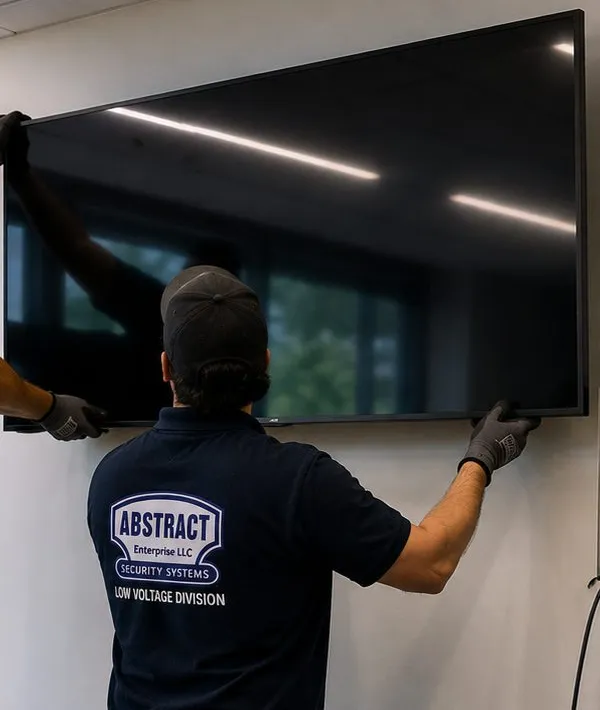
Sonos installation Ditmas Park, Brooklyn: installer seen from behind holding the lower edge of a large flat screen against a white wall, another pair of gloved hands steadying the other side
An installer, seen from behind in a cap and work shirt, holds the bottom edge of a large black flat screen against a white wall while a second pair of gloved hands steadies its left side.
Your Questions Answered

Sonos Installation in Ditmas Park: Questions Answered

What follows are questions owners and shopkeepers here ask because of porches, wooden floors, sunken co-op living rooms and long Cortelyou Road storefronts. Questions every New Yorker asks — dropouts, building Wi-Fi, board approvals, renters, the Landmarks Commission and speakers — are answered on the Brooklyn Sonos page and the New York City Sonos hub.

Porches, lawns and the house next door

Our porch wraps around the front and the side of the house — which stretch should the speakers go on?

Usually the stretch where you actually sit, with the speakers mounted on the house wall and angled outward and slightly down toward the seats. On most wraparound porches here that is the corner where the front and side meet, or the wider front run by the door. The side run is often the worst choice, because it faces the driveway and the house next door, and a speaker there pushes music straight into your neighbour's ground-floor windows.

Mounting against the house wall, rather than on the porch rail or the columns, does three things: the wall stops sound going back over your shoulder, the bracket goes into solid framing, and the speaker is hard to see from the sidewalk — which matters in the historic districts. We stand on the porch with you before deciding, play music at the level you'd use on a summer evening, and walk to the property line to listen. Then we set a volume limit for the porch zone in the Sonos app so nobody can push past it by accident.

Can a speaker be strapped to the big maple in our back garden, or to the street tree out front?

Not the street tree, and we'd advise against the maple. Trees along the sidewalk are city property, and NYC Parks says no one may perform any work on one without being employed by Parks, working under a Parks contract or holding a tree work permit; under Administrative Code §18-129 it is illegal to damage a street or park tree, with fines that can run into thousands of dollars. A bracket screwed or strapped to the trunk is work on the tree, and a cable stapled up it is damage.

A tree in your own garden is your decision, but it is still a poor place for a speaker. Trunks grow and sway, straps bite into bark, cable gets pulled taut in a storm, and the speaker ends up aimed wherever the branch leans. A garage wall, a pergola post set in concrete or a short post of its own does the same job without harming the tree, and we can run the cable to it underground. If you only want music under the tree for a party, a portable such as a Roam 2 sitting on a garden table is the simplest answer of all.

Our block closes the street for a summer block party — can our porch speakers play for everyone, and what does the city require?

The speakers can, as long as the paperwork is in place. A block party needs a Street Activity Permit, and community board guidance on the process says applications should be filed 60 to 90 days in advance and that the city now limits block parties to any nine-hour period between 9 AM and 7 PM. Amplified sound in the street needs a separate sound device permit from the NYPD, obtained at the local precinct — for Ditmas Park, the 70th — with a fee of $45 for the first day. The block association usually handles both.

On the day, a porch pair on an Amp is designed for your porch, not for a closed street, so for a large crowd we usually suggest adding portables placed along the block rather than turning the porch zone up. We can raise the porch's volume limit for the afternoon and put it back afterwards, group the porch with a portable or two so the music is the same along the street, and make sure whoever is choosing the music can do it from the app without touching your settings.

Wooden floors and clapboard walls

Does a Sub standing on our old wooden floor boom through the joists into the bedrooms above?

It can, because a wooden floor is a sounding board in a way a concrete slab is not. Sonos designs the Sub 4 with inward-facing woofers for what it calls a force-canceling effect that "virtually eliminates distortion," and that does reduce rattling in the cabinet itself, but the low notes still travel into the floor and along the joists, and in a frame house they can be felt in the room above. Where the Sub stands matters most: in the middle of a long wall, rather than in a corner where bass builds up, and not directly under a child's bed.

After positioning, the next tools are the settings. The Sub's level can be turned down in the Sonos app, Trueplay tunes the system to the room, and Night Sound, a setting Sonos offers on soundbars such as the Beam, enhances quiet sounds and softens loud ones for late viewing. A heavy rug or a dense platform under the Sub helps a little; a Sub Mini, which Sonos pairs with the Beam, Ray and Era 100, is a sensible choice for a library or den with bedrooms over it. We listen upstairs with you during setup before deciding the level.

Will an in-wall speaker on an outside wall of our clapboard house be heard out on the sidewalk?

More than you'd expect. The outside wall of a Ditmas Park house is clapboard or shingle over sheathing and framing, often with little or no insulation in the cavity, and an in-wall speaker cut into it turns the whole wall into part of the speaker. A good share of the sound goes out through the back of the speaker into the cavity and through the siding to the street or the side yard. It also opens a hole in the house's weather barrier, which in winter can mean a cold spot on the wall.

So we put in-wall speakers on interior partitions, where the far side of the wall is another room in your own house, and use ceiling speakers on the upper floors where the attic gives us access. If the only sensible position is an outside wall, a free-standing Era speaker on a shelf or a wall bracket gives the room the same music without opening the exterior at all. If an exterior wall really must be used, we discuss an enclosed back-box for the speaker before anything is cut, and the price comes in writing after the walkthrough.

Ocean Avenue and the apartment buildings

Our co-op living room is two steps down from the foyer — where should the soundbar and Sub go in a sunken room?

In the sunken part, with the room. Sunken living rooms appear in listings for pre-war co-ops on Ocean Avenue, and they usually have the TV wall at the far end from the steps and the foyer open behind the sofa. The soundbar belongs under the screen at the lower level; its sound is aimed at the seats, and the open side behind them lets the room breathe rather than echo. A Sub goes low as well, on the lower floor near the front wall, not up on the foyer level where its bass would travel into the hallway and the shared wall.

The step itself is the thing to watch for safety. Cables never cross it on the floor; they run along the wall at the skirting or inside furniture. In a masonry building we keep the Sub off the wall you share with the next apartment and away from the floor directly over anyone's bedroom where we know it, and we run Trueplay with the speakers in their final places so the room's shape is accounted for. If the co-op asks for a certificate of insurance before the visit, we provide it free.

Shops, halls and Cortelyou Road

Our shop on Cortelyou Road is long and narrow with the counter at the back — how many ceiling speakers keep the music even from the door to the register?

For most storefronts on the street, four to six small ceiling speakers in a line down the middle of the room, all on one Sonos Amp. Even spacing matters more than size: people should never be very close to one speaker or very far from the next. The front pair sits back from the window so the sound doesn't follow customers out of the door, and the rear pair sits clear of the counter so staff aren't standing under it all day. A Sonos Amp reliably powers up to three pairs of Sonos architectural speakers wired in parallel, which is enough for nearly every shop on the strip.

If there is an apartment upstairs, speakers go away from the bedroom side where we know the layout, and the volume limit is set in the Sonos app at a level the staff cannot exceed. The DEP's 42 dBA figure for commercial music inside a home is the reason. The Amp lives in a ventilated spot under the counter. The ceiling work is priced at the walkthrough, once we've seen what is above it.

Our congregation's hall needs background music and announcements at the microphone — can Sonos do both?

Sonos is excellent for the first and the wrong tool for the second. Background music before and after services, at coffee hours and during events is exactly what a Sonos Amp with ceiling speakers, or a few Era speakers, does well. A live microphone is different. Sound coming in through a Sonos line-in is buffered before it plays, and Sonos's line-in settings include an audio delay specifically to avoid problems when line-in audio plays in a group. Owners report a minimum delay of about 75 milliseconds on the Era 100's line-in, enough for a speaker at the lectern to hear an echo of their own voice.

For announcements we recommend a small conventional PA system with its own microphone and speaker, kept alongside the Sonos for music, and we can wire the two so that one switch decides which is playing. If the hall already has a PA, a Sonos Port can feed its amplifier so the same speakers play Sonos music when nobody is speaking. Either way you get music without echo and speech without delay, and we put the plan for both in writing.

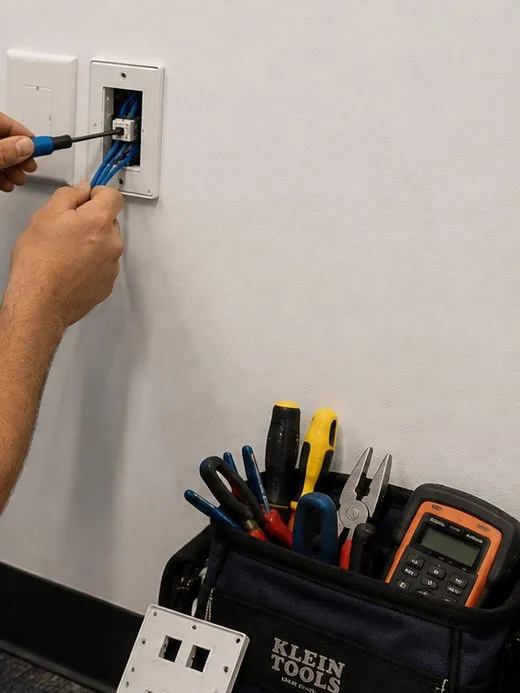
Sonos installation Ditmas Park, Brooklyn: hand turning a small screwdriver on a network jack inside a white wall plate above a tool bag of pliers, screwdrivers and an orange meter
A hand works a small screwdriver on a network jack set into a white wall plate, blue cables visible in the opening; below, a tool bag holds pliers, screwdrivers and an orange meter, with a spare faceplate on the floor.
Equipment

Types of Sonos Systems We Install

You buy the Sonos products from whichever retailer suits you; we install, wire and tune them. These are the ones that come up most in Ditmas Park houses and apartments, with the place each one tends to earn.

Arc Ultra

Sonos's largest soundbar, a little over 46 inches long, which detects when it is wall-mounted and adjusts its EQ for the wall. Right for a broad front parlor with a large screen; Sonos asks for at least four inches between the bar and the TV.

Beam (Gen 2)

About 25½ inches long and connected over HDMI ARC or eARC. The bar that suits most libraries, dens and apartment living rooms, and the usual partner for a Sub Mini where there are bedrooms overhead.

Ray

The compact soundbar, connected by optical. A good fit for a third-floor guest room, a bungalow bedroom or a TV on a dresser, and for any set without an HDMI ARC port.

Era 100

The everyday speaker, on Sonos's list of humidity-resistant products. Kitchens, bedrooms, the study under the eaves, and rear surrounds for a parlor soundbar where there is room beside the sofa.

Era 300

A larger speaker with drivers firing up and to the sides. It suits big rooms with tall ceilings; Sonos's wall mount for it is for stud mounting only, which in a frame house means finding the stud behind the plaster first.

Sub 4 and Sub Mini

Sonos's bass units. The Sub 4's inward-facing woofers cancel cabinet vibration; the Sub Mini is smaller and pairs with the Beam, Ray and Era 100. On wooden floors, position and level matter more than size.

Amp

Powers passive ceiling, wall and outdoor speakers and drives up to three pairs of Sonos architectural speakers in parallel. In a house it lives in the cellar or a closet with air around it; in a shop, under the counter.

Outdoor Speakers

Sonos's passive outdoor pair, rated IP66 for humidity, water, heat, UV and freezing temperatures and powered by an Amp kept indoors. The permanent answer for a porch or the back wall of the house.

Roam 2 and Move 2

Carry-anywhere speakers for the porch table, the garden and the guest room. Both sit on the household Wi-Fi like any other Sonos product, and Sonos notes the Roam 2 falls back to Bluetooth away from the network. Ratings: IP67 for the Roam 2, IP56 for the Move 2, whose charging base belongs indoors.

Port

Connects Sonos to a stereo or an existing amplifier through line-level analog and digital outputs, with a 12V trigger. The way to keep a vintage hi-fi in the library, or to feed a hall's existing amplifier.

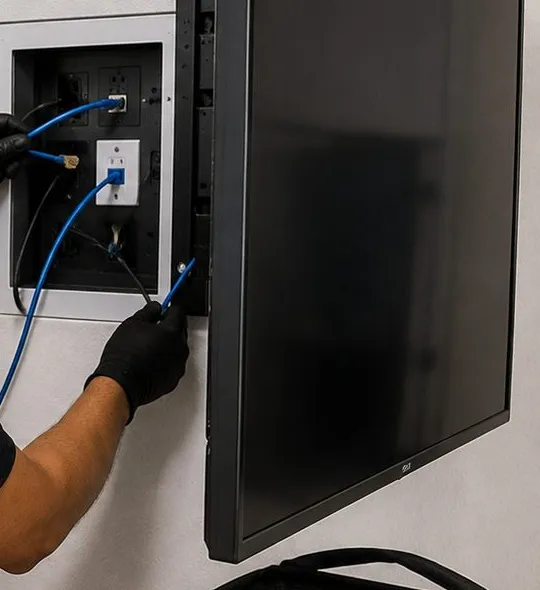
Sonos installation Ditmas Park, Brooklyn: gloved hand plugging blue network cable into a recessed wall box with outlets and data ports beside the edge of a wall-mounted screen
A black-gloved hand connects blue network cable inside a recessed wall box fitted with power outlets and data ports, immediately beside the edge of a large wall-mounted screen.
AI Overview Reality Check

What AI Gets Wrong About Sonos Installation in Ditmas Park

Google's AI Overview could not be opened from the environment this page was built in, so nothing here pretends to quote it. Instead, we took seven statements that turn up again and again in cost guides, product listings, forums and installer marketing — the raw material answer engines draw on — and checked each one against a detached wooden house and a pre-war apartment in this part of Flatbush.

Claim one: "Put the router in the middle of the house and Wi-Fi will cover everything"

Home-networking advice usually starts and ends with router placement, and for a two-bedroom apartment that is sensible. It is repeated as if it applied to any home.

A Ditmas Park house can have a cellar, two full floors, a third floor under the roof, a porch and a garden a hundred feet deep. Wood passes Wi-Fi easily, but distance still wins, and the internet usually arrives at one corner of the cellar, not the middle of the house. Sonos does not support wireless range extenders or Ethernet over power lines, and in a wired mesh setup it wants the wired Sonos product on the primary router.

The reliable plan in a big frame house is one or two short cable runs — cellar to main floor, perhaps main floor to the second — feeding a wired Sonos product or an access point. In a wooden house those runs are among the cheapest parts of the job, and they make every speaker in the house steadier.

Claim two: "A covered porch counts as indoors, so any speaker will do"

Product reviews often show indoor smart speakers on porches and patios, and buyers reasonably assume a roof is protection enough.

Sonos's own placement guidance says speakers that are not waterproof may be damaged if exposed directly to water or left outside for extended periods. A porch roof keeps off falling rain but not wind-driven rain, humidity, summer heat under the ceiling or winter cold, and a porch speaker is out there for months at a time.

For a permanent porch zone we use Sonos's IP66-rated outdoor speakers on an Amp kept indoors. For occasional use, a Roam 2 or Move 2 carried out and brought back in is fine. An indoor speaker left on the porch rail all summer is the one choice we steer people away from.

Claim three: "Allow $500 to $1,000 for every room you add"

Angi's guide to whole-home stereo gives $500–$1,000 per room for additional zones, labor of $50–$100 an hour for jobs of two or three hours, and $100–$500 for wall or ceiling modifications. Cost summaries repeat the per-room figure as the price of multi-room audio.

It is a national average for an average house, and it treats every room alike. In a Ditmas Park house many rooms need nothing but a speaker on a shelf and the $125 Sonos setup; a parlor soundbar on plaster is a handful of published Brooklyn lines adding up to a few hundred dollars; and the expensive work — ceiling speakers, outdoor zones, network cable — is concentrated in two or three places.

Our written quote prices each room on its own line, from the Brooklyn list, so you can see which rooms cost almost nothing and which carry the real work. The AESS NYC audio page publishes whole-home audio at $800–$2,500 per zone installed, and your quote shows where each of your zones falls in that range.

Claim four: "Wiring a century-old house means opening up the walls"

Renovation forums are full of stories about old houses where every new wire meant cutting plaster, and the assumption carries over to speaker wire and network cable.

In a frame house with a reachable attic and cellar, most runs never touch a finished wall. Speaker wire drops from the attic into a bedroom ceiling or down an interior partition; network cable rises from the cellar into the main floor through a plate under a baseboard. The preservation architect who spoke to 6sqft about her Ditmas Park house put it plainly: modern services "can be retrofitted pretty well within a historic structure."

Where a cut is unavoidable — the opening for a ceiling speaker, say — we locate framing first, cut with the template, and tell you before we start that old plaster can crack. The point is that the cut is the exception, not the method.

Claim five: "Ceiling speakers are always the most discreet choice"

Architectural speakers are widely marketed as the invisible option, the one that keeps boxes off shelves and floors, and that is often taken to mean they suit every room.

In a new apartment with drywall ceilings that is usually true. In a Ditmas Park parlor with original plaster, a ceiling medallion or a beamed dining room, the cut-out is the least discreet thing you can do to the room, and on an outside clapboard wall an in-wall speaker leaks sound and cold air outdoors. Sometimes the most discreet choice is a well-placed Era speaker on a bookcase.

We use ceiling speakers where the ceiling is plain, the attic is above and the room is for listening — upper-floor bedrooms, kitchens, renovated rooms — and free-standing speakers where the room's original surfaces are the point.

Claim six: "Sonos can handle your event's microphones too"

Sonos's line-in on products such as the Era 100 and the Port is sometimes suggested as a way to plug in a microphone mixer for a party, a reading or a meeting.

Line-in audio is buffered before it plays so it can be sent to other speakers in the system; a Sonos community answer puts it simply: "There is always going to be a delay on the line-in." Sonos's settings include an audio delay option for exactly this reason, and owners report at least about 75 ms on the Era 100. A speaker at a microphone hears that as an echo.

For speech, a small PA with its own speaker is the right tool. Sonos stays in charge of the music, and the two can share speakers through a Port or a switch where that makes sense.

Claim seven: "It's your property, so outdoor music is your business"

Outdoor-speaker guides concentrate on weatherproofing and coverage and say little or nothing about who else can hear the result.

New York's noise code prohibits a sound reproduction device being used to create unreasonable noise, and a street of freestanding houses with open windows is where modest music travels furthest. A block party needs a Street Activity Permit and a separate NYPD sound permit. The tree at the curb is city property that Parks says no one may work on without a permit.

None of that stops a porch or garden zone; it shapes it. Speakers face your own seating, volume limits are set at the property line, and anything that involves the street goes through the block association and the precinct first.
One Plan for the House, the Porch and the Garden

Tell us how many levels the house has, where the internet comes in and whether the porch matters. We'll tell you what to wire, what to leave wireless and what it costs.

Get In Touch

Request a Free Quote

Most Ditmas Park jobs can be priced from a few details: house or apartment, the number of levels, the Sonos products, and whether the attic and cellar are reachable. The total comes back in writing the same business day. If you would rather talk it through, call (347) 934-8335.

✅

We Got Your Request!

Received. An installer is reading your Ditmas Park details now and will reply with a written total; for anything urgent, phone (347) 934-8335.

How It Works

Our Installation Process

Six steps, whether the job is a Ray in a Beverley Road bungalow or a four-level system with a porch zone on Marlborough Road. In a Ditmas Park house the first two steps happen outside the rooms you want music in.

1. Look up and look down

Before planning any room, we check the attic and the cellar: how the joists run, what is in the way, where the internet arrives and where an Amp could live. In an apartment, we check the building's rules and which walls are shared instead.

2. Walk to the property line

We note every open window on the sides that face a neighbour, the porch and garden seating, and the street side in the historic districts, so speakers point at your household and away from everyone else's.

3. Wire the anchor first

A cable from the router to one Sonos product or an access point, run through the cellar or a closet, gives the system a steady base before any speaker is added on the upper floors or the porch.

4. Mount, drop and seal

Soundbars go on fixings chosen for plaster on lath, ceiling wire drops from the attic, outdoor brackets go into framing, and every hole through the outside of the house is sealed and drip-looped.

5. Tune and set the limits

Trueplay runs in each supported room with the speaker in its final place; volume limits are set for the porch, the garden and the bedrooms; the Sub level is checked from the room above.

6. Name, group and hand over

The app ends up speaking your language — Front Porch, Parlor, Third Floor — with streaming accounts logged in. Before we tidy up, you practise joining the porch to the parlor, raising or lowering a limit and repeating Trueplay.

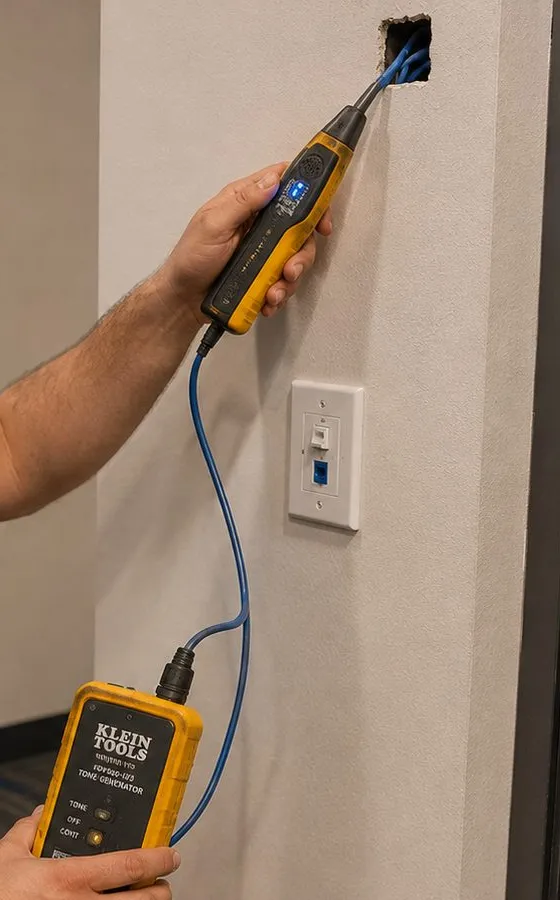
Sonos installation Ditmas Park, Brooklyn: hand holding a yellow tone probe against blue cables in a small wall opening, the tone generator held below beside a white wall plate
A hand presses a yellow tone probe to blue cables emerging from a small opening high on a wall, while the other hand holds the tone generator below; a white wall plate with a network port sits between them.
Coverage Area

Sonos Installation Near Ditmas Park's Landmarks

Our crews cover the whole rectangle between Church and Newkirk Avenues, Coney Island Avenue and Ocean Avenue. When people describe where they live, these six places come up again and again.

Newkirk Plaza

The open-air, pedestrian-only shopping mall over the Brighton line, bounded by Newkirk Avenue, Foster Avenue, Marlborough Road and East 16th Street. It opened in 1913; the station below was renamed Newkirk Plaza in August 2011 after a $30 million rebuild of the station and mall (Wikipedia).

Cortelyou Road Station

A four-track open-cut station on the Q line. The original street-level stop at what was then Avenue C opened around 1900; the present station house and below-grade platforms were finished at the end of 1907, when the line was lowered into the cut (Wikipedia).

Cortelyou Library, 1305 Cortelyou Road

The Brooklyn Public Library branch near Argyle Road. Wikipedia records that it was first proposed in 1969 but did not open until 1983 — a neighbourhood fixture on the commercial strip between the houses and the apartment blocks.

Flatbush-Tompkins Congregational Church

The brick Neo-Georgian church of 1910, the one church inside the Ditmas Park Historic District according to Wikipedia. A reminder that the district holds more than houses.

Ditmas Park West Historic District

Designated by the Landmarks Preservation Commission on November 25, 2025: 127 houses between Dorchester Road and Ditmas Avenue, immediately west of the 1981 district, nearly all built from 1902 to 1910 and nearly half designed by Arlington D. Isham (LPC).

Beverley Square West Historic District

Designated the same day: 118 houses built between 1894 and 1910 on three tree-lined streets between Beverley Road and Cortelyou Road, nearly all by Brooklyn architects including John J. Petit, John B. Slee and Benjamin Driesler, mostly Queen Anne, Colonial Revival and Shingle style (LPC).

We also install Sonos next door in Prospect Park South, the Beverley Squares, Fiske Terrace, Midwood, Kensington and the rest of Flatbush, all on the same Brooklyn price list.

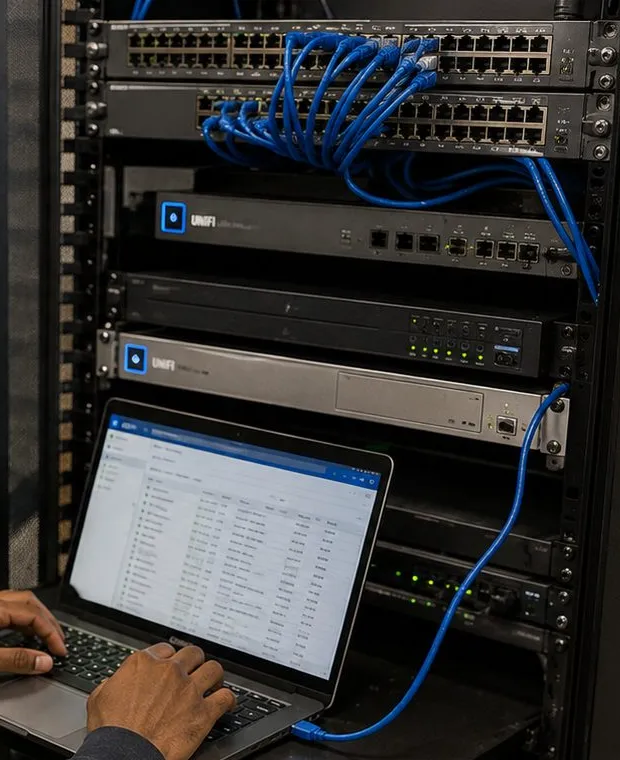
Sonos installation Ditmas Park, Brooklyn: hands typing on a laptop on a rack shelf beneath network switches dressed with blue patch cables
Hands type on a laptop resting on a shelf inside an equipment rack; above it, two network switches are dressed with blue patch cables, with further rack-mounted units and status lights below.
Pricing

Sonos Installation Cost in Ditmas Park

A house on Rugby Road and a co-op on Ocean Avenue pay the same rates, because both fall under Brooklyn, our base price area. The table is the published list; the only things it can't settle in advance are jobs that depend on what we find in an attic, above a ceiling or along a cable route, and those get a written figure after we've looked. Nothing is added on the day unless you've agreed to it.

LineBrooklyn priceHow it usually applies in Ditmas Park
Sonos setup$125Covers the whole household: each Sonos product on your network as one system, room names agreed with you, porch and bedroom limits, streaming accounts and Trueplay tuning
Soundbar wall-mounted under the TV$129Hanging the Arc Ultra, Beam or Ray level under the screen, in a front parlor, a den or a co-op living room
Soundbar placed on a console$79Rooms where the walls stay untouched, guest rooms, rentals
Sanus soundbar bracket$84.99If you don't already have a mount for the bar
In-wall concealment$169Hides the TV's power and signal leads inside a hollow interior partition, using a code-compliant kit
Paintable cord cover$59Masonry walls in apartments, and plaster you'd rather not open
Cable run to a cabinet or other spot$99A single run of up to 25 ft — typically the TV wall to a sideboard where the streaming box and Sub connections live
A/V receiver$129Connecting a receiver, for instance to a Sonos Port in the library
Universal remote$99Programmed for TV, soundbar and sources
Streaming device setup$49Each device
Full home theater$350Multi-component system setup
Setup-only visit$195 first hourAfter the first hour, time is billed in half-hour steps — the line used when speakers have fallen off the network or a replaced router has orphaned them
TV mounted on the same visitFrom $179.99The Brooklyn starting price for hanging a 32″–55″ screen on wood-stud drywall; plaster, size and height lines are added as they apply
Ceiling, wall or outdoor speakers on AmpQuoted at walkthroughSet once we've seen what is above each ceiling, how the porch roof is framed and how far the wire must travel to reach the Amp
Network cable and access pointsQuoted at walkthroughDepends on where the internet arrives and how many levels need a wired product

Wall and access lines

ConditionPriceWhere we find it here
Drywall on wood studs$0Renovated rooms and additions in the houses
Metal studs+$30Later apartment buildings and renovated flats
Plaster+$45Most original rooms in the houses, and pre-war apartments
Brick or stone+$65Chimney breasts, cellar walls, some apartment walls
Concrete or cinder block+$75Post-war buildings and cellar foundations
Tile or marble+$95Kitchens and bathrooms
Plywood backer board$85When the studs behind the plaster fall in the wrong place for a bar
High mount, above about 8 ft$75Tall parlors and stair halls
Walk-up, 3rd floor and above, no elevator$40Upper flats in houses divided into apartments, and walk-up buildings
Box removal$25If you'd like the cartons taken away
Certificate of insuranceFreeFor a co-op board, managing agent or landlord

Five Ditmas Park totals, added up

Nothing in these examples is a special rate: each row just adds published lines together. A real quote follows the same arithmetic once we know which wall, which floor and which mount.

ExampleLinesTotal
Bungalow bedroom: Ray on the dresser, joined with an Era 100 in the kitchen$79 console placement + $125 Sonos setup$204
Beam hung in a front parlor whose walls are still the 1900s plaster, on a Sanus bracket, plus setup for every product in the house$129 + $84.99 bracket + $45 plaster + $125 setup$383.99
Tall parlor: Arc Ultra on plaster with its own Sonos mount, mounted above about 8 ft$129 + $45 plaster + $75 high mount + $125 setup$374
Ocean Avenue co-op: Beam on a plaster-over-masonry wall, cord cover instead of opening it$129 + $84.99 bracket + $45 plaster + $59 cord cover + $125 setup$442.99
Porch speaker and two bedrooms re-joined after the provider swapped the router$195 setup-only first hour$195

Included, and not included

  • In the price: the fixing and hook-up, one system for the whole household, names and streaming logins, Trueplay, porch and bedroom caps, and a tidy room when we leave.
  • Other trades: a licensed electrician adds outlets and does any line-voltage work, a plasterer patches around a cut if one is needed, and whether a porch or facade change may proceed in a historic district is settled between the owner and the Landmarks Preservation Commission.
  • Your products, our hardware: the Sonos equipment is bought by you, wherever the price suits; brackets, raceway, speaker wire, network cable and in-wall kits travel in our van and appear on the quote at their published prices.
  • Second visits: a $150 return-trip fee is charged only when the crew turns up and the work cannot go ahead — say the Sonos boxes haven't been delivered, or the attic hatch we planned to use is locked or blocked. Move the booking with 24 hours' notice and there is no charge.
  • Original plaster: lime plaster from around 1905 may crack even under a slow, templated cut; you hear that before we start, and nothing is cut without your yes.

National averages versus a Brooklyn installer. Cost guides price a typical room in a typical house. They don't know that a Ditmas Park house can be wired from the attic for less than an apartment can be wired through one wall, or that half the rooms in a big Victorian need nothing but a speaker on a shelf. Every line we charge is on our Brooklyn TV mounting price list.

Shop Our Systems

Sonos Installation Packages & Pricing

Most Ditmas Park bookings start with one of three bundles. They are not discounts — each is simply our published Brooklyn lines added up, so you can check the arithmetic — and wall conditions such as plaster or a high parlor mount are added on top.

Starter — Sonos Setup
$125

The $125 Sonos setup line for products you already own: joined to one system on your network, every room named the way you speak about the house, porch and bedroom limits set, music services signed in and Trueplay run where the product supports it.

Standard — Soundbar on the Wall + Setup
$338.99

Setup ($125) plus the Arc Ultra, Beam or Ray hung under the TV ($129) on a Sanus bracket ($84.99). Original plaster in a parlor adds $45; a brick chimney breast adds $65; a mount above about 8 feet adds $75.

Premium — Soundbar, Hidden Wiring + Setup
$507.99

The Standard bundle ($338.99) with the $169 in-wall kit added, which takes power and HDMI down inside the wall for a screen with no visible leads. That only works on a hollow partition; against the solid masonry of an apartment wall, a $59 paintable cover does the job instead.

Bring Your Own Equipment — Labor Only

Bought the Sonos Arc Ultra mount, or another bracket rated for your bar's weight? Then the bill covers labour alone: the $129 hanging line, whatever wall condition applies, and the $125 setup if the rest of the system needs joining. Mounts you supply stay under their maker's warranty. If yours won't hold safely on old plaster, we tell you before drilling and offer the Sanus bracket instead.

Whole-House, Porch and Garden Plans

Cellar-to-attic wiring, ceiling speakers on Amps, porch zones and garden pairs get one written price for the whole property after we've walked it. As a guide, our NYC audio page publishes whole-home audio at $800 to $2,500 per zone installed, and your quote shows where each zone in your house lands in that range before anything is booked.

Want Your Ditmas Park Total in Writing?

Send three pictures — the wall behind the TV, the opening into the attic and the porch from the front steps — with the names of your Sonos products, and a priced plan comes back in writing from the Brooklyn list.

Room by Room

A Ditmas Park House, Room by Room

No two houses here are laid out alike, but most share the same set of rooms around a centre or side stair. This is how each one usually fares in a Sonos plan. Apartments follow the living room and bedroom rows, without the attic, cellar and porch.

RoomWhat usually worksHow cable gets thereWhat we watch for
CellarThe router or modem, a switch, any Amp for the main floor or porchWhere the provider's line comes inDamp corners, the boiler's heat, a shelf with air around the Amp
Front hall and stairUsually nothing fixed; music from the rooms either side carries inBeside the stair, the natural route between floorsSound rising up the stairwell to the bedrooms at night
Front parlor or living roomSoundbar under the TV, Sub on an inside wall, Era rears where there is spaceUp from the cellar through the floorOriginal woodwork, a mantel, windows facing the house next door
Library, den or back parlorA stereo pair of Era speakers or a Port into an existing hi-fiUp from the cellarBuilt-ins that trap heat; the Port needs space around it
Dining roomOne or two speakers on a sideboard or shelf; ceiling speakers only if the ceiling is plainFrom the cellar, or from above if a bedroom has floor accessBeamed or decorated ceilings that should not be cut
KitchenAn Era 100, which Sonos lists as humidity-resistant, or a pair of ceiling speakers in a renovated kitchenFrom the cellar or a bedroom aboveSteam and grease near the stove, tile behind counters
BedroomsAn Era 100 each, or ceiling speakers wired from the atticDown from the atticChildren's rooms over the parlor Sub; alarms and limits set per room
Third floor or attic roomA speaker or small soundbar for a study, guest room or studioBehind knee walls, or from the floor belowSummer heat under the roof; no Amp in the eaves
PorchSonos outdoor speakers on an Amp, or a portable carried outThrough a sealed entry in the house wall into the porch structureThe neighbour's windows, the view from the sidewalk, Landmarks review
Back gardenA pair on the rear wall or a garage, or a portable on the tableFrom the cellar through the rear wall, or underground to a postFences shared with neighbours; evening volume
Complete Services

Every Sonos Installation Service in Ditmas Park

Sonos is often one part of a bigger visit to a Ditmas Park house. These are the AESS services owners book alongside it, all from the Brooklyn list.

AESS Sonos Installation in Brooklyn

Our borough-wide Sonos guide, written for brownstone floors, two-family houses and brick-walled yards.

TV Installation, Ditmas Park

One trip for both: the TV goes up first and the bar is levelled beneath it, anchored to suit lath or masonry.

Structured Cabling in Ditmas Park

Network cable from the cellar to every floor, ideal while the attic or a wall is open for other work.

Soundbar Installation Brooklyn

When the bar under the TV is another brand, the same crew hangs it and its subwoofer on plaster or masonry.

Network Installation in Brooklyn

Routers, switches and access points that give a three- or four-level house steady coverage.

AV and Sound Installation, Brooklyn

Projectors, AV receivers and the small PA a church hall or studio needs for speech.

Ditmas Park Security Cameras

Cameras for porches, driveways and back gardens, often run through the same attic and cellar routes.

Intercoms in Ditmas Park

Handsets and video entry at the front door of a house or a six-storey building.

Home Automation in Brooklyn

Lighting, shades and scenes that can bring the Sonos rooms into the same routines.

Service Policies

Scheduling, rescheduling, return trips and what to expect on the day.

Field Notes

Field Notes: Before We Touch a Ditmas Park Room

This is the routine our crew follows in a freestanding house here. It is a description of how we work, not a story about any one customer's home.

We go up first. The attic hatch tells us more in five minutes than an hour downstairs: which way the joists run over each bedroom, whether there are boards or loose insulation to work around, whether old wiring crosses the space, and how much headroom there is near the eaves. Then we go down. In the cellar we find where the internet comes in, look at how the main-floor joists are framed, and pick the spot where an Amp or a switch can sit with air around it, away from the boiler and off the floor.

Only then do we walk the rooms with you. In each one we ask what it is used for, what is original, and what is on the far side of each window. On the porch we stand where you sit, then walk to the driveway and the sidewalk and listen. By the time a drill comes out, every speaker on the plan has a reason, a cable route that starts in the attic or the cellar, and a volume limit that has been tested from the property line. The rooms themselves are the last thing we disturb, and usually the least.

In an apartment the order is the same, compressed into the rooms you live in: we note which walls are shared, which floor is over a neighbour's bedroom and where the router sits, agree the building's hours with you, and only then place anything.

FAQ

Ditmas Park Sonos Installation FAQ

Do you need to get into our attic and cellar even if we only want a soundbar?
+

Usually not for the soundbar itself. A bar under the TV on the main floor needs the wall, the TV and an outlet, and its cables either run inside the wall or across to a console. We ask to see the cellar only if the cables are going down through the floor, or if a product needs a wired connection to the router. For anything wired from above — ceiling speakers, bedroom speakers, a third-floor access point — we do need the attic hatch, so please clear a path to it before the visit.

Can a porch speaker play spooky sound effects for trick-or-treaters on Halloween and then go back to normal?
+

Yes. If you already have a porch zone, a Halloween sound-effects playlist plays on it like any other music, and you can raise its volume limit for the evening and lower it again the next day in the Sonos app. If you don't, a battery portable such as a Roam 2, which Sonos rates IP67, can sit on the porch for the night and come back inside afterwards. Keep the volume friendly: the noise code's ban on unreasonable noise applies on Halloween too.

A film crew is renting our house for a shoot — how do we make sure the Sonos stays silent while they record?
+

Turn off anything that can start by itself. In the Sonos app, switch off the alarms you have set, disable TV Autoplay on the soundbar so it does not start playing when the set's TV is switched on, and pause any routines in voice or smart-home apps. Status lights can be turned off for each product if they show in shots. The surest method is to unplug the products in the rooms being filmed; they rejoin the system when plugged back in. We can come before and after the shoot to do this if you prefer.

Our lawn sprinklers reach the porch and the side of the house — will they damage the outdoor speakers?
+

Not the Sonos outdoor speakers, which Sonos rates IP66, a rating that covers dust and powerful jets of water. A sprinkler spray is well within that. The things to protect are the parts that are not outdoor-rated: the Amp stays indoors, cable entries are sealed and drip-looped, and any indoor speaker or a Move 2's charging base should never be in the spray. If a sprinkler head points straight at a speaker every day, we would still turn the head rather than the speaker, simply to keep the grille clean.

Our porch faces the sidewalk — are speakers out there likely to be stolen?
+

Wired outdoor speakers are an unattractive target. The Sonos outdoor pair is passive, so on its own it plays nothing without an amplifier, and we mount it high under the porch ceiling against the house wall with the cable hidden in the structure. Portables are a different matter: a Roam 2 or Move 2 left on a porch table overnight is easy to pick up, so bring it in. If porch security is a wider concern, our Ditmas Park camera team can cover the porch and driveway on the same visit.

All Areas Served

Sonos Installation Across Brooklyn and New York

One level up is our Brooklyn Sonos installation page, and above that the New York City Sonos hub that ties the whole series together. The borough, county and neighbourhood pages are grouped here by region.

Sonos is one of many low-voltage trades we cover. For security cameras, door entry, access control and networks, start from the Abstract Enterprises Security Systems home page; for who we are and how long we have been doing this, see about the company.

Sources

Where the Ditmas Park Facts Come From

Dates, counts, quotations and landmark details above were checked against the sources below; where a source was a search excerpt rather than a full page, we used only what the excerpt said. Every price is a published AESS Brooklyn line.

Ditmas Park Sonos Quiet Tonight? We Can Help

When a system that worked yesterday has gone silent, the cause is nearly always outside the speakers: the provider replaced the router, the Wi-Fi password changed, or a storm knocked the power off and the network came back in the wrong order. Phone (347) 934-8335 for the next open 2-hour window; the usual repair takes one to two hours once we're in the house.

Sonos Installation Ditmas Park — Licensed, Insured, Planned From the Attic Down

Abstract Enterprises Security Systems · 1282 Troy Ave, Brooklyn, NY 11203 · (347) 934-8335 · WhatsApp (718) 679-0359 via wa.me

NYS Low-Voltage Licence #12000287431 · 100% Licensed & Insured · Same-Day Estimates · Rated 4.7★ from 201 Google Reviews

Sonos products carry their manufacturer's warranty. Full terms — including 50% deposit, one-year parts-only warranty on AESS-supplied products, and the late-fee schedule — are set out in the service agreement. See our warranty page.

Page reviewed and updated October 17, 2026. Changelog: Ditmas Park page launched as a neighbourhood child of the Brooklyn Sonos page, covering freestanding wood-frame houses, porches and gardens, the Ocean Avenue apartment buildings, and the Cortelyou Road and Newkirk Plaza businesses.