What are you looking for?
About Us Contact Us Careers Get a Free Quote (800) 486-0943
Pick a service
✅ Got Your Own System?
🎬 Home TheatreQuote 🎶 AV SoundQuote 🔑 Access ControlQuote
Now pick your area
Pick your area
Long Island
Hudson Valley
Services available
Pricing & Tools
Pick a service for pricing
🚪 Intercom Pricing 🔔 Buzzer Repair Pricing
Calculators
📹 Camera System Calculator 🚨 Alarm Calculator ⚡ Cabling Quote Builder ✅ Got Your Own System?
Select your area
Home › Sonos Installation NYC › Sonos Installation Brooklyn › Cobble Hill
Greek Revival Rowhouses · Warren Place Cottages · Cobble Hill Towers · River Park Condos · Licensed Low-Voltage

Sonos
Installation in
Cobble Hill

Speakers Sized to the Room · Plaster-Aware Ceiling Work · Sound Kept on Your Side of the Wall · Trueplay & Handover

Cobble Hill is small on purpose. Its houses are narrow, its ceilings are old plaster, its streets are quiet enough that a whistling balcony railing made the local news, and a fifty-foot height limit has kept it that way for decades. A Sonos system that suits a big suburban family room usually overwhelms a Kane Street parlor or an eleven-and-a-half-foot Warren Place cottage. We plan Cobble Hill systems the other way round: count the rooms, measure them, listen to the walls, and put in only as many speakers as each space can use — then tune them so the music stays inside your house.

Reviewed and updated October 17, 2026 · Written by Anwar Timothy, NYS licence #12000287431 · Booked through our Brooklyn office at 1282 Troy Ave

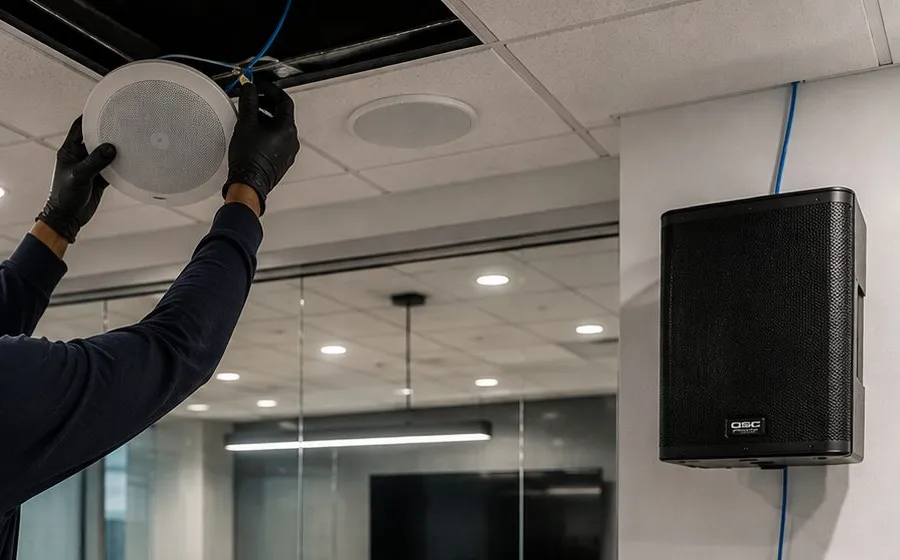
Sonos installation Cobble Hill, Brooklyn: gloved hands lifting a round white ceiling speaker into an open ceiling tile, a black cabinet speaker on the wall to the right
Gloved hands raise a round ceiling speaker toward an opening in the ceiling, its blue lead still attached; a second speaker is already flush in the tile beside it and a black box speaker hangs on the wall to the right.
Cobble Hill Sonos Quote
Tell us the house and the speakers — a written total comes back the same business day

✅
Request Sent!
An installer will be in touch about your Cobble Hill rooms the same business day.
25+
Years Experience
✓
Same-Day Estimates
100%
Licensed & Insured
4.7★
201 Google Reviews

Text us the width of the house and a list of what you own. In Cobble Hill that pair of facts — how many feet from party wall to party wall, and which Sonos products are already in boxes — settles most of the plan before anyone visits. Call the Brooklyn line, (347) 934-8335, or use the form; it takes about a minute.

  • Sonos setup from $125 on the Brooklyn price list, the same rate on Henry Street as on Smith Street
  • No speaker count we can't justify room by room: if a portable will do, we say so before you buy another Era
  • New York State low-voltage licence #12000287431; 2-hour arrival windows from 8 AM to 8 PM, seven days
The Neighborhood

Why Cobble Hill Homes Need Sonos Installation

Cobble Hill is one of the smallest neighborhoods in Brooklyn, and almost all of it is protected. Wikipedia puts the Cobble Hill Historic District at about 60 acres, roughly bounded by Atlantic Avenue, Court Street, Degraw Street and Hicks Street, and the National Register listing counts 796 contributing buildings put up between the 1830s and the 1920s. The Landmarks Preservation Commission designated the district in December 1969 and extended it in 1988. The Cobble Hill Association, whose research supported the designation, credits the landmark law together with low-scale zoning — "including a 50-foot height limitation" — for keeping "the nineteenth-century scale, feeling, and quality of the buildings and streets." For anyone planning music in a house here, scale is the word that matters.

The houses are Greek Revival from the 1830s and 1840s, then Gothic Revival, Italianate and early Romanesque Revival from the 1850s and 1860s, mostly brick and brownstone, built singly or in short rows rather than whole blocks at a time. The Association's history dates the oldest surviving house in the district, 122 Pacific Street, to 1832. Widths vary more than people expect. A Kane Street Greek Revival offered for sale in 2019 was described by Brownstoner as 25 feet wide with 11-foot ceilings, an "elaborate foliate cornice," six mantels, a pier mirror and scenic wallpaper in the dining room. Around the corner, the cottages Alfred Tredway White built in 1878–1879 along what is now Warren Place are two storeys high, 11½ feet wide and 32 feet deep. The same Sonos shopping list cannot be right for both.

That is the problem we are usually called to solve. Sonos makes it easy to keep buying: another Era for the kitchen, a Sub because the soundbar seemed thin, a pair of rears because the box suggested it. In a small Cobble Hill room the result is often too much bass for a plaster ceiling and a party wall, rear speakers with nowhere to stand, and a network straining under products that never needed to be on it. A good installation here frequently means fewer products, chosen and placed carefully, with Trueplay doing the work an extra speaker was meant to do.

The second thing that shapes the job is how close everybody lives. Party walls are shared on both sides of almost every rowhouse. The Tower and Home Buildings on Hicks Street — now Cobble Hill Towers — were designed around internal courtyards, with exterior staircases and open balconies, so neighbours look across at one another. On the western edge the Brooklyn–Queens Expressway runs in its trench below Hicks Street; one Reddit user who had lived on Hicks in Cobble Hill wrote that they "found the consistent traffic sounds soothing," while others in the same thread recommended air purifiers. Inside the quiet streets, though, sound carries. When the railings on a new 15-storey condominium at 347 Henry Street started whistling in the wind in 2021, Brownstoner reported residents comparing it to "fingernails on a blackboard" and saying "it wakes us up." A neighbourhood that notices a railing will notice a Sub.

The third thing is that Cobble Hill is no longer only rowhouses. The former Long Island College Hospital campus has become River Park, which the Brooklyn Heights Association describes as a renovated Polhemus Building, eight new townhouses on Amity Street and five new residential towers, the tallest of them 36 storeys at 2 River Park. Minard Lafever's 1851–52 Strong Place Baptist Church became 23 condominiums in 2010, according to CityRealty. So a Cobble Hill Sonos visit can mean an 1840s plaster ceiling in the morning, a concrete slab in a brand-new tower after lunch and a vaulted former sanctuary the next day. We write the plan for the building you actually live in, and this page explains how each one changes it.

Cobble Hill facts that shape a Sonos plan

  • 796 buildings, 1830s–1920s: contributing buildings in the national historic district (Wikipedia, citing the National Register), nearly all with original plaster somewhere inside.
  • 1969 and 1988: the years the Landmarks Preservation Commission designated the Cobble Hill Historic District and then extended it; the district joined the National Register in 1976.
  • 11½ by 32 feet: the footprint of the Warren Place workingmen's cottages, two storeys high (Cobble Hill Association) — living rooms where one good speaker can be plenty.
  • 188 apartments: the count in Cobble Hill Towers after the 1978–1986 restoration returned subdivided flats to their original layouts, with ceilings of 8 feet 3 inches and a fireplace in every sitting room as built (Cobble Hill Association).
  • 50 feet: the height limitation the Cobble Hill Association credits, with landmarking, for keeping the neighbourhood low; the River Park towers sit on the former hospital site at its edge.
  • 23 condominiums: the number of homes created in 2010 inside Lafever's former Strong Place Baptist Church (CityRealty) — tall, irregular rooms that behave nothing like a rowhouse parlor.

Read together, the figures say that most Cobble Hill homes are older, smaller and closer to their neighbours than the rooms Sonos marketing photographs. That does not make a great system harder to achieve. It makes it a matter of restraint and placement rather than product count.

Most Cobble Hill households pair a Sonos visit with a TV move, because the speaker plan and the screen position are decided by the same wall. Our Cobble Hill TV installation team prices from the same Brooklyn list, and if a renovation is opening walls anyway, structured cabling in Cobble Hill can put a network jack on every floor while the plaster is down.

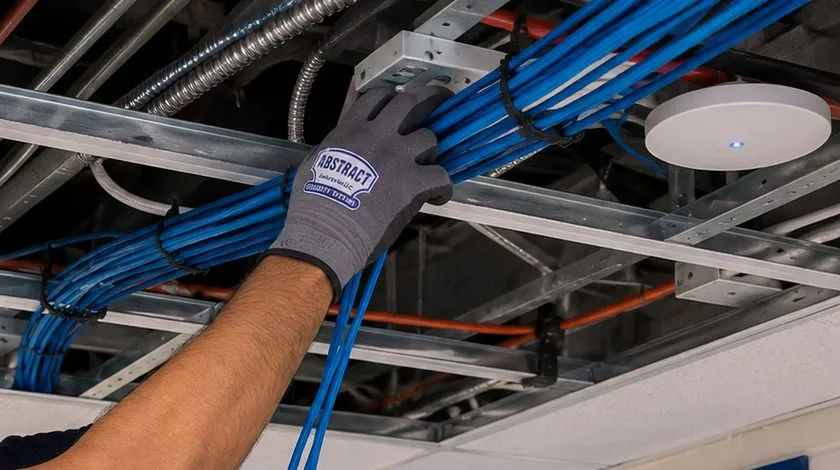
Sonos installation Cobble Hill, Brooklyn: gloved hand guiding a bundle of blue network cables along a ceiling frame beside a round white access point
A gloved hand steadies a thick bundle of blue network cable along the metal ceiling frame; a round white wireless access point with a small blue light is already fixed just beyond it.

Sonos Dropped Off the App Somewhere in Your Cobble Hill House

A speaker that goes missing after a router swap, a provider visit or a power cut is the most common call we get from the neighbourhood, and it is rarely the speaker's fault. Call (347) 934-8335 and we book the next open 2-hour window; most of these are back on the network and regrouped within one to two hours of arrival, billed as a setup-only visit at $195 for the first hour.

What We Install

Sonos Installation Services in Cobble Hill

Nine kinds of work cover nearly every Cobble Hill booking. Several of them involve taking something away from a plan rather than adding to it.

📏

Right-Sizing a System

A room-by-room count before anything is bought: which spaces need a fixed speaker, which can share one through an open doorway, and which are better served by a portable that moves with you.

🏛️

Parlor Soundbars

Arc Ultra, Beam or Ray positioned under the TV in a front or back parlor, with fixings kept clear of cornices, mantels and pier-mirror cleats, and the up-firing drivers given a clear path to the ceiling.

⭕

Plaster Ceiling Speakers

Sonos in-ceiling speakers on an Amp, cut into old lath-and-plaster only after the joists, pipes and any medallion have been located, and only where you have agreed the risk.

🏠

Cottage Systems

Two-floor plans for the Warren Place houses and other narrow homes: one speaker per living space, no Amp closet needed, and nothing fixed to walls you may want to keep bare.

🏢

Courtyard Apartments

Cobble Hill Towers and the district's early-twentieth-century apartment houses: low ceilings, shared courtyards, and settings that keep the bass from crossing the yard.

⛪

Converted-Church Homes

Tall, irregular rooms inside former sanctuaries, where echo, exposed structure and condominium rules shape where speakers go more than the floor plan does.

🏗️

New-Building Systems

River Park and other new condominiums: concrete and steel-stud walls, developer wiring checked before it is trusted, and a network plan for a modern apartment rather than an old house.

🛍️

Shop and Café Music

Sonos for small businesses on Atlantic Avenue, Court Street and Smith Street, set so the music serves the room and stays out of the apartments upstairs.

🎚️

Tuning and Handover

Trueplay in every supported room, volume limits where neighbours are close, rooms named the way your household talks about them, and a walk-through of the app before we leave.

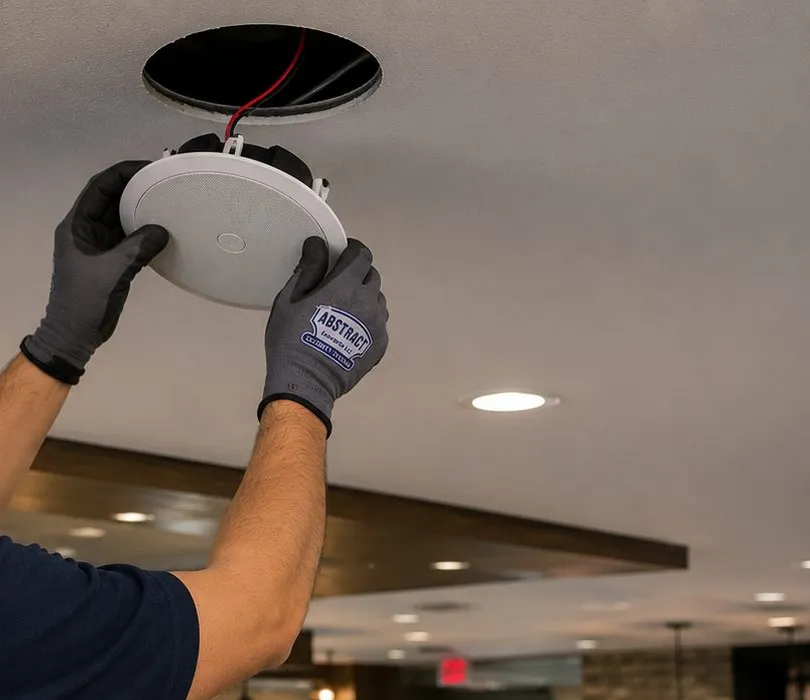
Sonos installation Cobble Hill, Brooklyn: two gloved hands lifting a white round ceiling speaker toward a circular cut-out with red and black speaker wire hanging from it
Two gloved hands bring a round white speaker up to a clean circular hole in a smooth ceiling, red and black wire dropping from the opening; recessed lights and a dark wood ceiling beam are out of focus behind.
Building Specialists

Sonos Installation for Cobble Hill's Architecture

Six kinds of building make up almost every Cobble Hill call. They differ in width, ceiling, wall and who else has a say, and each one changes the Sonos plan in a specific way.

Greek Revival Rowhouses

The district's oldest stock, from the 1830s and 1840s: flat brick fronts, simple cornices, high parlor ceilings and double parlors divided by an arch or doors. Ceiling speakers are possible on the upper floors; in the parlor, original plaster detail usually argues for free-standing or wall-mounted Sonos instead.

Italianate and Brownstone Rows

The 1850s and 1860s houses with brownstone fronts, deeper cornices and heavier interior mouldings. Floors are often split between owner and tenant, which turns one Sonos system into two and makes the network plan the first conversation.

Warren Place Cottages

Thirty-odd two-storey houses, 11½ feet wide, facing each other across a shared garden walk between Warren and Baltic Streets. Rooms are small, walls are close, and the right system is usually two or three speakers for the whole house.

Cobble Hill Towers

Alfred Tredway White's six-storey Tower and Home Buildings on Hicks Street, 188 apartments around two courtyards, being converted to condominium ownership under a non-eviction plan. Ceilings are 8 feet 3 inches, walls are masonry, and the neighbours are across the yard as well as through the wall.

Church and Institutional Conversions

Homes carved out of buildings that were never meant to be homes: the 23 condominiums inside the former Strong Place Baptist Church, and the renovated Polhemus Building at River Park. Expect arched windows, exposed structure, tall volumes and a condominium board.

River Park Towers and Townhouses

New construction on the former hospital site: concrete floors, steel-stud partitions, developer-installed data wiring and large windows. Here the wiring is easier and the questions are about the building's rules and the room's glass.

What each building means for walls, ceilings and cable

BuildingCeilings we expectWalls we expectHow speaker and network cable usually travels
Greek Revival or Italianate rowhouseLime plaster on wood lath, often with a cornice and sometimes a medallion in the parlor; plainer on upper floorsBrick party walls finished in plaster; timber-stud partitions insideUp through stacked closets or the back of a built-in, along the cellar ceiling, or in a slim painted channel where nothing can be opened
Warren Place cottageLow, plastered, two storeys onlyParty walls on both sides; narrow interior partitionsRarely needed: most cottage systems are wireless, with one wired product near the router
Cobble Hill Towers apartment8 ft 3 in, plasterMasonry party and exterior wallsSurface routes along the baseboard or inside furniture; ceiling work is limited by the building and by the low height
Church conversionTall, often sloped or vaulted, sometimes with exposed timber or steelThick masonry; new partitions in drywallThrough the new partitions and the developer's chases; never through original masonry without the board's agreement
River Park towerConcrete slab, sometimes with a dropped soffitSteel studs and drywall; concrete columnsThrough the steel-stud walls, using the building's data wiring where it tests clean
River Park townhouseNew drywall over framingNew construction to current codeOpen bays during fit-out, otherwise fished like any new house

Two methods matter more in Cobble Hill than in most of the borough. The first is how we approach old plaster. Before any ceiling cut, we locate joists and services by small pilot holes and probing, not by a scanner alone, because century-old lath confuses stud finders. The Sonos in-ceiling manual tells installers to perform an obstruction survey and to probe through a pilot hole when unsure, and that is exactly what we do. A cut is made slowly with the template, the edge supported so the plaster doesn't let go of the lath, and dust is vacuumed at the blade. We tell you before we start that old plaster can crack despite care, and we cut nothing until you say yes.

The second is how we approach a party wall. Brick party walls carry sound well and wiring badly. We avoid recessing speakers into them, avoid mounting a Sub against them, and route cable along the inside face rather than chasing into the masonry. If a soundbar has to hang on brick, it goes up on masonry anchors with a controlled drill depth, and we tell you which line on the price list that adds before we begin.

Rowhouse owners who are opening a floor for Sonos often add a camera or an intercom handset while the cable route is open. Our Cobble Hill intercom installers and AESS security cameras in Cobble Hill work from the same office and can share the visit.

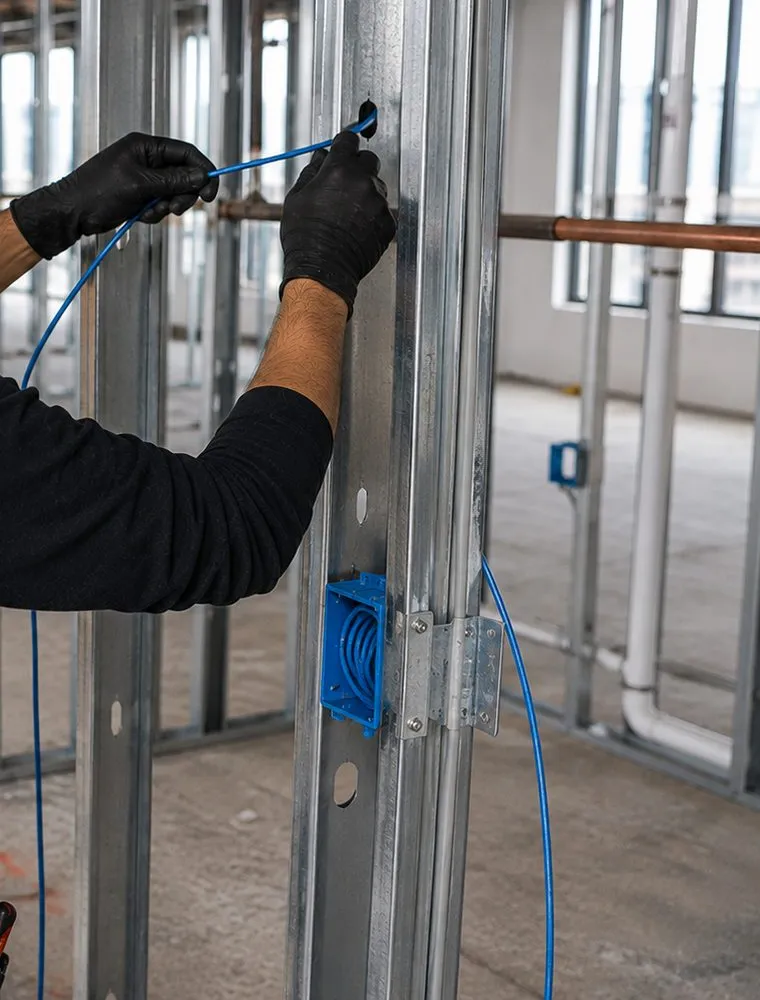
Sonos installation Cobble Hill, Brooklyn: gloved hands pulling blue cable through a punch-out in a steel stud above a blue low-voltage box in open framing
In an open steel-stud wall, gloved hands thread a blue cable through a punch-out in the stud; below, a blue mounting box already holds a coil of the same cable, with copper pipe and windows in the unfinished room beyond.
Sized to the House

How Many Sonos Speakers a Cobble Hill House Really Needs

Most Sonos plans start from a wish list. Ours start from a tape measure. A room's width, its ceiling height, what is on the far side of each wall and how the household actually moves between rooms decide how many speakers it can use. In Cobble Hill, where rooms are often narrower and taller than in newer housing, the honest count is frequently lower than the one on the shopping list — and the system sounds better for it.

Sound in a small room behaves differently from sound in a big one. Bass builds up between close, parallel walls, so a Sub that is pleasant in a 20-foot-wide family room can boom in an 11½-foot cottage parlor and travel straight through the party wall. Treble reflects quickly off plaster and glass, so a second speaker a few feet from the first can blur the sound rather than widen it. Trueplay, which Sonos says "measures how sound reflects off walls, furnishings and other surfaces," corrects much of this for a supported product in a given position, but it cannot make a room larger. The fix is choosing the right products and putting them in the right places.

A starting count by house type

HomeTypical Sonos plan we propose firstWhat we usually talk people out of
Warren Place cottage, two floorsA Beam or Ray under the TV downstairs; one Era 100 upstairs; a Roam 2 or Move 2 that goes out to the garden walk and comes back inA Sub and rear speakers in a living room under 12 feet wide
Owner's duplex in a rowhouse, two floorsSoundbar in the parlor; one speaker in the kitchen; one in the main bedroom; Sub only if the floor below is your ownA Sub over a tenant's bedroom; ceiling speakers in a parlor with original plasterwork
Whole single-family rowhouse, four floorsParlor soundbar; kitchen and garden-floor speakers; bedroom speakers upstairs; ceiling pairs on an Amp only where ceilings are plain and the route is clearA speaker in every room "because it's there"; Wi-Fi alone carrying four floors
Cobble Hill Towers or other courtyard apartmentSoundbar in the sitting room; one Era 100 in the bedroom; volume limits set for the courtyard sideIn-ceiling speakers under an 8-foot-3 ceiling; a Sub facing the shared yard
Church-conversion condoFree-standing speakers placed by measurement; Arc Ultra under the TV; a Sub only after listening in the roomAnything fixed to original masonry without the board's agreement
River Park apartmentArc Ultra with Sub Mini or Sub 4 depending on room size; Era 300 rears on stands or the wall; wired connection from the developer's jack if it tests cleanFighting the concrete for ceiling speakers when the room already sounds good

These are starting points, not package names. We change them as soon as the house tells us something the photos did not: a back parlor with an open archway that turns two rooms into one, a kitchen that is really part of the garden floor's living space, a bedroom whose wall is shared with a neighbour's nursery. The point is that every speaker on the final plan has a reason written beside it.

Why fewer products often means a steadier system

Every Sonos product on a network is something else that has to find the router, stay grouped and survive the next app update. Sonos's own system requirements cap a household at 32 products and list wireless range extenders, Ethernet-over-power adapters and guest networks among the setups it does not support. In a narrow house the more common failure is simpler: five or six speakers competing for the same crowded 2.4 GHz air that every neighbour's router is also using through the party walls. Sonos's interference guidance rates plaster as a high obstruction and asks for at least 18 inches between a Sonos product and other electronics. Fewer, better-placed products, with one of them wired, removes most of that strain.

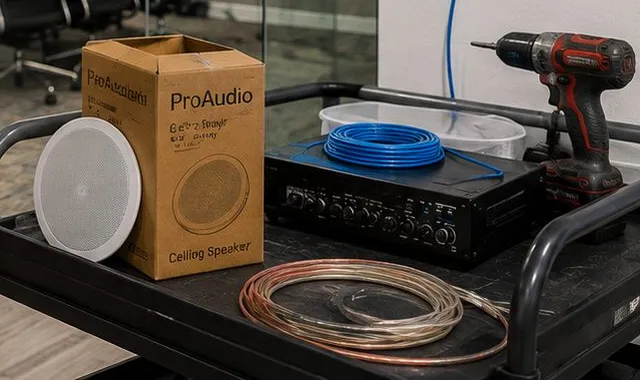
Sonos installation Cobble Hill, Brooklyn: tool cart with a round ceiling speaker, its cardboard box, an amplifier, a coil of blue cable, clear speaker wire and a cordless drill
On a black tool cart: a round white ceiling speaker leaning against its brown carton, a rack amplifier with a coil of blue cable on top, a loop of clear copper speaker wire and a cordless drill at the back.
Commercial Sonos

Business Sonos Installation in Cobble Hill

Cobble Hill's shops and restaurants sit along three streets and on the ground floors of buildings where people live upstairs. That arrangement shapes every business system we install here: the music has to make the room feel right without reaching the apartment above or spilling onto the sidewalk.

Atlantic Avenue

The neighbourhood's northern edge and its oldest shopping street. The Atlantic Avenue Business Improvement District represents more than 300 businesses from Fourth Avenue to the waterfront across Brooklyn Heights, Boerum Hill and Cobble Hill, and the Historic Districts Council notes the Middle Eastern shops and restaurants concentrated between Court and Clinton Streets.

Court Street

The eastern boundary of the historic district, lined with restaurants, bakeries, services and the Cobble Hill Cinemas at 265 Court Street, which opened in 1926 as the Lido and was split into more screens from 1982 onward. The Cobble Hill Association has worked with the Court Street Merchants Association on neighbourhood projects.

Smith Street

A block east of Court, a run of independent boutiques, bars and restaurants that NYC Tourism describes, with Court Street, as lined with "indie boutiques and locally owned specialty" shops. Narrow storefronts, deep rooms and back gardens are the norm.

Henry and Clinton Corners

Small ground-floor businesses on residential blocks: cafés, studios and offices under apartments, where the 42 dBA limit for commercial music measured inside a home is the number that decides the volume.

Professional Offices

Therapists, architects, dentists and small firms in converted rowhouse floors who want quiet background sound in a waiting room and nothing at all leaking into the treatment or meeting rooms.

River Park Ground Floors

Commercial and medical space in the new buildings on the former hospital site, with modern ceilings that take in-ceiling speakers easily and building managers who want paperwork first.

Compliance notes for business music in Cobble Hill

  • The apartment upstairs sets the limit. The city's noise code fact sheet states that commercial music in a store, restaurant or bar "shall not exceed 42 dBA as measured in any dwelling unit receiving the noise." In a building with homes above, we set Sonos volume limits per room and check the result with you before we leave.
  • No speakers aimed at the street. New York City Administrative Code §24-244(b) prohibits using a sound reproduction device for commercial advertising or to attract attention outside, or through an opening onto a public street. We mount and angle shop speakers into the room.
  • Licensed music. A personal streaming account is meant for personal use; businesses should use a service licensed for commercial playback. We set up whichever service you choose on the Sonos system but do not sell music licences.
  • Landmarked storefronts. Most of the shopping streets lie inside or beside the historic district. Speakers and wiring inside the shop do not change the facade; anything that would be visible on the exterior is a question for the Landmarks Preservation Commission, and we leave the facade alone.
  • Line voltage is not our trade. A new outlet for an Amp shelf, a dedicated circuit or a change to the panel goes to a licensed electrician; we coordinate the location with them.

Music that suits a small shop

A narrow storefront 15 or 20 feet wide rarely needs more than a pair of ceiling speakers or two Era speakers on brackets, plus perhaps one in the back room. What it does need is consistency: the same level every morning, no one turning it up at closing because the room emptied out, and a playlist that starts and stops with the shop. Sonos alarms can start music at a set time, room and volume; volume limits stop the level creeping up. We set both and show your staff the two things they are allowed to change.

Sonos installation Cobble Hill, Brooklyn: two gloved installers' hands aligning large display panels on a wood-slat wall, the screens showing a city skyline at dusk
Two installers, seen only by their arms and gloves, press large display panels level on a wall of vertical wood slats; the screens show a skyline and its reflection in water at dusk.
Your Questions Answered

Sonos Installation in Cobble Hill: Questions Answered

These are the questions Cobble Hill households ask that are particular to the houses here. Broader Sonos questions — dropouts, building Wi-Fi, board approvals, outdoor speakers — are answered on our Brooklyn Sonos page and the New York City Sonos hub.

Narrow houses, small rooms

What is the smallest set of Sonos products that covers a two-storey Warren Place cottage?

Usually three: a soundbar on the TV downstairs, one fixed speaker upstairs, and a portable that moves between the two and out to the garden walk. A Warren Place cottage is 11½ feet wide and 32 feet deep over two storeys, so each floor is effectively one or two rooms joined by open doorways or a short stair. A Beam or Ray covers the living space below, an Era 100 covers a bedroom above, and the portable fills whatever gap the household actually notices — the kitchen while cooking, the bathroom in the morning, the garden in summer.

That set also keeps the network simple: three products, one of them near the router, in a house small enough that Wi-Fi reaches every corner. If a fourth product is ever added, it should be because the portable keeps ending up in the same room every day, which tells you that room wants a speaker of its own.

Are rear surround speakers worth it in a living room that narrow?

Often not. Rear speakers need somewhere to stand behind or beside the seating, a little way from the side walls, and in a narrow room the sofa is usually against the back wall with the door at one end. Squeezed into the corners behind the sofa, rears end up so close to the listener's ears that they draw attention to themselves rather than widening the sound. A soundbar alone, set properly and tuned with Trueplay, usually gives a better result in a parlor under 12 feet wide.

If you watch a lot of films and the room has space at the sides of the seating, Era 100s on slim stands or wall brackets can work well. We try both before you buy: we can set the soundbar up first, and if you still want surround after a week, the rears are added on a short setup-only visit.

Can one portable Sonos follow us between the cottage's two floors and the garden instead of buying three speakers?

Yes, and in a small house that is often the best value. A Roam 2 or Move 2 joins the home Sonos system over Wi-Fi like any fixed speaker, so it can be grouped with the soundbar downstairs, carried upstairs at bedtime and taken out to the garden walk in summer. The Move 2 is rated IP56 and its charging base is for indoor use; the Roam 2 is smaller and lighter and rated IP67.

The trade-off is that a portable only plays where it is. If you want music upstairs and downstairs at once, or a speaker that is always in the kitchen, a second fixed product makes sense. We usually suggest starting with the soundbar and one portable, and adding a fixed speaker in the one room where you find yourself carrying the portable every day.

Original parlors and old fittings

We still burn wood in the parlor fireplace — is the mantel shelf a safe place for Sonos speakers?

Not while the fire is lit, and preferably not at all. A working fireplace sends heat up the face of the chimney breast and across the mantel shelf, and fine soot and ash settle there too. Sonos gives an operating range of 32–104°F for products such as the Amp — well below what a mantel can reach with a fire burning — and its guidance for products such as the Port is to keep them away from radiators and other heat sources and leave space around them for ventilation. A speaker cooking on a mantel won't fail at once; it will age faster and its plastics and grille will discolour.

The better spots in a Cobble Hill double parlor are usually the built-in shelving beside the chimney breast, a bookcase between the windows, or slim stands at the sides of the room. If the mantel is the only place that works visually, we keep the speaker toward the end of the shelf, away from the firebox, and you move it on the evenings you light a fire. Many households here use the parlor fireplace a handful of times a winter, and that arrangement works.

Will an Era 100 tucked into a bookcase shelf sound muffled?

It can, if the shelf is deep and the speaker is pushed to the back. A speaker inside a cavity excites the box around it, so the bass gets heavier and boomier and the detail softens. The fix is placement within the shelf: bring the speaker forward so its front is flush with the shelf edge, leave a few inches of air on each side, and keep books from leaning against it. Then run Trueplay with the speaker in that exact position, because the tuning measures the shelf as part of the room.

Built-in parlor bookcases in Cobble Hill rowhouses are often shallow enough to work well; deep, enclosed cabinets are less forgiving. We test the sound in the shelf you have in mind before deciding, and if it can't be made to sound right we say so and suggest the next spot.

Our dining room has hand-painted scenic wallpaper — how does music reach it without a single hole in the paper?

By keeping everything wireless and free-standing in that room. Scenic paper is irreplaceable in a way plaster is not; even a carefully patched hole shows. For a dining room like the one described in the 2019 Brownstoner listing on Kane Street, we use a free-standing Era 100 or a pair on a sideboard or in a corner, powered from an existing outlet, with the cord run along the baseboard behind furniture. Nothing is fixed to the papered walls, and nothing is cut into the ceiling directly above them.

If you want hidden sound, the ceiling may still be an option where the paper stops short of it, but we treat that as a separate decision with its own risk discussion. In most houses the free-standing answer sounds good enough that the question never comes up again.

The parlor still has its original two-prong outlets — can Sonos products plug into them?

This is a question for an electrician before it is one for us. Many older Cobble Hill houses still have ungrounded two-prong receptacles in some rooms. We don't alter line-voltage wiring, and we won't use three-to-two "cheater" adapters to force a grounded plug into an ungrounded outlet. If the products you have chosen need a grounded outlet where there isn't one, we mark the exact positions so a licensed electrician can install suitable receptacles, and we come back to finish once they are in.

It is worth asking anyway, because the answer helps the whole house: if the parlor still has original outlets, the electrician's visit is a good moment to check them. We often schedule the Sonos work for the week after so nothing waits on anyone.

Apartments, courtyards and new buildings

With 8-foot-3 ceilings in our Cobble Hill Towers apartment, will in-ceiling speakers feel too close to our heads?

They can. At that height a seated listener's ears are only four or five feet from the ceiling, so a speaker directly overhead sounds like it is in the room with you rather than filling it, and it is obvious where it is. The Cobble Hill Association's history of the Tower Buildings records ceiling heights of 8 feet 3 inches as built, which is low by rowhouse standards. Ceiling speakers in rooms like these work best when they are kept well away from the seating, toward the walls, and in pairs rather than singly.

There is also the question of what the building allows above your ceiling and how much of the masonry structure is in the way. For most Towers apartments we recommend free-standing or wall-mounted Sonos instead: a soundbar in the sitting room, an Era 100 in the bedroom, both on volume limits suited to the courtyard. It sounds better at that ceiling height and leaves nothing to patch.

The only wall for the TV in our condo is bare brick — will the soundbar sound harsh bouncing off it?

Bare brick is a hard, reflective surface, but in practice the harshness people hear usually comes from the whole room — brick on one side, large windows on another, hard floors and little soft furnishing — rather than the wall behind the bar. The Arc Ultra detects when it is wall-mounted and adjusts its EQ for the wall, and Trueplay measures the room as it is. Between them, much of the edge is taken off.

The rest is furnishing: a rug in front of the sofa, curtains on at least part of the glass, books on a shelf. These matter more than any speaker setting. For the mount itself, brick is the $65 wall line on our price list; we drill to a controlled depth with masonry anchors, and in a church conversion or other condominium we confirm with the board first that the exposed brick inside your unit can be drilled at all.

What should we check for Sonos during a house viewing, before we make an offer?

Four things, all visible in a normal viewing. First, where the internet enters the house and where the router sits; in many Cobble Hill rowhouses it is in the cellar, which means the upper floors will need a wired access point or a wired Sonos product. Second, whether closets and built-ins line up from floor to floor, which tells you whether a cable can go up the house without opening finished walls. Third, the ceilings in the rooms where you want speakers: plain plaster can be cut with care, while a cornice, medallion or decorative painting rules it out. Fourth, what is on the other side of each wall you would put a TV or speaker on — your own room, a tenant or a neighbour.

Take photos of each and send them to us; we can tell you from them roughly what a Sonos plan for that house would involve and cost from the Brooklyn price list. It won't change whether you love the house, but it avoids surprises after closing.

Shops on the avenue

Can our Atlantic Avenue shop point a speaker out the front door to draw people in?

No. New York City Administrative Code §24-244(b) prohibits using a sound reproduction device to attract the attention of the public outside, or through any opening onto a public street, for commercial purposes. That includes a speaker in an open doorway or aimed through the display window. We mount shop speakers to face into the room and set their volume so passers-by hear music only when the door opens, which is all most shops on the avenue want anyway.

If you want the street to notice you, the storefront, lighting and window display do that legally. Inside, a pair of well-placed speakers at a steady level makes people stay longer once they come in, and that is what the system is for.

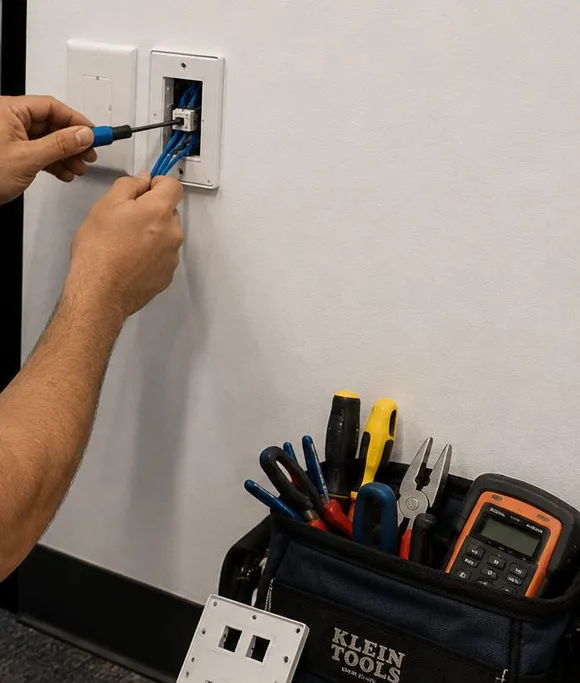
Sonos installation Cobble Hill, Brooklyn: hands with a small screwdriver seating a network jack into a white wall plate, a tool bag with pliers and a meter below
Bare hands use a small blue-handled screwdriver to seat a network jack into an open white wall plate, blue cables feeding into it; a tool bag holding pliers, screwdrivers and an orange meter sits on the floor below.
Equipment

Types of Sonos Systems We Install

We install and set up the Sonos products you buy from any retailer. The cards below say where each one tends to fit in a Cobble Hill home, which is often a different answer from the one on the box.

Arc Ultra

The flagship soundbar, a little over 46 inches long. Right for a 25-foot-wide parlor with a large TV, or a River Park living room; too long for many cottage walls and Towers sitting rooms. It adjusts its EQ automatically when wall-mounted.

Beam (Gen 2)

About 25½ inches long, on HDMI ARC or eARC. The soundbar we suggest most often in Cobble Hill, because it suits the narrower parlors and the TV sizes that fit between original windows.

Ray

The compact bar, connected by optical cable. Useful in a bedroom, a study or with an older TV that has no HDMI ARC port, and small enough for a shelf under a modest screen.

Era 100

The everyday speaker for kitchens, bedrooms, bookcases and small shops. One fills most Cobble Hill rooms; two make a stereo pair or rear surrounds where a room has space for them.

Era 300

A larger speaker with upward and sideways drivers. Best in tall rooms — a church-conversion living space, an 11-foot parlor — and, as a pair, as rears in a bigger room. Its wall mount is for studs only, not plain drywall.

Sub Mini and Sub 4

Bass units. The Sub Mini suits small and medium rooms; the Sub 4 is for larger spaces. In Cobble Hill we place a Sub only after asking who is on the other side of the floor and the wall, and often recommend going without one.

Amp

Powers passive ceiling or wall speakers; it reliably drives up to three pairs of Sonos architectural speakers wired in parallel. Needs a ventilated shelf, a network connection and an outlet, which in a rowhouse usually means a closet or the cellar.

Roam 2 and Move 2

Portables that join the home system on Wi-Fi. The Roam 2 is small and rated IP67; the Move 2 is larger, rated IP56, with an indoor charging base. Often the smartest second speaker in a small house.

Port

Connects Sonos to an existing amplifier or receiver, with analog and digital outputs and a 12-volt trigger. For households with a good hi-fi already in the parlor.

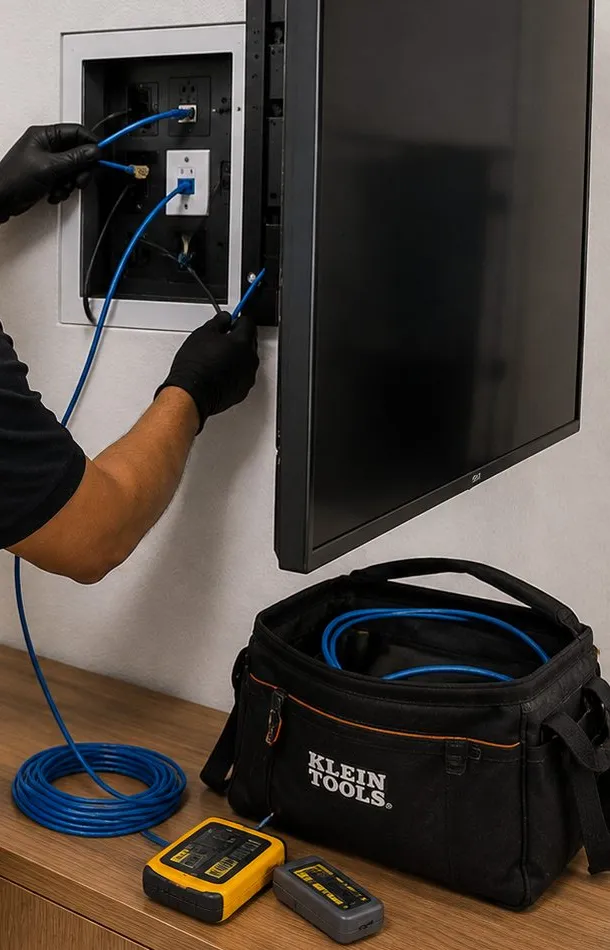
Sonos installation Cobble Hill, Brooklyn: gloved hands connecting blue network cables inside a recessed wall box beside a wall-mounted screen, a tool bag and two cable testers on a wooden counter
Gloved hands plug blue network leads into the ports of a recessed box set into the wall next to a mounted screen; below, a black tool bag holds a coil of blue cable and two small yellow and grey testers lie on the wooden counter.
AI Overview Reality Check

What AI Gets Wrong About Sonos Installation in Cobble Hill

We could not view Google's AI Overview from our build environment, so we did not invent one. The claims below are the ones that cost guides, product marketing and forum threads repeat — the material answer engines are built from — set against what we find in Cobble Hill houses.

Claim one: "More speakers means better sound"

Sonos product pages show grouped systems with a speaker in every room, and buyers' guides often recommend adding a Sub and rears to any soundbar. The implication is that a system improves with every product you add.

In a narrow room the opposite is often true. Close parallel walls build up bass, near reflections blur a second speaker into the first, and rear speakers jammed into corners behind a sofa draw attention to themselves. A Warren Place cottage living room 11½ feet wide is a different acoustic problem from the open-plan family rooms those guides are written for.

What actually improves sound in Cobble Hill rooms is position and tuning: the right single product placed carefully, then measured with Trueplay in that spot. We would rather install two products well than six that fight each other.

Claim two: "You need the Landmarks Commission's approval for anything in a historic house"

Because Cobble Hill is a historic district, owners often assume every change needs Landmarks Preservation Commission sign-off, and some online answers say as much.

The Commission's own permits page says an LPC permit for interior work is required when the work on the interior affects the exterior, or when the interior itself has been designated an interior landmark. Speakers, soundbars and low-voltage wiring inside a rowhouse normally do neither. The Commission's preservation staff will confirm for a specific job if you are unsure.

The facades are a different matter, and so is a condominium or co-op board, which can have rules stricter than the city's. We keep everything inside, leave the exterior untouched, and send any board the information it asks for.

Claim three: "Ceiling speakers are the clean, invisible choice for every room"

Sonos's own guide to ceiling speakers presents them as the unobtrusive option, and design sites echo that in-ceiling sound "disappears" into a room.

In Cobble Hill the ceiling is often the most valuable surface in the room. A foliate cornice, a plaster medallion or decorative painting rules out a cut nearby, and old lime plaster can crack despite careful work. In the Cobble Hill Towers apartments the ceilings are 8 feet 3 inches, low enough that overhead speakers sound close.

Ceiling speakers are excellent on plain upper-floor ceilings and in new construction. In original parlors and low courtyard apartments we usually recommend free-standing or wall-mounted products instead.

Claim four: "Professional Sonos installation costs about $500 to $1,000 per room"

National cost guides quote whole-home audio by the room, and figures in that range are widely repeated. One Reddit user wrote that a local company quoted "about $500 (all-in)" for a complete Sonos setup.

A Cobble Hill job priced per room is usually overpriced, because many of the rooms need nothing fixed at all. Setting up Sonos you already own is $125 on our Brooklyn price list; hanging a soundbar is $129 plus the wall line; ceiling speakers on an Amp are quoted after a walkthrough because the plaster and the route decide the labour.

Ask for itemised lines. If a quote can't tell you what each room costs and why, it is guessing.

Claim five: "A mesh Wi-Fi kit fixes Sonos in any old house"

Mesh kits are sold as the answer to any dead spot, and many forum replies suggest one for Sonos dropouts.

Sonos says that in a mesh network with a wired Sonos setup, the Sonos product must be wired to the primary node, and it lists wireless range extenders and Ethernet-over-power among unsupported setups. Its interference guidance rates plaster as a high obstruction. A rowhouse with the router in the cellar and four plastered floors above is close to the worst case for a mesh that relies on wireless backhaul.

In a cottage or a single-floor apartment, a good router alone is often enough. In a four-storey rowhouse, one cable up the house to an access point or a wired Sonos product does more than any wireless kit.

Claim six: "A bigger soundbar is always the upgrade"

Reviews rank soundbars by size and channel count, and the flagship naturally comes out on top.

The Arc Ultra is a little over 46 inches long. Many Cobble Hill TV walls sit between two original windows or beside a chimney breast, and the screen that fits there is often 55 inches or smaller. A bar wider than the TV looks wrong and can block the window trim. The Beam, at about 25½ inches, is frequently the better match.

We measure the wall and the TV first, then recommend the bar. The flagship is the right choice for a wide parlor or a River Park living room, not by default.

Claim seven: "Sonos speakers sound the same wherever you put them"

Marketing for smart speakers stresses automatic tuning, which can suggest placement no longer matters.

Sonos's Trueplay measures how sound reflects off walls, furnishings and other surfaces and adjusts for the room, and Sonos advises re-tuning after a speaker is moved. That is the point: the tuning is for one position. A speaker pushed into a bookcase cavity, pinned in a corner or perched on a warm mantel needs a better spot, not just a re-run of Trueplay.

We place first, tune second, and show you how to re-run Trueplay yourself if you move things around later.
A Sonos System Sized to Your Cobble Hill House

Send the width of the house, the floors you want music on and what you already own. We'll tell you what to keep, what to skip and what it costs.

Get In Touch

Request a Free Quote

A few lines are enough to price most Cobble Hill jobs: the type of house, the floors, the Sonos products, and the walls and ceilings in the rooms you care about. The total comes back in writing the same business day. To talk it through instead, phone (347) 934-8335.

✅

We Got Your Request!

Thank you — your Cobble Hill request is with an installer today. If it can't wait, call (347) 934-8335.

How It Works

Our Installation Process

Six steps, whether the job is one soundbar in a Warren Place cottage or a four-floor system in a Clinton Street rowhouse. The Cobble Hill difference is mostly in the first two.

1. Measure and count the rooms

From your photos and a few measurements we list each room, its width and ceiling, what is on the far side of each wall, and which Sonos products you own. The written plan gives every proposed speaker a reason, and a price from the Brooklyn list.

2. Mark what must not be touched

On arrival we walk the rooms with you and note cornices, medallions, mantels, wallpaper and any surface you want left alone. Those are kept off the plan before a tool comes out.

3. Settle the network first

We find where the internet enters, test the router, and wire one product or an access point where the house needs it, so the system has a steady base before any speaker is added.

4. Place, mount and run cable

Speakers go where the plan says, soundbars on fixings chosen for that wall, and cable along hidden routes or in painted channels. Ceilings are cut only where you agreed, with the obstruction survey done first.

5. Tune each room in place

Trueplay is run in every supported room with the speaker in its final spot; volume limits are set where neighbours are close; the Sub, if there is one, is set for the floor below.

6. Name, group and hand over

Rooms are named the way your household talks about them, music services are signed in, and we show you how to group rooms, change limits and re-run Trueplay before we clean up and leave.

Sonos installation Cobble Hill, Brooklyn: inside a work van, ladders on a rack above spools of blue and white cable, a gloved hand lifting a tool bag beside red tool cases
The back of a work van: folded ladders on a rack, spools of blue and white cable on a shelf, black and red stacking tool cases below, and a gloved hand lifting out a black tool bag.
Coverage Area

Sonos Installation Near Cobble Hill's Landmarks

We work on every block from Atlantic Avenue to Degraw Street and from Court Street to the BQE. These six places are the ones customers use to tell us where they live.

Cobble Hill Park, Clinton Street at Verandah Place

On Clinton Street between Verandah Place and Congress Street. Residents fought off an apartment building on the site; the park was dedicated on July 14, 1965 as the city's first "vest pocket" park and rebuilt in 1989 with bluestone, cast iron and herringbone brick (Cobble Hill Association; NYC Parks). Thomas Wolfe lived on Verandah Place in the 1930s.

Warren Place Mews

The workingmen's cottages Alfred Tredway White built in 1878–1879, two rows of two-storey houses facing each other across a narrow garden between Warren and Baltic Streets, with larger three-storey houses at the ends of each row (Cobble Hill Association).

Cobble Hill Towers, Hicks Street

White's Home Buildings (1876–77) at Hicks and Baltic and Tower Buildings (1878–79) between Warren and Baltic, model housing with exterior stairs, open balconies and courtyards. Restored between 1978 and 1986 to 188 apartments (Cobble Hill Association; Hudson Companies).

Christ Church, Clinton and Kane Streets

Richard Upjohn's Gothic Revival church of 1841–42, now Christ Church and Holy Family. Upjohn and later his son made their home at 296 Clinton Street (Wikipedia; Cobble Hill Association).

The Landmark at Strong Place

Minard Lafever's Strong Place Baptist Church of 1851–52, at Strong Place and Degraw Street, later St. Francis Cabrini Chapel and converted into 23 condominiums in 2010 (Wikipedia; CityRealty).

Cobble Hill Cinemas, 265 Court Street

A neighbourhood movie house that opened in 1926 as the single-screen Lido Theater and was twinned in 1982 (Wikipedia; H&K Cinemas).

The neighbourhood takes its name from a conical hill called Cobleshill or Ponkiesbergh that stood near where Atlantic Avenue, Pacific Street and Court Street now meet; Continental troops fortified it in 1776 as "Smith's Barbette," according to NYC Parks. Nothing of the hill remains, but the name stayed.

We also serve the neighbourhoods around Cobble Hill: Brooklyn Heights across Atlantic Avenue, Boerum Hill east of Court Street, Carroll Gardens south of Degraw Street, the Columbia Street Waterfront across the BQE, Red Hook, Gowanus, Downtown Brooklyn and DUMBO, all on the same Brooklyn price list.

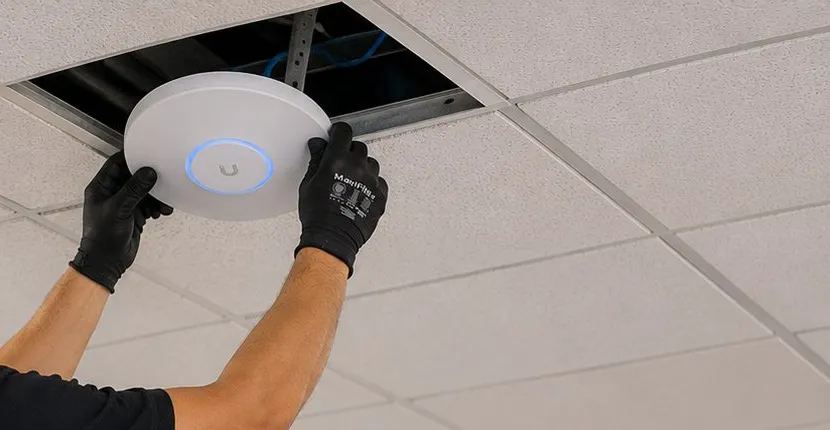
Sonos installation Cobble Hill, Brooklyn: gloved hands pressing a round white wireless access point with a glowing blue ring up into an open ceiling tile
Black-gloved hands push a round white access point, its blue ring lit, into an opening in a white acoustic tile ceiling, with blue cable visible in the void above.
Pricing

Sonos Installation Cost in Cobble Hill

Cobble Hill is priced on the Brooklyn list, which is the base rate for the whole company. Every line below is published on that list; nothing is added on the day without your agreement, and anything we cannot price without seeing a ceiling or a cable route is quoted in writing after a walkthrough.

LineBrooklyn priceWhere it applies in Cobble Hill
Sonos setup$125Every product joined to one system, rooms named, music services signed in, Trueplay where supported
Soundbar wall-mounted under the TV$129Arc Ultra, Beam or Ray on its bracket in a parlor, bedroom or condo living room
Soundbar placed on a console$79Rooms where nothing should be drilled: papered walls, rentals, staged houses
Sanus soundbar bracket$84.99If you don't already have a mount for the bar
In-wall concealment$169In-wall power and cable kit behind the TV, where the wall is hollow and may be opened
Paintable cord cover$59Brick party walls and plaster you'd rather not open
Cable run to a cabinet or other spot$99Up to 25 ft, for example from the TV to a built-in beside the chimney breast
A/V receiver$129Connecting a receiver, for example to a Sonos Port
Universal remote$99Programmed for TV, soundbar and sources
Streaming device setup$49Each device
Full home theater$350Multi-component system setup
Setup-only visit$195 first hourThen 30-minute blocks: dropouts, regrouping, re-joining after a router change
TV mounted on the same visitFrom $179.99Brooklyn TV mounting base for 32″–55″ on drywall over wood studs, before wall and size add-ons
Ceiling or wall speakers on AmpQuoted at walkthroughDepends on the plaster, the joists and the route to the Amp
Access points and network cableQuoted at walkthroughDepends on floors, closet alignment and where the internet enters

Wall and access lines

ConditionPriceWhere we meet it here
Drywall on wood studs$0Renovated floors, River Park townhouses
Metal studs+$30River Park towers and other new buildings
Plaster+$45Most rowhouse rooms, Cobble Hill Towers
Brick or stone+$65Party walls, exposed brick in conversions
Concrete or cinder block+$75Tower columns and slab walls
Tile or marble+$95Kitchens and bathrooms
Plywood backer board$85When studs fall in the wrong place for a bar
High mount, above about 8 ft$75Tall parlors and converted sanctuaries
Walk-up, 3rd floor and above, no elevator$40Upper floors of rowhouses and walk-up apartments
Box removal$25If you'd like the cartons taken away
Certificate of insuranceFreeFor a condominium board, managing agent or landlord

Five Cobble Hill totals, added up

Each total uses only the lines above, to show how a written quote is built. Your number depends on the wall and the floor we actually find.

ExampleLinesTotal
Warren Place cottage: Ray on the console, an Era 100 upstairs and a portable joined to one system$79 console placement + $125 Sonos setup$204
Kane Street parlor: Beam on a plaster wall with our bracket, whole system set up$129 + $84.99 bracket + $45 plaster + $125 setup$383.99
Rowhouse back parlor: Beam on the brick party wall, cord cover instead of opening the wall$129 + $84.99 bracket + $65 brick + $59 cord cover + $125 setup$462.99
River Park apartment: Arc Ultra on a concrete wall using its own Sonos mount$129 + $75 concrete + $125 setup$329
Top-floor walk-up: Era speakers and a soundbar re-joined after a new router$195 setup-only first hour$195

Included, and not included

  • Included: placement, mounting, connecting, joining every product to the right system, room names, music services, Trueplay, volume limits where you want them, and cleaning up.
  • Not our trade: new outlets and any line-voltage work go to a licensed electrician; plaster repair around a cut goes to a plasterer; anything on the facade is a matter for the owner and the Landmarks Preservation Commission.
  • Products: Sonos products are yours to buy from any retailer; brackets, cable, raceway and in-wall kits come from us at the lines above.
  • Return trips: if we arrive and can't start — products not delivered, no access to the room or the cellar — the $150 return-trip fee applies. Rescheduling with 24 hours' notice is free.
  • Old plaster: century-old plaster can crack despite slow, careful cutting. We point out the risk before any cut and proceed only with your agreement.

National averages versus a Brooklyn installer. Cost guides price an average room in an average house. They don't price an 11½-foot cottage that needs two products, or a parlor where the ceiling is off-limits. Every line we charge is on our Brooklyn TV mounting price list.

Shop Our Systems

Sonos Installation Packages & Pricing

Three bundles cover most Cobble Hill bookings. Each price is simply our published Brooklyn lines added together, so you can check the sum; wall and access lines are added only when your room needs them.

Starter — Sonos Setup

$125

The Sonos setup line on its own: everything you own joined to one system, rooms named by floor, music services signed in, Trueplay where supported. The right package for most Warren Place cottages and for anyone whose speakers are free-standing.

Standard — Soundbar on the Wall + Setup

$338.99

The bundle most parlors end up with: $129 to hang a Beam, Ray or Arc Ultra beneath the screen, $84.99 for the Sanus bracket it hangs from, and $125 to bring the whole household onto one system. Wall surcharges stay separate — $45 for old plaster, $65 for party-wall brick, $30 for the steel studs in the newer towers.

Premium — Soundbar, Hidden Wiring + Setup

$507.99

Take the $338.99 Standard bundle and add the $169 in-wall kit, which brings power and the HDMI lead up inside the wall so the space under the screen stays clean. That only works where the wall is hollow and you are content for us to open it — a renovated floor, a River Park partition. Solid brick gets the $59 paintable cover instead.

Bring Your Own Equipment — Labor Only

Bought the bracket already? Then the bill is labor alone. Hanging the bar is $129, the surcharge for your wall type is added if one applies, and system setup is $125 if you want it. A mount you supply is covered by whoever made it, not by us. Should it be wrong for lath-and-plaster or brick, you'll hear that before a hole goes in, along with the Sanus alternative.

Ceiling Speakers, Whole-House Networks and Shops

Ceiling pairs on an Amp, a cable up a four-storey house to an access point, or a shop system with volume limits for the apartments above are priced in writing after we have walked the space. For guidance, our NYC AV page publishes whole-home audio at $800 to $2,500 per zone installed; your Cobble Hill quote itemises where each room falls before anything is booked.

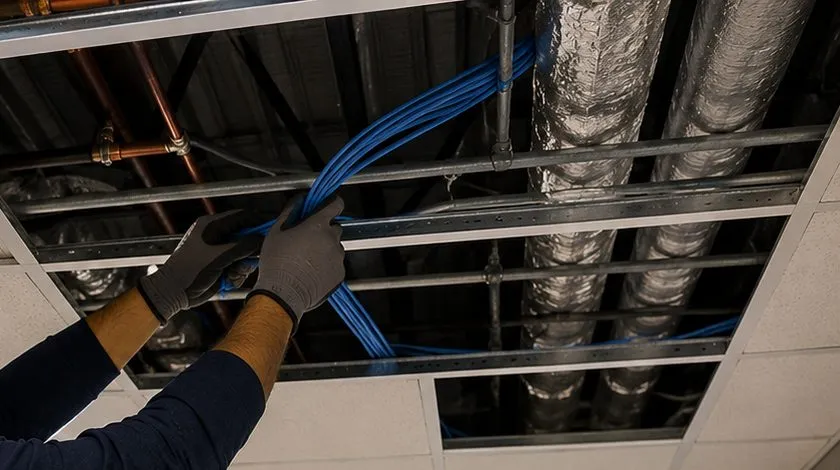
Sonos installation Cobble Hill, Brooklyn: gloved hands feeding a bundle of blue cable across an open suspended-ceiling grid beside foil ductwork and copper pipe
Grey-gloved hands draw a bundle of blue cable across the metal runners of an open ceiling, with silver foil-wrapped ducts to the right and copper pipe in the void above.

Want the Cobble Hill Number in Writing?

House width, floors, where the router is and a photo of each wall and ceiling you're thinking about. That's enough for a written Brooklyn-list price.

Quiet Blocks

Keeping the Music on Your Side of the Wall

Cobble Hill's streets are quiet, and the people who live on them notice sound. That is not a reason to avoid a good system; it is a reason to set one up with the neighbours in mind from the start. Almost every complaint we hear about home audio in this neighbourhood comes from the same few causes, and each has a practical fix.

Bass is what travels

Voices and treble are stopped well by brick and plaster. Low frequencies are not: they move the structure itself, so a Sub on a timber floor or against a party wall is heard as a hum two floors away even when the music is at a sensible level in the room. In a rowhouse split between owner and tenant, or a Towers apartment with neighbours on four sides, we place a Sub away from shared walls, off the floor on a dense pad where the floor below is someone else's, and set its level by ear with you in the room. Often the right answer is no Sub at all; a Beam or Arc Ultra set properly produces enough low end for a small room without one.

Courtyards and garden blocks carry sound sideways

The Tower and Home Buildings were built around courtyards so that every apartment had light and air, and the rowhouse blocks enclose a ring of back gardens. Both arrangements reflect sound between facing walls. On a summer evening with the windows open, music from one apartment can be clearer across the yard than in the next room. We set volume limits on rooms whose windows face a courtyard or the gardens, and show you how to raise them when the windows are shut and lower them again in summer.

The BQE side of the neighbourhood

Households along Hicks Street live with the constant sound of the expressway in its trench; some residents on Reddit describe it as soothing, others as something to filter. Either way it raises the background level in rooms facing west, and people tend to turn the music up to match. The result is a room that is comfortable for you and loud for the neighbour on the quiet side. We set a volume limit that suits the quieter rooms and tune the west-facing ones so speech stays clear without extra level.

Quiet hours, used on purpose

Sonos lets you limit the maximum volume for each product in the app, and the soundbars have night and speech settings that keep dialogue clear while holding back sudden peaks. We set these up as part of every Cobble Hill handover, explain what each does, and leave the controls with you. The city's noise rules, the managing agent's house rules and your own neighbours all point the same way: a level that is right in the room, and quiet beyond it.

Floor by Floor

A Cobble Hill Rowhouse, Floor by Floor

Not every house here follows the same plan, but most four-storey rowhouses in the district share a pattern, and each level asks something different of a Sonos system.

The cellar

Where the internet usually arrives and the router often sits. Plaster and brick above it weaken Wi-Fi floor by floor, so the cellar is where the network plan starts: a good router, and either a wired Sonos product on the floor above or a cable up the house to an access point. An Amp for upper-floor ceiling speakers can live here if the cable route allows, on a ventilated shelf away from the boiler.

The garden floor

Often the kitchen and family room, sometimes a separate rental apartment. Ceilings are lower than the parlor's, surfaces are hard, and the back windows face the gardens. One Era 100 usually covers a kitchen; a family room with a TV takes a Beam or Ray. If this floor is a tenant's home, it is a separate system on a separate network, and the parlor Sub, if any, moves away from the floor above it.

The parlor floor

The tallest ceilings and the most original detail: cornices, a medallion perhaps, mantels, pier mirrors, pocket doors or an arch between front and back rooms. Free-standing and wall-mounted products are the rule here. The TV and soundbar go on whichever wall the household agrees, clear of the mantel and the mirror; a pair of Era speakers or the bookcases beside the chimney breast handle music. Ceiling cuts in the parlor are rare and always discussed first.

The upper floors

Bedrooms, a study, sometimes a top-floor rental. Ceilings are plainer and lower, and this is where in-ceiling speakers on an Amp most often make sense if you want them. Otherwise an Era 100 per bedroom, with alarms and volume limits set per room, is enough. Wi-Fi is weakest here in a house with the router in the cellar, which is why the network plan comes first.

Complete Services

Every Sonos Installation Service in Cobble Hill

Sonos rarely arrives alone. These are the related AESS services Cobble Hill households book alongside it, each priced from the Brooklyn list.

AESS Sonos Installation in Brooklyn

The borough page this one sits under, covering multi-floor networks, owner and tenant systems and gardens across Brooklyn.

TV Installation in Cobble Hill

Mounting the screen on the same visit as the soundbar, with fixings for plaster, brick or concrete.

Soundbar Installation Brooklyn

For non-Sonos soundbars and subwoofers, set up with the same care for walls and neighbours.

Structured Cabling, Cobble Hill

A network jack on every floor of a rowhouse, ideal while walls or ceilings are open for renovation.

Network Installation in Brooklyn

Routers, switches and access points that give Sonos a steady base from cellar to top floor.

AV and Sound Installation, Brooklyn

Receivers, projectors and larger audio systems beyond what Sonos does on its own.

Cobble Hill Intercoms

Door entry for rowhouses and small apartment buildings, often wired on the same visit.

Home Automation in Brooklyn

Lighting, shades and scenes that can include Sonos rooms.

Service Policies

Scheduling, rescheduling, return trips and what to expect on the day.

Field Notes

Field Notes: What We Look At First in a Cobble Hill House

These are working notes from our installers on how a Cobble Hill walkthrough goes, not a story about any one customer.

We start at the front door and count widths before anything else, because in this neighbourhood the house can be 11½ feet or 25. Then we go down to the cellar to find the internet, because everything above depends on it. On the parlor floor we look up before we look at the walls: a cornice or medallion takes the ceiling off the plan at once, and an arch or pocket doors decide whether front and back parlors are one listening space or two. We ask which floors belong to whom; a tenant downstairs changes where a Sub can go and whether the house needs two networks. We look at the mantels to see whether the fireplaces are used, and at the bookcases to see whether a speaker can sit at the front of a shelf. In the courtyard apartments on Hicks Street we open the windows and listen to the yard. In the new buildings at the hospital site we test the developer's data jacks before relying on them. Only after all that do we talk about products, and by then the list is usually shorter than the one the household started with.

FAQ

Cobble Hill Sonos Installation FAQ

Can an Era 100 go high on the wall of a child's bedroom, out of reach of small hands?
+

Yes. Sonos sells a Sanus wall mount made for the Era 100, and fixed high on the wall it keeps the speaker's buttons and cable away from toddlers. In an old rowhouse bedroom we fix the mount into a stud or use anchors chosen for the plaster, run the power lead down in a slim painted channel so there is nothing to pull, and set a volume limit for the room in the app. The mount and fixing are itemised in your written quote before the visit.

If we rearrange the parlor furniture later, do we need you back, or can we re-tune the speakers ourselves?
+

You can usually do it yourselves. Sonos advises re-running Trueplay after a speaker is moved, and on supported products it takes a few minutes per room from the app; most products need an iPhone or iPad for the full tuning, while some newer ones offer a quick tuning on Android too. At handover we show you where the setting is and walk through it once. If a move means taking a soundbar off one wall and hanging it on another, that is a new mount and we come back for it.

We're staging the house for sale. Can a Sonos setup go in for showings and leave with the furniture?
+

Yes. For a staged house we keep everything free-standing: the soundbar on the console at the $79 placement line, Era speakers on shelves or stands, and the system set up for $125 so the agent can play music during viewings from a phone. Nothing is fixed to walls, so the rooms photograph as the buyers will inherit them, and the whole setup leaves with your furniture. If the buyers want it, it can also stay.

Do we have to tell the neighbours before you drill into the party wall?
+

We recommend it, as a courtesy. Drilling for a soundbar bracket takes a few minutes and is loud on both sides of a brick wall, and the people next door will hear it clearly. A note the day before with the time of the visit avoids surprise. If your building has house rules about working hours or notice, or a condominium board that expects to be told, follow those; we can provide a certificate of insurance free of charge if anyone asks for one.

Will the power have to be shut off in the house while you work?
+

No. Sonos installation is low-voltage work: speaker wire, network cable and products that plug into existing outlets. We do not open electrical panels or switch off circuits. The only time power becomes part of the job is when a new outlet is needed for an Amp, a soundbar or an in-wall power kit, and that is done by a licensed electrician, either before our visit or on a schedule we agree with them.

Can the rooms in the Sonos app be named the way we talk about the house, like front parlor or garden floor?
+

Yes, and we do it as part of setup. Room names in the Sonos app are free text, so a rowhouse can have Front Parlor, Back Parlor, Garden Kitchen and Top Floor rather than Living Room 1 and 2. Clear names make grouping easier for everyone in the house, and for voice control if you use it. We agree the names with you before we start so the list in the app matches the way the household already speaks.

All Areas Served

Sonos Installation Across Brooklyn and New York

This Cobble Hill page sits under Sonos installation in Brooklyn, which sits under the AESS New York City Sonos hub. Every Sonos page in the series is listed below.

AESS also installs cameras, intercoms, door access and networks; see the Abstract Enterprises Security Systems home page and read about the company before you book.

Sources

Where the Cobble Hill Facts Come From

Every local figure and landmark on this page comes from a published source. Prices come only from the AESS Brooklyn price list.

Sonos Silent on a Cobble Hill Block Tonight? We Can Help

A new router, a provider's box swap or a power cut is the usual reason a working system stops. Call (347) 934-8335; we book the next open 2-hour window, and most of these are fixed within one to two hours of arrival.

Sonos Installation Cobble Hill — Licensed, Insured, Sized to the House

Abstract Enterprises Security Systems · 1282 Troy Ave, Brooklyn, NY 11203 · (347) 934-8335 · WhatsApp (718) 679-0359 via wa.me

NYS Low-Voltage Licence #12000287431 · 100% Licensed & Insured · Same-Day Estimates · Rated 4.7★ from 201 Google Reviews

Sonos products carry their manufacturer's warranty. Full terms — including 50% deposit, one-year parts-only warranty on AESS-supplied products, and the late-fee schedule — are set out in the service agreement. See our warranty page.

Page reviewed and updated October 17, 2026. Changelog: Cobble Hill page launched as a neighbourhood child of the Brooklyn Sonos page, covering Greek Revival and Italianate rowhouses, the Warren Place cottages, Cobble Hill Towers, church conversions, River Park and the shopping streets.