Licensed Low-Voltage Contractor · St. George to Tottenville · Indoors, Decks & Yards
Sonos Installation in Staten Island
Deck & Pool Zones · Hi-Ranch Two-Level Systems · Two-Family Houses · Raised Shore Homes · Arc & Sub Rooms
A Sonos system on Staten Island usually has to work in two places at once: inside a house that sprawls over two or three levels, and outside on a deck, a patio or around a pool. We plan the network first so every speaker stays connected from the garage-level router to the far end of the yard, mount the soundbar and surrounds properly, wire outdoor speakers to a Sonos Amp kept dry indoors, aim them at your own lawn rather than the house behind, and tune each room. You buy the Sonos gear wherever you like; we bring the brackets, cable and know-how. Arrival windows are two hours long, 8 AM to 8 PM, every day of the week.
Reviewed and updated October 17, 2026 · Written by Anwar Timothy, NYS licence #12000287431
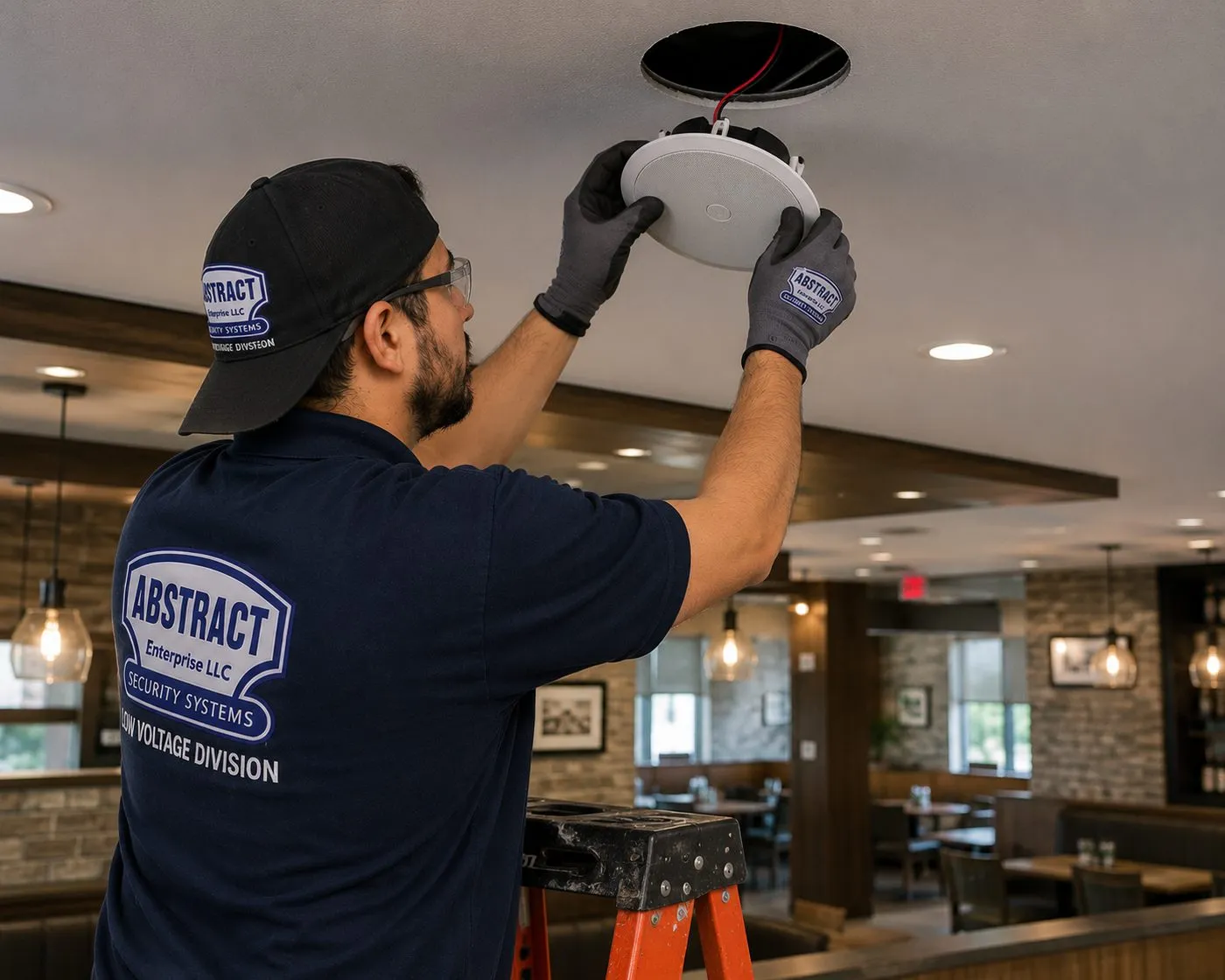
A ceiling speaker being seated in its cut-out with the speaker wire already pulled through; the same method suits a kitchen or a finished basement.
Staten Island Sonos Quote
Indoors, outdoors or both? Tell us the rooms and the yard and we call back that working day
✅
Request Sent!
We'll call you back the same business day.
25+
Years Experience
✓
Same-Day Estimates
100%
Licensed & Insured
4.7★
201 Google Reviews
Planning music for the backyard before summer, or a home theater for the den? Call (347) 934-8335 or send the short form. A list of your Sonos products and a couple of phone photos of the TV wall and the back of the house are enough for a written price built from the lines published further down.
Sonos setup is $125 on our price list; outdoor and in-ceiling zones are quoted in writing after a look at the house
No bridge toll, travel or mileage line on a Staten Island invoice, as on our Staten Island price list
Licensed by New York State for low-voltage work (#12000287431) and insured; the van arrives inside a two-hour window you pick, any day
Most Sonos advice online is written for an apartment: one router, a few rooms on one floor, and a neighbor on the other side of a wall. Staten Island is built differently. The Citizens Housing & Planning Council reports that 83 percent of the borough's housing units are in one- or two-family homes, and American Community Survey figures republished by Point2Homes count about 62,000 detached houses and another 45,000 attached ones. Those are houses with a basement or a garage level, a main floor, often a bedroom floor above, and a yard out the back. A speaker system has to reach all of that, and in summer it is expected to reach the deck and the pool as well.
That changes where the work is. In a Manhattan one-bedroom, the hard part of a Sonos install is usually the crowded Wi-Fi and the board's rules. In a Great Kills hi-ranch or a Westerleigh colonial, the hard parts are distance and levels. The internet line often comes in at the lowest floor, by the garage or the boiler, and the router stays wherever the cable company left it. From there the signal has to climb through a floor, cross the main living space and then get out through an exterior wall to a speaker on the deck. Sonos's own support pages rate brick as a medium obstacle for wireless and plaster and concrete as high ones, and the outside wall of a Staten Island house is frequently brick-faced or block. Sonos also states plainly that wireless range extenders are not supported. So the answer to a backyard speaker that cuts out is rarely "buy a booster"; it is usually a cable, an access point, or a better place for the router.
The second difference is that the yard is a room. Many Staten Island houses have a deck, a patio, a pool or an outdoor kitchen out the back, and when we checked Zillow in October 2026 there were 168 Staten Island homes for sale listed with a pool. Music out there means weather-rated speakers on a wall, a post or a deck structure, wired back to an Amp that lives indoors, or a portable speaker that comes in at night. Each choice has a different price, a different lifespan near salt air, and a different effect on the people next door.
The neighbors are the third difference. Lots here are close together, and the houses on either side and behind often have their own decks facing yours. Residents notice. In r/statenisland, people have started threads about bass thumping every Saturday night in Willowbrook and about incredibly loud bass in the Westerleigh area, apparently from an outdoor source. Citywide, the policy site Vital City notes that residential noise, including music and parties, accounts for half of all 311 noise complaints. A good outdoor install points the speakers into your own yard, keeps them low and spread out rather than loud and few, and gives you a volume limit you can set once and forget.
The fourth difference is the shoreline. After Hurricane Sandy, PBS NewsHour reported that more than 2,100 Staten Island homes were destroyed, and the city's Build It Back program repaired and raised substantially damaged homes so they meet flood elevation standards. In Midland Beach, New Dorp Beach, Ocean Breeze and along the South Shore, plenty of houses now have their living space a full storey above the street. For a Sonos system that means long vertical runs from the service entry, nothing important left at ground level, and outdoor gear chosen for a coastal climate. We plan for that from the first walkthrough, not after the first storm.
There are apartments too. The North Shore along Bay Street is the most built-up part of the borough and is getting denser: the Municipal Art Society describes the Bay Street Corridor rezoning as a 20-block, 45-acre area in Tompkinsville, Stapleton and St. George expected to add about 2,560 homes, and the 15-storey Lighthouse Point rental tower next to the ferry terminal has 115 apartments. Those homes behave more like the rest of the city: neighbors' networks close by, building rules, and walls you may not be allowed to open. We install there as well, with renter-friendly methods.
Most Staten Island owners who add Sonos to the yard pair it with a better home network. If the Wi-Fi is already weak on the second floor, it will be worse on the deck. That is why many of our Sonos jobs include a wired access point or an Ethernet run, and why we offer home network installation on Staten Island alongside the speakers.
Staten Island facts that shape a Sonos plan
83 percent of Staten Island's housing units are in one- or two-family homes (Citizens Housing & Planning Council, October 2024) — houses with several floors and yards, not single-floor flats.
About 22 percent of units are in two-unit buildings (ACS data via Point2Homes) — two households under one roof, often with two internet accounts and two sets of speakers.
1973 is the median year of construction for Staten Island housing (same source) — mostly drywall and wood framing, with older plaster houses concentrated on the North Shore.
67.7 percent of homes are owner-occupied (U.S. Census QuickFacts, 2020–2024) — owners can open walls and add exterior speakers; renters need methods that leave no trace.
More than 2,100 Staten Island homes were destroyed by Sandy (PBS NewsHour, 2015) — many rebuilt or raised houses now have their main floor a storey above grade.
1,663 Staten Island Con Edison customers reported outages during a September 2026 nor'easter (SILive) — the network and the speakers need to come back by themselves after the power does.
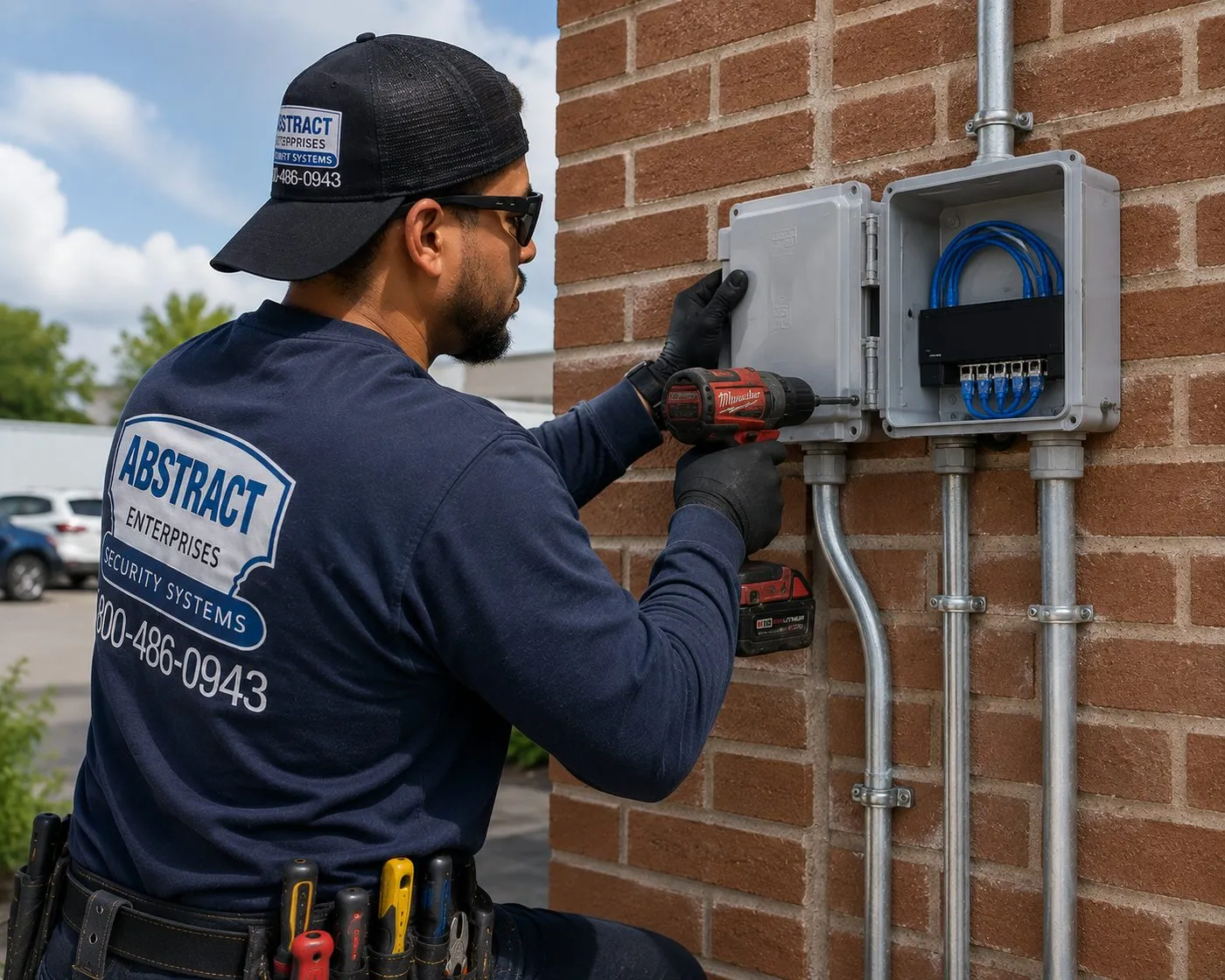
Cable leaving a building through conduit and a weatherproof enclosure on brick: the kind of sealed exterior entry outdoor speaker wire needs.
Repair & Rescue
Yard Speakers Gone Quiet on Staten Island?
Deck speakers that cut out halfway through a song, a Beam that has vanished from the app since the router was swapped, a Sub that will not pair, or rooms that drop every evening — these are fixable, usually in one visit. A setup-only visit on Staten Island is $225 for the first hour, then billed in 30-minute blocks, and most network and pairing problems are sorted within an hour or two once a technician is on site. Call (347) 934-8335 and we offer the earliest open two-hour window, the same day when one is free.
Every job below is done by our own technicians, licensed for low-voltage work in New York State. We don't sell Sonos products, so the advice on what to buy is about what suits the house, not what is on a shelf.
🌿
Deck, Patio & Pool Speakers
Sonos Outdoor speakers by Sonance, or other weather-rated passive speakers, mounted under eaves, on posts or on the house wall and wired to a Sonos Amp indoors. Aimed into your yard, with wire routed through sealed penetrations rather than strung across the siding.
📺
Arc Ultra, Beam & Ray Soundbars
Mounted under the TV on the right bracket for drywall, block or a stone-faced fireplace, connected to the TV's HDMI eARC or ARC port so one remote controls the volume, then added to the rest of the Sonos rooms.
🔊
Surrounds & Sub for the Den
Era 100 or Era 300 rears and a Sub 4 or Sub Mini placed for the room you actually have — often a lower-level family room with a slab floor and a low ceiling — then tuned with Trueplay where the phone supports it.
⭕
Ceiling & Wall Speakers on Amp
In-ceiling or in-wall architectural speakers cut into kitchens, open-plan main floors and finished basements, with the Amp in a ventilated closet or utility room and the speaker wire fished through joist bays.
📶
Network Built for Sonos
Router moved out of the garage corner, a wired access point upstairs or by the back door, one Sonos product wired where it helps, and settings checked against Sonos's published requirements so speakers don't fall off the system.
🏠
Two-Family & Mother-Daughter Setups
Separate Sonos households for separate families, or one shared system on purpose — decided with you, then set up so nobody downstairs accidentally takes over the music upstairs.
🎛️
Port & Existing Stereo Hookups
A Sonos Port linked into an existing receiver so the old speakers and turntable join the system, with the Port's 12-volt trigger or line-out set to suit the amplifier you already own.
🔄
Moves, Add-Ons & Takeovers
Adding rooms to a system someone else set up, re-joining everything after a new router or provider, and moving speakers into a new house without losing playlists and room names.
🍽️
Restaurants, Shops & Salons
Background music zones for dining rooms, counters and back patios, kept on a separate network from the customer Wi-Fi and set to volume limits that respect the apartments upstairs.
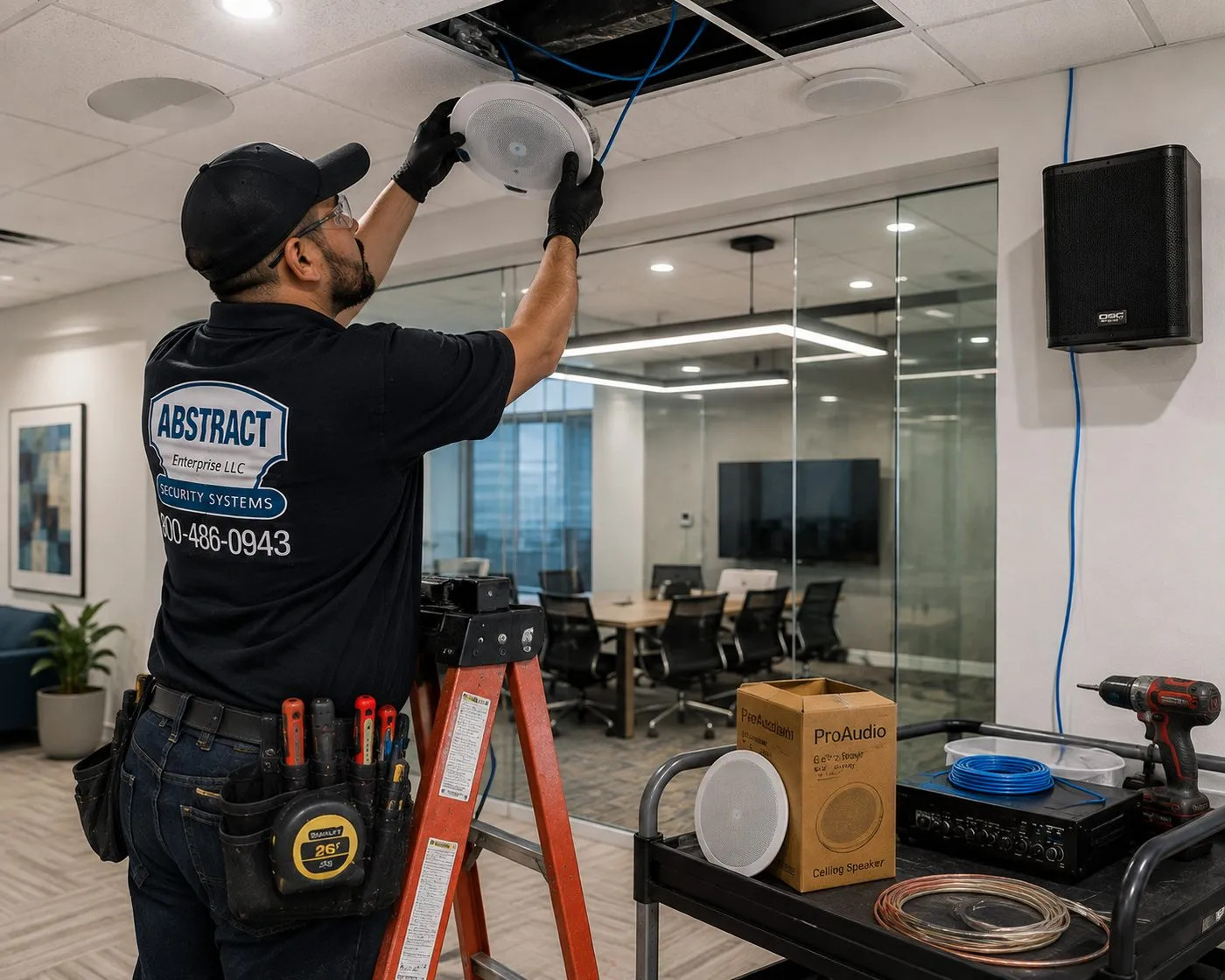
A ceiling speaker going in, with a second speaker, an amplifier and a coil of speaker wire waiting on the cart.
Building Specialists
Sonos Installation for Staten Island's Architecture
Six kinds of home make up most of our Staten Island Sonos calls. Each one decides where the router ends up, where an Amp can live, how speaker wire travels, and what the outside of the house will let us fix to it.
Hi-Ranch Houses
Brick Underground describes much of New Springville's stock as attached, semi-detached and detached high ranches built in the 1960s and 1970s, and the style runs across the Mid-Island and South Shore. The lower level, half below grade, holds the garage, a den and often the internet service; the main living floor sits a half-flight up. The Sonos plan has to bridge those two levels, and the den's back wall is often concrete block.
Two-Family & Mother-Daughter Homes
Two-unit buildings are about a fifth of the borough's housing. A mother-daughter high ranch typically has a finished lower level with its own entry and second kitchen. Two households means two sets of habits, and often two internet accounts — so we decide up front whether there should be one Sonos system or two.
Townhouse Communities
Arden Heights has townhome developments such as Village Greens and Aspen Knolls, and similar communities dot the South and West Shore, where an association usually looks after the exterior. Inside, the wall you share with the next unit is the one to keep speakers away from; outside, the association may need to approve anything fixed to the facade.
Raised & Rebuilt Shore Houses
Along the East and South Shore, homes repaired after Sandy were lifted to meet flood elevation standards. The living floor now sits well above the street, the area underneath is for parking and storage, and the service lines come up a long way from the meter to the rooms that matter.
Older North Shore Houses
Around St. George, Stapleton and Tompkinsville, the St. Paul's Avenue–Stapleton Heights Historic District alone has about 92 freestanding houses, the earliest from the 1830s. Plaster on wood lath, older framing and deep porches mean careful ceiling cuts and a lot of thought before anything goes on the front of the house.
New North Shore Apartments
Lighthouse Point by the ferry terminal and the new buildings along the Bay Street corridor bring concrete floors, building-managed Wi-Fi and lease rules. These get the apartment approach: surface-mounted gear, wired links where the lease allows, and no holes where it doesn't.
Methods, house by house
Hi-ranch, two levels with the router down by the garage. The usual fix is a Cat6 run up through the wall cavity beside the stairs, or through the garage ceiling into a main-floor closet, ending at a wired access point or a Sonos product near the kitchen. From there the main floor and the deck door are covered. When the den downstairs is the home theater room, the soundbar is mounted on block with masonry anchors sized for the bar and bracket, and the Sub sits on the slab clear of the door to the garage so its front opening stays unobstructed, as Sonos asks.
Two-family and mother-daughter. If each floor has its own router and its own internet account, each floor gets its own Sonos household. Sonos requires the app and every product to be on the same network and subnet, so two separate networks naturally keep the systems apart. If the family actually wants music shared across both floors, we run them on one network and name the rooms clearly, so "Kitchen" upstairs and "Kitchen" downstairs don't end up as the same word on everyone's phone.
Townhouses. In-ceiling speakers go into the joist bays away from the party wall, and the Sub goes on an outside wall or the middle of the room rather than against the shared one. Exterior speakers wait until the association has seen a photo of the spot and the speaker's spec sheet; we provide a certificate of insurance free of charge when the management company asks for one.
Raised shore houses. The Amp, Port, router and any network switch go on the living floor or higher, never in the enclosure below. Cable comes up in a protected path, and outdoor speakers are chosen from products the manufacturer rates for salt spray. Sonos lists its Outdoor speakers by Sonance as tested for humidity, salt spray, temperature and UV, with an IP66 rating and an operating range of −13°F to 149°F.
Older North Shore plaster houses. We follow the method in the Sonos In-Ceiling installation guide: an obstruction survey with a stud finder, a small pilot hole probed before the full cut-out, and a template-guided cut with a sharp saw. The guide also tells installers to check local building codes before running speaker wire through ceilings, which we do. Where a ceiling is too fragile, the room gets Era speakers on stands or wall brackets instead, and nobody's plaster medallion gets sacrificed for a speaker.
North Shore apartments. Concrete ceilings rule out in-ceiling speakers without major work, so the system is a soundbar, a Sub and Era speakers on brackets or stands. We wire one product to the router where possible and check whether the building Wi-Fi is a guest-style or log-in network — Sonos does not support those — before anything is unboxed.
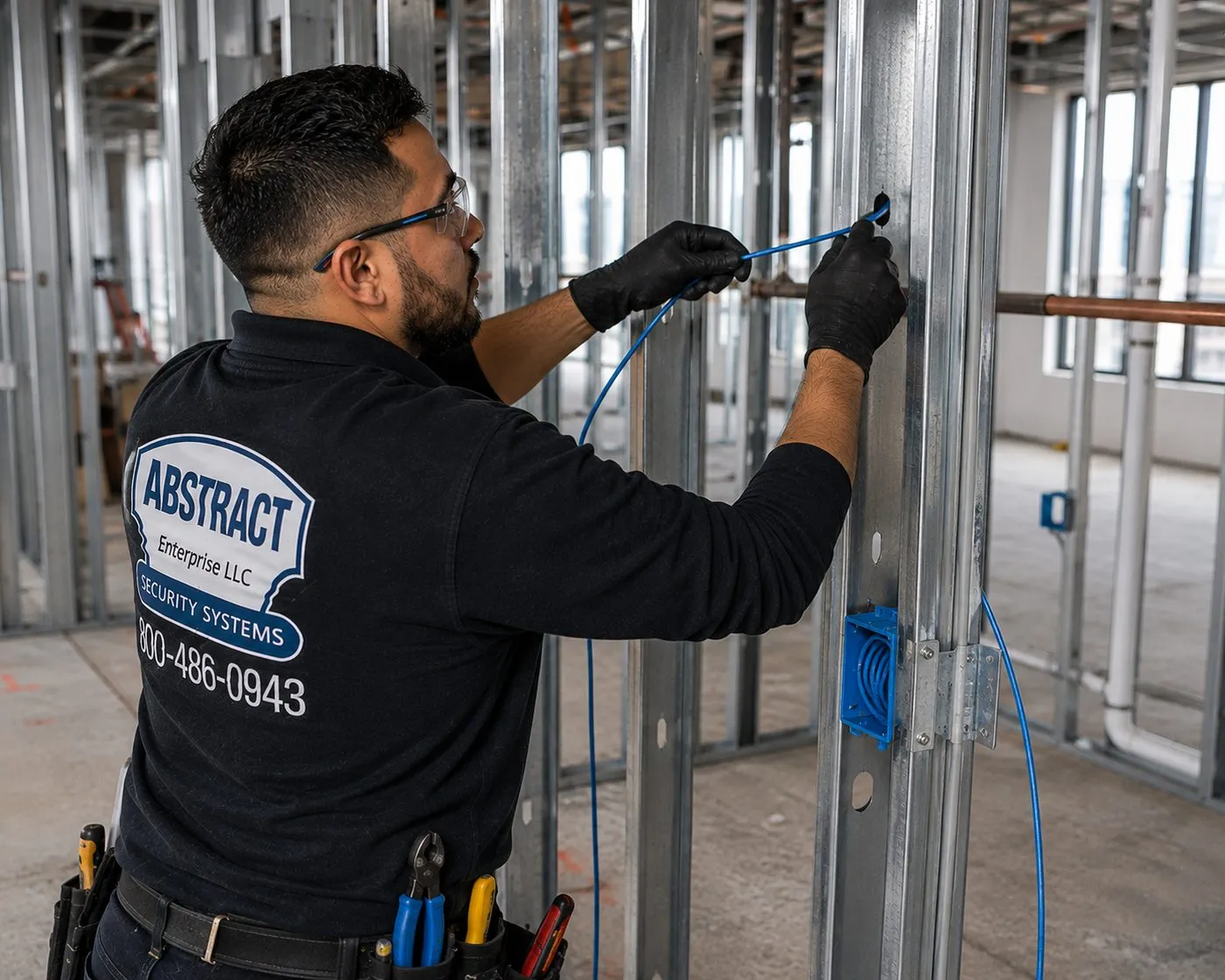
Open framing is the cheapest moment to run speaker and network cable, before the walls close.
Commercial Sonos
Business Sonos Installation in Staten Island
Sonos sells installed systems for businesses, and on Staten Island the typical client is a family-run restaurant, a salon, a gym or a shop on one of the borough's main commercial strips. These are the corridors where we do most of that work.
Hylan Boulevard
About 14 miles long, from Rosebank on the North Shore down the East Shore to Tottenville, and the longest street within a single New York City borough. Restaurants with back patios, dental and medical offices, and gyms line it; most want a dining-room zone and a separate outdoor or waiting-room zone.
New Dorp Lane
The New Dorp business improvement district covers about 180 businesses and 146 properties along a mile-long stretch running from Hylan Boulevard. Salons, cafes and boutiques there tend to need ceiling speakers on an Amp with a volume cap that holds through the busiest Saturday.
Richmond Avenue & the Mall
The Staten Island Mall in New Springville opened in 1973 and is the borough's only indoor shopping mall. The pads and plazas along Richmond Avenue around it hold restaurants, fitness studios and chain franchises, some of which want Sonos for back-of-house or a party room.
Forest Avenue, West Brighton
Forest Avenue has been home to bars and saloons for generations, according to the Staten Island Advance. Bars with several TVs usually keep the commercial audio system for the main room and use Sonos for a quieter dining room or a private-party space.
Bay Street & St. George
Between the ferry terminal and Stapleton, new mixed-use buildings put ground-floor cafes and restaurants under apartments. Those are the jobs where the city's commercial music limit inside neighboring homes matters most.
Victory Boulevard & the West Shore
The Staten Island Economic Development Corporation runs neighborhood programmes for Victory Boulevard and the West Shore. Offices, showrooms and industrial-park businesses there use Sonos for a reception area, a break room or a showroom floor.
Rules a business music system has to respect
Music heard inside the apartments above. The NYC Department of Environmental Protection's noise code fact sheet states that commercial music from a store, restaurant or bar shall not exceed 42 dBA as measured inside any dwelling unit receiving the noise. Ceiling speakers in a ground-floor restaurant under apartments are spaced, angled and volume-limited with that in mind.
Speakers aimed at the street. Section 24-244 of the city's Administrative Code bars using a sound reproduction device for business advertising or to attract attention outside or in front of premises facing a public street, park or place. Patio speakers face the diners, not the sidewalk.
Separate networks. Sonos doesn't support guest networks or log-in portal networks, so the music system goes on the business's private network or its own VLAN, never on the customer Wi-Fi. That also keeps customers from grouping themselves into your speakers.
Power belongs to the electrician. We don't touch line-voltage wiring. If an Amp rack needs a dedicated outlet, your electrician installs it; we can work around their schedule on the same day.
Insurance paperwork. Plaza and building managers usually ask for a certificate of insurance before a contractor starts. It's free from us; send the manager's wording when you book.
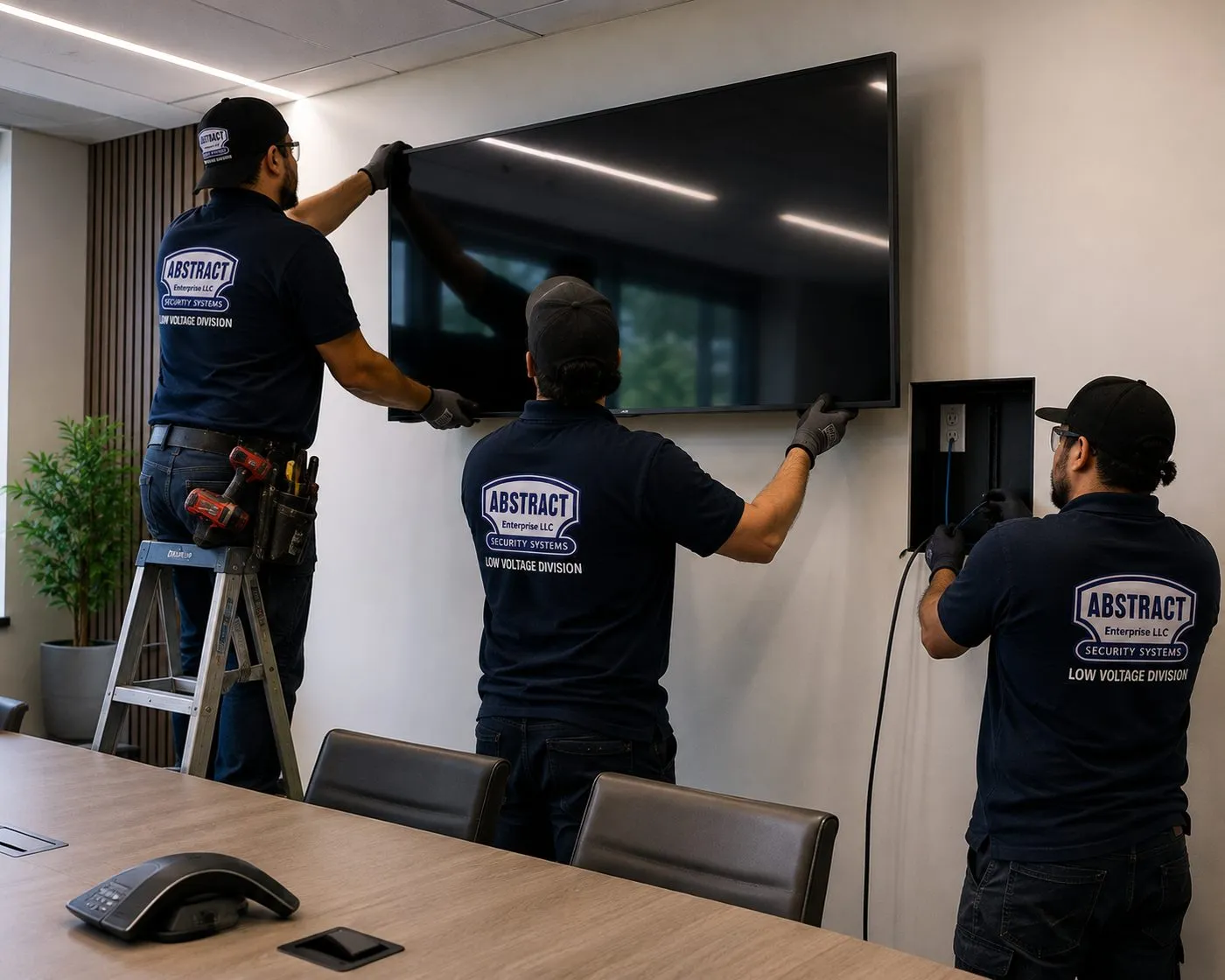
Two technicians hold the screen level while a third connects cables in the recessed box below it.
Your Questions Answered
Sonos Installation in Staten Island: Questions Answered
These are the questions Staten Island owners ask us before a Sonos booking, grouped into themes: the yard and the outside of the house, the neighbors and the noise rules, houses with two families or two levels, and townhouse and business situations. A few points that every Staten Island owner should know are set out as short notes between the questions. Pricing, scheduling and paperwork are in the FAQ near the bottom of the page.
The yard, the deck and the outside wall
Salt air near the East and South Shore
Salt shortens the life of outdoor speakers if the speakers and the hardware weren't made for it. Salt mist settles on everything near the shore and attacks plain steel screws, cheap brackets and exposed speaker terminals first; the speaker itself is often the last thing to fail. On the East and South Shore we choose speakers whose maker publishes a salt-spray rating — Sonos lists its Outdoor speakers by Sonance as tested for salt spray, humidity, UV and temperature, with an IP66 rating — and pair them with stainless or coated fasteners.
Placement matters as much as the product. Under an eave or a deck roof, a speaker stays out of the direct rain and the worst of the wind-blown spray. Terminal connections are made indoors or inside a sealed box wherever possible, and the wire enters each speaker from below so water runs away from the connection. A rinse with fresh water at the start and end of the season is the only routine care we suggest.
The back of the house is vinyl siding — what do the outdoor speaker brackets actually hold onto?
Not the siding. Vinyl is a loose cladding designed to move with temperature, and a bracket screwed only into it will rattle, crack the panel, or work loose in the first winter. The bracket needs to reach the sheathing and, ideally, a stud or the rim joist behind it.
The tidy way to do that is a siding mounting block: a flat-faced block that fits around the profile of the siding, gives the bracket a solid, level surface and sheds water. We locate the framing from inside or with a scanner, fix the block through the siding into structure, and seal the screw holes. On brick-faced houses the bracket goes into the brick with masonry anchors instead, and on block foundations we use anchors rated for hollow block.
Can the speakers mount on the deck's posts or a pergola instead of the house wall?
Often, yes, and it can sound better: speakers on posts at the far side of the deck point back toward the house instead of out over the fence. The posts need to be solid wood or metal, not thin decorative trim, and the bracket screws must go into the post, not the railing infill.
We don't cut, notch or remove structural members of a deck. The NYC Department of Buildings treats decks as structures that need plans by a licensed engineer or architect and permits, with railings at least 42 inches high, so a speaker fixing is designed to sit on the deck as built. Wire runs under the deck boards or along the underside of the framing in clips, so nobody trips on it and the mower never meets it.
How does the wire get from an Amp in the basement to the back of the house without showing?
Usually through the rim joist. In most Staten Island houses the basement or lower-level ceiling is open or has a drop ceiling, so we run outdoor-rated speaker cable along the joists to the back wall, drill out through the rim joist or the sill area at a point hidden by the deck or a downspout, and seal the penetration with an exterior-grade sealant and a weather cover. Sonos specifies at least 16-gauge wire for its outdoor speakers, and we size up for longer runs.
Where the lower level is finished, we look for a utility room, a closet or a soffit to follow instead. On raised houses, the run goes up from the living floor and out under the eave rather than down through the enclosure. Either way you see a neat entry point, not a cable stapled across the siding.
The game on the TV, the sound on the deck
This works. In the Sonos app you can group other rooms with the TV room, and the TV audio coming into your Arc Ultra, Beam or Ray plays in the grouped rooms too. Owners on the Sonos community and Reddit describe doing exactly this for a game in the kitchen or the yard.
Two things to know. First, grouped rooms may play a fraction behind the picture, which nobody notices on the deck but would be distracting in the same room as the TV, so we set the group up and test it with you. Second, it only works if the deck speakers' link to the network is solid; if the outdoor zone already stutters with music, live TV audio will be worse. That's why the network is checked before the speakers go up.
We're re-siding the house next spring — should the speaker wire go in now or wait?
Wait for the siding crew if you can, and book us for the week the old siding is off. With the cladding removed, a cable can come straight through the sheathing at exactly the right height, a mounting block can be set flush in the new siding instead of fitted around it, and the penetration gets flashed properly behind the new panels. That gives a cleaner and drier result than anything we can do on finished siding.
If you want music this summer, there are two sensible stopgaps. A Move 2 on the deck needs nothing fixed to the house. Or we can install the Amp and run the cable to the back wall now, coiled and capped just inside the rim joist, so on re-siding day the only job left is bringing it out and hanging the speakers.
Do outdoor speakers belong up by the gutter or down under the deck roof?
High enough to clear heads, open doors, umbrellas and the grill hood, and low enough that the sound lands on the seating rather than sailing over the fence. On a typical Staten Island deck that puts the speakers somewhere under the eave or the deck roof, angled down toward the table, rather than up near the gutter of a two-storey wall.
The higher a speaker sits, the further its sound carries into the yards around you, and on a raised house the back wall may already be a storey above grade. In that case we often mount on the deck roof framing or on posts instead, closer to the people listening. A brief listen from the far corner of the yard before the final screws go in settles it.
Neighbors, volume and the noise code
What the city's noise code says about a private yard
There is no single decibel number for music in a private Staten Island yard. New York City's noise code prohibits using a sound reproduction device "in such a manner as to create unreasonable noise" (Administrative Code §24-244), and the DEP fact sheet says complaints go through 311. The specific 42 dBA figure people quote applies to commercial music measured inside a home, not to a family playing music on its own deck, and the 25-foot "plainly audible" test in the code is written for personal audio devices on public streets and in cars.
In practice, "unreasonable" is judged by the people next door and, if it comes to it, by an inspector. The safest system is one designed to sound good at moderate volume: more speakers spread around the deck at lower levels instead of two loud ones on the house wall, pointed into your yard, and a volume limit set in the app. We aren't lawyers and this isn't legal advice; it's how we design outdoor zones so they stay neighborly.
A volume ceiling for the yard
Sonos has a Volume Limit setting for each product: in the app you go to Settings, then System, choose the product, and set the maximum under Sound. Once it's set, the volume slider still moves all the way across, but the loudest point is your limit, not the speaker's.
We set it with you on the day, standing at the property line with the music playing, so the limit is a level you've heard from the neighbor's side. For a Sonos Amp driving a pair of outdoor speakers, the limit applies to the Amp, which covers both speakers at once. A sleep timer in the app is handy for the last zone left on at the end of the night.
Two families, two floors, and raised houses
Owner upstairs, tenant downstairs
In a rented two-family, two separate systems are usually right. A Sonos system is visible and controllable by anyone on the same network with the app, so one shared system means your tenant can see your rooms, start music in your kitchen or regroup your speakers by accident. If each apartment already has its own router and internet account, each one gets its own Sonos system and the two never meet.
The exception is a family house — a mother-daughter set-up where the generations actually want the same music on a holiday. Then one network and one Sonos system make sense, with rooms named by floor so it's obvious which "Living Room" is which. Sonos supports up to 32 products in one system, which is more than enough for two floors and a yard.
What can stay at ground level in a lifted house
Only gear that are designed to be outdoors and can be replaced cheaply. The Amp, Port, router, network switch and any soundbar or Sub belong on the living floor or higher. Sonos gives the Amp an operating range of 32°F to 104°F, which also rules out an unheated enclosure under a raised house for most of the year.
The parts that can live low are the weather-rated outdoor speakers and their cable, both of which are made for water and temperature swings. If the cable has to pass through the flood zone to reach a speaker by the pool, it goes in conduit with a drip loop, so a high tide or a storm surge doesn't take the indoor equipment with it.
Townhouses and businesses
Whose sign-off do we need before an outdoor speaker goes on an association-maintained facade?
The association, through its managing agent or board, in most cases. Townhouse communities typically maintain facades, roofs and common grounds, and the declaration or house rules usually say that owners can't fix anything to the exterior without approval. A speaker bracket and a hole for the wire are both exterior alterations.
We help you ask: a photo of the spot, the product sheet showing the speaker's size and colour, a description of how the wire enters and is sealed, and a certificate of insurance for the association. If the answer is no, Sonos portable speakers such as the Move 2, which Sonos rates IP56, can play on the patio without anything fixed to the building.
Is it a mistake to cut in-wall speakers into a townhouse party wall?
We advise against it. A party wall is usually a fire-separation assembly between two homes, and cutting a speaker box into it both weakens that separation and sends sound straight into your neighbor's living room. It's the shortest route to a complaint.
Put the left and right speakers in the ceiling near the party wall instead, or on the opposite wall, or use Era speakers on brackets fixed to an interior partition. The Sub goes on an outside wall or out in the room, never against the shared one.
Our restaurant on Hylan Boulevard has a back patio — does patio music need anything beyond the indoor system?
A separate zone and some care about direction. Indoors, the city's 42 dBA limit inside neighboring homes shapes the volume. Outdoors, the Administrative Code bars using sound devices outside a business to attract attention on a public street, so patio speakers face the tables and away from the sidewalk and the houses behind.
Technically, the patio usually gets its own Amp and outdoor speakers so staff can set its music and volume independently of the dining room, with a volume limit that matches what the neighbors can tolerate in the evening. If the patio has a roof or a pergola, speakers go under it, out of the rain.
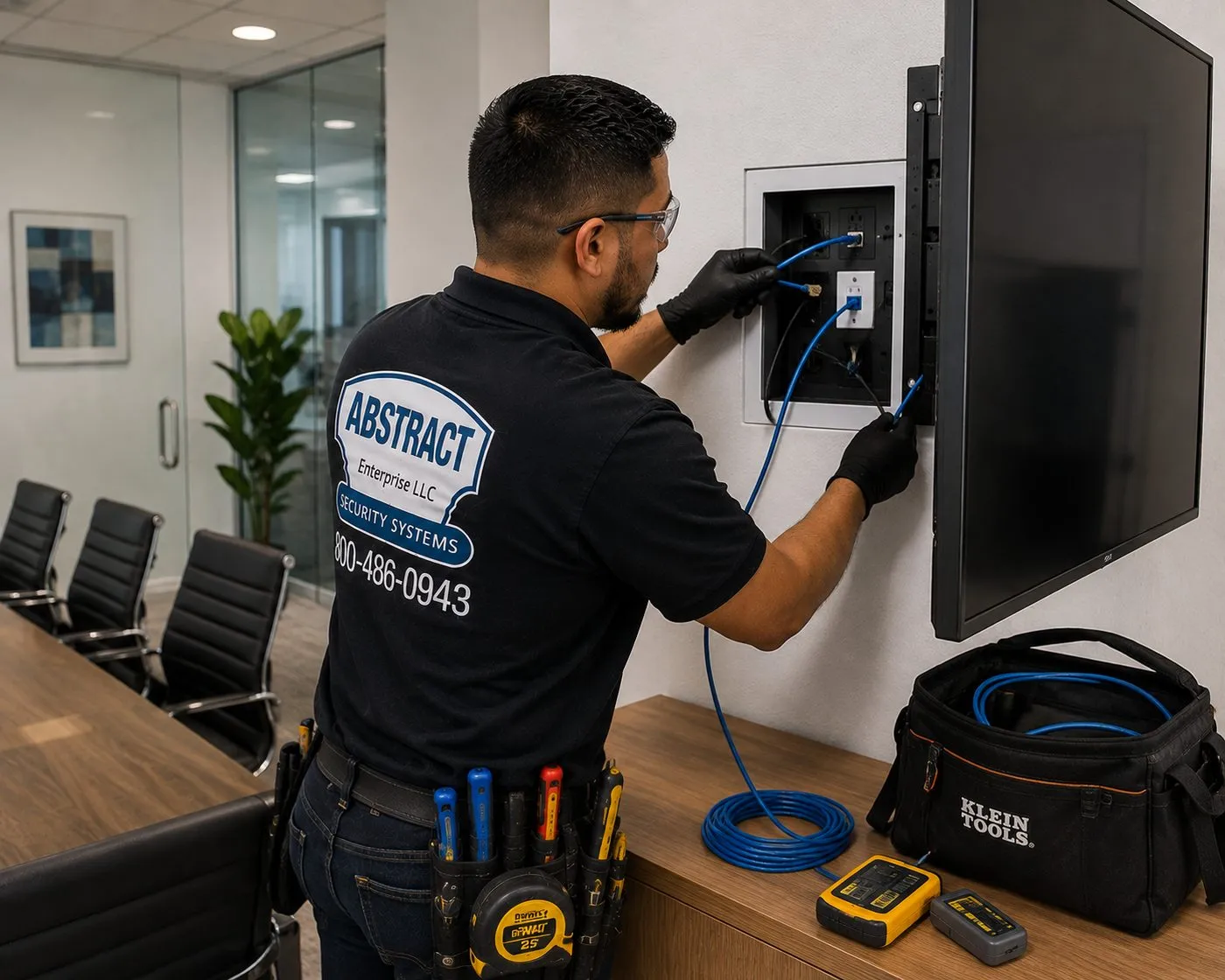
Power and cables brought out through a recessed box, so a soundbar and TV can sit flat with no hanging wires.
Outdoor Zone Planner
Planning Music for a Staten Island Yard
Outdoor Sonos is where most Staten Island projects spend their thought, so here is the order we work through on a walkthrough. Nothing below costs you anything to read; it's the checklist our technicians carry.
1. Decide what the yard is for
Background music for dinner on the deck needs a very different system from a pool party or a Sunday game. Dinner music wants two to four small speakers close to the table at low level. A pool area wants coverage across a wider space, with speakers at the edges facing in. A game wants the TV audio grouped outside, so the network becomes the deciding factor.
2. Choose wired or portable
Wired outdoor speakers on a Sonos Amp stay up all year, need no charging and sound fuller. A Move 2 or Roam 2 is the no-drilling choice: Sonos rates the Move 2 IP56 with up to 24 hours of battery and the Roam 2 at up to 10 hours. The Move 2's operating range is 32°F to 104°F, and Sonos says its charging base is for indoor use only, so a portable comes inside at night and for the winter.
3. Find the Amp a home
The Amp needs power, ventilation, a network connection and a short, practical cable path to the back wall. In a hi-ranch that's often the garage-level utility area under the deck; in a colonial, the basement ceiling near the back; in a raised house, a closet on the living floor. Sonos's Amp guide asks for at least 3 inches of clearance around it, so a crowded shelf is not the place.
4. Get the network to the back door
The Amp should be wired to the network whenever possible. Portables and wireless speakers outdoors need a strong Wi-Fi signal at the back of the house, which usually means an access point near the rear door or in the kitchen, connected by cable — not an extender, which Sonos does not support.
5. Aim, count and cap
Speakers mount high enough to clear heads and furniture, angled down and in. More speakers at lower volume beat fewer louder ones. And the last step is a walk to the fence with the music on, so the volume limit is set where it should be.
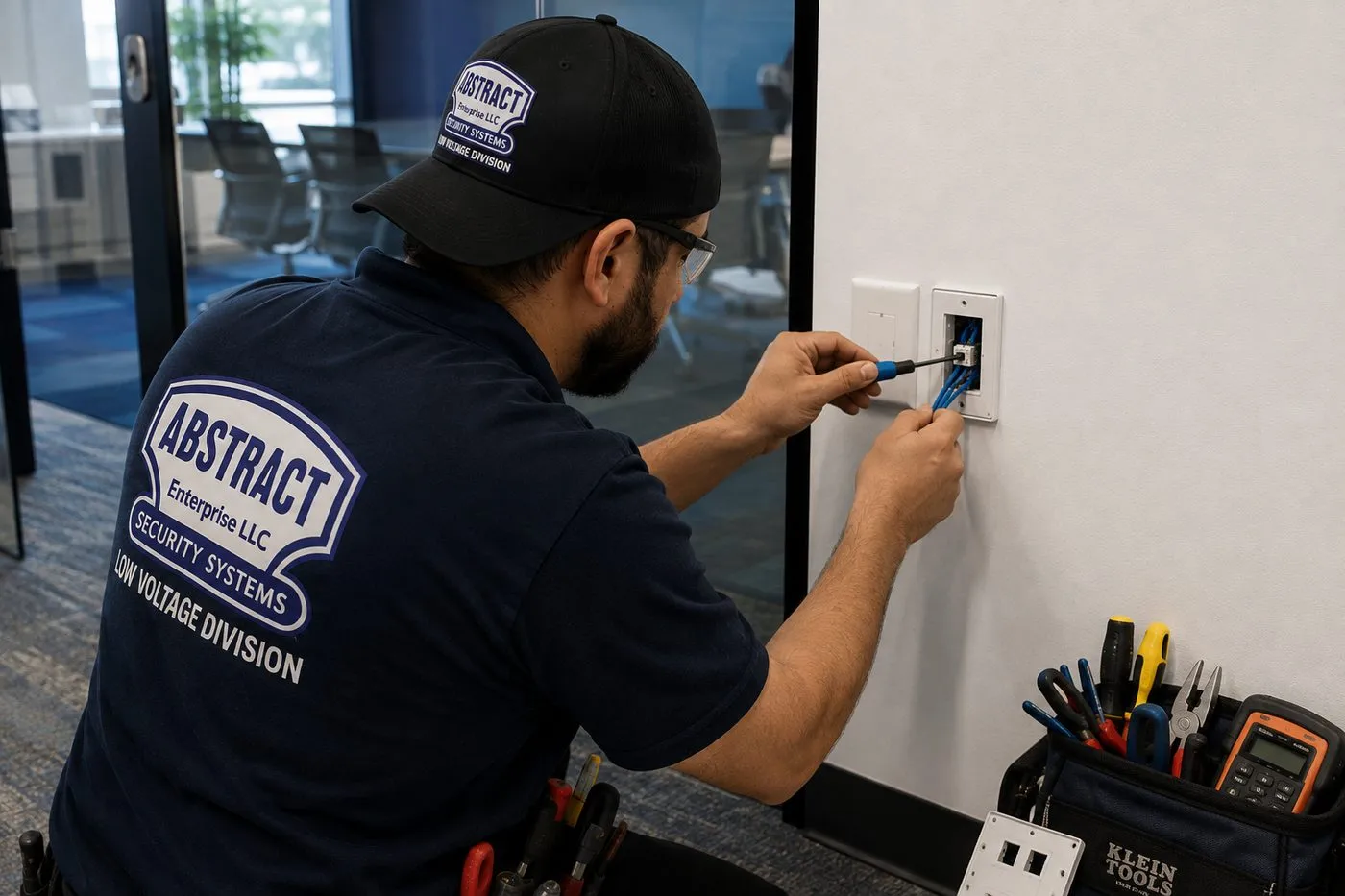
A wall jack being terminated: the end point of an Ethernet run that lets an Amp or soundbar stay wired.
Equipment
Types of Sonos Systems We Install
Specifications below are taken from Sonos's own product and support pages, or from published reviews where noted. Buy from any retailer you like; we'll check the list fits your rooms before you order.
Sonos Amp
The box that drives passive speakers: published reviews put it at 125 W a channel into 8-ohm loads, and it carries an HDMI ARC input, a line input, a subwoofer output and a pair of Ethernet sockets. Up to three pairs of Sonos Architectural speakers can share one Amp in parallel. Nearly every deck, poolside and kitchen-ceiling zone we build here hangs off one.
Outdoor Speakers by Sonance
Passive outdoor speakers designed for the Amp, IP66, tested for humidity, salt spray, temperature and UV, rated from −13°F to 149°F. The default choice for an eave, a deck post or a pergola near the water.
In-Ceiling & In-Wall Speakers
Sonos's in-ceiling pair comes in 6-inch and 8-inch sizes with cut-outs of 8.25 and 10.125 inches. Paintable grilles disappear into a kitchen or a finished basement ceiling, and Trueplay tuning works with the Amp and a supported iPhone.
Arc Ultra, Beam & Ray
The Arc Ultra is 46.38 inches wide with HDMI eARC and adjusts its own EQ when it detects it's wall-mounted; the Beam (Gen 2) is 25.63 inches; the Ray connects by optical. Picked by room size and by the TV's ports.
Sub 4 & Sub Mini
The Sub 4 can stand, or lie flat under a sofa, and works wirelessly or on Ethernet. In a lower-level den on a slab, placement and Trueplay matter more than size, and a bass level set for the house rather than the showroom keeps the upstairs happy.
Era 100 & Era 300
Rear surrounds or stand-alone room speakers. Sonos's Era 300 wall mount is stud-mounting only and needs about 2.5 inches of clearance, so on drywall over metal studs or plaster we plan the fixing first.
Move 2 & Roam 2
Carry-out speakers for nights when the wired zone isn't enough. Sonos quotes the larger Move 2 at IP56 and a full day of battery, and the pocket-size Roam 2 at IP67 and about ten hours. At home they sit on the same Wi-Fi as everything else.
Sonos Port
The way to keep a basement stereo that still sounds good: the Port feeds your receiver from its analog or coaxial digital outputs, and its 12 V trigger wakes the amplifier whenever Sonos starts playing.
Network Hardware
Wired access points, a small switch and Cat6 runs, chosen to match Sonos's requirements: 2.4 GHz support, no extenders or powerline adapters, every product on one subnet, and spanning tree enabled where Sonos is wired.
Where it goes on a Staten Island property
What we usually fit
Why
Deck under an eave or roof
Outdoor speakers on Amp
Protected from rain, wired, on all season
Open deck or patio, no roof
Outdoor speakers on posts, or a Move 2
Aimed back toward the house; portable comes in at night
Above-ground pool area
Outdoor speakers on the house or fence posts
Kept well back from the water; power handled by your electrician
Hi-ranch lower-level den
Beam or Arc Ultra on block, Sub, Era rears
Masonry anchors, Sub clear of the garage door
Open main floor or kitchen
In-ceiling pair on Amp
Clean ceiling, even sound across the room
Raised shore house
Everything powered on the living floor
Nothing that matters below flood elevation
A cabled access point is the supported way to strengthen Wi-Fi for Sonos; extenders are not.
Room by Room
Where Sonos Earns Its Place in a Staten Island House
A whole-house system doesn't have to be bought in one go. Most of our Staten Island customers start with one room and add the rest over a year or two, so it pays to know which rooms reward the effort and what each one needs from the walls and the network.
The kitchen and the main-floor living space
In a hi-ranch or a colonial, the kitchen is where people actually spend the evening, and it's usually open to a dining area and the door to the deck. Two in-ceiling speakers on an Amp, set left and right of the island, give even sound without anything on the counter. Sonos's ceiling-speaker guide suggests spacing a pair 6 to 10 feet apart. If the ceiling can't be opened, an Era 100 on a shelf or bracket does the job, and it can be wired with the Combo Adapter if the Wi-Fi there is marginal.
The lower-level den or family room
This is the home theater room in a great many Staten Island houses: the TV on a block wall, a sectional, a low ceiling and a slab floor. A Beam or Arc Ultra under the TV, a Sub on the floor and two Era rears fill it well. Because the room is half below ground, sound travels up through the floor structure rather than out to the street, so the bass level is set with someone standing in the kitchen above, not just in the den.
The primary bedroom
Usually a single Era 100 or a small pair, used for morning radio and evening music on a timer. The bedroom is often the room furthest from a garage-level router, so it's the first to show a network problem. We check it on every walkthrough even when it isn't on the list.
The garage, the gym and the workshop
Many attached garages here double as a gym or workshop. Unheated garages swing hot and cold, and Sonos gives its Amp and the Move 2 an operating range of 32°F to 104°F, so the speakers out there are passive outdoor-rated ones driven by an Amp that stays inside the house. A short wall penetration from a utility room into the garage is usually enough.
The front porch and the side yard
Front porches face the street, and anything on them is visible to the block and, in a townhouse community, to the association. We rarely recommend fixed speakers there. A Roam 2 brought out when you sit on the porch, or a pair under a porch roof aimed at the chairs, keeps the music at the porch rather than on the sidewalk.
The second apartment
In a two-family or mother-daughter house, the second unit is its own home. If it has its own network, it gets its own Sonos system, set up for the people who live there, with its own app sign-in. If the family prefers to share one system, every room name carries the floor so nobody plays music in the wrong kitchen.
Adding rooms later
Every added product joins the same system through the app, and Sonos supports up to 32 products in one household. What makes later additions easy is planning now: a cable left coiled in the basement ceiling toward the back of the house, an Amp location with room for a second Amp, and a network that already reaches the deck. We note those spare runs on the hand-over sheet so the next phase doesn't start with guesswork.
That staged approach also spreads the cost. A first visit for the den theater on our published lines, a second for the kitchen ceiling and the deck once the walkthrough quote is agreed, and a third when the bedroom or the garage joins in. Each visit is priced separately, so there's no package you have to commit to up front.
Before You Buy
Choosing Sonos Products for a Staten Island Home
We don't sell Sonos, so this is the advice we give on the phone before anyone spends money. The right list depends less on the size of the budget than on the shape of the house, the walls you're allowed to open and how far the speakers sit from the router.
Match the soundbar to the room and the TV
The Arc Ultra is the widest bar at a little over 46 inches and suits a large main-floor living room with a big screen; it needs HDMI eARC or ARC on the TV. The Beam (Gen 2) at about 25.6 inches is the usual pick for a lower-level den with a mid-size TV. The Ray connects by optical, which makes it the choice for an older TV without a suitable HDMI port, and for a bedroom. We check the TV's back panel from a photo before you order.
Count Amps by zones, not by rooms
A zone is a set of speakers that always play together at one volume. The deck may be one zone with four speakers; the kitchen and the dining area may be one zone or two. Sonos says an Amp reliably powers up to three pairs of its Architectural speakers wired in parallel, so the number of Amps follows the number of zones you want to control separately, not the number of speakers.
Decide early between wired outdoor speakers and a portable
If the yard is used most evenings from spring to autumn, wired speakers on an Amp are worth it. If it's used for a few parties a year, a Move 2 may be all you need. Buying the portable first and adding wired speakers later works fine — both join the same system.
Budget for the network, not just the speakers
On Staten Island the network is the part people forget. If the back bedroom already has weak Wi-Fi, set aside money for a cable run or an access point. It's cheaper than returning speakers that "don't work" and far less frustrating.
Keep the receipts and the boxes for a while
Sonos products carry Sonos's warranty through the store you bought them from. Keep the receipts, and keep the boxes until everything has been installed and played for a week or two; a faulty unit is easier to return in its original packaging.
Visit Checklist
Getting the House Ready for Install Day
A few minutes of preparation saves an hour on the day and avoids the $150 return-trip fee for a visit that can't start.
Products delivered and unopened boxes on site. We open and check each unit before it goes into a ceiling or onto a wall.
Router password and provider app. Have the Wi-Fi name and password ready, and the login for your provider's app if the router settings need a change.
Your phone, charged, with the Sonos app installed. The system is registered to your Sonos account, not ours. If you use Android, tell us in advance so we bring an iPhone for Trueplay.
Clear access. A path to the TV wall, the basement or lower-level ceiling where cable will run, the utility room for the Amp, and the back door to the deck. Move fragile items off shelves near the work.
Approvals in hand. For a townhouse, the association's written approval for any exterior work; for a rental, the landlord's permission for anything fixed to the walls.
Electrician booked if needed. Any new outlet for an Amp or near the deck should be in place, or booked earlier the same day.
Pets and children. Ladders, drills and open ceiling holes don't mix with curious dogs or toddlers; a closed door for an hour or two helps everyone.
On the day, the technician arrives inside the two-hour window, walks the plan with you before drilling, and doesn't leave until every room plays, the outdoor volume limit is set and you've seen the system come back after a router restart.
North Shore Rentals
Sonos for Apartments Near the Ferry
Not every Staten Island Sonos job comes with a yard. The rental buildings near the St. George terminal and along Bay Street in Tompkinsville and Stapleton house a growing number of people who commute by ferry, and their systems look more like a Manhattan job than a South Shore one.
The starting point is the lease. Most leases restrict drilling into concrete, and many buildings forbid anything fixed to a balcony rail or exterior wall. So the soundbar sits on the console or on the TV's own mount, Era speakers stand on furniture or stands, and the Sub goes on a pad on the floor. Wiring is tidied with cord covers rather than hidden in walls. When you move out, nothing needs patching.
The second check is the Wi-Fi. If the building provides the internet, we confirm whether it's your own private network or a shared one with a log-in page; Sonos does not support guest or portal networks, so a shared system usually means adding your own router behind the building's connection. Concrete slabs and steel framing also cut Wi-Fi between rooms, which is why we prefer to wire the soundbar to the router with a short cable when it sits nearby.
The third is the neighbors, who here are above, below and beside you rather than across a fence. Bass travels through a concrete floor easily, so the Sub goes on an isolation pad, away from the shared wall, at a level set during the day with the neighbors in mind. Sonos's Night Sound setting on the soundbar is worth showing to everyone in the household.
Apartments on the third floor and up with no elevator carry our $40 walk-up line; otherwise the published prices are the same as for a house.
AI Overview Reality Check
What AI Gets Wrong About Sonos Installation in Staten Island
We couldn't view Google's AI Overview from our build tools, so we can't quote it. What we can do is take the claims that national cost guides, retailers and forums publish — the material answer engines summarise — and set each one against what a Staten Island house actually needs. Every correction below cites the manufacturer or a named source.
"Multi-room audio costs about $500 to $1,000 per room."
Angi's guide to whole-home stereo puts additional zones or multi-room audio at $500 to $1,000 per room, labor at $50 to $100 an hour for jobs of two to three hours, and wall or ceiling modifications at $100 to $500. Those are national averages, and Angi doesn't mention Sonos by name.
On Staten Island the outdoor zone is the one that breaks the average. Getting cable from a basement Amp through a rim joist, sealing it, mounting on vinyl siding or brick, and fixing the network so the deck has a signal is a different job from dropping two speakers into a drywall ceiling. Indoors, a single-floor zone can come in near the guide's range; a deck zone with a network fix often won't.
Our approach is to publish what we can and quote the rest in writing. Sonos setup is $125, a wall-mounted soundbar is $129, and our published range for whole-home audio zones is $800 to $2,500 per zone installed. Outdoor and in-ceiling zones get an exact figure after a walkthrough, before anything is drilled.
"Sonos is plug-and-play — anyone can install it."
For a single Era 100 on a kitchen counter, that's true. Sonos's own guides say otherwise about the built-in products: its in-ceiling speaker guide states that in-ceiling speakers require special installation and that architectural speakers often require a professional installer, and its in-wall guide warns you'll likely need to install a Sonos Amp, cut holes and run speaker cable.
Outdoors adds weather, height and the outside of the building. A ladder against a raised house on the South Shore is a long way up, and a bracket on vinyl siding that isn't fixed to framing will loosen. These are the parts of a Sonos system where the installer earns the fee.
If you want to do the plug-in parts yourself, go ahead — we're happy to do only the cutting, wiring and mounting, then hand over a system you set up in the app. Labor-only pricing is shown further down.
"If the backyard speaker drops, add a Wi-Fi extender."
This is the most common piece of generic advice, and Sonos's system requirements list wireless range extenders as unsupported, along with Ethernet-over-power adapters, guest networks and log-in portal networks. An extender can make the speaker look connected and then drop it again under load.
The supported fixes are a better router position, a mesh system with a wired product on the primary node, a wired access point, or a cable to the Amp or one Sonos product. In a hi-ranch, a single Cat6 run from the lower level up to the main floor solves the deck problem more often than any gadget does.
Sonos also recommends keeping its products at least 18 inches from other electronics and lists cordless phones, baby monitors, wireless cameras and microwaves as interference sources. We check for those near the back door before blaming the speaker.
"A waterproof portable is all you need outside."
A Move 2 or Roam 2 is a great patio speaker, and Sonos rates them IP56 and IP67. But Sonos gives the Move 2 an operating range of 32°F to 104°F and says its charging base is for indoor use only. That makes it a speaker you carry out and bring back, not one you leave on the deck from April to October.
For music that is simply there whenever you step outside, wired outdoor speakers on an Amp are the better fit, and the Sonos Outdoor pair is rated from −13°F to 149°F. Near the water, a published salt-spray rating matters more than a waterproof claim on the box.
Many Staten Island owners end up with both: a wired pair under the deck roof for every day, and a Move 2 that goes down to the pool or the beach at South Beach when the family does.
"Trueplay tunes every speaker from any phone."
Sonos's Trueplay article says most Sonos products require an iOS device for tuning. Quick tuning works from iOS or Android only on newer models such as the Arc Ultra, Beam Ultra, Era 100, Era 100 Pro and Era 300; advanced tuning is iPhone only.
Outdoor speakers on an Amp and in-ceiling speakers need the iPhone method, if Trueplay is available for them at all. In an Android-only household we bring a compatible iPhone to tune on the day, and re-tuning is needed whenever a speaker moves or a stereo pair changes.
Outdoors, tuning matters less than placement. Open air has no walls to reflect bass, so the gains come from aiming, height and spacing, which no app can fix after the brackets are up.
"You can control the house's Sonos from anywhere with the app."
Sonos community answers and r/sonos threads agree the native Sonos app controls speakers on the same network as the phone; Sonos's documentation says the products and the controller must be on the same network. Leave the house and the app no longer runs the speakers.
That matters on Staten Island in two ways. A two-family house with separate networks won't see the other floor's system, which is usually what owners want. And someone hoping to start music at home from the ferry or the office will need a third-party smart-home app that supports Sonos, not the Sonos app itself.
If remote control matters to you, say so when you book. We'll tell you which of the integrations you already use can reach Sonos and set it up during the visit.
"Once it's set up, a Sonos system looks after itself."
Mostly, but not always. Sonos released a redesigned app on May 7, 2024 (version 80.0) that launched with missing features and problems with volume, saved stations and grouped speakers; trade magazine CE Pro reported the chief executive's public apology, and PCWorld reported that he stepped down in January 2025.
The more ordinary cause of trouble is change: a new router from a provider swap, a new phone, a power cut. After the September 2026 nor'easter, SILive reported 1,663 Staten Island Con Edison customers had lost power at some point. A system with sensible network settings and one wired product recovers by itself; a system hanging off an extender often doesn't.
So we document the settings, leave a written network note with you, and offer setup-only visits at $225 for the first hour for the day something changes.
Switch settings checked on a laptop at the rack; Sonos asks for spanning tree support where its products are wired.
One System From the Den to the Deck
Den theater, kitchen ceiling, deck and pool can all run from one app. Two photos and a list of models start the conversation.
Tell us which Sonos products you have or plan to buy, the rooms they're for, and whether the yard has a deck, patio or pool. A technician calls back the same working day with a price from our published lines, or to book a walkthrough for outdoor and in-ceiling work. Prefer the phone? Our Staten Island line is (347) 934-8335.
✅
Thanks — It's With Us
A technician will phone before the working day ends. In a hurry? Ring (347) 934-8335.
How It Works
Our Installation Process
Seven steps for every Staten Island Sonos job, from a Ray in a St. George rental to a deck, a pool and a den in Tottenville.
1. Start with a call or the form
Give us the Sonos models, the rooms, the router location and a sense of the yard; phone photos of the TV wall and the rear of the house are a bonus. Simple jobs get a written figure straight from the price list, and outdoor or ceiling work gets a walkthrough booked.
2. Walk the house and the yard
For outdoor, ceiling or multi-floor work a technician walks from the router to every speaker spot with a signal meter, checks the outside wall and the deck, finds a home for the Amp and a cable path, and looks at what the neighbors can hear.
3. Fix the network first
Router moved or checked against Sonos requirements, a cable or access point added where the signal fails, and one Sonos product wired where it helps. Nothing gets mounted until every speaker spot has a solid connection.
4. Run and seal the cable
Speaker wire and Ethernet go through basement ceilings, soffits and wall cavities, out through the rim joist or under an eave, with every exterior penetration sealed and covered.
5. Mount the speakers and soundbar
Brackets fixed to framing, masonry or siding blocks as the wall needs; soundbar on the TV; Sub placed with its opening clear; outdoor speakers angled into the yard.
6. Set up, group and tune
Every product joined to one system, rooms named so each floor is clear, music services signed in, TV audio grouping tested, Trueplay run where the phone supports it, and a volume limit set for the outdoor zone.
7. Hand over and test recovery
We switch the router off and on to prove the system recovers by itself, show you the app, and leave a short written note of the network and which product is wired.
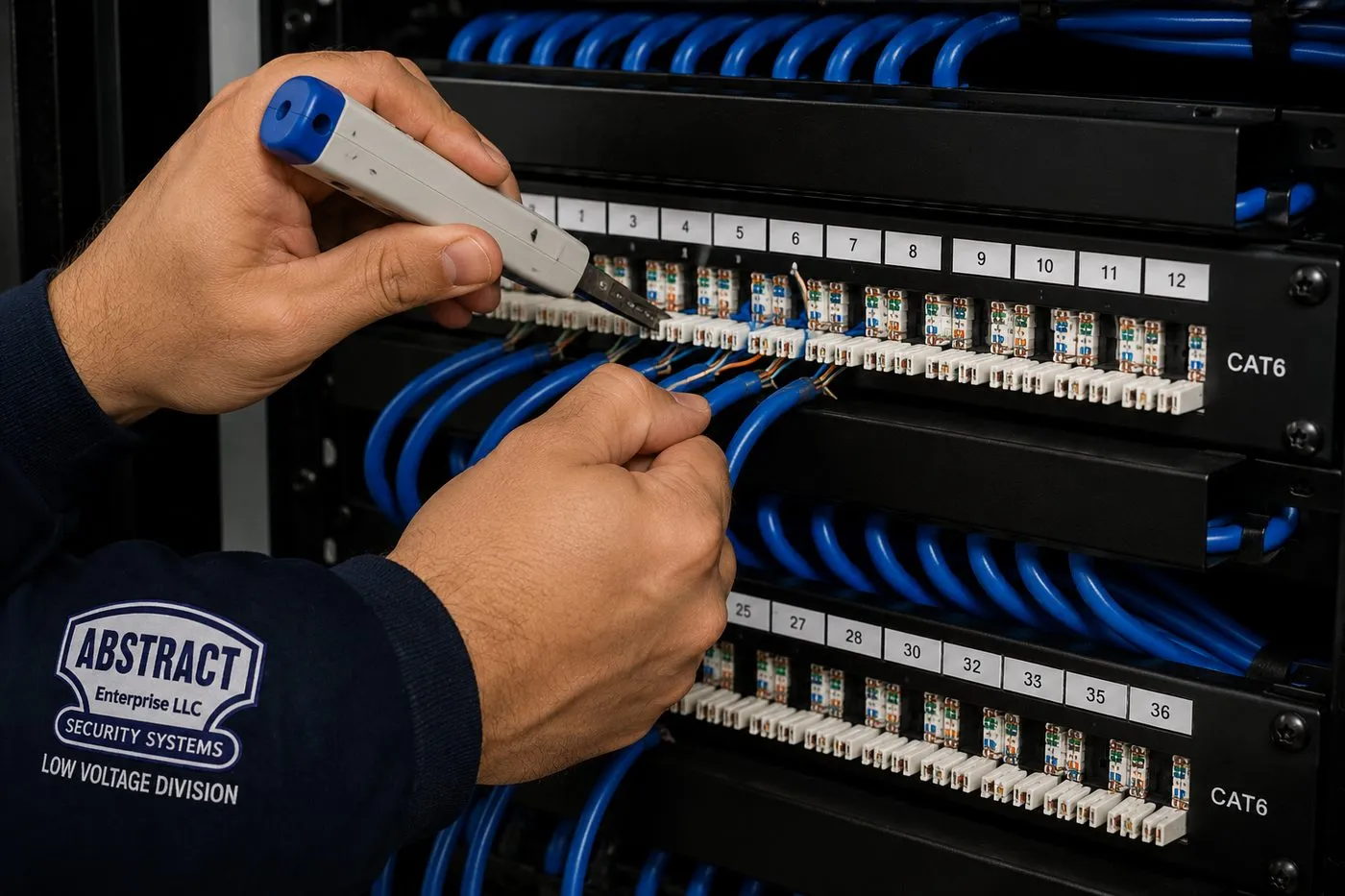
Each cable punched down and labelled at the panel, so a wired Sonos product can be traced later.
Coverage Area
Sonos Installation Near Staten Island's Landmarks
Six places that sum up the range of homes we work in, from the oldest corner of the island to its newest towers.
Snug Harbor Cultural Center, Randall Manor
An 83-acre campus on the Kill Van Kull founded on Captain Robert Richard Randall's 1801 bequest, with historic buildings and botanical gardens. The older frame houses of Randall Manor and New Brighton around it are where plaster ceilings and porch speakers need the most care.
St. Paul's Avenue–Stapleton Heights
A historic district designated in 2004, with about 92 freestanding houses linking Tompkinsville and Stapleton, the earliest from the mid-1830s. Anything visible from the street gets thought through before a bracket goes up.
Lighthouse Point, St. George
A 15-storey rental building at 35R Bay Street beside the ferry terminal with 115 apartments. Its neighbors along the Bay Street corridor are the island's apartment-style Sonos jobs: concrete, building Wi-Fi and leases.
Staten Island Greenbelt
About 2,800 acres of protected hills in the middle of the island, rising to 410 feet at Todt Hill. The large houses on the wooded lots of Todt Hill, Emerson Hill and Lighthouse Hill bring long driveways, big yards and multi-zone systems.
Freshkills Park
At 2,200 acres, the former landfill is being opened in phases and is expected to be completed in 2038. The West Shore and Mid-Island neighborhoods around it — Arden Heights, Travis, Bulls Head — are townhouse and hi-ranch country.
Conference House, Tottenville
Built around 1675 near Ward's Point, the southern tip of New York State, and the site of the September 11, 1776 peace conference. The South Shore streets nearby mix older houses, new construction and raised homes near Raritan Bay.
We also install in Great Kills, Eltingville, Annadale, Huguenot, Prince's Bay, Rossville, New Dorp, Midland Beach, South Beach, Grant City, Dongan Hills, Grasmere, Rosebank, Port Richmond, Mariners Harbor, Westerleigh, Willowbrook, Castleton Corners, New Springville and Heartland Village.
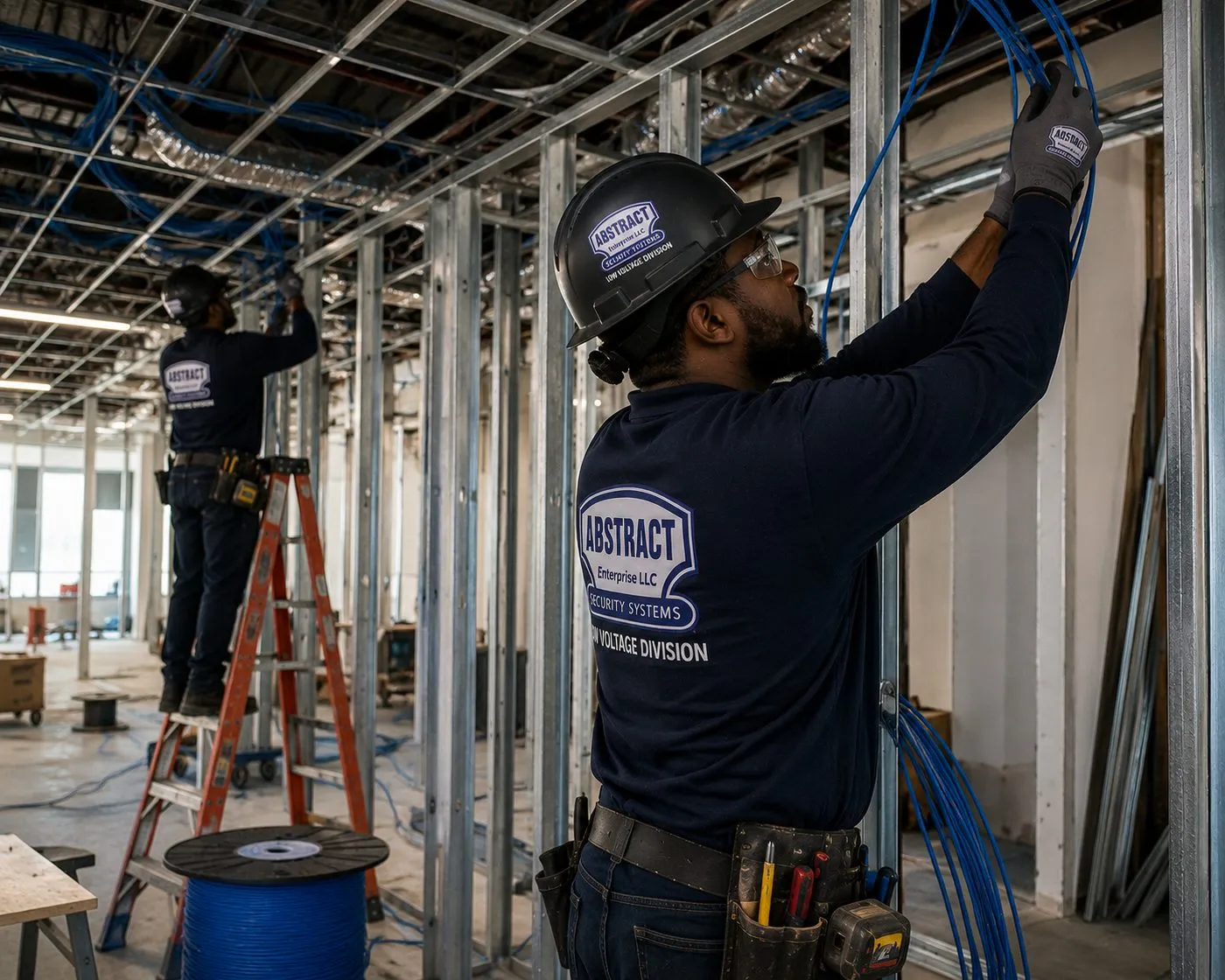
A two-person cable pull through open framing, with the reel on the floor and the ceiling grid still bare.
Pricing
Sonos Installation Cost in Staten Island
The Sonos, soundbar and wiring lines below are published on our price list at the same dollar amounts in every borough; the Staten Island differences show up in the TV-mounting base and the hourly setup rate. Anything we can't price without seeing the house — outdoor zones, ceiling speakers, cable runs between floors — is quoted in writing after a walkthrough. If the job turns out different on the day, you see the new price before any work is done.
Item
Price
What it covers
Sonos setup
$125
Every product joined to one system, rooms named and grouped, music services signed in, Trueplay where supported
Soundbar wall-mounted under the TV
$129
Arc Ultra, Arc, Beam or Ray on its bracket, levelled and connected
Soundbar placed on a console
$79
Placed, connected and tested
Sanus soundbar bracket
$84.99
When you don't have a suitable mount
In-wall concealment
$169
Code-compliant in-wall power and cable kit behind the TV
Paintable cord cover
$59
Surface raceway on block, brick or rentals
Cable run to a cabinet or other spot
$99
Up to 25 ft — often the Ethernet run that wires one Sonos product
A/V receiver
$129
Receiver connected and configured, for example with a Port
Universal remote
$99
Programmed for TV, Sonos and sources
Streaming device
$49
Per device
Full home theater
$350
Multi-component system connected and set up
Outdoor speakers on Amp (deck, patio, pool)
Quoted at walkthrough
Within our published $800–$2,500 per zone range for whole-home audio
In-ceiling or in-wall speakers on Amp
Quoted at walkthrough
Same published per-zone range
Floor-to-floor cable, access point, Amp location
Quoted at walkthrough
Depends on the path, the walls and the distance
Wall and access add-ons
Condition
Add
Where it turns up on Staten Island
Drywall on wood studs
$0
Most rooms in houses built after the bridge opened
Metal studs
+$30
Newer basement fit-outs and North Shore apartments
Plaster
+$45
Older North Shore houses
Brick or stone
+$65
Fireplace walls, brick-faced exteriors
Concrete or cinder block
+$75
Hi-ranch dens and foundation walls
Tile or marble
+$95
Kitchen and bar walls
Plywood backer board
$85
Where a load needs spreading over odd framing
High mount (above about 8 ft)
$75
Two-storey entries and great rooms
Walk-up, 3rd floor and above, no elevator
$40
Some North Shore apartment buildings
Box removal
$25
We take the packaging with us
Certificate of insurance
Free
Townhouse associations, plaza and building managers
Staten Island rates that differ from Brooklyn
Our pricing model puts Staten Island at 1.10 times the Brooklyn base, and on the published price list that shows up in two places. A setup-only visit — no mounting, just joining speakers to a new router, regrouping rooms or tracking down dropouts — is $225 for the first hour here, then 30-minute blocks. And a TV mount, if the screen goes up on the same visit, starts at $209.99 for 32 to 55 inches on a fixed or tilt bracket over wood-stud drywall, with 56–65 inches adding $30 and 66–75 adding $60. Our Staten Island TV mounting prices page lists every line. There is no bridge toll, travel or mileage charge on top.
What the visit covers: brackets fixed and levelled, the TV link made, all speakers brought into a single Sonos household, floors and rooms labelled, your streaming accounts added, tuning on any speaker that supports it, a one-page network note, and a vacuum over the work area.
Not our trade: new or moved outlets, pool bonding and any line-voltage work are for a licensed electrician; patching and painting around old holes is for your painter.
Who buys what: speakers, soundbars and Amps come from whichever shop or website you choose; mounting hardware, wire, siding blocks, raceway and in-wall kits come off our list.
Wasted trips: when the crew turns up and the job can't begin — speakers still in transit, nobody to open the door, association approval still pending — a $150 return-trip fee is charged. Moving the date a day or more ahead costs nothing.
Risky walls: veneer stone around a fireplace, glazed tile and century-old North Shore plaster may chip even with a slow bit and a careful hand. We point those spots out on the walkthrough and wait for your go-ahead.
Shop Our Systems
Sonos Installation Packages & Pricing
These three bundles cover most first visits on the island. The arithmetic is printed on each card; any surcharge or extra from the tables above is added on top.
Starter — Setup With One Wired Link
$224
Sonos setup ($125) plus a cable run of up to 25 ft ($99) so one Sonos product is wired to the router: $224. For a system that's already unboxed but keeps dropping the far rooms.
Standard — Hi-Ranch Den on Block
$413.99
Sonos setup ($125), the soundbar wall-mounted ($129) on a Sanus bracket ($84.99), and the concrete or cinder block add ($75): $413.99. On a drywall wall the same job is $338.99.
Premium — Full Theater, Wiring Hidden
$732.99
Full home theater hookup ($350), soundbar wall-mounted ($129) on a Sanus bracket ($84.99), and in-wall concealment ($169): $732.99. For a main-floor living room with bar, Sub and rears and no visible wires.
Bring Your Own Equipment — Labor Only
Outdoor speakers usually ship with their own brackets, and plenty of owners buy the matching Sonos soundbar mount. If that's you, you pay labor only: $129 for the bar on the wall plus whatever the wall type adds, and $125 if we also do the Sonos setup. A bracket you supply has to be rated for its load and stays under its own maker's warranty. Should it not suit the wall we find, you hear that before a hole is drilled, and the $84.99 Sanus bracket is the fallback.
Deck, Patio & Pool Zones
Yards differ too much for a flat price: a speaker under the eave beside the kitchen door is a short job, while a pool corner forty feet from the Amp with a trench and an access point is not. Every outdoor zone falls inside the $800 to $2,500 per zone figure we publish for whole-home audio, and the written quote after the walkthrough pins down your number before anything is ordered.
Adding the screen to the same visit. Say the new TV is 65 inches and goes on drywall in the main-floor living room: $209.99 for the mount plus $30 for the size makes $239.99. Hang a Beam beneath it for $129 and have us run Sonos setup for $125, and the visit totals $493.99, with optional extras still to choose.
Want a Written Number for Your House?
Your product list and a few photos get you a price from the tables above. Outdoor and ceiling work gets a walkthrough first, at no charge.
A raised house changes the shape of a Sonos system more than any other Staten Island home. The New York City Build It Back program describes its "repair with elevation" path plainly: if a home was substantially damaged by Hurricane Sandy, the program completed the repairs and raised it to comply with flood elevation standards. The program also elevated or reconstructed more than 110 attached homes. Many more owners raised or rebuilt on their own. On blocks in Midland Beach, New Dorp Beach and the South Shore, the living room now looks down on the street from a full storey up.
Three things follow. First, the service lines — cable, fibre, power — still arrive at ground level and have to climb. The router tends to end up wherever the line came through, which may be a corner of the living floor nowhere near the deck. We often move it to a central spot or run a cable to an access point by the rear door. Second, the space under the house is storage and parking, and is the first place water goes in a storm. The Amp, Port, router and switch stay upstairs. Third, the deck is usually high too, reached by a long stair, and the outdoor speakers mount under its roof or eaves, which are both higher and more sheltered than a ground-level patio.
Power matters as well. In the September 2026 nor'easter, SILive reported 1,663 Staten Island Con Edison customers with outages; another SILive report that month counted 431 without power, with Midland Beach and Grasmere hit hardest. After an outage, the router boots first and the Sonos products find it again on their own — provided the network is set up to Sonos's requirements and nothing depends on an extender or a powerline adapter that comes up late. We test that on the day by switching the router off and on with you watching.
If you're in the middle of a lift or a rebuild, call before the walls close. A Cat6 run and a speaker-wire run placed while the framing is open cost a fraction of fishing them later, and we can coordinate with your contractor and electrician so the cable goes where the plan says.
Network First
A Network That Reaches the Back Fence
Every Sonos problem we're called to on Staten Island starts with the same question: where is the router, and how far is it from the speaker that drops? Here is how we set up the network behind a Sonos system in a house with a yard.
Check the router against Sonos's list. It must offer 2.4 GHz (Sonos says routers that only provide 5 GHz are unsupported), use WPA or WPA2 Personal security rather than Enterprise, and keep the phone and every speaker on the same subnet. Guest and portal networks are out.
Move the router up and in. A router in the garage corner or behind the boiler loses much of its signal before it reaches the main floor. A short relocation, or a cable to a central access point, does more than any setting.
Wire what can be wired. The Amp, the soundbar and a Port all have Ethernet ports. Era 100, Era 300 and Move 2 can be wired with Sonos's Combo Adapter, which Sonos lists at $39. Sonos asks that a wired product stays connected to the router at all times and that the network supports spanning tree.
Know which speakers use the dedicated Sonos network. In a wired setup, one product wired to the router creates a dedicated wireless network for the Sonos system. Sonos lists products that don't use it and need home Wi-Fi or Ethernet instead, including the Arc Ultra, Era 100, Era 300, Move 2, Roam 2 and Sub 4.
Mesh: wire to the main node. If you use a mesh system with a wired Sonos product, Sonos says that product must be wired to the primary node, not to a satellite.
Keep the clutter away. Eighteen inches from other electronics, away from cordless phone bases, baby monitors and wireless cameras, per Sonos's interference guidance.
Write it down. We leave a short note of the network name, which product is wired and where the access point is, so the next router swap doesn't start from zero.
The routine our technicians follow at every Staten Island yard — a description of method, not a story about one house
We start at the router, not the deck. A phone with a signal app goes from the router's corner, up the stairs, through the kitchen and out the back door, and we note where the signal falls off. On a hi-ranch that's usually the moment we step from the lower level to the main floor; on a raised house it's the stair down to the deck.
Then we stand where the family actually sits. Speakers are placed for the table or the pool chairs, not for symmetry on the wall, and we look over the fence to see whose windows face the yard. If a neighbor's bedroom is ten feet away, the speakers move to the other side and point toward the house.
Last, we find the path for the wire before promising anything: a basement ceiling to the rim joist, a soffit, a downspout to hide behind. If there's no clean path, we say so and talk about a portable instead.
FAQ
Staten Island Sonos Installation FAQ
Can you set up Sonos in a house we are closing on, before we move in?
+
Yes, as long as the internet service is live on the day. Mounting, cable runs and outdoor speakers can be done in an empty house; the final setup needs the router you will actually use, so if the provider installs later we finish setup on a short second visit.
What happens if it rains on the day the outdoor speakers are booked?
+
Indoor parts of the job, such as the Amp, the network and cable runs inside the house, can usually go ahead. Exterior drilling and mounting move to a dry day. Moving a booking with 24 hours’ notice is free.
Can a guest at our barbecue play their own music through the speakers?
+
Only if their phone joins your home network and they use the Sonos app or AirPlay, because Sonos speakers are controlled from the same network. Many owners prefer a portable Sonos speaker with Bluetooth for guests, so the main system stays as you set it.
Can speaker wire be buried across the lawn to the far end of the yard?
+
Yes, using cable rated for direct burial, or ordinary outdoor cable in conduit, run in a shallow trench along a fence or bed edge and marked on a sketch for you. Before any digging, underground utilities are located, and long runs get a heavier gauge so the far speakers do not lose volume.
When old outdoor speakers come down, who fills the holes they leave?
+
We remove the old speakers and brackets and seal any open screw holes against water. Cosmetic patching and painting of siding, stucco or brick are not included, so a painter or siding contractor handles the finish if the old marks will show.
Do you mount outdoor TVs for the deck, too?
+
Yes. On our Staten Island price list a TV mount starts at $209.99 for 32 to 55 inches, and an outdoor location adds $90. The TV must be one rated for outdoor use or kept under a roof, and the power outlet is an electrician’s job. The TV sound can then be grouped with the deck speakers.
Can a restaurant or shop install happen before we open, so customers are not disturbed?
+
Often, yes. Arrival windows start at 8 AM, seven days a week, so most of the cutting and wiring can be done before a lunch opening. Larger jobs are split over several mornings rather than run through service hours, and the walkthrough itself takes place at a quiet time you choose.
All Areas Served
Sonos Installation Across New York
Up one level is our Sonos installation hub for New York City. Each borough and county is getting its own Sonos page in turn. Until one is online, the link for that area goes to the quote form instead — the technicians who would serve it are already working there.
Music Stopped Mid-Barbecue? Call the Staten Island Line
A deck zone that won't group, a soundbar missing from the app, a Sub blinking instead of playing — phone (347) 934-8335 for the earliest open two-hour window. Most network and pairing faults are fixed within an hour or two once a technician is at the house, and the setup-only rate here is $225 for the first hour.
Sonos Installation Staten Island — Licensed, Insured, Indoors and Out
Abstract Enterprises Security Systems · 1282 Troy Ave, Brooklyn, NY 11203 · Staten Island line (347) 934-8335 · WhatsApp (718) 679-0359 via wa.me
NYS Low-Voltage Licence #12000287431 · 100% Licensed & Insured · Same-Day Estimates · Rated 4.7★ from 201 Google Reviews
Sonos products carry Sonos's manufacturer warranty through the seller; brackets and parts carry their maker's warranty. Full terms — including 50% deposit, one-year parts-only warranty on AESS-supplied products, and the late-fee schedule — are set out in the service agreement. See our warranty page.
Page reviewed and updated October 17, 2026. Changelog: first publication of the Staten Island Sonos installation page.