What are you looking for?
About Us Contact Us Careers Get a Free Quote (800) 486-0943
Pick a service
✅ Got Your Own System?
🎬 Home TheatreQuote 🎶 AV SoundQuote 🔑 Access ControlQuote
Now pick your area
Pick your area
Long Island
Hudson Valley
Services available
Pricing & Tools
Pick a service for pricing
🚪 Intercom Pricing 🔔 Buzzer Repair Pricing
Calculators
📹 Camera System Calculator 🚨 Alarm Calculator ⚡ Cabling Quote Builder ✅ Got Your Own System?
Select your area
Home › Sonos Installation NYC › Sonos Installation Brooklyn › Park Slope
Brownstone & Limestone Rowhouses · Prospect Park West Co-ops · Fifth & Seventh Avenue Walk-ups · Fourth Avenue Condos · Licensed Low-Voltage

Sonos
Installation in
Park Slope

Planned for the Life of the House · Kids’ Rooms to Home Offices · Park-Day Portables · Shops on the Avenues

A Park Slope house rarely keeps the same rooms for long. The back bedroom is a nursery one year, a bunk room a few years later, a teenager’s den after that and somebody’s office once the kids have gone. The hill itself changes too: nineteenth-century rowhouses near the park, flats over the shops on Fifth and Seventh, glass-fronted condos down on Fourth Avenue. We plan Sonos for whichever of those you live in, and we wire it so the system can follow the family from one stage to the next without opening the walls again.

Reviewed and updated October 17, 2026 · Written by Anwar Timothy, NYS licence #12000287431 · Booked through our Brooklyn office at 1282 Troy Ave

Sonos installation Park Slope, Brooklyn: gloved hands fitting a round white ceiling speaker into a drop-ceiling opening, a black box speaker on the wall at right with blue cable running down
Gloved hands press a round white speaker up into an opening in a tiled ceiling; on the wall to the right hangs a black box speaker with a blue cable running down beside it, and a meeting room with a wall-mounted screen sits behind glass.
Park Slope Sonos Quote
Tell us which part of the Slope and who the rooms are for — a written total comes back the same business day

✅
Request Sent!
An installer will be in touch about your Park Slope rooms the same business day.
25+
Years Experience
✓
Same-Day Estimates
100%
Licensed & Insured
4.7★
201 Google Reviews

Tell us who sleeps, works and plays in each room. For a Park Slope booking that list matters more than the square footage: a baby’s room, a teenager’s room and a home office want three different things from the same speaker. Phone the Brooklyn line, (347) 934-8335, or use the form; a minute is enough.

  • The published Brooklyn rate applies: $125 for Sonos setup whether the house is on Berkeley Place or 16th Street
  • Plans that leave a cable or a spare jack where a room is likely to change jobs later, so the next stage is a visit, not a renovation
  • New York State low-voltage licence #12000287431; 2-hour arrival windows from 8 AM to 8 PM, seven days a week
The Neighborhood

Why Park Slope Homes Need Sonos Installation

Park Slope is a neighborhood people move into for the long haul, and it is built to last. Wikipedia’s account of the neighborhood draws its edges at Prospect Park and Prospect Park West on the east, Fourth Avenue on the west, Flatbush Avenue to the north and the Prospect Expressway to the south, and divides it into North Slope, Center Slope and South Slope. Fifth and Seventh Avenues carry the shops; the cross streets between them carry brownstones and apartment buildings. The Park Slope Historic District, designated by the Landmarks Preservation Commission in 1973 and expanded in 2012 and again in 2016, is New York’s largest landmarked neighborhood by number of buildings.

The households inside those buildings are what make a Park Slope Sonos job different. NYU’s Furman Center, which reports Park Slope together with Carroll Gardens as Community District 6, puts the share of households with children under 18 at roughly three in ten in its latest figures, and the homeownership rate at 37.1 percent. People buy or rent here, have children, stay through school, and then reorganize the house as the children grow. A speaker plan that only answers today’s question — where does the soundbar go? — gets outgrown in a few years. One that knows the nursery will become a bedroom, and the bedroom an office, keeps working.

The second thing is the slope itself. It is one neighborhood but several building eras laid out from the park downhill. Prospect Park West has the late-nineteenth-century mansions Wikipedia calls the Gold Coast, and pre-war elevator co-ops such as Emery Roth’s 1929 building at 35 Prospect Park West. The side streets in the historic district are rows of two- and three-storey brownstone and limestone townhouses. Fifth and Seventh Avenues are four- and five-storey walk-ups over storefronts. And since the City Council adopted the 2003 rezoning of 110 Park Slope blocks — written, in the Department of City Planning’s words, to “preserve the historic scale of the brownstone neighborhoods” while allowing more development on Fourth Avenue — the western edge has filled with mid-rise condos and rentals in concrete and steel. Each of those calls for a different Sonos plan, and the right plan for a limestone parlor is usually the wrong one for a Fourth Avenue living room.

The third thing is that life here spills outdoors: stoops, back gardens, the Long Meadow on a Saturday, a block party in July, Halloween on the side streets near the park. Sonos portables are good at following a family outside, but the city’s rules about amplified sound in parks and on the street are stricter than most people expect, and we would rather tell you that before you buy a second Move than after a Parks officer does. That part of the job is advice, not installation, and it is free.

Park Slope facts that shape a Sonos plan

  • 1,802 contributing buildings, 1862 to about 1920: the national historic district’s count, mostly two- and three-storey townhouses beside Prospect Park (Wikipedia, Park Slope Historic District). Nearly all of them have plaster ceilings on wood joists somewhere inside.
  • 2,575 buildings after the 2012 expansion: the city district’s coverage before the 2016 northward extension, making it the city’s largest landmarked neighborhood by building count.
  • 110 blocks rezoned in 2003: contextual R6B and R7B districts on the brownstone midblocks, R6A on Third, Fifth and Seventh Avenues, R7A on Prospect Park West, and higher-density zoning on Fourth Avenue (NYC Department of City Planning).
  • 6,563 new homes, 2010 to 2025: units added in buildings of four or more apartments across Park Slope and Carroll Gardens, per the Furman Center — most of them the kind of drywall-and-concrete construction where Sonos is planned very differently from a rowhouse.
  • 521 ground-floor businesses on 62 block faces: the Park Slope Fifth Avenue BID’s coverage in the city’s BID directory — restaurants, bars, shops and practices, many with apartments upstairs.
  • Two ZIP codes, one precinct: 11217 north of Union Street and 11215 south of it; the neighborhood is in Brooklyn Community District 6 and is patrolled by the 78th Precinct, which is where an amplified-sound permit for a block party is filed.

Most Park Slope households who call us pair Sonos with a better home network, and many add a door intercom or cameras on the same visit; the related services are listed further down the page.

Park Slope, Brooklyn Sonos network work: two gloved hands holding a round white wireless access point with a glowing blue ring up to an open ceiling tile, blue cable plugged into it
A white disc-shaped access point with a lit blue ring is held up to a gap in the tiles; a blue cable drops from the void and plugs into its edge.

Park Slope Sonos Quiet at Bedtime?

A speaker in the kids’ room that vanished from the app, an office speaker on the top floor that drops every afternoon, a soundbar that stopped answering the TV remote after the provider swapped the router — those are service calls, and we treat them as such. We book the next open 2-hour window, and most network and setup faults are put right within one to two hours of arrival. Call (347) 934-8335 or use the quick form.

What We Install

Sonos Installation Services in Park Slope

Nine kinds of work cover almost every Park Slope booking. Several of them are about leaving the house ready for its next arrangement as much as about the rooms as they are today.

🧸

Children’s Rooms

One speaker per child’s room, placed out of reach or on a shelf the child can use, with a volume limit, a sleep timer the parents know how to set, and audiobooks and stories signed in.

🏛️

Parlor Floor Systems

Arc Ultra, Beam or Ray positioned in a front or back parlor around pier mirrors, mantels and arches, with surrounds and a Sub only where the room and the floor below can take them.

💻

Home Office Floors

A speaker for the room where someone works all day, placed and grouped so the rest of the house can play music without bleeding into video calls, and wired where the Wi-Fi is weakest.

🔌

Future-Ready Wiring

A network jack, a speaker pull string or a cable left coiled in a ceiling while it is open, so a room that will change jobs later can be given a wired speaker without new holes.

🏢

Fourth Avenue Condos

Concrete walls, metal studs, rated ceilings and building rules: soundbars and in-ceiling speakers planned with the managing agent’s alteration terms in hand.

🌳

Garden and Stoop Audio

Portable Sonos set up to move between the kitchen, the garden and the stoop, and wired outdoor pairs for back gardens where the house and the neighbors allow it.

📶

Network Repair Between Floors

Wired access points or a wired Sonos product on the floors the router can’t reach, so speakers on the top floor and the garden level stop dropping out.

🍽️

Avenue Businesses

Restaurants, shops, studios and practices on Fifth and Seventh: zones for front and back of house, scheduled music, and sound kept inside the premises.

🔄

Re-Plans and Hand-Me-Downs

When a room changes hands — nursery to bedroom, bedroom to office — we move, rename and re-tune the speakers, and help a child take a portable to college.

Building Specialists

Sonos Installation for Park Slope’s Architecture

Walk from the park down to Fourth Avenue and you pass six distinct kinds of building. They differ in their walls, their ceilings, who has to approve the work and where the internet comes in, and each changes the Sonos plan in a specific way.

Brownstone Rowhouses

Italianate and later brownstone fronts on the cross streets: brick party walls, wood joists running side to side, plaster on lath, parlor floors with high ceilings and the original detail many owners keep. Upper floors usually take ceiling speakers; parlors more often get free-standing or wall-mounted Sonos.

Limestone and Romanesque Rows

The 1880s and 1890s rows of limestone, terra cotta and tan brick, Romanesque Revival and Queen Anne houses among them. Similar insides to the brownstones but often wider rooms, bay fronts and heavier masonry around the windows that Wi-Fi does not pass easily.

Prospect Park West Mansions

The Gold Coast houses facing the park: more floors, wider stair halls, more rooms per floor than a standard rowhouse. They usually need a wired access point on several floors and a proper equipment closet for Amps rather than a shelf.

Pre-War Elevator Co-ops

The 1920s buildings on Prospect Park West and near Grand Army Plaza: plaster on masonry, a board, a managing agent, alteration agreements and permitted working hours. Ceiling speakers are a board question; soundbars and free-standing speakers usually are not.

Walk-ups Over the Avenues

Four- and five-storey buildings on Fifth and Seventh with shops below: rental apartments, railroad or floor-through plans, steam heat and a landlord who decides about anything fixed to a wall. Renters get no-drill plans; owners of the building get options.

Fourth Avenue New Construction

Post-2003 condos and rentals: concrete slabs, metal-stud partitions, often a rated ceiling, a developer’s network jacks and strict alteration rules. Easy cable routes inside the drywall; hard ones through the concrete.

How the method changes by building

BuildingWhere speakers usually goNetwork approachWho else signs off
Brownstone rowhouseCeiling speakers on upper floors between joists; parlors on shelves, stands or wall mountsOne cabled access point, or one cabled Sonos product, on each storey, the cable run up through stacked closetsUsually nobody inside; the LPC only if the work shows on the outside or needs a DOB permit
Limestone rowAs the brownstones, with more care around bay windows and heavier masonryExpect weaker Wi-Fi through the front wall and stair hall; wire earlyAs above
Prospect Park West houseCeiling speakers in bedrooms and the top-floor family room; Amps grouped in one closetAccess point on most floors, one switch in the equipment closetAs above; larger houses often have an architect involved
Pre-war co-opSoundbars, Era speakers and Subs placed with the floor below in mind; ceiling speakers only after board approvalRouter in the apartment; one wired product if the layout is longBoard and managing agent; certificate of insurance on request
Walk-up over a shopFree-standing speakers and console soundbars for renters; mounts with written landlord consentRouter by the front room; a wired product where the plan runs deepLandlord; nobody else for no-drill work
Fourth Avenue condoIn-ceiling speakers in drywall ceilings where the assembly allows; soundbars on concrete or metal studsDeveloper’s structured wiring if it tests well; otherwise a wired product near the routerManaging agent or board under the alteration agreement

The common thread is that we look at a house as it will be used over years, not only on the day we install. In a rowhouse that means leaving the cellar-to-top-floor route open; in a co-op it means getting the board’s answer before anyone buys ceiling speakers; in a new building it means reading the alteration agreement before deciding where an Amp lives.

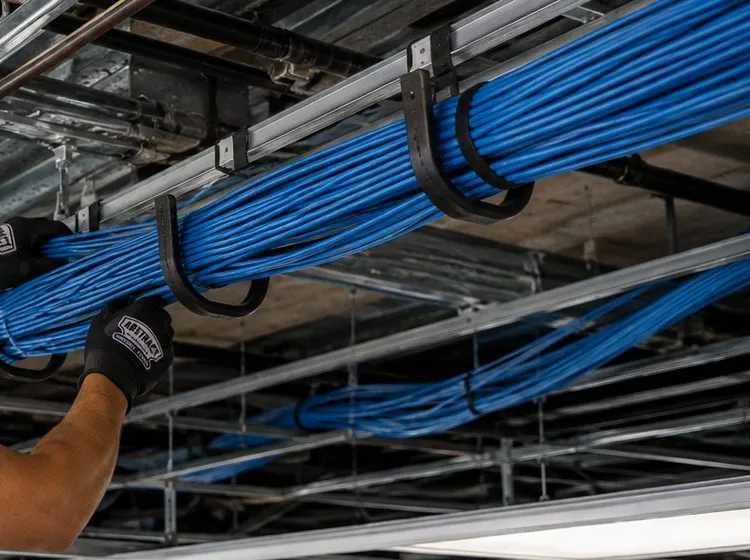
Sonos cable routing in Park Slope, Brooklyn: thick bundles of blue network cable hung in black J-hooks beneath an open ceiling, a gloved hand guiding one bundle
Bundles of blue cable run through black J-hooks fixed under an open ceiling, with a gloved hand at the lower left guiding one bundle into place.
Planned for Years, Not One Visit

A Sonos Plan That Follows the Family Through the House

The most useful thing we do in Park Slope is ask what each room will be in five years. A family that moves into a three-storey brownstone with a toddler will, over the next decade or so, reassign almost every room in it. The parlor floor stays the parlor floor, but the bedrooms above it rotate: the nursery becomes a shared room, then one child gets the back room and the other the front, then somebody moves to the top floor because it is quieter, then a bedroom becomes a study when the eldest leaves. Sonos is well suited to that, because the products are portable and the app lets you rename, regroup and re-tune them. What does not move easily is anything built into the house: a ceiling speaker, an Amp in a closet, a network cable inside a wall. That is where a little foresight pays.

Free-standing first in rooms that will change

In a room that is likely to change job within a few years, a free-standing Era 100 or Era 300 is often the better buy than a pair of ceiling speakers. It can sit on a shelf in a nursery, move to a desk in a teenager’s room and end up on a bookcase in an office, and at each stage the only work is renaming it in the app and running Trueplay again where the product supports it. Ceiling speakers on an Amp make more sense in rooms whose use is settled: the kitchen, the parlor, the main bedroom, a bathroom.

Wire the route even when you don’t wire the speaker

When a ceiling is open anyway — a plaster repair, a new light, an electrician’s visit, a renovation — we can leave a length of speaker cable or a network cable coiled above a room that might want a fixed speaker later, labelled at both ends and noted on a sketch of the house. It costs a fraction of what the same run costs once the ceiling has been closed and painted. In a rowhouse, where joists usually run side to side between the party walls, the vertical route through stacked closets is the easy one; a run from the front of the house to the back is the hard one, and that is the one most worth leaving in place while it is cheap.

Name rooms for what they are, and change the names when they change

The Sonos app shows rooms by name. A list that still says “Nursery” when a nine-year-old sleeps there invites confusion, especially when voice control is involved. Part of every return visit we make in a family house is tidying that list: renaming, regrouping, moving a speaker to its new room and re-running Trueplay in the new position. A setup-only visit covers it at the published $195 for the first hour.

Children change what a speaker needs to do

For small children a speaker is a story machine and a sleep machine: out of reach, at a modest volume, ideally switching itself off. For school-age children it is a music player they want to control themselves. For teenagers it is a room of their own with a door that closes, and parents start caring about how loud it can go and when. The Sonos features that help — per-room volume limits, sleep timers, alarms, separate music accounts — all exist in the app, but households rarely find them on their own. We set them at installation and show both parents where they are.

The home office is the room that changed most

Many Park Slope houses now have someone working at home for at least part of the week, usually in a top-floor room or a back bedroom, which is exactly where a router in the cellar or the front parlor delivers the weakest signal. A Sonos speaker in that room inherits the same weak signal. The fix that helps the speaker, a wired access point or a wired Sonos product on that floor, also fixes the video calls. We plan the office and the speaker together, and we group rooms so that music downstairs does not follow you into a meeting.

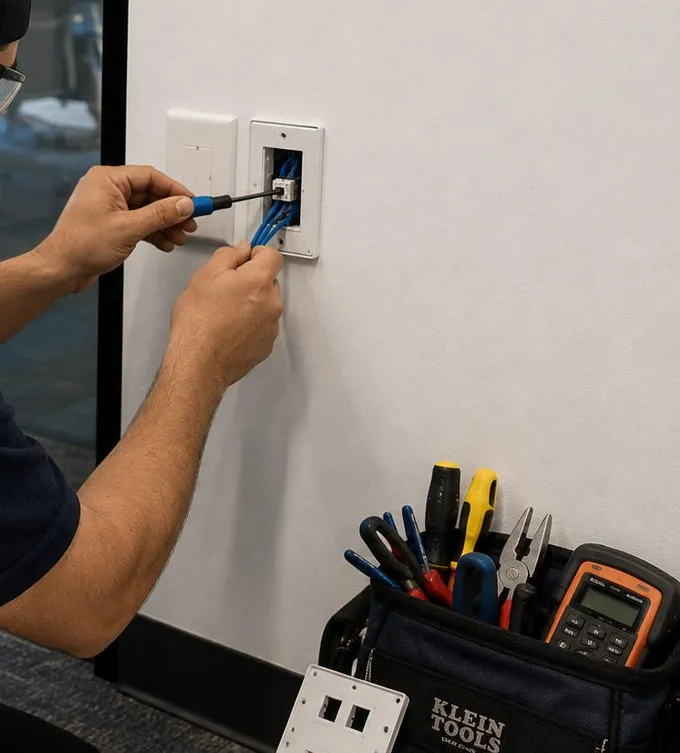
Sonos wired connection in Park Slope, Brooklyn: two hands with a small screwdriver seating a network jack into a white wall plate, a tool bag with pliers, screwdrivers and a meter below
Two hands use a small screwdriver to seat a network jack in a white wall plate; below, an open tool bag holds pliers, screwdrivers and an orange meter, with a spare wall plate in front.
Up and Down the Slope

How the Sonos Plan Changes from Prospect Park West to Fourth Avenue

The neighborhood runs downhill from the park to Fourth Avenue, and the housing changes roughly in step with the elevation. That is not a rule — there are rowhouses on Fourth Avenue and new buildings near the park — but it is a useful way to think about what a given address will need.

Prospect Park West and the blocks just below it

Facing the park are the large houses Wikipedia describes as built in the 1880s and 1890s to take advantage of the views, alongside pre-war co-ops such as 35 Prospect Park West (Emery Roth, 1929) and 9 Prospect Park West (1929, 43 units over 15 floors, per Corcoran’s building listing). In the houses, the challenge is scale: more floors, wider stair halls and more rooms per floor than a typical rowhouse, so a single router rarely covers the top floor and the garden level at once. We plan an access point on most floors with one wired switch in an equipment closet, and Amps grouped there rather than scattered in cupboards. In the co-ops the challenge is the paperwork: anything cut into a ceiling or a wall is an alteration for the board, and the managing agent will want a description of the work and a certificate of insurance, which we provide free.

The historic-district cross streets

From roughly Eighth Avenue down past Seventh, much of the housing is the brownstone and limestone row that the historic district protects. Interiors are where the Sonos work happens, and the Landmarks Preservation Commission’s permit guidance says interior work needs its approval only in limited cases — when the work also needs a Department of Buildings permit, when it affects the exterior, or when the interior itself is designated. Low-voltage work inside a house rarely falls into any of those. What does need care is the original detail: pier mirrors between the parlor windows, carved mantels, plaster cornices and medallions, inlaid floor borders and pocket doors that slide into the walls. A plan for these houses starts by marking what is not to be touched.

Seventh and Fifth Avenues

The two shopping streets mix businesses on the ground floor with apartments above, most of them rented. For a tenant, a good Sonos setup is one that needs no holes: a soundbar on the TV console, Era speakers on shelves, a portable for the kitchen, all of it leaving with the household when the lease ends. For a landlord or the owner of a mixed-use building, there is more room to do proper work: wired speakers in a shop, a separate network for the business and the apartments, and a sensible place for the internet equipment that is not the cellar of a building on Fifth Avenue, where the Park Slope Fifth Avenue BID told Brooklyn Paper in October 2023 that more than 30 businesses had been hit when up to six feet of water flooded basements.

Fourth Avenue and the western edge

The 2003 rezoning opened Fourth Avenue to larger buildings, and the Furman Center counts 6,563 homes added in buildings of four or more units across Park Slope and Carroll Gardens between 2010 and 2025. These apartments are the opposite of a brownstone. Cable routes inside metal-stud partitions and drywall ceilings are easy; anything through the concrete slab is not, and the building will have rules about it. Many units arrive with network jacks in several rooms, which can give a Sonos product a wired connection if the developer’s cabling tests properly. Ceilings may be part of a fire-rated assembly, which changes what an in-ceiling speaker needs behind it. Soundbars often hang on concrete. And because neighbors are above, below and on both sides, Sub placement and volume limits matter more than in a single-family house.

South Slope

Below roughly Ninth Street the blocks are a mix of rowhouses, frame houses and small apartment buildings, with the 14th Regiment Armory on Eighth Avenue and the Prospect Expressway at the bottom. The same rules apply house by house; the practical difference is that more of the housing is two- and three-family buildings with tenants, so separate networks and separate Sonos systems for each household come up often. Our Brooklyn Sonos page covers that owner-and-tenant arrangement in detail.

Part of the SlopeTypical first questionUsual starting plan
Prospect Park West housesWhy does the top floor drop out?Access points on several floors, Amps in one closet, ceiling speakers in settled rooms
Prospect Park West co-opsWhat will the board allow?Free-standing Sonos now; ceiling work after approval
Historic-district cross streetsHow do we keep the parlor original?Shelf, stand and wall-mount placements; ceiling speakers upstairs
Fifth and Seventh Avenue flatsCan we do this without drilling?Console soundbar, Era speakers, a portable
Fourth Avenue condosCan speakers go in this ceiling?Check the assembly and the alteration agreement first
South Slope two- and three-familiesWhose speakers are whose?Separate networks and systems per household
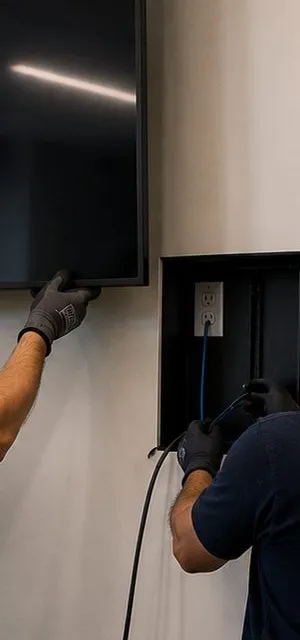
Park Slope, Brooklyn soundbar wall prep: gloved hands at the corner of a wall-mounted screen above a recessed wall box with an outlet, a blue cable fed into the box
A gloved hand steadies the lower corner of a wall-mounted screen; below it a recessed black box with an outlet takes a blue cable, while a second gloved hand feeds a black cable up from the floor.
Commercial Sonos

Business Sonos Installation in Park Slope

Park Slope’s businesses sit along a handful of corridors, and most of them are small: a narrow storefront, a back room or a garden, and an apartment or an office upstairs. Sonos markets installed systems to businesses, and for a café, a boutique or a practice it is often the right size. These are the places we are asked to work.

Fifth Avenue

The longer and busier of the two shopping streets, covered by the Park Slope Fifth Avenue BID, established in June 2008, which the city’s directory credits with 62 block faces and 521 ground-floor retail businesses. Restaurants and bars with back gardens, and cellars that flooded in 2023.

Seventh Avenue

The quieter main street through the middle of the Slope, described in a March 2026 neighborhood guide as skewing toward upscale dining, boutique shopping and specialty food stores. Many shops occupy the ground floor of walk-ups whose tenants are directly overhead.

Flatbush Avenue and Grand Army Plaza

The northern edge, with restaurants and shops facing heavy traffic and the plaza. Front-of-house sound has to compete with the street, so speaker layout matters more than volume.

Fourth Avenue ground floors

Retail and service spaces at the base of the new buildings: concrete ceilings, sometimes an open ceiling with exposed ducts, and building management with its own rules about drilling.

Union Street and the side-street practices

Garden-level offices in brownstones used by therapists, tutors and small studios, where the question is often privacy between rooms rather than background music.

Fitness, dance and kids’ studios

Upstairs and basement studios that need music loud in one room and quiet in the reception area, on a schedule, controlled from a shared tablet.

For any of these the plan begins with three questions. Who controls the music, and from what device? Does anything need to happen on a schedule — music on at opening, off at closing? And where does the sound have to stop: at the front door, at the ceiling under the apartment upstairs, at the wall shared with the shop next door? The answers decide whether a pair of Era speakers is enough or whether the space wants ceiling speakers on an Amp in two zones.

Rules that touch business music here

  • Sound aimed at the street: New York City Administrative Code §24-244(b) bars using a sound reproduction device to attract attention to a business from outside or in front of the premises, or through an opening onto a public street, park or place. We place speakers to serve the room, not the sidewalk.
  • Outdoor dining: the city’s Dining Out NYC rules for both sidewalk and roadway cafés say “No musical instruments or amplified sound unless authorized by a Street Activity Permit,” and require compliance with the Noise Control Code. Indoor speakers stay indoors.
  • Licensed music: check your streaming service’s terms for business use; several services are sold specifically for shops and restaurants. We set up whichever service you choose but don’t advise on licensing.
  • Power and cellars: new outlets are an electrician’s work, not ours. After the 2023 basement flooding on Fifth Avenue, we put amplifiers and network gear on shelves or upstairs rather than on a cellar floor.
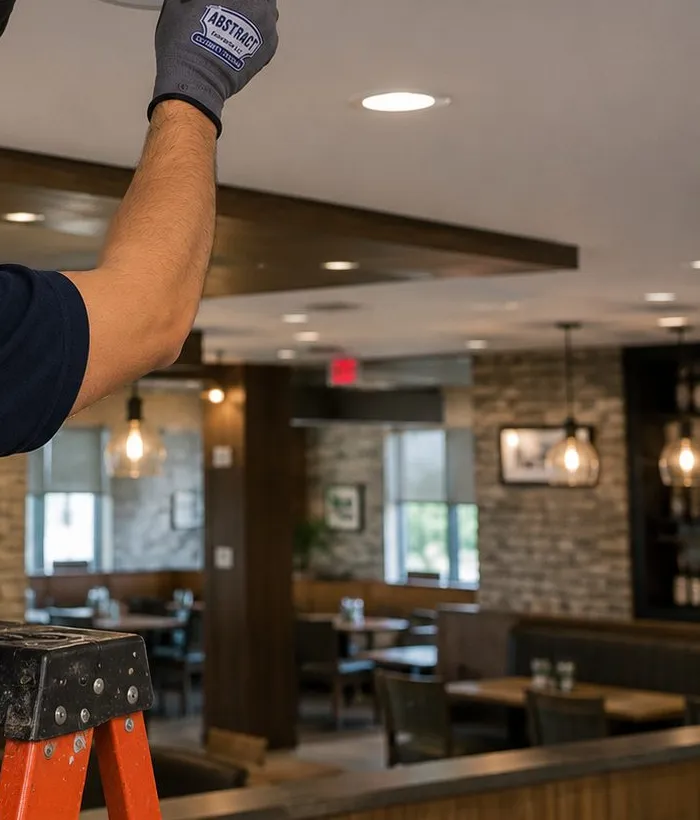
Restaurant Sonos installation, Park Slope, Brooklyn: a gloved arm reaching to the ceiling above a dining room with booths, a brick wall, pendant lights and the top of an orange ladder
A gloved arm reaches up to the ceiling at the top of the frame; below is a dining room with wooden booths, a brick wall, hanging pendant lights and the top of an orange stepladder in the foreground.
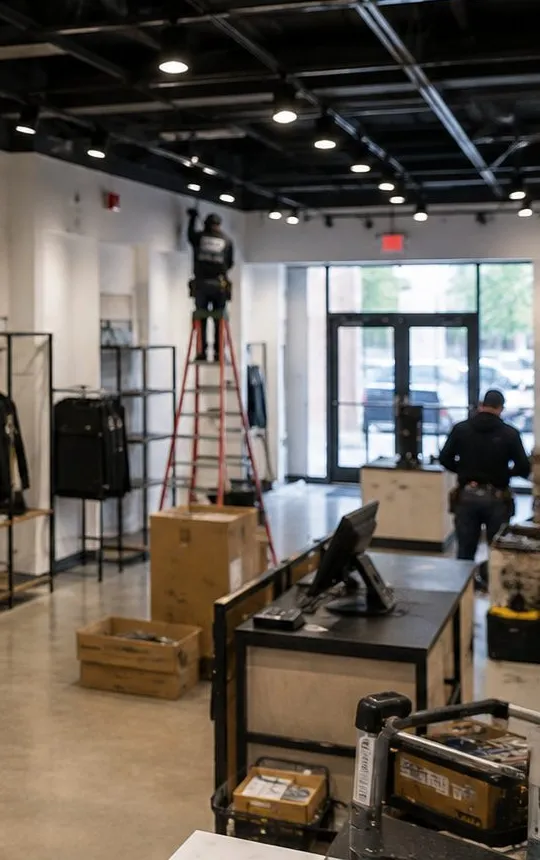
Shop Sonos installation, Park Slope, Brooklyn: a store floor with garment racks, boxes and a counter under a black open ceiling with track lights, a worker on a ladder at the back
A store being fitted out: garment racks, cardboard boxes and a counter with a screen sit under a black open ceiling with spotlights, while a worker stands on a red ladder near the back wall and another walks toward the glass doors.
Your Questions Answered

Sonos Installation in Park Slope: Questions Answered

These are the questions that come out of Park Slope’s particular mix of family houses, landmarked parlors, new buildings, busy avenues and a very large park. Broader Sonos questions — dropouts in tall houses, owner and tenant systems, garden speakers through brick — are answered on our Brooklyn Sonos installation page and the NYC Sonos hub.

Rooms that change hands as the family grows

When the nursery turns into a big kid’s room, and later a teenager’s or a home office, what in the Sonos plan should be built to change with it?

Keep the speaker portable and make the wiring permanent. In a room whose job will change, we usually recommend a free-standing Era 100 rather than a pair of ceiling speakers: it can sit high on a shelf in a nursery, move to a desk later and end up on an office bookcase, and each move is a rename in the app plus a fresh Trueplay tuning on a supported phone. What we build into the house is the part that is hard to add later — a network jack on that floor, or a speaker cable coiled in the ceiling while it happens to be open — so that when the room becomes an office, a wired connection or a pair of ceiling speakers is a short visit rather than a plaster job.

We also write the plan down. A one-page sketch of the house showing where every cable, jack and Amp is, and what each one was left in place for, is part of the handover in a family house; it is the document you will want when the room changes in four years and nobody remembers which coil in the closet goes where.

Can the speaker in a child’s bedroom switch itself off once they have fallen asleep?

Yes. The Sonos app has a sleep timer: from the Now Playing screen you open the options menu, choose Sleep Timer and pick a duration, and the music stops when it runs out; the remaining time shows beside the option. Set it for the child’s room only and the rest of the house is unaffected. One thing worth knowing if you use Alexa on a Sonos speaker: Sonos lists setting alarms and sleep timers among the Alexa features not currently supported on its products, so the timer has to be set from the app (or by Sonos Voice Control, if that is what you use).

At installation we set a per-room volume limit as well, so a bedtime story never goes past a level you chose, and we show whoever does bedtime where both settings live. If the room has a portable speaker on its charging base, the timer works the same way.

Can the kids play Brooklyn Public Library audiobooks on their Sonos speaker?

Yes, directly. Brooklyn Public Library lends audiobooks through the Libby app, and Libby by OverDrive is one of the services available inside the Sonos app. Libby’s own help page describes the link: add the Libby service in the Sonos app, then in Libby open the menu, choose Copy To Another Device and the option for connecting Sonos speakers to get a setup code; once signed in, any audiobook on your loans shelf can be started from the Sonos app on whichever speaker you pick.

We sign the service in during setup if you have a library card handy, and name the account so a child can find it. Some families prefer to play from the Libby app on a parent’s iPhone over AirPlay instead, which keeps the child’s place in the book in one app; both work, and we show you each.

Our eldest is leaving for college — will a Sonos speaker work on the campus Wi-Fi?

Often not over Wi-Fi. Sonos lists WPA/WPA2 Enterprise networks, guest networks and networks that use a portal log-in page among the setups it doesn’t support, and those are the kinds of networks most campuses and dormitories run. A Roam 2 or Move 2 can still play over Bluetooth from a phone, which is how most students end up using them. Some colleges run a separate registration system for students’ game consoles and speakers; whether that suits a Sonos product is a question for the college’s IT office before you pack.

Before the speaker leaves home we can remove it from the family system cleanly, so the house’s app doesn’t keep looking for it and it can be set up fresh wherever it lands. If it is the family’s only portable, we usually suggest moving a different speaker into its old job at home on the same visit.

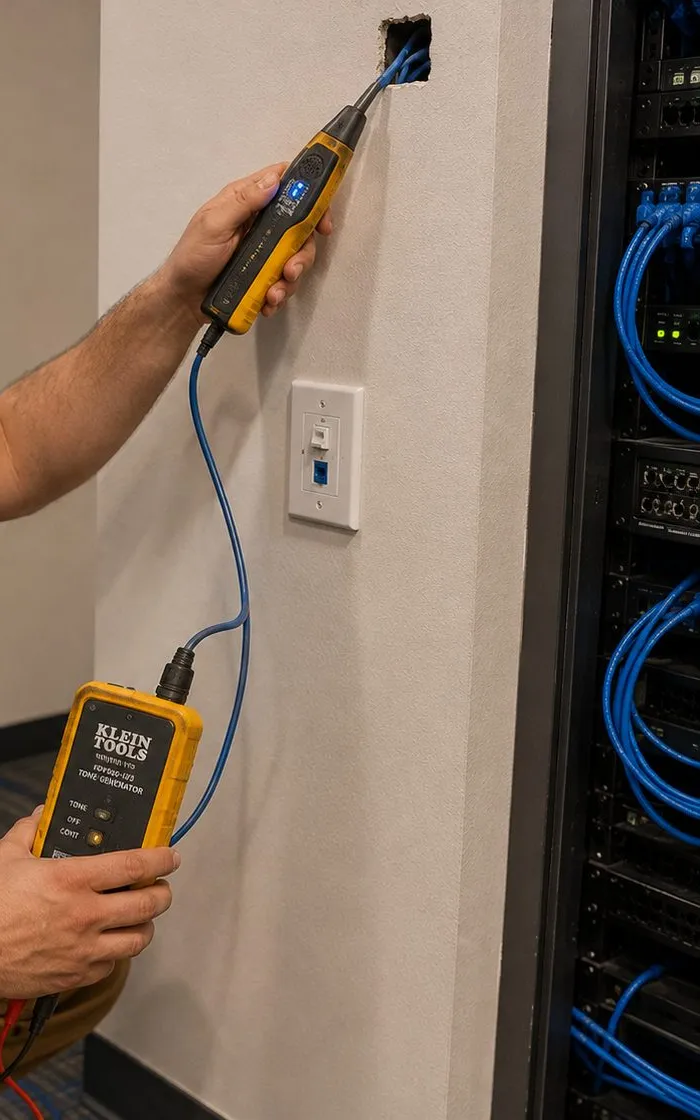
Tracing a cable for a Sonos room in Park Slope, Brooklyn: a hand holding a yellow tone probe at an open wall box while the other hand holds a yellow tone generator connected by blue cable, a network rack at right
One hand holds a yellow tone probe against blue cable emerging from an opening high on the wall, the other holds a yellow tone generator joined to it by a blue lead; a white wall plate sits between them and a network rack fills the right edge.

Parlor floors on the brownstone and limestone blocks

The front parlor’s long wall is taken up by the original pier mirror — where do the TV and Sonos speakers go instead?

Usually to the back parlor, or to the chimney-breast wall if the fireplace is not in use, and the mirror stays exactly as it is. Brownstoner’s Park Slope listings regularly describe a grand pier mirror dominating the front parlor between the windows; it is tall, often fixed to the wall at several points, and part of what buyers pay for. We don’t mount anything on or through it, and we keep bracket fixings well away from its frame. In many houses the back parlor, which was often the dining room, makes the better TV room anyway: no windows behind the screen, and a wall that faces the seating.

If the front parlor is where the family wants to listen to music, a stereo pair of Era 300s or Era 100s on stands or a console either side of the mirror gives good sound without touching anything original. If the TV must go in the front room, a soundbar on a low cabinet in front of the mirror’s base is reversible and leaves the mirror visible above the screen.

Fourth Avenue condos and new buildings

Our Fourth Avenue condo’s ceilings are part of the building’s fire-rated floor assembly — can in-ceiling speakers still go in?

Possibly, but not as a simple cut-and-drop. The electrical code addresses this directly: section 640.25 of the National Electrical Code, as quoted by the enclosure maker Tenmat, says loudspeakers installed in a fire resistance-rated partition, wall or ceiling “shall be listed for that purpose or installed in an enclosure or recess that maintains the fire resistance rating.” In practice that means a listed fire-rated back can or enclosure above each speaker, sized for the speaker model. Sonance, which makes Sonos’s architectural speakers with Sonos, sells fire-rated listed back cans for most of its own in-ceiling models; whether a particular enclosure is listed for use with the Sonos model you want is something we confirm with the manufacturer before committing.

Two documents decide it before we do: the building’s alteration agreement, which says what the managing agent or board will approve, and the building’s drawings or the architect’s answer on whether your ceiling is in fact a rated assembly. If it is, and the building allows the work, we quote the enclosures as a separate line. If it isn’t allowed, a soundbar with Era speakers as surrounds gives most of the effect with nothing in the ceiling at all.

Stoops, block parties and the park

Can we take a Sonos portable to the Long Meadow on a Saturday?

To listen quietly on your own blanket, a portable at a modest level is ordinary park life; anything louder is regulated. NYC Parks’ special-event guidance says that to use an electric sound system at an event you need a sound permit from the NYPD, filed in person at the local precinct; it allows up to four hours of amplified sound where it is allowed at all, and notes that amplified sound is not permitted in every park. The Prospect Park Alliance’s page on small event permits, for gatherings of 20 to 499 people, lists amplified sound among the things not allowed. A birthday picnic with a speaker turned up for a crowd is exactly the case those rules are written for.

Our practical advice: a Roam 2 at low volume for your own group, Bluetooth from a phone because there is no Wi-Fi under the trees, and nothing aimed at the neighboring blankets. If you want music for a larger gathering, the permit route through NYC Parks and the 78th Precinct comes first, and the Lena Horne Bandshell is where the park’s amplified music is meant to happen.

Our block association runs a summer block party — can our outdoor Sonos speakers or a Move play for the street?

Only with the sound permit. Brooklyn Community Board 6, which covers Park Slope, tells block-party applicants to file at least 60 days ahead and says that all amplified sound, such as background music, musical performances or speaking programs, requires a permit from the New York Police Department. The NYPD’s sound device application is filed at the precinct and carries a $45 fee for the first day’s use, according to the application form NYC Parks posts. Once the permit is in hand, a couple of Move 2 speakers on stoops at each end of the block, grouped from one phone, are a tidy way to do it.

The same thinking applies to Halloween, when the side streets near the park are decorated stoop by stoop and the Park Slope Civic Council’s children’s parade runs down Seventh Avenue to the Old Stone House. A speaker playing spooky sounds on your own stoop is decoration, not a concert; keep it at a level that doesn’t carry down the block, bring it in at a sensible hour, and don’t leave a portable unattended on the steps.

Fifth and Seventh Avenue businesses

Can our restaurant put a Sonos speaker in its sidewalk or roadway seating?

Not without a Street Activity Permit. The city’s Dining Out NYC operating rules, for sidewalk cafés and roadway cafés alike, say “No musical instruments or amplified sound unless authorized by a Street Activity Permit,” and require compliance with the Noise Control Code. Residents notice: one r/parkslope thread is a neighbor’s complaint about a restaurant’s outdoor speakers playing through the winter. The outdoor seating is part of the street, and the rules treat it that way.

What we do instead is design the indoor system so the room near the windows sounds full without the doors acting as a loudspeaker: ceiling speakers spread evenly through the dining room at a moderate level rather than one loud pair by the entrance, a separate zone for the back garden if the premises has one, and a scheduled end time. A back garden behind the restaurant is private property, but the general noise rules still apply and the apartments above it are close; we set the garden zone’s limit with that in mind.

Our therapy practice rents a garden-level office in a brownstone — can Sonos keep conversations private in the waiting room?

It can help, but it shouldn’t be the only thing doing the job. Speech privacy depends on steady masking sound outside the consulting-room door, every session, with no gaps. Practitioners commonly use a dedicated white-noise machine for that, because it starts at the flick of a switch and does not depend on the internet, an app or anyone remembering to press play; therapists on r/therapists recommend one in the office and one in the waiting room. A Sonos speaker in the waiting room playing quiet music or a steady sound adds to the masking and makes the space pleasanter, and it can be scheduled to start before the first appointment and stop after the last.

The details that matter in a brownstone office: put the masking source at the door rather than inside the consulting room, keep the waiting-room speaker on a shelf by that shared wall, and set a volume limit so a client cannot turn it up. If the practice shares the building’s Wi-Fi with the apartments upstairs, a separate network for the office is worth considering for privacy reasons that have nothing to do with music.

Equipment

Types of Sonos Systems We Install

You buy Sonos products from any retailer; we install and set them up. The cards below say where each product tends to earn its place in a Park Slope home, which often depends as much on who uses the room as on its size.

Era 100

The workhorse of family houses: small enough for a nursery shelf, good enough for a teenager’s room, and easy to move when the room changes jobs. Two of them make a stereo pair or rear surrounds for a soundbar.

Era 300

A larger speaker with up-firing drivers that suits a parlor stereo pair either side of a pier mirror or mantel. Sonos’s own wall mount for it is specified for stud mounting, not hollow drywall alone, so placement on plaster or metal studs is checked first.

Arc Ultra

The flagship soundbar, a little over 46 inches long, for a large TV in a back parlor, a Prospect Park West living room or a wide condo wall. Sonos says it adjusts its EQ when it detects it has been wall-mounted.

Beam and Ray

The compact bars: Beam takes HDMI ARC or eARC, Ray an optical cable, which suits the older hand-me-down TV that tends to end up in a playroom or a walk-up living room.

Sub 4 and Sub Mini

Bass for the parlor or the condo living room, placed with the floor below in mind. In a co-op or a house with a tenant downstairs, the Sub level is set after Trueplay and then checked from the floor below.

Amp with in-ceiling speakers

For settled rooms — kitchens, main bedrooms, bathrooms, the parlor in a house without fragile ceilings. Sonos says one Amp reliably powers up to three pairs of its architectural speakers wired in parallel.

Port

For the turntable-and-receiver households: the Port streams Sonos into an existing stereo and can switch the receiver on with a 12V trigger. Sonos asks for at least 2 inches of clearance around it on a shelf.

Roam 2 and Move 2

The park, the stoop, the garden and, eventually, a college dorm. Both play over Bluetooth when there is no usable Wi-Fi, which is the only way they work under the trees or on a campus enterprise network.

Wired access points

Not a Sonos product, but the thing that makes the top-floor office and the garden-level kitchen work. Sonos doesn’t support wireless range extenders; a cabled access point or a wired Sonos product on the weak floor is the reliable fix.

Matching the product to the person, not just the room

Who uses the roomWhat usually suitsSettings we set at handover
Baby or toddlerEra 100 high on a shelf or a Sanus wall mountLow volume limit; sleep timer shown to every adult who does bedtime
School-age childEra 100 the child can reach; audiobooks signed inVolume limit; the child’s own room name so they can find it
TeenagerEra 100 or Era 300; sometimes a Ray under a bedroom TVA limit the household agrees; the teen’s own music account
Home officeEra 100 on the desk shelf, wired if the floor is weakGrouping that leaves the office out of whole-house music by default
Grandparents visitingAny speaker with buttons on top; voice control if they like itA simple favorites list in the app on their phone
The whole familyParlor soundbar with a Sub; an in-ceiling pair over the kitchen counterNight sound and speech enhancement shown on the TV remote and in the app
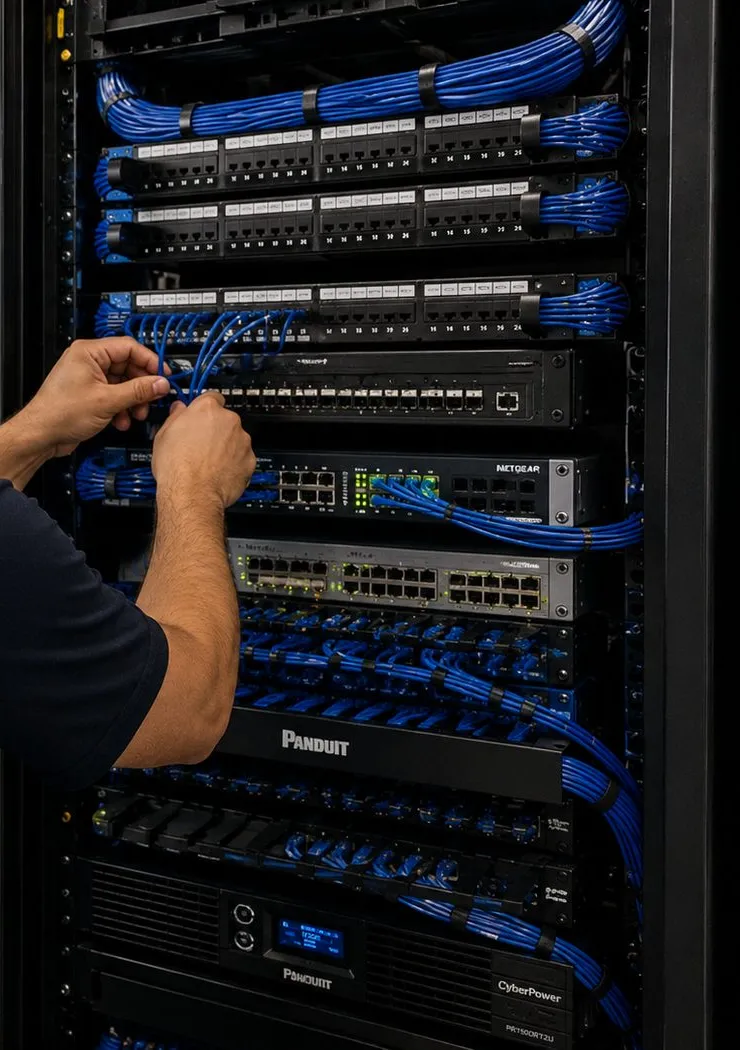
Network rack for a Sonos system in Park Slope, Brooklyn: patch panels and switches dressed with blue cables, two hands plugging in a patch lead
A floor-standing network rack with rows of patch panels and switches, blue cables dressed neatly to each side, while two hands plug a short patch lead into a switch port.
AI Overview Reality Check

What AI Gets Wrong About Sonos Installation in Park Slope

Google’s AI Overview could not be loaded where this page was built, so nothing below pretends to quote it. Instead we took seven claims that appear in published cost guides, product marketing and online forums — the raw material answer engines draw on — and checked each against Park Slope houses and buildings.

Claim one: “Budget about $500 to $1,000 for each extra room”

Angi’s guide to whole-home stereo lists additional zones or multi-room audio at $500 to $1,000 per room, and labor at $50 to $100 an hour. It is a national figure built on a house with one floor, a router in the middle and drywall everywhere.

In Park Slope the cost of a room depends far more on what is between it and the router than on the speaker. A nursery on the same floor as the router can be a $125 setup line and an Era 100 you already own. The same speaker on the top floor of a limestone house, three floors above a router in the front parlor, may need a wired access point first, and that is quoted after a walkthrough.

The honest unit for a Slope house is not the room but the floor. Once each floor has a reliable network, adding a speaker to any room on it is cheap. Until then, every room on a weak floor costs more than a guide would predict, and no per-room figure tells you which floors those are.

Claim two: “Plug in a Wi-Fi extender and the top-floor speaker will be fine”

Retail advice for weak Wi-Fi usually ends with a plug-in extender. The r/parkslope thread on Wi-Fi in multi-level brownstones starts from a resident whose new extender hadn’t solved the problem.

Sonos’s own system requirements list networks using wireless range extenders among the setups it doesn’t support, along with powerline (Ethernet-over-power) adapters. A speaker may appear to work through one and then drop out in the evening when the whole block is streaming.

What works in a rowhouse is a cable: an access point wired back to the router on the weak floor, or one Sonos product wired by Ethernet. Other residents in the same thread describe running MoCA adapters over the house’s coaxial cable to feed a mesh node on each floor, which is a wired backhaul by another route; we test whatever is already in the house before adding to it.

Claim three: “Landmarked house? You can’t touch anything”

People new to the historic district are often told that landmark status means a permit for every change. It doesn’t, at least not indoors.

The Landmarks Preservation Commission’s permit guidance limits its interest in interior work to cases where the work also needs a Department of Buildings permit, affects the exterior, or is in a designated interior. A speaker on a parlor shelf or in an upstairs ceiling is none of those.

The real constraint inside a Park Slope house is not the LPC but the owner’s own wish to keep the original detail — and on the outside, the facade, where anything visible from the street is the Commission’s business. We plan for both: nothing on a pier mirror or cornice indoors, and nothing on the front of the house outdoors.

Claim four: “In-ceiling speakers are always the cleanest option”

Lifestyle articles present ceiling speakers as the invisible, upmarket choice, and in a new kitchen they often are.

In a parlor with a plaster cornice and a medallion, cutting the ceiling risks the detail and, in old plaster, cracks. In a Fourth Avenue condo, the ceiling may be part of a fire-rated assembly that needs a listed enclosure behind each speaker. In a room that will be a nursery now and an office later, a fixed pair is the least flexible choice.

Ceiling speakers are the cleanest option in settled rooms with plain ceilings and an easy route to the Amp. Elsewhere, a well-placed Era speaker is cleaner in the sense that matters: nothing to repair, nothing to approve and nothing to regret when the room changes.

Claim five: “Sonos is a good baby monitor if it has Alexa built in”

Smart-speaker articles describe calling and drop-in features as if every voice-enabled speaker had them, and parents reasonably assume a Sonos with Alexa can listen to the nursery.

Sonos’s page on controlling Sonos with Amazon Alexa lists Voice Calling and Drop In among the features not currently supported. A Sonos speaker plays sound into a room; it is not designed to send sound out of one.

Buy a proper baby monitor. Sonos’s interference guidance names baby monitors among the devices that can disturb its Wi-Fi and asks for about 18 inches between a Sonos product and other electronics, so we keep the monitor and the nursery speaker apart on the shelf.

Claim six: “Any speaker will work anywhere with a phone”

Portable-speaker marketing shows the product on a picnic blanket and a beach towel, and it is easy to assume a Sonos portable behaves like any Bluetooth speaker everywhere.

Over Wi-Fi it only works on a network Sonos supports; enterprise, guest and portal-login networks are on Sonos’s unsupported list. Over Bluetooth it works anywhere, but in a New York City park the question is not whether it plays but whether it may: NYC Parks requires an NYPD sound permit for amplified event sound and doesn’t allow it in every park.

So the right answer is a set of rules, not a product feature: Wi-Fi at home, Bluetooth in the park and in the dorm, and a permit for anything that amounts to amplified sound for a crowd.

Claim seven: “Professional installation is only for big systems”

Product reviews often say Sonos is so easy to set up that an installer is only worth it for ceiling speakers and multi-room wiring.

The setup is easy. The planning is not, in a house that will be rearranged three times in ten years, on a network that has to reach four floors through brick and plaster, with a tenant below and a child’s bedtime to respect. Most of our Park Slope visits are short and modest in cost; their value is that the settings, the network and the wiring are done once, written down, and ready for the house’s next stage.

The published Brooklyn lines start at $125 for setup, and a setup-only visit to re-plan a house is $195 for the first hour. That is the right scale for most families here.
A Sonos Plan for Every Stage of Your Park Slope House

List the floors, the people and the products you have. You’ll get back a plan that separates what should be wired now from what should stay portable, with a price on each.

Get In Touch

Request a Free Quote

A few lines price most Park Slope jobs: the kind of building, the floors, who uses each room and which Sonos products you own. The total comes back in writing the same business day. To talk it through, phone (347) 934-8335.

✅

We Got Your Request!

Received. Your Park Slope rooms are on an installer’s desk now, and a reply with a plan follows; if the music has stopped altogether, phone (347) 934-8335.

How It Works

Our Installation Process

The same seven stages apply to a single nursery speaker and to a whole Prospect Park West house. What changes on the Slope is how much time goes into the first two, and the sketch we leave behind at the end.

1. Ask who uses each room

Before measuring anything we list the people: children and their ages, anyone working from home, tenants, visiting relatives. Each room in the written plan gets a reason, a likely future use and a price from the Brooklyn list.

2. Mark the original detail

The first walk-through is of the parlor floor: pier mirror, mantels, cornice, ceiling medallion, pocket doors, inlaid borders. Anything on that list is ruled out before a tool is unpacked.

3. Test the network floor by floor

We find where the internet enters, test the signal on every landing, and remove or work around extenders and powerline adapters, which Sonos does not support.

4. Wire the weak floors

An access point or a wired Sonos product goes on each floor the router cannot reach, along a stacked-closet route where the house allows it, so speakers have a steady base.

5. Place, mount and leave the route

Speakers go where the plan says, soundbars on fixings chosen for plaster, brick, metal studs or concrete. Where a ceiling is open, cable is left coiled and labelled for rooms that will change later.

6. Tune and set limits

Once every speaker sits where it will live, Trueplay is run on the supported ones. Children’s rooms and any floor above a neighbour get a volume ceiling, and the bedtime parent learns the sleep timer.

7. Name, sketch and hand over

Each room gets the name of the person or job it serves, Libby and the music accounts go in, and a hand-drawn sketch of every cable, jack and Amp is left with you before the clean-up.

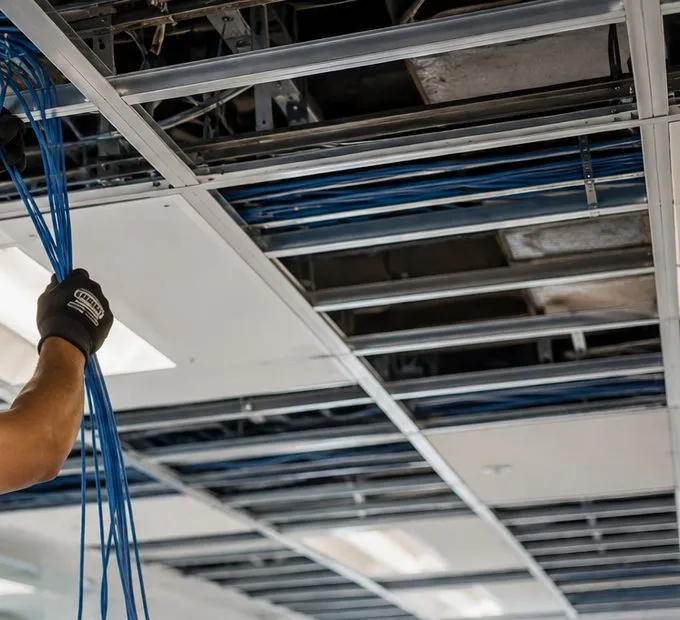
Cable pull for Sonos speakers in Park Slope, Brooklyn: a gloved hand drawing loose blue cables down through an open ceiling grid, with more cable running in the ceiling void
A gloved hand at the left draws a loose bundle of blue cables down from an open ceiling grid, with more blue cable visible running through the ceiling void above the tiles.
Coverage Area

Sonos Installation Near Park Slope’s Landmarks

Our crews cover the whole Slope, Flatbush Avenue down to the Prospect Expressway and Fourth Avenue up to the park. When customers describe where they live, these six places come up most.

Old Stone House, Washington Park

On Third Street between Fourth and Fifth Avenues, in J. J. Byrne Playground. A 1933 reconstruction, using some original materials, of the Vechte–Cortelyou house of 1699, which was an important position in the Battle of Long Island on August 27, 1776 (Wikipedia). The Halloween parade ends here.

Grand Army Plaza

The oval at the main entrance to Prospect Park, which Calvert Vaux considered vital to the park’s design. The Soldiers’ and Sailors’ Arch was begun in 1889 and dedicated in 1892; the Bailey Fountain was completed in 1932 (NYC Parks).

Central Library, 10 Grand Army Plaza

Brooklyn Public Library’s main branch, opened to the public on February 1, 1941, designated a city landmark in 1997 and listed on the National Register in 2002 (Brooklyn Public Library). The library whose audiobooks reach Sonos through Libby.

Lena Horne Bandshell

At Prospect Park West and Ninth Street, home of BRIC Celebrate Brooklyn!, described by the Prospect Park Alliance as New York’s longest-running free outdoor performing arts festival, held there each summer. The right place for amplified music in the park.

The Montauk Club, Eighth Avenue

A private club founded in 1889 whose clubhouse, designed by Francis H. Kimball after a palace on Venice’s Grand Canal, was completed in 1891, with carved mahogany woodwork and stained glass (The Montauk Club).

14th Regiment Armory, Eighth Avenue

The castle-like armory between 14th and 15th Streets in the South Slope, built 1891–95 to William A. Mundell’s design and a city landmark since 1998; it houses a women’s shelter, a veterans’ museum and a Prospect Park YMCA sports facility (Wikipedia).

The park itself is the neighborhood’s biggest landmark, and the reason Prospect Park West was built up with large houses in the 1880s and 1890s. Its edges set the tone for the whole Slope: quiet residential blocks that fill with families on weekends, and a long eastern border with no buildings facing the houses at all.

We also serve the neighborhoods around Park Slope: Prospect Heights across Flatbush Avenue, Gowanus and Boerum Hill west of Fourth Avenue, Windsor Terrace south of the park, Greenwood Heights and Sunset Park beyond the Prospect Expressway, Carroll Gardens, Cobble Hill and Crown Heights, all on the same Brooklyn price list.

Sonos wiring in Park Slope, Brooklyn: two gloved hands feeding blue network cable into a metal box on a conduit run along a painted block wall, a rack edge at right
Blue cable disappears into a small metal junction on an upright steel pipe fixed to painted blockwork; a slack loop hangs below the gloved hands, and a rack frame edges into view on the right.
Pricing

Sonos Installation Cost in Park Slope

Park Slope is priced on the Brooklyn list, which is the company’s base rate. Every line below is published on that list, word for word; nothing is added on the day without your agreement, and anything we can’t price without seeing a ceiling or a cable route is quoted in writing after a walkthrough.

LineBrooklyn priceWhere it comes up in Park Slope
Sonos setup$125One system for all your Sonos products, each room labelled for the person who uses it, audiobook and music accounts signed in, Trueplay wherever the product supports it
Soundbar wall-mounted under the TV$129A back-parlor TV wall, a bedroom, a condo living room
Soundbar placed on a console$79Rentals over the avenues, front parlors with a pier mirror, playrooms
Sanus soundbar bracket$84.99If you don’t already have a mount for the bar
In-wall concealment$169Power and cables hidden inside a hollow wall behind the screen; common on condo metal-stud walls and renovated rooms
Paintable cord cover$59Brick chimney breasts, concrete walls and plaster you’d rather not open
Cable run to a cabinet or other spot$99Any run within 25 ft; the classic case is TV wall to the alcove shelving next to the chimney breast
A/V receiver$129Hooking the family turntable and receiver up to a Sonos Port
Universal remote$99Programmed for TV, soundbar and sources — useful for grandparents and sitters
Streaming device setup$49Each device
Full home theater$350Multi-component system setup
Setup-only visit$195 first hourThen 30-minute blocks: re-planning rooms that changed hands, dropouts, regrouping
TV mounted on the same visitFrom $179.99Brooklyn TV mounting base for 32″–55″ on drywall over wood studs, before wall and size add-ons
Ceiling, wall or outdoor speakers on AmpQuoted at walkthroughPriced once we have seen the ceiling, checked whether it is fire-rated and found a path to the Amp
Access points, riser cable, separate networksQuoted at walkthroughPriced after testing each storey and finding where the provider’s line arrives

Wall and access lines

ConditionPriceWhere we meet it here
Drywall on wood studs$0Renovated rowhouse floors
Metal studs+$30Fourth Avenue condos and rentals
Plaster+$45Most rowhouse rooms, pre-war co-ops, avenue walk-ups
Brick or stone+$65Chimney breasts, party walls, rear walls
Concrete or cinder block+$75Shear walls and columns in new buildings
Tile or marble+$95Bathrooms and fireplace surrounds
Plywood backer board$85Where a wall needs a backer for the mount
High mount, above about 8 ft$75Tall parlor floors
Walk-up, 3rd floor and above, no elevator$40Apartments over Fifth and Seventh Avenue shops
Box removal$25Sonos packaging taken away
Certificate of insurance for a board, association or landlordFreeProspect Park West co-ops, condo managing agents

Five Park Slope jobs, added up from the published lines

  • A nursery Era 100 and a family-room Beam you already own, Beam on the console: Sonos setup $125 + console placement $79 = $204.
  • Arc Ultra on the brick chimney breast of a tall back parlor, on Sonos’s own mount, cables in a painted channel: wall-mount $129 + brick $65 + high mount $75 + cord cover $59 + Sonos setup $125 = $453.
  • Beam on a concrete wall in a Fourth Avenue condo, Sanus bracket, cables in a raceway: Sonos setup $125 + wall-mount $129 + Sanus bracket $84.99 + concrete $75 + cord cover $59 = $472.99.
  • Ray on the TV stand in a fourth-floor walk-up over Seventh Avenue: Sonos setup $125 + console placement $79 + walk-up $40 = $244.
  • Re-planning the house after the eldest leaves — speakers moved, rooms renamed, Trueplay re-run: setup-only visit, $195 for the first hour, then 30-minute blocks if needed.

What’s included, and what isn’t

  • Part of every job: the mounting and connections, one tidy Sonos system with rooms labelled by person, music and library accounts signed in, Trueplay, per-room limits, a sleep-timer lesson for whoever does bedtime, Guest Access set the way you want, a sketch of any cable left for later, and a clean room when we go.
  • Left to other trades: a new receptacle or anything at line voltage is for a licensed electrician, patching old plaster is for a plasterer, and work on a landmarked facade waits for whoever holds the LPC permit.
  • Who buys what: the speakers are your purchase from whichever shop you prefer; mounting hardware, wire, surface channel and in-wall kits travel with us and are billed at the table rates.
  • Second trips: a visit we can’t begin — the speakers haven’t arrived, the cellar is locked, the board hasn’t signed off — carries the $150 return-trip fee. Moving the date a day or more ahead costs nothing.
  • Nineteenth-century plaster: however slowly it is cut, plaster this old can crack. You hear about that risk on the walkthrough, and no ceiling is opened without your go-ahead.

Cost guides versus a local plan. A national per-room figure assumes one floor and a router in the middle. It can’t price a four-floor limestone house, a co-op board’s alteration terms or a fire-rated condo ceiling, and it says nothing about what happens when the nursery becomes an office. Published lines and a written quote can. See every line on our Brooklyn TV mounting price list.

Shop Our Systems

Sonos Installation Packages & Pricing

Three bundles cover most Park Slope first visits. None is a special offer: each price is our published Brooklyn lines added together, and you can check the sum. Wall conditions, a walk-up or a high parlor mount go on top as listed above.

Starter — Kids’ Floor Setup

$174

Sonos setup ($125) for the speakers you own — children’s rooms named, volume limits and sleep timers set, Libby and music services signed in — plus one streaming device set up for the family TV ($49).

Standard — Bedroom or Condo Soundbar

$383.99

A Beam or Ray hung below a bedroom or condo TV: wall-mount ($129), Sanus bracket ($84.99) and the plaster line (+$45), with the system set up ($125). A metal-stud wall swaps the plaster line for $30; drywall on wood studs adds nothing.

Premium — Parlor Soundbar

$577.99

Setup ($125), an Arc Ultra wall-mounted ($129) on a Sanus bracket ($84.99) on a brick chimney breast (+$65) above about 8 feet (+$75), with a universal remote programmed for TV, bar and sources ($99).

Bring Your Own Equipment — Labor Only

If you already have the mount — Sonos’s own Arc Ultra mount, a Sanus Era 100 mount, or any bracket rated for the product — you pay only for the work: $129 to hang a soundbar, the wall line that applies, and $125 if you want the system set up. Mounts you supply stay under their maker’s warranty. If yours doesn’t suit a plaster, brick or concrete wall, you hear that before anything is drilled.

Whole-House, Future-Ready and Business Plans

Houses that need an access point per floor, cable left in place for rooms that will change, Amps behind ceiling speakers, a fire-rated condo ceiling or a restaurant with two zones get one written price after a walkthrough. For guidance, our NYC AV page publishes whole-home audio at $800 to $2,500 per zone installed, and your Park Slope quote shows where each room lands within that before anything is booked.

Get the Park Slope Total in Writing

Tell us the building, how many storeys, who sleeps and works where, and the Sonos boxes you have. A priced plan at the Brooklyn rate follows within the business day.

The Network Underneath

Getting a Steady Signal from the Cellar to the Top Floor

Almost every Sonos complaint we hear in Park Slope is really a network complaint. The houses are tall and narrow, the internet usually arrives at the front of the cellar or the parlor, and the rooms that need music most — a top-floor bedroom, a garden-level kitchen, an office at the back — are the ones furthest from it, behind plaster and brick that Sonos’s own interference guide rates as high and medium obstructions.

What we check first

  • Where the provider’s line comes in, and whether the router sits there or has been moved to a better spot.
  • Whether any extenders or powerline adapters are in the house; Sonos lists both among unsupported setups.
  • Whether the house already has coaxial cable or old network cable to each floor that can be tested and reused.
  • Which closets line up from floor to floor, because a stacked closet is the easiest vertical cable route in a rowhouse.
  • Where the baby monitor, the cordless phone base and the microwave are; Sonos names all three among sources of interference and asks for about 18 inches between its products and other electronics.
  • Whether the household runs more than one network, for a tenant, a business or a guest, and which one the Sonos system belongs on.

The usual fixes, cheapest first

Moving the router out of the cellar and up to the parlor floor, if the provider’s line allows it, often helps more than any new equipment. Next is wiring one Sonos product to the router, or an access point on each weak floor, along the closet stack. In a house where the walls are open for renovation, a network jack on every floor is the best investment in the whole Sonos project, because it serves the speakers, the office, the TVs and the cameras alike. In a Fourth Avenue unit, the developer’s structured cabling is tested and, if it passes, used.

None of this is visible when it is done well. The measure is simple: the top-floor speaker plays in the evening when the whole block is streaming, and the speaker in the child’s room is still there in the app the next morning.

Room by Room

A Park Slope Rowhouse, Room by Room

Every house is different, but the rooms of a brownstone or limestone row repeat from block to block. This is how we usually approach each one, and what we would leave in place for the room’s next job.

RoomUsual Sonos planWhat to leave for later
Garden-level kitchenCeiling speakers on an Amp if the ceiling is plain and the route to a closet is short; otherwise an Era 100 on a shelf away from the stoveA cable to the rear wall if a garden pair is likely one day
Front parlorFree-standing Era pair either side of the pier mirror or mantel, or a soundbar on a low cabinetNothing fixed; this is the room most worth keeping original
Back parlorSoundbar under the TV, Sub against an inside wall, Era rears on stands or a shelfAn empty conduit or pull string behind the TV wall if the wall is opened
NurseryEra 100 high on a shelf or a Sanus mount, low volume limit, sleep timerA network jack on the floor for the day it becomes an office
Children’s roomsOne Era 100 each, named for the child, audiobooks signed inA coil of speaker cable above the ceiling if the ceiling is open anyway
Main bedroomAn in-ceiling pair driven by an Amp, or a Ray beneath the bedroom TVNothing extra; this room’s use rarely changes
Top-floor officeAn Era 100 beside the desk, plus a cabled access point for that storeyThe access point serves the next occupant of the room just as well
BathroomsCeiling speakers where the ceiling is accessible, or a portable on a shelf away from the showerNothing; humid rooms are better served by fewer fixings
CellarRouter, switch and Amps on a raised shelf, not the floorSpace on the shelf for another Amp and a labelled cable for each floor
Back gardenA portable that lives indoors, or a wired outdoor pair where the rear wall and the neighbors allowThe rear-wall penetration sealed and labelled, even if no speaker goes up yet

Two habits make the biggest difference over the years. The first is writing things down: a sketch of where each cable goes and what each Amp channel powers, kept with the house papers. The second is naming rooms honestly in the app and renaming them when the household changes, so that “play in Leo’s room” still points at the right speaker after Leo has moved upstairs. When a child changes rooms, the speaker usually goes too, the empty room is renamed for its new job, and Trueplay is run again in both places; it takes a few minutes in the app, and anyone in the house can learn it.

Glossary

Sonos Terms for Park Slope Households

  • Room: the name a speaker carries in the Sonos app. In a family house the names should follow the people and the uses — “Maya’s Room,” “Top Floor Office” — and change when they change.
  • Group: two or more rooms playing the same thing. Saved habits matter more than the feature: leave the office and the nursery out of whole-house music unless you add them on purpose.
  • Volume limit: a per-room ceiling on loudness set in the app. Useful in children’s rooms, in co-ops with neighbors below, and in a business where anyone can reach the controls.
  • Sleep timer: stops the music after a period you pick, from the Now Playing screen. Set in the app, not through Alexa.
  • Trueplay: the tuning step in the Sonos app. A phone listens while test tones play, and the speaker’s sound is adjusted to that particular room; repeat it whenever a speaker changes rooms or shelves.
  • Amp: the Sonos amplifier that powers passive ceiling or wall speakers; Sonos says one Amp reliably drives up to three pairs of its architectural speakers.
  • Port: the Sonos streamer for an existing stereo, with a 12V trigger to switch the receiver on.
  • Wired access point: a Wi-Fi radio connected back to the router by cable, the reliable way to bring a weak floor up to strength.
  • Rated ceiling: a ceiling that forms part of a fire-resistance-rated floor assembly, common in multi-family buildings; speakers cut into it need a listed enclosure.
  • Alteration agreement: the co-op or condo document that sets out what work is allowed in an apartment, when, and with what insurance.
  • Sound device permit: the NYPD permit for amplified sound at a street event, filed at the local precinct — the 78th for most of Park Slope.
  • Libby: the library app Brooklyn Public Library uses for e-books and audiobooks; available as a service inside the Sonos app.
Complete Services

Every Sonos Installation Service in Park Slope

Households on the Slope rarely stop at speakers. The jobs below are what they most often add to the same booking, each charged at Brooklyn rates.

AESS Sonos Installation in Brooklyn

The parent guide for the whole borough, from tall-house networks to two-household systems and tower apartments.

TV Installation in Park Slope

Screens go up during the soundbar appointment too, using anchors matched to lath, masonry or a poured slab.

Soundbar Installation, Park Slope

Bose, Samsung, Sony and other bars and subs, placed so the pier mirror stays untouched and the bass stays upstairs.

Structured Cabling in Park Slope

Jacks on each storey, best pulled during a renovation, giving speakers, desks and TVs a cabled connection.

Cat6 Repair, Park Slope

Testing and repairing the network cable a previous owner or developer left in the house.

Park Slope Intercoms

Entry panels and handsets so someone on the top floor knows who is at the stoop.

Security Cameras in Park Slope

Stoop, garden and shopfront cameras, often cabled while we are already working on the network.

AV and Sound Installation, Brooklyn

Projectors, AV receivers and bigger audio rigs for rooms that outgrow a Sonos-only setup.

Service Policies

Scheduling, rescheduling, return trips and what to expect on the day.

Field Notes

Field Notes: How We Walk a Park Slope House

What follows is the routine our installers use on a first visit to a house on the Slope. It describes how we work in general, not any particular household.

We ask for the people before the rooms: who sleeps where, who works from home and on which floor, how old the children are, whether anyone else lives in the building. Then we go to wherever the internet comes in, usually the front of the cellar or a parlor-floor closet, and test what the router actually delivers on each floor, with a phone in hand on every landing. On the parlor floor we note the pier mirror, the mantels, the cornice and any pocket doors before we talk about where a soundbar goes. Upstairs we look at the bedrooms with the next few years in mind and ask which ones are likely to change; those get portable speakers and, if a ceiling is open, a coil of cable. We check the closets for a straight vertical route. In a co-op we ask for the alteration agreement; in a Fourth Avenue unit we ask whether the ceiling is a rated assembly and test the developer’s jacks. We find the baby monitor and move it away from the nursery speaker. Where a tenant shares the building, we settle which floors belong to whom before choosing a home for the network equipment, because a closet inside somebody else’s apartment is not one we can count on. Only then do we write the plan, and we include a sketch so the house still makes sense to the next person who opens a closet.

FAQ

Park Slope Sonos Installation FAQ

Can a Sonos speaker in the baby’s room double as a monitor so we can listen in from downstairs?
+

No. Sonos lists Drop In and Voice Calling among the Alexa features not currently supported on its speakers, so even a voice-enabled Sonos in the nursery will not let you hear the baby from another room. A Sonos speaker is built to play sound into a room, not to send it out. Keep a dedicated baby monitor for that job, placed about 18 inches or more from the Sonos speaker, since Sonos names baby monitors among the devices that can interfere with its Wi-Fi. If you would rather the nursery speaker had no live microphone at all, the microphone can be switched off on voice-enabled models.

How much electricity does a Sonos system use when nobody is listening?
+

Very little per speaker, though it adds up across a large house. Sonos publishes idle figures at 120 volts: about 1.98 watts for an Era 100, 1.71 watts for an Era 300, 4.6 watts for an Arc Ultra, 1.75 watts for a Sub 4 and 7.3 watts for an Amp. A typical family setup of a soundbar, a Sub and three Era speakers idles at roughly 12 watts in total. Unplugging speakers between uses saves a little power but makes them slower to start and can leave them missing from the app, so we recommend leaving them on.

We’re replacing an old stereo — what happens to the receiver and other components we no longer want?
+

They should not go out with the trash. The city’s Department of Sanitation says it is illegal to dispose of certain electronic devices with trash or recycling, and its list includes items such as DVD players, cable boxes and the cords that go with them. Residents are directed to retail or non-profit drop-off sites, community e-waste events, special waste drop-off sites, or the ecycleNYC program in apartment buildings with ten or more units. We disconnect, label and set aside the old equipment for you; the $25 box-removal line covers the Sonos packaging, not old electronics.

Will drilling dust set off our smoke alarms during the visit?
+

It can, so we take care of it. Before drilling near a smoke alarm we fit a temporary cover over that detector, keep the dust down with a vacuum at the bit, and remove every cover before we leave, checking the alarms are uncovered on our way out. We never disconnect a detector. If your house has a monitored alarm system, tell us when you book so you can let the monitoring company know before we arrive.

A family member who is blind uses VoiceOver — will they be able to run the Sonos app?
+

Yes, with some care in the setup. Sonos says VoiceOver is integrated into its iOS app and TalkBack is available on Android. Its May 2024 app redesign was widely criticized by blind users, and accessibility advocate Jonathan Mosen documented the problems and Sonos’s apology and fixes that followed. At installation we name rooms clearly, keep the favorites list short, and show how the speakers’ own buttons and voice control work, so nobody depends on the app alone.

All Areas Served

Sonos Installation Across Brooklyn and New York

Park Slope is one of the neighbourhood guides beneath our Brooklyn Sonos installation page, and Brooklyn in turn belongs to the New York City Sonos hub. Here is the full set of AESS Sonos pages, region by region.

Beyond Sonos, our licensed crews put in door entry, cameras and home networks across the city; the Abstract Enterprises Security Systems home page lists them all, and our company page explains who we are.

Sources

Where the Park Slope Facts Come From

Each local number, city rule and landmark is cited below so you can check it yourself; the dollar figures are taken from the AESS Brooklyn list and nowhere else.

Park Slope Sonos Gone Silent Before the School Run?

Most systems that worked yesterday and don’t today have simply lost track of the network: the provider swapped the gateway, someone changed the Wi-Fi password, or the power blinked overnight. Phone (347) 934-8335 and we’ll take the first free 2-hour arrival window; the usual fix takes an hour or two once we’re in the house.

Sonos Installation Park Slope — Licensed, Insured, Planned for the Years Ahead

Abstract Enterprises Security Systems · 1282 Troy Ave, Brooklyn, NY 11203 · (347) 934-8335 · WhatsApp (718) 679-0359 via wa.me

NYS Low-Voltage Licence #12000287431 · 100% Licensed & Insured · Same-Day Estimates · Rated 4.7★ from 201 Google Reviews

Sonos products carry their manufacturer’s warranty. Full terms — including 50% deposit, one-year parts-only warranty on AESS-supplied products, and the late-fee schedule — are set out in the service agreement. See our warranty page.

Page reviewed and updated October 17, 2026. Changelog: Park Slope page launched as a neighbourhood child of the Brooklyn Sonos page, covering family houses whose rooms change over time, brownstone and limestone rows, Prospect Park West houses and co-ops, avenue walk-ups, Fourth Avenue condos, park and street sound rules, and businesses on Fifth and Seventh Avenues.