What are you looking for?
About Us Contact Us Careers Get a Free Quote (800) 486-0943
Pick a service
✅ Got Your Own System?
🎬 Home TheatreQuote 🎶 AV SoundQuote 🔑 Access ControlQuote
Now pick your area
Pick your area
Long Island
Hudson Valley
Services available
Pricing & Tools
Pick a service for pricing
🚪 Intercom Pricing 🔔 Buzzer Repair Pricing
Calculators
📹 Camera System Calculator 🚨 Alarm Calculator ⚡ Cabling Quote Builder ✅ Got Your Own System?
Select your area
A two-family on Rutland Road with one bell for two households, an apartment building on Albany Avenue with an open HPD intercom violation, or a supportive housing lobby with a 24-hour desk? Wingate door buzzer installation line: (347) 934-8335
Home › Door Buzzer Installation Brooklyn › Wingate
Brick Two-Families · 1920s Walk-Ups · Six-Story Prewar Elevator Buildings · Supportive Housing on the Hospital Campus · New Rentals on Empire Boulevard

Door Buzzer
Installation in
Wingate

HPD Record Read Before the Visit · Every Household Called From the Sidewalk · Desk and Resident Answering Planned Together · Written Price Before Ordering · Brooklyn Rate

Door buzzer installation in Wingate starts with a simple count: how many households live behind the street door, and who is supposed to answer it. Hundreds of brick two-families and small walk-ups here sit below the eight-apartment line in the state's intercom law, so the owner decides whether there is a buzzer at all. The six-story apartment buildings on Lefferts Avenue, Kingston Avenue and Albany Avenue sit well above it, and the city's own record shows their systems failing. On the old hospital land along Winthrop Street and Albany Avenue, supportive housing buildings answer visitors at a staffed desk. Below is how we plan each one and where it falls on our Brooklyn price list.

Reviewed and updated November 11, 2026, against NYC Open Data's HPD Housing Maintenance Code Violations dataset for ZIP codes 11203 and 11225 (queried November 11, 2026, intercom violations since January 1, 2025); NYC Department of City Planning PLUTO lot data for the blocks between Empire Boulevard, Troy Avenue, Winthrop Street and New York Avenue; CAMBA's supportive housing pages and the New York Housing Conference's CAMBA Gardens Phase II project page; StreetEasy building records for 486 Brooklyn Avenue, 558 Empire Boulevard, 401 Rutland Road and 698 Empire Boulevard; the NYS DEC Environmental Notice Bulletin of April 2, 2025 on the Kingsboro Psychiatric Center project; NYC Parks' history of Wingate Park; BK Reader's Wingate profile; Wikipedia's articles on Wingate and the Winthrop Street station; New York's Multiple Dwelling Law §50-a; HPD's Tenant Data Privacy Law page (Local Law 63 of 2021); Reddit threads on r/AskNYC, r/nyc and r/NYCapartments about small-building buzzers; the HomeAdvisor and Swiftlane intercom cost guides; ButterflyMX's door buzzer guide; Aiphone's GT Series page; Allegion's fail-safe and fail-secure guide; the building code's sensor-release provisions; and the 2010 ADA Standards. · Abstract Enterprises Security Systems, NYS license #12000287431 · crews dispatched from our Troy Avenue office in Brooklyn

Wingate, Brooklyn door buzzer installation: black rectangular video door station with a camera, speaker grille and round lit call button
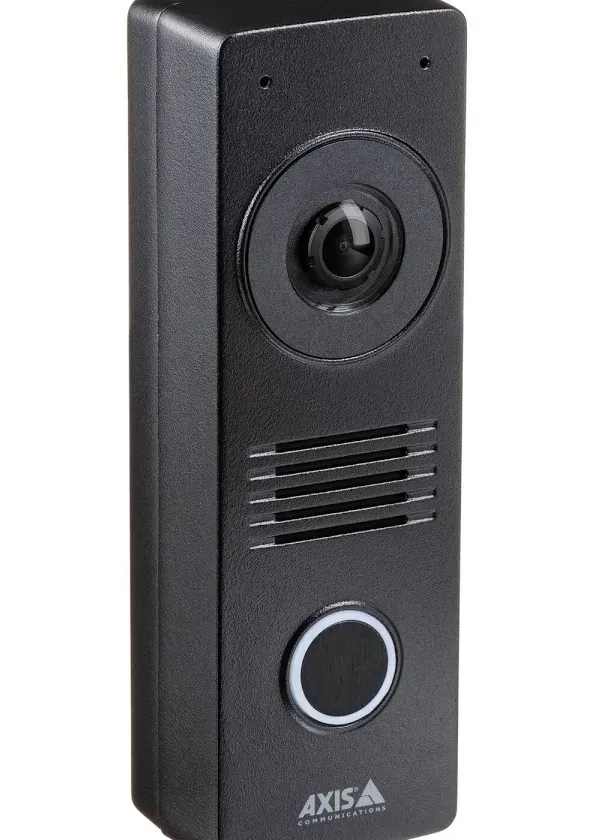
A photo from the AESS job library, not taken in Wingate: a black rectangular video door station with a camera lens, a speaker grille and one round call button that lights up. A single-button station like this is the right size for the shared street door of a Wingate one-family or the owner's half of a two-family, where a visitor at dusk on a block of near-identical brick fronts needs one obvious place to press.
Wingate Buzzer Request
House, walk-up, elevator building, supportive housing or shop: tell us the street, how many households the door serves and what is there now, and a technician calls back with the range

✅
Request Sent!
Thank you. A technician will call you about the Wingate address, usually within two hours during working hours.
25+
Years Experience
✓
Same-Day Estimates
100%
Licensed & Insured
4.7★
201 Google Reviews

Owner-operated since 2002 · Thousands of jobs completed · Booked within 2 hours

Quick answer: door buzzer installation in Wingate costs $400 to $900 on our Brooklyn list for an audio buzzer with a new door release at a one-family, a two-family or a single shop door, $700 to $1,800 for a video door station with indoor stations or phone answering at a two-, three- or four-family house, and from about $2,500 to past $10,000 for a full entry system in a walk-up, a six-story prewar building or a supportive housing building with a front desk. That price covers the door station, the stations or handsets inside, the power supply, the electric strike, the cable and the labor, and it is set in writing after we have seen the street door, the cellar and the farthest apartment. If the price depends on a test, such as old bell wire that may not carry a new system or a closer that may need replacing, that possibility is named and priced before you order. Send a photo of the street door and whatever is beside it now to (347) 934-8335 or on WhatsApp, and we reply with the range that fits, usually within two hours during working hours.

  • Reading your photos and quoting a new system costs nothing. If an existing building system has to be tested in person before it can be priced, that is the $250 service call booked online, and the $250 is applied toward the work.
  • All work is done under New York State license #12000287431. We install low-voltage entry equipment; if the power supply needs a new 120-volt outlet or circuit, a licensed electrician does that part, and you know before the price is set.
  • We take instructions from whoever controls the door: the owner of a house, a landlord or managing agent, a condo board, a nonprofit housing operator, or a shop tenant with the building owner's written approval.
The Neighborhood

Why Wingate Properties Need Door Buzzer Installation

Wingate is the small grid of blocks south of Empire Boulevard, between New York Avenue and Troy Avenue, running down to Winthrop Street, where Wingate Park and the Kings County Hospital campus begin. It was farmland called Pigtown until the early twentieth century and took its present name from George W. Wingate High School and the park beside it. Some maps fold it into Crown Heights, East Flatbush or Prospect Lefferts Gardens. For anyone planning a door buzzer, what matters is that almost every kind of residential entrance in Brooklyn can be found inside these few blocks, and each one needs a different system.

The first group is the houses. When we pulled the city's PLUTO lot data for the blocks between Empire Boulevard, Troy Avenue, Winthrop Street and New York Avenue, two-family houses were the most common residential lot type, 340 of them holding 680 homes, with another 234 one-family houses. Nearly half of the residential lots, 448 of 941, were built between 1920 and 1939. A two-family of that age usually came with a single bell button at the street door wired to a chime in the hall, and that is often still all there is. The tenant upstairs has no way to see or speak to a visitor, and no way to open the door without walking down. No law makes the owner change that, because the intercom requirement in New York's Multiple Dwelling Law starts at eight apartments, which is exactly why many owners call us only when a tenant asks or a package goes missing.

The second group is the apartment buildings. The same data shows 274 walk-up lots with 1,306 apartments and 32 elevator buildings with 2,777 apartments, including six-story prewar buildings on Lefferts Avenue and Kingston Avenue, and a 1930 building at 486 Brooklyn Avenue that StreetEasy lists with 107 units. These buildings are where the city's record of broken intercoms is written. When we queried HPD's violation data on November 11, 2026, it held 28 intercom violations issued since January 1, 2025 at buildings inside Wingate's boundaries, at addresses including 601 Albany Avenue, 584 Maple Street, 706 Lefferts Avenue, 646 Rutland Road and 451 Kingston Avenue.

Wingate, Brooklyn door buzzer installation: small black camera mounted high on a pale wall casting two shadows, with a small white wall device below
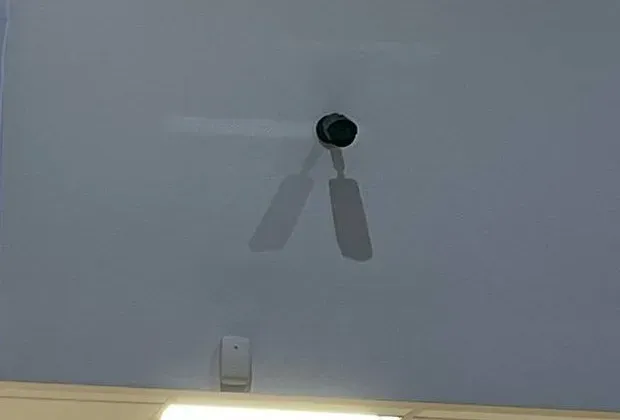
A photo from the AESS job library, not taken in Wingate: a small black camera mounted high on a pale wall, throwing two shadows, with a small white device fixed below it. In the vestibule of a six-story prewar building on Lefferts Avenue, the wall above the inner door is where a camera that records who walks in after the release usually goes, out of reach and clear of the panel.

The third group is newer and less familiar. On land that once belonged to the Kings County Hospital campus, CAMBA Gardens was built as supportive and affordable housing in partnership with NYC Health and Hospitals, and its second phase stands at 560 Winthrop Street. "CAMBA provides 24/7 front desk security and on-site social services," the New York Housing Conference's project page says. A building like that is answered first by a desk, not by a resident, and its entry system has to be designed around the desk. Seven of the 28 Wingate intercom violations were written at 560 Winthrop Street, on apartments from the first story to the ninth, and one at 690 Albany Avenue in November 2026 described a broken intercom "leading from front desk to apartment."

Add the new buildings, such as the 22-unit condo StreetEasy lists at 401 Rutland Road (2019) and the 27-unit rental at 698 Empire Boulevard (2021), and the supportive, affordable and senior housing planned on the Kingsboro Psychiatric Center campus a few blocks south, and you have a neighborhood where door buzzer installation means very different jobs from one block to the next.

Six facts that decide a Wingate buzzer installation

  • Two-families are the most common house. PLUTO lists 340 two-family lots with 680 homes in the blocks between Empire Boulevard and Winthrop Street, most of them below the eight-apartment line in Multiple Dwelling Law §50-a.
  • The housing is mostly prewar. 608 of the 941 residential lots were built before 1940, 448 of them between 1920 and 1939, so original bell wire and push buttons are common at the street door.
  • Elevator buildings hold half the apartments. The 32 elevator lots account for 2,777 of the 5,507 apartments in the same blocks, and every one of them is over the eight-apartment line.
  • The city keeps writing up intercoms here. HPD issued 28 intercom violations at buildings inside Wingate between January 1, 2025 and November 11, 2026, 24 of them class B.
  • Some front doors are answered by staff. CAMBA Gardens on the old hospital campus is staffed by a 24-hour front desk, so visitors there meet a person before they reach a resident's station.
  • More of that housing is coming. Roughly 900 affordable, supportive and senior homes are planned on the Kingsboro Psychiatric Center campus, and the state's April 2025 environmental notice describes the project being built in three phases between 2025 and 2034.

Where this page applies. Sources draw Wingate a little differently. This page covers the blocks from Empire Boulevard south to Winthrop Street and from New York Avenue east to Troy Avenue, including the streets in between: Lefferts Avenue, Sterling Street, Maple Street, Midwood Street, Rutland Road and the short blocks of Fenimore and Hawthorne Streets near Albany Avenue. For the rest of the borough see our door buzzer installation in Brooklyn page, and for the whole city our NYC door buzzer installation page.

Repair or Replace in Wingate

Need Repair in Wingate? Decide Between a Fix, a New Panel or a First Real Buzzer

Many Wingate installation calls begin as something smaller. A tenant upstairs in a two-family wants to stop running down two flights for every delivery. An owner of a six-story building on Albany Avenue has an HPD notice on the kitchen table. A housing operator's front desk has a console that can no longer reach half the apartments. Before we recommend any equipment, we sort the job into one of three kinds and tell you which one it is.

The first is a repair: one part is the whole problem, such as a transformer that has burned out, a strike that has worked loose in a wood frame, or a single apartment's handset. The second is a partial replacement: a new street panel and power supply on cable that still tests well, with only the failed apartment stations changed. The third is a full installation, either because a house has never had more than a bell, or because a building's cable has been spliced so many times that each repair causes the next fault. If a repair is all you need, it is priced as a repair, and our Brooklyn door buzzer team does both kinds of work. Owners who are not sure which kind of job they have can book the $250 service call online; the $250 is applied toward whatever work follows.

What We Install

Door Buzzer Installation Services in Wingate

Every service below is priced from the same Brooklyn door buzzer list. The number of households sets the size of the system, the street door decides which release it can take, and in Wingate the age of the wire, whether a desk answers first and whether the building is still being built decide most of the labor.

First buzzers for bell-only houses

For one- and two-families whose street door still has nothing but a push button and a chime, a door station with talk and a release, so each household can answer from its own floor.

A button for every household

Three- and four-family houses on Rutland Road, Maple Street and Midwood Street where one bell serves everyone, rebuilt as a small panel with a separate button, station and release for each home.

Replacements for written-up building systems

New panels, power supplies and apartment stations for walk-ups and elevator buildings with open HPD intercom violations, documented apartment by apartment for the owner's certification.

Desk-first entry systems

Lobby panels that call a staffed front desk before a resident, with a desk console, a release at the desk and resident stations, for supportive and affordable housing on the old hospital land.

Systems for new buildings

Entry design for new condos and rentals, from panel position and riser path to back boxes in every apartment, roughed in while the framing is open and finished after painting.

Audio-to-video upgrades

A video street panel and video apartment stations over riser pairs that test well, so residents on the upper floors of a six-story building see who is downstairs before they press release.

Phone answering with a station kept

Door stations that ring residents' phones as well as their stations, with any monthly charge named before anyone chooses and a wired station left for households without smartphones.

Strikes, closers and frame work

Electric strikes cut into wood and steel frames, closers adjusted or replaced so the street door shuts and latches every time, and swollen or sagging doors corrected before a release goes on.

Shop, clinic and office buzz-in doors

Buzz-in doors for stores on Albany Avenue and Empire Boulevard and for offices near the hospital campus, wired separately from the apartments above them.

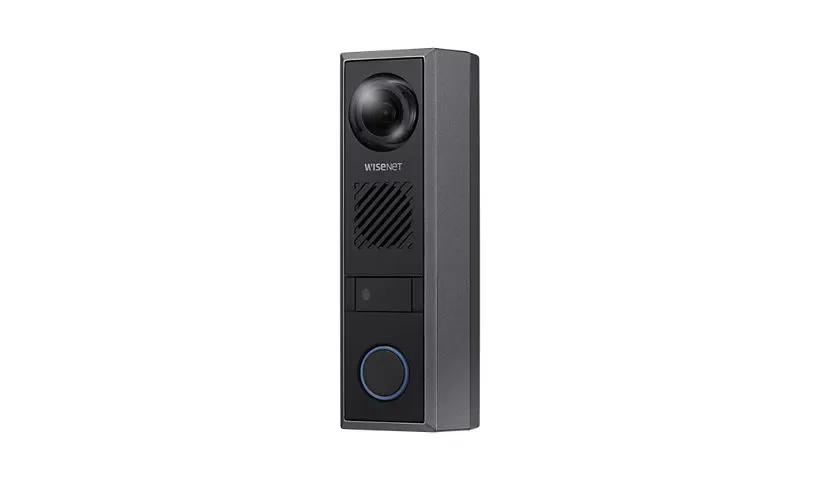
Wingate, Brooklyn door buzzer installation: slim dark grey wired doorbell with a camera lens, speaker slots and a round push button
A photo from the AESS job library, not taken in Wingate: a slim dark grey wired doorbell with a camera lens, speaker slots and a round push button. The brick door surround of a 1920s two-family on Rutland Road often leaves only a few inches of flat surface beside the frame, and a unit this narrow fits there without covering the trim, with a second unit beside it for the other household if the owner wants two.
Building Specialists

Door Buzzer Installation for Wingate's Architecture

Six kinds of building account for nearly every entry system we plan in Wingate. They differ in how many households sit behind one street door, how cable can reach them, who answers first and whether the intercom law applies at all. Each also has one mistake that turns up when the job is rushed.

Brick two-families

The most common house in Wingate, usually an owner on one floor and a tenant on the other behind a shared street door with a single bell.

Three- and four-families

Small brick apartment houses such as the four-unit building StreetEasy lists at 558 Empire Boulevard, built in 1923, with one front door and a handful of households.

Six-story prewar buildings

Elevator buildings on Lefferts Avenue, Kingston Avenue and Brooklyn Avenue, like the 107-unit building at 486 Brooklyn Avenue completed in 1930.

Postwar towers

Taller buildings such as the 16-story building at 636 Brooklyn Avenue from 1959, where a single riser serves well over a hundred apartments.

Supportive and affordable housing

Buildings on the former hospital land, such as CAMBA Gardens, where a staffed front desk answers the door and residents are reached through it.

New condos and rentals

Buildings put up since 2019, such as 401 Rutland Road and 698 Empire Boulevard, with panels, fobs and phone answering planned from the drawings.

Brick two-families: one bell, two households and a door neither tenant controls

A Wingate two-family usually has one street door at the stoop or the side, a hallway behind it and two apartment doors off the hall. When it was built, a visitor rang a bell and someone came down. Many still work that way. The owner downstairs hears the chime and answers, and the upstairs tenant either gets a text from a friend outside or walks down every time.

The mistake we see is a store-bought video doorbell mounted on the frame and connected to the owner's phone alone. It solves the owner's problem and leaves the tenant exactly where they were, and it does nothing to the lock. A proper two-family installation gives each household its own button, its own indoor station or phone answering, and the ability to release the street door from its own floor. That usually means a two-button door station, an electric strike in the frame, a small power supply in the cellar and one cable up to the second floor, which in a prewar two-family usually follows the path of the old bell wire.

Because a two-family is well below the eight-apartment line, nothing in the intercom law requires any of this. It is a choice the owner makes, and in our experience it is made for practical reasons: fewer missed deliveries, fewer calls from the tenant and a door that stays locked because nobody has to prop it open while they run upstairs.

Three- and four-families: the small panel that replaces a row of bell buttons

The three- and four-family houses on Rutland Road, Midwood Street and Empire Boulevard often have a row of buttons by the door that were added over the years, each wired to a different apartment by a different hand. A listing for 378 Rutland Road describes a four-family brick building on a quiet, tree-lined block, and that is the typical scale: four households, one street door, and buttons that work for some apartments and not others.

Here we replace the row of buttons with one small panel, three or four buttons with talk and release, and give every apartment a matching station. The cable is the deciding factor. If the old bell wire to each floor tests well, a two-wire system can usually reuse it, which keeps the job inside the lower part of our video range. If one or two runs are broken somewhere in a wall, we pull new cable for those floors only and say so in the price.

Six-story prewar buildings: a riser that has served three generations of handsets

Wingate's six-story prewar buildings went up in the 1920s and 1930s with an elevator, a vestibule with two doors, and a riser carrying bell and voice pairs up through the building. StreetEasy lists the building at 486 Brooklyn Avenue with 107 units over six stories, built in 1930; similar buildings line Lefferts Avenue and Kingston Avenue. Most have had their lobby panels and apartment handsets replaced at least once, often apartment by apartment, so a single riser can end up feeding several kinds of handset.

The mistake is to price a new panel alone. If the riser has been spliced on several floors and the apartments carry a mix of handsets, a new panel will work beautifully for some apartments and badly for others, and the building ends up back in the HPD record. We meter every riser pair from the cellar before we price, and we tell the owner which floors can keep their cable and which cannot.

These buildings are inside Multiple Dwelling Law §50-a if they were erected or converted after January 1, 1968; most of Wingate's prewar buildings are older than that. Once a system is in place, however, the Housing Maintenance Code section cited in every Wingate intercom violation, §27-2005, requires the owner to keep it working.

Postwar towers: long risers and a directory instead of buttons

The taller postwar buildings, such as the 16-story building PLUTO lists at 636 Brooklyn Avenue, completed in 1959, and the 20-story building at 710 East New York Avenue, have more apartments than any button panel could hold. Their street door needs a directory or code panel, the riser runs a long way, and a weak power supply shows up first on the top floors.

For these buildings we plan a directory panel with a camera, two-wire or networked apartment stations depending on what the risers carry, a battery-backed supply in a locked room, and very often a second station at a side door or a garage. The 1968 date in §50-a matters here: a building completed close to that line should have its records checked before anyone assumes which rule applies.

Supportive and affordable housing: the desk answers first

CAMBA Gardens, built on the Kings County Hospital campus in partnership with NYC Health and Hospitals, is the clearest example of a building type Wingate has more of than most neighborhoods. CAMBA describes on-site supportive services at its developments, and the New York Housing Conference describes 24/7 front desk security at CAMBA Gardens Phase II. A visitor there speaks to the desk first, the desk confirms the visit, and only then is the resident called or the inner door released.

An ordinary apartment intercom does not fit that flow. The desk needs a console that shows the lobby camera, calls any apartment, and releases the street door and the inner door separately. Residents need stations that can call the desk. And the system must keep working when one apartment's station fails, which is exactly the kind of fault HPD recorded at 560 Winthrop Street and 690 Albany Avenue. We plan these systems with the operator's building manager, not with individual tenants.

New condos and rentals: plan the entry with the drawings

Newer buildings are scattered through Wingate between the older ones. StreetEasy lists a 22-unit, six-story condo at 401 Rutland Road built in 2019 and a 27-unit, eight-story rental at 698 Empire Boulevard built in 2021. Each is over the eight-apartment line and was built after 1968, so §50-a applies in full: a self-locking main door and an intercom that lets every apartment talk to the door and release it.

The mistake on new buildings is leaving the entry system to the end, after the electrician has closed the walls. We prefer to be called while the framing is open, so a back box and cable reach every apartment, the riser has its own sleeve, and the street door frame is ordered prepared for the strike. If the building plans fobs, codes or phone unlocking, HPD's Tenant Data Privacy Law applies to that part, and we cover what it asks below.
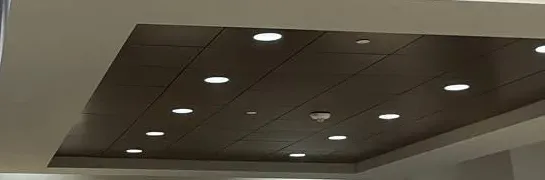
Wingate, Brooklyn door buzzer installation: dark recessed ceiling panel with round downlights and a small round device framed by a lighter ceiling
A photo from the AESS job library, not taken in Wingate: a dark recessed ceiling panel with round downlights and a small round device, framed by a lighter ceiling. New lobbies like those in the recent rentals along Empire Boulevard are often finished with a feature ceiling of this kind, and the cable from the street panel to the riser closet is far easier to place above it before the ceiling is closed.
Field Notes

Field Notes: Count the Households, Follow the Bell Wire, Then Ring From the Curb

This is how our technician spends the first part of a visit to an existing Wingate house or building, before anything is priced.

First, the count. In a house, the number of mailboxes and the number of apartment doors off the hall do not always agree with what the owner remembers, and a basement unit or a split floor is easy to miss. The technician counts every household that receives visitors, because each one needs its own button and its own way to release the door.

Second, the bell wire. In the cellar, the technician finds where the old bell transformer is, follows the thin wire from it toward the front of the house and up toward each floor, and meters each run. In a 1920s house, that wire has often been painted over, stapled along joists and cut during a renovation. Runs that test clean can usually carry a two-wire system. Runs that are broken go on the price as new cable, with the route marked.

Third, the curb. The technician closes the street door from outside, checks that it latches without a push, and rings each apartment from where a visitor would stand. In a building, that means the lobby panel and the farthest apartment on the top floor. If the door does not latch, the closer or the frame comes first, because no release can hold a door that drifts.

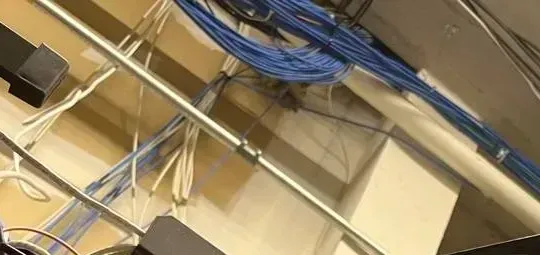
Wingate, Brooklyn door buzzer installation: bundles of blue low-voltage cable laid over a ceiling beam and a metal pipe in an open ceiling
A photo from the AESS job library, not taken in Wingate: bundles of blue low-voltage cable laid over a ceiling beam beside a metal pipe in an open ceiling. In the cellar of a Wingate walk-up, the joists and pipes look much like this, and the new intercom cable is laid along them to the riser rather than fished through the finished walls upstairs.
The City's Intercom Record

What 28 HPD Intercom Violations Say About Wingate's Front Doors

HPD's open data is the most honest picture of how entry systems actually fare in Wingate. Our November 11, 2026 query of the Housing Maintenance Code violations dataset found 246 intercom violations issued since January 1, 2025 across ZIP codes 11225 and 11203, 143 and 103 respectively. Those ZIP codes cover far more than Wingate, taking in Prospect Lefferts Gardens, much of Crown Heights south of Eastern Parkway and East Flatbush, so we then kept only the records whose map coordinates fall inside Wingate's rectangle. That left 28.

The 28 are spread across 15 buildings. 560 Winthrop Street accounts for seven of them, on apartments from the first story to the ninth. 584 Maple Street has three; 470 East New York Avenue, 706 Lefferts Avenue, 601 Albany Avenue, 639 Albany Avenue and 652 Brooklyn Avenue have two each; and single violations were written at 690 Albany Avenue, 646 Rutland Road, 451 Kingston Avenue, 474 Brooklyn Avenue, 578 Albany Avenue, 701 Fenimore Street, 743 Fenimore Street and 637 Hawthorne Street. Twenty-four are class B, the hazardous class, and four are class A.

Three things in the records matter to anyone planning an installation.

The wording names the duty

Almost every record reads "§ 27-2005 HMC: properly repair or replace the broken or defective" intercom, bell buzzer or return buzzer, "from building entrance door to" a named wall in a named room of a named apartment. HPD is not citing these buildings for lacking a system. It is citing owners for failing to keep one working. Two of the records, at 474 Brooklyn Avenue and 743 Fenimore Street, are simply orders to secure a loose panel. Several, at 706 Lefferts Avenue and 584 Maple Street, specify the return buzzer or the voice path separately, which is a reminder that a system can ring and still fail.

The status tells you how long it has gone on

Eleven of the 28 were still at "NOV sent out" on the day we checked, meaning the notice had gone to the owner and the correction was pending. Five were closed and five dismissed. Three, at 601 Albany Avenue on the fifth and sixth stories and at 560 Winthrop Street on the sixth, were marked "not complied with," meaning HPD found the condition still there after the correction period. Two carried "first no access to re-inspect." When a building has violations at more than one apartment and one of them reads "not complied with," a station-by-station repair is rarely the answer.

The floors tell you where the system is weakest

The violations name apartments on every story from the first to the ninth: five on the first, four on the second, six on the third, four on the fourth, five on the fifth, two on the sixth, one on the eighth and one on the ninth. In a walk-up, a dead station on an upper floor means a long walk down. In a building with a desk, a station that cannot reach the desk means the resident cannot confirm a visitor at all.

How we use the record on a Wingate job

  • Before the visit. We look up the building's intercom violations, so the technician arrives knowing which apartments the city has already found without a working station, and tests those first.
  • When pricing. If violations appear at several apartments, or any reads "not complied with," we price the riser and power supply as well as the stations, and we show the owner both options.
  • When scheduling. An open class B violation carries a correction period. We schedule against it and say plainly if a special-order panel will not arrive in time, so a temporary repair can hold the door until the new system goes in.
  • At handover. We leave a test sheet listing every apartment and its result for call, voice and release, which is the record an owner needs when certifying a correction.

One honest limit: we install and document the system; we do not file certifications with HPD or represent owners before it. That is the owner's or managing agent's job, and our test sheet is what they file with.

Houses Below the Eight-Apartment Line

Putting the First Real Buzzer on a Wingate Two-Family, Three-Family or Four-Family

Most Wingate homes are in buildings that the intercom law does not reach. A Brooklyn tenant put it plainly on r/AskNYC: in a building "with only 4 units," the landlord "isn't required to put in a buzzer system or a self-locking front door." Another, about to rent in a brand-new three-unit Brooklyn building with no buzzer and one shared mailbox, asked whether that was normal. In Wingate it is, and it is also the most common installation we are asked to quote here.

The decision sits with the owner, so the useful question is what a first buzzer should do. In a house, we plan around four things.

  • Every household gets its own button. A two-family gets two, a four-family gets four, and a basement apartment gets one if it receives visitors at the same door.
  • Every household can release the door. Talking to a visitor is only half the job; the point is that nobody has to walk down. Each station or phone has a release that opens the street door's strike.
  • The street door locks every time. A buzzer on a door that has to be propped or pulled shut is wasted. We fix the closer and latch first, or price them in.
  • The owner keeps control. The power supply and the release wiring sit in the owner's cellar, labeled, so a tenant turnover never leaves the building with an unknown system.

For a two-family, that is usually an audio or video door station with two buttons, two indoor stations, a fail-secure strike in the existing frame and a plug-in or hard-wired supply in the cellar, inside our $400 to $900 audio range or the $700 to $1,800 video range depending on the stations. For a three- or four-family with long or broken bell wire, it may need new cable to one or more floors, which we price per run.

A tenant cannot order this work on a building they rent; the street door and the cellar belong to the owner. A tenant who wants a buzzer can show the owner this page and ask for a price; an owner who lives elsewhere can approve the written quote by email and have us meet the tenant on site.

Staffed Front Desks

Entry Systems for Supportive Housing on the Old Hospital Land: Designing Around the Desk

The part of Wingate along Winthrop Street and Albany Avenue that used to belong to the Kings County Hospital campus now holds housing with a different kind of front door. CAMBA, which says it provides on-site supportive and security or front desk attendant services at 40 affordable housing developments, lists CAMBA Gardens at 560 Winthrop Street, developed on the hospital campus with NYC Health and Hospitals. CAMBA Housing Ventures describes CAMBA Gardens I as permanent, affordable and supportive housing in Wingate. And the planned redevelopment of the Kingsboro Psychiatric Center campus a few blocks south is set to add roughly 900 affordable, supportive and senior homes over the next decade.

In these buildings, the entry system is part of how the building is run. A visitor arrives at the street door and is seen by the desk. The desk checks the visit, calls the resident, and releases the door. Residents use their own credential to come and go. Case managers and maintenance staff have their own way in. The HPD record shows what happens when a piece of that chain breaks: the November 3, 2026 violation at 690 Albany Avenue describes an intercom "leading from front desk to apartment" that was broken in a second-story apartment, and seven violations at 560 Winthrop Street name apartment stations from the first floor to the ninth.

When we design or replace a desk-first system, the plan covers six things.

  • A console at the desk. A video station or console that shows the street door camera, calls any apartment by number, and releases the street door and the inner door separately, so the vestibule can hold a visitor while the desk confirms.
  • Resident stations that call the desk. Each apartment's station can answer the desk and call it, so a resident can report a problem or ask the desk to admit a guest who is on the way.
  • Separate paths for staff. Case managers and building staff enter with their own fobs or codes at a staff door or the main door, recorded separately from residents and removable the day someone leaves.
  • A panel that works when the desk is busy. If the desk is on another call or away from the counter, the panel tells visitors to wait or routes the call to a second station, rather than ringing into silence.
  • Isolation between apartments. One damaged apartment station must not take down the riser for the floor. We choose equipment and wiring so a single failure stays a single failure.
  • Records the operator can file. A drawing of every door, station and release, a programming record and a test sheet by apartment, for the operator's own compliance file and for any HPD certification.
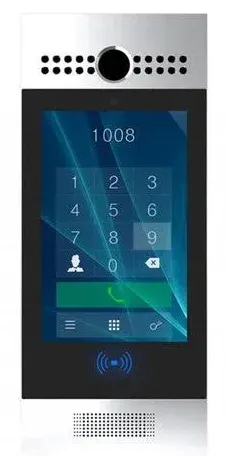
Wingate, Brooklyn door buzzer installation: touchscreen entry panel showing a dial pad with a four-digit apartment code entered, a camera above and a card-reader symbol below
A photo from the AESS job library, not taken in Wingate: a touchscreen entry panel showing a dial pad with a four-digit apartment code entered, a camera above it and a card-reader symbol below. A panel of this type can call a front desk first and an apartment second, and its reader lets residents and staff of a building on the old hospital land enter with their own credentials.
New Buildings and Keyless Entry

New Wingate Buildings, Fobs and Phone Unlocking: What the City's Tenant Data Law Adds

The newer buildings on Rutland Road, Brooklyn Avenue and Empire Boulevard rarely want a plain buzzer. Developers ask for a video panel, fobs for residents, a code for the super and phone unlocking. That is all available, and it brings one more set of rules. Under Local Law 63 of 2021, HPD's Tenant Data Privacy Law, owners of multiple dwellings that use smart access systems, including key fobs, are subject to rules on how tenants' data is collected, kept and shared. The law took effect on July 29, 2021, and buildings that already had smart access systems were given until January 1, 2023 to comply.

We do not give legal advice on that law, and an owner should read HPD's page or ask counsel. What we do is choose and set up the equipment so an owner can meet it.

  • Keep a key. We always leave a non-electronic way in, a keyed cylinder at the street door, so no tenant is forced to use an app or fob to reach their own home.
  • Collect only what the door needs. We set the panel to log entries by credential, not to record faces or photos of every resident, unless the owner has a reason and a written policy for it.
  • Know where the data goes. For cloud panels, we tell the owner before purchase which company holds the entry log and the resident list, and what the subscription costs per month.
  • Remove people promptly. We show the managing agent how to delete a credential the day a tenant moves out, so old fobs and app access do not linger.

For a new building, the order is simple: entry design at the drawing stage, cable and back boxes at framing, panel and stations after painting, programming and testing before the temporary certificate of occupancy inspection. Calling us before the walls close is the single biggest saving on a new Wingate building, because cable pulled through open framing costs a fraction of cable fished through finished walls.

Rules and Responsibilities

Which Wingate Buildings Must Have a Buzzer, What It Must Do and Who Is Responsible

  • Post-1968 buildings of eight or more apartments must have one. Multiple Dwelling Law §50-a requires a self-locking main entrance and an intercom allowing voice communication and remote release in Class A multiple dwellings erected or converted after January 1, 1968 with eight or more apartments. That covers the new condos and rentals on Rutland Road and Empire Boulevard, and the newer supportive housing on the hospital land.
  • Older buildings install one when a majority of tenants ask. In buildings put up before that date, which includes most of Wingate's six-story prewar stock, the duty arises when tenants occupying a majority of the apartments request or consent in writing, with installation started within 90 days and completed within six months.
  • Every existing system must be kept working. All 28 Wingate intercom violations in our query cite Housing Maintenance Code §27-2005, the owner's duty to keep the building and its systems in good repair. A partial failure, such as a station that rings but cannot release, is written up the same way.
  • Houses are the owner's choice. A one-, two-, three- or four-family house is outside §50-a's mandate. A first buzzer is an owner's decision, and in a rented two-family it is usually made because the tenant asks.
  • Magnetic locks need the full package. Electromagnetic locks are made only fail-safe, and the building code's sensor-release provisions call for a sensor on the egress side, a manual "PUSH TO EXIT" device 40 to 48 inches above the floor within 5 feet of the door that keeps it unlocked for at least 30 seconds, release on fire alarm or sprinkler activation, and UL 294 listed equipment.
  • Controls must be in reach. Under the 2010 ADA Standards, the high forward reach for operable parts is 48 inches maximum and the low forward reach 15 inches minimum, which is why we mount panels at public entrances, clinics and accessible apartments within that band.

None of this is legal advice for a particular building. An owner answering a tenants' written request, an operator planning a keyless lobby, or a developer reading §50-a against a new filing should confirm the details with a housing lawyer, the managing agent or the architect. What we provide is a system that meets the requirement that applies and paperwork showing what was installed.

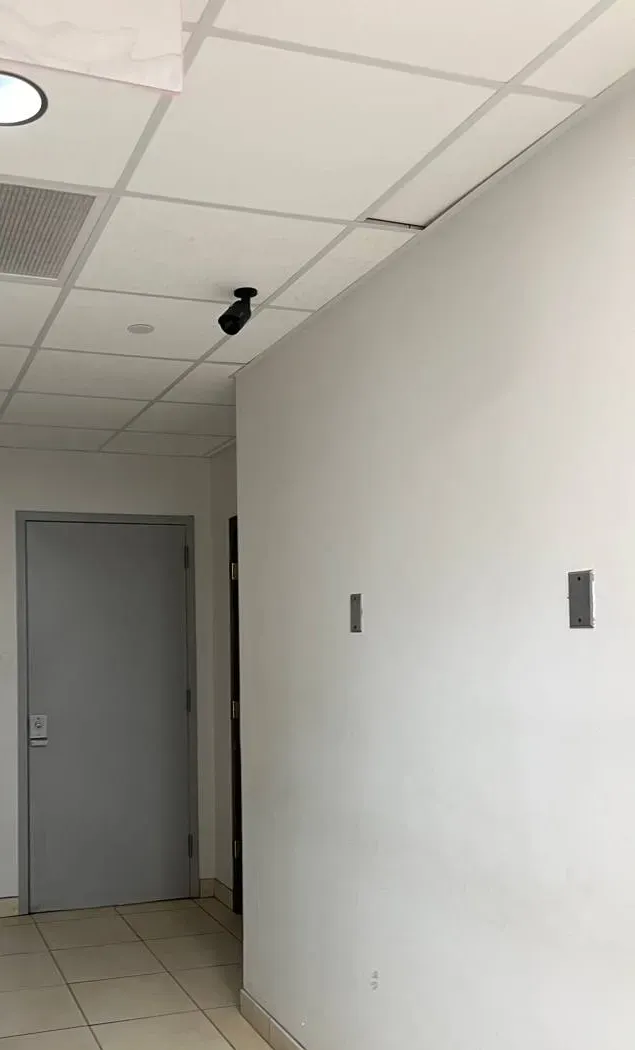
Wingate, Brooklyn door buzzer installation: tiled corridor with white walls and small wall plates ending at a grey steel door with a lever handle under a drop ceiling with a small camera
A photo from the AESS job library, not taken in Wingate: a tiled corridor with white walls and small wall plates, ending at a grey steel door with a lever handle under a drop ceiling with a small camera. A door like this, between a lobby and a stair or cellar in an elevator building, is often a rated door that must latch in a fire, so any release on it is a fail-secure strike, and people inside always leave by turning the lever.
Commercial Door Buzzer Installation

Business Door Buzzer Installation in Wingate

Wingate is mostly residential, but its edges and corners hold shops, clinics and service businesses, many of them in mixed-use buildings with apartments upstairs. PLUTO lists 24 mixed-use lots in the neighborhood, ten of them on Albany Avenue, and seven garage or service lots on East New York Avenue. A business buzzer here usually solves one of three problems: a door that staff want locked while they work in the back, a delivery door, or an office that should see patients or clients before they come in.

Albany Avenue storefronts with apartments above

The neighborhood's main run of mixed-use buildings, where a shop's door and the residents' door sit side by side and each needs its own system and power.

Empire Boulevard's northern edge

A wide street of shops and newer rentals along Wingate's top boundary, where store doors face heavy foot traffic and the residential lobbies next to them carry newer panels.

Nostrand Avenue, a short walk west

The nearby shopping and dining corridor for Wingate residents, served at the same Brooklyn rate, with upstairs offices that buzz clients in from narrow street doors.

Clarkson Avenue's medical campus

The offices, clinics and programs around Kings County Hospital Center and SUNY Downstate just south of Winthrop Street, where reception desks release patient doors.

East New York Avenue service bays

Garages and service businesses along the avenue, where a side office door or a parts counter needs a buzzer separate from the bay doors.

Corner shops on Midwood Street and Kingston Avenue

Small groceries and services in mixed-use corners, where the shopkeeper wants a back door locked and a buzzer for deliveries before opening.

The most common business request is a buzzer on a door that has always been locked with a key or left open: a clinic that wants to see who is at the door before releasing it, a store that takes deliveries through a back door, or an upstairs office whose staff are tired of walking down. Each gets its own call station, release and power supply, kept separate from the apartments' system in the same building.

Rules that apply to business entry installations in Wingate

  • People inside can always leave. A business door with a buzzer still opens from inside without a key or code. Allegion's guide is clear that with an electric strike "you can exit by turning the lever" whether the strike is fail-safe or fail-secure.
  • Medical and public doors need reachable controls. Call buttons and release buttons at a clinic's entrance go within the 15- to 48-inch reach range of the 2010 ADA Standards, and the release time is set long enough for a patient with a walker to get through.
  • Tenants need the landlord's written approval. A shop or office that rents its space can order its own buzzer only with the building owner's written permission, especially where the work touches a shared door, the cellar or the apartments' cable.
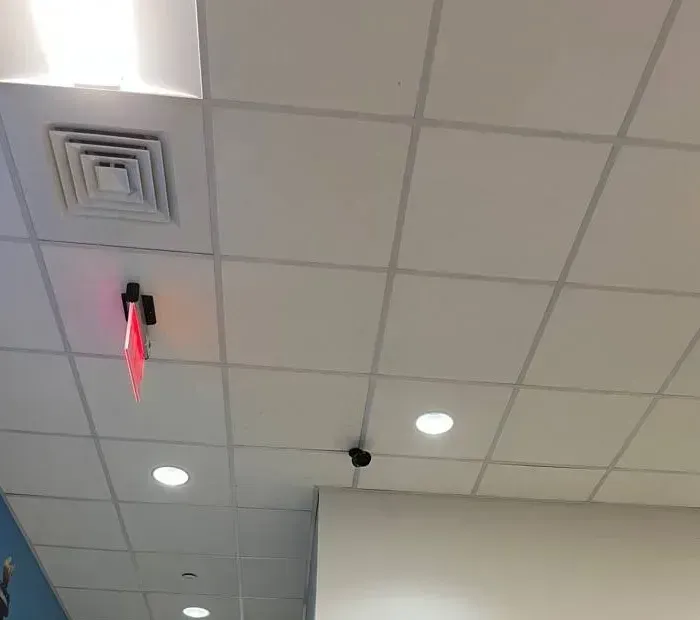
Wingate, Brooklyn door buzzer installation: drop ceiling with a lit red exit sign, an air diffuser, round recessed lights and a small black camera
A photo from the AESS job library, not taken in Wingate: a drop ceiling with a lit red exit sign, an air diffuser, round recessed lights and a small black camera. Offices and clinics near the hospital campus on Clarkson Avenue usually have ceilings like this at the waiting area, and the cable from the reception desk's release button to the entrance strike runs above it.
Your Questions Answered

Door Buzzer Installation in Wingate: Questions Answered

Two-families and small houses

Our two-family shares one street door, but each apartment also has its own locked door off the hall. Should the buzzer release only the street door, or the apartment doors too?

Only the street door, in almost every case. The buzzer's job is to let a visitor into the shared hall so they can walk to the right apartment and knock or ring at that door. Putting electric releases on both apartment doors as well doubles the hardware and the wiring, and it means a mistaken press upstairs could open the owner's apartment downstairs. A doorbell button or a small chime at each apartment door, wired to its own household, covers the last few feet without giving anyone the power to open someone else's home.

The original wood street door on our Midwood Street three-family swells in summer and has to be pulled shut. Can it take an electric release, or does the door need work first?

It needs work first, and that work goes into the price. An electric strike can only hold a door that closes fully and lets the latch drop into the strike on its own. A swollen wood door that rubs the frame will stop short of the strike, and residents will end up pulling it shut or leaving it unlocked, which defeats the system. Before we cut a strike into the frame, the door is planed or adjusted where it binds, the hinges are tightened, and the closer is set so the door shuts and latches every time.

We bought a two-family near Albany Avenue and the bell wire in the cellar runs into a box nobody can identify. Do we have to trace every old wire before a new system goes in?

No, only the ones the new system will use. The technician finds the bell transformer, identifies which runs go to the front door and to each floor, and meters those. Anything left over is either a dead run from an earlier renovation or something unrelated, such as an old alarm or phone line, and it is labeled and left alone or disconnected with your permission. The unknown box is opened, photographed and, if it turns out to be the old bell transformer, replaced by the new system's power supply.

Apartment buildings and the HPD record

HPD has marked one of our intercom violations "not complied with." Does that change what we should install, or just how fast?

Both. "Not complied with" means an inspector came back after the correction period and found the same condition, so the clock is no longer the main concern; the building is already past it. At that point a quick patch that fails again only adds to the record. We look first at why the earlier fix did not hold. If the station was replaced and still failed, the fault is in the cable or the supply, and replacing stations again will not help. If nothing was done, we can usually restore that apartment quickly while pricing the larger work.

In Wingate, three of the 28 recent intercom violations carried that status, two at different floors of the same building. When a single building shows that pattern, we price the riser, the power supply and the panel together and give the owner a schedule that restores service to the cited apartments first.

Our six-story building on Lefferts Avenue has three different kinds of handset on the same riser. Can a new panel work with all of them, or does every apartment need a new station?

Usually every apartment needs a new station. A lobby panel is designed to talk to its own family of apartment stations, and older handsets from other makers or other generations may ring at the wrong volume, fail to release or not ring at all. Some systems can drive a mixture for a while, but the result is exactly the uneven service that ends in violations for one apartment while its neighbors work fine.

Our building has exactly eight apartments and is being finished on a Rutland Road lot. Does the intercom law cover a building with eight units, or only more than eight?

It covers eight. Multiple Dwelling Law §50-a applies to Class A multiple dwellings erected or converted after January 1, 1968 with eight or more apartments, so a new eight-unit building needs a self-locking main entrance and an intercom with voice communication and release to every apartment. A seven-unit building would be outside the mandate, which is a common source of confusion when plans change during construction.

Supportive housing and staffed lobbies

Our supportive housing building has a 24-hour front desk. Should a visitor at the street door call the desk, the resident, or both?

The desk, in almost every building of this kind. The desk sees the visitor on its console, confirms the visit with the resident, and then releases the door. Calling the resident first leaves the desk out of the decision and lets a resident admit someone the building's rules do not allow, which is exactly what the desk is there to prevent. Most operators therefore set the street panel to call the desk only, and give residents a station that can call the desk to say a guest is on the way.

Our case managers and maintenance staff come and go all day. How can they get in without being buzzed every time, and without sharing one code that ends up everywhere?

Give each of them a personal credential, a fob or an individual code, set up for the staff door or the main door and the hours they work. Each entry is recorded under that person, and when someone leaves the job, their credential is deleted that day without changing anything for anyone else. Shared codes are the opposite: everyone knows them, nobody can tell who used them, and changing them means telling the whole staff.

Our housing operator has to show its funder that the entry system was installed as specified. What do you hand over at the end?

A drawing showing every door, panel, station, release and power supply; the model and serial number of each piece of equipment; a programming record showing how calls are routed between the panel, the desk and the apartments; and a test sheet listing every apartment with its result for call, voice and release, signed and dated. We also provide before-and-after photos of each door.

Shops, clinics and offices

Our clinic near the hospital campus buzzes patients in, but reception closes at five while staff stay late. What happens at the door after hours?

After hours the door stays locked and the call goes elsewhere. During reception hours the door station calls the reception desk, which sees the patient and releases the door. After hours the system can ring a staff station in the back, or a staff member's phone if phone answering is installed, so anyone still inside can see who is there before deciding. The door itself remains locked from outside and always opens from inside, so staff leaving late are never trapped.

Our Albany Avenue store's door is right beside the residents' door to the apartments upstairs. Can both doors share one panel?

They can, but they should not. A shared panel means the residents' system and the store's system share power, wiring and settings, so a fault or a change in the store affects the apartments, and a visitor pressing the store's button might be released into the residential hall. Two small, separate systems cost little more and keep every door doing only its own job.

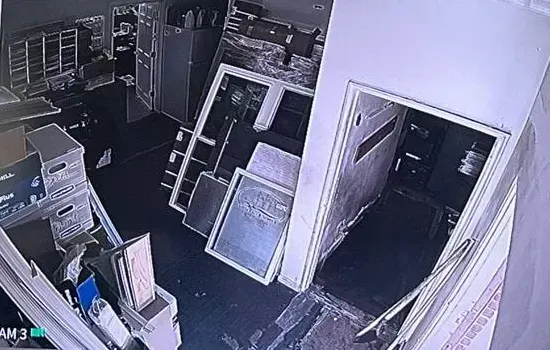
Wingate, Brooklyn door buzzer installation: black-and-white night camera view of a cluttered room with an open doorway into a dark back room
A photo from the AESS job library, not taken in Wingate: a black-and-white night camera view of a cluttered room with an open doorway into a dark back room. The stockrooms behind shops in Albany Avenue's mixed-use buildings often look like this, and a back-door buzzer for deliveries is usually paired with a camera on the same room so the shopkeeper can see who is at the door from the counter.
Equipment

Types of Door Buzzer Systems We Install

We quote a reliable non-branded system by default and install a named brand when an owner, board or operator asks for one; the intercom brands we work with include Aiphone, ButterflyMX, 2N, Akuvox, Comelit and DoorBird. These are the kinds of equipment that come up most often in Wingate, and where each fits.

Two- to four-button door stations

Audio or video stations for Wingate's two-, three- and four-families, sized to the households and mounted on the narrow brick beside the frame.

Directory and code panels

Scrolling directories or code entry with a camera for six-story buildings and towers with dozens of apartments, with a reader for residents.

Desk consoles

Video consoles for staffed lobbies that show the door camera, call any apartment and release the street and inner doors separately.

Two-wire multi-tenant systems

Audio and video over one pair per apartment, the practical choice for prewar buildings whose risers meter well. Aiphone describes its GT Series as a multi-tenant system for new builds and retrofits.

Apartment video stations

Wall stations with a screen and a release button, so a resident on the fifth floor sees who is downstairs before opening the door.

Audio handsets

Simple talk-and-release stations for households that want nothing more, able to share a system with video stations on many models.

Phone and app answering

Door stations that ring residents' phones as well as their stations, with any subscription named on the quote before anyone chooses.

Fail-secure electric strikes

Releases cut into wood or steel frames that stay locked without power and let anyone inside leave by the knob, lever or bar.

Battery-backed power supplies

Dedicated low-voltage supplies with battery backup, mounted in a locked cellar box or riser closet and sized for the panel, the stations and every release.

House station, building system or desk console: which fits a Wingate entrance?

What mattersTwo- to four-button house stationBuilding panel with apartment stationsPanel with a desk console
Who answers firstThe household whose button was pressedThe apartment whose number was calledThe staffed desk, then the resident
Typical Wingate buildingTwo-families on Rutland Road, four-families on Empire BoulevardSix-story buildings on Lefferts and Kingston Avenues, new condosSupportive housing on the old hospital land
Covered by §50-aNo, owner's choiceYes if eight or more apartments and post-1968Yes if eight or more apartments and post-1968
Reuses old wireOften, the old bell wireOften, riser pairs that test wellRiser yes; desk usually needs new cable
Works without internetYes, if wired stationsYes, if wired stationsYes, if wired console and stations
Brooklyn list range$400–$900 audio; $700–$1,800 videoFrom about $2,500 to $10,000+From about $2,500 to $10,000+, by apartments and doors

ADT, Ring and SimpliSafe compared with a local installer for a Wingate door

National brands come up in almost every Wingate conversation about a front door, usually because someone already has a video doorbell. For a one-family with one household, a store-bought video doorbell may be all that is wanted. For a two-family or anything larger, it runs into limits. It rings the phones of whoever set it up, not each household. It does not open the street door unless a strike is wired to it separately. It depends on Wi-Fi at the door, and it has no way to call a front desk or keep a test record for HPD. ADT and SimpliSafe sell alarm and camera services; neither replaces a multi-tenant entry system. We install the building system and, where the owner wants it, a doorbell camera alongside it, and many customers add a lobby camera on the same visit.

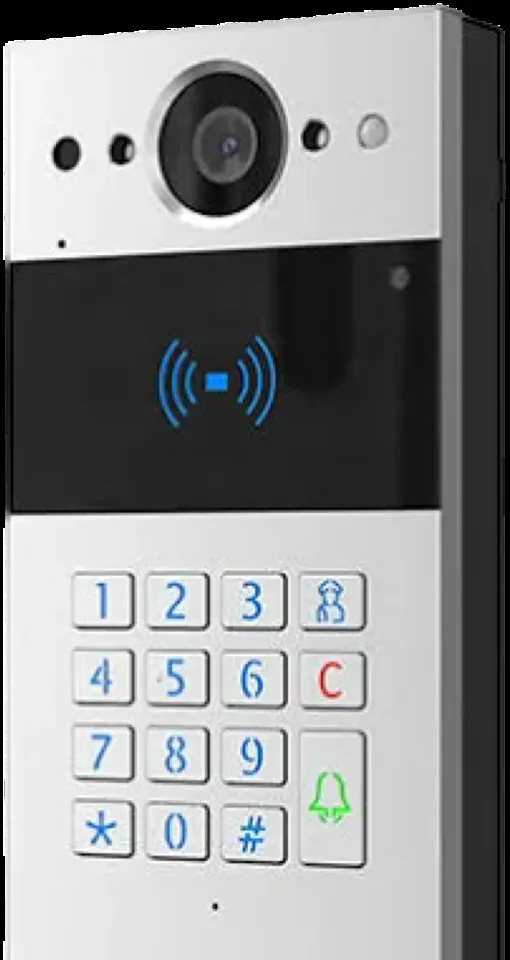
Wingate, Brooklyn door buzzer installation: silver and black keypad door station with a camera lens at the top, a blue card-reader symbol, a numeric keypad and a green bell key
A photo from the AESS job library, not taken in Wingate: a silver and black keypad door station with a camera lens at the top, a blue card-reader symbol, a numeric keypad and a green bell key. A station of this kind suits a six-story building on Kingston Avenue, where visitors key in an apartment number and residents and staff use a fob at the reader instead of a key.
AI Overview Reality Check

What AI Gets Wrong About Door Buzzer Installation in Wingate

Ask an AI assistant or a search summary about installing a buzzer and it will usually repeat figures from national cost guides and vendor blogs. Some are fine for the places they were written about and misleading for a two-family on Maple Street or a six-story building on Lefferts Avenue. Here are seven claims we see repeated, each with its source and what we find on Wingate jobs.

"Installing an intercom system costs an average of $2,500"

HomeAdvisor's intercom cost page gives that average and a range of $1,500 to $15,000, with wireless systems at $150 to $1,500 and hard-wired systems at $1,000 to $15,000. It is a national figure for every kind of building, from a single house to an office.

In Wingate the spread of buildings is too wide for an average to mean much. A first buzzer for a two-family is an audio or video job in our $400 to $900 or $700 to $1,800 ranges. A six-story building with a hundred apartments starts in the multi-unit range at about $2,500 and can pass $10,000.

The useful number is the one for your building, with the parts listed. Ask for that, from us or anyone else.

"Wireless systems are the best option if you want to DIY"

HomeAdvisor says exactly that. For a single household that wants a chime and a camera, it can be true.

For the shared street door of a Wingate two-family it misses the main point. The value of a buzzer is releasing the door from upstairs, and that needs an electric strike in the frame and power to it, which no battery doorbell provides. Cutting a strike into a 1920s frame without splitting it is not a beginner's job.

If an owner wants to install a doorbell camera themselves, fine. The door release and the second household's station are where professional work pays for itself.

"Modern IP or video systems cost $1,000 to $5,000 or more per entry door"

Swiftlane's apartment intercom cost guide gives that range per entry door, and projects from $1,500 up to $50,000 or more.

Per-door pricing describes cloud panels well, because the panel is most of the cost. It describes Wingate's older buildings badly, where the work is in the riser, the apartment stations and the door. A six-story building with one entrance can spend most of its budget on the floors above the lobby.

We price by the parts: panel, stations, cable by riser, release and door work. That makes quotes comparable whatever the system.

"There are no ongoing costs once the system is installed"

AI summaries often leave out subscriptions. Swiftlane's guide notes that software subscriptions commonly add $5 to $15 per unit per month, or $30 to $100 per door per month.

For a 100-apartment building in Wingate, $5 to $15 per unit is $500 to $1,500 a month. A wired system with apartment stations has no monthly charge at all. Phone answering may be worth paying for, but the owner should see the yearly total before choosing.

Every quote we give names any subscription separately, and we always offer a wired option with $0 monthly fees.

"A wireless buzzer means no wiring at the door"

ButterflyMX's door buzzer guide corrects this one itself: for a wireless door buzzer, "wireless describes the remote-to-receiver link, not an entrance without wiring or power."

The strike in the frame still needs power and a wire to whatever controls it. In a Wingate house, that wire runs from the frame to a supply in the cellar, and it is the part a careful installer conceals.

When a quote says "wireless," ask what is wireless and where the power comes from.

"Only buildings of eight or more apartments need to worry about a buzzer"

The eight-apartment line in Multiple Dwelling Law §50-a is real, and summaries often stop there.

It applies to buildings erected or converted after January 1, 1968, so most of Wingate's prewar buildings fall under a different rule: they must install an intercom when tenants occupying a majority of the apartments ask in writing. And any building that already has a system must keep it working under Housing Maintenance Code §27-2005, which is the section in every Wingate violation we found.

Houses below the line are the owner's choice, and that is where most first buzzers in Wingate go.

"Your existing buzzer wires can be reused for a new system"

Aiphone's upgrade guide says that if the existing wires are in good condition, they can be reused, and ButterflyMX's guide says existing wiring needs a compatibility assessment. Both are right; summaries drop the condition.

In a 1920s Wingate house, the bell wire may be painted, stapled and spliced. In a six-story building, one floor's pair may be fine and the next broken. Reuse is a test result, not an assumption.

We meter every run before we price, and any run that may need replacing is named on the quote.

A Bell-Only Two-Family or a Building Back in the HPD Record? Speak to a Tech

Send the address, a photo of the street door and whatever is beside it, and one of an apartment station or the cellar box, along with how many households the system must reach. A technician will tell you which approach fits and where it falls on our Brooklyn ranges. Call or text (347) 934-8335, send photos on WhatsApp, or fill in the form below.

Get In Touch

Request a Free Quote

✅
Request Sent!
Thank you. A technician will call you about the Wingate address, usually within two hours during working hours.
How It Works

Our Installation Process

1. Look up the building and read the photos

The office checks the building's HPD intercom record and reads your photos of the street door, the bell plate or panel and one apartment, or the plans if the building is still going up.

2. Count the households and the doors

On site the technician lists every household the system must reach, every door people actually use and who answers each one, including a front desk where there is one.

3. Fix the door before the release

The street door is checked for closing, latching and frame condition. Any planing, closer, hinge or frame work it needs is written into the price, because a release cannot hold a door that drifts.

4. Test the old wire and choose the route

Bell wire or riser pairs are metered from the cellar, and any new cable path through the cellar, closets or hallways is agreed with the owner before work starts.

5. Put the price in writing

You receive a written price from the Brooklyn list with every possible extra named, such as a broken run or a new closer, before anything is ordered.

6. Order and book

Equipment is ordered once the deposit is in. Stock systems are booked right away; special-order panels are booked once they arrive. Every visit gets a two-hour arrival window.

7. Install and label

The door station, release, battery-backed supply and stations or phone answering go in, cable is run or reconnected neatly, and every pair is labeled at both ends.

8. Test from the sidewalk and hand over

Standing where a visitor stands, the technician calls and releases every household, checks the door with the power off, shows the owner or desk staff the system and leaves the test sheet.

Wingate, Brooklyn door buzzer installation: purple, white and red cable bundles dropping down beside a black equipment rack
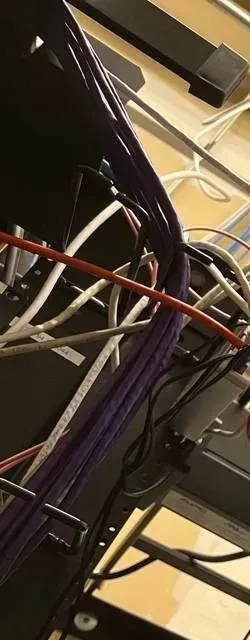
A photo from the AESS job library, not taken in Wingate: purple, white and red cable bundles dropping down beside a black equipment rack. In a building with a staffed lobby on the old hospital land, the entry system's controller and power supply usually share a rack like this with the camera recorder, and every cable is labeled so the next technician knows which floor it serves.
Coverage Area

Door Buzzer Installation Near Wingate's Landmarks

Wingate Park and Field

A 5.89-acre park on the former Kingston Avenue Hospital site, opened in 1957, whose summer concerts use entrances on Brooklyn Avenue and Winthrop Street.

CAMBA Gardens

Supportive and affordable housing built on the Kings County Hospital campus, including the building at 560 Winthrop Street with its staffed front desk.

Kings County Hospital Center

The Level I trauma center at 451 Clarkson Avenue, across Winthrop Street from Wingate Park, with offices and clinics around it.

Kingsboro Psychiatric Center campus

The campus at 681 Clarkson Avenue, where a phased project through 2034 plans hundreds of affordable, supportive and senior homes.

71st Precinct station house

The precinct at 421 Empire Boulevard, which covers southern Crown Heights, Wingate and Prospect Lefferts Gardens.

Winthrop Street station

The 2 and 5 stop at Winthrop Street and Nostrand Avenue, opened in 1920, a short walk west of Wingate's blocks.

We also serve Prospect Lefferts Gardens, Crown Heights, East Flatbush, Flatbush and Remsen Village at the same Brooklyn rate. See our door buzzer installation in Brooklyn page for the full borough.

Pricing

Door Buzzer Installation Cost in Wingate

Wingate is billed at our standard Brooklyn rate. The final figure follows photos and a walkthrough, or the plans for a new building, because the number of households, the condition of the old wire, the state of the street door and whether a desk answers first drive the total far more than the brand on the panel.

JobTypical Wingate propertyBrooklyn range
Audio buzzer or replacement with electric strike release, existing wiring reused where it tests wellOne-families and two-families, a single shop or clinic door$400–$900
Video door station with indoor stations or phone answeringTwo-, three- and four-families, small walk-ups, an office front door$700–$1,800
Multi-unit entry system, audio or video by apartment count, with optional fob, code or desk consoleWalk-ups, six-story prewar buildings, towers, supportive housing, new condos and rentalsfrom $2,500 to $10,000+
In-person diagnosis of an existing system, booked onlineAny building where the old system must be tested before quoting$250, applied toward the work
Monthly subscriptionAny building choosing a wired system with apartment stations$0

What moves a Wingate job within its range is predictable. First the count: a two-family with audio stations sits low in the audio range, while a four-family with video stations sits higher in the video range, and in a building every apartment and every extra entrance adds to the total. Then the wire: bell wire or riser pairs that test well cost nothing extra, while broken runs are priced per run. Then the door: a swollen wood door, a split frame or a missing closer adds work before the strike goes in. Then the answering: a desk console in a staffed lobby, or phone answering with a subscription, is priced as its own line. Installing a lobby or entrance camera on the same visit usually saves $200 to $400 in labor compared with two separate jobs.

Full terms — including 50% deposit, one-year parts-only warranty on AESS-supplied products, and the late-fee schedule — are set out in the service agreement.

Find Out Where Your Wingate House or Building Lands on the List

Tell us the street, how many households the door serves, every door people use and what is there now, and we will tell you which Brooklyn range fits and what would move it. Call or text (347) 934-8335, send photos on WhatsApp, or fill in the form.

Shop Our Systems

Door Buzzer Installation Packages & Pricing

Three typical Wingate jobs, each placed inside the matching range on our Brooklyn list. The exact figure comes from the photos and the walkthrough.

Two-family first buzzer: $400–$900

A two-button audio door station on the brick beside the frame, a fail-secure strike in the existing street door frame, an audio station on each floor and a supply in the cellar, on the old bell wire where it tests well.

Three- or four-family video: $700–$1,800

A small video panel with a button for every household, video stations in each apartment, phone answering if wanted, a strike and closer set so the door latches, and new cable only where an old run fails.

Building or desk system: from about $2,500

A directory or code panel at the lobby door, apartment stations or phone answering for every home, tested or new riser cable, a desk console where the lobby is staffed, rising toward $10,000 or more with apartments and entrances.

Bring your own equipment. If you have already bought a door station or intercom kit, we can install it as labor-only work, quoted flat once we have seen the door, the frame and the cable path. Tell us the make and model, and we will say before the visit whether it can reach every household and release your door. Equipment you supply is covered by its maker's warranty, not ours.

Complete Services

Every Door Buzzer Service in Wingate

Houses

First buzzers for bell-only two-families, a button for every household in three- and four-families, and door and frame work. Request a quote

Buildings and staffed lobbies

Violation-driven replacements, riser testing, video upgrades, desk consoles and new-building design. Call (347) 934-8335

Across Brooklyn

The same list in every neighborhood. Brooklyn door buzzer installation

Across New York City

Every borough's buildings and rules. NYC door buzzer installation

FAQ

Wingate Door Buzzer Installation FAQ

Some listings put our block in Crown Heights or East Flatbush rather than Wingate. Does that change the rate?
+

No. Every block between Empire Boulevard and Winthrop Street, and between New York Avenue and Troy Avenue, is billed at our standard Brooklyn rate whatever name a listing uses, and so are the neighboring parts of Crown Heights, East Flatbush and Prospect Lefferts Gardens. The price depends on the households, the wire and the door, not on the neighborhood label.

Can you give us a range from photos before anyone comes to the house?
+

Usually, yes. A photo of the street door from outside, one of whatever is beside it now, one of the cellar where the bell transformer or the old supply sits, and the number of households is enough for us to say which Brooklyn range applies. The written price follows a short walkthrough, because the condition of the wire and the frame can only be confirmed in person.

How long does a first buzzer for a two-family usually take to install?
+

Most two-family installations are finished in one visit once the equipment has arrived. The longest part is usually cutting the strike into the frame and running the cable from the cellar to the second floor. If the old bell wire tests well and the door needs no work, the job is shorter; if a new run has to be fished to the upper floor, it takes longer, and we tell you which to expect when we give the price.

What happens at the street door during a power outage?
+

With a fail-secure strike, which is what we normally install on a street door, the door stays locked from outside and still opens from inside by the knob or lever. Residents use their keys to get in until power returns. A battery-backed supply keeps the panel and the release working for a period during short outages, and we size the battery for the building when we choose the supply.

What happens to the old bell transformer and chime once the new system is in?
+

They are disconnected and removed, or left in place and labeled as abandoned if you prefer, and the new system gets its own supply. Leaving an old transformer powered and connected to nothing is a common source of confusion for the next person who works in the cellar, so we do not do it. Old handsets and plates we take out are removed from the site unless you ask to keep them.

Can the door release stay open long enough for someone with a stroller or a walker?
+

Yes. The release time on the power supply or the panel is adjustable, and we set it at handover after watching how long it takes to get through your door with the door closer as it is. A heavy street door with a strong closer may also need the closer adjusted so it does not swing shut on someone halfway through. If the building has an accessible entrance, the call button is mounted within the reach range in the 2010 ADA Standards.

When a new tenant moves into our four-family, how do we change the name on the button?
+

On a button panel, the name card behind each button slides out and is replaced; we leave spare cards and show you how. On a directory panel, the name is changed in the panel's settings or the management app, which we set up so the owner or managing agent can do it without calling us. Many owners now show apartment numbers rather than names, which avoids the change entirely.

Will the new system still work for residents who do not have smartphones?
+

Yes, if it includes wired stations, which is what we recommend for most Wingate buildings. A wired audio or video station in each apartment rings, lets the resident talk and releases the door with no phone, Wi-Fi or app involved. Phone answering can be added for those who want it, but it should be an addition to a station, not the only way to answer the door.

We already bought a door station online. Will you install equipment we supply?
+

Yes, as labor-only work, quoted flat once we have seen the door, the frame and the cable path. Tell us the make and model first and we will confirm it can reach every household and release your door. Equipment you supply is covered by its maker's warranty, so a fault in the hardware itself goes back to the seller, while our workmanship on the installation is ours to stand behind.

How does payment work for an installation?
+

A deposit is paid before equipment is ordered, and the balance when the work is complete and tested, as set out in the service agreement you receive with the written price. If an in-person diagnosis was needed first and you booked the $250 service call online, that $250 is applied toward the installation. Any possible extra, such as a broken wire run, is named in writing before you approve.

How early should a developer building in Wingate call about the entry system?
+

Before the framing is closed, and ideally while the drawings are being finished. That is when the panel position, the riser sleeve, a back box in every apartment and the frame preparation for the strike can be planned at the lowest cost. Calling after the walls are painted still works, but every station then needs its cable fished through finished walls, which takes longer and costs more.

Can the buzzer and a camera at the street door be installed on the same visit?
+

Yes, and it usually makes sense. The camera and the door station often share the same cable route from the cellar to the door, and installing them together typically saves $200 to $400 in labor compared with two separate jobs. On a video door station the camera is built in; a separate camera in the vestibule or above the door records who actually walks in after the release.

More Door Buzzer Installation near Wingate

Door Buzzer Installation Brooklyn NY | Brownstones & Condos · Door Buzzer Installation NYC | Apartment & Building Entry · Door Buzzer Installation Manhattan NY | Apartments & Co-ops · Door Buzzer Installation Queens NY | Co-ops & Apartments · Door Buzzer Installation Bronx NY | Co-ops & Apartments · Door Buzzer Installation Staten Island NY | Homes & Apts · Door Buzzer Installation Long Island NY | Nassau & Suffolk · Door Buzzer Installation Hudson Valley NY | Apartments · Door Buzzer Installation Nassau County NY | Homes & Co-ops · Door Buzzer Installation Suffolk County NY | Homes · Door Buzzer Installation Westchester County NY | Co-ops · Door Buzzer Installation Rockland County NY | Homes & Apts · Door Buzzer Installation Orange County NY | Homes & Farms · Door Buzzer Installation Putnam County NY | Lake Homes · Door Buzzer Installation Dutchess County NY | Homes · Door Buzzer Installation Ulster County NY | Kingston

Door Buzzer Installation Bath Beach Brooklyn NY · Door Buzzer Installation Bay Ridge Brooklyn NY · Door Buzzer Installation Bedford-Stuyvesant Brooklyn NY · Door Buzzer Installation Bensonhurst Brooklyn NY · Door Buzzer Installation Bergen Beach Brooklyn NY · Door Buzzer Installation Beverley Square Brooklyn NY · Door Buzzer Installation Boerum Hill Brooklyn NY · Door Buzzer Installation Brooklyn Navy Yard, Brooklyn NY · Door Buzzer Installation Brooklyn NY | Brownstones & Condos · Door Buzzer Installation Brownsville Brooklyn NY · Door Buzzer Installation Bushwick Brooklyn NY · Door Buzzer Installation Cadman Plaza Brooklyn NY · Door Buzzer Installation Canarsie Brooklyn NY · Door Buzzer Installation Carroll Gardens Brooklyn NY · Door Buzzer Installation City Line Brooklyn NY · Door Buzzer Installation Clinton Hill Brooklyn NY · Door Buzzer Installation Cobble Hill Brooklyn NY · Door Buzzer Installation Columbia Street Waterfront Brooklyn · Door Buzzer Installation Coney Island Brooklyn NY · Door Buzzer Installation Crown Heights Brooklyn NY · Door Buzzer Installation Cypress Hills Brooklyn NY · Door Buzzer Installation Ditmas Park Brooklyn NY · Door Buzzer Installation Downtown Brooklyn NY · Door Buzzer Installation DUMBO Brooklyn NY | Loft Entry

Other services in Wingate

Access Control Installation Wingate Brooklyn NY · Structured Cabling Installation Wingate Brooklyn NY · Door Buzzer Repair Wingate Brooklyn NY | Walk-Ups & Condos · TV Installation Wingate Brooklyn NY | Plaster & Brick · Intercom Installation Wingate Brooklyn NY · Alarm Installation Wingate Brooklyn NY | Shift Workers · Security Camera Installation Wingate Brooklyn NY · Fire Alarm Installation Wingate Brooklyn NY

Ready for a Wingate Street Door Every Household Can Answer and Open?

Send a photo of the street door and whatever is beside it now, with the street, how many households the door serves and every door people use, and we will tell you which system fits, which rules apply and where it falls on our Brooklyn ranges. Call or text (347) 934-8335, message us on WhatsApp, or use the request form. Licensed under NYS license #12000287431, rated 4.7★ across 201 Google Reviews, with same-day estimates on most weekdays.