An eighteen-unit walk-up on Remsen Avenue, a semi-detached two-family off Kings Highway or the apartments over a shop on Ralph Avenue? Remsen Village door buzzer installation line: (347) 934-8335
1960s Walk-Ups on Remsen Avenue · Semi-Detached Two-Families · Brick Rows Off Kings Highway · Shops on Ralph Avenue and Rockaway Parkway · Towers Proposed on East 98th Street
Door Buzzer Installation in Remsen Village
Street Door Tested Before Any Wiring · Old Pairs Metered, Not Guessed · Free Exit on Every Door · Written Price Before Ordering · Brooklyn Rate
Door buzzer installation in Remsen Village usually begins at a street door that already has a history. Low brick apartment buildings went up along Remsen Avenue in the mid-1960s, and the records for some of them show more than a hundred door and lock violations over seven years. Around them stand semi-detached two-families from the 1920s to the 1940s, brick rows off Kings Highway and shops with apartments above on Ralph Avenue and Rockaway Parkway. This page explains how we put in a buzzer that actually keeps each of those doors shut, who decides, and where each job falls on our Brooklyn price list.
Every job is priced from our Brooklyn door buzzer list, and the total, with any extra that depends on a test named in advance, is agreed in writing before equipment is ordered
Rated 4.7★ across 201 Google Reviews
Reviewed and updated November 11, 2026, against HPD's self-closing doors page and its ABCs of Housing guide for tenants; HPD's Tenant Data Privacy Law page (Local Law 63 of 2021); New York's Multiple Dwelling Law §50-a; HPD violation and 311 complaint records for 1106 Remsen Avenue and 525 Rockaway Parkway published by LucidRents, and for 367 East 151st Street as an example of intercom and bell buzzer violation wording; openigloo's record for 431 Remsen Avenue; listing records for 1003 Lenox Road and 52 East 55th Street (Current Real Estate Advisors); News 12's February 2025 and February 2026 reports on Rutland Plaza and its April 2026 report on a Linden Boulevard building; BK Reader's February 2025 report on Rutland Plaza; The Real Deal's May 4, 2026 report and PincusCo's May 1, 2026 report on the proposed East 98th Street development; Brownstoner's 2013 Building of the Day on East 91st Street and its 2007 forum thread on electric strikes; the Brooklyn Eagle's 2017 walk along Remsen Avenue; Habitat magazine's February 2024 intercom report; Brick Underground's intercom repair guide and broken-buzzer guide; ButterflyMX's apartment buzzer and small-building repair guides; the HomeAdvisor and Swiftlane cost guides; Allegion's fail-safe and fail-secure guide; the building code's sensor-release provisions; and the 2010 ADA Standards. · Abstract Enterprises Security Systems, NYS license #12000287431 · crews dispatched from our Troy Avenue office in Brooklyn
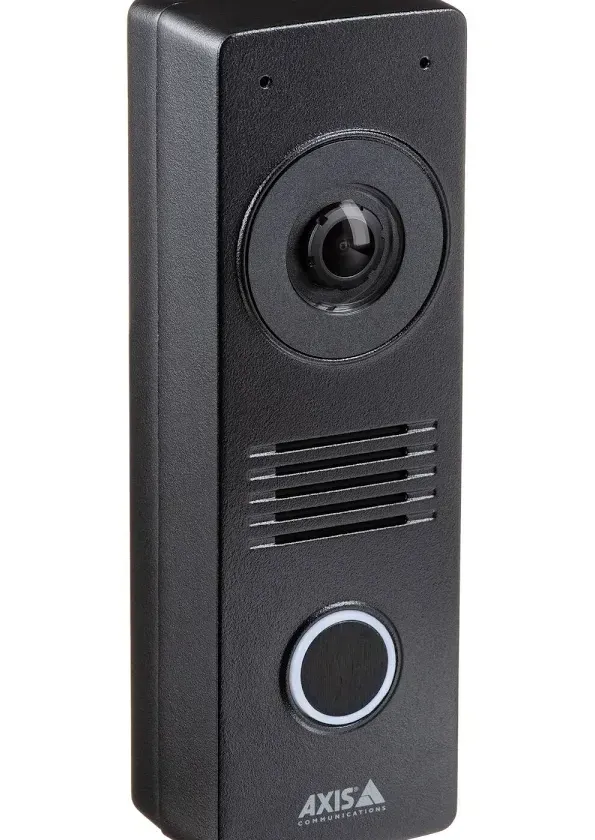
A photo from the AESS job library, not taken in Remsen Village: a black rectangular video door station with a camera lens, a speaker grille and one round call button that lights up. A one-button station of this size suits the porch door of a one-family semi-detached house in Remsen Village, where the brick beside the door usually leaves just enough room for a narrow faceplate.
Remsen Village Buzzer Request
Walk-up, two-family, semi-detached house or a shop with apartments above: tell us the street, how many apartments or households the buzzer must reach and what is at the door today, and a technician calls back with the range
✅
Request Sent!
Thank you. A technician will call you about the Remsen Village address, usually within two hours during working hours.
25+
Years Experience
✓
Same-Day Estimates
100%
Licensed & Insured
4.7★
201 Google Reviews
Owner-operated since 2002 · Thousands of jobs completed · Booked within 2 hours
Quick answer: door buzzer installation in Remsen Village costs $400 to $900 on our Brooklyn list for an audio buzzer and new door release on a one- or two-household house, $700 to $1,800 for video at the door with stations or phone answering in each home, and from about $2,500 to past $10,000 for a full system in one of the walk-up and garden apartment buildings along Remsen Avenue and the side streets. That price includes the door station, the stations inside, the battery-backed power supply, the strike or approved lock, the cable and the labor, and it is fixed in writing after we have tested the street door and traced the old wiring. If a door closes but does not latch, or an old pair might fail its test, that is named with its price before you order, never discovered on installation day. Send photos of the street door, the vestibule and the basement to (347) 934-8335 or on WhatsApp, and we reply with the range that fits, usually within two hours during working hours.
Reading your photos and quoting a new system is free. When an existing building system has to be tested in person before anyone can price it, that is the $250 service call booked online, and the $250 is applied toward the work.
We do the work under New York State license #12000287431. We install low-voltage entry equipment; if the power supply needs a new 120-volt outlet or circuit, a licensed electrician does that part, and you know about it before the price is set.
We take instructions from whoever controls the door: the owner of the house, the owner or managing agent of the building, or a shop tenant who has the landlord's written approval.
The Neighborhood
Why Remsen Village Properties Need Door Buzzer Installation
Remsen Village is the eastern end of East Flatbush, a name that came into use in the mid-1990s for blocks that were farmland in old Flatlands until the subway reached Nostrand Avenue in the 1920s. Brownstoner's 2013 piece on East 91st Street describes it as built mainly between the 1920s and the 1940s, and the housing still reads that way: brick rows, semi-detached and detached two-families with small front yards, and garden apartment buildings. What matters for a buzzer is not the history itself but what it left behind at the doors. Almost every property here was built for one or two families who answered the door in person, and many of them now hold more households, more deliveries and more visitors than anyone planned for.
The apartment buildings tell the sharper story. Along Remsen Avenue there are low brick buildings from the mid-1960s with ten to twenty apartments behind one street door. 1106 Remsen Avenue, toward the Canarsie end of the avenue, went up in 1965 with two floors and 18 units, and LucidRents lists "Door/Lock" as its leading HPD violation category, with more than a hundred entries over about seven years, along with 59 "DOOR/WINDOW" complaints to 311. 431 Remsen Avenue, which openigloo files under Remsen Village, is an 11-unit, three-floor building of the same year. These are not grand lobbies with a doorman. They are a glass-and-metal door, a short vestibule, a panel of buttons and a long hall, and when the door does not latch, the buzzer is the only thing that looks like security.
That is why our first job on most building calls here is not the panel. A buzzer can only control a door that closes and locks by itself. HPD treats a door that fails to "swing closed and latch by themselves after being opened" as a Class C, immediately hazardous condition, and gives the owner 14 days to fix it. A building at 525 Rockaway Parkway, the avenue Brownstoner names as one of the neighborhood's borders, received exactly that kind of violation on March 27, 2026, for self-closing doors with missing or defective hinges at the entrance. In a building like that, a new door station on a door that drifts open is money spent on the wrong part.
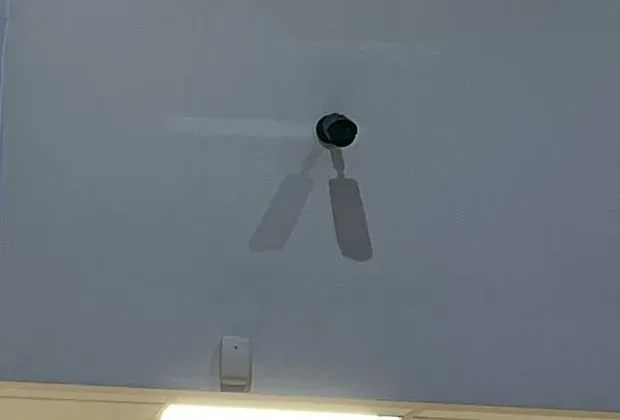
A photo from the AESS job library, not taken in Remsen Village: a small black camera mounted high on a pale wall, casting two shadows, with a small white device below it. In the vestibule of a 1960s walk-up on Remsen Avenue, a camera placed high like this watches the inner door the buzzer releases, which is where a stranger who follows a resident in is first seen.
The neighbors' experience points the same way. In February 2025, News 12 reported from Rutland Plaza on East 93rd Street, in East Flatbush, where resident Patricia Walters listed her complaints as "everything the unlocked doors, the leakage," and the reporters entered several buildings without a key. A year later the station reported that locks in the buildings had not been working. Those are large buildings under a single management company, but the lesson is the same for a ten-unit walk-up: a door that opens to anyone who pulls it makes every apartment's buzzer pointless.
Ownership is changing too, and that touches the entry system. In April 2026 News 12 visited a four-story rent-stabilized building on Linden Boulevard in East Flatbush whose registered owner had changed in December 2025, where tenants said calls to the new company went unanswered and the building carried more than 900 HPD violations. When a building changes hands, nobody may know where the buzzer's power supply is, which pair goes to which apartment or who holds the codes for a newer panel. We document all three during an installation for exactly that reason.
The houses have their own version of the problem. A listing for 52 East 55th Street, placed in Remsen Village, describes a 1945 two-family with a three-bedroom owner's duplex over a one-bedroom garden-level rental, a walk-up with private parking on a driveway. A listing for 1003 Lenox Road describes a 1920 semi-detached house with a front porch, a shared driveway to a detached garage and a basement "With a separate entrance via Bilco doors." Houses like these have a porch door, often a side door off the driveway and a basement hatch, two households who each want their own visitors, and a single old bell that rings for everyone.
And the scale of the neighborhood may change. The Real Deal reported on May 4, 2026 that Bawabeh Holdings is seeking a rezoning to build 972 apartments "along East 98th Street and Rockaway Parkway," in buildings of "14 or 15 stories," on a site that now holds a 350,000-square-foot commercial building with offices, shops and a parking garage, with full build-out not expected until 2035. Buildings that size need lobby entry systems designed from the first drawings. For everyone else, the useful point is that the entry problems on this page are today's problems in today's buildings, and they do not need to wait for anything.
Six Remsen Village records that decide how a buzzer goes in
The mid-1960s walk-ups carry long door-and-lock histories. 1106 Remsen Avenue, built in 1965 with 18 units on two floors, shows more than a hundred "Door/Lock" HPD violations and 59 "DOOR/WINDOW" 311 complaints over about seven years on LucidRents.
Those buildings sit just before the intercom law's 1968 line. 431 Remsen Avenue, 11 units on three floors, and 1106 Remsen Avenue were both built in 1965, which matters under Multiple Dwelling Law §50-a.
Entrance doors are being written up as immediately hazardous. 525 Rockaway Parkway received a Class C violation on March 27, 2026 to "REPLACE OR REPAIR THE SELF-CLOSING DOORS THAT IS MISSING OR DEFECTIVE HINGES IN THE ENTRANCE."
Unlocked doors have been the complaint in nearby large buildings. At Rutland Plaza on East 93rd Street, News 12 reporters walked into several buildings without a key in February 2025.
The houses have more doors than bells. 1003 Lenox Road has a porch, a driveway to a detached garage and a basement reached through Bilco doors; 52 East 55th Street has an owner's duplex over a garden-level rental.
Much larger buildings are proposed. The East 98th Street and Rockaway Parkway plan would add 972 apartments in 14- and 15-story buildings, finishing around 2035, according to The Real Deal.
Where this page applies. Maps disagree about Remsen Village's edges. Brownstoner draws it between Kings Highway, Ralph Avenue, Ditmas Avenue and Rockaway Parkway; the city's 2020 neighborhood map lists East Flatbush-Remsen Village separately from Rugby next door; other sources draw different lines. This page covers the blocks on either side of Remsen Avenue in that area, and the same Brooklyn price list applies on every one of them. For the surrounding blocks see our East Flatbush door buzzer installation page, for the rest of the borough our door buzzer installation in Brooklyn page, and for the whole city our NYC door buzzer installation page.
Repair or Replace in Remsen Village
Need Repair in Remsen Village? Decide Whether the Door, the Wire or the System Has Failed
Many of the calls we get about "a new buzzer" in Remsen Village are really about a building or house that already has one. The panel at the street door has buttons that do nothing for half the apartments, the handset in one unit hums all night, or the release clicks and the door stays put. Before we recommend a new system, we work out which of three things has actually failed, because each one leads to a very different price.
The first possibility is the door. If the closer, hinges or latch no longer bring the street door shut and locked, no amount of electronics will secure it, and the right first step is door work, often a closer, a hinge or a strike keeper that has worn out of line. The second is the wiring or the power: a transformer that has failed in the basement, a pair cut during an apartment renovation, a corroded connection at the panel. Those are repairs, and our Brooklyn door buzzer installers price them as repairs. The third is the system itself: handsets that can no longer be matched, a panel with failed buttons that cannot be replaced individually, or a building that now needs functions the old system never had.
ButterflyMX's guide for small buildings puts the rule plainly: "Do not replace a system based on age alone." We agree. A 1965 audio system whose cable still tests clean can sometimes take new stations and a new panel on the old pairs for much less than a full replacement. A system that fails in a new apartment every few months, on cable that meters badly, is usually cheaper to replace than to keep chasing. We tell you which you have after testing, not before.
What We Install
Door Buzzer Installation Services in Remsen Village
Each service below is priced from the same Brooklyn door buzzer list. The number of apartments or households sets the size of the system, the street door decides what release it can take, and in Remsen Village the condition of that door, the length of the building and what is left of the old wiring decide much of the labor.
Replacement systems for 1960s walk-ups
A new panel at the street door, a station in every apartment and a battery-backed supply for the low brick buildings along Remsen Avenue, reusing old pairs only where they meter clean.
Street door hardware first
Closers, hinges, latches and strike keepers brought back into line so the entrance shuts and locks by itself before any release is fitted, the step most buzzer quotes leave out.
First buzzers for semi-detached houses
A door station at the porch door, a release in the frame and stations on the floors the household uses, for houses that have only ever had a bell and a knock.
Two-button stations for two-families
One button for the owner's floor and one for the rental, each ringing only its own home and each able to release the shared door, for the two-families on the side streets.
Video at the street door
A camera in the door station so residents see who is ringing before they press release, in buildings where tailgating and unknown callers are the main worry.
Phone answering for households who are out
Door stations that ring residents' phones as well as the wall stations, for working households and owners who are often away, with any monthly charge stated before you choose.
Vestibule and inner door control
A second release on the inner vestibule door, or a panel moved so callers can reach it, where a building has added a second lock between the street and the hall.
Side and driveway doors
Keypads or small call stations for the side door off a driveway that a family uses every day, wired so a caller there rings only the household that lives behind it.
Shop and office doors on the avenues
Buzz-in doors for shops, offices, churches and practices on Ralph Avenue, Rockaway Parkway, Church Avenue and Remsen Avenue, kept separate from the apartments upstairs.
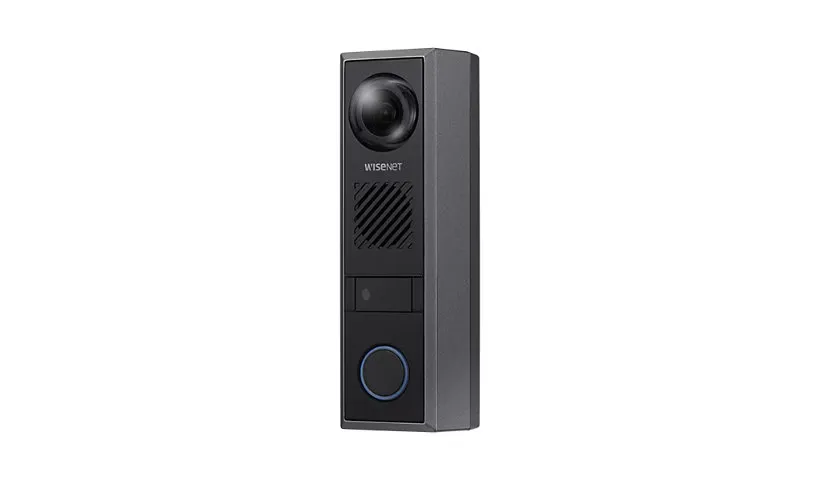
A photo from the AESS job library, not taken in Remsen Village: a slim dark grey wired doorbell with a camera lens, speaker slots and a round push button. On a semi-detached house where two porch doors sit close together on one stoop, a slim station like this fits the strip of brick or casing beside each door without crowding the neighbor's.
Building Specialists
Door Buzzer Installation for Remsen Village's Architecture
Six kinds of property account for almost every buzzer we plan in Remsen Village. They differ in how many households share the door, how the cable reaches each home, who has the authority to order the work and which rules apply, and each has one mistake that turns up when the job is rushed.
Low 1960s walk-ups
Two- and three-story brick buildings from the mid-1960s on Remsen Avenue, with 10 to 20 apartments off long halls and one street door with a vestibule.
Semi-detached one-families
Houses like the 1920 semi-detached on Lenox Road, with a front porch, a shared driveway to a detached garage and a basement reached through Bilco doors.
Two-families with a garden rental
Houses like the 1945 two-family on East 55th Street, with an owner's duplex above and a garden-level rental below, sharing a stoop or with separate doors.
Detached two-families with garages
Pairs of homes such as the 1932 two-families on East 91st Street between Avenues A and B, each apartment with its own garage behind the house.
Brick rows off Kings Highway
Attached brick houses with small front yards, a door a few steps above the sidewalk and a cellar running the depth of the house.
Shops with apartments above
Buildings on Ralph Avenue, Rockaway Parkway and Church Avenue with a storefront at street level and a residents' door beside it.
Low 1960s walk-ups: one street door, a vestibule and a hall that runs the length of the lot
The buildings along Remsen Avenue from 1965 are wide and low rather than tall. 1106 Remsen Avenue fits 18 units into two floors; 431 Remsen Avenue fits 11 into three. That shape changes the cable work. Instead of a riser climbing six or seven floors, the cable runs a long way horizontally, usually along the basement ceiling and then up into each line of apartments, and the apartments at the far end of the building can be as far from the panel as the top floor of a much taller building. When an old system fails in "the back apartments first," distance and a tired splice in the basement are usually the reason.
The mistake here is pricing the job from the apartment count alone. An 18-unit building with a short, dry basement and clean pairs is a modest job; the same count spread along a long building with a basement ceiling that has been boxed in during repairs is a much bigger one. We walk the basement end to end before quoting, meter every pair we can reach, and tell the owner which apartments will need new cable. On a low building, new cable usually runs along the basement rather than through the halls, which keeps the work out of tenants' sight.
Semi-detached one-families: a porch door, a driveway door and a hatch to the basement
The 1920 semi-detached house on Lenox Road is a good picture of the typical one-family job here. Visitors use the porch door; the family often comes and goes by the driveway; and the basement has its own way in through steel Bilco doors. The household wants to hear the door from the back of the house and the bedrooms upstairs, see who is there and let a relative or a courier in without walking to the front. A single-button station at the porch door, a strike in the frame, stations in the kitchen and upstairs, and a keypad at the side door for the family covers it.
The mistake is trying to put every door on the buzzer. A Bilco hatch is not a visitor's entrance and cannot take an electric strike in any sensible way; the door that matters is the one at the bottom of the basement stair, inside the hatch, and it usually just needs a good lock. We plan the doors people actually use and leave the rest locked and free to open from inside.
Two-families with a garden rental: two households, one stoop and sometimes two doors
The 1945 two-family on East 55th Street, an owner's duplex over a garden-level rental, is the arrangement we meet most often on the side streets. Sometimes both homes share the door at the top of the stoop; sometimes the garden unit has its own door at ground level. Either way the plan is the same: each household gets its own button that rings only its own home, and each household can release only the door it uses. Where there are two doors, each gets its own small station.
There is no law behind this. A two-family house is not a multiple dwelling under New York's housing laws, so §50-a does not reach it. The reason to do it properly is practical: a tenant who can answer their own visitors and let them in is a tenant who does not leave the door on the latch or hand out keys. We put the plan on paper first so the owner and the tenant both know which button does what.
Detached two-families with garages behind: doors at both ends of the house
Brownstoner's 2013 Building of the Day on 649 to 677 East 91st Street, between Avenues A and B, describes detached two-families built in 1932 by architect Irving Kirshenblit, each with a two-car garage at the back, one for each apartment. In houses laid out like that, the back of the property is as busy as the front: one household parks behind the house and walks in through a rear or side door, while visitors arrive at the front. A buzzer that only works at the front door leaves the household walking the length of the house every time someone they are expecting comes in the back.
For these houses we usually plan two small stations, front and back, each ringing the right household, and keep the cable run between them along the basement, which in these houses usually runs the full depth of the building. Where the back door sits a long way from any basement wall, we say so on the quote rather than at the install.
Brick rows off Kings Highway: a short stoop, a narrow front and a deep cellar
The attached brick rows that cityneighborhoods.nyc describes as typical of the area, with small front yards, are the simplest houses here to wire. The front door is a few steps above the sidewalk, the cellar runs under the whole house, and the bell wire, if it survives, drops straight down from the door to the cellar. The question in these houses is usually the door itself: an aluminum or steel storm door in front of the main door, or an older wood door that has been patched, and which of them should lock and release.
Our rule is that the release goes on the door that actually keeps people out. If the outer storm door is the one that locks, the station goes outside it and the strike goes in its frame; if the outer door is just a screen, the release goes on the main door and the station beside it.
Shops with apartments above: two doors a few feet apart and two separate systems
On Ralph Avenue, where cityneighborhoods.nyc describes Caribbean bakeries and barbershops, and along Rockaway Parkway and Church Avenue, the typical mixed building has a shop at the sidewalk and two or three apartments upstairs, with the residents' door right beside the shopfront. The apartments need a station at their own door that calls only the apartments; the shop may need a buzzer on its back or delivery door. We wire them as two separate systems with separate power, so a new shop tenant, a late-night repair or a fault in the store never touches the apartments' door.
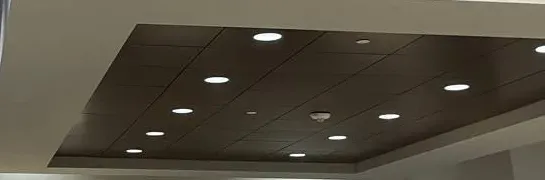
A photo from the AESS job library, not taken in Remsen Village: a dark recessed ceiling panel with round downlights and a small round device, framed by a lighter ceiling. Entry halls in the low walk-ups along Remsen Avenue have often had their ceilings lowered or boxed in over the years, and the space above a panel like this is where new buzzer cable can travel from the vestibule toward the apartments at the back.
Field Notes
Field Notes: Push the Street Door, Then Walk the Basement to the Last Apartment
This is how our technician spends the first part of a visit to a Remsen Village walk-up, before anything is priced. None of it involves opening the panel.
First, the door. The technician lets the street door close on its own from fully open and from halfway, then pushes and pulls it while it is locked, at the latch side and at the top corner. A door that closes but bounces off the strike, a closer that runs out of force in the last inch, or a latch that can be eased back with a firm pull all show up in a minute. On a door with that problem, the quote starts with the door, and we say so in writing.
Second, the record. For a building, we read the HPD violation history line by line with the owner or agent. A building with dozens of "Door/Lock" lines may have very few that involve the intercom; most will be apartment doors, closers, locks and peepholes. Separating them tells the owner which problems the buzzer job will clear and which need a locksmith or the super.
Third, the basement. The technician finds the old power supply or transformer, then follows the cable along the basement ceiling to the farthest line of apartments, noting splices, wet spots, boxed-in sections and anything that was cut during a renovation. Each reachable pair is metered. Only then is the cable plan drawn, and the apartments that need new runs are named on the quote by number.
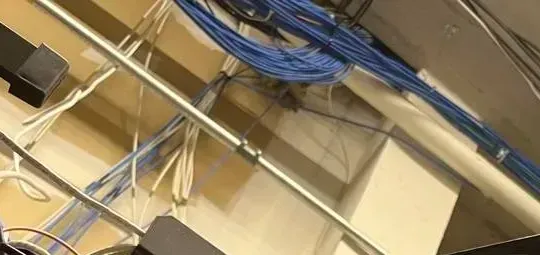
A photo from the AESS job library, not taken in Remsen Village: bundles of blue low-voltage cable laid over a ceiling beam beside a metal pipe in an open ceiling. In the basement of a long, low 1965 building on Remsen Avenue, new buzzer cable travels the same way, along the joists from the front of the building to the apartments at the back, kept clear of the pipes and turned up only where each line of apartments begins.
The Door Before the Buzzer
Reading a Remsen Village Building's Door-and-Lock Record Before Choosing a Buzzer
Owners of small buildings here are often surprised by how long their HPD record is, and by how little of it is about the intercom. LucidRents groups violations into categories, and for 1106 Remsen Avenue the top category is "Door/Lock," with more than a hundred entries. That label covers a great deal: apartment entrance doors that do not self-close, closers that need adjusting, locks that need a key to get out, missing peepholes, latches on public hall doors. Only some of those touch the entry system at all.
The wording of an actual intercom violation is different, and it is worth knowing. In a Bronx building in February 2026, HPD issued a Class B violation that reads "§ 27-2005 HMC: PROPERLY REPAIR OR REPLACE THE BROKEN OR DEFECTIVE INTERCOM SYSTEM," and in August 2026 another Class B in the same building to "PROPERLY REPAIR OR REPLACE THE BROKEN OR DEFECTIVE BELL BUZZER." Those are the lines a buzzer installation clears. The self-closing door lines, which HPD treats as Class C and immediately hazardous, are cleared by door work, even when that door is the building's main entrance.
The two do meet at the street door. If the main entrance has a self-closing violation and a dead buzzer at the same time, the order matters. The door should close and latch by itself first, because the strike or lock has to hold a door that is actually shut. HPD gives 14 days to correct a self-closing door and then "must reinspect all self-closing door violations within 20 days of the date the violation should be corrected," and it can make emergency repairs and bill the property if the owner does not. A buzzer replacement takes planning and ordering; door hardware usually does not. Our practice is to put the door right in the first visit and install the system on the next.
Tenants have duties too. HPD's page says tenants must not prop doors open, tape latches or use wedges or door stops. In our experience, a buzzer that works and a door that is easy to open from the inside are the two things that stop people propping the street door, because the reason they prop it is almost always that somebody they are expecting cannot otherwise get in.
Lines a buzzer job clears: broken or defective intercom system, broken or defective bell buzzer, a dead release at the street door.
Lines door work clears: self-closing doors with missing or defective hinges or closers, latch sets at public hall doors, entrance doors that do not lock.
Lines neither clears: peepholes, apartment door locks, lighting in halls and stairs, which 431 Remsen Avenue's openigloo record shows among its open violation categories.
Rules and Responsibilities
Which Remsen Village Properties Must Have a Buzzer, What It Has to Do and Who Decides
Buildings of eight or more apartments built after 1968 must have one. Under Multiple Dwelling Law §50-a, a Class A multiple dwelling erected or converted after January 1, 1968 with eight or more apartments must have an intercom at its self-locking main door that lets a resident speak to a visitor and release the door. Any building that rises on the East 98th Street site will be in this group from the start.
The 1965 walk-ups fall on the older side of that line. For buildings put up before 1968 with eight or more apartments, such as 1106 and 431 Remsen Avenue, the duty to install a self-locking door and intercom arises when tenants occupying a majority of the apartments request or consent in writing. Brick Underground's guide to buzzer rights notes that the tenants bear the cost in that case.
A system that exists has to be kept working. HPD's tenant guide says "the building manager, superintendent, or owner should immediately repair broken locks or intercoms," and tenants can report "Broken locks and intercoms" to 311. Habitat magazine's February 2024 report notes that courts have treated a working intercom as an essential service tied to the warranty of habitability.
Houses are the owner's choice. A one- or two-family house is not a multiple dwelling, so whether to put in a buzzer, and what kind, is up to the owner.
Every door must open from inside without a key. HPD's tenant guide lists "Door locks that require a key to exit" among the conditions inspectors look for and calls double-cylinder locks that need a key from inside "dangerous, illegal and must be removed." Any lock or release we add leaves the door opening freely from inside.
Keyless entry in an apartment building brings data rules. HPD's Tenant Data Privacy Law (Local Law 63 of 2021) covers owners of multiple dwellings that use smart access systems such as fobs, cards, apps or biometrics. Owners "must provide tenants with a data retention and privacy policy," must get express consent "either in writing, or through a mobile application," and must destroy authentication data within 90 days unless it is anonymized.
Magnetic locks need more than a lock. Electromagnetic locks are only made fail-safe, and the building code's sensor-release provisions call for a sensor on the egress side, a manual "PUSH TO EXIT" device 40 to 48 inches above the floor within 5 feet of the door that keeps it unlocked for at least 30 seconds, release on fire alarm or sprinkler activation, and UL 294 listed equipment.
None of this is legal advice about a particular building. An owner facing a tenants' written request, a new owner inheriting a system or a developer planning a lobby should confirm the details with a housing lawyer or the managing agent. What we provide is a system that meets the requirement that applies, and a written record of what was installed.
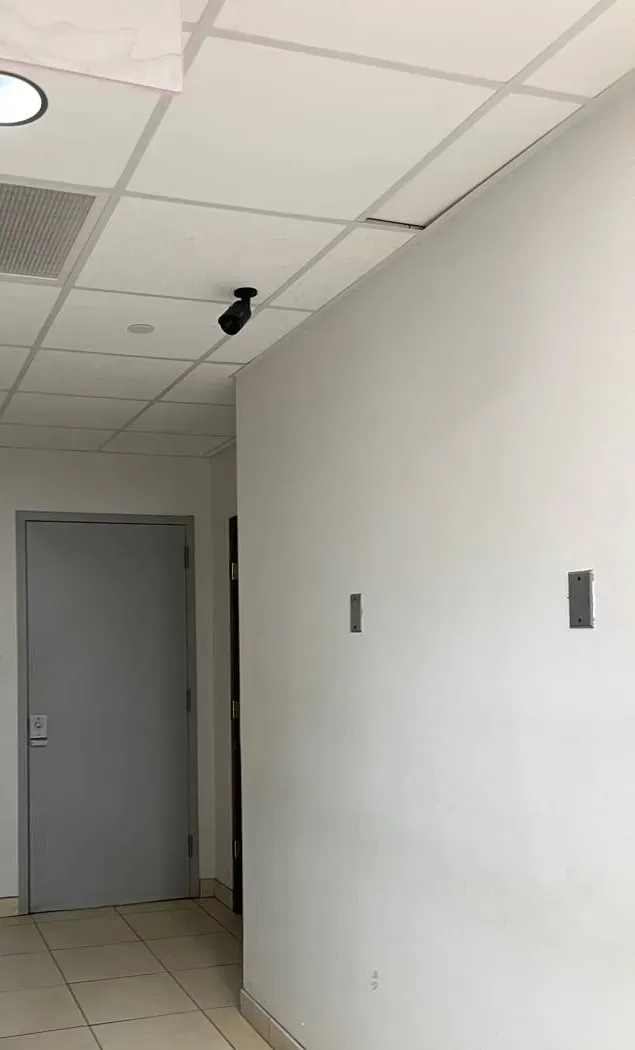
A photo from the AESS job library, not taken in Remsen Village: a tiled corridor with white walls and small wall plates ending at a grey steel door with a lever handle, under a drop ceiling with a small camera. The rear or basement door at the end of a long ground-floor hall in a Remsen Avenue walk-up looks much like this, and whatever release or lock goes on it, a turn of that lever must always let a resident out.
Commercial Door Buzzer Installation
Business Door Buzzer Installation in Remsen Village
Remsen Village is mostly homes, but the avenues that cross and border it carry shops, churches, offices and practices, many in buildings with apartments above. A business buzzer here is usually about one of three doors: the delivery door at the back, a buzz-in door for an office or practice, and the residents' door beside the shopfront, which belongs to the apartments, not the store.
Ralph Avenue
The western side of the neighborhood on Brownstoner's map, where cityneighborhoods.nyc describes Caribbean bakeries and barbershops, often with apartments above the shops.
Rockaway Parkway
The eastern border, with storefronts and walk-up buildings such as 525 Rockaway Parkway, where the entrance door itself has drawn a Class C violation.
Church Avenue
The stretch from Remsen Avenue to East 98th Street co-named Bob Marley Boulevard in 2006, with restaurants and shops whose back doors open onto side streets.
Remsen Avenue
The avenue that gives the neighborhood its name, running from Empire Boulevard toward Canarsie past walk-ups, storefronts and community buildings.
East 98th Street at Rockaway Parkway
The site of a 350,000-square-foot commercial building with offices, shops and a parking garage, now proposed for redevelopment as apartments.
The most common business request here is a buzzer on a door that has always been propped open or opened with a key: a bakery's back door for early deliveries, an upstairs office or practice that buzzes clients in one at a time, a church office whose door should lock behind each visitor on weekdays. Each gets its own station, release and power supply, fully separate from any apartment system in the building. If you run a business on these avenues and want cameras on the back door as well, installing them on the same visit usually saves $200 to $400 in labor, and our Canarsie door buzzer installation page covers the business blocks to the southeast.
Rules that apply to business entry doors around Remsen Village
Anyone inside can always get out. A business door with a buzzer, code or reader still opens from inside without a key. As Allegion's guide puts it, with an electric strike "you can exit by turning the lever" whether the strike is fail-safe or fail-secure.
Fire-rated doors keep their rating. Allegion notes that fire doors need fail-secure strikes, so a rated door to a stair or basement stays latched in a fire, and the release hardware must carry the right listing.
Magnetic locks bring the full sensor-release package. A shop that wants a mag lock on its front door needs the egress sensor, the "PUSH TO EXIT" button, the 30-second unlock and the fire alarm release, which is why a strike is usually the simpler choice on a storefront.
Buttons within reach. Call buttons outside and release buttons at a counter go no higher than the 48-inch high forward reach in the 2010 ADA Standards.
Tenants need the landlord's written approval. A shop or office that rents its space orders a buzzer only with the building owner's written permission, especially where the work touches a shared street door or the apartments' cable.
Big new buildings plan entry from the drawings. Any building of eight or more apartments on a redeveloped site falls under §50-a, and its lobby, garage and service doors cost least to wire before the walls close.
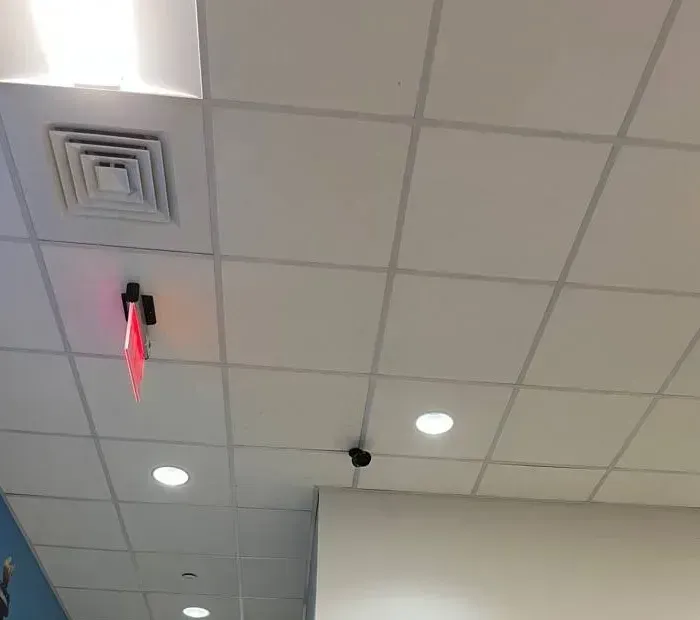
A photo from the AESS job library, not taken in Remsen Village: a drop ceiling with a lit red exit sign, an air diffuser, round recessed lights and a small black camera. Shops and offices on Ralph Avenue and Rockaway Parkway often have ceilings like this, and the lit exit sign is the rule every business buzzer we fit follows: the door can be locked against the street, but never against the people inside.
Your Questions Answered
Door Buzzer Installation in Remsen Village: Questions Answered
The low walk-ups along Remsen Avenue
Our building on Remsen Avenue is only two stories tall but runs far back on the lot, with eighteen apartments off long halls. Does a long, low building need a different kind of system than a tall one?
It needs a different cable plan more than a different system. In a tall building, the cable climbs a riser and the hard part is the height. In a low building like 1106 Remsen Avenue, 18 units on two floors, the hard part is distance along the basement: the apartments at the back can sit as far from the panel as a sixth floor would in a taller building, and older audio systems lose volume and reliability on long runs, especially through old splices.
So we start by measuring. If the existing pairs meter well to the far end, a two-wire system that reuses them is often the best value, because two-wire equipment is built to work over long distances on one pair per apartment; Aiphone, for example, describes its GT series as made "for new builds and retrofit projects" and as able to use existing wire. If the back of the building meters badly, we run new cable along the basement ceiling to those apartments only, and the quote lists them by number. Either way, the power supply goes near the middle of the run rather than at one end where we can arrange it, which keeps the far apartments as strong as the near ones.
A rental site lists more than a hundred door-and-lock violations for our building. How do you tell which of them a buzzer job will actually clear?
By reading them one at a time with you, because the category label hides very different problems. "Door/Lock" on a listing site covers apartment doors that do not self-close, closers, hinges, latches on hall doors, locks that need a key to get out and more. An intercom violation reads differently, typically "PROPERLY REPAIR OR REPLACE THE BROKEN OR DEFECTIVE INTERCOM SYSTEM" or the same wording for a "BELL BUZZER," and those are the lines a buzzer installation clears.
We sort the open lines into three groups before we quote: the ones our work clears, the ones door work at the entrance clears, and the ones that belong to a locksmith or the super inside the apartments. That gives the owner a realistic picture. A new buzzer will not lower a long door-and-lock list by itself, but a street door that closes, latches and releases properly, with a working panel, removes the condition behind many of the repeat complaints from the entrance.
Our system went in when the building was new in the mid-1960s. Is its age by itself a reason to replace it?
No. Age tells you to test it, not to throw it out. ButterflyMX's guide for small buildings says it directly: "Do not replace a system based on age alone." What decides it is whether the fault is in one place with parts available, or spread across the building. Daniel Vasquez of Paragon Security and Locksmith told Brick Underground that the core wiring of older systems is often fine even when the stations are dated, and that most problems are "all in the wire connections."
In practice, a 1965 building tends to fall into one of two camps. Either the cable is sound and the handsets and panel are worn out, in which case new stations and a new panel on the old pairs is the economical answer, or the cable has been cut and spliced through decades of apartment renovations, in which case new cable is part of any lasting fix. We meter before we recommend, and the quote shows both options when both are realistic.
Only a few apartments in our building have dead handsets. Can just those stations be replaced while the panel at the street door stays?
Sometimes, if replacement stations exist that work with your panel and power supply. ButterflyMX's repair guide makes the same point: station-only replacement is possible only when the new stations are compatible with the panel, power supply, controls and wiring you keep. For some older audio systems, matching handsets are still made; for others they are not, and a mismatched station can upset the rest of the line.
Before buying anything, we test the dead apartments' pairs from the panel. If the pair is good and a matching station exists, we replace just those stations and price it as a repair. If the pairs are bad, a new station will not help. If no matching station exists, we explain the cheapest way forward, which is sometimes a new panel and power supply that accept modern stations, installed in stages as old handsets fail.
Street doors and vestibules
News 12 reporters walked into buildings on East 93rd Street without a key. How do you check whether our own street door actually holds when it looks locked?
We test it the way a stranger would, before anything else on the visit. The door is let go from fully open and from halfway to see if it closes and latches on its own every time. Then, with it locked, we push and pull hard at the latch side and the top corner, try it with the handle turned from outside, and look at the gap between the door and the frame. A latch that barely catches the strike, a closer that runs out of force at the end, a frame that has shifted, or a strike keeper screwed into worn wood all show up in a minute or two.
The fix depends on what we find, but it comes before the electronics. HPD treats a door that does not close and latch by itself as a Class C, immediately hazardous condition, so this is not a cosmetic point. A door that holds, with a strike that releases it on command, is what makes the panel worth having. If the door needs more than adjustment, we price it as its own line before the buzzer.
The owner put a lock on the outer vestibule door, and now the buzzer panel is behind it on the inner wall where visitors can't reach it. Where should the panel go?
Outside the first locked door. It sounds obvious, but this exact situation turns up in buildings everywhere: a tenant in Jersey City described on Reddit how a second locked door left the building's buzzers "100% unusable," with couriers leaving "could not deliver" notices. The panel has to be wherever a visitor first meets a locked door, and the release has to open that door.
There are two common fixes. One is to move the panel to the outside of the outer door and put the release on that door, leaving the inner door on a key or a second release triggered by the same button. The other is to keep the panel in the vestibule and take the lock off the outer door. The first is usually what owners want. Moving the panel means new cable through the outer wall or the door frame, and on brick it is planned so the cable is hidden behind the panel.
Some residents call relatives to walk them in at night. Can people check the lobby on their phones before they open the street door?
Yes, if the system includes a camera inside the vestibule or lobby that residents can view, as well as the camera in the door station. At Rutland Plaza, resident Patricia Walters told News 12 she now calls her son to make sure she gets to her apartment safely. A resident who can look at the vestibule on their phone from the sidewalk, before putting a key in the door, is in a better position than one who finds out on the way in.
There are limits we explain up front. A vestibule camera viewed on residents' phones means an app, an internet connection at the building and, in a multiple dwelling that uses keyless entry, the city's data rules about what is stored and for how long. We set it up so the live view is available to residents while recordings are kept only as long as the owner's written policy says.
Houses, two-families and visiting family
Our 1920s semi-detached has a basement entrance through steel Bilco doors. Can that hatch be put on the buzzer?
Not usefully. A Bilco-style hatch is a pair of heavy steel leaves over an outside stair, built to keep weather out and to be opened from below or with a key. It is not where visitors arrive, and its leaves are not a place for an electric strike. The door that matters is the one at the foot of that stair, between the stairwell and the basement, and it usually needs nothing more than a solid lock that opens freely from inside.
If the basement is a lived-in space, such as a family room or a relative's room, and people do arrive that way, we look at putting a small station and a release on that inner door instead, with the cable kept inside the basement. Houses like the semi-detached on Lenox Road, with a porch, a driveway, a detached garage and a hatch, usually need two stations at most: one at the porch and one at the side door the family uses.
Relatives often stay with us for a few months at a time. Can a visiting family member answer and open the door on their own phone, and lose that when they go home?
On systems with phone answering, yes. Most app-based door stations let the owner add a user, who can then see and speak to visitors and release the door from their own phone, and remove that user again in a few taps. While your relative is staying, they get the same calls you do; when they leave, you delete them and the next visitor is never routed to their phone.
Two cautions. First, a guest's phone may be on a foreign number or limited data, so a wall station in the room where they spend the day is still worth having; it works without any app or internet. Second, only the household should hold the admin login. We set the system up so the owner controls who is added and removed, and we show them how on the handover visit.
A tenant in our two-family wants to wire a smart relay into the handset so the street door opens from their phone. Should we allow it?
Ask to see the plan first. A relay wired across the release contacts of an existing handset can work, and ButterflyMX lists adding smart control to an existing buzzer as a common renter question. But the relay has to match the system's voltage, it adds a way to open the shared door that you do not control, and if it is wired badly it can leave the door releasing at random or damage the handset.
If you are open to the idea, the better route is usually to give the tenant phone answering through the building's own system, set up and removed by you, rather than a device you cannot see. If you do allow a relay, have it installed by a low-voltage installer, put it in writing, and make sure it comes out when the tenant leaves. We are glad to look at the specific product and tell you whether it suits your system.
The proposed towers
The buildings proposed for East 98th Street and Rockaway Parkway would hold about a hundred apartments each. What does an entry system for a building that size need that a walk-up's never does?
A great deal more planning. The Real Deal reported 972 units across buildings of 14 or 15 stories, or about 108 per building if split evenly. At that size the street door needs a directory or code panel rather than a wall of buttons, every resident needs a way to answer that works without an app, there are usually several controlled doors (main entrance, garage, package room, service door), and the system has to stay usable when the building's internet is down. Swiftlane's cost guide notes that cloud subscriptions commonly add "$5 to $15 per unit per month, or $30 to $100 per door per month," which at a hundred apartments is a real operating line.
Most of that is decided long before installation: where the panel sits, how cable reaches each floor, which doors are fail-secure and which have sensor-release hardware, and where the power supply and battery live. Developers and general contractors who involve a low-voltage installer while the drawings are still changing avoid opening finished walls later. For a building that size, a buzzer is part of the building's design, not an add-on.
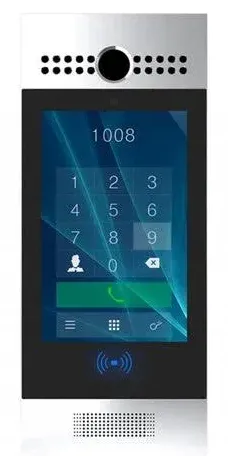
A photo from the AESS job library, not taken in Remsen Village: a touchscreen entry panel showing a dial pad with a four-digit apartment code entered, a camera above and a card-reader symbol below. A building of a hundred or more apartments, like those proposed near East 98th Street, needs a code or directory panel of this kind, because a column of a hundred buttons is unreadable at a street door.
Equipment
Types of Door Buzzer Systems We Install
We quote a dependable non-branded system by default and install a named brand when an owner asks for one; the intercom brands we work with include Aiphone, ButterflyMX, 2N, Akuvox, Comelit and DoorBird. These are the kinds of equipment that come up most often in Remsen Village and where each one fits.
Audio button panels
Plain panels with a button per apartment and a speaker, for 1960s walk-ups whose tenants mostly want to hear and release, with handsets in each apartment.
Two-wire multi-tenant systems
Audio and video over one pair per apartment, the usual choice for a long, low building on Remsen Avenue whose old pairs meter clean to the back apartments.
Slim house stations
Narrow one- or two-button stations for the porch door of a semi-detached house or a two-family, small enough for the brick beside the door.
Indoor video stations
Wall stations with a screen and release button for the kitchen, the bedroom floor or a garden apartment, ringing together when the door is pressed.
Phone and app answering
Door stations that ring phones as well as wall stations, with users added and removed by the owner, for working households and visiting family.
Directory and code panels
Scrolling directories or code entry for larger buildings, with a keypad or reader for residents and a call button for the super or the office.
Keypad stations for side doors
A camera, keypad and call button in one faceplate for the side door off a driveway, so the family enters by code and visitors can still ring.
Fail-secure electric strikes
Releases in the door frame that stay locked without power and let anyone inside leave by the lever, matched to the lock already on the street door.
Battery-backed power supplies
Dedicated low-voltage supplies with battery backup, mounted in the basement on the owner's circuit and sized for the panel, the stations and the release.
Audio panel, two-wire video or a cloud panel: which fits a Remsen Village walk-up?
What matters
Audio panel and handsets
Two-wire video on existing pairs
Cloud panel calling phones
See the visitor before releasing
No
Yes, on each station
Yes, on the phone
Reuses the 1960s cable
Yes, where it meters clean
Yes, one pair per apartment where it meters clean
Only for the panel and release
Works when the building's internet is down
Yes
Yes
Only with a cellular or backup connection
Works for a tenant without a smartphone
Yes
Yes
Only with a phone call option
Owner can add and remove users remotely
No
Some models
Yes
Tenant data rules apply
No
Only if fobs or app entry are added
Yes, for app or code entry
Monthly fees
None
None
Usually, stated before you choose
Brooklyn list range
From about $2,500 for a 10 to 20 unit building
From about $2,500, rising with apartments and new cable
From about $2,500, plus any subscription quoted separately
ADT, Ring and SimpliSafe compared with a local installer for a Remsen Village door
National brands come up in nearly every conversation about a front door, and for a one-family house a store-bought video doorbell may be all an owner wants. In a Remsen Village two-family or walk-up it runs into three limits. It rings the phones of whoever set it up, not a station for a downstairs tenant or a parent who does not use apps. It does not release the street door unless it is separately wired to a strike, which is the part that saves a walk downstairs. And in an apartment building it gives no apartment its own button.
A local installer supplies what those products leave out: the strike in the frame, the closer that makes the door latch, the cable to every apartment, the stations, the battery-backed supply and the record of which pair goes where. An alarm company may add a doorbell camera to its panel; we build the whole entrance, starting with the door.
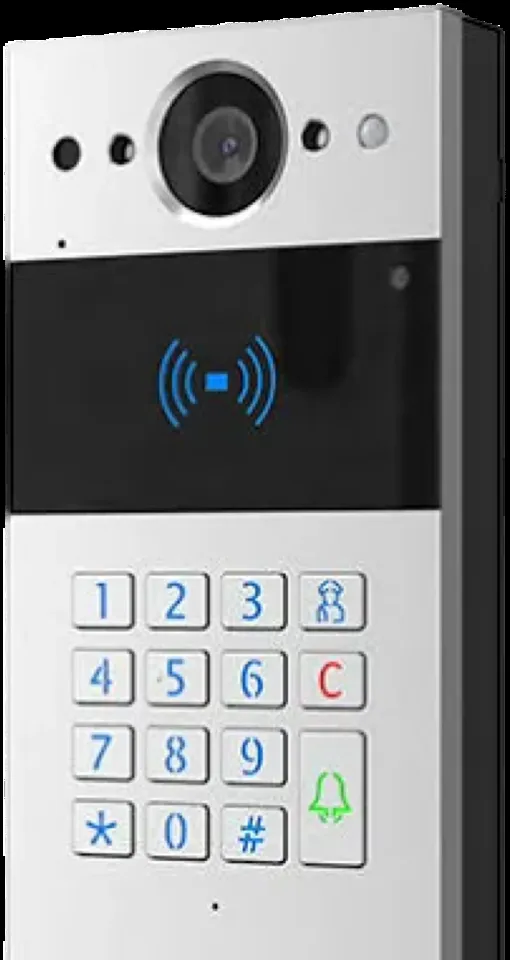
A photo from the AESS job library, not taken in Remsen Village: a silver and black keypad door station with a camera lens at the top, a blue card-reader symbol, a numeric keypad and a green bell key. At the side door off a shared driveway in Remsen Village, a station like this lets the family come in by code while a visitor presses the bell key and rings the same stations as the porch door.
AI Overview Reality Check
What AI Gets Wrong About Door Buzzer Installation in Remsen Village
Ask an AI assistant or a search summary what a door buzzer costs or what the law requires, and you get confident answers assembled from national cost guides, vendor blogs and New York articles written about Manhattan buildings. Some of it is right in general and wrong for a neighborhood of 1960s walk-ups and semi-detached two-families. Here are seven claims we see repeated, each checked against its source and against what we find at doors here.
"Hard-wired intercom systems cost $1,000 to $15,000"
That range is from HomeAdvisor's national guide, which puts wireless systems at $150 to $1,500 and hard-wired ones at $1,000 to $15,000, with an overall average of $2,500. It is a fair description of the whole country and an unhelpful one for a specific Remsen Village door.
On our Brooklyn list, an audio buzzer with a new release on a house runs $400 to $900, video with stations or phone answering for a house or two-family runs $700 to $1,800, and a building system starts at about $2,500 and can pass $10,000. Most houses here land well below the national average; most 1960s walk-ups land in the building range.
What moves a price here is the street door's condition, how many old pairs still meter clean and how far the back apartments are from the panel, none of which a national range can see.
"Buildings with at least eight apartments must have an intercom"
That is how the rule is often summarized, including in Brick Underground's guide, but the same guide adds the part that matters here: pre-1968 buildings must provide self-locking doors and intercoms "if requested by a majority of tenants." Multiple Dwelling Law §50-a makes the requirement automatic only for buildings erected or converted after January 1, 1968.
The walk-ups along Remsen Avenue were built in 1965, three years before that line. For them, the duty to install a system starts with a written request from tenants occupying a majority of the apartments, and the guide notes that the tenants bear the cost in that case.
Once a building has a system, though, HPD expects it to work, and its tenant guide tells owners to "immediately repair broken locks or intercoms." The date decides installation, not maintenance.
"Wireless systems are the best option if you want to DIY"
HomeAdvisor says this, and for a single-family doorbell it can be true. A wireless buzzer still needs power at the door and a wired connection to whatever releases the lock, and the release is the part that does the work.
In a brick semi-detached house or a walk-up, the hard part is not the signal to the apartments; it is the strike in the frame, the closer that makes the door latch and the power supply in the basement. Those are wired whether the stations are wireless or not.
Wireless stations can save a difficult run to a top-floor bedroom. They do not let anyone skip the door.
"Intercom prices run anywhere between $2,000 and $50,000"
A security company representative gave Brick Underground that range, and it is honest for New York City as a whole, where the top end means a large tower with cloud video at every door.
Remsen Village's apartment buildings are small. A 10- to 20-unit walk-up on Remsen Avenue falls in our building range of about $2,500 to past $10,000, depending mainly on how much cable must be replaced and whether the owner wants video or phone answering. The $50,000 end belongs to buildings like the ones proposed for East 98th Street, not to a 1965 walk-up.
The useful question is not the citywide range but which pairs in your building can be reused.
"Video intercoms cost around $500 per apartment"
Brick Underground repeats a New York Times figure of about $500 per apartment for video intercoms in large buildings. Per-apartment figures are a quick way to compare bids for a big building with many identical units.
They mislead in small buildings, where the fixed costs dominate: the panel, the power supply, the strike and the door work cost about the same whether a building has eleven apartments or eighteen. A per-apartment figure makes an 11-unit building look cheaper than it can be done for, and a two-family look more expensive than it is.
We price by the building, with the fixed parts and the per-apartment parts shown separately, so an owner can see what adding video to every unit actually adds.
"A buzzer repair costs $150 to $250"
ButterflyMX quotes that figure, and labels it carefully as a benchmark from one NYC installer that "should be treated only as a local benchmark." Brick Underground's repair guide reported service calls at $195 per hour and $250 per hour plus parts.
Those figures describe a service call, not a new system. Our in-person diagnosis of an existing system is the $250 service call booked online, and that $250 is applied toward the work if you go ahead.
In a building where the street door, the panel and several apartments' handsets have all failed, a single repair call is the start of the conversation, not the price of the answer.
"A new intercom fixes a building's door problems"
Search summaries often treat the buzzer and the door as one thing. HPD does not: a door that fails to "swing closed and latch by themselves" is its own Class C, immediately hazardous violation with a 14-day correction period, separate from any intercom violation.
525 Rockaway Parkway's March 2026 violation was about hinges at the entrance, not the buzzer. A new panel on that door would have left the violation open and the door unsecured.
The door comes first. We test it before quoting the system, and if it needs work, that work is its own line on the quote.
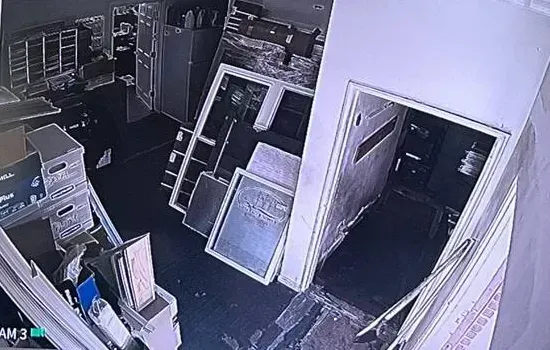
A photo from the AESS job library, not taken in Remsen Village: a black-and-white night camera view of a cluttered room with an open doorway into a dark back room. The stockroom behind a bakery or barbershop on Ralph Avenue often leads to the delivery door, and a buzzer on that door, with a camera inside watching it after hours, keeps the back of the shop as secure as the counter.
Not Sure Whether Your Street Door, Your Old Cable or the Whole System Is the Problem? Speak to a Tech
Send one photo of the street door from the sidewalk, one of the panel or bell beside it, one of the vestibule if there is one and, if you can, one of the old transformer or power supply in the basement, along with how many apartments or households the buzzer must reach. A technician will tell you which part has failed, what the fix looks like and where it falls on our Brooklyn ranges. Call or text (347) 934-8335, send photos on WhatsApp, or fill in the form below.
Get In Touch
Request a Free Quote
✅
Request Sent!
Thank you. A technician will call you about the Remsen Village address, usually within two hours during working hours.
How It Works
Our Installation Process
1. Photos, doors and who decides
You send photos of the street door, the vestibule and the basement and tell us how many apartments or households the system must reach. We confirm who can order the work: the owner, the managing agent or a shop tenant with the landlord's written approval.
2. Push, pull and latch test at the street door
Before any electronics, we let the door close from open and from halfway, push and pull it while locked and check the closer, hinges, latch and frame. A door that does not latch by itself is fixed first.
3. Trace and meter the old wiring
We follow the old cable from the door to the power supply and along the basement to the farthest apartments, metering every pair we can reach and noting splices, wet spots and boxed-in sections.
4. Read the building's record
For buildings, we read the HPD violations with you, separating intercom lines from door and lock lines, and check the building's age and size against the §50-a rule.
5. Written price from the Brooklyn list
You get a written price, with any part that depends on a test, such as a pair that might fail or a closer that might need replacing, named and priced before anything is ordered.
6. Order and book a two-hour window
Equipment is ordered once the deposit is in. The installation is booked in a two-hour arrival window, and tenants are told in advance which day we need to reach each apartment.
7. Install door hardware, power, cable and stations
We fit the strike or release, mount the battery-backed power supply, run or reconnect cable along the basement and up to each apartment, mount the panel and stations, and label every pair.
8. Test every apartment from the sidewalk and hand over
Standing where visitors stand, we call and release every apartment or household, confirm the door closes and latches behind each visitor, and leave the test sheet and wiring record.
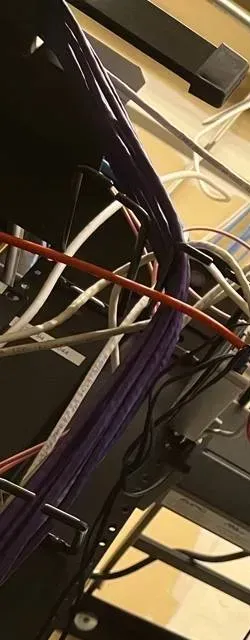
A photo from the AESS job library, not taken in Remsen Village: purple, white and red cable bundles dropping down beside a black equipment rack. In an 18-unit walk-up, the pairs from every apartment meet at one point in the basement like this, and labeling each bundle in step 7 is what lets the next technician, or the next owner, find one apartment's line in minutes.
Coverage Area
Door Buzzer Installation Near Remsen Village's Landmarks
East 91st Street two-families
The 1932 detached two-families at 649 to 677 East 91st Street, between Avenues A and B, each apartment with its own garage behind, featured by Brownstoner in 2013.
8807 Avenue B
The "grand old house" the Brooklyn Eagle photographed on its 2017 walk down Remsen Avenue through the section it called Remsen Village.
Rutland Plaza
The apartment complex on East 93rd Street in East Flatbush where News 12 reported unlocked doors in 2025 and locks that were not working.
Kings Highway
The diagonal road that forms one edge of the neighborhood on Brownstoner's map, lined with brick rows and apartment buildings.
Ralph Avenue
The western border on Brownstoner's map, with Caribbean bakeries and barbershops at street level and apartments above.
East 98th Street and Rockaway Parkway
The corner where a 350,000-square-foot commercial building stands on the site proposed for 972 new apartments.
Remsen Village is billed at our standard Brooklyn rate. The final figure follows photos and a visit, because the condition of the street door, the number of apartments or households, how many old pairs still meter clean and the length of the cable run along the basement drive the total far more than the brand on the panel.
Job
Typical Remsen Village property
Brooklyn range
Audio buzzer or replacement with electric strike release, existing wiring reused where it tests well
One-family semi-detached houses and brick rows, two-families wanting audio only, a single shop or office door
$400–$900
Video door station with indoor stations or phone answering
Two-families with a button per household, houses with a side door on a keypad, detached two-families with front and back stations
$700–$1,800
Multi-unit entry system, audio or video by apartment count, with optional fob or code entry
1960s walk-ups on Remsen Avenue, garden apartment buildings, apartments over shops
from $2,500 to $10,000+
In-person diagnosis of an existing system, booked online
Any building whose old system has to be tested before it can be quoted
$250, applied toward the work
Monthly subscription
Any property choosing a wired system without cloud features
$0
What moves a job inside its range is predictable. For a walk-up, the first factor is cable: an 18-unit building whose pairs all meter clean costs far less than one where the back apartments need new runs along the basement. The second is the door: a street door that needs a closer, hinges or a new strike keeper before it will latch adds a line. The third is what residents get: audio handsets cost less than video stations, and phone answering adds setup and sometimes a subscription. For a house, the count of stations and doors decides it: one station at the porch keeps a job near the bottom of its range, while a second station at the side door and stations on two floors move it up. If the same visit adds a camera at the door or in the vestibule, installing it together usually saves $200 to $400 in labor. Anything that depends on a test is on the quote with its price before you approve.
Full terms — including 50% deposit, one-year parts-only warranty on AESS-supplied products, and the late-fee schedule — are set out in the service agreement.
Find Out Which Range Your Remsen Village Building or House Falls In
Tell us the street, how many apartments or households the system must reach, every door people use and what is at the street door now, and we will tell you which Brooklyn range fits and what would move it. Call or text (347) 934-8335, send photos on WhatsApp, or fill in the form.
Shop Our Systems
Door Buzzer Installation Packages & Pricing
Three typical Remsen Village jobs, each placed inside the matching range on our Brooklyn list. The exact figure comes from the photos and the visit.
House door audio: $400–$900
An audio station at the porch door of a semi-detached house or brick row, a fail-secure strike in the frame, the closer set so the door latches, an answering station on the main floor and battery-backed power in the basement.
Two-family or two-door video: $700–$1,800
A two-button video station for an owner's floor and a rental, or front and back stations for a detached two-family, indoor video stations or phone answering for each household and cable kept in the basement.
Walk-up building system: from about $2,500
A button, directory or code panel at the street door, handsets or video stations in every apartment, old pairs reused where they meter clean and new runs where they do not, a release with free exit and power in a locked basement box, rising toward $10,000 or more with apartments, new cable and video.
Bring your own equipment. If you have already bought a door station or an intercom kit, we can install it as labor-only work, quoted flat once we have seen the door, the frame and the cable path. Tell us the make and model and we will say before the visit whether it can reach every apartment and release your door. Equipment you supply is covered by its maker's warranty, not ours.
Complete Services
Every Door Buzzer Service in Remsen Village
Walk-ups and garden buildings
Street door hardware, panels, apartment stations, cable along the basement and phone answering. Request a quote
Houses and two-families
First buzzers, two-button stations, side-door keypads and front-and-back stations. Call (347) 934-8335
Not quite, though people use the words loosely. A buzzer, strictly, is the part that rings and releases the door: the button outside, the sound inside and the release in the frame. An intercom adds two-way voice, and often video, so the resident can speak to the visitor before letting them in. Most systems we install in Remsen Village buildings do both, and the law for larger post-1968 buildings asks for both voice and release.
Where on your Brooklyn list does a 10- to 20-apartment walk-up from the 1960s usually land?
+
In the building range, which starts at about $2,500. A building of that size with clean pairs, an audio panel and handsets sits near the lower end. Video stations in every apartment, new cable to the back apartments and door work at the entrance move it up, and a building needing all three can pass $10,000. The written quote shows each of those parts separately so the owner can choose.
The handset in one apartment makes a constant buzz even when nobody is ringing. Is it safe to leave it like that until the visit?
+
A constant buzz usually means a stuck button at the panel, a shorted pair or a handset fault, not a danger to the tenant, but it can keep the release or the transformer working continuously. If anything feels hot or smells of burning, unplug or switch off the buzzer's power supply and call us. Otherwise, note which apartment it is and when it started, which often points straight to the fault.
Do tenants have to be home on installation day?
+
Someone has to let the crew into each apartment that gets a new station, so the owner or super arranges access and tenants are told in advance which day we need their unit. Tenants do not need to stay while we work. Apartments we cannot reach on the day are left on the old station if it still works, or scheduled for a short return visit, and the test sheet shows which units are finished.
If we take the door station off our brick front someday, will it leave a mark?
+
It leaves the screw anchors and the cable hole behind it. On brick we set anchors in the mortar joints where we can, because mortar is easier to repoint than a drilled brick face, and the cable goes straight back into the wall behind the station so nothing runs across the front. We do not patch or paint, so if a station is ever removed, a mason or painter closes the holes.
Can the old telephone wire in our building carry the new buzzer?
+
Sometimes. Older buildings often have spare telephone pairs running to each apartment, and some two-wire buzzer systems will run on them if they meter clean and are not shared with anything live. We test them like any other pair before relying on them. If they pass, reusing them can save new cable to the back apartments; if they fail or are in use, the quote shows new cable instead.
Do courts treat a dead buzzer in an apartment building as a habitability problem?
+
Habitat magazine reported in February 2024 that courts have treated a working intercom as an essential service, and that failing to maintain one can breach the warranty of habitability, which affects both an apartment's livability and its security. That is general information, not legal advice. For an owner, the practical point is that a building system that exists should be kept working, and repaired promptly when it fails.
Our new door station has a camera. Will it see into the neighbor's windows across the shared driveway?
+
A door station's camera is built to show the person standing in front of it, with a fairly narrow view, so it rarely reaches far past the step or stoop. We mount it facing the visitor and check the picture with you before we leave. If part of the view takes in a neighbor's window or door, we adjust the angle or choose a model with a narrower view so it covers only your entrance.
My father can't easily get out of bed. Can a release button go beside his bed instead of on a station across the room?
+
Yes. On most wired systems a separate release button can be wired near the bed, alongside or instead of a station, and on video systems a small station can be mounted within reach of the bed. Phone answering is another option if he uses a phone comfortably. We place every button within the reach range the 2010 ADA Standards use, no higher than 48 inches, so it is easy to press from a bed or a chair.
For a family event, can the street door be left on release for a few hours and then lock itself again?
+
Many panels and some door controllers can hold the release open on a timer and then lock automatically at a set time, which is much better than propping the door with a chair. The door still has to close by itself; it simply is not locked during that window. In an apartment building the owner decides whether that feature is enabled at all. In a house, we can show the household how to start and stop it.
Ready for a Remsen Village Street Door That Latches Every Time and Rings Every Apartment?
Send a photo of the street door from the sidewalk and one of the basement, with the street, how many apartments or households the buzzer must reach and every door people use, and we will tell you whether the door, the cable or the system needs the work and where it falls on our Brooklyn ranges. Call or text (347) 934-8335, message us on WhatsApp, or use the request form. Licensed under NYS license #12000287431 and rated 4.7★ across 201 Google Reviews.