What are you looking for?
About Us Contact Us Careers Get a Free Quote (800) 486-0943
Pick a service
βœ… Got Your Own System?
🎬 Home TheatreQuote 🎢 AV SoundQuote πŸ”‘ Access ControlQuote
Now pick your area
Pick your area
Long Island
Hudson Valley
Services available
Pricing & Tools
Pick a service for pricing
πŸšͺ Intercom Pricing πŸ”” Buzzer Repair Pricing
Calculators
πŸ“Ή Camera System Calculator 🚨 Alarm Calculator ⚑ Cabling Quote Builder βœ… Got Your Own System?
Select your area
A Surf Avenue lobby door that won't latch in the wind, a co-op intercom dead in half the tower, or a Sea Gate house with one bell for two families? Coney Island door buzzer installation line: (347) 934-8335
Home β€Ί Door Buzzer Installation Brooklyn β€Ί Coney Island
Surf Avenue Towers Β· 1960s Co-ops on Neptune Avenue Β· Sea Gate Houses Β· Mermaid Avenue Stores With Apartments Above Β· Boardwalk Businesses

Door Buzzer
Installation in
Coney Island

Lobby Doors That Latch Against the Wind Β· Power Kept Above the Flood Line Β· Panels for Towers and Houses Β· Brooklyn Rate

Door buzzer installation in Coney Island means working on a peninsula whose highest point is about seven feet above sea level, where most people live in large apartment complexes: NYCHA towers along Surf Avenue, Mitchell-Lama co-ops from the 1960s, and new affordable buildings rising out of the 2009 rezoning, with Sea Gate's private streets of houses at the western tip and stores with apartments above them along Mermaid Avenue. Here the buzzer is rarely the whole problem. The lobby door has to close and latch against wind straight off the ocean, the power supply has to survive the next flooded cellar, and the panel has to keep working through salt air and summer crowds. This page explains how we handle each of those, what the city's door and intercom rules ask of owners and boards, and where each kind of job sits on our published Brooklyn price list.

Reviewed and updated November 11, 2026, against the NYC Comptroller's 2022 resident-powered audit of NYCHA entrance doors; HPD's Self-Closing Doors page and Local Law 71 of 2022; NYC 311's guidance on doorbell, buzzer and intercom complaints; public HPD violation records for a Neptune Avenue building in ZIP code 11224, as listed on LucidRents; New York's Multiple Dwelling Law Β§50-a; Habitat Magazine's February 2024 report on co-op intercom duties and its September 2021 report on Amalgamated Warbasse Houses; Brick Underground's November 2019 NYC intercom repair guide and its 2014 primer on Coney Island housing; ButterflyMX's guide to repairing or replacing small-building buzzers; News 12 Brooklyn's December 2023 report from Coney Island Houses; DNAinfo, Brooklyn Paper and Amusing the Zillion coverage of Hurricane Sandy on Surf Avenue; Gotham Gazette's 2014 Build It Back report; Hoodline's June 2026 report on 1709 Surf Avenue; the Mayor's Office February 2026 announcement of the Coney Island business improvement district; the Wikipedia entries for Coney Island, Sea Gate, Coney Island Houses, the New York Aquarium and Coney Island–Stillwell Avenue station; Allegion's fail-safe and fail-secure guide; Aiphone's GT Series pages; the HomeAdvisor and Swiftlane cost guides; and the 2010 ADA Standards. Β· Abstract Enterprises Security Systems, NYS license #12000287431 Β· crews dispatched from our Troy Avenue office in Brooklyn

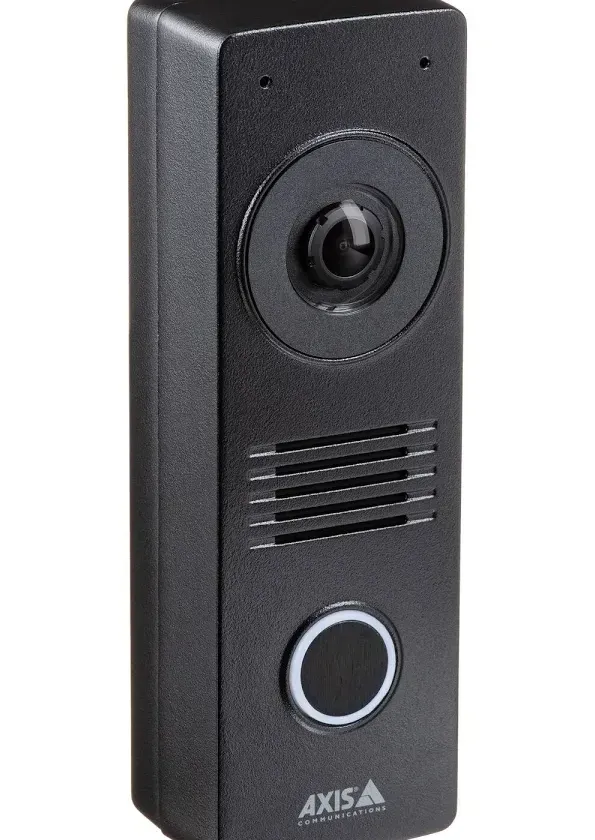
Coney Island, Brooklyn door buzzer installation: black rectangular video door station with a camera, speaker grille and round lit call button
A photo from the AESS job library, not taken in Coney Island: a black rectangular video door station with a camera at the top, a speaker grille and one round lit call button. A one-button station like this suits a Sea Gate house or a single-family home on the West Streets, where the call goes to the household inside rather than through a directory of dozens of apartments.
Coney Island Buzzer & Lobby Door Request
Tower lobby, co-op, walk-up on Neptune or Mermaid Avenue, Sea Gate house or boardwalk business: tell us the address, how many apartments use the door and who owns it, and a technician calls back with the range

βœ…
Request Sent!
Thank you. A technician will call you about the Coney Island address, usually within two hours during working hours.
25+
Years Experience
βœ“
Same-Day Estimates
100%
Licensed & Insured
4.7β˜…
201 Google Reviews

Owner-operated since 2002 Β· Thousands of jobs completed Β· Booked within 2 hours

Quick answer: door buzzer installation in Coney Island costs $400 to $900 installed on our Brooklyn list for an audio buzzer with talk-back on a house or a two-family, $700 to $1,800 for a video door station with indoor monitors or phone answering, and from about $2,500 to past $10,000 for a walk-up, a mixed-use building on Mermaid Avenue or a co-op or rental tower with a lobby panel and a station in every apartment. Each price covers the door station, the stations inside, the power supply, the strike or release on the door, the cable and the labor, and it is set in writing after a walkthrough, with any possible extra, such as a riser pair that might fail its test, named and priced before you order. Coney Island is billed at the Brooklyn rate. What pushes a job up here is usually the door rather than the electronics: a lobby door that the wind off the ocean holds open, a frame that has been pried or rusted, a power supply that has to move out of a cellar that has flooded before, and a riser in a tall building that has to be replaced instead of reused. Send photos of the door and the old panel to (347) 934-8335 or on WhatsApp, and we reply with the range that fits, usually within two hours of your message during working hours.

  • Looking at your photos and quoting a new system costs nothing. If an existing system is dead and has to be diagnosed first, that is the $250 service call booked online, and the $250 is applied toward the work.
  • All work falls under New York State license #12000287431. We install low-voltage entry equipment; if a door needs a new 120-volt circuit for its power supply, a licensed electrician does that part, and we tell you before the job is priced.
  • We work for whoever owns the door: the homeowner, the landlord, the co-op or condo board, or the managing agent. Lobby doors in Coney Island Houses and the other public housing developments here belong to NYCHA, and residents there report door and intercom problems through NYCHA.
The Neighborhood

Why Coney Island Properties Need Door Buzzer Installation

Coney Island is a narrow peninsula at the bottom of Brooklyn, about four miles long and half a mile wide, with Brighton Beach to the east, Gravesend to the north, Lower New York Bay on the south and west, and the gated community of Sea Gate at its western tip. Its residential life runs along three east-west avenues, Surf, Mermaid and Neptune, crossed by numbered streets from West 1st to West 37th, all in ZIP code 11224 and Community District 13. Most visitors know only the amusement district around Stillwell Avenue and the boardwalk, but most of the people who live here go home to an apartment building, and that building's front door is the subject of this page.

The housing stock is unusual for Brooklyn. Brick Underground's primer on buying here described a neighborhood of mostly large high-rise complexes, NYCHA public housing, standard rentals, and co-op and condo buildings, alongside single-family Victorians, 1960s high-rise co-ops, brick row houses and modern brick homes. Coney Island Houses, five 14-story buildings fronting Surf Avenue between West 29th and West 32nd Streets, was completed in 1957. Amalgamated Warbasse Houses, a Mitchell-Lama co-op that opened in 1964, has five 24-story towers with 2,585 apartments and about 8,000 residents, according to Habitat Magazine. Trump Village and the Luna Park co-ops date from the same decade. Since the 2009 rezoning of the amusement district, new affordable buildings have been added; Hoodline reported in June 2026 that 1709 Surf Avenue, a 12-story building with about 420 affordable apartments across from Maimonides Park, had topped out, with completion expected in 2028. A door buzzer job here is far more often a lobby panel calling dozens or hundreds of apartments than a two-button station on a stoop.

That scale changes what goes wrong. In a building of that size the entrance door is opened hundreds of times a day, by residents, aides visiting older tenants, delivery drivers and contractors, and every one of those openings tests the closer, the strike and the latch. When the door stops latching, residents and staff start propping it, and the intercom becomes something nobody bothers to fix because the door is open anyway. The NYC Comptroller's auditors saw exactly that pattern across public housing in 2022: in Brooklyn, the share of residential entrance doors found open or with broken locks rose from 17.0 percent in 2018 to 66.0 percent, and residents told auditors that intercoms, locks and door-release buttons often did not work, so doors were propped. As Comptroller Brad Lander put it, "Broken doors are a symbolic reminder that home safety starts at the entrance."

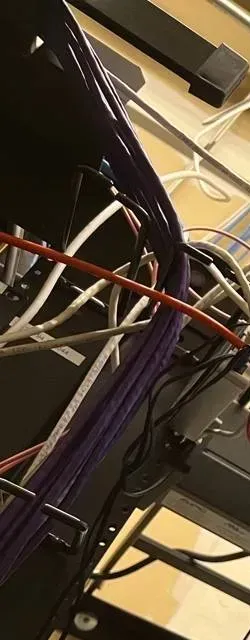
Coney Island, Brooklyn door buzzer installation: purple, white and red cable bundles dropping down beside a black equipment rack
A photo from the AESS job library, not taken in Coney Island: purple, white and red cable bundles dropping down beside a black equipment rack. In a Coney Island tower the entry system's controller and power supply belong at a spot like this, labeled and reachable, but mounted well above any floor that has taken water, rather than on the cellar floor beside the boiler.

The other force here is water. During Hurricane Sandy in October 2012, Amusing the Zillion measured a flood line of about five feet at Surf and Stillwell Avenues; DNAinfo reported chest-high water in the commercial area, the 60th Precinct's headquarters flooded and the boiler room at Surfside Gardens under at least ten feet of water. Weeks later, boardwalk businesses with no structural damage were still dealing with electrical problems from flooded basements. Smaller floods have not stopped: on December 29, 2023, News 12 reported rain flooding the lobby of Coney Island Houses at 2926 West 25th Street, with one resident saying, "Every time it rains hard, it floods in the hallway, then it leads to the elevator and the elevator stops." Entry systems were traditionally built with their power supply and amplifier in the cellar, and a cellar on this peninsula is a poor place for anything electrical.

Add wind off the open water, salt air within a few blocks of the beach, a summer season that fills the streets around the boardwalk, and a winter when many businesses close, and you have a neighborhood where a door buzzer has to be planned around the door, the weather and the calendar as much as around the apartments it calls. Owners also face a city that inspects doors without waiting for a complaint: HPD's self-closing door program selects 300 multiple dwellings a year for proactive inspection, and a door that will not close and latch draws an immediately hazardous violation.

Coney Island facts that change how a buzzer is installed

  • The ground is barely above the sea. The peninsula's highest point is about seven feet, and Sandy's flood line at Surf and Stillwell was about five feet. Power supplies, controllers and splice points go high on a wall, not in a low cellar.
  • Big buildings dominate. Five 14-story towers at Coney Island Houses, five 24-story towers with 2,585 apartments at Warbasse, and new 12-story affordable buildings on Surf Avenue. Most jobs are lobby panels and risers, not doorbells.
  • Older residents are a large share of some complexes. Habitat describes Warbasse as a Naturally Occurring Retirement Community, so buttons, displays and door opening force matter as much as camera resolution.
  • Doors are where buildings fail first. The Comptroller's 2022 audit found 40.1 percent of NYCHA entrance-door locks broken citywide and 39.7 percent in Brooklyn, with some repaired doors and intercoms breaking again soon after.
  • The city writes violations on doors held open. One Neptune Avenue building's public HPD record shows an immediately hazardous violation issued on August 14, 2026, ordering the owner to remove a metal door stop holding its first-floor vestibule door open.
  • Sea Gate is a different world. Behind its gate west of West 37th Street sit about 850 single-family houses, a private public safety department and, per Wikipedia, a housing stock in which 54 percent of homes are rentals.

Where this page applies. It covers Coney Island from the Brighton Beach line west to Sea Gate, and from the boardwalk north to the Gravesend line, including the blocks along Surf, Mermaid and Neptune Avenues and the West Streets from West 1st to West 37th. For the rest of the borough see our door buzzer installation in Brooklyn page, and for the whole city our NYC door buzzer installation page.

Repair or Replace in Coney Island

Need Repair in Coney Island? A Lobby Door Left Open, Half a Tower Without Talk-Back, or a Panel Dead After the Last Storm

Many calls from Coney Island start as "the intercom is broken" and turn out to be three separate problems. The lobby door no longer latches because its closer has worn out or the wind holds it off the strike; a riser in one line of apartments has a failed connection, so every apartment stacked above a certain floor has gone quiet; and the power supply in the cellar has corroded since the last time the room took water. ButterflyMX's repair guide gives a useful way to read the symptoms: continuous buzzing points to a stuck button or panel, no audio or one-way audio to the apartment station or the audio path, static and intermittent calls to wiring or interference, a door that does not release to the relay, power supply, strike or door hardware, and a building-wide outage to shared power or control. The same guide warns, "Do not replace a system based on age alone," and we agree.

If your lobby door will not lock right now, say so when you call (347) 934-8335. A diagnosis is the $250 service call booked online, and the $250 goes toward the repair, or toward a new system if replacing turns out to be the better value. You get both numbers and a plain recommendation. If a part has to be ordered, the door is left able to lock and open with a key before we go. Where an intercom or a self-closing door is part of an open HPD violation, the owner gets a dated record of what was found, what was replaced and how the door was tested, which is what an owner needs when certifying a correction.

One common surprise: the fault is often not where the residents feel it. As Pete Carmello of Lock and Tech told Brick Underground, "A lot of times it's user error," and a surprising number of "dead" apartment stations are buttons not held long enough or a volume turned down. The rest are almost always at a connection point, the lobby panel, an apartment station, the strike or the power supply, rather than in the cable buried inside the walls, which is good news for any building that does not want walls opened in occupied apartments.

What We Install

Door Buzzer Installation Services in Coney Island

Every service below is priced from the same Brooklyn door buzzer list. The number of apartments sets the size of the system, the door and its frame decide what release it can take, and in Coney Island the height of the cellar above the street and the exposure of the door to wind decide a good part of the labor.

Tower lobby panels

Directory or code panels for buildings of 14 to 24 stories, calling hundreds of apartments over a tested riser, with a separate panel at each entrance the building actually uses.

Partial-outage repairs

Finding why one line of apartments, one floor or one wing lost talk-back or release, and fixing that connection instead of replacing a system that otherwise works.

Lobby doors that latch

Closers sized for doors that face the ocean wind, strikes that release under pressure, frames repaired where they have been pried or rusted, and doors watched latching on their own.

Power moved above the water

Power supplies, amplifiers and controllers lifted out of low cellars and mounted high on an owner-controlled circuit, with battery backup and a labeled shutoff.

Walk-ups on Neptune and Mermaid

Smaller panels for four- to twenty-apartment buildings, with stations in every apartment, a sound strike and a closer that clears the vestibule inspection.

Apartments over Mermaid Avenue stores

A street door of their own for the apartments above a shop, wired up their own stair and kept entirely apart from the store's doors and alarm.

Sea Gate and West Street houses

One- or two-button audio or video stations for single-family and two-family houses, including houses raised after Sandy with their doors at the top of a new stair.

Boardwalk and amusement-area doors

Delivery and staff doors for seasonal businesses, answered at the counter or on a phone, and set up so they can be shut down cleanly for the off-season.

Older-resident features

Large lit buttons, louder apartment stations, longer release times and buttons inside the accessible reach range for complexes where many residents are older.

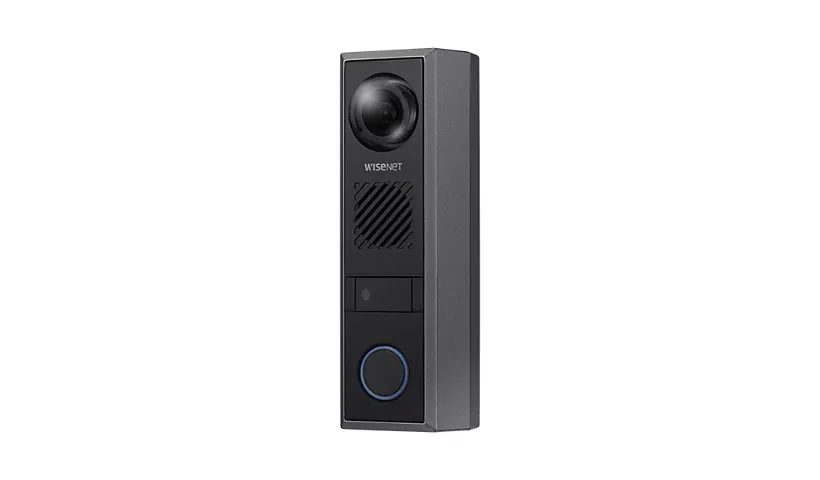
Coney Island, Brooklyn door buzzer installation: slim dark grey wired doorbell with a camera lens, speaker slots and a round push button
A photo from the AESS job library, not taken in Coney Island: a slim dark grey wired doorbell with a camera lens, speaker slots and a round push button. On a Sea Gate house with a narrow porch post or a West Street two-family whose door frame leaves only a strip of trim, a wired unit this slim gives a visitor a camera and talk-back without a wide panel on the facade.
Building Specialists

Door Buzzer Installation for Coney Island's Architecture

Six kinds of property account for almost every entry job in Coney Island. They differ in who owns the door, how many apartments the panel calls, where the cable runs and how exposed the door is to weather, and each has a mistake that turns up when the work is rushed.

1960s co-op towers

Mitchell-Lama and co-op towers of up to 24 stories on and around Neptune Avenue and West 5th Street, with large lobbies, several entrances and many older residents.

Public and subsidized rental towers

NYCHA developments such as Coney Island Houses and privately managed subsidized complexes along Surf and Neptune Avenues, each lobby used by hundreds of people a day.

New affordable buildings

Buildings from the 2009 rezoning onward, such as 1709 Surf Avenue, delivered with networked entry systems and a management office running the software.

Walk-ups and mid-size rentals

Older brick buildings of a few to a few dozen apartments on Neptune and Mermaid Avenues and the West Streets, with a vestibule, mailboxes and a riser.

Stores with apartments above

Mermaid Avenue buildings with a shop at street level and apartments reached through a narrow door beside it or around the corner.

Sea Gate and West Street houses

Single-family and two-family houses, many rebuilt or raised after Sandy, from Victorians inside Sea Gate to brick row houses and modern brick homes outside it.

1960s co-op towers: one panel, thousands of residents, and a board that has to plan years ahead

The co-ops of the 1960s, Warbasse, Trump Village and the Luna Park buildings among them, were designed as large self-contained developments, and their entry systems were usually installed as one system per building, with a lobby panel calling every apartment over a riser that runs the full height of the tower. Habitat's account of Warbasse's heating and cooling replacement shows how boards in these complexes handle big work: one building at a time, with an owner's representative, a survey of every building first and financing planned well in advance. An entry-system replacement in a tower of 24 floors deserves the same approach, even though it is a much smaller project.

In practice that means surveying every building's entrances, lobby panel, riser and apartment stations before anything is designed, deciding which entrances get full panels and which get a simple code or fob reader, and replacing one building at a time so the rest of the complex keeps working. Multi-tenant two-wire systems are built for this scale; Aiphone, for example, lists its GT Series for up to 5,000 tenant stations and notes that it "offers the advantage of using existing wire and infrastructure." Whether that existing wire is usable is decided by testing pairs, floor by floor, not by the age of the building.

The mistake we see most is a board choosing a system for the lobby without thinking about the apartments. A co-op with many older shareholders has residents who will not use a phone app and need a station on the wall that is loud, clear and simple, and residents who want to answer on their phones from the beach. A good system gives each shareholder the choice, without separate wiring for each.

Public and subsidized rental towers: when the owner is an agency or a management company

Coney Island has an unusually large share of public and subsidized housing. Coney Island Houses, with its five 14-story buildings, was finished in 1957, and other NYCHA and Mitchell-Lama rental complexes stand nearby. News 12 reported that Sea Park East, a Mitchell-Lama complex managed by GRC Management, carried 361 HPD violations when tenants protested about rodents, garbage and broken elevators. The lobby doors in these buildings belong to the agency or the owner, and the people who use them every day have no control over what is installed.

Residents of NYCHA buildings report door and intercom problems through NYCHA, and we do not work on NYCHA's doors. For privately owned subsidized complexes, the managing agent hires the contractor, and the job is shaped by traffic: a lobby door in a building of this size is opened constantly, so the closer, the strike and the hinges are chosen for heavy use rather than for a house, the panel housing is vandal-resistant, and the power supply has battery backup so a short outage does not leave a door that cannot be released.

The Comptroller's audit also noted that some doors and intercoms broke again soon after being repaired. In our experience the usual reason is a repair that replaced the visible part, the panel or the lock, without fixing what wore it out: a closer that slams the door, a frame that lets the latch miss the strike, or a power supply too small for the number of stations. A lasting repair in a high-traffic lobby starts with the door.

New affordable buildings: networked systems and the question of who holds the keys

The rezoning of the amusement district in 2009 opened Coney Island to new apartment construction, and by the early 2020s more than 2,000 new units had been built, with more on the way at sites such as 1709 Surf Avenue. Buildings of this generation usually come with a networked entry system: a lobby panel with a camera, residents answering on a phone app or an apartment monitor, and a management office running the directory and the access codes from a web portal.

These systems work well when someone owns them. Problems start when the developer's installer leaves, the management company changes, and nobody has the admin login, the license renewal date or the list of who can unlock which door. Before we touch a networked system, we ask the owner or managing agent to confirm who holds the administrator account, whether there is a subscription and what it costs, and whether the panel is on the building's own internet or its own connection. If the building wants to add a door, a panel or a call-forwarding rule, the answer depends on those three things.

Walk-ups and mid-size rentals: vestibules, mailboxes and the inspection everyone forgets

Between the towers, Neptune and Mermaid Avenues and the West Streets have older brick apartment buildings with the classic layout: a street door, a small vestibule holding the mailboxes and the intercom panel, an inner door, and a stair and riser to every floor. These are the buildings where the self-closing rules bite. The Neptune Avenue record mentioned above shows an immediately hazardous violation for a metal door stop on a vestibule door and a separate violation for a broken intercom in one apartment's foyer, all issued on the same day.

A walk-up job therefore covers both doors of the vestibule, not just the panel. The outer door gets the strike and the closer, the inner door gets a closer that pulls it shut every time, the panel goes where visitors can see it and residents can reach it, and the riser is tested pair by pair. If tenants have been propping the door for deliveries, we talk with the owner about why, because a building whose residents cannot answer the door will always find a way to hold it open, and that way is what draws the violation.

Stores with apartments above on Mermaid Avenue: two front doors that must stay separate

The city's commercial district needs assessment described Mermaid Avenue as Coney Island's primary commercial corridor, and many of its buildings have a store on the ground floor and apartments above, reached by a narrow residential door beside the shop or around the corner on a West Street. The store has its own front door, a roll-down gate and often a back door for deliveries. The apartments need a street door that only their own residents and visitors can open.

We keep those two doors on two separate systems, even when their cables share a cellar ceiling. The apartments get a small panel at their own door, wired up their own stair to a station in each apartment, with the power supply in a part of the building the owner controls. The store gets its own buzzer at the delivery door. A single panel serving both invites shoppers to ring tenants and lets tenants release strangers into the store's back hall, and it makes every alarm and gate service call a risk to the apartments' entry.

Sea Gate and West Street houses: raised doors, rentals and a gate before the door

Sea Gate has about 850 single-family houses, from Queen Anne Victorians to Mediterranean-style homes, and most residents live in single- or two-family houses, more than half of them rented. Outside the gate, the West Streets have brick row houses, Victorians and modern brick homes. Sandy hit these houses hard: Gotham Gazette reported in 2014 that 47 Sea Gate homeowners had been severely affected, and described a rebuilding design that added a floor and turned the old ground floor into a carport for flood protection. A house rebuilt that way has its front door at the top of a new exterior stair.

For these houses the buzzer is a small job with a few local twists. A raised door may need its station at the foot of the stair or on a gate, so a visitor does not climb to find nobody home. A two-family rented by the season needs each household's button and station clearly separated, so the owner can change who answers without rewiring. And inside Sea Gate, every visitor has already passed the community's gate, so the door station is less about screening strangers and more about letting the household see and talk to whoever has arrived.

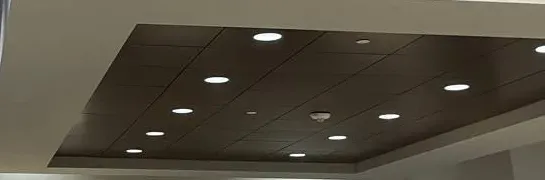
Coney Island, Brooklyn door buzzer installation: dark recessed ceiling panel with round downlights and a small round device framed by a lighter ceiling
A photo from the AESS job library, not taken in Coney Island: a dark recessed ceiling panel with round downlights and a small round device, framed by a lighter ceiling. In the large lobbies of Coney Island's co-op and rental towers, ceiling lighting like this decides whether the door station's camera sees a face or a backlit shape against the glass, so we check it before choosing where the panel goes.
Field Notes

Field Notes: Watch the Door in the Wind, Then Find the Water Line, Then Test the Riser

These notes describe how our technicians approach a building in a neighborhood like Coney Island. They are our standard practice, not a story about one address.

The door, with the wind blowing. Before looking at the panel, the technician stands in the lobby and watches the door close by itself, several times, with the inner door open and shut. A door facing the ocean or a long open street can be pushed or pulled by the wind, and in a tall building the air pressure between the lobby and the shafts above does the same thing. If the door hangs a quarter inch short of the strike, no new intercom will make the building secure, and the owner hears that first.

The water line, before the power supply. Next comes the cellar or utility room where the old power supply, amplifier and splice points live. The technician looks for the signs of past water, stains on the walls, rust on the bottom of metal boxes, relocated equipment, and asks the super how high it came in Sandy and in the heavy rains since. Anything we install there goes above that line, on a board, on an owner-controlled circuit, with a labeled shutoff, or it moves to a room upstairs.

The riser, pair by pair. Last, the technician tests the cable that runs up the building, line by line and floor by floor. Sound pairs are reused and keep the price down. Pairs that fail, or that might fail once asked to carry video, are named in the written price as possible replacements with their cost, so the board or owner knows before ordering exactly what could be added and why. In a 24-story tower, that test is what separates a reasonable quote from a guess.

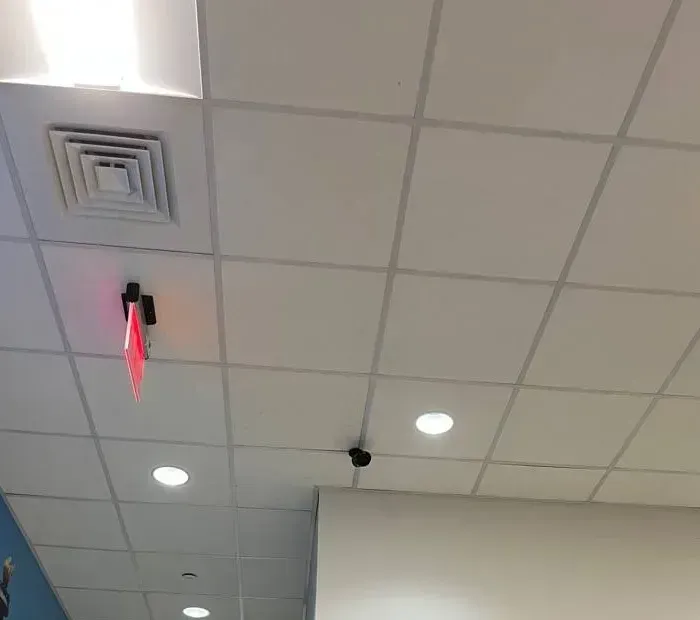
Coney Island, Brooklyn door buzzer installation: drop ceiling with a lit red exit sign, an air diffuser, round recessed lights and a small black camera
A photo from the AESS job library, not taken in Coney Island: a drop ceiling with a lit red exit sign, an air diffuser, round recessed lights and a small black camera. The back halls of Surf Avenue businesses and the service corridors of the larger towers look like this, and the exit sign marks a door whose path out has to stay free before any lock or release is added to it.
Below the Flood Line

Cellars, Lobbies and Storm Water: Where a Coney Island Entry System Should Live

An entry system has two kinds of parts. The ones people see, the lobby panel and the apartment stations, are built for the places they sit: door stations are made to take rain and snow, and apartment stations live in dry rooms. The ones people never see, the power supply, the amplifier or controller, the relay that fires the strike, the splice points where the riser meets the panel cable, were traditionally put in the cellar, because that was where the electrical panel was and where the super could reach them. On most of the Brooklyn grid that is still a sensible place. On a peninsula whose highest point is about seven feet, it is the first thing we change.

What the storms showed. Coverage of Sandy in Coney Island is full of the same detail: water came in through doors and up through the sewers, flooded basements across the commercial area and left businesses with electrical problems weeks after the water was gone. Surfside Gardens' boiler room took at least ten feet of water. Entry equipment in rooms like those did not survive, and buildings that put it back in the same spot have the same exposure today. The December 2023 lobby flood at Coney Island Houses, from rain rather than a storm surge, is a reminder that the risk is not only once a decade.

Where the hidden parts go now. Our practice in Coney Island is to mount the power supply, controller and relays as high on the wall as the room allows, on a backboard, on an owner-controlled circuit with a labeled shutoff, and well clear of the boiler, the water heater, the sump and any floor drain. Where the cellar has flooded before, we look for a room on the ground floor or above: a lobby closet, a mailroom, a super's office or a riser closet on the second floor. The splice points between the riser and the lobby panel move up with it, so a few inches of water on the cellar floor do not short the whole building. All of this is cheaper to do on the day of an installation than after the next flood.

What stays at street level. The door station cannot move up. It has to sit where a visitor and a resident in a wheelchair can both reach it, and the 2010 ADA Standards put the high forward reach at 48 inches and the low at 15 inches. The answer is to choose a station rated for outdoor exposure, seal its cable entry from behind so water is not drawn into the wall, and wire it so that a flooded or damaged station can be replaced alone, in an afternoon, without touching the rest of the system. The panel is the cheapest part of a tower's entry system to replace; the riser and the apartment stations are not.

After the water goes down. When a building has taken water, we do not simply switch the system back on. The power supply comes off its circuit, connections at every low point are opened and inspected for corrosion, the strike and its wiring at the door are checked, and the system is brought back one section at a time. A power supply that sat in water should be replaced even if it lights up, because corrosion inside it keeps working long after the room is dry.

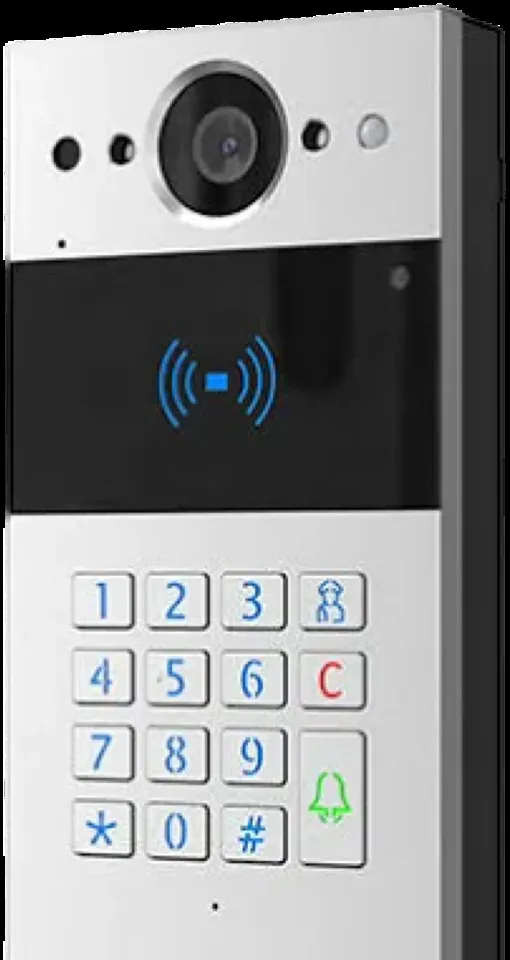
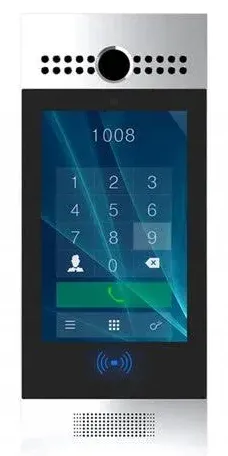
Coney Island, Brooklyn door buzzer installation: silver and black keypad door station with a camera lens at the top, a blue card-reader symbol, a numeric keypad and a green bell key
A photo from the AESS job library, not taken in Coney Island: a silver and black keypad door station with a camera lens at the top, a blue card-reader symbol, a numeric keypad and a green bell key. A metal-faced station like this suits a Neptune Avenue walk-up's street door, where visitors press the bell key and residents enter a code or present a card, and it can be swapped on its own if a storm ever damages it.
The Door Itself

Ocean Wind, Tall Shafts and Heavy Traffic: Why a Coney Island Lobby Door Decides Whether the Buzzer Works

When a resident presses release, the system does only one thing: it powers the strike in the door frame for a few seconds so the latch can pass. It does not push the door open and it does not pull it shut. Everything a building's security depends on after that, the door swinging closed behind the visitor and the latch catching, is mechanical, and in Coney Island the mechanics are working against the weather and the buildings themselves.

Wind on the door. Lobby doors on Surf Avenue and the streets running down to the boardwalk face open water or long, open streets, and a strong wind can hold a door off its latch or slam it hard enough to bounce back. A closer set for a calm day will lose that fight. We size and adjust closers for the door's real exposure, using the closer's latch speed and backcheck settings so the door slows before it slams and then finishes closing firmly. Where a lobby has an outer and an inner door, the two are adjusted together, because the air trapped between them changes how each one closes.

Pressure from inside the building. In a tower of 14 or 24 stories, warm air rising through the stairwells and elevator shafts in winter pulls on the lobby door from inside, and a strong draft can hold the door's latch hard against the strike. When that happens, the release buzzes but the latch cannot slide free until someone pulls the door toward them to take the pressure off. The fix is a strike designed to release under load, a closer that holds the door firmly in its frame without crushing the latch, and weatherstripping that lets the door seal. It is a door problem, and no amount of work on the intercom will cure it.

Traffic. A tower lobby door is opened hundreds of times a day. Hinges loosen, the door drops, and the latch starts to miss the strike by a fraction of an inch; the frame gets pried and repainted until the strike plate no longer sits flush. That is why the Comptroller found doors and intercoms that broke again soon after repair. In a building like that, heavy-duty hinges or a continuous hinge, a strike rated for the traffic and a frame repaired at the latch side are part of the job, priced before ordering.

Fail-secure or fail-safe. Allegion's guide puts the difference simply: "Fail safe products are unlocked when power is removed," while "Fail secure products are locked when power is removed." With an electric strike, it adds, a person inside can still leave by turning the lever whether the strike is fail-safe or fail-secure. On a Coney Island street door, where a power cut after a storm is a real possibility, we fit fail-secure strikes almost every time, so the building stays locked and residents use their keys until power returns. Magnetic locks, which Allegion notes "are only available fail safe," leave the door open in exactly that situation, and the building code's sensor-release provisions call for a sensor on the inside, a push-to-exit button and unlocking on loss of power and on fire alarm activation. On most lobby doors here a strike is both cheaper and more secure.

Opening force for older residents. A closer strong enough to beat the wind can make a door too heavy for an older resident pushing a walker or a shopping cart. In complexes with many older residents, the answer is usually a powered door operator on the main entrance, wired so it opens only after the release or a valid code, with the closer handled by the operator. That is a bigger job than a buzzer, and we price it separately so a board can decide.

The City's Rules

HPD, 311 and the Intercom Law: What a Coney Island Owner or Board Is Actually Responsible For

Coney Island's buildings are mostly large, which means most of them fall squarely under New York's rules for multiple dwellings. Here is how those rules apply, in plain terms and without legal advice.

Doors that close and latch. HPD's Self-Closing Doors page says apartment doors and hallway doors "are required by law to swing closed and latch by themselves," and that owners must check them and repair closers and defective doors or frames promptly. Tenants are not allowed to prop doors, tape latches, wedge them or override the closer. Under Local Law 71 of 2022, HPD selects 300 class A multiple dwellings each year for proactive inspection of every self-closing door in common areas, hallways and apartments where accessible, using complaints, violations and data from HPD, the Buildings Department and the FDNY to choose them. A failing door is a class C immediately hazardous violation, to be corrected within 14 days.

An intercom that works. Under Multiple Dwelling Law Β§50-a, a class A multiple dwelling with eight or more apartments that was built or converted after January 1, 1968 must have a self-locking main entrance door with an intercommunication system that lets tenants talk to visitors and release the door. Older buildings must install the door and intercom when tenants of a majority of apartments ask for them in writing. Habitat Magazine's February 2024 report notes that the city's housing code also requires a working intercom, and that courts have treated an intercom as an essential service bearing on the warranty of habitability.

Co-ops are not exempt. In the same Habitat report, a shareholder in a 54-unit co-op had lost intercom service after a neighbor's renovation, and the board had never restored it. The real estate litigator Nancy Kourland of Lasser Law Group was direct: "As a result, the co-op has a legal obligation to repair or replace the intercom." For the large co-ops of Coney Island, that obligation sits with the board and is carried out through the managing agent.

How complaints reach the owner. NYC 311 lists broken or missing doorbells, buzzers and intercoms as both apartment complaints and public-area complaints. It advises tenants to try the owner, managing agent or super first, and co-op or condo residents to go to the board or management company. Once a complaint is filed, HPD tries to reach the managing agent, warns that a violation may be issued if the condition is not corrected, and calls the tenant back; if the problem remains, an inspector is sent. Public violation records show what follows: on one Neptune Avenue building, HPD issued a class A violation to repair a broken intercom in an apartment's foyer on the same day as two class C violations on self-closing doors.

What this means for an installation. An entry job in a Coney Island multiple dwelling is really a door job, an intercom job and a records job. We check every door the job touches against the self-closing requirement, test every apartment's talk-back and release before we leave, and give the owner a dated record of the equipment, the test results and the doors adjusted, so the building has something to show when an inspector or a tenant asks.

Commercial Door Buzzer Installation

Business Door Buzzer Installation in Coney Island

Coney Island's businesses live on a calendar most of Brooklyn does not. The amusement district fills from spring to the end of summer, then quiets; Brooklyn News Service reported in December 2025 that in winter, lines shrink to a few people, hours end by 10 p.m., and businesses without a brand name close early or shut down. A business door buzzer here has to work for a crowded July Saturday and survive an empty February.

Mermaid Avenue

The primary commercial corridor, with groceries, pharmacies, restaurants and services on the ground floor and apartments above, many reached by a narrow door beside the shop.

Surf Avenue

The avenue facing the amusement district and the new residential buildings, with attractions, restaurants, clinics and offices that need staff and delivery doors controlled.

Stillwell Avenue

The street from the subway terminal down to the boardwalk, with food, souvenir and service businesses that run on summer crowds and need back doors kept shut.

The boardwalk

Boardwalk shops and stands around Stillwell Avenue and West 12th Street and beyond, many closed for the winter, whose rear and roll-down doors face the weather all year.

Neptune Avenue

Medical offices, community programs and shops along the northern avenue, near the co-op towers, where visitors are buzzed into upstairs or rear offices.

Community and program spaces

Senior centers, clinics, houses of worship and youth programs inside the larger complexes and along the avenues, with side doors that open at set hours.

For a store or restaurant, the usual job is a buzzer or video station at the rear or side door where suppliers arrive, answered at the counter or on the owner's phone, with the door locked between deliveries. Two old reports show why that door matters here: in 2010, Brooklyn Paper described a boardwalk boutique near Stillwell Avenue whose roll-down door was pried open overnight, and in 2018, a store on the boardwalk near West 12th Street that was entered through its security gate at about 3 a.m. A buzzer is not burglary protection on its own, but a delivery door that is never propped and always latches is one less weak point.

For a seasonal business, the system is set up to be shut down and woken up. Codes for summer staff are created with an end date, the station is switched off or set to silent for the closed months, and the power supply sits where a winter leak in a closed shop will not reach it. When the season starts again, a short visit before the first weekend checks the strike, the closer and the station after months of salt air and no use.

For an upstairs office, clinic or program on Mermaid, Surf or Neptune Avenue, it is a street-door station with a short directory, a release at the front desk and a closer that pulls the door shut behind each visitor, so a stair or hallway is never left open to a busy street. Where the office is inside a larger residential building, its door is kept on its own system and never shares a panel with the apartments.

The new business improvement district matters here only as context. The Mayor's Office announced in February 2026 that the Coney Island BID would cover Mermaid and Surf Avenue storefronts, with a first-year budget of up to $1 million for sanitation, public space, marketing and business support, operational by July 2026. It does not change what an individual business must install at its door; that remains the owner's decision under the building and fire codes.

Rules that apply to Coney Island business entry installations

  • Free exit at all times. A business door with a buzzer or code must still open from inside without a key, code or special knowledge. With an electric strike, the lever inside always works; that is one reason strikes are our default.
  • Electrically locked egress doors. Where a magnetic lock is used, the building code's sensor-release provisions call for a sensor on the egress side, a push-to-exit device within reach of the door, and unlocking on loss of power and on fire alarm activation.
  • Accessible reach. The 2010 ADA Standards put the high forward reach at 48 inches maximum and the low forward reach at 15 inches minimum. Buttons, keypads and readers on clinic, office and public-facing doors stay inside that range.
  • Separate systems for mixed-use buildings. A store's delivery buzzer and the apartments' entry system above it are kept apart, so neither can release the other's door and neither depends on the other's power.

If a store or building also wants cameras on the entrance, they can go in on the same visit and be priced together with the buzzer; customers who combine the two typically save $200 to $400 in labor.

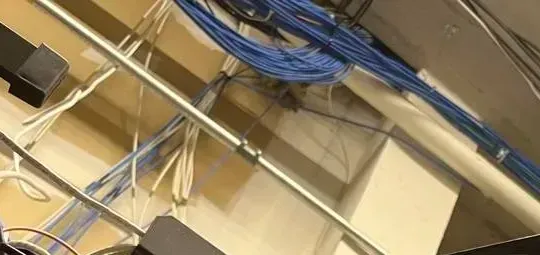
Coney Island, Brooklyn door buzzer installation: bundles of blue low-voltage cable laid over a ceiling beam and a metal pipe in an open ceiling
A photo from the AESS job library, not taken in Coney Island: bundles of blue low-voltage cable laid over a ceiling beam and a metal pipe in an open ceiling. In a Mermaid Avenue store-and-apartment building, the cable for the shop's delivery buzzer and the apartments' entry system can share a route across a ceiling like this one while remaining two separate systems, and up at the ceiling it sits well above any water on the floor.
Your Questions Answered

Door Buzzer Installation in Coney Island: Questions Answered

These are the questions Coney Island owners, boards, managing agents, residents and shop owners bring to us, along with ones raised in Brick Underground's, ButterflyMX's and Habitat Magazine's guides, the city's 311 guidance and public HPD records, answered for the buildings here.

Doors, HPD and the law

Why does HPD call a stop that holds the vestibule door open an immediately hazardous condition?

Because a self-closing door that cannot close is the same, for safety purposes, as no door at all. HPD's rule is that apartment and hallway doors in multiple dwellings must swing closed and latch by themselves, and it lists door stops and wedges among the things tenants and owners may not use. A vestibule door held open lets anyone past the street door reach the stairs and halls, and in a fire it lets smoke travel. That is why the Neptune Avenue violation ordering the owner to remove a metal door stop on the first-floor vestibule door was written as class C, the most serious category, with 14 days to correct under the self-closing door program.

The stop is usually a symptom. Somebody put it there because deliveries could not get in, an older resident struggled with a heavy door, or the release did not work. Removing it clears the violation; fixing the reason it was installed keeps it from coming back. We look at both before we price the job.

HPD cited the intercom in one apartment's foyer rather than the lobby panel. Where does that repair start?

At the apartment. A violation written against the intercom "in the foyer" of a specific apartment, like the class A record on Neptune Avenue, usually means that apartment's station cannot talk, hear or release, while the lobby panel and the other apartments work. The first checks are the station itself, its connection at the wall, and the pair that runs from that apartment to the riser.

If the station is faulty, it is replaced with a compatible one. If the pair is broken, it is repaired at the nearest junction or a new pair is pulled to the riser. If the old system is no longer made and no compatible station exists, the building faces a choice between a matching used part and a wider replacement, and we give the owner both prices. In every case the owner gets a dated note of what was found and replaced, which is what certifying the correction to HPD requires.

City auditors found most Brooklyn public-housing entrance doors open or broken in 2022. What should a private owner take from that?

That the door fails before the intercom does, and that repairs which do not address wear will not last. The Comptroller's resident-powered audit visited 262 NYCHA developments between August 30 and September 8, 2022, and found 40.1 percent of entrance-door locks broken citywide and 39.7 percent in Brooklyn. In Brooklyn, entrance doors found open or with broken locks jumped from 17.0 percent in 2018 to 66.0 percent. Residents described intercoms, locks and release buttons that did not work, doors propped as a result, and repairs that broke again soon after.

For a private building, the practical lesson is to buy for traffic. A lobby door used hundreds of times a day needs a heavy-duty closer, hinges that will not sag, a strike rated for the use, a frame that is sound at the latch, and a panel housing that resists abuse. It also needs residents who can actually answer the door, because a building where the intercom does not work will always end up with a propped door.

What happens after a resident reports a dead buzzer through 311?

The complaint goes to HPD. According to 311's own guidance, HPD first tries to contact the building's managing agent, warns that a violation may be issued if the condition is not corrected right away, and then calls the resident back to ask whether it has been fixed. If it has not been fixed, or HPD cannot reach the resident, a uniformed code enforcement inspector is sent. Apartment complaints require the resident's contact information, and 311 asks residents to try the owner, managing agent, super or board first.

For an owner or managing agent, the useful time to call an installer is that first warning. A diagnosis booked then, with a dated record of what was found and repaired, is often enough to close the matter before an inspection, and if an inspector does come, the building can show the work.

Is a co-op board held to the same intercom duty as a landlord renting apartments?

For practical purposes, yes. Habitat Magazine's February 2024 report explains that the Multiple Dwelling Law requires an intercom in buildings built or converted after 1968 with eight or more units, that the city's housing code requires a working intercom, and that courts have treated intercoms as an essential service. Asked about a co-op that had failed to restore one shareholder's intercom, the litigator Nancy Kourland said, "As a result, the co-op has a legal obligation to repair or replace the intercom." The report adds that a shareholder can file a 311 complaint or begin an HP proceeding in housing court.

Many of Coney Island's big co-ops opened before 1968, Warbasse in 1964 among them, which does not remove the duty to maintain a system the building already has. For a board, the simplest protection is a system that works in every apartment and a record showing when it was last tested.

Wind, water and the shore

On windy days the release buzzes but our lobby door will not open until someone pulls it. What causes that?

Pressure on the latch. When wind pushes the door into its frame, or when warm air rising through a tall building pulls the lobby door inward, the latch is pressed hard against the strike's keeper. The strike unlocks, but the latch cannot slide out under that load until someone pulls the door toward them and takes the pressure off. Residents hear the buzz, assume the system works, and visitors stand outside pushing a door that will not move.

The cure is in the door hardware: a strike built to release under load, a closer adjusted so it holds the door firmly without crushing the latch into the keeper, weatherstripping that lets the door seal properly, and, in a two-door lobby, inner and outer doors set to work together. We test the release on the windiest side of the building and, in a tower, with the elevator lobby doors open, before we sign the job off.

Should the door station on a Surf Avenue building be mounted higher because the street has flooded?

No. The station has to stay where people can use it, and the 2010 ADA Standards set a high forward reach of 48 inches and a low of 15 inches. Raising the station above a flood line would put it out of reach of children, shorter adults and anyone in a wheelchair, which defeats the purpose. Door stations are built for outdoor exposure, and the right flood plan is to accept that a station may need replacing after a severe storm and make that easy.

What should move up is everything behind the station: the power supply, the controller, the relays and the splice points. We mount those high in a dry room, seal the station's cable entry so water is not drawn into the wall, and wire the station so it can be swapped on its own without disturbing the riser or the apartments.

Our lobby takes water in hard rain. Which parts of the entry system are actually at risk?

Usually less than people fear, as long as the system was installed with water in mind. The door station is made for rain. Apartment stations are upstairs. The parts at risk are anything at or near floor level in the lobby or the cellar: a power supply on a low shelf, a junction box where the riser meets the lobby cable, a door contact or exit button wired from below, and the strike's wiring if it comes up through the bottom of the frame.

If a lobby floods often, as News 12 reported at Coney Island Houses in December 2023, those connections should be moved to the ceiling side of the lobby or to a room above, and the cable should enter the strike and the station from above rather than below. After any flood, the system should be powered down and checked before it is used, and any power supply that sat in water should be replaced.

Sea Gate, the boardwalk and the season

How does an installer get past the Sea Gate entrance on the day of the job?

The same way any contractor does: the homeowner tells the gate we are coming. Sea Gate is a private community with its own public safety department, so we ask the owner to register the technician's name, the company and the arrival window with the gate before installation day. We send the owner those details when the appointment is booked, so there is no wait at the entrance and the arrival window holds.

Inside the gate the work is the same as on any house: a station at the door, stations inside, a release and a power supply. Because the community is enclosed, owners here often care more about seeing and talking to whoever has already passed the gate than about screening strangers, so video stations with phone answering are a common choice.

Our boardwalk shop is closed from fall to spring. Can its delivery buzzer be put to sleep for the off-season?

Yes, and it is worth planning for at installation. On networked and app-based systems, the station can be set to silent or disabled from the owner's phone, staff codes can be given an end date so summer hires lose access automatically, and the system can be woken up in spring without a visit. On a simple wired buzzer, the owner switches off the power supply at a labeled breaker or switch we leave for that purpose.

The one thing we do not recommend is leaving a closed shop's power supply running in a damp back room with nobody checking on it. Before the first busy weekend of the season, a short service visit checks the strike, the closer and the station after months of salt air and no use, which costs far less than finding out on opening day that the delivery door will not release.

Do you install in the amusement district during the summer, when the streets are packed?

Yes. We schedule jobs near Stillwell Avenue, Surf Avenue and the boardwalk on weekdays, early in the day, when the crowds are smallest and parking is easiest, with a two-hour arrival window confirmed in advance. Our crews do not work weekends, which suits businesses here, because the weekend is when they are busiest and least able to have a door out of service.

For a business that cannot close its back door at all in July and August, the best time for a new system is before Memorial Day or after Labor Day, and we will book the walkthrough in time to order the equipment before the season starts.

What actually happens between pressing release upstairs and the street door opening?

The resident's station sends a signal down the cable to the controller or relay, which switches power to the electric strike in the door frame for a few seconds. While the strike is powered, its keeper can swing, so the latch can pass when the visitor pushes the door. When the time runs out, the strike locks again, and the closer pulls the door shut until the latch clicks back into the keeper. Nothing in the system pushes the door open or pulls it closed.

That is why a working intercom can still leave a building insecure. If the closer is weak, the door does not finish closing; if the frame has shifted, the latch misses the keeper; if the release time is too short, an older resident's visitor cannot get through in time. Every one of those is a setting or a part we check on the door itself.
Equipment

Types of Door Buzzer Systems We Install

We quote a reliable non-branded system by default and install a named brand when an owner or board asks for one; the intercom brands we work with include Aiphone, ButterflyMX, 2N, Akuvox, Comelit and DoorBird. These are the kinds of equipment that suit Coney Island's towers, co-ops, walk-ups, mixed-use buildings and houses.

Multi-tenant two-wire systems

Lobby panels and apartment stations that carry voice, video, power and release over one pair, built to run up a tall riser and reuse sound existing wire.

Code and directory panels

Panels where visitors dial an apartment code or scroll a directory, suited to towers with hundreds of apartments and to residents who prefer unit numbers to names.

Networked and app-based panels

Camera panels that call residents' phones or monitors and are managed from a web portal, for new buildings and for boards that want remote directory changes.

Large-button apartment stations

Wall stations with big lit buttons, loud speakers and simple controls for older residents who will not use an app, mixed freely with app answering in the same building.

House and two-family stations

One- and two-button audio or video stations for Sea Gate and West Street houses, including slim units for narrow trim and stations for the foot of a raised stair.

Strikes, closers and power

Fail-secure strikes that release under load, closers sized for wind and traffic, and battery-backed power supplies mounted above the flood line.

Wired two-wire, networked panel or house station: which fits a Coney Island door?

The right system depends on the building's size, who manages it and how its residents answer the door. The table compares the three arrangements we install most often here.

What mattersWired two-wire systemNetworked app panelHouse station
Typical Coney Island fit1960s co-op towers, walk-ups, rental buildings with a sound riserNew buildings with a management office, boards wanting remote controlSea Gate houses, West Street one- and two-families
How residents answerWall station, with app answering where wantedPhone app or monitorIndoor station or phone
Needs building internetNo, except for app answeringYes, or a cellular connectionOnly for phone answering
Monthly feesNoneOften per apartment or per doorNone
After a flood or outageWorks on battery backup; station swapped alone if damagedNeeds power and the network back before app calls workWorks on backup; small and quick to replace
Brooklyn list rangeFrom about $2,500From about $2,500$400–$900 audio, $700–$1,800 video

ADT, Ring and SimpliSafe compared with a local installer for a Coney Island building

Owners of Sea Gate and West Street houses often already have a Ring doorbell or an alarm plan from ADT or SimpliSafe, and on a one-family house with one household, a consumer video doorbell may be all the front door needs; we will install and properly power one you already own. None of those products is designed to be the entry system of a walk-up, a co-op or a rental tower. A consumer doorbell calls one account's phones, has no apartment directory, does not release a lobby door on its own and has no answer for residents who will not use an app. National alarm companies sell doorbells inside monitoring plans; the entry systems we install are owned outright by the building, with no plan required unless the board chooses a networked system that carries its own subscription.

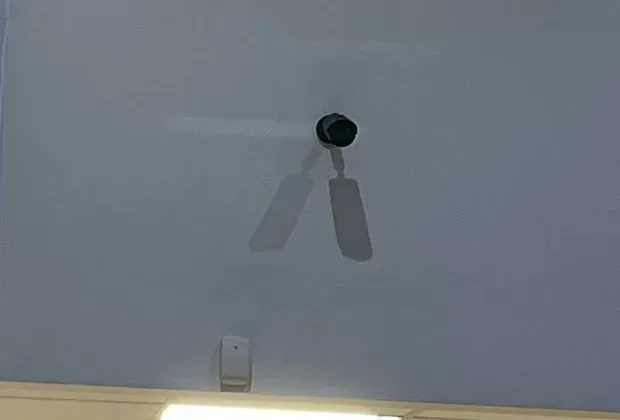
Coney Island, Brooklyn door buzzer installation: small black camera mounted high on a pale wall casting two shadows, with a small white wall device below
A photo from the AESS job library, not taken in Coney Island: a small black camera mounted high on a pale wall, casting two shadows, with a small white wall device below it. Inside a Coney Island tower lobby, a camera placed high like this can watch the inner side of the entrance doors and the mailboxes, while the door station's own camera handles faces at the street.
AI Overview Reality Check

What AI Gets Wrong About Door Buzzer Installation in Coney Island

These claims appear in generic online answers, in national cost guides such as HomeAdvisor and Angi, and on manufacturers' and vendors' blogs. Each one is quoted or paraphrased, then checked against Coney Island's buildings, the manufacturers' own guidance and the city's rules.

"Wireless systems are the best option if you want to DIY"

HomeAdvisor's intercom cost guide says exactly that, and prices wireless systems at $150 to $1,500 against $1,000 to $15,000 for hard-wired ones.

For a one-family house in Sea Gate, a wireless kit may be fine. For a Coney Island apartment building, the question is not whether the owner can hang a box, but whether the lobby door latches against the wind, whether the release works under load, whether every apartment can answer, and whether the building passes a self-closing door inspection. None of that is solved by a wireless kit, and the concrete and steel of a tower can block the radio signal between floors.

Wireless has a place, usually for a single extra door or a house, but a multiple dwelling's entry system should be wired and tested.

"Expect $1,000 to $5,000 or more per entry door"

Swiftlane's cost guide gives that range for modern IP or video systems, with whole projects from about $1,500 to $50,000 or more.

Per-door pricing describes a networked panel well, but it hides what drives a tower's cost: the riser and the apartment stations. A co-op tower with one main entrance and hundreds of apartments spends most of its budget above the lobby, testing and reusing or replacing pairs and fitting stations on every floor. A walk-up with two doors and twelve apartments spends far less.

Our Brooklyn list starts multi-unit buildings at about $2,500 and runs past $10,000, and where a building lands depends on its riser test more than on its door count.

"Replacing a small building's intercom costs about $1,500 to $2,500"

ButterflyMX quotes that range as a planning figure for replacing an apartment intercom, noting that other vendors' estimates run from $2,200 to past $5,000.

The range is honest as a starting point, and the guide itself stresses that the number of entrances and controlled doors often matters more than the number of apartments. In Coney Island, two more things move it: whether the lobby door needs work before it can latch, and whether the power supply has to move out of a cellar that floods.

An owner who budgets only for the panel and stations will be surprised by the door and the cellar. We name both in the written price before anything is ordered.

"A cellular intercom needs no building wiring"

Vendors of cellular and cloud panels, ButterflyMX among them, describe intercoms that require no building wiring.

That is true of the cable between the panel and the apartments, because residents answer on their phones. It is not true of the door. The panel still needs power, the strike still needs a cable from the panel or relay, the door still needs a closer, and a request-to-exit device may be needed. In a lobby of poured concrete or below grade, the cellular signal has to be checked before the choice is made, and residents without smartphones still need a way to answer.

Cellular panels can be a good fit for a building with a dead riser, but they are not a wireless shortcut around the door.

"An intercom more than 20 years old should simply be replaced"

Online answers often treat age as the deciding factor.

ButterflyMX's own repair guide says the opposite: "Do not replace a system based on age alone." Brick Underground's repair experts found that even older systems usually have sound core wiring, with faults concentrated at the panel, the apartment stations, the strike and the power supply. Many of Coney Island's 1960s towers still have risers that test well.

Replacement makes sense when parts are no longer available, failures keep repeating or the building needs features the old system cannot give. We test and price both paths so the board or owner can choose.

"A magnetic lock is the easy fix for a door that will not latch"

Because a magnetic lock holds the door to its frame regardless of the latch, it is often suggested for tired doors.

Allegion notes that electromagnetic locks "are only available fail safe," so the door is unlocked whenever power is lost, which on a peninsula prone to storm outages is a real weakness. The building code's sensor-release provisions also require a sensor on the inside, a manual push-to-exit device near the door, and unlocking on loss of power and fire alarm activation, all of which add cost.

A door that will not latch usually needs a closer, hinges or a frame repair. Fixing that, and fitting a fail-secure strike, is cheaper and keeps the building locked through a power cut.

"Only buildings with eight or more apartments need to worry about their entrance"

This one comes from reading the intercom law alone, which applies to post-1968 class A multiple dwellings of eight or more apartments.

The self-closing door rules are broader. HPD requires apartment and hallway doors in multiple dwellings to close and latch on their own, and Local Law 71 of 2022 has it inspect 300 class A multiple dwellings a year for exactly that, issuing class C violations with 14 days to correct. A three- or six-apartment walk-up on a West Street can be written up for a propped vestibule door just as a tower can.

Any Coney Island building with three or more apartments should treat its street and vestibule doors as part of its entry system, whether or not the intercom law applies.

Not Sure Whether It Is the Intercom, the Door or the Power? Ask a Tech

Send a short video of the lobby door closing on its own, a photo of the panel and one of the power supply if you can find it, with the address and the number of apartments. Call now at (347) 934-8335, send a fast quote request, or speak to a tech on WhatsApp. Estimates are booked within two hours of your request during working hours.

Get In Touch

Request a Free Quote

Tell us the address, the kind of building, how many apartments or households use the door, whether you are the owner, board, managing agent or a business tenant, and what is at the door now. A technician calls back with the range for the Coney Island address, or you can call (347) 934-8335 right now.

βœ…
Request Sent!
Thank you. A technician will call you about the Coney Island address, usually within two hours during working hours.
How It Works

Our Installation Process

1. Photos and building facts

Send the lobby or street door, the frame and latch, the old panel and the power supply if you can find it, with the address, the number of apartments and who owns or manages the door.

2. Weekday walkthrough

A technician watches the door close in the real wind, tests riser or bell pairs, checks how high the power supply sits above the floor, and walks every other door residents and staff use.

3. Written scope and price

Equipment, mounting spots, cable route, door and closer work, the power supply's new home and every possible add-on, such as a borderline riser pair, with the total in writing before ordering.

4. Door, closer and power first

The door is made to close and latch against the wind, the strike goes into a sound frame, and the power supply goes high on an owner-controlled circuit, with an electrician for any 120-volt work.

5. Cable and stations

Low-voltage cable is run or tested up the riser, through closets or along hall ceilings to the door station and each apartment or household, labeled at both ends.

6. Test from the sidewalk

Every apartment is called from outside, every station talks and releases, and the door is watched latching after each release, including with both lobby doors open, with a dated test record.

7. Hand-over

The owner, board or managing agent gets the wiring note, admin access and test record, and residents or households are shown how to answer, release the door and report a fault.

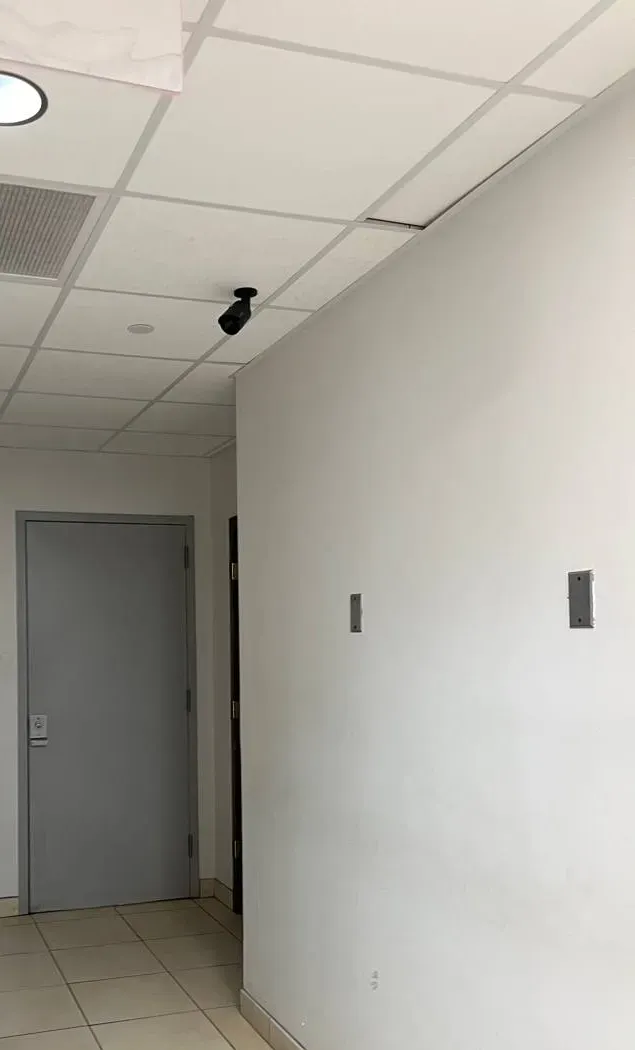
Coney Island, Brooklyn door buzzer installation: tiled corridor with white walls and small wall plates ending at a grey steel door with a lever handle under a drop ceiling with a small camera
A photo from the AESS job library, not taken in Coney Island: a tiled corridor with white walls and small wall plates ending at a grey steel door with a lever handle, under a drop ceiling with a small camera. The service corridors and rear exits of Coney Island's larger buildings often end at a steel door like this, and step four applies to it too: it must close and latch on its own before any release or door switch is wired to it.
Coverage Area

Door Buzzer Installation Near Coney Island's Landmarks

Coney Island–Stillwell Avenue station

The terminal for the D, F, N and Q trains at Surf and Stillwell Avenues, with eight tracks and four platforms, rebuilt from 2001 to 2005 with a solar roof and flooded in Sandy.

New York Aquarium

At 602 Surf Avenue on the boardwalk, opened on June 6, 1957 and run by the Wildlife Conservation Society; it was severely flooded in Sandy before reopening.

Maimonides Park

The minor-league ballpark on Surf Avenue, opened in 2001 as KeySpan Park, across the avenue from the new 12-story affordable building at 1709 Surf Avenue.

Deno's Wonder Wheel

The Ferris wheel built in 1920 and designated a city landmark in 1989, opened each spring with a Blessing of the Rides at the start of the season.

Riegelmann Boardwalk

Built in 1922 and 1923; Brooklyn Paper reported in December 2025 that $1 billion had been secured to rebuild its 2.4 miles from the piles up, with funding through 2032.

Coney Island Light

The lighthouse on Beach 47th Street inside Sea Gate, the private gated community of about 850 houses at the peninsula's western tip.

We also serve Brighton Beach, Gravesend, Bath Beach and Bensonhurst at the same Brooklyn rate. See our door buzzer installation in Brooklyn page for the whole borough, or nearby neighborhood pages such as Bath Beach door buzzer installation and Bensonhurst door buzzer installation.

Pricing

Door Buzzer Installation Cost in Coney Island

Coney Island is billed at our Brooklyn rate. The ranges below are installed prices covering equipment, power, any strike or release, cable and labor. Where a building lands inside a range depends on the condition of the lobby door, the riser test, the number of apartments and entrances, whether the power supply has to move out of the cellar, and the choice of wall stations, video monitors or phone answering. The figure for your door is set in writing after the walkthrough, with any possible add-on named and priced before you order, and it does not change unless you change the scope.

ItemBrooklyn priceTypical Coney Island job
Audio / small system$400–$900One- or two-button audio station for a Sea Gate or West Street house, talk-back inside, a release on the door and a power supply mounted high
Video / mid-size system$700–$1,800Video door station with monitors or phone answering for a house or two-family, including a station at the foot of a raised stair where needed
Multi-unit building$2,500–$10k+Lobby panel, tested or new riser, apartment stations, strike, closer and battery-backed power for a walk-up, a Mermaid Avenue mixed-use building or a tower
Service call booked online$250Diagnosis of an existing system or a post-storm check; applied toward the work

What usually moves a Coney Island job toward the top of its range: a lobby door that needs a new closer, hinges or frame repair before a strike will hold, a power supply and controller moved from a flooded cellar to a room upstairs, a riser in a tall building with pairs that fail their test, more than one entrance on the system, and video for every apartment. What keeps a job toward the bottom: a riser that tests sound and can be reused, a door that already closes and latches, a power supply already in a dry room, wall stations or phone answering instead of monitors, and a single entrance.

Very large co-op and rental towers with hundreds of apartments can run well past the top of the multi-unit range, and for those we price building by building, with a written scope for each tower, so a board can phase the work the way it phases its other capital projects.

Full terms β€” including 50% deposit, one-year parts-only warranty on AESS-supplied products, and the late-fee schedule β€” are set out in the service agreement.
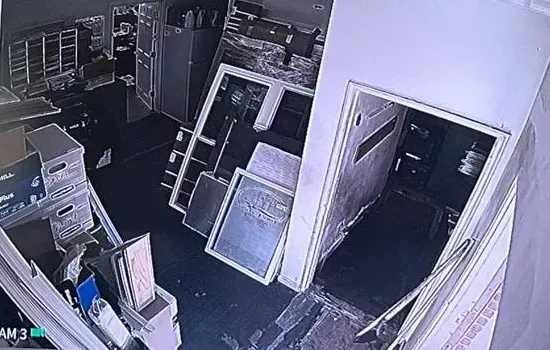
Coney Island, Brooklyn door buzzer installation: black-and-white night camera view of a cluttered room with an open doorway into a dark back room
A photo from the AESS job library, not taken in Coney Island: a black-and-white night camera view of a cluttered room with an open doorway into a dark back room. The stockroom behind a Mermaid Avenue shop or a closed boardwalk stand often looks like this in the off-season, and it is why owners price a camera on the delivery door together with the rear buzzer.

Find Out Which Range Your Coney Island Building Falls In

Send three photos, the lobby or street door from the sidewalk, the frame and latch close up, and the old panel, plus the number of apartments and where the power supply sits, and we tell you which range fits and what would move it. Call (347) 934-8335, speak to a tech on WhatsApp, or use the fast quote form.

Shop Our Systems

Door Buzzer Installation Packages & Pricing

Three typical Coney Island jobs, each priced inside the matching range on our Brooklyn list. The exact figure comes from the walkthrough.

Sea Gate or West Street house buzzer: $400–$900

A one- or two-button audio station at the front door or at the foot of a raised stair, a talk-back station and release for each household, a fail-secure strike in a sound frame, the closer adjusted, and the power supply on the owner's circuit, mounted high.

House or two-family video: $700–$1,800

A video door station with monitors or phone answering, separate buttons and answering for an owner and a tenant, and a slim station or door switch at a side or rear door where the family uses one.

Walk-up or tower entry system: from about $2,500

A lobby panel, the riser tested pair by pair or replaced, wall stations with large buttons or app answering in every apartment, strike, heavy-duty closer, and battery-backed power moved above the flood line, with a dated test record for the owner or board.

Bring your own equipment. If you have already bought a door station, video doorbell or intercom kit, we can install it as long as it suits the door, the number of apartments and the building's power. Labor for customer-supplied equipment is quoted flat at the walkthrough, and any strike, closer, power supply and cable are priced from the same list. Customer-supplied equipment carries the manufacturer's warranty rather than ours, so we check the model with you before you book.

Coney Island, Brooklyn door buzzer installation: touchscreen entry panel showing a dial pad with a four-digit apartment code entered, a camera above and a card-reader symbol below
A photo from the AESS job library, not taken in Coney Island: a touchscreen entry panel showing a dial pad with a four-digit apartment code entered, a camera above and a card-reader symbol below. A code panel like this suits the lobby of a Coney Island tower with hundreds of apartments, where a row of buttons would cover half the wall and visitors find a unit faster by dialing its code.
Complete Services

Every Door Buzzer Service in Coney Island

Towers, co-ops and walk-ups

Lobby panels, risers, apartment stations, closers and strikes. Request a quote

Houses and storefronts

Sea Gate houses, West Street two-families and Mermaid Avenue doors. Call (347) 934-8335

Across Brooklyn

The same list in every neighborhood. Brooklyn door buzzer installation

Across New York City

Every borough's buildings and rules. NYC door buzzer installation

FAQ

Coney Island Door Buzzer Installation FAQ

Can a shareholder in a Coney Island co-op hire you to fix the station in their own apartment?
+

Usually not without the building's say-so. An apartment station is part of the building's entry system, connected to the riser and the lobby panel, so work on it needs authorization from the board or managing agent, as Brick Underground's repair guide also advises. The shareholder can report the fault to management, and once management approves, we can diagnose and repair that one station and give both the shareholder and the managing agent a note of what was done.

Does a closer strong enough to beat the ocean wind make the lobby door too heavy for older residents?
+

It can, which is why the closer is adjusted rather than simply tightened. A well-set closer uses its backcheck and latch speed to control the door in the wind while keeping the opening force reasonable. Where a building has many older residents and the door is exposed, a powered door operator on the main entrance, opening after a release or a valid code, is often the better answer, and we price it as a separate option.

Our lobby panel was replaced after Sandy. Can it stay if we replace the apartment stations and power supply?
+

Sometimes. If the panel is from a system that is still made and is compatible with the new stations and power supply, it can stay and the price drops. If it is a different system or an end-of-line model, mixing parts usually causes more trouble than it saves. We check the model and test it during the walkthrough and give a price both ways.

Does the new Coney Island business improvement district change what a Mermaid Avenue store must install at its door?
+

No. The BID announced in February 2026 covers storefronts on Mermaid and Surf Avenues and focuses on sanitation, public space, marketing and business support. What a store puts on its delivery or staff door remains the owner's choice under the building and fire codes, including free exit from inside and the extra requirements for any magnetic lock.

Our house was raised after Sandy and the front door is now at the top of a long stair. Can the door station go at the bottom?
+

Yes. The station can be mounted at the foot of the stair, on a post or on a gate, so visitors can ring and talk without climbing first. If the household wants to let visitors up without coming down, the release can be on a gate at the bottom, on the front door at the top, or on both. The cable runs inside the stair structure or underground in a conduit, not loose along the steps.

Can you work from a co-op's original wiring drawings, or do you trace everything again?
+

We use the drawings as a starting map, and then we test. Buildings of the 1960s have usually been renovated, rewired and repaired many times since the drawings were made, so pairs may be cut, swapped or spliced in places the drawings do not show. A floor-by-floor test of the riser before pricing is what makes the quote reliable.

Can seasonal staff at an amusement-area business get door codes that stop working when the season ends?
+

Yes, on keypad and app-based systems. Each staff member gets their own code with an end date, so access stops on its own after Labor Day or whatever date the business chooses, and the owner can see whose code was used. On a simple buzzer with no keypad, staff are buzzed in from the counter instead, and nobody needs a key to the delivery door.

What do you check on a building's entry system after a storm before it is switched back on?
+

We power the system down, open every connection at or near floor level and look for water and corrosion, check the strike and its wiring at the door, and inspect the power supply and controller. Anything that sat in water, especially a power supply, is replaced even if it seems to work. Then the system is brought back one section at a time and every apartment is tested. This is the $250 service call booked online, applied toward any repair.

How should a door station a few blocks from the beach be cleaned?
+

Gently. Wipe the faceplate, buttons and camera lens with a soft cloth dampened with fresh water every few weeks in summer to remove salt and sand, and dry it. Do not use a pressure washer, a hose aimed at the panel, abrasive pads or strong solvents, which can force water past the seals or scratch the lens. If buttons start to stick, call us rather than prying at them.

Can our board see which apartment lines passed and failed the riser test before we vote on a replacement?
+

Yes. The walkthrough for a tower ends with a written test record listing each riser line and apartment, whether its pair tested sound, borderline or failed, and what that means for the price. Boards can put that record in front of shareholders alongside the scope, so the vote is about real results from their own building rather than an estimate based on its age.

More Door Buzzer Installation near Coney Island

Door Buzzer Installation Brooklyn NY | Brownstones & Condos Β· Door Buzzer Installation NYC | Apartment & Building Entry Β· Door Buzzer Installation Manhattan NY | Apartments & Co-ops Β· Door Buzzer Installation Queens NY | Co-ops & Apartments Β· Door Buzzer Installation Bronx NY | Co-ops & Apartments Β· Door Buzzer Installation Staten Island NY | Homes & Apts Β· Door Buzzer Installation Long Island NY | Nassau & Suffolk Β· Door Buzzer Installation Hudson Valley NY | Apartments Β· Door Buzzer Installation Nassau County NY | Homes & Co-ops Β· Door Buzzer Installation Suffolk County NY | Homes Β· Door Buzzer Installation Westchester County NY | Co-ops Β· Door Buzzer Installation Rockland County NY | Homes & Apts Β· Door Buzzer Installation Orange County NY | Homes & Farms Β· Door Buzzer Installation Putnam County NY | Lake Homes Β· Door Buzzer Installation Dutchess County NY | Homes Β· Door Buzzer Installation Ulster County NY | Kingston

Door Buzzer Installation Bath Beach Brooklyn NY Β· Door Buzzer Installation Bay Ridge Brooklyn NY Β· Door Buzzer Installation Bedford-Stuyvesant Brooklyn NY Β· Door Buzzer Installation Bensonhurst Brooklyn NY Β· Door Buzzer Installation Bergen Beach Brooklyn NY Β· Door Buzzer Installation Beverley Square Brooklyn NY Β· Door Buzzer Installation Boerum Hill Brooklyn NY Β· Door Buzzer Installation Brooklyn Navy Yard, Brooklyn NY Β· Door Buzzer Installation Brooklyn NY | Brownstones & Condos Β· Door Buzzer Installation Brownsville Brooklyn NY Β· Door Buzzer Installation Bushwick Brooklyn NY Β· Door Buzzer Installation Cadman Plaza Brooklyn NY Β· Door Buzzer Installation Canarsie Brooklyn NY Β· Door Buzzer Installation Carroll Gardens Brooklyn NY Β· Door Buzzer Installation City Line Brooklyn NY

Other services in Coney Island

Intercom Installation Coney Island Brooklyn NY Β· Fire Alarm Installation Coney Island Brooklyn NY Β· Structured Cabling Installation Coney Island Brooklyn NY Β· Access Control Installation Coney Island Brooklyn NY Β· Security Camera Installation Coney Island Brooklyn NY Β· Alarm Installation Coney Island Brooklyn NY Β· Door Buzzer Repair Coney Island Brooklyn NY Β· TV Installation Coney Island Brooklyn

Ready for a Coney Island Lobby Door That Latches Every Time and Answers Every Apartment?

Send a photo of the lobby or street door from the sidewalk, the frame and latch, and the old panel, with your address, the number of apartments and where the power supply sits, and we will tell you what the door needs and where it falls on the Brooklyn list. Call or text (347) 934-8335, message us on WhatsApp, or use the request form. Licensed under NYS license #12000287431, rated 4.7β˜… across 201 Google Reviews, owner-operated since 2002.