A Button for Every Household Β· Releases That Latch Every Time Β· Lobby Panels for Postwar Buildings Β· Brooklyn Rate
Door buzzer installation in Canarsie is mostly about one question: when somebody rings, does the right household hear it, see who it is and open the right door? Canarsie is a neighborhood of one- and two-family houses built mostly after the Second World War, many of them now home to an owner and a tenant, sometimes with a second entrance at the side, under the steps or down at driveway level. Along Rockaway Parkway and the commercial avenues there are also six-story postwar co-ops, small walk-ups and shops with apartments above, and those need lobby panels, risers and releases. This page covers both kinds of work, the city and state rules that decide which buildings must have an intercom, and what each kind of job costs on our Brooklyn list.
Reviewed and updated November 11, 2026, against the Department of City Planning's May 2017 Resilient Neighborhoods summary report for Canarsie; the NYC Comptroller's September 2022 field review of NYCHA entrance doors; NYCHA's March 2023 Bay View resident priorities; HPD housing maintenance code violation data on illegal basement units as charted for 2012 to 2023; the Department of Finance 2024 Brooklyn neighborhood sales summary; New York's Multiple Dwelling Law Β§50-a and the DHCR rulings reported by Landlord v. Tenant; Habitat magazine's February 2024 report on intercom duties; Brick Underground's NYC intercom repair guide; Allegion on fail-safe and fail-secure hardware; the International Building Code's sensor-release rules; Aiphone's GT Series documentation; the HomeAdvisor and Swiftlane cost guides; Brownstoner and BiggerPockets forum threads from owners of three-family houses; Forgotten New York's 2026 Canarsie walk; and the 2010 ADA Standards. Β· Abstract Enterprises Security Systems, NYS license #12000287431 Β· crews dispatched from our Troy Avenue office in Brooklyn

Owner-operated since 2002 Β· Thousands of jobs completed Β· Booked within 2 hours
Quick answer: door buzzer installation in Canarsie costs $400 to $900 installed on our Brooklyn list for an audio system with a button for each household, $700 to $1,800 for video door stations or a wired video doorbell with indoor answering, and from about $2,500 to past $10,000 for a lobby system in a co-op or rental building on Rockaway Parkway or the avenues. The price covers the door stations, the stations or chimes inside each home, the power supply, any electric release on the door, the cable and the labor, and it is written down before anything is ordered. Most Canarsie houses land in the first two ranges because they have one or two households and one to three doors that visitors use. What moves a house within its range is how many entrances need a button, whether there is a cellar under the front of the house for the cable, whether each household wants video, and whether a door has to be adjusted before it can take a release. Send photos of each entrance to (347) 934-8335 or on WhatsApp, and we reply with the range that fits, usually within two hours during working hours.
Canarsie sits in the far southeast corner of Brooklyn, bounded roughly by Ralph Avenue and Linden Boulevard, the Bay Ridge Branch rail line, Fresh Creek and the Belt Parkway along Jamaica Bay. Most of what stands there was built on filled marshland after the Second World War, and the Department of City Planning's 2017 Resilient Neighborhoods report counted about 12,000 residential buildings in the neighborhood, most of them put up before the 1970s. The older blocks between Remsen Avenue and Rockaway Parkway go back to the late nineteenth and early twentieth centuries; the streets south of Avenue L toward Fresh Creek filled in during the 1950s and 1960s. Zoning kept private houses to three stories, and the neighborhood's homes are mainly one- and two-family houses, detached, semi-detached and attached in rows.
That building stock decides what a door buzzer job looks like here. A Canarsie house rarely has one door and one family. The Planning report describes detached and semi-detached houses on lots 20 to 50 feet wide, attached houses on lots 20 feet wide or less, front yards that slope down one to four feet to a garage at the front of the house, and garages that owners have turned into dens or living space, often with "a garage at the front with a recreation room behind it." It also describes cellars and basements converted into apartments. Put those together and a single house may have a front door at the top of the steps, a door at driveway level into the den or the lower apartment, and a side or rear door that the upstairs tenant uses. Every one of those doors is a place where someone rings, and every household behind them wants to know the ring is for them.
Two-family ownership is the norm rather than the exception. The Department of Finance's 2024 Brooklyn neighborhood sales summary lists about 150 two-family house sales in Canarsie that year, against roughly 85 one-family and 27 three-family sales. In those houses the doorbell stops being a convenience. If the tenant's button rings in the owner's kitchen, the owner goes to the door for every delivery that is not theirs. If the upstairs household has no way to open the street door, they walk down a flight every time a visitor arrives. And if the two households share one consumer video doorbell, one of them holds the app account and the other relies on a favor. Most of the calls we get from Canarsie are some version of those three complaints.

Basement households add another layer. A chart of HPD housing maintenance code violations from 2012 to 2023, drawn from the city's own violation records, found that Canarsie and East New York had the largest share of illegal basement violations in the city. Whatever the legal status of a particular unit, the practical point for a doorbell is the same: a household lives behind a door that was never wired for a bell, and visitors ring the owner upstairs instead. Legalizing a unit is a matter for the owner and the Department of Buildings, not for us. What we can do is make sure that every legal household has its own button at the door it actually uses.
The buildings along the edges are a different trade again. Rockaway Parkway carries postwar elevator co-ops such as the six-story building at 1625 Rockaway Parkway, which CityRealty lists as a 1963 co-op with an elevator, a live-in super and no doorman. In a building like that the lobby panel is the only thing standing between the street and the stairs. The two big public housing developments, Breukelen Houses and Bay View Houses, have together more than 3,200 apartments behind NYCHA-managed doors, and the city Comptroller's 2022 field review of NYCHA developments found that two-thirds of Brooklyn entrance doors it checked were propped open, had broken locks, or both. Residents told the auditors that failing intercoms, locks and release buttons were part of why doors got propped. That is the clearest local evidence we know of that an entry system that does not work is soon an entry system nobody uses.
Where this page applies. It covers Canarsie in ZIP code 11236, from the Ralph Avenue side east to Fresh Creek and from the rail line south to the Belt Parkway, including the blocks around Rockaway Parkway, Avenue L, Flatlands Avenue and Remsen Avenue. Next door, door buzzer installation in Bergen Beach has its own page. For the rest of the borough see our door buzzer installation in Brooklyn page, and for the whole city our NYC door buzzer installation page.
A good share of the Canarsie calls that start with "we need a new buzzer" end as a repair. When the upstairs bell stops but the downstairs one still works, the fault is usually a single broken conductor, a corroded splice where the cable passes through a damp cellar, or a worn button, not the whole system. When the release hums and the door stays shut, it is most often the door itself: a strike that has moved out of line with the latch, a closer that no longer pulls the door tight, or a frame that has shifted on an old house. Brick Underground's NYC intercom guide quotes one installer on the most common cause of failures in a single line, "It's all in the wire connections," and that matches what we find. We test before we sell, and if a repair puts things right, that is what we recommend.
If a street door cannot be locked right now, or a household is cut off from the door, say so when you call (347) 934-8335. Diagnosing an existing system is the $250 service call booked online, and the $250 goes toward the repair or toward a new system if replacing turns out to be better value. You get the repair price, the replacement price and a plain recommendation. If a part has to be ordered, we leave the door able to lock and open with a key before we go.
Each service below is priced from the same Brooklyn door buzzer list. The number of households sets the size of the system, the number of entrances sets how many door stations it needs, and the house itself sets how long the cable work takes.
A two- or three-button station at a shared door, each button wired to its own household's chime or station, so the owner's kitchen stops ringing for the tenant's deliveries.
A matching station at the side door, the driveway-level door or the door under the steps, on the same power supply and the same system as the front.
An electric strike on the street door with a release button in the upstairs station, so the second-floor household can let a visitor in without walking down.
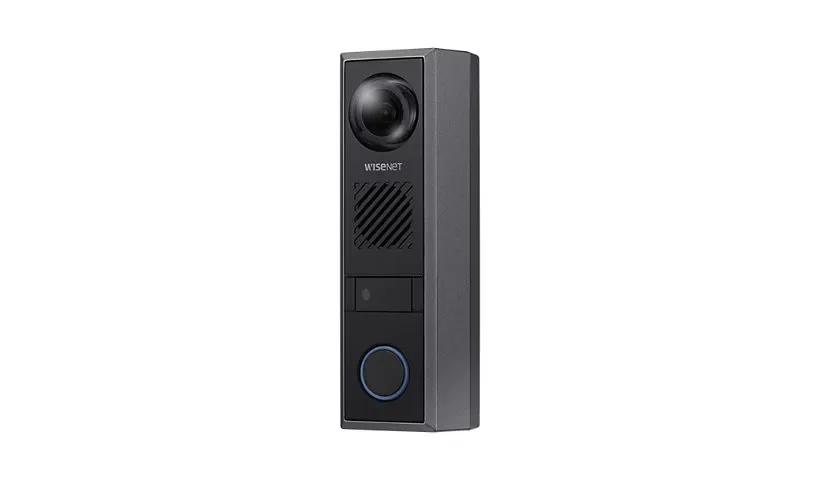
A slim camera doorbell beside a one-household door, on a power supply sized for it, answered on the family's phones with a chime inside.
A camera door station with an indoor monitor for each household, so a parent at home or a tenant upstairs sees the visitor before opening.
Directory or dial-code panels, risers and apartment stations for the postwar buildings on Rockaway Parkway and the walk-ups off the avenues.
A buzzer or video station for a shop's door or delivery door on Avenue L or Flatlands Avenue, kept on a separate system from the apartments upstairs.
A new door station on sound wiring, a new release on an old system, or one household's dead station replaced, when the rest of the system still works.

Almost every buzzer job in Canarsie falls into one of six kinds of property. Each one puts the door stations, the cable and the answering stations in a different place, and each has its own usual trouble spot.
Brick or sided houses on the wider lots, with the owner on one floor, a tenant on the other and often a separate entrance at the side or back.
Two houses sharing a middle wall and often a driveway, each with its own steps and door, and sometimes a second unit inside each half.
Narrow houses of 20 feet or less with the main door up the steps and a lower apartment or den entered at grade, often with no cellar under the front.
The earlier wooden houses near Remsen Avenue and the bungalow-style houses toward Conklin Avenue, many covered in siding, with tight cellars and old bell wire.
Six-story buildings from the late 1950s and early 1960s on and near Rockaway Parkway, with a lobby panel, an elevator, a riser and dozens of apartments.
Three- and four-unit buildings filled in on single lots in later decades, too small for the state intercom mandate but too big for a house doorbell.
The classic Canarsie two-family is a detached house with the owner downstairs and a tenant upstairs, or the reverse, and in many of them the second household has its own door: a side entrance down the driveway, a rear door off the yard, or a separate front door beside the first. The original bell, where there is one, is a single button and a single chime from the year the house was built. When the house was split, somebody often added a second button on its own little transformer, or a battery wireless chime, and that is the system we usually find.
The cleaner arrangement is one system for the whole house. Each entrance gets a door station with one button per household that uses that door, every station is wired back to one power supply in the cellar or utility room, and each household gets an indoor station or chime that rings only for its own buttons. If the upstairs household uses the shared front door, the front door gets an electric release and the upstairs station gets a release button. If they have their own side door, that door gets the release instead, and the owner's door is left alone. Both households end up with the same kind of equipment and the owner holds one admin login for the lot.
Video is where owners most often change their minds during the walkthrough. A tenant who rarely gets visitors may be happy with audio and a release; an owner with an elderly parent at home usually wants to see the step before anyone opens up. A mixed system, video for one household and audio for the other, is ordinary on the equipment we install, and the price on our list moves with it.
Semi-detached houses are among the most common types in the Canarsie floodplain; the Planning report counted about 650 there alone. Two houses mirror each other across a shared middle wall, each with its own steps, its own door and its own cellar, and very often the pair shares a driveway down the open side. For a doorbell that means two completely separate systems that happen to sit a few feet apart. A courier standing in the shared driveway needs to be able to tell which house is which at night, and each house's stations must never ring the other's household.
We keep each half on its own power supply in its own cellar, run nothing through the shared wall, and label each station with the house number as well as the household name or unit. Where one half of a pair already has a newer system and the owner of the other half wants something that looks the same from the street, we can usually match the finish and the position on the door frame without connecting the two.
The narrow attached houses are where Canarsie wiring gets interesting. In many of them the main entrance is a few steps up at the front, the lower level at grade holds a garage, a den or an apartment, and the space under the front of the house is a slab rather than an open cellar. The Planning report counted about 1,890 attached houses in the floodplain with space below the design flood elevation and about 680 with a ground-floor unit. On those houses the old trick of dropping a bell wire straight down into the cellar and running it across the joists does not work, because there is no cellar ceiling at the front to run across.
The cable has to go another way: up through the door frame into the floor or wall of the upper level, along a closet or a utility chase, or, on houses with siding, behind exterior trim to a point where it can enter cleanly. We look at all of these before pricing, because the route is the biggest single variable on these houses. The ground-floor household's station goes at its own door at grade, and its power usually comes from the same supply as the upstairs station so there is one system rather than two.
Where the lower level has taken water in past storms, which the Planning report says happened widely during Sandy, we keep the power supply and every connection off the lower floor. That is not the centerpiece of a buzzer job here, but it is a decision we make on every attached house, and it costs very little when it is made at the start.
Not all of Canarsie is postwar. Forgotten New York's 2026 walk through the neighborhood describes attached wooden houses with siding on East 95th Street, bungalow-style houses along the eastern end of Conklin Avenue and older Italianate houses south of Bedell Lane, and the Planning report dates the blocks between Remsen Avenue and Rockaway Parkway to the late nineteenth and early twentieth centuries. These houses often still carry original bell wire, sometimes cloth-covered, sometimes painted over many times, running to a chime in the hall and a small transformer in a low cellar.
Old wire is not automatically bad wire. We test it end to end before deciding, and if it is sound it can carry a two-wire system that sends power, voice and the release over a single pair. If it is brittle, spliced in several places or has been cut during a past renovation, we replace it, usually along a new route through the cellar. On sided houses we mount door stations on the door casing or on a mounting block made for siding, never straight onto the siding itself, so the station sits flat and the siding is not cracked.
The six-story postwar co-ops on and near Rockaway Parkway are the neighborhood's classic lobby-panel buildings. A building such as 1625 Rockaway Parkway, which CityRealty lists as a 1963 co-op with an elevator and a live-in super, has a panel at the street door, often an inner lobby door behind it, a riser running through the building to every floor and a handset or station in every apartment. After sixty years those risers have been patched, extended and partly replaced, and the apartment stations range from the original handsets to newer units a shareholder bought on their own.
Installation in these buildings means a new lobby panel, a decision on the riser after testing it pair by pair, release hardware on the door or doors, and a station or phone answering for each apartment. Boards often choose to stage the work so the lobby panel and release go in first and apartment stations are replaced as budgets allow; that works as long as the new panel can talk to the old stations during the changeover. We confirm that before the board signs anything.
Scattered through the neighborhood are small multi-unit buildings filled in on single lots in later decades. An example is 704 East 103rd Street, which openigloo lists as a three-floor building with four units built in 1996. Buildings like this have a shared street door, a short hall or stair and three or four apartment doors, and they sit in an awkward middle: big enough that a house doorbell is not enough, small enough that the state's eight-apartment intercom mandate does not apply. Owners here usually want a small multi-button panel at the street door, a release, and audio or video stations in each apartment, which on our list is the upper end of the audio range or the video range rather than a building system.

These notes describe how our technicians size up a house like the ones on Canarsie's side streets before they talk about equipment. They are our standard practice, not a story about any one address.
Count the doors before the doorbells. From the sidewalk the technician notes every door a visitor could reasonably walk to: the front door at the top of the steps, a door at the bottom of the driveway, a gate into a side alley, a door under the steps. Then we ask the owner which of those doors each household actually uses. On a two-family house there are often more doors than households, and a door nobody uses does not need a station, only a lock.
Count the meters and the mailboxes. Gas and electric meters and the number of mailboxes are a quick check on how many households a house really holds. If the count does not match what we were told, we ask, because a household we did not plan for is the one that ends up with no bell.
Look under the front of the house. We go into the cellar, or confirm there is none, before promising a cable route. On a detached house with a full cellar the route from the door is usually short. On an attached house built over a slab or a garage, we look for a closet, a chase or an exterior trim line that can carry the cable to the upper floor.
Find the old transformer. The old bell transformer tells us a lot: where the original wire runs, whether someone has added a second one for a second household, and whether the supply is big enough for anything with a camera. We read its rating and test the wire before deciding whether any of it stays.
Let the door close by itself. If a release is part of the plan, we open each door, let go and watch. A door that drifts, bounces off the latch or has to be pulled the last inch will buzz without opening, so closers and hinges get fixed first.
Stand where the courier stands. On houses with steps up to the door, many visitors ring and then step back down. We check that a camera station at the door actually sees the top step and the bottom of the steps, and adjust the angle or height before anything is fixed in place.

The single most useful thing an owner can tell us before a walkthrough is which door each person uses. In a Canarsie house the answer is often surprising. The owner comes and goes through the den at driveway level because that is where the car is. The tenant uses the side door down the alley because the lease says so. Visitors and couriers, who know none of this, walk up the front steps to the door that looks like the front door and ring whatever is there. A good installation accepts all three habits and gives each one a sensible place to land.
The front door at the top of the steps. This is where visitors who do not know the house will go, so it almost always gets a station, even if neither household uses it day to day. If both households can be reached through it, it gets a button for each. If only the owner's household can be reached through it, the station carries the owner's button and a clearly labeled second button that rings the tenant and tells the visitor to go to the side, or a single button and a small sign. We decide the labeling with the owner, because a confused courier rings everything.
The door at driveway level. Where the front yard slopes down to a garage or den door, that door is usually family-only and does not need a visitor station. What it often needs is a way for the family to get in without keys, which is a code or app job rather than a buzzer, and a way to hear the front-door bell from the den, which is a second chime or station on the lower level. Owners who have converted the garage into living space usually want that second chime most of all, because the room furthest from the front door is the one where the family spends its evenings.
The side alley and the rear door. When a tenant enters at the side or back, the question is where the visitor meets the button. If the alley is open from the street, the station goes at the tenant's door. If there is a locked gate at the front of the alley, the station can go at the gate so visitors do not wander down the side of the house, with a release on the gate and the tenant's door kept on a key. The cable for a gate station runs underground or along the fence line, which takes more labor than a station on a wall, and we price it separately so the owner can choose.
The door under the steps. Lower apartments in attached houses are often entered under or beside the front steps, in a spot visitors overlook entirely. A station there needs to be lit and labeled, and in most cases the household also wants a small marker at the top of the steps pointing down. The station is wired back to the same supply as the upstairs station, which usually means the cable comes through the lower-level ceiling rather than the cellar.
Each of these decisions changes the price only a little. Getting them wrong changes how the house works every day. That is why we would rather spend ten more minutes on the sidewalk asking who goes where than install the right equipment at the wrong door.

Owners ask us about the law almost as often as they ask about equipment, and the answer depends almost entirely on the number of apartments and the year the building was built or converted. We are installers, not lawyers, and the summary below is what the sources say rather than legal advice. It is still worth knowing before you plan a job, because it decides whether a new system is a choice or an obligation.
Houses with one or two families. New York's Multiple Dwelling Law treats a building as a multiple dwelling when three or more families live in it independently. A one- or two-family Canarsie house is outside it, and no state intercom mandate applies. Owners of two-family houses put in separate bells and releases because the house works better with them and because tenants expect them, not because a statute requires it.
Three to seven apartments. A three-family house or a small four-unit building is a multiple dwelling, but section 50-a's intercom requirement is written for buildings with eight or more apartments. Landlord v. Tenant reports a 2003 DHCR ruling on a three-apartment building in which the agency found "there was no legal requirement to provide a buzzer system in a building containing fewer than eight apartments." What these owners do have to do is keep whatever is installed in working order, which is why a failed buzzer in a small building tends to come up in a repair dispute rather than as a missing amenity.
Eight or more apartments, built or converted after January 1, 1968. Section 50-a requires a self-locking main door and an intercommunication system that lets residents talk to a visitor and release the door. Landlord v. Tenant's summary of a 1996 DHCR opinion letter puts the point plainly: buildings in this group must have some type of intercom system, even if it is only a bell and buzzer.
Eight or more apartments, built or converted before 1968. This is where Canarsie's early-1960s co-ops sit. For these buildings, section 50-a requires the doors and intercom when tenants occupying a majority of the apartments request or consent in writing, with installation started within 90 days and finished within six months. Once an intercom is in, Habitat magazine's February 2024 report notes that the city's housing maintenance code requires it to work and that courts have treated a working intercom as an essential service. As one attorney told the magazine about a co-op whose intercom had failed, "As a result, the co-op has a legal obligation to repair or replace the intercom."
Rent-stabilized buildings. The same 1996 DHCR opinion, as reported by Landlord v. Tenant, said an owner who installs a bell and buzzer system may apply for a major capital improvement rent increase. MCI rules have been rewritten more than once since then, so an owner considering that route should check the current rules with DHCR before the work starts. What we provide either way is an itemized invoice, equipment cut sheets and photos of the finished work, which is the paperwork an application or a board file usually needs.
Public housing. At Breukelen Houses and Bay View Houses, building entry is NYCHA's equipment on NYCHA's doors. Residents cannot hire a private installer to change it, and we do not work on it without NYCHA or its managing agent. NYCHA's March 2023 list of Bay View resident priorities asks to "Repair and replace all entrance and exit doors" and for individual key fobs that cannot be copied, which gives a sense of what residents there want from building entry.
The 69th Precinct describes Canarsie as mainly residential with commercial strips along Avenue L, Rockaway Parkway and Remsen Avenue, and the Planning report adds Flatlands Avenue and counts more than 400 retail properties, mostly in one- to three-story buildings. Commercial buzzer work here is small and practical: a delivery door at the back of a store, an upstairs office or clinic that buzzes visitors in from the street, a shop door that stays locked after dark while staff are still inside, and the apartment entrances that sit beside so many of the storefronts.
The neighborhood's spine, from the L train terminal at Glenwood Road south past Holy Family Church at Flatlands Avenue, with stores below apartments and the postwar co-ops further along.
A long shopping street crossing the neighborhood, lined with storefronts, small offices and congregations meeting in converted shop spaces, many with apartment doors beside them.
Medical and health offices, funeral homes and shops near St. Jude Medical Center between East 94th and East 95th Streets, where reception desks buzz patients and families in.
Auto repair and tire shops mixed in among houses, with bay doors, side doors and small offices that customers ring after the bays close.
The 278,000-square-foot shopping center that opened in 2011, plus the service and delivery doors of the businesses around it.
The wholesale market at the northern edge, where loading doors, office entrances and early-morning deliveries need a way to reach someone inside.
For a shop with apartments above, the first rule is separation. The apartment door gets its own small panel wired up the stair to each apartment, and the shop gets its own buzzer or video station at the shop door or the delivery door, answered at the counter or on the owner's phone. Even when the two share a cellar and a power feed, they stay on separate systems, so shoppers never ring tenants and nobody upstairs holds a release for the store's back hall.
For upstairs offices and clinics on Flatlands Avenue and Rockaway Parkway, the usual request is a door station at the street door with a camera and a release button at the reception desk, so staff can see who is there and let them in without leaving the desk. If the office shares the street door with apartments, each gets its own button and the office's release opens only the street door, never an inner apartment door.
For repair shops on Remsen Avenue, the job is usually a station on a pedestrian side door so that a customer arriving after the bay doors come down can reach someone in the office. That station is answered on a phone or an office monitor, and the bays stay shut. For wholesale businesses at the Terminal Market, it is a station at the loading or office door that rings a phone or a monitor in the office, with the door released only when someone inside has seen who is there.
If a business also wants a camera at the door it buzzes people through, we install it on the same visit and price it together with the entry system; doing both at once usually saves $200 to $400 in labor compared with two separate visits.

These are the questions Canarsie owners, tenants and shopkeepers ask us most, grouped by the kind of property. Each answer comes from the sources named at the top of this page and from how we install.
It goes up rather than down. On an attached house without a cellar under the front, we look for a path from the door frame into the floor or wall of the upper level: a hall closet just inside the door, a utility chase beside the stair, or the space behind a baseboard or trim. On houses with siding, a short run behind the exterior trim to a point where it can enter the wall cleanly is often the neatest answer. The route is the biggest single variable in the price on these houses, so we find it before we quote.
The ground-floor household's station at grade is usually the easy part, because the cable can come straight through the ceiling of the lower level. Both stations are wired to one power supply placed off the lower floor, so the house has one system, one admin login and nothing important sitting where water has reached before.
It depends on whether the alley is open or gated. If a visitor can walk straight down the alley from the sidewalk, put the station at the tenant's own door, lit and labeled, and add a small sign or a labeled button at the front steps that points visitors to the side. That keeps the cable short and the price low.
If the alley has a locked gate at the front, the station is better at the gate. Visitors stay at the street, the tenant sees and talks to them from upstairs, and a release opens the gate while the tenant's door stays on a key. A gate station means cable along the fence or under the walk and an electric lock or strike suited to a gate, so it costs more than a wall station; we price both options and let the owner choose.
Yes, on most wired multi-station systems. Besides answering the door, indoor stations can usually call one another, so a parent upstairs presses a button and the station in the downstairs kitchen rings. It is one of the most requested features in Canarsie houses where an older parent lives on one floor and the family on another, because it works without a phone in hand and without anyone shouting down the stairs.
Not every doorbell product does this. A consumer video doorbell answered on phones has no station-to-station calling, and some door station systems only allow calls between the door and each station. If calling between floors matters to you, say so when you send photos and we choose equipment that supports it.
Yes. The simplest way is an indoor station mounted within reach of where he sits, with the release button on it, so he can see the visitor, talk and open without getting up. If he moves between rooms, a system with a handheld or tabletop answering unit, or phone answering on a device he already uses, lets the answering travel with him.
Two details make it work in practice. The door has to close and latch on its own after he releases it, because he will not be getting up to check, so we set the closer before anything else. And the release time has to be long enough for a slow visitor or an aide carrying bags to reach the door, which is adjustable on most of the equipment we install.
With a tone generator and a probe, and a little patience. We put a signal on each conductor at the door end and follow it with a probe at the transformer, the chime and any old station locations, which tells us which pair goes where and whether any of them are broken along the way. Continuity and resistance tests then tell us whether each pair is good enough to carry a new system.
Most old bell wiring in Canarsie houses runs a predictable path: from the button down into the cellar or across the lower-level ceiling, to a transformer near the electrical panel, and up to a chime in the hall. Splits added later, when a house became a two-family, are where the surprises are. If a pair has been cut or buried somewhere we cannot reach, we run new cable along a route we can see rather than guess.
Under the Multiple Dwelling Law, a building with three or more families living independently is a multiple dwelling, so a legal three-family house is one. That does not, by itself, bring in the section 50-a intercom requirement, which applies to buildings with eight or more apartments. Landlord v. Tenant reports a 2003 DHCR ruling on a three-apartment building that found no legal requirement to provide a buzzer system there.
The practical change is in expectations and upkeep. A third household needs its own button at the door it uses and its own way to answer, and once a system is installed the owner should expect to keep it working. We plan the new household's station as part of one system with the other two, which keeps the price inside our audio or video range rather than starting a second system.
Possibly, but check the current rules first. Landlord v. Tenant reports a 1996 DHCR opinion letter saying an owner who installs a bell and buzzer system may apply for a major capital improvement increase. MCI rules have changed since then, and whether a particular installation qualifies is DHCR's decision, not ours.
What we can do is make sure the paperwork is complete: an itemized invoice that separates equipment and labor, cut sheets for every component, photos of the lobby panel, the release and sample apartment stations, and the date the system was finished and tested. Owners who are considering an application should tell us before the job, so nothing has to be reconstructed afterward.
Usually, but not with an ordinary strike. Narrow-stile aluminum doors of the kind fitted to many 1950s and 1960s lobbies have very little metal around the lock, so the release is either a strike made for narrow aluminum frames or an electrified version of the door's own lock. Which one fits depends on the lock already in the door and the condition of the frame, and we check both on the walkthrough.
What we will not do is cut a standard strike into a thin aluminum frame and hope. If the frame is cracked, the pivots are worn or the closer cannot hold the door shut against wind off the street, those are fixed first, because a release on a door that does not latch is not a lock at all.
For fifty apartments, most boards here end up with a dial-code or directory panel. A row of fifty buttons takes up a lot of wall, is slow for visitors to scan and puts every apartment one press away from a stranger trying buttons at random. A code panel lets a visitor enter an apartment number or scroll a directory, and it can show unit numbers rather than names if the board prefers.
Buttons still make sense for buildings of a dozen or so apartments, and for residents who find screens hard to use. The deciding factors are who lives in the building, how often visitors come, and whether the board wants residents to answer on phones as well as stations. We show both options on the same quote.
You can send us the details, but the owner has to authorize and pay for work on the building's system. Brick Underground's NYC intercom guide makes the same point: repairs need the building's authorization, and in some buildings the super handles them. The quickest route is to tell your landlord in writing exactly what fails, for example that the bell rings but the release does not open, or that your station is silent while the others work.
If your landlord asks us to look, we test the whole system rather than just your station, because a dead floor in a three-family is often one broken pair or splice that can be repaired without replacing anything else.
Yes, and it is one of the most practical jobs we do on Remsen Avenue. A station on the pedestrian side door, with a camera, lets a customer who arrives after the bays come down ring the office. Staff see and talk to them on a monitor or phone and either walk out or release the side door, and the bays never have to go up.
If the side door opens into the shop floor rather than an office, we usually suggest answering without a release and walking the customer in, because a release there gives a stranger access to the whole shop. If the shop also has apartments above with their own door, that door stays on its own system.
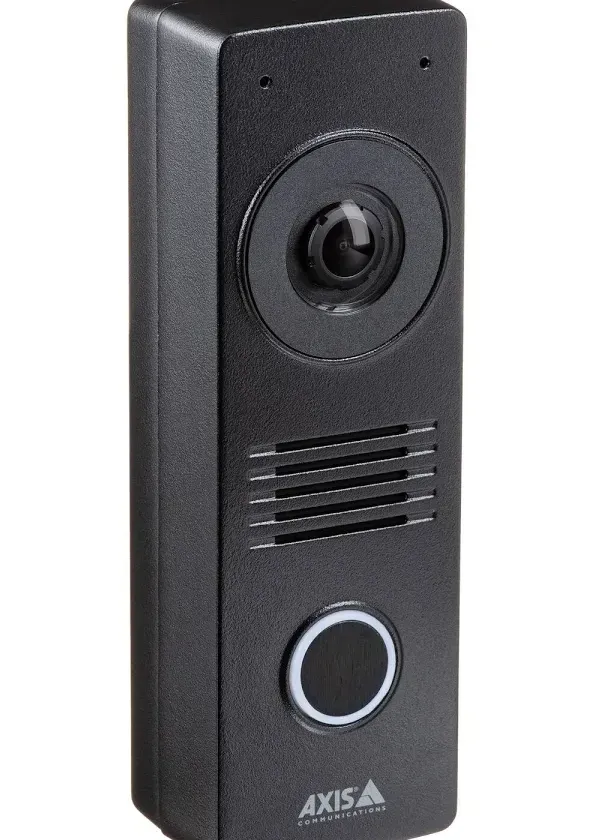
We quote a reliable non-branded system by default and install a named brand when an owner asks for one; the intercom brands we work with include Aiphone, ButterflyMX, 2N, Akuvox, Comelit and DoorBird. These are the categories that come up on Canarsie jobs, from a one-household house to a sixty-apartment co-op.
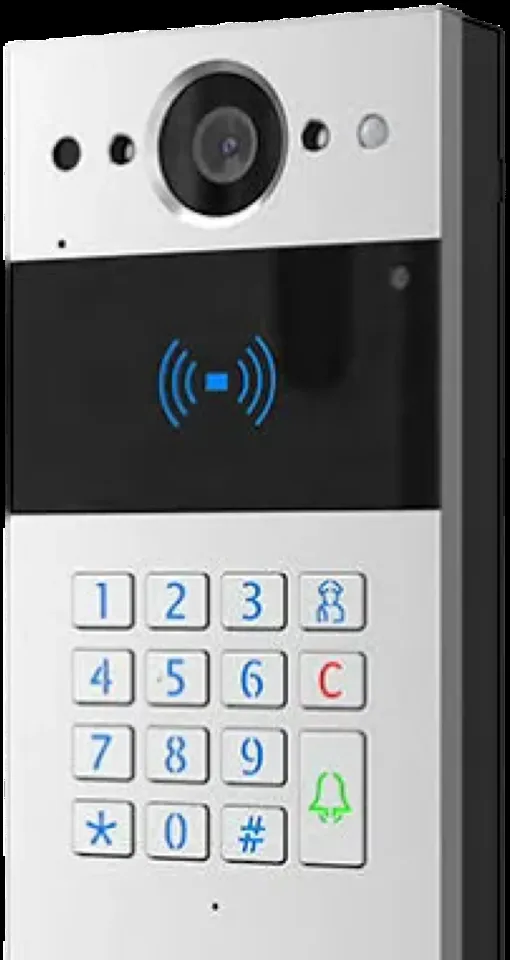
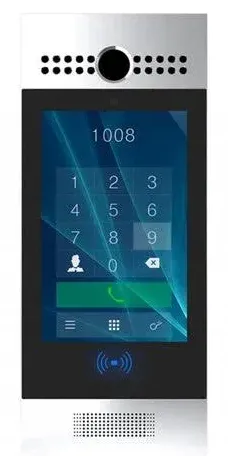
A lit station with one button per household and a speaker, wired to talk-back stations inside, with a release button where the door has a strike. The lowest-cost way to give owner and tenant their own bells.
A camera station with one to four buttons, each wired to an indoor monitor, with phone answering added where a household wants it. Common on two-family houses with an older parent at home.
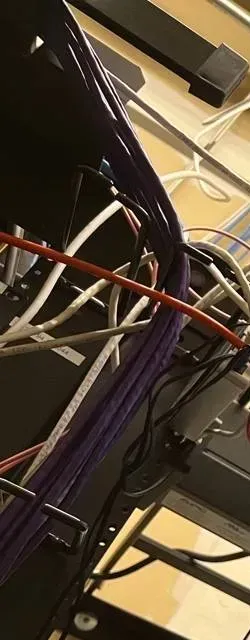
Systems that carry power, voice, video and the release over one pair. Aiphone describes its GT Series as built for new builds and retrofits, with the advantage of using existing wire, which suits buildings whose risers test sound.
Lobby panels where a visitor enters a unit number or scrolls a directory, for co-ops and rentals too big for a sensible row of buttons.
Panels that reach residents' phones over a cellular link or the internet. ButterflyMX says its intercom requires no building wiring, which helps where a riser is beyond saving, at the cost of an ongoing subscription.
Fail-secure strikes for wood and steel frames, strikes for narrow aluminum frames, electrified locks, gate locks and closers set so every door latches by itself.
The table sets out the three arrangements we install most often here and where each one makes sense. Prices are the ranges on our Brooklyn list; the walkthrough decides where in the range a property falls.
| Arrangement | Best for | Answering | Watch out for | Brooklyn range |
|---|---|---|---|---|
| One system, a station at each entrance | Two- and three-family houses where households use different doors | Indoor station or monitor per household, phones optional, station-to-station calls | Cable route on attached houses without a cellar under the front | $400β$900 audio, $700β$1,800 video |
| Separate consumer video doorbells | One-household houses, or two households with fully separate doors and power | Each household's own app | No door release, no calls between floors, separate accounts | Within $700β$1,800 |
| Lobby panel with riser and apartment stations | Co-ops, rentals and small buildings with a shared street door | Stations, monitors or phones per apartment | Riser condition, door hardware, subscription on cloud panels | $2,500β$10k+ |
National companies sell doorbell kits and monthly-plan security; we are not one of them and do not compare ourselves with their store prices. What a local licensed installer adds on a Canarsie house is the part a kit cannot do on its own: deciding which door each button belongs on, getting the cable to the right floor of a house that may have no cellar under the front, and making the door actually latch after it is released.

The claims below turn up in generic online answers, national cost guides such as Angi and HomeAdvisor, and vendor blogs. Each one is paraphrased, then checked against Canarsie's housing, the manufacturers' and agencies' own documents, and how installations actually go here.
Generic neighborhood summaries describe Canarsie as a quiet area of private houses, and from there it is a short step to recommending a battery video doorbell for every front door. The houses are private, but they are not mostly single-family in use.
The Department of Finance's 2024 sales summary for Canarsie lists about 150 two-family sales against roughly 85 one-family sales, and the Planning report describes cellars turned into apartments, garages turned into dens and attached houses with a separate ground-floor unit. A single doorbell rings one account at one door, which leaves the second household either sharing a login or without a bell.
For one-household houses a video doorbell is often the right call. For the many houses with two households and two doors, one system with a station at each entrance and an answering station for each household does what a single doorbell cannot.
This is repeated widely and is only partly true. Section 50-a of the Multiple Dwelling Law requires an intercom in buildings with eight or more apartments built or converted after 1968, and in older buildings when a majority of tenants ask in writing.
Canarsie's small buildings fall outside that mandate. Landlord v. Tenant reports a 2003 DHCR ruling that found no legal requirement to provide a buzzer system in a building of fewer than eight apartments, and one- and two-family houses are not multiple dwellings at all. The early-1960s co-ops on Rockaway Parkway are in the pre-1968 group, where the written majority request matters.
The duty that reaches nearly everyone is upkeep: once a system is installed, owners are expected to keep it working. That, rather than a blanket mandate, is what most Canarsie owners are dealing with.
Swiftlane's cost guide gives that range per entry door for modern IP or video systems, and HomeAdvisor puts the average intercom system at $2,500 within a range of $1,500 to $15,000. AI answers often repeat those numbers for any building.
Those figures describe lobby systems. Most Canarsie jobs are houses with one or two households, where our Brooklyn list puts audio systems at $400 to $900 and video at $700 to $1,800 installed. The co-ops and rentals on Rockaway Parkway are where the national numbers start to fit, and our list there runs from about $2,500 to past $10,000.
A national per-door figure is a fair guide for a lobby. It is not a quote for a two-family house, and we price the property in front of us.
Many online answers jump straight to replacement, especially on sites that sell systems. Brick Underground's NYC intercom guide quotes one installer saying "It's all in the wire connections," and another that "A lot of times it's user error."
That matches what we find on Canarsie houses: a corroded splice in a damp cellar, a broken conductor where a cable was pinched during a renovation, a strike knocked out of line, or a transformer that has given out. In co-ops, a single dead floor is often one pair in the riser, not sixty stations.
We diagnose before quoting a replacement, and the $250 diagnosis booked online is applied toward whichever option the owner chooses.
Magnetic locks are easy to mount, so they are often suggested for doors where a strike looks awkward. Allegion notes that electromagnetic locks are only available fail-safe, which means they unlock when power is removed.
On a street door that is a real trade-off: a power cut leaves the door open. The International Building Code's sensor-release rules also require an egress-side sensor, release on loss of power and on fire alarm activation, and a manual push-to-exit device. A magnetic lock done properly is not the simple option.
On Canarsie houses and small buildings we use fail-secure strikes wherever the frame allows, and fit magnetic locks only with the full set of releases when there is no better choice.
Discussions of public housing security often treat broken doors purely as a hardware or vandalism issue. The Comptroller's 2022 field review found 57.9 percent of NYCHA entrance doors citywide propped open, broken-locked or both, and 66.0 percent in Brooklyn.
The same review recorded residents saying that intercoms, locks, keys and door release buttons often failed, which led to doors being propped, and one resident said a building's intercoms had been broken for ten years. When residents cannot let visitors in from upstairs, someone props the door.
That lesson applies well beyond NYCHA. In any Canarsie building, a lock with no working release gets defeated by the people who live there, so we treat the release and the lock as one job.
App-based systems are often presented as install-and-forget. Swiftlane's own guide says software subscriptions commonly add $5 to $15 per unit per month, or $30 to $100 per door per month.
For a sixty-apartment co-op that is a real line in the budget every year, and for a two-family house it can be more than the system is worth. Some cloud panels also need a working internet or cellular connection at the door to call anyone.
We tell owners before they choose whether a system carries a subscription, and we offer wired systems with no monthly fee for buildings and houses that would rather not have one.
Send photos of every entrance, the old button or panel and the cellar or utility room, and tell us who lives where. A technician will tell you how many stations the house needs and which range it falls in. Call (347) 934-8335, send photos on WhatsApp or use the quick form.
Tell us the street, the kind of property, how many households live there and which door each one uses. A technician calls back with the range for the Canarsie address, or you can call (347) 934-8335 directly.
Photos of every entrance visitors use, the old button or panel and the cellar or utility room, with the street and the number of households.
A technician checks each door's latch, finds and tests the old wire and transformer, and works out a cable route from each entrance to each household.
Equipment, button layout, mounting spots, cable route and the total price in writing before anything is ordered.
Closers, hinges and strikes are adjusted or replaced so each door shuts and locks on its own before a release is wired to it.
A power supply sized for the equipment goes in above the floor, and the strike or release is fitted, with an electrician for any 120-volt work.
Low-voltage cable from each entrance to every household, door stations and indoor stations mounted and labeled.
Every button rung, every station answered, every release tested from outside, with the door left to close by itself each time.
Admin logins to the owner, a written note of which button rings which household, and a short lesson for each household.

The L train's at-grade terminal at Rockaway Parkway and Glenwood Road, opened in 1906, where the parkway's run of shops and apartment doors begins.
The firehouse at Rockaway Parkway and Farragut Road, opened on February 1, 1908, and home to Battalion 58 since 1995.
The parish church built in 1950 and 1951 at Rockaway Parkway and Flatlands Avenue, at the crossing of the neighborhood's two busiest commercial streets.
The community center at 9502 Seaview Avenue, where residents and police officers from the 69th Precinct have met to talk about neighborhood break-ins.
NYCHA's 30-building development of three- and seven-story buildings with 1,595 apartments, completed in 1952.
The pier on Jamaica Bay at the foot of Rockaway Parkway, managed by the National Park Service as part of Gateway National Recreation Area.
We also serve Bergen Beach, Flatlands, East Flatbush, Brownsville and Spring Creek, all at the same Brooklyn rate. See our Bergen Beach door buzzer installation page for the neighborhood next door, and our Brooklyn door buzzer installation page for every other neighborhood in the borough.
Canarsie is billed at our Brooklyn rate, with no travel premium. The ranges below are installed prices that cover equipment, power, any release hardware, cable and labor. Where a property falls inside its range depends mostly on the number of entrances that need a station, the cable route on the particular house, whether each household wants video, and how much work the door needs before it can take a release.
| Item | Brooklyn price | Typical Canarsie job |
|---|---|---|
| Audio / small system | $400β$900 | Multi-button station at a shared door or a station at each entrance, talk-back stations for one to three households, release where wanted |
| Video / mid-size system | $700β$1,800 | Video door stations with a monitor per household, or a wired video doorbell with phone answering on a one-household house; small three- and four-unit buildings |
| Multi-unit building | $2,500β$10k+ | Lobby panel, riser, apartment stations and release hardware for a co-op or rental on Rockaway Parkway or the avenues |
| Service call booked online | $250 | Diagnosis of an existing system; applied toward the work |
What usually moves a house toward the top of its range: a second or third entrance that needs its own station, an attached house where the cable has to travel up through closets because there is no cellar under the front, a gate station at the end of a side alley, video for every household rather than one, and a door that needs a new closer or a reinforced frame before a release goes on. What keeps it toward the bottom: old wire that tests sound and can be reused, one shared door for all households, and audio stations rather than monitors.
For co-ops and rentals, the riser is the big variable. A riser that tests clean pair by pair can often carry a new two-wire system, which keeps the job near the lower part of the building range. A riser that has been cut, spliced and extended over sixty years may have to be replaced or bypassed with a cellular or cloud panel, which moves the price up and, for cloud panels, adds a subscription. We test before we quote so the board sees which case it is in.
For comparison, HomeAdvisor puts the average intercom installation at $2,500, and Swiftlane quotes $1,000 to $5,000 or more per entry door for modern IP or video systems. Those figures fit the lobby buildings here; most Canarsie houses come in well below them because they have one or two households and short cable runs.
Full terms β including 50% deposit, one-year parts-only warranty on AESS-supplied products, and the late-fee schedule β are set out in the service agreement.Send photos of each door visitors use, the old button or panel, and the place where the old bell wire ends, and we tell you which range your house or building falls in. Call (347) 934-8335, message us on WhatsApp or send the quick form.
Three typical Canarsie jobs, each priced inside the matching range on our Brooklyn list. The exact figure comes from the walkthrough, and it is fixed in writing before anything is ordered.
A lit two-button station at the shared door, or a one-button station at each household's own door, talk-back stations inside for both households, a release button upstairs where the door takes a strike, and one labeled power supply.
Video door stations at the entrances visitors use, a monitor for each household with calls between floors, phone answering where wanted, a fail-secure strike on the street door and a closer set so it latches every time.
A dial-code or directory panel for a co-op or rental, a tested or replaced riser, audio or video stations by apartment, release hardware for the street and inner doors, and a battery-backed power supply.
Bring your own equipment. If you have already bought a video doorbell or a door station kit, we can install it as long as it suits the door, the number of households and the house's power. Labor for customer-supplied equipment is quoted flat at the walkthrough, and the warranty on customer-supplied equipment comes from its manufacturer rather than from us.

Buttons per household, stations at every entrance and releases for upstairs. Request a quote
Lobby panels, risers and delivery-door buzzers. Call (347) 934-8335
The same price list in every neighborhood. Brooklyn door buzzer installation
Houses and buildings in all five boroughs. NYC door buzzer installation
Yes. On most wired systems the release button on each indoor station is a separate function, so the station in a child's room or the family room can be installed to ring, show the visitor and talk without opening the door. Parents keep the release on the stations they use. We set this up during installation and note it on the wiring sheet so nobody later assumes the station is faulty.
Usually not on its own. Most consumer video doorbells ring, record and talk, but they have no output to drive an electric strike. Opening the door needs either a separate relay or controller made to work with that doorbell, if its maker offers one, or a door station that has a release built in. We check the model you have before suggesting either, and if it cannot release the door we say so plainly.
Often, yes. Low-voltage buzzer cable can share an entry point with other low-voltage lines such as internet and cable TV, as long as the opening is sealed again afterward. It is kept apart from 120-volt electrical wiring. Using an existing opening avoids drilling a new hole in brick or siding, and we check that the opening is sealed against water and pests when we are done.
Many door stations have a lit nameplate beside each button, which can show a household name, an apartment letter or simply upstairs and downstairs. On a semi-detached pair or a house with entrances on two levels, we also suggest a lit house number near the station, because couriers working at night look for the number before the button. We fill in the nameplates with the owner before we leave.
Three things come up again and again. A camera doorbell or station runs on an old bell transformer too small for it, so it drops offline. A release is fitted to a door that does not close and latch on its own, so it buzzes and the door swings open. And a second household's button is added on its own small transformer or a wireless chime, which works until the batteries or signal fail. Each of these is fixable, and we often reuse what an owner has already bought.
Yes on most multi-station systems. Each household's indoor station has its own volume, and many have a mute or do-not-disturb setting, so a household with a night-shift worker or a baby can quiet their station without affecting the other floor. Phone answering can usually be muted on a schedule in the app. We show each household where the setting is at hand-over.
Usually, yes. A strike or electrified lock can be triggered by more than one device, so the fob reader and the new intercom can both release the same door. We check the lock's voltage and how the fob system's controller is wired before connecting anything, so neither system stops the other from working, and we leave a note of how both are connected.
Often. If the old button or panel sat at a sensible height on the latch side of the door, the new station can usually be mounted over the same opening, with the cable coming through the old hole. A new station that is larger than the old button covers the old marks. If the old spot is too low, too high or on the hinge side, we suggest moving it and show you where before drilling.
Yes. The loud buzz most people know comes from strikes running on alternating current. Strikes and locks running on direct current release with a quiet click instead, and many owners of two-family houses prefer that because the release is right outside a bedroom or living room. Some visitors do rely on the buzz to know when to push, so a lit indicator or a short tone at the door station can replace it.
One correctly sized power supply normally runs the whole house, including the door stations, both households' indoor stations and the release. A single supply is easier to look after and leaves one place to check if anything stops working. We size it for everything connected to it, mount it off the floor in the cellar or utility room, and label it so the next person to open the panel knows what it feeds.
Door Buzzer Installation Brooklyn NY | Brownstones & Condos Β· Door Buzzer Installation NYC | Apartment & Building Entry Β· Door Buzzer Installation Manhattan NY | Apartments & Co-ops Β· Door Buzzer Installation Queens NY | Co-ops & Apartments Β· Door Buzzer Installation Bronx NY | Co-ops & Apartments Β· Door Buzzer Installation Staten Island NY | Homes & Apts Β· Door Buzzer Installation Long Island NY | Nassau & Suffolk Β· Door Buzzer Installation Hudson Valley NY | Apartments Β· Door Buzzer Installation Nassau County NY | Homes & Co-ops Β· Door Buzzer Installation Suffolk County NY | Homes Β· Door Buzzer Installation Westchester County NY | Co-ops Β· Door Buzzer Installation Rockland County NY | Homes & Apts Β· Door Buzzer Installation Orange County NY | Homes & Farms Β· Door Buzzer Installation Putnam County NY | Lake Homes Β· Door Buzzer Installation Dutchess County NY | Homes Β· Door Buzzer Installation Ulster County NY | Kingston
Door Buzzer Installation Bath Beach Brooklyn NY Β· Door Buzzer Installation Bay Ridge Brooklyn NY Β· Door Buzzer Installation Bedford-Stuyvesant Brooklyn NY Β· Door Buzzer Installation Bensonhurst Brooklyn NY Β· Door Buzzer Installation Bergen Beach Brooklyn NY Β· Door Buzzer Installation Beverley Square Brooklyn NY Β· Door Buzzer Installation Brooklyn Navy Yard, Brooklyn NY Β· Door Buzzer Installation Brooklyn NY | Brownstones & Condos Β· Door Buzzer Installation Brownsville Brooklyn NY Β· Door Buzzer Installation Cadman Plaza Brooklyn NY
Access Control Installation Canarsie Brooklyn NY Β· Security Camera Installation Canarsie Brooklyn NY | AESS Β· Fire Alarm Installation Canarsie Brooklyn NY Β· Intercom Installation Canarsie Brooklyn NY | AESS Β· Alarm Installation Canarsie Brooklyn NY | Garages & Floods Β· Structured Cabling Installation Canarsie Brooklyn NY Β· Door Buzzer Repair Canarsie Brooklyn NY | Apartment Doors Β· TV Installation Canarsie Brooklyn
Photograph every entrance visitors use, the old button or panel and the cellar or utility room, then send them with your street and the number of households. We will tell you how many stations the house needs, where each one goes and where it sits on the Brooklyn list. Call (347) 934-8335, send photos on WhatsApp or use the quick form.