Garage Doors on the Alarm · Panels Kept Above the Flood Line · Basement Units on Their Own Area · Brooklyn Base Pricing
Canarsie does not look like the Brooklyn of brownstones and attached rows. Most of its houses went up on filled marshland after the Second World War, and the Department of City Planning describes the result as detached and semi-detached one- and two-family homes, row houses with sunken front yards sloping down to a garage, and many basements turned into rental apartments. The same planners counted roughly two-thirds of the neighborhood’s residential buildings inside the floodplain once FEMA’s preliminary post-Sandy flood maps were drawn, and Hurricane Sandy pushed water five to seven feet above grade through the Fresh Creek and Paerdegat Basin inlets. An alarm built for that house has three jobs that a generic kit ignores: treat the garage at the bottom of the driveway as a real entrance, keep the panel, battery and siren out of the basement water, and give the household living downstairs its own part of the system. This page explains how we do each of those in Canarsie, and how the stores along Avenue L, Rockaway Parkway, Flatlands Avenue and Remsen Avenue are handled.
Reviewed and updated October 21, 2026, against the Department of City Planning’s May 2017 report Resilient Neighborhoods: Canarsie, Wikipedia’s articles on Canarsie, the Canarsie–Rockaway Parkway station, Breukelen Houses and Bay View Houses, the NYPD 69th Precinct page, the NYC Department of Finance 2024 Brooklyn neighborhood sales summary, Forgotten New York’s June 2026 Canarsie walk, New York City Administrative Code § 24-238, the Department of State’s alarm installer licensing pages, and reporting by Brooklyn Paper, CBS New York, City Limits and the Brooklyn Eagle · Abstract Enterprises Security Systems, NYS license #12000287431 · crews dispatched from our Troy Avenue office in Brooklyn

Five details let us rough out a Canarsie alarm before anyone visits. Is the garage at street level, or does the driveway drop down to it, and is there a room directly behind it? Does anyone live in the basement, and does that apartment have its own door to the side yard or the back? Did water reach the basement in October 2012, or in any heavy storm since, and how high did it get? How many doors open onto the backyard, the deck or the side alley? And is there an alarm already on the wall, working or not? Text the answers to (347) 934-8335 along with a photo of the house from the sidewalk and one of the back from the yard. Most callers hear back the same day with the number of alarm areas the house needs, which doors get contacts, and where the job is likely to land on the Brooklyn price list.
Canarsie fills the southeastern corner of Brooklyn between Paerdegat Basin, Fresh Creek and Jamaica Bay. Wikipedia sets its edges at Ralph Avenue on the west, Linden Boulevard and the Bay Ridge Branch rail line on the north, Fresh Creek Basin on the east and the Belt Parkway along the bay, with East Flatbush, Flatlands, Bergen Beach, Brownsville and the Spring Creek part of East New York around it. The name comes from a Lenape word usually translated as fenced land. For most of the nineteenth century it was a fishing village and then a summer resort: a railroad reached a pier at Canarsie Landing in 1865, hotels and boat-rental yards followed, and the Golden City amusement park opened near the pier in 1907.
The houses came later, and that timing explains much of what an installer finds inside them. Wikipedia says large-scale residential building only began after the war, with marshland filled in and most of the present housing put up between the late 1940s and the 1970s. City Planning’s 2017 report adds the detail: the detached and semi-detached blocks between Rockaway Parkway and Fresh Creek south of Avenue L were built mostly in the 1950s and 1960s, while the strip between Remsen Avenue and Rockaway Parkway is older, from the late nineteenth and early twentieth centuries. Older zoning produced a house type that is everywhere here, “a garage at the front with a recreation room behind it,” and attached rows whose front yards slope down one to four feet to the garage door. Backyards often sit several feet below the street as well.
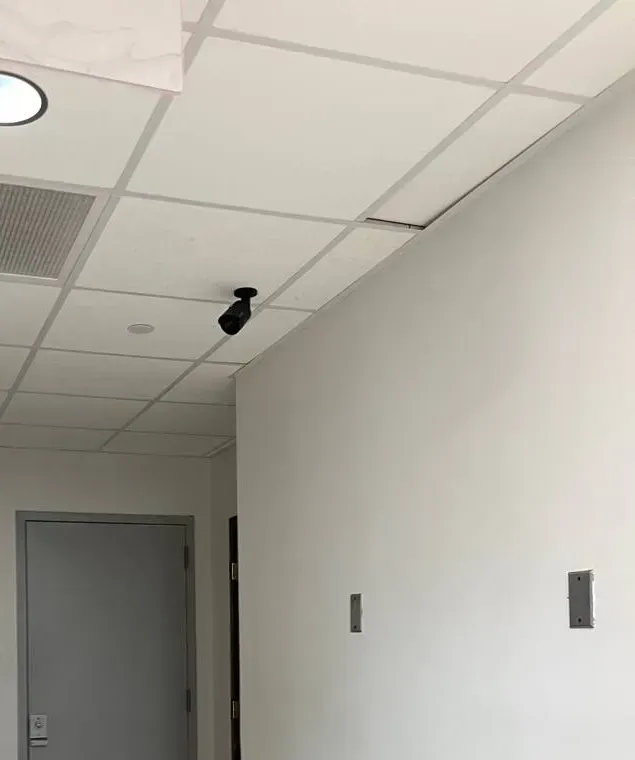
Those two features, the sunken garage and the den behind it, change the burglar alarm. On a typical Canarsie row the garage door is the largest opening in the house, it faces the street, and it is lower than the sidewalk, out of the line of sight of anyone walking past. Behind it, often through a single hollow door, is a finished room that leads to the stairs. Many alarms installed in these houses decades ago covered the front door at the top of the stoop, the back door and a motion detector in the hall, and nothing at the garage at all. We still find houses where the overhead door has no contact, the door from the garage into the den has no contact, and the den has no motion detector, which means the easiest way in is also the one the alarm cannot see.
The basement is the second issue. City Planning found that many basements and cellars in Canarsie have been converted into rental units, and that a lot of them sit below the flood elevation the city now uses for design. During Sandy, according to the same report, blocked sewers backed up and residents described up to seven feet of water in their basements; almost 30 percent of the households inspected said the whole basement level flooded. City Limits reported in December 2012 that thousands of Canarsie residents had one to six feet of water in basements and first floors, and quoted a Paerdegat Street homeowner whose niece rented his basement and “lost all her stuff.” Alarm panels, backup batteries and communicators were very often in those basements, next to the boiler and the electric meter, because that is where the phone line came in. When the water rose, the alarm was among the first things to die.
The third issue is how houses here get broken into. A Brooklyn Paper report on a burglary spike in the 69th Precinct, written after the precinct’s 2009 totals were in, quoted the precinct commander saying thieves “like private houses where there’s a driveway and no car in the driveway,” and that they knock or ring first, then come back through a back window or door. About a quarter of those burglaries went through open windows or doors, with screens cut out. Another Brooklyn Paper roundup described a burglar on Avenue L near Remsen Avenue who climbed onto a barbecue grill to reach an unlocked bedroom window, between seven in the morning and six in the evening. CBS New York reported in January 2020 on a serial burglar who went through windows in Canarsie “at all hours of the day and night,” five times in about two weeks, and later tried to use a stolen card at East 103rd Street and Avenue N. Windows at the back, a house that looks empty, and doors nobody can see from the street: that is the pattern an alarm has to answer.
Many Canarsie owners also want a camera over the driveway or the backyard by the end of the first conversation, and the two systems work best when they are planned together: the alarm decides that something is wrong, and a camera clip shows what it was. We describe camera work on our Canarsie security camera installation page, and both can be wired on the same day.

The repair calls we get from Canarsie have a local flavor. After a heavy rain, a panel or keypad in the basement starts beeping because water reached its transformer or its battery, or because a wired zone in the cellar shorted. A garage zone shows open all the time because the overhead door has settled and the contact no longer meets its magnet, so nobody can arm the system without bypassing it, and before long nobody arms it at all. An app reports the system offline because the old communicator still depends on a landline that was cancelled years ago, or on a 3G cellular radio that stopped working when the carriers switched those networks off. And a siren keeps restarting because a sensor on a back door near the deck is wet or loose.
Call (347) 934-8335, tell us the brand on the keypad, what the display or the lights show, and whether the equipment is in the basement. If water is still standing near the panel, switch nothing on or off at the panel itself; wait for us. If the siren is sounding and you cannot silence it, most systems stop on their own when the programmed siren time ends, and New York City’s Administrative Code requires a building burglar alarm to be able to terminate within fifteen minutes of activation, so a siren running past that needs attention the same day. We work on most panels, including ones another company put in, and if a flood-damaged panel is not worth reviving we say so before any billable work starts.

Each service below is priced on its own line so the quote is easy to read, but a typical Canarsie house with a garage and a basement apartment ends up using four or five of them on a single panel.
A heavy-duty contact on the overhead garage door, a contact on the door from the garage into the den or the stairs, and a motion detector in the room behind the garage, all on their own zone so the household can tell from the app which door opened.
Panel, backup battery, cellular communicator and siren moved out of the basement to the first floor or higher, with only sensors left below. Old basement panels are retired or stripped to a junction box.
A separate alarm area for the household living downstairs, with its own keypad or fob and its own app login, so the owner upstairs and the tenant below each arm only their own space while the shared doors protect both.
Water sensors at the floor drain, beside the boiler and water heater, under the laundry and at the lowest corner of the basement, plus a temperature sensor where pipes run along an outside wall. Alerts reach the owner and, if wanted, the basement tenant.
Contacts on every window a person could reach from a deck, a grill, an air-conditioner cage, a fence or a sunken yard, glass-break detectors for rooms with sliding doors, and outdoor motion detectors aimed down side alleys.
Gate contacts, back-door and roof-hatch contacts, interior motion that catches a person who comes through a wall rather than a door, a hold-up button at the counter, and opening and closing reports for Avenue L, Rockaway Parkway and Remsen Avenue businesses.
Where the door and window wiring in an older house still tests good, a new panel and cellular communicator go onto the existing wires, which keeps walls closed and costs less than a full install.
Self-monitoring through the phone app, or a central station plan from our partners with no long-term contract, plus video clips from a driveway or backyard camera when a zone trips.
Wet or corroded sensors, garage contacts out of alignment, motion detectors aimed at a heating vent, sirens with no timeout, dead batteries and communicators that went silent when the old networks shut down.

City Planning sorts Canarsie’s housing into a handful of types, and each one asks for a slightly different alarm. These are the ones we meet most, with the parts of each house that matter most for intrusion and water.
Lots twenty to fifty feet wide and about a hundred feet deep, according to City Planning, with a side driveway and often a detached or attached garage at the back. Four exposed sides mean more windows to judge, side doors on the driveway and a yard that neighbors cannot always see into. Common on the blocks south of Avenue L toward Fresh Creek.
One shared wall and three open sides, frequently with a shared or paired driveway between houses. The side door on the driveway is often the family’s everyday entrance, so that is where the keypad belongs, and outdoor detectors have to be aimed to ignore the neighbor’s car on the other half of the drive.
Lots up to twenty feet wide, front yards that slope down one to four feet to a garage under the house, a den behind the garage and living floors above. The garage door, the door from garage to den and the den itself need coverage, and the panel must not sit in the den if water has ever reached it.
A separate household downstairs with a side or rear door of its own. Their door and windows are part of the building’s perimeter, so the alarm design has to protect the tenant’s space and the owner’s floors without handing either household the other’s code.
The strip between Remsen Avenue and Rockaway Parkway predates the postwar building boom. Forgotten New York’s June 2026 walk noted attached wooden houses covered in siding on East 95th Street, low bungalow-style houses on eastern Conklin Avenue and the odd Italianate house south of Bedell Lane. Thin walls and irregular framing push these toward wireless sensors.
From the Seaview Estates condominium, which Wikipedia describes as a gated complex of five buildings completed in 2003, to the NYCHA towers at Breukelen and Bay View and the large middle-income developments nearby. Owners and renters here want an alarm inside their own unit that reports to their own phone and needs no building wiring.

Stand on almost any block of attached houses between Rockaway Parkway and Fresh Creek and look down. City Planning’s report on Canarsie describes it plainly: front yards that slope down one to four feet to a garage, a layout that came out of older zoning rules that encouraged “a garage at the front with a recreation room behind it.” The garage door sits below the level of the sidewalk, partly screened by the stoop and the low front wall. A person standing at that door is hard to see from the street and almost impossible to see from the houses across the way. For a burglar that is a gift: a large door, out of view, that opens into a finished room with a door to the rest of the house.
The protection we put on this end of the house has three layers. First, a contact on the overhead door itself, of the heavy-duty kind made for garage doors, with a gap tolerance wide enough that a door that rattles in the wind does not cause false alarms. Second, a contact on the door from the garage or den into the house, which on most of these houses is an ordinary interior door with no deadbolt. Third, a motion detector covering the den or the garage interior, so that even if the inner door was left open, or the intruder comes through the overhead door and simply waits, the alarm knows a person is moving where nobody should be. The three are grouped into one zone label in the app, “garage level,” so the owner can see at a glance which end of the house was involved.
Two refinements come up often. Families who use the garage door every day, to bring a car down or to take out the bins, find it annoying when the alarm treats every opening as an event, so we program the garage contact with its own entry delay and pair it with the garage opener so the system knows when the door was opened by the household’s own remote. And where a driveway is shared with a neighbor on a semi-detached pair, any outdoor motion detector over that driveway is pointed at the garage face and the side door, not across the whole drive, so that the neighbor coming home at midnight does not send an alert.
| Zone | Device | Alarm area | Notes |
|---|---|---|---|
| Overhead garage door | Heavy-duty surface contact | Owner | Own entry delay; paired with the opener remote |
| Garage to den door | Recessed contact | Owner | Usually no deadbolt, so it matters |
| Den or garage interior | Pet-tolerant motion detector | Owner | Aimed away from the furnace and vents |
| Front door at top of stoop | Recessed contact | Owner | Keypad inside if this is the everyday door |
| Back door to deck | Recessed contact plus glass-break if there is a slider | Owner | Deck rail and grill make nearby windows reachable |
| Basement side or rear door | Recessed contact | Basement unit | Tenant arms and disarms with their own code |
| Basement windows | Wireless contacts | Basement unit | Mounted above the water line seen in past storms |
| Floor drain and boiler | Water sensors | 24-hour, both areas | Alerts both households; never silenced by disarming |
| Upstairs hall | Motion detector | Owner | Armed only in Away mode |

For decades the basement was the natural home of a burglar alarm. The phone line came in there, the electric panel was there, and nobody minded a metal box on the cellar wall. In Canarsie that habit ran into the water. City Planning’s 2017 report says Sandy’s flooding came in through the Fresh Creek and Paerdegat Basin inlets and reached five to seven feet above grade, that blocked sanitary sewers caused backups, and that about one-third of residents in the study area reported damage, nearly all of it from flooding. The report also notes that many homes keep critical systems such as heaters in cellars and basements below the design flood elevation, and suggests that homeowners consider elevating them.
An alarm is a critical system in exactly that sense, and it is easier to elevate than a boiler. The panel itself, the backup battery, the cellular communicator and the main siren together fit in a space smaller than a kitchen cabinet. We move them to the first floor, usually inside a coat closet or a utility closet near the door the family uses, or higher still where the first floor itself is low. Only sensors stay in the basement: door and window contacts, a motion detector, water sensors. If the basement floods again, those devices may need replacing, but the system keeps running, keeps reporting and keeps the upstairs protected, and it can tell the family exactly when water arrived.
How high is high enough depends on the block. City Planning gives base flood elevations in Canarsie’s residential areas of roughly one to six feet above grade, higher only in small pockets along Fresh Creek and Canarsie Park, and design flood elevations that vary by zoning district. We do not survey flood elevations; that is a job for an engineer or the flood maps. What we do is ask where water reached in 2012 and in later storms, look for stains and replaced drywall, and put the alarm’s core well above the highest mark anyone in the house remembers, and above the design elevation if the owner knows it.
Wiring is the other half. A wired sensor in a basement that floods can short the zone it is on, and in older panels a shorted zone can make the whole system misbehave. Where a basement has a history of water, we put basement sensors on their own zones or use wireless sensors mounted high on walls and door frames, keep cable junctions off the floor, and leave a drip loop wherever cable comes down a wall. Water sensors themselves go at the floor, of course; that is their job. Their battery-powered transmitters sit on the wall above, connected by a short lead, so the part that sends the signal stays dry while the probe gets wet.

Two warnings from Canarsie police officers, each reported by Brooklyn Paper, describe the same routine. In one, an officer at a community meeting at the Hebrew Educational Society on Seaview Avenue explained that “people knock on the door and they ask for a fictitious name to see if you’re home,” with the burglaries then concentrated in the East 80s south of Avenue M. In the other, the precinct’s commander described daytime burglaries, mostly between about ten in the morning and two in the afternoon, in which thieves ring or knock, leave, and return through a back window or door, and said they favor private houses with a driveway and no car in it. About a quarter of those cases involved open windows or doors, and screens were simply cut.
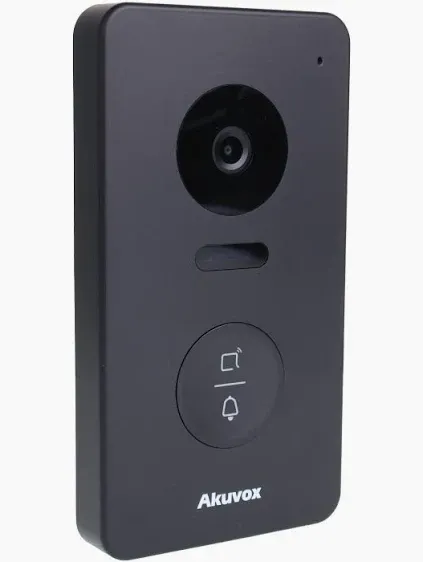
An alarm cannot put a car in the driveway, but it can change what the knock achieves. A video doorbell or door station at the front door lets the household answer from work, so the knock gets a voice instead of silence. An alarm that is armed every weekday morning, which is easy only when arming is easy, turns the return trip through the back window into an event within seconds. And an app that sends a notification when the house is still disarmed at a set hour, or when the last phone leaves the area without arming, closes the gap that most alarm owners admit to: the system was there, but nobody set it that day.
The back of a Canarsie house also has more climbing aids than people notice. One Brooklyn Paper roundup described an intruder on Avenue L near Remsen Avenue who climbed onto a barbecue grill to get into an unlocked bedroom window. Decks, grill stations, air-conditioner cages, fences, sheds and the roof of a rear extension all put second-floor windows within reach, and where the backyard sits below grade, as City Planning says many do, a first-floor window may be at head height from the yard but at hip height from the deck. The survey therefore happens from the yard as well as from inside.

City Planning’s report says plainly that many Canarsie basements and cellars have been converted into rental or residential units. A FEMA specialist quoted by City Limits after Sandy put the human side of it bluntly: “There is an overlap between immigrants and basement dwellers.” Whatever the legal status of a given unit, which is outside what an alarm installer decides, the practical situation is the same: two households, one building, one set of outside walls, and very different exposure. The downstairs household is the one with the most to lose in a flood and often the least say over the building.
The alarm design we use gives the basement its own area. The tenant’s door and windows report to that area, the tenant gets a code or fob that arms and disarms only their space, and the tenant’s alerts go to the tenant’s own phone. The owner’s floors are a second area with the owner’s codes. Shared items, such as the water sensors, any smoke and carbon monoxide detectors tied into the system and a door between the basement and the main house, are set up so that both households are told when they trip. Nobody needs the other’s code, and nobody’s daily routine sets off the other’s alarm.
Put the system in test mode, or tell the monitoring station you are testing. Pour a little water on each basement water sensor and confirm the alert reaches every phone that should get it, including the basement tenant’s. Check the battery report in the app for every wireless device. Make sure the backup battery for the panel is less than about three to five years old; if the app shows a low-battery or AC-loss history, replace it now rather than in the dark.
Move anything stored on the basement floor around the water sensors so they are not blocked. Charge the phones that receive alerts. If the basement tenant is leaving for a relative’s home, agree who will watch the app. Do not unplug the alarm’s transformer to protect it; the panel’s battery is designed to carry the system through an outage, and an unplugged system cannot warn you about water or a break-in during the storm.
If water reached any alarm device, assume it needs checking. Wet contacts and detectors can corrode and fail days later, and a panel or transformer that was submerged should not be powered up until it has been looked at. Call us before resetting a flood-damaged system, photograph any equipment that was underwater for the insurance claim, and ask your insurer what documentation they want for alarm parts. Once the basement is dry, we replace what failed and move anything that was low to somewhere higher.

The NYPD’s own description of the 69th Precinct names three commercial strips: Avenue L, Rockaway Parkway and Remsen Avenue. City Planning adds Flatlands Avenue and counts more than 400 retail properties along these corridors, in buildings of one to three stories, and notes that the corridors sit outside the floodplain and came through Sandy with little damage. That makes the stores a different problem from the houses: not water, but walls, gates, back doors and quiet hours.
One of the three commercial strips the precinct names, in the one- to three-story commercial and mixed-use buildings City Planning describes along the corridor. Brooklyn Paper once reported a butcher shop on Avenue L near East 93rd Street whose front door was forced after midnight and whose safe was jimmied open. Front glass, the safe and the door all need a sensor that reports quickly.
The street that leads from the L train terminal at Glenwood Road south toward Canarsie Pier, lined with shops, offices and fast food. Brooklyn Paper reported a cellphone store near Flatlands Avenue broken into at about 3 a.m. by men who smashed through the wall with a sledgehammer they had taken from a shed on Conklin Avenue. Forgotten New York notes the 1927 Jerry Building near the subway entrance.
Older and more mixed: shops, houses and, as Forgotten New York observed in 2026, auto repair and tire shops among the residences, plus PS 114 at Glenwood Road. Repair businesses here have overhead doors, cars left overnight and outdoor lots, which call for door contacts sized for roll-up doors and motion coverage of the bays.
Medical offices, churches, funeral homes and stores, including the Holy Family Church at Rockaway Parkway and a medical center between East 94th and 95th Streets, per Forgotten New York. Offices that keep patient records or medication need an alarm that reports by cellular and logs who disarmed it each morning.
Smaller clusters of shops near the parks and the developments by the water. Brooklyn Paper reported a laundromat near East 95th Street whose metal gate was raised before its back door was forced, around the same night as the Avenue L butcher-shop break-in.
Canarsie Plaza on Avenue D, which Wikipedia says opened in 2011 with about 278,000 square feet of retail, and the Brooklyn Terminal Market beside it, which sells plants, trees and produce. Tenants there usually have landlord or mall rules on alarm wiring, so we start with the lease.

Usually the garage. It is the largest opening, it sits below the sidewalk where passers-by cannot see it, and the door from the garage into the den is often a light interior door. We put a heavy-duty contact on the overhead door, a contact on the den door and a motion detector in the den, so any of the three tells the alarm. The front door at the top of the stoop still gets a contact, but it is rarely the weakest point on these houses.
Exactly as if it were still a garage. A bolted or fixed overhead door can still be forced, and a room with a sofa behind it is no less an entrance. The overhead door gets a contact, the room gets a motion detector, and if the door no longer opens at all we program it with no entry delay, so any movement of that door is an instant alarm rather than a countdown.
Only if it is aimed carelessly. Outdoor detectors have narrow, adjustable patterns; we point the one over a shared drive at your garage face and side door, not across the drive, and set it to need a person-sized target. Where a camera covers the drive too, we draw its detection zone around your doors only. The neighbor’s car becomes background.
Yes. A water sensor on the garage floor just inside the overhead door, set as a 24-hour zone, reports the moment water crosses the threshold, whether the alarm is armed or not. It will not stop the water; clearing or improving the drain is a job for a plumber. What it buys is time to move a car or lift boxes off the floor before the den behind the garage takes water too.
It can watch for the result. A water sensor clipped just below the rim of the sump pit, or a high-water float switch wired to a spare alarm input, sends an alert when the level rises past the point the pump should hold it. Many pumps also stop when the power goes out, so the panel’s own power-loss alert is a useful second warning. The pump itself stays the plumber’s responsibility.
The tenant first, because it is their home. We set the basement as its own alarm area: their door and windows, their code, their alerts. A break-in alarm in that area can also notify the owner, since it is the same building, but day-to-day arming and disarming stays private to the tenant. Water and smoke alerts go to both households.
It can make sure the house is never actually unguarded. Easy arming at the door you leave by, a reminder on your phone if the system is still off at nine, and arming from the app if you forgot. A video doorbell lets you answer the knock that comes first, so the house does not sound empty. And interior motion means a return trip through a back window is reported within seconds.
Sensors react in under a second. The minute that matters is what happens next: an alert on your phone and, if you monitor, a call from the central station, plus a siren that ends a quiet search of the bedrooms. The catch is the open window: a contact on a window that was already open behind a screen does not report. That is why we pair window contacts with motion detection and set the system to warn when a protected window is open at arming.
Usually a little. A corner house has a whole side wall of windows that passers-by can study and a side yard that often has its own gate and door. We add contacts to the side windows that can be reached from the yard, cover the side door like a front door, and aim any outdoor detector along the side yard rather than at the sidewalk, so foot traffic on the cross street does not trigger it.
An interior motion detector. Door and gate contacts protect openings; a wall breach skips them entirely. We cover the sales floor, the stockroom and the office with motion detectors, add a shock sensor on the safe, and set the motion zones to alarm immediately, with no entry delay, when the store is armed.
When the gate moves. A gate contact that reports instantly, with no delay, gives the owner or the monitoring station a warning before anyone is inside. During business hours the gate zone is simply disarmed with the rest of the system, so it causes no trouble while the shop is open.
Yes, in layers. Overhead bay doors get roll-up door contacts, the bays get motion detectors that ignore the cars’ cooling engines once they have settled, the office gets its own zone, and the lot is covered by cameras whose person detection sends a clip to the owner’s phone. Outdoor alarm detectors can watch the lot too, but cameras usually give fewer false alerts outdoors.
The gate controls who enters the complex; it does not watch your door, your windows or a ground-floor patio, and it cannot warn you about water or smoke inside the unit. A small wireless system with door contacts, a motion detector and a water sensor under the sink reports to your phone wherever you are, needs no building wiring and comes with you if you move.

Wired zones for doors and basement windows reachable from open joists, wireless for upper floors and finished rooms. Brands we install include Honeywell, DSC, Qolsys, Bosch, DMP and Napco, chosen by what suits the house and any wiring already in place.
Battery-powered sensors and a self-contained panel, right for condo units, apartments in developments and frame houses with thin walls. Batteries typically last years; the app warns well before one runs down.
Heavy-duty surface contacts with armored leads for roll-up and sectional doors, mounted out of reach of bumpers and set with enough gap tolerance to ignore a door that rattles in the wind.
Recessed contacts hidden in wood frames, surface contacts on steel doors and aluminum windows, and two-magnet setups for windows that need to stay open a few inches.
Pet-tolerant infrared detectors for dens, halls and stockrooms; acoustic glass-break detectors for rooms with sliding doors to the deck or large front windows.
Floor probes at drains, boilers, water heaters and laundry hookups, with the transmitter mounted above the floor on the wall, plus temperature sensors near pipes on outside walls.
A keypad at the door the family uses and one for the basement area, key fobs for anyone who dislikes codes, and app logins for each household member.
The link to your phone and to the monitoring station, independent of a landline or the home internet, so the alarm reports through outages and after the old networks were switched off.
An interior siren for the main floor, small sounders upstairs and in the basement unit, and an optional exterior siren and strobe, all programmed to stop within the City limit.
| Question | ADT and similar national dealers | Ring or SimpliSafe kits | AESS |
|---|---|---|---|
| Garage overhead door covered? | Depends on the package and the dealer | Standard kit contacts are sized for doors and windows; an overhead door usually needs a separate heavy-duty contact | Heavy-duty contact plus den motion as standard on these houses |
| Separate area for a basement household? | Possible on some panels; often not offered | One household per system in normal setups | Separate area, codes and alerts for the basement unit |
| Panel kept above flood level? | Placement up to the installer | Base station goes wherever the owner plugs it in | Core equipment moved to the first floor or higher as a rule |
| Contract | Often a multi-year monitoring agreement | No contract; optional monthly plans | No long-term contract; monitoring at $30 a month (keypad) or $45 a month (with the app) if wanted |
| Licensed installer on site | Yes, through the dealer | Self-installed unless you hire someone | Yes, NYS license #12000287431 |
This is a general comparison of how these options usually work, not a review of any particular company’s current offer. Ask any provider the same five questions about your own house.
These are the generic claims that turn up again and again in automated answers and cost guides about home alarms, set against what the houses and the record in Canarsie actually show.
As a starting rule for a colonial on a suburban lot, it is fine. In Canarsie it leaves out the opening that matters most on thousands of houses: the garage at the bottom of a sloping driveway, below the sidewalk and out of sight, with a den behind it. City Planning describes that layout as typical of the attached rows built under older zoning, and it is common on detached and semi-detached houses too.
A plan that covers the front door at the top of the stoop and ignores the garage protects the door burglars are least likely to use. A plan built for Canarsie starts at the garage level: the overhead door, the inner door and a motion detector in the room behind them.
The “ground-floor windows” part needs adjusting too. With backyards below grade and decks behind most houses, which windows count as ground floor depends on where you stand. The survey has to happen from the yard.
That advice made sense when the phone line and the electric service came in at the cellar wall. City Planning reports that Sandy pushed water five to seven feet above grade in parts of Canarsie, that residents described up to seven feet of water in basements, and that many homes keep critical systems below the design flood elevation.
A panel and battery under water stop working at the very moment a household most needs to know what is happening. A cellular communicator removed the reason to keep the panel near the phone line years ago.
In Canarsie we treat the basement as a place for sensors only. The core of the system goes on the first floor or higher, and water sensors below report the first sign of trouble.
Night arming is worth doing, but the burglary pattern police described to Canarsie residents runs the other way. The precinct commander quoted by Brooklyn Paper put most burglaries between roughly ten in the morning and two in the afternoon, at houses where the driveway is empty, after a knock to check that nobody is home.
CBS New York’s 2020 report on a serial burglar in Canarsie said the break-ins came through windows at all hours. The safe assumption is that an empty house is a target at any time, and that weekday daytime is when many Canarsie houses are emptiest.
The practical answer is making daytime arming so easy that it happens every day: a keypad at the side door, reminders on the phone and arming from the app on the way to the train.
Ranges like that blend everything from a two-sensor kit to a large hardwired system and add monitoring fees that are not required. On our Brooklyn list, which Canarsie pays with no surcharge, a basic residential system starts at $600, complete home protection starts at $2,500 and custom hardwired full-property systems run $2,000 to $6,000.
Replacing an old panel onto wiring that still tests good costs $800 to $1,500, which suits many postwar houses here whose original contacts are fine but whose landline communicator is dead. Monitoring through our partners is $30 a month (keypad) or $45 a month (with the app) and is optional, with no long-term contract.
What raises a Canarsie price is the house, not the ZIP code: the number of reachable rear windows, a garage level, a second alarm area for a basement unit and the number of water sensors.
Wireless sensors are excellent upstairs, in finished rooms and in condo units. But many Canarsie houses have unfinished basements with open joists, where running cable to the first-floor doors and the garage takes little time and gives sensors that never need batteries.
Wireless also has a weak spot in flood-prone basements: a transmitter mounted low gets soaked. Where a basement has taken water, we either mount wireless transmitters high or use wired sensors on their own zones so a wet device cannot drag down the rest of the system.
The usual answer in Canarsie is hybrid: wired where the basement makes it easy, wireless where walls are finished, with every piece of core equipment above the flood line.
Smoke and carbon monoxide detectors that report through a burglar alarm are a useful second channel: the local sounder wakes the house and the alarm notifies whoever is away. They do not turn a house alarm into a code fire alarm system, and they do not replace detectors that housing rules require.
The New York City housing agency sets detector requirements for multiple dwellings and for non-owner-occupied one- and two-family homes with fuel-burning appliances, which covers many Canarsie houses with a rented basement or second floor. Stores and multi-family buildings that need a real fire alarm system go through the fire code and the FDNY.
We wire monitored smoke and carbon monoxide detectors into house alarms all the time; we just describe them honestly.
In New York State, anyone who is in the business of installing, servicing or maintaining security or fire alarm systems needs a license from the Department of State under General Business Law Article 6-D, according to the Department’s guidance. Owners working on their own property are exempt, which is why a self-installed kit is legal.
Hiring someone else is different. A person who installs alarms for pay without that license is breaking state law, and an insurer or a lender may ask for the installer’s license number.
Ask any installer for the number before work starts. Ours is 12000287431, and we send a certificate of insurance on request before the first visit.
One photo of the house from the sidewalk, showing the driveway and garage, and one of the back from the yard. Tell us who lives in the basement and whether water has reached it. A technician calls back the same working day.
A semi-detached house off Avenue L, a row house with a front garage near Seaview Avenue, a repair shop on Remsen Avenue: a few lines about the property are enough to start, and the written price from the Brooklyn list follows the visit. Rather talk? (347) 934-8335.
Your details are with our Brooklyn dispatch, and someone will ring before the end of the working day. If the alarm is sounding right now or water is rising around the panel, phone (347) 934-8335.
Seven steps, the same for a condo unit and a two-family with a rented basement. The Canarsie-specific work happens in steps two and four: the yard walk and the decision about where the core of the system goes relative to past water.
You send a picture of the house from the sidewalk, showing the driveway and garage, and one of the back from the yard, and tell us who lives in the basement and whether water has reached it.
A technician walks down the driveway to the garage, around the back to count reachable windows from the deck and yard, and into the basement to read the walls for past flooding.
Garage level, main floors and any basement apartment go on paper as separate alarm areas with their doors, windows and water points, and the written Brooklyn-list price follows, usually the same day.
Panel, backup battery, cellular communicator and main siren go on the first floor or higher, on a circuit the owner approves; any old basement panel is retired or reduced to a junction box.
Cable runs along the joists to first-floor doors and the garage, never along the floor; finished rooms and upper windows get wireless contacts; basement sensors go on their own zones.
Owner and tenant areas are programmed separately, water probes become 24-hour zones that ignore disarming, sirens are capped under fifteen minutes, and then every door, window, detector and probe is set off once to prove it reports.
Owner and basement tenant are shown their own codes, the app and the storm-season water test, with the steps left in writing; a return visit a few weeks later fine-tunes the garage contact, entry times and any sensor that misfired.
Twice a year, put the system in test mode, open the garage door and each outside door and watch them register, walk past each motion detector, wet each water sensor and confirm the text arrives on every phone that should get it, and look at the battery report. Remove codes for anyone who no longer needs one: a former tenant, a contractor, a relative who moved away. It takes a quarter of an hour and saves the false alarm at three in the morning.
People in Canarsie give directions by these places, so we use them too: “two blocks from the precinct,” “by the pier exit,” “behind the station loop.” None of them is a client of ours; they belong to their own agencies, congregations and owners.
At the foot of Rockaway Parkway on Jamaica Bay, built in 1926 and now part of Gateway National Recreation Area’s Jamaica Bay Unit, run by the National Park Service (Wikipedia; NPS).
The ground-level terminal of the L at Rockaway Parkway and Glenwood Road, opened in 1906, with bus bays for six routes beside the platform (Wikipedia).
9720 Foster Avenue. The NYPD describes its area as mainly residential, with commercial strips along Avenue L, Rockaway Parkway and Remsen Avenue.
The firehouse at Rockaway Parkway and Farragut Road, home of Battalion 58; Forgotten New York dates the building to 1908.
Parkland south of Seaview Avenue in two sections, with a skate park, a cricket field and a nature trail added during a renovation in the 2000s (Wikipedia).
At Remsen Avenue and Avenue K, once owned by the Remsen family, later by the town of Flatlands and the City, and bought by Cypress Hills in 2010 (Wikipedia).
We also cover the neighborhoods around Canarsie, each on its own page: Flatlands, Bergen Beach, Mill Basin, East Flatbush, Remsen Village, Brownsville, Spring Creek and Starrett City.
Canarsie is billed at the Brooklyn base list, the same as the rest of the borough. There is no surcharge for a flood-zone address, a basement unit or a garage level; those simply add sensors. The figures below are the published AESS Brooklyn alarm prices. Sales tax is added. Jobs under $500 are paid in full; larger jobs take a 50% deposit once the visit has fixed the price in writing, with the balance on completion.
| Item | Brooklyn price | Where it fits in Canarsie |
|---|---|---|
| Basic residential system: panel, 4–6 door/window sensors, 1 motion detector, keypad, cellular communicator, monitoring setup | from $600 | A condo unit, a basement apartment or one floor of a two-family |
| Wireless system, typical range | $600 – $1,200 | Frame houses near Remsen Avenue and units where nothing can be drilled |
| Complete home protection: more sensors, glass-break, smoke and CO, sirens, app, camera-ready | from $2,500 | A whole house with a garage level and a separate basement area |
| Custom hardwired system, full-property coverage | $2,000 – $6,000 | Detached houses with open basement joists and many reachable windows |
| Panel replacement on existing wiring: panel, cellular communicator, keypad, programming | $800 – $1,500 | Postwar houses whose original contacts test good but whose landline panel is dead |
| Per-unit setup for landlords: door sensor, motion detector, monitoring | $400 – $800 per unit | Owners renting several apartments across Canarsie houses |
| Commercial alarm, standard small business | $1,500 – $3,000 | Stores on Avenue L, Rockaway Parkway, Flatlands Avenue and Remsen Avenue |
| Adding cameras to a business alarm | $1,000 – $2,500 | Video checks for a store or a repair-shop lot |
| Installing a customer-supplied kit | $200 – $400 | A Ring or SimpliSafe kit already bought |
| Central station monitoring through our partners | $30 a month (keypad) or $45 a month (with the app) | Optional; no long-term contract |
| Service visit outside warranty | $195/hr, 3-hr minimum ($585) | Reprogramming, other companies’ systems, post-flood checks |
We price from what we see at the house, not from a package sheet: garage level, rear windows, basement water history. The figure is written down before we leave, and you can talk it through with a technician by phone first.
Panel, four to six door and window sensors, a motion detector, keypad, cellular communicator, app setup and optional monitoring activation. Suits a condo unit, a rented basement on its own system, or the first stage of a whole-house plan.
Garage-level contacts and den motion, front, side and back doors, every reachable rear window, glass-break at the deck slider, a separate basement area, water sensors at the drain, boiler and laundry, smoke and carbon monoxide reporting, and the panel mounted above the flood line.
Commercial panel, gate and back-door contacts, roof-hatch contact, interior motion that catches a wall breach, safe sensor, hold-up button, opening and closing reports and a separate area for any apartment above. Cameras add $1,000 to $2,500.
If you already own a Ring, SimpliSafe or similar kit, we install and program it for $200 to $400 depending on the number of devices, mount the base station on the first floor rather than the basement, put sensors where a Canarsie house needs them, and tell you plainly if the kit cannot cover the garage door or a separate basement household. The 30-day warranty and optional paid extended plans cover parts AESS supplies; customer-supplied equipment keeps its maker’s warranty, and our workmanship is covered either way under the service agreement.
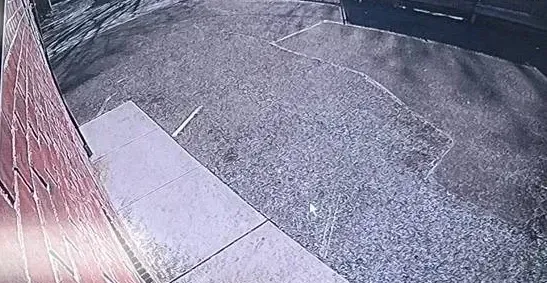
When the garage-level zone trips, a clip from the driveway shows who stood at the overhead door; see security camera installation in Canarsie.
Code fire alarm systems for mixed-use and multi-family buildings via Canarsie fire alarm installation.
Keypads, fobs and electric strikes for a side door, a basement entrance or a shop’s back door with access control in Canarsie.
Two call buttons at the front, one upstairs and one for the basement household, are set up under intercom installation in Canarsie; a dead existing buzzer goes to Canarsie buzzer repair.
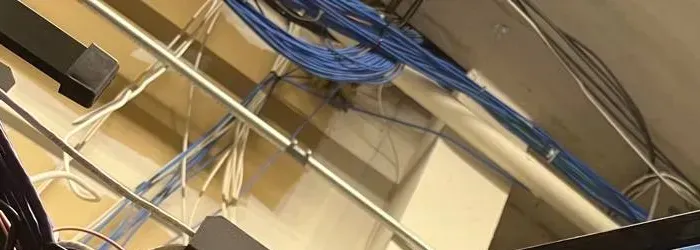
Cable runs up from the basement to a first-floor equipment closet, done while walls are open after flood repairs, via structured cabling in Canarsie.
Elsewhere in Brooklyn, start with Brooklyn alarm installation, or see home cameras in Brooklyn and Brooklyn smart locks.
The combination we install most often on a Canarsie house is an alarm with a garage level and a basement area, a camera over the driveway, and a door station that rings both households. Booked together, the basement cable work is done once.
This describes how we survey in Canarsie; it is not the story of any particular house. Before a technician decides where anything goes, he goes down to the basement and looks at the walls, not the ceiling. Floodwater leaves evidence that outlasts a renovation: a band of newer drywall along the bottom of every wall, a tide line on unpainted block, rust on the lower legs of the boiler stand, a water heater newer than everything around it, outlets moved higher than usual, a dehumidifier that runs all summer. He asks the family where the water stopped in 2012 and whether it has come back in heavy rains since, and he believes the walls if the answers are vague.
That line sets two things. Everything the system depends on goes well above it, which in Canarsie nearly always means the first floor. And every sensor that has to stay below it is chosen and placed knowing it may get wet: wireless transmitters high on frames, wired basement sensors on their own zones, water probes on the floor with their transmitters on the wall. Then he goes outside, walks down the driveway to the garage, and repeats the exercise at the back of the house from the yard. Only after both walks does he count sensors.
A whole-house system with a garage level, a separate basement area and water sensors usually starts at our complete home protection price of $2,500. Larger detached houses wired through open basement joists fall in the hardwired range of $2,000 to $6,000, depending on how many rear windows can be reached. The written figure is fixed after one visit, and sales tax is added.
They are itemized separately. Our published Brooklyn list does not carry a per-sensor price for water sensors, so the number of sensors and their cost appear as their own lines on your written quote after the visit, before any work starts. Most Canarsie basements need three or four.
Often it can stay. Where the old wiring from the doors and windows tests good, the old metal cabinet can be emptied and kept as a junction box, with a short cable run up to the new panel on the first floor. If it is rusted or sits where water reaches, it comes out and the wires are spliced higher on the wall.
Yes, provided the panel chosen today supports more than one area, which is how we set up Canarsie houses with basements. Adding the basement later means a keypad or fobs for the tenant, sensors on their door and windows, and programming time, priced as an addition to the original job.
It can. A single panel split into an upstairs area and a basement area reports under one central station account, and the station keeps a separate contact list for each household. The partner plan is $30 a month (keypad) or $45 a month (with the app) and can be cancelled.
A job under $500 is paid in full. Anything larger takes a 50% deposit after the visit, once the price is fixed in writing and you have agreed to it, and the balance is due when the system is installed and tested. Sales tax is added, and the full terms are set out in the service agreement.
All of them, at the same Brooklyn base list. Each neighboring area has its own page on our site, and the same technicians cover the whole of southeast Brooklyn from our Troy Avenue office.
Yes. The handover includes a short test: put the system in test mode, wet each water sensor and confirm the alert reaches every phone that should get it, including the basement tenant’s. We leave the steps in writing so you can repeat them each spring and fall.
This page sits under our Brooklyn alarm installation hub, which in turn sits under the New York City alarm hub. Every neighborhood page is researched on its own. Two more were rebuilt in the same batch as this one: alarm installation in Bushwick and alarm installation around Cadman Plaza.
Alarm installation in NYC (hub) · Brooklyn · Manhattan · Queens · the Bronx · Staten Island
Alarm installation on Long Island (hub) · Nassau County · Suffolk County
Alarm installation in the Hudson Valley (hub) · Westchester · Rockland · Orange County · Putnam · Dutchess · Ulster
Flatlands · Bergen Beach · Mill Basin · Marine Park · East Flatbush · Starrett City · East New York · New Lots
Canarsie cameras · Canarsie door access · Canarsie intercoms · Canarsie fire alarms · Canarsie cabling · Canarsie buzzer repair
Outside alarm work, Abstract Enterprises Security Systems also installs business cameras across Brooklyn, repairs intercoms in the borough and runs cabling for Brooklyn buildings. Whoever you hire for an alarm, ask for a license number and an insurance certificate first; ours are on the about page.
Every local fact, figure, rule and news item on this page was checked in October 2026 against the sources below. What carries no source is ours: the prices, which are the published AESS Brooklyn alarm list, and the descriptions of how we survey, design and install, which are our working practice and not claims about any particular building.
Where sources disagree, we say so. Wikipedia’s Canarsie article gives a 2020 population of 88,522 in its summary box and 92,227 in its demographics section, and City Planning’s 2017 report says more than 83,000 residents; this page avoids a single population figure for that reason. Forgotten New York says the subway has ended at Rockaway Parkway since 1920, while Wikipedia dates the station to 1906 and the conversion of the Canarsie Railroad to a subway line to 1928; we give only the station’s opening date. Wikipedia’s Canarsie article places Canarsie Plaza on Avenue D; we repeat that without an exact address.
Some sources could not be reached or found. A search of Reddit found one excerpt in which a commenter from Canarsie said most people there worry about property crime such as break-ins, and no thread about Canarsie alarms or basement flooding. We found no 2025 or 2026 reporting on Canarsie house burglaries that we could open in full, and several Brooklyn Paper items used here carry no year, which we note where we cite them. We found no primary source for a New York City burglar-alarm permit, so the page makes no permit claim.
Most Canarsie service calls come down to one part: a basement contact that got wet, an overhead-door magnet that drifted after the door settled, or a communicator stranded on a network that no longer exists. Phone (347) 934-8335 with the keypad brand and what it shows, and the technician usually arrives carrying the replacement.
Call or text the Canarsie line at (347) 934-8335; photos of the driveway, the basement and the yard are easiest to send by WhatsApp. Every quote, appointment and invoice comes from Abstract Enterprises Security Systems, 1282 Troy Ave, Brooklyn, NY 11203.
Our customers rate us 4.6★ across 390+ Google reviews. Installations are carried out under New York State license #12000287431, and if a lender, a condo board or a landlord needs to be named on a certificate of insurance, it goes out before the first visit.
Full terms — including 50% deposit, the 30-day warranty and optional paid extended warranty, and the late-fee schedule — are set out in the service agreement. See our warranty page.
Revision log, October 21, 2026: this page was rebuilt from scratch around the conditions that shape an alarm in Canarsie — postwar detached, semi-detached and attached houses with garages below the sidewalk and dens behind them; basements converted to apartments, many below the city’s design flood elevation, and the Sandy flooding recorded by City Planning; the daytime, empty-driveway, back-window burglary pattern described by 69th Precinct officers; and stores along Avenue L, Rockaway Parkway, Flatlands Avenue and Remsen Avenue. Prices are the published Brooklyn base figures.
Rebuilt alongside this page: Bushwick, Brooklyn alarm installation · Cadman Plaza, Brooklyn alarm installation