What are you looking for?
About Us Contact Us Careers Get a Free Quote (800) 486-0943
Pick a service
✅ Got Your Own System?
🎬 Home TheatreQuote đŸŽ¶ AV SoundQuote 🔑 Access ControlQuote
Now pick your area
Pick your area
Long Island
Hudson Valley
Services available
Pricing & Tools
Pick a service for pricing
đŸšȘ Intercom Pricing 🔔 Buzzer Repair Pricing
Calculators
đŸ“č Camera System Calculator 🚹 Alarm Calculator ⚡ Cabling Quote Builder ✅ Got Your Own System?
Select your area
Fire-escape window sensor chirping in a walk-up off Knickerbocker, or a shop siren on Myrtle that will not reset after closing? Bushwick line, same day: (347) 934-8335
Home â€ș Alarm Installation Brooklyn â€ș Bushwick
Walk-Ups With Fire Escapes · Frame Two- and Three-Family Houses · Factory Lofts Near Morgan Avenue · Storefronts on Knickerbocker, Myrtle, Wyckoff and Broadway

Alarm System
Installation in
Bushwick

Fire-Escape Windows Covered Without Locking Anyone In · Renter-Friendly Wireless Kits · Loft and Studio Zoning · Brooklyn Base Pricing

Bushwick is not one kind of building. On a single block you can find a six-family walk-up with a fire escape climbing its front, a vinyl-sided wood-frame house with a side alley, a brick factory turned into lofts and studios, and a corner store with apartments overhead. Each of those breaks in differently, and each needs an alarm laid out differently. In 2015, police figures reported by DNAinfo put Bushwick at the top of the city for burglaries, and the commanding officer of the 83rd Precinct pointed at doors and windows left unlocked and at buildings joined by fire escapes and rooftops. This page is about alarms built for those conditions: fire-escape windows that cannot take a keyed gate, shared roof doors, roommates with their own codes, open loft floors and storefronts under the elevated tracks.

  • Tap to call or send a 60-second request
  • New York State licensed and insured, with a written figure after one walk-through
  • Rated 4.6★ by customers across 390+ Google reviews

Reviewed and updated October 21, 2026, against Wikipedia’s Bushwick article, Brooklyn Community Board 4’s history of Bushwick, Forgotten New York’s Myrtle–Knickerbocker survey, Untapped Cities and Brownstoner on the Morgan Avenue loft blocks, NY1 on the Bushwick Collective, New York City Administrative Code § 24-238, the FDNY’s apartment fire-safety guide, New York General Business Law Article 6-D as published by the Department of State, and reporting from DNAinfo, CBS New York, News 12, Brooklyn Paper and Hoodline · Abstract Enterprises Security Systems, NYS license #12000287431 · crews leave from our Troy Avenue office in Brooklyn

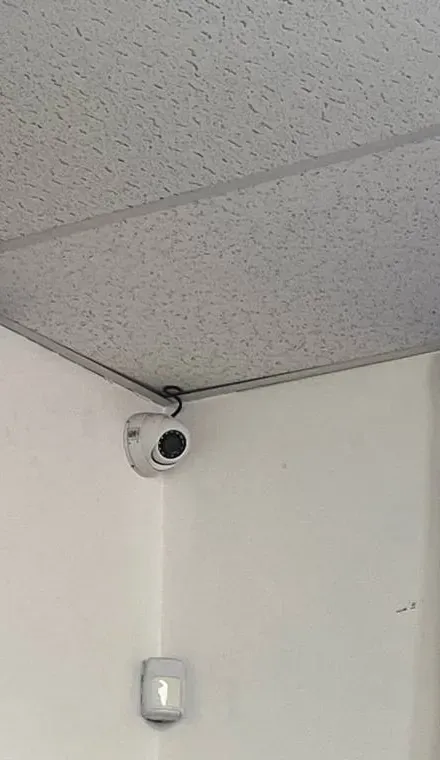
Bushwick, Brooklyn alarm installation reference: a white passive infrared motion sensor low on a pale corner wall, below a small white dome camera at a speckled drop ceiling
Photo from our job library, not taken in Bushwick: a wall-mounted motion detector in a room corner with a dome camera above it. In a shared Bushwick apartment a detector like this belongs in the hallway, never in a bedroom.
Bushwick Alarm Request
Walk-up apartment, frame house, loft, studio or storefront — tell us what the windows open onto

✅
Request Sent!
A technician will phone you about the Bushwick address before the end of the working day.
25+
Years Experience
✓
Same-Day Estimates
100%
Licensed & Insured
4.6★
390+ Google Reviews

Three facts let us price most Bushwick alarms before anyone visits. What does each window open onto: a fire escape, a rear yard, an alley, a neighbor’s roof, or a sheer drop? Who controls the doors you pass through on the way in: you alone, a landlord, a building full of tenants, or a loft association? And do you own the walls, or do you rent them and need to leave them as you found them? Text the answers to (347) 934-8335, together with a photo of the window that worries you most and a photo of the door you come in by. In most conversations we can say which sensors fit, whether the system can come out cleanly at the end of a lease, and where the job lands on the published Brooklyn price list.

  • Texted photos and questions cost nothing; the clock starts only once a technician is at your door
  • Work done under New York State license #12000287431 (General Business Law Article 6-D), with a certificate of insurance sent in advance if a landlord, managing agent or loft association asks for one
  • Monitoring is your call: alerts to your own phone, or a professional station on a plan you can drop when you move
The Neighborhood

Why Bushwick Properties Need Alarm Installation

Bushwick covers about 1.83 square miles of northern Brooklyn. Wikipedia’s article puts Ridgewood, Queens, on its northeast side, Williamsburg to the northwest, Bedford-Stuyvesant to the south and southwest, and the cemeteries of Highland Park to the southeast; the community board that represents it, Brooklyn Community Board 4, runs from Flushing Avenue to Broadway and from the Queens line to the Cemetery of the Evergreens. The 2020 census counted 120,741 people across the two tabulation areas that make up the neighborhood. The same article puts the density at about 66,000 people per square mile, which in practice means many households sharing each building, each street door and each fire escape.

The buildings tell the story of how the neighborhood filled in. Community Board 4’s own history describes two- to six-family houses built throughout the area, large apartment houses appearing in the 1920s, and a street of mansions along Bushwick Avenue built between 1880 and 1913 for brewers and doctors, followed by the Irving Avenue area. Wikipedia adds that many early houses were wood-frame, quoting the New York Times of the mid-1960s calling Bushwick “a neatly maintained community of wood houses.” By 1890, a stretch nicknamed Brewer’s Row held 14 breweries in 14 blocks, and the brewing and manufacturing that followed left behind the brick factories and warehouses that, from the 1990s on, were turned into lofts, studios and offices around the Morgan Avenue L station.

For an alarm installer, that mix matters more than any single statistic. A walk-up apartment building of five or six stories usually has a fire escape on the front or rear, a roof door or hatch at the top of the stair, and a street door that every tenant and every delivery driver opens. A wood-frame two- or three-family house has light, hollow walls, a front porch or stoop, a side alley and often a rear porch or deck. A converted factory loft has tall steel-sash windows, a freight door or elevator and a shared lobby that may or may not be staffed. A storefront on Knickerbocker or Myrtle has a rolling gate in front, a back door into a yard or hallway, and a roof that connects with the roofs next door. A design that suits one of these buildings is often wrong for the others.

The local break-in record points at the same weak spots. In December 2015, DNAinfo reported that Bushwick had logged 441 burglaries so far that year, the most of any neighborhood in the city, ahead of East New York and Williamsburg. The 83rd Precinct’s commanding officer at the time, Deputy Inspector Maximo Tolentino, blamed doors and windows left unlocked, and the article described Bushwick’s row houses and small apartment buildings as linked by fire escapes and connected by rooftops, which makes it easier for an opportunistic thief to move between them. A 2013 DNAinfo report described two burglars climbing into a Bushwick apartment through its kitchen window in the middle of a weekday and leaving with a television, a printer, a computer and jewelry. In March 2017, CBS New York reported an intruder entering a third-floor bedroom near Irving Avenue through a window reached by the fire escape. And in July 2026, Hoodline, citing police reports to CBS New York, described a home invasion in a third-floor apartment near Pilling Street and Evergreen Avenue in 2025 that began at an unlocked kitchen window; the 83rd Precinct was still asking the public for information.

Businesses have their own history here. During the July 13, 1977 blackout, according to both Wikipedia and Community Board 4, the Broadway shopping district was looted and burned, and a year later 43% of its stores stood vacant, while store owners on Knickerbocker Avenue, many of whom lived nearby, protected their shops with their neighbors. The same night an arson fire at an abandoned factory at Knickerbocker and Bleecker destroyed four blocks and 45 homes. Bushwick’s commercial streets have long since come back, but the lesson stuck: a store is safest when someone knows the moment something is wrong. In January 2021, News 12 reported that at least three Bushwick businesses had been burglarized in a month, naming a shop on Knickerbocker Avenue. A modern alarm is how a shop owner who does not live upstairs knows at once.

None of this means Bushwick is unusually dangerous today; crime across all categories in the 83rd Precinct fell by 80.3% between 1990 and 2018, according to figures Wikipedia cites. It means the openings that matter are predictable, and an alarm should be designed around them rather than around a package. Most owners who call about an alarm also ask about cameras; we cover those on our Bushwick security camera installation page and can wire both on one visit.

Bushwick in six facts that shape an alarm design

  • 120,741 residents in the 2020 census on about 1.83 square miles (Wikipedia, Bushwick article).
  • Housing: six-family apartment buildings and two- and three-family houses, many of them wood-frame, plus Bushwick Avenue and Irving Avenue mansions from the decades around 1900 (Wikipedia; Brooklyn Community Board 4 history).
  • Police: the NYPD 83rd Precinct, 480 Knickerbocker Avenue (Wikipedia).
  • Commercial streets: Knickerbocker Avenue, Myrtle Avenue, Wyckoff Avenue and Broadway, with elevated lines built over Myrtle and Broadway from the 1880s (Wikipedia; Community Board 4).
  • Transit: the L along the Canarsie Line, the M on the Myrtle Avenue Line, the J and Z on the Jamaica Line, and the Myrtle–Wyckoff Avenues bus and subway hub, renovated in 2007 (Wikipedia).
  • ZIP codes 11206, 11207, 11221 and 11237; Brooklyn Community Board 4; FDNY Engine 277/Ladder 112 at 582 Knickerbocker Avenue and Engine 271/Ladder 124 at 392 Himrod Street among the firehouses (Wikipedia).
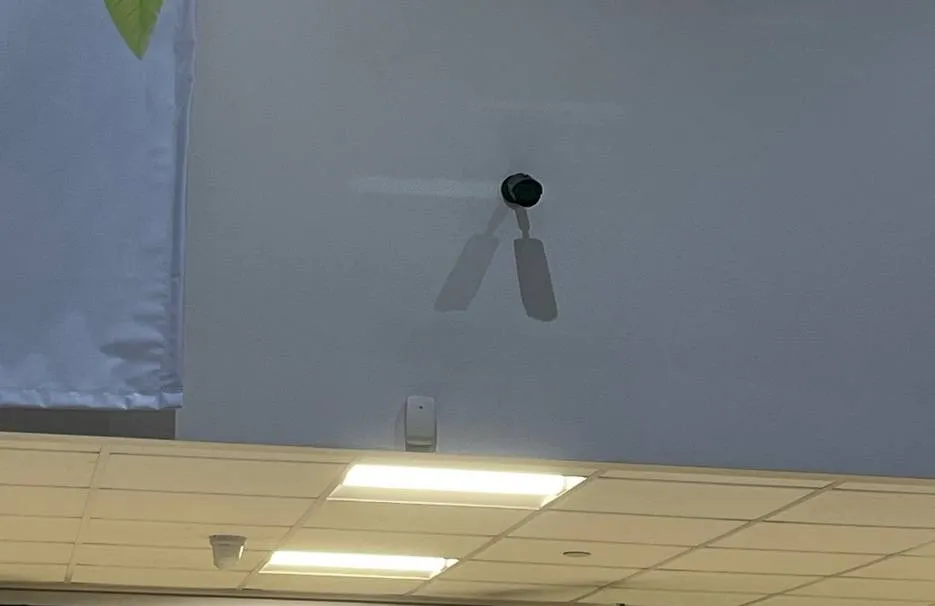
Bushwick, Brooklyn alarm installation reference: a small black camera high on a tall white wall casting two shadows, with a white motion sensor lower on the wall just above a lit drop ceiling
Photo from our job library, not taken in Bushwick: a camera high on a tall wall and, below it, a white motion detector at the ceiling line. Tall loft walls in former Bushwick factories call for the same thinking about height and angle.

Same-Day Alarm Repair in Bushwick: Chirping Sensors, Dead Keypads, Sirens That Keep Coming Back

Some calls are not about a new system at all. A walk-up tenant inherits a keypad from the previous renter and it beeps every few minutes. A loft’s panel has been showing a trouble light since the building changed internet providers. Most of these faults belong to a short list, and most are put right in a single visit of an hour or two. A steady chirp almost always means a weak battery in a wireless contact or in the panel’s standby battery, or a trouble condition such as lost AC power. A panel that says it cannot communicate usually has a communicator that lost its network, often a cellular radio that was never upgraded when the older networks were switched off, or an internet module that stopped talking after a router was replaced. A siren that keeps re-triggering usually comes from one sensor: a door that has dropped on its hinges so the magnet no longer lines up, or a motion detector aimed at a radiator, a window or a hanging plant.

Call (347) 934-8335, tell us the brand printed on the keypad or the panel door, read us what the screen shows, and say whether anyone else in the building uses the same system. Take the earliest arrival window offered. If the siren is sounding right now and you have no code, remember that New York City Administrative Code § 24-238 requires an audible burglar alarm on a building to be capable of shutting itself off, and to shut itself off, within fifteen minutes of being activated; a siren that runs past that needs attention the same day. If a panel is too old to be worth repairing, we say so before any billable work starts.

What We Install

Alarm Installation Services in Bushwick

The list below is broken out the way the work is priced, but a typical Bushwick job combines several lines on one panel. A renter on the fourth floor of a walk-up might need only the first two; a family in a frame three-family on a quiet side street might need five; a bar on Wyckoff Avenue needs a different five.

Fire-escape window protection

Contacts and glass-break detectors on every window that opens onto a fire escape, chosen so nothing interferes with the window as a way out. Where an FDNY-approved gate is already fitted, the gate itself can carry a contact so the alarm knows when it is swung open.

Removable alarms for renters

All-wireless panels, contacts and detectors held on with removable mounting strips or one or two small screws, a keypad by the apartment door and an app on every roommate’s phone. When the lease ends, the system comes down in an hour and goes to the next apartment.

Roof doors, hatches and skylights

A contact on the roof door or bulkhead hatch at the top of the stair, or on the skylight of a top-floor unit, for buildings whose roofs connect along the block. In multiple dwellings this is a conversation with the landlord first, because the roof door belongs to the building.

Frame-house alarms

Wired contacts fished through hollow walls where the frame allows it, wireless where siding or plaster makes that cleaner, and coverage for the side alley door, rear porch door and cellar entrance that a front-door-only kit leaves bare.

Loft and studio systems

Large open floors divided into zones by what is in them: the entry, the sleeping area, the work area, a storage cage. Freight-door and roll-up-door contacts, beam or curtain detectors along banks of tall windows, and separate codes for the people who share the space.

Store, bar and restaurant alarms

Rolling-gate floor contacts, glass protection tuned for elevated trains on Myrtle and Broadway, rear-door and roof-hatch contacts, a hold-up button where cash is handled and opening-and-closing reports, so an owner knows the last person out armed it.

Warehouse and workshop alarms

Overhead-door contacts, outdoor-rated motion detectors aimed away from the street, perimeter coverage for loading areas and a siren where it can be heard, for the workshops and storage buildings in the industrial blocks.

Takeovers of systems you inherited

Panels left behind by a previous tenant, a former shop owner or a defunct alarm company, tested zone by zone and either revived with a new communicator and fresh codes or replaced. We never leave a stranger’s master code in a panel we take over.

Monitoring, video checks and repairs

App-only self-monitoring or central station monitoring without a long contract, a camera linked to a zone so an alarm can be checked on video, and service on other installers’ equipment when something chirps, drops offline or will not stop.

Many Bushwick buildings pair an apartment alarm with a better front door, because the alarm can only report on doors the household controls. A door station with a button per apartment, and a camera so tenants can see who is ringing before buzzing anyone in, is on our Bushwick intercom installation page.

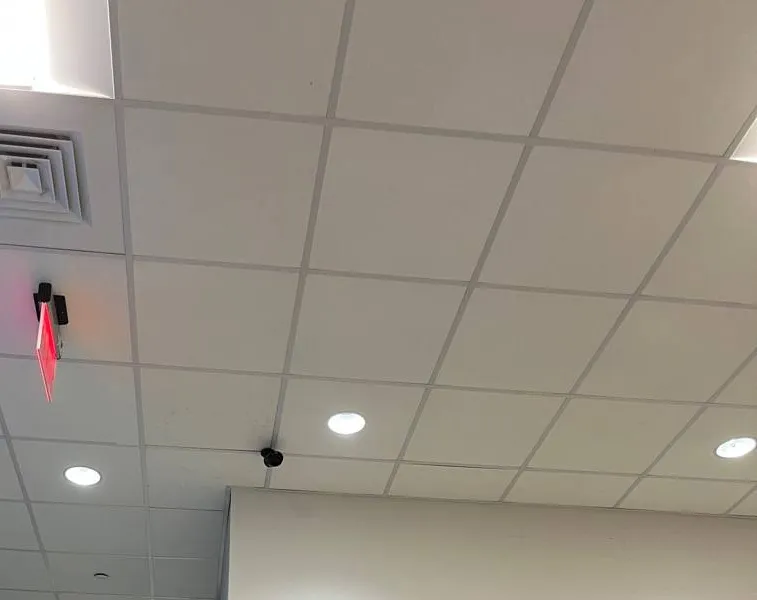
Bushwick, Brooklyn alarm installation reference: a white drop ceiling with recessed lights, an air vent, a lit red exit sign and a small black dome camera near a soffit edge
Photo from our job library, not taken in Bushwick: a small dome camera in a drop ceiling a few feet from a lit exit sign. Alarm devices are placed so they never obstruct exit signs or exit routes, the same rule that keeps fire-escape windows free.
Building Specialists

Alarm Installation for Bushwick’s Architecture

The building types below come from the sources listed at the bottom of this page. What we say about each is how it behaves when you try to alarm it, from our working practice; none of it is a claim about any particular address.

Walk-up apartment buildings

Four to six stories, often six families or more, with a fire escape on the front or rear, a roof door at the top of the stair and a street door shared by everyone. Tenants want protection inside their own apartment; owners want the common doors covered. These are two separate systems with two separate owners.

Wood-frame two- and three-family houses

The houses the 1960s Times called “wood houses,” many now in vinyl or aluminum siding. Light framing and hollow stud bays make wiring quicker than in brick, but porches, side alleys and rear decks add openings, and a century of alterations hides surprises in the walls.

Brick rowhouses and townhouses

Two- and three-family brick houses in attached rows, with a cellar, a stoop or a low entry, and a rear yard that meets the yards behind it. Party walls on both sides and a cellar ceiling that is usually open make the cellar the natural route for wiring.

Bushwick Avenue and Irving Avenue mansions

Large free-standing or semi-detached houses from 1880 to 1913 in Romanesque Revival, Queen Anne and other styles, with tall parlor windows, carriage-house or garage doors at the back and many rooms. More openings than any other house type in the neighborhood, and finishes owners rightly do not want cut.

Converted factory lofts

Brick or concrete industrial buildings near the Morgan Avenue and Jefferson Street L stations, converted from the 1990s on. Open floors, steel-sash windows several feet wide, freight elevators or freight doors, and residents who may be tenants, sub-tenants or members of a building association.

Storefronts with apartments above

On Knickerbocker, Myrtle, Wyckoff, Broadway and the corners of the side streets. A gate and a glass front at street level, a back door into a yard or hallway, and one or more apartments upstairs reached by a separate street door or a shared hall.

How we wire each type

Walk-ups. Inside a rented apartment the design is wireless from end to end: a small panel or hub, a keypad inside the apartment door, contacts on that door and on every window that opens onto the fire escape or can be reached from a roof or yard, a glass-break detector in rooms with several windows, and a motion detector in the main hallway of the apartment if no pet will set it off. Nothing is drilled into the building’s common areas. If the owner wants the street door, the cellar door and the roof door alarmed, that becomes a second system on the owner’s account, wired through the cellar and up the public hall with the owner’s approval, and it never shares codes with the tenants’ systems.

Frame houses. We start with the cellar or crawl space and look for open joists. In a balloon-framed or lightly built house, a wire dropped from the attic or pushed up from the cellar often reaches a first- or second-floor window in minutes, and a recessed contact drilled into the frame edge disappears completely. Where a wall bay is blocked by fire-blocking, old plumbing or later insulation, we switch that window to a small wireless contact rather than open the wall. Porches get attention: a front porch roof under second-floor windows makes those windows reachable, and a rear deck stair is an invitation to the back door.

Brick rowhouses. The panel and battery go high on a cellar wall, clear of the boiler and above any line water has reached. Cable runs along the joists to the front and rear walls and up into the first-floor openings; upper windows over a rear extension, a porch roof or a neighbor’s flat roof get wireless contacts. In a two- or three-family the system is split into separate areas so each household arms its own floor, with the street door and cellar shared.

Mansions. The approach is the same as a rowhouse, scaled up and slowed down. We count the openings first, floor by floor, and decide window by window between a hidden wired contact and a wireless one. Glass-break detectors cover rooms with many panes, so the owner is not paying for a contact on every sash of a bay. Carriage-house or garage doors at the rear get heavy-duty contacts on their own zone.

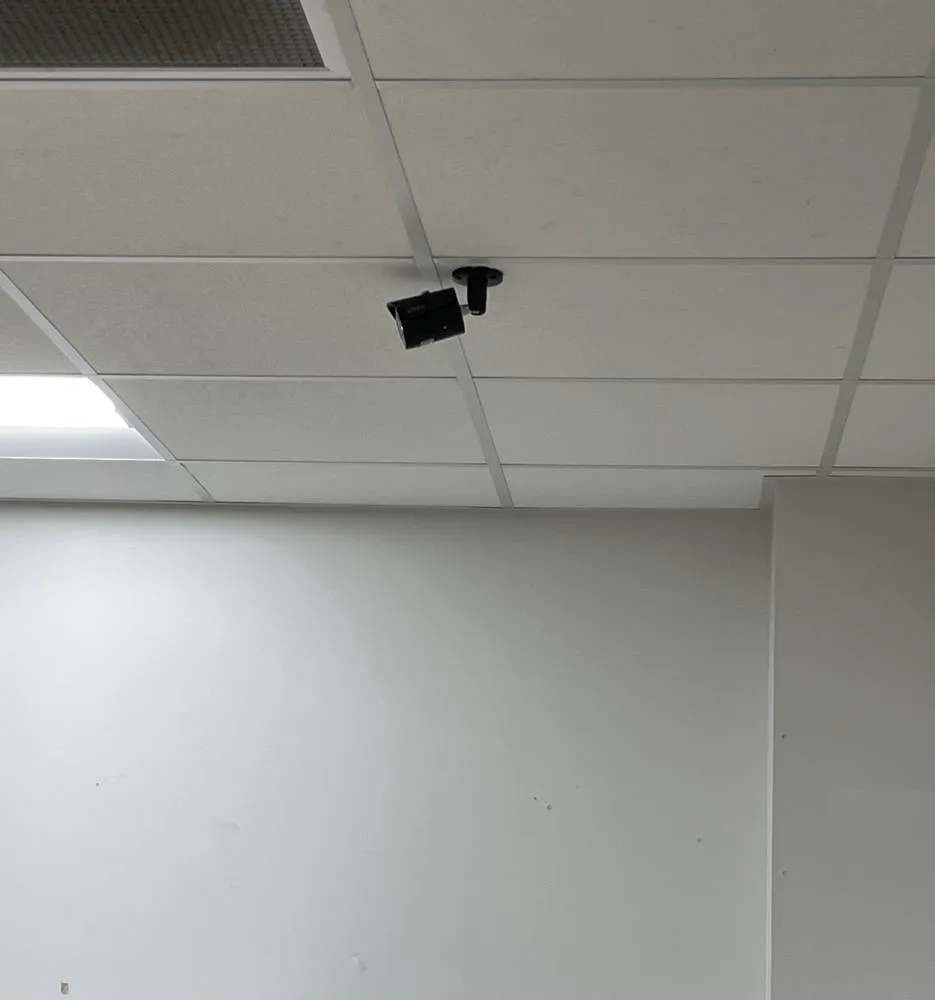
Bushwick, Brooklyn alarm installation reference: a black bullet camera hanging from a white drop ceiling over a bare white wall, with two dark computer monitors at the bottom edge
Photo from our job library, not taken in Bushwick: a ceiling-mounted bullet camera aimed across a small office. In a studio or back office, a camera like this lets an alarm zone be checked on video before anyone is sent.
Fire Escapes and Roofs

Fire-Escape Windows and Shared Roofs: The Openings That Define a Bushwick Alarm

Every source on Bushwick break-ins in the research for this page returns to the same two features. DNAinfo’s 2015 report described the neighborhood’s row houses and small apartment buildings as linked by fire escapes and connected by rooftops. CBS New York’s 2017 report described an intruder reaching a third-floor bedroom through a window off the fire escape. Hoodline’s 2026 report on a 2025 home invasion near Pilling Street and Evergreen Avenue quoted police saying the attacker entered through an unlocked kitchen window of a third-floor apartment, and the victim telling News 12 he climbed down a rope tied to the building’s chimney. None of these involved a front door. All of them involved a window above the street, reached from outside the building’s locked doors.

The obvious fix, a locked gate over the window, is the one the law limits. The FDNY’s residential apartment fire-safety guide tells tenants that only approved security gates, ones that open without a key and carry an FDNY approval number, may go on a window used as a fire escape. A padlocked or keyed gate over that window can trap the people inside in a fire. That leaves the fire-escape window as the one opening in the apartment that, by design, cannot be locked tight against someone standing on the landing. It is exactly the opening an alarm is best at protecting, because an alarm never blocks an exit; it only reports that the window or gate has opened.

Protecting it well takes three layers. First, a contact on the sash, positioned so it trips the moment the window moves. Where a tenant likes the window open a few inches for air in summer, a second magnet can let it sit locked at a small opening without tripping. Second, a glass-break detector in the room, because a burglar on a fire escape can break a pane and reach the latch without moving the sash at all. Third, if an approved gate is fitted, a contact on the gate itself, so the panel knows the gate was opened even if the window behind it was already up. All three are wireless in a rental and leave no holes when they come off.

Roofs need a separate decision. In a walk-up, the roof door at the top of the stair belongs to the building, and so does any hatch. If roofs connect along the row, that door is a path into the stairwell for anyone who reaches the roof from next door. A contact on that door is a five-minute job, but it should be on the owner’s system, not a tenant’s, and the building has to keep the door usable as an exit. In a top-floor apartment with its own skylight or hatch, the opening is the tenant’s, and it goes on the tenant’s system like any window. In a frame house or rowhouse, rear windows over an extension roof or a neighbor’s flat roof are treated exactly like fire-escape windows: if someone can stand outside them, they get a contact.

What goes where on a typical walk-up floor

OpeningSensorWhose system
Apartment entry doorContact, with entry delay long enough to reach the keypadTenant
Window onto the fire escapeContact on the sash, glass-break in the room, contact on any approved gateTenant
Rear kitchen or bedroom window off a yard or roofContact; glass-break if the room has several panesTenant
Street-facing windows with nothing below themUsually covered by the motion detector instead of contactsTenant
Roof door or bulkhead hatchHeavy-duty contact; door stays usable as an exitBuilding owner
Street door and cellar doorContacts, plus a held-open alert on the street doorBuilding owner
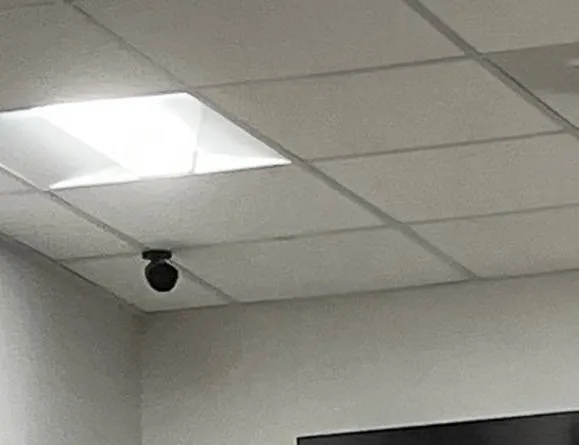
Bushwick, Brooklyn alarm installation reference: a dark dome camera at the edge of a white drop ceiling near a square light panel, above a plain wall
Photo from our job library, not taken in Bushwick: a dark dome camera where the ceiling meets the wall. The same corner position covers a stair landing or the inside of a roof door in a walk-up.
Renters and Roommates

An Alarm That Fits a Lease: Renters, Roommates and Shared Apartments in Bushwick

A large share of the people who call us from Bushwick rent. Wikipedia reports that median rent in the neighborhood reached $2,180 in 2022, up 81.7% since 2006, and sharing an apartment is one way people manage it. Renting changes three things about an alarm: what can be fixed to the walls, who holds the codes, and what happens when the lease ends. A system designed for an owner-occupied house gets all three wrong.

The walls. We build renters’ systems so they leave no more trace than a picture hook. Contacts and detectors go on with removable mounting strips or one small screw each; the panel or hub sits on a shelf or a small bracket near an outlet; the keypad mounts beside the apartment door the same way. Nothing is drilled into door frames, nothing is run inside walls, and nothing is installed in the building’s halls. When the lease ends, an hour’s work takes it all down, and the equipment, which the tenant owns, goes to the next apartment. If the lease requires the landlord’s consent for anything fixed to the walls, we keep to removable mounts and the question rarely arises; if it does, we provide a short description of the equipment for the landlord.

The codes. Three or four roommates on different schedules cannot share one code and one app login. If they do, nobody knows who disarmed the system at three in the morning, the code ends up written on the fridge, and when one roommate moves out the code never changes. Instead, each person gets a personal code and a personal app login, and one roommate, chosen by the household, holds administrator rights to add and remove users. When someone moves out, that person’s code is deleted in a minute from a phone. A sub-letter for the summer gets a code that expires on the date the sublet ends.

Moving out. On the last day, the household deletes its users, cancels any monitoring plan, and either takes the system down or asks us to. If the next tenant wants to buy the system as it stands, the departing administrator hands over the administrator role and then deletes their own access; we can reset the panel to factory settings at the service rate if no one is sure what codes are still in it. Monitoring plans through our partners do not carry long-term contracts, so moving out of the neighborhood does not leave anyone paying for an alarm they no longer have.

A sample setup for a three-bedroom shared apartment

AreaSensorsWho arms it
SharedEntry door, hallway motion detector (pet-immune if needed), living-room and kitchen windows, kitchen window onto the fire escape, glass-break in the kitchenArms when the last person leaves, from any roommate’s code or phone
Bedroom 1 (fire-escape window)Window contact, gate contact if an approved gate is fittedOnly the person who sleeps there
Bedroom 2Window contact if reachable from a roof or yardOnly the person who sleeps there
Bedroom 3Window contact if reachableOnly the person who sleeps there
Always onSmoke and carbon monoxide listeners, a water sensor under the kitchen sinkNever disarmed; alerts everyone
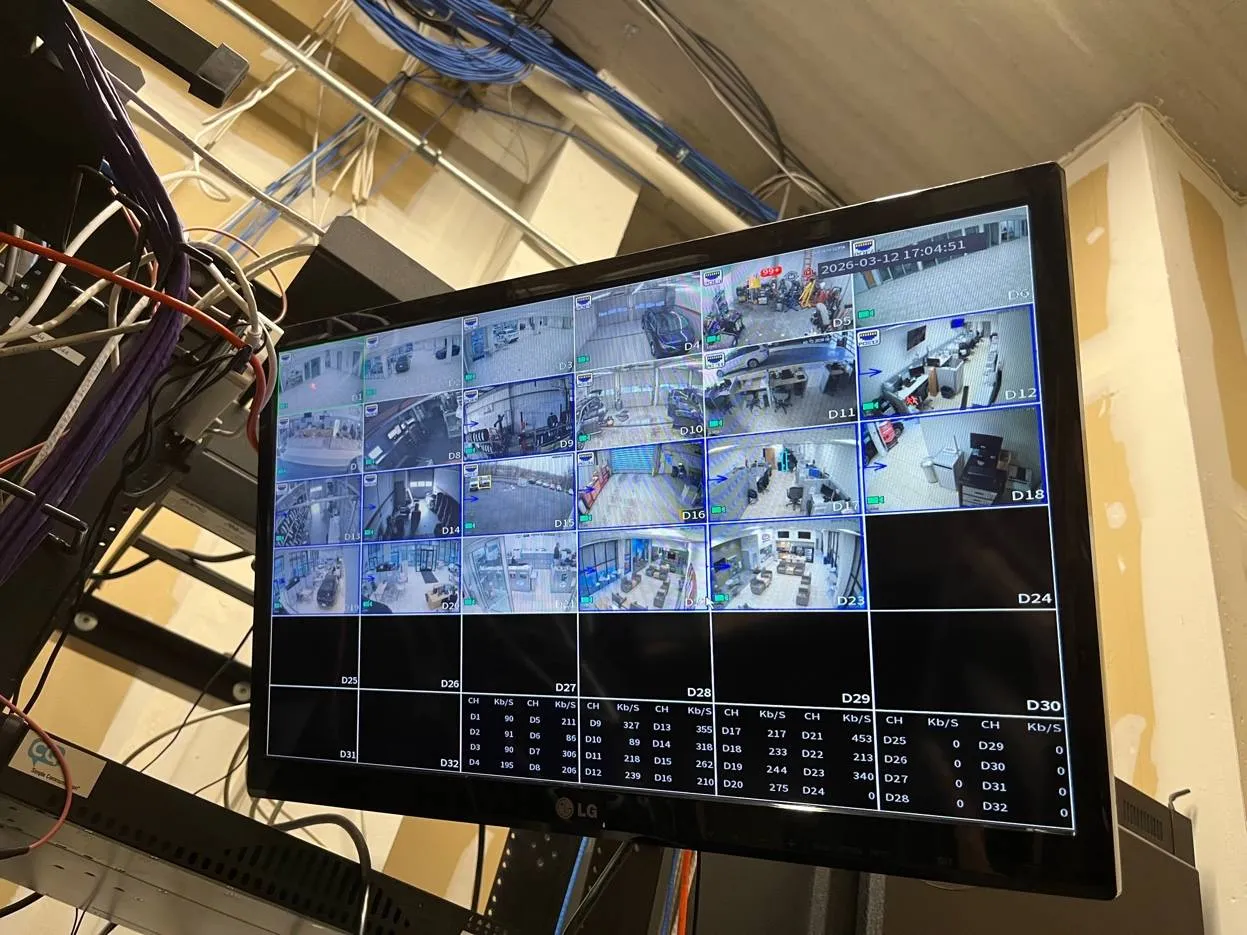
Bushwick, Brooklyn alarm installation reference: a wall monitor showing a grid of camera views and channel data, beside bundles of blue and white network cable and an equipment rack
Photo from our job library, not taken in Bushwick: a recorder display with a grid of camera tiles next to a rack of cabling. For a Bushwick storefront or loft, linking cameras to alarm zones means a tripped sensor arrives with video.
Lofts and Studios

Lofts, Studios and Workshops in Bushwick’s Former Factory Blocks

North of the Myrtle Avenue line and around the Morgan Avenue and Jefferson Street L stations, Bushwick turns industrial. Untapped Cities’ 2012 account of the area some call Morgantown places it inside the East Williamsburg Industrial Park, one of the city’s designated industrial zones, which then still held more than 8,000 manufacturing jobs; it describes factory owners converting empty buildings into lofts from the 1990s on, and names the McKibbin Lofts at 248 and 255 McKibbin Street, home to about 400 residents. In 2016 Brownstoner listed more than a dozen conversions under way in the same blocks: warehouses on Moore and Cook Streets turned into offices, a former paper mill at 456 Johnson Avenue, a former factory at 455 Jefferson Street and the former Schlitz brewery building at 95 Evergreen Avenue, among others, with the note that much of the area is zoned for nonresidential use. The streets themselves became an outdoor gallery: NY1 reported in 2016 that the Bushwick Collective, founded in 2012 by Joe Ficalora, whose family runs a steel business on Troutman Street, had persuaded owners of dozens of buildings to offer their walls for murals.

The result is a set of buildings where an apartment-style alarm does not fit. Ceilings are often far higher than in an apartment. Windows are steel sash, several feet wide, sometimes in continuous bands along a whole wall. Doors include a heavy steel entry door, a freight elevator gate or freight door, and on the ground floor a roll-up loading door onto the street. The people inside may be residential tenants, commercial tenants running a studio or small business, or both in the same unit. And what needs protecting is often not jewelry and laptops but equipment, materials and finished work that cannot be replaced.

We design loft alarms around three ideas. First, zone by use, not by room: the entry and freight door, the living area, the work area and any storage cage each get their own zone, so a sculptor can work late with the living area disarmed and the storage cage still armed. Second, protect window banks with detectors that watch the glass line rather than the floor, so someone moving around inside does not trip them and someone coming through the glass does. Third, use contacts built for big doors: heavy-duty floor-mounted contacts with armored cable for roll-up doors, and wide-gap contacts for freight doors that never close perfectly flush.

Murals deserve a word. Many Bushwick walls, including steel doors and roll-up shutters, carry painted artwork, and owners who agreed to host a wall rarely want it drilled. Contacts for a painted door can usually go on the inside face and the frame, out of sight from the street, and a siren or strobe, if one is wanted outside at all, can sit on an unpainted return or under the cornice. We ask before we drill anything that has paint on it.

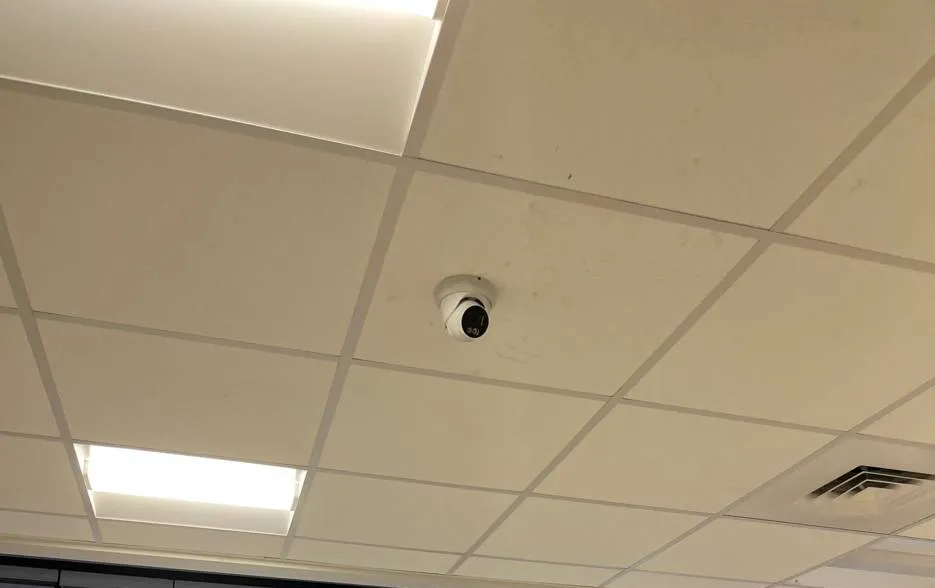
Bushwick, Brooklyn alarm installation reference: a white turret camera on a white drop ceiling between a bright light panel and an air vent, with dark window framing at the lower edge
Photo from our job library, not taken in Bushwick: a turret camera on a tiled ceiling near a light fixture. In a loft we place ceiling devices so their view runs along a window bank rather than across the living space.
Before the Visit

Three Things Bushwick Tenants, Owners and Shop Keepers Can Settle Before the Technician Arrives

None of the steps below is required. Each one saves a second trip or a change order, and together they let the technician spend the visit on the building instead of on questions.

Open every window that touches the outside of the building

Walk the apartment or house and open each window. Note which ones open onto the fire escape, which look down onto a roof, an extension or a porch, and which drop straight to the street or yard. That list, not the number of rooms, sets how many contacts the job needs. If a fire-escape window has a gate, check whether it opens without a key and has an FDNY approval label; if it does not, tell the landlord, because that gate is a fire-safety problem before it is an alarm question.

Agree on who administers the system

In a shared apartment, decide which roommate holds administrator rights and who gets notifications for what. In a two- or three-family, decide whether the owner, a relative or each household administers its own area. In a shop, decide which partner or manager adds and removes employees. Settling this in advance means codes are programmed correctly on day one.

For businesses, list the hours and the people

Write down the opening and closing times for each day, who opens and who closes, and who should be called first if the alarm goes off at night. A bar that closes in the early hours and opens at noon, a bakery that opens before dawn and a studio used at all hours each need different arming schedules and call lists, and the list is what makes opening and closing reports useful.

Common Fixes

Four Alarm Setups We Regularly Rework in North Brooklyn Walk-Ups, Lofts and Shops

These patterns come from our service calls across Bushwick and the neighborhoods around it. They are described from experience, not counted from a survey, and none of them means the first installer broke a rule; they are designs that do not match the building.

1. Every sensor on the front of the apartment, nothing at the back

The entry door has a contact, the living-room windows facing the street have contacts, and the kitchen and rear bedroom windows onto the fire escape have nothing. The fix is to move protection to where the fire escape is, add a glass-break detector in the rear rooms, and use a motion detector to cover street windows that nobody can reach anyway.

2. A keyed gate on the fire-escape window wired into the alarm

We still find padlocked or keyed gates over fire-escape windows, sometimes with an alarm contact added so the owner feels doubly protected. The alarm part is fine; the gate is not, because it can trap people in a fire. We tell the household and the landlord, recommend an FDNY-approved gate that opens without a key, and move the contact to it.

3. A loft protected like a one-bedroom

One motion detector in the middle of a two-thousand-square-foot floor, a contact on the entry door, and nothing on the freight door or the window bank. The detector cannot see the far corners, and the windows are the easiest way in from the fire escape or the roof. We split the loft into zones, add detectors aimed along the glass, and contact the freight door properly.

4. A storefront alarm that cannot tell anyone it was never armed

The panel works, the siren works, but nobody receives a message when the store is closed without arming, so a forgotten closing goes unnoticed until morning. Turning on closing reports and a late-to-close alert, sent to the owner’s phone if the system is not armed by a set time, fixes it in a few minutes of programming.

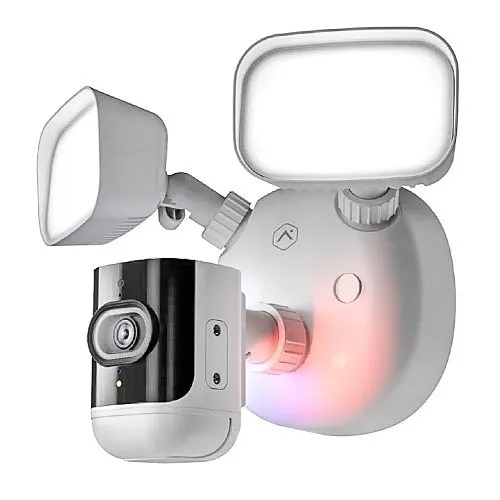
Bushwick, Brooklyn alarm installation reference: manufacturer photo of a white Alarm.com floodlight camera with two rectangular lamps on swivel arms and a black camera module
Manufacturer product photo, not a Bushwick installation: a floodlight camera of the kind that can sit on an alarm platform. Aimed down a side alley of a frame house, it lights the path and records before anyone reaches the door.
Commercial Alarm Installation

Business Alarm Installation in Bushwick

Wikipedia names Knickerbocker Avenue, Myrtle Avenue, Wyckoff Avenue and Broadway as Bushwick’s main commercial streets, and the industrial blocks to the north add workshops, studios, offices and venues. The businesses and buildings named here are for orientation only; none is presented as an Abstract Enterprises Security Systems customer.

Knickerbocker Avenue

The main shopping street of its part of Bushwick, in Forgotten New York’s description, and the street whose shopkeepers stood guard over their stores in 1977. The 83rd Precinct is at 480 Knickerbocker, Maria Hernandez Park sits between Knickerbocker and Irving Avenues, and Irving Square Park lies at the Wilson Avenue end. Small shops with apartments above are the rule.

Myrtle Avenue under the M

The Myrtle Avenue el runs overhead, and Forgotten New York notes the triangular lots its diagonal path creates, the former Hamburg Savings Bank between Knickerbocker and Bleecker, and the World War I memorials at Bushwick Avenue and at Knickerbocker. Train vibration and odd-shaped corner buildings both shape the alarm design.

Broadway under the J and Z

Bushwick’s southwestern edge, under the elevated Jamaica Line, and the shopping district hit hardest in 1977, when a third of its stores closed and 43% stood vacant a year later, according to Community Board 4. Storefronts here share walls and roofs with long rows of neighbors.

Wyckoff Avenue and the Myrtle–Wyckoff hub

The avenue runs toward the Queens line and the Myrtle–Wyckoff Avenues station and bus hub, renovated in 2007. Any business here that keeps late hours needs arming schedules and closing reports more than a nine-to-five shop does.

Morgan Avenue, Bogart Street and the industrial blocks

Converted warehouses and factories around the Morgan Avenue L stop, including the conversions Brownstoner listed on Johnson Avenue, Jefferson Street, Cook Street and Moore Street. Roll-up doors, freight elevators and buildings with several tenants on one floor.

Bushwick Avenue and the side streets

Mostly residential, with churches, schools, medical offices and corner stores in older brick and frame buildings. Wyckoff Heights Medical Center is the hospital Wikipedia names as the neighborhood’s primary one.

What a Bushwick store, bar or studio alarm needs

Glass protection that ignores the el. Storefronts directly under the Myrtle Avenue and Broadway structures feel each passing train in their glass. Shock sensors stuck to the window read vibration, so they are the wrong tool there. Acoustic glass-break detectors that listen for the sound of glass breaking, mounted inside and adjusted while trains are running, protect the window without false alarms, and gate and door contacts back them up so the system never depends on glass protection alone.

Gate, back door and roof. A rolling gate gets a floor contact with armored cable, so the alarm knows the gate has been lifted even if the glass behind it is intact. The back door, often onto a yard or a shared hall, gets a heavy-duty surface contact. Roof hatches, skylights and rear windows over an extension get contacts, because on a commercial row the roofs connect.

Schedules that match the business. A bar that closes in the early morning hours, a café that opens at six and a studio that is used whenever inspiration strikes each need a different arming routine. We program an expected closing time; if the system is not armed by then, the owner gets a message. Every opening and closing is logged with the code that was used.

Rules that apply to every Bushwick alarm

  • Sirens stop within fifteen minutes. New York City Administrative Code § 24-238 says no owner of a building may operate an audible burglar alarm on it unless the alarm is capable of terminating, and does terminate, within fifteen minutes of activation. We program a siren timeout inside that limit on every system we install or service. In a walk-up, everyone on every floor hears a siren; in a row of storefronts, so do the apartments above all of them.
  • Fire-escape windows stay usable as exits. The FDNY’s apartment fire-safety guide limits security gates on windows used as fire escapes to approved gates that open without a key. Alarm sensors never block a window; we will not install or wire a keyed gate onto a fire-escape window.
  • Paid installers need a state license. Article 6-D of the General Business Law makes installing, servicing or maintaining security or fire alarm systems for others a licensed business, regulated by the Department of State; unlicensed workers helping a licensee carry ID cards the licensee issues, and property owners working on their own premises are exempt. Abstract Enterprises Security Systems holds license 12000287431.
  • Burglar alarms and fire alarms are not the same system. A smoke listener on an intrusion panel is a useful extra in a frame house, yet each apartment still needs its own required detectors, and a walk-up, loft building or mixed-use building that needs a fire alarm system faces separate code and filing rules. For that, see our Bushwick fire alarm installation page.
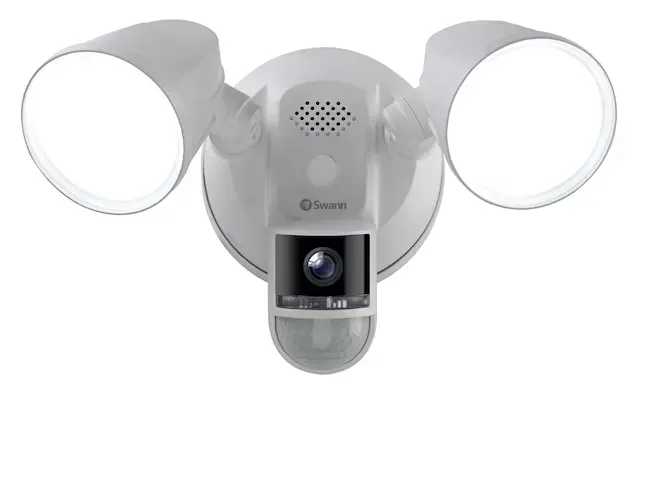
Bushwick, Brooklyn alarm installation reference: manufacturer photo of a white Swann floodlight camera with two round lamps, a camera lens and a motion sensor lens below it
Manufacturer product photo, not a Bushwick installation: a floodlight with a built-in motion sensor under the camera. For a rear yard or loading area it adds warning outside, while the alarm protects the doors and windows inside.
Your Questions Answered

Alarm Installation in Bushwick: Questions Answered

These are the questions we hear standing in Bushwick apartments, houses, lofts and shops, grouped by subject. Shorter questions about cost, timing and logistics are in the FAQ further down.

Railroad flats, roommates and shared landings

Our railroad apartment’s rooms open one into the next, with windows only at the front and the back. Where do the detectors go in a layout like that?

In a railroad flat everyone, including an intruder, has to walk through the rooms in a line, which makes the layout easy to protect. The openings that matter are at the two ends: the street windows at the front and the kitchen or rear-room windows at the back, usually where the fire escape is. The back gets contacts and a glass-break detector; the front windows, if nothing sits below them, are covered by one motion detector placed to look down the line of rooms toward them.

A second detector near the kitchen catches anyone coming in from the fire escape before they reach the middle rooms. Two detectors and a handful of contacts usually cover the whole apartment, and all of it is wireless and removable.

Can each roommate keep their own bedroom off the system while the shared rooms stay protected?

Yes. Each bedroom becomes its own small area that only its occupant can arm or disarm, while the entry door, hallway, kitchen and living room form a shared area that arms automatically when the last person leaves. Motion detectors stay in the shared rooms only, so nobody’s movements in their own room are recorded, and a bedroom with a fire-escape window can still have its window contact armed by its occupant at night.

Notifications follow the same split: an event in one bedroom goes to the person who sleeps there, and shared-area events go to everyone.

Our fire escape runs past a neighbor’s window as well as ours. Will their comings and goings on the landing set off our alarm?

Not if the sensors are chosen for it. Contacts only react when your own window or gate moves, and an acoustic glass-break detector listens for the specific sound of breaking glass, not footsteps or voices outside. What we avoid on a shared landing is an outdoor motion detector or a camera-triggered siren aimed at the fire escape itself, because a neighbor watering plants would set it off.

If you want warning before anyone touches your window, a camera that sends a clip to your phone without sounding the siren is the better tool; we keep it pointed at your own window only.

Fire escapes, roofs and windows

The landlord fitted an FDNY-approved gate on our fire-escape window. Can the alarm tell the gate opening apart from the window opening?

Yes, by giving each its own contact on its own zone. The gate contact reports the moment the gate swings; the sash contact reports the moment the window lifts. The app and the keypad then say which one moved, which matters in summer, when the window may be up behind a closed gate. A glass-break detector in the room covers the remaining case, a broken pane with both closed.

An approved gate opens without a key, as the FDNY requires, so leaving it unlocked is correct; the alarm, not a padlock, is what protects it.

Our kitchen window and a bedroom window both open onto the same fire-escape landing. Does each need its own sensor?

Each window that opens onto the landing gets its own contact, because either one is a way in and the panel should report which. If the two rooms are next to each other, one glass-break detector placed between them can sometimes hear both windows; if they are separated by a hallway, each room gets its own. Contacts are inexpensive, so we never leave a fire-escape window uncovered to save one.

The kitchen window deserves particular care: two of the Bushwick break-ins described on this page started at kitchen windows.

Our frame house has vinyl siding and a dark alley down the side. Where should the sensors go that a front-door kit would miss?

Start with the side door off the alley, the rear porch door and the cellar entrance, which kits usually ignore. Each gets a contact. Windows along the alley that a person could reach standing on a trash can or the alley fence get contacts; windows over a front porch roof get them too, because the porch roof is a platform. An outdoor motion detector or floodlight camera aimed down the alley adds warning before anyone reaches a door.

In a frame house, hollow walls often let us hide wired contacts in the frames without opening plaster; where they do not, small wireless contacts are used instead.

Lofts, studios and industrial space

We live in a converted factory loft with steel windows running the length of one wall. How do you protect a whole bank of glass?

Not with a contact on every sash. Long banks of steel-sash windows are covered by detectors whose coverage runs along the glass, curtain-pattern motion detectors or glass-break detectors placed so each pane is within range, and contacts go only on the sections that actually open. That protects the glass line while leaving the floor free for people to move around at night.

Where the windows open onto a fire escape or a lower roof, those operable sections get contacts as well, exactly as in a walk-up.

My studio is one unit inside a Morgan Avenue warehouse full of other studios. Can it be alarmed separately from the building?

Yes. The studio’s own door, windows and any roof access form its perimeter, and its system reports only on those. The building’s lobby, freight elevator and loading dock belong to the landlord or the association and stay off your system. Because buildings like this often run their own internet, we usually fit a cellular communicator so the studio does not depend on a shared network.

If you store work or equipment in a separate cage, it can be its own zone that stays armed while you are working in the studio.

The roll-up door on our ground floor is painted with a mural. How is it alarmed without drilling through the artwork?

From the inside. A heavy-duty overhead-door contact mounts on the floor or the track behind the door, with armored cable, and its magnet goes on the bottom bar on the inside face. Nothing is attached to the painted side. The contact is set with enough tolerance that the door rattling in its guides does not trip it, but lifting it a few inches does.

If an outdoor siren or strobe is wanted, it goes on an unpainted surface such as a side return or under the cornice, and we confirm the spot with the owner before drilling.

Storefront roofs and large old houses

Our Knickerbocker Avenue shop is in a row of attached storefronts whose roofs run together. How do we stop someone coming in from above?

Contact the roof hatch, skylight or any rear window over an extension, and add a motion detector in the back room or stockroom under the roof, aimed so it would see someone dropping in. On connected commercial roofs those openings are often less guarded than the gate in front, and a contact on a hatch costs little.

If the shop has a drop ceiling, a detector covering the space below the hatch catches entry even if the hatch itself is bypassed.

Our Bushwick Avenue house is a turn-of-the-century brick mansion with tall parlor windows and a carriage-house door at the back. What changes for a house that size?

Mostly the count and the care. A house built between 1880 and 1913 for a brewer or a doctor can have far more openings than a rowhouse. We count them floor by floor, use glass-break detectors for rooms with many panes rather than a contact on every sash, hide wired contacts in frames where the cellar allows, and give the rear carriage-house or garage door its own heavy-duty zone.

Original woodwork and plaster are left alone: anything that would cut a molding or a cornice is done wirelessly instead.

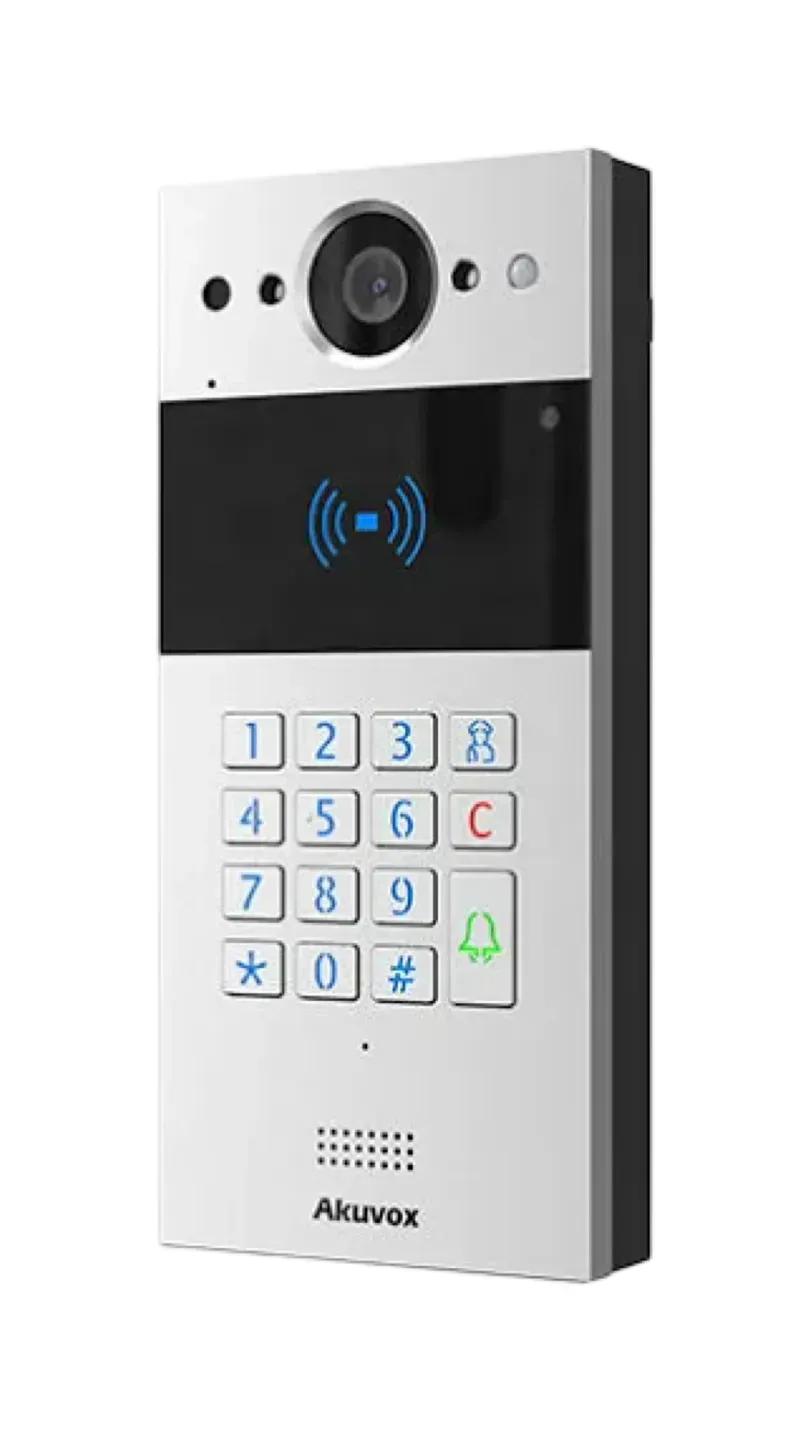
Bushwick, Brooklyn alarm and entry reference: manufacturer photo of a silver Akuvox door station with a camera, a card-reader band and a backlit numeric keypad
Manufacturer product photo, not a Bushwick installation: a keypad door station for a building entrance. An apartment alarm cannot control the street door; a station like this, on the owner’s side, is what stops strangers being buzzed in.
Equipment

Types of Alarm Systems We Install in Bushwick

Wireless panels and hubs

The standard for rented apartments and studios: a panel or hub with a battery backup and a cellular communicator, wireless sensors with batteries that typically last years, and a panel that reports a weak battery long before it dies. Brands on the Brooklyn list include Honeywell, DSC, Qolsys, Napco, Bosch and DMP.

Hybrid wired and wireless panels

For houses and owner-controlled buildings: wired zones where the cellar or hollow frame walls make cable easy, wireless where plaster or finishes make it hard, and partitions so separate households or tenants each arm their own area.

Commercial panels

For storefronts, bars, workshops and lofts used for business: more zones, opening-and-closing reports, schedules, hold-up inputs and integration with cameras and door access.

Door, window and gate contacts

Recessed contacts hidden in wood frames, surface contacts for steel and aluminum frames, wide-gap contacts for freight doors, and floor-mounted contacts with armored cable for rolling gates and roll-up doors.

Glass-break detectors

Acoustic detectors that hear breaking glass across a room, for rooms with fire-escape windows, loft window banks and storefronts; tested on site and, under the el, tested with trains passing.

Motion and curtain detectors

Passive infrared detectors for apartment hallways and cellars, pet-immune where a dog or cat lives, curtain-pattern detectors that watch a line of windows, and outdoor detectors for alleys and yards aimed away from the sidewalk.

Keypads, fobs and phone control

A keypad inside each protected door, key fobs for anyone who prefers buttons, and app control with a separate login for every roommate, household member or employee.

Sirens and sounders

An interior siren loud enough to drive someone out, a small sounder in large lofts or on upper floors, and an exterior siren or strobe only where the owner wants one and where it can go without damaging a mural or façade, all on a timeout inside the City’s fifteen-minute limit.

ADT, Ring, SimpliSafe or a licensed local installer for a Bushwick apartment or loft

QuestionNational monitored brand (e.g. ADT)DIY kit (e.g. Ring, SimpliSafe)Abstract Enterprises Security Systems
Comes out cleanly at lease endDepends on the package and contractYes, owner-installedYes, designed removable for renters
Fire-escape windows and gates planned inPackage-based sensor countUp to the ownerSurveyed window by window on site
Personal codes for each roommateVaries by panelUsually supported in the appSet up on day one, with an administrator
Loft window banks and freight doorsVariesLimited sensor typesCurtain detectors and heavy-duty contacts
Monitoring commitmentOften multi-yearOptional monthly plansOptional, no long contract; partners at $30 a month (keypad) or $45 a month (with the app)
Who installsCompany technicianThe owner (allowed under the GBL owner exemption)NYS-licensed technicians, license #12000287431
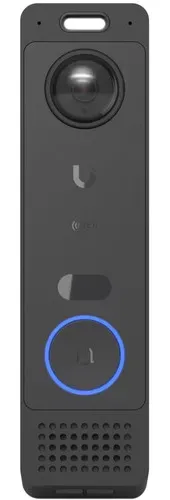
Bushwick, Brooklyn alarm installation reference: manufacturer photo of a tall black Ubiquiti video doorbell with a round camera lens and a blue-ringed button
Manufacturer product photo, not a Bushwick installation: a slim wired video doorbell. On a frame house or a loft door it lets the household see who is outside before disarming the alarm and opening up.
AI Overview Reality Check

What AI Gets Wrong About Alarm Installation in Bushwick

They are generalizations that turn up again and again in instant answers, home-improvement articles and national cost sites like Angi, HomeAdvisor and Fixr. Each is followed by what we see in Bushwick walk-ups, frame houses, lofts and storefronts.

“Put bars or a locked gate on any window you are worried about.”

General home-security advice often treats window bars as the strongest answer to a vulnerable ground-floor or upper window, and for a window that is not an exit route that can be reasonable.

In a Bushwick walk-up, the most vulnerable window is usually the one onto the fire escape, and the FDNY allows only approved gates that open without a key there. A locked gate on that window is a fire hazard, not a security upgrade.

The right answer is an alarm layered on an approved gate: contacts on the sash and the gate, a glass-break detector in the room, and nothing that slows anyone leaving in an emergency.

“Renters should stick to cameras, because alarms have to be wired in.”

Quick answers sometimes steer tenants to cameras or doorbells on the assumption that a real alarm means drilling and wiring the landlord will not allow.

Modern wireless panels and sensors install without cutting anything, and a renter’s system can be taken down in an hour. In a neighborhood where a large share of residents rent, that difference matters.

We design renters’ systems to be removed, owned by the tenant and moved to the next apartment, with no long monitoring contract attached.

“Cover your doors and you have covered the way burglars get in.”

National statistics on forced entry through front and back doors drive a lot of advice about door sensors first and windows later.

The Bushwick reports gathered for this page describe entry through a kitchen window in 2013, a fire-escape bedroom window in 2017 and an unlocked kitchen window in 2025, and police in 2015 pointed at unlocked windows and connected roofs. None began at a front door.

We start every walk-up survey at the back of the apartment, at the fire escape, and only then work forward to the door. Door contacts still matter, but in a Bushwick walk-up they are the start of the design, not the whole of it, and the money in a basic package goes further on fire-escape and rear windows than on extra door sensors.

“One motion detector protects an open-plan space.”

Online guides often suggest a single motion detector for an open living area, and in a small apartment one well-placed detector can cover the path through it.

In a Bushwick factory loft, one detector in the middle of a large floor misses the far corners and does nothing about a bank of steel windows along one wall, which is how someone on a fire escape or a lower roof would come in.

Lofts need zones by use, curtain-pattern or glass-break coverage along the windows, and proper contacts on freight and roll-up doors. A studio that stores equipment or finished work also benefits from a zone of its own that stays armed while the living area is in use, something a single-detector setup cannot do at all.

“Shock sensors protect store windows.”

Some consumer articles treat shock sensors and acoustic glass-break detectors as interchangeable ways to protect glass.

Under the elevated tracks on Myrtle Avenue and Broadway, every passing train shakes the glass, and shock sensors report that vibration as an attack until the owner switches the zone off.

Acoustic glass-break detectors tuned while trains are running, backed by gate and door contacts, protect those storefronts without nuisance alarms.

“Alarm installation costs $1,000 to $3,000, plus monitoring.”

Cost guides average together jobs from every kind of building in every part of the country, and most of their figures quietly include a long monitoring agreement.

On our Brooklyn list, which Bushwick pays, a basic system starts at $600, a typical wireless system runs $600 to $1,200, a complete home system starts at $2,500, a small-business system runs $1,500 to $3,000, and installing a kit you already bought runs $200 to $400. Monitoring is optional, at $30 a month (keypad) or $45 a month (with the app) through our partners.

The figure that matters is the written one after a technician has walked the space and counted the windows that open onto something.

“Any handyman can put in an alarm.”

Some quick answers suggest hiring a general handyman or electrician to mount a kit.

New York lets owners put a system into their own property themselves. Doing it for other people, for pay, is different: Article 6-D of the General Business Law requires a Department of State license for that business, and anyone helping a licensee must carry an ID card the licensee issued.

Before anyone touches your walls or your landlord’s, get the license number in writing. Abstract Enterprises Security Systems works under 12000287431.
Two Photos and One Question: Start Your Bushwick Alarm Quote

Send a photo of the window that worries you most and the door you come in by, and tell us what that window opens onto. Expect a call back the same working day with the likely sensor list and where the job falls on the Brooklyn list.

Get In Touch

Request a Free Quote

A fourth-floor walk-up off Knickerbocker, a frame two-family near Irving Square Park, a loft near the Morgan Avenue stop, a shop on Myrtle: describe it in a few lines and a written price from the Brooklyn list follows the visit. Prefer to talk? (347) 934-8335.

✅

We Got Your Request!

Thanks. Expect a call from a technician about your Bushwick building today. If an alarm is going off as you read this, or a keypad will not take a code, ring (347) 934-8335.

How It Works

Our Installation Process

The same seven steps cover a one-bedroom rental and a storefront with a loading door. What is particular to Bushwick is the second step: the technician goes to the back of the unit first, opens the window onto the fire escape, and looks at what is outside before choosing a single sensor.

1. Photos and one question

You send a photo of the window that worries you most and the door you come in by, and tell us what that window opens onto, who shares the space and whether you rent or own.

2. Back of the unit first

The technician goes straight to the fire escape or rear windows, checks gates, roofs and neighboring landings, then works forward to the door, counting every opening that can be reached from outside.

3. Zones, owners and a written price

Each opening goes on a list with the person or household that controls it; that list becomes the zone plan, and the written Brooklyn price follows, usually the same day.

4. Power and a reporting path

The panel goes near a dependable outlet, out of sight from the windows, with battery backup and a cellular communicator, plus an internet path where the building’s connection is reliable.

5. Mount sensors to suit the lease

Renters get removable wireless mounts with nothing drilled into frames; owners get wired zones where the cellar or frame walls make it easy; fire-escape windows get sash, gate and glass-break coverage.

6. Program people and schedules, then test

Every roommate, household member or employee gets a personal code and login; schedules, closing reports and a siren timeout inside the City limit are set; every sensor is tripped and confirmed, and storefront glass-break is tuned with trains passing.

7. Show everyone, then check back

Each person with a code is shown how to arm, disarm and read the app, a printed sheet stays by the keypad, and a return visit a few weeks later fine-tunes any sensor that has been tripping without reason.

Every season change: a ten-minute alarm check

When the heat goes on in the fall and when the window fans come out in spring, put the system in test mode or tell the monitoring station you are testing. Open the fire-escape window and the gate, and watch both register. Open the entry door and walk past each motion detector. Check the battery report in the app. Delete codes for anyone who no longer needs one: a roommate who moved out, a sub-letter, a dog walker, an employee who left. Run the siren for a few seconds so everyone in the household knows what it sounds like, then warn the neighbors through the wall that it was a test.

Coverage Area

Alarm Installation Near Bushwick’s Landmarks

Callers give directions by these places: “across from Maria Hernandez,” “two blocks past the precinct,” “by the Myrtle–Wyckoff station.” They are listed for orientation only. None is an Abstract Enterprises Security Systems customer; the parks, stations, firehouses and civic buildings belong to their own agencies and institutions.

Maria Hernandez Park

6.87 acres between Knickerbocker and Irving Avenues, beside the Jefferson Street L station, according to Wikipedia.

Irving Square Park

2.78 acres bounded by Wilson and Knickerbocker Avenues and Halsey and Weirfield Streets (Wikipedia).

83rd Precinct station house

480 Knickerbocker Avenue, the NYPD precinct for Bushwick (Wikipedia). Forgotten New York notes the older precinct building at Wilson and DeKalb as a landmark.

Myrtle–Wyckoff Avenues station

The bus and subway hub where the L meets the M, renovated in 2007 (Wikipedia).

William Ulmer Brewery

At Beaver and Belvidere Streets, granted landmark status in 2010, a reminder of the 14 breweries that once lined Brewer’s Row (Wikipedia).

Bushwick Avenue at Linden Street

Described by the Landmarks Commission, as quoted in Community Board 4’s history, as “one of the finest groups of Romanesque Revival architecture in the City.”

Angel of Victory memorial

At Myrtle and Bushwick Avenues, honoring 93 Bushwick men killed in World War I; sculpted by Pietro Montana and installed in 1921 (Forgotten New York).

DeKalb and Washington Irving libraries

The DeKalb branch, a Carnegie library opened in 1905, and the Washington Irving branch, opened in 1923 (Wikipedia).

Engine 277 / Ladder 112

582 Knickerbocker Avenue; Engine 271 / Ladder 124 and Battalion 28 are at 392 Himrod Street (Wikipedia).

We also serve the neighborhoods around Bushwick, each with its own page: East Williamsburg, Williamsburg, Bedford-Stuyvesant, Stuyvesant Heights, Wyckoff Heights, Ridgewood, Ocean Hill, Cypress Hills and Highland Park.

Pricing

Alarm Installation Cost in Bushwick

There is no Bushwick premium. A fifth-floor walk-up with no elevator, a loft with a freight door or a corner shop under the el is quoted from the same published Abstract Enterprises Security Systems Brooklyn alarm list that applies across the borough, reproduced below. Sales tax at 8.875% is added. Jobs under $500 are paid in full; larger jobs start with a 50% deposit once the visit has fixed the figure in writing, with the balance on completion.

ItemBrooklyn priceTypical Bushwick use
Basic residential system: panel, 4–6 door/window sensors, 1 motion detector, keypad, cellular communicator, monitoring setup, appfrom $600A rented one- or two-bedroom walk-up apartment with a fire-escape window
Wireless system, typical range$600 – $1,200Shared apartments with several bedrooms; studios that must come out cleanly
Complete home protection: more sensors, glass-break, smoke and CO, sirens, app, camera-readyfrom $2,500A whole frame or brick two- or three-family with separate areas per household
Custom hardwired system with full-property coverage$2,000 – $6,000Bushwick Avenue mansions and larger houses wired through the cellar
Hybrid wired/wireless for a multi-story house$2,500 – $5,000Three-story brick rowhouses with plaster upstairs
Panel replacement on existing wiring: panel, cellular communicator, keypad, programming$800 – $1,500Reviving an inherited system whose wiring tests good
Per-apartment setup for landlords: door sensor, motion detector, monitoring$400 – $800 per unitOwners equipping several apartments in a walk-up
Commercial alarm, standard small business$1,500 – $3,000Shops on Knickerbocker and Myrtle, bars near Myrtle–Wyckoff, studios used for business
Adding cameras to a business alarm$1,000 – $2,500Video verification for a storefront or loading door
Installing a customer-supplied DIY kit$200 – $400A Ring or SimpliSafe kit a renter already bought
Central station monitoring through our partners$30 a month (keypad) or $45 a month (with the app)Optional; no long-term contract
Service visit outside warranty$195/hr, 3-hr minimum ($585)Reprogramming inherited systems, other installers’ equipment, adjustments

What moves a Bushwick price up or down

  • Windows that open onto something. Each fire-escape, roof or porch window adds a contact, and rooms with several such windows add a glass-break detector. Street windows with nothing below them usually add nothing.
  • Who shares the space. Each roommate or household adds programming time and sometimes a keypad, rarely a second panel.
  • Removable or fixed. Renters’ systems are all wireless; owners can choose wired zones where the cellar or frame walls make it cheap.
  • Big doors. Roll-up loading doors, freight doors and rolling gates need heavy-duty contacts with armored cable.
  • Inherited equipment. An old system whose wiring tests good cuts the cost; one full of someone else’s codes needs a reset either way.

Get a Written Brooklyn Price for Your Bushwick Apartment, House, Loft or Shop

A technician looks out the back window first, walks every room, and leaves you a written number drawn from the Brooklyn list, most often before the day is out. Rather ask questions first? A technician will take the call.

Shop Our Systems

Alarm Installation Packages & Pricing

Renter’s Walk-Up — from $600

Wireless panel with battery backup and cellular communicator, keypad by the apartment door, contacts on the entry door and fire-escape windows, a motion detector, app logins for each roommate and optional monitoring. Mounts removable, so it moves with you.

Whole House, Every Floor — from $2,500

For frame and brick two- and three-families: separate areas per household plus a shared area for the street door and cellar, contacts on every reachable window including porch-roof and alley windows, glass-break detectors, smoke and carbon monoxide listeners and interior sirens.

Storefront, Bar or Studio — from $1,500

Commercial panel, rolling-gate or roll-up-door contacts, rear-door and roof-hatch contacts, acoustic glass-break tuned for the el where needed, hold-up button, schedules and opening-and-closing reports. Cameras add $1,000 to $2,500.

Already bought a kit? Labor-only installation

If you already own a Ring, SimpliSafe or similar kit, we install and program it for $200 to $400 depending on the number of devices. We put the sensors on the windows that actually matter, the fire-escape and rear windows first, set up a login for each person in the household, and tell you honestly if the kit lacks something the apartment needs, such as a glass-break detector for the fire-escape room. The 30-day warranty and optional paid extended plans cover parts Abstract Enterprises Security Systems supplies; customer-supplied equipment carries its manufacturer’s warranty, and our labor on it is covered by the service agreement.

Complete Services

Every Alarm Installation Service in Bushwick

Cameras for verification

A camera on the fire escape view, the alley, a store register or a loading door, linked to the alarm, through security camera installation in Bushwick.

Fire alarms

Building fire alarm systems for walk-ups, mixed-use buildings and lofts via Bushwick fire alarm installation.

Door access

Fobs and keypads at the street door or loft lobby with access control in Bushwick, armed and disarmed alongside the alarm where the owner wants.

Intercoms and buzzers

A video door station so tenants see who they buzz in, through intercom installation in Bushwick, or a fix for the old one with Bushwick buzzer repair.

Cabling

Cable runs, a small network cabinet for a loft or studio, and repairs to damaged runs via structured cabling in Bushwick and network cable repair in Bushwick.

Borough-wide

For an address outside Bushwick, begin at alarm installation in Brooklyn; related borough pages cover home cameras across Brooklyn and smart locks in Brooklyn.

The most common pairing in a Bushwick walk-up is a tenant’s alarm inside the apartment and an owner’s video intercom at the street door. In a loft building it is a studio alarm plus fob access at the lobby. Booked together, both can be done on one visit.

Field Notes

Field Notes: Start at the Fire Escape, Not the Front Door

This describes how we survey a Bushwick walk-up, not a story about a particular apartment. The technician comes in, says hello, and walks straight through to the back. He opens the window onto the fire escape and leans out. Is there a gate, and does it open without a key? Does the fire escape go up to the roof as well as down to the yard? Can the landing be reached from the next building’s fire escape, or from a lower roof? Is there a kitchen or bathroom window also opening onto the same landing? Then he looks up, because on connected rows the roof is the other way in.

Only after that does he go to the front door, check the lock, and count the street windows. In most walk-up apartments the front half needs very little: a contact on the door and a motion detector that covers windows nobody can reach. The back half, where the fire escape is, needs most of the sensors. Writing the quote in that order is the difference between a system priced from a package and one priced from the building.

FAQ

Bushwick Alarm Installation FAQ

What does a removable wireless alarm for one Bushwick rental apartment cost on your Brooklyn list?
+

Our basic residential system starts at $600 and includes a panel with battery backup and cellular communicator, four to six door and window sensors, a motion detector, a keypad and app setup. Most one- and two-bedroom walk-up apartments fall in the wireless range of $600 to $1,200, depending on how many windows open onto the fire escape or a roof. Sales tax is added, and the written figure follows one visit.

Can the alarm panel sit on a shelf instead of being screwed to the wall?
+

Yes, in most rentals. Wireless hubs and many panels are designed to stand on a shelf or a small bracket near an outlet, ideally out of sight of the windows and away from the entry door, so an intruder cannot find and smash it during the entry delay. We place it where the cellular signal is good and the power cord cannot be knocked out.

Will taking the sensors down at move-out damage the walls and cost us our security deposit?
+

Renter systems are mounted with removable strips or a single small screw per device, so taking them down leaves at most a pin-sized hole that a dab of spackle fills. We can do the removal for you, or show you how on installation day.

Can you install in a loft the week we move in, before the furniture arrives?
+

Yes, and it is the easiest time. With the floor empty we can see every window and door, place detectors where furniture will not block them and test coverage across the whole space. Tell us roughly where the bed, the work area and any storage will go, so the zones match how you will use the loft.

Do you need the building’s freight elevator booked to install in a loft?
+

It helps if the panel, ladders and any long cable runs are coming up together, but most loft installations fit in a couple of trips by stairs or passenger elevator. Tell us the building’s rules on contractor access, insurance certificates and work hours when you book, and we will send the certificate ahead.

Do you put alarm stickers on the windows of a rental, and do they help?
+

Only if you want them. A window sticker or a small sign by the door tells a would-be burglar the apartment is alarmed, and some tenants like that; others prefer not to advertise. On a storefront a discreet decal by the door is common. Either way, the stickers are removable and come off with the system.

Can the keypad go inside the apartment rather than out in the hallway where neighbors can see it?
+

Yes, and for a tenant’s system it always does. The keypad mounts just inside the apartment door, within reach during the entry delay, and the hallway stays untouched. Many people also arm and disarm from the phone app and keep a key fob on their keys, so the keypad is used only as a backup.

Is a cellular communicator included in your Brooklyn prices, or is it extra?
+

It is included in the basic residential package from $600 and in every complete system, because many Bushwick apartments and lofts share an internet connection or have none the alarm can depend on. Where a building’s internet is dependable, the panel can report over both paths.

Will an apartment alarm interfere with the building’s buzzer or intercom wiring?
+

No. A tenant’s alarm is a separate wireless system with its own power and communicator, and it does not connect to the building’s buzzer, intercom or door-release wiring at all. Integration is possible on an owner’s system, for example letting the alarm know the street door was buzzed open, but only with the owner’s agreement and as part of a building job.

We live in our loft and also make and sell work from it. Does that change what the alarm has to do?
+

Usually, yes. A loft used only as a home needs personal codes and app alerts. Once the space doubles as a workplace, it often also needs employee or assistant codes limited to working hours, opening-and-closing reports, a separate zone for stock or equipment and, if an insurer asks, central station monitoring with a certificate. We set the system up for both uses at once and tell you at the visit which list the job is priced from.

All Areas Served

Alarm Installation Across Brooklyn, New York City, Long Island and the Hudson Valley

Bushwick is one of dozens of neighborhood pages filed under the Brooklyn alarm installation hub; the borough hubs in turn report to our citywide NYC alarm page. Pages finished in the same work session as this one: alarm installation in Cadman Plaza and alarm installation in Canarsie.

The same crews also put in business camera systems around Brooklyn, fix building intercoms through our Brooklyn intercom repair service and pull data cable under structured cabling in Brooklyn, all billed by Abstract Enterprises Security Systems. Whoever you hire, ask for proof of licensing and insurance before work begins; ours are posted on the about page.

Sources

Where the Bushwick Facts Come From

In October 2026 we checked each historical detail, number, regulation and news item on this page against the list below. Two kinds of content carry no outside source because they are ours: prices, taken from the published Abstract Enterprises Security Systems Brooklyn alarm list, and descriptions of how our technicians survey and install, which describe our practice rather than any specific address.

Where sources disagree, we say so. The Hoodline report gives two accounts of how the 2025 intruder reached the window: police said through an unlocked kitchen window, while the victim told News 12 he climbed down a rope tied to the chimney; we cite both. Wikipedia’s 2020 population covers two census tabulation areas, while the community board’s 2018 health profile gives 112,388. Brownstoner’s 2016 list described planned conversions; we have not checked which were completed.

Not everything could be checked. We found no source counting fire escapes, frame houses or lofts in Bushwick, so this page makes no such count, and no recent precinct-level burglary figure for 2025 or 2026.

Window Zone Stuck Open or a Panel Gone Offline? Call the Bushwick Line

Most Bushwick service calls are small: a window zone that shows open when the window is shut, an inherited keypad nobody has the code for, a shop panel that quietly stopped reporting. Ring (347) 934-8335, take the earliest arrival window, and in most cases the faulty part is replaced within an hour or two of the technician arriving.

Bushwick Alarm Systems From a Licensed, Insured Brooklyn Team

Bushwick calls and texts go to (347) 934-8335; pictures of your back window and entry door can come by text or through WhatsApp. Quotes, scheduling and invoices all come from Abstract Enterprises Security Systems, working out of 1282 Troy Avenue, Brooklyn, NY 11203.

On Google, 201 reviewers give us an average of 4.6★. Installations are carried out under NYS license #12000287431, and a landlord, managing agent or loft association that wants to be named on our insurance certificate receives it ahead of the visit.

Full terms — including 50% deposit, the 30-day warranty and optional paid extended warranty, and the late-fee schedule — are set out in the service agreement. See our warranty page.

Revision log, October 21, 2026: this page was rebuilt from scratch around how alarms have to work in Bushwick — fire-escape windows that must stay usable as exits, roofs connected along the block, renters and roommates who need removable systems and personal codes, wood-frame and brick houses, factory lofts and studios in the former industrial blocks, and storefronts under the elevated lines on Myrtle Avenue and Broadway. Local facts were checked against the sources listed above.