Couriers ringing a suite nobody can hear, visitors stuck in a corridor after the gate let them in, or a release that buzzes but never opens the steel door? Brooklyn Navy Yard door buzzer installation line: (347) 934-8335
Production Suites on Shared Freight Corridors · Studios and Labs · Receiving Doors and Drive-In Gates · Mezzanine Offices · Ground-Floor Shops
Door Buzzer Installation in Brooklyn Navy Yard
Suite Door Stations · Desk and Workbench Releases · Bells and Strobes for Loud Floors · Brooklyn Rate
Door buzzer installation in the Brooklyn Navy Yard starts where the Yard's own security stops. The gates, the guards and the visitor QR codes get a person onto the campus and into the building, but the door to your suite, studio, workshop or receiving bay is yours to lock and yours to answer. That door is where couriers wait, where a visitor who was let through the gate stands in a corridor knocking on steel, and where someone on a loud shop floor has to stop work and walk over to open it. This page explains how we put a door station, a release and the right answering points on a Navy Yard tenant door, how the egress rules for different kinds of space change which lock you can use, how deliveries and the Yard's new door numbering fit in, and what each kind of job costs on our Brooklyn door buzzer list.
Prices come from our published Brooklyn door buzzer list, and the total is agreed in writing before any equipment is ordered
Rated 4.7★ across 201 Google Reviews
Reviewed and updated November 11, 2026, against the Brooklyn Navy Yard Development Corporation's 2026 Tenant Manual, its Wayfinding FAQs and directions page, BNYDC's Building 77 and Building 12 leasing flyers, eWeek's case study on the Yard's Proxyclick visitor system, LenelS2's case study on the Yard's access control, Brownstoner's 2025 report on the Building 303 ninth-floor suites, Commercial Observer's 2021 report on creative office space at the Yard, Bisnow on Dock 72, the New York City Building Code sections on electrically locked egress doors (1010.1.9.7 to 1010.1.9.9), New York's Multiple Dwelling Law §50-a, Allegion's guide to fail-safe and fail-secure hardware, the 2010 ADA Standards, Aiphone's warehouse case study, GoKeyless on buzz-in hardware, ButterflyMX's commercial buzzer and small-office cost guides, Swiftlane and HomeAdvisor cost guides, a BiggerPockets forum thread on removing a buzzer, and Brooklyn Paper and Williamsburg365 reports from the Yard. · Abstract Enterprises Security Systems, NYS license #12000287431 · crews dispatched from our Troy Avenue office in Brooklyn
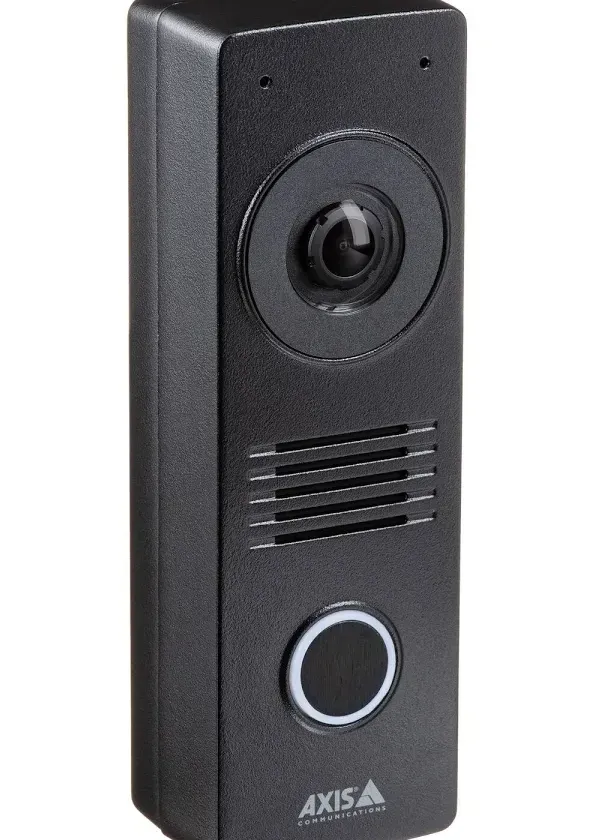
A photo from the AESS job library, not taken in the Brooklyn Navy Yard: a black rectangular video door station with a camera at the top, a speaker grille and one round lit call button. One button is all most Navy Yard suites need at the corridor door, because there is one company behind it. The thinking goes into who the button rings, where they are standing when it rings, and how they open the door without walking across the floor.
Navy Yard Suite Door Request
Suite, studio, shop or receiving door: tell us the building, the floor and which doors visitors and couriers use, and a technician calls back with the range
✅
Request Sent!
Thank you. A technician will call you about your Navy Yard space, usually within two hours during working hours.
25+
Years Experience
✓
Same-Day Estimates
100%
Licensed & Insured
4.7★
201 Google Reviews
Owner-operated since 2002 · Thousands of jobs completed · Booked within 2 hours
Quick answer: door buzzer installation in the Brooklyn Navy Yard is priced on our Brooklyn list, where an audio buzzer with a release for a single suite or receiving door runs $400 to $900 installed and a video door station runs $700 to $1,800 installed. That price covers the door station, the electric strike or other release in the frame, the desk or workbench buttons, any bell or strobe for a loud floor, the low-voltage power supply, the cable and the labor, and it is fixed in writing before we order anything. Most Navy Yard tenants sit in those two ranges because they have one company behind one or two doors. A shared floor with several companies and a common entrance starts around $2,500. Send photos of the door, the frame and the lock to (347) 934-8335 or on WhatsApp, and we answer with the range that fits, usually within two hours of your message during working hours.
Looking at your photos and quoting a new buzzer costs nothing. If something already installed has failed and needs a diagnosis, that visit is the $250 service call booked online, and the $250 goes toward the work.
All work is done under New York State license #12000287431. We install low-voltage entry equipment only. The Yard's Tenant Manual requires electrical work to be done by a licensed electrician with BNYDC approval, so if your door needs a new 120-volt circuit, an electrician does that part and we say so before the job is priced.
The tenant on the lease approves the plan and sends any approval request to BNYDC. Employees and facilities staff are welcome to send us the details, and we price it for the decision-maker.
The Neighborhood
Why Brooklyn Navy Yard Properties Need Door Buzzer Installation
The Brooklyn Navy Yard is not a neighborhood of houses and walk-ups. It is a 300-acre industrial campus on the East River, run by the not-for-profit Brooklyn Navy Yard Development Corporation on behalf of the City, and BNYDC says it is home to more than 550 businesses and more than 13,000 people. There are no apartment buildings inside the fence. What there is, building after building, is the same arrangement: a company leases a suite, a studio, a workshop or a whole floor, and its door opens onto a corridor, a loading platform or a yard road that other companies share. Every one of those doors needs a way for the people outside to tell the people inside that they are there, and a way for the people inside to let them in without dropping what they are doing. That is the job a door buzzer does here.
The Yard has strong perimeter security, and that can make tenants think the door is already covered. It is not. BNYDC's 2026 Tenant Manual is direct about where its responsibility ends: "Tenants and licensees are responsible for installing their own door locks upon taking possession of their leased space," and BNYDC does not keep or copy keys to tenant spaces. The Yard's gate system checks people onto the campus. eWeek's 2020 case study describes how tenants pre-register guests in the Proxyclick visitor system, the guest scans a QR code from an invitation email at the entrance, and the system, tied into the Yard's S2 access control, tells the host the guest has arrived. LenelS2's case study quotes Pasquale Cirullo, BNYDC's Vice President of Technology: "The new system makes it is easy for us to ensure that the people who should be on the Yard, are on the Yard." On the Yard is the key phrase. Once that guest is through the gate and inside your building, nothing in that system opens the door to your suite.
Deliveries make the gap obvious. The Tenant Manual says the campus mail provider handles mail, but "Deliveries by all other couriers such as FedEx, UPS and Amazon are managed directly by the tenant or licensee," and packages "are not allowed to be left in hallways or other shared public spaces." So a courier who reaches your corridor with a box cannot leave it outside your door. Someone has to hear the driver, see who it is and open up, and in a production space that someone is often on the far side of a floor full of machines. Aiphone's case study of a busy warehouse describes exactly what happens otherwise: "Drivers who did not have credentials would be forced to knock for several minutes," and many left before anyone answered.
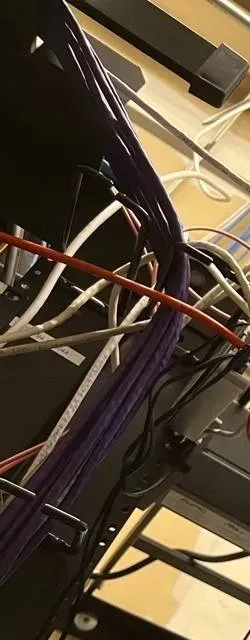
A photo from the AESS job library, not taken in the Brooklyn Navy Yard: bundles of purple, white and red cable dropping down beside a black equipment rack. In a Navy Yard building, a closet like this may belong to the landlord or one of the Yard's telecom providers rather than to the tenant. The Tenant Manual asks tenants to coordinate with their Property Manager on access to telecom closets, so a door station that needs the network is planned around that before any cable is pulled.
The buildings themselves shape the work. Building 77, the former windowless Navy warehouse that reopened in 2017, has floors of 60,000 to 67,500 square feet, a slab-to-slab height of about ten to eleven feet, four big freight elevators and eight passenger cars, and its leasing flyer describes it as suited to "light industrial, tech, R&D, and maker space." The Tenant Manual adds that its lobby is open around the clock but needs a swipe card between 10 p.m. and 6 a.m. Building 12, by contrast, is a 55,000-square-foot manufacturing building with 20-foot ceilings, six drive-in gates and gantry cranes. Building 303, on the Admiral's Row site by the Sands Street gate, had its last unfinished floor put out to designers in 2025 as eight subdivided suites with a shared lab and amenities, according to Brownstoner. Those are three completely different doors: a suite off a long shared corridor, a man door beside a truck gate, and a small suite in a cluster of startups. Each needs a different buzzer plan.
The campus is also changing how people find a door. BNYDC's Wayfinding project, which started in May 2026 and runs about six months, renumbers buildings in sequence from the Kent Avenue side to the Navy Street side, renames the main road Navy Yard Drive, and, in BNYDC's words, "All doors and loading docks are now numbered sequentially, and ADA entrances have been identified." For a tenant, that means the label on a door station, the instructions you give couriers and the door number a visitor is told to walk to all need to match the new signs. We set door station labels and receiving-door signs to the new numbering when we install, so a driver following the Yard's new map ends up at a button that says the right thing.
Six Brooklyn Navy Yard facts that decide a buzzer plan before any equipment is chosen
The suite door is the tenant's. BNYDC's Tenant Manual makes tenants responsible for their own door locks and says BNYDC does not hold keys to tenant spaces. Whatever answers and releases your door is your system, chosen and paid for by your company.
The gate is not the door. The Yard's Proxyclick and S2 systems clear visitors through its gates and notify the host. They do not unlock a tenant's suite. eWeek counted seven gates in 2020; inside them, every suite still needs its own way in.
Couriers are your job. FedEx, UPS and Amazon deliveries are managed by the tenant, and packages cannot be left in hallways, so a receiving door has to be answered, not just rung.
Floors are big and loud. Building 77's floors run to 60,000 square feet and more; Building 12 has 20-foot ceilings and cranes. A plain doorbell inside a door is often not heard where the work is done.
Door numbers are new. Under the 2026 Wayfinding project, doors and loading docks are numbered in sequence and buildings are renumbered, except Buildings 72, 77, 92, 212 and 303, which keep their numbers.
Not a multiple dwelling. New York's Multiple Dwelling Law §50-a requires intercoms in apartment buildings. It does not reach a tenant suite in an industrial park, so a buzzer here is a business decision, and the rules that matter are the building code's egress rules and your lease.
Where this page applies. It covers tenant spaces inside the Brooklyn Navy Yard, the campus bounded by Navy Street, Flushing Avenue, Kent Avenue and the East River, including the buildings on Flushing Avenue, the Admiral's Row site at Sands Street and the waterfront buildings around Dock 72. Until BNYDC announces its new campus address, tenants keep using 63 Flushing Avenue, 141 Flushing Avenue or 399 Sands Street with their new building numbers, and the Tenant Manual gives the mailing format as 1 Brooklyn Navy Yard, the building number, Brooklyn NY 11205. For the rest of the borough, see our Brooklyn door buzzer installation page, and for the whole city our NYC door buzzer installation page. The Navy Yard is billed at the same Brooklyn rate as every other Brooklyn neighborhood.
Repair or Replace in the Navy Yard
Need Repair in the Brooklyn Navy Yard: Releases That Hum but Do Not Open, Silent Bells and Dead Door Stations
Many calls from Navy Yard tenants start as "we need a new buzzer" and turn out to be something smaller. A release that hums but does not open the door is very often a door that has dropped on its hinges or a closer that slams it so hard the latch binds on the strike, which is common on heavy steel doors that take carts, pallets and hand trucks all day. A bell that nobody hears may be working perfectly and simply mounted in the office while the people who should hear it are on the floor. A door station that went dark may have lost its power supply, a supply that someone unplugged when the suite was rearranged, or a cable that was cut when a contractor opened the ceiling for new ductwork. We find which of these it is before anyone talks about replacing equipment, because the honest answer is sometimes an adjustment and an hour, not a new system.
If something that was working has stopped, call (347) 934-8335 or book the $250 service call online. The technician finds the fault, tells you what it will take to fix it and what a replacement would cost instead, and the $250 is credited toward whichever you choose. If the door itself is the problem, we say so and adjust the closer or the strike before touching the electronics. If the system was installed by a previous tenant and nobody has the logins or the paperwork, we tell you plainly whether it can be reset and kept, or whether it is cheaper to replace it with something your company controls from day one.
What We Install
Door Buzzer Installation Services in the Brooklyn Navy Yard
Every service below is priced from the same Brooklyn door buzzer list. In a Navy Yard space, the number of doors that visitors and couriers actually use sets how many stations the system needs, the places where staff are working sets how many answering points and how loud the signal has to be, and the frame and lock on each door set what kind of release can go in.
Suite door stations
A door station on the corridor wall beside your suite door, audio or video, with one button for your company, ringing the people who should answer rather than whoever happens to sit nearest the door.
Desk and workbench releases
A release button at reception, the office manager's desk or a workbench on the floor, wired to a strike in the door frame, so the door opens without anyone crossing the space to turn the handle.
Receiving-door call buttons
A rugged call button or station at the man door beside a loading platform or drive-in gate, labeled with your company and the Yard's new door number, so a driver with a box knows where to press and who will answer.
Bells, horns and strobes
A loud bell and a flashing light on the shop floor, triggered by the door station, for spaces where saws, compressors, ovens or extraction fans drown out an ordinary chime.
Keypads and badge readers with a call button
A keypad or reader for your own staff combined with a call button for everyone else, so employees let themselves in and visitors and couriers still have a way to reach a person.
Interior door releases
A buzzer on the door between a mezzanine office and the production floor, a clean room antechamber or a stock room, for companies that keep part of their space restricted to certain staff.
Building Specialists
Door Buzzer Installation for the Brooklyn Navy Yard's Architecture
The Yard's buildings range from nineteenth-century brick shops to new manufacturing floors, but from a door buzzer point of view almost every tenant door falls into one of six situations. Each comes with its own door, its own cable route and its own idea of who answers.
Suites off a long shared corridor
A company's door among many on a big multi-tenant floor, reached from passenger and freight elevators, with a visitor walking a long way past other companies' doors to find yours.
Workshops with drive-in gates
A ground-level space with a roll-up truck gate and a steel man door beside it, high ceilings, cranes or forklifts, and staff who are rarely near either door.
Subdivided startup suites
Small suites carved out of one floor with a shared lab, kitchen or meeting room, where several companies share an outer door and each needs its own button behind it.
Office floors in the newer buildings
Fitted-out office suites with a building lobby desk, keycard elevators and glass or timber suite doors, where the question is how a visitor gets from the elevator to a person.
Studios and stage doors
Photo, film and recording spaces where a ring at the wrong moment ruins a take, and the door station has to be quiet when the red light is on and loud when it is not.
Mezzanines and inner doors
Offices built on a mezzanine above a shop floor, or restricted rooms inside a larger space, where the buzzer is on an inside door rather than the one onto the corridor.
Suites off a long shared corridor: the visitor has already walked a long way
On a floor the size of Building 77's, a visitor who stepped off the elevator may walk past a dozen other companies before reaching yours. By the time they get there, they have already been cleared at the gate and, after 10 p.m., badged through the lobby by someone, so the door station's job is not to screen strangers off the street. It is to tell the right person that their guest has arrived and let that person open the door from where they are sitting. That usually means a slim station on the corridor wall at the latch side of the door, at a reachable height, with the company name and the suite number in large print, ringing two or three answering points inside rather than one. The release is a strike in the frame, matched to the lock the tenant already installed when they took possession, so keys and the existing lever keep working exactly as before.
Cable on these floors usually runs in the ceiling of the suite and drops down inside the corridor wall or in a short surface raceway beside the frame. The corridor is common space, so we keep anything that is fixed to the corridor side to the station itself and a neat cable entry. The power supply, the controller and any recorder stay inside the suite, high on a wall, labeled, where the tenant controls them. Nothing goes in the corridor that could be read as storage or equipment in a common hallway, which the Tenant Manual does not allow.
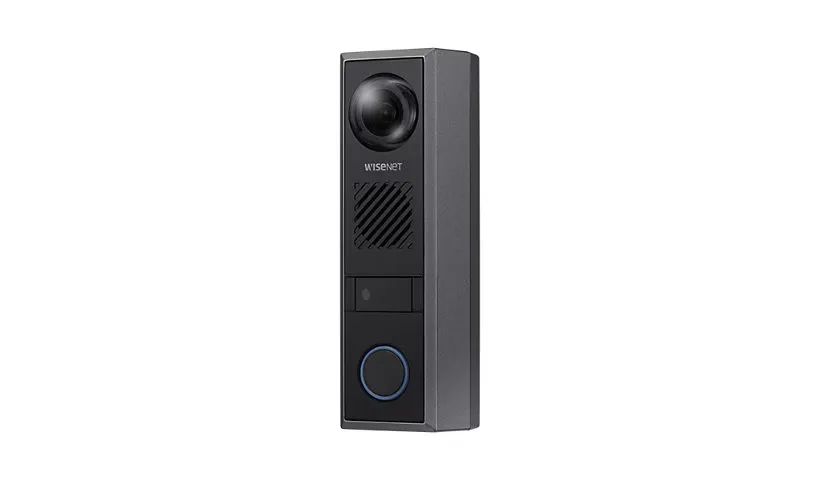
A photo from the AESS job library, not taken in the Brooklyn Navy Yard: a slim dark grey wired doorbell with a camera lens, speaker slots and a round push button. A unit this narrow fits the strip of wall between a suite door frame and a corridor corner, which is often all the room there is outside a small Navy Yard studio or office. It needs a wired power source and, for a release, a separate strike and relay.
Workshops with drive-in gates: the man door is the one that matters
Buildings like Building 12, with drive-in gates and 20-foot ceilings, have two kinds of doors at ground level: the big roll-up gate that trucks and forklifts use, and a steel man door beside it for people. The buzzer belongs on the man door. A roll-up gate is opened by its own operator for loading, and a visitor or courier on foot should never be invited to stand in front of it. So the call button goes on the wall at the latch side of the man door, protected from carts and pallets with a steel hood or a recessed box where the wall allows, and labeled with the company and the door number from the Yard's new numbering, so a driver who has been told "Building such-and-such, Door 3" sees the same words on the button.
Inside, the answering points go where the work is. A master station or monitor near the shop office, a loud bell and a strobe on the floor, and sometimes a second answering point by the loading area itself, so the person who is already near the dock can see the driver and open the door. In a space this size, the release is usually still a strike in the frame of the man door, since the door has to stay locked from outside and open freely from inside. The roll-up gate is left alone unless the tenant asks for a separate control, which is a different job with its own safety requirements.
Subdivided startup suites: one outer door, several companies
When BNYDC put Building 303's ninth floor out to designers in 2025, the plan called for eight subdivided suites and a shared lab and amenities, according to Brownstoner. That arrangement, a cluster of small companies behind one outer door, is the closest thing the Yard has to a small apartment building, and it gets a similar entry plan. The outer door gets a station with a button or a directory entry for each company, each ringing only that company's people, and a release in the outer door's frame. Each company's own suite door can then have its own simple buzzer or a keypad, or nothing, depending on how much the companies share.
The question that matters most here is who controls what. In a cluster run by one manager, the manager usually holds the administrator login for the shared station and adds or removes companies as leases change, while each company manages its own staff. We set it up that way from the start, write down who holds which login, and keep each company's answering devices and user lists separate, so one startup cannot see another's visitors or change another's settings.
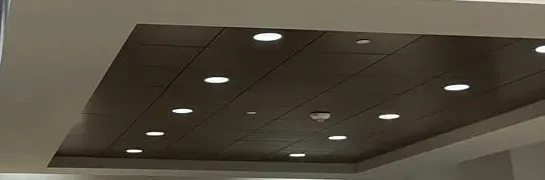
A photo from the AESS job library, not taken in the Brooklyn Navy Yard: a dark recessed ceiling panel with round downlights and a small round device, framed by a lighter ceiling. Fitted-out reception areas in the Yard's office suites often have finished ceilings like this, which means the cable route from the suite door to a reception desk has to be planned around ceiling panels and light fixtures rather than an open grid of beams and pipes.
Office floors in the newer buildings: the lobby desk handles the building, you handle the suite
The Yard's newer office floors, in buildings such as Dock 72, where Bisnow reported a Pratt Institute graduate program taking about 63,000 square feet, and the upper floors of Building 77, which the BNYDC flyer says has a lobby desk, round-the-clock security and keycard access, come with a building entry already in place. The tenant's part is the suite door. Many of these suites have a glass or timber door into a reception area, and the work is a door station or a simple call button by that door, a release in its frame, and an answering point at the reception desk and wherever the office manager works when reception is empty.
Glass suite doors need more planning than steel ones. The release has to suit the door's frame and lock, the cable has to reach the frame without showing across the glass, and the station has to go on a wall or sidelight frame rather than the glass itself. Where the landlord built out the suite, the door hardware is often specified in the fit-out drawings, so we ask for the hardware schedule or a photo of the lock and frame before quoting, and we keep the new release consistent with what the building's own doors use.
Studios and stage doors: quiet when it has to be
The Yard has long been a home for film, photo and media work, from Steiner Studios, which opened in 2004, to small photo and recording studios in the multi-tenant buildings. For those tenants, a doorbell is a liability during a take. The plan here is a door station whose chime can be switched off or replaced by a light while recording, and a visible signal outside the door, so a visitor sees that a session is on and knows to wait or call ahead. When the session ends, the chime comes back on. Where the studio has a control room, the answering point goes there, so the person running the session decides when the door opens.
Mezzanines and inner doors: buzzers inside the suite
Some of the most useful buzzers in the Yard are not on the corridor at all. Building 12's flyer, for example, describes a ground-floor workshop with a built-out mezzanine holding offices, bathrooms and a pantry. In spaces like that, a company may want the door from the shop floor up to the offices, or the door to a stock room, a clean room antechamber or a server closet, to stay locked to everyone but certain staff, while still letting a visitor who has been brought up to the office ring through. An inside door gets the same parts as an outside one, a station or button, a release and a power supply, but the cable runs are shorter and nobody from outside the company ever touches it.
Field Notes
Field Notes: What We Check at a Navy Yard Suite Door Before Quoting
These notes describe our standard routine for tenant doors in big multi-tenant industrial buildings. They are what our technicians look at on every walkthrough of this kind of space, and they are why our quotes for these doors rarely change on install day.
Stand where the people who answer actually stand. The technician asks who is supposed to open the door and then goes and stands where that person spends the day: at a bench, a press, a sewing table, an oven line or a desk in the back office. If an ordinary chime cannot be heard there with the machines running, the plan gets a bell or a strobe, and the release button goes within reach of that spot, not by the door.
Close the door and watch it latch. Heavy steel suite doors on busy floors are pushed with carts, propped with boxes and slammed by closers that were never adjusted. Before anything electrical is quoted, we close the door a few times and watch whether it latches cleanly. A door that does not latch will not stay locked, and no buzzer fixes that. If the closer or hinges need adjustment, that goes on the quote first.
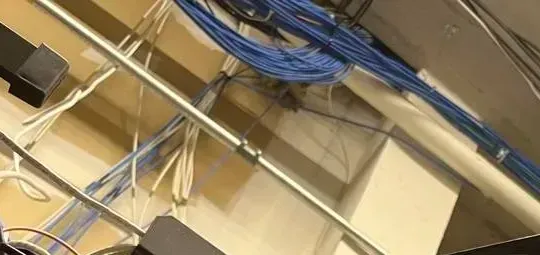
A photo from the AESS job library, not taken in the Brooklyn Navy Yard: bundles of blue low-voltage cable laid over a ceiling beam and a metal pipe in an open ceiling. Many Navy Yard workshops and production floors have open ceilings with beams, sprinkler pipes and ductwork in full view, so the cable from a door station to a workbench release runs along that structure in a tidy, supported line rather than being hidden in a wall that is not there.
Read the frame and the lock. The kind of release a door can take depends on the frame, steel or aluminum or timber, on the lock the tenant installed, and on whether the door carries a fire rating label on its edge or hinge side. We photograph all three and choose the strike or release to match, so the tenant's key and lever keep working and the door keeps its rating.
Ask what the space is used for. The building code treats an office, a shop and a factory floor differently when it comes to electrically locked exit doors. We ask how the space is used and, where the tenant has it, what occupancy its plans show, because that decides whether a magnetic lock is even an option or whether a strike is the only sensible choice.
Find the route and the closet. We trace how a cable would get from the door to each answering point and to the power supply, and whether the system needs the company network. If it does, we note whether the tenant has its own network gear in the suite or whether a connection would mean a building telecom closet, which the Tenant Manual says is coordinated with the Property Manager.
Check the new numbers. Finally, we check the building and door numbers on the Yard's new signs, so the label we print for the station and any courier sign we make match what visitors and drivers will be told.
Locks, Releases and Exit Rules
Strike or Magnetic Lock: What the Building Code Lets a Navy Yard Door Use
The single most important technical decision on a Navy Yard buzzer job is what actually holds the door shut and lets it go. There are two families of hardware. An electric strike replaces the metal plate in the door frame that the latch catches on; when the buzzer is pressed, the strike lets the latch swing free and the door opens, and the door's own lever still opens it from inside at any time. A magnetic lock is a powerful electromagnet on the frame header and a steel plate on the door; it holds as long as power flows and lets go when power is cut. Both are sold as buzz-in kits. They are not interchangeable, and in a building full of factories they are treated very differently by the code.
What New York City's code says. The current New York City Building Code allows electrically locked egress doors released by a sensor in section 1010.1.9.8, and electromagnetically locked egress doors released by hardware on the door in section 1010.1.9.9. Both sections list the occupancies where they apply: Group A, B, E, M, R-1 and R-2 buildings and the tenant entrance doors in them. Group F, the factory and industrial occupancy that covers much of the production space in the Yard, is not on either list. Delayed egress locks, under section 1010.1.9.7, need the commissioner's special approval and are not permitted at all in Group A, E, F or H occupancies. In practice, that means a magnetic lock on a manufacturing tenant's exit door is something to raise with the tenant's architect, not something to buy as a kit.
What the sensor-release rule requires where it does apply. For office and shop doors where a sensor-released lock is allowed, section 1010.1.9.8 sets out a list: a sensor on the inside that unlocks the door as someone approaches, a manual unlocking device 40 to 48 inches above the floor and within five feet of the door, marked "PUSH TO EXIT", that cuts power to the lock directly and keeps it unlocked for at least 30 seconds, unlocking on loss of power, unlocking when the fire alarm or sprinklers activate and staying unlocked until the fire alarm is reset, and hardware listed under UL 294. A magnetic lock is only legal when all of that is done properly, which is why it is rarely the cheap option it looks like.
Why we default to a strike. A strike keeps the door's mechanical latch and lever in charge of exit, so the door always opens from inside whether the power is on or off. Allegion's guide to fail-safe and fail-secure hardware explains that "Fail secure products are locked when power is removed," and that with an electric strike "you can exit by turning the lever" whether the strike is fail safe or fail secure. The same guide notes that fire doors need fail-secure strikes and that "Electromagnetic locks are only available fail safe," so a magnetic lock cannot go on a door that has to keep its fire rating. For the steel suite doors and man doors most Yard tenants have, a fail-secure strike matched to the existing lock is the simplest release that keeps the door locked from outside, open from inside and rated where it needs to be.
When a magnetic lock does make sense. Some doors cannot take a strike: a glass door with no latch, an existing frame that cannot be cut, or a pair of doors with hardware that leaves no room. In an office or shop space where the code allows it, we can install a magnetic lock with a sensor and a push-to-exit button, tied to the fire alarm release, but that work has to be coordinated with whoever is responsible for the building's fire alarm. The Tenant Manual lists a Fire Safety & Security contact role for each tenant, described as the "Local Fire Alarm contact for FDNY response/emergency contact." We work with that person and with the landlord's fire alarm vendor, and if the fire alarm side is not ready, we recommend the strike instead.
Couriers and Door Numbers
Receiving Doors, Courier Calls and the Yard's New Door Numbers
For a lot of Navy Yard tenants, the door buzzer that earns its keep is not the one visitors use. It is the one couriers use. The Tenant Manual makes FedEx, UPS and Amazon deliveries the tenant's responsibility and does not allow packages to be left in hallways or shared spaces, and the campus mailroom in Building 6 near the Clinton Avenue gate handles mail on weekdays only, from 8 a.m. to 5 p.m. So every box that is not mail has to be handed to someone at your door. A driver with a dozen other stops will wait a minute, not five.
A button the driver can find. The first part of the fix is a call button or station that a driver can find without asking. BNYDC's Wayfinding FAQs tell tenants with in-house drivers or smaller carriers to give drivers the new address "and the correct door or dock number," and say drivers can ask for a map at the gate. We label the station with the company name and the door number from the new numbering, and where it helps, mount a small sign at eye level that says "Deliveries: press to call" beside the button. During the interim period, when BNYDC's red "Former Building" signs are up, we can print both the old and the new building number on the label so a driver using either finds you.
A signal the floor can hear. The second part is making sure someone notices. Aiphone's warehouse case study found that in a "loud, bustling place" knocking was not heard and employees were stuck outside, and the fix was video stations at each entrance with "A bell and strobe" activated by calls from the door, with calls answered at any of several inside stations. That is the same plan we use for a Navy Yard receiving door: a station at the door, a bell and strobe where the work happens, and two or three places where a call can be answered and the door released, so the nearest free person picks it up.
A release that does not leave the door open. The third part is closing the loop. A receiving door that is buzzed open has to close and lock again by itself once the box is inside, or it becomes the door everyone props open. The closer is adjusted so the door latches every time, the release is timed so it relocks a few seconds after it is pressed, and, where the tenant wants it, the system can show on a monitor or phone when the door has been left open.
Scheduling around the freight elevators. Upstairs tenants receive most deliveries by freight elevator, and the Tenant Manual shuts freight cars down from 8 p.m. to 5 a.m. on weekdays and all weekend, with after-hours freight service charged by the hour. Our crews install on weekdays during the day, which is when freight service runs, and we plan around your own delivery peaks so we are not blocking your door when the morning trucks arrive.
Commercial Door Buzzer Installation
Business Door Buzzer Installation in the Brooklyn Navy Yard
Every door in the Navy Yard is a business door, so this section is about how the work changes from one part of the campus to another. BNYDC groups its tenants into industries such as food and beverage, fashion and visual design, manufacturing, transportation and sustainable technology, and its Industry Development Council has added medtech, robotics, sustainable design-build, fashion and wearables, beauty and personal care, life science and clean energy. The doors those companies use sit along a handful of edges and clusters.
The Flushing Avenue buildings
Building 77 at 141 Flushing Avenue and its neighbors along the southern edge, with long multi-tenant floors, swipe-card lobby access overnight and suites for light industry, tech and R&D.
The Sands Street side
Building 303 and the Admiral's Row site at 399 Sands Street, next to the Sands Street gate, with manufacturing floors over parking and a floor of subdivided startup suites.
Market @ 77
The food hall on Building 77's ground floor, with names such as Russ & Daughters and Transmitter Brewing, where staff doors, kitchen doors and receiving doors serve food businesses rather than offices.
The waterfront offices
Dock 72 and the newer office buildings by the water, where a building lobby already screens visitors and the tenant's part is the suite door and reception desk.
The Kent Avenue end
The eastern side of the campus by the Clymer and Kent gate, where the Wayfinding project's new building numbers begin, so the lowest numbers on the new signs are the buildings at this end.
Studio and stage tenants
Film, photo and media companies, including those near Steiner Studios, whose doors need to stay quiet during recording and still let crew and deliveries in between takes.
The common thread across those areas is that the person answering the door is rarely sitting beside it. In an office, the door station can ring a reception desk and the office manager's phone. On a production floor, it has to reach people with their hands full, which is why we lean on bells, strobes and several answering points rather than a single monitor. In a food business, the kitchen or production door may be used dozens of times a shift by staff with trays and crates, so the release has to be a button that can be pressed with an elbow or a foot switch where the space allows, and the door has to close and latch behind them every time.
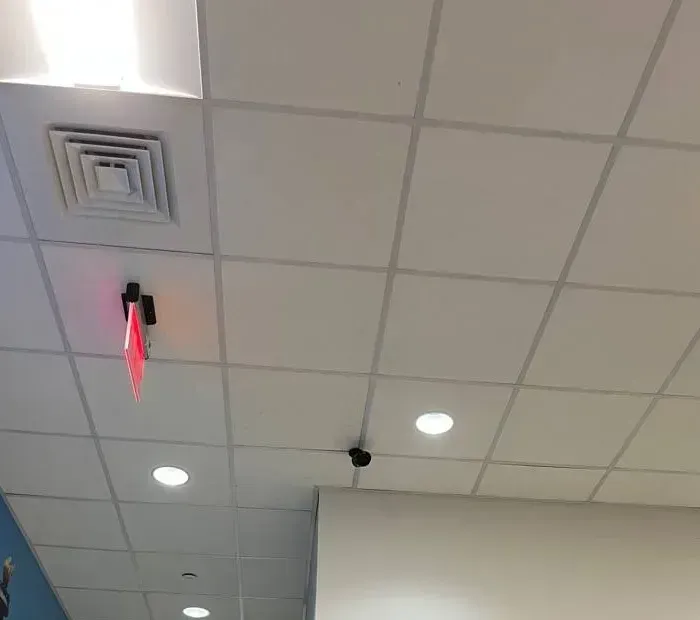
A photo from the AESS job library, not taken in the Brooklyn Navy Yard: a drop ceiling with a lit red exit sign, an air diffuser, round recessed lights and a small black camera. An exit sign over a door is a reminder that the door is part of someone's way out. Any release we add to a Navy Yard door that is also an exit is chosen so that the door still opens from inside, by hand, every time.
Doors in the Yard take a beating. Carts, pallet jacks and hand trucks hit frames, closers are run hard, and corridor walls are scuffed by freight. We choose stations with metal faces and vandal-resistant buttons for corridor and dock doors, mount them where carts do not reach, and protect the cable entry so it cannot be pulled out by a passing load. Indoors, the power supply goes high on a wall with a battery backup and a clear label, away from wash-down areas in food spaces and away from the floor in any building that has taken water before. Brooklyn Paper reported in 2025 that Hurricane Sandy put up to six feet of water across the campus in 2012 and that the Yard has flooded again since, so we do not put entry electronics on the floor.
Compliance points that apply to Brooklyn Navy Yard door buzzer installations
Your lease and BNYDC approval. The Tenant Manual says plans for alterations "must be submitted to and approved by BNYDC" and that the lease controls over the manual. A door station and strike are small, but whether they count as an alteration is a lease question, so we give the tenant a short written scope and cable route to send to the Property Manager before install day.
Electrical work. The Tenant Manual says "Any and all electrical work must be performed by a licensed electrician" with BNYDC approval. Our work is low-voltage entry equipment powered from a plug-in or existing supply. If a door needs a new 120-volt circuit, that part goes to a licensed electrician and we say so before pricing.
Egress hardware. New York City Building Code sections 1010.1.9.7 to 1010.1.9.9 govern delayed egress, sensor-released and electromagnetically locked exit doors and list the occupancies where each is allowed. Group F factory space is not on the sensor-release or magnetic lock lists, so we use strikes there.
Fire-rated doors. Doors that carry a fire rating need fire-rated hardware. Allegion's guidance is that fire doors need fail-secure strikes and that magnetic locks are only available fail safe, so a rated door gets a rated fail-secure strike.
Accessible reach. For businesses open to the public, the 2010 ADA Standards set a high forward reach of 48 inches maximum and a low reach of 15 inches minimum, and operable parts must fall within those ranges. We mount call buttons and keypads inside that band, and the Yard's Wayfinding project has identified ADA entrances, which we take into account when choosing which door gets the station.
Signage. The Tenant Manual says signage requests go to BNYDC for review and approval. A printed label on a door station is not a sign in the usual sense, but a larger courier sign on a corridor or exterior wall may be, so we check with the tenant before mounting one.
Common hallways. The Tenant Manual prohibits storing materials or equipment in common hallways. We keep corridor-side equipment to the station itself and put everything else inside the tenant's space.
Your Questions Answered
Door Buzzer Installation in the Brooklyn Navy Yard: Questions Answered
These are the questions Navy Yard tenants, office managers and facilities staff bring to us about suite and receiving doors, grouped by the part of the job they affect. Each answer is drawn from the Yard's own published rules, the building code and what we see on these doors.
Visitors who are already past the gate
Our visitors already scan a QR code at the gate. Why would our suite still need its own buzzer?
Because the QR code opens the Yard, not your suite. The Yard's Proxyclick system, as eWeek described it, clears a pre-registered guest through the entrance and notifies the host that they have arrived, and the Tenant Manual confirms that visitors registered this way are emailed a QR code. After that, the guest still has to find your door and get someone to open it. On a big floor, a notification that "your guest has arrived at the gate" does not tell you when they are standing at your door ten minutes later. A door station closes that gap: the guest presses one button at your suite, the right person sees or hears them, and the door opens from a desk or a phone.
It also covers the people who never go through Proxyclick at all: couriers, contractors on long jobs who have temporary Yard IDs, staff from other companies on the same floor, and employees who forgot their key. All of them end up at the same door.
Building 77's lobby takes a swipe card after 10 p.m. Can a visitor for our late shift still reach our door?
The lobby is the building's, so the overnight swipe-card rule in the Tenant Manual decides how a visitor gets into Building 77 between 10 p.m. and 6 a.m., and a tenant's door station does not change it. In practice, someone with a card, an employee or a security officer, brings the visitor through the lobby. Once they are upstairs, your door station works the same at night as during the day. What changes at night is who answers. A late shift is usually small, so we set the station to ring the shift lead's phone or a monitor at the night work area, and to stop ringing the empty front office, which nobody is sitting in.
Our corridor is already watched by building security. Does the door station at our suite still need a camera?
Often it does, for a simple reason: building cameras are watched by the building, and a door station camera is watched by the person deciding whether to open your door. The building's footage helps after something happens; your station's picture helps the moment before you press release. For a suite that only ever receives known visitors and couriers, an audio station on the Brooklyn list's lower range is perfectly workable. For a suite that receives deliveries of valuable material, or where the person answering is far from the door and cannot see the corridor, a video station is worth the difference, because it lets them see who is there and whether anyone is standing behind them before the door opens.
Couriers and the receiving door
Drivers tell us they rang and nobody came. How do we stop missing deliveries at the receiving door?
Start with what the driver sees, then what your staff hear. A driver who cannot find a button knocks; a driver who finds one and hears nothing leaves. So the receiving door gets a clearly labeled call button with your company name and the Yard's new door number, mounted at the latch side where a driver with a hand truck can reach it. Inside, the call rings more than one place, usually the shipping desk, a monitor or bell on the floor, and the phones of the two or three people who handle receiving, so whoever is free picks it up.
Then make sure the people who answer can open the door without walking over. A release button at the shipping desk or on a station near the dock lets them buzz the driver in and keep working. If deliveries still get missed after that, the problem is usually a door at the wrong end of the space for where the work happens, and the fix is a second answering point nearer the dock, not a louder bell.
Our shop floor runs saws and compressors all day. How will anyone hear the door?
They usually will not hear an ordinary chime, and we do not pretend they will. On loud floors we add a bell or horn rated for industrial noise and a strobe light that flashes when the door station is pressed, placed where staff look while they work, often above the main work area or on a column in the middle of the floor. Aiphone's warehouse case study used exactly that pairing, a bell and strobe triggered by calls from the door, because knocking went unheard and staff were left outside. The strobe matters as much as the bell, since people wearing hearing protection may not notice even a loud bell.
We also think about who should be interrupted. Not everyone on a production floor needs to stop for the door. A strobe placed at the shipping area, rather than over every machine, tells the people responsible for the door without pulling everyone else off the line.
We have a roll-up gate and a steel man door side by side. Which one gets the buzzer?
The man door. People on foot, visitors, couriers with a hand truck, staff arriving, should come and go through the door built for them, and a roll-up truck gate should only open for vehicles and loading. Putting the call button beside the man door also keeps drivers from standing in front of a gate that might start moving. If the company wants the gate's operator controlled from inside, that is a separate control on the gate operator, quoted separately and installed so that the gate's own safety devices stay in charge.
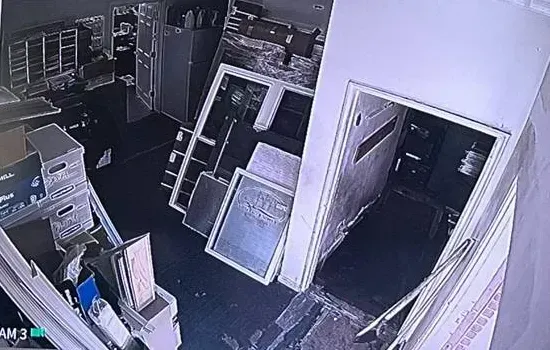
A photo from the AESS job library, not taken in the Brooklyn Navy Yard: a black-and-white night camera view of a cluttered room with an open doorway into a dark back room. An inner door left open after hours, like the one in this picture, is the kind of thing a Navy Yard tenant with a stock room or restricted area wants to know about. A buzzer and release on that inner door, with the door closing and locking itself, keeps it shut without relying on the last person out.
Doors, locks and the exit rules
Our space is classed as a factory occupancy. Can we use a magnetic lock on the door to the corridor?
Not under the sections people usually rely on. New York City Building Code section 1010.1.9.8, for sensor-released electric locks, and section 1010.1.9.9, for electromagnetic locks released by door-mounted hardware, both list Group A, B, E, M, R-1 and R-2 occupancies and their tenant entrance doors. Group F, factory and industrial use, is not listed, and delayed egress locks are not permitted in Group F at all. So for a manufacturing tenant's exit door, we install a fail-secure electric strike matched to the existing lock. The door stays locked from the corridor, the buzzer releases it, and the lever always opens it from inside.
If your architect believes your particular space is classified differently, or a magnetic lock is needed for another reason, we work from the architect's drawings and the approved plans. What we will not do is put a magnetic lock kit on a factory exit door because it was cheaper to buy.
Our suite door is a fire-rated steel door. What kind of release can go on it?
A fire-rated fail-secure electric strike, sized to the door's lock and frame. A rated door has to latch when a fire is burning, which is why Allegion's guidance says fire doors need fail-secure strikes, and why a magnetic lock, which Allegion notes is only available fail safe, does not belong on a rated door. Before ordering, we read the rating label on the door and frame and confirm the strike carries a matching listing. The installation is done so the rated frame is cut only as the strike's template requires, and the door's closer and latch are left in working order so it closes and latches on its own.
BNYDC does not keep a key to our space. If the release fails while we are out, how do we get back in?
The same way you would if there were no buzzer: with the key to your own lock. That is one more reason we fit a strike rather than replace the lock. The key cylinder, the lever and the latch you installed when you took the space keep working exactly as before, and the strike only adds a second way to open the door. If the strike or its power supply fails, the door simply behaves like a normal locked door, and anyone with a key gets in. We recommend at least two people in the company hold a key, since the Tenant Manual makes clear that BNYDC does not keep or copy keys to tenant spaces.
Does a locked, buzzer-controlled suite door cause a problem for the FDNY?
Not when it is installed properly, because the parts of the door that matter in a fire do not change. Exit from inside stays free by turning the lever, a fire-rated door keeps its fire-rated latching hardware, and nothing about a strike stops a door from closing and latching on its own. Where a lock type does have to release with the fire alarm, such as a sensor-released lock in an office, the code says so and we coordinate it with whoever maintains the building's fire alarm. The Tenant Manual also asks each tenant to name a fire safety and security contact for FDNY response, and that person should know how the door works and where the keys are.
Your lease, the landlord and your network
Does putting an electric strike on our door count as electrical work under the Yard's rules?
The Tenant Manual says "Any and all electrical work must be performed by a licensed electrician" and needs BNYDC approval, and separately requires alteration plans to be submitted to BNYDC. A strike, a door station and a desk button run on low voltage from a power supply, which is the work our licensed low-voltage crew does. But because the lease, not the manual, decides what counts as an alteration, we do not guess. We give you a one-page scope with the parts, the cable route and the power source, you send it to your Property Manager, and we install once you have the answer. If the door needs a new 120-volt outlet for the power supply, that part goes to a licensed electrician under BNYDC's rules.
Should the door station sit on our company network or be kept apart from it?
It depends on what the station needs to do. A wired audio or video system that only rings stations inside the suite can run on its own cable and never touch your network. If you want calls on staff phones, the station needs an internet connection, and the clean way to give it one is a separate network or a separate segment of your network, so a device mounted in a public corridor is never sitting on the same network as your design files or production machines. We set that up with your IT person or provider. If the only network in reach is in a building telecom closet, the Tenant Manual says access is coordinated with the Property Manager, so we plan for that time before install day.
We sublease part of our floor to another company. Can they manage their own users without seeing ours?
Yes, with a system built for more than one company behind a door. Each company gets its own button or directory entry, its own answering devices and its own user list, and the leaseholder keeps the administrator login for the shared station. The subtenant can add and remove its own people and see its own visitors, but it cannot see your call history or change your settings. If the subtenant has its own door off the shared space, that door can have its own simple buzzer that rings only them. We write down who holds which login at hand-over, which saves a lot of trouble when the sublease ends.
We may move to a bigger building in the Yard in a few years. Can the door system come with us?
Much of it can. Door stations, desk buttons, monitors, bells, strobes and power supplies are fixed with screws and can be taken down and reinstalled in a new space if they suit the new doors. The strike is the part least likely to move, because it is sized to a particular frame and lock. Cable is usually left or removed according to what your lease requires at the end. When we install, we note every part's model and location, so if you move, we can tell you quickly which parts will work at the new doors and price only the difference.
Whether you must remove the equipment when you leave, or may leave it, is set by your lease's end-of-term terms, and we follow whatever your lease or BNYDC requires.
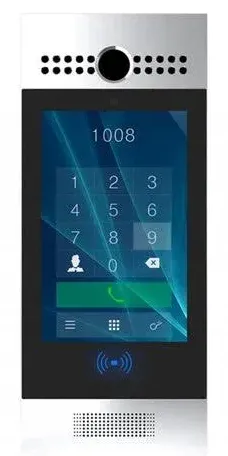
A photo from the AESS job library, not taken in the Brooklyn Navy Yard: a touchscreen entry panel showing a dial pad with a four-digit code entered, a camera above it and a card-reader symbol below. A panel like this suits a Navy Yard floor shared by several companies: a visitor dials the company's code to call it, and staff use a card or their own code to let themselves in.
Studios, inner doors and choosing the right entry
Our studio records sound. Can the door station be kept quiet during a take?
Yes. The plan is a station whose indoor chime can be muted on a switch or a schedule, with a light in the control room or on the studio wall in its place, and a visible "session in progress" light outside the door so visitors know to wait. Calls can still reach the producer's or studio manager's phone silently, so a courier is not turned away during a long session. When the session ends, the switch goes back and the chime returns. We place the indoor parts so the station's own speaker does not carry into the live room.
Can a buzzer go on the door between our mezzanine office and the shop floor?
Yes, and it is one of the easier jobs in the Yard, because the door is inside your own space and the cable run is short. The door gets a call button or small station on the shop side, a strike in its frame and a release button at a desk in the office, so staff on the floor can ring up and someone in the office can let them in. If the door also has to stay locked to some staff, a keypad or badge reader on the shop side lets authorized people through while everyone else rings. An inside door like this usually falls in the lower part of the Brooklyn audio range.
Which is more secure for a suite door: a keypad or an intercom?
They protect against different things, so most tenants with staff and visitors end up with both. A keypad or badge reader controls who can let themselves in: every employee has their own code or card, and you can remove one person without changing anyone else's. An intercom controls who gets let in by someone inside: a visitor or courier rings, a person looks or listens, and decides. A keypad on its own leaves visitors knocking; an intercom on its own means someone has to answer every time an employee arrives. ButterflyMX's small-office guide notes that intercoms and key fob systems can work together, and that is the usual answer for a Navy Yard suite with a team of more than a few people.
Can one panel at our door handle staff badges and visitor calls?
Yes. Many door stations include a card or fob reader beside the call button, or a keypad that takes both staff codes and visitor calls, like the panel shown above. One panel on the corridor wall is neater than two, needs one cable route instead of two, and gives you one place to add and remove people. The trade-off is that if the panel is damaged, both functions go at once, so on doors that take a lot of knocks from carts we sometimes mount a separate, recessed reader and keep the call station a little higher. Note that the Yard's own employee ID cards are BNYDC's credential for the gates; whether your door reader can use the same card depends on the card technology, which we check before promising it.
Equipment
Types of Door Buzzer Systems We Install
By default we quote a reliable non-branded system, and we install any brand a tenant prefers. What matters more than the name on the faceplate is matching each part to the door, the floor and the people who answer.
Audio door stations
A metal-faced call station with one or a few buttons and a speaker, ringing master stations or handsets inside, for suites where staff know who is coming.
Video door stations
A station with a camera, ringing monitors and, where wanted, staff phones, for receiving doors and suites where the person answering cannot see the corridor.
Directory and code panels
Panels with a directory or dial pad for shared floors and subdivided suites, so each company behind one outer door has its own entry and its own users.
Desk, bench and foot releases
Momentary release buttons for reception desks, workbenches and shipping counters, and foot or elbow switches where hands are full.
Bells, horns and strobes
Industrial bells and flashing lights triggered by the door station, for production floors where an ordinary chime is lost in machine noise.
Strikes and power
Fail-secure and fire-rated electric strikes matched to the tenant's lock, with low-voltage supplies and battery backup mounted high and labeled.
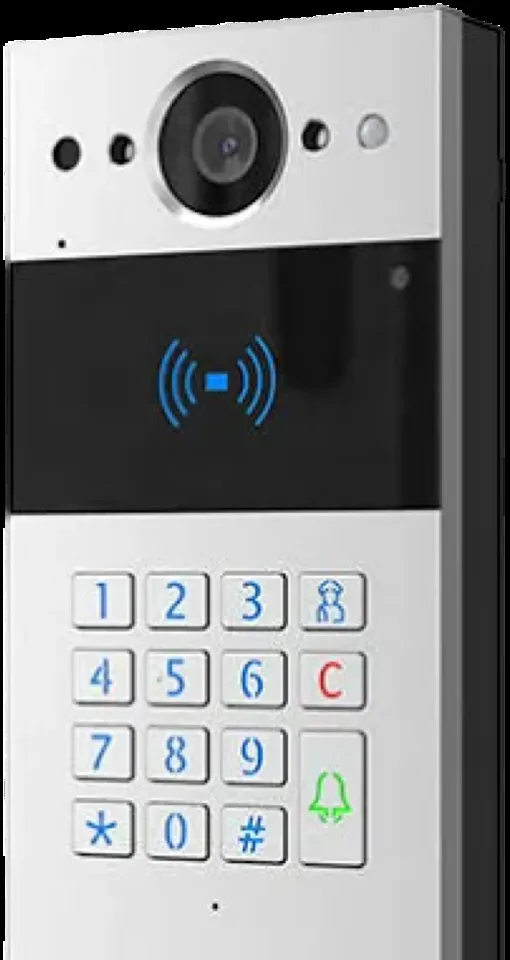
A photo from the AESS job library, not taken in the Brooklyn Navy Yard: a silver and black keypad door station with a camera lens at the top, a blue card-reader symbol, a numeric keypad and a green bell key. On a Navy Yard receiving door, the green bell key is what a courier presses, the keypad and reader are for the company's own staff, and the camera lets the person answering see who is waiting before releasing the door.
Desk release, audio station or video station for a Navy Yard door
The table compares the three set-ups tenants weigh most often for a single suite or receiving door. All three use a strike in the frame; what changes is how the visitor calls and how much the person inside can see.
What matters
Doorbell plus desk release
Audio door station
Video door station
Visitor can talk to you
No
Yes
Yes
You can see the visitor
No
No
Yes
Answer away from the door
Only at the button
At each inside station
At monitors and, if wanted, phones
Works on a loud floor
With a bell and strobe
With a bell and strobe
With a bell and strobe
Needs your network
No
No
Only for phone calls
Brooklyn list range, installed
$400–$900 audio range
$400–$900 audio range
$700–$1,800 video range
AI Overview Reality Check
What AI Gets Wrong About Door Buzzer Installation in the Brooklyn Navy Yard
These are claims that turn up in generic online answers, cost guides and vendor articles about door buzzers. Each is reasonable somewhere. Here is how each one holds up at a tenant door inside the Yard.
"A door buzzer system costs $1,000 to $7,000 for the hardware alone"
ButterflyMX's article on commercial buzzer systems says a door buzzer system "costs anywhere from $1,000 to $7,000 for the hardware," before installation. Its small-office guide puts small commercial video intercoms at about $2,500 to $7,000 installed, and HomeAdvisor gives a national intercom average of $2,500.
Those figures describe whole-building entry systems with lobby panels and many answering points, often with app subscriptions. A single Navy Yard suite door with one company behind it is a much smaller job: one station, one strike, a few answering points and a power supply.
On our Brooklyn list that is $400 to $900 for audio and $700 to $1,800 for video, installed. A shared floor with several companies behind one door starts around $2,500, which is where the national figures begin to apply.
"Wired buzzers mean opening walls and weeks of work"
The same ButterflyMX article warns that wired buzzer systems "require extensive wiring," may mean opening walls and lifting floors, and can take "several days if not many weeks" to install.
That is true of a pre-war apartment building with a riser to every floor. Most Navy Yard suites are the opposite: open ceilings with exposed beams and pipes, or drop ceilings, and a run of tens of feet from the door to the answering points, all inside one company's space.
A single suite door is usually installed in a day. The time that takes longest is often the approval from the Property Manager, which is why we send the scope early.
"New York law requires every building to have an intercom"
Online answers about New York entry systems often state that buildings must have a working intercom and buzzer, and link to the city's housing rules.
The rule they mean, Multiple Dwelling Law §50-a, applies to multiple dwellings, apartment buildings with eight or more units built or converted after 1968. The Navy Yard has no apartment buildings, so no tenant is required by that law to have a buzzer.
The rules that do apply to a Yard door are the building code's egress rules, the door's fire rating and your lease. A buzzer here is a business choice, and we plan it around those rules.
"A magnetic lock kit is the easy way to buzz people in"
Buzz-in kits built around magnetic locks are sold for reception areas and small businesses, and they are presented as simple: a magnet on the frame, a remote or button inside.
The New York City Building Code allows sensor-released and electromagnetically locked exit doors only in listed occupancies, Groups A, B, E, M, R-1 and R-2, and requires a push-to-exit device, power-loss release and fire alarm release where they are used. Factory space, Group F, is not listed, and magnetic locks are only fail safe, so they cannot go on fire-rated doors.
On most Yard doors, a fail-secure electric strike matched to the existing lock is both simpler and correct. We use magnetic locks only where the code allows them and the fire alarm side is coordinated.
"The landlord's visitor system replaces a door buzzer"
Visitor management systems are sometimes described as a full replacement for intercoms: guests register, scan a code and are let in.
At the Yard, Proxyclick and the S2 system clear guests through the gates and notify the host. They do not open a tenant's suite, the Tenant Manual makes tenants responsible for their own locks, and couriers, who are the tenant's to manage, often never appear in a visitor system at all. eWeek noted that delivery drivers often lacked names, which is why truck plates were being tested instead.
The visitor system and a door station do different jobs. One gets people onto the campus; the other gets them through your door.
"A wireless doorbell is enough for a business door"
Cost guides recommend wireless systems for do-it-yourself installs, and battery doorbells are sold as needing no wiring at all.
On a big production floor, a plug-in chime near the door is not heard where the work is done, steel doors and concrete can weaken a wireless signal, and a battery station has no way to release the door. Aiphone's warehouse case study ended with wired stations, a bell and strobe and several answering stations because knocking and ringing were going unheard.
A wireless doorbell can suit a small office suite with people near the door. For a shop floor or a receiving door, we wire it.
"Every modern entry system needs the cloud and a monthly fee"
Swiftlane's cost guide says software subscriptions commonly add $5 to $15 per unit per month, or $30 to $100 per door per month, and many vendor articles assume an app-based system.
A Navy Yard suite door that rings stations inside the suite can run as a local wired system with no subscription at all. A cloud connection is only needed if staff want calls on their phones away from the space, and even then many systems work without a per-door fee.
We price both ways and tell you which parts, if any, carry a monthly charge before you choose. Our own work has no monthly fee.
Not Sure Which Release Your Door Can Take
If you are not sure whether your door takes a strike, whether your space counts as factory or office, or whether the shop floor needs a strobe, send photos of the door edge, the frame and the lock with a line about how the space is used. Call now at (347) 934-8335, send a fast quote request, or send the photos to a tech on WhatsApp. Estimates are booked within two hours of your request during working hours.
Get In Touch
Request a Free Quote
Tell us the building and floor, the doors visitors and couriers use, and where the people who answer work, and a technician will call with the range and a walkthrough time. Prefer to talk? Call (347) 934-8335 right now.
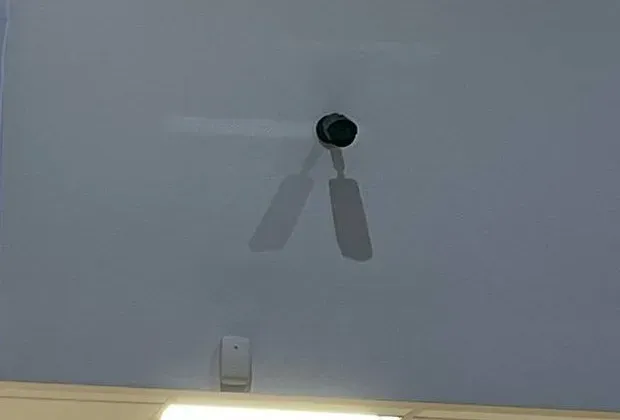
A photo from the AESS job library, not taken in the Brooklyn Navy Yard: a small black camera mounted high on a pale wall, casting two shadows, with a small white wall device below. Inside a Navy Yard suite, devices like these go high and out of the way of carts and ladders, and that is where we put the door system's power supply and controller too.
✅
Request Sent!
Thank you. A technician will call you about your Navy Yard space, usually within two hours during working hours.
How It Works
Our Installation Process
1. Photos and a first call
Send each door visitors and couriers use, the frame and lock, where staff work and the building and door numbers. We call back with the likely range.
2. Walk the space
On a weekday, a technician checks the frame, lock, closer, ceiling route and noise level, and notes how the space is used.
3. Written plan and Brooklyn price
Every station, release, button, bell, strobe and supply, the cable route and the price, in writing, before anything is ordered.
4. Landlord paperwork
A one-page scope and cable route for you to send to your BNYDC Property Manager, and we wait for any approval the lease requires.
5. Strike, frame and door
The release goes into the frame, matched to your lock, and the closer is adjusted so the door latches every time.
6. Cable, power and stations
Cable on the agreed route, the power supply high and labeled, and the station, buttons, chimes and strobes installed.
7. Test every call and release
Every button pressed from outside, every answering point tested, the release timed and free exit from inside checked.
8. Hand-over
Logins in your company's name, staff shown how to answer and release, and a sheet showing where everything is.
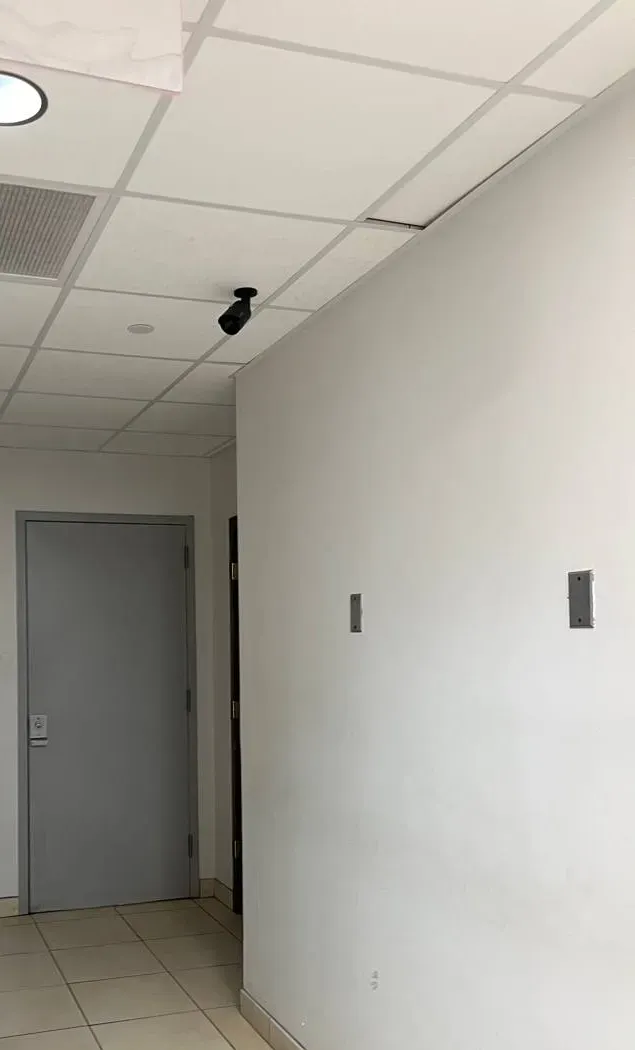
A photo from the AESS job library, not taken in the Brooklyn Navy Yard: a tiled corridor with white walls and small wall plates ending at a grey steel door with a lever handle, under a drop ceiling with a small camera. Many Navy Yard suites are reached down a corridor like this one, ending at a steel door with a lever. That door is a natural fit for a fail-secure strike in the frame and a slim station on the wall at the latch side.
Coverage Area
Door Buzzer Installation Near the Brooklyn Navy Yard's Landmarks
Cumberland Street Gate
The new gate at Flushing and Cumberland, opened in May 2026 for industrial tenants, vendors and employees, with a landscaped parklet.
Kings County Distillery
The distillery's tasting room in the restored 1890s Sands Street gatehouse, open there since 2015.
Wegmans at Admiral's Row
The supermarket that opened in 2019 on the former Admiral's Row site, beside Building 303.
Building 293
The 1,000-foot-long building with a 3,152-panel solar roof, announced in 2024 as the Brooklyn Storehouse venue.
NYC Ferry at Dock 72
The ferry stop by Dock 72, opened in May 2019, which brings many staff and visitors in by water.
Commodore Barry Park
The park across Flushing Avenue, named on the NYPD 88th Precinct's page for the area it serves.
We also serve Vinegar Hill, Fort Greene, Clinton Hill, DUMBO and Williamsburg, the neighborhoods around the Yard's fence, and every other part of the borough from our Brooklyn door buzzer installation page. Crews come from our Troy Avenue office in Brooklyn and work on weekdays during the day.
Pricing
Door Buzzer Installation Cost in the Brooklyn Navy Yard
The Navy Yard is billed at our Brooklyn rate with no travel premium. Every job is quoted per door from the list below after we see the door, and the total is confirmed in writing before equipment is ordered.
Item
Brooklyn price
Audio buzzer or station with release, one suite or receiving door
$400–$900 installed
Video door station with release, one suite or receiving door
$700–$1,800 installed
Shared floor or several companies behind one entrance
From about $2,500; large video or cloud systems $10,000+
Diagnostic service call, booked online
$250, applied toward the work
Estimate for a new buzzer from photos or a walkthrough
Free
Camera installed with the door system
Priced per camera; most customers save $200–$400 in labor by combining
New 120-volt circuit, if needed
By a licensed electrician, quoted separately
Three things most often push a Navy Yard job toward the top of its range. The first is distance between the door and the people who answer: a long run across a production floor to a bench, a shipping desk and an office adds cable and answering points. The second is a loud floor, which adds a bell and strobe. The third is the door itself, where a fire-rated frame needs a rated strike or a glass door needs special release hardware. Things that keep a job low are a standard steel door with a working latch, people who work near the door, and an audio station that rings inside the suite only.
For comparison, ButterflyMX puts key fob systems at around $1,000 to $3,000 per door installed and small commercial video intercoms at about $2,500 to $7,000 installed, and HomeAdvisor gives a national intercom range of $1,500 to $15,000. Those are whole-office and whole-building figures. A single Navy Yard suite door is smaller than either, and we price it as one.
Full terms — including 50% deposit, one-year parts-only warranty on AESS-supplied products, and the late-fee schedule — are set out in the service agreement.
Shop Our Systems
Door Buzzer Installation Packages & Pricing
Three typical Navy Yard jobs, each priced inside the matching range on our Brooklyn list. The exact figure comes from the walkthrough.
Suite door audio buzzer: $400–$900
An audio station at the corridor door, a fail-secure strike matched to your lock, release buttons at two desks, and a power supply with battery backup inside the suite.
Receiving door video station: $700–$1,800
A metal video station at the man door, a strike, a monitor at the shipping desk, a bell and strobe on the floor, and staff phones if wanted.
Shared floor entry: from $2,500
A directory or code panel at the outer door, one entry per company, a release, and separate users and answering points for each company behind it.
Bring your own equipment. Some tenants have already bought a door station or a buzz-in kit. We install it if it suits the door, the frame and the rules for your space, and we check that before booking. Labor for customer-supplied equipment is quoted flat at the walkthrough, with any cable, power supply or strike priced from the same list. Customer-supplied equipment carries the manufacturer's warranty rather than ours. We will not install a magnetic lock kit on a door where the code does not allow one.
Complete Services
Every Door Buzzer Service in the Brooklyn Navy Yard
Stations and releases
Audio and video stations, strikes and desk buttons. Request a quote
Can the label on our door station show our new building and door number?
+
Yes. We print the label to match the Yard's new Wayfinding numbering, and during the interim period we can show the former building number too. A larger courier sign on a corridor or outside wall may need BNYDC sign approval, so we check that with you first.
Can a visitor who has no gate QR code call our suite from outside the Yard?
+
Not through your door station, which sits at your suite. Getting through the gate is handled by BNYDC's visitor system and security. Register the visitor in advance, and your station takes over once they reach your door.
Do we need to tell our Property Manager before cable is run?
+
We recommend it every time. The Tenant Manual requires BNYDC approval for alterations and asks tenants to coordinate telecom closet access with the Property Manager. We give you a one-page scope to send.
Can the installation happen while our floor is in production?
+
Usually yes. Most of the work is at the door and in the ceiling, and the door is only out of action for the hour or so it takes to fit the strike. We schedule that part around your deliveries and shift changes.
Will the door station connect to the visitors we register in Proxyclick?
+
No. Proxyclick is BNYDC's system for the gates, and we do not connect tenant door stations to it. Your station works on its own: the visitor presses your button at the suite and someone in your company answers.
If we install a door station, who owns it when the lease ends?
+
Your lease decides that, not us. Most leases deal with tenant alterations and removal at the end of the term. We record every part we install so you can follow whatever your lease or BNYDC requires.
Is a buzzer worth it for a small studio with only a few people?
+
Often yes, if couriers or clients come regularly and nobody sits by the door. A simple audio station and one release button stop the knocking and keep the door locked. If someone is always near the door, a plain bell may be enough.
Can you price our suite door from photos, without a visit?
+
We can give you the range from photos of the door edge, frame, lock and the route to where staff work. A walkthrough then confirms the exact figure before anything is ordered, and it is free for new installations.
Do we have to choose a brand?
+
No. We quote a reliable non-branded system by default and install any brand you prefer. If you already use a brand elsewhere in the company, we can match it so staff answer the same way everywhere.
How do we stop someone slipping in behind a visitor we buzzed through?
+
A video station that shows the whole corridor approach helps, as does a release timed to relock quickly and a closer set to shut the door firmly. Placing the answering point where staff can see the door is the most effective step of all.
Is low-voltage entry work the same as the electrical work the Yard restricts?
+
Not in our scope. Our stations, strikes and buttons run on low voltage from a supply. The Tenant Manual requires a licensed electrician for electrical work, so any new 120-volt circuit is done by one, with BNYDC approval.
More Door Buzzer Installation near Brooklyn Navy Yard
Ready to Stop Walking Across the Floor Every Time Someone Knocks
Send a photo of each door visitors and couriers use, the frame and lock, and a line about where your people work, with your building and floor, and we will tell you what your door can take and where the job sits on the Brooklyn list. Call or text (347) 934-8335, message us on WhatsApp, or use the request form. Licensed under NYS license #12000287431, rated 4.7★ across 201 Google Reviews, owner-operated since 2002.