Brownstone with no buzzer, a three-family where visitors still phone from the stoop, or a Fulton Street building whose front door won't stay locked? Bedford-Stuyvesant door buzzer installation line: (347) 934-8335
Brownstones · Two- and Three-Family Houses · Walk-Ups · Mixed-Use Buildings on Fulton, Nostrand and Tompkins · Landmark Blocks in Stuyvesant Heights and Bedford
Door Buzzer Installation in Bedford-Stuyvesant
Door First, Wires Second · One Panel per Opening on Landmark Fronts · Wired or App Answering · Brooklyn Rate
Door buzzer installation in Bedford-Stuyvesant usually means one of three jobs: putting the first buzzer into a brownstone or multi-family house that never had one, replacing a system so old that nobody in the building can say who installed it, or moving a walk-up or mixed-use building from bell wire to video or phone answering. Most Bed-Stuy houses were built long before entry systems existed. City land records for Community District 3 put roughly four in five residential lots before 1968, and the most common lots are two-family and three-family houses, many of them former one-family rowhouses split into apartments. That history decides where the panel can go, how cable climbs three or four floors of brick, what release hardware an old double-leaf door will accept, and whether the Landmarks Preservation Commission has a say. This page walks through all of it, along with what city housing data shows about entry systems in the district, what the law says about app-based entry, and what each kind of job costs on our Brooklyn list.
Prices come from our published Brooklyn door buzzer list, and the total is agreed in writing before equipment is ordered
Rated 4.7★ across 201 Google Reviews
Reviewed and updated November 11, 2026, against NYC HPD housing maintenance code violation records for Brooklyn Community Board 3 (queried November 11, 2026); NYC 311 service requests for bell, buzzer and intercom complaints in the same board; NYC PLUTO land-use records for Community District 3; HPD's page on the Tenant Data Privacy Law (Local Law 63 of 2021); the Landmarks Preservation Commission's Permit Guidebook chapter on health and safety equipment and its designation report for the Stuyvesant Heights Historic District extension; CityLand on the 2013 designation; News 12 Brooklyn's March 18, 2026 report on a Bedford Avenue building's broken front door; Brownstoner forum threads on door strikes, wireless doorbells and buzzer replacement quotes; ButterflyMX's explainer on apartment buzzers; NYC Department of Buildings guidance on electrical permits; New York's Multiple Dwelling Law §50-a; the 2010 ADA Standards; and the HomeAdvisor and Swiftlane cost guides. · Abstract Enterprises Security Systems, NYS license #12000287431 · crews dispatched from our Troy Avenue office in Brooklyn
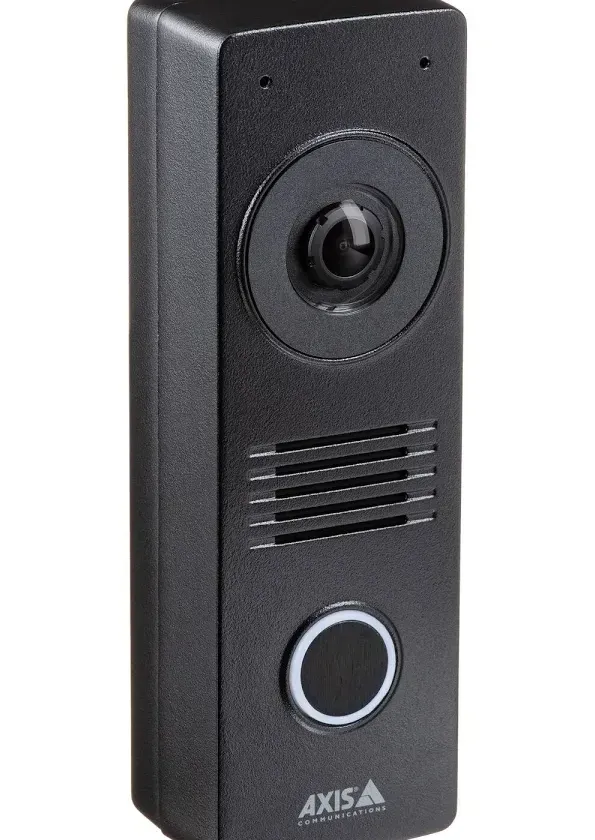
A photo from the AESS job library, not taken in Bedford-Stuyvesant: a black video door station with a camera at the top, a speaker grille and a single lit call button. A one-button station like this suits a Bed-Stuy brownstone kept as a single home or with one rental floor, because it fits beside a narrow door frame and leaves the stonework around the entrance alone. Multi-family houses get a station with one button or one directory entry per apartment.
Bed-Stuy Door Buzzer Request
Brownstone, multi-family house, walk-up or storefront building: tell us the block and the number of apartments, and a technician calls back with the range
✅
Request Sent!
Thank you. A technician will call you about the Bedford-Stuyvesant address, usually within two hours during working hours.
25+
Years Experience
✓
Same-Day Estimates
100%
Licensed & Insured
4.7★
201 Google Reviews
Owner-operated since 2002 · Thousands of jobs completed · Booked within 2 hours
Quick answer: on our Brooklyn list, an audio buzzer for a small Bed-Stuy house runs $400 to $900 installed, a video system for a brownstone or small building $700 to $1,800, and a multi-unit building starts around $2,500 and can pass $10,000 for a large video or cloud system. The price covers the door station, the answering stations or app setup, the release hardware on the door, the low-voltage power supply, the cable and the labor, and it is fixed in writing before anything is ordered. Most Bed-Stuy houses fall in the first two ranges because they have two, three or four apartments and one street door. What moves a job up or down inside a range is the door itself, the route the cable can take through old brick and plaster, whether every apartment wants video, and whether the front is landmarked. Send photos of the door, the frame and any old panel to (347) 934-8335 or on WhatsApp, and we reply with the range that fits, usually within two hours of your message during working hours.
Looking at your photos and quoting a new system costs nothing. If something is broken and needs a diagnosis first, that visit is the $250 service call booked online, and the $250 goes toward the work.
All work falls under New York State license #12000287431. We install low-voltage entry equipment only; if a new power supply needs a fresh 120-volt circuit, a licensed electrician does that part, and we tell you before the job is priced.
If a building is rented, the owner or managing agent approves the plan. Tenants are welcome to send us the details, and we work out the job with whoever owns the door.
The Neighborhood
Why Bedford-Stuyvesant Properties Need Door Buzzer Installation
Bedford-Stuyvesant was built as a neighborhood of houses, not apartment buildings, and that is the starting point for almost every buzzer job here. Between Flushing Avenue and Atlantic Avenue, and from Classon Avenue east to Broadway, most blocks are lined with rowhouses of brownstone, limestone and brick put up between the 1870s and the 1910s, with wood-frame houses older still in places and four- and five-story French flats on some corners. The people who built them expected a servant or a family member to answer the door. There was nothing to install. Electric bells came later, buzzers and handsets later again, and many houses here got their first entry system only when they were divided into apartments, which in this neighborhood happened to a very large share of the housing stock.
The city's PLUTO land-use file shows how far that division went. For Community District 3, which lines up closely with Bed-Stuy, the two biggest groups of lots by building class are two-family houses converted from one-family homes, about 3,700 lots, and three-family houses, about 3,400 lots holding roughly 10,000 apartments. Add the two-family brick houses, the four-family and larger walk-ups and the elevator buildings, and the picture is a neighborhood of small buildings with shared front doors. In a converted house, the entry system was usually added by whoever did the conversion, sized for whatever the house had then, and wired through whatever path was easiest that year. Thirty or fifty years later, the owner inherits a mix of bell wire, odd handsets, a transformer somewhere in the cellar and a door that was never meant to be released from upstairs.
The age of the stock shows up in the numbers too. Of the residential lots in the district with a recorded year built, about 6,600 date from before 1900 and another 4,300 from 1900 to 1930, against roughly 2,700 built in 1968 or later. That 1968 line matters, because New York's Multiple Dwelling Law requires an intercom on the self-locking main door of buildings with eight or more apartments erected or converted after January 1, 1968, while older buildings must add one when tenants in a majority of apartments ask for it in writing. Most Bed-Stuy houses are smaller than eight units and older than 1968, so the law does not force an install. Owners put buzzers in because tenants, buyers and insurers expect one, and because a door that can only be opened by walking down three flights ends up being propped open.
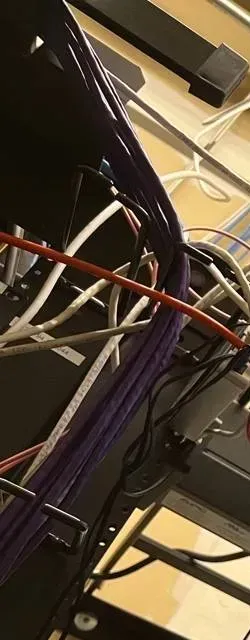
A photo from the AESS job library, not taken in Bedford-Stuyvesant: bundles of purple, white and red cable dropping down beside a black equipment rack. A Bed-Stuy three-family never needs a rack this size, but walk-ups and mixed-use buildings on Fulton Street or Broadway often end up with a small cabinet in the cellar where the entry system, the cameras and the internet line meet, and keeping each bundle labeled is what lets the next technician find the buzzer pair in minutes.
The city's own records show how often entry systems here fail people. When we queried HPD's housing maintenance code violations on November 11, 2026, Brooklyn Community Board 3 had 993 intercom and buzzer violations written since the start of 2020, and 946 of them carried the same order: properly repair or replace the broken or defective intercom under Housing Maintenance Code §27-2005. Inspectors wrote 139 intercom violations in the board in 2025, the most of any year on record, and 101 more in 2026 through early November. Before 2005 the board never saw more than a dozen in a year. Tenants are also calling 311: bell, buzzer and intercom complaints from the board went from 196 in 2020 to 317 in 2024, 312 in 2025 and 287 in 2026 so far. When we pulled the same 311 category for every Brooklyn board in October 2026, Community Board 3 had more complaints since 2020 than any other.
Those violations are mostly written against existing systems, but they tell an installer exactly what to build. The wording inspectors use, case after case, describes a chain: the bell buzzer intercom system from the building entrance door to the wall panel in the apartment, or the buzzer and return voice system from the entrance door up to the panel in the foyer, or the intercom relay at the building front. In other words, a working system is not just a button. It is a door station, a cable path, a power supply, a release on the door and a station in every apartment that can call, talk and open. A new installation in Bed-Stuy has to get every link right in a house that was never designed for any of them, and it has to keep doing so after the next renovation, the next tenant and the next winter.
Six Bed-Stuy facts that shape a door buzzer installation before any equipment is chosen
Small buildings dominate. Converted two-family houses and three-family houses are the two largest groups of residential lots in Community District 3 by PLUTO's count. Most entry systems here call two to four apartments, which keeps equipment simple and puts the effort into the door and the cable route.
Most houses are older than any entry system. About 6,600 residential lots in the district were built before 1900. Cable has to climb through brick party walls, plaster on lath and stair halls that have been rebuilt more than once.
Doors come in pairs. The Landmarks Preservation Commission's report on the Stuyvesant Heights Historic District extension describes houses entered through a vestibule before the hallway, often behind round-headed double-leaf doors. That gives an installer two doors to decide about, not one.
Large historic districts cover many blocks. The Stuyvesant Heights extension, designated in 2013, takes in roughly 825 buildings, and the Bedford Historic District followed in 2015. On those blocks a front-mounted panel needs an LPC permit and has to sit within or beside the door opening.
Violations are written every month. HPD recorded 139 intercom violations in the board in 2025 and 101 more in 2026 by early November, including systems that call tenants' cell phones. A new system has to be one the owner can keep working.
Front doors fail in public. In March 2026, News 12 Brooklyn reported tenants of a four-story building on Bedford Avenue saying their front door locks had been broken for at least four months, with management blaming an inoperable access card reader and HPD issuing violations.
Where this page applies. It covers Bedford-Stuyvesant from Flushing Avenue down to Atlantic Avenue and from Classon Avenue east to Broadway, including Stuyvesant Heights, the blocks around Herbert Von King Park and the Fulton Street, Nostrand Avenue, Tompkins Avenue, Lewis Avenue and Malcolm X Boulevard corridors. The city data quoted here uses Community Board 3, which is close to the neighborhood but takes in small slivers of Clinton Hill and Ocean Hill. For the rest of the borough, see our Brooklyn door buzzer installation page; for the whole city, our NYC door buzzer installation page. Bed-Stuy is billed at the same Brooklyn rate as every other Brooklyn neighborhood.
Repair or Replace in Bed-Stuy
Need Repair in Bed-Stuy? A Dead Panel, a Door That Won't Release, or an Entry Left Wide Open
Not every call that starts as an installation question needs a new system. Many Bed-Stuy owners phone us because the buzzer has stopped, a tenant has called 311 or an HPD notice has arrived, and the first decision is whether to fix what is there or replace it. We look at three things. The first is whether the fault is in one place: one handset, one broken pair of wires, a burnt-out transformer, a strike that has seized. Those are repairs. The second is whether the system can still be supported: if the handsets are a discontinued model and the panel has been patched several times, replacing it is often cheaper over a few years than chasing faults. The third is the door. If the door no longer closes and latches on its own, no buzzer, new or old, will keep the building secure, and the door has to be dealt with first.
If the street door is standing open or cannot be locked right now, say so when you call (347) 934-8335. A diagnosis is the $250 service call booked online, and the $250 goes toward the repair or toward the new system if replacing turns out to be the better choice. We tell you plainly which one we recommend and why, with the price of each. If a part has to be ordered, we make sure the door can be locked and opened with a key before we leave, so the building is not left open while you wait.
What We Install
Door Buzzer Installation Services in Bedford-Stuyvesant
Each service below is priced from the same Brooklyn door buzzer list. The number of apartments sets the size of the system, the door sets the release hardware, and the house sets how long the cable work takes.
First buzzer for a house that never had one
A door station, a release on the street door and an answering station on each floor of a brownstone, two-family or three-family house, with cable routed through the stair hall or a closet stack.
Replacement of an old system
Old panels, handsets and transformers taken out and replaced with a current system, reusing sound existing cable where testing proves it and pulling new cable where it does not.
Video door entry
A camera door station with video monitors in the apartments, or video calls to phones, so tenants see who is at the stoop before they press release.
Phone and app answering
Systems that call tenants' phones or an app, for owners who live off site, tenants who are rarely home, or buildings where running new cable to every unit is not practical.
Door release hardware
Electric strikes matched to the existing lock and frame, release kits for old double-leaf doors and, where the code allows it, magnetic locks with the required egress releases.
Landmark-friendly front panels
Panels sized and finished to sit within or beside the door opening on Stuyvesant Heights and Bedford Historic District fronts, with the LPC permit details settled before installation.
Building Specialists
Door Buzzer Installation for Bedford-Stuyvesant's Architecture
Six kinds of building make up almost every Bed-Stuy buzzer job. They differ in how many apartments the system has to call, what kind of door it has to release, and which way a cable can travel from the stoop to the top floor. Those three things decide the plan well before anyone talks about brands or screens.
The brownstone kept as one home
A single family, sometimes with a garden-floor rental. The job is usually a video doorbell-style station or a one-button panel calling a monitor and phones, plus a release on the vestibule door.
The converted two-family
The single largest group of lots in the district. One street door, two apartments, often an owner downstairs, and a cable path that has to get past a renovated parlor floor.
The three- and four-family house
Three or four stacked apartments, a long stair and a small directory panel. Most Bed-Stuy multi-unit installs look like this, and most fit the lower price ranges on our list.
The French flat and walk-up
Four- and five-story buildings with eight to twenty apartments on corners and avenues, a lobby door and an inner door, and enough units that the system has to be planned like a building, not a house.
The shop with apartments above
Fulton Street, Nostrand Avenue, Tompkins Avenue and Broadway buildings with a storefront at street level and a separate residential door beside it that must not be confused with the shop's.
The newer building
Buildings put up or converted since 1968 with eight or more apartments, where the Multiple Dwelling Law requires an intercom at the main door and owners increasingly want video or app answering.
The brownstone kept as one home: a visitor at the stoop, a family three floors up
A brownstone that is still one household, or one household with a garden apartment, has the simplest system and the most awkward geography. The front door is at the top of the stoop on the parlor floor, the kitchen is often on the garden floor below, and the bedrooms are two floors up. A doorbell that rings only in the hall does not reach the people who need to hear it. The usual answer is a single-button door station on the vestibule wall or the door frame, with an indoor monitor on the floor the family lives on most, and calls forwarded to phones so the top floor and anyone out of the house can answer as well. If the garden floor is rented, its door under the stoop gets its own button, so the tenant's visitors do not ring the owner.
The release is where single-home installs get decided. Many owners do not want the outer doors released remotely at all and prefer to release only the inner vestibule door, so that a visitor who is let in still waits in the vestibule. Others want the outer door released for deliveries and the inner door kept on a key. Both are reasonable, and both change what hardware goes where. We ask how the household actually uses the doors before choosing. Where an owner wants to see the stoop but not release anything, a video station with no strike at all is a perfectly good system and costs less.
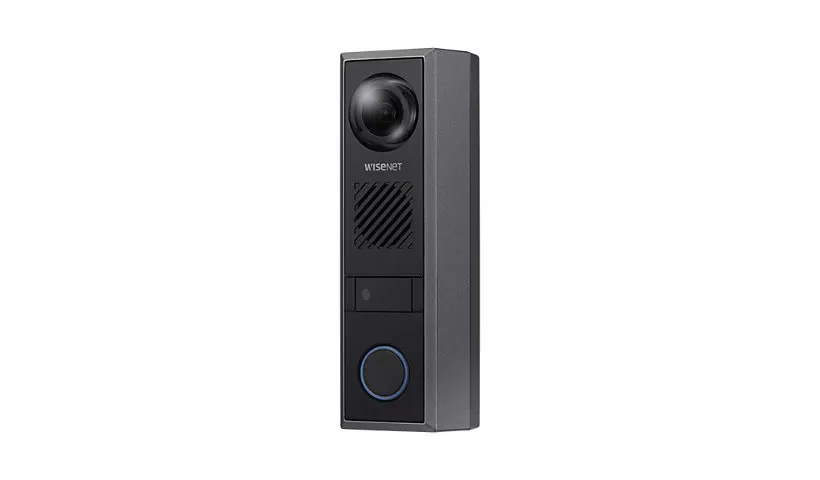
A photo from the AESS job library, not taken in Bedford-Stuyvesant: a slim, dark grey wired doorbell with a camera lens, speaker slots and a round push button. On a Bed-Stuy brownstone kept as one home, a station this narrow can sit on the door frame inside the vestibule, out of the rain and off the carved stone, and because it is wired it does not depend on a battery that cold stoops drain in winter.
The converted two-family: one door, two households and a renovated floor in the way
Most two-family houses in Bed-Stuy were once one-family rowhouses, and the conversion usually split them into an owner's duplex and a rental floor, or two floors each. For a buzzer, that means two buttons at the street door, two answering points upstairs and a cable that has to reach both. The obvious route is up the stair hall, but in many houses the stair hall has been opened up, re-plastered or closed in during renovation, and the old bell wire that once ran along it is now behind fresh drywall or has been cut. The less obvious routes are often better: a closet that stacks floor above floor, a chase beside the chimney breast, or a run from the cellar up an exterior rear wall that nobody sees.
The other feature of two-family houses is that the owner is often a neighbor. If you own the house and live in it, you can decide on the system, the route and the release for both apartments in one visit. If you are the tenant, the owner makes those decisions, and the best thing to send them is a short note saying which door you want released and whether you want video. We are happy to price both options so the owner can choose. When the house is being bought or sold, a working, documented system is also one less question on the inspection report, and we can leave a written description of what was installed for the file.
The three- and four-family house: a small directory and a long climb
Three-family houses are the second largest group of lots in the district, with around 10,000 apartments between them, and four-family houses add more. These are the jobs most people mean when they say they need a buzzer in Bed-Stuy. The door station is a small directory panel with three or four buttons, or a short scrolling list on a video panel. Each apartment gets an audio handset, a video monitor or app answering, and the release goes on the street door, the vestibule door or both. The equipment is not complicated. What takes time is getting a cable to the third or fourth floor through a building whose walls are a foot or more of brick on the party sides and lath and plaster everywhere else.
Before we price one of these houses, we want to know three things: whether any old cable reaches every floor, whether there is a closet, dumbwaiter shaft or chase that stacks the whole height of the building, and where 120-volt power is available in the cellar for the system's power supply. With those answers the job is usually done in a day. Where nothing stacks and no old cable is usable, a phone or app system that needs cable only at the door and the power supply can save opening walls in every apartment, and we price that next to the wired option so the owner sees the trade.
The French flat and walk-up: enough apartments to plan it like a building
The four- and five-story apartment houses known as French flats appear throughout Stuyvesant Heights and on the avenues, and walk-ups of various ages sit on corners all over the neighborhood. With eight, twelve or twenty apartments, these buildings need a system designed for the count: a directory panel with a button or a code for every unit, a riser cable that serves each floor, and a power supply sized for the number of stations. The ones with eight or more apartments that were built or converted after January 1, 1968 must have an intercom at the main door under the Multiple Dwelling Law, and older ones must add one when tenants occupying a majority of apartments request it in writing.
These buildings also tend to have two entrance doors and sometimes a rear yard or cellar door that needs attention. We plan the whole entrance, not just the panel: which door gets released, whether the inner door has a closer that actually pulls it shut, whether the lobby has light for a camera at night, and where the power supply can sit away from the boiler. Many of the HPD intercom violations in the board are written in buildings of this size, and the repeat ones usually trace back to a system that was never designed for the building, only patched into it.
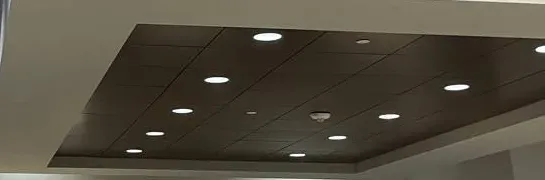
A photo from the AESS job library, not taken in Bedford-Stuyvesant: a dark recessed ceiling panel with round downlights and a small round device, framed by a lighter ceiling. In a Bed-Stuy walk-up lobby, light like this is what lets a video door station show a visitor's face after dark, so we check the lighting at the entrance during the walkthrough, not after the panel is up.
The shop with apartments above: two doors that must never be confused
Fulton Street is Bed-Stuy's main shopping street, and Nostrand Avenue, Tompkins Avenue, Lewis Avenue, Malcolm X Boulevard and Broadway all have long runs of ground-floor shops with apartments above. In these buildings the residential entrance is a narrow door beside the storefront, and the entry system serves only the apartments. The two biggest problems we see are shared wiring and shared ceilings. Signage, awnings, gates and ceiling work for the store are installed often, and a drill through a storefront ceiling or a sign bracket through the wall can cut the buzzer cable for every apartment above in one move.
When we install in a mixed-use building, we route the residential system so that it does not pass through the store's ceiling where we can avoid it, label it clearly where we cannot, and keep the power supply in the residential cellar or a locked residential closet rather than in the shop's space. We also make sure the store's deliveries have their own way in, so that couriers stop pressing apartment buttons for the shop. If the building owner also wants the shop on a camera or the rear door on a release, that is priced as a separate line on the same quote.
The newer building: required by law, and judged by tenants every day
Bed-Stuy has a large and growing stock of buildings from after 1968: PLUTO counts about 573 lots in the district with eight or more apartments built in or after 1968, holding more than 18,000 units, alongside newer condos and rentals. For buildings of eight or more apartments built or converted after the 1968 line, an intercom with remote release at the self-locking main door is a legal requirement, and owners of the newest buildings often choose video or cloud systems that call phones. Those systems can be excellent, but they bring their own obligations, including the city's Tenant Data Privacy Law for keyless entry and the plain fact that HPD writes violations against phone-based intercoms that stop working, just as it does against wired ones.
In these buildings we usually start from what the developer left behind. Sometimes it is a modern system that needs only an admin account and a cleanup of the directory; sometimes it is a cheap panel that was never finished. We document what is there, test every unit, and either take it over or price a replacement. If the building has a management office, we coordinate access, send a certificate of insurance before the visit and work during the hours the building sets.
Field Notes
Field Notes: What a Technician Checks at a Bed-Stuy Front Door Before Quoting
These notes describe how our technicians approach houses like Bed-Stuy's. They are our standard practice, not a story about any one address.
Close the door, then watch it. Before looking at a single wire, the technician opens the street door, lets go and watches. Does it close on its own, and does the latch catch without a push? Then the same for the vestibule door. A century-old wooden door that has swollen, sagged or been painted many times often needs the closer adjusted, the hinges tightened or the strike plate moved before any release will work reliably. If the door does not latch, we say so first, because a new buzzer on a door that stays ajar fixes nothing.
Look at the frame and the lock. An electric strike replaces part of the frame where the latch catches, so the technician measures the frame, notes the lock make and its latch, and checks whether the frame is solid wood, a later metal frame or a glass sidelight. Tall glass doors and narrow stiles narrow the choice of hardware.
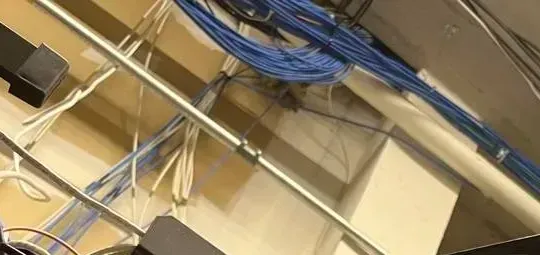
A photo from the AESS job library, not taken in Bedford-Stuyvesant: bundles of blue low-voltage cable laid over a ceiling beam and a metal pipe in an open ceiling. Bed-Stuy cellars look much like this once the ceiling is open, with joists, old gas and water pipes and decades of abandoned wire, and the technician traces which cable actually goes upstairs before deciding whether any of it can carry the new system.
Find the old system's ends. The technician looks for the old transformer or power supply, usually in the cellar near the electrical panel, and for where the cable from the door goes. Old bell wire is often cloth-covered or brittle, and in converted houses it is frequently spliced in a dozen places. If any of it is going to be reused, it is tested end to end, not assumed.
Walk the route. From cellar to top floor, the technician looks for a path: a closet stack, a chase, a dumbwaiter shaft, the back of a stair stringer, a rear exterior wall. The route decides the labor, and it is the part of the job that varies most from house to house.
Check the front. If the house is in a historic district, the technician notes where a panel could sit within or beside the door opening without touching carved or decorative surfaces, and photographs it for the permit if one is needed.
Door by Door
Double-Leaf Doors, Vestibules and Glass: Choosing the Release for a Bed-Stuy Entrance
A buzzer system is only as good as the thing it unlocks. In Bed-Stuy, the door is where most of the real decisions on an installation are made, because the doors are old, often doubled, and frequently not the doors they were a hundred years ago. The Landmarks Preservation Commission's designation report for the Stuyvesant Heights extension describes rowhouses entered through a vestibule before the hallway, and round-headed double-leaf doors on many fronts. On the same blocks you also find replacement doors from every decade since, aluminum-and-glass doors on apartment houses, and steel doors on newer buildings and storefront residences.
Electric strikes on wooden doors. The most common release is an electric strike: a powered keeper fitted into the door frame that lets the latch pass when the buzzer is pressed. Because the lock itself is unchanged, the tenant still uses a key from outside and turns the handle from inside. Strikes come in two kinds. Fail-secure strikes stay locked when power is lost, which is what most street doors want, because a power cut should not leave the building open; you can still always leave by turning the handle. Fail-safe strikes unlock when power is lost, which suits some interior doors. On an old wooden frame, the strike has to be cut in neatly and the frame reinforced where decades of screws have weakened it.
Double-leaf doors. On a pair of doors, one leaf is usually fixed with bolts at the top and bottom and the other is the active leaf with the lock. The release goes on the active leaf, either in the frame or, where the two leaves meet, in the fixed leaf. If the fixed leaf has been left unbolted for years, or the pair no longer meets squarely, the release will bind. That has to be corrected first, and on a landmarked front it has to be done without changing what the doors look like from the street.
The vestibule question. Many owners release only the inner door and keep the outer doors locked overnight and open by day, which was how these houses were used for generations. Others release the outer doors so visitors and couriers can step into the vestibule out of the weather, and keep the inner door on a key. A few buildings release both. Each arrangement needs different hardware and wiring, and each gives different protection, so we discuss it before quoting rather than defaulting to one.
Glass doors and narrow stiles. Tall glass doors, which a Brownstoner forum member described on their own brownstone years ago when told the doors could not take a buzzer, leave very little frame for a strike. The options are usually a narrow-profile strike designed for that frame, a release built into a replacement lock, or moving the release to the inner door. We tell you which one your door can take and do not force hardware into a frame that cannot hold it.
Magnetic locks. A magnetic lock holds a door with an electromagnet and has no mechanical latch, so it is always fail-safe: it releases when power is lost. Building codes allow magnetic locks on egress doors only with specific protections, including a sensor on the inside that releases the lock, a manual push-to-exit button within reach, release on loss of power and, where the building has a fire alarm or sprinklers, release when it activates. Because of those rules and the fail-safe behavior, we rarely recommend a magnetic lock for a Bed-Stuy rowhouse street door, and where one already exists we never bypass its egress releases.
Phones, Apps and the Law
Answering the Door From a Phone in Bed-Stuy: What the City Expects From App-Based Entry
More and more Bed-Stuy owners ask for a system that calls tenants' phones instead of a handset on the wall, and there are good reasons for it. Owners who live elsewhere can see and answer their own door. Tenants who are out all day can let in a delivery. Houses where running cable to every floor would mean opening finished walls can get a system that needs cable only at the door and the power supply. But a phone system is still the building's entry system, and the city treats it that way in two important respects.
The first is that it has to keep working. HPD's violation records for Community Board 3 include a Class B violation written on September 12, 2026, ordering an owner to repair or replace the broken or defective intercom system from the building front to cell phone, and earlier ones in 2023 and 2024 written against systems that returned the buzzer to tenants' phones. An app system that loses its internet connection, has a lapsed subscription or has nobody left who holds the admin login is, as far as an inspector is concerned, a broken intercom. When we install one, we plan for those failures: who owns the account, where the login is kept, what happens if the building's internet is down, and whether each apartment needs a backup way to answer.
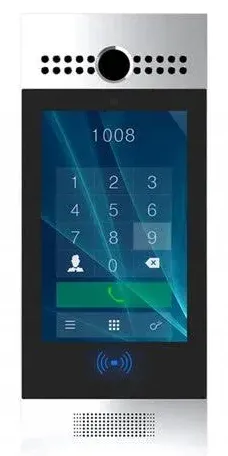
A photo from the AESS job library, not taken in Bedford-Stuyvesant: a touchscreen entry panel showing a dial pad with a four-digit apartment code entered, a camera above it and a card-reader symbol below. Panels like this call each apartment by a code rather than a name, which suits a Bed-Stuy walk-up where tenants change and nobody wants their surname on the street door.
The second is privacy. New York City's Tenant Data Privacy Law, Local Law 63 of 2021, covers owners of multiple dwellings that use keyless entry such as fobs, apps, cards or biometrics. As HPD summarizes it, the system must have robust security and safeguards; the owner must get a tenant's express consent, in writing or through an app, before collecting the data the system needs; the data collected is limited to a short list such as name, unit, the doors the tenant can use, contact preference, lease dates and entry times; authentication data must be deleted within 90 days unless it is kept anonymized; the data cannot be sold or used to harass or evict; and owners may not require tenants to use a smart access system to get into their own apartment. Owners must also give tenants a data retention and privacy policy.
None of that makes app entry a bad choice for a Bed-Stuy building. It means the installation has to be set up with the law in mind: keys still work on apartment doors, the system collects only what it needs, and the owner has a privacy policy to hand tenants. When we install a phone or app system in a multiple dwelling, we configure it to collect the minimum, keep a mechanical key path on every door, and give the owner the system's own data and retention settings in writing so they can build their policy on facts. The legal policy itself is the owner's to write, and for a larger building it is worth having a lawyer look at it.
For small houses, the decision is usually more practical. A three-family where every tenant has a smartphone and the owner lives off site is a good fit for phone answering. A house where an older tenant uses only a landline, or where nobody wants an app, is better served by wired handsets, with phone calls added only for the units that want them. Many systems do both at once, and that mix is often the right answer here.
Commercial Door Buzzer Installation
Business Door Buzzer Installation in Bedford-Stuyvesant
Commercial buzzer work in Bed-Stuy is mostly about mixed-use buildings and the businesses and institutions in them: storefronts with apartments above, offices up a flight of stairs, clinics and day programs that need a controlled door, and churches and community rooms that open on a schedule. The corridors below are where most of that work sits.
Fulton Street
The main shopping street, with the A and C trains beneath it and long rows of storefronts under apartments. Fulton Street had more HPD intercom violations than any other street in the board when we ranked them in October 2026.
Nostrand Avenue
A north–south shopping strip with ground-floor stores and residential doors side by side, where the apartment entrance often shares a wall, and sometimes a ceiling, with the shop.
Tompkins Avenue
Shops, restaurants and walk-ups along the western edge of Stuyvesant Heights, and one of the streets with the most intercom violations in the board's records.
Lewis Avenue
Small businesses in the blocks around the Macon Library, many in rowhouse-scale buildings where the residential door and the shop door sit a few feet apart.
Malcolm X Boulevard
The eastern edge of Stuyvesant Heights, mixing churches, small offices and multi-family houses, where scheduled and visitor entry matter as much as tenant entry.
Broadway
The northeastern edge under the elevated J, M and Z line, with older mixed-use buildings whose upstairs doors face constant noise, vibration and foot traffic.
For a business, the buzzer usually does one of three jobs. It controls a door that has to stay locked during opening hours, such as a clinic, a day program, an upstairs office or a back-of-house entrance, so staff can see who is there and let them in. It separates a business entrance from the residential entrance in the same building, so customers and deliveries do not end up pressing apartment buttons. Or it opens a door on a schedule, for example a church hall or community room that is unlocked for services and events and locked otherwise. Each one starts with the door and the people who answer it, and each is priced on the same Brooklyn list as residential work.
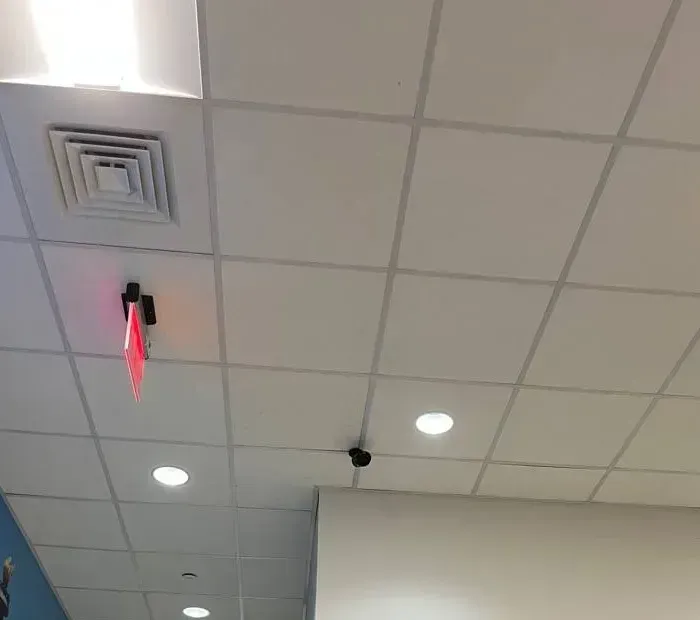
A photo from the AESS job library, not taken in Bedford-Stuyvesant: a drop ceiling with a lit red exit sign, an air diffuser, round recessed lights and a small black camera. Upstairs offices and clinics along Fulton Street and Nostrand Avenue often look like this inside, and the exit sign is a reminder that any locked door on the way out has to let people leave freely, which shapes the release hardware we choose.
Business doors also get more use. A clinic or day program may buzz someone in every few minutes, all day. That calls for a heavier-duty strike, a door closer adjusted to pull the door shut every time, and a door station that can take being pressed thousands of times a month. Where the business wants to see the door from more than one desk, a video station with monitors at reception and in a back office is usually better than phones, because staff should not need their personal phone to open a work door. If a camera on the entrance is wanted as well, it is installed on the same visit, and putting the two together saves on labor.
Compliance points that apply to Bed-Stuy entry installations
Multiple Dwelling Law §50-a. Class A multiple dwellings with eight or more apartments, erected or converted after January 1, 1968, must have a self-locking main door with an intercommunication system that allows voice contact and remote release. Older buildings must install the door and intercom if tenants in a majority of apartments request or consent in writing; the law sets 90 days to start and six months to finish.
Housing Maintenance Code §27-2005. Owners must keep what is installed in good repair. Almost every intercom violation in Community Board 3 since 2020 is written under this section, as an order to repair or replace the broken or defective system.
Tenant Data Privacy Law (Local Law 63 of 2021). Keyless entry in multiple dwellings must be secure, collect only listed data with consent, delete authentication data within 90 days unless anonymized, and never be required for entry to a tenant's own apartment. Owners give tenants a privacy policy.
Landmarks Preservation Commission. On designated buildings, intercom panels and doorbells go within or beside the door opening, or on a fence or wall in front of the entranceway; one intercom panel per door opening; design, size and finish compatible with the building; nothing attached through cast iron or on decorative surfaces. LPC staff can approve installations that meet the criteria.
Egress and electrified locks. Under the building code, electrically locked egress doors need sensor release on the inside, a manual push-to-exit device, release on power loss and release when a fire alarm or sprinkler system activates. Fire-rated doors take fail-secure strikes.
Accessible reach. Under the 2010 ADA Standards, operable parts such as call buttons sit within the reach range, a high forward reach of 48 inches maximum and a low reach of 15 inches minimum. We mount door stations within that range wherever the front allows it.
Electrical work. The Department of Buildings requires an electrical permit for most electrical work, performed by DOB-licensed electrical contractors. Our work is low-voltage entry equipment; if the system needs a new 120-volt circuit or outlet, a licensed electrician provides it.
Your Questions Answered
Door Buzzer Installation in Bedford-Stuyvesant: Questions Answered
These are the questions Bed-Stuy owners, tenants and building managers raise when a new system is on the table: houses that never had a buzzer, doors that seem impossible to release, walls that resist new cable, phone systems and the rules around them, landmarked fronts and the strangers who press every button. Each is answered in full here and not repeated in the FAQ further down.
Houses that never had a buzzer
We are adding the first buzzer our three-family house has ever had. What actually gets installed, and where does it all go?
Five things. A door station with three buttons or a three-name directory goes at the street door, usually on the vestibule wall or the frame. An electric release goes in the frame of whichever door you want opened from upstairs. A low-voltage power supply, often with a battery backup, goes in the cellar near a 120-volt outlet. A cable runs from the door down to the power supply and up through the house to each apartment. And each apartment gets an answering station: an audio handset, a video monitor, or a phone or app account. The work that varies is the cable route. In a Bed-Stuy three-family we look for a closet or chase that stacks top to bottom; if there is one, the job is usually a day. On our Brooklyn list, an audio system for a house this size falls in the $400 to $900 range and a video system in the $700 to $1,800 range, with the exact figure set after the walkthrough.
Our brownstone's front doors are tall glass double doors. Can they take an electric release at all?
Often yes, though not always on the outer doors. A Brownstoner forum member asked this exact question about glass double doors on a Brooklyn brownstone and had been told it could not be done. The challenge is the frame: tall glass doors leave a very narrow stile and frame for a strike to fit. The options are a narrow-profile strike made for that kind of frame, a lock with a release built into it, or putting the release on the inner vestibule door instead, which is often wooden and easier. On a landmarked front we also keep the doors looking exactly as they do. We tell you at the walkthrough which of these your door can take, and if the outer doors truly cannot hold a release, the inner-door option still gives tenants a working buzzer.
Would it be safer to skip the remote release and have everyone walk down to open the door?
Some owners decide that, and it is a real choice. One Brownstoner forum reply said a building chose not to add the buzzer release for safety reasons. The thinking is that nobody can be buzzed in by mistake. In practice, in a three- or four-floor Bed-Stuy house, the door then gets propped open for deliveries and guests, which is worse. A common middle path is a video station so tenants can see who is there, with a release only on the inner vestibule door, so a visitor who is let in still waits in the vestibule. Another is a release on the outer door only, with the inner door on a key. We can install a system with no release at all, but we would talk through the propping problem with you first.
We were quoted $2,000 to replace the buzzer in our three-unit house. What should a quote like that include?
A Brownstoner forum member was given exactly that figure for a three-unit home years ago and wondered whether a repair of a few hundred dollars would have done. Whatever the number, a quote for a new system should name the door station, the number and type of apartment stations, the release hardware and which door it goes on, the power supply and whether it has battery backup, whether existing cable is being reused and how it will be tested, any wall opening or patching, and whether electrical work is included or excluded. On our Brooklyn list, a three-unit audio system usually lands in the $400 to $900 range and video in the $700 to $1,800 range. If the old system might be repairable, a $250 diagnostic visit that goes toward the work settles the question before you spend more.
Walls, wire and wireless
The old bell wire in our house is beyond saving and the walls are solid brick. Can a wireless buzzer reach the top floor?
Sometimes, but brick is the reason to be cautious. A Brownstoner column described a brownstone owner whose wiring was beyond repair and whose electrician warned that thick brownstone walls might be a problem for some wireless systems. That matches what we see: radio signals between floors of a masonry rowhouse can be unreliable, especially through party walls and the brick around a stair. There are better ways to avoid opening walls. A phone or app system needs cable only between the door and the power supply and uses the building's internet or a cellular line to reach tenants. A wired system can often follow a closet stack or a rear wall and avoid finished rooms. We would test the signal on site before recommending any truly wireless link, and we would not sell one that only works on a good day.
I rent an apartment in a Bed-Stuy four-family. Can I add a smart opener to the building's shared buzzer?
Only with the owner's written permission, and only if the device works with the building's system. Smart add-ons connect to the handset in your apartment so you can answer or release from your phone, but they connect to equipment the owner is responsible for keeping in repair, and a badly fitted add-on can affect other apartments on the same wiring. Ask the owner first and send them the product details. If the owner agrees, we can check that the add-on suits the existing handset and fit it properly. If several tenants want phone answering, it is usually cheaper and more reliable for the owner to add it to the system for everyone.
Phones, apps and the rules
HPD wrote up a building here whose intercom calls tenants' cell phones. Is an app-based system held to the same standard as a wired one?
Yes. HPD's records for Community Board 3 include a Class B violation from September 12, 2026, ordering the owner to repair or replace a defective intercom system running from the building front to cell phones, and others in 2023 and 2024 against systems that returned the buzzer to tenants' phones. The Housing Maintenance Code makes the owner keep the installed system working, whatever technology it uses. For an app system, that means planning for the things that break it: the building's internet going down, a subscription lapsing, a tenant changing phones, or the admin account being lost when a manager leaves. We set up the account in the owner's name, write down where the login lives and, where tenants rely on the system, recommend a backup answering method for units that need one.
What can an app-based entry system record about tenants, and for how long?
In a New York City multiple dwelling, the Tenant Data Privacy Law limits it. As HPD summarizes the law, an owner may collect only a short list of reference data, such as a tenant's name, unit, the doors they can use, how they prefer to be contacted, lease dates and entry times and methods for security, and only with the tenant's express consent in writing or through an app. Authentication data must be deleted within 90 days unless it is kept in anonymized form. The data cannot be sold, used to harass or evict, or used to track tenants outside the building, and owners must give tenants a data retention and privacy policy. When we install one of these systems, we set it to collect the minimum and give the owner the system's settings in writing.
The card reader on our Bedford Avenue walk-up's front door failed and the door now stays open. Should we replace the reader alone or the whole entry?
It depends on what else has failed. News 12 Brooklyn reported in March 2026 that tenants of a four-story Bedford Avenue building said their front door locks had been broken for at least four months; management said an inoperable access card reader needed replacing, and HPD said it had issued violations. If only the reader is dead and the controller, the lock hardware, the door closer and the intercom all work, replacing the reader is the fast fix. If the lock hardware is worn, the controller is a discontinued model, or the intercom is also failing, a combined entry panel with a reader, an intercom and a matched release usually costs less over a few years than replacing parts one at a time. Either way, the first job is getting the door to lock again the same day.
Landmarked fronts
Our landmarked house has a parlor door up the stoop and a garden door under it. Can each door get its own panel?
Yes. The Landmarks Preservation Commission's guidebook allows one intercom panel per door opening, so a house with a parlor-floor entrance and a separate garden-floor entrance can have a panel at each. Each panel goes within or beside its door opening, with a design, size and finish compatible with the building, and nothing attached through cast iron or decorative surfaces. In practice, the parlor door panel often sits inside the vestibule on the reveal, where it is invisible from the street, and the garden door panel sits on the frame under the stoop. If the garden door serves a separate apartment, its panel calls only that apartment.
Can the panel go on the iron fence at the front of our areaway instead of on the house?
On many designated buildings, yes. The LPC guidebook allows an intercom panel on a fence or wall in front of the entranceway, as well as within or beside the door opening. A fence-mounted panel keeps all hardware off the stone, and it lets visitors call from the sidewalk before climbing the stoop. The catches are practical. The cable has to reach the panel, usually under the areaway paving or along the fence base, the panel has to survive weather and knocks at sidewalk level, and if it is meant to release the areaway gate rather than a door, the gate needs a release of its own. We cannot attach anything through cast iron, so the panel needs a mounting that clamps or uses a plain section.
Who gets buzzed in
Strangers press every button until someone lets them in. Which installation choices cut that down?
Video is the biggest single change, because tenants stop releasing the door for a voice they do not recognize. A panel that calls by unit code rather than a column of buttons slows down button-mashing. A release on the outer door only, with the inner door kept on a key, means a visitor who gets in by mistake still waits in the vestibule. A clear delivery arrangement, such as a code that couriers use only during the day or a package shelf in the vestibule, stops many of the calls. And telling tenants plainly not to release the door for anyone they did not expect is still part of it, because no system stops a tenant from pressing release. Video helps, but it does not end tailgating or mistaken entry.
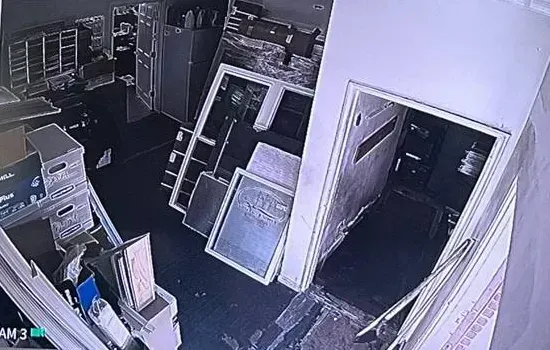
A photo from the AESS job library, not taken in Bedford-Stuyvesant: a black-and-white night camera view of a cluttered room with an open doorway into a dark back room. This is what infrared video looks like when there is no light; it shows movement and shapes well but not faces at a distance, which is why we light a Bed-Stuy entrance properly rather than rely on night vision to identify a visitor at the stoop.
Our call buttons still carry the names of tenants who left years ago. Can a new panel list unit numbers instead?
Yes, and many owners prefer it. A directory panel can show unit numbers or letters, a code to dial, or a scrolling list that the owner updates from a phone or computer without visiting the building. Unit numbers protect tenants' privacy, stop old names from confusing couriers and remove the job of reprinting labels every time someone moves. If tenants want their names shown, a digital directory can show a name only for those who ask. For a small house with three or four apartments, simple engraved unit labels on a button panel do the same job at a lower price.
Equipment
Types of Door Buzzer Systems We Install
We quote a reliable non-branded system by default and install named brands when an owner asks; the intercom brands we work with include Aiphone, ButterflyMX, 2N, Akuvox, Comelit and DoorBird. These are the kinds of equipment that suit Bed-Stuy houses and buildings.
Audio buzzer systems
A button or directory panel at the door and a talk-and-release handset in each apartment. The lowest-cost choice for a two- to four-family house, and it needs no internet.
Two-wire multi-tenant systems
Systems such as Aiphone's GT series, built for retrofits and able to use existing wire in good condition, scaling from a few apartments to large buildings with audio or video stations.
Video door stations and monitors
A camera panel at the door with a video monitor in each unit, so tenants see the stoop before they press release. The usual upgrade for brownstones and walk-ups.
Phone, app and cloud systems
Panels that call tenants' phones or an app over the internet or a cellular line, with a directory the owner manages remotely. Useful for off-site owners and buildings where cable to every unit is hard.
Keypad and card entry panels
Door stations that combine calling with codes, cards or fobs, for walk-ups and mixed-use buildings that want tenant entry and visitor calls on one panel.
Releases, closers and power
Fail-secure electric strikes, release kits for double-leaf doors, door closers adjusted to latch every time, and power supplies with battery backup sized for the system.
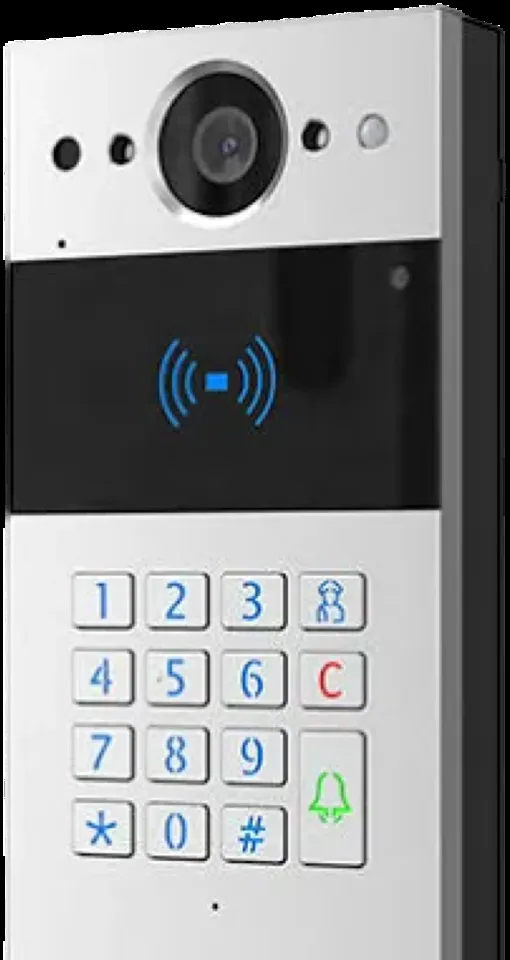
A photo from the AESS job library, not taken in Bedford-Stuyvesant: a silver and black keypad door station with a camera lens at the top, a blue card-reader symbol, a numeric keypad and a green bell key. A combined station like this is what we suggest for a Bed-Stuy walk-up whose front door needs both visitor calls and tenant entry, because it puts both on one panel and one opening, which also keeps landmark fronts to a single device.
Audio, video or phone answering for a Bed-Stuy house
The table compares the three main choices for the kind of house most common here, a two- to four-family rowhouse with one street door. None is right for every building; it depends on who lives there and how they use the door.
What matters
Audio handsets
Video monitors
Phone or app
Cable to each apartment
Yes
Yes
No, only door to power supply
Needs internet
No
No, for in-building calls
Yes, or a cellular line
See the visitor
No
Yes
Yes, on most systems
Answer when away
No
Only with phone add-on
Yes
Recurring fees
None
None
Often a subscription
Brooklyn list range, small house
$400–$900
$700–$1,800
Quoted at walkthrough
AI Overview Reality Check
What AI Gets Wrong About Door Buzzer Installation in Bedford-Stuyvesant
These are claims that turn up in generic online answers, national cost guides such as HomeAdvisor and Angi, and vendor blogs, paraphrased, each followed by what Bed-Stuy's houses and records show.
"An intercom installation costs about $2,500"
HomeAdvisor puts the national average at $2,500, within a range of $1,500 to $15,000.
Averages are pulled toward larger buildings. The most common Bed-Stuy lots are two- and three-family houses, and an audio system for a house that size is $400 to $900 on our Brooklyn list, with video at $700 to $1,800.
We price the building in front of us, from photos and a walkthrough, not from a national figure.
"Go wireless if you want to do it yourself"
Cost guides recommend wireless systems as the do-it-yourself option.
In a brick rowhouse, radio between floors is unreliable, a point a brownstone owner's electrician made in a Brownstoner column. And in a multi-family house the entry system belongs to the owner, who has to keep it working under the Housing Maintenance Code.
We test signal on site before recommending any wireless link, and point owners to phone systems that avoid in-wall cable without relying on room-to-room radio.
"Video intercoms cost thousands per door"
Vendor guides quote $1,000 to $5,000 or more per entry door for IP or video systems, plus monthly software fees.
Those figures are written for apartment complexes. A Bed-Stuy brownstone has one street door and a few apartments, and a video system for it sits in the $700 to $1,800 range on our list, with no subscription on a wired video system.
We show owners the wired and cloud options side by side, including any recurring fee, before they choose.
"Your existing wiring can be reused"
Many upgrade guides say a new system can run over the old wires.
Sometimes it can, but only after it has been tested. In houses built before 1900 and converted decades ago, bell wire is often brittle, spliced many times and cut during renovations.
We test every pair end to end and reuse only what passes; the rest is replaced and the price reflects it.
"A buzzer is just a button and a lock"
Simple explanations treat the system as one button that opens the door.
The call path and the release circuit are separate, so a call can connect while the door fails to open, and HPD's violation wording in Bed-Stuy describes the whole chain from entrance door to apartment panel.
We design and test every link: door, release, power, cable, station and the door's own closer.
"App-based entry is the landlord's choice alone"
Product pages present app entry as a simple upgrade an owner can switch on.
In New York City multiple dwellings, the Tenant Data Privacy Law limits what keyless systems collect, requires consent and a privacy policy, and bars requiring a smart system to enter a tenant's own apartment. HPD also writes violations when phone-based intercoms stop working.
We set up app systems to collect the minimum, keep mechanical keys working and document the settings for the owner.
"Mount the panel wherever it's convenient"
Installation guides suggest placing the panel at the most convenient spot near the door.
On designated blocks in Stuyvesant Heights and the Bedford Historic District, the LPC allows one intercom panel per door opening, within or beside the opening or on a fence in front, compatible with the building and never through cast iron or decorative surfaces.
We choose a position that meets those rules and the accessible reach range before anything is drilled.
Give us the cross streets, the kind of building, the number of apartments and what is on the door now. A technician will call back with the range for the Bed-Stuy address, or you can call (347) 934-8335 right now.
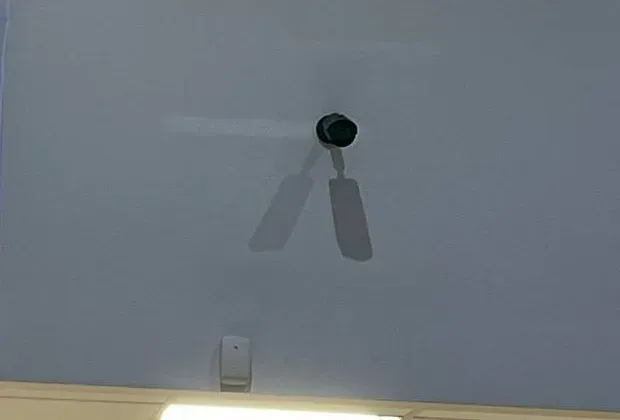
A photo from the AESS job library, not taken in Bedford-Stuyvesant: a small black camera mounted high on a pale wall, casting two shadows, with a small white wall device below it and a light fixture at the bottom edge. Many Bed-Stuy owners pair a new buzzer with a camera like this inside the vestibule; if you want one, say so on the form and we price both on one visit.
✅
Request Sent!
Thank you. A technician will call you about the Bedford-Stuyvesant address, usually within two hours during working hours.
How It Works
Our Installation Process
1. Photos and a first call
Send the front door, the frame, any old panel and the cellar, with the number of apartments. You get a range on the Brooklyn list.
2. Walkthrough
A technician checks the door and its latch, the hallway, every answering spot, the cable route and any landmark rules.
3. Written plan and price
System type, panel position, release, cable route, power location and price, approved before any equipment is ordered.
4. Door and release first
The release is fitted and the door is set to close and latch on its own before any wiring is connected.
5. Cable and stations
Cable follows the agreed route, the panel goes up, and each apartment station or app account is set up and labeled.
6. Power and testing
Power supply and battery backup connected; every apartment tested for call, talk, video and release.
7. Hand-over
Wiring map, admin logins, directory and a short tenant guide go to the owner, and tenants are shown how it works.
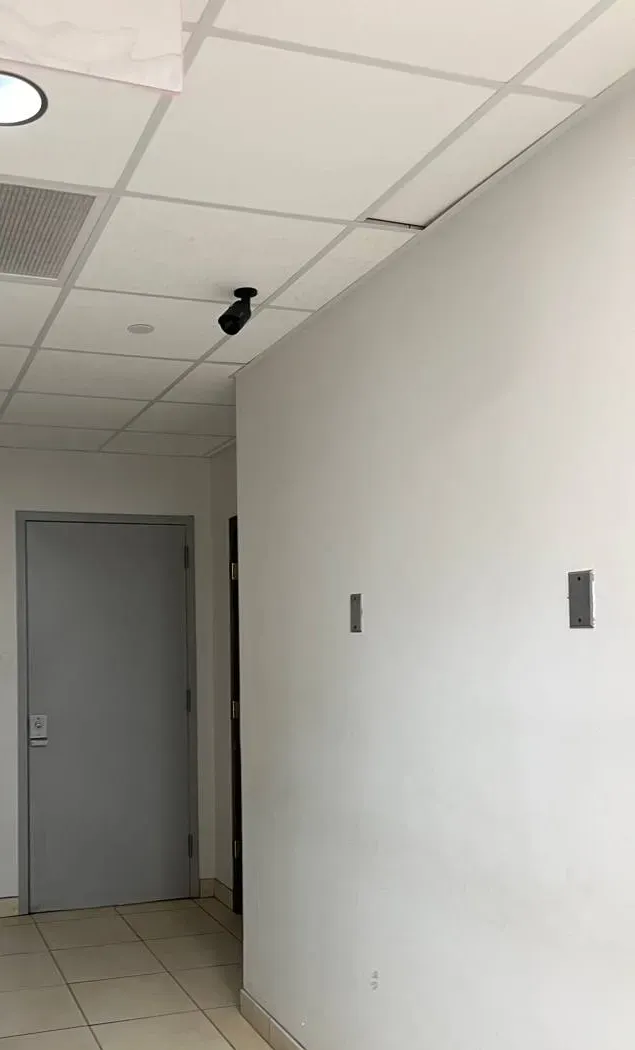
A photo from the AESS job library, not taken in Bedford-Stuyvesant: a tiled corridor with white walls and small wall plates, ending at a grey steel door with a lever handle under a drop ceiling with a small camera. Rear and cellar doors in Bed-Stuy walk-ups are often steel like this, and step four applies to them too: a lever door that does not close and latch by itself is fixed before any release is wired to it.
Coverage Area
Door Buzzer Installation Near Bedford-Stuyvesant's Landmarks
Stuyvesant Heights Historic District
Brownstone, limestone and brick rowhouses and French flats; the 2013 extension alone covers about 825 buildings where front panels follow LPC rules.
Herbert Von King Park
The park at the heart of the neighborhood, ringed by the rowhouse blocks of two- and three-family houses typical of Bed-Stuy.
Restoration Plaza
Home of the Bedford Stuyvesant Restoration Corporation, founded in 1967 and housed in a former milk-bottling plant, along with the Billie Holiday Theatre.
Macon Library
The Brooklyn Public Library branch on Lewis Avenue, in the middle of a strip of small shops with apartments above.
Alice and Agate Courts
Thirty-six Queen Anne row houses around two small courts, designated a historic district in 2009.
Boys and Girls High School
The high school on Fulton Street, on the neighborhood's main shopping street.
We also serve Clinton Hill, Crown Heights, Bushwick, Williamsburg and Ocean Hill, all at the same Brooklyn rate; see our door buzzer installation in Brooklyn page for the whole borough. Public housing developments such as Marcy Houses have entry systems managed by NYCHA, so residents there should report problems to NYCHA directly.
Pricing
Door Buzzer Installation Cost in Bedford-Stuyvesant
Bed-Stuy is billed at our Brooklyn rate, with no travel premium. The ranges below are installed prices covering equipment, release hardware, power supply, cable and labor; where a job falls inside a range depends on the door, the cable route, the number of apartments and the choice of audio, video or phone answering. The figure for your building is set in writing after the walkthrough and does not change unless you change the scope.
Item
Brooklyn price
Audio buzzer system, small building (most two- to four-family houses)
$400–$900 installed
Video buzzer system, brownstone or small building
$700–$1,800 installed
Multi-unit building system, by door and unit count
From about $2,500; large video or cloud systems $10,000+
Diagnostic service call, booked online
$250, applied toward the work
Estimate for a new system from photos or a walkthrough
Free
Entrance cameras installed with the buzzer
Priced per camera; most customers save $200–$400 in labor by combining
New 120-volt circuit or outlet, if needed
By a licensed electrician, quoted separately
Three things most often move a Bed-Stuy job toward the top of its range. The first is a door that needs work before it can take a release: a swollen double-leaf pair, a frame weakened by old screws, a closer that no longer pulls the door shut. The second is a cable route with no stacked closet or chase, which means more time fishing cable through brick and plaster or running it neatly on a rear wall. The third is video in every apartment rather than audio. Things that keep a job toward the bottom are an existing cable that tests sound, a straightforward wooden frame, and a mix of audio handsets with phone answering only for the units that want it.
Full terms — including 50% deposit, one-year parts-only warranty on AESS-supplied products, and the late-fee schedule — are set out in the service agreement.
Shop Our Systems
Door Buzzer Installation Packages & Pricing
Three typical Bed-Stuy jobs, each priced inside the matching range on our Brooklyn list. The exact figure comes from the walkthrough.
Three-family audio: $400–$900
A three-button panel at the street door, a fail-secure strike on the vestibule door, a backed-up power supply in the cellar and a talk-and-release handset on each floor.
Brownstone video: $700–$1,800
A video door station within the door opening, monitors on the floors the household uses, phone answering for anyone away, and a release on the door the owner chooses.
Walk-up building: from about $2,500
A directory or code panel for eight or more apartments, a riser to every floor, video or audio stations by unit, heavy-duty release hardware and optional card or fob entry.
Bring your own equipment. If you have already bought a door station or handsets, we can install them as long as they suit the building and the door. Labor for customer-supplied equipment is quoted flat at the walkthrough, and the release hardware and cable are priced from the same list. Customer-supplied equipment carries the manufacturer's warranty rather than ours, so we check the model with you before you book.
Complete Services
Every Door Buzzer Service in Bedford-Stuyvesant
New systems
First buzzers, replacements and video upgrades. Request a quote
Do you charge to look at a Bed-Stuy building before quoting a new buzzer system?
+
No. Estimates for a new system, from photos or a walkthrough, are free. If an existing system is broken and needs a diagnosis first, that visit is the $250 service call booked online, and the $250 goes toward whatever work follows.
Which days do your crews install in Bedford-Stuyvesant?
+
Installations are booked in advance on weekdays, early in the day, with a two-hour arrival window. That leaves daylight for work at the stoop and in the cellar and keeps noisy drilling out of the evening for tenants.
Is there a limit to how many apartments one entry panel can call?
+
Not for Bed-Stuy buildings in practice. A button panel suits two to about a dozen apartments, and directory or code panels handle far more; multi-tenant systems such as Aiphone's GT series are built for thousands of tenant stations. We size the panel to the building with room to grow.
Do tenants need Wi-Fi in their apartments for a video intercom?
+
Not with wired video monitors, which talk to the door station over the building's own cable. Phone or app answering uses the tenant's phone connection and the building's internet or a cellular line at the panel, so only units that choose app answering depend on it.
Can a tenant who has only a landline still answer the door?
+
Yes. The simplest way is a wired handset or monitor in that apartment, which needs no phone at all. Some telephone-entry systems can also ring a regular phone number, which we can set up for a tenant who prefers that.
Do cloud buzzer systems come with a subscription, and who pays it?
+
Many do. Vendor guides put software fees at about $5 to $15 per unit per month or $30 to $100 per door per month. The owner holds the account and pays it in most buildings. Wired audio and video systems have no subscription, and we show both before you decide.
Can a church hall or community room door unlock on a schedule for services and events?
+
Yes. Many entry controllers can hold a door unlocked during set hours and lock it again afterward, with visitors calling in at other times. The door still has to let people leave freely, so the release hardware is chosen with exit rules in mind.
What do you hand over when the installation is finished?
+
A written wiring map showing where the cable runs and what each pair does, the admin logins for any app or cloud system in the owner's name, the panel directory, the equipment manuals and a one-page guide tenants can keep by the handset.
What should owners tell tenants before installation day?
+
The date and the arrival window, that the entry system will be off for part of the day, that a technician needs a few minutes in each apartment to fit and test its station, and that keys will keep working throughout. A note on the front door the week before is enough for most houses.
What happens if the maker of our system stops supporting it?
+
Wired audio and video systems keep working without the maker, though replacement handsets get harder to find over time. Cloud systems depend on the vendor's service, so we favor brands with a long record and make sure the owner can export the directory if they ever switch.
Can you add a camera at the entrance on the same visit?
+
Yes. Entrance and vestibule cameras run on low-voltage cable through the same paths as the buzzer, so installing them together means one visit and one set of wall openings, and most customers save $200 to $400 in labor that way.
Do you install entry systems in NYCHA buildings in Bed-Stuy?
+
No. Entry doors and intercoms in public housing developments such as Marcy Houses are NYCHA's responsibility, so residents should report problems to NYCHA. We work for private owners, co-ops, condos, managing agents and businesses.
More Door Buzzer Installation near Bedford-Stuyvesant
Ready to Put a Working Buzzer on Your Bed-Stuy Door?
Send a photo of the front door, the frame and any old panel with your cross streets and the number of apartments, and we will tell you what the door can take and where the job sits on the Brooklyn list. Call or text (347) 934-8335, message us on WhatsApp, or use the request form. Licensed under NYS license #12000287431, rated 4.7★ across 201 Google Reviews, owner-operated since 2002.