Video Doorbells for Porches · Talk-Back Stations for Split Houses · Landmarks-Ready Mounting · Brooklyn Rate
Door buzzer installation in Beverley Square is mostly a house job. Between Beverley Road and Cortelyou Road the blocks are lined with free-standing wood houses from 1894 to 1910, most of them with a full-width front porch, and the people inside want three things from a new system: to hear the bell anywhere in a tall house, to see who is standing on the porch before they open up, and, where the house now holds two or three households, to give each household its own button and its own way to answer. At the north and south edges the job changes: the apartment buildings and store-and-apartment buildings on Beverley Road and Cortelyou Road need lobby panels, releases and stations in every apartment. This page covers both, with the Landmarks rules that now apply to 118 of the houses, what doorbell cameras need to work under a deep porch roof, and what each kind of job costs on our Brooklyn list.
Reviewed and updated November 11, 2026, against the City Planning Commission's January 21, 2026 report on the Beverley Square West Historic District; the Landmarks Preservation Commission's 2025 designation announcement and its Permit Guidebook chapter on health and safety equipment; NYC PLUTO land-use records and HPD housing maintenance code violation records for the lots between Beverley Road and Cortelyou Road (pulled in October 2026); HPD's page on the Tenant Data Privacy Law; New York's Multiple Dwelling Law §50-a; Google Nest and Ring wiring and power specifications for wired doorbells; the Angi, HomeAdvisor and Swiftlane cost guides; 1-800-Doorbell on wireless chime range; Brownstoner forum threads on doorbells for multi-family houses; Brick Underground's NYC intercom guide; Bklyner's 2018 report on missing packages near Cortelyou and Stratford Roads; 6sqft on the city's draft basement-apartment rules; and the 2010 ADA Standards. · Abstract Enterprises Security Systems, NYS license #12000287431 · crews dispatched from our Troy Avenue office in Brooklyn

Owner-operated since 2002 · Thousands of jobs completed · Booked within 2 hours
Quick answer: door buzzer installation in Beverley Square runs $400 to $900 installed on our Brooklyn list for an audio bell-and-talk system on a one- or two-household house, $700 to $1,800 for a video door station or wired video doorbell with indoor answering, and from about $2,500 to past $10,000 for a lobby system in an apartment building on Beverley or Cortelyou Road. The price includes the porch station, the indoor stations, chimes or app setup, the transformer or power supply, any release hardware on the door, the cable and the labor, and it is fixed in writing before anything is ordered. Most houses here land in the first two ranges, because they have one porch door and one to three households. What moves a house up or down is the cable route from the porch to the cellar and up two or three floors of plaster, whether every household wants video, whether the door gets an electric release, and whether the house sits in the Beverley Square West Historic District. Send porch and door photos to (347) 934-8335 or on WhatsApp, and we reply with the range that fits, usually within two hours of your message during working hours.
Most of Brooklyn answers the door from a stoop or a lobby. Beverley Square answers it from a porch. The neighborhood runs from Beverley Road south to Cortelyou Road, with the western half on Argyle, Rugby and Marlborough Roads and the eastern half on East 16th to East 19th Streets across the Q train cut. The City Planning Commission's January 2026 report on the Beverley Square West Historic District describes 118 free-standing houses on lots of about 50 feet wide, most with full-width front porches, angled bays and complex rooflines, in late Queen Anne, early Colonial Revival and Shingle styles. The Landmarks Preservation Commission dates them to 1894 through 1910, and the Planning Commission report notes that 114 of the 118 were standing by 1906. The blocks east of the tracks were built in the same period and look much the same.
For a doorbell, that architecture creates problems a rowhouse never has. The front door sits at the back of a deep porch, several steps up from the walk, often under a porch roof that keeps it in shade for most of the day. The house behind it is tall and open, with a front hall, a back kitchen, two upper floors and often a finished attic, and a single chime in the hall cannot be heard from all of it. Visitors and couriers stand at the top of the steps rather than at the door, so a camera aimed straight out from the door frame may show the porch rail and miss the person. And because the houses are free-standing, the side yard, the driveway and the back door are all places where someone can arrive, which is something a narrow attached house never has to think about.
The second change is who lives inside. The city's PLUTO land-use file, for the lots between Beverley Road and Cortelyou Road that make up the neighborhood, counts 283 lots holding 1,146 homes. One-family houses are the largest group at 120 lots, two-family houses follow at 74, and there are 41 store-and-apartment buildings, 22 walk-ups and 11 elevator buildings, most of them along the two edge roads. The houses in the historic district sit in an R3X zone, which the Planning Commission report describes as allowing one- or two-family detached homes. Once a house has two households sharing one porch door, the doorbell stops being a convenience and becomes the way each household knows a visitor is for them. One button that rings in the front hall for everyone sends someone down the stairs for a delivery that is not theirs, several times a day.

The third change is at the edges. The apartment buildings on Beverley Road and Cortelyou Road are much larger than anything inside the neighborhood: PLUTO shows a 131-apartment building at 1710 Cortelyou Road dated 1960 and a 96-apartment building at 1601 Beverley Road dated 1940. Those are classic lobby-panel buildings, and they are where the city's enforcement lands. When we pulled HPD's housing maintenance code violations for these lots in October 2026, we found 67 intercom and buzzer violations on 13 buildings between 1991 and 2025, with 59 of them on lots fronting the two edge roads, and 290 violations for public doors that did not close on their own, on 24 buildings. A buzzer that releases a door which then hangs open is not a working entry, and inspectors write both.
So installation here means two different kinds of work. On the houses it is doorbells, chimes, porch intercoms and video doorbells, sized for a tall free-standing house and, more and more, split between two or three households. On the edge buildings it is multi-tenant entry: lobby panels, risers, release hardware and stations in every apartment, held to the Multiple Dwelling Law. We do both, and the rest of this page treats them separately.
Where this page applies. It covers Beverley Square from Beverley Road to Cortelyou Road, both sides of the Q train cut, with the western edge at Argyle Road (some neighbors count Stratford Road) and the eastern edge at East 19th Street. Westminster and Stratford Roads were left out of the historic district, so houses there follow ordinary rules. For the rest of the borough see our door buzzer installation in Brooklyn page, and for the whole city our NYC door buzzer installation page.
Plenty of calls that start as installation questions turn out to be repairs. A porch bell that stopped ringing is often a worn button, a broken splice or a transformer that has given out, not a reason to replace everything. A video doorbell that keeps going offline or shows a blinking warning light is frequently short of power, because many older bell transformers were never sized for a camera. A lobby door on one of the edge buildings that buzzes but will not open is usually a strike, a closer or a door that no longer lines up with its frame. We look at what is there first, and if a repair solves it, we say so.
If the porch door or the building door is stuck open or cannot be locked right now, tell us when you call (347) 934-8335. A diagnosis is the $250 service call booked online, and the $250 goes toward the repair or toward a new system if replacing turns out to be the better value. You get both prices and a plain recommendation. If a part has to be ordered, we make sure the door can be locked and opened with a key before we leave.
Every service below is priced from the same Brooklyn door buzzer list. The number of households sets the size of the system, the porch and door set where the station goes and what release the door can take, and the house sets how long the cable work runs.
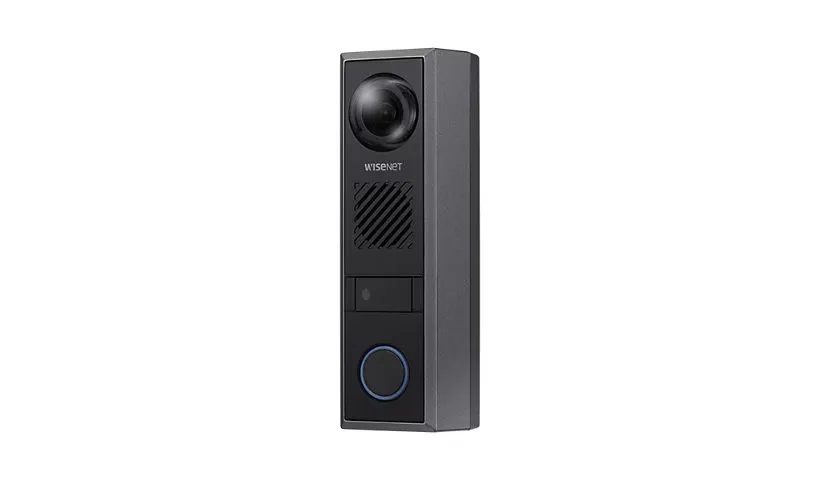
A slim camera doorbell on the casing beside the porch door, powered by a transformer sized for it, with phone answering and a chime the whole house can hear.
Extra chimes or indoor answering stations on the upper floors and in the back kitchen of a tall Victorian, so nobody has to be in the front hall to hear the door.
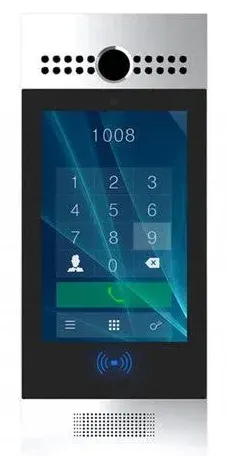
A door station with a speaker and camera at the porch door and a talk-back monitor or handset inside, for owners who want to speak to visitors without a phone.
A two- or three-button station at the shared porch door, each button wired to its own household, with chimes or stations that ring only on the right floor.
An electric strike or release kit on the porch door or the inner door, so a household upstairs can let a visitor in without coming down.
Stations sized and finished to suit the house, mounted on the door casing or plain wood, with the cut sheets and photos an owner files with the LPC.
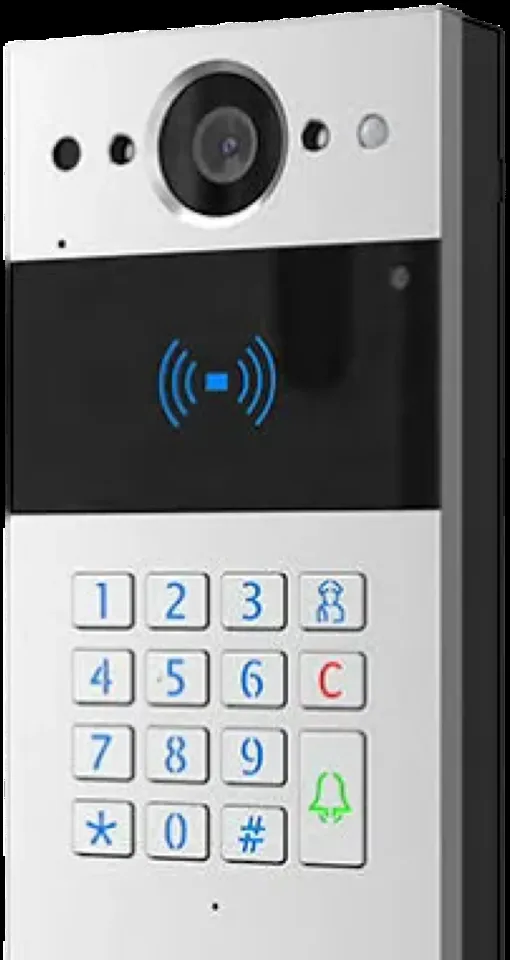
Directory or code panels, risers and apartment stations for the walk-ups and elevator buildings on Beverley and Cortelyou Roads.
Buzzers and video stations for storefronts and their delivery doors, with the apartment entrance kept on its own system.

Six kinds of property make up almost every doorbell and buzzer job in Beverley Square. Each one puts the porch station, the cable and the indoor stations in a different place.
A Queen Anne or Shingle-style house with one household, a deep porch and three floors to hear the bell on.
A more symmetrical house with a centered door, columns and a broad porch, where the station sits on one side of a formal entrance.
A detached house with an owner and a tenant, or two related households, behind one porch door.
A house with a third unit added upstairs or downstairs, where the new household needs its own button and its own way to answer.
The large buildings on Beverley and Cortelyou Roads, with a lobby panel, a riser and dozens of apartment stations.
The store-and-apartment buildings along Cortelyou Road, with a shop door and a separate apartment door side by side.
A one-household Victorian is the simplest system on paper and the hardest to hear in practice. The door is at the back of the porch, the front hall is a large open room with a staircase, and family life happens in the kitchen at the rear, the rooms upstairs and often a finished attic. The original bell wiring, where there still is any, usually runs from a button by the door down into the cellar to a small transformer and up to a single chime in the hall. It was never meant to reach the third floor. Most installations here keep the porch button position, replace it with a wired video doorbell or a one-button door station, and then add one or two more ways to hear it: a second wired chime at the top of the stairs, plug-in chimes in the kitchen and attic, or answering on the family's phones.
The camera matters more here than on a rowhouse. Because the porch roof shades the door, the station should have a lit button and a camera that copes with a bright street behind a dark porch. Because visitors stop at the top of the steps, the station is often angled slightly toward the steps rather than pointing straight out. We check both on the walkthrough by standing where a courier would stand and looking at the picture on the screen before anything is fixed in place.
Colonial Revival houses in the neighborhood tend to have a centered entrance, often with sidelights or pilasters, and a porch carried on columns. The front is designed to look balanced, and a doorbell or station that sits awkwardly breaks that balance more than it would on an irregular Queen Anne front. The usual answer is to place the station on the plain casing on the latch side of the door, at a height that lines up with the lock, and to choose a finish that matches the trim paint rather than standing out from it.
Sidelights change the release question. If the door has glass on either side, a strike in the frame is usually still possible, but the frame is narrower than on an ordinary door and we check how much solid wood there is before recommending one. If there is not enough, owners often decide to keep the release on the inner vestibule door, where there is one, or to skip the release and answer by video and voice only, which is common for one-household houses.
A Beverley Square two-family usually has one porch door into a shared front hall, then a door to the first-floor apartment and a staircase to the second. In some houses the second household has its own stair from the side or back. Either way the doorbell has to tell visitors and couriers which household they are calling, and it has to ring the right one. The simplest working system is a two-button door station at the porch door, each button wired back to its own chime or answering station, with the transformer or power supply in the cellar sized for both.
Video changes the plan. Two separate consumer video doorbells side by side on one porch casing look cluttered, compete for power from one transformer and leave both households with their own app account. A two-button video door station with an indoor monitor or phone answering for each household is tidier and is the more common choice when the owner pays for the work. If only one household wants video, the other can keep a simple audio station on the same system.
Ownership of the system is worth settling at the start. In an owner-occupied two-family, the owner usually holds the admin login and sets up the tenant's answering. We hand over the logins to the owner and show both households how to answer and open, so a change of tenant later does not mean a service call.
When a house gains a third household, it is usually in the attic or the cellar, and the doorbell is often the last thing anyone thinks of. The new household gets a door but no bell, and visitors ring the owner instead. The city has been moving toward legalizing some basement and cellar units: 6sqft reported in November 2025 that draft city rules would let qualifying owners apply through April 20, 2029, with upgrades such as proper exits, smoke and gas alarms and sprinklers, in community districts named in Local Law 126. We could not confirm from that reporting whether Community District 14 is on the list, so owners should check with the Department of Buildings directly.
For the doorbell, the plan is the same whether a unit is being legalized or simply rented to a relative. If the third household uses the porch door, the porch station grows a third button and the cable continues up to the attic or down to the cellar. If it uses a side or back door, that door gets its own button or small station, wired back to the same power supply so there is one system to look after. Either way the job is cleaner if the cable goes in while the attic or cellar walls are still open.
The six-story buildings on Beverley Road and Cortelyou Road are a different trade. A building like the 96-apartment one PLUTO dates to 1940 at 1601 Beverley Road has a lobby panel at the street door, often a second lobby door behind it, a cable riser running to every floor and a station in every apartment. Installation means replacing the panel and the stations, testing the riser pair by pair and deciding whether it can be reused, setting up the release hardware on the door and making sure the door closes and latches on its own every time.
These buildings are older than 1968, so under the Multiple Dwelling Law an intercom is required when tenants in a majority of apartments ask for one in writing, and once it is installed the Housing Maintenance Code requires the owner to keep it working. Many owners choose an app or phone-answering system for a building this size; when they do, HPD's Tenant Data Privacy Law, which covers smart access systems in multiple dwellings, sets rules on consent, a written data policy and deleting authentication data within 90 days.
Cortelyou Road is the neighborhood's main shopping street, and many of its buildings have a shop on the ground floor and apartments above, with the apartment entrance a few feet from the shop door. The apartments get a small multi-button panel at their own door, wired up the stair to each apartment. The shop is kept separate: a buzzer or video station at the shop door or the rear delivery door, answered at the counter or by the owner's phone. Mixing the two on one panel means shoppers ringing tenants and tenants letting in strangers to the shop's back hall, so we keep them on separate systems even when they share a cellar.

These notes describe how our technicians approach a free-standing house like the ones in Beverley Square. They are our standard practice, not an account of any one address.
Walk up the way a courier does. The first thing the technician does is go back to the sidewalk and walk up to the house as a visitor would: along the path, up the porch steps, to the door. Where do they stop? On a deep porch, most people stop at the top of the steps or a pace or two onto the porch, not with their face at the door. That spot, not the door frame, is what the camera has to see, and it is also where packages get put down.
Look at the light at three times. A porch roof shades the door, so the camera looks from shadow out into a bright street. We look at the picture in the middle of the day, check where the porch light falls after dark, and ask the owner which way the house faces, because a west-facing porch in late afternoon throws the visitor into silhouette. That decides whether the station needs a camera that handles bright backgrounds well, whether the porch light should be on a sensor, and whether the station should be angled.
Find the old bell before planning the new one. Many houses still have the original bell wire from the button to the cellar. We find the transformer, read its rating, test the wire and check whether the chime is mechanical. If the wire is sound and the transformer can be upgraded, a wired video doorbell can often reuse that path. If not, we plan a new route from the porch to the cellar, which on a house with a full cellar under the porch is usually short.
Count the households and the doors. Before talking about equipment, we ask who answers the door: one household or two or three, and whether anyone uses the side or back door as their main entrance. Each household that wants its own button needs it labeled and wired to the right floor, and each door that visitors use needs a way to call someone.
Close the door and let go. If the owner wants an electric release, we open the porch door, let go and watch whether it closes and latches without a push. A door that swells in summer or has sagged on its hinges needs adjusting before any release goes in, or it will buzz without opening.
Ask about the district. On Argyle, Rugby and Marlborough Roads, the house is likely in Beverley Square West. That decides the size and finish of the station and whether the owner needs to file with the LPC before we mount it, and it is easier to plan for at the start than after the equipment has been ordered.

On a rowhouse the doorbell goes beside the door and that is the end of the discussion. On a Beverley Square porch there are four decisions to make, and getting them right is the difference between a doorbell camera that shows a face and one that shows the top of a hat and the porch rail.
Height. A doorbell or station that someone presses should sit where most adults reach it comfortably and where the camera is roughly at face height. For buildings and public spaces, the 2010 ADA Standards set the high forward reach at 48 inches maximum, and we use that as the upper limit for the button on lobby panels and business doors. On a private house there is more freedom, but a button much above that height is hard for children and for anyone using a wheelchair, and a camera much below it looks up nostrils. Most porch stations end up a little under that limit.
Side of the door. The station goes on the latch side, the side where the door opens, so a visitor waiting for an answer stands clear of the swing. On a door with sidelights it goes on the casing outside the sidelight. On a door set in a recess, it goes on the face of the recess where it can be seen from the steps.
Angle. If the steps come up to one side of the door rather than straight in front of it, which is common on wraparound and corner porches, a small wedge mount turns the camera toward the steps. A few degrees is often enough to bring a visitor from the edge of the picture into the middle.
Light. A porch roof keeps the door in shade, which is good for the station's finish and bad for the picture. A lit button helps visitors find it at night. A porch light on a motion sensor, or one left on through the evening, gives the camera something to work with after dark. On a landmarked house, the LPC rules allow up to two light fixtures and one intercom panel per door opening, so the light and the station can be planned together within the same approval.
Packages are the other reason placement matters. Couriers leave parcels on the porch floor beside the door or at the top of the steps, often out of the frame of a camera aimed straight out. Many doorbell cameras now have a wide or tall field of view that covers the porch floor, and where an owner wants to see parcels specifically, we choose one of those or add a second small camera under the porch ceiling. We price that on the same visit.
Some owners would rather not have a camera on the house at all. That is a reasonable choice. An audio door station with a speaker, a lit button and talk-back stations inside still lets the household hear and speak to a visitor from any floor, and it is the lower-cost option on our list.
Most of the problems people have with a video doorbell they installed themselves come down to power. A plain bell button needs almost nothing; a camera doorbell runs a camera, a radio, a light and a speaker, all day, from the same thin wire. The manufacturers publish what they need. Google's instructions for the wired Nest Doorbell ask for a transformer rated for 16 to 24 volts AC and 10 to 40 VA, and say a blinking yellow light means the doorbell is not getting enough power. Ring lists 16 to 24 volts AC and 10 to 40 VA for its wired doorbells, recommends 16 volts and 30 VA when more than one doorbell runs from one transformer, and asks for 16- to 20-gauge wire.
Many bell transformers in older houses were installed for a simple button and chime and are rated lower than that. In a Beverley Square house the transformer is usually in the cellar, near the electrical panel or mounted on a junction box, and sometimes inside the chime itself; Google's own guide notes the transformer may be inside the chime box. We read the rating on it, measure the voltage under load, and replace it with one sized for the new equipment when it falls short. Swapping the transformer itself is line-voltage work, and Google recommends a licensed electrician for it. On our jobs, where a transformer change involves the 120-volt side or a new circuit, a licensed electrician does that part, and the price includes it before anything is ordered.
The chime is the second check. Mechanical chimes, the kind with a plunger that strikes a bar, generally work with wired video doorbells, sometimes with a small adapter in the chime. Some older electronic chimes do not, and a chime that buzzes or stays silent after a video doorbell goes in is usually one of those. In a tall house, the chime question often answers itself: one wired chime in the hall is not enough anyway, so we add plug-in chimes on the upper floors and in the kitchen that pair with the doorbell, or move answering to phones and indoor monitors.
The old bell wire is the third. In a house of this age it may be original, or it may have been replaced during a renovation, or there may be none at all because a past contractor took the bell out. Wire that tests sound end to end and is the right gauge can carry a wired video doorbell. Wire that is brittle, spliced in several places, painted over on the porch or too thin is replaced. A Brownstoner forum member with a multi-family house described exactly this: the old doorbell wiring was too old, so they powered the camera doorbell another way and used plug-in chimes that sync with it. That works, and it is one of the options we price.
When a house has two or three households, each with its own video doorbell or its own button on a shared station, the power plan matters more. Two consumer doorbells on one small transformer is a common reason both of them misbehave. A shared door station with its own power supply, or a transformer sized for both doorbells per the manufacturer's guidance, avoids that. We size it before ordering, not after the first week of dropped connections.

The Landmarks Preservation Commission designated Beverley Square West on November 25, 2025. The LPC's announcement describes 118 houses built between 1894 and 1910 on three tree-lined streets between Beverley Road and Cortelyou Road, nearly all by well-known Brooklyn architects including John J. Petit, John B. Slee and Benjamin Driesler. LPC Vice Chair Angie Master said the two new Flatbush districts "represent a remarkable period in Brooklyn's development." For an owner on Argyle, Rugby or Marlborough Road, the practical result is that a new doorbell, porch intercom or camera on the front of the house now needs a permit from LPC staff before it goes up.
The rules are written down, and for a doorbell they are not hard to meet. The LPC Permit Guidebook's chapter on health and safety equipment says staff can issue permits for light fixtures and intercom panels that meet its criteria. Intercom panels and doorbells must be installed within or adjacent to a door opening, or an intercom can go on a fence or wall in front of the entranceway. Each door opening can have one intercom panel and up to two light fixtures. The design, size and finish must be compatible with the building. Equipment is attached at mortar joints, plain masonry, wood, metalwork or concrete paving, never through cast iron or on decorative surfaces. Any conduit should be hidden behind the installation, and if that is not possible staff may allow about ten inches of visible conduit painted to match.
The application is filed by the owner through the LPC's Portico system. The guidebook asks for color photos of the whole building and close-ups of where the equipment goes, manufacturer cut sheets for intercoms and cameras, and color specifications for visible facades. Elevation drawings and large-scale details are asked for, except where existing intercoms, lights or cameras are being replaced in kind. Ordinary maintenance and repair need no permit. For anything unclear, the guidebook gives LPC's number, 347-934-8335.
What that means for an installation here: we choose a station sized for the casing, in a finish that suits the trim, mount it on the plain wood of the door casing rather than on carved or turned work, and run the cable through the casing or the wall behind it into the cellar, so nothing shows on the porch face. We give the owner the cut sheet, a photo marked with the mounting spot, the dimensions and the finish, which is most of what the application needs. We do not mount on the front of a district house until the owner tells us the permit is in hand, so the work is scheduled once approval arrives.
Two cases come up often. A house that already had a doorbell and is getting a similar one in the same spot is closest to an in-kind replacement, which the guidebook treats more lightly; a house getting its first doorbell camera, or a much larger station, is a new installation and should be filed as one. And cameras have their own limit: for small residential buildings the guidebook allows no more than two security cameras for every 25 feet of street frontage, well spaced and finished to match. On a 50-foot lot that is room for several, but owners planning a doorbell camera and porch cameras together should ask LPC staff how the doorbell is counted before buying equipment.
Houses east of the Q cut, and those on Westminster and Stratford Roads, are outside the district and need none of this, although many owners there follow the same approach because it looks better on a house of this age.
Commercial buzzer work around Beverley Square sits on its edges: the shops and offices on Cortelyou Road, the apartment buildings on Beverley Road, and the larger shopping streets a few blocks away that BK Reader's neighborhood profile points to, Church Avenue, Flatbush Avenue and Newkirk Avenue. The jobs are storefront buzzers, delivery doors, upstairs offices and the lobby systems of the bigger residential buildings.
The neighborhood's main shopping street, with shops below apartments and the Cortelyou Road Q station, where most store-and-apartment entry work is.
The northern edge, with the Beverley Road Q station and large pre-war apartment buildings that need lobby panels and apartment stations.
The member-run grocery at 1415 Cortelyou Road, founded in 1976, sits among the storefronts where delivery doors and rear entrances need their own buzzers.
A busier commercial street to the north, with shops, offices and medical practices upstairs that buzz clients in.
The long commercial avenue to the east, with storefronts, upstairs offices and mixed-use buildings.
A shopping street to the south with small businesses and apartments above, similar in scale to Cortelyou Road.
For a shop, the most common request is a rear or side door that couriers and suppliers can ring, with a camera so staff can see who is there before opening, answered at the counter or on a phone. For an upstairs office or practice, it is a door station at the street door, a release button at the reception desk and a closer that pulls the door shut behind each visitor. For a church hall, school or community room, it is a station that lets staff see and admit people during the hours the room is in use. Each is quoted from the same Brooklyn list as residential work.
For the apartment buildings, the scope is a full multi-tenant system: the lobby panel, a second panel or release on an inner lobby door where there is one, the riser, a station or phone answering for every apartment, release hardware and a power supply with battery backup. On a building of 96 or 131 apartments, the riser test alone decides a large part of the price, because reusing a sound riser saves pulling cable through six floors of occupied apartments.
If a building also wants cameras at the entrance or in the mail area, they are installed on the same visit and priced together with the entry system.

These are the questions owners and residents ask us about new doorbells and buzzer systems in Beverley Square, along with ones raised on Brownstoner's forums and in the manufacturer and cost guides we checked, answered for the houses and buildings here.
Add more ways to hear it rather than a louder single chime. The cleanest option in a tall Beverley Square house is a wired video doorbell or one-button door station at the porch, with the original wired chime kept in the hall and plug-in chimes that pair with the doorbell placed in the kitchen, on the top landing and in the attic. Each plug-in chime goes into an ordinary outlet, so there is no cable to fish through plaster to reach the upper floors.
If the household wants to talk to visitors from upstairs as well as hear them, indoor stations or monitors on each floor do that, and phone answering covers anyone in the garden or away from home. Where the old bell wire is unreliable, a Brownstoner forum member with the same problem used plug-in chimes that sync with the camera doorbell instead of the old wired chime, and that approach works well here. We size the doorbell's power so the extra chimes do not overload it.
It depends on the camera and the angle, and it is worth checking before mounting. A camera looking out from a shaded porch into a bright street sees a dark face against a bright background, and cameras without good handling of bright backgrounds turn visitors into silhouettes, especially on west-facing houses late in the day.
On the walkthrough we hold the chosen doorbell or station where it would be mounted, stand someone where visitors stop, and look at the picture. If it struggles, we choose a model that handles strong backlight better, angle it slightly down or to the side to take some sky out of the frame, or add porch lighting so the visitor's face is lit. The fix is usually one of those three, decided on the porch, not after installation.
Often, but not always from beside the door. Couriers on a deep porch tend to leave parcels at the top of the steps or on the floor near the door, and a doorbell aimed straight out may cover the steps but not the floor beneath it. Doorbells with a tall field of view, which show the ground in front of the door as well as the visitor, catch most parcels.
Where the steps come up at the side or the porch is very deep, a second small camera under the porch ceiling covers what the doorbell cannot. On a house in the historic district, that camera counts toward the LPC's limits on security cameras, so we plan both together.
Yes. Many owners prefer a wall monitor in the kitchen or the hall to fishing a phone out of a pocket. A door station system with an indoor monitor shows the porch the moment someone rings and lets you talk and, if the door has a release, open it, all without an app. Many of the same systems also answer on phones, so the monitor and the phones work side by side.
The trade-off is cable: the monitor needs a wire from the system, which in a Beverley Square house usually comes up from the cellar into the kitchen wall or a pantry. A consumer video doorbell can also display on some smart displays over Wi-Fi without new cable. We price both so you can choose.
One shared station with a button for each household is usually the better choice. It keeps the porch to one device, which matters inside the historic district where the LPC allows one intercom panel per door opening, and it runs from one power supply in the cellar. Each button is wired to its own chime, station or phone account, so each household hears only its own visitors.
Two separate consumer video doorbells side by side can work, but they clutter the casing, often share an undersized transformer, and leave two unrelated app accounts on one door. Where the second household has its own entrance at the side or back, that door gets its own button or small station instead, on the same system.
It can be, but it rarely gives the result people want. A Brownstoner forum member with a two-apartment building asked exactly this: whether a battery video doorbell could go over the existing buzzer intercom. A battery doorbell mounted on top of an old panel gives one household a camera while the other keeps the old buzzer, and the two systems do not talk to each other, so the camera's household still cannot release the door from it.
Replacing the old panel with a two-button video station on the same spot, wired to both households, gives both of them video and keeps the release working. If the old cable between the panel and the apartments is sound, many systems reuse it, which keeps the cost down. The same forum thread mentions quotes of $1,500 and closer to $3,000 for a video system for two apartments; on our list that kind of job usually falls within the $700 to $1,800 video range, depending on the cable and the door.
Yes. A release button in the tenant's station opens only the door it is wired to. If the tenant's visitors come through the porch door and up a shared stair, the porch door gets the release and the owner's apartment door stays on its own lock. If the tenant has a separate side or rear door, that door gets its own button and release, and the porch door never opens from upstairs.
The same applies to codes and apps: on a code or app system, each household's credentials are set to open only their own doors. We write down which button and which credential opens which door at hand-over, so the owner can change the tenant's access when the tenancy changes.
We plan the route so that it should not. In most Beverley Square houses the cable from the porch drops straight into the cellar beneath it, runs across the open cellar ceiling, and comes up inside a closet, a pantry, an old chase or along the back of the stairs to reach the upper floors. Plug-in chimes and phone answering remove the need for cable to some floors altogether. Where a wire has to be visible, it goes in a small painted raceway along a baseboard or inside a closet.
We do not patch or paint walls ourselves. If a route would need an opening in finished plaster, we say so before the job is priced and show you where, so you can choose a different route or have your own painter or plasterer follow us. On most houses the cellar route avoids that entirely.
It depends on the equipment. Many consumer video doorbells store clips in the manufacturer's cloud, and Angi's 2026 cost guide puts video storage plans at about $3 to $10 a month. Some doorbells store locally on a card or a home base. Door stations that are part of a camera system can record to a network video recorder in the house, with no monthly fee.
If you already have, or plan, security cameras recording to a box in the cellar, a door station or doorbell that records to the same recorder keeps everything in one place. We tell you before you buy which kind each option is, so a storage fee is never a surprise.
Often, if the doorbell and the recorder come from the same family of equipment or the recorder supports the doorbell. Many camera systems offer a matching video doorbell that appears in the same app and records with the other cameras. A doorbell from a different brand usually needs its own app.
Send us the make and model of your recorder with your photos, and we will tell you which doorbells or door stations it supports before you choose. If nothing compatible suits the porch, we install the doorbell on its own app and keep the two systems separate and labeled.
Yes. The LPC's Permit Guidebook says ordinary maintenance and repair need no permit, and it treats in-kind replacement of an existing intercom more lightly, without asking for elevation drawings. A first doorbell camera, or a station much larger than what was there, is a new installation, and the owner should file for a staff-level permit through Portico before it goes up.
The criteria for approval are clear: within or adjacent to the door opening, one panel per opening, compatible size and finish, attached to plain wood or masonry rather than decorative surfaces, with hidden conduit. We supply the cut sheet, a photo marked with the mounting spot and the dimensions, which covers most of what the guidebook lists, and schedule the mounting once you have the permit.
Outside the historic district, yes, and on a very deep porch it can be handy because visitors meet it before they reach the door. The cable runs down inside or behind the post to the porch floor framing and back to the cellar, and the camera, if there is one, faces down the steps.
Inside Beverley Square West, the guidebook's wording places doorbells and intercom panels within or adjacent to a door opening, or on a fence or wall in front of the entranceway. A porch post is not named either way, so ask LPC staff at 347-934-8335 before planning on it. Beside the door is the placement that clearly fits the rules.
Ring the bell from the porch and listen from the kitchen and the top floor. Find out whether each household in a two- or three-family has its own button and whether each one rings in the right place. Open the porch door, let go and see whether it closes and latches without a push. If there is a video doorbell, ask the sellers to remove it from their account before closing, because many doorbells stay tied to the previous owner's app until they are reset.
Check whether the house is in the historic district, so you know a new station will need an LPC permit. If you want the doorbell sorted soon after you move in, send us photos from the inspection and we will price it in advance. We schedule the work once you own the house.
Yes. A video station at the rear or side door, with a monitor or a phone answering at the counter, lets staff see a courier or supplier, talk to them and, if the door has a release, let them in without leaving the register. A closer on the door makes sure it shuts and locks again behind them.
If the building has apartments above with their own entrance, the shop system stays separate from theirs, so tenants are never rung for the shop's deliveries and the shop never holds a release for the residential door.
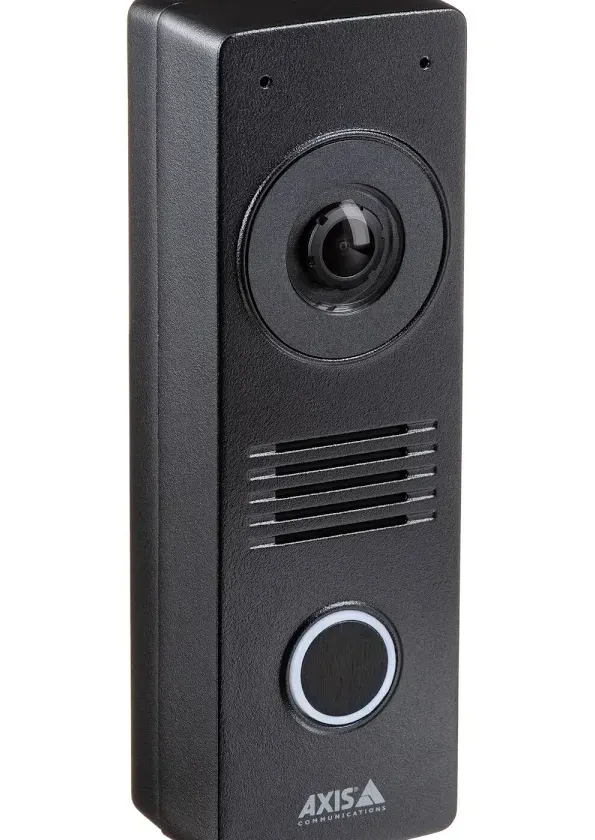
We quote a reliable non-branded system by default and install a named brand when an owner asks for one; the intercom brands we work with include Aiphone, ButterflyMX, 2N, Akuvox, Comelit and DoorBird. These are the kinds of equipment that suit Beverley Square houses and the buildings on its edges.
Narrow camera doorbells for the porch casing, powered from a correctly sized transformer, answered on phones with a wired or plug-in chime inside. The usual choice for a one-household house.
A lit button with a speaker at the porch and talk-back stations or chimes on each floor. No camera, no internet, the lowest-cost option on the list.
A door station with a camera and one to three buttons, wired to indoor monitors on each floor or in each household, with optional phone answering.
Systems that send power, voice, video and the release over a single pair, which lets an old bell or buzzer pair be reused when it tests sound.
Door stations with a keypad or card reader, so family, a cleaner or a dog walker can enter with a code that can be changed or removed.
Fail-secure electric strikes sized for wood frames, release kits for doors that cannot take a strike, and closers set so the door latches every time.
The table compares the three set-ups we install most often on houses here. Which one is right depends on how many households share the porch and how they want to answer.
| What matters | Wired video doorbell | Porch intercom with monitors | Shared multi-button station |
|---|---|---|---|
| Best for | One household | One household that wants screens on each floor | Two or three households behind one porch door |
| How you answer | Phone app, chimes | Wall monitors, optional phones | Each household's own monitor, handset or phone |
| Needs home Wi-Fi | Yes | Only for phone answering | Only for phone answering |
| Cable inside the house | Porch to transformer only | Porch to each monitor | Porch to each household |
| Can release the door | Only with an added relay | Yes | Yes, per household |
| Possible monthly fee | Often, for video storage | Usually none | Usually none; app plans vary |
| Brooklyn list range | $700–$1,800 video | $700–$1,800 video | $400–$900 audio, $700–$1,800 video |
Many Beverley Square owners already have a Ring or SimpliSafe doorbell, or an ADT plan, and ask whether they need anything else. For a one-household house, a consumer video doorbell is often fine, and we install and power the one you already own. Where they fall short here is the tall house and the shared porch: they ring phones and a chime, but they do not give each household its own indoor station, and most cannot release a door without extra hardware. National alarm companies sell doorbells as part of a monitoring plan; we install entry systems that you own outright, with no plan required. The useful question is what the house needs, and we answer it from the porch, not from a catalog.

These claims turn up in generic online answers, national cost guides such as Angi and HomeAdvisor, and product pages. Each is paraphrased, then checked against Beverley Square's houses, the manufacturers' own specifications and the city's rules.
Angi's 2026 guide puts the average at $300, with a typical range of $250 to $400 and smart doorbells at $150 to $650 installed.
That figure describes swapping one doorbell on a house where the wire, the transformer and the chime already work. In a three-story Beverley Square Victorian, the job usually also includes a transformer sized for a camera, chimes or stations for the upper floors, and often a second household's button, which is why our Brooklyn list starts at $400 for audio and runs $700 to $1,800 for video.
A national average is a fair price for a simple swap. It is not a quote for a tall house with two households and a porch, and we price the house in front of us.
Product pages often say a video doorbell connects to your existing doorbell wiring, and leave it there.
The manufacturers are more specific. Google asks for a transformer rated 16 to 24 volts AC and 10 to 40 VA for the wired Nest Doorbell, and Ring recommends 16 volts and 30 VA when more than one doorbell shares a transformer. Older bell transformers are often rated lower, and an underpowered doorbell drops offline, blinks a warning or stops ringing the chime.
We read the transformer's rating and measure it before choosing equipment, and replace it when it falls short, with a licensed electrician for any 120-volt work.
Wireless chimes are sold on long open-air ranges, and generic answers repeat those figures.
1-800-Doorbell's own guide says each wall a signal passes through cuts it by about 20 percent, and dense materials and metal cut it further. In a Beverley Square house, a signal from the porch to a third-floor bedroom passes through the front wall, floors and several partitions, and a chime that works in the hall may miss upstairs.
Wireless chimes still have a place here, especially as extra chimes. We test them in the rooms where they will live before leaving, and wire the floors they cannot reach.
Many answers treat a consumer video doorbell as the default for any house.
In a house with two households, one doorbell rings one account. The second household either shares it, which means every visitor rings both, or gets a second doorbell on the same casing, which often overloads a single transformer. Neither gives the upstairs household a way to release the door.
A two-button station, each button wired to its own household's station or phone, solves all three, and on a landmarked house it keeps the porch to the one panel per door the LPC allows.
For most of Brooklyn that is close enough to true for a simple swap.
Since November 25, 2025, the 118 houses of Beverley Square West have been in a designated historic district. The LPC's guidebook sets out where doorbells and intercom panels may go, how they attach, and what an owner files for a staff-level permit; only ordinary maintenance and repair are exempt.
The rules are reasonable and an approval is usually straightforward with the right paperwork. We supply the cut sheet and mounting photos and wait for the permit before mounting.
HomeAdvisor puts the national average for an intercom system at $2,500, within $1,500 to $15,000, and Swiftlane quotes $1,000 to $5,000 or more per entry door for modern IP or video systems.
Those figures fit the apartment buildings on Beverley and Cortelyou Roads, where our list starts around $2,500 and passes $10,000 for large video or cloud systems. They do not fit a one- or two-household Victorian, which is the most common property here and sits in our $400 to $1,800 ranges.
Swiftlane also notes software subscriptions of $5 to $15 per unit per month on some cloud systems. We tell building owners before they choose whether a system carries one.
Sales pages for new systems often assume a full rewire.
Brick Underground's NYC intercom guide quotes an installer saying the core wiring of older systems is typically fine even when the equipment is outdated, and that most problems are in the connections. In Beverley Square houses, the bell pair from porch to cellar is often reusable for a wired doorbell or a two-wire station once it tests sound.
We test before deciding. Sound wire is reused and saves money; brittle, spliced or painted-over wire is replaced, and the price says which.
If you are deciding between a video doorbell and a full porch intercom, or wondering whether your old bell wire and transformer will carry a camera, ask first. Call now at (347) 934-8335, send a fast quote request, or send porch and door photos to a tech on WhatsApp. Estimates are booked within two hours of your request during working hours.
Tell us the street, the kind of property, how many households use the front door and what is by the door now. A technician calls back with the range for the Beverley Square address, or you can call (347) 934-8335 right now.
Send the porch, the door and frame, any old button or panel and the cellar where the bell wire ends, with the street, the number of households and whether the house is in the district.
A weekday visit to check the door's latch, test the old wire and transformer, see where visitors stand and find the cable route to the cellar and each floor.
Equipment, mounting spot, cable route and total price in writing before ordering, plus cut sheets and marked photos for an LPC filing where needed.
The door is made to close and latch, any release is fitted, and a transformer or power supply sized for the equipment goes in, with an electrician for any 120-volt work.
Low-voltage cable runs through the cellar, closets and chases to the porch and to every station or chime, with nothing run across the porch face.
The station is mounted, aimed where visitors stop, connected, and tested by ringing, talking and opening from every household and from outside.
A wiring note, the app or admin logins and a short walk-through for each household on answering and opening the door.

118 free-standing houses from 1894 to 1910 on Argyle, Rugby and Marlborough Roads, designated by the LPC in November 2025.
The neighboring district of Victorian houses designated by the LPC on the same day, where the same doorbell placement rules apply.
The Q stop at the north edge of the neighborhood, with its station house over the open cut between Marlborough Road and East 16th Street.
The Q stop at the south edge, rebuilt in the mid-1990s, at the center of the Cortelyou Road shopping strip.
The Brooklyn Public Library branch on Cortelyou Road, opened in 1983 and remodeled in 2021.
The member-owned grocery at 1415 Cortelyou Road, founded in 1976, among the shops that need delivery-door buzzers.
We also serve Ditmas Park, Fiske Terrace, Prospect Park South, Kensington, Midwood and East Flatbush, all at the same Brooklyn rate; see our door buzzer installation in Brooklyn page for the whole borough, or nearby neighborhood pages such as Bedford-Stuyvesant door buzzer installation.
Beverley Square is billed at our Brooklyn rate, with no travel premium. The ranges below are installed prices covering equipment, power, any release hardware, cable and labor. Where a house falls inside a range depends on the cable route, the number of households, the door and the choice of audio, video or phone answering. The figure for your property is set in writing after the walkthrough and does not change unless you change the scope.
| Item | Brooklyn price | Typical Beverley Square job |
|---|---|---|
| Audio / small system | $400–$900 | Lit porch button with speaker, talk-back or chimes on each floor, one or two households |
| Video / mid-size system | $700–$1,800 | Wired video doorbell or video door station with monitors or phone answering, one to three households |
| Multi-unit building | $2,500–$10k+ | Lobby panel, riser, apartment stations and releases for a building on Beverley or Cortelyou Road |
| Service call booked online | $250 | Diagnosis of an existing system; applied toward the work |
What usually pushes a house toward the top of a range: a transformer that has to be replaced along with new cable from the porch to the cellar, video for every household rather than one, a release on a porch door whose frame needs reinforcing, and a cable route to a third floor with no closet or chase. What keeps a house toward the bottom: bell wire that tests sound and can be reused, a single household, plug-in chimes on the upper floors instead of new cable, and answering on phones rather than monitors.
For comparison, Angi's 2026 guide puts a single doorbell installation at an average of $300 and a smart doorbell at $150 to $650 installed, and HomeAdvisor puts an intercom system at an average of $2,500. Our ranges sit between the two because a Beverley Square job is usually more than one doorbell and less than a building system.
Full terms — including 50% deposit, one-year parts-only warranty on AESS-supplied products, and the late-fee schedule — are set out in the service agreement.Send three photos, the porch from the sidewalk, the door and frame close up, and the old button or panel, and we tell you which range your house falls in. Call (347) 934-8335, speak to a tech on WhatsApp, or use the fast quote form.
Three typical Beverley Square jobs, each priced inside the matching range on our Brooklyn list. The exact figure comes from the walkthrough.
A two-button lit station with a speaker at the porch door, a talk-back station for each household, a release on the porch door if the frame allows, and a transformer in the cellar sized for it.
A wired video doorbell or one-button video station on the porch casing, a correctly sized transformer, the hall chime kept, plug-in chimes or monitors upstairs and phone answering set up.
A directory or code panel for a building on Beverley or Cortelyou Road, a tested or new riser, audio or video stations by apartment, release hardware and a battery-backed power supply.
Bring your own equipment. If you have already bought a video doorbell or door station, we can install it as long as it suits the porch, the door and the house's power. Labor for customer-supplied equipment is quoted flat at the walkthrough, and any transformer, release hardware and cable are priced from the same list. Customer-supplied equipment carries the manufacturer's warranty rather than ours, so we check the model with you before you book.

Video doorbells, porch intercoms and whole-house chimes. Request a quote
Buttons per household and lobby systems. Call (347) 934-8335
The same list in every neighborhood. Brooklyn door buzzer installation
Houses and buildings in every borough. NYC door buzzer installation
Yes. A small wedge or corner mount behind the doorbell turns the camera a few degrees toward the steps, which is often enough to bring a visitor from the edge of the picture into the middle. We test the angle on the walkthrough by standing where couriers stop before anything is fixed, and on a landmarked house the wedge is chosen in a finish that matches the casing.
A wired doorbell or door station runs from a transformer or power supply on the house's electricity, so during an outage it stops ringing and the camera goes dark until power returns. Battery doorbells keep working for a while, and some door station power supplies can be fitted with a backup battery. If you want the door to keep working through outages, say so and we price a supply with backup.
It can, because a wide lens on a detached house often takes in the path, part of the street and sometimes the house next door. Many doorbells let you set privacy zones that black out parts of the picture, and narrowing the angle helps too. We set the view with you at installation so it covers your porch and steps rather than your neighbor's windows.
Yes. We leave original hardware in place and mount the new doorbell or station beside it on plain wood, without drilling through decorative work. On a house in the Beverley Square West district that also matches the Landmarks rule against attaching equipment to decorative surfaces. The old bell keeps its place on the door as a feature even though the new system does the ringing.
A technician checks how the porch door closes and latches, finds the old bell wire and transformer and tests them, watches where visitors stop on the porch, looks at the light at the door and traces a cable route to the cellar and each floor that needs a chime or station. For a one- or two-household house that usually takes under an hour, and you get the written price afterward.
A door station with a keypad, or an app that can release the door remotely, lets you give each person their own code or open the door for them when they ring. Codes can be changed or deleted when someone stops coming, without changing the locks. This needs a release on the porch door, so the door and frame are checked for that on the walkthrough.
Yes. Many chimes and plug-in receivers can give each button its own tone, so the household knows which door to go to. On a house where a second household uses a side door, each household's chime can be set to ring only for its own button. We set and test the tones before leaving.
Many video doorbells stay tied to the owner's account until they are removed from it or reset, so remove the doorbell from your account before closing and give the buyers the model and any admin details. Door station systems with an admin login are handed over the same way. Our hand-over note lists what needs to be passed on, which makes a sale simpler.
The LPC guidebook allows no more than two security cameras for every 25 feet of street frontage on small residential buildings, well spaced and finished to match the surroundings. Most houses in the district sit on lots about 50 feet wide. The guidebook does not say how a doorbell camera is counted, so ask LPC staff before buying cameras and a doorbell together.
On the door casing where possible, which is usually still wood. Where the doorbell has to go on siding, a mounting block made for siding gives it a flat, solid base without crushing the panel, and the cable passes through the block into the wall behind. We seal the opening so rain cannot follow the cable in.
Estimates are booked within two hours of your request during working hours. Equipment is ordered once the plan and price are agreed and the deposit is paid, and installation is scheduled once it arrives, so allow time for that. On a house in the historic district, the LPC permit comes first, and we do not promise a mounting date until you have it.
Most doorbells and stations come in a few finishes, usually black, dark grey, silver or white, and we pick the one that sits most quietly against your trim. Some stations accept a painted or wood surround. On a landmarked house the finish has to be compatible with the building, and the paint card goes into the LPC application.
Door Buzzer Installation Brooklyn NY | Brownstones & Condos · Door Buzzer Installation NYC | Apartment & Building Entry · Door Buzzer Installation Manhattan NY | Apartments & Co-ops · Door Buzzer Installation Queens NY | Co-ops & Apartments · Door Buzzer Installation Bronx NY | Co-ops & Apartments · Door Buzzer Installation Staten Island NY | Homes & Apts · Door Buzzer Installation Long Island NY | Nassau & Suffolk · Door Buzzer Installation Hudson Valley NY | Apartments · Door Buzzer Installation Nassau County NY | Homes & Co-ops · Door Buzzer Installation Suffolk County NY | Homes · Door Buzzer Installation Westchester County NY | Co-ops · Door Buzzer Installation Rockland County NY | Homes & Apts · Door Buzzer Installation Orange County NY | Homes & Farms · Door Buzzer Installation Putnam County NY | Lake Homes · Door Buzzer Installation Dutchess County NY | Homes · Door Buzzer Installation Ulster County NY | Kingston
Door Buzzer Installation Bath Beach Brooklyn NY · Door Buzzer Installation Bay Ridge Brooklyn NY · Door Buzzer Installation Bedford-Stuyvesant Brooklyn NY · Door Buzzer Installation Bergen Beach Brooklyn NY · Door Buzzer Installation Brooklyn NY | Brownstones & Condos
Structured Cabling Installation Beverley Square Brooklyn NY · Access Control Installation Beverley Square Brooklyn NY · Alarm Installation Beverley Square Brooklyn NY · Door Buzzer Repair Beverley Square Brooklyn NY | Porches · Security Camera Installation Beverley Square Brooklyn NY · Intercom Installation Beverley Square Brooklyn NY · Fire Alarm Installation Beverley Square Brooklyn NY · TV Installation Beverley Square Brooklyn
Send a photo of the porch from the sidewalk, the front door and frame, and any old button or panel, with your street and the number of households, and we will tell you what the house needs and where it sits on the Brooklyn list. Call or text (347) 934-8335, message us on WhatsApp, or use the request form. Licensed under NYS license #12000287431, rated 4.7★ across 201 Google Reviews, owner-operated since 2002.