What are you looking for?
About Us Contact Us Careers Get a Free Quote (800) 486-0943
Pick a service
✅ Got Your Own System?
🎬 Home TheatreQuote 🎶 AV SoundQuote 🔑 Access ControlQuote
Now pick your area
Pick your area
Long Island
Hudson Valley
Services available
Pricing & Tools
Pick a service for pricing
🚪 Intercom Pricing 🔔 Buzzer Repair Pricing
Calculators
📹 Camera System Calculator 🚨 Alarm Calculator ⚡ Cabling Quote Builder ✅ Got Your Own System?
Select your area
A two-family where guests still call from the stoop, a 1930s building whose bells died one by one, or a shop on 18th Avenue that needs its side door buzzed? Bensonhurst door buzzer installation line: (347) 934-8335
Home › Door Buzzer Installation Brooklyn › Bensonhurst
Semi-Detached Two-Families · Legal Three- and Four-Family Houses · Prewar Six-Story Buildings · New Condos · Shops on 18th Avenue, 86th Street and Bay Parkway

Door Buzzer
Installation in
Bensonhurst

Every Door Counted · Storm Doors, Gates and Basement Entrances Planned In · Wired, Video or Phone Answering · Brooklyn Rate

Door buzzer installation in Bensonhurst is mostly a job about how many doors a house has, not how many apartments. The typical Bensonhurst property is an attached or semi-detached brick two-family with a stoop door, a storm door in front of it, often a front-yard gate and sometimes a separate basement entrance, and each of those openings changes what gets released and where the buttons go. The neighborhood also has six-story apartment buildings from the late 1920s and 1930s whose original bells have been failing one apartment at a time, newer condos from the building wave of the early 2000s and the 2020s, and avenue shops with apartments above. Brooklyn Community District 11, which includes Bensonhurst, is one of the fifteen districts in the city's basement apartment legalization program, so some owners are planning a new legal unit with its own outside door as well. This page covers each of those situations, what the law asks of entry systems in multiple dwellings, and what each kind of job costs on our Brooklyn list.

Reviewed and updated November 11, 2026, against openigloo building records and tenant reviews for 8210 19th Avenue, 2430 63rd Street and 1673 66th Street; a Brownstoner sales listing for a legal four-family at 8418 17th Avenue; CityRealty's record for Tower 85 at 2066 85th Street; Epicenter-NYC's list of the community districts in the basement legalization program; HPD's November 10, 2025 announcement of proposed rules under Local Law 126 of 2024; Gothamist's May 8, 2024 report on the state basement plan; HPD's pages on the Tenant Data Privacy Law (Local Law 63 of 2021) and on self-closing doors (November 24, 2025); New York's Multiple Dwelling Law §50-a; a Brownstoner forum thread on buzzers for a two-door front entrance; the Brooklyn Eagle on 62nd Precinct crime figures; the Brooklyn District Attorney's May 2024 release on a Bensonhurst burglary case; amNY on Con Edison's July 2020 southern Brooklyn voltage reduction; Allegion on fail-safe and fail-secure hardware; the 2010 ADA Standards; NYC Administrative Code §28-105.4.7; and the HomeAdvisor, ButterflyMX and Swiftlane cost guides. · Abstract Enterprises Security Systems, NYS license #12000287431 · crews dispatched from our Troy Avenue office in Brooklyn

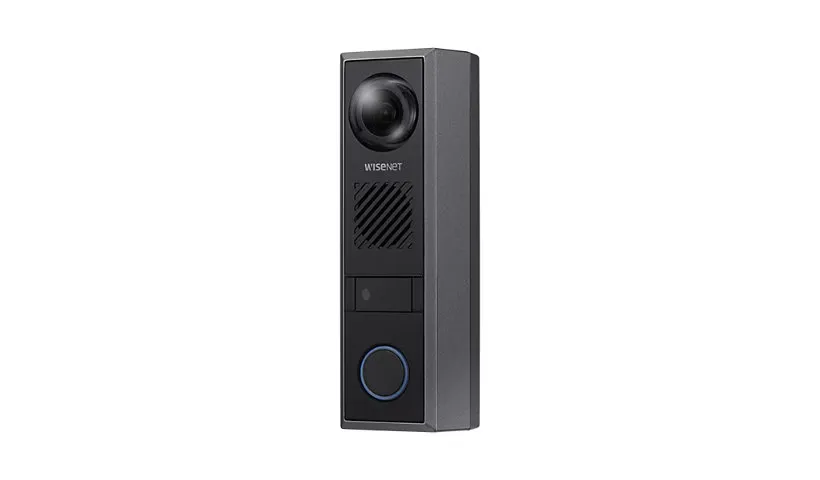
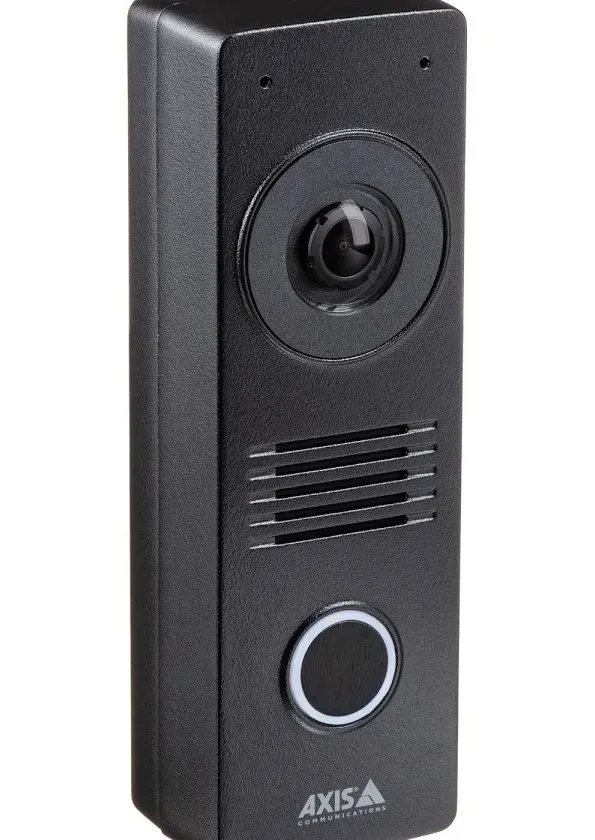
Bensonhurst, Brooklyn door buzzer installation: black rectangular video door station with a camera, speaker grille and round lit call button
A photo from the AESS job library, not taken in Bensonhurst: a black rectangular video door station with a camera at the top, a speaker grille and one round lit call button. A single-button station like this is the right size for the owner's door of a Bensonhurst semi-detached house, where the frame beside the stoop door is narrow and the brick around it is the owner's to drill, while the rental floor gets its own button on a separate station or a two-button version.
Bensonhurst Door Buzzer Request
Two-family house, apartment building, condo or shop: tell us the street, how many apartments and how many outside doors, and a technician calls back with the range

✅
Request Sent!
Thank you. A technician will call you about the Bensonhurst address, usually within two hours during working hours.
25+
Years Experience
✓
Same-Day Estimates
100%
Licensed & Insured
4.7★
201 Google Reviews

Owner-operated since 2002 · Thousands of jobs completed · Booked within 2 hours

Quick answer: door buzzer installation in Bensonhurst is billed on our standard Brooklyn list, where an audio buzzer for a two- to four-family house runs $400 to $900 installed, a video system for a house or small building runs $700 to $1,800, and an apartment building starts around $2,500 and can go past $10,000 for a large video or cloud system. Each figure includes the door station, the answering stations or app setup, the release on the door, the low-voltage power supply, the cable and the labor, and the price for your property is written down before anything is ordered. Most Bensonhurst jobs land in the first two ranges, because most properties here are two-family houses with one or two street-facing doors. What pushes a house toward the top of its range is the number of doors involved: a storm door that has to be dealt with, a yard gate that also needs releasing, or a basement entrance that needs its own button. Send photos of each door and any old panel to (347) 934-8335 or on WhatsApp, and we answer with the range that fits, usually within two hours of your message during working hours.

  • Reviewing your photos and pricing a new system is free. If an existing system has failed and needs a diagnosis before anyone can say what it needs, that visit is the $250 service call booked online, and the $250 is credited to the work.
  • Everything we install falls under New York State license #12000287431. We do low-voltage entry work only; if the system needs a new 120-volt outlet or circuit, a licensed electrician handles that piece, and you know about it before the price is final.
  • In a rented house or building, the owner or managing agent signs off on the plan. Tenants are welcome to send us photos and details, and we work out the job with the person responsible for the door.
The Neighborhood

Why Bensonhurst Properties Need Door Buzzer Installation

Walk any side street between 18th Avenue and Bay Parkway and the reason buzzer work here is different becomes obvious. The houses are mostly attached and semi-detached brick, with stucco, stone or aluminum siding on some fronts, and a great many of them are two-family homes built so the owner could live on one floor and rent the other. That layout produces a front entrance that is almost never just one door. There is the house door at the top of a short stoop, an aluminum storm door in front of it on many blocks, a low fence and gate at the sidewalk, and on houses with a rentable basement, a separate door down a few steps or around the side. A buzzer system for a Bensonhurst two-family has to answer a simple question for each of those openings: does a visitor stop here, and if so, who lets them through?

The apartment stock adds a second kind of job. Along 86th Street, Bay Parkway, New Utrecht Avenue and the numbered streets near them stand four- to six-story buildings from the late 1920s and 1930s, the same era when Brooklyn builders put up hundreds of apartment houses with courtyards and lobbies sized to the building. Two examples on the record show the scale: a rent-stabilized building at 8210 19th Avenue listed with 53 apartments over six floors, built in 1939, and a four-story building at 2430 63rd Street with 23 apartments, built in 1928. Bell and buzzer systems in buildings of that age have usually been patched for decades. When they fail, they rarely fail all at once. They fail one apartment at a time, and tenants live with it. A former resident of the 19th Avenue building wrote in a review that the "door bell is not working since April." Another wrote: "The packages get stolen by outsiders who come in when you hold the door open."

Those two complaints are the whole case for doing an installation properly. A bell that works in only some apartments pushes tenants to wait in the lobby or prop the door for a delivery. A door that strangers can follow residents through turns the lobby into the easiest place on the block to take a package. A working system fixes the first problem directly, and the right choices at installation, such as video at the door, a release on the correct door and a closer that pulls the door shut every time, make the second one harder. Neither problem is solved by a new panel alone, which is why we start every Bensonhurst job with the door rather than the electronics.

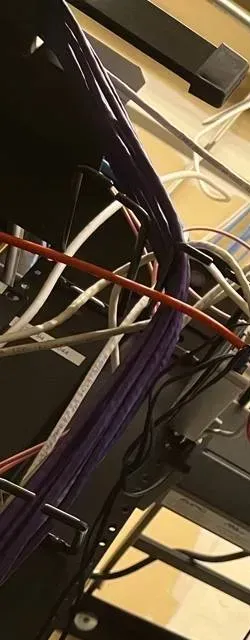
Bensonhurst, Brooklyn door buzzer installation: purple, white and red cable bundles dropping down beside a black equipment rack
A photo from the AESS job library, not taken in Bensonhurst: bundles of purple, white and red cable dropping down beside a black equipment rack. A Bensonhurst two-family never needs a rack, but a 1930s six-story building on 19th Avenue or Bay Parkway often ends up with a small cellar cabinet where the entry system, cameras and internet meet, and labeling each bundle is what lets a technician find the intercom riser years later without tracing it by hand.

The newer housing brings its own version of the same issue. Bensonhurst saw a burst of construction in the early 2000s, with about 1,200 new units approved between 2002 and 2005, and new buildings are still going up; Tower 85 at 2066 85th Street, between 20th and 21st Avenues, is an eleven-apartment building completed in 2022 and opened in 2025, listed with an intercom among its features. Buildings like these arrive with whatever system the developer chose, and in buildings of eight or more apartments built after 1968, that intercom is a legal requirement rather than an amenity. Owners and condo boards in those buildings usually call us when the developer's system turns out to be audio-only, when the directory was never finished, or when nobody can find the admin login.

Finally, Bensonhurst's houses keep changing shape. Researchers reported years ago that many newer immigrant families here lived in houses divided into small apartments, and the city's basement legalization program now gives owners in Community District 11 a legal route for basement and cellar units, provided the unit has at least one door leading outside, a ceiling at least seven feet high and no immediate safety risk, and sits outside the highest-risk flood zones. Every one of those conversions, legal or planned, adds a door and a household to an entry system that was designed for fewer of both. The practical result is that a great deal of buzzer work in Bensonhurst is really entrance planning: deciding where each household's visitors arrive, and making sure each household can answer for itself.

Six Bensonhurst facts that shape a buzzer installation before equipment is chosen

  • The house stock is two-family brick. Neighborhood guides describe Bensonhurst as attached and semi-detached brick rowhouses, many of them two-family homes with a rentable unit, with apartment buildings clustered along 86th Street and New Utrecht Avenue. Most systems call two apartments and must serve two or three doors.
  • Prewar apartment buildings are large. The building at 8210 19th Avenue is listed with 53 apartments on six floors and 24 open housing violations, 21 of them Class C. Buildings of that size need a system planned for the riser, not patched apartment by apartment.
  • Legal multi-family houses have several entrances. A legal four-family at 8418 17th Avenue, built in 1929, was listed with two residential entrances in front plus a separate basement entrance down its own steps. Three doors means three decisions about buttons and releases.
  • Basement legalization covers this district. Brooklyn Community District 11, Bensonhurst and Dyker Heights, is one of the 15 districts in the program created by Local Law 126 of 2024, and HPD's proposed rules give owners until April 20, 2029 to apply. A new legal basement unit needs its own way to be reached by visitors.
  • The neighborhood is large and multilingual. Bensonhurst had 104,934 residents at the 2020 census, 43.9 percent of them Asian, and has long been home to Italian, Chinese, Russian, Arab and Latino families. Directory labels, tenant instructions and app choices have to work for the people actually living in the building.
  • Self-closing doors are inspected without a complaint. HPD treats a public-hall or apartment door that fails to close and latch as an immediately hazardous Class C condition with 14 days to correct, and issued 72,714 self-closing door violations citywide in fiscal year 2025. Any release we add has to leave the door closing on its own.

Where this page applies. It covers Bensonhurst in ZIP codes 11204 and 11214, roughly the blocks around 18th Avenue, also known as Cristoforo Colombo Boulevard, 20th Avenue, Bay Parkway, 86th Street and New Utrecht Avenue, within Brooklyn Community District 11 and the 62nd Precinct, which also serve Bath Beach and Mapleton. For the rest of the borough, see our Brooklyn door buzzer installation page, and for every borough, our NYC door buzzer installation page. Bensonhurst is billed at the same Brooklyn rate as every other Brooklyn neighborhood, with no travel charge.

Repair or Replace in Bensonhurst

Need Repair in Bensonhurst? Bells Dead in Some Apartments, a Release That Hums but Never Opens, or a Door That Swings Free

Plenty of calls that begin with "we need a new buzzer" end with a repair, and plenty of calls that begin with a repair end with a new system. We sort them out with a short set of questions. Is the failure in one spot, such as one handset, one cut pair of wires, a worn-out transformer or a strike that has seized? That is a repair. Is the system still supported, or are the handsets a model nobody makes and the panel a patchwork of three earlier panels? That usually points to replacement within a few years. And does the door close and latch on its own? If it does not, the door comes first, because a perfect buzzer on a door that hangs open protects nobody.

If your street door will not lock right now, or is standing open, say so when you call (347) 934-8335. A diagnosis is the $250 service call booked online, and the $250 counts toward the repair or toward a new system if that turns out to be the better choice. You get our recommendation with the price of each option, and if a part must be ordered, we make sure the door can be locked with a key and opened from inside before we leave.

What We Install

Door Buzzer Installation Services in Bensonhurst

Every service below is priced from the same Brooklyn door buzzer list. The apartment count sets the size of the system, each door sets its own hardware, and the house or building sets how long the cable work takes.

Two-family entry systems

A two-button door station at the stoop, a release on the house door, and an answering station or phone account for the owner's floor and the rental floor, wired so each household hears only its own visitors.

Multi-door houses

Panels and buttons split across a stoop door, a second front entrance and a basement door on legal three- and four-family houses, so a visitor always finds the right button at the right door.

Prewar building replacements

Old bell boards, lobby panels and handsets in 1920s and 1930s buildings replaced with a current system, reusing riser cable only where testing proves it sound, and phased floor by floor where the building needs it.

Video door entry

A camera door station with video monitors or video calls to phones, so tenants and owners see who is at the stoop, the gate or the lobby door before they press release.

Gate and storm-door solutions

Releases for front-yard gates, plans for aluminum storm doors that sit in front of the real door, and panels placed where a visitor can reach them when the outer door is locked.

Shop and back-door buzzers

Controlled doors for avenue businesses: side and rear delivery doors buzzed from inside, upstairs offices reached from a street door, and residential entrances kept separate from the store.

Building Specialists

Door Buzzer Installation for Bensonhurst's Architecture

Nearly every Bensonhurst buzzer job happens in one of six kinds of building. What separates them is not the brand of panel but three practical things: how many households the system has to call, how many doors those households use, and which way a cable can travel from the entrance to each apartment without opening finished rooms.

The semi-detached two-family

One side of a pair of brick houses, often with a shared stoop line or a shared driveway, an owner's floor and a rental floor, and a front door set back behind a storm door.

The attached brick row two-family

A house in a continuous row, with a stoop, a small yard behind a fence at the sidewalk, and two apartments stacked over a cellar or a finished basement.

The legal three- and four-family

Larger houses with two front entrances or a front entrance and a side entrance, plus a basement door, where buttons have to be split between doors.

The house with a basement unit

A two-family with a basement apartment, existing or planned under the legalization program, whose separate outside door needs its own way for visitors to call.

The prewar apartment building

Four- to six-story buildings from the late 1920s and 1930s with dozens of apartments, a lobby, an outer and inner door and a riser that has been patched many times.

The newer condo or rental

Buildings from the early 2000s and the 2020s, often with eight or more apartments, where the intercom is required by law and owners want video or app answering.

The semi-detached two-family: one wall shared, one wall free, and a stoop on the property line

A semi-detached house is attached to its twin on one side and open on the other, usually with a driveway or a side path along the open side. That geography helps a buzzer installation more than people expect. The open side gives a cable route that never touches a finished room: from the cellar, up the outside of the side wall under a neat cover, and into the hall at the top of the stoop. The shared side is the one to leave alone. The party wall belongs to both owners, and the stoop on many pairs is built right up to the line, so a door station fixed to the shared wall or the neighbor's railing is a dispute waiting to happen. We mount on your own door frame, your own reveal or your own side of the stoop wall, and if there is no good spot, on a short post or plate on your property.

Inside, the usual layout is the owner on one floor and a tenant on the other, sharing one street door and one hallway. The system needs two buttons, two answering points and one release, plus a decision about the storm door, which we cover in its own section further down. When the owner's household spans two levels, such as a first-floor apartment with a finished basement, it often makes sense to put an answering station on each of the owner's levels so the bell is heard wherever the family is. That is a second station on the same button, not a second button, and it adds only a little to the job.

Bensonhurst, Brooklyn door buzzer installation: slim dark grey wired doorbell with a camera lens, speaker slots and a round push button
A photo from the AESS job library, not taken in Bensonhurst: a slim dark grey wired doorbell with a camera lens, speaker slots and a round push button. On a Bensonhurst semi-detached house, a station this narrow fits the strip of frame beside the house door behind the storm door, out of the weather, and because it is wired it keeps working through a cold winter that would drain a battery doorbell on an exposed stoop.

The attached brick row two-family: a fence, a stoop and two floors over the cellar

Houses in an attached row share both side walls, so the open-side route of a semi-detached house is not available. The cable has to go up inside. In Bensonhurst row houses the better paths tend to be a closet that stacks from the first floor to the second, the space beside the stair, or the back of the house where a rear wall can carry a cable up to the second-floor kitchen without anyone seeing it from the street. The old bell wire, if any survives, usually runs along the stair hall, and it is worth testing before anyone opens a wall, because two-conductor bell wire in good condition can carry more than people think for a two-apartment audio system.

Many of these houses also have a low fence and gate across the front yard. Most owners leave the gate on a simple latch and put the buzzer on the house door, which is the cheapest arrangement and works well. Owners who keep the gate locked, often because the yard holds bins, bicycles or a parked car, need the door station at the gate instead, a release on the gate itself and a cable under the yard paving. That is a bigger job, and it changes the price, so we ask about the gate in the first call rather than finding it at the walkthrough.

The legal three- and four-family: buttons that follow the doors

Larger Bensonhurst houses often have more than one front entrance. The four-family at 8418 17th Avenue, built in 1929, was described in its sales listing as having two residential entrances in front plus its own steps down to a separate basement entrance. In a house like that, each front door typically leads to its own stair and its own pair of apartments. A single four-button panel at one door would send half the visitors to the wrong stair. The right plan is a panel at each entrance with only the buttons for the apartments behind that door, and a release on each door wired so that apartment 3 can open the door its guests are standing at and nothing else.

The power supply and the head-end equipment can still be shared, which keeps the cost down, and a single wiring plan in the cellar can feed all three doors. What we avoid is the shortcut of putting one panel at the busiest door and telling everyone else's visitors to walk around. That arrangement produces exactly the propped doors and missed deliveries a buzzer is supposed to end. For houses of three or four apartments, a two-door or three-door system still sits in the small-building ranges on our list, with the extra doors reflected inside the range.

The house with a basement unit: a separate door that needs its own call

Basement apartments are part of the housing story in this part of Brooklyn, and Community District 11 is now one of the fifteen districts where the city's legalization program applies. The program's basic conditions, as reported when the district list was published, include at least one door leading outside, a ceiling of at least seven feet and a location outside the highest-risk flood zones, and HPD's proposed rules from November 2025 add work such as sprinklers and flood water sensors, with owners applying before April 20, 2029. None of the program materials we reviewed list an intercom or buzzer among the requirements. Visitors still have to reach whoever lives downstairs, though, and a basement tenant whose guests ring the owner's bell is a source of friction in any house.

The installation answer is a button at the basement's own outside door that calls only the basement unit, with either a release on that door or simply a doorbell and a peephole, depending on what the tenant and owner want. If the basement door opens into the same hallway as the rest of the house, the owner also has to think about whether a release on it lets visitors into shared space. We wire the basement station into the same power supply and system as the rest of the house, so it is one system to maintain, and we leave a spare pair in the cable for the day the arrangement changes again.

The prewar apartment building: a riser that has seen every decade

Bensonhurst's late-1920s and 1930s apartment buildings were built in the period when Brooklyn's builders put up hundreds of apartment houses, many of them six stories, with lobbies scaled to the size of the building and rooms facing a courtyard or the street. Their entry systems were added and replaced over the following decades, so a typical lobby today has a panel from one era, handsets from two or three others and a riser cable that has been spliced on every floor. The tenant complaints recorded for the 19th Avenue building, a bell dead since April and packages taken by outsiders who follow residents in, are the two symptoms we see most often in buildings like it.

Replacing a system in a building of 23 or 53 apartments is planned like a small construction job. We test the existing riser pair by pair, decide whether a two-wire system can reuse it or whether new cable is needed, and set a schedule that keeps the front door locked and working every night of the job. Where an owner cannot replace everything at once, the work can be split: the lobby panel, power supply and release first, then the apartment stations floor by floor, provided the new panel can talk to the old handsets in the meantime or the old and new systems can run side by side. We tell you plainly whether your building's equipment allows that before you commit to a phased plan.

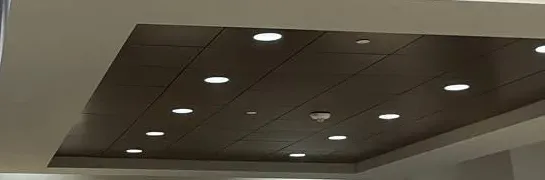
Bensonhurst, Brooklyn door buzzer installation: dark recessed ceiling panel with round downlights and a small round device framed by a lighter ceiling
A photo from the AESS job library, not taken in Bensonhurst: a dark recessed ceiling panel with round downlights and a small round device, framed by a lighter ceiling. Light like this over a Bensonhurst prewar lobby door is what lets a video station show a visitor's face after dark, so we check the lighting at the entrance during the walkthrough and add it to the plan if the old fixture leaves the panel in shadow.

The newer condo or rental: a legal requirement with a developer's choices built in

New York's Multiple Dwelling Law requires an intercommunication system with voice contact and remote release at the self-locking main door of Class A buildings with eight or more apartments erected or converted after January 1, 1968. Most of Bensonhurst's newer buildings fall on that side of the line, which means the intercom is not optional and the owner, or the condo board, has to keep it working. The developer's system is often adequate. Sometimes it is an audio panel in a building whose owners all expected video, a cloud system whose subscription was in the sponsor's name, or a directory that still lists the sales office.

Field Notes

Field Notes: Counting the Doors on a Bensonhurst Front Before Quoting

These notes set out how our technicians approach the houses and buildings typical of Bensonhurst. They describe our standard practice, not an account of any particular address.

Count every opening from the sidewalk in. The technician starts at the sidewalk and walks the path a visitor takes: the yard gate, the storm door, the house door, any inner door, and then any other outside door, at the side, at the back or down at basement level. Each one gets a note: does it latch, who uses it, and does anyone want it released from inside. A Bensonhurst two-family can easily have four openings between the sidewalk and the hallway, and the price depends on which of them the system has to handle.

Test the storm door before the main door. If an aluminum storm door has a working latch or lock, a visitor buzzed through the house door is still stuck outside it. The technician checks whether the storm door's latch is used, whether the owner would be happy leaving it on a closer without a lock, and whether the house door's frame can take a strike with the storm door closed in front of it.

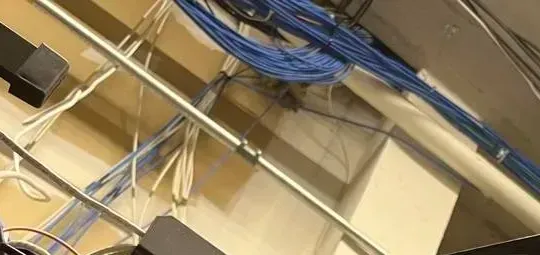
Bensonhurst, Brooklyn door buzzer installation: bundles of blue low-voltage cable laid over a ceiling beam and a metal pipe in an open ceiling
A photo from the AESS job library, not taken in Bensonhurst: bundles of blue low-voltage cable laid over a ceiling beam and a metal pipe in an open ceiling. The cellar of a Bensonhurst two-family looks much like this once a ceiling tile is lifted, with the gas line, water pipes and years of abandoned wire side by side, and the technician traces which cable actually leaves the cellar before deciding whether any of it can serve the new buzzer.

Read the front material. Brick, stucco, stone and aluminum siding each need a different mounting method and a different way of bringing cable through. Brick takes sleeves and anchors well. Stucco cracks if it is drilled carelessly. Siding hides a wall that may be anything underneath. The technician notes which surface the panel would sit on and whether a frame-mounted station would avoid the issue altogether.

Fronts, Gates and Storm Doors

Storm Doors, Yard Gates, Siding and Stucco: Fitting a Buzzer to a Bensonhurst Front

The release is the part of a buzzer system people forget, and in Bensonhurst it is the part that most often decides the plan. The house door on a two-family here is rarely the only thing between a visitor and the hallway. Fronts were updated over the decades with aluminum storm doors, iron or aluminum fences, new siding and new stucco, and every one of those changes affects where a panel can go and what the buzzer can open. Here is how we handle each.

Aluminum storm doors. A storm door in front of the house door is the single most common complication on a Bensonhurst two-family. If the storm door has a latch that catches, a visitor buzzed through the inner door still cannot get in. There are three workable answers. The simplest is to leave the storm door on its closer with the latch disengaged or removed, so it pulls shut against weather but opens with a pull; the house door stays the locked, released door. The second is to replace the storm door's latch with one that never locks. The third, for owners who want both doors locked, is to move the release to the storm door itself, which works only on heavier storm doors with a frame solid enough to carry a strike, and usually means the door station goes outside the storm door where the weather reaches it. We talk through which one suits how you use the front before quoting, because each has a different price and a different feel.

Yard gates. Many Bensonhurst houses have a fence at the sidewalk with a gate on a latch. If the gate is never locked, the buzzer belongs at the house door and the gate is irrelevant. If it is locked, the door station has to move to the gate, the gate needs its own release, which on a light metal gate is usually a gate-rated electric strike or lock with a weatherproof housing, and a cable has to reach the gate post under the paving or along the base of the fence. Some owners want both: the gate released for deliveries during the day and the house door released for guests. That is two releases on one system, and the apartment station can be set up so one button opens the gate and another opens the door.

Aluminum and vinyl siding. Siding hides the wall. Behind it may be the original brick, wood sheathing over framing, or a layer of insulation board, and the only way to know is to look at an edge or a utility penetration. Siding is also the easiest surface to run a hidden cable behind on the outside of a house, because a cable can travel in the space between the siding and the wall and come out at the door frame, provided it is protected where it passes through. What we avoid is screwing a panel straight through the siding, which lets water in and leaves the panel loose. Panels on sided fronts go on a mounting block fixed through to the wall behind, or on the door frame itself.

Stucco. Stucco fronts are common on the side streets here, and stucco cracks when it is drilled with the wrong bit or anchored too close to an edge. We drill stucco with a masonry bit at low speed, keep anchors well back from corners and window returns, and seal every penetration, and where the door frame is wide enough, we mount the station on the frame and avoid the stucco entirely. If a stucco front has already cracked around an old bell button, we tell you before we work near it, so the old damage is not mistaken for ours.

Electric strikes on Bensonhurst doors. Most house doors here are wood or metal-clad doors in wood or steel frames, with a cylinder lock or a lockset and a deadbolt above it. The usual release is an electric strike fitted in the frame where the latch catches, which leaves the lock unchanged: the key works from outside and the handle turns from inside. Fail-secure strikes stay locked if power is lost, and as hardware maker Allegion explains, with an electric strike you can always exit by turning the lever, whether the strike is fail-safe or fail-secure. A deadbolt is the one thing a strike will not release, so if the household throws the deadbolt during the day, the buzzer will not open the door until it is unlocked. We point that out at the walkthrough, because it is the most common reason a new buzzer seems not to work.

Lobbies and Packages

Lobby Doors, Riser Cable and the Package Problem in Bensonhurst Apartment Buildings

In a building with dozens of apartments, a buzzer installation succeeds or fails at the lobby door. The panel can be the best on the market, but if the door behind it drifts open, if residents routinely hold it for anyone walking up, or if a courier who is buzzed in for one apartment can reach every mailbox and package on the floor, tenants will keep losing deliveries. The former resident of the 19th Avenue building who wrote that packages were taken by outsiders who come in when someone holds the door was describing a door problem and a habit problem, not a broken buzzer. A new system can help with both, but only if the installation is planned around them.

Start with the closer. HPD's rules on self-closing doors are strict: a public-hall door that does not close and latch on its own is a Class C immediately hazardous condition with 14 days to correct, and HPD says it does not wait for a complaint before inspecting for it. Acting HPD Commissioner Ahmed Tigani put the point simply when the agency announced its enforcement figures in November 2025: "the last thing you should have to worry about is whether your door will close behind you." A lobby door that closes slowly, or bounces off the latch, gives anyone behind a resident a few seconds to walk in. Before we wire any release to a lobby door, the closer is adjusted or replaced and the latch is set so the door locks every time it swings shut.

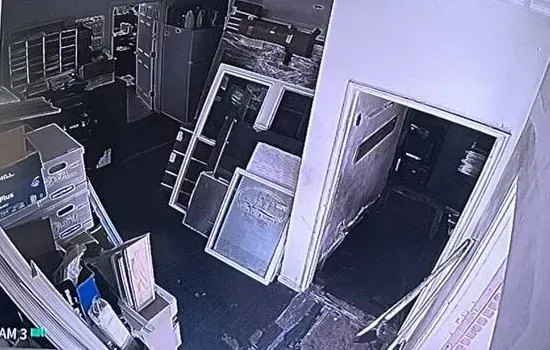
Bensonhurst, Brooklyn door buzzer installation: black-and-white night camera view of a cluttered room with an open doorway into a dark back room
A photo from the AESS job library, not taken in Bensonhurst: a black-and-white night camera view of a cluttered room with an open doorway into a dark back room. Infrared video like this shows shapes and movement but not faces at a distance, which is why we light a Bensonhurst lobby entrance properly instead of relying on night vision when tenants need to recognize the person they are about to let in.

Separate the package path from the apartment path. Where the lobby layout allows it, the best defense against package theft is to give couriers a place to leave deliveries that is not open to everyone who follows a resident inside. In some buildings that is a locked package room on a code that changes, in others a vestibule shelf between the outer and inner doors, and in newer buildings a package locker. The entry system can be set up so couriers reach that space and nothing more. We are honest that none of this stops a resident from holding the door for a stranger; it just makes the building less convenient for the stranger.

Test the riser before promising anything. The riser is the cable that climbs from the lobby to every floor. In Bensonhurst's prewar buildings it has often been spliced at every floor, extended for added apartments and cut during renovations. A two-wire system can reuse a riser in good condition, which saves a great deal of labor, but a riser with bad splices produces misrouted calls and dead stations. Industry reporting has described a co-op that skipped rewiring to save money, got misrouted calls and failed audio and video, and ended up rewiring the whole building anyway at a higher cost. We test every pair end to end and put the result in writing before we price reuse.

Phones, Apps and the Law

Answering the Door From a Phone in Bensonhurst: Family Houses, Absent Owners and the City's Rules

Phone and app answering suits Bensonhurst in several ways. Owners of two-family houses who spend long stretches away from home can answer their own door from wherever they are. Tenants who work long shifts can let a delivery into the vestibule. A building where opening walls in every apartment would be disruptive can get a system that needs cable only at the door and the power supply. And a household where grandparents use a wired handset and grandchildren use an app can have both on the same button.

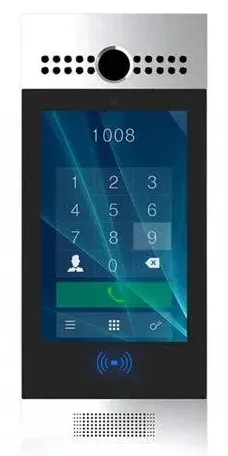
Bensonhurst, Brooklyn door buzzer installation: touchscreen entry panel showing a dial pad with a four-digit apartment code entered, a camera above and a card-reader symbol below
A photo from the AESS job library, not taken in Bensonhurst: a touchscreen entry panel showing a dial pad with a four-digit apartment code entered, a camera above and a card-reader symbol below. Code-based panels like this call apartments by number, which suits a Bensonhurst building where residents read different languages and would rather not have their names on the door, because a number is the same in every language.

For multiple dwellings, the city's Tenant Data Privacy Law, Local Law 63 of 2021, also applies. HPD describes it as covering owners of multiple dwellings that use smart access, or keyless, systems. Owners must obtain express consent in writing or through a mobile application before collecting data; may collect only the minimum authentication and reference data, such as a name, a unit number and a preferred contact method; must destroy authentication data no later than 90 days after it is collected unless it is kept in anonymized form; and may not require a tenant to use a smart access system to enter their own apartment. A two-family house is not a multiple dwelling under the state's definition, which starts at three families living independently, but a legal three- or four-family house is.

In practice that means an owner of a Bensonhurst four-family who adds app entry should keep keys working on every apartment door, collect only what the system needs, and have a written privacy policy ready for tenants. When we install one of these systems, we set it to collect the minimum and give the owner the system's data and retention settings in writing. The policy itself is the owner's to write, and for a larger building it is worth having a lawyer look it over.

Language matters more here than in most of the borough. With a large share of residents born abroad and families who speak Chinese, Russian, Italian, Arabic or Spanish at home, a panel full of English instructions is a barrier. Our approach is practical: directories by unit number or letter, large clear buttons, a short picture-based instruction card at each answering station, and, for app systems, checking before purchase which languages the maker's app actually offers, rather than assuming.

Commercial Door Buzzer Installation

Business Door Buzzer Installation in Bensonhurst

Bensonhurst's commercial buzzer work happens on its shopping streets, where family businesses, restaurants, offices and clinics share buildings with apartments. Most jobs are one of three things: a side or rear door that staff need to open for deliveries without walking away from the counter, an upstairs business reached through a street door that must stay locked, or a residential entrance that has to be kept apart from the store beside it.

18th Avenue

Co-named Cristoforo Colombo Boulevard and long the heart of Bensonhurst's Little Italy, lined with family-run pork stores, bakeries and cafes, many with apartments or offices upstairs reached through a door beside the shop.

86th Street

One of the busiest shopping streets in southern Brooklyn, running under the elevated D train, with storefronts at grade and residential doors squeezed between them.

Bay Parkway

A wide commercial street at the center of the neighborhood's Chinese business district; the corner where it meets 86th Street was co-named Canton Avenue in October 2026.

20th Avenue

Shops, offices and the Parkville Station post office building, with mixed-use buildings where upstairs tenants share a street wall with the store below.

New Utrecht Avenue

One of the two streets where Bensonhurst's apartment buildings cluster, mixed with groceries and small stores, so lobby doors often sit a few steps from busy shop entrances.

17th Avenue and Bath Avenue

Smaller groceries, service businesses and offices on the western side, close to the 62nd Precinct at 1925 Bath Avenue and the Community Board 11 office at 2214 Bath Avenue.

The commonest request from an avenue business is a buzzer on the side or back door. Bakeries and food shops take early deliveries, and the driver arrives when one person is running the front. A door station at the delivery door, a release on that door and a monitor or phone call inside lets staff see the driver and open the door without leaving the counter, while the door stays locked the rest of the day. The second request is from upstairs businesses: offices, clinics, tutoring centers and studios one flight up, whose clients come through a street door that is shared with apartments or that must not be left unlocked. Here the system calls the business's reception, which releases the street door, and the business can set the system so only its own staff can open that door during business hours.

Business doors work harder than house doors, and the hardware has to match. A door that is opened dozens of times a day needs a heavier strike, a closer adjusted to pull it shut every time, and a station rated for constant use. Rear doors also need thought about exit. Any locked door that people may leave through must let them out freely without a key or special knowledge, which shapes whether a strike or a magnetic lock is used and whether a push-to-exit button is needed.

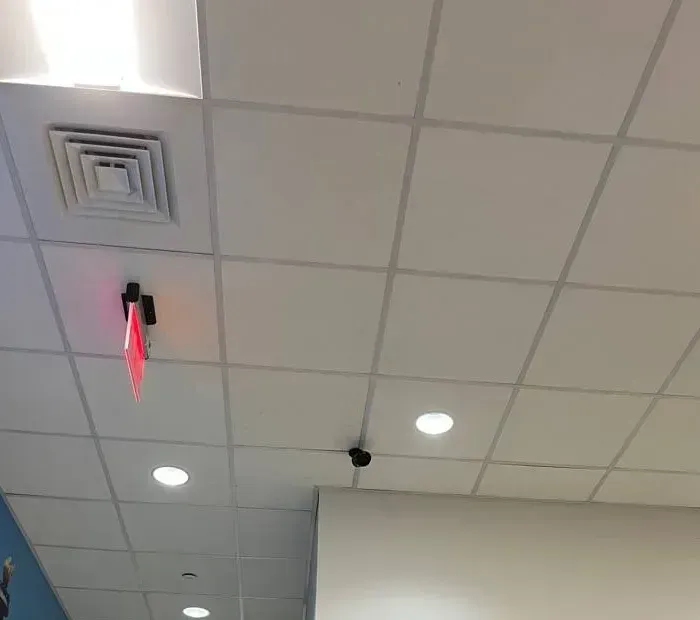
Bensonhurst, Brooklyn business door buzzer installation: drop ceiling with a lit red exit sign, an air diffuser, round recessed lights and a small black camera
A photo from the AESS job library, not taken in Bensonhurst: a drop ceiling with a lit red exit sign, an air diffuser, round recessed lights and a small black camera. The back rooms of 18th Avenue and 86th Street shops often look like this, and the exit sign is the reminder that a buzzer-controlled rear door must always let staff leave freely, which decides the release hardware long before the panel is chosen.

Back doors are also where break-ins happen. The Brooklyn District Attorney's office described a burglary series between August 2022 and January 2023 that hit a grocery on 17th Avenue, a grocery on New Utrecht Avenue and a vape shop on 18th Avenue, along with homes on 76th Street and later 72nd Street; detectives from the 62nd Precinct used phone location data and enhanced video, and the defendant was sentenced to ten years in May 2024. A buzzer does not stop a determined burglar, but a rear door that stays locked because staff no longer prop it for deliveries is a smaller target, and a door station with a camera adds a record of who was let in. If you want a separate camera on the rear door, it goes in on the same visit, and combining the two saves most customers $200 to $400 in labor.

Compliance points for Bensonhurst entry installations

  • Multiple Dwelling Law §50-a. Class A multiple dwellings with eight or more apartments, erected or converted after January 1, 1968, must have a self-locking main entrance door and an intercommunication system with voice contact and remote release. Older buildings must install them if tenants in a majority of apartments request or consent in writing, with work started within 90 days and finished within six months.
  • Multiple dwelling definition. Under the Multiple Dwelling Law, a multiple dwelling is a building occupied by three or more families living independently, so a legal three- or four-family house is covered by multiple-dwelling rules that a two-family is not.
  • Self-closing doors. HPD classes a failed self-closing door as an immediately hazardous Class C condition with 14 days to correct, and says it inspects for self-closing doors without waiting for a complaint. Every release we add leaves the door closing and latching on its own.
  • Tenant Data Privacy Law (Local Law 63 of 2021). Keyless entry in multiple dwellings needs express consent, collects only minimal listed data, deletes authentication data within 90 days unless anonymized, and cannot be required for entry to a tenant's own apartment.
  • Egress and electrified locks. Under the building code, electrically locked egress doors with sensor release need an inside sensor, a manual push-to-exit device, release on power loss and release on fire alarm or sprinkler activation; fire-rated doors take fail-secure strikes.
  • Accessible reach. The 2010 ADA Standards set a high forward reach of 48 inches maximum and a low forward reach of 15 inches minimum for operable parts. Business entrances and new panels are mounted within that range wherever the front allows.
  • Low-voltage wiring and permits. NYC Administrative Code §28-105.4.7 exempts most signaling and communication wiring under 50 volts from the electrical permit requirement when done by a licensed electrician or qualified person, with exceptions for life-safety systems. A new 120-volt circuit or outlet for the power supply is electrical work for a licensed electrician.
Your Questions Answered

Door Buzzer Installation in Bensonhurst: Questions Answered

These are the questions Bensonhurst owners, tenants, boards and shopkeepers raise when a new entry system is being planned: houses with more doors than apartments, fronts that resist drilling, basements that are becoming legal units, big prewar buildings and the businesses on the avenues. Each is answered in full here and not repeated in the FAQ below.

Two-family and multi-family houses

Our semi-detached two-family shares its stoop wall with the house next door. Can the door station be mounted on that shared wall?

We would rather not, and in most cases we do not need to. The party wall and any stoop wall or railing built on the property line belong to both owners, so fixing a panel or running cable through them without your neighbor's agreement invites a dispute, and if the neighbor later rebuilds their side, your panel goes with it. On a semi-detached pair there is almost always a better spot on your own side: the door frame, the reveal beside the door inside the storm door, or the open side wall where your driveway or path runs. That open side is also the easiest cable route from the cellar, up the outside wall under a neat cover and in at the hall, so the installation is usually simpler, not harder, for staying off the shared wall. If both owners of a pair want buzzers, we are happy to do both houses on the same visit, each on its own side.

The owner's apartment in our two-family covers the first floor and the finished basement. Can one doorbell button ring a station on both levels?

Yes. One button can call more than one answering station, so the owner's button at the stoop can ring a handset or monitor on the first floor and a second one in the basement family room, while the tenant's button rings only upstairs. Most audio and video systems support several stations per apartment, and phone answering can add every family member's phone to the same call. The extra station needs its own short cable run, usually down through the floor near the stair or along the cellar ceiling, and on our Brooklyn list it moves a two-family job up a little within the $400 to $900 audio range or the $700 to $1,800 video range rather than into a different one. We ask where the family actually spends its evenings before choosing where each station goes.

We own a legal four-family with two front entrances, each leading to two apartments, and a separate basement door. How should the buttons be divided?

Put the buttons where the visitors for those apartments will actually stand. Each front entrance gets a panel listing only the two apartments behind that door, with a release on that door. The basement door, if it serves a unit, gets its own button calling only that unit. All three can share one power supply and one wiring plan in the cellar, so it remains one system to maintain. A house of this type was listed for sale at 8418 17th Avenue, a 1929 legal four-family with two residential entrances in front plus a basement entrance down its own steps, and the layout is common enough here that we plan for it from the first call. What we steer owners away from is a single panel for every apartment at one door, which sends half the visitors to the wrong stair and ends with doors being propped.

We are applying to legalize our basement apartment through the city's program. Does the basement unit have to get its own buzzer?

Nothing we have found in the program says so. Community District 11 is one of the districts the program covers, and the conditions reported for it include at least one door leading outside, a ceiling of at least seven feet, no immediate safety risk and a location outside the highest-risk flood zones; HPD's proposed rules add work such as sprinklers and flood water sensors and an application deadline of April 20, 2029. An intercom is not listed in any of that material. The state's eight-apartment intercom rule will not usually reach a two-family with a basement unit either. Your architect or filing representative has the final word on what your plans need. Practically, though, a basement tenant needs a way to be called, and the cheapest time to add a button at the basement door is while walls and ceilings are already open for the legalization work, so tell us the schedule and we will fit our cable in with it.

Fronts, gates and storm doors

There is an aluminum storm door in front of our house door. If the buzzer releases the house door, how does a visitor get past the storm door?

Only if the storm door is not latched. The cheapest and most common answer is to leave the storm door on its closer and disengage or remove its latch, so it pulls shut against wind and rain but opens with a pull, while the house door behind it stays the locked door the buzzer releases. Some owners replace the storm door's handle with a non-locking one for the same effect. If you want both doors locked, the release has to move to the storm door, which only works on a heavy storm door with a frame strong enough for a strike, and the door station then has to sit outside the storm door in the weather. We check the storm door at the walkthrough and price the option you choose, so you are not surprised on installation day by a visitor stuck between two doors.

Our front-yard gate stays locked because of the bins and the car. Can the buzzer open the gate as well as the front door?

Yes, as two releases on one system. The door station moves to the gate, where visitors arrive, and the gate gets a release rated for outdoor use, usually a weatherproof electric strike or lock sized for a light metal gate. A cable runs from the house to the gate post, either under the yard paving in a protected sleeve or along the base of the fence. Inside, the answering station can open the gate alone, for a courier leaving a parcel in the yard, or the gate and then the house door, for a guest. Because a locked gate means the house door is no longer the first barrier, some owners then leave the house door on a key and release only the gate. The gate work adds cable, trenching or channeling and a second release, so a gate job usually sits higher in its range on our Brooklyn list, and we price it at the walkthrough once we see the gate and its hinge side.

Our two-family is covered in aluminum siding. Can the buzzer cable run outside, behind the siding, instead of through the rooms?

Often yes, and it is one of the tidier ways to wire a Bensonhurst house. The space between the siding and the wall behind it can carry a low-voltage cable from the cellar up to the door frame, or up to a second-floor station, without touching a finished room. The cable has to be rated for the conditions, protected where it enters and leaves the wall, and kept away from any electrical service entrance, and the siding panels have to come off and go back cleanly, which works on most aluminum and vinyl siding in good condition. What we will not do is screw a door station straight through the siding, because that lets water in and leaves the panel loose; the panel goes on a mounting block fixed to the wall behind or on the door frame. If the siding is brittle or patched, we tell you before we touch it.

Apartment buildings

Our 1930s building has more than fifty apartments. Can the entry system be replaced in stages instead of all at once?

Sometimes, and we will tell you up front whether yours is one of those times. A phased replacement usually starts with the lobby: the door station, the power supply, the release and the closer, which fixes the part every resident uses. The apartment stations then follow floor by floor. That works only if the new panel can still call the old handsets during the changeover, or if the old and new systems can run side by side on separate cable until the last floor is done. Some two-wire systems allow that; some older systems simply cannot talk to anything new. The riser test decides it. Large buildings start around $2,500 on our Brooklyn list and can pass $10,000 for full video or cloud, and a phased plan spreads that over time without changing the total much. The one thing we never phase is the front door's locking, which has to work every night.

People who do not live here walk in behind residents, and packages disappear from our lobby. Is there anything the installation itself can do?

It can make the lobby harder to use as a pickup point, though it cannot stop a resident from holding the door. A former tenant of a 53-apartment building on 19th Avenue put the problem plainly in a review: "The packages get stolen by outsiders who come in when you hold the door open." Three installation choices help. First, a closer adjusted so the door shuts and latches quickly, leaving no gap for someone trailing behind. Second, video at the panel, so residents see who they are releasing, and ideally a recorded image of each call. Third, a separate place for deliveries, such as a locked package room on a code or a shelf between the outer and inner doors, so couriers do not need to reach the inner lobby at all. A short notice to tenants about not holding the door finishes the job.

Con Edison cut voltage across southern Brooklyn during feeder repairs in 2020. Is a battery backup on a new buzzer power supply worth paying for here?

For most buildings, yes. In July 2020 Con Edison asked residents of southern Brooklyn neighborhoods including Bensonhurst to cut their power use during repairs and reduced voltage by 8 percent, with more than 96,000 residents affected. Low-voltage entry systems draw little power, and a supply with a battery can keep the panel, the apartment stations and a fail-secure strike working through a short outage or a dip, so residents can still answer and release the door. Without a battery, a fail-secure strike stays locked when power fails, which keeps the building secure, while residents still get in with keys and can always walk out by turning the handle. The battery adds little to the cost of a system and is standard in our multi-apartment installs. For a two-family, it is a choice we offer rather than insist on.

Businesses

Our bakery on 18th Avenue takes deliveries at a side door before we open. Can the driver be buzzed in from the kitchen?

Yes. A door station at the side door, a release on that door and a monitor or phone call in the kitchen let the person on shift see the driver and open the door without walking away from the ovens. The door locks again as soon as it closes, so it does not sit propped while the driver makes three trips. Business doors open many times a day, so we fit a heavier strike, adjust or replace the closer, and choose a station rated for constant use. Because people may also leave through that door, it must always open freely from inside, which rules out any hardware that would trap staff. If you would like a camera on the side door as well, it is installed on the same visit, which saves most customers $200 to $400 in labor, and the job is priced on the same Brooklyn list as residential work.
Equipment

Types of Door Buzzer Systems We Install

By default we quote a reliable non-branded system, and we install named brands when an owner asks; the intercom makers we work with include Aiphone, ButterflyMX, 2N, Akuvox, Comelit and DoorBird. These are the equipment types that fit Bensonhurst's houses, buildings and shops.

Two-button audio systems

A two-button panel at the stoop and a talk-and-release handset on each floor. The lowest-cost choice for a two-family, it needs no internet and keeps working for years with almost no attention.

Multi-door house systems

Several small panels, one per entrance, sharing one power supply, for legal three- and four-family houses and houses with a basement or side door.

Two-wire multi-tenant systems

Systems such as Aiphone's GT series, built for retrofits and able to use existing wire in good condition, for 1930s buildings whose riser tests sound.

Video door stations and monitors

A camera panel at the door or gate with a video monitor in each unit, so residents see the stoop, the yard or the lobby before releasing anything.

Phone, app and cloud panels

Panels that call phones over the internet or a cellular line, with a directory the owner manages remotely, for owners who are often away and buildings where new cable to every unit is impractical.

Releases, closers and power

Fail-secure electric strikes, weatherproof gate releases, storm-door latch changes, door closers set to latch every time, and power supplies with battery backup.

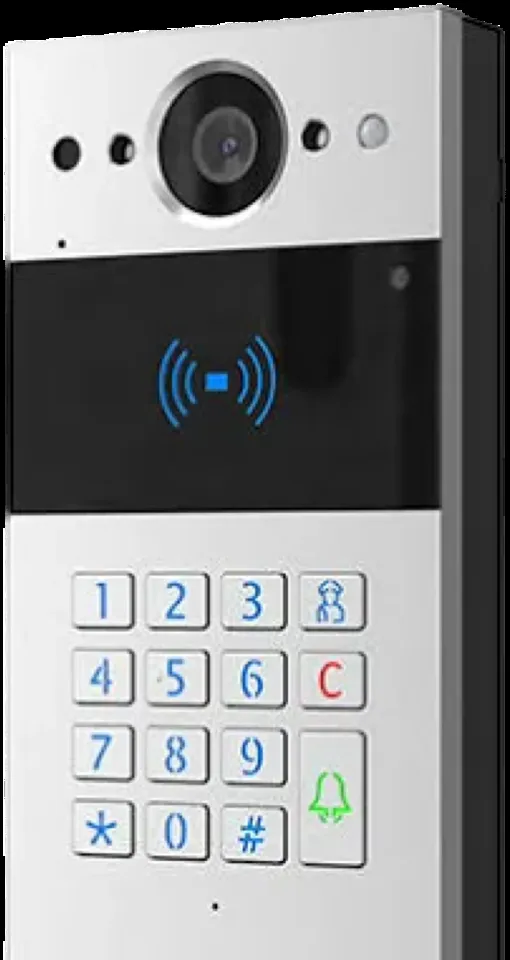
Bensonhurst, Brooklyn door buzzer installation: silver and black keypad door station with a camera lens at the top, a blue card-reader symbol, a numeric keypad and a green bell key
A photo from the AESS job library, not taken in Bensonhurst: a silver and black keypad door station with a camera lens at the top, a blue card-reader symbol, a numeric keypad and a green bell key. A combined station like this suits a Bensonhurst apartment building or an 18th Avenue shop's side door, because it puts visitor calls, staff codes and card entry on one panel at one opening instead of three separate devices on the brick.

Audio, video or phone answering for a Bensonhurst two-family

The table compares the three main choices for the property most common here, a two-family house with one stoop door. None is right for every house; it depends on who lives there, how often the owner is away and how the doors are used.

What mattersAudio handsetsVideo monitorsPhone or app
Cable to each floorYesYesOnly door to power supply
Works when the internet is downYesYes, inside the houseOnly with a cellular line
See who is at the stoop or gateNoYesYes, on most systems
Answer while away from homeNoOnly with a phone add-onYes
Easy for a resident without a smartphoneYesYesNeeds a wired station too
Recurring feesNoneNoneOften a subscription
Brooklyn list range, two-family$400–$900$700–$1,800Quoted at walkthrough
AI Overview Reality Check

What AI Gets Wrong About Door Buzzer Installation in Bensonhurst

The claims below turn up in generic online answers, national cost guides such as HomeAdvisor and Angi, and vendor blogs. Each is paraphrased, then checked against Bensonhurst's houses, buildings and records.

"Intercom installation averages about $2,500"

HomeAdvisor gives a national average of $2,500, inside a range of $1,500 to $15,000, and vendor guides for small buildings quote replacements from roughly $1,500 to $2,500 or $2,200 to $5,000 and up.

Those figures blend large buildings into the average. Bensonhurst's most common property is a two-family house, and an audio system for one is $400 to $900 on our Brooklyn list, with video at $700 to $1,800. The same ButterflyMX guide admits there is no reliable universal price for a small-building intercom.

We price the property in front of us, from photos and a walkthrough, and write the figure down before anything is ordered.

"A buzzer opens the front door"

Simple explanations assume one door: press the button, the door opens.

On a Bensonhurst two-family the visitor may face a yard gate, a storm door and a house door, and on a legal four-family there may be two front doors and a basement door. A release on the wrong one leaves the visitor stuck at the next.

We count every opening between the sidewalk and the hallway and decide, with the owner, which ones the system releases.

"Mount the panel next to the door"

Installation guides suggest fixing the panel to the wall beside the entrance.

On semi-detached and attached houses, the wall beside the door is often a party wall or a stoop wall on the property line, and on stucco or sided fronts a careless fixing cracks the finish or lets water in.

We mount on the owner's own frame or wall, use the method that suits brick, stucco or siding, and keep calls within the accessible reach range.

"Small buildings are not required to have an intercom"

Summaries of New York's intercom rule often stop at the eight-apartment threshold.

The rule in Multiple Dwelling Law §50-a applies to buildings of eight or more apartments erected or converted after 1968, but older buildings must install a self-locking door and intercom when tenants in a majority of apartments request it in writing, and a building with three or more households is a multiple dwelling for other purposes, including the Tenant Data Privacy Law and HPD's self-closing door rules.

We tell owners which rules reach their building, and we leave every door we touch closing and latching on its own.

"The old wiring can carry the new system"

Upgrade guides often promise that a new system can use the building's existing wires.

In Bensonhurst's prewar buildings the riser has frequently been spliced on every floor, and a co-op that skipped rewiring, as reported in industry press, got misrouted calls and failed audio and video before rewiring anyway at higher cost.

We test every pair end to end and reuse only what passes, in writing, before the price is set.

"App entry is a simple upgrade for the landlord"

Product pages present phone and app entry as a switch an owner flips.

In a legal three- or four-family house or an apartment building, the Tenant Data Privacy Law requires consent, limits the data collected, sets a 90-day deletion rule for authentication data and bars requiring a smart system to enter a tenant's own apartment. And an app that depends on a relative's old account or a dead internet line is a broken intercom.

We set app systems up in the owner's name, collect the minimum, keep keys working and keep a wired fallback where residents need one.

"Wireless is the easy option"

Cost guides recommend wireless systems for anyone who wants to avoid running wire or to do it themselves.

Radio between floors of a brick house is not always dependable, battery stations on an exposed stoop drain in cold weather, and a wireless doorbell is not built to release a strike or a gate. In a multi-family house, the owner also has to keep the system working for every tenant.

We use wiring routes that avoid finished rooms, such as the open side wall of a semi-detached house or the space behind siding, and recommend wireless links only after testing them on site.

Speak to a Technician Before You Order a Panel

If you are not sure which doors your system should cover or what your storm door or gate can take, ask before you buy anything. Call now at (347) 934-8335, send a fast quote request, or send photos of each door to a tech on WhatsApp. Estimates are booked within two hours of your request during working hours.

Get In Touch

Request a Free Quote

Give us the street and cross street, the kind of property, the number of apartments and the doors and gates involved. A technician will call back with the range for the Bensonhurst address, or you can call (347) 934-8335 now.

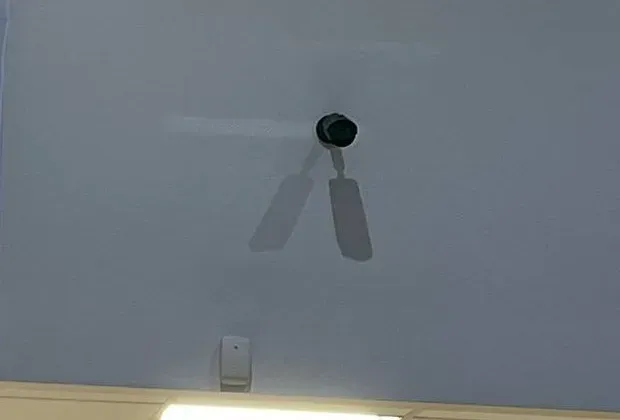
Bensonhurst, Brooklyn door buzzer installation: small black camera mounted high on a pale wall casting two shadows, with a small white wall device below
A photo from the AESS job library, not taken in Bensonhurst: a small black camera mounted high on a pale wall, casting two shadows, with a small white wall device below it. Many Bensonhurst owners add a camera like this inside the vestibule or over the yard when the buzzer goes in; tick it in your message and we price both on one visit.

✅
Request Sent!
Thank you. A technician will call you about the Bensonhurst address, usually within two hours during working hours.
How It Works

Our Installation Process

1. Photos and a first call

Send every outside door, the frame, the lock, any old panel and the cellar, with the number of apartments. You get a range from the Brooklyn list.

2. Walkthrough

A technician checks how each door closes and latches, the front material, any yard gate, every answering spot and the cable route.

3. Written plan and price

System type, panel positions, releases, cable route, power location and price, approved by you before anything is ordered.

4. Door and release first

The release is fitted and the door, storm door or gate is set to close and latch on its own before wiring is connected.

5. Cable, panel and stations

Cable follows the agreed route, the door station goes up, and each apartment station or app account is installed and labeled.

6. Power and testing

Power supply and battery backup connected, and every apartment tested for call, talk, video and release from each door it uses.

7. Hand-over

Wiring map, directory, admin logins in the owner's name and a short tenant guide, with residents shown how to answer and release.

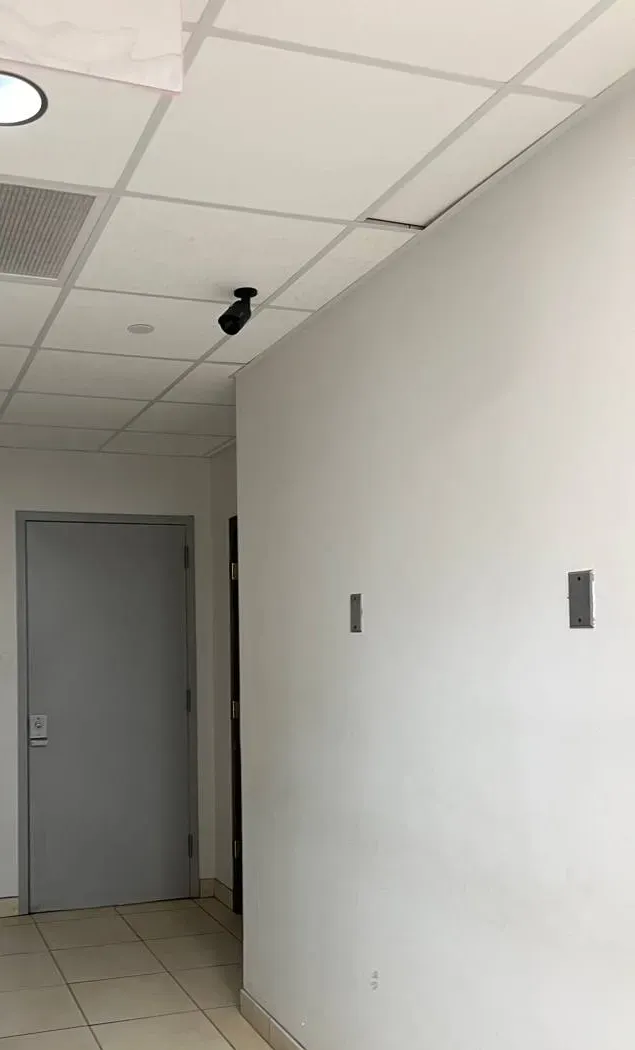
Bensonhurst, Brooklyn door buzzer installation: tiled corridor with white walls and small wall plates ending at a grey steel door with a lever handle under a drop ceiling with a small camera
A photo from the AESS job library, not taken in Bensonhurst: a tiled corridor with white walls and small wall plates, ending at a grey steel door with a lever handle under a drop ceiling with a small camera. Rear and cellar doors in Bensonhurst apartment buildings and avenue shops are often steel like this, and step four applies to them as much as to a front door: a lever door that does not close and latch by itself is fixed before anything is wired to it.
Coverage Area

Door Buzzer Installation Near Bensonhurst's Landmarks

New Utrecht Reformed Church

The congregation dates to 1677, and the church grounds sit among the rows of brick two-family houses typical of the neighborhood.

New Utrecht Library

The Brooklyn Public Library branch at 1743 86th Street, on the shopping street under the elevated D line.

Parkville Station Post Office

The post office at 6618 20th Avenue, listed on the National Register of Historic Places in 1988, on a street of shops with apartments above.

Milestone Park

A small park in the heart of the neighborhood, surrounded by blocks of attached and semi-detached houses.

Bensonhurst Park

The waterfront park at the southern edge, near the larger apartment buildings and newer condos along the Bay Parkway end of the neighborhood.

New Utrecht High School

The neighborhood's long-standing public high school, among streets of two-family houses and prewar apartment buildings.

We also serve Bath Beach, Bay Ridge, Dyker Heights, Borough Park, Mapleton and Gravesend, all at the same Brooklyn rate. See our Bath Beach door buzzer installation and Bay Ridge door buzzer installation pages for those neighborhoods, or our door buzzer installation in Brooklyn page for the whole borough.

Pricing

Door Buzzer Installation Cost in Bensonhurst

Bensonhurst is billed at our Brooklyn rate, with no travel premium. The ranges below are installed prices covering equipment, release hardware, power supply, cable and labor. Where a job falls inside its range depends on the number of doors and gates, the front material, the cable route and the choice of audio, video or phone answering. The figure for your property is set in writing after the walkthrough and changes only if you change the scope.

ItemBrooklyn price
Audio buzzer system, small building (most two- to four-family houses)$400–$900 installed
Video buzzer system, house or small building$700–$1,800 installed
Apartment building system, by door and unit countFrom about $2,500; large video or cloud systems $10,000+
Diagnostic service call, booked online$250, applied toward the work
Estimate for a new system from photos or a walkthroughFree
Entrance, yard or rear-door cameras installed with the buzzerPriced per camera; most customers save $200–$400 in labor by combining
New 120-volt circuit or outlet, if neededBy a licensed electrician, quoted separately

Four things most often move a Bensonhurst job toward the top of its range. The first is extra openings: a locked yard gate that needs its own release and a cable to the post, or a basement or second front door with its own panel. The second is a front that needs care, such as stucco that must be drilled slowly and sealed or siding that has to come off and go back. The third is a cable route with no open side wall, stacked closet or usable old wire, which means more time fishing cable through brick and plaster. The fourth is video at every station rather than audio. What keeps a job toward the bottom is old cable that tests sound, a straightforward wooden or metal frame, a storm door that can simply be left unlatched, and audio handsets with phone answering added only for the people who want it.

Full terms — including 50% deposit, one-year parts-only warranty on AESS-supplied products, and the late-fee schedule — are set out in the service agreement.
Shop Our Systems

Door Buzzer Installation Packages & Pricing

Three typical Bensonhurst jobs, each priced inside the matching range on our Brooklyn list. The exact figure for your property comes from the walkthrough.

Two-family audio: $400–$900

A two-button panel at the stoop door, a fail-secure strike in the frame, a plan for the storm door, a backed-up power supply in the cellar and a talk-and-release handset for each household.

House video: $700–$1,800

A video door station at the house door or the yard gate, monitors on the floors each household uses, phone answering for whoever is away, and the releases the owner chooses.

Apartment building: from about $2,500

A directory or code panel in the lobby, a tested or new riser to every floor, video or audio stations by unit, a closer set to latch every time and optional card or fob entry.

Bring your own equipment. If you have already bought a door station, handsets or a video kit, we can install it as long as it suits the house and the doors. Labor for customer-supplied equipment is quoted flat at the walkthrough, and the release hardware and cable are priced from the same list. Customer-supplied equipment carries the manufacturer's warranty rather than ours, so we check the model with you before you book.

Complete Services

Every Door Buzzer Service in Bensonhurst

New systems

First buzzers, replacements, video and phone answering. Request a quote

Doors and gates

Strikes, gate releases, storm-door changes and closers set to latch. Ask about your front

Across Brooklyn

The same list in every neighborhood. Brooklyn door buzzer installation

Citywide

Houses and buildings in every borough. NYC door buzzer installation

FAQ

Bensonhurst Door Buzzer Installation FAQ

Which streets and ZIP codes does this Bensonhurst page cover?
+

Bensonhurst in ZIP codes 11204 and 11214, roughly the blocks around 18th Avenue, 20th Avenue, Bay Parkway, 86th Street and New Utrecht Avenue. Neighboring Bath Beach, Dyker Heights, Mapleton and Borough Park are served at the same Brooklyn rate.

Can you price a buzzer job from a video call instead of a visit?
+

Often, yes, for a range. A short video call or a set of photos showing each door, the frame, the lock, the old panel and the cellar lets us give a range from the Brooklyn list. The final fixed price still follows a walkthrough, because cable routes and old wire have to be checked in person.

Do you supply and fit the electric strike, or do we also need a locksmith?
+

We supply and fit the strike as part of the installation, matched to your existing lock and frame. A locksmith is only needed if the lock itself is broken, the cylinder needs rekeying or you want a new lockset, and we tell you at the walkthrough if that applies.

Can a release go on a steel door with a mortise lock?
+

Yes. Steel doors in steel frames, common on building lobbies and shop rear doors, take electric strikes made for mortise locks, and the frame is cut and reinforced to suit. Some older mortise locks need an adjustment first so the latch meets the strike cleanly.

Can the door station be chosen in a finish that suits our door and brick?
+

Usually. Door stations come in several finishes, commonly black, silver, bronze or stainless, and in flush or surface versions. We bring finish options to the walkthrough so the panel suits the door, the frame and the brick or stucco around it.

Our house has a stucco front. Will drilling for the panel crack it?
+

Not when it is done carefully. We drill stucco with a masonry bit at low speed, keep anchors back from edges and corners, and seal every hole. Where the door frame is wide enough, the station goes on the frame and the stucco is not touched at all. Existing cracks are pointed out before work starts.

Do I have to stay home for the entire installation?
+

Someone with keys should be there at the start and at the end, and every apartment has to be reachable for a few minutes so its station can be fitted and tested. In between, the crew works at the door, in the cellar and along the cable route, so you do not need to stand by.

Can the door camera be watched on a television?
+

On some systems. Certain video door stations can show their picture on a smart TV through the maker's app or a network video feed, though answering and releasing are still done from a monitor or phone. We check what the chosen model supports before you buy, rather than promising it.

Should a cloud panel share the building's internet or get its own connection?
+

A dedicated connection, or a cellular module, is more reliable, because a shared line can be switched off or changed by whoever pays for it. In a small house sharing the owner's internet is usually fine, as long as the owner knows the panel depends on it.

Can the buzzer release work with our burglar alarm so it does not set off the siren?
+

It can be planned that way. The door contact on a released door can be placed on an entry delay, or a code or card at the door can disarm the alarm when it releases. We install alarms as well, so we coordinate both systems on one visit where the owner wants them linked.

Will you adjust or replace the door closer when the buzzer goes in?
+

Yes. A release is only useful on a door that pulls itself shut and latches every time, so we adjust the existing closer or fit a new one as part of the job, and tell you in the quote if a new closer is included.

Can our old doorbell chime stay connected alongside the new system?
+

Often it can, if the chime is sound and the new system offers an output for it, which many audio systems do. Some households like keeping the familiar chime in the hall as well as the new station. We test the old chime before promising to reuse it.

More Door Buzzer Installation near Bensonhurst

Door Buzzer Installation Brooklyn NY | Brownstones & Condos · Door Buzzer Installation NYC | Apartment & Building Entry · Door Buzzer Installation Manhattan NY | Apartments & Co-ops · Door Buzzer Installation Queens NY | Co-ops & Apartments · Door Buzzer Installation Bronx NY | Co-ops & Apartments · Door Buzzer Installation Staten Island NY | Homes & Apts · Door Buzzer Installation Long Island NY | Nassau & Suffolk · Door Buzzer Installation Hudson Valley NY | Apartments · Door Buzzer Installation Nassau County NY | Homes & Co-ops · Door Buzzer Installation Suffolk County NY | Homes · Door Buzzer Installation Westchester County NY | Co-ops · Door Buzzer Installation Rockland County NY | Homes & Apts · Door Buzzer Installation Orange County NY | Homes & Farms · Door Buzzer Installation Putnam County NY | Lake Homes · Door Buzzer Installation Dutchess County NY | Homes · Door Buzzer Installation Ulster County NY | Kingston

Door Buzzer Installation Bath Beach Brooklyn NY · Door Buzzer Installation Bay Ridge Brooklyn NY · Door Buzzer Installation Bedford-Stuyvesant Brooklyn NY · Door Buzzer Installation Bergen Beach Brooklyn NY · Door Buzzer Installation Beverley Square Brooklyn NY · Door Buzzer Installation Brooklyn NY | Brownstones & Condos

Other services in Bensonhurst

Intercom Installation Bensonhurst Brooklyn NY · Security Camera Installation Bensonhurst Brooklyn NY · Alarm Installation Bensonhurst Brooklyn NY · Structured Cabling Installation Bensonhurst Brooklyn NY · Door Buzzer Repair Bensonhurst Brooklyn NY · TV Installation Bensonhurst Brooklyn NY · Fire Alarm Installation Bensonhurst Brooklyn NY · Access Control Installation Bensonhurst Brooklyn NY

Ready to Let Every Bensonhurst Household Answer Its Own Door?

Send photos of each outside door, the storm door, any gate and the old panel, with your street, cross street and number of apartments, and we will tell you which doors the system should cover and where the job sits on the Brooklyn list. Call or text (347) 934-8335, message us on WhatsApp, or use the request form. Licensed under NYS license #12000287431, rated 4.7★ across 201 Google Reviews, owner-operated since 2002.