Desk-to-Apartment Calling Β· Townhouse Door Stations Β· Garage and Service Doors Β· Suite Buzzers Β· Brooklyn Rate
Door buzzer installation in Cadman Plaza is rarely the plain lobby-panel job people picture. The blocks west of the park are dominated by the late-1960s and early-1970s co-op towers of the old urban renewal plan, with doormen at the front desk, duplex townhouses at their base that open straight onto public walkways, garages under the plazas and a strip of shops along Pineapple Walk. East and south of the park are the courthouses, Borough Hall and the Court Street office towers, where the buzzer work is suite doors and reception desks. This page explains what an entry system has to do in each of those places, what the city requires, how we plan the cable in poured-concrete buildings, and what each kind of job costs on our Brooklyn list.
Reviewed and updated November 11, 2026, against NYC 311 and HPD Open Data for intercom and buzzer complaints and violations in ZIP 11201 (pulled November 2026); HPD's pages on self-closing doors and on the Tenant Data Privacy Law; New York's Multiple Dwelling Law Β§50-a; the Landmarks Preservation Commission's Permit Guidebook chapter on health and safety equipment; Brownstoner's 2012 report on the Whitman Close townhouses; THE CITY's April 2024 report on the Cadman Towers conversion; CityRealty building records for 140 Cadman Plaza West, 75 Henry Street and One Clinton; a 2025 Kings County Supreme Court decision describing the doorman staffing at 140 Cadman Plaza West; Habitat Magazine's reporting on co-op intercom replacements, virtual doormen and automatic entrance doors; Security Sales on a Park Slope co-op's video intercom; Brick Underground's NYC intercom guide; the HomeAdvisor and Swiftlane cost guides; Aiphone and ButterflyMX technical guides; and the 2010 ADA Standards. Β· Abstract Enterprises Security Systems, NYS license #12000287431 Β· crews dispatched from our Troy Avenue office in Brooklyn

Owner-operated since 2002 Β· Thousands of jobs completed Β· Booked within 2 hours
Quick answer: door buzzer installation in Cadman Plaza costs $400 to $900 installed on our Brooklyn list for an audio station at a single townhouse, shop or suite door, $700 to $1,800 for a video door station with indoor or phone answering at one of those doors, and from about $2,500 to past $10,000 for a building system in one of the co-op or condo towers, where the price depends mostly on the number of apartments and whether the old riser cable can be reused. Every figure includes the door station, the answering stations or app setup, the power supply, any release hardware on the door, the cable and the labor, and the total is fixed in writing before anything is ordered. In the towers, the job usually covers more than the front door: the doorman's desk, the garage and service entrances and the plaza-level doors all need to fit the same plan. Send photos of the doors and the old panel to (347) 934-8335 or on WhatsApp, and we reply with the range that fits, usually within two hours of your message during working hours.
Cadman Plaza is a park before it is a neighborhood. Named for the Reverend S. Parkes Cadman, it runs from the Brooklyn Bridge south toward Borough Hall between Cadman Plaza West and Cadman Plaza East, and the people who live and work around it are spread across very different buildings. To the west, between Cadman Plaza West and Henry Street, stands the residential complex the city built on the old bridge trolley terminal site in the late 1960s and early 1970s: Cadman Plaza North at 140 Cadman Plaza West, the Whitman Close tower and townhouses at 75 Henry Street, and Cadman Towers at 101 Clark Street and 10 Clinton Street. On the old library site at the south end of that strip, One Clinton now rises over the new Brooklyn Heights branch. East and south of the park are the Theodore Roosevelt federal courthouse, the old post office and bankruptcy court, the state Supreme Court at 360 Adams Street, Borough Hall and the office towers of Court Street.
That mix is what makes door buzzer installation here unusual. Most of the homes around the park are in elevator towers with a doorman at a front desk, so the first job of an entry system is not to let a visitor talk to an apartment from the sidewalk. It is to let the desk reach every apartment quickly, to cover the doors the desk cannot see, and to keep working when the desk is unstaffed for a break or a round of the building. A 2025 decision of the Kings County Supreme Court involving the co-op at 140 Cadman Plaza West describes doormen there, including a relief doorman reached on a building phone. CityRealty lists a full-time doorman at 75 Henry Street and a 24-hour attended lobby with a concierge at One Clinton. In buildings like these, the house phone between the desk and the apartments is the buzzer system, and when it fails the desk has no clean way to announce a guest.
The second thing that sets Cadman Plaza apart is the townhouses. The planners added low duplex houses at the base of the towers to bring the complex down to the scale of the brownstones across Henry Street. A widely cited architectural history counts 50 duplex townhouses at Cadman Towers, and Brownstoner's 2012 profile of Whitman Close counts "only around 16" two-story houses there. Brownstoner described those houses as "an odd mix of public and private space, with the entrances and backyards right on public walkways always crowded with commuters and tourists." A townhouse door that opens onto a walkway used by people heading for the bridge has its own needs: a station that a visitor can find and a passer-by will not play with, a camera that shows who is actually at the door rather than the crowd behind them, and, in many houses, a way for the household to answer from the second floor without coming down.

The third is ownership. These are co-op and condo buildings, so every decision about the front door goes through a board, and the boards here have been busy. THE CITY reported in April 2024 that Cadman Towers became the first Mitchell-Lama co-op approved to convert to a Housing Development Fund Corporation, with more than three-quarters of shareholders in favor, $62 million of debt to manage and resale prices capped, and new buyers now coming in through the city's Housing Connect lottery. A building where apartments change hands through a lottery, often to people who have never lived in a doorman tower, needs an entry system that is simple to learn and easy to update when a household moves in or out. One Clinton is a much newer condominium, completed around 2020, with equipment chosen by its developer. And the shops along Pineapple Walk, the strip between Cadman Plaza West and Henry Street that the 75 Henry Street co-op owns, need doors that serve customers and deliveries without opening into the residential side of the building.
The city's own records suggest the towers are not in the kind of trouble that drives entry work in many Brooklyn neighborhoods. When we pulled NYC 311 complaints filed under bell, buzzer and intercom for ZIP 11201 from January 1 to November 2, 2026, we found 22 across the whole ZIP, from Downtown to Cobble Hill, and none at 140 Cadman Plaza West, 75 Henry Street, 101 Clark Street, 10 Clinton Street or One Clinton. HPD's violation records for the ZIP hold roughly 110 intercom violations going back to 1984, again with none at those addresses. So installation here is usually a choice made by a board or an owner, not a repair ordered by an inspector: replacing a desk phone system that has outlived its parts, adding video so the desk and residents can see who is at a side door, giving townhouses their own stations, or bringing the garage and service doors into one plan. That is good news for a building, because it can plan the work around its budget and its residents instead of a 14-day correction deadline.
Where this page applies. It covers the blocks around Cadman Plaza: the residential complex between Cadman Plaza West and Henry Street from Middagh Street down to Clinton Street, One Clinton and the library block, Pineapple Walk, and the court and office buildings along Cadman Plaza East, Adams Street, Court Street and Joralemon Street up to Borough Hall. For the rest of the borough see our door buzzer installation in Brooklyn page, and for every borough our NYC door buzzer installation page.
A good share of the calls that start as installation questions in Cadman Plaza turn out to be repairs. A desk system where a handful of apartments stopped ringing is often a single damaged pair or a loose connection in a riser closet, not a reason to replace the whole building. A townhouse bell that went silent may be a worn button or a failed transformer. A garage or service door that buzzes but does not open is usually a strike, a closer or a door that has dropped on its hinges. Before we recommend a new system, we look at what is there and tell you plainly whether fixing it is the better value.
If a door is stuck open or cannot be locked right now, say so when you call (347) 934-8335. A diagnosis is the $250 service call booked online, and the $250 is credited toward the repair or toward a new system if replacement turns out to make more sense. You get both options with prices and a straight recommendation. If a part has to be ordered, we leave the door able to be locked and opened with a key before we go, so the desk or the household is never left with a door that cannot be secured.
Each service below is priced from the same Brooklyn door buzzer list. The number of apartments, townhouses or suites sets the size of the system, each door sets the hardware, and the building sets how long the cable work takes.
A console or handset at the doorman's desk that calls any apartment, shows the camera at each entrance and releases the doors the desk is responsible for.
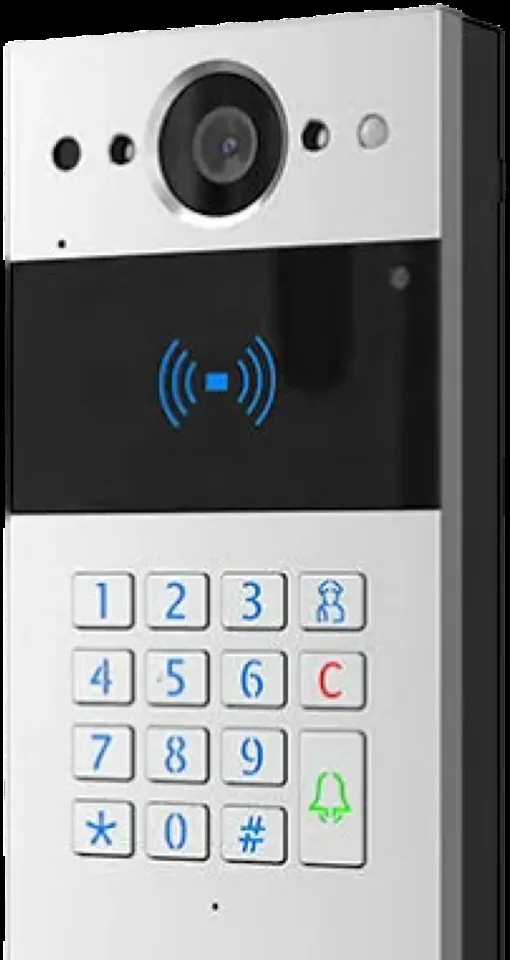
Directory or code panels for the doors residents and visitors use when the desk is unattended, wired to every apartment and to the desk.
A one-button audio or video station at the private street door of a duplex townhouse, answered on each floor or on the household's phones.
Keypad, card or call stations at the door between the garage and the building, so residents arriving by car get in without a key and visitors call the desk.
A call station at the service door with a camera at the desk or the super's office, so deliveries and contractors are seen before the door opens.
New audio or video stations in every apartment on the existing riser, installed floor by floor while the old system keeps working.
A door station at a suite entrance in a Court Street or Joralemon Street tower, a release button at reception and a closer that pulls the door shut.
Buzzers and video stations for the shops on Pineapple Walk and nearby, answered at the counter and kept apart from the residential doors.
Fail-secure electric strikes, release kits, closers and battery-backed power supplies, so every door the system opens also closes and latches.

Almost every entry job around the park falls into one of six kinds of property. Each puts the door station, the cable route and the answering stations somewhere different, and each has a different person who signs off on the work.
A poured-concrete tower of 27 to 32 floors with a front desk, a long riser and hundreds of apartments, governed by a co-op board.
A two-story house with its own street door on a walkway or plaza, part of the co-op but entered separately from the tower lobby.
A recent tower such as One Clinton, with an attended lobby and an entry system chosen by the developer and now run by the condo board.
The older brick buildings on Henry, Clark and Middagh Streets nearby, with a classic vestibule panel and no doorman.
A law or professional office on an upper floor of a Court Street or Joralemon Street tower, behind the building's own lobby security.
A storefront on Pineapple Walk or a nearby street, with a customer door, a delivery door and a landlord that is a co-op.
In a doorman tower the visitor's first stop is a person, so the entry system is built around that person's desk. A visitor gives a name, the doorman calls the apartment, the resident says yes or no, and the doorman lets the guest through. Every part of that exchange needs equipment: a console or handset at the desk that can call any apartment by number, a station in each apartment that rings loudly enough to be heard in a bedroom down the hall, and, ideally, a camera view at the desk of every door the desk is responsible for but cannot see from where it sits. In the older towers around the park, that equipment is often the original house phone system or a replacement from a later decade, and the parts that wear out first are the desk console and the apartment handsets, not the cable.
Because the desk is not staffed every minute, a tower also needs an entrance panel that works without it. Doormen take breaks, sign for deliveries in the package room and walk the building. During those minutes a visitor at the door should still be able to call an apartment, or call the desk's handset wherever the doorman is. That is the panel at the street or plaza door, and in towers with more than one public entrance, the panel at each of them. The design question for a board is which doors stay locked to the street at all times, which are opened only by the desk, and which residents can open with a code, a card or a phone.
The cable in these towers runs up a riser beside the elevator core and branches to each floor. Over a building of thirty floors that is a long run, and an older riser has often been spliced and re-terminated more than once. We test it pair by pair before deciding anything. Where the pairs are sound, a two-wire system can reuse them; Aiphone describes its GT Series as a multi-tenant system for "new builds and retrofit projects" that supports up to 5,000 tenant stations and can use existing wire. Where whole sections are bad, we pull new cable in those sections only and reuse the rest. Our multi-unit range on the Brooklyn list starts at about $2,500 and passes $10,000 for large video or app systems, and in a tower this size the riser test and the number of apartments decide where in that range the building lands.
The townhouses that sit at the foot of the Cadman Plaza towers are part of the same co-op as the tower above them, but they do not share its front door. Each has its own street entrance, and Brownstoner's description of Whitman Close, entrances "right on public walkways always crowded with commuters and tourists," fits what owners tell us about the whole complex. That changes how a doorbell or door station is chosen. The station needs a lit button and a clear label so a visitor can tell which house they are at, a camera that looks at the person standing at the door rather than down the length of the walkway, and housing that holds up to being touched, leaned on and occasionally pressed by people who are only passing by.
Inside, a duplex means two floors to hear the door on. A single chime in the entry hall is easy to miss from a bedroom upstairs, so most townhouse installations add a second answering station on the upper floor or ring the household's phones. Many owners also ask whether the townhouse can call the tower's desk, or whether the desk can see the townhouse door. Both are possible if the townhouse station is part of the building's system rather than a stand-alone doorbell, and whether that makes sense depends on how the board wants the desk to serve the townhouses. We price both ways so the owner and the board can decide together.
One Clinton, completed around 2020 above the new library, is the newest residential building on the park. CityRealty lists a full-time doorman, a concierge and a 24-hour attended lobby. A building of that age usually came with an entry system the developer chose and installed during construction, and the condo board inherits it along with whatever service plan or software contract came with it. When condo boards call us, it is usually to add something the developer left out, such as a station at a second door, video at the desk for the service entrance or a panel for after-hours entry, or to understand what they actually own before the original contract renews.
Across Henry Street and along Clark and Middagh Streets are older brick apartment buildings without doormen, the kind a Reddit user once asked about as "one of those small brick apartment buildings on Henry Street by Cadman Plaza." These are the closest thing near the park to a standard Brooklyn buzzer job: a panel in the outer vestibule, a release on the inner door, a cable run up the stairs or a small riser, and a station in each apartment. A resident of a roughly 20-unit Brooklyn Heights building wrote on Reddit that the front door there "hydraulically locks when pushed open", in a thread about a door left propped late at night. A door that closes and locks on its own is the point of the whole system, and we check the closer and latch on every door we wire.
Many of these buildings sit inside the Brooklyn Heights Historic District, which the city designated in 1965 and which is bounded by Cadman Plaza West on the north. A panel on the front of a building inside the district goes through the Landmarks Preservation Commission's staff rules described further down this page. Buildings in the residential complex west of the park were left out of the district, so the towers and townhouses follow the co-op's rules instead.
The office towers near Borough Hall, including the 35-story Montague-Court Building at 16 Court Street, completed in 1927, have their own lobbies, their own security desks and their own rules about what tenants may install. A law office or medical practice on an upper floor usually wants a door station at the suite entrance with a camera, a release button at the reception desk and a closer that shuts the door behind every visitor, so that clients, couriers and process servers are seen before they reach the front office. The work stays inside the suite, but the landlord still approves it, and the building often specifies when contractors may work and how they reach the floor.
Pineapple Walk, the strip of shops between Cadman Plaza West and Henry Street, belongs to the 75 Henry Street co-op, according to the Brooklyn Paper's 2016 report on the shareholders' vote against a proposed tower deal there. A shop in a strip like that has two masters for its doors: the shop, which wants customers and deliveries in easily, and the co-op, which wants nothing that opens into the residential side of the building. A buzzer or video station at the shop's delivery door, answered at the counter or on the owner's phone, does the first job. Keeping that station entirely separate from the building's entry system, on its own power and its own cable, does the second. We plan shop entry so a shop key, code or release never opens a residential door.

These notes describe how our technicians approach a doorman tower and its townhouses like the ones around Cadman Plaza. They are our standard practice for this kind of building, not an account of any single address.
Start at the desk, not the door. The first stop is the doorman's desk, because that is where the system lives in a staffed building. We ask the staff on duty how they announce a guest today, how long it takes to reach an apartment, which apartments never seem to answer and which doors they cannot see from the desk. Doormen know more about a building's entry problems than anyone, and what they describe usually points straight to the faults in the cable or the stations.
Count every door that ends a journey. Then we walk every route a person can take into the building: the street door, the plaza door, the door from the garage, the service entrance, the door from the package room, the townhouse doors. Each one gets a line on the plan with who uses it, who should be able to open it and whether anyone sees it. Boards are often surprised by how many doors there are once they are listed in one place.
Open the riser closets. With the super, we open the closets on several floors, top, middle and bottom, and look at how the cable is terminated, whether it has been spliced and whether there is room for new equipment. We test a sample of pairs on the spot so the first estimate is based on the building's real cable rather than a guess.
Let every door go. At each door the system will open, we push it fully open and let go. If it does not close and latch on its own, it needs a closer adjustment, new hinges or a realigned strike before any release is wired to it. HPD treats a hallway or entrance door that fails to self-close and latch as an immediately hazardous violation, so this check protects the building as well as the system.
Stand on the walkway. At the townhouses, we stand where visitors stop and look at the camera's picture with people walking past behind them. On a busy path, a camera aimed straight out shows strangers more than callers, so the station is angled and the button is placed where only someone facing the door will reach it.

In most of Brooklyn a buzzer system has two ends, the door and the apartment. In the Cadman Plaza towers it has three: the door, the desk and the apartment. Getting the desk right is what separates an installation that the staff like using from one they work around with their own cell phones.
Calling from the desk. The desk needs a console or master station that dials any apartment directly by number, with a display that shows which apartment is being called and whether it answered. In a building of 250 to 400 apartments the staff place a great many calls a day, so speed matters: one press to call, a clear ring in the apartment, and no hunting through menus. Many current systems let the desk keep a call log, which helps a managing agent see when an apartment repeatedly does not answer and its station may need attention.
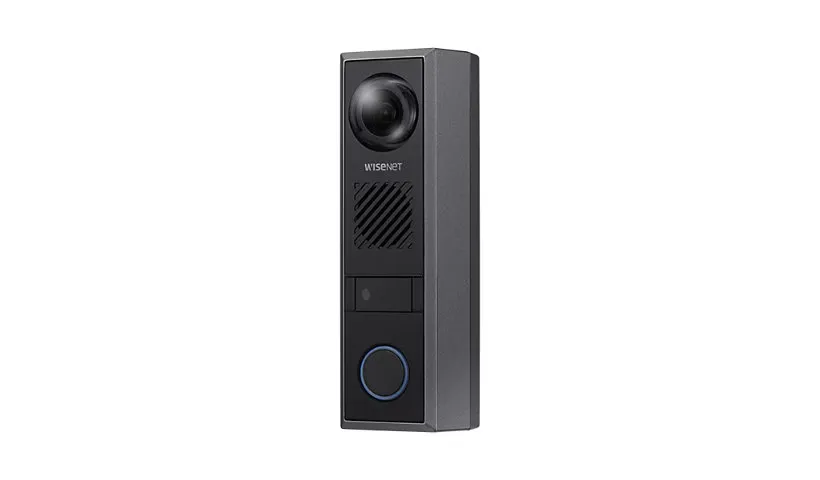
Seeing the doors the desk cannot. A doorman at the main lobby desk usually cannot see the garage door, the service entrance or a second lobby door off the plaza. Video door stations at those entrances, displayed on the desk console, let staff see who is calling before releasing anything. Security Sales described a 148-unit Park Slope co-op that took this approach in 2015, putting video intercoms at both lobby entries and the service entrance with a concierge station on the superintendent's desk. The building's property manager said the board chose video "to give them a better idea of who's asking to enter the building."
When the desk is empty. A doorman on a break or in the package room should not mean a visitor waits at a locked door with no way to call. The entrance panel can call apartments directly whenever the desk is unattended, or forward desk calls to a handset or phone the doorman carries. Some buildings set the panel to call the desk first and fall back to the apartment after a short delay. We set this up with the staff so it matches how the building actually runs at night and on weekends.
Remote management or a closed system. Habitat Magazine reported in 2018 on a Manhattan co-op that turned down a smartphone system and installed a hardwired Aiphone video system for $20,000 on its existing wiring; its board secretary said, "Most of the board felt more comfortable staying with a closed-circuit, hardwired system versus a cloud solution." Either choice is reasonable, and we price both.
The Cadman Plaza towers are built of poured concrete, with the saw-toothed concrete walls that architectural histories of the complex describe. That is excellent for a building's durability and hard on anyone who needs to run a new wire. A brownstone has hollow walls and a cellar ceiling to route through. A concrete tower has a riser shaft, hung ceilings in the corridors, and apartment walls that are often solid concrete or block with a skim of plaster. The cable plan has to be worked out around that before any price is final.
The riser is the backbone. Every floor's cable comes off the riser in a closet near the elevators. If the existing riser cable tests sound, it carries the new system and the cable work in the building drops to almost nothing. If parts of it are bad, new cable is pulled through the same sleeves between floors, which the super can usually open from the closets. Brick Underground's NYC intercom guide quotes an installer saying that, with older systems, "while they may be outdated, the core wiring is typically fine," and that matches what we usually find in buildings of this age. A different installer in the same article said "a 100-unit building could be done in about two days," which gives a sense of scale; a tower of 250 or more apartments takes longer, and we schedule it floor by floor.

The duplex townhouses are the homes around Cadman Plaza most like a private house, and they are also the ones most exposed to the public. Their doors face walkways and plazas that carry a steady stream of people toward the Brooklyn Bridge, the courts and the High Street subway station. A door station that would be unremarkable on a quiet brownstone block needs more thought here.
Camera angle. A camera aimed straight out from a townhouse door on a walkway shows the walkway: commuters, tourists, strollers and bikes. The owner wants to see the person at the door. A slight downward angle and a narrower view keep the picture on the doorstep, and many stations and doorbells let us mask parts of the picture so the camera ignores the path behind the visitor. That also cuts the number of motion alerts a household gets from people who never stop.
Answering on two floors. A duplex usually has its living space on one floor and bedrooms on the other. A second station upstairs, or phone answering for each member of the household, means the door can be answered from wherever people are. If the household wants to release the door from upstairs, the door gets a release that fits its frame, which we check on the walkthrough.
Cadman Plaza sits on the northeast edge of the Brooklyn Heights Historic District, the city's first, designated in November 1965. The district is bounded on the north by Cadman Plaza West, and its eastern line partly follows Clinton and Henry Streets. The residential complex built west of the park in the late 1960s and early 1970s was left out of the district. In practice that means two buildings facing each other across Henry Street can follow completely different rules for a new door station.
For a building inside the district, the Landmarks Preservation Commission's Permit Guidebook sets the staff-level rules for intercoms and doorbells. Intercom panels and doorbells "must be installed within or adjacent to a door opening," and an intercom may also go on a fence or wall in front of the entranceway. "A maximum of two light fixtures and one intercom panel can be installed per door opening." The design, size and finish must be compatible with the building, equipment must not be attached through cast iron or to decorative surfaces, and conduit must be hidden behind the installation, with about ten inches of visible conduit allowed when that is impossible, painted to match. Applications are filed through the LPC's Portico system with photos of the building, close-ups of the mounting location, manufacturer cut sheets and paint cards for visible surfaces.
The same chapter limits security cameras, which matters when a building adds a camera with its new panel. Small residential buildings may have no more than two cameras for every 25 feet of street frontage, and large residential buildings no more than three, well spaced to avoid a cluttered look. A door station with a built-in camera on a district building should be planned with those numbers in mind.
For the towers, townhouses and shops of the complex, which sit outside the district, the rules that matter are the co-op's own. Most boards require approval for anything mounted on the outside of the building, and many have standards for color and size. We prepare the same kind of packet for a board that we would for the LPC: the cut sheet, a marked photo, dimensions and finish. On a district building, we do not mount anything on the facade until the owner tells us the permit has been issued.
Commercial entry work around Cadman Plaza is shaped by the courts. Lawyers, court reporters, bail and title offices and other professional practices fill the office towers south and east of the park, and the residential complex has its own strip of shops. The jobs are suite doors, reception releases, delivery doors and the shared entrances of mixed buildings.
The shops between Cadman Plaza West and Henry Street, owned by the 75 Henry Street co-op, where delivery doors need buzzers kept apart from the residential entrances.
Office towers near Borough Hall, including the Montague-Court Building at 16 Court Street, with upper-floor suites that buzz clients in from reception.
The streets around Borough Hall at 209 Joralemon Street, with offices and practices in older buildings that have small shared lobbies.
The state Supreme Court at 360 Adams Street and the offices that serve it, where firms want to see visitors before opening the suite door.
The Roosevelt federal courthouse and the old Federal Building and Post Office, with private offices and services on the surrounding blocks.
The bridge approach along the south of the park, where mixed buildings combine residential entrances with street-level businesses.
For an office suite, the most common request is a station at the suite door with a camera, a release button at the reception desk, and a closer that pulls the door shut and latches it behind every visitor, so the front office never sits open to the corridor. Practices that see clients by appointment often add a second station at a back or staff door. For a shop, it is a video station at the delivery or rear door answered at the counter or on the owner's phone, so suppliers are seen and let in without staff leaving the register. Each is quoted from the same Brooklyn list as residential work: most single-door commercial jobs fall in our $400 to $900 audio or $700 to $1,800 video ranges, depending on the door and the cable route.
If a building or business also wants cameras at its entrances, the garage or the mail area, they can be installed on the same visit and priced together with the entry system.

These are the questions boards, shareholders, townhouse owners and office managers ask about new entry systems around Cadman Plaza, together with ones raised in Habitat Magazine, Brick Underground, Security Sales and the manufacturer guides we checked, answered for the buildings here.
Not on paper. The Multiple Dwelling Law's intercom rule for post-1968 buildings of eight or more apartments describes equipment: a self-locking main door and an intercommunication system that lets a resident talk to a visitor and release the door. A doorman is a very good service, but staffing levels change with budgets, and the rule does not say a staffed desk satisfies it. In practice, the desk-to-apartment system most towers here already have, together with an entrance panel that works when the desk is empty, covers both the law and the way the building runs.
For a tower built before 1968, such as one dated 1967, the intercom becomes required when tenants in a majority of apartments ask for it in writing. Most co-op boards install and keep a working system long before that point, because residents expect it and because a broken one becomes a repair obligation once it is installed.
Through the entrance panel at that door, set up to match the building's routine. The simplest setting has the panel call the apartment directly whenever the desk does not pick up. Another sends the call to a portable handset or phone the doorman carries, so staff can answer from the package room, the mail room or a floor. Some buildings use both: the panel tries the desk, then the doorman's handset, then the apartment.
Which order works best depends on how the building is staffed at different hours. We go through the day and night shifts with the super or the managing agent, set the panel accordingly, and test it with the desk empty before we leave.
Yes. Release rights are set per station. The desk console can be given the camera view and the release for the garage pedestrian door, the service entrance and the main lobby, while apartment stations release only the door their visitor is calling from. Residents arriving at the garage door use their own code or card, which opens that door and nothing else unless the board decides otherwise.
We write the release rights for every station into the hand-over record, so the managing agent can see at a glance who can open each door and change it later if the building's policy changes.
Height matters less than the condition and type of the cable. Multi-tenant systems are built for large buildings: Aiphone states that its GT Series supports up to 5,000 tenant stations on a two-wire bus. What limits a tall tower is usually the length of a run on thin or spliced cable, which can cause weak audio or video on the top floors, and the number of stations each power supply can drive.
We test the riser at the top, middle and bottom before choosing equipment, and where a long run needs it, we add a distribution unit or power supply partway up the building. If the old cable cannot carry video reliably to the highest floors, we say so and price either new riser cable or an audio system for those floors.
It depends on what you want the desk to do for you. A stand-alone video doorbell or door station is cheaper, can be done for one house at a time, and keeps the townhouse independent of the tower's equipment. A station that joins the building's system lets the desk see your door, lets you call the desk, and puts your door on the same plan and maintenance as every other door in the co-op.
If several townhouse owners want the connected option, it is usually cheaper to wire them together while the tower's system is being replaced. Either way the board normally approves anything on the outside of a townhouse, so we prepare a packet for the board with the station's size, finish and mounting spot.
A station that is easy to see and clearly labeled. A lit button visible from the path after dark, the house number or name printed on the station itself, and a station mounted where someone walking along the plaza notices it all cut down on missed deliveries. If the co-op has a standard style for townhouse numbers, we match it.
A video station or doorbell also lets you talk to a courier who is at the wrong door and guide them to yours, or tell them where to leave a parcel. If parcels are a regular problem, the building's package room and the desk are usually the better answer, and the station can tell couriers to go there.
By using the cable and the opening the old station already has. In the Cadman Plaza towers, the apartment station is usually fed from the corridor near the entry door, and replacing it in the same position uses the same cable and the same box. That is why we recommend keeping new stations where the old ones were unless there is a strong reason to move them.
If you want the station somewhere else, the choices are a small painted surface raceway from the old position, which is tidy but visible, or a second station that pairs with the first where the system allows. We do not patch or paint walls ourselves; if a route would need an opening in finished plaster, we show you where before the price is set so you can decide.
It can, as long as the panel does not depend on a cellular signal at that spot. Some app-based panels connect over a built-in cellular radio, and those need decent reception where they are mounted. Others connect over the building's wired internet, which concrete does not affect. On the walkthrough we measure the signal at the panel location and choose accordingly.
Residents' own phones still need a signal or Wi-Fi to receive the call wherever they are. In a concrete tower that usually means apartment Wi-Fi. For residents who would rather not depend on that, the system can keep a wired station in the apartment as well.
Usually the managing agent and one or two people at the building, such as the super or the resident manager, with the board deciding who. Most current systems have an administrator role that can add and remove households, change directory entries and issue or cancel codes and cards, and a lower role for desk staff that can only see and release doors.
Yes. A wired system can run entirely on the building's own cable for calling and releasing, with only the management software connected to the internet, so an outage never stops a resident from answering the door. Habitat Magazine's 2015 report on virtual doormen noted that phone and app services stop working when a building's internet goes down; keeping the core system wired avoids that.
The opposite arrangement, a fully closed system with no remote access, is also common in co-ops. The trade-off is that changes have to be made at the building. We price both so the board can weigh convenience against independence.
Start with an inventory. We identify the make and model of every panel, station and controller, check whether the system needs a paid software subscription to keep working, find out who holds the administrator login, and confirm whether the equipment can be serviced by any qualified installer or only through the original vendor. That tells the board what it is paying for and what it would lose if the contract lapsed.
Swiftlane's cost guide says software subscriptions on some cloud systems add $5 to $15 per unit per month. In a building of about 130 units, that is a real line in the budget, so knowing whether the building's system carries one is worth an hour of a technician's time.
A glass door in an aluminum or steel frame can usually take an electric strike in the frame or an electrified lock in the door, depending on the lock already fitted. An all-glass door with no frame stile needs a different kind of release, and a door on a fire-rated corridor needs hardware that keeps the door's rating. We look at the door before suggesting anything.
Landlords of the office towers near Borough Hall usually ask for the scope, the hardware cut sheets, a certificate of insurance and the hours of work, and some want their own engineer to sign off on anything touching the door or the corridor. We prepare that packet as part of the quote, and the insurance certificate is issued by our broker to the landlord's requirements once the job is awarded.
By keeping the shop's system entirely separate. A video station at the shop's own delivery door, answered at the counter or on the owner's phone, lets the shop see and admit a driver. That station opens only the shop's door. The doors between the corridor and the residential building stay on the co-op's system, controlled by the desk and the residents.
Because the co-op is the landlord, the shop's lease and the board's rules usually say what may be mounted and where. We plan the shop's station so it never ties into the building's cable or power, which makes approval simpler.
Check whether the building is inside the Brooklyn Heights Historic District. The district runs south from Cadman Plaza West, and parts of its eastern line follow Clinton and Henry Streets, so some buildings close to the park are inside and the towers of the complex are outside. The LPC publishes district maps, and the city's online map of designated buildings shows each lot.
If you are inside, a new panel needs a staff-level permit filed through the LPC's Portico system, and the rules on placement, size and attachment apply. We supply the cut sheet and marked photos for the filing and wait for the permit before mounting.
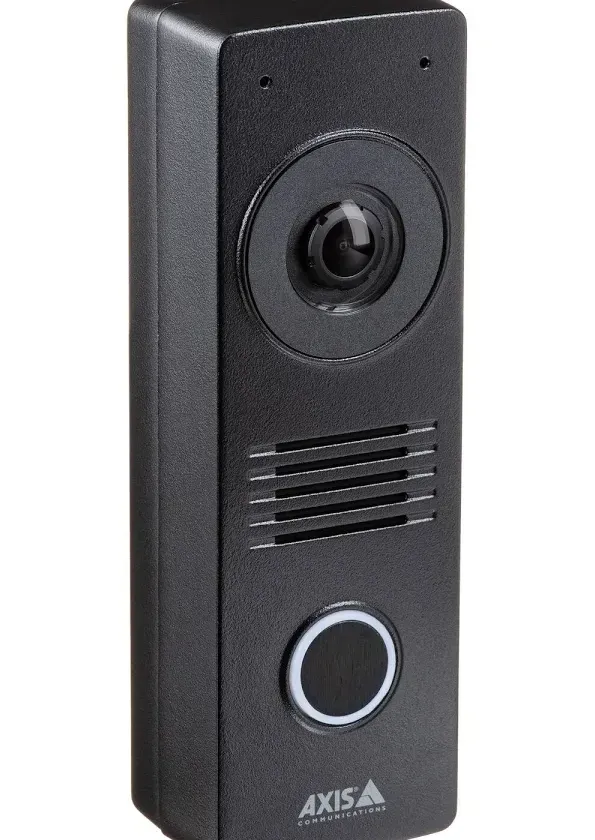
We quote a reliable non-branded system by default and install a named brand when a board or owner asks for one; the intercom brands we work with include Aiphone, ButterflyMX, 2N, Akuvox, Comelit and DoorBird. These are the kinds of equipment that suit the towers, townhouses, offices and shops around Cadman Plaza.
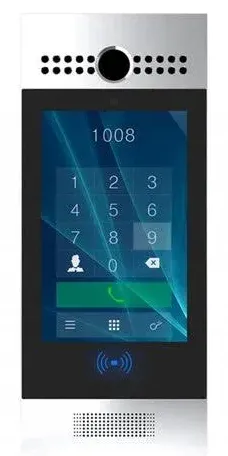
A console at the doorman's desk that dials apartments, shows entrance cameras and releases the doors staff are responsible for.
Systems that send voice, video and release signals over one pair, letting a sound riser in a tall tower be reused.
Panels for plaza and street doors that let visitors scroll a directory or dial an apartment code when the desk is unattended.
Handsets or monitors in each apartment and townhouse, mounted on the existing cable at the entry door.
Panels that call residents' phones and let the managing agent update the directory remotely, with a wired fallback where boards want one.
Stations for garage, service and suite doors that admit residents or staff with a code or card and let visitors call.
Single-household doorbells for townhouse doors, powered by a correctly sized supply and answered on each floor or by phone.
Fail-secure strikes for steel and wood frames, releases for glass suite doors, and closers set so each door latches every time.
The table compares the three approaches boards here ask about most. The right one depends on whether the building is staffed, how many doors it has and how residents prefer to answer.
| What matters | Desk console with apartment stations | Entrance panel with apartment stations | App or cloud panel |
|---|---|---|---|
| Best for | Towers with a doorman most hours | Unstaffed buildings and after-hours doors | Buildings that want remote management |
| How residents answer | Apartment handset or monitor | Apartment handset or monitor | Phone app, sometimes plus a station |
| Needs internet | No | No | Yes |
| Uses the old riser | Yes, when it tests sound | Yes, when it tests sound | Often not needed for calling |
| Works in a building outage of internet | Yes | Yes | Only with a wired or cellular fallback |
| Possible monthly fee | Usually none | Usually none | Often, per unit or per door |
| Brooklyn list range | From about $2,500 for a building | From about $2,500 for a building | From about $2,500 for a building |
Many Cadman Plaza towers end up with a mix: a desk console for staffed hours, entrance panels for the plaza and garage doors, and phone answering offered as an extra for residents who want it.
Townhouse owners and office managers often ask whether a Ring doorbell or a SimpliSafe or ADT package would do the job. For a single townhouse door, a consumer video doorbell can be fine, and we install and power the one you already own if it suits the door. Where consumer products fall short around Cadman Plaza is the building: they do not call a doorman's desk, they do not give hundreds of apartments their own stations, and most cannot release a commercial door without added hardware. National alarm companies sell doorbells as part of a monitoring plan; we install entry systems the building or household owns outright, with no plan required. The useful question is what the door has to do, and we answer it at the door, not from a catalog.

These claims turn up in generic online answers, national cost guides such as Angi and HomeAdvisor, and vendor pages. Each is paraphrased, then checked against the buildings around Cadman Plaza, the manufacturers' own information and the city's rules.
Generic answers often treat an intercom as something for buildings without staff.
In the Cadman Plaza towers the desk depends on the system: the doorman calls apartments on it, sees side doors through it and relies on its entrance panels when the desk is empty. The Multiple Dwelling Law's intercom rule for post-1968 buildings of eight or more apartments describes equipment, and towers here completed in 1971 and 1973 fall under it.
A doorman makes the system work better. It does not make the system unnecessary.
HomeAdvisor puts the national average for an intercom system at $2,500, within a range of $1,500 to $15,000.
That average describes a house or a small building. A Cadman Plaza tower has 250 to more than 400 apartments, a desk console and several doors. Security Sales reported a Park Slope co-op of 148 units spending $110,000 on video intercoms and cameras in 2015, and Habitat reported a six-story Manhattan co-op paying $20,000 for a hardwired video system in 2018.
Our Brooklyn list starts multi-unit work at about $2,500 and runs past $10,000; a tower's figure is set by its apartment count and riser test, in writing, after the walkthrough.
Sales pages for new systems often assume a full rewire.
Aiphone says its GT Series can use existing wire and infrastructure, and Security Sales quoted the installer of that Park Slope job: "By using the existing cable β with the exception of two units β we were able to save $20,000 on the job." Brick Underground quotes another installer saying older core wiring "is typically fine."
We test before deciding. Sound pairs are reused; bad sections are replaced, and the price says which.
Vendor pages describe phone-based entry as needing nothing but a connection.
Poured-concrete lobbies can block cellular signal, and Habitat's 2015 report on virtual doormen noted that those services stop when a building's internet goes down. In a concrete tower, the panel's connection and the residents' Wi-Fi both have to be checked.
We measure signal at the panel location and keep a wired path for calling where a board wants one.
Many answers recommend a consumer video doorbell for any house.
For a Cadman Plaza duplex on a public walkway, it can work, but a wide lens shows the crowd as much as the caller, and a stand-alone doorbell cannot call the tower's desk. Brownstoner described these entrances as sitting "right on public walkways always crowded with commuters and tourists."
An angled, masked camera view and, where the owner wants it, a station connected to the building's system fit the townhouse better.
For most Brooklyn buildings, a panel swap needs only the owner's say-so.
Buildings across Henry Street sit inside the Brooklyn Heights Historic District, where the LPC allows one intercom panel per door opening, mounted within or beside the opening, never on decorative surfaces. Inside the complex, co-op boards set their own rules.
We supply cut sheets and marked photos for whichever body approves the work, and wait for that approval before mounting.
Product pages describe fobs and apps as simple add-ons.
In New York City, Local Law 63 of 2021 covers smart access systems in multiple dwellings. Owners need express consent, must give residents a privacy and data retention policy, must destroy authentication data within 90 days unless anonymized, and may not require a smart system to enter a resident's own apartment.
We tell boards before they choose which parts of a system fall under the law, so the paperwork is ready when the system goes live.
If your board is weighing a full replacement against new stations on the old riser, or a townhouse owner wants to know what a door on the walkway can take, ask before anyone buys equipment. Call now at (347) 934-8335, send a fast quote request, or send photos of the door and the old panel to a tech on WhatsApp. Estimates are booked within two hours of your request during working hours.
Tell us the building, the kind of property, which doors need work, whether there is a doorman and who approves work in the building. A technician calls back with the range for your Cadman Plaza address, or you can call (347) 934-8335 right now.
Send photos of every door visitors use, the desk, the riser closet and any old panel, plus who controls access: the board, the managing agent or the landlord.
A weekday walkthrough to test the old cable pair by pair, check each door's closer and latch, find power and riser routes and watch how visitors arrive.
Equipment, station locations, cable routes, door hardware and the total in writing before ordering, with cut sheets and a door-by-door plan for approval.
Each door is made to close and latch, releases are fitted, and a power supply sized for the system goes in, with an electrician for any 120-volt work.
Cable is tested or pulled through the riser, closets and garage ceilings, and stations go in floor by floor while the old system keeps working.
The new panel replaces the old one, then every apartment, the desk and each door is tested by calling, talking and releasing.
Admin logins, a wiring record and a short demonstration for the desk, the super and the managing agent, and a one-page guide for residents.

The park between Cadman Plaza West and East, named for the Reverend S. Parkes Cadman, with the Brooklyn War Memorial at its north end.
The federal district courthouse at 225 Cadman Plaza East, completed in 2006, with law offices on the surrounding blocks.
The Romanesque building at 271β301 Cadman Plaza East, home of the bankruptcy court and a city landmark since 1966.
The Greek Revival hall at 209 Joralemon Street, completed in 1848, at the center of the office district south of the park.
The library branch that opened in June 2022 at the base of the condominium tower on Cadman Plaza West.
The A and C stop opened in 1933, with entrances on Cadman Plaza East and Cadman Plaza West that feed the walkways past the townhouses.
We also serve Brooklyn Heights, DUMBO, Vinegar Hill, Downtown Brooklyn, Fort Greene and Boerum Hill, all at the same Brooklyn rate; see our door buzzer installation in Brooklyn page for the whole borough, or our Manhattan door buzzer installation page for buildings across the bridge.
Cadman Plaza is billed at our Brooklyn rate, with no travel premium. The ranges below are installed prices covering equipment, power, release hardware, cable and labor. Where a job falls inside a range depends on the number of apartments or stations, the condition of the riser, the doors involved and the choice of audio, video or app answering. The figure for your building is set in writing after the walkthrough and does not change unless you change the scope.
| Item | Brooklyn price | Typical Cadman Plaza job |
|---|---|---|
| Audio / small system | $400β$900 | Audio station and release at a townhouse, suite or shop door, with answering inside |
| Video / mid-size system | $700β$1,800 | Video station or wired video doorbell at a townhouse, suite or shop door, with monitors or phone answering |
| Multi-unit building | $2,500β$10k+ | Entrance panels, desk console, riser work and apartment stations for a co-op or condo building |
| Service call booked online | $250 | Diagnosis of an existing system; applied toward the work |
What pushes a tower toward the top of the multi-unit range: video in every apartment, a riser with long sections that test bad, several entrances with cameras at the desk, and app management on top of wired stations. What keeps it lower: a riser that tests sound, audio stations in the apartments, video only at the desk and the side doors, and stations mounted in the same positions as the old ones.
For comparison, HomeAdvisor's national average for an intercom system is $2,500, and Swiftlane's guide puts modern IP or video systems at $1,000 to $5,000 or more per entry door before any per-unit software fees. A Cadman Plaza tower sits well above a national average because of its size, and a single townhouse or suite sits well below it.
Full terms β including 50% deposit, one-year parts-only warranty on AESS-supplied products, and the late-fee schedule β are set out in the service agreement.Send three photos, the entrance from outside, the door and frame close up, and the old panel or desk console, and we tell you which range your building falls in. Call (347) 934-8335, speak to a tech on WhatsApp, or use the fast quote form.
Three typical Cadman Plaza jobs, each priced inside the matching range on our Brooklyn list. The exact figure comes from the walkthrough.
A lit audio station at a suite or delivery door, a release button at reception or the counter, a fail-secure strike or release suited to the door, a closer adjustment and a power supply.
A one-button video station or wired video doorbell at the townhouse door, angled for the walkway, a second answering station upstairs or phone answering, and a release if the frame allows.
Entrance panels for the street, plaza and garage doors, a desk console, a tested or partly new riser, apartment stations and battery-backed power, sized to the building.
Bring your own equipment. If your board or household has already bought a door station or video doorbell, we can install it as long as it suits the door, the cable and the building's power. Labor for customer-supplied equipment is quoted flat at the walkthrough, and any power supply, release hardware and cable are priced from the same list. Customer-supplied equipment carries the manufacturer's warranty rather than ours, so we check the model with you before you book.

Desk consoles, entrance panels and apartment stations. Request a quote
Single-door stations, releases and closers. Call (347) 934-8335
The same list in every neighborhood. Brooklyn door buzzer installation
Buildings and homes in every borough. NYC door buzzer installation
Yes, where the door has or gets an automatic operator. The release signal can unlock the door and start the operator at the same moment, so a visitor with a stroller, a walker or packages does not have to fight the door. Habitat Magazine described a Manhattan co-op that automated its heavy entrance doors with push buttons inside and out; the operator itself is a door-hardware job we coordinate with a door company, and we wire the entry system to it.
The swap is planned so the door is never left unlocked and unattended. The new panel is wired and tested before the old one comes off, the switchover is done during staffed hours, and the desk keeps control of the door throughout. If any part of the work runs past the planned window, the door is left locked with key access until it is finished.
Almost always. Managing agents and boards usually send their insurance requirements, including any additional insureds, with the approval. Our broker issues the certificate to those requirements once the job is awarded, before the first day on site, so the building has it on file when the crew arrives.
Often, yes. Many entry panels can share a door with an existing fob reader, with both able to trigger the same release, so residents keep their fobs while visitors use the new panel. Whether the two can share one management system depends on the makes involved. We check the reader's model on the walkthrough and tell you whether it can stay.
Many do. Keypad panels commonly have a raised dot on the five key, and several makers offer raised or Braille labels for call buttons and directory panels. Touchscreen panels are harder for a blind visitor to use, so where that matters we suggest a panel with physical buttons, or one with both a screen and a keypad.
Some door stations can be fitted with an induction loop, which sends the speaker's sound straight to a hearing aid set to its telecoil mode. On panels without that option, a louder speaker setting and a video picture, so the resident can see and gesture, help. If residents or frequent visitors use hearing aids, tell us and we include a panel that offers a loop.
The board should, with the managing agent given access as its agent rather than as the owner of the account. We hand over the administrator logins and the wiring record to the person the board names, and recommend the board keeps a copy, so a change of agent never leaves the building locked out of its own entry system.
Yes. Each entrance panel is named in the system, so the desk console shows a call from the plaza door, the garage door or the service entrance by name, with that door's camera picture. Staff then release only the door the visitor is standing at, which matters in a tower with several ways in.
The basic tasks, calling an apartment, seeing a door and releasing it, are usually learned in one shift. At hand-over we demonstrate the console to the staff on duty and leave a short written guide at the desk for relief doormen and overnight staff. If the building wants a second session for staff on other shifts, we schedule it.
Many panels can display a short message or change their screen at set hours, for example telling visitors to dial an apartment code or call the desk handset after the desk closes. Panels with a screen also let the building post the directory instructions in plain words. We set the wording with the managing agent when the panel is programmed.
Yes. On a keypad or card system, each door can have its own codes or card permissions, so a resident who parks can open the garage pedestrian door while someone who does not park cannot. Codes for staff and contractors can be limited to particular doors and hours, and the administrator can change any of them without a service call.
Yes, if the door has a contact that reports whether it is closed. The system can sound a local alert or flag the door at the desk console when it stays open past a set time, which helps staff catch a propped service door or a garage door that did not close. We fit the door contact as part of the release hardware where the board wants this.
Door Buzzer Installation Brooklyn NY | Brownstones & Condos Β· Door Buzzer Installation NYC | Apartment & Building Entry Β· Door Buzzer Installation Manhattan NY | Apartments & Co-ops Β· Door Buzzer Installation Queens NY | Co-ops & Apartments Β· Door Buzzer Installation Bronx NY | Co-ops & Apartments Β· Door Buzzer Installation Staten Island NY | Homes & Apts Β· Door Buzzer Installation Long Island NY | Nassau & Suffolk Β· Door Buzzer Installation Hudson Valley NY | Apartments Β· Door Buzzer Installation Nassau County NY | Homes & Co-ops Β· Door Buzzer Installation Suffolk County NY | Homes Β· Door Buzzer Installation Westchester County NY | Co-ops Β· Door Buzzer Installation Rockland County NY | Homes & Apts Β· Door Buzzer Installation Orange County NY | Homes & Farms Β· Door Buzzer Installation Putnam County NY | Lake Homes Β· Door Buzzer Installation Dutchess County NY | Homes Β· Door Buzzer Installation Ulster County NY | Kingston
Door Buzzer Installation Bath Beach Brooklyn NY Β· Door Buzzer Installation Bay Ridge Brooklyn NY Β· Door Buzzer Installation Bedford-Stuyvesant Brooklyn NY Β· Door Buzzer Installation Bensonhurst Brooklyn NY Β· Door Buzzer Installation Bergen Beach Brooklyn NY Β· Door Buzzer Installation Beverley Square Brooklyn NY Β· Door Buzzer Installation Brooklyn Navy Yard, Brooklyn NY Β· Door Buzzer Installation Brooklyn NY | Brownstones & Condos Β· Door Buzzer Installation Brownsville Brooklyn NY
Intercom Installation Cadman Plaza Brooklyn NY Β· TV Installation Cadman Plaza Brooklyn Β· Alarm Installation Cadman Plaza Brooklyn NY | Co-op Towers Β· Door Buzzer Repair Cadman Plaza Brooklyn NY | Co-op Towers Β· Structured Cabling Cadman Plaza Brooklyn | Court & Federal Β· Fire Alarm Installation Cadman Plaza Brooklyn NY Β· Security Camera Installation Cadman Plaza Brooklyn NY Β· Access Control Installation Cadman Plaza Brooklyn NY
Send a photo of the entrance from outside, the door and frame, and the old panel or desk console, with the building and the number of apartments or doors, and we will tell you what it needs and where it sits on the Brooklyn list. Call or text (347) 934-8335, message us on WhatsApp, or use the request form. Licensed under NYS license #12000287431, rated 4.7β across 201 Google Reviews, owner-operated since 2002.