Audio and Video Door Stations · Releases on 19th-Century Doors · Landmarks-Ready Plans · Brooklyn Rate
Door buzzer installation in Carroll Gardens is mostly small-building work done on old doorways. One real estate guide puts about 95 percent of the neighborhood's housing in single-family brownstones or brownstones divided into boutique condos and co-ops, so the typical job is a door station for two to eight households on a doorway that is often more than a century old, with a release fitted to an original wood door and a cable route through a stone-floored cellar. Part of it sits inside the 1973 historic district or is individually landmarked, where the Landmarks Preservation Commission says where an intercom panel may go. This page explains what each kind of Carroll Gardens building needs, what the Commission's published guidance says about intercoms and doorbells, how releases are fitted to old doors without ruining them, and what each kind of job costs on our published Brooklyn list.
Reviewed and updated November 11, 2026, against the NYC Landmarks Preservation Commission's Permit Guidebook chapter on health and safety installations (intercoms, doorbells, light fixtures and security cameras); Bklyner's September 2018 report on the landmark designation of 236 and 238 President Street; Brick Underground's September 2023 guide to Carroll Gardens brownstone co-ops and condos and its 2019 intercom repair guide; Habitat Magazine's February 2024 article on intercom law; HPD violation records for 423 Court Street as published by LucidRents; DNAinfo's July 2015 Carroll Gardens police blotter; News 12's February 2018 Prospect Heights report; Brownstoner forum threads from multi-family brownstone owners about buzzers, intercoms and electric strikes; the NYC Department of City Planning's 2008 Carroll Gardens front-yard study; HPD's Tenant Data Privacy Law page; New York's Multiple Dwelling Law §50-a; Allegion's fail-safe and fail-secure guide; the HomeAdvisor and Swiftlane cost guides; and the 2010 ADA Standards. · Abstract Enterprises Security Systems, NYS license #12000287431 · crews dispatched from our Troy Avenue office in Brooklyn

Owner-operated since 2002 · Thousands of jobs completed · Booked within 2 hours
Quick answer: door buzzer installation in Carroll Gardens costs $400 to $900 installed on our Brooklyn list for an audio buzzer with talk-back on a single-family brownstone or a two- or three-household house, $700 to $1,800 for a video door station with indoor monitors or phone answering, and from about $2,500 to past $10,000 for a multi-unit building such as an eight-unit co-op or a newer boutique condo. Each price covers the door station, the answering stations, the power supply, the strike or electrified lock on the door, the cable and the labor, and it is set in writing after a walkthrough and before anything is ordered. Carroll Gardens is billed at the Brooklyn rate. Most houses here land in the first two ranges. What pushes a job up is an original door that needs repair before any release can hold, a cable route that has to be made because the old bell wire is gone, video for every household rather than one, and, on a landmarked front, extra care to keep the panel and its wire inside what the Landmarks Commission's staff can approve. Send photos of the doorway and the old panel to (347) 934-8335 or on WhatsApp, and we reply with the range that fits, usually within two hours of your message during working hours.
Carroll Gardens is about forty blocks of three- and four-story rowhouses between Degraw and Warren Streets on the north, Hoyt and Smith Streets on the east, Ninth Street and the Gowanus Expressway on the south and the BQE on the west, almost all of it in ZIP code 11231. The Department of City Planning described the housing as three- and four-story single- and multi-family rowhouses with only a few five-story buildings, and the zoning keeps it that way. A Brick Underground guide to the neighborhood's market, written in September 2023, quotes an agent saying plainly, "It's not a neighborhood of big buildings," and puts about 95 percent of the housing in single-family brownstones or brownstones converted into boutique condos or co-ops. That shapes nearly every buzzer job here: a small building, an old doorway and two to eight households sharing it.
Small does not mean simple. A single-family brownstone still has the parlor door at the top of the stoop, the vestibule behind it, a garden-floor door under the stoop and three or four floors for a bell to reach. When that house is split into condos, the same doorway suddenly serves several separate owners, each of whom wants to answer only their own visitors and open the door only for them. When it was converted decades ago into a co-op, the bell board may date from the conversion, with a button per apartment, a speaker grille and a release that has long since stopped releasing. Owners on Brownstoner's forum describe these situations almost word for word: one with "an old buzzer intercom in place for two of the apartments" who wanted to see visitors without paying for a full replacement, another whose renovation crew "knocked out the previous bell that was working" in a three-family brownstone, and a third who wanted "nothing fancy just a buzzer and intercom in each unit" with no automatic door opener at all.
Then there is the doorway itself. Carroll Gardens' rowhouses went up mostly from the late 1860s to the early 1880s, and many still have their original wood doors, carved brownstone surrounds, transoms and iron railings. Those details are why people buy here, and they are also why a buzzer has to be planned rather than just screwed on. A door station placed on a decorative surround, a strike chiseled into an original frame, or a run of conduit down the face of the stoop is hard to undo. Inside the Carroll Gardens Historic District, designated in 1973 with 134 rowhouses, mainly on Carroll and President Streets between Smith and Hoyt, and on individual landmarks such as 236 and 238 President Street, designated in 2018, the Landmarks Preservation Commission has published criteria for exactly where an intercom panel may go and how it may be fastened. Outside the district, the same care simply protects the value of the house.

The newer buildings are few but real. Brick Underground lists 145 Carroll Gardens at 14 President Street, seven stories with 17 units built in 2018, and 480 Degraw Street, four stories with 13 units opened in 2019. Older small buildings carry their own numbers: an eight-unit co-op from 1910 on Luquer Street, an eight-unit 1920 limestone building on Clinton Street and an eight-unit 1900 building on Court Street all appear in the same guide. Eight is not a random count. New York's Multiple Dwelling Law requires an intercom in buildings with eight or more apartments built or converted after 1968, and in older buildings when a majority of tenants ask for one in writing. Habitat Magazine's February 2024 article on intercom law adds the part many small boards miss: the city's housing code requires an installed intercom to be kept working, and as one attorney put it about a co-op with a failed system, "the co-op has a legal obligation to repair or replace the intercom."
The last reason is the street door's real job, which is keeping the hall private. A DNAinfo police blotter from July 2015 recorded 84 newspapers taken from the vestibule of a Carroll Gardens residential building over several months, and noted that the lobby "was open to the public." In 2018, News 12 reported a man in nearby Prospect Heights who followed a delivery person into a building and then broke into an apartment. Both describe the same weak point: a street door that does not stay shut, or that residents hold open because walking down three flights for a courier is a nuisance. A working buzzer with a release on every floor removes the reason to prop the door. HPD records published by LucidRents show two Class C violations written at 423 Court Street, a four-unit building from 1920, in June 2023 for a permanently installed stopper that kept the entrance door from closing. That is the other half of the job: the door has to close and latch by itself every time, or the buzzer is decoration.
Where this page applies. It covers Carroll Gardens from Degraw Street south to the Gowanus Expressway and from Hoyt Street west to the BQE, including the Places between Henry and Smith Streets, the historic district on Carroll and President Streets, the Court Street and Smith Street shopping corridors and the side streets to Luquer, Nelson and Huntington Streets. For the rest of the borough see our door buzzer installation in Brooklyn page, and for the whole city our NYC door buzzer installation page.
Plenty of calls that begin with "we need a new intercom" end as a repair. In a Carroll Gardens brownstone the usual suspects are predictable. A bell that stopped ringing is often a broken splice behind the button, a corroded contact or a transformer that burned out years ago in a cellar corner nobody visits. A street door that buzzes but stays shut is usually a strike whose keeper no longer lines up with the latch because an old wood door has swollen, sagged on its hinges or been rehung after painting. One household that never rings in an otherwise working house is most often a single failed station or one broken pair in the cable. As Daniel Vasquez of Paragon Security and Locksmith told Brick Underground in its 2019 intercom repair guide, "It's all in the wire connections," and the guide notes that even old systems usually have core wiring that is fine.
Diagnosis is the $250 service call booked online, and the $250 goes toward the repair, or toward a new system if replacing turns out to be the better value. You get both numbers and a plain recommendation. On a district house, ordinary repair of existing equipment does not need a Landmarks permit, according to the Commission's guidebook, so a dead panel can usually be brought back to life while you decide whether to replace it. If a part has to be ordered, we make sure the door can still be locked and opened with a key before we leave. If your street door is stuck open or cannot be locked right now, say so when you call (347) 934-8335.
Every service below comes from the same Brooklyn door buzzer list. The number of households sets the size of the system, the door and frame set which release can go on it, and the building, including whether it is landmarked, sets how the station is mounted and how the cable reaches the cellar.
A compact audio or video station at the parlor door, answering stations on the parlor floor and the bedroom floors, and a chime that reaches the garden floor and the top of the house.
A two- to four-button station at the shared street door of a house divided into condos, each button wired only to its own unit, with each owner able to release the door for their own visitors.
Replacement panels, apartment stations and tested or new risers for small co-ops of six to eight units, many of them pre-war buildings with bell boards installed at conversion.
Electric strikes and electrified locks fitted to 19th-century wood doors and frames with as little cutting as possible, so the work can be reversed later.
Panel positions, fastening points and cable routes laid out to the Commission's staff-level criteria, with the photos and cut sheets an application needs.
Video monitors or phone answering for the households that want them, with plain audio stations kept for anyone who prefers them, all on one system.
Buzzers and video stations at the delivery and staff doors of Court Street and Smith Street businesses, answered at the counter, the kitchen or on a phone.
Street-door stations for professional offices on Court Street and the side streets, with a release at the front desk and a closer that pulls the door shut behind each client.
Diagnosis of dead bell boards, crossed buttons, humming strikes and silent stations, and takeover of systems whose installer is gone.

Six kinds of building account for almost every door buzzer job we would quote in Carroll Gardens. Each one puts the door station, the cable route and the answering stations somewhere different, and each has a mistake that shows up again and again when the work is done in a hurry.
Three- and four-story rowhouses with one household, a parlor door at the top of the stoop, a garden-floor door below it and a cellar under everything.
Houses converted into two to four separately owned units sharing one street door, often with no managing agent and a small association that meets once a year.
Four- and five-story buildings of six to eight apartments from about 1900 to 1930, many with a bell board installed when the building became a co-op.
Owner-occupied houses with a tenant on one or two floors, a shared street door and, often, one old bell that rings everywhere at once.
Buildings from about 2000 onward with six to seventeen units and a developer-chosen entry system that now needs extending, repairing or replacing.
Shops and restaurants on the ground floor with apartments or offices above, and a residential door between or beside the storefronts.
The classic Carroll Gardens house is a three- or four-story rowhouse with a high stoop, a double or single wood door at the parlor floor, a vestibule with an inner door behind it, and a garden-floor door tucked under the stoop. One household lives across every floor, and the complaint is almost always the same: the bell rings in the front hall and nobody hears it on the top floor, in the back kitchen on the garden level or in a home office at the rear of the parlor floor.
The usual solution is a compact one-button station at the parlor door, answering stations on the parlor floor and the main bedroom floor, and a second chime or station on the garden floor where many families now cook and eat. Owners who want to see visitors choose a video station, with a monitor in the kitchen and phone answering for when they are out. The cable is the easy part in a single-family house, because the owner controls every floor and the cellar: it drops from the doorway into the vestibule, down to the cellar and up through closets or the chase beside the chimney breast. The release goes on the parlor door if the family wants to buzz guests in from upstairs; many single-family owners decide they do not, and simply want to see and talk to the visitor before walking down.
A large share of Carroll Gardens' small co-ops and condos are former single-family houses divided into two, three or four units. Brick Underground's 2023 guide lists one example on President Street overlooking Carroll Park, a turn-of-the-century brownstone newly converted into three condos. In buildings like that the street door, the vestibule and the stair are common property, and the units are owned by people who may not share anything else. The bell board has to give each unit its own button, ring only that unit, and let each owner release the door for their own visitors and nobody else's.
The technical part is a small multi-button station with a station or monitor in each unit and a power supply in the common cellar or a common closet, sized for every station on the system. The part that decides whether the system lasts is governance. Small condo associations often have no managing agent, no maintenance contract and no record of who installed what. Before we finish, the association gets the wiring note, the admin login, the test record and a plain list of the parts, so that the next repair can be ordered by whoever is acting as treasurer that year rather than by whichever owner happens to be home when the door stops working.
The four- and five-story buildings on Court Street, Clinton Street, Luquer Street and the side streets were built from about 1900 to 1930, and many became co-ops decades later. Brick Underground's guide names three with exactly eight units: a 1910 co-op on Luquer Street, a 1920 limestone building on Clinton Street and a 1900 building on Court Street. These buildings usually have a lobby panel with a button per apartment, a riser to every floor and handsets that may date from the conversion. The riser is the valuable part. If its pairs test sound, a two-wire multi-tenant system can reuse them and nobody has to fish new cable through occupied apartments.
The legal picture matters more here than in a house. Habitat Magazine's 2024 article quotes attorney Nancy Kourland saying that, for a co-op with a broken intercom, "the co-op has a legal obligation to repair or replace the intercom," and notes that courts have treated a working intercom as an essential service. For a board, that turns a dead system from an inconvenience into a liability. The jobs that go well start with a pair-by-pair riser test, so the board knows before it votes what can be reused and what has to be replaced, and a check of the street door's closer and latch.
Many Carroll Gardens houses are still owner-occupied two- and three-family homes, with the owner on the garden and parlor floors and one or two rental apartments above. There is typically one street door into a shared hall and one bell that rings on every floor. The fix is a multi-button station with each button wired only to its own household, labeled by floor rather than by name, and a talk-back station, monitor or phone answering in each apartment. The owner holds the admin access, so when a tenant moves out their access is removed and the next tenant is added without a service call.
The detail particular to these houses is the garden-floor apartment. Where the owner lives above and rents the garden floor, the garden tenant often uses the door under the stoop and never touches the parlor door. That tenant's bell should be at their own door, not on the parlor-door panel where visitors climb the stoop, ring and wait for someone who will never come. We plan the door stations around which door each household actually uses.
The handful of newer buildings, such as the seven-story, 17-unit building at 14 President Street from 2018 and the four-story, 13-unit building at 480 Degraw Street from 2019, opened with entry systems specified by their developers. A building of six units on Huntington Street from 2000 is older than that, with equipment that may no longer be made. The work in buildings like these is rarely a first installation. It is adding a door the system skipped, replacing a panel after damage, adding an accessible apartment station, or moving a building off a subscription service the board no longer wants to pay for.
The Department of City Planning's study shows commercial overlays along Court Street and Smith Street, and the buildings there are mostly shops and restaurants at street level with apartments or offices above. The residential door usually sits between or beside two storefronts, and the shops have their own front doors and, often, rear or cellar doors for deliveries. Those are separate systems even when the cables share a cellar ceiling. The apartments get a small multi-button panel at their own door, wired up their own stair. The shop gets a buzzer or video station at its delivery or staff door, answered at the counter or on the owner's phone. Mixing them invites shoppers to ring tenants and tenants to buzz strangers into the shop's back hall.

These notes describe how our technicians look at a doorway in a neighborhood like Carroll Gardens. They are our standard practice, not a story about any particular house.
Look at the surround before the wire. The first thing the technician does on a brownstone stoop is stand back on the sidewalk and look at the whole doorway: the carved or plain surround, the door and its frame, the transom, the railings and the newel posts. The question is where a small panel can live without touching anything decorative. On most houses the answer is the plain jamb inside the opening, the flat wood frame, or a plain masonry face just beside the opening. Only after that spot is chosen does the technician look for where the old bell wire comes out. Choosing the spot by the wire is how panels end up in the middle of a carved console bracket.
Open the door, let go and watch. Does the closer bring it all the way shut? Does the latch catch without a push? Does an old wood door stick at the top in humid weather or rub at the threshold? Is there a gap at the latch side where a card could slip the bolt? A door that drifts open, slams or binds will defeat any release. In Carroll Gardens, where many front doors are original, this check often adds a line for door work to the price, and we would rather say so up front than come back.
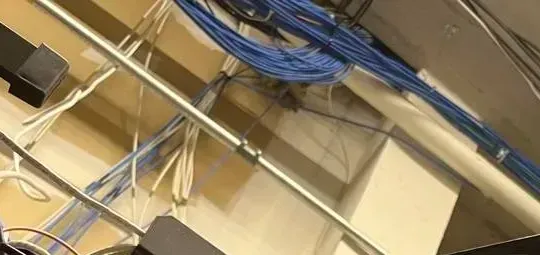
Follow the old wire to its end. In the cellar, the technician finds the bell transformer or old power supply, reads it, and tests every pair back to the doorway and up to each floor. In a single-family house that may be a single doorbell pair. In a co-op it is the riser to every apartment. The result goes straight into the written price: sound wire is reused and saves money, damaged wire is replaced, and the quote says which.

Most of what people believe about Landmarks and doorbells is rumor. The Commission has published its actual criteria in the health and safety chapter of its Permit Guidebook, and they are short enough to explain in full. They apply to buildings inside the Carroll Gardens Historic District and to individual landmarks such as the former Hans S. Christian Memorial Kindergarten at 236 President Street, built in 1897, and the 1853 building beside it at 238 President Street, which was converted into co-ops in 1984. Both were designated in September 2018. If your house is outside the district and is not individually designated, none of this is required, but the same guidance is a good description of how to put a door station on a 150-year-old doorway without spoiling it.
Staff can approve intercoms. The guidebook says the Commission's staff can issue permits for light fixtures and intercom panels that meet its criteria. That matters because a staff-level permit does not go to a public hearing. A door station designed to meet the criteria from the start is a routine application rather than a debate.
Where the panel may go. In the guidebook's words, "Light fixtures and intercom panels, as well as doorbells, must be installed within or adjacent to a door opening," and "An intercom can also be installed on a fence or wall in front of the entranceway." In a Carroll Gardens rowhouse that means the jamb or frame inside the parlor doorway, the plain masonry just beside it, or, where the house has an iron fence or a low wall at the front garden, that fence or wall. A panel halfway along the facade, on a window surround or on the face of the stoop does not fit.
How many. "A maximum of two light fixtures and one intercom panel can be installed per door opening." One door, one panel. A brownstone condo with three units does not get three doorbells side by side at the parlor door; it gets one three-button panel. Where the garden-floor apartment uses the door under the stoop, that is a separate door opening and can have its own panel.
What it looks like. "Design, size, and finish of installations must be compatible with the architecture of the building," and the guidebook adds that most equipment "must be as small as possible and painted to blend with surrounding building material, if possible." In practice that favors compact stations in dark bronze, black or a neutral finish, flush or nearly flush, with plain buttons. Large touchscreen panels designed for apartment lobbies are hard to justify on a district rowhouse door.
How it is fastened. This is the rule that most affects installation. Equipment must be attached to "mortar joints, plain masonry, wood, metalwork, or concrete paving at the areaway or sidewalk," and "must not be attached through cast iron or on any decorative surfaces." On a brownstone, that means anchors go into mortar joints or plain stone, not into carved brownstone, and never through the cast-iron railing or newel. On a wood frame, screws go into plain wood, not into molding.
How much wire shows. Conduit should be concealed through plain masonry or wall cladding. Where that is not possible, staff may approve "a maximum of approximately ten inches of visible conduit along a wall surface or architectural element," painted to match and secured into mortar joints. That ten inches is the practical limit we design to. It means the cable from a door station has to disappear into the wall, the frame or the vestibule almost immediately, which is why we plan the cable route before we promise a panel position.
What the application needs. The guidebook lists color photos of the entire building and close-ups of the proposed location, elevation drawings and large-scale details for visible facade installations, color specifications, manufacturer cut sheets for intercoms and a short written explanation. In-kind replacement of an existing intercom is exempt from the drawing requirement. And "ordinary maintenance, repair, and retrofitting of equipment do not require a permit," so a working system can be repaired without an application.
What the guidebook does not cover. It says nothing specific about card readers, keypads, electric locks or door stations beyond intercom panels and doorbells, and it directs owners to contact the Commission for guidance on items it does not address. If a co-op wants a keypad at a district doorway, the right move is to ask the Commission before ordering anything, and we prepare the photos and cut sheets for that conversation.
A door buzzer has two halves. The station and the answering stations decide who hears the bell. The release decides whether the door actually opens when someone upstairs presses the button. In a Carroll Gardens brownstone the second half is the hard one, because the door is usually old, heavy, made of wood that moves with the seasons, and set into a frame that the owner would like to keep intact.
Strikes in old frames. The most common release is an electric strike, a small powered keeper set into the door frame where the latch catches. When the button is pressed, the keeper lets the latch pass and the visitor pushes the door open. A strike needs a pocket cut into the frame, and on an original frame that pocket is permanent. We choose the smallest strike body that will hold the latch, fit it where the old keeper already was so most of the wood removed has already been removed once, and keep the cut inside the rebate so it does not show from the stoop. Where a frame has been patched or split before, it gets repaired before anything electric goes in.
Releases that live inside the lock. On a door whose owner does not want the frame cut at all, there is another approach: an electrified lock body or lever set in the door itself, with the power carried across the hinge side by a concealed transfer. The frame keeps its original keeper. It costs more, but it is the more reversible choice.
Fail-secure, almost always. Allegion's guide to fail-safe and fail-secure hardware explains the distinction simply: fail-safe products unlock when power is removed and fail-secure products stay locked, and with an electric strike a person inside can still leave by turning the knob or lever whether the strike is fail-safe or fail-secure. For a house or small building's street door, that makes fail-secure the normal choice. A power cut leaves the door locked from outside but still openable from inside, and residents can still use their keys.
Doors that move with the weather. Old wood doors swell in humid summers and shrink in dry winters. A latch that sits deep in the keeper in July may barely catch in January. We set the strike so the latch engages firmly across that range, adjust the closer so the door pulls itself fully shut, and check whether the door needs planing or rehanging first. If a door binds at the top or drags at the threshold, no strike will release it reliably, because the latch is jammed against the keeper by the door's own weight.
Double doors and vestibules. Many parlor doorways have a pair of doors, often with one leaf bolted shut and the other used daily. The release goes on the active leaf, and the inactive leaf's bolts must hold it firmly or the pair will rattle open under a push. Most households release the street door and keep the inner vestibule door on its own key; a second release is priced as its own line.
Latch protection. On some old doors there is a visible gap between the door edge and the frame at the latch. That gap is how latches get slipped with a card or a blade. When a strike is fitted, we look at whether the lock has a deadlatching plunger, the small secondary pin that stops the latch from being pushed back, and whether a latch guard or a tighter keeper would close the gap. These are small parts, but they decide whether a locked door is actually locked.

Carroll Gardens' businesses sit along two main corridors and a few cross streets, almost all of them in the ground floors of rowhouses and small walk-ups with apartments above. Shops mostly need a way to answer a delivery or staff door; offices and practices on upper floors need a street door their clients can find and that closes behind them; the apartments above need their own panel that never rings the business.
The older Italian food shops and bakeries Brick Underground's 2014 guide named, among them Caputo's Bake Shop, dating to 1904, and D'Amico Foods, at Degraw since 1948, with apartments above and cellar deliveries below.
Restaurants and a social club near Fourth and Fifth Places, the Hamilton Savings Bank building between Luquer and Nelson, and offices in converted rowhouse parlors.
The dining strip that grew from the 1990s, with restaurants that close late, staff who come and go through rear doors, and apartments above most storefronts.
Small shops, studios and services at the corners of the side streets, where a business door and a residential door often sit a few feet apart.
Therapists, lawyers, architects and other professionals in rowhouse ground floors and parlor floors, receiving clients through a residential-style front door.
Institutional buildings along Court Street, Clinton Street and the side streets, with side and hall doors that need their own stations and release schedules.
Food shops on Court Street mostly need one thing from a buzzer: a way for a driver at the side or cellar door to reach someone in the shop without walking around to the front. A station at the delivery door answered at the counter or on the owner's phone, with a release on that door, does the job. A sidewalk cellar door cannot take a release; there the station rings the counter and someone goes down to open up. G. Esposito & Sons, which moved to Court Street in 1977, closed in April 2023 after a century in business, and whoever takes over a space like that inherits its doors; the first job in a new lease is often finding out what the old entry hardware still does.

One per door opening. The Commission's Permit Guidebook says "a maximum of two light fixtures and one intercom panel can be installed per door opening." For a brownstone divided into three condos, that means one panel with three buttons at the parlor door, not three separate doorbells side by side. If the garden-floor unit has its own door under the stoop, that is a second door opening and can have a panel of its own.
That single panel has to sit within or adjacent to the door opening, or on a fence or wall in front of the entranceway, and its design, size and finish must be compatible with the building. We size the panel to the number of households, choose a compact station in a finish that blends with the door or stone, and plan its position so staff can approve it at the counter rather than sending it to a hearing.
Very little. The guidebook asks for conduit to be concealed through plain masonry or wall cladding, and where that is impossible, staff may approve "a maximum of approximately ten inches of visible conduit along a wall surface or architectural element," painted to match the background and secured into mortar joints where possible.
On a brownstone that usually means the cable leaves the back of the station and goes straight through the jamb or the plain masonry beside the door into the vestibule, then down to the cellar inside. We look for an existing path first, such as the hole the old bell wire used, before drilling anything new. Where the panel goes on a front fence or wall, the cable runs underground or inside the post, not across the face of the stoop.
The guidebook lists color photos of the entire building and close-ups of the proposed location, elevation drawings and large-scale details of visible facade installations, color specifications or paint cards, manufacturer cut sheets for the intercom and a written explanation. In-kind replacement of an existing intercom is exempt from the drawing requirement.
From our walkthrough we can supply the close-up photos, the manufacturer cut sheet with real product photos, the finish, the exact mounting position and fastening points, and a description of the cable route and how much of it will show. Owners who file themselves, or whose architect or expediter files, use those pieces directly. The Commission decides; we make sure what is described already meets its published criteria.
Possibly, but ask first. The guidebook's intercom criteria cover intercom panels and doorbells, and it says it does not address items such as card readers, keypads and electric locks, directing owners to contact the Commission for guidance. A keypad built into the intercom panel itself is easier to describe as one intercom panel than a separate keypad box beside the door.
If a board wants code entry on a district doorway, we price a combined station with a keypad and a separate keypad, prepare photos and cut sheets for both, and the board or its expediter asks the Commission which it will accept before anything is ordered. Off the district, the board's own preference decides.
Mostly, if it is planned that way. An electric strike needs a pocket in the frame, and that pocket stays. We keep it small by fitting the strike where the old mechanical keeper already sat and choosing the slimmest body that will hold the latch, so a future restorer finds a neat, patchable mortise rather than a hacked-out frame.
If you want the frame left alone entirely, the alternative is an electrified lock or lever in the door with a concealed power transfer at the hinge edge. The frame keeps its original keeper. It costs more than a strike, and the door gets a small channel at the hinge side that cannot be seen when the door is shut, but it is the more reversible choice for owners who expect to restore the original hardware later.
Only if the door is fixed first. A strike releases the latch; it does not move the door. If the door is binding at the top or dragging at the sill, the visitor pushes against the door's own friction, and in the worst case the swollen door presses the latch so hard against the keeper that the strike cannot free it.
At the walkthrough we open and close the door, look at the gaps and check the hinges. If the door needs planing, rehanging or new hinge screws, that goes on the price as door work, before the strike goes in. Then we set the strike so the latch catches firmly in both the swollen summer door and the shrunken winter one, and adjust the closer so it pulls the door fully shut in either season.
It depends on how the strike is powered. Older systems and many basic strikes run on alternating current, which makes the solenoid vibrate audibly while the button is held, the sound that gave the buzzer its name. Strikes run on direct current, which most modern systems use, simply click open and stay silent. The buzz is useful in one way: the visitor hears that the door is released. With a silent strike, a small sounder or a light on the door station tells the visitor when to push.
If your old strike hums but the door will not open, the hum tells you power is reaching the strike, so the fault is usually mechanical: a keeper out of line with the latch, a door that has dropped, or a worn strike. A strike that is silent when the button is pressed points to the wiring or the power supply instead.
A strike does not change it by itself; the lock and the gap do. A latch can be slipped when there is a gap between the door edge and the frame and the lock has no working deadlatch, the small plunger beside the latch that stops it being pushed back when the door is closed. Old doors that have shrunk often have both problems.
When we fit a release, we check that the lock's deadlatch actually engages the strike, which depends on the strike's lip and position, and we look at whether a latch guard or a tighter keeper would close the gap. Getting the deadlatch to engage is part of a correct strike installation, not an extra, and we test it by trying to push the latch back with the door closed before we leave.
Name an owner of the system before it is installed. We ask the association to choose one contact who approves the quote, receives the hand-over package and holds the admin login, with a second owner as backup. That person can add and remove users, change codes and call for service without having to gather all the owners.
The hand-over package is what makes that work: a one-page wiring note showing where the power supply is, which pair goes to which unit and where the cable runs, the admin logins, the model numbers and a dated test record. File it with the association's papers. When an owner sells, the buyer gets their own access and the seller's is removed, and nobody has to remember how the system was put together.
"Virtual doorman" is a marketing term for services in which a remote attendant answers the building's door station, checks the visitor or courier over video and releases the door or a package room. Brick Underground's 2023 guide mentions one at a converted three-condo brownstone on President Street. It does not replace the door station, strike and closer; it sits on top of them, so the building still needs working entry hardware.
For a small brownstone building the question is whether the monthly fee is worth it compared with residents answering on their own phones. Some buildings like it for package handling; others find that a video station with phone answering covers what they need without a subscription. We install the hardware either way and tell you which door stations a given service supports before anything is ordered.
A code station or keypad at the staff door, with a separate code for each employee. When someone leaves, the owner deletes their code from a phone or the panel the same day; nobody has to change the lock or chase a key. Most code stations also keep a log of which code opened the door and when, which helps sort out who was in early for prep.
The same station can include a call button for deliveries, ringing the kitchen or the owner's phone. If the back door is a steel door in a steel frame, a fail-secure strike suits it, and staff can always leave by the lever. If it is a fire-rated door, the release has to be one listed for that use, and we say which before quoting.
Storefront doors with narrow aluminum stiles usually have a deadbolt or a narrow-stile lock rather than a latch, so a standard strike often does not apply. The usual options are an electrified version of the narrow-stile lock or a strike made for that hardware, or, where the door has an exit device, an electrified exit device. A magnetic lock is sometimes proposed because it is easy to mount on aluminum, but on a business door it brings the building code's sensor-release requirements with it.
Which option fits depends on the lock already in the door and whether the shop wants the door released for visitors all day or only for deliveries before opening. We look at the lock body and the stile width at the walkthrough and price the option that keeps the door locking every night.
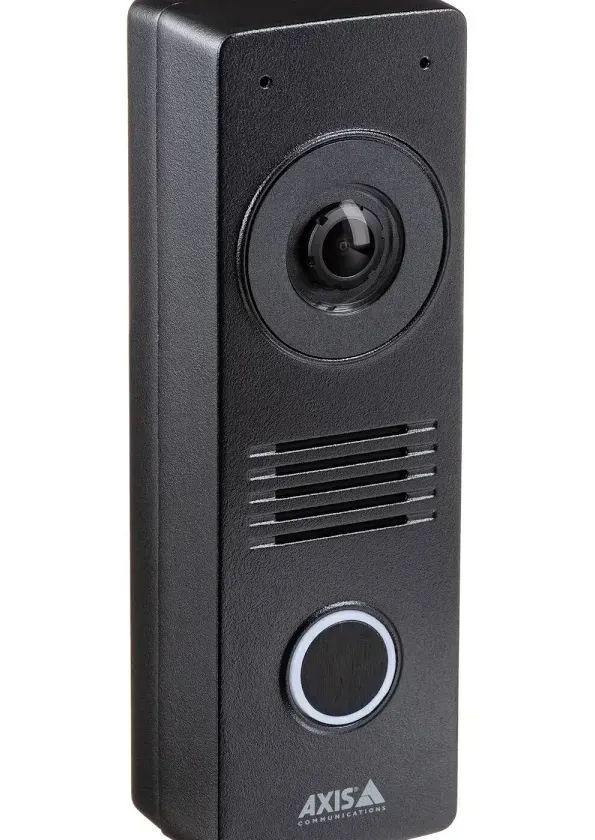
We quote a reliable non-branded system by default and install a named brand when an owner or board asks for one; the intercom brands we work with include Aiphone, ButterflyMX, 2N, Akuvox, Comelit and DoorBird. These are the kinds of equipment that come up on Carroll Gardens doorways, and where each one fits.
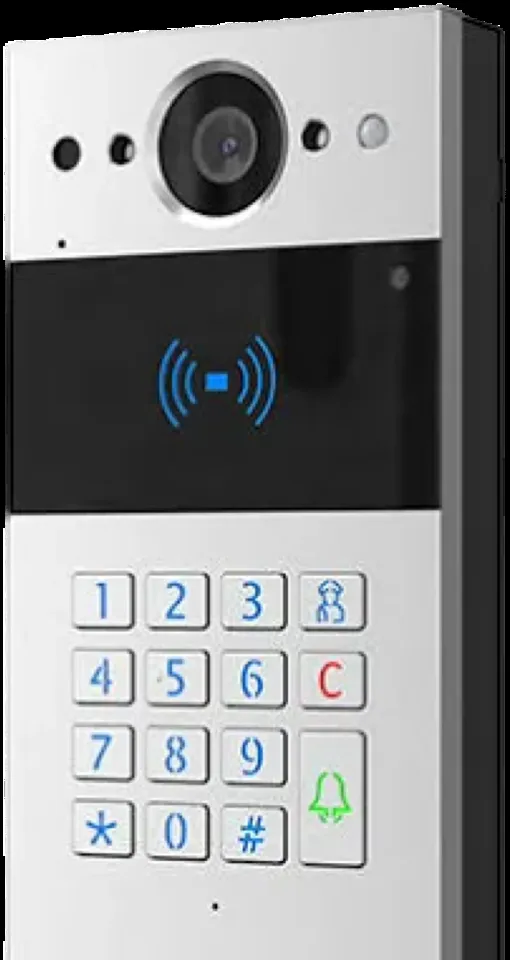
A small panel with one to four lit buttons and a speaker, wired to talk-back stations in each household. No camera, no internet, the lowest price on the list and the easiest panel to make discreet on a district doorway.
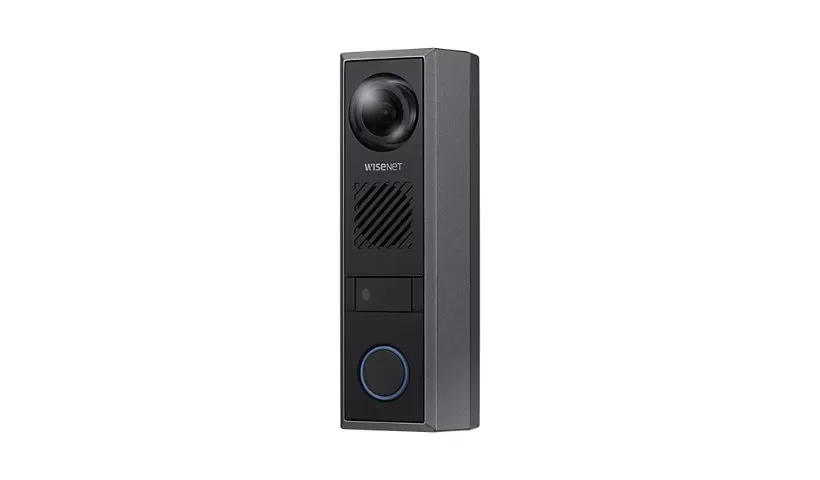
A camera station for houses and small condos, wired to monitors in each household, with phone answering on many models for owners who want to see visitors while away.
Systems that carry power, voice, video and the release over one pair, so a sound old bell pair or co-op riser can be reused rather than fished through finished plaster.
Door stations with a keypad for staff, residents or contractors, best suited to shops, offices and newer buildings, and planned with the Commission first on a landmarked doorway.
Panels that call residents' phones or an app, with a wired station or landline fallback so residents who do not want an app can still answer.
Fail-secure electric strikes for wood and steel frames, electrified locks for doors whose frames should not be cut, narrow-stile hardware for storefronts, and closers set so the door latches every time.
Most Carroll Gardens houses and small buildings choose between three approaches. The table compares them on the points that matter on these doorways.
| What matters | Compact audio station | Video station with monitors | App-based or cloud panel |
|---|---|---|---|
| Typical Carroll Gardens fit | Two- and three-family houses, small co-ops on a budget | Single-family brownstones, brownstone condos | Newer boutique condos, offices |
| Panel size on the doorway | Smallest | Small to medium | Often large, with a screen |
| See the visitor | No | Yes | Yes, on phones |
| Cable inside | Door to each household | Door to each household | Door to power and network |
| Works without internet | Yes | Yes, except phone answering | Limited |
| Possible monthly fee | None | Usually none | Often, per unit or per door |
| Brooklyn list range | $400–$900 for houses | $700–$1,800 for houses | From about $2,500 for buildings |
On a district doorway the panel size row often decides it. A compact audio or video station is easy to keep within the Commission's "as small as possible" language; a lobby-style touchscreen panel is not.
National alarm and doorbell brands are built around one household and one front door. A Ring or SimpliSafe video doorbell on a single-family brownstone can be a reasonable choice for an owner who mostly wants to see visitors on a phone, and one Brownstoner forum owner described exactly that, wiring a SimpliSafe doorbell camera into the foyer and using plug-in chimes because "the doorbell wiring was too old." What those products do not do is give three condo owners their own buttons, ring only the right unit, release the street door for one household and not the others, or reuse a co-op riser. ADT's focus is the alarm and its monitoring rather than multi-household entry. A local installer's job is the shared door: one panel, one button per household, a strike or electrified lock fitted to an old door, and a cable route that keeps the doorway clean.

The claims below are typical of what national cost guides, vendor blogs and AI summaries say about buzzers and intercoms. Each one is checked against what is actually true for Carroll Gardens' houses and small buildings.
This is the most common rumor, and it is wrong. The Landmarks Preservation Commission's Permit Guidebook says its staff can issue permits for intercom panels that meet published criteria, which means a door station that follows them does not need a public hearing.
The criteria are specific: the panel goes within or adjacent to the door opening or on a fence or wall in front of the entranceway, one intercom panel per door opening, with a design, size and finish compatible with the building, fastened only into mortar joints, plain masonry, wood, metalwork or paving, and never through cast iron or decorative surfaces.
So the real question for a district house on Carroll or President Street is not whether an intercom is allowed but which panel and which position will meet the criteria. Answered at the walkthrough, that question turns the application into routine paperwork.
Partly true, and the difference matters. The guidebook says "ordinary maintenance, repair, and retrofitting of equipment do not require a permit," so fixing a dead station, replacing a failed strike behind the frame or rewiring inside the house does not need an application.
A new or different panel on the doorway is a visible facade installation, and the guidebook's application list covers it. What is exempt for an in-kind replacement is the drawing requirement, not the application itself.
The safe reading for a district owner: repairs go ahead; a new or visibly different panel gets a staff-level application with photos and cut sheets. If you are not sure which side of that line a change falls on, ask the Commission before ordering equipment.
For a single-family brownstone, it can. For the rest of Carroll Gardens, where so many houses are divided into condos, co-ops or rental floors, it does not. A single doorbell has one button that rings one account; it cannot ring each household separately or release the shared street door for one household only.
One Brownstoner forum owner with an old two-apartment intercom asked whether a battery doorbell could simply be mounted over it. The catch is that the old panel would still control the buttons and the release, and the new camera would only watch. Owners also reported finding "the doorbell wiring was too old," which a battery unit sidesteps but a shared system cannot.
The Multiple Dwelling Law's intercom rule does use a size threshold: Class A buildings with eight or more apartments, built or converted after January 1, 1968, and older buildings when a majority of tenants request one in writing. Several boutique co-ops in Carroll Gardens have exactly eight units, according to Brick Underground's 2023 guide.
The threshold is only half the story. Habitat Magazine's 2024 article notes that the city's housing code requires an installed intercom to be kept working and that courts have treated a working intercom as an essential service under the warranty of habitability.
So a small co-op that has an intercom cannot simply let it die because the building is under the threshold. For a board, a dead system is a liability as well as an annoyance.
Not in our experience, and not according to the technicians Brick Underground interviewed. Its 2019 repair guide quotes Daniel Vasquez saying "It's all in the wire connections" and notes that even outdated systems typically have core wiring that is fine.
In a Carroll Gardens rowhouse that matters, because new cable has to travel through original plaster, past moldings and up stairwells. A two-wire multi-tenant system can often run on an existing bell pair or co-op riser that tests sound.
Some old wire really is finished, cracked insulation, cut runs from past renovations, pairs that short to each other. The only way to know is to test every pair before quoting, which is what our walkthrough does, and the written price says which runs are reused and which are new.
HomeAdvisor's national guide does put the average at $2,500, within a range of $1,500 to $15,000, and Swiftlane's guide to apartment intercoms puts modern IP and video systems at $1,000 to $5,000 or more per entry door. Those figures mix houses, apartment buildings and commercial jobs across the country.
A Carroll Gardens single-family brownstone or two-family house usually sits below that average, because it has one door and a few households: $400 to $900 for an audio system and $700 to $1,800 for video on our Brooklyn list. A boutique co-op or newer condo sits nearer the national figures, from about $2,500.
What actually moves a Carroll Gardens price is not the national average but the door: an original door that needs work before a release can hold, an electrified lock instead of a strike to spare the frame, and a cable route that keeps the doorway clean.
App-based and cloud panels have real advantages, especially for managing users in a building with turnover. They are rarely free over time. Swiftlane's guide notes software subscriptions commonly add $5 to $15 per unit per month, or $30 to $100 per door per month.
They also bring obligations in residential buildings. The city's Tenant Data Privacy Law requires owners of buildings using smart access to get consent before collecting data, limits what may be collected, requires authentication data to be destroyed within 90 days unless anonymized, and bars owners from requiring smart access to enter a tenant's own apartment.
For a two- or three-unit brownstone condo, a wired video system with optional phone answering often does everything an app panel does, without the subscription. We price both when a board is undecided.
If you cannot tell whether the problem is the panel, the wire, the strike or the door itself, send a photo of each and ask. Call now at (347) 934-8335, send a fast quote request, or speak to a tech on WhatsApp.
Tell us about the doorway and the households behind it.
Send the doorway from the sidewalk, the frame and latch, any old panel or button and where its wire ends, with the address, the number of households or units and who decides for the building.
We check whether the building is in the historic district or individually designated, and whether a homeowner, condo association, co-op board or managing agent approves the work.
A technician tests the old wire and power, checks how the door closes and latches, looks at the surround and railings, and traces a cable route to every household.
Door station, answering stations, release, power supply, cable route and labor, in writing, with cut sheets and photos that can go straight into a Landmarks application.
The door is made to close and latch on its own, and the strike or electrified lock goes into a sound frame so the release works in every season.
Low-voltage cable runs through the cellar, closets and chases to the door station and every household station, with as little as possible showing on the front.
Every button is rung, every station talks and releases, the deadlatch is checked, and the door is watched closing and latching after each release.
The owner, board or manager gets the wiring note, admin logins and test record, and each household is shown how to answer, open and add or remove users.

The 1897 former kindergarten at 236 President Street, designated an individual landmark in September 2018 together with its neighbor.
The 1853 Anglo-Italian building beside the kindergarten, converted into co-ops in 1984 and designated with it in 2018.
The Court Street church dating to 1853, one of the institutional buildings along the neighborhood's main commercial street.
The short mews between Luquer and Nelson Streets, one of the few lanes off the neighborhood's regular street grid.
The park bounded by Court, Smith, Carroll and President Streets, bought by the city in 1853 and among the oldest parks in Brooklyn, with brownstone condos facing it.
The F and G subway stop on Carroll Street, where many visitors and guests arrive before walking to a Carroll Gardens doorway.
We also serve Cobble Hill, Boerum Hill, Gowanus, Red Hook, the Columbia Street Waterfront and Park Slope, all at the same Brooklyn rate. See our door buzzer installation in Brooklyn page for the full borough, or browse neighborhood pages such as door buzzer installation in Bedford-Stuyvesant and Bay Ridge door buzzer installation.
Carroll Gardens is priced on our published Brooklyn door buzzer list. The ranges below are installed prices including equipment, power supply, release, cable and labor; the exact figure is set in writing after the walkthrough.
| Item | Brooklyn price | Typical Carroll Gardens job |
|---|---|---|
| Audio / small system | $400–$900 | Compact one- to three-button station at the parlor door, talk-back stations, strike on a sound frame, reused or new bell pair |
| Video / mid-size system | $700–$1,800 | Video station for a single-family brownstone or a two- to four-unit condo, monitors or phone answering, release on the door |
| Multi-unit building | $2,500–$10k+ | Panel for a small co-op or boutique condo, tested or new riser, apartment stations, strike, closer and battery-backed power |
| Service call booked online | $250 | Diagnosis of an existing system; applied toward the work |
What usually pushes a job toward the top of its range in Carroll Gardens: an original wood door that needs planing, rehanging or frame repair before a release can hold; an electrified lock with a concealed power transfer instead of a strike, to spare the frame; a new cable route because a past renovation cut the old bell wire; video for every household instead of one; a co-op riser that has to be replaced floor by floor; and a second release on the inner vestibule door. What keeps a job toward the bottom: a bell pair or riser that tests sound and can be reused, a door that already closes and latches well, one or two households, and audio stations or phone answering instead of monitors.
If the same visit also includes another low-voltage job, such as a camera over the doorway, installing them together means one technician, one visit and one cable route, and most customers save $200 to $400 in labor. The Landmarks application itself is the owner's or their architect's filing; we supply the photos, cut sheets and installation details it needs as part of the quote.
Full terms — including 50% deposit, one-year parts-only warranty on AESS-supplied products, and the late-fee schedule — are set out in the service agreement.
Send three photos, the doorway from the sidewalk, the frame and latch close up, and the old panel or button, and tell us how many households share the door. We tell you which range fits and what would move it. Call (347) 934-8335, speak to a tech on WhatsApp, or use the fast quote form.
Three typical Carroll Gardens jobs, each priced inside the matching range on our Brooklyn list. The exact figure comes from the walkthrough.
A compact lit multi-button station at the shared door of a two- or three-family house or small brownstone condo, a talk-back station for each household, a fail-secure strike on a sound frame, the closer adjusted and a power supply in the cellar.
A small video door station within the parlor doorway of a single-family brownstone or two- to four-unit condo, a monitor per household or phone answering, a release on the door and a cable route that keeps the doorway clean.
A building panel for six to seventeen units, a riser tested pair by pair or replaced, audio or video stations in every apartment, strike, closer, door switch and battery-backed power.
Bring your own equipment. If you have already bought a door station, video doorbell or intercom kit, we can install it as long as it suits the door, the number of households and the building's power, and, on a district doorway, the Commission's criteria for size and position. Labor for customer-supplied equipment is quoted flat at the walkthrough. Because the equipment is yours, the manufacturer's warranty covers it, and our workmanship terms cover the installation.

Door stations, a button per unit, releases on original doors and Landmarks-ready plans. Request a quote
Building panels, risers, staff doors and delivery doors. Call (347) 934-8335
The same list in every neighborhood. Brooklyn door buzzer installation
Houses and buildings in every borough. NYC door buzzer installation
On a district house or individual landmark, the exterior panel waits for the permit. Work that does not touch the facade, such as testing the old wire, running new cable inside the cellar and closets, and setting up the indoor stations, can be done first, so the doorway itself takes only a short visit once the permit arrives.
Usually yes. The Commission's guidebook says ordinary maintenance and repair of existing equipment do not require a permit, so a broken splice, a failed station or a worn strike can be repaired on the $250 diagnostic visit while the application for a new panel is pending.
It would need fuller review by the Commission rather than a staff permit, which takes longer and is less predictable. In our experience it is almost always better to change the design, a smaller panel, a different finish or a position inside the door opening, than to argue for one that falls outside the criteria.
Yes. We send them the cut sheet, the finish, the mounting position, the fastening points and a description of the cable route and how much of it will show, so the door station can be included in their filing alongside any other work on the facade.
Some door stations and video doorbells work with those platforms and many building intercoms do not. If that matters to you, tell us before the quote, and we will name only stations that support it and say which features carry over, such as the video feed, the chime or the release.
Yes, with the fail-secure strikes we normally install. The strike controls only whether the door can be pushed open from outside; from inside, the knob or lever retracts the latch as it always did, whether the strike has power or not.
Yes. An electric strike works alongside the lock already in the door, so residents keep using their keys as before. An electrified lock replacing the old lock body comes with its own keyed cylinder, and we can often key it to match the house's existing keys.
When the door opens for a credential rather than a person answering: a code, a fob, a card or a phone. A buzzer lets someone inside decide; access control lets the system decide. Many small Carroll Gardens buildings combine both, with buttons for visitors and codes for residents, staff or contractors.
That depends on the agreements involved, not on us. Habitat Magazine quotes an attorney saying a neighbor who caused damage may be responsible, depending on the lease or alteration agreement. Photograph the damage before it is touched, and our dated service record will show what was found and what was repaired.
If the goal is a working, tidy doorway for the sale, an audio system done well is enough, and it is the lower range on our list. Video is worth it if you will use it while you live there. Either way, a buyer's inspector notices a dead bell board and a door that does not latch more than the type of station.
The price list is the same. What can add cost on a district doorway is the design work to meet the criteria: a compact station rather than the cheapest one, an electrified lock instead of a strike if the frame should not be cut, and a concealed cable route that keeps visible conduit under about ten inches.
Door Buzzer Installation Brooklyn NY | Brownstones & Condos · Door Buzzer Installation NYC | Apartment & Building Entry · Door Buzzer Installation Manhattan NY | Apartments & Co-ops · Door Buzzer Installation Queens NY | Co-ops & Apartments · Door Buzzer Installation Bronx NY | Co-ops & Apartments · Door Buzzer Installation Staten Island NY | Homes & Apts · Door Buzzer Installation Long Island NY | Nassau & Suffolk · Door Buzzer Installation Hudson Valley NY | Apartments · Door Buzzer Installation Nassau County NY | Homes & Co-ops · Door Buzzer Installation Suffolk County NY | Homes · Door Buzzer Installation Westchester County NY | Co-ops · Door Buzzer Installation Rockland County NY | Homes & Apts · Door Buzzer Installation Orange County NY | Homes & Farms · Door Buzzer Installation Putnam County NY | Lake Homes · Door Buzzer Installation Dutchess County NY | Homes · Door Buzzer Installation Ulster County NY | Kingston
Door Buzzer Installation Bath Beach Brooklyn NY · Door Buzzer Installation Bay Ridge Brooklyn NY · Door Buzzer Installation Bedford-Stuyvesant Brooklyn NY · Door Buzzer Installation Bensonhurst Brooklyn NY · Door Buzzer Installation Bergen Beach Brooklyn NY · Door Buzzer Installation Beverley Square Brooklyn NY · Door Buzzer Installation Boerum Hill Brooklyn NY · Door Buzzer Installation Brooklyn Navy Yard, Brooklyn NY · Door Buzzer Installation Brooklyn NY | Brownstones & Condos · Door Buzzer Installation Brownsville Brooklyn NY · Door Buzzer Installation Bushwick Brooklyn NY · Door Buzzer Installation Cadman Plaza Brooklyn NY · Door Buzzer Installation Canarsie Brooklyn NY
Structured Cabling Installation Carroll Gardens Brooklyn NY · TV Installation Carroll Gardens Brooklyn · Security Camera Installation Carroll Gardens Brooklyn NY · Alarm Installation Carroll Gardens Brooklyn NY · Door Buzzer Repair Carroll Gardens Brooklyn NY · Fire Alarm Installation Carroll Gardens Brooklyn NY · Access Control Installation Carroll Gardens Brooklyn NY · Intercom Installation Carroll Gardens Brooklyn NY
Send a photo of the doorway from the sidewalk, the frame and latch, and any old panel or button, with your street, the number of households and whether the house is in the historic district, and we will tell you what the door needs and where it sits on the Brooklyn list. Call or text (347) 934-8335, message us on WhatsApp, or use the request form. Licensed under NYS license #12000287431, rated 4.7★ across 201 Google Reviews, owner-operated since 2002.