First Entry Systems Β· Strikes That Hold a Pried Frame Β· Audio, Video and Phone Answering Β· Brooklyn Rate
Door buzzer installation in Bushwick is very often a first installation, not a swap. The City Planning Department's Bushwick housing study found that nearly eight in ten buildings here went up before 1947 and that more than half of the neighborhood's apartments sit in buildings with fewer than six units, which is exactly the kind of building the state's intercom rule does not reach automatically. So a lot of Bushwick street doors still open with a key and nothing else, or with a bell board that stopped working decades ago. This page explains what a new system involves in the buildings that make up the neighborhood, from the brick and frame walk-ups between Broadway and the Queens line to the factory lofts near the Morgan Avenue stop and the newer rentals near the old Rheingold brewery site, what the law asks of owners, and what each kind of job costs on our Brooklyn list.
Reviewed and updated November 11, 2026, against the NYC Department of City Planning's Bushwick Neighborhood Plan housing chapter; New York's Multiple Dwelling Law Β§50-a; HPD's self-closing door rules and Local Law 71 of 2022; the NYC Loft Board's Fact Sheet #1 on interim multiple dwellings; NYS Homes and Community Renewal Fact Sheet #24 on major capital improvements; City Limits' July 2019 report on the Hope Gardens PACT conversion; New York YIMBY's report on 123 Melrose Street at the former Rheingold Brewery; 1010 WINS on the April 2022 forced entry at 10 Goodwin Place; Patch on the 2019 package theft at 11A Eldert Street; Brick Underground's NYC intercom guide; Brownstoner forum threads on buzzers and electric strikes; a 2025 r/AskNYC thread on unlabeled doorbells; Arts in Bushwick's 2026 Open Studios schedule; the HomeAdvisor and Swiftlane cost guides; Allegion on fail-safe and fail-secure hardware; Aiphone's GT series specifications; the International Building Code's sensor-release rules; and the 2010 ADA Standards. Β· Abstract Enterprises Security Systems, NYS license #12000287431 Β· crews dispatched from our Troy Avenue office in Brooklyn

Owner-operated since 2002 Β· Thousands of jobs completed Β· Booked within 2 hours
Quick answer: door buzzer installation in Bushwick costs $400 to $900 installed on our Brooklyn list for an audio buzzer with a door release on a one- or two-household house, $700 to $1,800 for a video entry panel with phone release on a frame house or small building, and from about $2,500 to past $10,000 for a directory system wired to every apartment in a larger building. That price covers the door station, the stations or app answering in each unit, the electric strike and any closer work on the street door, the power supply, the cable and the labor, and it is agreed in writing before any equipment is ordered. Most Bushwick jobs are first systems in walk-ups of three to eight apartments, and those fall between the video range and the bottom of the multi-unit range depending on whether tenants want video and whether any old wire survives. What usually decides the number is the street door itself: a pried, patched frame or a door that will not latch has to be fixed before a release can go on it. Send photos of the door to (347) 934-8335 or on WhatsApp, and we reply with the range that fits, usually within two hours during working hours.
Bushwick is Brooklyn Community District 4, the wedge between Flushing Avenue, Broadway, the Queens line and the Cemetery of the Evergreens, and it is overwhelmingly a neighborhood of renters in small buildings. The City Planning Department's housing chapter for its Bushwick Neighborhood Plan puts renters at about nine households in ten, says more than half of all apartments are in buildings with fewer than six units, and says nearly 80 percent of the buildings were built before 1947. Those are the walk-ups, the two- and three-family houses and the mixed store-and-apartment buildings that line Himrod, Stanhope, Menahan, Linden and the other side streets between Bushwick Avenue and Wyckoff Avenue.
For door entry, those three numbers explain almost everything. New York's Multiple Dwelling Law, in section 50-a, requires an intercom with a remote door release only in apartment buildings with eight or more units that were built or converted after January 1, 1968. A pre-war building gets one when tenants in a majority of its apartments ask in writing, and a building of under eight units built later is outside the intercom clause entirely. Most Bushwick buildings are both older and smaller than the rule. The result is a neighborhood with an unusual number of street doors that have never had a working buzzer, and of buildings where the bell board out front was put in by a past owner, failed, and was simply abandoned.
That leaves the people inside doing what people in buildings without an intercom always do. They walk down three flights to answer, they hand out keys, they ask friends to text from the stoop, and they leave the street door unlatched for a delivery that never quite arrives. In a 2025 thread on r/AskNYC, a tenant who found that only their apartment had a plain unlabeled doorbell instead of a voice intercom summed up the result: "I get buzzed all day for other apartments." On r/Bushwick, a resident describing a stranger let into their building at 2:30 in the morning put the other side of it in one line: "No one should be buzzing random people." A proper installation answers both, with a labeled button for every apartment and a way for each household to hear, and ideally see, who is at the door before opening it.

The door matters as much as the electronics. The neighborhood's housing stock is old, and HPD's records show how much of it needs work: the planning study counts more than 37,000 HPD inspections and over 50,000 violations in Bushwick between 2015 and 2018, and says roughly one home in six had three or more maintenance problems at once. Street doors are part of that. In April 2022 a burglar got into 10 Goodwin Place, according to 1010 WINS, "through forced entry by manipulating the front door with tools," then pried open the mailboxes inside. In December 2022 News 12 carried a Bushwick tenant's complaint under the headline "There is no protection," about building doors that would not latch. A buzzer fitted to a door like that is worse than useless, because it tells tenants the door is secure when it is not. Every installation we quote in Bushwick therefore starts with the door, the frame and the latch, and only then moves to the station and the cable.
The newer parts of the neighborhood bring a different set of problems. Bushwick's factory buildings, around the Morgan Avenue stop and along the industrial blocks near Flushing Avenue, have been turning into lofts and studios since the 1990s, many under the state's Loft Law, and their entrances were designed for freight, not visitors. The large rentals built since 2015, like the 385-apartment building at 123 Melrose Street on the former Rheingold Brewery site, arrive with developer-chosen systems that owners later want to change. And NYCHA's Hope Gardens group, about 1,315 apartments that moved to private management under the city's PACT program, was planned for intercom and entrance work as part of that conversion. Each of these is a different job, and this page takes them one at a time.
Where this page applies. It covers Bushwick between Flushing Avenue and Broadway, from the Williamsburg edge out to the Queens line at Ridgewood and down to the Cemetery of the Evergreens, in ZIP codes 11206, 11207, 11221 and 11237, which Bushwick shares with neighboring parts of Bed-Stuy and Williamsburg. Buildings on the Ridgewood side of the county line are served from our Queens list instead, and Bed-Stuy buildings across Broadway have their own page.
Not every call that starts with "we need a new buzzer" ends with one. A bell board that died years ago may still have a sound riser behind it, and a door that clicks without opening usually has a strike that is out of line with the latch rather than a failed system. A newer panel that nobody can manage is often fine apart from a lost admin login after a sale. Before we price a whole new installation in an older Bushwick building, we look at what is already in the walls, because reusing good cable is the single biggest saving available on a walk-up.
If the street door is stuck open or cannot be locked right now, say so when you call (347) 934-8335, because that is an HPD Class C condition and the first thing on our list. A diagnosis of an existing system is the $250 service call booked online, and the $250 goes toward whatever repair or installation follows. Most single faults are fixed in one visit of an hour or two; a building that needs a new system gets a written installation price from the same visit.
Every service below is priced from our Brooklyn door buzzer list. The number of apartments sets the size of the system, the street door sets what release hardware it can take, and the building sets how the cable gets from the door to each unit.
A labeled button for every apartment, a station in each one and a release on the street door, for walk-ups and frame houses that have only ever had a key.
New panels and stations in buildings where an old board still hangs by the door, reusing the riser when it tests sound and replacing it when it does not.
A camera door station with apartment monitors, handsets or phone answering, so tenants on the third floor can see the stoop before they release the door.
Fail-secure electric strikes with latch guards, frame repair where old break-ins have split the wood, and closers set so the street door latches every time.
Directory panels for converted factory buildings, with each loft or studio on its own button and the pedestrian door kept separate from any freight entrance.
An apartment door on Knickerbocker, Myrtle, Wyckoff or Broadway on its own system, kept clear of the store's gate, hours and staff.
Lobby panels, code entry and app answering for buildings built since 2010, including changes to a developer's original system.
A wiring note, a directory list and a short description of the work, for the owner's files, a managing agent or a lender.

Bushwick's housing comes in a handful of recognizable forms, and each one changes where the door station goes, what the street door will accept and how cable reaches the top floor. The Community Board's own history of the neighborhood describes two- to six-family houses as the core of it, with larger apartment houses from the 1920s, the mansions brewers and doctors built on Bushwick Avenue between 1880 and 1913, and the factories that later became lofts.
A brick four- to eight-family from before the war, with a stoop or a street-level door, a narrow hall and no system at all, or a dead board nobody remembers working.
A wood house, often under later siding, that went from one or two families to three, with the street door shared and the bell still wired for one.
A large house from the brewery years, divided long ago, with a grand front door, tall frames and apartments that were never planned around a buzzer.
A former factory or warehouse lived in as lofts, with a freight entrance, a separate pedestrian door and units spread across big open floors.
A rental or condo built since 2010, from four-story infill on a single lot to the large buildings near the Rheingold site, with a panel chosen before anyone moved in.
A mixed-use building on Knickerbocker, Myrtle, Wyckoff or Broadway, where the apartment door sits beside a shop entrance and a roll-down gate.
The typical first installation in Bushwick is a brick walk-up of four to eight apartments where the street door has a lock cylinder, a knob or lever, and nothing else. Visitors call or text from the sidewalk, couriers leave parcels on the stoop, and tenants come down to answer. Because the building is pre-war and small, no rule required a previous owner to put anything in, and none did. Everything therefore has to be added: a panel with a labeled button for every apartment, a station in each apartment, a power supply, a release on the door and cable from the door to every floor.
The good news in a walk-up is the shape of the building. Apartments are stacked one or two per floor around a single stair, so one cable riser up the stair hall, or up a closet or dumbwaiter shaft that lines up floor to floor, reaches every unit. We run that riser in a painted surface raceway where there is no concealed path, set the station in each apartment on the wall nearest the entry door, and put the power supply in the cellar or a locked closet near the door. On a building of this size the installation is usually one working day once the door hardware is ready, which matches what Brick Underground's sources told it about a five-apartment building in 2019.
The choices that change the price are audio or video, handsets or phone answering, and the street door. Many owners of these buildings start with audio and a release, because it is the cheapest working system and needs no internet, then add video later. If that is the plan, we run cable on day one that can carry video, so the upgrade is a change of panel and stations rather than a second pull up the stairs.
Bushwick's early houses were largely wood frame; a New York Times description from the mid-1960s, quoted in the neighborhood's Wikipedia entry, called it "a neatly maintained community of wood houses." Many of those houses are now two- or three-family homes, with the owner on one floor and tenants on the others, often behind vinyl or asphalt siding added later. The street door is shared, and the bell, if there is one, rings in only one apartment. The other households rely on phones and the stairs.
Once a house holds three families living independently, it is a multiple dwelling under state law, and the hallway and entrance doors fall under HPD's self-closing rules. For the buzzer, the plan is a two- or three-button station at the street door, a station or app for each household, and a release on the street door that every household can use. In a wood house the cable route is usually easier than in brick: a closet stacked floor over floor, the space beside the stair stringer or a chase behind a kitchen wall will take a low-voltage cable without opening finished plaster. We avoid running cable outside under the siding when an inside route exists, because it is harder to service and exposed at every joint.
The owner usually wants one thing the tenants do not: a way to see the door from their own floor without being the building's doorbell. A video station on the owner's floor with audio stations for the tenants, or phone answering for all three, gives each household its own button and keeps the owner out of the middle of everyone else's deliveries.
The mansions on Bushwick Avenue and around Irving Avenue were built as single houses for brewers, doctors and merchants between about 1880 and 1913, and the Landmarks Preservation Commission has called the Bushwick Avenue and Linden Street group one of the finest runs of Romanesque Revival architecture in the city. Most of them were divided into apartments decades ago, which left buildings with a heavy, ornate front door, often a pair of doors, tall frames, and five to eight apartments reached through what used to be a family's front hall.
That front door is the installation's hardest part. Original paired doors and carved frames are worth keeping, but a pair of doors only holds a strike properly when the inactive leaf is fixed at top and bottom, and an old frame may not have enough solid wood behind the latch for a strike pocket. We look at both before quoting. Sometimes the answer is a strike in the active leaf's frame with the inactive leaf bolted, sometimes a release on an inner vestibule door instead, leaving the original outer doors to be locked at night. On a building inside the Linden Street Historic District, the LPC's guidebook asks that intercom panels go within or next to the door opening, in a size and finish compatible with the building, attached through mortar joints or plain surfaces rather than ornament, and we size and place the panel to fit those rules.
Inside, the apartments are irregular, because they were carved from parlors, bedrooms and servants' floors. There is rarely one stacked closet to follow. We usually route the cable along the old main stair, where the hall is already a shared space, and branch to each apartment door from there, which keeps work inside tenants' rooms to the station itself.
Bushwick's industrial blocks, especially the Morgan Avenue area at the edge of the East Williamsburg Industrial Park, have been turning factory floors into lofts and studios since the 1990s. Many of those spaces are interim multiple dwellings under the Loft Law, the state statute that covers former commercial and manufacturing buildings lived in by three or more families and that requires owners to bring them up to code. The Loft Board's own fact sheet adds a detail that matters at the door: each covered unit must have an entrance that does not require passing through another unit.
In practice that means a pedestrian street door, a lobby or stair, and a corridor or landing on each floor that every loft opens onto, often alongside a freight door and a freight elevator that the building still uses. The entry system goes on the pedestrian door, with a directory panel large enough for every unit, and the freight door stays on its own controls. On big floors with only a few units, a hard-wired station in each loft is straightforward; in buildings with many studios behind one door, a directory panel with phone answering avoids pulling cable to dozens of small rooms.
Because legalization involves architects, the Department of Buildings and the Loft Board, we coordinate with whoever is handling the building's code work. The entry system is easier and cheaper to fit when the stair and corridor walls are open than after they are closed and fire-rated, and a door's release hardware has to match the fire rating and egress design the architect sets for that door.
Bushwick has added new buildings since 2010, from four- and five-story rentals on single lots off Myrtle and Knickerbocker to the large Rheingold-site buildings near Melrose Street and Evergreen Avenue. Most came with an entry system the developer picked before any tenant arrived: an app-based panel, a cellular call box or a basic audio board. When owners call us about them, it is usually because the system depends on one company's subscription, the admin login went with the developer, or tenants without smartphones cannot answer.
Installation in a newer building is mostly a matter of equipment, not walls. These buildings normally have conduit or a network closet, and sometimes a cable to every apartment already. We check what the building has, then quote either a new panel that uses the existing cable, added apartment stations so the building is not phone-only, or a full replacement. The newest buildings are also where the city's Tenant Data Privacy Law, Local Law 63 of 2021, comes in, because it governs how smart access systems in multiple dwellings collect and keep tenant data.
At the very large end, a building like 123 Melrose Street, with 385 apartments, is a lobby system with a directory panel, a dedicated network connection and probably more than one entrance. Those are quoted as multi-unit jobs on our list and planned with the managing agent floor by floor.
Knickerbocker Avenue, Myrtle Avenue under the M, Wyckoff Avenue and Broadway under the J and Z are lined with buildings that have a store on the ground floor and two to six apartments above, reached by a narrow door beside the shop. The apartments need their own panel and release on that door, with power and cable that do not depend on the store's electrical service, its hours or its staff. The shop, if it wants a buzzer, gets a separate system on its own door.
The location of the apartment door makes the panel placement unusual. Many of these doors sit right against the store's roll-down gate housing or under its awning, and some are inside a recess that the gate partly closes over at night. We set the panel where it stays reachable and visible when the gate is down, and we keep cable off the front of the building, routing it up through the apartment stair rather than across the store's ceiling.

These notes describe how our technicians approach a first installation in an older Bushwick building. They are our standard practice, not an account of any one address.
Let the door go. Before talking about panels, the technician opens the street door fully and lets it close on its own. If it stops short, slams, or closes without the latch catching, that is the first repair. A release on a door that does not latch only means visitors can be buzzed into a building that strangers can already push open.
Run a hand down the frame. Old pry marks, filled screw holes, a strike plate moved two or three times and fresh wood patched over split wood all show up by touch and by the paint. They tell us how much solid material is left where an electric strike would sit, and whether a latch guard or a new frame section has to come first.
Look for the old system. A rectangle of different paint beside the door, a cable stub coming out of the brick or a dead board still on the wall means someone wired the building once. We trace it to the cellar and test the pairs, because a riser that survived can save most of the labor of a new pull.
Count the buttons the building really needs. We match the apartments on the ownership papers with the mailboxes, the doors on each floor and the people living there. Bushwick walk-ups sometimes have a basement unit, a rear apartment or a split floor that never got a button, and those are the households most likely to be left ringing someone else.
Walk the stairs to the top. The cable route is decided on the stairs: which wall the riser can follow, whether there is a stacked closet, where each apartment door is in relation to it and how much surface raceway the halls can take without looking like an afterthought.
Ask who answers, and how. Older tenants often want a handset on the wall and nothing to do with an app. Roommates want phone answering. Owners want to see the stoop. Writing down who uses what before ordering avoids a system that half the building ignores.

A buzzer system is only as secure as the door it releases. In a neighborhood of old wood and steel doors, many repaired after break-ins and some forced open in the past, the door hardware decides more of the job than the panel does. We break it into five checks, done before any equipment is ordered.
Does it close and latch by itself? HPD's rules require public doors in multiple dwellings to swing closed and latch on their own, and a failure is a Class C violation with 14 days to correct. A closer that is leaking, set too weak for the wind on a street-facing door or fighting a sagging hinge leaves the door resting just short of the latch. We adjust or replace the closer and correct the hinge first, so the new release has a door that actually locks behind every visitor.
Is the latch protected? The Goodwin Place break-in in 2022 was described by officials as forced entry "by manipulating the front door with tools." On many street doors the gap between the door edge and the frame leaves the latch exposed to a blade or a pry bar. A steel latch guard across that gap, and a strike with a latch-holding pocket rather than a thin plate, make the release side of the door harder to work than the hinge side, which is how it should be.
Is there wood left in the frame? An electric strike needs a pocket cut into the frame behind the latch. In an old wood frame that has been pried and patched, that pocket can land in filler rather than wood. We either cut back to sound wood and splice in a new section, fit a strike that mounts on the surface of the frame, or, on a badly damaged frame, recommend replacing the frame before the release goes in. That is decided at the walkthrough and written into the price.
Fail-secure or fail-safe? Allegion's explanation is the clearest: fail-safe hardware is unlocked when power is removed and fail-secure hardware stays locked, and with an electric strike a person inside can still leave by turning the lever whichever type is fitted. For a residential street door we use fail-secure strikes, so a power cut or a tripped breaker in the cellar does not leave the building open, while tenants can always get out. Magnetic locks only come fail-safe, which is one reason we rarely use them on a Bushwick walk-up.
Single door or a pair? Paired doors, common on the mansions and on some older walk-ups, need the inactive leaf fixed at top and bottom and an astragal over the meeting edge, or the pair can be pushed apart. A Brownstoner owner was once told "there is no system to accomodate a buzzer" on double doors; that is not true, but as one reply on the same thread pointed out, the wiring has to be planned to reach the leaf or frame that carries the release. We plan it before the price is set rather than discovering it on installation day.
When those five are settled, the rest of the installation is predictable. When they are skipped, the result is the most common complaint we hear about new buzzers in old buildings: the system works perfectly, and the door still does not lock.

Owners in Bushwick ask us two legal questions more than any others: do we have to put a system in, and can any of the cost be recovered? The answers depend on the building's age, size and rent status, and they are worth knowing before anyone signs a quote. This is a summary of the published rules, not legal advice; a building with a dispute or a pending case should check with its attorney.
Buildings built or converted after 1968 with eight or more apartments. Multiple Dwelling Law Β§50-a requires automatic self-closing and self-locking entrance doors and an intercommunication system at the main lobby door, with voice communication between each apartment and the visitor and a release the tenant can operate from the apartment. In Bushwick that covers any building of eight or more apartments put up since then, and factory buildings converted to residential use after that date. A building in this group without a working intercom is out of compliance regardless of whether anyone has complained.
Pre-1968 buildings, the large majority in Bushwick. The same doors and intercom become required when tenants occupying a majority of apartments request or consent in writing. Once the owner receives the consents, installation has to start within ninety days and is generally due within six months. In a six-family, that is four signed requests. Owners who would rather plan the work than have a deadline set for them often install before a request arrives, and in a building where tenants are already circulating a request, the timetable for our walkthrough, ordering and installation should be set against those dates.
Buildings with fewer than eight apartments built after 1968, and one- and two-family houses. The intercom clause does not apply, and the system is the owner's choice. Three-family and larger buildings are still multiple dwellings, so HPD's self-closing and latching rules for entrance and hall doors apply whether or not there is a buzzer, and once a system is installed the Housing Maintenance Code expects the owner to keep it working.
Rent-stabilized buildings. Section 50-a leaves cost recovery for rent-regulated buildings to the housing rent agency, which today means NYS Homes and Community Renewal. Its Fact Sheet #24 on major capital improvements sets the current limits: no MCI increase at all in a building where 35 percent or fewer of the units are rent-regulated, increases capped at 2 percent a year, amortized over 12 years in buildings of 35 or fewer units, and removed from the rent 30 years after they start. The fact sheet's examples are boilers, windows, rewiring, plumbing and roofs; it does not list intercoms, and whether a particular system qualifies is a question for the agency, not the installer. With only about a quarter of Bushwick households in stabilized apartments, many buildings here would not qualify for any MCI under the 35 percent rule.
Loft Law buildings. An interim multiple dwelling is being brought to code under the Loft Law, and its entrance design is part of that code work. Because these buildings were converted to residential use after 1968, an IMD with eight or more units should expect the Β§50-a doors and intercom to be part of what legalization requires; the architect of record confirms it for the specific building. For residents, the Loft Law change Governor Hochul signed in December 2021, sponsored in part by Bushwick's State Senator Julia Salazar, lets loft tenants bring conditions cases in Housing Court rather than only before the Loft Board.
Who is allowed to install it. New York's General Business Law Article 6-D licenses businesses that install, service or maintain security systems, and our work in Bushwick is done under New York State license #12000287431. Any 120-volt work to feed a power supply is done by a licensed electrician. Before letting anyone into a cellar or onto a riser, owners are entitled to ask for the license number and a certificate of insurance, and we send both before the visit.
Commercial entry work in Bushwick follows its shopping streets and its old industrial blocks. The neighborhood's main commercial streets are Knickerbocker, Myrtle and Wyckoff Avenues and Broadway, and the studio and workshop buildings cluster around the Morgan Avenue and Jefferson Street stops on the L.
The long shopping street through the middle of the neighborhood, lined with stores below apartments, where most apartment-door separation work happens.
Stores under the elevated tracks, with apartment doors squeezed between shopfronts and triangular corner lots left by the avenue's diagonal.
The border with Bed-Stuy, with storefronts, offices and upstairs apartments below the el, and street doors that take heavy daily use.
The Queens-line edge around the L and M transfer hub, with busy shops, offices and newer mixed-use buildings.
Converted factory buildings full of studios, galleries and small makers, such as 56 Bogart Street near the Morgan Avenue stop.
The former Rheingold Brewery blocks, now large rentals with ground-floor retail and lobby systems sized for hundreds of apartments.
A business door in Bushwick usually needs one of three things. A store or office that keeps its front door locked, such as a phone repair shop, a small clinic or a jewelry counter, wants a button and a camera at the door and a release under the counter, so staff see and admit each customer. A studio or maker building wants a directory panel at the pedestrian door that reaches each tenant, with codes for the people who work there and a way to admit couriers. And a store with apartments above wants its door and the apartments' door kept entirely separate, so the store's staff never control who gets into the residential stair.
Studio buildings have one week a year that tests any entry system. Arts in Bushwick's Open Studios, held September 18 to 20 in 2026, opens "hundreds of participating spaces" to visitors over a weekend. Buildings that handle it best are the ones where the pedestrian door can be held unlocked during posted hours from the admin login and return to locked at a set time, rather than propped with a brick that then stays there.

These are the questions Bushwick owners, tenants and businesses ask most about a new system, grouped by where the problem sits.
A buzzer by itself does nothing against a pried door; the hardware around it does. When we install a release on a Bushwick street door, we fit a steel latch guard over the gap between door and frame, use a strike with a deep latch pocket rather than a flat plate, and set the closer so the latch engages every time. Where the frame has been pried before, we repair or reinforce it so the strike is screwed into solid wood or steel.
A video panel adds a second layer. It does not stop a determined person, but a camera at the door that records to the system or to a recorder makes the door a worse target and leaves a picture if someone tries. Neither replaces a door that is too weak to keep anyone out; if the door is the problem, we say so and price the door repair as its own line.
It depends on how much sound wood is left where the strike goes. At the walkthrough we take the old strike plate off and look behind it. If the filler is shallow, we cut back to sound wood, glue and screw in a new piece of hardwood and cut the strike pocket into that. If the damage runs the length of the latch side, a surface-mounted strike that bolts to the face of the frame can avoid the pocket entirely.
When the frame is split or loose in the wall, no strike will hold, and replacing the frame or the whole door assembly is the honest answer. In that case we tell you before the price is set, so the door work and the buzzer are planned together rather than discovered on installation day.
No. The strike and latch guard are fitted during the working day while a technician is at the door, and the door is lockable with a key at every point. In most buildings the frame work takes a few hours, and the door is tested on its key before we leave it for any length of time.
If the door needs more work than one visit allows, such as a frame splice that has to set, we keep the existing lock working until the new hardware is ready rather than leaving the building open overnight. Tenants are told in advance which hours the door will be worked on.
Usually up the public hall. In a walk-up we run the riser beside the stair in a slim painted raceway, or inside a closet, a dumbwaiter shaft or a pipe chase that stacks floor over floor, and branch to each apartment just inside its door, where the station goes. That keeps holes inside the apartments to one small one behind each station.
Before choosing a route we check for the old wire anyway. Renovators sometimes leave the original pair in place behind new drywall, and a toner will find it. If it reaches every floor and tests sound, a two-wire system can use it and save the pull. If not, a new riser is cheaper than people expect in a six-family, because the hall does most of the work.
Many video and app-based systems keep a log of calls and releases, including which apartment answered and opened, and some keep a picture of each caller. A basic audio system does not. If that record matters, we specify a panel that keeps it and set who in management can see it.
There are limits. In a multiple dwelling, app, fob and biometric systems are covered by the Tenant Data Privacy Law, which sets rules on consent and on how long data can be kept, and the log should be used to fix a problem, not to watch tenants. Most buildings that have had this happen get as much from labeling every button clearly and showing tenants a picture before they release as from the log itself.
Usually, yes. A door station needs only a few square inches of wall and one cable entry. We look for a spot on the door frame or reveal, on unpainted trim, or inside the doorway recess, and bring the cable through the frame or from inside so nothing crosses the painted wall. Where the station has to sit on the mural, a surface-mounted unit on a thin backing plate can be removed later without damaging more paint than its own footprint.
If the artist or the organization that commissioned the wall has asked to be consulted, it is worth sending them a photo of the proposed spot first. We mark it on a photo for you before drilling.
We measure the gate's closed position before choosing the spot. The station goes on the side of the apartment door away from the gate housing, at a height where the gate's slats and bottom bar never touch it, and its cable comes through the apartment door frame rather than along the store's front. If the door sits in a recess the gate closes across, the only good answer is to move the station inside a vestibule or to rework the gate so it stops short of the apartment door, and we price both.
The apartments' power supply goes in the residential part of the building, not on the store's circuits, so the buzzer keeps working when the store is closed or its power is off.
This is common on Bushwick's corner lots, where the store takes the avenue frontage and the apartments use a door on the side street. The station itself helps: a panel with the building number and a lit directory reads as the entrance. We also suggest a small sign at the corner pointing to the residential door, and a note in each tenant's delivery instructions.
Video and app systems help further, because couriers who ring the wrong door can be answered and redirected. Where the corner is confusing enough that visitors regularly try the store's door, a second, simple call button there that rings the same directory is possible, but it adds a door to secure, so we only recommend it when the first options have not worked.
It changes who decides. An IMD is being brought up to code under the Loft Law, and the architect handling legalization sets the egress design, the fire rating of the entrance doors and what hardware those doors may carry. Because the building was converted to homes after 1968, an IMD with eight or more units should plan on the self-locking doors and intercom that Multiple Dwelling Law Β§50-a requires.
For the system itself, the Loft Board's rule that every unit needs an entrance not passing through another unit means visitors reach each loft by a shared stair or corridor, which is where the cable runs. We work from the architect's drawings, match release hardware to the rated doors and leave the freight entrance on its own controls.
Only through the state housing agency, and often not at all. Section 50-a hands cost recovery in rent-regulated buildings to the rent agency, now NYS Homes and Community Renewal. Its major capital improvement rules bar any increase in a building where 35 percent or fewer of the apartments are regulated, cap increases at 2 percent a year and remove them after 30 years. HCR's fact sheet does not list intercoms among its examples, so whether a system qualifies is HCR's decision, not ours.
In practice we price the system as a normal installation and give the owner an itemized invoice and a description of the work, which is what any application would need. Many Bushwick owners treat a working entry system as basic upkeep rather than an improvement to be recovered.
On most modern stations, yes. Apartment monitors and app answering usually have a do-not-disturb or night setting, so a tenant can mute calls during hours they choose, and some systems let management set quiet hours for the whole panel while keeping codes and keys working. Audio handsets on older-style systems can sometimes be fitted with a volume or mute switch.
Muting does not stop the problem at the door, so we also look at the panel itself. A covered or recessed button is pressed by passers-by far less than one that sticks out at hand height beside the sidewalk, and a camera on the panel tends to end the game quickly.
Propping a building's entrance defeats its self-closing door, which HPD treats as a Class C condition in a residential building, and in a mixed studio-and-loft building it leaves the residents' stair open to everyone. A door held open with a wedge also tends to stay that way after the event.
The alternative is a panel that can hold the strike released during posted hours and relock on a schedule, set from the admin login, with someone from the building at the door. Outside those hours, visitors use the directory as usual. We set this up as part of a studio building's installation, so nobody has to rewire anything when the September weekend arrives.
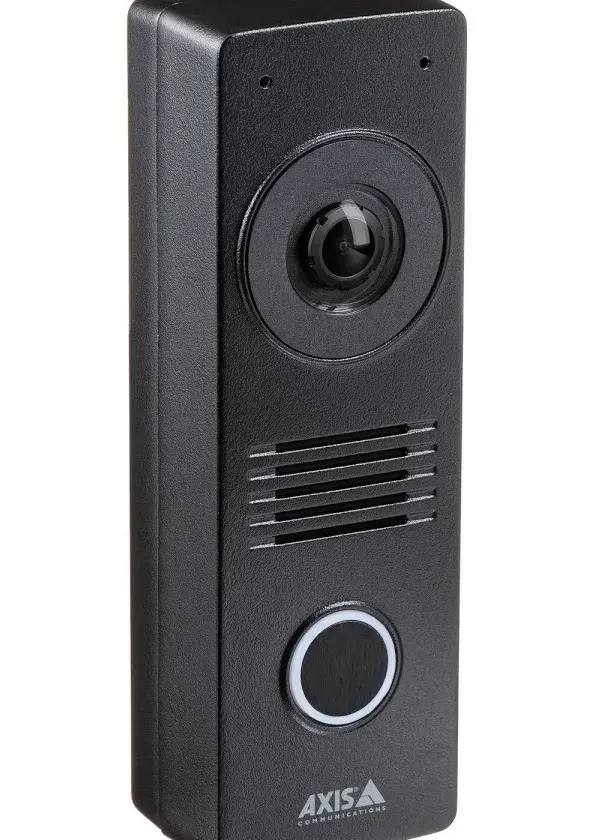
We quote a reliable non-branded system by default and install a named brand when an owner asks for one; the entry brands we work with include Aiphone, ButterflyMX, 2N, Akuvox, Comelit and DoorBird. These are the kinds of equipment that suit Bushwick buildings.
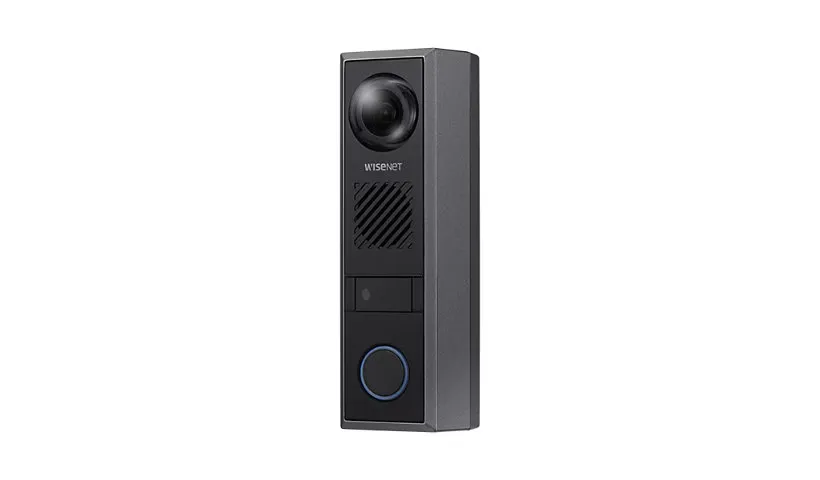
A lit button panel with a speaker at the street door and a talk-and-release handset or station in each apartment. No camera and no internet, the lowest-cost way to give a walk-up a working door.
Panels and monitors that carry power, voice, video and the release over one pair, which lets a surviving bell riser be reused when it tests sound. Aiphone's GT series, for example, is built for retrofit work.
Network or cellular door stations answered on tenants' phones, with apartment monitors added for anyone who does not want an app, and management from a web login.
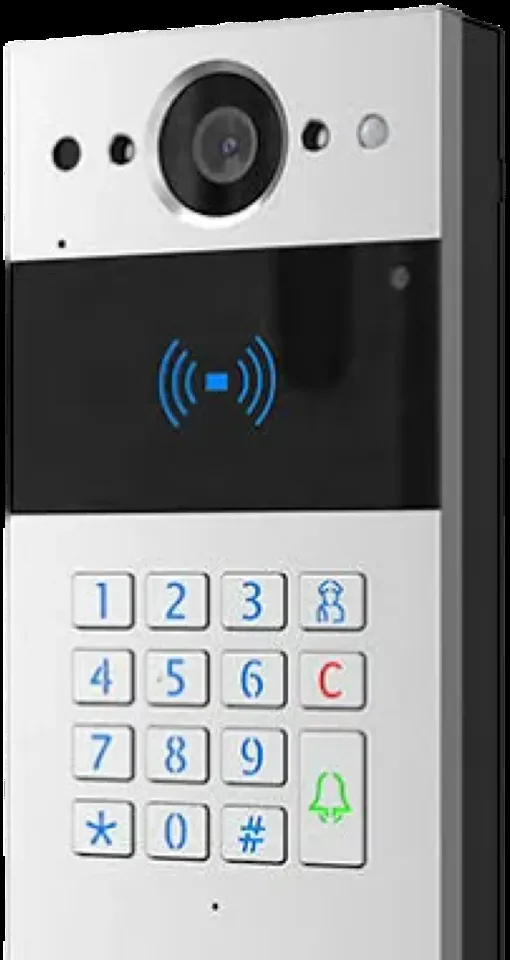
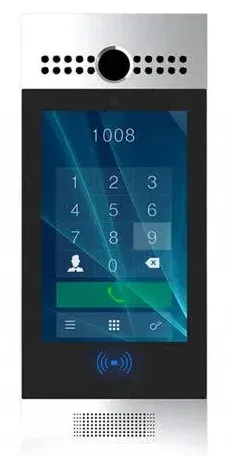
Scrolling directories and keypads for loft and larger buildings, so visitors find a unit by name or number and residents enter with a code or card.
Fail-secure electric strikes sized for wood and steel frames, latch guards for pried doors and closers set so the street door latches every time.
A low-voltage supply in the cellar or a locked closet, on its own circuit, with a backup battery on systems that need to ride through a short outage.
The right system depends mostly on who lives in the building and what cable is already in the walls. This comparison covers the three kinds we install most often in Bushwick.
| What matters | Audio buzzer | Two-wire video | Cloud or app panel |
|---|---|---|---|
| Best for | Walk-ups starting from nothing on a tight budget | Walk-ups and mansions with a usable old riser | Lofts, studio buildings and newer rentals |
| How tenants answer | Handset or station in the apartment | Video monitor, optional phone | Phone app, optional monitor |
| Needs building internet | No | Only for phone answering | Yes, or a cellular link |
| Cable to each apartment | Yes | Yes, often the old pair | Not if phone-only |
| Shows the visitor | No | Yes | Yes |
| Possible monthly fee | None | Usually none | Often, per unit or per door |
| Brooklyn list range | $400β$900 small; more for a full walk-up | $700β$1,800 small; $2,500β$10k+ multi-unit | $700β$1,800 small; $2,500β$10k+ multi-unit |
The national names come up whenever an owner starts looking. Ring and SimpliSafe sell consumer doorbells and alarm kits built for one household at one door; a Ring doorbell rings the phones on one account, not six apartments, and it has no way to release a street door without extra hardware. ADT sells monitored alarm systems and works mainly with single homes and businesses. None of them is set up to put a directory panel, a riser, a station in every apartment and a strike on a Bushwick walk-up's street door. A local licensed installer does that whole job, quotes it from a published list and leaves the owner with no required monthly fee on audio and two-wire systems.

Search for door buzzer installation and an AI summary will repeat a few claims from national cost guides and vendor blogs. Each is partly right. Here is what each one leaves out for a Bushwick building.
HomeAdvisor's intercom guide puts installation at one to two hours per station. For a single station on a house with cable already in place, that is fair.
A first installation in a Bushwick walk-up is not a station; it is a door, a frame, a strike, a closer, a power supply, a riser and four to eight stations. Brick Underground's sources estimated a day for a five-apartment building and about two days for a hundred units, and that is close to our experience when the door hardware is straightforward.
The frame is what stretches the schedule. A pried, patched frame that has to be spliced before a strike goes in adds work that no per-station estimate counts.
HomeAdvisor gives an average of $2,500 for intercom installation, with a range of $1,500 to $15,000 and hard-wired systems at $1,000 to $15,000. Those national figures cover everything from a house to a tower.
Our Brooklyn list is narrower because it is built around the buildings we actually work in: $400 to $900 for a small audio system, $700 to $1,800 for video on a house or small building, and from about $2,500 to past $10,000 for a building with a directory panel wired to every apartment.
The two things that move a Bushwick price inside those ranges are whether any old cable can be reused and how much the street door needs before it can take a release.
HomeAdvisor recommends wireless systems for do-it-yourselfers, and for a single household that is reasonable.
A multi-family street door is different. The door is the owner's, the buzzer has to reach every apartment through brick walls and floors, and the release has to work with a closer and a latch that HPD inspects. A wireless kit with one receiver does none of that, and a kit that releases the door through a phone app adds a network device to a door that the building's safety depends on.
The part tenants can do themselves is ask: under Β§50-a, written requests from a majority of apartments in a pre-war building start the owner's clock.
Summaries often compress Β§50-a into a blanket rule. The law actually requires an intercom in class A buildings of eight or more apartments built or converted after January 1, 1968.
Older buildings must install one when a majority of tenants ask in writing, and smaller newer buildings are outside the intercom clause. With nearly 80 percent of Bushwick's buildings built before 1947 and more than half its apartments in buildings under six units, that distinction covers most of the neighborhood.
What does apply almost everywhere is the self-closing and latching rule for entrance and hall doors in buildings of three or more apartments, which is why we start every installation with the door.
Mag locks are easy to mount on a frame, which is why they appear in quick guides. But Allegion notes electromagnetic locks are only available fail-safe: when power goes, the door unlocks.
The building code adds conditions when a sensor releases a mag lock, including a manual release by the door and unlocking on fire alarm activation and on loss of power. On a residential street door, that turns a blackout or a tripped breaker into an open building.
A fail-secure electric strike keeps the door locked from outside without power and still lets everyone out by the lever, which is why it is our default for Bushwick walk-ups.
Swiftlane's guide puts modern IP or video systems at $1,000 to $5,000 or more per entry door, with software subscriptions commonly $5 to $15 per unit per month or $30 to $100 per door per month.
For a large loft building or a new rental with a network closet, a cloud panel can be the right choice, and a per-door figure is a fair way to think about it. For a six-family walk-up, a subscription can outlast the hardware's cost within a few years.
Audio and two-wire video systems have no required monthly fee on our list, so we price both kinds for owners who are unsure and let the monthly figure be part of the decision.
Aiphone says exactly this in its upgrade guide, and it is true. The catch is the word "good." Bell wire in a Bushwick walk-up may be original, spliced in a dozen places, chewed in the cellar or cut during a gut renovation.
We test each pair from the cellar to every apartment before relying on it, and we only reuse a riser that reaches every unit cleanly. A system that works on four floors and not the fifth is not a saving.
Where the old wire fails, a new riser in a walk-up is usually a modest part of the price, because the stair hall gives it a direct route.
Most of what decides a Bushwick installation shows up in three pictures: the street door from the sidewalk, the door's edge and frame on the latch side, and whatever is beside the door now. Send them to (347) 934-8335 or on WhatsApp with the address and the number of apartments, and a technician will tell you whether the door is ready for a release, what the building likely needs and where it should land on our Brooklyn list. Or use the request form below.
Tell us about the building and the street door. A technician calls back, usually within two hours during working hours, to go over the options and set a weekday walkthrough if the job needs one.
The street door from the sidewalk, the frame on the latch side, the lock, any old board and the cellar, with the address and how many units share the door.
We let the door close on its own, check the frame for pry damage, trace any surviving bell wire and walk the stairs to plan the riser.
Equipment, door hardware, cable route, station locations and the total from our Brooklyn list, in writing before anything is ordered.
Closer and hinges corrected, frame repaired where needed, then the fail-secure strike and latch guard, with the door lockable throughout.
A low-voltage supply in the cellar or a locked closet, and cable up the stair hall, closets or chases to every unit, never along the fire escape.
The door station or directory panel at the street door, a station where each household will hear it, labels by apartment and phone answering where included.
Every button rung, every apartment talks and releases, the door relocks each time, and the owner gets a wiring note, the admin login and a tenant walk-through.

The Carnegie-funded Brooklyn Public Library branch from 1905 on Bushwick Avenue, among the walk-ups and converted houses of the neighborhood's western side.
The branch library opened in 1923 on the Irving Avenue side of the neighborhood, close to the Queens line and its blocks of brick and frame walk-ups.
Pietro Montana's 1921 memorial at Myrtle and Bushwick Avenues, honoring 93 local men lost in the First World War, at the head of the Myrtle Avenue storefront strip.
The studio and gallery building near the Morgan Avenue L stop, a fixture of Bushwick Open Studios and typical of the area's converted factory buildings.
The redeveloped brewery blocks, including the 385-apartment building at 123 Melrose Street, where lobby systems serve hundreds of units.
The neighborhood's main hospital, near the Queens line, surrounded by apartment buildings and small offices that buzz in patients and visitors.
We also serve Bedford-Stuyvesant, Williamsburg, East Williamsburg, Ocean Hill, Cypress Hills and Ridgewood across the Queens line, at the same Brooklyn rate on the Brooklyn side; see our door buzzer installation in Brooklyn page for the whole borough, our Bed-Stuy door buzzer installation page for the blocks across Broadway, and our Queens door buzzer installation page for Ridgewood buildings.
Bushwick is priced on our standard Brooklyn door buzzer list, with no neighborhood surcharge. The list has three ranges and a service call, and every Bushwick job is placed in one of them after the walkthrough.
| Item | Brooklyn price | Typical Bushwick job |
|---|---|---|
| Audio / small system | $400β$900 | Audio buzzer and electric strike on a one- or two-household frame house, existing wire reused where it tests sound |
| Video / mid-size system | $700β$1,800 | Video entry panel with phone release on a three-family house or a small walk-up |
| Multi-unit building | $2,500β$10k+ | Directory panel with every apartment wired, for larger walk-ups, converted mansions, loft buildings and new rentals |
| Service call booked online | $250 | Diagnosis of an existing system before deciding what to keep; applied toward the work |
What moves a Bushwick job within its range. First, the street door. A door that closes and latches, in a sound frame, needs only the strike and latch guard; a pried frame that has to be spliced, a closer that has to be replaced or a pair of doors that has to be fixed at the inactive leaf all add labor. Second, the cable. A surviving riser that tests sound from cellar to top floor saves most of a new pull, while a building whose old wire was cut in a renovation needs a new riser up the stair hall. Third, the answering. Audio handsets cost less than video monitors, and phone answering can replace monitors for tenants who want it. Fourth, the building's size and layout: a walk-up with one apartment per floor is a short riser; a mansion carved into irregular apartments or a loft building with long corridors needs more cable and more stations.
For comparison, HomeAdvisor's national guide averages $2,500 for an intercom installation, and Swiftlane quotes $1,000 to $5,000 or more per entry door for modern IP or video systems before any subscription. A Brownstoner owner was once quoted $2,000 to replace a three-unit buzzer system with no electrical work included. Our list sits inside those figures for small buildings and is fixed in writing before anything is ordered.
Full terms β including 50% deposit, one-year parts-only warranty on AESS-supplied products, and the late-fee schedule β are set out in the service agreement.Tell us the number of apartments, whether any buzzer exists today and what the street door looks like, and we will tell you which range the building falls in before anyone visits. Call or text (347) 934-8335, send photos on WhatsApp, or use the request form.
Three typical Bushwick jobs, each priced inside the matching range on our Brooklyn list. The exact figure comes from the walkthrough.
A one- or two-button lit station with a speaker at the street door, a talk-and-release station for each household, a fail-secure strike with latch guard, and a power supply sized for it.
A video entry panel with a labeled button per apartment, monitors or phone answering for each household, the strike and closer work on the street door and cable up the stair hall.
A directory or button panel for every unit, a tested or new riser, audio or video stations by apartment, release hardware matched to the door and a battery-backed power supply.
Bring your own equipment. If you have already bought a panel, stations or a strike, we can install them as long as they suit the street door, the building's cable and the number of apartments. Labor for customer-supplied equipment is quoted flat at the walkthrough, and any door or frame work it needs is quoted with it, so the price is known before installation day.

First systems, audio and video, strikes and closers. Request a quote
Directory panels and separate apartment entries. Call (347) 934-8335
The same list in every neighborhood. Abstract Enterprises door buzzer installation in Brooklyn
Houses and buildings in all five boroughs. NYC door buzzer installation
Not well. A consumer video doorbell rings the phones on one account and has a single button, so every apartment would share one login and one ring, and it cannot release the street door without added hardware. A walk-up needs a panel with a button per apartment and a station or app for each household, which is what a multi-unit buzzer system provides.
We do not attach cable to fire escapes. They are the building's emergency exit and need to stay clear. In a Bushwick walk-up the riser goes up the stair hall in a painted raceway, through a stacked closet or chase, or, where the owner approves, up the rear wall in a protected raceway away from the escape.
We recommend against it. The apartments' door protects the residential stair, and only tenants and the owner should be able to release it. If the store wants a buzzer, it gets its own button, station and release on its own door, with separate power, so neither system depends on the other's hours or staff.
Yes, if the right cable goes in on day one. We run a riser that can carry a two-wire video system, so an upgrade later is a change of door panel and apartment stations rather than a second pull up the stairs. Tell us at the walkthrough that video is likely, and we plan the audio system around it.
On a suitable door, yes. A power-operated opener needs a door and frame strong enough to carry it, a power feed, push plates or a release signal from the entry system, and a closer arrangement that still lets the door latch afterward. We check the door at the walkthrough and quote the opener as its own line when the door can take one.
Yes. Installation does not depend on the building's violation record, and a new system with a working self-closing door often addresses intercom and door conditions at the same time. Correcting and certifying violations with HPD is the owner's step; we provide a written description of the work done and the date, which owners use for their own records and filings.
Usually it helps. Outdoor door panels are built for weather, but a hood over the panel keeps rain off the buttons and speaker, cuts glare on the camera and protects the panel from water running down the wall. On a flush Bushwick street door with no lintel or awning, we fit a hood made for the panel or recess the panel into the reveal where the wall allows.
No. Low-voltage entry cable is kept separate from power wiring, both for code reasons and because power wiring next to it causes hum and interference on audio and video. What works well is planning the two together, so the electrician leaves an empty conduit or sleeve for us along the same path and a dedicated outlet or circuit for the entry system's power supply.
Our default quote is a reliable non-branded system that fits the building and the budget. If you prefer a particular brand, we install Aiphone, ButterflyMX, 2N, Akuvox, Comelit and DoorBird entry systems, and we will price the brand you choose alongside the default so the difference is clear before you decide.
Yes. Ridgewood is served by the same crews from our Queens door buzzer list, and the work is the same: door, frame and strike first, then the riser and stations. When you contact us, give the full address with the borough, since some blocks near the line use similar street names and numbers on both sides.
Yes. With the written price we send the manufacturer's cut sheet for the panel and stations, with dimensions and finish, and a photo of your door marked with where the panel will go. If you want a different finish or a smaller panel, we change it before anything is ordered, since special-order equipment cannot be returned once it is bought.
Door Buzzer Installation Brooklyn NY | Brownstones & Condos Β· Door Buzzer Installation NYC | Apartment & Building Entry Β· Door Buzzer Installation Manhattan NY | Apartments & Co-ops Β· Door Buzzer Installation Queens NY | Co-ops & Apartments Β· Door Buzzer Installation Bronx NY | Co-ops & Apartments Β· Door Buzzer Installation Staten Island NY | Homes & Apts Β· Door Buzzer Installation Long Island NY | Nassau & Suffolk Β· Door Buzzer Installation Hudson Valley NY | Apartments Β· Door Buzzer Installation Nassau County NY | Homes & Co-ops Β· Door Buzzer Installation Suffolk County NY | Homes Β· Door Buzzer Installation Westchester County NY | Co-ops Β· Door Buzzer Installation Rockland County NY | Homes & Apts Β· Door Buzzer Installation Orange County NY | Homes & Farms Β· Door Buzzer Installation Putnam County NY | Lake Homes Β· Door Buzzer Installation Dutchess County NY | Homes Β· Door Buzzer Installation Ulster County NY | Kingston
Door Buzzer Installation Bath Beach Brooklyn NY Β· Door Buzzer Installation Bay Ridge Brooklyn NY Β· Door Buzzer Installation Bedford-Stuyvesant Brooklyn NY Β· Door Buzzer Installation Bensonhurst Brooklyn NY Β· Door Buzzer Installation Bergen Beach Brooklyn NY Β· Door Buzzer Installation Beverley Square Brooklyn NY Β· Door Buzzer Installation Brooklyn Navy Yard, Brooklyn NY Β· Door Buzzer Installation Brooklyn NY | Brownstones & Condos Β· Door Buzzer Installation Brownsville Brooklyn NY Β· Door Buzzer Installation Cadman Plaza Brooklyn NY Β· Door Buzzer Installation Canarsie Brooklyn NY
Structured Cabling Installation Bushwick Brooklyn NY Β· Fire Alarm Installation Bushwick Brooklyn NY Β· Door Buzzer Repair Bushwick Brooklyn NY Β· Network Cable Repair Bushwick Brooklyn | Ethernet & Cat6 Β· TV Installation Bushwick Brooklyn Β· Intercom Installation Bushwick Brooklyn NY Β· Security Camera Installation Bushwick Brooklyn NY | AESS Β· Alarm Installation Bushwick Brooklyn NY | Fire Escapes Β· Access Control Installation Bushwick Brooklyn NY
Send a photo of the street door from the sidewalk, a close-up of the frame on the latch side and whatever is beside the door now, with the address and the number of apartments, and we will tell you what the building needs and where it sits on the Brooklyn list. Call or text (347) 934-8335, message us on WhatsApp, or send the request form. Quotes and invoices come from Abstract Enterprises Security Systems, 1282 Troy Ave, Brooklyn, NY 11203, under New York State license #12000287431, and every Bushwick job is planned from a weekday walkthrough with the price fixed in writing first.