What are you looking for?
About Us Contact Us Careers Get a Free Quote (800) 486-0943
Pick a service
✅ Got Your Own System?
🎬 Home TheatreQuote 🎶 AV SoundQuote 🔑 Access ControlQuote
Now pick your area
Pick your area
Long Island
Hudson Valley
Services available
Pricing & Tools
Pick a service for pricing
🚪 Intercom Pricing 🔔 Buzzer Repair Pricing
Calculators
📹 Camera System Calculator 🚨 Alarm Calculator ⚡ Cabling Quote Builder ✅ Got Your Own System?
Select your area
Entrance intercom dead in a six-story building by Highland Park, a Fulton Street apartment door that never locks, or one bell shared by two families on a Cypress Hills block? Door buzzer installation line: (347) 934-8335
Home › Door Buzzer Installation Brooklyn › Cypress Hills
Six-Story Elevator Buildings by Highland Park · Apartments Over Fulton Street Stores · Two- to Four-Family Houses · Nonprofit-Built Rentals · Atlantic Avenue Businesses

Door Buzzer
Installation in
Cypress Hills

Lobby Panels for Pre-1968 Buildings · Separate Doors for Stores and Apartments · Buttons That Ring the Right Floor · Brooklyn Rate

Door buzzer installation in Cypress Hills covers a wider range of buildings than most Brooklyn neighborhoods: six-story elevator apartment houses from the 1920s to 1940s on the streets below Highland Park, three-unit buildings with a market or a shop under two apartments along Fulton Street, rows of brick and frame two- and three-family houses between Jamaica and Atlantic Avenues, and newer affordable rentals built by local nonprofits on Van Siclen, Linwood and Jerome Avenues and near Chestnut Street. Each one fails at the door in its own way. This page explains what we install in each, which city rules decide what an owner must provide, why the age of the building matters more than its size here, and where each kind of job sits on our published Brooklyn price list.

Reviewed and updated November 11, 2026, against New York's Multiple Dwelling Law §50-a and §3; HPD's Self-Closing Doors page and Local Law 71 of 2022; NYC 311's guidance on broken doorbells, buzzers and intercoms; the NYC Comptroller's September 2022 report on building doors in NYCHA developments; openigloo's public listings and tenant reviews for 2 Elton Street and 222 Highland Boulevard; the listing for the three-unit building at 3371 Fulton Street; the New York Housing Conference's project page for Cypress Village Homes; DNAinfo's October 2017 report on Chestnut Commons; Brownstoner's 2023 report on State and National Register nominations, its Building of the Day pieces on Arlington and Sunnyside Avenues and two Brooklyn owner forum threads on three-unit buzzer systems; the NYC Department of Small Business Services' Neighborhood 360° assessment of East New York and Cypress Hills and its November 2024 announcement of the Cypress Hills Fulton BID; BK Reader's July 2024 neighborhood profile; CBS New York's September 2021 report from Crescent Street; NYPD's 75th Precinct page; the Wikipedia entries for East New York, Cypress Hills station, Highland Park, Cypress Hills Cemetery and Cypress Hills Houses; ButterflyMX's guide to apartment buzzers; Allegion's fail-safe and fail-secure guide; Aiphone's GT Series pages; the HomeAdvisor and Swiftlane cost guides; the building code's sensor-release provisions; and the 2010 ADA Standards. · Abstract Enterprises Security Systems, NYS license #12000287431 · crews dispatched from our Troy Avenue office in Brooklyn

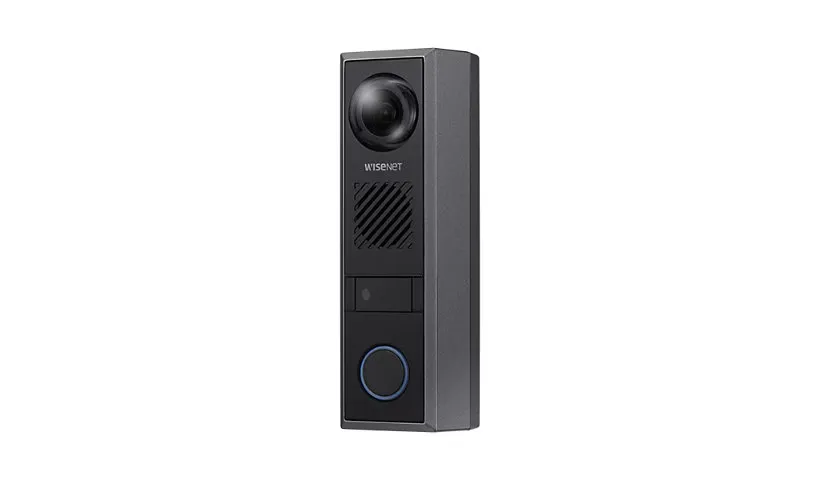
Cypress Hills, Brooklyn door buzzer installation: black rectangular video door station with a camera, speaker grille and round lit call button
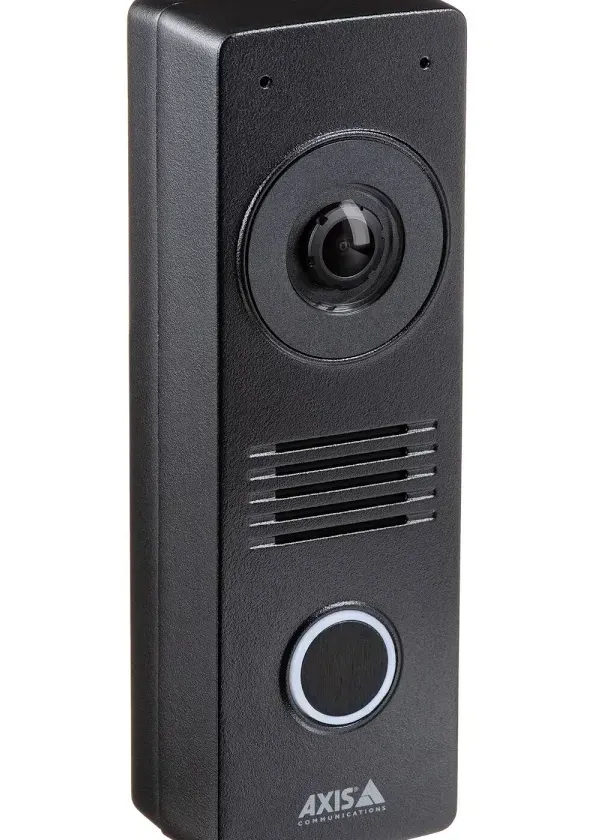
A photo from the AESS job library, not taken in Cypress Hills: a black rectangular video door station with a camera, a speaker grille and a single round lit call button. A one-button station like this fits the front door of a one-family frame house on Arlington Avenue or Highland Boulevard, where every call goes to one household and nobody has to read a directory.
Cypress Hills Buzzer & Entry Request
Elevator building, walk-up, apartments over a Fulton Street store, two- or three-family house or a business door: give us the cross streets, how many households use the door and who owns it, and a technician calls back with the range

✅
Request Sent!
Thank you. A technician will call you about the Cypress Hills address, usually within two hours during working hours.
25+
Years Experience
✓
Same-Day Estimates
100%
Licensed & Insured
4.7★
201 Google Reviews

Owner-operated since 2002 · Thousands of jobs completed · Booked within 2 hours

Quick answer: door buzzer installation in Cypress Hills runs $400 to $900 installed on our Brooklyn list for an audio buzzer with talk-back on a one- or two-family house, $700 to $1,800 for a video door station with indoor monitors or phone answering, and from about $2,500 to past $10,000 for an apartment building, whether that is a three-unit building over a Fulton Street store or a six-story elevator building near Highland Park with fifty or more apartments. The price includes the door station, every apartment or household station, the power supply, the strike or release on the door, the cable and the labor. It is written down after a walkthrough, and anything that could add to it, such as an old bell pair that may not pass its test or a frame that has to be repaired before a strike will hold, is named and priced before you order. Cypress Hills is billed at the Brooklyn rate. The usual reasons a job here moves up its range are a pre-war riser that cannot be reused, a street door worn out by decades of traffic, a second entrance tenants actually use, and a storefront and an apartment door sharing one wall. Send photos of the door and the panel to (347) 934-8335 or on WhatsApp, and we reply with the range that fits, usually within two hours of your message during working hours.

  • Looking at photos and quoting a new system is free. When an existing system is dead and has to be diagnosed before anyone can say what it needs, that is the $250 service call booked online, and the $250 is applied toward the work.
  • All work is done under New York State license #12000287431. We install the low-voltage entry equipment; if a door needs a new 120-volt circuit for its power supply, a licensed electrician handles that part, and you know before the job is priced.
  • We work for whoever owns the door: the homeowner, the landlord, the co-op or condo board, the nonprofit owner of an affordable building, or the managing agent. Entrance doors at Cypress Hills Houses and other NYCHA developments belong to NYCHA, and residents there report door and intercom problems to NYCHA.
The Neighborhood

Why Cypress Hills Properties Need Door Buzzer Installation

Cypress Hills sits at the far eastern edge of Brooklyn, with Queens on one side and the cemeteries and Highland Park along the ridge to the north. BK Reader's 2024 neighborhood profile puts its edges at the Jackie Robinson Parkway, Atlantic Avenue and the Queens line, and its main streets are the old roads that once led out of Brooklyn: Fulton Street, Jamaica Avenue and Atlantic Avenue, with the J and Z trains running overhead along Fulton Street and then Jamaica Avenue to Cypress Hills station at Hemlock Street, the last Brooklyn stop on the line. The neighborhood shares ZIP codes 11207 and 11208 and Community District 5 with East New York, and the same 75th Precinct station house on Sutter Avenue covers both.

What makes the neighborhood unusual for entry work is the spread of building types on a short walk. Brownstoner's architecture writers describe a late-19th and early-20th-century suburban neighborhood of row houses, detached and semi-detached houses, many of them frame houses later covered in siding, and developer-built brick rows such as the ninety houses Richards Real Homes put up on Sunnyside Avenue between 1900 and 1920. Mixed among them are apartment buildings of a very different scale: openigloo's public listings show 2 Elton Street, built in 1928 with 53 units on six floors, and 222 Highland Boulevard, built in 1940 with 87 units on six floors. Along Fulton Street, under the el, a typical building is something like 3371 Fulton Street at the corner of Hemlock Street, a three-unit mixed-use building with two one-bedroom apartments above a food market. And since the 2000s, the Cypress Hills Local Development Corporation and its partners have added newer affordable buildings: the three-building Cypress Village Homes, with 29 apartments in walk-ups on Linwood and Jerome Avenues and an elevator building on Van Siclen Avenue, and Chestnut Commons, planned with 274 below-market apartments on the block bounded by Atlantic Avenue, Chestnut Street and Dinsmore Place.

Each of those buildings has a door, and the door is where the trouble shows. In a pre-war elevator building, the intercom was usually installed decades after the building went up and has been patched ever since; a former tenant of the Elton Street building wrote on openigloo that "The Intercom system for the entrance door does not work," and suggested the owners "should redo the whole Intercom System." In a Fulton Street building, the apartments' door sits a few feet from the shop's door, and if nobody can answer it from upstairs, it ends up propped for deliveries. In a two-family house, the original bell rings in one hallway for both households, or there is no bell at all and the tenant upstairs walks down for every visitor. In a newer affordable building, the panel is usually networked and works well, until the management company or the admin password changes hands.

The stakes are real. City auditors who visited 262 NYCHA developments in the late summer of 2022 found 40.1 percent of entrance door locks broken, and residents told them doors were propped because "intercoms, locks, keys, and door release buttons do not work." Those are public housing figures, not private ones, but the pattern is the same in any building: when residents cannot answer and release the door, they hold it open, and an open street door is how packages, mail and strangers end up inside. CBS New York reported in 2021 that a 68-year-old man on Crescent Street between Atlantic Avenue and Fulton Street was slashed after confronting two package thieves in front of his home. A buzzer does not stop a thief by itself, but a street door that latches every time and an occupant who can see and talk to whoever rang are the start of a building that is hard to walk into.

There is also the city. HPD's self-closing door program, created by Local Law 71 of 2022, picks 300 multiple dwellings every year for inspections that check building entrances, hallways and apartment doors without waiting for a complaint, and NYC 311 lists broken or missing doorbells, buzzers and intercoms as a standard tenant complaint. For a Cypress Hills owner, that means a dead intercom or a street door that does not latch is not just an annoyance; it is the kind of condition an inspector writes up.

Cypress Hills, Brooklyn door buzzer installation: purple, white and red cable bundles dropping down beside a black equipment rack
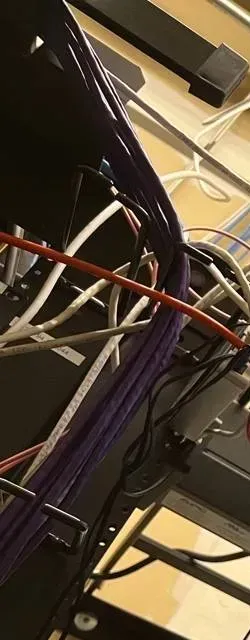
A photo from the AESS job library, not taken in Cypress Hills: purple, white and red cable bundles dropping down beside a black equipment rack. In a six-story elevator building on Elton Street or Highland Boulevard, the entry system's power supply and controller belong at an organized, labeled spot like this one, rather than on a nail in the boiler room next to a transformer nobody can identify.

Cypress Hills facts that shape a buzzer installation

  • Many of the apartment buildings are pre-war. 2 Elton Street dates from 1928 and 222 Highland Boulevard from 1940, according to openigloo. Under Multiple Dwelling Law §50-a, the intercom requirement for buildings built before 1968 turns on what the tenants ask for in writing, so the age of the building matters as much as its size.
  • Fulton Street mixes stores and homes on every block. The city's Neighborhood 360° assessment counted 346 storefronts on the Fulton Street corridor, 11 percent of them vacant, and many of the buildings above them have apartments reached by a separate door at the sidewalk.
  • Merchants named security first. In the same assessment, 25 percent of merchants surveyed named security as the improvement they most wanted, ahead of cleanliness at 18 percent, and the survey noted insufficient lighting under the el.
  • There is no city historic district here. Brownstoner's 2023 report on Register nominations covered the former English Evangelical Lutheran Church of the Reformation at 105 Barbey Street, and noted that State and National Register listing brings no regulatory oversight of private owners. A door station on a Cypress Hills house does not go through the Landmarks Preservation Commission.
  • Local nonprofits own a share of the newer rentals. Cypress Village Homes added 29 apartments across three buildings, and Chestnut Commons was planned with 274, both with the Cypress Hills Local Development Corporation as a partner, so a managing agent or nonprofit, not an individual landlord, often decides what goes at the door.
  • Doors get inspected without a complaint. HPD selects 300 class A multiple dwellings every year for proactive self-closing door inspections, which include the building entrance.

Where this page applies. It covers Cypress Hills from the Highland Park and cemetery edge south to Atlantic Avenue and east to the Queens line, including the blocks along Fulton Street, Jamaica Avenue, Ridgewood Avenue, Etna Street, Highland Boulevard, Arlington Avenue and Sunnyside Avenue. For the rest of the borough, see our door buzzer installation in Brooklyn page; for the blocks to the east around Liberty and Atlantic Avenues, see door buzzer installation in City Line.

Repair or Replace in Cypress Hills

Need Repair in Cypress Hills? An Entrance Intercom That Stopped Talking, a Release That Hums but Will Not Open, or a Bell Wire Cut in a Renovation

Not every call that starts with "we need a new buzzer" ends with one. In the pre-war elevator buildings near Highland Park, the cable inside the walls has often been there for decades and is still sound, while the parts that people touch every day, the lobby panel, the apartment handsets, the strike in the door frame and the transformer in the cellar, have worn out one at a time. ButterflyMX's explainer on apartment buzzers makes the useful point that the system has two separate paths: the call path, which carries the visitor's voice to the apartment, and the release path, which runs from the apartment's button to a relay and then to the lock. When residents can hear visitors but cannot let them in, the call path is fine and the fault is somewhere on the release side; when the door opens but nobody can hear, it is the reverse. A diagnosis starts by working out which of the two is broken, and where.

That diagnosis is the $250 service call booked online at (347) 934-8335, and the $250 is applied toward the repair or toward a new system if replacing turns out to be the better value. You get both prices and a plain recommendation. If parts have to be ordered, the street door is left able to lock and open with a key before we go. Where the intercom or the self-closing door is part of an open HPD violation, the owner gets a dated note of what was found, what was replaced and how the door was tested, which is the record an owner needs when certifying that the condition has been corrected.

Replacement becomes the right answer when the system is no longer made and its apartment stations cannot be matched, when faults keep moving from one apartment to another because the riser itself is failing, when the building is adding video or phone answering that the old cable cannot carry, or when a renovation has cut the old bell wire in places nobody can reach without opening finished walls. In those cases we price a new system on the old cable where tests allow, and on new cable where they do not, so the owner can see the difference.

What We Install

Door Buzzer Installation Services in Cypress Hills

Every service here is priced from one Brooklyn door buzzer list. The number of apartments or households decides the size of the system, the door and its frame decide what kind of release it can take, and in Cypress Hills the age of the building and whether a store shares its front wall decide a good part of the labor.

Lobby panels for pre-war elevator buildings

Directory or code panels for six-story buildings of fifty to ninety apartments, wired over a riser that is tested pair by pair before anyone decides to reuse or replace it.

First buzzers for older houses

Talk-back stations and a door release for frame and brick houses on Arlington Avenue, Highland Boulevard and the side streets that have only ever had a mechanical bell or nothing at all.

Two- and three-family button plans

One button per household, each ringing only its own floor, with a station where each family actually wants to answer, from the parlor floor to a basement kitchen.

Apartment doors beside Fulton Street stores

A small panel at the apartments' own street door under the el, wired up their own stair, kept apart from the shop's door, gate and alarm.

Street doors that close and latch

Closers set so the door finishes closing on its own, strikes fitted into sound frames, and worn or pried frames repaired at the latch before a release goes in.

Networked panels for newer rentals

Camera panels managed from a web portal for affordable buildings with a management office, set up so the owner, not a departing installer, holds the admin account.

Video and phone answering

Video door stations with indoor monitors, or app answering for residents who want it, mixed with plain wall stations for neighbors who do not.

Delivery doors for corridor businesses

Rear and side door buzzers for groceries, restaurants, clinics and offices on Fulton Street, Jamaica Avenue and Atlantic Avenue, answered at the counter or desk.

Tenant-request installations

A first intercom for an older building whose tenants have asked for one in writing, planned so the work starts and finishes inside the timeline the law sets.

Cypress Hills, Brooklyn door buzzer installation: slim dark grey wired doorbell with a camera lens, speaker slots and a round push button
A photo from the AESS job library, not taken in Cypress Hills: a slim dark grey wired doorbell with a camera lens, speaker slots and a round push button. Many Cypress Hills frame houses have narrow door casings under decades of siding, and a unit this slim gives a visitor a camera and talk-back without a wide plate that would have to be cut into the trim.
Building Specialists

Door Buzzer Installation for Cypress Hills' Architecture

Six kinds of property make up almost every entry job in Cypress Hills. They differ in who owns the door, how many households the panel has to call, where a cable can travel, and which mistake shows up when the work is rushed.

Pre-war elevator apartment buildings

Six-story buildings of fifty to ninety apartments from the 1920s to 1940s, such as those on Elton Street and Highland Boulevard, with a lobby, an elevator and a riser that has outlived several intercoms.

Small walk-ups

Brick buildings of four to a dozen or so apartments on the side streets and avenues, with a street door, a small vestibule, mailboxes and one stair.

Apartments over stores

Fulton Street and Jamaica Avenue buildings with a shop at street level and two or three apartments above, reached by a narrow door next to the storefront.

Two- to four-family houses

Brick and frame houses, attached, semi-detached and detached, with an owner on one floor and tenants or relatives on the others, often sharing one front door.

One-family frame and brick houses

Queen Anne and early-20th-century houses on Arlington Avenue and the streets below the park, and brick rows on Sunnyside Avenue, many with porches and stairs up from the sidewalk.

Newer affordable rentals

Nonprofit-developed buildings such as Cypress Village Homes on Linwood, Jerome and Van Siclen Avenues and the Chestnut Commons site by Atlantic Avenue, with a management office running the system.

Pre-war elevator apartment buildings: the big jobs, and the oldest risers

The six-story buildings on the streets below Highland Park are the largest private entry jobs in Cypress Hills. A building like 2 Elton Street, with 53 apartments, or 222 Highland Boulevard, with 87, has one main entrance with a vestibule, a lobby with an elevator, and a riser that carries the intercom pairs up the building to every line of apartments. Buildings of that age opened decades before the state's 1968 intercom rule, so whatever system they have now was added later, and in buildings like these it has usually been repaired, extended or partly replaced more than once since.

That history is what makes the walkthrough matter. Over the decades, apartments have been combined and split, renovations have cut pairs, earlier installers have spliced new wire onto old in closets and ceilings, and the directory may list tenants who left years ago. Before we design anything, the technician tests each riser pair from the lobby panel to each apartment, identifies which pairs are sound, which are borderline and which are dead, and finds out where the old transformer and any amplifier live. A two-wire multi-tenant system can reuse sound pairs; Aiphone, for example, lists its GT Series for retrofit projects and says it "offers the advantage of using existing wire and infrastructure." Whether a particular building can take advantage of that is decided by the test, not by the building's age.

The other thing these buildings need is a plan for the people inside them. A building of fifty-plus apartments has long-time tenants who want a simple wall station with a big button, younger tenants who would rather answer on their phones, and probably a few who speak to visitors mostly in Spanish. A good system serves all of them on the same wiring, with each apartment choosing how it answers. What it should not do is force everyone onto an app with a monthly fee, or leave tenants without smartphones with no way to answer the door.

Small walk-ups: two doors, one vestibule, and the inspection

Between the larger buildings and the houses sit brick walk-ups with a handful of apartments, the classic Brooklyn layout of a street door, a vestibule with mailboxes, an inner door and one stair to the top. These are the buildings where HPD's self-closing door rules matter most, because both the street door and the inner door are expected to swing shut and latch by themselves, and inspectors under Local Law 71 look at building entrances as part of the program.

A walk-up installation therefore covers both doors, not just the panel. The street door gets the strike and a closer that finishes the swing; the inner door gets a closer that pulls it shut every time; the panel goes where visitors can see it and residents can reach it; and the bell or riser pairs are tested one by one. If tenants have been propping the door for deliveries or for an elderly neighbor's aide, we ask the owner why before pricing, because the reason the door is propped is usually the real problem the installation has to solve.

Apartments over stores on Fulton Street and Jamaica Avenue: two front doors on one wall

Fulton Street runs under the J and Z for most of its length through the neighborhood, and the city's Neighborhood 360° assessment counted 346 storefronts along it, with groceries, restaurants, salons and services at street level. Many of the buildings above those stores have two or three apartments, like 3371 Fulton Street with its two one-bedrooms over a food market. The apartments are reached by a narrow residential door beside the shop, opening onto a stair. The shop has its own door, a roll-down gate, usually a rear or cellar entrance for deliveries, and often the lease on the cellar where the building's old bell transformer sits.

We keep the apartments' entry system and anything the store uses completely separate, even when their cables cross the same cellar ceiling. The apartments get a small panel at their own door, wired up their own stair to a station in each apartment, with the power supply placed where the building owner, not the store tenant, can reach it. The store, if it wants one, gets its own buzzer at its delivery door. Sharing a single system invites shoppers to ring the apartments and lets a tenant buzz a stranger into the shop's back hall, and it means every gate or alarm repair in the store risks knocking out the apartments' door.

The el adds two practical points. Train noise overhead competes with the speaker in the panel, so we choose a station with a strong speaker and mount it where a visitor stands close to it rather than out by the curb. And the assessment's note about insufficient lighting under the el is a reason to pick a station with its own lit buttons and a camera that copes with low light, and to put a light over the apartment door if there is none.

Two- to four-family houses: whose button rings where

Much of Cypress Hills is houses with more than one household: brick and frame two-families, three-family houses on the avenues, and legal four-families on deeper lots. Many of them still have a single bell that rings in the downstairs hall, or two buttons that both ring the same chime, so the owner ends up answering for the tenant or the tenant walks down two flights to find out the visitor was for someone else. The fix is simple in principle, one button per household, each ringing only its own floor, but the details depend on the house: where each household wants to answer, whether the owner's apartment spans two floors, whether a relative upstairs needs to let a home aide in, and whether the cable can travel inside the walls or has to go up the outside under the siding.

There is also a legal line to keep in mind. New York treats a building with three or more apartments as a multiple dwelling, which brings the self-closing door rules and HPD's other requirements into play. A two-family house is not a multiple dwelling, so its entry system is a matter of comfort and security rather than code, but a three-family is, and a house that has added a legal third apartment crosses that line. We ask how the city classifies the house before we price, because it changes which doors have to close and latch by themselves.

One-family frame and brick houses: a first buzzer on an old door

The houses on Arlington Avenue, Highland Boulevard and the streets below the park include Queen Anne frame houses from around 1900, such as the one Brownstoner profiled at 218 Arlington Avenue, which a 1941 tax photo showed with fish-scale shingles and which is now covered in vinyl siding, and the brick rows of Sunnyside Avenue with deep porches and bay windows. Many of these houses sit above the sidewalk on long stairs, because the streets climb the slope toward the park. For a one-family house, a buzzer is usually a small job: a station at the door, one or two stations inside and, if the family wants it, a release so they can let a visitor in without walking down.

Two details come up again and again. The first is where the station goes when the door is at the top of a long stoop: some families want the button at the bottom of the stairs so visitors are not climbing to find nobody home, others want it at the door. The second is the siding. A house that was re-sided over its original clapboard or shingles has a cavity behind the siding where a cable can run without opening interior plaster, but it also has trim that has been built out and narrowed, which is why slim stations are popular here.

Newer affordable rentals: networked systems and the admin account

The Cypress Hills Local Development Corporation has been building and partnering on affordable housing in the neighborhood for years. The New York Housing Conference describes Cypress Village Homes as three buildings with 29 apartments, two three-story modular walk-ups on Linwood and Jerome Avenues with 18 units between them and a four-story elevator building on Van Siclen Avenue with 11, designed by Magnusson Architecture and Planning for low-income households. DNAinfo reported in 2017 that Chestnut Commons was planned with 274 below-market-rate apartments on the block bounded by Atlantic Avenue, Chestnut Street and Dinsmore Place, developed by MHANY Management, the Urban Builders Collaborative and the CHLDC.

Buildings of this generation usually arrive with networked entry systems: a camera panel at the entrance, residents answering on a monitor or an app, and a management office maintaining the directory and access codes from a web portal. The trouble starts when the developer's installer is gone, the management company changes and nobody can find the administrator login or the subscription renewal date. Before we touch a networked panel, we ask the owner to confirm who holds the admin account, whether there is a subscription and what it costs, and whether the panel uses the building's internet or its own connection. If a building wants to add a door, change how calls are forwarded or let a new property manager in, the answer depends on those three things.

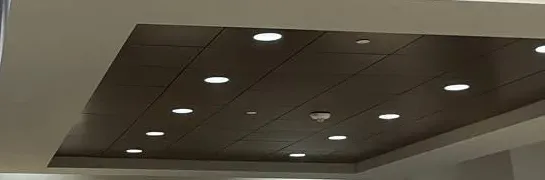
Cypress Hills, Brooklyn door buzzer installation: dark recessed ceiling panel with round downlights and a small round device framed by a lighter ceiling
A photo from the AESS job library, not taken in Cypress Hills: a dark recessed ceiling panel with round downlights and a small round device, framed by a lighter ceiling. The lighting in a pre-war lobby near Highland Park, or in the vestibule of a newer affordable building, decides whether a door station's camera sees a face or a dark shape, so we look up before choosing where the panel goes.
Field Notes

Field Notes: Count the Doors People Use, Find the Old Transformer, Then Test Every Pair

These notes describe how our technicians approach a building in a neighborhood like Cypress Hills. They are standard practice, not an account of one address.

Count the doors people actually use. The first thing the technician does is walk around the building, not into it. Corner buildings and older elevator buildings often have a side or rear door that tenants use more than the front, a cellar door from the side alley, or a door to the yard that has been left unlatched for years. Every one of those is a way in, and an entry system that secures the front while the side door stays propped does not secure anything. We write down each door, who uses it and what it would take to close it, and the owner decides which ones go on the system.

Find the old transformer. In a pre-war building, the transformer or power supply for the old intercom is often in the boiler room, behind a locked door that only the super or the oil company can open, plugged into an outlet nobody can trace, or wired into a hallway light circuit. In a Fulton Street building it may be in the store's half of the cellar. Wherever it is, the new power supply goes somewhere the building owner controls, on a labeled circuit, mounted on a board, with a battery backup where the job calls for one, and the location goes into the wiring note.

Test every pair. Last, the technician tests the cable from the panel to each apartment, line by line. Sound pairs are reused and keep the price down. Pairs that fail, or that might fail once they are asked to carry video, are listed in the written price as possible replacements with their cost, so the owner knows before ordering exactly what could be added and why. In a 53- or 87-apartment building, that test is the difference between a price and a guess.

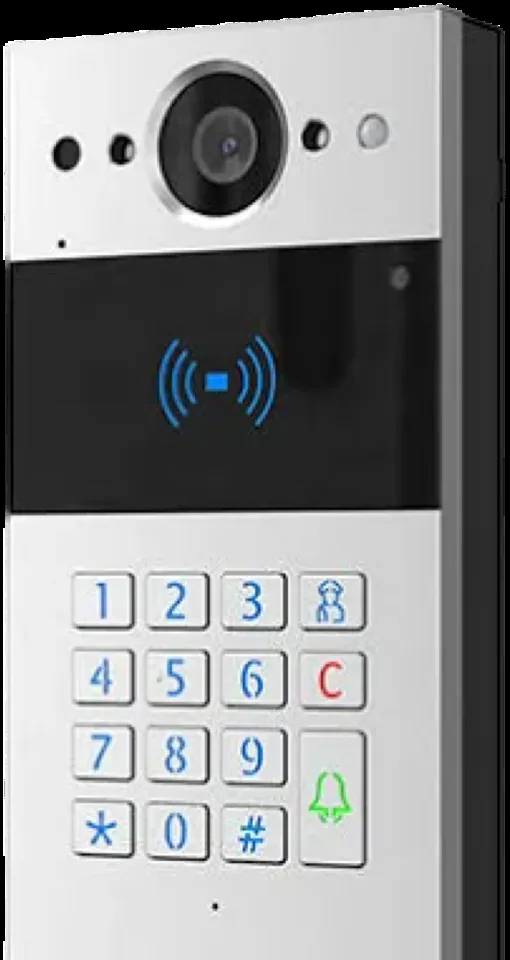
Cypress Hills, Brooklyn door buzzer installation: silver and black keypad door station with a camera lens at the top, a blue card-reader symbol, a numeric keypad and a green bell key
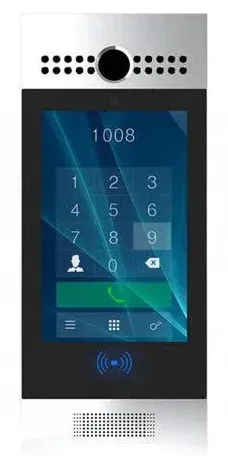
A photo from the AESS job library, not taken in Cypress Hills: a silver and black keypad door station with a camera lens at the top, a blue card-reader symbol, a numeric keypad and a green bell key. On the narrow apartment door beside a Fulton Street storefront, a metal-faced station like this lets a visitor press the bell key while residents enter a code or present a card, all in a space barely wider than the door frame.
Built Before 1968

The 1968 Line: Why the Age of a Cypress Hills Apartment Building Decides What the Law Asks at Its Door

New York's Multiple Dwelling Law applies to every city of 325,000 people or more, which includes New York City, and §50-a of that law is the rule most owners mean when they talk about "the intercom law." It splits buildings into two groups by date. A class A multiple dwelling erected or converted after January 1, 1968, with eight or more apartments, must have a self-closing, self-locking main entrance door and an intercommunication system that lets a tenant talk to the visitor and release the door. A building that went up before 1968 is treated differently: it must install the locking door and the intercom when the tenants occupying a majority of its apartments request or consent to it in writing, with the installation started within 90 days and finished within six months of the request.

That date matters in Cypress Hills more than in most neighborhoods, because so many of the larger buildings are pre-war. 2 Elton Street was built in 1928 and 222 Highland Boulevard in 1940, according to their openigloo listings, and the neighborhood's older walk-ups and mixed-use buildings along Fulton Street are of the same generation or older. The newer affordable buildings, such as Cypress Village Homes and Chestnut Commons, fall on the other side of the line. In practice the two groups need different conversations.

For a pre-1968 building that already has an intercom. Most of the older elevator buildings here have a system of some kind, installed in later decades. Once a building has an intercom, tenants reasonably expect it to work, 311 treats a broken one as a maintenance complaint against the owner, and the practical question for the owner is not whether to have one but whether to keep repairing the old one or replace it. A tenant review like the one at Elton Street, saying the entrance intercom does not work and the system should be redone, is the kind of record a prospective tenant reads before signing a lease, and it is cheaper to answer with a working system than with an explanation.

For a pre-1968 building that has never had one. The tenants' written request is the trigger. Once a majority of apartments have signed, the owner has 90 days to start and six months to finish, and those deadlines are tight for a building of fifty apartments if nobody has looked at the doors, the cellar and the risers beforehand. Owners who expect a request are better off getting a walkthrough and a written price early, so the clock does not start with nothing in hand. We can plan the work so the street door, the lock and the panel go in first and the apartment stations follow, floor by floor, inside the timeline.

For a building built or converted after 1968. The requirement is direct for buildings with eight or more apartments. In a newer affordable building with a networked panel, the obligation is met as long as the panel, the release and the door all work for every apartment, including tenants who do not use the app. A building that has gone from fewer than eight apartments to eight or more through a conversion should check where it now stands, because "converted" is part of the rule's wording.

None of this is legal advice, and owners with an open violation, a tenants' request in hand or a dispute should talk to their own lawyer or HPD. What we can do is make sure that whatever the building installs meets the practical test behind the law: every apartment can hear the visitor, every apartment can release the door, and the door closes and locks behind whoever comes in.

The City's Rules

Self-Closing Doors, 311 Complaints and NYCHA's Own Doors: What a Cypress Hills Owner Is Answerable For

An intercom is only half of what the city looks at. The other half is the door, and in a multiple dwelling the door rules are broader than the intercom rule.

Doors that close by themselves. HPD's Self-Closing Doors page says that "Apartment doors and hallway doors are required by law to swing closed and latch by themselves," that self-closing doors should never be blocked from closing all the way, and that owners must "make prompt repairs to door closing mechanisms or defective doors and door frames." Under Local Law 71 of 2022, HPD must "annually select 300 class A multiple dwellings for proactive inspections of self-closing doors," chosen using complaints, violations and other data, and the inspectors check public areas they pass through, including the building entrance. A three-family house on Etna Street or a 53-apartment building on Elton Street can both be on that list.

How a dead buzzer becomes a complaint. NYC 311 lists "Doorbells, buzzers, or intercoms that are broken or missing" among the common apartment and public-area maintenance complaints, and reminds tenants that owners "must keep apartment units and buildings in livable condition and provide needed repairs." It also advises tenants to try the owner, the managing agent or the super before filing. For an owner, that first conversation is the moment to book a diagnosis, because a dated record of what was found and repaired is what answers the complaint if an inspector comes.

What the city's own buildings show. The Comptroller's September 2022 report on doors in NYCHA developments is a public-housing study, but its findings are a warning for any owner. Field staff visiting 262 developments found 40.1 percent of entrance door locks and 28.5 percent of rear or side door locks broken. Residents said doors were propped because "intercoms, locks, keys, and door release buttons do not work," one said the building's intercoms had been broken for ten years, and others said repaired intercoms "were soon broken again." In a private building the lesson is that the door and the intercom fail together, and that a repair that ignores the closer, the hinges or the frame will not last.

NYCHA's doors are NYCHA's. Cypress Hills Houses, the seven-story NYCHA development between Sutter Avenue and Linden Boulevard, is public housing, and its entrance doors, locks and intercoms belong to NYCHA. Residents there report problems through NYCHA, and we do not work on NYCHA's doors. Our work in Cypress Hills is for private owners, co-ops, condos, nonprofits and businesses.

Where we come in. On any multiple dwelling, the job covers every door it touches. We check that each one closes and latches by itself, test every apartment's talk-back and release before we leave, and give the owner a dated record of the equipment installed, the doors adjusted and the test results.

No Historic District

No Landmarks Review in Cypress Hills: What That Changes About Mounting a Door Station on an Old Facade

In Clinton Hill, Cobble Hill or Park Slope, a new door station on a row house inside a historic district goes through the Landmarks Preservation Commission, and the panel's size, finish and cable route are part of the application. Cypress Hills is different. The neighborhood has old buildings worth noticing, and Brownstoner reported in 2023 that the former English Evangelical Lutheran Church of the Reformation at 105 Barbey Street, a 1908 brick and terra-cotta Gothic Revival church, was nominated to the State and National Registers. But as the same report points out, State and National Register listing, unlike local landmarking, does not bring regulatory oversight over private owners, and we found no city historic district covering the blocks this page serves.

For an owner, that means a door station on a Cypress Hills house or apartment building does not need a Landmarks permit, and the job can be scheduled as soon as the equipment arrives. It does not mean anything goes. An old facade still deserves care, and the same habits we use inside historic districts apply here because they make for a better job: mount the station on the trim or in the old bell's opening rather than cutting fresh holes in brick, run the cable inside the wall or behind siding rather than surface-mounted down the front, choose a finish that suits the door, and patch any abandoned opening neatly. The difference is only that the owner, not the Commission, makes the final call.

The one place outside approval still matters is a building with more than one owner. In a co-op or condo building, the board decides what goes on the front wall. In a mixed-use building with a commercial tenant, the lease may say who controls the facade around the storefront. And on an attached row where neighbors share a stoop or a wall, it is worth agreeing with the neighbor before anything is mounted on the shared side.

Commercial Door Buzzer Installation

Business Door Buzzer Installation in Cypress Hills

The city's Neighborhood 360° commercial district needs assessment for East New York and Cypress Hills, based on data gathered between December 2015 and May 2016, counted 346 storefronts on the Fulton Street corridor, 11 percent vacant, and 229 on Atlantic Avenue, 10 percent vacant. A quarter of the merchants surveyed named security as the improvement they most wanted, ahead of cleanliness, and the stretch of Fulton Street between Eldert Lane and Chestnut Street was described as feeling unsafe, with insufficient lighting under the el. In November 2024 the Department of Small Business Services announced the formation of the Cypress Hills Fulton BID, after $1.3 million in city investment in the corridor from fiscal 2017 to 2022 and $100,000 in fiscal 2024 for lighting on Fulton Street.

Fulton Street under the el

Food markets, restaurants and services at street level under the J and Z, 346 storefronts in the city's count, with apartments above many of them and delivery doors at the side or rear.

Atlantic Avenue

The neighborhood's southern edge, with 229 storefronts in the city's count and newer residential buildings such as the Chestnut Commons site at Chestnut Street, where staff and delivery doors need controlled entry.

Jamaica Avenue

Shops and offices along the avenue near Cypress Hills station and the cemetery gates, many in older buildings with a single narrow street door to an upstairs office.

Crescent Street and Conduit Boulevard

Corner businesses and service shops at the edges of the neighborhood, often with a roll-down gate in front and one steel door in the back for deliveries.

Clinics and offices upstairs

Medical, dental, tax and community offices on the second floor of Fulton Street and Jamaica Avenue buildings, where visitors are buzzed in from a front desk one floor up.

Churches and community programs

Houses of worship, youth programs and nonprofit offices on the side streets, with side or basement doors that open for set hours and need to stay locked the rest of the week.

For a grocery or restaurant on Fulton Street, the usual job is a buzzer or video station at the rear or side door where suppliers arrive, answered at the register or on the owner's phone, so the door stays locked between deliveries and nobody leaves it propped with a milk crate. Security reports from the corridor show why that door matters. News 12 reported in June 2026 that a burglar took a safe holding $100,000 from a business near Atlantic Avenue and Crescent Street in the early hours of May 26, and that a business at 537 Conduit Boulevard was broken into a few days later. A buzzer is not burglary protection on its own, and those reports do not say how the burglars got in, but a delivery door that latches every time and is never left open is one less weak point, and it pairs naturally with an alarm and a camera on the same door.

For an upstairs office or clinic on Jamaica Avenue or Fulton Street, the job is a street-door station with a short directory, a release at the front desk upstairs and a closer that pulls the street door shut behind each visitor, so the stair is never left open to the sidewalk. If the office shares that street door with apartments, the system is planned so office visitors reach the office and apartment visitors reach the apartments, with the office able to release the door only during its own hours.

For a church or community program, the door often needs a schedule more than a buzzer: unlocked for services or program hours, buzzer-only for the rest of the day, and fully locked at night. That kind of schedule is easy on a keypad or networked panel and can be added to a simple buzzer with a timer on the release.

Rules that apply to Cypress Hills business entry installations

  • Free exit from inside. A business door with a buzzer or a keypad must still open from inside without a key, a code or special knowledge. With an electric strike, the inside lever always works, which is one reason a strike is our default on a store's rear door. Allegion's guide puts it plainly: with an electric strike "you can exit by turning the lever … regardless of whether the electric strike is fail safe or fail secure."
  • Magnetic locks bring extra requirements. Where a magnetic lock is used, the building code's sensor-release provisions call for a sensor on the egress side, a manual unlocking device near the door marked "PUSH TO EXIT," and unlocking on loss of power and on fire alarm or sprinkler activation.
  • Accessible reach. The 2010 ADA Standards put the high forward reach at 48 inches maximum and the low forward reach at 15 inches minimum, so buttons, keypads and readers on a clinic's or office's street door stay inside that range.
  • Stores and apartments stay on separate systems. In a mixed-use building, the store's delivery buzzer and the apartments' entry system above it are kept apart, so neither can release the other's door and neither depends on the other's power supply.

If a store or building also wants a camera on the entrance, it can go in on the same visit and be priced together with the buzzer, and customers who combine the two typically save $200 to $400 in labor.

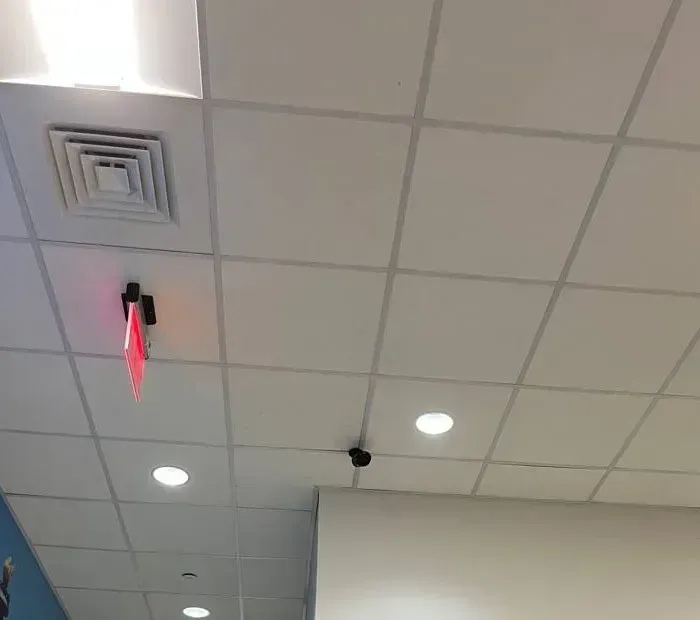
Cypress Hills, Brooklyn door buzzer installation: drop ceiling with a lit red exit sign, an air diffuser, round recessed lights and a small black camera
A photo from the AESS job library, not taken in Cypress Hills: a drop ceiling with a lit red exit sign, an air diffuser, round recessed lights and a small black camera. A second-floor clinic or office over Jamaica Avenue often has a ceiling like this at the top of its stair, and the door under that exit sign has to keep opening freely from inside after any buzzer or release is added to it.
Cypress Hills, Brooklyn door buzzer installation: bundles of blue low-voltage cable laid over a ceiling beam and a metal pipe in an open ceiling
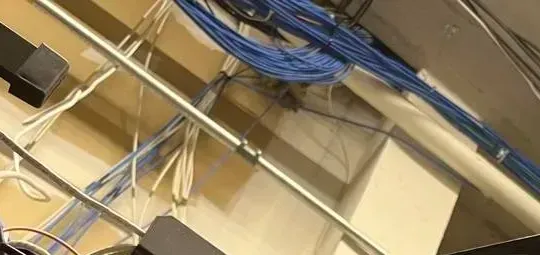
A photo from the AESS job library, not taken in Cypress Hills: bundles of blue low-voltage cable laid over a ceiling beam and a metal pipe in an open ceiling. In the cellar of a Fulton Street building with a store downstairs and apartments above, the shop's buzzer cable and the apartments' entry cable can cross the same joists like this while staying on two separate systems with two separate power supplies.
Your Questions Answered

Door Buzzer Installation in Cypress Hills: Questions Answered

These are questions Cypress Hills owners, managing agents, tenants and shop owners bring to us, along with ones raised by tenant reviews, Brooklyn owner forums, ButterflyMX's buzzer guide and the city's own guidance, answered for the buildings here.

The older elevator buildings near Highland Park

Our building near Highland Park has an elevator. Does a new entry system have to be tied into it?

No. In an ordinary apartment building, the entry system and the elevator are separate systems with separate power, separate wiring and separate service companies. The intercom calls an apartment and releases the street door; what the visitor does next, walking up or taking the elevator, is up to them. We do not wire anything into the elevator controller, and we do not put the entry system's power supply or splices in the elevator machine room, which belongs to the elevator contractor and is kept locked for good reason.

Two things do connect them in practice. The riser that carries the intercom pairs often runs in a shaft or chase beside the elevator, so the technician needs the super to open the closets or chases on each floor. And if the building later wants residents to reach only their own floor by elevator, that is an access control project on the elevator, coordinated with the elevator company, not part of a buzzer installation. We will tell you if your building's layout makes either of those relevant.

What is a riser, and why does the price for our 53-apartment building depend on testing it?

The riser is the bundle of cable that runs vertically through the building from the lobby panel or the cellar to each floor, where individual pairs branch off to each apartment. In a pre-war building it is often the oldest part of the intercom, older than the panel and the handsets, and it may have been extended, spliced or partly replaced every time an apartment was renovated. Every apartment's talk-back and release depends on its pair in that riser being continuous and clean.

That is why we test it before pricing. If most pairs are sound, a new system can usually reuse them, which keeps a building of fifty or more apartments toward the lower part of the multi-unit range. If many pairs fail, or are too degraded to carry video, new cable has to be pulled up the building, which adds labor and moves the job up. The written price lists the result floor by floor, so the owner can see exactly which lines are being reused and which are being replaced, and why.

Some apartments in our building were combined and others were split over the years, so the old buttons no longer match the doors upstairs. How is the new directory worked out?

Floor by floor, door by door. Before anything is ordered, the technician walks each floor with the super, notes every apartment door that exists today and its number, and traces which old pair, if any, reaches it. Combined apartments often still have two pairs and two old handsets, one of them dead; split apartments sometimes share a pair, so both ring together. The result is a list of real apartments, matched to working or new pairs, and that list becomes the button layout or the code directory.

The owner then decides how the directory should read, by apartment number, by name, or both, and confirms it before the panel is programmed. We also hand over the final list with the wiring note, so the next change to the building's layout starts from an accurate record instead of a guess.

The ground-floor apartment shares a wall with the lobby panel. Will that tenant hear every call and chime through the wall?

Not if the panel is chosen and mounted with that wall in mind. Most of the sound a tenant hears from a lobby panel is its speaker and its call tone, carried through the wall cavity or through a back box set directly against the apartment side. We set the panel's speaker and tone volume for the street, not the apartment, mount the panel on a surface-mount or isolated back box where the wall is thin, and seal the cable opening behind it so it does not act as a small speaker port into the apartment.

Where the only good spot for the panel is a thin partition, we will suggest moving it a few feet, to the other side of the door or to the vestibule's outer wall, during the walkthrough. That is a decision best made before the panel's location is fixed, because moving a panel afterward means patching the wall and rerouting its cable.

A tenant broke the station inside their own apartment. Who pays to replace it?

That is a matter between the owner and the tenant under the lease, and we do not decide it. What we can tell you is how it usually works in practice. The station belongs to the building's system, so the owner arranges the repair, either directly with us or through the managing agent. If the damage was clearly caused by the tenant rather than by wear, owners often recover the cost under the lease; if the station simply wore out, it is ordinary maintenance.

Either way, we record what we found on the service note, whether the station failed internally, was cracked or was disconnected, so the owner has a factual basis for whatever the lease provides. On systems that are still made, a matching station can usually be installed in one short visit.

Pre-1968 buildings and tenants

Our building went up before 1968 and already has an old intercom. If it breaks, can the owner simply take it out instead of fixing it?

We would not advise it, and it may not end the question. Under Multiple Dwelling Law §50-a, a pre-1968 building with eight or more apartments must install a self-locking door and an intercom when the tenants of a majority of apartments ask for one in writing, with the work started within 90 days and completed within six months. Removing a working or repairable system invites exactly that request, on a deadline the owner does not control. NYC 311 also treats broken or missing buzzers and intercoms as a maintenance complaint against the owner.

In most cases the cheaper path is to find out what is actually broken. A dead system in an older building is often a failed transformer, a worn strike or a damaged panel rather than a dead riser, and a $250 diagnosis, applied toward the work, tells the owner which. Owners with a specific legal question should ask their lawyer or HPD; our part is to say what it would cost to fix or replace.

Tenants in our building pay for every replacement street-door key. Would a code or fob at the street door be cheaper over time?

Often, in a building with regular turnover. One tenant review of a six-story building on Highland Boulevard lists being "charged for keys" among its complaints, and street-door keys are a recurring cost and nuisance in any building where apartments change hands: keys are copied, never returned, and the only way to be sure a former tenant cannot get in is to re-key the street door. A keypad or fob reader added to the entry system lets the owner give each apartment its own code or fob and cancel it the day someone moves out, without touching the lock.

The key does not disappear. The street door keeps its mechanical lock and key as a backup for power failures and for the fire department, and the super keeps one. But day-to-day entry moves to codes or fobs, and the owner's cost per move-out drops from a new key cylinder to a few minutes in the system's settings.

HPD writes violations for a missing peephole. When we add video stations, do the apartment doors still need peepholes?

Yes. The public violation categories shown on openigloo's building listings include "No peephole on a door" as a class A condition, and a video station on the kitchen wall does not change what the apartment door itself needs. The station shows who is at the street door; the peephole shows who is standing in the hall outside the apartment, which may be someone who came in behind a neighbor or another resident.

Peepholes are door hardware, not low-voltage work, and owners usually have them installed by a locksmith or the super. If the building is doing its entry system and apartment doors in the same season, we can schedule around the door work so the stations go up after the doors are done and nothing gets drilled twice.

Once the new system is in, who should tenants call when their station stops working?

The owner, the managing agent or the super, in the same way they report any other repair. The entry system belongs to the building, so a tenant's call goes to the building first, and the building calls us. That keeps a record of every fault with the owner, makes sure we only work on a station the owner has authorized, and avoids a tenant paying for something that is the building's to fix.

To make that work, we leave the owner and the super a one-page sheet with the system's basics, the location of the power supply and its switch, how to restart the system, and what information to give us when they call: the apartment, what the station does or does not do, and whether the problem is only in that apartment or on a whole line. Many faults turn out to be a volume turned down or a button not held long enough, and the sheet helps the super check those first.

Newer buildings and modern systems

Can residents of our newer affordable building see the visitor on screen before deciding whether to answer?

On most video systems, yes. When a visitor presses a button, the resident's monitor or app usually shows the camera image as the call rings, before the resident picks up, so they can decide whether to answer at all. The visitor does not see or hear the resident until the resident chooses to talk. On some app-based systems this preview can be turned on or off per apartment, and on monitor systems it is usually standard.

If your building's current panel does not do this, it may be a setting rather than a limit of the equipment, and it is worth checking with whoever holds the system's admin account before replacing anything. On an audio-only system, there is no picture, and adding one means a video door station and video-capable stations or app answering in each apartment.

Our building was built from factory-made modules set in place on the site. Can new intercom cable be added to its walls later?

Yes, with some planning. Modular buildings, such as the two three-story walk-ups of Cypress Village Homes on Linwood and Jerome Avenues, are assembled from finished boxes that meet at "marriage" walls and floors, and the original wiring was mostly installed in the factory, routed through those connections. Adding cable later means finding a path from module to module, usually through the corridors, utility closets or existing chases, rather than fishing freely through every wall.

During the walkthrough, we look for the building's existing vertical paths, ask the owner for the modular manufacturer's or architect's drawings if they exist, and price the job on the route that keeps finished walls intact. Where no clean path exists to an apartment, a system that answers on residents' phones, or a station fed from the corridor side, can avoid opening the apartment's walls at all.
Equipment

Types of Door Buzzer Systems We Install

We quote a reliable non-branded system by default and install a named brand when an owner or board asks for one; the intercom brands we work with include Aiphone, ButterflyMX, 2N, Akuvox, Comelit and DoorBird. These are the kinds of equipment that suit Cypress Hills' elevator buildings, walk-ups, mixed-use buildings, houses and newer rentals.

Two-wire multi-tenant systems

Lobby panels and apartment stations that carry voice, video, power and release over a single pair, the usual choice for a pre-war riser with sound pairs that can be reused.

Directory and code panels

Panels where a visitor scrolls a directory or dials an apartment code, suited to buildings of fifty to ninety apartments where a column of buttons would cover the wall.

Networked camera panels

Panels that call monitors or phones and are managed from a web portal, for newer affordable buildings with a management office and owners who want remote directory changes.

Simple wall stations

Audio or video stations with large buttons and plain controls, for tenants who will never use an app, mixed with phone answering for neighbors who want it.

One- to four-button house stations

Slim audio or video stations for frame houses, row houses and two- to four-family houses, with each button ringing only its own household's floor.

Strikes, closers, keypads and power

Fail-secure electric strikes for street doors, closers that finish the swing, keypads or fob readers for code entry, and labeled power supplies with battery backup where needed.

Two-wire system, networked panel or house station: which fits a Cypress Hills door?

The right arrangement depends on how many households the door serves, how the building is managed and how its residents prefer to answer. The table compares the three we install most often in Cypress Hills.

What mattersTwo-wire multi-tenant systemNetworked camera panelHouse station
Best Cypress Hills fitPre-war elevator buildings and walk-ups with a riser that tests wellNewer affordable buildings with a management office; buildings with a dead riserOne-family houses and two- to four-family houses
How residents answerWall station, plus app answering where an apartment wants itPhone app or apartment monitorIndoor station on each floor, or a phone
Uses existing cableYes, where pairs test soundNeeds little apartment cable; the door still needs power and a strike cableSometimes the old bell wire; often a short new run
Internet neededNo, except for app answeringYes, or a cellular connectionOnly for phone answering
Monthly feesNoneOften per apartment or per doorNone
Brooklyn list rangeFrom about $2,500From about $2,500$400–$900 audio, $700–$1,800 video

ADT, Ring and SimpliSafe compared with a local installer for a Cypress Hills building

Plenty of Cypress Hills houses already have a Ring doorbell on the porch or an alarm plan from ADT or SimpliSafe, and for a one-family house, a consumer video doorbell may be all the front door needs; we will install and properly power one you already own. None of those products is built to be the entry system of a two-family, a walk-up or a six-story elevator building. A consumer doorbell calls the phones on one account, has no directory, does not release a street door by itself and offers nothing to a tenant who does not use a smartphone. National alarm companies sell doorbells as part of monitoring plans. The entry systems we install are owned outright by the building, with no plan required unless the owner chooses a networked system that carries its own subscription, and we say so in the written price.

Cypress Hills, Brooklyn door buzzer installation: small black camera mounted high on a pale wall casting two shadows, with a small white wall device below
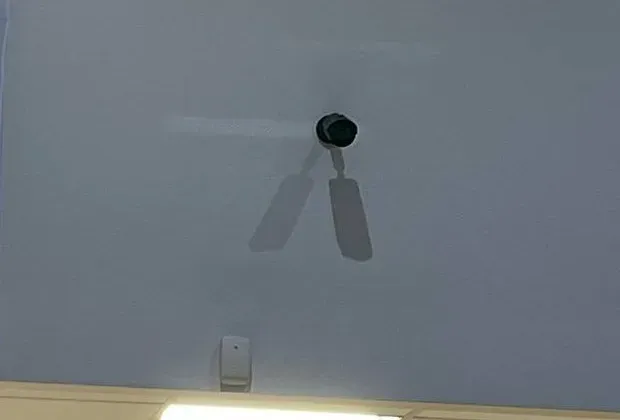
A photo from the AESS job library, not taken in Cypress Hills: a small black camera mounted high on a pale wall, casting two shadows, with a small white wall device below. In the lobby of a Highland Boulevard elevator building, a camera placed high like this can cover the inside of the entrance and the mailboxes, while the door station's own camera handles faces at the street door.
AI Overview Reality Check

What AI Gets Wrong About Door Buzzer Installation in Cypress Hills

These claims turn up in generic online answers, in national cost guides such as HomeAdvisor and Angi, and in manufacturers' and vendors' guides. Each is quoted or paraphrased, then checked against Cypress Hills' buildings, the manufacturers' own guidance and the city's rules.

"Installing an intercom system costs an average of $2,500"

HomeAdvisor's intercom cost guide gives that average, with a range from $1,500 to $15,000, and splits wireless systems at $150 to $1,500 from hard-wired ones at $1,000 to $15,000.

An average across every kind of home and building says little about any one Cypress Hills door. A first buzzer on a one-family frame house on Arlington Avenue sits far below that figure; a new entry system for an 87-apartment elevator building with a failing riser sits far above it. Even our own published ranges are wide, from $400 for a small audio system to past $10,000 for a large building, because the apartments, the riser and the door decide the cost.

The useful number is the one written after someone has watched the door close, found the power supply and tested the pairs. That walkthrough is free, and the price that comes out of it names every possible extra before anything is ordered.

"Each station takes an hour or two to install"

The same HomeAdvisor guide estimates one to two hours of labor per station, which is how a whole-house system is often priced.

For a house, that is roughly right for mounting a station once the cable is there. For an apartment building, it leaves out most of the work: tracing which pair reaches which apartment, repairing or pulling cable through closets and chases, fitting a strike into a worn frame, adjusting closers on two doors, moving a power supply out of a boiler room, programming a directory and testing every apartment from the sidewalk.

In a pre-war building, the time goes into the riser and the door, not the stations. A per-station estimate is a reasonable way to price a house and a misleading way to price a building.

"If the existing wires are in good condition, they can be reused"

Aiphone's upgrade guide says exactly this, and it is true, as far as it goes.

The catch is the phrase "in good condition." In a 1928 or 1940 building, nobody knows the condition of the riser until it is tested pair by pair, and it often turns out that most pairs are fine while a few lines, usually ones that run through renovated apartments, are cut, spliced or degraded. Assuming the wire is good because the old system worked last year is how jobs end up with surprise charges.

We test before pricing, list which pairs are being reused and which may need replacing, and price the possible replacements in writing, so the owner decides with the facts.

"Software subscriptions are just part of having a modern intercom"

Swiftlane's cost guide notes that software subscriptions commonly add $5 to $15 per unit per month, or $30 to $100 per door per month, and many vendors present that as standard.

It is standard for cloud-managed systems, and for a newer building with a management office it may be worth paying. It is not a requirement of a working intercom. A two-wire system on a pre-war riser, with wall stations and optional app answering, runs with no monthly fee at all, and so does a house station. For an 87-apartment building, the difference between a per-unit subscription and none is a real line in the operating budget, year after year.

We price both kinds and show any recurring fee in the written quote, so the owner compares the total cost, not just the installation.

"Every New York City apartment building has to have an intercom"

This one is a simplification of Multiple Dwelling Law §50-a, which many online answers state as a blanket rule.

The law draws a line at January 1, 1968. Buildings with eight or more apartments erected or converted after that date must have a self-locking entrance door with an intercom. Buildings put up before it, which includes the six-story buildings on Elton Street and Highland Boulevard, must install them when the tenants of a majority of apartments request it in writing, within 90 days to start and six months to finish. Smaller buildings, such as a three-unit building over a Fulton Street store, are outside the eight-apartment threshold altogether, although the self-closing door rules still reach any multiple dwelling of three or more apartments.

The practical answer for a Cypress Hills owner depends on the building's date, its apartment count and whether it already has a system tenants rely on, and we ask about all three before we talk about equipment.

"Pressing the buzzer opens the door"

Many explanations describe the release button as if it swings the door open.

ButterflyMX's guide gets it right: the relay is the control point that releases the lock for a set interval, and it "does not physically open the door." The resident's button energizes the strike for a few seconds so the latch can pass when the visitor pushes; the closer then has to pull the door shut and the latch has to catch. If the closer is weak or the frame has shifted, a perfectly working intercom still leaves the door open.

That is why every Cypress Hills job we do includes the door itself, closer, frame and strike, and why we watch the door latch after every test release before we leave.

"An electric strike can trap people inside when the power fails"

Some answers warn against fail-secure strikes on the grounds that a power cut would lock people in.

Allegion's guide explains the difference: "Fail safe products are unlocked when power is removed" and "Fail secure products are locked when power is removed," but with an electric strike, "you can exit by turning the lever … regardless of whether the electric strike is fail safe or fail secure." The strike only controls entry from outside; the lever or knob inside always opens the door. Allegion also notes that "Electromagnetic locks are only available fail safe," which is why a magnetic lock leaves a street door open in a blackout.

On Cypress Hills street doors we fit fail-secure strikes almost every time, so the building stays locked during an outage and residents use their keys until power returns, while anyone inside can still leave freely.

Not Sure Whether It Is the Intercom, the Door or the Old Transformer? Ask a Tech

Send a short video of the street door closing on its own, a photo of the panel and one of the old transformer if you can find it, with the cross streets and the number of apartments or households. Call now at (347) 934-8335, send a fast quote request, or speak to a tech on WhatsApp. Estimates are booked within two hours of your request during working hours.

Get In Touch

Request a Free Quote

Tell us the address or cross streets, the kind of building, how many apartments or households use the door, whether you are the owner, managing agent, board or a business tenant, and what is at the door today. A technician calls back with the range for the Cypress Hills address, or you can call (347) 934-8335 right now.

✅
Request Sent!
Thank you. A technician will call you about the Cypress Hills address, usually within two hours during working hours.
How It Works

Our Installation Process

1. Count the doors and the households

Send photos of every door people actually use, the old panel and the power supply or transformer if you can find it, with the number of apartments or households and who holds the deed or the lease.

2. Weekday walkthrough

A technician watches each door close on its own, locates the old transformer, tests the bell or riser pairs from the panel to each apartment and works out where new cable can travel without opening finished walls.

3. Written price before ordering

Equipment, mounting spots, cable route, door hardware and every add-on that could come up, such as a pair that might fail its test or a frame that needs repair, with the total set in writing before anything is ordered.

4. Door hardware and power

The strike or release goes into a sound frame, the closer is set so the door latches by itself, and the power supply goes on a labeled circuit in a room the owner controls, with an electrician for any 120-volt work.

5. Cable and stations

Low-voltage cable is tested or run to the door station and each apartment or household, labeled at both ends, and stations are mounted where the occupants want to answer.

6. Test every button from the sidewalk

Each apartment is called from outside, every station talks, listens and releases, and the door is watched closing and latching after each release, with the results in a dated test record.

7. Hand-over

The owner or managing agent gets the wiring note, the admin access and the test record, and residents are shown how to answer, release the door and report a fault to the building.

Cypress Hills, Brooklyn door buzzer installation: tiled corridor with white walls and small wall plates ending at a grey steel door with a lever handle under a drop ceiling with a small camera
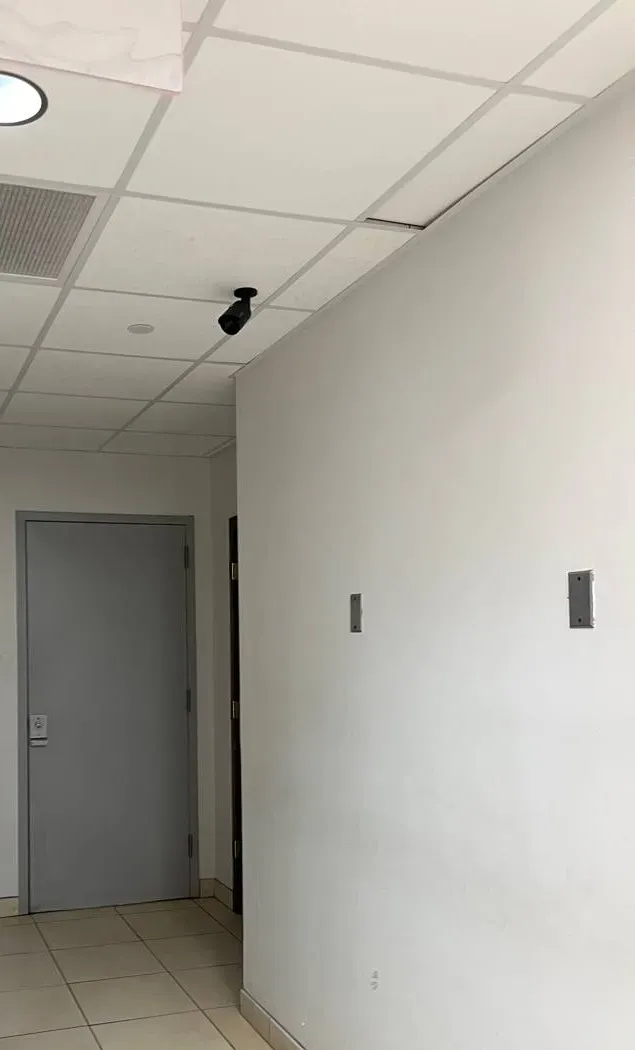
A photo from the AESS job library, not taken in Cypress Hills: a tiled corridor with white walls and small wall plates ending at a grey steel door with a lever handle, under a drop ceiling with a small camera. The ground-floor hall of a pre-war elevator building often ends at a side or yard door like this, and step one counts it: if tenants use it, it belongs in the plan.
Coverage Area

Door Buzzer Installation Near Cypress Hills' Landmarks

Cypress Hills station

The elevated J and Z stop at Jamaica Avenue and Hemlock Street, opened on May 30, 1893, and the easternmost Brooklyn station on the line before 75th Street–Elderts Lane in Queens.

Highland Park

141 acres on the Brooklyn–Queens border, established in 1901 as Ridgewood Park, with the old Ridgewood Reservoir, in service until 1959, above the six-story buildings on Elton Street and Highland Boulevard.

Cypress Hills Cemetery

Dedicated in November 1848 and spanning the borough line over 225 acres, with its Brooklyn gate at 833 Jamaica Avenue; Jackie Robinson is buried there.

Cypress Hills National Cemetery

The federal burial ground that began as a section of Cypress Hills Cemetery in 1862, on the ridge that forms the neighborhood's northern edge.

Arlington Library

The Brooklyn Public Library's Carnegie branch at 203 Arlington Avenue, on the street Brownstoner's architecture writers call the neighborhood's "Doctor's Row" of large frame houses.

105 Barbey Street

The former English Evangelical Lutheran Church of the Reformation, a 1908 brick and terra-cotta Gothic Revival church nominated to the State and National Registers in 2023.

We also serve City Line, East New York, Highland Park and the Bushwick blocks to the west at the same Brooklyn rate, and the Queens neighborhoods across the line through our Queens pages. See our door buzzer installation in Brooklyn page for the whole borough, or nearby neighborhood pages such as City Line door buzzer installation, Bushwick door buzzer installation and door buzzer installation in Queens.

Pricing

Door Buzzer Installation Cost in Cypress Hills

Cypress Hills is billed at our Brooklyn rate, with no travel premium. The ranges below are installed prices covering the equipment, power supply, strike or release, cable and labor. Where a building lands inside a range depends on the number of apartments and entrances, the riser test, the condition of the street door and frame, where the power supply has to go, and whether residents answer on wall stations, video monitors or phones. The figure for your door is written down after the walkthrough, with any possible add-on named and priced before you order, and it does not change unless you change the scope.

ItemBrooklyn priceTypical Cypress Hills job
Audio / small system$400–$900A first buzzer with talk-back for a frame or brick one-family house, or one button per household on a two-family, with a release on the street door
Video / mid-size system$700–$1,800A video door station with monitors or phone answering for a house or a two- to three-family, including a slim station on narrow trim
Multi-unit building$2,500–$10k+A panel, tested or new riser, apartment stations, strike, closer and power for a Fulton Street building over a store, a walk-up or a pre-war elevator building
Service call booked online$250Diagnosis of an existing system that has stopped working; applied toward the work

What usually moves a Cypress Hills job toward the top of its range: a riser in a pre-war building with lines that fail their test, a second or third entrance that tenants use, a street door that needs a new closer, hinges or frame repair before a strike will hold, a power supply that has to move out of a boiler room or out of the store's half of the cellar, and video stations in every apartment. What keeps a job toward the bottom: pairs that test sound and can be reused, a door that already closes and latches, one entrance, and wall stations or phone answering instead of monitors.

For context, a Brooklyn owner on Brownstoner's forum described being quoted $2,000 to replace the entry system in a three-unit house, with the vendor saying troubleshooting would cost about the same at "$150 per hour for the technicians, a minimum of 3 hours." We cannot judge another company's quote without seeing the building, but the comparison shows why a written scope matters: the owner there could not tell whether the price included the door hardware, the stations or the power supply. Ours always says.

Full terms — including 50% deposit, one-year parts-only warranty on AESS-supplied products, and the late-fee schedule — are set out in the service agreement.
Cypress Hills, Brooklyn door buzzer installation: black-and-white night camera view of a cluttered room with an open doorway into a dark back room
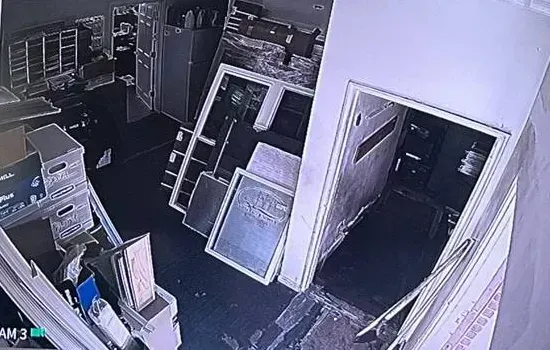
A photo from the AESS job library, not taken in Cypress Hills: a black-and-white night camera view of a cluttered room with an open doorway into a dark back room. The stockroom behind a Fulton Street or Atlantic Avenue shop looks much like this after closing, which is why many owners price a camera on the delivery door together with the rear buzzer.

Find Out Which Range Your Cypress Hills Building Falls In

Send three photos, the street door from the sidewalk, the frame and latch close up, and the old panel or bell, plus the number of apartments or households and where the old transformer is, and we will tell you which range fits and what would move it. Call (347) 934-8335, speak to a tech on WhatsApp, or use the fast quote form.

Shop Our Systems

Door Buzzer Installation Packages & Pricing

Three typical Cypress Hills jobs, each priced inside the matching range on our Brooklyn list. The exact figure comes from the walkthrough.

House or two-family buzzer: $400–$900

An audio door station with one button per household, a talk-back station on each floor where the family wants to answer, a fail-secure strike in a sound frame, the closer adjusted, and a labeled power supply in the cellar or a closet.

Video for a house or two- to three-family: $700–$1,800

A video door station, slim enough for narrow trim where needed, with a monitor or phone answering for each household, separate buttons for owner and tenants, and the cable run behind siding or inside the walls.

Apartment building entry system: from about $2,500

A button or directory panel, the riser tested pair by pair and reused or replaced, a station or app answering in every apartment, strike, closer and power supply in a room the owner controls, with a dated test record and wiring note.

Bring your own equipment. If you have already bought a door station, video doorbell or intercom kit, we can install it as long as it suits the door, the number of households and the building's power. Labor for customer-supplied equipment is quoted flat at the walkthrough, and any strike, closer, power supply and cable are priced from the same list. Customer-supplied equipment carries its manufacturer's warranty rather than ours, so we check the model with you before you book.

Cypress Hills, Brooklyn door buzzer installation: touchscreen entry panel showing a dial pad with a four-digit apartment code entered, a camera above and a card-reader symbol below
A photo from the AESS job library, not taken in Cypress Hills: a touchscreen entry panel showing a dial pad with a four-digit apartment code entered, a camera above and a card-reader symbol below. A code panel like this suits the entrance of an 87-apartment building on Highland Boulevard, where a column of buttons would take up the wall and a visitor finds the right apartment faster by dialing its code.
Complete Services

Every Door Buzzer Service in Cypress Hills

Elevator buildings and walk-ups

Panels, risers, apartment stations, closers and strikes. Request a quote

Houses and storefronts

Frame houses, two- to four-families and Fulton Street doors. Call (347) 934-8335

Across Brooklyn

The same list in every neighborhood. Brooklyn door buzzer installation

Across New York City

Every borough's buildings and rules. NYC door buzzer installation

FAQ

Cypress Hills Door Buzzer Installation FAQ

Can the street door be held unlocked for a few hours on a moving day and then lock again by itself?
+

Yes, on keypad and networked systems. The owner or super sets a hold-open period from the panel's settings or the management portal, the strike stays released for that window, and the door returns to normal locking automatically when it ends. The closer still has to be allowed to do its job, so the door should never be wedged; movers simply push it open while the strike is released. On a basic wired buzzer, a timer can be added to the release for the same purpose.

Do the new apartment stations run on batteries that tenants have to change?
+

No. Wired apartment stations are powered from the building's system through the same cable that carries the call, so there is nothing for tenants to charge or replace. Some battery-powered video doorbells exist for houses, but we wire them to a transformer wherever possible so they do not die in a cold week. Any battery backup in the system sits with the main power supply, where the owner or super looks after it.

Can each apartment choose its own ring tone so neighbors across the hall can tell whose station is ringing?
+

On most current apartment stations and apps, yes. Tenants can usually pick from several call tones and set the volume on their own station, and app users choose their phone's alert sound. On older audio systems with a fixed buzzer in each handset, the tone is the same everywhere, which is one of the small things that changes when a building upgrades.

Will an outdoor door station keep working through a hard freeze on an exposed corner?
+

Yes, if it is an outdoor-rated station installed properly. Aiphone, for example, describes its GT Series door stations as designed to withstand rain and snow. What causes winter failures is usually water getting behind the station and freezing, so we seal the cable entry from behind and mount the station so water runs off rather than into it. Keypads and touchscreens should be outdoor models chosen for the exposure.

What happens to an apartment that is vacant on installation day?
+

It gets its station like every other apartment, with the super or owner letting us in. We test it from the door station the same way, mark it on the test record, and leave its directory entry as the apartment number until a tenant moves in. That way the next tenant has a working station from the first day, and nobody has to schedule a separate visit for one apartment later.

Do apartment stations come in white or another color to suit the walls?
+

Most makers offer apartment stations in white, and many also in black or a dark finish. Within one building we usually standardize on one model and color so spare parts match, but where a particular apartment needs something different, such as a larger screen for a tenant with low vision, that can be arranged. The finish is chosen before ordering, along with the door station's finish.

If the power goes out, will the directory and the codes have to be set up again?
+

No. Directory entries, codes and settings are stored in the panel's or controller's memory, and on networked systems also in the management portal, so they survive a power cut. When power returns, the system starts again with everything in place. A battery backup on the power supply keeps the system running through short outages, and the fail-secure strike keeps the street door locked to anyone without a key while the power is off.

Can the door station's camera see a child or a visitor in a wheelchair, not just the top of an adult's head?
+

It should, and we check it. We mount the station within the accessible reach range, which the 2010 ADA Standards set between 15 and 48 inches for forward reach, and choose a camera with a wide enough view to show a seated or shorter visitor. During testing we look at the picture from a low position as well as standing, and adjust the station's angle or position if the view cuts people off.

Can the release button be made to work only while a call with the visitor is in progress?
+

On most multi-tenant systems, yes, and it is a sensible default for apartment buildings. With that setting, a tenant can release the street door only after the visitor has called that apartment and while the call is open, so the door cannot be opened at random from upstairs. It also stops an apartment station from releasing the door for a visitor who called a different apartment.

Does a new entry system need its own telephone line for the building?
+

Not usually. Wired multi-tenant systems talk to apartment stations over their own cable and need no phone line. Networked panels use the building's internet or a cellular connection. Older telephone entry systems that dialed tenants' phone numbers did need a dedicated line, and a building replacing one of those can usually drop that line and its monthly bill once the new system is working.

At what height do you mount the stations inside each apartment?
+

Typically at a comfortable standing height near the apartment's entrance or in the kitchen, about where a wall phone or light switch would be, and lower for a tenant who uses a wheelchair or for an apartment where an older resident sits to answer. Where an old handset is coming off the wall, we often use its location so the new station covers the old marks, as long as that spot suits the tenant.

More Door Buzzer Installation near Cypress Hills

Door Buzzer Installation Brooklyn NY | Brownstones & Condos · Door Buzzer Installation NYC | Apartment & Building Entry · Door Buzzer Installation Manhattan NY | Apartments & Co-ops · Door Buzzer Installation Queens NY | Co-ops & Apartments · Door Buzzer Installation Bronx NY | Co-ops & Apartments · Door Buzzer Installation Staten Island NY | Homes & Apts · Door Buzzer Installation Long Island NY | Nassau & Suffolk · Door Buzzer Installation Hudson Valley NY | Apartments · Door Buzzer Installation Nassau County NY | Homes & Co-ops · Door Buzzer Installation Suffolk County NY | Homes · Door Buzzer Installation Westchester County NY | Co-ops · Door Buzzer Installation Rockland County NY | Homes & Apts · Door Buzzer Installation Orange County NY | Homes & Farms · Door Buzzer Installation Putnam County NY | Lake Homes · Door Buzzer Installation Dutchess County NY | Homes · Door Buzzer Installation Ulster County NY | Kingston

Door Buzzer Installation Bath Beach Brooklyn NY · Door Buzzer Installation Bay Ridge Brooklyn NY · Door Buzzer Installation Bedford-Stuyvesant Brooklyn NY · Door Buzzer Installation Bensonhurst Brooklyn NY · Door Buzzer Installation Bergen Beach Brooklyn NY · Door Buzzer Installation Beverley Square Brooklyn NY · Door Buzzer Installation Boerum Hill Brooklyn NY · Door Buzzer Installation Brooklyn Navy Yard, Brooklyn NY · Door Buzzer Installation Brooklyn NY | Brownstones & Condos · Door Buzzer Installation Brownsville Brooklyn NY · Door Buzzer Installation Bushwick Brooklyn NY · Door Buzzer Installation Cadman Plaza Brooklyn NY · Door Buzzer Installation Canarsie Brooklyn NY · Door Buzzer Installation Carroll Gardens Brooklyn NY · Door Buzzer Installation City Line Brooklyn NY · Door Buzzer Installation Clinton Hill Brooklyn NY · Door Buzzer Installation Cobble Hill Brooklyn NY · Door Buzzer Installation Columbia Street Waterfront Brooklyn · Door Buzzer Installation Coney Island Brooklyn NY · Door Buzzer Installation Downtown Brooklyn NY

Other services in Cypress Hills

Fire Alarm Installation Cypress Hills Brooklyn NY · Access Control Installation Cypress Hills Brooklyn NY · TV Installation Cypress Hills Brooklyn | (347) 934-8335 · Alarm Installation Cypress Hills Brooklyn NY | Porches · Door Buzzer Repair Cypress Hills Brooklyn NY · Security Camera Installation Cypress Hills Brooklyn NY · Structured Cabling Installation Cypress Hills Brooklyn NY · Intercom Installation Cypress Hills Brooklyn NY

Ready for a Cypress Hills Front Door That Calls the Right Apartment and Locks Behind Every Visitor?

Send a photo of the street door from the sidewalk, the frame and latch, and the old panel or bell, with your cross streets, the number of apartments or households and where the old transformer sits, and we will tell you what the door needs and where it falls on the Brooklyn list. Call or text (347) 934-8335, message us on WhatsApp, or use the request form. Licensed under NYS license #12000287431, rated 4.7★ across 201 Google Reviews, owner-operated since 2002.