Lobby Panels for Towers · Separate Entries for Mixed Buildings · Elevator and Turnstile Tie-Ins · Brooklyn Rate
Door buzzer installation in Downtown Brooklyn is mostly building work, not doorbell work. In the two decades since the 2004 rezoning, a district planned for offices has gained more than 26,000 apartments, most of them in rental and condo towers between Flatbush Avenue Extension, Atlantic Avenue and Cadman Plaza, and a new wave of old office buildings is now being turned into homes. That leaves owners, boards and managing agents with entry questions the rest of Brooklyn rarely asks: how a lobby panel should reach residents 40 floors up when the elevators are out, how an office lobby and an apartment lobby share one front door, which floor a visitor's elevator ride should be allowed to reach, and who keeps the directory current when hundreds of apartments lease up in a single year. Below is how we handle each, and where each job sits on our Brooklyn price list.
Reviewed and updated November 11, 2026, against Untapped Cities' November 2026 tour of The Bowen at 289 Schermerhorn Street; Commercial Observer's August 2025 report on the 141 Willoughby Street conversion; the Mann Report's September 2024 interview with RXR on 89 DeKalb Avenue and 6sqft's July 2025 lottery notice for the same tower; News 12's June 2026 report from the Addison; CityRealty's building record for Concord Village at 175 Adams Street; The Real Deal's August 2025 report on the Downtown Brooklyn Partnership housing count and 6sqft's April 2026 renter guide; HPD's Tenant Data Privacy Law page (Local Law 63 of 2021); New York's Multiple Dwelling Law §50-a; Habitat Magazine's February 2024 report on intercom duties and its May 2017 report on smartphone buzzers; Brick Underground's November 2019 NYC intercom guide; a StreetEasy Talk thread on replacing a condo intercom; ButterflyMX's guide to elevator floor access; the Wikipedia entries for Downtown Brooklyn and the Fulton Street Mall; Allegion's fail-safe and fail-secure guide; Aiphone's GT Series pages; the HomeAdvisor and Swiftlane cost guides; the building code's sensor-release provisions; and the 2010 ADA Standards. · Abstract Enterprises Security Systems, NYS license #12000287431 · crews dispatched from our Troy Avenue office in Brooklyn

Owner-operated since 2002 · Thousands of jobs completed · Booked within 2 hours
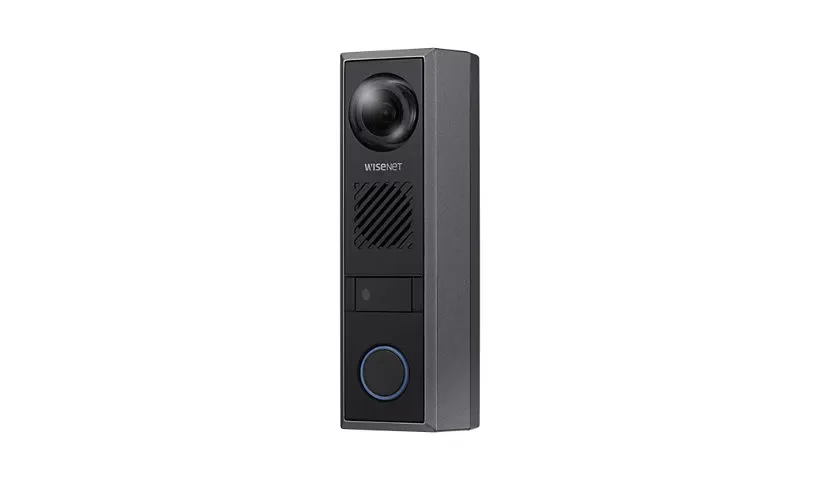
Quick answer: door buzzer installation in Downtown Brooklyn runs $400 to $900 on our Brooklyn list for an audio system on a small building or a single business door, $700 to $1,800 for a video door station with indoor monitors or phone answering, and from about $2,500 to past $10,000 for a full entry system with a lobby panel and a station or app answering for every apartment in a walk-up, co-op or tower. Each price covers the door station, the answering stations, the power supply, the strike or approved lock on the door, the cable and the labor, and it is fixed in writing after a walkthrough, with any possible extra, such as a riser pair that might fail its test or a tie-in to the elevators, named and priced before you order. Downtown Brooklyn is billed at the Brooklyn rate. What moves a tower job inside its range here is rarely the panel itself: it is the number of entrances, whether the building's network and riser can carry the system, and whether the job has to talk to elevators, turnstiles or a front desk. Send photos of the lobby and the old panel to (347) 934-8335 or on WhatsApp, and we reply with the range that fits, usually within two hours of your message during working hours.
Downtown Brooklyn is the borough's civic and commercial center, the third-largest central business district in the city after Midtown and Lower Manhattan, packed into less than half a square mile between Brooklyn Heights, DUMBO, Fort Greene and Boerum Hill. ZIP code 11201 covers the blocks north of DeKalb Avenue and 11217 the blocks to the south, and the area is patrolled by the 84th and 88th Precincts. In 2020 about 23,500 people lived here, a number that has grown quickly since, because what used to be a nine-to-five district of courts, offices, colleges and department stores has become one of the densest new residential areas in New York.
That change is the whole story for an entry installer. When the city rezoned the district in 2004, the plan expected millions of square feet of new offices and only about a thousand new homes. A decade later, the borough president's office found that only a fraction of the projected office space had been built, while more than 11,000 apartments were finished or under way. By August 2025, The Real Deal reported, citing the Downtown Brooklyn Partnership, that 26,853 units had been added since the rezoning, about 12 percent of them affordable, with more than 3,700 completed in the first half of 2025 alone. 6sqft's April 2026 renter guide put the total above 27,000, with roughly 8,000 more in the pipeline. Nearly every one of those apartments sits behind a lobby door that has to answer visitors, release for deliveries, lock behind them, and keep a directory accurate as residents arrive and leave.
Those lobbies vary more than the glass outside suggests. Some towers staff the desk around the clock; 6sqft lists a 24/7 doorman at One Boerum Place and a 24-hour attended lobby at 505 State Street. Others were built around keyless entry and apps, as at 300 Ashland. Next to them stand older co-ops and, now, office buildings being turned into homes. Untapped Cities toured The Bowen at 289 Schermerhorn Street in November 2026, a 1925 brick office building converted into a 71-residence condominium, and Commercial Observer reported in August 2025 that 141 Willoughby Street, a 24-story office building finished only in 2023, is to get 200 rental apartments above floors that stay offices. Each of those buildings needs an entry system designed for the way people actually move through it.

The pressure on those systems is real. Tall buildings depend on elevators, and when the elevators fail, the front door gets much farther away. In June 2026, News 12 reported from the Addison, a 26-story Downtown Brooklyn rental, where residents described weeks of elevator breakdowns; tenant Michelle Beatty told the station, "It's either going to be quick, or it's going to take you an hour to leave your building." In a building like that, the ability to see a visitor, speak to them and release the door from the apartment is not a convenience. A former resident of a building by the Jay Street–MetroTech station wrote on Reddit that mail theft was "happening non stop in our building," which is the other side of the same problem: a lobby door that lets the wrong person in costs residents directly.
Finally, the district is crowded at street level. The Fulton Mall stretch of Fulton Street, from Adams Street to Flatbush Avenue, carries about 230 stores and is closed to private cars, so guests, couriers and ride-share passengers arrive on foot from the side streets. The colleges, from NYU Tandon and City Tech to LIU Brooklyn and Brooklyn Law, add students, and some towers share a building with a campus. The entry system has to sort residents from shoppers, students from tenants, and office workers from guests, all at the same few doors.
Where this page applies. It covers Downtown Brooklyn from Cadman Plaza and Court Street east to Flatbush Avenue and Ashland Place, and from the Tillary Street edge south to Atlantic Avenue and Schermerhorn Street, including Fulton Mall, the Brooklyn Commons (MetroTech) blocks, the DeKalb Avenue and Willoughby Street towers, Concord Village and the City Point area. For the rest of the borough see our door buzzer installation in Brooklyn page, and for the whole city our NYC door buzzer installation page.
Repair calls from Downtown Brooklyn tend to fall into three groups, and only one of them is a broken part. The first is the classic failure: a lobby panel that has gone silent, one line of apartments that can no longer release the door, a strike that hums but will not let the latch go. The second is an administration failure: a networked panel that still works, but the developer's installer has moved on, the management company has changed, and nobody holds the login needed to add a new resident or delete one who moved out a year ago. The third is a converted building that never got a residential entry at all.
Each one starts the same way: a call to (347) 934-8335 or photos on WhatsApp, then, where an existing system has to be diagnosed in person, the $250 service call booked online, with the $250 applied toward the repair or toward a new system if replacing turns out to be the better value. You get both numbers and a plain recommendation. Where the problem is administrative, we first ask the owner or managing agent to recover the account from the manufacturer or the original installer; replacing working hardware because a password was lost is the most expensive possible fix, and usually an unnecessary one.
The physical faults follow familiar patterns. Brick Underground's guide to NYC intercoms, quoting Daniel Vasquez of Paragon Security and Locksmith, notes that repairs usually involve the lobby base, the apartment station, the door strike or the power supply rather than the cable inside the walls, and that "the core wiring is typically fine." That matches the older Downtown buildings. In the newer towers, the more common culprit is the network: a panel that lost its connection when the building's internet provider or switch changed, or a cellular module that was never activated after the developer handed over the building.
Every service below is priced from the same Brooklyn door buzzer list. The apartment count sets the size of the system, the doors and frames decide what release each entrance can take, and in Downtown Brooklyn the number of entrances, the building network and any link to elevators or a desk decide a good part of the labor.
Code or scrolling-directory panels with a camera for buildings of 20 to 70 stories, calling hundreds of apartments by app, wall monitor or phone line, one panel per entrance residents actually use.
A first residential front door for a former office building, with its own panel, its own release and its own directory, kept apart from the office lobby that may share the ground floor.
Visitor release that also lets the elevator reach only the floor being visited, planned with the elevator contractor so the door system never takes over the elevator's own controls.
Loading and checking hundreds of apartments, phone numbers and codes when a building opens or changes managers, with a written method for adding and deleting residents afterward.
New panels and apartment stations for Concord Village-era co-ops and mid-century buildings, reusing riser cable that tests sound and replacing only the lines that fail.
Street-door panels and apartment stations for homes above stores on and around the pedestrian mall, wired up their own stair and kept separate from the shops' doors.
Release logic for lobbies with a revolving door, an accessible swing door and, in converted office buildings, security turnstiles, so a visitor who is buzzed in can actually get through.
Buzzers for office suites, clinics and studios on Brooklyn Commons and Jay Street floors, and service entrances that ring management instead of residents.
Finding why one line, one floor or one app stopped working, recovering lost admin access, and fixing that instead of replacing a system that otherwise works.

Six kinds of building account for almost every entry job in Downtown Brooklyn. They differ in who controls the door, how many people the panel has to reach, how the cable or network gets to them, and what else in the building the entry system has to work with, and each one has a mistake we see when the job is planned in a hurry.
Glass and concrete rentals from 2004 onward on Flatbush Avenue Extension, DeKalb Avenue, Willoughby Street and Schermerhorn Street, often with hundreds of apartments and a management office running the entry software.
Condominium towers and towers that combine condos with rentals, a retail podium or amenity floors, where the board, the developer and sometimes a retail landlord all have a stake in the lobby.
Former office buildings such as The Bowen at 289 Schermerhorn Street and 141 Willoughby Street, where homes are being added to a structure built for daytime workers.
Concord Village on Adams Street and similar postwar buildings, with doormen or guards for part or all of the day, long risers and a mix of long-time and new shareholders.
Older commercial buildings on Fulton Mall and the side streets whose upper floors have become apartments, reached through a narrow residential door between shopfronts.
Towers that share a structure with a college or school, and office buildings with clinics and studios, where different groups must use different doors.
The rental towers that went up after the rezoning are the largest single group of entry systems in the district. A typical building has a main lobby on the avenue, a side or garage entrance, a package room, an amenity floor, and several hundred apartments, and its developer usually chose a networked entry system: a camera panel at each entrance that calls residents' phones through an app, sometimes with a backup phone line, managed from a web portal by the leasing or management office.
Where these systems go wrong is scale. A tower that leases hundreds of apartments in its first year, which is exactly what has been happening here, loads hundreds of names, phone numbers and codes in a few months, often by more than one person and under pressure. Our setup work in these buildings is as much about method as about hardware: one person or one import file responsible for the directory, a check call to every apartment before the system goes live, and a written routine for move-ins and move-outs that the leasing office can follow without us.
The other recurring problem is dependence on the building network. An app-based panel needs a working connection to reach anyone, and in a new tower that connection often runs through the same switch as the amenity Wi-Fi and the package lockers. A provider or switch change can silently knock it offline. We put the panel on its own protected network segment where the owner allows it, add a cellular backup where the panel supports one, and make sure someone in the management office gets an alert when the panel goes offline.
Condo towers bring a board into the picture, and mixed towers bring more parties still. A tower with condos above rentals, or with a retail podium below, may have a lobby owned by the condominium, a garage run by an operator, and a shopping center or food hall with its own security staff on the lower floors. The entry system has to serve the residents without giving shoppers, retail staff or garage customers a way upstairs, and it has to be clear, in writing, which party pays for and controls each door.
Our first question in these buildings is therefore not about brands. It is which doors belong to the residential lobby, which belong to the retail or garage side, and where the two meet: a shared corridor, a freight elevator, a loading dock, a door from the garage into the residential elevator lobby. Every one of those meeting points needs a lock and a rule, and most of them need a release controlled only by the residential side.
Office buildings were designed around a lobby desk, turnstiles and badge readers, with doors that lock at night and open in the morning. Homes need the opposite: a door that is locked all the time, a way for each household to see and admit its own guests at any hour, and stations or apps in every apartment. The Bowen, a 1925 brick office building whose conversion more than doubled its height, and 141 Willoughby Street, where Commercial Observer reported floors two through seven will stay offices beneath 200 new rentals, show the two common versions: an old building with a new addition on top, and a building where offices and apartments will share the ground floor for good.
In the first case, the challenge is getting entry cable or network to apartments in two structures of different ages, the original floors and the new ones above, without opening finished walls. The cleanest route is almost always the new risers the conversion itself creates for plumbing, power and data, so the entry system belongs on the architect's drawings before those shafts are closed. In the second case, the key decision is whether residents get their own street door and lobby, or share the office lobby through a separate release and elevator rule. We have a strong preference for a dedicated residential door with its own panel, because it keeps a resident's guest from wandering onto an office floor and keeps office visitors away from the apartments.
Concord Village's buildings on Adams Street, including 175 Adams Street with its 17 floors and 146 apartments built in 1950, belong to an earlier generation. CityRealty lists a full-time doorman and security guards there, which is typical of the district's postwar co-ops, but even a staffed building needs a way to reach apartments when the desk is busy or unstaffed, and a way for residents to admit guests without calling down. These buildings often have an old audio intercom or a phone-line system that still works in most apartments and has quietly failed in a few.
The approach here is to test before designing. A long riser that has carried an intercom since mid-century may still be sound pair by pair, and Aiphone's guide to upgrading intercoms makes the same point: if the existing wires are in good condition, they can be reused. Reusing good pairs keeps the price down and keeps walls closed in occupied apartments. The pairs that fail are named on the written price as possible replacements, with their cost, before the board votes, so nobody learns about them on installation day.
Fulton Mall grew up as a street of department stores and commercial buildings, and some of those buildings now have homes on their upper floors. The Offerman Building, an 1893 building designated a city landmark in 2005, had 121 apartments above its stores by 2017. In buildings like that, the residential door is a narrow entrance between shopfronts, used all day next to some of the busiest sidewalks in Brooklyn.
That door has to be easy for residents and their guests to find and hard for everyone else to treat as a public doorway. We keep it on its own system, separate from the store's doors and alarms even when the cables share a cellar, mount the panel inside the door recess where passing crowds do not knock it, choose a vandal-resistant station, and set the closer firmly enough that the door shuts every time against the draft from the street. Where the building is a landmark, the panel's size, location and cable path follow the Landmarks Preservation Commission's guidance and, where required, its permit.
Downtown Brooklyn is unusual in how many buildings combine homes with something else: a college, a school, clinics, offices or studios. RXR's 30-story tower at 89 DeKalb Avenue, built with LIU, combines 324 apartments with the university's pharmacy school, and RXR described separate traffic flows for students and residents. That is the design principle we follow in any shared building: each group gets its own entrance or its own lane through the lobby, its own credential, and an entry panel that reaches only the people that group is meant to reach.

These notes describe how our technicians approach a large building in a district like Downtown Brooklyn. They are our standard practice, not a story about one address.
Count every door people really use. Before looking at the panel, the technician walks the outside of the building and lists every way in: the main lobby, the side door residents use from the subway, the garage, the service and freight entrance, any door to a store or office in the same building. The drawings rarely match reality. A system that covers only the front lobby leaves the others propped or keyed, and those are where problems start.
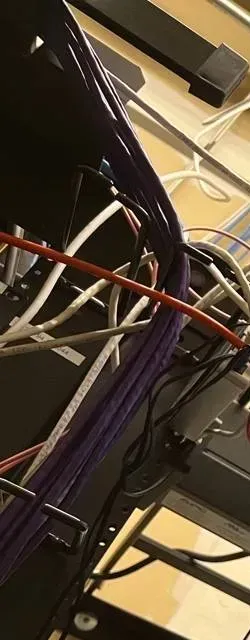
Find the network and the power. Next comes the telecom or equipment room. The technician notes where the current entry controller lives, what it connects to, who provides the building's internet, whether there is a cellular signal at the panel, and which circuit feeds the power supply. In a networked building, most "the intercom is broken" calls end in this room.
Walk one visitor through the building. Last, the technician acts out a real visit: press the panel, get answered, be released, get through the revolving or swing door, pass the desk or turnstile, take the elevator, and reach the apartment door. Every place that walk stalls, whether a turnstile that does not know about the release, an elevator that will not go to the floor, or a desk that cannot see who was admitted, goes on the written scope with its price.

In a walk-up, the front door is one flight of stairs away and a resident can always go down to it. In a Downtown Brooklyn tower, the door can be hundreds of feet below the apartment, reached only by elevator, and the whole design of the entry system has to assume that nobody is going to walk down to answer it. That changes what matters most.
Seeing and releasing from upstairs. The basic job of a tower panel is to let a resident see who is at the door, talk to them and release it without leaving the apartment. Video at the panel matters more here than in a small building, because the resident has no way to look out a window and check. So does reliability: a resident whose app fails has no fallback in a tall building except calling the desk, if there is one. We recommend a panel that can reach each apartment two ways, for example an app plus a phone number, or an app plus a wall station, so one failure does not lock out a guest.
Elevator floor access. In many towers the lobby door is only the first barrier; the elevators need a fob or a release to move. ButterflyMX's guide to elevator floor access describes the common approach: once a resident approves a visitor, "the entrance door can be unlocked and elevator access can be enabled based on the building's rules," and floor access readers can limit a visitor to approved floors. The same guide is careful to note that the intercom "does not replace the elevator system." That is the right way to think about it. The entry system sends a permission; the elevator contractor's equipment decides what the car does with it. Any floor-access job here is planned jointly with the elevator contractor, and the elevator's own safety and fire service functions are never touched by the entry installer.
Revolving doors and accessible doors. Many tower lobbies have a revolving door for everyday traffic and a swing door beside it for wheelchairs, strollers and deliveries. A revolving door cannot simply be "buzzed open," so the release is usually wired to the swing door, often with a powered operator, and the panel tells visitors which door to use. Where a lobby relies on a powered door, its push buttons and the panel stay within the 2010 ADA Standards' reach range of 48 inches high and 15 inches low.

Downtown Brooklyn has the city's clearest examples of a market changing its mind. The office space the 2004 rezoning expected largely did not arrive, apartments did, and now some of the office space that was built is becoming apartments too. For an entry installer, a conversion is the most interesting job in the district, because almost every assumption the original building made about its front door is wrong for its new residents.
Hours that no longer apply. Office doors are usually programmed to unlock during business hours. A residential front door should never unlock on a schedule. In a shared building, we separate the two clearly: office doors keep their schedule, residential doors stay locked and release only for residents and their approved visitors, and any door both groups use is set to the stricter of the two rules.
The law that comes with the new use. A building converted to eight or more apartments after 1968 falls under Multiple Dwelling Law §50-a's intercom requirement. A conversion is therefore the moment to install a proper talk-and-release system at the main entrance, with a station or app for every apartment, rather than relying on the office desk. It is also the moment to plan for the city's Tenant Data Privacy Law, which applies to multiple dwellings that use smart access systems such as fobs, apps and biometrics; more on that below.
Mixed tenancy for the long term. At 141 Willoughby Street, Commercial Observer reported that the lower floors will remain offices under the new apartments. In a building like that, we recommend writing down, before the first resident moves in, which party controls which door, who pays for which part of the entry system, who holds the admin access for each part, and what happens when one side's tenant changes. Those answers are cheap to settle on paper and expensive to argue about later.

Most Downtown Brooklyn residential buildings are large multiple dwellings, so most of them fall squarely under the state and city rules for entrances. Here is how those rules apply, in plain terms and without legal advice.
A working intercom at the main door. Multiple Dwelling Law §50-a requires every class A multiple dwelling with eight or more apartments that was built or converted after January 1, 1968 to have a self-locking main entrance door and an intercommunication system that lets tenants talk to visitors and release the door. The Multiple Dwelling Law applies in cities of 325,000 people or more, which includes New York City. Habitat Magazine's February 2024 report on intercom duties adds that courts have treated a working intercom as an essential service under the warranty of habitability, and that a co-op is not exempt; the real estate litigator Nancy Kourland of Lasser Law Group told the magazine, "As a result, the co-op has a legal obligation to repair or replace the intercom," in the case of a building that had let its system lapse.
Privacy rules for smart access. Many Downtown towers use keyless entry, fobs and apps. HPD's page on the Tenant Data Privacy Law, Local Law 63 of 2021, says owners of multiple dwellings that use smart access systems must give tenants a data retention and privacy policy, must obtain express consent in writing or through a mobile application before collecting reference data, may collect only the minimum data needed to run the system, and must destroy authentication data no later than 90 days after it is collected unless it is kept in anonymized form. Owners also may not require use of a smart access system to gain entry to a tenant's own apartment. When we install or reconfigure a smart system, we set its logging and retention to settings the owner can match to that policy, and we leave the owner a list of what the system stores.
Free exit from every door. A door with a buzzer or a code must still let people out without a key, code or special knowledge. With an electric strike, the lever on the inside always works, whether the strike is fail-safe or fail-secure, which is one reason strikes are our default on residential entrances. Where a magnetic lock is used, the building code's sensor-release provisions call for a sensor on the egress side, a manual unlocking device marked "PUSH TO EXIT" within reach of the door, unlocking on loss of power and on fire alarm or sprinkler activation, and locks listed to UL 294. In a tower, that tie to the fire alarm system is coordinated with whoever maintains the building's fire alarm.
Reach and accessibility. The 2010 ADA Standards put the high forward reach at 48 inches and the low forward reach at 15 inches, and operable parts have to sit within those ranges. Lobby panels, keypads, readers and powered-door buttons in a Downtown lobby stay inside them.
What this means for an installation. An entry job in a Downtown Brooklyn building is really four jobs: the doors, the intercom, the data and the records. We check every door for free exit and self-closing, test every apartment, and leave a dated record.
Downtown Brooklyn's businesses mostly sit inside bigger buildings: suites in office towers, clinics and studios on upper floors, shops on a pedestrian mall, stalls and stores in podiums below apartment towers, and offices near the courts and Borough Hall. Their entry needs are smaller than a tower's but just as particular, because a business door here usually opens into a corridor or lobby someone else controls.
The car-free stretch of Fulton Street from Adams Street to Flatbush Avenue, with about 230 stores whose rear and side doors take deliveries and whose upper floors hold offices and homes.
The MetroTech office campus, now Brooklyn Commons, and the Jay Street corridor, with company suites, agencies and NYU Tandon buildings where visitors are buzzed up from a lobby.
Law offices, agencies and services around the courts and Borough Hall, where clients arrive on foot and suites sit behind a shared building lobby.
Clinics, schools and small offices in mixed buildings between the towers, many sharing a ground floor with a residential lobby.
Retail podiums, food halls and services below apartment towers and around the LIU campus, with back-of-house doors that need their own control.
Offices, nonprofits and studios in older commercial buildings, some now sharing their structure with new apartments.
For a suite in an office building, the usual job is a video or audio station at the suite door, answered at reception or on staff phones, with a strike that releases for approved visitors and locks behind them. The building's own lobby system decides who reaches the floor; the suite buzzer decides who gets past the suite door. We keep the two apart unless the landlord asks for a link, and we get the landlord's written approval before any work in a shared corridor, because building rules in Downtown office towers usually require it.
For a store on Fulton Mall, the job is usually at the delivery door. Because private cars cannot use the mall, deliveries arrive by commercial vehicle at set times or are carried in from the side streets, and a back door that is left propped for a delivery is a door left open to the street. A buzzer or video station at that door, answered at the register or on the manager's phone, lets staff see who is there and release the door for the delivery without propping it. If the store also has apartments above, their door stays on a separate system so the store can never release it.
If a business also wants a camera on its entrance, it can go in on the same visit and be priced together with the buzzer; customers who combine the two typically save $200 to $400 in labor.

Questions Downtown Brooklyn owners, boards, managers and residents bring to us, plus ones raised in Habitat Magazine, Brick Underground, ButterflyMX, StreetEasy and HPD guidance, answered for the buildings here.
By treating the directory as a controlled record rather than something anyone in the leasing office can type into. In a building that fills quickly, the usual errors are duplicate entries, apartments still listed under a previous applicant, phone numbers typed with a digit missing and residents added to the app but never to the panel's directory. Each one sends a visitor's call to the wrong person or to nobody, and the resident only finds out when a guest gives up.
We set up one source for the directory, usually an import file kept by the leasing or management office, with one person responsible for it. Before the system goes live, every apartment is called from the panel and checked. After that, a written routine covers move-ins, move-outs and transfers, so the office knows exactly what to change and in what order. Downtown Brooklyn added more than 3,700 apartments in the first half of 2025, by the Downtown Brooklyn Partnership's count, and buildings opening at that pace need that routine on day one.
Often, yes, if the elevators already have floor access control or can be given it. The usual design is the one ButterflyMX describes in its guide to elevator floor access: when a resident approves a visitor, the door is released and the elevator is allowed to take that visitor to the approved floor, using floor access readers or a controller connection. The visitor cannot ride to other residential floors, the amenity level or an office floor in a mixed building.
The work is always planned with the building's elevator contractor. The entry system only sends a permission; the elevator equipment decides what the car does, and its safety and fire service functions stay entirely with the elevator contractor. We price the entry side, list what the elevator contractor has to do on their side, and make sure the two are tested together before residents rely on it.
The swing door. A revolving door is meant to be turned by hand and is not something a resident upstairs can open remotely, so in a lobby with both, the electric strike or approved lock goes on the swing door beside it, and that is the door the panel releases. In many lobbies the swing door also has a powered operator, so a visitor with a stroller, a cart or a wheelchair can come through without pulling it.
The panel and its signage have to make that obvious. A visitor who is buzzed in and then pushes the revolving door, which may be locked after hours, will think the release failed. We place the panel next to the released door, label it, and where the panel has a screen, show a short message telling visitors which door to use.
A second way to reach residents and an alert that tells someone the panel is offline. Habitat Magazine's 2017 overview of smartphone buzzers noted that these systems need an internet connection, and a StreetEasy discussion among condo owners raised the same point about paying for internet service in the lobby. When the connection fails, an app-only panel cannot call anyone, and the first person to notice is usually a frustrated guest.
In a Downtown tower we add a cellular backup module where the panel supports one, a phone-number fallback for each apartment where residents want it, a battery-backed power supply for the panel and the network switch it uses, and an offline alert to the management office. Residents also keep their physical credential, a fob or key, so their own entry never depends on the app.
It should make sure residents never have to come down to let someone in. When elevators are unreliable, as tenants at the Addison described to News 12 in June 2026, residents on high floors will look for shortcuts: asking a neighbor to hold the door, telling a delivery driver to wait for whoever comes out, or propping a side door. Each of those is a security problem that starts as a convenience.
The fixes are simple. Make sure every apartment can see the visitor and release the door remotely, give couriers time-limited codes for the package room, turn on door-held-open alerts for the side and service doors, and make sure the desk, if there is one, can release the door on a resident's behalf. None of that repairs an elevator, but it keeps an elevator problem from becoming an entry problem.
They can, but we usually advise against it. A shared lobby means the entry system has to tell a resident's guest from an office visitor, keep office hours from unlocking a door residents rely on at night, and stop each group's visitors from reaching the other's floors. That can be done with separate panels, elevator floor access and careful scheduling, but every link between the two sides is a place where a mistake opens the wrong door.
Where the floor plan allows, a dedicated residential entrance with its own panel and its own elevator lobby is cleaner and easier to manage. Where it does not, we put the residential panel at the shared door, make the residential side the stricter one, keep the office desk out of the residential directory, and document who controls each part. Commercial Observer's report on 141 Willoughby Street describes exactly this kind of building, offices below and 200 rentals above, so the question is going to come up here more often.
Only if the two systems are connected, and that connection is the part to plan most carefully. Turnstiles in an office lobby read employee badges; a guest has none. When a resident releases the front door, the turnstile controller also has to be told to let one person through, usually through a relay or software link between the entry panel and the turnstile system. Without it, the guest is admitted at the door and stopped a few feet later.
If the turnstiles will serve only office tenants from now on, the simpler answer is a separate route for residents that bypasses them. We quote both options, along with what the turnstile vendor has to change on their side, and test the full walk from the panel to the elevator before move-in.
During construction, while the new shafts and ceilings are open. A conversion that adds floors to an older structure, the way The Bowen's conversion more than doubled the height of a 1925 office building, creates new vertical runs for plumbing, power and data. Those runs are the natural path for entry cable to every apartment in both the old and new parts. Once the walls close, reaching each apartment means cutting finished surfaces or running visible raceway.
We ask to see the architect's riser diagrams early, mark a cable from every apartment to a riser closet and from the closet to the main entrance, and pull the cable while the shafts are open. Equipment goes in at the end, after finishes, so stations and panels are not damaged by other trades.
With separate entrances, separate credentials and separate directories. RXR's Rebecca D'Eloia described the goal for 89 DeKalb Avenue, where apartments share a tower with LIU's pharmacy school, in one line to the Mann Report: "The students are protected from the residents and vice versa." In entry terms, that means the residential panel reaches only apartments, the academic entrance follows the school's schedule and its own badges, and neither group's credential opens the other's door or floors.
The two systems can share infrastructure such as cable routes or a telecom room, but not permissions. Where both groups have to pass through a common space, elevator floor access does the separating. We document which party controls each door so a change on one side, such as a new term schedule, never unlocks a residential door.
It should be easy to find and quick to use from the sidewalk. Fulton Mall is limited to buses, commercial and delivery vehicles and emergency vehicles, so ride-share passengers and food couriers are dropped on a side street and walk the rest. A residential door between two busy shopfronts can be hard to spot, and a courier who cannot find it in a minute or two may leave.
We mount a lit panel at the residential door with the building number clearly shown, set it inside the door recess so crowds do not knock it, and set up codes or a short directory that let couriers reach residents quickly.
Yes, on most current systems. A package room off the lobby can have its own reader or keypad, and the entry system can issue couriers codes that open the street door and that one room, at set hours, without reaching the elevators or residential corridors. Codes can be limited by time and day.
What matters most is the package room door itself. It needs a closer that shuts it every time, a lock that cannot be held open with a wedge, and a door-held-open alert, because a package room left open is worse than one with no code at all.
The cable and backboxes should go in during construction, and the equipment near the end. In a new building or a conversion, the entry system's cable is part of the rough-in, run at the same time as data and low-voltage wiring, so we coordinate with the general contractor's schedule. Panels, stations and readers go in after finishes, when the lobby and apartments are close to ready, and are tested before residents move in.
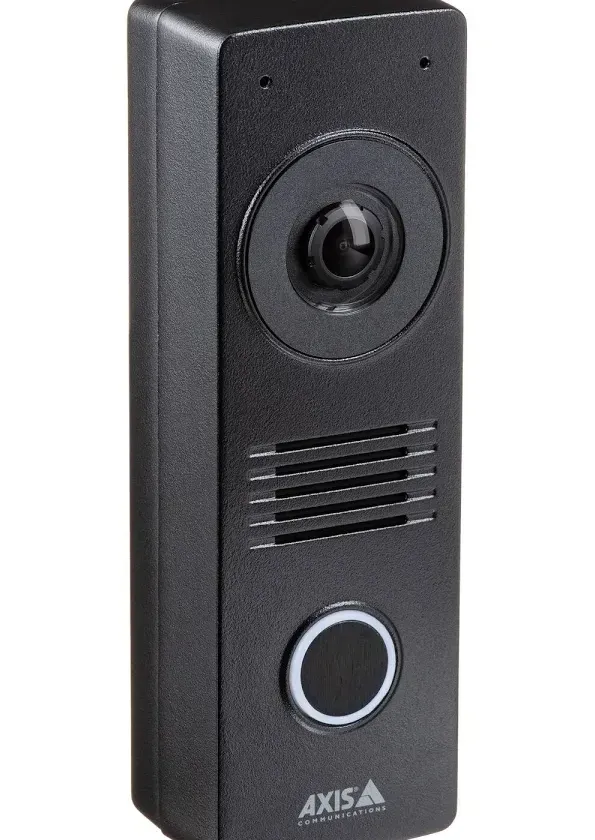
We quote a reliable non-branded system by default and install a named brand when an owner or board asks for one; the intercom brands we work with include Aiphone, ButterflyMX, 2N, Akuvox, Comelit and DoorBird. These are the kinds of equipment that come up most in Downtown Brooklyn buildings, and where each one fits.
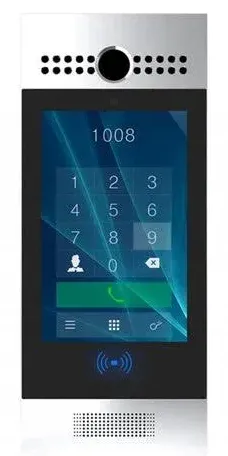
Lobby panels with a camera, a directory or code entry and app answering, managed from a web portal, for rental and condo towers whose office needs to change residents often.
Panels and apartment stations that carry voice, video, power and release over one pair, suited to co-ops and older buildings whose risers test sound.
Wall monitors for residents who want a screen by the door, with app answering added for those who want it, in the same building and on the same panel.
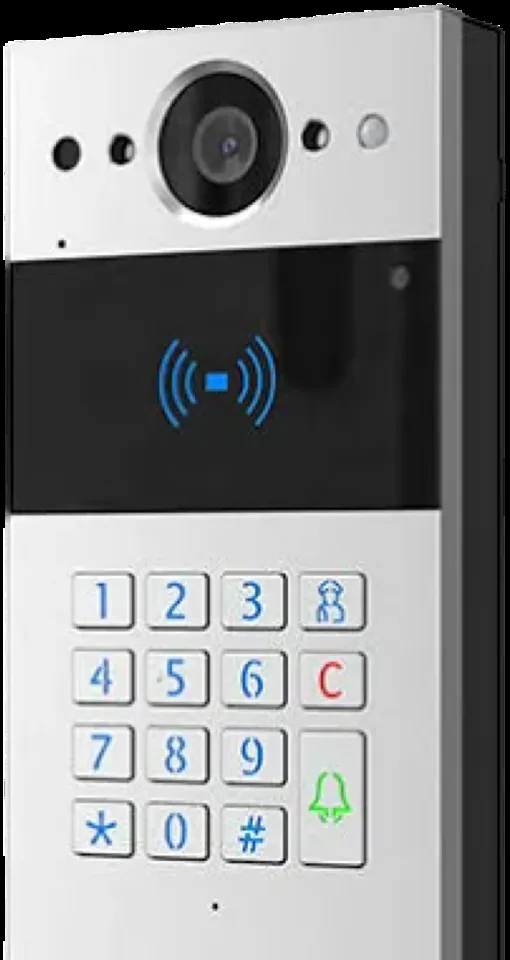
Stations combining a code keypad, a card or fob reader and a call button, for side, garage, package room and service doors.
Relays and controller links that pass a visitor's approval to floor access readers or turnstiles, installed with the elevator or turnstile vendor.
Slim audio or video stations for office suites, clinics, studios and shop delivery doors, answered at a desk or on staff phones.
Fail-secure strikes for residential doors, powered door operators for accessible lobby doors, and battery-backed power supplies on owner-controlled circuits.
Cellular connections and phone-line fallbacks that keep a networked panel calling residents when the building's internet goes down.
Contacts and timers that warn the management office or desk when a side, service or package room door stays open too long.
| What matters | Networked camera panel | Two-wire multi-tenant system | Hybrid wall and app |
|---|---|---|---|
| Typical Downtown fit | Post-rezoning rental towers, new conversions | Concord Village-era co-ops, older buildings with a sound riser | Condo towers and co-ops with mixed resident preferences |
| How residents answer | Phone app, sometimes a phone number | Wall station in each apartment | Wall station, app or both |
| Needs building internet | Yes, or a cellular connection | No | Only for app answering |
| Directory changes | From a web portal, any time | At the panel or by the installer | Portal for app users, panel for stations |
| Elevator floor access | Common, through readers or software links | Possible through relays | Depends on the model |
| Monthly fees | Often per apartment or per door | None | Only if the app service charges one |
| Brooklyn list range | From about $2,500 | From about $2,500 | From about $2,500 |
The national names come up often, so here is the honest comparison. Ring sells video doorbells and cameras that a household can install itself; a Ring doorbell can be a reasonable choice for one person's door, but it is not a multi-tenant entry system and cannot give hundreds of tower apartments their own call button and release. SimpliSafe sells self-installed alarm systems, and ADT sells professionally installed and monitored security, mostly alarms and cameras; neither is built around a lobby panel that calls a building's apartments and releases its main door. For a Downtown Brooklyn tower, co-op or conversion, the work that matters is the lobby panel, the door hardware, the elevator and turnstile links and the directory, and that is the work a local licensed installer does on site.
What we add is the part no national brand sells: a walkthrough of every entrance, a riser and network test, a written price with possible add-ons named before ordering, coordination with the managing agent and elevator contractor, and a hand-over that leaves the owner holding the admin access. Our wired systems have a $0 monthly fee option, and where a building chooses an app-based system that carries a subscription, the subscription is shown on the quote beside the hardware so the board can compare.

Search for entry systems and you will get confident summaries built from national cost guides and vendor blogs. Some of what they say is useful; some of it does not fit a Downtown Brooklyn building at all. Here are seven common claims, where they come from, and what we see in the field. We have not quoted any AI-generated answer word for word; the claims below are taken from the published guides those answers draw on.
HomeAdvisor's intercom cost guide says exactly that, and for a single-family house it can be true. The same guide puts wireless systems at $150 to $1,500 and hard-wired systems at $1,000 to $15,000, with an average project around $2,500.
A Downtown Brooklyn residential building is not a DIY project. Its main entrance is governed by the Multiple Dwelling Law's intercom requirement for buildings of eight or more apartments built or converted after 1968, its doors have to provide free exit, and its system has to reach every apartment reliably through concrete floors and dozens of stories.
The DIY route also skips the parts that actually fail in a tower: the strike, the closer, the power supply and the network. Those are not wireless, and they are where a professional installation earns its price.
That figure comes from Swiftlane's cost guide for modern IP and video systems, which also puts total projects anywhere from $1,500 to $50,000 or more and says software subscriptions commonly add $5 to $15 per unit per month, or $30 to $100 per door per month.
Per-door pricing describes the hardware at the door, but a Downtown tower's cost is driven by other things: how many entrances need panels, whether the elevators need floor access, how many apartments need stations or app accounts, and whether the riser and network can be reused. Two towers with the same number of doors can differ by thousands of dollars.
Our Brooklyn list puts a full building system at about $2,500 to past $10,000, with the figure inside that range set after a walkthrough. The subscription line is the one boards most often underestimate, and we put it on the quote beside the hardware.
Vendor material often presents the app as a replacement for every wall station, and Habitat Magazine's 2017 report quoted an installer saying many callers "want to abandon the hard-wired intercom units in their apartments."
In practice, many residents want a screen on the wall. The StreetEasy owner whose 12-unit building rejected a phone-only system is not unusual; co-op shareholders, older residents, children at home and visitors staying in an apartment all need a way to answer without logging in to an app.
For a Downtown co-op or condo, a hybrid system that offers both is usually the better buy, and the city's smart-access law already bars owners from requiring a smart system to enter a tenant's own apartment, which is a reminder that the app should be an option, not the only door.
ButterflyMX says its intercom "requires no building wiring," and cellular call boxes from several makers are sold as needing no internet at the panel.
The panel itself may need no data cable, but it still needs power, a strike or lock in a sound frame, a closer, and in a tower, often a link to the elevators or a desk. Cellular signal inside a concrete lobby or a recessed doorway between stores can also be weak, and that has to be tested at the actual mounting spot before relying on it.
We use cellular as a backup path more often than as the only path in Downtown buildings, so the panel keeps calling residents if either the network or the cellular signal fails.
It is easy to assume a tower that opened in the last few years has nothing left to do at the front door. Many do have modern systems, keyless entry and attended lobbies.
What new buildings often lack is ownership of the system: admin access held by a developer's installer, a subscription in someone else's name, a directory loaded in a hurry during lease-up, and no written routine for changes. A modern panel that nobody in the building can manage is a liability, not an amenity.
For a new building, the most valuable work is often an audit rather than new hardware: confirm who owns each account and license, recover admin access, clean the directory, set up offline alerts and write the move-in and move-out routine.
Magnetic locks are common on glass doors, and they are simple to mount. Allegion notes that electromagnetic locks "are only available fail safe," meaning they unlock when power is removed.
That makes them harder, not easier, to do correctly. The building code's sensor-release provisions call for an egress-side sensor, a push-to-exit device near the door, unlocking on power loss and on fire alarm activation, and listed hardware. In a tower lobby that means coordination with the fire alarm system and a battery plan that does not leave the door unlocked every time the power flickers.
Many glass and aluminum lobby doors can take an electric strike or an electrified exit device instead, which keeps the door locked during a power loss while still letting people out. We check the door and frame first and only use a magnetic lock where nothing else will work.
Summaries often treat any mid-century wiring as a reason to rip everything out and start over.
Brick Underground's guide quotes Daniel Vasquez of Paragon Security and Locksmith saying that even with older systems, "the core wiring is typically fine," and Aiphone's GT Series is designed for retrofit projects using existing wire and infrastructure, with support for up to 5,000 tenant stations.
In a building like Concord Village, testing the riser pair by pair before designing the system is what keeps the price and the disruption down. The pairs that pass are reused; the ones that fail are named and priced before the board decides.
Send a photo of the lobby panel, the door and the equipment room if you can reach it, with the address and the apartment count, to (347) 934-8335 or on WhatsApp. A technician will tell you which part is most likely at fault and whether a repair, an audit or a new system makes sense, before anyone visits. Or use the request form and we will call you back.
Photos of every entrance, the frames and latches, the old panel and the equipment room, with the address, the apartment count and the name of the managing agent or board contact.
Who approves the work, the building's contractor rules and hours, who holds the current admin login, and whether elevators, turnstiles or a front desk are part of the job.
A technician walks every door, tests riser cable pair by pair, checks the network and power in the equipment room, and walks one visitor's route from the sidewalk to an apartment.
Equipment, mounting points, cable routes, door hardware, elevator or turnstile tie-ins and every possible add-on, with the total in writing before anything is ordered.
Each door is made to close and latch by itself, the strike or approved lock goes into a sound frame, and power goes on an owner-controlled circuit, with an electrician for 120-volt work.
Cable is run or reused, panels and stations are mounted, the directory is loaded, and every apartment is called from the street while each door is watched relatching.
The owner, board or managing agent gets the wiring record, admin access, test sheet and a resident guide, and staff are shown how to update the directory and report a fault.

The postwar co-op complex on Adams Street; 175 Adams Street was built in 1950 with 17 floors and 146 apartments, beside sister buildings at 195 to 235 Adams Street.
A 1925 brick office building converted into a 71-residence condominium, its conversion more than doubling the building's original height.
A 24-story office building finished in 2023, planned to take 200 rental apartments above floors two through seven, which stay offices.
RXR's 30-story, 324-unit tower on LIU's campus, shared with the university's pharmacy school, beside RXR's 34-story Willoughby tower from 2021.
The subway hub at the edge of the Brooklyn Commons office campus, the formerly MetroTech superblock between Flatbush Avenue Extension and Jay Street.
Fulton Street from Adams Street to Flatbush Avenue, about 230 stores on a street open only to buses, delivery vehicles and emergency vehicles.
We also serve Boerum Hill, Cadman Plaza, Clinton Hill and the Brooklyn Navy Yard at the same Brooklyn rate, along with Brooklyn Heights, Fort Greene and DUMBO. See our door buzzer installation in Brooklyn page for the whole borough.
Downtown Brooklyn is billed at our Brooklyn rate, with no premium for towers or for Downtown addresses. Final pricing follows a walkthrough, because the apartment count, the number of entrances, the condition of the riser and network, and any link to elevators or turnstiles drive the total far more than the brand on the panel.
| Job | Typical Downtown Brooklyn building | Brooklyn range |
|---|---|---|
| Audio system or replacement with electric strike release, existing wiring reused where it tests well | Office suite, shop delivery door, small building with one or two households | $400–$900 |
| Video door station with indoor monitors or smartphone door release | Clinic or studio entrance, small walk-up above a Fulton Mall store, private entrance in a conversion | $700–$1,800 |
| Directory or code panel with every apartment wired or on app answering, audio or video by unit count, optional fob integration | Postwar co-op, converted office building, rental or condo tower | $2,500–$10,000+ |
| Service call booked online | Diagnosis of an existing system, a partial outage or an offline panel | $250, applied toward the work |
| Monthly fee on a wired system | Any building choosing the no-subscription option | $0 |
| Buzzer and entrance camera on the same visit | Lobbies, package rooms and business doors | Typically saves $200–$400 in labor |
What moves a job inside its range is predictable. For a tower or a co-op, the apartment count and the riser or network decide most of it, then the number of entrances that need full panels, then the extras: elevator floor access, a turnstile link, a powered door operator on the accessible door, cellular backup, door-held-open alerts. For a conversion, timing matters most; for a business door, the door and frame. Anything that depends on a test, such as a riser pair that might fail or a cellular signal that might be too weak at the mounting spot, is named on the quote with its price before you approve, so nothing new appears on installation day. Where a building chooses an app system with a subscription, that monthly cost is listed on the quote beside the hardware.
Full terms — including 50% deposit, one-year parts-only warranty on AESS-supplied products, and the late-fee schedule — are set out in the service agreement.Tell us the address, the apartment count, how many entrances residents use and what is on the door now, and we will tell you which of the three Brooklyn ranges fits and what would move it up or down. Call or text (347) 934-8335, send photos on WhatsApp, or fill in the form.
Three typical Downtown Brooklyn jobs, each placed inside the matching range on our Brooklyn list. The exact figure comes from the walkthrough.
An audio station at an office suite, clinic door or shop delivery door, answered at the desk or register, with a fail-secure strike in a sound frame, a closer that shuts the door behind every visitor, and a battery-backed power supply.
A video door station for a walk-up above a store or a private entrance in a converted building, with monitors or phone answering for each household, separate buttons, a strike sized for the door and the closer adjusted to relatch.
A directory or code panel at each entrance residents use, wall stations, app answering or both for every apartment, the riser tested or new cable pulled, strike or approved lock, power on an owner-controlled circuit and a loaded, checked directory, rising toward $10,000 or more with apartment count, entrances and elevator or turnstile links.
Bring your own equipment. If your building or business has already bought a panel, video station or intercom kit, we can install it as labor-only work, quoted flat once we have seen the doors, the frames, the riser and the network. Tell us the make and model when you write, and we will tell you before the visit whether it can reach every apartment, release your doors and work with your elevators or desk, or whether it is only a doorbell.
Lobby panels, directories, elevator floor access, risers and strikes. Request a quote
First residential entries, turnstile links and office suite doors. Call (347) 934-8335
The same list in every neighborhood. Brooklyn door buzzer installation
Every borough's buildings and rules. NYC door buzzer installation
In the building range, which starts around $2,500 and runs past $10,000. A tower of that size with a sound network and one main entrance sits well inside it, while several entrances with full panels, elevator floor access and wall stations in every apartment push it toward the top. The walkthrough turns that into one written number.
Usually for an hour or two, not the whole job. We need a network port or segment for the panel, permission for it to reach the manufacturer's service, and sometimes a firewall change. We send the vendor a short list of those needs before the installation day so the panel can go online the same day it is mounted.
Yes. Large Downtown buildings often have vendor registration, work-hour limits, elevator booking for materials and rules for protecting the lobby. Send us the building's contractor package with your request and we will complete it and schedule the work around those rules before we set a date.
Yes. Most panels let the release time be set longer than the default few seconds, and where the accessible door has a powered operator, the release can also open the door automatically. We set the time so the door does not relock before someone can get through, without leaving it unlocked longer than needed.
Often it can share the directory or send residents one set of notifications, depending on both manufacturers. Even when the two cannot talk to each other, the panel can give couriers a code to reach the lockers without reaching the elevators. We check both systems' options before the quote and tell you which arrangement is possible.
Yes. Its apartments can be hidden or disabled in the directory so visitors cannot call empty units, and the floor's stations can be removed and stored while the contractors work. When the floor reopens, the stations go back, the apartments are restored and each one is test-called from the lobby.
Many years if it is chosen for the traffic, mounted in a protected spot and kept on clean, backed-up power. The parts that wear first in busy lobbies are the buttons, the strike and the closer, so we choose vandal-resistant panels and heavy-duty door hardware, and we tell owners which parts to inspect and when.
Yes, and it usually should. A door that residents really use but that has no panel ends up propped or keyed for guests. A second panel, or a smaller keypad and reader station, can call the same directory, release only that door and report if it is held open.
It can affect how many visits a job takes, and that is built into the written price before you approve it. If the building limits noisy work to certain hours or requires an elevator booking for every delivery, we plan the job around those limits and show the visits on the scope, so nothing is added later.
Yes, on most networked panels. We set up an offline alert to the management office or the super, so a lost connection is noticed within minutes rather than when a visitor complains. Where the panel supports it, a cellular backup keeps it calling residents while the main connection is fixed.
Door Buzzer Installation Brooklyn NY | Brownstones & Condos · Door Buzzer Installation NYC | Apartment & Building Entry · Door Buzzer Installation Manhattan NY | Apartments & Co-ops · Door Buzzer Installation Queens NY | Co-ops & Apartments · Door Buzzer Installation Bronx NY | Co-ops & Apartments · Door Buzzer Installation Staten Island NY | Homes & Apts · Door Buzzer Installation Long Island NY | Nassau & Suffolk · Door Buzzer Installation Hudson Valley NY | Apartments · Door Buzzer Installation Nassau County NY | Homes & Co-ops · Door Buzzer Installation Suffolk County NY | Homes · Door Buzzer Installation Westchester County NY | Co-ops · Door Buzzer Installation Rockland County NY | Homes & Apts · Door Buzzer Installation Orange County NY | Homes & Farms · Door Buzzer Installation Putnam County NY | Lake Homes · Door Buzzer Installation Dutchess County NY | Homes · Door Buzzer Installation Ulster County NY | Kingston
Door Buzzer Installation Bath Beach Brooklyn NY · Door Buzzer Installation Bay Ridge Brooklyn NY · Door Buzzer Installation Bedford-Stuyvesant Brooklyn NY · Door Buzzer Installation Bensonhurst Brooklyn NY · Door Buzzer Installation Bergen Beach Brooklyn NY · Door Buzzer Installation Beverley Square Brooklyn NY · Door Buzzer Installation Boerum Hill Brooklyn NY · Door Buzzer Installation Brooklyn Navy Yard, Brooklyn NY · Door Buzzer Installation Brooklyn NY | Brownstones & Condos · Door Buzzer Installation Brownsville Brooklyn NY · Door Buzzer Installation Bushwick Brooklyn NY · Door Buzzer Installation Cadman Plaza Brooklyn NY · Door Buzzer Installation Canarsie Brooklyn NY · Door Buzzer Installation Carroll Gardens Brooklyn NY · Door Buzzer Installation City Line Brooklyn NY · Door Buzzer Installation Clinton Hill Brooklyn NY · Door Buzzer Installation Cobble Hill Brooklyn NY · Door Buzzer Installation Columbia Street Waterfront Brooklyn · Door Buzzer Installation Coney Island Brooklyn NY
Alarm Installation Downtown Brooklyn NY | Towers & Shops · Fire Alarm Installation Downtown Brooklyn NY · Structured Cabling Installation Downtown Brooklyn NY · TV Installation Downtown Brooklyn · Intercom Installation Downtown Brooklyn NY · Fiber Optic Installation Downtown Brooklyn NY | Risers · Door Buzzer Repair Downtown Brooklyn NY · Access Control Installation Downtown Brooklyn NY · Security Camera Installation Downtown Brooklyn NY
Send a photo of your lobby or street door and its panel, with the address, the apartment count and how many entrances residents use, and we will tell you what system fits and where it falls on our Brooklyn ranges. Call or text (347) 934-8335, message us on WhatsApp, or use the request form. Licensed under NYS license #12000287431, rated 4.7★ across 201 Google Reviews, with same-day estimates on most weekdays.