Condo Boards and Small Owners · Releases That Latch Behind Every Visitor · Sealed Wall Penetrations · Brooklyn Rate
Door buzzer installation in Columbia Street Waterfront means working in a neighborhood that was largely rebuilt in the 1980s, on the strip of Brooklyn between the Brooklyn-Queens Expressway trench and the harbor, from Atlantic Avenue down toward Red Hook. A lot of the entry systems here are the voice intercoms that came with the urban renewal condos and townhouses of that decade, or the ones fitted to the pre-war walk-ups and store buildings along Columbia Street, and many are now old enough that parts, wiring or the door itself have given out. The rest belong to newer six-story condos with garages and video panels. This page covers each kind of building, the city's intercom rules, how Columbia Street traffic affects the hardware, and what each job costs on our published Brooklyn list.
Reviewed and updated November 11, 2026, against New York's Multiple Dwelling Law §50-a; Habitat Magazine's February 2024 article on intercoms as a legal requirement and its May 2017 report on smartphone door buzzers; ButterflyMX's guide to intercom repair in NYC; Allegion's fail-safe and fail-secure guide; Aiphone's GT Series product page; the HomeAdvisor and Swiftlane cost guides; the 2010 ADA Standards; Streetsblog's August 21 and August 24, 2026 reports on the Columbia Street busway proposal and the BQE rebuild; Brick Underground's report from a Columbia Street apartment; Brownstoner's July 2014 report on 255 Columbia Street; the GACE project page for Columbia Hicks and Columbia Commons; CityRealty, Nest Seekers, StreetEasy and Openigloo building records for addresses in the district; the Brooklyn Eagle's history of the district; and the Wikipedia entries for the district and the B61 bus. · Abstract Enterprises Security Systems, NYS license #12000287431 · crews dispatched from our Troy Avenue office in Brooklyn

Owner-operated since 2002 · Thousands of jobs completed · Booked within 2 hours
Quick answer: door buzzer installation in Columbia Street Waterfront costs $400 to $900 installed on our Brooklyn list for an audio buzzer with talk-back on a townhouse or a two- or three-apartment building, $700 to $1,800 for a video door station with indoor monitors or phone answering, and from about $2,500 to past $10,000 for a walk-up, a condo row or a six-story building with a panel at the street and a station in every apartment. Each price covers the door station, the stations inside, the power supply, the strike or release, the cable and the labor. It is fixed in writing after a walkthrough, and anything that might add to it, such as an old cable that could fail its test or a door frame that needs work before a strike will hold, is named and priced before you order, so nothing new turns up on installation day. The district is billed at the Brooklyn rate, with no extra charge for the missing subway or the parking. Most of the 1980s condo townhouses and pre-war walk-ups here fall in the first two ranges; the larger condos and rentals near Atlantic Avenue fall in the third. Send photos of the street door and the old panel to (347) 934-8335 or on WhatsApp, and we reply with the range that fits, usually within two hours of your message during working hours.
The Columbia Street Waterfront District sits on the western side of the Brooklyn-Queens Expressway, running north to south from Atlantic Avenue to the mouth of the Hugh L. Carey Tunnel, and it is governed locally by Brooklyn Community Board 6. The expressway, opened through here in 1957, cut Columbia Street off from Cobble Hill and Carroll Gardens, which is why some agents once called the area "Cobble Hill West" and others simply "West of the Trench." About 4,409 people live in the district, and Openigloo's building list counts more than 190 residential buildings in its 22 or so blocks. That is a small place for a door buzzer installer, but it is an unusually mixed one.
The reason is history. In the 1970s a sewer project dug up Columbia Street and undermined the foundations of buildings along it; the accident led to the demolition of 33 buildings. The city named the area a renewal district in the early 1980s, cleared what could not be saved and planned new buildings no higher than three stories, and by 1984 an urban renewal project had been completed, including a brand-new street whose houses sold out quickly. Local families and the South Brooklyn Local Development Corporation, working as the Columbia Street Regeneration Committee, secured the money to rebuild block by block. The result, for anyone installing an entry system today, is that a large share of the front doors here are about forty years old, and so are the voice intercoms that came with them.
The building records bear that out. Columbia Terrace at 42 Carroll Street is a three-floor condominium townhouse finished in 1986, listed with a "Voice Intercom"; First Columbia Terrace, finished the same year at 250 Columbia Street with six more addresses on President Street, holds 27 condo apartments as a walk-up; and there are further Columbia Terrace addresses at 38, 44 and 57 Carroll Street. Older buildings survived alongside them: a 1910 four-unit townhouse at 129 Columbia Street and a 1931 three-unit townhouse at 181 Columbia Street are both listed with voice intercoms, while 219 and 279 Columbia Street are small 1930s mixed-use buildings, the second classed by the city as a two-family with a store or office. Then come the newer buildings, from a 2002 mid-rise condo at 222 Columbia Street with a video intercom to a ten-unit building at Columbia and Degraw Streets completed in 2026.

Each of those generations fails differently. The 1980s voice intercoms tend to fail at their handsets and power supplies, and their owners are often small condo associations with no full-time staff. The pre-war walk-ups have street doors whose frames have been patched many times and stairs where cable is hard to hide. The newer condos have systems that work but are tied to service contracts, garages and virtual doorman services that boards want to rethink. And all of them share the same street conditions: no subway station inside the district, the B61 bus running north along Columbia Street, heavy truck traffic, and a city plan for a busway that would change how Columbia Street works near Hamilton Avenue.
Where this page applies. It covers the Columbia Street Waterfront District west of the expressway trench, from Atlantic Avenue south to Hamilton Avenue and the tunnel entrance, including Columbia Street itself, Tiffany Place, the short stretch of Van Brunt Street inside the district, and the cross streets from Pacific and Warren down through Kane, Degraw, Sackett, Union, President, Carroll and Summit Streets. For the rest of the borough see our door buzzer installation in Brooklyn page, for the neighborhood across the trench our Carroll Gardens door buzzer installation page, and for the whole city our NYC door buzzer installation page.
A good share of the calls we would expect from this district start as "we need a new intercom" and turn out to need a repair first, or instead. ButterflyMX's guide to intercom repair in NYC sums up the right attitude in one line: "The aim isn't to replace a system simply because it's old." Its symptom table points to the usual suspects: a single apartment station or its local wiring when one unit is dead, the shared riser, controller, power or entry panel when several are, and the electric strike, release wiring, relay or power supply when everyone can talk but nobody can open the door.
For the 1980s condo intercoms here, the pattern we look for first is a tired power supply and a few failing handsets on otherwise sound cable, which is often worth repairing. For a pre-war walk-up on Columbia Street, it is a strike that has been knocked out of line with the latch or a frame that has split around it. If your street door will not lock right now, say so when you call (347) 934-8335. A diagnosis is the $250 service call booked online, and the $250 goes toward the repair, or toward a new system if replacing turns out to be the better value. You get both numbers and a plain recommendation, and if a part has to be ordered we leave the door able to lock and open with a key before we go. Where the intercom is part of an open HPD violation in a rental building, the owner gets a dated record of what was found and what was done, which is what certifying a correction is built on.
Everything below is priced from the same Brooklyn door buzzer list. The number of apartments behind the door sets the size of the system, the door and its frame decide which release can go on it, and the age of the building decides how much of the old cable can be trusted.
New door stations and apartment stations for the condo townhouses and walk-ups built under the renewal plan, reusing the original cable wherever it tests sound pair by pair.
A one- or two-button station, a release on the street door and a station on each floor of a one-family or owner-plus-rental townhouse that has only ever had a bell.
Directory panels and apartment stations for the three- and four-apartment buildings on Columbia Street, with the street door frame repaired before any strike goes in.
Lobby panels for the six-story condos and rentals near Atlantic Avenue, plus a second station at the garage or elevator vestibule for residents' guests who arrive by car.
Fail-secure electric strikes in wood and steel frames, closers adjusted so the door latches against wind off the harbor, and frame repairs where earlier break-ins or patching left the latch loose.
Door stations and cable entries on Passive House and other airtight facades, with every penetration through the outer wall sealed so the building's air barrier stays intact.
A small panel at the residential door of a mixed-use building, wired up its own stair and kept completely separate from the restaurant or store on the ground floor.
Buzzers or video stations for shop delivery doors, upstairs offices and performance spaces, answered from the counter, the office or a phone, with the door locked between visitors.
Diagnosis of a dead or half-working system, replacement of failed power supplies, handsets or panels, and a written comparison of repair against replacement before anything is ordered.

Six kinds of buildings account for almost every entry job we would quote between the trench and the harbor. Each one puts the door station, the cable and the apartment stations in different places, and each has its own way of going wrong when the work is rushed.
The Columbia Terrace buildings on Carroll and President Streets and their neighbors: low brick fronts, small condo associations and voice intercoms installed when the buildings were new.
Buildings from 1910 to the early 1930s on Columbia Street and the cross streets, with three or four apartments, a tall stair and a street door that has outlived several locks.
Small 1930s buildings with a shop, office or restaurant at street level and apartments above, reached through a narrow door of their own.
Former industrial buildings such as 1 Tiffany Place, a 1921 building now holding 70 condo apartments over five floors, with heavy masonry and a staffed lobby.
Newer elevator buildings from 2002 onward, including Columbia Commons, 222 Columbia Street and the Passive House building at 255 Columbia Street, often with garages or courtyards.
Rental buildings such as the 95-unit building at 414 Hicks Street and the ten-unit building completed at Columbia and Degraw Streets in 2026.
The townhouses and small condos built under the renewal plan are the heart of the district's housing, and their entry systems share a history. Listings for Columbia Terrace at 42 Carroll Street describe a three-floor townhouse condominium built in 1986 with a voice intercom; First Columbia Terrace, finished the same year, spreads 27 apartments across 250 Columbia Street and six President Street addresses. The intercoms in these buildings were chosen by the developer, installed in one go, and have been maintained since then by whatever handyman or vendor the association could find. Forty years on, the handsets are discontinued, the door panels have been repainted or replaced piecemeal, and the power supplies are often the original units.
What makes these buildings easier than they look is the cable. Buildings put up in the mid-1980s were wired for intercoms from the start, usually with a dedicated multi-pair cable or a home run from the cellar to each apartment, and that cable was never meant to be decorative, so it runs inside walls and up through closets. When it tests sound, a modern two-wire system can usually run over it. Aiphone, describing its GT Series multi-tenant system, says it "offers the advantage of using existing wire and infrastructure," and its upgrade guide adds that "if the existing wires are in good condition, they can be reused." Our job is to find out whether the wires are, in fact, in good condition, pair by pair and apartment by apartment, before anyone is quoted a number.
What makes them harder is governance: owners may disagree about video, phone answering and cost. We give the board a written scope that sets out the options entrance by entrance, with what each one costs, so the decision can be made at one meeting.
The buildings that survived the 1970s are mostly brick townhouses and small walk-ups. The record for 129 Columbia Street shows a 1910 pre-war townhouse with four units over four floors and a voice intercom; 181 Columbia Street, built in 1931, has three apartments over three floors and is described in its listing as "the last remaining townhouse property on the coveted Columbia Street Waterfront." These buildings were not wired for intercoms when they were built. Whatever cable they have was added later, often along a stair stringer, inside a dumbwaiter shaft or up the outside of the building, and it is commonly spliced in more places than anyone remembers.
The street doors are the other issue. A front door on a building of that age has usually seen several locks, a few break-ins and many coats of paint, and the frame around the latch may be split, shimmed or patched with filler. An electric strike set into a weak frame will hold for a few months and then let the latch slip. On these buildings we expect to spend as much care on the door as on the electronics: a frame repair or reinforcement where needed, a strike mortised into solid material, and a closer that brings the door shut against the latch every time. Any of that work is named and priced in the written scope before ordering.
A number of Columbia Street lots carry a small building with a store or office at street level and one or two apartments upstairs; StreetEasy's record for 279 Columbia Street classes it as "Primarily Two Family with Store or Office," and 219 Columbia Street is listed as a 1930 mixed-use building with two units over three floors. The apartments are usually reached by a narrow door beside the shop front, sometimes set back into a small vestibule and sometimes opening straight onto the sidewalk.
The rule we follow is the same everywhere: the apartments get their own door station at their own door, their own release and a power supply on a circuit the building owner controls; the business gets its own buzzer at its delivery door if it wants one. The two are never put on one panel. A shared panel invites restaurant customers to ring tenants and tenants to release strangers into a shop's back hall, and it makes every future change a negotiation between two parties.
The industrial buildings on and around Tiffany Place, the short cobbled street off Columbia Street, have been converted to apartments, and 1 Tiffany Place is the best-known example: a 1921 building with 70 apartments on five floors, listed by brokers as having a 24-hour doorman and a live-in superintendent. In a building like that, the main door is handled by staff, and the work we would be asked to do is around the edges: a door station at a side or service entrance, a call station that reaches the desk, or a release at the desk for a door that staff cannot see.
The construction is what sets loft work apart. Former factory walls are thick brick or concrete, ceilings are high and often exposed, and the routes cable took in the original conversion were chosen by the developer, not by an intercom installer. We look for those routes first, because reusing an existing chase is far cleaner than drilling a new one through a masonry wall. Where a new route is needed, it goes through a closet, a ceiling chase or a service corridor, and the building's managing agent approves it before work starts. One tenant review on Openigloo lists "24h noise from the BQE" as the building's main drawback, which is also worth remembering when choosing a door station for a side entrance near the expressway.
The newer elevator buildings in the district are a different kind of job. Columbia Commons at 110 Warren Street is a 48-unit, six-story condo from 2010 that lists an intercom and a virtual doorman system rather than a doorman, along with an underground garage reached by elevator. 222 Columbia Street is a 2002 mid-rise condo listed with a video intercom, an elevator and a garage. 255 Columbia Street is a six-story, 13-unit Passive House building, which Brownstoner described in 2014 as having "triple-paned windows and mechanical ventilation with heat recovery." These buildings already have working systems; what boards ask about is adding a garage or vestibule station, replacing a panel that has become unreliable, or moving away from a paid service.
The 95-unit rental at 414 Hicks Street, the three six-story buildings of the Columbia Hicks and Columbia Commons project with 136 units between them, and the ten-unit building completed at Columbia and Degraw Streets in 2026 are all well past the eight-apartment line in New York's Multiple Dwelling Law, and all were built long after 1968. For buildings like these, a working two-way intercom between the front door and every apartment is not an amenity but a legal requirement, as the title of a 2024 Habitat Magazine article put it.
That changes the tone of the work. A repair in one of these buildings is often urgent, because residents can report a broken intercom to 311 and the city can write a violation. A replacement has to be phased so the building is never left without a working entry.

These notes describe how our technicians approach a building in a neighborhood like Columbia Street Waterfront. They are our standard practice, not a story about one address.
Date the building first. Before touching a wire, the technician finds out when the building went up and when its intercom went in. In this district that usually sorts a building into one of three groups: pre-war, with cable added later wherever it would fit; urban renewal from the mid-1980s, with cable put in by the builder and likely reusable; or post-2000, with a system that may be under contract or tied to an online account. That one fact changes what the technician expects to find in the walls and how long the walkthrough takes.
Find who decides. Next comes a short conversation about ownership: a single owner, a condo board, a managing agent, a commercial tenant with a landlord. Getting that straight before quoting avoids the most common delay we see: a written price that sits unapproved because the person who received it cannot approve it.
Then test, and stand outside. The technician tests each pair from the door to every apartment, reads the power supply and checks the strike and closer. Then they stand at the street door for a few minutes, listening to the traffic on Columbia Street and watching how the light falls on the door, because the best door station on paper is no use if a visitor cannot be heard over the trucks or seen against the glare.

When most of a neighborhood's entry systems went in during the same few years, they age together, and that shapes the advice an owner or a board should get. A building finished in 1986 has an intercom that has now outlived most of the companies that made the original parts, and the people who installed it are long gone.
Handsets that crackle, hum or go silent. Apartment handsets are the parts residents touch every day, and they are the first to fail: worn hook switches, broken cords, cracked housings and speakers that have lost their voice. On a voice intercom of this age, a replacement handset of the same model may simply not exist any more. A compatible handset from another line sometimes works, and sometimes introduces hum or rings the wrong apartment. We test before promising either.
A power supply running on borrowed time. The transformer or power supply that feeds the whole system is usually the original, often in a cellar or utility closet that gets warm and, in this neighborhood, can get damp. When it starts to fail, every apartment's sound gets weaker together and the door release slows down or stops. A new supply, sized properly and mounted off the floor, is often the cheapest single fix that brings an old system back, and it is the part we check first.
A door panel that has been patched too often. Street-door panels take the weather, the vandals and the delivery drivers. At some point a new panel costs less than another round of patching, and on a system this old a new panel usually means new apartment stations too, because old stations and new panels rarely speak the same language.
A board that wants to plan rather than react. The best calls are the ones that come before the system fails completely. A board that knows its intercom is forty years old can ask for a written comparison of three paths: keep repairing until it fails, replace the door panel and power now and the stations later, or replace everything at once. We price all three on the same visit. Habitat Magazine's 2017 report put the board's decision in sensible terms: "installation and operating costs, ease of use, and, ultimately, the needs of their shareholders and owners."
Associations with several entrances often ask whether they can replace one entrance this year and the rest later. They can, if the new system is chosen so that later entrances can join it, and if the old and new systems are kept fully separate in the meantime. What does not work is mixing old and new stations on the same cable run, which is how calls start ringing the wrong apartment. If the budget allows only one entrance now, we wire that entrance completely, leave the others on their old equipment untouched, and write down exactly what the next phase will need so the price for it does not surprise anyone later.
The opposite choice, doing every entrance in one job, is usually cheaper per apartment because the technician is already on site, the cable testing is done once and the equipment is ordered together. We lay out both options with their totals so the board can compare them in dollars.
Few Brooklyn neighborhoods put as much pressure on a front door as the blocks along Columbia Street. The street carries the B61 bus north toward Atlantic Avenue, delivery vans, garbage trucks and the heavy vehicles heading to and from the waterfront and the expressway. A Columbia Street resident interviewed by Brick Underground about living next to a garbage truck depot said the trucks "start clanging around at like 4 a.m.," and that "the construction next door caused a big crack down the front of the building." Both remarks describe conditions an entry system has to survive.
Noise at the door. A visitor speaking into a door station on Columbia Street competes with buses and trucks a few feet away, and old voice intercoms with simple microphones fare badly. Modern door stations with directional microphones and noise suppression do much better, and the station's position matters as much as its electronics: set into a recessed vestibule or on the side of a doorway away from the curb, it hears the visitor rather than the traffic.
Vibration in the frame. Buildings on a truck route are shaken all day, and so are their doors. Over months, vibration can loosen the screws holding a door station, drift a strike out of line with its latch and work a weak closer loose. We use through-bolted or anchored mounts in masonry rather than plastic plugs, set strikes into solid frame material with the latch gap checked after the door has been slammed several times, and choose closers rated for the weight of the door with room to adjust as it settles.
Cracked or patched facades. When a neighboring construction project or years of vibration have cracked a brick front, the station goes where the masonry is sound, which is sometimes the door frame or a jamb rather than the wall beside it. We do not drill into active cracks, and if the owner is having masonry repaired, we time the door station so it goes in after the pointing is done, not before.
Two large city projects are on the horizon. Streetsblog reported in August 2026 that the city has floated a busway that would limit through-traffic on parts of Columbia Street "to just buses and trucks" and "close off the block of Columbia north of Hamilton Avenue entirely," as part of the transportation plan for the Brooklyn Marine Terminal redevelopment, where the city plans 6,000 new homes on a 122-acre site. The same reporting says those changes are "still years off." Separately, the city plans to rebuild the triple-cantilevered stretch of the expressway under Brooklyn Heights, with construction expected from about 2030 to 2040.
Neither project is a reason to put off fixing a broken front door today. What they do suggest is sensible planning: for a building right on Columbia Street, we choose a door station that can be serviced from the front without opening the wall, keep power and cable entry points inside the building rather than in the sidewalk zone, and document the system so that if a curb, a sidewalk or a building entrance changes in the coming years, whoever works on it next knows what is behind the station.

The buildings put up in the district since 2000 bring their own set of questions, and most of them have little to do with the door station itself. They are about the building envelope, about how residents and their guests arrive, and about who controls a system that came with the building.
Passive House and other tight envelopes. A Passive House building depends on a continuous air barrier and an insulated shell; 255 Columbia Street, a six-story, 13-unit building, was built to that standard with triple-paned windows and heat-recovery ventilation. Every hole drilled through the outer wall for a door station or a cable is a potential leak in that barrier. On a building like this we ask for the envelope details before drilling, keep penetrations to the minimum, use the sleeves or sealing products the building's design calls for, and route new cable inside the conditioned space wherever possible, so the outer wall is crossed once, at the station, and sealed properly. If the building has an architect or a facade warranty, we coordinate with them before any exterior work.
Systems that came from the developer. Newer buildings often have an entry system installed by the developer's vendor, sometimes with a cloud account, a service contract or a virtual doorman service attached. Habitat Magazine's 2017 report cited a virtual doorman from an off-site call center at about $15,000 a year for a 28-unit building, a useful yardstick even if dated. Before changing anything, a board should know what it owns, what it rents, how long any contract has to run and who holds the admin accounts. We can help work that out from the equipment on the wall and the paperwork the board has, and we quote options that keep or replace each piece.
Brand-new buildings under warranty. A building completed in 2026, such as the ten-unit building at Columbia and Degraw Streets, will usually still have its systems under the general contractor's or developer's warranty. When something fails in the first year, the first call should go to them. We are glad to look at a system and give a second opinion, but an owner should not pay for work that a warranty would cover.
Whether an entry system is a choice or an obligation depends on how many apartments share a building and when it was built or converted. The district has buildings on both sides of every line, so it is worth setting them out plainly. This is a summary for planning, not legal advice; an owner or board with a specific question should check with their attorney or managing agent.
Townhouses with one or two households. A one- or two-family house is a private dwelling rather than a multiple dwelling, and the state's intercom requirement does not reach it. Whether to install a buzzer, and what kind, is the owner's decision. Many of the district's single-family townhouses and owner-plus-rental buildings fall here.
Three to seven apartments. Once three or more households live independently in a building, it is a multiple dwelling, with the self-closing and self-locking door duties that come with that status. An intercom is not automatically required at this size, but the street door has to close and lock behind people, which in practice is half of what a door buzzer installation sets right. The pre-war walk-ups on Columbia Street and many of the small condo buildings sit in this band.
Eight or more apartments, built or converted after 1968. Multiple Dwelling Law §50-a requires a self-locking main entrance door and an intercommunication system that lets residents speak to a visitor and release the door from their apartment. Habitat Magazine summed up the requirement in 2024: such buildings "must have a two-way voice intercom system linking the front door to each apartment." In this district, that covers the six-story condos and rentals near Atlantic Avenue, the newer buildings along Columbia Street and any 1980s condo building whose individual structures hold eight or more apartments. Whether a renewal-era condo with several addresses counts as one building or several is a question for its certificate of occupancy, not for a guess.
Older buildings of eight or more. For buildings that predate 1968, the same section requires the owner to install the door and intercom when tenants of a majority of apartments request or consent in writing, with work started within 90 days and finished within six months.
Keeping it working. Installing a system is only the start. Broken or missing doorbells, buzzers and intercoms are conditions residents can report through 311, and HPD's general correction periods, as ButterflyMX's NYC guide summarizes them, are 90 days for Class A violations and 30 days for Class B, with shorter periods for the most serious conditions. For co-ops, the attorney Nancy Kourland of Lasser Law Group told Habitat, "the co-op has a legal obligation to repair or replace the intercom." In a condo, the street door and the intercom wiring are usually common elements that the board maintains, though the declaration and bylaws decide exactly where the board's responsibility ends and a unit owner's begins, often at the apartment station.
Locks on exits. Where a magnetic lock is chosen instead of an electric strike, the building code's sensor-release provisions for electrically locked egress doors call for a sensor on the egress side, a push-to-exit device within reach of the door, unlocking on loss of power and unlocking on fire alarm activation. That is why, on most doors here, we recommend a strike.
The district's businesses are strung along Columbia Street and a few side streets, mostly in ground floors under apartments, and nearly all of them share a building with residents, which shapes every job.
Restaurants and shops in older mixed-use buildings close to Atlantic Avenue, including Alma at 187 Columbia Street, with apartments above reached through their own street doors.
Smaller storefronts and mixed-use buildings such as the Jalopy Theatre at 315 Columbia Street, where evening events bring crowds past residential doors.
Long-established restaurants and corner buildings on the cross streets, where a shop's side door and the apartments' door often sit a few feet apart.
Converted industrial buildings on a cobbled side street, with residential lobbies and the occasional studio or office that needs its own door answered.
The northern boundary, where the district meets Brooklyn Heights, with newer buildings and ground-floor commercial space.
The short length of Van Brunt Street inside the district, leading toward Red Hook, where storefronts and small businesses take deliveries through side and rear doors.
For a restaurant or bar, the usual request is a buzzer or video station at the delivery or back door, answered in the kitchen or on a manager's phone, so suppliers can be let in before opening without the door being propped. We keep the station clear of hand trucks and route the cable away from the kitchen's hot and wet zones.
For a venue or studio, the front door may need to stay open during events and be locked and answerable the rest of the time. A station with a release at the box office or the back office covers the quiet hours, and the doors people use to leave stay free to open from inside at all times.
For the apartments above any of these businesses, the scope is the same as a small residential building: their own door station at their own street door, their own release and power, and nothing shared with the business. If the residential door sits right beside a restaurant's door, clear numbering and a lit station help visitors and couriers pick the right one at night.
The intercom rules for apartment buildings are set out in the section above. Three more points matter for business doors in particular:
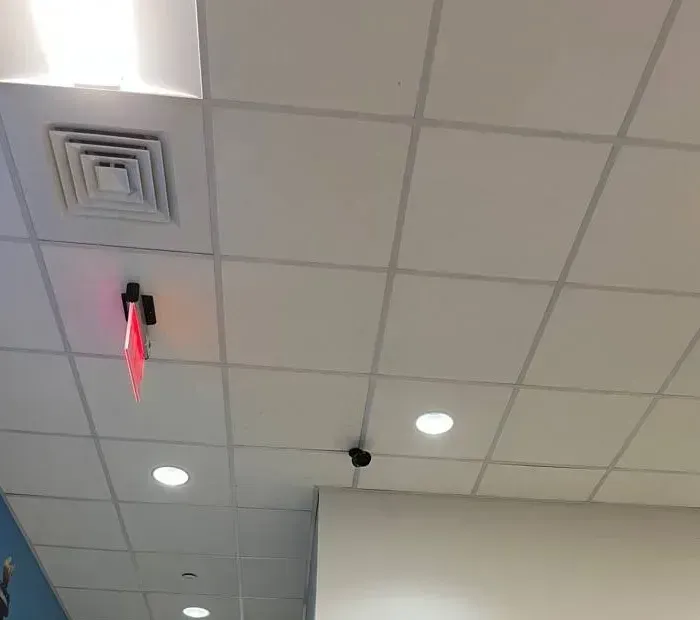
If a business or building also wants cameras on its entrance, they can go in on the same visit and be priced together with the buzzer; customers who combine the two typically save $200 to $400 in labor.

These are the questions condo boards, townhouse owners, landlords of small walk-ups and business owners in the district bring to an installer, along with ones raised in Habitat Magazine's and ButterflyMX's guides and in Brownstoner forum threads, answered for the buildings here.
In our experience, the apartment handsets and the central power supply go first, usually in that order, and the cable inside the walls lasts far longer than either. Handsets get handled every day, so hook switches, cords and speakers wear out. The power supply sits in a cellar or closet for decades, often warm and sometimes damp, and as it weakens every apartment's audio fades together and the door release grows sluggish.
That order is good news for a small association, because the parts that fail first are also the cheapest to change. A walkthrough tells us whether a new power supply and a few handsets will carry the system for some years yet, or whether the handsets are no longer made and the panel is past saving, in which case a new system over the original cable is usually the better value. You get both numbers in writing.
Every entrance that visitors use needs its own door station, because a visitor has to be able to call from the door they are standing at. What can be shared is the system behind the stations: on most modern multi-tenant systems, several door stations can run from one controller, with each entrance calling only the apartments behind it, and one set of admin logins for the board.
Sharing has a cost too. If the entrances are in separate buildings, the cable between them has to cross a courtyard, a cellar wall or a garden, and if the shared controller fails, every entrance is affected at once. For associations whose buildings are attached and share a cellar, a shared system usually makes sense; for buildings that stand apart, separate systems on the same model often do. The written scope shows both layouts with their prices.
Yes, and it should. How a condo divides the bill is set by its declaration and bylaws, not by the installer, but in most condos the street door, the door panel and the cable through common areas are common elements paid for by the association as a whole, while the station inside each apartment may be treated as part of the unit. Some associations pay for everything as one project because it is simpler; others charge each owner for their own station. Either way, the board should decide before the order is placed.
Our written price lists the common parts, the door station, controller, power supply, strike and common cable, separately from the per-apartment stations, so a board that divides costs can do it line by line, and an owner who wants a better station than the standard one can pay the difference.
It can, over time, if the hardware is fixed the way it would be on a quiet side street. Screws in plastic anchors work loose in vibrating masonry, a strike set into soft or patched frame material slowly drifts away from the latch, and a closer at the end of its adjustment range lets the door bounce instead of latching.
On a truck-route frontage we mount the station with anchors suited to the masonry, set the strike into solid frame material, check the latch gap after slamming the door several times, and leave the closer with adjustment to spare. At hand-over we show the owner the two or three things to look at if the door starts failing to latch, so a small adjustment is made before it becomes a security problem.
No. Streetsblog's August 2026 reporting describes the busway as an idea tied to the Brooklyn Marine Terminal redevelopment and "still years off," and nothing in it changes the front doors of existing buildings. A broken entry system is a security problem now, and in a building with eight or more apartments it is also a legal one, so waiting for a street plan is not a good trade.
What makes sense is planning for change. We keep the power and cable entry for the door station inside the building, choose a station that can be serviced and replaced from the front, and leave a clear wiring note. If the sidewalk, the curb or a building's entrance is altered years from now, the system can be moved or adjusted without starting over.
Often it can, just not in the crack. A door station needs sound masonry around its anchors, so we look for solid brick on the other side of the doorway, a stone or concrete jamb, or the door frame itself. A station drilled into a cracked or loose section can pull out, and the holes can let water into a crack that is already moving.
If the owner is planning masonry repairs, the better order is repairs first and the station after, so the mason is not working around new hardware and the station goes into freshly pointed brick. We photograph the wall before and after our work so our installation is never confused with the damage.
By crossing the outer wall as few times as possible, ideally once at the door station, and sealing that crossing the way the building's design specifies. In a Passive House building the air barrier is continuous, and a loose cable hole is a small but permanent leak, as well as a path for moisture. So the cable to every apartment runs inside the conditioned space, through risers, ceilings and closets, and only the short connection to the station passes through the facade.
Before drilling we ask the board or owner for the envelope details or the architect's contact, and we use the sleeves, gaskets or tapes that the design calls for. Reusing an existing sealed penetration is best of all.
Yes, and in this district it is one of the more useful additions a board can make. With no subway station nearby, many guests drive, and a guest who parks in a resident's spot and walks to the elevator vestibule has no way to reach anyone if the only door station is at the street. A small station at the vestibule, calling residents just as the street panel does, solves that, with a release on the vestibule door or a guest permission for the elevator.
The vestibule station should call residents but not open anything beyond the garage level without a resident's release, and the garage's own vehicle gate should stay on its own controls. We set the permissions with the board, and the station joins the existing system where it can, so residents answer it the same way they answer the street door.
A camera helps after the fact. The Red Hook Star-Revue reported that officers at a 2022 precinct meeting recommended Ring cameras and described a case where one was critical in catching a thief. That is a real benefit. But a camera on its own does not stop anyone from walking in behind a resident, and it does not let a resident answer a courier from upstairs and decide whether to open the door.
An entry system does both jobs at once. A video door station records or shows who rang, lets residents speak to a courier and release the door only for a delivery they expect, and a closer that latches behind every visitor stops the door being left ajar. Where packages are the main problem, the station is often paired with a lockable package area inside the vestibule, so deliveries never sit in view of the street.
By making sure the apartments and the restaurant never share an unlocked door. If the only way to the restrooms, the cellar or the back of the restaurant passes through the residential hall, that is the first thing to change, and it is a question for the owner and the restaurant's lease, not for the buzzer. Once the residential door is separate, it gets its own station, its own release and a closer that pulls it shut behind every resident.
The residential door should look like a residential door: a clearly numbered station, no restaurant signage near it and good lighting. Late-night diners looking for the restaurant's restroom or exit are far less likely to try a door that is plainly a private entrance and that locks every time it closes.
Beside the door on the side away from the curb, at a height where a visitor can speak to it without stepping into the flow of people on the sidewalk, and recessed or hooded where the wall allows. With no vestibule, the station takes the weather and the street noise directly, so we choose a metal-faced, weather-rated unit with good noise suppression and test it during real traffic.
With no vestibule there is also no buffer between the street and the stair, so the door's own security matters more: a solid strike, a guard over the latch so it cannot be slipped, and a closer that never leaves the door resting open. If the owner ever plans a facade change, adding a shallow recess for the door is worth considering, because it improves both the audio and the security.
It mainly tells us how many households the system has to serve and that the store is a separate occupant. With two apartments, the building is not a multiple dwelling, so the intercom rules for larger buildings do not apply, and the system can be as simple as two buttons, two stations and a release. The store's presence means the apartments' door should be kept on its own system, and any delivery buzzer for the store goes on its own door.
If the owner plans to add a third apartment, that changes things, because the building would then become a multiple dwelling with self-closing door duties. We can leave a spare pair in the cable and a spare button position on the station so a third household is a connection later rather than a new system.
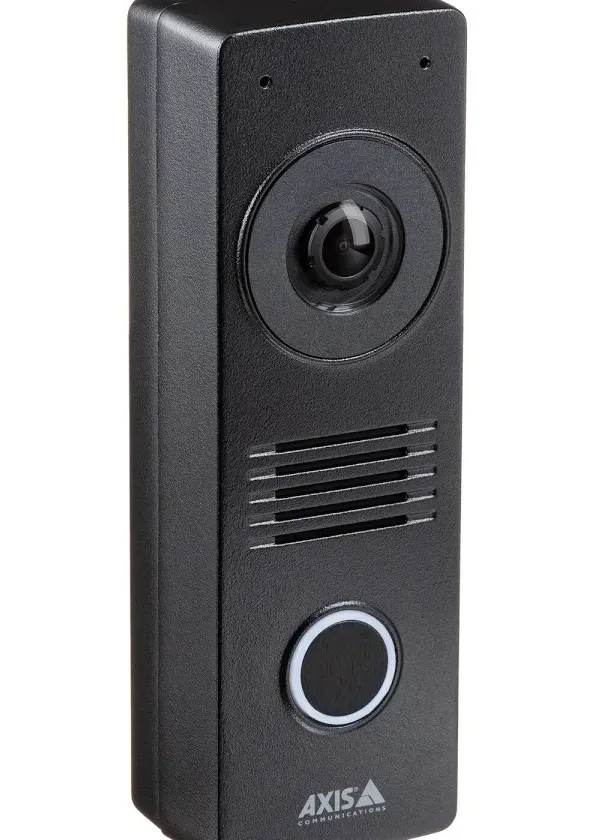
We quote a reliable non-branded system by default and install a named brand when an owner or board asks for one; the intercom brands we work with include Aiphone, ButterflyMX, 2N, Akuvox, Comelit and DoorBird. These are the kinds of equipment that fit the district's condo townhouses, walk-ups, lofts and six-story buildings.
Systems that carry voice, video, power and the release over one pair, so the cable a 1980s builder put in can usually be reused.
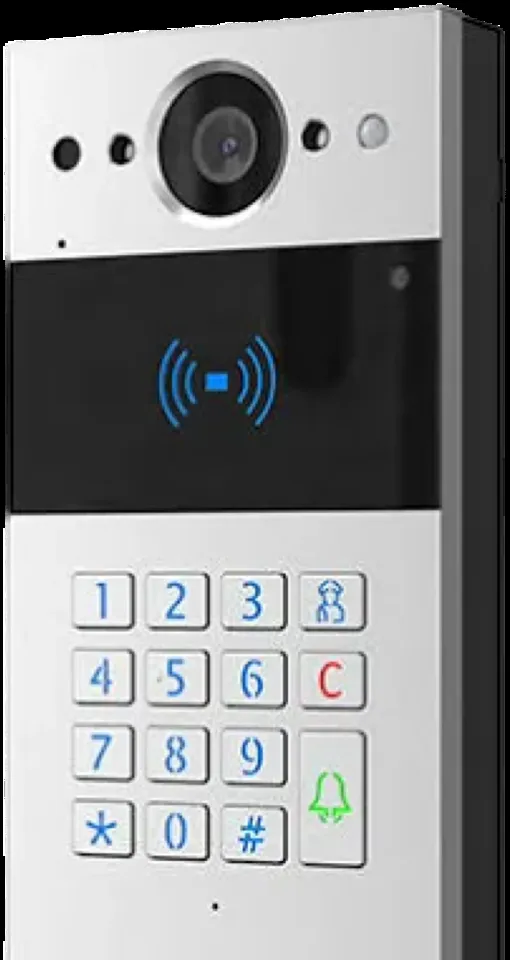
Metal-faced stations with directional microphones for doors on Columbia Street, where buses and trucks pass a few feet away.
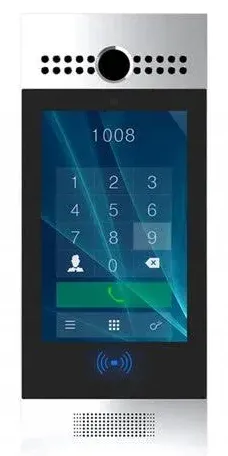
Scrolling-directory or code panels for the larger condos and rentals, with apartment stations or phone answering for every unit.
Compact stations for garage elevator vestibules and side entrances, calling the same residents as the street panel.
Code and card entry at street or service doors, so residents and staff come in without keys while visitors still ring.
Fail-secure electric strikes, closers sized to the door and battery-backed power supplies mounted off the floor in cellars and closets.
The choice depends mostly on the age of the building and the state of its cable. The table compares the three paths we price most often here.
| What matters | Repair the old system | New system on old cable | New system, new cable |
|---|---|---|---|
| Typical building here | A renewal-era condo whose handsets still exist | A 1980s condo or townhouse whose cable tests sound | A pre-war walk-up with spliced or missing cable |
| Video possible | No | Usually, on two-wire systems | Yes |
| Work inside apartments | Only where a handset is changed | Station swap at each apartment | New cable route to each apartment |
| Brooklyn list range | $250 service call toward repair | $400–$1,800 small; from $2,500 multi-unit | $700–$1,800 small; from $2,500 multi-unit |
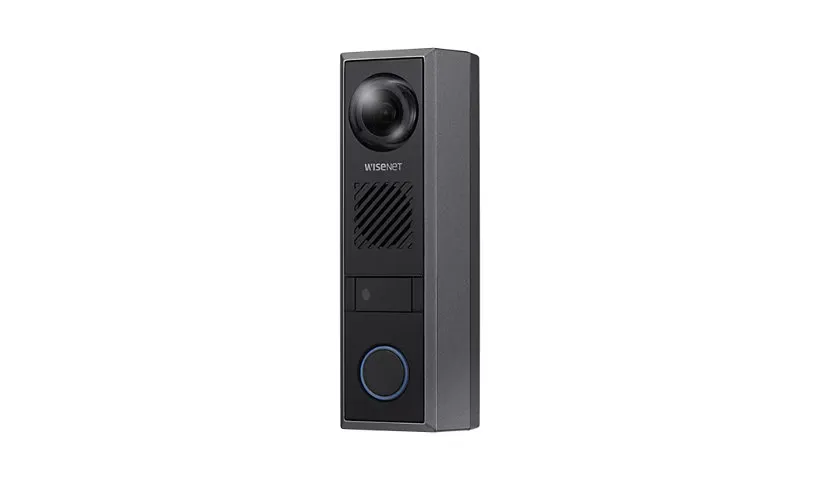
Many townhouse owners here already have a Ring doorbell or an alarm plan from ADT or SimpliSafe, and it is fair to ask whether that covers the door. For a one-family townhouse with one household, a consumer video doorbell often does, and we will install and properly power one you already own. Where those products fall short is any building with more than one household: a consumer doorbell rings one account and does not give each apartment its own button, station and release, and on its own it does not unlock a street door. The entry systems we install are owned outright, with no monitoring plan required.

These claims turn up in generic online answers, in national cost guides such as HomeAdvisor and Angi, and in vendors' articles. Each is quoted or paraphrased, then checked against the buildings here and the sources behind them.
HomeAdvisor says this in its intercom cost guide, with wireless systems at $150 to $1,500.
For a single room-to-room intercom that may be true. A street door is different: a wireless kit does not release a strike, cannot give separate apartments their own buttons, and has to get its signal through brick party walls from a door that may face a busy street.
A townhouse owner can certainly fit a battery doorbell and be happy with it. A building with more than one household needs a wired release, a station per apartment and a closer that latches behind every visitor, and none of that comes in a wireless kit.
An installer told Habitat Magazine this in 2017, adding that "if the walls are marble or granite, that's a little harder. But nothing is insurmountable."
He was right on both counts, but few walls here are simple sheetrock. Pre-war buildings have brick and plaster, the lofts have factory masonry, and a Passive House building has an air barrier that a casual hole breaks.
The answer is not to avoid the work but to find existing routes first and seal every penetration, which is why we test and plan before quoting.
ButterflyMX quotes one NYC integrator's estimates: that figure for diagnostics, $500 to $1,500 for component replacement and $1,000 to $3,000 for limited wiring repairs, and calls them "directional commercial estimates, not average NYC costs."
That caution is the useful part. A small condo's dead power supply and a large rental's failed riser are different jobs, and a forty-year-old renewal-era system may need a part that no longer exists, which turns a quick repair into a decision about replacement.
Our diagnosis is the $250 service call booked online, applied toward the work, and the repair is priced in writing before it is done.
Marketing for remote doorman services often reads that way.
A virtual doorman is a staffing service layered on top of an entry system, not a substitute for one: remote staff still need a door station to see and speak to the visitor and a release to open the door. Columbia Commons, for example, lists both an intercom and a virtual doorman. If the service ends, the building still needs a door station that residents can answer, and for eight or more apartments the law still requires one.
Boards should price the entry system and the service separately, so they can keep one without the other.
That figure comes from Habitat's 2017 report on one cloud intercom.
Prices have moved since, and per-unit fees continue for as long as the building keeps the system. Swiftlane's current guide puts software subscriptions at "$5 to $15 per unit per month, or $30 to $100 per door per month." For a 27-apartment condo, the low end of that range is $135 a month, every month.
We price wired and cloud options side by side, with the monthly cost over five and ten years beside the installed price.
Police advice at local precinct meetings has included Ring cameras for packages, and they do help identify thieves.
A camera records; it does not lock. In a building where the street door is propped open for a delivery or does not latch after a resident walks in, a camera simply films the theft, and the footage arrives after the package has gone.
The door has to close and latch behind every visitor, and residents need a way to let couriers in deliberately. That is the entry system's job, with the camera as a backup.
The word "safe" in the name leads many answers astray, as if a lock that opens during a power cut must be the careful choice for a front door.
Allegion's guide explains that "fail safe products are unlocked when power is removed" while fail-secure products stay locked, and with an electric strike a person inside can always leave by turning the lever. A fail-safe strike on a Columbia Street door leaves the building open to the sidewalk during a power cut.
For street doors here, fail-secure strikes are almost always right, and magnetic locks, which Allegion notes are only made fail-safe, rarely are.
Send a photo of the street door, the old panel and one apartment station, with the number of apartments. Call now at (347) 934-8335, send a fast quote request, or speak to a tech on WhatsApp. Estimates are booked within two hours of your request during working hours.
Tell us the street, the kind of building, how many apartments share the street door, whether it is a condo, a rental or owner-occupied, and what is by the door now. A technician calls back with the range for the address, or you can call (347) 934-8335 right now.
Send the street door, frame, old panel and where its cable ends, with the address, the number of apartments and who decides for the building.
A technician checks how the door closes and latches, tests the old cable pair by pair, finds the riser and power, and walks garage, yard and store doors.
Equipment, mounting spots, cable route, door work and every possible add-on, with the total in writing before anything is ordered, ready for a board to approve.
The door is made to latch on its own, the strike goes into sound frame material, and the power supply goes on an owner-controlled circuit off the floor.
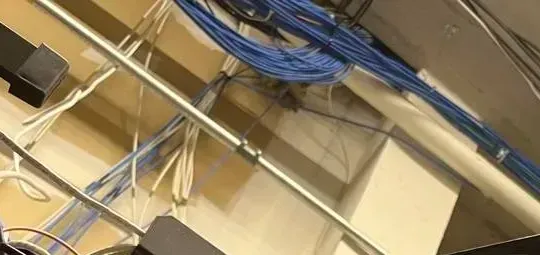
Cable runs through risers, cellar ceilings and closets to the door station and each apartment, with every wall penetration sealed and both ends labeled.
Every button is rung from outside during real traffic, every station talks and releases, and the door is watched latching after each release.
The owner, board or agent gets the wiring note, admin access for more than one person and a dated test record, and residents are shown how to answer.

The park on Columbia Street between Degraw and Kane Streets, part of the Brooklyn Greenway, with townhouse blocks on either side.
The waterfront walkway opened in 1998 overlooking the piers, after the Waterfront Garden of 1984.
The cobbled side street lined with converted industrial buildings, including the former Tiffany warehouse at 1 Tiffany Place.
The private residence at 82 DeGraw Street whose front became a sculpture garden.
The music venue at 315 Columbia Street, toward the Red Hook end of the district.
The 122-acre waterfront site where the city plans 6,000 new homes, reached along Columbia Street.
We also serve Cobble Hill, Carroll Gardens, Red Hook and Brooklyn Heights at the same Brooklyn rate. See our door buzzer installation in Brooklyn page for the whole borough, or nearby pages such as Carroll Gardens door buzzer installation and Boerum Hill door buzzer installation.
The district is billed at our Brooklyn rate. The ranges below are installed prices covering equipment, power, any strike or release, cable and labor. Where a building lands inside a range depends on the door and frame, whether the old cable can be reused, the number of apartments and entrances, and the choice of audio, video or phone answering. Your figure is set in writing after the walkthrough, with any possible add-on named and priced before you order, and it does not change unless you change the scope.
| Item | Brooklyn price | Typical job here |
|---|---|---|
| Audio / small system | $400–$900 | A townhouse or two-apartment building: door station, talk-back stations, strike and power |
| Video / mid-size system | $700–$1,800 | Video station with monitors or phone answering for a townhouse or small walk-up |
| Multi-unit building | $2,500–$10k+ | Condo rows, walk-ups and six-story buildings: panels, stations in every apartment, strike, closer and backed-up power |
| Service call booked online | $250 | Diagnosis of an existing system; applied toward the work |
What moves a job toward the top of its range: a frame that needs repair before a strike will hold, cable that has to be replaced, several entrances or a garage station, video in every apartment, and sealing work on an airtight facade. What keeps it toward the bottom: 1980s cable that tests sound, a door that already latches, one entrance, and audio stations or phone answering instead of monitors.
Full terms — including 50% deposit, one-year parts-only warranty on AESS-supplied products, and the late-fee schedule — are set out in the service agreement.
Send three photos, the street door from the sidewalk, the frame and latch close up, and the old panel, with the number of apartments and entrances, and we tell you which range fits and what would move it. Call (347) 934-8335, speak to a tech on WhatsApp, or use the fast quote form.
Three typical jobs in the district, each priced inside the matching range on our Brooklyn list. The exact figure comes from the walkthrough.
A one- or two-button station at the street door, talk-back stations on the floors that need them, a fail-secure strike in a sound frame, the closer set and the power supply on the owner's circuit.
A noise-suppressing video door station, monitors or phone answering for each household, a release at every station, and the frame and closer work a Columbia Street door needs.
A new system over tested 1980s cable or a new riser, stations in every apartment, a garage or second-entrance station where wanted, battery-backed power and a dated test record for the board.
Bring your own equipment. If you have already bought a door station, video doorbell or intercom kit, we can install it as long as it suits the door, the number of apartments and the building's power. Labor for customer-supplied equipment is quoted flat at the walkthrough, and any strike, closer, power supply and cable are priced from the same list. Customer-supplied equipment carries its manufacturer's warranty rather than ours, so we check the model with you before you book.

Renewal-era intercom replacement and first buzzers. Request a quote
Panels, strikes, closers and frames. Call (347) 934-8335
The same list in every neighborhood. Brooklyn door buzzer installation
Every borough on one standard. NYC door buzzer installation
Yes, if the board has them, and they help. Drawings from the original construction often show where the risers and the cellar wiring point were planned. We treat them as a starting point rather than the truth, because buildings change over forty years, and we confirm every route by tracing and testing before we price it.
Sometimes, because the cellar or the ceiling route may pass through the commercial space. When it does, the building owner arranges access with the business, and we schedule the work for hours when the space is closed or quiet. Where a route exists that avoids the commercial space entirely, we use it.
We plan for it rather than hope. The technician brings everything needed for the day in one trip, so the van is not loading and unloading at the curb, and we ask the owner on the walkthrough whether a driveway, garage space or loading spot is available. The rate does not change for parking.
Yes. The written scope and price are sent by email, the deposit can be paid online, and the walkthrough and installation can be arranged with a neighbor, a board member or a managing agent who can let the technician in. We send photos and the test record when the job is finished.
Yes. Work at a street door shared with a busy sidewalk, or in a cellar beside a restaurant's storage, is scheduled for weekday mornings when the business is closed or quiet, and the door is never left without a working lock while the business is open.
Usually not. The board or managing agent authorizes work in common areas. Owners are asked only to give access to their own apartment at an agreed time so their station can be changed, and anyone who wants a different station from the standard one confirms that choice before the order.
Yes. Red Hook, Carroll Gardens, Cobble Hill and Brooklyn Heights are all billed at the same Brooklyn rate, and the buildings on either side of the district's edges are often of the same age and type, so the same approach applies.
On many modern door stations, yes: the faceplate, a button module or the camera module can be changed without replacing the whole unit or the cable behind it. That is one reason we favor stations with replaceable modules for doors that face Columbia Street, and we tell you before ordering which parts of the chosen model can be swapped.
No. A photo of the door panel and of one apartment station is enough for us to identify most systems, and the walkthrough confirms it. Knowing the old brand helps when deciding whether a repair is possible, but it does not limit what can replace it.
Usually, yes. A failing power supply or a few dead handsets can often be repaired to keep the building working for months, and that repair is priced on its own. If the board then goes ahead with a new system, we say in writing which repaired parts will be removed, so nobody pays twice without knowing it.
A townhouse or a small condo entrance on reusable cable is usually a one-day job. Several entrances, new cable to each apartment or frame repairs can add days, and the written scope gives the expected number of days so owners can plan access to their apartments.
Door Buzzer Installation Brooklyn NY | Brownstones & Condos · Door Buzzer Installation NYC | Apartment & Building Entry · Door Buzzer Installation Manhattan NY | Apartments & Co-ops · Door Buzzer Installation Queens NY | Co-ops & Apartments · Door Buzzer Installation Bronx NY | Co-ops & Apartments · Door Buzzer Installation Staten Island NY | Homes & Apts · Door Buzzer Installation Long Island NY | Nassau & Suffolk · Door Buzzer Installation Hudson Valley NY | Apartments · Door Buzzer Installation Nassau County NY | Homes & Co-ops · Door Buzzer Installation Suffolk County NY | Homes · Door Buzzer Installation Westchester County NY | Co-ops · Door Buzzer Installation Rockland County NY | Homes & Apts · Door Buzzer Installation Orange County NY | Homes & Farms · Door Buzzer Installation Putnam County NY | Lake Homes · Door Buzzer Installation Dutchess County NY | Homes · Door Buzzer Installation Ulster County NY | Kingston
Door Buzzer Installation Bath Beach Brooklyn NY · Door Buzzer Installation Bay Ridge Brooklyn NY · Door Buzzer Installation Bedford-Stuyvesant Brooklyn NY · Door Buzzer Installation Bensonhurst Brooklyn NY · Door Buzzer Installation Bergen Beach Brooklyn NY · Door Buzzer Installation Beverley Square Brooklyn NY · Door Buzzer Installation Boerum Hill Brooklyn NY · Door Buzzer Installation Brooklyn Navy Yard, Brooklyn NY · Door Buzzer Installation Brooklyn NY | Brownstones & Condos · Door Buzzer Installation Brownsville Brooklyn NY · Door Buzzer Installation Bushwick Brooklyn NY · Door Buzzer Installation Cadman Plaza Brooklyn NY · Door Buzzer Installation Canarsie Brooklyn NY · Door Buzzer Installation Carroll Gardens Brooklyn NY · Door Buzzer Installation City Line Brooklyn NY · Door Buzzer Installation Clinton Hill Brooklyn NY · Door Buzzer Installation Cobble Hill Brooklyn NY · Door Buzzer Installation Coney Island Brooklyn NY
Intercom Installation Columbia Street Waterfront Brooklyn NY · Structured Cabling Columbia St Brooklyn NY · Fire Alarm Installation Columbia St Waterfront Brooklyn NY · TV Installation Columbia Street Waterfront Brooklyn NY · Door Buzzer Repair Columbia Street Waterfront Brooklyn NY · Security Camera Columbia Street Brooklyn NY · Alarm Installation Columbia St Waterfront Brooklyn NY · Access Control Columbia Street Brooklyn NY
Send a photo of the street door from the sidewalk, the frame and latch, and the old panel, with your street, the number of apartments and who decides for the building, and we will tell you what the door needs and where it sits on the Brooklyn list. Call or text (347) 934-8335, message us on WhatsApp, or use the request form. Licensed under NYS license #12000287431, rated 4.7★ across 201 Google Reviews, owner-operated since 2002.