What are you looking for?
About Us Contact Us Careers Get a Free Quote (800) 486-0943
Pick a service
✅ Got Your Own System?
🎬 Home TheatreQuote 🎶 AV SoundQuote 🔑 Access ControlQuote
Now pick your area
Pick your area
Long Island
Hudson Valley
Services available
Pricing & Tools
Pick a service for pricing
🚪 Intercom Pricing 🔔 Buzzer Repair Pricing
Calculators
📹 Camera System Calculator 🚨 Alarm Calculator ⚡ Cabling Quote Builder ✅ Got Your Own System?
Select your area
A brownstone bell that rings on every floor, a split Clinton Avenue mansion with no way to buzz anyone in, or an old walk-up panel that has gone quiet? Clinton Hill door buzzer installation line: (347) 934-8335
Home › Door Buzzer Installation Brooklyn › Clinton Hill
Italianate and Neo-Grec Brownstones · Divided Gold Coast Mansions · Prewar Apartment Houses · Lefferts and Brevoort Place Rows · Apartments Over Myrtle and Fulton Storefronts

Door Buzzer
Installation in
Clinton Hill

One Discreet Panel Per Doorway · Cable Kept Out of Sight · Strikes That Suit Original Doors · Brooklyn Rate

Door buzzer installation in Clinton Hill usually means fitting a modern entry system to a nineteenth-century front door without spoiling it. Most of the work here happens in brownstone and brick row houses that have been divided into two, three or four apartments, in Clinton Avenue and Washington Avenue mansions that became multi-family buildings, and in prewar apartment houses of a few dozen units. Many of those fronts sit inside the Clinton Hill Historic District, designated by the Landmarks Preservation Commission on November 10, 1981, which limits where a panel can go and how much cable may show. This page explains how we place the door station, route the cable, fit a release to an original door, what the city's intercom rules require of each kind of building, and what each job costs on our published Brooklyn list.

Reviewed and updated November 11, 2026, against Chapter 11 of the Landmarks Preservation Commission's Permit Guidebook on intercoms, light fixtures and conduit; the Historic Districts Council's entry for the Clinton Hill Historic District; the National Register listing for the Clinton Hill South Historic District; BKMag's June 2012 report on the rejected Lefferts Place district; the Historic Districts Council's December 2006 notice on 70 Lefferts Place; CityRealty's building review of Willoughby Walk; Pratt Institute's off-campus housing page; Brownstoner's December 2024 and June 2025 Clinton Hill renovation features and its forum threads on three-unit buzzer systems and front-door security; a Brooklyn Paper 88th Precinct report from Clinton Avenue; News12 Brooklyn's January 2026 report from a Clinton Hill building; Bklyner's November 2017 report on Clinton Hill tenants; Openigloo's Clinton Hill building pages; Habitat Magazine's February 2024 and May 2017 intercom articles; Brick Underground's intercom guides; HPD's Tenant Data Privacy Law page; New York's Multiple Dwelling Law §50-a; Allegion's fail-safe and fail-secure guide; the building code's sensor-release rules for electrically locked doors; the HomeAdvisor and Swiftlane cost guides; Aiphone's GT Series page; and the 2010 ADA Standards. · Abstract Enterprises Security Systems, NYS license #12000287431 · crews dispatched from our Troy Avenue office in Brooklyn

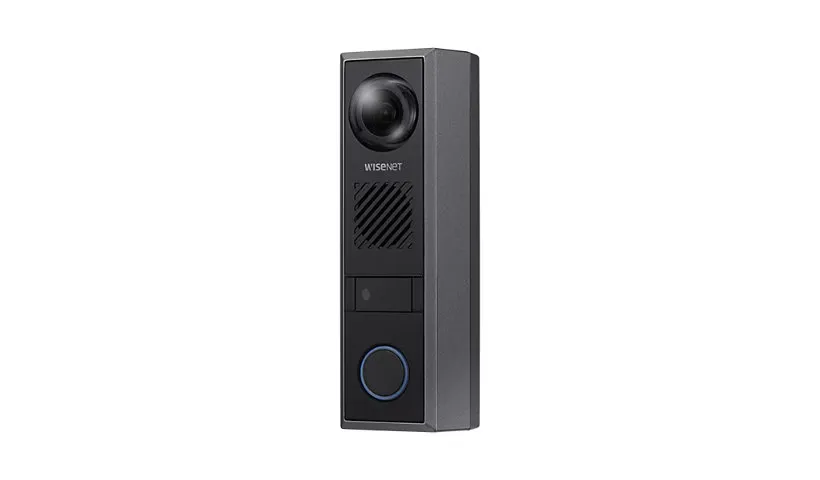
Clinton Hill, Brooklyn door buzzer installation: black rectangular video door station with a camera, speaker grille and round lit call button
A photo from the AESS job library, not taken in Clinton Hill: a black rectangular video door station with a camera at the top, a speaker grille and one round lit call button. A compact single-button unit like this is the kind of panel that reads as neutral and discreet beside a brownstone doorway, which is what the Landmarks Commission asks for in the historic district, and it suits a house that has gone back to one family.
Clinton Hill Buzzer & Entry Request
Brownstone, divided mansion, prewar apartment house or a storefront building on Myrtle or Fulton: tell us the street, how many apartments share the door and whether the house is landmarked, and a technician calls back with the range

✅
Request Sent!
Thank you. A technician will call you about the Clinton Hill address, usually within two hours during working hours.
25+
Years Experience
✓
Same-Day Estimates
100%
Licensed & Insured
4.7★
201 Google Reviews

Owner-operated since 2002 · Thousands of jobs completed · Booked within 2 hours

Quick answer: door buzzer installation in Clinton Hill runs $400 to $900 installed on our Brooklyn list for an audio system with talk-back on a brownstone of one to four apartments, $700 to $1,800 for a video door station with indoor monitors or phone answering, and from about $2,500 to past $10,000 for a prewar apartment house or a divided mansion with a directory panel and a station in every unit. Each price covers the door station, the stations inside, the power supply, the electric strike or release, the cable and the labor. The number is written down after a walkthrough, and any possible add-on, such as replacing an old run of wire that might fail its test or repairing a door that does not latch, is named before you order, so nothing new turns up on installation day. Clinton Hill pays the regular Brooklyn rate. What pushes a job higher here is usually the house itself: a doorway in the historic district where the cable has to stay hidden, original glazed doors that need a careful release, a long route from the cellar to a fourth-floor apartment, or video for every household. Text photos of the doorway and the old panel to (347) 934-8335 or send them on WhatsApp, and we reply with the range that fits, usually within two hours during working hours.

  • Looking at photos and quoting a new buzzer costs nothing. When an existing system is dead and must be diagnosed first, that is the $250 service call booked online, and the $250 is applied toward the work.
  • All work is done under New York State license #12000287431. We install low-voltage entry equipment; if a doorway needs a new 120-volt circuit for its power supply, a licensed electrician handles that part, and we say so before pricing.
  • We work for whoever owns the door: the homeowner, the condo or co-op board, or the owner or managing agent of an apartment house. A renter who wants a buzzer should ask the owner to call us, because the owner has to authorize the work on the building.
The Neighborhood

Why Clinton Hill Properties Need Door Buzzer Installation

Clinton Hill sits between Fort Greene and Bedford-Stuyvesant, with Flushing Avenue and the Wallabout blocks at the top, Atlantic Avenue at the bottom, Vanderbilt Avenue on one side and Classon Avenue on the other. Its reputation rests on houses: brownstone and brick rows on Clinton, Waverly, Washington and Grand Avenues and on the side streets between them, the mansions that Brooklyn's industrialists built along Clinton Avenue, a scattering of older wood-frame houses near the Navy Yard, and apartment houses from the first decades of the twentieth century. The Historic Districts Council lists row houses, mansions, stables, apartment houses and institutional buildings among the district's types, in styles running from Greek Revival and Italianate to Romanesque Revival and Art Moderne. Almost every one of those building types was designed for a household that answered its own door, and almost every one of them now holds more than one household.

That is the root of most buzzer work here. A row house that was a single family's home for its first fifty years may have been divided into apartments in the middle of the last century, given a bell board and a handful of handsets, and then left alone. Brownstoner's December 2024 feature on an 1870s Italianate row house in Clinton Hill described a house that had been "separated into weird apartments, with multiple families living there" before a gut renovation returned it to one family. Openigloo lists a three-unit, three-floor house at 43 Putnam Avenue built in 1895, and at the other end of the scale a six-story building at 476 Clinton Avenue built in 1913 with 52 units. Between those two, the neighborhood has hundreds of two-, three- and four-apartment houses whose street door is shared and whose entry system is whatever a previous owner put in.

The people behind those doors change often. Pratt Institute, whose campus fills the blocks off Willoughby Avenue, says that of its roughly 5,000 students only 40 percent live on campus, and many of the rest rent in the houses and walk-ups nearby. A house with a new set of tenants every August needs an entry system that is easy to hand from one tenant to the next, and a street door that locks behind every visitor. Clinton Hill's tenants have also been vocal about doors that do not work: Bklyner's November 2017 report on a tenant association covering buildings on Grand Avenue, Downing Street and Putnam Avenue quoted a tenant who "wasn't able to open her front door without handing the key to someone outside the building."

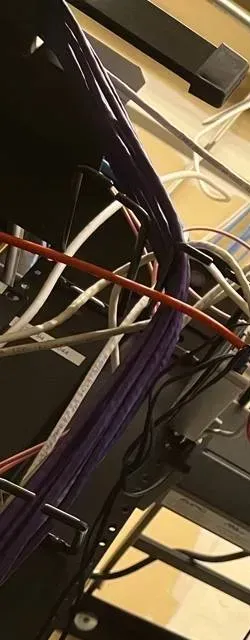
Clinton Hill, Brooklyn door buzzer installation: purple, white and red cable bundles dropping down beside a black equipment rack
A photo from the AESS job library, not taken in Clinton Hill: purple, white and red cable bundles dropping down beside a black equipment rack. A brownstone has nothing like a rack room, but the cellar plays the same part: it is where the door cable, the riser to each apartment and the power supply meet, and a tidy, labeled cellar end is what lets the next technician understand a Clinton Hill system in minutes.

Security worries in the neighborhood are mostly about who gets through the door rather than who breaks it. The Brooklyn Paper's report from the 88th Precinct described a robber who "followed the victim into the building" on Clinton Avenue near DeKalb Avenue at about 8:30 in the morning. Patch reported a wallet theft at a Washington Avenue apartment near Lafayette Avenue where the intruder left no sign of forced entry and told police he was a former resident who used his keys. In January 2026, News12 Brooklyn showed video of a man throwing bricks through the basement and ground-floor windows of a Clinton Hill building, and residents said the building had been targeted several times in recent months. A buzzer cannot stop all of that, but a door that closes and latches on its own, an entry system that lets residents see and speak to a caller before releasing, and a way to retire old keys and codes do most of what an owner can do at the door itself.

Clinton Hill facts that change how a buzzer goes in

  • Much of the neighborhood is landmarked. The Clinton Hill Historic District was designated on November 10, 1981, and any new intercom panel on a building inside it needs a Landmarks permit, which staff can issue when the work meets the rules in Chapter 11 of the Commission's Permit Guidebook.
  • One panel per doorway. Those rules allow a maximum of two light fixtures and one intercom panel per door opening, installed within or beside the opening or on a fence or wall in front of the entrance, in a neutral and discreet design.
  • Cable has to stay hidden. Conduit must be concealed by running through plain masonry behind the installation; where that is impossible, staff may approve about ten inches of visible conduit, painted to match, and nothing may be attached through cast iron or decorative surfaces.
  • The southern blocks are different. Lefferts Place and Brevoort Place between Washington Avenue and Bedford Place form the Clinton Hill South Historic District on the National Register, listed July 17, 1986 with 246 contributing buildings. The Landmarks Commission declined a city district there in 2012, though 70 Lefferts Place is an individual city landmark.
  • The co-op towers are their own world. Willoughby Walk is a two-building complex at 195 Willoughby Avenue and 185 Hall Street, the first a 16-story tower erected in 1958, with 287 co-operative apartments per building and a doorman and front-entrance security listed for 195 Willoughby.
  • Turnover is high. With about 60 percent of Pratt's students living off campus, many Clinton Hill apartments change hands every year, which favors systems where a departing tenant's access can be removed in minutes.

Where this page applies. It covers Clinton Hill from Flushing Avenue south to Atlantic Avenue, between Vanderbilt and Classon Avenues, including the Lefferts Place and Brevoort Place blocks. For the rest of the borough see our door buzzer installation in Brooklyn page, for the neighborhood to the east our Bedford-Stuyvesant door buzzer installation page, and for the whole city our NYC door buzzer installation page.

Repair or Replace in Clinton Hill

Need Repair in Clinton Hill? A Panel That Hums, a Handset That Rings but Will Not Release, or a Door That Swings Free

Many Clinton Hill calls start as "we need a new buzzer" and turn out to need one part. Brick Underground's guide to fixing New York intercoms lists the three usual complaints, which are that the caller cannot be heard, that the resident cannot be heard, or that the lobby door will not unlock, and the installers it interviewed said the core wiring is usually fine even in old systems; one of them put it simply: "It's all in the wire connections." In a brownstone that has been painted, re-pointed and rewired around its buzzer for sixty years, a loose splice in the cellar, a tired transformer or a strike that has drifted out of line with its latch accounts for a lot of dead systems.

So before we quote a full installation on a house that already has a system, we look at whether the old one can be brought back. If it can, we say so, and the repair is priced against our separate repair list. If the system is beyond saving, if the owner wants video, or if the house has been divided into more apartments than the old panel has buttons, the walkthrough turns into an installation quote. If your street door will not lock today, say so when you call (347) 934-8335. A diagnosis of an existing system is the $250 service call booked online, and that $250 is credited toward whatever work follows. Brick Underground also notes that the building must authorize any repair, so a tenant whose buzzer has stopped should report it to the owner or managing agent, who can then book the visit.

What We Install

Door Buzzer Installation Services in Clinton Hill

Every service below comes from the same published Brooklyn door buzzer list, with the scope fitted to the house. Most Clinton Hill jobs combine two or three of them: a door station, a release on the street door and stations inside, sometimes with a second door under the stoop.

Panels for divided brownstones

A two-, three- or four-button station at the shared parlor-floor door, with an answering station in each apartment, so a visitor for the top floor no longer brings the garden tenant to the window.

Landmarks-friendly door stations

Slim, neutral panels sized and finished to sit beside a historic doorway or on the areaway fence, placed so the Commission's one-panel-per-doorway limit is met and the cable stays inside the masonry.

Releases for original doors

Electric strikes fitted to old wood frames and pairs of glazed doors, with the door rehung or its closer set so the latch actually catches before any electronics go on.

Video answering

Video door stations with indoor monitors, phone answering, or a mix of both, for houses where some households want a screen and others want only their phones.

Mansion and apartment-house systems

Directory or code panels for divided mansions and prewar walk-ups, with the old riser tested pair by pair and reused where it is sound, or replaced where it is not.

Rough-in during a renovation

Cable, boxes and a conduit sleeve through the front wall placed while the walls are open, so the finished system needs no surface wiring and the Landmarks drawing shows exactly where everything goes.

Under-stoop and garden doors

A second station, a door switch or a simple release for the garden-level entrance under the stoop, whether it serves its own apartment or leads to the cellar.

Apartments over storefronts

A compact panel at the residential door beside a shop on Myrtle Avenue, Fulton Street or DeKalb Avenue, kept clear of the store's gate and signage.

Delivery doors for small businesses

A buzzer or video station at a side or rear door of a café, studio or office so staff can let in a delivery from where they work.

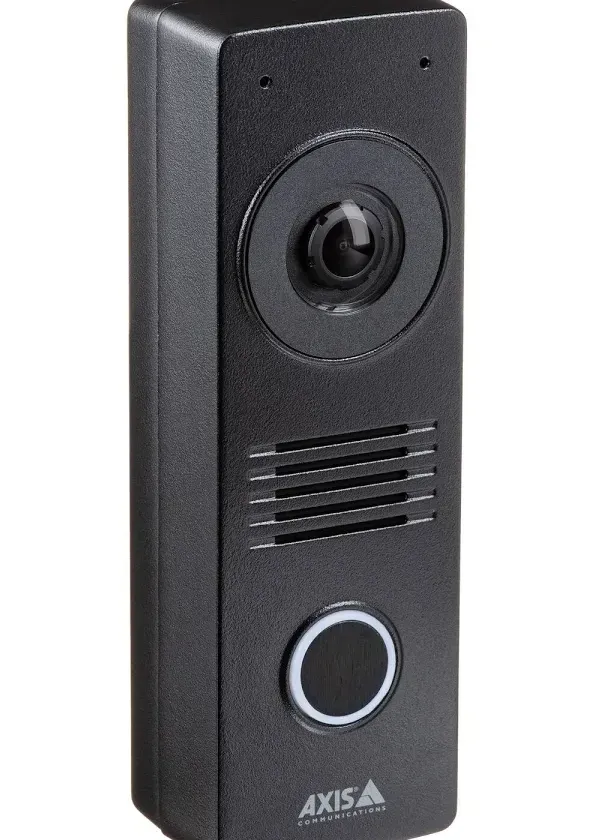
Clinton Hill, Brooklyn door buzzer installation: slim dark grey wired doorbell with a camera lens, speaker slots and a round push button
A photo from the AESS job library, not taken in Clinton Hill: a slim dark grey wired doorbell with a camera lens, speaker slots and a round push button. On a one-family brownstone, or a house that has just gone back to one family, a slim unit like this fits the narrow pier of stone or brick beside the door, where a wide panel would not.
Building Specialists

Door Buzzer Installation for Clinton Hill's Architecture

Six kinds of building make up nearly all of our Clinton Hill work. Each has its own entry problem, and the house decides the plan far more than the brand of panel does.

Divided brownstones

Row houses of two to four apartments with one parlor-floor door up the stoop, a vestibule behind it, and often a separate garden-level door underneath.

Single-family townhouses

Houses that were never divided, or have been returned to one family, where the bell has to reach the top floor and the kitchen at the back.

Divided mansions

The large freestanding and semi-detached houses on Clinton and Washington Avenues, now split into many apartments behind one grand entrance.

Prewar apartment houses

Walk-ups and elevator buildings from roughly 1890 to 1930, from a handful of units to more than fifty, with a lobby panel and a riser.

Wood-frame and carriage houses

The older frame houses toward the Wallabout and the stables and carriage houses converted to homes, often set back from the street behind a gate.

Co-op and condo buildings

From two-unit brownstone condos with no managing agent to the large postwar co-op towers, each with its own decision-making and paperwork.

Divided brownstones: the parlor door, the vestibule and the stoop

A typical Clinton Hill brownstone has a stoop up to a pair of outer doors at the parlor floor, a small vestibule, and an inner door into the stair hall. The garden apartment usually has its own door tucked under the stoop behind an iron gate. When the house was divided, someone screwed a bell board to the brownstone beside the outer doors, ran wire through the facade or down the stoop, and put a handset in each apartment. Sixty years later the board is often corroded, the wire may have been painted over or cut during a renovation, and the handsets ring but no longer release.

The installation answers that with a single panel, one button per apartment, at the parlor door, and a release on the door the household agrees should be the security line. In most brownstones that is the inner vestibule door, because the outer doors are original, often glazed and frequently left open during the day, while the inner door is the one that locks. If the garden apartment has its own door, it either gets a second panel at that opening or shares the parlor-floor panel with its own button and a release on its own door.

The cable is the part that takes judgment. Brownstone facing is soft sandstone over brick, and the Landmarks rules want conduit to pass through plain masonry behind the panel rather than run across the front. So we look for a mortar joint or a plain area beside the door, go straight through to the vestibule or the cellar, and keep every inch of cable inside the house.

Single-family townhouses: one door, four floors and a garden

A house with one family still needs a way to answer the door that does not involve running down three flights. Brownstoner's 2024 feature described an 1870s Clinton Hill row house gutted for "a growing family of four," with only the entry and vestibule doors and one mantel salvaged; houses like that are good candidates for a video door station with a monitor on the parlor floor and the top floor, and phone answering for anyone in the garden or away from home.

The trap in a one-family house is relying on a battery doorbell camera alone. It rings phones, but it does not release the door, and it often loses its Wi-Fi signal through the brownstone and brick between the front of the house and a router at the back. A wired door station with a strike on the inner door does both jobs, and it can still send the picture to phones if the family wants that.

Divided mansions: one grand entrance, many households

The mansions along Clinton Avenue and parts of Washington Avenue were built for single wealthy families and later divided, some into a few large apartments and some into a dozen or more units. Their entrances are often the most elaborate in the neighborhood, with carved stone surrounds, heavy double doors and sometimes a porch or porte-cochère. The panel has to sit somewhere plain, and the release has to hold a door far heavier than a row-house door.

The number of apartments also brings the city's rules into play. Multiple Dwelling Law §50-a requires an intercommunication system in Class A multiple dwellings of eight or more apartments erected or converted after January 1, 1968, so a mansion divided into eight or more apartments after that date is required to have one. We check the certificate of occupancy before pricing, because it tells us both the legal unit count and the date of conversion.

Prewar apartment houses: risers, lobbies and fifty doors at once

Clinton Hill's apartment houses range from small walk-ups to six-story elevator buildings like 476 Clinton Avenue, which Openigloo lists at 52 units built in 1913. These buildings already have a riser of multi-pair cable running up through the building, and the main question is whether it can carry a new system. Aiphone's guidance for its GT Series says existing wire in good condition can be reused, and the Security Sales report on Park Vanderbilt, a 148-unit co-op in nearby Park Slope, describes an installer reusing most of the old cable and saving about $20,000. We test every pair before saying the riser stays.

Where the riser is sound, the job is a new lobby panel, new apartment stations and a new power supply, often finished in a day or two. Where it is not, new cable goes up a closet stack, a dumbwaiter shaft or the public hall in a painted raceway, and the price reflects that from the start.

Wood-frame and carriage houses: set back from the street

Some of Clinton Hill's oldest houses are wood-frame, and a number of former stables and carriage houses have become homes. Their front doors are often behind a gate, down a path, or at the back of a narrow lot. A visitor has to be able to ring from the sidewalk, which means a station at the gate and either a release on the gate itself or a clear path to a front door the family can open by voice.

Wood siding and frame walls make the cable work easier than in a brownstone, but the distance from the gate to the house is the cost driver. We price a buried or fence-run cable from the gate, or, where trenching is out of the question, a station that runs over the house network.

Co-op and condo buildings: who decides and who owns the door

Small brownstone condos of two or three units often have no managing agent, so the owners have to agree among themselves on the system, the cost split and who holds the administrator login. In co-ops, the decision belongs to the board, and the obligation is clear: Habitat Magazine's February 2024 article on intercom law quoted attorney Nancy Kourland: "As a result, the co-op has a legal obligation to repair or replace the intercom." The same article said a shareholder is unlikely to be responsible for intercom repairs.

For any co-op or condo, we give the board a written scope that names every component, the cable plan and the warranty, and we keep the admin access with the board or its agent rather than one resident's phone.

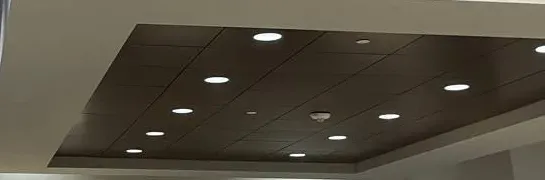
Clinton Hill, Brooklyn door buzzer installation: dark recessed ceiling panel with round downlights and a small round device framed by a lighter ceiling
A photo from the AESS job library, not taken in Clinton Hill: a dark recessed ceiling panel with round downlights and a small round device framed by a lighter ceiling. The lobby of a prewar Clinton Hill apartment house, or the vestibule of a divided mansion, is where a ceiling like this hides the power and cable that feed the door panel, so nothing runs down the walls in view.
Field Notes

Field Notes: Start in the Cellar, Finish on the Stoop

These notes describe how our technicians look at a Clinton Hill house before pricing a buzzer. They are the order of the walkthrough, not a story about one job.

The cellar first. In a brownstone, the cellar under the parlor door is where the old buzzer's wire usually comes in, where its transformer is screwed to a joist, and where any new power supply will live. The technician finds the old wire, follows it to the front wall and checks whether there is a plain masonry path from the cellar ceiling to the spot beside the door. If the wire was cut during a renovation, this is where it shows.

The stairs and the apartments next. Each apartment needs a station, and each station needs a cable path. The technician walks up the stair hall looking for the old wire's route, a closet stacked above closet, a dumbwaiter shaft, or a chase beside the chimney breast. The route chosen decides whether walls get opened, which is why it is set before the price.

The door and the front last. Finally the technician stands on the stoop and looks at the door from the visitor's side: whether the inner door closes and latches by itself, whether the frame is sound enough for a strike, where a panel can sit within or beside the opening without touching carved stone or cast iron, and whether the house is inside the historic district. That last check decides whether the owner needs a Landmarks permit before the panel goes up.

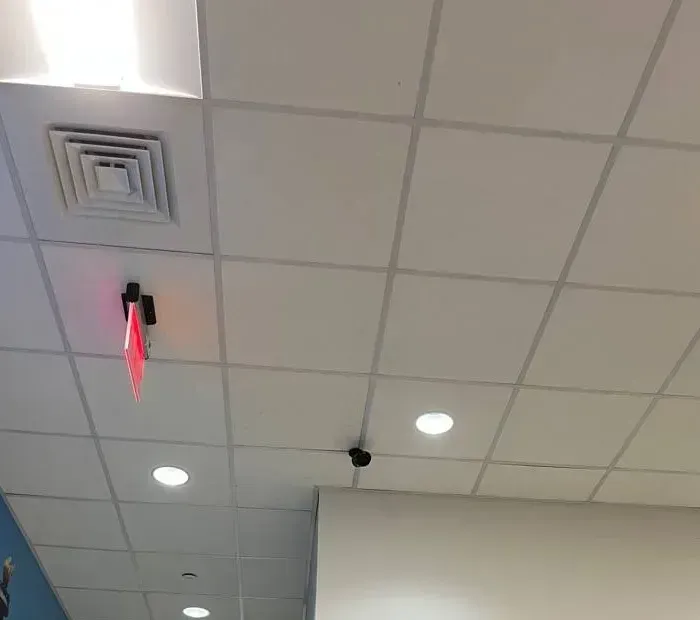
Clinton Hill, Brooklyn door buzzer installation: drop ceiling with a lit red exit sign, an air diffuser, round recessed lights and a small black camera
A photo from the AESS job library, not taken in Clinton Hill: a drop ceiling with a lit red exit sign, an air diffuser, round recessed lights and a small black camera. Exit signs and drop ceilings belong to the larger Clinton Hill buildings, the apartment houses and the institutional buildings, where the entry door is also a way out and its release has to respect the exit rules.
The Landmarked Doorway

One Panel, Hidden Cable, Nothing on the Carving: Fitting a Buzzer to a Clinton Hill Landmark Front

Owners in the historic district often assume the Landmarks Commission will make a buzzer difficult. In practice, a door station is one of the more straightforward things to get approved, because the Commission has written down what it accepts and its staff can issue the permit without a public hearing when the work meets those rules. The rules are in Chapter 11 of the LPC Permit Guidebook, the chapter on health and safety installations, and they are short enough that every owner should know them before talking to any installer.

Where the panel can go. The guidebook says intercom panels and doorbells "must be installed within or adjacent to a door opening," and adds that "an intercom can also be installed on a fence or wall in front of the entranceway." On a Clinton Hill brownstone that gives three realistic places: on the plain stone or brick beside the parlor-floor doors, inside the door opening on the jamb or in the vestibule if the outer doors stay open by day, or on the iron fence or low wall at the front of the areaway. The right one depends on the house: the fence suits a house whose stoop is long and whose garden door also needs a button, while the jamb suits a narrow front with no plain stone to spare.

How many panels. The rule is "a maximum of two light fixtures and one intercom panel" per door opening. That means a divided brownstone with four apartments gets one four-button panel at the parlor door, not a row of separate doorbells, and that two owners in a small condo cannot each put up their own brand of panel at the same doorway. A garden door under the stoop is a separate opening and can have its own panel.

What it may look like. The design, size and finish must be "compatible with the architecture of the building," which the guidebook explains as neutral and discreet. A brushed or dark finish, a slim profile and no glossy logo plate are what we propose. Large brass bell boards from the middle of the last century are often bigger than anything a modern panel needs, which helps: a smaller panel can cover the old holes, or the old holes can be patched by a mason.

Where the cable goes. If conduit is needed, it "must be concealed" by going through plain masonry or wall cladding behind the installation. Only where that is impossible may staff approve about ten inches of visible conduit, painted to match the surface, and never on decorative surfaces. Equipment "must not be attached through cast iron or on any decorative surfaces," which rules out the carved brownstone surround on many Clinton Avenue houses and the cast-iron newel posts and railings on the stoops. The practical answer is almost always a straight hole through a plain section of wall or a mortar joint, directly behind the panel, into the vestibule or down into the cellar.

What the permit needs. We give the owner, or the architect or expediter if one is involved, a photo of the doorway with the panel's position marked, the product sheet with its dimensions and finish, and a note of the cable path. If a proposal does not meet the rules, the guidebook says staff may suggest alternatives that do, or the proposal may go to the full Commission at a public hearing; we design to the rules from the start so that does not happen.

Blocks outside the city district. Not every old block in Clinton Hill is a city historic district. The rows on Lefferts Place and Brevoort Place between Washington Avenue and Bedford Place make up the Clinton Hill South Historic District, which is listed on the National Register of Historic Places, and BKMag reported in June 2012 that the Landmarks Commission rejected a proposed Lefferts Place district, with a spokesperson citing "a number of empty lots or other intrusions that disrupt the cohesion of the streetscape." National Register listing by itself does not bring the city's permit requirement, but individual landmarks still do: 70 Lefferts Place was designated in December 2006. We check every address against the city's landmark maps before pricing.

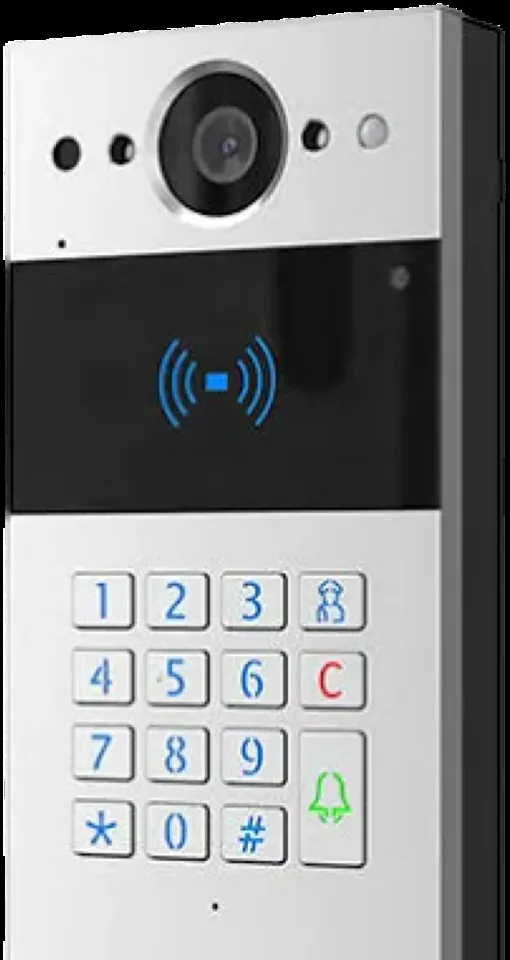
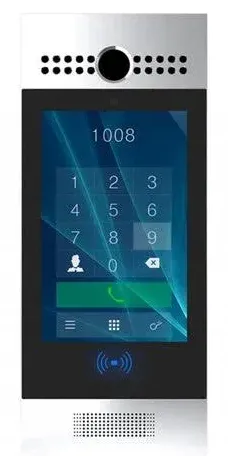
Clinton Hill, Brooklyn door buzzer installation: silver and black keypad door station with a camera lens at the top, a blue card-reader symbol, a numeric keypad and a green bell key
A photo from the AESS job library, not taken in Clinton Hill: a silver and black keypad door station with a camera lens at the top, a blue card-reader symbol, a numeric keypad and a green bell key. Because the Landmarks rules allow only one intercom panel per doorway, a combined unit like this, with the camera, the call key, a code pad and a card reader in one housing, is how a Clinton Hill apartment house gets code and card entry without adding a second box to its front.
The Door Itself

Original Glazed Doors, Heavy Mansion Doors and the Vestibule Between: Which Door the Buzzer Opens

When someone upstairs presses release, the electronics do nothing to the door except let it go. Whether a visitor gets in, and whether the door locks again behind them, depends on the door, the frame, the latch and the closer. In Clinton Hill the doors are often the oldest and most valued part of the house, which makes this the part of the job owners worry about most.

Choosing the security door. Most brownstones have two sets of doors, the outer pair at the top of the stoop and an inner door at the back of the vestibule. Brownstoner's June 2025 feature on a Clinton Hill Italianate house described entry doors that "came with the house" and were "nearly all glass," with the architect replicating them for a thinner inner set; the December 2024 feature described "two pairs of original entry doors" restored, the inner pair given new reeded glass. In houses like these, the release almost always goes on the inner door. The outer doors stay on their keys, and a panel inside the opening or on the jamb serves visitors when the outer doors are open.

Releasing only one of the two. A long-running Brownstoner forum thread on front-door security, posted in November 2008, had an installer advising "not tying a remote release to the inner door" in one owner's plan and another poster describing being robbed in her own vestibule between the two doors. Both points matter. A vestibule that a stranger can be buzzed into but not out of is a trap, so we do not put releases on both doors with the inner one opening first, and we keep the inner door's lever free to open from inside at all times.

Pairs of doors. Where a release has to go on a pair of doors, one leaf is fixed with bolts top and bottom and the strike goes on the active leaf, with the wire run concealed in the frame or the astragal. The Brownstoner forum carries a 2007 thread from an owner of glazed double doors who had been told there was no way to fit a buzzer; the solution was exactly that kind of concealed route.

Heavy doors. Mansion doors on Clinton Avenue and the entrance doors of apartment houses are often very heavy. A strike can hold them if the door is hung true and the closer pulls it fully shut, so we adjust or replace the closer as part of the scope. Where a building wants a magnetic lock instead, the building code's sensor-release rules apply: a sensor on the inside, a "PUSH TO EXIT" button within five feet, release on loss of power and on fire alarm activation. Allegion's guide notes that "electromagnetic locks are only available fail safe," which means they unlock whenever power is cut, and that fail-secure products, which stay locked without power, are more common for exactly that reason. For a brownstone street door, a fail-secure strike is nearly always the right choice.

The City's Rules

What New York's Intercom and Door Rules Ask of Each Clinton Hill Building

The legal picture in Clinton Hill depends on how many apartments a building holds and when it reached that number. Most of the confusion we hear comes from owners of small divided brownstones who have been told they must have a video intercom, and from owners of larger buildings who assume a working bell is enough.

One- and two-family houses. These are private dwellings, outside the Multiple Dwelling Law's intercom section. No law requires a buzzer, but a working, latching street door is the owner's job, and a two-family with a tenant is much easier to run with one.

Three to seven apartments. A building with three or more households living independently is a multiple dwelling, so a brownstone divided into three or four apartments is one. The multiple dwelling rules on entrance doors begin to matter at that point, and if it is a Class A multiple dwelling built before 1968, its tenants may be able to trigger the intercom requirement themselves through the written majority request described below, so we check the building's classification before advising.

Eight or more apartments. Multiple Dwelling Law §50-a says every Class A multiple dwelling erected or converted after January 1, 1968 with eight or more apartments "shall also be equipped with an intercommunication system" at its self-locking main door, allowing voice communication and remote release. For older buildings, the same section requires the doors and intercom once tenants occupying a majority of the apartments request it in writing, with installation started within 90 days and completed within six months. A Clinton Hill mansion divided into eight or more apartments after 1968 falls into the first group; a 1913 apartment house falls into the second.

Keeping it working. Habitat Magazine's February 2024 article reported that courts have treated a working intercom as an essential service under the warranty of habitability. For rent-stabilized buildings, tenants can also pursue a rent reduction through the state's housing agency when an intercom stops working, which is one more reason to install a system that is easy to maintain.

App and fob systems. HPD's Tenant Data Privacy Law applies to multiple dwellings that use smart access, or keyless, systems. Owners may collect only the minimum data, such as the user's name and "the time and method of access, solely for security purposes," must get express consent in writing or through the app, must give tenants a data retention and privacy policy, and must destroy authentication data within 90 days unless it is anonymized. We set app-based systems up so the owner can meet those rules from the first day.

Reach and accessibility. The 2010 ADA Standards put the high forward reach at 48 inches maximum and the low forward reach at 15 inches minimum, and operable parts must fall within those ranges. We mount panels within that band, which also suits children and older residents.

Commercial Door Buzzer Installation

Business Door Buzzer Installation in Clinton Hill

Clinton Hill's businesses sit mostly along its avenues, in ground-floor shops with apartments above, and in the churches, schools and studios scattered through the side streets. The buzzer work for them is less about the business's own front door, which usually stays open during hours, and more about the doors around it: the residential entrance beside the shop, the side or rear door for deliveries, and the upstairs office or studio that visitors cannot find.

Myrtle Avenue shopfronts and the doors beside them

The northern shopping street, near Pratt, with ground-floor stores and restaurants under apartments; the apartment door often sits right next to a roll-down gate.

Fulton Street at the southern edge

Storefronts and mixed-use buildings along the C train, where the apartments upstairs need a panel that is clearly separate from the shop's entrance.

DeKalb Avenue's restaurant row

Cafés and restaurants on the ground floors of row houses and small buildings, where a kitchen door or a side passage takes the morning deliveries.

Washington and Vanderbilt Avenue offices

Small offices, practices and studios on upper or garden floors of houses and apartment buildings, whose clients have to ring a door they have never seen.

Studios and workshops near the Navy Yard

Converted industrial and frame buildings toward Flushing Avenue where makers and artists rent space and visitors arrive at a shared street door.

Churches, schools and community rooms

Rectories, parish offices and community spaces whose main doors stay shut most of the week and open on a schedule.

For a shop with apartments above, the apartments' entrance is a residential door and is treated like one: a panel with a button per apartment, a release on the inner door, and nothing that lets the store's staff open it unless the owner wants that. The panel is set where the store's security gate will not cover it when it comes down at night, and where the store's signage will not crowd it.

For the business itself, the usual request is a buzzer at a delivery door. A café that takes produce before opening, a studio that receives materials, or an office that wants clients to ring rather than walk in can get a small station at that door and a release button or a desk station where staff actually stand. The release is set to latch again the moment the door closes, so the door is never left open after a delivery.

For a practice or office upstairs in a house, the panel at the street door gets its own clearly labeled button for the business, ringing a station in the office during working hours, separate from the residents' buttons. That keeps clients from ringing tenants and keeps the tenants' door from being opened for the business's visitors.

For a church, school or community room, the request is usually a station at a side door that is used on weekdays, with the main doors left on their own locks. Where a schedule is needed, a code panel or card reader can be added inside the same housing as the intercom, so a landmarked church front still carries only one panel per doorway.

Rules that shape commercial entry work in Clinton Hill

A business door is held to the same building, accessibility and Landmarks rules as a house, with a few that matter more:

  • Exit doors stay exit doors. A release on a door that is also a way out must never trap anyone inside; an electric strike leaves the inside lever free, and a magnetic lock needs the sensor release, push-to-exit button and fire alarm release the building code requires.
  • Storefronts in the district. A shop in a landmarked building is still limited to one intercom panel per doorway, and nothing may be fixed through cast-iron storefront columns or decorative surfaces.
  • Accessible reach. Under the 2010 ADA Standards, a panel's buttons sit no higher than 48 inches and no lower than 15 inches for a forward approach.
  • Tenant data. In a mixed-use building with apartments using fobs or an app, the residential part falls under HPD's Tenant Data Privacy Law, so the store's staff should not be given access to the residents' entry log.

If a shop or building also wants cameras on the entrance, a camera job can be done on the same visit; most customers save $200 to $400 in labor by installing together, because it is one technician, one site visit and one cable plan.

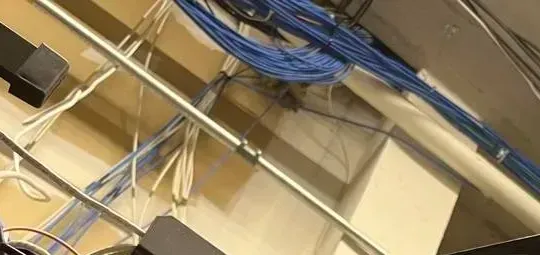
Clinton Hill, Brooklyn door buzzer installation: bundles of blue low-voltage cable laid over a ceiling beam and a metal pipe in an open ceiling
A photo from the AESS job library, not taken in Clinton Hill: bundles of blue low-voltage cable laid over a ceiling beam and a metal pipe in an open ceiling. The cellar ceiling of a brownstone, or the basement of a building on Myrtle Avenue with a shop at street level, looks much like this once the old plaster is down, and it is the easiest place to carry a new buzzer cable from the front wall to the stairs.
Your Questions Answered

Door Buzzer Installation in Clinton Hill: Questions Answered

These are the questions Clinton Hill owners, boards and renovating families ask us most often about putting in a new buzzer, grouped by the situation they come from. Each answer is the one we would give on the phone.

Renovations, conversions and houses going back to one family

We are turning our three-apartment brownstone back into a single-family house. What should happen to the old buzzer?

Take it out, and plan the new door system as part of the renovation rather than after it. A house that goes back to one family no longer needs a button per apartment, but it still needs a way to answer the door from the top floor, the kitchen and the garden, and it usually needs a release on the inner vestibule door so the family can let in a delivery or a guest without walking down. A single-button video station with monitors on two floors and phone answering is the most common choice we install in houses like this.

The old bell board can come off the facade, and its holes either sit under the new, smaller panel or are patched by the mason who is already working on the front. The old handsets, wire and transformer come out during demolition, which is far cheaper than chasing them later. If the house is in the historic district, the new panel goes on the Landmarks drawing with the other front work, so one permit covers it.

Our architect is drawing a gut renovation. What does the buzzer need on the plans before the walls close?

Four things. First, the panel's location on the elevation of the doorway, with its dimensions, so the Landmarks staff and the mason know exactly where the stone will be penetrated. Second, a sleeve through the front wall directly behind the panel, set while the masonry is open, so the cable is concealed as the guidebook requires. Third, a cable route from that point to the cellar or a closet stack, and from there to every floor that will have a station, drawn as a dedicated low-voltage path. Fourth, the power supply's location on a cellar wall near an outlet on the owner's circuit.

We can walk the house with the architect during framing, mark the box locations, and leave pulled cable coiled at each point with labels, so the finished system is installed in a day once the painting is done. Doing it this way is almost always cheaper than fishing cable through finished plaster, and it avoids surface raceway in rooms that were just restored.

Our Clinton Avenue mansion was divided into nine apartments in the 1980s. Does the date of the conversion mean the law requires an intercom?

Very likely yes. Multiple Dwelling Law §50-a applies the intercom requirement to Class A multiple dwellings of eight or more apartments that were erected or converted after January 1, 1968. A mansion that became nine apartments in the 1980s fits both parts of that test, so the building should have self-locking main doors and an intercom that lets each apartment talk to a visitor and release the door.

The certificate of occupancy usually confirms both the number of apartments and when the conversion was legalized. If the building has a working system, the obligation is to keep it working; if it has only a bell board, or nothing at the door at all, a proper installation should be planned. We price these buildings on the apartment-house end of our list, from about $2,500 upward depending on the number of units and the state of the wiring.

Can the new cable go up the old dumbwaiter shaft or a stack of closets instead of through the rooms?

Often, and those are the two routes we look for first in a Clinton Hill brownstone. A dumbwaiter shaft that has been closed off still runs from the cellar or kitchen level to the upper floors, and a stack of closets placed one above another gives a hidden path through each floor. Either keeps the new cable out of restored rooms and away from plaster cornices and woodwork.

The route still has to be safe: holes between floors are sealed again with fire-stopping, and the cable stays away from gas lines and old knob-and-tube wiring if any remains. If neither route exists, the stair hall is the next choice, with the cable carried along the base or the ceiling line in a small painted raceway that blends into the trim.

The front of the house

Our doorway has glass sidelights on both sides and a transom above. Where does the panel go if there is no solid stone next to the door?

Usually on the plain masonry pier just outside the sidelights, on the jamb inside the door opening, or on the areaway fence. The Landmarks rules allow a panel within or adjacent to the door opening or on a fence or wall in front of the entrance, so a doorway that is glass from edge to edge still has options, but the panel never goes on the glass or on the wood of the sidelight frame.

When the pier is carved or too narrow, the fence is often the neatest answer, because it puts the panel at sidewalk level where visitors stand and keeps the facade untouched. The cable then runs under the areaway or the stoop to the cellar. On houses outside the district we use the same logic, because it simply looks better.

Our block is listed on the National Register. Is that the same as being landmarked by the city when it comes to a buzzer?

No. National Register listing is a federal recognition, and by itself it does not require a permit from the city's Landmarks Preservation Commission for work on a private house. The Lefferts Place and Brevoort Place rows that make up the Clinton Hill South Historic District are on the National Register, and BKMag reported that the Commission declined to create a city district there in 2012.

The exceptions are buildings the city has designated one by one, such as 70 Lefferts Place, designated in December 2006, and any block that is inside a city district. We check each address before quoting. Even where no permit is needed, we still follow the same placement and concealment habits, because they protect the facade and the house's value.

My mother uses a wheelchair and comes in through the garden door under the stoop. Can her visitors be sent to that door?

Yes. The garden door is a separate opening, so it can have its own panel with her apartment's button, and the parlor-floor panel can carry a label directing visitors for her unit to the garden entrance. Her station inside can sit at a height she reaches from the chair, and the release on her door can be paired with a closer that is light enough for her to open.

If the garden door opens straight into her apartment, the release goes on that door. If it opens into a shared cellar hall, the release goes on the inner door to her rooms, so the rest of the house stays locked. We mount every button within the 15- to 48-inch reach range of the 2010 ADA Standards so she can use the panels herself when she comes home.

Tenants, students and app-based systems

Our new tenants arrive from out of state the week before classes start. Can they be set up on the entry system before they ever see the building?

On an app-based or networked system, yes. The owner or manager can add each tenant by email or phone number from the admin login, assign them to their apartment, and send the invitation before they arrive, so the first time they ring from the sidewalk the call reaches their phone. When they move out, the same login removes them in a minute, which matters in a neighborhood where many apartments change hands each August.

On a wired audio or video system with stations in the apartments, there is nothing to set up except the label on the panel, which the owner can change, and the station in the apartment simply works. For houses rented to students, we often recommend a wired station in each apartment plus optional phone answering, so the door works whether or not a tenant installs an app.

We are buying a building with a phone-based intercom whose subscription is about to lapse. What happens at the door if nobody pays it?

It depends on the system, and it is worth asking the seller for the account details before closing. Many cloud panels keep releasing the door for codes or cards stored in the panel, but stop calling residents' phones or stop letting the manager edit the directory once the subscription ends, which leaves tenants with no way to answer a visitor. Habitat Magazine reported one smartphone system's fee at $2.50 per unit per month, so the cost of keeping it is usually small next to the cost of replacing it.

If the system is old, unsupported or tied to a former owner's account that cannot be transferred, we price a replacement that the new owner controls from day one. If it is sound, we can usually take over the setup once the account has been moved, and add wired stations for tenants who do not want an app.
Equipment

Types of Door Buzzer Systems We Install

We quote a reliable non-branded system by default and install any major brand an owner asks for by name. What matters more in Clinton Hill than the brand is the form the system takes at the door and inside the apartments, and whether it can live with the wire the house already has.

Slim single-button stations

Narrow audio or video units for one-family houses and houses returning to one family, small enough for the pier beside a brownstone door.

Multi-button brownstone panels

Two- to four-button panels in a single neutral housing, so a divided house meets the one-panel-per-doorway rule with a button for every apartment.

Two-wire systems for old cable

Systems that carry voice, video, power and the release over one pair, the best way to reuse sound old bell wire in a house where new cable would mean opening plaster.

Combined code and card panels

A camera, call keys, a keypad and a card reader in one housing for apartment houses and institutions that need codes or cards without a second box on the front.

Apartment-house directory panels

Scrolling-directory or dial-code lobby panels for prewar buildings and divided mansions, with handsets, monitors or phone answering in each unit.

Strikes, closers and power

Fail-secure electric strikes for wood and steel frames, closers sized to heavy doors, and power supplies with battery backup mounted in the cellar.

Audio, two-wire video or app-based panel: which fits a Clinton Hill doorway?

Most owners choose between three set-ups. The right one depends less on the size of the building than on the wire already in it, whether the doorway is landmarked, and how the people inside want to answer.

What mattersAudio with talk-backTwo-wire videoApp-based panel
Typical Clinton Hill fitA divided brownstone with long-term tenants and sound old wireA brownstone or small building where residents want to see callersApartment houses with high turnover or an owner who manages remotely
Wire neededExisting bell wire if it tests soundOne pair per station, often the old wireNetwork or cellular at the panel; little or none inside
How residents answerHandset or speaker stationMonitor, with phone answering optionalPhone app, sometimes a landline call
Tenant changesRelabel the buttonRelabel; remove phone access if usedRemove and add users from the admin login
Monthly costNoneNone for the core systemUsually a per-unit or per-door subscription
Brooklyn list range$400–$900$700–$1,800$700–$1,800 small; from about $2,500 for apartment houses

ADT, Ring and SimpliSafe compared with a local installer for a Clinton Hill house

Plenty of Clinton Hill houses already have a Ring doorbell on the front, and some have an ADT or SimpliSafe alarm. Those products do their jobs well, but none of them is a buzzer for a shared door. A consumer video doorbell rings the phones linked to one account; it has no buttons for separate apartments, it does not release a strike, and on a brownstone its Wi-Fi often struggles through the masonry. National alarm companies install and monitor alarms; door entry for a multi-apartment house is outside what they usually sell.

A local low-voltage installer handles the parts those companies do not: the strike in the door frame, the cable through the stone, the station in each apartment, the Landmarks drawing and the release that works for every household. Where an owner wants to keep a Ring doorbell for its phone alerts, it can stay on a different door or next to a proper panel at the opening, as long as the doorway's single-panel limit is respected in the historic district.

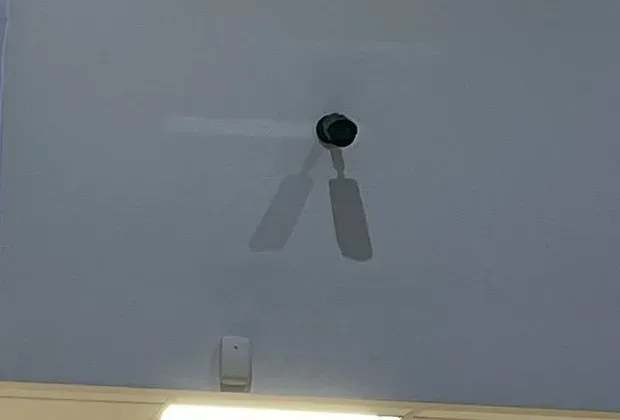
Clinton Hill, Brooklyn door buzzer installation: small black camera mounted high on a pale wall casting two shadows, with a small white wall device below
A photo from the AESS job library, not taken in Clinton Hill: a small black camera mounted high on a pale wall casting two shadows, with a small white wall device below. Inside the vestibule of a Clinton Hill apartment house, a camera placed high like this watches the inner door that the buzzer releases, while the panel outside stays the only device on the landmarked front.
AI Overview Reality Check

What AI Gets Wrong About Door Buzzer Installation in Clinton Hill

These claims turn up in generic online answers, national cost guides and vendor blogs when people search for buzzer or intercom installation. Each is true somewhere; here is how it holds up on a Clinton Hill doorway.

"Wireless systems are the best option if you want to DIY"

HomeAdvisor's intercom cost guide says exactly this, and for room-to-room intercoms inside a single house it is reasonable advice.

A buzzer for a shared Clinton Hill door is a different thing. The part that matters is the release on the door, and that needs power and a wired connection to a strike set into the frame. Wireless units also have to get a signal through brownstone, brick and plaster, and the panel itself, on a landmarked front, needs a permit and a concealed cable path that a wireless kit does not solve.

Wireless chimes can help a one-family house hear the bell on the top floor. For a house with tenants, the door needs a system that rings each apartment separately and lets each one open the door, and that is a wired job.

"Allow one to two hours per station"

HomeAdvisor puts installation at about one to two hours per station, which is a fair figure for mounting a unit on a prepared wall.

On a brownstone, the stations are rarely what takes the time. The hours go into the door, getting an old inner door to close and latch, setting a strike in a century-old frame, and into the cable, finding a hidden path from the cellar to a fourth-floor apartment without opening restored plaster. A three-apartment house can take most of a day for those reasons, even with only four devices.

That is why we price after a walkthrough rather than by counting stations, and why the quote names the door work and the cable route as their own lines.

"Modern IP or video systems cost $1,000 to $5,000 or more per entry door"

Swiftlane's apartment intercom cost guide gives that range per door, with software fees on top, and for networked panels in larger buildings it is a fair description.

A Clinton Hill brownstone with two to four apartments seldom needs that kind of system. On our Brooklyn list, a video door station with indoor monitors or phone answering for a house like that runs $700 to $1,800, and an audio system with talk-back runs $400 to $900. The higher figures belong to prewar apartment houses and divided mansions with dozens of units, which start around $2,500 on our list.

Budgeting a small house from a per-door figure written for large buildings tends to scare owners away from a job that costs far less than they fear.

"A smartphone intercom costs about $5,000 to $7,000 plus a small monthly fee"

Habitat Magazine's May 2017 article on smartphone intercoms cited about $5,000 to $7,000 for one installation, with a monthly charge of $2.50 per unit, in the context of a 12-unit Harlem condominium.

The figure is real, but it describes one building of a particular size. In the same article, Dan Arnold of Academy Mailbox said, "A lot of our calls now are people who want to abandon the hard-wired intercom units in their apartments," which captures why owners ask, but a three-unit Clinton Hill house rarely needs a cloud panel to get phone answering, because many wired video systems can also ring phones without a per-unit subscription.

We price wired and app-based options side by side for any owner who asks, with the monthly cost written out over five years, so the choice is made on the full number.

"You can't put a modern intercom on a landmarked brownstone"

This one comes up in forum answers and general advice more than in official sources, and it stops owners from fixing doors that badly need it.

The Landmarks Preservation Commission's own guidebook says staff can issue permits for intercom panels, and lists the conditions: within or adjacent to the door opening or on a fence or wall in front of the entrance, one panel per opening, a neutral and discreet design, and concealed conduit. A slim modern panel placed on plain masonry with its cable through the wall meets those conditions on most Clinton Hill fronts.

What the Commission does not accept is clutter: several boxes at one door, conduit across the facade, or anything fixed to carved stone or cast iron. Design to the rules, and the permit is a routine staff-level approval.

"A magnetic lock is the simplest way to add a buzzer to a door"

Magnetic locks mount on the surface without cutting into the frame, so online answers often present them as the easy option for old doors.

They come with obligations. Allegion's guide notes that "electromagnetic locks are only available fail safe," so the door unlocks whenever power fails, and the building code's sensor-release rules call for a sensor on the inside, a push-to-exit button within reach, release on power loss and release on fire alarm. On a brownstone, that is a lot of extra hardware on a historic door, and it leaves the house open during a power cut.

A fail-secure electric strike, set carefully into the frame, stays locked without power, leaves the inside lever free for anyone leaving, and keeps the door's appearance unchanged. That is what we recommend for almost every Clinton Hill street door.

"Old wiring can simply be reused"

Aiphone's own guidance for its GT Series says existing wire in good condition can be reused, and Brick Underground's installers said the core wiring in old systems is usually fine.

The words that matter are "in good condition." In a Clinton Hill brownstone, the old bell wire may have been cut in a renovation, painted into the facade, spliced in the cellar a dozen times, or simply never run to the apartment that was added later. In an apartment house, a riser may have a few dead pairs that only show up under test.

We test every pair before pricing and write down which wire is being reused and which is new. If a run might fail when the new system goes on, the cost of replacing it is named in the quote, so the owner knows the worst case before ordering.

Not Sure Whether Your Doorway Needs a Landmarks Permit, or Whether the Old Wire Will Do? Ask a Technician

Send a photo of the doorway from the sidewalk, one of the door frame from inside, and one of the old panel or bell, with the address, and a technician will tell you whether the house is in the district, where the panel can go and which range on our list fits. Call now at (347) 934-8335, send a fast quote request, or speak to a tech on WhatsApp. Estimates are booked within two hours of your request during working hours.

Get In Touch

Request a Free Quote

Tell us the street, the kind of house or building, how many apartments share the street door, whether the house is landmarked if you know, and what is at the door now. A technician calls back with the range that fits and books a weekday walkthrough if one is needed. If the door will not lock right now, call (347) 934-8335 instead.

✅
Request Sent!
Thank you. A technician will call you about the Clinton Hill address, usually within two hours during working hours.
How It Works

Our Installation Process

1. Send photos and the address

The doorway from the sidewalk, the frame from inside, the old panel or bell and the address. We check whether the house is in the historic district or individually landmarked.

2. Weekday walkthrough

A technician starts in the cellar, follows the old wire up the house, counts the apartments and doors, and checks how the inner door closes and latches.

3. Choose the panel spot

Within or beside the door opening, or on the areaway fence, on plain masonry, never on carved stone or cast iron, with a concealed path for the cable.

4. Written scope and price

Equipment, mounting spot, cable route, door work and every possible extra, such as a run that might fail its test, written down before anything is ordered.

5. Landmarks permit where needed

For a district house, we supply the marked photo, the product sheet and the cable note that the owner or architect files for a staff-level permit.

6. Door, strike and power first

The door is made to close and latch on its own, the fail-secure strike goes into the frame, and the power supply is mounted in the cellar on the owner's circuit.

7. Cable and stations

Low-voltage cable runs up a closet stack, a shaft or the stair hall to each apartment, the panel is mounted and sealed, and each station is set up.

8. Test and hand over

Every button is rung from the sidewalk, every station talks and releases, and the owner gets the wiring note, the admin access and the warranty terms.

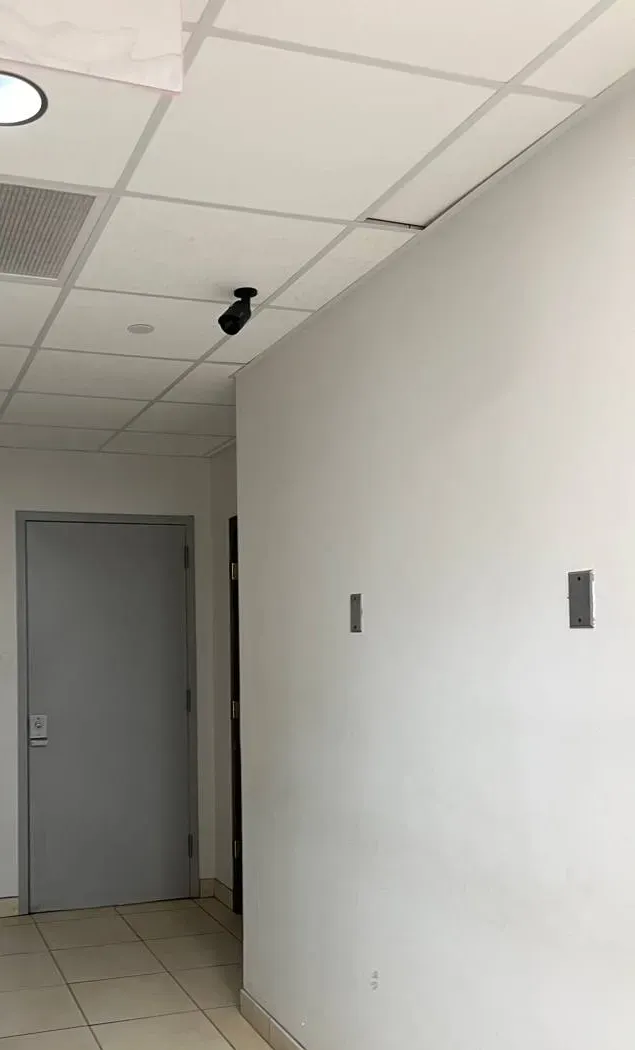
Clinton Hill, Brooklyn door buzzer installation: tiled corridor with white walls and small wall plates ending at a grey steel door with a lever handle under a drop ceiling with a small camera
A photo from the AESS job library, not taken in Clinton Hill: a tiled corridor with white walls and small wall plates ending at a grey steel door with a lever handle, under a drop ceiling with a small camera. The rear or service door of a Clinton Hill apartment house often looks like this, and the lever handle is what lets anyone inside leave freely even while the strike holds the door locked from outside.
Coverage Area

Door Buzzer Installation Near Clinton Hill's Landmarks

Clinton Hill Historic District

Designated November 10, 1981, with row houses, mansions, stables, apartment houses and institutions; every new intercom panel on a building inside it needs a Landmarks permit.

Clinton Hill South Historic District

Lefferts Place and Brevoort Place between Washington Avenue and Bedford Place, listed on the National Register on July 17, 1986, with 246 contributing buildings.

70 Lefferts Place

An individual city landmark designated by a unanimous Landmarks Commission vote in December 2006, on a block that is otherwise outside a city district.

Willoughby Walk

The co-op complex at 195 Willoughby Avenue and 185 Hall Street; 195 Willoughby is a 16-story tower erected in 1958, each building with 287 co-operative apartments.

Pratt Institute

The art and design school whose campus anchors the blocks off Willoughby Avenue; about 60 percent of its roughly 5,000 students live off campus, many in nearby houses.

Clinton–Washington Avenues stations

The G train stop on Lafayette Avenue and the C train stop on Fulton Street, which share a name and bracket the neighborhood's central blocks of brownstones.

We also serve Fort Greene, Prospect Heights, Wallabout and the blocks around the Brooklyn Navy Yard at the same Brooklyn rate. See our door buzzer installation in Brooklyn page for the whole borough, or nearby neighborhood pages such as Brooklyn Navy Yard door buzzer installation and Boerum Hill door buzzer installation.

Pricing

Door Buzzer Installation Cost in Clinton Hill

Clinton Hill is billed at our Brooklyn rate. The ranges below are the published Brooklyn door buzzer list; every job gets a written number inside the matching range after a walkthrough, with any possible extra named before you order.

ItemBrooklyn priceTypical Clinton Hill job
Audio / small system$400–$900A two- to four-button panel at a brownstone's parlor door, a talk-back station in each apartment, sound old wire reused and a strike on the inner door
Video / mid-size system$700–$1,800A slim video station for a one-family townhouse or a divided brownstone, monitors or phone answering, a garden-door station where wanted
Multi-unit building$2,500–$10k+A directory or code panel for a prewar apartment house or divided mansion, tested or new riser, a station in every unit, strike, closer and backed-up power
Service call booked online$250Diagnosis of an existing system; applied toward the work

What moves a Clinton Hill job toward the top of its range: a doorway in the historic district where the cable has to be taken through stone and kept hidden, an original inner door that needs rehanging before a strike will hold, old wire that fails its test so a new route is needed, a garden door added to the system, and video monitors for every apartment. What keeps it toward the bottom: old wire that tests sound, a door that already latches, a renovation that leaves the walls open, and audio stations or phone answering instead of monitors.

A Brownstoner forum thread on a three-unit house's failing buzzer reported a $2,000 replacement estimate "without any electrical work"; another owner of a two-upper-unit brownstone recalled quotes from more than $1,500 to closer to $3,000 for video. Those figures sit inside the range of real Brooklyn prices for small houses, which is why we put every line of the scope in writing: the owner can compare what each quote actually includes.

Full terms — including 50% deposit, one-year parts-only warranty on AESS-supplied products, and the late-fee schedule — are set out in the service agreement.
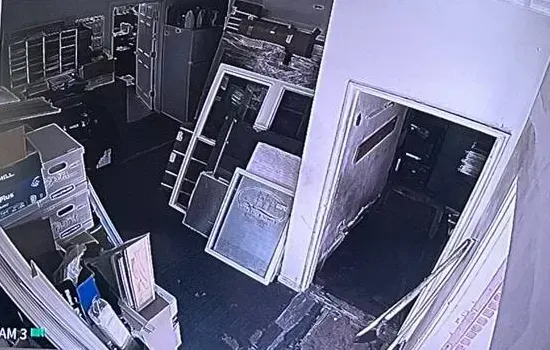
Clinton Hill, Brooklyn door buzzer installation: black-and-white night camera view of a cluttered room with an open doorway into a dark back room
A photo from the AESS job library, not taken in Clinton Hill: a black-and-white night camera view of a cluttered room with an open doorway into a dark back room. The back room of a shop on DeKalb or Myrtle Avenue often leads to the delivery door, and a buzzer there lets staff answer a driver without leaving the rear door unlocked.

Find Out Which Range Your Clinton Hill House Falls In

Send three photos, the doorway from the sidewalk, the inner door's frame and the old panel or bell, with the address and the number of apartments, and a technician will reply with the range and whether a Landmarks permit applies. Call (347) 934-8335, speak to a tech on WhatsApp, or use the fast quote form.

Shop Our Systems

Door Buzzer Installation Packages & Pricing

Three typical Clinton Hill jobs, each priced inside the matching range of the Brooklyn list. The exact figure for your house is set after the walkthrough.

Divided brownstone, audio with talk-back: $400–$900

One neutral multi-button panel at the parlor door, a talk-back station in each of two to four apartments, the old bell wire tested and reused where sound, a fail-secure strike on the inner vestibule door and a new power supply in the cellar.

Townhouse or brownstone video: $700–$1,800

A slim video door station placed to the Landmarks rules, monitors on the floors where the household wants them, phone answering for the rest, a station at the garden door if used, and the strike and closer set on the door that matters.

Apartment house or divided mansion: from about $2,500

A directory or code panel in one housing, the riser tested pair by pair or replaced, stations in every unit, a strike and closer sized for a heavy entrance door, and battery-backed power, scaled to the number of apartments.

Bring your own equipment. If you have already bought a door station, video doorbell or intercom kit, we can install it as labor only, quoted by phone or text from photos of the door, the product and the old wiring, and booked with a deposit. We check first that it can release your door, that it suits a landmarked front if the house is in the district, and that it will work over the wire in the house. Equipment you supply is covered by its maker's warranty rather than ours, and we say plainly before you book if it will not do the job.

Clinton Hill, Brooklyn door buzzer installation: touchscreen entry panel showing a dial pad with a four-digit apartment code entered, a camera above and a card-reader symbol below
A photo from the AESS job library, not taken in Clinton Hill: a touchscreen entry panel showing a dial pad with a four-digit apartment code entered, a camera above and a card-reader symbol below. A dial-code panel like this suits a Clinton Hill apartment house with dozens of units, where a row of buttons would be too wide for the single panel allowed at a landmarked entrance.
Complete Services

Every Door Buzzer Service in Clinton Hill

Brownstones and townhouses

Multi-button panels, video stations, garden doors and strikes on original doors. Request a quote

Mansions and apartment houses

Directory and code panels, riser testing and replacement, heavy-door strikes. Call (347) 934-8335

Across Brooklyn

The same published list in every neighborhood. Brooklyn door buzzer installation

Next door in Bed-Stuy

Brownstones and walk-ups east of Classon Avenue. Bedford-Stuyvesant door buzzer installation

FAQ

Clinton Hill Door Buzzer Installation FAQ

Do you have an office in Clinton Hill?
+

No. Our Brooklyn office is at 1282 Troy Avenue, and our crews drive to Clinton Hill from there. The neighborhood is billed at the same Brooklyn rate as the rest of the borough, with no travel premium, and walkthroughs and installations are booked on weekdays in a two-hour arrival window.

Do you take on large doorman co-ops like Willoughby Walk, or only small buildings?
+

Both. Most of our Clinton Hill work is in brownstones and prewar apartment houses, but we also quote entry systems for large co-op buildings with a front desk. For a building that size the board or managing agent sends the scope, we walk the lobby, the desk and the riser, and the price falls in the upper part of our multi-unit range.

We live in a converted carriage house set back behind a gate. Can visitors at the street reach us?
+

Yes. The station goes at the gate where visitors stand, and the release goes either on the gate or on the house door, depending on which one the family wants to keep locked. The cable runs along the fence or under the path to the house, or, where digging is not possible, the station connects over the house network instead.

Does the owner of a two-family brownstone have to give tenants a privacy policy for an app-based intercom?
+

HPD describes its Tenant Data Privacy Law as applying to owners of multiple dwellings that use smart access systems, and a two-family house is not a multiple dwelling. A house divided into three or more apartments is, and that owner should give tenants a data retention and privacy policy and get their consent. Even in a two-family, we suggest telling the tenant in writing what the app records.

Can the door panel be installed inside the vestibule, behind outer doors that stay open during the day?
+

Yes, and on many Clinton Hill brownstones that is the tidiest spot, since the Landmarks rules allow a panel within the door opening. Visitors ring from the vestibule, the release is on the inner door, and the facade carries nothing. It only works if the outer doors really are open when visitors come; if they are locked at night, a second plan is needed for evening callers.

Do you work on buildings owned by Pratt or other institutions in the neighborhood?
+

We quote whenever the owner of a building asks us to. Colleges, churches and other institutions usually have their own facilities staff and approved vendors, so the request has to come from them rather than from a student or tenant. A student renting in a private house off campus should ask that house's landlord about the buzzer, not the school.

Our house still has a brass speaking tube from the parlor to the kitchen. Can it stay when the new buzzer goes in?
+

Yes. A speaking tube is a hollow pipe, not part of the electrical system, so the new buzzer does not touch it. We route the new cable around it and leave the mouthpieces in place. Some owners keep the tube as a period feature next to a modern station in the same room, and it causes no problems for the new system.

The only flat surface beside our door is the carved stone surround. Can the panel go there?
+

Not on a house in the historic district. The Landmarks guidebook says equipment must not be attached on decorative surfaces, and a carved surround is one. The usual alternatives are the plain jamb inside the door opening, a plain stretch of masonry farther from the door but still adjacent to it, or the iron fence or low wall at the front of the areaway.

Our original front door is very tall and heavy. Will an electric strike hold it shut?
+

Yes, if the door is hung true and the closer pulls it fully shut every time. A strike holds the door's own latch, so a heavy door that sags or binds can stop the latch from catching. We check the hinges, adjust or rehang the door if needed and fit a closer sized to its weight before the strike goes in, and that work is named in the quote.

Will anyone on the sidewalk be able to see the electric strike on our original door?
+

No. The strike sits inside the door frame on the latch side, where the latch already meets the frame, so with the door closed it is hidden from the stoop and the street. Its faceplate is chosen in a finish close to the door's existing hardware, and the wire to it runs inside the frame, so the only thing a passer-by sees is the panel.

More Door Buzzer Installation near Clinton Hill

Door Buzzer Installation Brooklyn NY | Brownstones & Condos · Door Buzzer Installation NYC | Apartment & Building Entry · Door Buzzer Installation Manhattan NY | Apartments & Co-ops · Door Buzzer Installation Queens NY | Co-ops & Apartments · Door Buzzer Installation Bronx NY | Co-ops & Apartments · Door Buzzer Installation Staten Island NY | Homes & Apts · Door Buzzer Installation Long Island NY | Nassau & Suffolk · Door Buzzer Installation Hudson Valley NY | Apartments · Door Buzzer Installation Nassau County NY | Homes & Co-ops · Door Buzzer Installation Suffolk County NY | Homes · Door Buzzer Installation Westchester County NY | Co-ops · Door Buzzer Installation Rockland County NY | Homes & Apts · Door Buzzer Installation Orange County NY | Homes & Farms · Door Buzzer Installation Putnam County NY | Lake Homes · Door Buzzer Installation Dutchess County NY | Homes · Door Buzzer Installation Ulster County NY | Kingston

Door Buzzer Installation Bath Beach Brooklyn NY · Door Buzzer Installation Bay Ridge Brooklyn NY · Door Buzzer Installation Bedford-Stuyvesant Brooklyn NY · Door Buzzer Installation Bensonhurst Brooklyn NY · Door Buzzer Installation Bergen Beach Brooklyn NY · Door Buzzer Installation Beverley Square Brooklyn NY · Door Buzzer Installation Boerum Hill Brooklyn NY · Door Buzzer Installation Brooklyn Navy Yard, Brooklyn NY · Door Buzzer Installation Brooklyn NY | Brownstones & Condos · Door Buzzer Installation Brownsville Brooklyn NY · Door Buzzer Installation Bushwick Brooklyn NY · Door Buzzer Installation Cadman Plaza Brooklyn NY · Door Buzzer Installation Canarsie Brooklyn NY · Door Buzzer Installation Carroll Gardens Brooklyn NY · Door Buzzer Installation City Line Brooklyn NY · Door Buzzer Installation Coney Island Brooklyn NY

Other services in Clinton Hill

Security Camera Installation Clinton Hill Brooklyn NY · Structured Cabling Installation Clinton Hill Brooklyn NY · Access Control Installation Clinton Hill Brooklyn NY · Fire Alarm Installation Clinton Hill Brooklyn NY · Intercom Installation Clinton Hill Brooklyn NY · Door Buzzer Repair Clinton Hill Brooklyn NY | Stoop Doors · TV Installation Clinton Hill Brooklyn · Alarm Installation Clinton Hill Brooklyn NY

Ready for a Clinton Hill Doorway That Rings the Right Apartment and Still Looks Like 1880?

Send a photo of the doorway from the sidewalk, the inner door's frame and the old panel or bell, with the address and the number of apartments, and we will tell you where the panel can go, whether a Landmarks permit applies, and which range on our Brooklyn list fits. Call or text (347) 934-8335, message us on WhatsApp, or use the request form. Licensed under NYS license #12000287431, rated 4.7★ across 201 Google Reviews, owner-operated since 2002, and booked within two hours of your request during working hours.