Panels Placed to Landmarks Rules · Cable Through Brick, Concrete and Timber · App, Wall Station or Both · Brooklyn Rate
Door buzzer installation in DUMBO means fitting a modern entry system into a doorway that was designed for horse carts, freight and factory shifts. Almost every residential front door in the neighborhood belongs to a converted warehouse or factory, a building that went up as new housing behind an industrial facade, or a loft office whose street door now has to answer visitors for a dozen companies. Most of those doorways sit inside the DUMBO Historic District, where the Landmarks Preservation Commission decides where a panel may go and how much cable may show. Many of the newer conversions were sold with a "virtual doorman," smart locks or an app-only panel, and their boards now want to know what they actually own. Below is how we approach each kind of DUMBO entrance, what we check before we drill, and where each job lands on our published Brooklyn door buzzer prices.
Reviewed and updated November 11, 2026, against the Landmarks Preservation Commission's Permit Guidebook and its rules for health, safety and utility equipment in historic districts including DUMBO; CityLand's report on the DUMBO Historic District designation of December 18, 2007; the Historic Districts Council's DUMBO district page; DNAinfo's April 2014 survey of DUMBO residential developments; Two Trees Management's listing for 85 Water Street and a brokerage listing for 30 Main Street describing their entry technology; the New York Post's December 2024 report on Washington Street crowds; NYC Tourism's page on Washington Street between Front and Water Streets; the NYC Department of Transportation's 2025 announcement of the completed DUMBO street restoration; DNAinfo's October 2012 report on Hurricane Sandy in DUMBO; Brooklyn Paper's 84th Precinct reports; the NYC Loft Board's description of interim multiple dwellings; threads on r/NYCapartments, r/DUMBO and r/AskNYC; New York's Multiple Dwelling Law §50-a; Allegion's fail-safe and fail-secure guide; Aiphone's GT Series pages; the Swiftlane and DoorVi intercom cost guides; and the 2010 ADA Standards. · Abstract Enterprises Security Systems, NYS license #12000287431 · crews dispatched from our Troy Avenue office in Brooklyn

Owner-operated since 2002 · Thousands of jobs completed · Booked within 2 hours
Quick answer: door buzzer installation in DUMBO costs $400 to $900 on our Brooklyn list for an audio station on a townhouse, a small building or a single office or shop door, $700 to $1,800 for a video door station with indoor monitors or phone answering, and from about $2,500 to past $10,000 for a full entry system with a lobby panel and a station or app answering for every apartment in a loft condo, rental loft or newer building. Each price covers the door station, the answering stations, the power supply, the strike or approved lock, the cable and the labor, and it is fixed in writing after a walkthrough, with any possible extra, such as an old cable pair that might fail its test or a Landmarks permit drawing, named and priced before you order. DUMBO is billed at the Brooklyn rate. What moves a DUMBO job inside its range is rarely the panel: it is where the Landmarks rules let the station sit, how cable can travel through brick, concrete or timber without showing, and whether an existing app or virtual doorman service has to be kept, replaced or untangled. Send photos of the doorway and the old panel to (347) 934-8335 or on WhatsApp, and we reply with the range that fits, usually within two hours of your message during working hours.
DUMBO is tiny, about 0.11 square miles between the Brooklyn Bridge, the Manhattan Bridge, Vinegar Hill and the waterfront park, with about 4,975 residents counted in 2020 and ZIP code 11201. What makes it unusual for an entry installer is not its size but its doors. A century ago these blocks made cardboard boxes, machinery, coffee, spices and soap pads; today the same buildings hold condos, rental lofts, design studios, tech companies, galleries and restaurants. The Landmarks Preservation Commission designated the DUMBO Historic District on December 18, 2007, covering roughly 91 buildings whose earliest commercial structures date to the 1850s, so most street doors here are both somebody's front door and part of a protected facade.
Very few of those front doors were designed for residents. A factory needed a freight entrance, a loading dock and a stair; it did not need forty doorbells. When the lofts were converted, from the artists' studios of the late 1970s to the condo conversions that began in the late 1990s, each building found its own answer to the visitor at the door. Some got a panel of brass buttons beside a steel door. Some got a concierge desk. The later projects were sold with entry technology as a feature: DNAinfo's 2014 round-up of DUMBO developments described 185 Plymouth Street's ten lofts as coming with a "24-hour virtual doorman," and current listings advertise the same kinds of systems. A brokerage listing for 30 Main Street mentions "a virtual doorman system and video intercom, a package room, bicycle storage, keyless entry," and Two Trees Management's listing for 85 Water Street names "Latch keyless entry, Butterfly MX smart intercoms."
That leaves DUMBO with three very different entry problems on the same few blocks. The older conversions have systems that are twenty to forty years old, with cable buried in brick and concrete and directories that no longer match the apartments upstairs. The newer buildings have app-based systems whose contracts, logins and subscriptions sit with a developer, a management company or a service provider, and boards that want to know what happens if they stop paying. And the office lofts, with hundreds of businesses packed into a few blocks, need suite doors and street doors that sort clients, couriers and staff without anyone running downstairs.

The street adds its own pressure. Washington Street between Front and Water Streets is one of the most photographed blocks in New York; NYC Tourism notes that visitors there are "almost certain to see other visitors taking the same photograph." In December 2024 the New York Post reported residents' complaints that tourists have "basically taken over Washington Street," with one 15-year resident describing "10 to 15 [tour] buses lined up" on some days and a property owner saying "it's impossible to walk down the sidewalk in some cases." Council Member Lincoln Restler told the same meeting, "We've got to figure out how to accommodate the people who are visiting, the people who live there and people who work there." For a building on or near that block, the door station has to work with a crowd standing in front of it, and the door has to lock behind every resident who slips through the crowd to get in.
Finally, the river is close. When Hurricane Sandy struck in October 2012, DNAinfo reported DUMBO businesses and residences "under multiple feet of water," with water coming through the first-floor windows of an apartment building on Old Fulton Street. Wherever an entry system's power supply and junction boxes were put in a cellar near the river, that is now the first place we look and the first thing we offer to move. And from April 2019 to December 2025 the city rebuilt 25 blocks of DUMBO's Belgian block streets and their sewers and water mains, a $108 million project carried out right outside these doorways, and the restored cobblestones are now something every installer working at street level has to protect.
Where this page applies. It covers DUMBO from the Brooklyn Bridge and Old Fulton Street east to the Manhattan Bridge and Bridge Street, and from the waterfront and Brooklyn Bridge Park south to York Street and the edge of Brooklyn Heights, including Water, Front, Washington, Main, Dock, Plymouth, John, Jay, Pearl, Adams, Anchorage and Prospect Streets. Our crews treat Vinegar Hill to the east and Brooklyn Heights to the south the same way. For the rest of the borough see our door buzzer installation in Brooklyn page, and for the whole city our NYC door buzzer installation page.
Repair calls from DUMBO fall into three groups. The first is plain wear: a lobby panel whose buttons have stopped working after decades of use, a power supply that has cooked itself in a hot closet, a strike that hums but will not let the latch go because the heavy steel door has sagged on its hinges. The second is a mismatch between the directory and the building: lofts that were combined into duplexes or split into two units years after the conversion, so button 4B rings a kitchen that is now part of 4A. The third is administrative: an app panel or virtual doorman system that still works, but the account belongs to a developer or a previous managing agent, and nobody on the board can add a new resident or delete one who moved out.
Each one starts the same way: a call to (347) 934-8335 or photos on WhatsApp, then, where an existing system has to be diagnosed in person, the $250 service call booked online, with the $250 applied toward the repair or toward a new system if replacing turns out to be the better value. You get both numbers and a plain recommendation. Where the problem is administrative, we first ask the board or managing agent to recover the account from the manufacturer, the service provider or the original installer. Replacing working hardware because a password was lost is the most expensive possible fix and usually an unnecessary one.
The physical faults in DUMBO follow the buildings. In timber-framed warehouses the door frame moves with the seasons, and a strike that was aligned in March can bind by August. In concrete factories the cable is usually sound but the terminations in the cellar are not, especially where water has come in. In the newer buildings behind old facades the culprit is usually the network: a panel that lost its connection when the building changed internet providers, or a cellular module whose plan lapsed when the developer handed over the building.
Every service below is priced from the same Brooklyn door buzzer list. The number of apartments or companies sets the size of the system, the door and its frame decide which release it can take, and in DUMBO the Landmarks rules, the building's structure and any existing app or virtual doorman contract decide a good share of the labor.
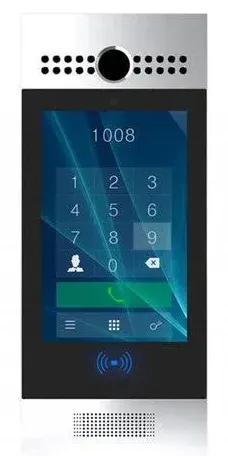
Directory or code panels for converted factories with anywhere from a few dozen to a few hundred lofts, calling wall stations, apps or both, sized to fit inside a landmarked door opening and finished to sit quietly beside brick or concrete.
New panels and apartment stations for buildings converted in the 1980s, 1990s and 2000s, reusing riser cable that tests sound and replacing only the pairs that fail, with a directory rebuilt to match today's apartments.
Entry systems that keep working when a board ends a remote-attendant or app subscription, with the building's own admin access and a choice of wall stations, apps or a phone-line fallback.
One- or two-button stations for the warehouse townhouses on Water and Pearl Streets and for private ground-floor entrances, each answering only its own household.
Street-door panels for loft office buildings on Jay, Main, Water and Washington Streets, calling each company's desk or phones by name and releasing only the street door.
Slim audio or video stations at studio, agency and startup suite doors inside office lofts, answered at the front desk, on a tablet or on staff phones.
Delivery and staff buzzers for the shops and restaurants on Front and Water Streets and the galleries in the side streets, kept separate from the residential entrance next door.
Fail-secure strikes for heavy steel and timber doors, releases for sliding and pivoting doors, and closers set so a door that weighs as much as a person still latches on its own.
Finding why one line, one floor or one company stopped working, rebuilding a directory that no longer matches the lofts, and recovering lost admin access before anything is replaced.

Six kinds of building account for almost every entry job in DUMBO. They differ in who controls the street door, what the door and frame are made of, how cable can reach the apartments or suites, and what the system has to coexist with, from a concierge desk to a smart-lock app. Each one has a mistake we see when the job is planned in a hurry.
Brick and reinforced-concrete factories turned into condominiums from the late 1990s on, such as the Clocktower Building at 1 Main Street and the Sweeney Building at 30 Main Street, many with a concierge or virtual doorman and a freight elevator.
Large rental conversions and mid-size loft buildings, from 70 Washington Street's 259 residences to smaller buildings such as the 23-unit 177 Concord Street, where a management company runs the entry system.
Projects that kept or echoed an industrial front, such as the former Brillo factory at 200 Water Street, or that went up new among the warehouses, such as 47-51 Bridge Street and 1 John Street.
Larger developments that share a building with a school, a museum annex, a hotel or shops, such as Dock Street DUMBO at 60 Water Street and Pierhouse at Brooklyn Bridge Park.
Individual houses built inside or behind industrial structures, such as the DUMBO Townhouses at 55 Pearl Street and 169 to 175 Water Street, each with its own door on a shared front.
Loft office buildings on Jay, Main, Water, Washington and Prospect Streets, holding studios, agencies, startups and coworking floors, often with a street door that locks in the evening.
The condo conversions are where DUMBO entry jobs are most involved. The Clocktower Building, built in 1914 for Robert Gair and converted to 124 condominiums in 1998, has a 24-hour concierge and three freight elevators according to CityRealty's building record. Smaller conversions have no desk at all. In both cases the street door belongs to the condominium, the decision belongs to the board, and the system on the wall was usually chosen by the developer twenty-odd years ago. The first job is reading the building: what the panel calls, where its controller and power supply live, which cable runs up which shaft, and what the board can change without the original installer.
The common mistake is ordering a panel before checking the doorway. A modern lobby panel with a large screen may be far bigger than the brass plate it replaces, and inside the historic district the Commission's staff approve one intercom panel per door opening, installed within or next to the opening and fastened at mortar joints, plain masonry, wood or metalwork, never through cast iron. A panel that does not fit those criteria needs a different model, a different spot inside the opening, or a Commission review, and it is far cheaper to know that before the order is placed. We measure the opening, photograph every possible mounting surface and tell the board which panels fit before anyone chooses one.
Inside, concrete and brick decide the cable. Where an old riser exists and tests sound, it carries the new system. Where it does not, new cable follows the paths the conversion already created: the original freight or stair shafts, existing chases, or neat painted conduit along a corridor ceiling. Lofts with exposed brick and concrete ceilings leave no place to hide a cable, so the route is drawn on the quote and agreed with the board before a single hole is drilled.
Rental lofts behave differently. The decision sits with an owner or management company, residents come and go, and the directory changes every month. CityRealty describes 70 Washington Street, built in 1910 and 1911, as converted to 259 residences in 2005, and buildings of that size need an entry system the management office can update without calling an installer each time. A smaller building such as 177 Concord Street, described in a sale notice as 23 residential units in a 25,500-square-foot structure, may have no on-site staff at all, which makes a reliable door station and a sound release even more important.
The mistake we see in rentals is a directory that nobody owns. A panel that calls residents' phones is only as good as its list of phone numbers, and a building where leases turn over constantly needs a written routine for adding and removing residents, and a named person who does it. We set that up on hand-over, and we set the panel to show apartment numbers or initials rather than full names where the owner prefers it.
Owners of rental buildings also need to know their legal position. New York's Multiple Dwelling Law §50-a requires a self-locking main entrance door and an intercommunication system with a remote release in class A multiple dwellings of eight or more apartments built or converted after January 1, 1968, and older buildings must install one when tenants of a majority of apartments ask for it in writing. Most DUMBO conversions happened well after 1968, so most loft rentals of that size fall squarely inside the rule.
DUMBO's newer buildings tend to arrive with entry technology already chosen and already running. DNAinfo's 2014 survey described 47-51 Bridge Street as an eight-story, 27-unit building with an unattended, fully automated parking garage, and 1 John Street as a 47-unit building on the former Con Edison site with a Brooklyn Children's Museum annex on the ground floor. Buildings like these were planned with the entrance, the garage and the ground-floor tenant in mind, and their panels usually depend on the building network and a manufacturer's cloud service.
The usual problem here is not the hardware but the paperwork behind it: which company holds the panel's admin account, whether a subscription is paid by the building or bundled into a management contract, and what happens to the panel if that arrangement ends. Before we quote any change, we ask the board or owner to gather those answers, and we explain which parts of the system they own outright and which they only rent.
The largest DUMBO projects share their buildings. DNAinfo described Dock Street DUMBO at 60 Water Street as a 17-story building with 300 mixed-income rentals, a 300-seat public middle school, retail and parking for Brooklyn Bridge Park visitors, and Pierhouse as 159 condos near Pier 1 beside a hotel. In buildings like these the residential entry system must never be mistaken for the school's, the hotel's or a shop's, and residents' guests must find the right door.
The mistake is designing only the front lobby. A visitor arriving from the park side, a resident coming in from the garage and a courier at the service entrance all need a way in, or the doors that have none get propped. We list every door that residents and their visitors really use, then decide which ones get full panels, which get a simpler station, and which stay staff-only.
DUMBO's townhouses are rarely ordinary houses. DNAinfo described the DUMBO Townhouses at 55 Pearl Street and 169, 171, 173 and 175 Water Street as roughly 3,000-square-foot, four-story houses "hidden behind a unified facade of concrete and glass." Each household wants its own doorbell, camera and release, but the facade is shared and often governed by a condominium or homeowners' arrangement.
The mistake is treating each house as if it stood alone and drilling a different station into the front of each one. A consistent model, finish and mounting height across the row keeps the facade coherent and keeps any approval simple. Inside, a four-story house needs the door to be heard on every floor, which means a station or chime on each level or app answering for every member of the household.
DUMBO's office lofts hold hundreds of businesses in old factories. Some street doors are watched by a desk during business hours; when the building locks for the evening, and visitors, couriers and late-shift staff need another way in. Inside, suite doors open onto shared corridors, and Brooklyn Paper's 84th Precinct column has reported that someone "snuck into a Dumbo office and stole a pair of expensive laptops," which is why some companies want their own buzzer even when the street door locks.
The mistake is a street-door directory that lists the building's management office and nothing else. A panel that lists each company, calls that company's desk or phones, and releases only the street door keeps visitors moving and keeps the management office out of every delivery. Where a company wants its own suite door controlled as well, a slim station at the suite door answers to that company alone.

These notes describe how our technicians approach a DUMBO entrance. They are our standard practice, not a story about one address or one client.
Measure the doorway before anything else. In a landmarked district the panel has to live within or beside the door opening, so the technician starts outside with a tape measure and a camera. They note the depth of the reveal, the material of every surface that could hold a station (brick, plain stone, wood, steel, cast iron), where the existing panel or old button holes are, and whether a station could sit inside the opening rather than on the face of the building. Old holes are good news: a new station that covers them avoids fresh drilling.
Find where the old system lives. Next the technician follows the existing cable from the door to wherever it ends: a closet off the lobby, a cellar near the river, a shaft beside the freight elevator. They note the power supply, the age of the controller, whether anything sits below the level the building has flooded to, and whether the riser is a bundle of pairs that can be tested or a jumble of splices from several earlier contractors. In older conversions this step usually explains why one floor stopped working.
Read the contract before touching the software. For an app panel or virtual doorman system, the technician asks who holds the admin account and what the building pays each month. Many DUMBO buildings bought their entry technology as part of a service, and changing it may mean ending a contract, transferring an account or keeping one piece while replacing another. Those answers go on the written scope next to the hardware, so the board decides with the full picture.

The DUMBO Historic District was the 90th historic district the Commission designated, voted unanimously in December 2007 after a hearing that October, and its boundaries take in most of the blocks between John, York, Main and Bridge Streets. The buildings it protects range from Greek Revival-era warehouses to reinforced-concrete factories, and the Historic Districts Council describes the district's earliest commercial structures as dating to the 1850s. For a door buzzer, the designation matters because it changes who decides where the station goes.
The Commission's Permit Guidebook sets out what its staff can approve without a full public hearing. For intercoms and doorbells, the criteria are short and strict: "Light fixtures and intercom panels, as well as doorbells, must be installed within or adjacent to a door opening." "A maximum of two light fixtures and one intercom panel can be installed per door opening." And the design, size and finish "must be compatible with the architecture of the building (i.e., neutral and discreet)." The same chapter says equipment "must be attached at mortar joints, plain masonry, wood, or metalwork," and "must not be attached through cast iron or on any decorative surfaces."
Wiring has its own rule. The Guidebook says conduit "must be concealed by going through plain masonry or wall cladding behind the installation," and where that is not possible, "staff may approve a maximum of approximately ten inches of visible conduit along a wall surface or architectural element," painted to match. For an installer that means the cable route from the station into the building is decided at the doorway, not inside. On a brick factory front the cable can usually pass through a mortar joint or plain brick directly behind the station. On a concrete front it may take a core drilled behind the station. On a cast-iron frame it cannot go through the iron at all, so the station moves to a masonry or wood surface within the opening.
There is a practical upside to these rules. A station that sits within the opening, in a neutral finish, is also better protected from weather and from the crowds that gather on DUMBO's sidewalks, and it is where visitors look for it. Where the doorway already has old button holes or an old panel cut-out, a new station sized to cover them avoids fresh holes in historic fabric, which both the Commission and the building's owners prefer. When a building's preferred panel does not meet the staff-level criteria, we tell the board before ordering and either suggest a model that does or prepare the drawings and photos the board's architect or expediter needs for a review.
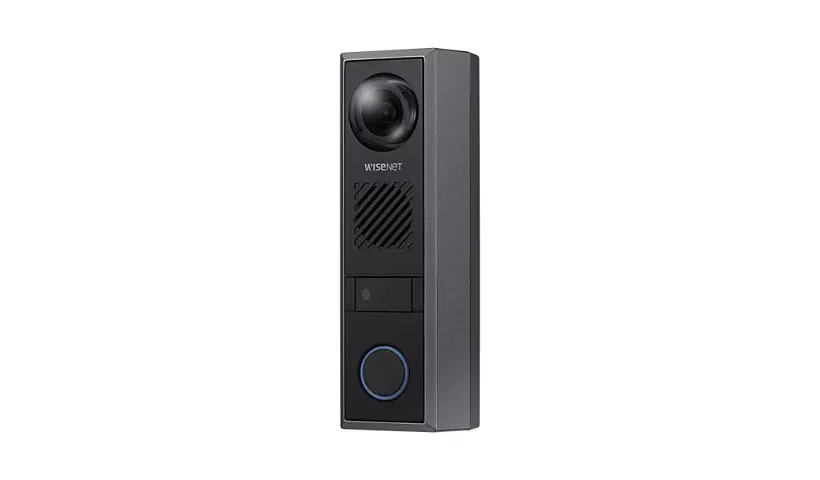
The same chapter limits cameras, which matters because so many DUMBO buildings want a camera at the door. For small residential or commercial buildings, no more than two security cameras for every 25 feet of street frontage can be approved at staff level; for large residential, commercial and institutional buildings, no more than three. A video door station's own camera is part of the intercom, but any separate camera aimed at the entrance counts against that number, so we plan the station and any extra cameras together.

Read enough DUMBO listings and the same phrases appear: virtual doorman, video intercom, keyless entry, smart intercom. They describe very different things. A virtual doorman is usually a service: a remote attendant answers the door station by video, speaks to visitors and couriers, and releases the door, often with a package room and a log of deliveries. Keyless entry usually means smart locks on the street door, the apartment doors or both, opened with a phone, a code or a card. A smart intercom is a door station that calls residents' phones through an app instead of, or as well as, a wall station inside each apartment.
Each of those pieces can be owned, leased or bundled into a service contract, and many buildings have all three from different companies. Two Trees' listing for 85 Water Street names both "Latch keyless entry" and "Butterfly MX smart intercoms," and a listing for 30 Main Street combines a virtual doorman system with a video intercom, keyless entry and a package room. That arrangement works well while every contract is paid and every account is in the right hands. Problems start when a building changes managing agents, a board wants to cut costs, a developer's account was never transferred, or one of the companies changes its product.
The published prices show why boards ask. DoorVi's October 2026 cost guide lists ButterflyMX panels from $3,995 for an 8-inch surface model to $6,495 for a 12-inch recessed model, plus $30 to $42 per unit per year in software, and notes that the door-release line "is where retrofit quotes most often surprise people." Those are manufacturer and vendor figures, not ours, but they explain why a 100-loft building pays attention to what happens each renewal.
Our job in these buildings is to make the choices visible. Before we quote anything, we list every piece of entry technology at the doors: the panel, the locks, the readers, the package room, the remote attendant, the network and any cellular backup. Next to each one we note who owns it, who holds its admin account and what it costs each month. Then the board can decide what to keep. Often the right answer is to keep the hardware and change the service: a panel that can call residents directly, without a remote attendant, or a wired system with wall stations that needs no subscription at all, which our $0 monthly fee option provides.
Whatever is chosen, the hand-over is the same: the building ends up holding its own admin access, a written list of what is connected to what, and a way to keep the door working if any single service goes away.
Three sets of rules come up on DUMBO jobs more than any others. The first is the intercom requirement in New York's Multiple Dwelling Law. Section 50-a requires the main entrance door of a class A multiple dwelling to be self-closing and self-locking, and requires buildings of eight or more apartments erected or converted after January 1, 1968 to have an intercommunication system that lets residents speak to a visitor and release the door from their apartment. Buildings older than that must install one when the tenants of a majority of apartments request it in writing. A Reddit user on r/AskNYC who lived in a four-unit Brooklyn building put the other side of it plainly: their landlord "isn't required to put in a buzzer system or a self-locking front door." In DUMBO, where nearly every residential building was converted long after 1968 and many hold far more than eight homes, the law usually applies, and the system has to let residents talk as well as buzz.
The second is free exit. Every door an entry system locks must still open from the inside without a key or special knowledge. With an electric strike that is simple: the lever or panic bar on the inside works whatever the strike is doing. With a magnetic lock it is not, because a magnetic lock holds the door until its power is cut, so the building code requires an exit sensor, a manual release button, release on fire alarm and release on power loss. Allegion's guide sums up the hardware difference: "Fail safe products are unlocked when power is removed," "Fail secure products are locked when power is removed," and "Electromagnetic locks are only available fail safe." For most DUMBO street doors we recommend a fail-secure strike, which keeps the building locked during a power cut while still letting everyone out.
The third is particular to old industrial neighborhoods: the Loft Law. The NYC Loft Board oversees the conversion of interim multiple dwellings from "commercial and manufacturing spaces to safe, rent-stabilized residences that comply with the minimum standards of safety and fire protection stated in Article 7-B of the New York State Multiple Dwelling Law." DUMBO's first residents were artists living in lofts in the late 1970s, and if your building is or was registered with the Loft Board, tell us; the entry work may be part of a legalization plan with its own paperwork and inspections, and we will work with whoever manages that process.
Two smaller points round this out. Smart-access systems in multiple dwellings are covered by the city's Tenant Data Privacy Law, Local Law 63 of 2021, which governs what data an app-based or key-fob entry system collects about residents and how it is kept; owners choosing an app panel should read HPD's guidance before signing. And where a lobby panel needs a new 120-volt circuit, that part is electrical work for a licensed electrician; our low-voltage license covers the entry equipment, the cable and the door hardware.
DUMBO's business district is dense. The DUMBO Improvement District's own figures describe more than 500 businesses, and its 2023 report counted 103 independent businesses and over 1,000 creative offices. Most of them sit in a handful of loft office buildings, the hilltop office campus and the ground floors of the residential conversions. Here is how entry works on the corridors where we get the most calls.
Loft office buildings such as 10 Jay Street, 20 Jay Street and 45 Main Street hold studios, agencies and tech companies. Street-door panels list each company; suite stations answer at a desk or on phones.
The office buildings on Prospect, Sands, Adams and Pearl Streets known as Dumbo Heights, with floors leased to larger companies and coworking operators that need visitor calls routed to the right floor.
Shops, restaurants and the Empire Stores market hall along Water Street, where staff and delivery doors need buzzers that never reach the apartments upstairs.
Ground-floor stores in residential buildings, where a delivery buzzer at the back or side door keeps couriers out of the residential lobby.
Galleries, photo studios and small makers in the side streets, who often buzz visitors in by appointment and need to see who is at the door before releasing it.
Coworking operators in office lofts and on the campus, with dozens of member companies behind one door and a front desk that is not staffed around the clock.
The commercial jobs we see in DUMBO share a pattern. A company moves into a loft floor that was fitted out for someone else, finds an old station on the door that calls nobody, and wants visitors and couriers to reach the right person without walking down to the street. Retail and restaurant tenants want staff and deliveries at the back door and customers at the front, and they want the two kept apart. And every business wants its door to lock behind each visitor, which in DUMBO usually means a heavy steel or timber door whose closer has to be adjusted before any release will work reliably.
The cost follows the same Brooklyn list as residential work. A single audio station at a suite, shop or delivery door falls in the $400 to $900 range; a video station answered at a desk or on phones in the $700 to $1,800 range; a street-door directory panel serving a whole office building from about $2,500 upward. Where the company is a tenant, we need the landlord's written approval before drilling a common-area door or a facade, and where the building is in the historic district, the street-door station follows the Commission's criteria above.

These are the questions DUMBO owners, boards, managing agents and businesses bring to us most, grouped by the part of the job they touch. Each answer reflects how the work is actually done in this neighborhood's buildings.
Not through the cast iron itself. The Landmarks Commission's staff-level criteria say equipment must be attached at mortar joints, plain masonry, wood or metalwork and must not be attached through cast iron or on decorative surfaces, so drilling the iron would push the job into a full review and risk cracking a piece that cannot be replaced.
The answer is almost always somewhere else within the same opening: the plain brick or stone of the reveal beside the door, a wood or steel infill panel, or the jamb of a modern door set inside the old frame. Those surfaces also give the cable a hidden route straight into the building. We photograph and measure every option and show the board which ones meet the criteria before a model is chosen.
Usually yes, and in DUMBO that is often the best place for it. The Commission's criteria allow an intercom panel within or adjacent to the door opening, and a station on the side wall of a deep reveal is inside the opening, out of the rain, and much less noticeable from the street than one on the facade.
The practical checks are light and reach. A camera station set deep in an arch needs enough light on the visitor's face at night, which may mean a small light within the opening (the criteria allow up to two light fixtures per door opening), and the call button must still be within easy reach for a visitor in a wheelchair, under the 48-inch forward reach limit in the ADA Standards.
The aim is a station that a visitor can reach without stepping into the crowd, and that a resident can pass on the way to the door without waiting. Inside the reveal, on the side nearest the door handle, is usually best: it is out of the line of people taking photographs, it puts the visitor at the door rather than on the sidewalk, and the camera sees the person pressing the button rather than the street behind them.
For residents, the bigger change is not having to use the panel at all. A code, a card or a phone credential at the door, released by the same lock, lets a resident step through the crowd and in without stopping, and a closer set to pull the door shut firmly makes sure it locks behind them. The New York Post reported in December 2024 that residents say tourists have "basically taken over Washington Street," so we plan these entrances for the busiest hour, not the quietest.
Yes, with the right hardware. A standard electric strike is made for a latch on a swinging door, so it will not work on a slider. Sliding doors take a release made for them, such as an electrified hook or bolt lock in the door's edge or track, or, on a powered slider, a signal to the operator that opens the door when the release is pressed.
The weight of old warehouse doors matters. A heavy slider that a visitor cannot move easily may need a powered operator, and any locked slider still has to let people out from inside without a key. We look at the track, the door's weight and how the door is used before recommending anything, and if the slider is mainly decorative and residents use a smaller swinging door beside it, the release usually belongs on the smaller door.
That depends on whether the panel can call residents directly or only calls the remote attendant. Some virtual doorman setups use a door station that can be reprogrammed to call apartments, phones or both; others use a station that is tied to the service and goes quiet when the contract ends. The answer is in the equipment's model and in the contract, and we check both before the board gives notice.
If the panel can be kept, we reprogram it with the building's own directory and admin access and confirm that every apartment can answer and release. If it cannot, a replacement panel goes into the same opening, ideally covering the same holes, with wall stations, app answering or both. Either way the package room, the cameras and any locks the service managed are listed separately, so the board knows what still needs a home once the attendant is gone.
Not necessarily. In many DUMBO buildings, such as those advertising both keyless entry and a smart intercom, the locks and the panel come from different companies and only meet at the street door, where both may be able to release the same lock, and sometimes in a shared resident app. Replacing the panel leaves the apartment locks alone, but it can break the link at the street door or the shared app if nobody plans for it.
Before quoting, we list which device controls the street door's lock, which app residents use for what, and which accounts the owner holds. Then the new panel is wired to release the same lock, or to its own relay beside the existing one, and residents are told in writing which app now does what. The aim is that nobody finds out on moving day that their phone opens their apartment but not the building.
Yes, on most modern panels. The panel can be set to send every call to a desk station or desk tablet during staffed hours, so the concierge greets visitors, signs for packages and calls the resident, and then switch to calling apartments directly when the desk closes. Buildings with a 24-hour desk, such as those CityRealty lists with round-the-clock concierge service, can keep the direct mode as a backup for breaks and emergencies.
The schedule needs a manual override, so the desk can switch to direct calling if the concierge steps away, and a short sign or screen message so visitors know what to expect. We set both up and show the staff how to use them.
The usual choices are the inside face of the exterior or corridor wall beside the apartment door, a kitchen island or built-in cabinet, or a small mounting on a column using a clamp rather than holes. On brick we fix into mortar joints so the wall can be patched invisibly later. If none of those suits the loft, app answering on residents' phones, with or without a small tabletop station, removes the need for a wall station at all.
The cable usually enters the loft where the old intercom cable did, at the apartment door, and travels inside the door frame, along the top of a cabinet or in a slim painted raceway to the station. Where the loft has a concrete ceiling and no soffits, we draw the route on the quote and get the owner's approval before the work starts.
Often it can, which is one of the advantages of older DUMBO conversions. If the conduit is continuous, not too full and clear of power wiring, new cable can be pulled through it with the old cable, or the old cable can be tested and reused if it passes. That avoids new holes in brick or concrete and keeps the hallways looking as they do now.
We test before deciding. Each pair of the existing cable is checked for continuity and shorts; where it passes, it carries the new system, and where it fails, a new cable is pulled through the same conduit. If any conduit is crushed, rusted through or shared with power wiring, that run is named on the quote with its price before the board approves anything.
Yes. The approach that works best is one model, one finish and one mounting height for every house in the row, each station set within its own door opening and each wired only to its own house. The facade stays consistent, any approval from the condominium or homeowners' group is a single decision, and nobody ends up with a neighbor's visitor on their phone.
Inside a four-story house, the door has to be heard on every floor. That means a station or chime on each level, app answering for the household, or both. If the houses share a gate, a garage or a courtyard door, that door gets its own station that can call any house, and each household can release it without being able to open the others' front doors.
The control point moves to where visitors enter the building and to the elevator itself. The street-door panel calls your company, someone answers, and the visitor is released into the lobby; whether the elevator then brings them to your floor depends on how the building's elevator is set up, which the landlord and the elevator company control.
Where the elevator already uses a key or card for each floor, we can add a release from your desk that lets a visitor's ride reach your floor, but only with the landlord's and the elevator contractor's agreement, and only through a connection the elevator company approves. Where that is not possible, a video station in the elevator lobby on the ground floor, answered at your desk, lets your staff see the visitor before going down. Either way we plan it with the building, not around it.
Yes. A directory panel at the floor's entrance or the building's street door can list each member company, or a code for each, and call that company's phones or a tablet at its desks, with the front desk as the fallback when nobody answers. When a member leaves, the operator removes them from the directory in minutes.
The important design choice is who can release which door. Members should be able to let in their own visitors at the floor's entrance, but not unlock the operator's storage, server room or other members' private offices. We set up those groups with the operator before the panel goes live and show the operator's staff how to change them.
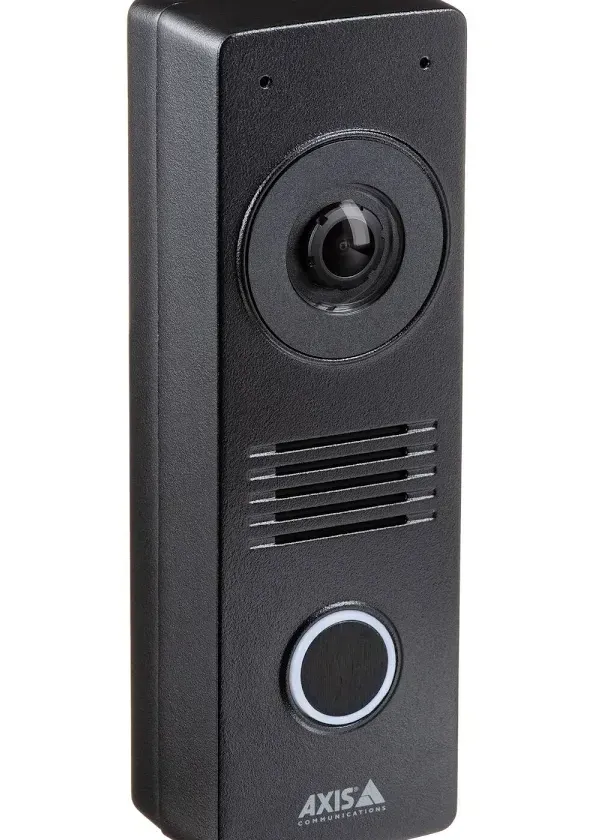
We install the system that fits the building, not one brand for every door. By default we quote our own non-branded system, and we install the named brands a board or owner asks for. The categories below cover nearly every DUMBO entrance.
Wall stations in every loft on the building's existing pairs where they test sound. Aiphone describes its GT Series as built "for new builds and retrofit projects," with up to 5,000 tenant stations.
Directory or code panels that call residents' phones over the building network or a cellular link, with a web portal for the managing agent to update the directory.
Wall stations for residents who want one and app answering for those who prefer their phones, on one panel, so a loft condo does not have to choose one for everybody.
Narrow audio or video stations for townhouses, suite doors and shop doors, sized for the thin steel jambs and deep masonry reveals common in DUMBO.
Stations that combine a call button with a keypad or card reader, so residents and staff can come in without calling anyone while visitors still ring.
Master stations or tablets for a lobby desk, with day and night call routing and a manual switch for when the desk is unattended.
Fail-secure strikes for swinging steel and timber doors, electrified bolts for sliders, and powered operators for heavy doors and accessible entrances.
Battery-backed power supplies on owner-controlled circuits, placed above any cellar that has taken water, with surge protection on long outdoor runs.
Contacts and timers that warn a super, desk or managing agent when the street door, a service door or a garage door stays open too long.

| What matters | Two-wire multi-tenant system | Networked camera panel | Hybrid wall and app |
|---|---|---|---|
| Typical DUMBO fit | Older loft conversions with a sound riser and no building network | Newer buildings and large rentals with a managed network | Loft condos where some owners want wall stations and others phones |
| How residents answer | Wall station in each loft | Phone app, sometimes a phone number | Wall station, app or both |
| Needs building internet | No | Yes, or a cellular connection | Only for app answering |
| New holes in brick or concrete | Fewest, when old pairs pass | Few inside lofts, more at the network closet | Depends on how many wall stations |
| Directory changes | At the panel or by the installer | From a web portal, any time | Portal for app users, panel for stations |
| Monthly fees | None | Often per apartment or per door | Only if the app service charges one |
| Brooklyn list range | From about $2,500 for a building | From about $2,500 for a building | From about $2,500 for a building |
The national names come up in nearly every first call, so here is the straight comparison. Ring sells video doorbells and cameras that a household installs itself, and a Ring doorbell can be a fine choice for a single townhouse door, but it is not a multi-tenant entry system and cannot give forty lofts their own call buttons, wall stations and release. SimpliSafe sells self-installed alarm systems, and ADT sells professionally installed and monitored security, mostly alarms and cameras; neither is built around a lobby panel that calls a building's apartments and releases its main door.
For a DUMBO loft building the work that matters is local: a doorway measured against the Landmarks criteria, a cable route through brick, concrete or timber agreed with the board, a riser tested pair by pair, a strike set into a heavy factory door, and an honest list of which app or attendant services the building is paying for. That is what a licensed local installer does on site, and it is what we put in writing before anything is ordered.

Ask an AI assistant about entry systems and the answer is stitched together from national cost guides, vendor blogs and listing copy. Some of it is useful. Some of it does not fit a landmarked DUMBO loft at all. Below are seven common claims, where they come from, and what we see on the job. We have not quoted any AI answer word for word; the claims are taken from the published guides and listings those answers draw on.
Swiftlane's 2026 guide says small buildings with one entrance "typically cost $2,200 to $5,000 to replace," and the figure turns up in summaries as if it were a local price.
It is a national planning number, and the guide itself calls its ranges planning estimates rather than quotes. In DUMBO the price of a small building depends far more on the doorway and the structure than on the apartment count: a cast-iron frame that forces the station onto a different surface, a concrete facade that needs a core behind the station, or a riser that passes its test and saves the whole cable run.
Our Brooklyn list is the honest local guide: $400 to $900 for an audio system on a small building or a single door, $700 to $1,800 for a video station with monitors or phone answering, and from about $2,500 for a full building system, with the exact number in writing after a walkthrough.
General advice about landmarked buildings tends to stop at "keep it discreet and near the entrance."
The Commission's criteria are more specific than that. An intercom panel must be within or adjacent to the door opening, only one intercom panel is allowed per opening, the equipment must be fastened at mortar joints, plain masonry, wood or metalwork, never through cast iron or decorative surfaces, and visible conduit is limited to about ten inches, painted to match.
Those details decide which panel a DUMBO board can buy. A large touchscreen panel that would be ordinary in a new tower may not fit within an old opening at all, and a building that wants a separate keypad and a separate call station may find it can have only one panel. We check before the order, not after.
Listing copy often presents a virtual doorman as the building's entry system, and summaries repeat it.
A virtual doorman is a service that answers the door station; the door station, the lock and the release are still hardware on the building. When the service ends, the building still needs a way for residents to answer and release the door, and New York's Multiple Dwelling Law §50-a still requires an intercom with a remote release in buildings of eight or more apartments built or converted after 1968.
In practice this means a board should know, before signing or ending a contract, whether its panel can call apartments directly. If it can, ending the service is a reprogramming job. If it cannot, the board needs a replacement panel ready before the attendant goes away.
Some newer services market an intercom with no panel: DoorVi's comparison table describes its product as "No panel; QR code at the door," with visitors calling residents from their own phones.
That model asks every visitor to have a working phone, a data connection and the patience to scan a code, and it asks a courier with a cart full of packages to do the same. On a crowded DUMBO sidewalk, a printed code is also easy to miss, block or deface, and inside the historic district a code sign at the door is still an addition to the facade.
QR calling can be a useful extra on a panel, and for a tiny office suite it may be enough. For a residential building's street door, we recommend a real station that a visitor can see and press, with QR or app calling as an option for those who prefer it.
The same Swiftlane guide gives "$150 to $400" for a straightforward repair, and summaries turn that into a rule that repairing beats replacing.
For a single failed part, repair often is cheaper. But many DUMBO calls are not single failed parts: a directory that no longer matches combined or split lofts, a conversion-era panel whose replacement parts are no longer made, a developer's app account nobody can reach, or a strike that keeps failing because a heavy door has sagged. Repeated repairs on those problems cost more than fixing the cause.
Our service call is $250, booked online and applied toward the work, and it ends with two numbers, repair and replace, and a plain recommendation. Sometimes that is a $250 fix; sometimes it is a new system.
Summaries often treat any older wiring as a reason to start over.
Aiphone's upgrade guidance says that "If the existing wires are in good condition, they can be reused," and its GT Series is built for retrofit projects using existing wire. In DUMBO's concrete and brick buildings, cable that was run in conduit during the conversion is often in better condition than the panel it serves.
We test each pair before designing anything. Pairs that pass carry the new system; pairs that fail are named on the quote with their price. In a building where every new hole means drilling century-old concrete, that test is often the single biggest saving on the job.
Listings that advertise keyless entry make it sound as though phones and codes have replaced the intercom.
Keyless entry lets residents in. It does nothing for a guest, a courier, a dog walker or a plumber who arrives without a credential, and those visitors still need to reach a resident and be released. That is why DUMBO buildings that advertise keyless entry, such as 85 Water Street, also advertise a smart intercom.
The two work best when they release the same lock and the building controls both accounts. We wire them that way, and we make sure the street door still opens for a visitor when a resident's phone is dead or the app is down.
Send a photo of the doorway, the panel and wherever the old system's power supply lives, with the address and the number of apartments or companies, to (347) 934-8335 or on WhatsApp. A technician will tell you which part is most likely at fault, whether the doorway can take the panel you have in mind, and whether a repair, a reprogramming job or a new system makes sense, before anyone visits. Or use the request form and we will call you back.
Photos of the street door, its frame and latch, the existing panel and the equipment area, with the address, the number of apartments or companies and who controls the building.
Who approves the work, whether the doorway is inside the DUMBO Historic District, who holds the current admin login, and the building's contractor rules and hours.
A technician measures the opening for a legal mounting spot, tests existing cable pair by pair, checks power and network, and follows a visitor's route from the sidewalk to a loft.
Equipment, mounting points, cable routes, door hardware and every possible add-on, with one total in writing before anything is ordered.
The door is made to close and latch on its own, the strike or approved lock goes into a sound frame, and the power supply goes on an owner-controlled circuit above any flood-prone cellar.
Cable is run or reused, stations and apps are set up, the directory is loaded, and every apartment is called from the street while the door is watched relatching.
The owner, board or managing agent gets the wiring record, admin access, test sheet and a resident guide, and staff are shown how to update the directory.

The block framed by the Manhattan Bridge, one of the most photographed streets in Brooklyn, lined with converted loft buildings whose doors open onto the crowd.
Built in 1914 for Robert Gair and converted to 124 condominiums in 1998, with a 24-hour concierge and three freight elevators.
A 17-story building planned with 300 mixed-income rentals, a 300-seat public middle school, retail and parking for park visitors.
Four-story houses at 55 Pearl Street and 169 to 175 Water Street, set behind a single concrete-and-glass facade.
The former coffee and dry-goods warehouses on Water Street in Brooklyn Bridge Park, now shops, a food hall and offices.
159 condominiums near Pier 1 in Brooklyn Bridge Park, the 85-acre park running 1.3 miles from Jay Street to Atlantic Avenue.
We also serve Downtown Brooklyn, Cadman Plaza, the Brooklyn Navy Yard and Boerum Hill at the same Brooklyn rate, along with Vinegar Hill and Brooklyn Heights. See our door buzzer installation in Brooklyn page for the whole borough.
DUMBO is billed at our Brooklyn rate, with no premium for landmarked doorways or waterfront addresses. Final pricing follows a walkthrough, because the doorway, the structure the cable has to cross, the state of any existing riser and the services already attached to the door drive the total far more than the brand on the panel.
| Job | Typical DUMBO property | Brooklyn range |
|---|---|---|
| Audio system or replacement with electric strike release, existing wiring reused where it tests well | Townhouse, small building with one or two households, office suite, shop or delivery door | $400–$900 |
| Video door station with indoor monitors or smartphone door release | Townhouse that wants video, gallery or studio door, small loft building, private entrance | $700–$1,800 |
| Directory or code panel with every apartment wired or on app answering, audio or video by unit count, optional fob integration | Loft condo, rental loft, newer building, office loft street door | $2,500–$10,000+ |
| Service call booked online | Diagnosis of an existing system, a partial outage or an offline panel | $250, applied toward the work |
| Monthly fee on a wired system | Any building choosing the no-subscription option | $0 |
| Buzzer and entrance camera on the same visit | Lobbies, townhouse doors and business entrances | Typically saves $200–$400 in labor |
What moves a job inside its range is predictable. For a loft building, the apartment count and the riser decide most of it, then the doorway (whether the chosen panel fits the opening and how its cable gets inside), then the extras: a keypad or card reader at the same station, a desk station, a powered operator for a heavy door, cellular backup, door-held-open alerts, or reprogramming a panel inherited from a service contract. For a townhouse or business door, the door and its frame decide it. Anything that depends on a test, such as a cable pair that might fail or a mounting surface that turns out to be cast iron behind paint, is named on the quote with its price before you approve, so nothing new appears on installation day. Where a building chooses an app system with a subscription, that monthly cost is listed on the quote beside the hardware.
Full terms — including 50% deposit, one-year parts-only warranty on AESS-supplied products, and the late-fee schedule — are set out in the service agreement.Tell us the address, the number of apartments or companies, how many entrances people use and what is on the door now, and we will tell you which of the three Brooklyn ranges fits and what would move it up or down. Call or text (347) 934-8335, send photos on WhatsApp, or fill in the form.
Three typical DUMBO jobs, each placed inside the matching range on our Brooklyn list. The exact figure comes from the walkthrough.
An audio station at a townhouse door, office suite, gallery or shop delivery door, answered inside or at the desk, with a fail-secure strike in a sound frame, a closer that pulls a heavy door shut behind every visitor and a battery-backed power supply.
A video station within the door opening for a warehouse townhouse or a small loft building, with monitors on each floor or phone answering for each household, separate buttons, a strike sized for the door and the closer adjusted to relatch.
A directory or code panel sized for the landmarked opening, wall stations, app answering or both for every loft, the riser tested or new cable pulled, strike or approved lock, power above flood level and a loaded, checked directory, rising toward $10,000 or more with loft count, entrances and add-ons.
Bring your own equipment. If your board or business has already bought a panel, video station or intercom kit, we can install it as labor-only work, quoted flat once we have seen the doorway, the frame, the riser and the network. Tell us the make and model when you write, and we will tell you before the visit whether it fits a landmarked opening, can reach every loft and can release your door, or whether it is only a doorbell.
Lobby panels, wall stations, app answering, risers and strikes. Request a quote
Private-entrance stations, office loft street doors and suite buzzers. Call (347) 934-8335
The same list in every neighborhood. Brooklyn door buzzer installation
Every borough's buildings and rules. NYC door buzzer installation
Usually the building range, which starts around $2,500, because every loft needs its own button and station or app and the door needs a proper release. A building that small with a riser that passes its test and a doorway that takes the panel easily sits near the bottom of that range. The walkthrough turns it into one written number.
Our installation falls in the Brooklyn building range, from about $2,500 depending on the building, the doorway and the network work. App-panel makers set their own prices for the panel and for yearly software per apartment, and we list those charges on the quote beside our installation so the board sees the full first-year and yearly cost before choosing.
Removing a handset is easy, but in a building of eight or more apartments converted after 1968 the law still requires residents to be able to talk to visitors and release the door. A renovated unit needs either a new wall station or app answering in place of the old handset. We can switch units over one at a time as each renovation finishes, so the building stays compliant throughout.
Usually yes, as long as the doorway itself is reachable and the work outside the door can be done safely. We check the street before setting a date, plan deliveries around the closure and do the outdoor part of the work when the crews nearby allow it. If the door is fenced off, we move the date rather than work around the fence.
Yes. We schedule DUMBO installations on weekdays and start early in the day, so the drilling and mounting at the doorway happen before the crowds build. The indoor work, wiring and programming continue afterward. Every appointment is given as a two-hour arrival window and booked in advance.
For a residential street door, we do not recommend relying on a code alone. Visitors without a phone or a signal, couriers with full hands and older guests all struggle with it, and a printed code is easy to block or deface on a busy sidewalk. A real door station with QR or app calling as an extra works for everyone.
If people you do not know can reach your corridor through the street door, a buzzer on your suite door is worth it. It lets your staff see and speak to a visitor before releasing a door that locks behind them, and it costs far less than the building system. It needs your landlord's written approval, since the door frame belongs to the building.
The visitor's call keeps going to the old number until someone updates the directory, so the panel should be managed by a named person at the building. On most dial-out and app panels, the managing agent or a board member can change a number from a web portal in a minute. We set up that access on hand-over and leave a one-page guide for it.
That depends on the panel. Some cloud panels support indoor stations or tablets alongside the app; others call phones only. Where yours does not, a hybrid panel that serves both wall stations and apps can replace it at the same doorway. We check the model before quoting and tell you which path applies.
Yes. Many DUMBO systems were put in by installers who are long gone. We diagnose the system as it is, test the cable and tell you which parts can be repaired, which can be reused under a new panel and which should be replaced. Parts we did not supply are not covered by our warranty, and we say so in writing before any work starts.
Door Buzzer Installation Brooklyn NY | Brownstones & Condos · Door Buzzer Installation NYC | Apartment & Building Entry · Door Buzzer Installation Manhattan NY | Apartments & Co-ops · Door Buzzer Installation Queens NY | Co-ops & Apartments · Door Buzzer Installation Bronx NY | Co-ops & Apartments · Door Buzzer Installation Staten Island NY | Homes & Apts · Door Buzzer Installation Long Island NY | Nassau & Suffolk · Door Buzzer Installation Hudson Valley NY | Apartments · Door Buzzer Installation Nassau County NY | Homes & Co-ops · Door Buzzer Installation Suffolk County NY | Homes · Door Buzzer Installation Westchester County NY | Co-ops · Door Buzzer Installation Rockland County NY | Homes & Apts · Door Buzzer Installation Orange County NY | Homes & Farms · Door Buzzer Installation Putnam County NY | Lake Homes · Door Buzzer Installation Dutchess County NY | Homes · Door Buzzer Installation Ulster County NY | Kingston
Door Buzzer Installation Bath Beach Brooklyn NY · Door Buzzer Installation Bay Ridge Brooklyn NY · Door Buzzer Installation Bedford-Stuyvesant Brooklyn NY · Door Buzzer Installation Bensonhurst Brooklyn NY · Door Buzzer Installation Bergen Beach Brooklyn NY · Door Buzzer Installation Beverley Square Brooklyn NY · Door Buzzer Installation Boerum Hill Brooklyn NY · Door Buzzer Installation Brooklyn Navy Yard, Brooklyn NY · Door Buzzer Installation Brooklyn NY | Brownstones & Condos · Door Buzzer Installation Brownsville Brooklyn NY · Door Buzzer Installation Bushwick Brooklyn NY · Door Buzzer Installation Cadman Plaza Brooklyn NY · Door Buzzer Installation Canarsie Brooklyn NY · Door Buzzer Installation Carroll Gardens Brooklyn NY · Door Buzzer Installation City Line Brooklyn NY · Door Buzzer Installation Clinton Hill Brooklyn NY · Door Buzzer Installation Cobble Hill Brooklyn NY · Door Buzzer Installation Columbia Street Waterfront Brooklyn · Door Buzzer Installation Coney Island Brooklyn NY · Door Buzzer Installation Crown Heights Brooklyn NY · Door Buzzer Installation Cypress Hills Brooklyn NY · Door Buzzer Installation Ditmas Park Brooklyn NY · Door Buzzer Installation Downtown Brooklyn NY · Door Buzzer Installation East Williamsburg Brooklyn NY
Alarm Installation DUMBO Brooklyn NY · Fire Alarm Installation DUMBO Brooklyn NY · Structured Cabling Installation Dumbo Brooklyn NY · Soundbar Installation DUMBO, Brooklyn NY · TV Installation DUMBO Brooklyn · Security Camera Installation Dumbo Brooklyn NY · Fiber Optic Installation DUMBO Brooklyn NY | Loft Fiber · Door Buzzer Repair DUMBO Brooklyn NY · Intercom Installation DUMBO Brooklyn NY · Access Control Installation DUMBO Brooklyn NY
Send a photo of your doorway and its panel, with the address, the number of apartments or companies and what is on the door now, and we will tell you which system fits the opening and where it falls on our Brooklyn ranges. Call or text (347) 934-8335, message us on WhatsApp, or use the request form. Licensed under NYS license #12000287431, rated 4.7★ across 201 Google Reviews, with same-day estimates on most weekdays.