Frames That Hold · Strikes That Release · Panels the Landmarks Rules Allow · Brooklyn Rate
Door buzzer installation in Crown Heights is mostly work on old front doors: limestone and brownstone row houses in the Crown Heights North and Park Place historic districts, many of them divided into two to five apartments long ago; prewar walk-ups and elevator buildings lining Eastern Parkway, Crown Street, Montgomery Street and Lefferts Avenue; and storefront buildings on Franklin, Nostrand, Kingston and Utica Avenues with a narrow apartment door beside the shop. In buildings like these the panel is the easy part. The real job is a door that closes and latches every time, a frame that cannot be kicked loose, a release that works when someone upstairs presses it, and a panel that fits a landmarked doorway. This page explains how we approach each of those in Crown Heights, what the city's rules ask of owners, and where each kind of job sits on our published Brooklyn price list.
Reviewed and updated November 11, 2026, against the Landmarks Preservation Commission's Permit Guidebook chapter on health, safety and utility installations; LPC permits for houses on Dean Street and St. Marks Avenue in the Crown Heights North Historic District; NYC 311's guidance on doorbell, buzzer, intercom and self-closing door complaints; New York's Multiple Dwelling Law §50-a; Habitat Magazine's February 2024 report on intercom duties; Brick Underground's 2014 guide to getting a broken buzzer fixed; Patch's May and June 2022 reports from 501 Lefferts Avenue; News 12 Brooklyn's August 2025 report from 240 Crown Street; CrownHeights.info's reports from 456 and 529 Brooklyn Avenue; ABC7's November 2024 report on mail theft at Kingston Avenue and Carroll Street; the Associated Press's 2021 report on Amazon Key for Business; 6sqft's May 2025 report on the Atlantic Avenue Mixed-Use Plan; Brownstoner's histories of Crown Heights North, Park Place and Franklin Avenue and its owners' forum threads on buzzers and phone-based intercoms; Patch's history of Ebbets Field Apartments; the Wikipedia entries for Crown Heights, the Crown Heights North Historic District, the Brooklyn Museum, the Brooklyn Botanic Garden, the Brooklyn Children's Museum and the Weeksville Heritage Center; Allegion's fail-safe and fail-secure guide; Aiphone's GT Series pages; the HomeAdvisor and Swiftlane cost guides; and the 2010 ADA Standards. · Abstract Enterprises Security Systems, NYS license #12000287431 · crews dispatched from our Troy Avenue office in Brooklyn

Owner-operated since 2002 · Thousands of jobs completed · Booked within 2 hours
Quick answer: door buzzer installation in Crown Heights runs $400 to $900 installed on our Brooklyn list for an audio buzzer with talk-back and a door release on a one- or two-family row house, $700 to $1,800 for a video door station answered on indoor monitors or phones, and from about $2,500 to past $10,000 for a divided row house, a prewar walk-up, an elevator building on Eastern Parkway or a storefront building whose apartments need their own street door. Each figure includes the door station, the stations or phone answering inside, the power supply, the strike or release, the cable and the labor. It is fixed in writing after a walkthrough, and anything that might add to it, such as an old cable pair that could fail its test or a door frame that needs reinforcing before a strike will hold, is named and priced before you order. Crown Heights is billed at the Brooklyn rate. Here the door, more than the electronics, usually moves the price. Send photos of the door and the old panel to (347) 934-8335 or on WhatsApp, and we answer with the range that fits, usually within two hours of your message during working hours.
Crown Heights covers a little under a square mile and a half of central Brooklyn, bounded roughly by Washington Avenue on the west, Atlantic Avenue on the north, Ralph Avenue on the east and Empire Boulevard on the south, with Eastern Parkway running through the middle. It takes in ZIP codes 11213, 11216, 11225, 11233 and 11238, sits in Community Districts 8 and 9, and is policed by two precincts that split along the parkway: the 77th at 127 Utica Avenue for the north and the 71st at 421 Empire Boulevard for the south. For a door buzzer installer, the neighborhood is defined less by those lines than by its front doors, and there are thousands of them, most of them old, most of them used by more than one household.
The northern half is row-house country. The Crown Heights North Historic District, designated by the Landmarks Preservation Commission in three phases in April 2007, June 2011 and March 2015, contains 1,019 contributing buildings dating from about 1853 to 1942, from Greek Revival to Colonial Revival, including row houses, freestanding mansions, two-family houses, flats and apartment buildings. The first phase alone took in 472 buildings centered on Dean Street between Bedford and Kingston Avenues. A short distance away, the Park Place Historic District, designated in June 2012, protects thirteen row houses at 651 to 675 Park Place, built around 1890 and 1894, and Brownstoner's account of the designation notes that at least four of them had already been converted into multiple dwellings by the end of the 1950s. That pattern, a single-family house turned into three, four or five apartments that all share one stoop door, is the most common job we see here.
South of the parkway and along it, the stock changes to prewar apartment buildings: six-story elevator buildings facing Eastern Parkway, walk-ups and courtyard buildings on Crown Street, Montgomery Street, Carroll Street and Lefferts Avenue, and large complexes such as Ebbets Field Apartments, built on the site of the old ballpark after it was demolished in 1960, which Patch describes as home to 1,317 families. These buildings have vestibules with an outer street door and an inner lobby door, mailboxes between them, and a riser that has carried the intercom cable up the building for decades. On the avenues, Franklin, Nostrand, Kingston and Utica, the typical building is a store with apartments above, reached by a narrow door beside the shop window.

What goes wrong in Crown Heights is usually the door before the intercom. When Patch covered tenants at 501 Lefferts Avenue, a 60-unit complex at the neighborhood's southern edge, in 2022, the complaint was not about buttons or handsets. It was about "defective locks on doors to access the rest of the building," a front door lock that building records showed had problems since at least 2018, and a frame tenants said could be kicked open even after a new lock went in. "That front door is not secured properly," tenant Lakeysha Harris-Godwin told Patch. The complex had 87 open city violations at the time, including the broken locks, and the robbery of a delivery worker inside the building that May is what brought tenants out to rally.
The other recurring story is packages. In August 2025, News 12 reported that security video at 240 Crown Street, a building residents described as having 135 units, appeared to show a man using a small child in a stroller to get someone to open the door for him before taking a package from the lobby. CrownHeights.info reported a pair of thieves clearing packages from the lobby of 456 Brooklyn Avenue in January 2022, and, in December 2019, a thief at 529 Brooklyn Avenue who broke the glass front door with a heavy object to reach a package. Residents on the neighborhood's subreddit have started threads about package theft in large prewar buildings where, as one title put it, random people buzz into the building and take packages. None of those losses is fixed by a fancier panel alone, but each one points at a specific part of the entrance: who can be buzzed in, how the door closes behind them, what the glass is made of, and what the camera sees.
Mail is part of the same picture. ABC7 reported in November 2024 that a man broke into a street-corner mailbox near Kingston Avenue and Carroll Street about thirty seconds after a postal truck left and drove off with two bags of mail. "It makes me feel very unsafe," resident Anna Shaw told the station. Most Crown Heights apartment buildings keep their mailboxes inside the vestibule, so the street door, and how the carrier gets through it, is the first protection the mail has.
Where this page applies. It covers Crown Heights from Washington Avenue east to Ralph Avenue and from Atlantic Avenue south to Empire Boulevard, on both sides of Eastern Parkway, including the historic district blocks of Dean, Bergen, Pacific, St. Marks, Prospect and Park Place and the apartment streets south of the parkway. For the rest of the borough see our door buzzer installation in Brooklyn page, and for the whole city our NYC door buzzer installation page.
Calls that start with "our buzzer is broken" in Crown Heights usually turn out to be one of four things. The first is a door that no longer latches, so the release works but the door never needed it because it was already standing open. The second is a strike that has been beaten loose or a frame that has split around it, which is what a door looks like after someone has kicked or pried it a few times. The third is a riser fault in an apartment building, where every apartment above a certain floor or on one line has gone silent while the rest still work. The fourth, in row houses, is old bell wire that was spliced and painted over during one renovation or another until nobody knows which pair goes to which floor.
Each of those has a different repair, and only some of them call for a new system. If your street door will not lock today, say so when you call (347) 934-8335. A diagnosis is the $250 service call booked online, and that $250 is applied to the repair or to a replacement if replacing turns out to be the better value. You get both prices and a plain recommendation. If a part has to be ordered, the door is left closing, latching and opening with a key before the technician leaves, never propped and never with a temporary lock that fails open.
Every service here is priced from the same Brooklyn door buzzer list. How many households use the door sets the size of the system; the door, its frame and its glass decide what release it can take; and in the historic districts, the doorway itself decides where the panel can go.
A two- to five-button station at the parlor-floor door of a converted row house, a talk-back station on every floor, a strike in the original door and cable routed up through closets or the old bell chase instead of across plaster.
A single panel sized and finished to suit a brownstone or limestone doorway in the Crown Heights North or Park Place district, set in the reveal, on the door frame or on the areaway fence, with the permit materials prepared for the owner.
Closers adjusted or replaced so the door shuts on its own, split frames reinforced, latch guards fitted, and strikes set into solid material on doors that have been kicked, pried or slammed for years.
Directory or code panels in the vestibule of a prewar building on the parkway or a side street, a tested or replaced riser, a station in every apartment, and both vestibule doors set to close and latch.
Finding why one line, one floor or one apartment lost its talk-back or release, and repairing that connection rather than replacing a system that otherwise still works.
Replacing an audio panel with a camera panel and swapping apartment handsets for monitors or phone answering, over the existing cable where it tests sound enough to carry video.
Separate street-door systems for the apartments over stores on Franklin, Nostrand, Kingston and Utica, kept apart from the shop's own doors, gates and alarm.
Buzzers or video stations at the back or side door of a restaurant, salon, pharmacy or office, answered at the counter or on a phone, with the door locked between deliveries.
Networked panels, apartment answering and admin setup for new buildings rising along Atlantic Avenue and elsewhere, with the owner, not the installer, holding the administrator account.
Six kinds of building make up nearly every door buzzer job in Crown Heights. They differ in who controls the door, how many households the panel calls, where the cable can travel, and what the rules allow on the front of the building, and each has a mistake we see repeated.
Brownstone and limestone houses in the Crown Heights North and Park Place districts still lived in by one household, with an original wood door at the top of the stoop and often a garden-floor door below it.
Houses converted decades ago into two to five apartments, one per floor, all reached through the same stoop door and a shared stair, often with bell wire added and patched by several owners.
Brick buildings of eight to forty apartments on Crown Street, Montgomery Street, Carroll Street, Lefferts Avenue and the side streets, with a vestibule, mailboxes and a riser.
Six-story and taller buildings facing Eastern Parkway and the larger complexes such as Ebbets Field Apartments, with big lobbies, many apartments, a super and a managing agent.
Two- to four-story buildings on Franklin, Nostrand, Kingston and Utica Avenues, with a shop on the ground floor and a narrow apartment door beside it or around the corner.
Mid-rise buildings going up on former industrial lots along Atlantic Avenue and on infill sites across the neighborhood, delivered with networked entry systems.
A one-family house in the Crown Heights North district is the simplest buzzer job in the neighborhood technically and the one that needs the most care about appearance. The household usually wants to know who is at the parlor door from the kitchen on the garden floor, or from a bedroom on the third floor, without walking down. That means a door station at the entrance, an answering station or phone app on two or three floors, and, if the family wants to let visitors in without coming down, a release in the door.
The mistake to avoid here is treating the house's two doors as one. Many families use the garden-floor door under the stoop every day and the parlor door only for guests. If visitors will ring at the top of the stoop while the family is downstairs, the station there has to reach the kitchen; if deliveries come to the lower door, that door may need its own button. We ask how the house is actually used before deciding where anything goes, because the one-panel-per-door rule means a second door gets its own small panel, not a second set of buttons crowded onto the first.
The most common Crown Heights call is a row house carved into apartments long ago, with one stoop door serving every household above it. Brownstoner's account of the Park Place district notes conversions like this were already happening by the 1950s, and in many houses each later owner added a bell, a button or a cheap intercom without removing the last one. By the time we arrive, there may be three generations of wire in the walls, a five-button plate where only two buttons work, and a strike that was wired backwards so it buzzes but does not release.
The fix starts with tracing. A technician tests every pair from the door to each floor, marks which ones are continuous and which are cut or shorted, and finds the route the original installer used, often a narrow chase beside the stair, a closet stack or the cellar ceiling to a pipe chase. Sound pairs can carry a modern two-wire system, which runs voice, video, power and release over one pair to each station; Aiphone, for one, describes its GT Series as offering "the advantage of using existing wire and infrastructure." Where the old wire has failed, new cable follows the same hidden path wherever possible.

The brick walk-ups south of the parkway and on the northern side streets follow a familiar plan: a street door, a vestibule with the mailboxes and the panel, an inner door and a stair. Some are courtyard buildings, where the street door opens into a court and the apartments are reached through several separate entrances around it. These buildings carry the most legal weight, because a class A multiple dwelling of eight or more apartments built or converted after 1968 must have a working intercom under the Multiple Dwelling Law, and any building's public-hall doors have to close and lock by themselves.
The riser in a prewar walk-up has usually been through several systems, each reusing the last one's cable. We test it pair by pair before quoting. Pairs that test sound are reused, which keeps the price toward the low end of the multi-unit range; pairs that fail, or that look weak for video, are listed in the written price as possible replacements, each with its cost, so the owner knows before ordering exactly what could change. In a courtyard building, every entrance around the court gets the same treatment, because a single weak entrance is where the propping starts.
The six-story buildings that face Eastern Parkway, and the larger complexes on the neighborhood's edges, have lobbies used by hundreds of people a week: residents, home aides, delivery workers, contractors and visitors. Their entry doors are often heavy steel or bronze in a wide frame, and the panel has to handle a long directory. Ebbets Field Apartments, which Patch notes was the largest state-subsidized complex in the five boroughs when it opened, is the extreme case, but even a 60-apartment building on the parkway puts more wear on a strike in a month than a row house does in a year.
For these buildings the panel is usually a code or directory panel, with residents dialing or scrolling to an apartment, and the apartments answer on wall stations, phones or both. The closer, strike and hinges are chosen for traffic, the panel housing for abuse, and the power supply gets battery backup so a short outage does not leave a door that cannot be released.
Brownstoner's history of Franklin Avenue at Park Place describes the avenue as that part of Crown Heights' main commercial street, lined with commercial and residential buildings put up between the late 1880s and the early 1930s, including the corner building at 642 Park Place with its round tower and plate-glass ground floor. Nostrand, Kingston and Utica Avenues have the same mix. In most of these buildings, the apartments upstairs are reached through a narrow street door beside the shop, sometimes a few feet from the store's own entrance, sometimes around the corner on a side street.
We always keep the apartments' entry system separate from the shop. The tenants get a small panel at their own door, a station in each apartment and a power supply in a part of the building the owner controls, not behind the shop's counter. The store, if it wants one, gets its own buzzer at its back or side door. When both share one system, shoppers ring tenants, tenants can release strangers into the store's back hall, and every time the shop's alarm company or gate repairer touches the wiring, the apartments' door is at risk.
The Atlantic Avenue Mixed-Use Plan allows about 4,600 apartments on 21 blocks that 6sqft notes had been zoned for low industrial buildings since the 1960s, and smaller new buildings have been going up on infill lots across Crown Heights for years. These buildings are usually delivered with a networked entry system: a camera panel at the lobby, residents answering on a phone app or an apartment monitor, and a management office running the directory from a web portal.
Networked systems are good when someone owns them, and that is where the problems start. The developer's installer leaves, the management company changes, and nobody has the admin login, the subscription renewal date or the list of which credentials open which doors. Before we work on one, we ask the owner to confirm who holds the administrator account, whether there is a subscription and what it costs, and whether the panel uses the building's internet or its own connection. If the building is still under construction, we ask for those three things to be decided before the panel goes on the wall.
This is how our technicians approach a front door in a neighborhood like Crown Heights. It describes our routine practice, not the story of a single address.
The door, before the buzzer. The technician opens the street door and lets it go, again and again, from fully open and from halfway, and watches whether it closes and latches on its own every time. A stoop door on a row house often swings shut and stops a quarter inch short because the wood has swelled or the hinges have dropped; a lobby door in a walk-up often slams because its closer is worn out. Either one means a new release would be wired to a door that does not lock, and the owner hears about that first.
The frame, close up. Next the technician looks at the frame around the latch: fresh wood screwed over old splits, filler, a strike plate moved several times, steel that has been bent outward with a bar. In a neighborhood where tenants describe frames that can be kicked open even after a new lock, the frame is where the real cost of the job often hides, and it is priced openly rather than discovered on installation day.
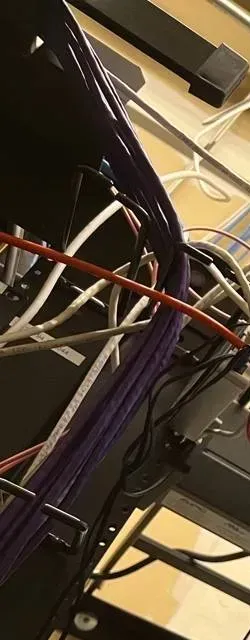
The wire, floor by floor. Only then does the technician trace the cable, from the door to the cellar or riser and up to each floor, testing each pair. In a converted row house that may mean finding the one chase an installer used in 1960 and three more that later owners improvised. Sound pairs are reused; doubtful ones go in the written price as possible replacements, with their cost, before anything is ordered.

At 501 Lefferts Avenue, tenants told Patch that the lock could be changed but "the frame, they can kick it," and that young people sometimes broke the locks to hang out in the lobby and halls. That is a door problem, not an intercom problem. An electric strike is only as strong as the wood or steel it is screwed into, and a strike set into a frame that has been split and patched will tear out with the first good kick no matter how good the strike is.
When we find a frame like that, the written price includes reinforcing it before any release goes in: a steel reinforcement plate or a new strike-side jamb section on a wood frame, a filled and re-welded strike pocket on a hollow metal frame, and a latch guard where the gap between door and frame has been used to pry. On a door that has been abused for years, we may also recommend a new door and frame outright, and say so plainly with the price both ways. A buzzer installed on a door that cannot hold is a bad use of an owner's money.
The thief at 529 Brooklyn Avenue did not touch the lock at all; according to CrownHeights.info, he broke the glass front door of the building with a heavy object and walked in. Many Crown Heights apartment buildings have doors that are mostly glass in a wood or aluminum frame, and the original row-house doors have glass panels too. A glass pane within an arm's reach of the inside lever or the exit button means that breaking it is as good as unlocking the door.
We do not replace glass ourselves, but we tell owners what to ask the glazier for, and we design around it. The inside release and any exit button go where a hand through a broken pane cannot reach them, the lever on the inside is checked for the same reach, and on doors that have been broken before, we suggest a laminated or security-film pane that holds together when struck. The camera on the door station, or a separate one inside, is placed so it records whoever is standing at the glass, not just the sidewalk.
The most common way in requires no force at all. At 240 Crown Street, News 12's report showed a man using a child in a stroller to get someone to open the door for him, and the threads about package theft in large prewar buildings describe people buzzing into buildings and taking packages from the lobby. A door station cannot stop a resident from holding the door for a stranger, but the installation can make that less likely.
The levers we use are simple. A closer that pulls the door shut promptly leaves less time for someone to slip in behind a resident. A camera panel lets residents see who they are about to buzz in, rather than pressing release to stop the ringing. A directory with apartment numbers rather than names, a panel that can be set not to release on unanswered calls, and a separate code or app credential for regular couriers all cut down on the reasons residents have to let strangers in. Packages themselves are better off in a locked package room or locker than on a lobby table, and we can put that door on the same system.

Much of northern Crown Heights is regulated by the Landmarks Preservation Commission, and a door station is an exterior change. The Crown Heights North Historic District, in its three phases, takes in more than a thousand buildings; the Park Place Historic District protects a row of thirteen houses between Franklin and Bedford Avenues. Inside those boundaries, the owner, not the installer, applies to the Commission, and the work should not start until the permit is in hand.
The good news is that an intercom is a routine item. The Commission's Permit Guidebook includes light fixtures, intercom panels and doorbells among the installations its staff can approve without a public hearing when they meet set criteria. The criteria themselves are short: the panel goes within or next to the door opening, or on a fence or wall in front of the entranceway; there is no more than one intercom panel per door opening; and the design, size and finish have to be compatible with the building. The general rules for all such equipment add that it should be attached at mortar joints, plain masonry, wood or metalwork, never through cast iron or decorative surfaces, and that conduit should be hidden through plain masonry, with staff able to approve about ten inches of visible conduit when hiding it is impossible.
The Commission's permit records show how ordinary this paperwork is in Crown Heights North. In October 2020 it issued a permit for 926 St. Marks Avenue, in the district's third phase, covering repointing, limestone repairs and repairs to the metalwork at the stoop, areaway wall and gate; in June 2024 it issued one for 1219 Dean Street covering rear-yard and roof work. A door station is a smaller change than either, and the application is mostly photographs, a product sheet and a drawing showing where the panel and the cable will go.
What we prepare for the owner is that package: photographs of the doorway as it is, the manufacturer's dimensions and finish for the proposed station, a marked-up photo showing its exact location in the reveal, on the frame or on the areaway fence, and a short description of how the cable gets inside without surface conduit.
Two practical points come up often. Cable entry is usually the deciding detail: on a brownstone stoop, the cleanest route is often straight through the wooden door frame into the vestibule, or through a mortar joint at the base of the stoop into the areaway and cellar, never along the face of the stone.

Three sets of rules touch a Crown Heights front door. The first is the state Multiple Dwelling Law. Under §50-a, a class A multiple dwelling built or converted after January 1, 1968, with eight or more apartments, must have a self-locking main entrance door and an intercom that lets each apartment talk to the visitor and release the door. Older buildings, which is to say most of the walk-ups and elevator buildings here, must install the doors and intercom if the tenants of a majority of the apartments request it in writing. Brick Underground's guide to broken buzzers reported that, in that case, the tenants pay for the work.
The second is the city's housing maintenance rules, which HPD enforces. Habitat Magazine's February 2024 explainer on intercom duties put it plainly in its headline: a working intercom is not an amenity, it is required by law, and courts have treated a working intercom as an essential service. The piece concerned a single apartment in a 54-unit co-op whose intercom had been knocked out, and the lawyer it quoted, Nancy Kourland of Lasser Law Group, said, "As a result, the co-op has a legal obligation to repair or replace the intercom." Doors are covered too: public-hall and apartment entrance doors must close and lock by themselves.
The third is 311. Its guide to apartment and building maintenance complaints lists "Doorbells, buzzers, or intercoms that are broken or missing" both inside apartments and in public areas, along with "Doors and locks that are broken or missing or not self-closing." A complaint can lead to an HPD inspection and a violation, but it is not fast; Brick Underground quoted a renter who waited three months for an inspector after a 311 intercom complaint. A tenant who needs the door fixed this month is better served by a written request to the owner, and an owner who receives one is better served by fixing it before an inspector arrives.
What this means for an installation is simple. An owner replacing or repairing an entry system in a multiple dwelling should end up with every apartment able to talk to the door and release it, both vestibule doors closing and latching by themselves, and a dated record showing each apartment was tested. That record is what we leave behind on every multi-unit job, and it is what an owner needs if a violation has to be shown as corrected.
None of this is legal advice; owners and tenants with a dispute should talk to a lawyer or a tenant organization.
Crown Heights' businesses mostly sit on its avenues, in old buildings with apartments upstairs, and that shapes every commercial job: the shop's doors have to work for the business without ever compromising the tenants' entrance a few feet away.
The neighborhood's busiest restaurant and bar strip, in commercial-residential buildings from the late 1880s to the early 1930s, with kitchen and delivery doors at the back or side and apartments upstairs.
Groceries, salons, takeout counters and services in low brick buildings north and south of the parkway, many with a narrow tenant door beside the shop.
Shops, bakeries, offices and schools clustered near Eastern Parkway, where storefronts, upstairs offices and classrooms each need their own controlled door.
Pharmacies, check-cashing counters, barbers and food businesses around the Crown Heights–Utica Avenue station, with heavy foot traffic and doors that need firm control after dark.
Auto shops, warehouses and the first new mixed-use buildings of the rezoning along the northern edge, with roll-up gates, side doors and future lobbies.
Daycares, medical and counseling offices, and community programs on the garden floors of row houses and the ground floors of apartment buildings across the side streets.
For a restaurant or shop, the usual job is a buzzer or video station at the back or side door where suppliers arrive, answered at the counter or on the owner's phone, so the door can stay locked between deliveries instead of being propped open with a milk crate all morning. The station goes where a driver can see it, the release goes into a frame strong enough to take a hand truck bumping it every day, and the closer is set so the door pulls itself shut behind a full dolly.
If a business or building also wants cameras on its entrance, they can be installed on the same visit and priced together with the buzzer; customers who combine the two typically save $200 to $400 in labor.

These questions come from Crown Heights owners, boards, managing agents, tenants and shop owners, and from the issues raised in local reporting from Lefferts Avenue, Crown Street and Brooklyn Avenue, in Brownstoner's owners' forums and in the city's own guidance. Each is answered for the buildings here.
Probably not. A lock that keeps failing on the same door is usually being destroyed by something else: a closer that slams the door into the frame, hinges that have dropped so the latch scrapes the strike, a frame that flexes when the door is pushed, or people forcing the door because it does not open for them when it should. Tenants at 501 Lefferts Avenue told Patch exactly this, that the lock could be changed but the frame could still be kicked open.
A lasting repair looks at all of it at once. We check the closer, the hinges, the frame and the strike, and we ask how residents and visitors actually get in, because a door that does not release properly gets forced. The written price lists the door work separately from the buzzer, so the owner can see what is keeping the lock alive.
It can, if it is the same kind of hardware in the same weak frame. Patch reported that young people at 501 Lefferts Avenue sometimes broke the locks to hang out in the lobby and hallways, and that pattern is common in large buildings with long halls. Deliberate damage usually targets the latch: prying it with a tool, jamming the strike with paper or gum, or kicking the door until the frame splits.
The answer is hardware chosen for abuse. A heavy-duty strike in a reinforced frame, a latch guard covering the gap, a closer with a strong latch speed and a door position switch that tells the super or management when the door has been left open are all harder to defeat than a standard lock. A camera covering the inside of the vestibule records whoever does it. None of that makes a door invulnerable, but it changes a five-second job into a noisy one that is caught on video.
Ask the glazier about laminated glass or a security film, which hold together when struck instead of falling out, and ask us to check what a hand through the pane could reach. At 529 Brooklyn Avenue in December 2019, the thief broke the glass with a heavy object and walked in; on many doors the inside lever or an exit button sits within easy reach of a broken pane.
During the installation we keep the inside release button and any request-to-exit device out of that reach, check the lever's position, and set the camera so it records the face of whoever stands at the glass. If the door is mostly glass and has been broken more than once, it may be worth pricing a door with a smaller pane, and we will give you that price alongside the repair.
The door station's own camera looks outward at the person ringing; it does not see the vestibule behind the door. In the 2022 robbery that Patch reported at 501 Lefferts Avenue, the attack happened inside the building, beyond what a panel camera would show. If the concern is what happens once someone is through the street door, a second camera inside the vestibule or lobby, mounted high and aimed at the inner door and mailboxes, is the right addition.
That camera can record on its own recorder or on the building's existing one, and the owner decides who can view it and for how long footage is kept. We install it on the same visit as the entry system when asked, priced together, and we place it so it covers the shared space without looking into anyone's apartment.
It is the owner's decision, and there are real arguments on both sides. The Associated Press reported in 2021 that Amazon installs its Key for Business device on building buzzers for free, sometimes with a gift card to whoever lets the installer in, and that drivers "can unlock doors only when they have a package in hand to scan." The same report noted that "Tenants may not know that Amazon drivers have access to their building's front doors," and quoted privacy researcher Ashkan Soltani warning that it means "introducing a foreign internet-connected device into an otherwise internal network."
Our advice is to decide deliberately rather than let a salesperson decide for you. If the building wants courier access, it is better to choose a system that gives each courier company its own credential, logged and revocable, and to tell tenants. If a device has already been added without the owner's knowledge, we can identify it at the panel and the owner can decide whether it stays.
In most apartment buildings with mailboxes inside the vestibule, the carrier opens the street door with a postal lock, a small keyed switch the Postal Service controls, mounted in or beside the door panel and wired to the same release as the buzzer. When an entry system is replaced, that lock has to be planned for, either by choosing a panel with a cutout for it or by mounting it in its own small box beside the door.
We wire the provision and leave the lock itself to the local post office, which installs and controls its own hardware. Coordinating that before the old panel comes off avoids a week of carriers unable to reach the boxes. With mail theft in the news here, including the November 2024 mailbox break-in at Kingston Avenue and Carroll Street, keeping the vestibule locked and the carrier's access separate from everyone else's matters.
Yes. The usual approach is a mechanical keyless lock, a push-button combination lock that works entirely by hand, mounted on the street door alongside the electric strike. Residents who prefer not to use the intercom or a card can open the door with the mechanical code, while everyone else uses the buzzer as normal, and the door still closes and latches by itself behind them. A conventional key works the same way.
What is acceptable in any given household is for that household and its own religious guidance to decide, not us; our job is to offer the hardware options and make sure they work together without leaving the door unlocked. We avoid arrangements that hold the street door unlocked for a whole day, because a door left open on a timer is open to everyone.
Often, yes. Old brass plates were usually made to hold simple push buttons and a speaker grille, and many can be kept as a faceplate with new buttons, a new speaker and microphone module mounted behind them, wired to a modern controller in the cellar. The result looks like the original from the sidewalk and works like an audio system of today.
What usually cannot be added behind an old plate is a camera, because there is nowhere for the lens to see through. If the owner wants video as well, a small separate camera can sit nearby or above the door, and in a historic district that second device needs to be shown in the Landmarks application. We look at the plate's condition and depth before promising anything, because some old plates are too shallow or too corroded to reuse.
Yes. The duty is to provide working intercom service to each apartment, not most of them. Habitat Magazine's February 2024 report concerned exactly this situation, a single apartment in a 54-unit co-op whose intercom had been knocked out, and the attorney it quoted said the co-op had "a legal obligation to repair or replace the intercom." The city's 311 list also counts a broken buzzer or intercom inside one apartment as a maintenance complaint.
The good news is that one dead station is usually a small repair: the station itself, its connection at the riser, or a cut pair between the two. We diagnose it on the $250 service call, which is applied to the repair, and leave a record showing the apartment was tested from the street door.
The daycare needs its own entry system, separate from the residents', with a door station at its entrance answered by staff, a release at the staff desk and a closer that shuts the door behind every parent. To keep small children from opening the door themselves, the inside hardware can be chosen so it takes an adult's strength or reach, but it must still let anyone open the door from inside in an emergency, as the building and fire codes require.
Because child care programs have their own licensing requirements, we review the plan with the program before ordering hardware. Many add a door alarm or chime that sounds whenever the inside door is opened, so staff know immediately. What we will not install is anything that locks the door against exit.
An interlocked vestibule, where the inner door stays locked until the outer door has closed, is sometimes used by counter businesses, but it is the most code-sensitive thing we are asked to install. Both doors must still let people out freely in an emergency, the interlock has to release on loss of power and on a fire alarm, and the vestibule must be large enough for a wheelchair or stroller to wait inside with the outer door shut.
For many stores a simpler arrangement works better: an outer door on a buzzer answered from the counter, with a camera so staff see each customer before releasing it. If a true interlock is wanted, we check the exit path and the space first, and the owner may need the building's architect or engineer involved before anything is priced.
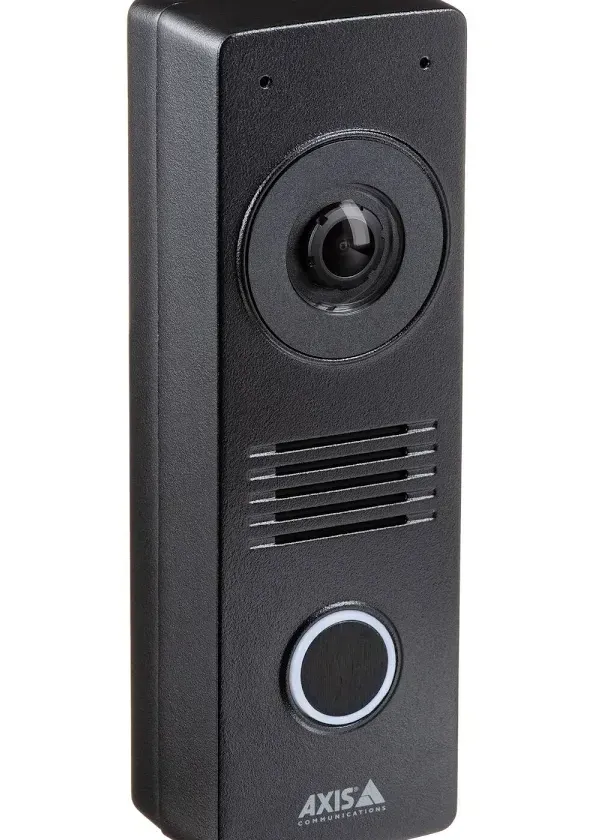
We quote a reliable non-branded system by default and install a named brand when an owner or board asks for one; the intercom brands we work with include Aiphone, ButterflyMX, 2N, Akuvox, Comelit and DoorBird. These are the kinds of equipment that fit Crown Heights' row houses, walk-ups, elevator buildings and storefronts.
Door panels and apartment stations carrying voice, video, power and release over one pair, the usual choice for divided row houses and walk-ups where the old pairs test sound.
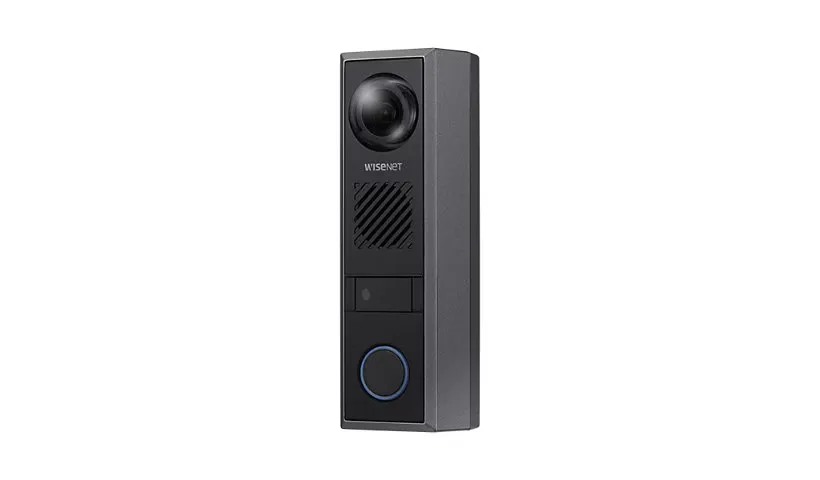
Narrow one- to five-button audio or video stations in dark finishes for row-house door frames and reveals, sized for the one-panel-per-door rule in the historic districts.
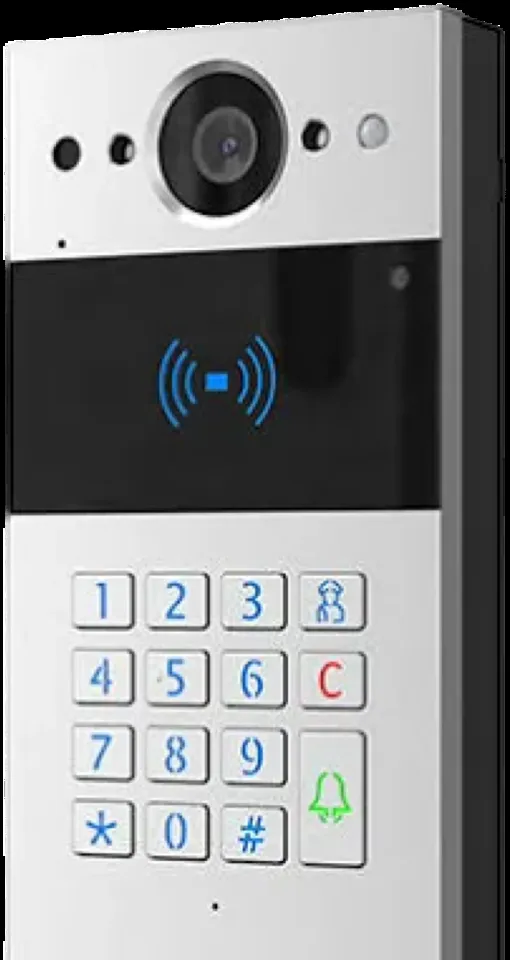
Panels where visitors dial a code or scroll a list, for elevator buildings on the parkway and larger walk-ups, with apartment numbers instead of names where residents prefer.
Camera panels that ring residents' phones or monitors and are managed from a web portal, for new buildings and for owners who want to change the directory remotely.
Code and card readers for residents and couriers, postal lock provisions for carriers, and mechanical push-button locks for residents who prefer not to use electric devices.
Fail-secure strikes, heavy-duty closers, latch guards and frame reinforcement for doors that have been kicked, pried or slammed, plus battery-backed power supplies.
The right choice depends on how many households use the door, who manages the building and how residents prefer to answer. The table compares the three setups we install most often here.
| What matters | Two-wire system | App-based panel | Single house station |
|---|---|---|---|
| Typical Crown Heights fit | Divided row houses, prewar walk-ups, elevator buildings with a sound riser | New Atlantic Avenue buildings, owners who manage from a distance | One-family row houses and two-family houses |
| How residents answer | Wall station, with phone answering where wanted | Phone app or monitor | Indoor station on each floor or phone |
| Reuses old bell or intercom wire | Yes, where pairs test sound | Only for power and the strike | Often, between the door and the cellar |
| Needs building internet | No, except for phone answering | Yes, or a cellular connection | Only for phone answering |
| Monthly fees | None | Often per apartment or per door | None |
| Brooklyn list range | From about $2,500 | From about $2,500 | $400–$900 audio, $700–$1,800 video |
Plenty of Crown Heights homeowners already have a Ring doorbell or an alarm plan from ADT or SimpliSafe, and for a one-family row house, a consumer video doorbell may be all the parlor door needs; we can install and properly power one you already own, subject to the Landmarks rules if the house is in a district. None of those products is built to be the entry system of a divided row house or a walk-up. A consumer doorbell rings one account's phones and has no apartment directory. The systems we install are owned outright by the building, with no monitoring plan required, unless the owner chooses an app-based panel that carries its own subscription.

The claims below turn up in generic online answers, in national cost guides such as HomeAdvisor and Angi, and on equipment makers' blogs. Each is quoted or summarized, then checked against Crown Heights buildings, the manufacturers' own information and the city's rules.
That is HomeAdvisor's national average, with a range of $1,500 to $15,000.
An average across every kind of building in the country says little about a Crown Heights door. A one-family row house with sound bell wire may need only a single station and a strike, well under that figure on our list, while a forty-apartment walk-up with a split frame and a failed riser can pass it many times over. The averages also leave out the door, which here is often the largest variable.
Our Brooklyn list runs from $400 for a small audio system to past $10,000 for a large building, and the walkthrough decides where a building falls.
Swiftlane's cost guide says so for cloud systems, along with $30 to $100 per door per month on some plans.
That is accurate for many app-based panels, but it is presented as if every modern system has one. Wired two-wire systems, including video systems with phone answering on some models, have no monthly charge at all, and for a five-apartment row house a subscription can cost more over a few years than the hardware.
We tell owners which systems carry fees and which do not before they choose, and we quote the non-subscription option by default.
Generic answers often treat entry problems as a lock problem.
Crown Heights' own reporting says otherwise. Tenants at 501 Lefferts Avenue described a lock that had been changed while the frame could still be kicked open, and the door at 529 Brooklyn Avenue was beaten by breaking its glass, not its lock. A strike or lock is only as strong as the frame it sits in and the glass beside it.
We price the frame, the closer and the glass exposure alongside the electronics, so the owner can fix the weak point rather than the visible one.
Owners in the historic districts are sometimes told they cannot have a door station at all.
The LPC Permit Guidebook says the opposite: intercom panels and doorbells may be installed within or next to the door opening, or on a fence or wall in front of the entranceway, one panel per door opening, with a compatible design and finish, and its staff can issue the permit without a hearing when those criteria are met.
The rule shapes the size, finish and placement of the station and the route of its cable. It does not forbid it.
This comes from reading only the part of the Multiple Dwelling Law that covers buildings built or converted after 1968.
§50-a also says that an older multiple dwelling must install self-locking doors and an intercom when tenants in a majority of its apartments ask for one in writing. And once a building has an intercom, the city's maintenance rules treat keeping it working as part of the owner's duty, which is why 311 takes complaints about broken buzzers and intercoms in any apartment building.
Most of Crown Heights' walk-ups predate 1968, so the majority-request rule is the one that applies to them.
This worry shows up in Brownstoner's forum, where a tenant in 2010 feared his landlord's new system would force him to pay for a landline.
Telephone entry panels can dial any number, including a cell phone, and current systems also ring an app or a wall station. One reply in the same thread, from someone who had installed such a system in a co-op, made the point that a landline was not required.
The real question is what happens for residents with no smartphone or a poor signal, and a good installation gives them a wall station.
HomeAdvisor estimates one to two hours per station for installation.
Mounting a station is quick. Finding a route for its cable through a four-story row house with plaster walls, testing a forty-year-old riser, rebuilding a frame and getting into every apartment is not. In a walk-up, the slowest part is usually access, because every apartment has to be entered to fit and test its station.
We give owners a realistic schedule in the written scope, including which apartments need to be open on which day.
Send a short video of your street door closing by itself, a close-up of the frame by the latch, and a photo of the old panel, with the address and the number of households. Call now at (347) 934-8335, send a fast quote request, or speak to a tech on WhatsApp. Estimates are booked within two hours of your request during working hours.
Tell us the address, the kind of building, how many apartments or households use the door, whether it is in a historic district, whether you are the owner, board, managing agent or a business tenant, and what is at the door now. A technician calls back with the range for the Crown Heights address, or you can call (347) 934-8335 right away.
Send the street door from the sidewalk, the frame and latch up close, the old panel and any apartment station, with the address, the number of apartments and who owns or manages the door.
A technician checks how the door closes and latches, the condition of the frame, the path from the door to the cellar or riser, the old cable pairs and where the power supply can live, and notes whether the house is in a historic district.
The owner receives the equipment, mounting spots, cable route, door hardware work and every possible add-on, such as a pair that might fail its test, with the total in writing before anything is ordered.
The door is made to close and latch by itself, the frame is reinforced or repaired where it has been forced, and the strike or release goes into sound wood or metal.
Cable is run or tested from the door to each household through the cellar, riser, closets or hall ceilings, stations are mounted, and the power supply goes on a protected circuit, with any 120-volt work done by a licensed electrician.
Every button is pressed from outside, every station talks and releases, and the door is watched closing and latching after each release, with the results written down and dated.
The owner, board or managing agent gets the wiring note, admin access, test record and warranty terms, and residents are shown how to answer, release the door and report a fault.

At 200 Eastern Parkway, in a building designed by McKim, Mead & White and opened in 1897, at the neighborhood's western edge.
Fifty-two acres at 990 Washington Avenue, dating to 1911, bordering the prewar apartment blocks of Crown Heights' southwest corner.
At 145 Brooklyn Avenue in Brower Park, founded in 1899 as the first children's museum in the United States.
The Hunterfly Road houses at 1698 to 1708 Bergen Street, remnants of the free Black community begun after James Weeks bought land in 1838.
Thirteen row houses at 651 to 675 Park Place between Franklin and Bedford Avenues, designated by the Landmarks Commission in June 2012.
The 3 and 4 train stop at Eastern Parkway and Utica Avenue, at the heart of the Utica Avenue shopping strip.
We also serve Bedford-Stuyvesant, Prospect Heights, Brownsville, Flatbush, Prospect Lefferts Gardens and East Flatbush at the same Brooklyn rate. See our door buzzer installation in Brooklyn page for the whole borough, or nearby neighborhood pages such as Bedford-Stuyvesant door buzzer installation and Brownsville door buzzer installation.
Crown Heights is billed at our Brooklyn rate. The ranges below are installed prices covering the equipment, power, strike or release, cable and labor. Where a job lands within its range depends on the state of the door and frame, the cable test, the number of households and entrances, whether the house is in a historic district, and whether apartments answer on wall stations, monitors or phones. The figure for your door is set in writing after the walkthrough, with any possible add-on named and priced before you order, and it does not change unless the scope does.
| Item | Brooklyn price | Typical Crown Heights job |
|---|---|---|
| Audio / small system | $400–$900 | One- or two-button audio station at a row-house parlor door, talk-back on each floor, a strike in the original door and reused bell wire |
| Video / mid-size system | $700–$1,800 | Slim video station sized for a landmarked doorway, with monitors or phone answering for a one- or two-family house |
| Multi-unit building | $2,500–$10k+ | Panel, tested or new riser, apartment stations, strike, closer and battery-backed power for a divided row house, a walk-up, an elevator building or apartments over a store |
| Service call booked online | $250 | Diagnosis of an existing system that has stopped working; applied toward the work |
What usually pushes a Crown Heights job toward the top of its range: a split or pried frame that has to be reinforced before a strike will hold, a riser or bell wire that fails its test and has to be replaced, cable that has to climb four plaster floors with no existing chase, more than one entrance, a Landmarks application with a custom finish, and video for every apartment. What keeps it near the bottom: pairs that test sound, a door that already closes and latches, a single entrance, and wall stations or phone answering instead of monitors.
Large elevator buildings and complexes with many entrances can run past the top of the multi-unit range, and for those we price entrance by entrance, so an owner or board can phase the work.
Full terms — including 50% deposit, one-year parts-only warranty on AESS-supplied products, and the late-fee schedule — are set out in the service agreement.
Send three photos, the street door from the sidewalk, the frame beside the latch, and the old panel, plus the number of households and whether the house is in a historic district, and we tell you which range fits and what would move it. Call (347) 934-8335, speak to a tech on WhatsApp, or use the fast quote form.
Three typical Crown Heights jobs, each priced inside the matching range on our Brooklyn list. The exact figure comes from the walkthrough.
A one- or two-button audio station at the parlor or garden door, talk-back on each floor, a fail-secure strike in the original door with the frame checked, the closer adjusted, and the power supply in the cellar on a protected circuit.
A slim video station in a finish chosen for brownstone or limestone, set in the reveal, on the frame or on the areaway fence, with monitors or phone answering, cable hidden inside, and the Landmarks application materials prepared for the owner.
A directory or button panel, the riser or bell wire tested pair by pair or replaced, a station in every apartment, strike, heavy-duty closer, frame reinforcement where needed, and a dated test record for the owner.
Bring your own equipment. If you have already bought a door station, video doorbell or intercom kit, we can install it as long as it suits the door, the number of households and the building's power, and, in a historic district, the Landmarks criteria. Labor for customer-supplied equipment is quoted flat at the walkthrough, and any strike, closer, power supply and cable come from the same list. Customer-supplied equipment carries the manufacturer's warranty rather than ours, so we check the model with you before you book.

Stoop stations, panels, risers, apartment stations, closers, frames and strikes. Request a quote
Avenue storefronts, apartments over stores and Atlantic Avenue lobbies. Call (347) 934-8335
The same list in every neighborhood. Brooklyn door buzzer installation
Every borough's buildings and rules. NYC door buzzer installation
A simple audio buzzer can run on ordinary multi-conductor low-voltage cable, and two-wire systems need only one twisted pair to each station for both audio and video. App-based panels usually need a network cable at the door. Where we pull new cable in a Crown Heights row house, we generally choose cable that will also carry video later, so the walls do not have to be opened twice.
Usually the latch side, because that is where visitors naturally stand and reach, and it lets them push the door the moment it releases. On a stoop where the latch side meets carved stone or a railing, the hinge side or the areaway fence may work better, and in a historic district the choice also depends on where the Landmarks rules allow the panel.
On many systems, yes. A small button at the apartment door can be wired to the apartment station so it rings with a different tone from the street door, which tells you whether a visitor is downstairs or already in the hall. It is a useful addition in divided row houses, where neighbors and the super knock on doors upstairs.
Yes. Quiet modern strikes make little noise, so visitors miss the moment. Many door stations can sound a tone or light an indicator while the door is unlocked, and the release time can be set a few seconds longer. On heavy doors, a closer adjusted so the door is easier to push also helps visitors get through before it locks again.
There is no single number. The electronics in a wired system typically last for many years, while the parts that move, the strike, the closer and the buttons, wear according to how often the door is used, so a busy lobby door needs attention long before a row-house door does. Choosing a system that is still in production and has replacement stations available matters more than any lifespan figure.
The buzzer cable itself is low voltage, much like a doorbell's, and is not a shock risk in normal use. The power supply that feeds it plugs into or is wired to an ordinary household circuit, and that side should be left to us or an electrician. If a power supply is hot, buzzing loudly or smells of burning, unplug it or switch off its circuit and call.
We take them away when the job is finished unless the owner wants to keep something, such as an original brass plate. Dead cable that is buried in walls is usually left in place and labeled as abandoned, because pulling it out would mean opening plaster, while loose cable in the cellar or at the door is removed.
Usually. Cold stiffens old grease in the strike, and ice or a swollen door can press the latch so hard against the strike that it cannot let go. A strike rated to release under pressure, a properly aligned door, fresh lubricant suited to cold, and a closer set so the door is not slammed into the frame all help. We check that alignment during installation.
Where the system records video, the owner or managing agent can usually export the relevant clip and hand it over, and we show whoever holds the admin login how to do that at the hand-over. What is kept, for how long and who may see it should follow the building's own policy and the law, so owners should decide that before an incident, not during one.
Yes, on most multi-tenant systems. A master or guard station in the super's apartment or office can call any apartment, take calls from the door and release it, which is useful for announcing a repair or checking on a tenant. The super's station is set up at installation, and the owner decides who else, such as the managing agent, gets the same ability.
Door Buzzer Installation Brooklyn NY | Brownstones & Condos · Door Buzzer Installation NYC | Apartment & Building Entry · Door Buzzer Installation Manhattan NY | Apartments & Co-ops · Door Buzzer Installation Queens NY | Co-ops & Apartments · Door Buzzer Installation Bronx NY | Co-ops & Apartments · Door Buzzer Installation Staten Island NY | Homes & Apts · Door Buzzer Installation Long Island NY | Nassau & Suffolk · Door Buzzer Installation Hudson Valley NY | Apartments · Door Buzzer Installation Nassau County NY | Homes & Co-ops · Door Buzzer Installation Suffolk County NY | Homes · Door Buzzer Installation Westchester County NY | Co-ops · Door Buzzer Installation Rockland County NY | Homes & Apts · Door Buzzer Installation Orange County NY | Homes & Farms · Door Buzzer Installation Putnam County NY | Lake Homes · Door Buzzer Installation Dutchess County NY | Homes · Door Buzzer Installation Ulster County NY | Kingston
Door Buzzer Installation Bath Beach Brooklyn NY · Door Buzzer Installation Bay Ridge Brooklyn NY · Door Buzzer Installation Bedford-Stuyvesant Brooklyn NY · Door Buzzer Installation Bensonhurst Brooklyn NY · Door Buzzer Installation Bergen Beach Brooklyn NY · Door Buzzer Installation Beverley Square Brooklyn NY · Door Buzzer Installation Boerum Hill Brooklyn NY · Door Buzzer Installation Brooklyn Navy Yard, Brooklyn NY · Door Buzzer Installation Brooklyn NY | Brownstones & Condos · Door Buzzer Installation Brownsville Brooklyn NY · Door Buzzer Installation Bushwick Brooklyn NY · Door Buzzer Installation Cadman Plaza Brooklyn NY · Door Buzzer Installation Canarsie Brooklyn NY · Door Buzzer Installation Carroll Gardens Brooklyn NY · Door Buzzer Installation City Line Brooklyn NY · Door Buzzer Installation Clinton Hill Brooklyn NY · Door Buzzer Installation Cobble Hill Brooklyn NY · Door Buzzer Installation Columbia Street Waterfront Brooklyn · Door Buzzer Installation Coney Island Brooklyn NY · Door Buzzer Installation Cypress Hills Brooklyn NY · Door Buzzer Installation Downtown Brooklyn NY
Structured Cabling Installation Crown Heights Brooklyn NY · Intercom Installation Crown Heights Brooklyn NY · Alarm Installation Crown Heights Brooklyn NY | Row Houses · Fire Alarm Installation Crown Heights Brooklyn NY · Door Buzzer Repair Crown Heights Brooklyn NY · Security Camera Installation Crown Heights Brooklyn NY · Access Control Installation Crown Heights Brooklyn NY · TV Installation Crown Heights Brooklyn NY | Wall Mounting
Send a photo of the street door from the sidewalk, the frame beside the latch and the old panel, with your address, the number of households and whether the house is in a historic district, and we will tell you what the door needs and where it falls on the Brooklyn list. Call or text (347) 934-8335, message us on WhatsApp, or use the request form. Licensed under NYS license #12000287431, rated 4.7★ across 201 Google Reviews, owner-operated since 2002.