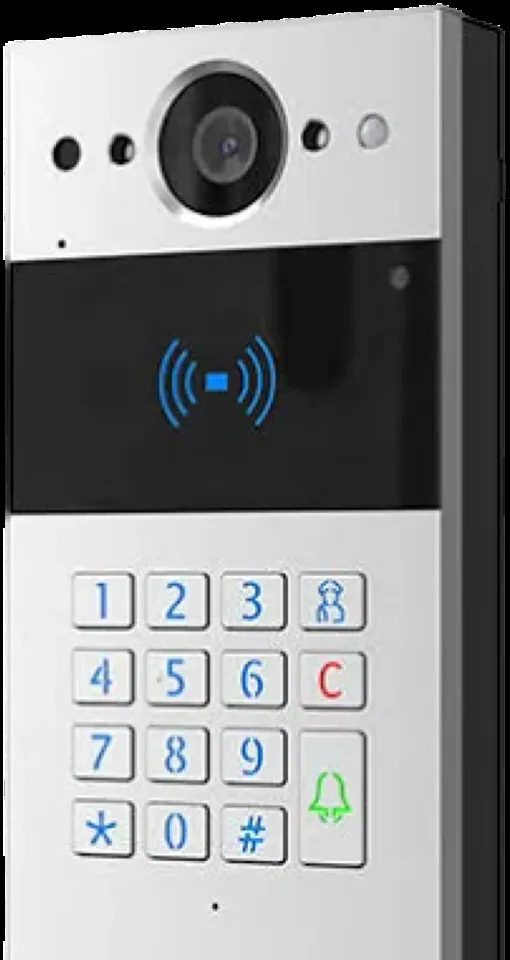
First Buzzers for Houses · First Lobby Panels for New Buildings · Replacements for Worn Systems · Brooklyn Rate
Door buzzer installation in East Flatbush comes in three shapes. The first is a house that never had a real buzzer at all: most of the neighborhood's lots hold one- and two-family homes, and in plenty of them the upstairs tenant still comes down two flights every time someone knocks. The second is a building that does not exist yet: from the former Kingsboro Psychiatric Center campus on Clarkson Avenue to new walk-ups filed on Linden Boulevard, East 35th Street and East 53rd Street, hundreds of new apartments will need a front door that answers on the day people move in. The third is the walk-up or elevator building whose system has simply worn out. Each needs a different plan, and this page walks through all three, with prices from our published Brooklyn list.
Reviewed and updated November 11, 2026, against Hush Street's East Flatbush development tracker (updated October 17, 2026); Breaking Ground's announcement of Sparrow Square Phase I on the former Kingsboro Psychiatric Center campus; RiseBoro's building page for Bethany Senior Terraces, the New York State HCR lottery notice for it and New York YIMBY's May 2026 completion report; Marketproof's April 2026 report on the 869 Linden Boulevard permit filing; News 12's April 2026 report from a Linden Boulevard apartment building; New York's Multiple Dwelling Law §50-a; NYC Administrative Code §28-105.4.7 on low-voltage work under the 2025 NYC Electrical Code; HPD's Tenant Data Privacy Law page (Local Law 63 of 2021); NYC MapPLUTO lot records for Community District 17; Reddit threads in r/AskNYC, r/NYCapartments and r/accesscontrol on buzzers in small Brooklyn buildings; the Swiftlane apartment intercom cost guide; Allegion's fail-safe and fail-secure guide; Aiphone's GT Series pages; the building code's sensor-release provisions; and the 2010 ADA Standards. · Abstract Enterprises Security Systems, NYS license #12000287431 · crews dispatched from our Troy Avenue office in Brooklyn

Owner-operated since 2002 · Thousands of jobs completed · Booked within 2 hours
Quick answer: door buzzer installation in East Flatbush costs $400 to $900 on our Brooklyn list for an audio buzzer with a door release on a one- or two-household house, $700 to $1,800 for a video door station with indoor monitors or phone answering, and from about $2,500 to past $10,000 for a full building system with a panel at the street door and a station or app for every apartment in a walk-up, elevator building or new development. The price includes the door station, the answering stations, the power supply, the strike or approved lock, the cable and the labor, and it is fixed in writing after we have seen the door, with anything that depends on a test, such as old bell wire that may not carry video, priced before you order. East Flatbush is billed at the Brooklyn rate. What moves a house job inside its range is mostly the path from the door to the upstairs apartment; what moves a building job is the apartment count, the number of doors and whether there is a front desk or a network to work with. Send a photo of the door to (347) 934-8335 or on WhatsApp and we answer with the range, usually within two hours during working hours.
East Flatbush is Brooklyn Community District 17, the stretch of central Brooklyn between Crown Heights to the north, Canarsie and Flatlands to the south, Brownsville to the east and Flatbush to the west. It takes in the sections people still call by name, Erasmus, Farragut, Rugby and Remsen Village, and most of it shares the 11203 ZIP code. The 2 and 5 trains run under Nostrand Avenue, Church Avenue carries the co-name Bob Marley Boulevard east of Remsen Avenue, and the blocks around Church and Nostrand are known as Little Caribbean. For a buzzer installer, though, the useful fact about East Flatbush is simpler: it is a neighborhood of small houses with a few large buildings dropped in among them, and it is now adding new buildings faster than it has in decades.
The city's MapPLUTO lot file shows how lopsided the housing is. Of roughly 17,000 residential lots in the district, about 12,500, or three in every four, hold one or two homes. Another 3,200 hold three or four apartments. Only about 870 lots hold five to nineteen apartments, and fewer than 430 hold twenty or more, yet those few large lots contain about 24,600 of the district's roughly 62,000 homes. The median lot was built around 1930. In practice that means two very different kinds of buzzer customer live side by side: thousands of homeowners with a doorbell, a tenant upstairs and no real way to let that tenant's visitors in, and a much smaller number of buildings where hundreds of people depend on a single lobby door.

The small houses are where most first-time installations happen. New York's Multiple Dwelling Law requires an intercom with a door release in buildings of eight or more apartments erected or converted after January 1, 1968, and lets tenants in older buildings demand one by majority request. Nothing in it reaches a two-, three- or four-family house. A Brooklyn renter on Reddit put it bluntly about a four-unit building: the landlord "isn't required to put in a buzzer system or a self-locking front door." Another, looking at a newly built three-unit building in Brooklyn, asked whether no buzzer and a single shared mailbox for three apartments was normal. In East Flatbush, where so many households live above or below their landlord, a buzzer is usually something the owner chooses to add because the tenant keeps asking, a parcel keeps disappearing from the stoop, or an older parent upstairs should not be running down the stairs.
The new buildings are where the rest of the work is heading. Hush Street's East Flatbush development tracker, updated in October 2026, follows Sparrow Square and Utica Crescent on the old Kingsboro Psychiatric Center campus at 681 Clarkson Avenue and 832 Rutland Road, with 322 units at Utica Crescent, 261 in Sparrow Square's first phase and room for about 1,081 in all; a proposed rezoning of 31 lots along East 98th Street and Rockaway Parkway for nine 14- and 15-story buildings; the newly finished Bethany Senior Terraces on East 40th Street; and small infill filings such as a nine-story, 45-unit building at 885 New York Avenue and four- and five-story buildings on East 35th and East 53rd Streets. Each of those needs a front door that knows every apartment, and each kind, from supportive housing with a staffed desk to a twenty-unit walk-up with no super on site, needs a different system.
The existing larger buildings keep their own pressure on the door. In April 2026, News 12 visited a four-story apartment building on Linden Boulevard where tenants showed reporters collapsed ceilings and leaks and pointed to more than 900 violations listed on HPD's website, while struggling even to reach their new landlord. "We tried calling them, and nobody answered," tenant Lore Dana Ross told the station. The intercom was not the story there, but buildings in that condition are exactly where a worn buzzer and a door that no longer locks get left for last, and where a replacement, when it finally comes, has to be planned so it will last under heavy use.
Where this page applies. It covers East Flatbush and its sections, Erasmus, Farragut, Rugby and Remsen Village, roughly from Empire Boulevard and East New York Avenue south to the Bay Ridge Branch rail line, and from New York and Brooklyn Avenues east to East 98th Street, including Church Avenue, Linden Boulevard, Clarkson Avenue, Lenox Road, Utica Avenue, Rutland Road and Foster Avenue. For the rest of the borough see our door buzzer installation in Brooklyn page, and for every borough our NYC door buzzer installation page. Many owners who add a buzzer also put a camera on the same door; the two share a cable route and can go in on one visit.
Not every call that starts as an installation question ends as one. Three situations come up again and again. In the first, the talk side of a building's system still works, but pressing the button upstairs no longer opens the street door; a Reddit poster described exactly that, a buzzer that still talked while "the wire connection to unlock the door" had been called too expensive to fix. In the second, a newer system with a keypad or an app still powers up, but whoever installed it has gone and nobody holds the login to add a tenant. In the third, a house has an ordinary doorbell that rings only on the ground floor, and the family upstairs has never heard it at all.
All three start with a photo and a call to (347) 934-8335. If the existing equipment has to be tested in person, that is the $250 service call booked online, and the $250 is applied toward whatever comes next, a repair or a new system. You get both options with prices. A release that has stopped is very often a strike, a power supply or a door that no longer closes far enough for the latch to catch, not the wire inside the walls, and fixing that part is far cheaper than replacing a system whose talk side still works. Where the problem is a lost login, we ask the owner to recover it from the manufacturer or the original installer before anyone talks about new hardware.
The house bell that never reached the second floor is a true installation job, and it is one of the most common in the neighborhood. The fix is not a louder chime; it is a station for each household and a release on the door, so the person upstairs can see or hear who is there and let them in without coming down. That is the first price range on our list, and in most attached brick houses the cable reaches the upper floor through the cellar and the stair wall without opening finished rooms.
Every service below comes from the same Brooklyn price list. The number of households behind the door sets the size of the system, the door and frame decide which release it can take, and in East Flatbush the cellar, the stair and, on new buildings, the construction schedule decide most of the labor.
A button for each household at the street door, a station on each floor and a release on the door, for one- and two-family houses that have only ever had a doorbell or a knock.
Multi-button door stations with a handset, wall monitor or phone answering in every apartment, for the houses just under the size where the state law starts to apply.
Panels, directories, apartment stations and door hardware for new walk-ups and elevator buildings, planned with the architect and general contractor before the walls close.
Systems that send a visitor's call to a staffed front desk first, for supportive housing, senior buildings and any lobby where staff decide who goes upstairs.
New panels and apartment stations for five- to nineteen-unit walk-ups, reusing riser cable that tests sound and replacing only the lines that fail.
Lobby panels for six-story buildings on Lenox Road, Linden Boulevard and New York Avenue, and coordinated systems for complexes with many entrances.
A strike, power supply and release button added to an existing talk system or doorbell, where the household can already hear the visitor but cannot open the door.
Door buzzers for clinics, salons, offices and shops on Church Avenue, Utica Avenue and Nostrand Avenue, answered at the counter or the desk.
Code panels, readers and phone or app answering added to a new system, with the privacy steps New York City requires when a building uses keyless entry.

Six kinds of property cover almost every buzzer job in East Flatbush. They differ in how many households share the street door, who owns and controls it, how cable can reach the upper floors, and whether there is anyone on site to look after the system once it is in.
The two-story brick houses of the 1920s and 1930s that line the numbered East streets, usually with the owner on one floor, a tenant on the other and one shared street door.
Older frame houses in Erasmus, Farragut and Rugby with porches, side driveways and, sometimes, a separate side door for the upstairs apartment.
Larger houses and small brick buildings where three or four households share one door and the owner may or may not live in the building.
Three- and four-story apartment houses from the 1920s through the 1940s, often with no super living on site and a buzzer that has been patched for decades.
Mid-century elevator buildings on Lenox Road, Linden Boulevard, Clarkson Avenue and New York Avenue, and garden complexes such as Flatbush Gardens with dozens of entrances.
New walk-ups and towers rising on infill lots and larger sites, from four-story, twenty-unit buildings to the multi-building Kingsboro campus redevelopment.
The attached brick two-family is the single most common house in the district, and it is the house where a first buzzer is most often installed. The pattern is almost always the same. A short stoop or a few steps lead to a front door, sometimes behind a storm door or an iron gate, with a small vestibule inside. The owner's apartment is on the ground floor; the tenant's stair rises straight from the vestibule to the second floor. A bell button by the door rings a chime in the hall, and the family upstairs either hears it faintly or not at all.
A two-household system for a house like this is a two-button door station, one answering station on each floor, a strike in the door frame and a power supply in the cellar. The cable route is the part that decides the price. In most attached houses we drop the cable from the door station straight down into the cellar, run it along the joists to the point under the stair, and come up inside the stair wall or a closet to the second floor, so no finished room is opened. Where the cellar has been finished as living space, or the stair wall is plaster on brick with no hollow, the route moves to a surface raceway along a baseboard or up the stair stringer, painted to match.
The door is the other half of the job. Many of these doors are original wood in a wood frame, and decades of swelling and repainting mean the latch no longer lines up with the strike plate. Before a powered strike goes in, the door has to close and latch on its own, every time, because a release that opens a door which does not shut again is worse than no release. That often means planing the edge, resetting the strike plate or adding a closer, and all of it is named on the quote.
The frame houses in the older sections of the neighborhood, many of them with porches and side driveways, often have a layout the brick row houses do not: the upstairs apartment has its own door at the side or the back, reached down the driveway. That changes the plan. A visitor arriving at the front has to know where to go, and the tenant has to be able to release the door the visitor actually uses.
There are two good ways to handle it. One is a single station at the front of the house, by the sidewalk or the porch steps, with a button for each household and a release wired to each household's own door. The other is a separate one-button station at each door, with the tenant's station labeled at the front so visitors walk to the right place. The first is tidier for visitors and couriers; the second is simpler to wire when the two doors are far apart. We usually show the owner both, with prices, at the walkthrough.
Frame walls bring their own details. Mounting on aluminum or vinyl siding needs a flat block behind the station so it sits square and sheds water, and cable running from a porch to a side door has to be protected where it crosses the driveway or follows a fence. A semi-detached house that shares a wall and a porch with the house next door also needs the station and the cable kept entirely on the owner's side, which the walkthrough settles before anything is drilled.
Three- and four-family houses sit in an odd place. They are too large for a doorbell and a shout up the stairs to work, but too small for New York's intercom law to require anything. Their owners usually add a system for practical reasons: deliveries go missing, a tenant's guest is left on the stoop, or the street door is propped open because nobody can let anyone in.
The equipment here is the multi-button version of the two-family system: a door station with three or four buttons, a station in each apartment, a strike and a power supply. The difference is the cable. In a three-family the third apartment is often on the top floor at the back, and the route has to climb past the second-floor apartment without going through it. Where an old bell circuit already reaches every apartment, an audio system can often reuse it after a test; a video system usually needs new cable, because old two-conductor bell wire rarely carries video reliably.
Owners of these houses also ask about answering by phone. A station that calls each tenant's cellphone avoids running cable upstairs at all, but it depends on a phone signal or an internet connection at the door and may carry a monthly fee. We price both a wired system with no monthly fee and a phone-answering option, so the owner can compare the long-term cost, not just the day-one price.
The walk-ups of five to nineteen apartments are the hardest-working doors in East Flatbush. Many were built between the 1920s and the 1940s, before the 1968 date in the intercom law, so whether they must have an intercom can depend on whether a majority of tenants ever asked for one in writing. In practice most have some kind of system, but it is often a mix of original wiring, replacement handsets of different makes and a lobby panel from a later decade.
Replacing a system like this starts in the cellar and the stairwell. We test the riser cable pair by pair. Where it tests sound, a new panel and new apartment stations can run on it, which keeps the cost toward the lower end of the building range. Where it fails, new cable goes up the stairwell, either in a protected raceway along the wall or inside an existing chase, and every apartment gets a home run back to the controller.
Because many of these buildings have no one living on site to notice a problem, the door hardware matters as much as the panel. A heavy-duty closer, a strike rated for constant use, a power supply with battery backup and, where the owner wants it, an alert when the street door stays open too long are all worth considering on a building that may go days without anyone from management walking through it.
The district's elevator buildings, many of them six stories with dozens of apartments, cluster along Lenox Road, Linden Boulevard, Clarkson Avenue and New York Avenue. Flatbush Gardens, the former Vanderveer Estates, is the largest group of all, with 59 buildings and about 2,500 apartments. These buildings have a lobby, a main entrance and, often, side or service doors, and they usually have a super and a managing agent.
A new entry system here is a project. The panel has to call a hundred or more apartments, so a code or directory panel usually replaces rows of buttons. The riser runs six floors, and a building with several wings may have several risers. If the building chooses app answering, its network has to reach the lobby reliably. And in a complex, the plan has to make clear which panel belongs to which building, so a tenant, a visitor or an inspector can tell one entrance from another.
We plan these with the managing agent and the super, survey every entrance residents use, and write a scope that treats each door separately: what panel, what release, what power, what cable. That way the owner can phase the work by building or by entrance and still end with one system that works the same everywhere.
A new building is the one place where the cable route costs almost nothing, because the walls are still open. The mistakes on new buildings are about timing and assumptions: the entry system gets left until after the drywall, the architect's drawings show a panel location but no power or conduit, or the developer assumes the electrician will handle the intercom and the electrician assumes the opposite.
We work from the drawings. A new building needs a location for the panel at each entrance with a conduit back to the controller, a pathway up every riser to every apartment, power on a circuit the owner controls, a closet or room for the controller beside the internet service, and door hardware specified with the door supplier so the frame arrives prepared for the strike or the approved lock. If the building will have a front desk, the desk needs its own station and release. All of that is cheap to put in at the rough-in stage and expensive to add later.
The other new-building question is the move-in day. Every apartment has to be in the directory, every station or app account tested, and every door relatching properly before the first tenant arrives. On a building filling through a lottery, that can mean dozens of households moving in within a few weeks, and the person who runs the system after we leave has to know how to add and remove residents.

On a first buzzer for an attached two-family, the checks happen in the same order every time, and the order matters more than the equipment. We start outside, with the door closed. Does it latch by itself when it is let go from halfway open? If it does not, nothing powered goes on it until it does. Then the frame: wood or metal, sound or split from old break-ins, and how much room is left beside the latch for a strike. Then the storm door or gate in front of it, because a release on the house door does no good if a visitor still cannot get past a locked storm door.
Next comes the cellar. We find the spot directly under the front door, look for the old bell transformer and the wire that leaves it, and follow that wire as far as it goes. In many of these houses the old bell wire stops at the ground floor hall. Then we stand under the stair and look for the way up: a hollow stair wall, a closet stacked above another closet, a pipe chase beside the chimney. That route sets the labor more than anything else on the quote.
Upstairs, we ask the tenant, or the owner on the tenant's behalf, where they actually want to answer: by the apartment door, in the kitchen, or on their phone. Then we find power for the supply in the cellar, preferably on a circuit the owner controls rather than a tenant's meter. Only after all of that do we choose the station, the strike and the answering units, and only then do we write the price.

For most of its history East Flatbush was built out and then left alone; the MapPLUTO file shows only a few hundred residential lots built since 2000 against more than 16,000 built before 1960. That is changing. The development projects tracked by Hush Street in 2026 range from four-story walk-ups to ten-story supportive housing to a proposed set of towers, and every one of them will need a working entry system on the day the first residents move in. The building type decides what kind of system it needs.
Sparrow Square, being built by Breaking Ground and Douglaston Development on the former Kingsboro Psychiatric Center grounds at 681 Clarkson Avenue, starts with 261 affordable homes in two ten-story buildings, 117 of them supportive apartments for formerly homeless New Yorkers, with about 1,000 homes planned across the campus. Utica Crescent, at 832 Rutland Road on the same campus, adds 322 more. Buildings like these usually have a staffed front desk and on-site services, and their entry systems have to fit how staff actually manage the door.
That changes the design. Visitors may need to reach the desk first rather than an apartment, residents may need a fob or code for the lobby and a key for their own door, and staff need a way to release the door from the desk and to see the entrance. On a campus with several buildings, each building's entrance needs its own panel, clearly labeled, and the system has to make it obvious which building a visitor is calling. Under New York City's Tenant Data Privacy Law, any fob, card, code or app used for entry also brings written privacy obligations, which the owner should have in hand before the building opens.
Bethany Senior Terraces, completed in May 2026 at 610 East 40th Street between Avenue D and Foster Avenue, has 58 apartments, 57 of them affordable senior rentals and 19 reserved as supportive units, according to RiseBoro; the state's lottery notice lists an attended lobby and an elevator. When New York YIMBY reported the building's completion, one reader asked, "where is the ramp for the walkers and wheelchairs?" The question was about the building, not its intercom, but it is the right question for any senior entry: can a resident with a walker reach the panel, open the door and get through it before it closes?
Senior buildings need entry systems that are simple to answer, with large buttons, loud and clear audio, and screens big enough to read. Doors need longer release times and, often, a powered opener on the accessible door. Home-health aides, visiting nurses and family members arrive on regular schedules, and the system should let staff or residents give them their own codes, rather than handing out keys or calling each resident every morning.
Most new buildings in the neighborhood are not campuses. Hush Street lists 2026 filings for an 18-unit, five-story building at 750 East 35th Street and a 20-unit, four-story building at 258 East 53rd Street; Marketproof reported a filing for a 32-unit, four-story building with commercial space at 869 Linden Boulevard. These are small buildings by city standards, built by small developers, and they often have no super living on site and no front desk.
Because they have eight or more apartments and are being built now, these buildings fall squarely under the state intercom requirement: a self-locking main entrance door with voice communication between each apartment and the door, and a release from each apartment. A building of this size usually suits a networked panel with a code directory and app answering, or a two-wire system with a station in each apartment, depending on the owner's budget and whether a monthly fee is acceptable. Either way, the cable or conduit should go in before the walls close.
The proposed rezoning of 31 lots along East 98th Street and Rockaway Parkway, between Rutland Road and Kings Highway, would allow nine buildings of 14 and 15 stories with 972 rental units, or 786 in an alternative version, according to the ULURP and environmental filings summarized by Hush Street. It is still in the public review process. If it goes ahead, it would bring tower-scale entry systems to the eastern edge of the neighborhood, with lobby desks, elevators, package rooms and garage entrances, the same kind of entry planning that Brooklyn's newer high-rise districts already need.

Four sets of rules shape a buzzer installation in East Flatbush. None of them is complicated once it is laid out, but each one catches owners who plan the job from a catalog instead of from the building.
The state law is specific. Every class A multiple dwelling "erected or converted after January first, nineteen hundred sixty-eight containing eight or more apartments shall also be equipped with an intercommunication system," located at an automatic self-locking door to the main entrance hall, allowing voice communication between each apartment and the person outside, and letting each apartment release the lock. For buildings erected or converted before 1968, the same doors and intercom become mandatory once tenants occupying a majority of the apartments request or consent in writing on the city's forms; the installation then has to start within ninety days and be completed within six months of the owner's receipt of the requests.
For East Flatbush that sorts the stock neatly. Every new building of eight or more apartments now going up, from 869 Linden Boulevard to the Kingsboro campus, needs a compliant system from the start. Most of the neighborhood's walk-ups and older elevator buildings were built before 1968 and fall under the tenant-request rule. And the two-, three- and four-family houses that make up most of the lots are outside the law entirely, which is why their systems are the owner's choice.
The law also touches cost. In rent-regulated buildings where tenants request the system, the law says the city's rent agency prescribes the terms under which the costs "may be recovered by the owner from the tenants." Owners of rent-stabilized buildings should check the current rules with HPD or their housing lawyer before treating a new intercom as a rent increase, because those rules have changed over the years.
Under NYC Administrative Code §28-105.4.7, as updated when the 2025 New York City Electrical Code took full effect on December 21, 2025, no electrical permit is needed for wiring designed to operate at less than 50 volts for signaling, communication, alarm and data circuits, "provided that such work is performed by a licensed master electrician, special electrician, or qualified person as defined in the New York city electrical code." The code lists exceptions that only a master or special electrician may do.
In plain terms, buzzer and intercom cable is low-voltage work that does not need an electrical permit, but it is not a free-for-all, and the 120-volt side of the job, a new outlet or circuit for the power supply, is electrician's work. We do the low-voltage side under NYS license #12000287431 and tell you up front if your job needs an electrician for the power, so it is on the schedule and in the price from day one.
If a building uses "smart access" for entry, meaning key fobs, cards, codes, a phone app, biometrics or any other digital credential, HPD's guidance on Local Law 63 says the owner must give tenants a written data retention and privacy policy. The owner may not use the data for anything other than granting access and monitoring entrances, exits and common areas; may not use the system to limit when a tenant or guest can enter unless a tenant asks for it; may not require the smart system for entry to a tenant's own apartment; and may not use the information to harass or evict a tenant.
That matters most in the new buildings, which are far more likely to open with fobs and apps than with handsets. We set up systems so the owner can meet the law: keyless entry for common doors, a physical key for each apartment, data kept only as long as the policy says, and an administrator who knows how to remove a resident when they leave. The privacy policy itself is the owner's document, and we can provide the system details the owner's lawyer needs to write it.
Whatever locks the door from outside must never trap anyone inside. On the familiar residential setup, an electric strike in the frame releases the latch for visitors while the inside lever always opens the door; Allegion's guide notes that with an electric strike "you can exit by turning the lever" whether the strike is fail-safe or fail-secure. Fail-secure strikes, which stay locked when power is removed, are the usual choice for residential street doors, because a power cut should not leave the building open. Magnetic locks are different: they are fail-safe only, and the building code's sensor-release rules require a sensor on the egress side, a manual release labeled "PUSH TO EXIT," and release on fire alarm or power loss. We use them only where a strike cannot work and the full code package is in place.
For new buildings and any entrance that must be accessible, the 2010 ADA Standards set the reach range for operable parts: a forward reach no higher than 48 inches and no lower than 15 inches. A panel mounted at a comfortable standing height can be out of reach for a resident in a wheelchair, which is why we confirm the mounting height against the accessible route at every new-building entrance, along with the door's release time and, where needed, a powered opener.

East Flatbush's commercial life runs along a few long avenues and the blocks around its hospitals. Each corridor has its own mix of businesses and its own reason to put a buzzer on a door.
Bakeries, restaurants, beauty supply and variety stores, churches and offices, many in buildings with apartments upstairs and a separate street door for the residents.
A busy north-south shopping street through the neighborhood, with groceries, takeout, salons and second-floor offices reached by narrow stairs beside the storefronts.
Shops and services over the 2 and 5 trains, with the Little Caribbean blocks around Church Avenue and offices on upper floors.
The medical blocks around Kings County Hospital and SUNY Downstate, with clinics, practices and offices that buzz patients and staff in all day.
A wide boulevard of apartment buildings, small commercial blocks and new mixed-use filings, including a planned 32-unit building with ground-floor commercial space at number 869.
Smaller commercial strips, schools, churches and community buildings, along with the new recreation center on Foster Avenue.
The commercial jobs we see most often in this kind of neighborhood fall into four groups. The first is the upstairs business: a salon, tax preparer, travel agency or doctor's office on the second floor of a building, reached by a stair door at street level. That door usually needs a buzzer answered upstairs and a release, and it often sits right next to the apartments' street door, so the two have to be labeled so customers do not ring tenants. The second is the clinic or practice that wants patients announced at the front desk and staff let in by code. The third is the shop that wants a back or side door for deliveries and staff, answered from the counter. The fourth is the church or community space whose door has to be open for services and controlled the rest of the week.
In each case the door matters more than the panel. Storefront doors on these corridors are often aluminum and glass in a narrow frame, which takes a different strike from a wood residential door, and roll-down gates in front of them mean the station has to be placed where the gate does not cover it during business hours or crush it when it comes down. Doors on medical and community buildings may be part of an accessible route, with the reach-range and release-time rules that come with it.
Business owners who rent need the landlord's written approval before anything is drilled into the building, and where the business shares a door with apartments upstairs, the landlord has to agree how the two will be kept apart. We ask for that approval at the start, so the job is not held up on installation day.

These are the installation questions that come with the kinds of property East Flatbush actually has: new buildings opening their doors for the first time, small houses getting their first buzzer, and older buildings deciding what to replace. Each answer is short and specific; the FAQ further down covers booking, payment and warranty.
A new building with eight or more apartments falls under Multiple Dwelling Law §50-a from the start. The main entrance needs an automatic self-closing, self-locking door, and the intercom has to let each apartment talk to a visitor at that door and release its lock. In practice that means a panel at the entrance that reaches every apartment, a station or app in every apartment, a strike or approved lock in a frame built for it, and a closer that shuts the door behind every visitor.
Beyond the law, a building that opens well also has every apartment in the directory, every station tested from the sidewalk, labels on the panel that match the apartment numbers, and an owner or manager who knows how to add the next tenant. On a four- or five-story walk-up we usually recommend a battery-backed power supply and, if nobody lives on site, a door-held-open alert. We like to be on the job at the rough-in, while the walls are open, and again at the end, before move-in.
Yes, and in a building like the ones going up on the former Kingsboro campus, that is often the right design. The panel at the entrance calls a desk station first; staff see and speak to the visitor, confirm who they are there for, and then either call the resident through the system or release the door themselves. Residents can still have stations or app answering in their apartments for calls staff choose to put through.
The details matter. The desk needs its own release and a clear view of the entrance, usually with a camera on the door. If the desk is ever unstaffed, for a shift change or an emergency, the panel needs a fallback, such as calling a manager's phone or, where the operator allows it, calling residents directly. And because desk-routed buildings often use fobs or codes for residents, the owner should have the written privacy policy that the city's Tenant Data Privacy Law requires before the first resident gets a credential. We plan the call order and the fallback with the operator's staff, not just the developer, because they are the people who will run the door every day.
The usual answer is a personal code or credential for each regular caregiver, set up by the building's staff with the resident's agreement. An aide who comes every morning gets a code or fob that opens the street door, and only the street door, during the hours the resident chooses. When the aide changes agencies or the resident no longer needs the service, staff delete that one credential and nothing else changes.
This is cleaner than handing out keys, which cannot be taken back, and kinder than waking residents to buzz in the same person every day. It does mean the building is using smart access, so the privacy policy under Local Law 63 applies, and the system's records of who came in should be kept only as long as that policy says. For residents who would rather answer every time, the apartment station should be simple: a large call button, loud audio and, if there is a screen, one big enough to recognize a face.
Usually both, with different jobs. A campus panel at the main gate or path lets a visitor find the right building and, where there is a desk, reach staff. Each building's own entrance then needs a panel that calls only that building's apartments, so a visitor who walks to the wrong door is not able to buzz residents of a building they are not visiting.
The bigger risk on a campus is confusion. Every panel should carry the building's name or number in large letters, the directory on each panel should match that building only, and the wiring record should show which controller serves which door. That way, when a tenant reports a problem or an inspector asks about an entrance, there is no question which system is meant. On a multi-phase site, we also plan the controllers so the next phase can join the same system without replacing the first.
We can schedule both houses on the same day, one after the other, and attached houses on the same block are often near-identical inside, which makes the second walkthrough faster. Each house is still a separate job with its own owner, its own door, its own cable route and its own written price inside the Brooklyn range, because the two cellars and the two doors are never quite the same.
What we will not do is run one house's system through the other house's wall or cellar. Each station, cable and power supply stays entirely on its owner's property, so that if one house is sold or renovated, the neighbor's buzzer is not affected. If you and your neighbor send photos of both doors together, we can tell you at once whether the two jobs look the same or whether one door or cellar is going to change the price.
Yes. Many apartment stations show a visual signal, such as a flashing call light or a screen that lights up with the visitor's picture, and a station can also trigger a separate light signaler placed where she spends most of her time. If she uses a smartphone, app answering adds a vibrating alert and a video view of the door, so she can see the visitor and release the door without hearing them.
We plan this with her, not just with the owner: where she wants the signal, whether she wants to see the visitor before opening, and whether she would rather the call also reach a family member's phone. Video at the door is usually worth it here, because it lets her recognize a visitor without relying on audio at all. All of it fits inside the house ranges on our list, and the exact cost depends on the station and signaler chosen.
Often not. When the talk side works and only the release has stopped, the fault is usually at the door end: the strike has burned out, the power supply that drives it has failed, the release wire to the strike has broken at the frame, or the door no longer closes far enough for the latch to reach the strike at all. Each of those is a repair, and each is far cheaper than a new system.
That is why a diagnosis comes first, as a $250 service call booked online with the $250 applied toward the work. If the handsets, panel and riser are sound, we fix the release side and leave the rest. If the system is old enough that parts are hard to find, or several apartments have other problems too, you get a second price for replacing it, and you choose. A building whose door has been unable to release for a year has probably also been propped open, so we check the closer and latch at the same time.
Not automatically. A few years is young for a wired multi-tenant system, and when one stops working that soon the cause is often a single failed component, a damaged section of cable, a power supply or a lobby station, rather than the whole system. A board member of a three-year-old NYC condo described exactly this on Reddit, an Aiphone GT video system that had "recently stopped working," and asked about Wi-Fi replacements for a ten-unit building "under $6k all in."
Our advice is to find out why it failed before replacing it. Aiphone's own upgrade guidance says that where the existing wires are in good condition they can be reused, and two-wire systems can often add phone answering for residents who want it while keeping the wired stations for those who do not. A Wi-Fi or app-based system makes sense where the wiring is truly damaged or most residents want phone answering only, but it depends on internet at the door and every apartment, and it may add a monthly fee. We price both so you can compare.
The city's Tenant Data Privacy Law, Local Law 63 of 2021, is clear on the direction: according to HPD, an owner may not use data from a smart access system for anything other than granting access and monitoring entrances, exits and common areas, and no information may be used to harass or evict a tenant. For anything beyond that, such as a specific case, ask your housing lawyer; we install the system, we do not give legal advice.
What we can do is set the system up so it collects only what the building needs. That means entry events kept for a defined period and then deleted, administrator access limited to the people who run the building, a written list of what the system records, and no requirement that tenants use the app to get into their own apartments. The owner's privacy policy should match those settings, and we provide the technical details the lawyer needs to write it.
Usually at both doors, or at a single point both routes pass. If the ramp leads to a separate accessible door, that door needs its own station or a second panel, mounted with its controls between 15 and 48 inches above the landing, as the 2010 ADA Standards set for reach range, and a release with enough open time for someone using a walker or wheelchair to get through. A powered door opener on that door, triggered by the release, is often the difference between a door that is technically accessible and one people can actually use.
Where both routes meet at the sidewalk, a single panel at the bottom of the steps and ramp can serve everyone, with releases wired to both doors. Either way, the panel's labels should tell a visitor which door to use, and the camera, if there is one, should be aimed so a person seated in a wheelchair is in view, not just the top of a standing visitor's head.
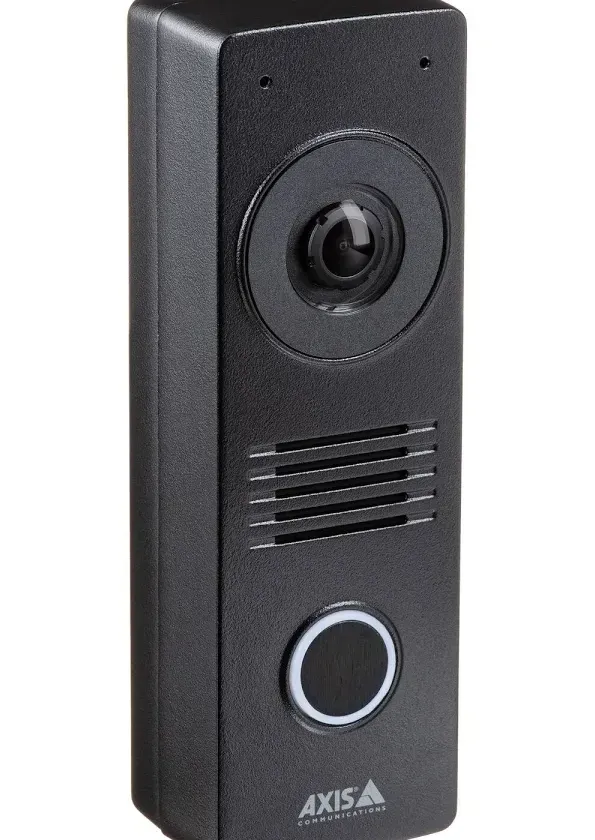
By default we quote a reliable non-branded system, and we install a named brand when an owner, developer or board asks for one; the intercom brands we work with include Aiphone, ButterflyMX, 2N, Akuvox, Comelit and DoorBird. These are the kinds of equipment that come up most often in East Flatbush houses and buildings, and where each one fits.
One- to four-button audio or video stations for the street door of a one- to four-family house, sized to fit the narrow trim beside a row-house door.
Wall monitors, handsets and hands-free stations for each household, with a release button, and visual call signals where a resident needs them.
Wired panels and stations that carry voice, video and release over two conductors, for walk-ups and elevator buildings where the riser can be reused or rebuilt.
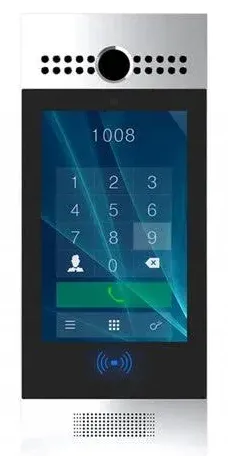
Lobby panels with a camera, a code or scrolling directory and app or phone answering, managed online, for new buildings and larger complexes.
Stations at a staffed front desk that receive visitor calls first, see the entrance and release the door, for supportive housing and senior buildings.
Code keypads and card or fob readers on common doors, set up with the record-keeping limits New York City's privacy law requires.
Fail-secure electric strikes for wood and metal residential doors, narrow strikes for aluminum storefront frames, and magnetic locks only with the full egress package.
Door closers that make every door relatch, and powered openers on accessible doors so residents with walkers or wheelchairs can get through after a release.
Power supplies sized for the strike and stations, with battery backup and surge protection, mounted in the cellar or closet on an owner-controlled circuit.
| What matters | House door station | Two-wire building system | Networked code panel |
|---|---|---|---|
| Typical East Flatbush fit | Brick and frame one- to four-family houses | Five- to nineteen-unit walk-ups, older elevator buildings | New walk-ups, supportive and senior housing, large complexes |
| How households answer | Wall station on each floor, or phone answering | Wired handset or monitor in each apartment, phone answering optional | App or phone call, wall stations optional, desk first where staffed |
| Cable needed | Door to cellar to each floor | Riser to every apartment, reused where it tests sound | Network to the panel; apartment cable only for wall stations |
| Depends on internet | Only for phone answering | No, except for app add-ons | Yes, or a cellular link |
| Monthly fee | None on a wired system | None on a wired system | Often, depending on the platform |
| Adding or removing a resident | Relabel a button | Relabel the panel, program a station | Online, by the manager, in minutes |
| Brooklyn range | $400–$900 audio, $700–$1,800 video | From about $2,500 | From about $2,500, rising past $10,000 with size |
The table is a starting point, not a rule. A four-family house with a long route to the top floor can be cheaper on phone answering than on wired stations; a twelve-unit walk-up whose tenants mostly want their phones may suit a networked panel better than a two-wire system. We price the option that fits and, where two are close, both.
National home-security brands come up in almost every conversation about a front door. ADT sells monitored alarm and camera packages, and its installers focus on those. Ring and SimpliSafe sell video doorbells and cameras that owners can put up themselves. For a one-family house, a video doorbell from any of them may be all that is needed. For a two-family or larger, the gap is the release: a doorbell camera lets the person who answers see and talk to the visitor, but it does not open a locked street door from upstairs, and it does not give each household its own button.
A building buzzer is a different product. It needs a station or app for each household, a strike or lock that the system can release, a power supply for that strike, and a cable or network path to every apartment, and in a building of eight or more apartments it has to meet the state intercom requirement. That is the work a local low-voltage installer does. Where an owner already has a Ring or similar doorbell they like, we can often leave it in place on the owner's own door and add a proper buzzer for the tenant's household, rather than forcing a choice between the two.

Ask a search engine or a chatbot about buzzers and you get a tidy summary built from national cost guides and vendor blogs. Some of it is useful. Some of it ignores the small houses and new buildings that make up East Flatbush. These are seven common claims, where they come from, and how they hold up here. We have not quoted any AI answer word for word; the claims below come from the published sources those answers lean on.
That figure comes from HomeAdvisor's intercom cost guide, which also gives a typical range of $1,500 to $15,000. As a national average across every kind of home and building, it is a reasonable number to have in mind.
It is not a useful number for an East Flatbush two-family. A first buzzer with a release for a house with one or two households sits in our $400 to $900 range for audio and $700 to $1,800 for video. The average is pulled up by large buildings, and those, in turn, often cost more than $2,500, because the apartment count and the riser drive the price.
The honest way to think about cost is by households behind the door and the path to reach them. Send a photo of the door and tell us how many households share it, and you get a range that fits your house instead of a national average.
This one comes from the way the state law is usually summarized: intercoms are required in buildings of eight or more apartments built or converted after 1968. A Brooklyn renter on Reddit repeated the point about a four-unit building, and the law does not reach two-, three- or four-family houses.
Not being required is not the same as not needing one. In a two-family where the tenant lives upstairs, the lack of a buzzer means the tenant comes down for every visitor and courier, the door gets left unlocked or propped, and parcels sit on the stoop. Those are the reasons East Flatbush owners call us, not a violation.
The small-house system is also the cheapest one on our list. For most attached houses, a station per household, a strike and a power supply, with cable through the cellar, is usually finished in one working day.
Video doorbell makers market their products to homeowners, and for a one-family house with one door and one household, a good video doorbell is often enough.
A two-family has two households and, usually, one locked street door. A doorbell rings one account; it does not give the tenant a separate button, and it cannot release a strike so the tenant can let a visitor in from upstairs. Owners who try it end up sharing a login with the tenant or running downstairs anyway.
The fix is a two-button station, a station or phone answering for each household and a release on the door. If the owner already has a doorbell camera they like, it can stay on their own door while the tenant gets a proper buzzer.
Swiftlane's cost guide says software subscriptions commonly add $5 to $15 per unit per month, or $30 to $100 per door per month. Per apartment, that does sound small.
Over the life of a system it is not. A twenty-unit East Flatbush walk-up at the guide's lower figure pays $100 a month, $1,200 a year, every year the system is in service, on top of the hardware. For a two-family, even a single per-door fee adds up over ten years to more than the difference between a phone-answering station and a wired one.
App answering is the right choice for some buildings, especially new ones with good internet and residents who want their phones. But the monthly cost belongs on the quote beside the hardware, and we price a wired option with no monthly fee every time.
This assumption is common on small developments and it is easy to see why: the intercom is wiring, and the electrician is already pulling wire.
In practice the electrician's scope often covers power to the intercom location and nothing more, and the intercom itself, its panel, its riser cable or network, the apartment stations, the strike and the programming, falls between trades. The NYC Administrative Code treats low-voltage signaling and communication wiring as work that does not need an electrical permit but does have to be performed by a master or special electrician or a qualified person, so it should be a named scope, not an assumption.
The safest plan on any new building, from a twenty-unit walk-up to a campus, is a separate entry-system scope on the drawings at the start, coordinated with the electrician's power and the door supplier's hardware.
Vendor material for keyless entry focuses on convenience: no keys to copy, residents added and removed online, a record of who came in.
In New York City, that record is exactly what brings obligations. Under Local Law 63 of 2021, HPD says owners of buildings using smart access must give tenants a data retention and privacy policy, may not use the data for anything beyond access and monitoring entrances, may not limit entry times unless a tenant asks, and may not use the data to harass or evict.
None of that is a reason to avoid fobs and apps. It is a reason to set them up properly, with retention limits and a short list of administrators, and to have the policy in hand before residents get their credentials.
HomeAdvisor's guide estimates one to two hours of installation per station. For mounting one unit on a wall with power and cable already there, that is about right.
Most of the time on an East Flatbush job is spent elsewhere: finding a route from the door through the cellar to the second or third floor, fixing a door that no longer latches so the strike can work, and, in a walk-up, testing every riser pair. On a new building, the time is in rough-in and coordination, then in loading and testing every apartment before move-in.
A first buzzer for an attached two-family is usually one working day. A walk-up replacement or a new building is scheduled in stages, and we tell you how many days at the walkthrough, not after the work starts.
Send a photo of your street door, the buttons or panel beside it and, if you can, the cellar wall behind it, with the address and how many households share the door, to (347) 934-8335 or on WhatsApp. A technician will tell you which kind of system fits and which price range it falls in before anyone visits. Or use the request form and we will call you back.
Photos of the street door, the frame, any old buttons or panel and the cellar wall behind the door, with the address and how many households or apartments share that door.
The owner of record or developer, the managing agent or general contractor, and whether tenants, a supportive-housing operator, a lender or a front desk need to be part of the plan.
A technician checks the door, frame, latch and closer, traces any old bell wire, finds a cable path to every apartment and locates power for the system.
Wall station, handset, phone call or app for every apartment, decided with the owner and, where it matters, the tenant, along with where the panel, release and power supply go.
Equipment, cable route, door hardware and labor in writing inside the Brooklyn range, with anything that depends on a test priced before anything is ordered.
The door is made to close and latch by itself, the strike or approved lock goes into a sound frame, and power goes on an owner-controlled circuit, with an electrician for 120-volt work.
Cable is run or reused, the panel and stations are mounted, names or codes are loaded, and every apartment is called from the sidewalk while the door is watched relatching.
The wiring record, the admin login where there is one, a test sheet and simple instructions, and a walk-through for the owner or staff on adding and removing a resident.

The Clarkson Avenue and Rutland Road grounds where Sparrow Square and Utica Crescent are bringing hundreds of new affordable and supportive homes.
The hospital campuses on Clarkson Avenue and Lenox Road, ringed by clinics, offices and apartment buildings for staff and patients' families.
The former Vanderveer Estates, 59 six-story buildings with about 2,500 apartments, built around 1950 on the site of the old Flatbush Water Works.
RiseBoro's four-story senior building on East 40th Street between Avenue D and Foster Avenue, completed in May 2026.
The Brooklyn Public Library branch at 1000 Utica Avenue, first opened in 1957 and reopened in 2021 after renovation.
The city recreation center at 3002 Foster Avenue, with an indoor pool, opened in February 2026.
We also serve Crown Heights, Canarsie, Brownsville and Ditmas Park at the same Brooklyn rate, along with Beverley Square, Flatbush and Flatlands. See our Brooklyn door buzzer installation page for the whole borough.
East Flatbush is billed at our Brooklyn rate, with no neighborhood premium. The final price follows a walkthrough or a good set of photos, because the number of households behind the door, the cable route from the door to the top floor, the condition of the door and frame, and, on larger buildings, the riser and network decide the total far more than the brand on the panel.
| Job | Typical East Flatbush property | Brooklyn range |
|---|---|---|
| Audio buzzer or replacement with electric strike release, existing wiring reused where it tests well | Attached brick or frame house with one or two households, a shop or office door | $400–$900 |
| Video door station with indoor monitors or smartphone door release | Two-family where the tenant wants to see visitors, three- or four-family house, clinic entrance | $700–$1,800 |
| Directory or code panel, every apartment wired or on app answering, audio or video by unit count, optional fob integration | Walk-up, six-story elevator building, new building, senior or supportive housing | $2,500–$10,000+ |
| Service call booked online | Diagnosis of an existing system that has stopped talking or releasing | $250, applied toward the work |
| Monthly fee on a wired system | Any property choosing the no-subscription option | $0 |
| Buzzer and entrance camera on the same visit | Houses, walk-ups and business doors | Typically saves $200–$400 in labor |
Inside each range, the drivers are predictable. On a house, the first is the cable route: a straight drop into an unfinished cellar and up a hollow stair wall is quick, while a finished cellar, a plaster-on-brick stair or a third-floor apartment at the back takes longer. The second is the door: a door that latches cleanly takes a strike with little extra work, while one that has swollen or been patched after old break-ins needs work first. On a building, the apartment count and the riser come first, then the number of entrances that need full panels, then extras such as a desk station, battery backup, door-held-open alerts or a powered opener on an accessible door. On a new building, the stage at which we are brought in matters most: rough-in is the cheap time to run cable.
Anything that depends on a test, such as old bell wire that may not carry video or a riser pair that may fail, is named on the quote with its price before you approve, because equipment that has been ordered cannot be sent back. If you choose a system with a monthly platform fee, that fee is listed on the quote beside the hardware so you see the full cost.
Full terms — including 50% deposit, one-year parts-only warranty on AESS-supplied products, and the late-fee schedule — are set out in the service agreement.Tell us the address, how many households or apartments share the street door, whether there is a cellar, and what is on the door now, and we will tell you which of the three Brooklyn ranges fits and what would move your job up or down inside it. Call or text (347) 934-8335, send photos on WhatsApp, or fill in the form.
Three typical East Flatbush jobs, each placed inside the matching range on our Brooklyn list. The exact figure comes from the walkthrough.
A two-button audio door station at the street door, an answering station with a release on each floor, a fail-secure strike in a frame that has been made to latch cleanly, a power supply in the cellar and cable through the cellar and stair wall.
A video door station with a button per household, a monitor or phone answering in each apartment, a strike sized for the door, a closer adjusted to relatch, and cable or phone answering chosen to suit the route to the top floor.
A directory or code panel at each entrance residents use, stations or app answering for every apartment, a desk station where the lobby is staffed, the riser tested or new cable or conduit run, strike or approved lock, battery-backed power and a loaded, checked directory, rising toward $10,000 or more with size and entrances.
Bring your own equipment. If you have already bought a buzzer kit, video station or panel, we can install it as labor-only work, quoted flat once we have seen the door, the frame and the route to each apartment. Send the make and model with your photos, and we will tell you before the visit whether it can release your door and reach every household, or whether it is really only a doorbell.
First buzzers, video stations, release additions and walk-up replacements. Request a quote
New-construction entry, desk-routed lobbies, senior and supportive housing. Call (347) 934-8335
The same price list in every neighborhood. Brooklyn door buzzer installation
Every borough's buildings and rules. NYC door buzzer installation
Quoting a new system is free, whether we work from your photos or come to look at the door, the cellar and the stairs. The only paid visit is a diagnosis of an existing system that has stopped working, which is the $250 service call booked online, and that $250 is applied toward the repair or the new system.
Yes. Once you approve the written price, a deposit is taken before any equipment is ordered, and the balance is due when the work is finished and tested. The service agreement sets out the deposit, the payment terms and the warranty, and you see it before you approve anything.
Equipment that has been ordered for your door cannot be sent back, so the deposit for it cannot be refunded. That is why every possible extra, such as old wire that might fail its test or a frame that might need work, is named and priced on the quote before you approve, so there is nothing to back out of on installation day.
No. Damage from power surges is one of the exclusions on the parts warranty, along with physical damage and problems with existing customer wiring. Because surges do happen, we recommend a power supply with surge protection and battery backup on every building system, and it is listed as its own line on the quote so you can decide.
Yes. We price the entry system as its own scope from the drawings, coordinate the conduit, power and door hardware with your electrician and door supplier, attend the rough-in to place boxes and cable before the walls close, and come back at the end to mount, program and test every apartment before the first tenants move in.
Yes. Once the system is chosen, we send cut sheets for the panel, the apartment stations, the strike or lock and the power supply, with mounting heights and power needs, so the architect can include them in the submittal and the door supplier can prepare the frames. Nothing is ordered until the submittal and the price are approved.
Yes. The door station can carry a separate, clearly labeled button for the business that rings a station where you work, with its own release, while the family's button rings the rest of the house. If clients use a different door from the family, that door can have its own one-button station instead, so clients never ring upstairs.
Yes. At handover we show the owner, the super or the desk staff how to answer, release, add and remove a resident, and leave short written instructions for each kind of station. In a house we show each household its own station. In a building we leave instructions that management can hand to every new tenant.
The power supply should be on a circuit the owner controls, not a tenant's meter, and in the cellar or a closet where it can be reached. If there is already a suitable outlet, we use it. If a new outlet or circuit is needed, a licensed electrician installs it, because that is 120-volt work, and we tell you at the walkthrough so it is in the plan and the price.
The state intercom requirement for buildings of eight or more apartments calls for voice communication between each apartment and the door and a release from each apartment, so a good audio system meets it. Video is a choice, often worth making for older residents, tenants who are hard of hearing or any door where seeing a visitor before releasing matters.
Whoever has authority over the house under your family's arrangement should approve the written price and sign the service agreement; where several owners share the deed, we ask that the one who signs confirms the others agree. A tenant cannot approve work on the street door alone, though we are glad to plan the tenant's station with them once the owner has agreed.
Door Buzzer Installation Brooklyn NY | Brownstones & Condos · Door Buzzer Installation NYC | Apartment & Building Entry · Door Buzzer Installation Manhattan NY | Apartments & Co-ops · Door Buzzer Installation Queens NY | Co-ops & Apartments · Door Buzzer Installation Bronx NY | Co-ops & Apartments · Door Buzzer Installation Staten Island NY | Homes & Apts · Door Buzzer Installation Long Island NY | Nassau & Suffolk · Door Buzzer Installation Hudson Valley NY | Apartments · Door Buzzer Installation Nassau County NY | Homes & Co-ops · Door Buzzer Installation Suffolk County NY | Homes · Door Buzzer Installation Westchester County NY | Co-ops · Door Buzzer Installation Rockland County NY | Homes & Apts · Door Buzzer Installation Orange County NY | Homes & Farms · Door Buzzer Installation Putnam County NY | Lake Homes · Door Buzzer Installation Dutchess County NY | Homes · Door Buzzer Installation Ulster County NY | Kingston
Door Buzzer Installation Bath Beach Brooklyn NY · Door Buzzer Installation Bay Ridge Brooklyn NY · Door Buzzer Installation Bedford-Stuyvesant Brooklyn NY · Door Buzzer Installation Bensonhurst Brooklyn NY · Door Buzzer Installation Bergen Beach Brooklyn NY · Door Buzzer Installation Beverley Square Brooklyn NY · Door Buzzer Installation Boerum Hill Brooklyn NY · Door Buzzer Installation Brooklyn Navy Yard, Brooklyn NY · Door Buzzer Installation Brooklyn NY | Brownstones & Condos · Door Buzzer Installation Brownsville Brooklyn NY · Door Buzzer Installation Bushwick Brooklyn NY · Door Buzzer Installation Cadman Plaza Brooklyn NY · Door Buzzer Installation Canarsie Brooklyn NY · Door Buzzer Installation Carroll Gardens Brooklyn NY · Door Buzzer Installation City Line Brooklyn NY · Door Buzzer Installation Clinton Hill Brooklyn NY · Door Buzzer Installation Cobble Hill Brooklyn NY · Door Buzzer Installation Columbia Street Waterfront Brooklyn · Door Buzzer Installation Coney Island Brooklyn NY · Door Buzzer Installation Crown Heights Brooklyn NY · Door Buzzer Installation Cypress Hills Brooklyn NY · Door Buzzer Installation Ditmas Park Brooklyn NY · Door Buzzer Installation Downtown Brooklyn NY · Door Buzzer Installation DUMBO Brooklyn NY | Loft Entry
Access Control Installation East Flatbush Brooklyn NY · Structured Cabling Installation East Flatbush Brooklyn NY · Security Camera Installation East Flatbush Brooklyn NY · TV Installation East Flatbush Brooklyn · Fire Alarm Installation East Flatbush Brooklyn NY · Door Buzzer Repair East Flatbush Brooklyn NY · Intercom Installation East Flatbush Brooklyn NY · Alarm Installation East Flatbush Brooklyn NY
Send a photo of your street door and whatever is beside it now, with the address and how many households share the door, and we will tell you which system fits and where it falls on our Brooklyn ranges, whether it is a first buzzer for a two-family, a replacement for a walk-up or the entry system for a building still under construction. Call or text (347) 934-8335, message us on WhatsApp, or use the request form. Licensed under NYS license #12000287431, rated 4.7★ across 201 Google Reviews, with same-day estimates on most weekdays.